Around 1916, Fred Harris opened a tattoo shop on Sussex Street in Sydney. For the next 28 years, he was the city’s most prominent tattoo artist — inking sailors, jockeys, women, and soldiers through some of Australia’s most turbulent decades. His studio became a mirror of the times, reflecting shifting fashions, superstitions, and the pressures of war.
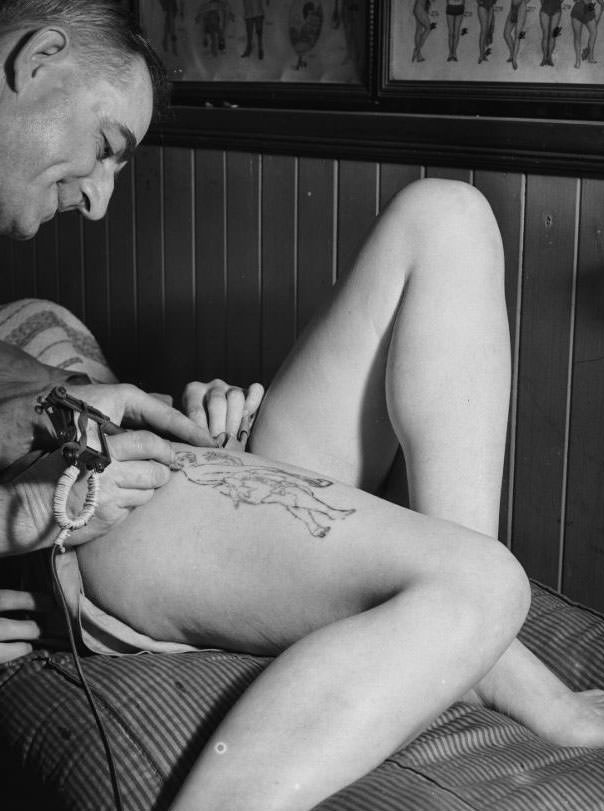
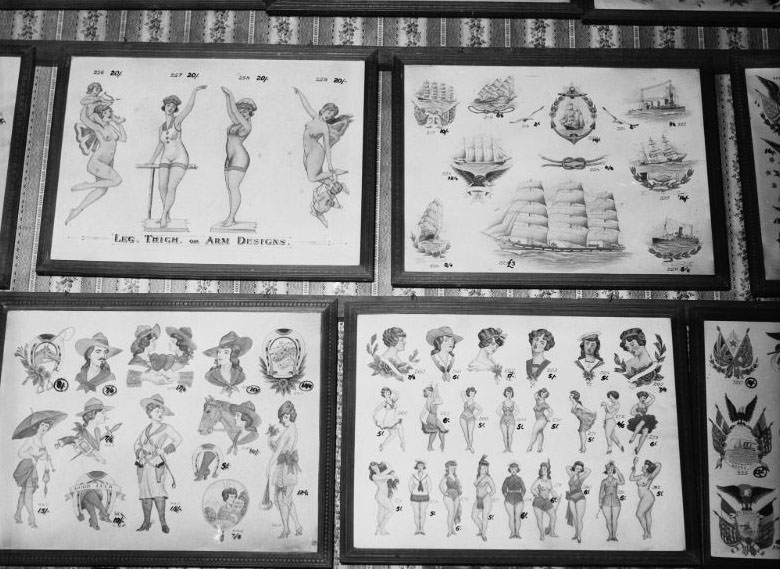
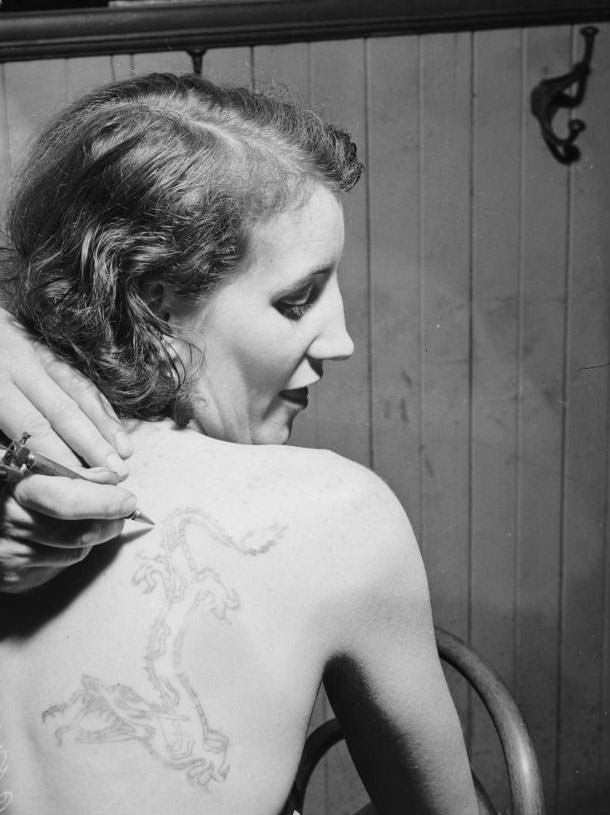
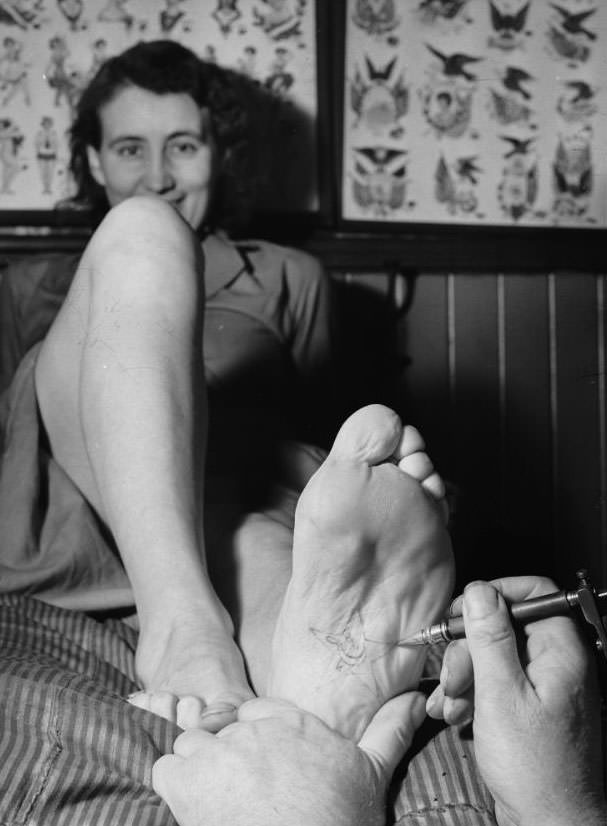
By 1937, Fred was inking around 2,000 tattoos a year. Sailors were his biggest customer base, but his clientele was far wider than that. He tattooed horses on jockeys, flowers on women’s legs, and small beauty spots on those who wanted something subtle. His studio walls were covered in design sheets — a catalogue of what Sydney wanted on its skin.
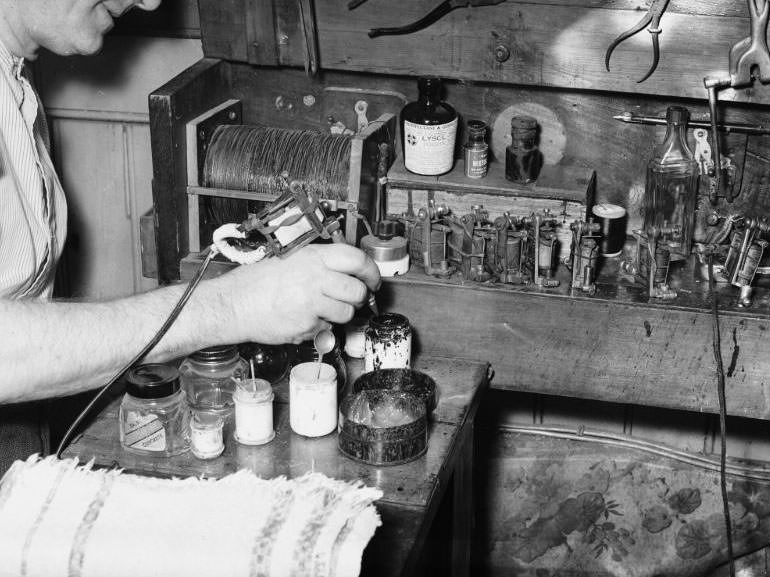
Fred worked with the tools of his trade every day. His needles and inks were as much a part of the shop as the designs on the walls.
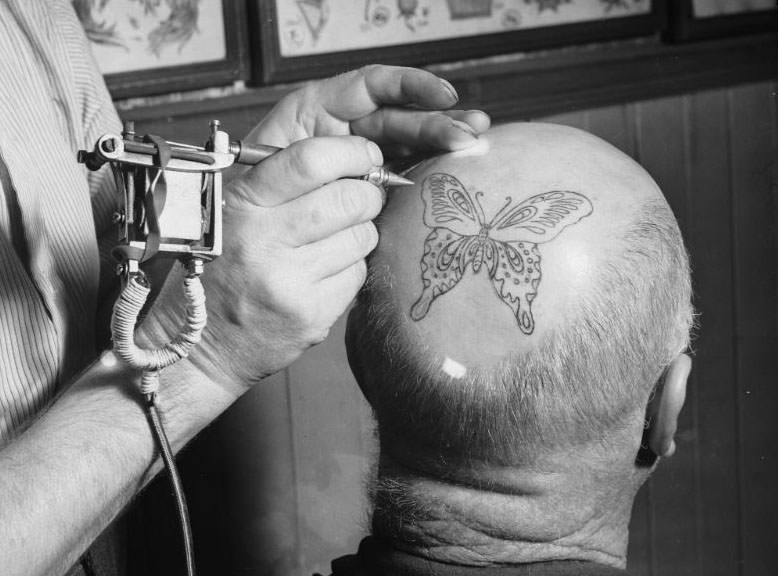
Women entered the tattoo scene in a big way in 1923. Butterflies and flowers were the most popular choices, but some women pushed well beyond the modest. One customer sat through a single session that included a rosella parrot, three horses’ heads, a stag, and pansies. Another trend saw women getting tattoos on their legs specifically so the designs would show through their stockings. Men were drawn to butterflies too — though Fred’s own tattoo, visible in photographs, was anything but understated.
American sailors visiting Sydney were known for leaving Fred’s chair with kangaroos and Australian flags permanently on their skin. But tattooing among sailors carried meaning beyond souvenirs. Old seafaring superstitions drove many design choices. A pig or pig’s head was believed to prevent drowning. Eyes tattooed on the nipples were said to sharpen a sailor’s sight. A ship’s propeller on the backside was thought to improve speed and movement, while hinges on the elbows were meant to increase strength. These weren’t just decorations — they were charms.
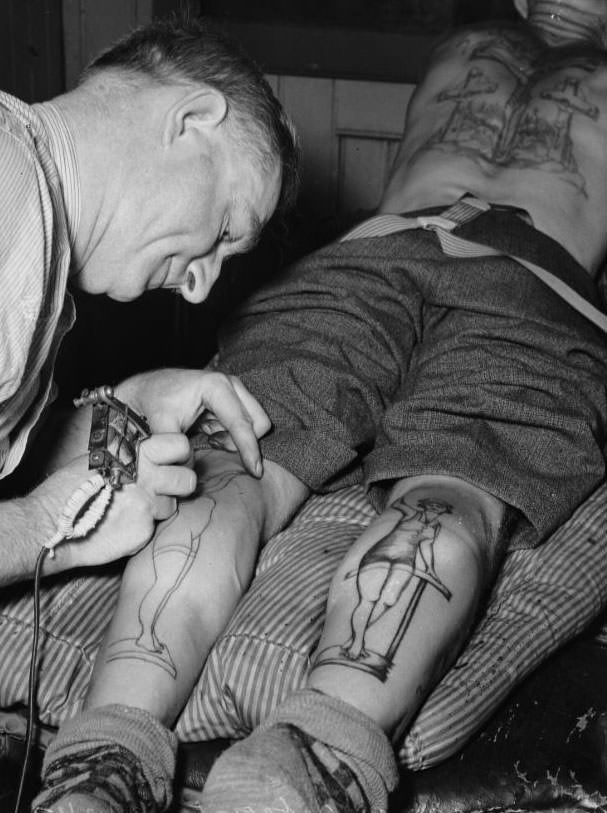
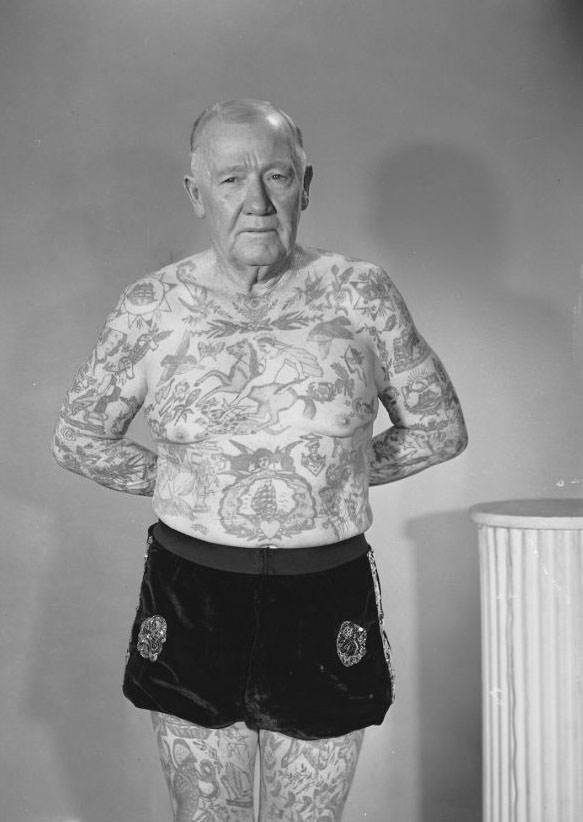
John Hennington of Woronora was one of Fred’s heavily tattooed subjects photographed in December 1937. His body told the story of years under the needle.
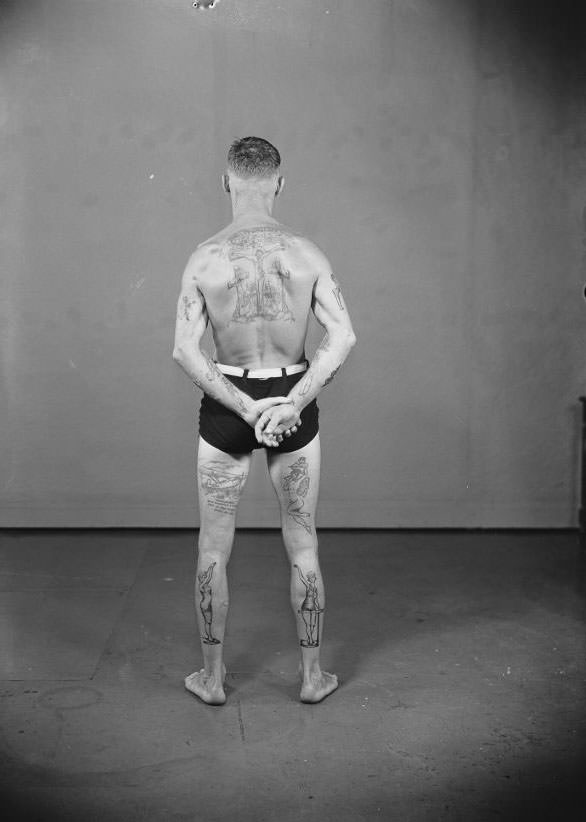
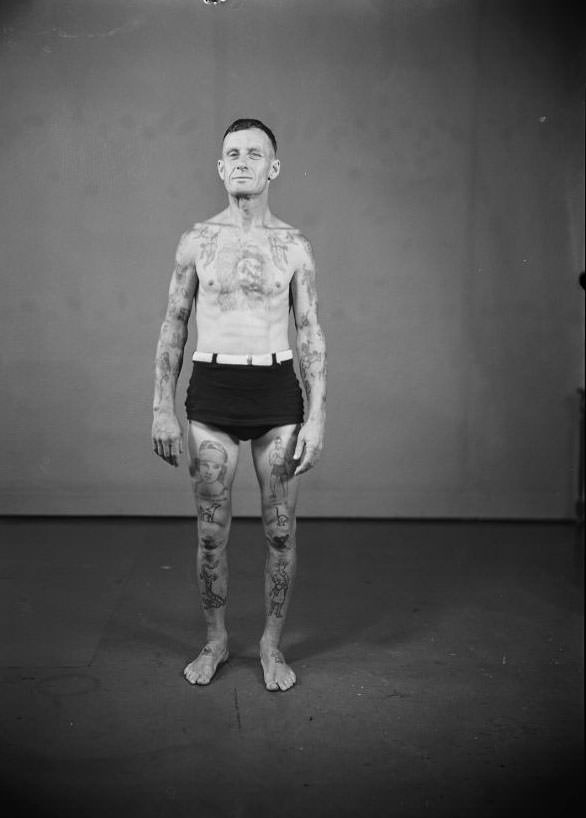
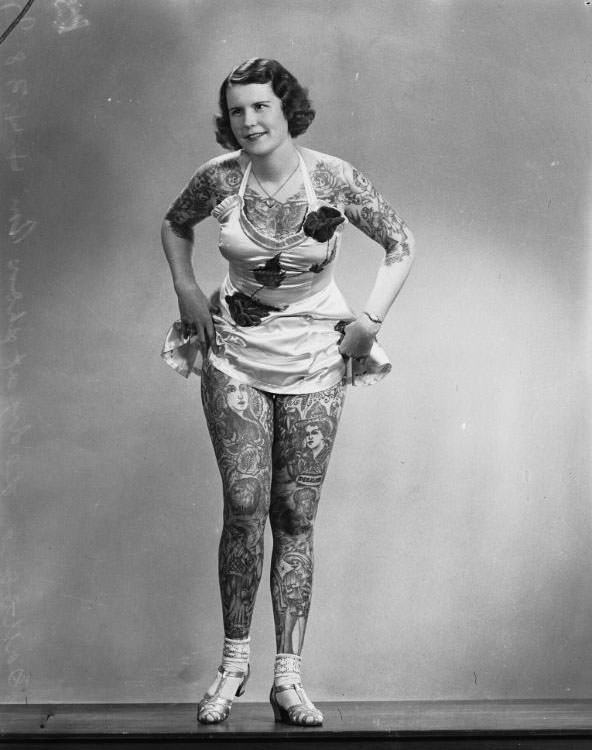
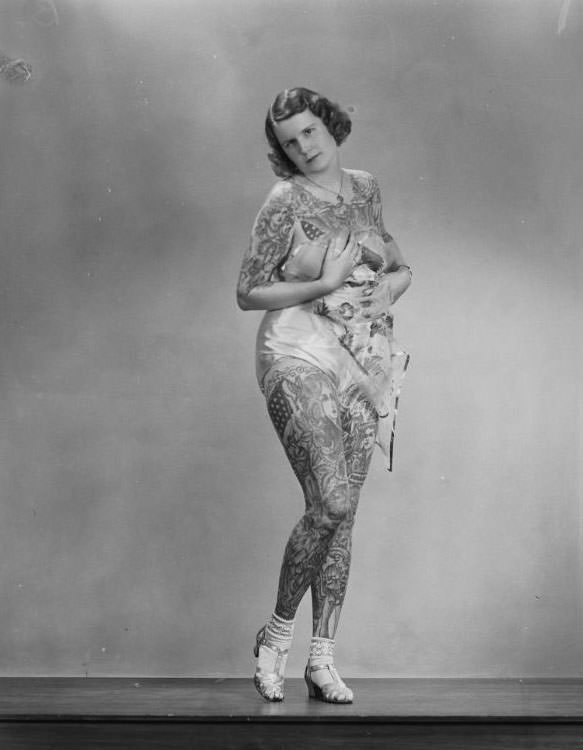
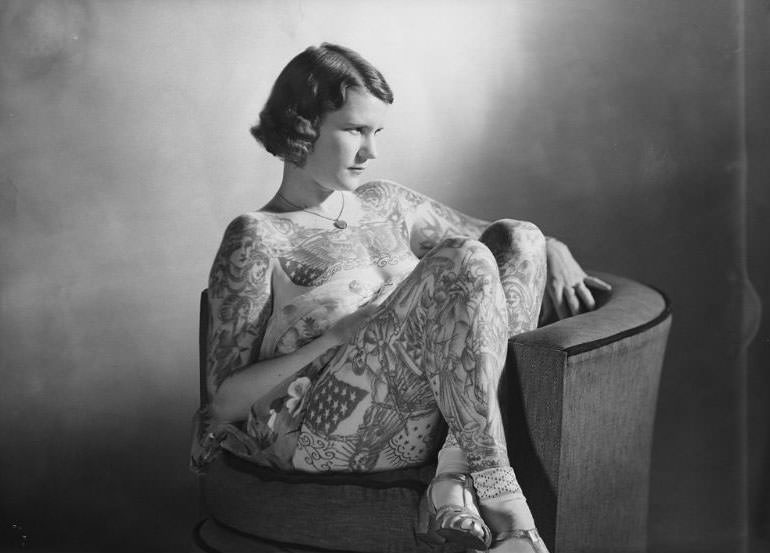
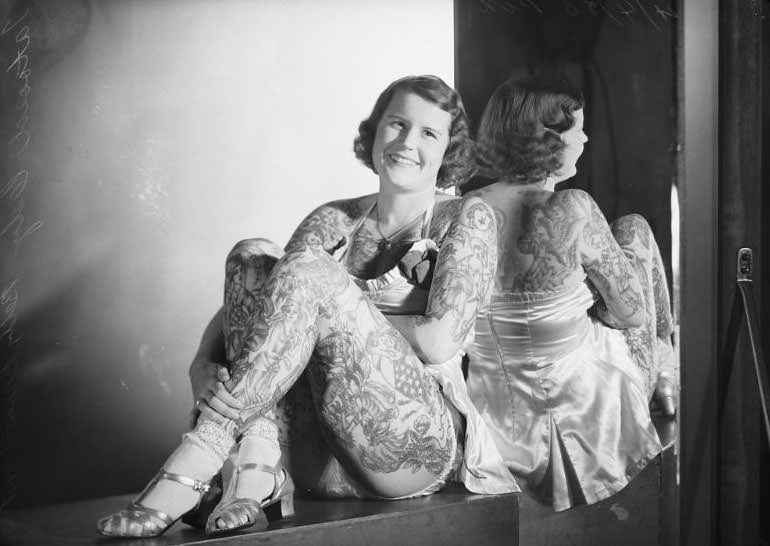
Women with extensive tattooing also appeared before the camera around the same time, showing that full-body ink was not exclusively a male pursuit in 1930s Australia.
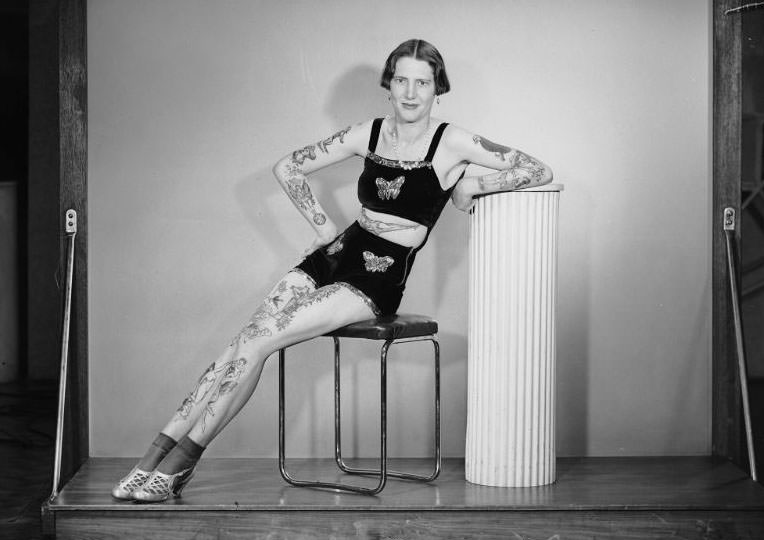
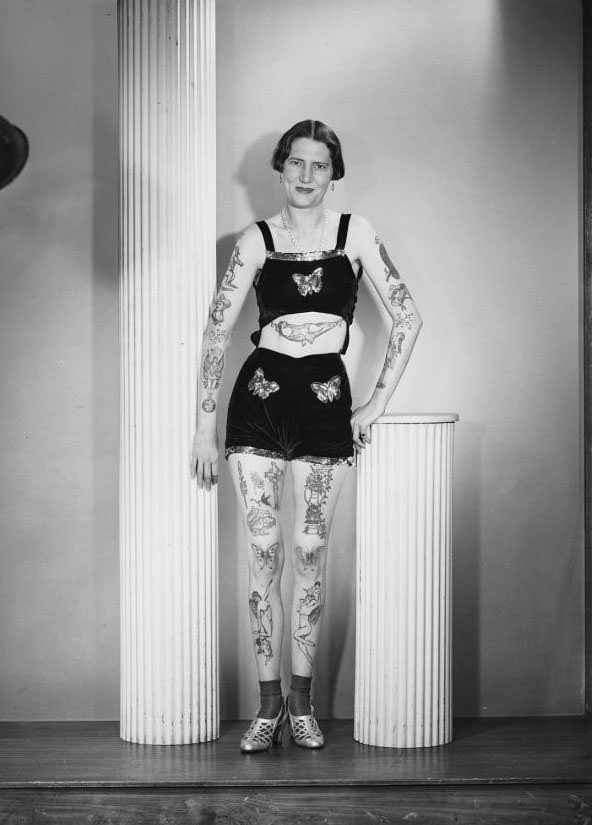
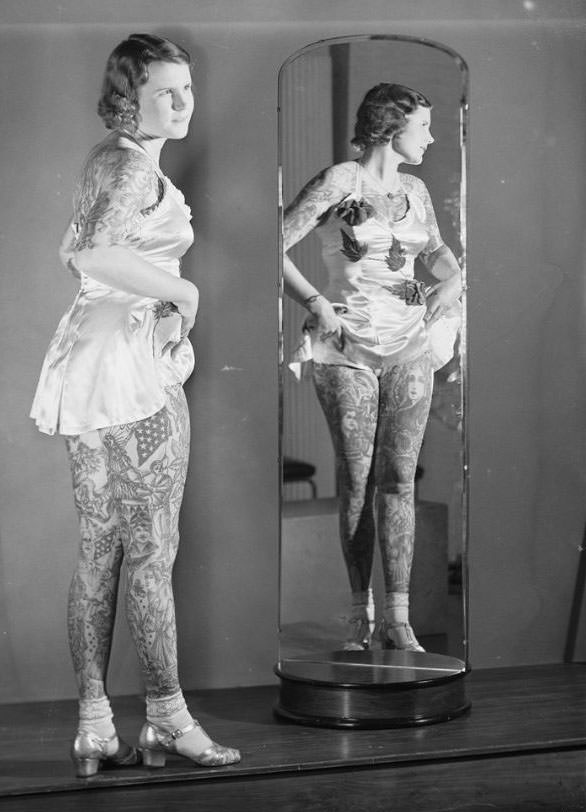
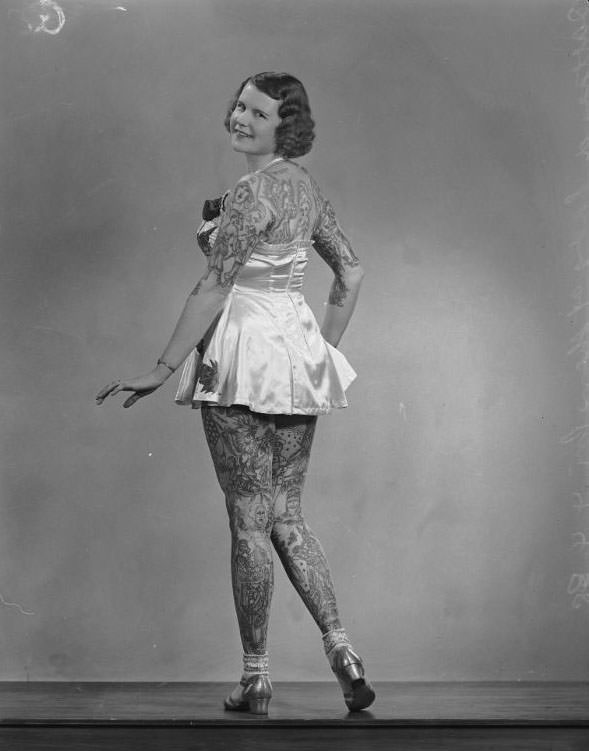
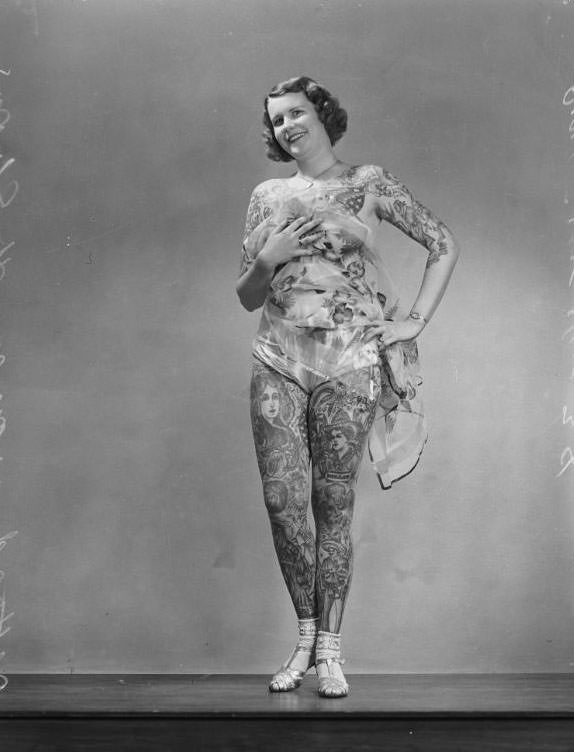
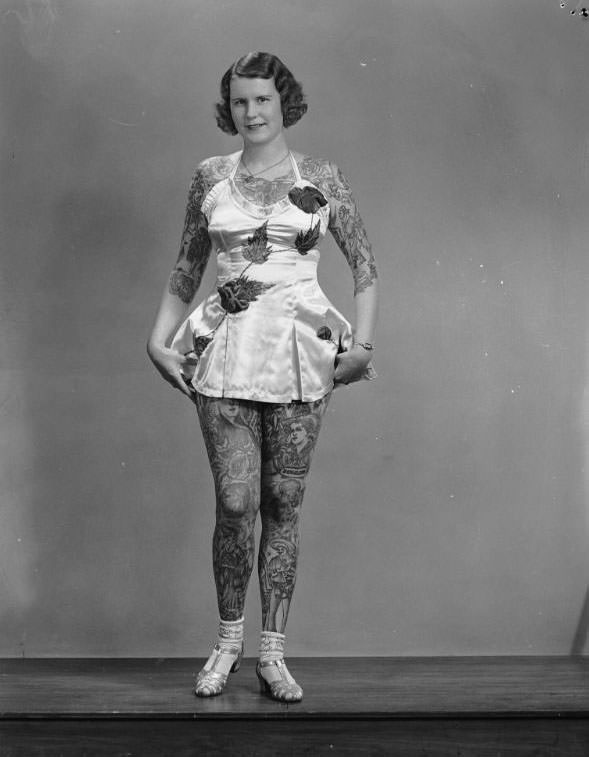
In April 1938, one of the most famous tattooed people in the world visited Sydney — Betty Broadbent, known as the ‘Tattooed Venus.’ She had been a fixture of American sideshows and circus acts since the late 1920s, her body covered in elaborate tattoos from neck to ankle. Her visit drew significant public attention and press coverage.
When World War Two broke out in 1939, Fred’s business surged. Patriotic tattoos dominated — soldiers’ names, regimental numbers, and national flags. The Australian flag became the most requested design, sometimes paired with the British and French flags, replacing the hearts that had been popular in peacetime. Fred also saw a sharp rise in customers wanting to remove or cover up tattoos of foreign flags. After the attack on Pearl Harbor in December 1941, American sailors stationed in Sydney began requesting a specific design: Fred’s trademark dagger, with the words “Remember Pearl Harbor, December 7, 1941” inscribed alongside it. Fred Harris died in late 1944, after nearly 35 years running his Sussex Street studio.