Bicycles were everywhere in Toronto by the 1890s. They weren’t just a hobby — they changed how people moved through the city and even how politicians campaigned. But riding a bike in early Toronto came with real friction, both on the roads and in city hall.
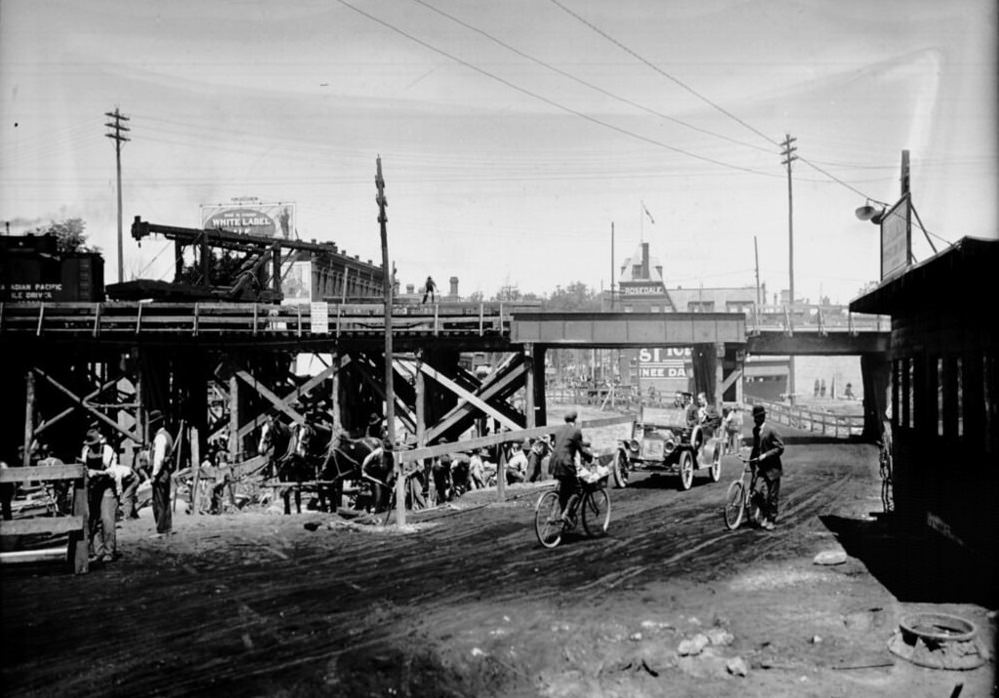
One of the biggest problems was simple: most cyclists ignored the rules of the road. Pedestrians were put at risk, and so were people riding in horse-drawn vehicles and early cars. The streets weren’t built for this kind of traffic mix, and accidents were common. The city had to figure out how to manage it.
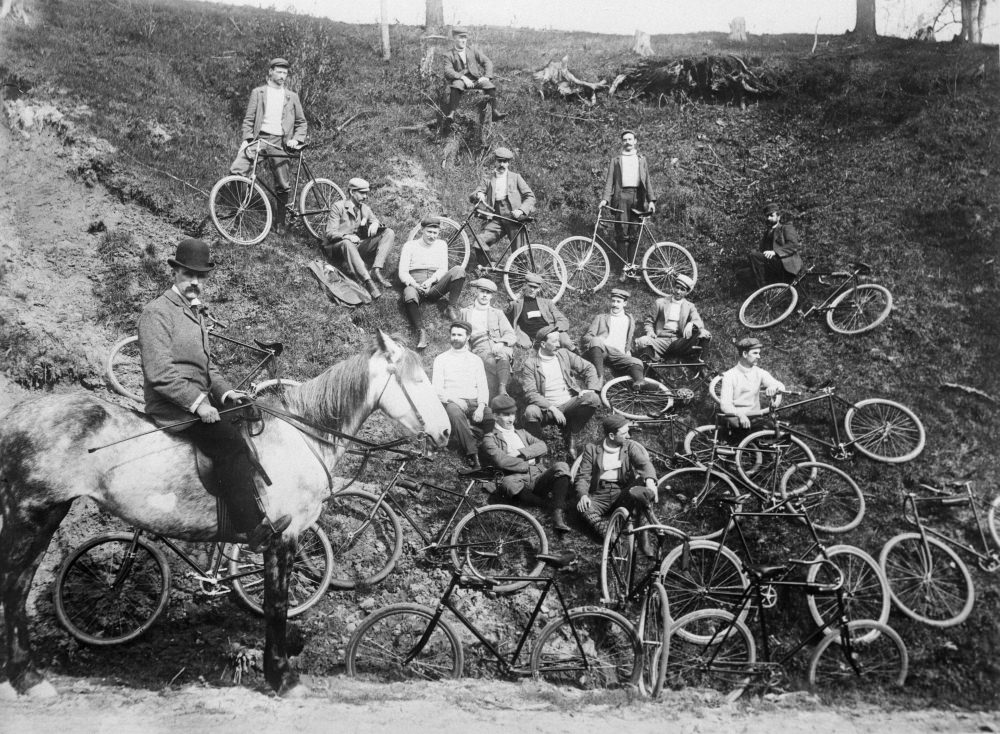
Organized cycling clubs were a big part of the scene at the turn of the century. They gave riders a sense of community and also gave cycling a more respectable public image. Members rode together on weekends, participated in races, and pushed for better conditions across the city.
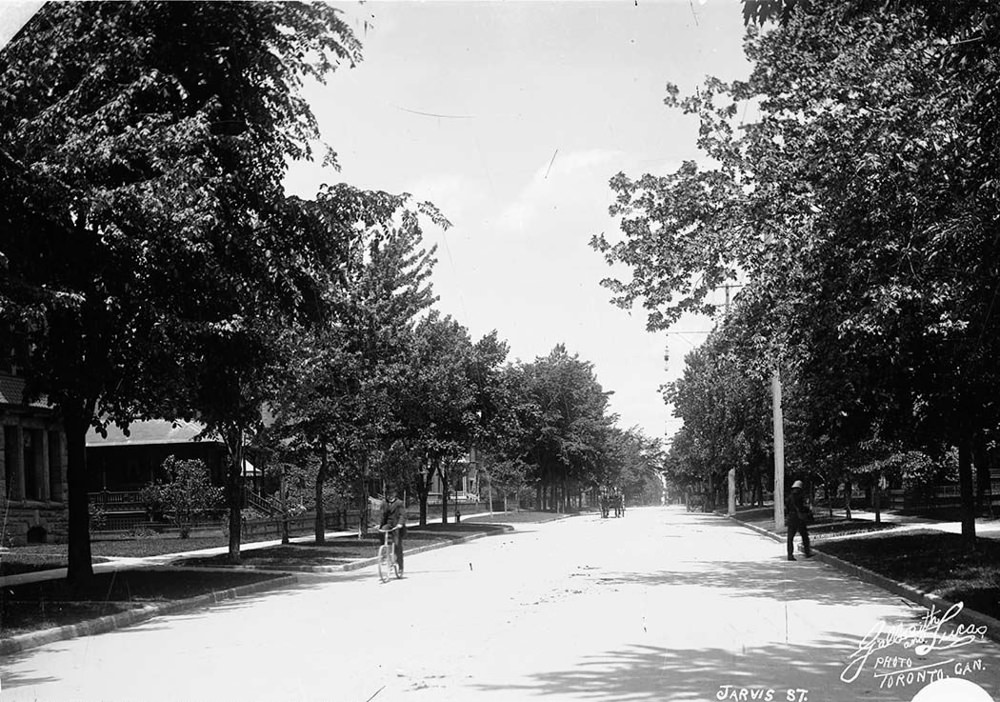
Jarvis Street in 1903 was one of Toronto’s more well-kept roads, making it a popular route for cyclists looking for a smooth ride. The ‘Good Roads Campaign’ of the era argued loudly that city council needed to direct more money toward paving streets. Cyclists weren’t just asking for comfort — they framed it as a public necessity. The campaign worked. Both mayoral and council candidates began making road improvement promises to win over the growing number of voters who rode bikes.
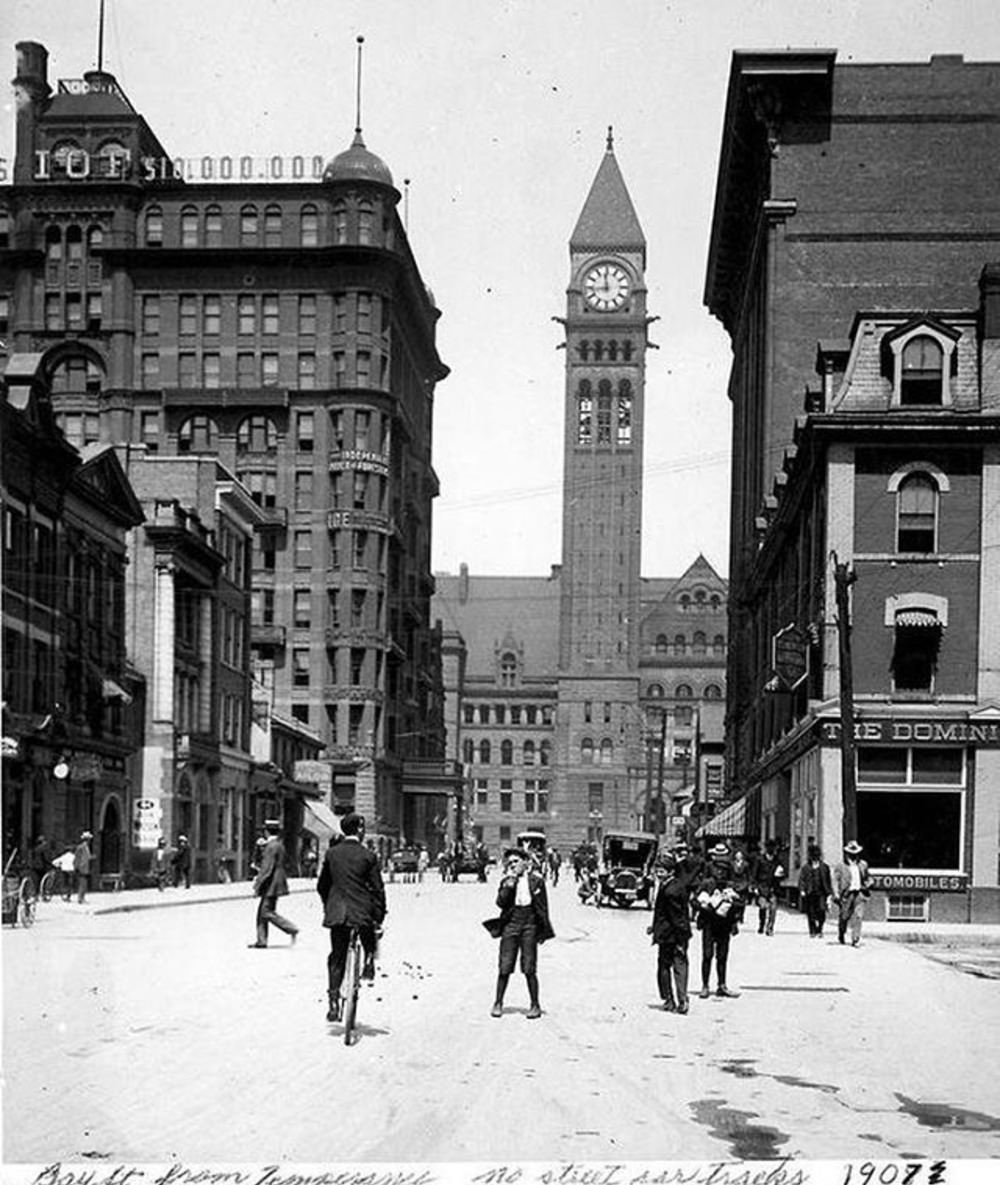
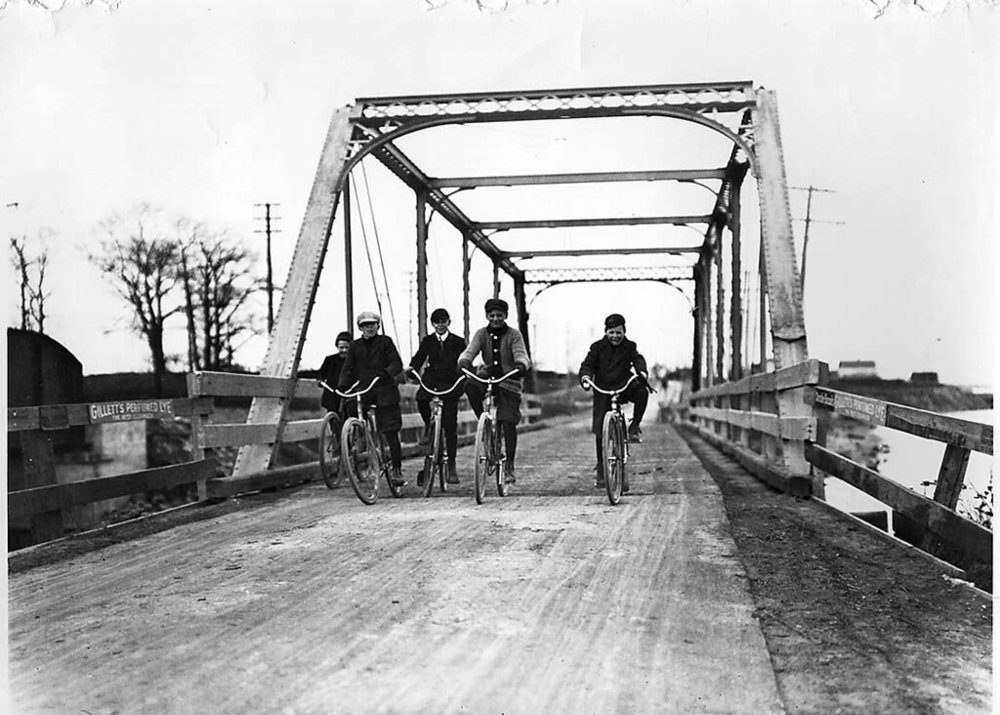
By 1907, cycling had reached all corners of Toronto and its surrounding areas. Young riders took to bridges and back roads, not just city streets. Mimico, then a separate community west of the city, saw its share of cyclists crossing the Lakeshore Road bridge — a sign of how far the bike culture had spread beyond downtown.
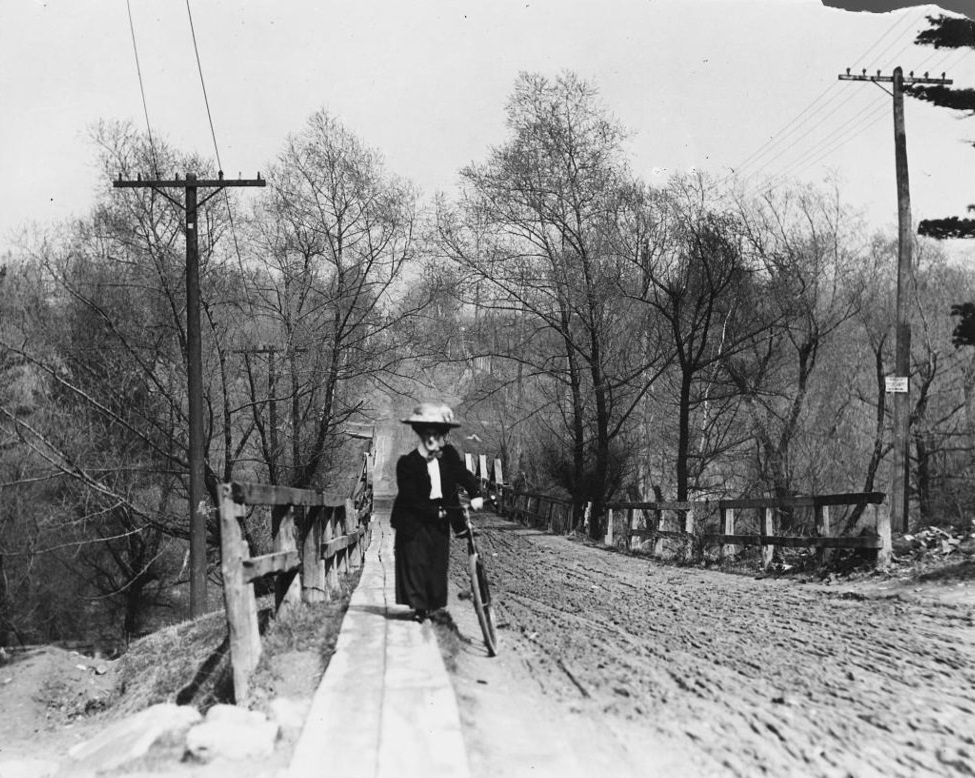
Toronto’s hilly terrain was a genuine challenge. Some slopes were steep enough that riders dismounted and walked their bikes up rather than attempt the climb. The hill leading up to St. Clair Avenue was one such stretch. It wasn’t a failure — it was just reality for anyone on two wheels in a city built on a glacial landscape.
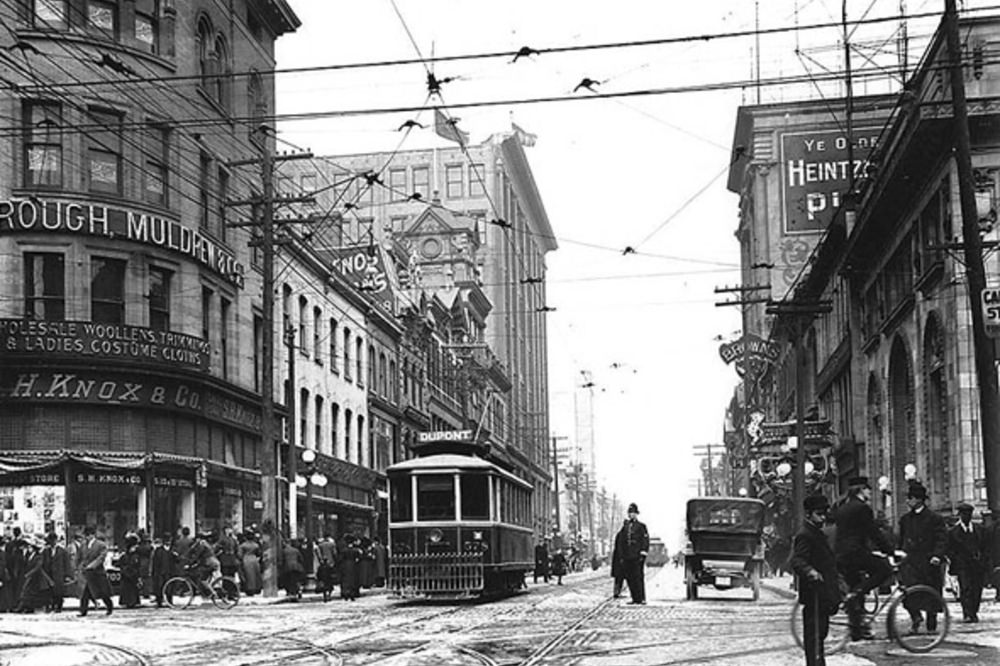
Queen and Yonge was already one of the busiest intersections in the city by 1910. Cyclists threaded through streetcars, pedestrians, and horse-drawn wagons. They hugged the edges, carving out space where they could. The intersection captured in a single frame just how crowded and chaotic Toronto’s streets had become.
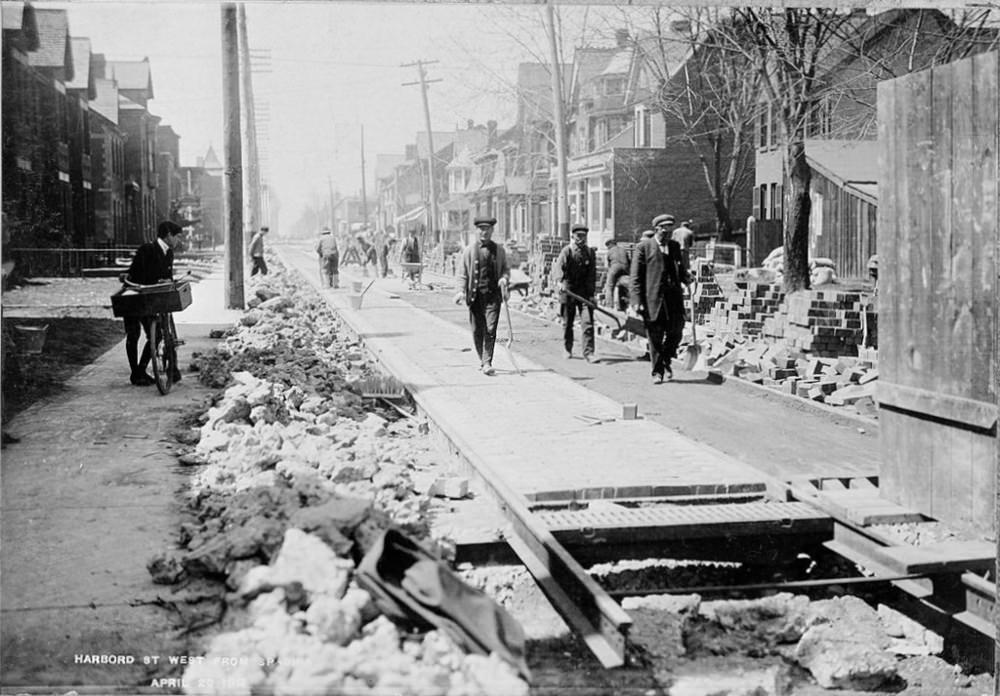
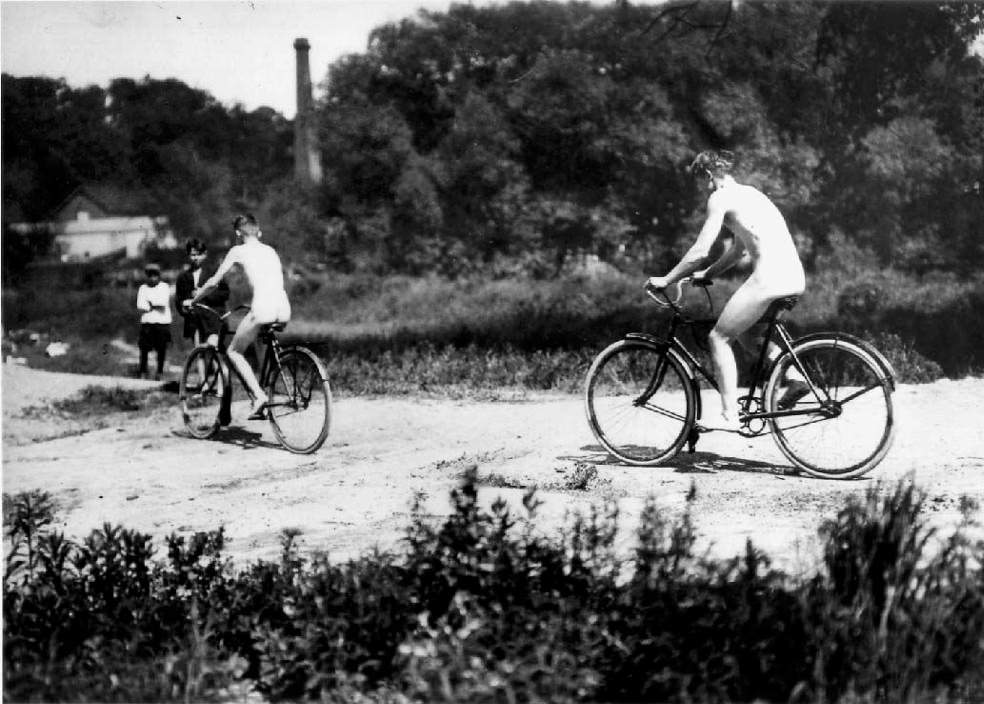
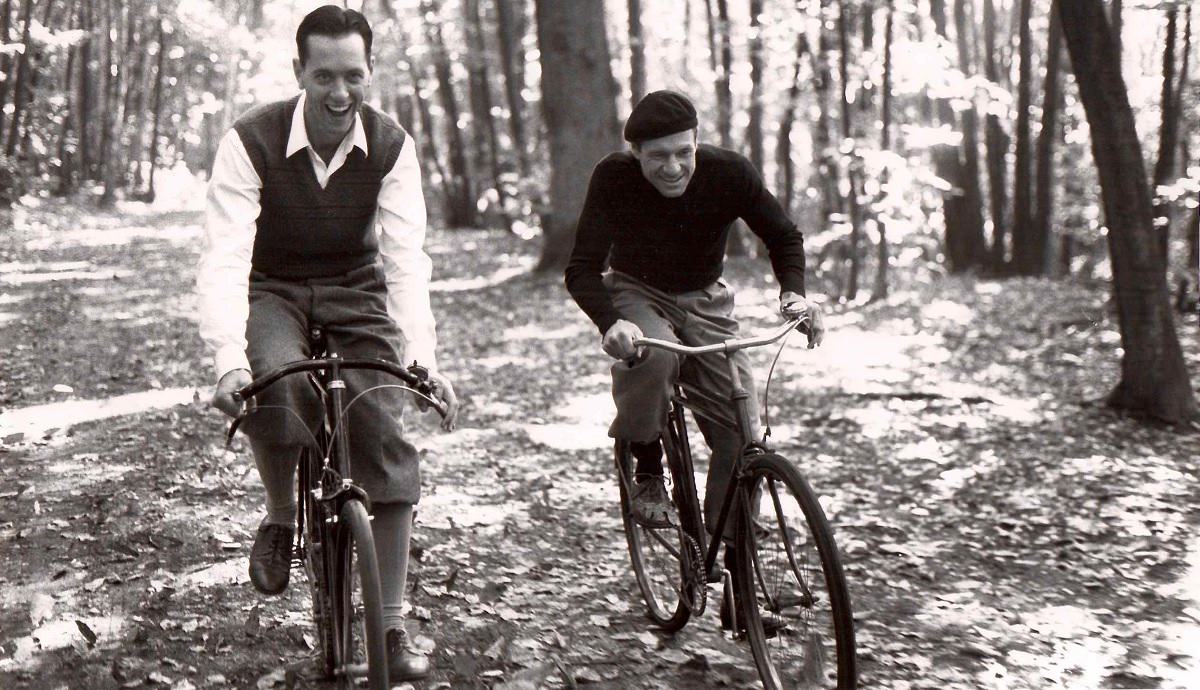
Not all cycling in Toronto was serious commuting or organized sport. By 1912, some riders were already pushing the boundaries of what counted as acceptable on a bike. The city’s cycling culture had a playful, rebellious streak running through it from very early on.

University Avenue, with its wide lanes and formal design, offered a very different cycling experience than the cramped side streets. In 1912, it was one of the more open stretches in the city, and cyclists used it freely alongside other traffic.
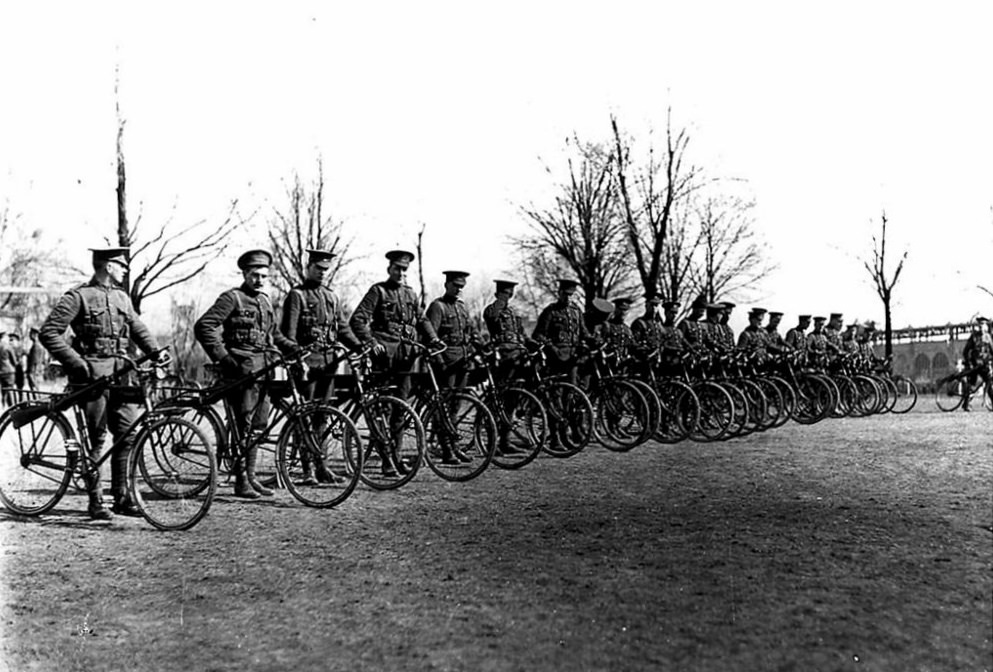
During World War One, the bicycle took on a military role. Toronto’s Cycle Corps used bikes for messenger duty and troop movement. It was a practical choice — bikes were quiet, fast enough for short distances, and didn’t require feed or fuel the way horses and motor vehicles did.
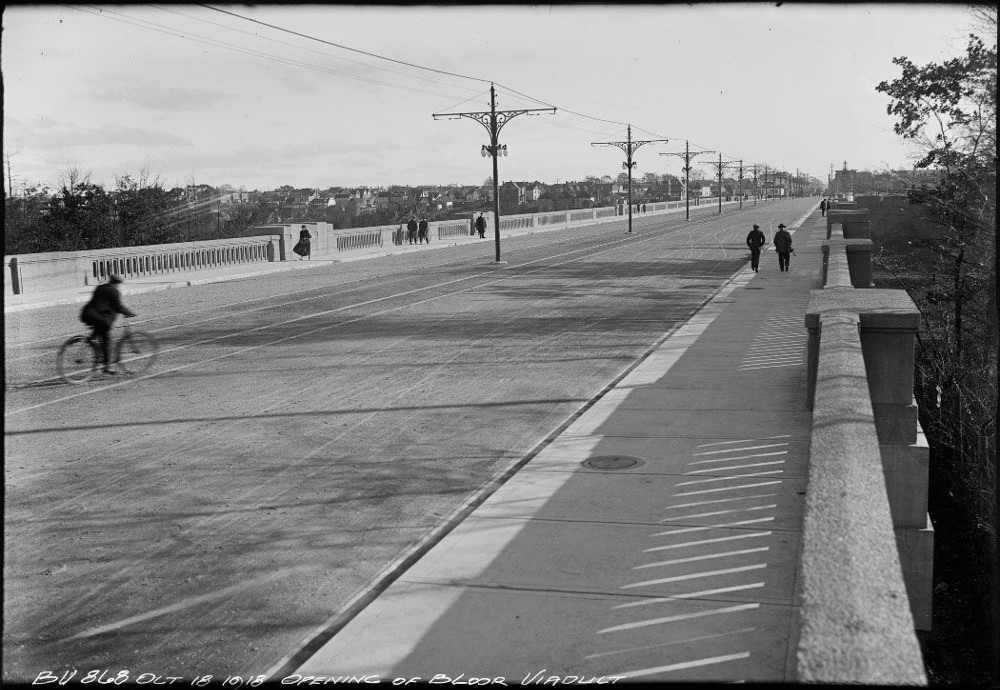
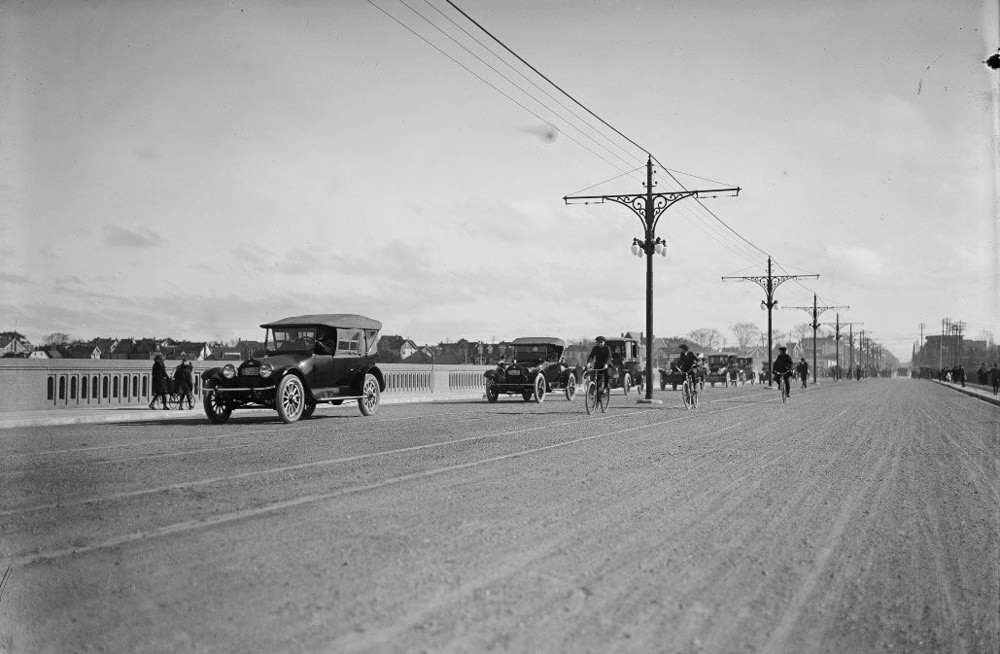
The Bloor Viaduct opened in 1918 and immediately became a key crossing for cyclists. Spanning the Don Valley, it connected the east and west parts of the city in a way that hadn’t been possible before. Photos from that year show riders wasting no time in making use of it.
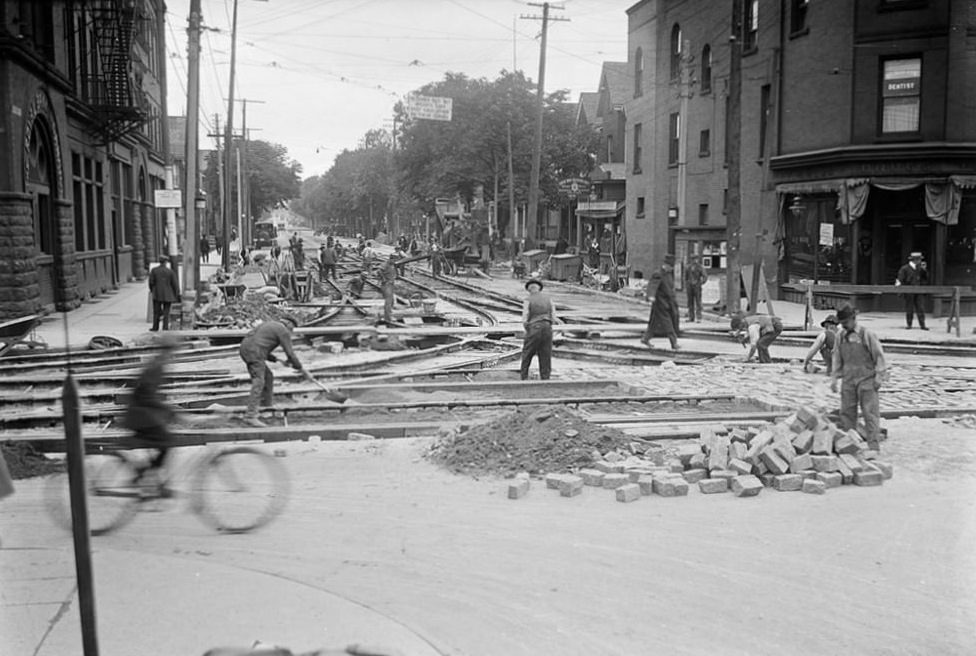
The intersection of Broadview and Queen in 1918 sat in one of Toronto’s working-class east-end neighbourhoods. Bikes here weren’t a leisure choice — they were how people got to work, ran errands, and moved through the city without paying streetcar fare.
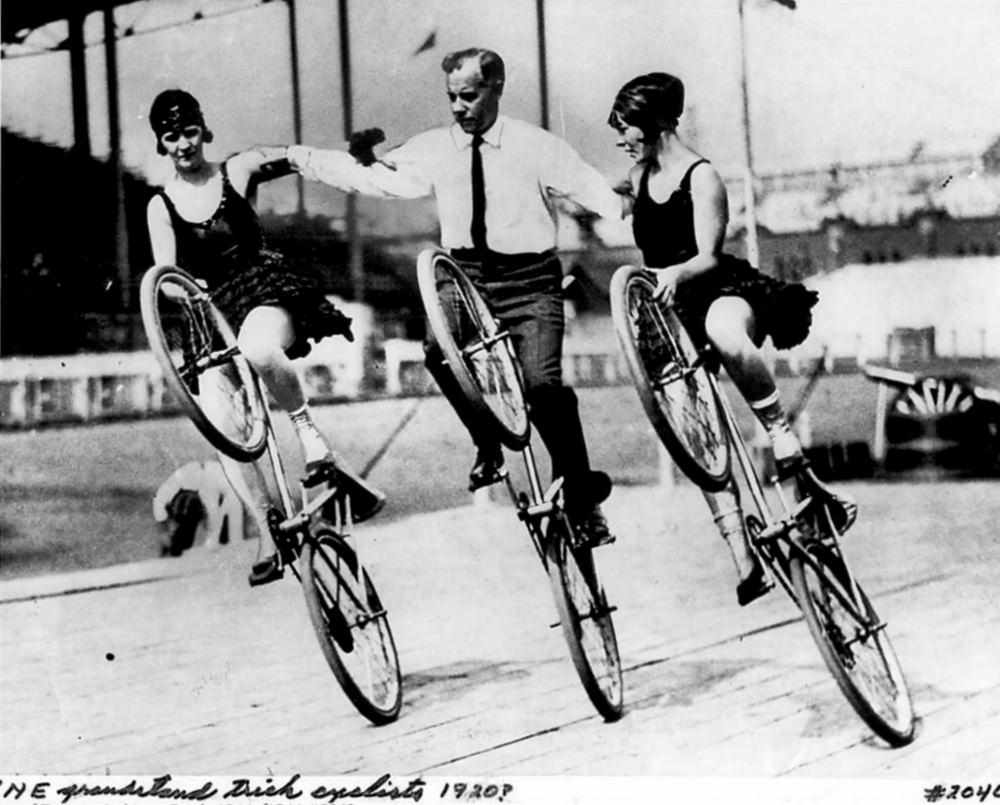
The Canadian National Exhibition was a showcase for everything Toronto took pride in, and cyclists were part of the spectacle. Trick riders performed at the CNE in 1920, drawing crowds who watched riders do things on bikes that seemed impossible. It was entertainment, but it also showed how skilled and confident Toronto’s cycling community had become.
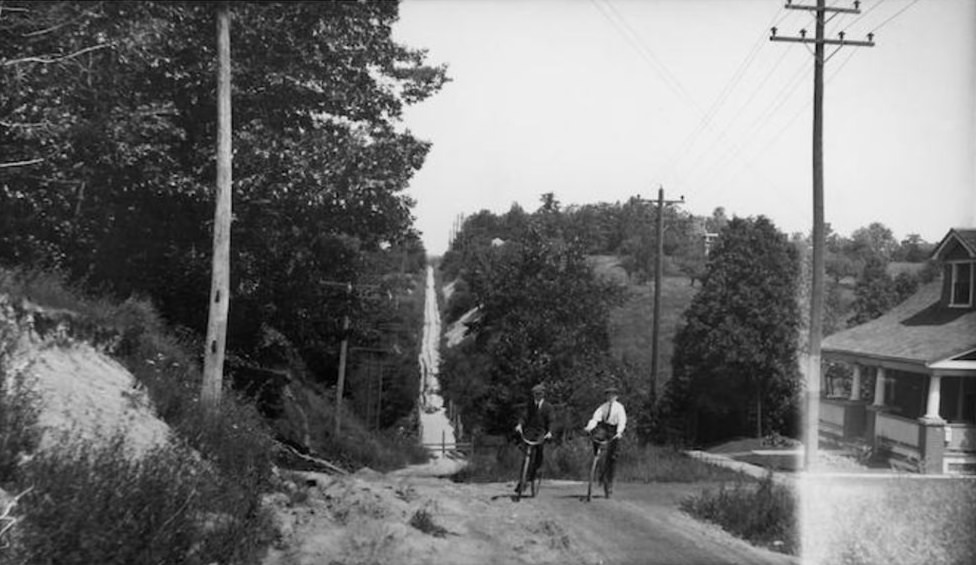
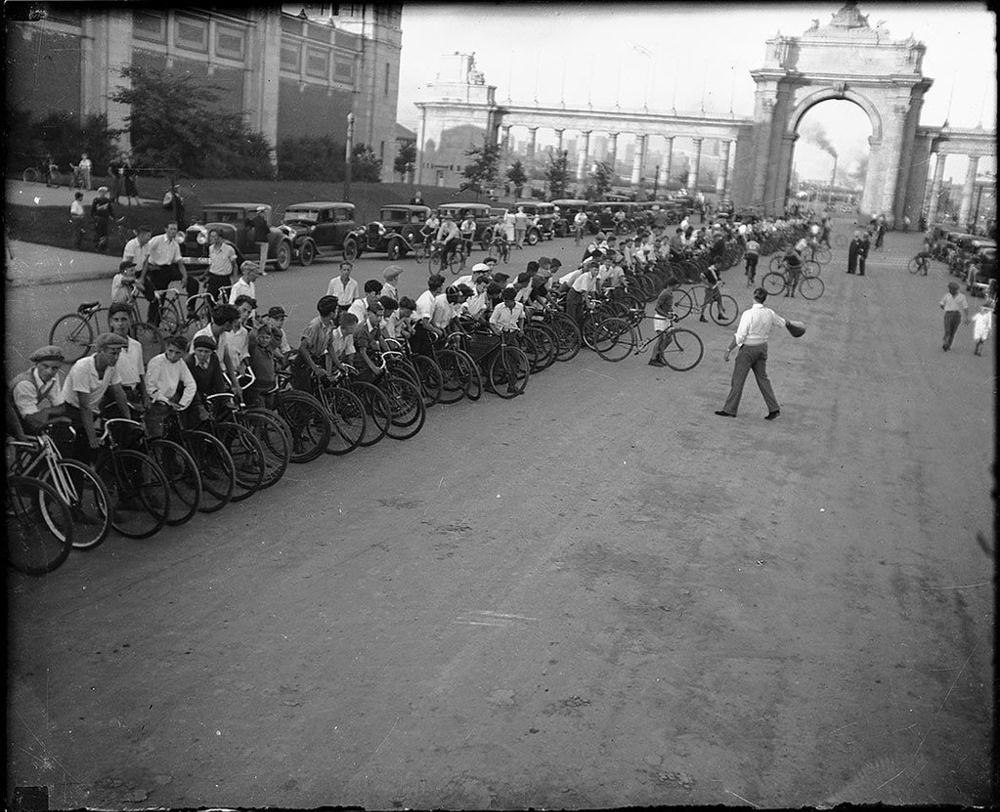
Competitive cycling drew serious crowds. Races were organized events with real structure — heats, start lines, and spectators. The riders who lined up weren’t casual commuters. They trained, competed, and represented clubs and neighbourhoods across the city.
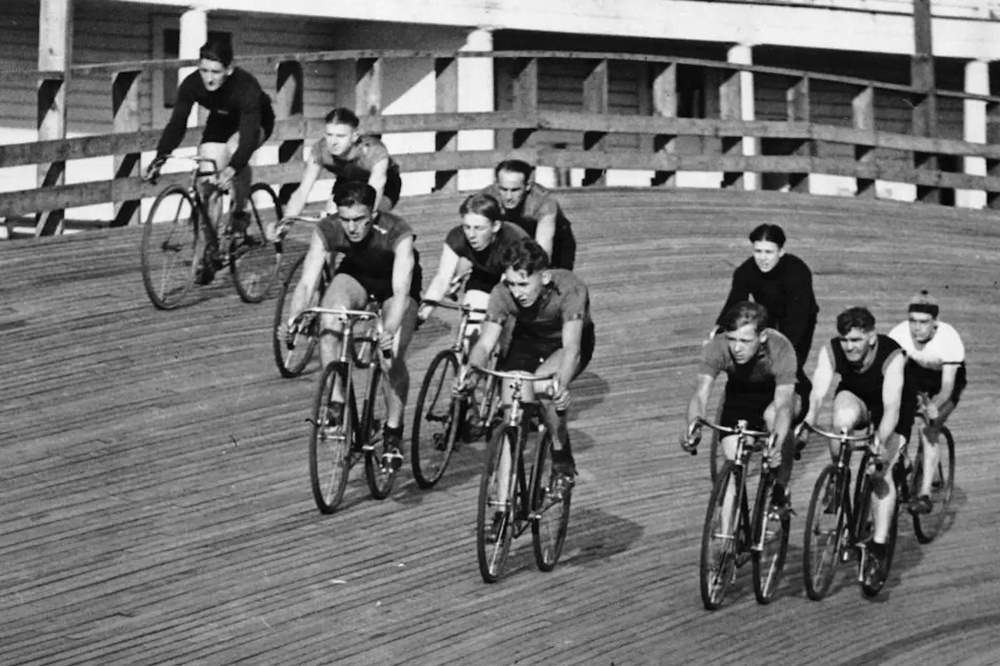
The Scarborough Beach Velodrome was purpose-built for racing. A banked oval track allowed riders to hit speeds that flat streets never could. By 1926, Toronto had the infrastructure to support serious competitive cycling, not just casual riding.
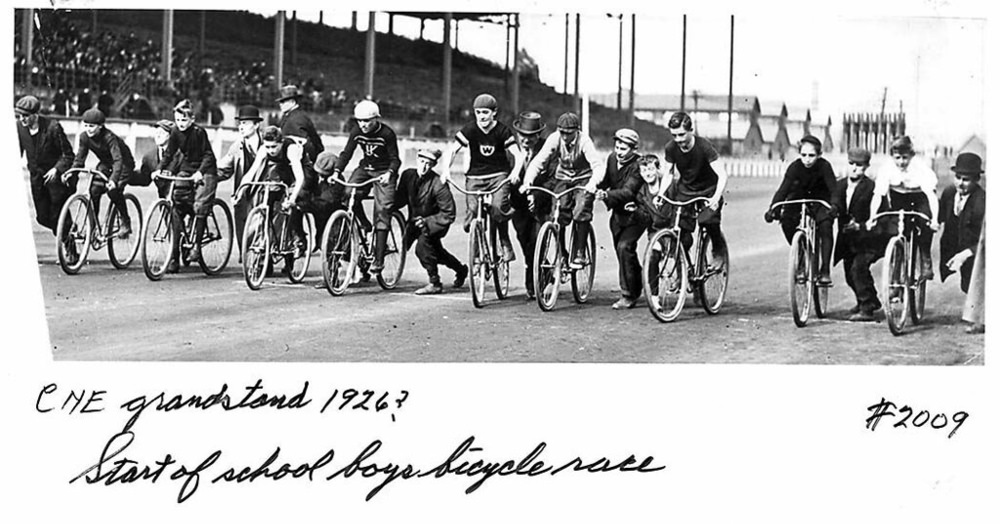
Racing wasn’t just for adults. The CNE hosted schoolboy bicycle races at the grandstand in 1926, drawing young competitors from across the city. It brought the next generation into the sport and kept cycling visible as a form of athletic competition.
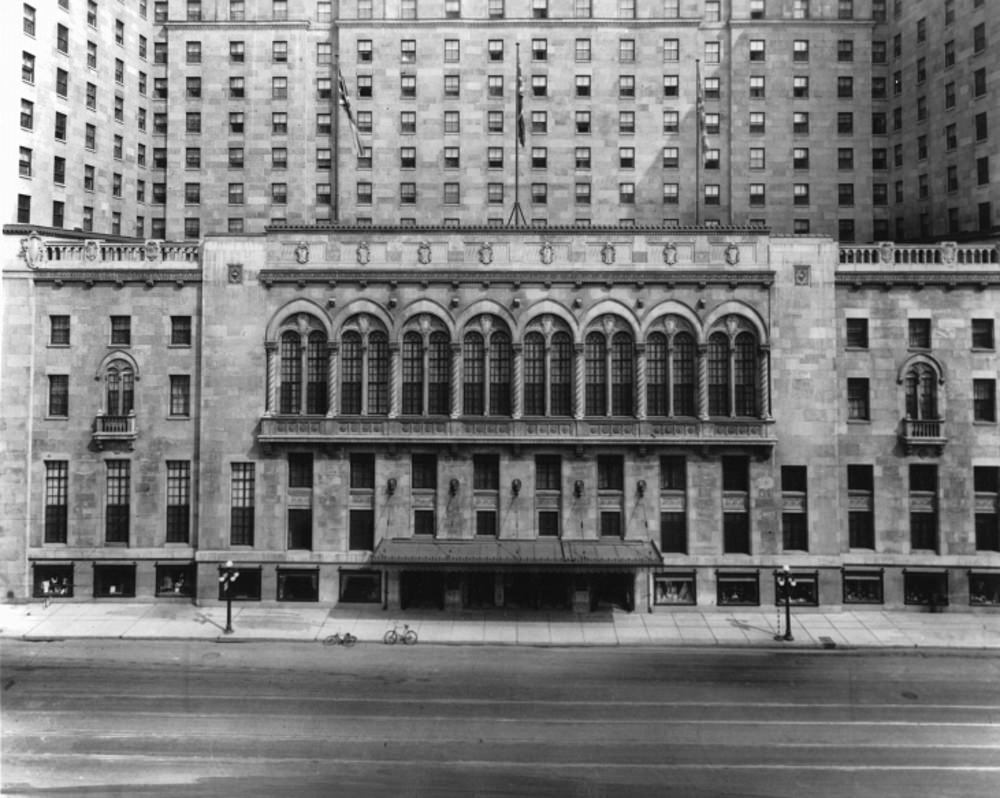
By the late 1920s, Toronto was a different city than it had been at the turn of the century. The Royal York Hotel opened in 1929 as one of the tallest buildings in the British Empire. Amid all that modernity, cyclists were still there — part of the streetscape, weaving through a city that was rapidly changing around them. The golden age of cycling in Toronto would last through the 1950s, when it quietly faded before making its return decades later.