Getting behind the wheel in the 1940s was nothing like driving today. There were no airbags, no anti-lock brakes, and no seatbelts in most cars. Interiors were built from hard materials with no padding designed to protect a person in a crash. There were no crumple zones — the engineered sections of modern cars that collapse and absorb energy during a collision. When something went wrong on the road, the car offered almost no protection to the people inside.
The roads themselves made driving even more hazardous. The U.S. highway network was a fraction of its current size. Many roads were narrow, unpaved, or had uneven surfaces. Road signs and lane markings were not standardized the way they are now. Drivers had fewer visual cues to guide them, and less room to recover when they made a mistake.
Traffic laws existed but varied widely from one place to another. Speed limits, right-of-way rules, and other driving regulations were not uniformly enforced. Driver training had no consistent standard either. Some people learned from a family member, others picked it up on their own. The idea of a formal driving test with a set safety curriculum was not yet the norm.
World War II reshaped the driving landscape in specific ways. From 1942 onward, civilian car production stopped entirely as factories shifted to building military vehicles. This forced people to keep older cars running far longer than they otherwise would have. Those older vehicles lacked even the modest safety improvements that were beginning to appear in newer models. Fuel rationing also cut down on how much people drove during the war years, which temporarily reduced accident rates. Once the war ended and driving surged again, accident numbers climbed sharply.
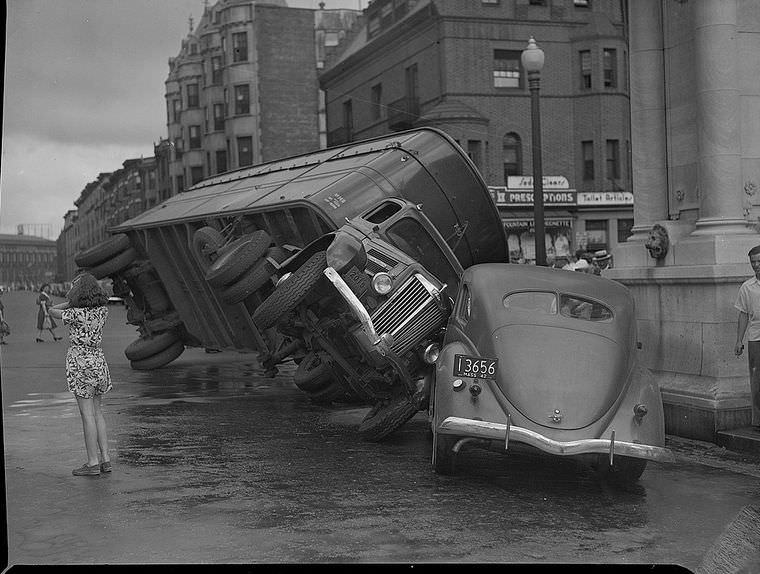
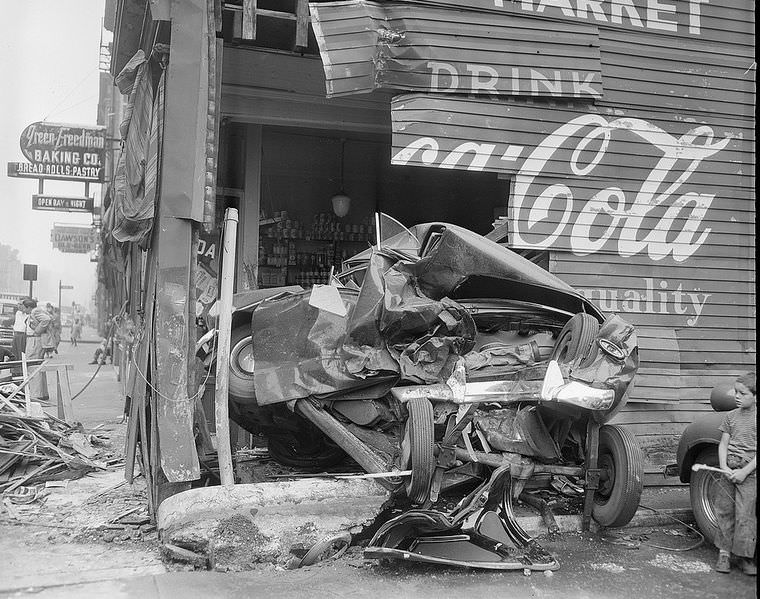
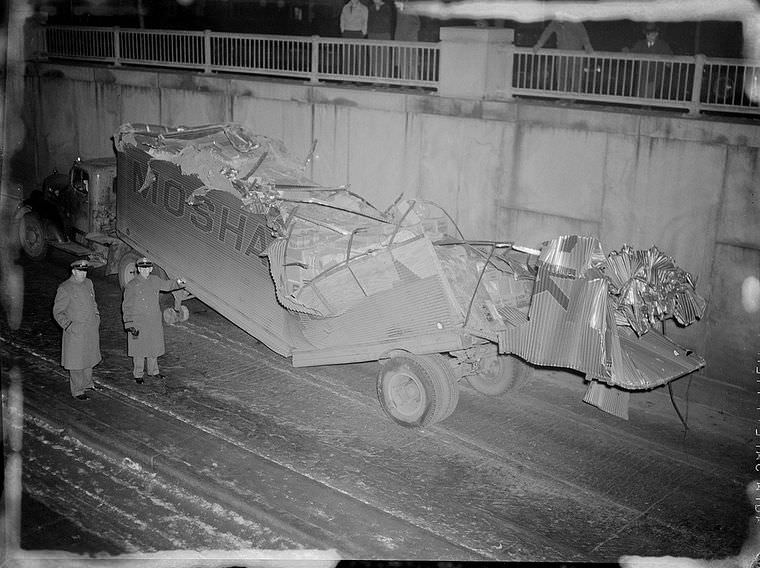
When crashes happened, the outcomes were frequently fatal or severely injurious. Without restraints, occupants were thrown against the dashboard, windshield, or steering column — or ejected from the vehicle entirely. Even a collision at relatively low speed could cause deadly trauma. Medical response in rural and suburban areas was slow, and trauma care was nowhere near as advanced as it is today. Injuries that are survivable now were often fatal then.
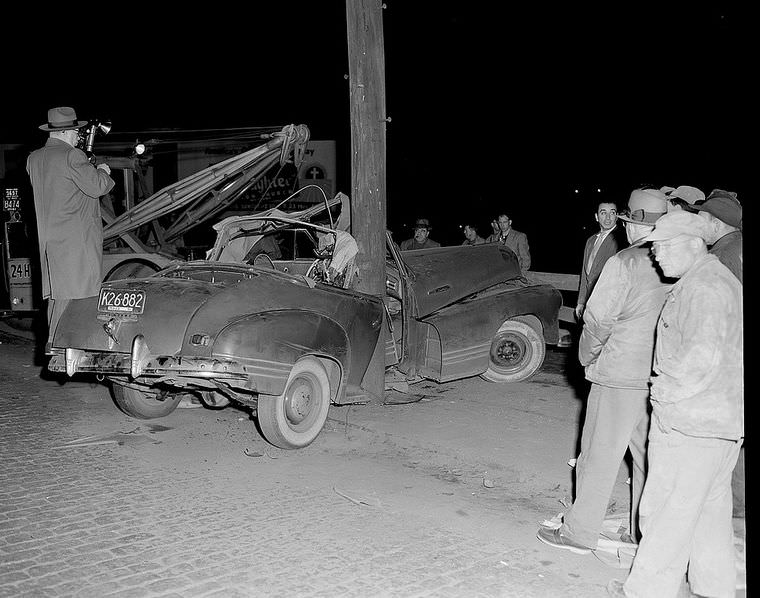
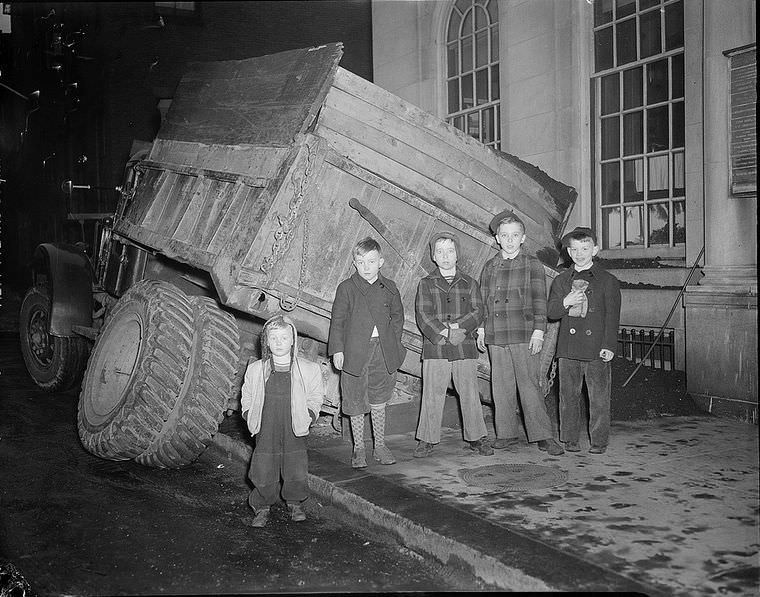
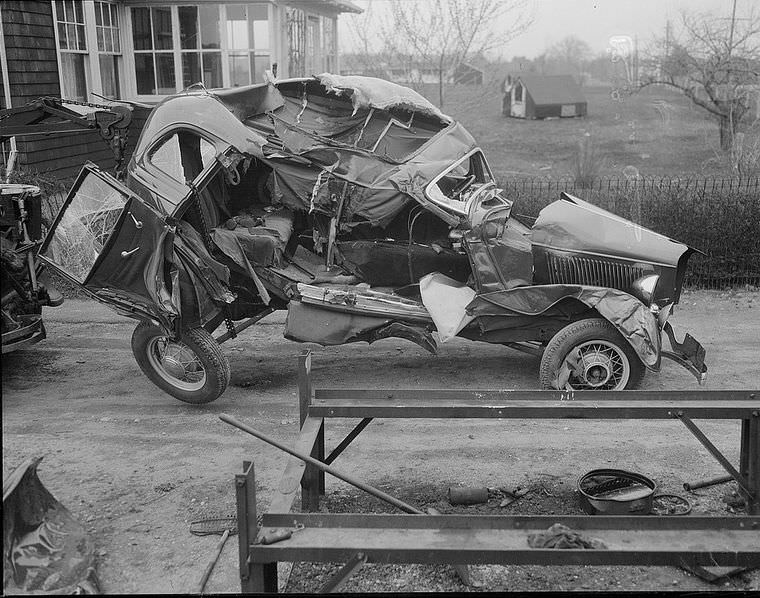
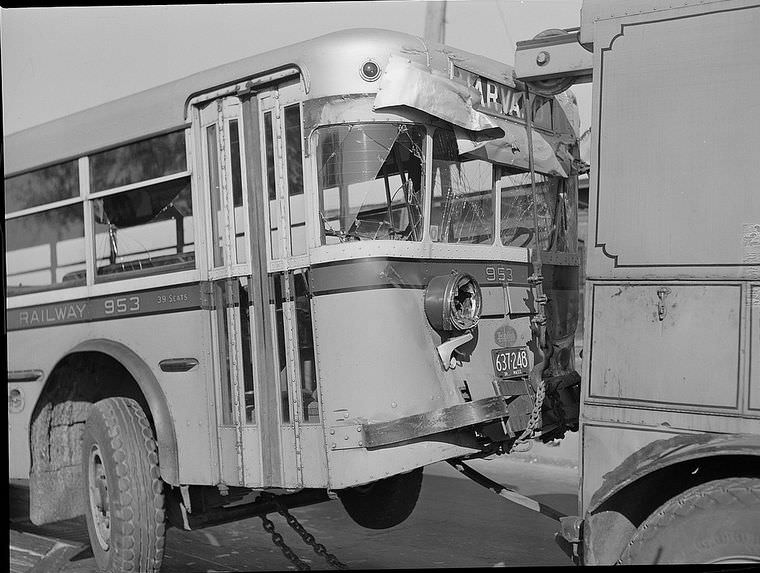
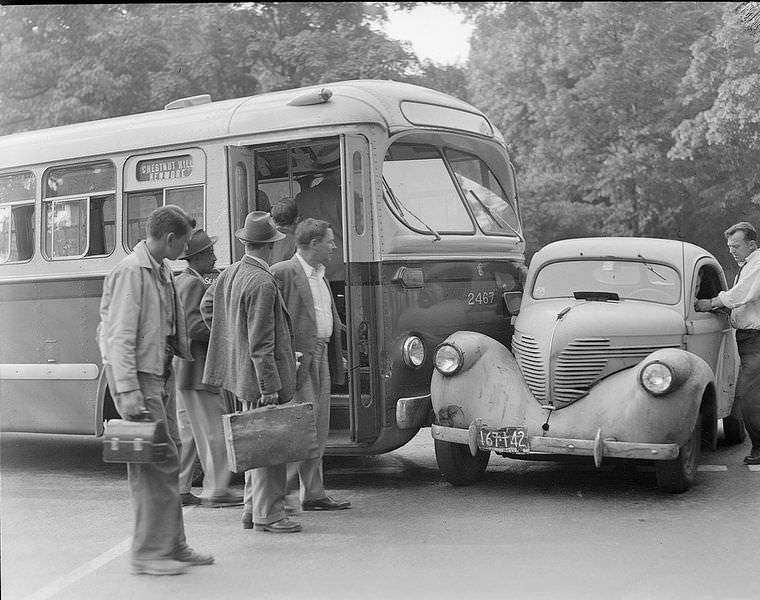
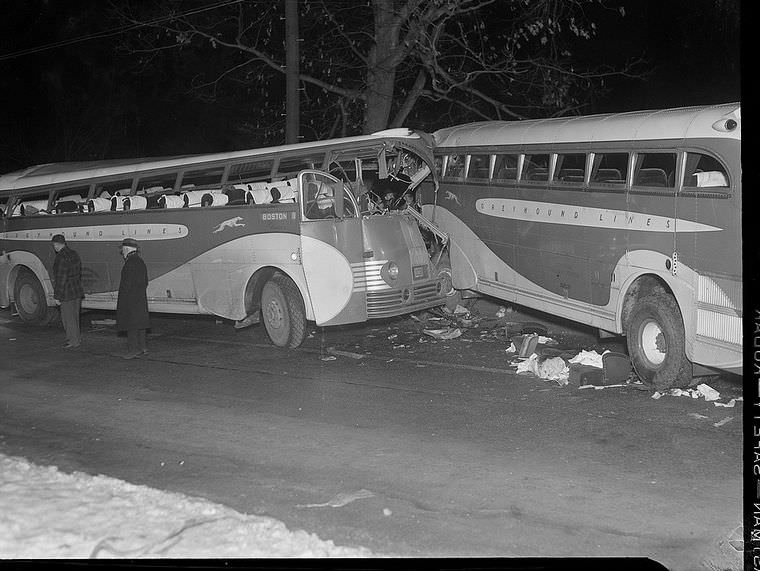
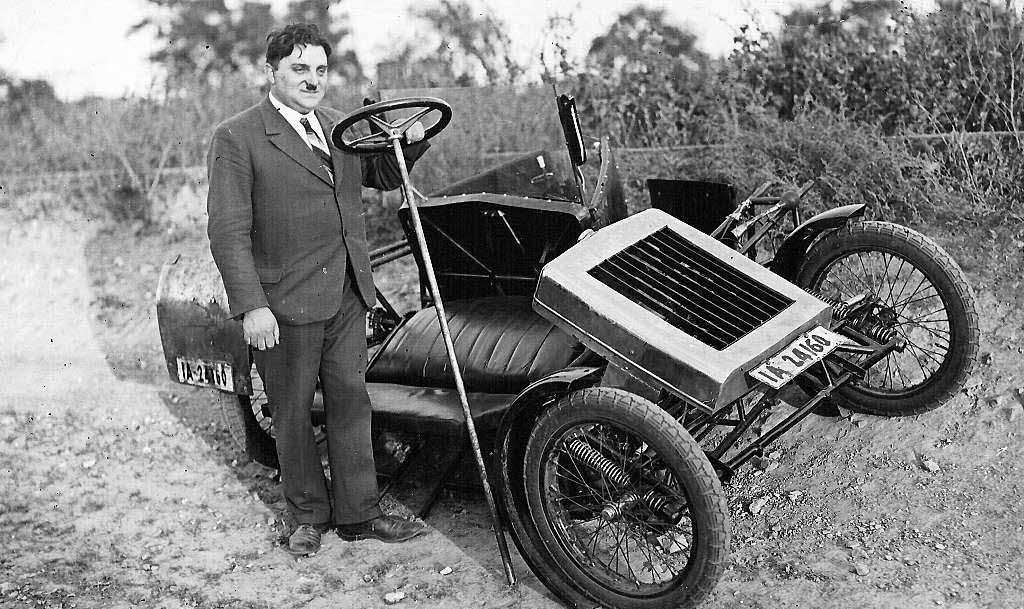
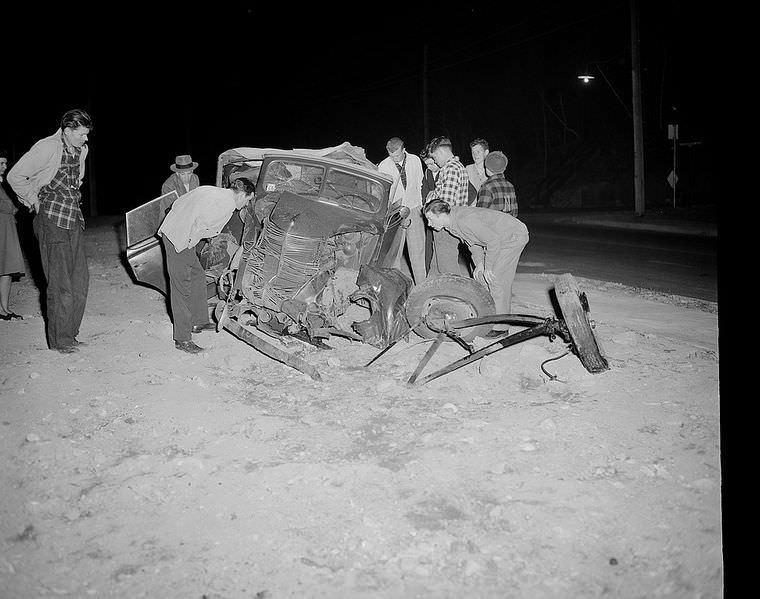
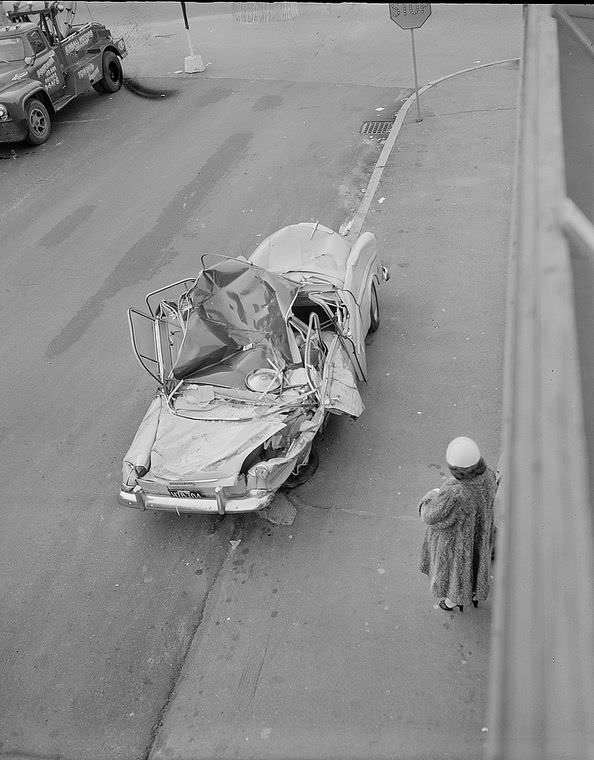
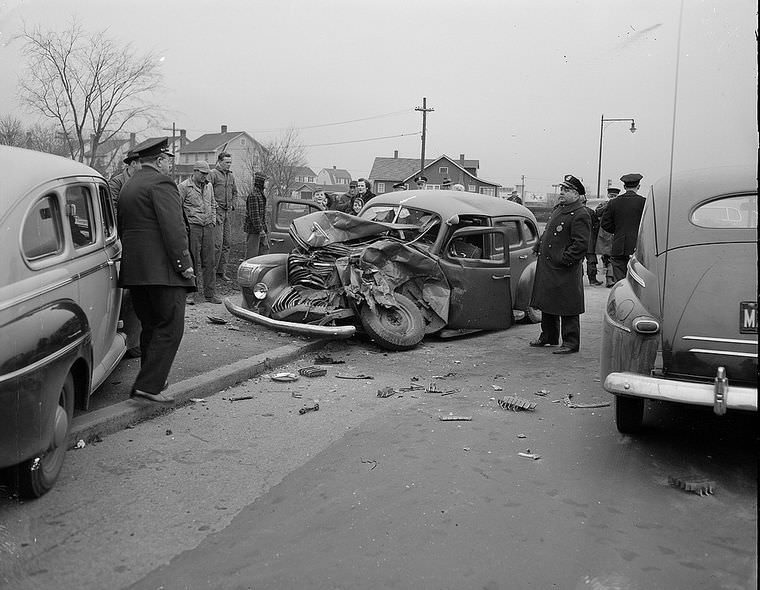
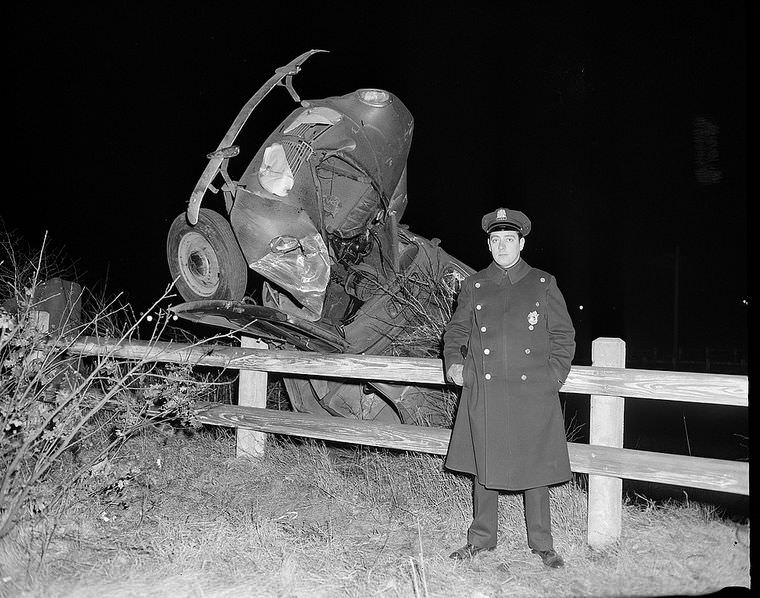
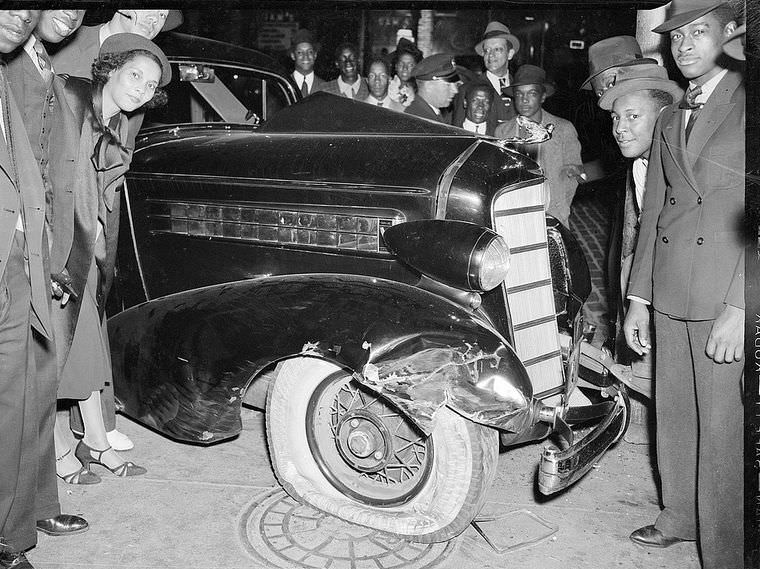
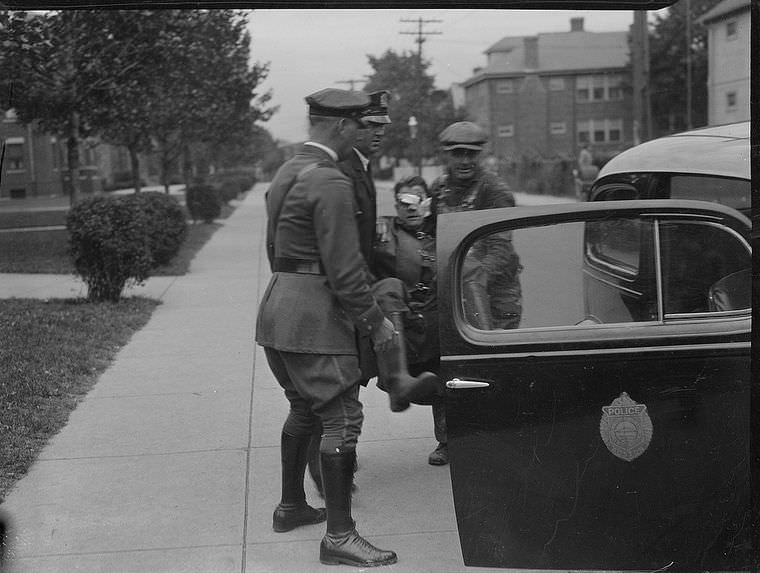
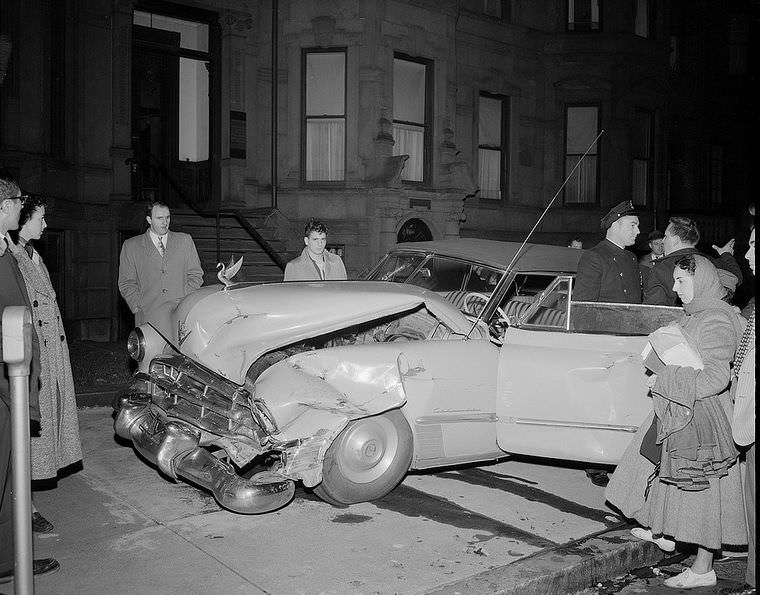
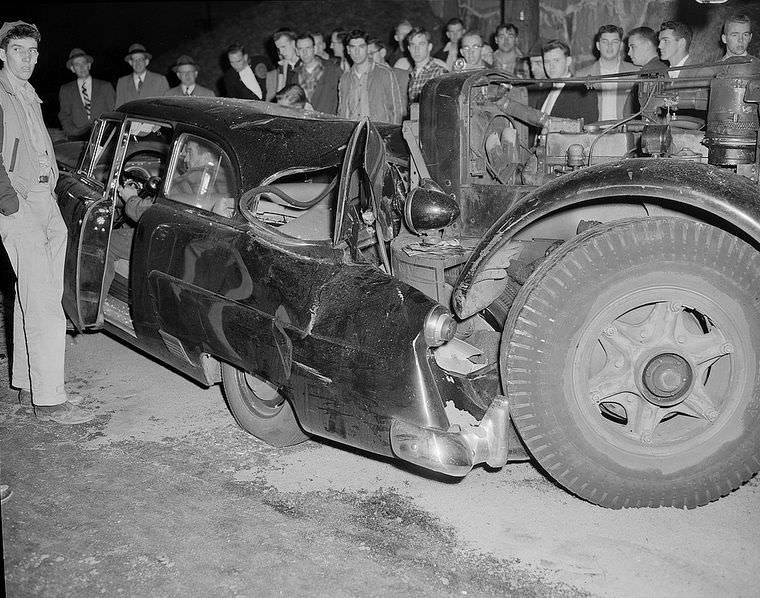
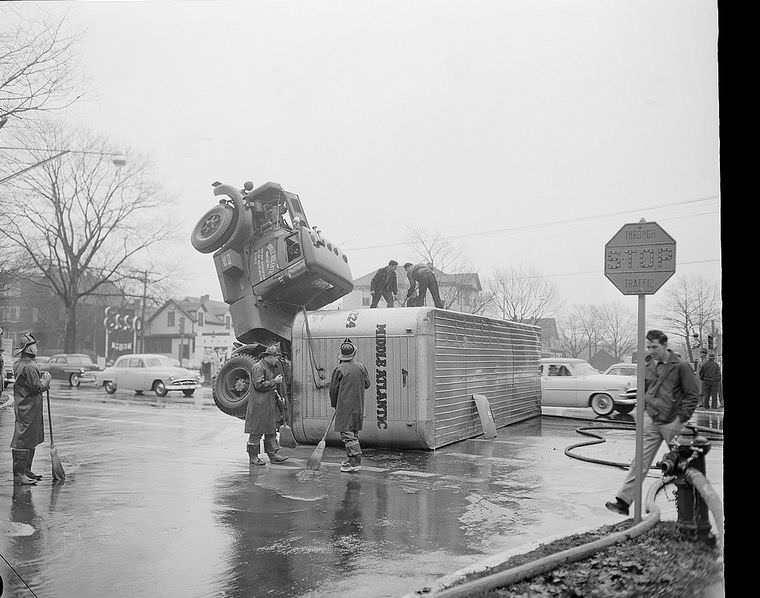
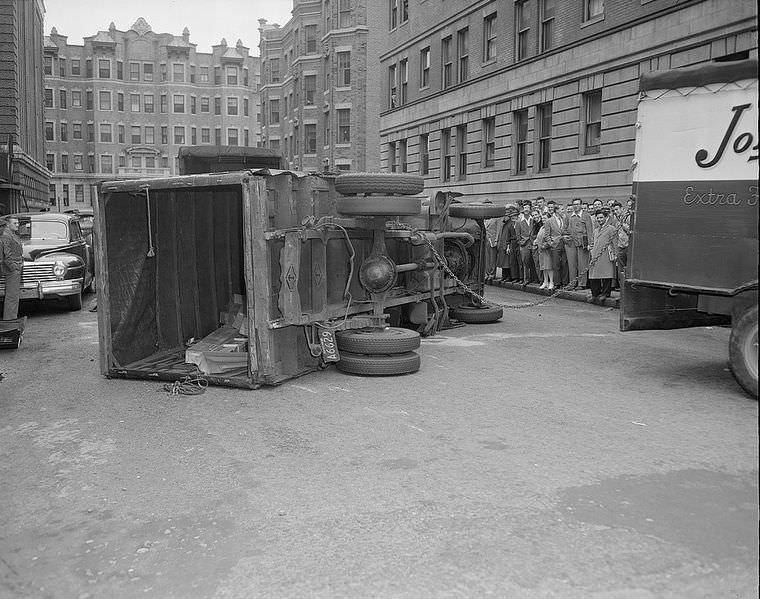
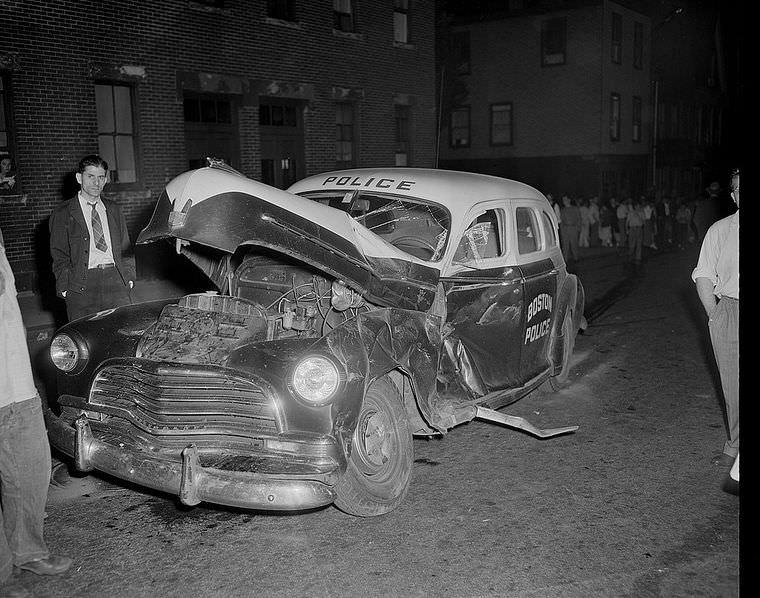
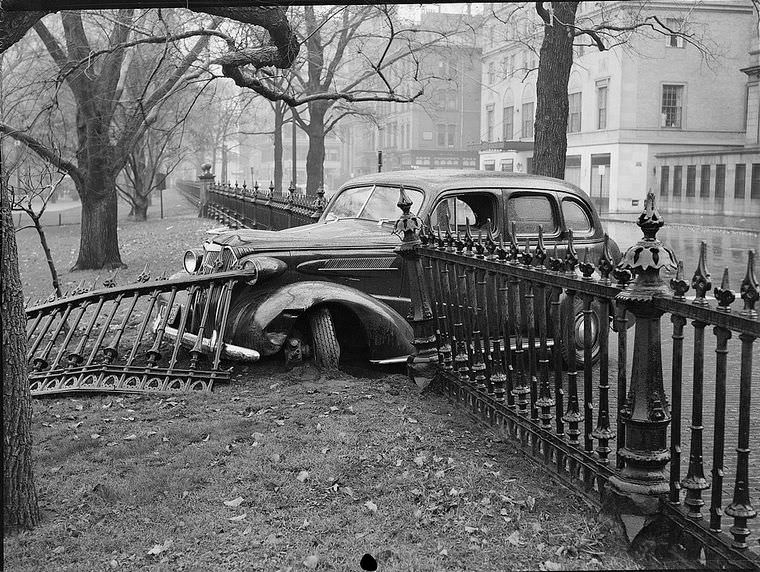
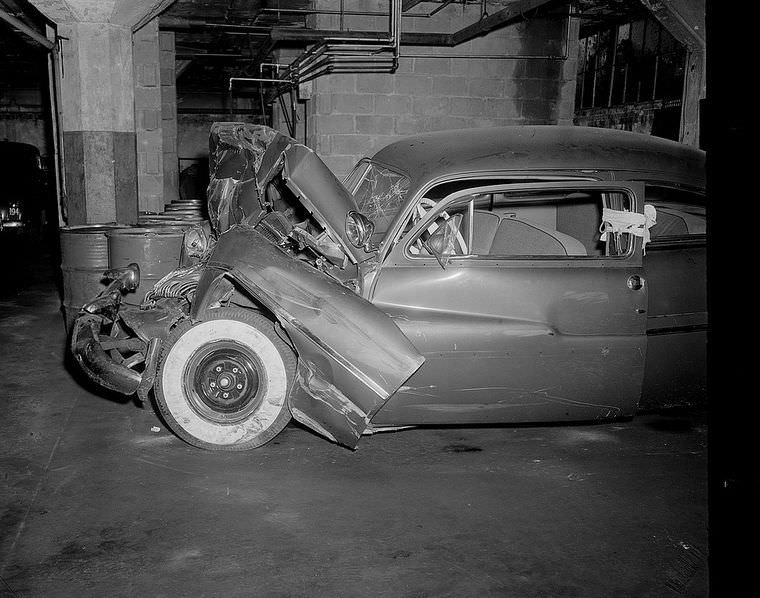
The vintage photographs collected here document real accidents from that decade. They show the aftermath of crashes on city streets, rural roads, and highway routes across the country.
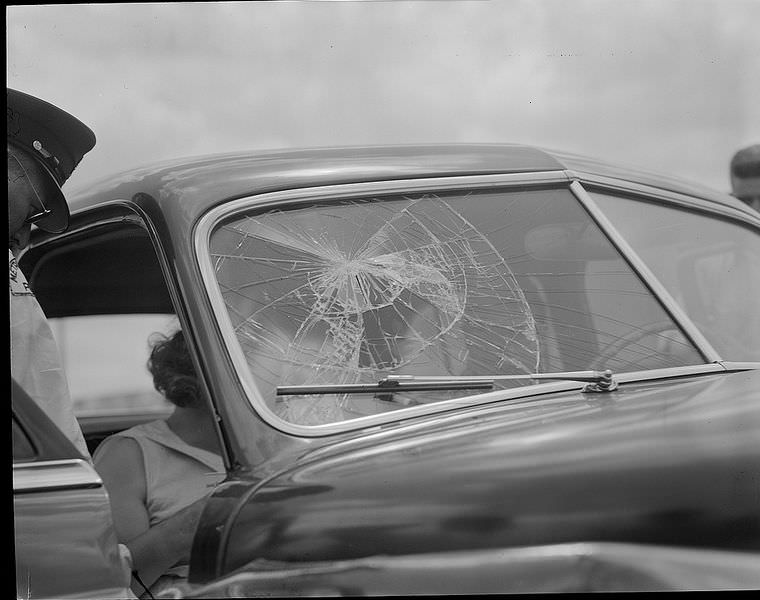
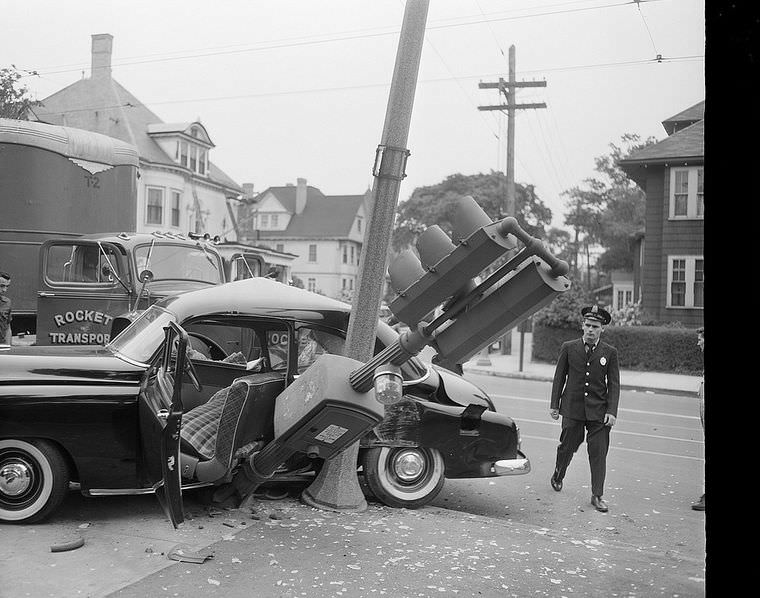
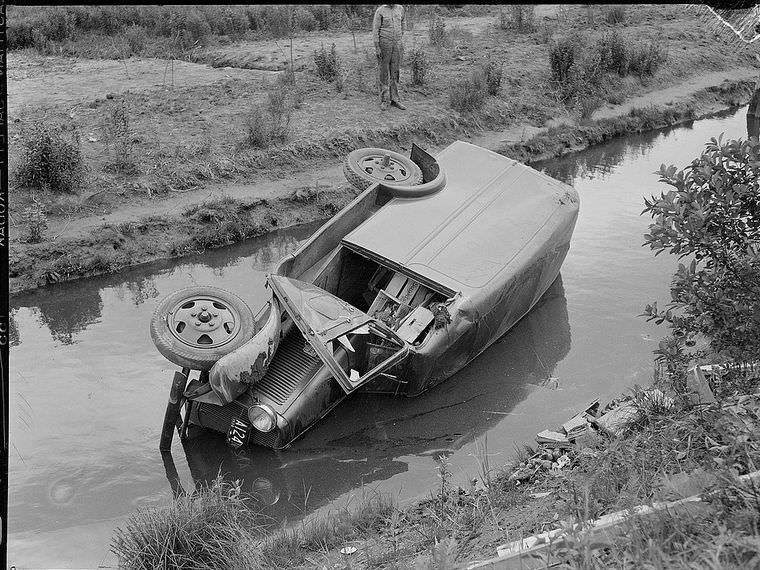
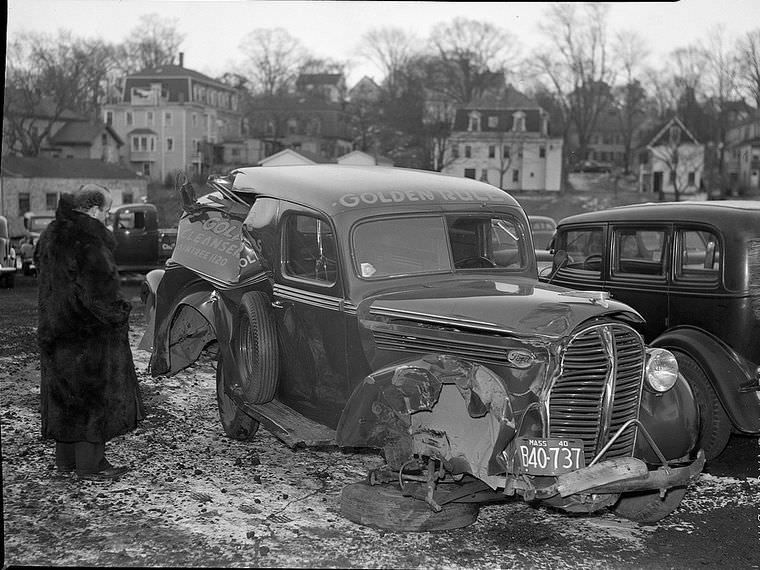
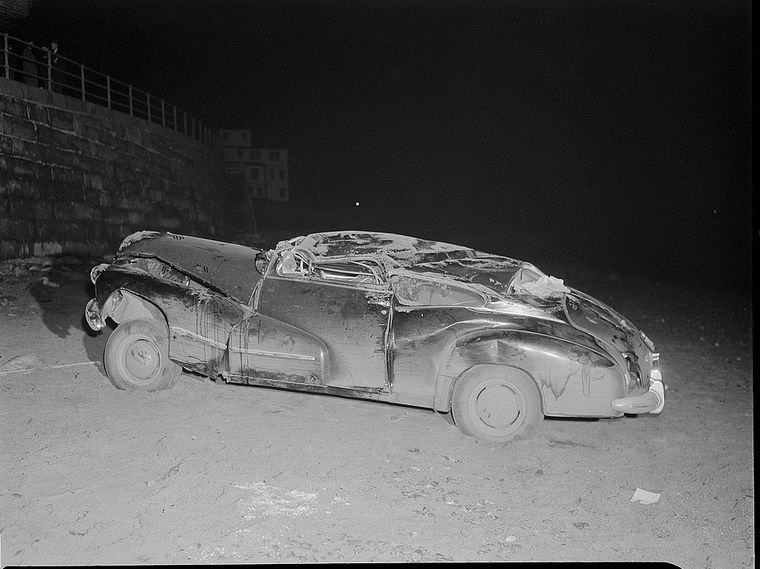
The wrecked metal in these images reflects the limits of 1940s vehicle construction. There was no engineering built into these cars to redirect or absorb crash forces away from the passenger compartment. The car simply deformed — and so did the people inside it.
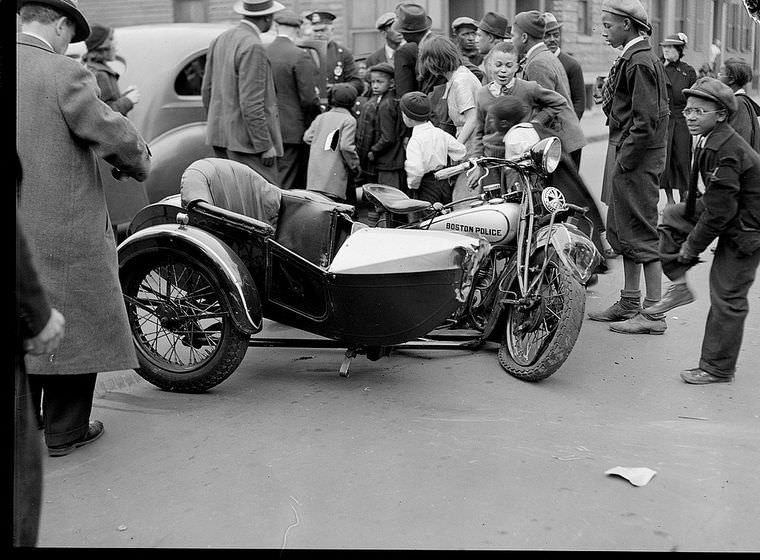
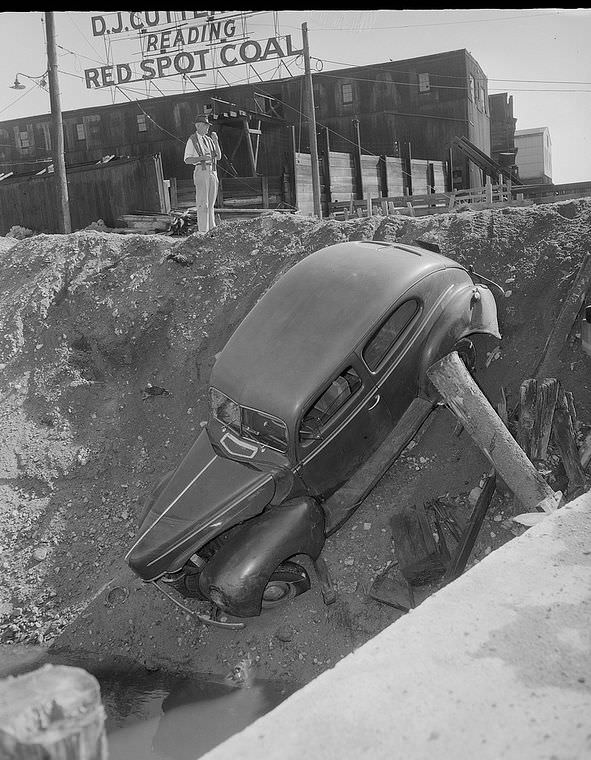
Steering systems in 1940s cars required significant physical effort and gave drivers far less precise control than modern power steering. Drum brakes were standard, and they were slower and less reliable than the disc brakes used today — especially in wet conditions. Stopping distances were long, and in an emergency, the car often didn’t respond the way the driver needed it to.

Night driving carried its own dangers. Headlight technology was limited, and road lighting outside of major city centers was sparse or nonexistent. Drivers navigating dark rural routes had little warning of curves, intersections, or obstacles ahead.
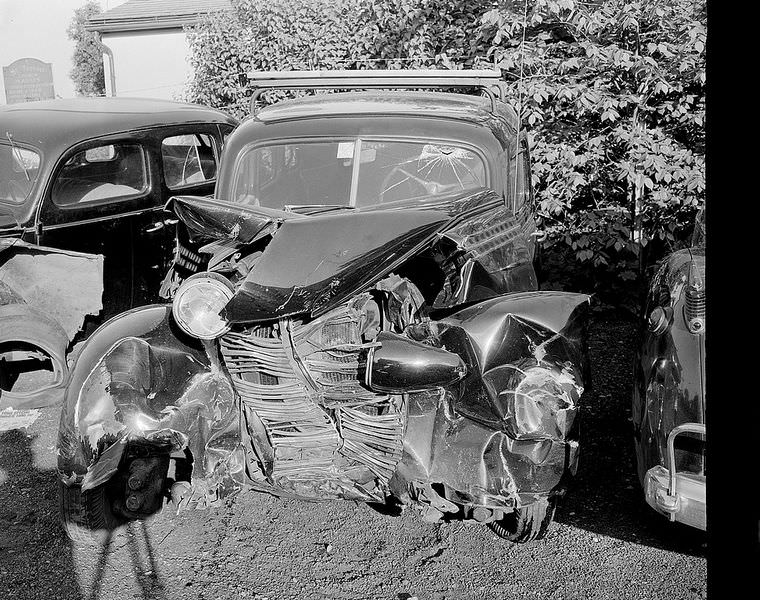
Tire technology was also far behind what drivers rely on today. Blowouts were common, and a sudden tire failure at speed often meant losing control with no way to recover. The combination of poor tires, hard-to-manage steering, and unreliable brakes made high-speed driving genuinely unpredictable.
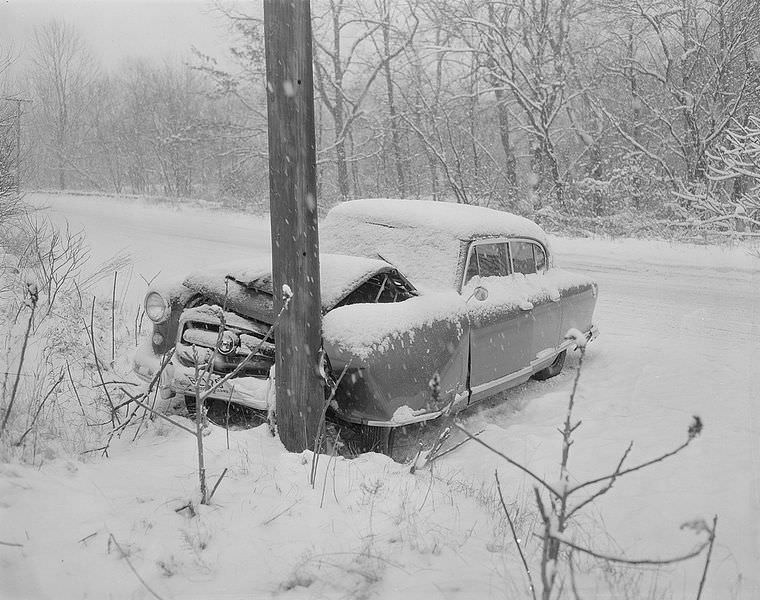
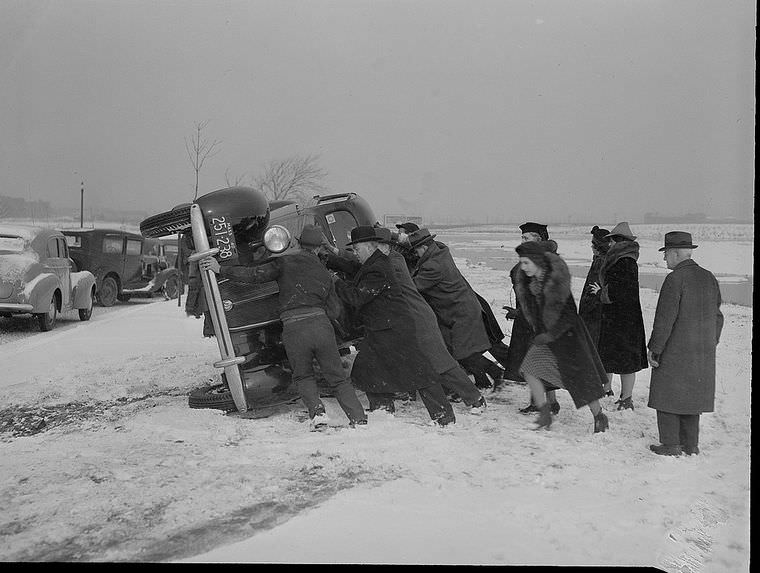
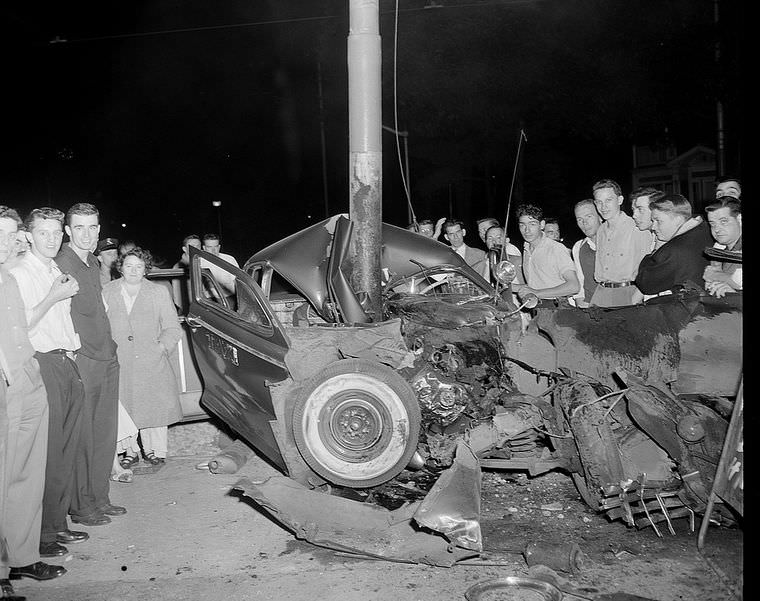
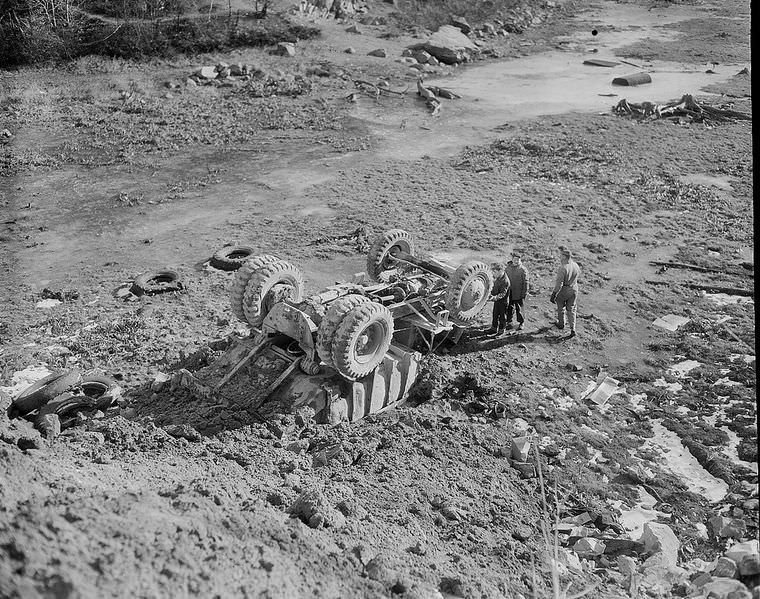
Accident scenes drew crowds of onlookers, and local police and fire departments were often the first — and only — emergency responders. Ambulances existed but were not always nearby, and paramedic training as a formal profession did not yet exist. Bystanders frequently had to manage injured victims on their own while waiting for help to arrive.
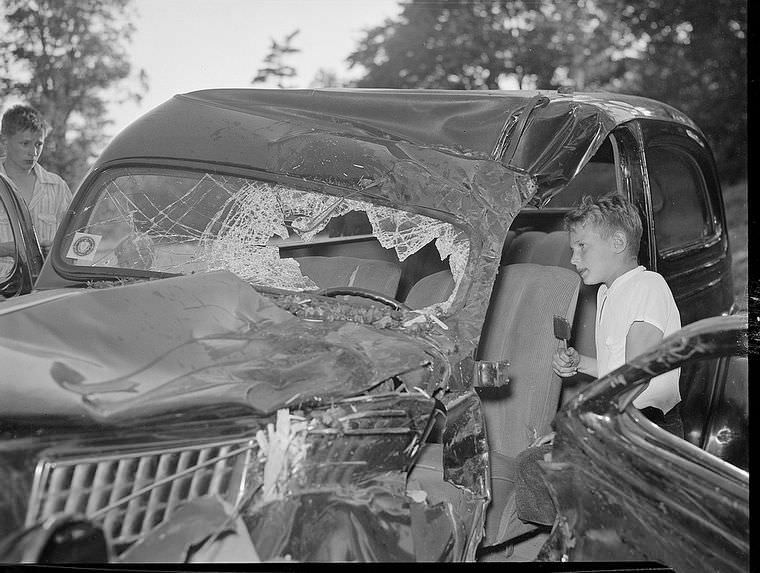
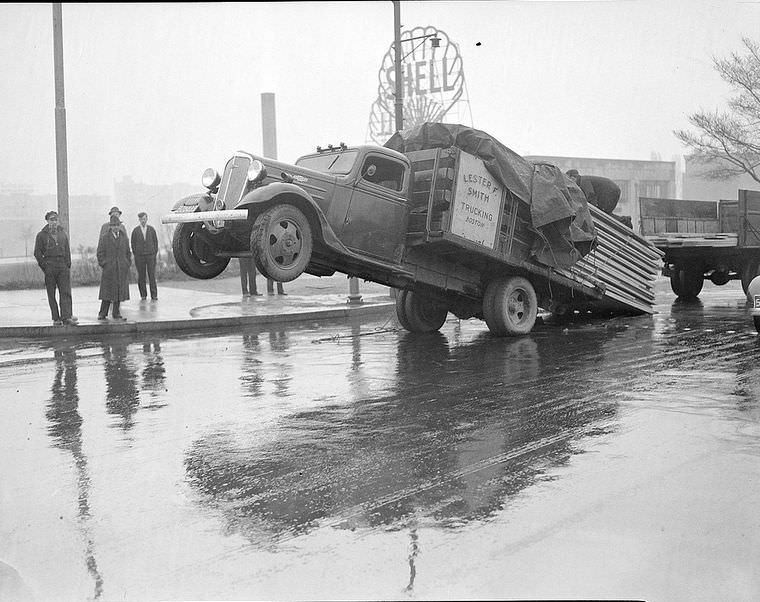
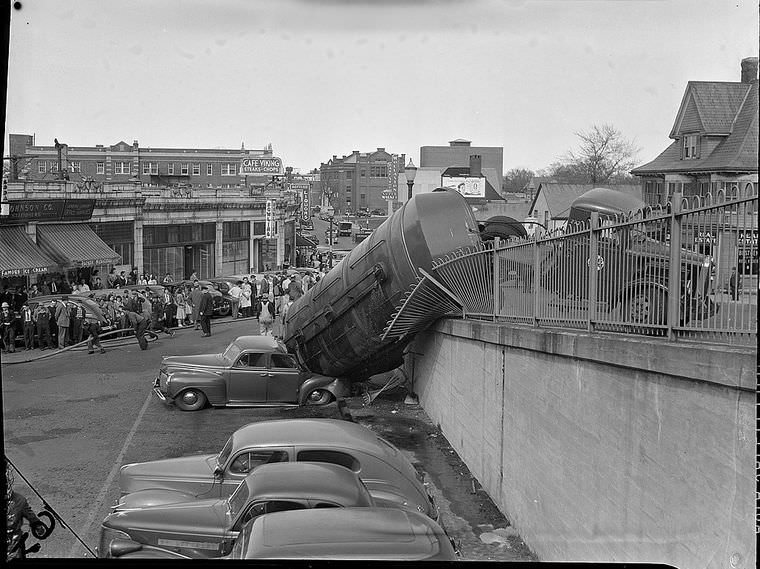
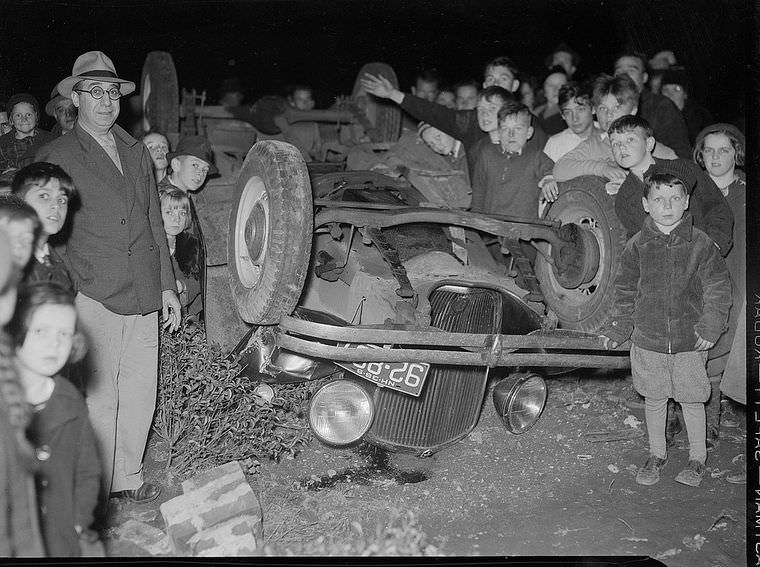
Photographs of accident scenes were commonly taken during this era — by police, press photographers, and sometimes curious locals. These images served as records for insurance claims, legal cases, and news coverage. Some were also used in public safety campaigns to warn drivers about reckless behavior.
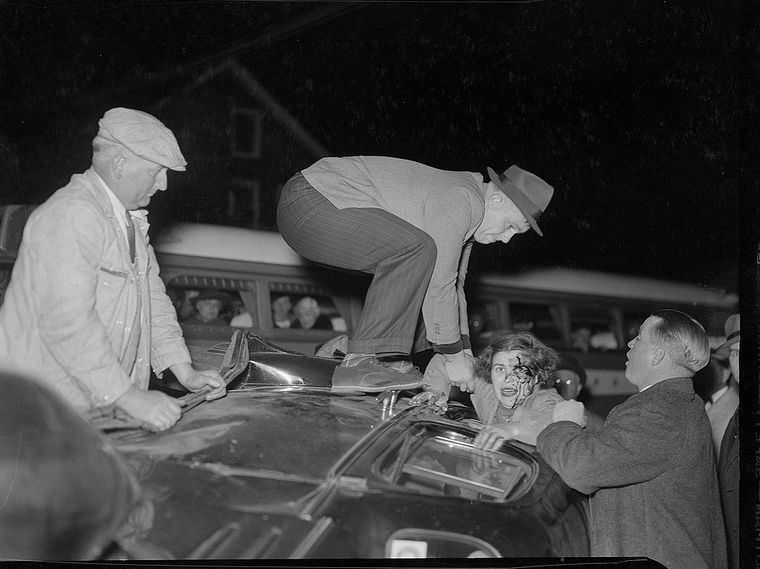
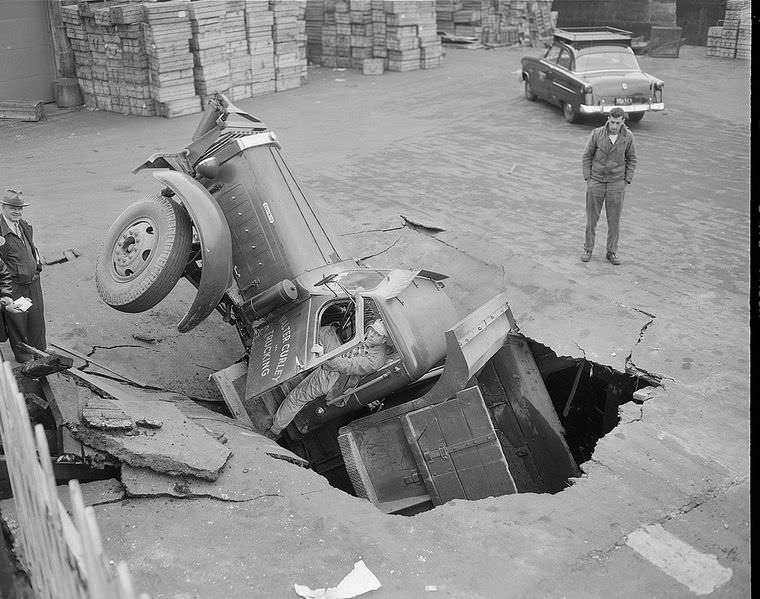
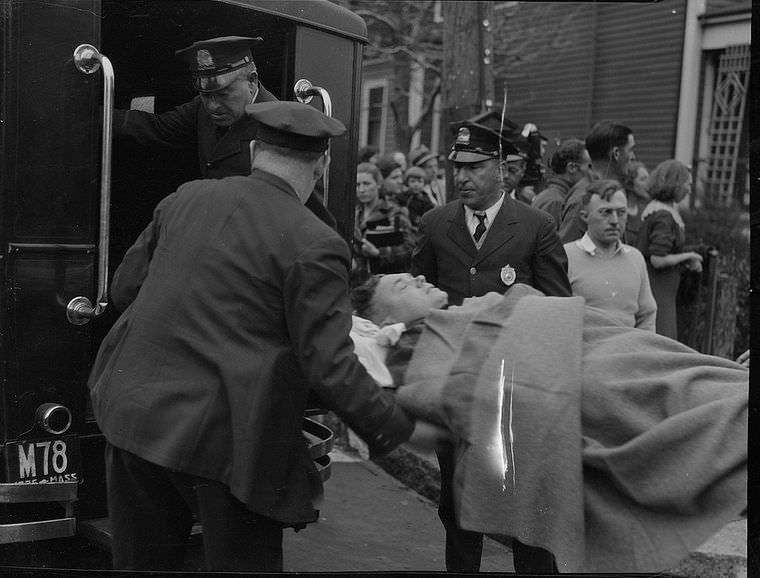
Head-on collisions between two vehicles were among the deadliest types of crashes in the 1940s. Without divided highways separating opposing lanes of traffic, two cars traveling toward each other on the same road had nothing but a painted line — or nothing at all — between them.
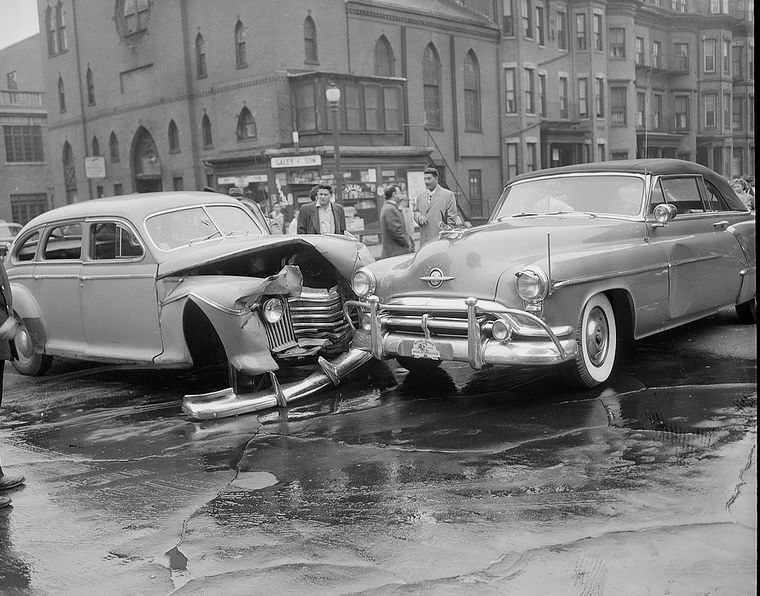
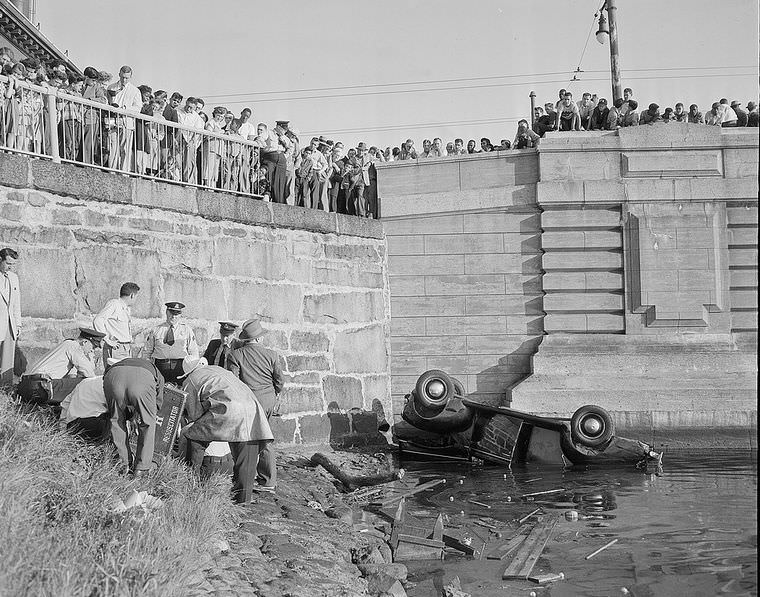
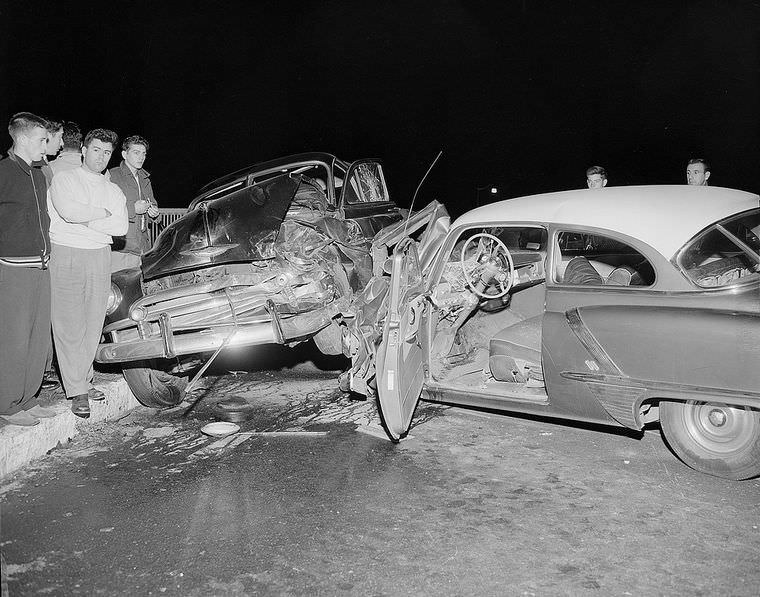
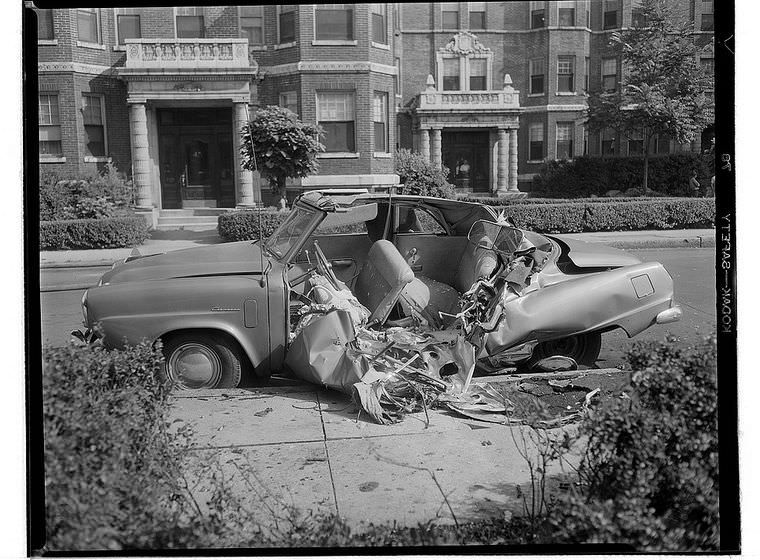
Rollovers were also a frequent outcome of accidents during this era. Early car designs had high centers of gravity and no roof reinforcement. When a car rolled, the roof often collapsed, with devastating consequences for anyone inside.
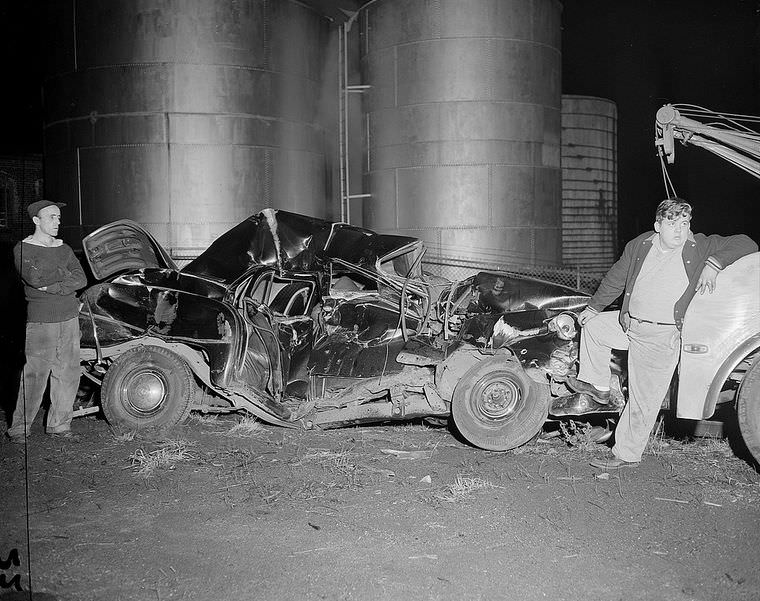
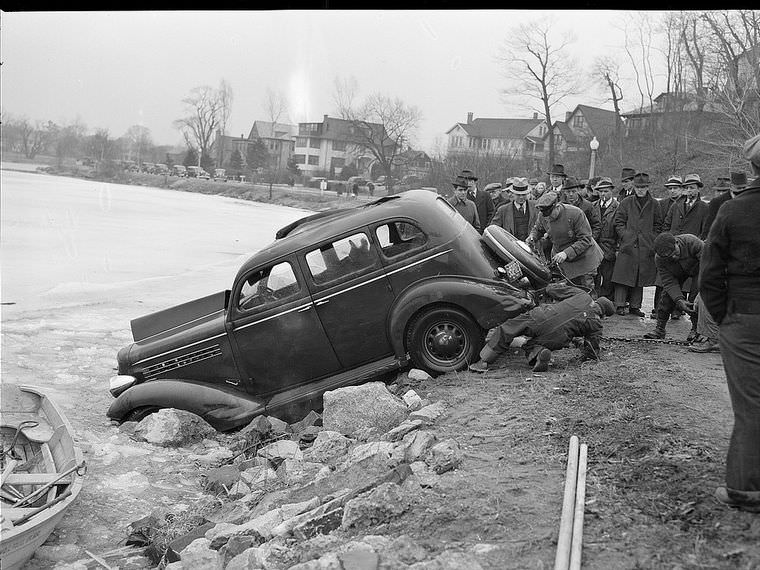
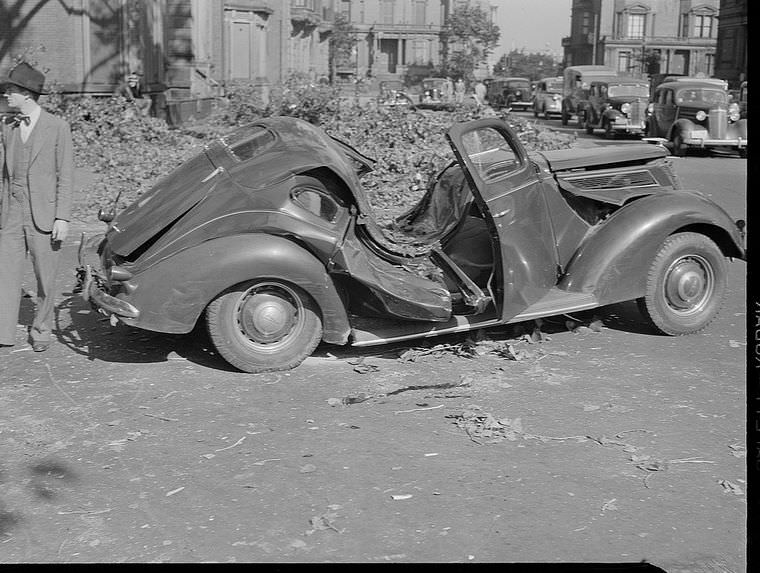
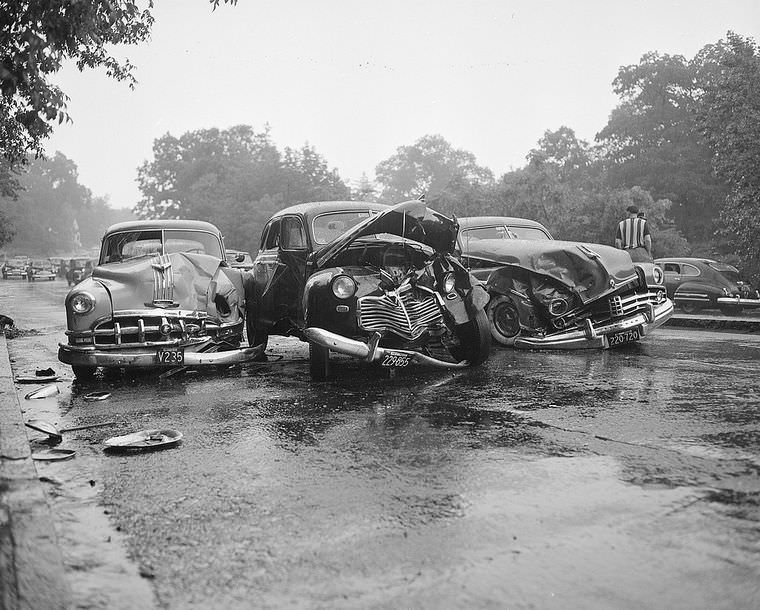
These photos stand as a direct record of what the roads claimed during a decade when safety was not yet a design priority. The damage visible in each image is not just the result of speed or bad luck — it is the result of a system, from car design to road planning to driver training, that had not yet been built around protecting human life.