
Transportation has always driven human ingenuity — sometimes in wildly unexpected directions. While the cars, trains, and buses we know today followed a fairly straight path of development, history is full of inventors and engineers who went in completely different directions. Some of their creations were genuinely ahead of their time. Others were spectacularly impractical. All of them are fascinating. Here is a look at some of the most bizarre and unusual vehicles ever built, many of which you have almost certainly never seen before.
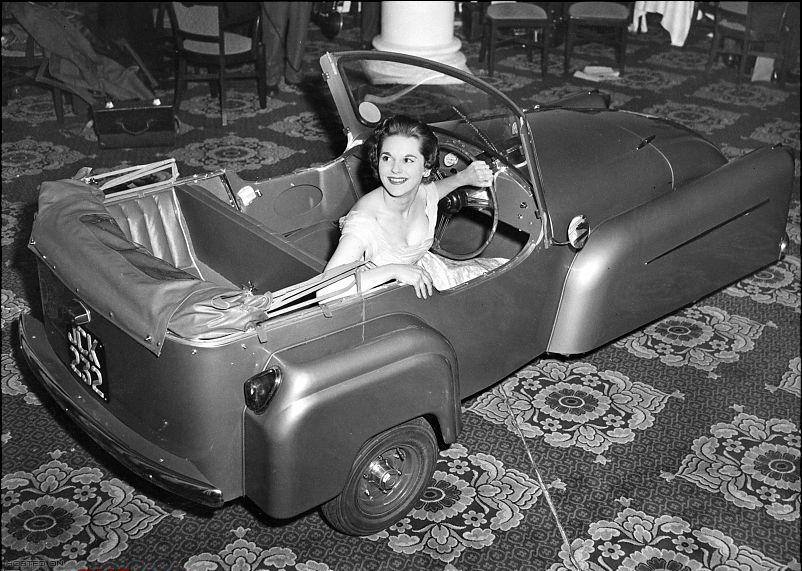
One of the most eye-catching vehicles from early 20th-century Britain was the Bond Minicar, a tiny three-wheeled car that became popular in the post-war years when fuel was expensive and roads were crowded. The 1956 model was a stripped-down, lightweight machine built for city driving, not comfort or speed.
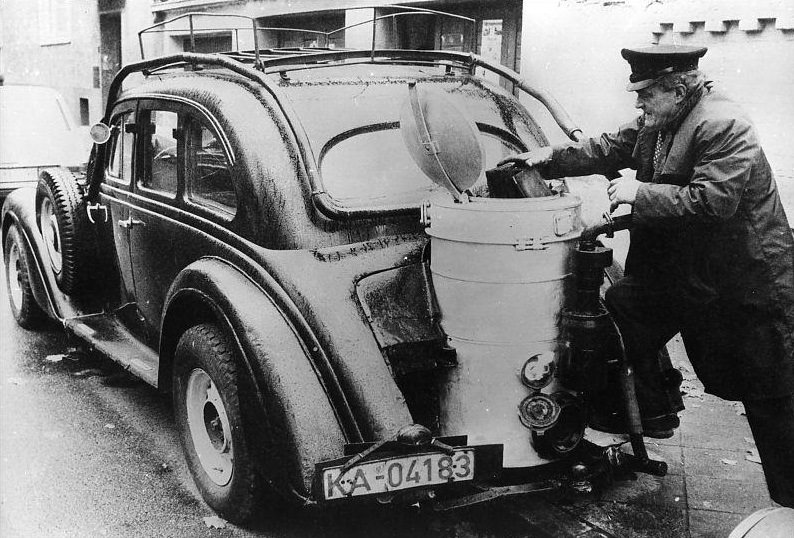
Fuel shortages during World War II forced engineers to get creative. In Germany, some cars were retrofitted with wood-gas generators — devices that burned wood to produce a gas that could power an internal combustion engine. It was slow, bulky, and far from elegant, but it worked when petrol was impossible to find.
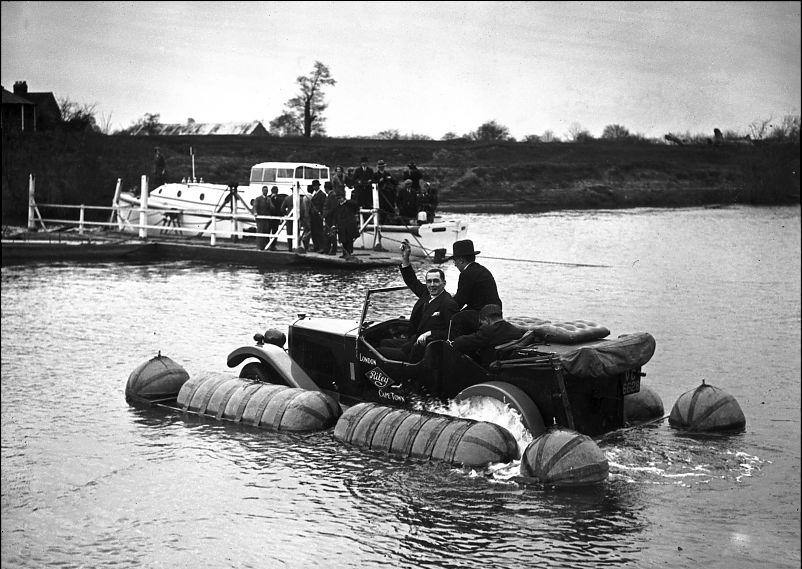
The idea of a car that could also travel on water captured the imagination of many inventors throughout the 20th century. One early attempt used a portable balloon apparatus attached to a standard Riley car, with small paddles fitted to the rear wheels to push the vehicle through the water. Captain Malin put this amphibian contraption to the test on the River Severn.
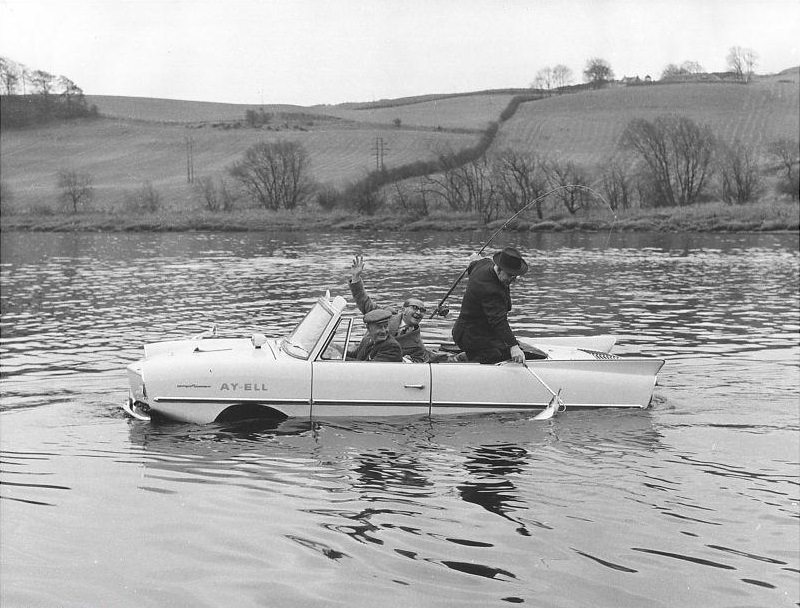
A more refined amphibious vehicle came in the form of the Amphicar, a German-built machine fitted with a Triumph Herald engine. It could be driven on land like a normal car, then steered into a river or lake and propelled through the water at up to 7.5 knots. One owner used it as a fishing boat on the River Tay in Scotland at the start of salmon season.
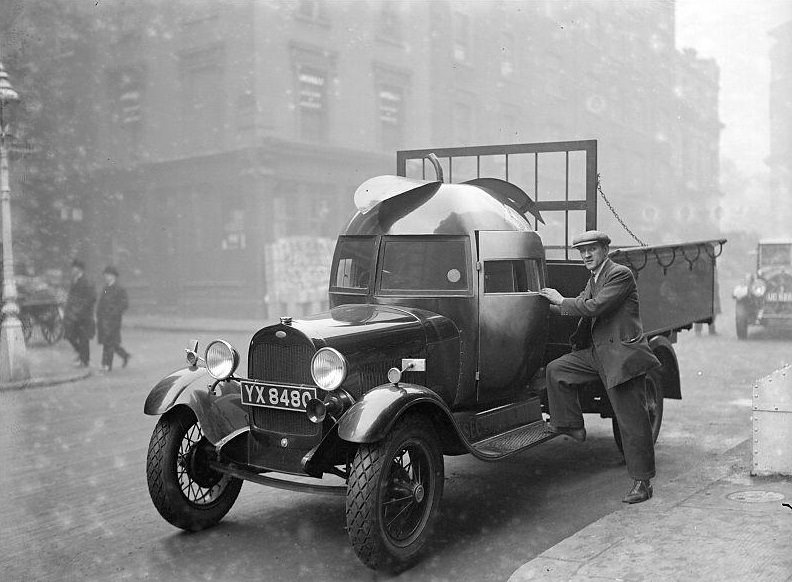
Not every unusual vehicle was built for adventure or war. Some were simply built for advertising. London’s Covent Garden once saw a fruit importer’s lorry designed to look exactly like a giant apple, driver’s cab and all. Novelty delivery vehicles like this one were a well-known sight on British streets during the mid-20th century.
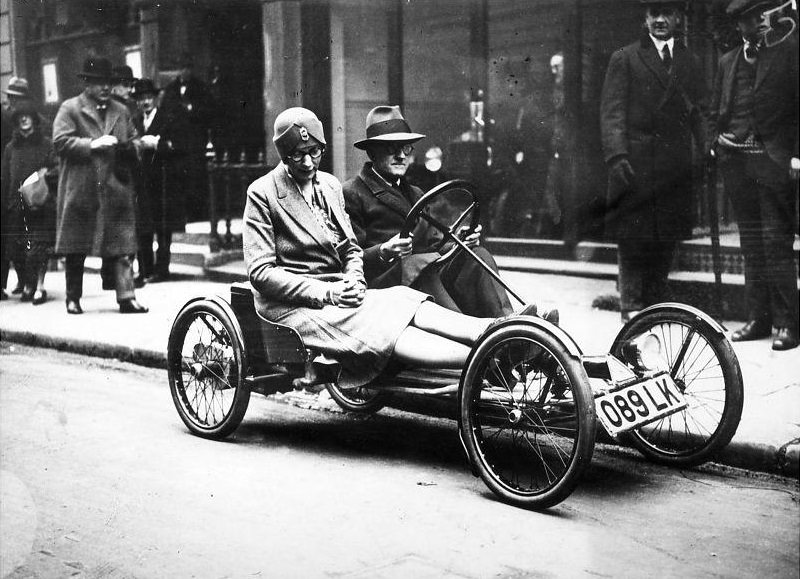
Electric vehicles are often considered a modern invention, but the Auto Red Bug proves otherwise. This electric two-seater runabout was powered by a 16-volt battery and could reach 12 mph. It was small enough to weave through London streets, and represented a real — if modest — attempt at battery-powered personal transport long before it became mainstream.
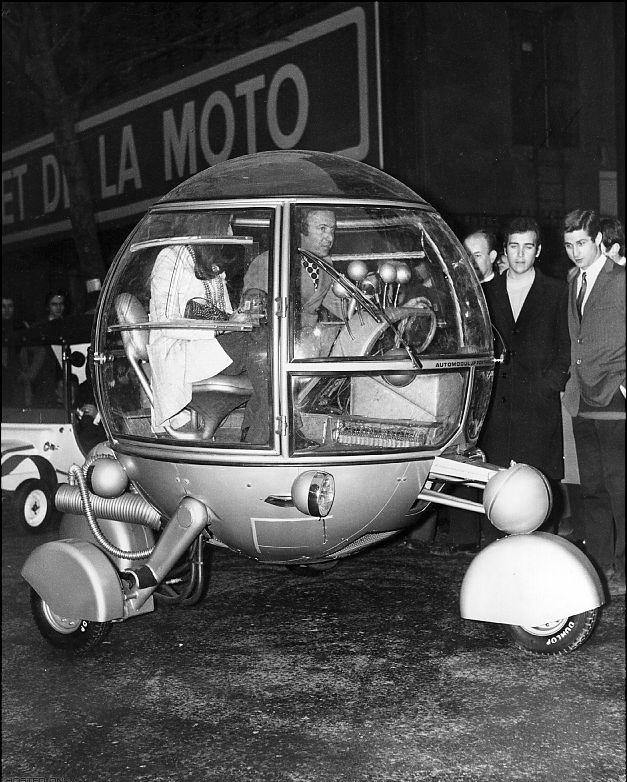
Paris in 1968 was a city of bold ideas, and the Pussycar Automodul fit right in. Designer J. P. Ponthieu drove his futuristic creation at the opening of the first Racing Car and Cycle show in the French capital, turning heads with its unconventional form.
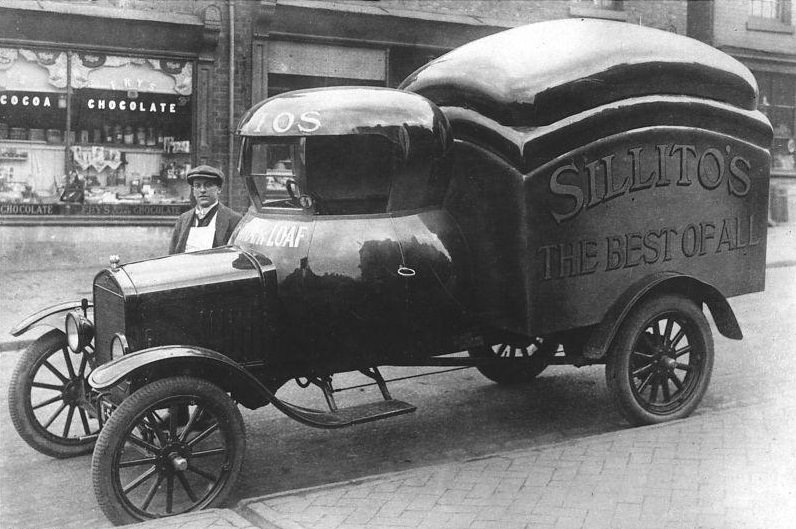
Baker Mr. Sillitoe had a flair for the theatrical. His delivery van was built to look like two giant loaves of bread — the driver’s cab shaped like one loaf, the cargo van like another. It was a literal rolling advertisement for his bakery business, and it certainly got attention on the road.
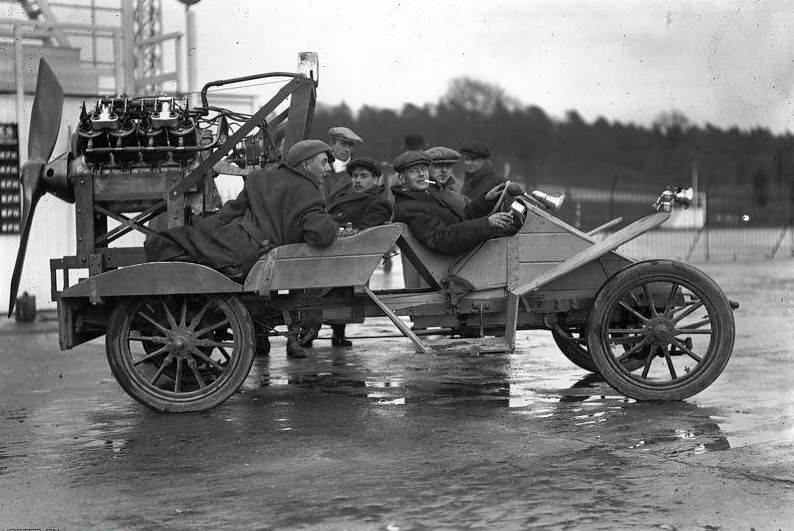
During World War I, engineers at Brooklands race track in England experimented with fitting a large propeller to the front of a standard motor car. The result was the Sizaire-Berwick Wind Wagon — an armored car design that used aircraft-style propulsion to reach higher speeds on the battlefield.
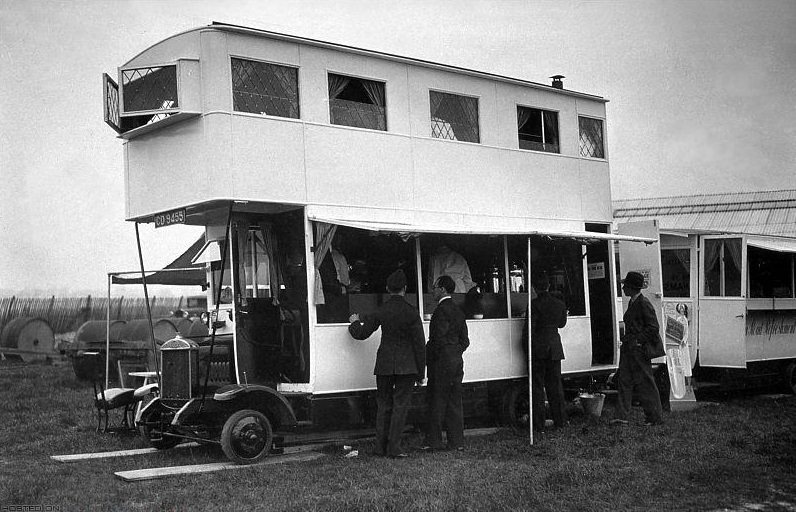
Public transportation has seen its own share of creative reinvention. At some point, someone thought it was a good idea to add a snack bar inside a bus, turning the daily commute into something closer to a diner experience. Passengers could order drinks and food without ever getting off.
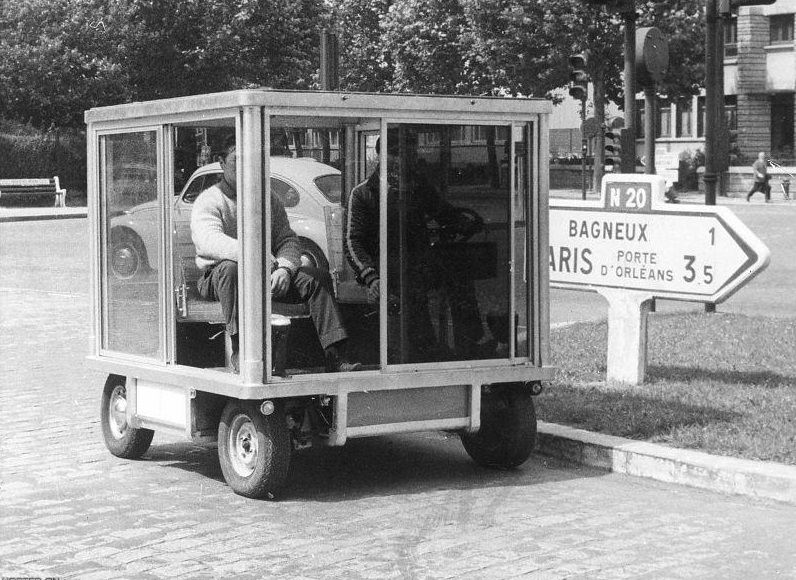
The Quasar-Unipower was one of the most visually striking micro-cars ever produced. Built by truck manufacturer Universal Power Drives and based on the Mini, it was essentially a glass box on wheels — just 1,624mm long. Its transparent design allowed entry from all four sides, and it could push up to 80 kilometers per hour despite its toy-like appearance.
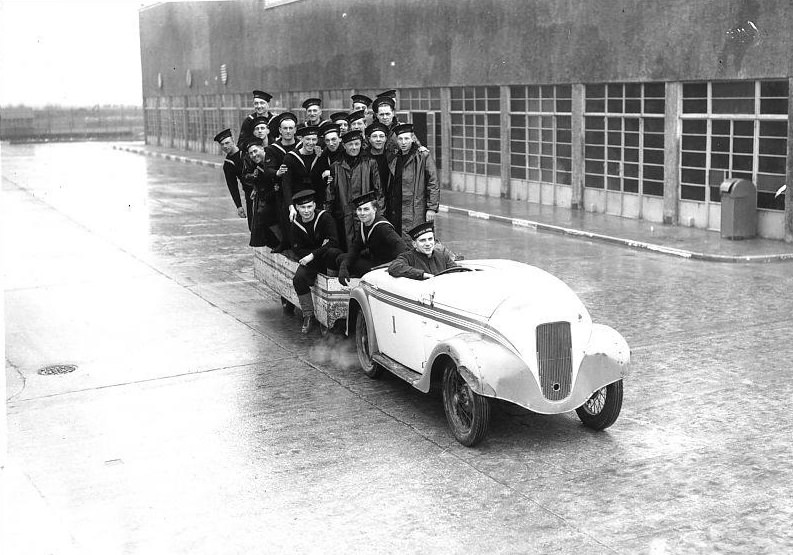
Military training facilities found clever ways to move large numbers of recruits around their grounds. At HMS Royal Arthur in Skegness — a training centre that was formerly a Butlin’s holiday camp — navy recruits were transported across the site in a car hitched to an open trailer, a practical solution that doubled as a bit of an odd spectacle.
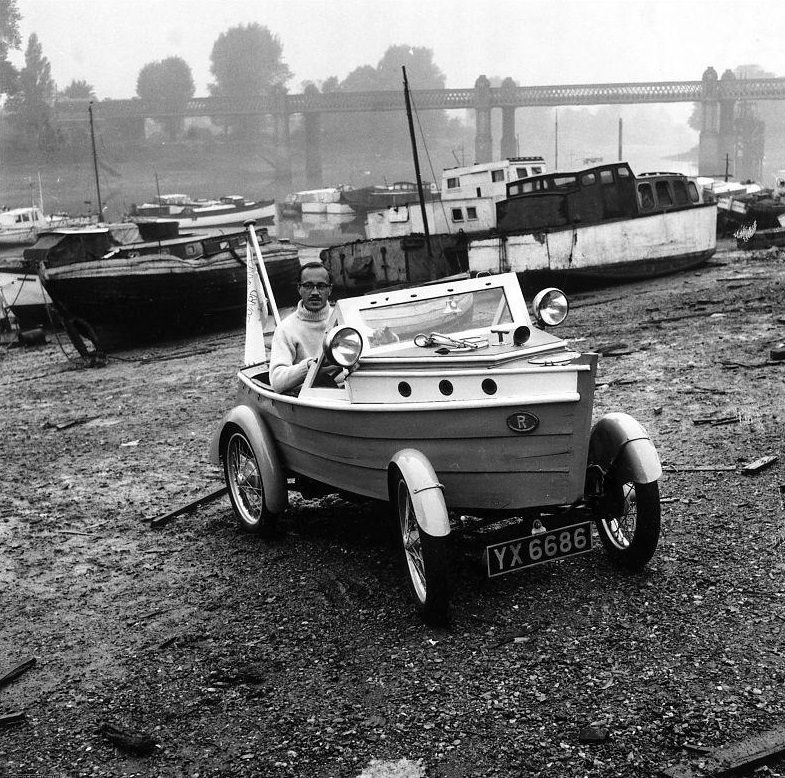
Clive Talbot took a different approach to car design altogether — he built one using the body of a boat. The result was a road vehicle that looked like it belonged on the water, a hybrid of two very different transport worlds mounted on a standard set of wheels and driven on ordinary roads.
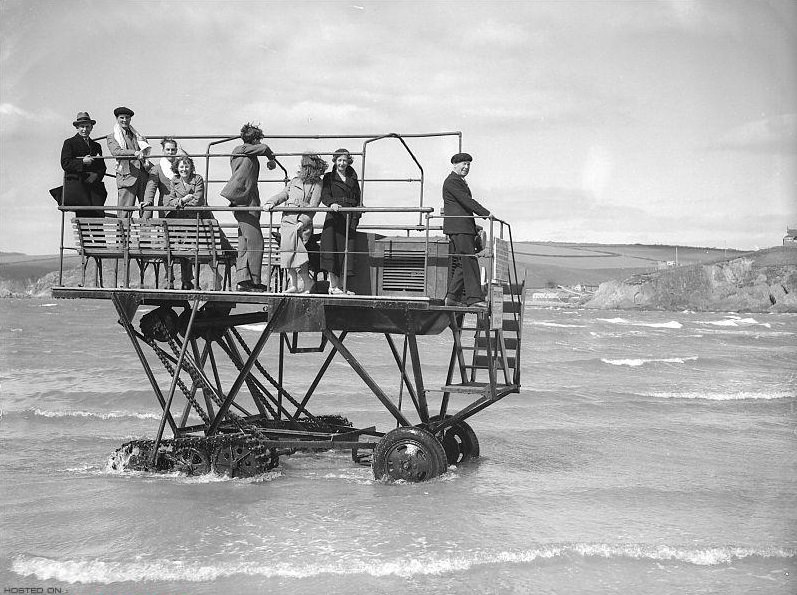
Getting from the mainland at Bigbury in Devon to Burgh Island — just a quarter of a mile offshore — required a remarkable vehicle. A caterpillar-driven ferry powered by a 24-horsepower engine carried holidaymakers across the shallow water between the two, rolling directly through the sea on its tracked undercarriage.
Dr. Manfred Curry developed the Curry-Landskiff, a human-powered land vehicle that used a rowing or cranking motion to generate forward momentum. Despite being powered entirely by its rider, the Landskiff could reach speeds of up to 35 miles per hour — a remarkable figure for a machine with no engine.
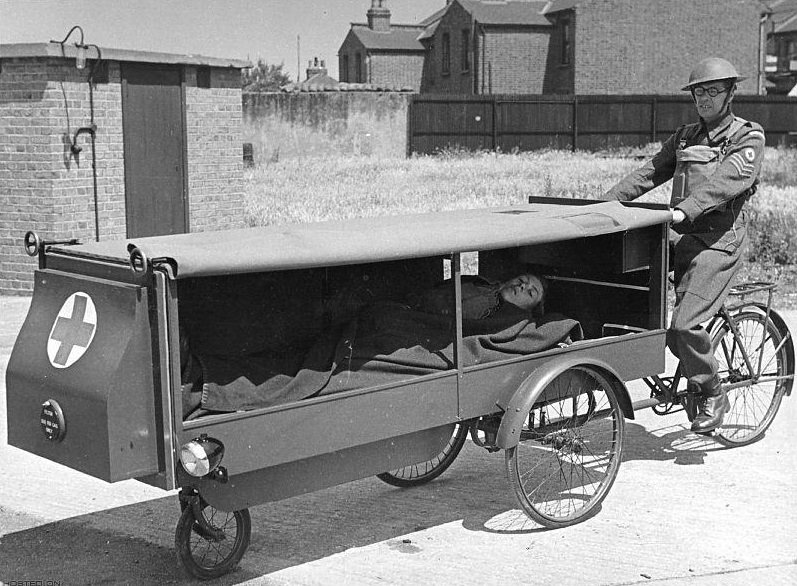
World War II brought some unusual civil defense inventions to Britain. Among them was a one-man anti-gas ambulance and resuscitator, built specifically for use by the Home Guard. It was a compact, single-operator machine designed to help casualties in the event of a chemical weapons attack on British soil.
The Douglas Vespa was a British-licensed version of the Italian Vespa scooter, manufactured by the Douglas motorcycle company in Bristol. In post-war Britain, small and fuel-efficient two-wheelers like this were enormously popular, offering cheap and nimble transport at a time when car ownership was still out of reach for most people.
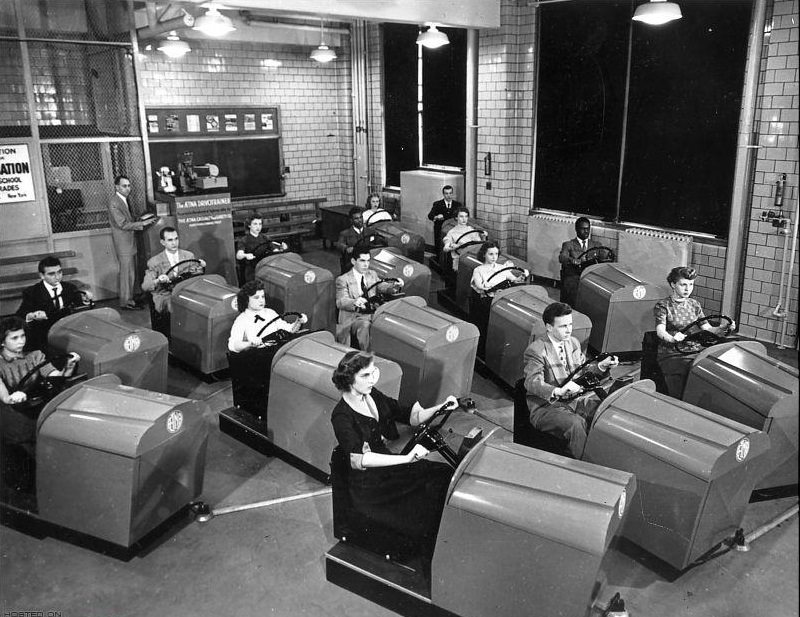
Driver education took a high-tech turn in New York when Brooklyn High School students began using the Aetna Drivotrainer. This simulator placed students in mock car seats where they operated real controls while a projected film showed live traffic conditions on a screen in front of them — an early version of what we now call driving simulators.
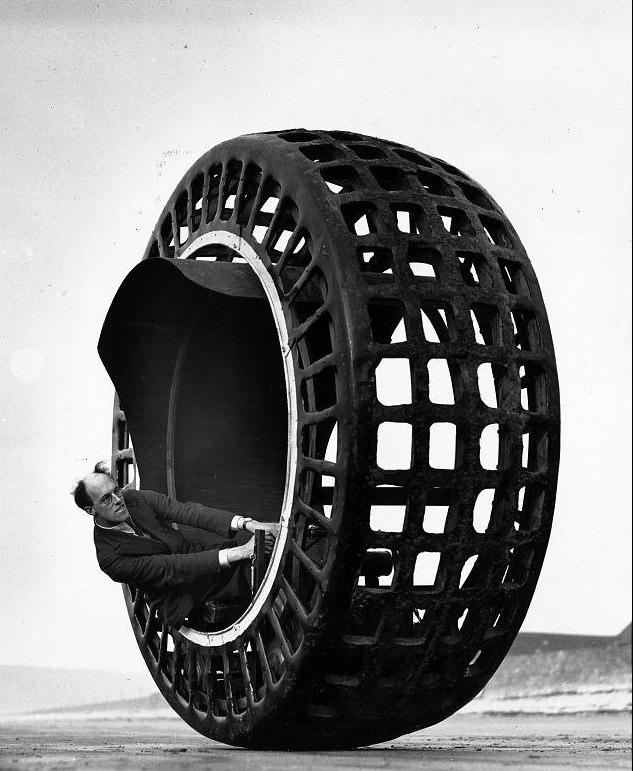
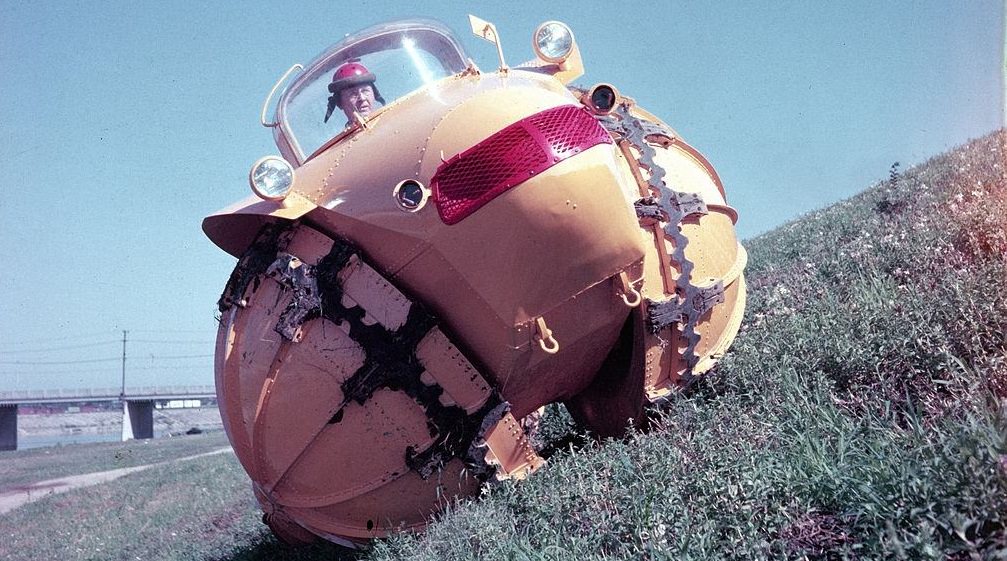
Perhaps the most visually bizarre vehicle on this entire list is the Dynasphere. Invented by J. A. Purves of Taunton and his son, it was a giant electrically-driven wheel with the driver sitting inside it. The 2.5 horsepower motor once pushed the Dynasphere to 25 miles per hour, though steering and control remained a serious challenge.
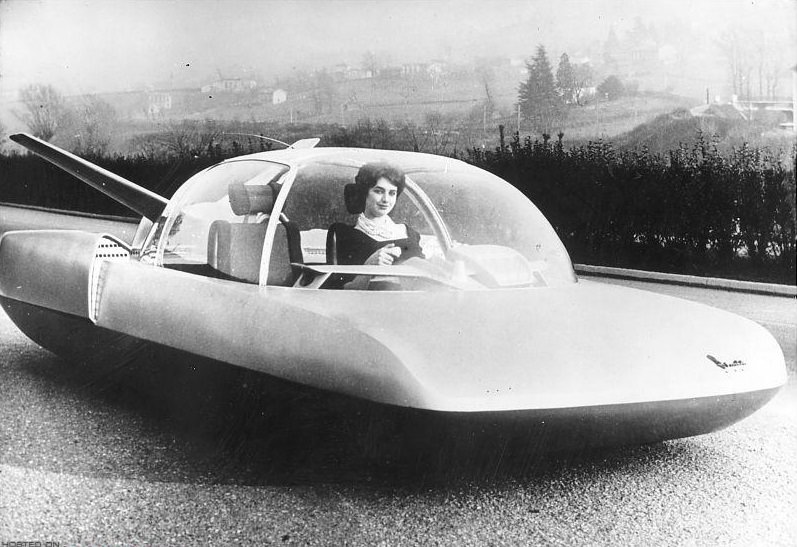
French car manufacturer Simca built the Fulgar as a concept car aimed at the year 2000. The design called for atomic power, radar guidance, and two-wheel balance maintained by gyroscopes at speeds over 150 kilometers per hour. It was a bold vision of the future that never made it past the show floor.
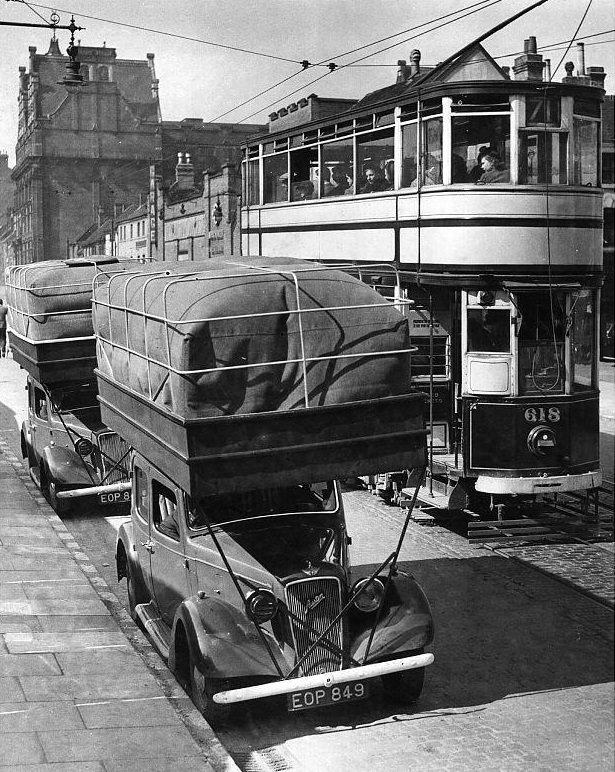
Wartime fuel shortages in Britain pushed taxi operators in Birmingham to run their cabs on gas rather than petrol. Large gas bags were mounted on the roofs of the taxis, providing enough fuel for roughly 15 to 20 miles before needing a refill. It was an awkward and ungainly solution, but it kept the taxis running.
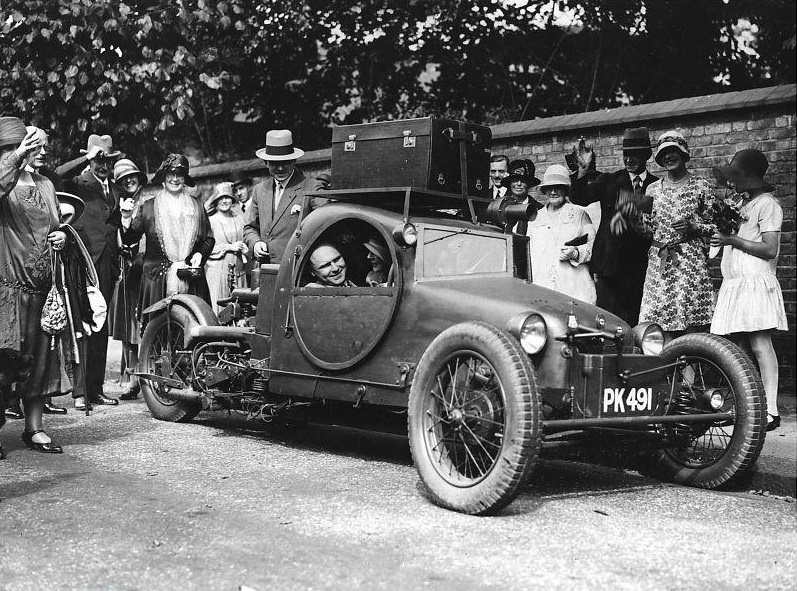
Mr. Graham built himself a three-wheeled car designed to look like an armored military vehicle and promptly used it to take his new bride on their honeymoon. The unconventional choice of getaway vehicle made for memorable photographs and a story that outlasted the honeymoon itself.
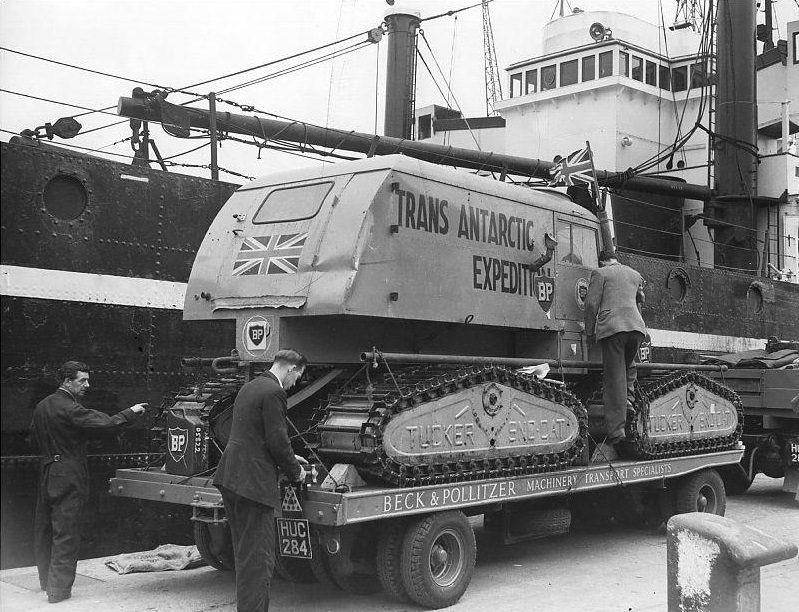
The Antarctic expeditions of the 20th century demanded vehicles that could handle some of the harshest terrain on earth. Haywire was one of the snowcats used by Dr. Vivian Fuchs and the Commonwealth Trans-Antarctic Expedition on their historic crossing of Antarctica. The vehicle arrived at Tilbury docks after the journey, shipped back from New Zealand via Antwerp.
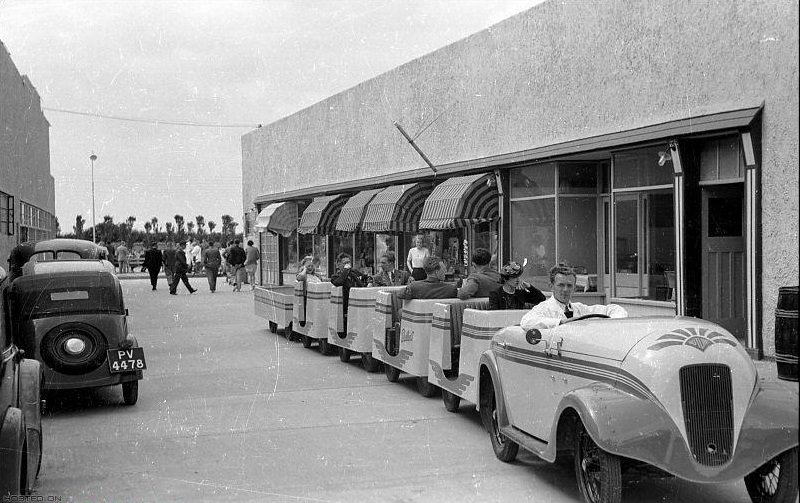
Holiday camps were a British institution, and Butlin’s in Skegness was one of the most famous. The camp ran its own miniature train to move guests around the grounds, a popular attraction in its own right that gave the holiday experience a sense of fun and novelty.
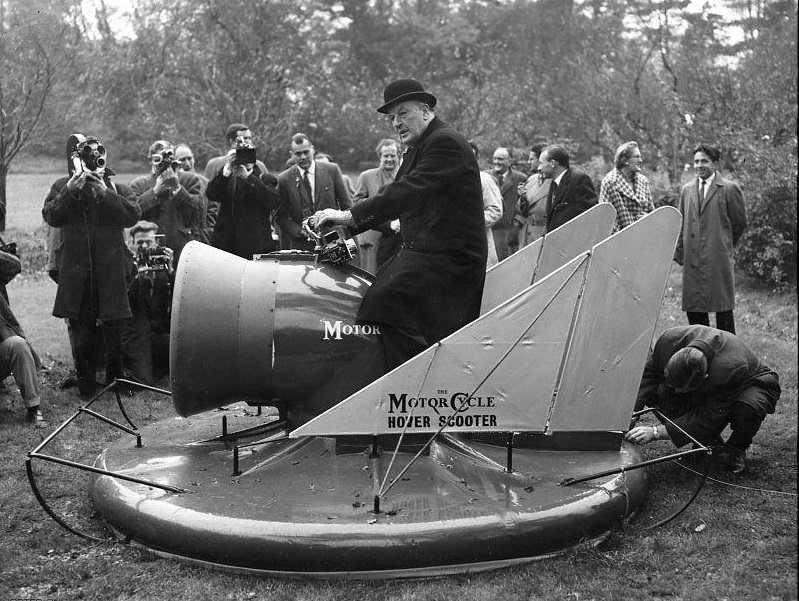
Pioneer British aviator Lord Brabazon turned his attention to ground-level transportation with an early demonstration of the hover scooter in Long Ditton, Surrey. Brabazon, who had a long history of testing new machines, brought the same enthusiasm to this low-altitude vehicle as he had to aviation.
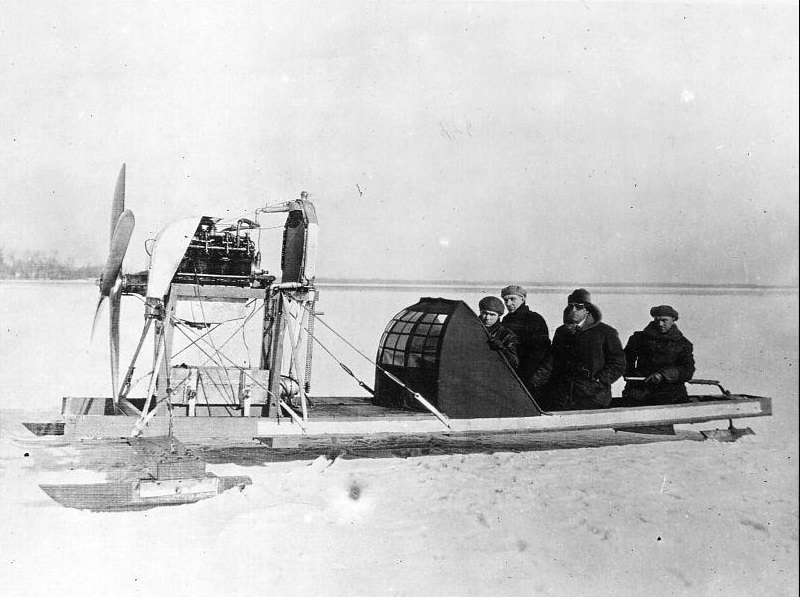
Dr. Thadeus D. Smith of Wisconsin invented a motor iceboat capable of crossing frozen lakes at extraordinary speeds. During testing on a frozen lake, the vehicle reached 70 miles per hour — a remarkable achievement for an ice-bound machine driven by a standard motor.
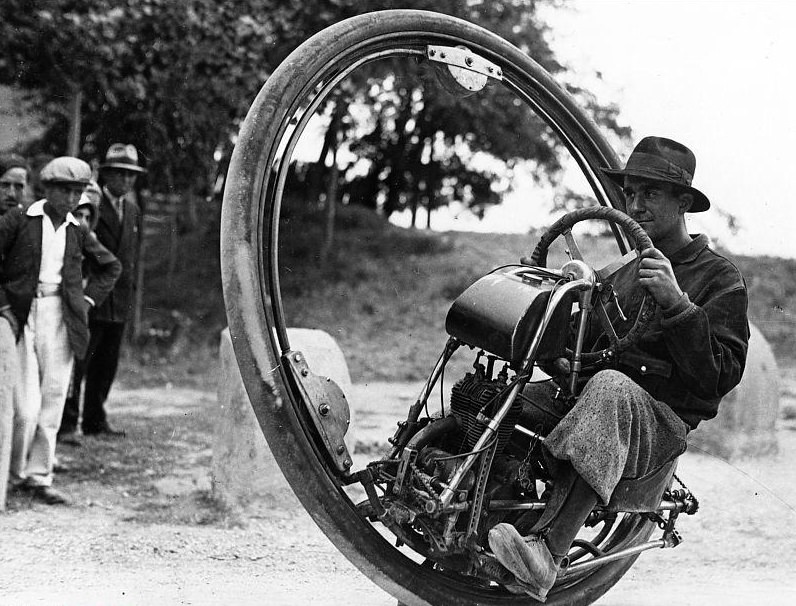
Swiss engineer M. Gerder developed a unique motorcycle he called the Motorwheel. Rather than riding on a conventional tyre, the motorcycle’s wheel ran along a rail placed inside a solid rubber tyre. Gerder rode this machine from Arles in France all the way to Spain, proving it was capable of real-world travel.
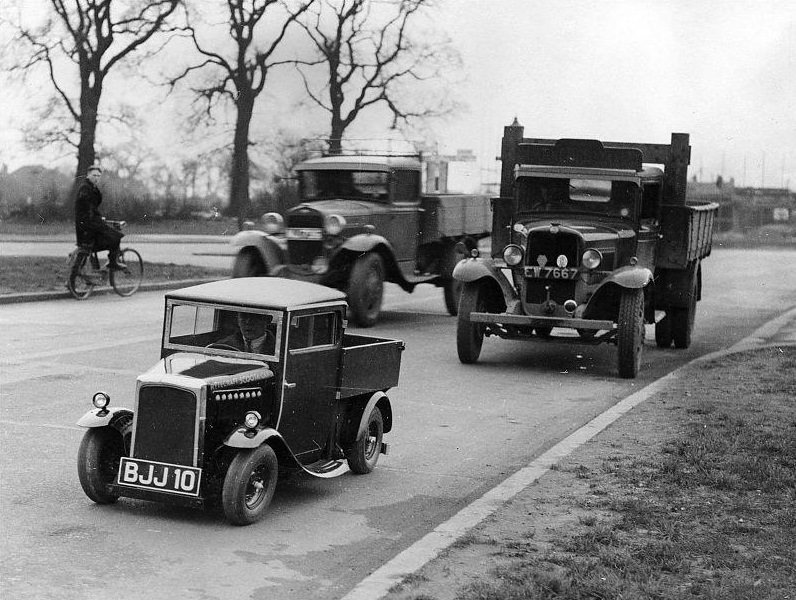
The Mini Rytecraft Lorry made a strong claim to being the world’s smallest motor lorry. Running on just one horsepower, it was small enough to look almost like a toy when photographed alongside standard traffic on the North Circular Road in London, yet it was a fully functional working vehicle.
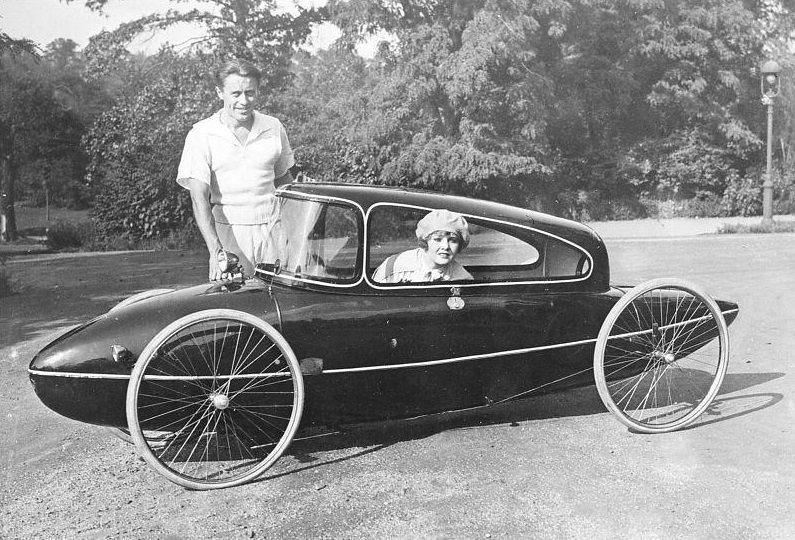
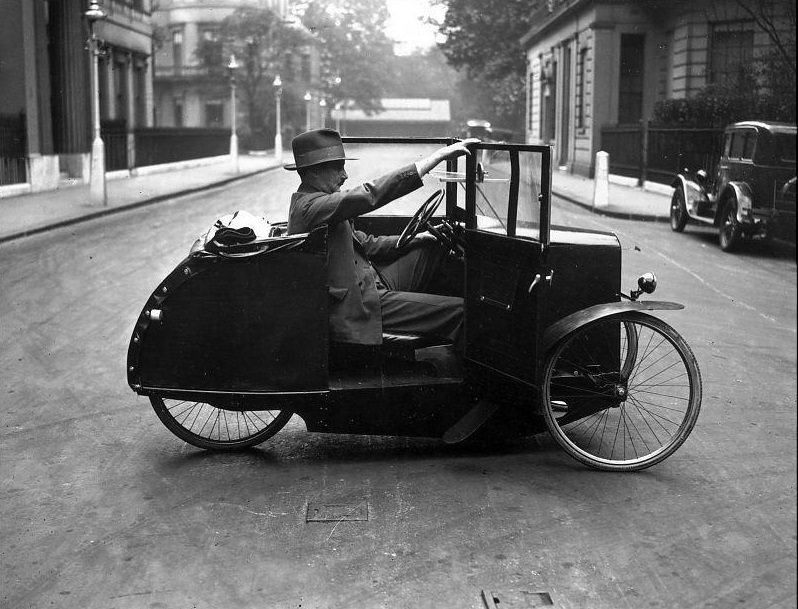
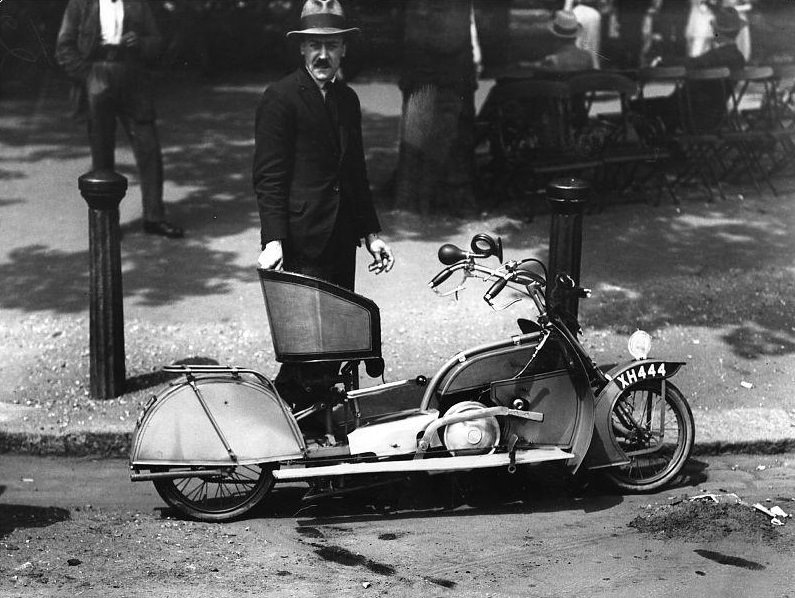
The One-Man Car Cycle pushed personal transportation to its absolute minimum. Designed for a single rider, it sat somewhere between a motorcycle and a car — enclosed enough to offer some protection, small enough to fit almost anywhere.
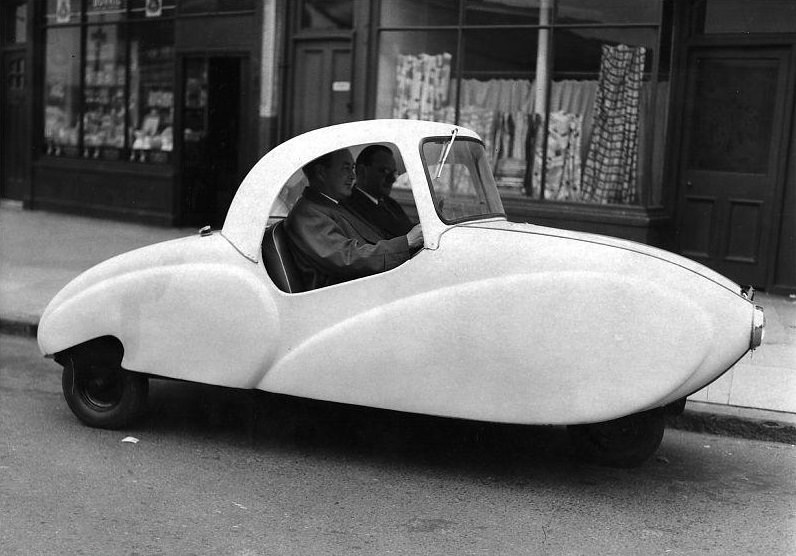
The post-war years saw several attempts to build an affordable car for ordinary families. This plastic-bodied ‘People’s Car’ was designed to seat three adults and two children, and it was marketed as the cheapest car available on the road — a direct appeal to working-class families who needed practical transport at the lowest possible cost.
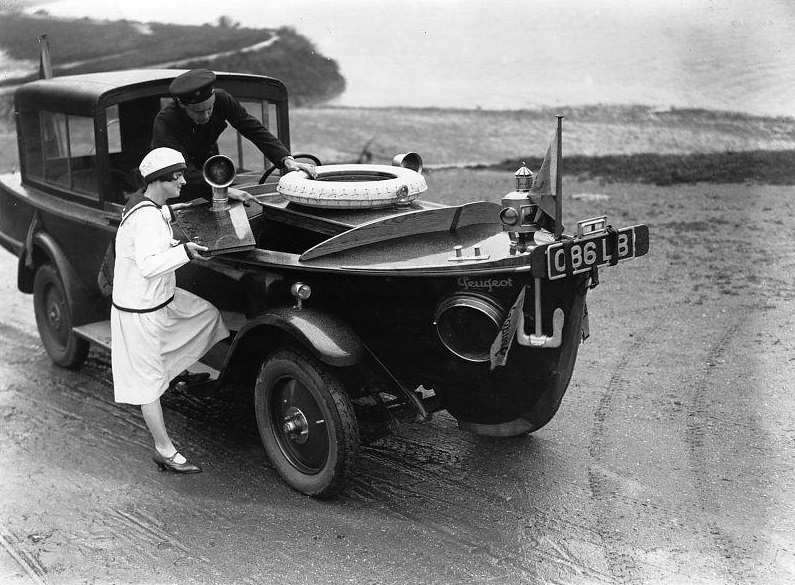
The Peugeot motor-boat car blended the aesthetics of a river vessel with the mechanics of a road vehicle. Its front end was shaped like the bow of a boat, its middle section resembled a conventional car, and it sat on standard wheels. It was built to travel on roads but looked as though it belonged in the water.
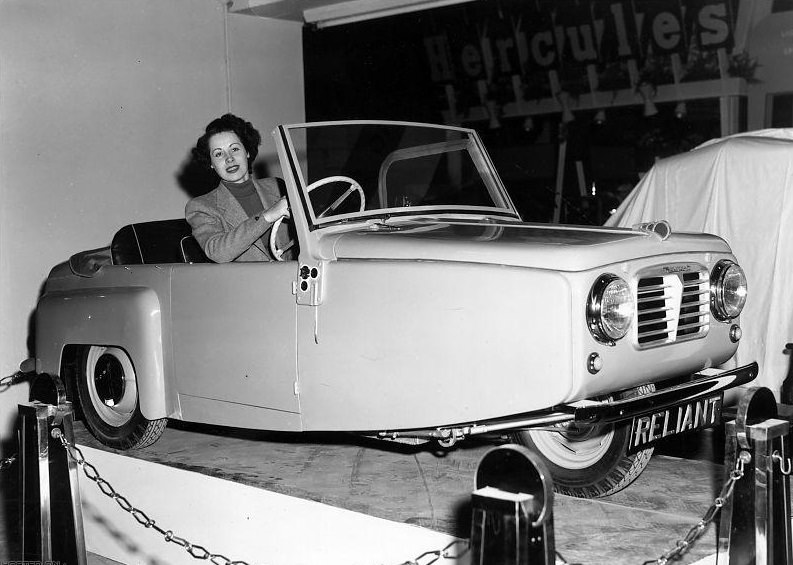
The Reliant Engineering Company of Tamworth, Staffordshire, became one of Britain’s most well-known producers of small, affordable cars. Their Regal four-seater coupe was displayed at the Cycle and Motor Cycle Show at Earl’s Court in London, showcasing the company’s ambition to build practical vehicles for everyday use.
Small personal vehicles came in many forms throughout the 20th century. This mini runaround cycle was one such design — a compact, lightweight machine meant for short trips in urban environments where a full-sized vehicle would be unnecessary.
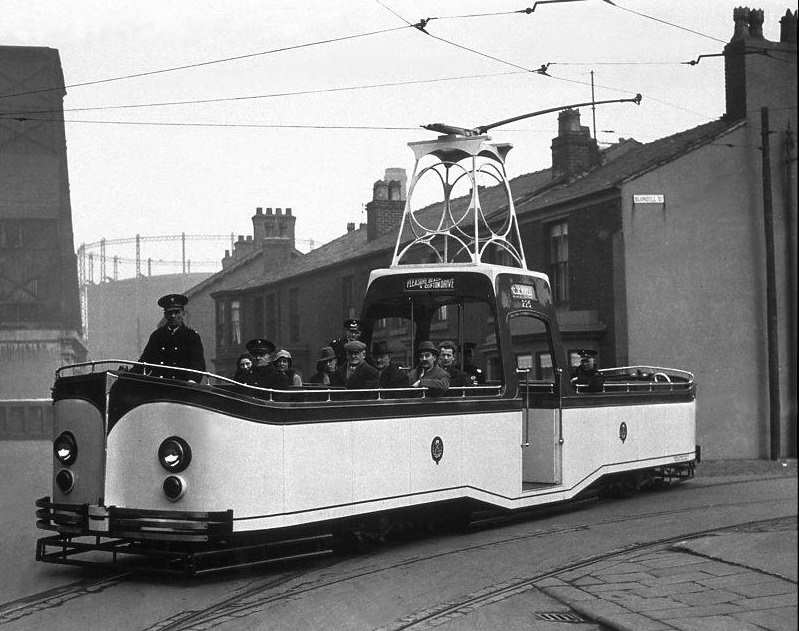
Blackpool’s tram network was one of the oldest and longest-running in Britain. The single-decker trams that served the Blackpool seafront became an iconic part of the town’s identity, carrying tourists and locals along the famous promenade for well over a century.
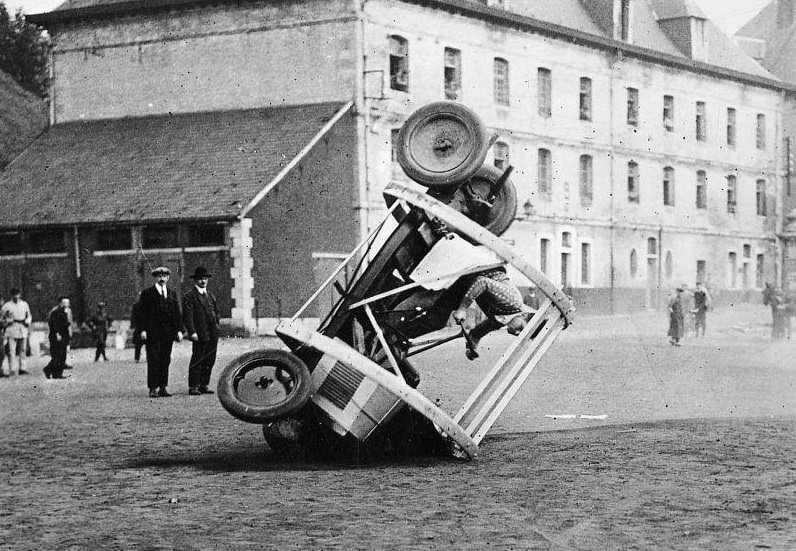
Stunt driving has always required vehicles pushed far beyond their normal limits. This car, captured mid-roll during a stunt, shows the kind of controlled destruction that stunt performers regularly subjected their vehicles to in the name of entertainment.
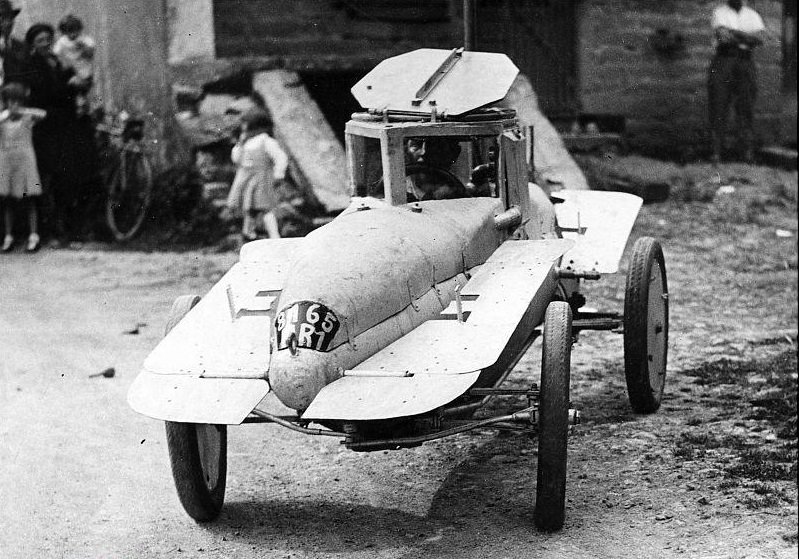
One of the more genuinely extraordinary inventions on this list is the submarine motor car — a vehicle equipped with a 4-horsepower engine and steel fins on both sides that allowed it to travel both on land and completely underwater. It was a real, functional machine, not a concept or a prop.
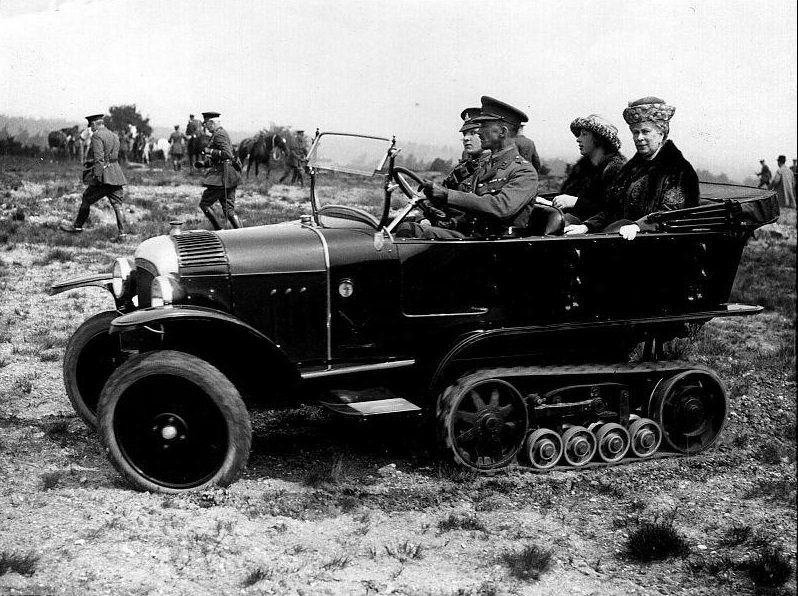
Queen Mary and Princess Mary were photographed being driven across rough terrain by army officers in a tracked vehicle — a type of early cross-country car fitted with caterpillar tracks rather than standard wheels. The tracked design allowed the car to move over uneven ground that would have stopped a conventional vehicle.
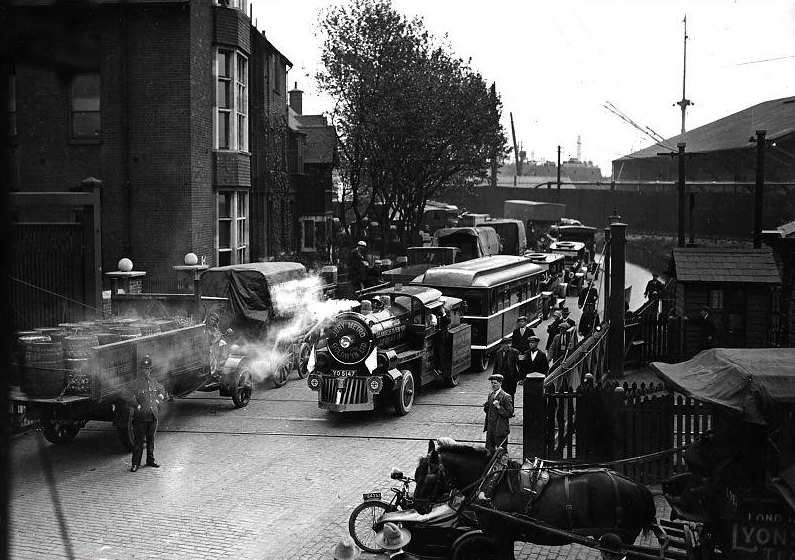
A trackless train — essentially a road vehicle designed to look and behave like a train, but without rails — was used to transport workers and goods from King George V Dock into London. It offered the capacity of a train with the flexibility of road transport.
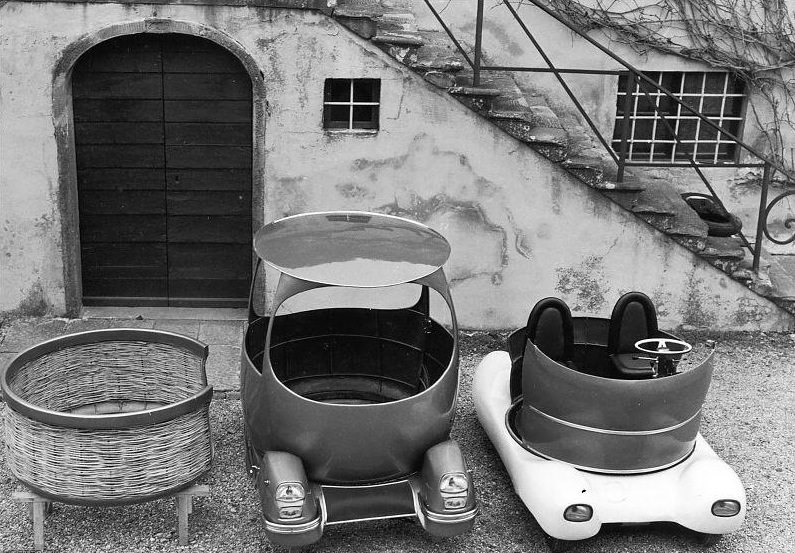
The Urbania 1964 holds the title of the world’s smallest working car. Invented by Marquis Piero Bargagli of Poggio Adorno, it was built specifically to solve the problem of scarce parking space in crowded Italian cities. The engine sat in the center of the chassis, and the seats rotated on a circular rail, allowing passengers to step out from any side.
George McLaughlin designed a vehicle specifically built to travel on ice and snow, addressing the very real challenge of winter mobility in harsh climates. His machine used a specialized undercarriage that allowed it to grip and move across frozen surfaces that would strand a conventional car.
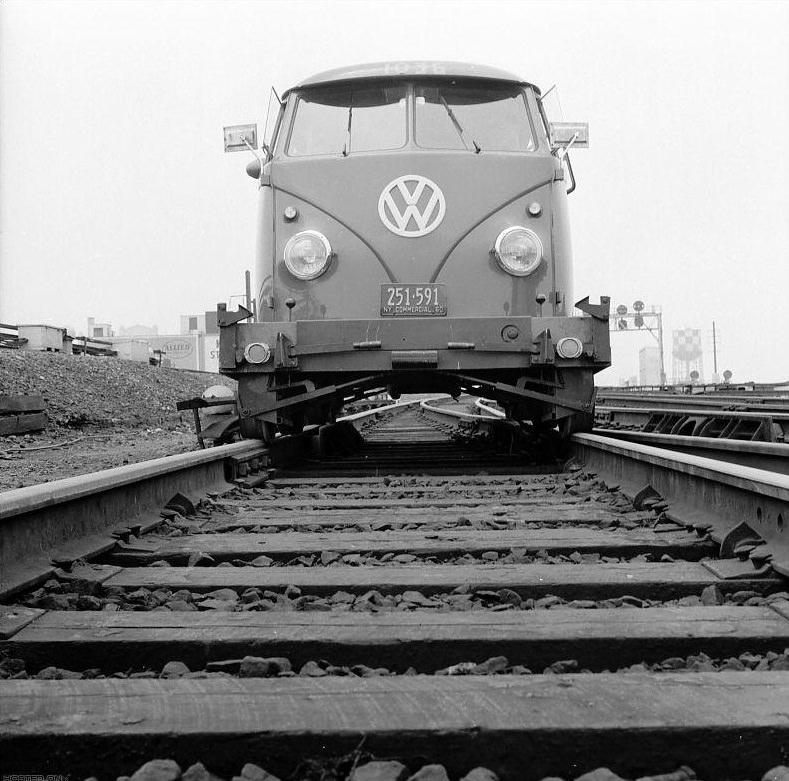
One of the more unusual transport experiments involved a standard Volkswagen fitted with two sets of wheels — rubber tyres for road travel, and iron wheels that slotted directly onto railway tracks. The vehicle was photographed driving along the tracks of the Long Island Railroad, bridging road and rail transport in one package.
The Argentine Aerocar of 1955 was a flying car concept designed to reach speeds of up to 100 miles per hour — 160 kilometers per hour. It represented the optimism of the post-war era, when engineers genuinely believed that personal air travel and road travel could be combined in a single machine.
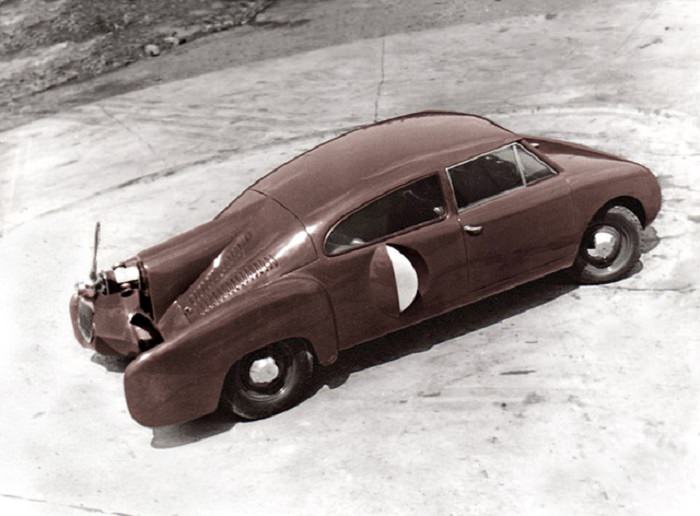
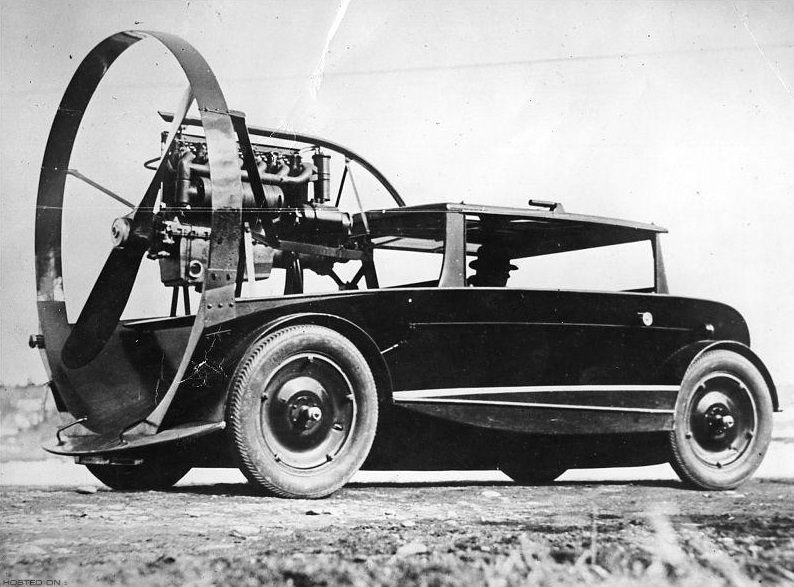
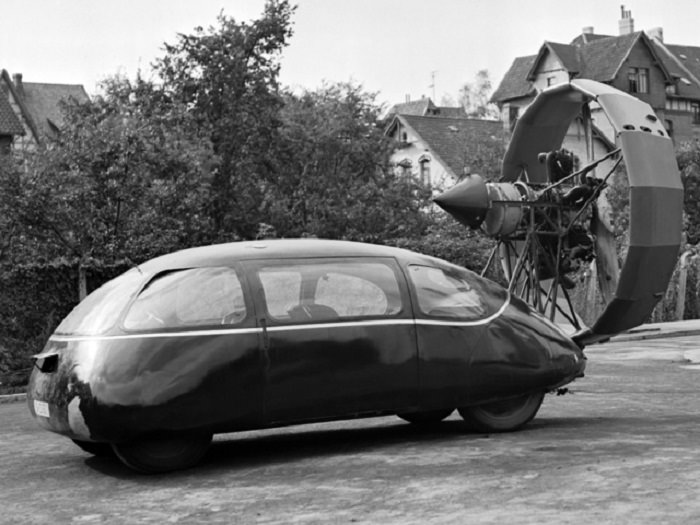
The Schlörwagen Pillbug of 1936 was a German aerodynamic car with a rounded, beetle-like body that gave it its nickname. During World War II, a large propeller was added to the rear along with a Soviet five-cylinder air-cooled radial aircraft engine rated at between 100 and 125 horsepower — a dramatic upgrade for a vehicle that had started life as a fuel-efficiency experiment.
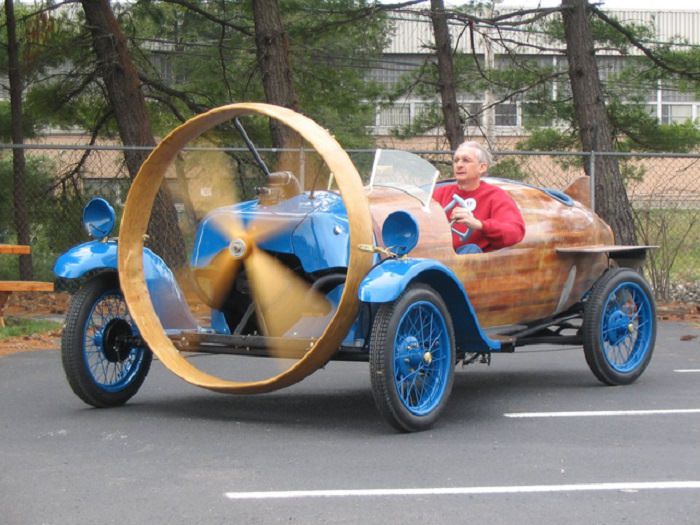
Built in France in 1932, the Helicron was a propeller-driven car that used an aircraft-style propeller mounted at the front to pull itself forward rather than using conventional wheel-driven power. It was one of several early propeller cars that explored whether aviation technology could be adapted for road use.
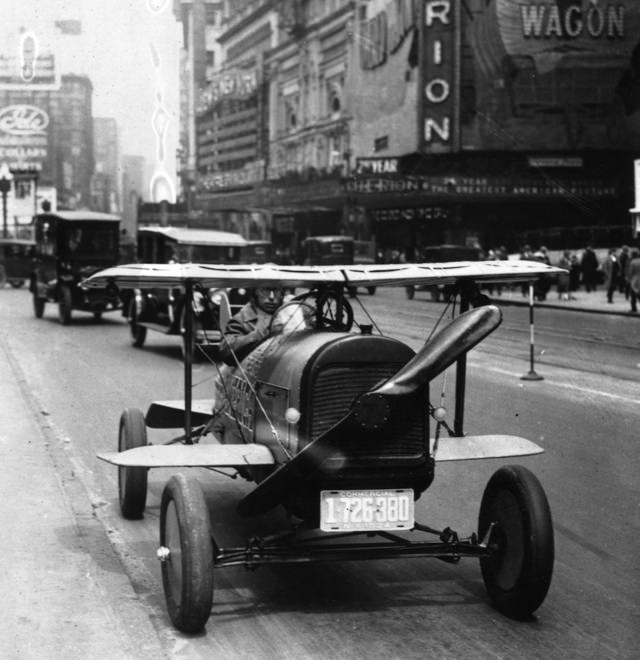
Times Square in New York City in 1924 was the backdrop for a remarkable photograph — a car fitted with both wings and a propeller, parked on one of the world’s busiest streets. Whether it was a working prototype or a publicity stunt, the image captures the early 20th century’s obsession with combining air and road travel.
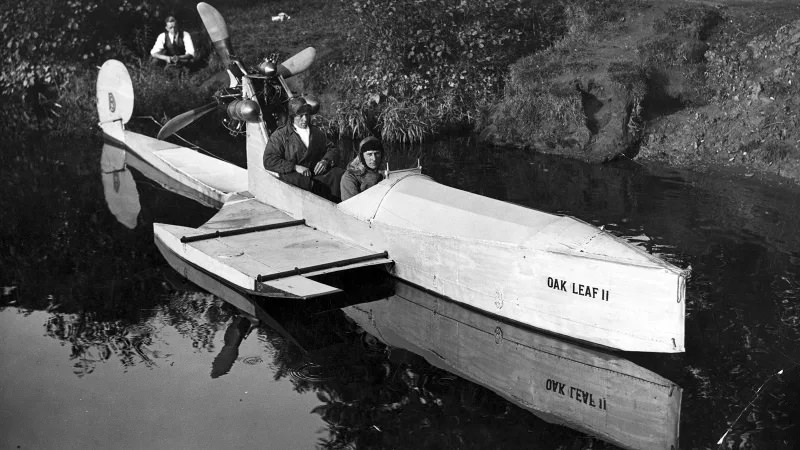
The Oak Leaf II was a hydro-glider — a motorboat propelled not by a conventional marine engine and propeller submerged in the water, but by an aircraft-style propeller mounted above the surface. This design reduced drag and allowed the vessel to reach higher speeds than a traditional motorboat of similar power.
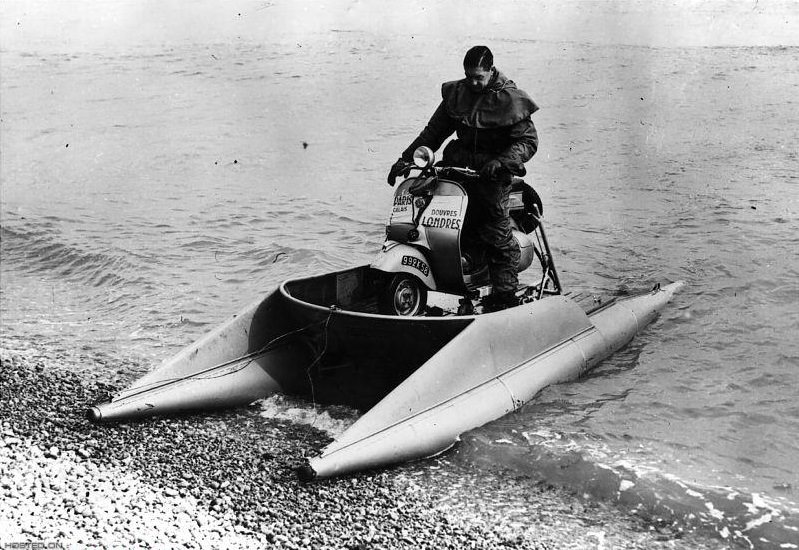
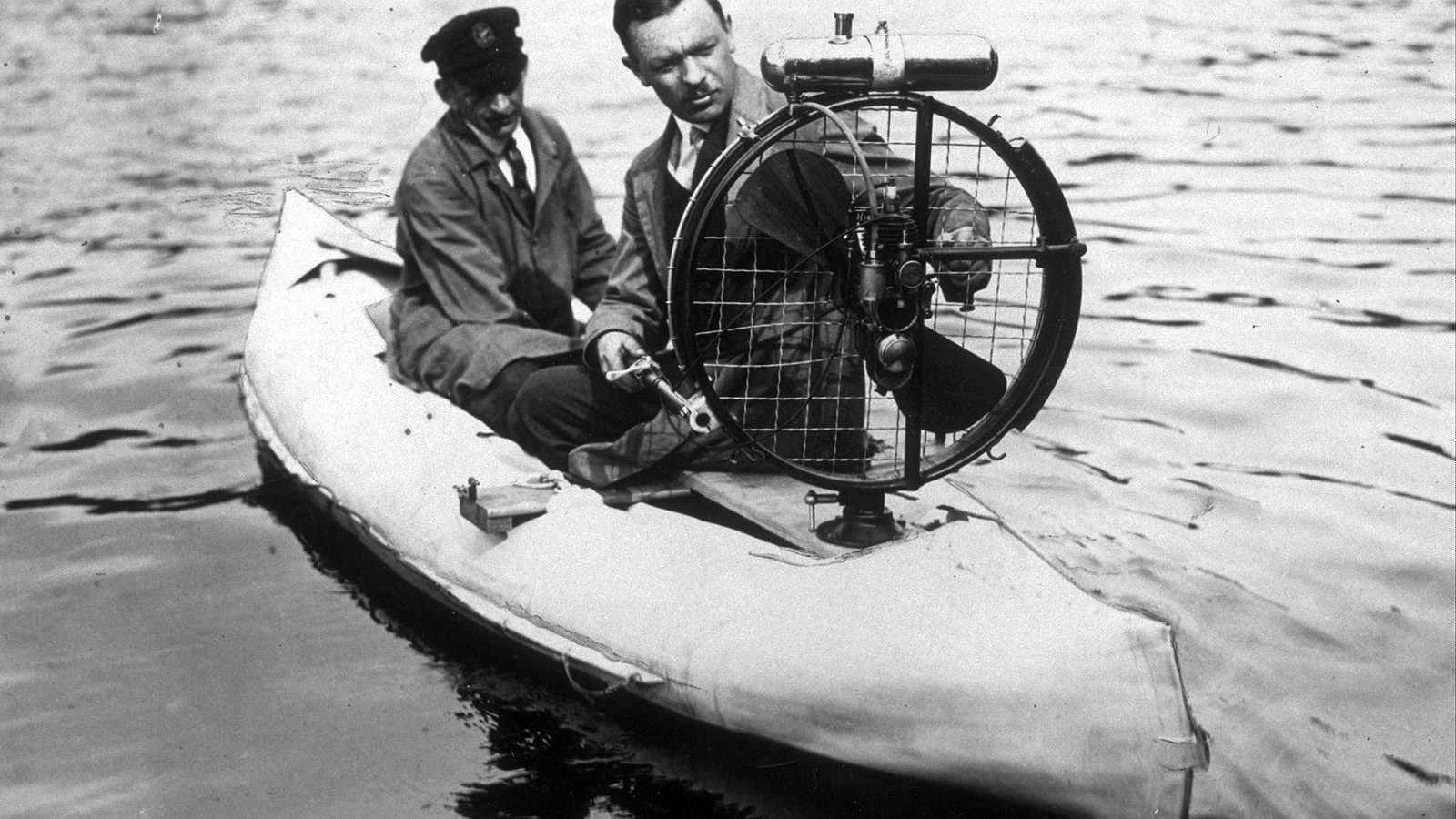
In 1935, an inventor tested a motorized inflatable canoe on open water. The blow-up canoe was powered by an air propeller rather than a paddle or outboard motor, combining the portability of an inflatable boat with the hands-free convenience of propeller propulsion. The test was one of many small-scale experiments in personal watercraft design during this period.
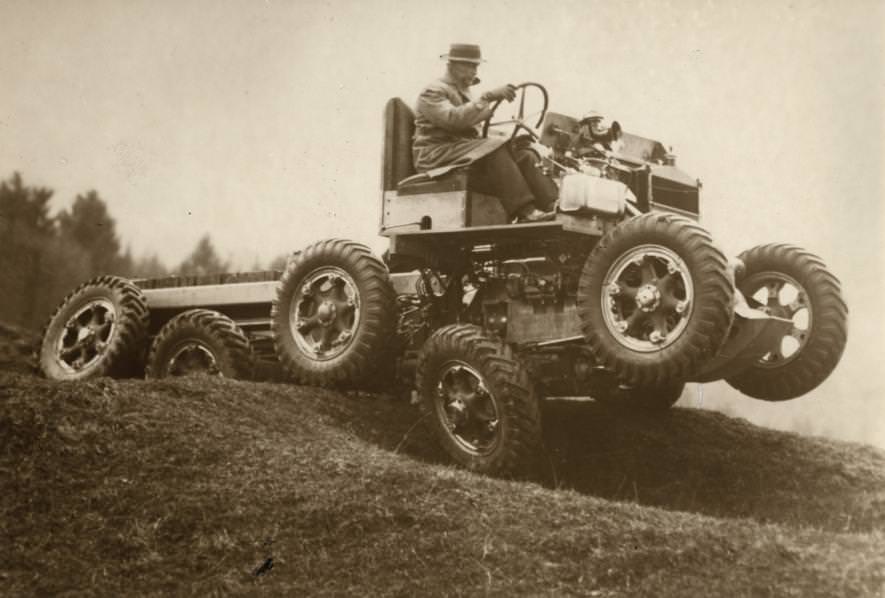
By 1931, the concept of an all-terrain vehicle was already taking shape. Early designs from this period focused on building machines that could cross rough ground, mud, and obstacles that stopped ordinary cars in their tracks — laying the groundwork for the off-road vehicles that became commonplace later in the century.
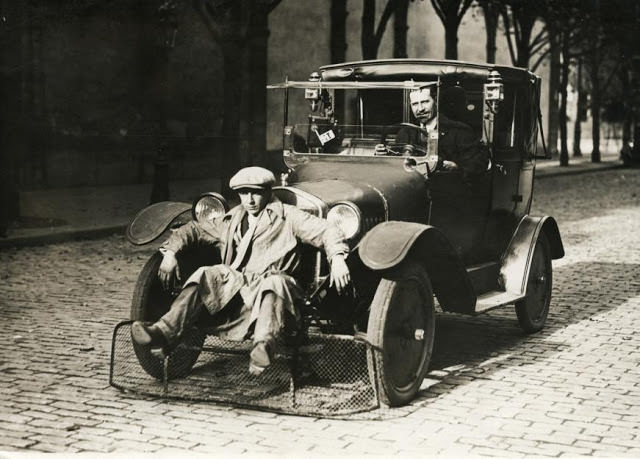
In 1924, a patent was filed for a car fitted with a front-mounted shovel designed to scoop up pedestrians rather than knock them down. The idea was that anyone struck by the vehicle would be caught by the shovel and pushed gently forward rather than run over. It was a genuine attempt at pedestrian safety, however alarming it looks today.
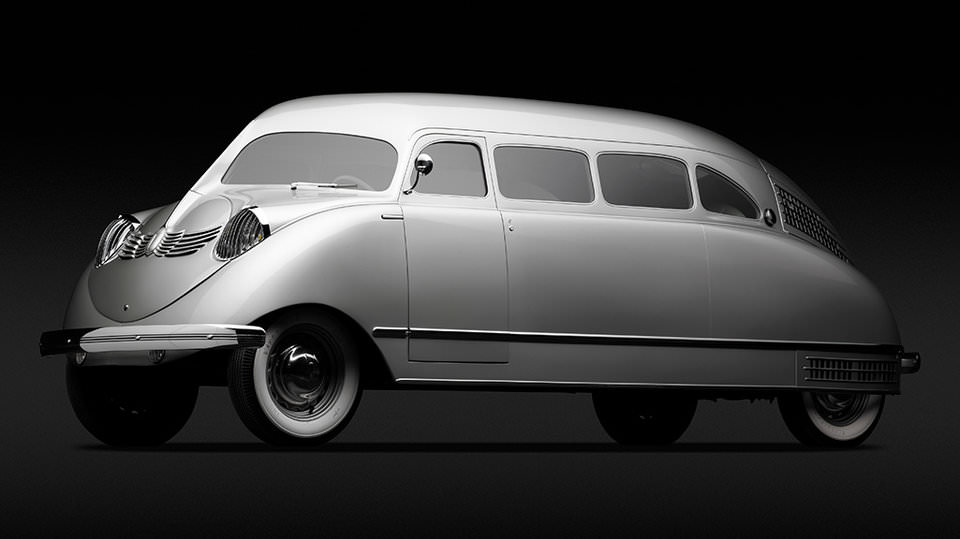
The 1936 Stout Scarab is widely regarded as the first minivan ever built. Designed by William Bushnell Stout, it featured a rear-mounted Ford V8 engine, a streamlined body, and an open interior with moveable furniture instead of fixed seats. Only nine were ever built, making it one of the rarest cars in American automotive history.
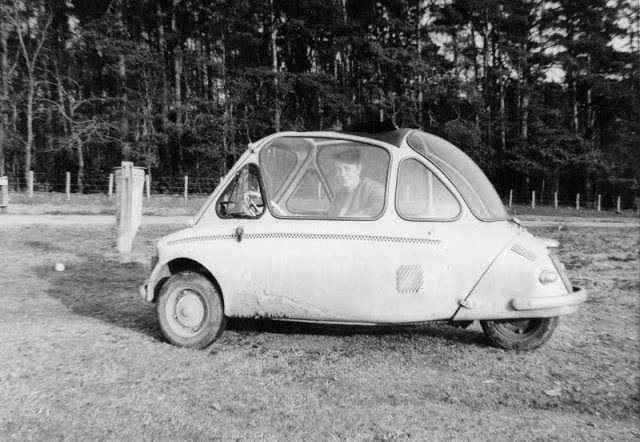
The Heinkel Kabine was a West German bubble car produced in the 1950s, born out of the same post-war economic conditions that produced dozens of tiny, fuel-efficient microcar designs across Europe. The Kabine’s distinctive egg-shaped cabin and front-opening door made it one of the most recognizable of all the bubble cars from this era.

Love seeing all the old cars…