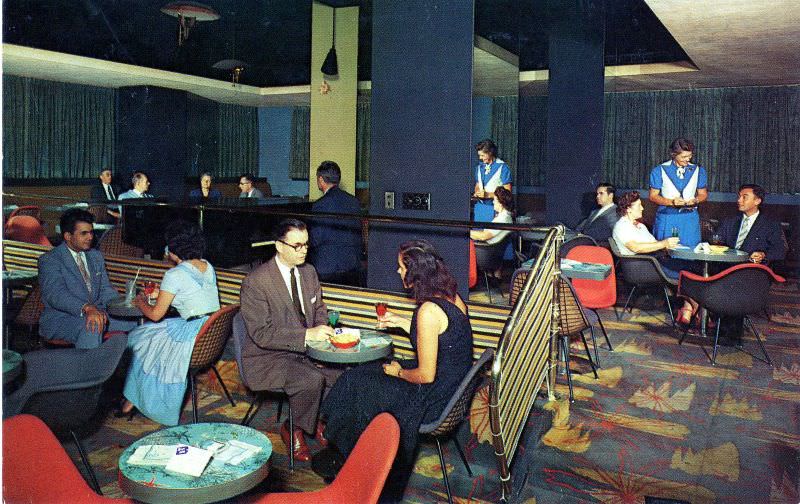
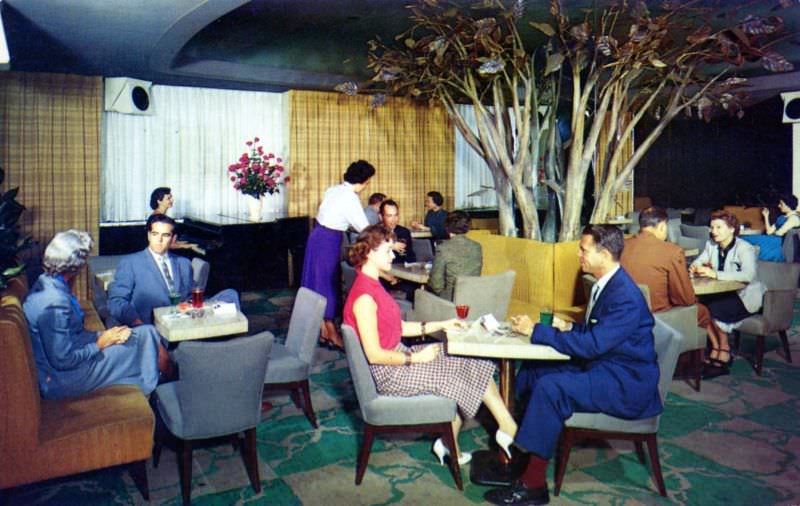
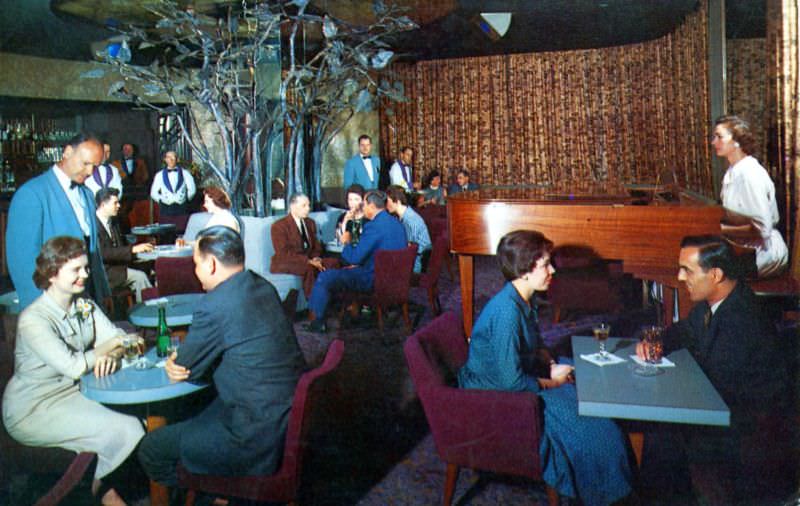
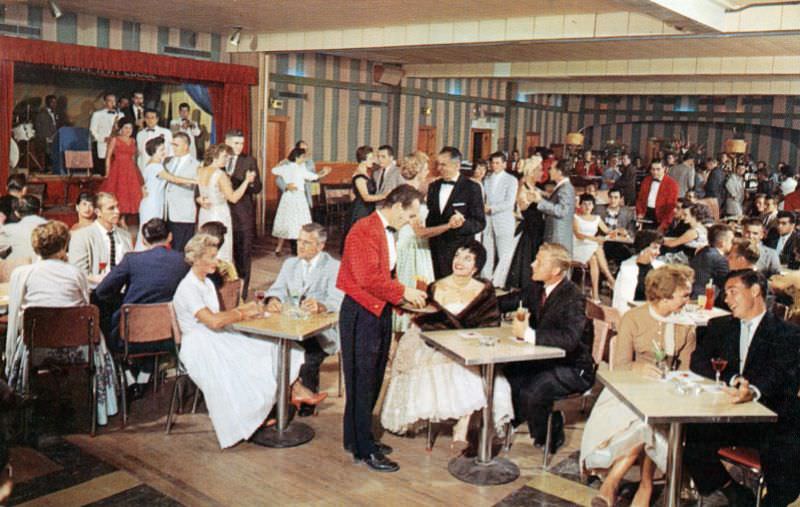
After World War II, Americans were ready to go out and have a good time. The 1950s brought a wave of prosperity, and with it came a booming nightlife scene. Bars, cocktail lounges, and nightclubs spread across the country — not just in big cities, but in small resort towns, mountain retreats, and coastal hotels. These were places where people dressed up, ordered a drink, and stayed a while.
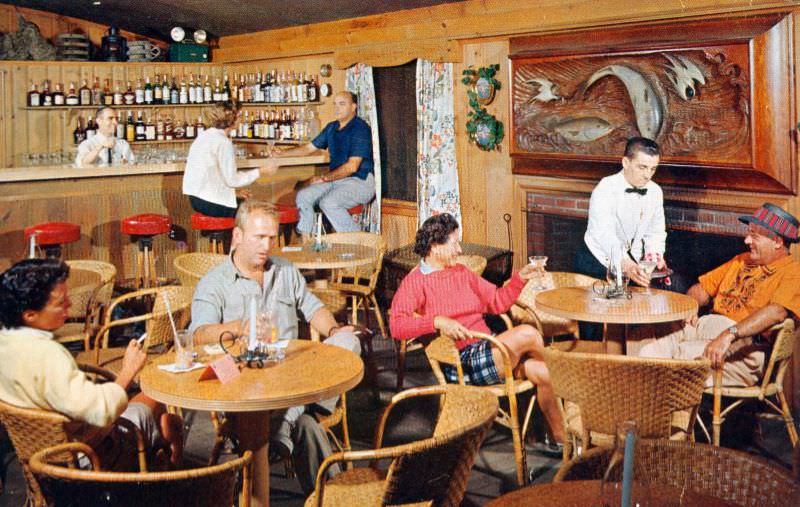
In the American Southwest, hotels and inns built cocktail bars that matched their surroundings. The Safari Hotel in Scottsdale leaned into a sense of exotic adventure, while the Victorian Room at Nogales offered something more refined — dark wood, upholstered seating, and the quiet clink of glassware.
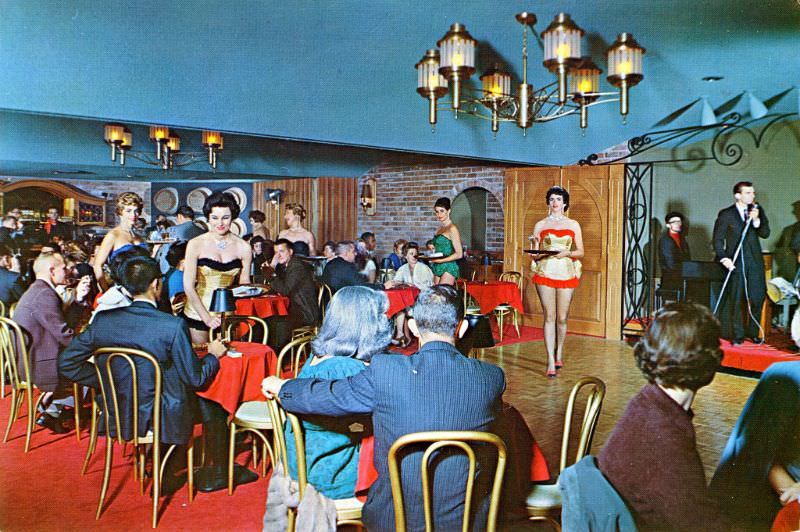
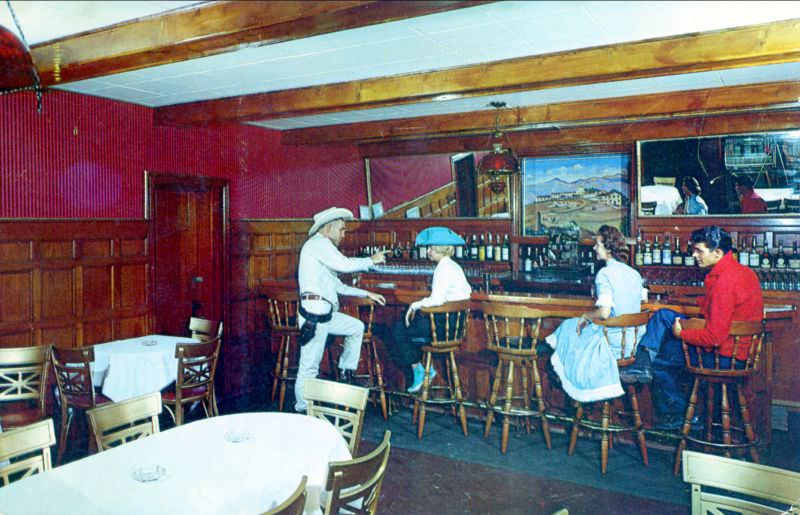
Arizona had no shortage of watering holes with character. The Superstition Inn in Apache Junction and the Wahweap Lodge near Page gave travelers a place to unwind after long days in the desert. These weren’t just practical stops — they were destinations in their own right, with atmosphere carefully crafted to make guests linger.
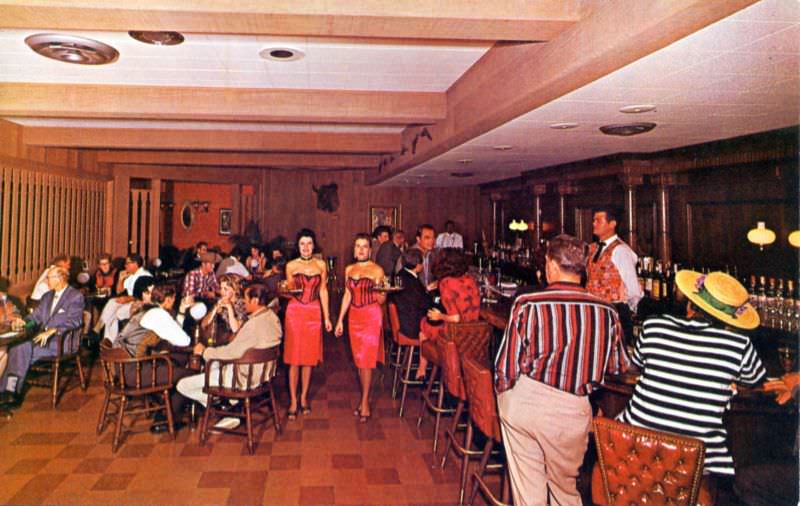
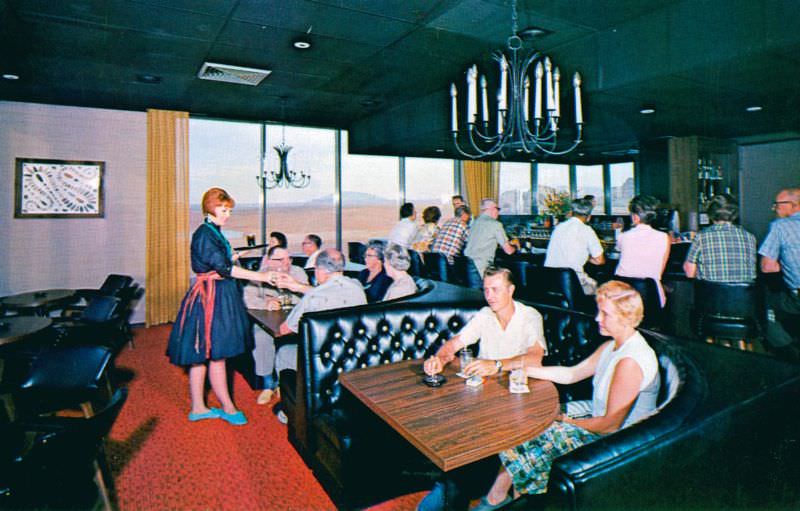
California offered some of the most distinctive drinking rooms in the country. The Brookdale Lodge in Santa Cruz County featured a Burl Room — a rustic cocktail lounge built around natural wood forms, roots, and raw timber. The Fairmont Hotel in San Francisco housed not one but several legendary spaces: the Cirque Room, the Crown Room Cocktail Lounge, and the Tonga, each with its own distinct personality.
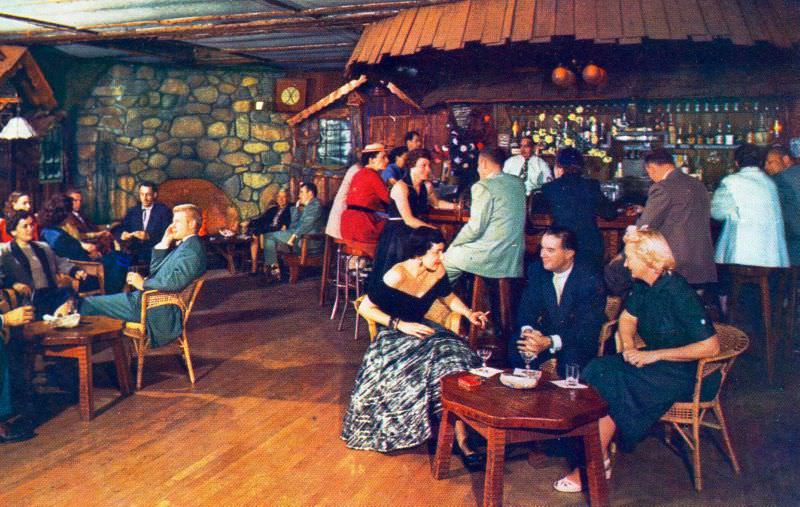
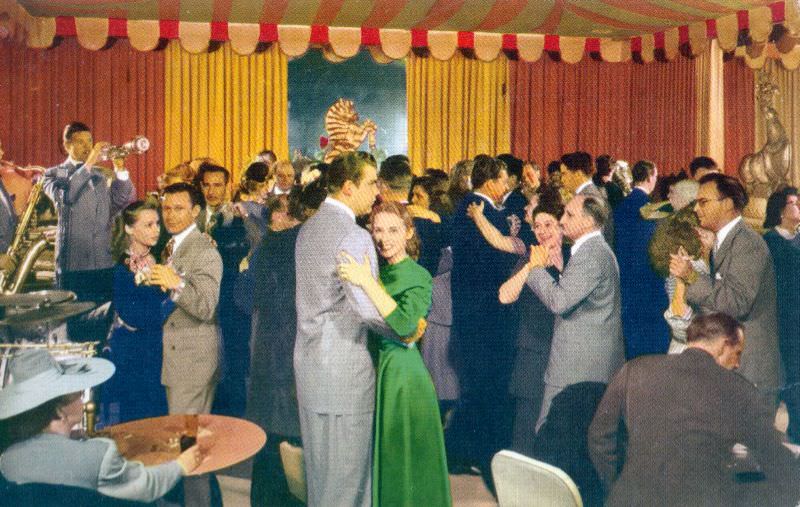
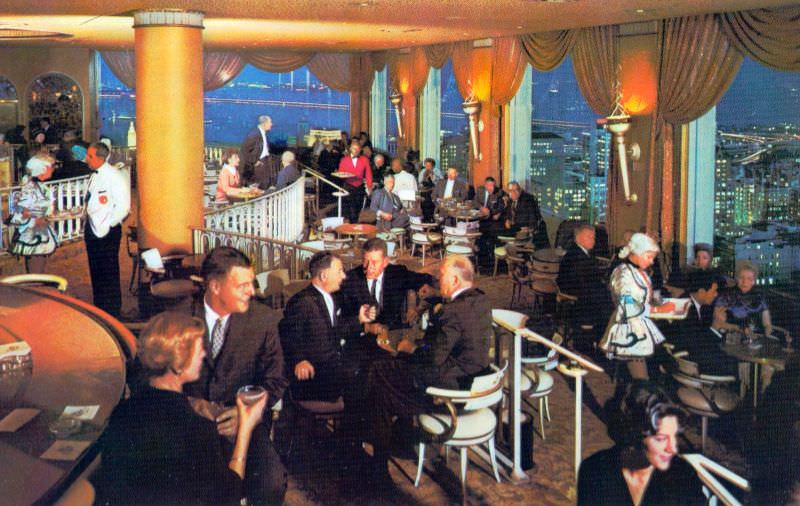
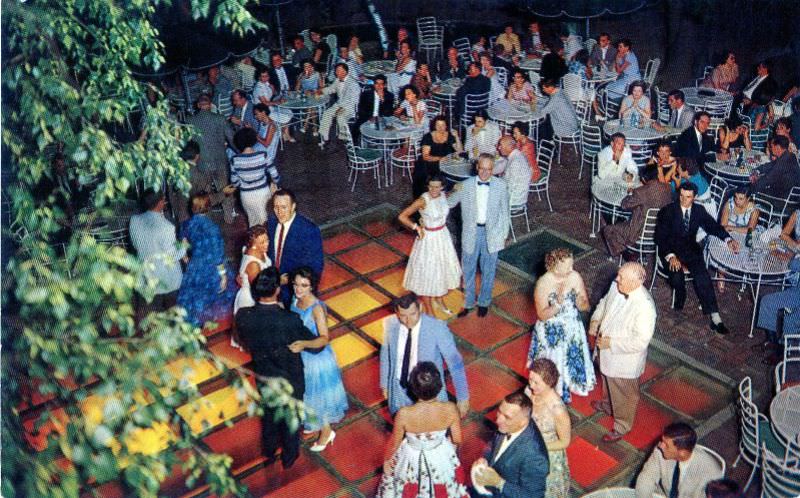
San Diego had its own jewel in the El Cortez Hotel’s Starlite Roof — an open-air perch above the city with views and cocktails in equal measure. Down in Fresno, the Hacienda’s Mermaid Room took a different approach, dressing its lounge in aquatic themes that turned a simple drink into something more theatrical.
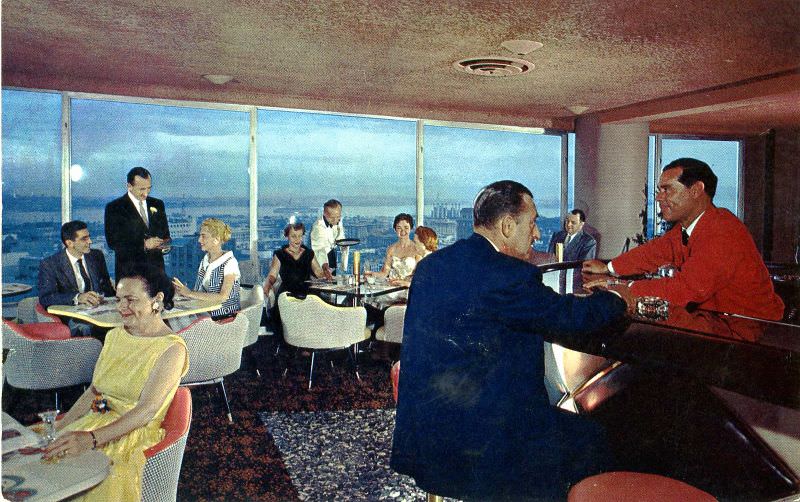
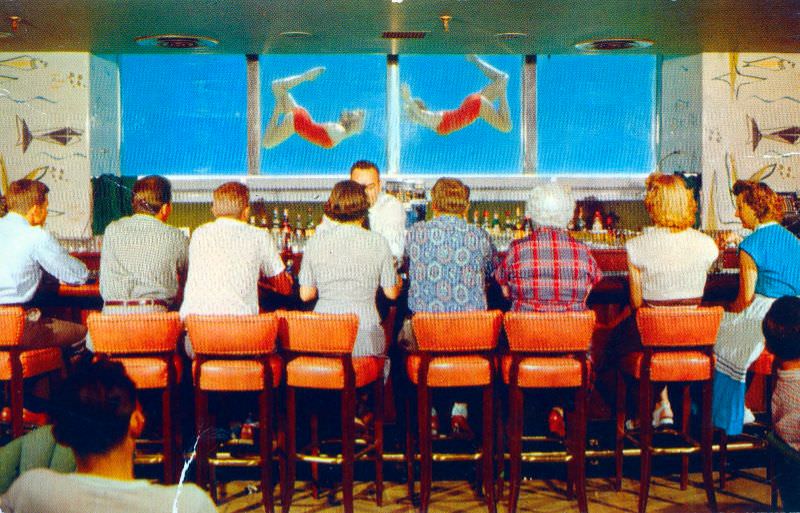
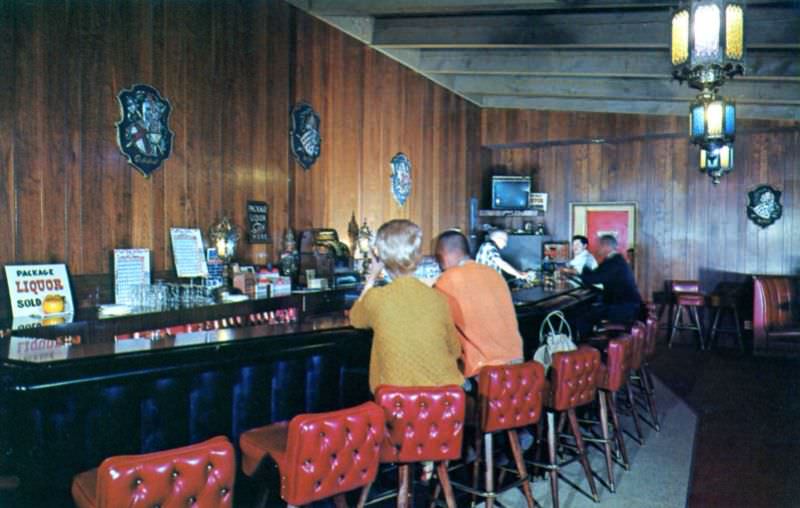
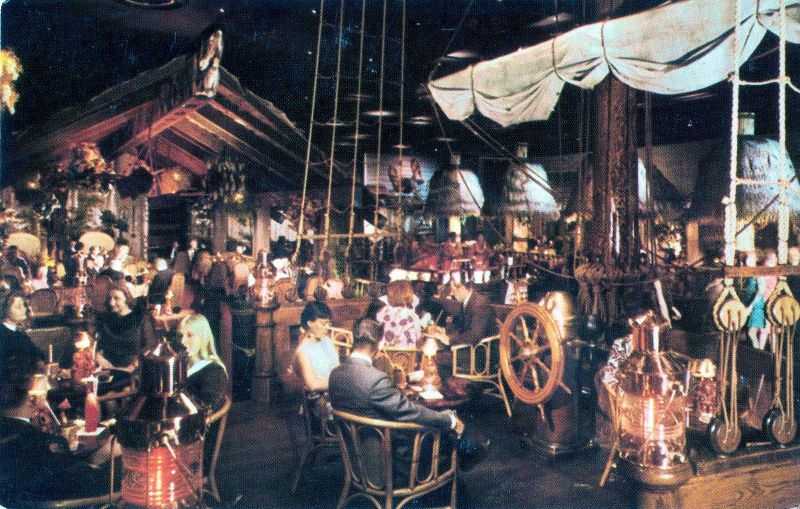
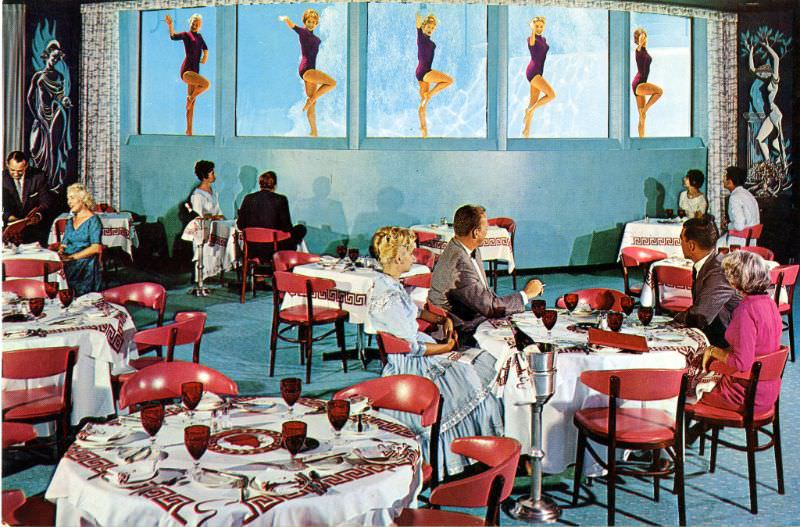
Florida’s nightlife ran at a different tempo. Miami Beach had an energy all its own, and the bars that lined its ocean-facing hotels reflected that. The Blue Horizon Cocktail Lounge sat at 89th Street with the Atlantic just outside its windows. The Castaways’ Wreck Bar at 163rd Street played up a shipwreck theme, complete with underwater viewing windows into the hotel pool — one of the most unusual bar concepts of the entire decade.
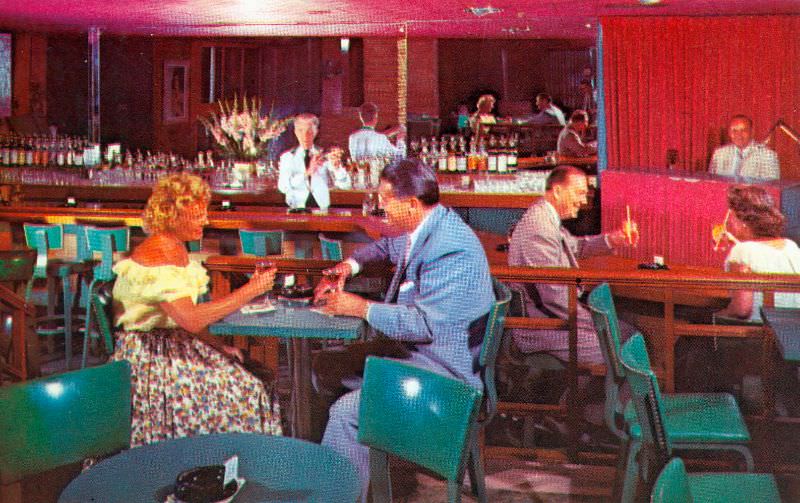
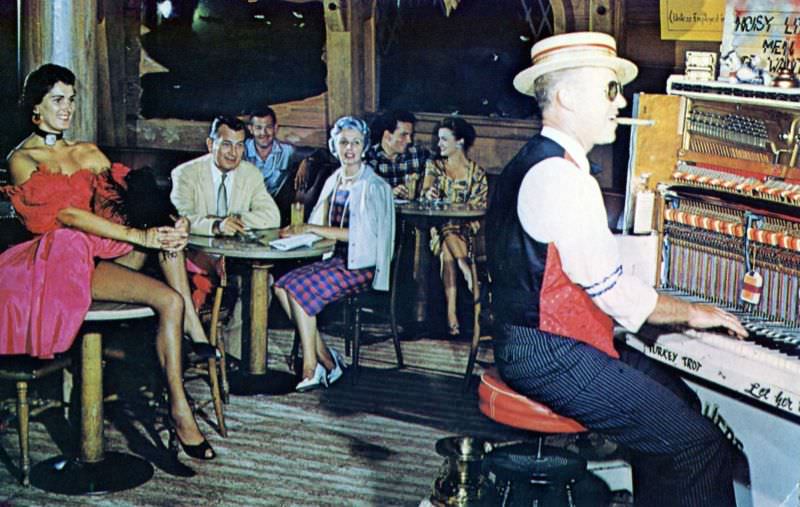
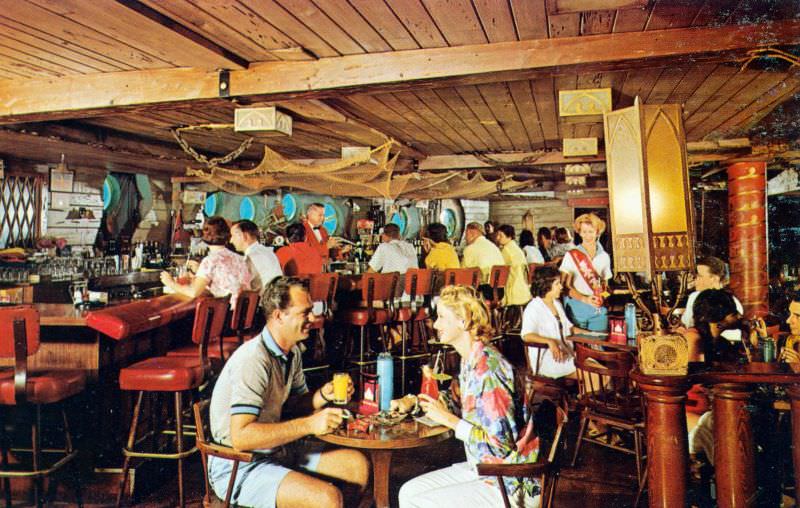
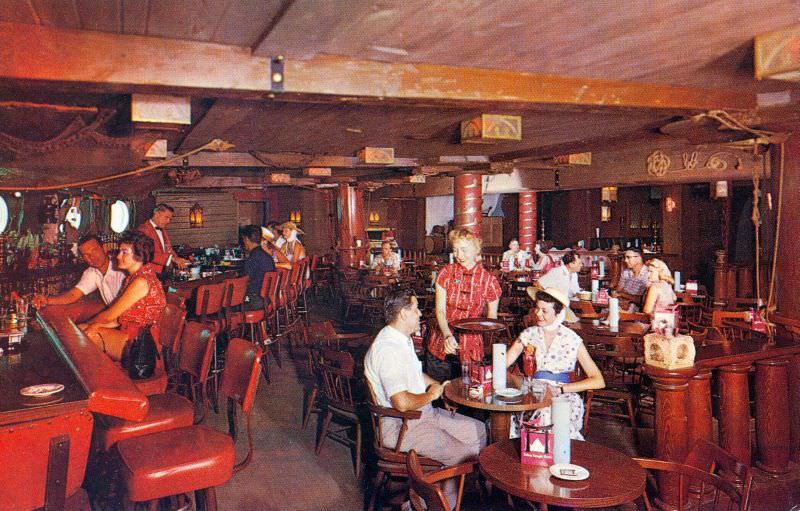
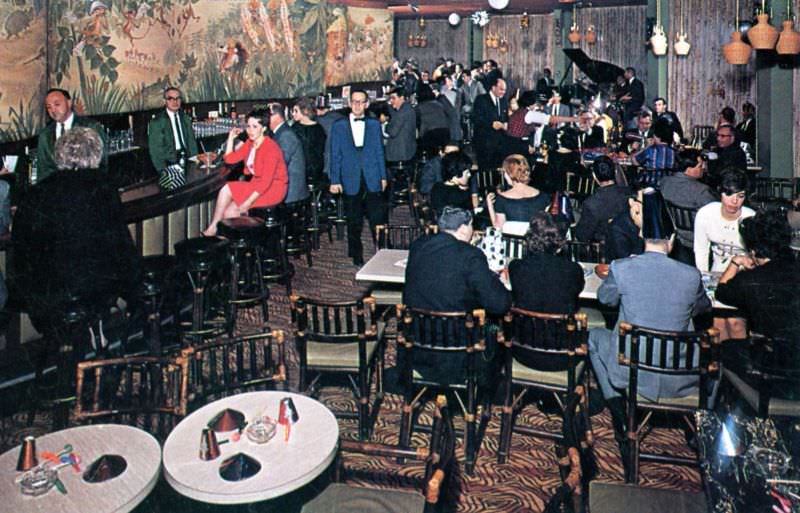
Club Wally in Miami offered live music in a setting built for a crowd. The Gold Room at Daytona Beach’s Ridgewood Hotel brought a touch of elegance to the Atlantic coast. In Pompano Beach, the Kon Tiki Bar leaned into tiki culture — a craze sweeping the country — with bamboo, rum cocktails, and a South Pacific mood that had little to do with Florida but a great deal to do with escapism.
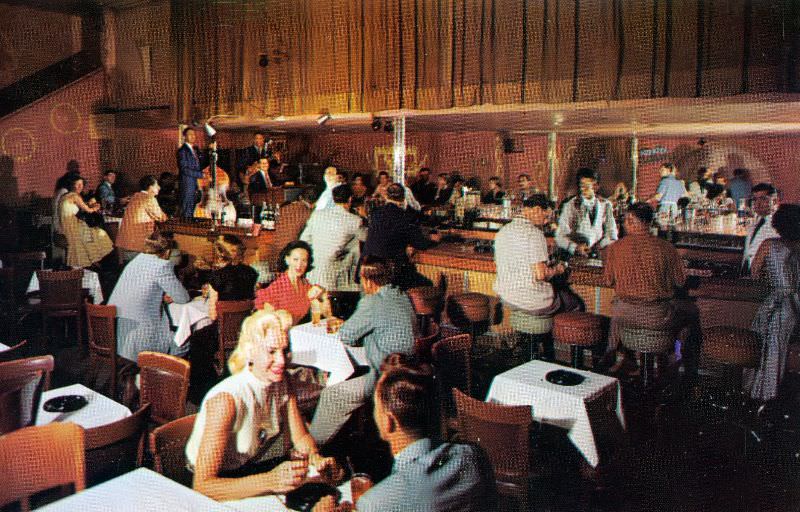
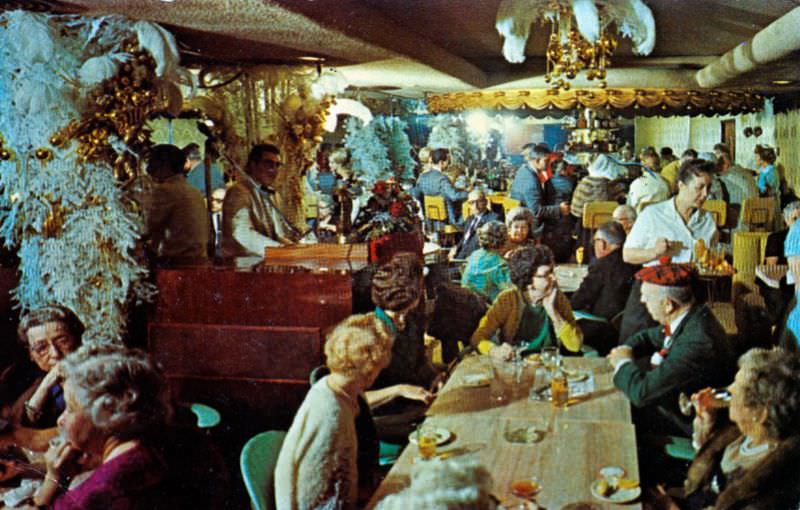
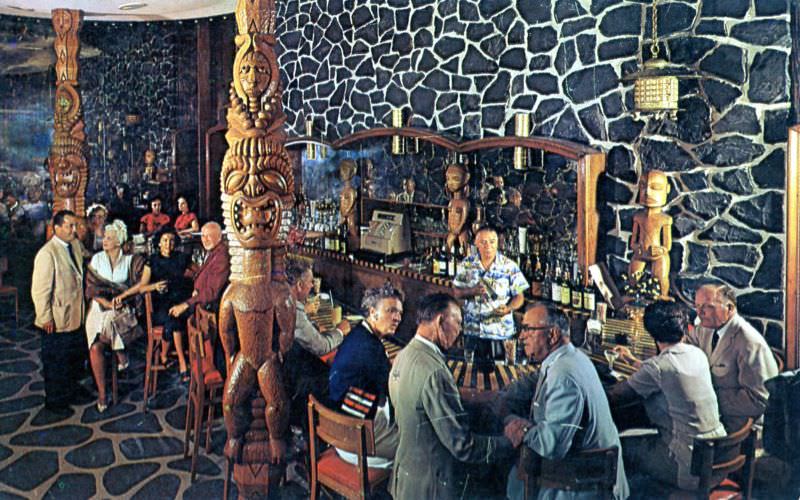
Fort Lauderdale had the Rum House inside the Galt Ocean Mile Hotel, a name that left little to the imagination. The Belleview-Biltmore in Belleair hosted the Starlight Room, while the Everglades in Miami went eighteen stories up for its rooftop bar — a spot where the city spread out in every direction below.
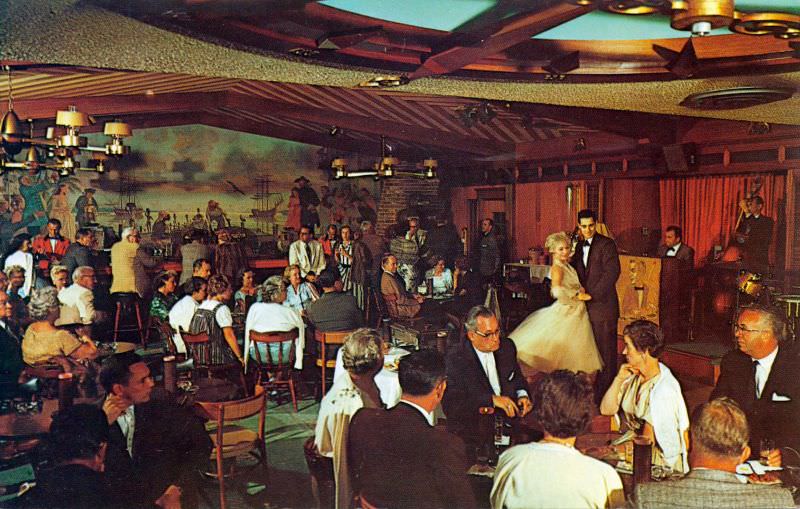
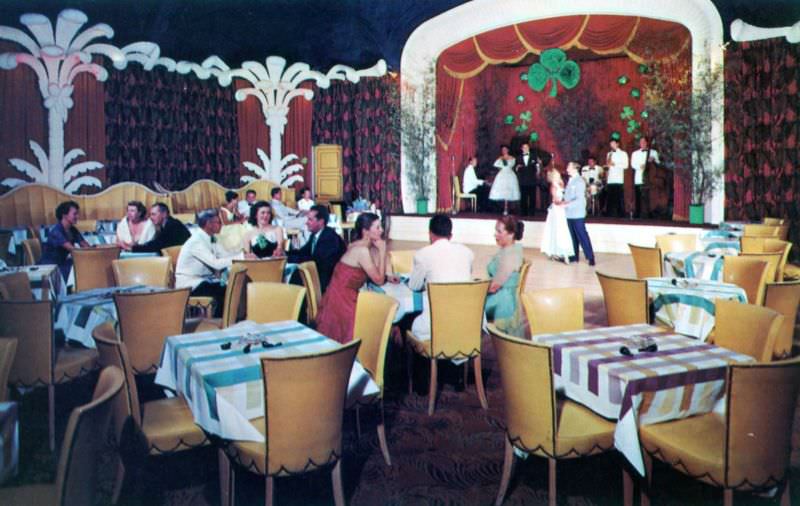
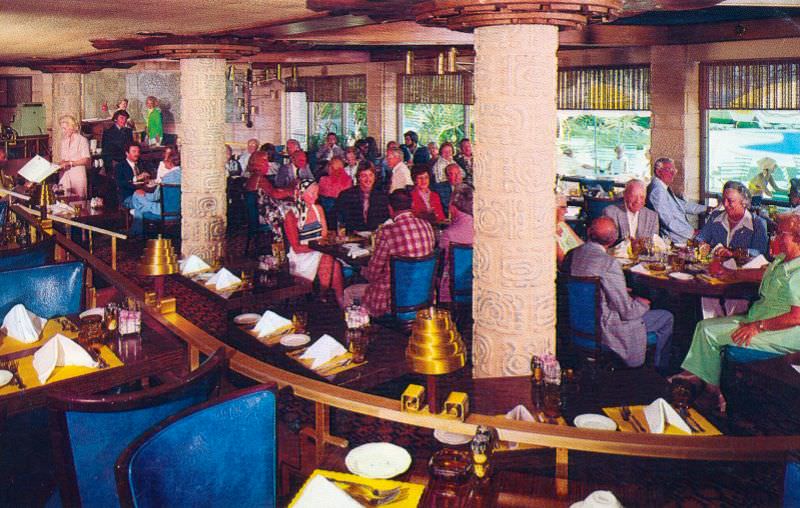
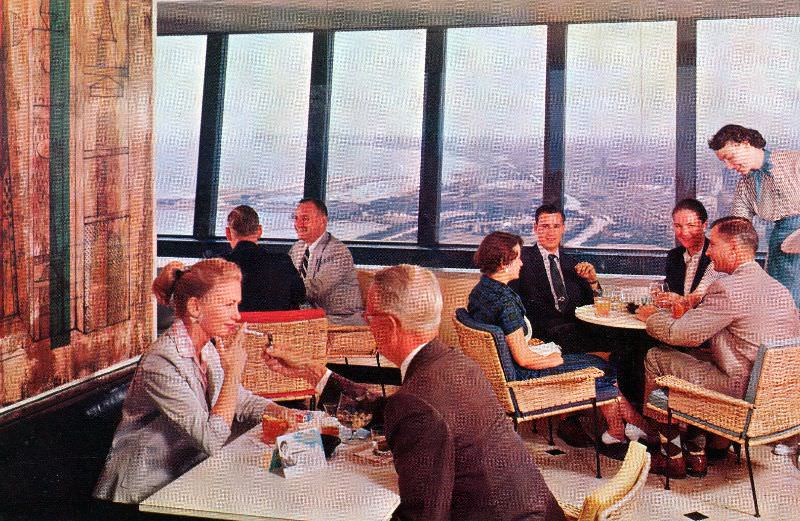
Chicago’s Drake Hotel housed the Coq d’Or, one of the most storied cocktail lounges in the Midwest. It opened after Prohibition ended in 1933 and never really lost its crowd. Stouffer’s Top of the Rock, perched atop the Prudential Building, offered panoramic views of the city alongside its drinks — a combination that never failed to impress.
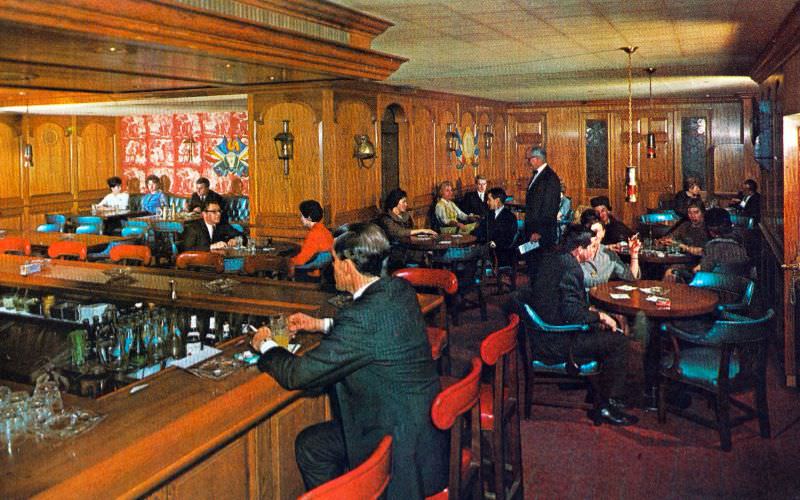
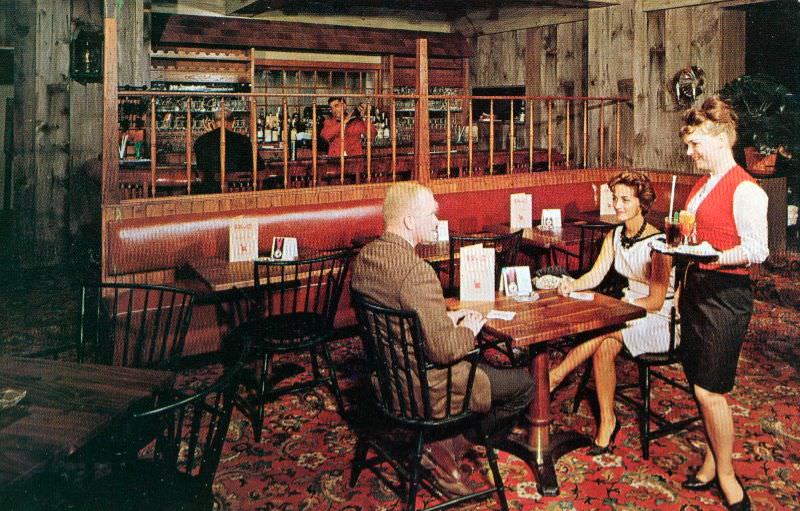
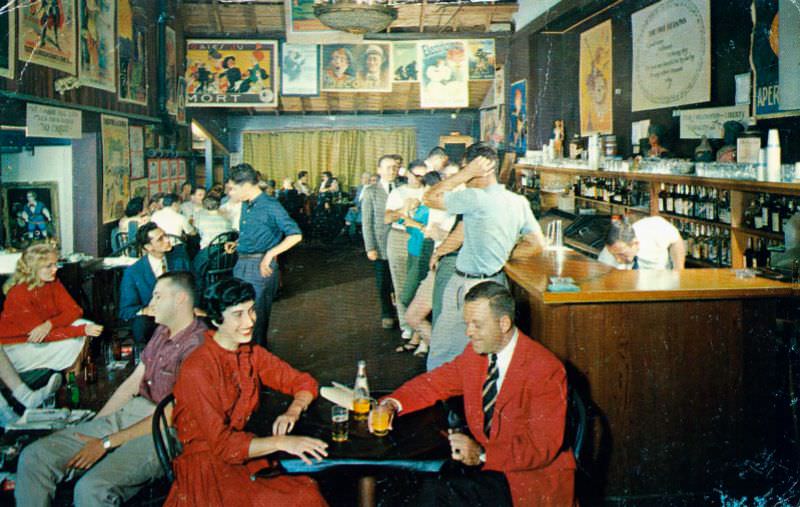
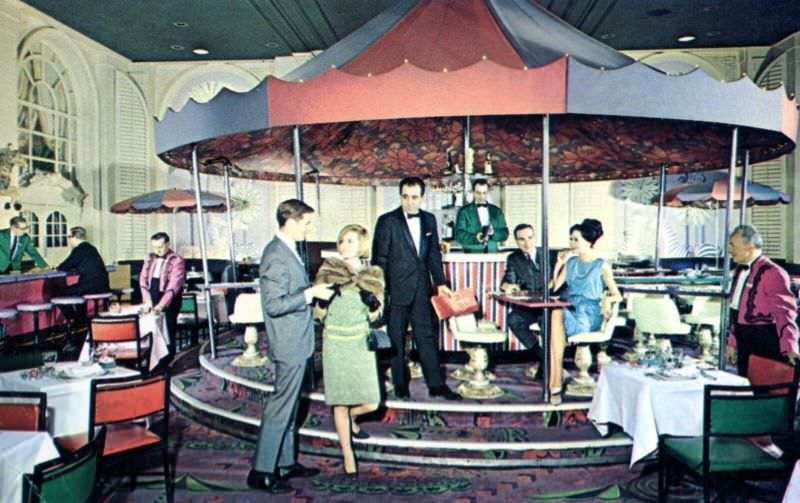
In the Northeast, the character of these spaces shifted. Massachusetts gave drinkers the Five Reasons Steak and Ale House in the Berkshires and the Harborside Inn on Martha’s Vineyard. The Merry-Go-Round Lounge inside Boston’s Sheraton-Plaza was exactly what it sounds like — a bar with a slowly rotating center that carried drinkers in a quiet circle while the room stayed still around them.
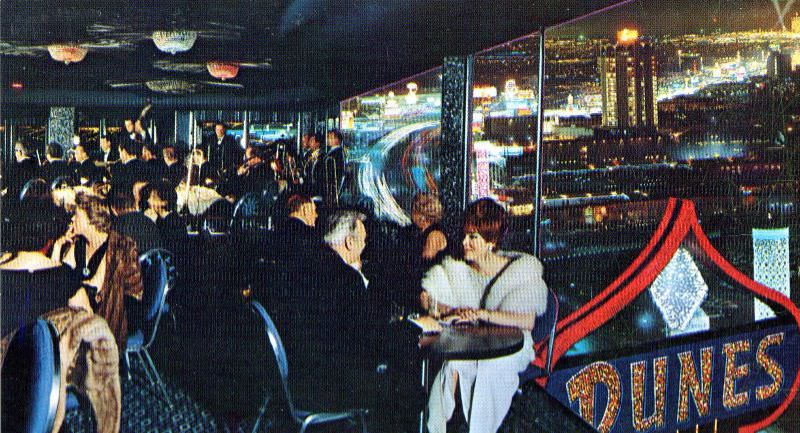
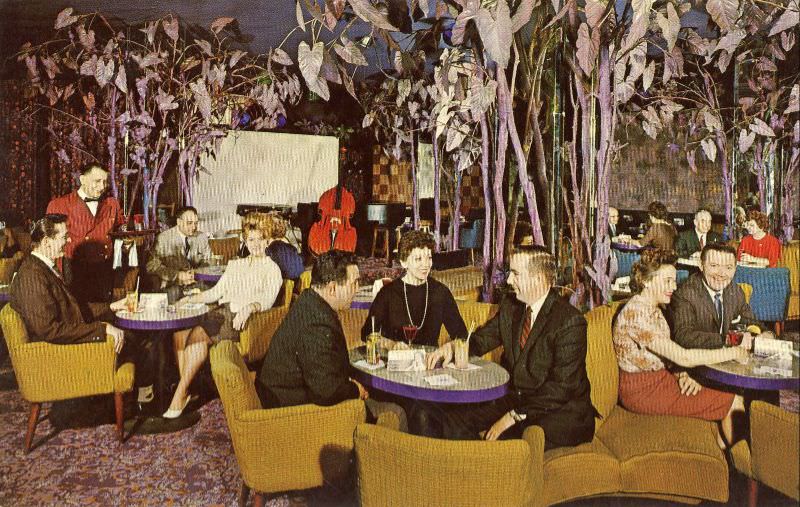
Las Vegas was still finding its footing in the 1950s, but the Dunes Hotel’s Top O’ The Strip already pointed toward what the city would become — a place where nightlife ran without clocks and the drinks kept coming. In New York, the Purple Tree Lounge showed up at both the Manger Hotel in Rochester and the Manger Vanderbilt in Manhattan, suggesting it was a brand that knew what people wanted.
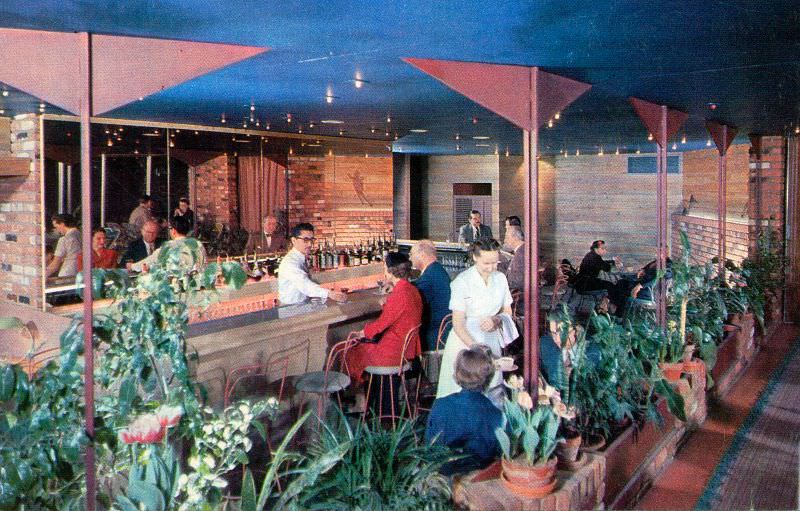
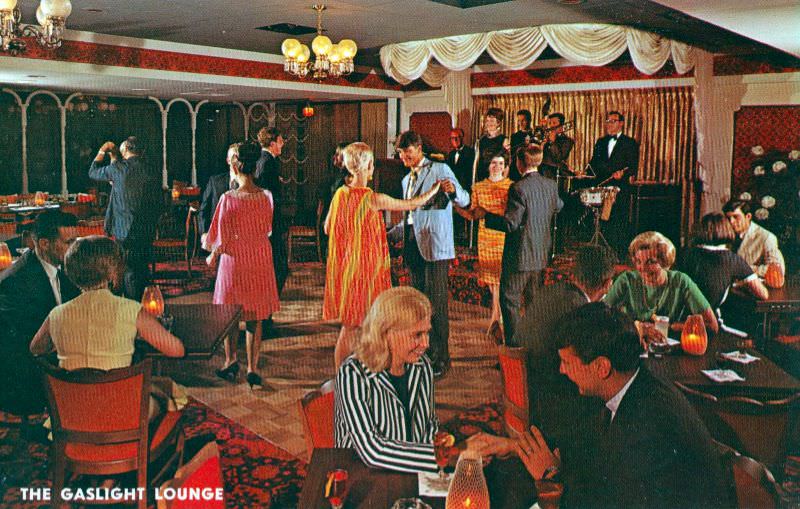
Pennsylvania’s Pocono Mountains became a popular resort region in the 1950s, and the bars there matched the relaxed, rustic mood. The Gaslight Lounge at Fernwood in Bushkill, Club Suzanne at Mount Airy Lodge, and the Bavarian Room at Rock Lodge in Lake Harmony each offered a different take on mountain drinking. These weren’t city bars — they were places to slow down, not speed up.
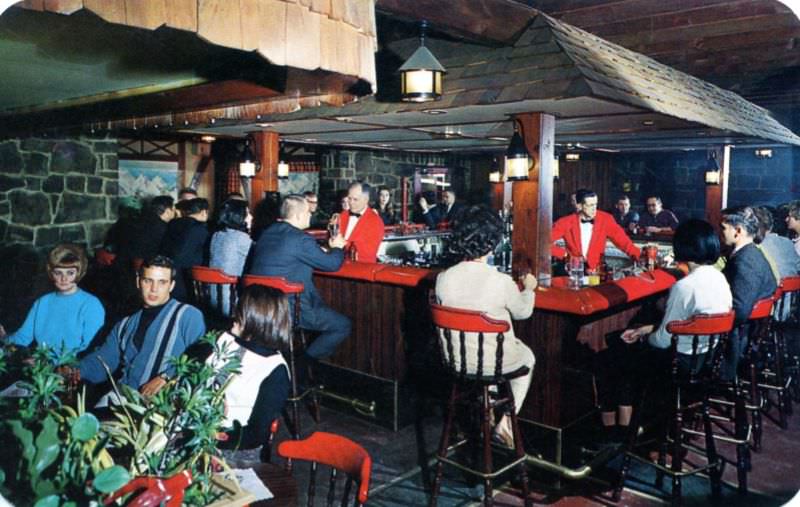
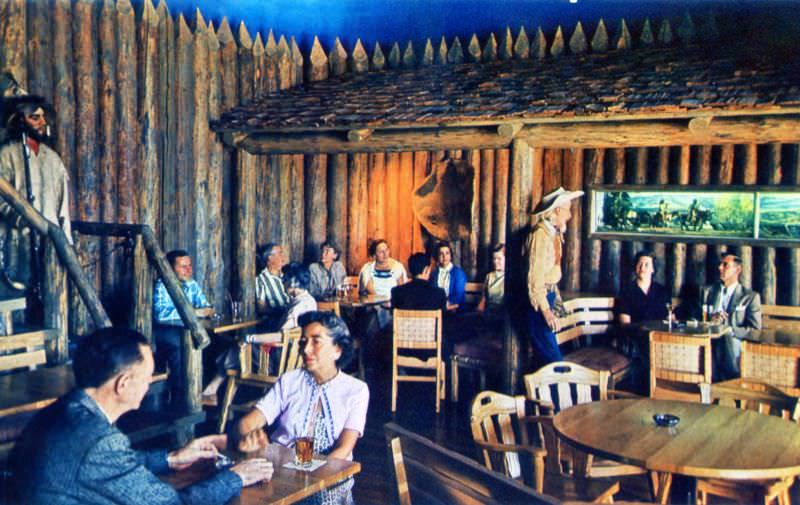
Washington D.C.’s Manger hotel properties — the Annapolis and the Hamilton — both maintained proper cocktail lounges that served the city’s professional and political crowd. Far to the west, the Stockade Room at Jackson Lake Lodge inside Grand Teton National Park brought the cocktail hour into wilderness country, where the mountains outside were as much a part of the experience as anything poured into a glass.