Greece in the 1970s was a country caught between its ancient past and a deeply uncertain present. The military junta that seized power in a coup on April 21, 1967 had upended democratic life, silencing political opposition, imprisoning dissidents, and ruling through fear. The junta’s grip on Greece lasted until 1974, when its collapse — accelerated by a disastrous military adventure in Cyprus — finally returned the country to civilian rule. The 1974 referendum abolished the monarchy, and a new constitution was ratified the following year. Through all of it, daily life went on: people sat in cafés, children went to school, tourists arrived at ancient ruins, and fishermen worked the Aegean.
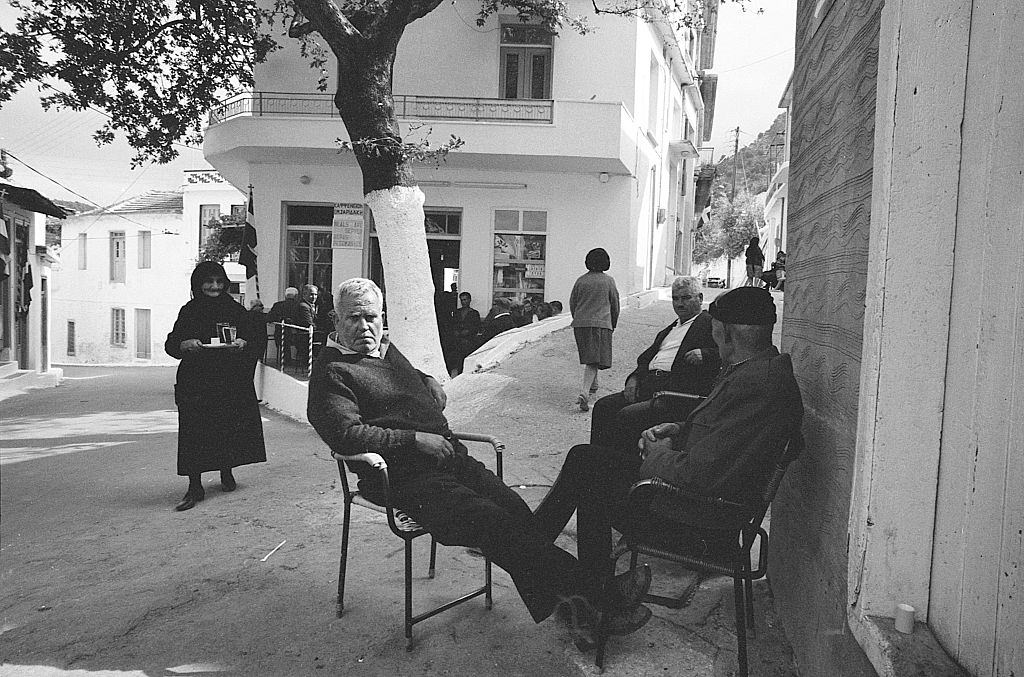
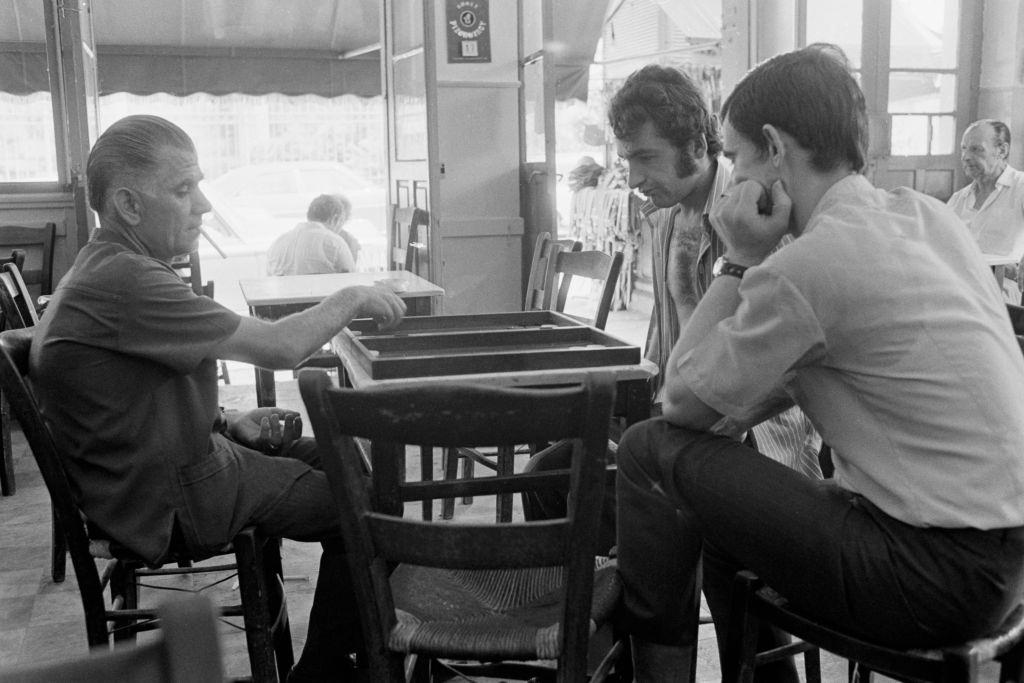
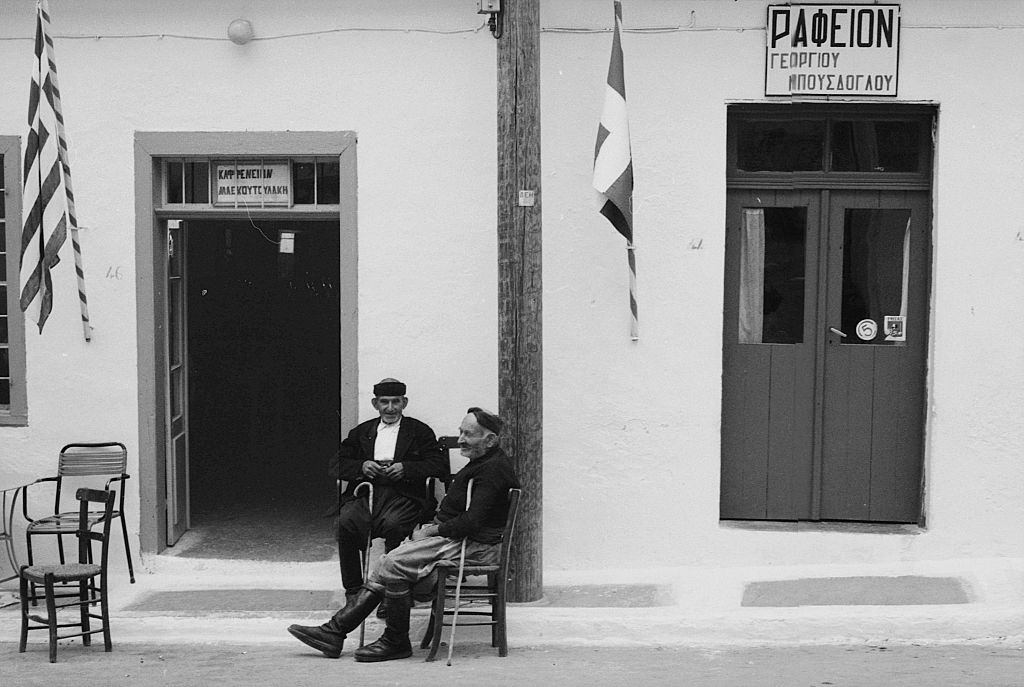
The café was the heartbeat of Greek social life. Men gathered at outdoor tables for hours, drinking coffee, playing backgammon, and talking politics in hushed tones — especially during the junta years, when public criticism of the regime was dangerous. Even under military rule, these spaces remained stubbornly alive with conversation.
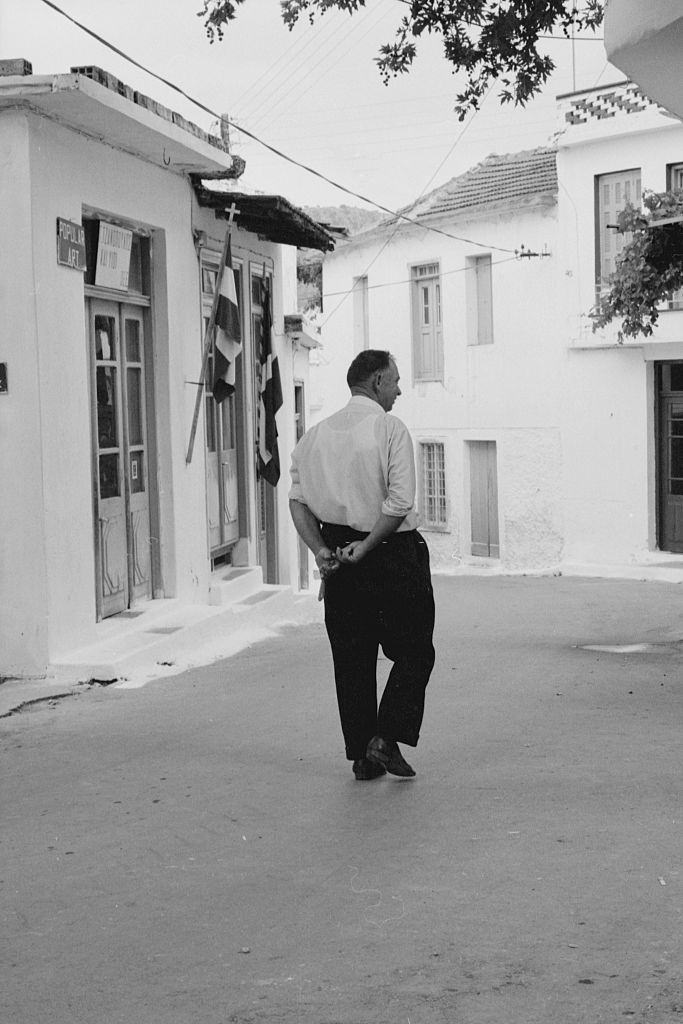
Street life in Greek towns and villages carried a distinct rhythm. In smaller communities, life moved slowly and deliberately, shaped by tradition, the Orthodox Church, and the agricultural calendar. In the village of Elaiochori, that rhythm was still very much intact in 1970.
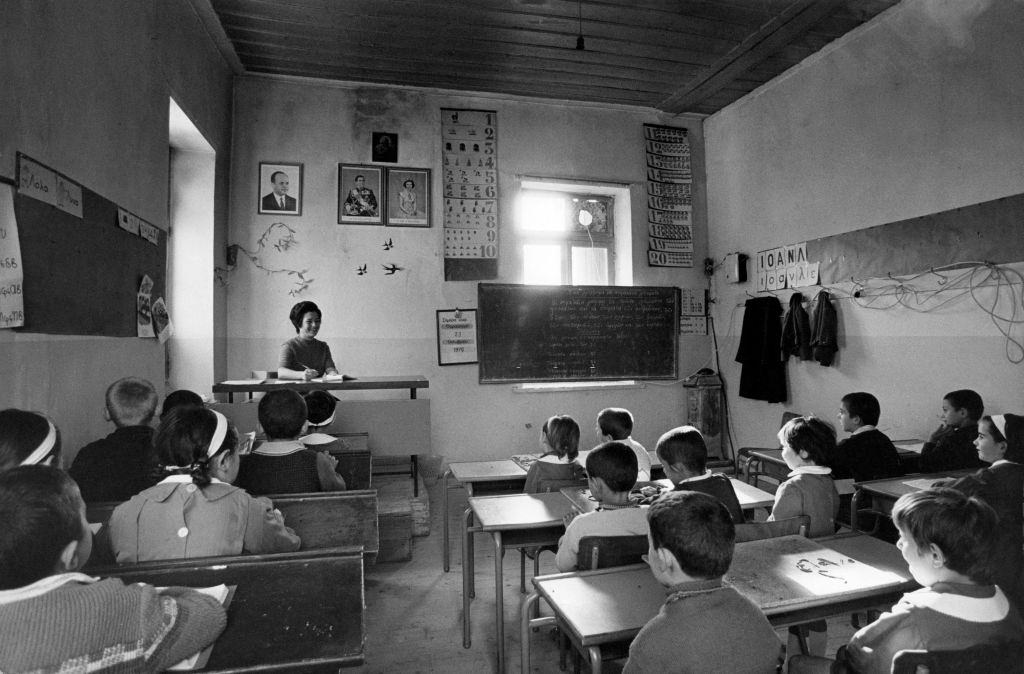
Rural Greek schoolrooms in 1970 were modest places. Students sat in rows, listening closely, their education shaped by a national curriculum that the junta had adjusted to promote nationalist values. Religion was central to community life in these villages, and the local priest held considerable authority.
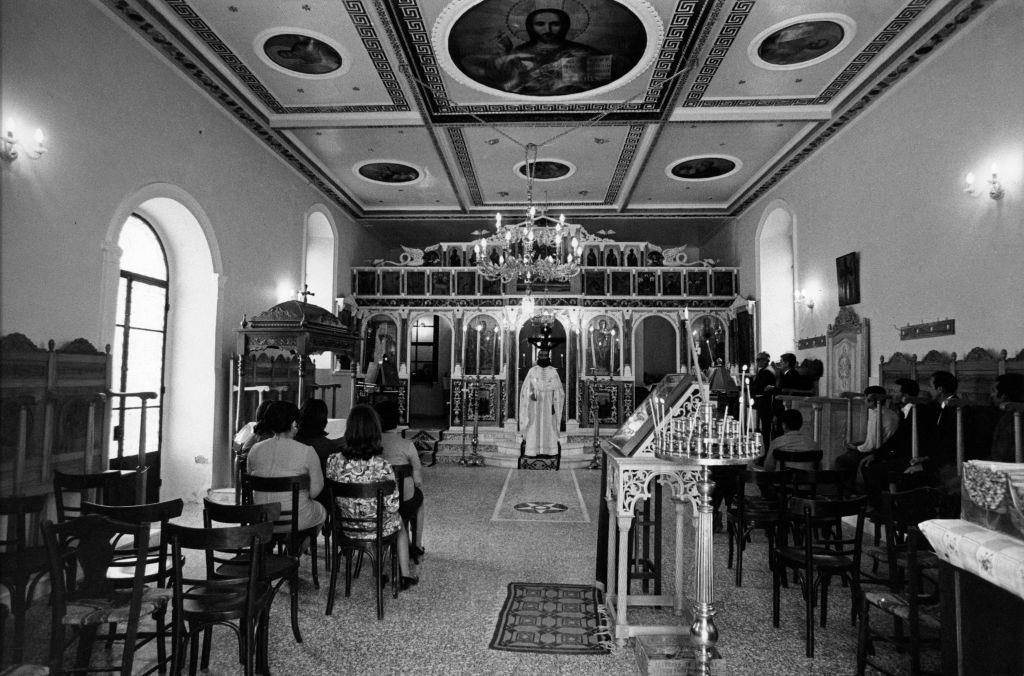
The Greek Orthodox Church remained one of the most stable institutions in the country throughout the junta period. The military regime, despite its authoritarianism, maintained close ties with the Church, which gave religious figures like local priests a protected and respected standing in their communities.
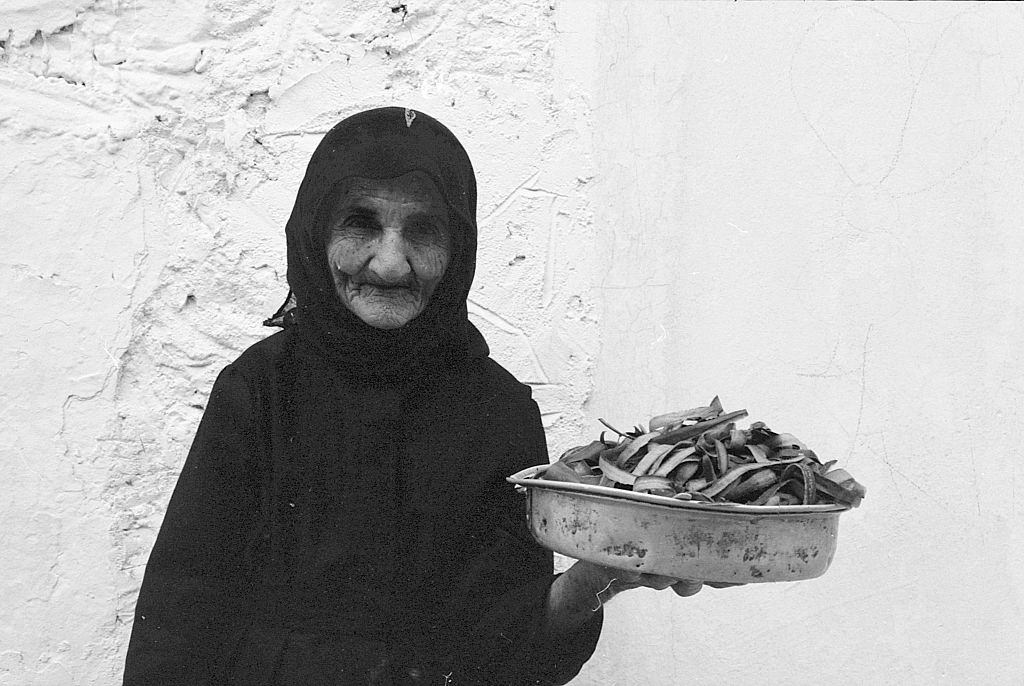
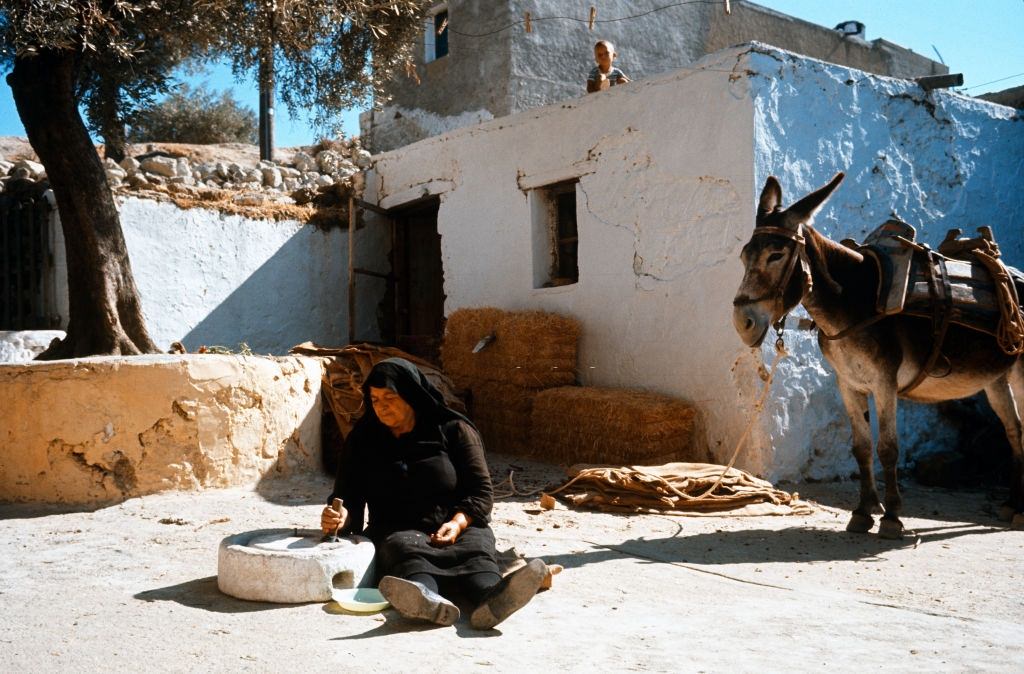
In rural areas, women carried much of the agricultural and domestic workload. Grinding corn, tending to produce, and preparing food were daily tasks that had changed little across generations. In the town of Zaros on Crete, that reality was captured plainly in 1970.
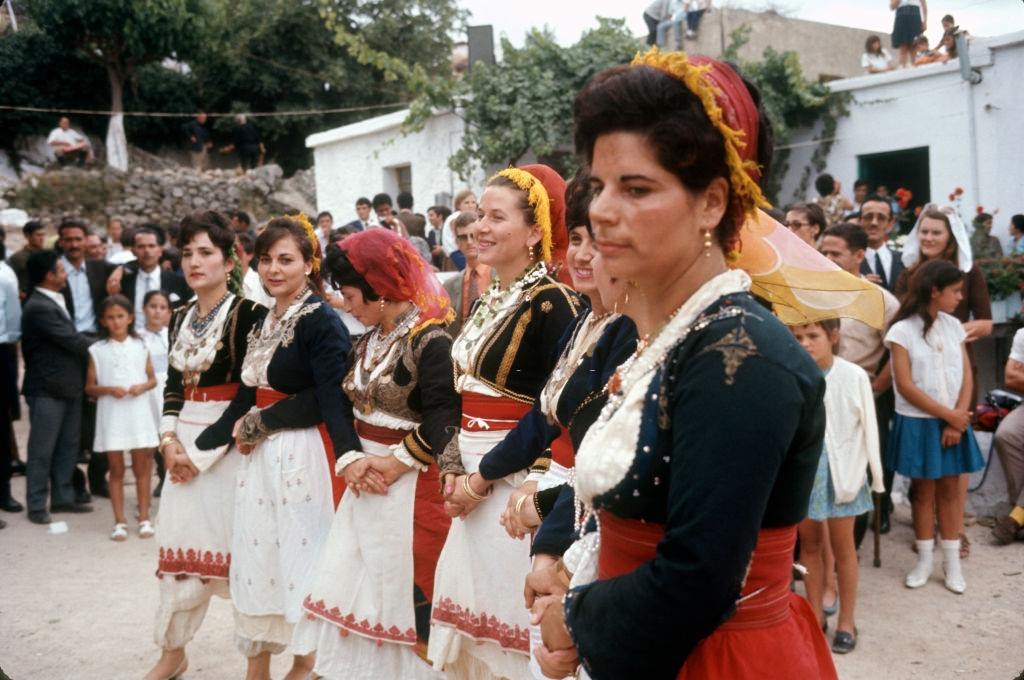
Crete, Greece’s largest island, held onto its traditions with particular stubbornness. The mountain village of Anogia was known for its strong cultural identity, including its music, dance, and fierce resistance to outside control — a reputation earned during the Nazi occupation of World War II and carried into the decades that followed.
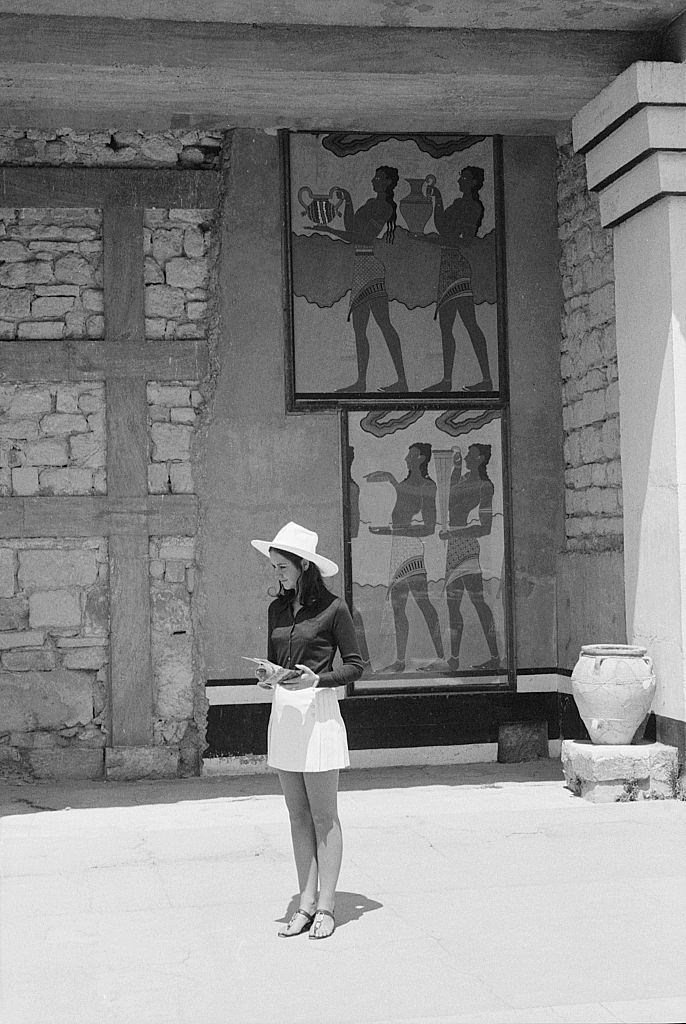
Tourism was already a major part of the Greek economy by the early 1970s, and the ancient sites drew visitors from across Europe and beyond. The Palace of Knossos on Crete, dating back to the Minoan civilization of around 1700 BC, was one of the most visited sites in the entire country.
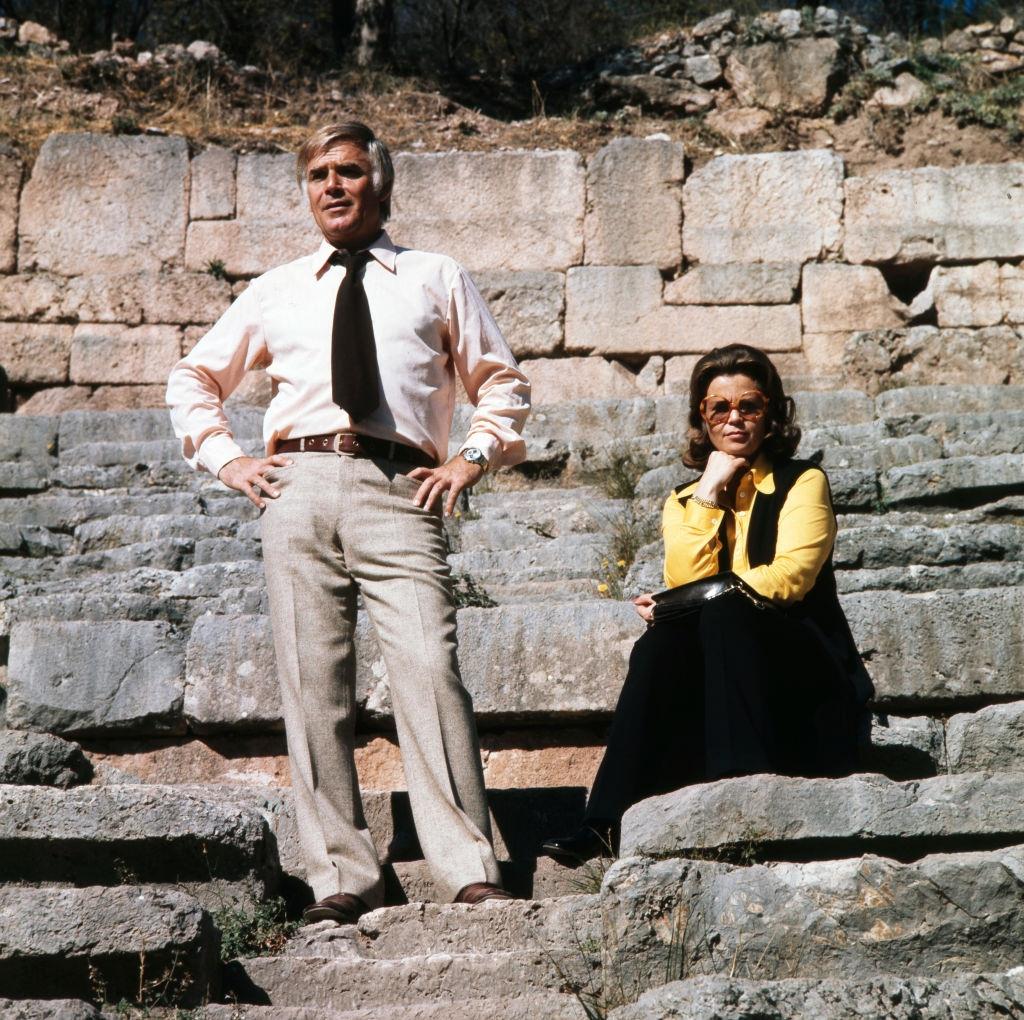
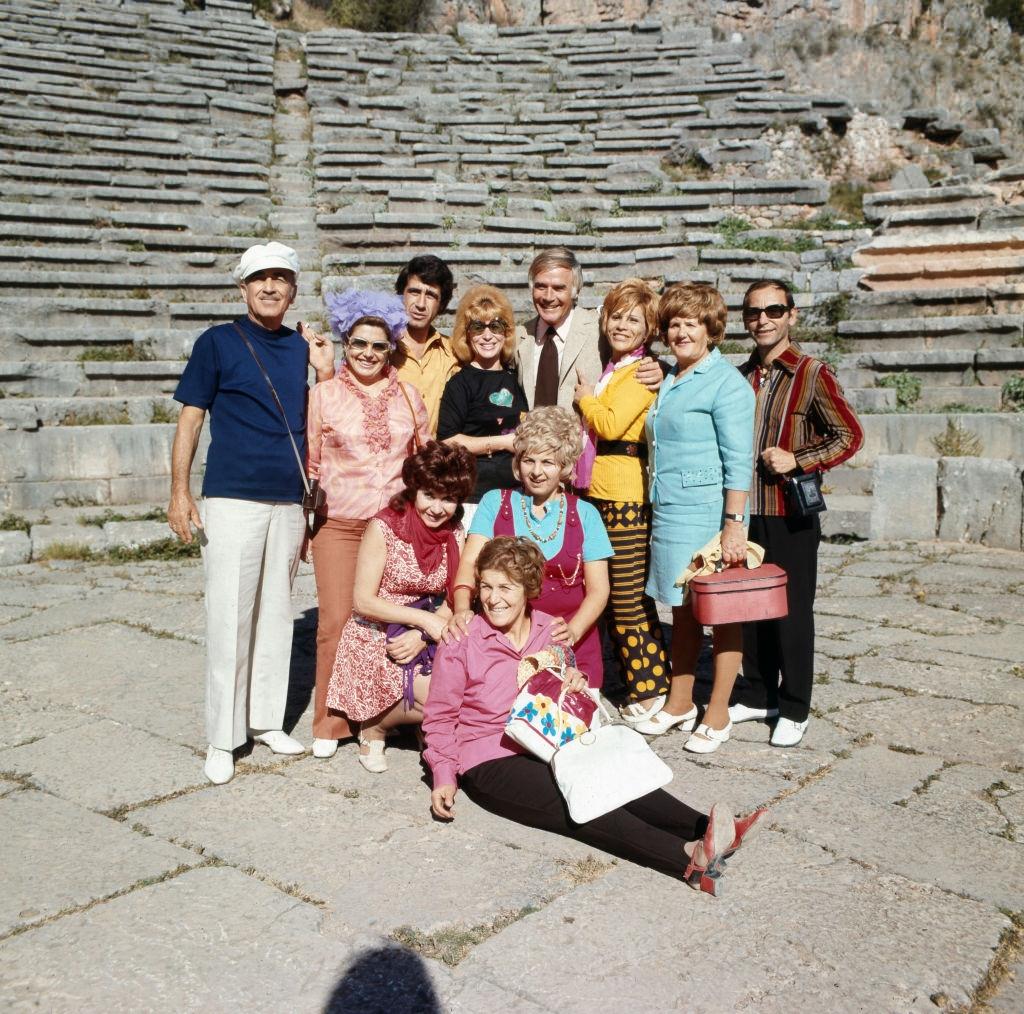
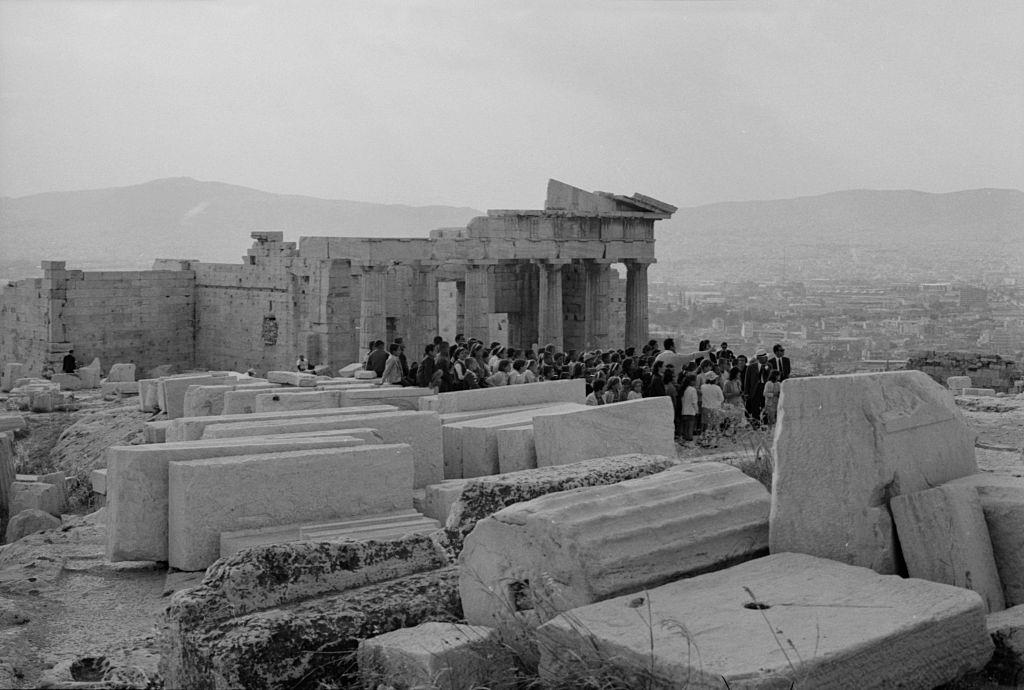
Archaeological sites drew tourists to every corner of Greece. From the Acropolis in Athens to the ancient theater at Delphi, visitors came to stand among ruins that stretched back thousands of years. German actor Joachim Fuchsberger was among the celebrities photographed exploring these landmarks during the decade.
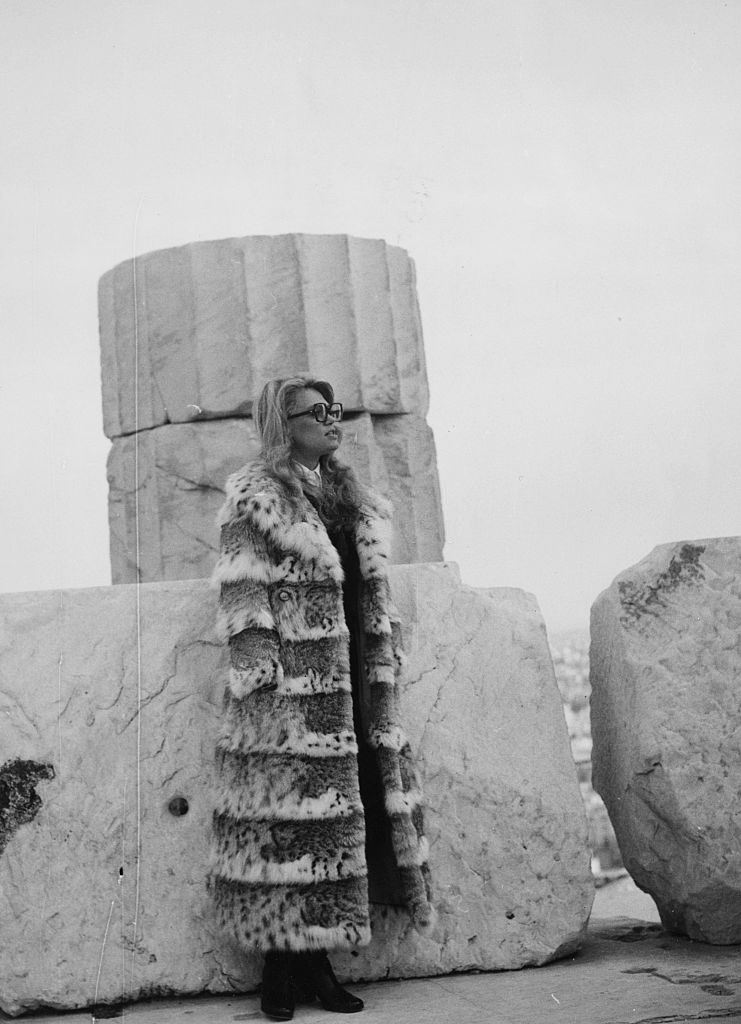
The Acropolis in Athens attracted international film productions as well. In March 1971, American actress Dyan Cannon visited the ancient site while in Athens to film ‘The Burglars,’ a French crime thriller shot partly in Greece and starring Jean-Paul Belmondo.
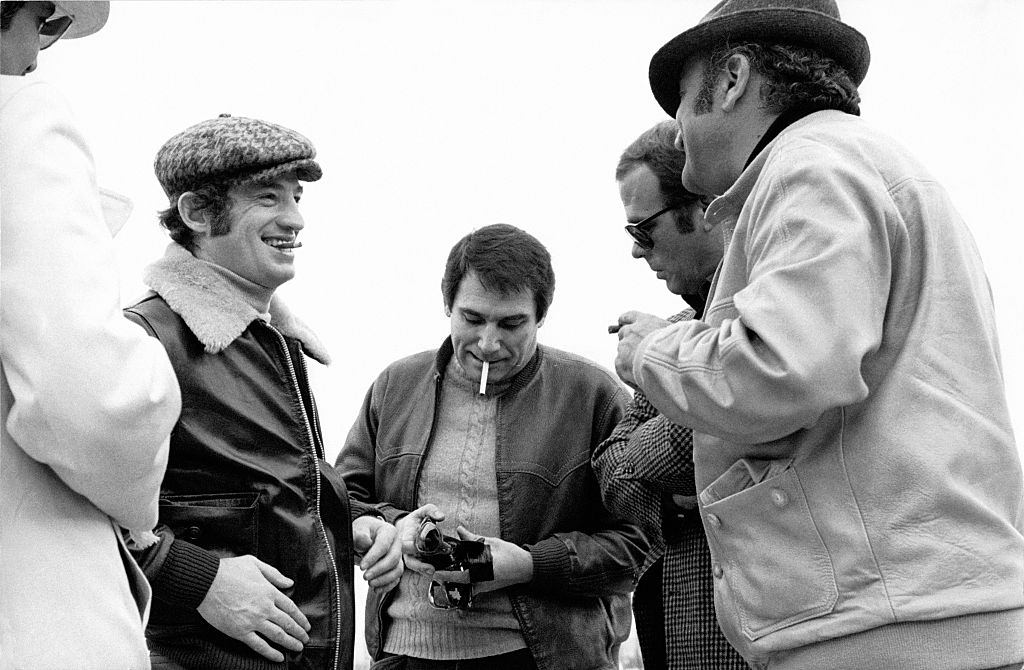
Belmondo himself was photographed on the Athens set of ‘Le Casse’ — the French title of the same film — alongside co-star Robert Hossein. The film used Athens’ streets and landmarks as a backdrop, giving international audiences a glimpse of the city at the height of the junta era.
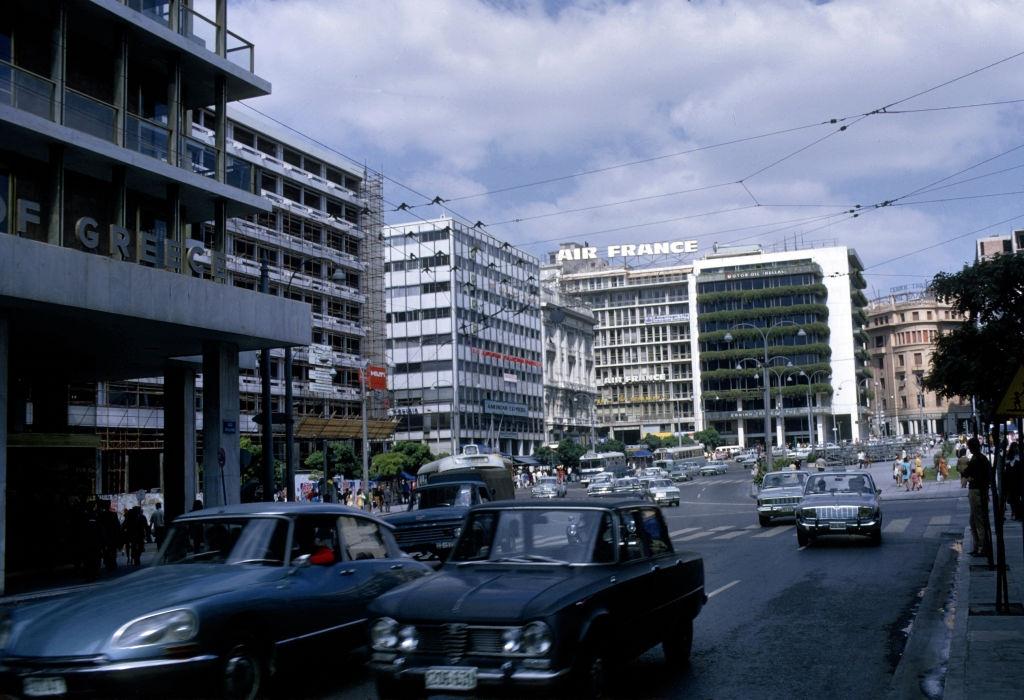
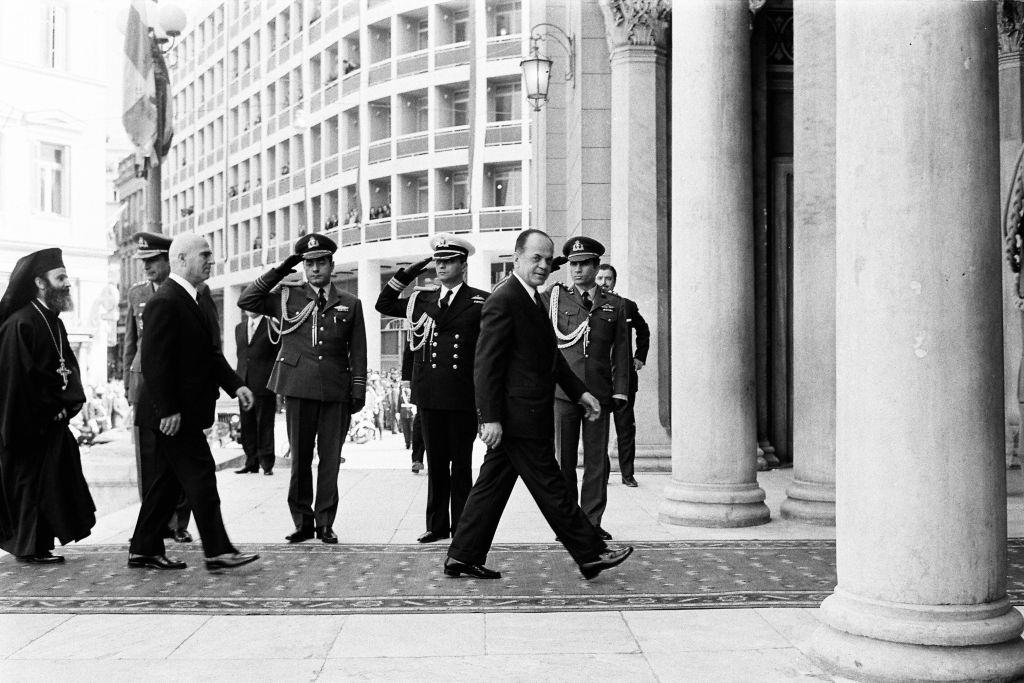
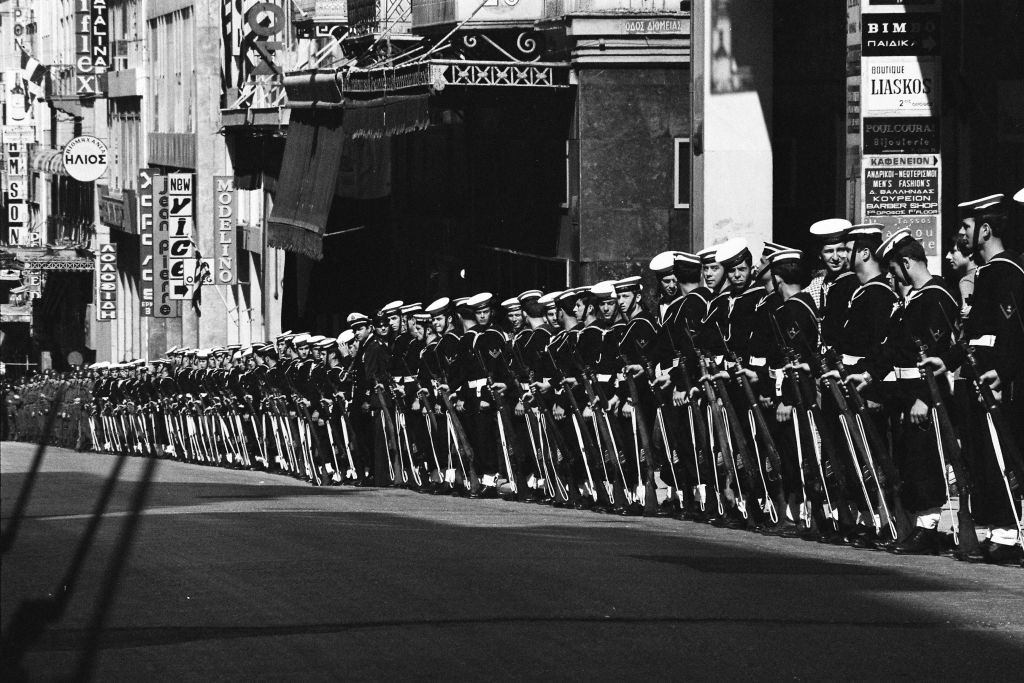
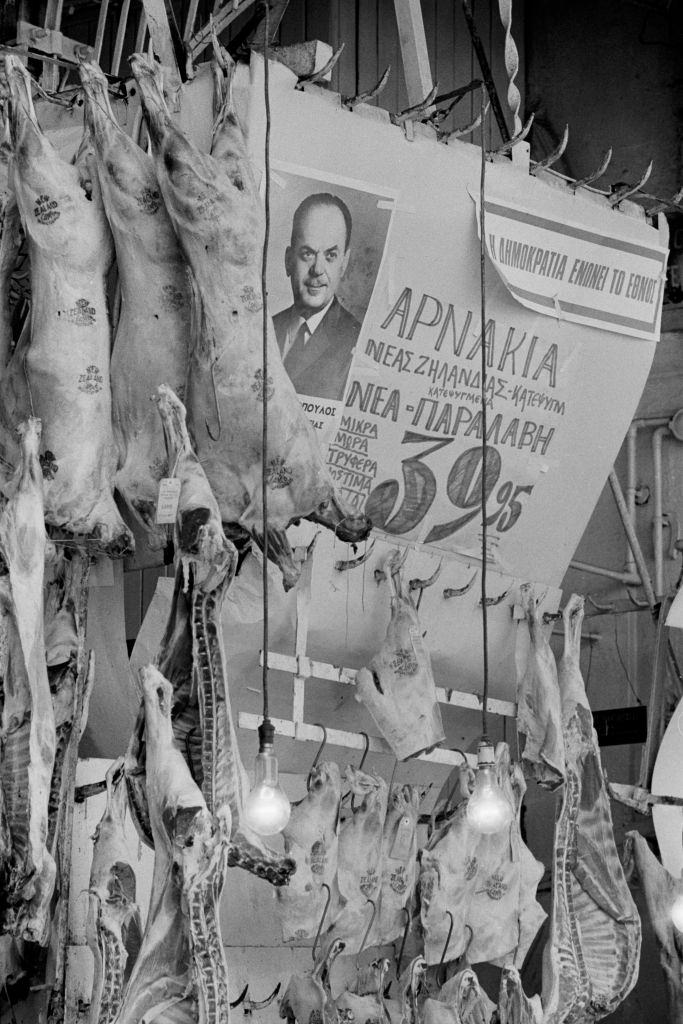
Athens in 1971 was a city where military authority was openly visible. Soldiers appeared on streets and at public events. On April 21, 1973 — the sixth anniversary of the coup — Prime Minister Georgios Papadopoulos presided over an Independence Day ceremony with full military pageantry.
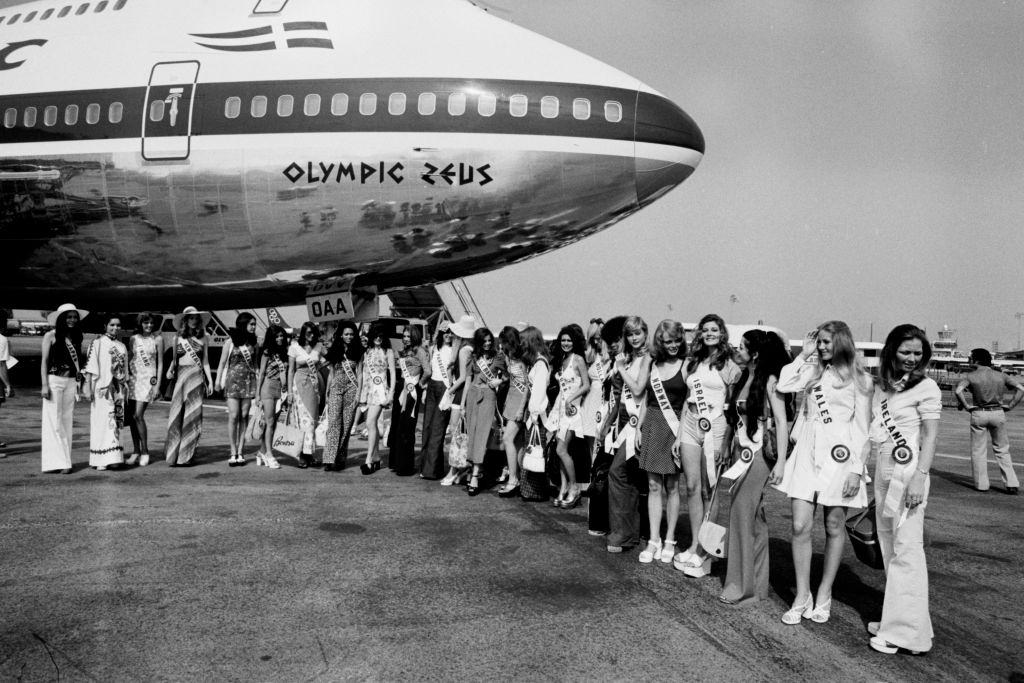
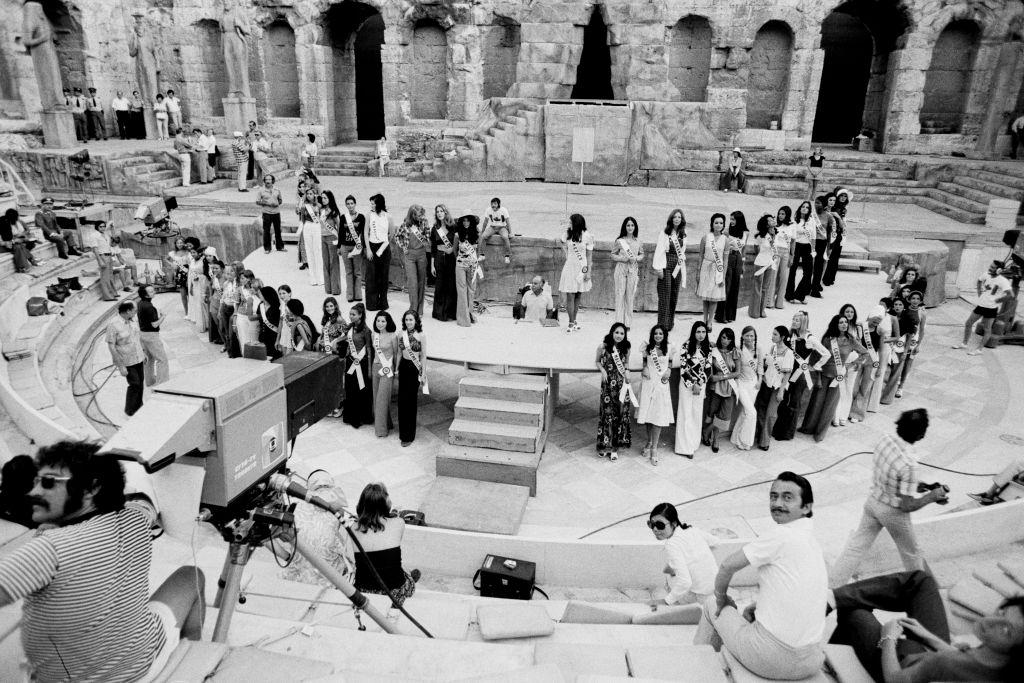
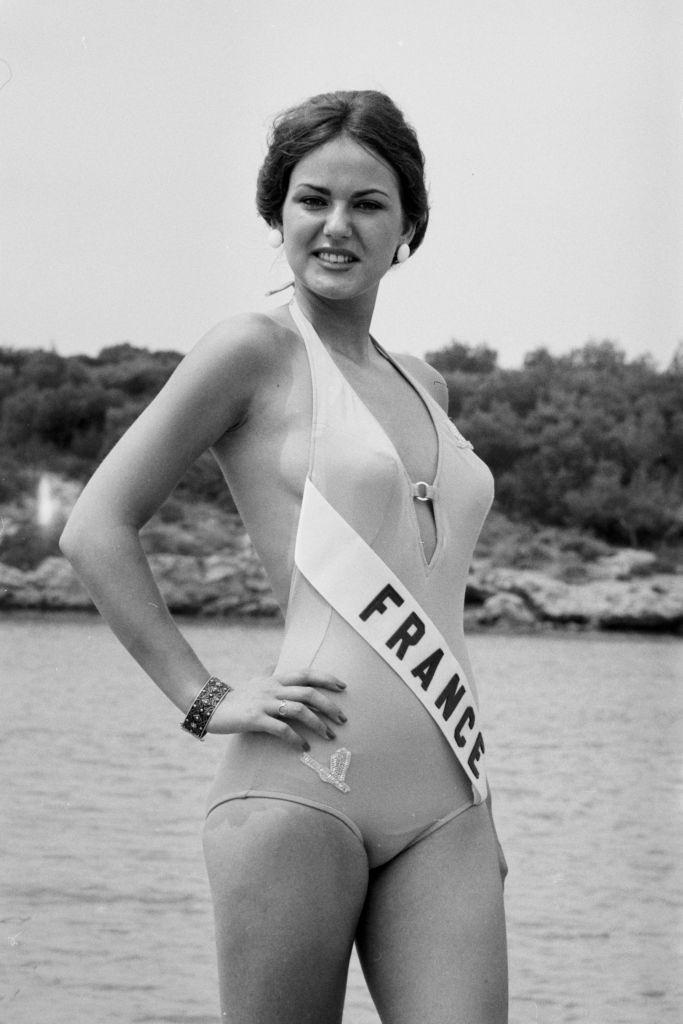
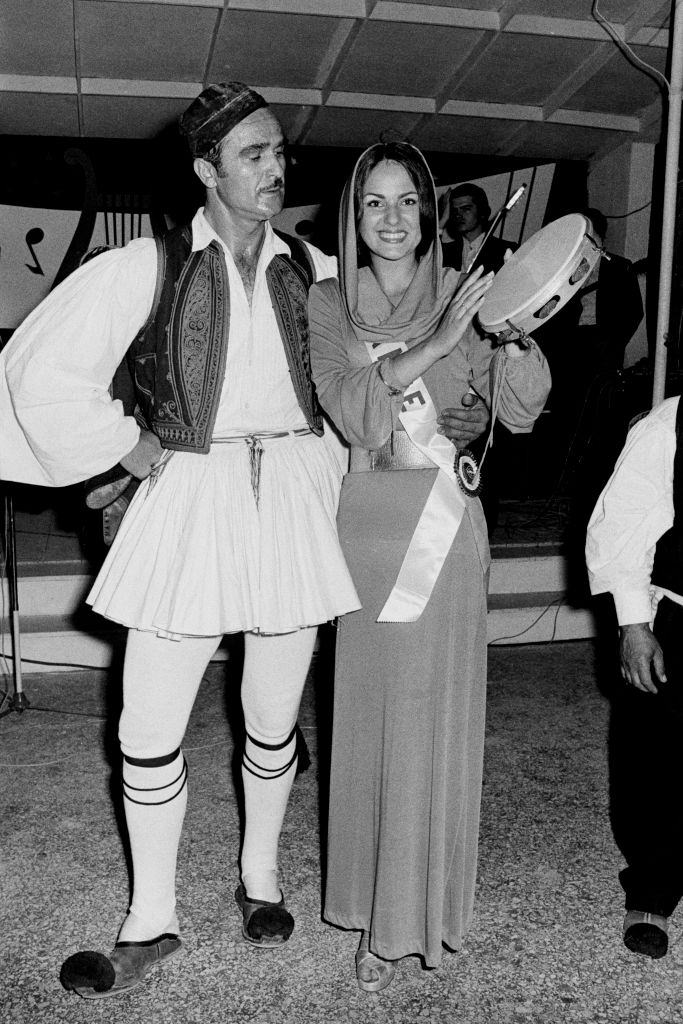
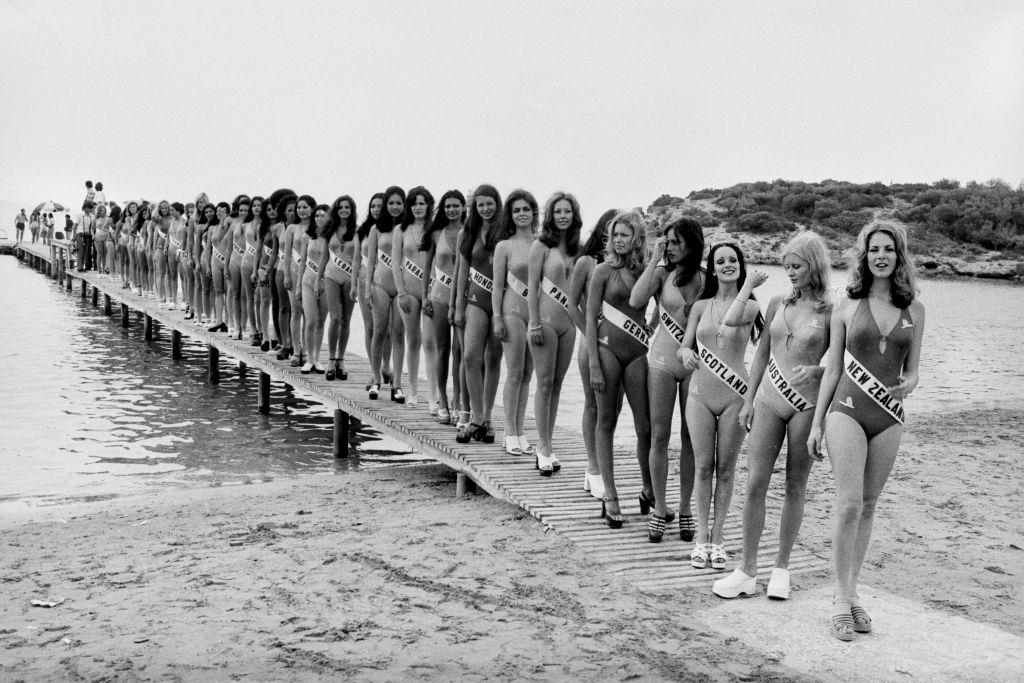
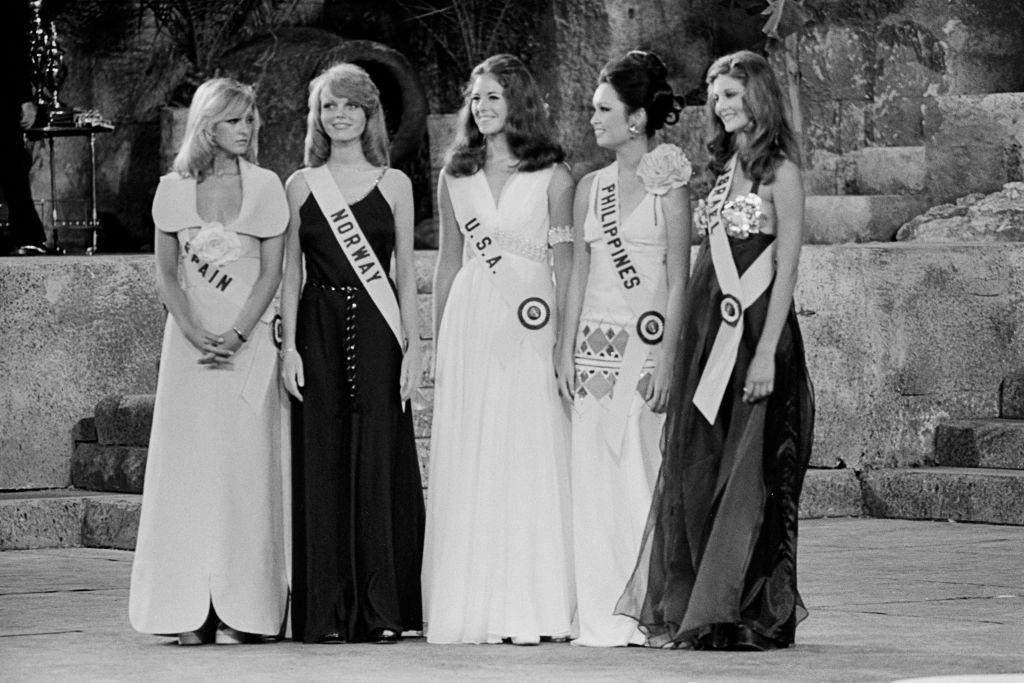
That same year, Athens hosted the Miss Universe pageant. Contestants arrived at the airport on July 16, 1973, and appeared at ancient theaters around the city. On July 21, Margarita Moran of the Philippines was crowned Miss Universe in Athens — an event that brought global media attention to a city living under authoritarian rule.
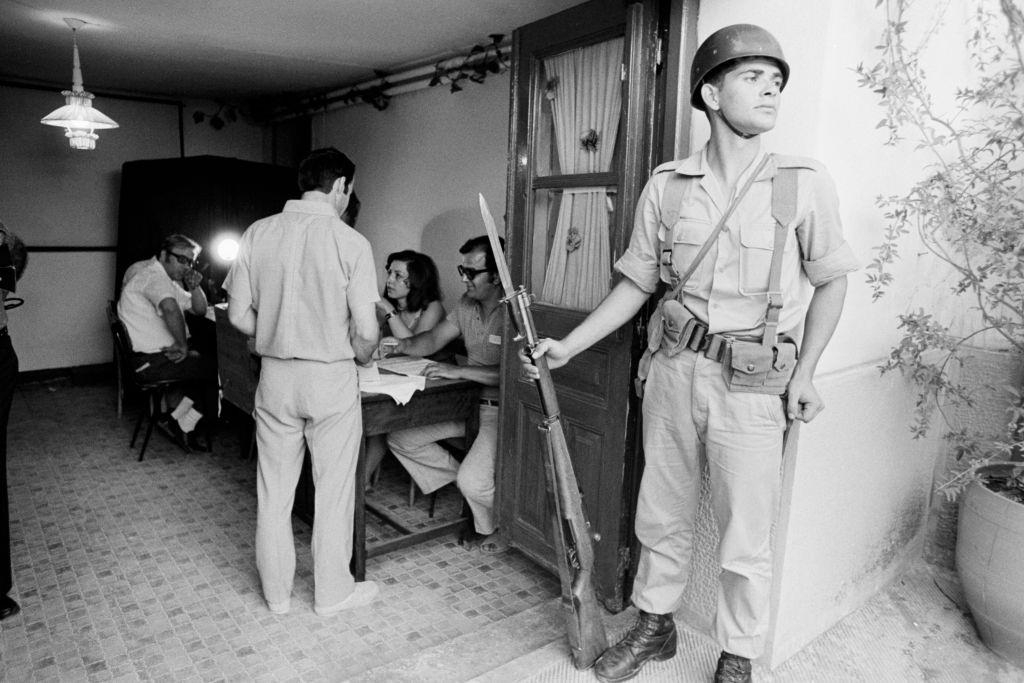
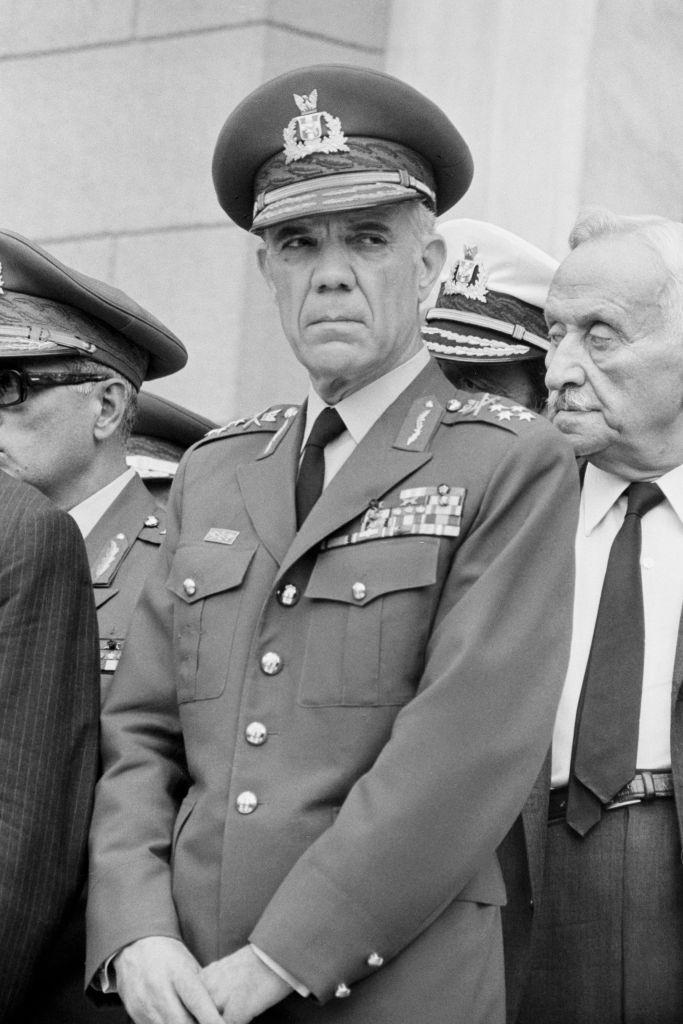
Just days after the Miss Universe events, on July 29, 1973, the junta held a referendum on abolishing the monarchy. The vote took place under military supervision, with soldiers stationed at polling stations. General Anghelis, a senior military figure, was present at the proceedings. The result was a formal declaration of a republic — though still under military control.
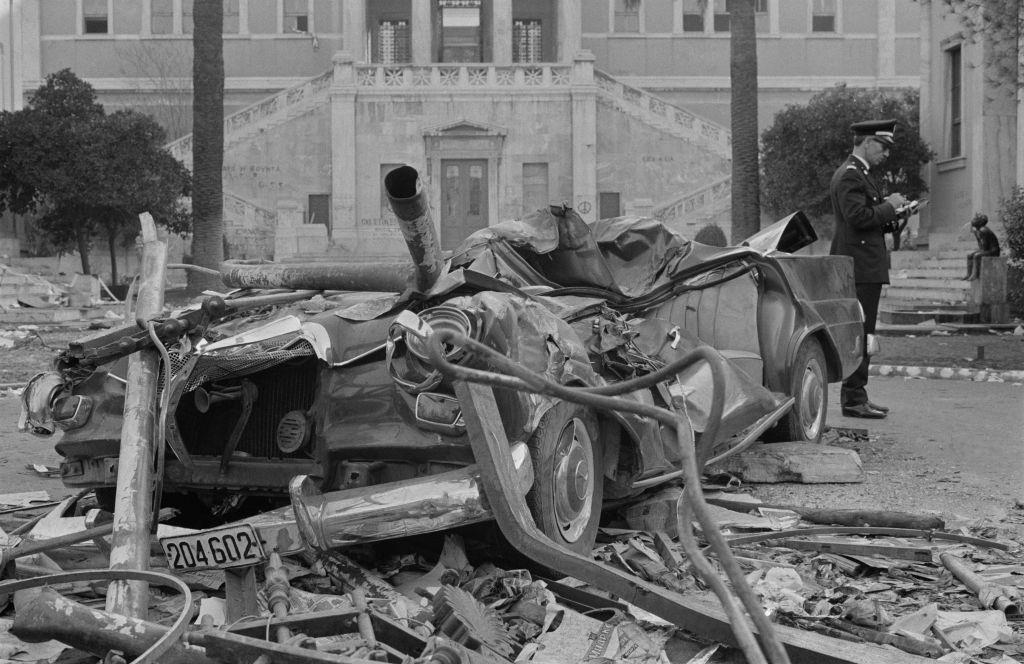
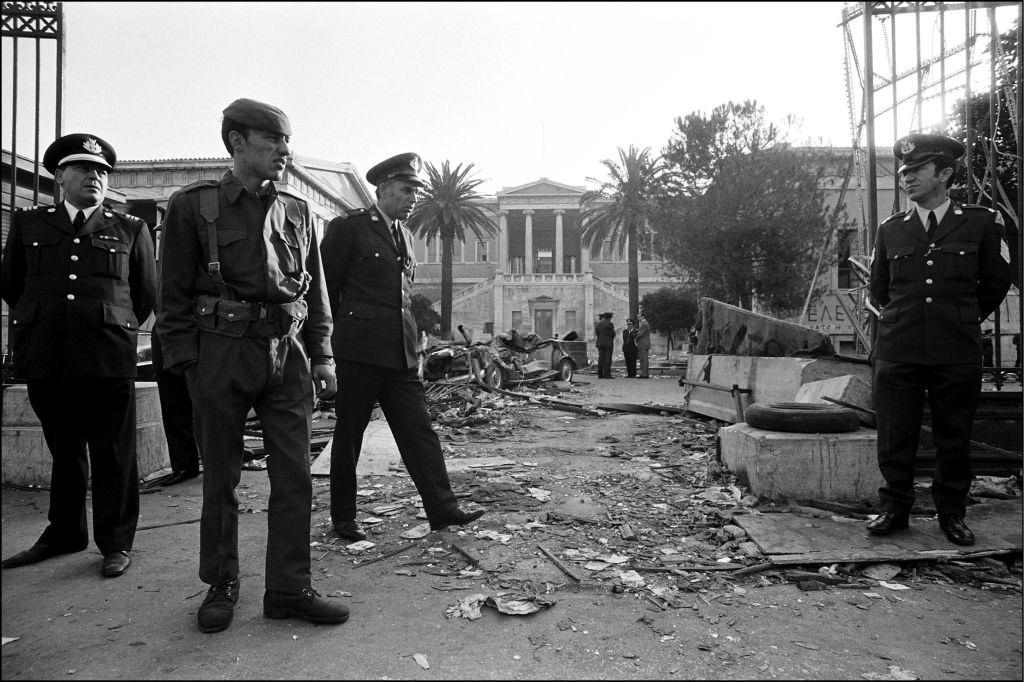
On November 17, 1973, students at the Athens Polytechnic launched a major uprising against the junta. They barricaded themselves inside the university and broadcast anti-junta messages over a makeshift radio station. The regime sent tanks through the gates on November 17, killing at least 24 people. The aftermath left the campus ransacked, with cars and buses destroyed in the streets outside.
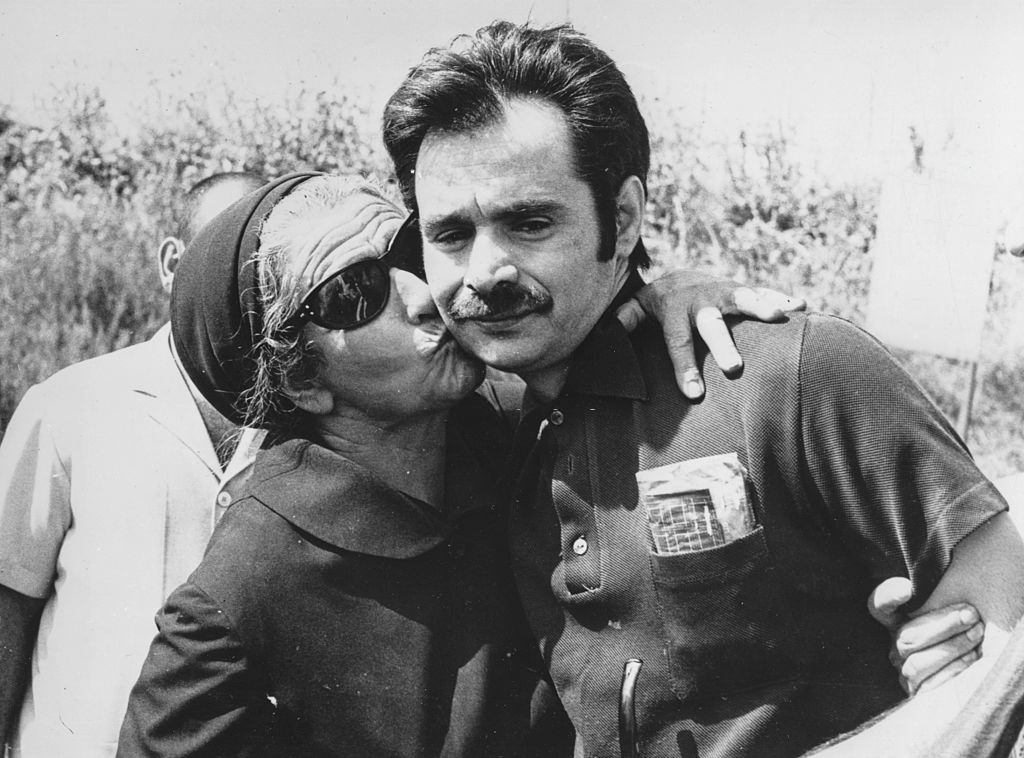
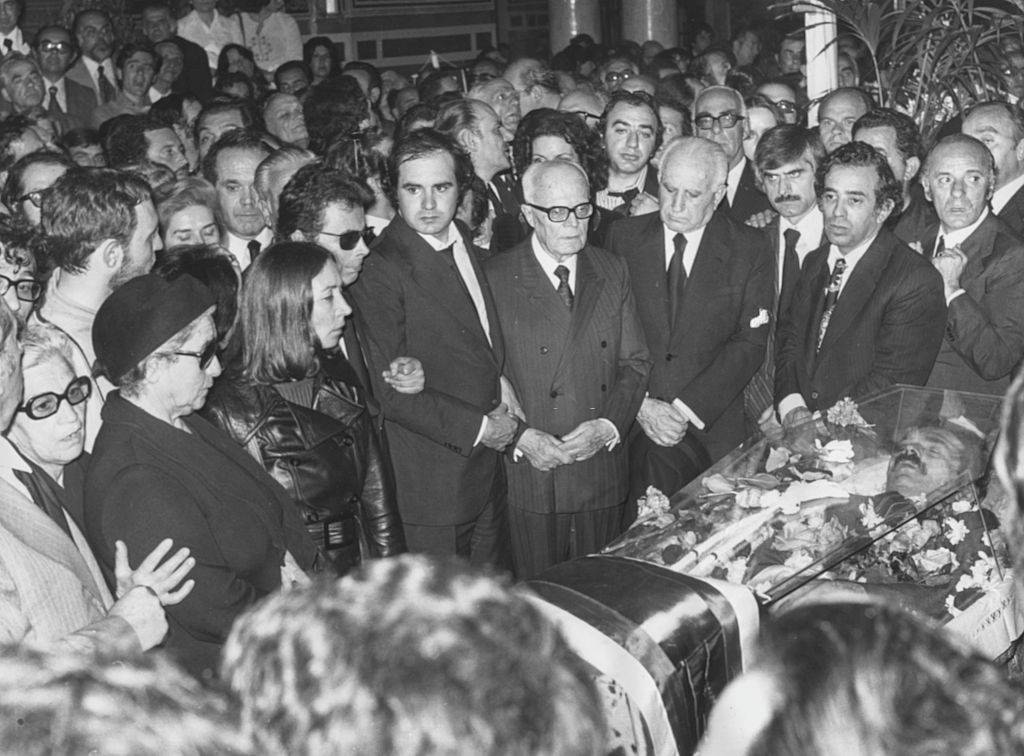
Also in 1973, Alexandros Panagoulis — a resistance fighter who had attempted to assassinate junta leader Georgios Papadopoulos in 1968 and was subsequently tortured and imprisoned — was released as part of an amnesty. His mother was there to greet him on August 23, 1973. He died in a suspicious car crash in 1976, and his open-casket funeral drew enormous crowds.
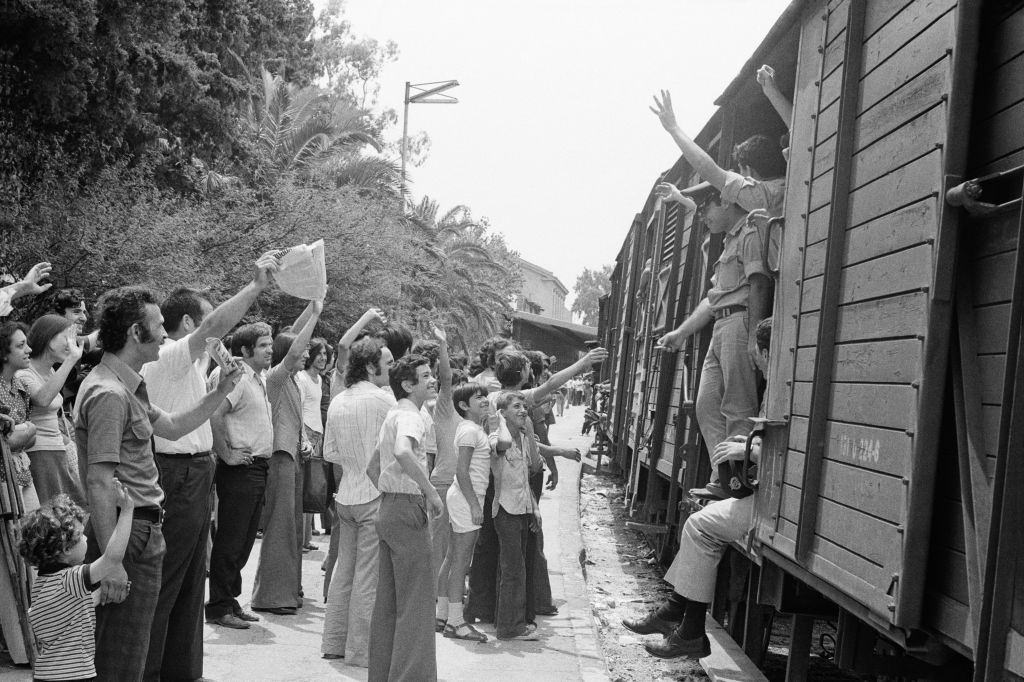
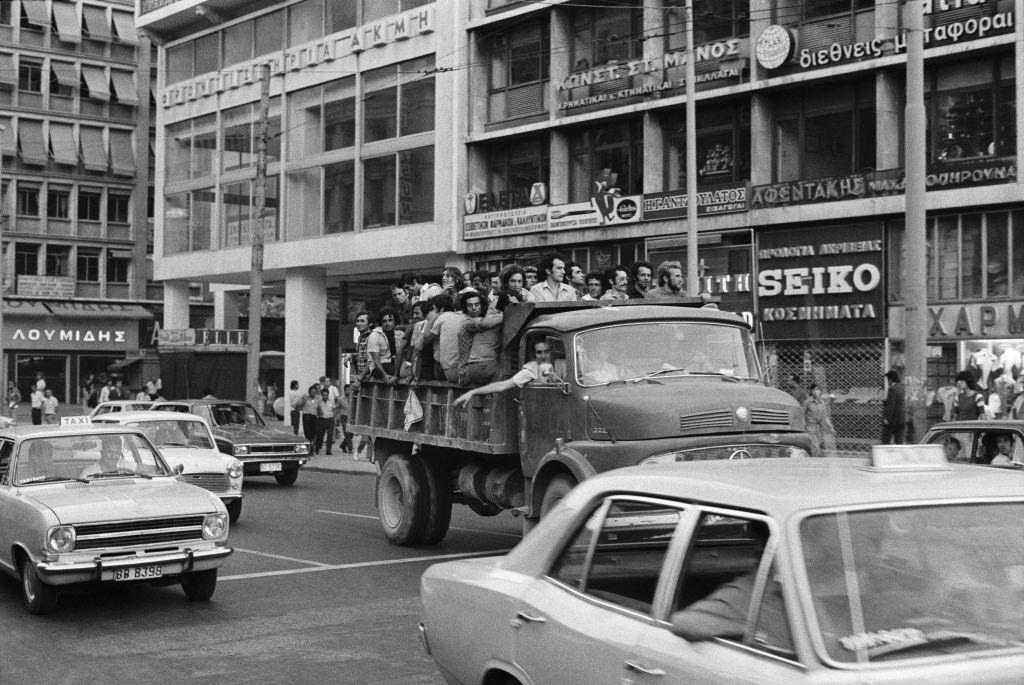
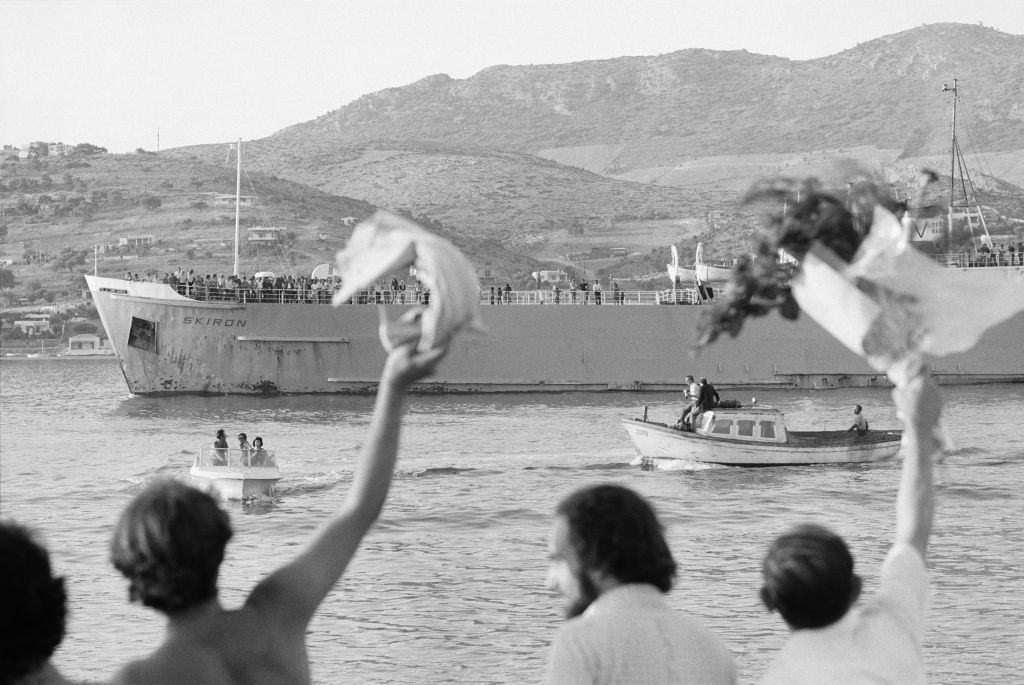
The junta collapsed in July 1974. On July 20 of that year, recalled soldiers departed from Athens station following the fall of the colonel regime. Within days, political exiles and deportees were returning home. On July 25, 1974, scenes of celebration erupted at the port of Athens as deportees arrived back from the island of Varos.
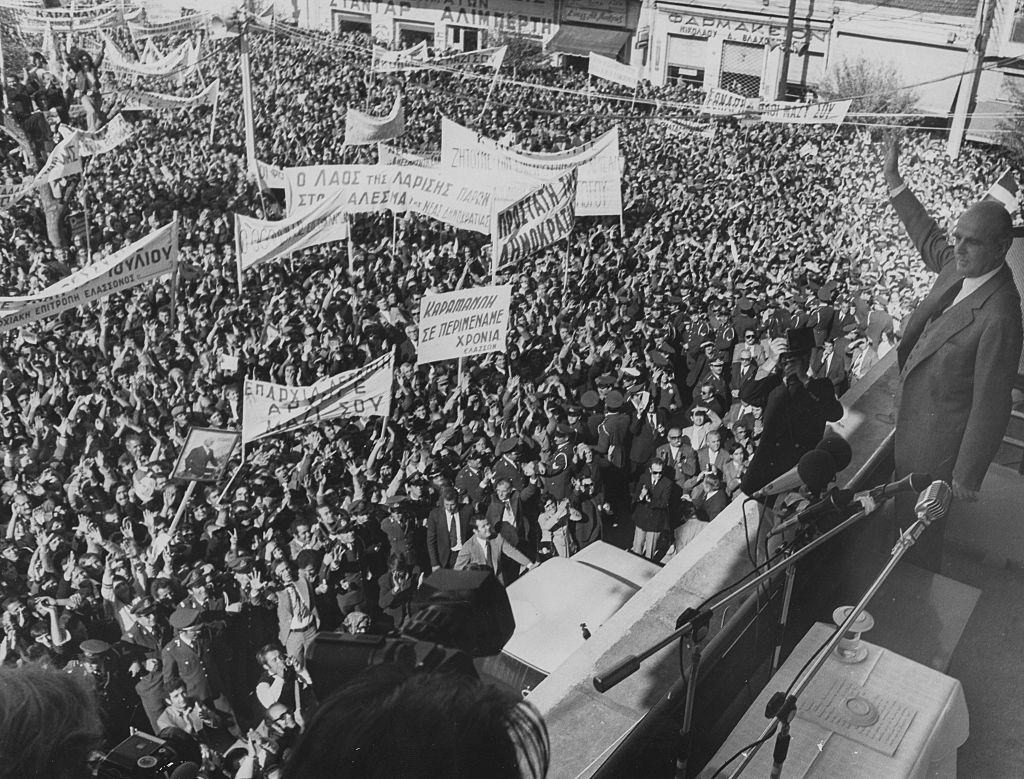
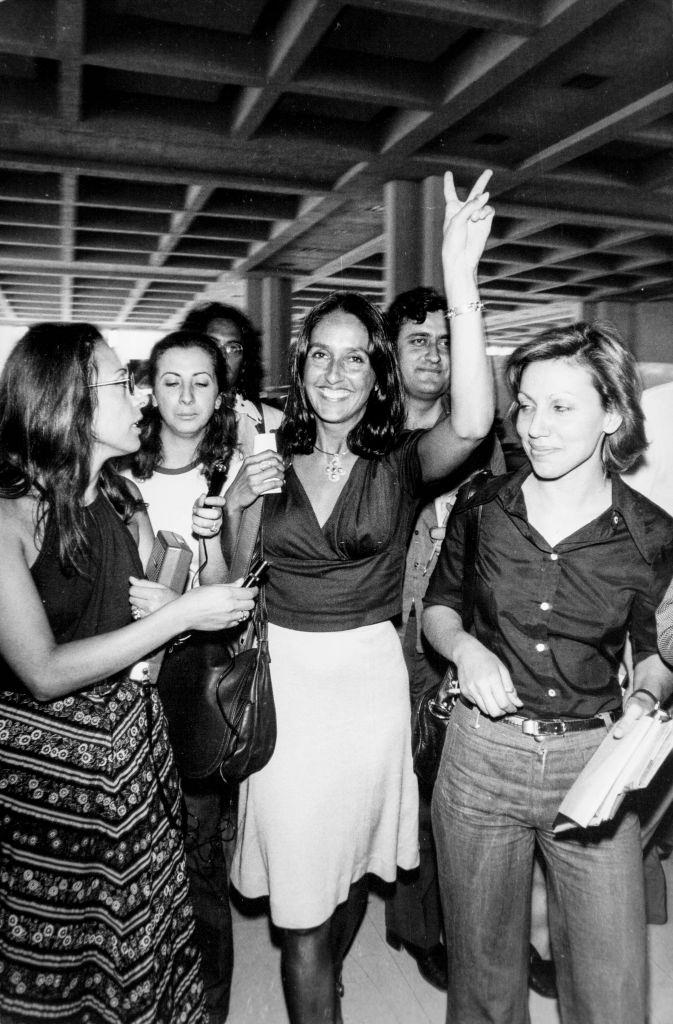
Politician Andreas Papandreou, who had spent the junta years in exile, returned to Greece and addressed massive crowds from a balcony following the regime’s fall. He would go on to found the PASOK socialist party and eventually become prime minister. Folk singer Joan Baez also arrived in Athens on July 30, 1974, just days after the restoration of democracy.
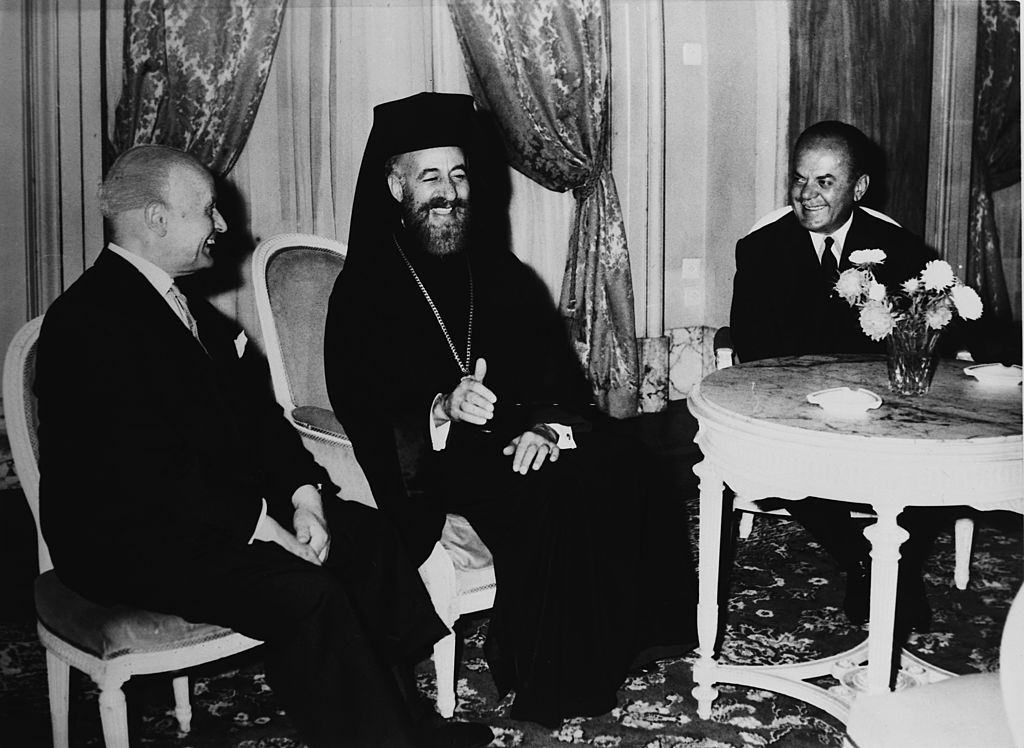
Archbishop Makarios III, the political and religious leader of Cyprus, made an official visit to Athens during the decade. His presence in the Greek capital carried significant weight, given that the junta’s failed attempt to overthrow him and annex Cyprus had directly triggered the regime’s collapse.
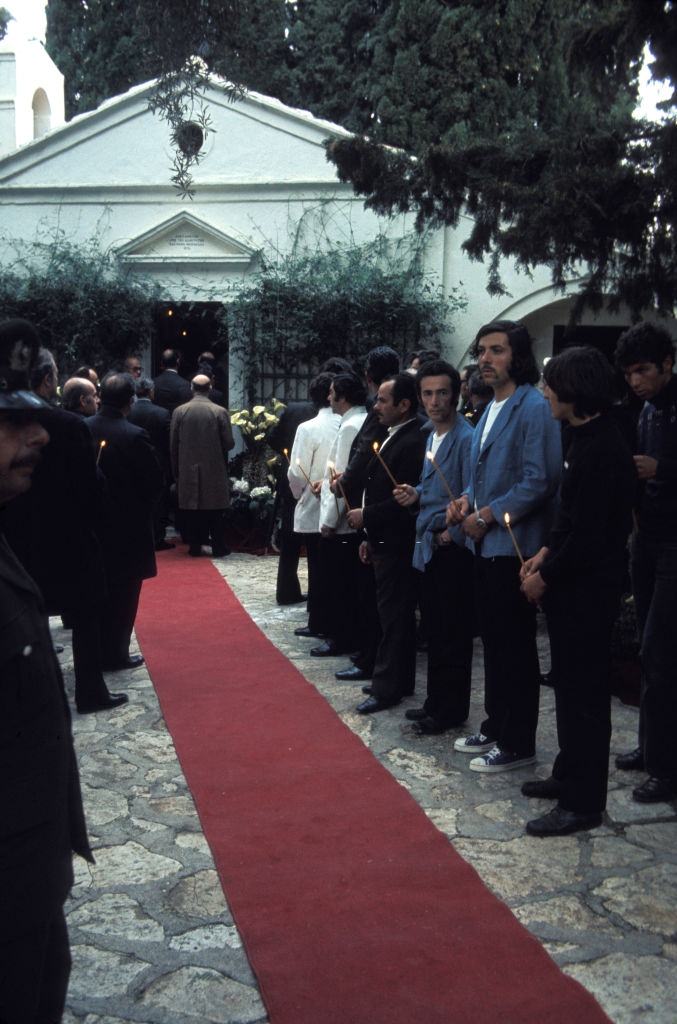
In March 1975, shipping magnate Aristotle Onassis — one of the most famous Greeks in the world — died in Paris and was buried on his private island of Skorpios. His funeral drew international attention to the small Ionian island he had purchased in 1963.
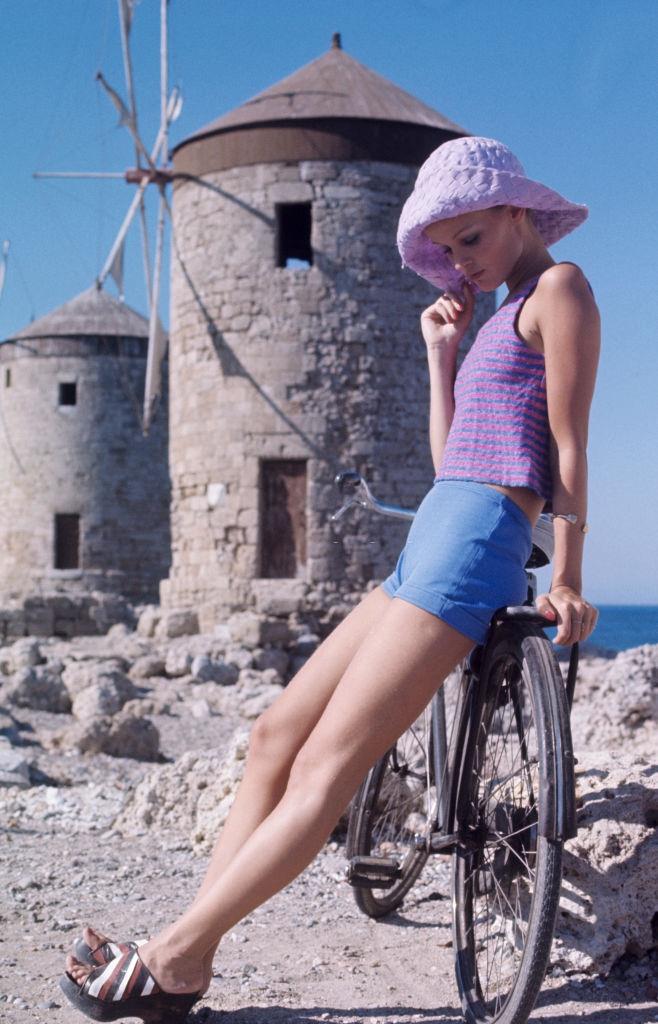
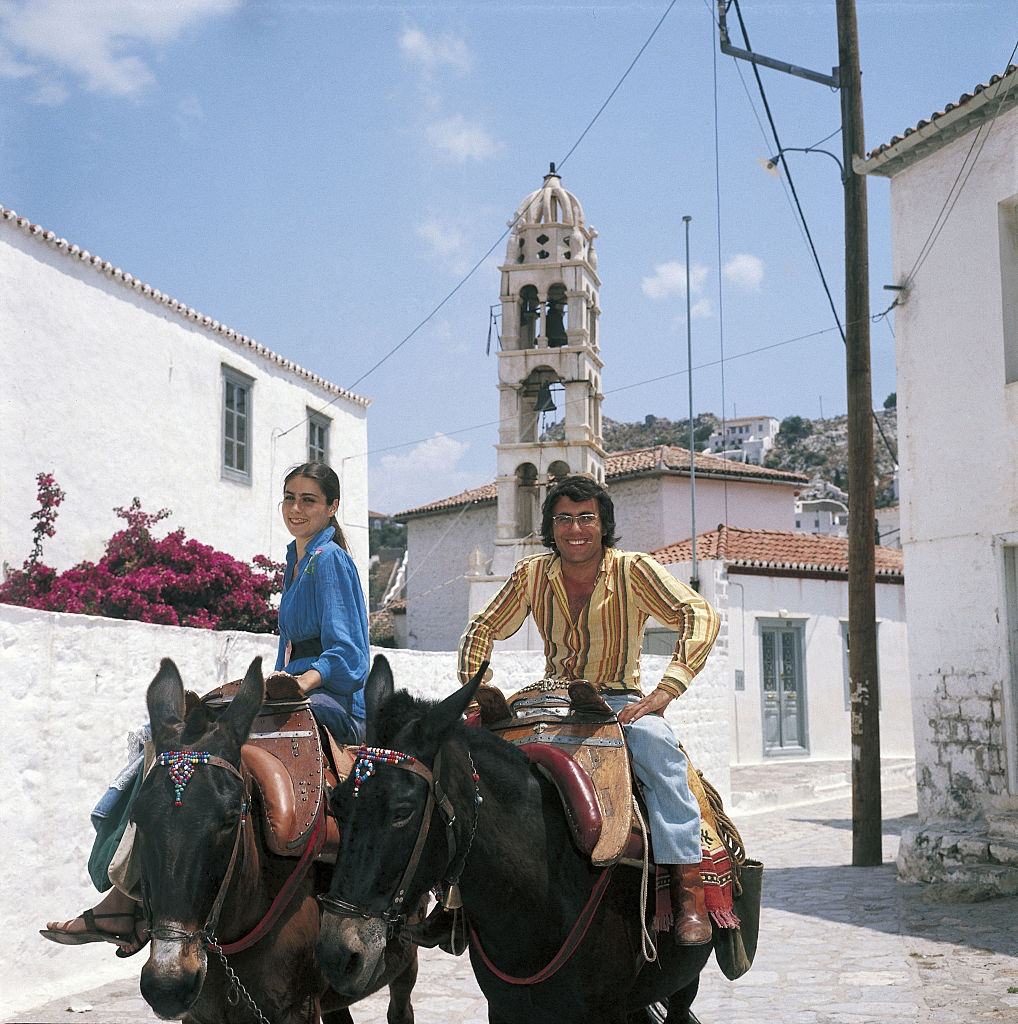
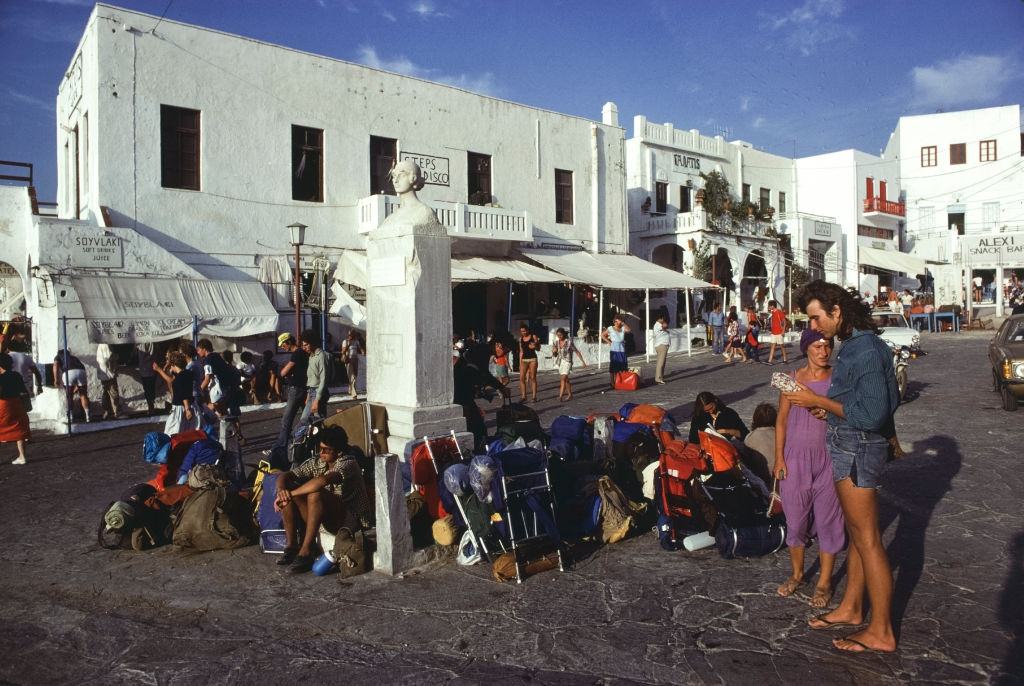
Beyond politics and tragedy, the islands remained a draw for international visitors and celebrities throughout the decade. The island of Rhodes attracted tourists and locals alike, while Mykonos became a destination for backpackers by the late 1970s. Italian singer Al Bano and his wife Romina Power were photographed on mules in Greece in 1975, joining a long list of international stars who holidayed in the country.
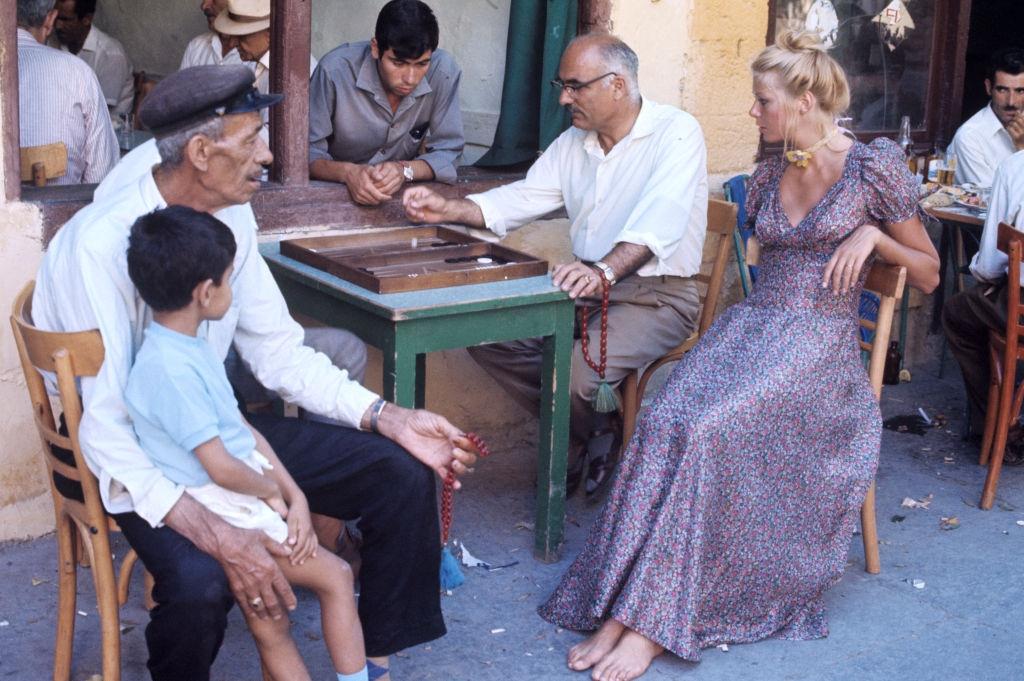
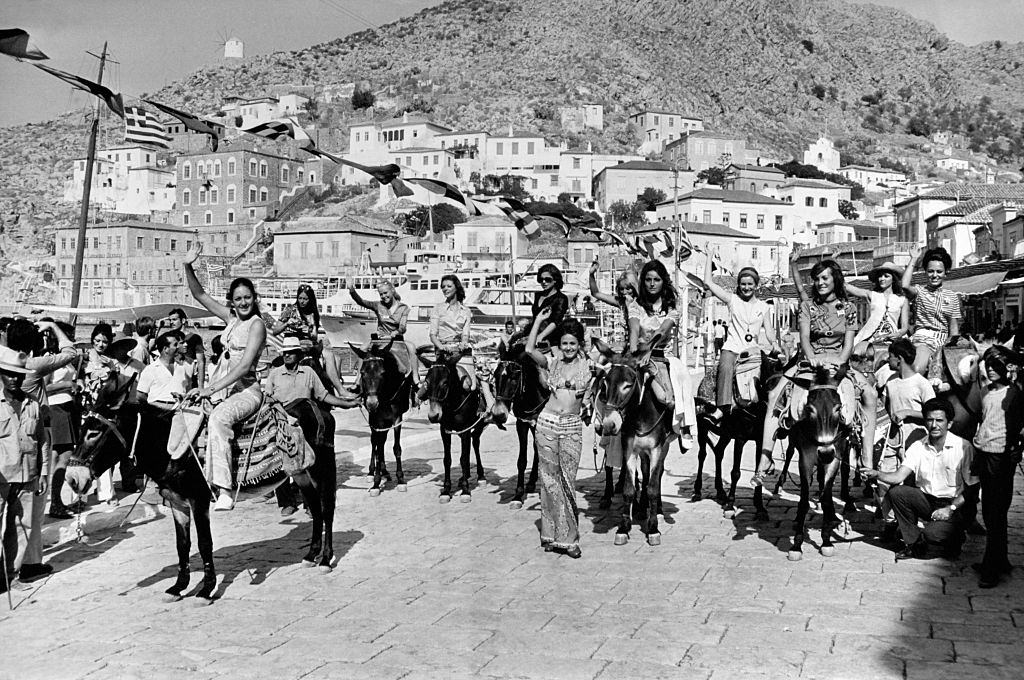
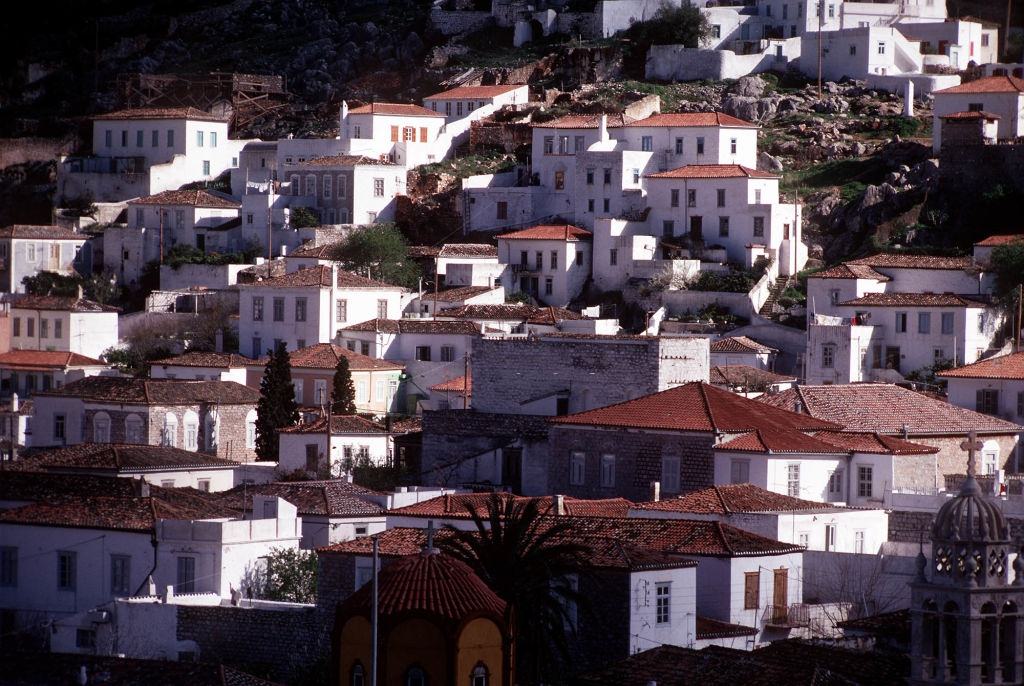
The island of Hydra, a car-free island in the Saronic Gulf, hosted the Miss Europe 1970 beauty contest, where candidates famously raced on donkeys. Hydra also drew French performers, including Jeane Manson and Serge Lama, who appeared at the Kappa club there in May 1978.
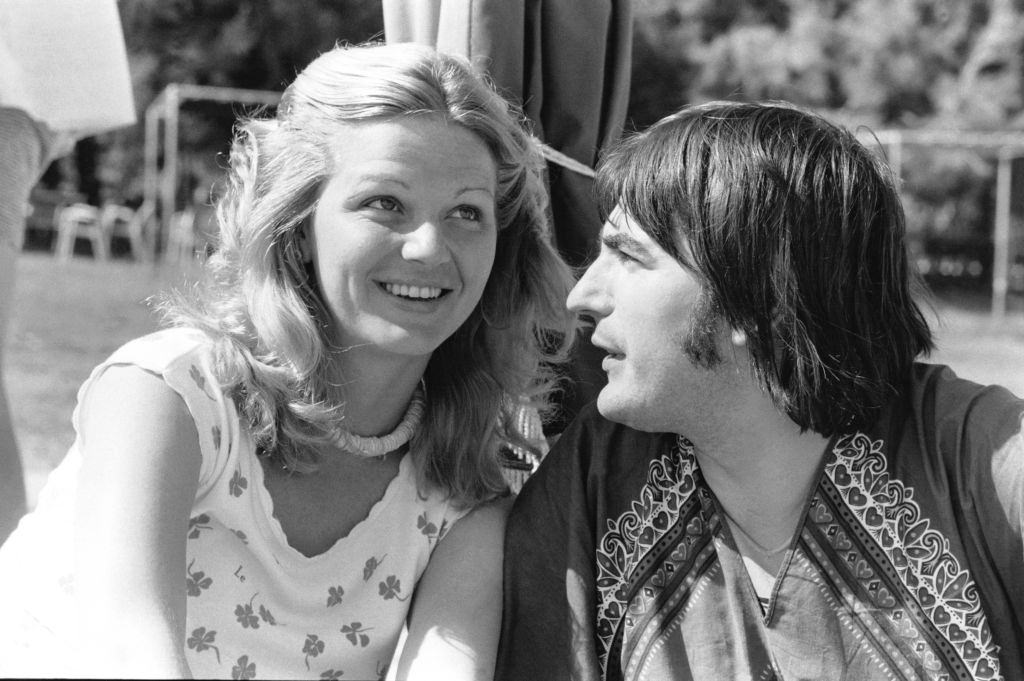
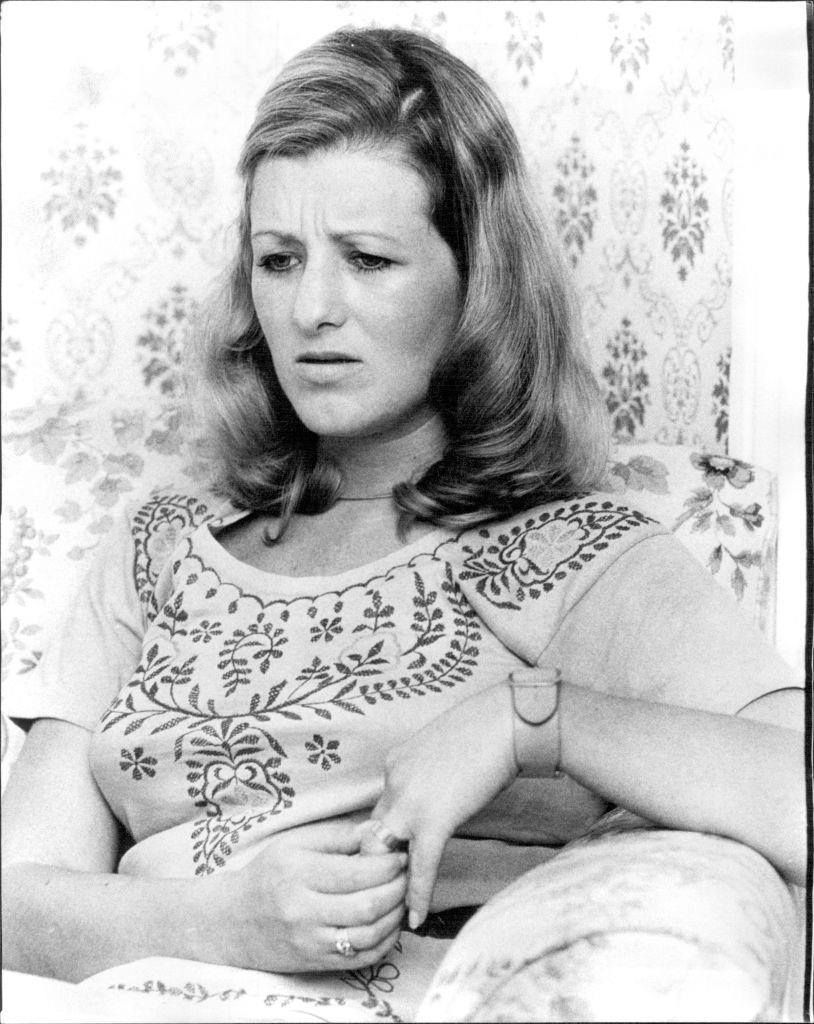
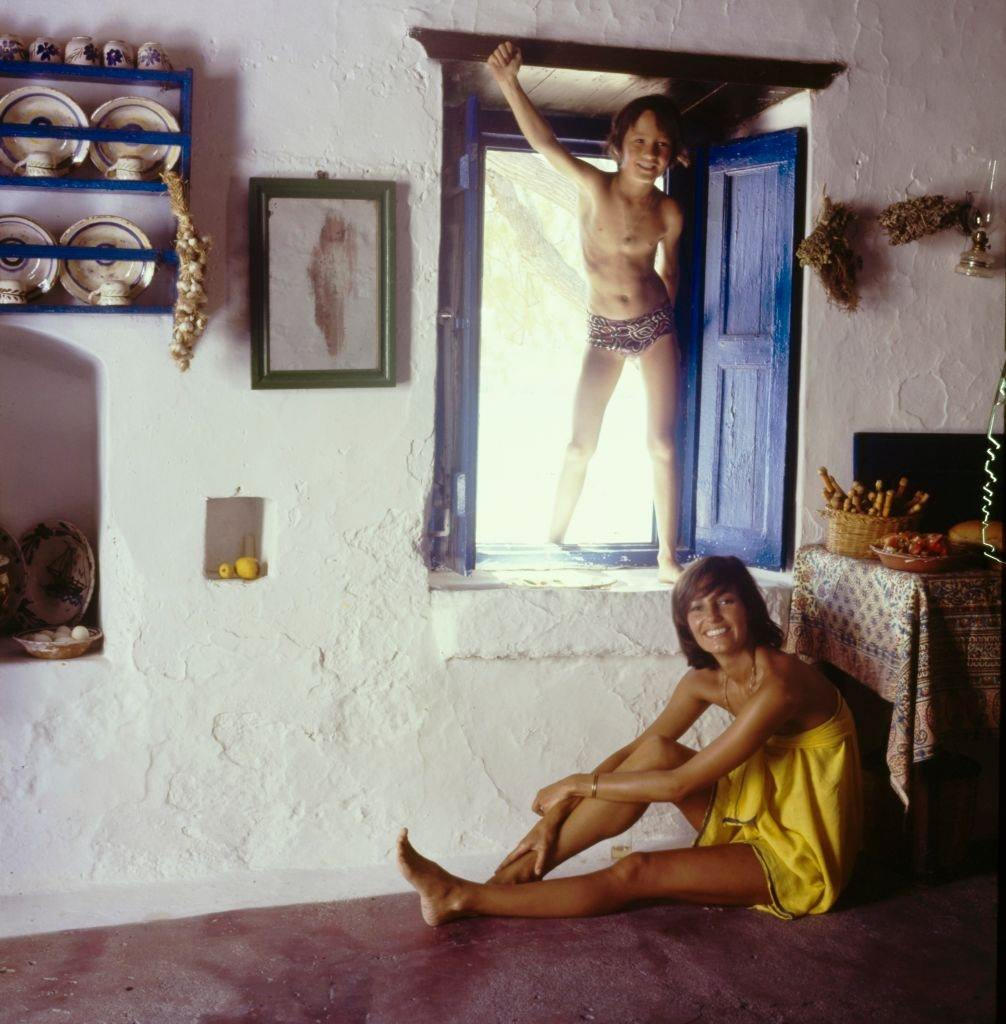
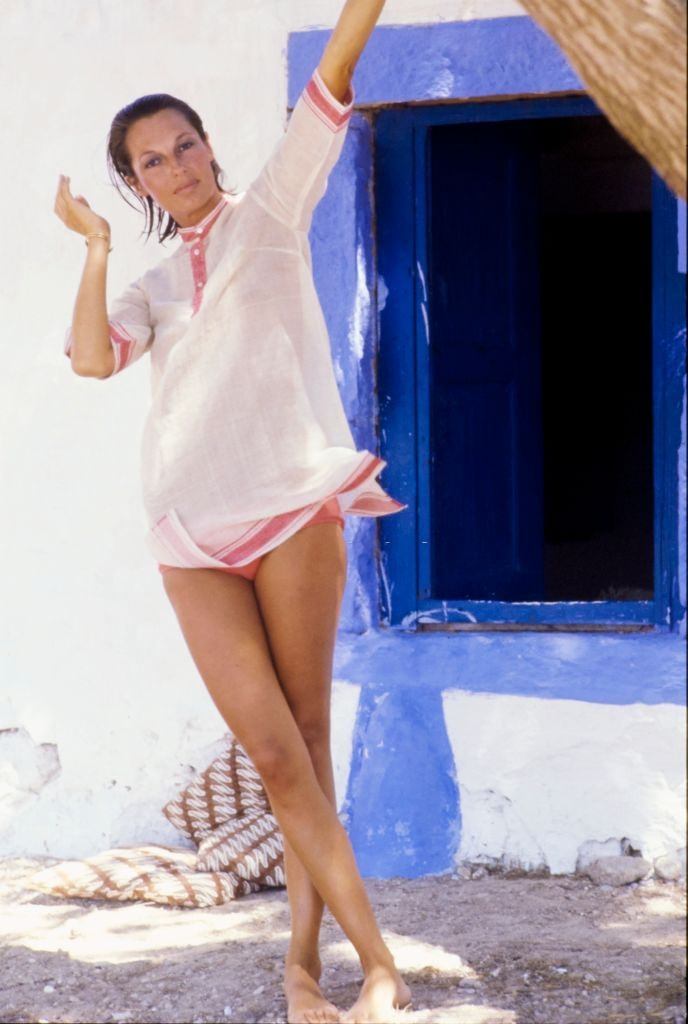
Patmos, a small island in the Dodecanese, attracted a different kind of visitor — those seeking quieter, more private retreats. Ginette Camu was photographed there in 1973 with her son Olivier, living in a house on the island.
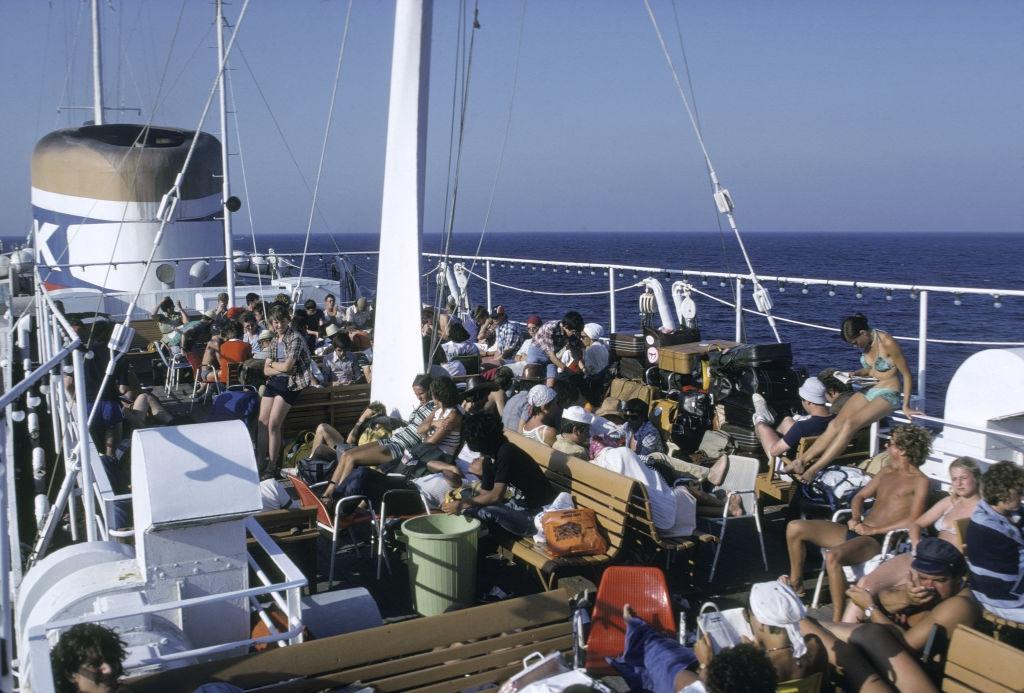
The port of Piraeus, Athens’ main harbor, remained the commercial and maritime hub of the country throughout the decade. Ferry routes connected the mainland to dozens of islands, and the port was in constant motion with passengers, freight, and fishing vessels.
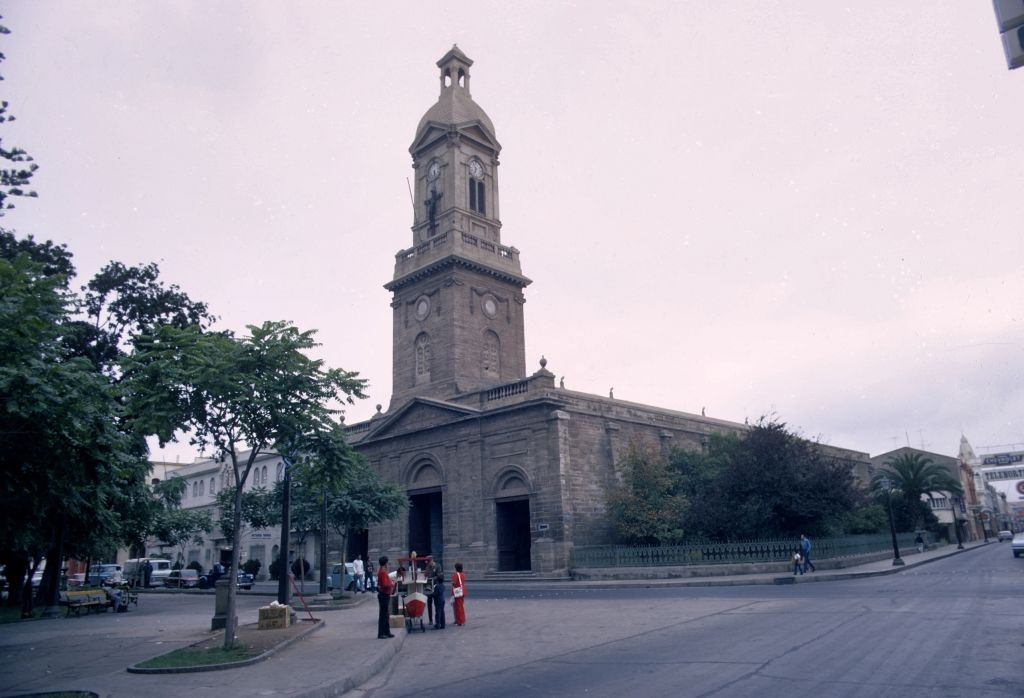
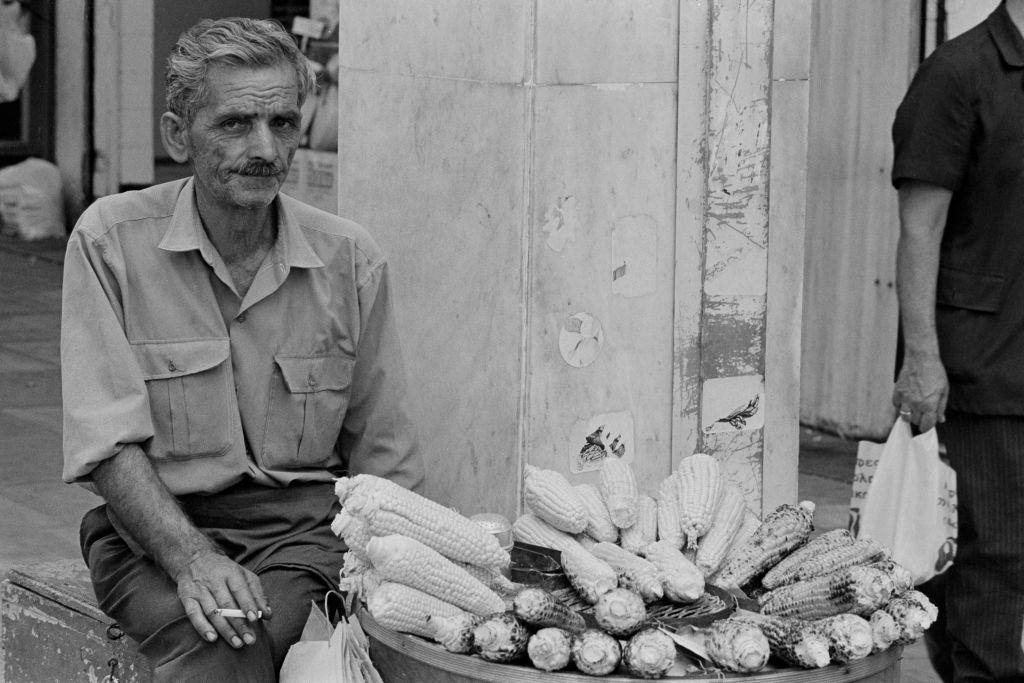
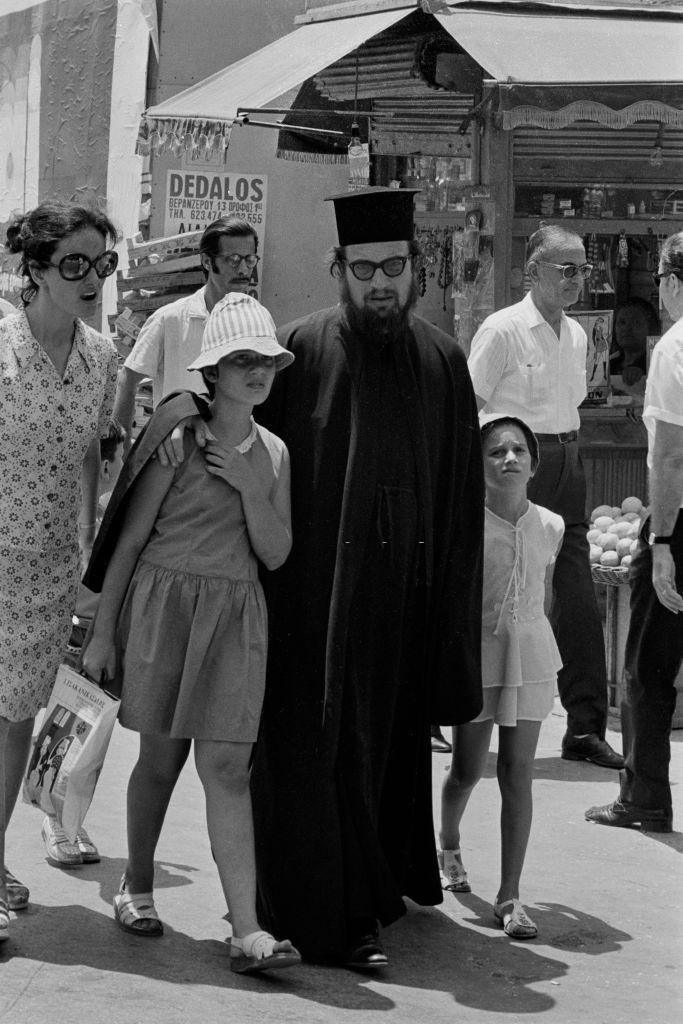
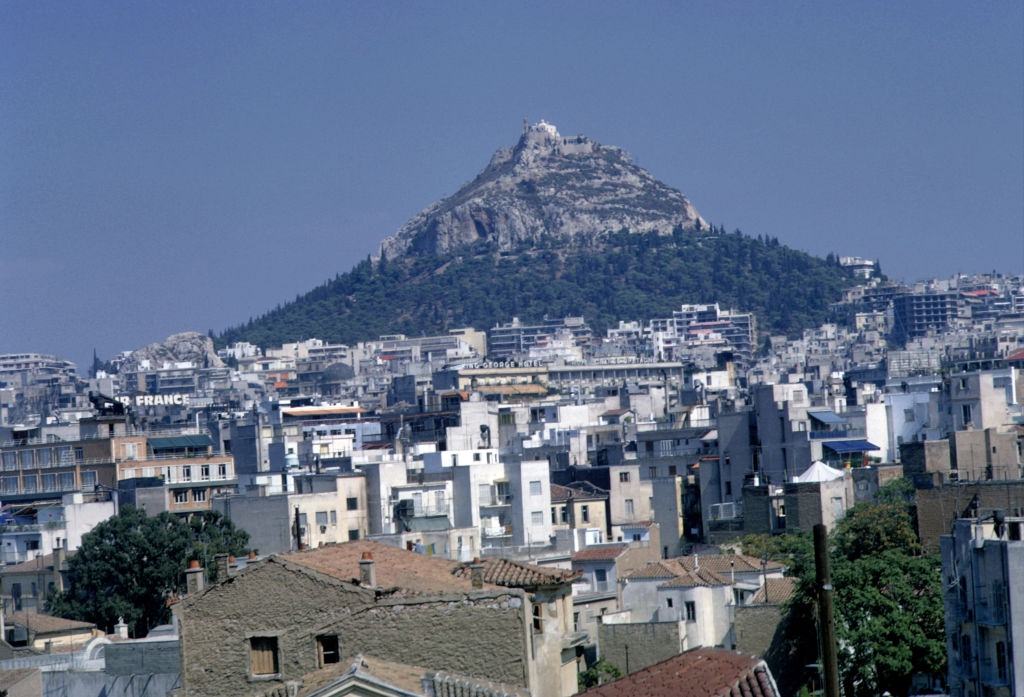
Athens’ streets in the early 1970s reflected the contradictions of the period. Corn sellers worked the sidewalks. Backgammon players filled bistros. Orthodox priests walked with their families. And looming over it all was Mount Lycabettus, the highest point in the city, visible from nearly every neighborhood.
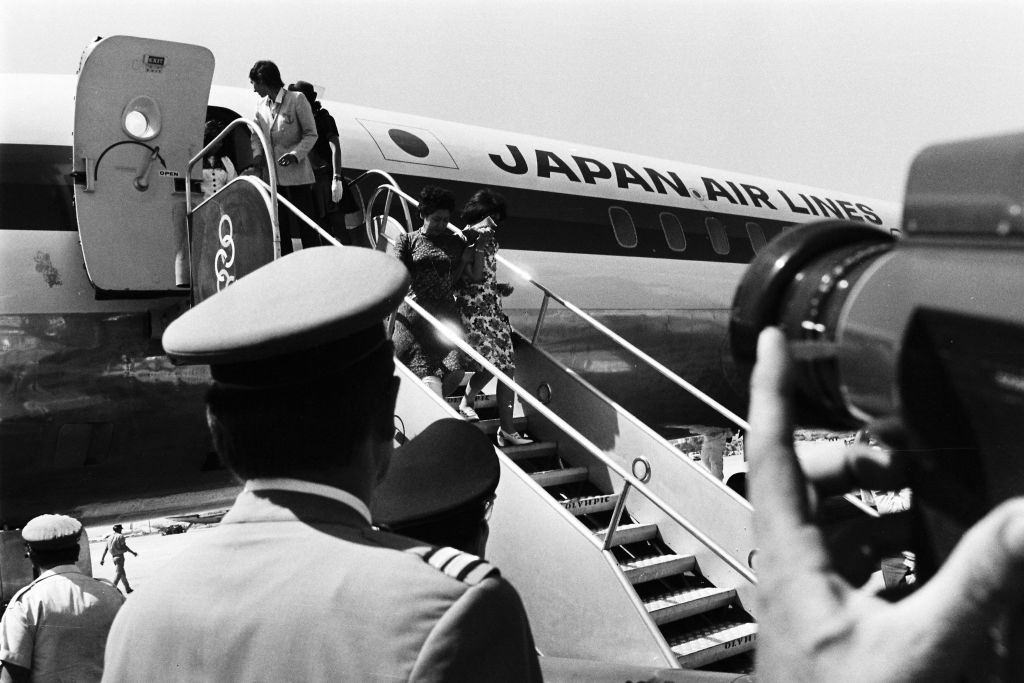
On July 26, 1973, Athens International Airport received a group of passengers released from a hijacked Japan Airlines Flight 404. The hostages landed in Athens after a tense international incident, adding to a summer already packed with political tension, a referendum, and the Miss Universe pageant.
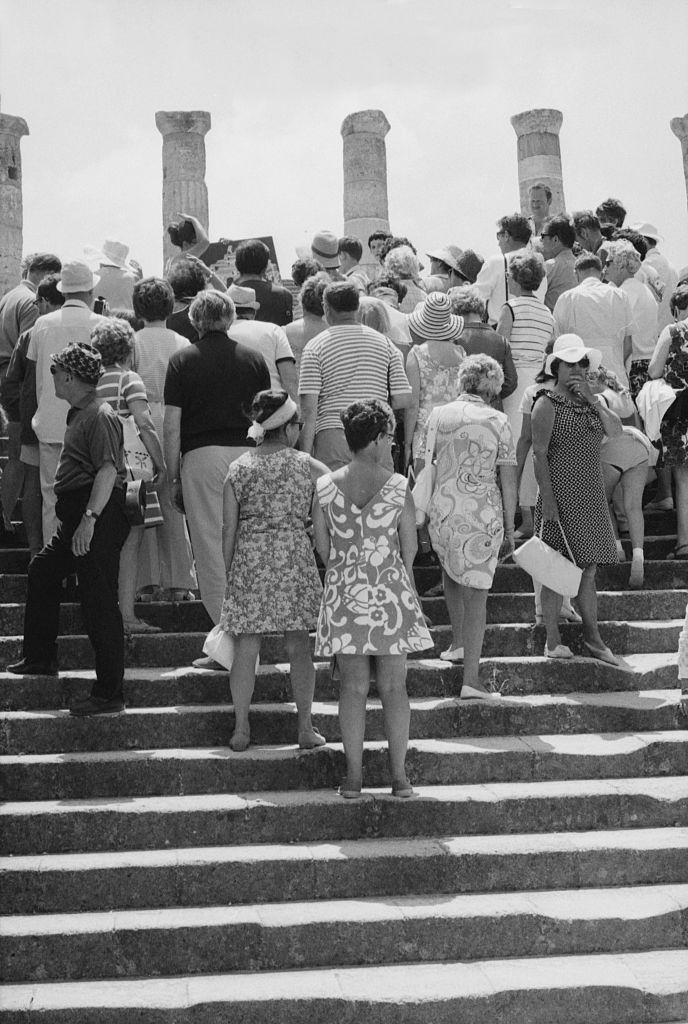
The Acropolis of Lindos on the island of Rhodes drew steady streams of tourists across the decade. Visitors climbed the rocky path to the ancient citadel to look out over the Aegean. Archaeological sites across Greece served as the backdrop for tourism that was becoming an ever-larger part of the national economy.
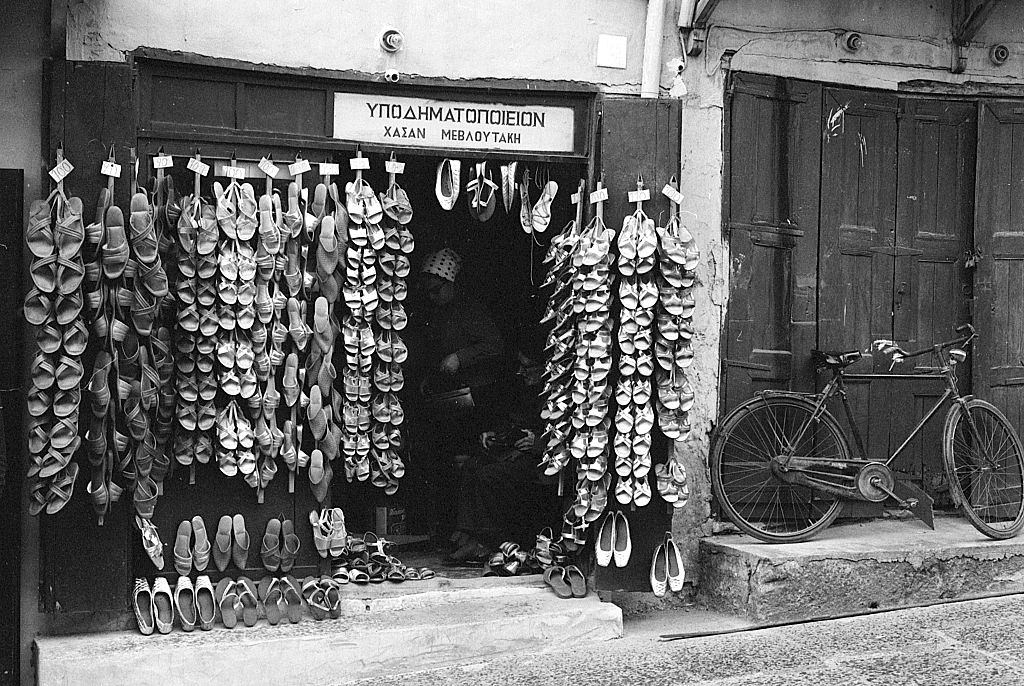
Everyday commerce carried on across the islands. A shoe shop on one of the Greek islands in the 1970s stocked its shelves with leather sandals and practical footwear, catering equally to locals and visitors. Old men sat in the street, watching the hours pass.
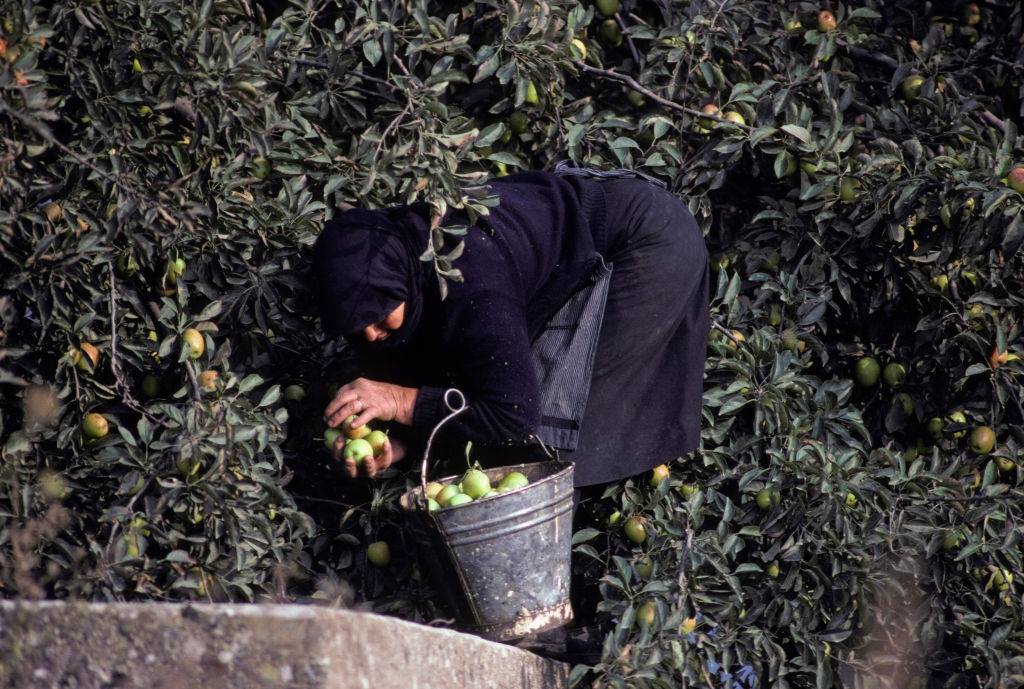
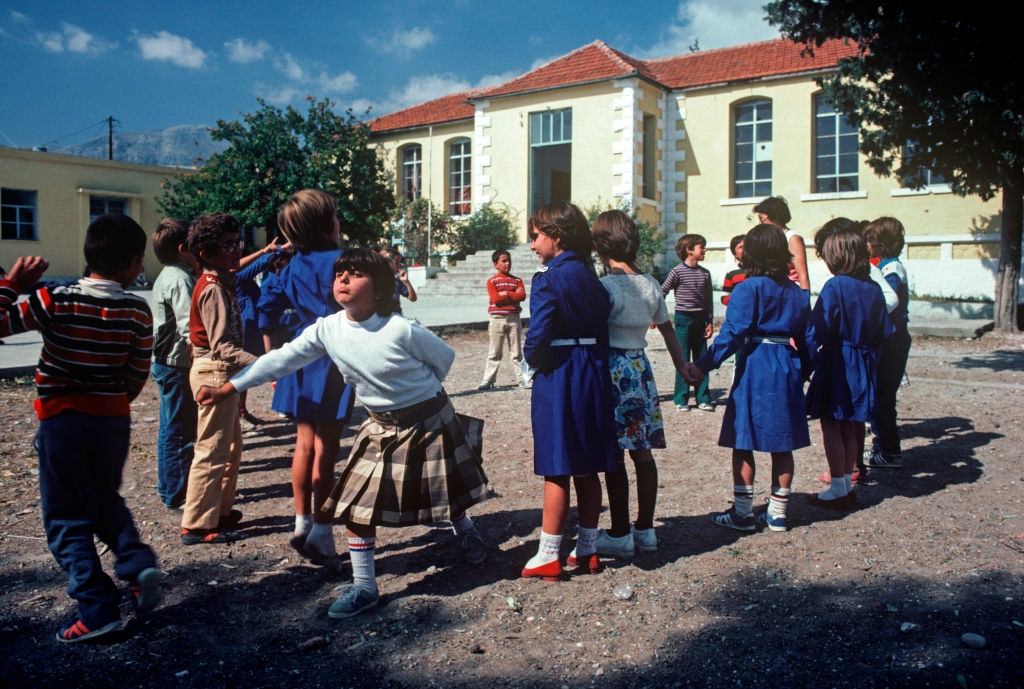
On the Lasithi Plateau in eastern Crete, life at the end of the decade remained largely agricultural. Apple orchards spread across the high plateau, and women harvested fruit by hand. At the local school in Lasithi, children played during breaks in 1979, as Greece — now a functioning democracy — prepared to join the European Economic Community.
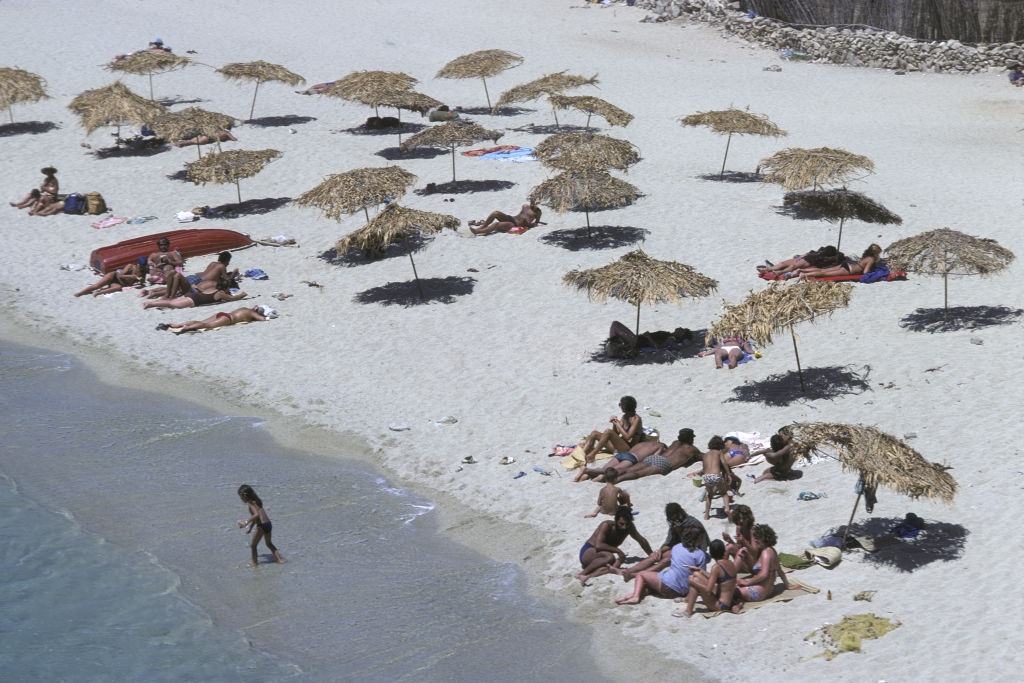
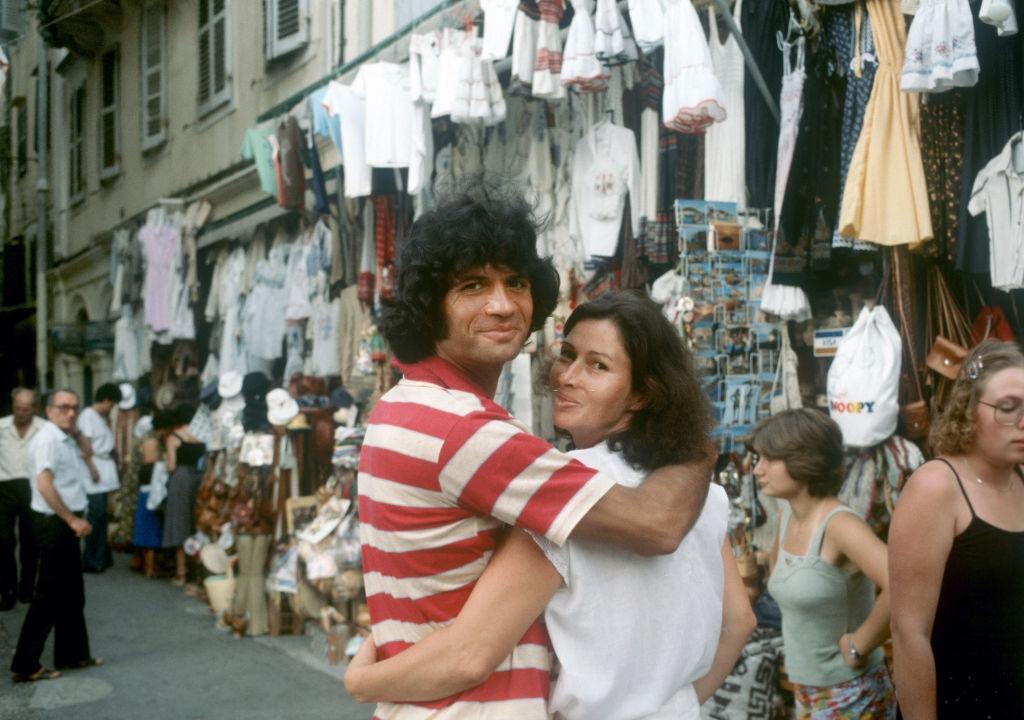
Tourism by the late 1970s was booming. Beaches on Mykonos filled with umbrellas in August. Ferry boats shuttled visitors between islands. The German pop singer Costa Cordalis, who had built much of his career singing in Greek, was photographed on Corfu in August 1979 — a sign of how deeply Greece had embedded itself in European popular culture.
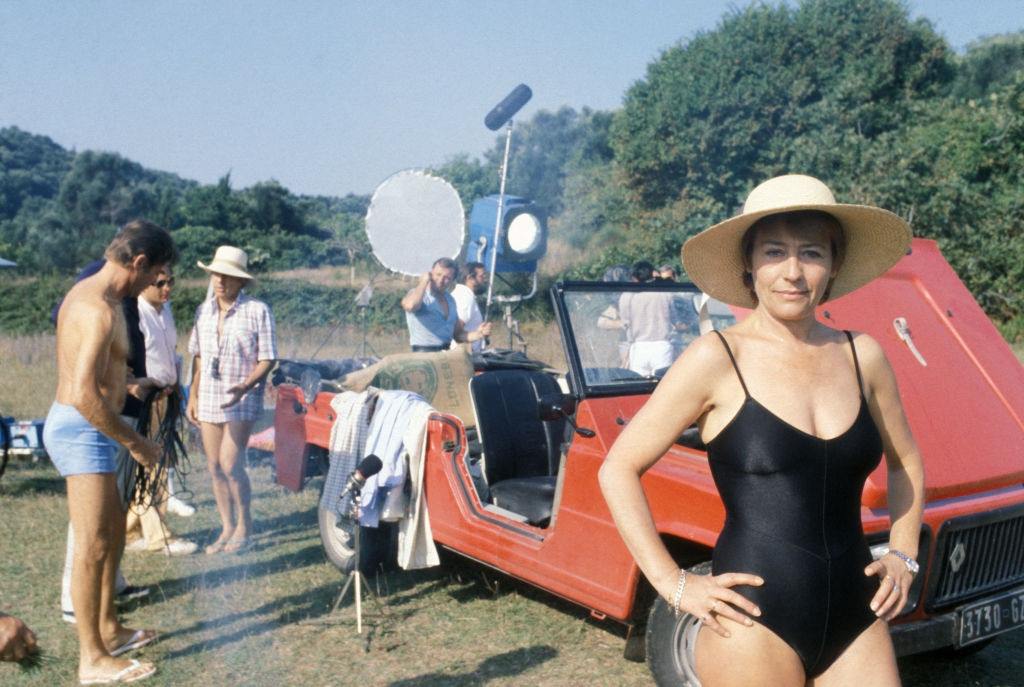
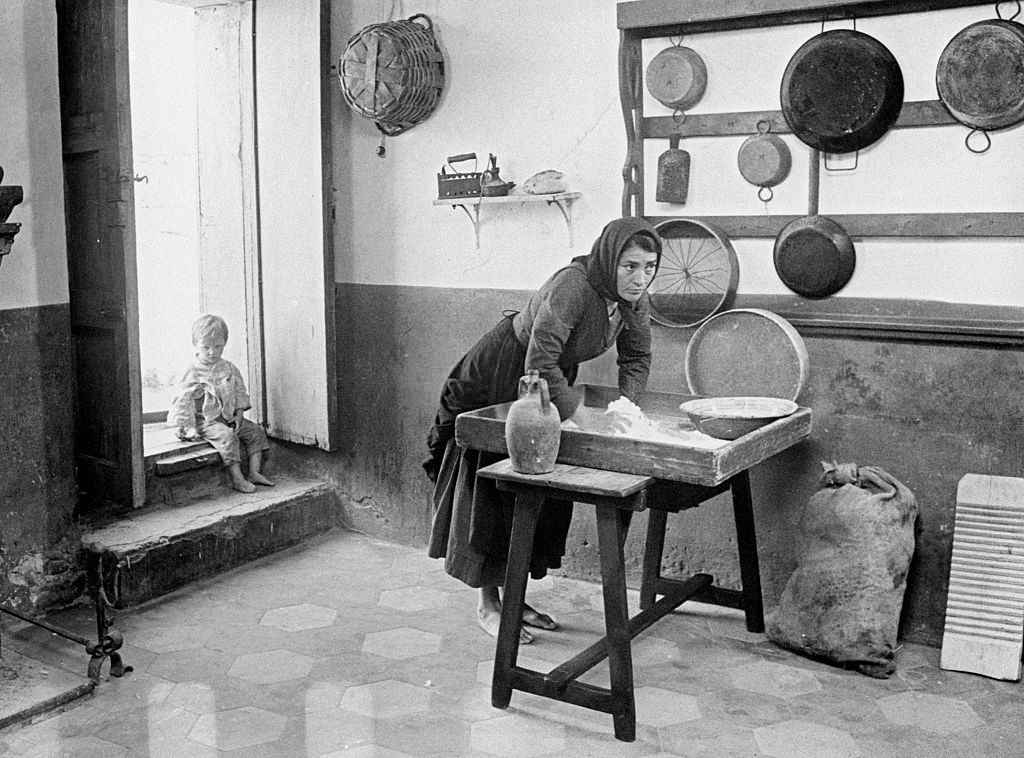
French film productions continued to use Greece as a location into the late 1970s. Actress Annie Girardot appeared in Philippe de Broca’s 1979 comedy ‘We Stole the Thigh of Jupiter,’ filmed in Greece. Greek actress Irene Papas, internationally recognized for her roles in Hollywood films, was photographed in 1978 on the set of ‘Christ Stopped at Eboli,’ kneading dough in the southern Italian town of Matera.
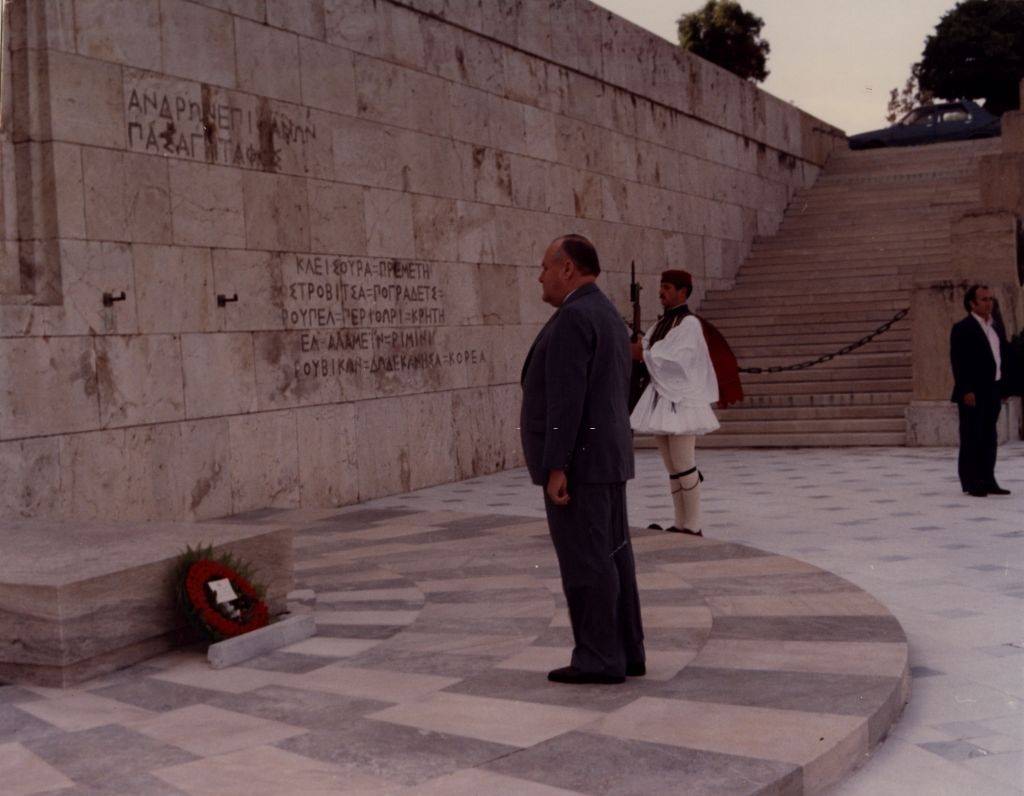
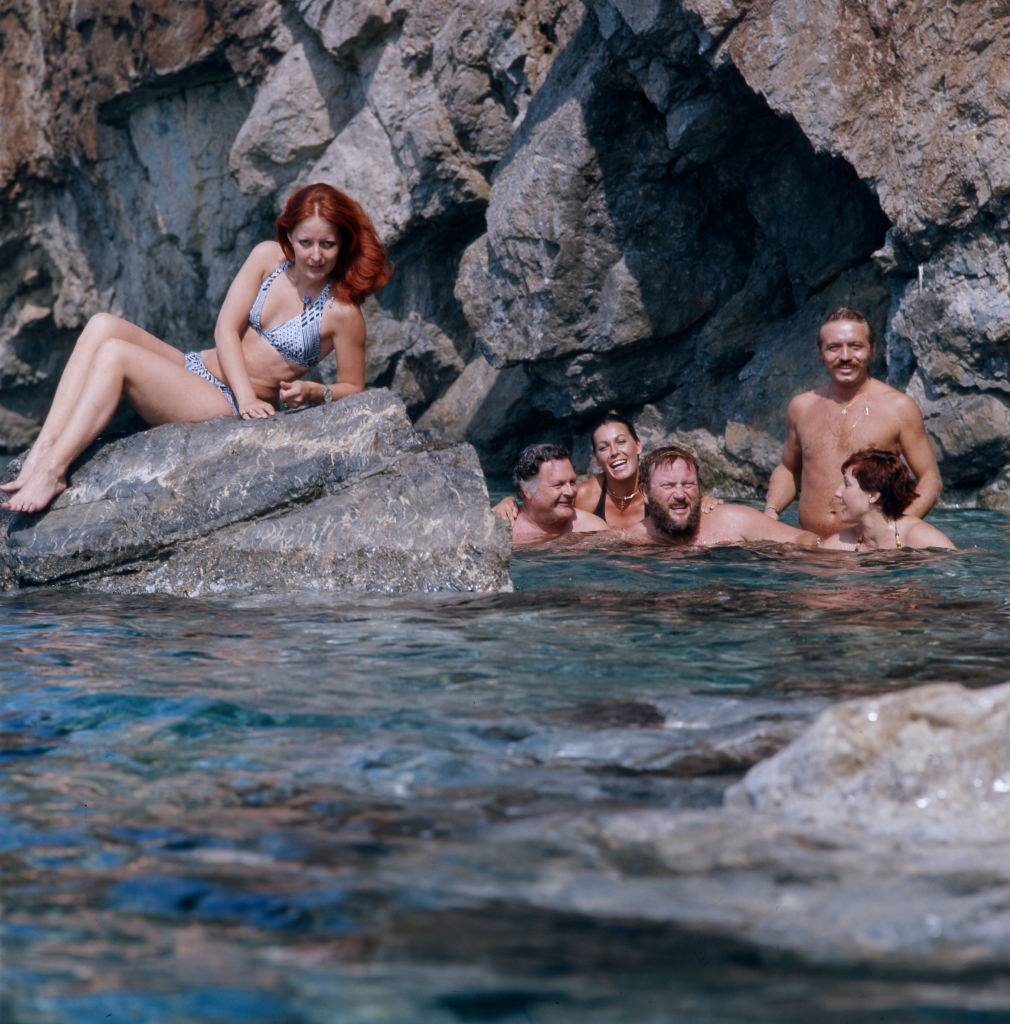
New Zealand Prime Minister Robert Muldoon visited Athens in 1978 and laid a wreath at a war memorial — a reminder that Greece’s wartime history, including the brutal German occupation of 1941–1944, remained a point of formal international acknowledgment. German bass vocalist Ivan Rebroff spent leisure time in the sea off Skopelos around the same period.
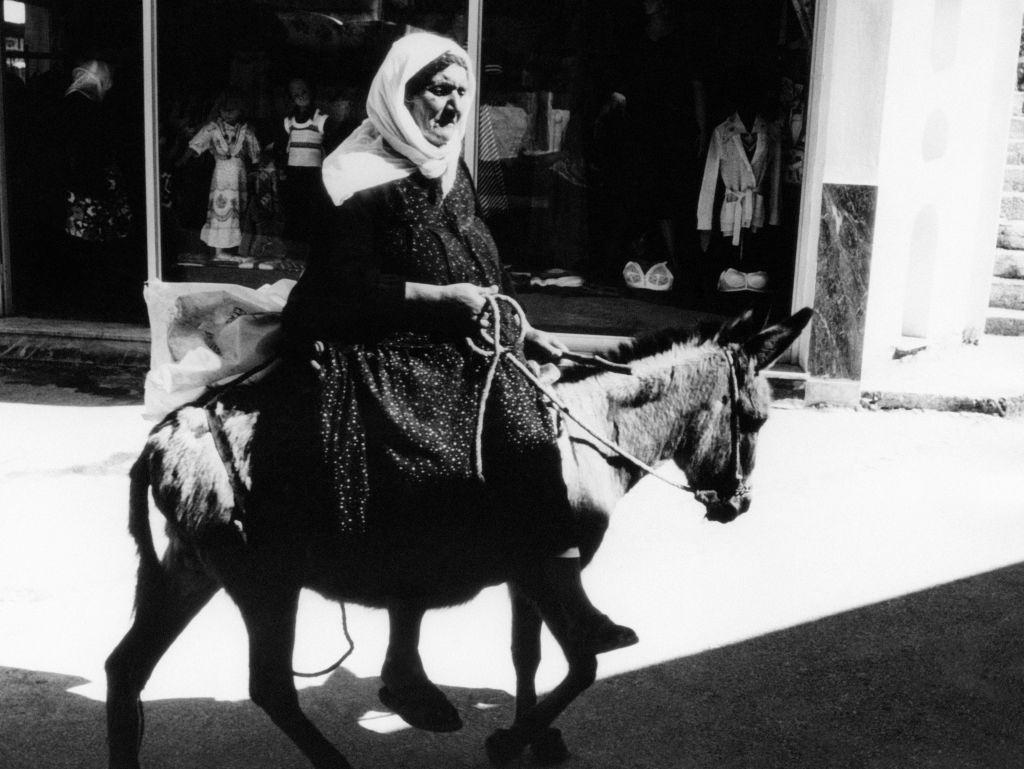
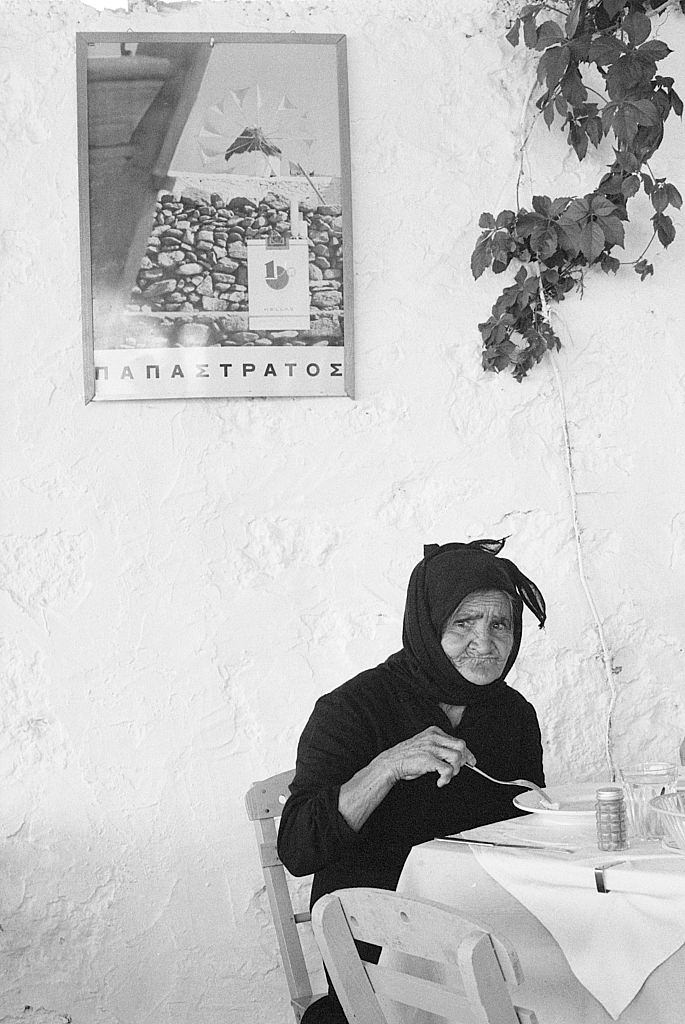
Across the Aegean, on the island of Rhodes, a woman on a mule made her way through the landscape in 1978 — a sight that had barely changed in centuries. Women like her and the old woman photographed eating alone in a Greek restaurant represented a generation that had lived through German occupation, civil war, and military dictatorship, and had carried on regardless.
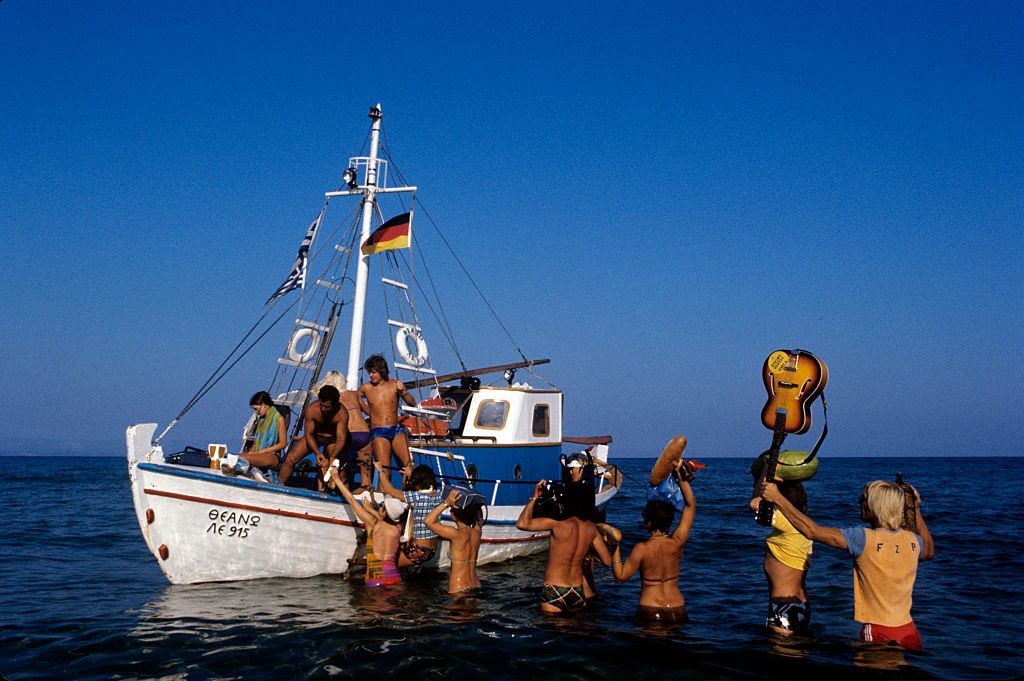
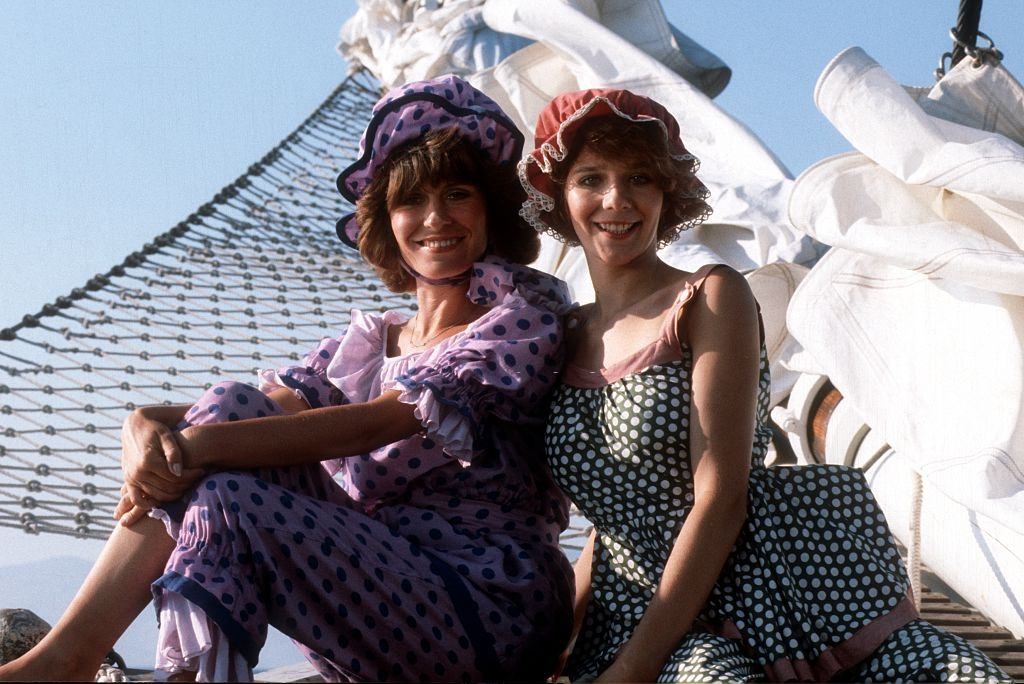
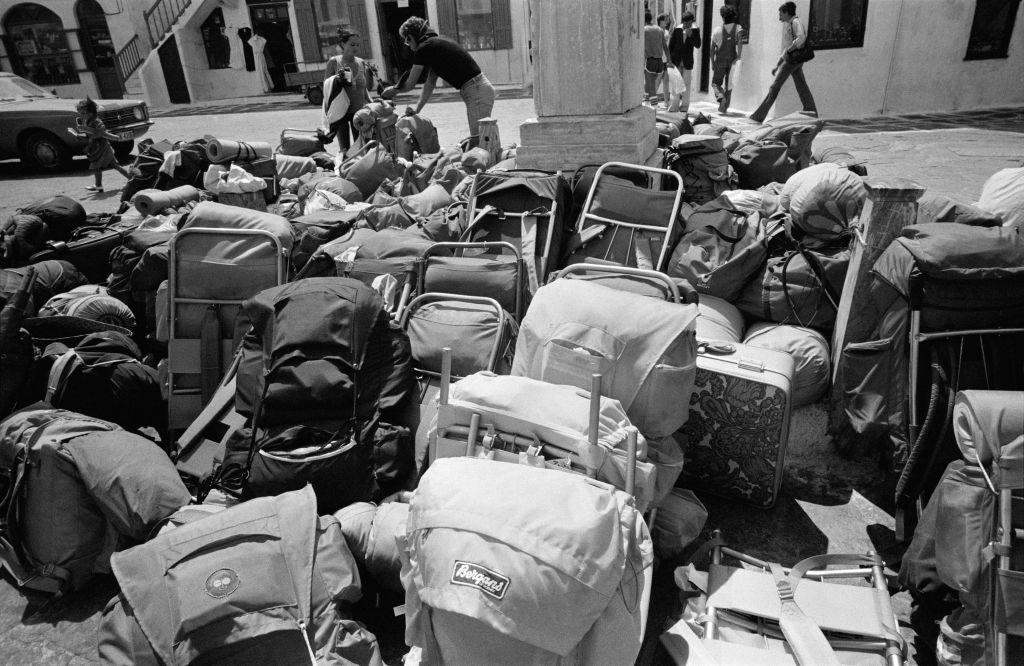
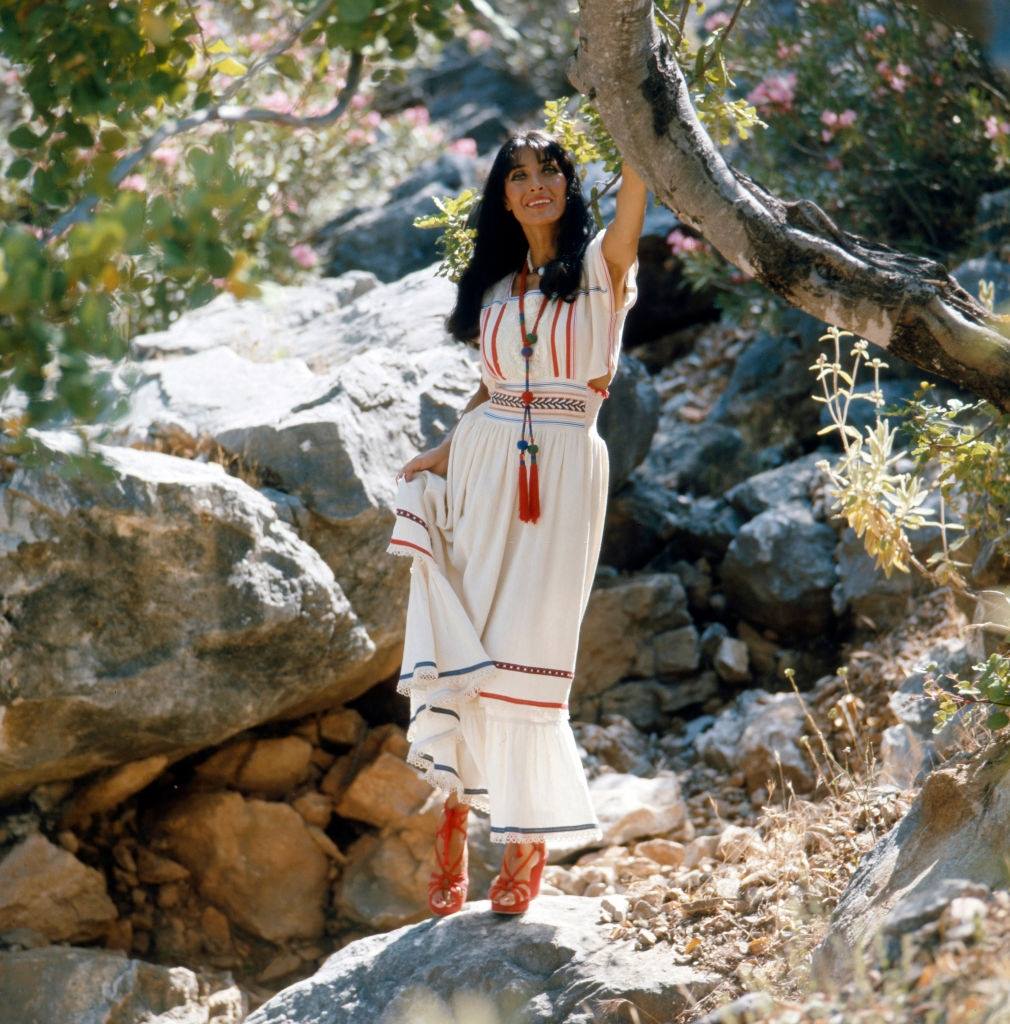
Tourists wading out to fishing boats in 1974, backpackers on Mykonos in 1978, and Mary Roos and Maggie Maeon vacationing on the Aegean Sea that same year all captured what Greece had become for outsiders — a place of sun, sea, and history. The islands absorbed visitors from across Europe without losing the texture of everyday Greek life happening around them.