
In October 1973, the Organization of Arab Petroleum Exporting Countries (OAPEC) announced an oil embargo targeting nations that had supported Israel during the Yom Kippur War. The embargo ran from October 1973 through March 1974 and triggered the first major global economic shock of the modern era. Stock markets crashed. Economies across the developed world slid into recession. The effects were felt on every continent, in every household that depended on fuel — which, by 1973, was nearly all of them.
Before the embargo, oil sold for roughly $3 per barrel on the world market. By the time OAPEC lifted the restrictions in March 1974, that price had climbed to nearly $12 — a fourfold increase in just five months. In the United States, the government added to the problem by creating the Emergency Fuel Office (EFO), whose regulations made supply shortages appear worse than they actually were. Media coverage amplified the panic, with sensationalized reports of dry pumps and dwindling reserves pushing ordinary people to hoard fuel wherever they could find it.
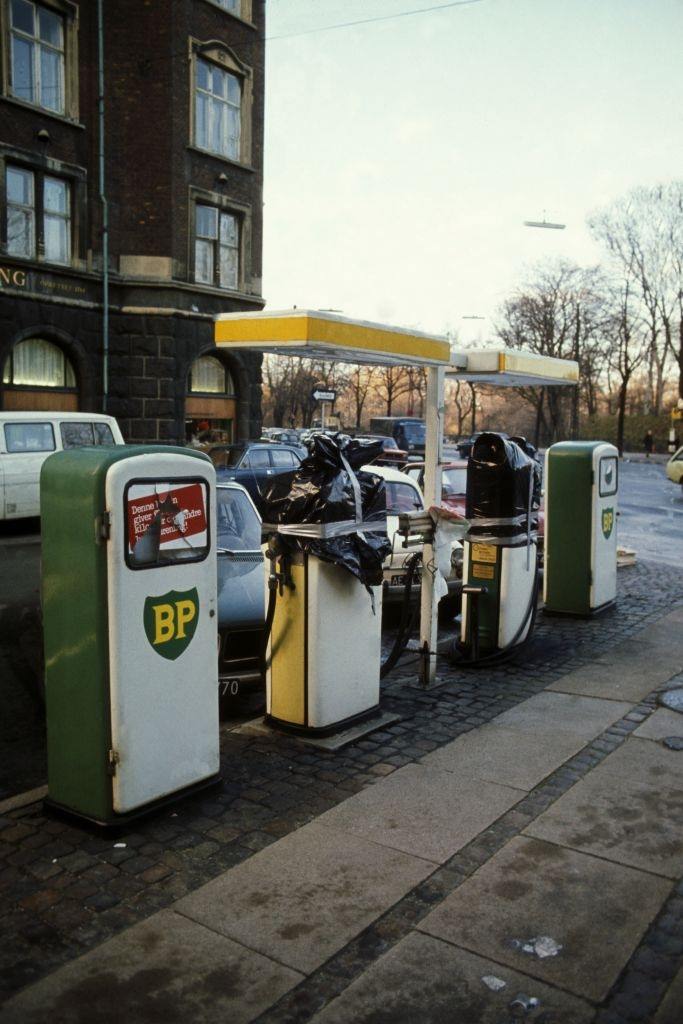
Across Europe, the images from late 1973 tell a striking story. Gas stations that had once been busy around the clock now sat quiet or turned customers away entirely. Denmark was no exception.
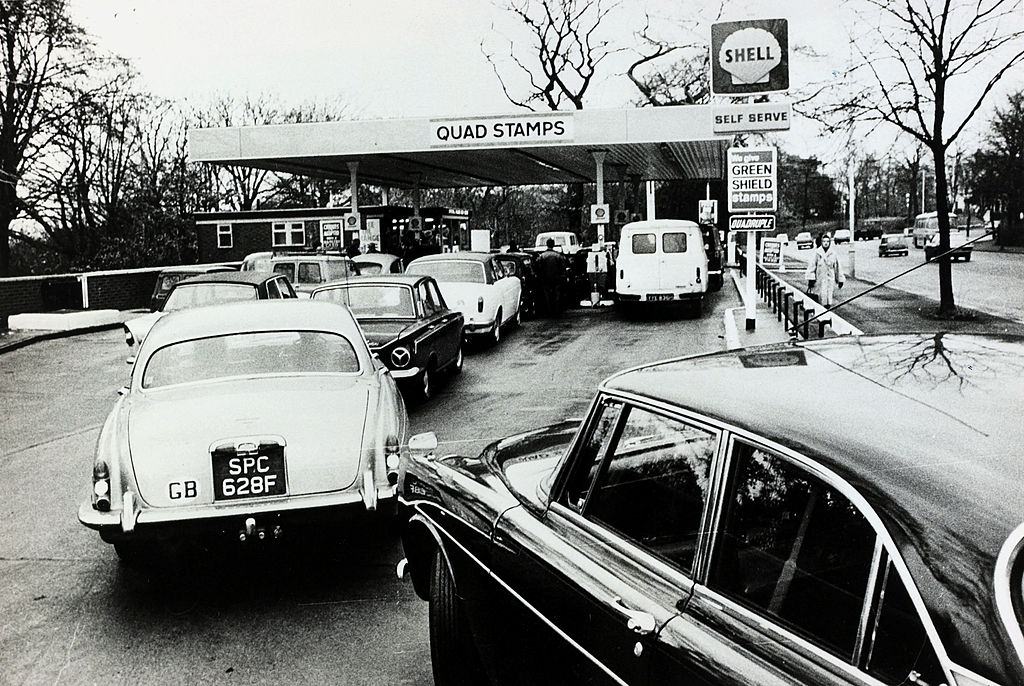
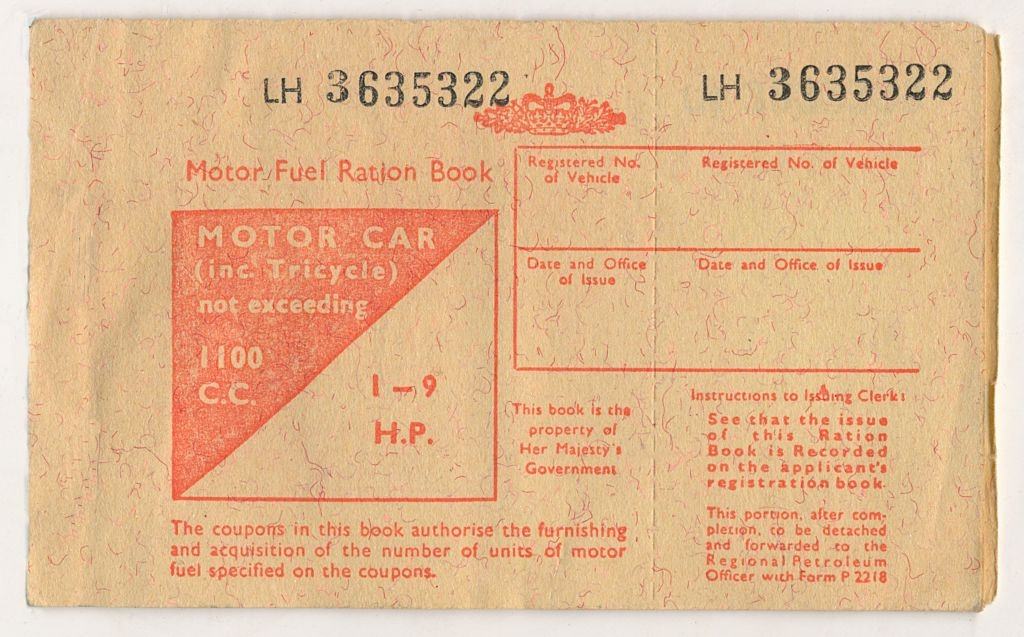
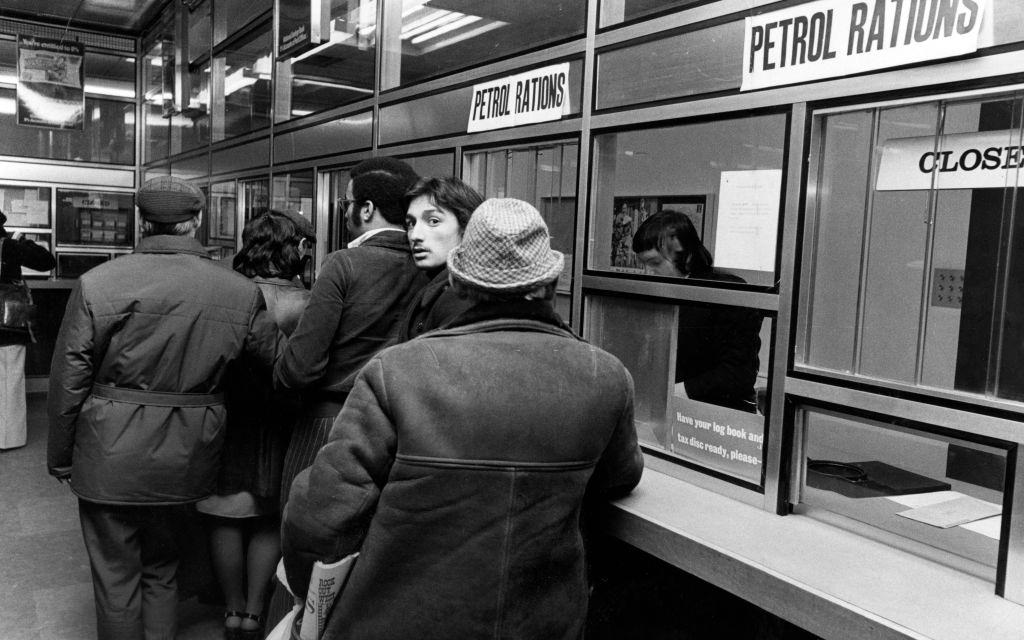
Long lines became a defining image of the crisis. In Great Britain, motorists spent hours queuing for petrol, unsure whether the pump would run dry before they reached the front. The British government eventually printed and distributed fuel ration books — a system not seen since World War II.
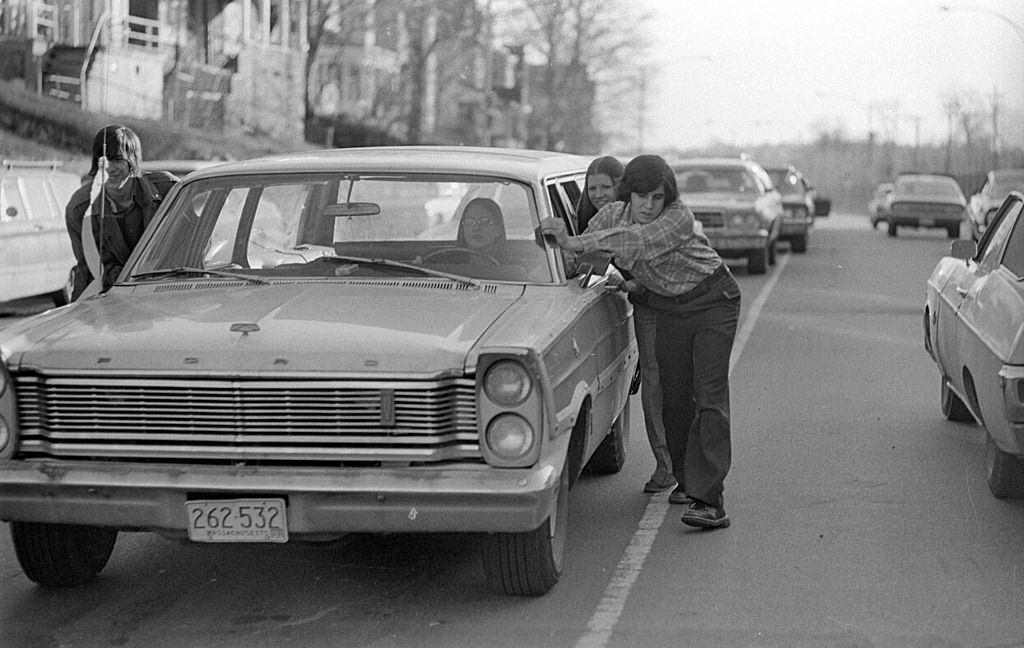
The situation in the United States was no less chaotic. In Boston’s Roslindale neighborhood, drivers ran out of fuel entirely before reaching a station, forcing them to abandon their cars and push them the rest of the way.
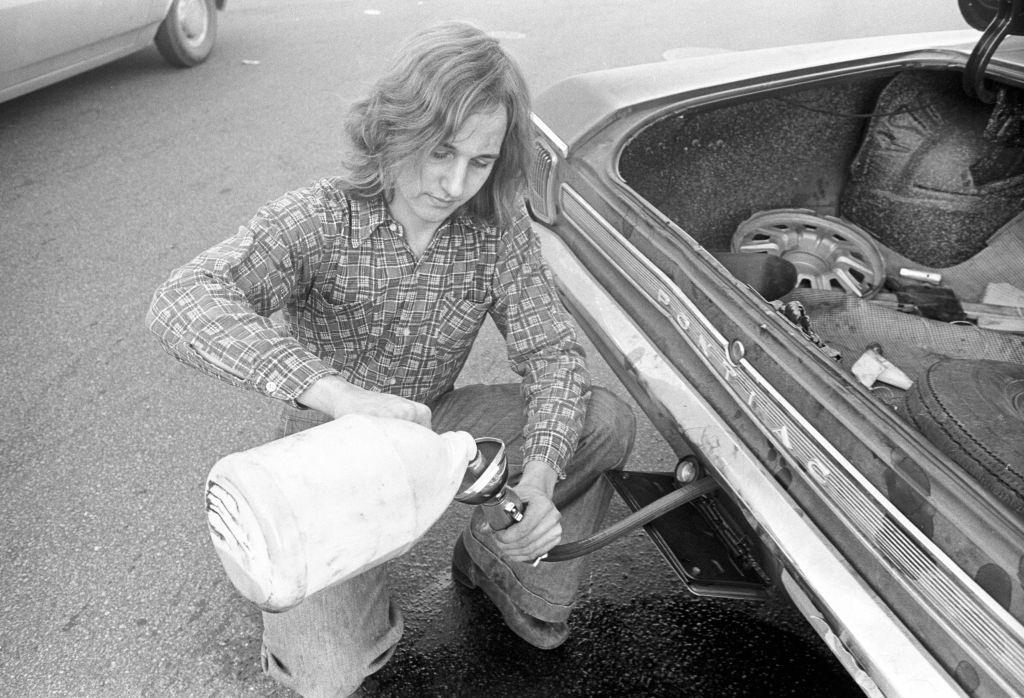
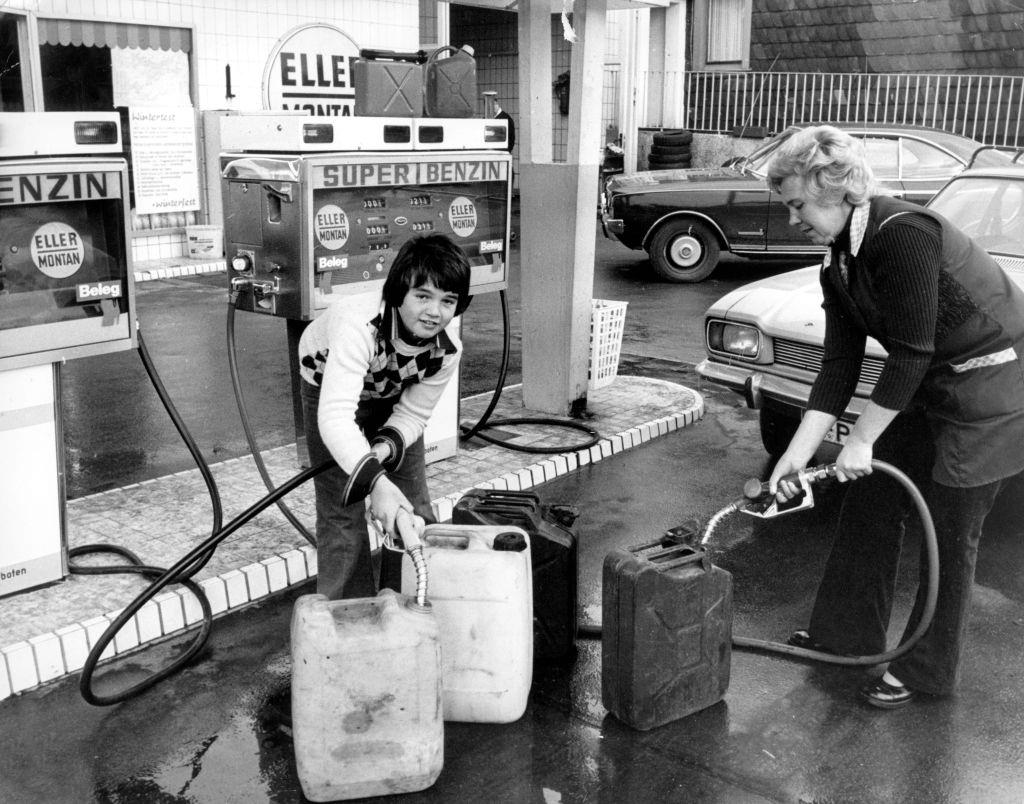
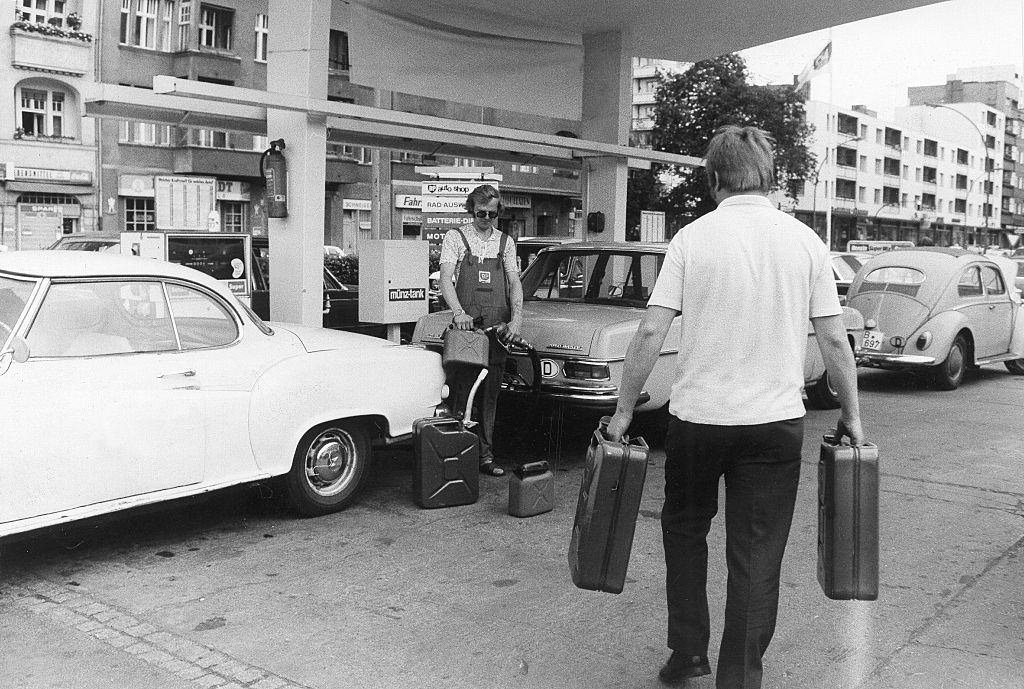
Some American drivers resorted to carrying fuel in jugs and canisters just to keep their cars running day to day.
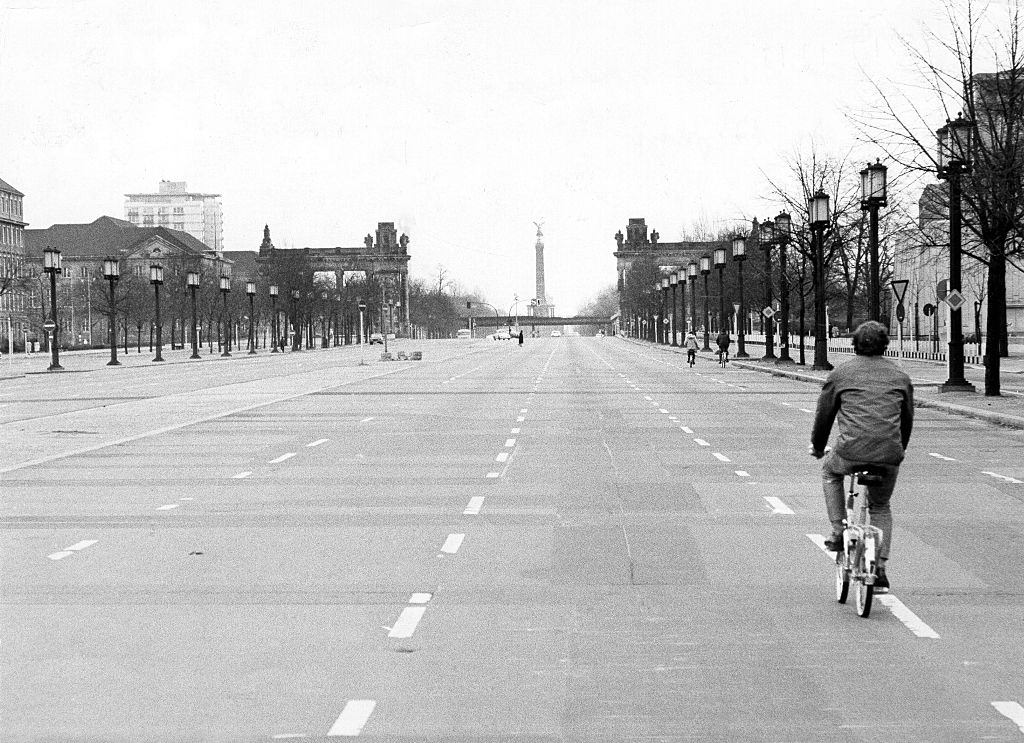
In Germany, the effects were equally dramatic. Major highways that normally carried thousands of vehicles fell completely silent. The Stadtautobahn in Berlin — one of the busiest urban motorways in Europe — became eerily empty on government-mandated car-free Sundays.
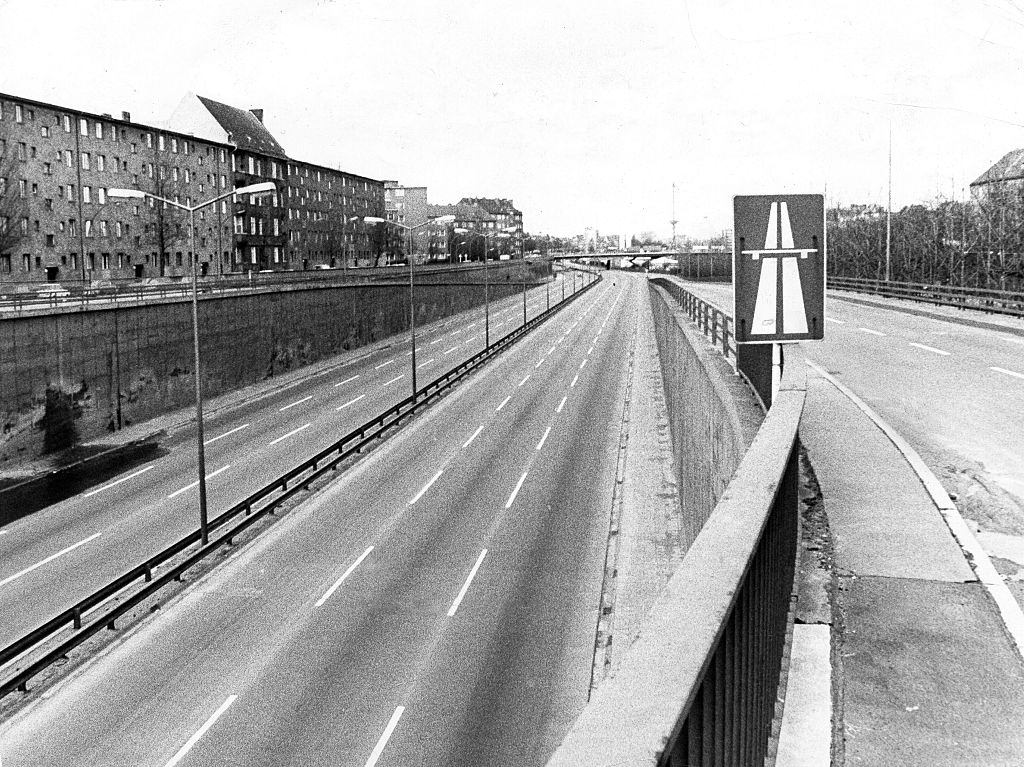
German petrol stations that stayed open imposed strict rationing. Signs posted at the pump limited each customer to just 10 liters per visit — barely enough to fill a quarter of a standard tank.
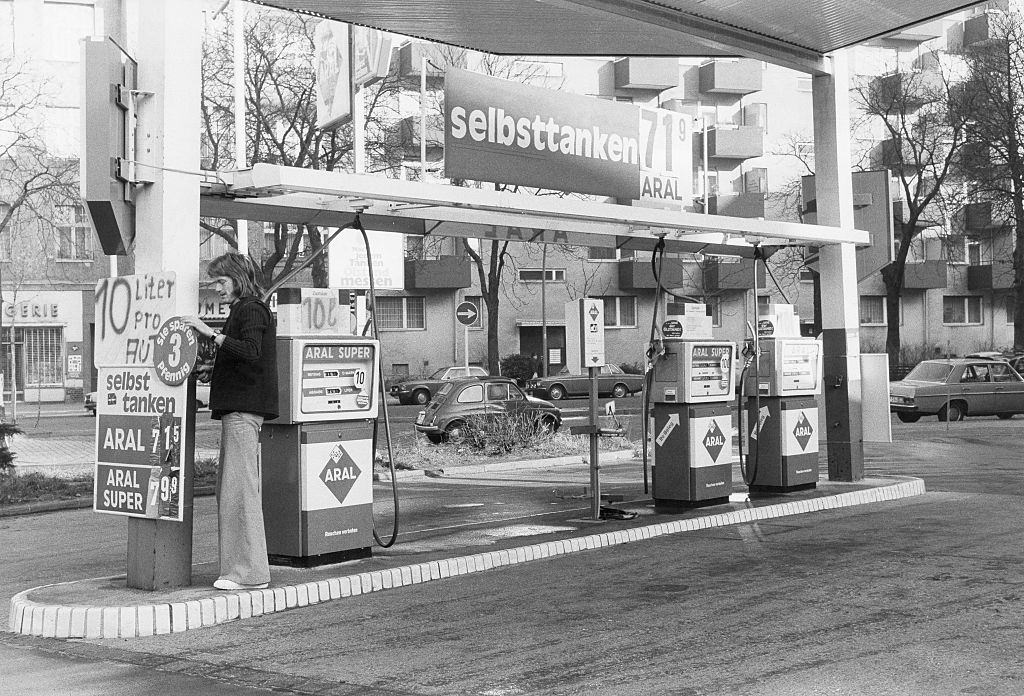
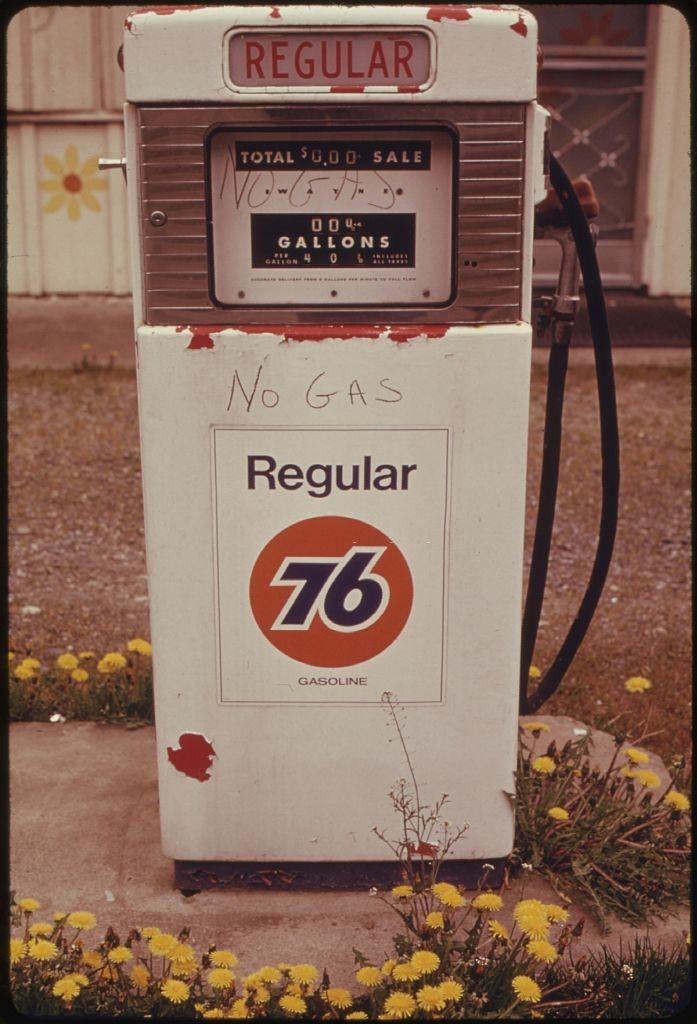
For many station owners, the crisis was not temporary — it was the end. Independent dealers and major oil company franchises alike began shutting their doors permanently when supply dried up and customers couldn’t pay inflated prices.
The British government’s response included printing ration books for fuel — a contingency that had been prepared but not yet used. Holding one of these booklets was a reminder that the postwar era of cheap, plentiful energy had come to a sudden halt.
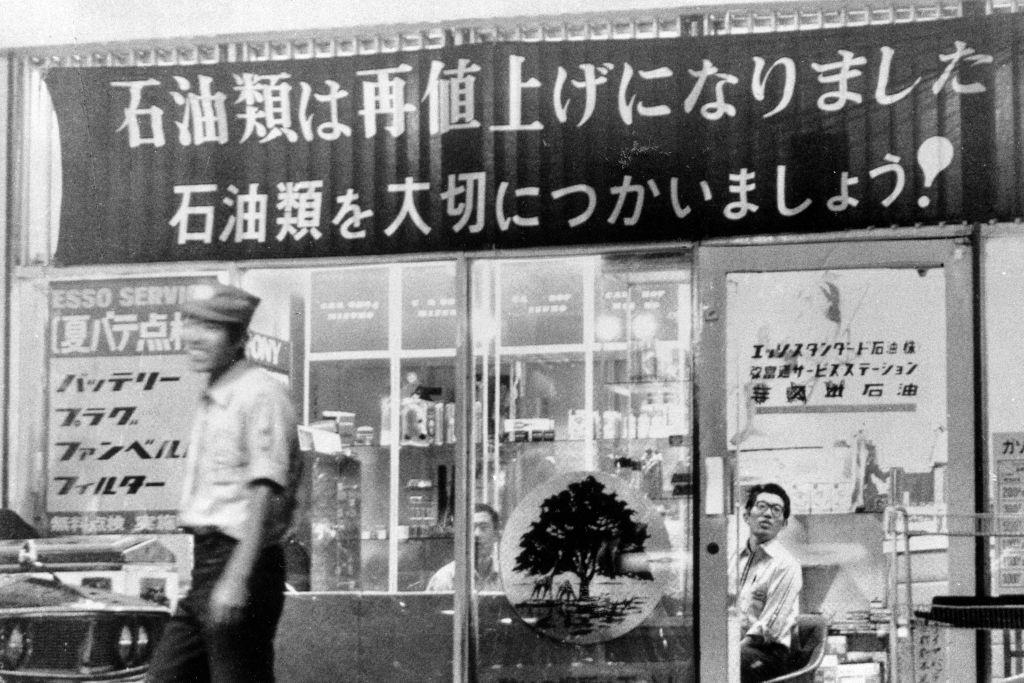
Japan, heavily dependent on imported oil, faced some of the most severe shortages outside of the Arab world. Petrol stations displayed banners urging conservation, and the public responded with a wave of panic buying that went far beyond fuel.
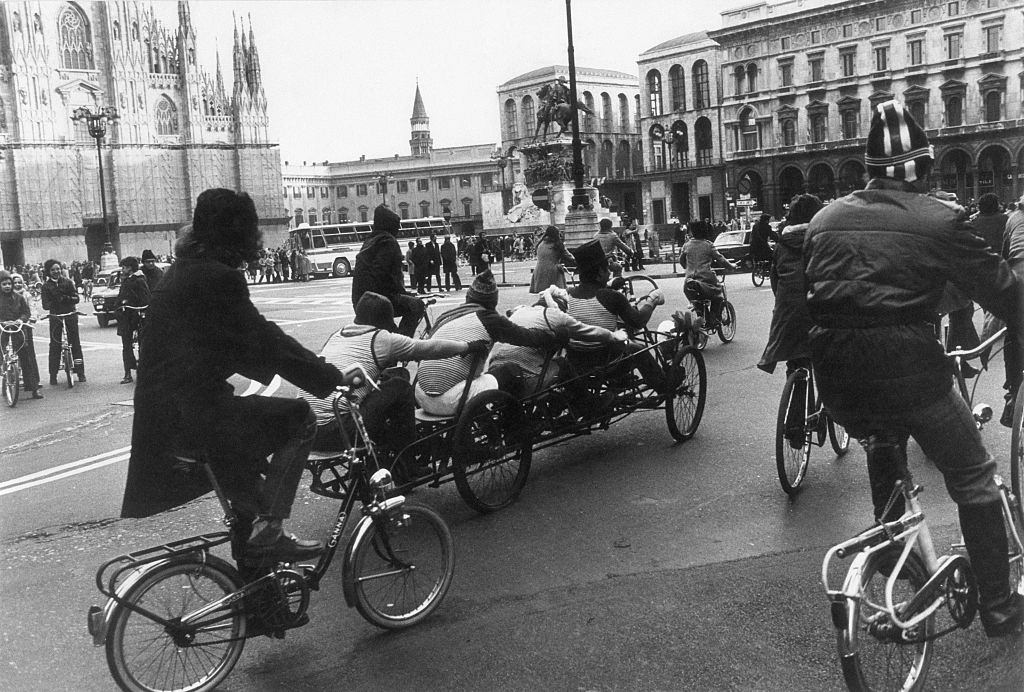
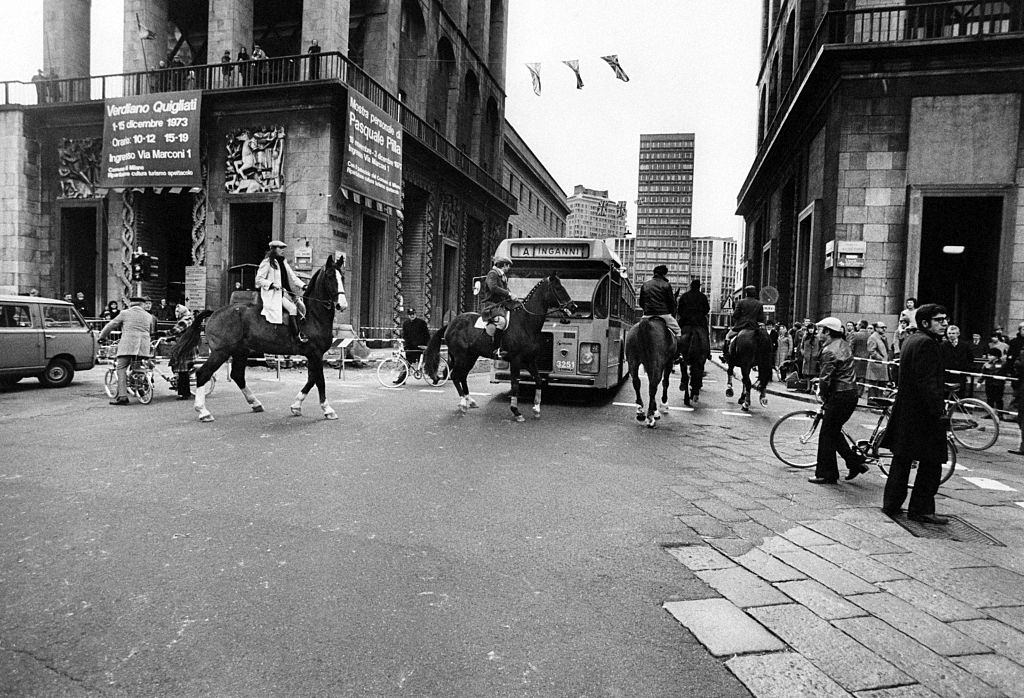
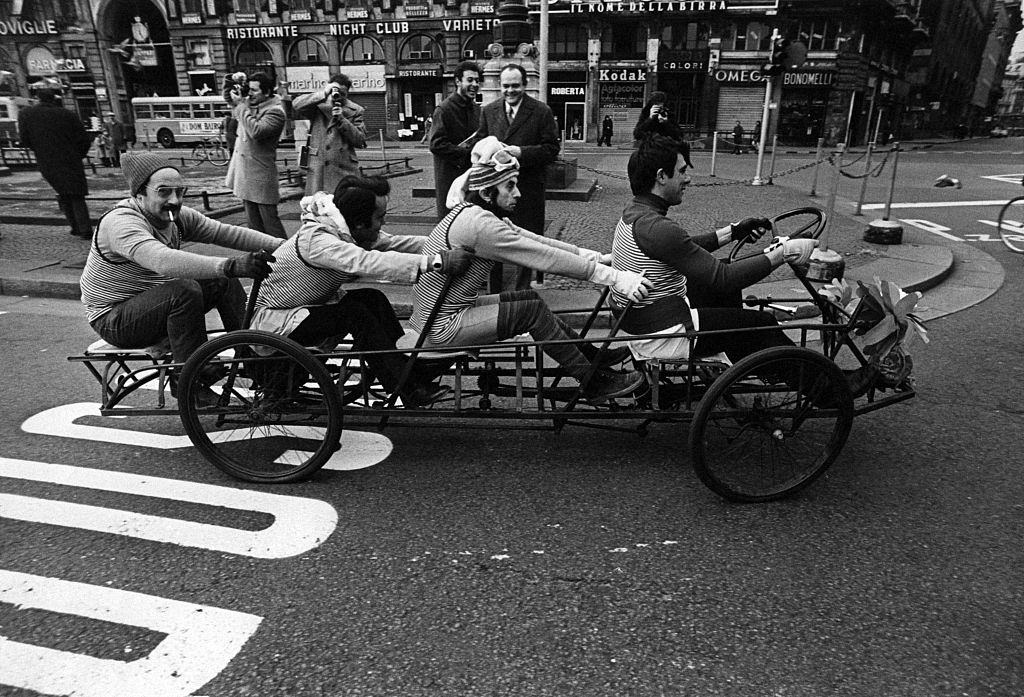
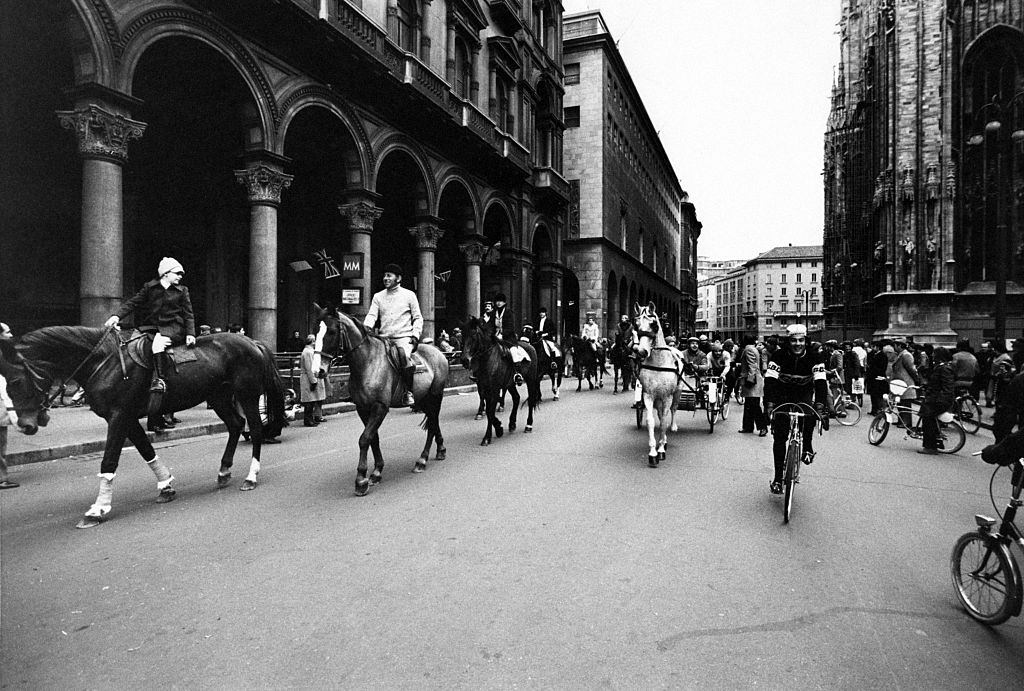
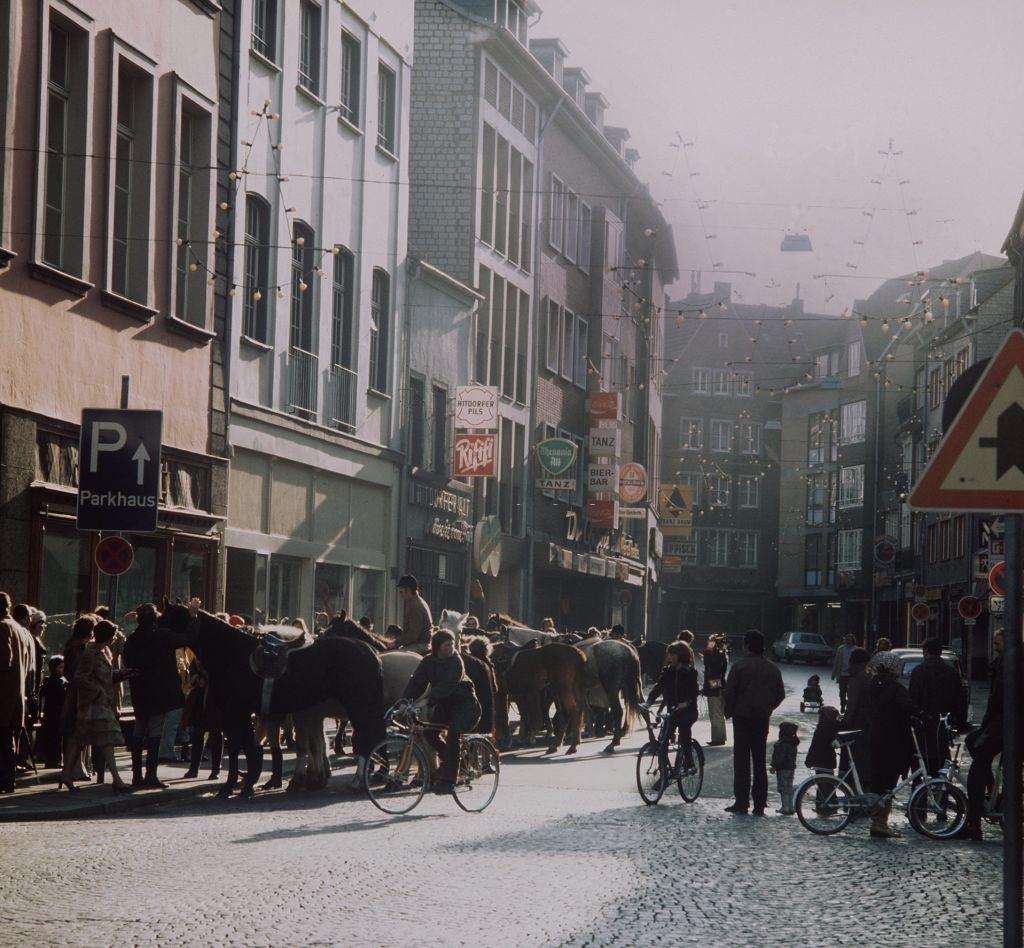
In Milan, Italy, the government instituted car-free Sundays to reduce fuel consumption. The streets, normally packed with traffic, transformed into open public spaces. Residents responded by pulling out bicycles, roller skates, and even horses.
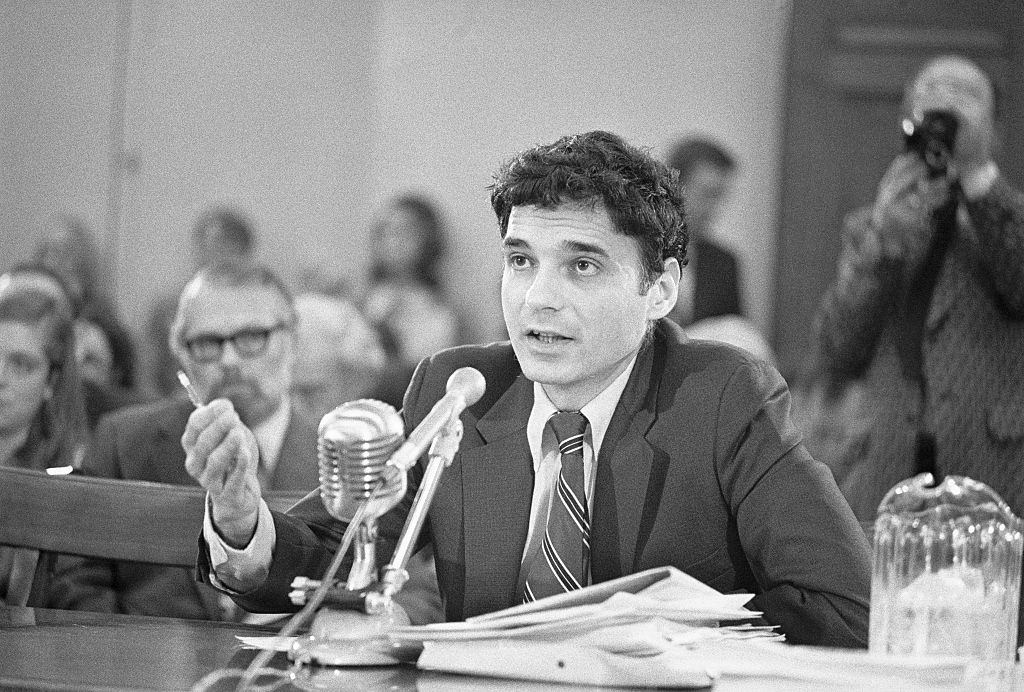
Not everyone accepted the official narrative of a genuine shortage. In the United States, consumer advocate Ralph Nader testified before a House subcommittee in January 1973, arguing directly that the energy crisis was a fabrication engineered by the oil industry rather than a real supply emergency.
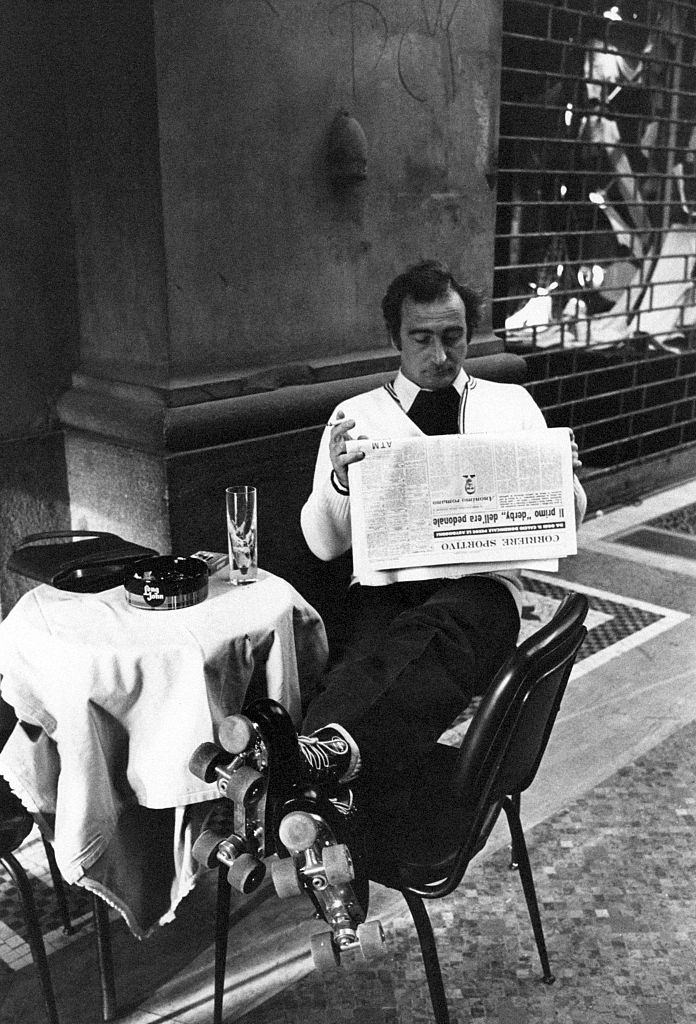
Milan’s walking Sundays produced some of the most memorable photographs of the entire crisis. On December 2, 1973, the city’s famous Piazza del Duomo — normally inaccessible on foot due to traffic — became a pedestrian playground. One man sat at a café table on the square, reading a sports newspaper while wearing roller skates.
Children on roller skates were towed across the piazza by cyclists. The square, which normally served as a busy traffic corridor, had become a place for families to gather freely.
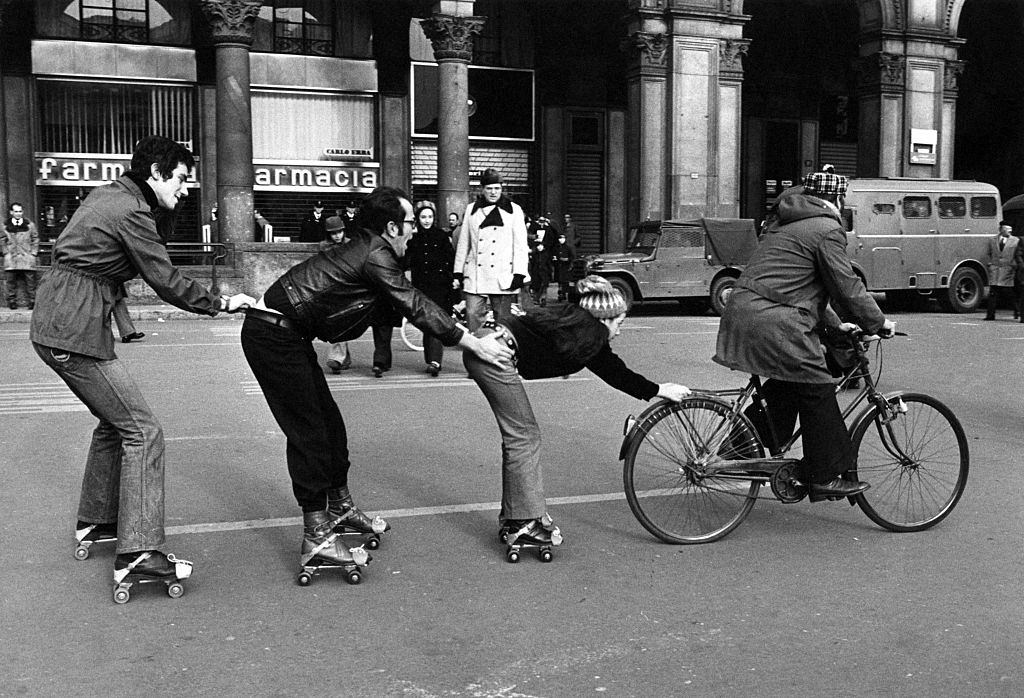
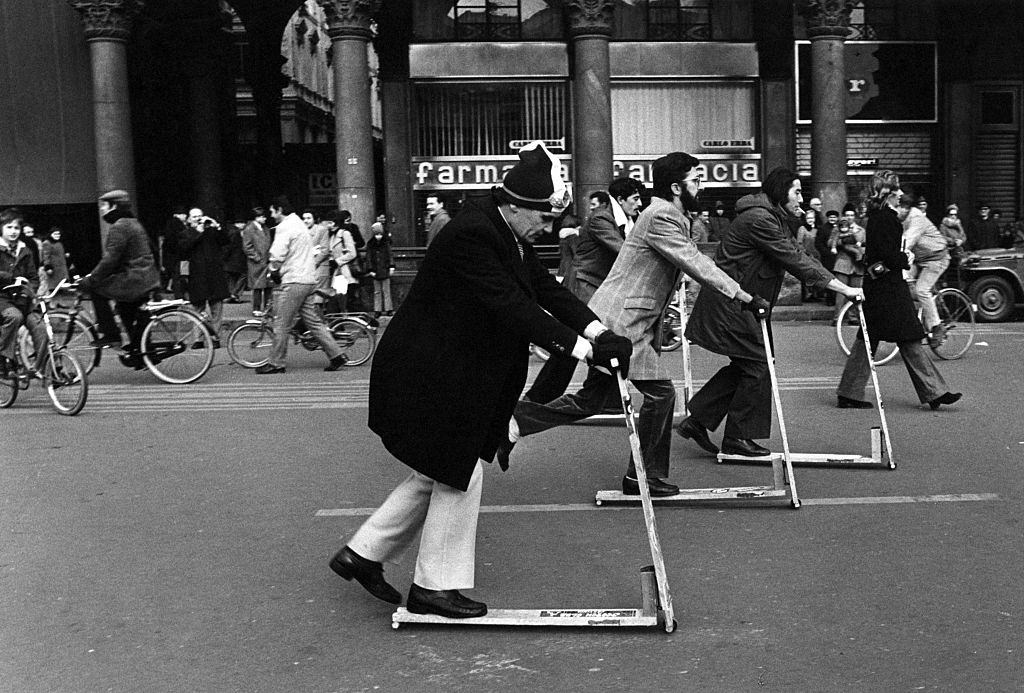
Horses also returned to Milan’s streets for the first time in decades. Riders trotted through the piazza on December 2 as crowds watched from the sidelines.
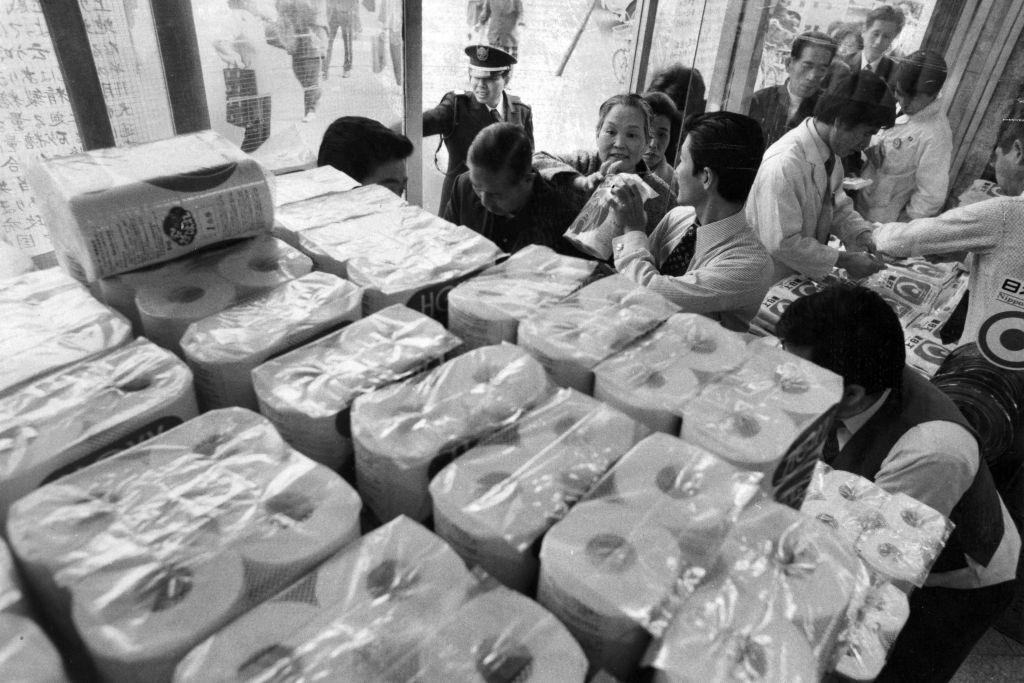
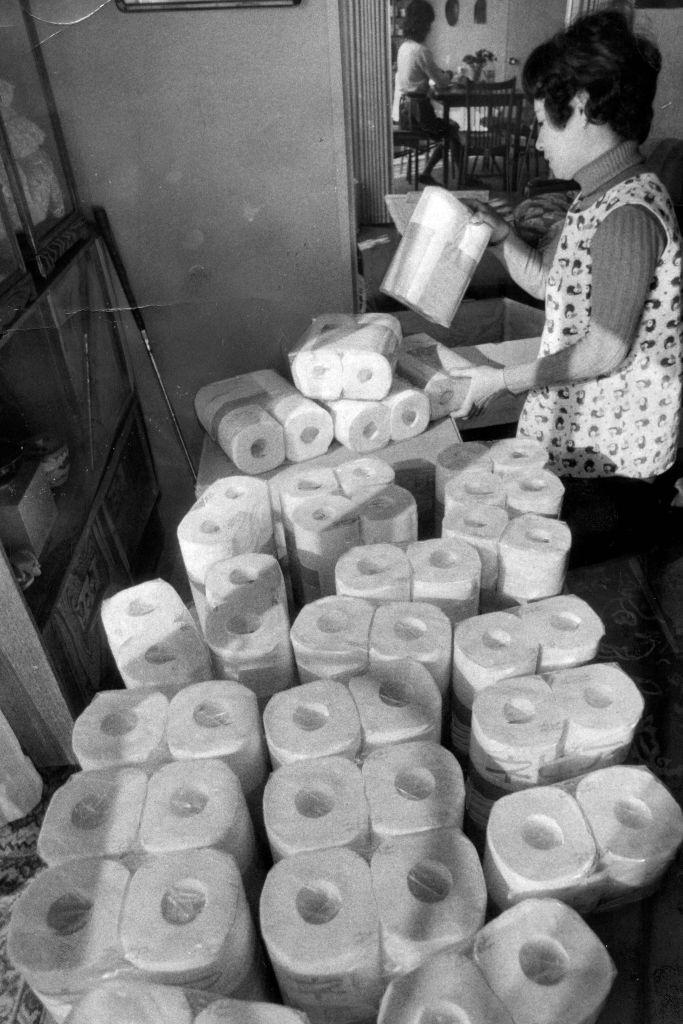
In Japan, the panic extended well beyond petrol. Supermarkets in Tokyo were stripped of basic household goods. On November 24, 1973, customers rushed to buy toilet paper, fearing that oil-dependent manufacturing would soon halt production of everyday items.
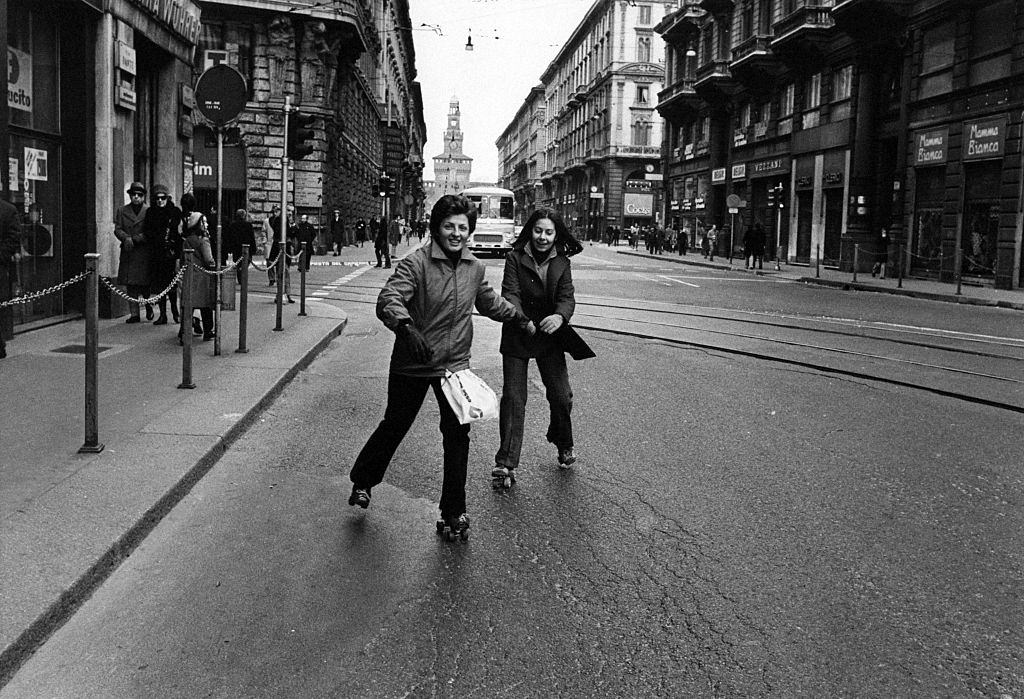
Back in Milan, the car-free Sunday on December 2nd turned Via Dante into a skating rink of sorts. Two young women glided along the normally traffic-heavy street, which had been completely cleared of vehicles.
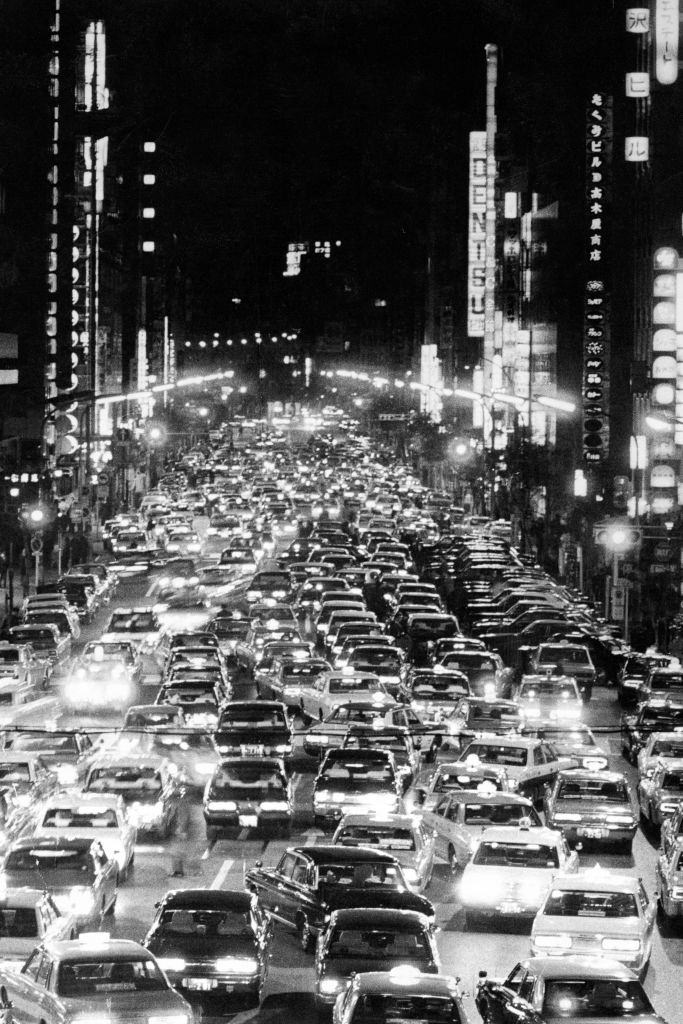
Tokyo’s Ginza district — one of the most commercially dense areas in the world — saw its taxi fleet idled by fuel restrictions. Cabs lined the streets on November 22, 1973, unable to operate normally.
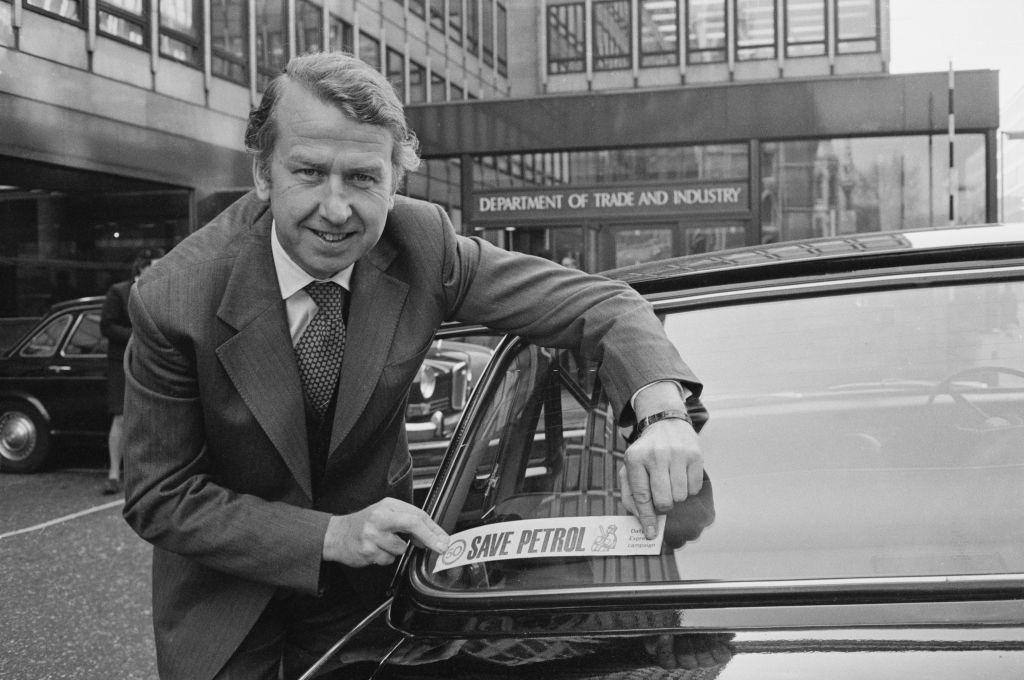
In Britain, the government pushed public conservation campaigns. Conservative Party politician Peter Walker personally attached ‘Save Petrol’ stickers to cars in London in November 1973, as part of a broader effort to reduce civilian fuel consumption.
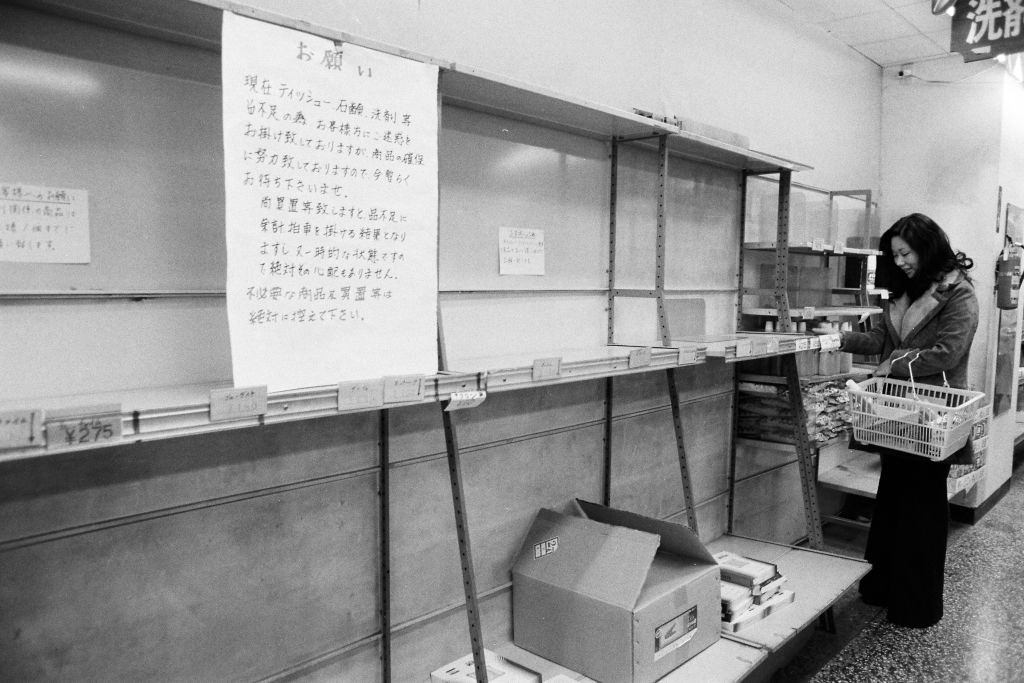
Japan’s panic buying spread across product categories. Washing liquids, detergents, and other household goods vanished from store shelves just as quickly as toilet paper. On November 21, 1973, empty shelves in Tokyo supermarkets showed just how far consumer fear had spread.
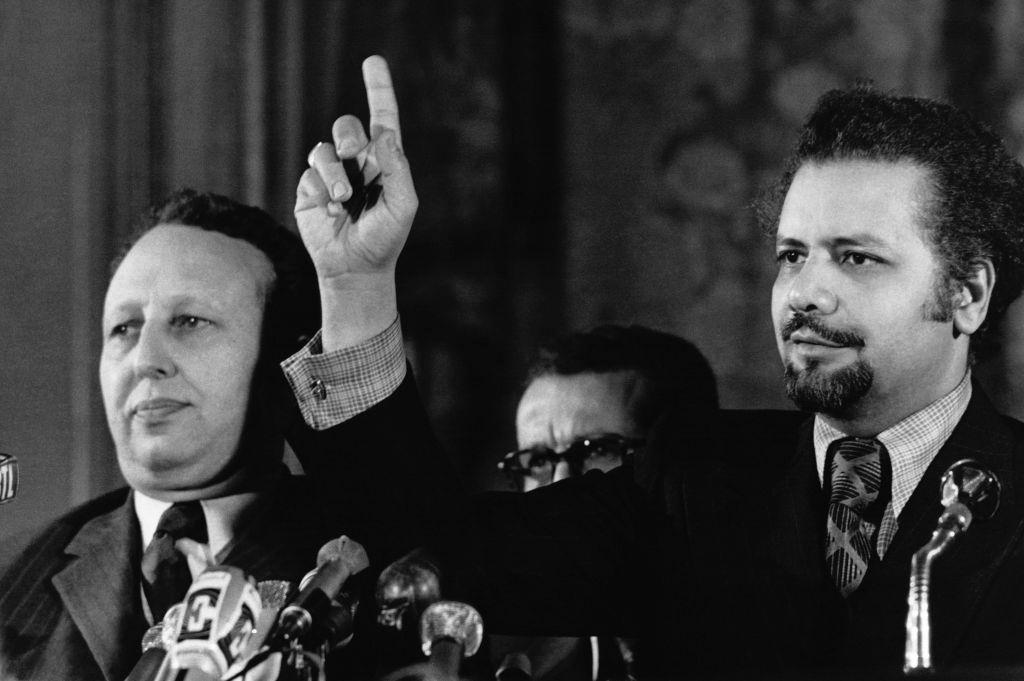
Diplomatic discussions about the embargo took place at the highest levels. On November 27, 1973, Algerian Energy Minister Belaïd Abdessalam and Saudi Petroleum Minister Ahmed Zaki Yamani held a joint press conference in Paris — two of the most powerful figures shaping the global oil market at the time.
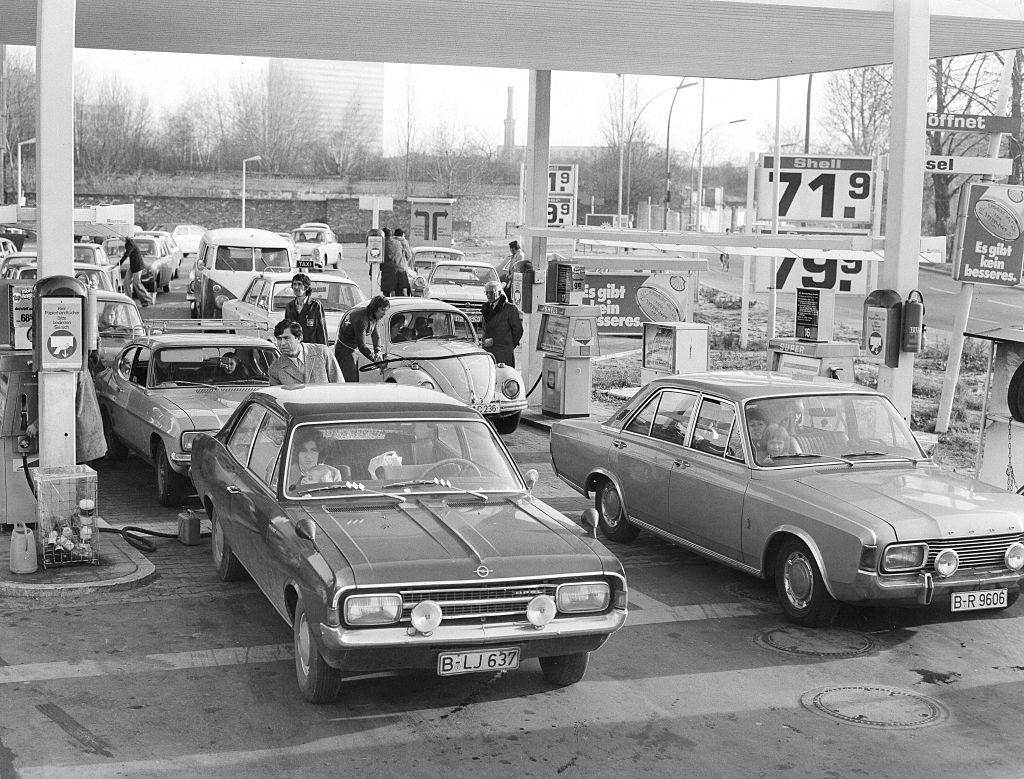
In Berlin, the mood at petrol stations was tense. Crowds gathered wherever fuel was still available, and the competition for a full tank was fierce.
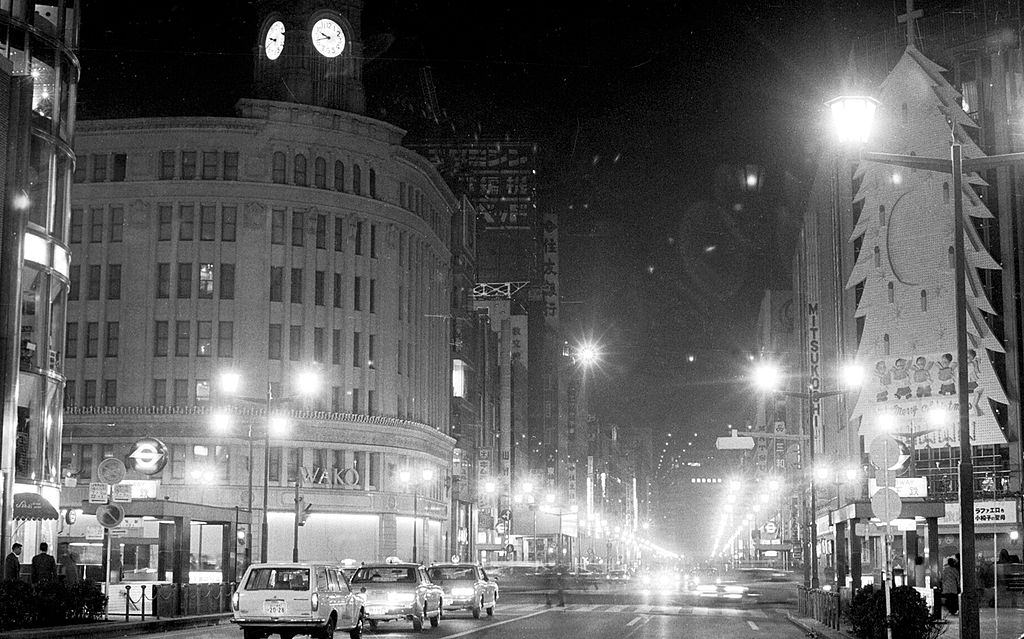
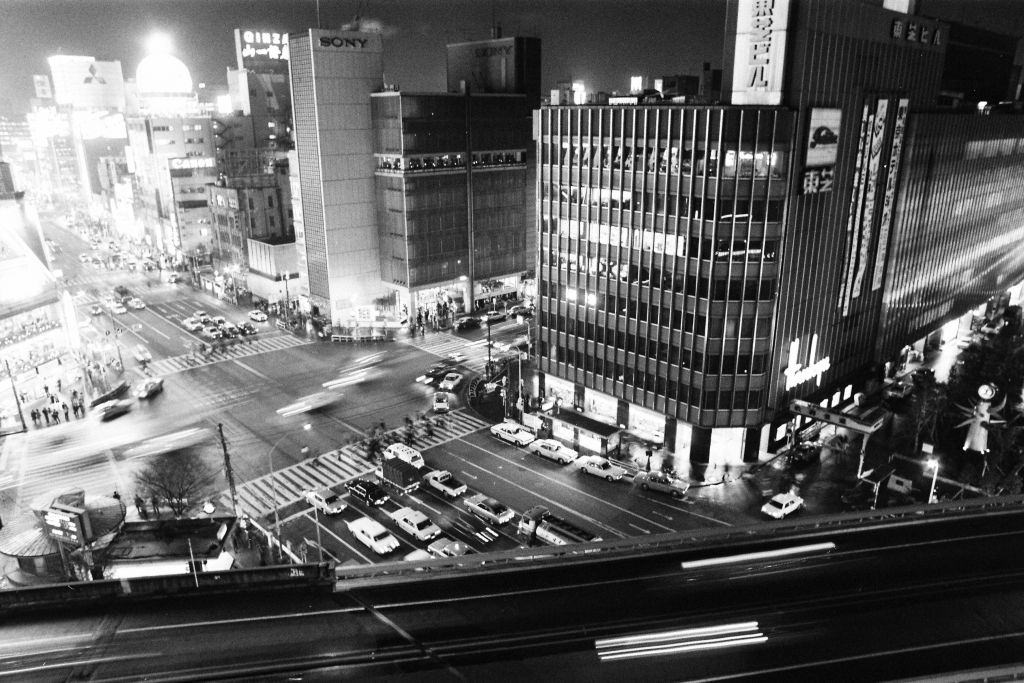
Tokyo’s famous Ginza illuminations — the neon and electric light displays that made the district one of the brightest spots in Asia — were switched off on November 20, 1973, to conserve electricity generated from oil-powered plants.
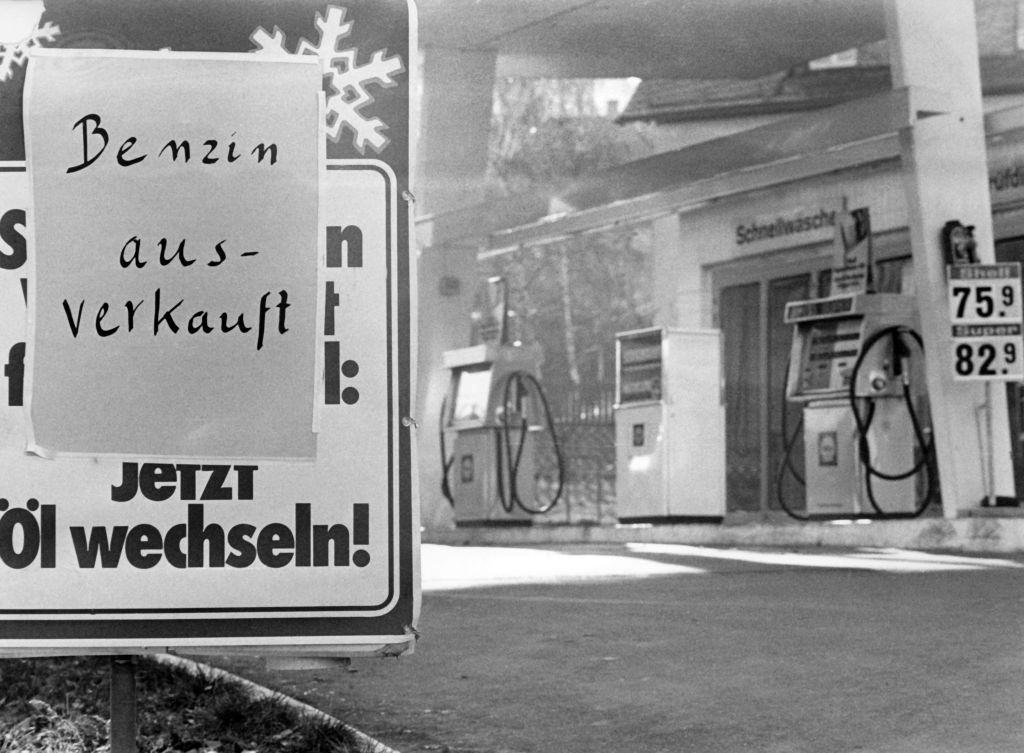
In Stuttgart, Germany, signs reading “Petrol sold out” appeared at stations across the city. The sign photographed on November 18, 1973 was not an isolated case — it was a common sight at pumps throughout the country that autumn.
Ordinary families developed their own workarounds. Rather than wait at long queues, some people brought extra canisters to fill whenever fuel was available — stockpiling enough to last through the next shortage.
Energy conservation in Japan extended to office buildings and commercial properties. On November 6, 1973, entire Tokyo city blocks went dark as buildings cut their lights to reduce electricity demand.
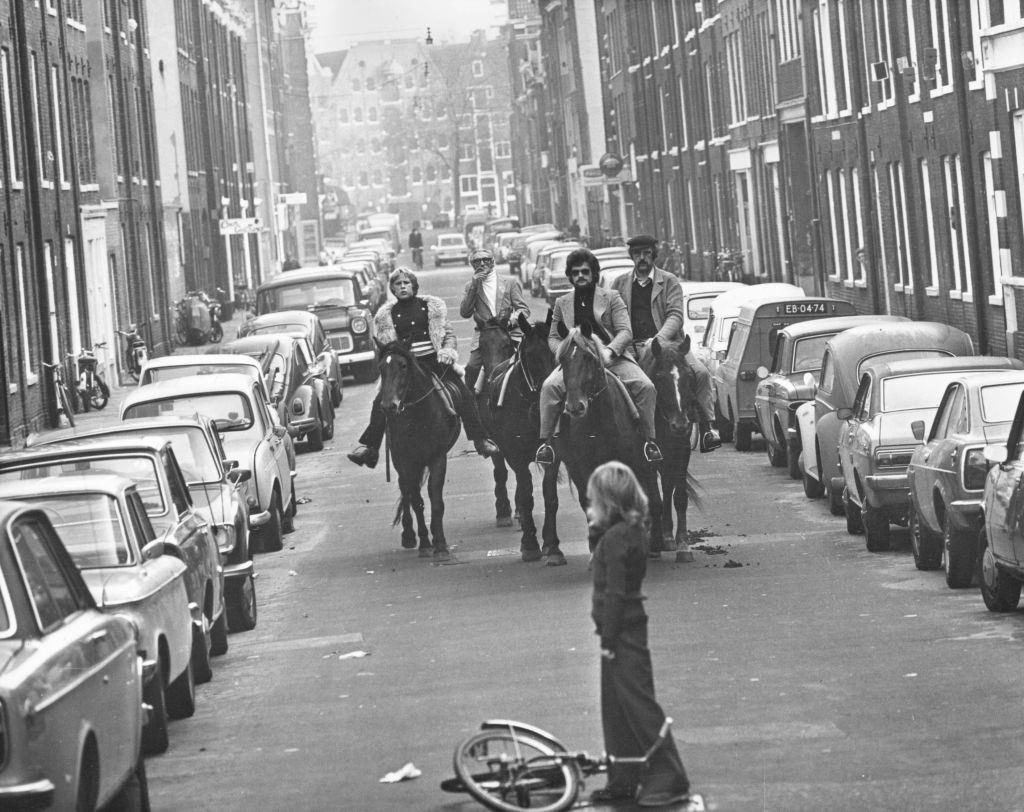
The Netherlands introduced some of the most dramatic restrictions in Europe. On car-free Sundays, private vehicle use was banned outright. In Amsterdam, four horsemen rode through the streets in November 1973, a sight the city hadn’t seen in generations.
Japan’s consumer panic reached a point that seemed disproportionate to the actual shortage. Individual shoppers were photographed buying armloads of toilet paper — a product that had no direct connection to oil supply but had been caught up in the broader wave of fear-driven purchasing.
The hoarding behavior in Germany began even before the embargo hit its peak. As early as July 1973, drivers were filling every container they had at Berlin petrol stations, anticipating the worst.
Milan’s car-free Sundays brought out creative forms of transport. Four men pedaled a tandem bicycle across Piazza del Duomo on December 2, 1973, one of many improvised solutions Italians used to get around without petrol.
Horse-drawn gigs, bicycles, and riders on horseback all crossed the piazza together during the walking Sundays. The square had become a demonstration of just how many alternatives existed to the internal combustion engine.
Germany’s car bans cleared its motorways as completely as any wartime curfew. Berlin’s roads, normally filled with traffic at all hours, stood empty for hours on end.
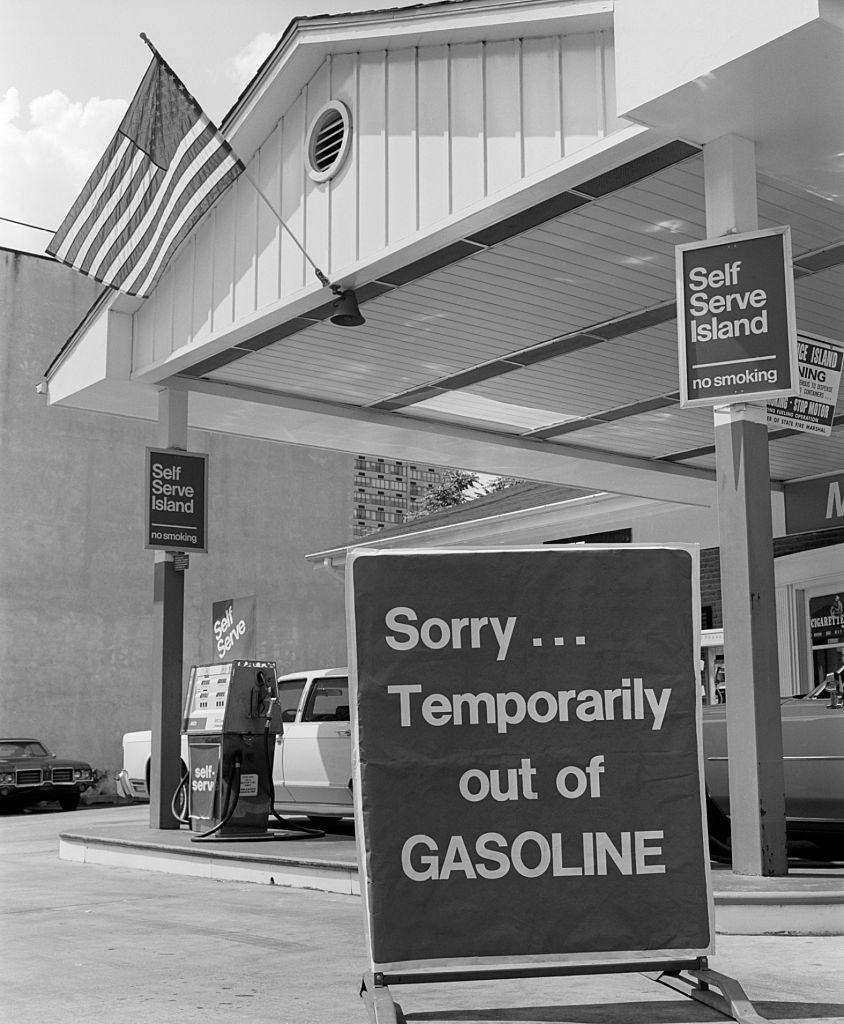
American gas stations posted “temporarily out of gasoline” signs that became familiar sights across the country. For many drivers, these signs meant hours of searching for an open pump with fuel still available.
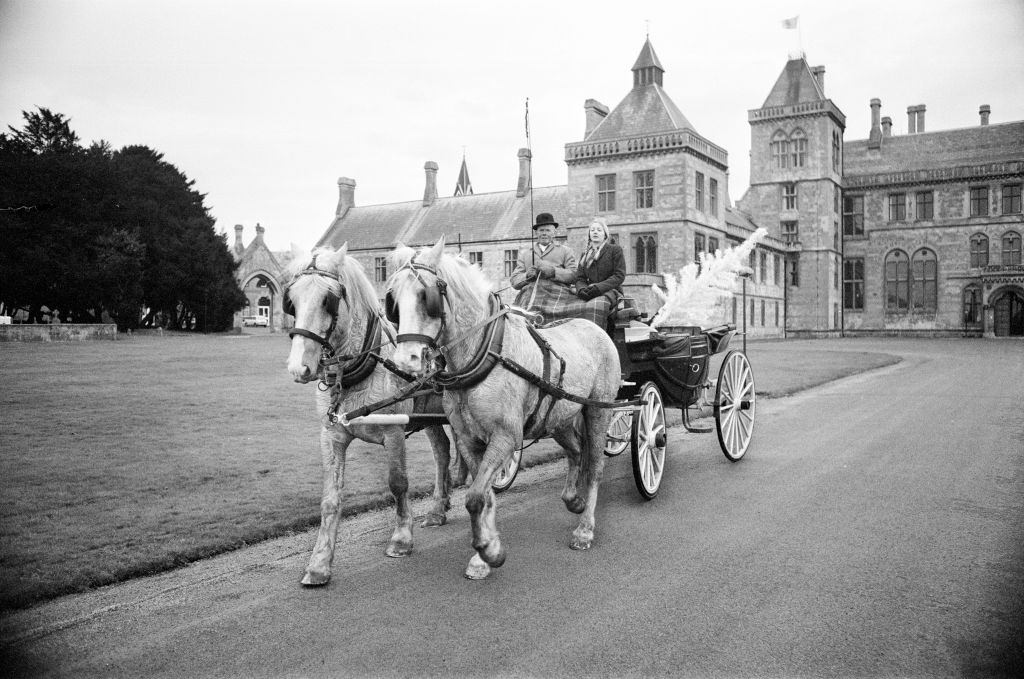
In Britain, the horse and carriage made a practical comeback. At Walton Hall in Warwickshire, a coach and horses served as a legitimate means of transportation as the fuel shortage bit into daily life.
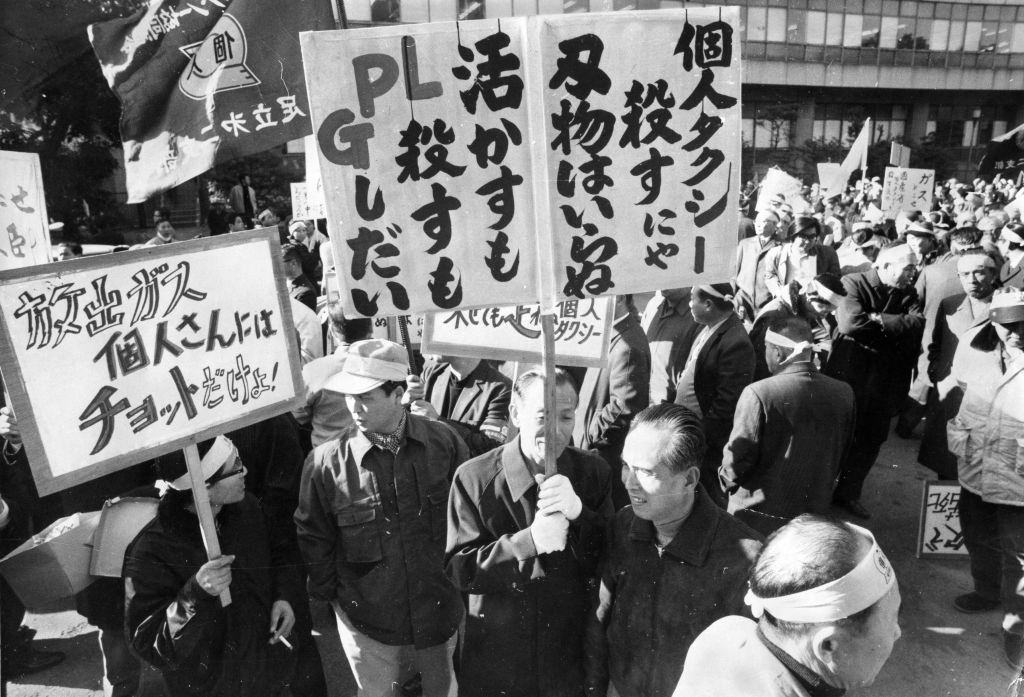
Japanese taxi drivers, whose livelihoods depended entirely on fuel availability, took their frustrations to the streets. On December 11, 1973, private taxi drivers staged a rally in Tokyo demanding the government release liquefied petroleum gas (LPG) reserves to keep their vehicles running.
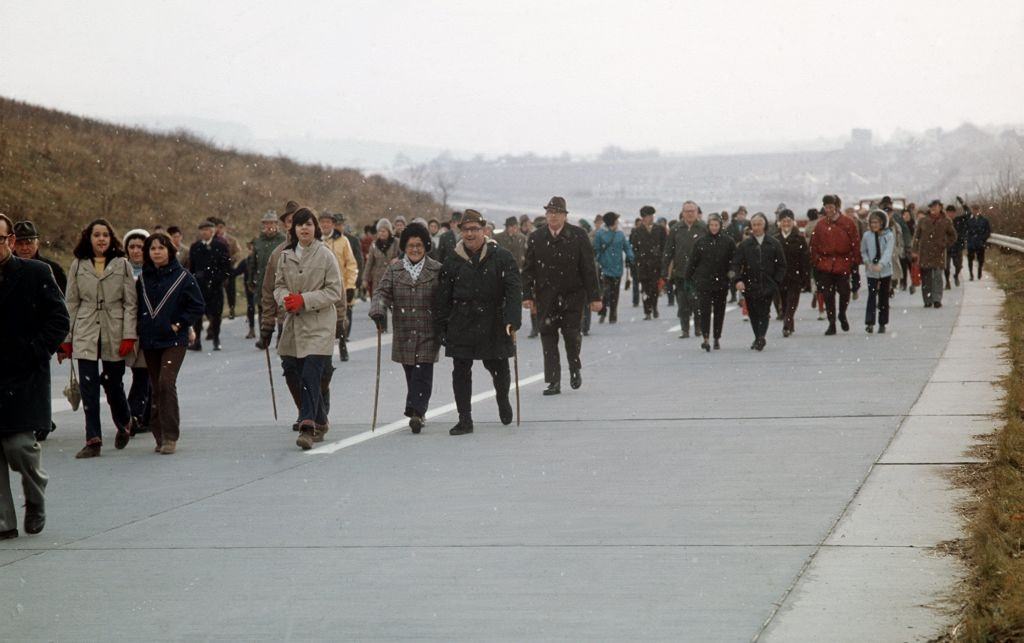
In Germany, the Sunday driving ban created an unusual setting for outdoor activities. On December 9, 1973, members of the Swabian Alpine Club took a group walk along a newly completed stretch of motorway between Weinsberg and Möckmühl — a road that would normally have been off-limits to pedestrians.
In Düsseldorf, riders and cyclists gathered in the old town on December 2, 1973, turning the historic city center into a car-free gathering point for the day.
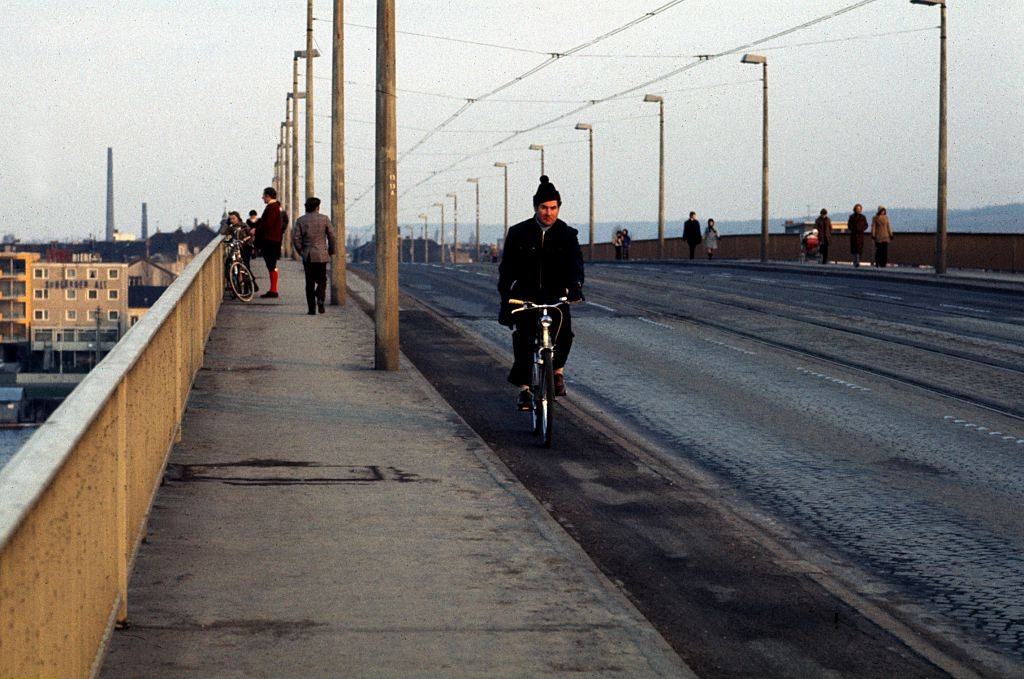
Major infrastructure landmarks across West Germany fell silent. The Kennedy Bridge in Bonn, a key crossing over the Rhine, carried almost no vehicle traffic during the crisis period.
In Liverpool, England, the queues formed not at petrol stations but at the post office. On November 29, 1973, residents lined up at the Hanover Street Post Office to collect petrol coupons issued as part of the British government’s rationing preparation.
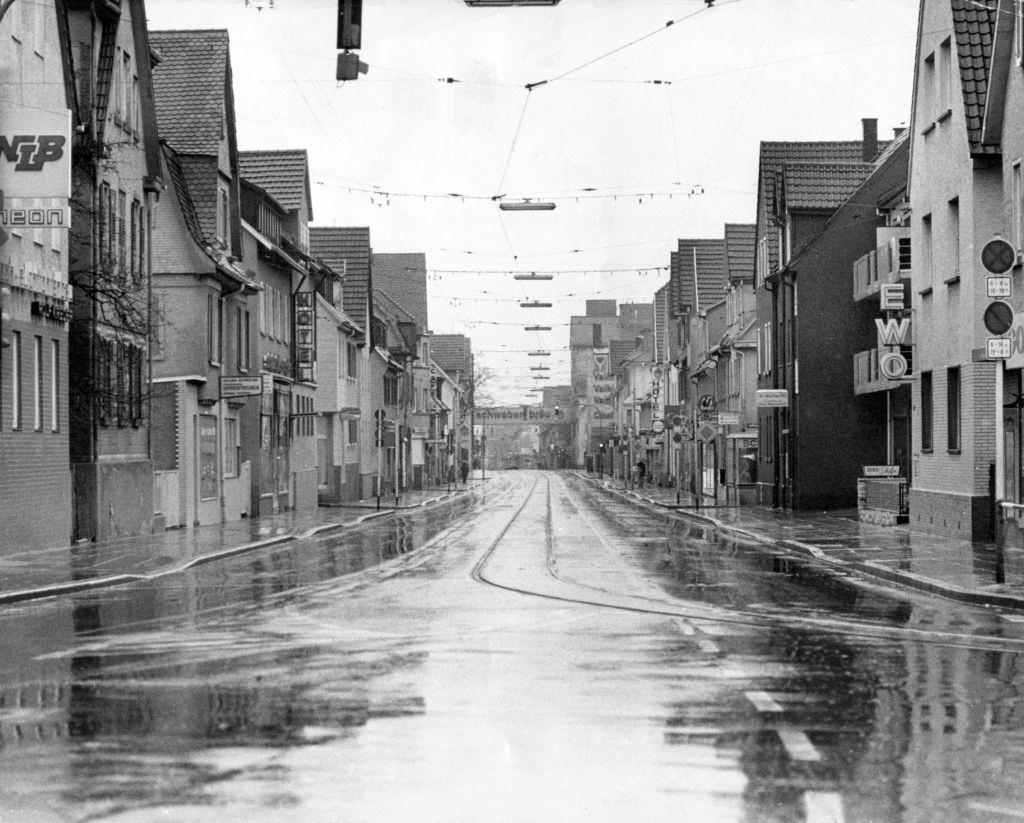
Stuttgart’s residential districts were as empty as its highways. The Vaihingen district, a suburban area normally busy with commuter traffic, went quiet during the crisis months of 1973.
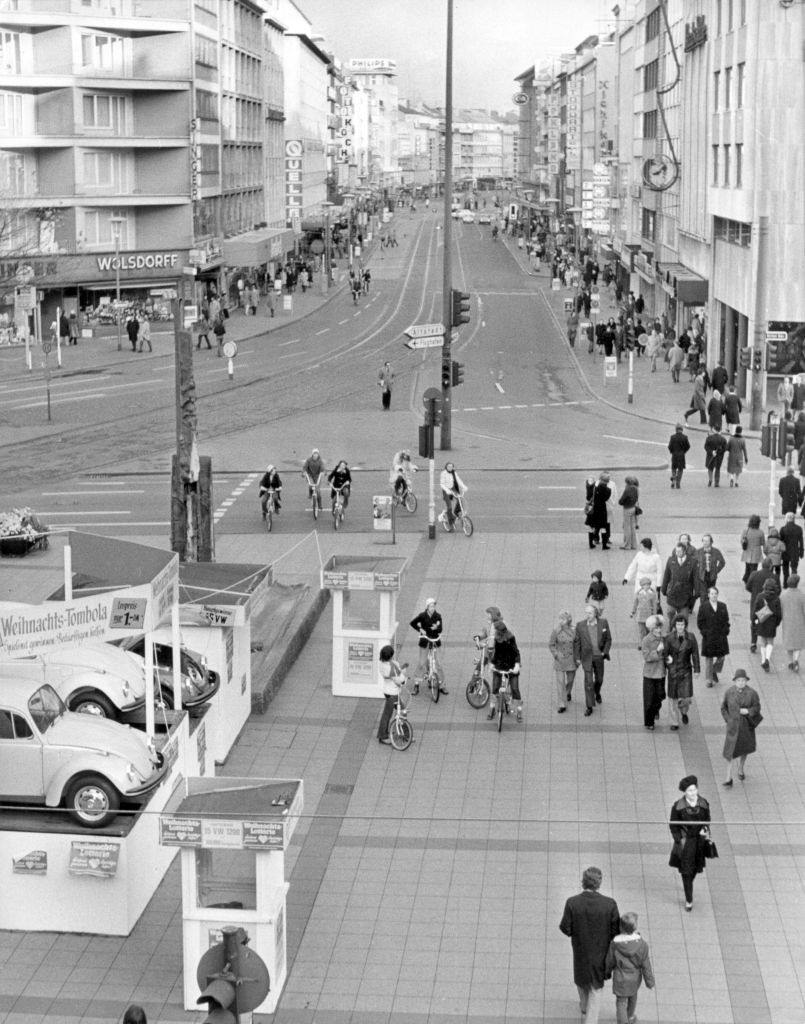
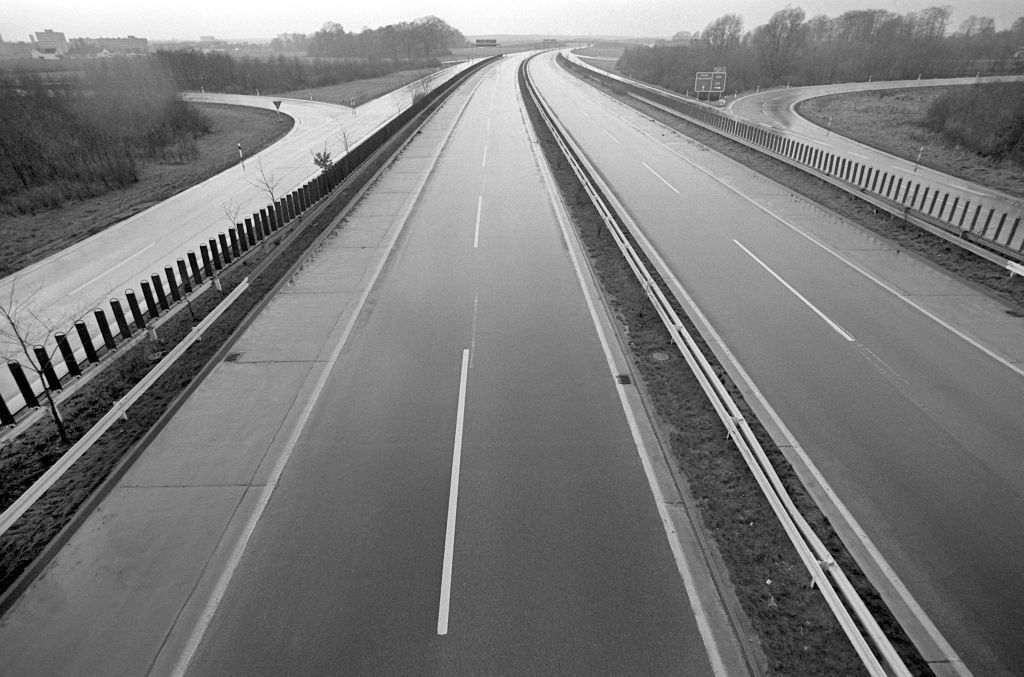
Germany imposed its first Sunday driving ban on November 25, 1973, with further bans following on December 2 and 9. In Düsseldorf, Schadow-Straße — a major commercial street — was taken over entirely by cyclists and pedestrians on that first car-free Sunday.
The motorway at Düsseldorf on November 25, 1973 presented one of the starkest images of the crisis: a wide, modern highway built to handle tens of thousands of vehicles per day, completely empty.
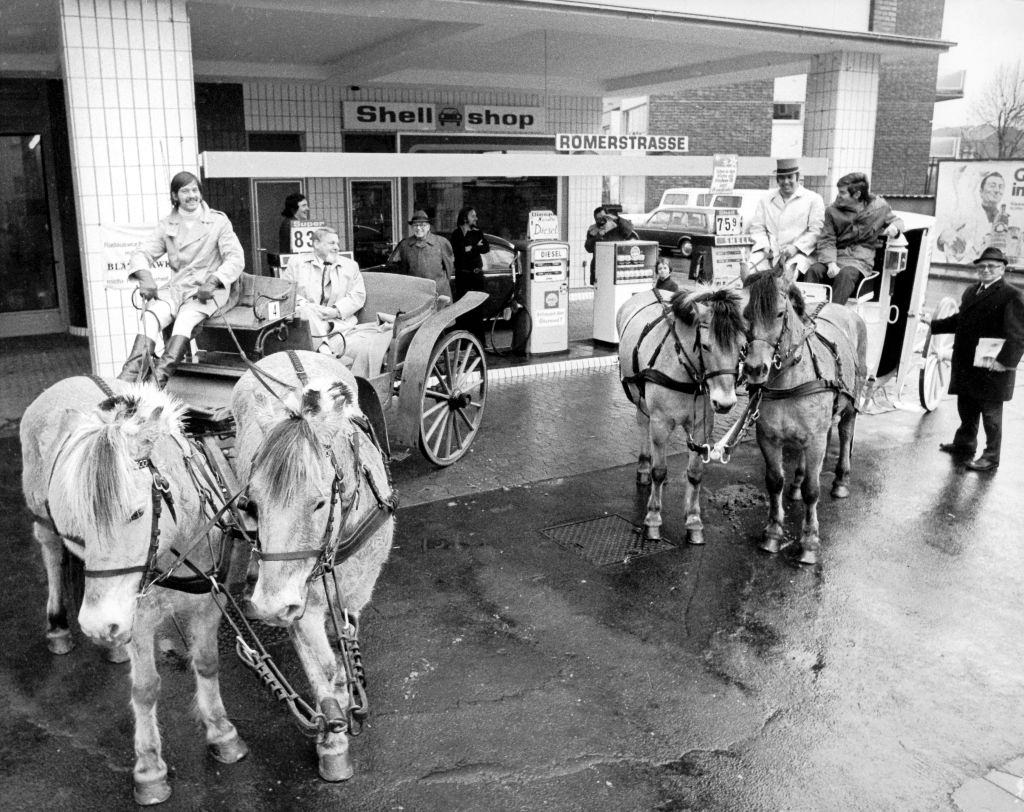
With private cars banned on Sundays, horse-drawn hackney cabs returned to German city streets as a legitimate transport option. They were slow by modern standards, but they needed no petrol.
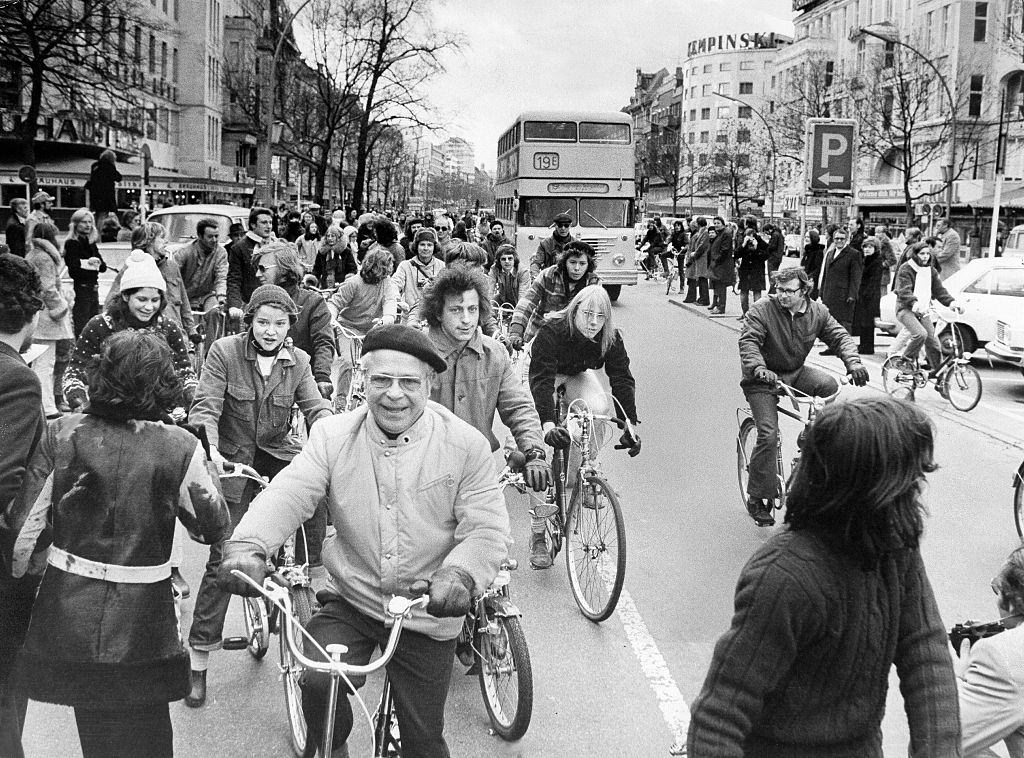
Berlin’s Kurfürstendamm — the city’s most famous boulevard — was reduced to foot traffic during the oil crisis. Pedestrians walked down the center of a road normally dominated by cars.
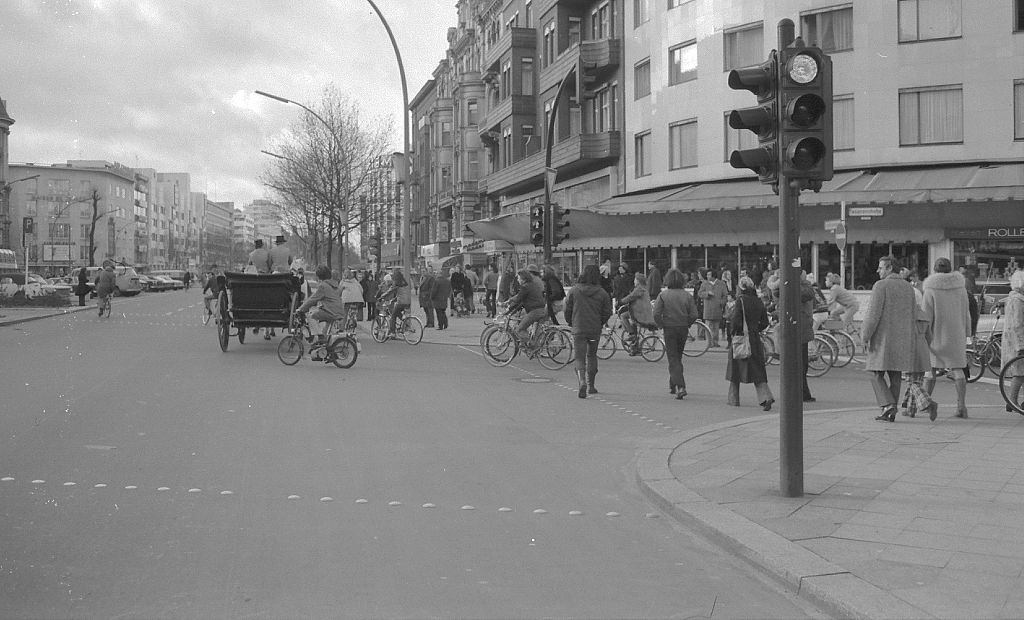
Cyclists took full advantage of the empty Kurfürstendamm. With no cars in sight, they rode freely down the wide lanes of one of West Germany’s most iconic urban streets.
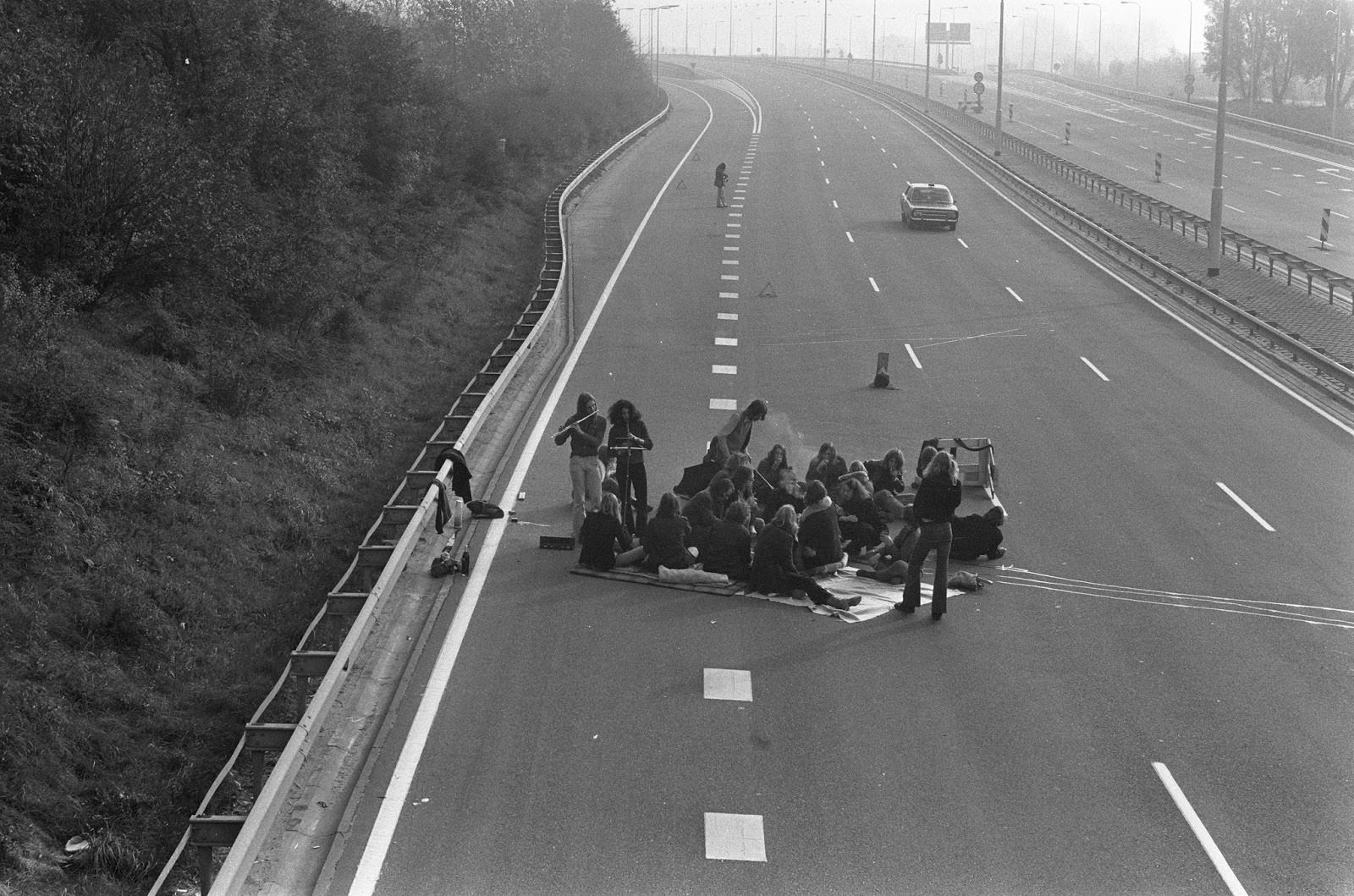
Perhaps no single image captured the strange atmosphere of the 1973 crisis better than one taken in the Netherlands. A group of people spread out a picnic blanket on a completely deserted highway, eating and relaxing on a road that on any normal day would have been impossible to walk on. The embargo had, for a brief and disorienting period, returned Europe’s busiest roads to the people.





What is this toilet paper hoarding obsession?? Happened the same in the COVID crisis.
How long did the crisis last?
At that point in history, our Western Civilization had to confront itself bravely and stop trading fossil fuels based on supply and demand, but rather on the basis that they are finite.