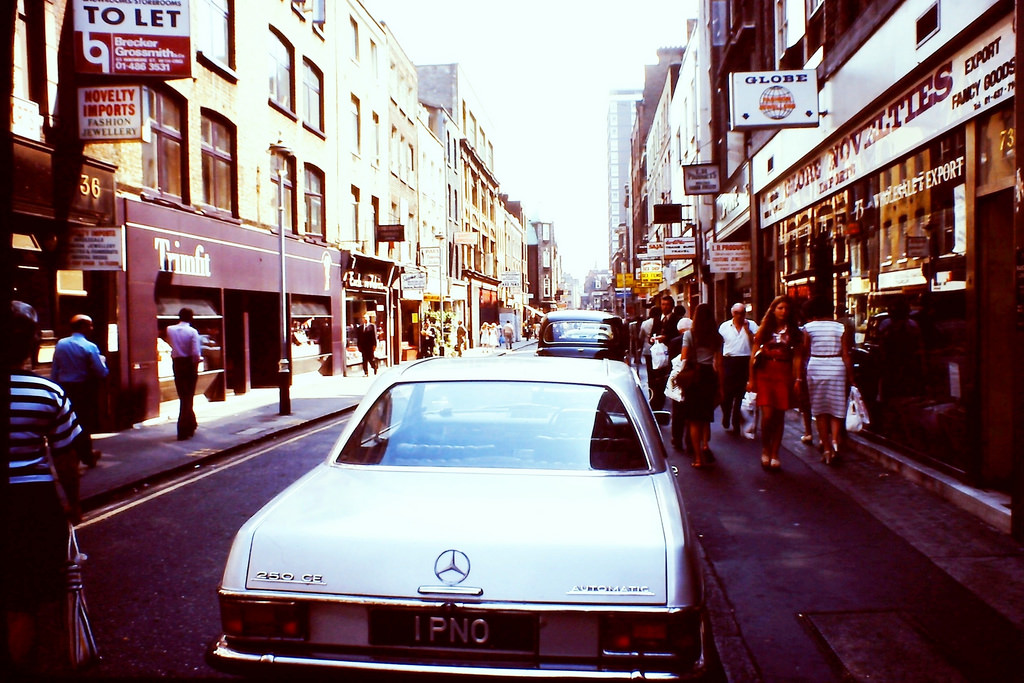
London in 1976 was a city under pressure. A record-breaking heatwave gripped the country all summer, and a severe drought followed close behind. Standpipes appeared in the streets as water supplies ran critically low. Londoners sweltered through temperatures that Britain had rarely seen before, and the city wore the strain visibly — in its cracked parks, empty fountains, and the faces of people simply trying to get through the day.
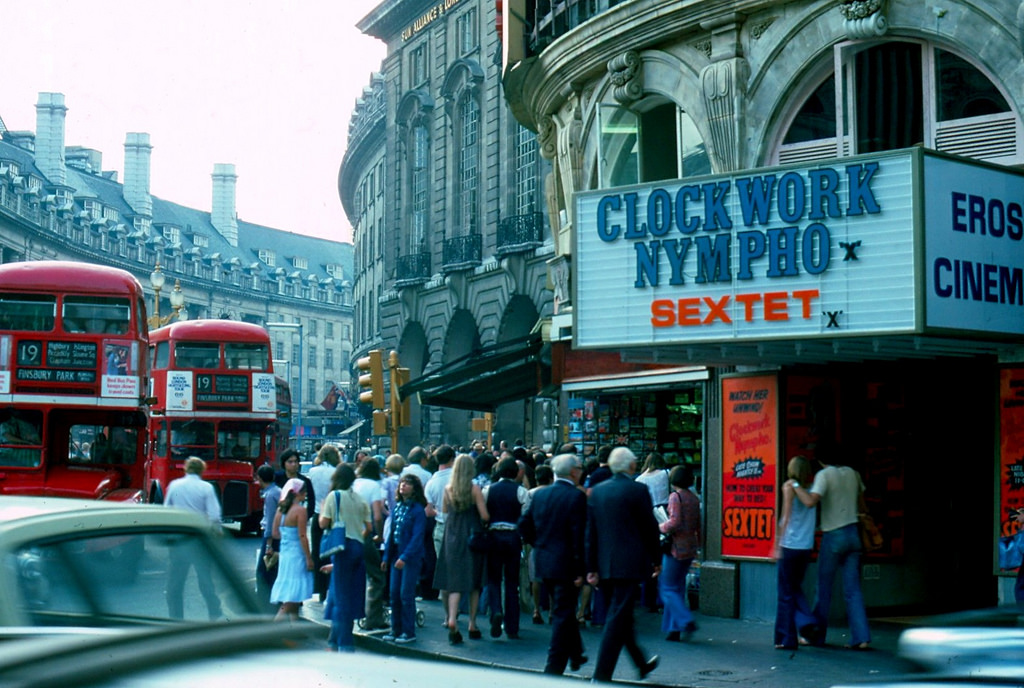
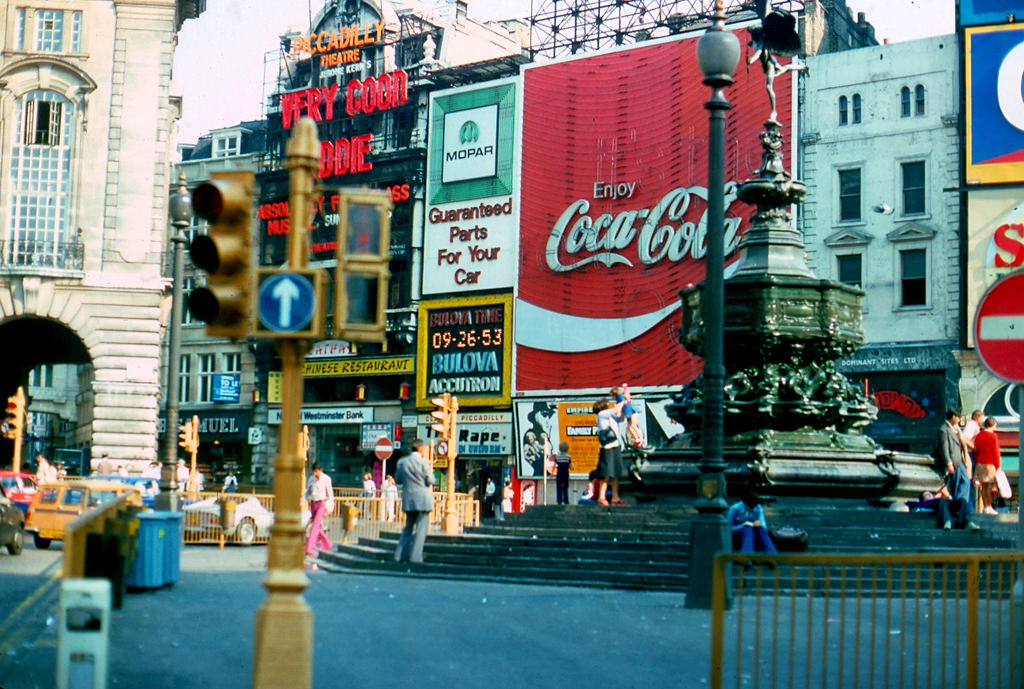
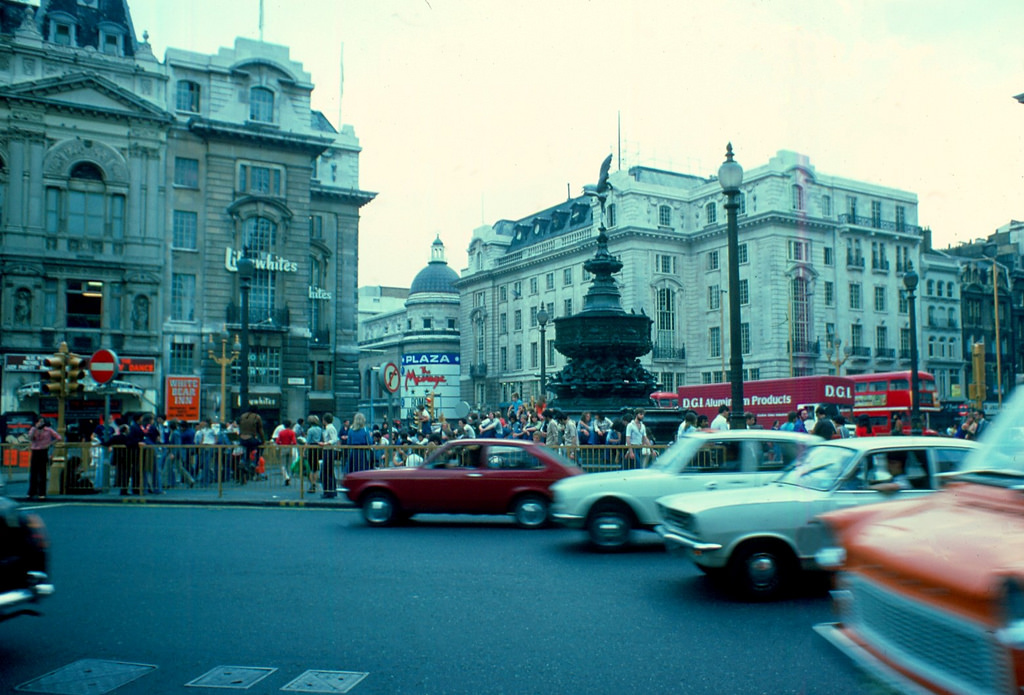
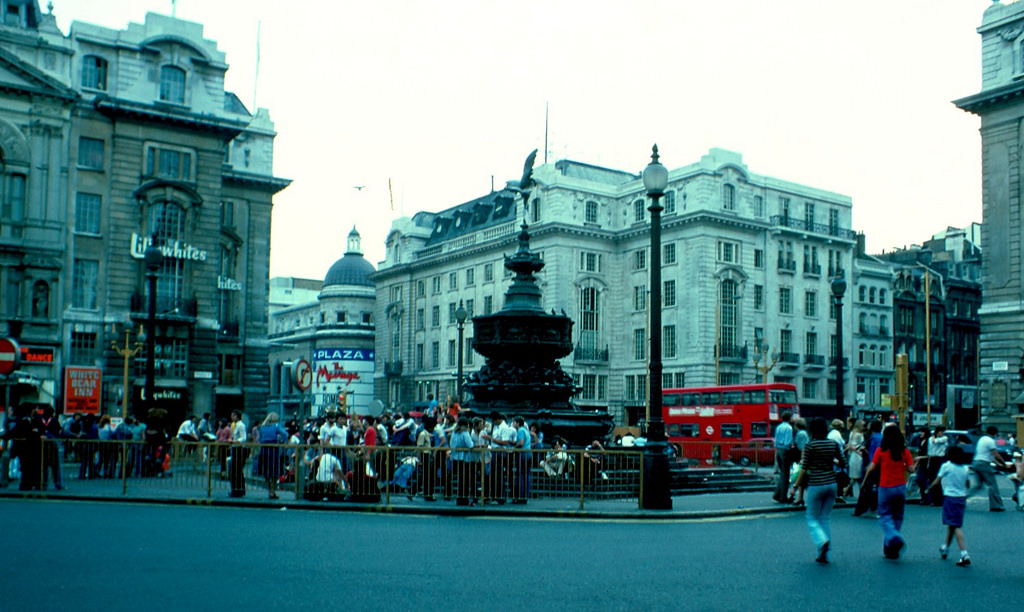
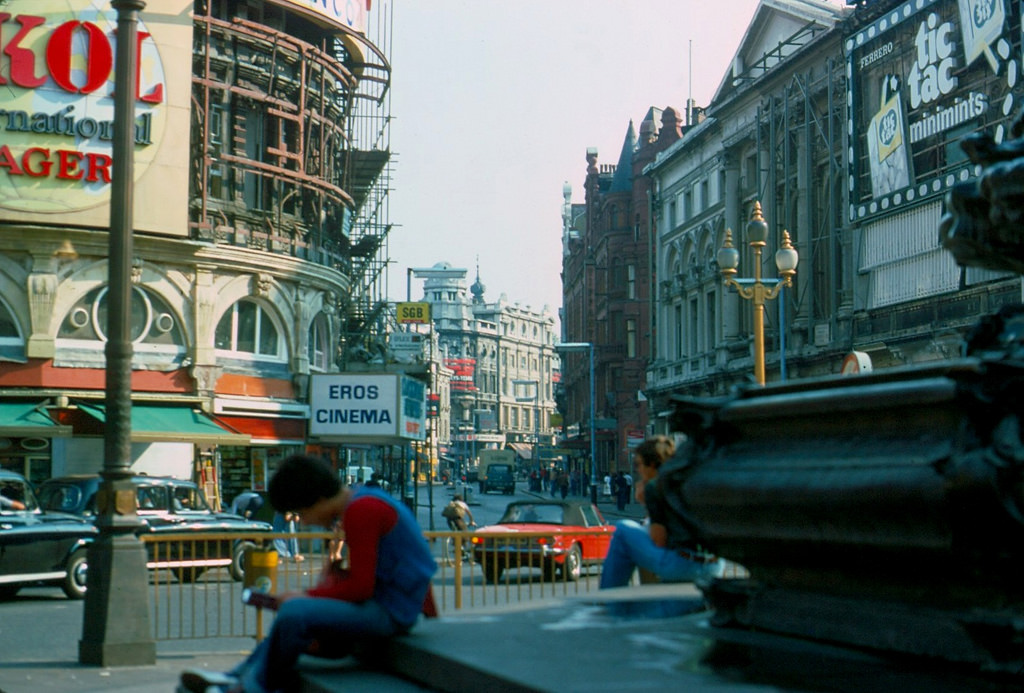
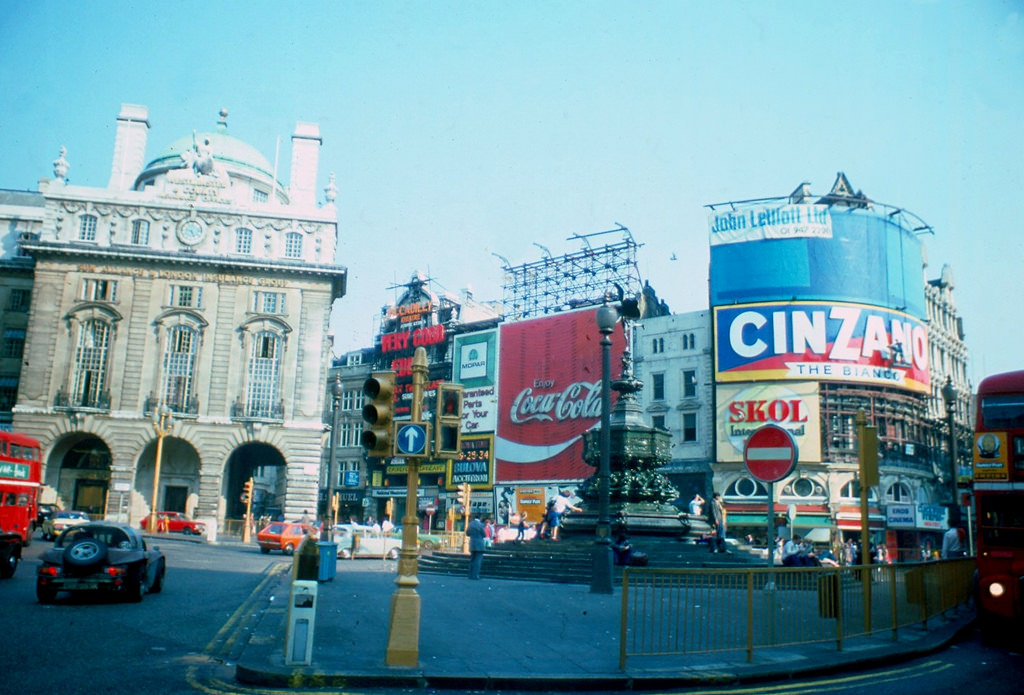
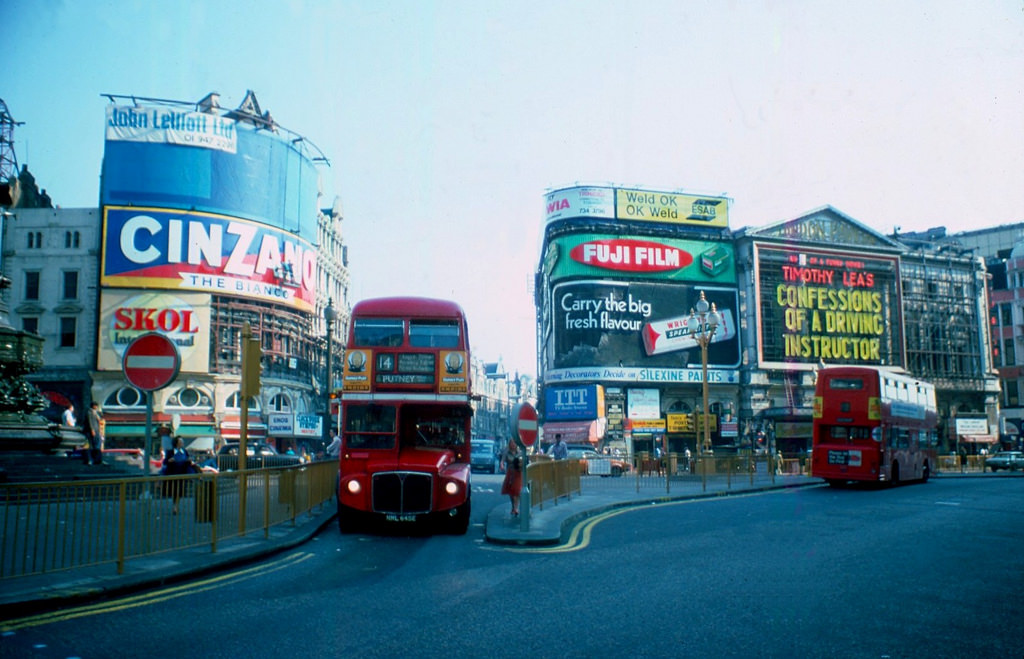
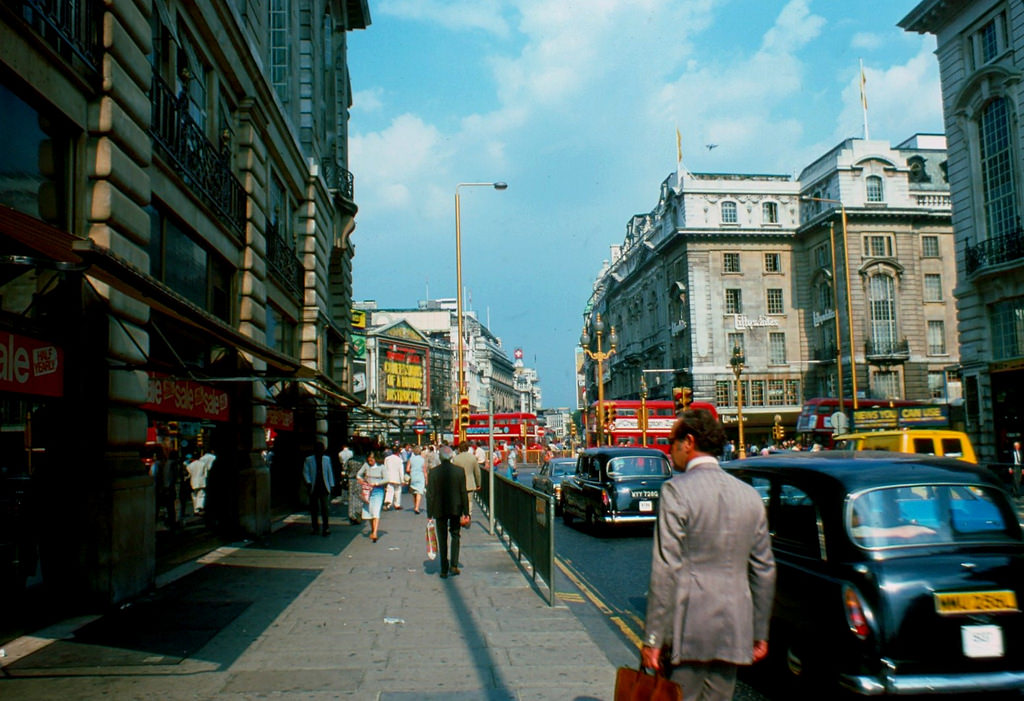
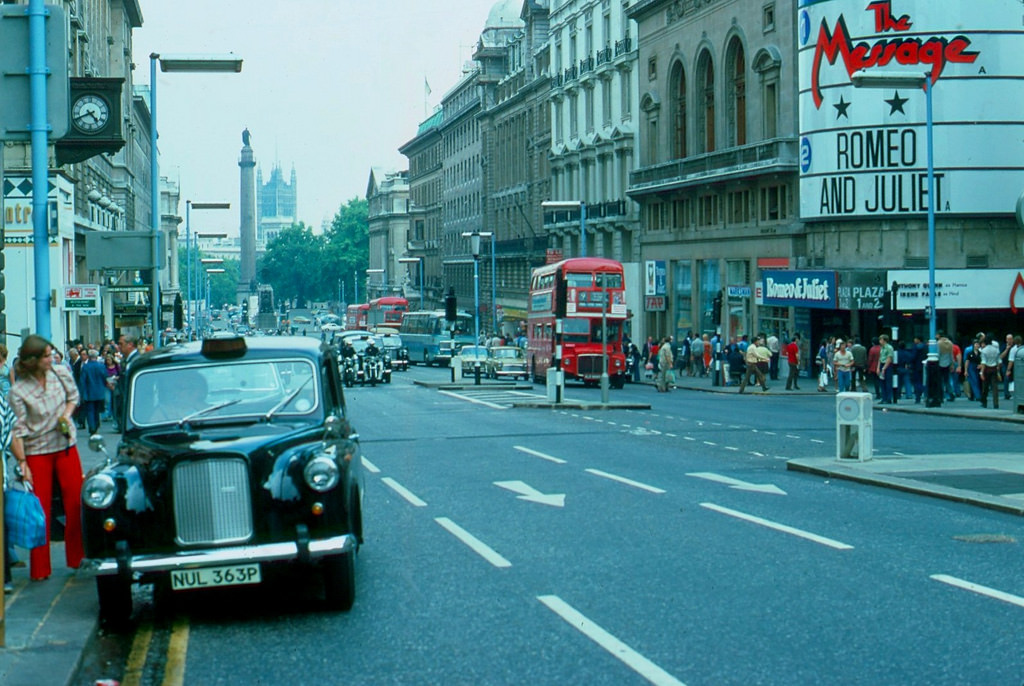
Piccadilly Circus remained one of the busiest crossroads in the city, drawing tourists, commuters, and shoppers in equal measure. Regent Street stretched out from it in elegant curves, lined with large retail stores and heavy traffic. The billboards and neon signs at the Circus had become icons of London’s commercial heart, standing in contrast to the economic troubles Britain was facing at the time — high inflation, unemployment, and industrial unrest.
That August, the Notting Hill Carnival turned violent. What had grown into one of Europe’s largest street festivals erupted into serious disorder, with 100 police officers and 60 carnival-goers injured in the riots. Tensions between London’s West Indian community and the Metropolitan Police had been building for years, and the carnival became the flashpoint. It was one of the most significant outbreaks of street unrest the city had seen in decades.
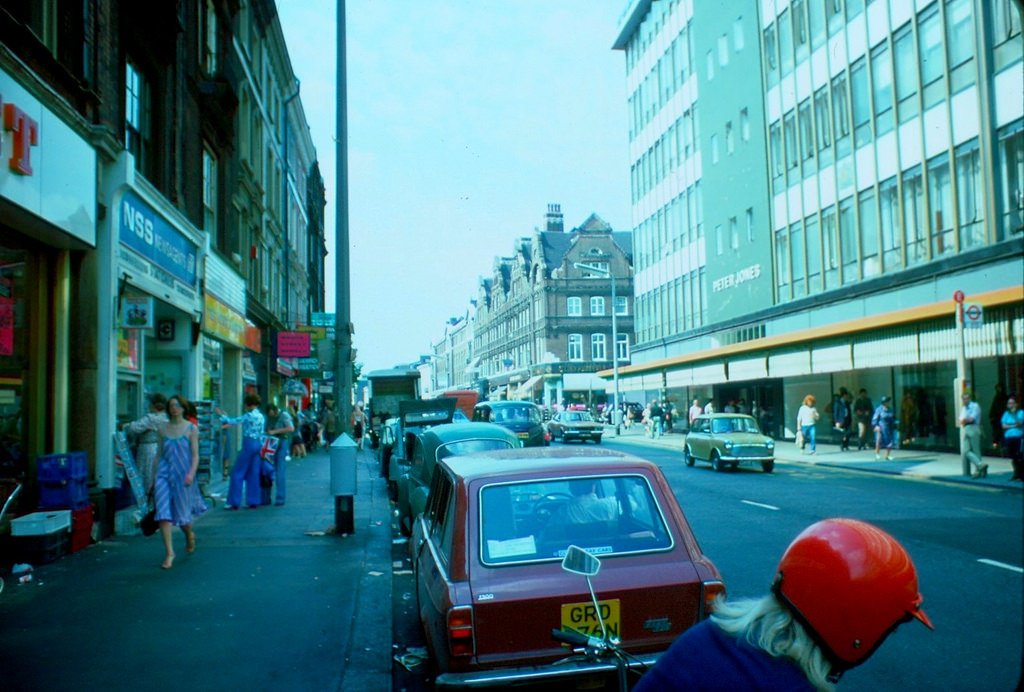
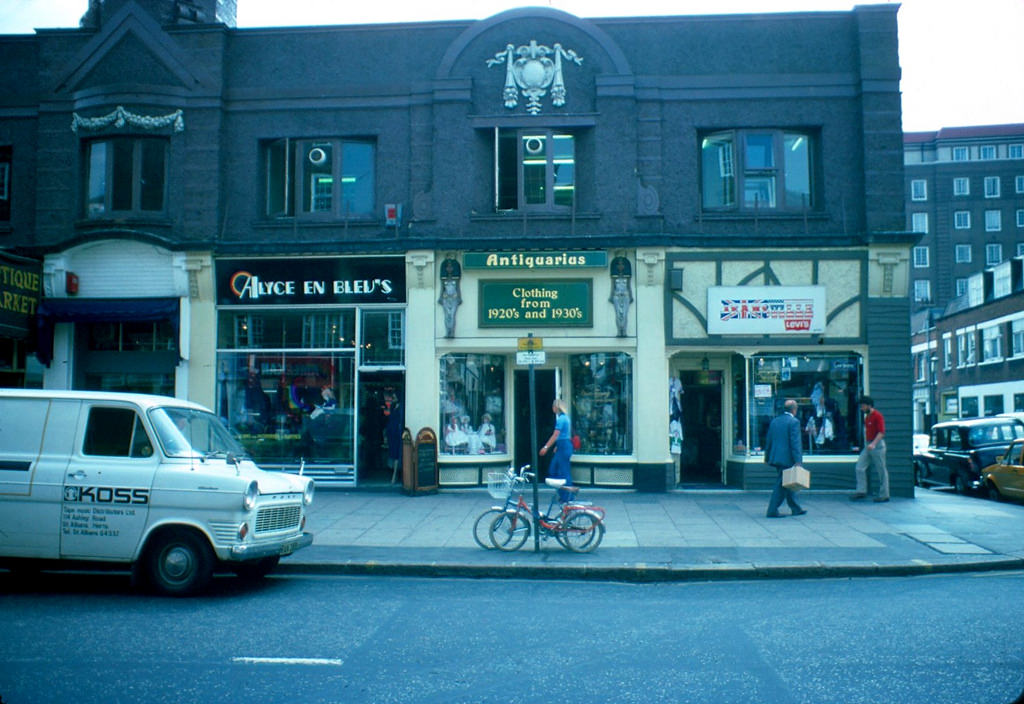
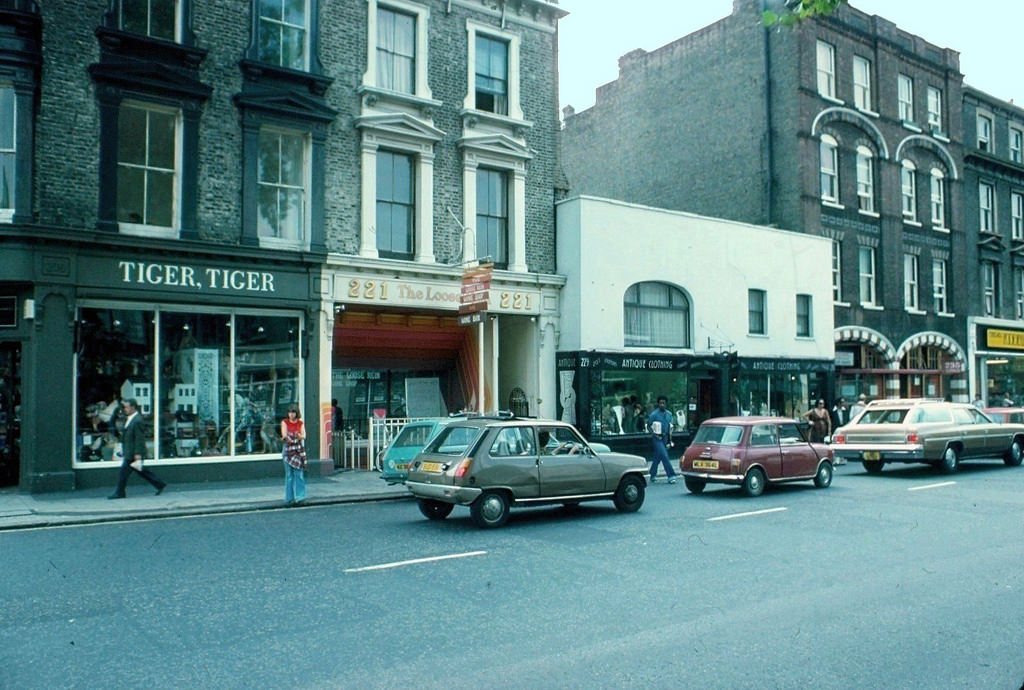
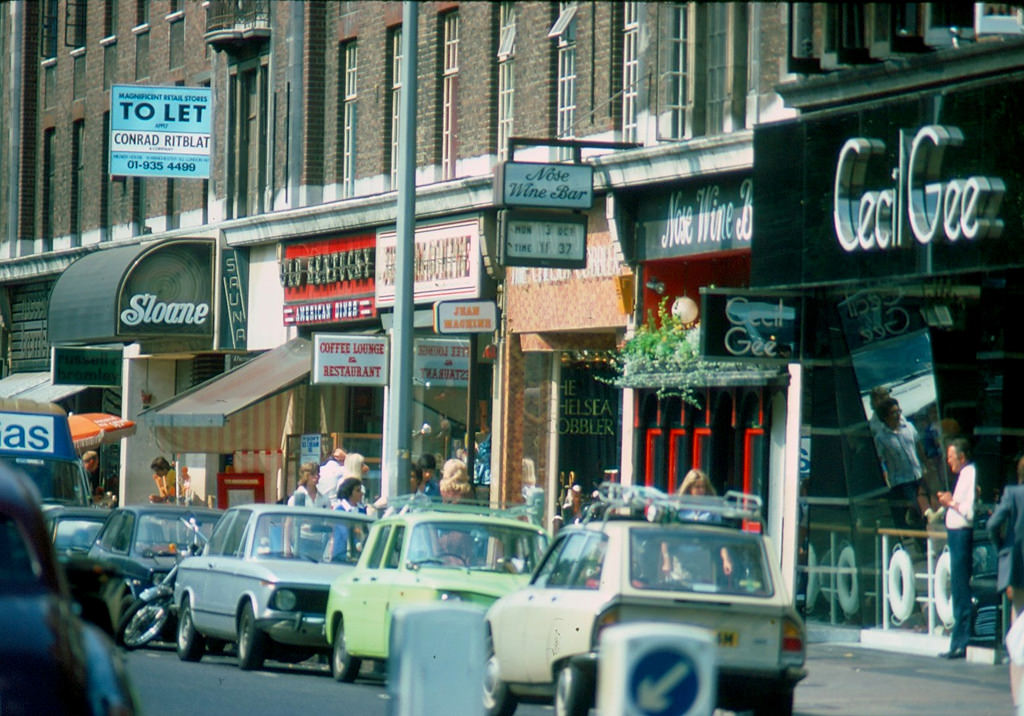
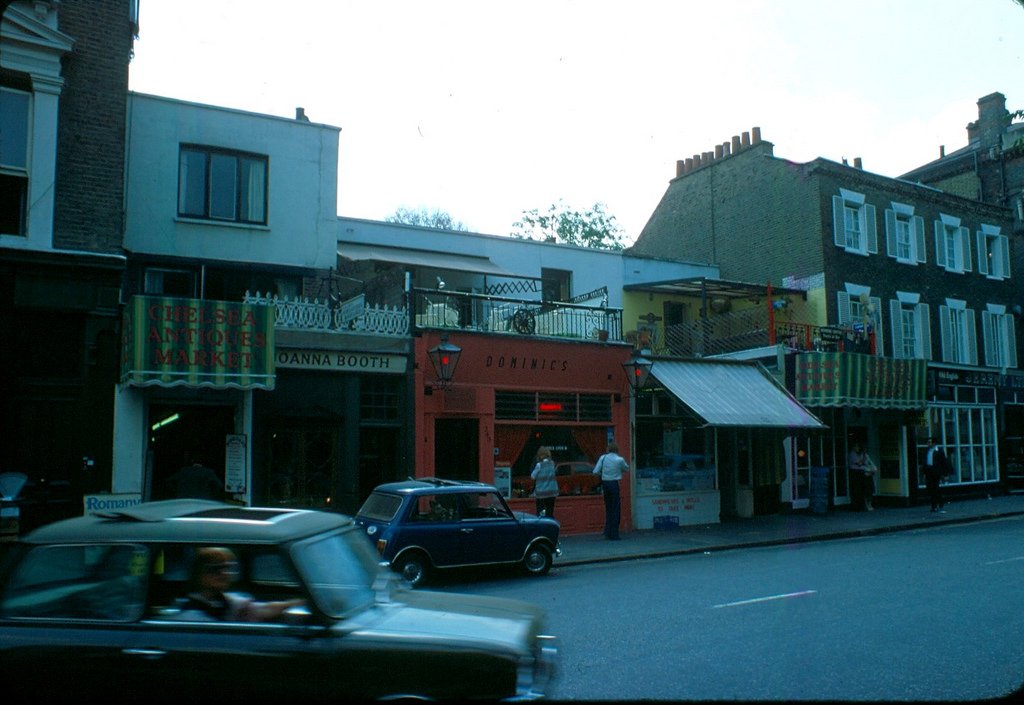
Kings Road in Chelsea was where London’s youth culture was most visible. Throughout the 1970s, it had been the epicenter of fashion and subcultural energy, and 1976 was no different. The street was packed with boutiques, record shops, and the kind of foot traffic that came with being the place to be seen. Punks, glam rockers, and everyday Londoners all shared the same pavement.
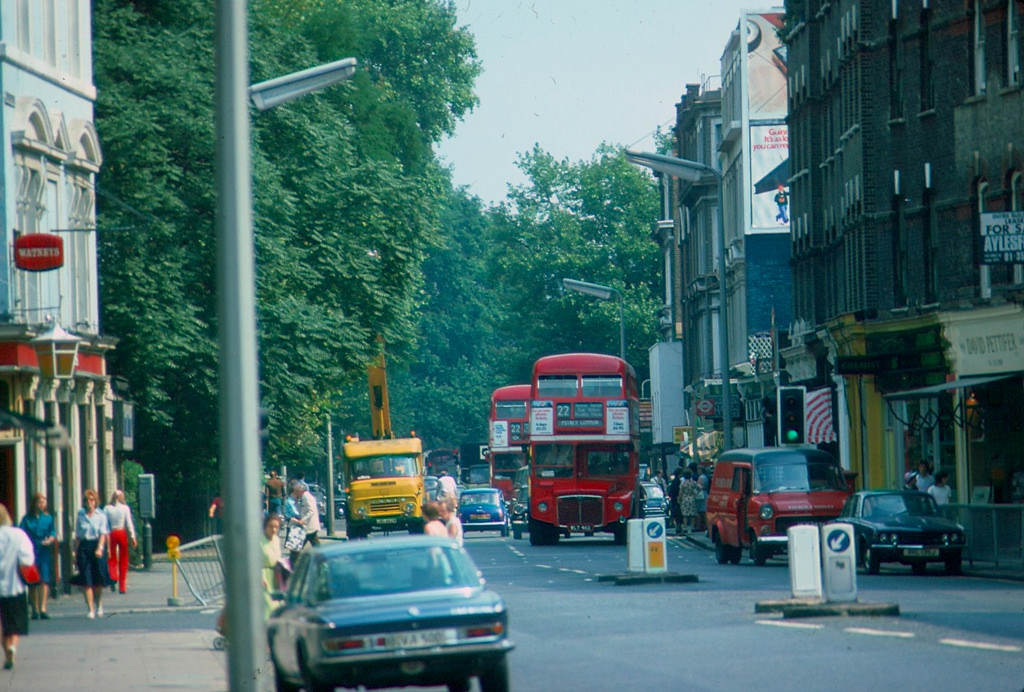
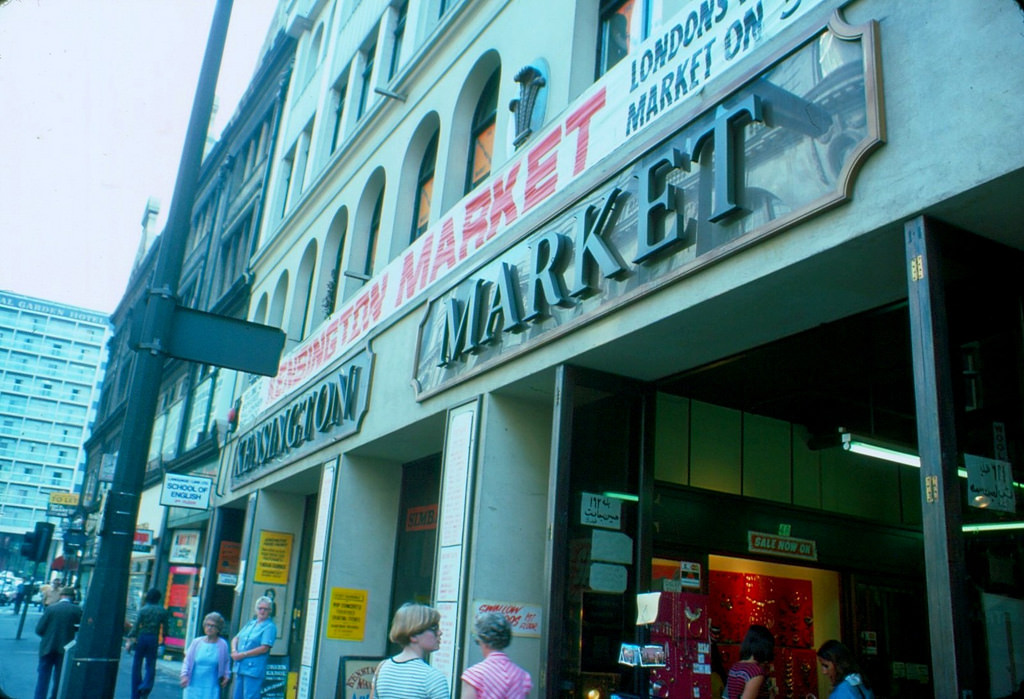
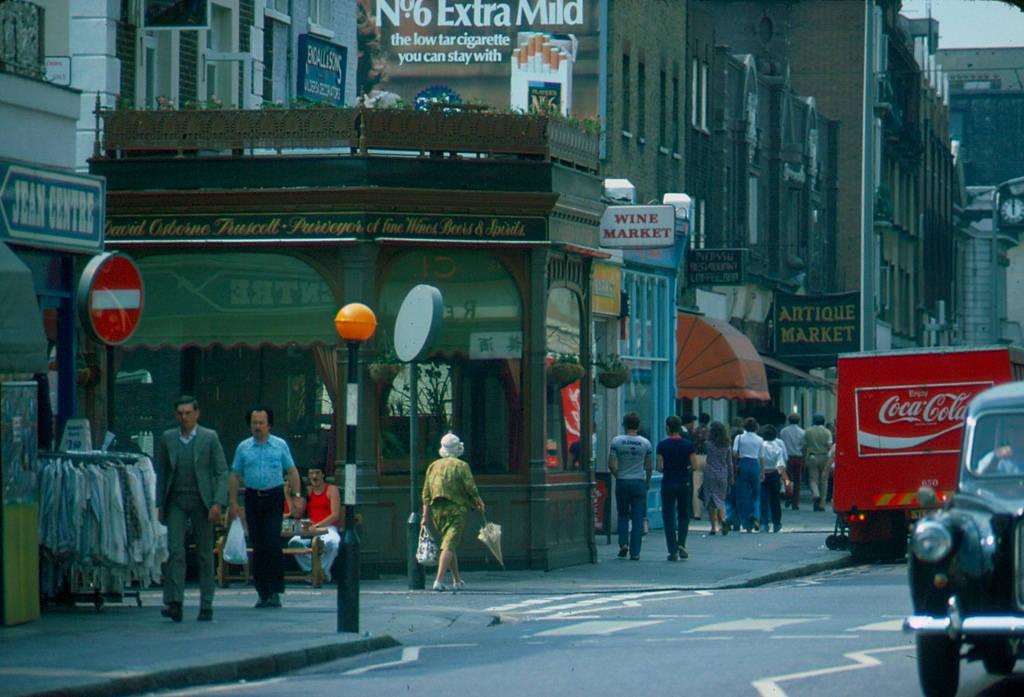
Kensington Market, just off Kensington High Street, was a covered indoor market that had been a hub for alternative fashion since the late 1960s. By 1976, it was stocked with second-hand clothing, leather jackets, band merchandise, and handmade jewellery. It was exactly the kind of place where a new subculture like punk could quietly take shape before anyone in the mainstream had even heard the word.
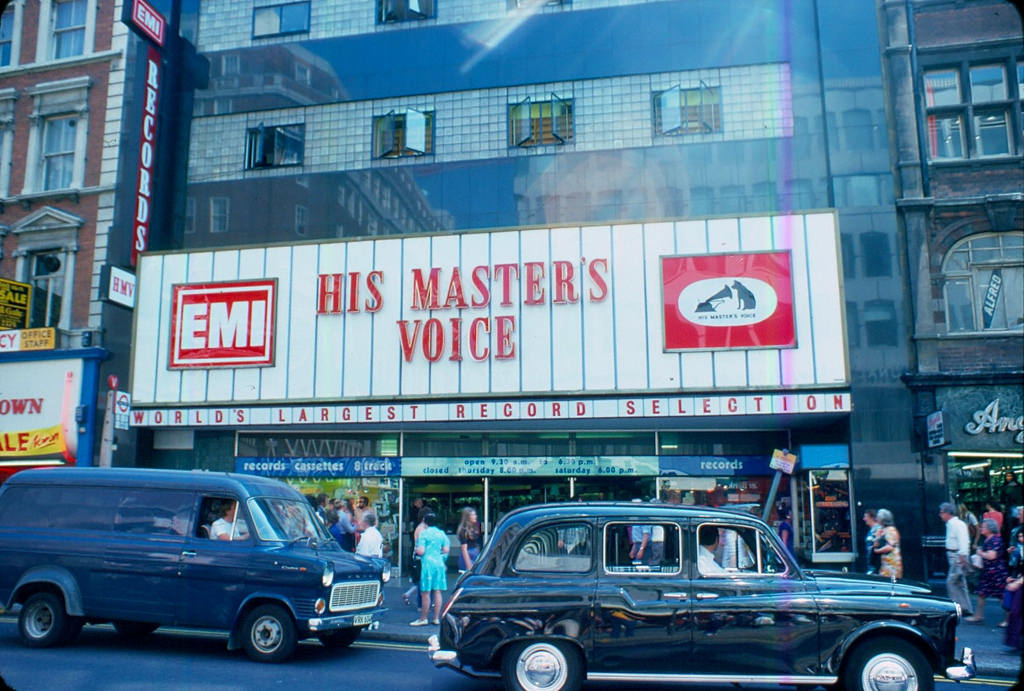
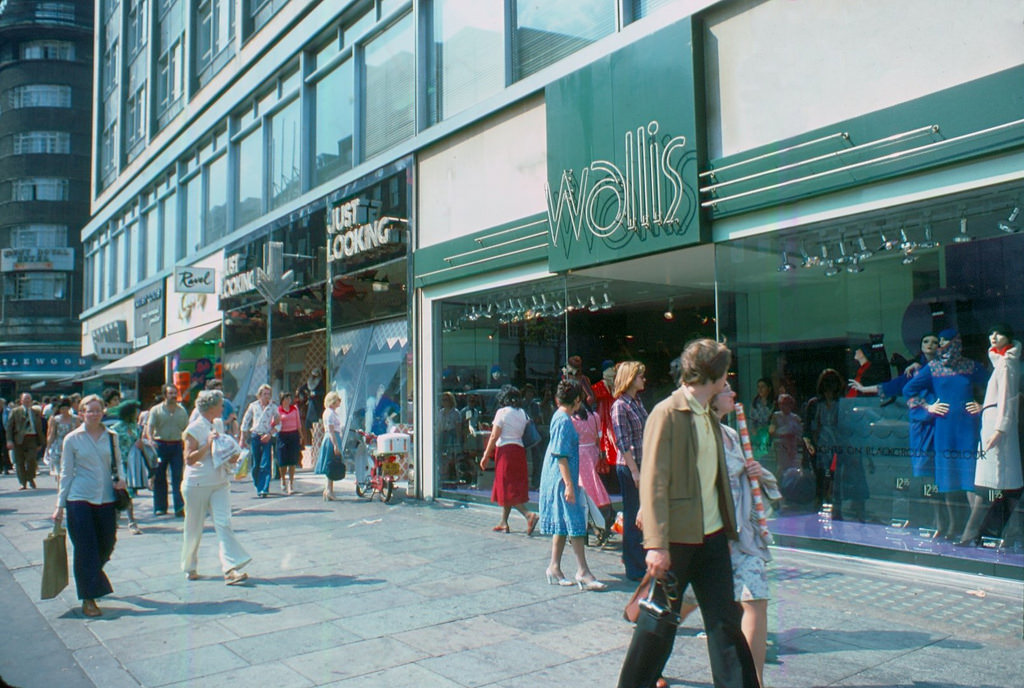
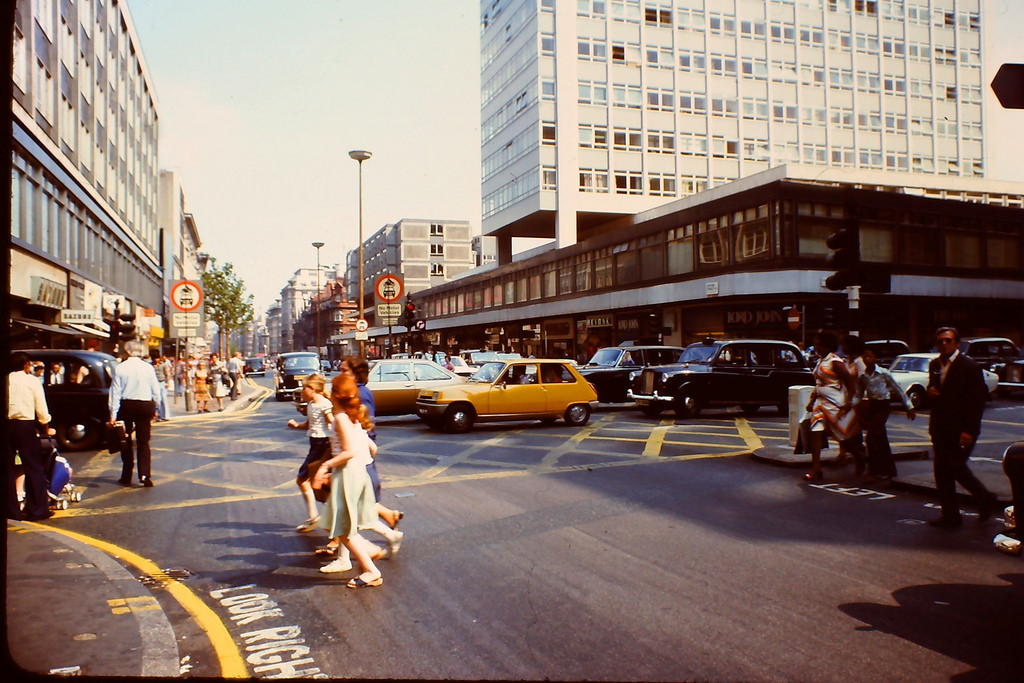
Oxford Street was the city’s main shopping artery, and HMV was one of its most recognizable landmarks. In 1976, the record industry was still booming, and shops like HMV were packed with albums from artists at the peak of their powers. That year, punk was about to upend everything — but for now, the charts were still dominated by disco, rock, and soul.
In September 1976, the 100 Club on Oxford Street hosted the first punk festival. Bands played to packed, sweaty crowds just a short walk from the department stores and tourist buses above ground. The festival helped drag punk out of the back rooms and rehearsal spaces and into public view. It was a turning point — punk was no longer a rumour.
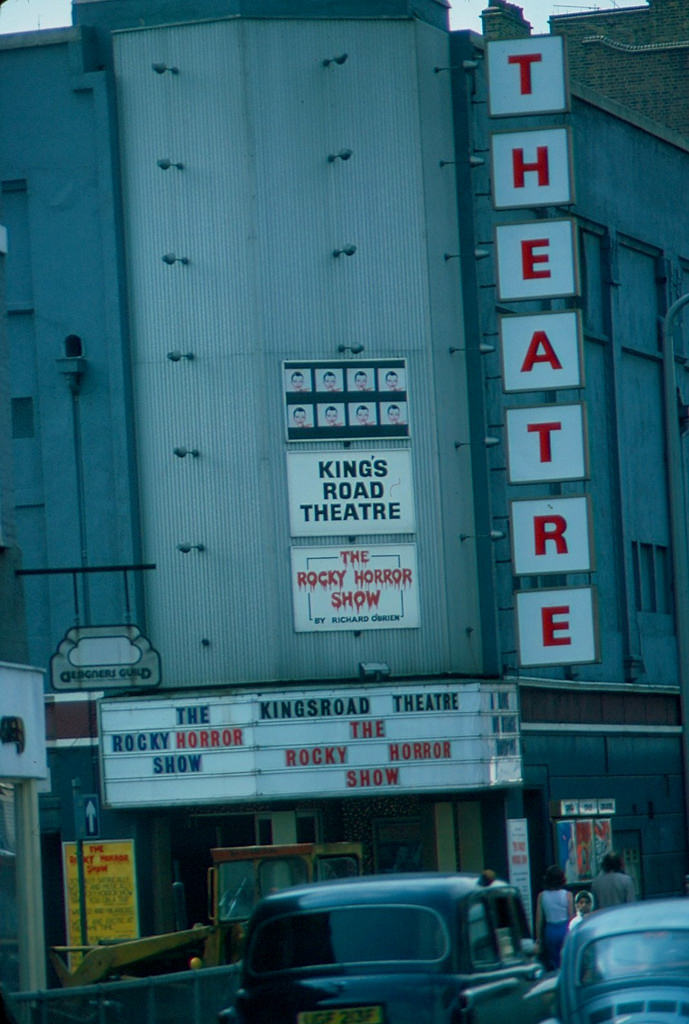
The Rocky Horror Show had been running at the Kings Road Theatre since 1973, and by 1976 it was a cult institution. The show’s provocative blend of horror, camp, and rock music attracted audiences who were already drawn to the unconventional. Kings Road itself was the perfect home for it — a street that had always rewarded the bold and the strange.
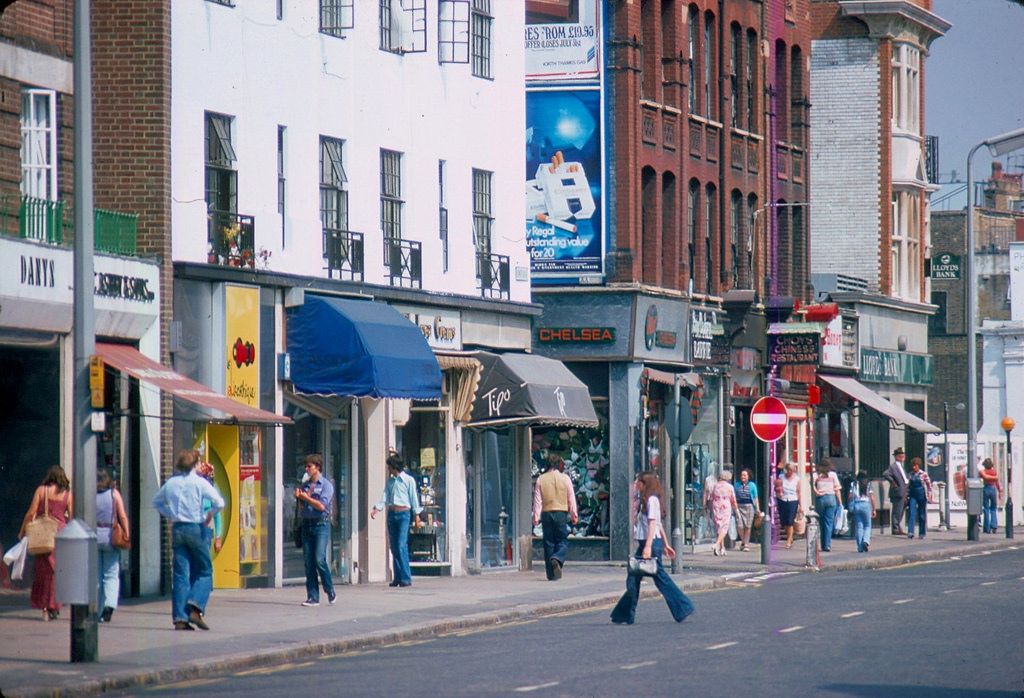
The Chelsea Drugstore on Kings Road had opened in 1968 and was modelled on a French pharmacie, combined with a record shop, bar, and café spread across multiple floors. By 1976, it was still a well-known meeting point on the street, even as the surrounding boutiques shifted to meet the tastes of a faster-moving generation.
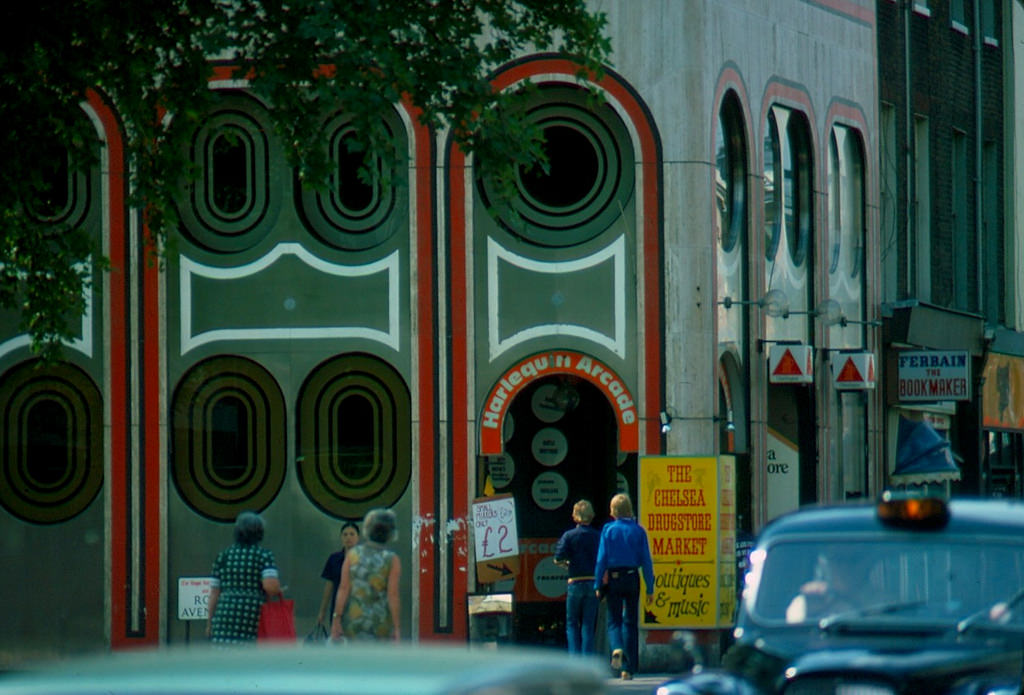
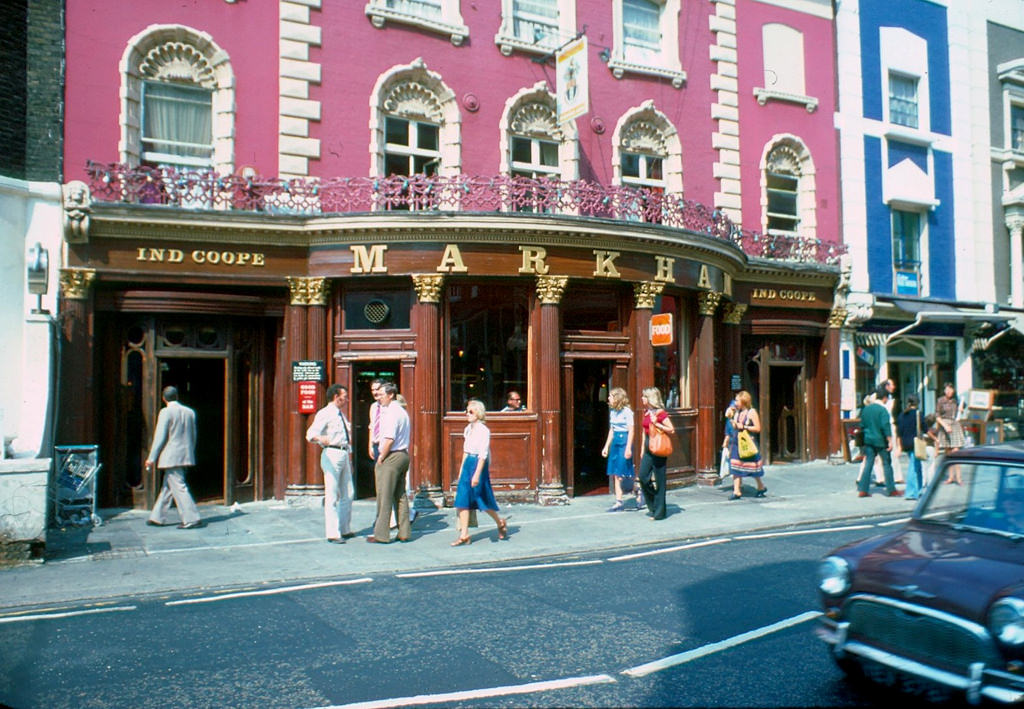
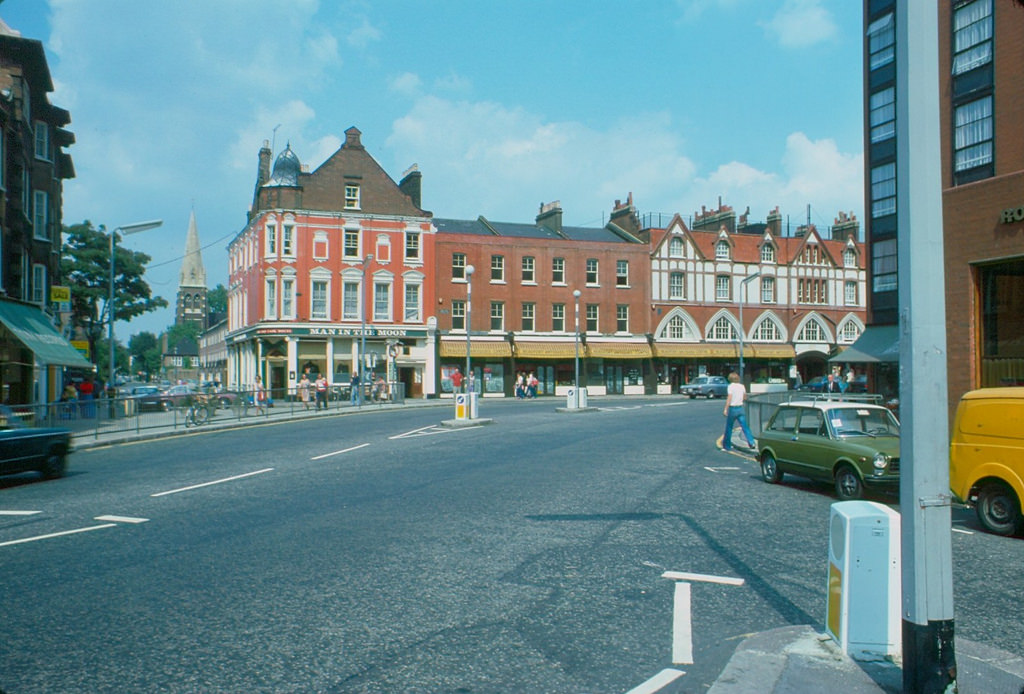
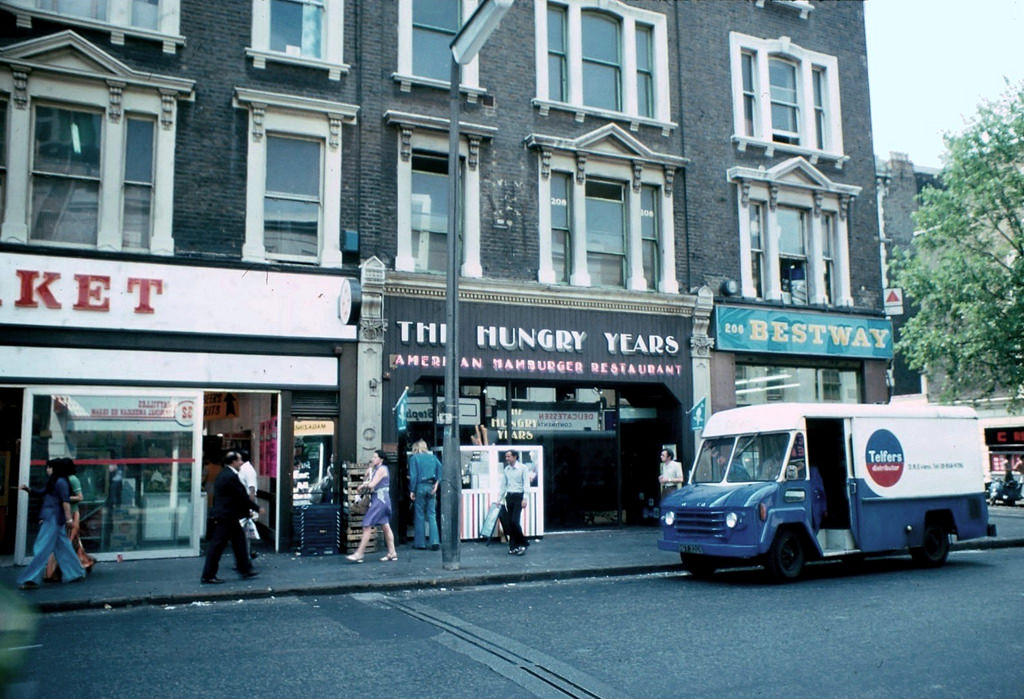
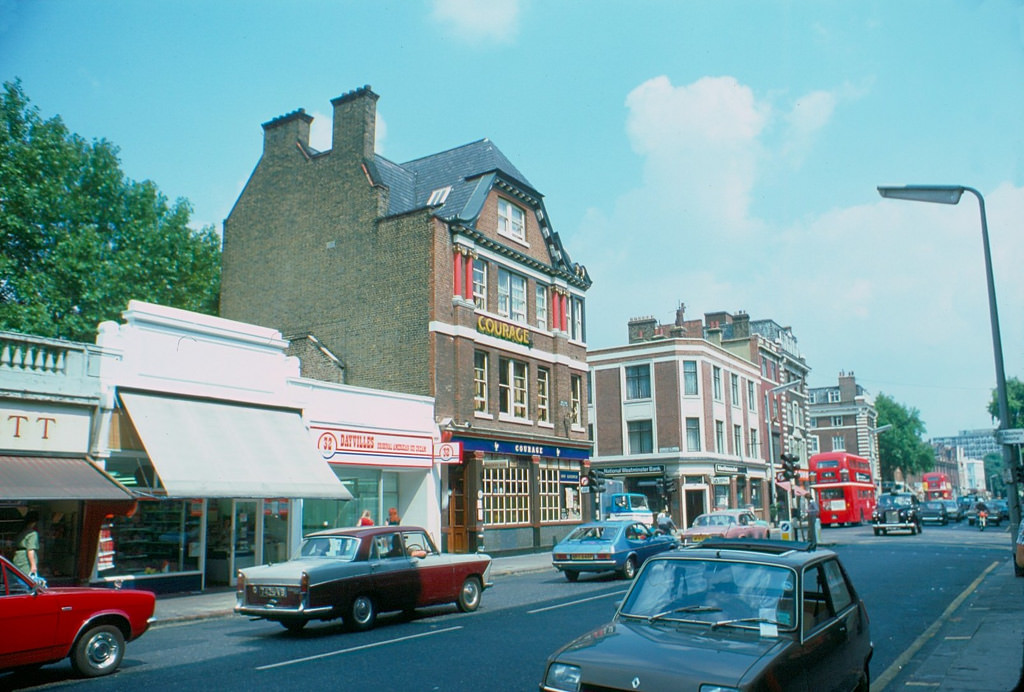
Earls Court Road carried the kind of energy that came with a dense, transient neighbourhood. The area was home to a large Australian expat community as well as long-term Londoners, and its cafés and pubs reflected that mix. Shops like the Hungry Years catered to people looking for something a little different from the standard high street.
Then, in December 1976, the Sex Pistols appeared on Bill Grundy’s early-evening television programme, Today. What followed became one of the most talked-about moments in British broadcasting history. The band swore repeatedly on live TV, and Grundy goaded them into it. The tabloids exploded the next morning. The word ‘punk’ appeared on front pages across the country, and the movement was suddenly impossible to ignore.
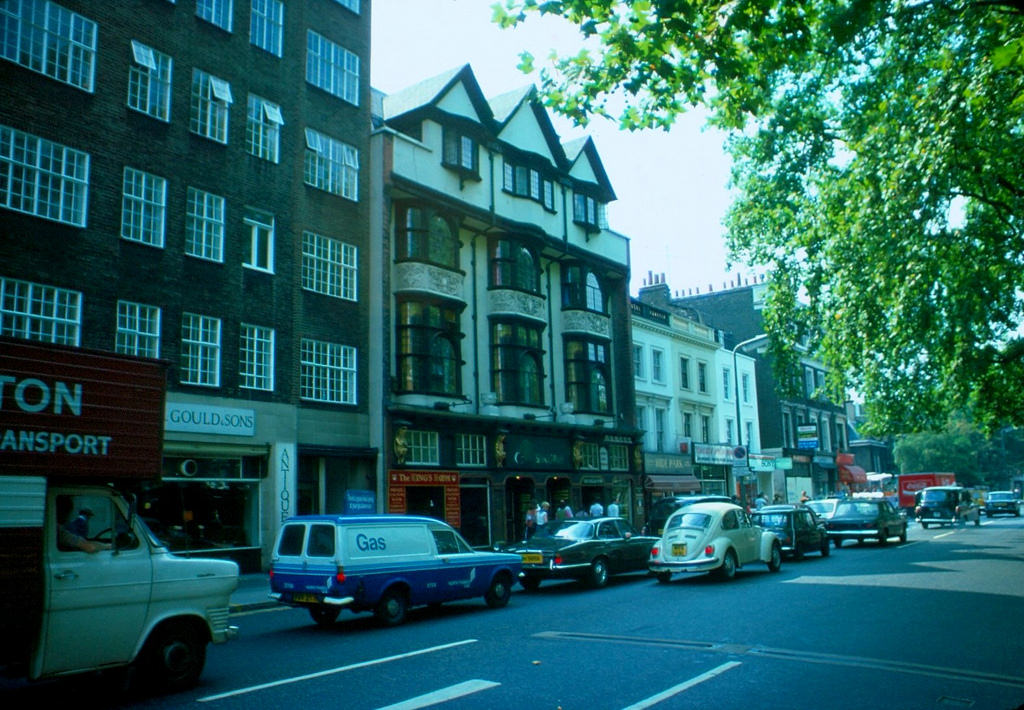
Gloucester Road Station served the District and Piccadilly lines and connected Chelsea and South Kensington to the rest of the city. Its Victorian-era facade sat alongside the standard rush of 1970s London street life — red buses, black cabs, and pedestrians moving quickly against the heat that had defined that long summer.
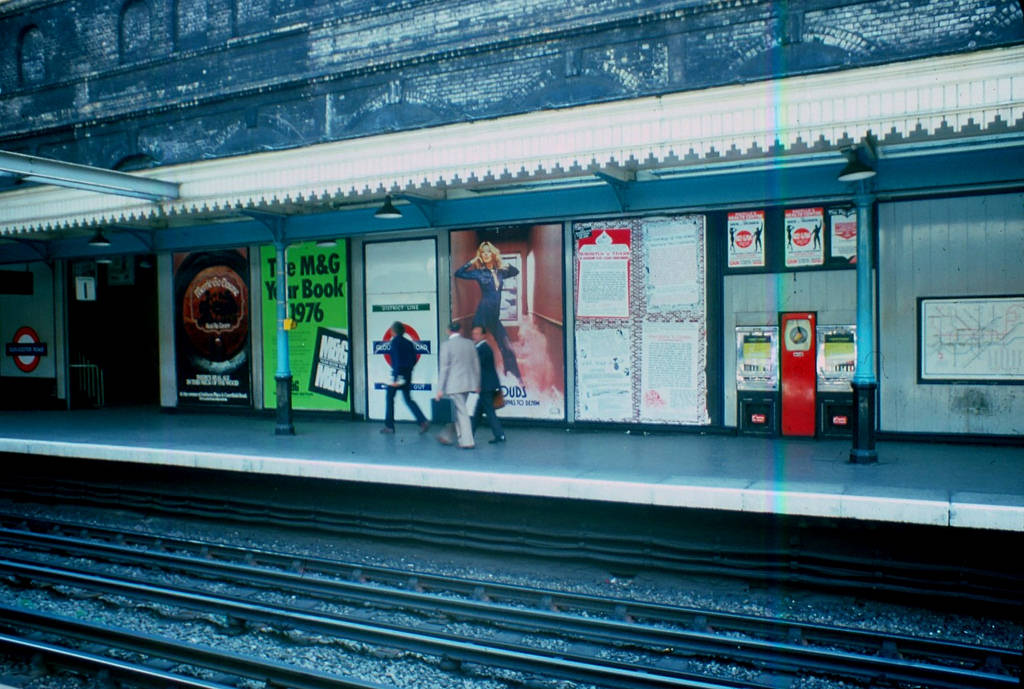
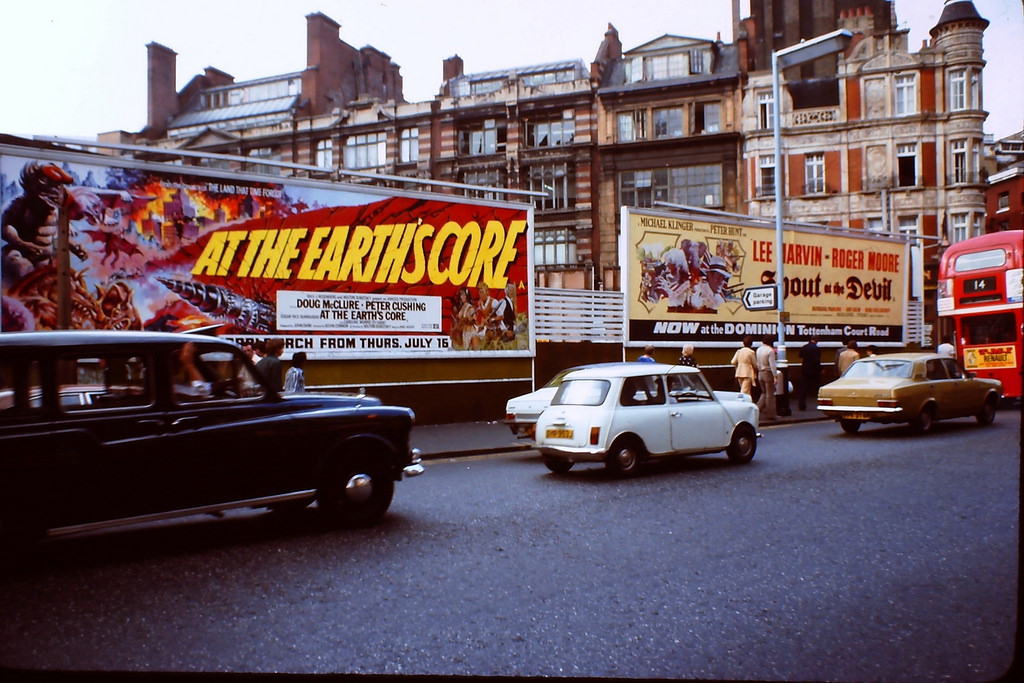
Soho in 1976 was a dense, layered neighbourhood. Its streets held film distributors, clip joints, record companies, restaurants, and market stalls side by side. The movie walls that plastered some of Soho’s buildings advertised a wide range of films — from mainstream Hollywood releases to foreign-language art house pictures.
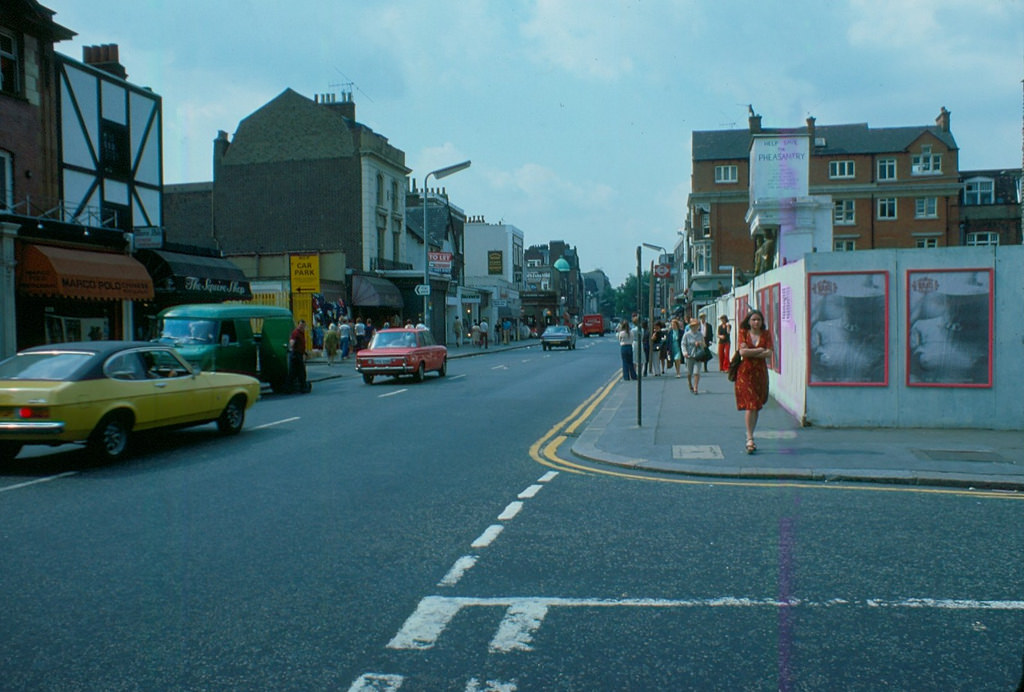
Leicester Square’s Warner West End cinema was one of the premiere venues for big film releases in London. In 1976, major films were still events — audiences queued around the block to see new titles on their opening weekends. The square itself was a constant hub of activity, with tourists mixing with Londoners who came for the cinemas, restaurants, and street performers.
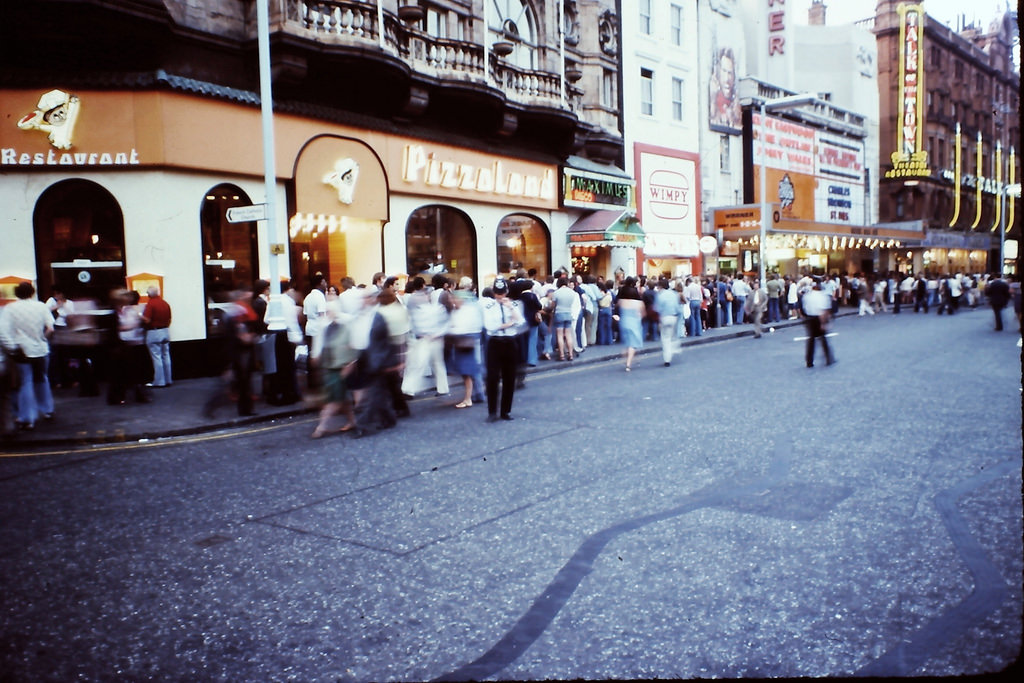
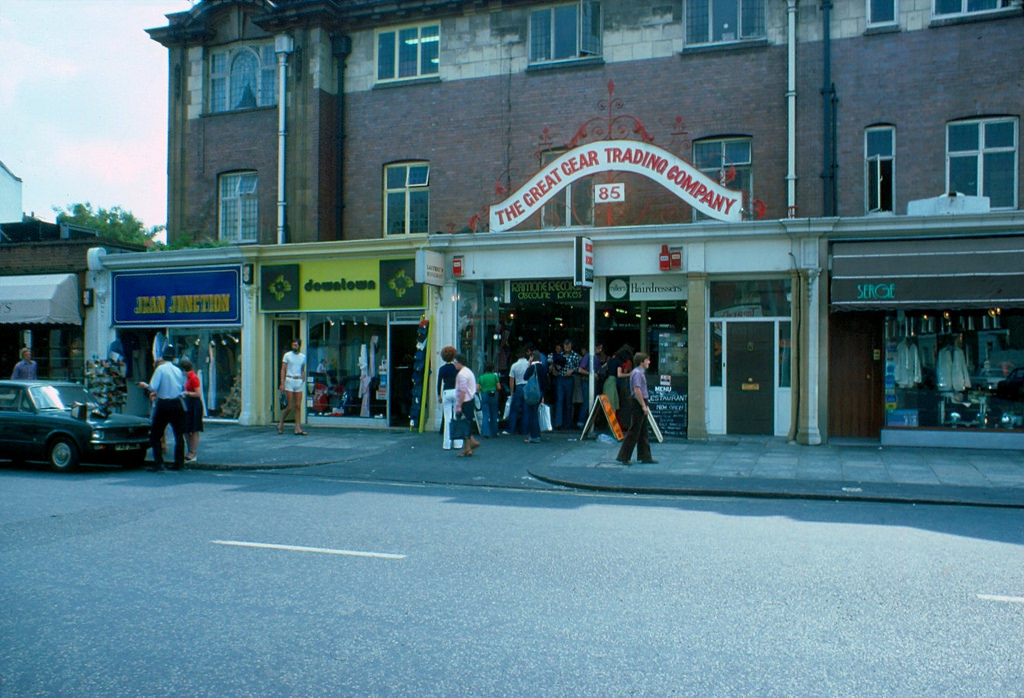
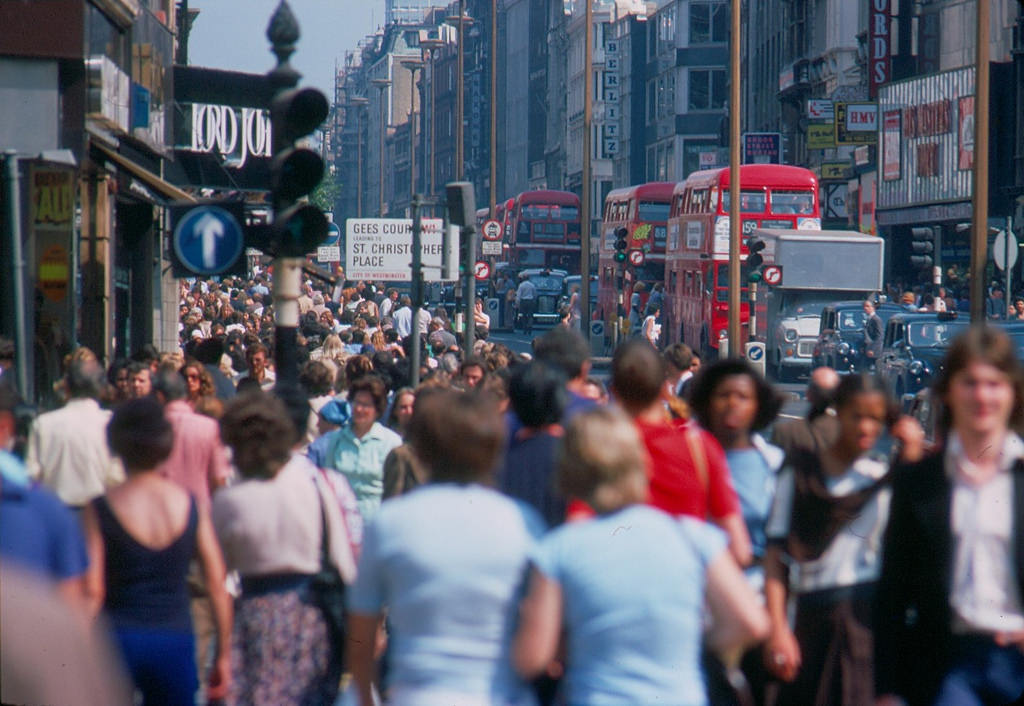
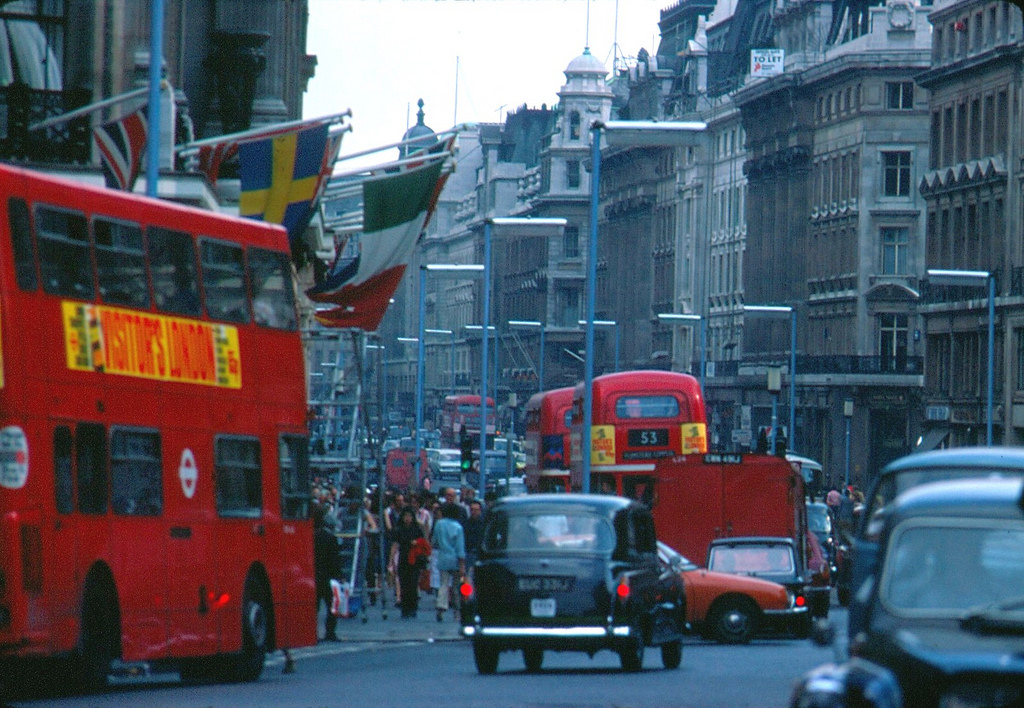
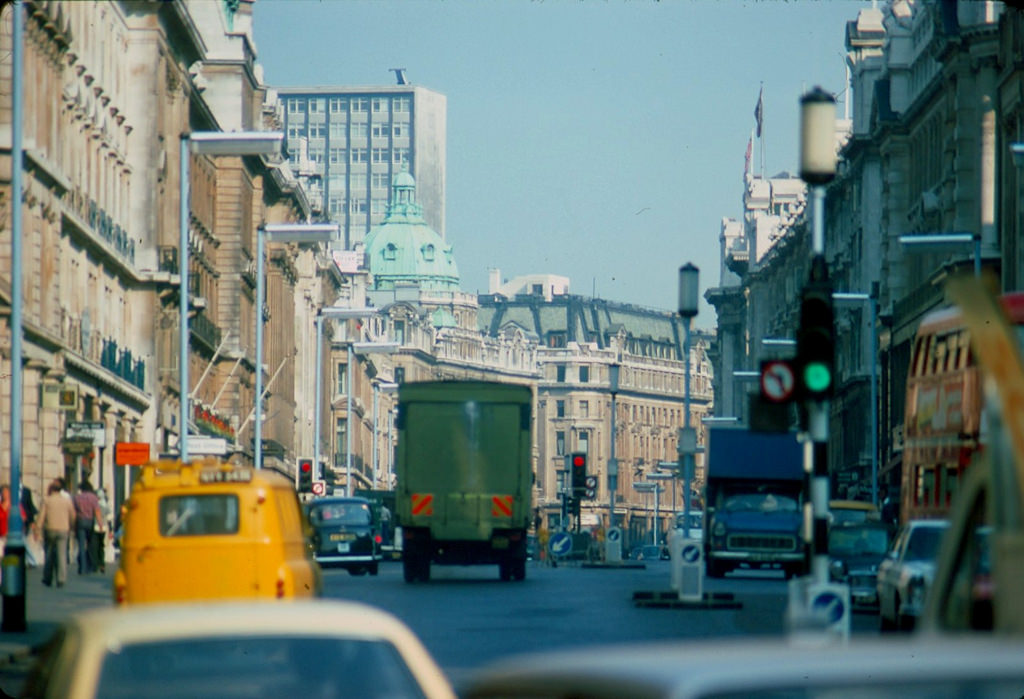
Regent Street’s wide, curving layout made it one of the most photographed streets in London. The buildings lining it were grand and uniform, designed in the early 19th century by John Nash. By 1976, those same buildings housed department stores, airline offices, and luxury goods retailers. Double-decker buses ran the full length of the street, and the pavements were rarely quiet.
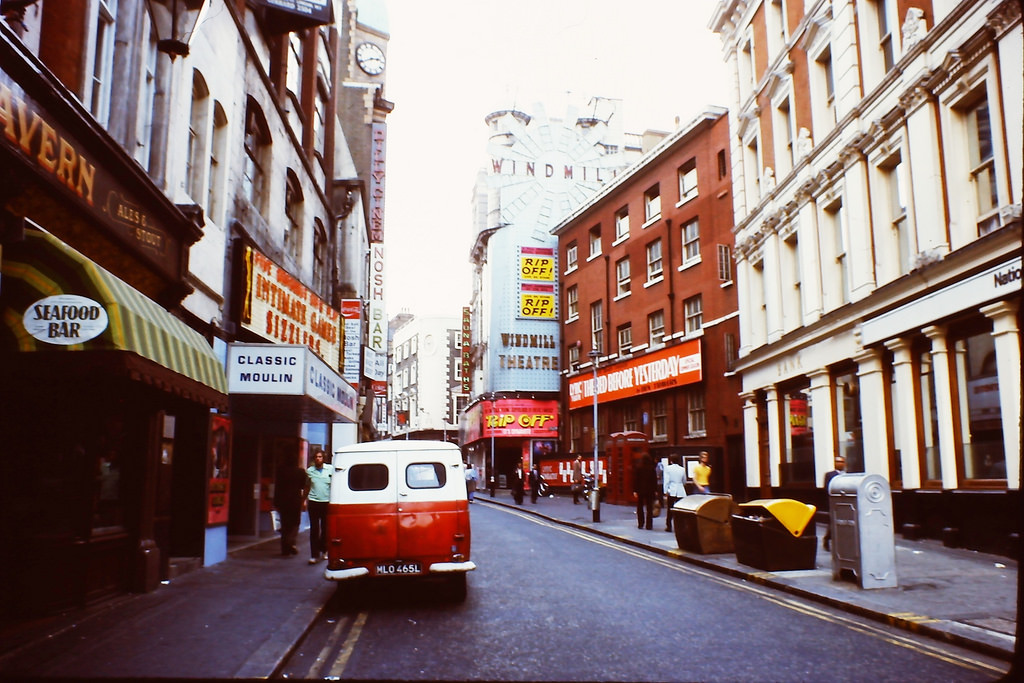
Great Windmill Street in Soho ran just off Shaftesbury Avenue and was known for the Windmill Theatre, which had famously remained open throughout the Blitz. By 1976, the area around it was part of Soho’s entertainment district, a mix of theatres, cinemas, and the kind of establishments that gave the neighbourhood its complicated reputation.
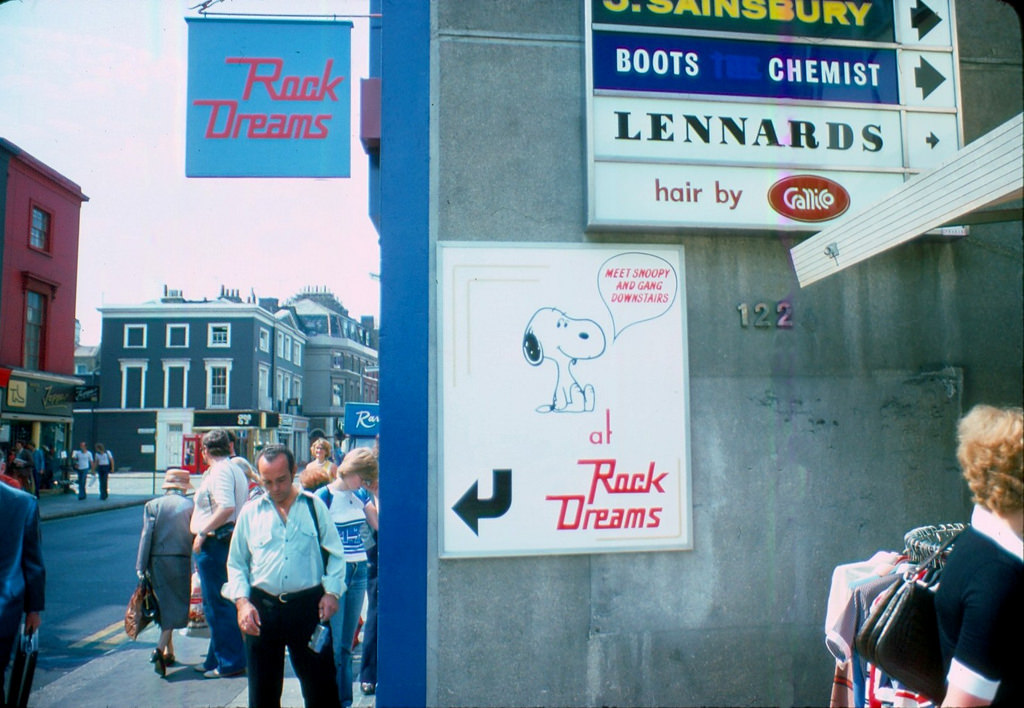
Rock Dreams was a poster and memorabilia shop on Kings Road that sold images of rock stars and bands. In 1976, it was exactly the kind of shop that thrived on that street — catering to music fans who wanted a piece of the culture they were living through. The walls inside were covered floor to ceiling with faces that defined the era.
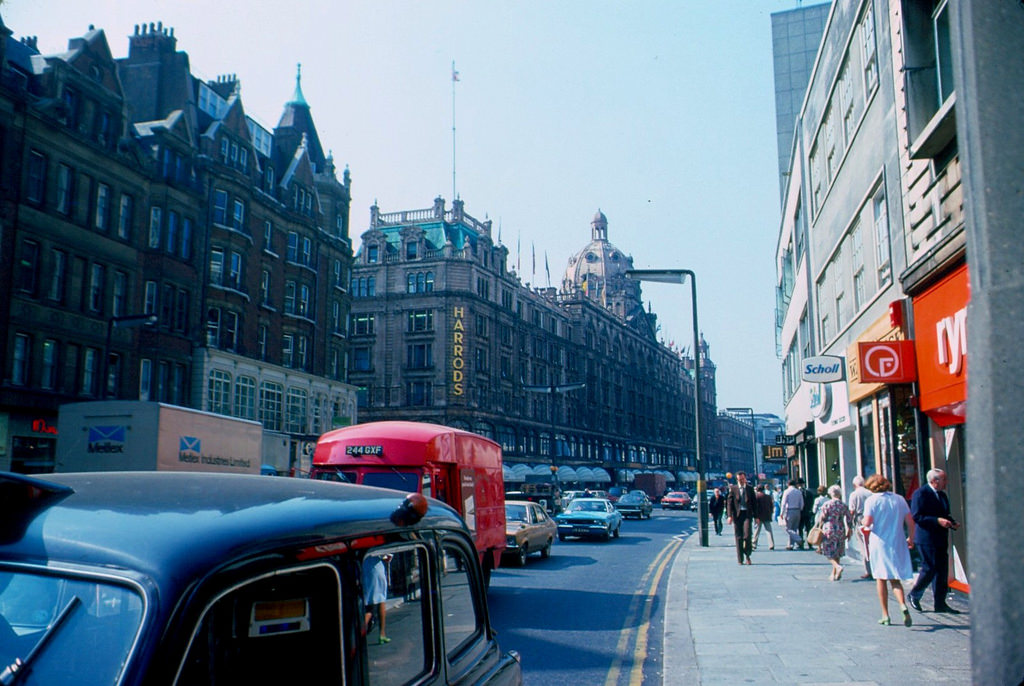
Knightsbridge in 1976 was already one of London’s wealthiest districts. Harrods dominated one end, and the streets around it were lined with high-end boutiques and hotels. Even against the backdrop of Britain’s economic difficulties that year, Knightsbridge maintained its air of expensive calm — a different world from the punk clubs and market stalls just a few miles away.
Berwick Street Market in Soho had been selling fruit, vegetables, and household goods since the early 20th century. By 1976, it was also surrounded by record shops that had become essential stops for serious music buyers in London. The street combined the ordinary rhythms of a working market with the specific energy of a neighbourhood that was always generating something new.