Hey There! Before You Go. 😧
Get the best vintage content straight into your inbox!

Don't worry, we don't spam

Knights of the Sky, Cages of Death: The Brutal Evolution of WWI Air Combat

When the Great War began in 1914, the airplane was barely taken seriously. Built from wood, wire, and canvas, these machines could be grounded by a strong wind. Military generals saw them as novelties at best. In four years, that view was completely shattered. By 1918, aircraft were hunting each other in the sky, bombing cities, strafing trenches, and defining a terrifying new dimension of warfare.
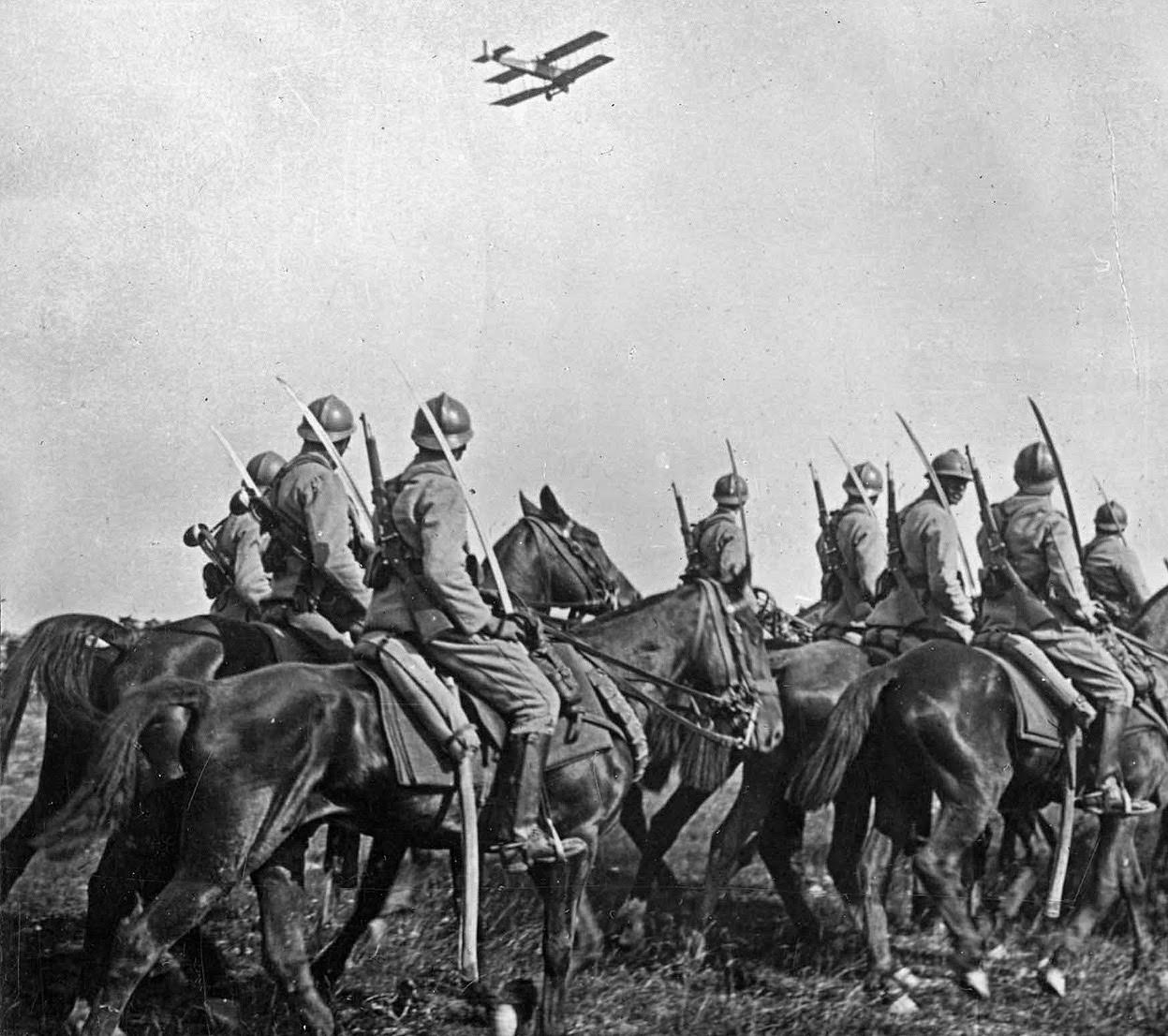
French Cavalry observe an Army airplane fly past.

The airplane’s first real military job was reconnaissance. From high above the trenches, a pilot could map enemy positions, spot hidden artillery batteries, and track troop movements in ways a cavalry scout on horseback never could. Generals quickly understood the value of having eyes in the sky, and reconnaissance missions became standard from the opening months of the war.
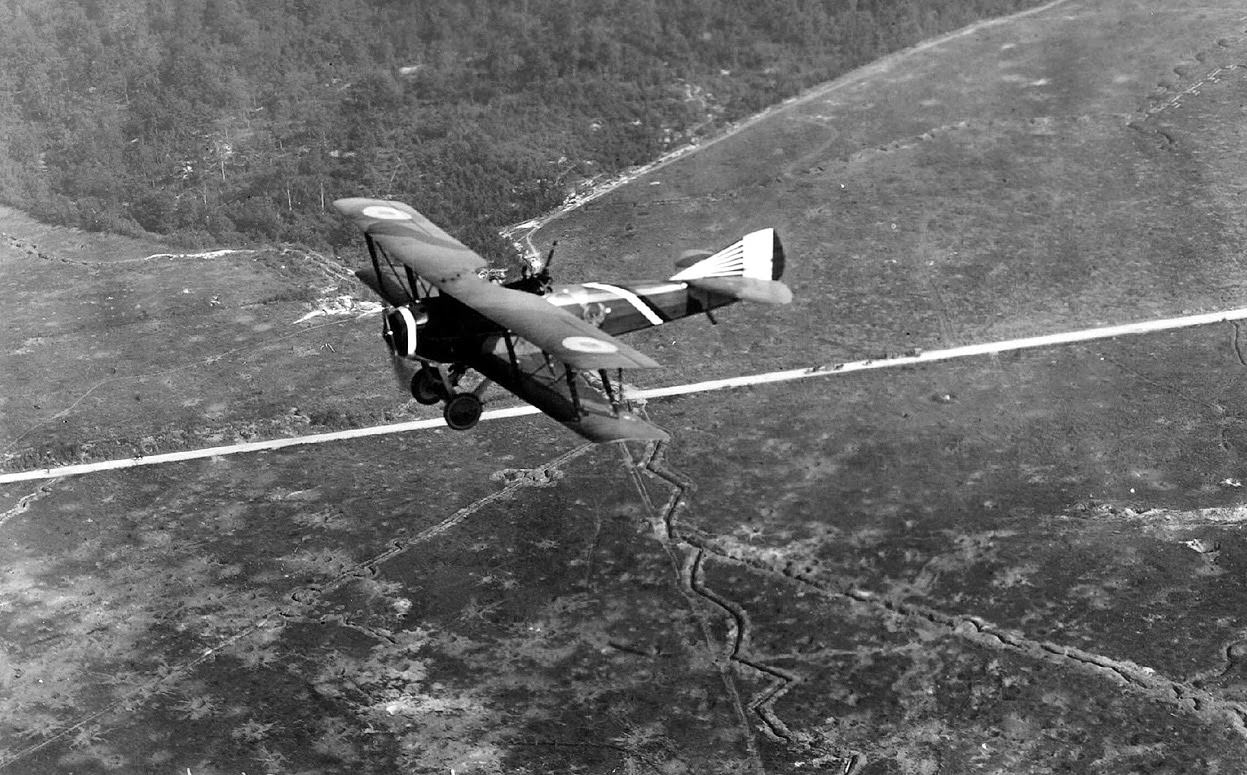
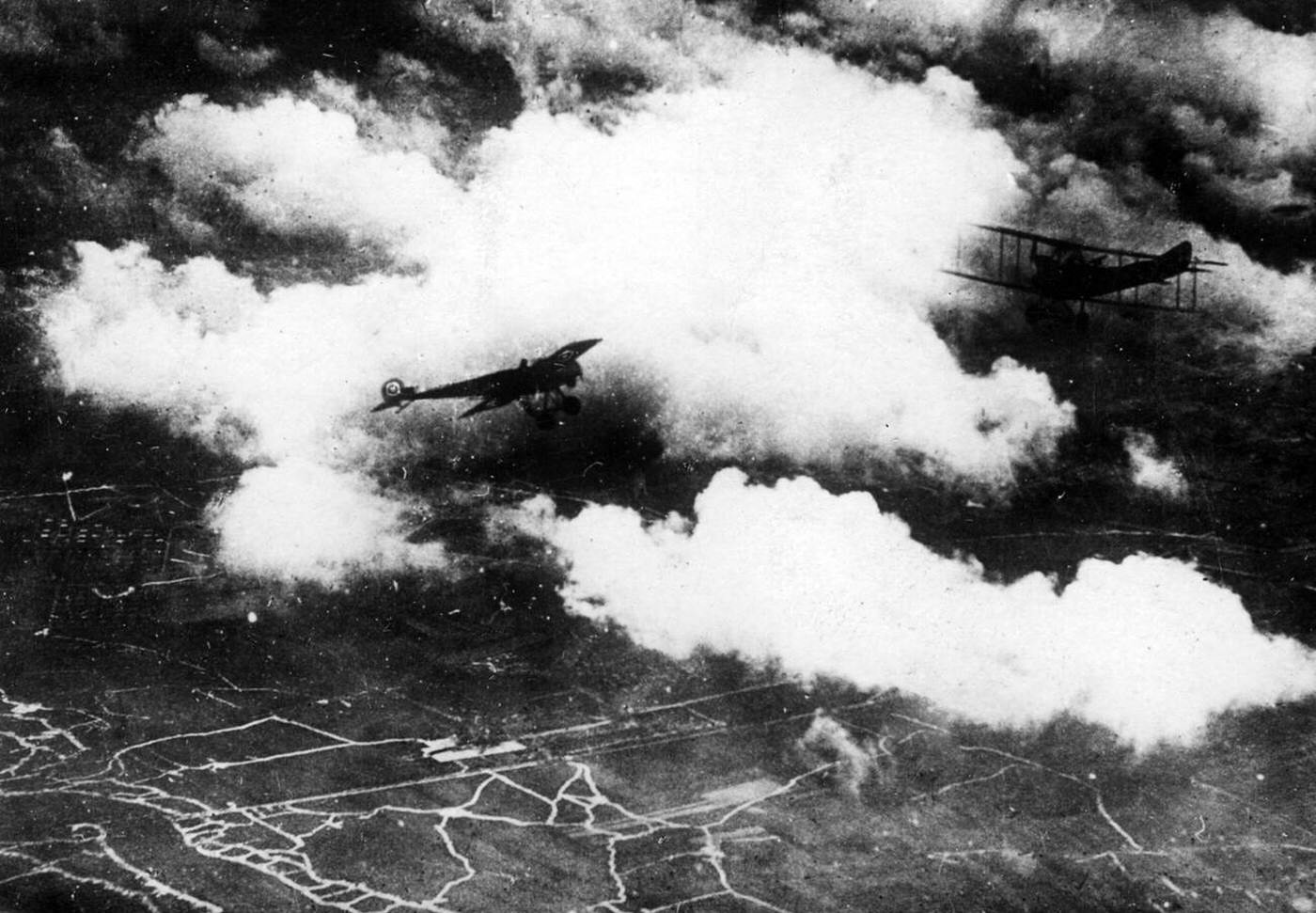
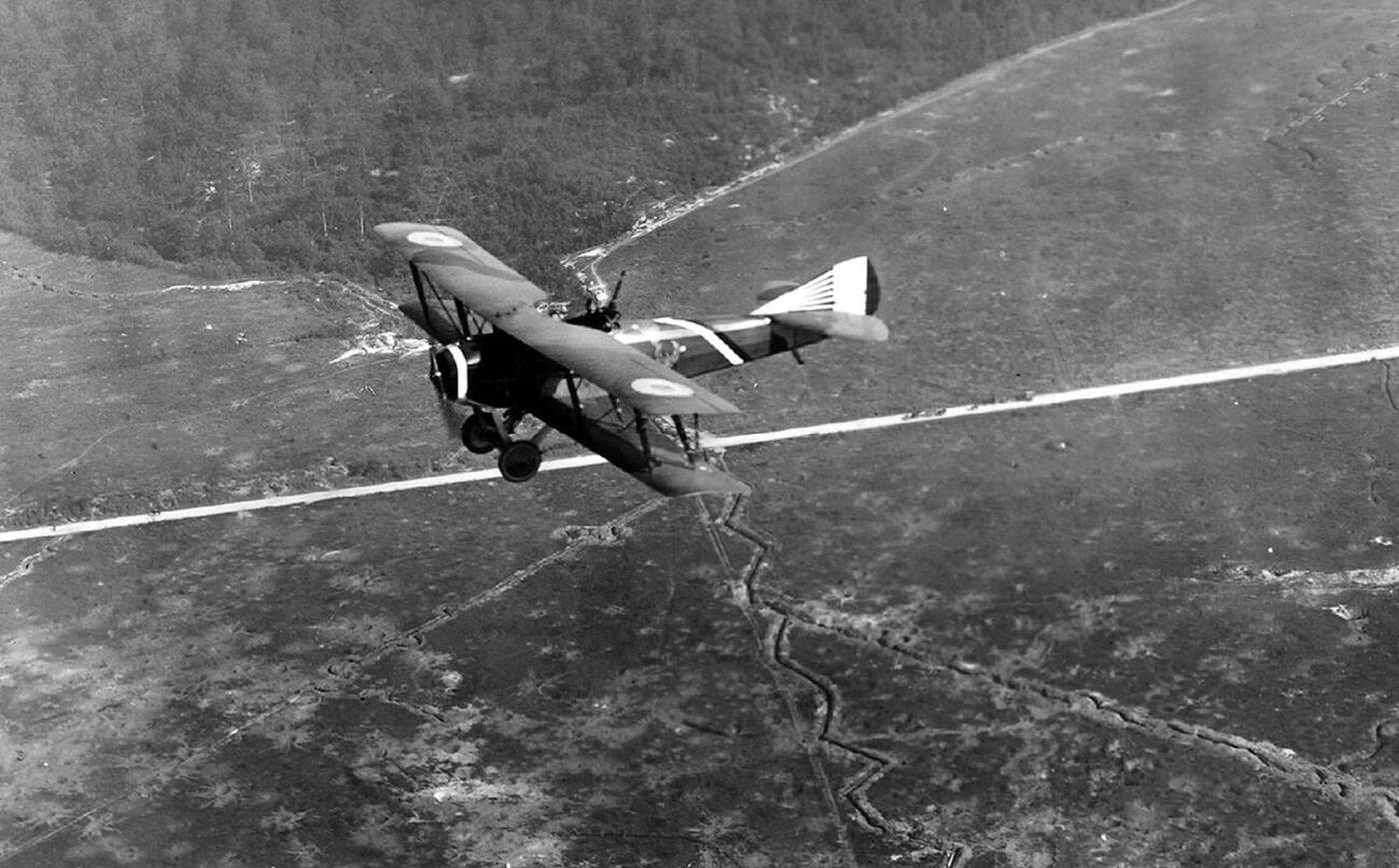
A French SPAD S.XVI two-seat biplane reconnaissance aircraft flying over Compeign Sector, France, with zig-zag patterns of defensive trenches in the fields below, 1918.

When pilots from opposing sides encountered each other on these early missions, the meetings were oddly civil. They would wave or salute, sharing an unspoken bond as members of a tiny, exclusive fraternity of aviators. That gentlemanly phase ended fast. Pilots began carrying pistols and rifles, taking wild shots at each other mid-flight. Some hurled bricks, heavy wrenches, and ropes in desperate attempts to foul an enemy’s propeller. The hand grenade became the first real aerial weapon, clumsy and just as dangerous to the thrower.
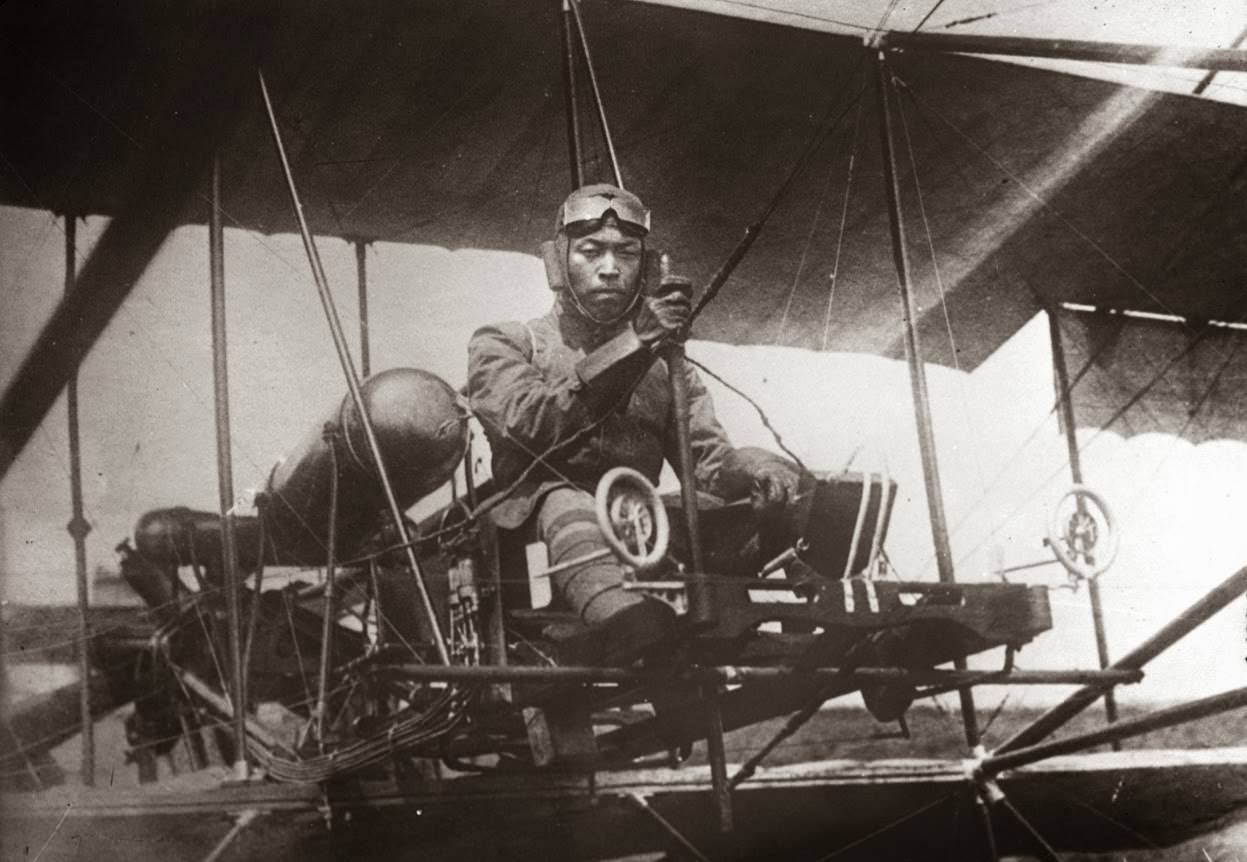
Japanese aviator, 1914.

Everyone understood that the machine gun was the key to aerial dominance. The problem was fundamental: mount a gun on the nose of the plane and you shoot your own spinning propeller apart. Early workarounds included “pusher” aircraft, designed with the engine and propeller at the rear so a gunner in the front had a clear field of fire. Others placed a second crewman behind the pilot to operate a swiveling gun.
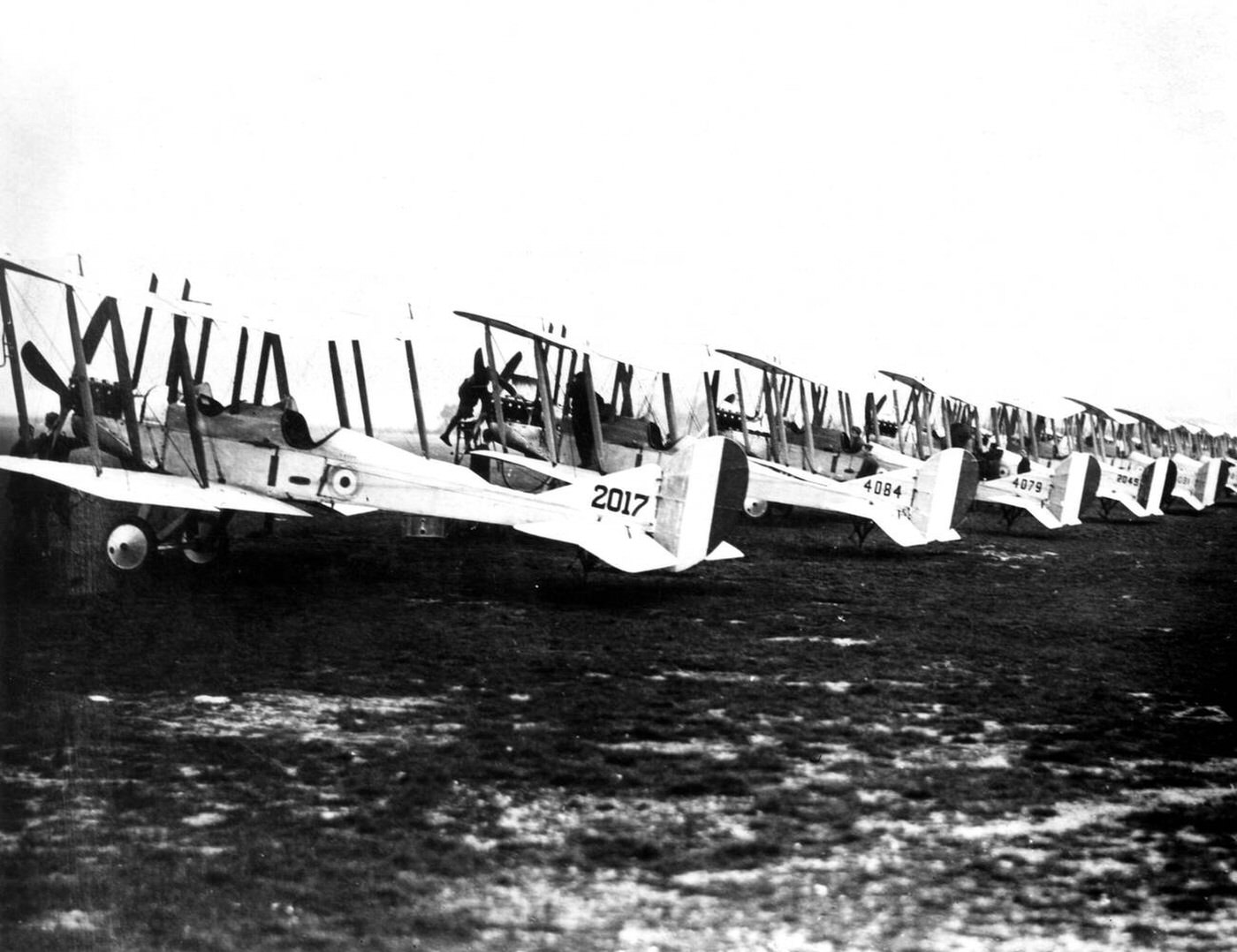
A line of BE2c planes of No.13 squadron at Gosport, Hampshire, England, waiting to take off for duty in France, 1915.

French pilot Roland Garros devised a crude but effective solution in 1915: he bolted steel deflector plates onto the back of his propeller blades. Bullets that struck the blades would be deflected away rather than shattering them. He could now aim his entire aircraft at a target and fire straight ahead. Garros became the world’s first fighter ace using this system. It worked, but the stress it placed on the engine and airframe made it genuinely dangerous to operate.
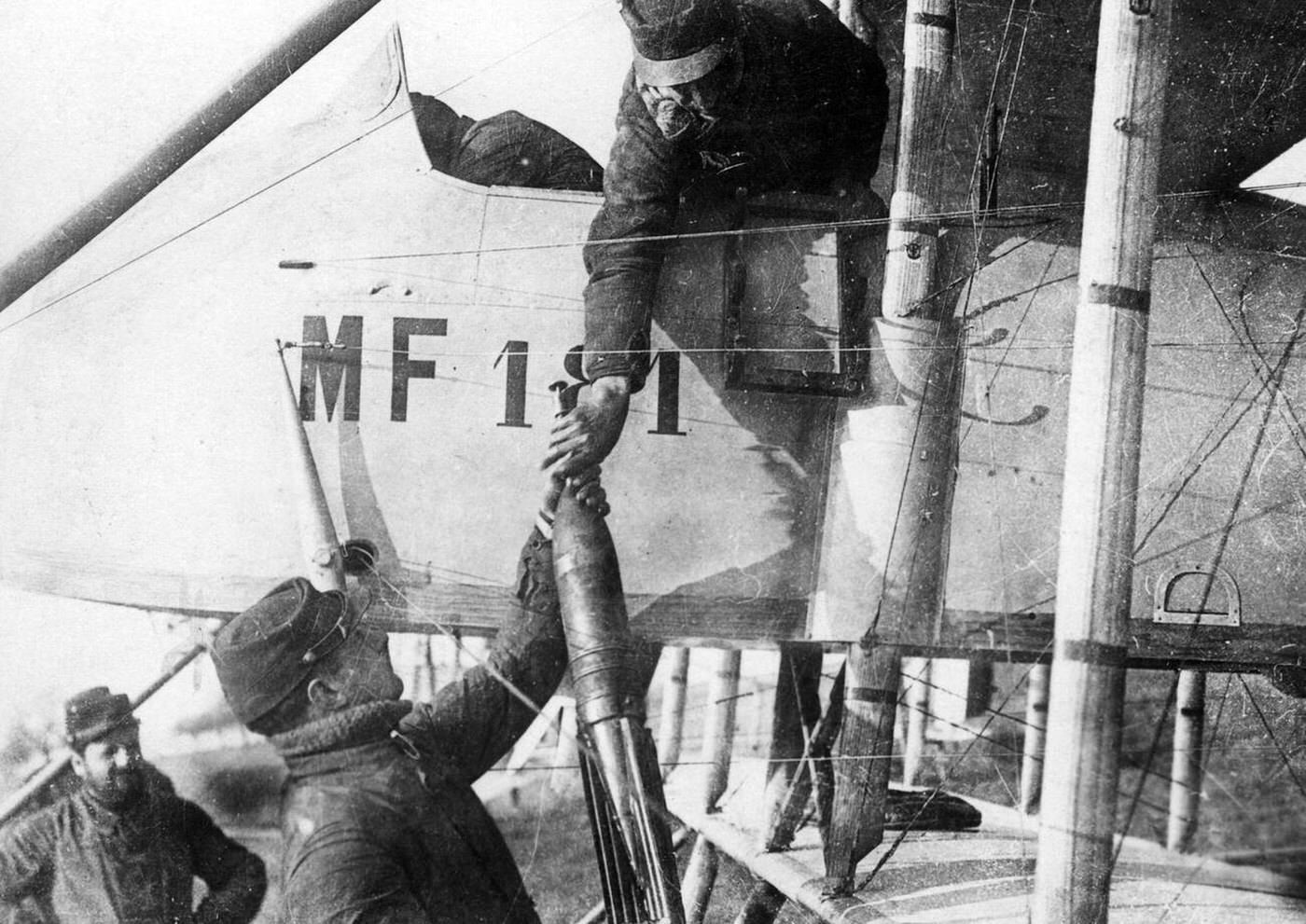
French air force in World War I, 1915.

The Germans answered with something far more sophisticated. Dutch engineer Anthony Fokker, working for Germany, perfected the synchronization gear — a mechanical device that linked the machine gun directly to the engine’s rotation, timing each bullet to fire precisely between the spinning blades. A pilot could now point his plane at an enemy and pour fire straight ahead without destroying his own aircraft. Fitted to the Fokker Eindecker, this invention unleashed catastrophe on Allied airmen.
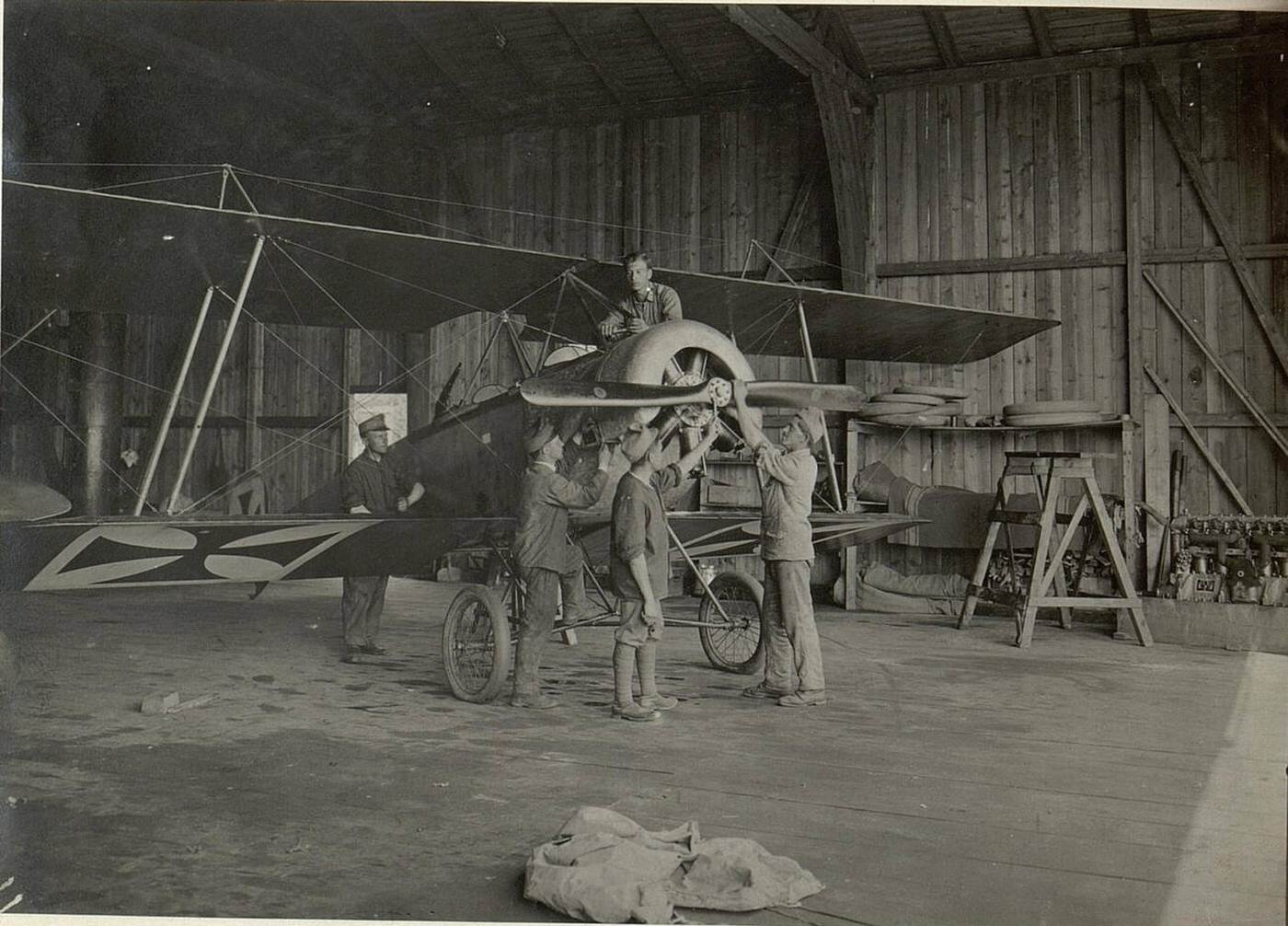
Installing the propeller on a FOKKER biplane in Villach, 1916.

Through late 1915, the period known as the “Fokker Scourge” saw German pilots systematically destroy Allied reconnaissance planes. Allied aircrews flew into the sky knowing the odds were stacked heavily against them. The era of casual aerial encounters was gone. The dedicated fighter plane — built specifically to hunt and kill — had arrived.
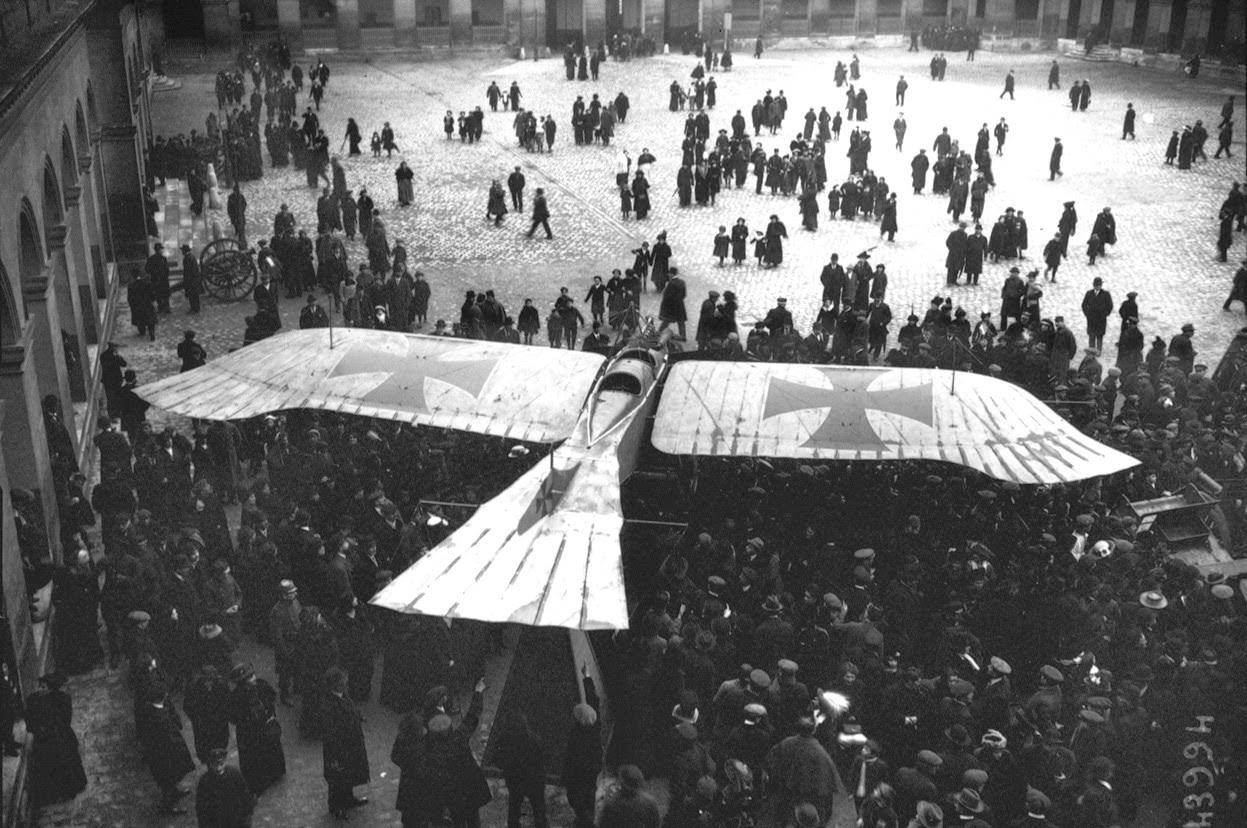
A captured German Taube monoplane on display in the courtyard of Les Invalides in Paris, 1915.

The Allies worked fast. A crashed Fokker was captured, its synchronization gear reverse-engineered, and by 1916 both sides fielded effective fighter planes. The British Sopwith Pup and the French Nieuport 17 gave Allied pilots the tools to fight back. The sky above the Western Front became a three-dimensional dueling ground.
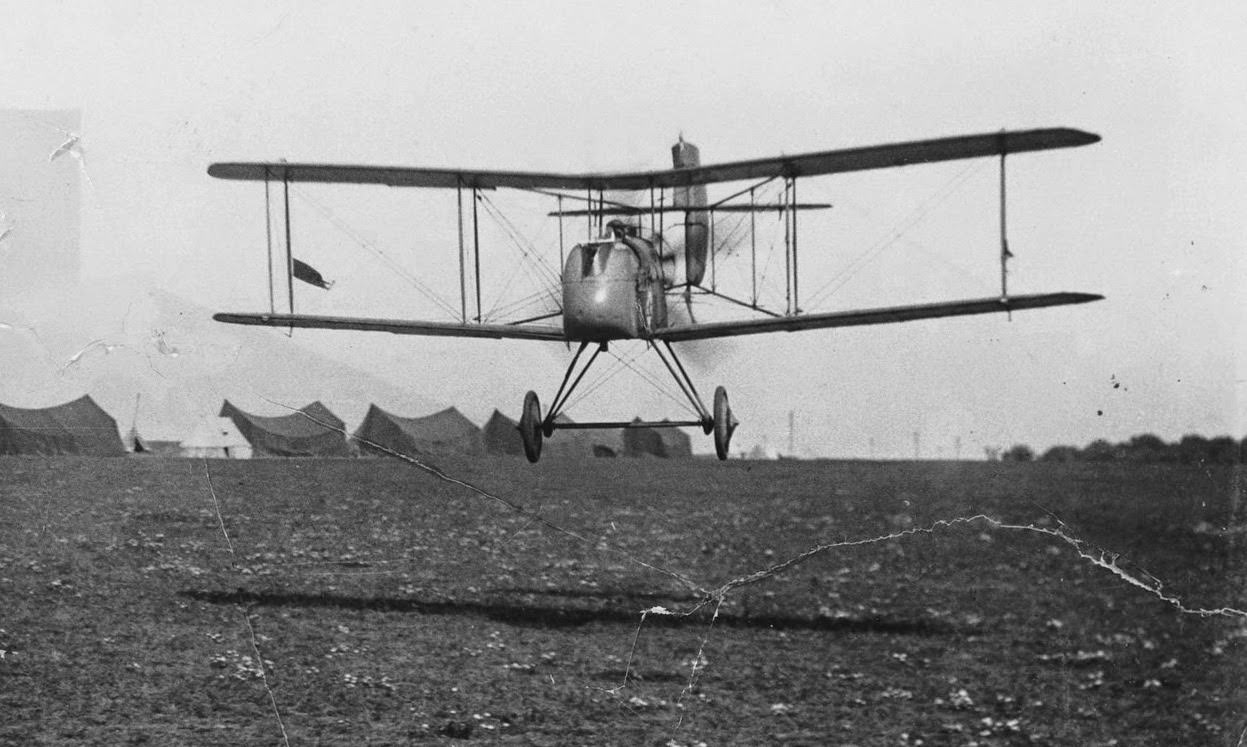
A British Commander starting off on a raid, flying an Airco DH.2 biplane.

The dogfight was chaos with wings. Pilots flew in tight, swirling formations, each man trying to slide onto an enemy’s tail to get a clean shot. The planes themselves remained terrifyingly fragile. A steep dive could strip the fabric clean off the wings. Engines stalled without warning. Machine guns jammed at the worst possible moments. But perhaps the most chilling fact was this: fighter pilots on both sides were not issued parachutes. High commands on both sides refused to supply them, fearing pilots would abandon their costly aircraft rather than fight. If a plane was shot to pieces or caught fire, the pilot chose between burning alive or jumping from altitude.
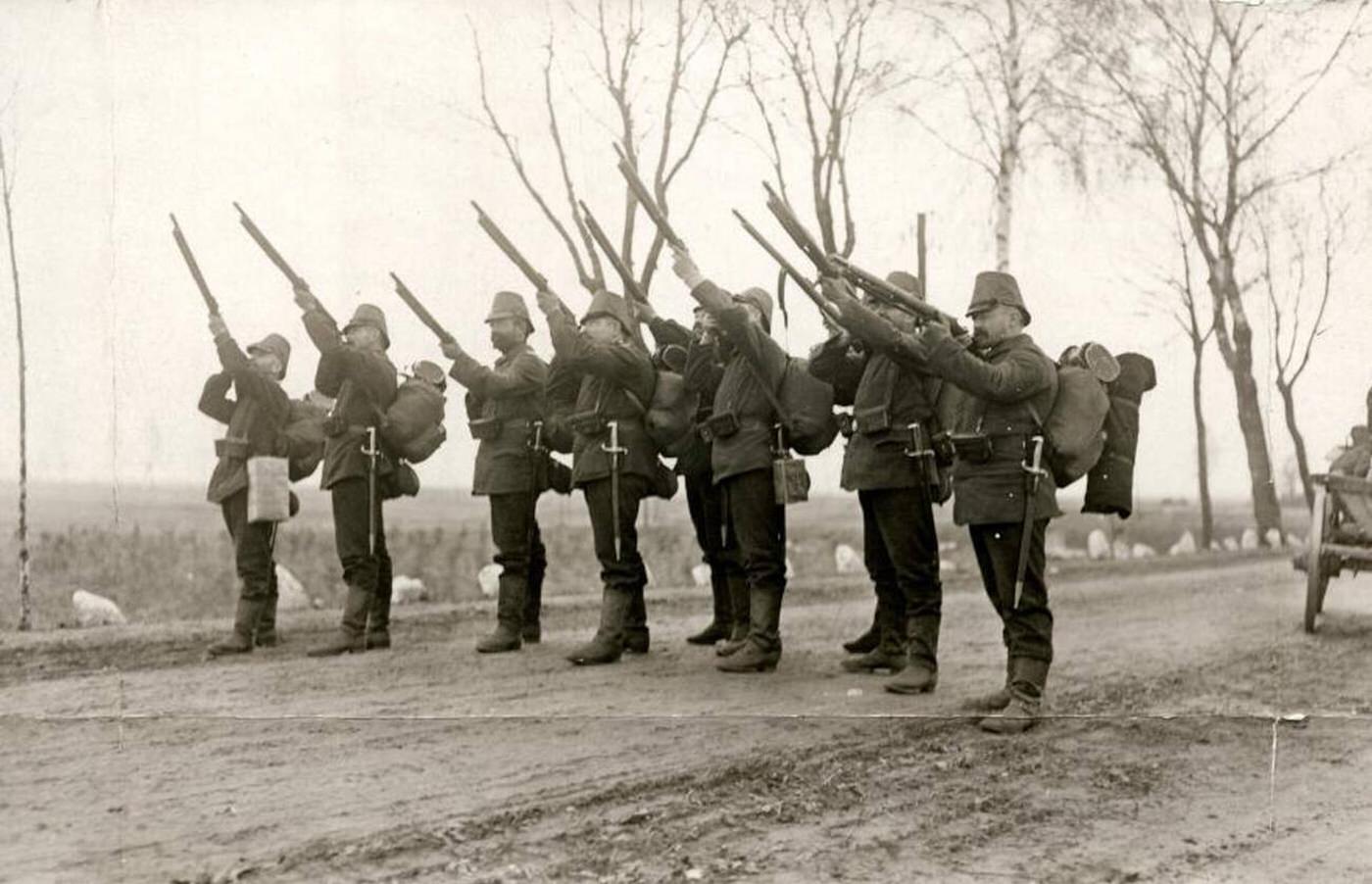
Aerial combat during World War I, showcasing the early development of air warfare, 1914-1918.

Out of this brutal arena came the cult of the ace. A pilot who shot down five or more enemy aircraft earned that title, and with it came celebrity. Faces appeared on postcards. Victories were splashed across newspaper front pages. These men were treated as modern knights — glamorous, daring, and deadly.
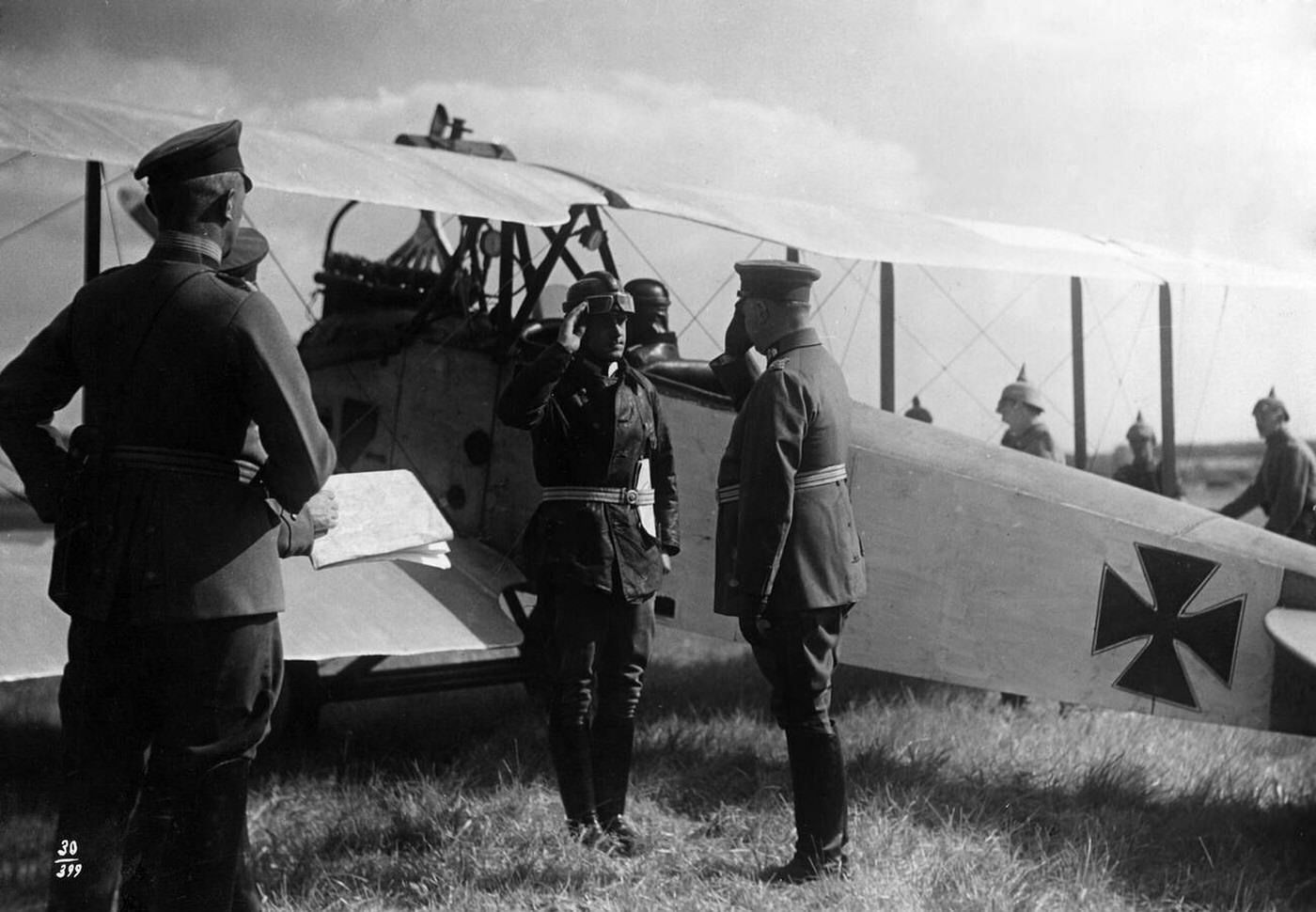
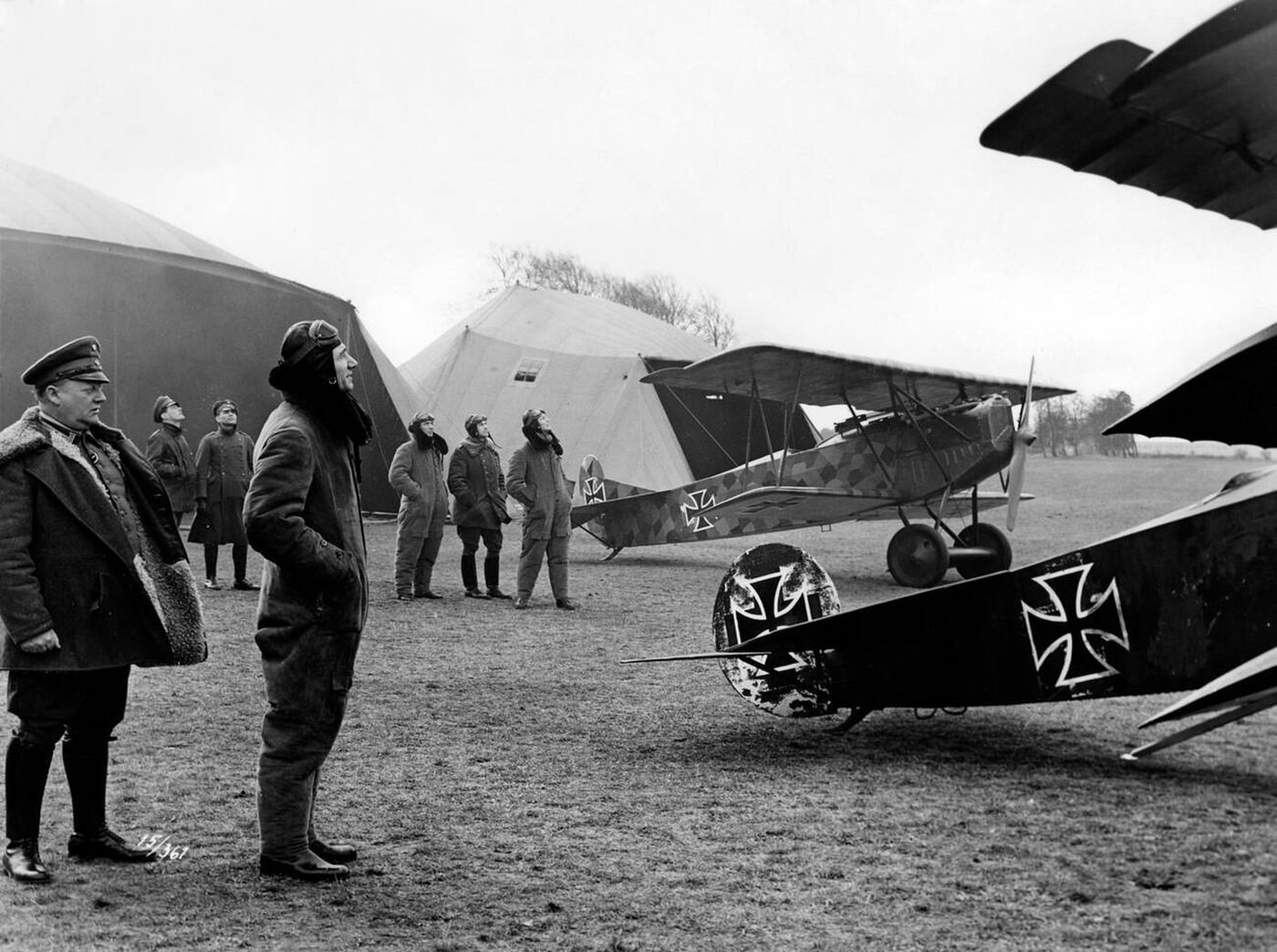
German fighter pilots at their planes during the First World War, 1914-1918.

Germany’s Manfred von Richthofen — the Red Baron — painted his Fokker triplane blood red and accumulated 80 confirmed aerial kills, the highest tally of the war. France’s René Fonck was equally feared, and America’s Eddie Rickenbacker became the face of U.S. airpower. But for every celebrated ace, thousands of pilots died in flames. A new pilot arriving at the front in 1917 had an average life expectancy of just three weeks.
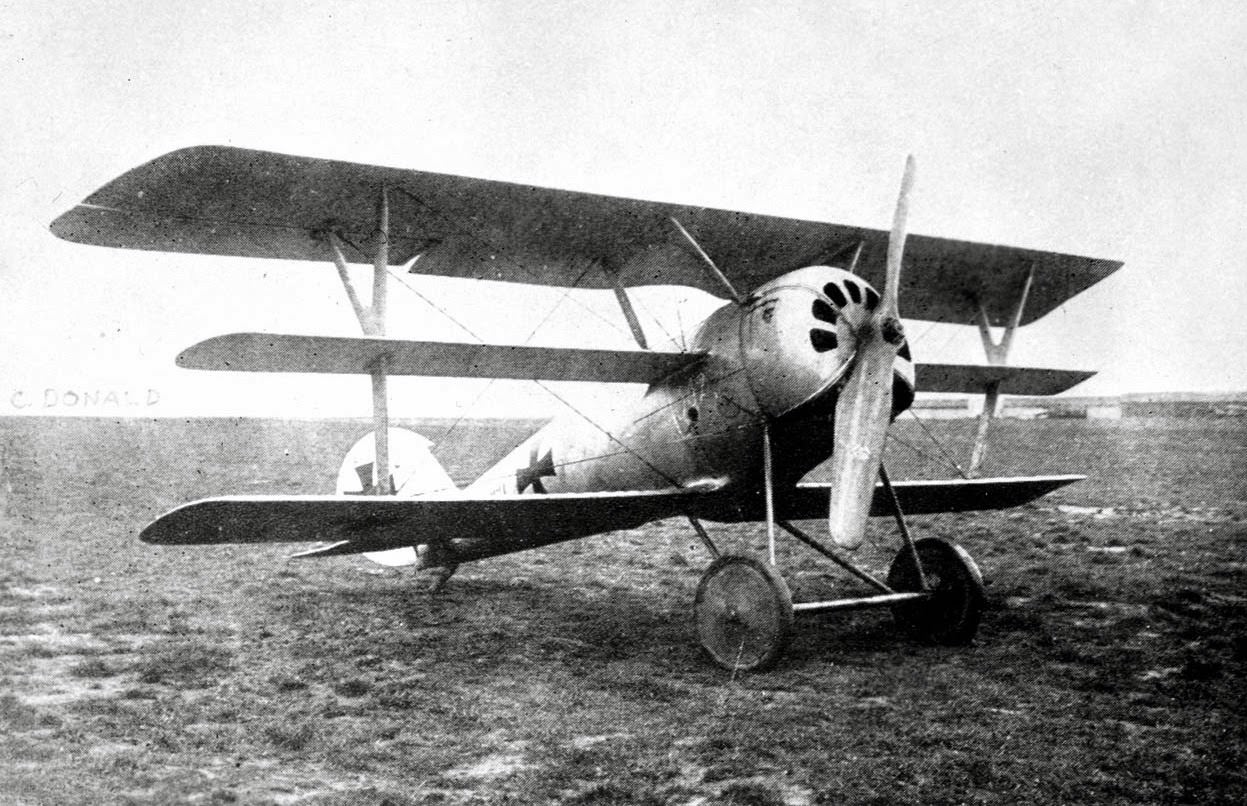
A German Pfalz Dr.I single-seat triplane fighter aircraft, 1918.

Max Immelmann was one of Germany’s earliest aerial heroes, the first pilot to win the Pour le Mérite — Germany’s highest military honor — and the man who invented the “Immelmann turn,” a maneuver that allowed a pilot to reverse direction mid-fight and instantly re-engage an enemy.
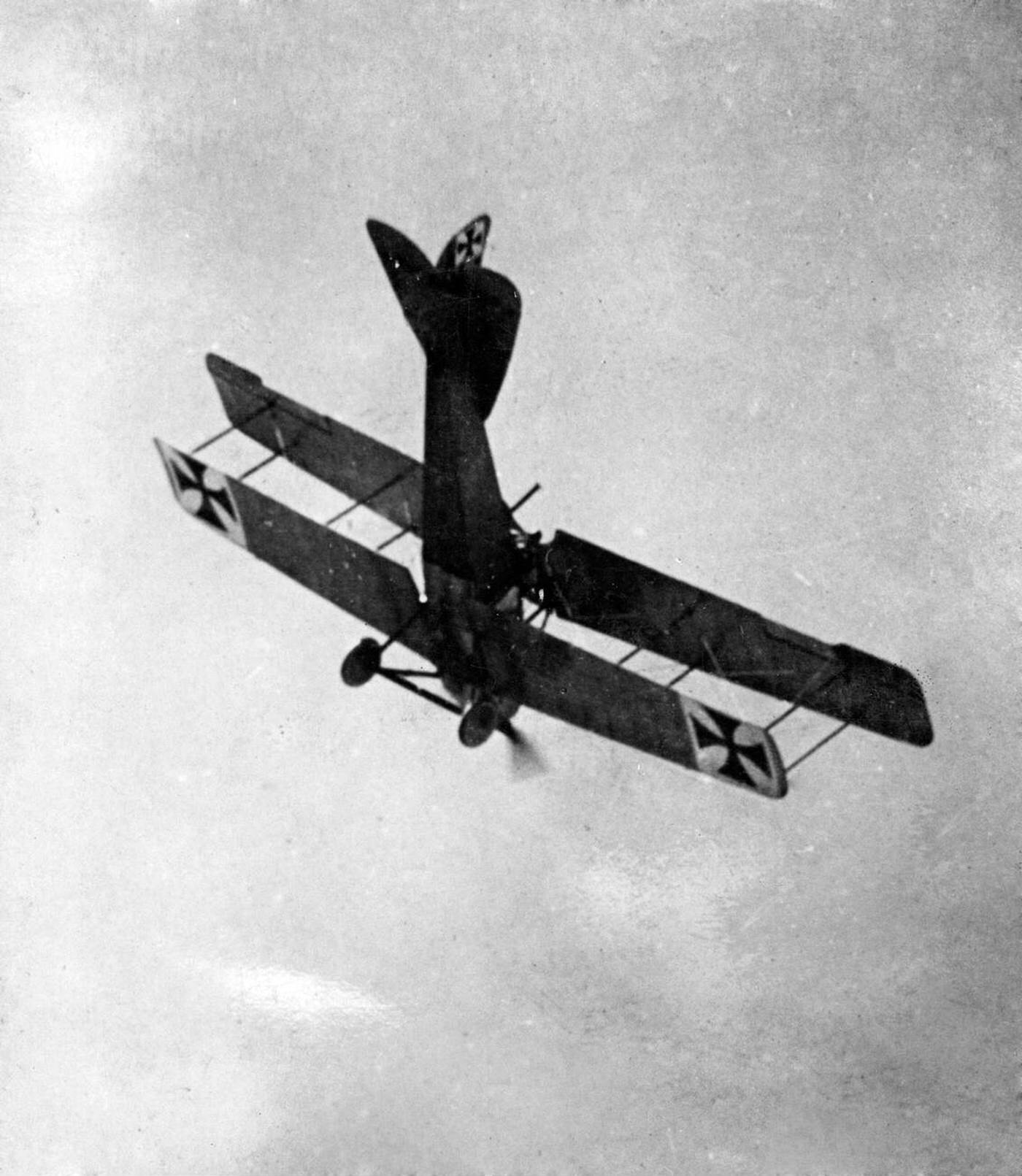
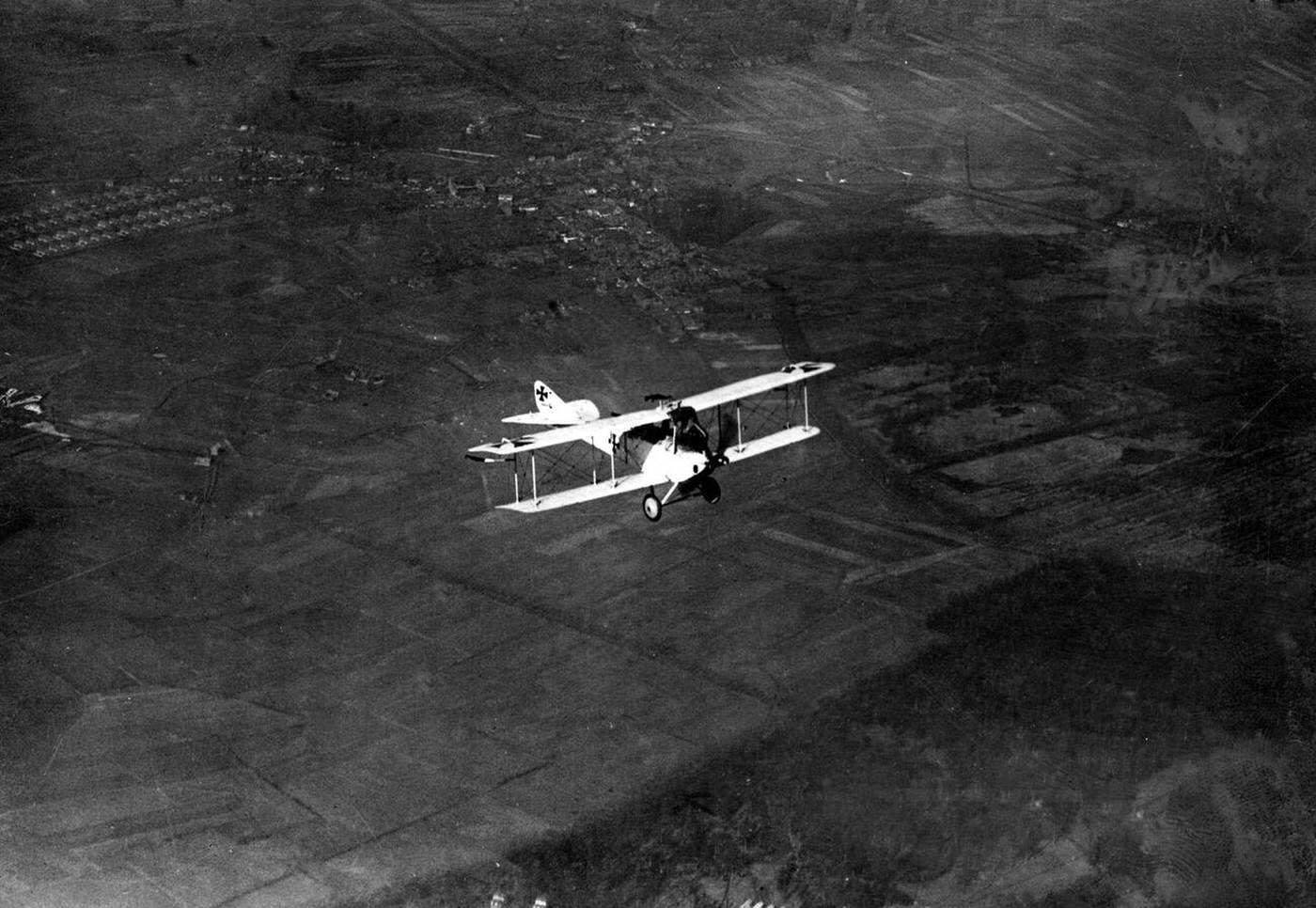
Max Immelmann in his fighter, 1914-1918.
Max Immelmann in his machine, 1914-1918.

British Captain Albert Ball was another figure who defined the ace mythology. Aggressive, unconventional, and relentless, he scored 44 confirmed victories before being killed in May 1917 at the age of 20.
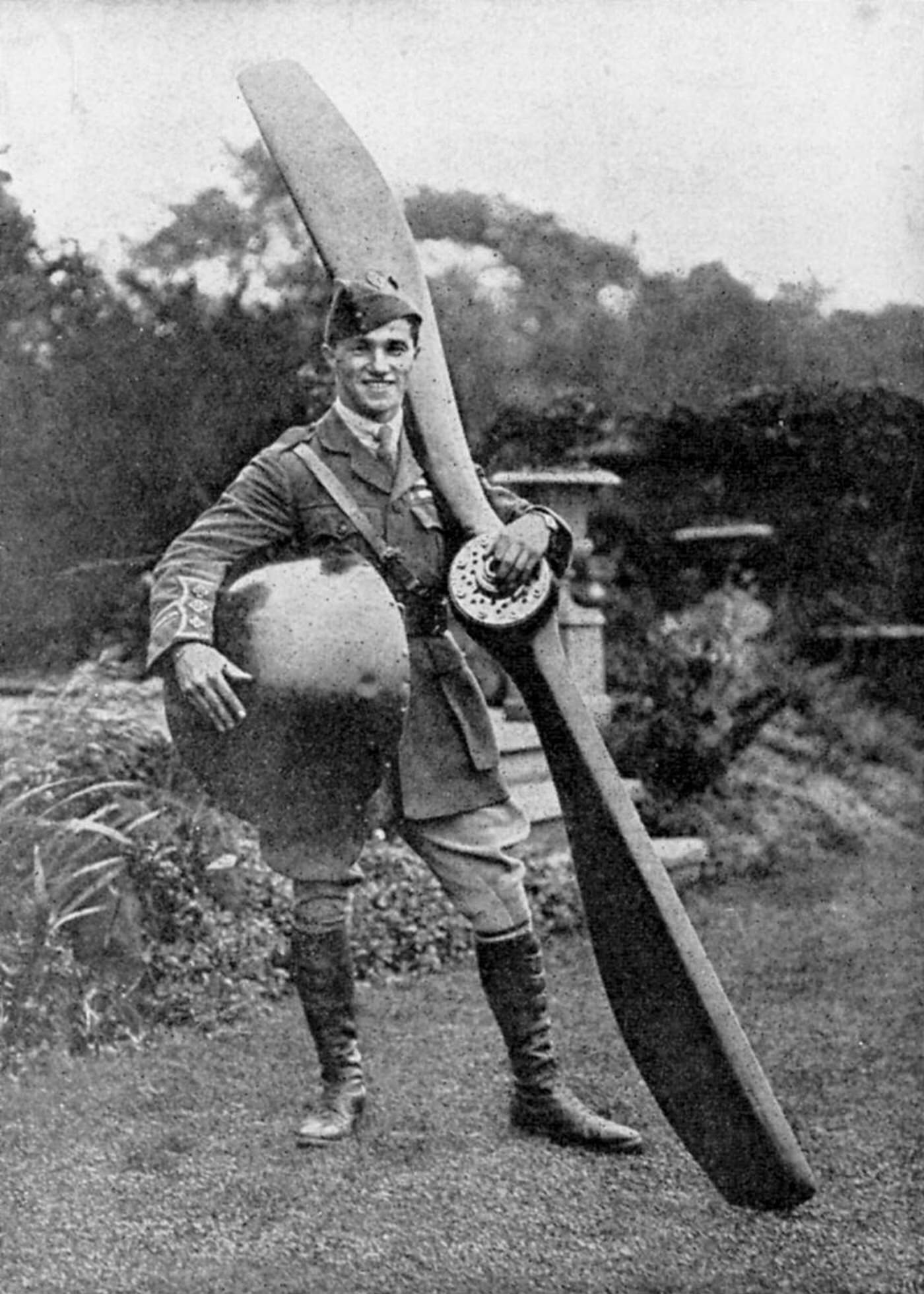
British pilot Captain Albert Ball posing with trophies from his 43rd victory, 1917.

Reconnaissance remained vital throughout the war even as the fighter plane dominated headlines. Aerial photographers flew over enemy lines with large cameras, capturing images of trench systems, supply routes, and fortifications that ground commanders desperately needed. The information gathered this way shaped some of the war’s most important offensives.
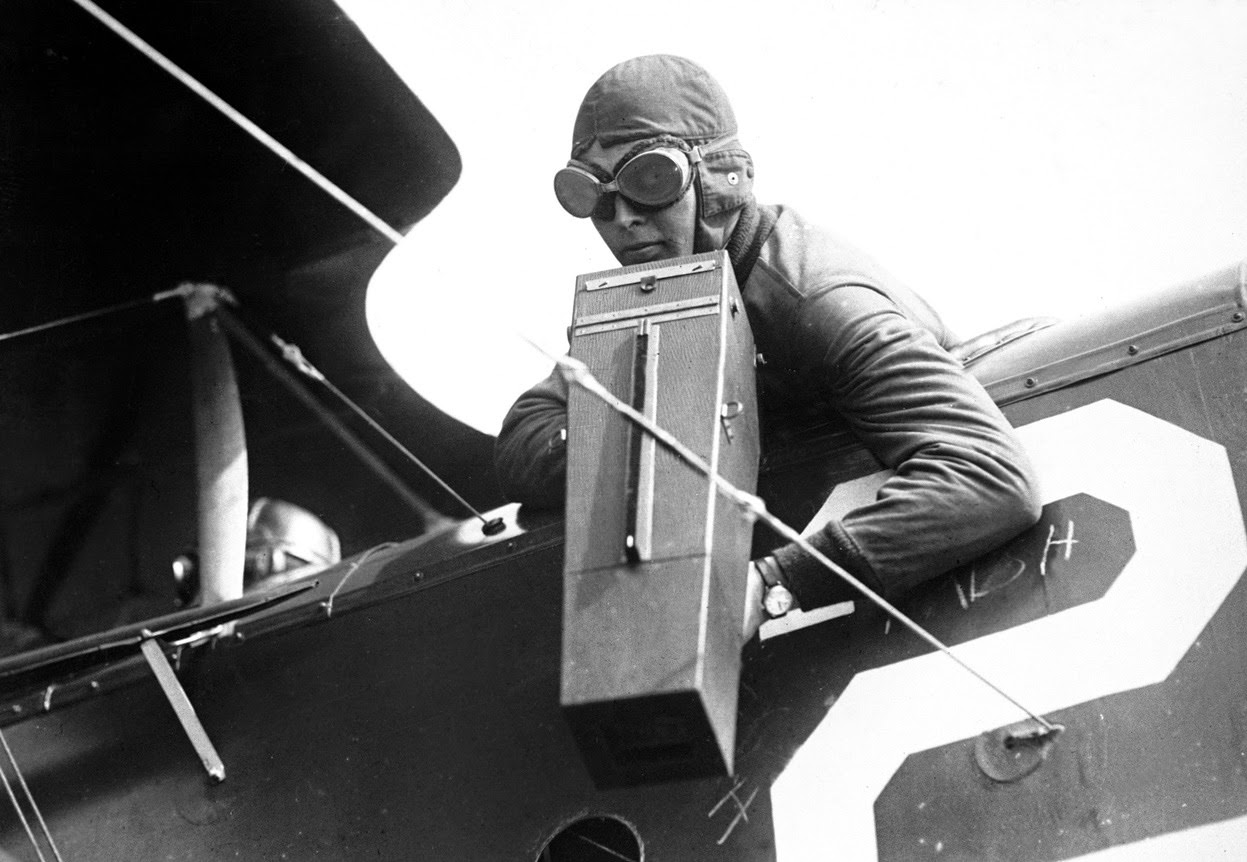
An aerial photographer with a Graflex camera, 1917-1918.

Alongside fixed-wing aircraft, observation balloons played a significant role in the war. Tethered high above the lines, balloon observers could spot enemy movements and direct artillery fire with far greater accuracy than any ground-based observer. Both sides made them priority targets, and shooting down an enemy balloon counted toward an ace’s tally.
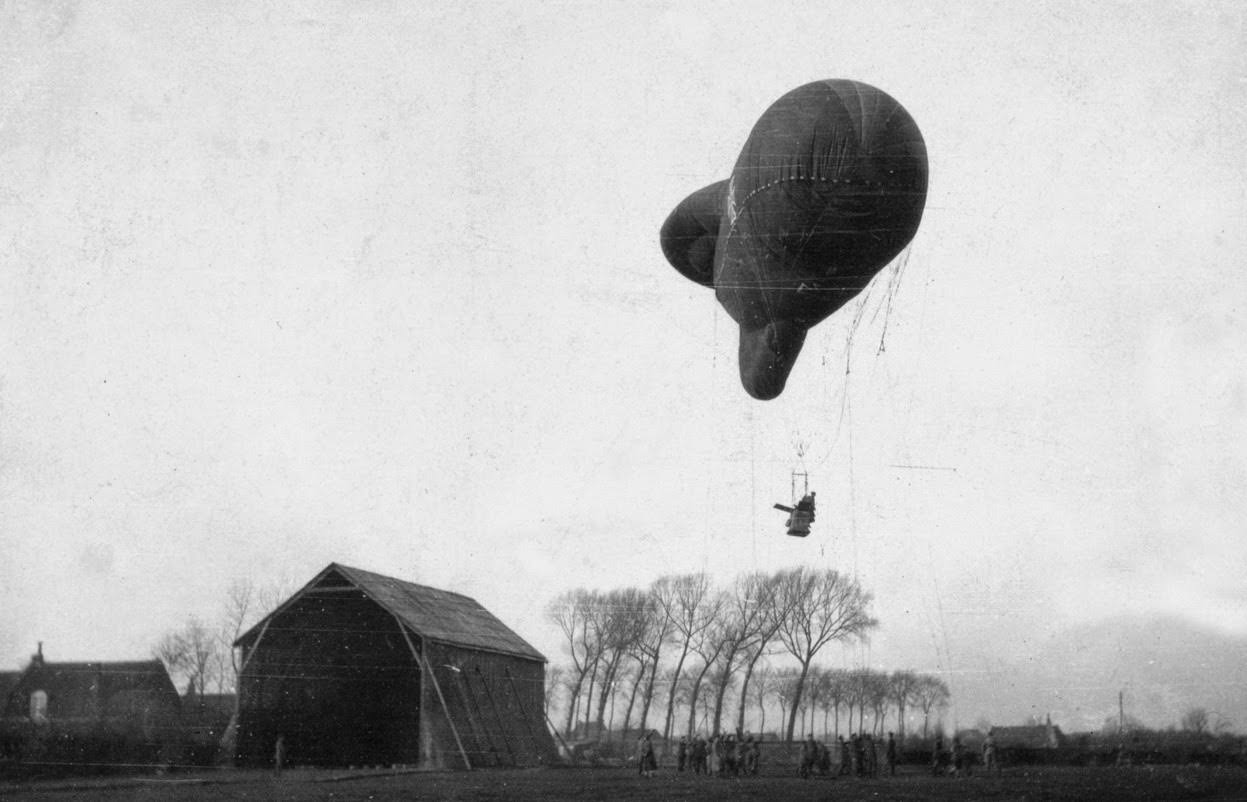
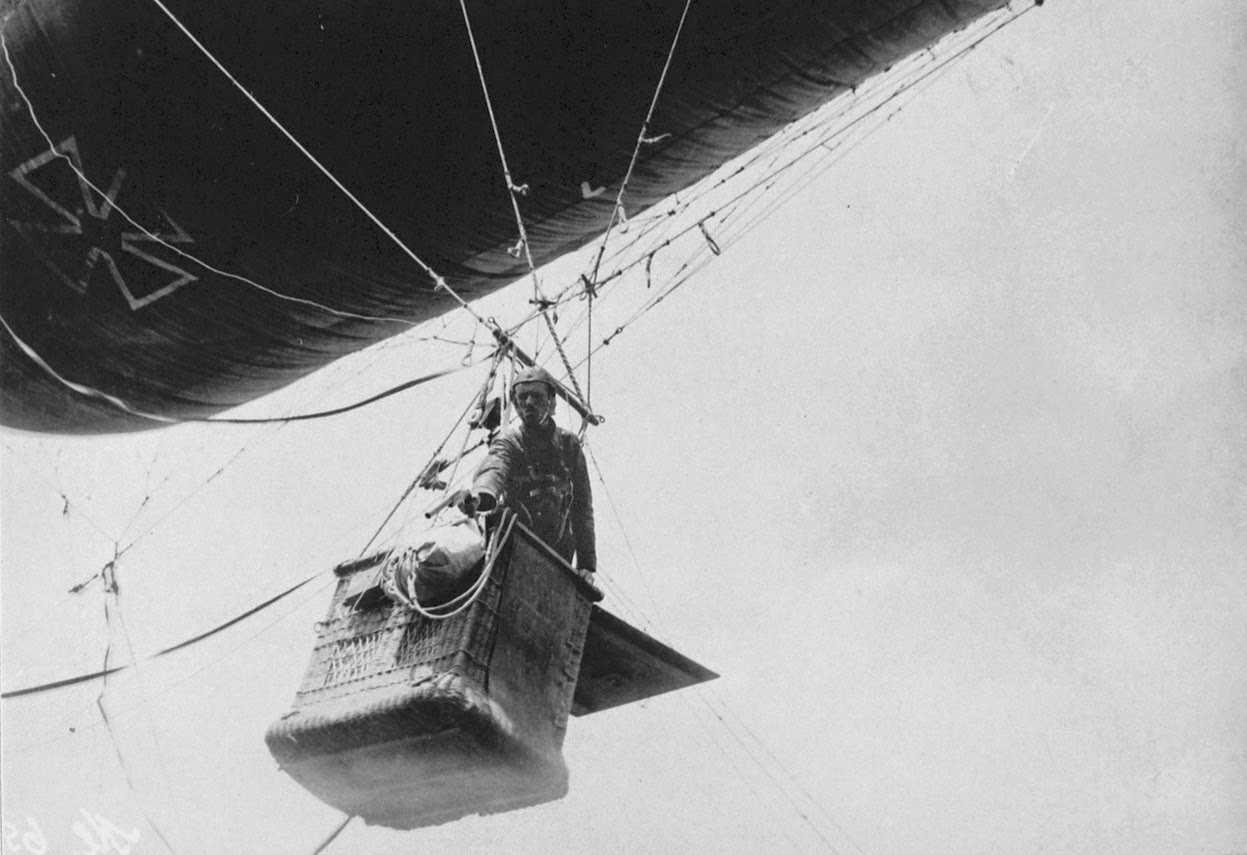
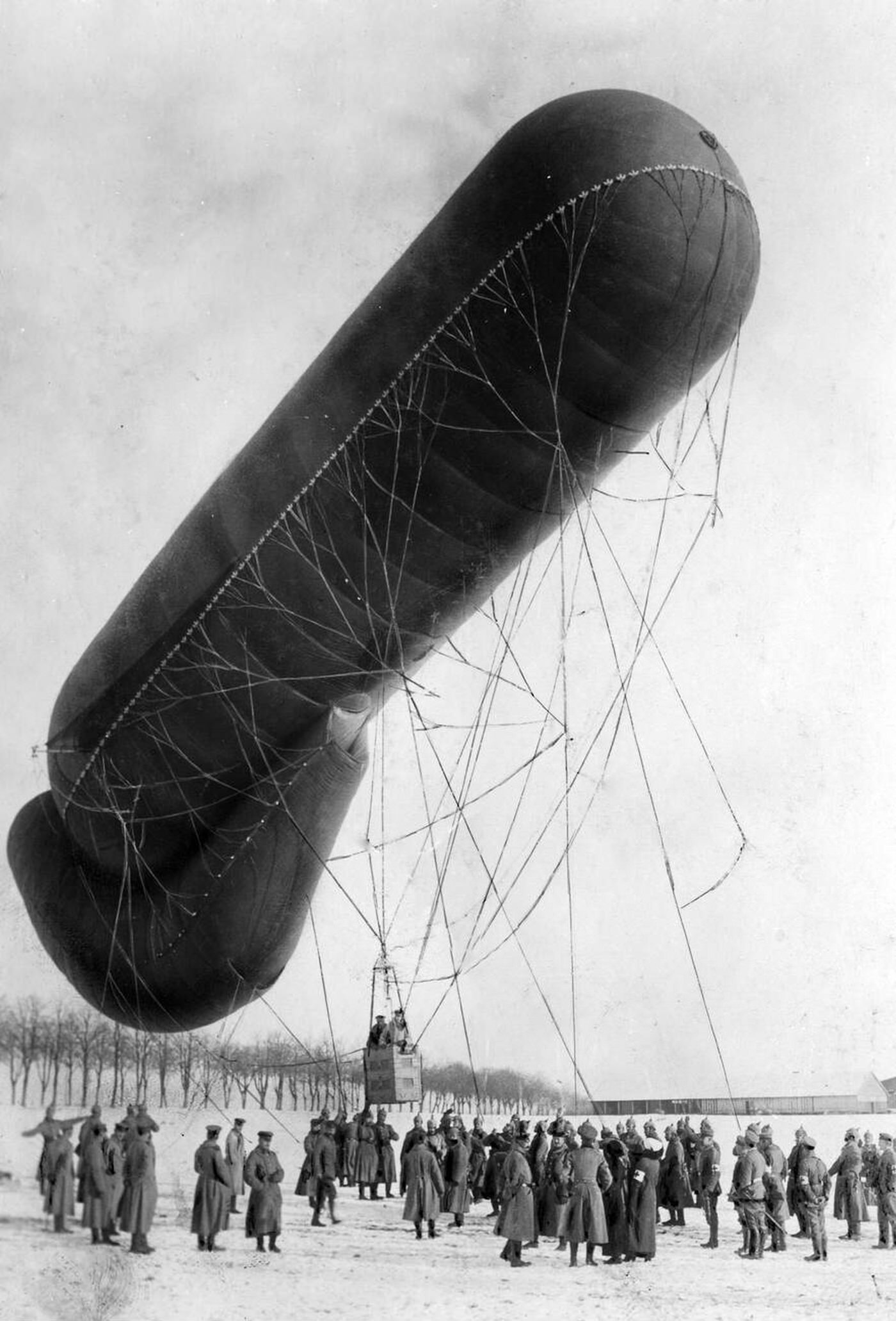
A German Type Ae 800 observation balloon ascending.
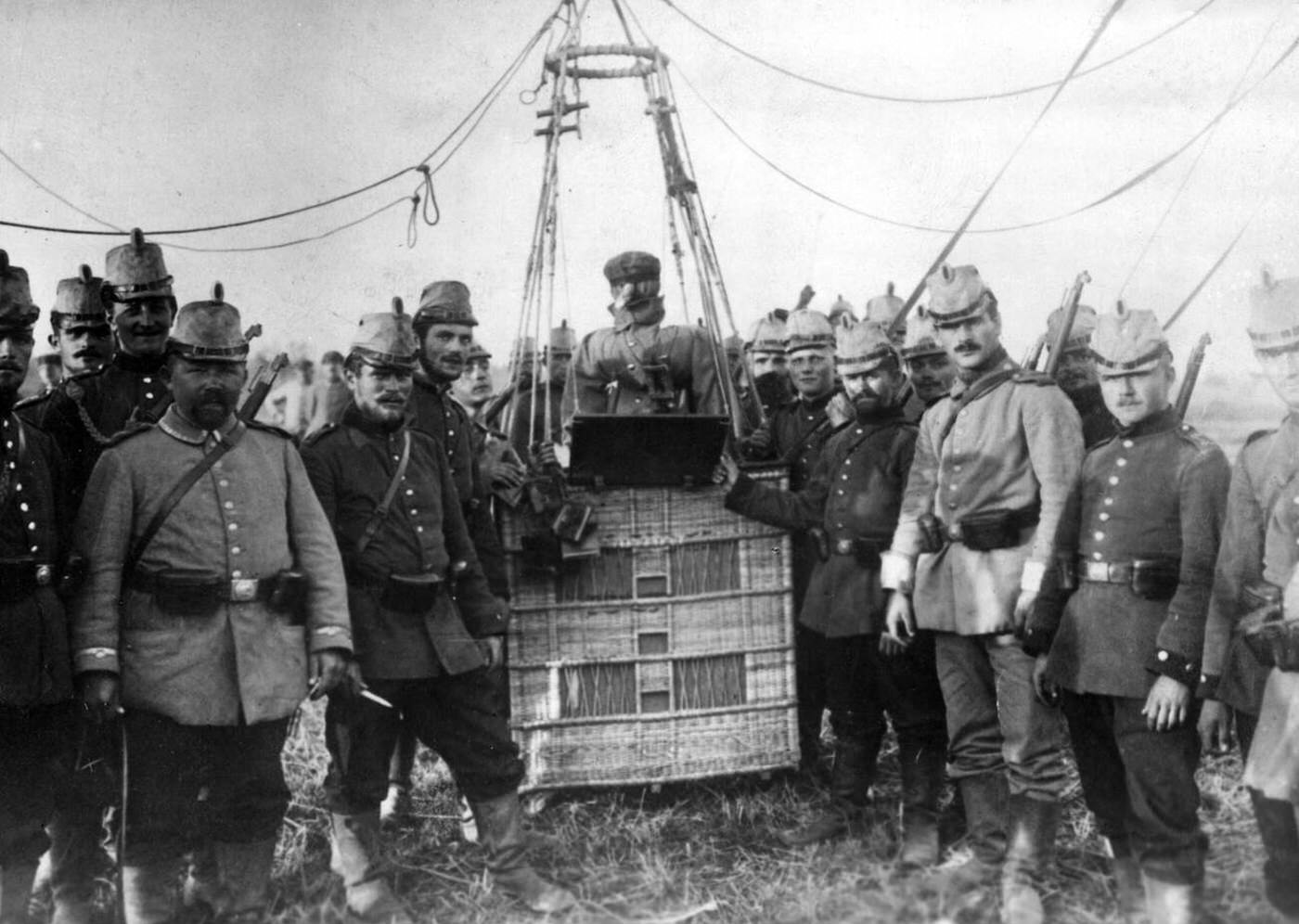
Observer in a German balloon gondola shoots off light signals with a pistol.

The Germans introduced Zeppelins as weapons of psychological terror. These massive, silent airships crossed the English Channel at night and dropped bombs on London, causing widespread panic among the civilian population. But they carried a fatal weakness: they were filled with highly flammable hydrogen gas. A single incendiary bullet from a fighter plane could turn one into a roaring fireball within seconds.
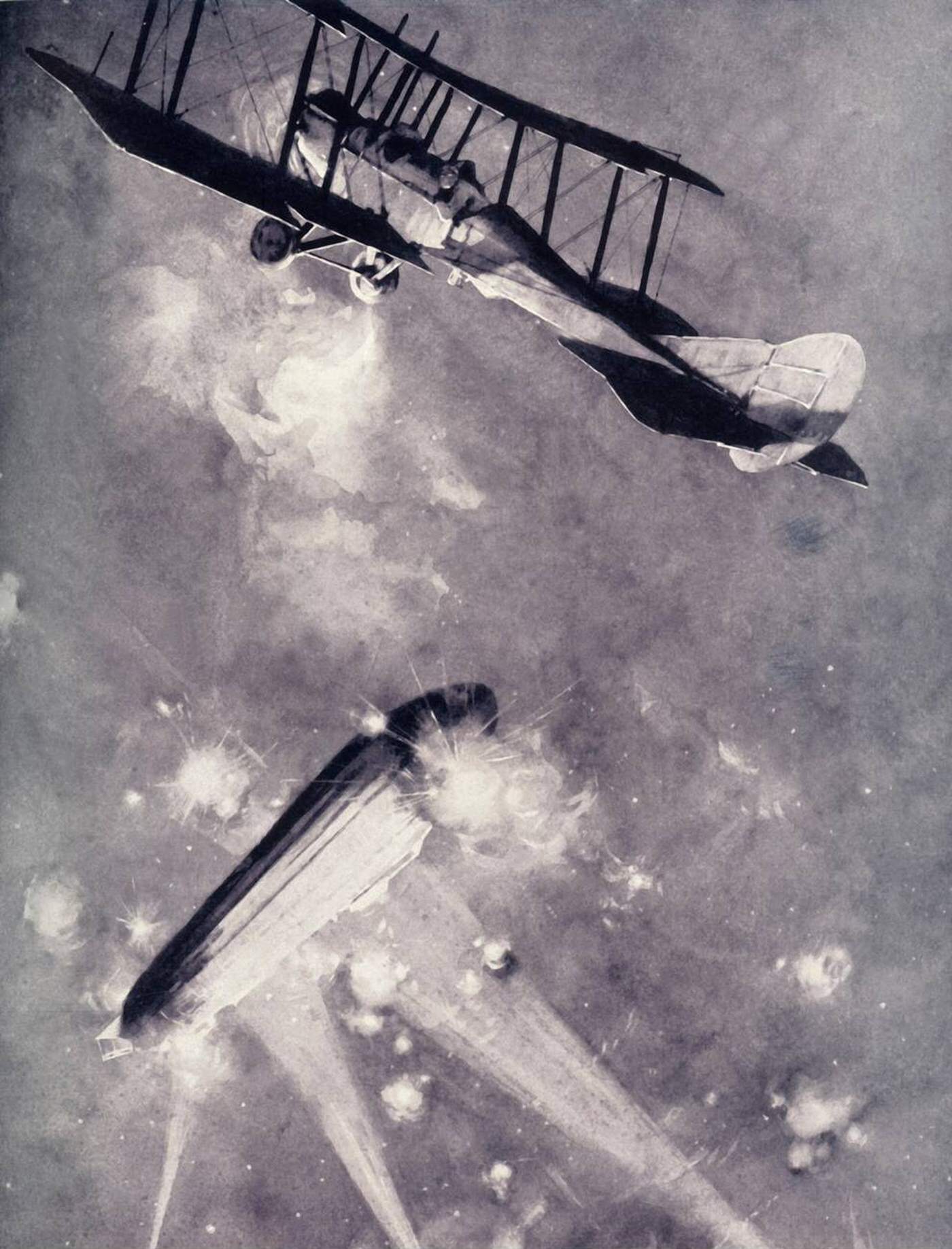
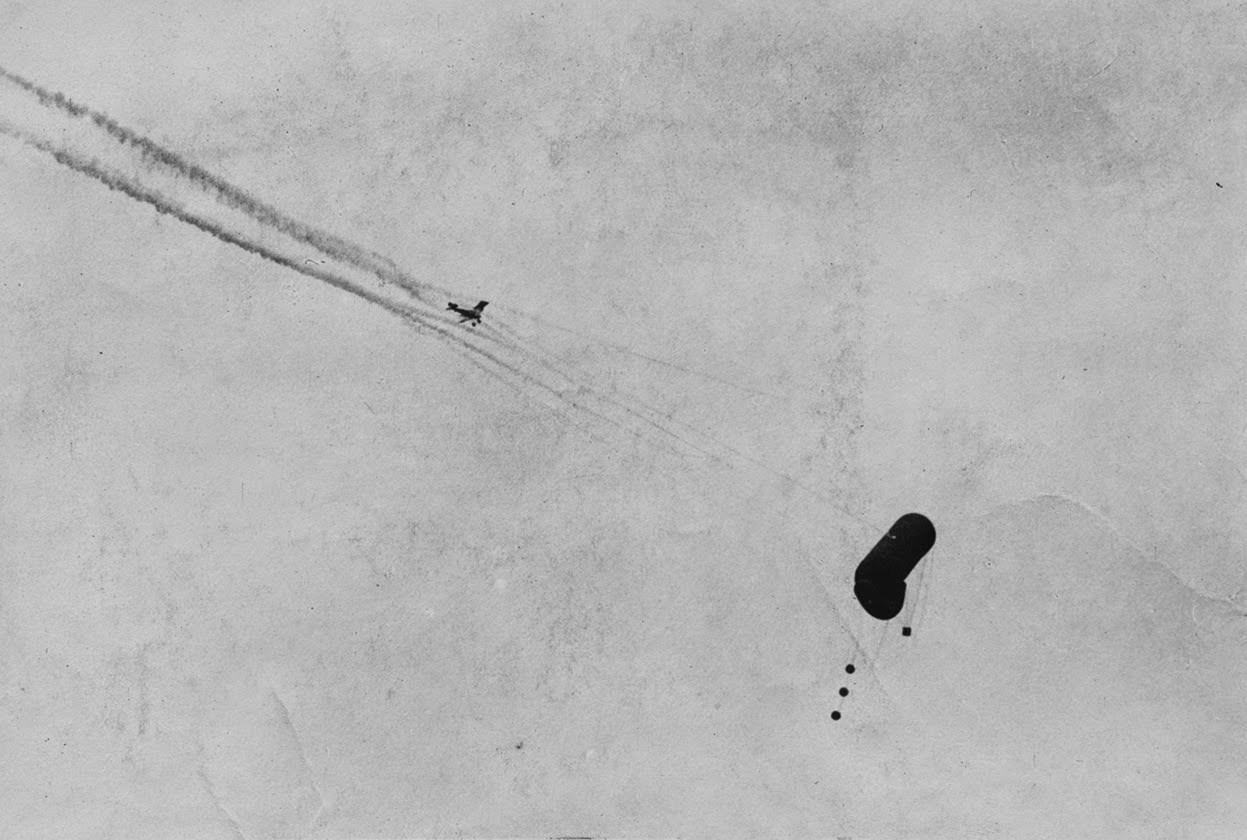
Lieutenant A. de Bathe Brandon Attacking a Zeppelin Raider, 1916.
A German balloon being shot down.

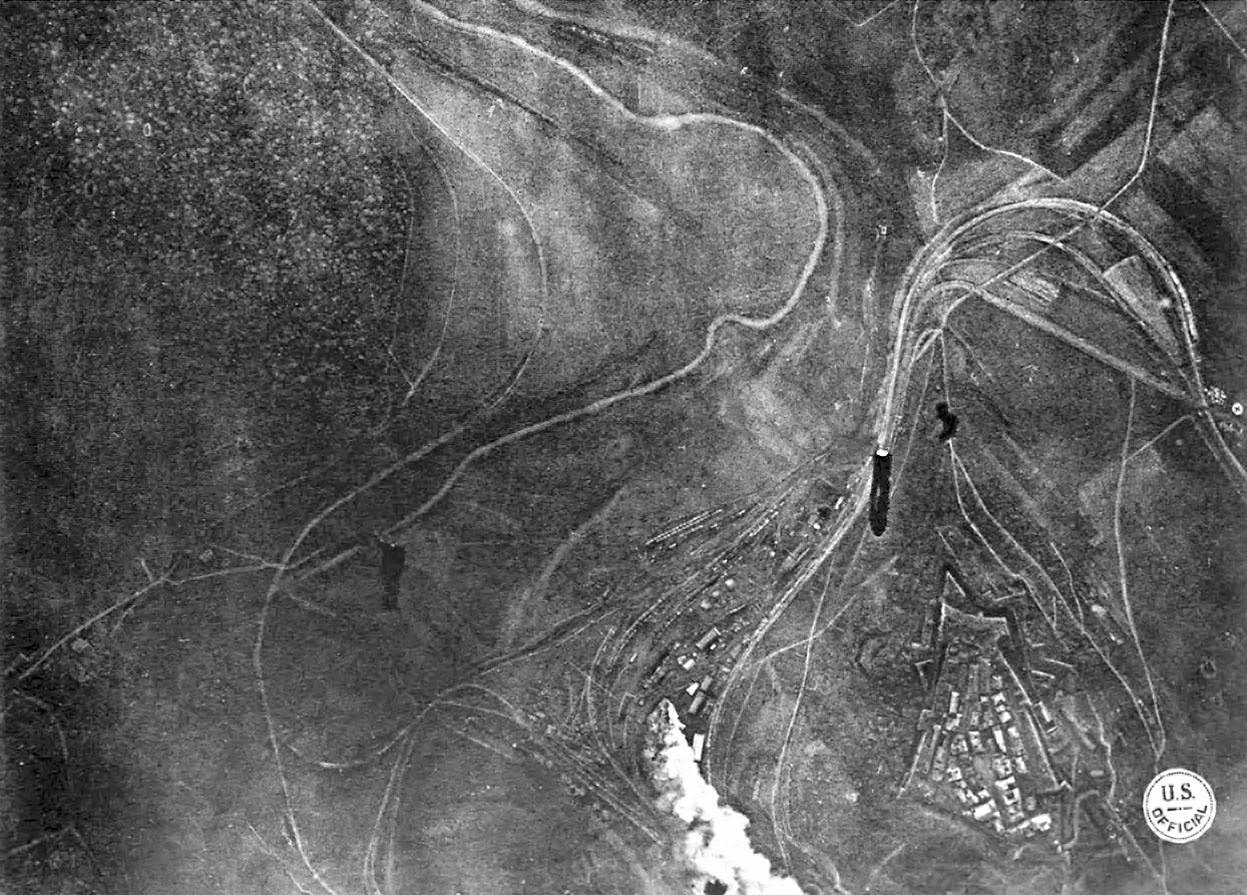
By 1917 and into 1918, bombing missions had grown in scale and ambition. Early raids involved a co-pilot simply leaning out of the cockpit to drop bombs by hand. That changed dramatically as the war progressed. Large multi-engine bombers like the German Gotha G.V. and the British Handley Page Type O were built specifically to fly deep into enemy territory and strike factories, railways, and cities far from the front lines.
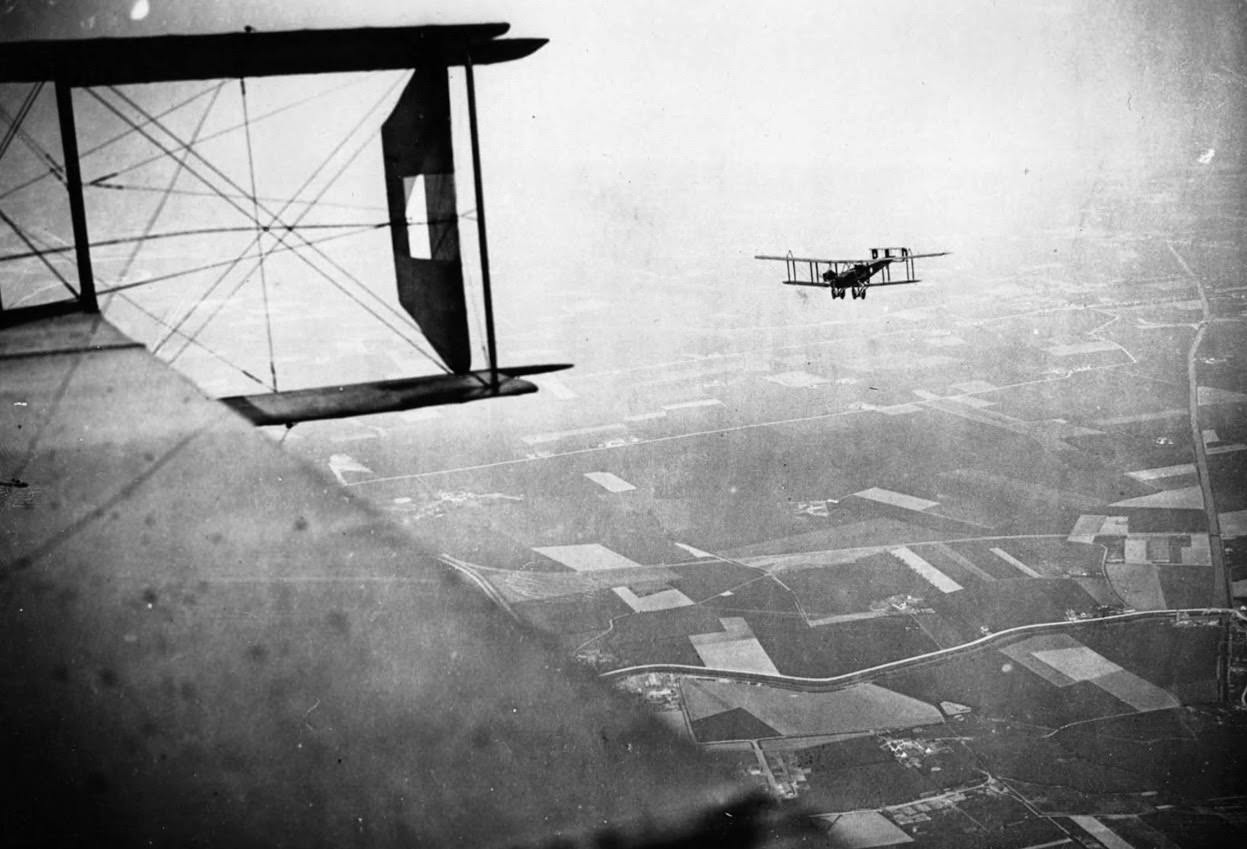
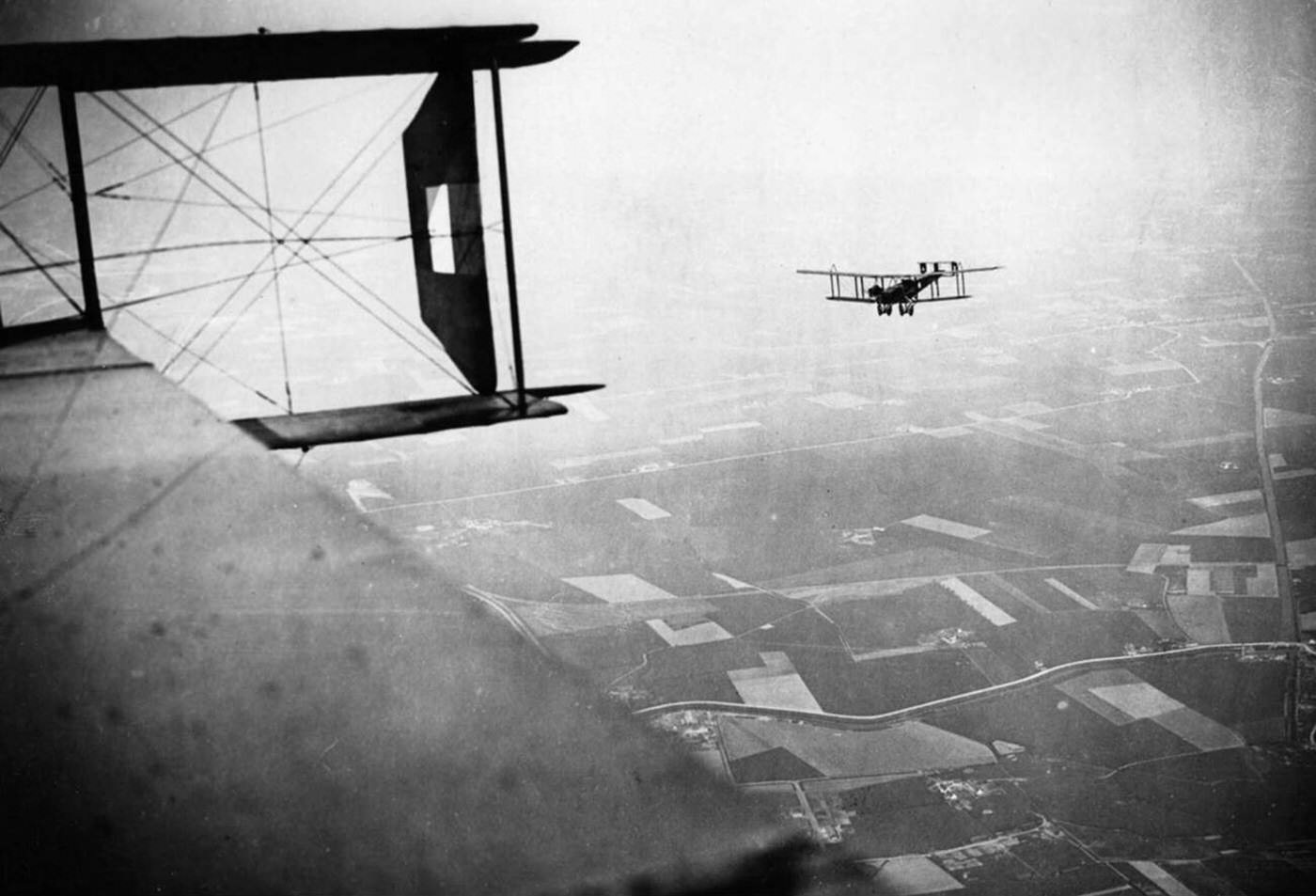
British Handley-Page bombers on a mission on the Western Front; this photograph shows another Handley-Page bomber setting out on a bombing mission, 1918.
Bombing Montmedy, 42 km north of Verdun, while American troops advance in the Meuse-Argonne sector; three bombs have been released by a U.S. bomber, one striking a supply station, the other two in mid-air, with black puffs of smoke indicating anti-aircraft fire.

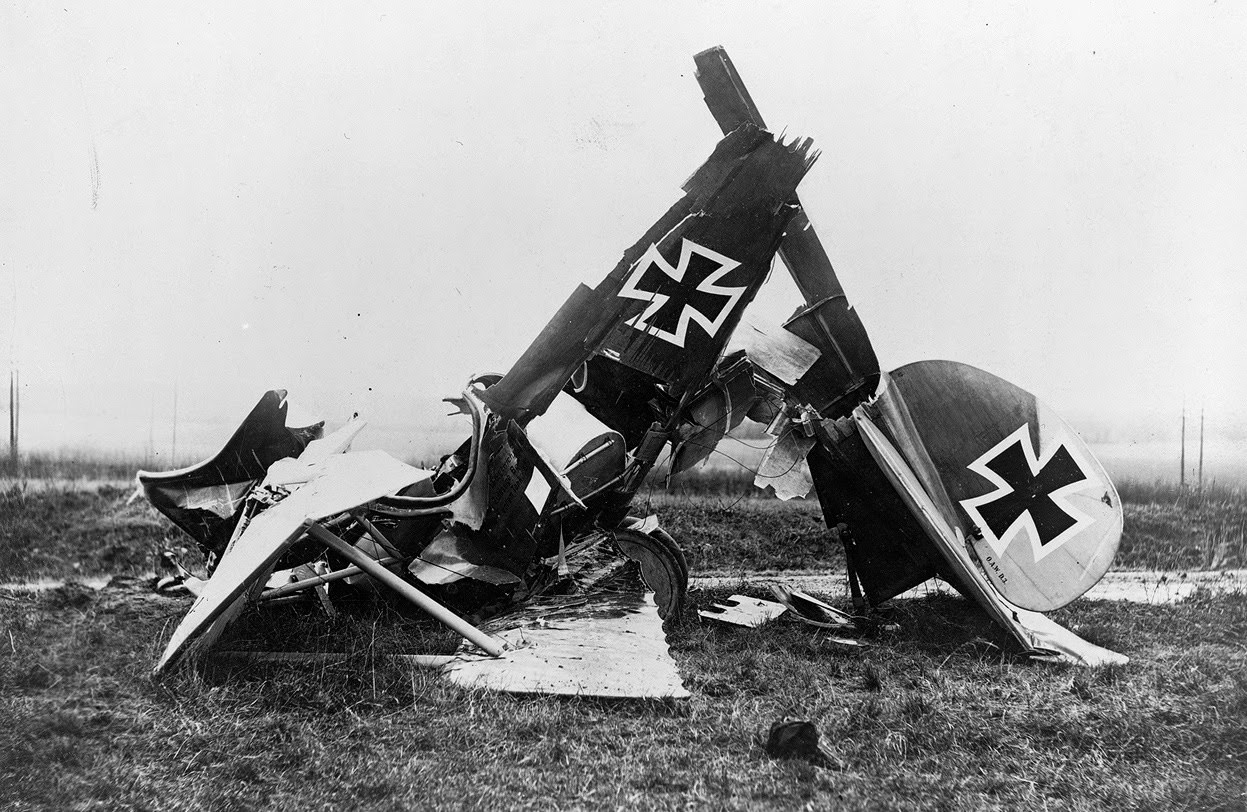
As bombers grew more threatening, both sides expanded their anti-aircraft defenses. Searchlights swept the night sky, and gun crews trained to track fast-moving targets. Downed aircraft — whether crashed by enemy fire, mechanical failure, or the sheer demands of combat — became a common sight on both sides of the lines.
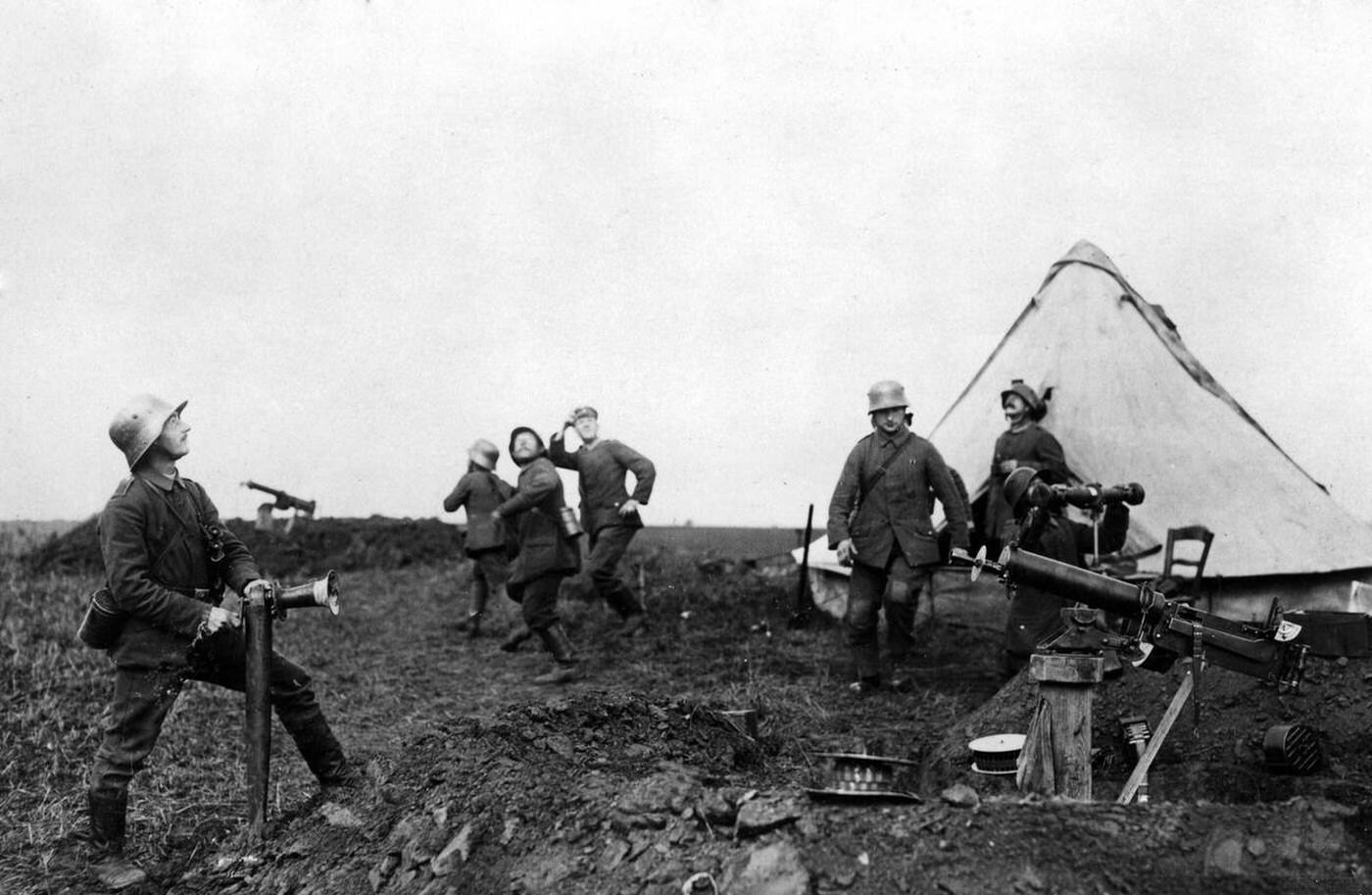
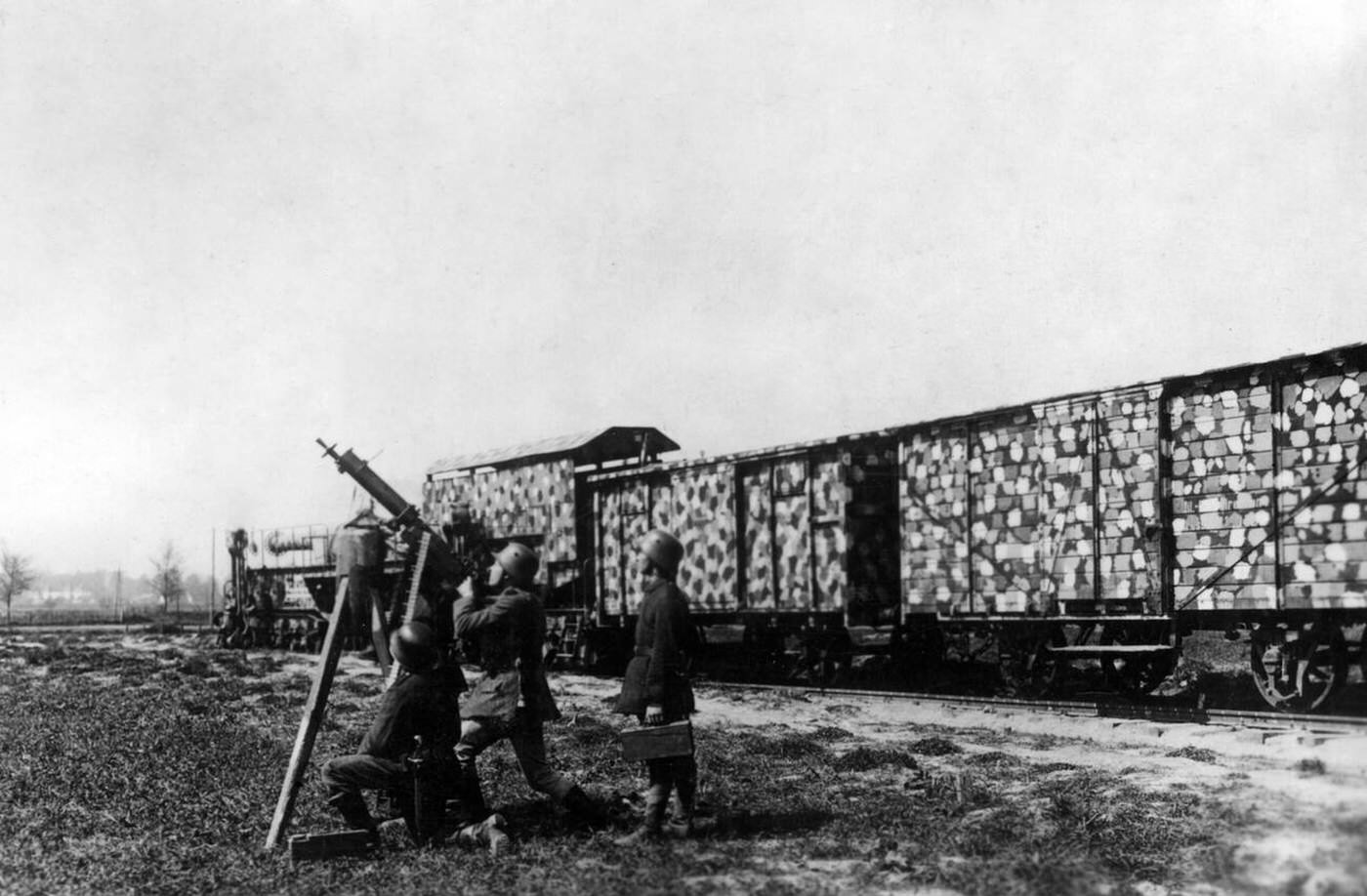
German Anti-aircraft warfare, 1918.
Wreckage of a German Albatross D. III fighter biplane.

In the war’s final year, a new category of aircraft emerged: the ground-attack plane. Heavily armored machines like the German Junkers J.I were designed to fly low over the battlefield and directly support infantry. They swept enemy positions with machine-gun fire and dropped small bombs, bringing the violence of the aerial war down into the mud and wire of the trenches themselves.
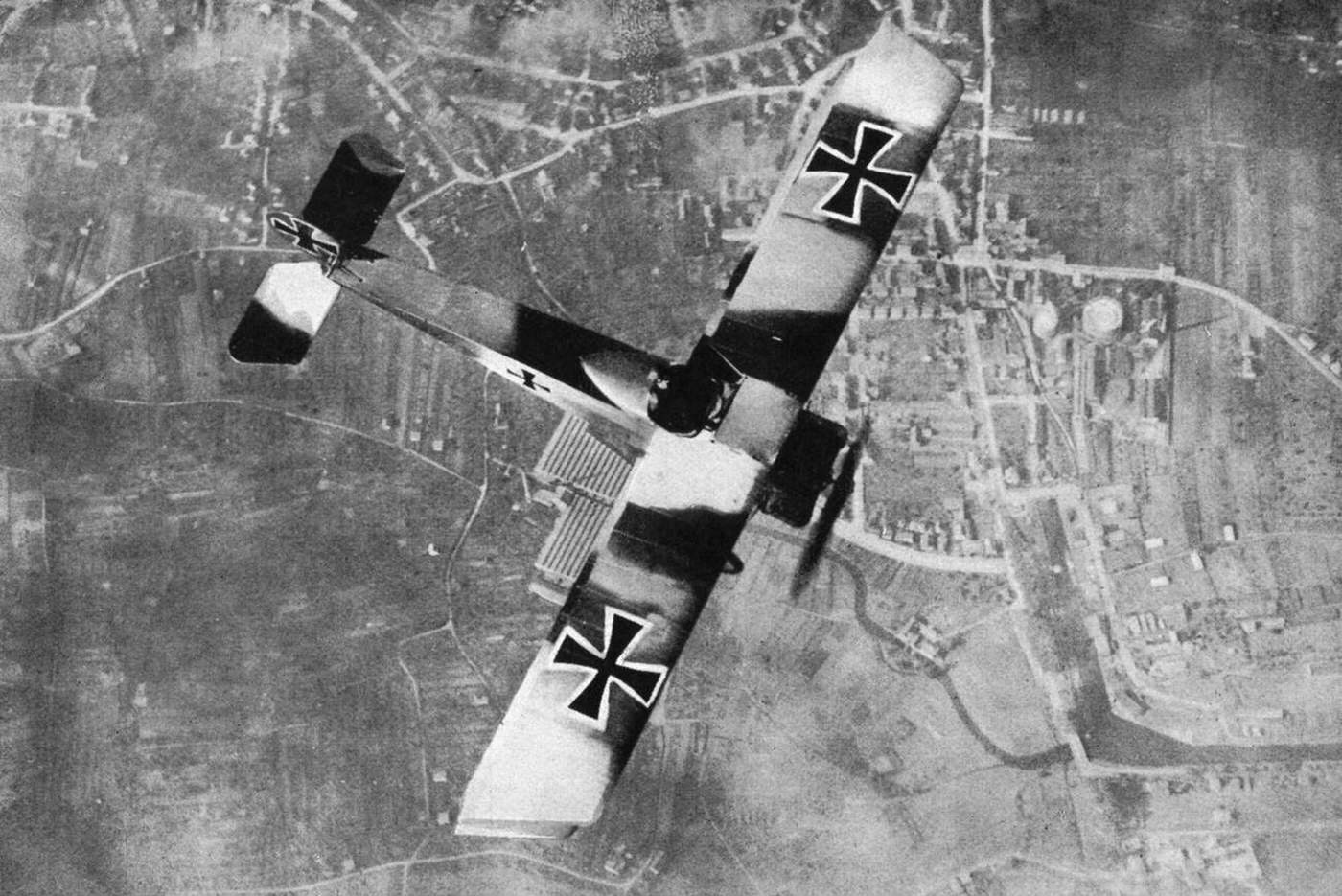
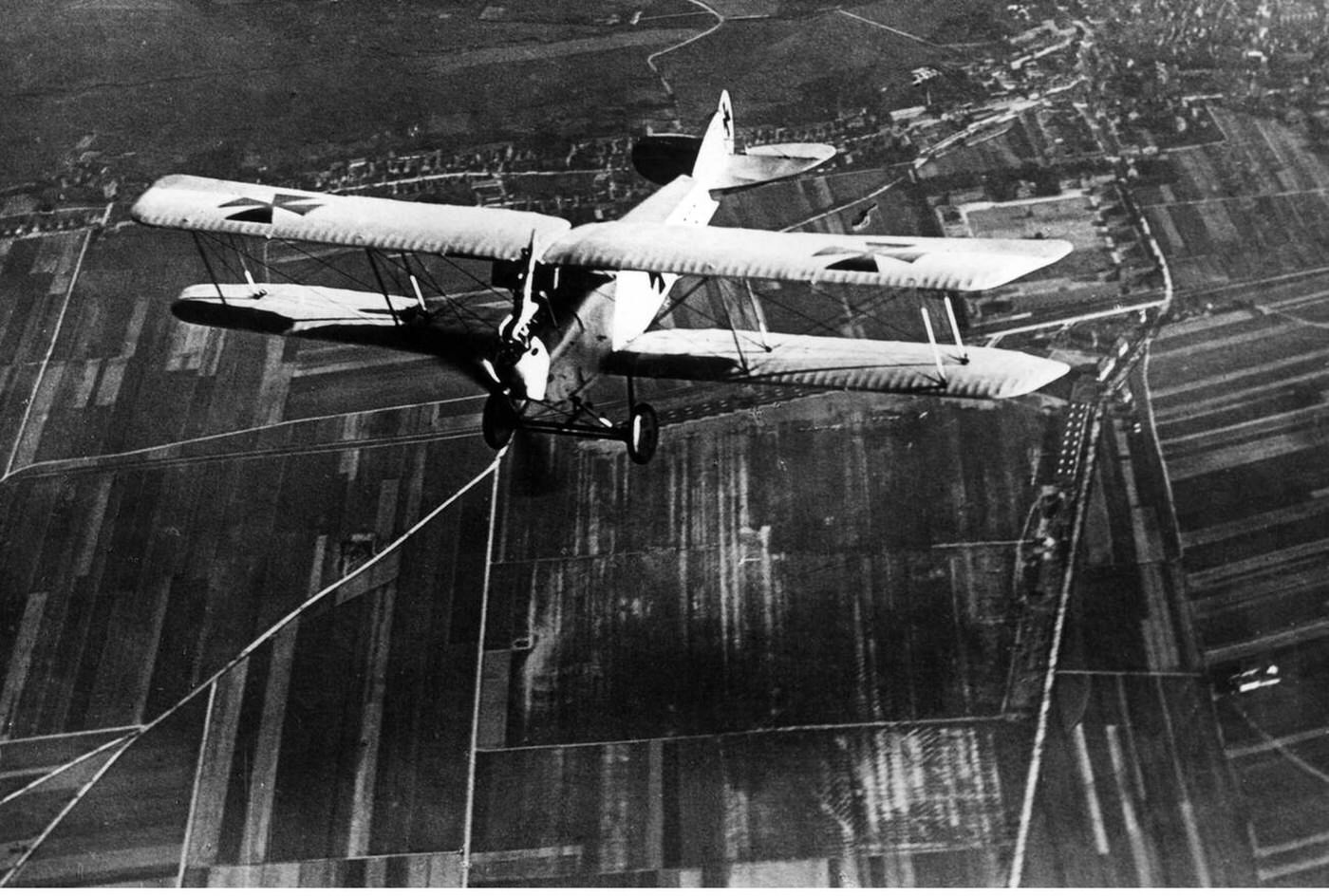
German fighter Fokker D.VII in the air over France, 1918.

Training new pilots fast enough to replace the dead was a constant pressure. Facilities across Britain, France, the United States, and Germany churned through recruits. New tools like the Hythe Mk III gun camera — a device that took a photograph when the trigger was pulled, recording where a pilot would have hit — allowed instructors to review and correct a trainee’s aim without burning ammunition.
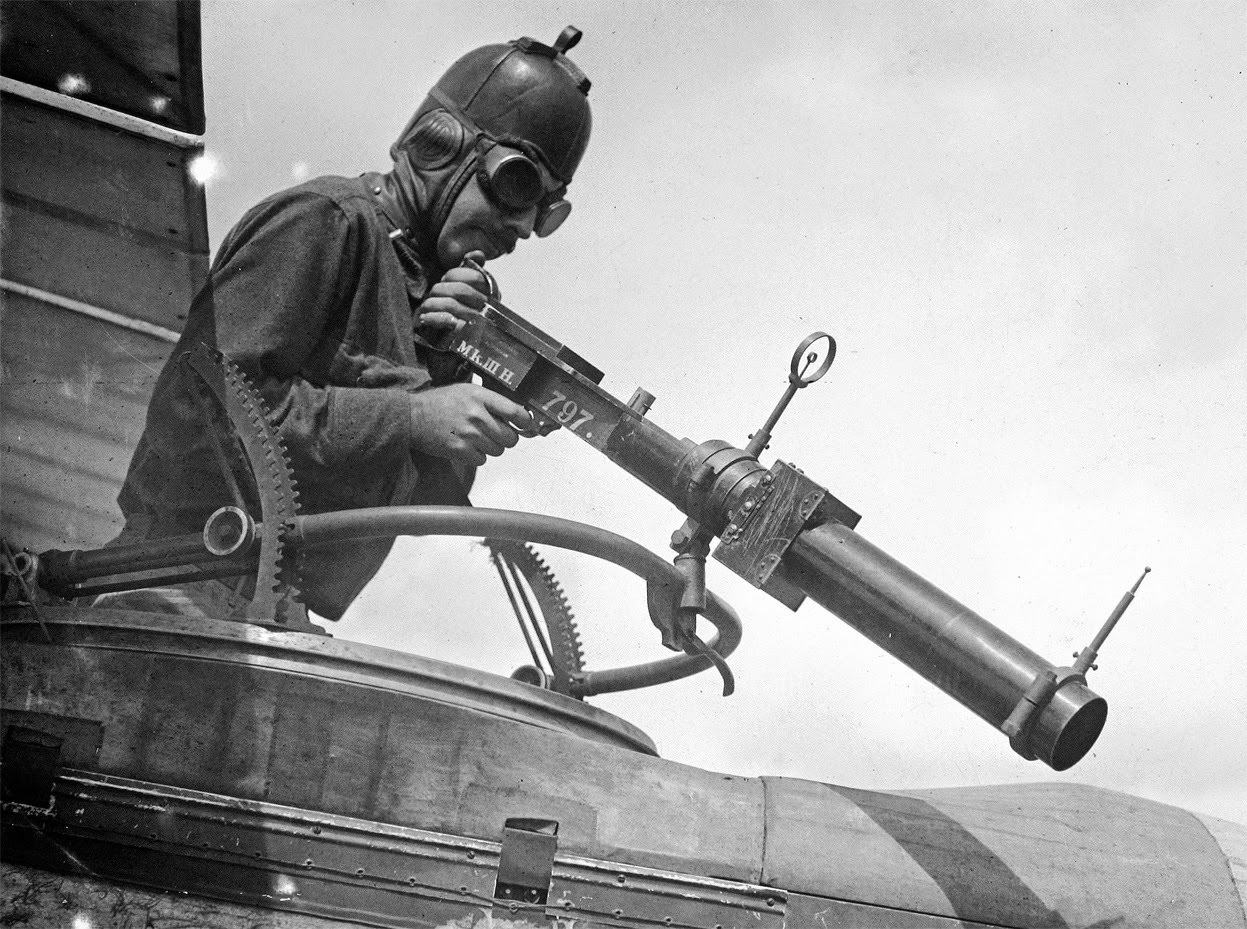
A soldier poses with a Hythe Mk III Gun Camera during training activities at Ellington Field, Houston, Texas; the Mk III was used to train aerial gunners, recording a photograph when the trigger was pulled, for later review, 1918.
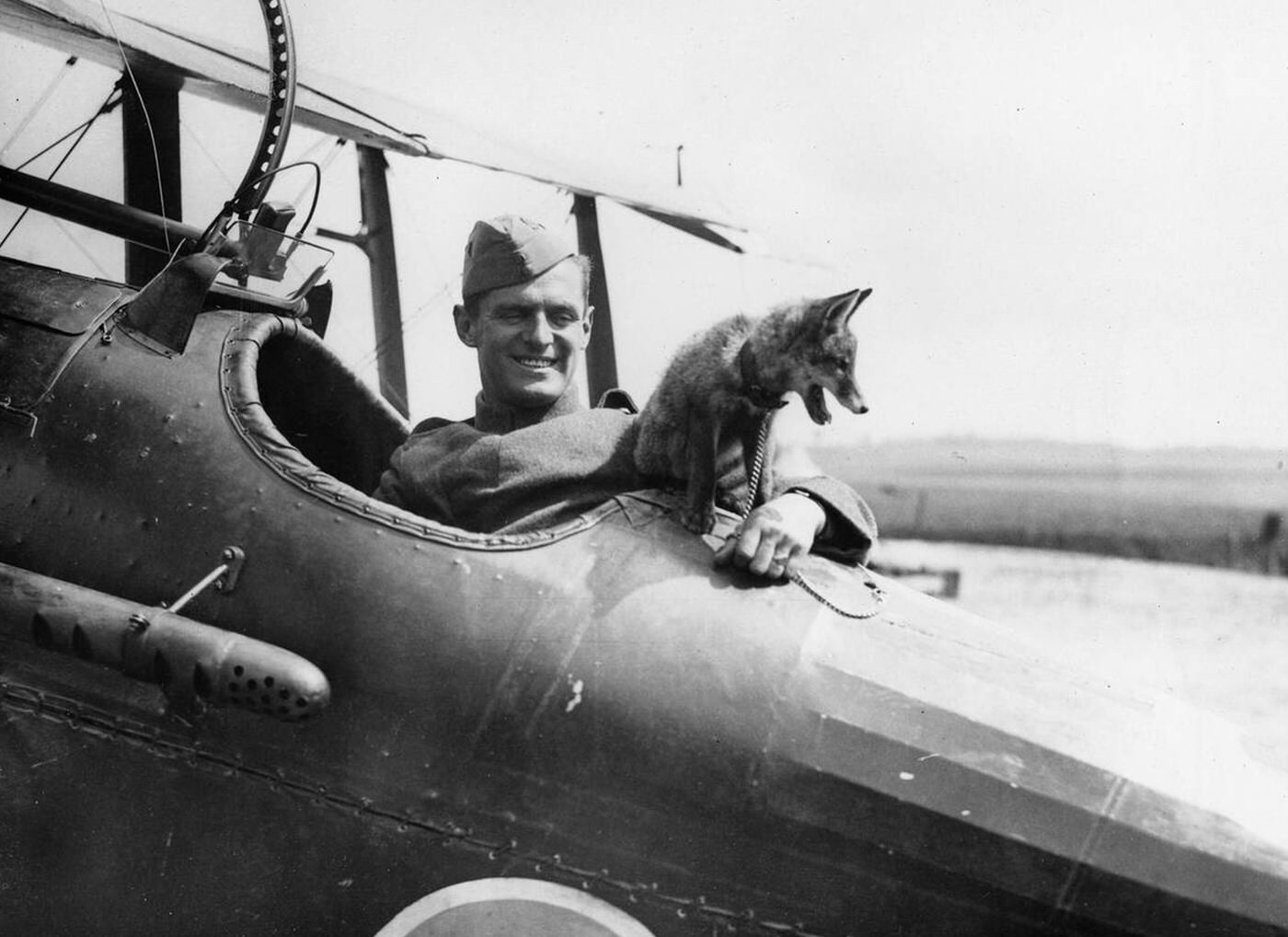
A pilot from World War I seated in a biplane of the Royal Flying Corps wearing early aviation gear, 1914-1918.

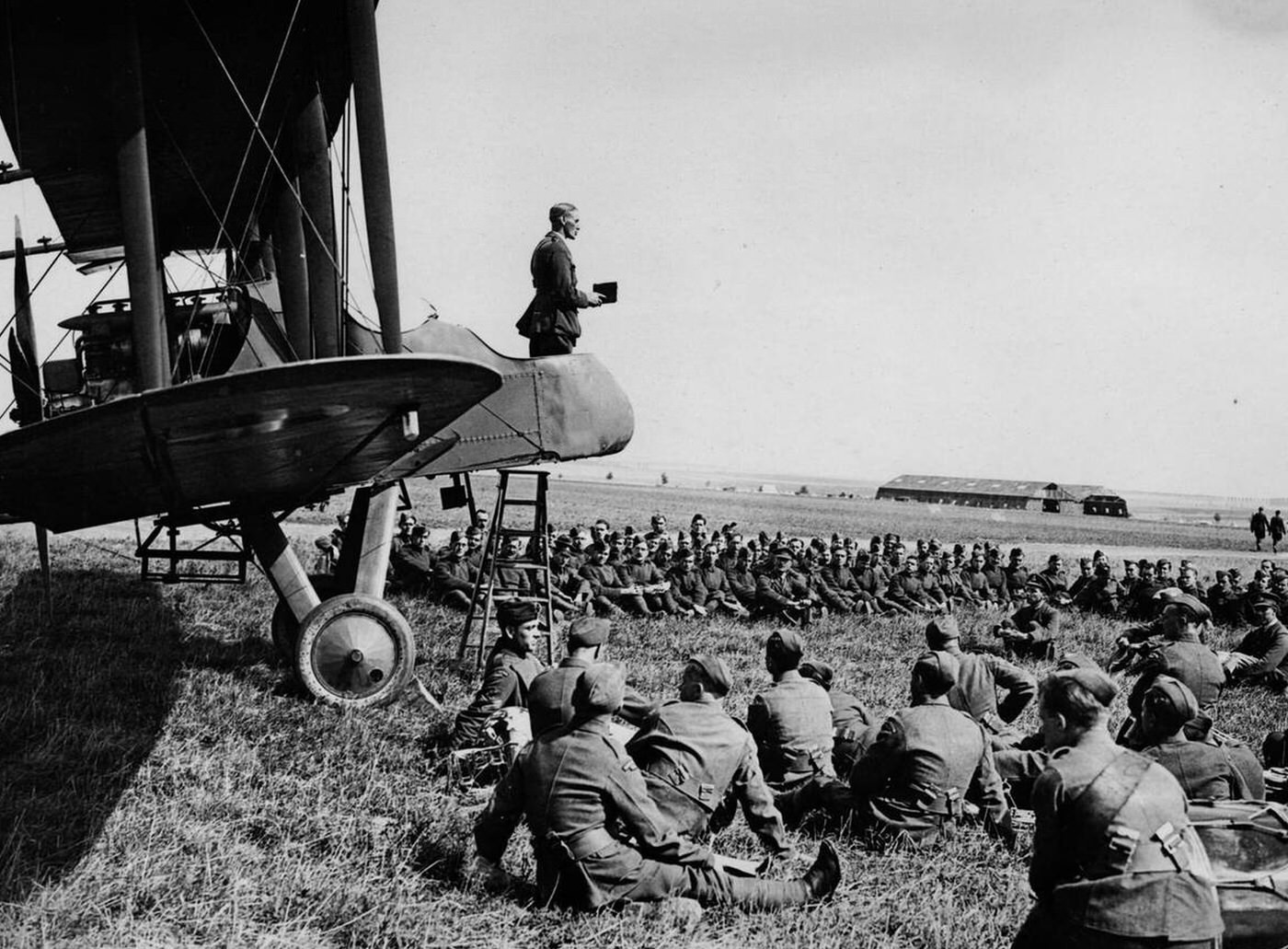
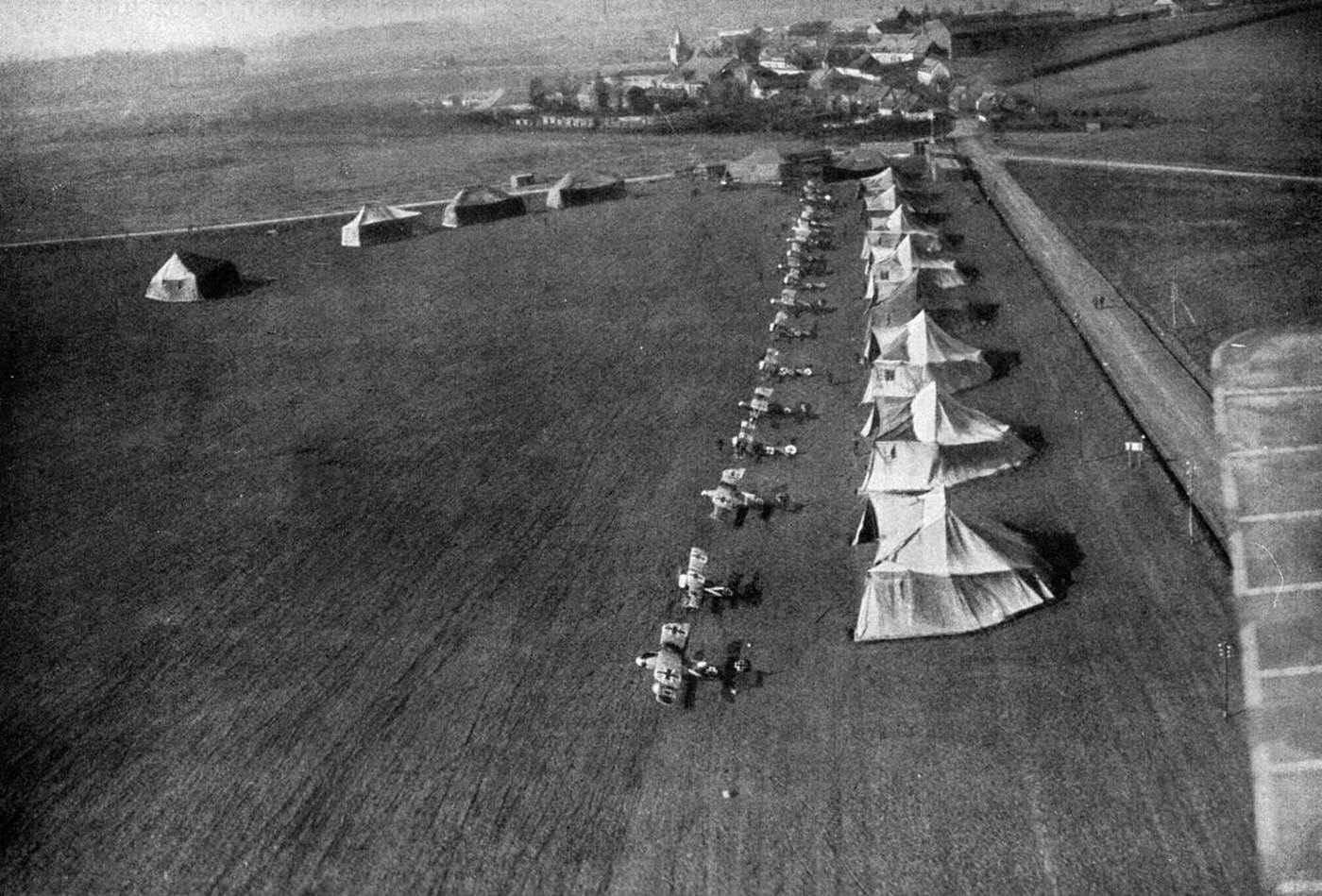
The men who flew lived in a tight, superstitious community. Airfields had their own rhythms — ground crews working through the night on engines and fabric, pilots gathering in the early morning before missions, chaplains holding services wherever they could find a congregation.
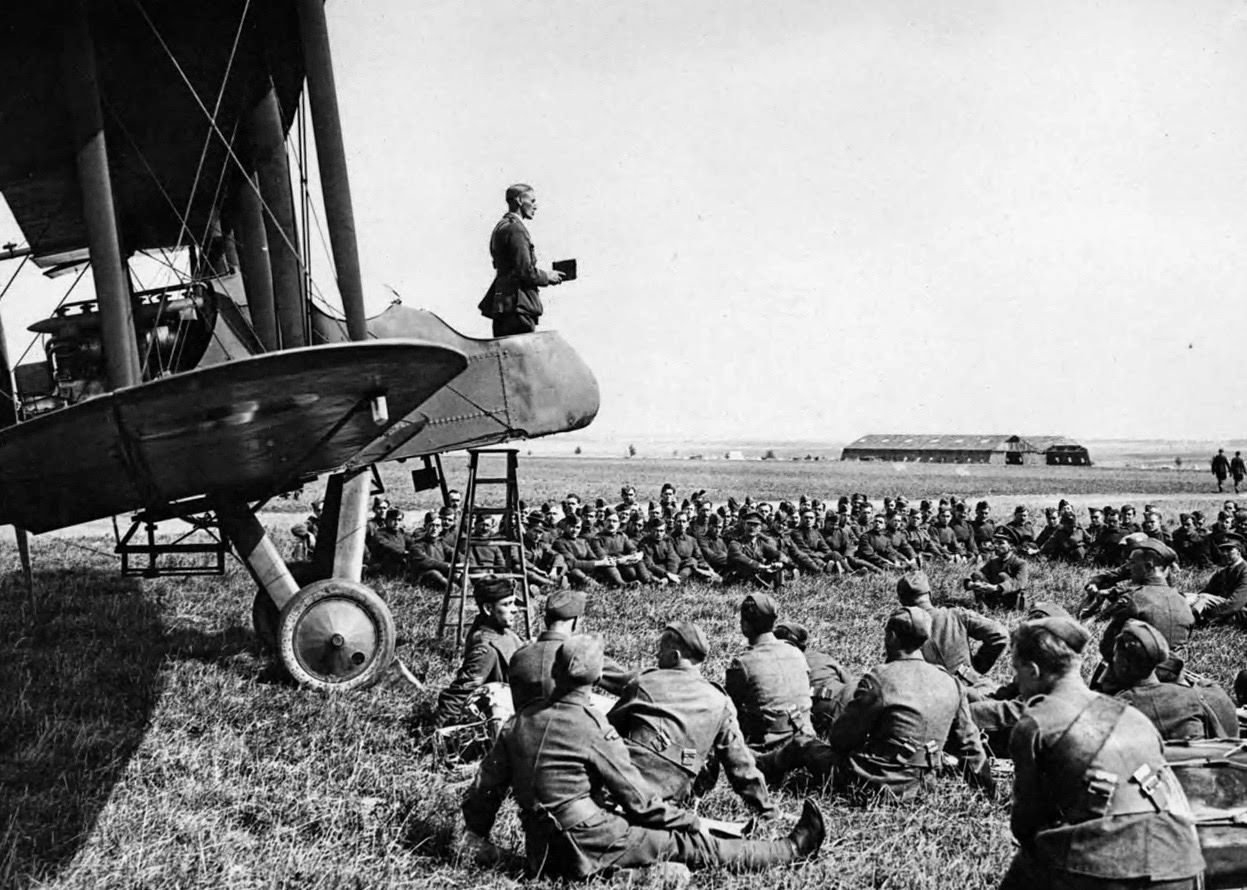
A Sunday morning service in an aerodrome in France with the Chaplain conducting the service from an aeroplane.
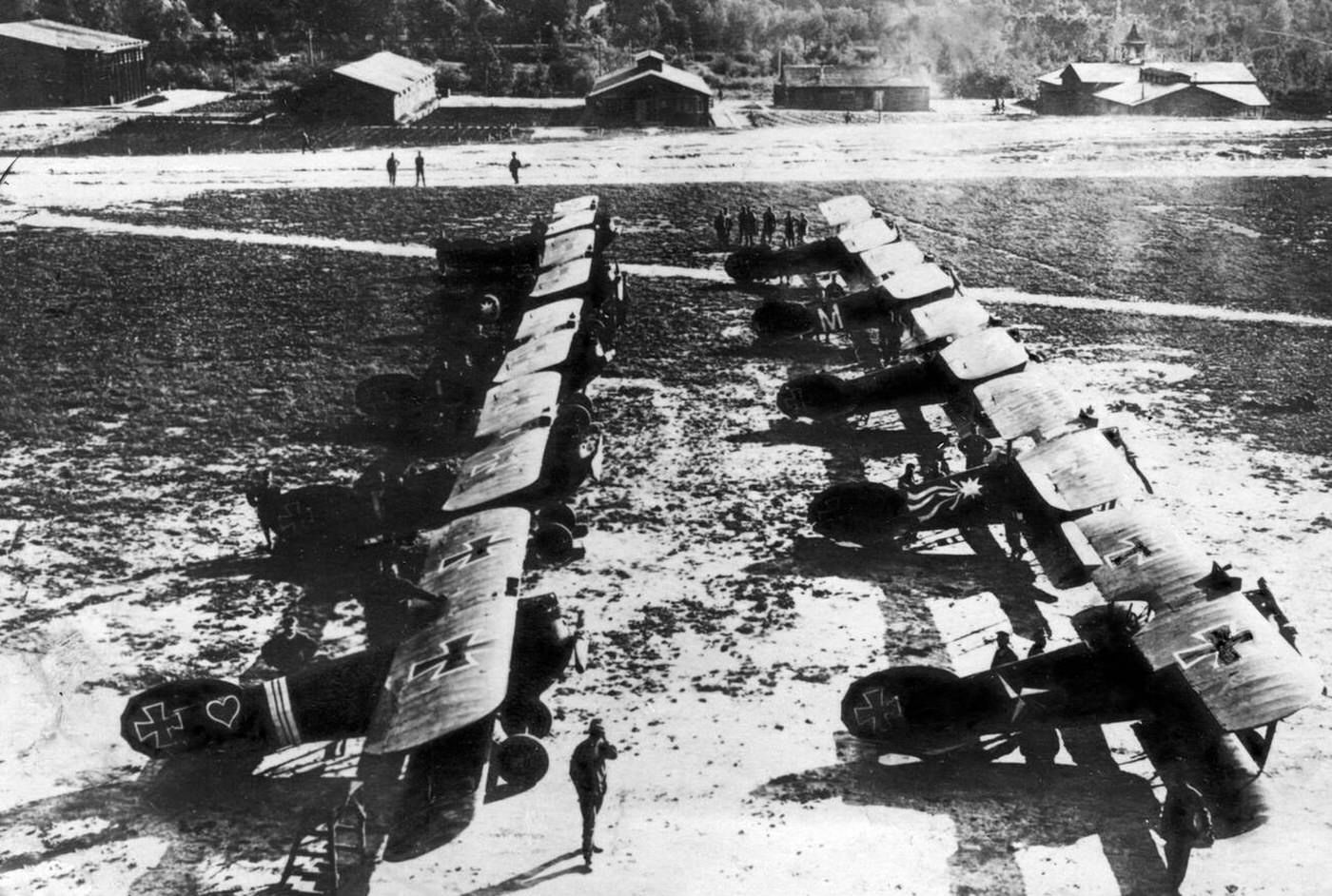
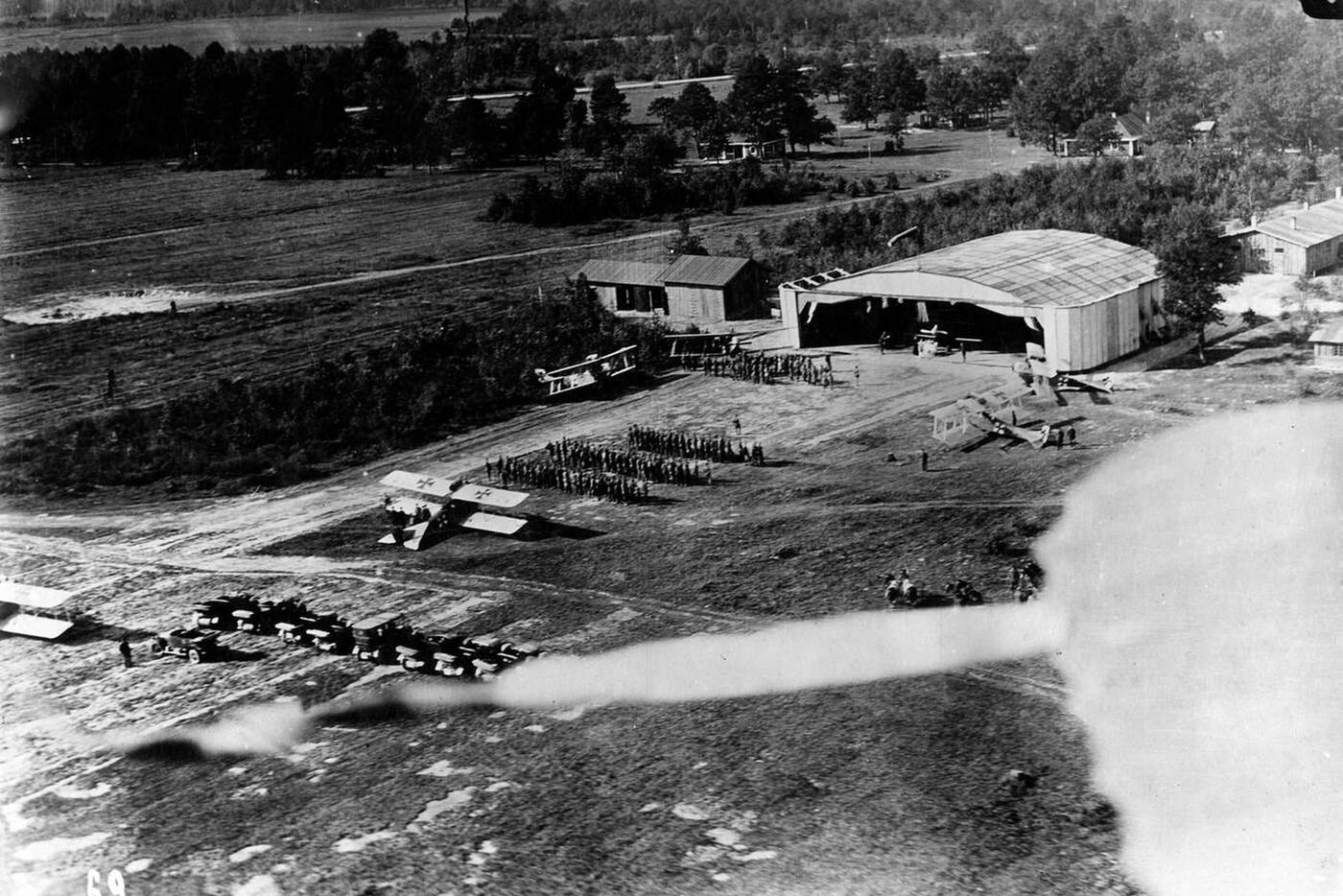
Airfield of a German fighter squadron, France, 1917-1918.

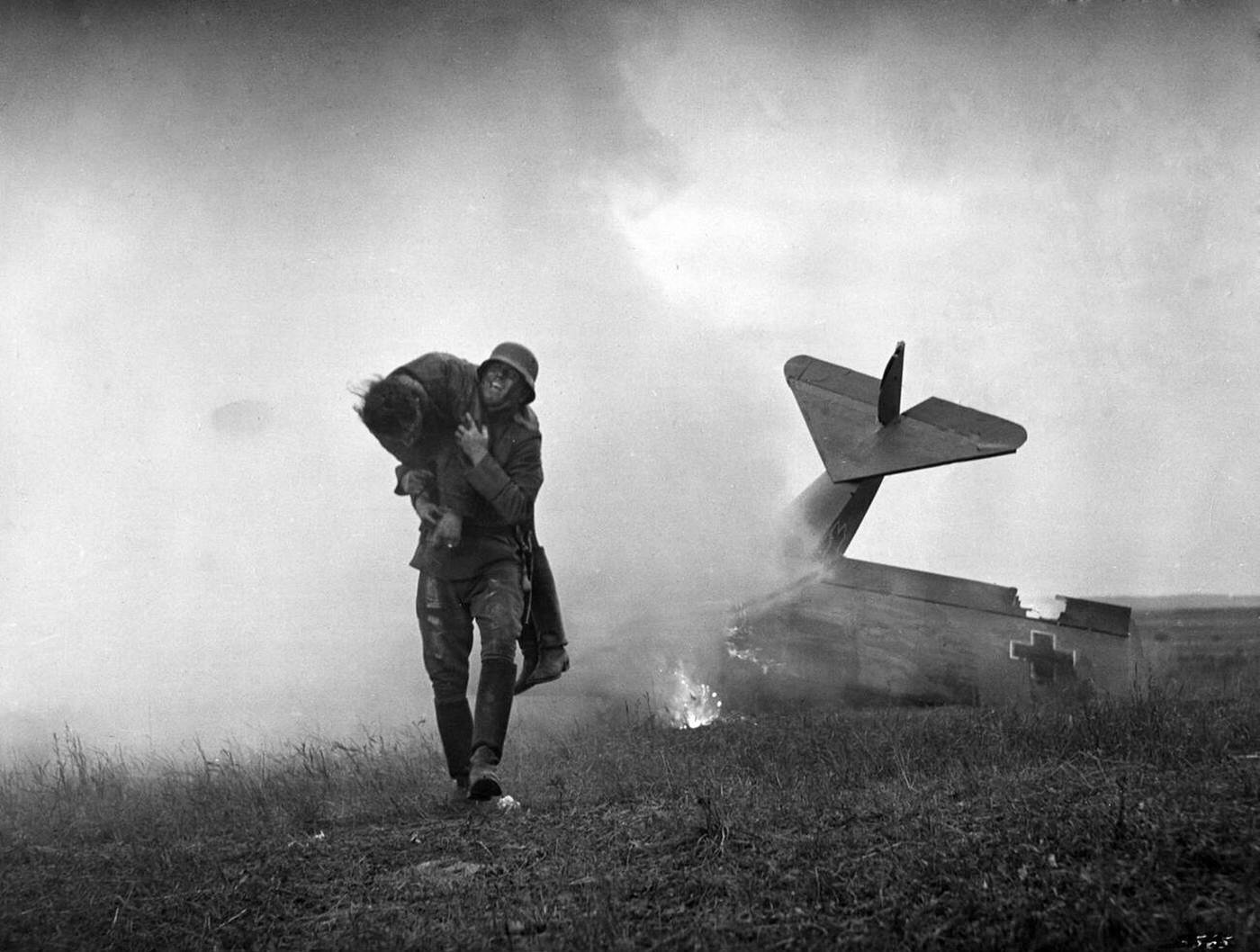
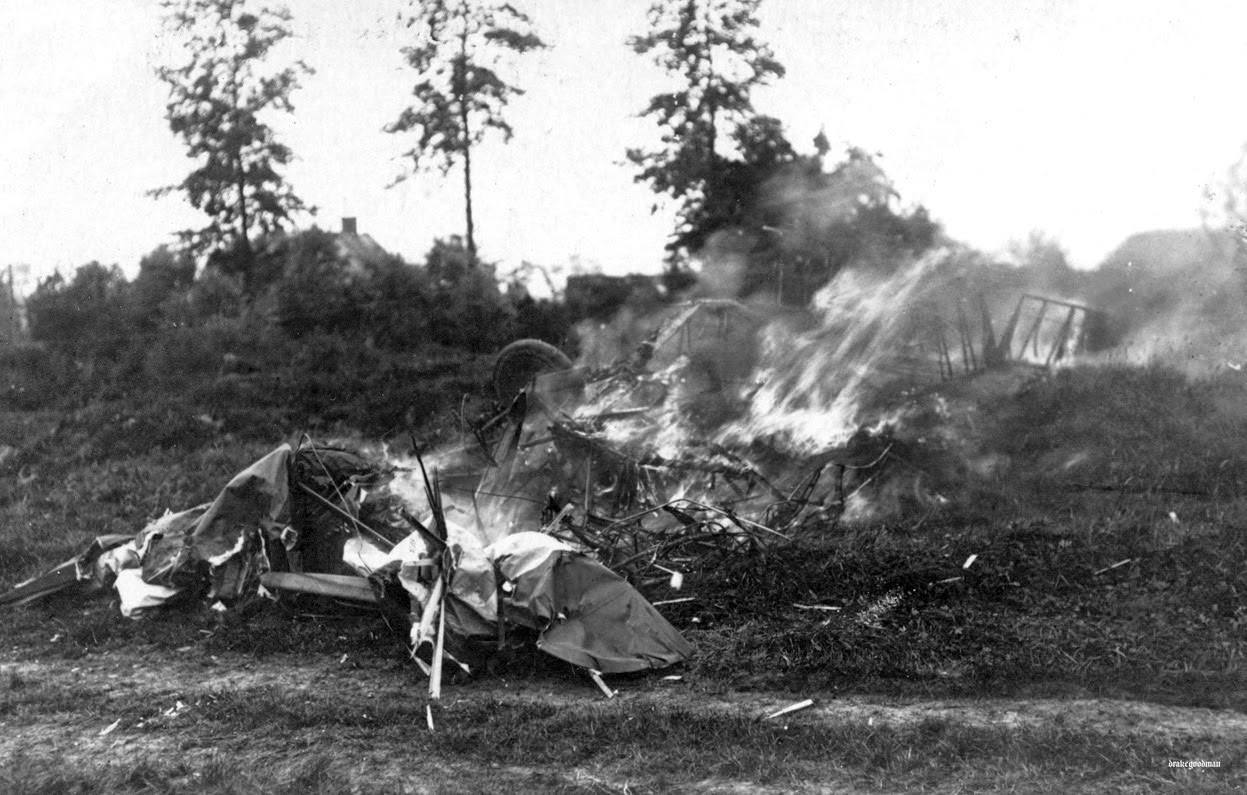
What fell from the sky told its own story. Wrecked aircraft were stripped for parts, studied by engineers, or simply left where they came down. Every crashed plane represented not just a lost machine but a lost pilot — or a prisoner, or a lucky man who walked away from wreckage in a foreign field.
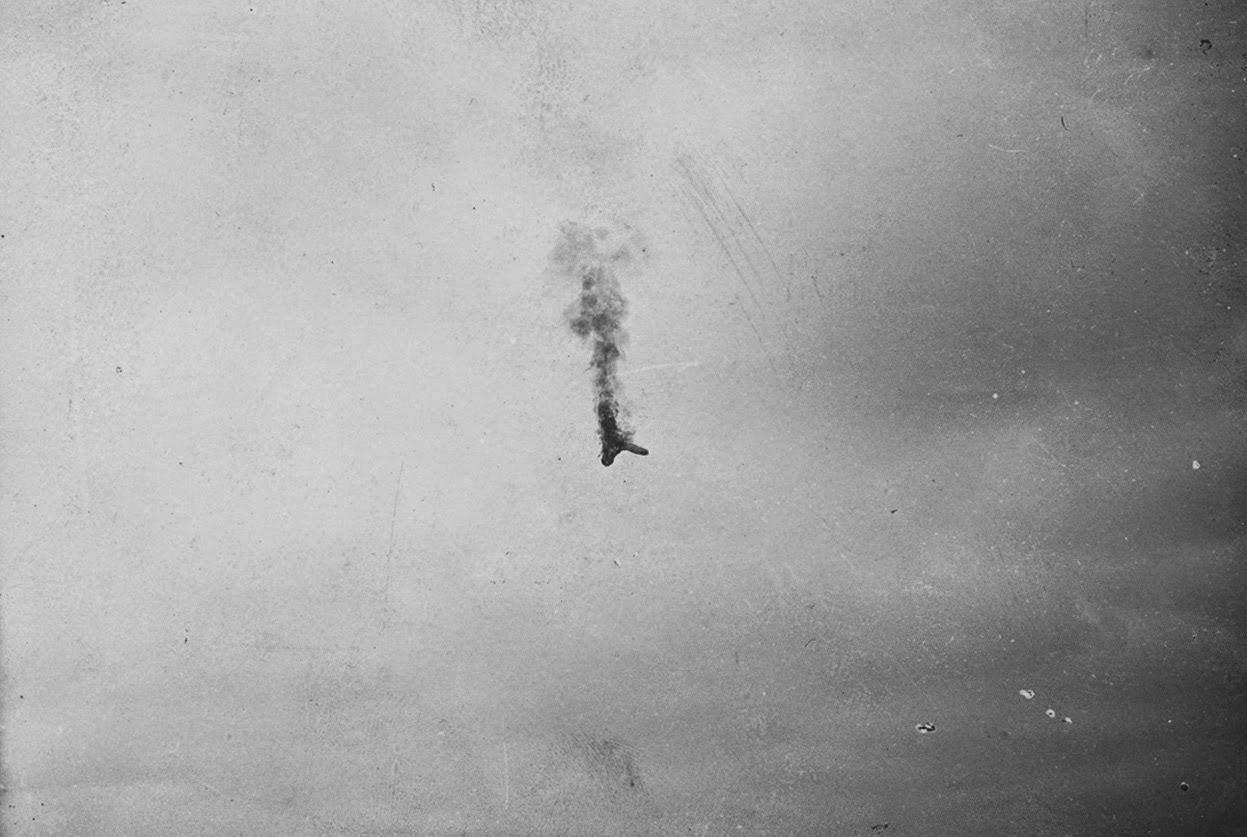
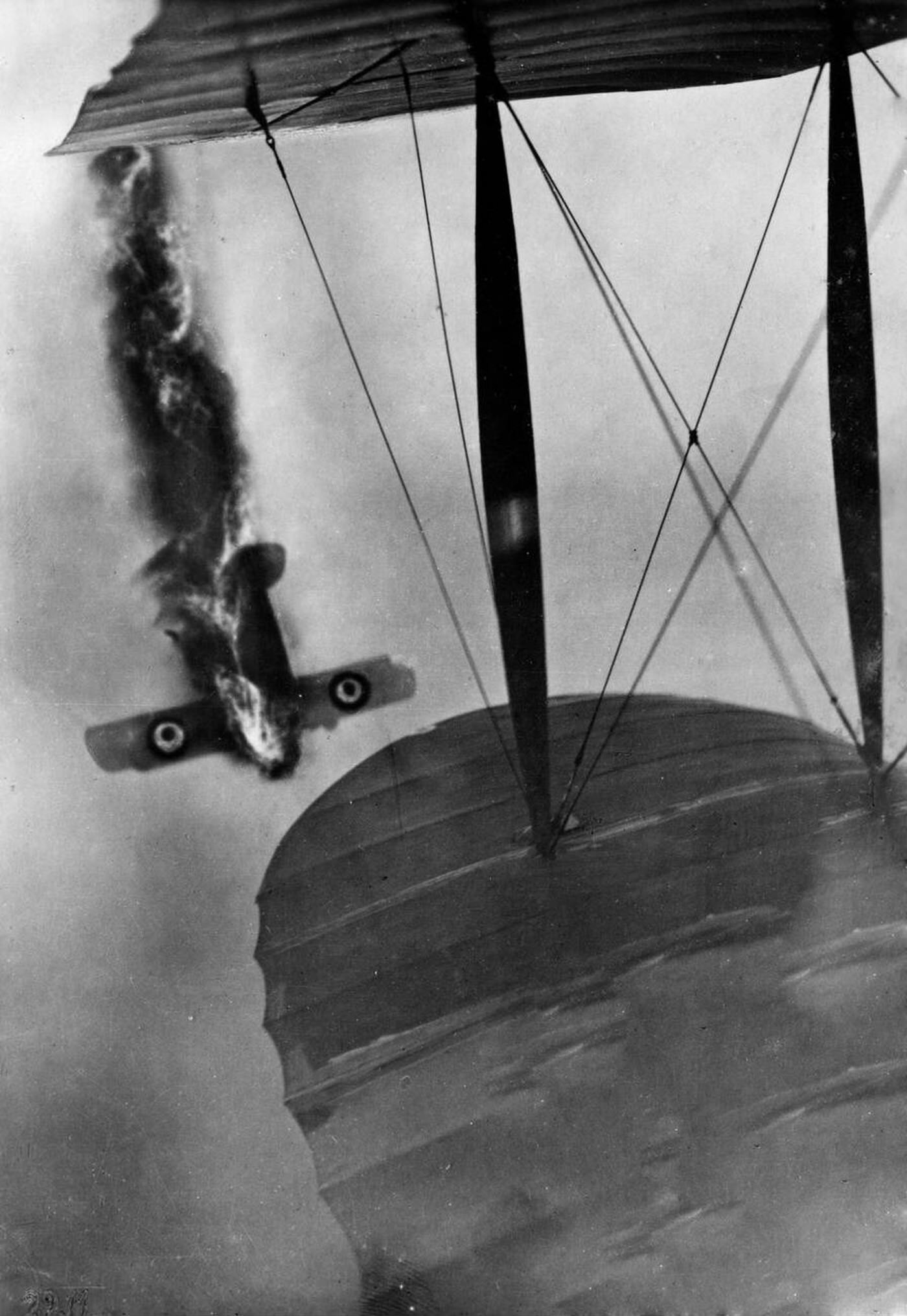
An aircraft in flames falls from the sky.
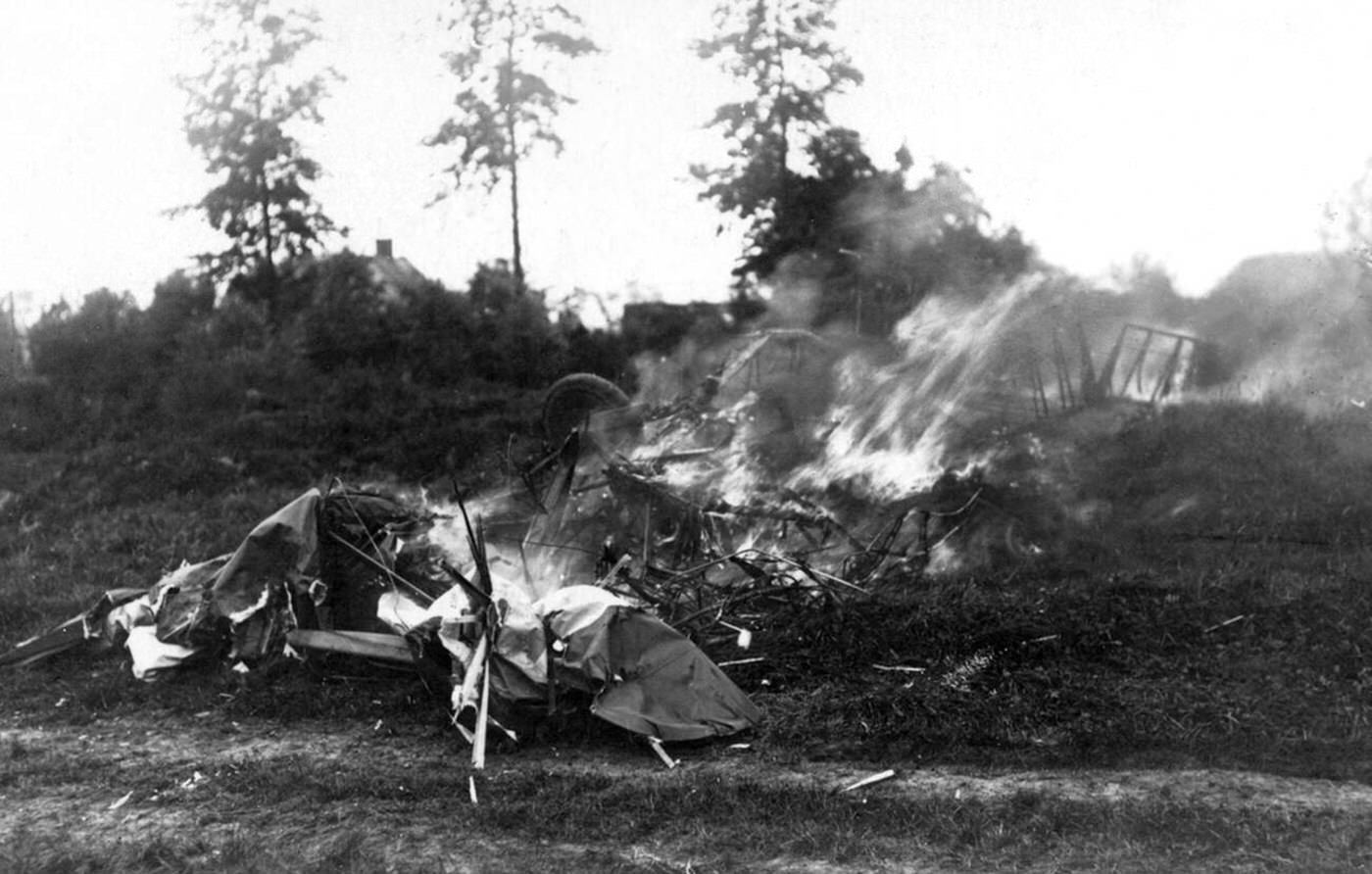
An aircraft crashed and burning in German territory, 1917.
Wreckage of a shot down pilot in the First World War, 1914-1918.

The war that started with pilots waving at each other from open cockpits ended with armored ground-attack planes strafing trenches, multi-engine bombers targeting cities a hundred miles behind the front, and fighter squadrons clashing in massive formation battles above the clouds. In four years, the airplane went from a reconnaissance curiosity to the central weapon of a new kind of industrial war fought in three dimensions.
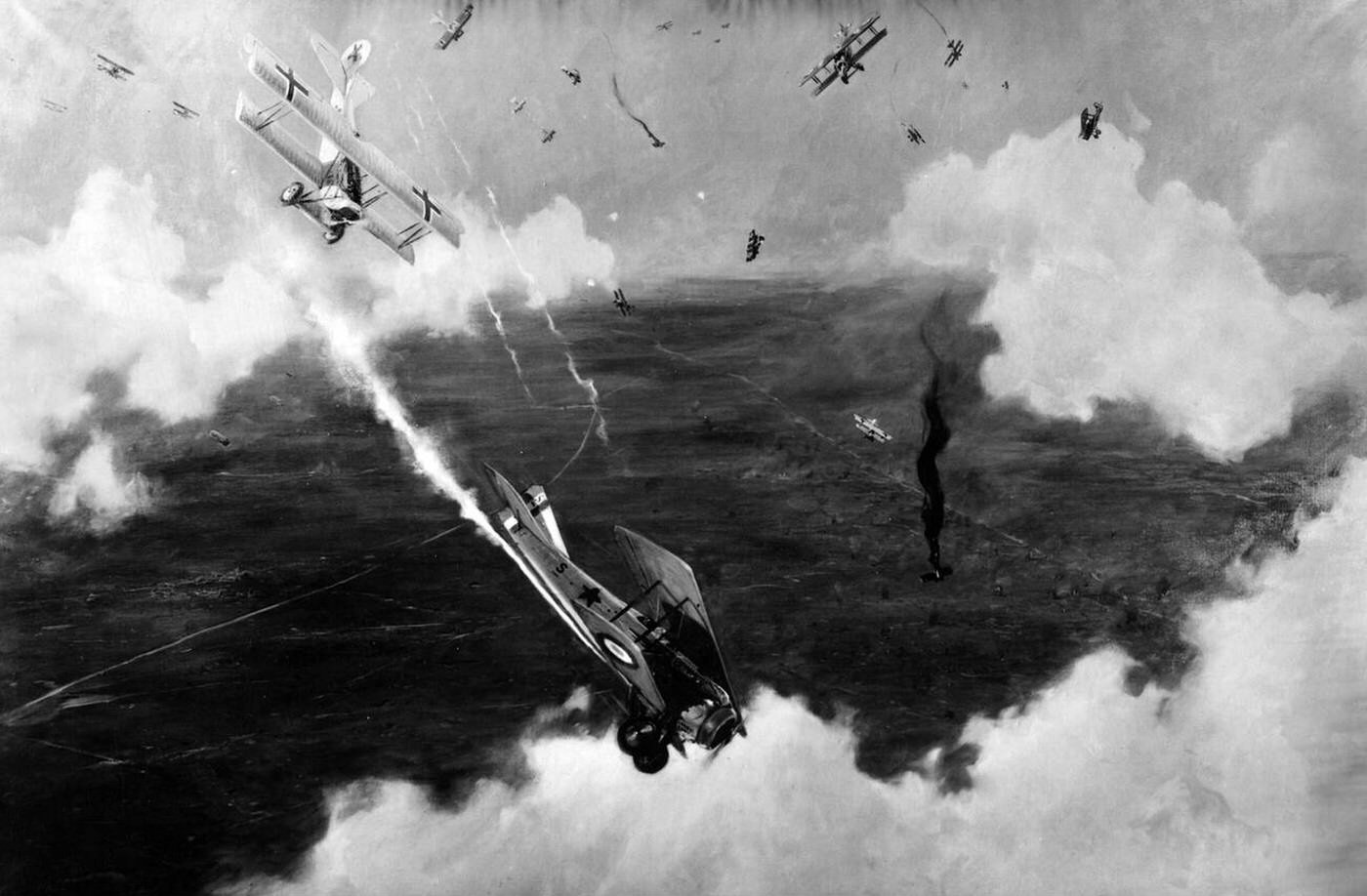
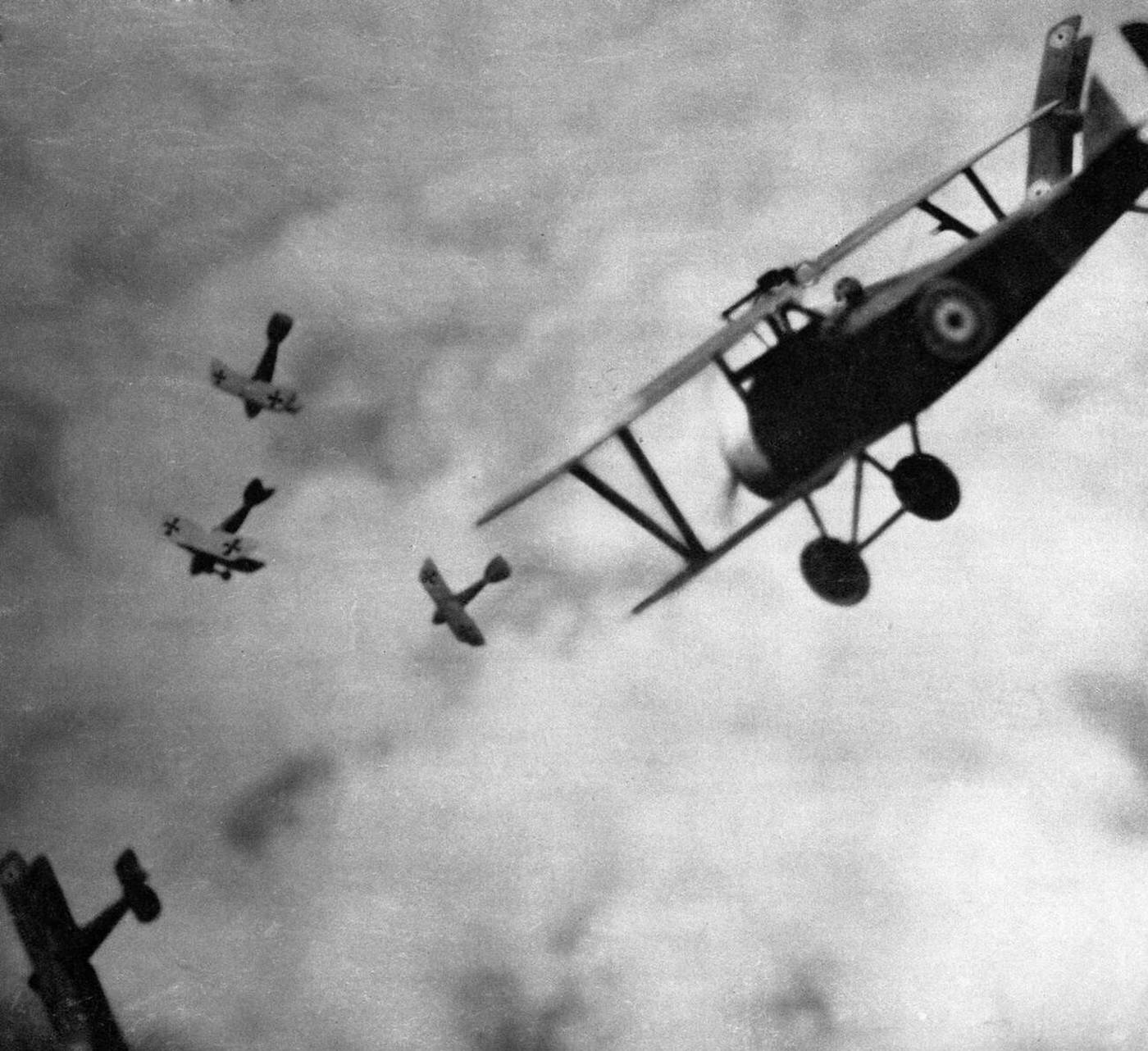
Aerial combat above the western front in the First World War, 1914-1918.
Aerial combat between British and German airplanes in the First World War, 1914-1918.
Aerial combats in the First World War, 1914-1918.
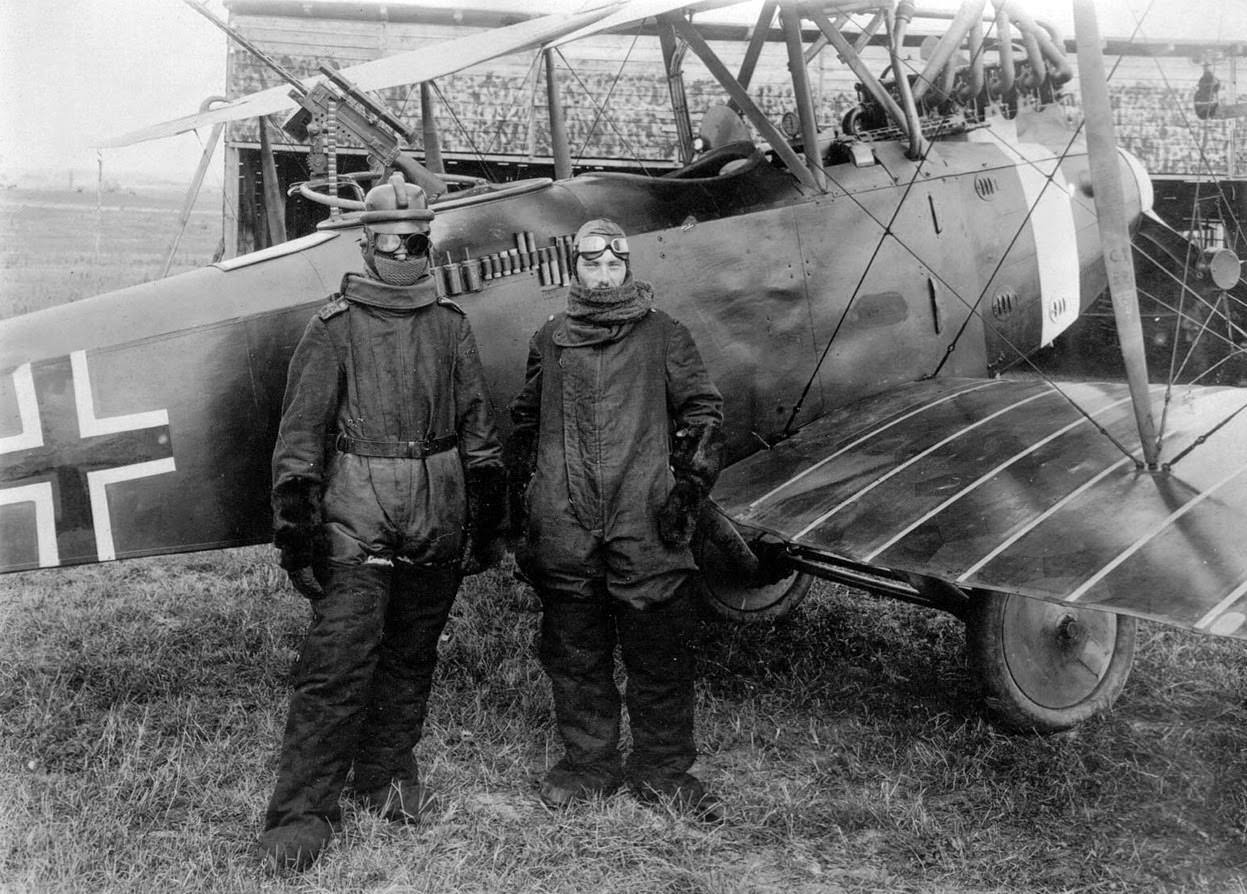
German pilot Richard Scholl and his co-pilot Lieutenant Anderer in flight gear beside their Hannover CL.II biplane, 1918.
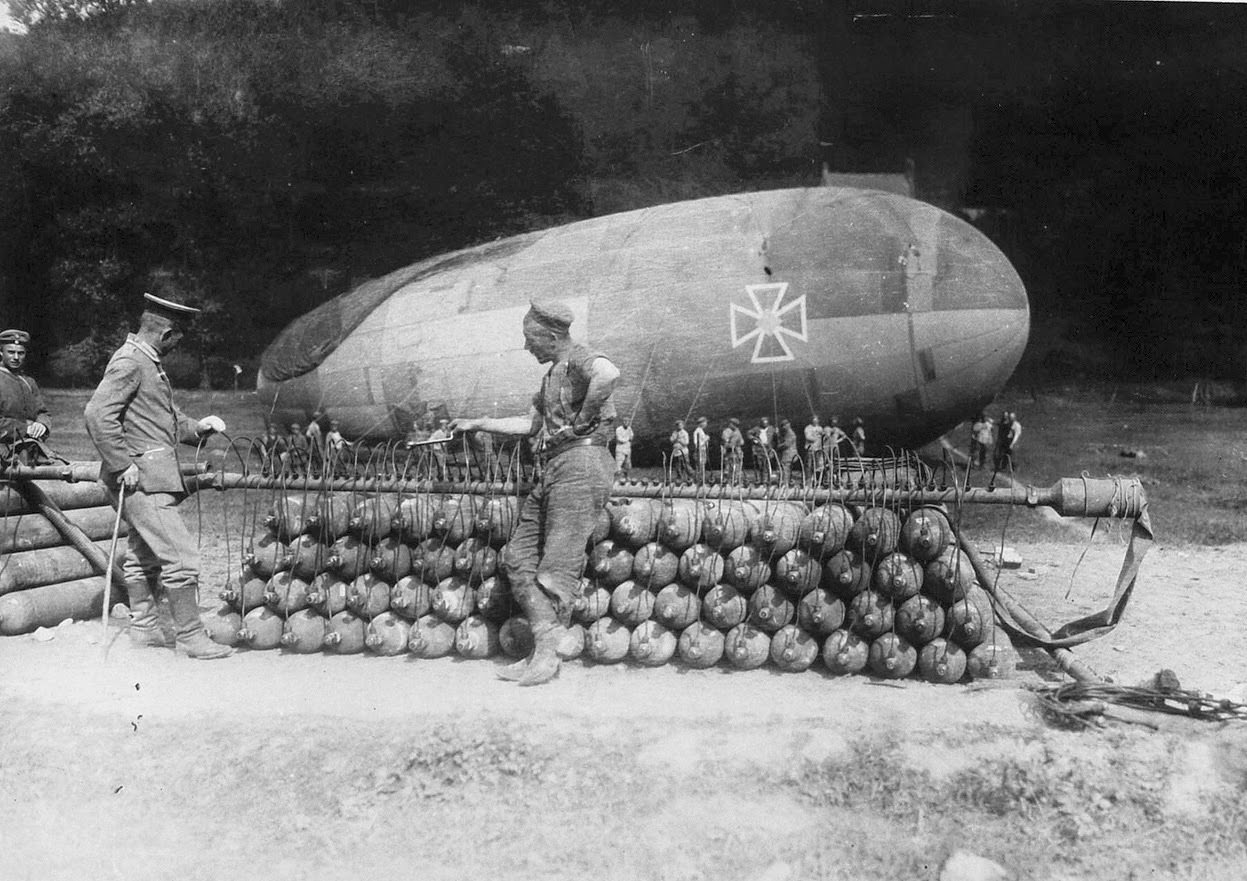
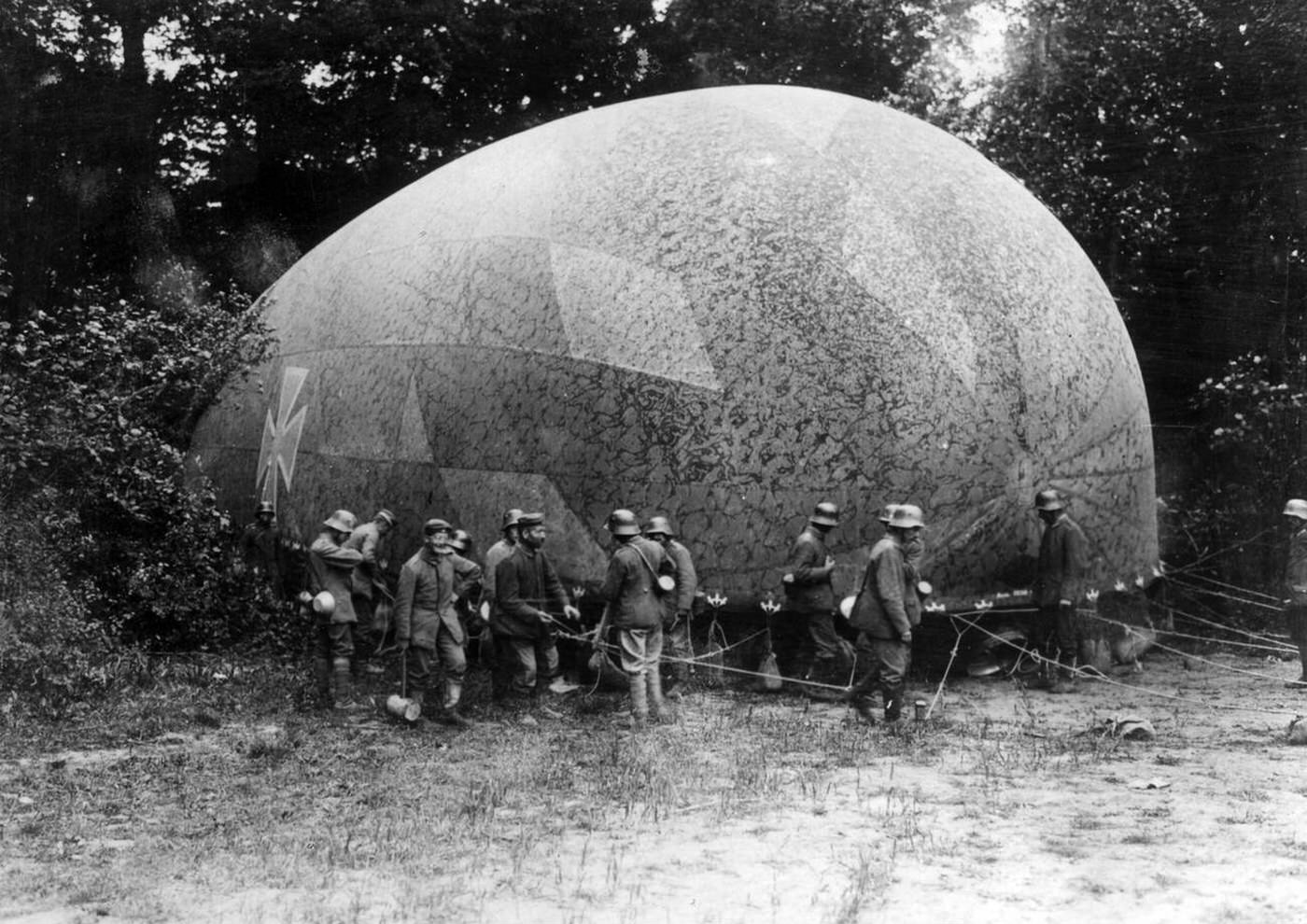
German soldiers attend to a stack of gas canisters attached to a manifold, inflating a captive balloon on the Western front.
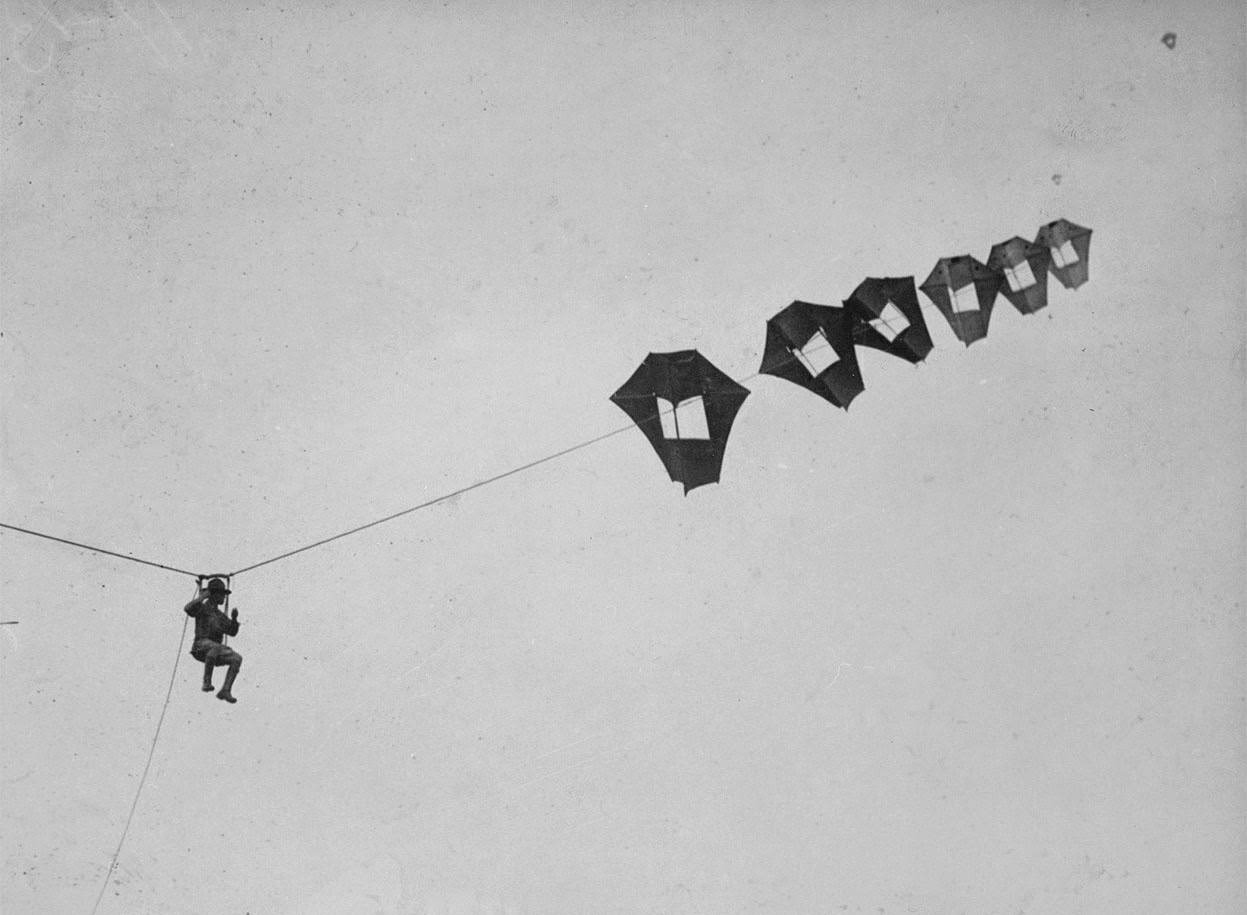
Lieutenant Kirk Booth of the U.S. Signal Corps being lifted skyward by the giant Perkins man-carrying kite at Camp Devens, Ayer, Massachusetts.
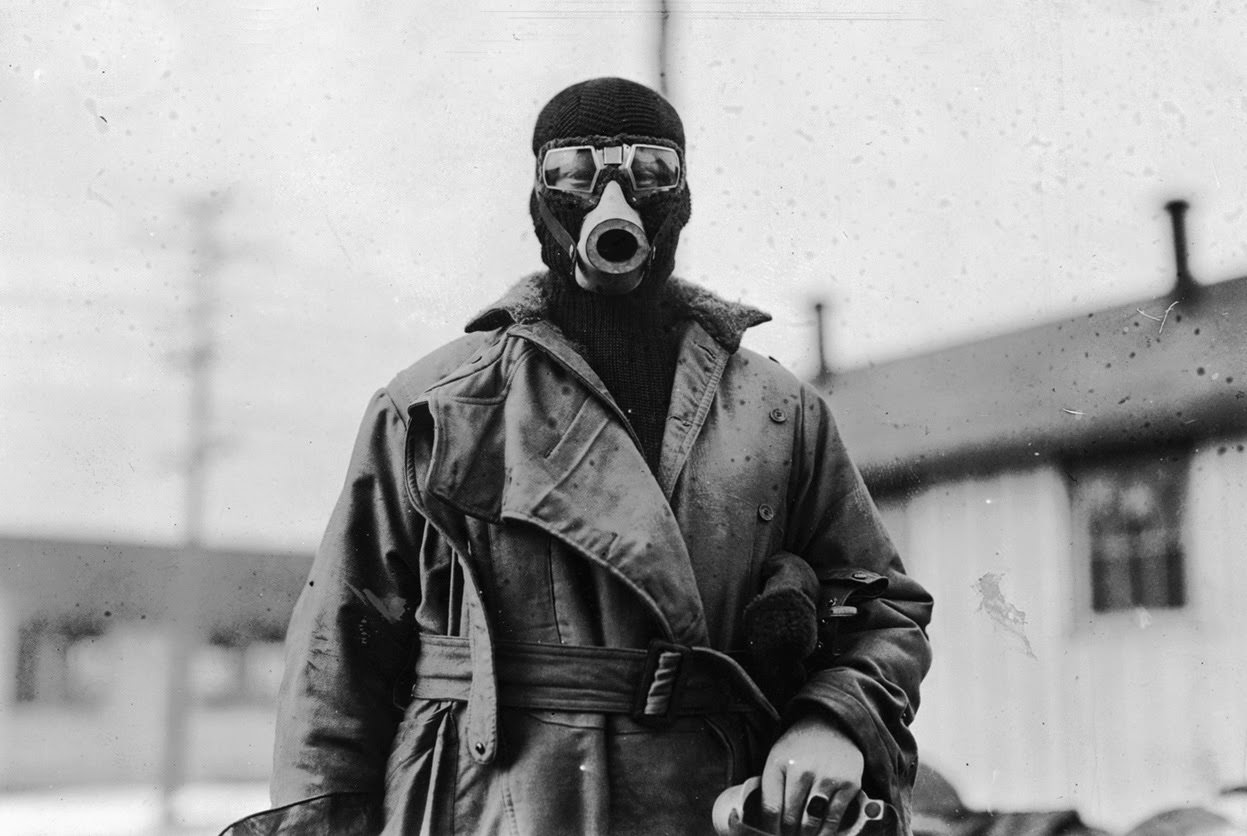
Unidentified pilot wearing a type of breathing apparatus, taken at Hazelhurst Field, Long Island, New York.
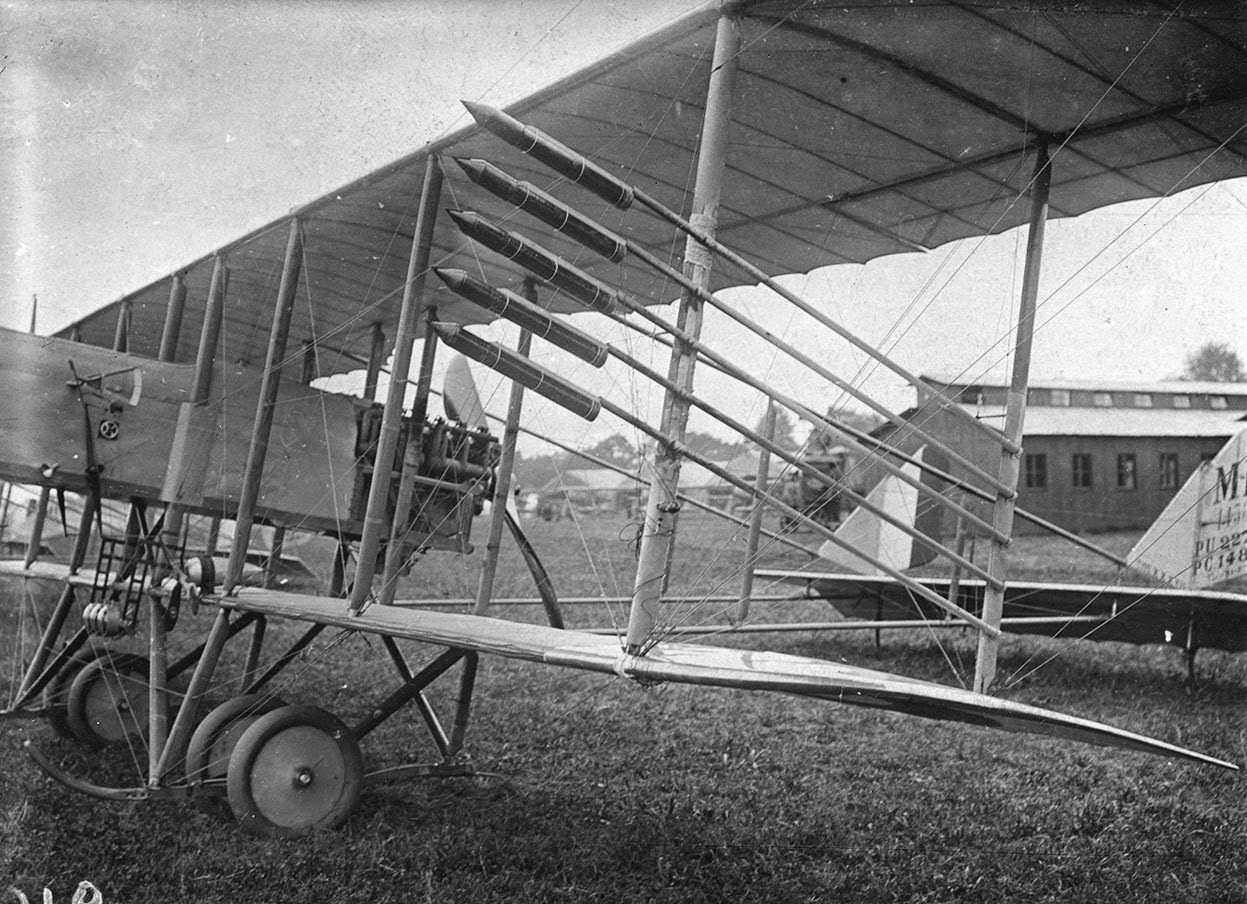
A Farman airplane with rockets attached to its struts.
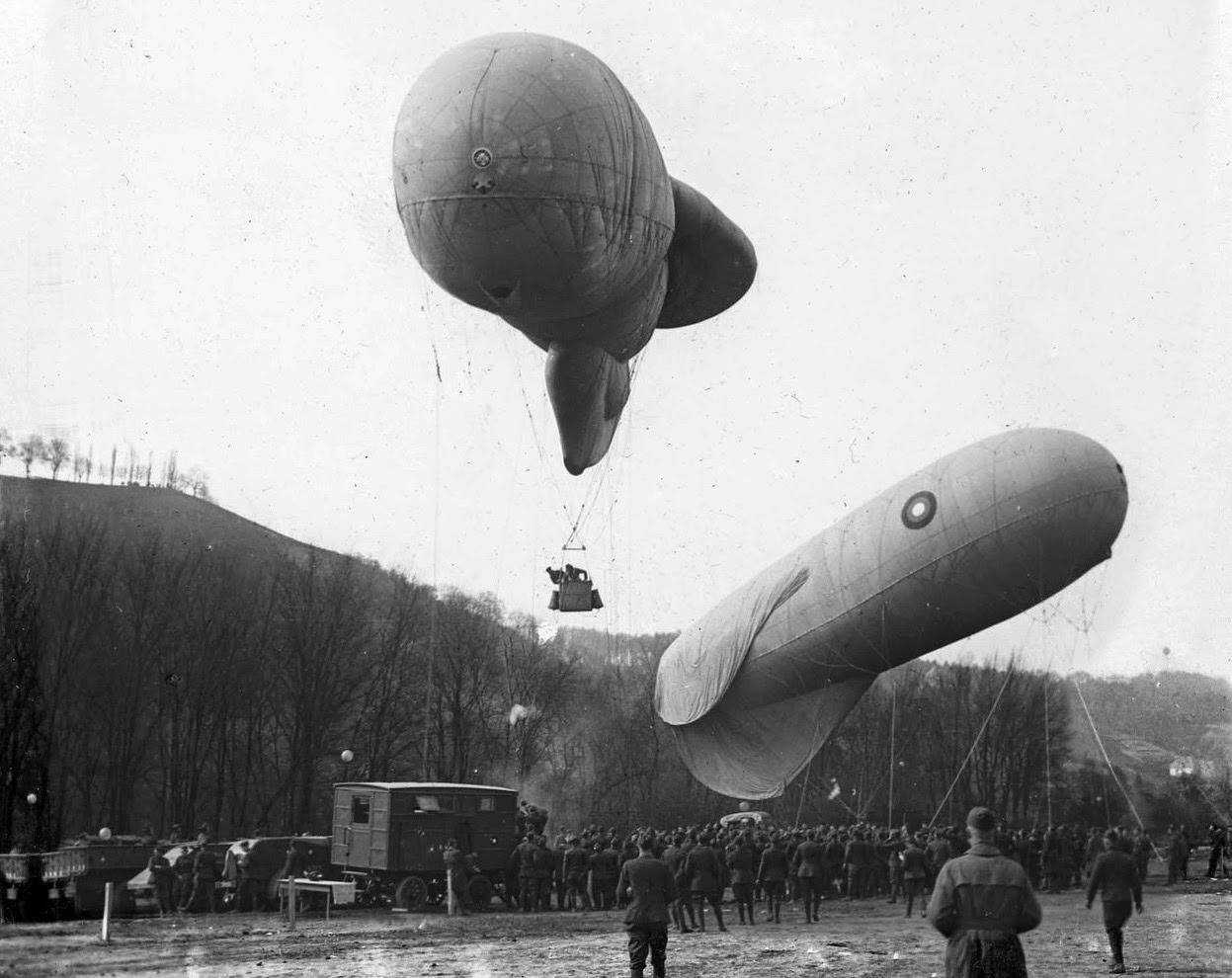
Observation Balloons near Coblenz, Germany.
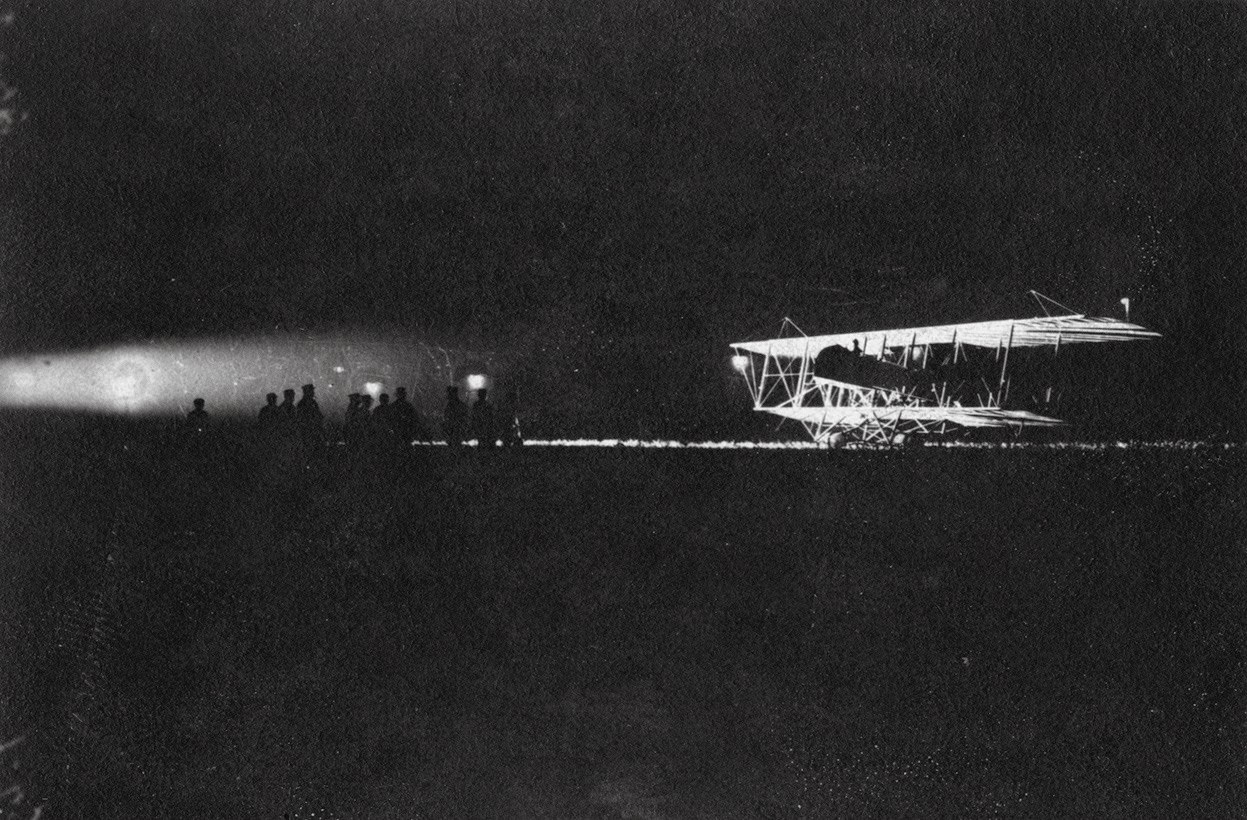
Night Flight at Le Bourget, France.
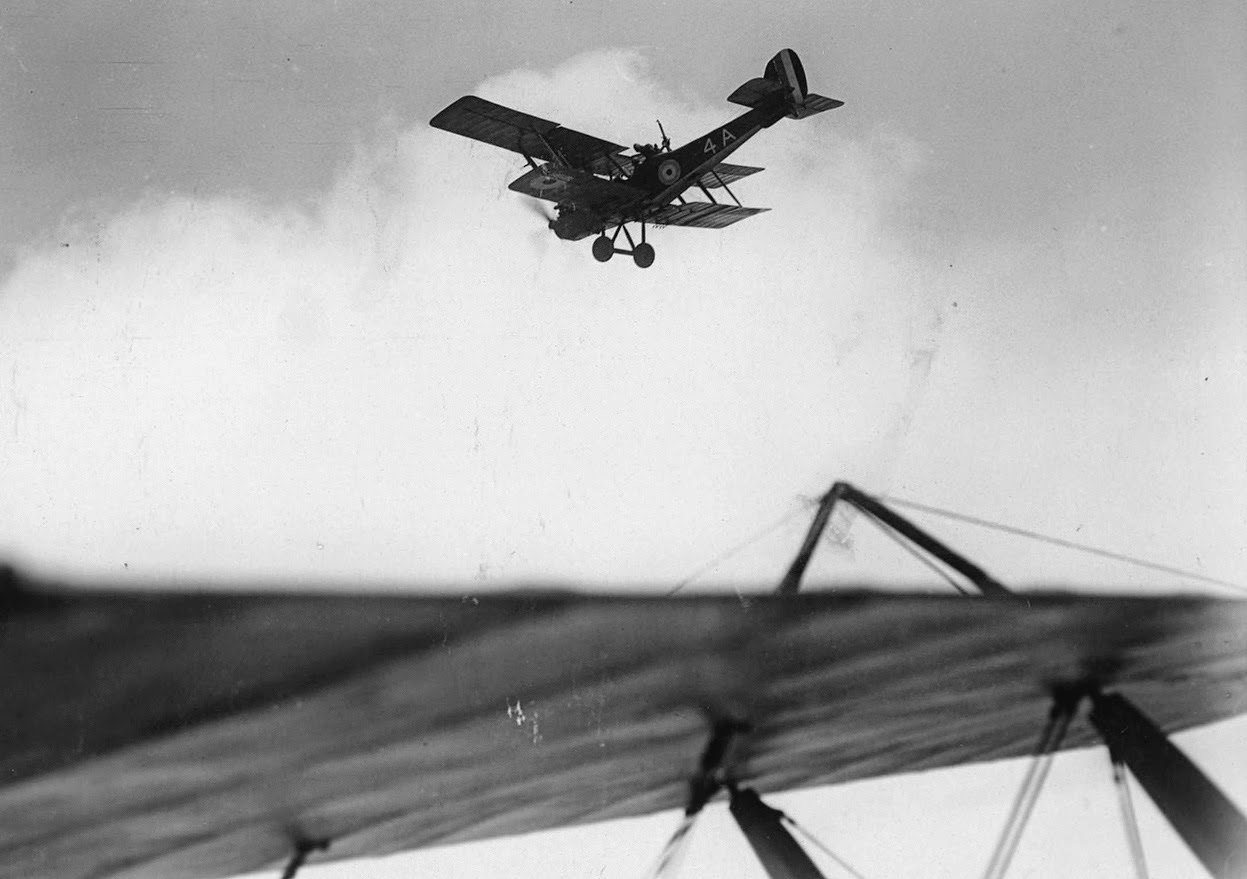
British reconnaissance plane flying over enemy lines in France.
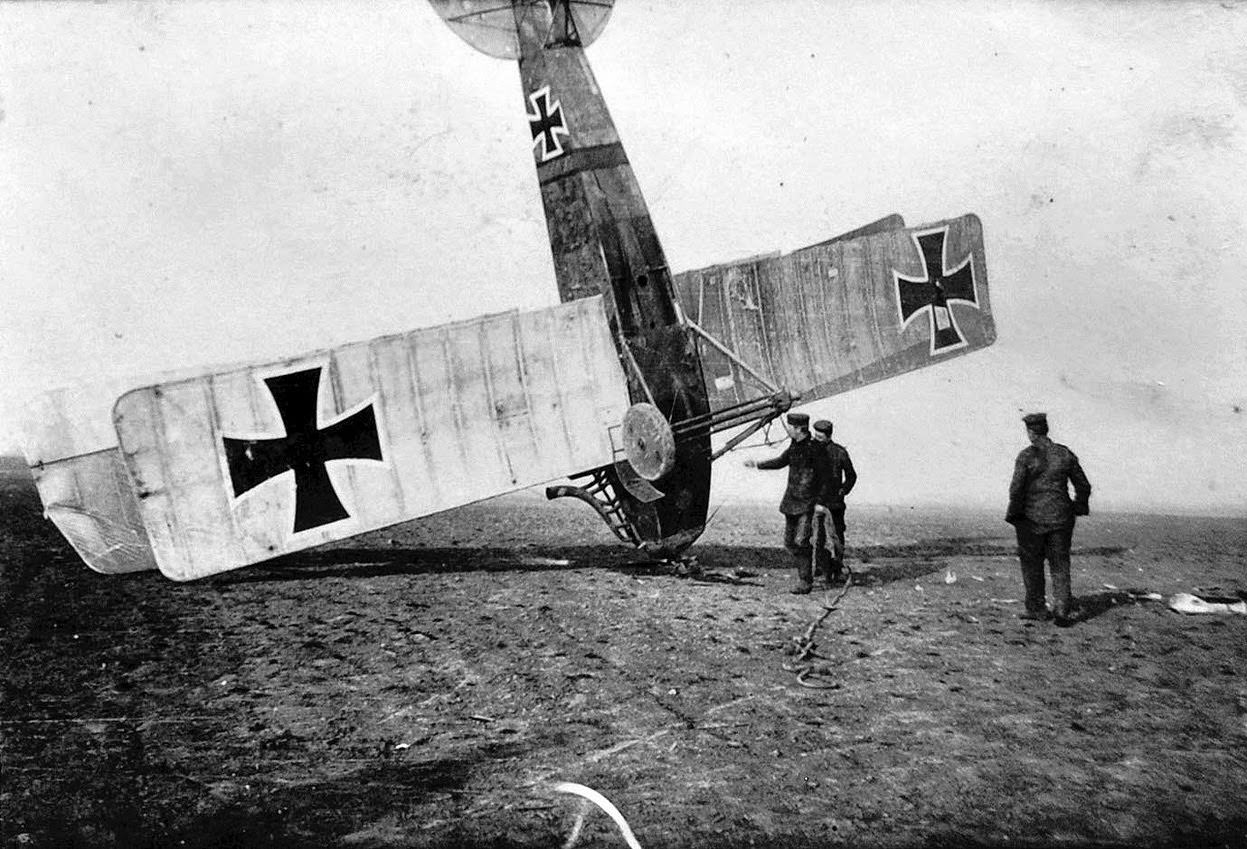
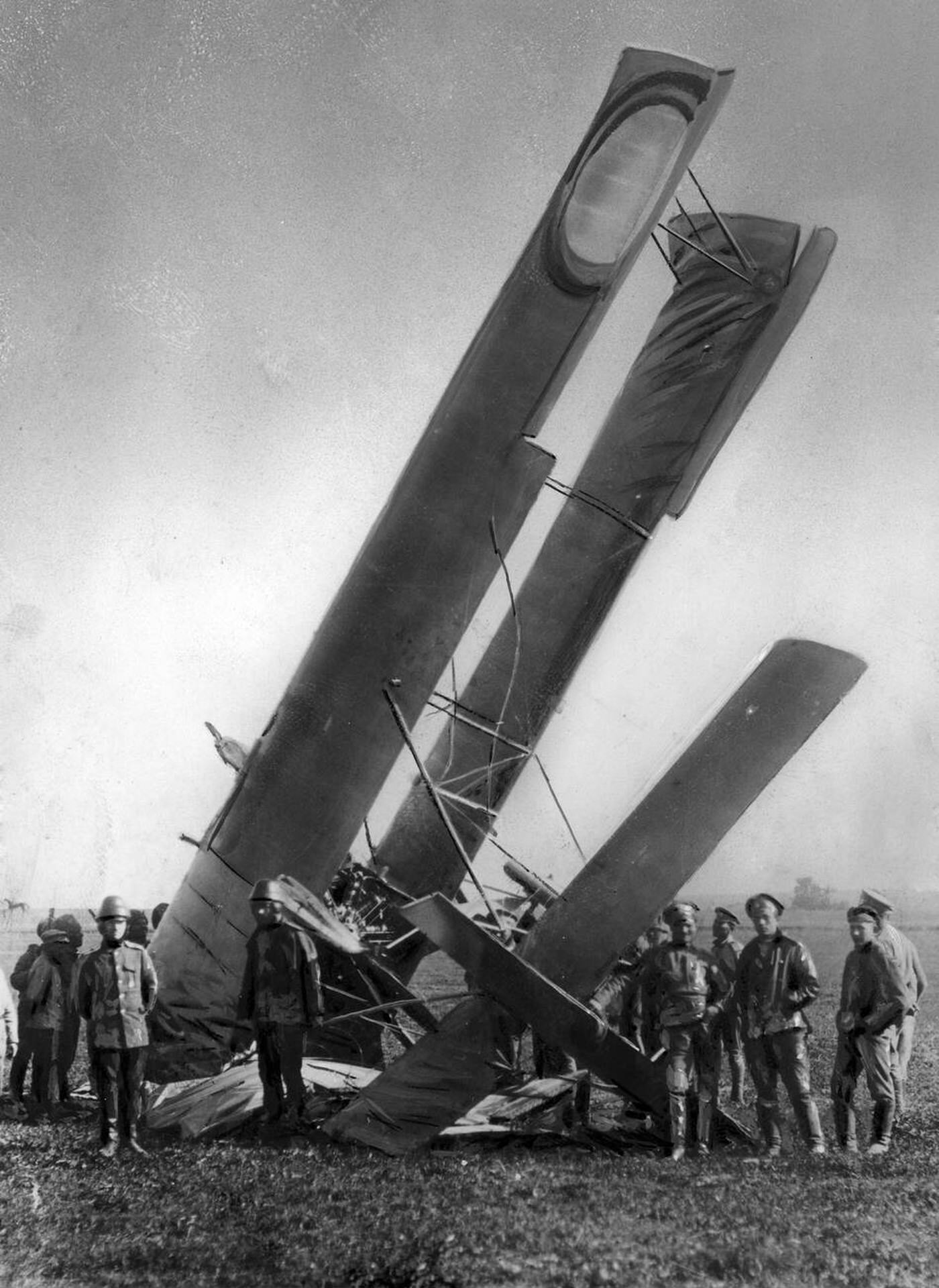
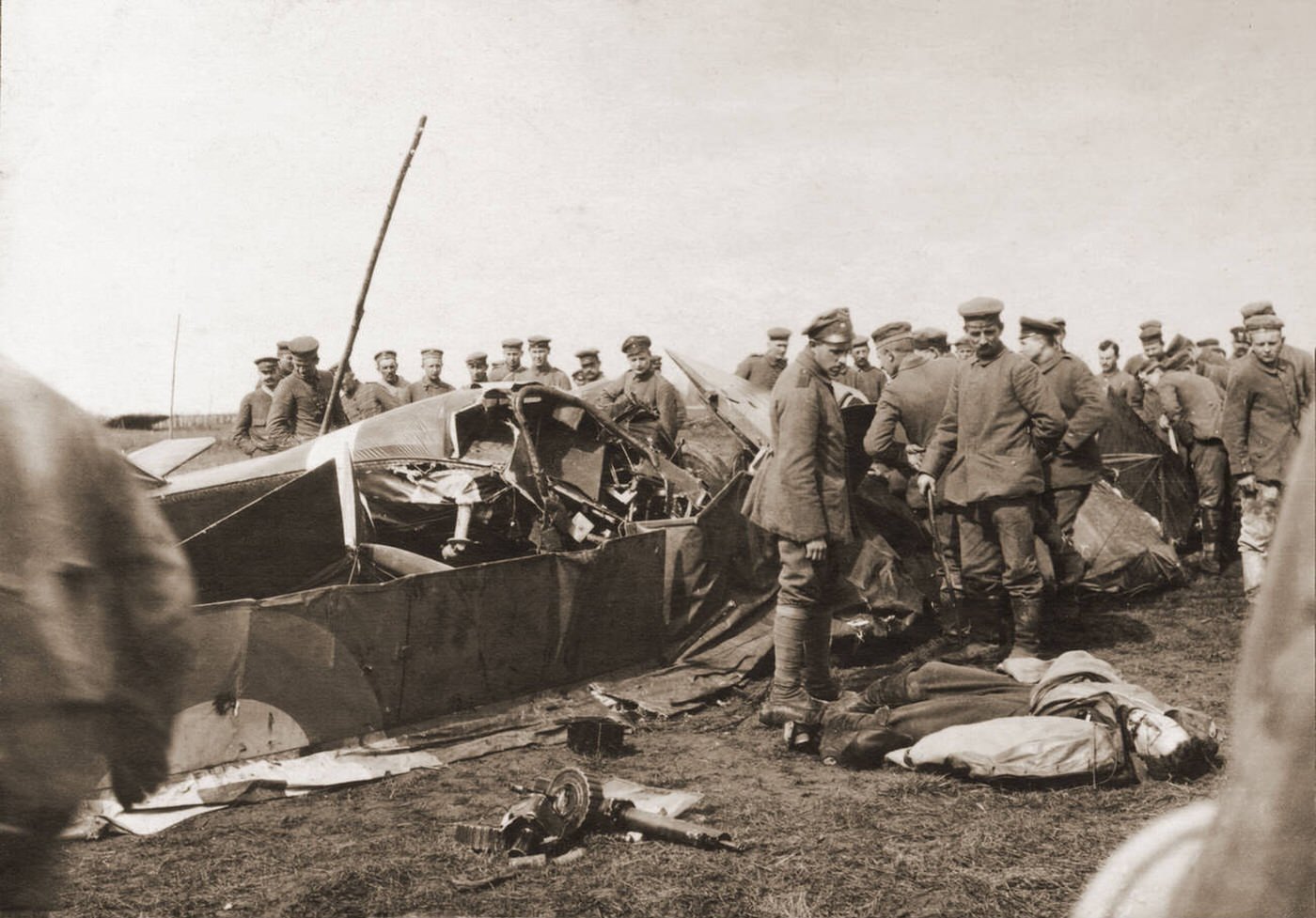
German soldiers attend to an upended German aircraft.
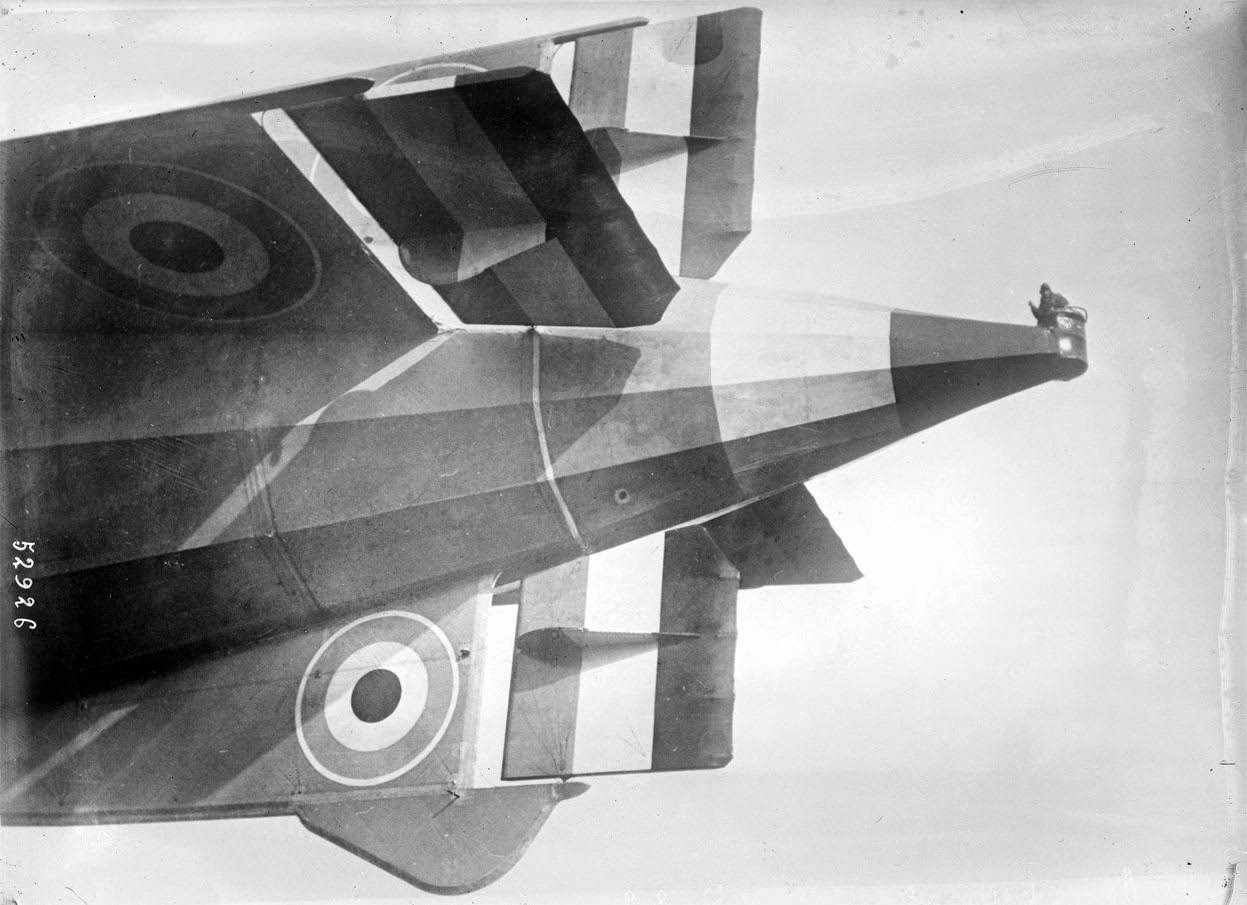
An observer in the tail tip of the English airship R33 in Selby, England, 1919.
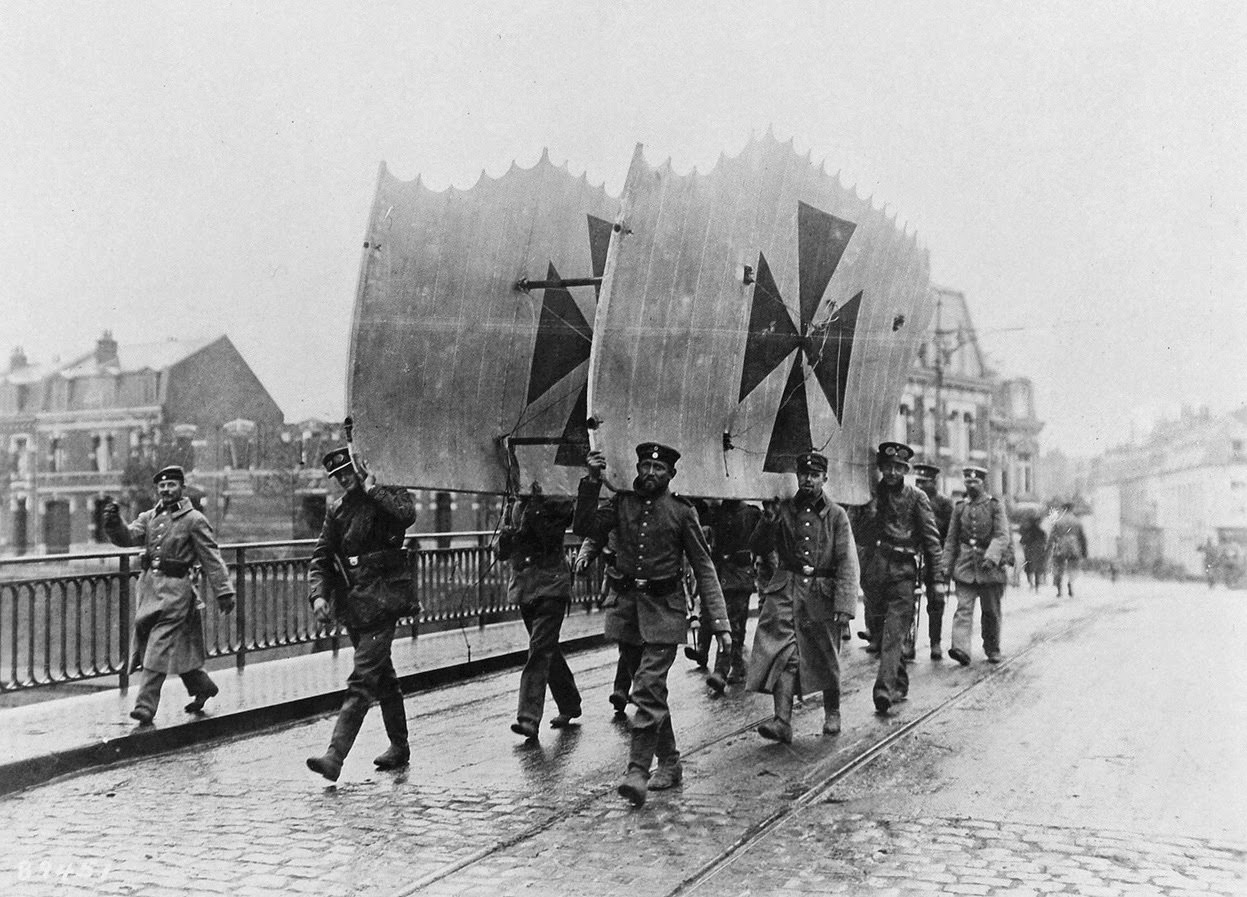
Soldiers carry a set of German airplane wings.
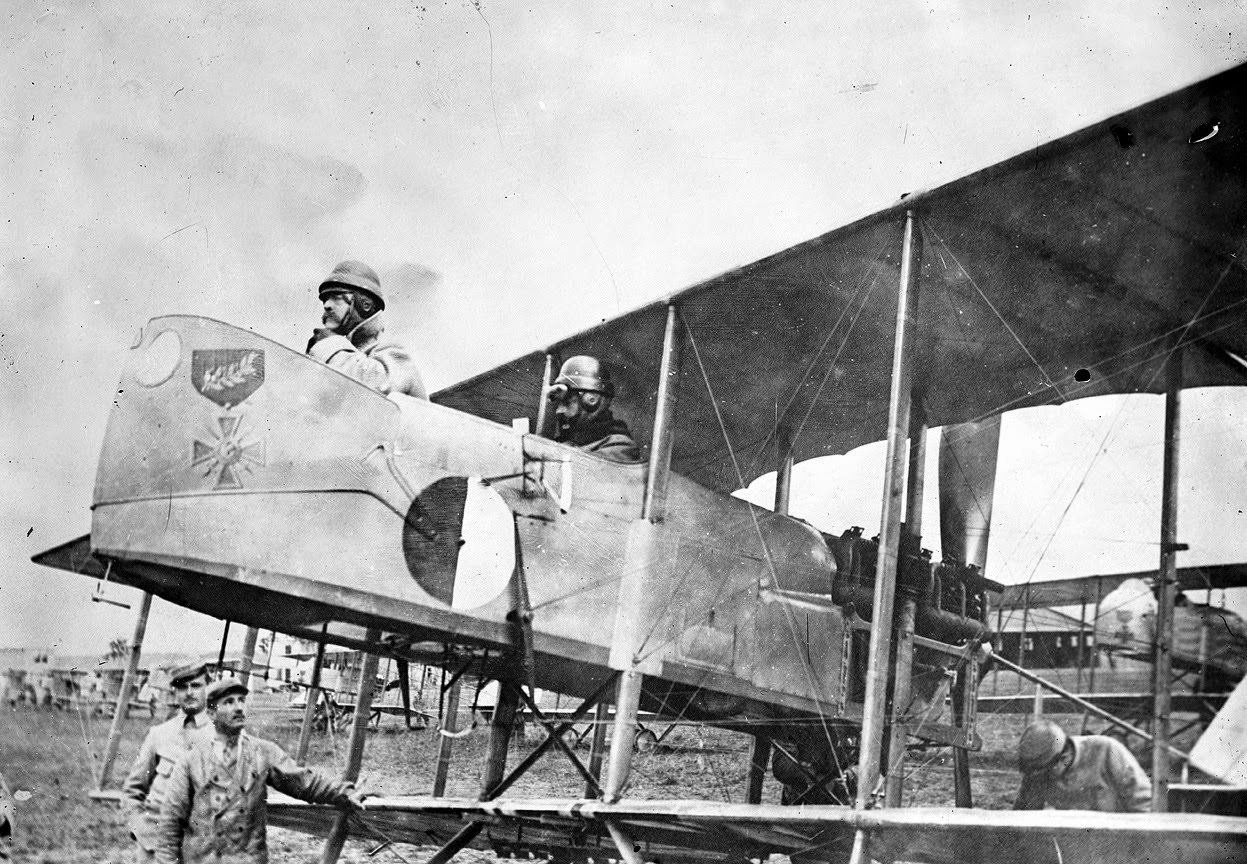
Captain Maurice Happe, commander of French squadron MF 29, seated in his Farman MF.11 Shorthorn bomber with a Captain Berthaut, 1915.
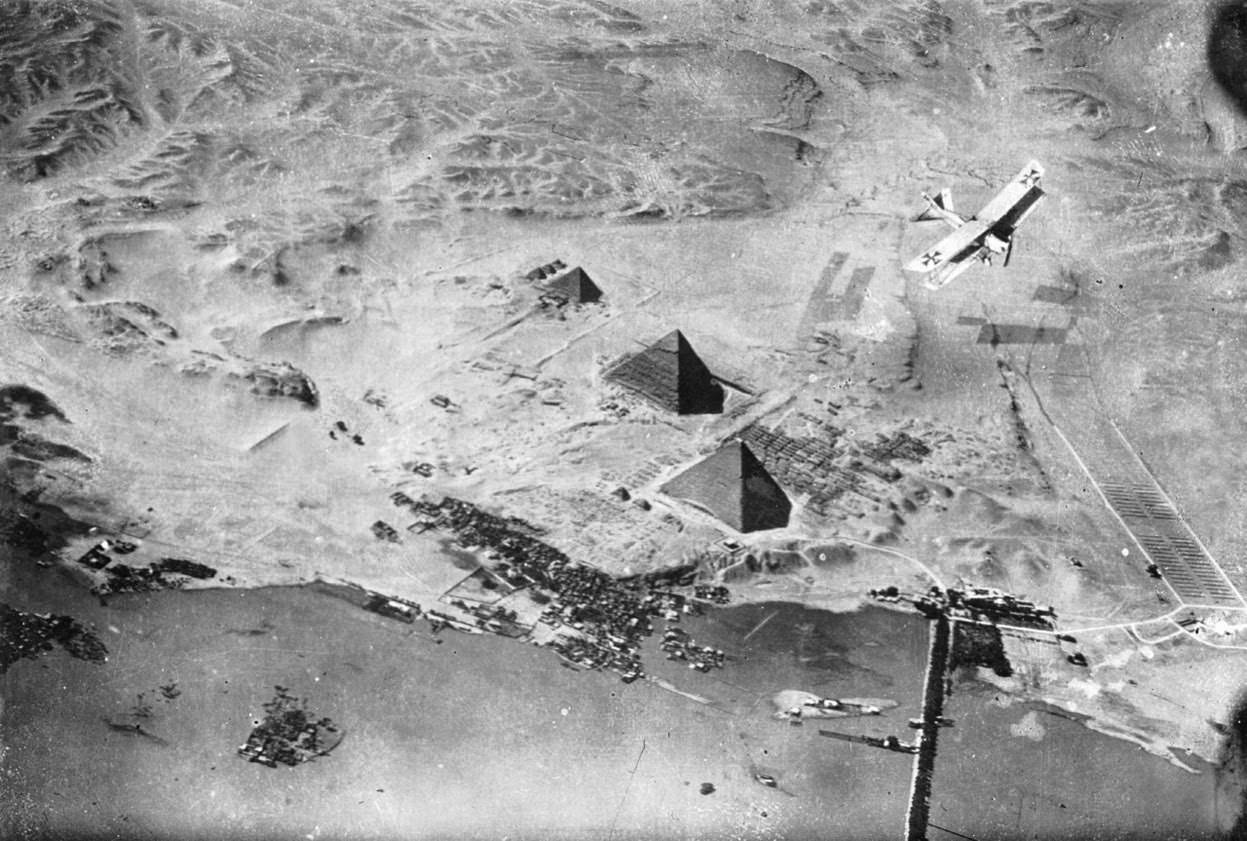
A German airplane over the Pyramids of Giza in Egypt.
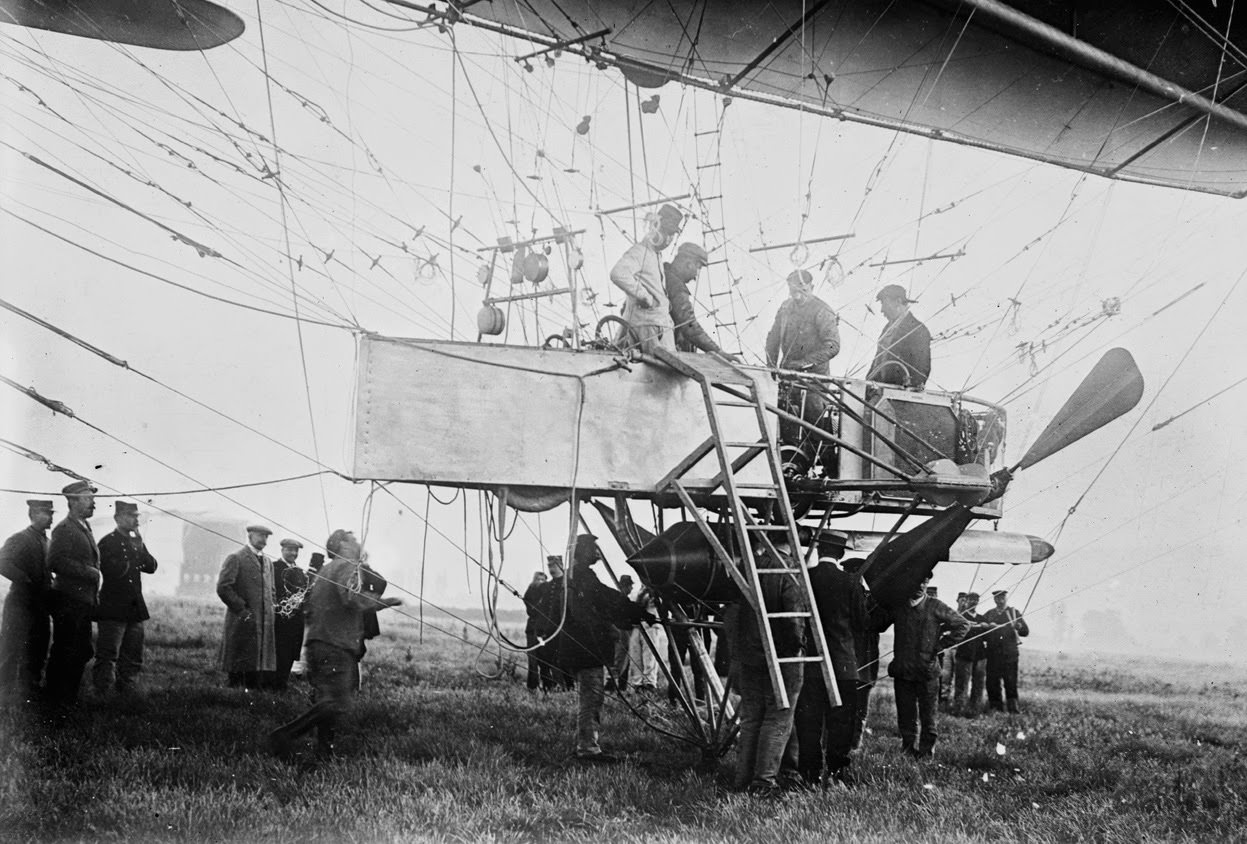
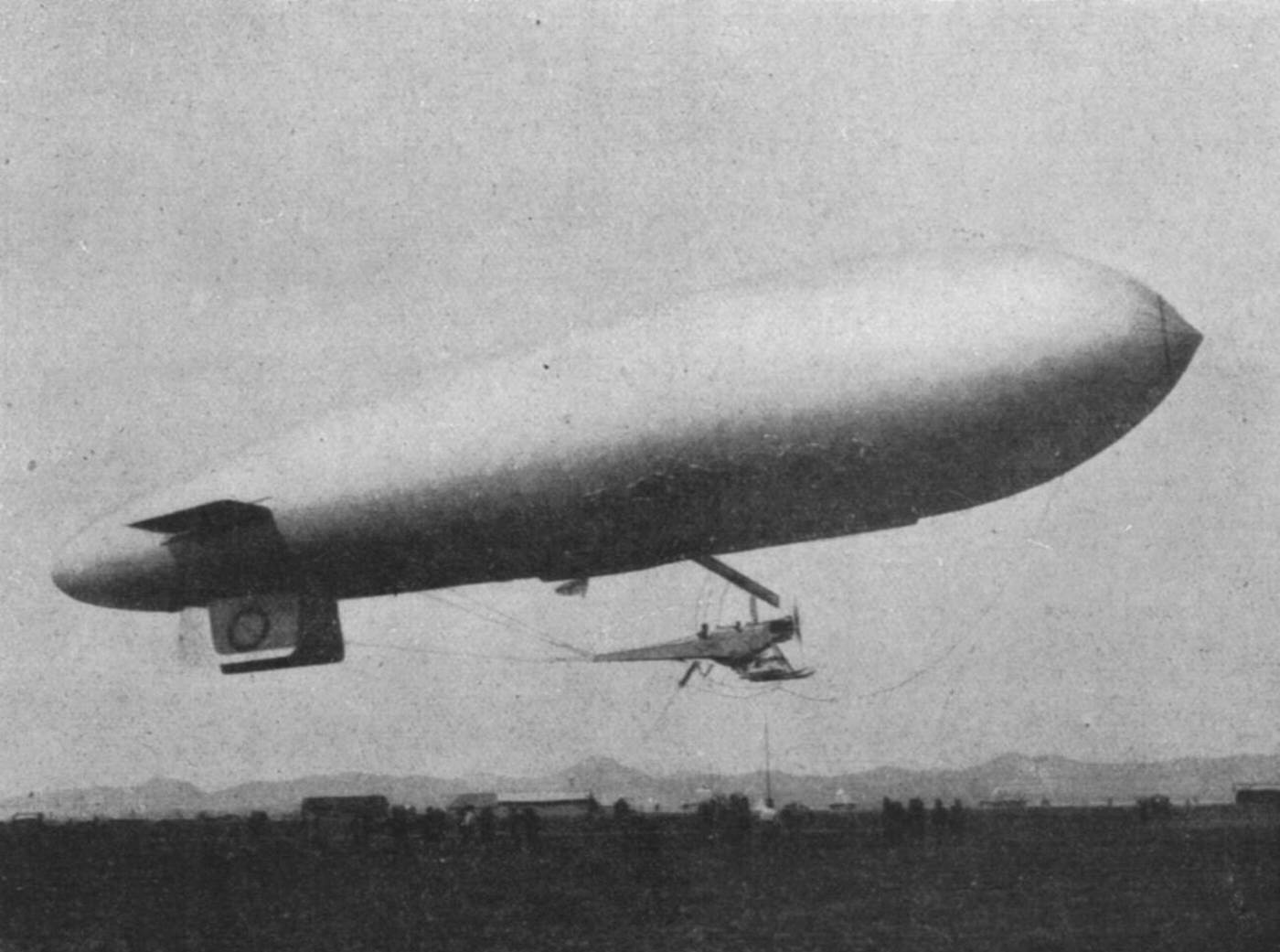
Car of French Military Dirigible "Republique."
Car of French Military Dirigible “Republique.”
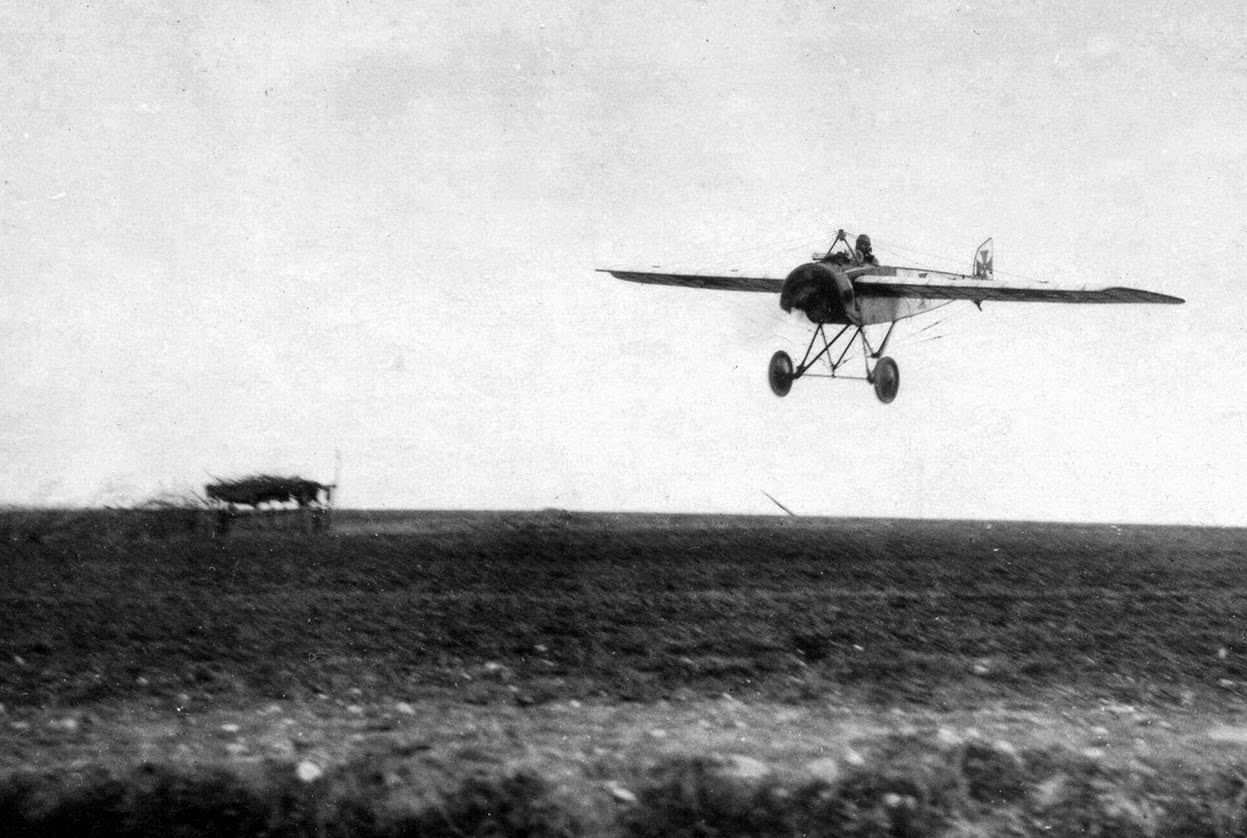
A German Pfalz E.I prepares to land, 1916.
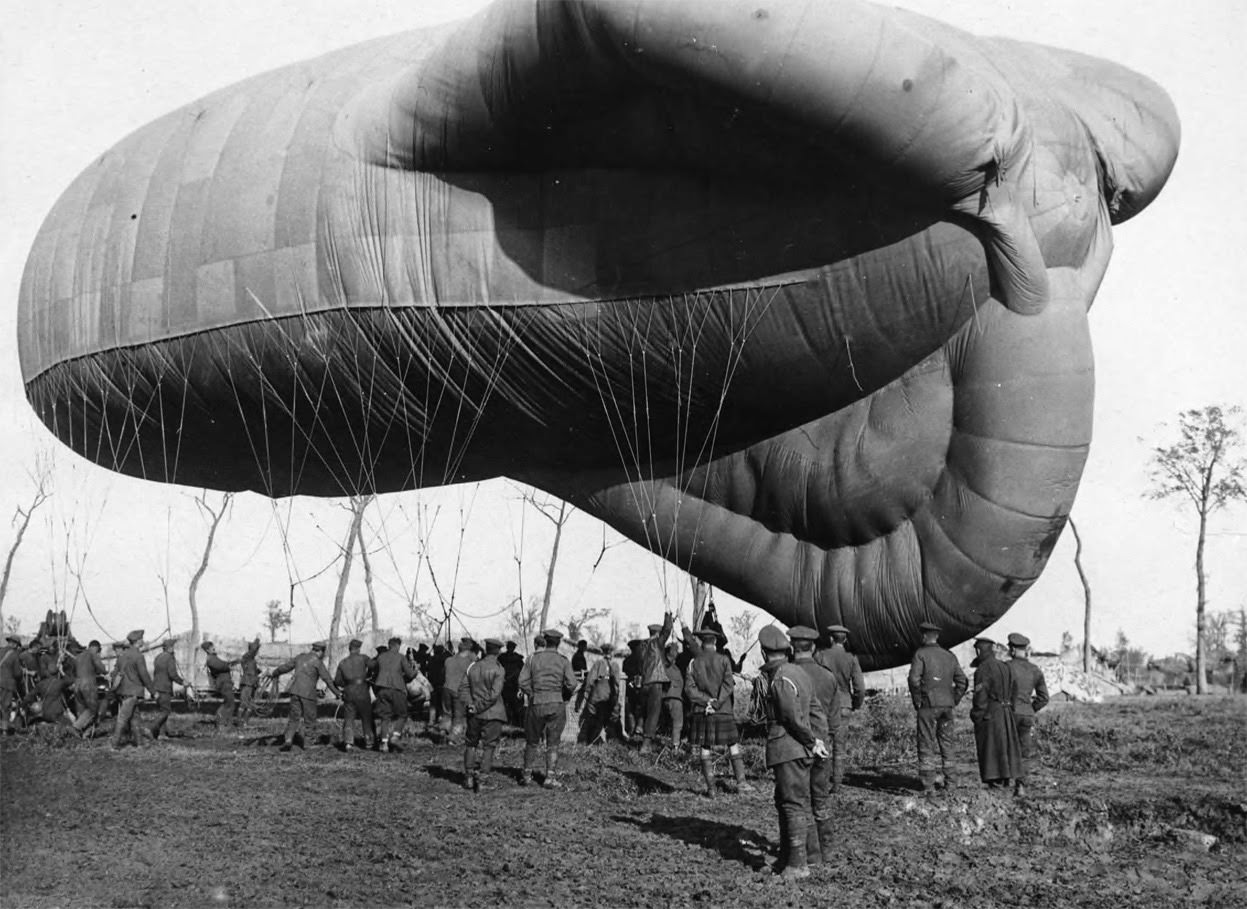
A returning observation balloon being controlled by soldiers with ropes; the basket attached to the balloon can be seen on the ground.
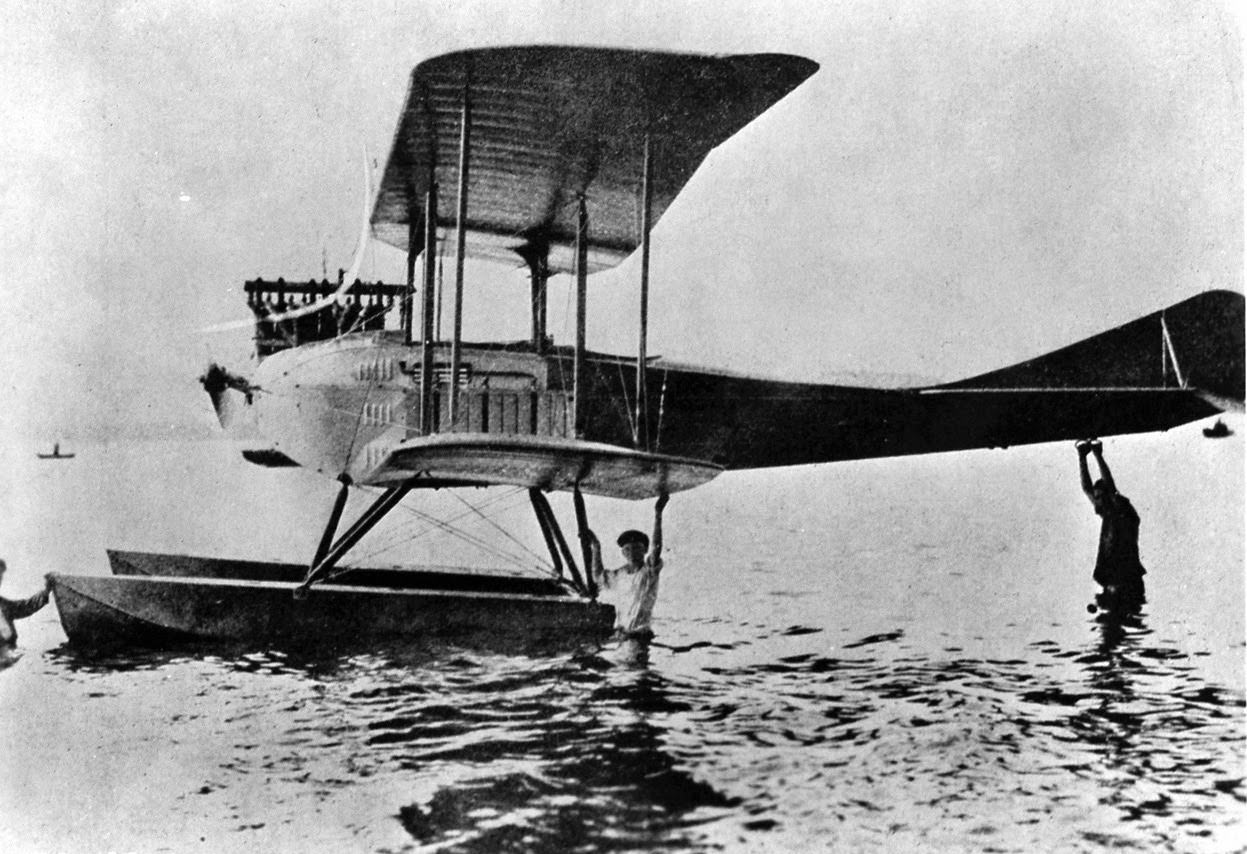
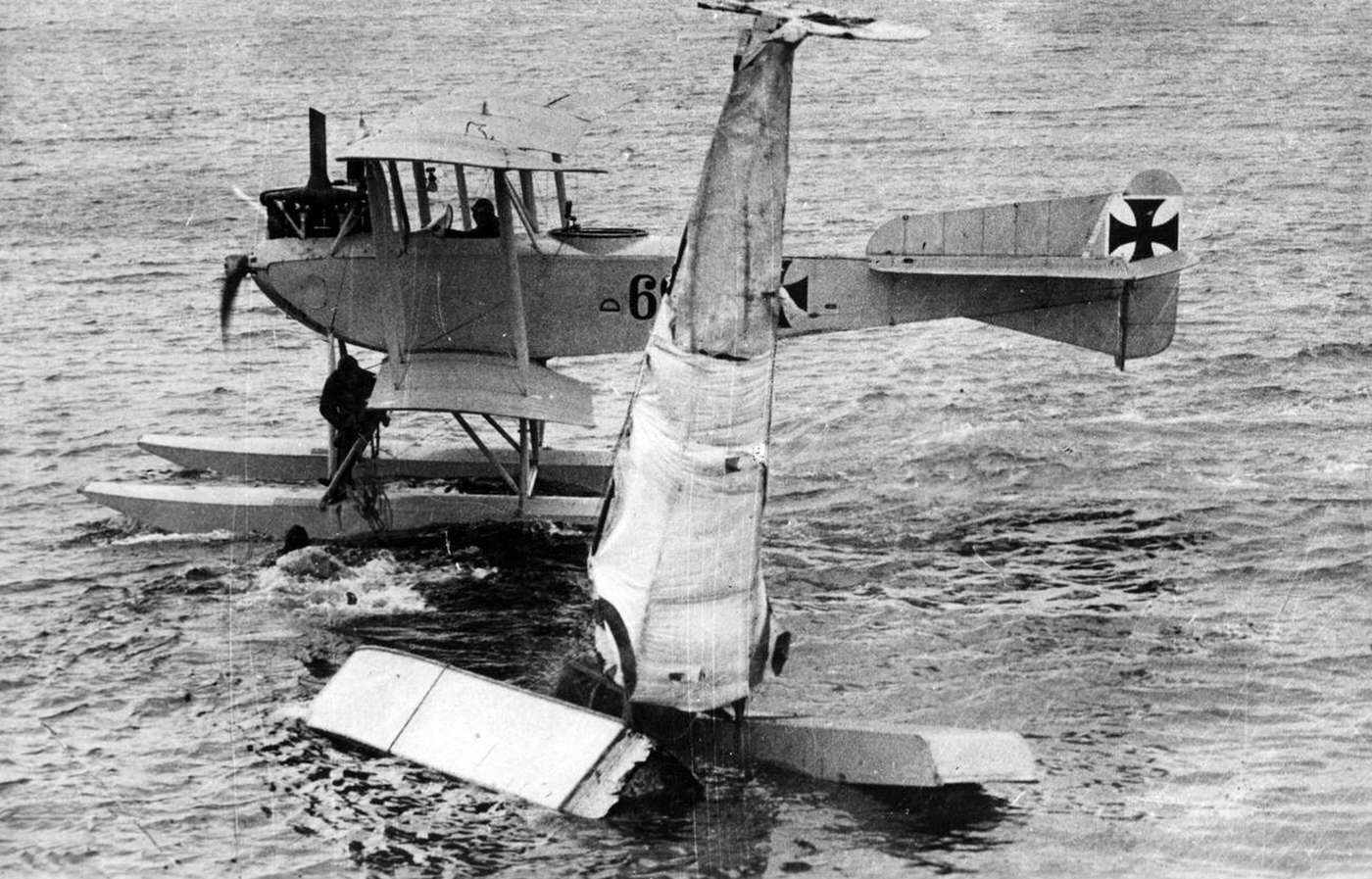
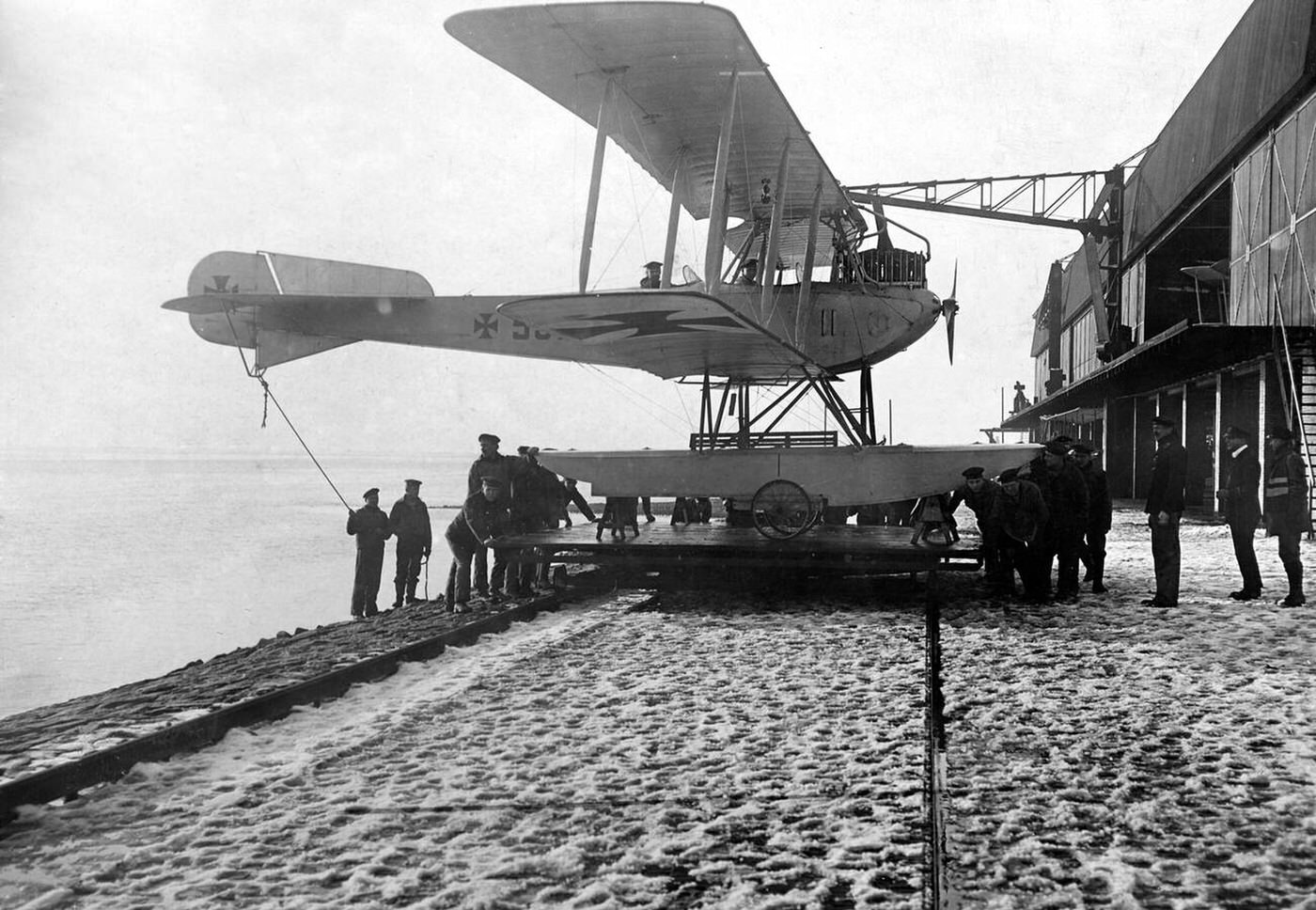
German hydroplane, 1918.
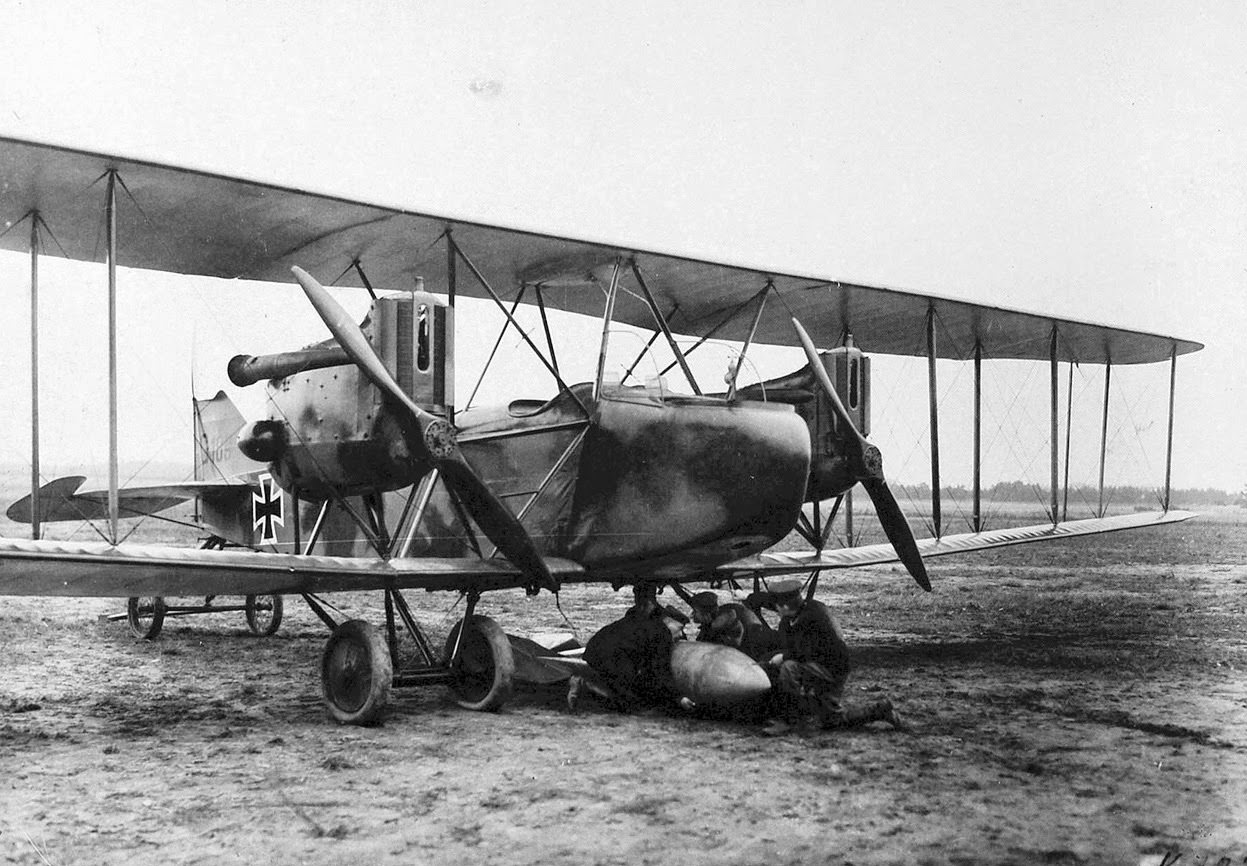
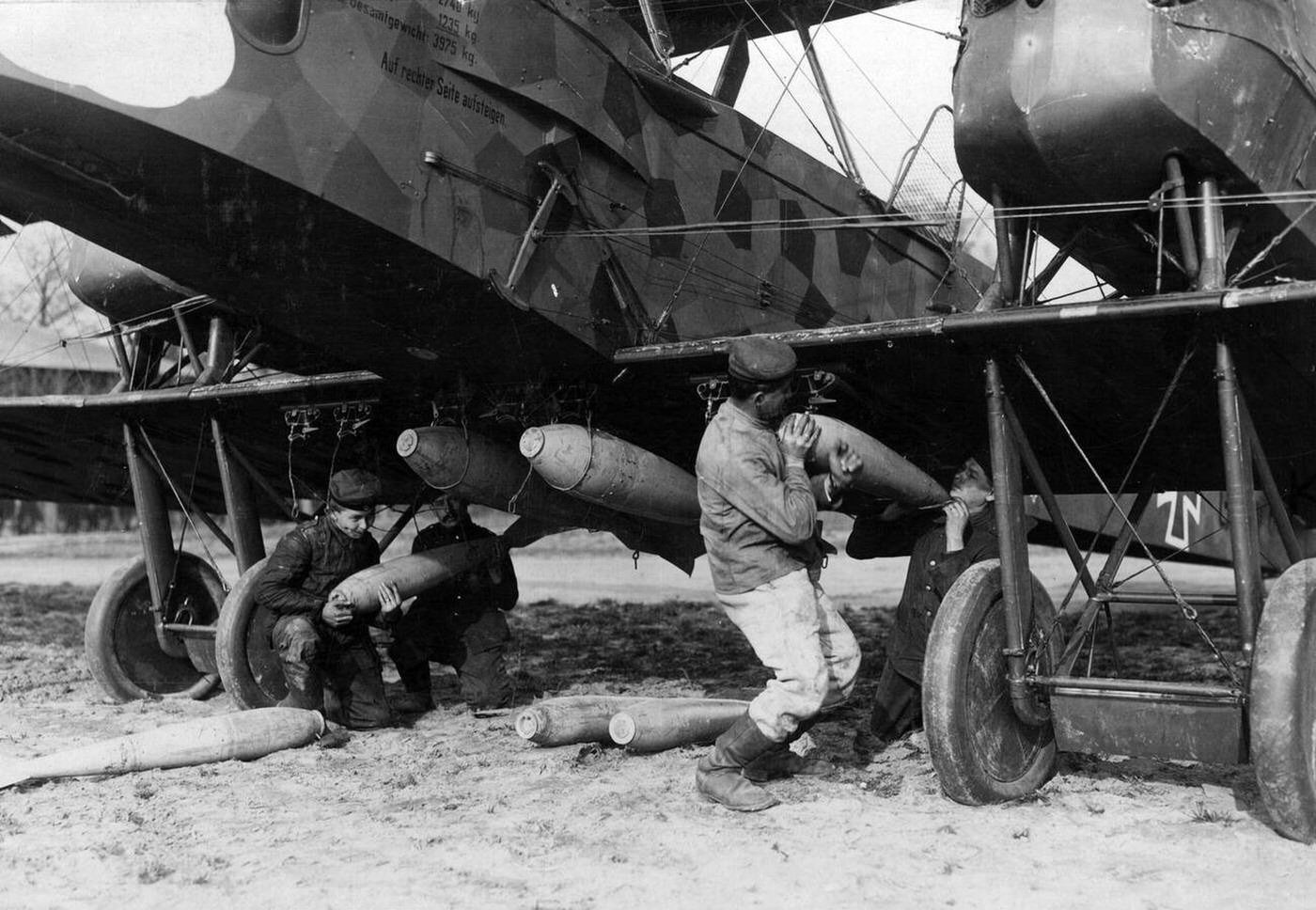
Attaching a 100 kg bomb to a German airplane.
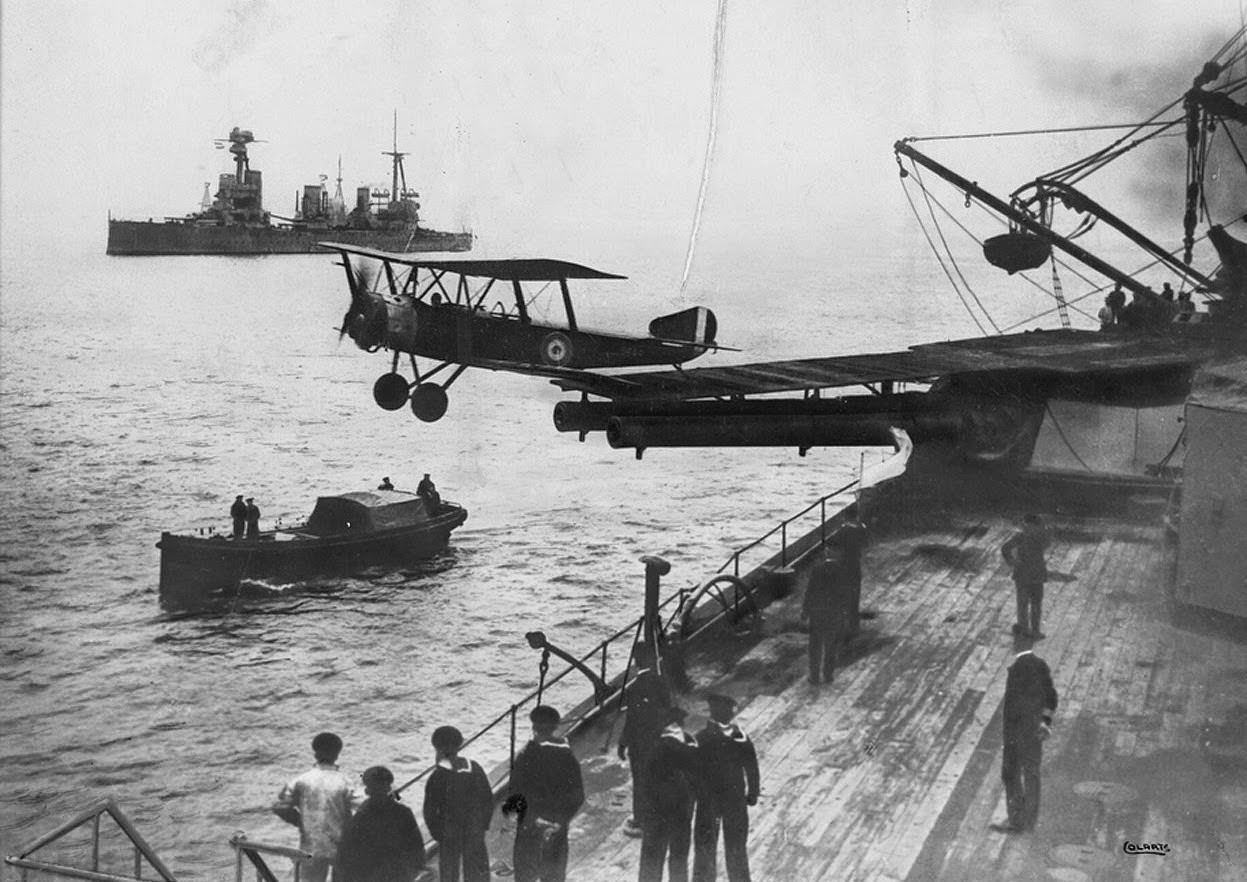
A Sopwith 1 1/2 Strutter biplane aircraft taking off from a platform built on top of HMAS Australia's midships "Q" turret, 1918.
A Sopwith 1 1/2 Strutter biplane aircraft taking off from a platform built on top of HMAS Australia’s midships “Q” turret, 1918.
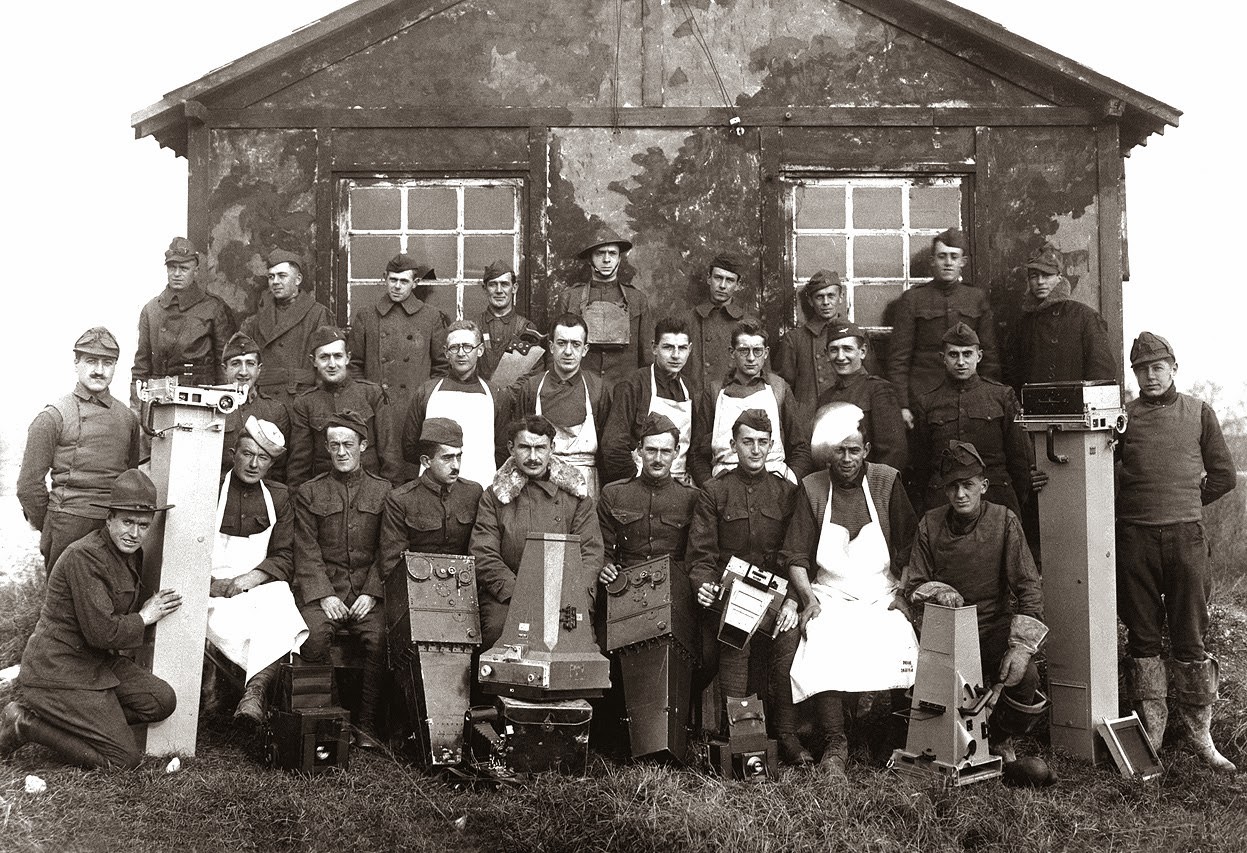
14th Photo Section, 1st Army, "The Balloonatic Section," with Capt. A. W. Stevens and personnel, 1918.
14th Photo Section, 1st Army, “The Balloonatic Section,” with Capt. A. W. Stevens and personnel, 1918.
The bombarded barracks at Ypres, viewed from 500 ft.
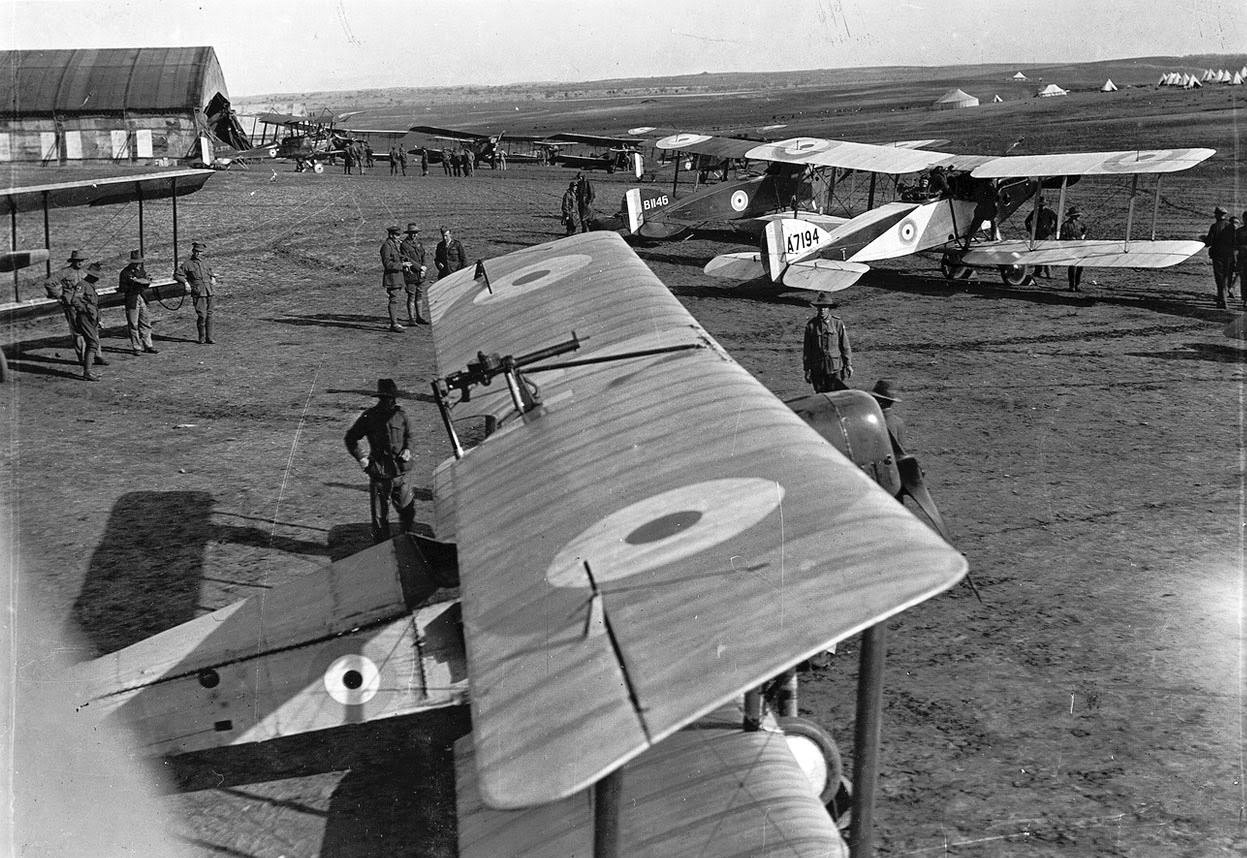
No. 1 Squadron, a unit of the Australian Flying Corps, in Palestine, 1918.
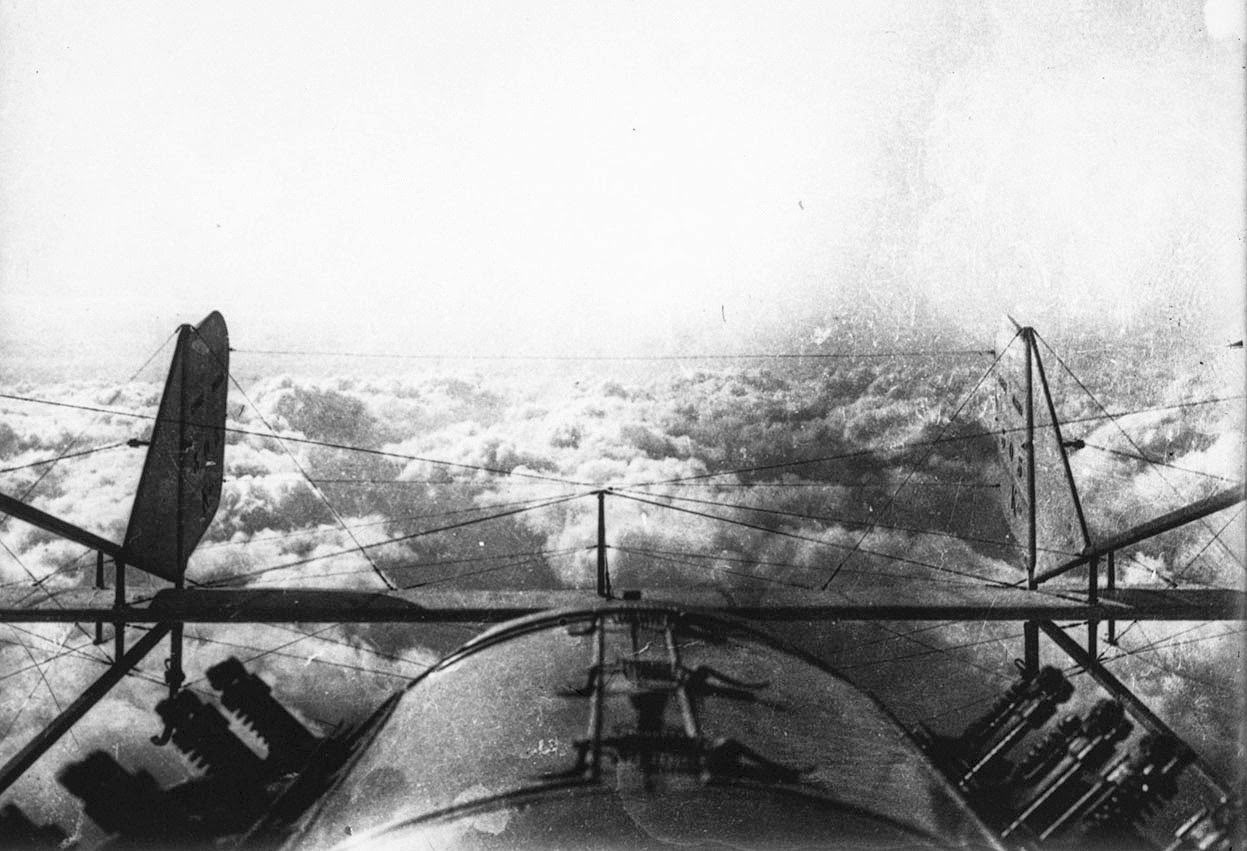
Returning from a reconnaissance flight during World War I, a view of the clouds from above.
An Army chaplain conducting a service from the cockpit of a biplane during World War I, 1914-1918.
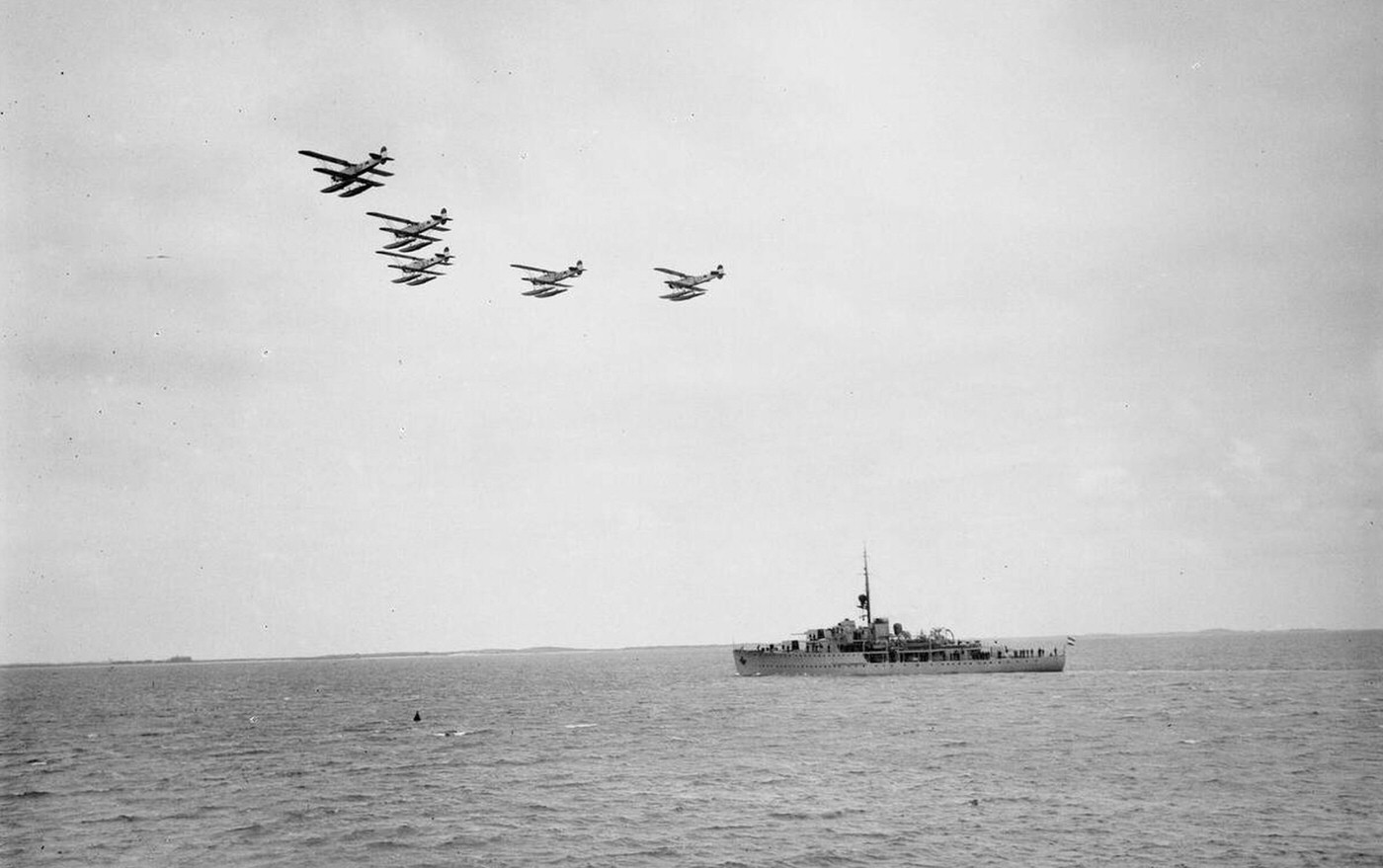
Seaplanes in Den Helder, Netherlands, early 20th century.
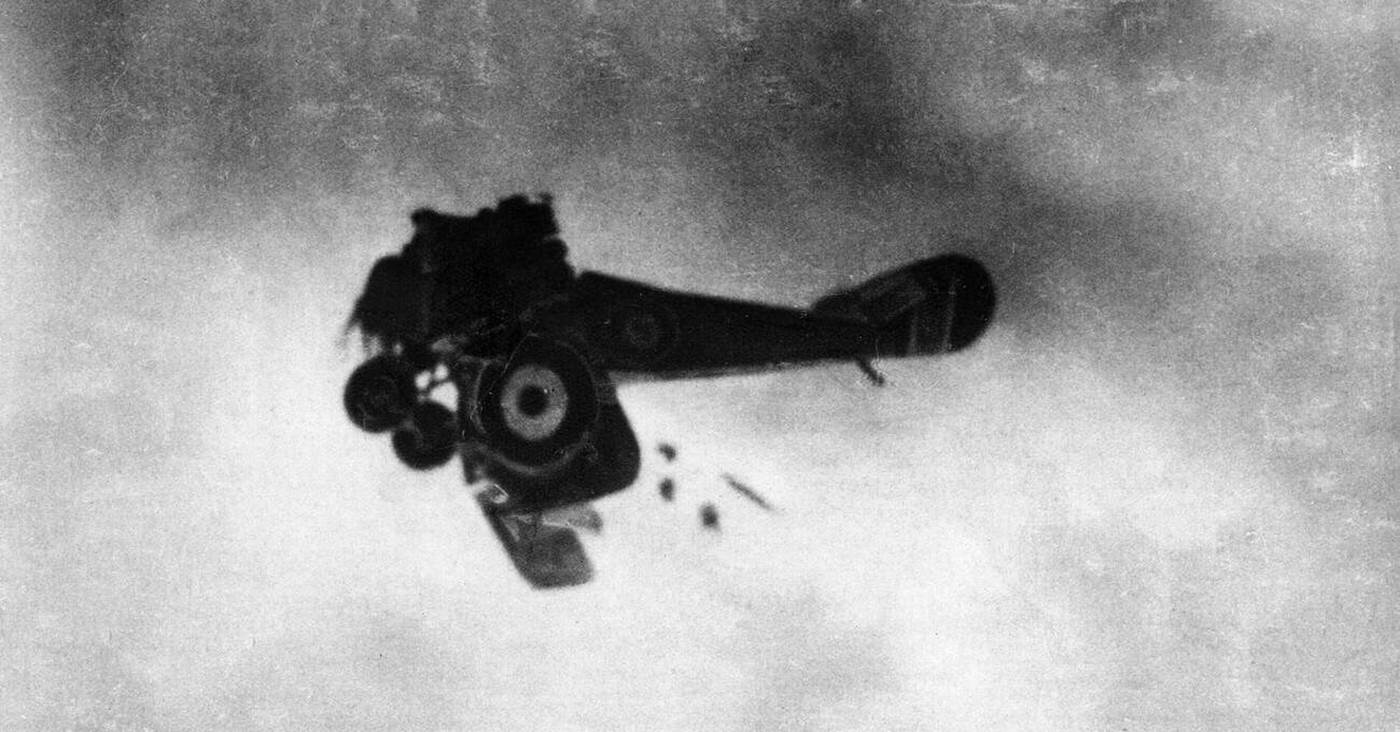
Crashing British airplane in the First World War, 1914-1918.
German Moored Balloons and Barrage Balloons during the First World War, 1914-1918.
Straw dummy in the basket of a balloon, 1914.
An observation balloon takes off, 1914.
French fighter pilot in World War I, 1914-1918.
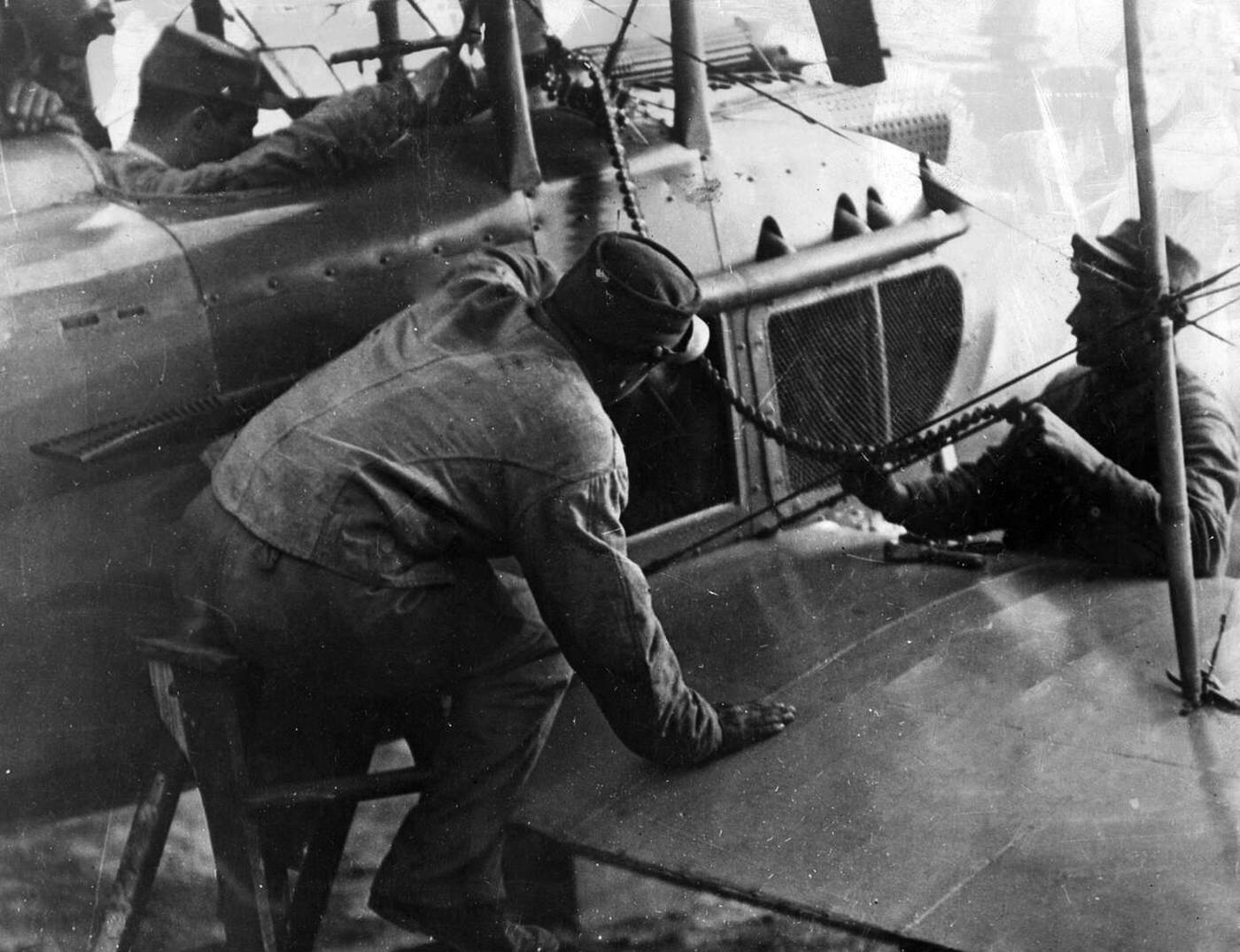
Work on an aircraft before take off in World War I, 1914-1918.
British airplane in the First World War, 1914-1918.
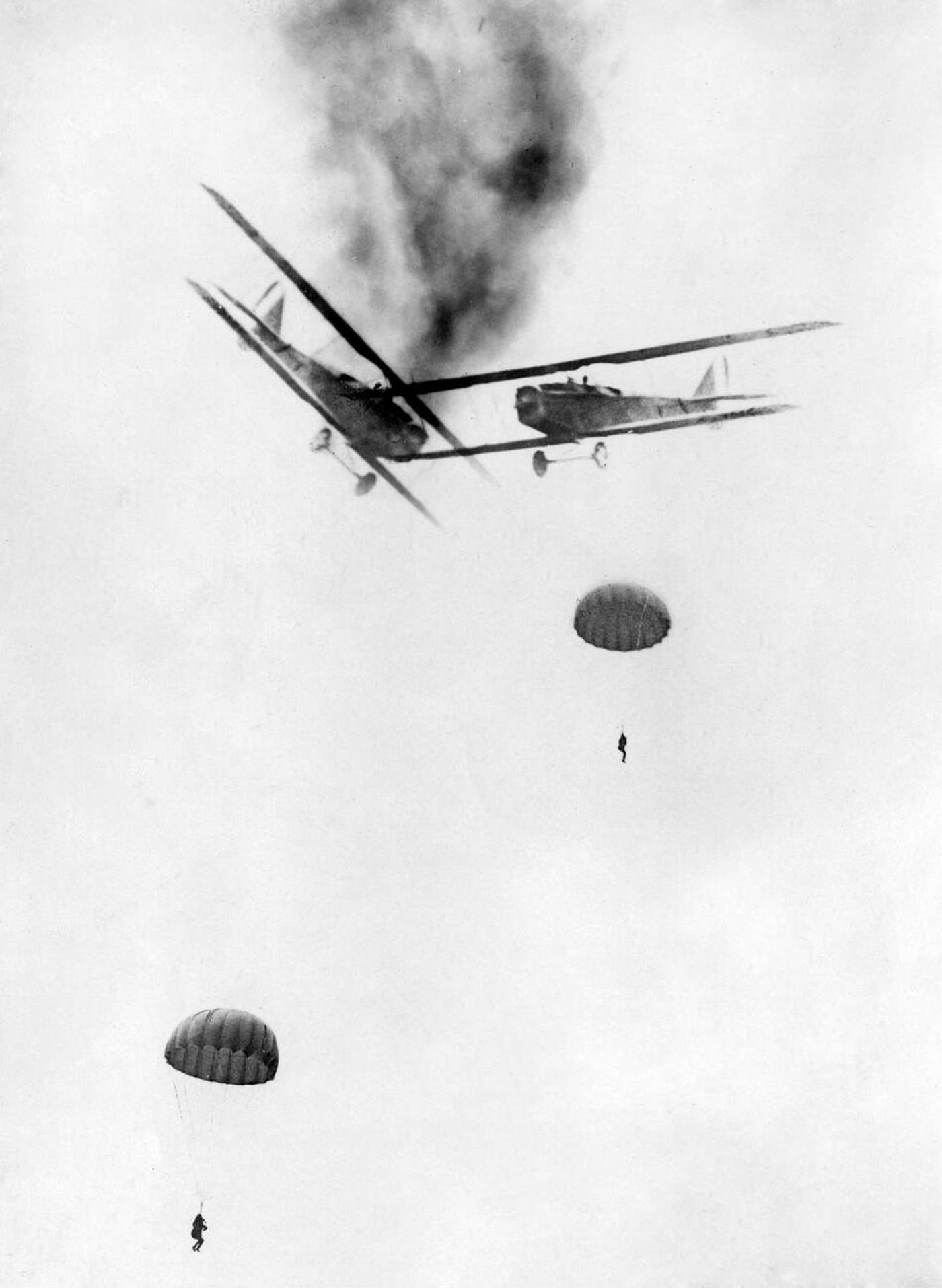
Pilots jump out of their planes, 1914-1918.
Crashing British airplane at the western front in the First World War, 1914-1918.
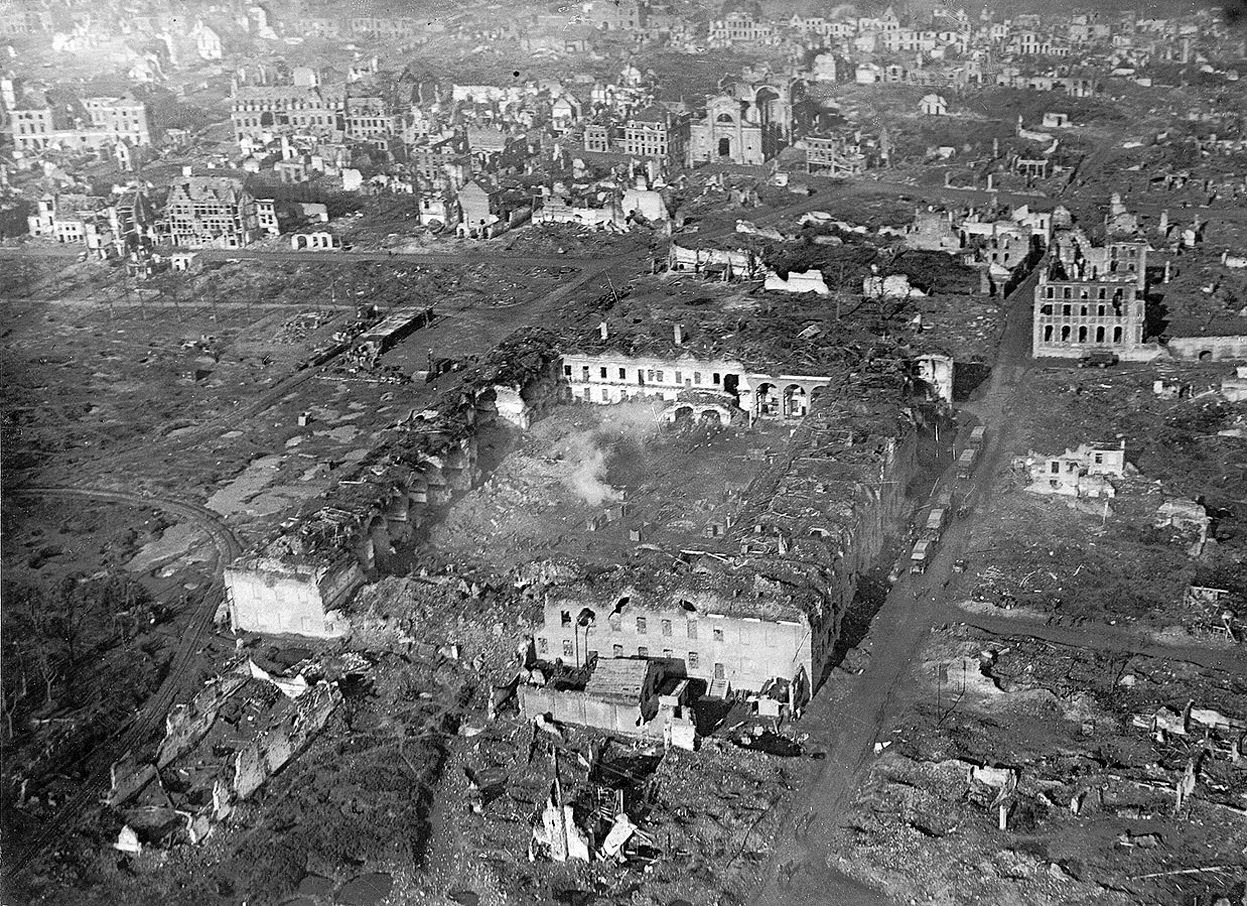
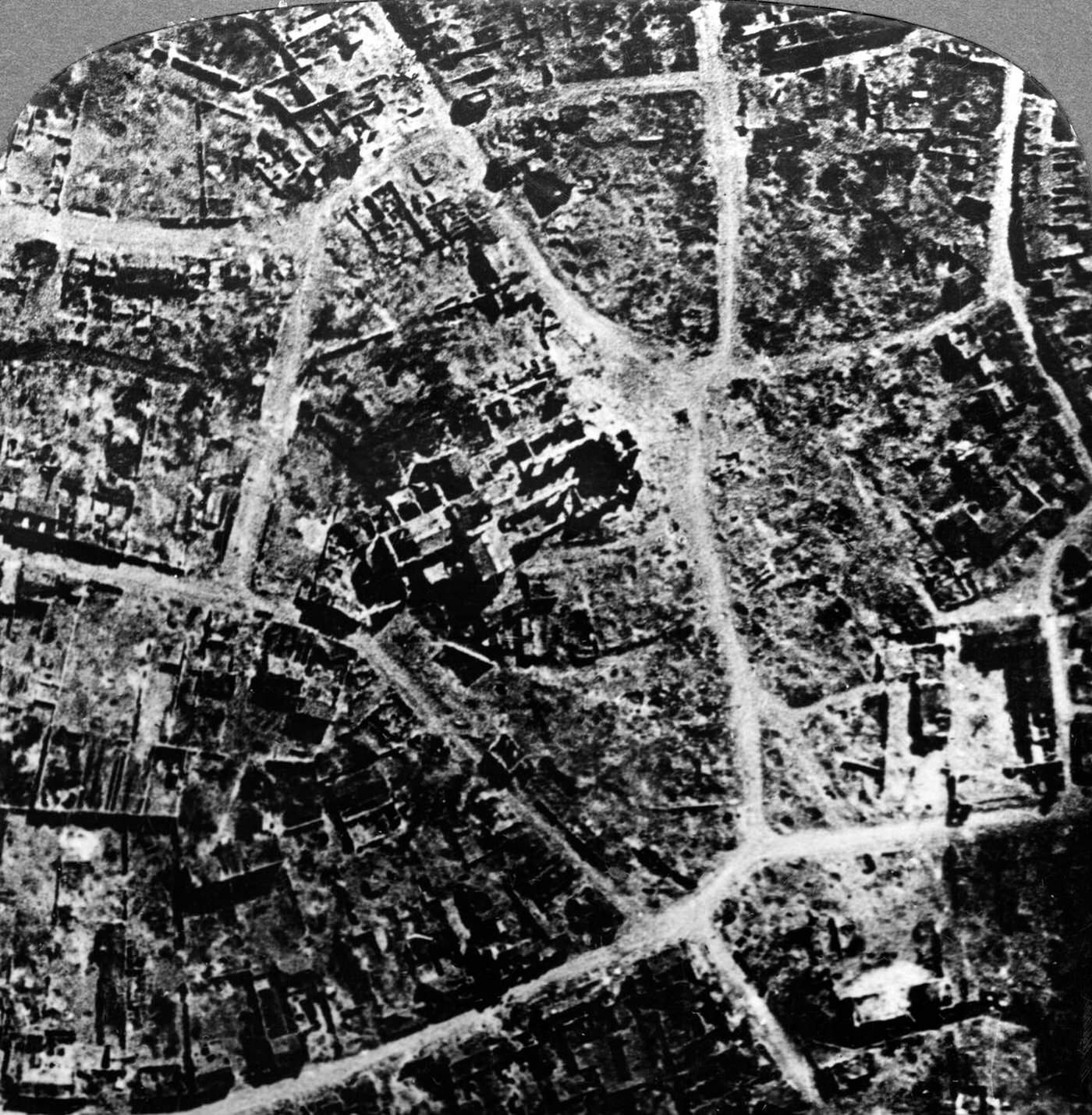
Aerial view of the ruins of the town and basilica of Albert, France, during World War I, 1914-1918.
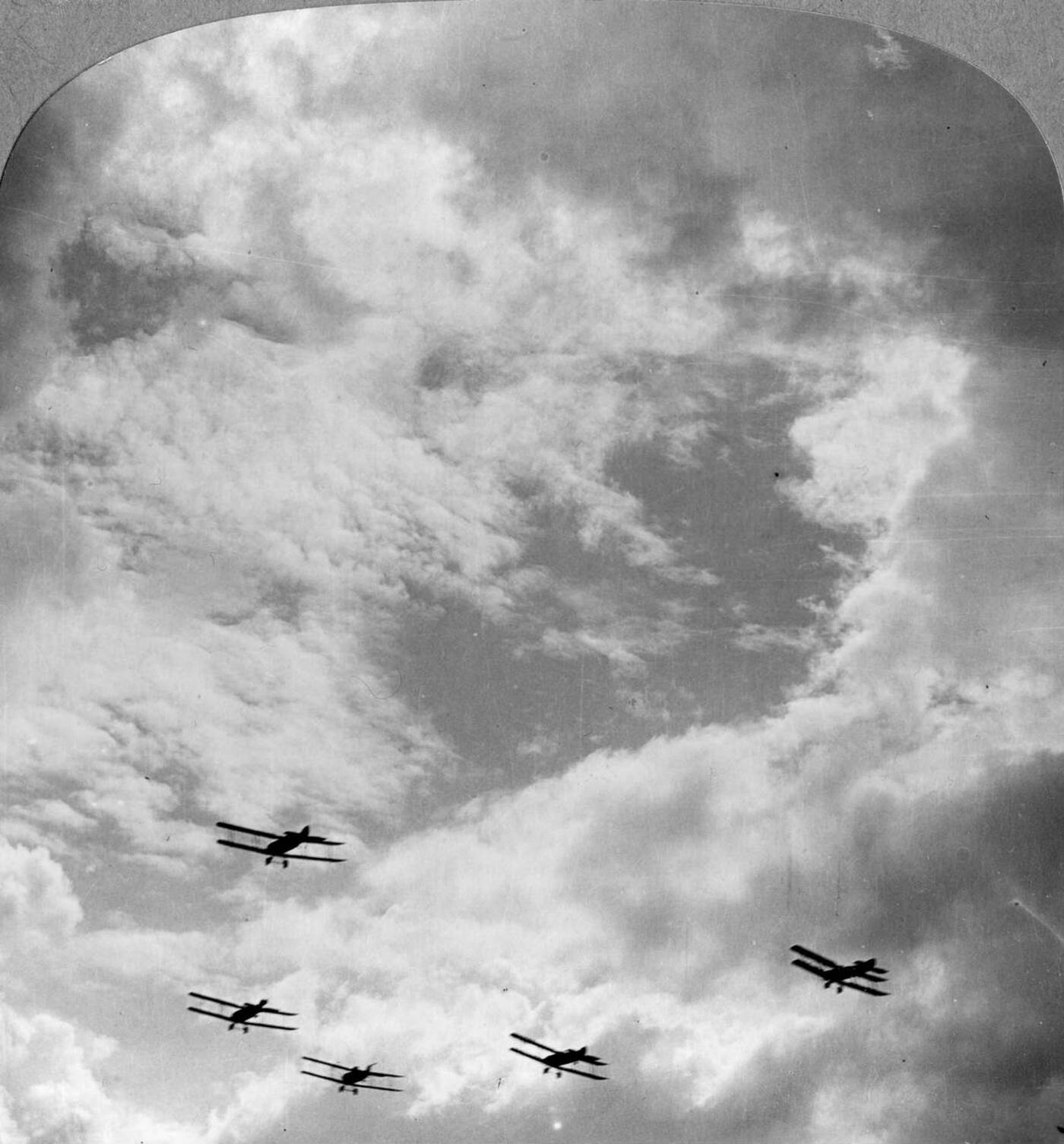
A battle squadron in fighting formation during World War I, 1914-1918.
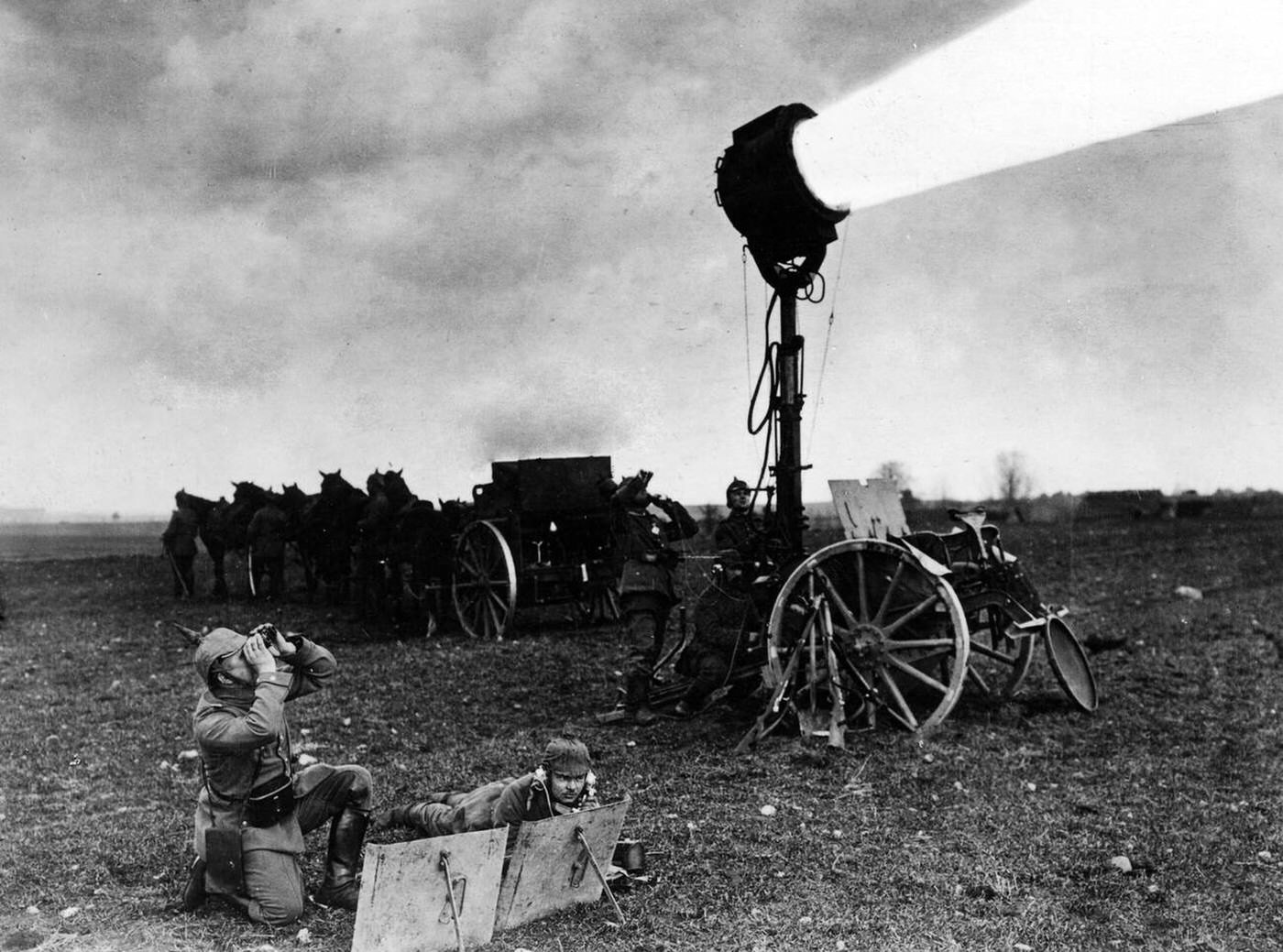
German spotlight in World War I, 1914-1918.
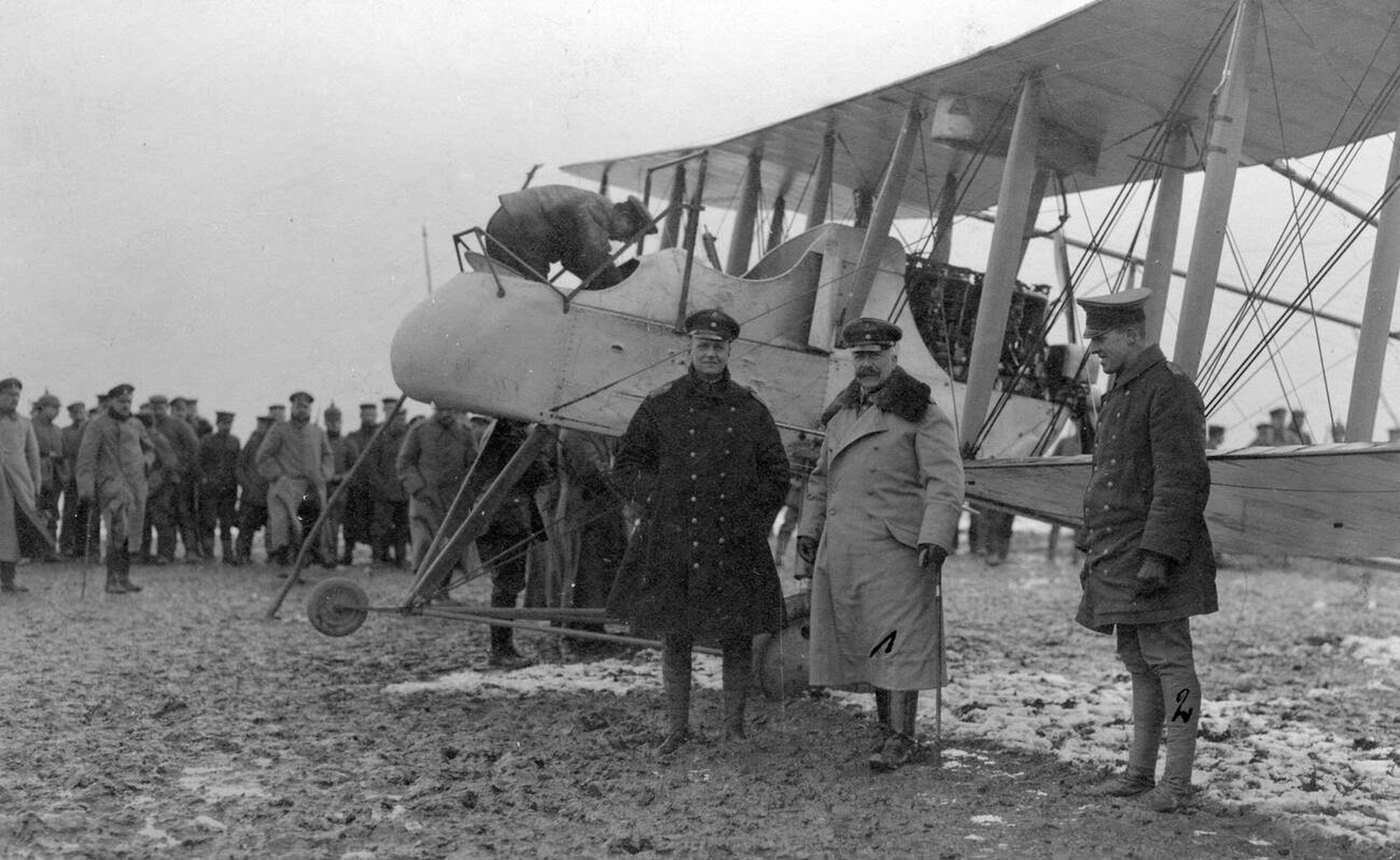
German generals in front of an English airplane, 1916.
Inspection of the Italian aircraft shot down on July 4, 1916.
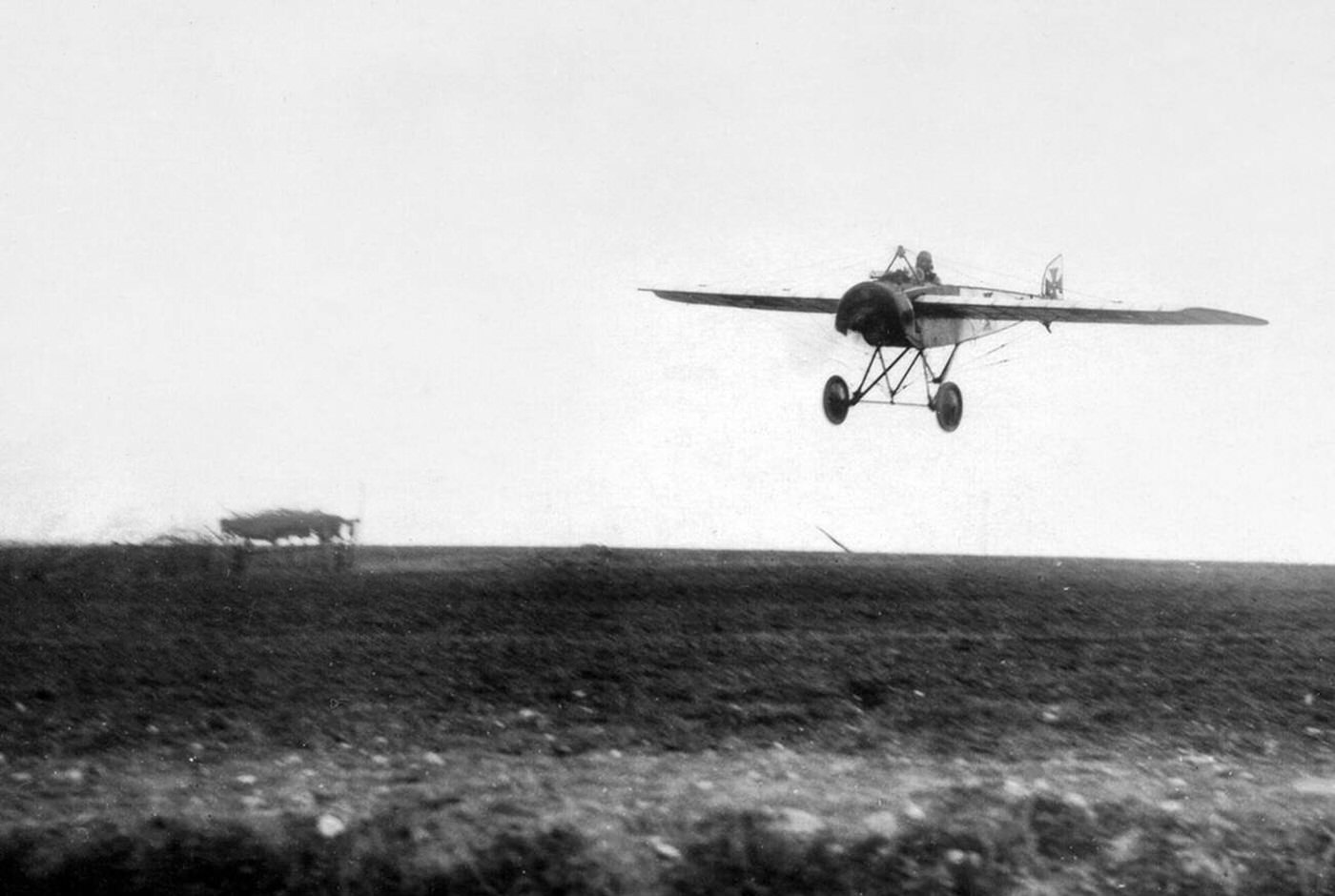
Single wing landing, 1916.
The new British naval airships, 1916.
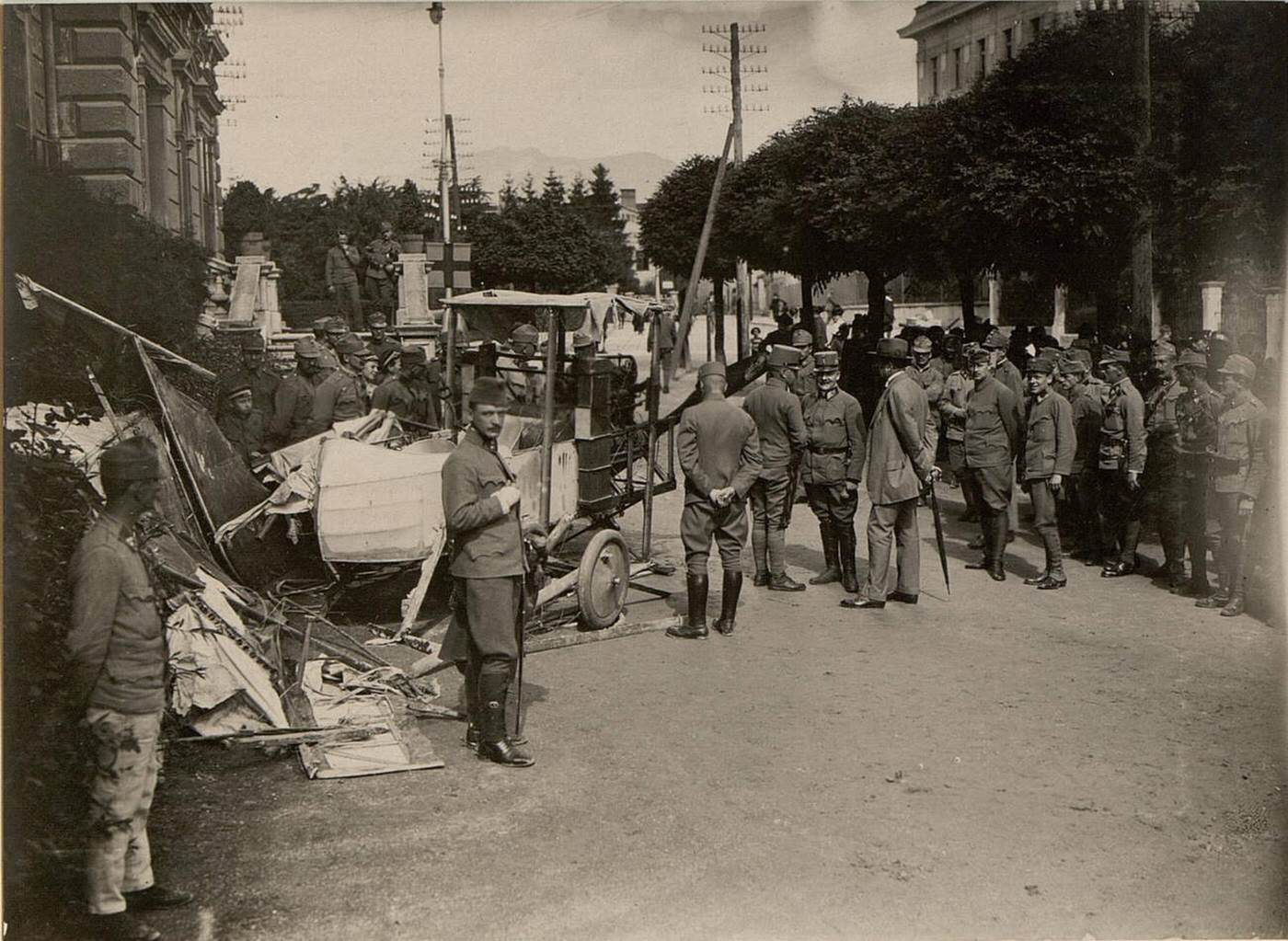
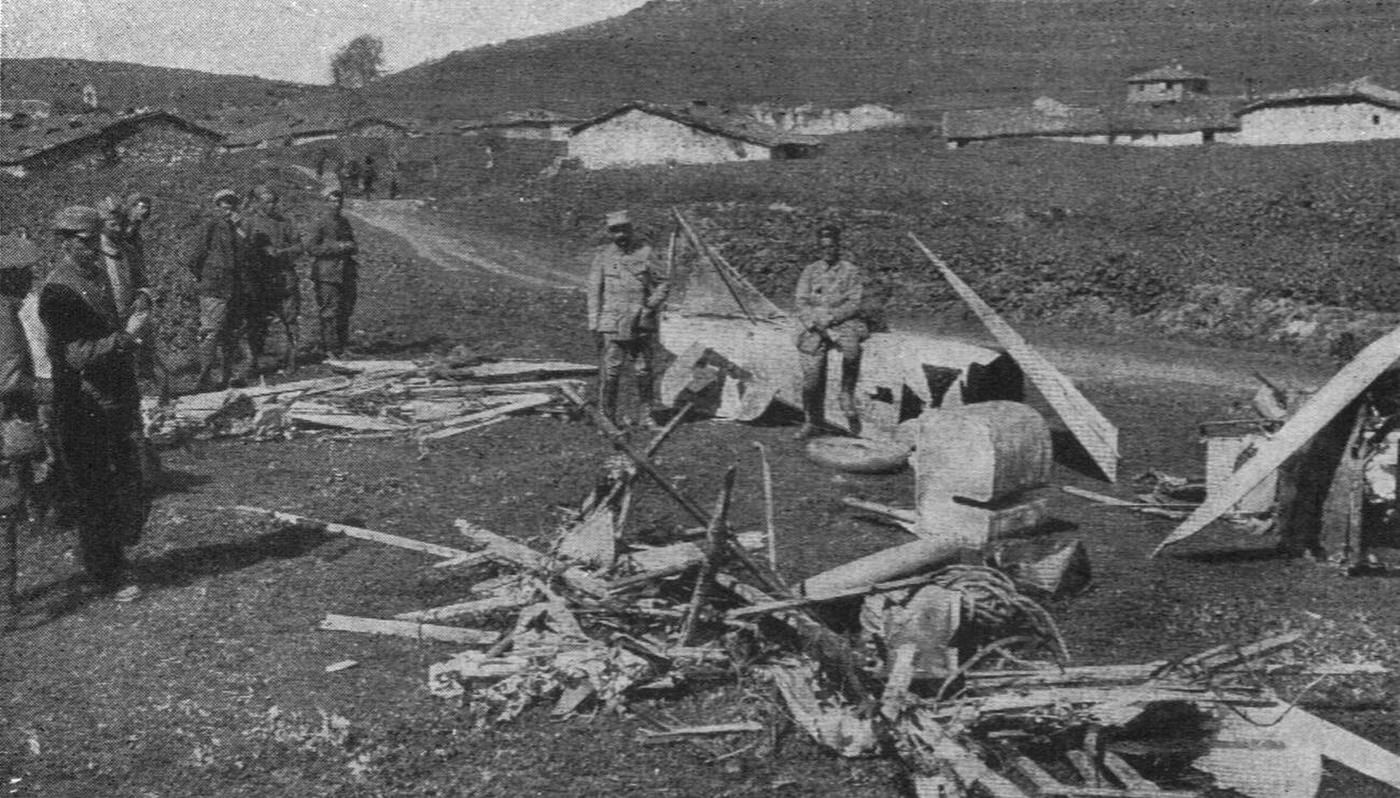
An enemy plane downed in Lake Amatovo; the debris of the "Albatros" has been gathered near a Macedonian village, 1916.
An enemy plane downed in Lake Amatovo; the debris of the “Albatros” has been gathered near a Macedonian village, 1916.
Grounded British airplane, 1914-1918.
German fighters in the air, 1914-1918.
Emergency landing of a French aircraft in World War I, 1917.
German soldiers shooting an English aircraft between Marcoing and Ribecourt, part of the so-called Siegfried position, France, 1917.
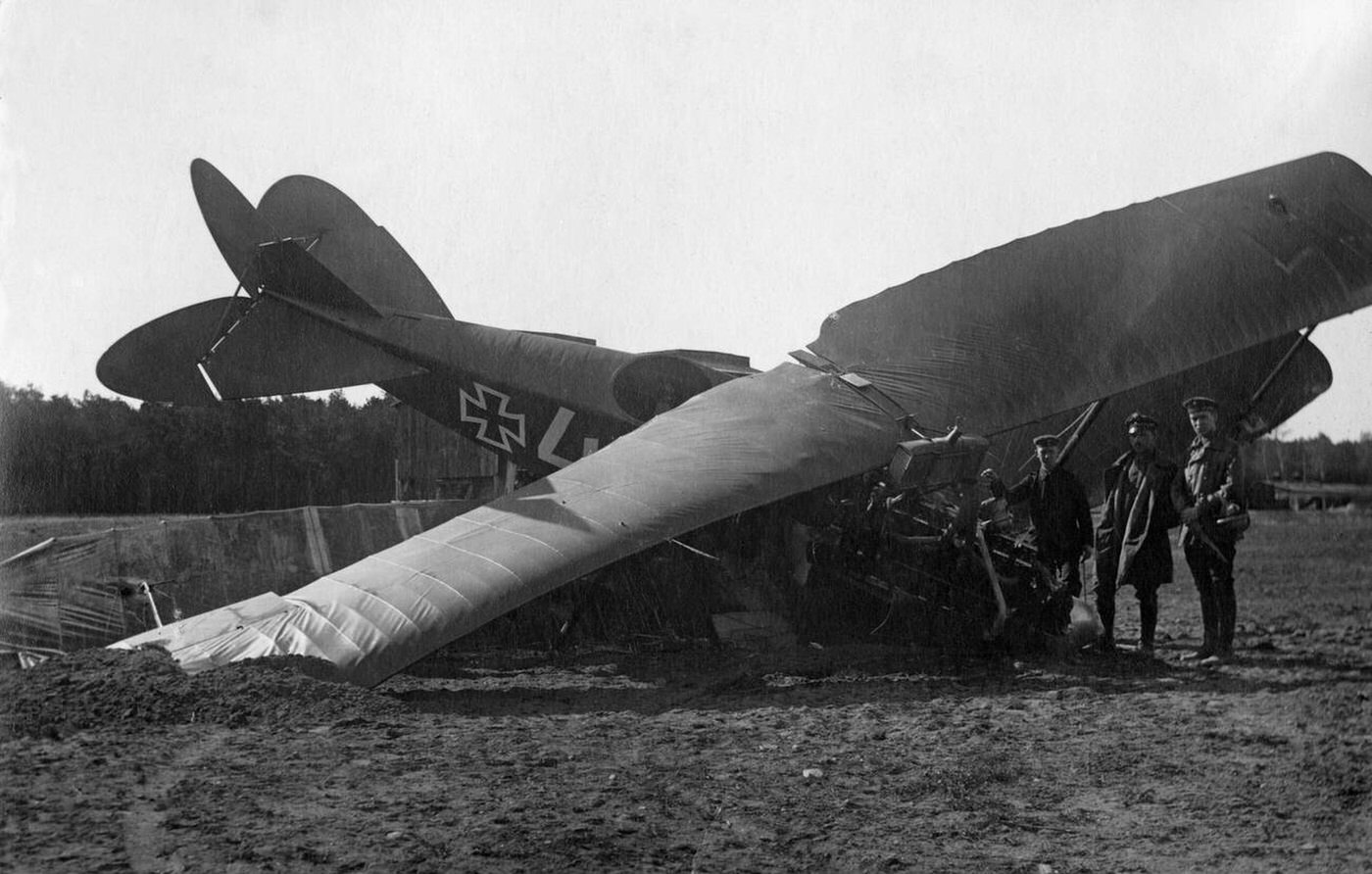
Crashed German Albatros type aircraft, 1917.
Flaming Toll, 1917.
Flaming Toll, 1917.
German Anti-aircraft warfare during the First World War, 1914-1918.
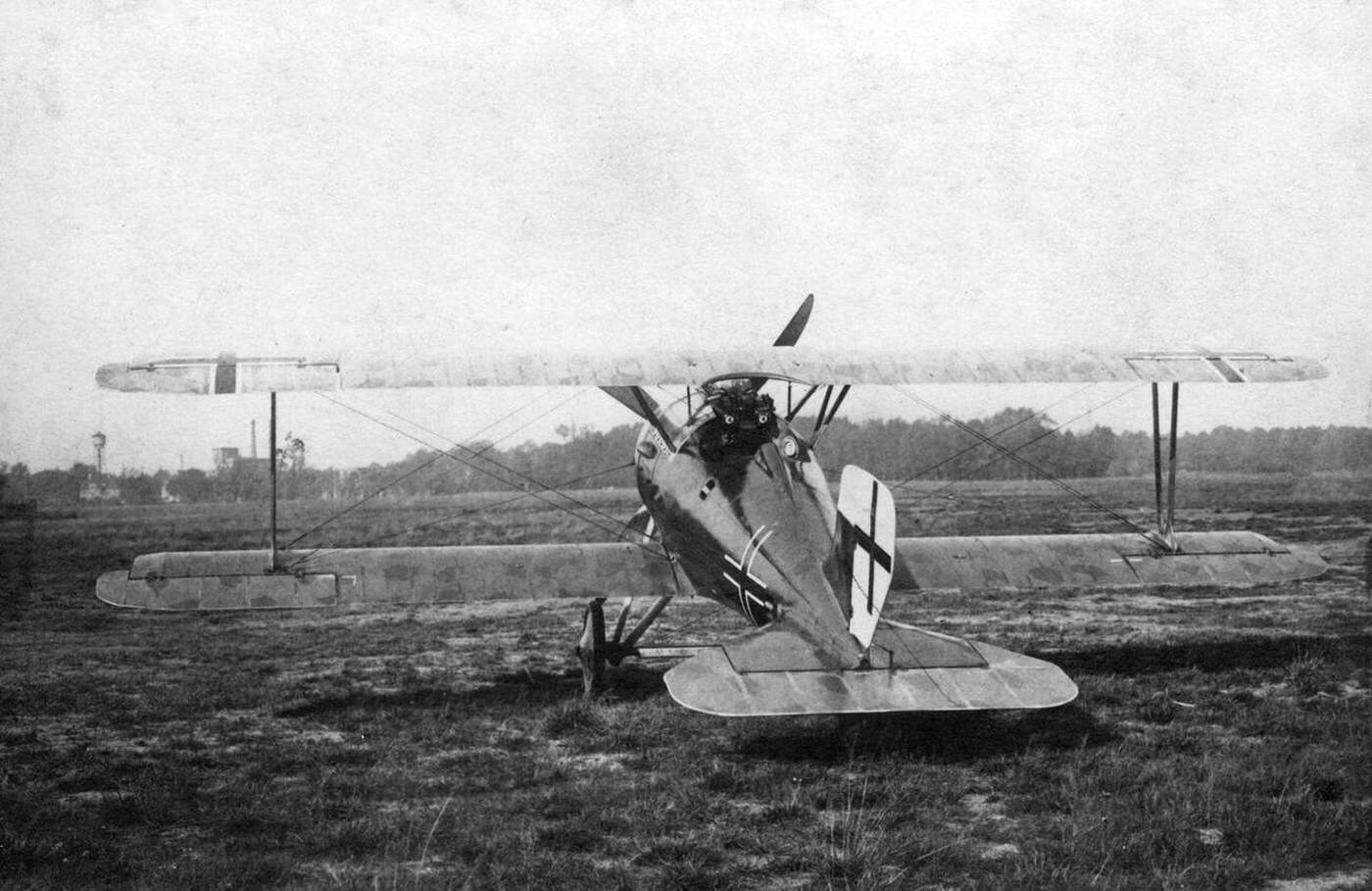
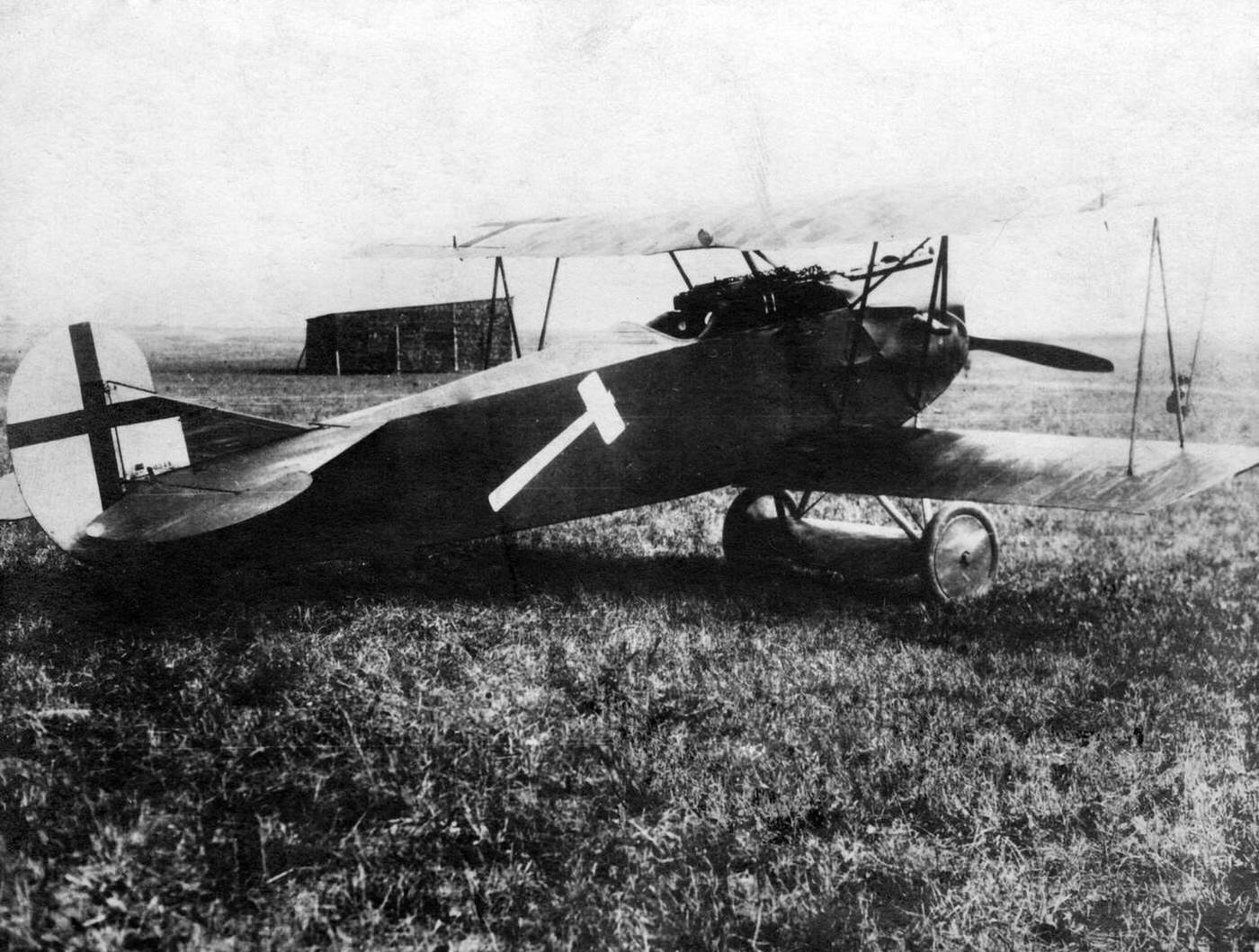
German fighter, 1918.
German bombers, 1918.
German fighters at the Italian front, 1918.
German fighter at the Western Front, 1918.
German naval aviator in the 1st World War, 1918.
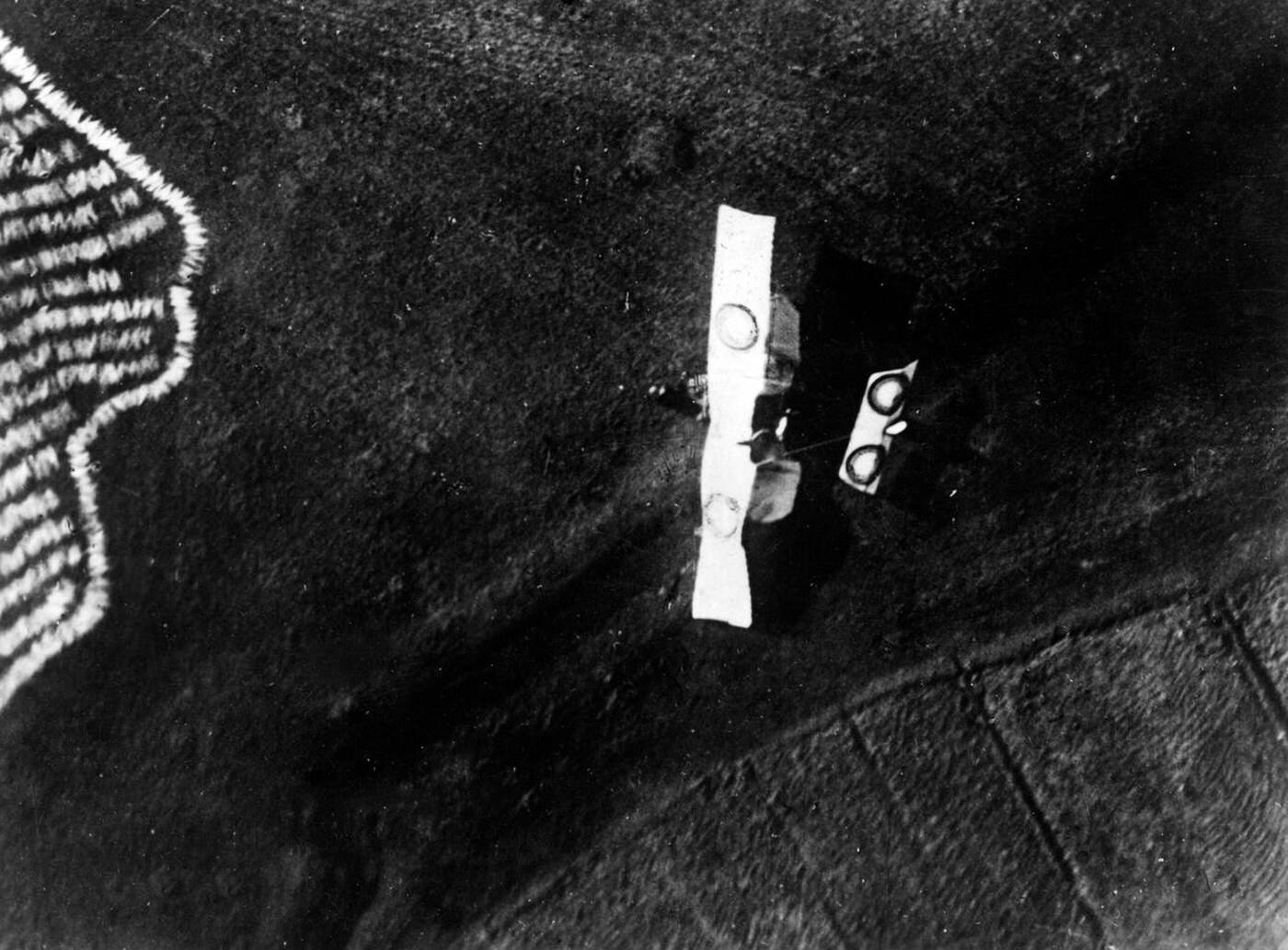
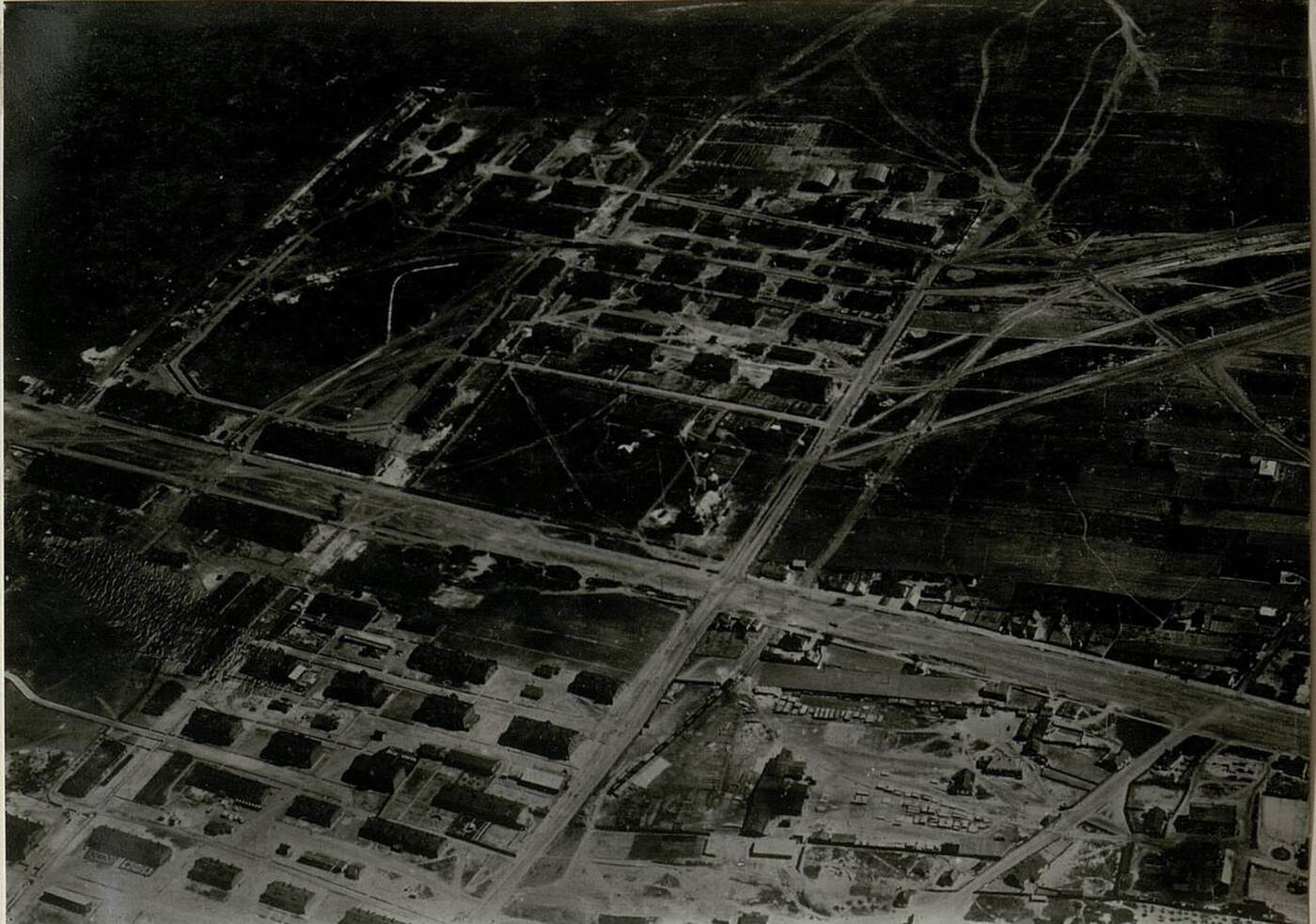
Reproduction of an aerial photograph of Wladimir-Wolynskij, 1918.
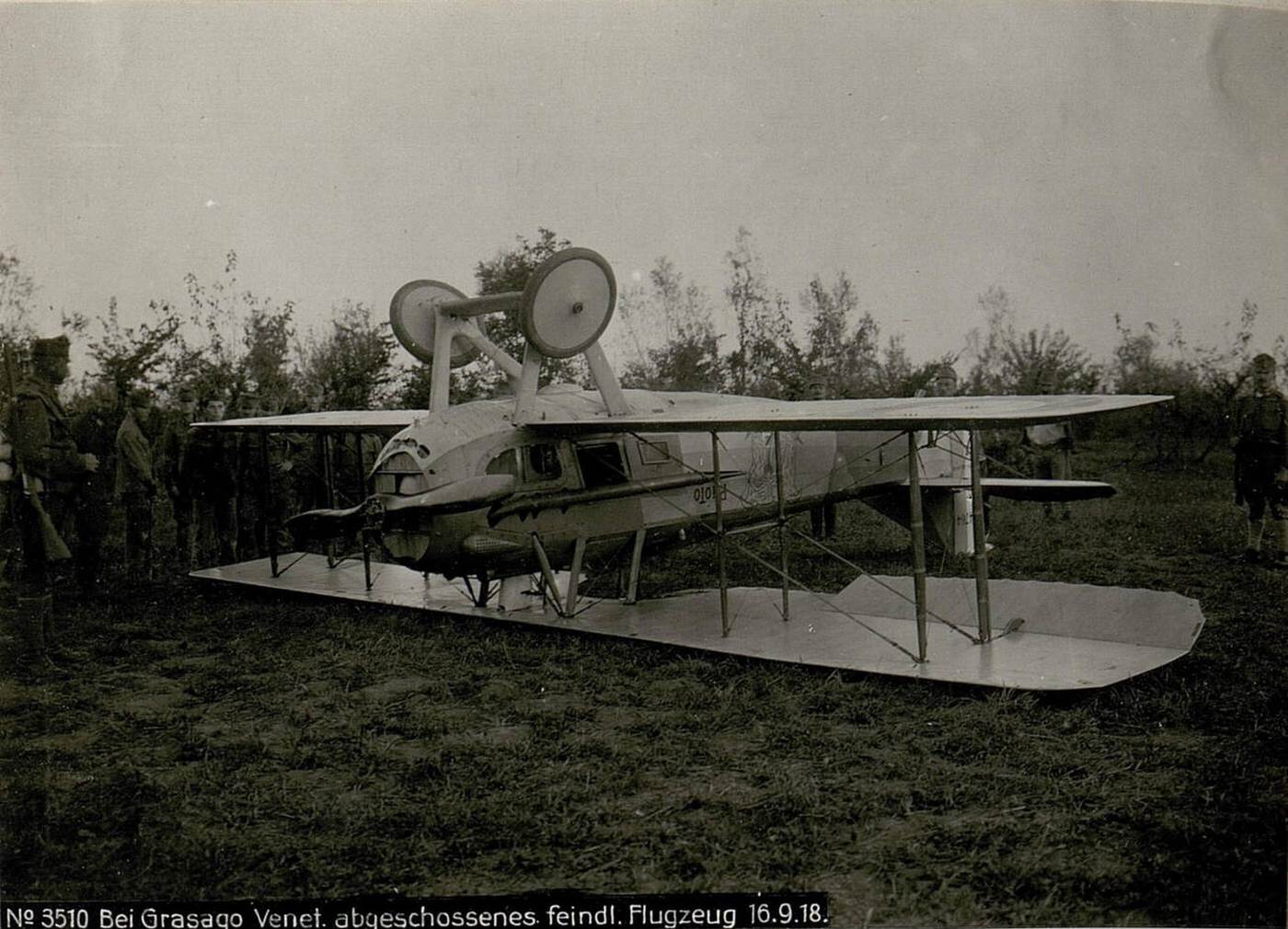
A downed enemy aircraft at Grasago, Italy, during World War I, 1918.
Delivering 2,000 Lb. Bombs, 1918.
Flying French over Zig zag Trenches, 1918.
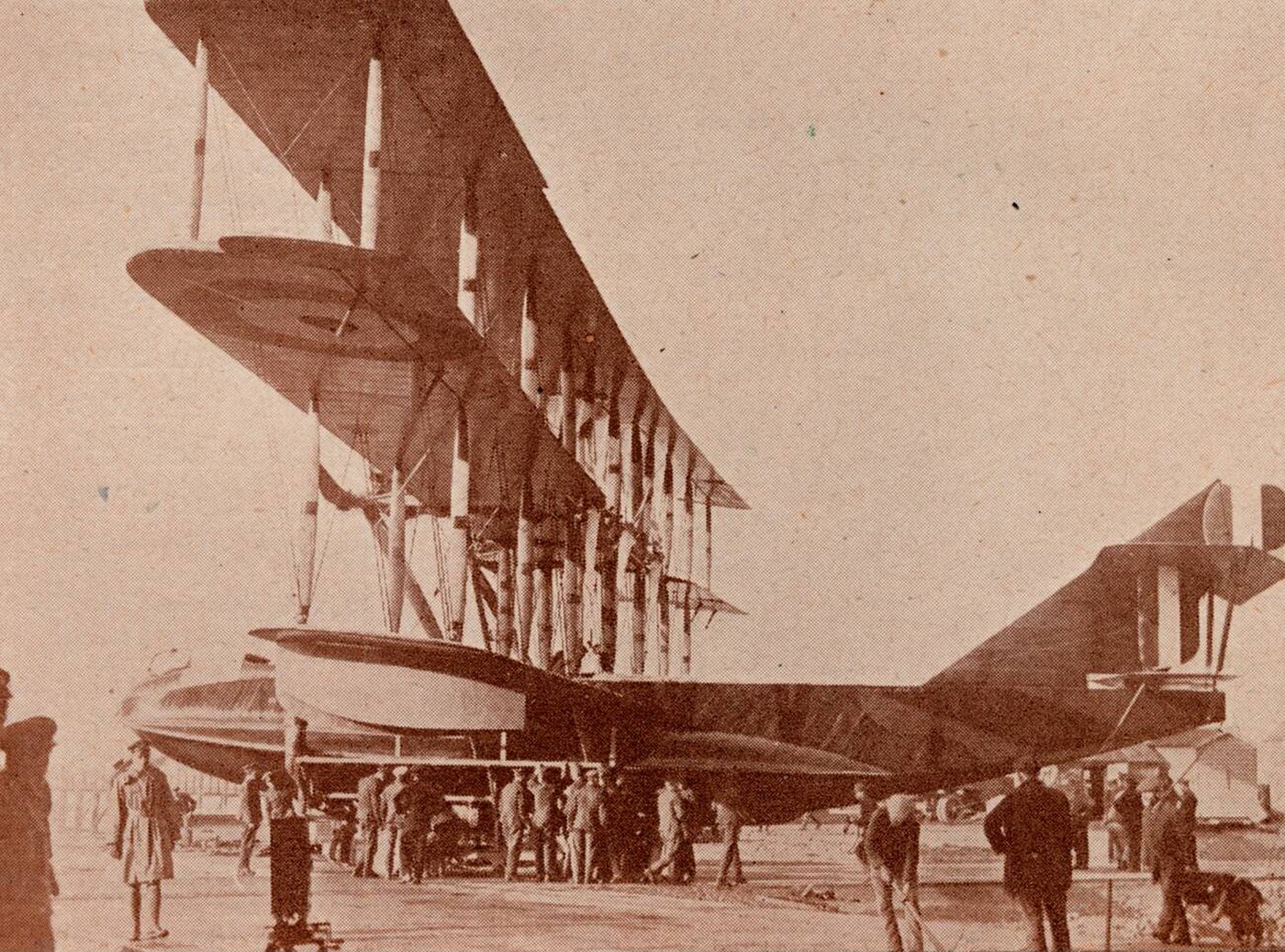
A British triplane flying boat, 1919.
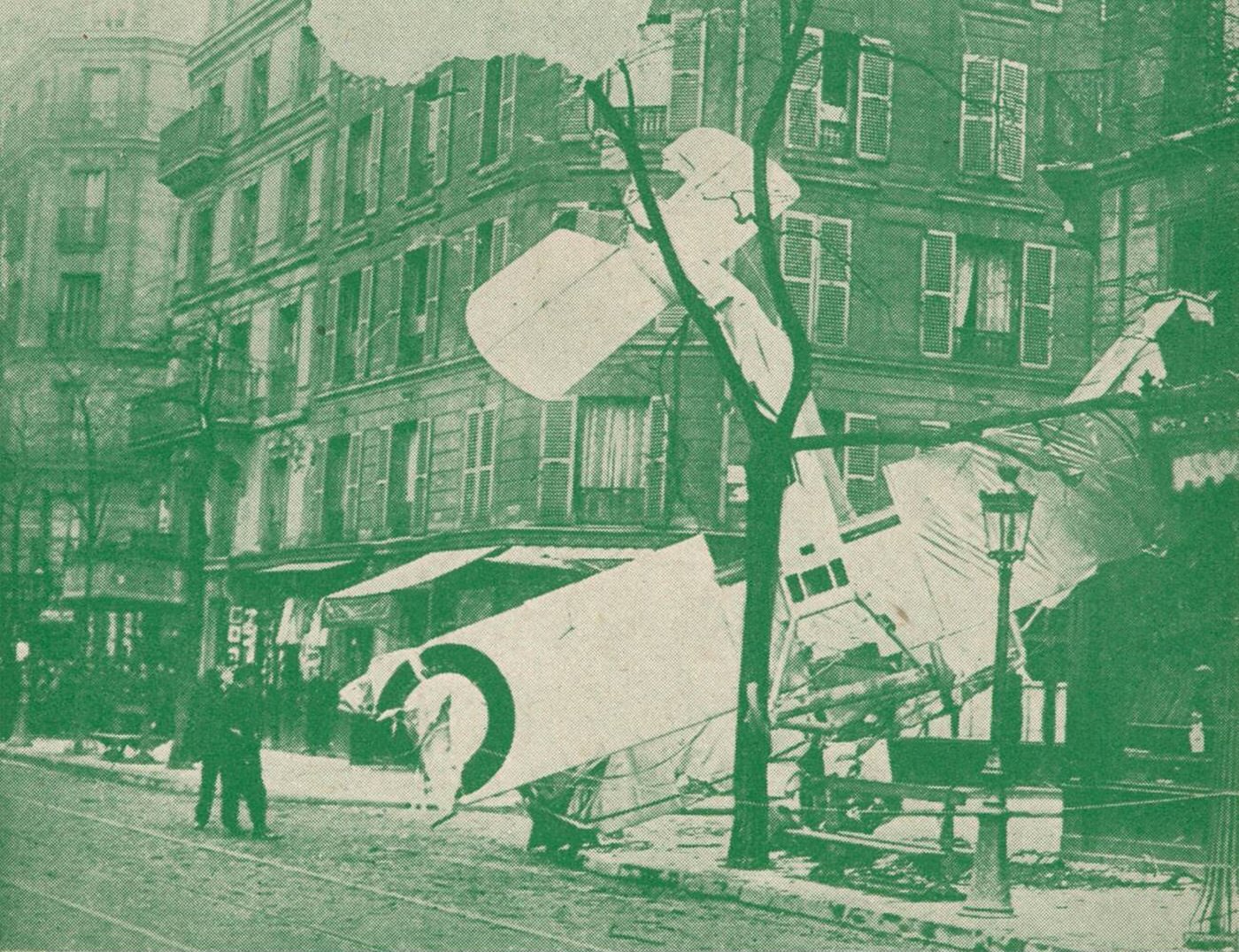
A French aeroplane descends in a Paris street, 1919.
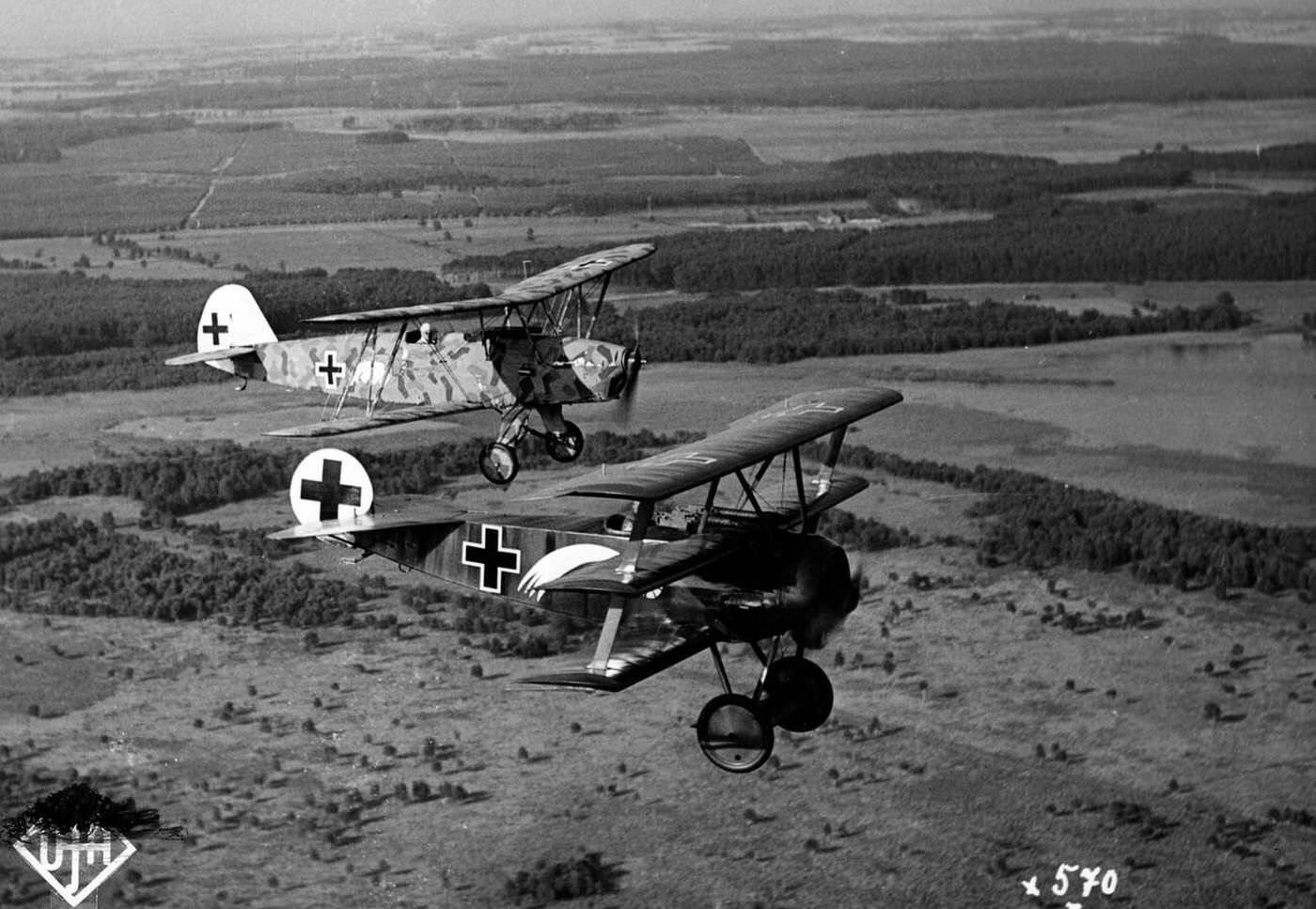
German Fighter Aircrafts during the First World War, 1914-1918.
German reconnaissance plane, probably Albatros C.III in flight, 1916.
Inspection of the Austro-Hungarian Fliegerkompanie No. 34, 1917.
Enjoyed this post? Get new ones in your inbox.

Leave a Comment

Your email address will not be published. Required fields are marked *

Share this Post 🥺

Please take a moment to share this content. Your support is greatly appreciated! 🙌🙏

Share this Post 🥺

Please take a moment to share this content. Your support is greatly appreciated! 🙌🙏
Scroll to Top
 
Hey Friend, Before You Go.. Please like & follow for more interesting content