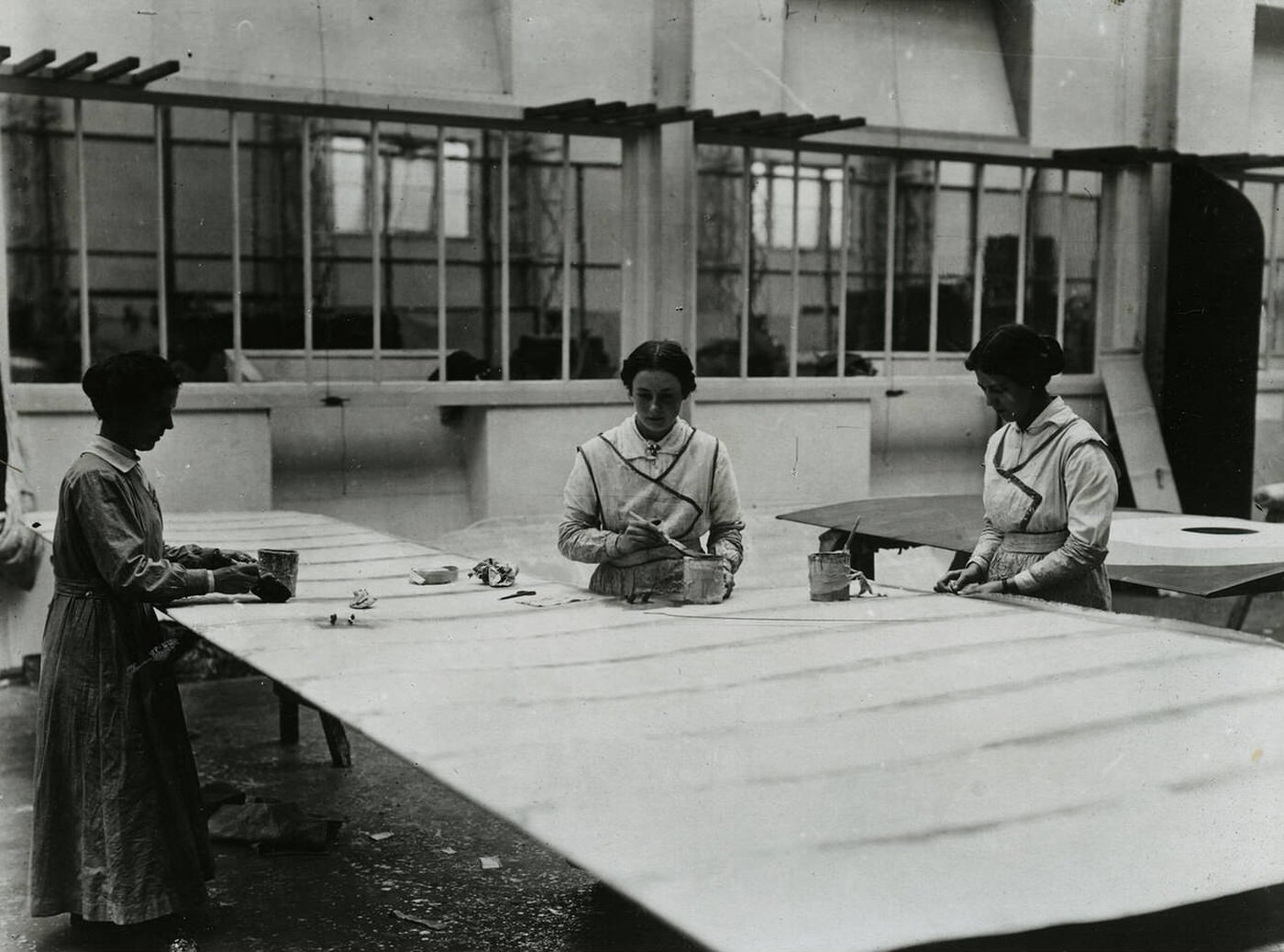
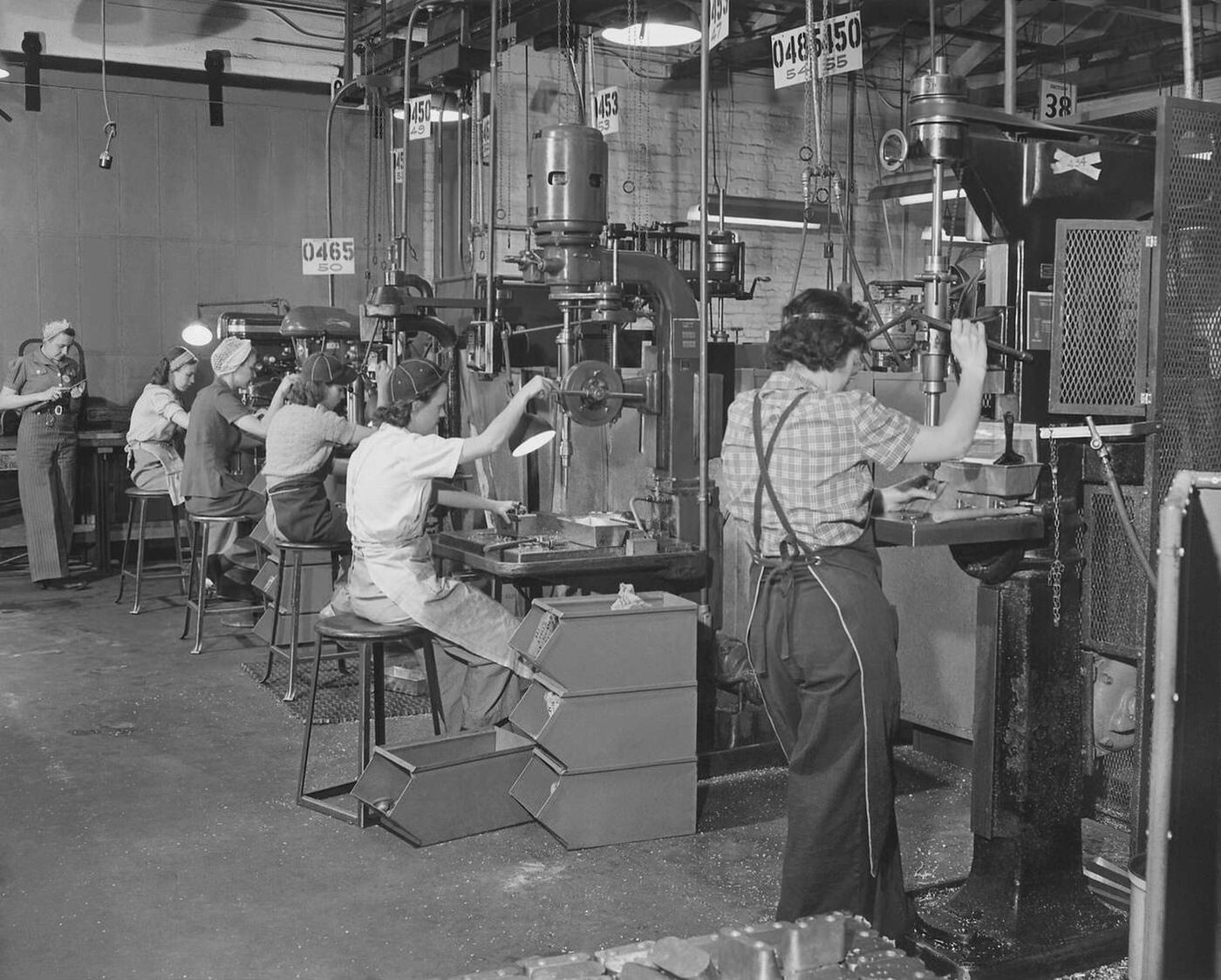
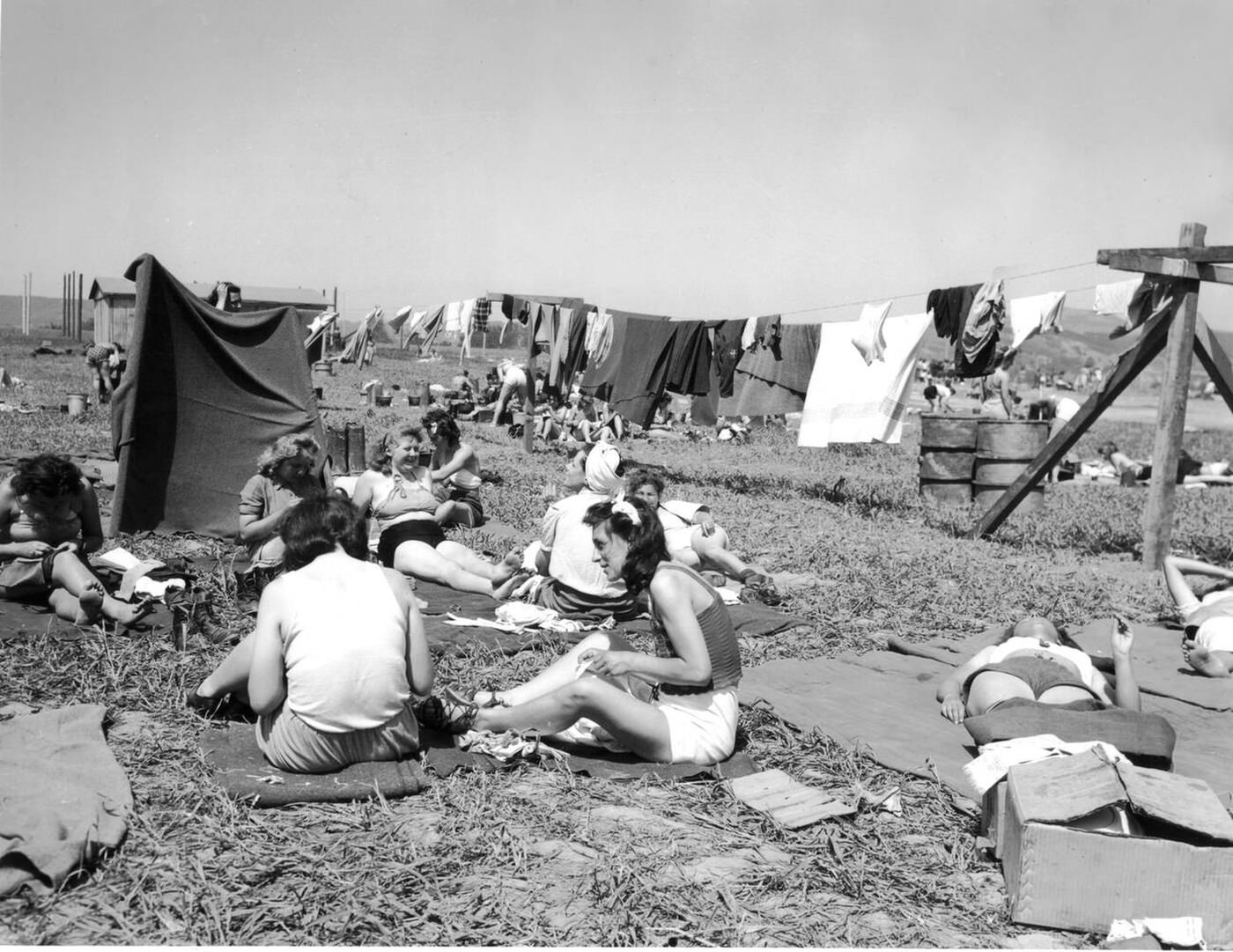
When millions of men left their civilian jobs to fight in World War II, the gap they left behind was enormous. Factories, farms, railroads, and military support operations all needed workers—fast. Women answered that call in numbers never seen before. Across the United States, Britain, Canada, the Soviet Union, and beyond, women took on jobs that had long been considered off-limits to them. The results were visible everywhere: in shipyards along the coasts, in aircraft plants humming with production, in muddy farm fields, and in military bases stretching from Scotland to the South Pacific.
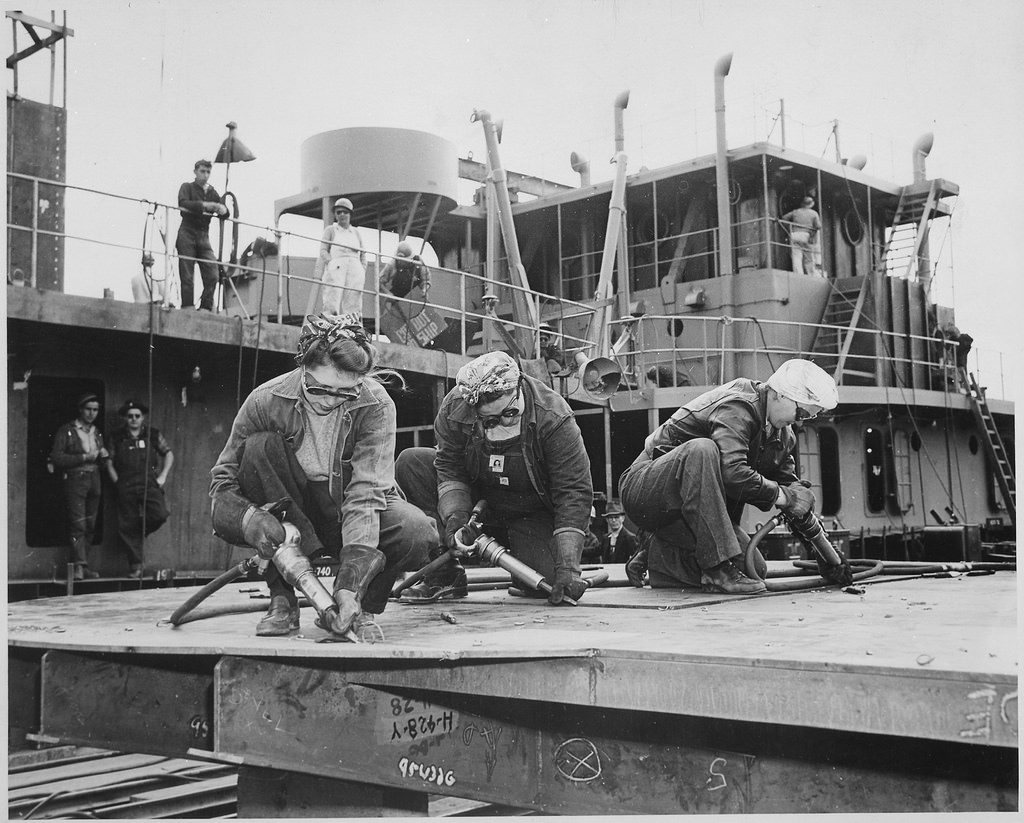
Shipyards became one of the earliest and most demanding sites of women’s wartime labor. The U.S. Navy and Allied merchant fleets needed ships faster than ever before, and the yards needed hands to build them. Women took up welding torches, rivet guns, and chipping hammers to work alongside the few men who remained stateside. The physical demands were real—loud, dirty, and often dangerous work—but the output was critical to keeping supply lines and naval operations alive.
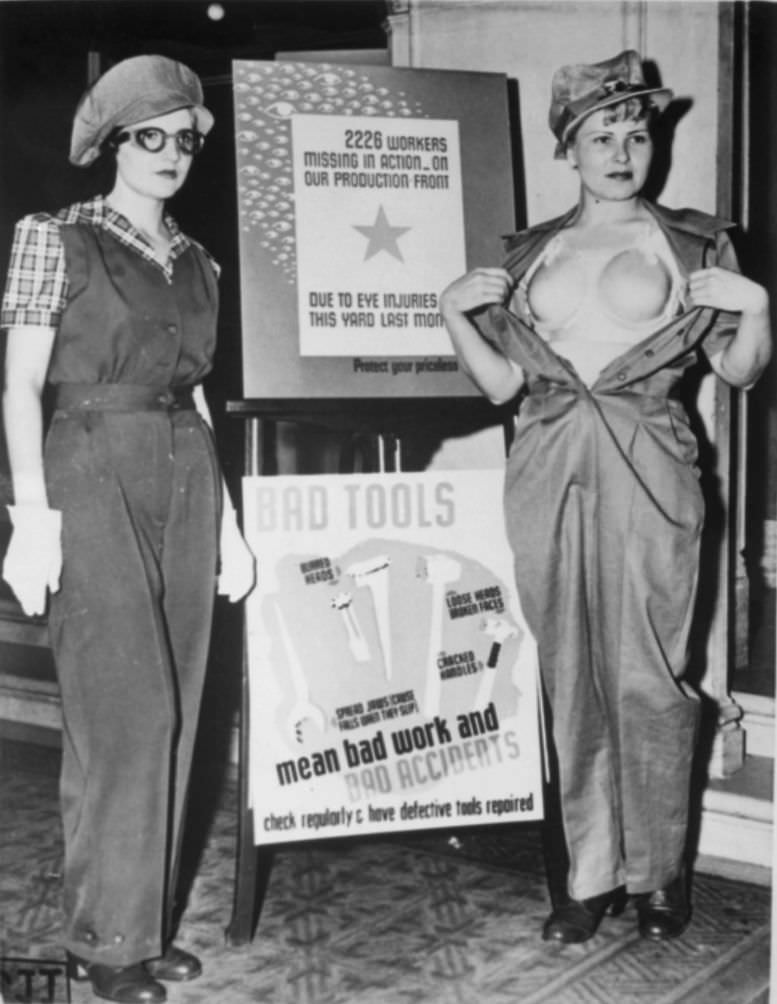
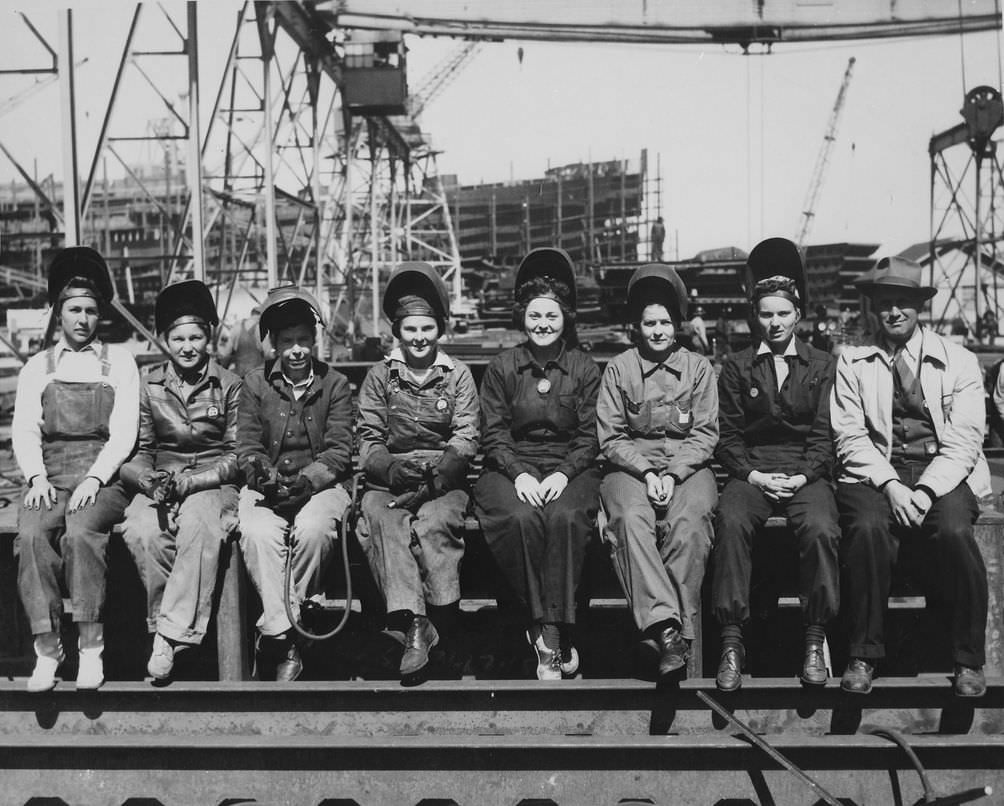
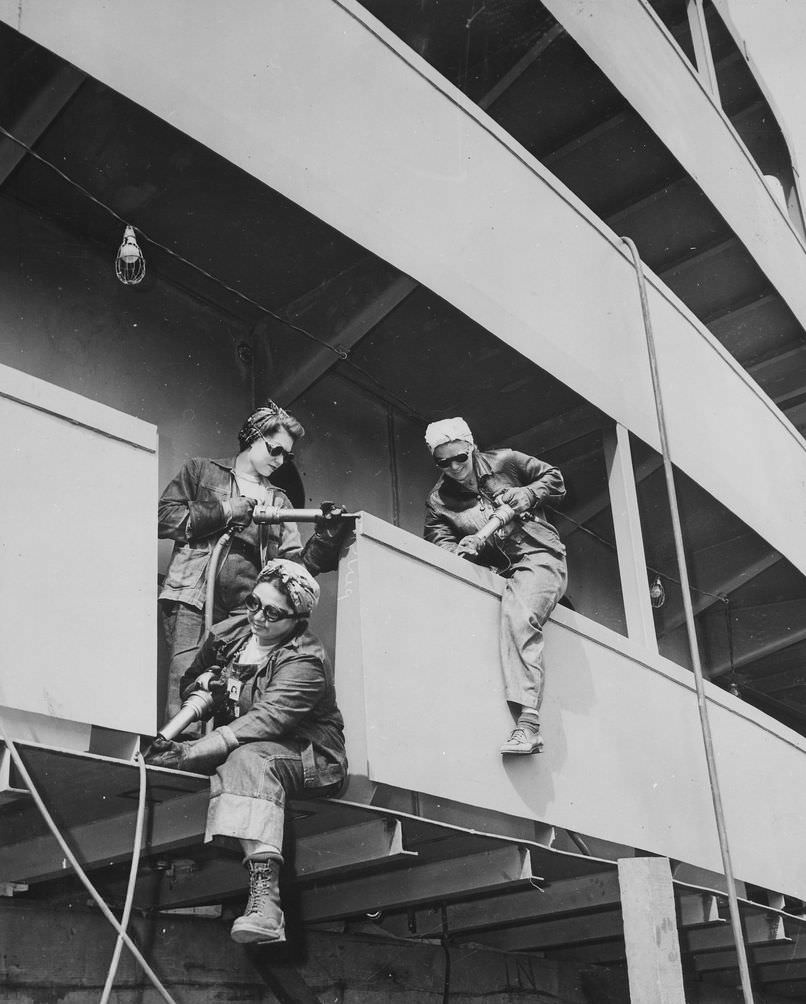
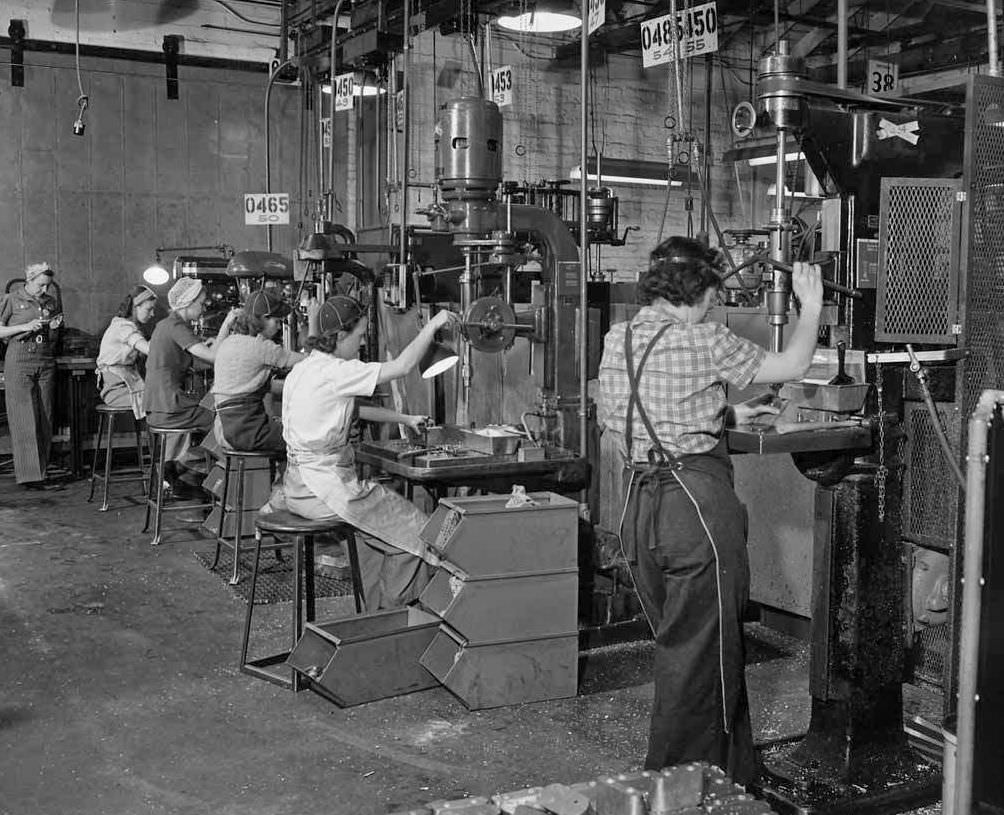
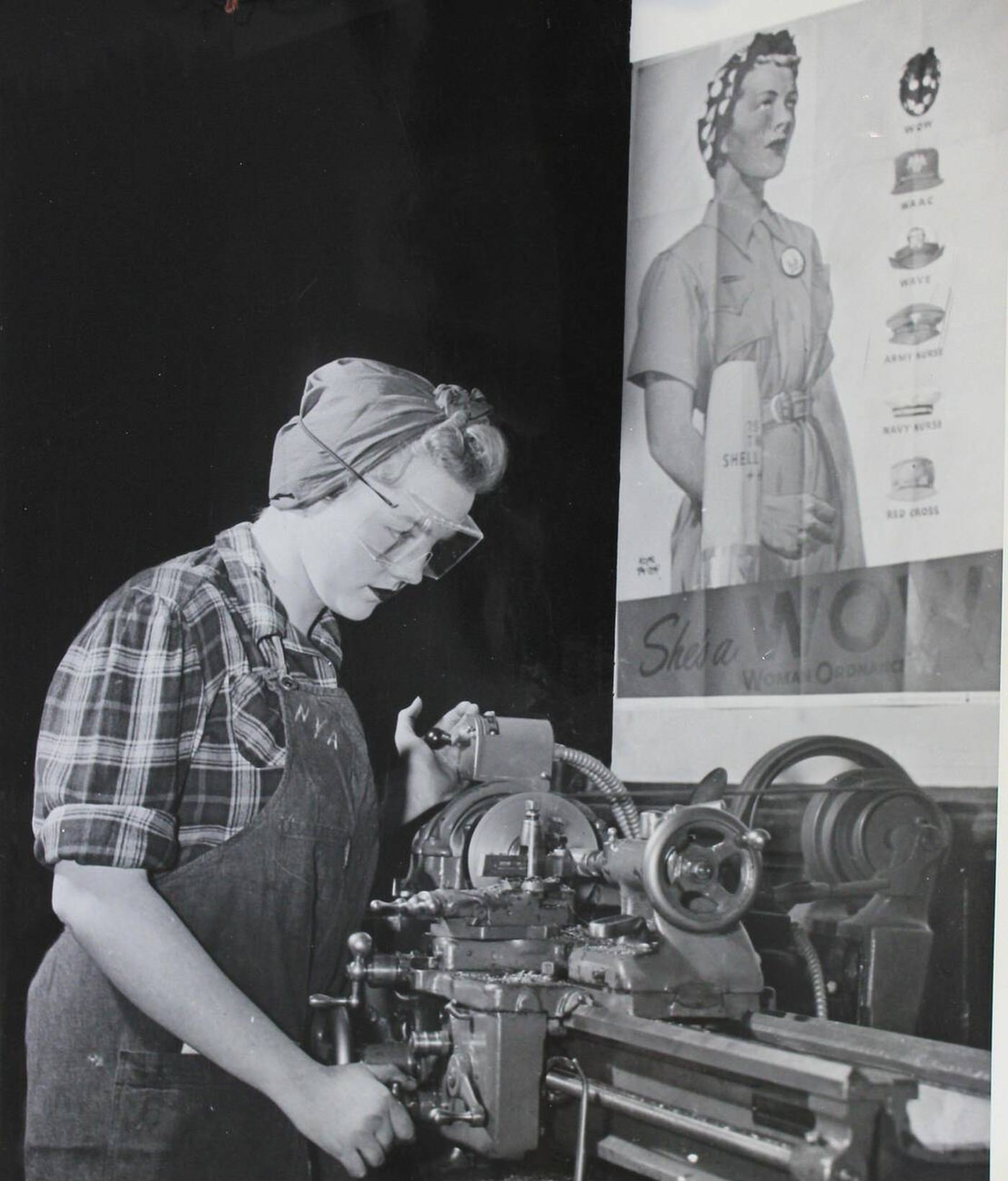
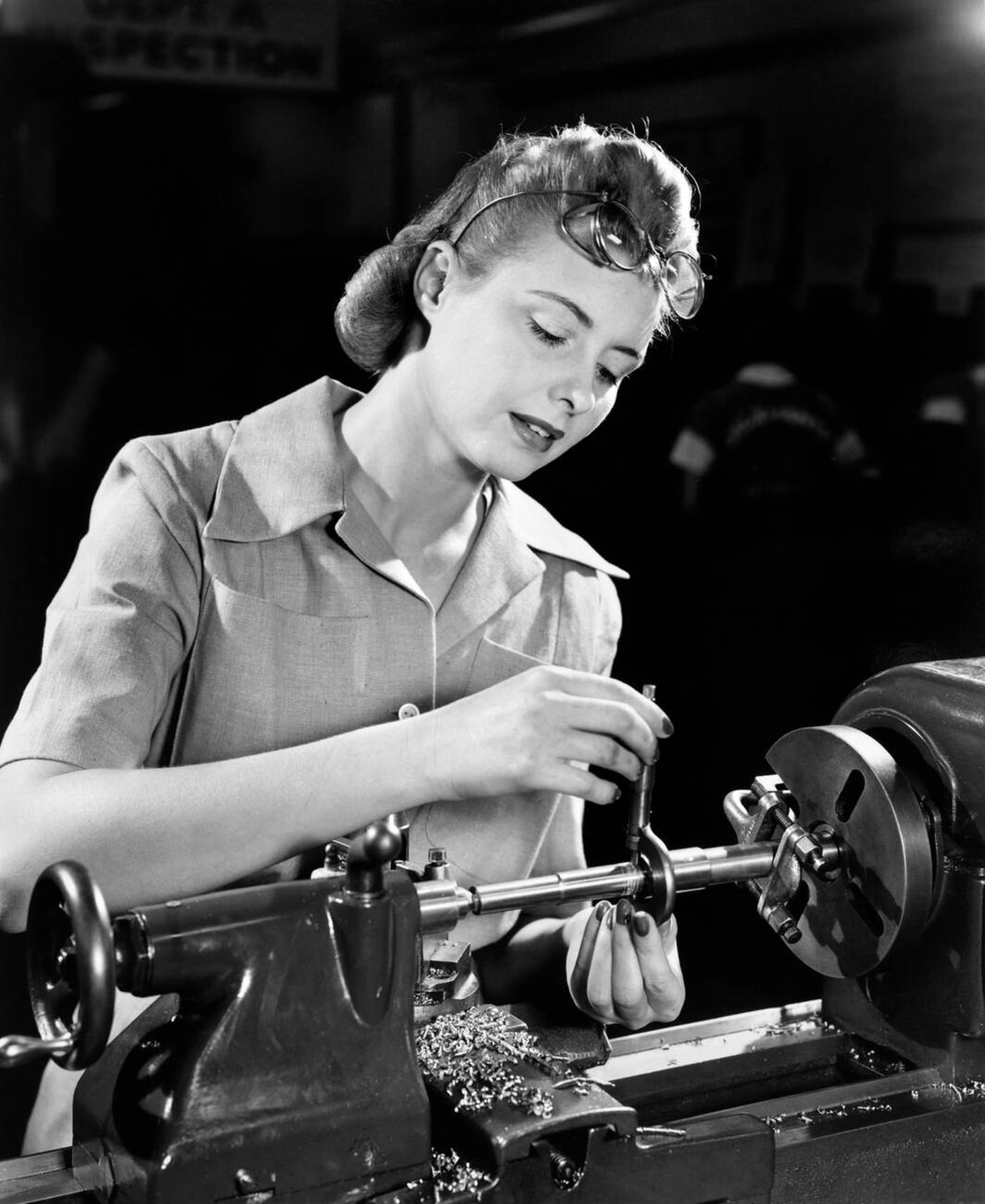
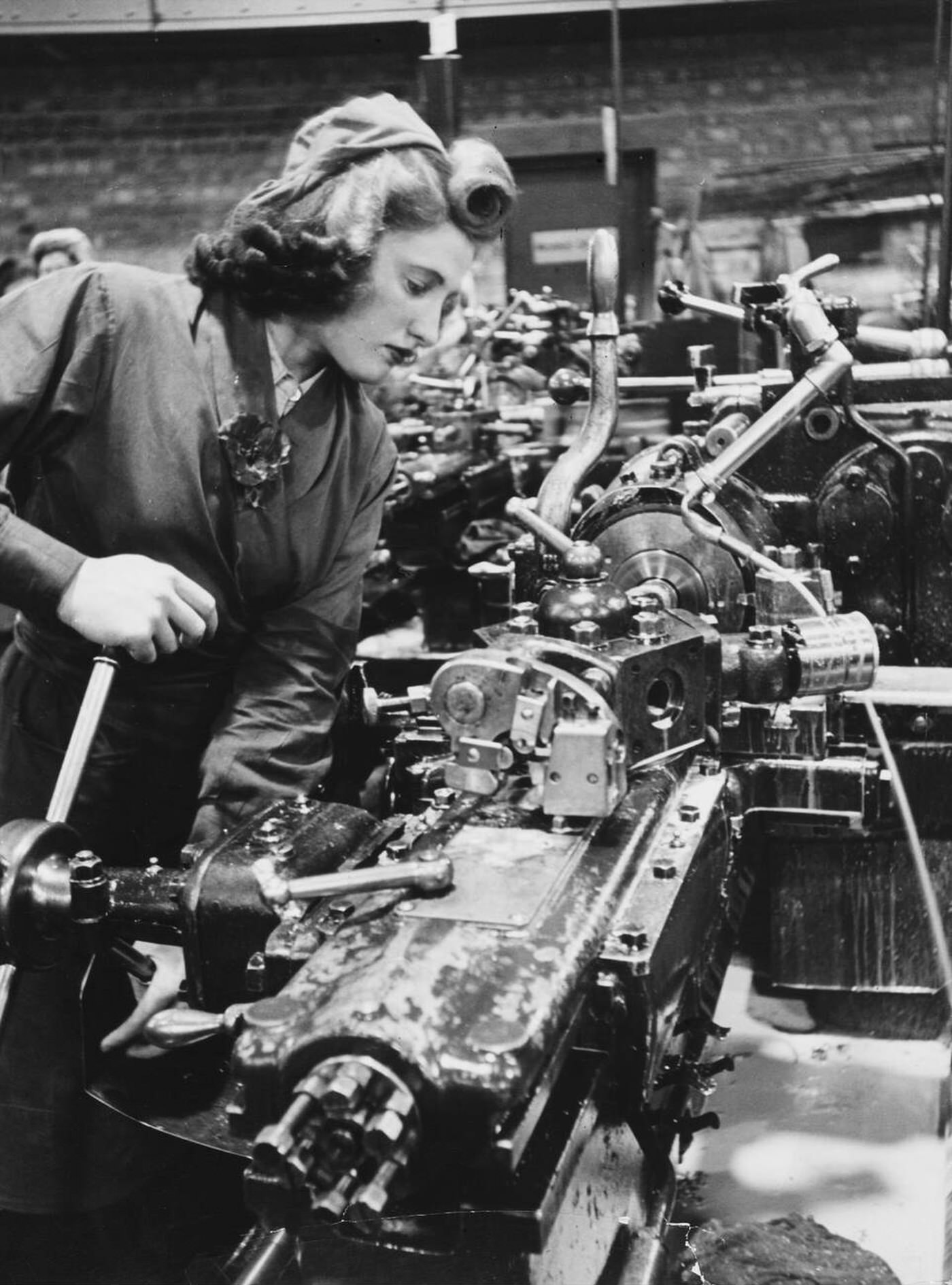
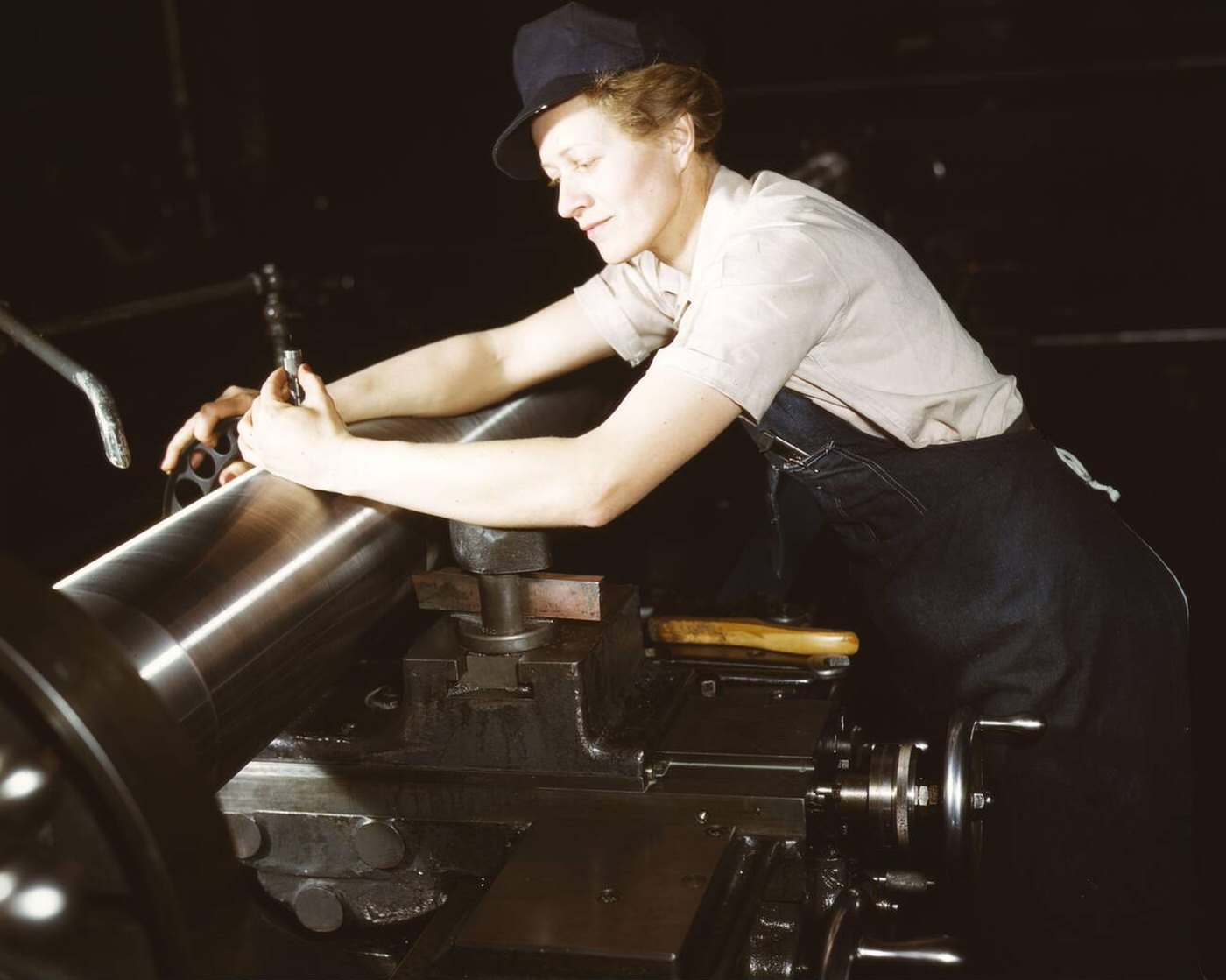
“Chippers” were workers who used pneumatic hammers to chip away slag, rust, and excess metal from ship hulls and seams before welding or painting. It was loud, physically punishing work. Women filled these roles without hesitation. Meanwhile, in steel plants and factories producing war machinery, women operated lathes, ran drill presses, and cut metal components with precision.
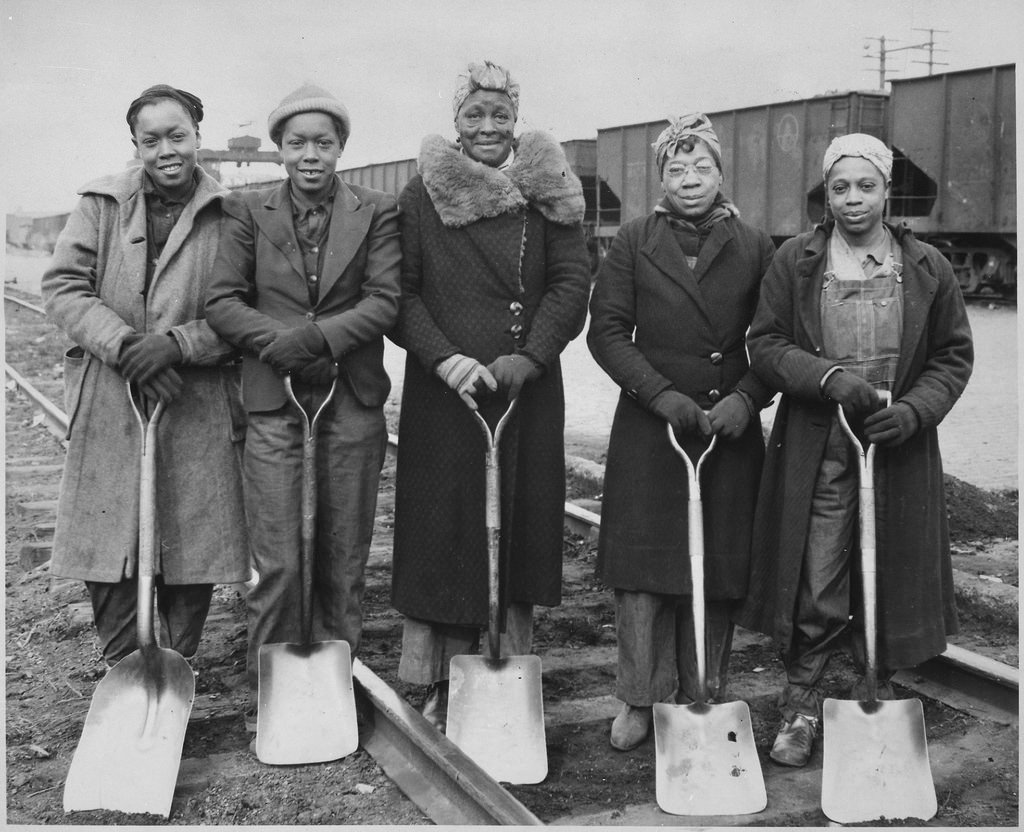
Railroads were the veins of the wartime economy, moving troops, equipment, and raw materials across entire continents. Women stepped in as mechanical helpers, track workers, and engine cleaners, keeping the trains running when male workers were away at war. At depots like the Savannah Quartermaster Depot, women also managed the massive logistical task of organizing and distributing military supplies.
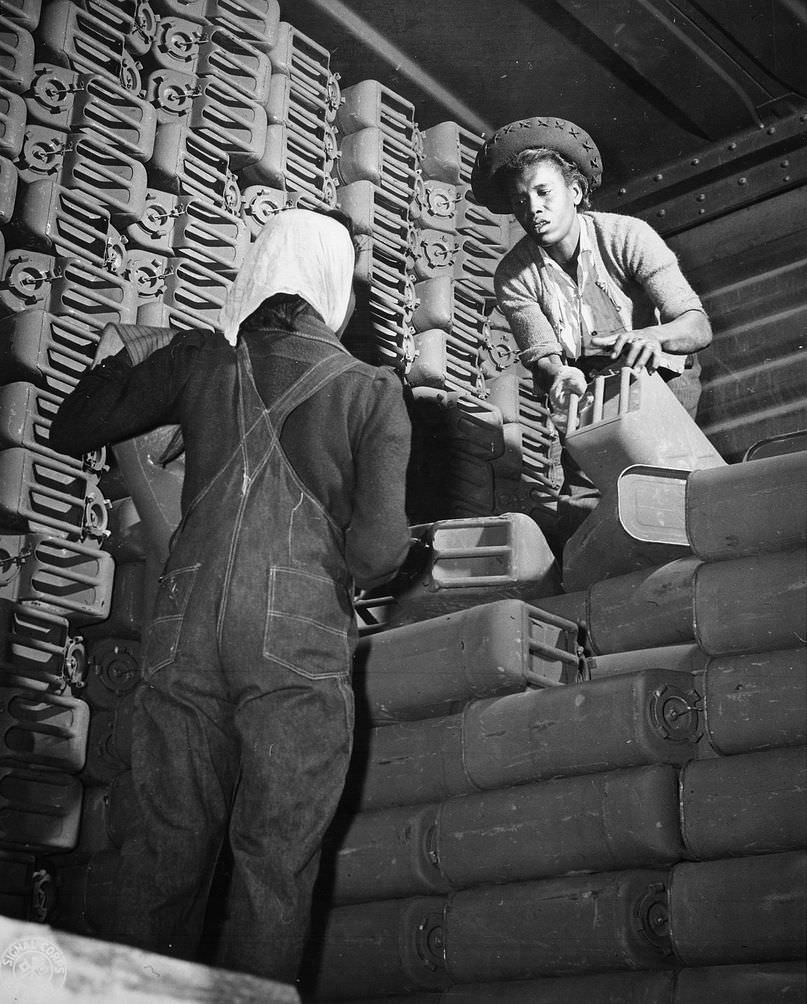
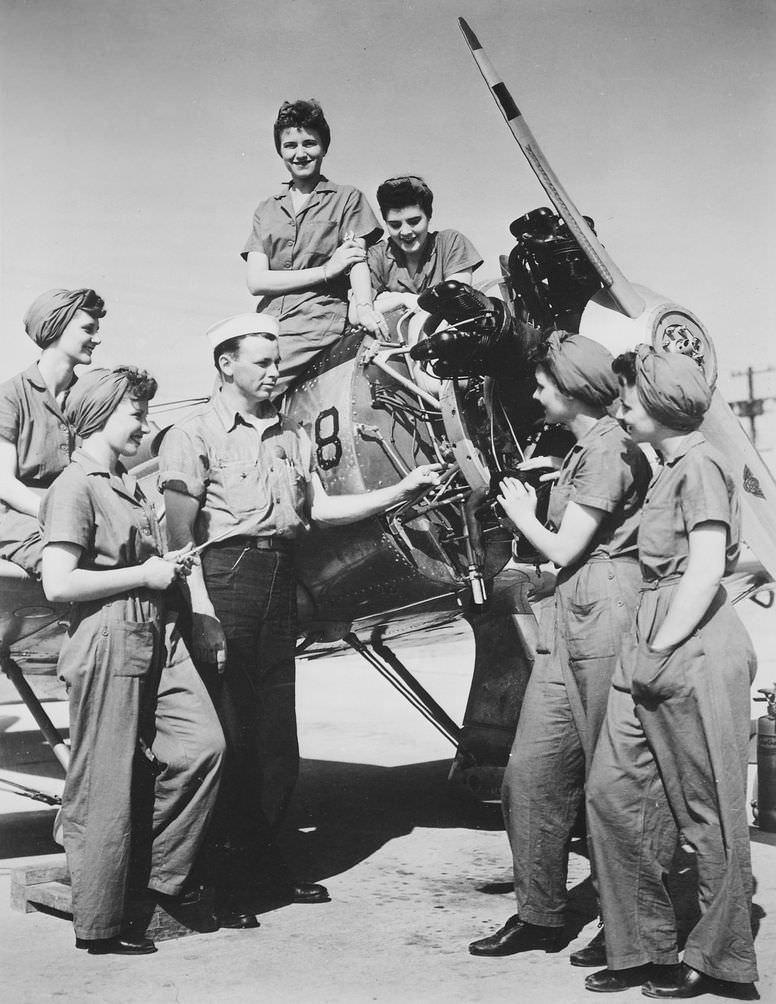
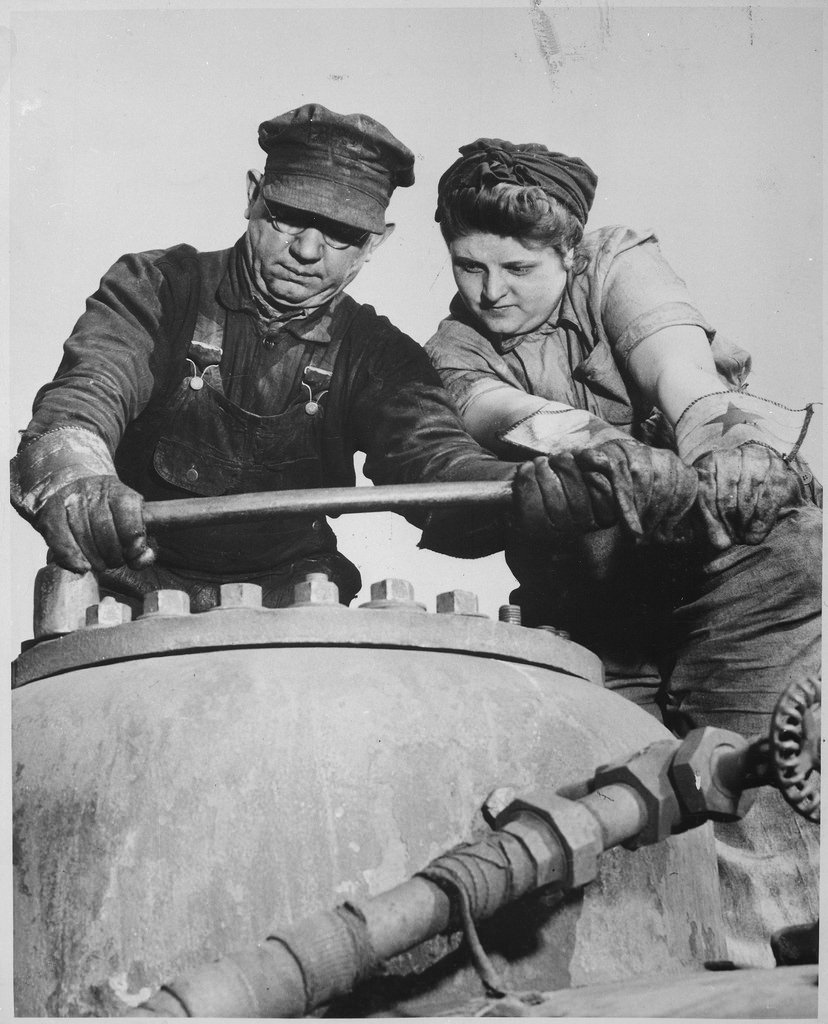
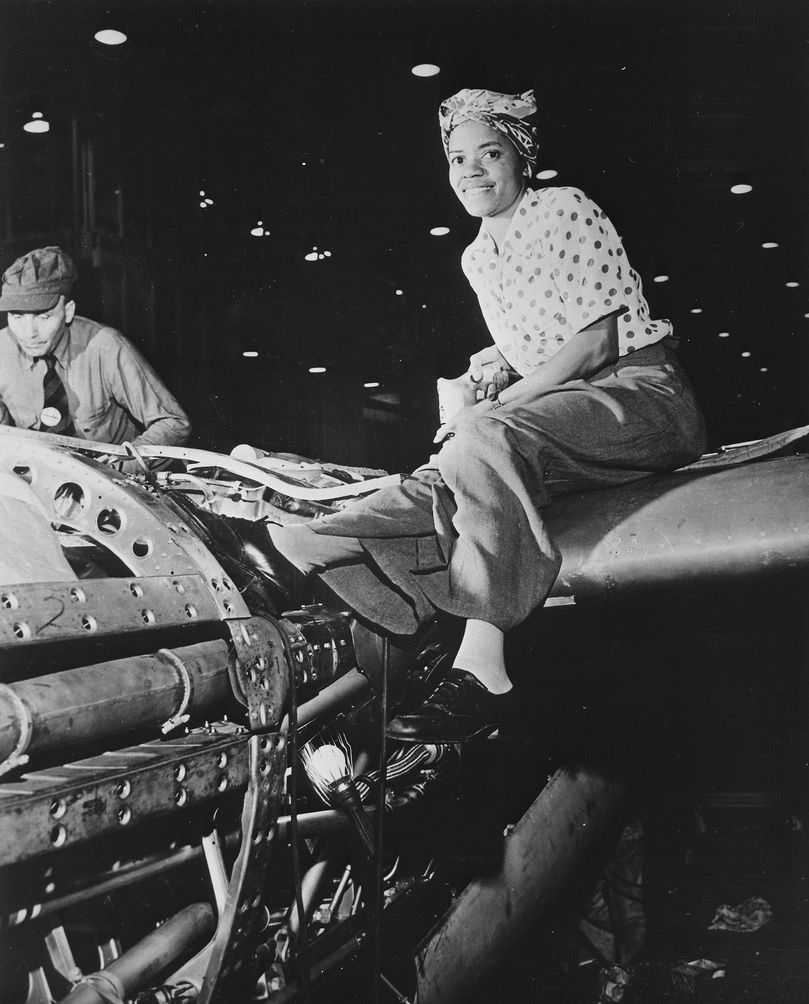
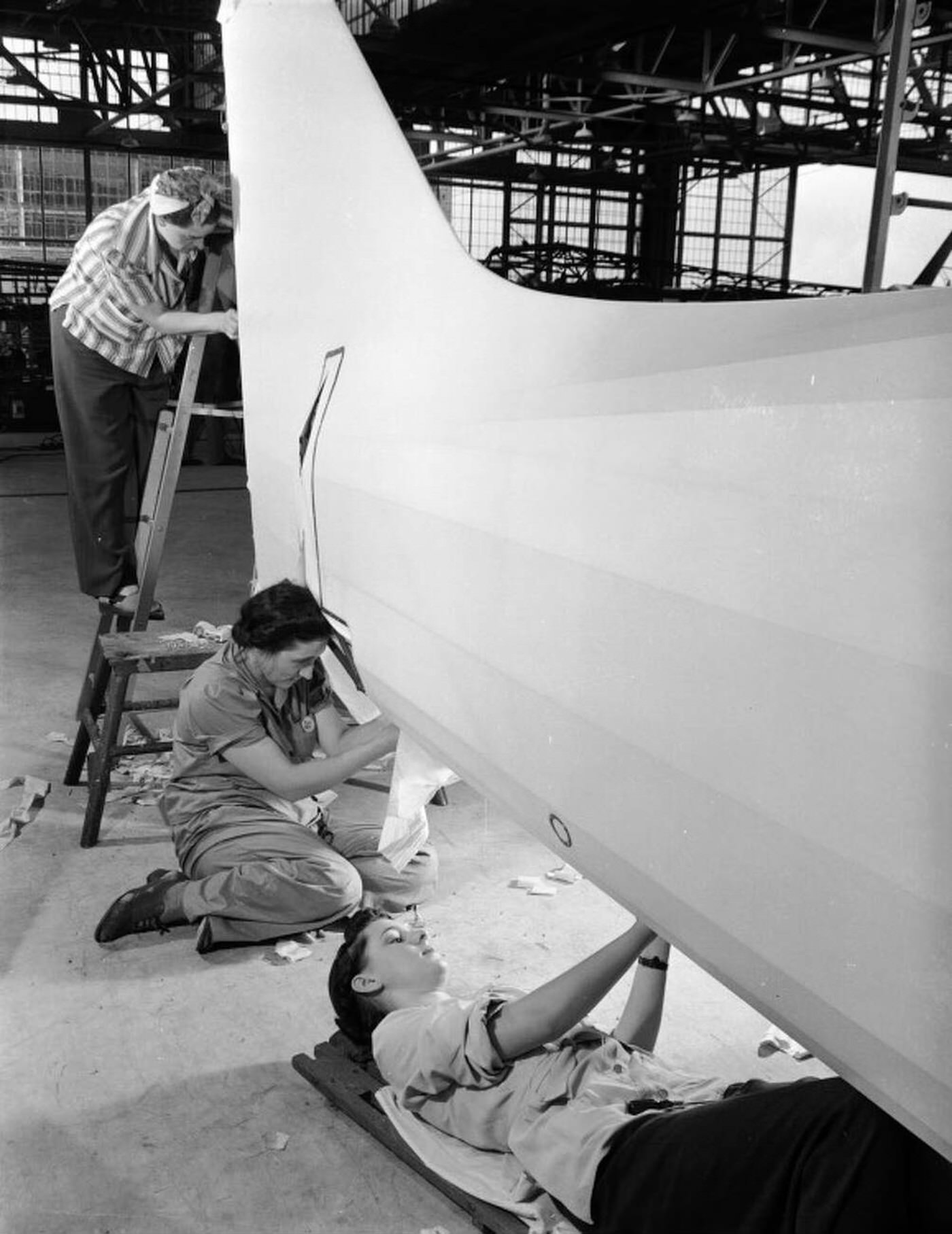
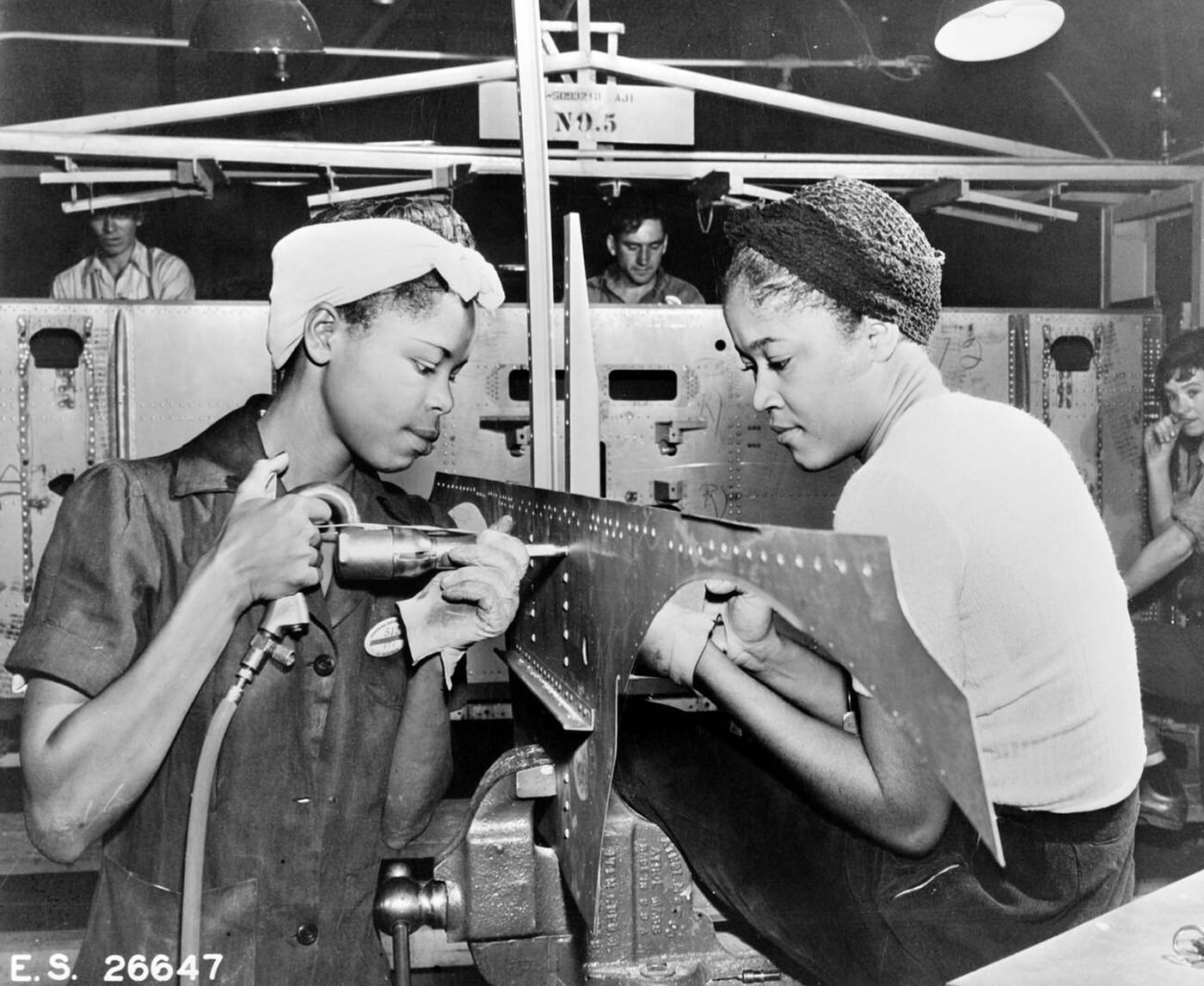
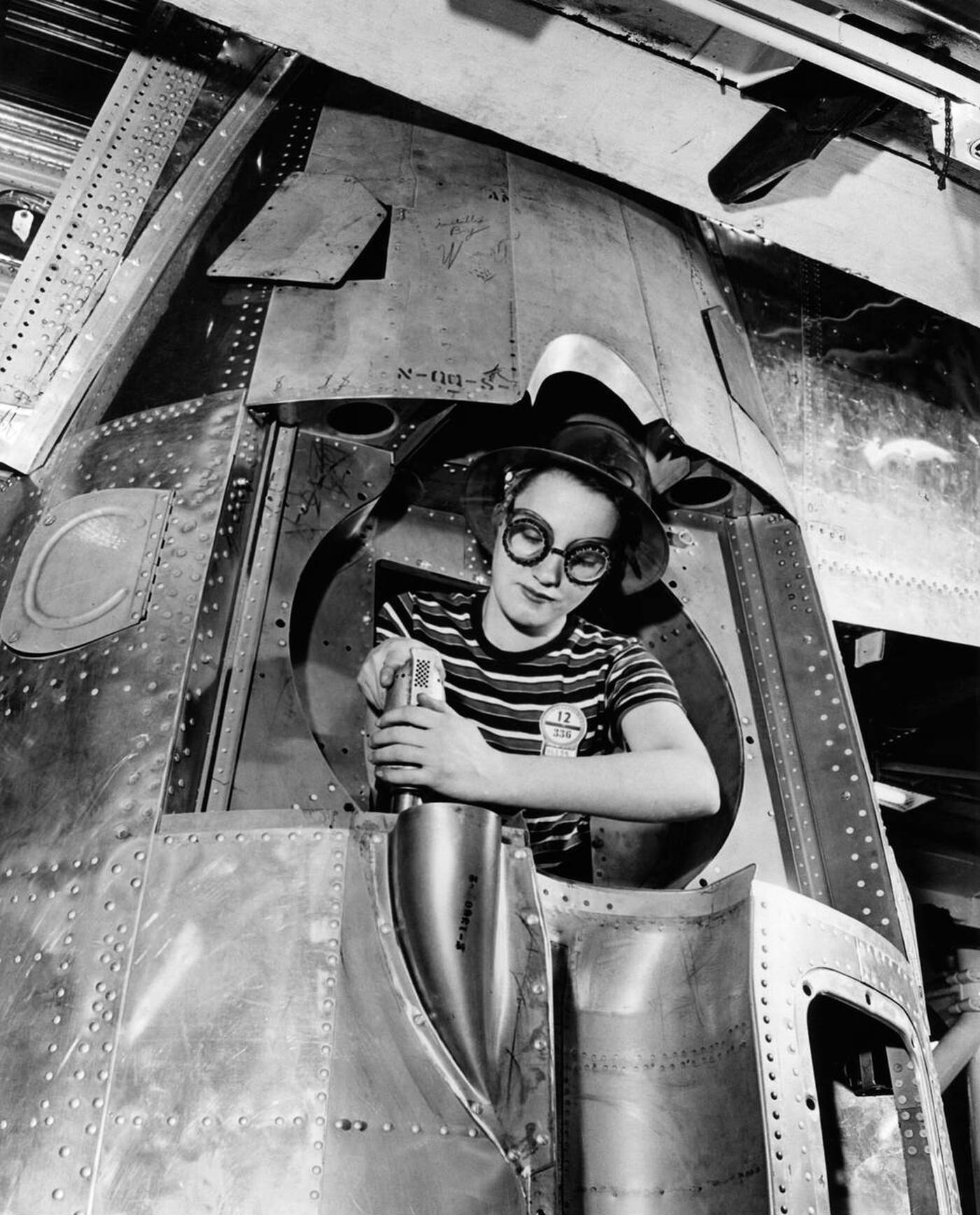
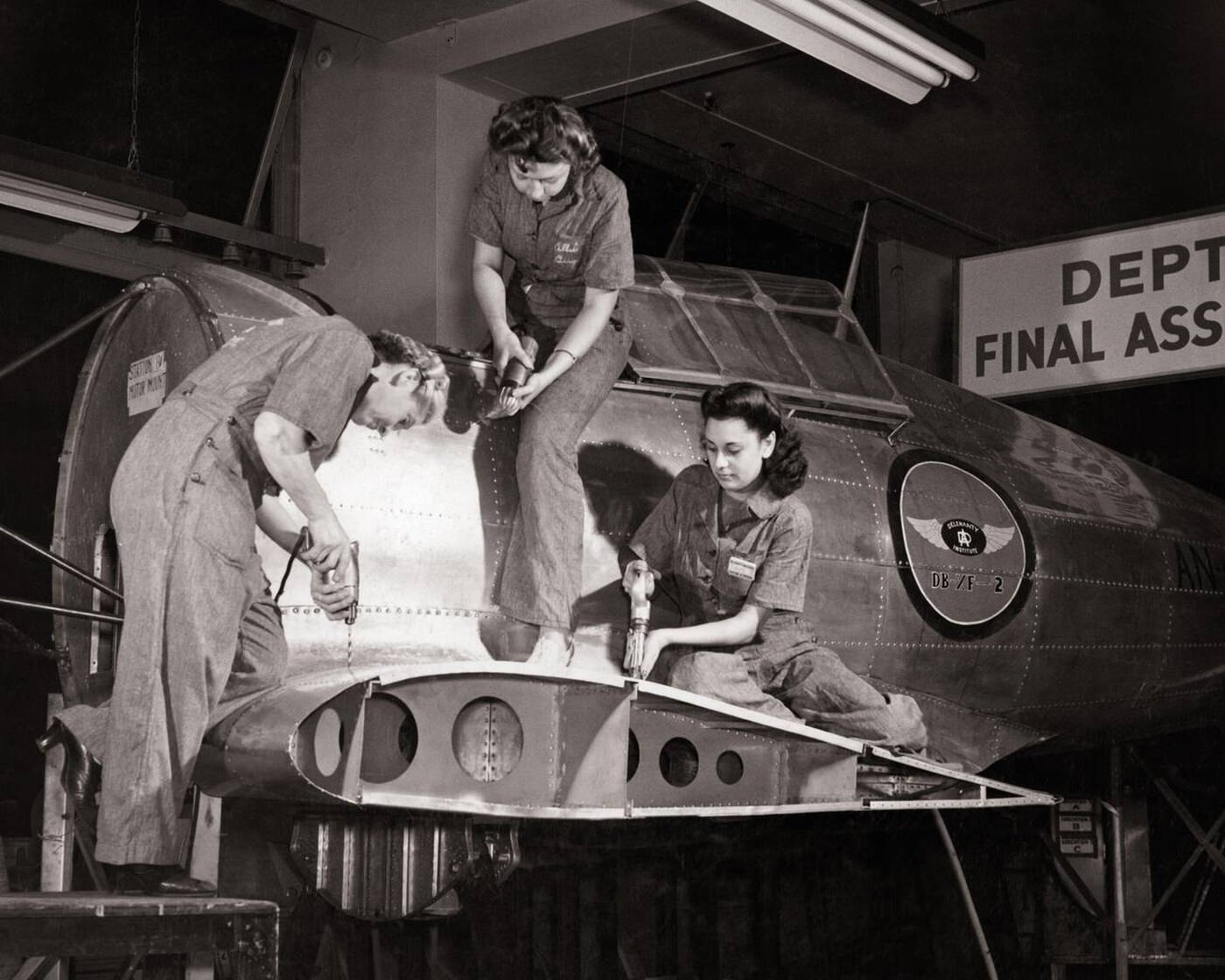
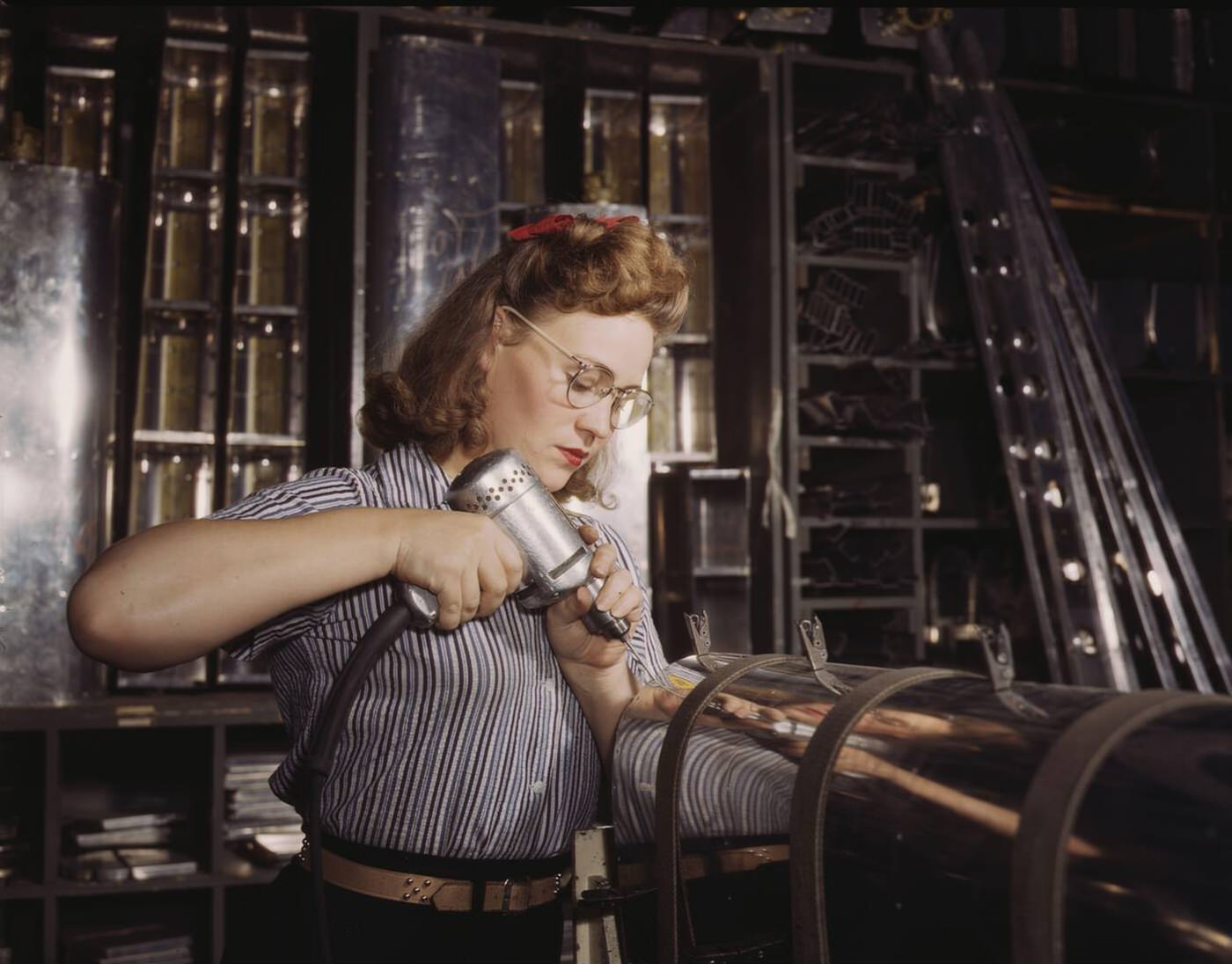
In the steel industry, women rose to leadership positions on the factory floor. At U.S. Steel’s massive Gary Works in Indiana, top female workers supervised production operations that fed raw steel into the war machine. Aircraft manufacturing was another key sector. At Lockheed Aircraft in California, female riveters drilled and fastened the aluminum panels that formed the skins of fighters and bombers heading to combat theaters around the world.
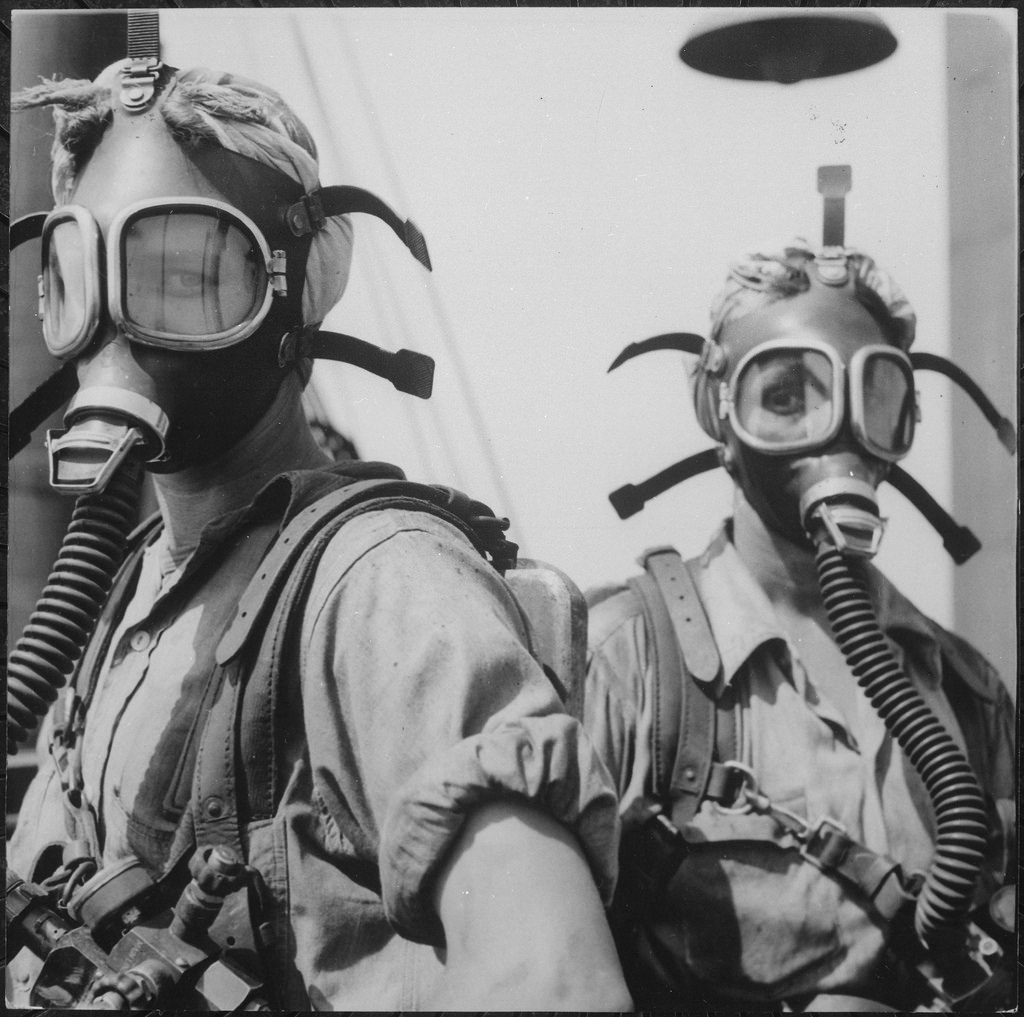
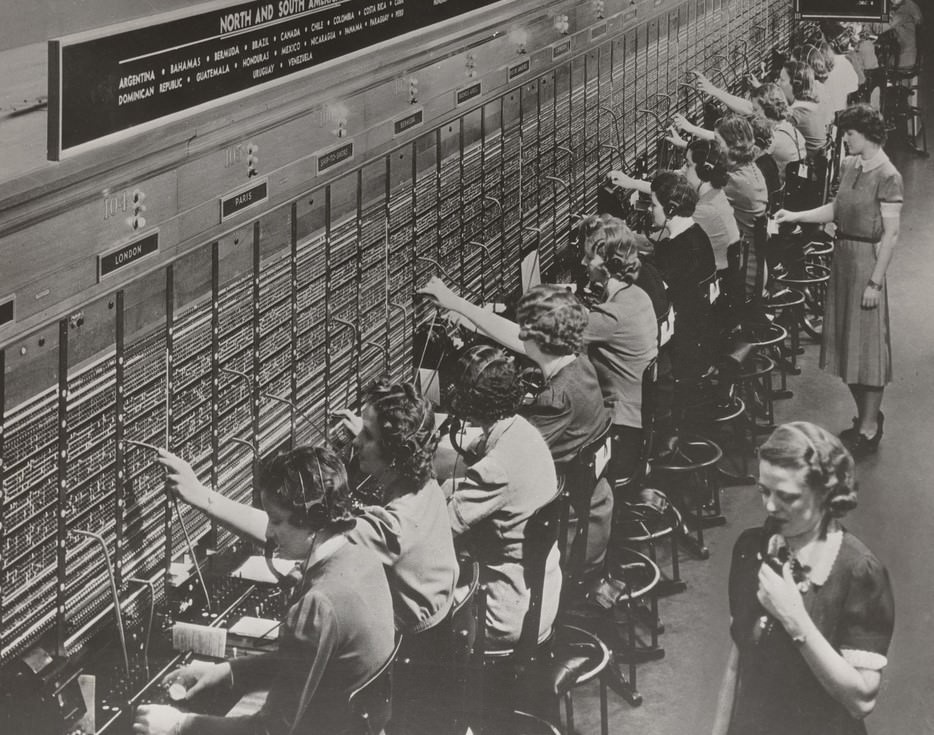
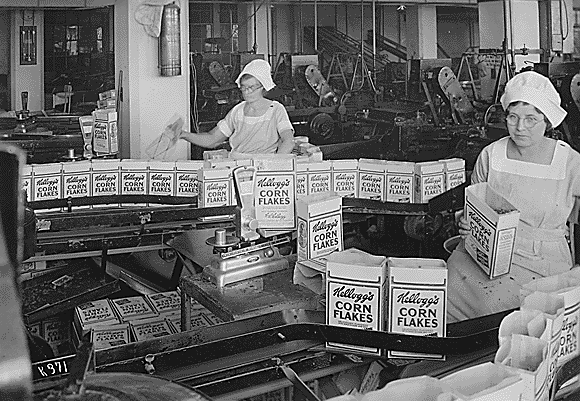
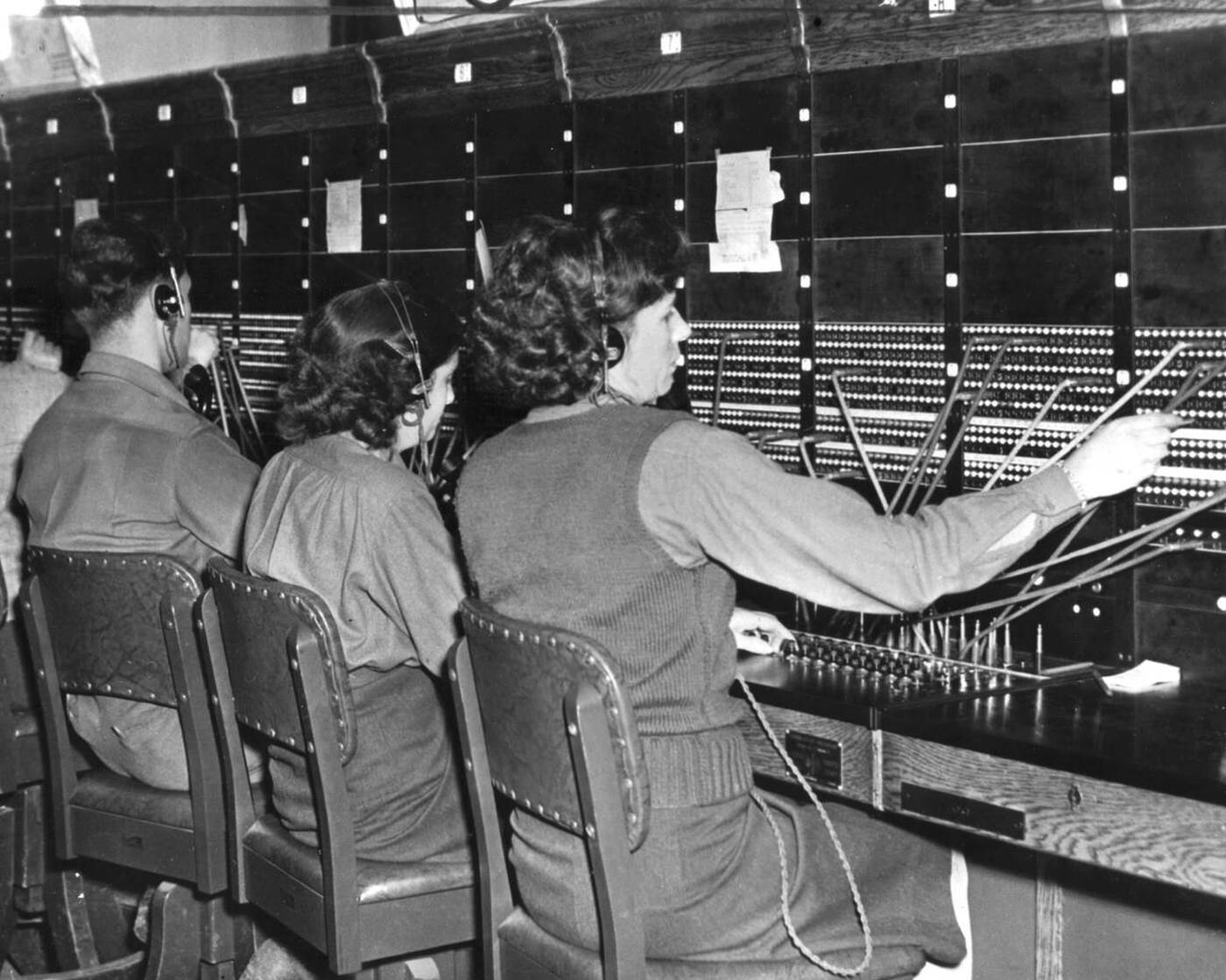
Communication was just as vital as firepower. Women staffed telephone switchboards for both civilian systems and military networks, routing calls that coordinated troop movements and logistics. In the inspections and quality control side of manufacturing, women checked every component—from cereal production lines that kept civilian food supplies moving to precision engine parts destined for military vehicles.
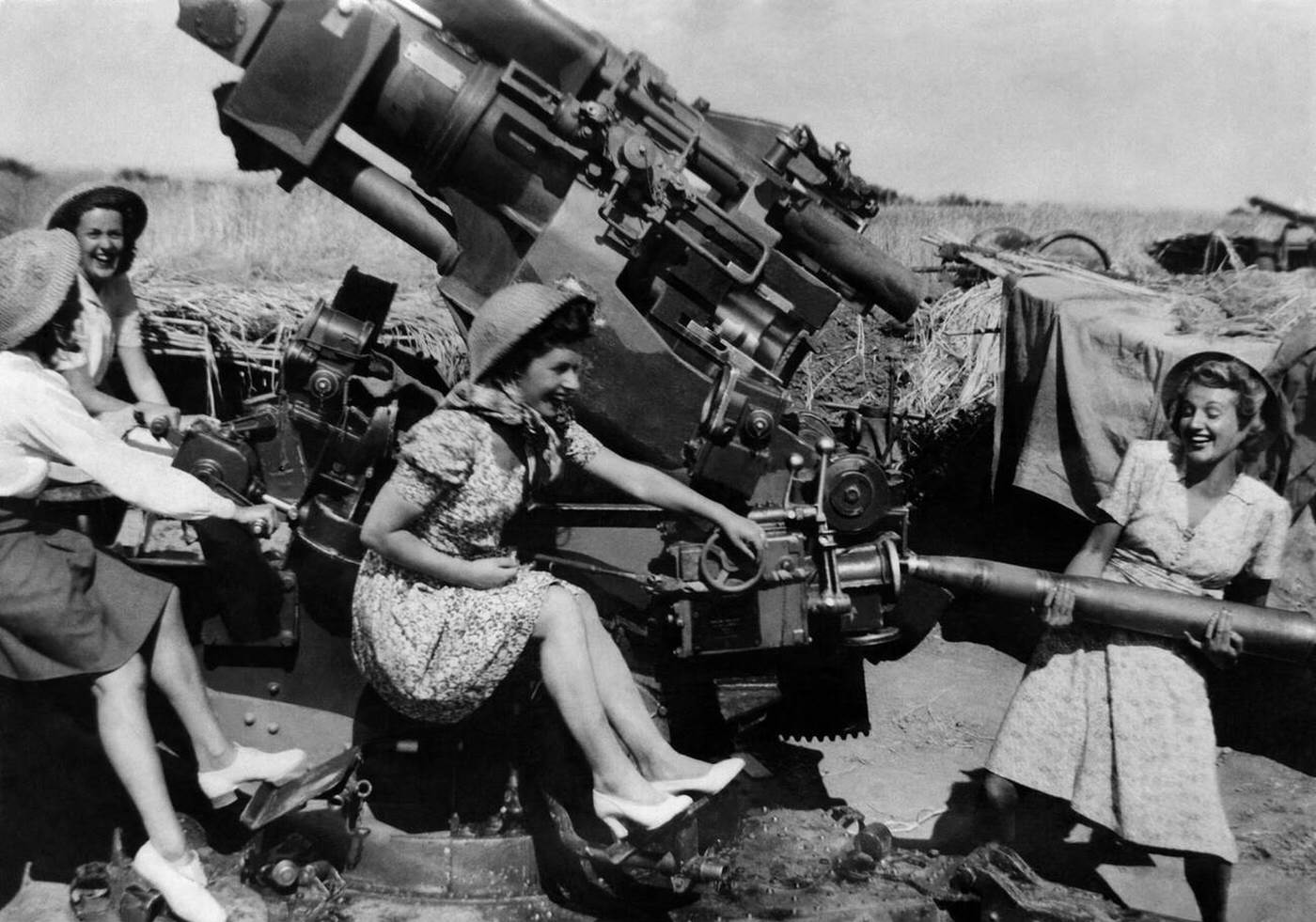
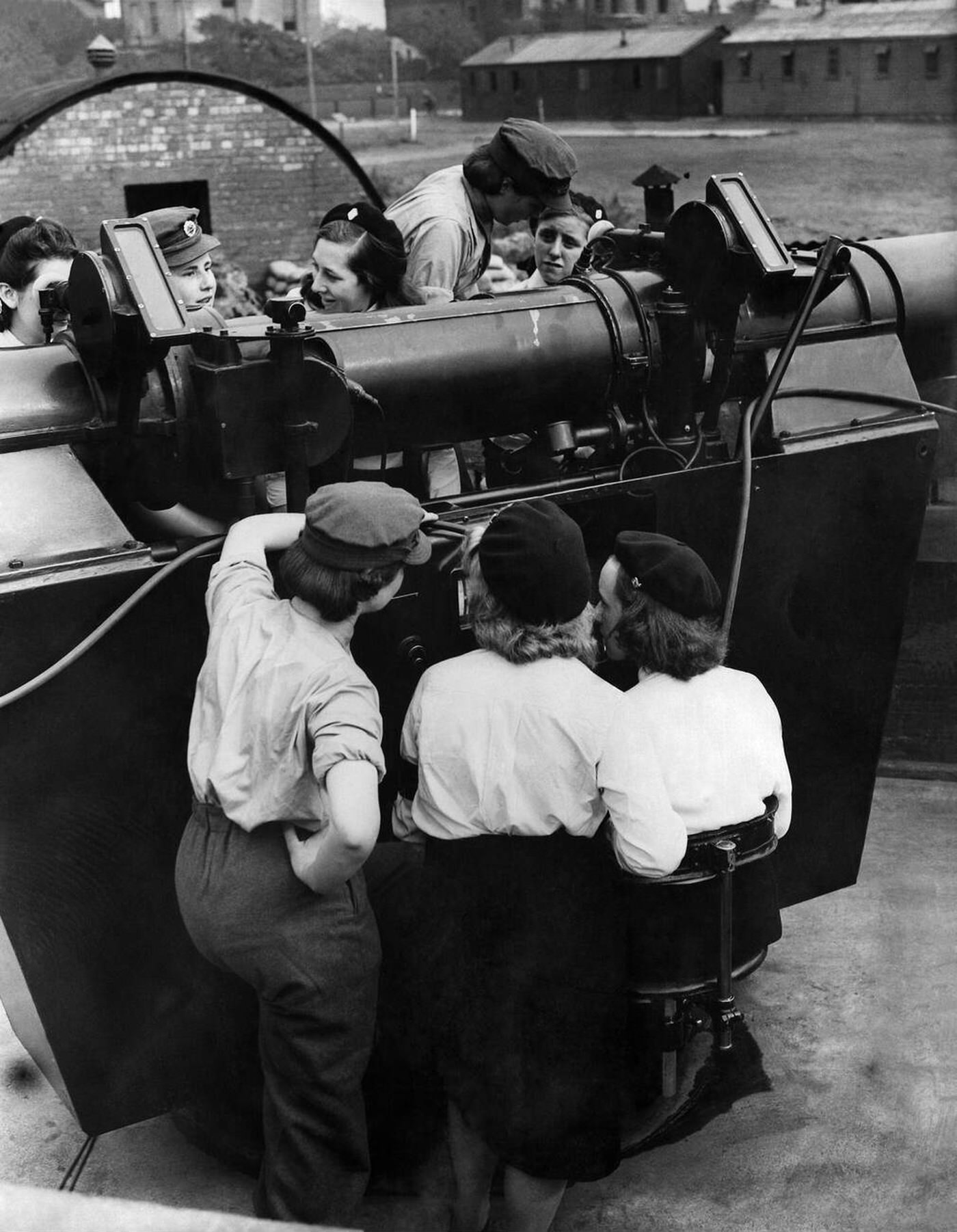
Women in Britain’s uniformed services took on roles that went beyond paperwork. A Wren—a member of the Women’s Royal Naval Service—stationed at a Scottish RAF base served as an armorer, handling and maintaining weapons for aircraft. Members of the Auxiliary Territorial Service trained as gun battery controllers and worked at anti-aircraft emplacements, calculating firing data for crews targeting enemy planes.
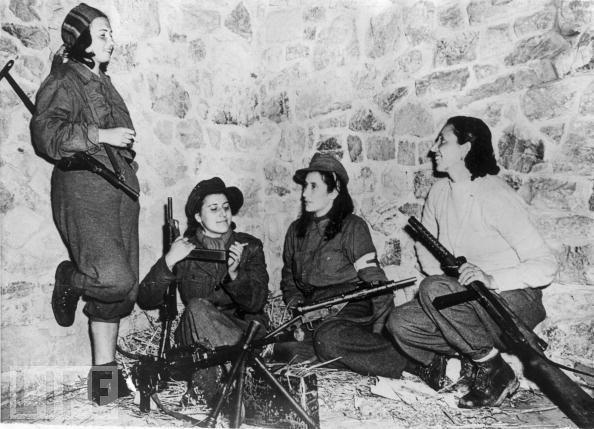
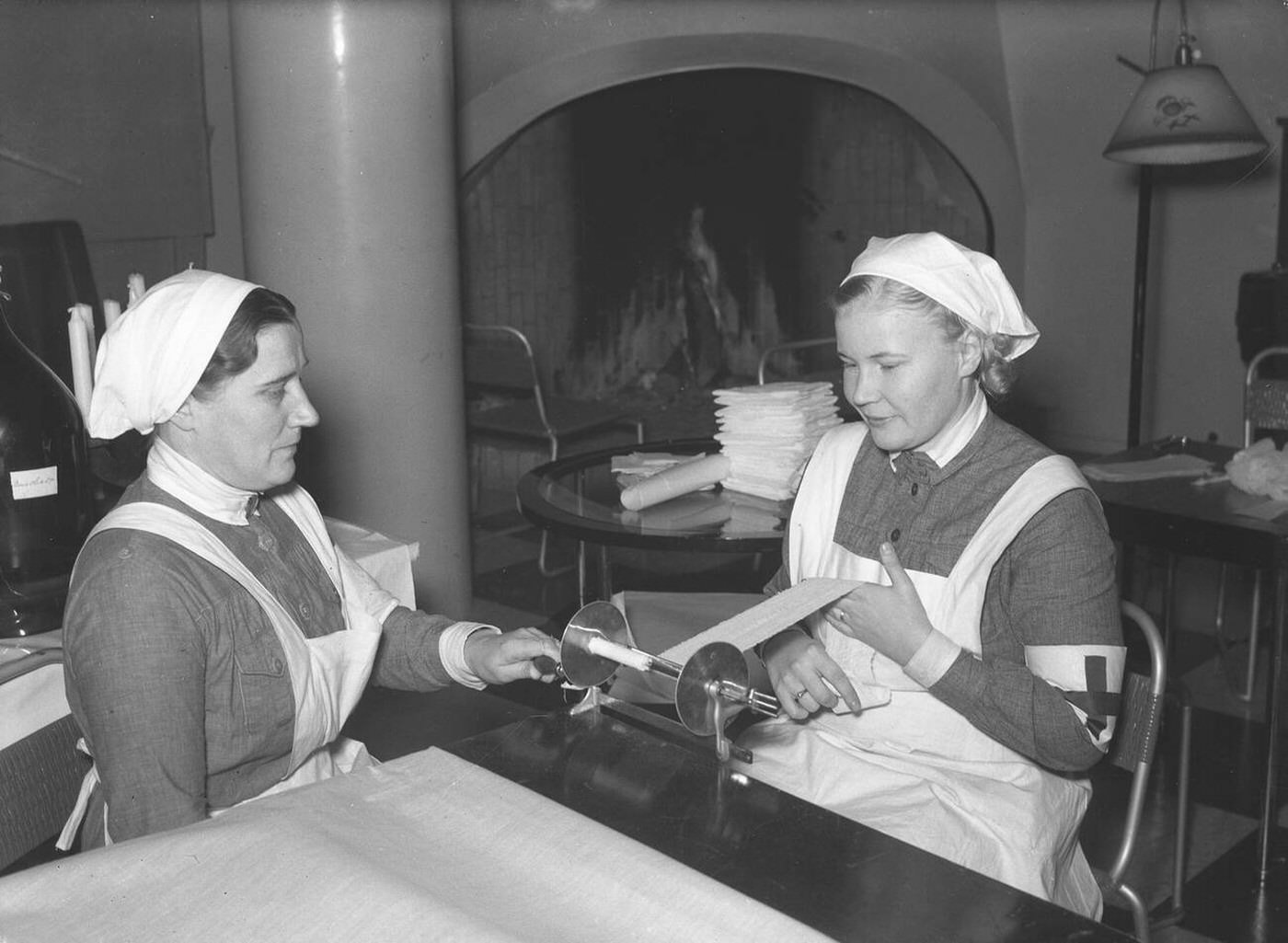
Not all women’s wartime service fit into neat categories. In Finland, members of the Lotta-Svärd organization provided nursing, communications, and logistics support on the front. Italian women joined anti-Fascist resistance movements, taking active roles in the fight against German occupation. These women operated outside formal military structures but faced the same dangers.

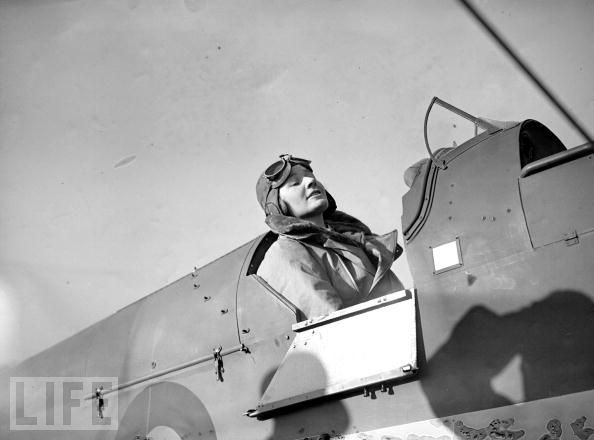
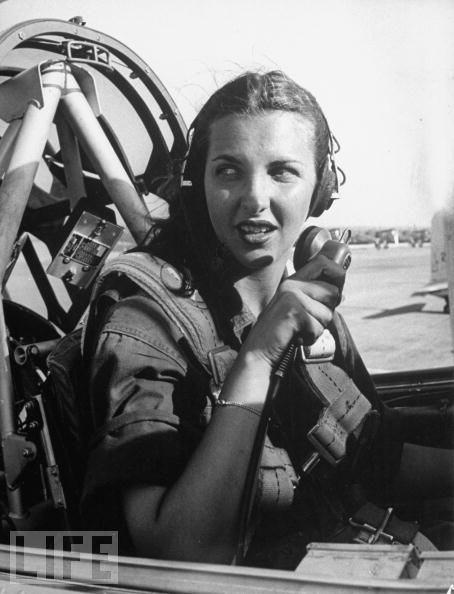
Aviation opened new doors for women with flying skills. Pauline Gower led the women’s section of Britain’s Air Transport Auxiliary (ATA), the organization responsible for ferrying aircraft from factories to Royal Air Force bases. ATA women pilots flew nearly every type of aircraft in the British inventory. In the United States, the Women Airforce Service Pilots—better known as WASPs—performed the same function, also towing aerial targets for anti-aircraft gunnery practice and test-flying repaired aircraft.
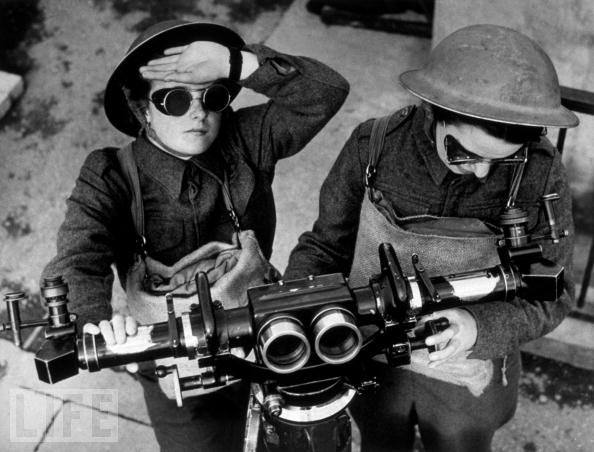
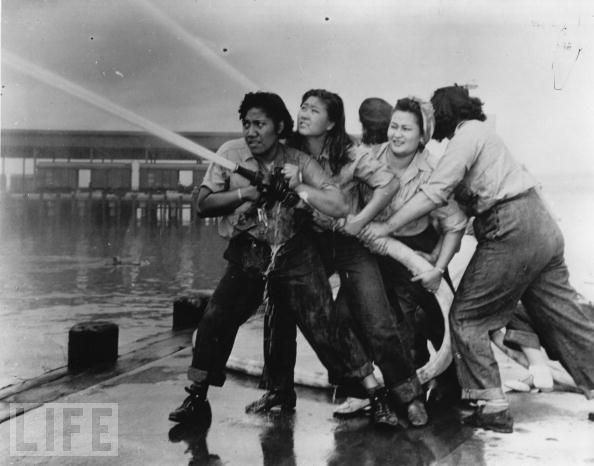
Civil defense on the home front was another area where women were indispensable. In England, women scanned the skies for enemy aircraft and reported positions to command centers, giving RAF controllers precious time to scramble fighters. At Pearl Harbor on December 7, 1941, women firefighters responded immediately to the Japanese attack, helping to fight the blazes caused by the strike.
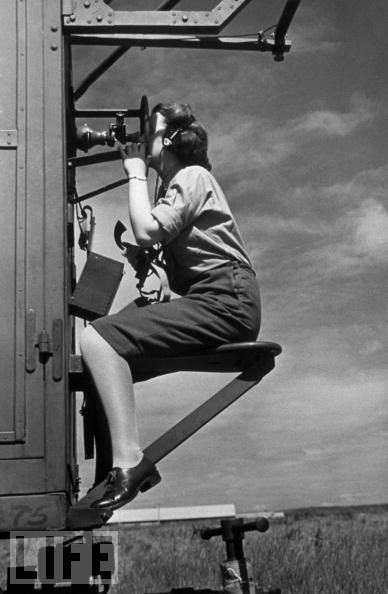
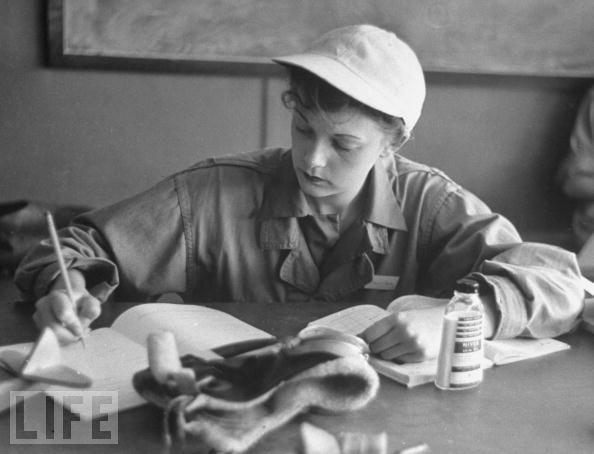
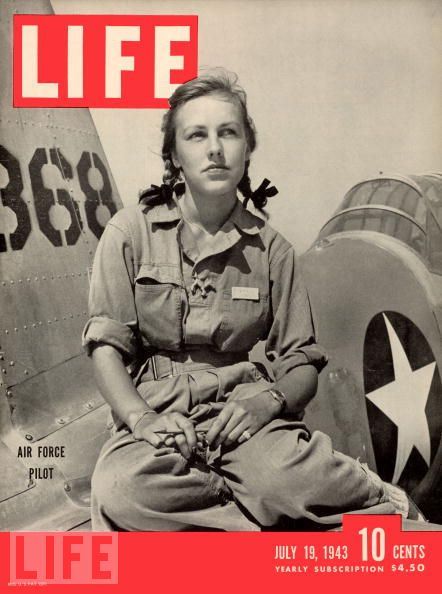
Pilot training programs for women produced skilled aviators who went on to serve in critical roles. Trainees like Nancy Nesbit, Phyliss Jarman, and Shirley Slade underwent the same rigorous ground school and flight training as their male counterparts. Slade appeared on the cover of Life magazine in 1943, becoming one of the most recognized faces of the WASP program.
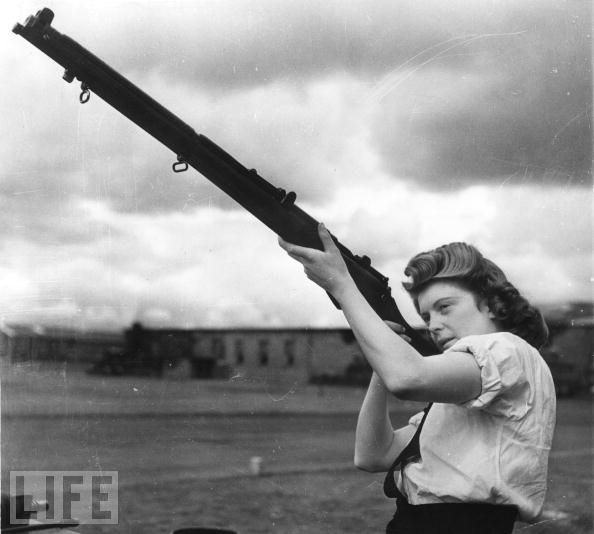
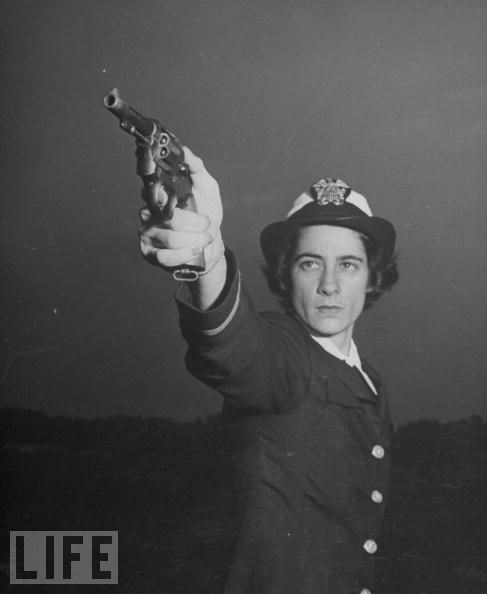
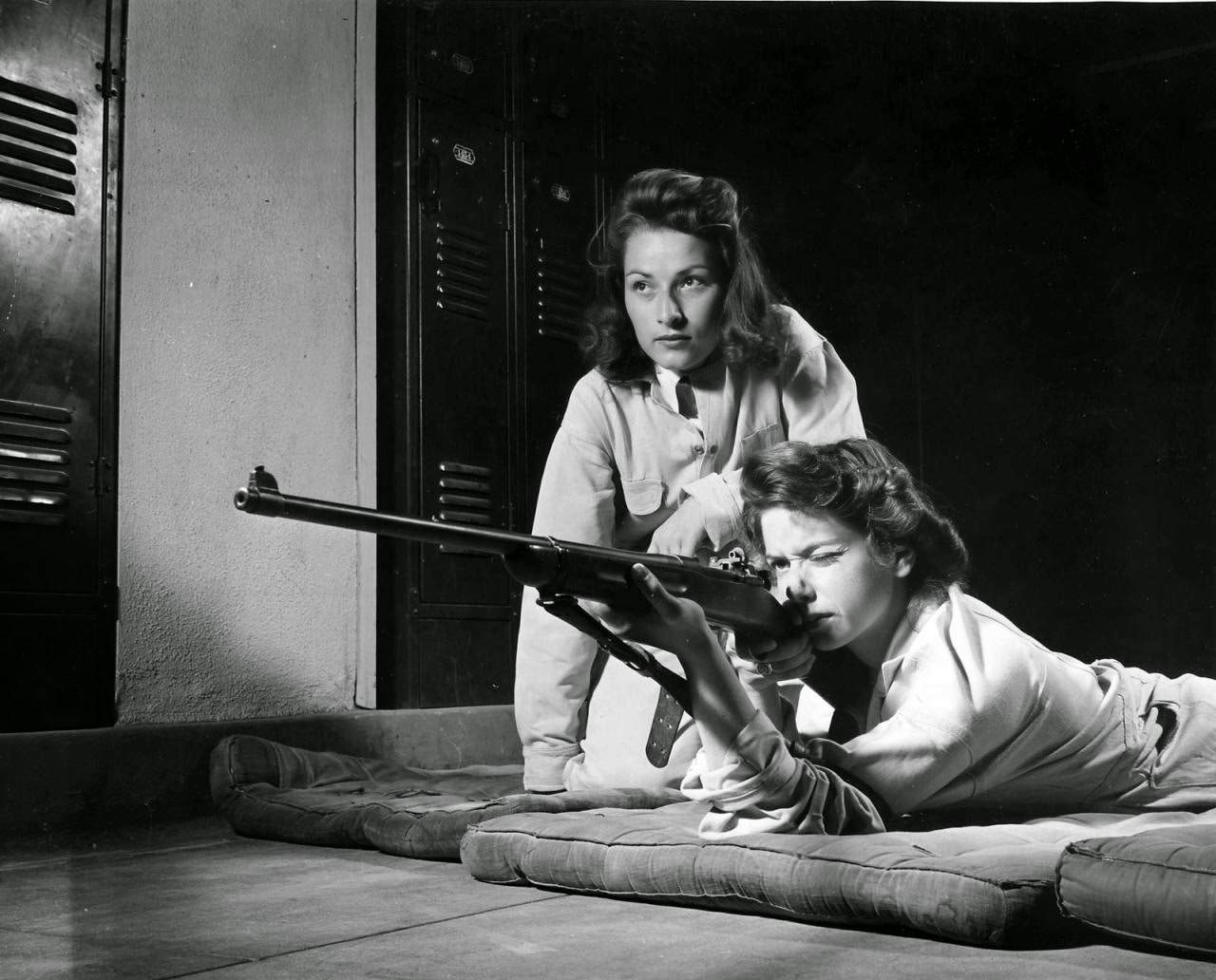
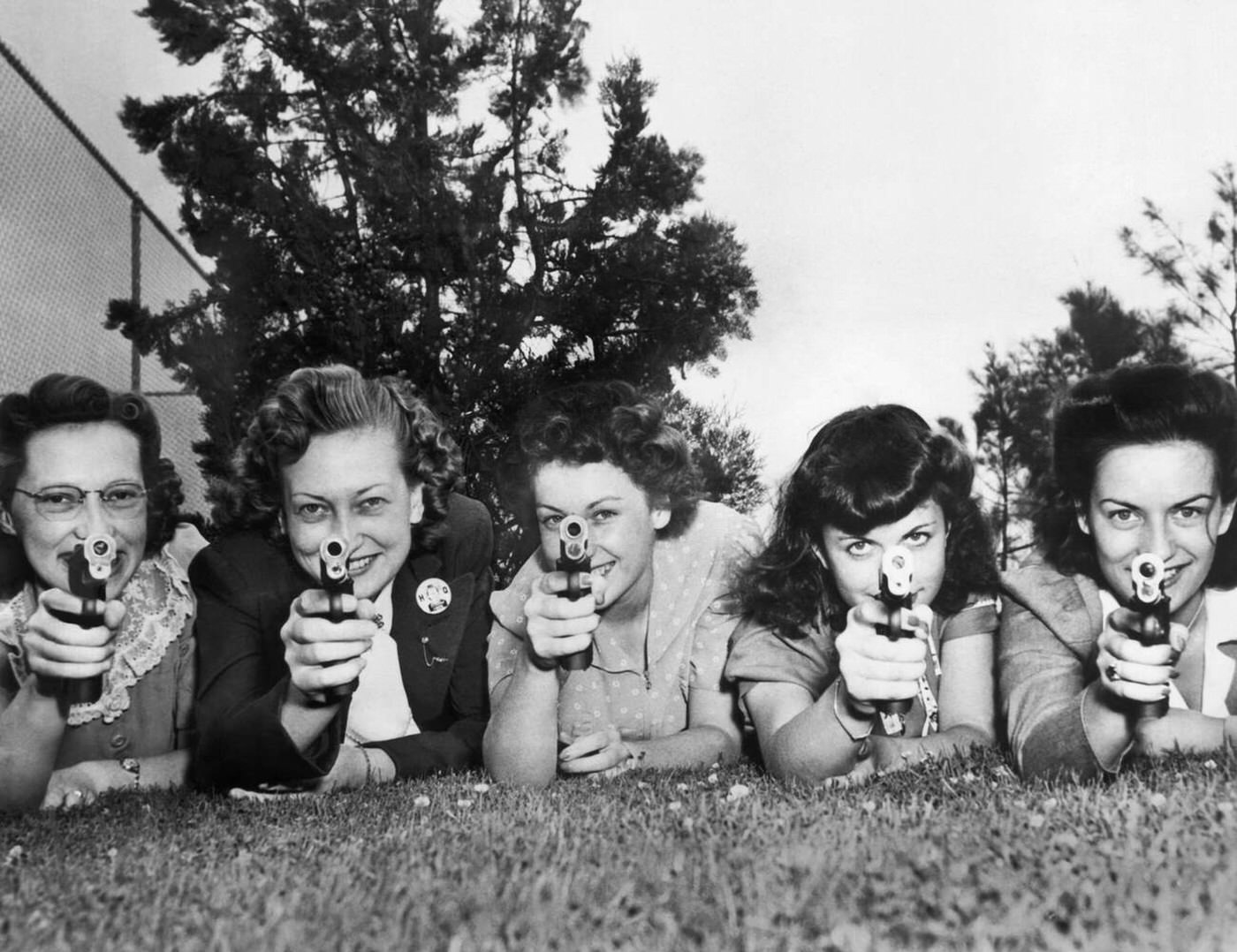
The U.S. Navy’s WAVES trained in marksmanship as part of their service preparation, and members of Britain’s ATS trained as gun battery controllers and participated in anti-aircraft operations. While Western Allied women were not placed in front-line combat roles, their positions at artillery emplacements and weapons training programs put them squarely in harm’s way during air raids and enemy shelling.
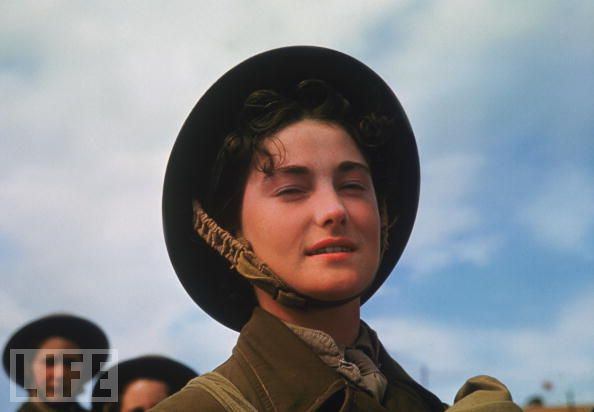
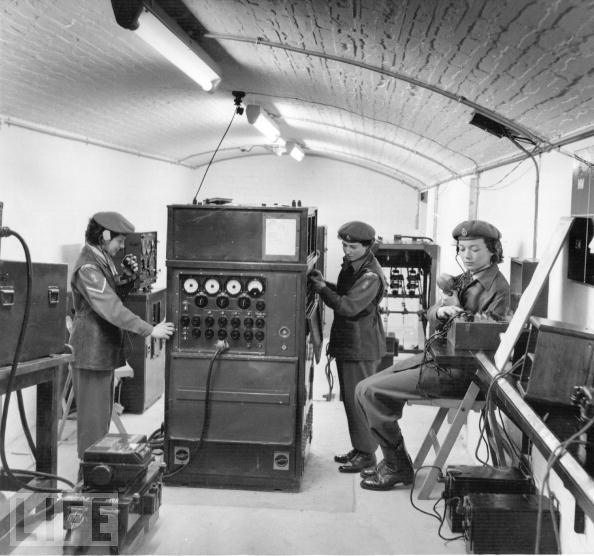
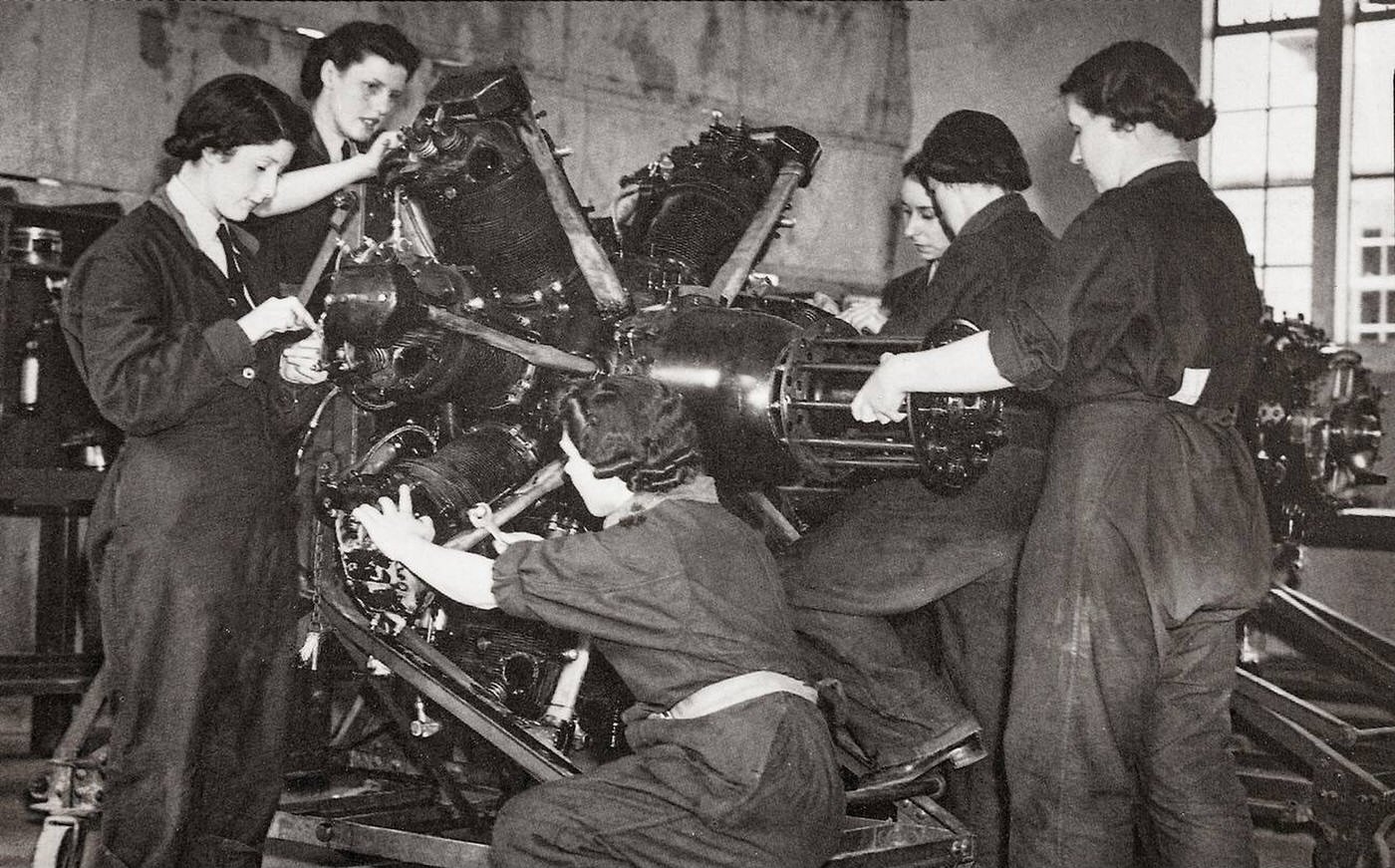
The Women’s Air Corps and Women’s Auxiliary Air Force both provided essential ground support to military aviation. WAAF members assisted pilots with pre-flight briefings, parachute rigging, meteorology, and aircraft instrument repair. On airfields across Britain, these women kept operational tempo high by handling countless support tasks that directly affected whether planes got into the air.
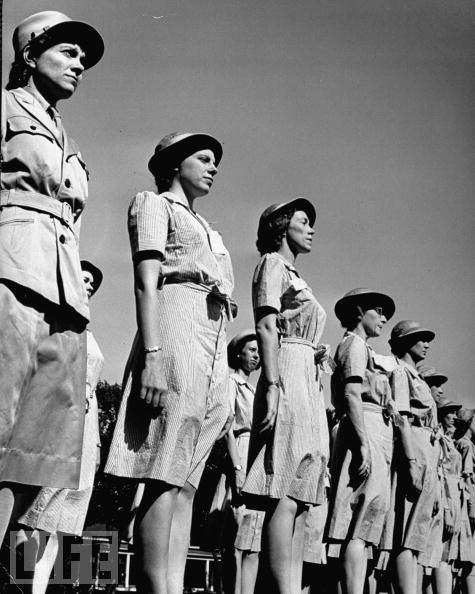
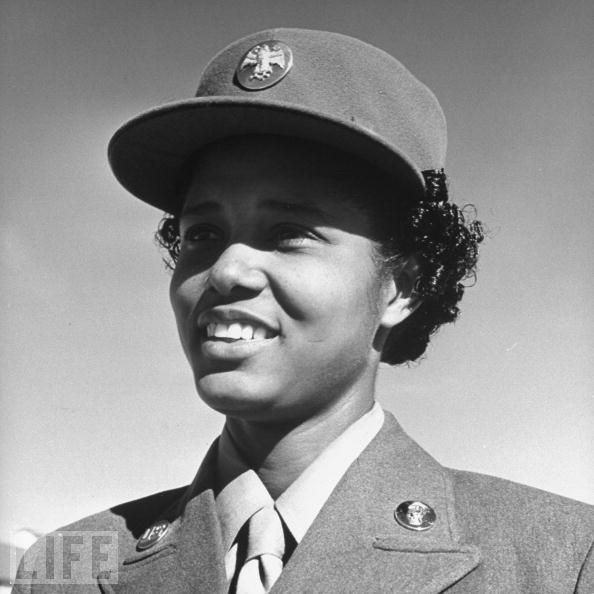
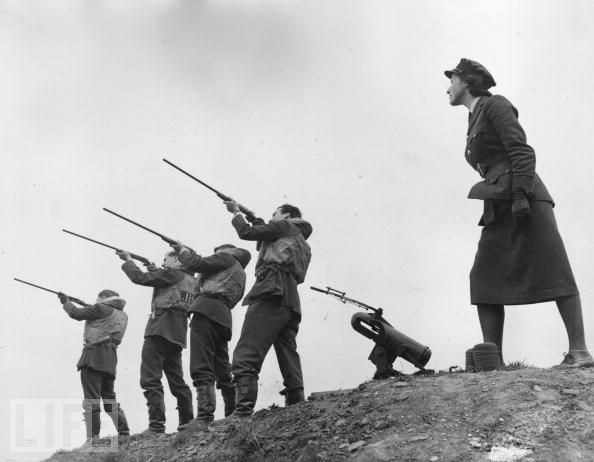
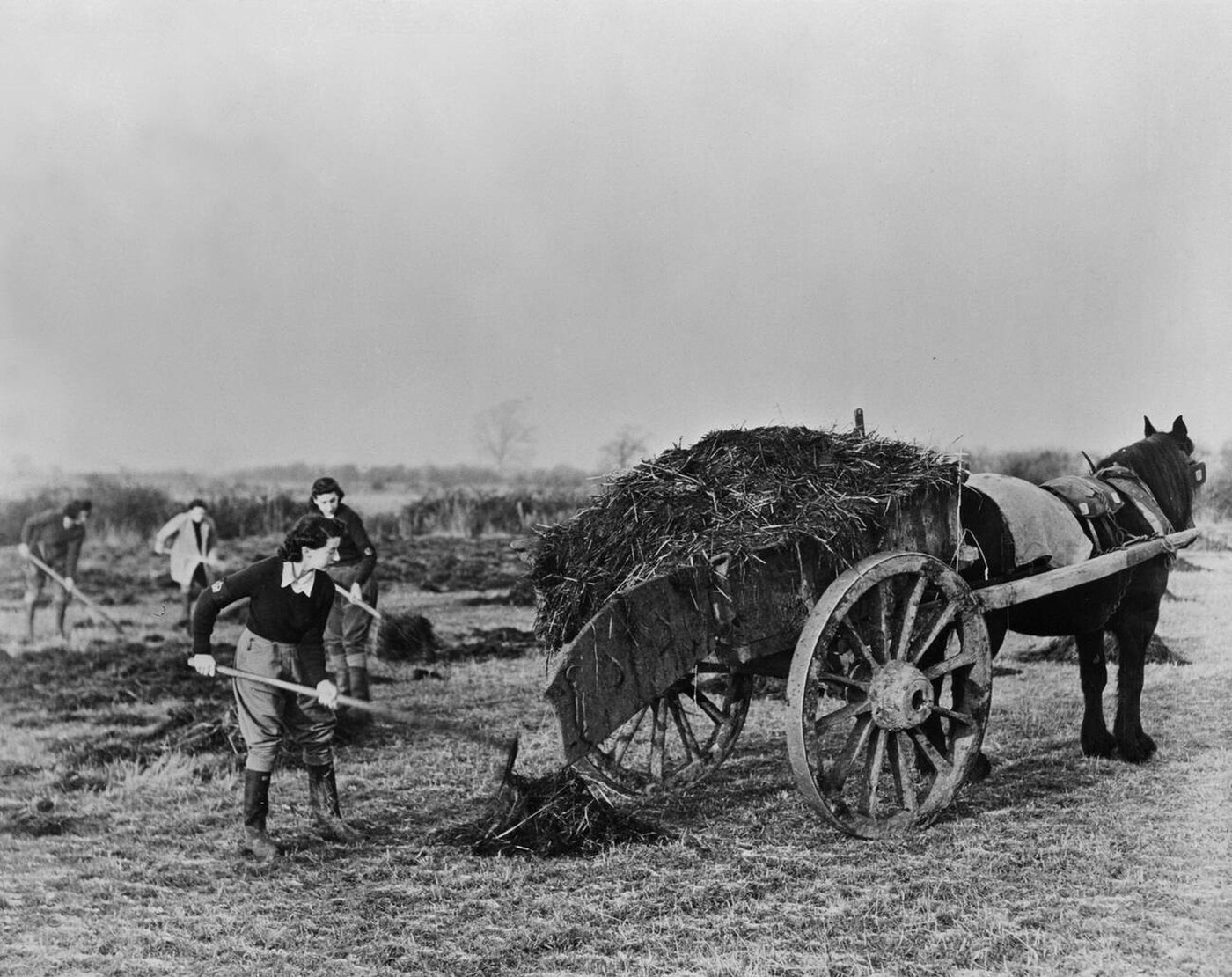
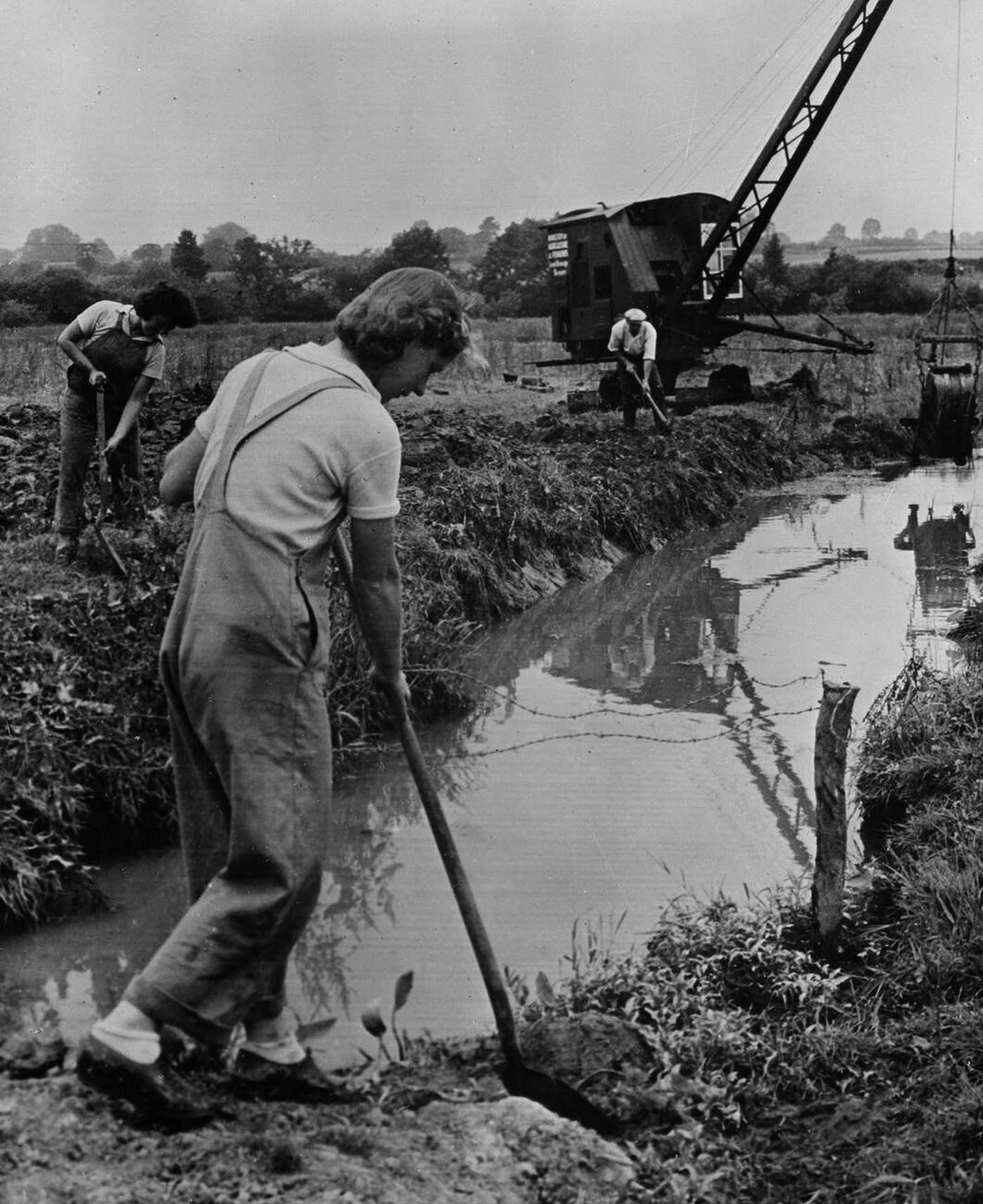
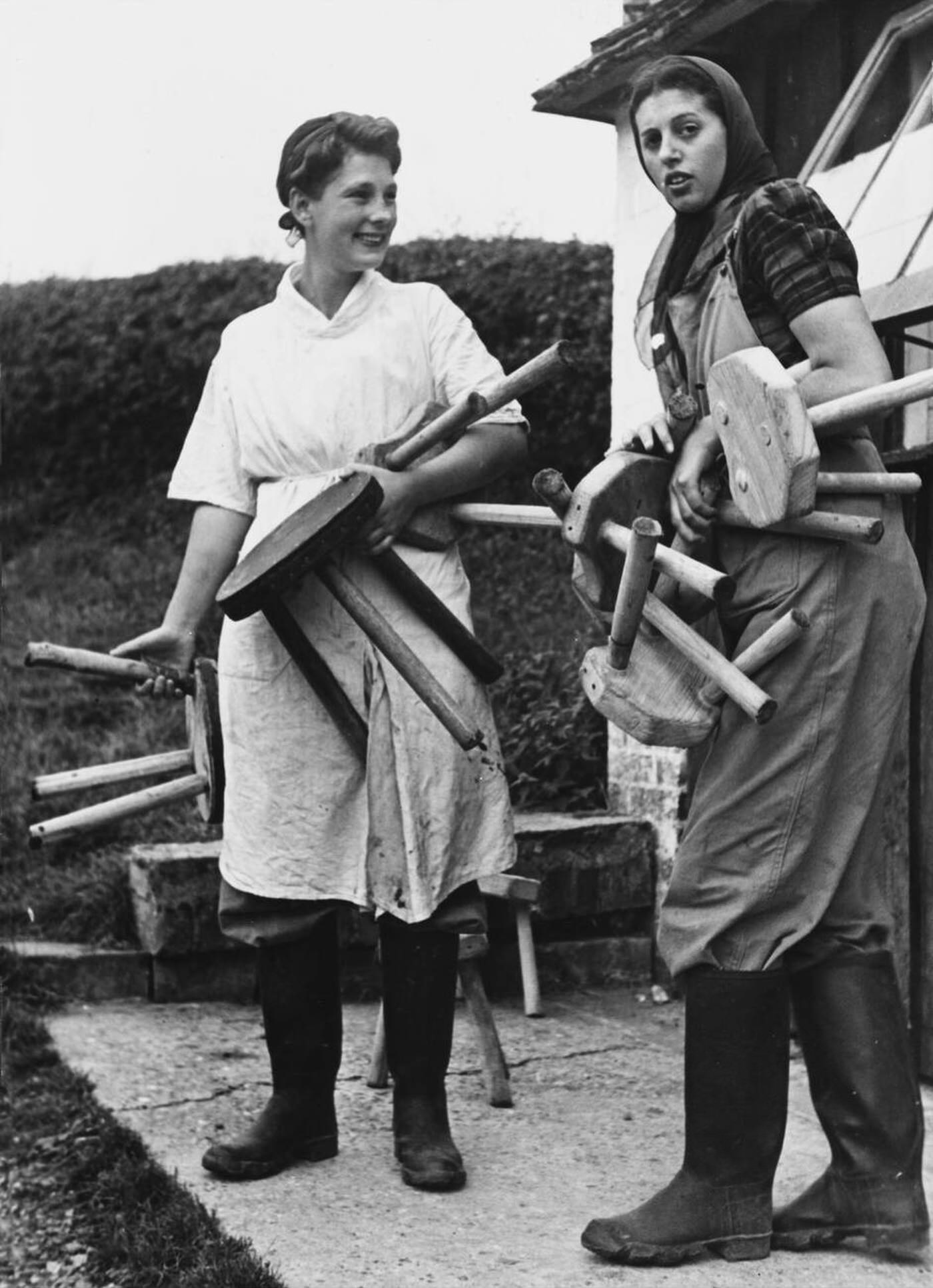
Britain’s Women’s Land Army, whose members were called Land Girls, were mobilized to address a severe shortage of agricultural workers. The program began in 1939, and King George VI reviewed a march of early recruits that year. By the peak of the war, tens of thousands of women were plowing fields, harvesting crops, milking cows, and managing livestock across the British countryside.
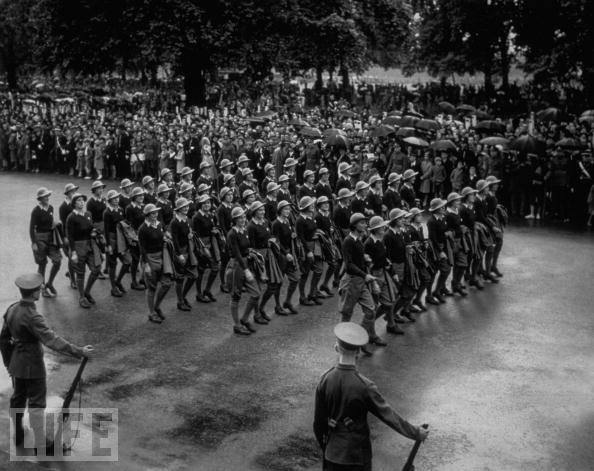
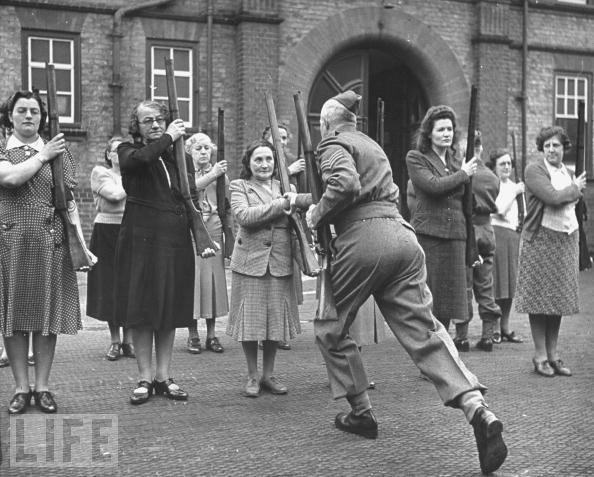
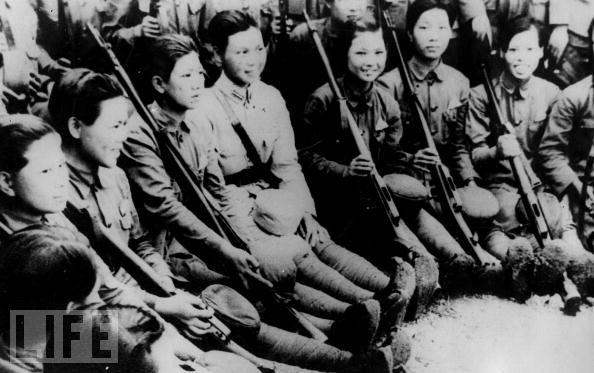
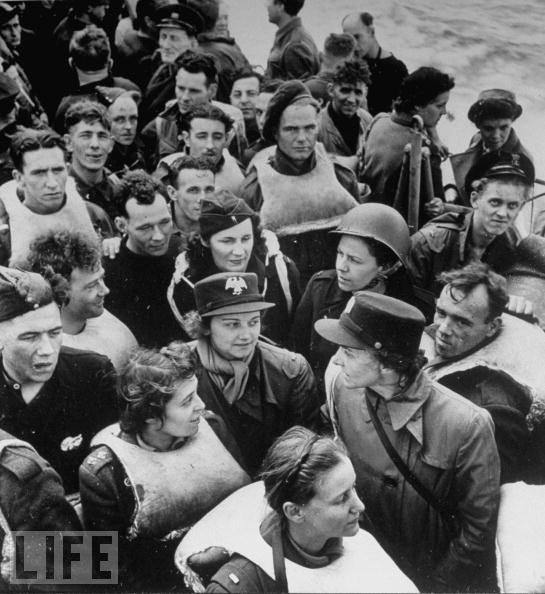
Rifle training was not limited to Western nations. In China, women received firearms instruction as part of both formal military preparation and civilian defense programs. The conflict in Asia saw women drawn into support and defense roles as Japanese forces advanced across the region. WAC officers who survived a torpedo attack during the war demonstrated that danger was not confined to the battlefield—crossing the Atlantic or Pacific was itself a life-threatening assignment.
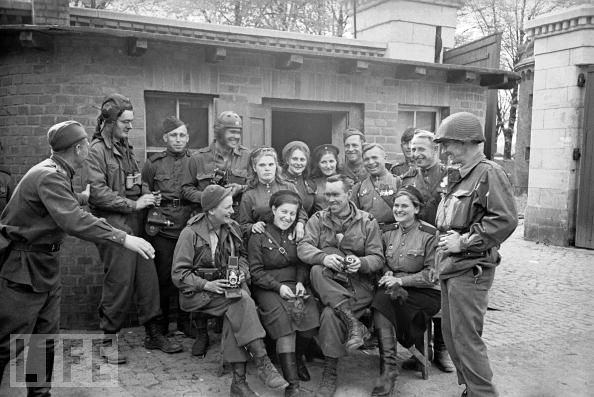
The Soviet Union deployed women in combat roles to a degree unmatched by any other Allied nation. Female snipers, tank crew members, and pilots flew bombing and fighter missions. By 1945, Soviet women soldiers had earned decorations for frontline service. The meeting of Allied and Red Army soldiers that year brought together women who had served on opposite ends of the European theater.

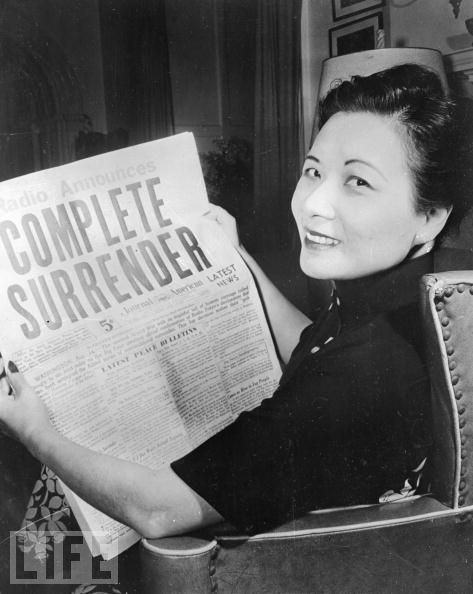
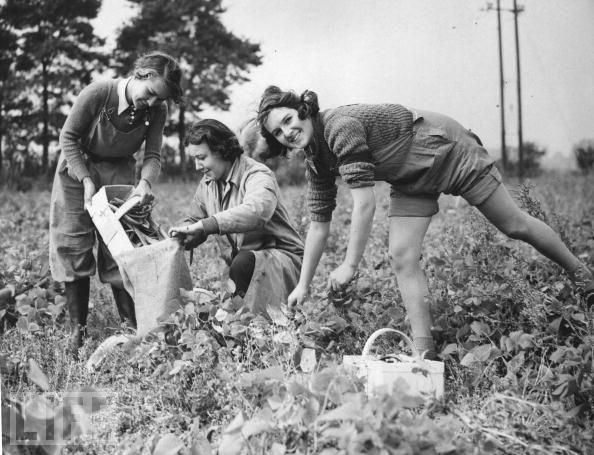
On the diplomatic and political stage, women also played visible roles. Soong Mei-Ling, wife of Chinese Nationalist leader Chiang Kai-shek, was a prominent figure in rallying international support for China against Japan. Her reading of Japan’s formal surrender in 1945 was a moment of significance for a country that had been at war since 1937. Back on the home front, salesgirls and volunteers left their usual work to help bring in harvests, picking crops in fields across the country.
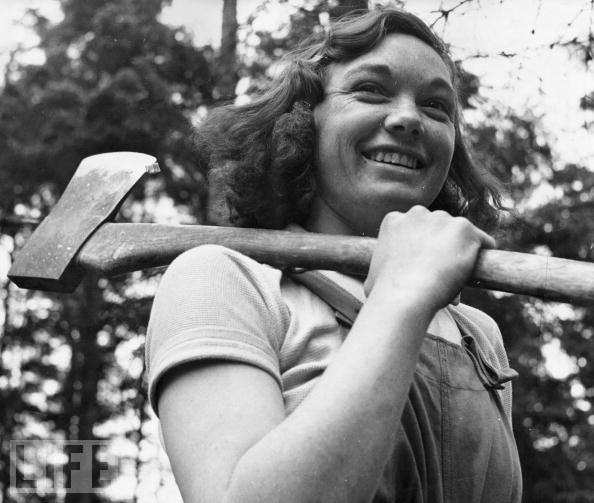
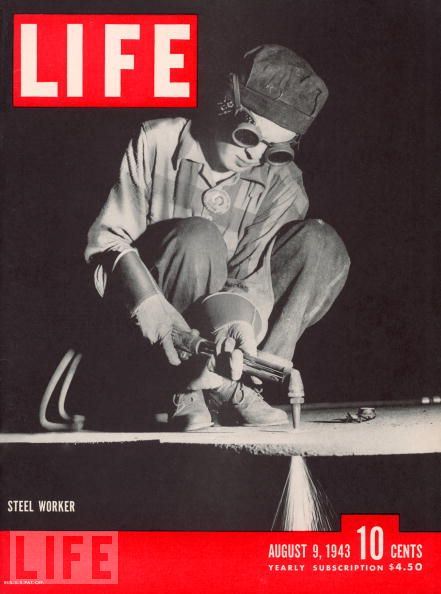
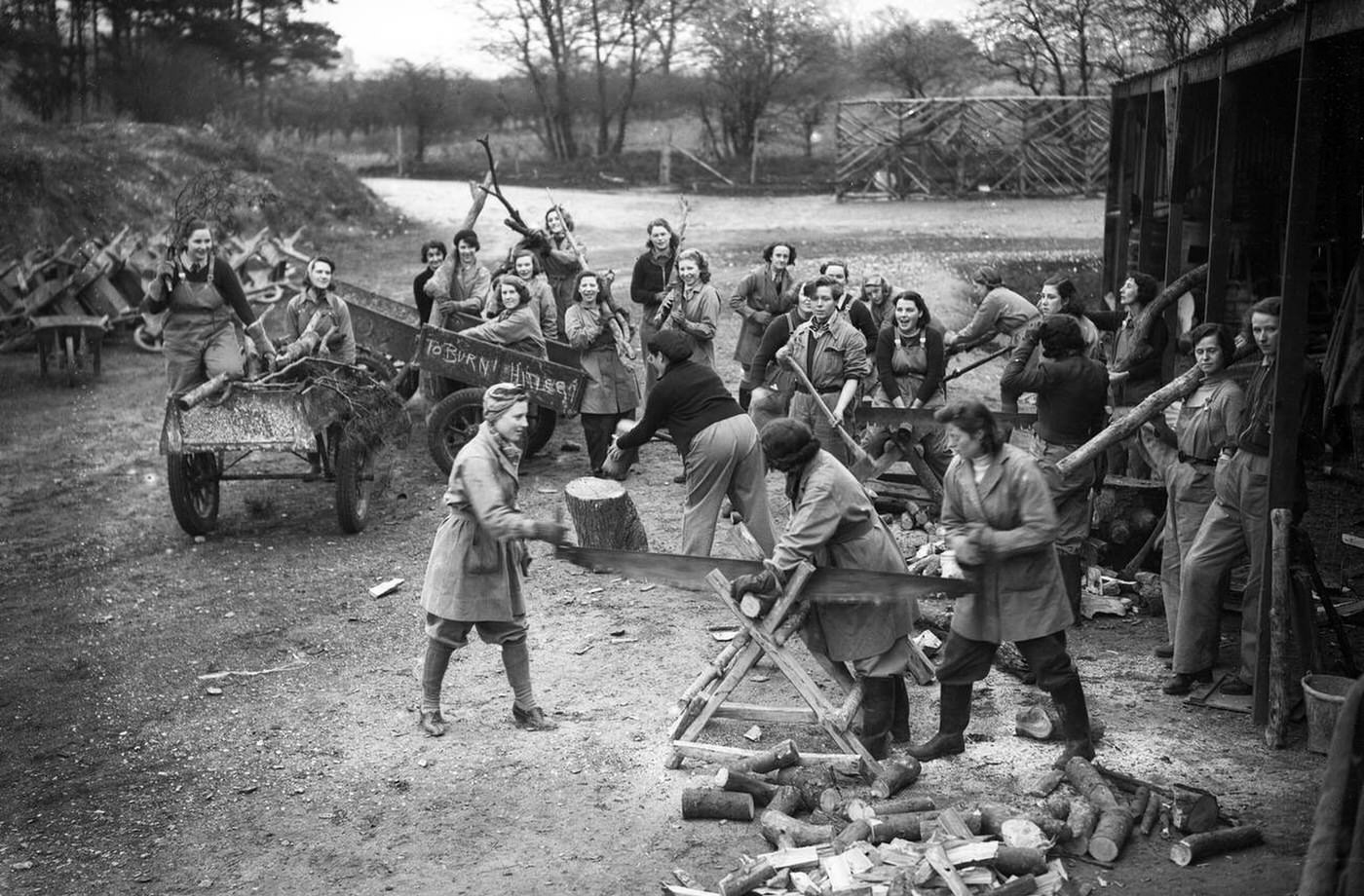
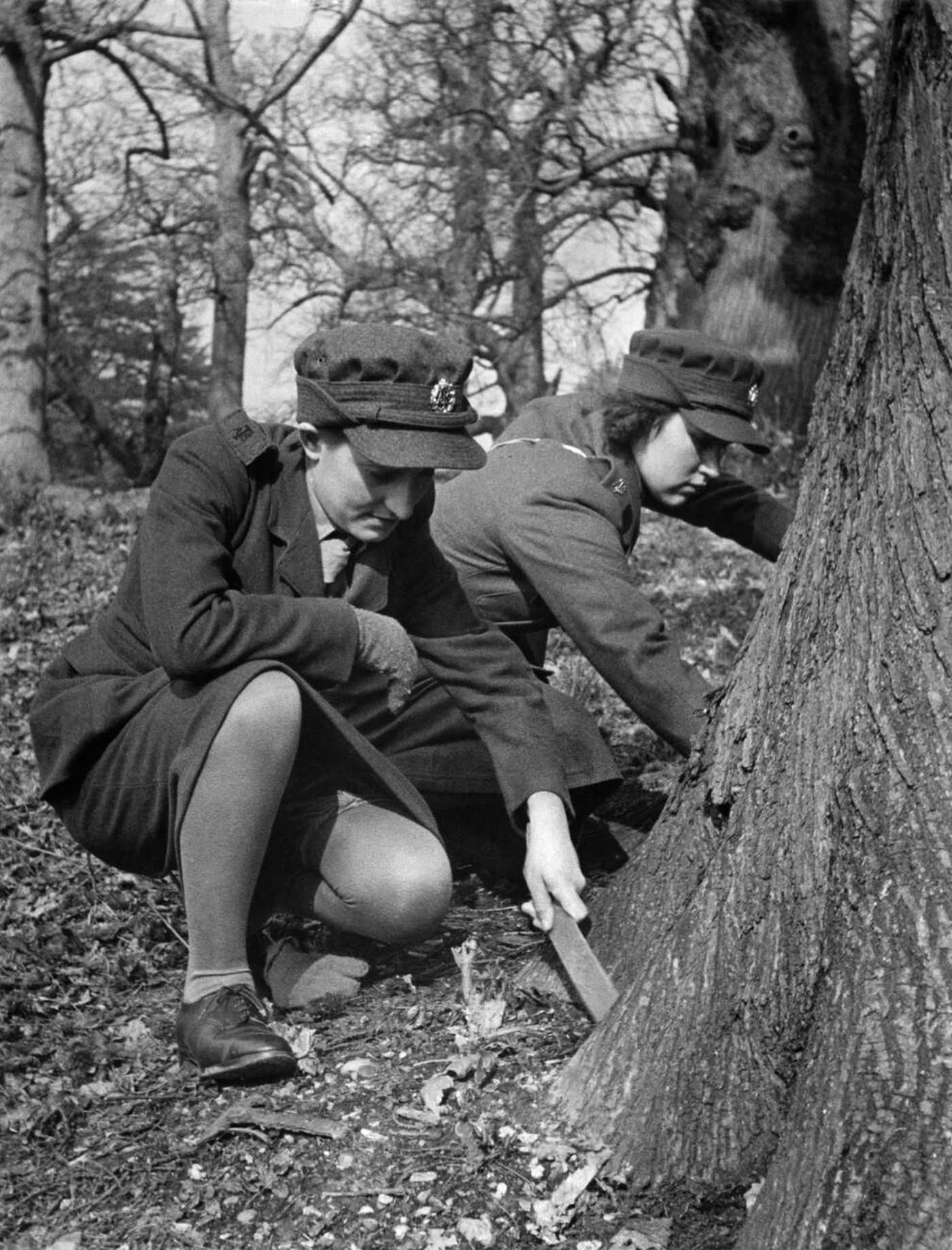
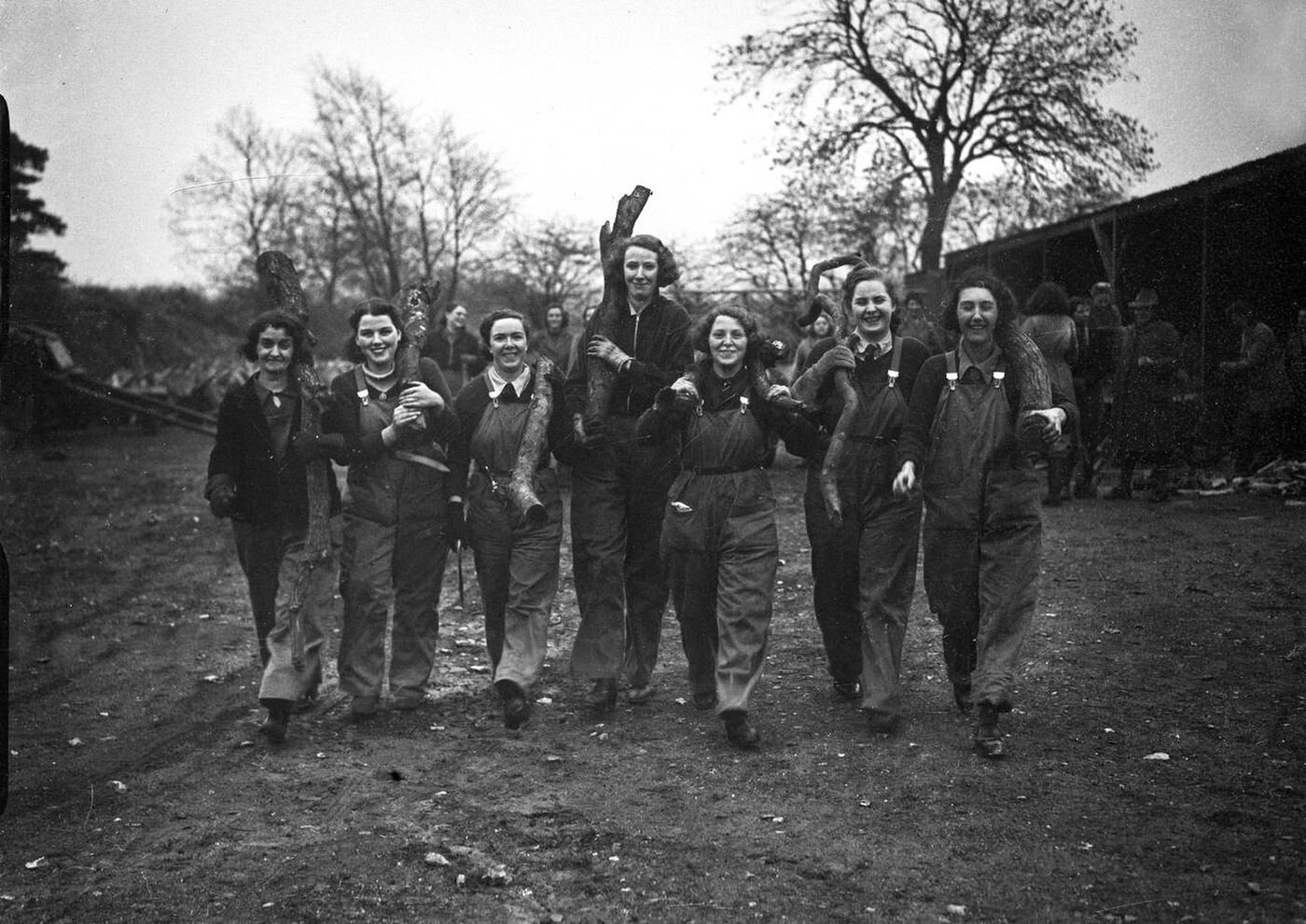
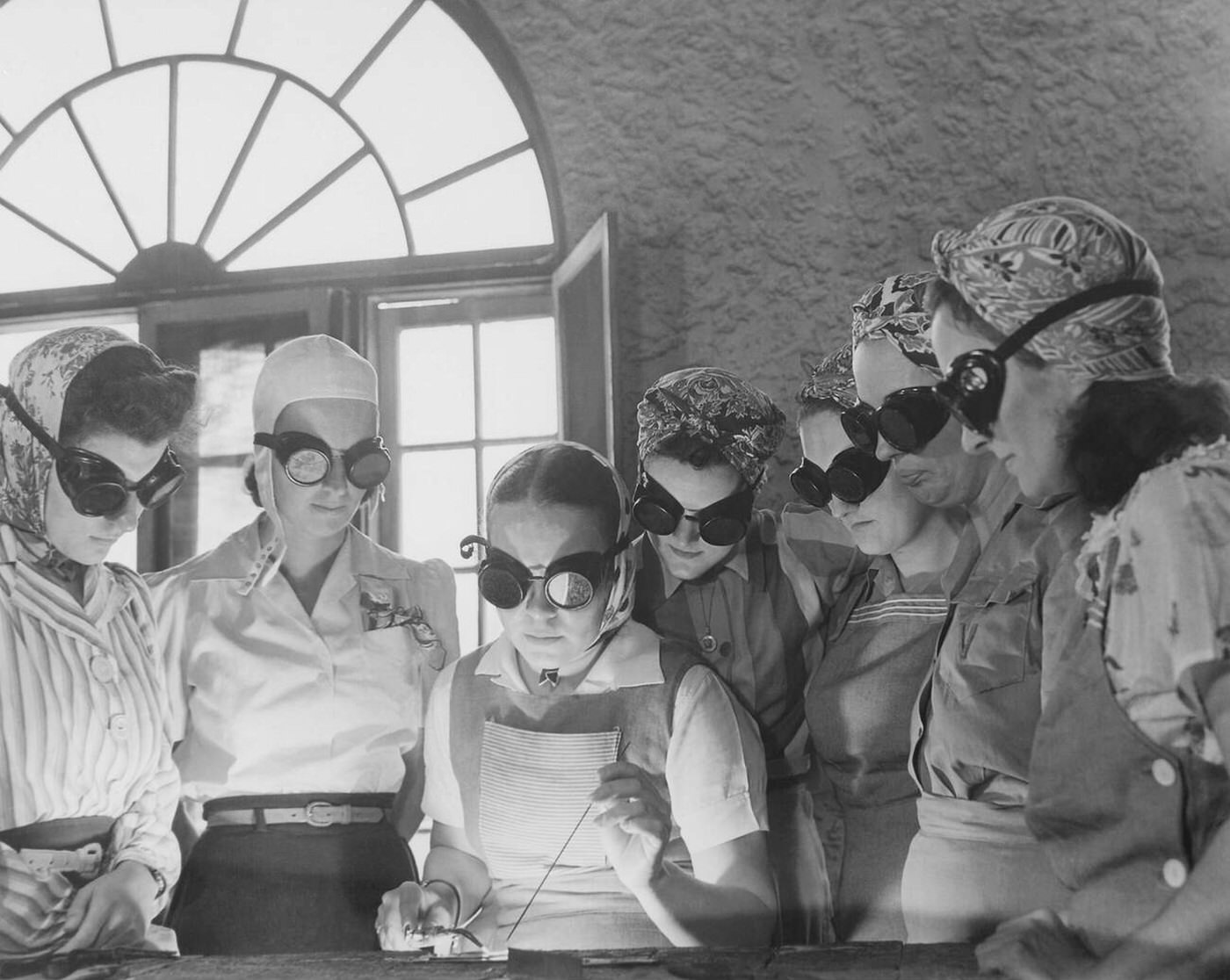
Britain’s Women’s Timber Corps, a branch of the Women’s Land Army, sent women into forests to fell trees and process lumber needed for construction, pit props in coal mines, and other wartime uses. Cicely Clark was among those photographed in 1942 doing this rugged outdoor work. Meanwhile, in factories across the country, female welders joined the industrial workforce in large numbers, learning skilled trades that had been almost exclusively male before the war.
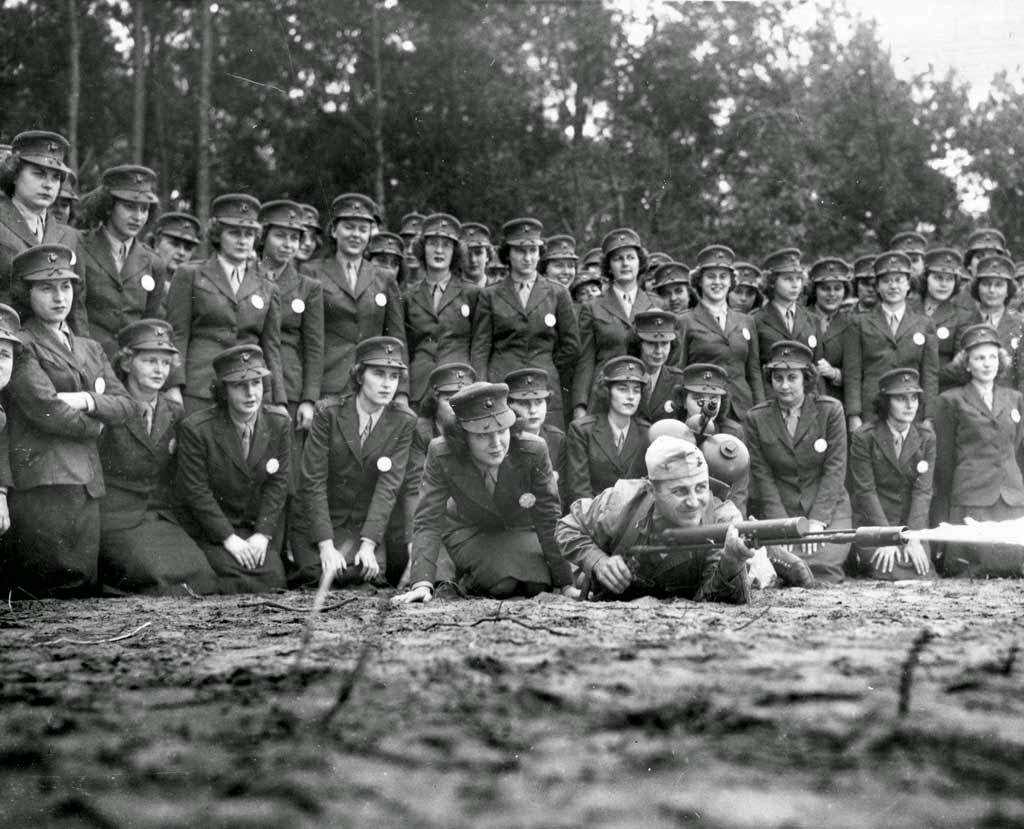
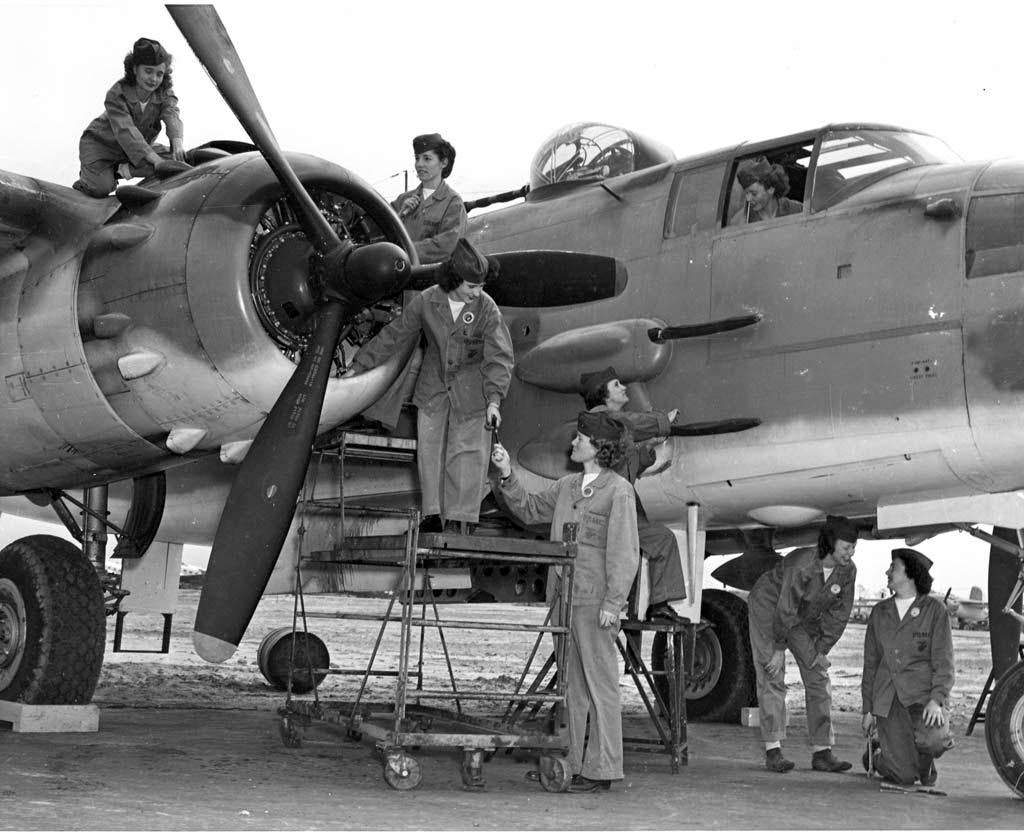
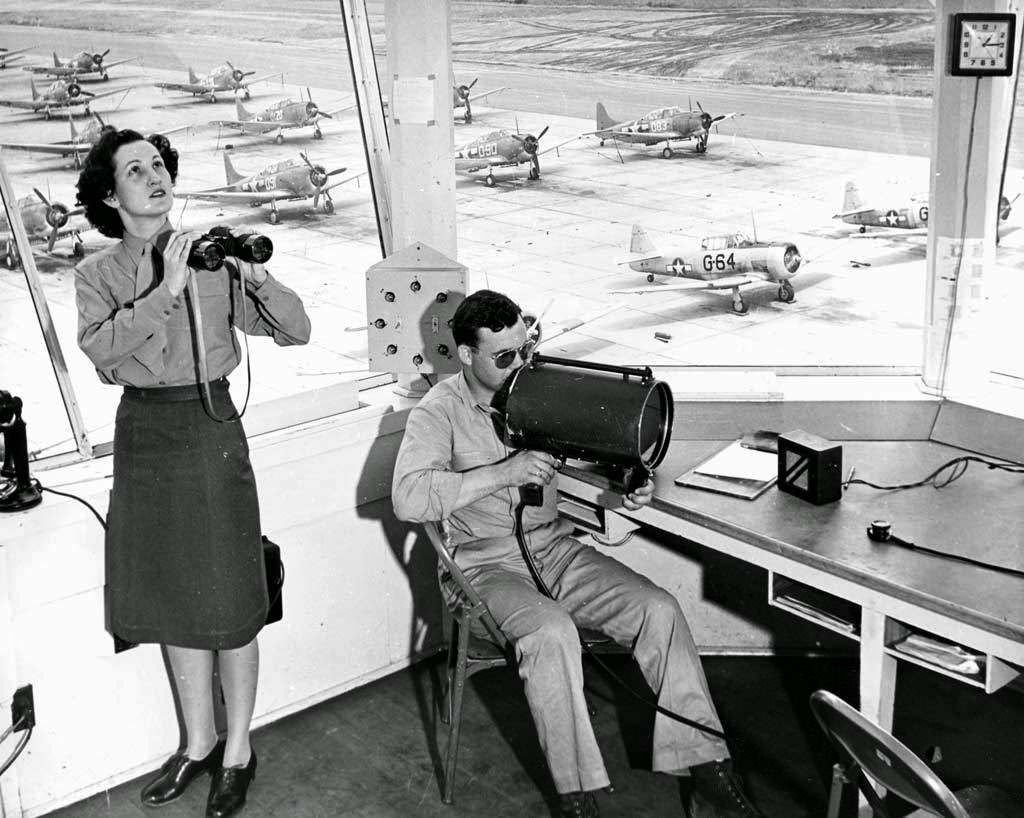
Firearms training extended to civilian women as well, with marksmanship programs established in 1942 for home defense purposes. The U.S. Marine Corps Women’s Reserve handled a wide range of duties, from clerical work and communications to direct maintenance work on combat aircraft like the PBJ bomber. Marine women also directed air traffic on active airfields, a job that required constant focus and technical knowledge.
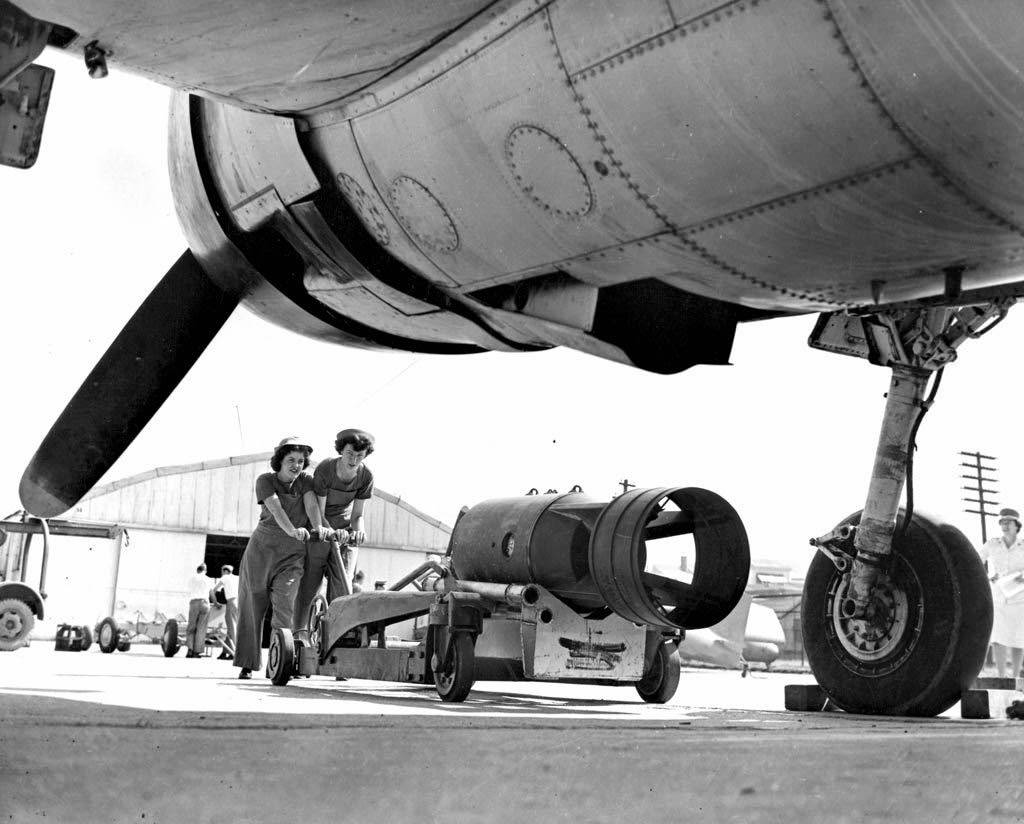
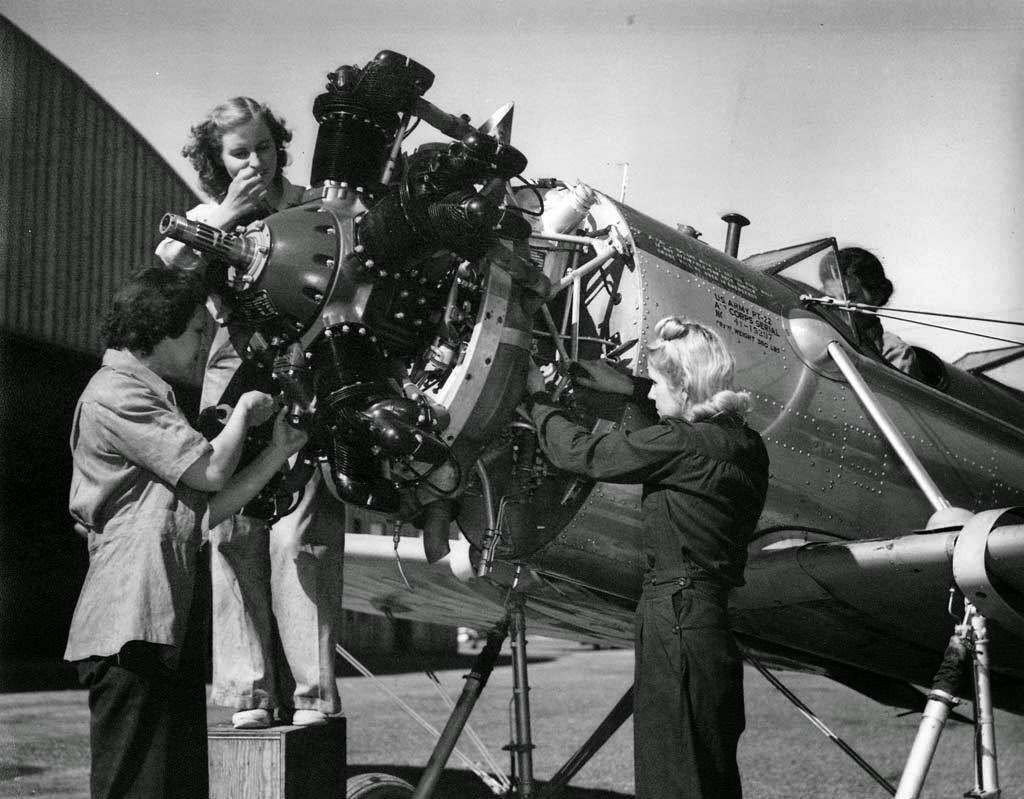
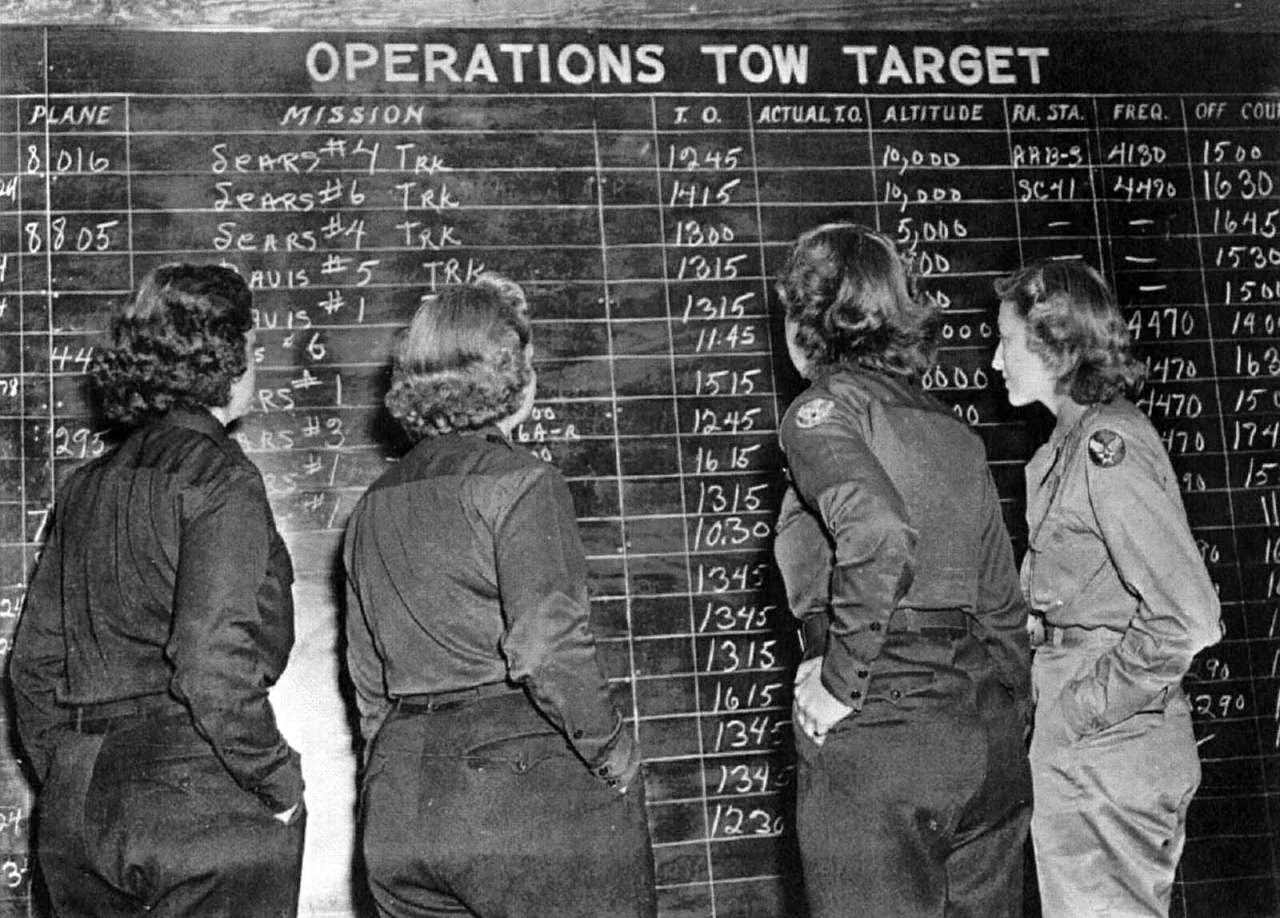
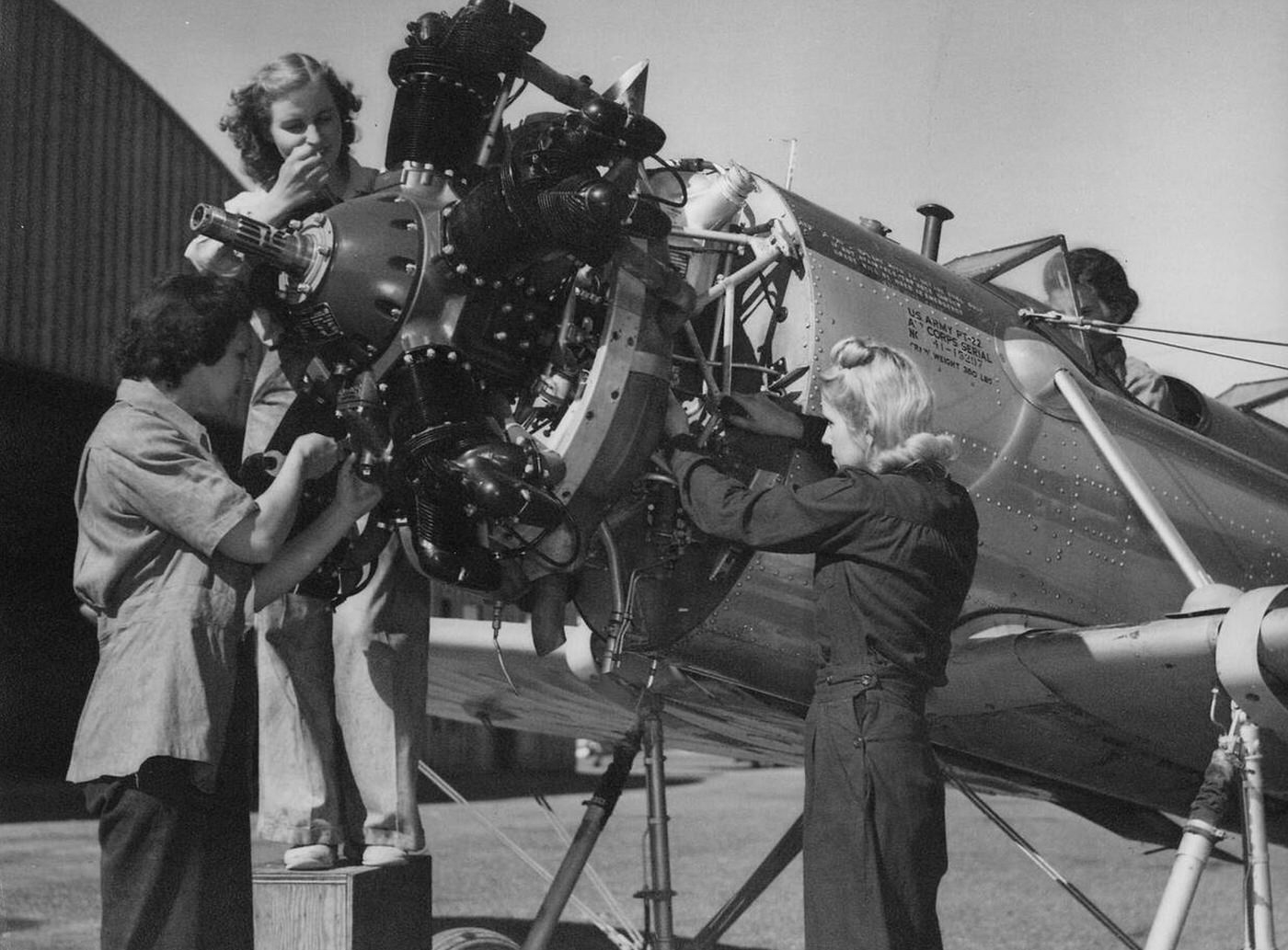
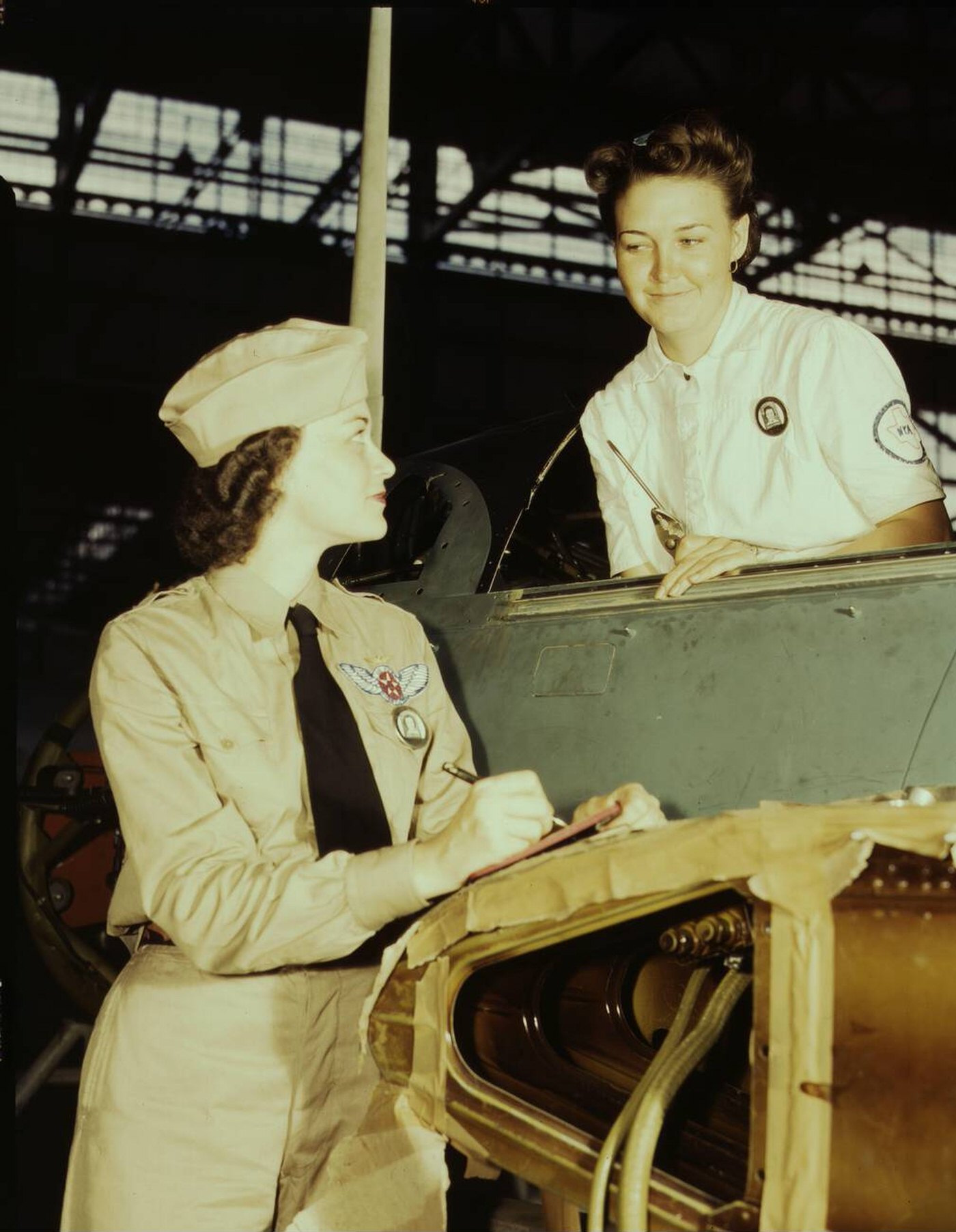
Aircraft maintenance was a specialized trade that women entered in large numbers. Teams of female mechanics serviced engines, checked hydraulic systems, and repaired airframes. WASPs reviewed target-towing schedules—assignments that had them flying drones or planes while live anti-aircraft guns fired at the targets they towed. Marine women worked directly on PBJ aircraft, handling everything from instrument checks to structural repairs.
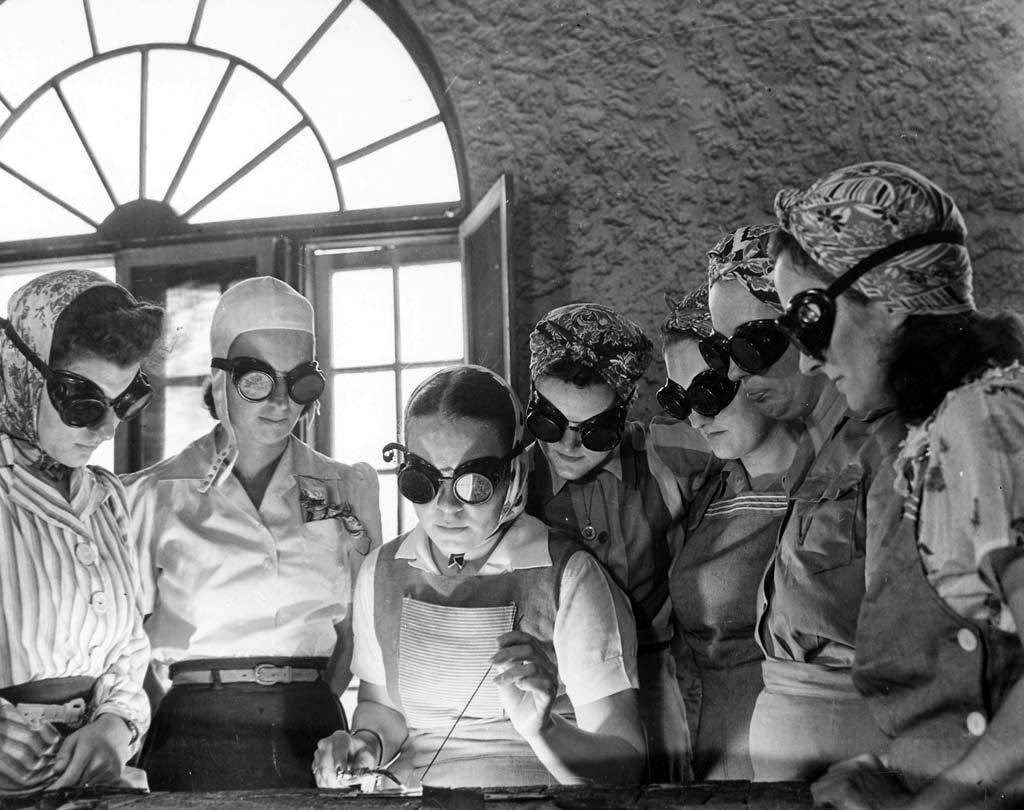
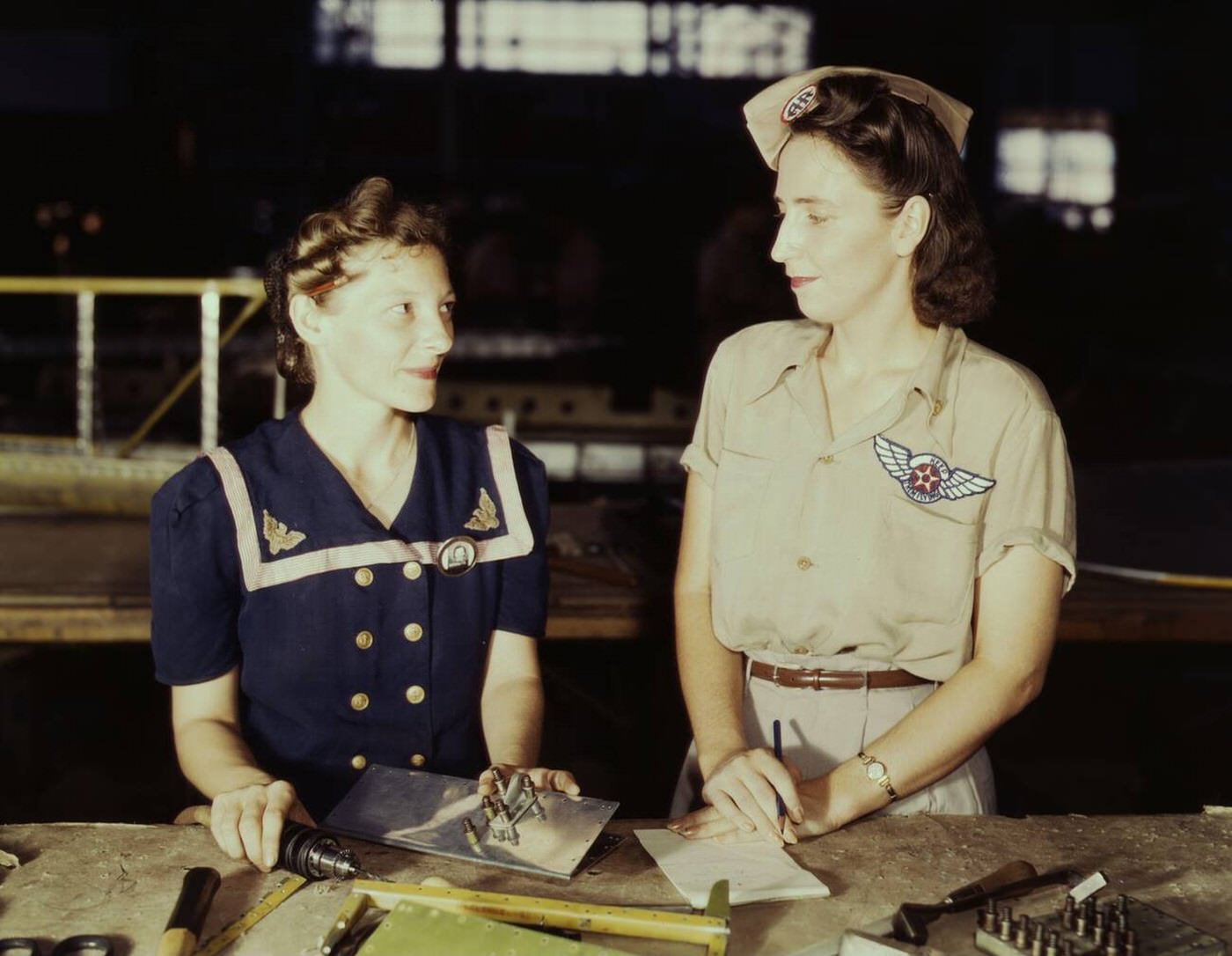
Vocational schools ran crash courses to train women for industrial jobs as quickly as possible. In 1942, these programs taught welding, machine operation, and mechanical skills to women who had never worked in a factory. Aircraft plants on the West Coast hired women in large numbers, and facilities like Vultee Aircraft and Douglas Aircraft Company became major employers of female workers throughout the war years.
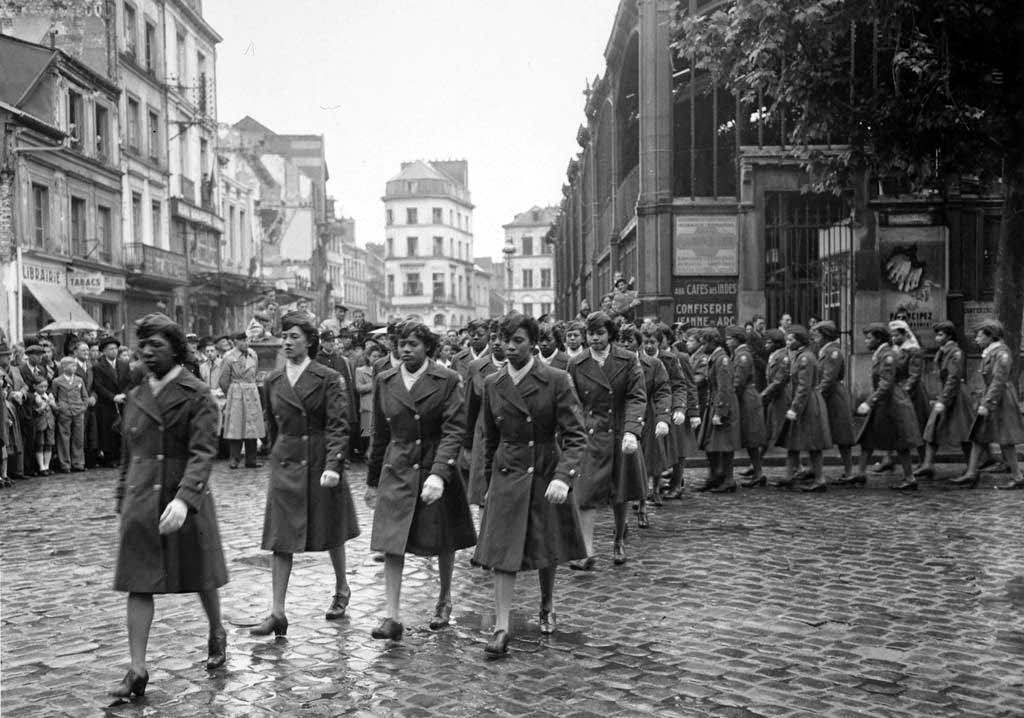
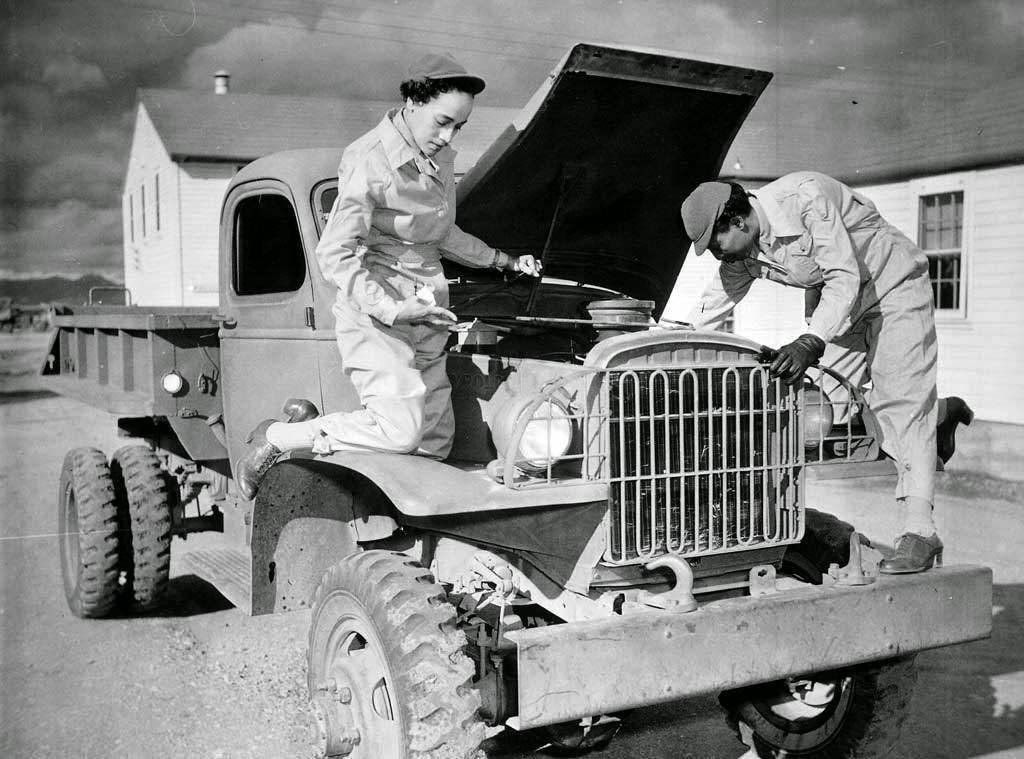
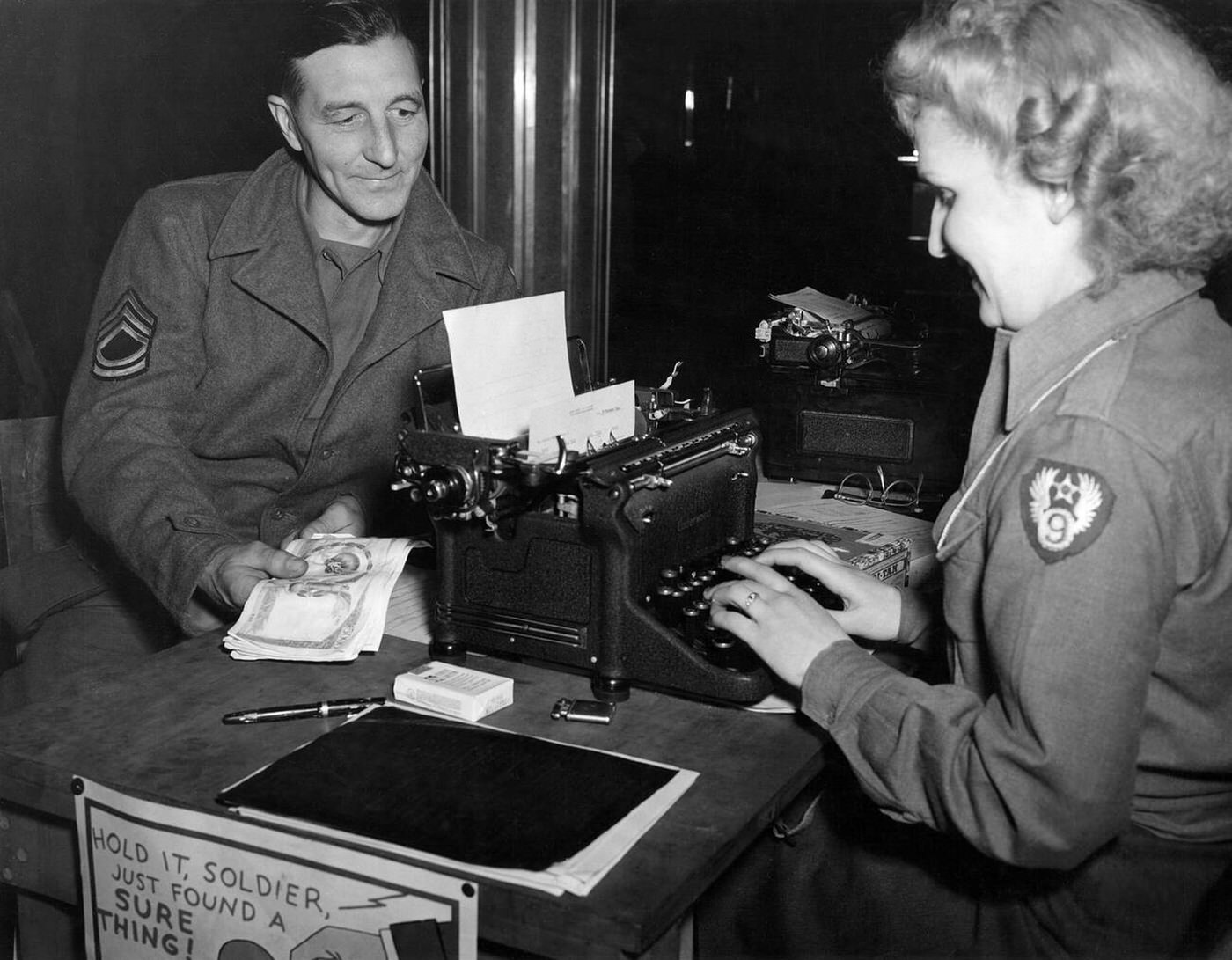
The 6888th Central Postal Directory Battalion—an all-Black, all-female WAC unit—deployed to Europe in 1945 and cleared a massive backlog of undelivered mail that had piled up for months. Their mission was straightforward but vital: soldiers and their families were waiting for letters. The unit processed millions of pieces of mail in record time. WAC mechanics stateside handled vehicle maintenance, keeping the Army’s truck fleets operational.
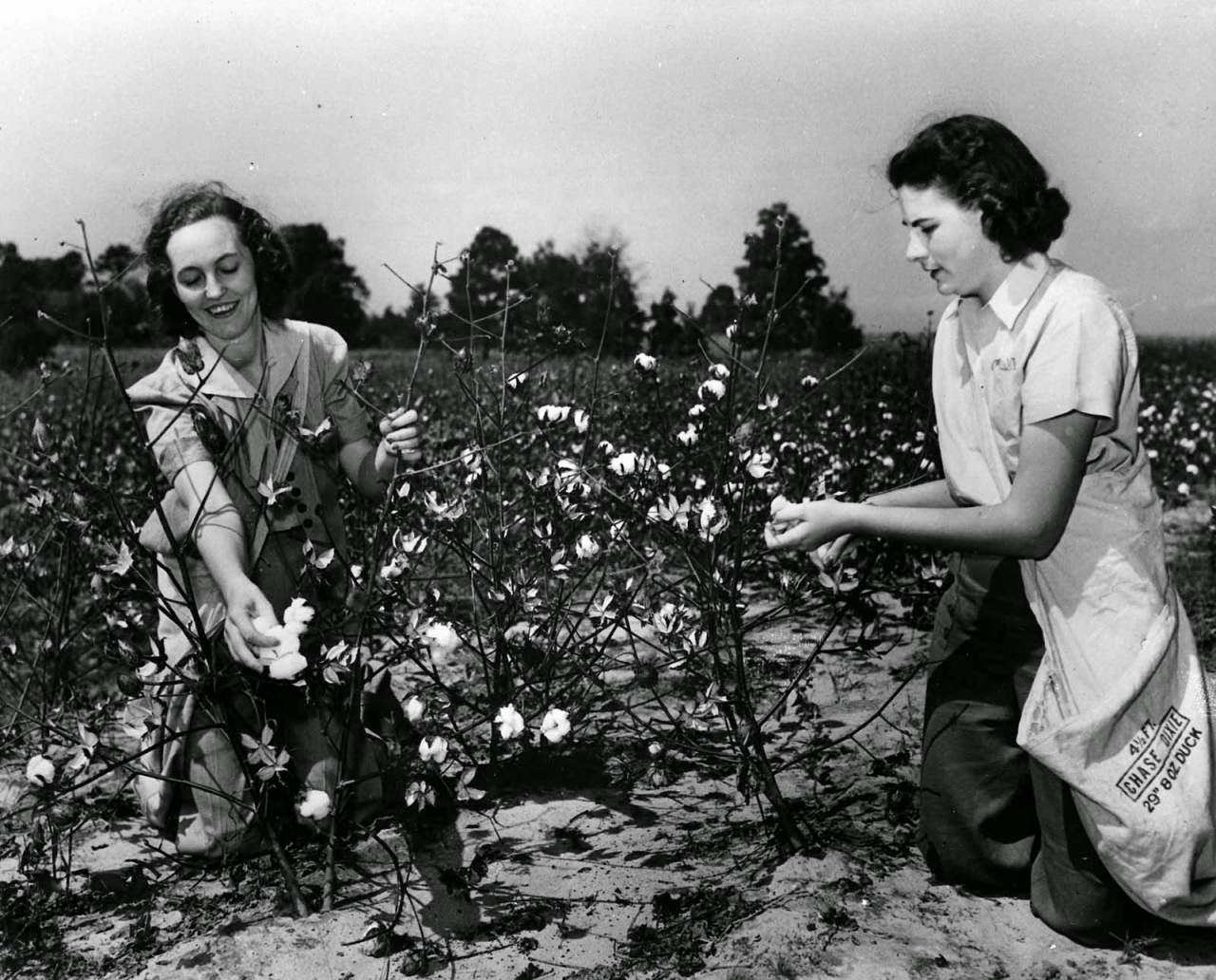
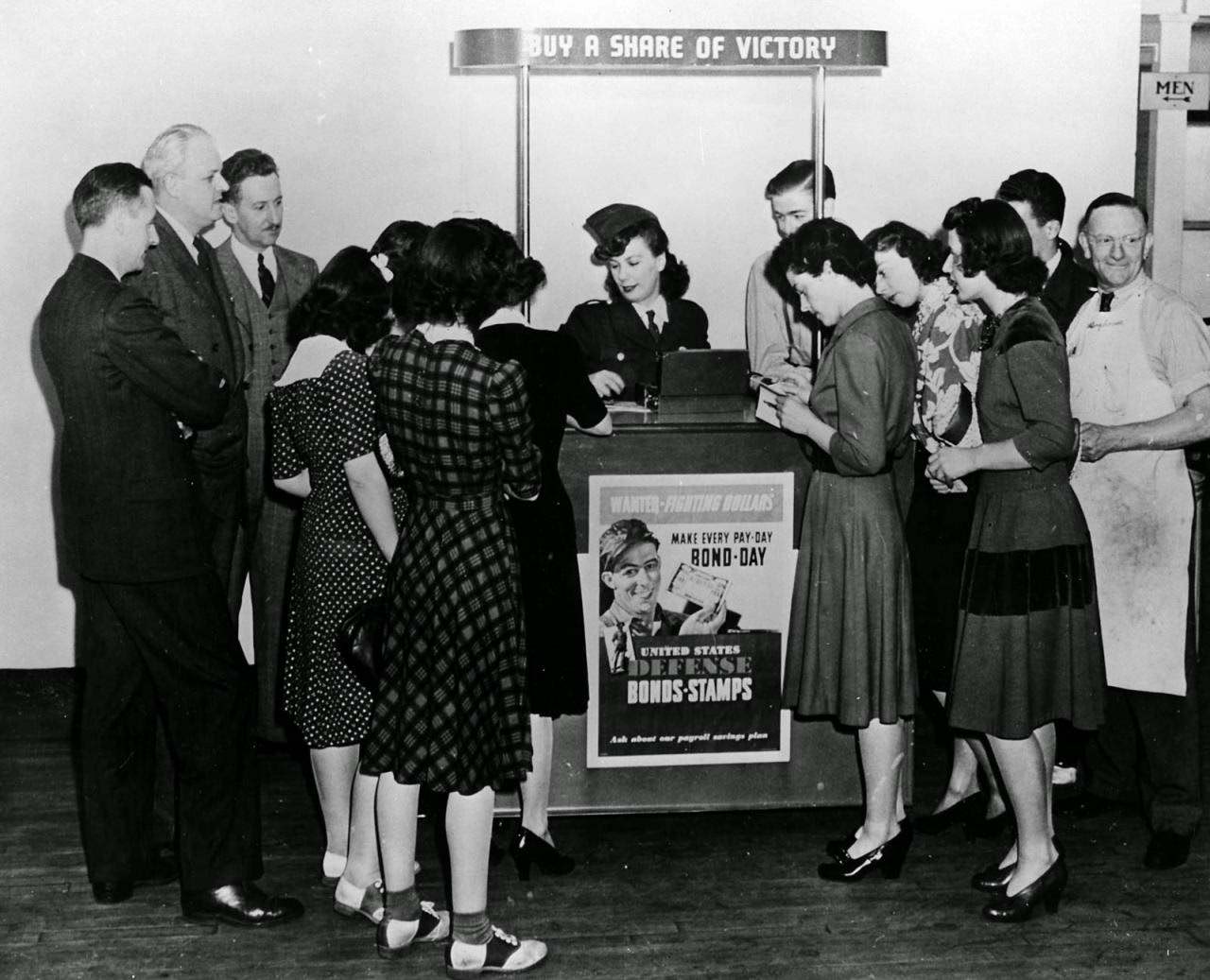
Agricultural labor in the American South included women picking cotton in 1943—a continuation of work that was familiar but now took on formal wartime urgency, with quotas and production targets tied to the broader war supply chain. At the same time, women sold war bonds at booths and community events, directly funding the purchase of military equipment through public investment campaigns.
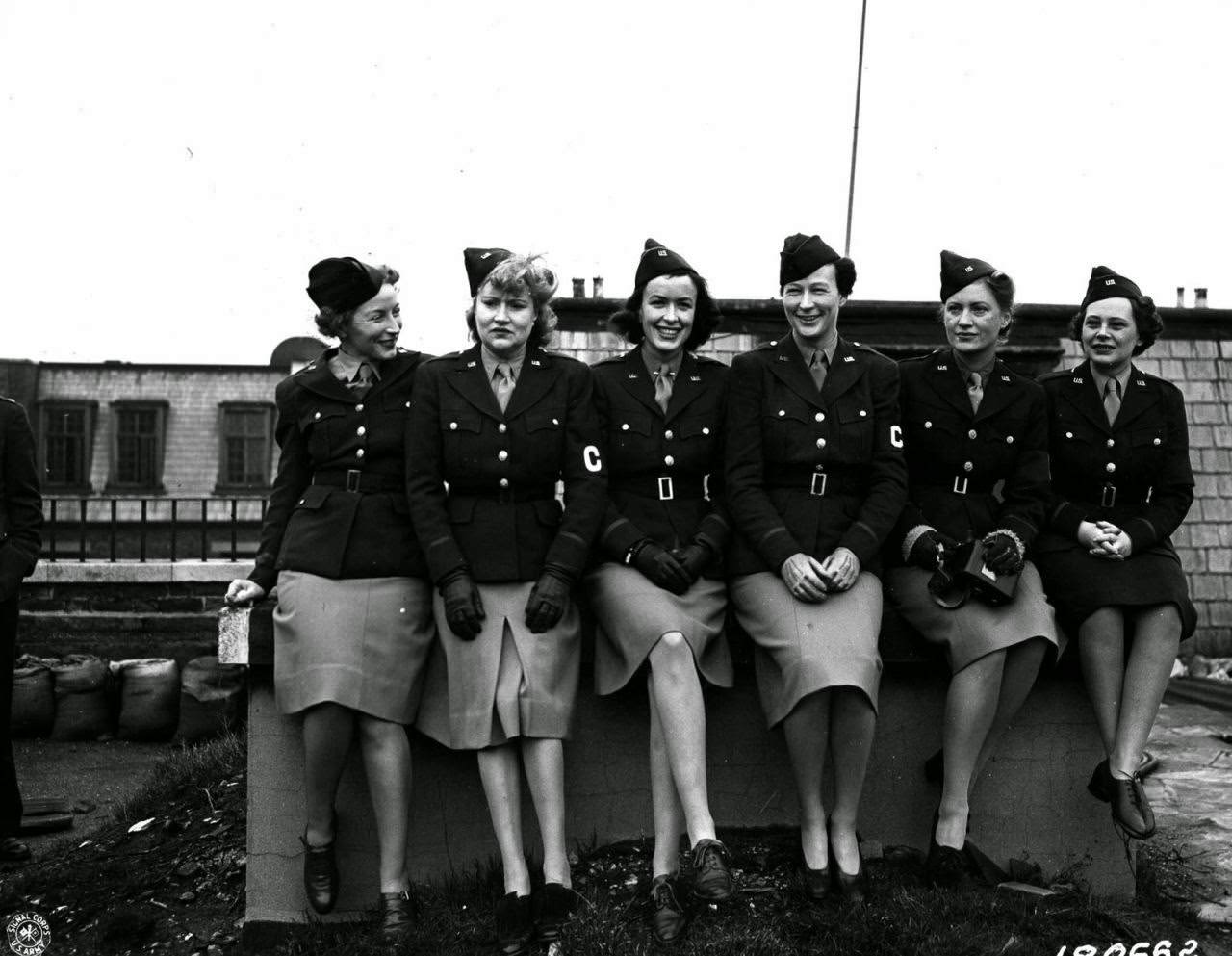
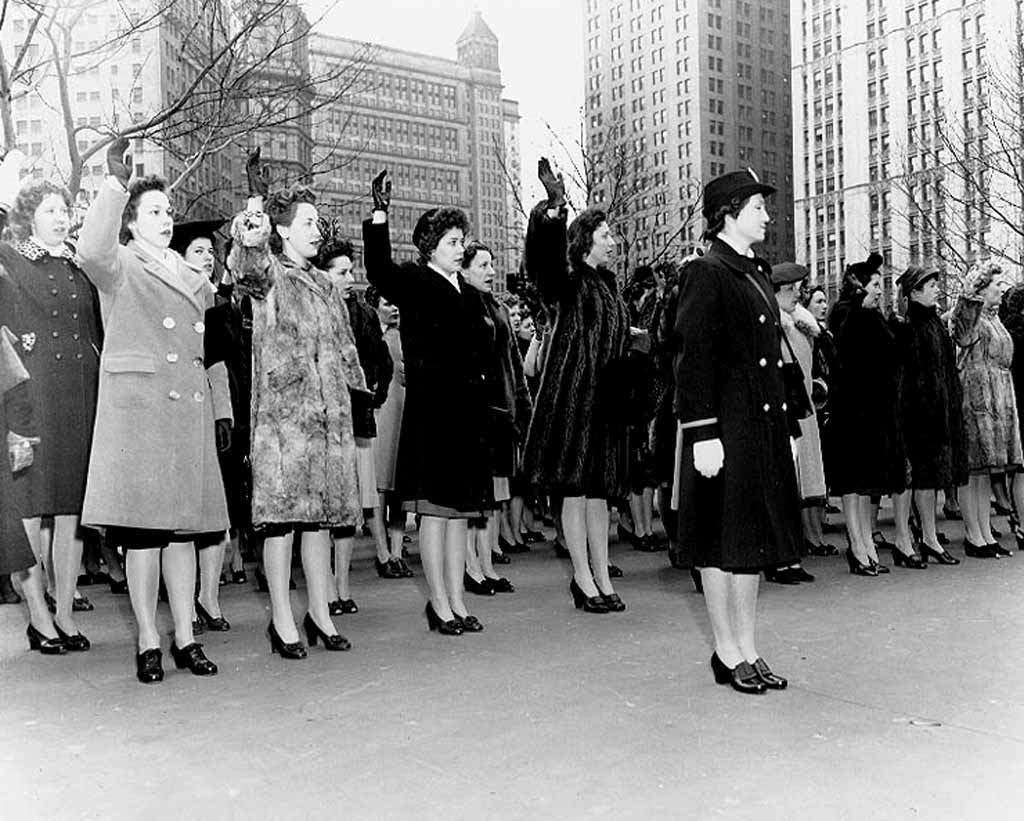
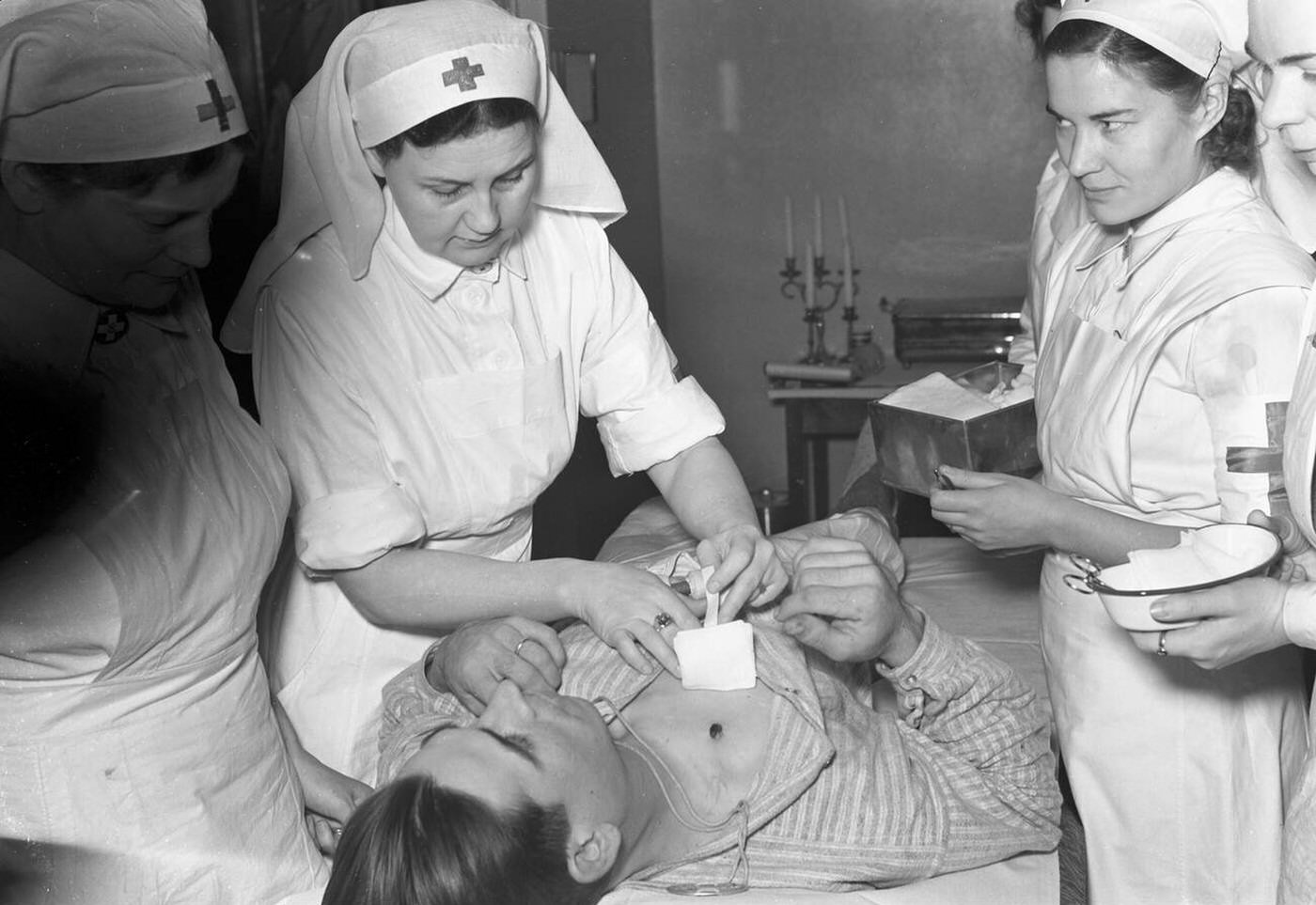
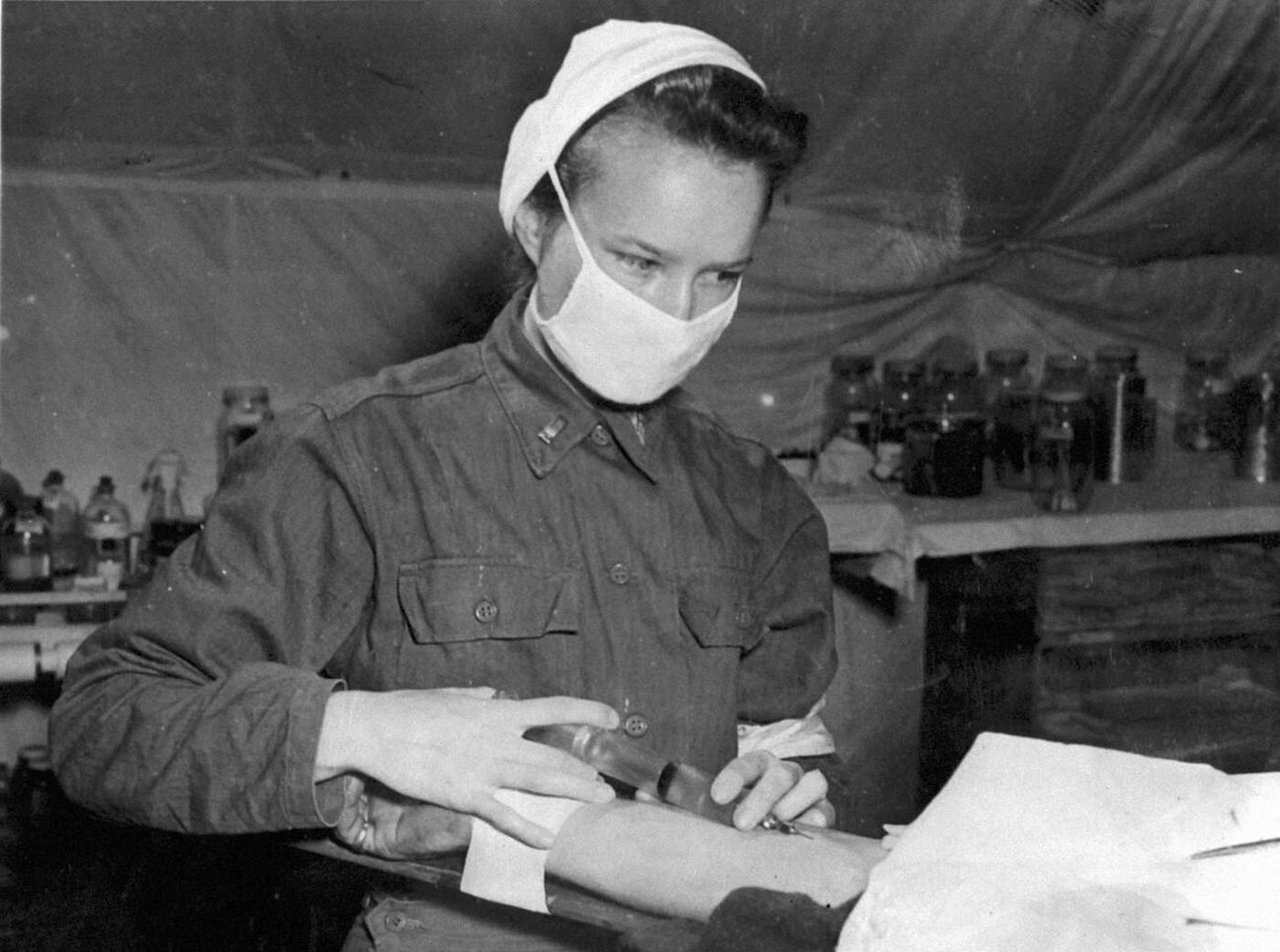
Women war correspondents covered the conflict from front lines and rear areas alike, filing stories and photographs that shaped public understanding of the war. Meanwhile, women enlisted in the WAVES and SPARS in increasing numbers as those programs expanded, with formal enlistment events held at recruiting stations across the country. Army nurses served in Scotland, France, New Guinea, and Australia—often working in field hospitals within range of artillery fire.
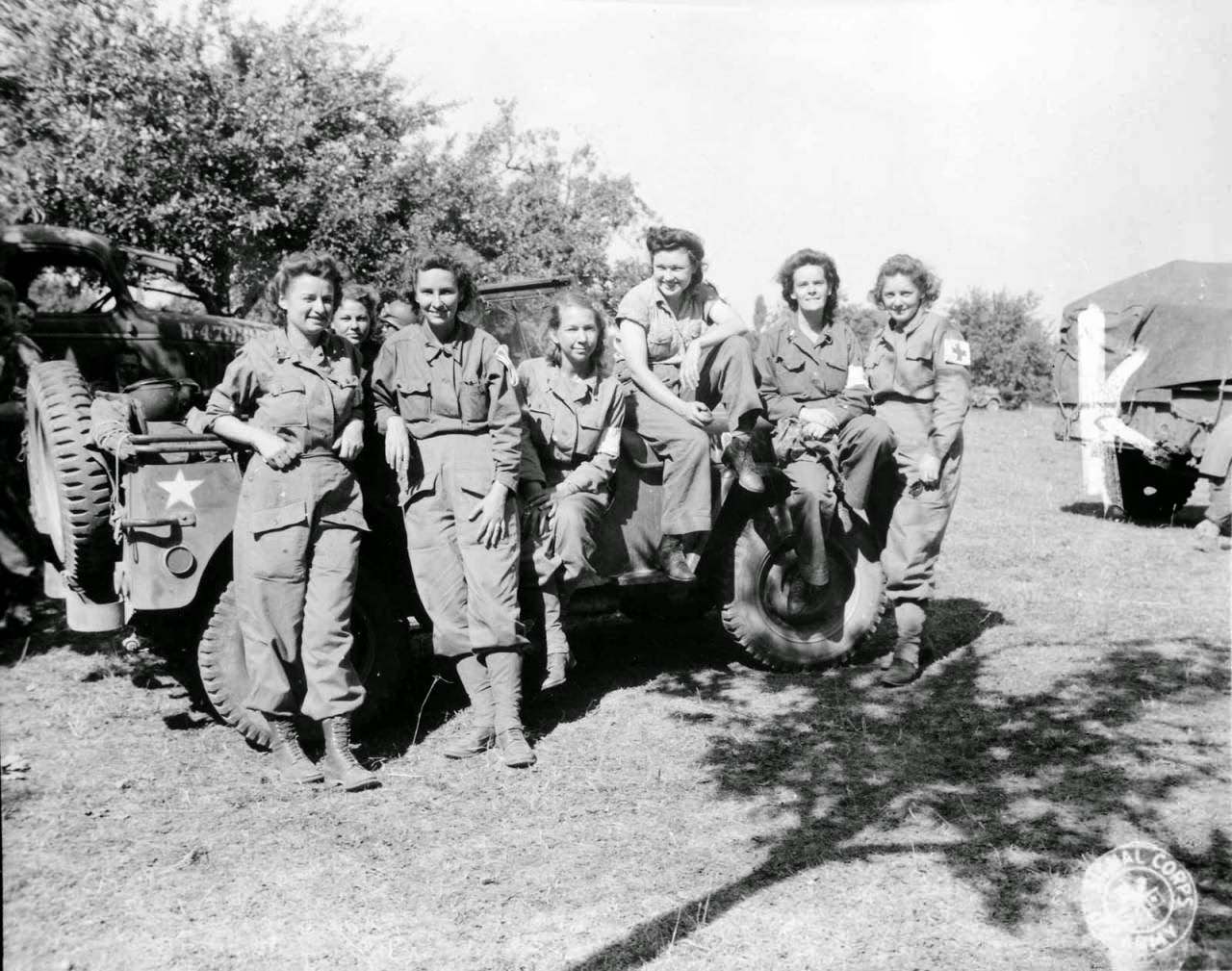
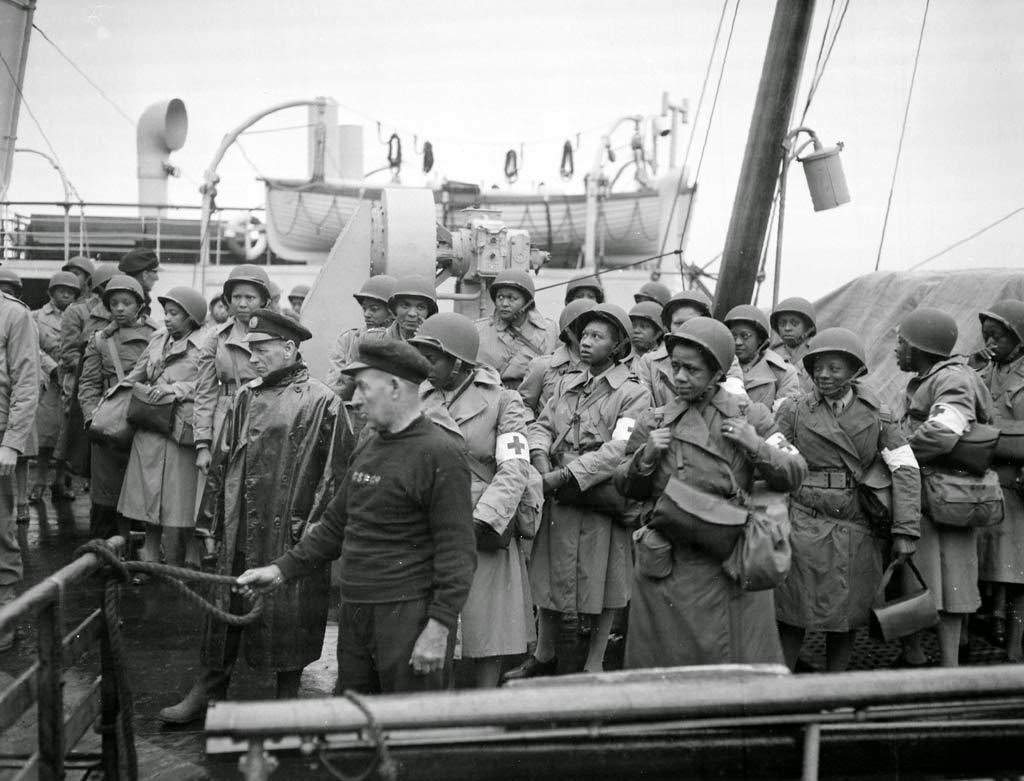
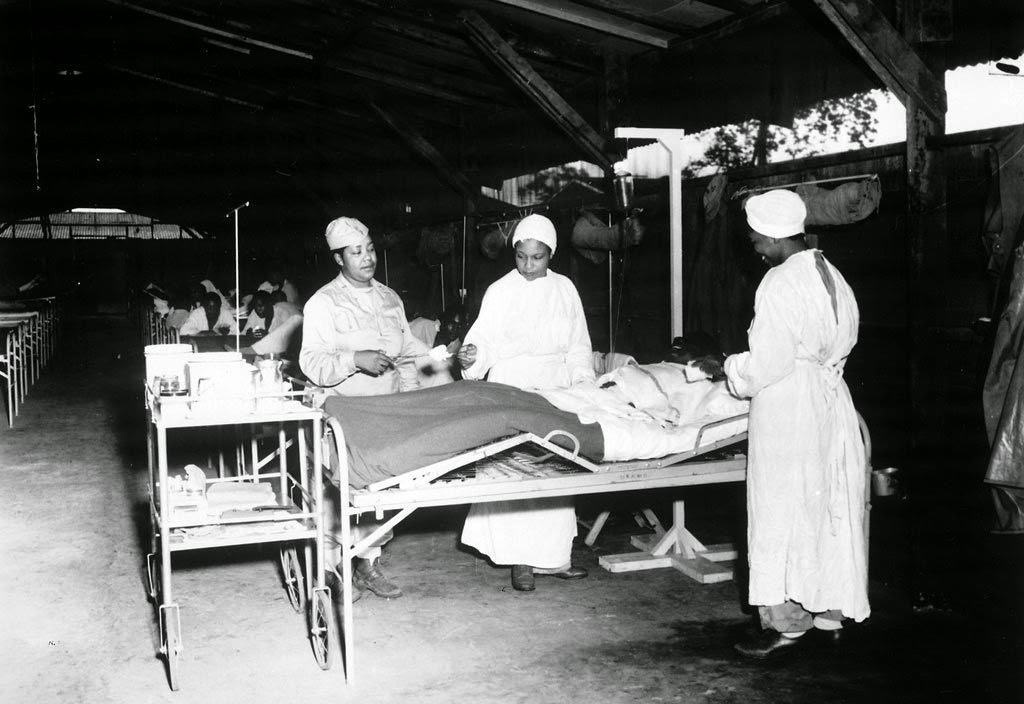
In the Pacific theater, Army nurses operated surgical wards in New Guinea under primitive conditions, performing triage and post-operative care far from any major medical facility. African-American nurses stationed in Australia provided critical care to wounded troops. Despite their qualifications, Black nurses faced racial segregation within the military medical system throughout the war.
The Women’s Auxiliary Air Force served across dozens of specialties, from meteorology and signals to aircraft maintenance. WAAF members were assigned to active airfields throughout Britain. The Women’s Land Army, with tens of thousands of enrolled Land Girls, kept British agriculture productive despite the loss of most of its male workforce to military service.
In Finland, the conflict took a specific shape. The hotel Pohjanhovi in Rovaniemi served as a military facility, photographed in 1940 during the Winter War period. Finnish women in the voluntary service organizations provided nursing and support in buildings like these converted to military hospitals. The Lotta-Svärd and the Finnish Women’s Voluntary Service collectively represented one of the largest women’s defense organizations in the world at the time.
British women working on farms in 1943 handled the full range of agricultural tasks—operating tractors, managing livestock, and bringing in harvests under tight schedules tied to national food targets. At the same time, factory women learned to check and assemble weapons systems. In 1941, women at Vickers were photographed inspecting machine guns, a job that required detailed mechanical knowledge and exacting standards.

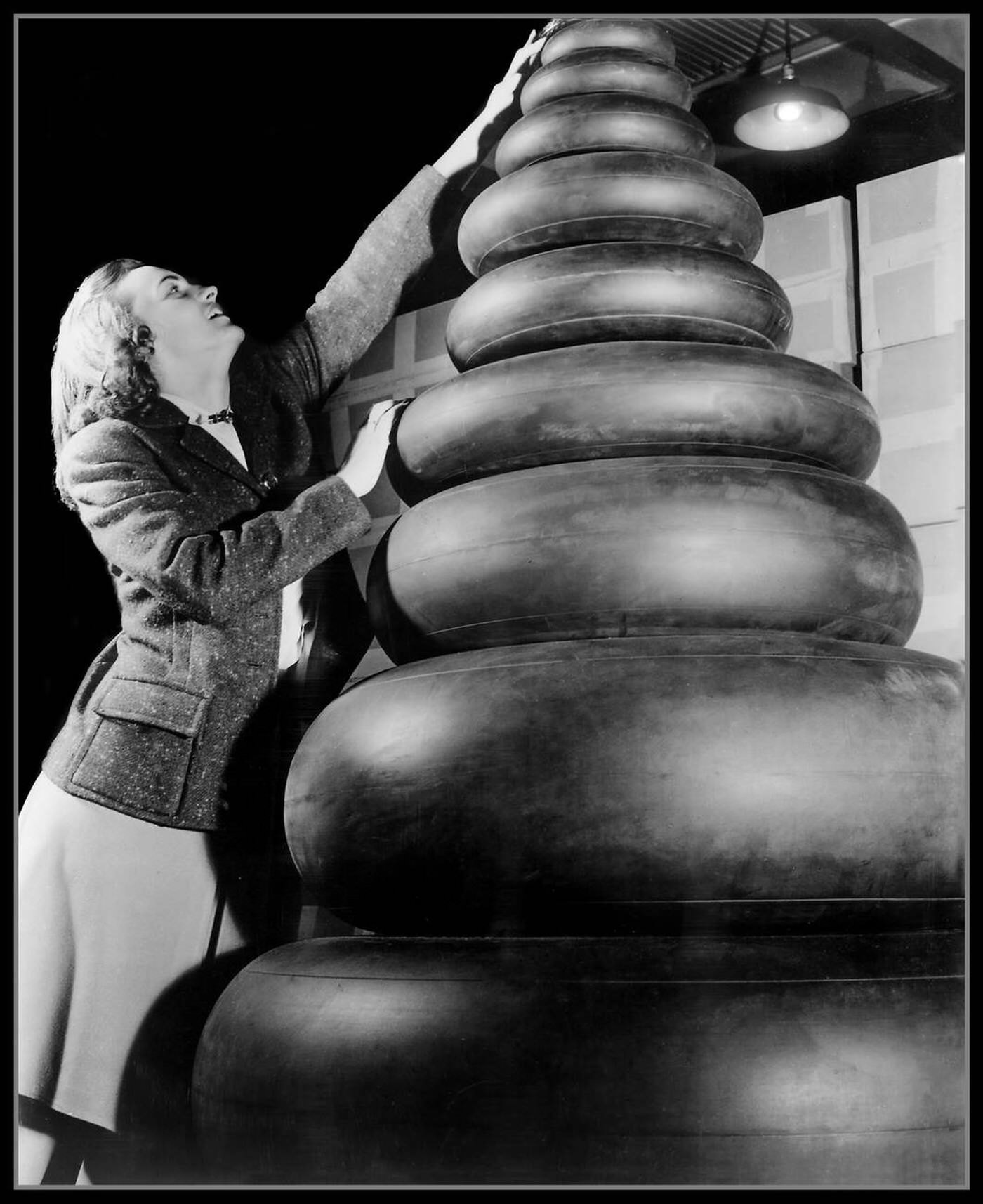
Entertainment for the troops was organized through the Entertainments National Service Association (ENSA) in Britain. ENSA parties, including women performers, traveled to active theaters of war including Italy to boost morale. Separately, in aircraft maintenance depots, women checked every tire and instrument on planes before they returned to service. A woman checking aircraft tires was as much a part of keeping bombers flying as the pilots who flew them.
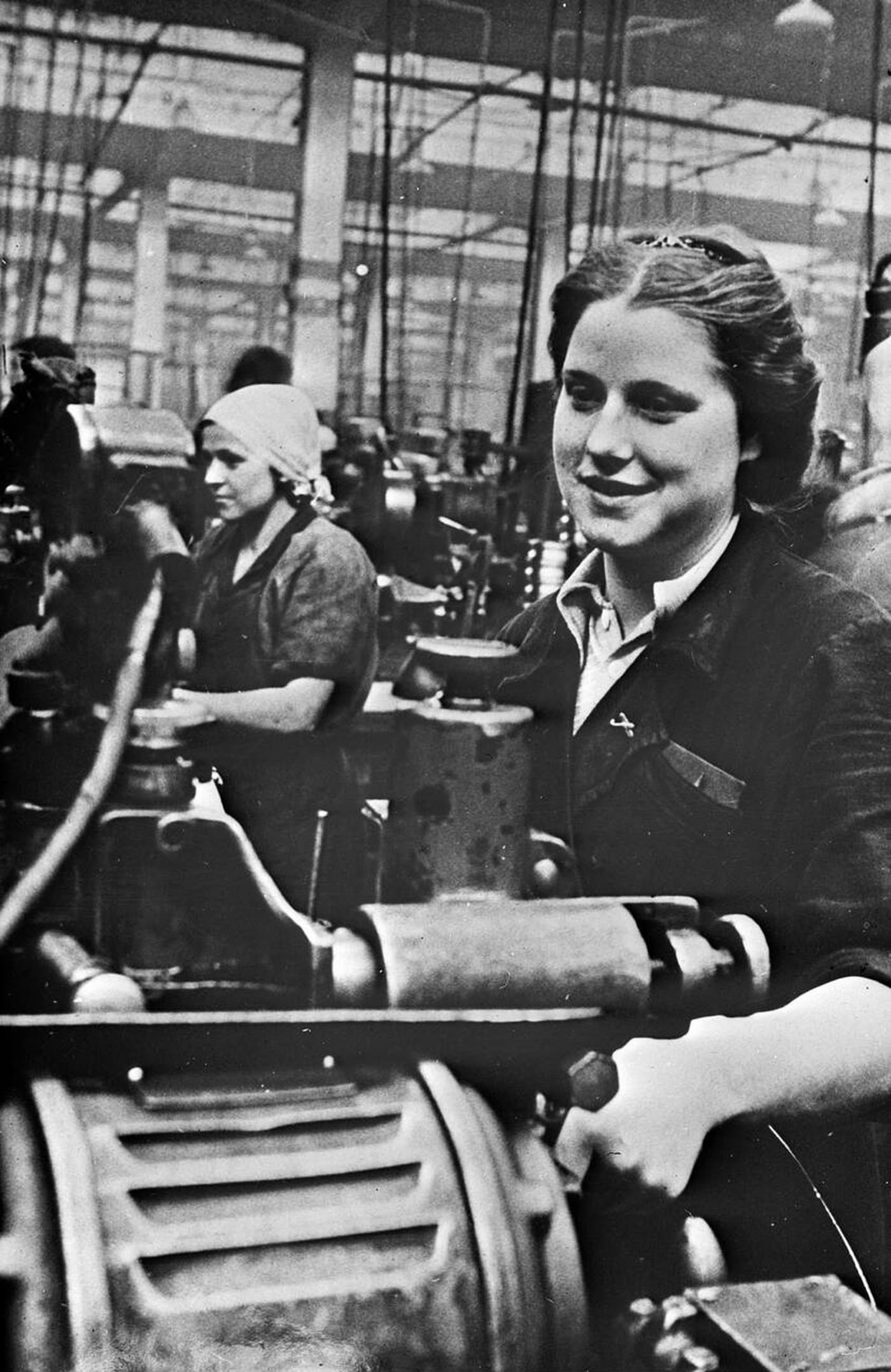
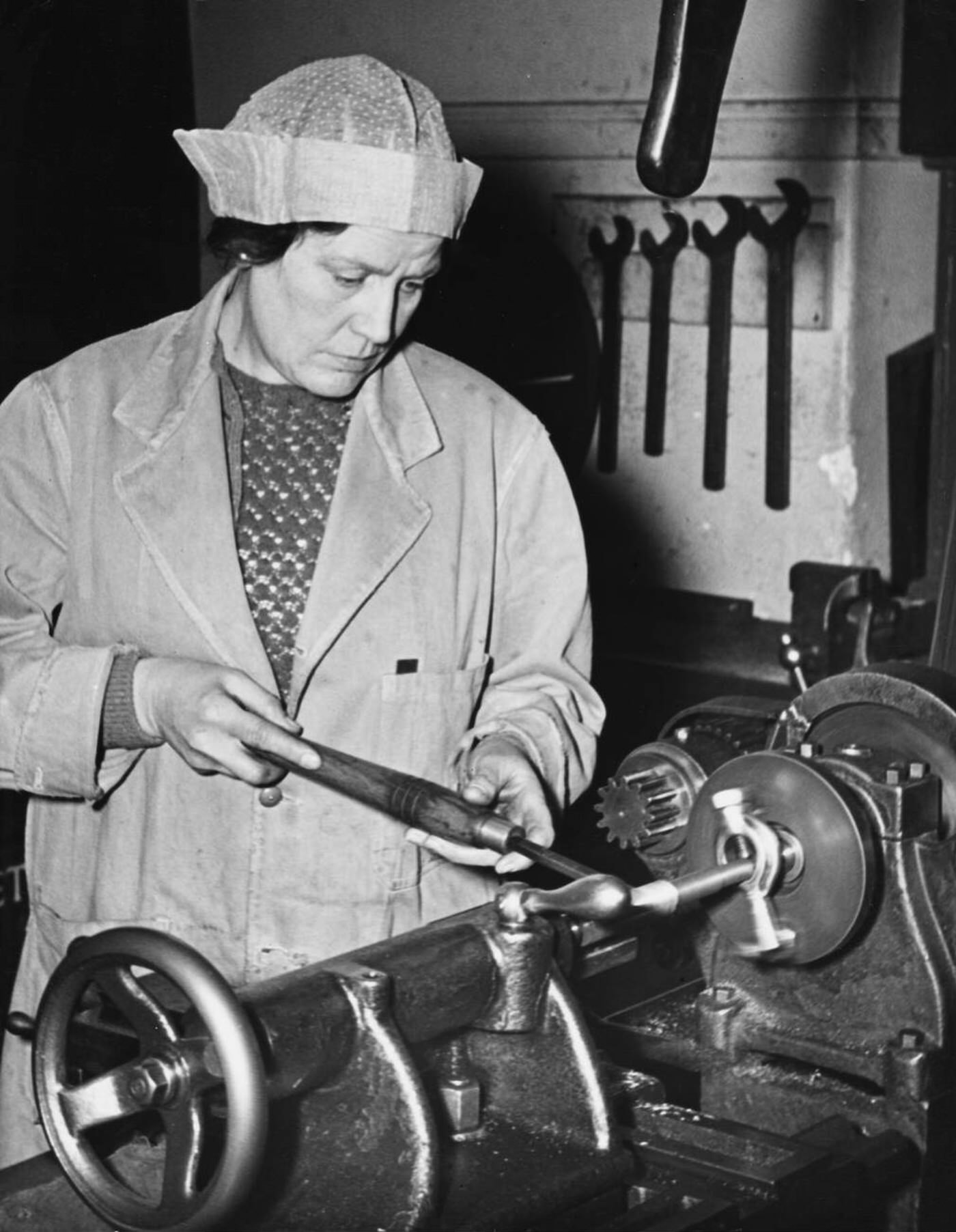
Aircraft plants like Vultee Aircraft employed women on every stage of the production line. In the Soviet Union, women operated heavy lathes in factories that had been relocated east of the Ural Mountains to keep them out of German reach. These workers produced the tanks, artillery shells, and aircraft components that fed the Red Army’s war effort, often working 12-hour shifts in harsh conditions.
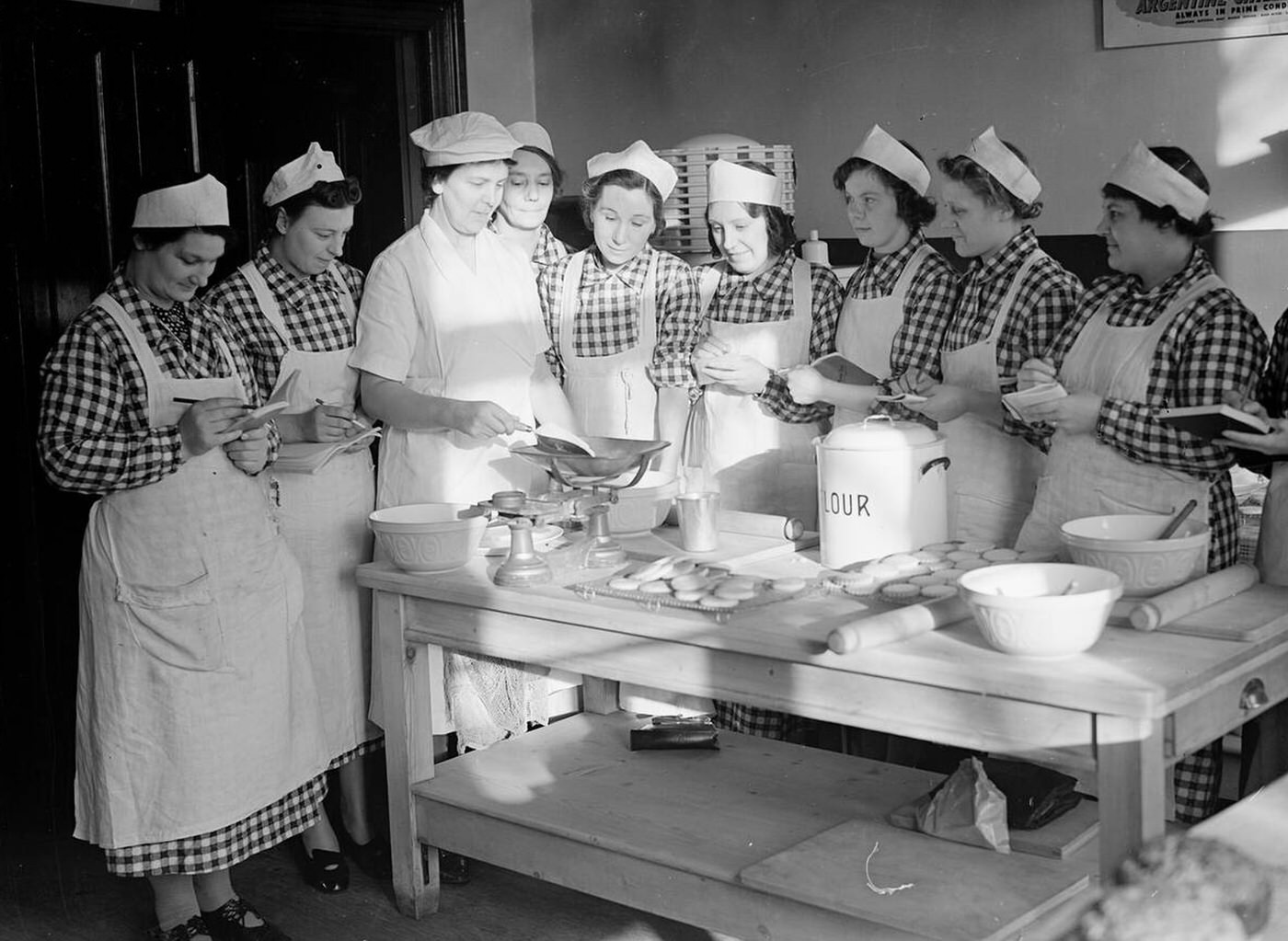
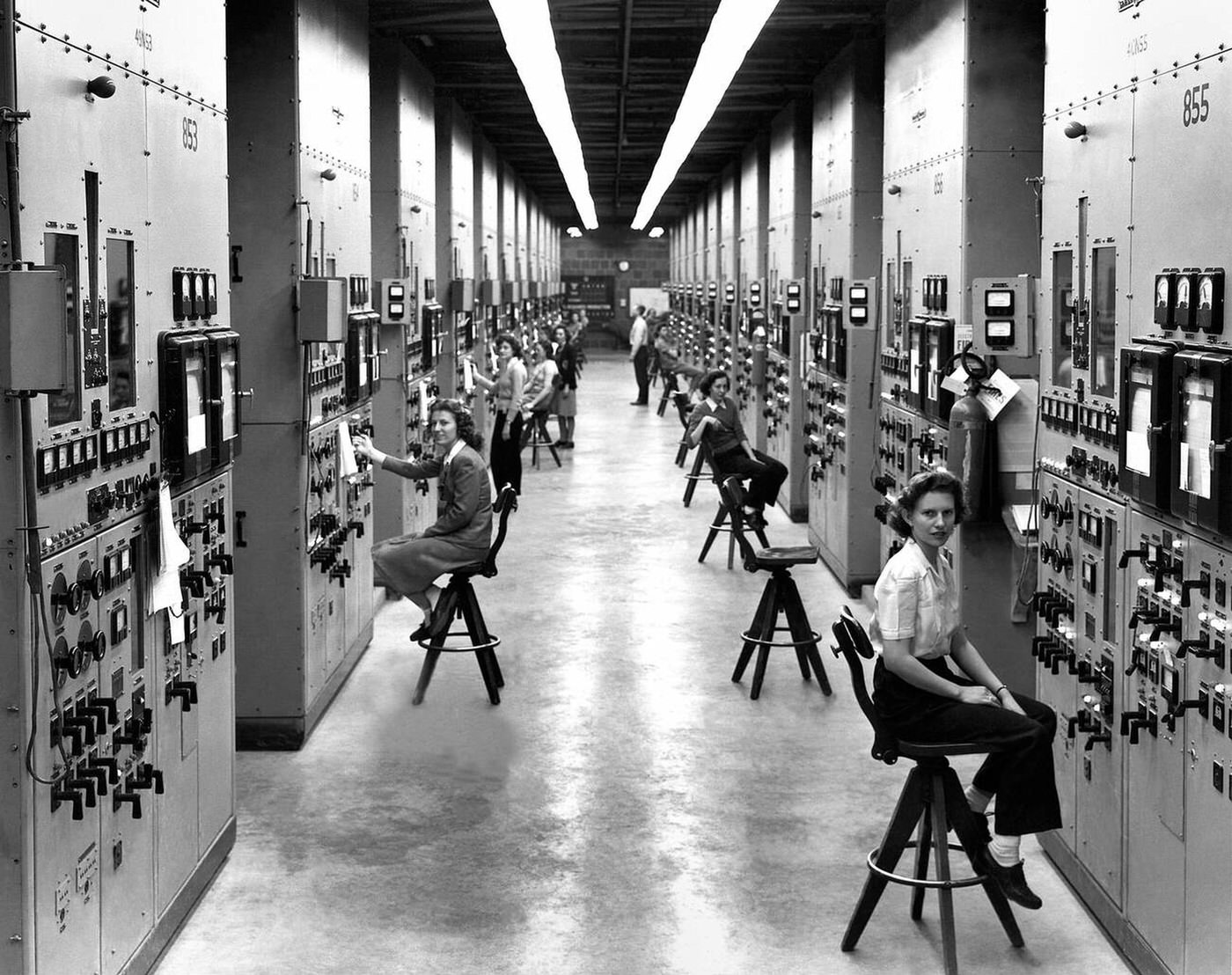
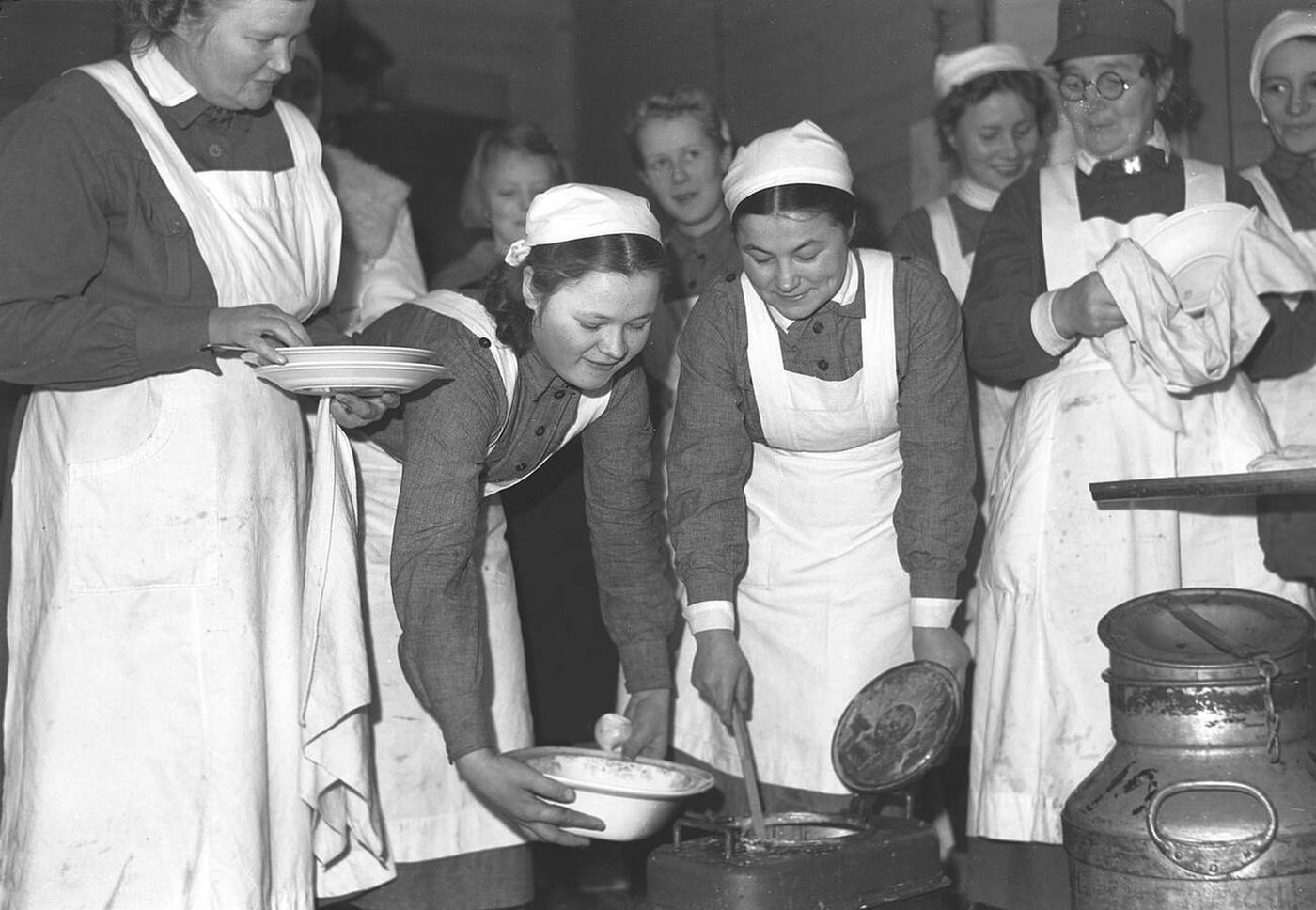
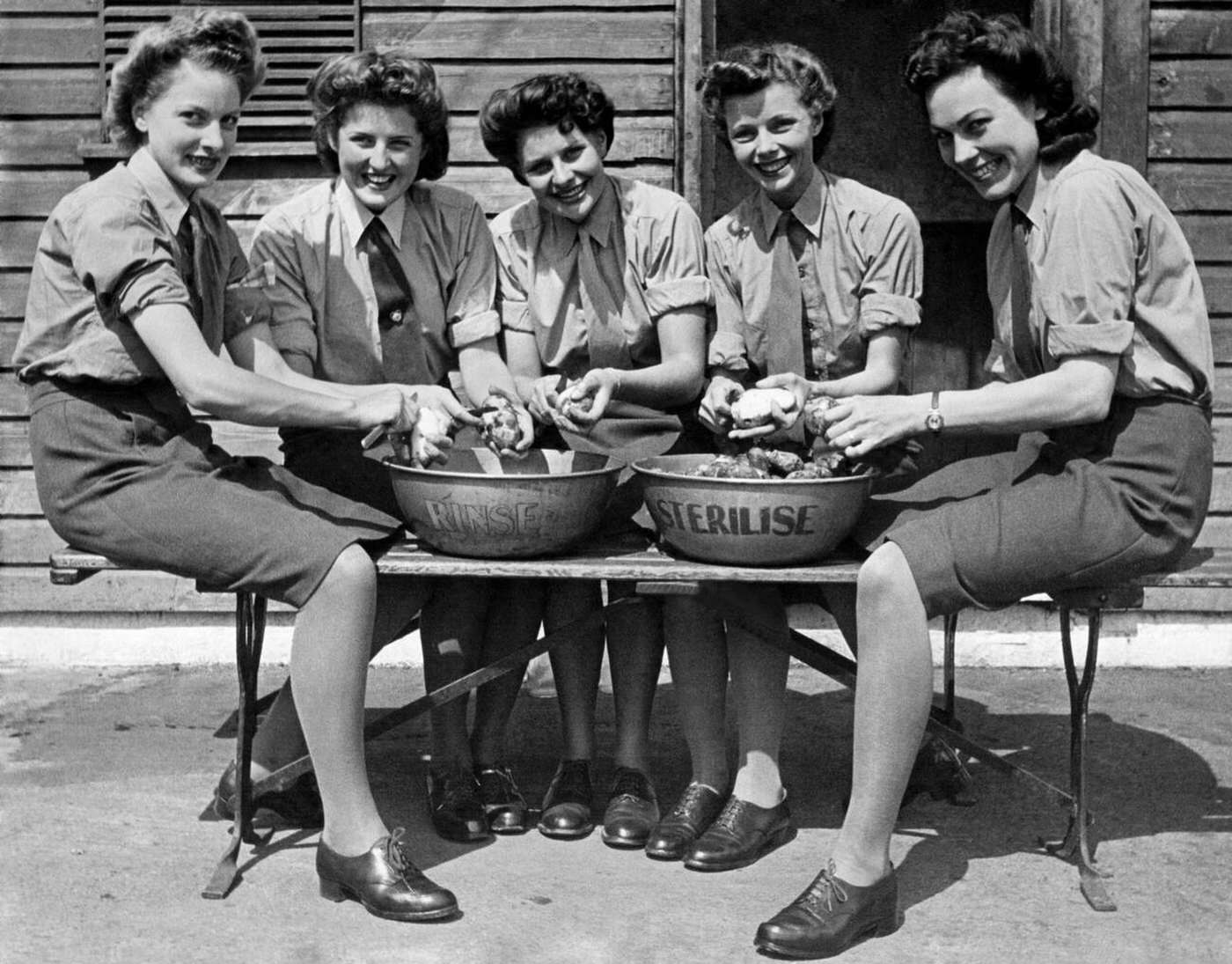
Not everyone came to wartime work with factory experience. Programs trained unemployed women as canteen cooks, providing hot meals to workers in industrial plants and military installations. Across the country, women also attended vocational schools to learn war work skills from scratch. At the Oak Ridge facility in Tennessee—part of the Manhattan Project—women operated calutrons in 1944, machines that separated uranium isotopes without being told what the final product was.
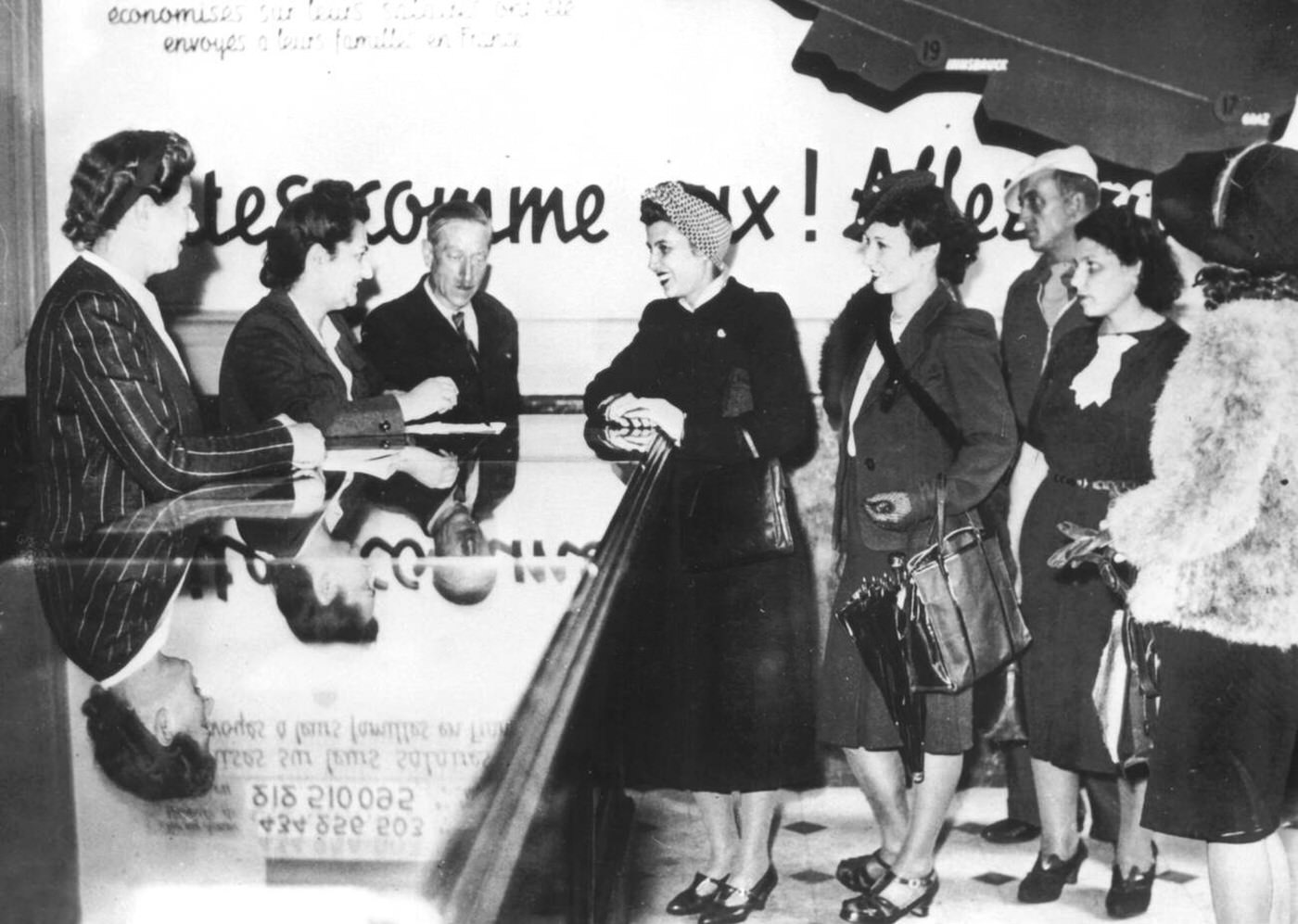
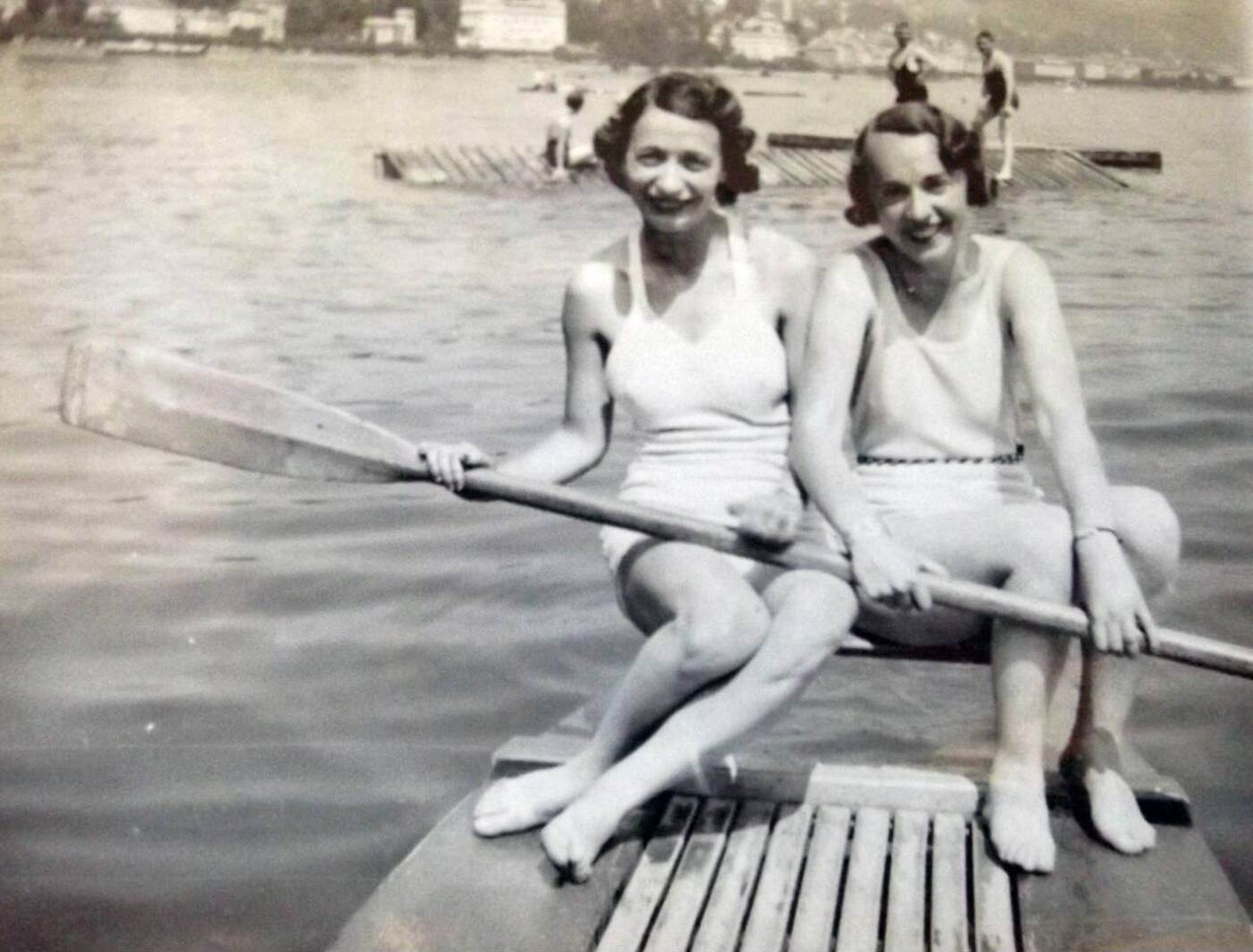
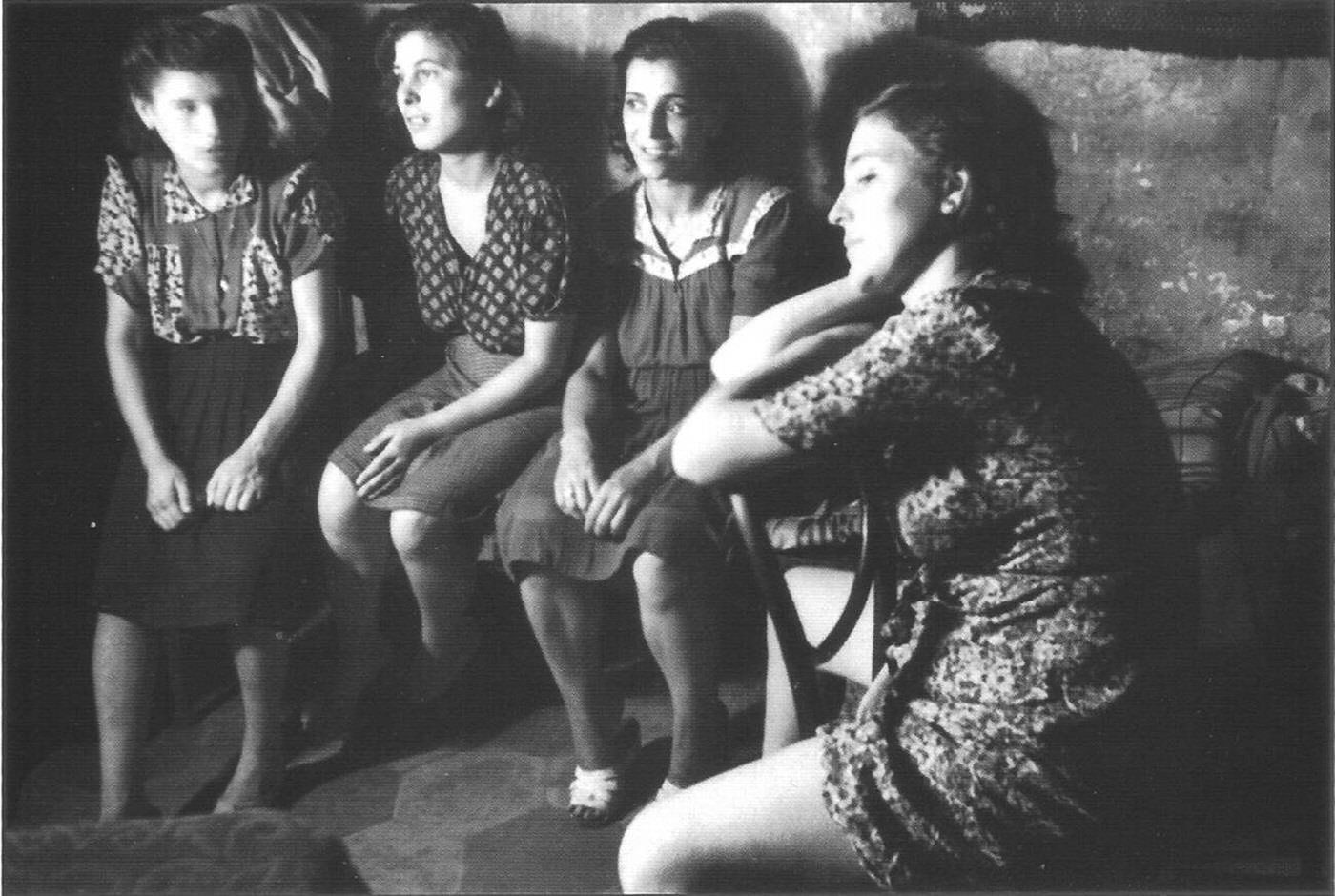
A photograph from France in 1938 shows young women on holiday—a world just one year away from total war. By 1943, many of those same women were in uniform or on factory floors. Women in German-occupied territories and in Germany itself also entered war production. German women worked in manufacturing plants, though the Nazi regime was slower than the Allied governments to formally mobilize women for industrial labor.
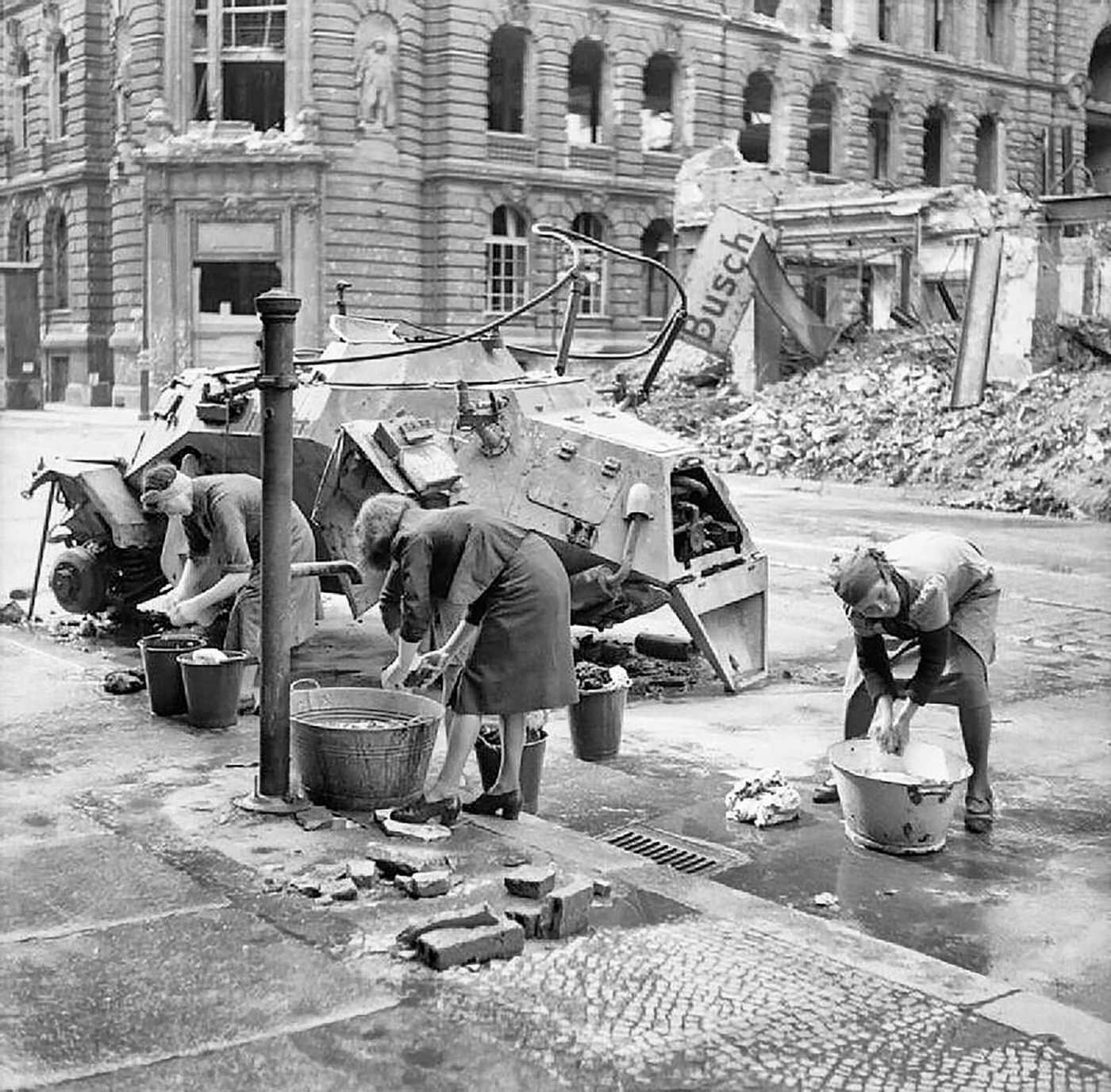
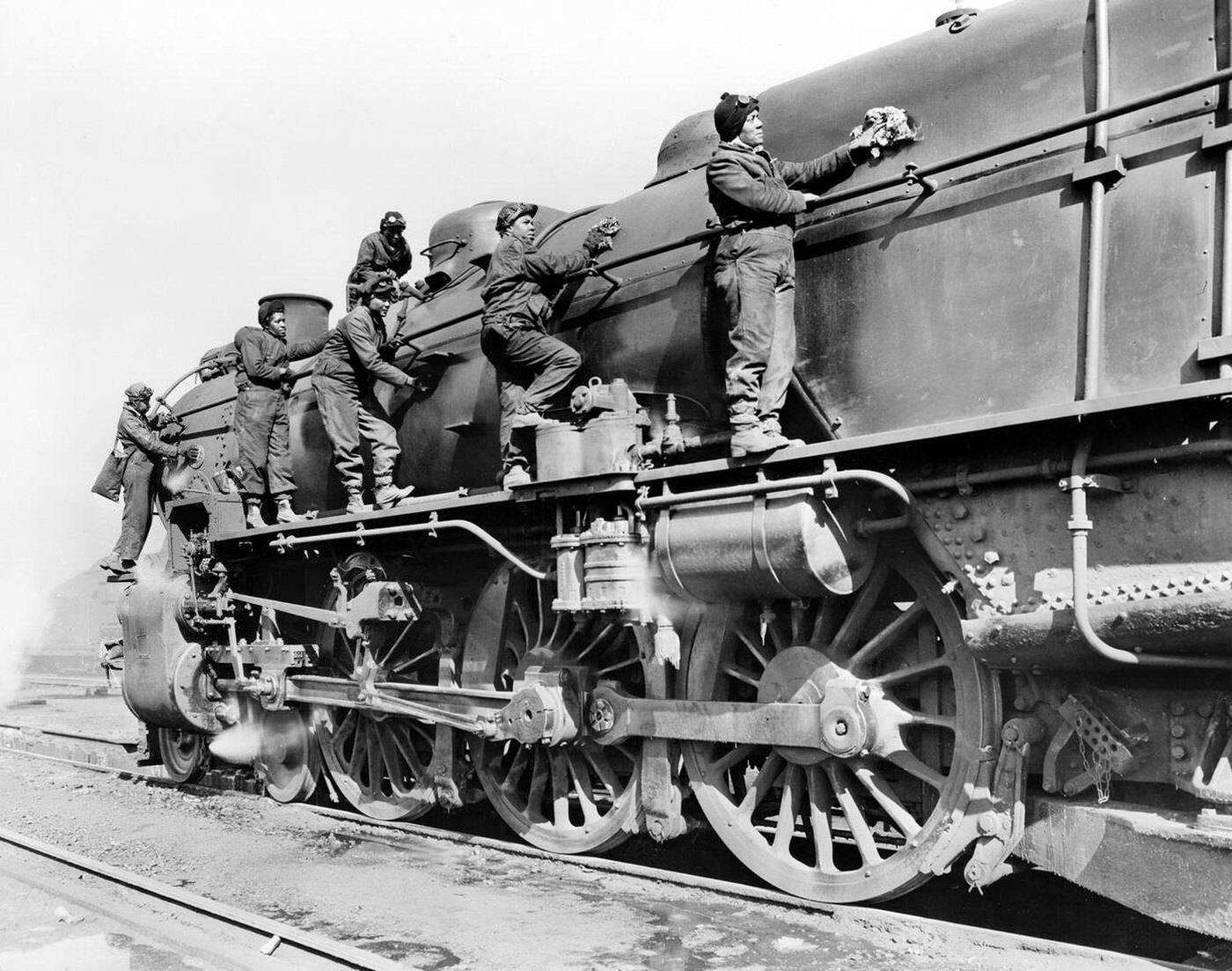
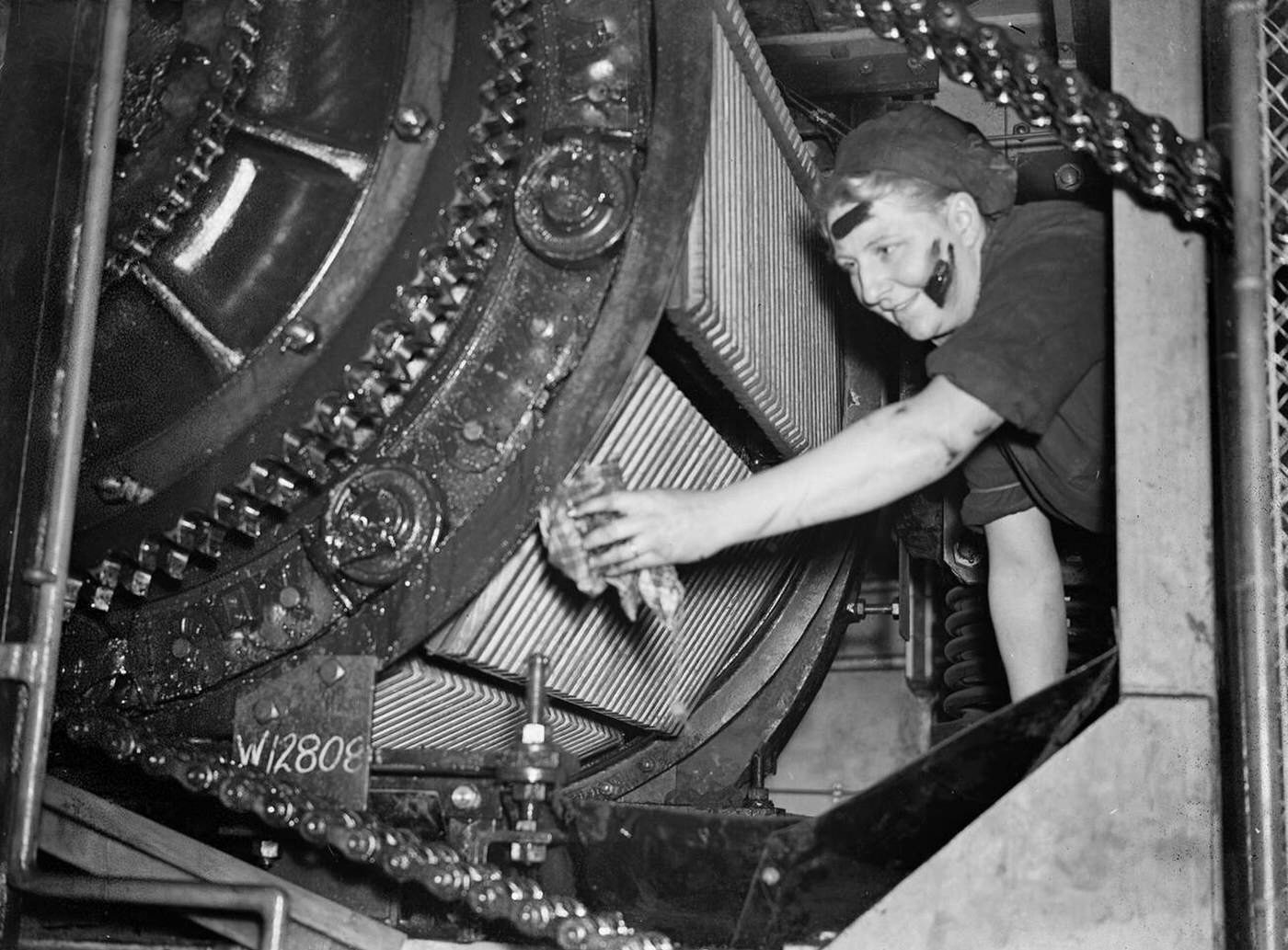
In Berlin in 1945, in the war’s final weeks, German women were photographed doing laundry in the streets as city infrastructure collapsed under Allied bombing and Soviet assault. Across the Atlantic, on the Pennsylvania Railroad, women cleaned locomotive engines in 1943—a grimy, physically demanding job that kept the rail network moving. The iconic image of “Rosie the Riveter,” produced in multiple versions throughout the war, became the most recognized symbol of women’s industrial contribution.
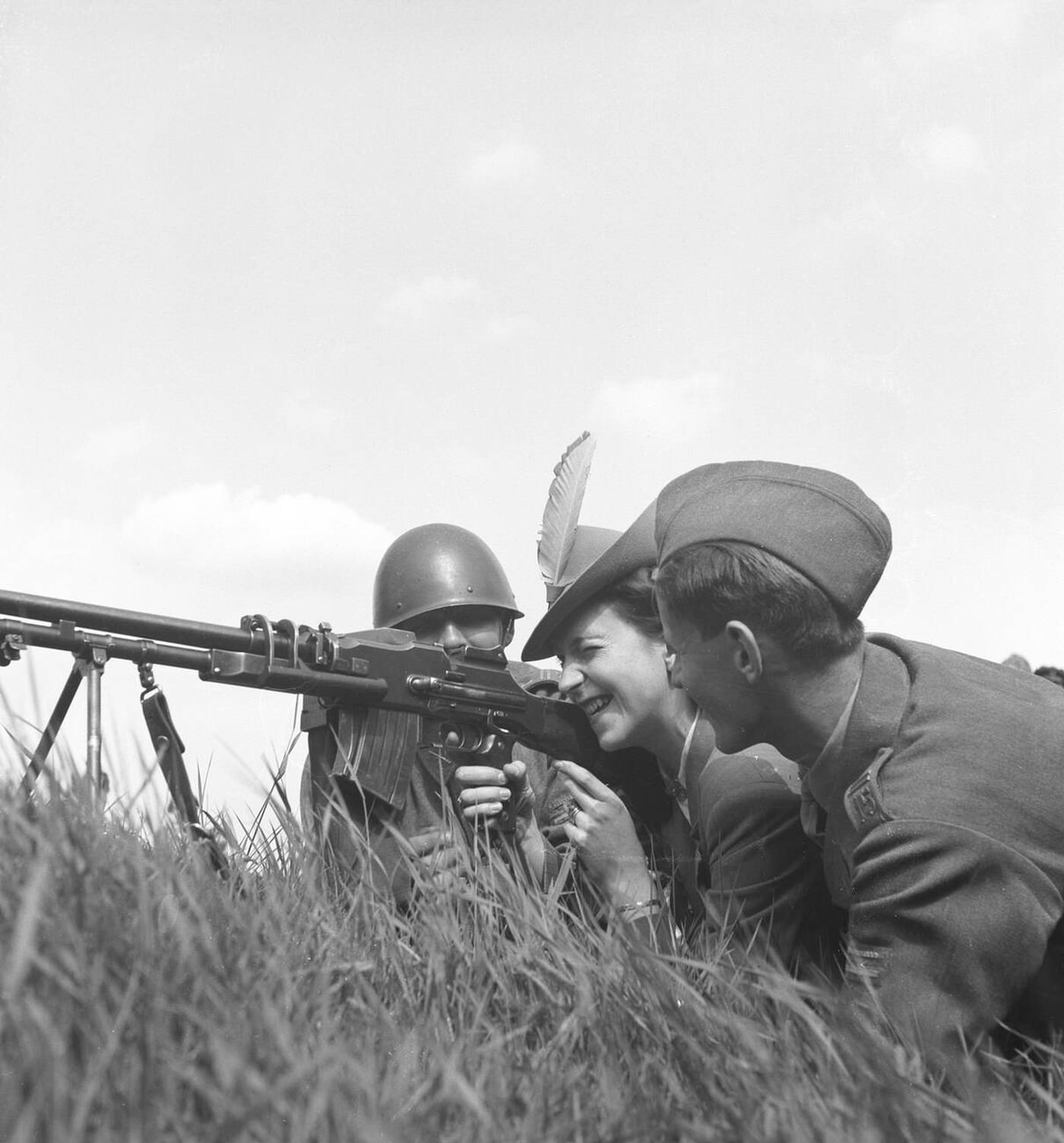
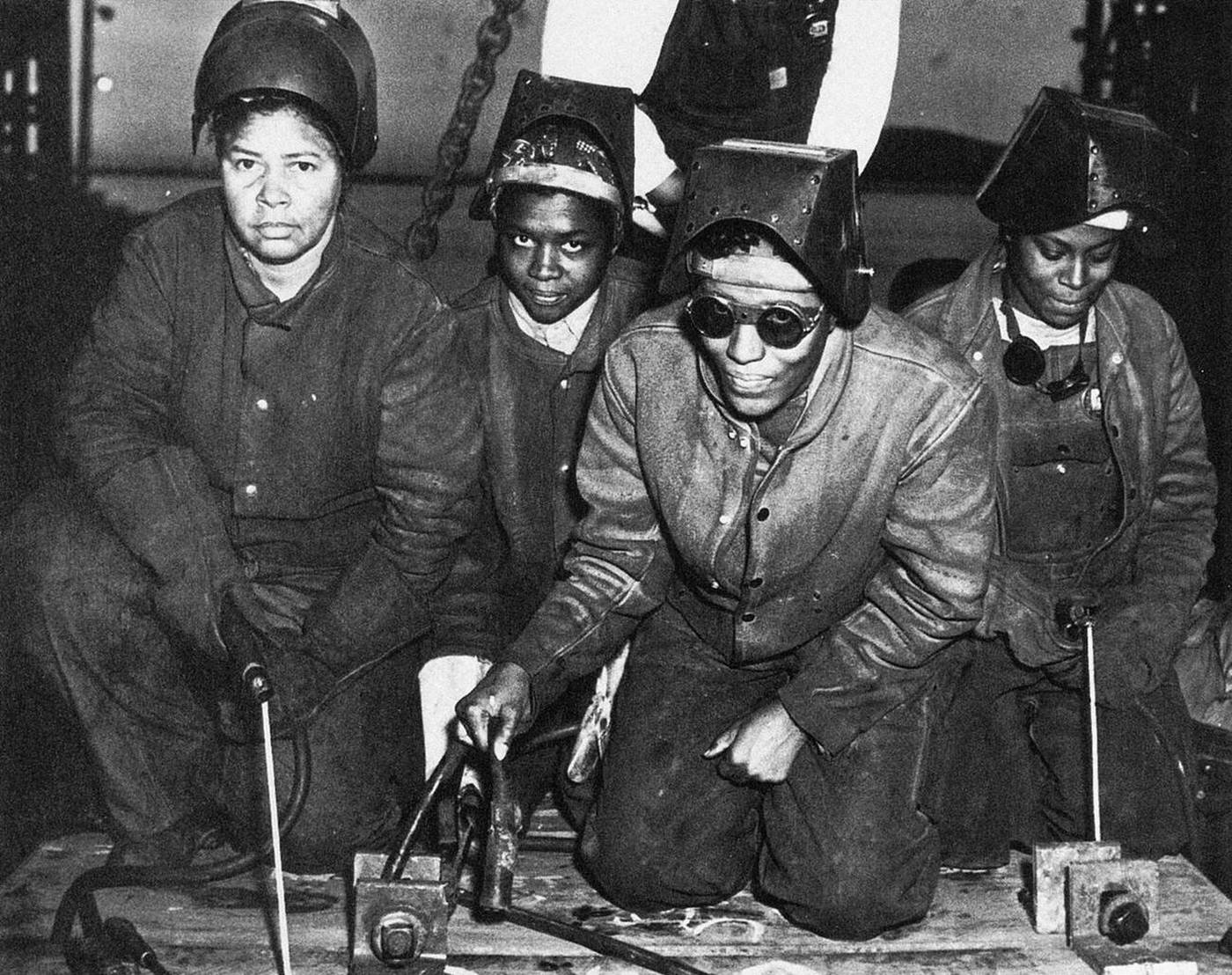
Women appeared in photographs alongside military hardware in ways that highlighted how deeply the war had changed civilian life. Shipyard welders in 1943 worked on vessels being assembled for the Navy, while women elsewhere trained with or posed behind machine guns in training exercises. At Ford’s massive Willow Run plant in Michigan, women joined the assembly line producing B-24 Liberator bombers at a rate that had once seemed impossible.
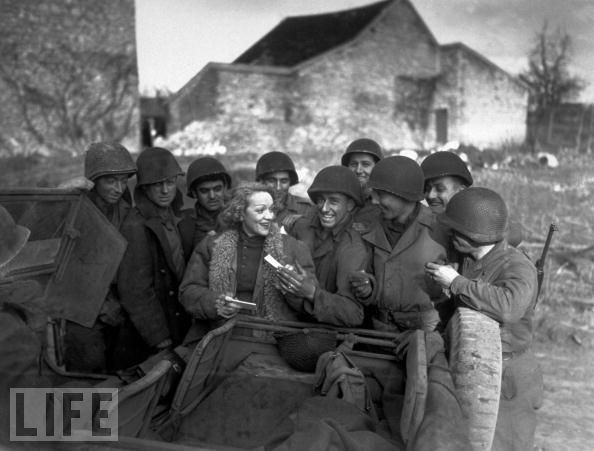
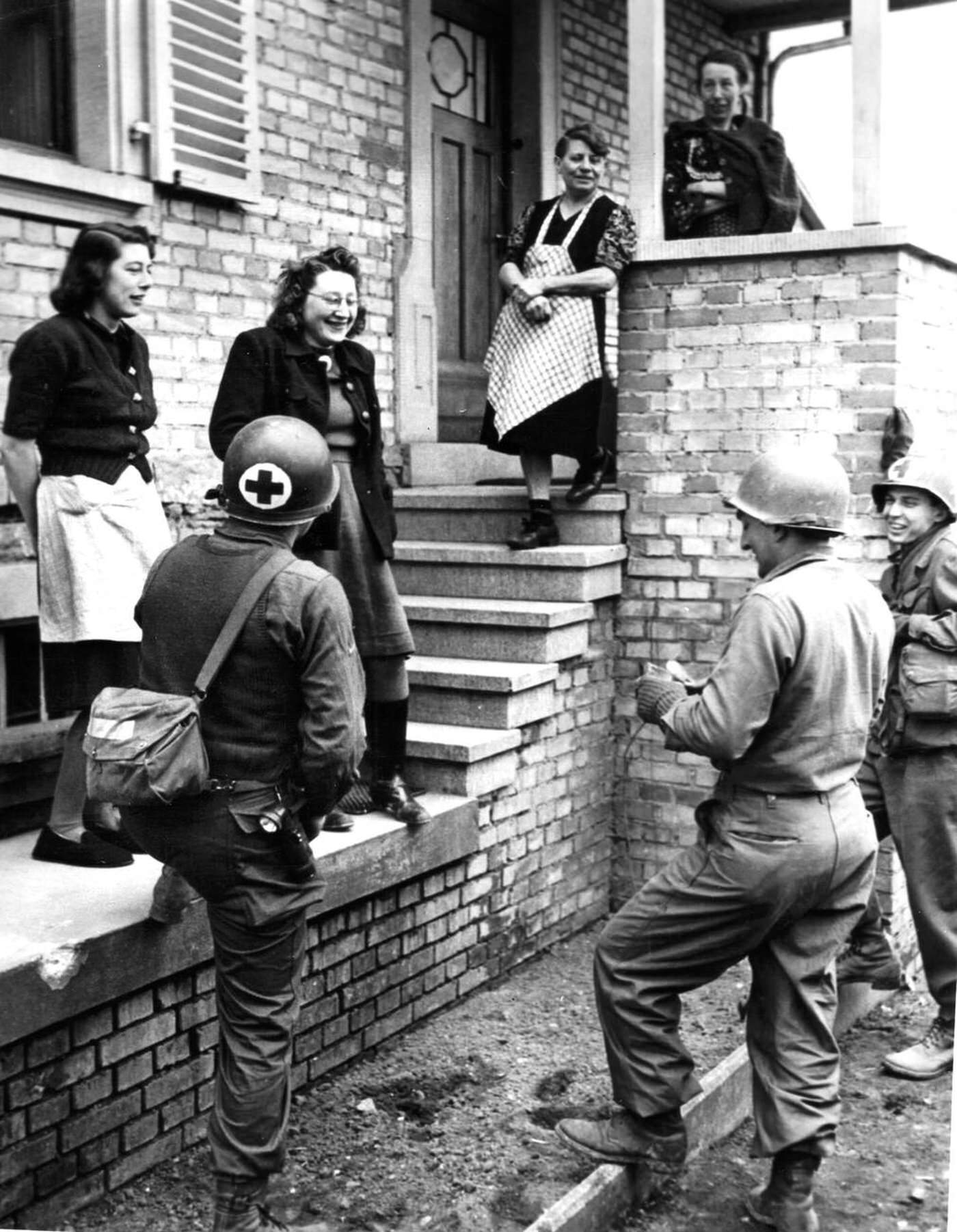
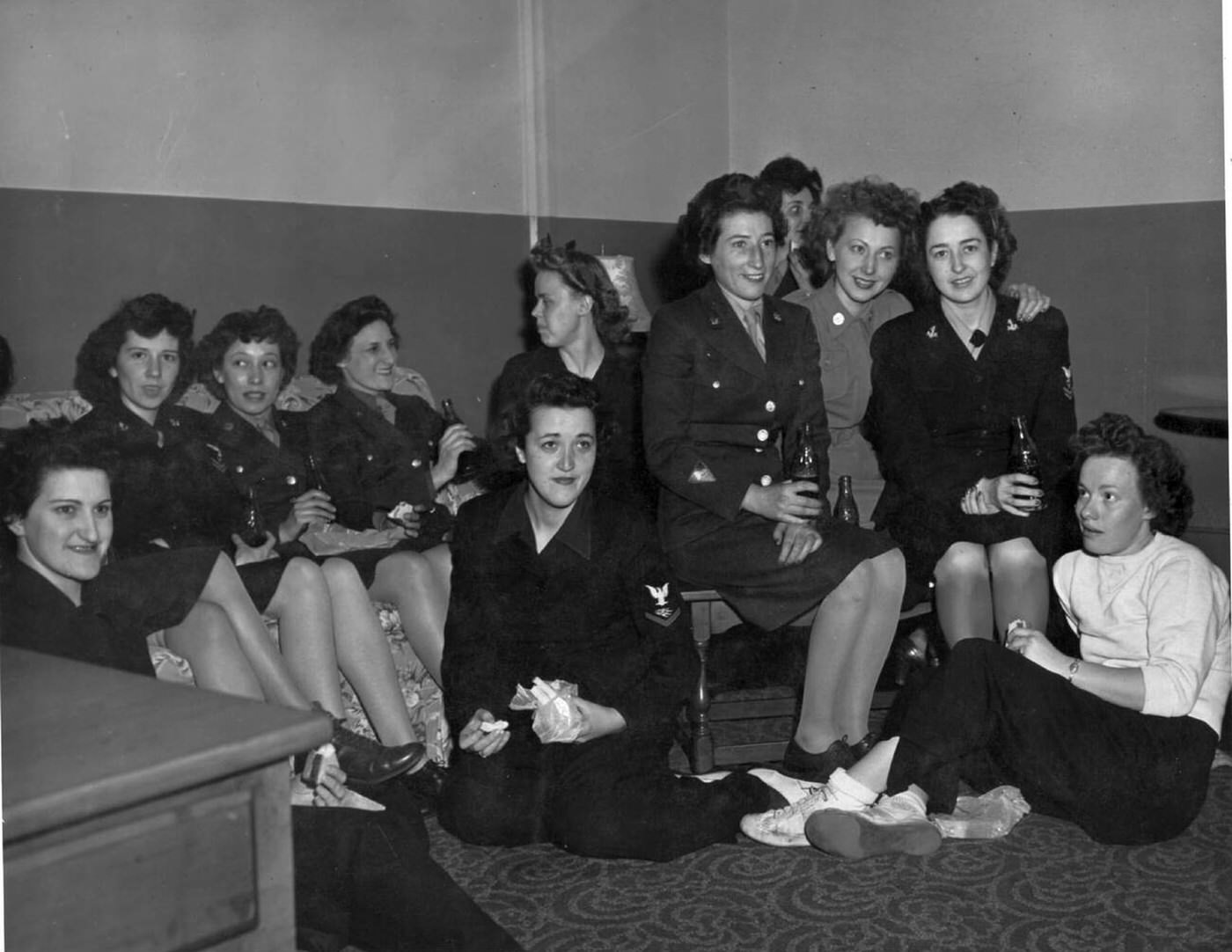
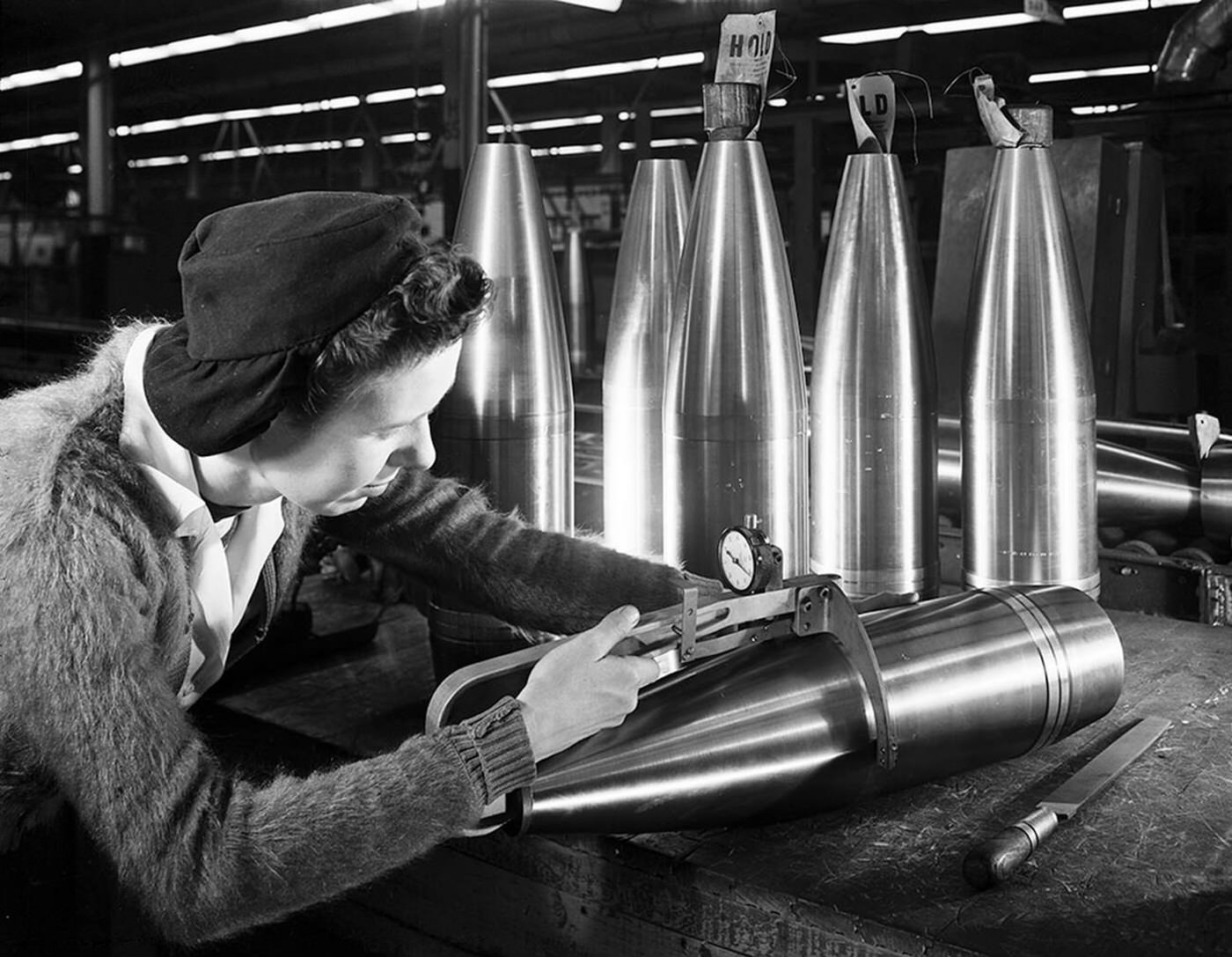
As Allied forces liberated cities across Europe, women greeted the arriving troops. In Alsace in 1945, local women welcomed U.S. soldiers after years of German occupation. WAVES member Zilda Decarlo represented the thousands of Navy women who served in administrative and technical roles that freed men for sea duty. At General Motors, women worked directly on ordnance—machining and assembling weapons components on production lines originally built for automobiles.
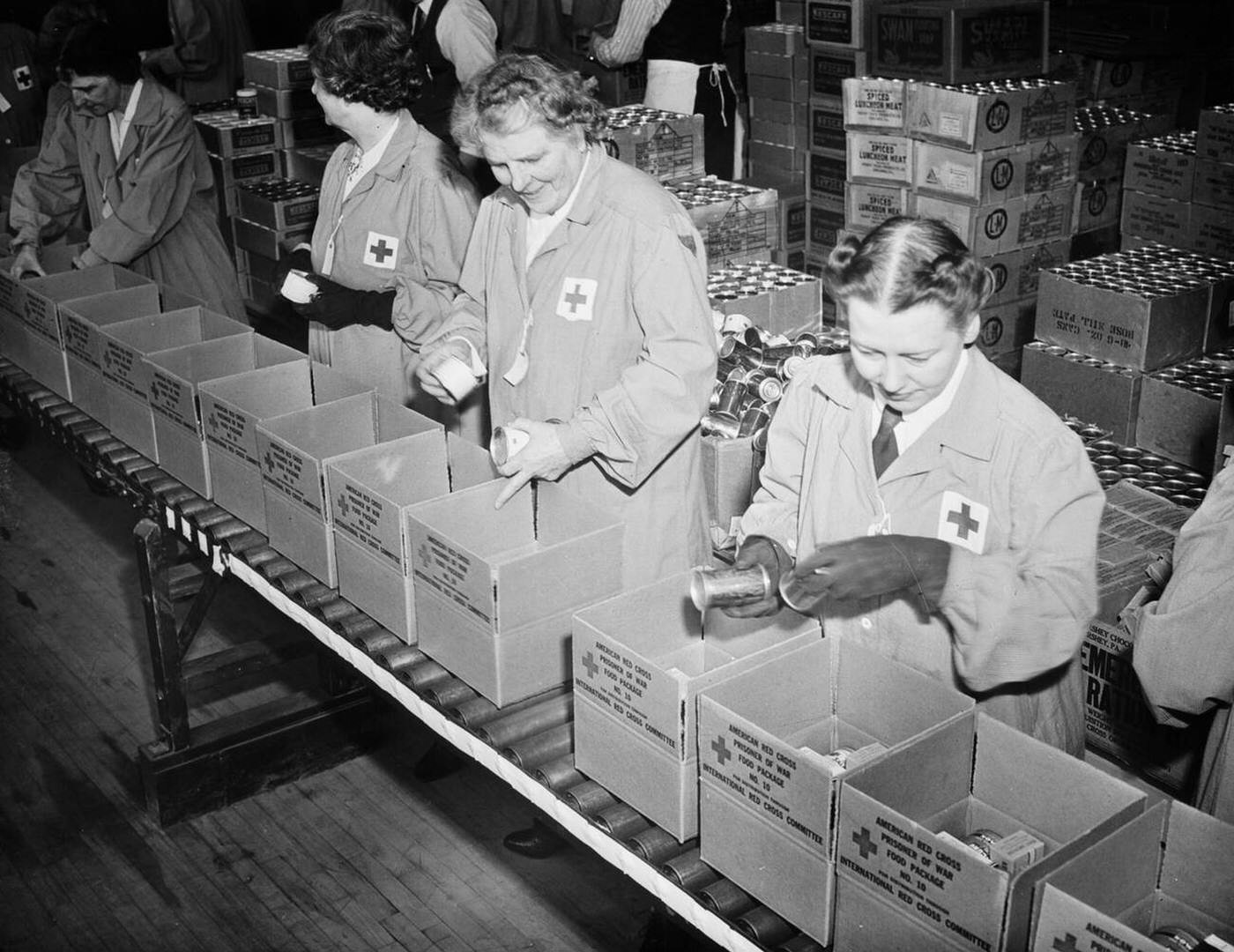
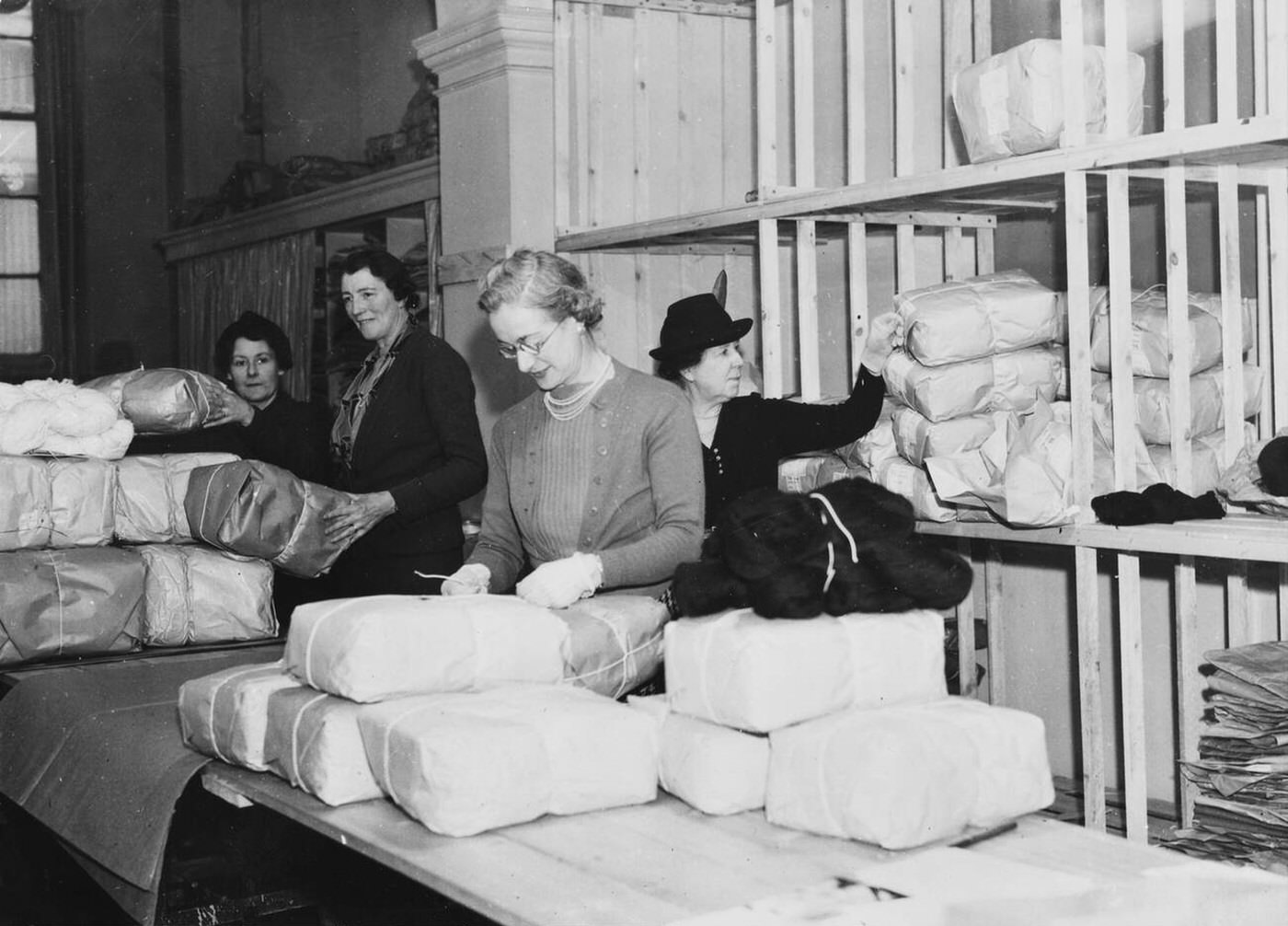
Espionage had a presence in the war as well. Jane Horney, a Swedish entertainer, was suspected of working as a Nazi spy during the conflict—a reminder that not every woman’s wartime role was straightforward or on the Allied side. On the other end of the spectrum, Red Cross volunteers packed and shipped parcels to prisoners of war in 1942 and 1943, ensuring that Allied POWs received food, clothing, and messages from home.
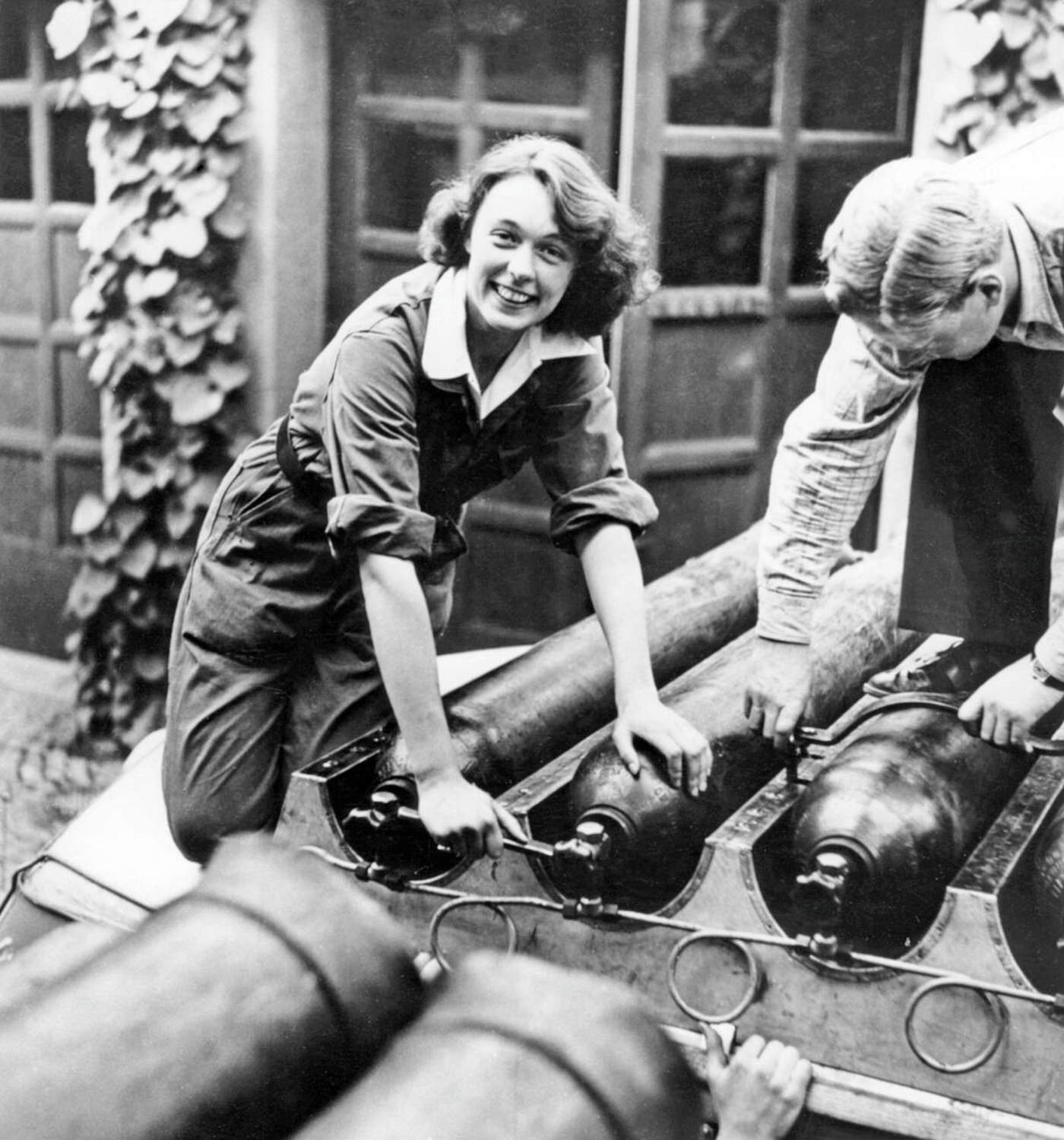
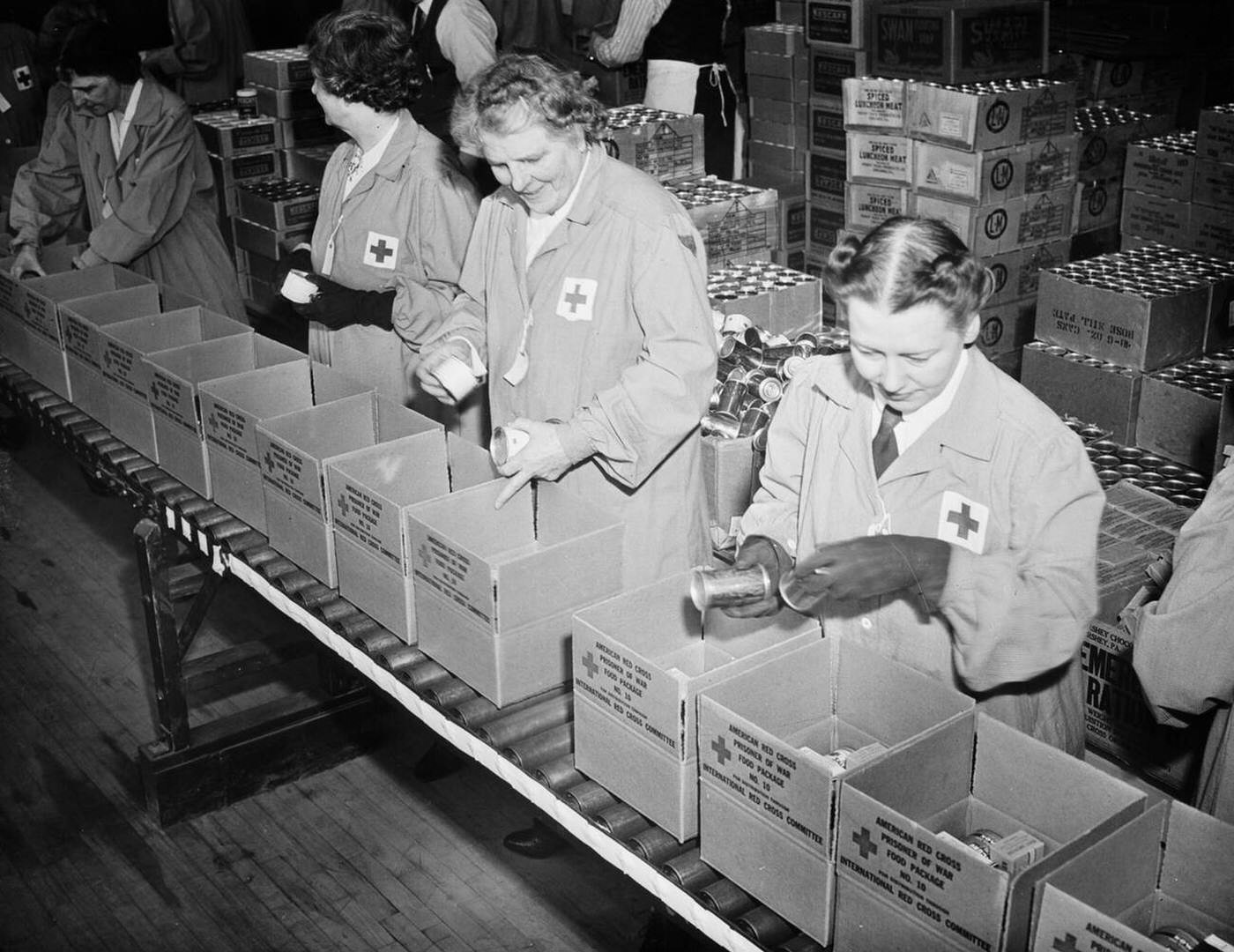
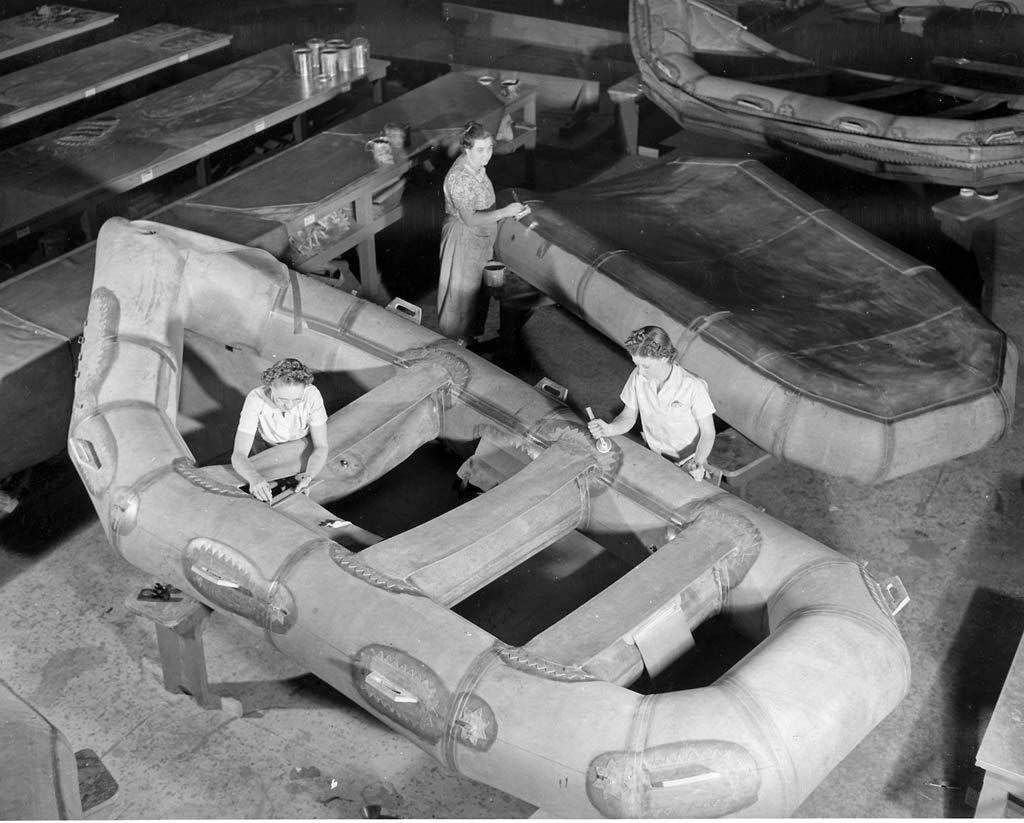
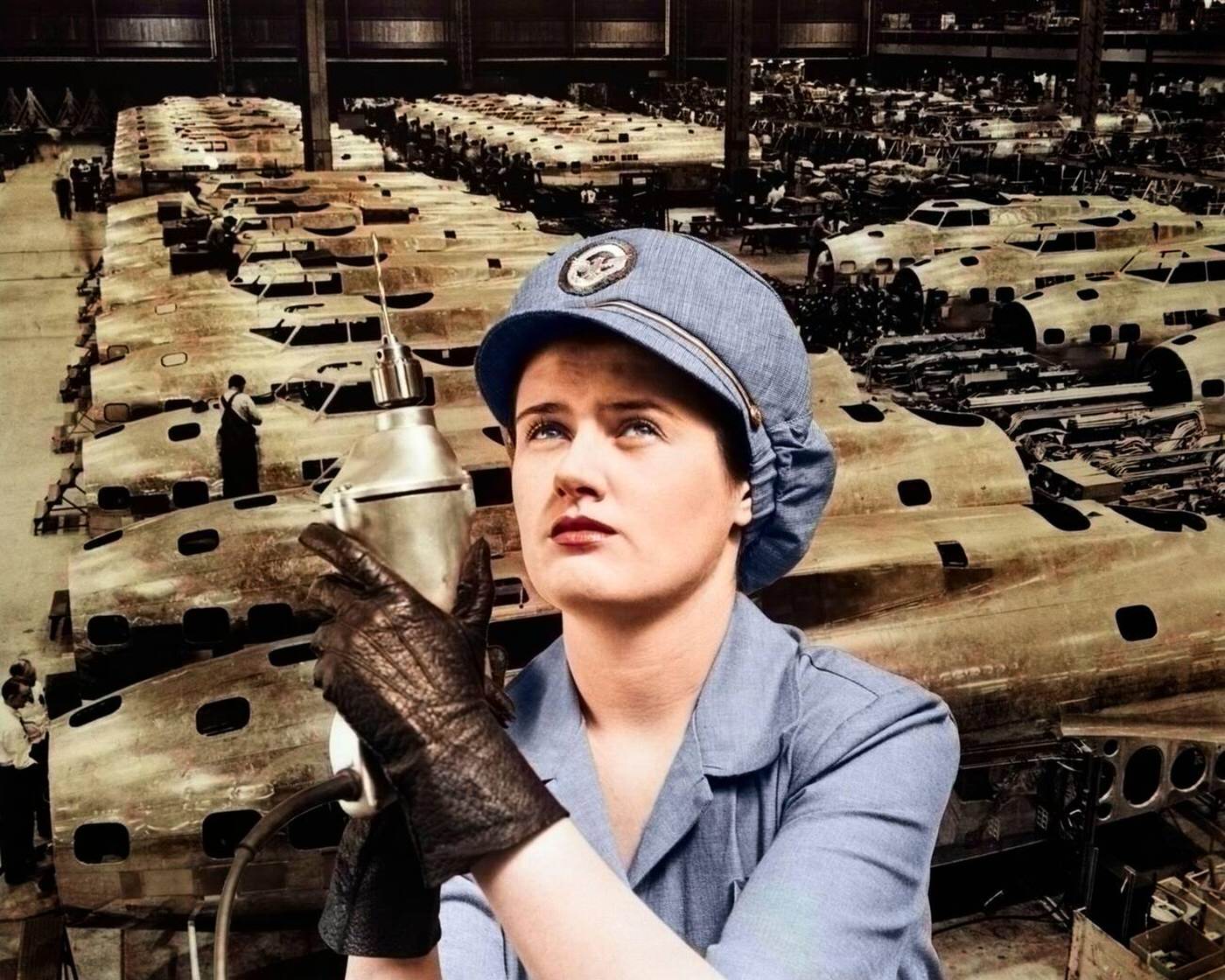
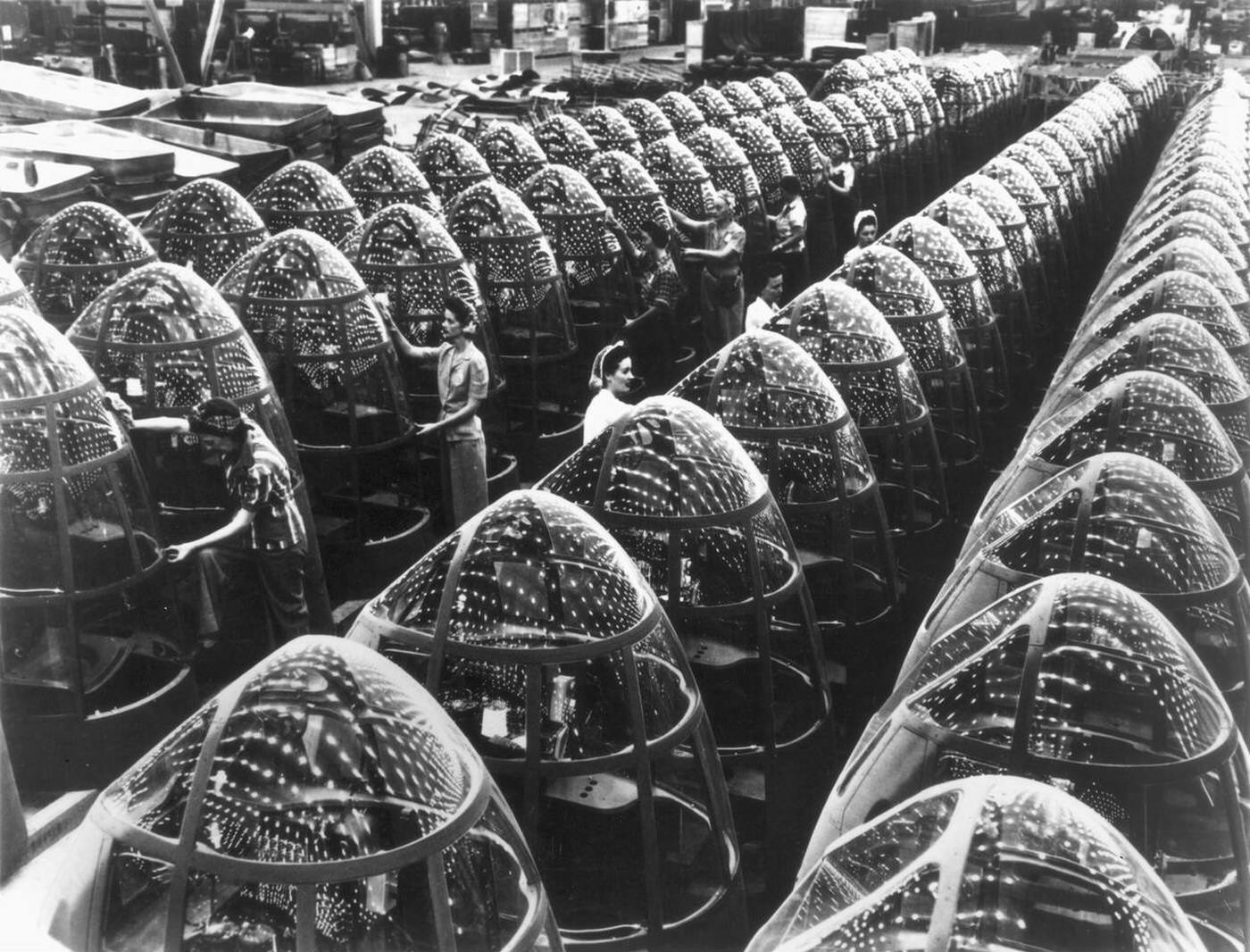
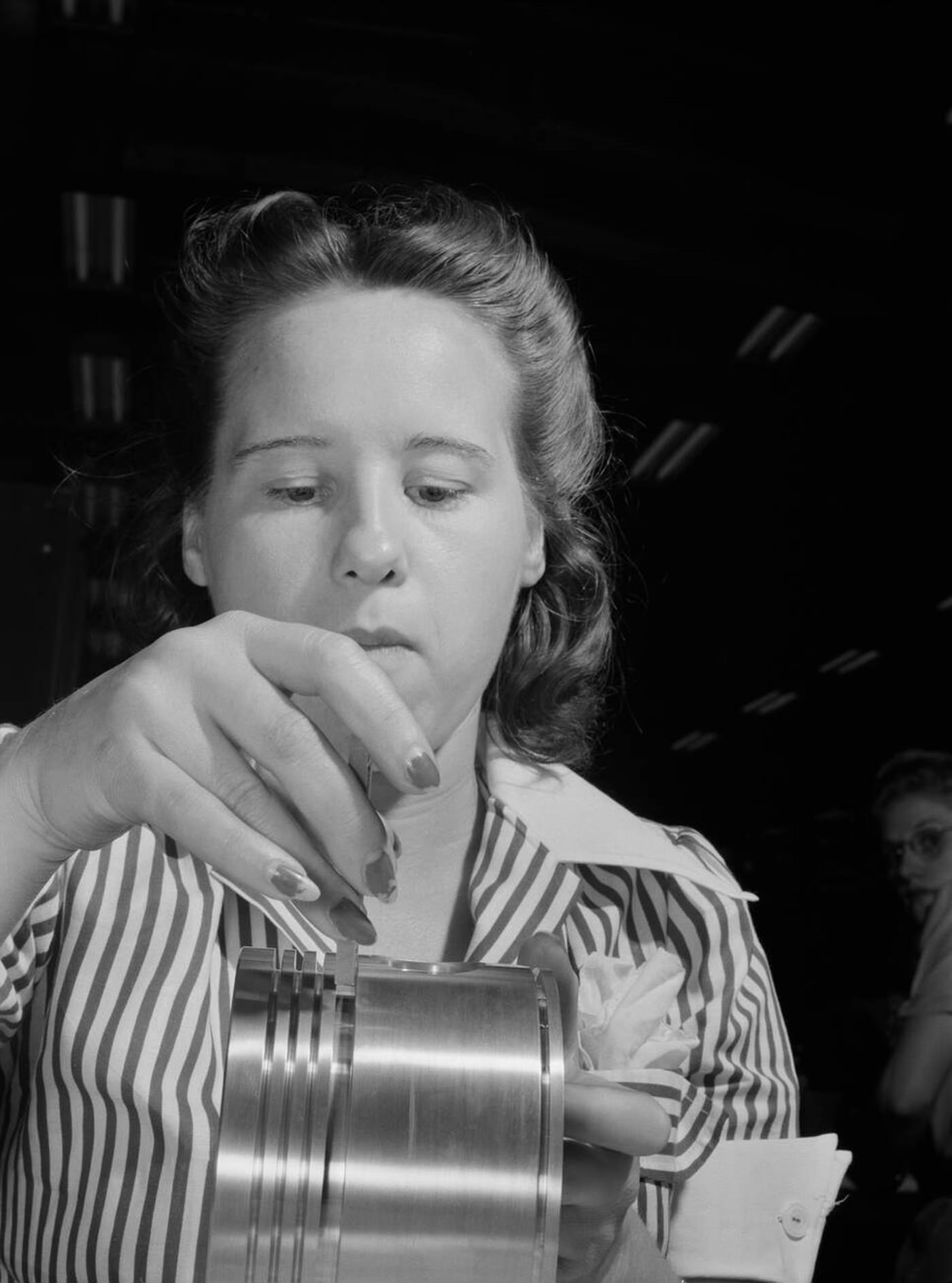
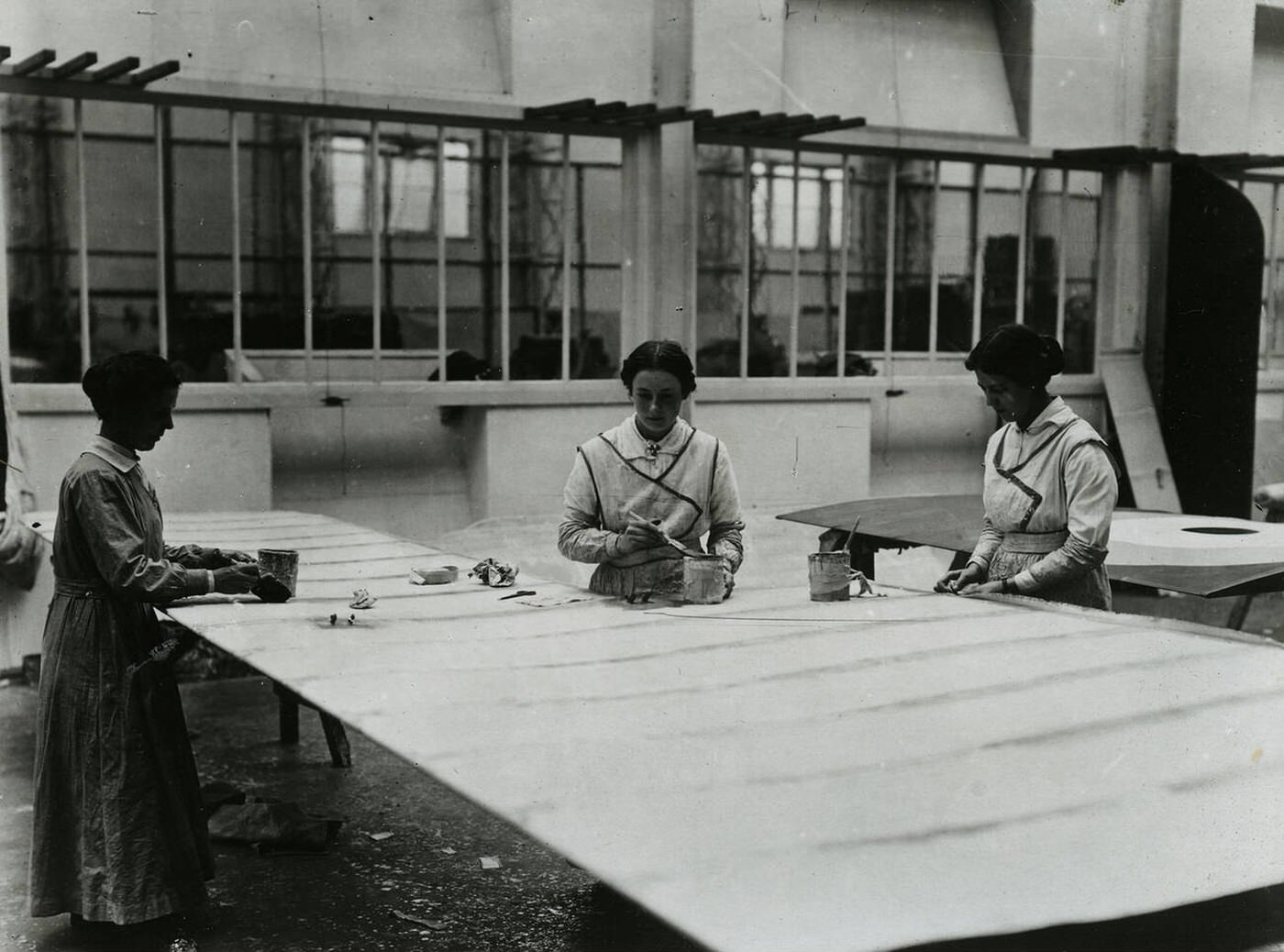
The variety of tasks women handled was staggering. They sewed fabric onto airplane wings, operated surface grinders and lathes, drilled precision holes in B-17 bombers, and inspected pistons for engine tolerances. At the Douglas Aircraft Company, women worked on major assembly stages of transport and bomber aircraft. At North American Aviation, another major California producer, female workers helped build the P-51 Mustang fighter.
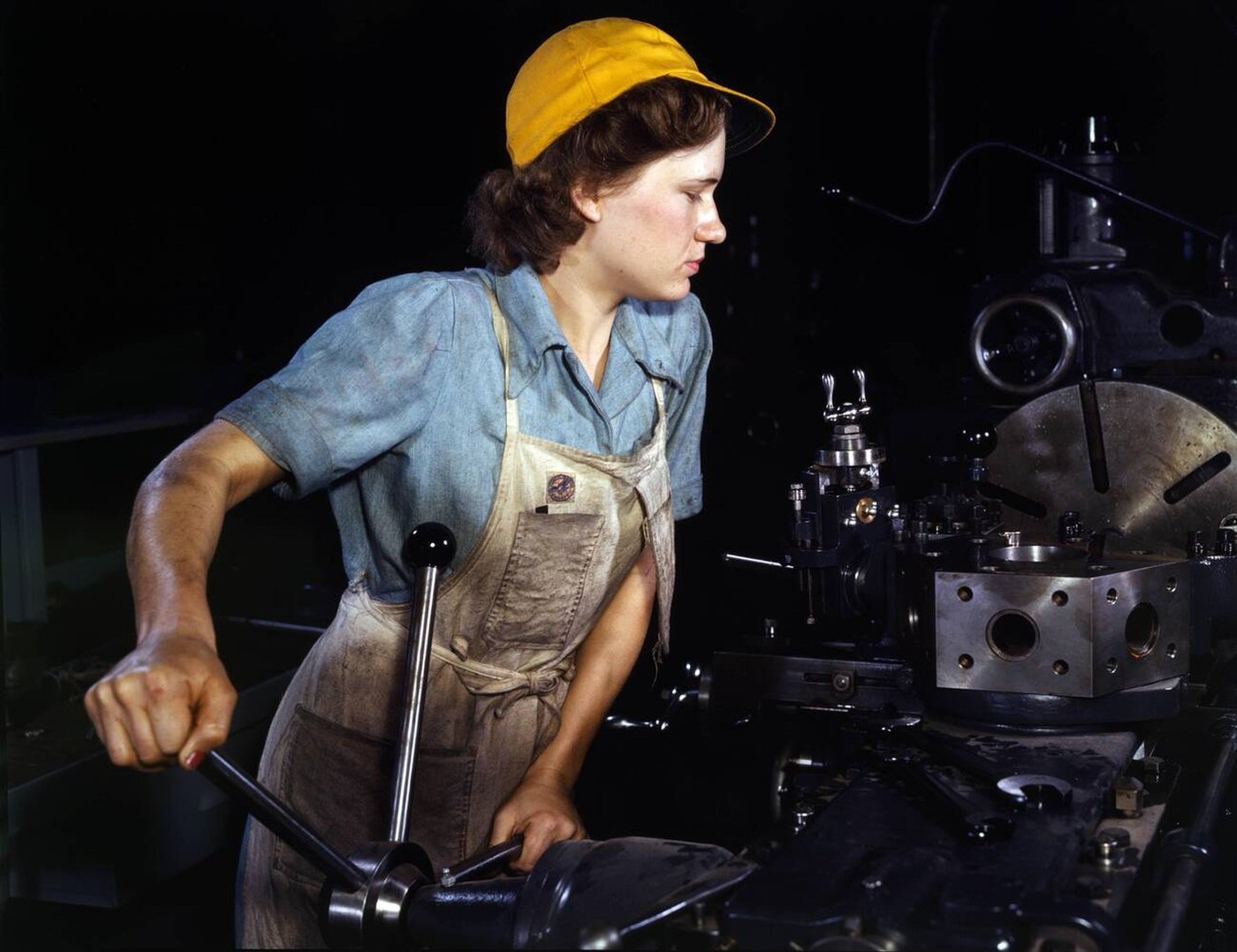
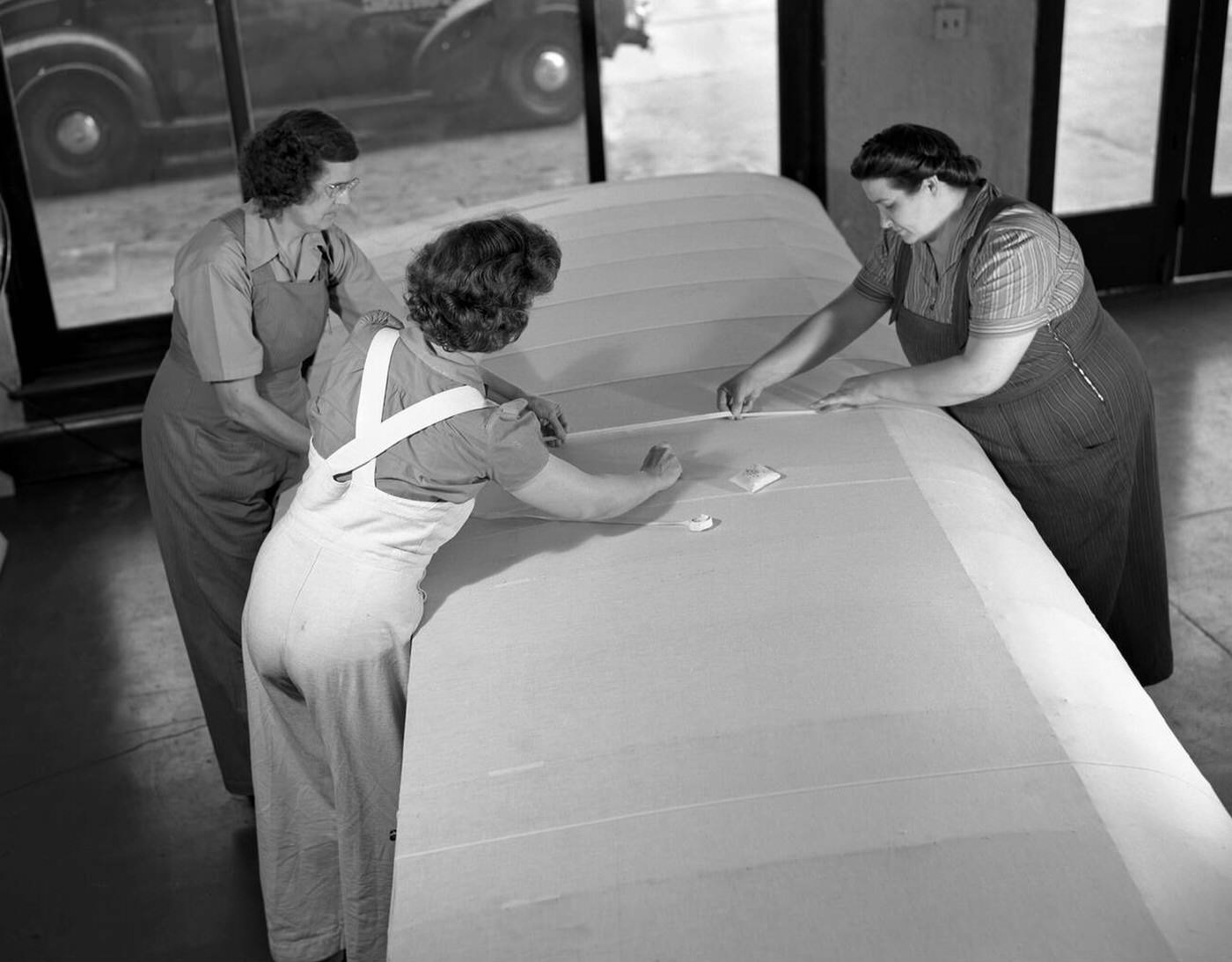
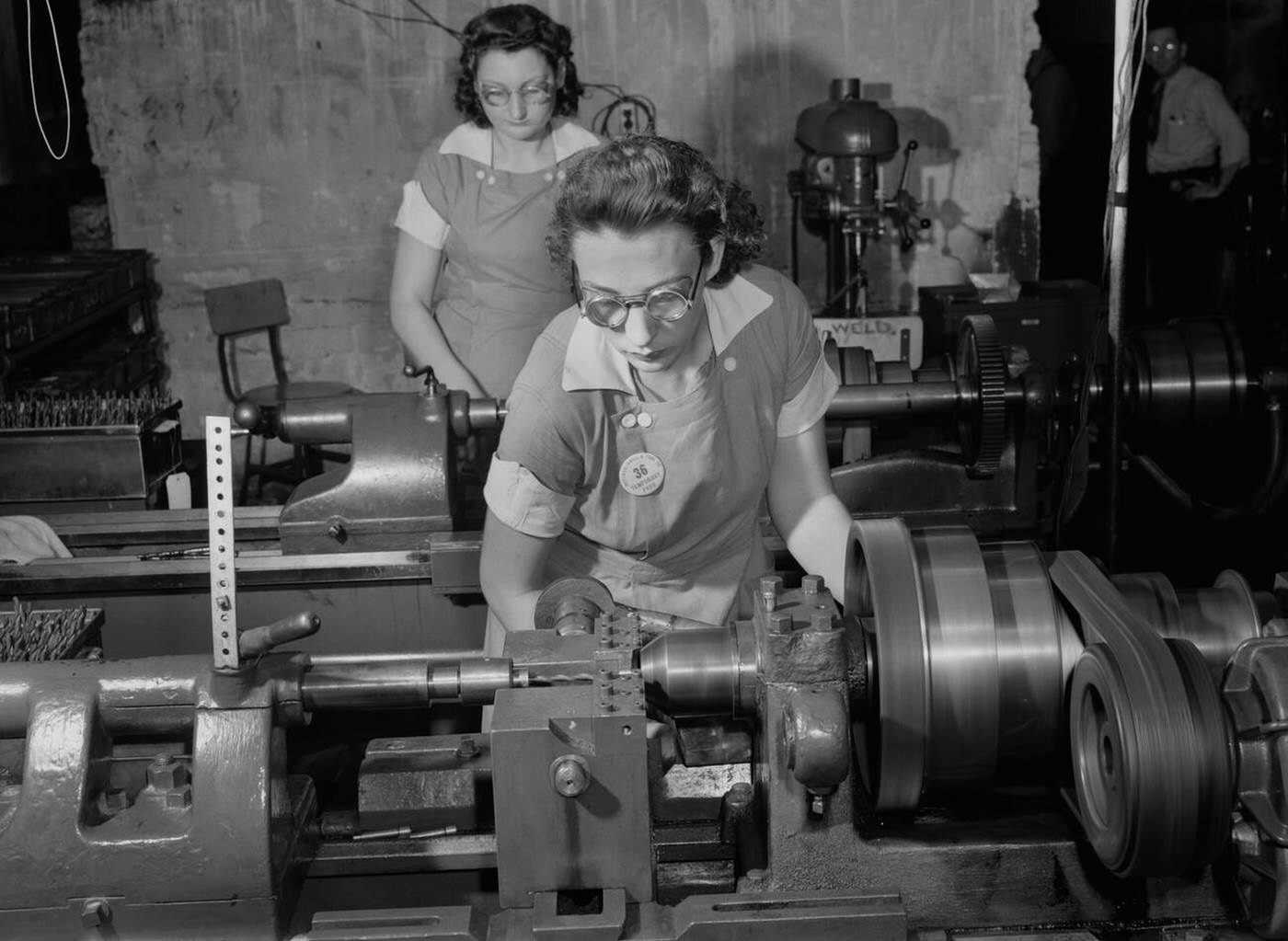
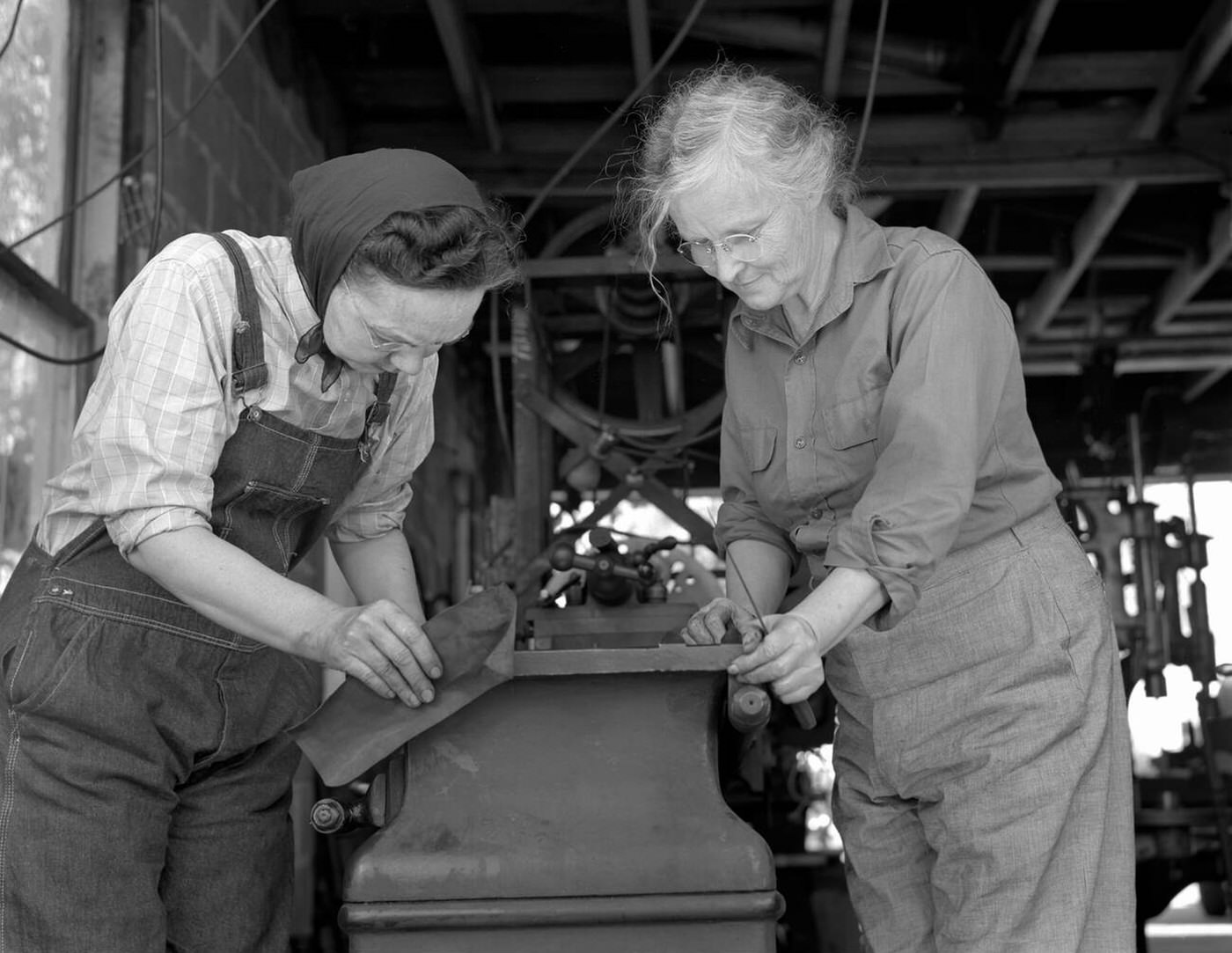
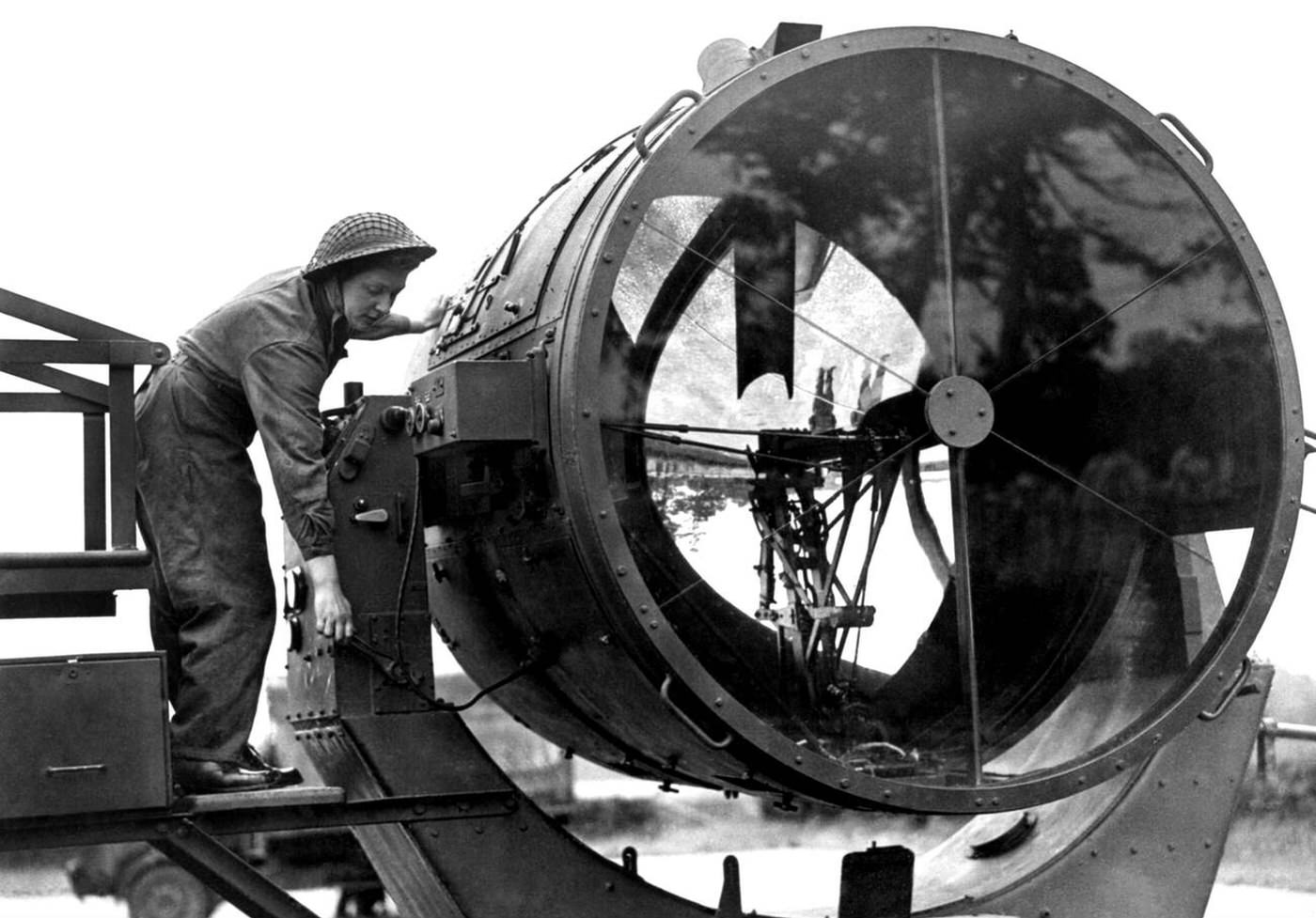
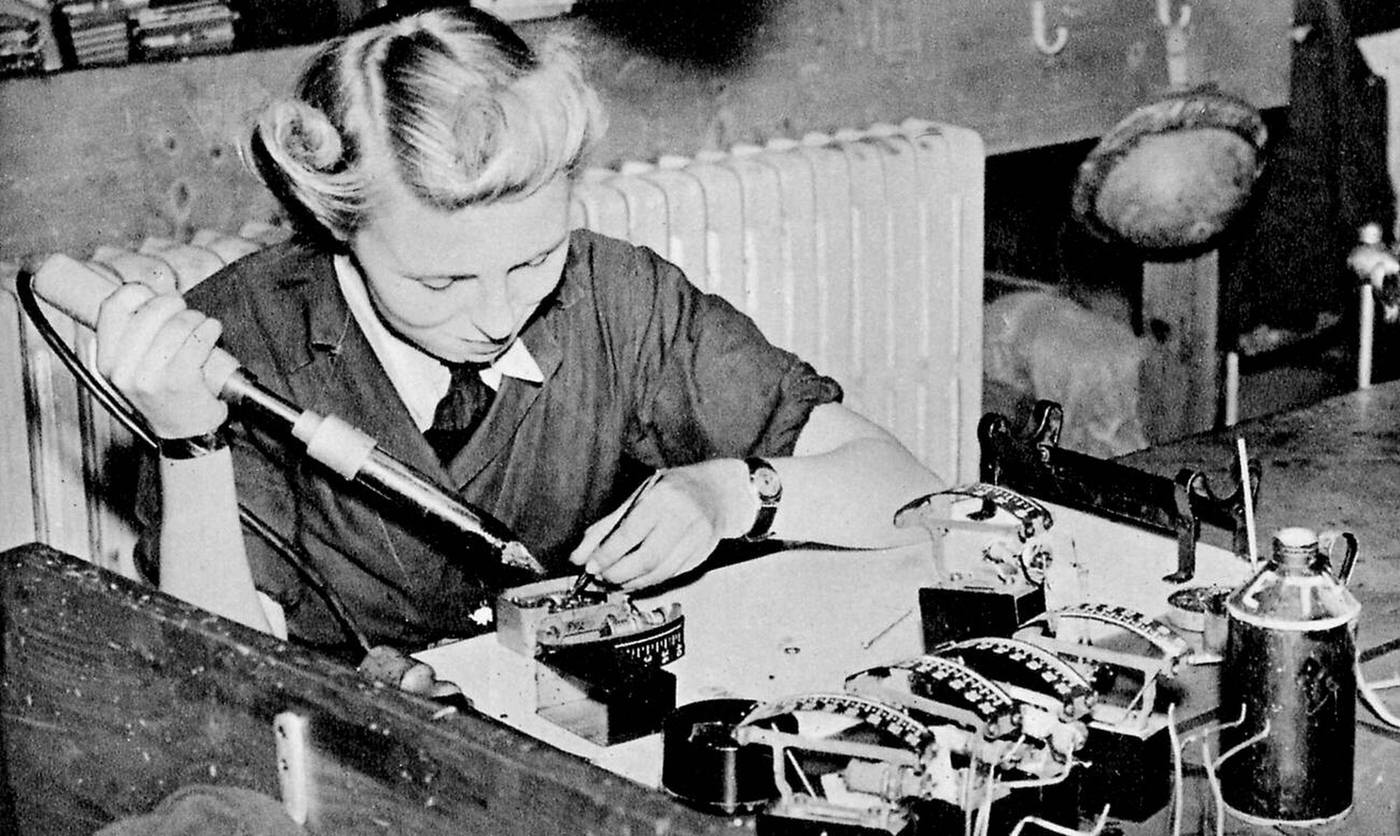
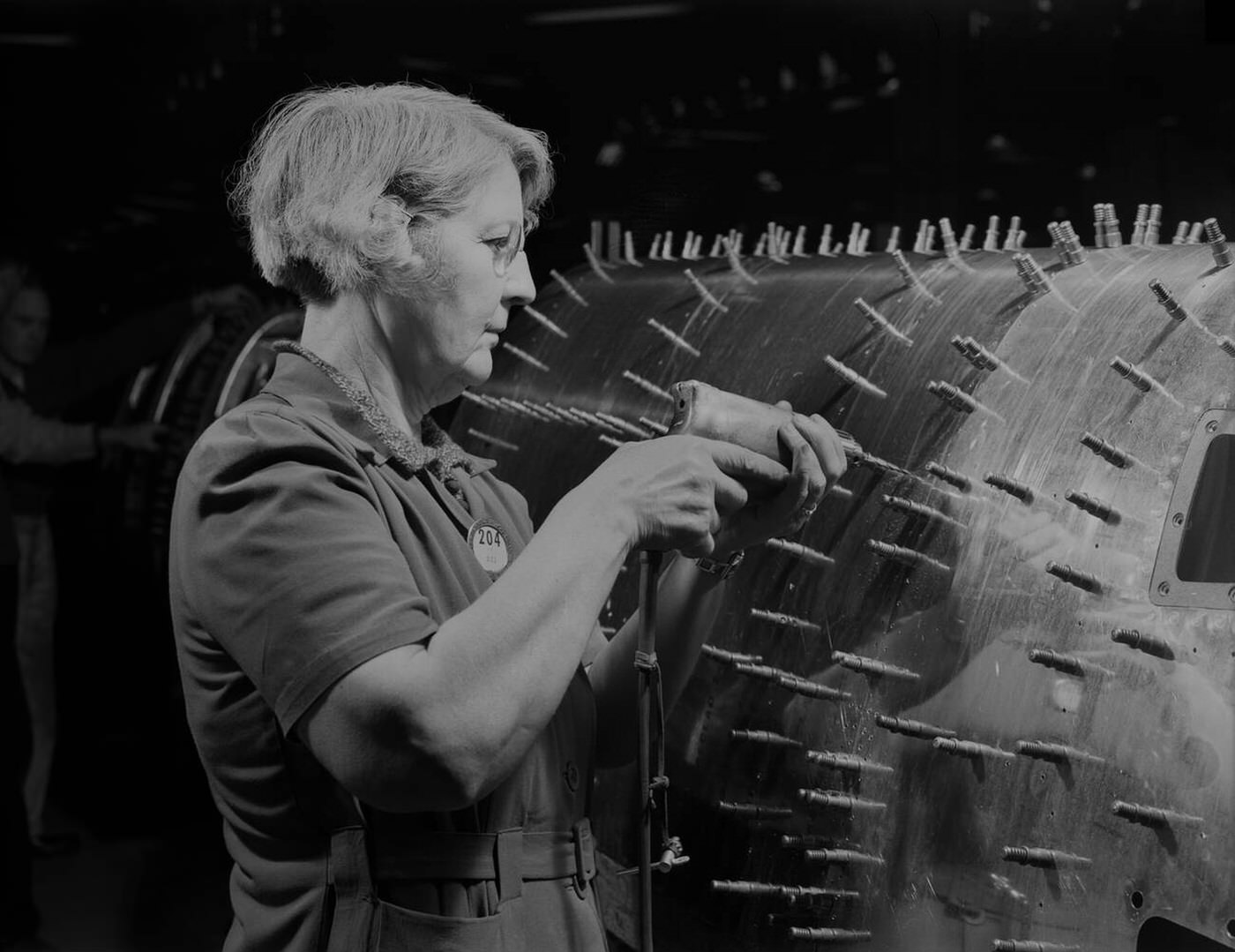
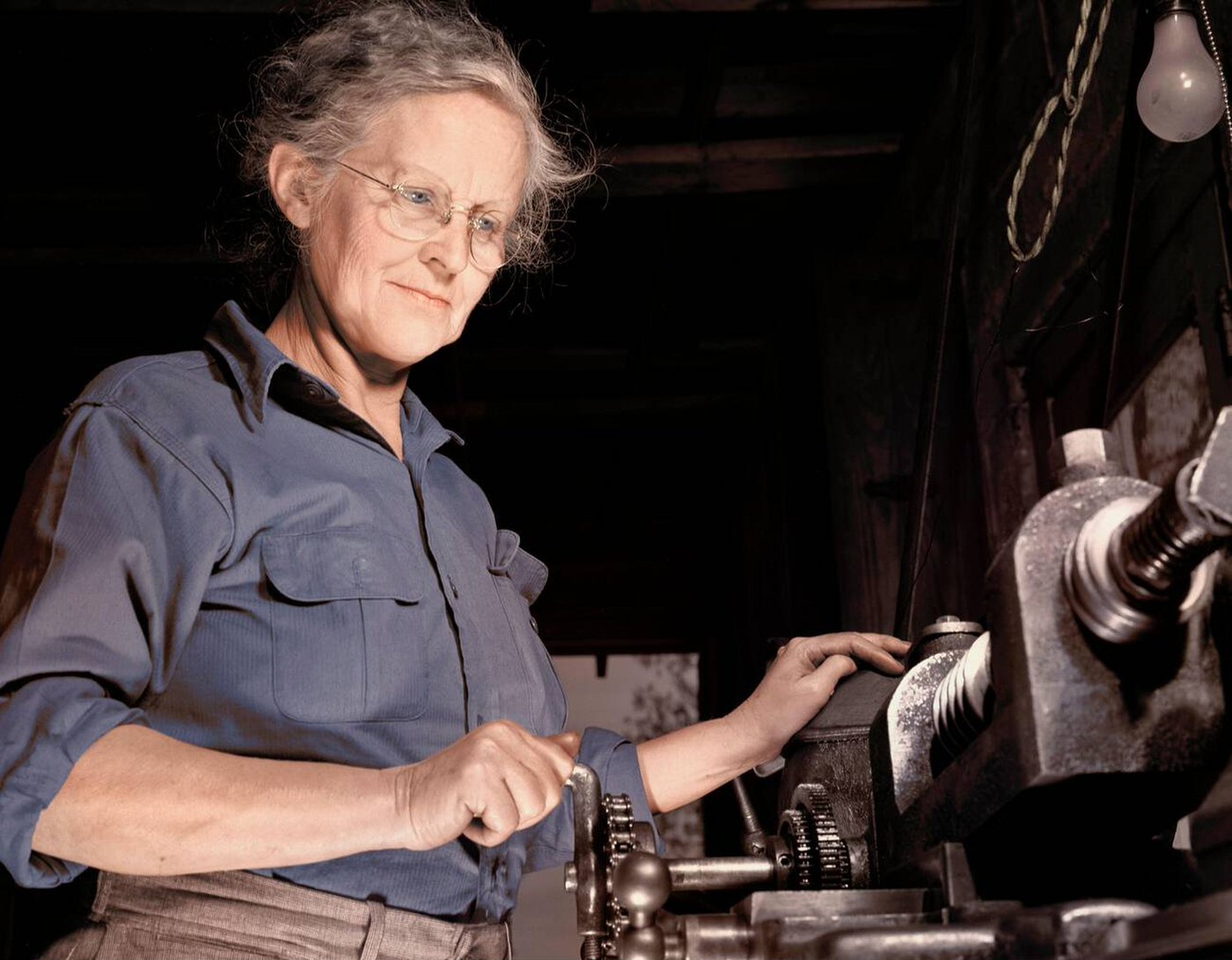
Age was no barrier to wartime contribution. Photographs from 1942 show grandmothers processing war parts on factory floors, and one woman in her later years operating a gear-cutting machine. Younger women and older ones worked side by side on the same production lines. Private Betty Wood served in the ATS working searchlights, helping to illuminate enemy aircraft during night raids. WAAF member repairing a delicate engine speed indicator illustrated the technical complexity of the work women performed.
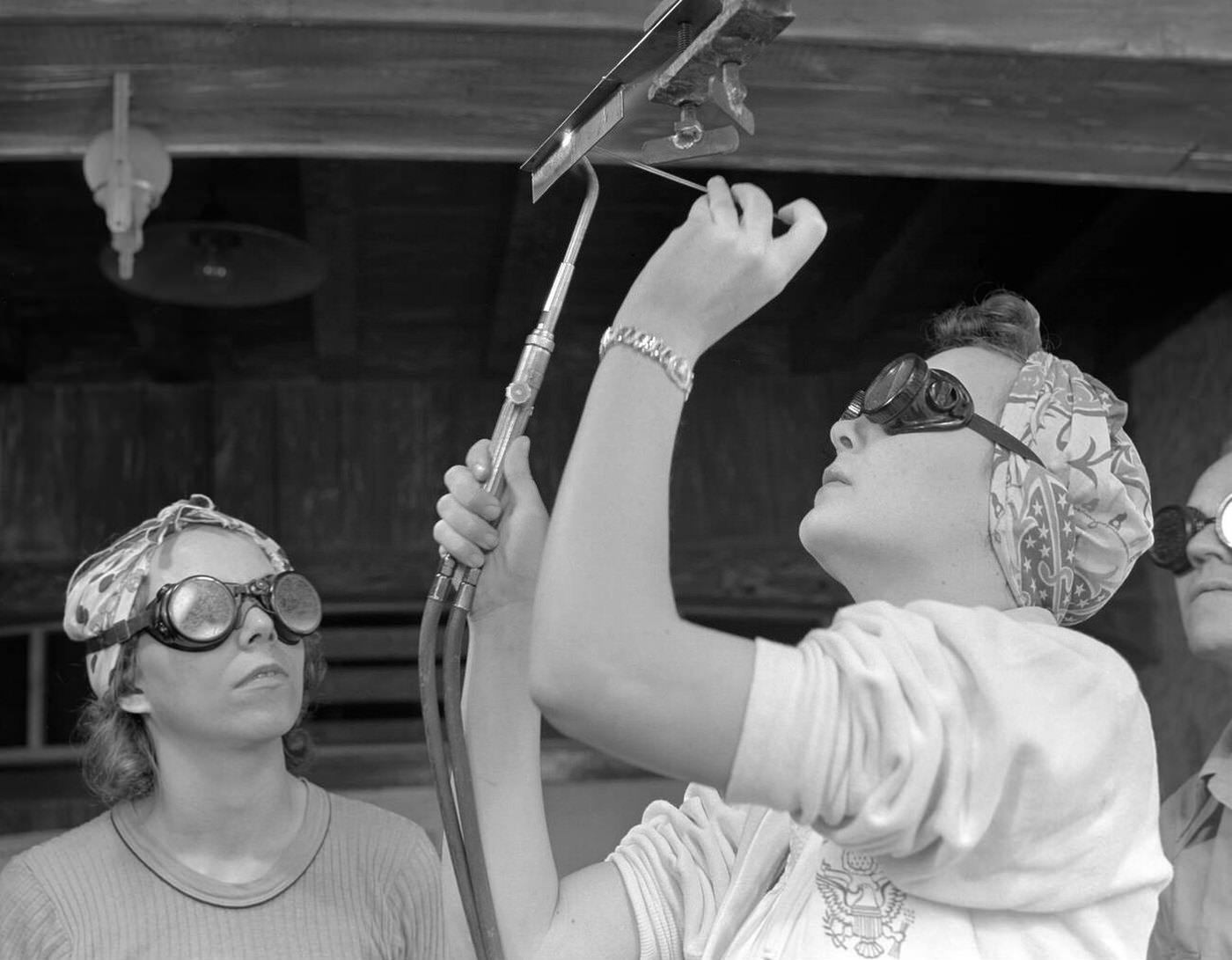
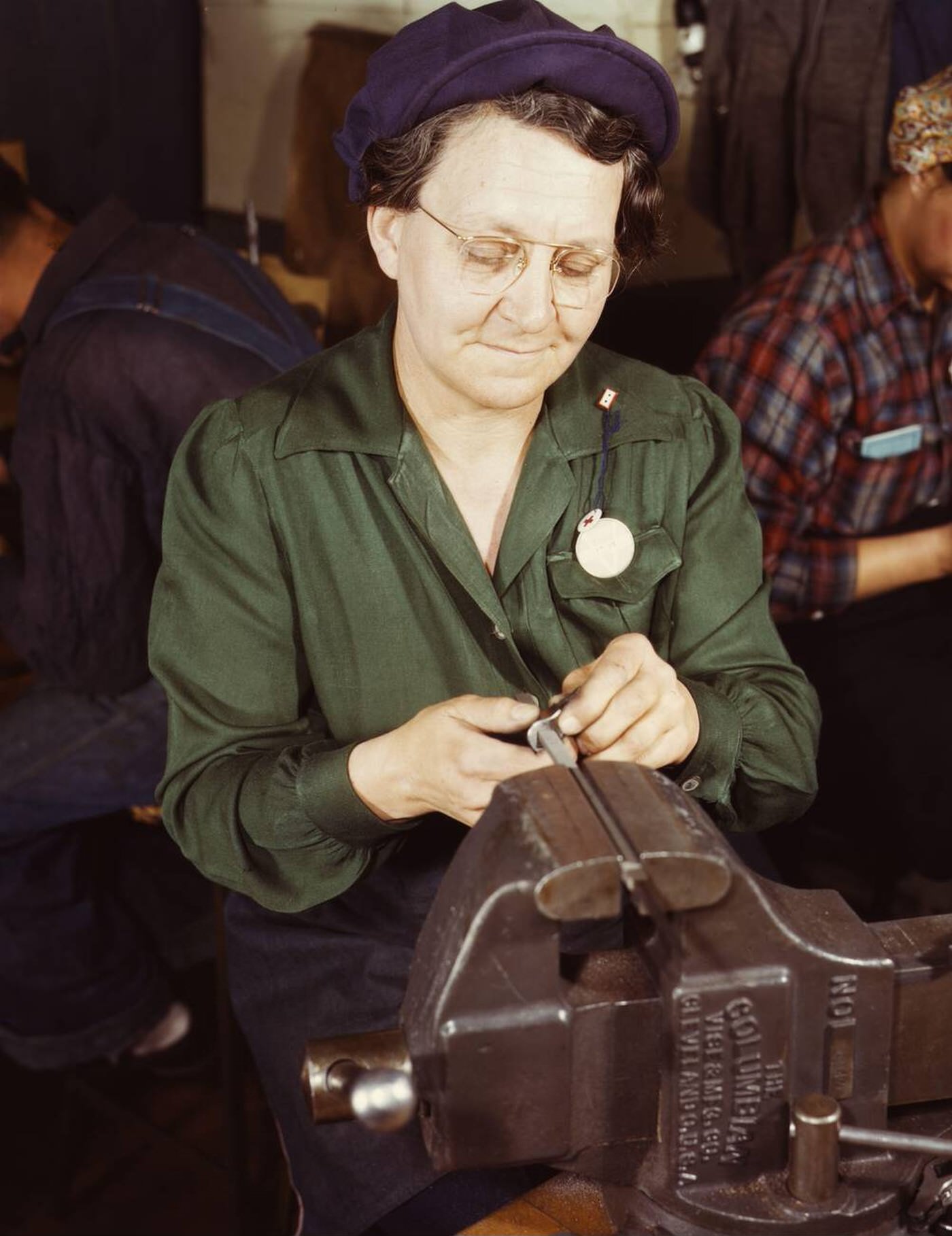
Aircraft welding schools ran programs specifically for women, training them in oxyacetylene and electric arc welding techniques applied to airframes. Women who completed these courses moved directly into production roles at major plants. Factory machinery operators ran drill presses and milling machines, producing parts for engines, transmissions, and weapons systems in round-the-clock shifts.
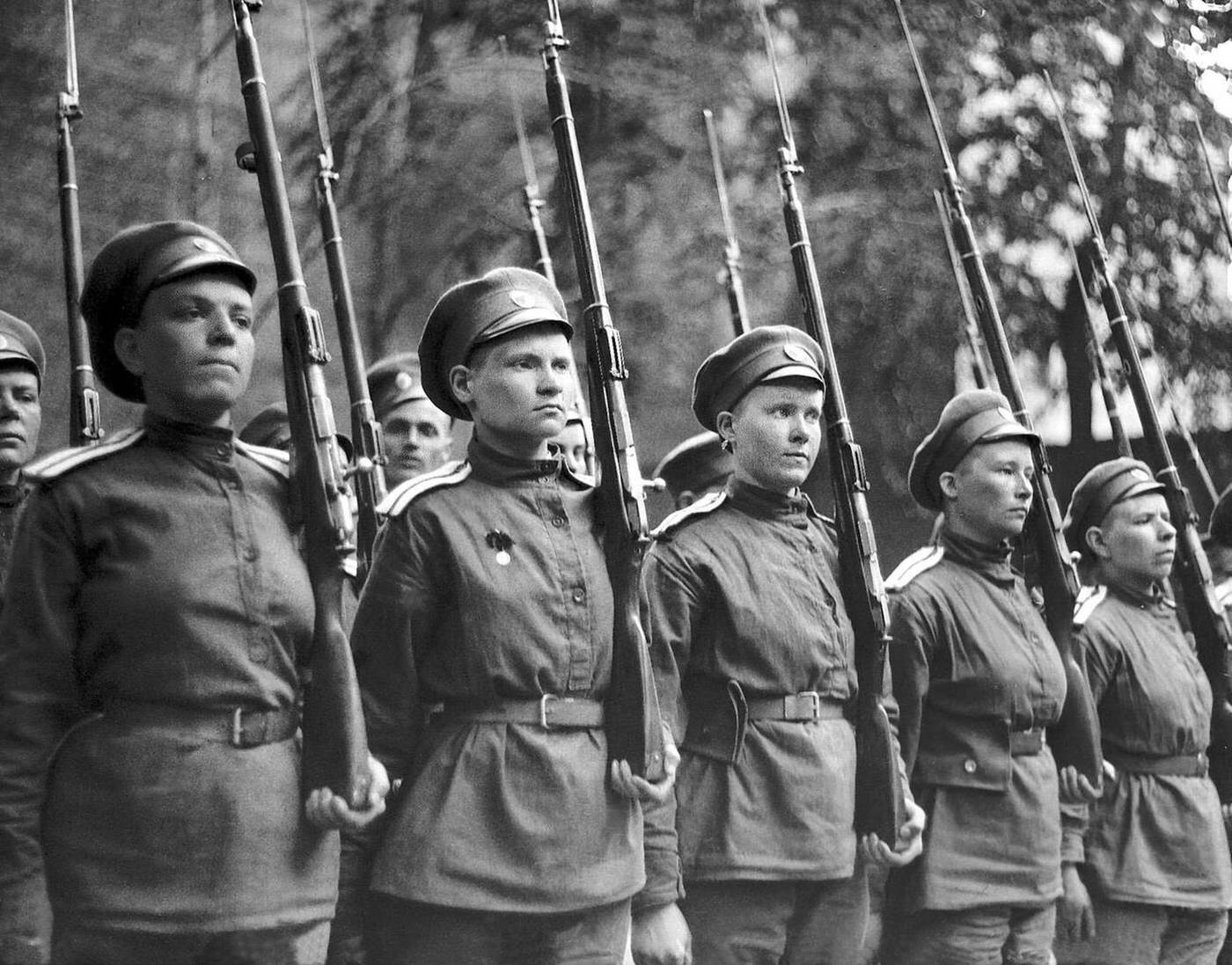
The use of women in military auxiliary roles was not new to World War II. The Battalion of Death from World War I, a Russian women’s combat unit formed in 1917, demonstrated that the idea of women in military service had historical precedent. By the Second World War, that idea had expanded into formal, large-scale organizations operating across every branch of service in multiple countries.
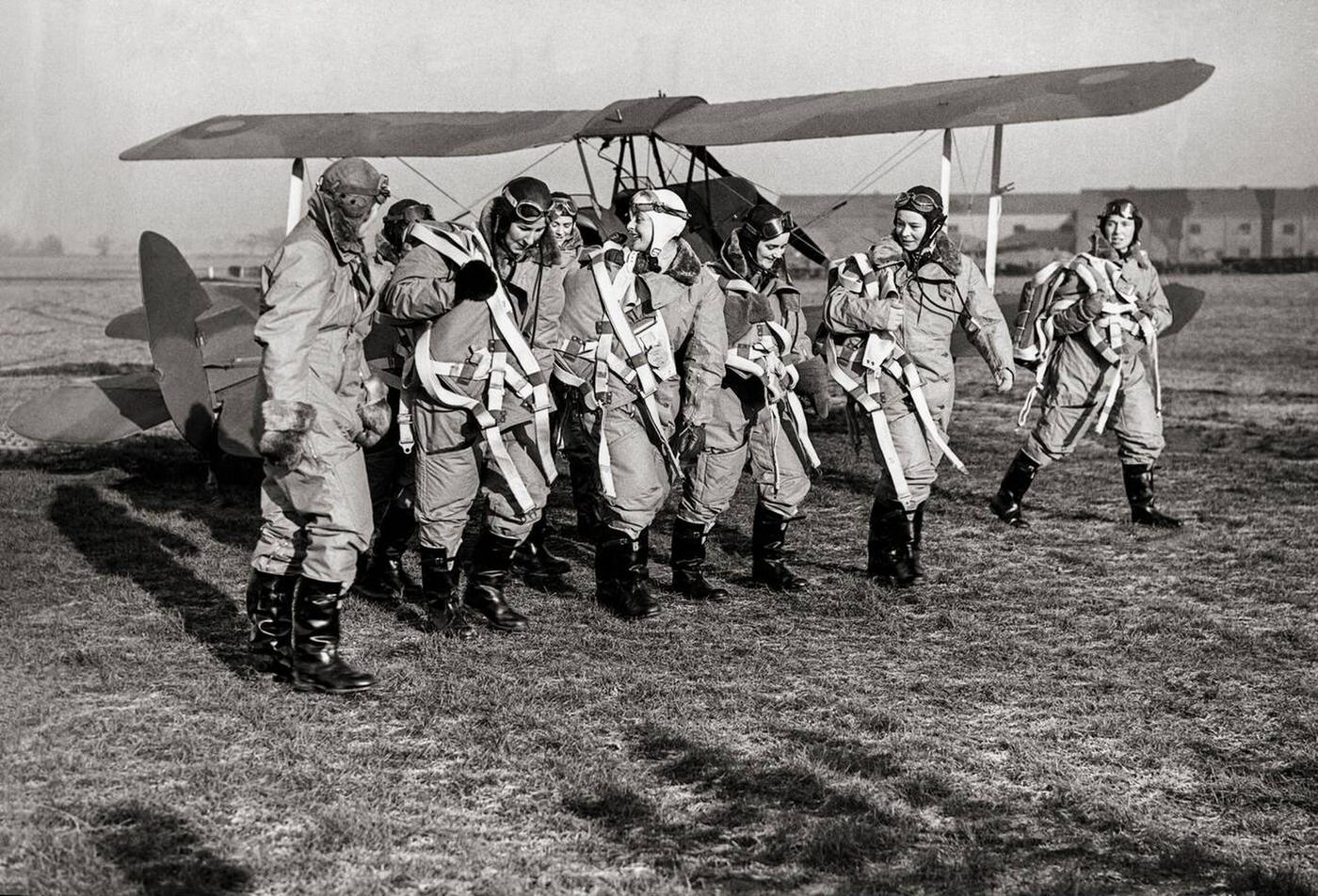
Britain’s Air Transport Auxiliary women pilots—photographed together in 1940—flew without the benefit of navigational radios or instrument-landing systems, relying on maps and visual flying to deliver aircraft in all weather conditions. The Women’s Land Army had already been formally established by 1939, with early training photographs showing recruits learning to handle farm machinery and livestock before being dispersed to farms across the country.
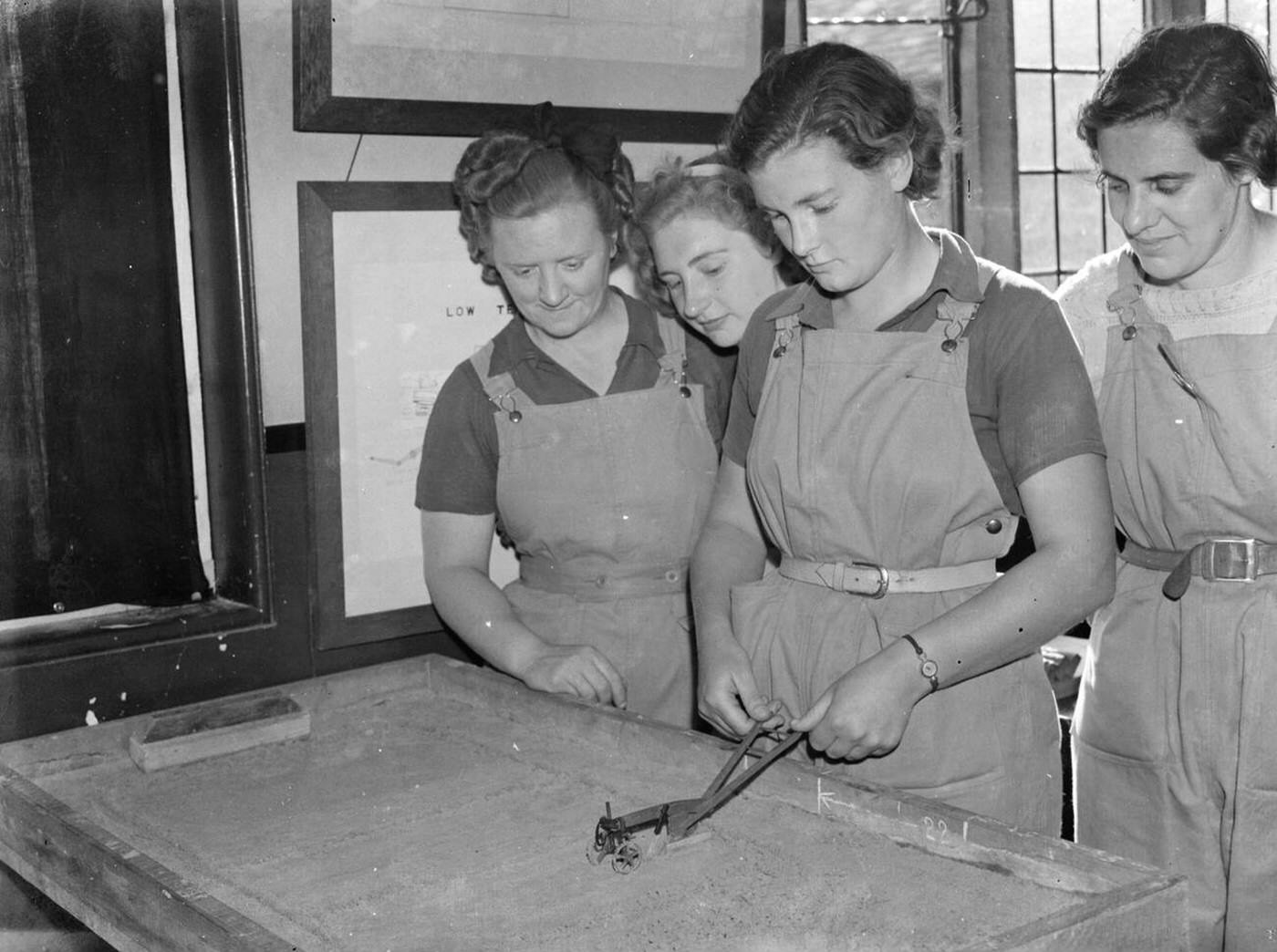
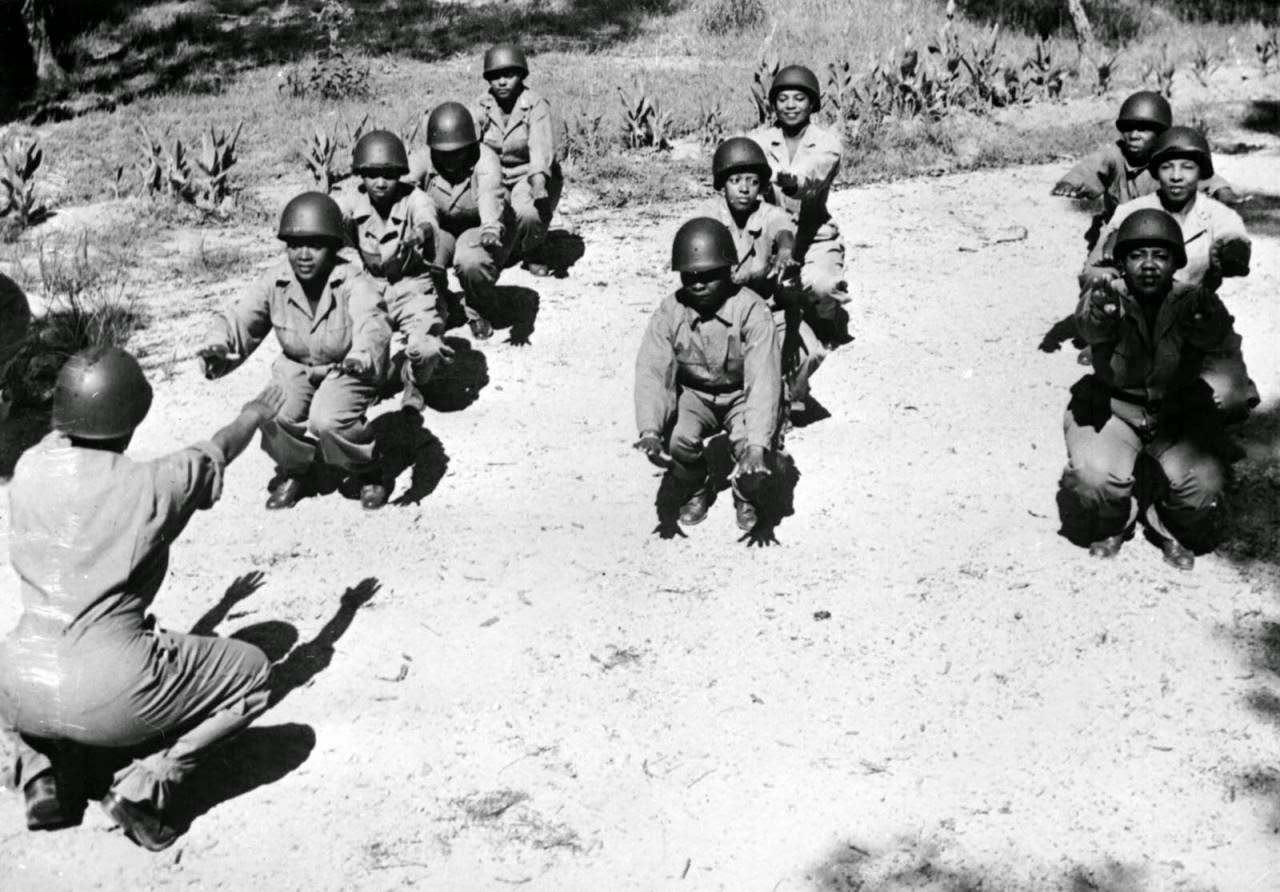
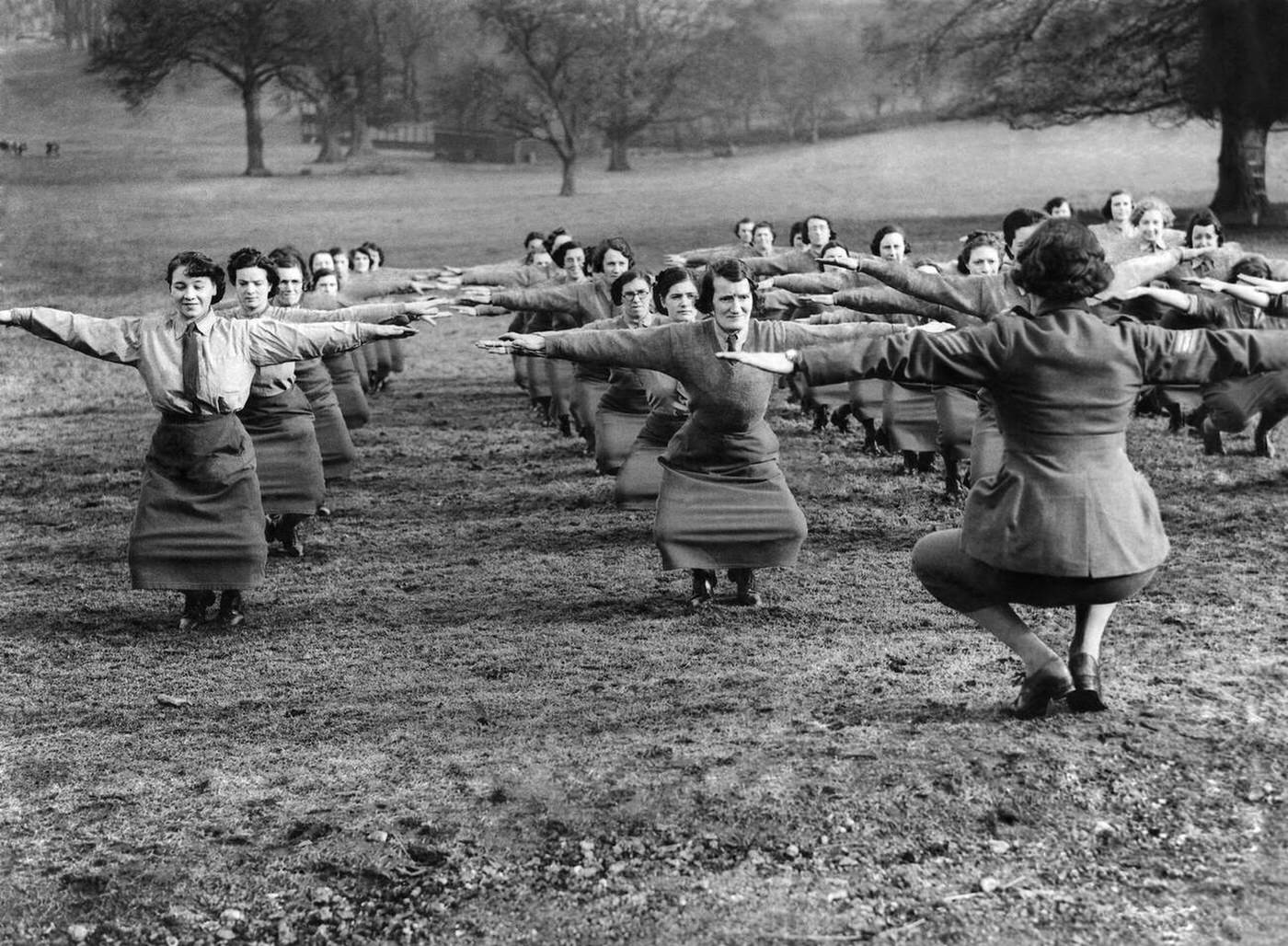
ATS recruits began physical conditioning as early as 1940, with exercise drills forming part of their basic training. Ordnance workers, some photographed between 1939 and 1943, handled everything from shell casings to detonators in munitions factories where an error could be catastrophic. Women running lathe machines in 1940s Britain and the United States produced the precision metal components that kept military vehicles, aircraft, and weapons functioning.
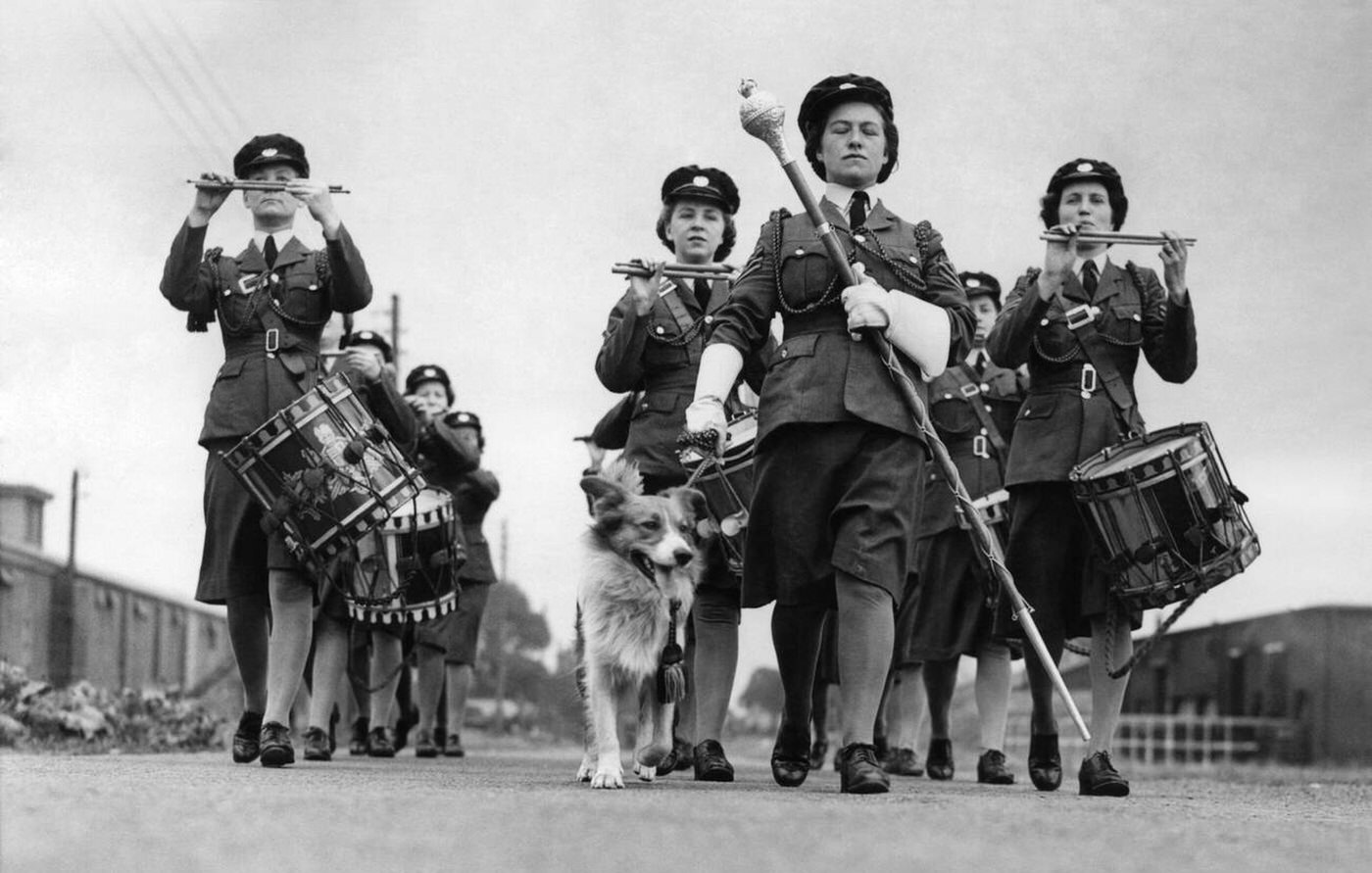
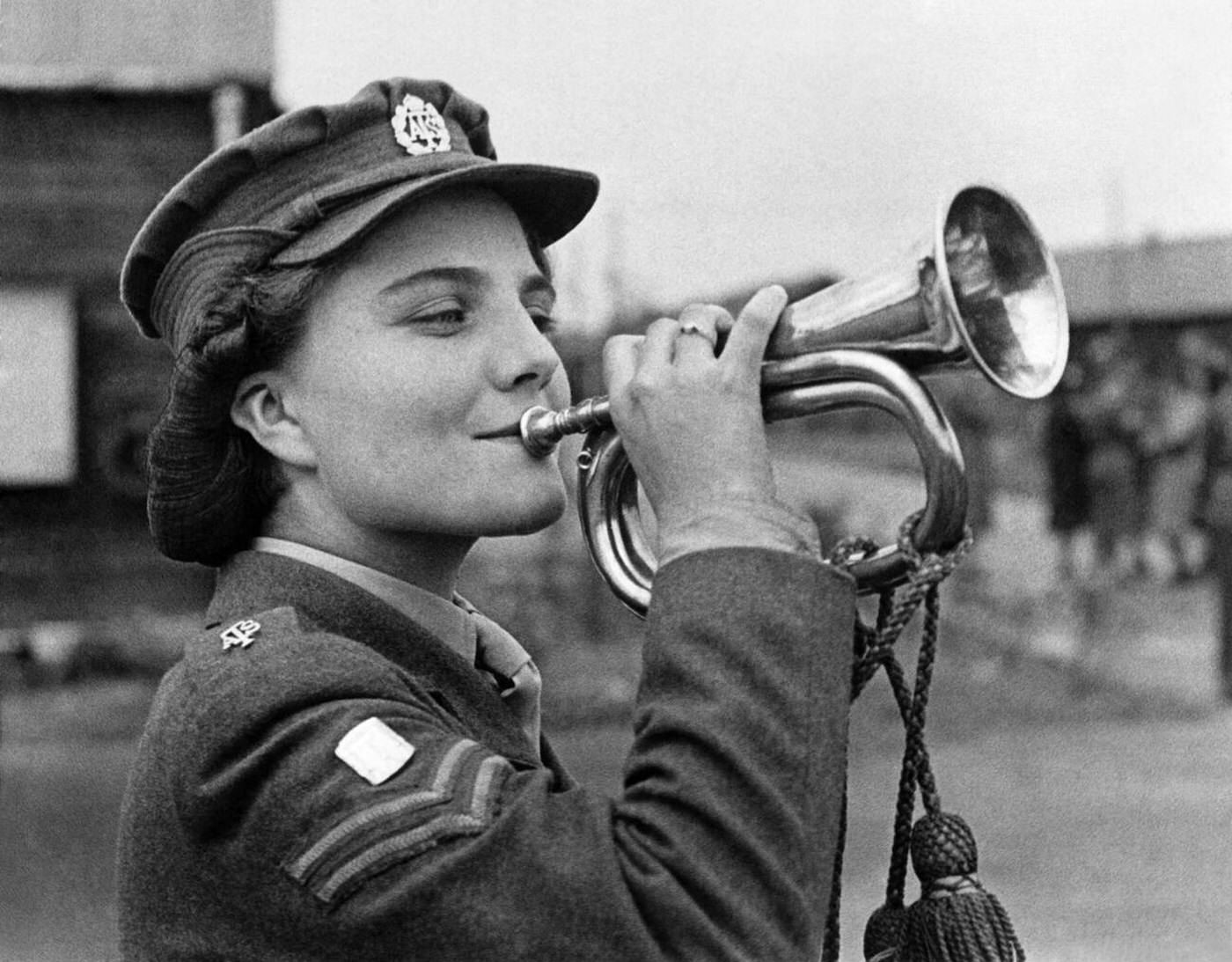
ATS Corporal Helen Quann served as a bugler in 1942, handling ceremonial duties within the service. At the same time, sergeants representing U.S. forces purchased war bonds in liberated Paris in 1944, participating in financial campaigns that helped fund the final push into Germany. Women took on infrastructure maintenance jobs as well—one photograph shows a woman greasing an escalator mechanism in 1941, the kind of maintenance work that kept public transit systems running.
Women worked on aircraft as early as 1940, before the United States formally entered the war, in factories producing planes for the British and French under existing contracts. The Girls’ Training Corps provided pre-service training that introduced young British women to military skills. GTC members learned Morse code in 1942 and visited active gun sites, preparing for potential service in the ATS or WAAF. ATS recruits also participated in orientation exercises designed to build teamwork and navigation skills.
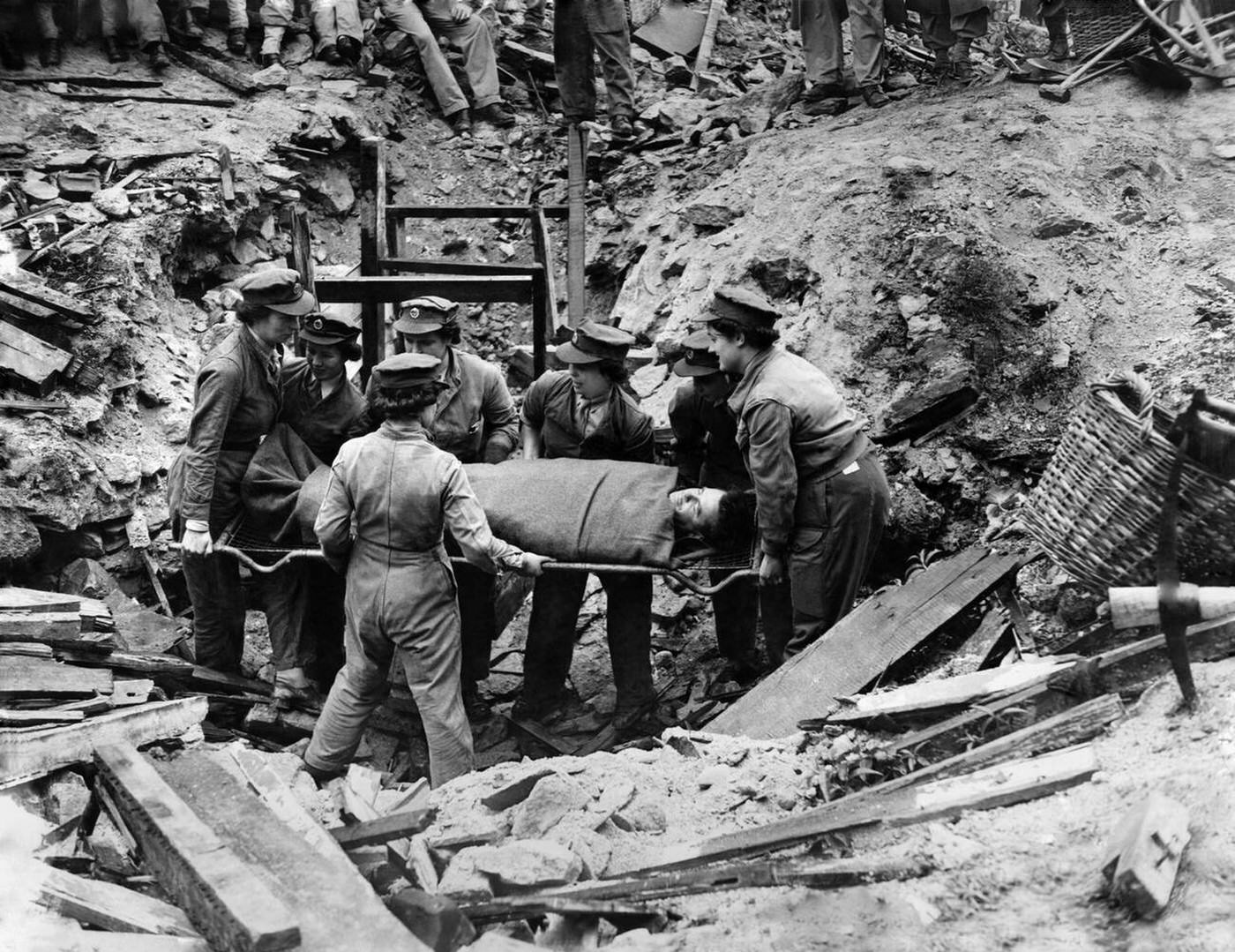
Scrap metal collection was a critical home front effort. Women supervised collection points in 1942, gathering aluminum, steel, and copper to be melted down for new military hardware. Girls’ Training Corps members visited anti-aircraft gun sites to learn how they operated. ATS members in 1944 were photographed removing casualties—a reminder that service in the ATS came with real exposure to the violence of war, particularly during the German bombing campaigns.
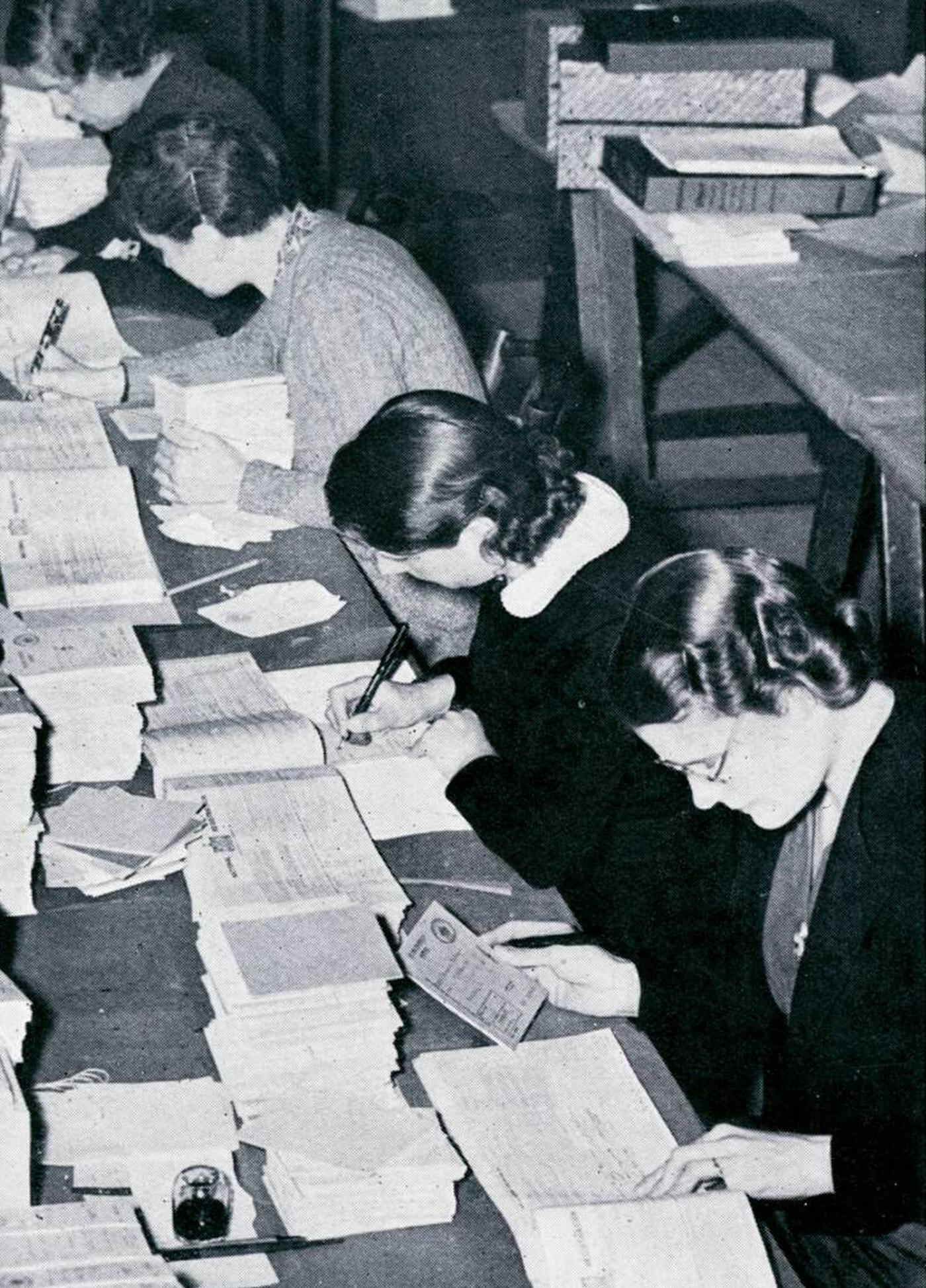
Female riveters were present at plants across the country, drilling holes through aluminum panels and driving rivets by hand and pneumatic gun. The work required coordination between two workers—one on each side of the panel—and the ability to work in cramped fuselage sections or on elevated scaffolding around wing structures. Ration book administration, which started in Britain in 1939, was largely run by women clerks who processed the documents used by every civilian household.
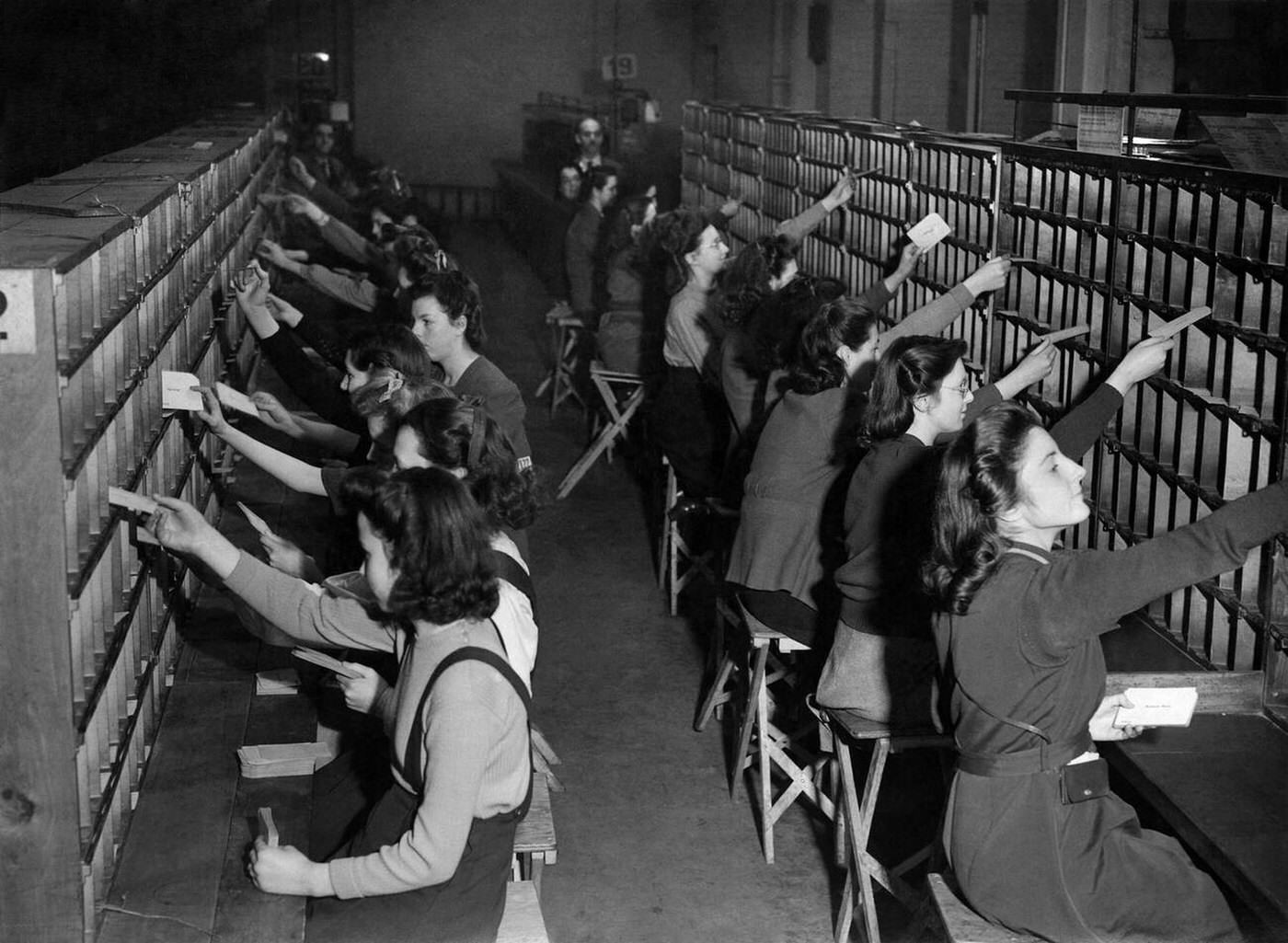
Polish women who had fled their occupied country joined the WAAF in Britain, serving alongside British women in intelligence, signals, and ground support roles. In the postal system, girls sorted Christmas mail in 1943 as the wartime volume of correspondence strained every sorting office in the country. For many families, a letter was the only way to know that a son, husband, or brother was still alive.
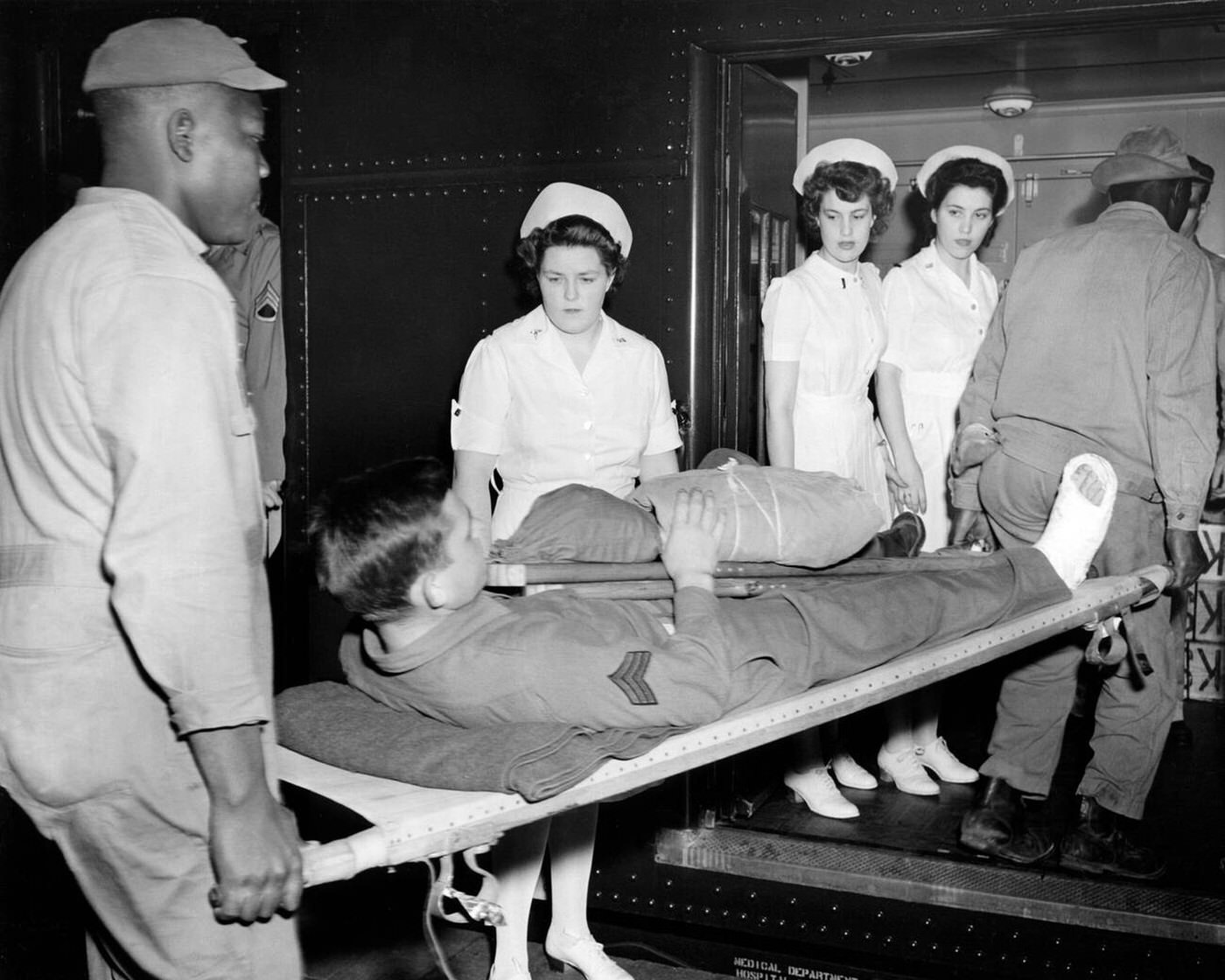
When wounded soldiers returned home, nurses and medical staff were waiting at ports of entry. A photograph from 1943 shows a wounded sergeant arriving in the United States, illustrating the medical pipeline that ran from front-line surgical stations through evacuation hospitals to final care at home. ATS members’ off-duty lives were documented too—a photograph from a beauty competition in 1944 captured a rarely seen side of service life.
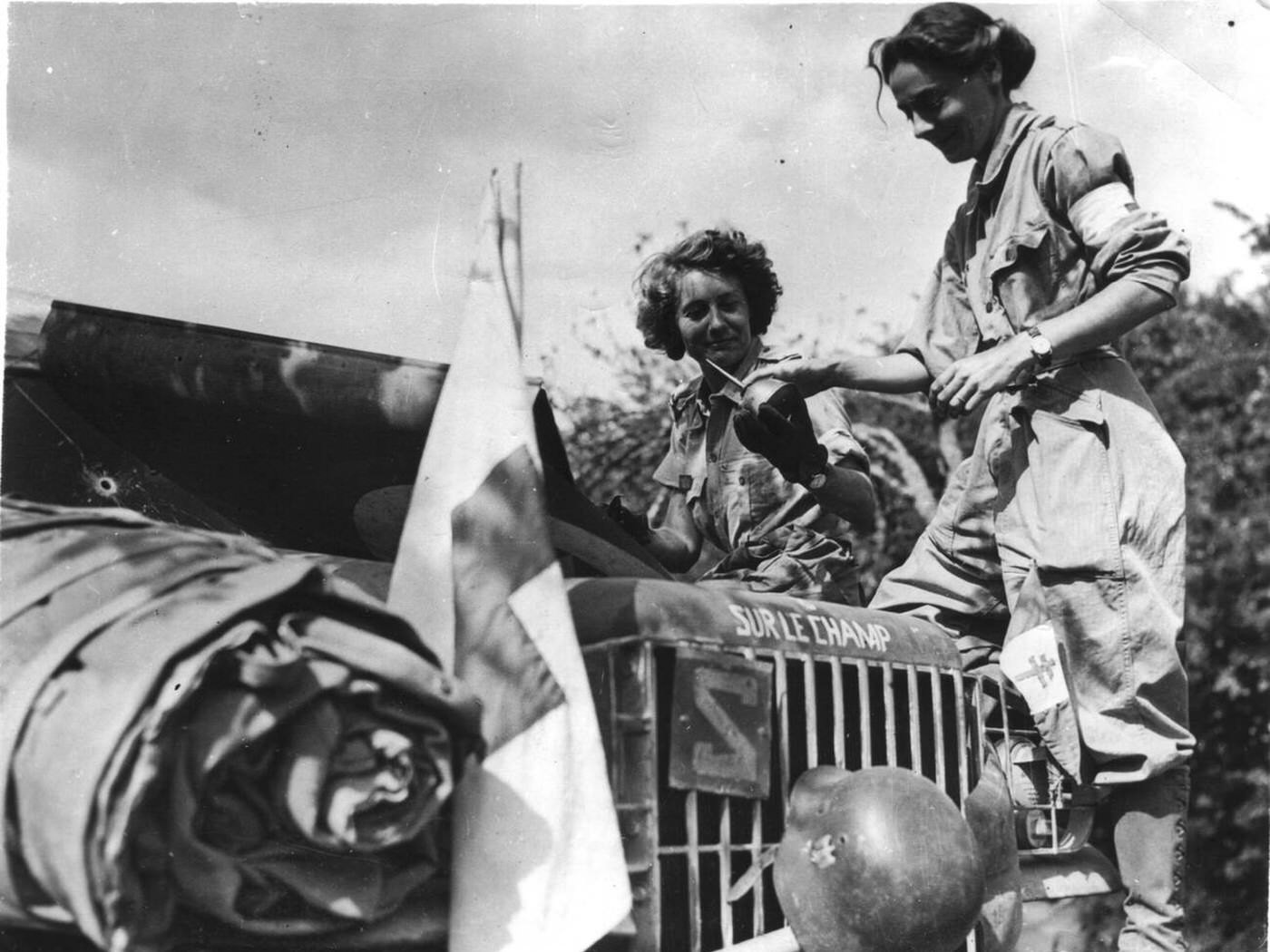
Nurses in Normandy in 1944 operated near the active front, treating casualties from the D-Day invasion and the subsequent breakout across France. French ambulance drivers moved the wounded from collection points to field hospitals, driving under fire in some cases. Army telephone switchboard operators in France in 1944 kept voice communications flowing between command posts, artillery batteries, and infantry units.
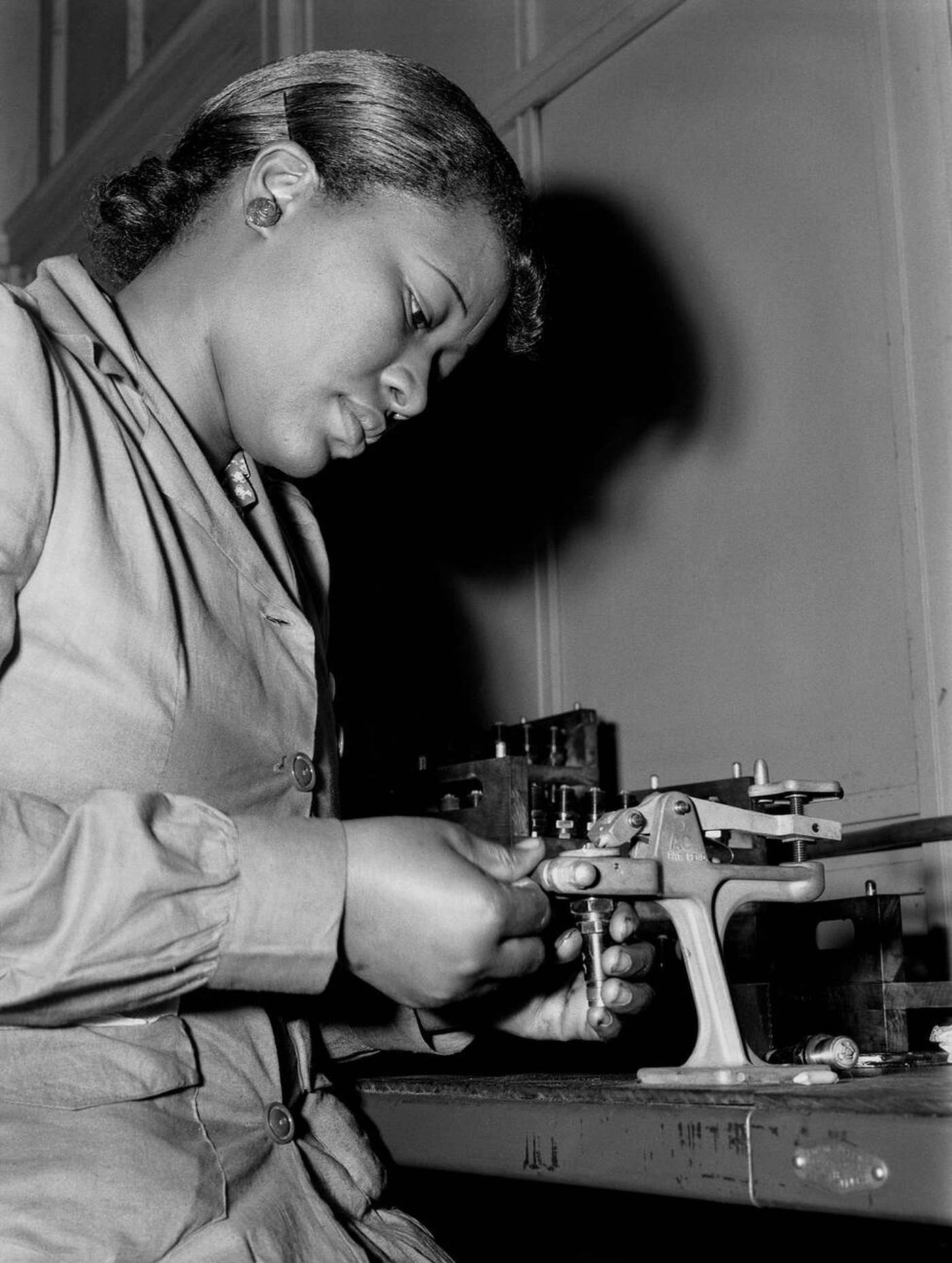
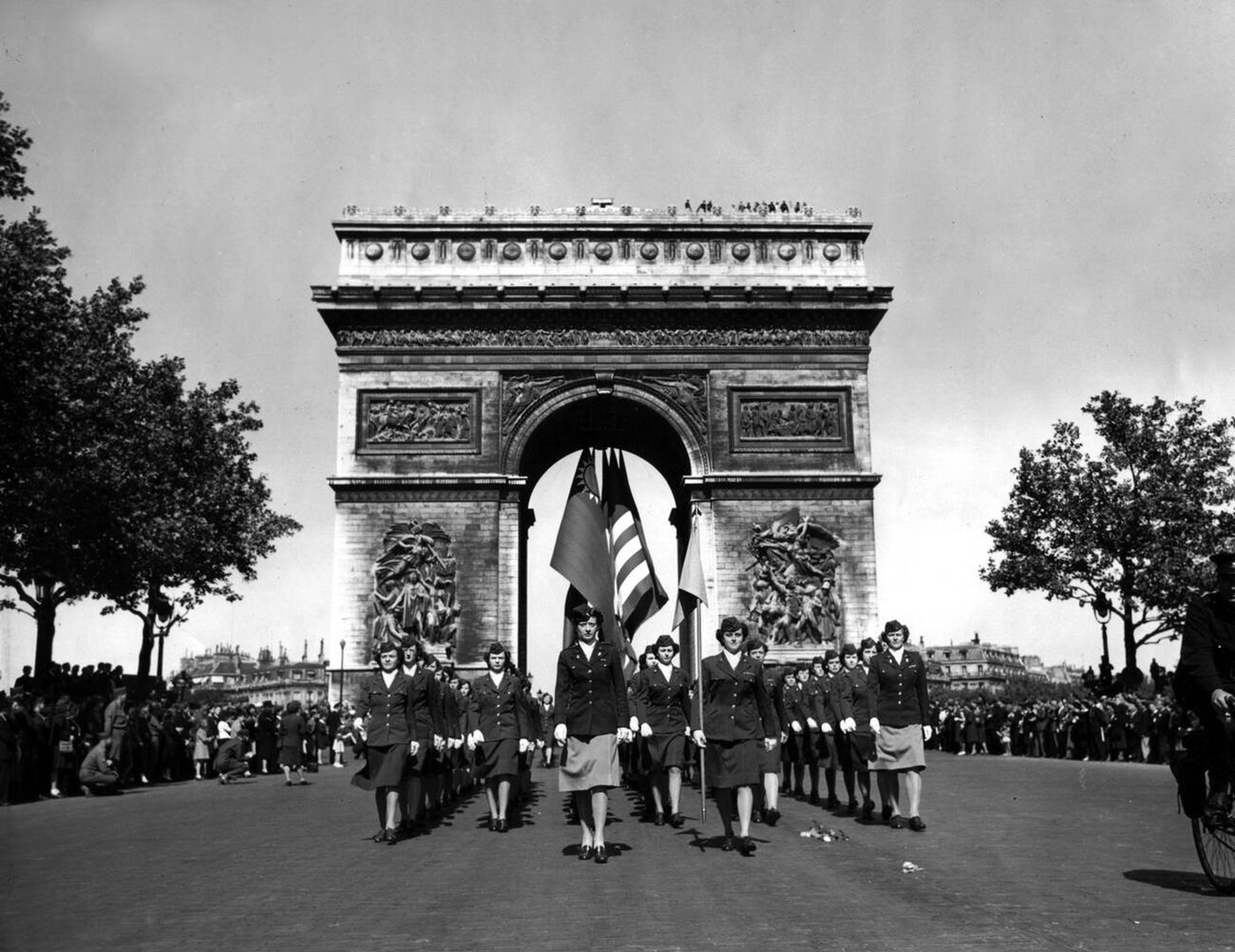
Specific named workers appear in historical photographs that put a human face on the broader production effort. Mignon Gunn reconditioned spark plugs in 1942—a repetitive but essential maintenance task that kept engines running. WAC units celebrated their one-year anniversary in Paris in 1945, marking their contribution to the liberation of Europe. French ambulance drivers delivered their services in the chaos of the Normandy campaign and the push toward Germany.
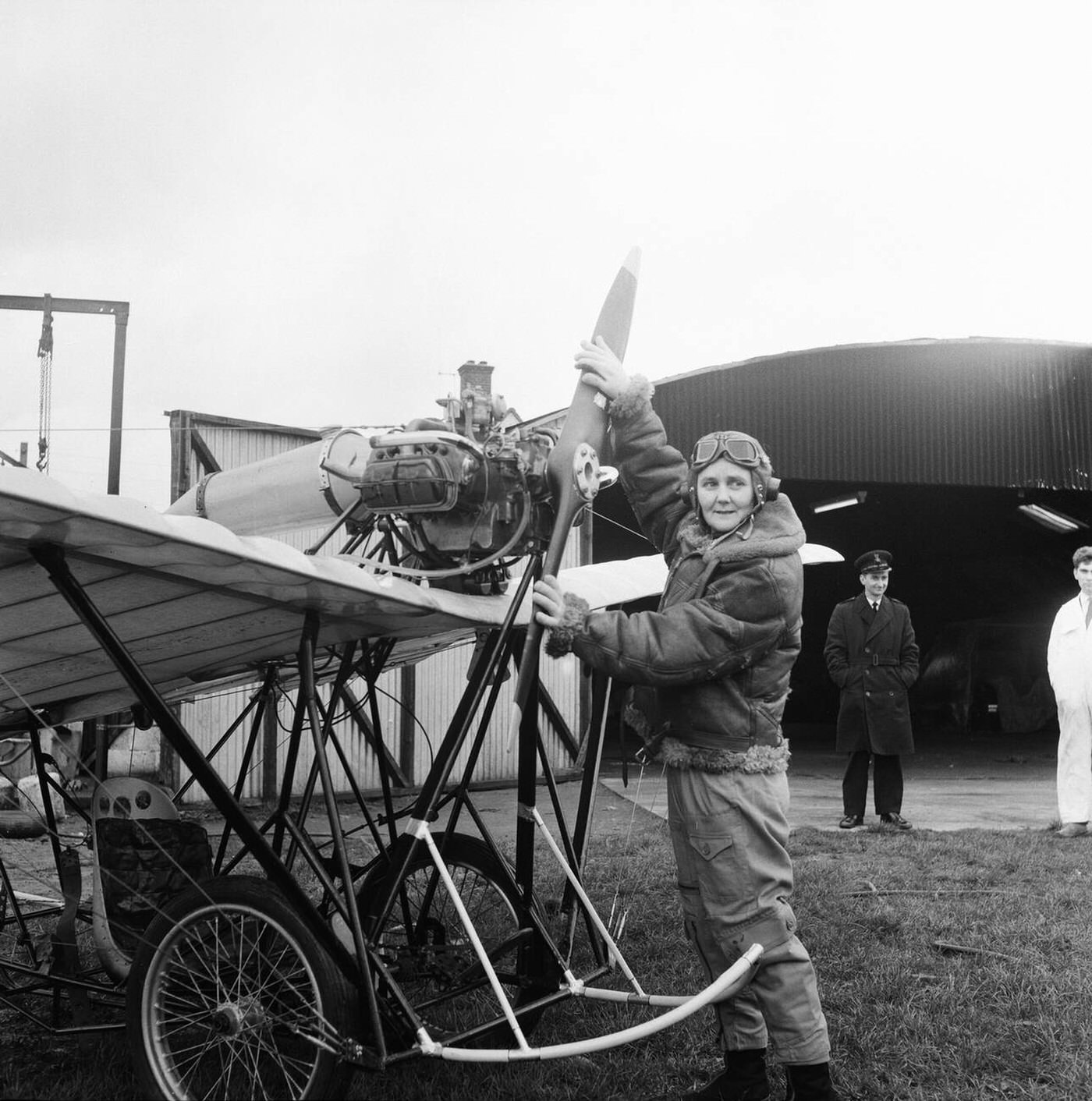
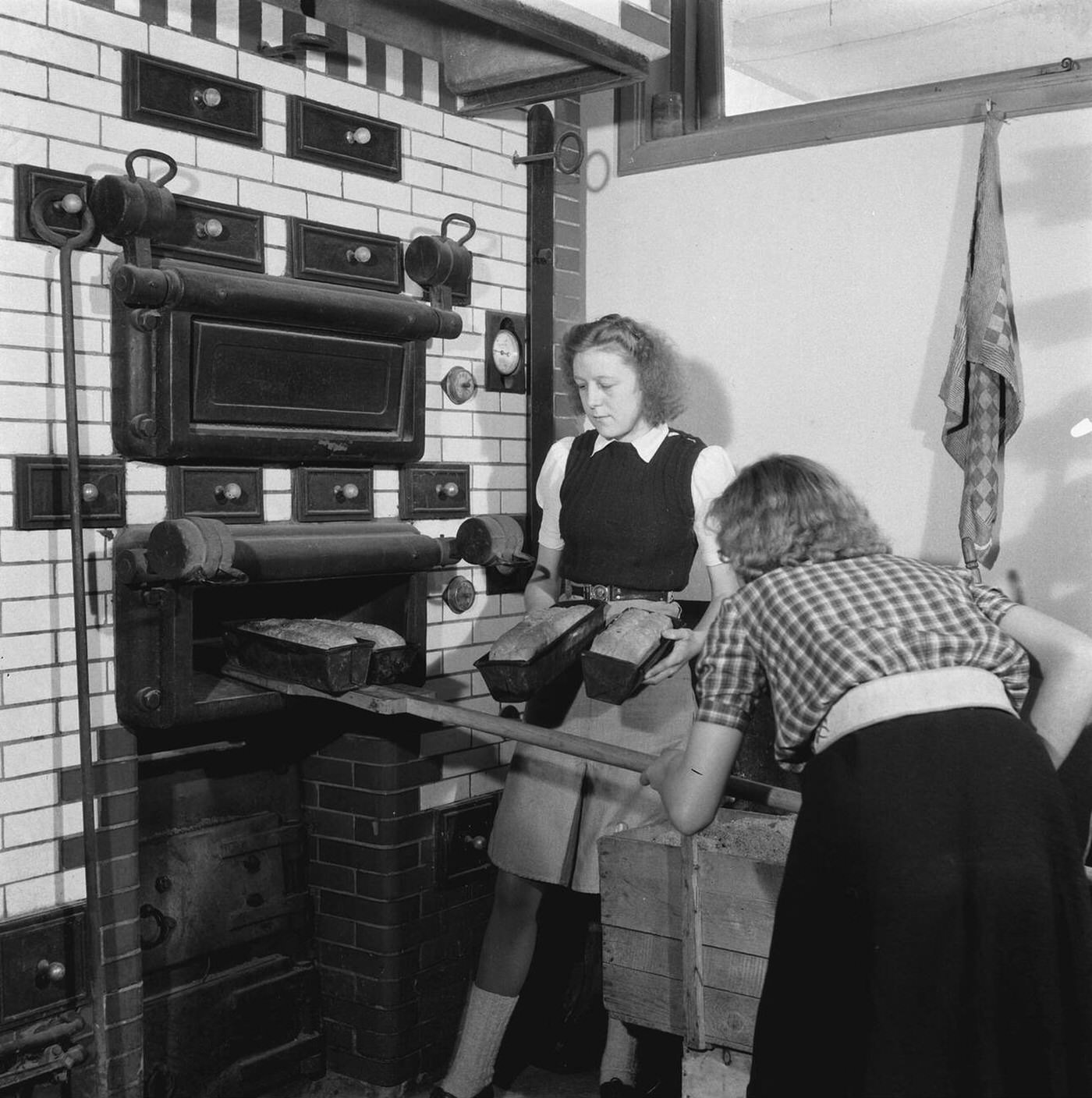
ATA pilot Joan Hughes, one of the original eight women recruited into the organization in 1940, later tested a replica World War I aircraft for a film production in 1964—a testament to the enduring flying careers of those first wartime women pilots. On the European home front in 1945, bread baking in the Netherlands resumed as Allied forces liberated Dutch cities after years of German occupation and a brutal winter famine.
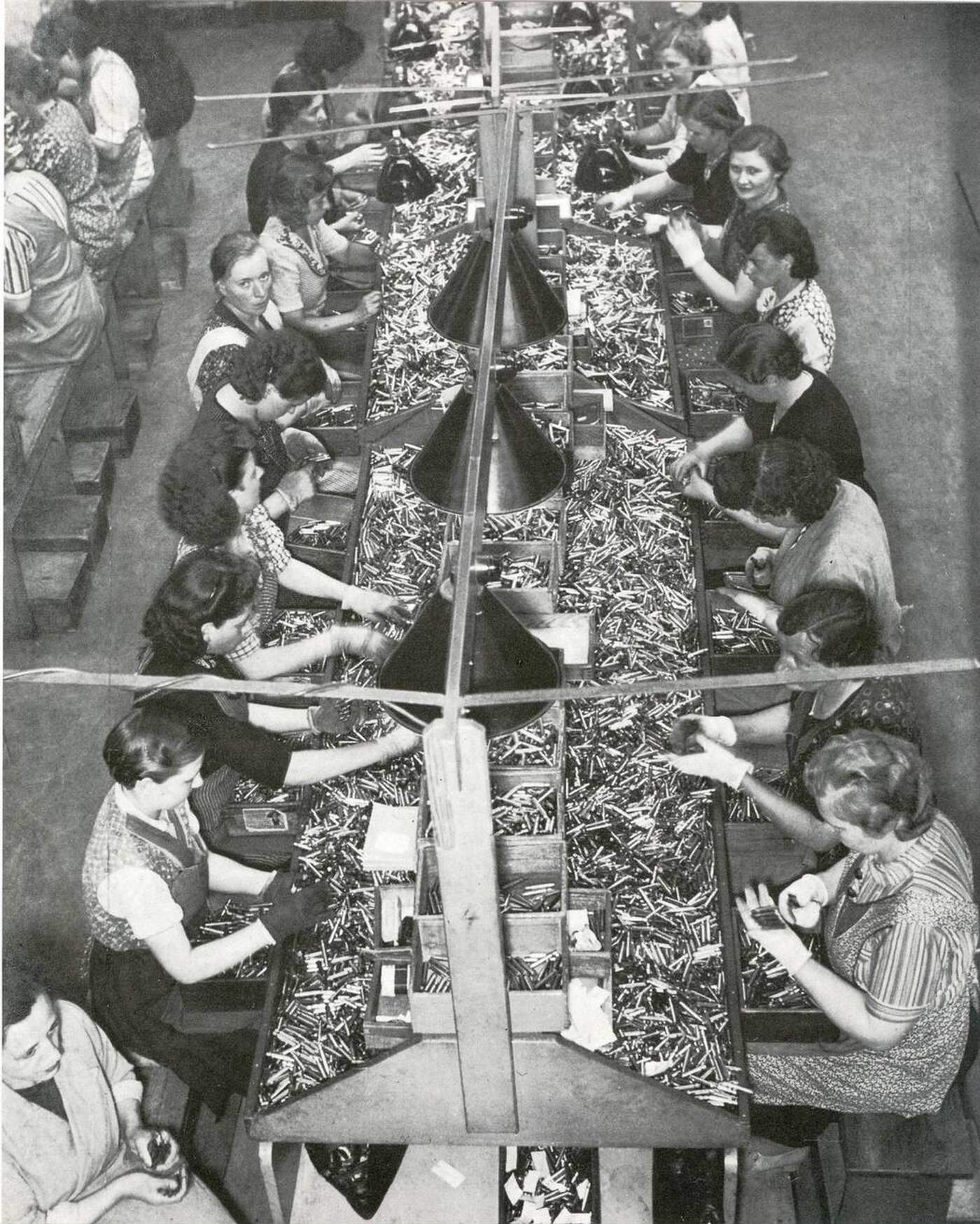
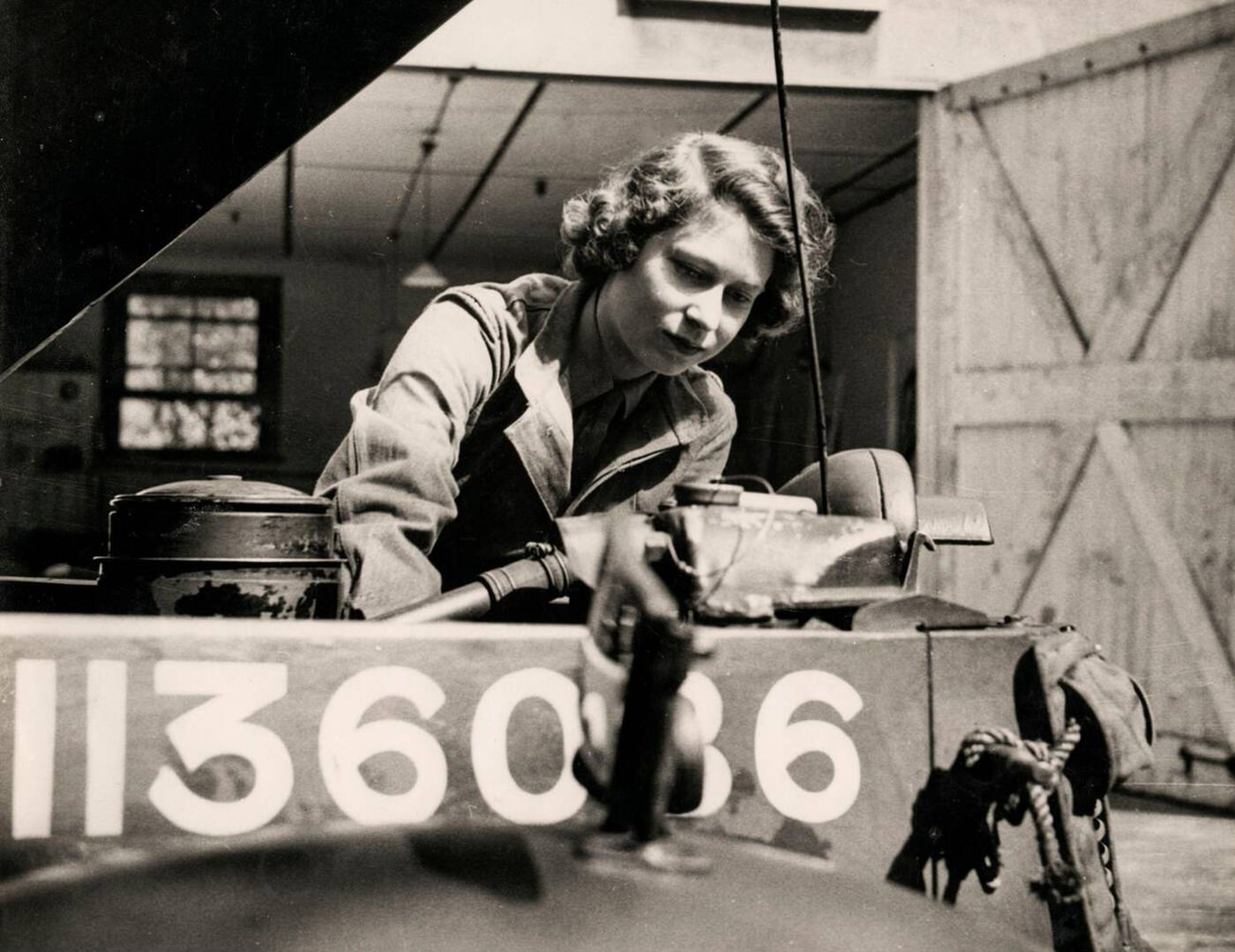
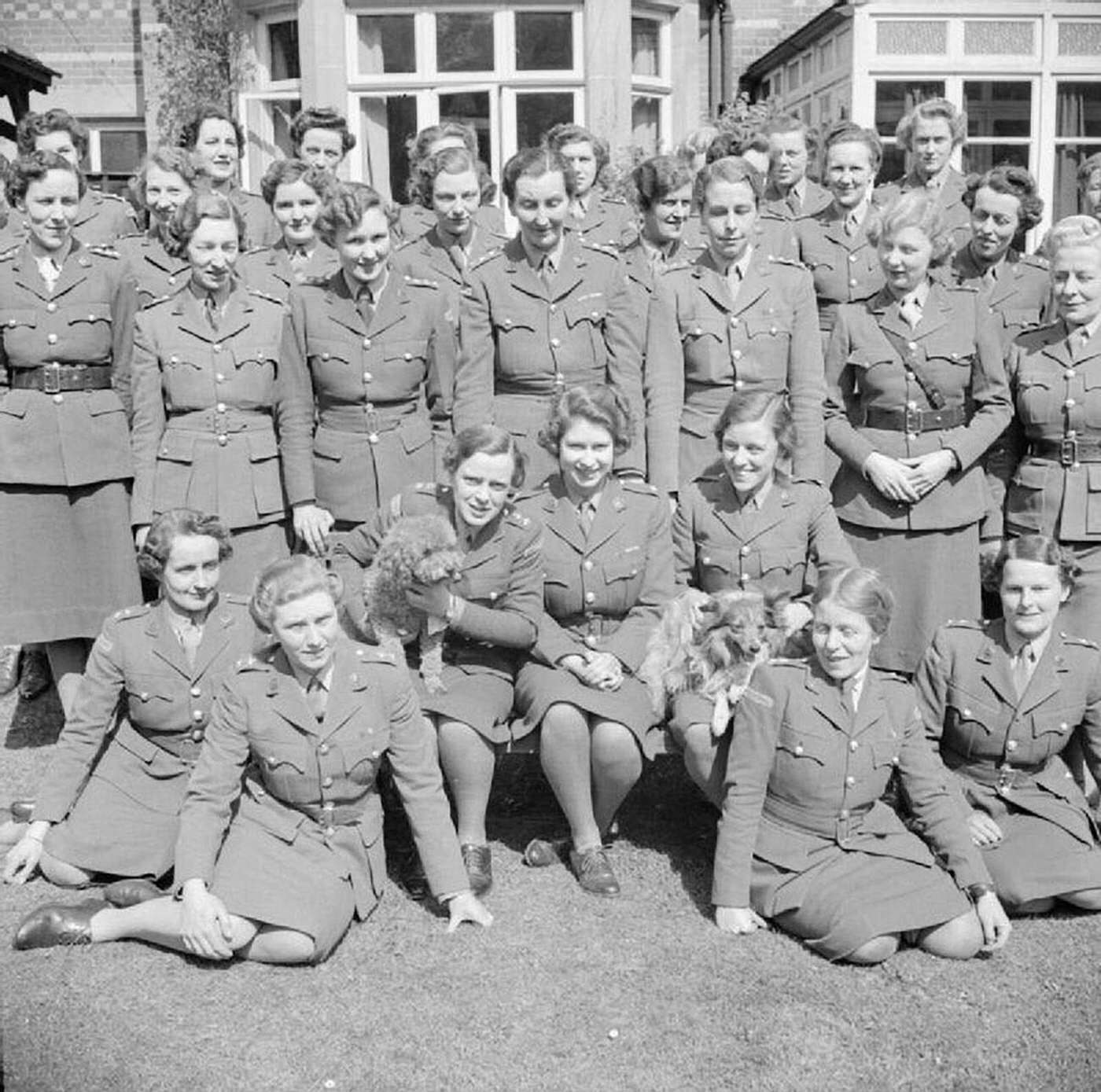
German women in war production in 1942 worked in factories supporting the Wehrmacht’s needs, though Nazi ideology had initially discouraged women from industrial employment. Pressure of wartime demand eventually overrode ideological resistance. Women maintained aircraft throughout the war, and even Princess Elizabeth—then a 19-year-old member of the ATS—was photographed working as a mechanic, changing a wheel on a military vehicle in 1945.
Training programs for wartime jobs ran throughout the early 1940s, preparing women for roles that ranged from factory work to military service. British farms in 1943 continued to rely on Land Girls and volunteer labor to stay productive. Facilities like the General Aircraft Company employed women on aircraft assembly, with production spread across multiple plants to reduce the risk of a single bombing raid crippling output.
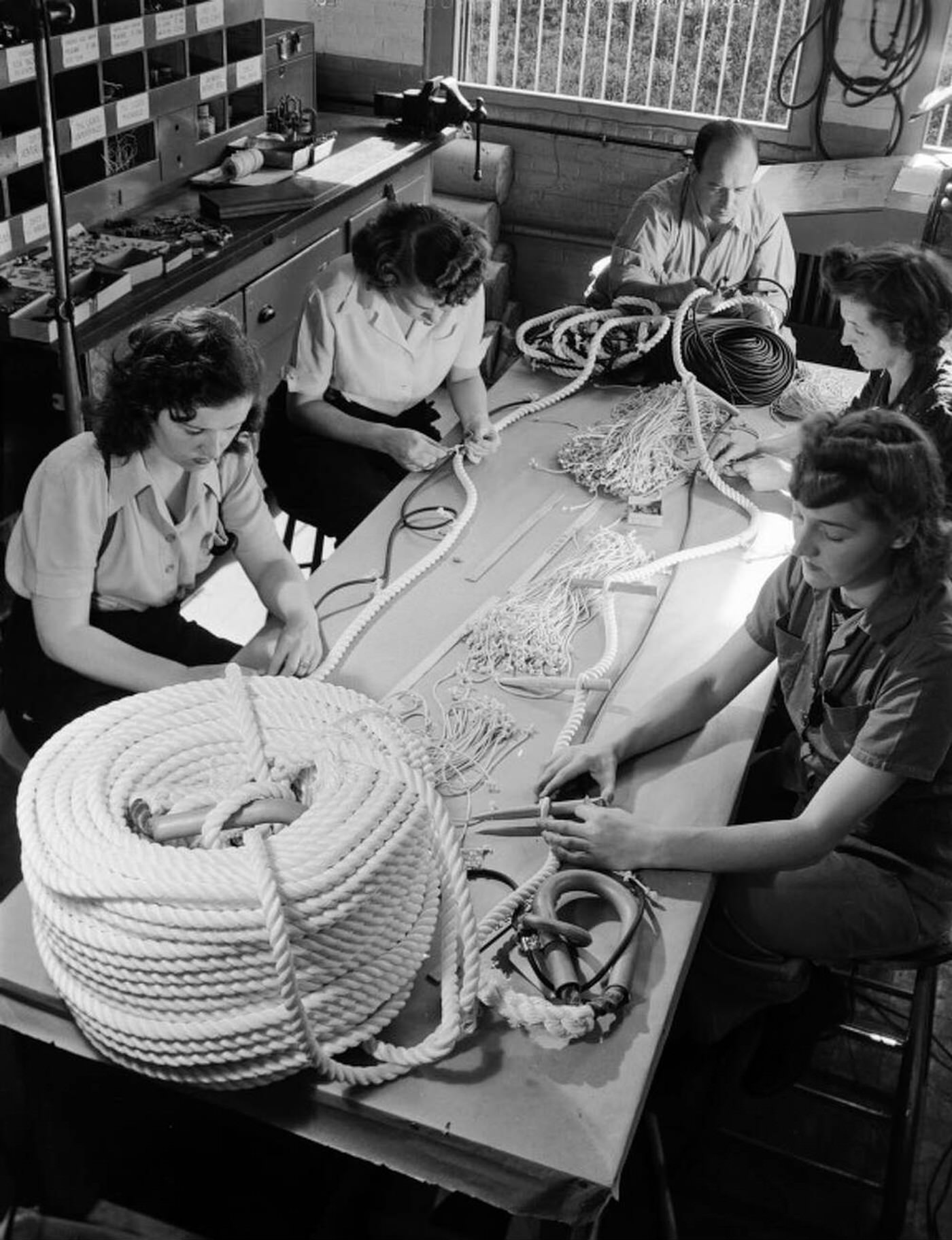
Women in defense industry roles photographed in 1943 represent the peak of female industrial participation in the United States. Red Cross volunteers continued packing care parcels, maintaining morale among prisoners of war across Europe and the Pacific. Women who had lost husbands at Pearl Harbor joined the war workforce, their personal losses becoming a direct motivation for their labor contributions.
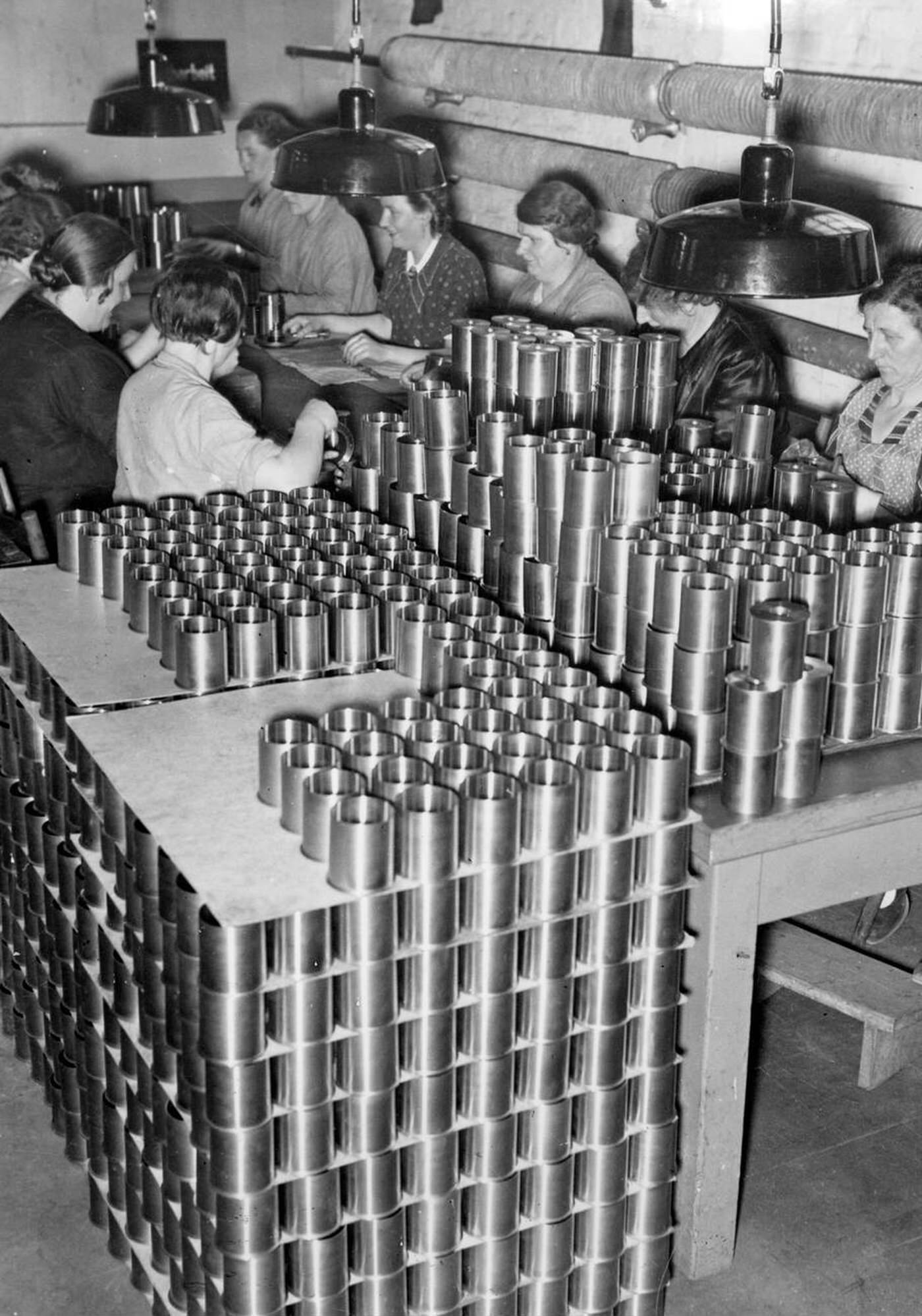
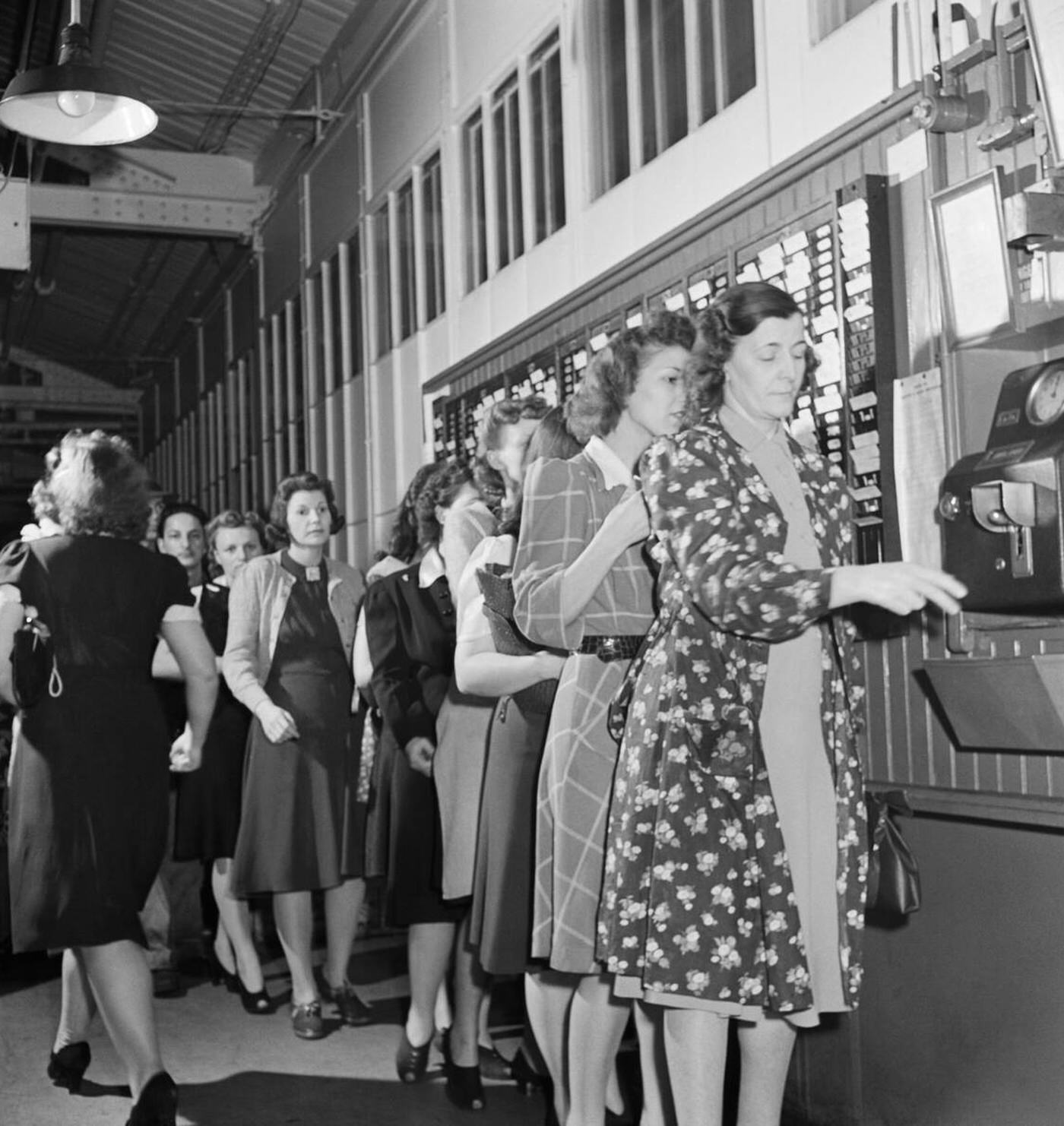
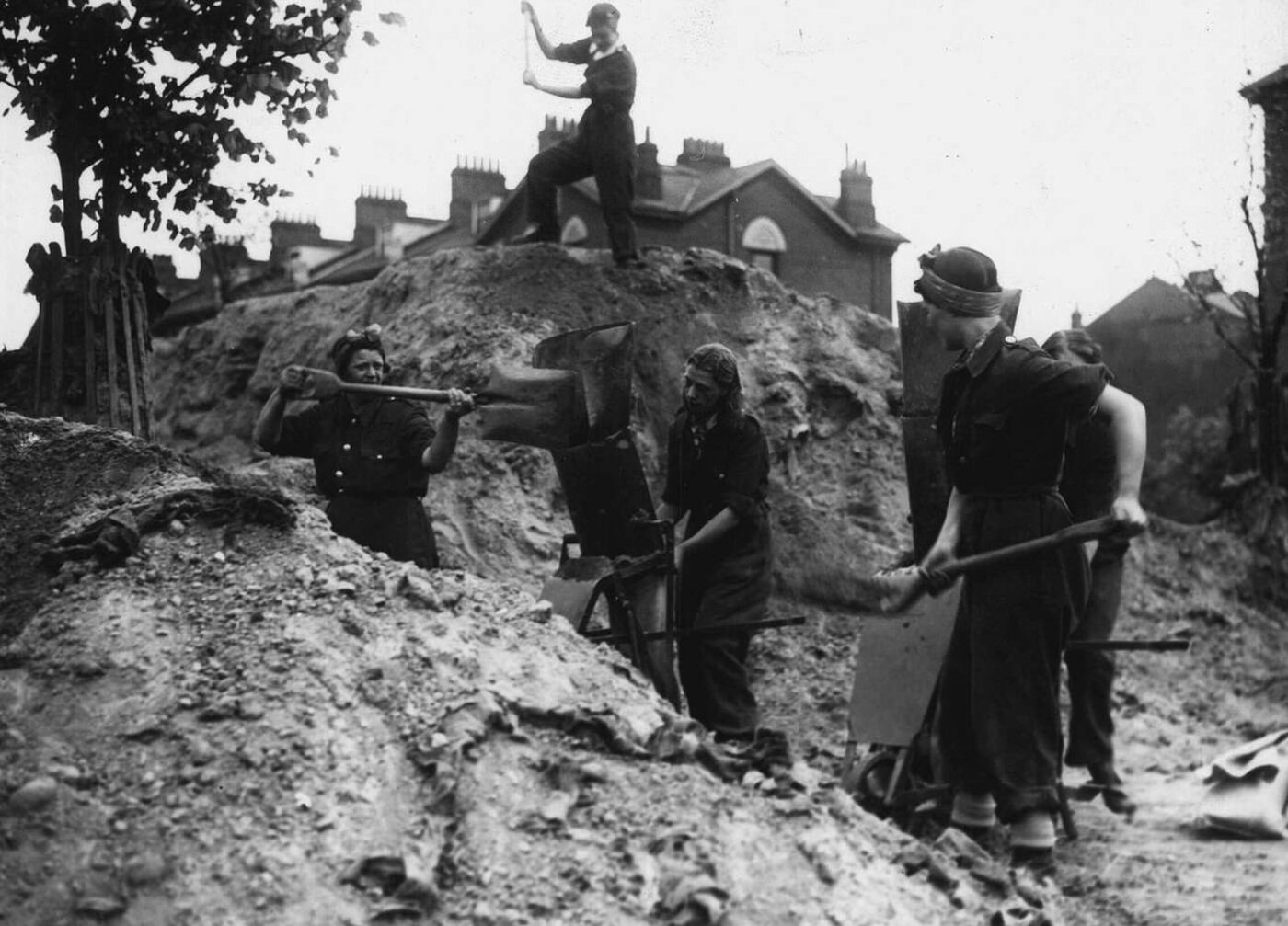
A grandmother photographed cutting gears in 1942 became one of the more striking examples of the age range of women in war production. Workers punched time cards at plants across the industrial United States, the ritual marking of shift changes in factories that ran 24 hours a day, seven days a week. Civil defense teams, including women, cleared bomb raid debris in British cities in 1941 after Luftwaffe bombing raids left streets blocked and buildings collapsed.
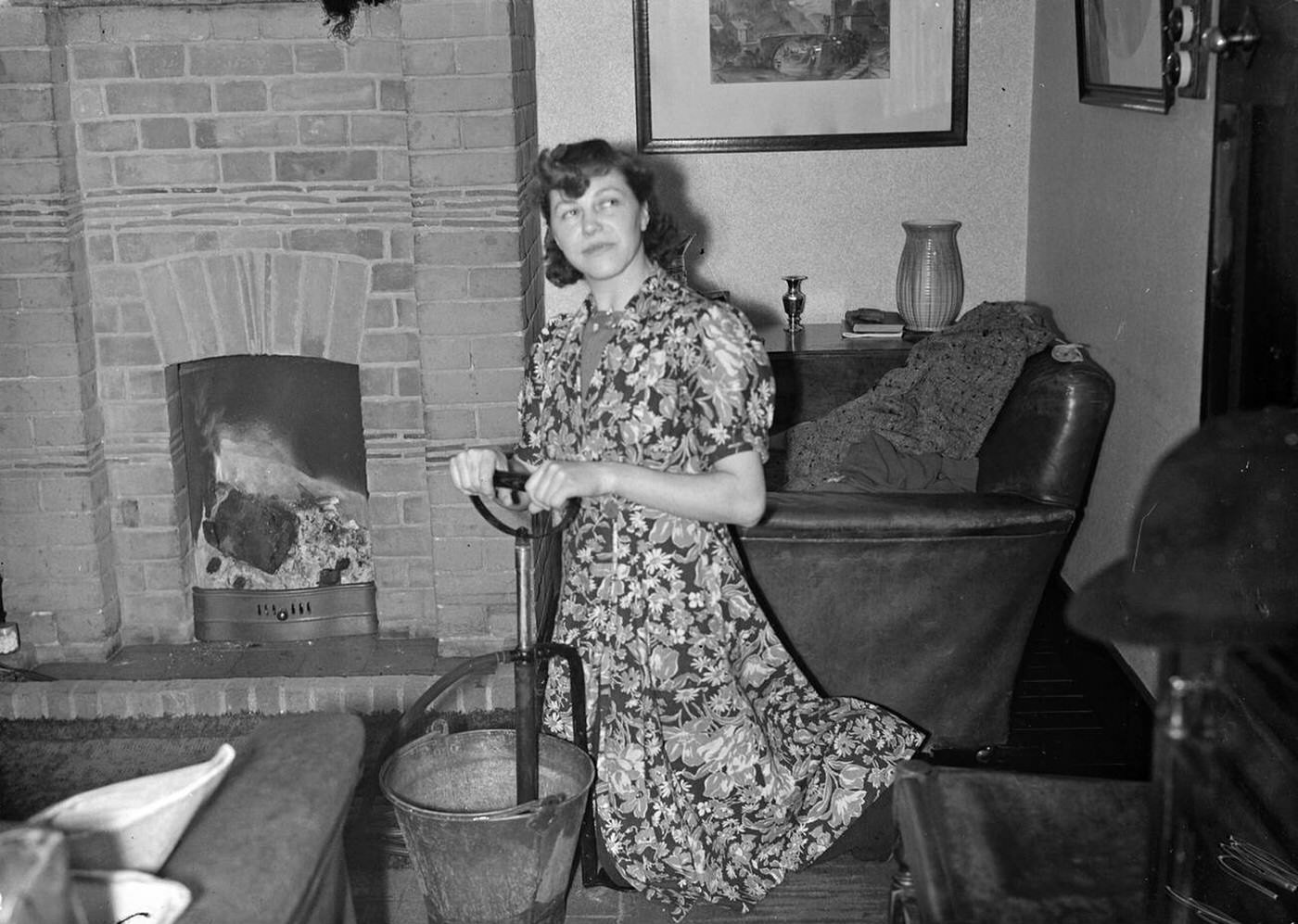
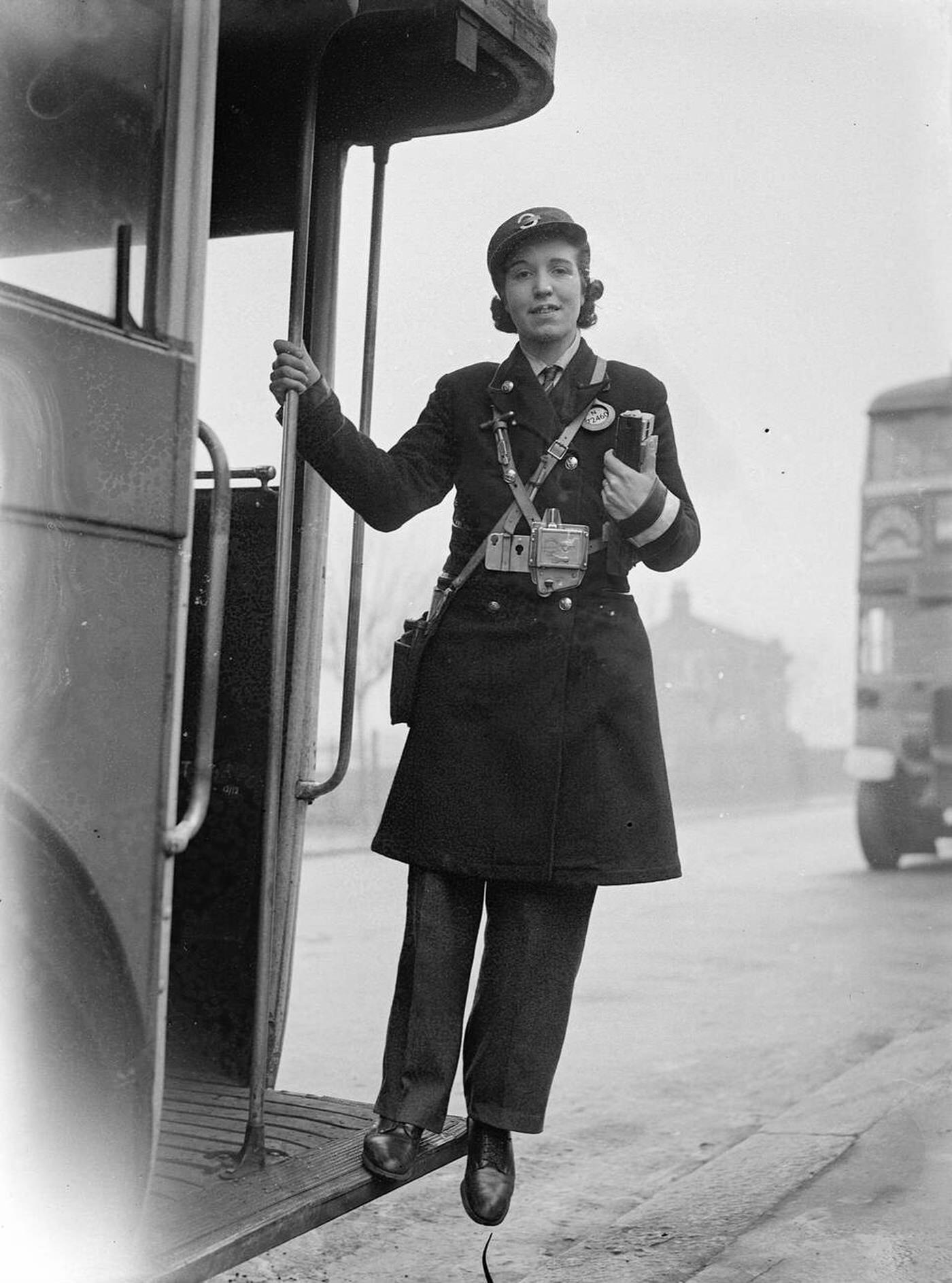
Housewives trained to extinguish incendiary bombs were a genuine civil defense asset during the Blitz. These devices were designed to set fire to rooftops and attics, and quick action with a sand bucket or stirrup pump could prevent a building from burning down. Bus conductress Nellie Carrington, photographed in 1941, was one of thousands of women who took over public transport roles when male conductors were conscripted.
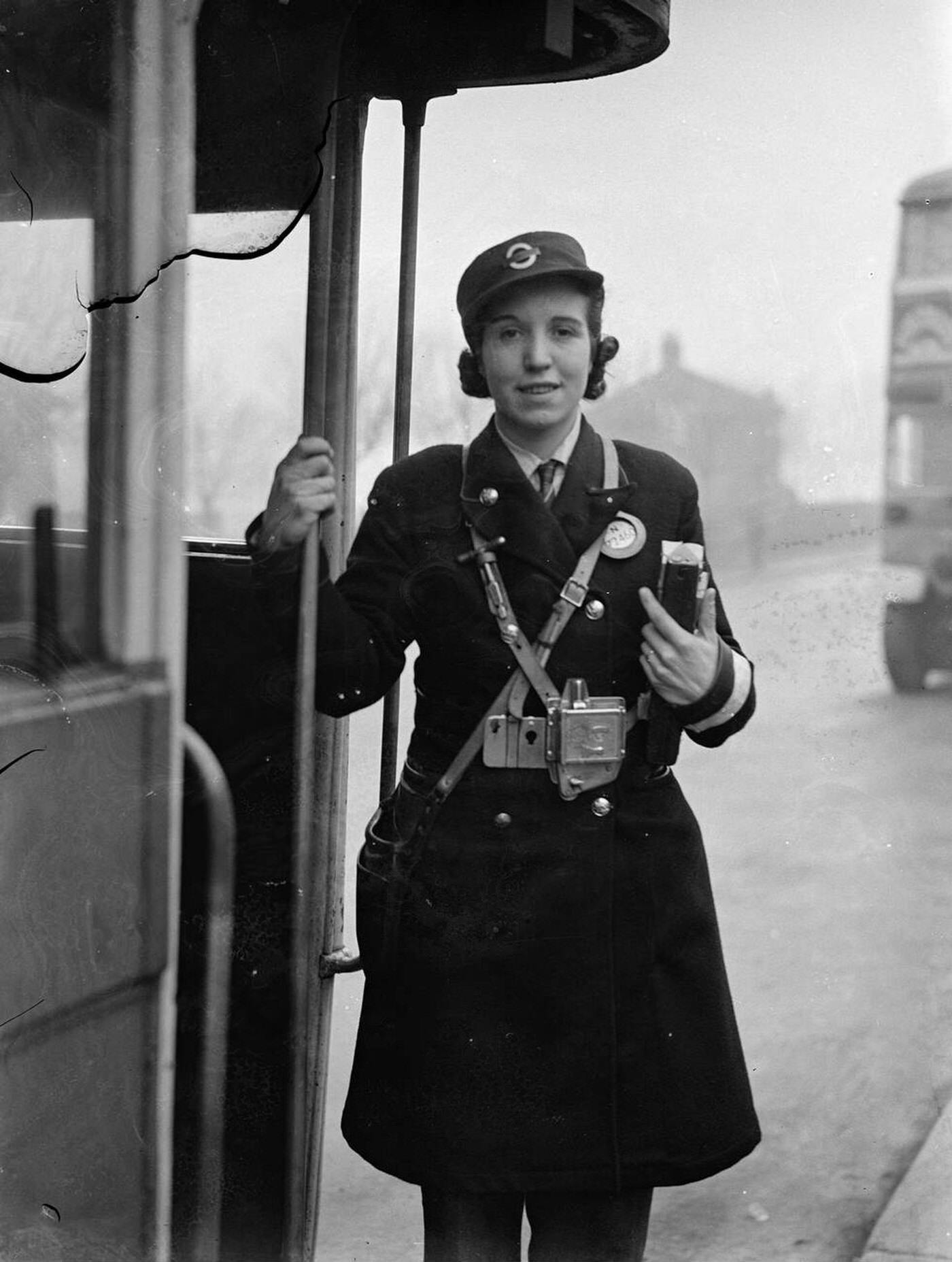
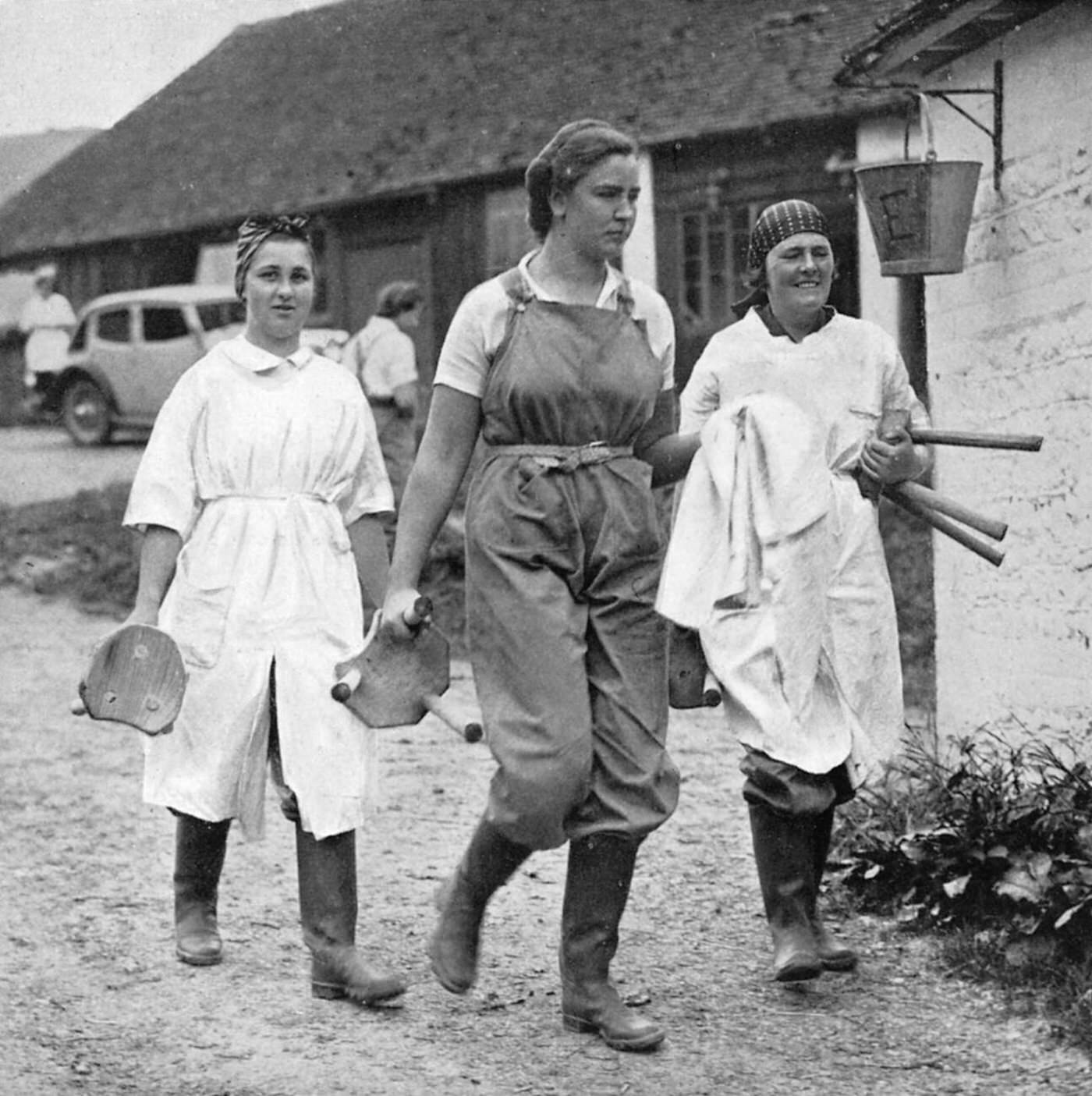
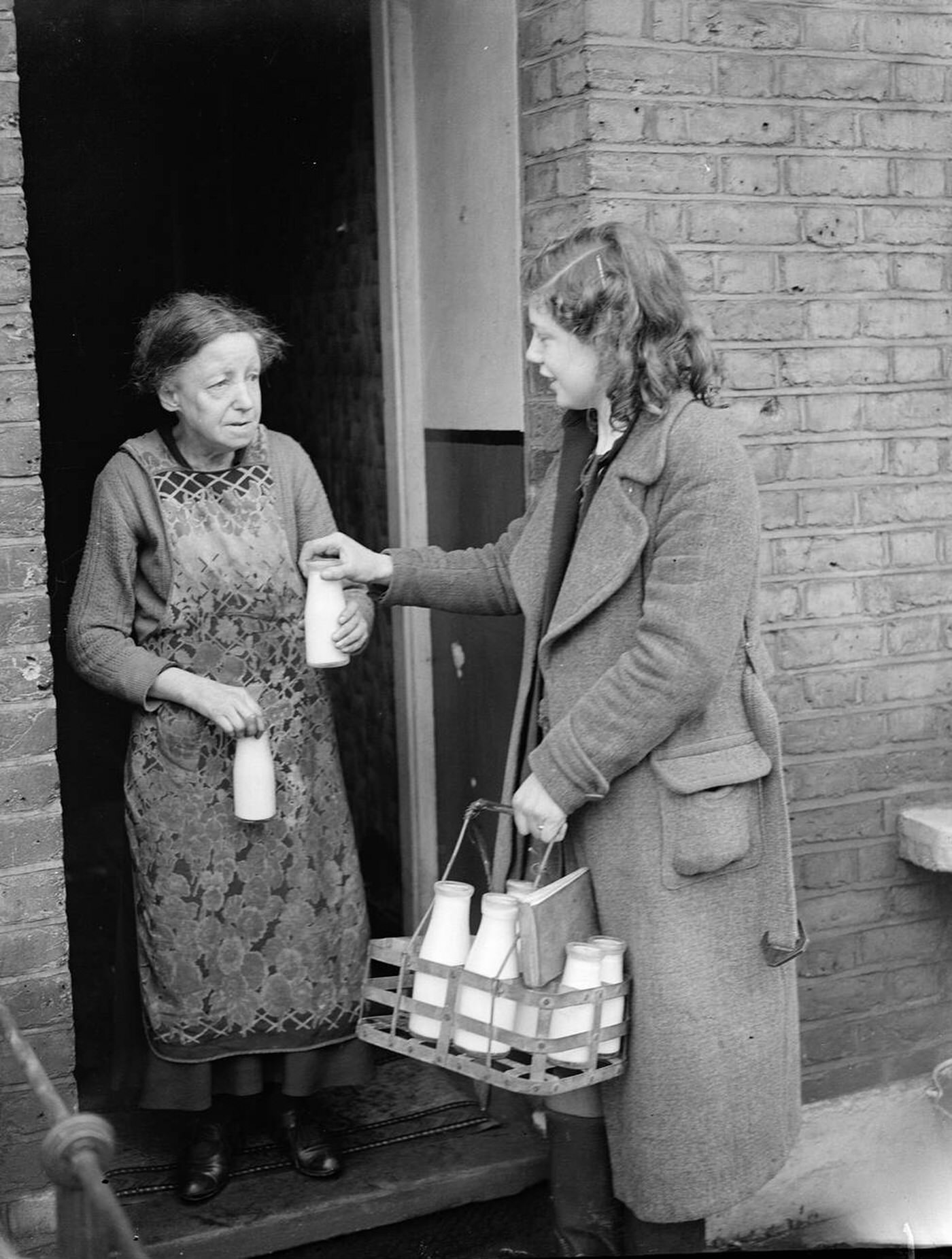
The dairy industry also turned to women to maintain milk supplies. Trainee milkmaids were photographed in 1939, just as the war began, and by 1941, teenagers like Rose Brown were delivering milk on regular rounds. The work was unglamorous, but it kept food on tables in cities and towns throughout Britain. Another photograph of Nellie Carrington from the same year reinforces how central she and women like her were to daily life on the home front.
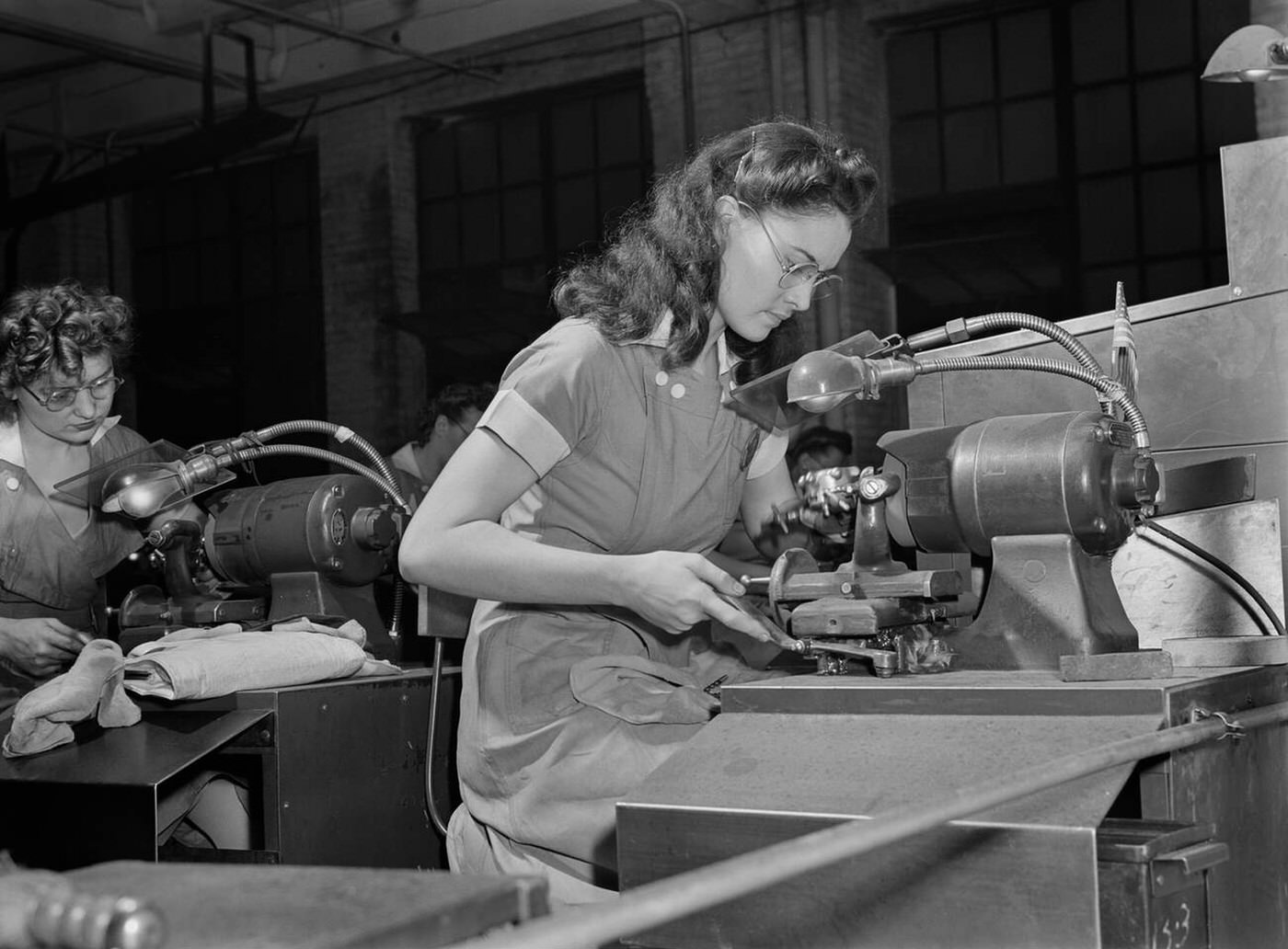
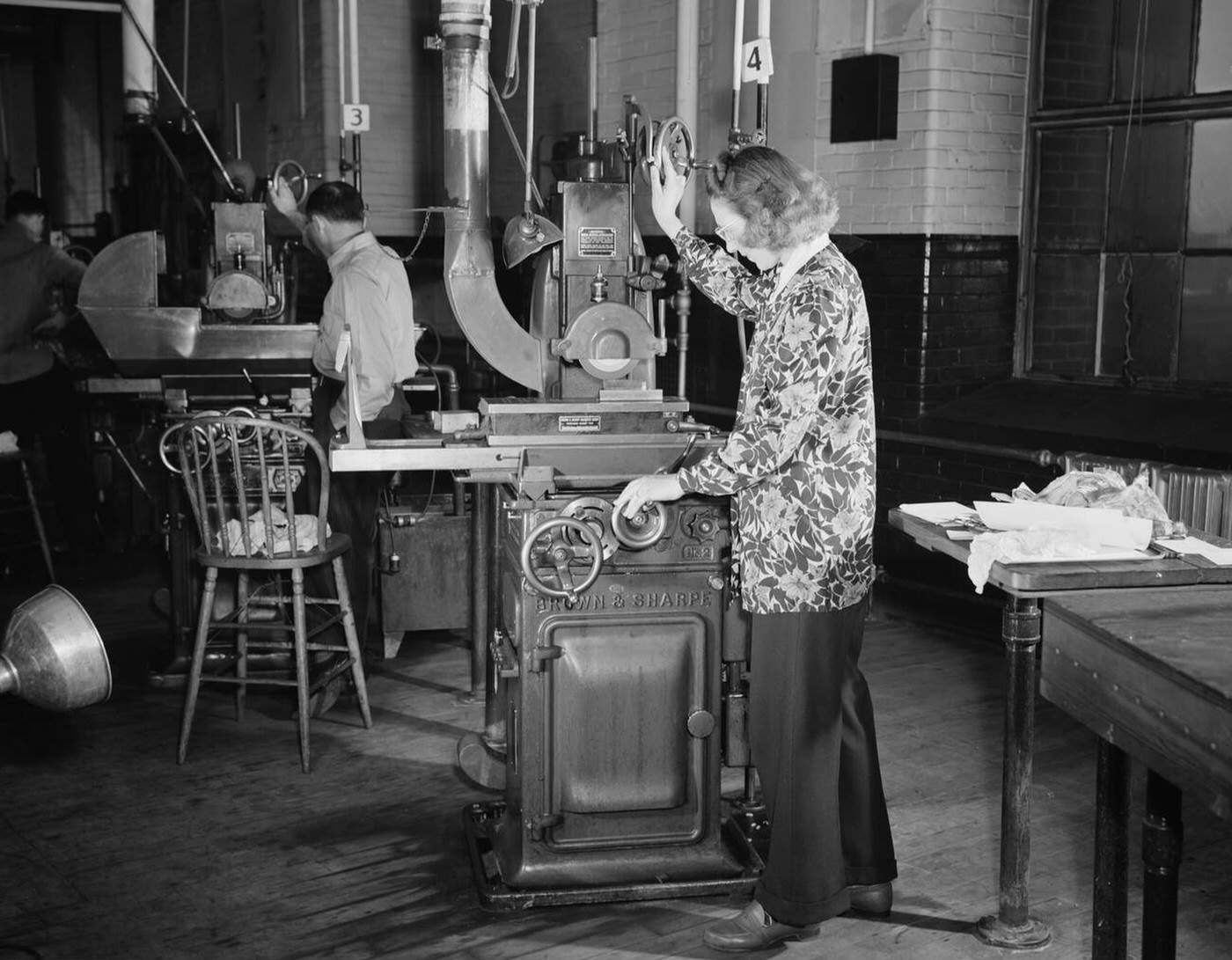
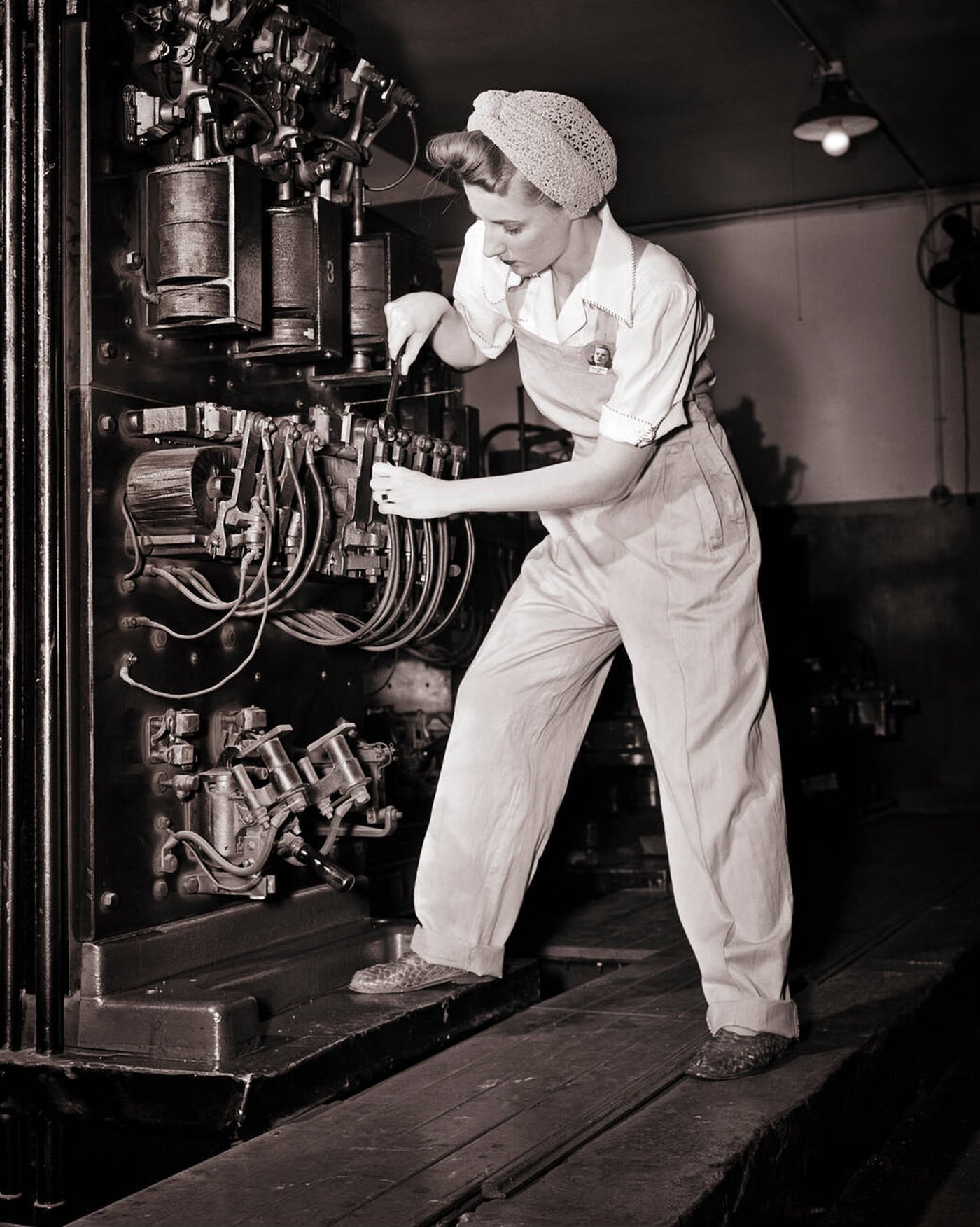
Precision machining required steady hands and sharp eyes. A woman operating a surface grinder in 1942 was producing flat metal surfaces to exact tolerances—components that would end up in aircraft engines or weapons. Ford’s Willow Run plant in Michigan employed thousands of women by 1942, running continuous shifts to meet the production target of one B-24 Liberator bomber per hour. Munitions factories, shown in photographs throughout the war, ran on female labor.
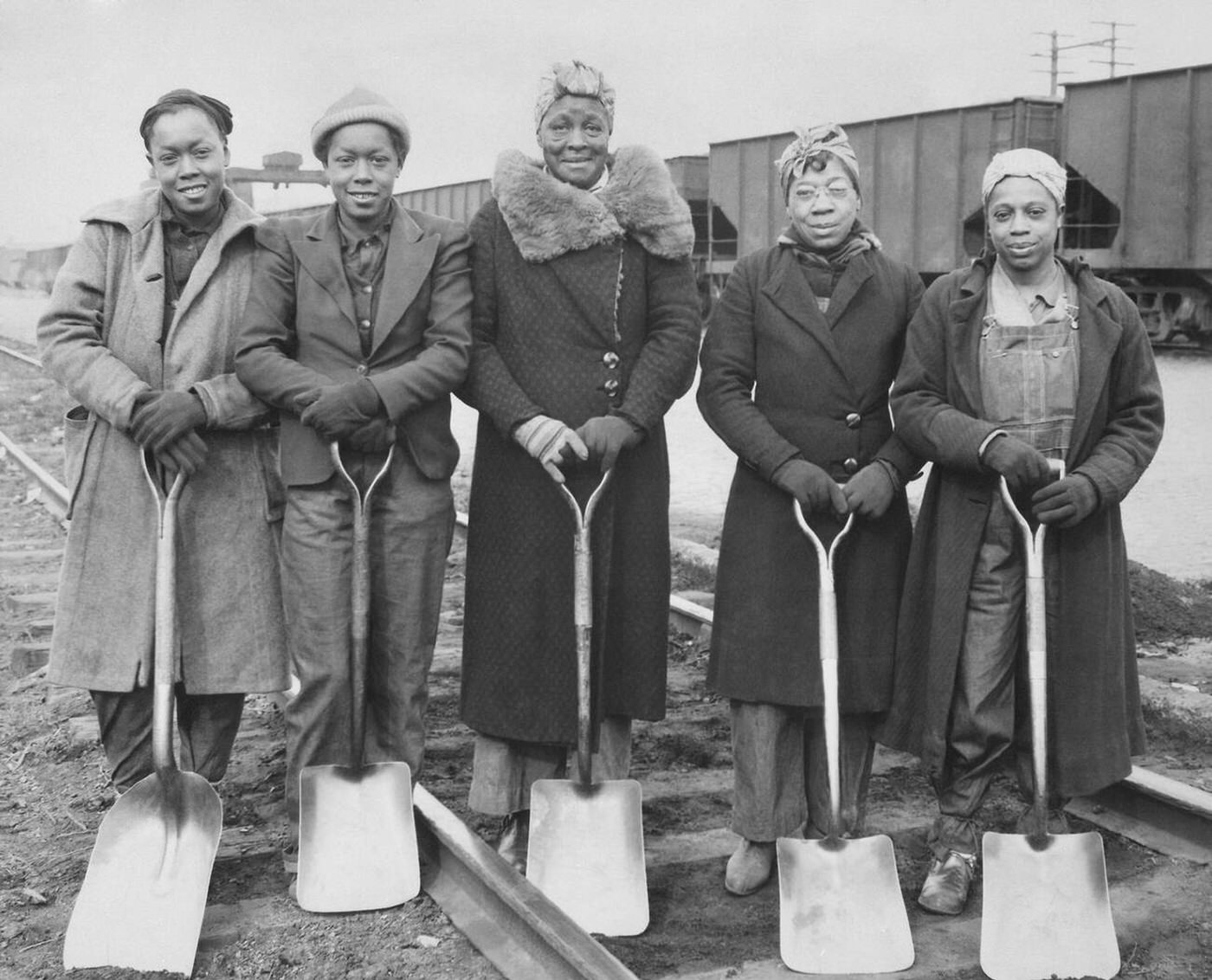
Railroad trackwomen on the Baltimore & Ohio Railroad in 1943 maintained the actual rail lines—inspecting ties, driving spikes, and clearing obstructions. This was physically demanding outdoor work in all weather conditions, but it kept one of the busiest rail networks on the East Coast running. Land Girls in photographs from throughout the war show the full range of farm settings where they worked, from large arable estates to small family farms.
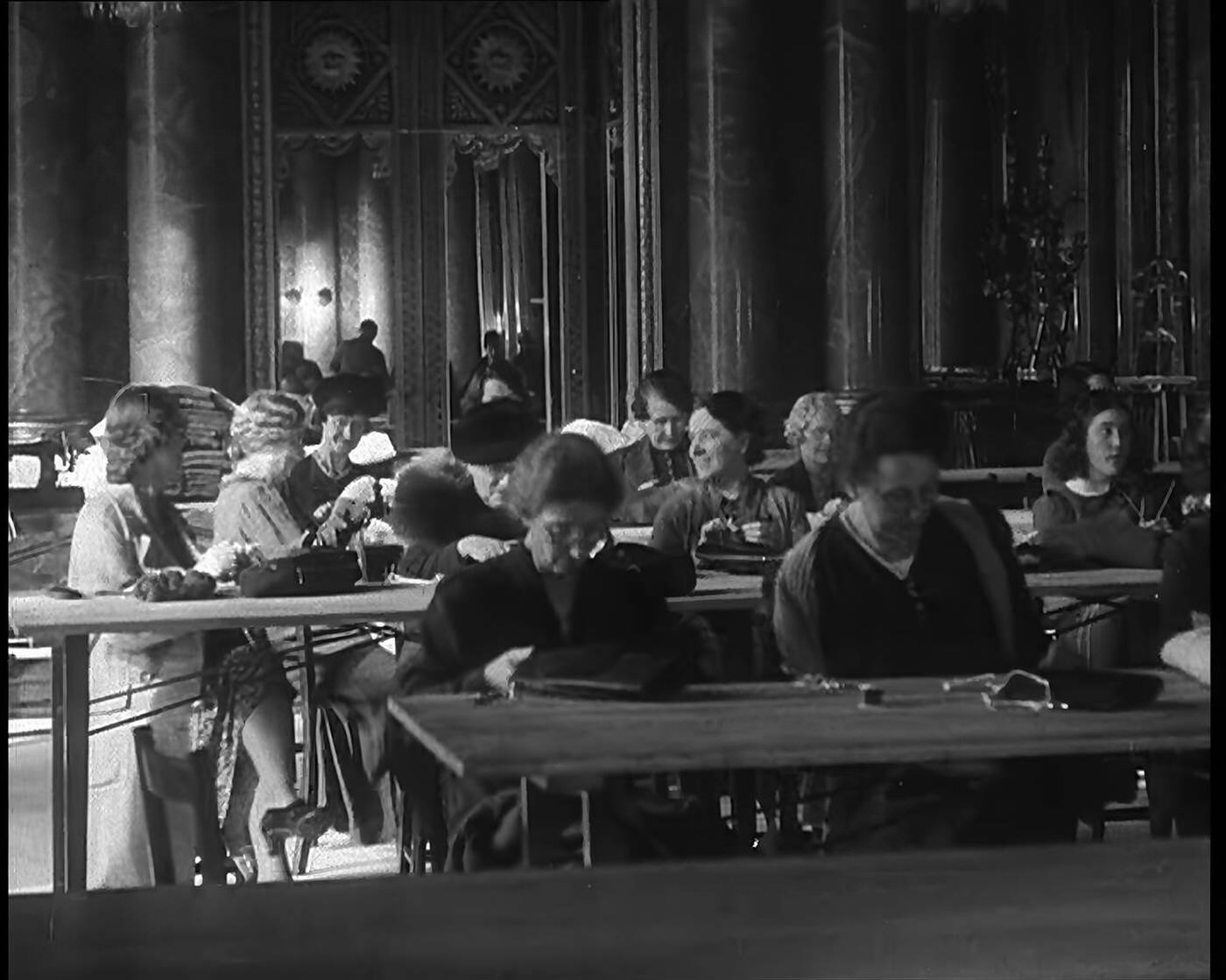
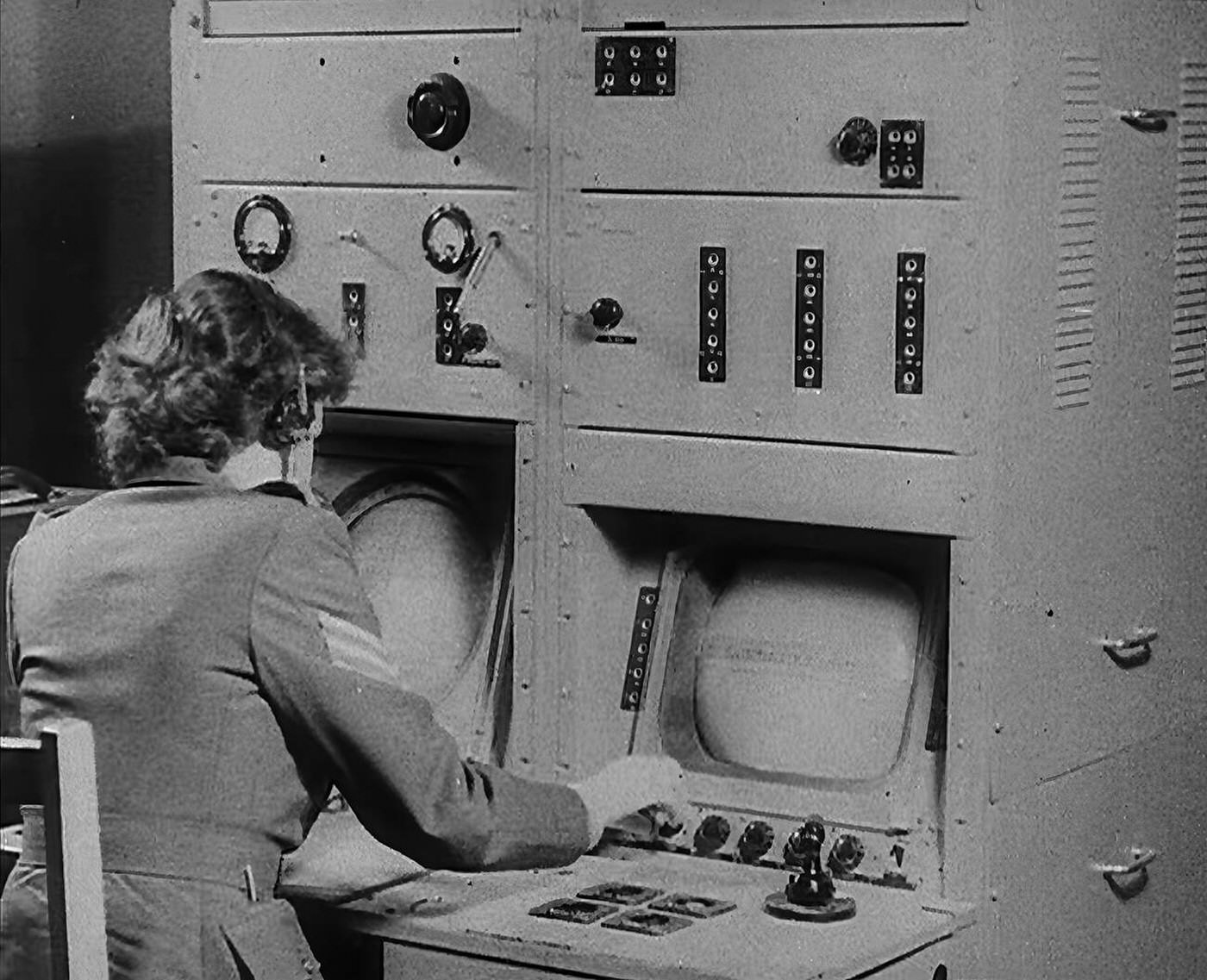
Support organizations extended beyond the front lines. The Army Comforts Depot produced and distributed items like socks, blankets, and personal care goods to soldiers. The Buckingham Palace sewing group, photographed in 1940, included women from the royal household contributing to textile production for the armed forces. A female radio operator photographed in 1940 represents the communications work that ran through every level of the war effort.
North American Aviation in California employed women on its P-51 Mustang and B-25 Mitchell production lines. Lucile Mazurek worked on blackout lamps—fixtures used to reduce visible light during air raid conditions. Workers at Milwaukee’s Vilter Manufacturing and Heil Company produced industrial components under war contracts, with women filling roles on assembly lines and quality control stations throughout both facilities.
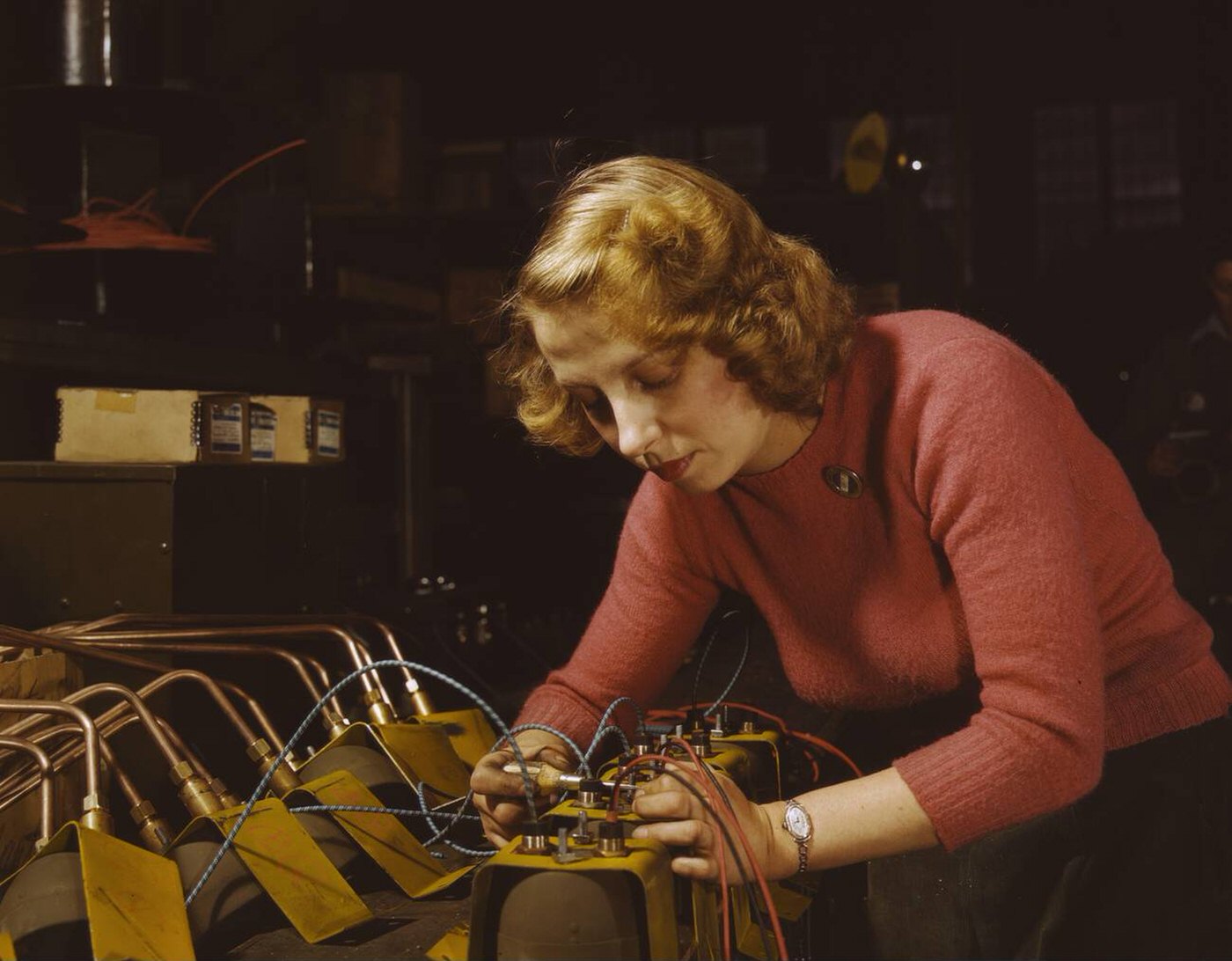
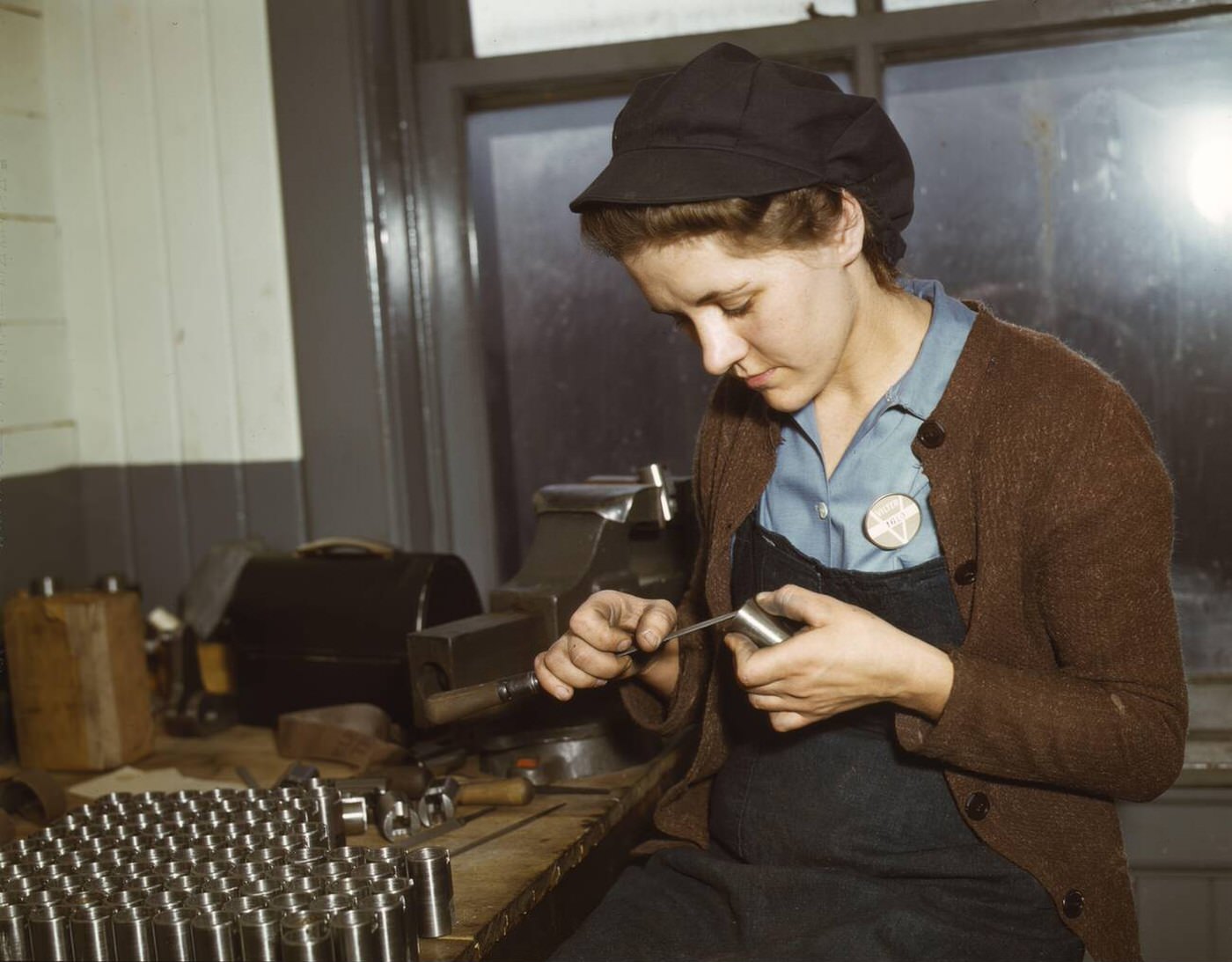
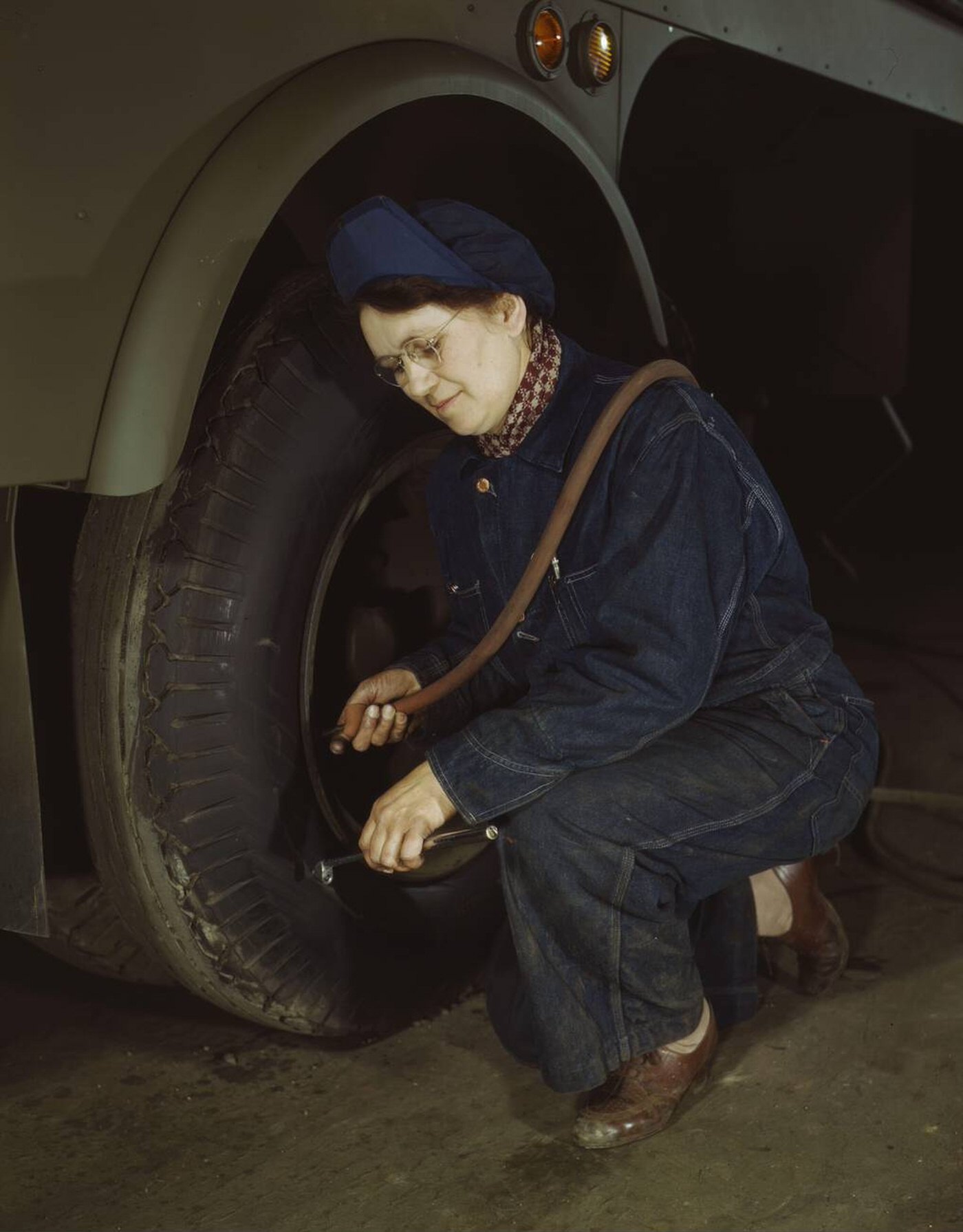
At Naval Air Bases, named women workers appeared in official documentation. Mildred Webb and Eloise J. Ellis were photographed at their stations, representing the thousands of civilian women employed directly by the Navy on base facilities. Vilter Manufacturing workers appeared in multiple photographs, reflecting the deliberate record-keeping of wartime labor documentation. The Women’s Land Army and Land Girls continued to appear in images throughout the war, a continuous presence on British farms from 1939 through 1945.
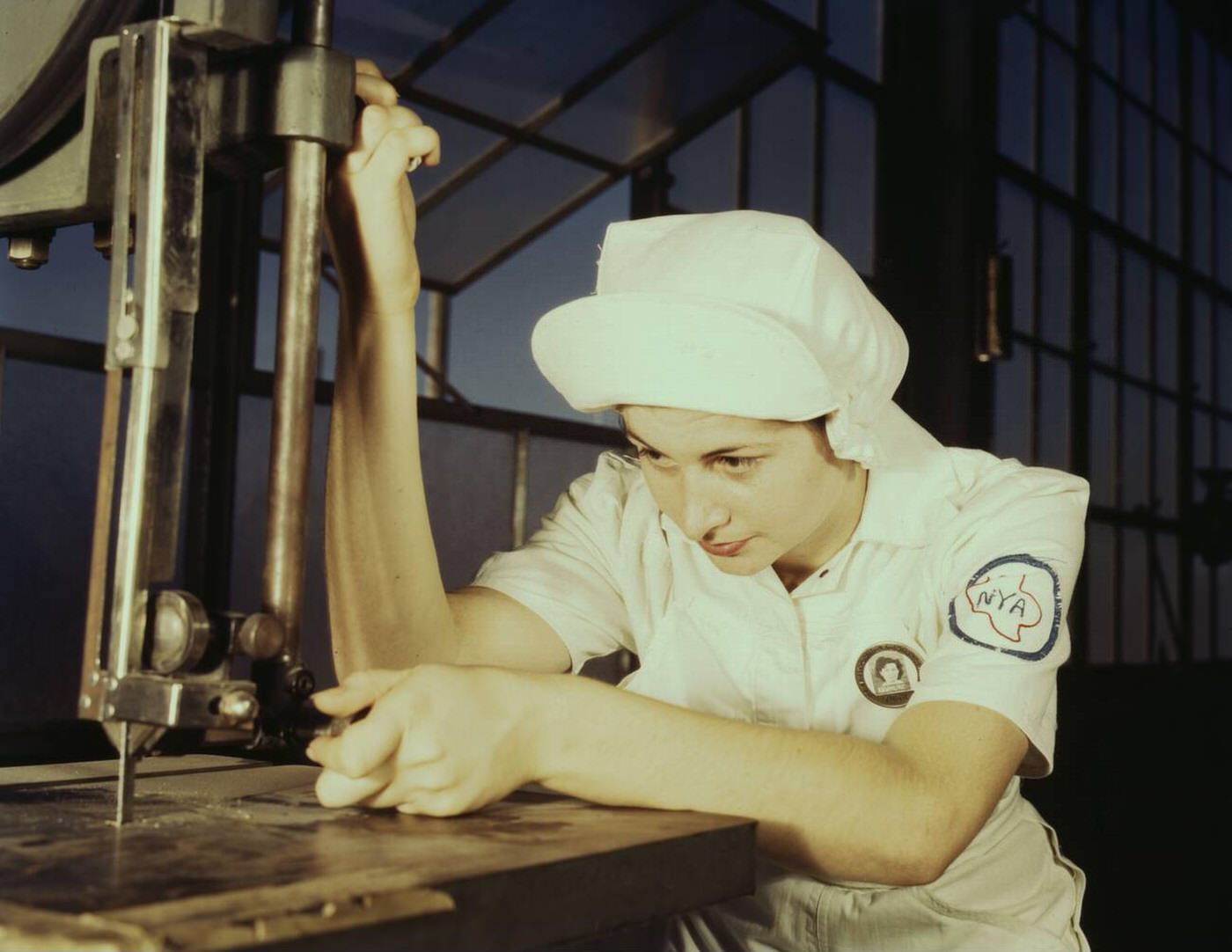
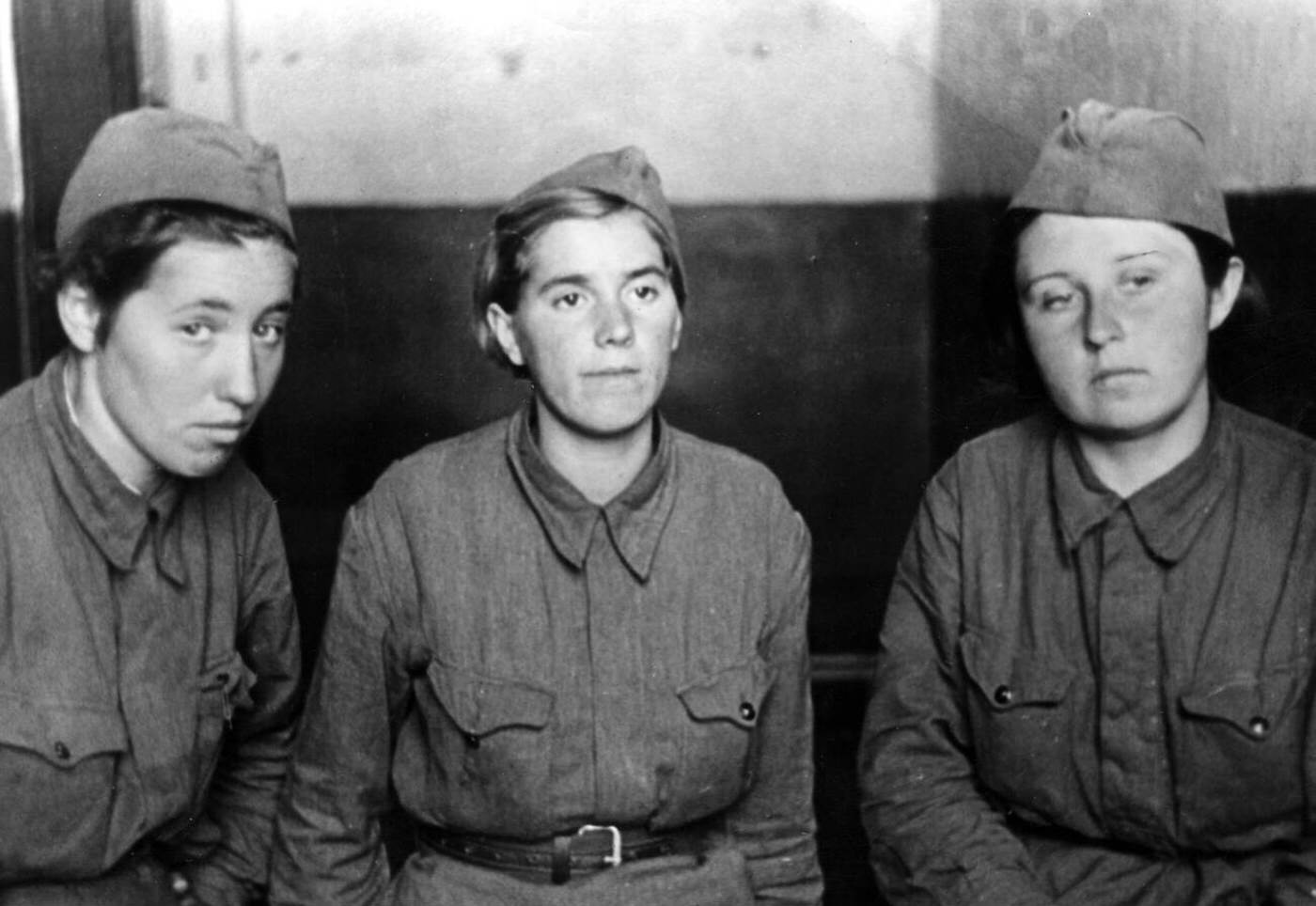
Russian women in the Red Army served in roles that ranged from snipers and pilots to nurses and anti-aircraft gunners. The Soviet military was the only major force in the war to formally assign women to front-line combat units at scale. Women operated elevator mechanisms and other infrastructure equipment throughout the war years, filling maintenance roles that most people would never have associated with women’s work before 1939.
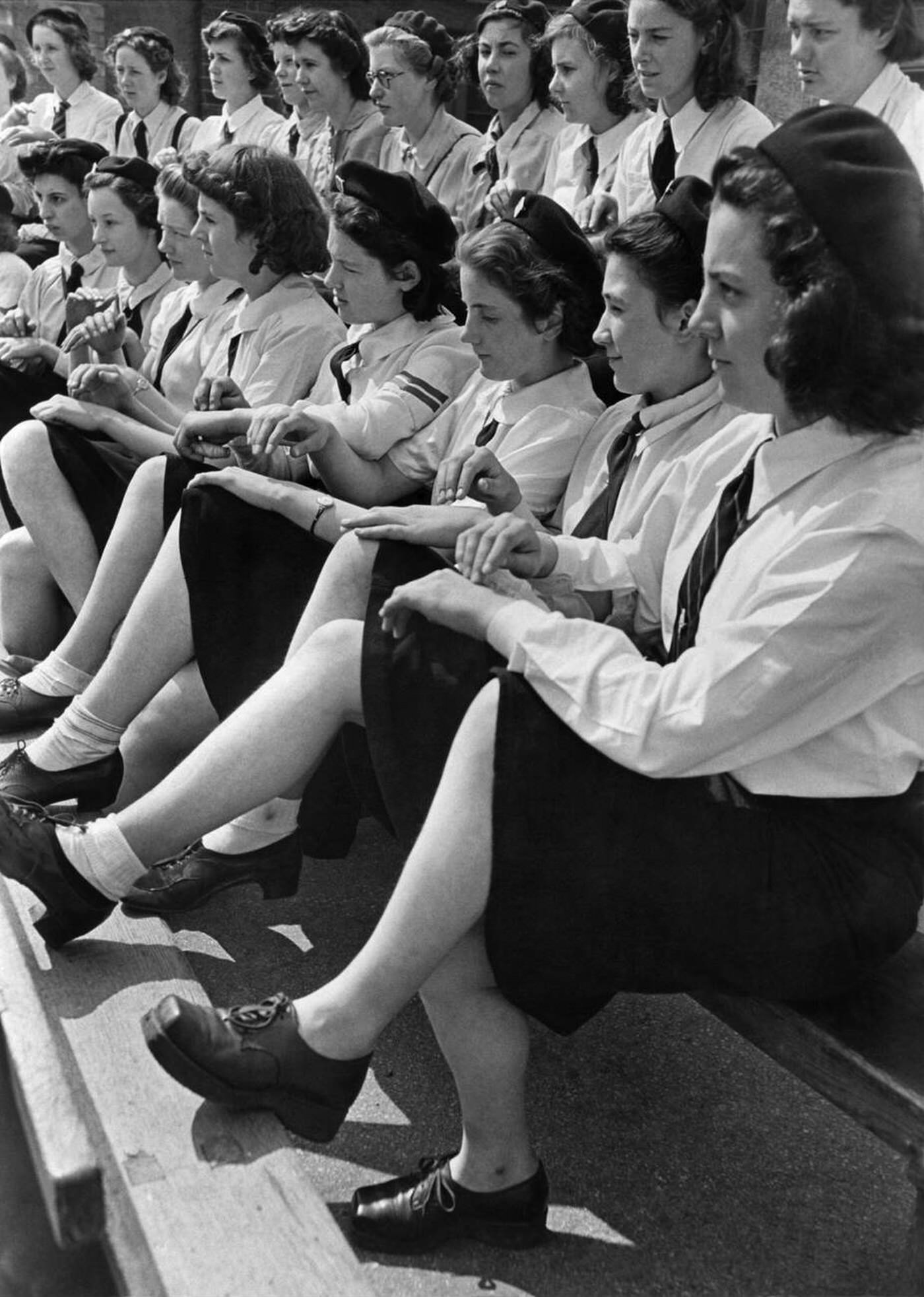
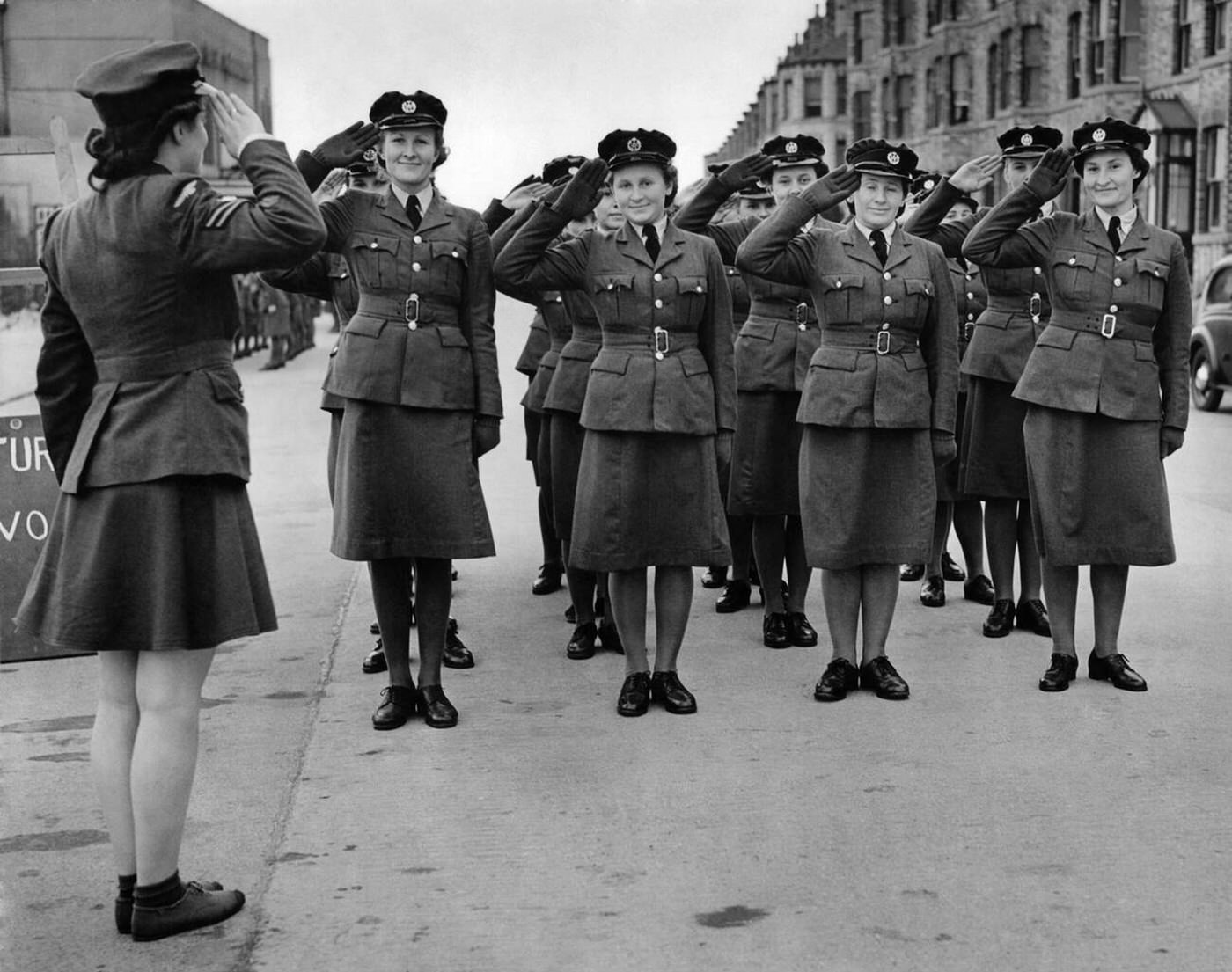
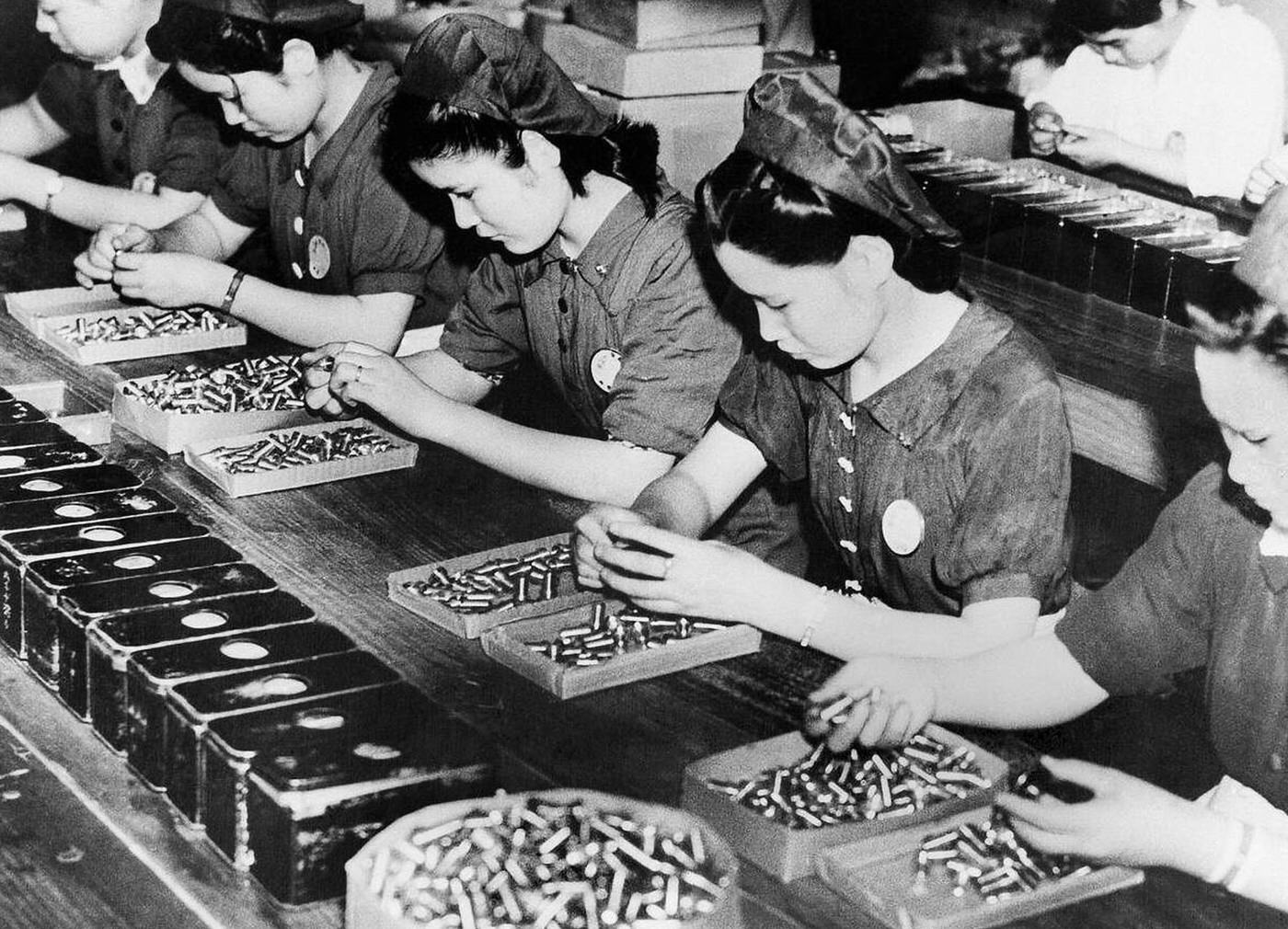
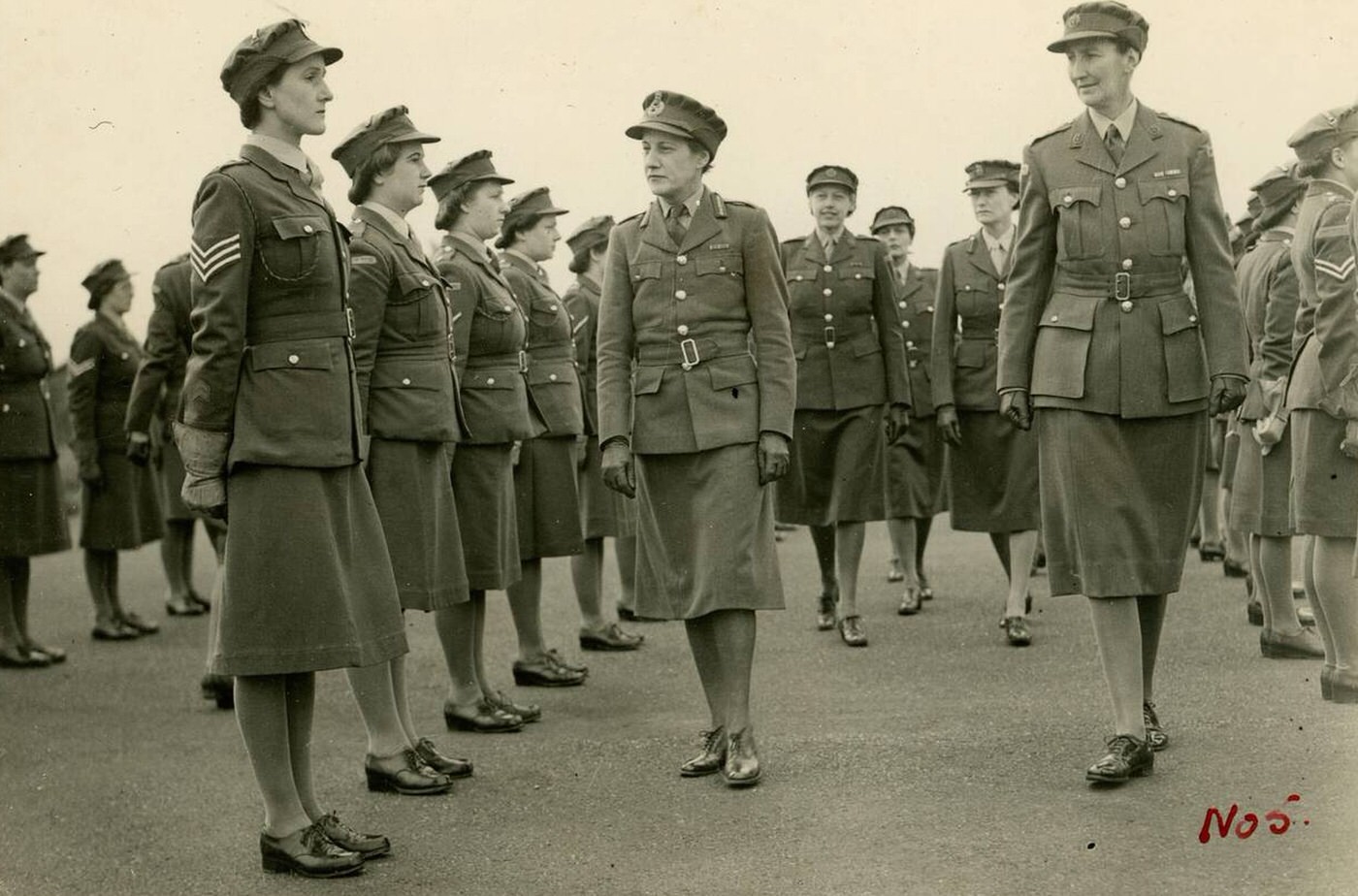
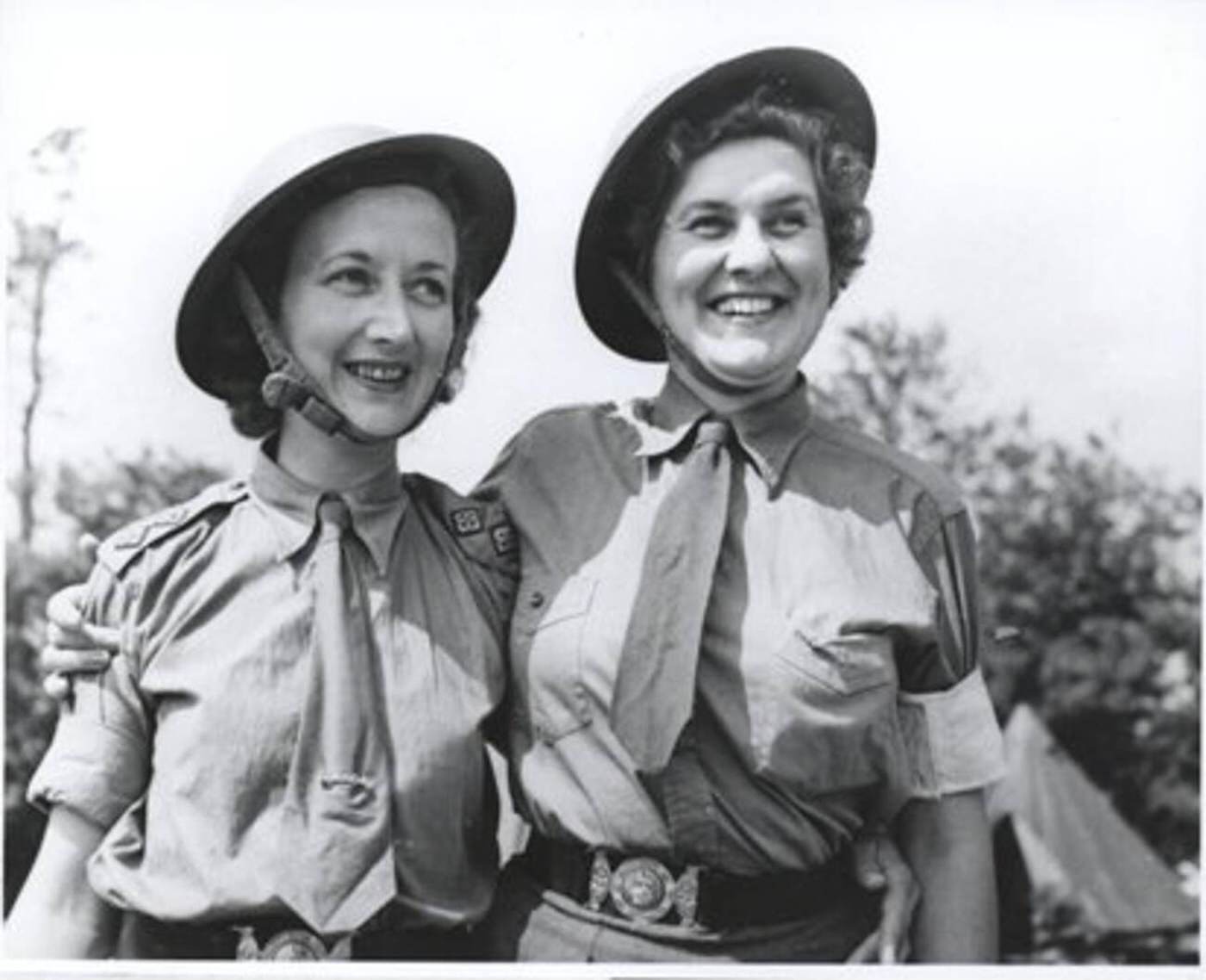
Japan also employed women in ammunition factories by 1941, as the demands of the Pacific War stretched its industrial capacity. Women in Japanese plants worked under conditions that became increasingly difficult as the war progressed and Allied bombing campaigns targeted industrial infrastructure. An ATS and Women’s Transport Service inspection photograph from 1940 captured the formal structure of women’s military service in Britain at the outset of the conflict, with uniformed women lined up for official review.
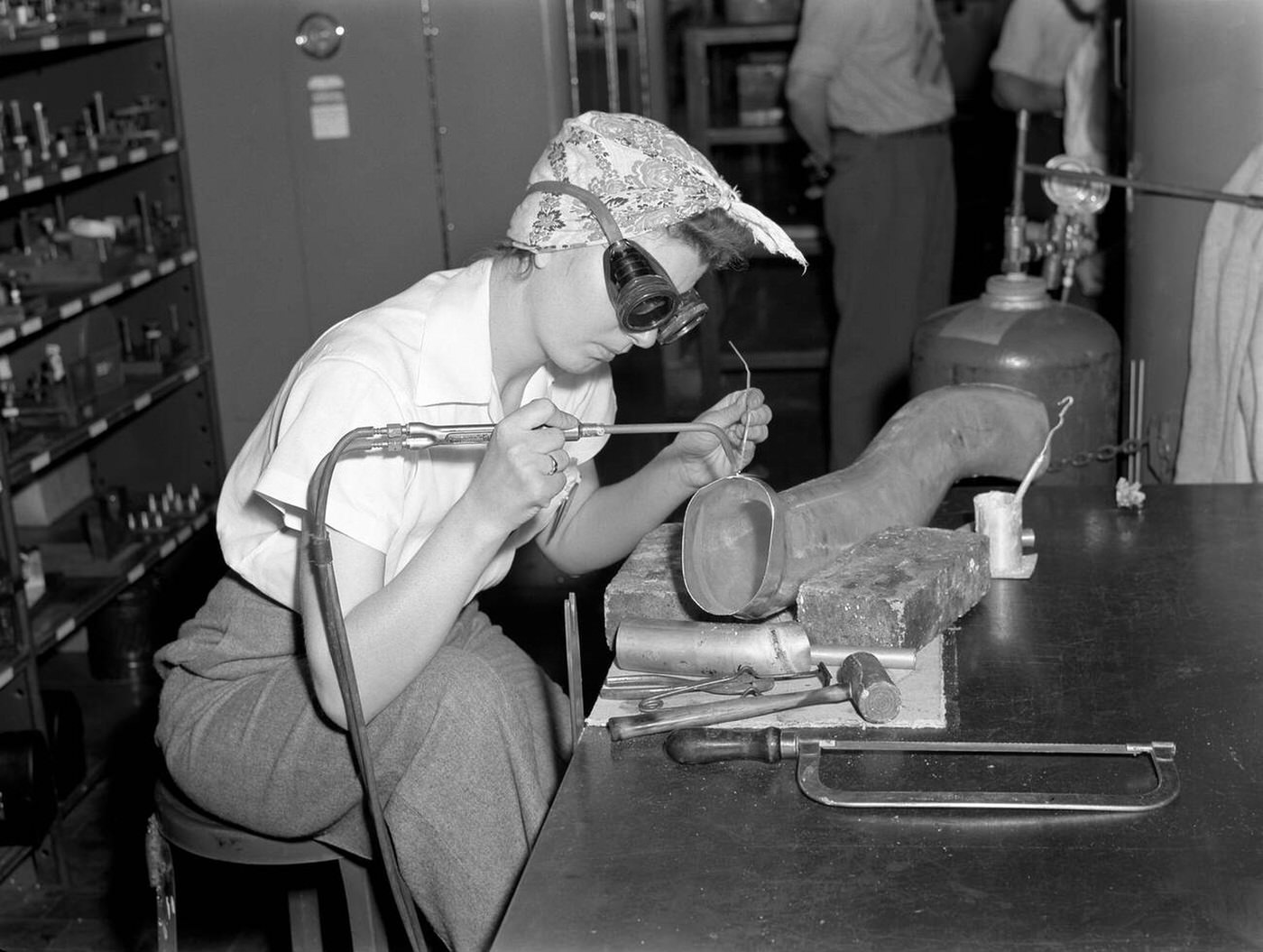
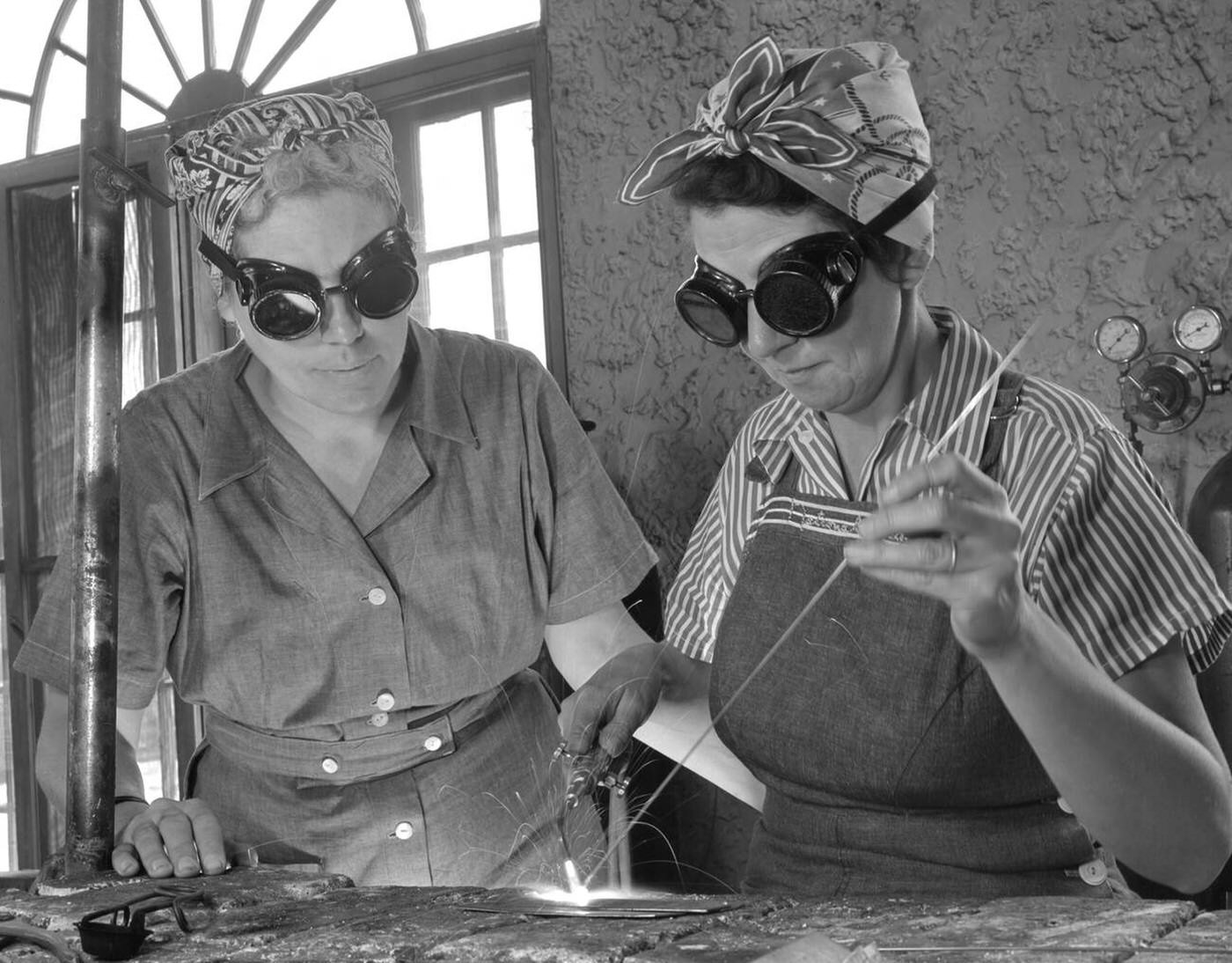
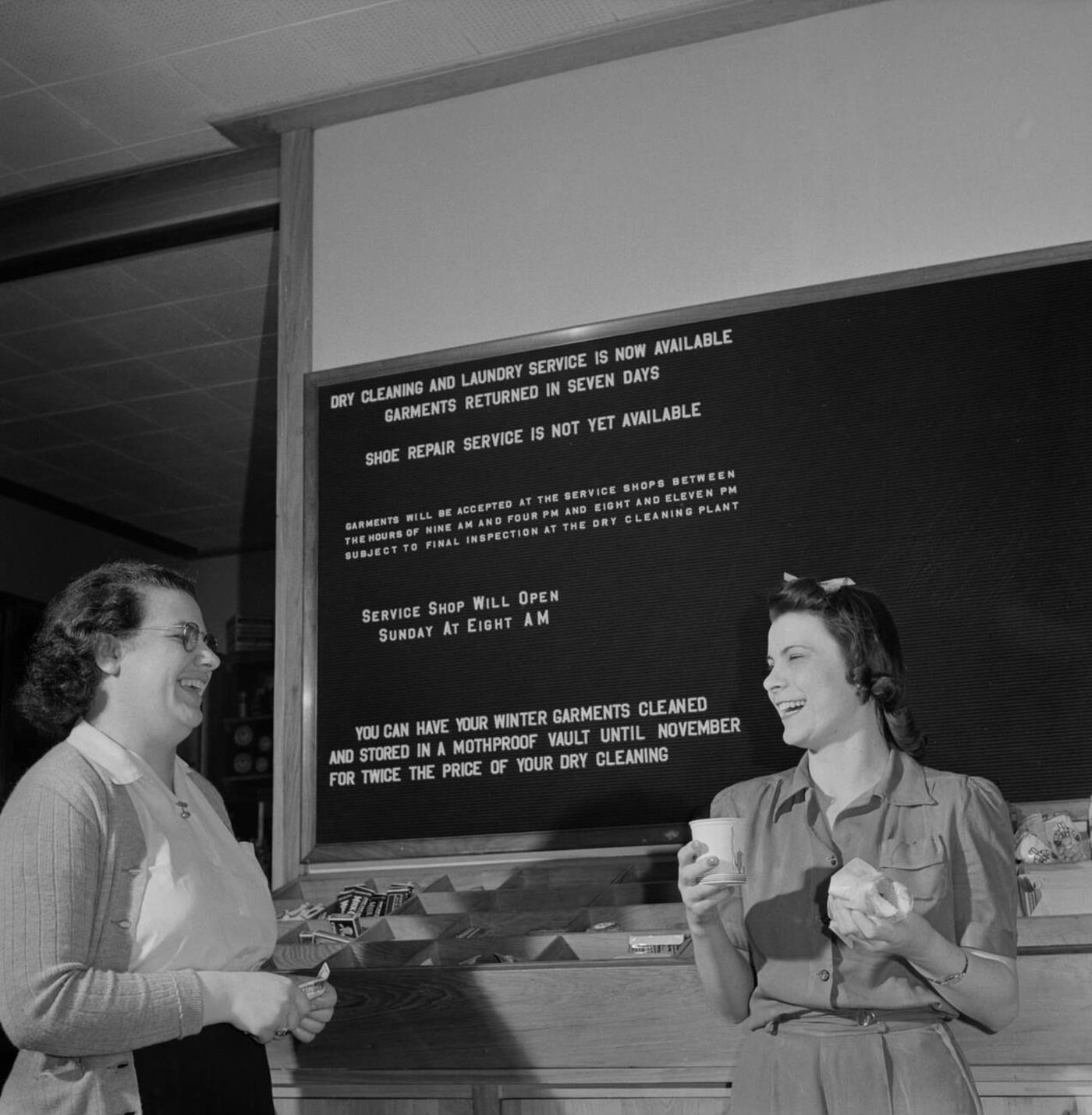
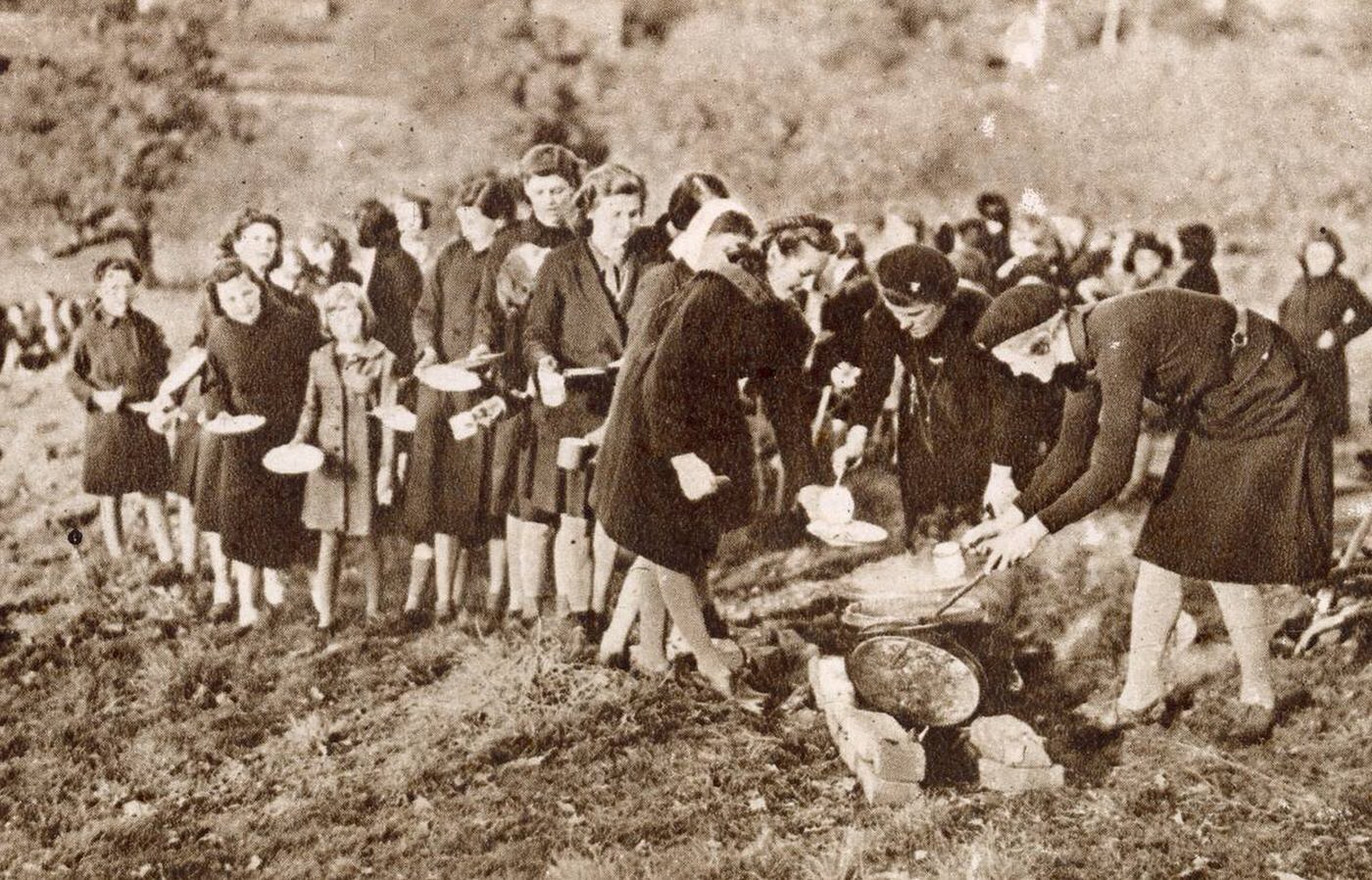
Women welders, photographed across multiple years and countries throughout the 1940s, represent one of the most visible trade skills women adopted during the war. The work required significant training and produced permanent structural joins in ships, tanks, and aircraft. On factory floors and in mess halls, women took breaks and ate together—a 1943 photograph of women eating hotdogs shows the human side of daily wartime work life. Volunteer organizations like the Guide International Service rehearsed food service operations, preparing to deliver meals in emergency and relief situations.
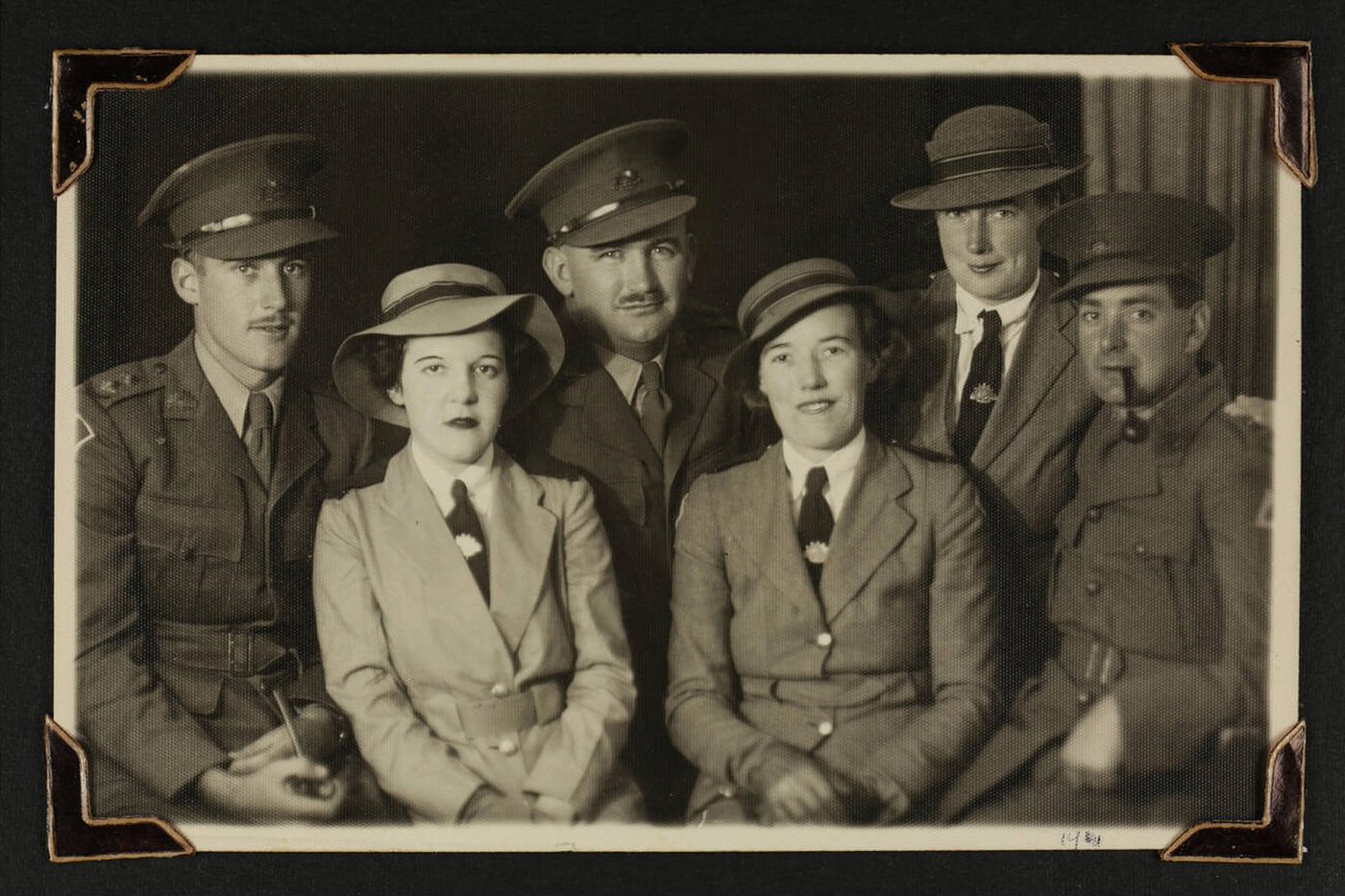
Military nursing was formally organized through national nursing services. Sister Isabel Erskine Plante, photographed in 1941, represents the professional nursing corps that would deploy to every theater of the war over the following four years. ATS volunteers, including a young Princess Elizabeth, were photographed together in one of the war’s most noted images linking royalty to ordinary wartime service. Nursing sisters served throughout the conflict, from the beaches of Normandy to the jungles of Southeast Asia.
Aircraft maintenance facilities employed women in highly technical roles throughout the war. WAAF members and civilian women serviced engines, repaired instruments, and checked control surfaces on operational aircraft. Women operating drill presses in 1942 produced thousands of components daily, feeding assembly lines that could not afford to slow down. The scope of what women accomplished in manufacturing, agriculture, transportation, military service, and civil defense represents one of the largest labor shifts in modern history.