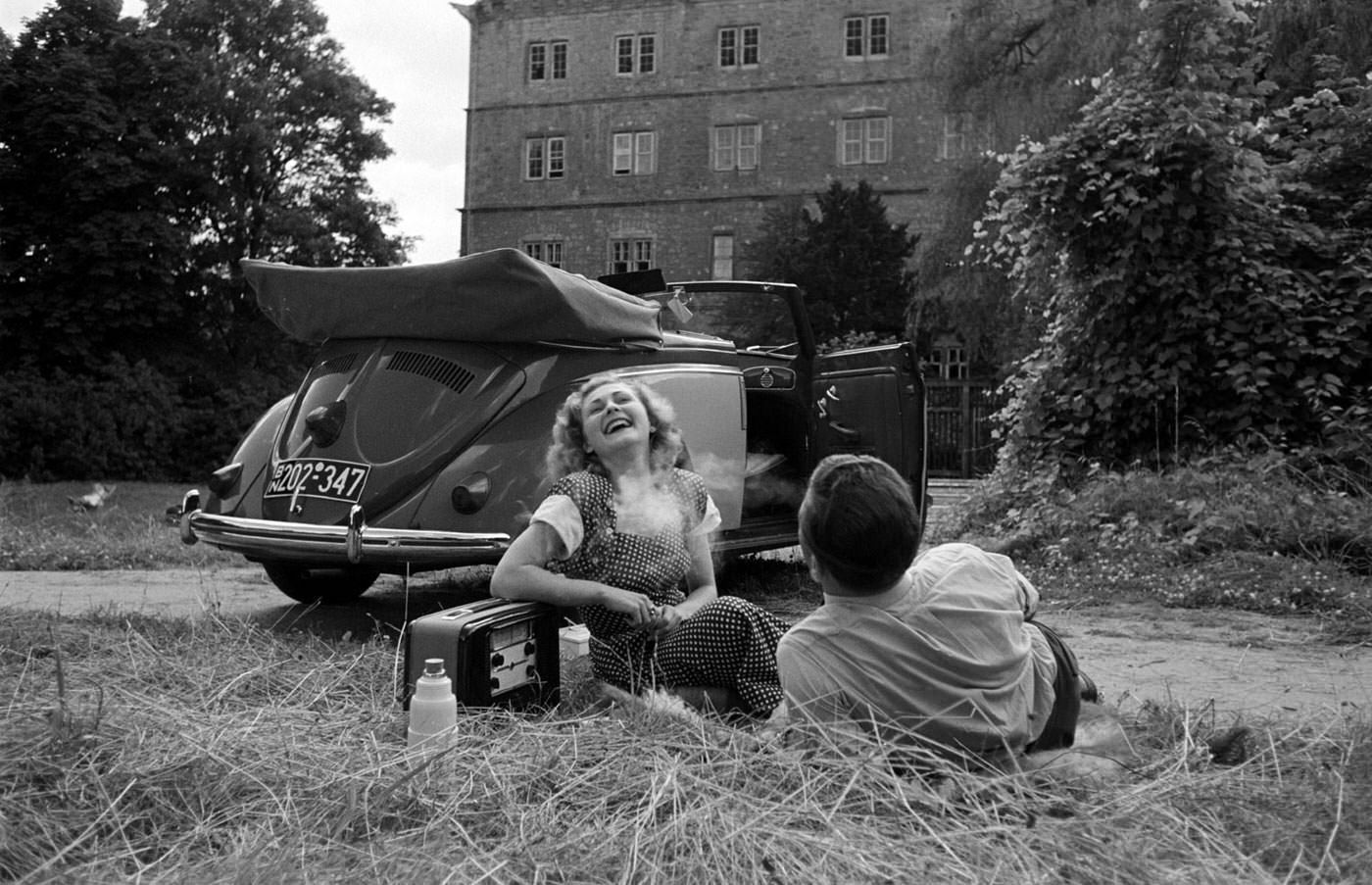
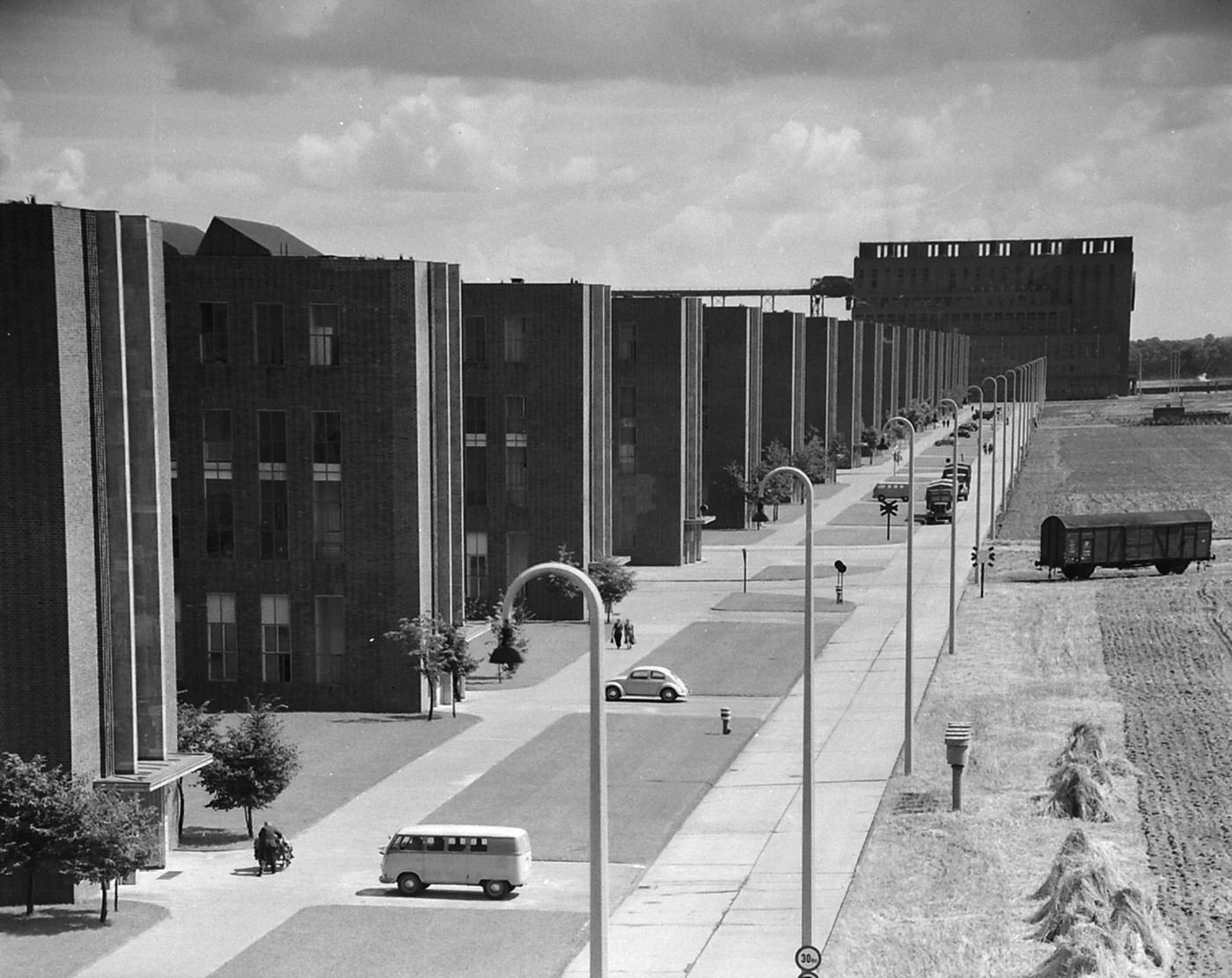
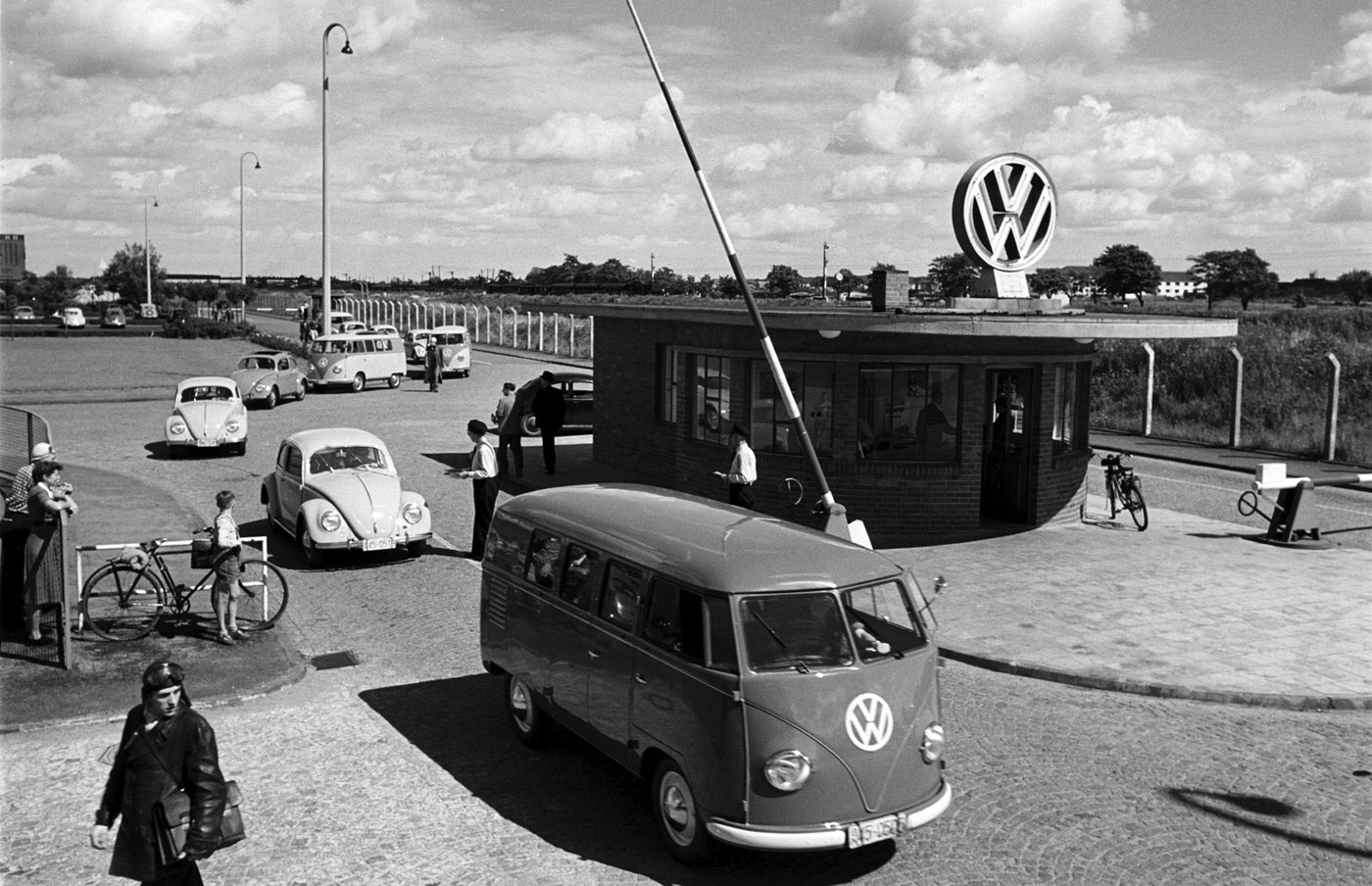
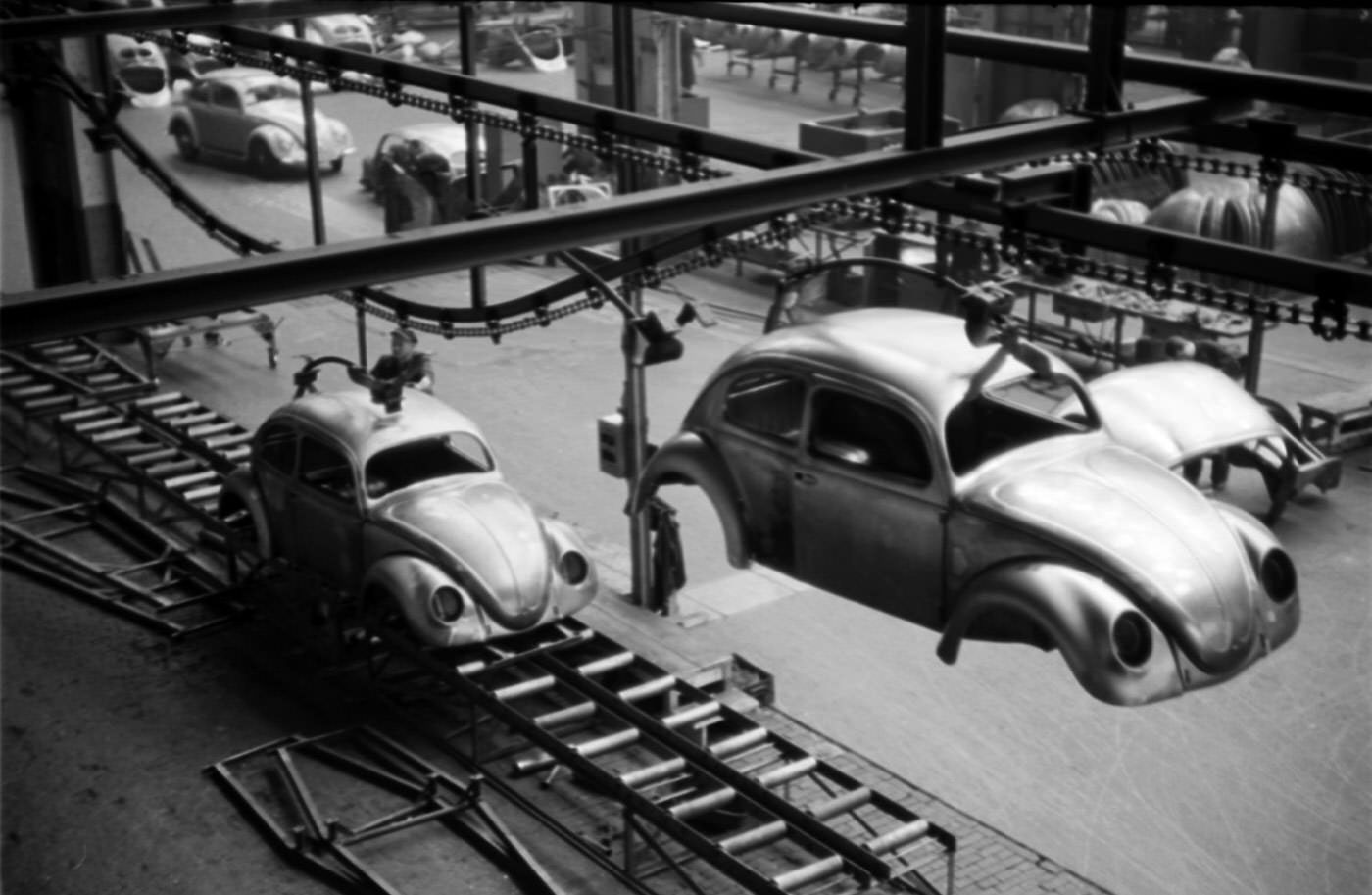
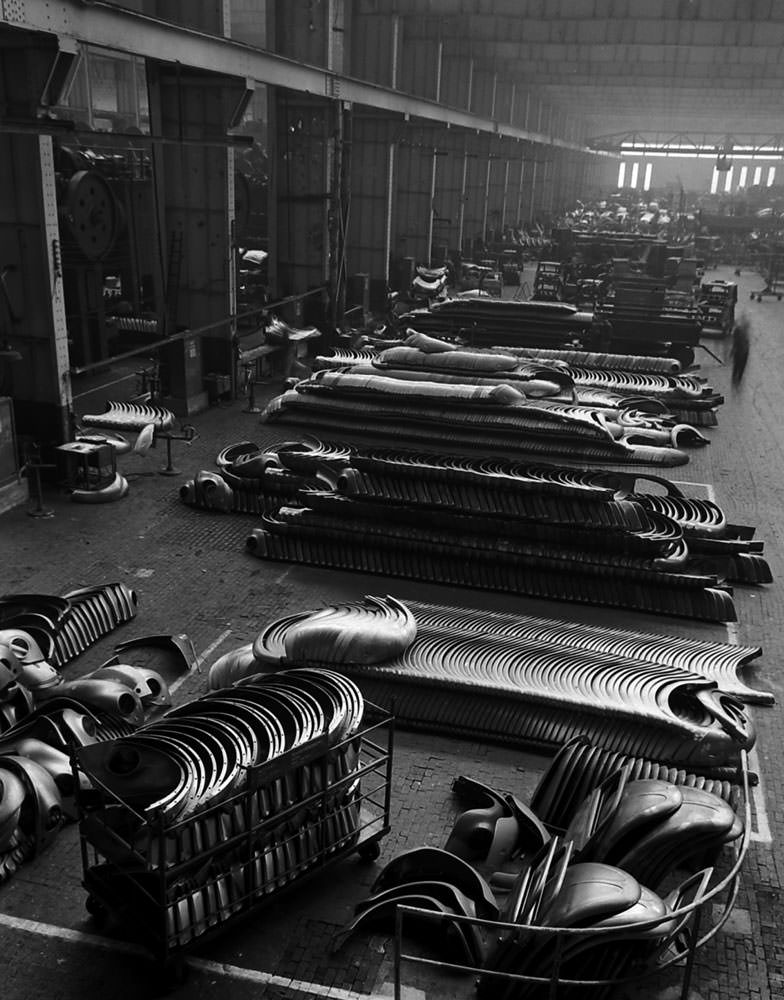
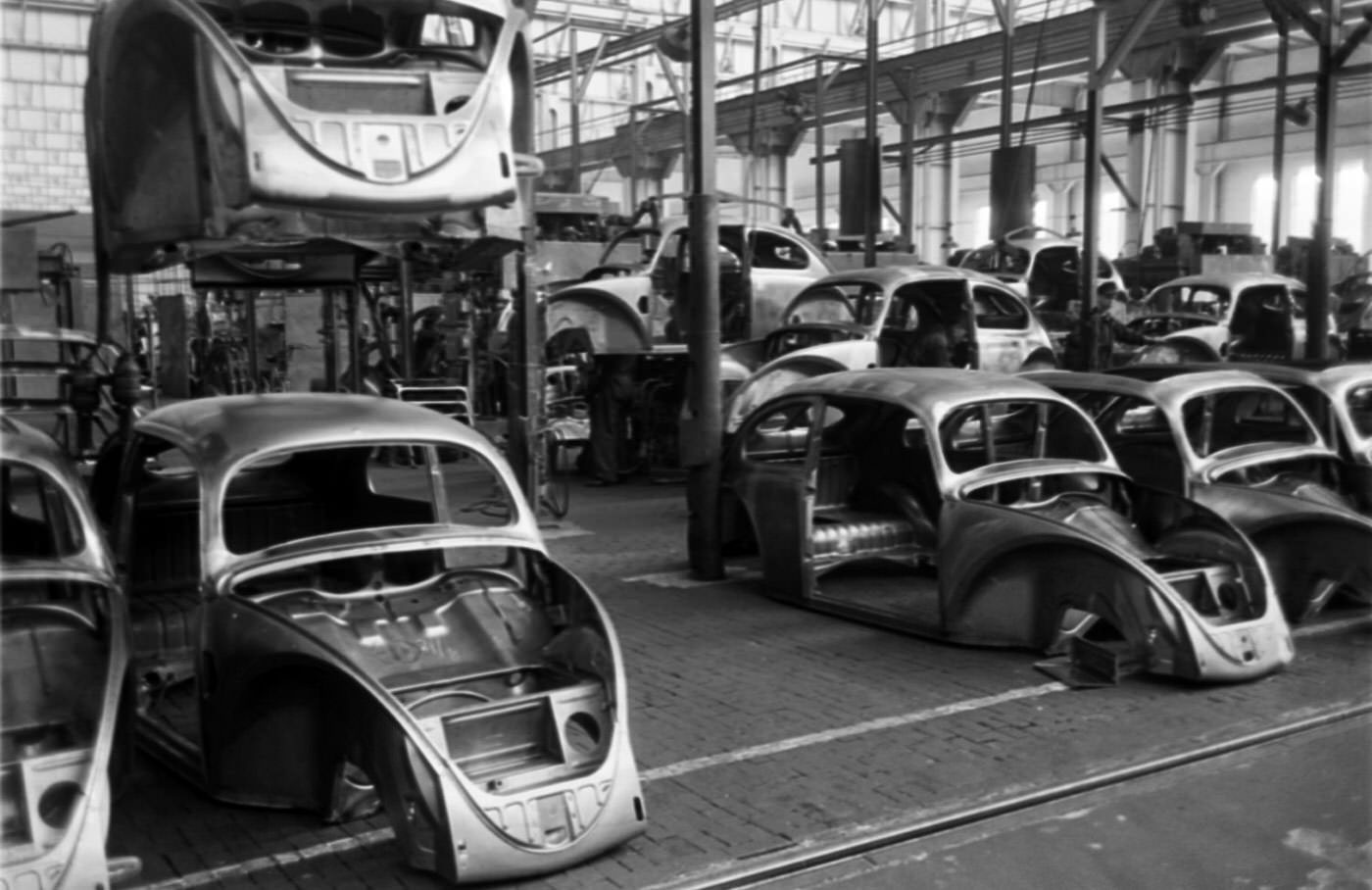
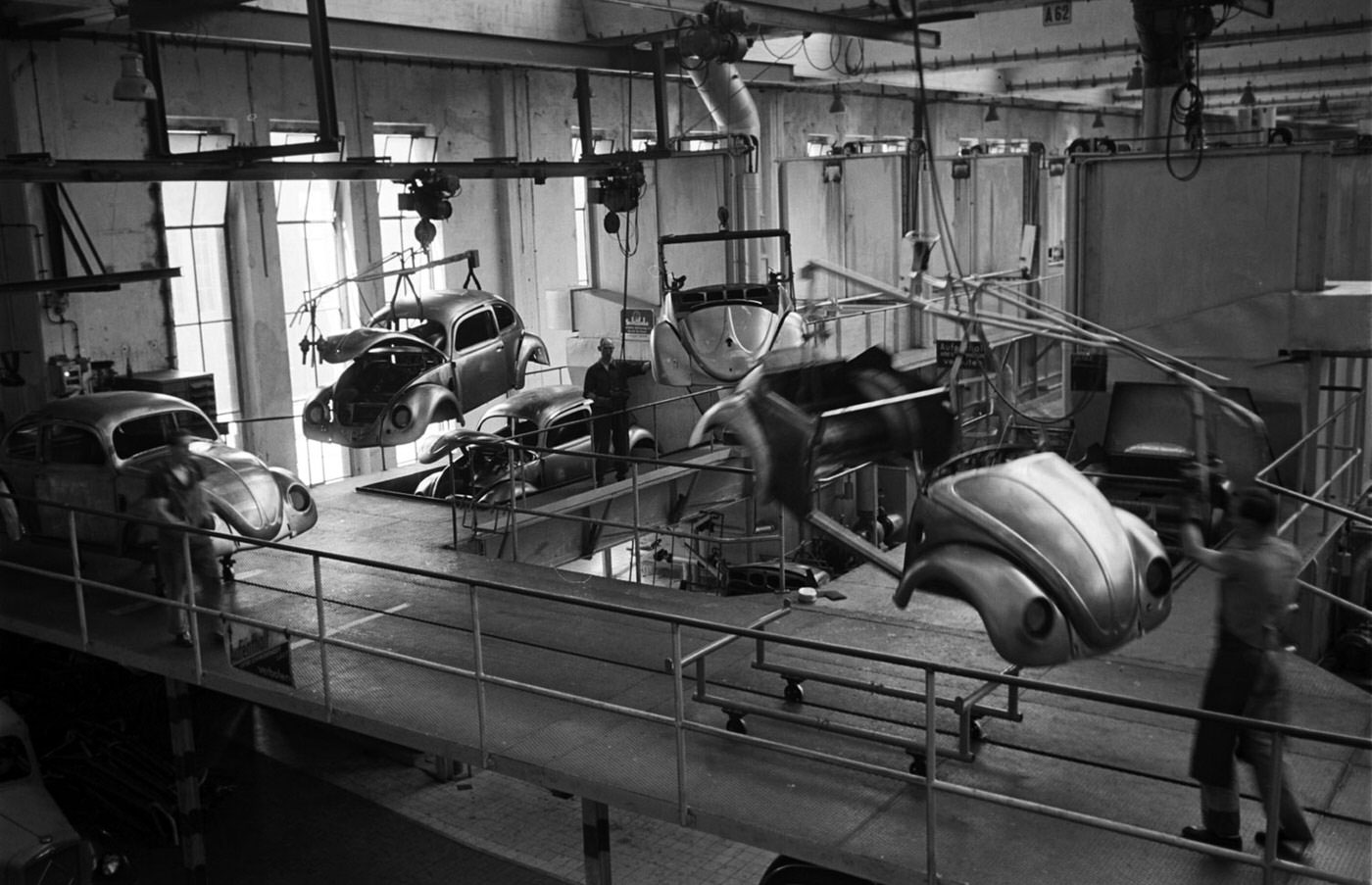
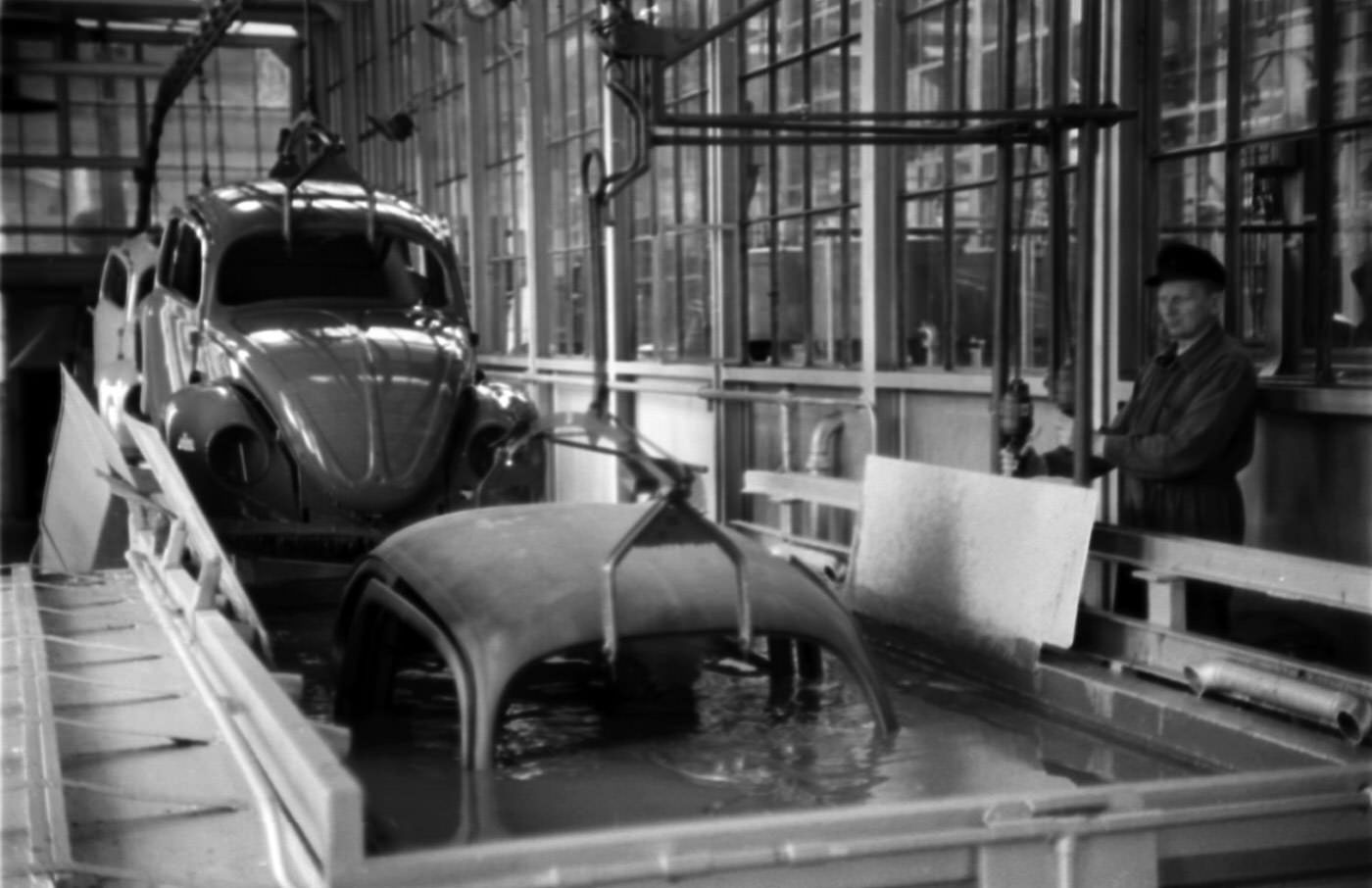
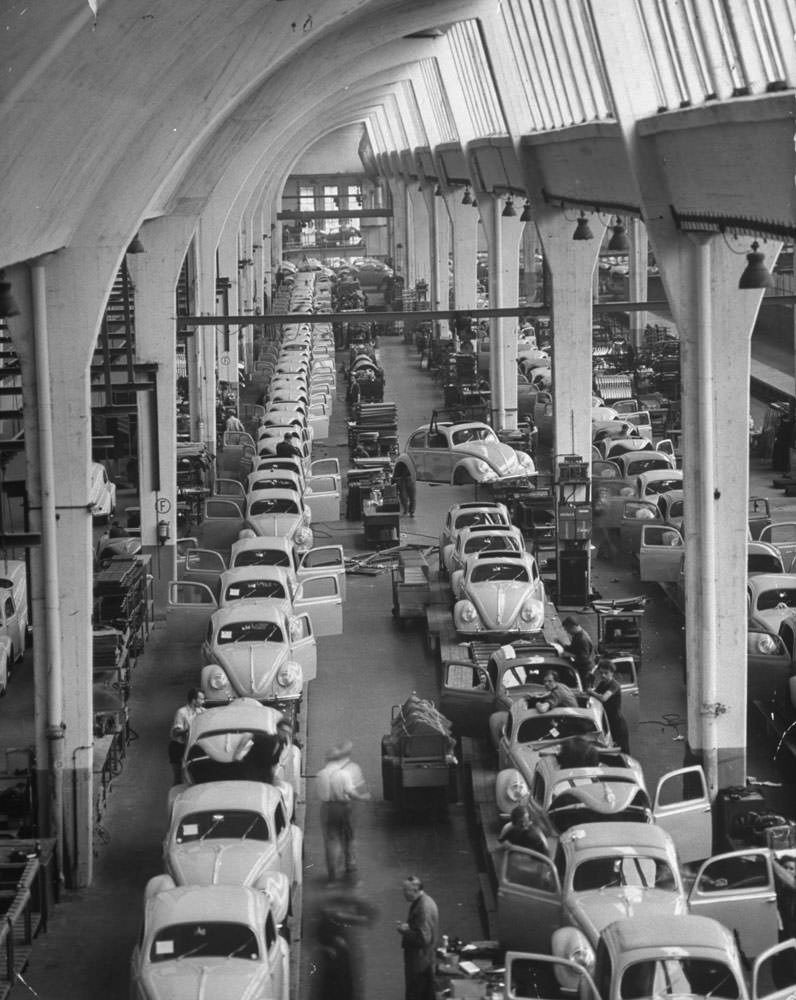
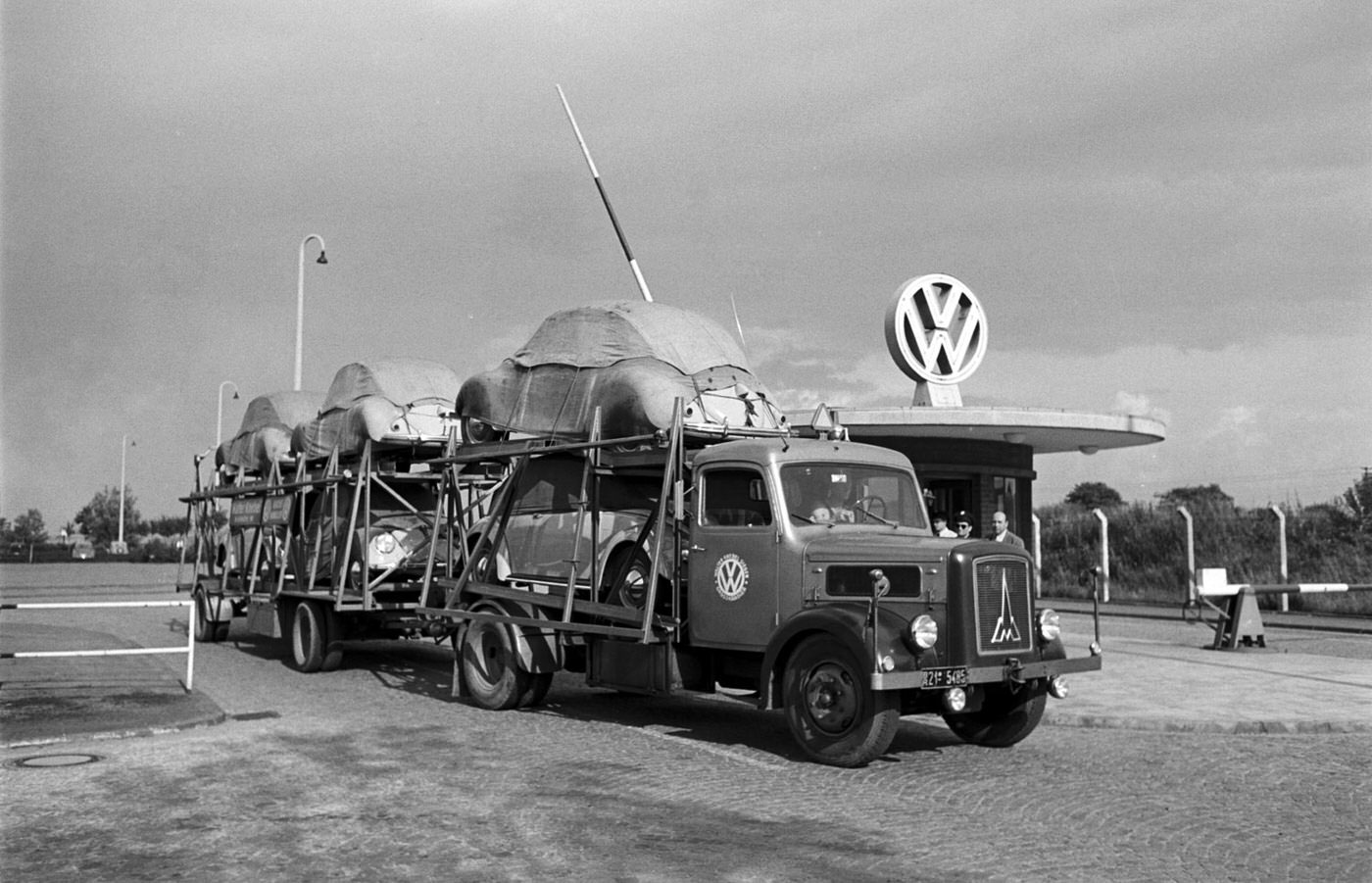
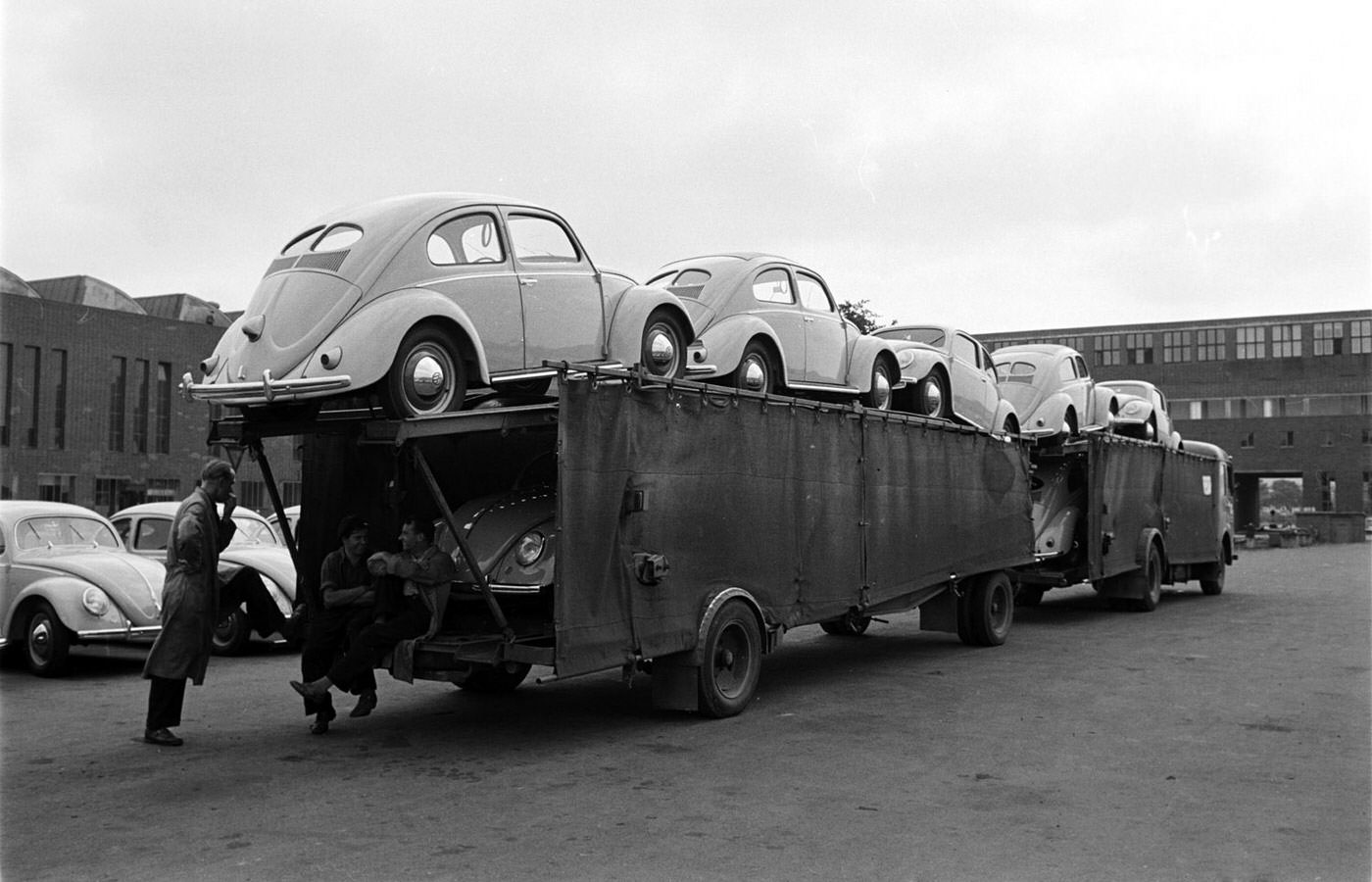
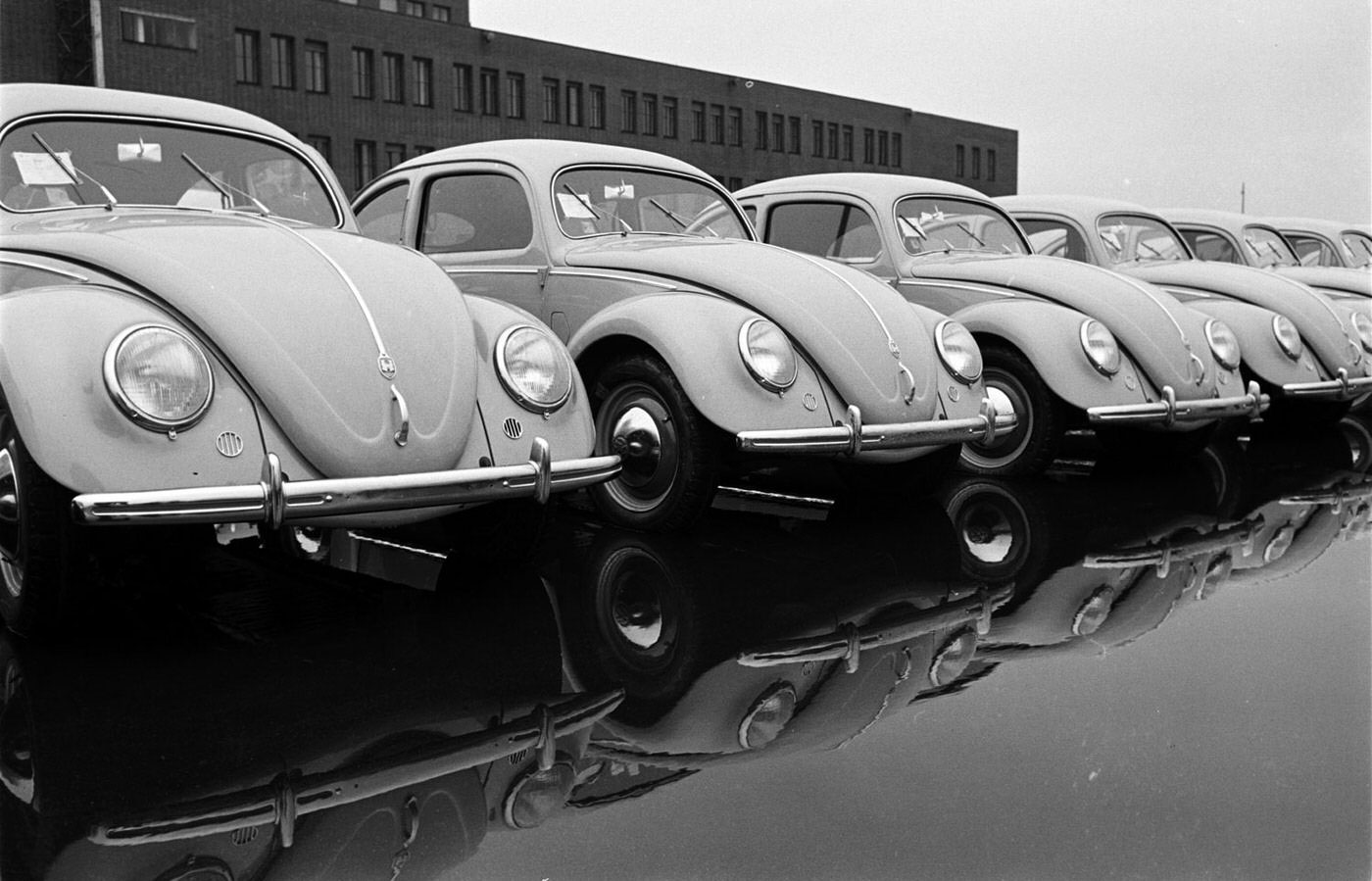
Just six years after the end of World War II, the Volkswagen factory in Wolfsburg, Germany was running at full speed. Germany was deep in the process of rebuilding, and this plant stood as one of the clearest signs that the country’s industrial engine was turning again. The main vehicle rolling off the line was the Volkswagen Type 1 — known around the world as the Beetle.
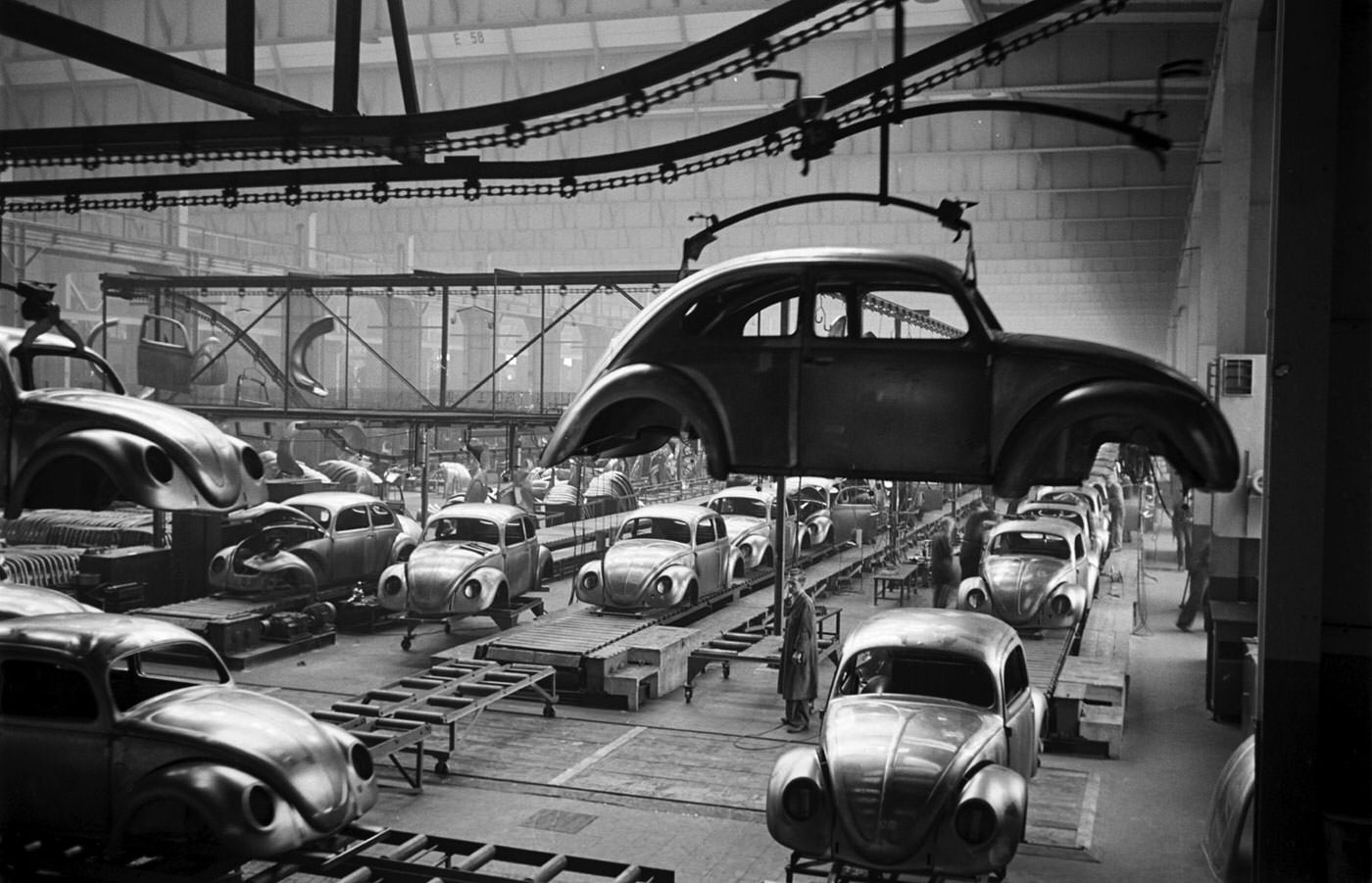
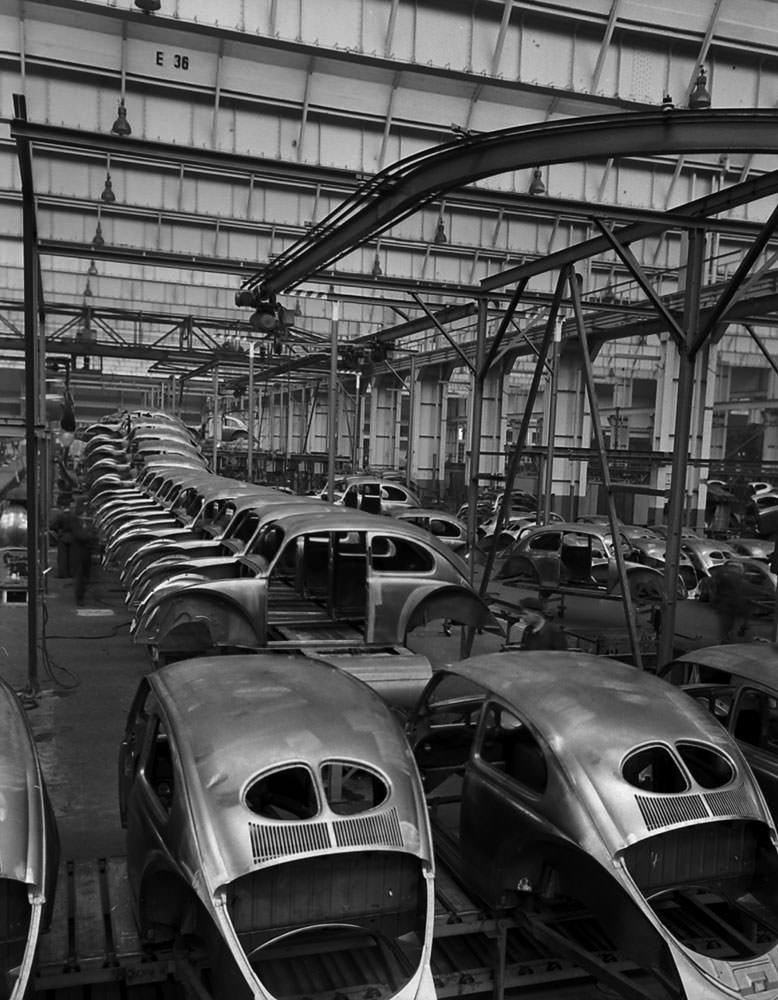
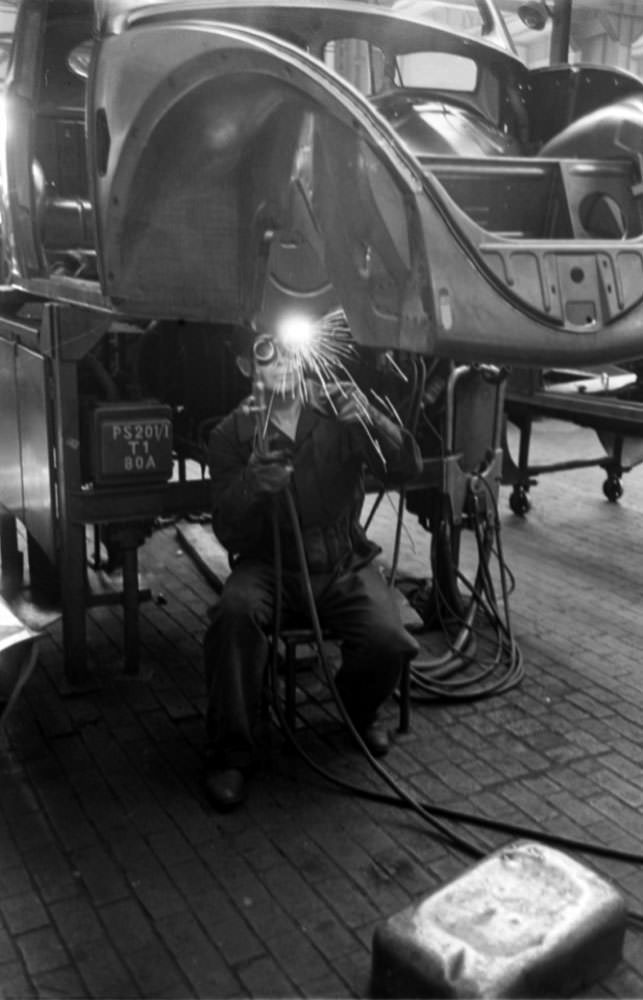
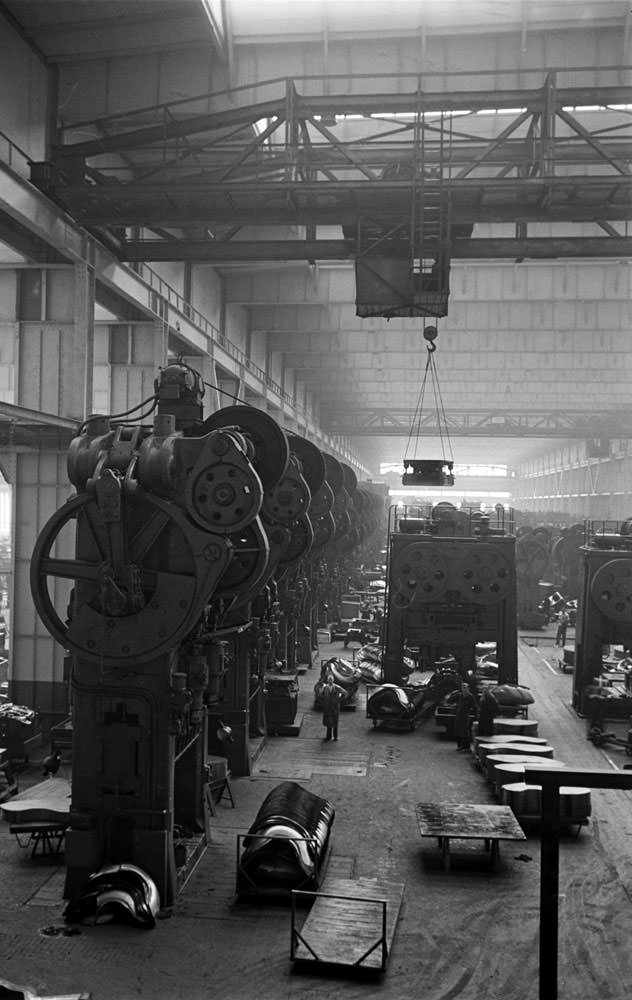
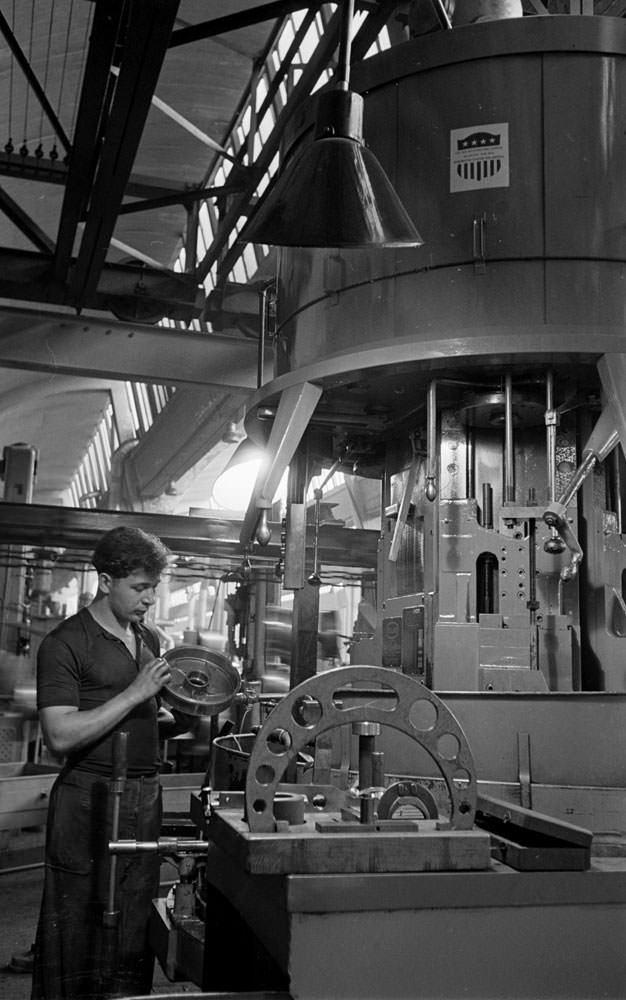
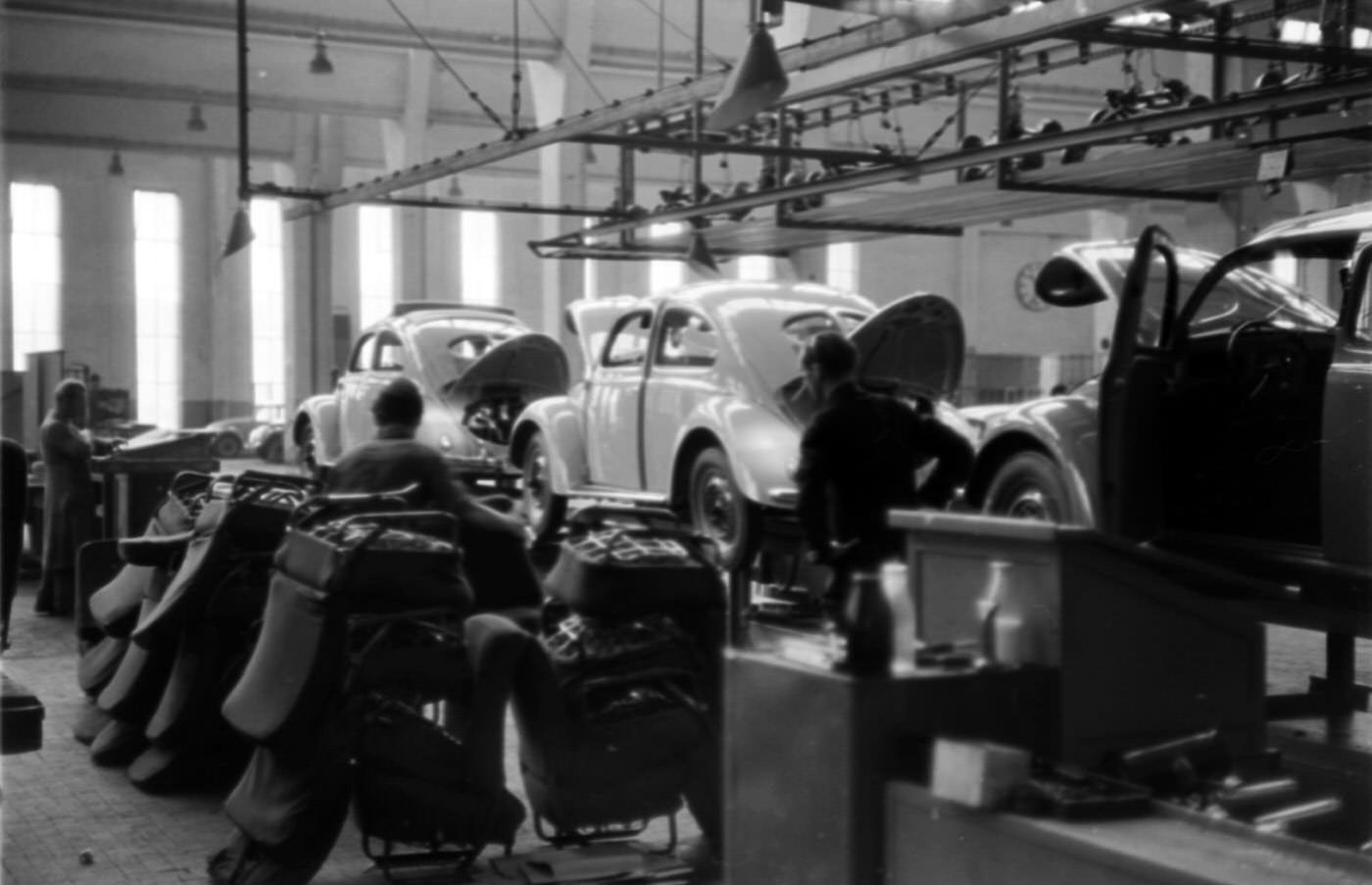
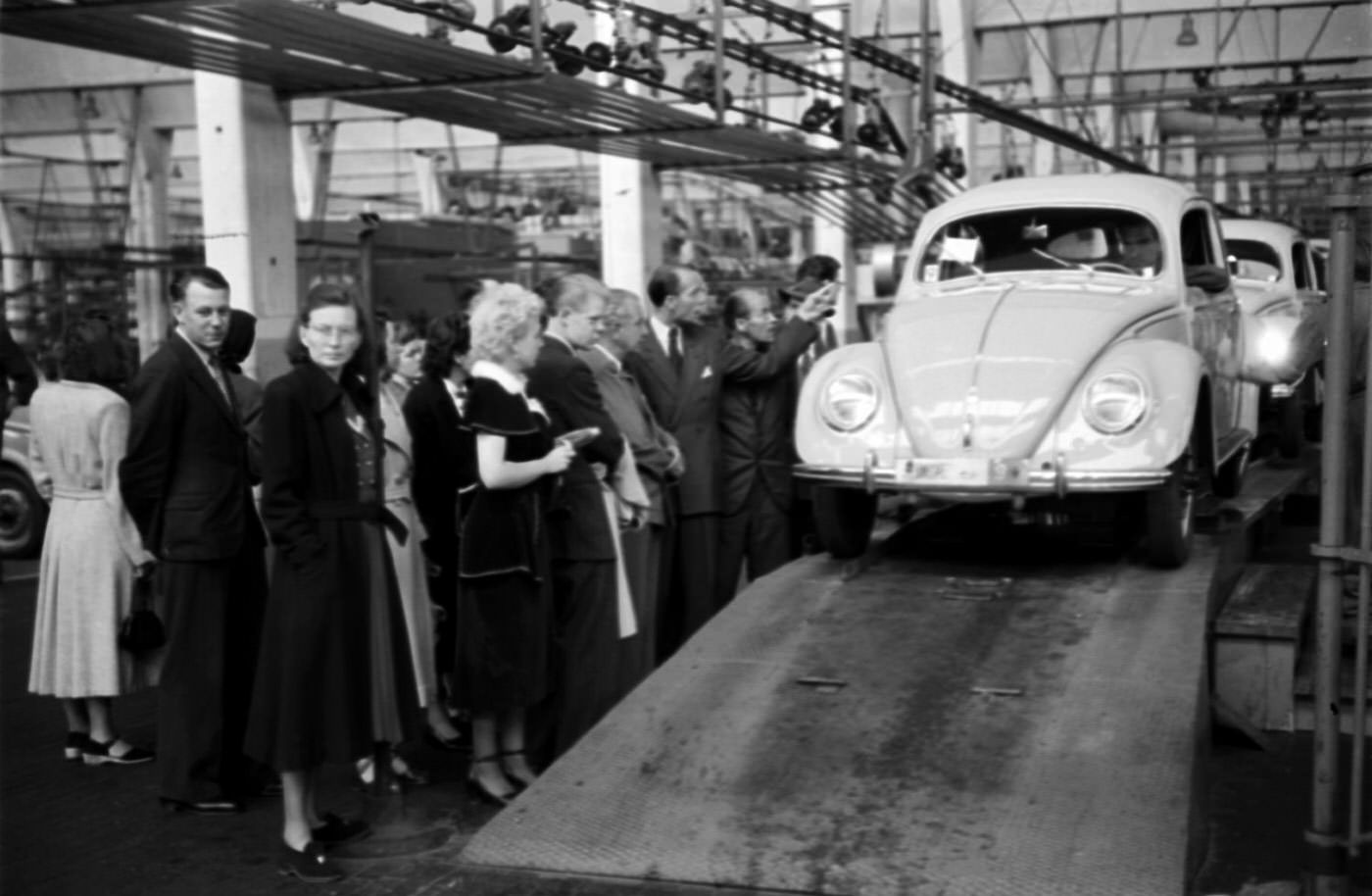
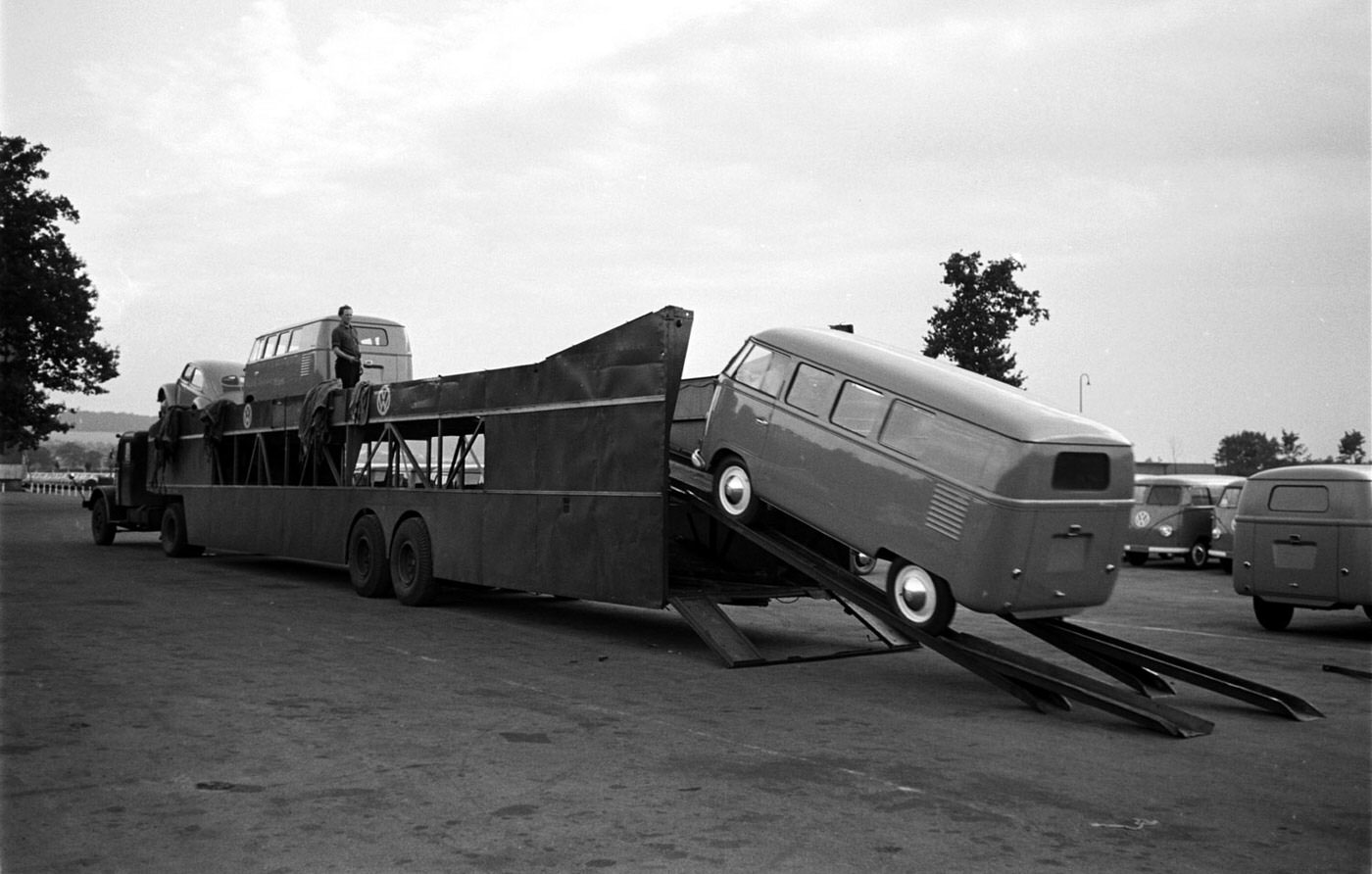
The factory used assembly lines, moving cars through each stage of construction in sequence. Workers and specialized machines handled everything from engine fitting to final body assembly. By this point, Volkswagen was also beginning production of the Type 2 — the early split-windshield VW bus — adding another model to its growing lineup.
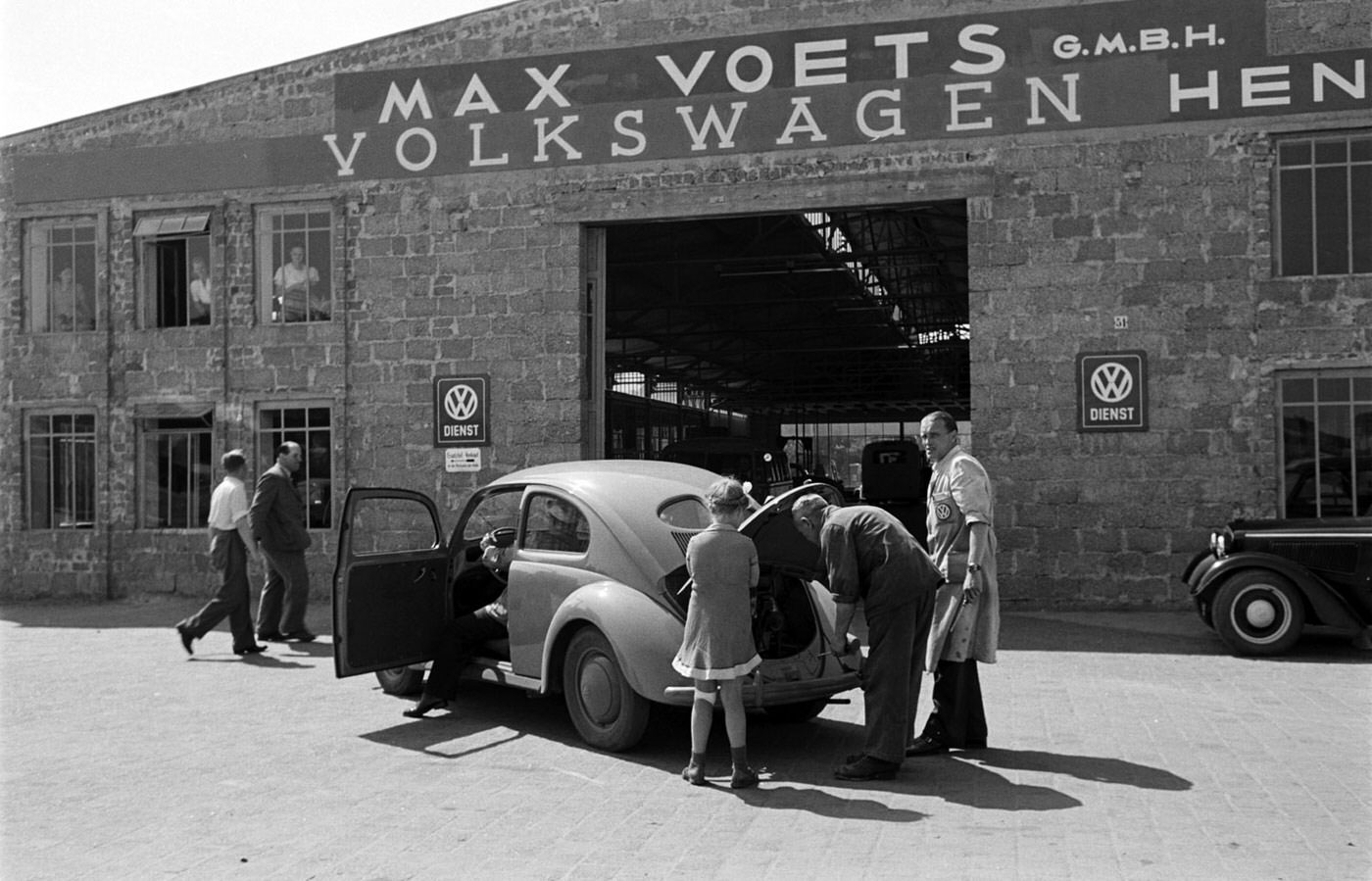
In July 1951, LIFE magazine sent photographer Walter Sanders to document the Wolfsburg plant. Sanders had a direct personal connection to Germany’s recent history — he had fled the country when the Nazis rose to power. Now he was returning with a camera to record a very different Germany, one focused on production and recovery.
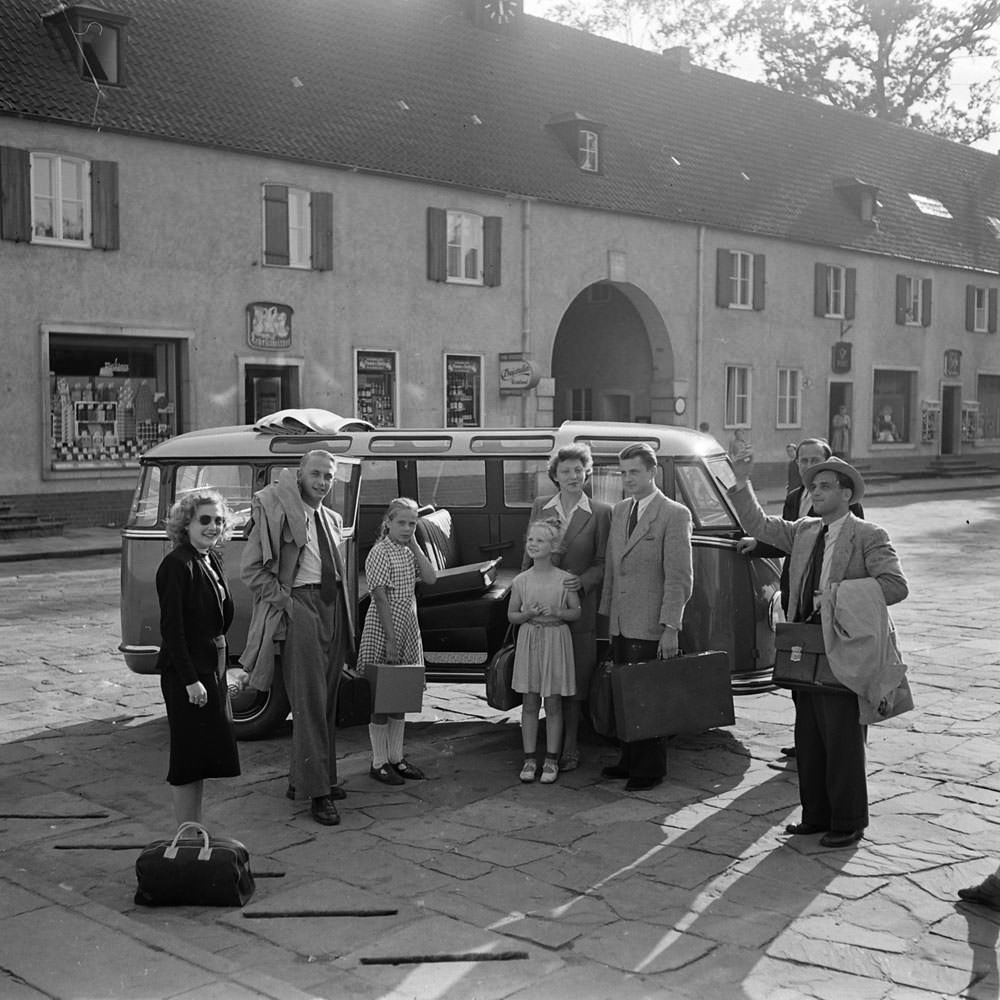
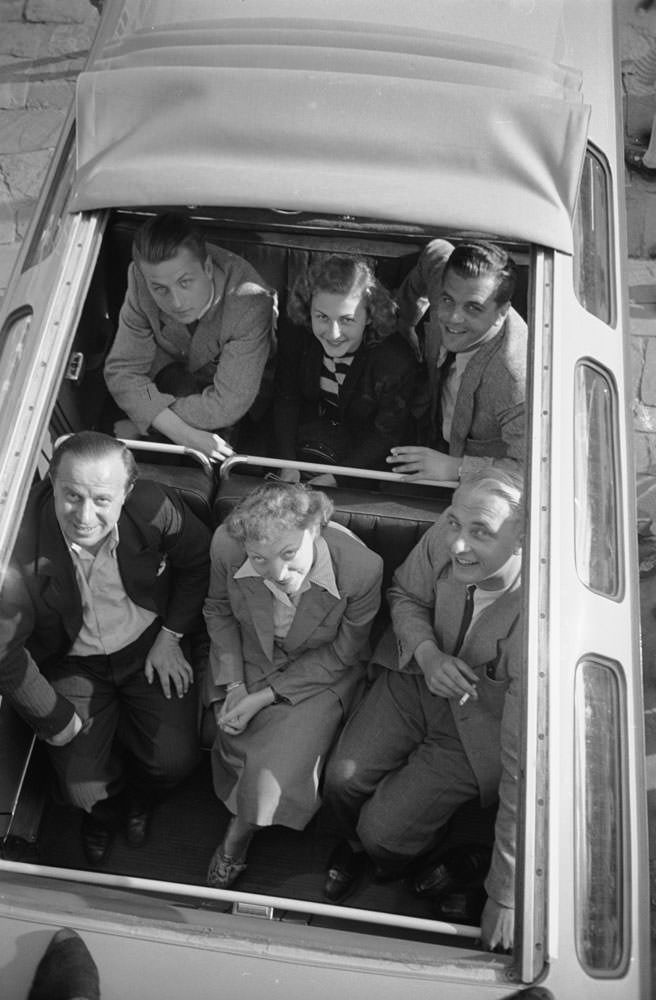
His black-and-white photographs captured German workers at their stations, machinery in motion, and vehicles nearing completion on the line. The images are a precise visual record of the labor and mechanization driving Germany’s postwar industrial output.