
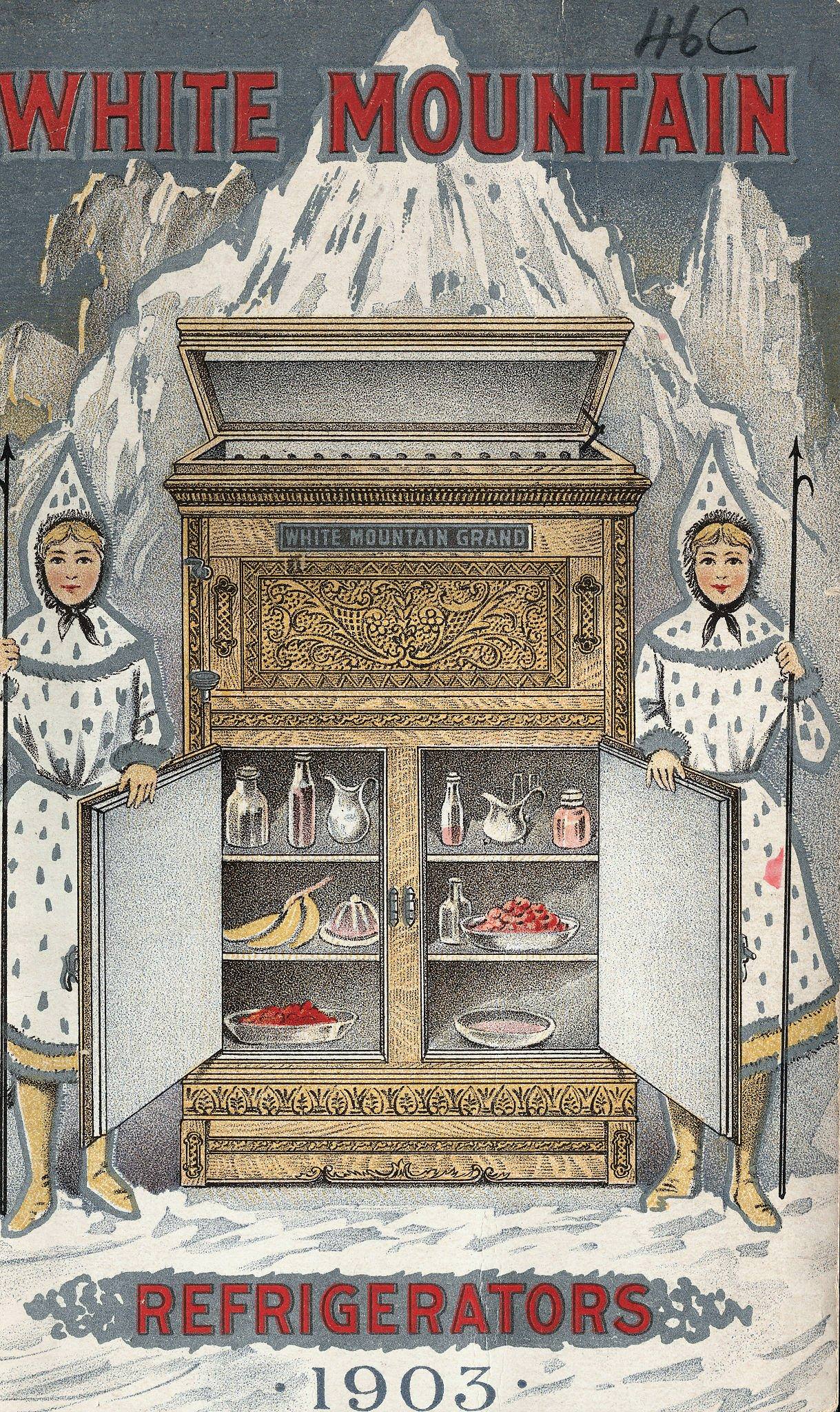
Before the electric refrigerator became a household staple, keeping food cold was a daily challenge. Families relied on blocks of ice delivered to their homes, stored in insulated wooden cabinets called iceboxes. Advertisers of the 1800s and early 1900s sold these iceboxes as practical, reliable solutions. The ads were straightforward — no glamour, no lifestyle promises. Just the promise that your food would stay cold.
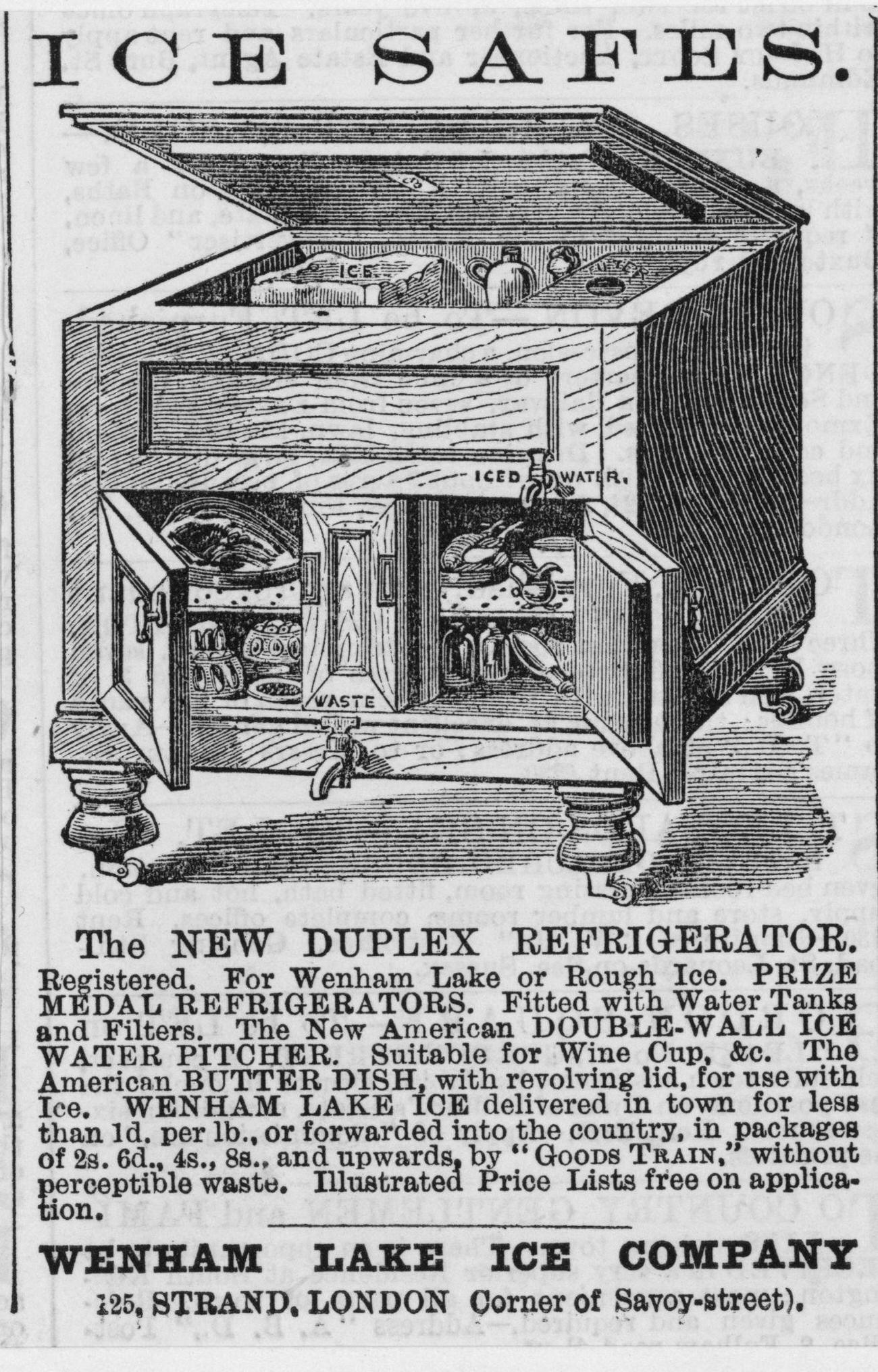
By the 1870s, competition among icebox makers was growing. Companies like the Wenham Lake Ice Company advertised products like the Ice Safe duplex refrigerator, targeting households and businesses that needed dependable cold storage. These early ads appeared in newspapers and trade publications, using plain text and simple illustrations to make their case.
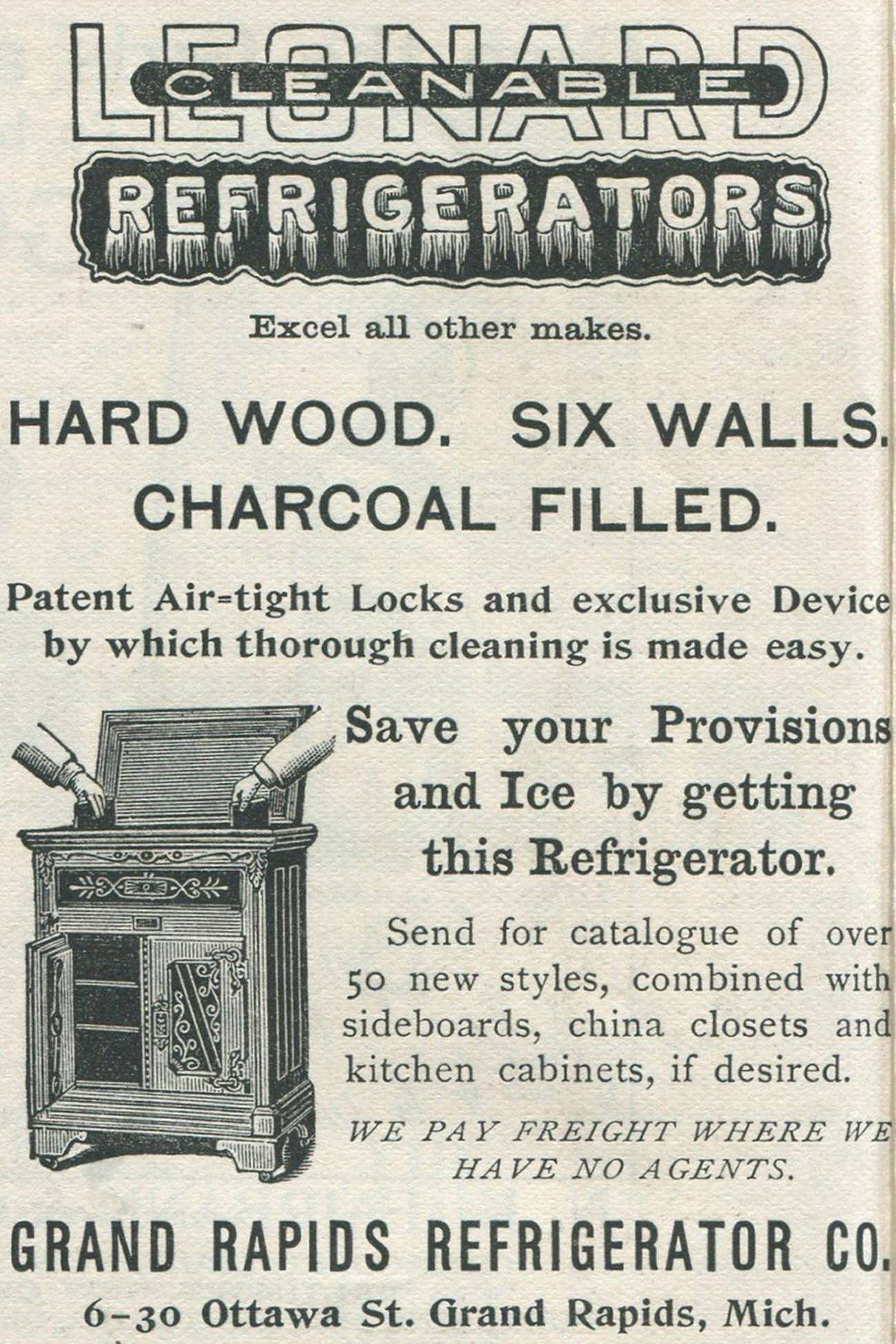
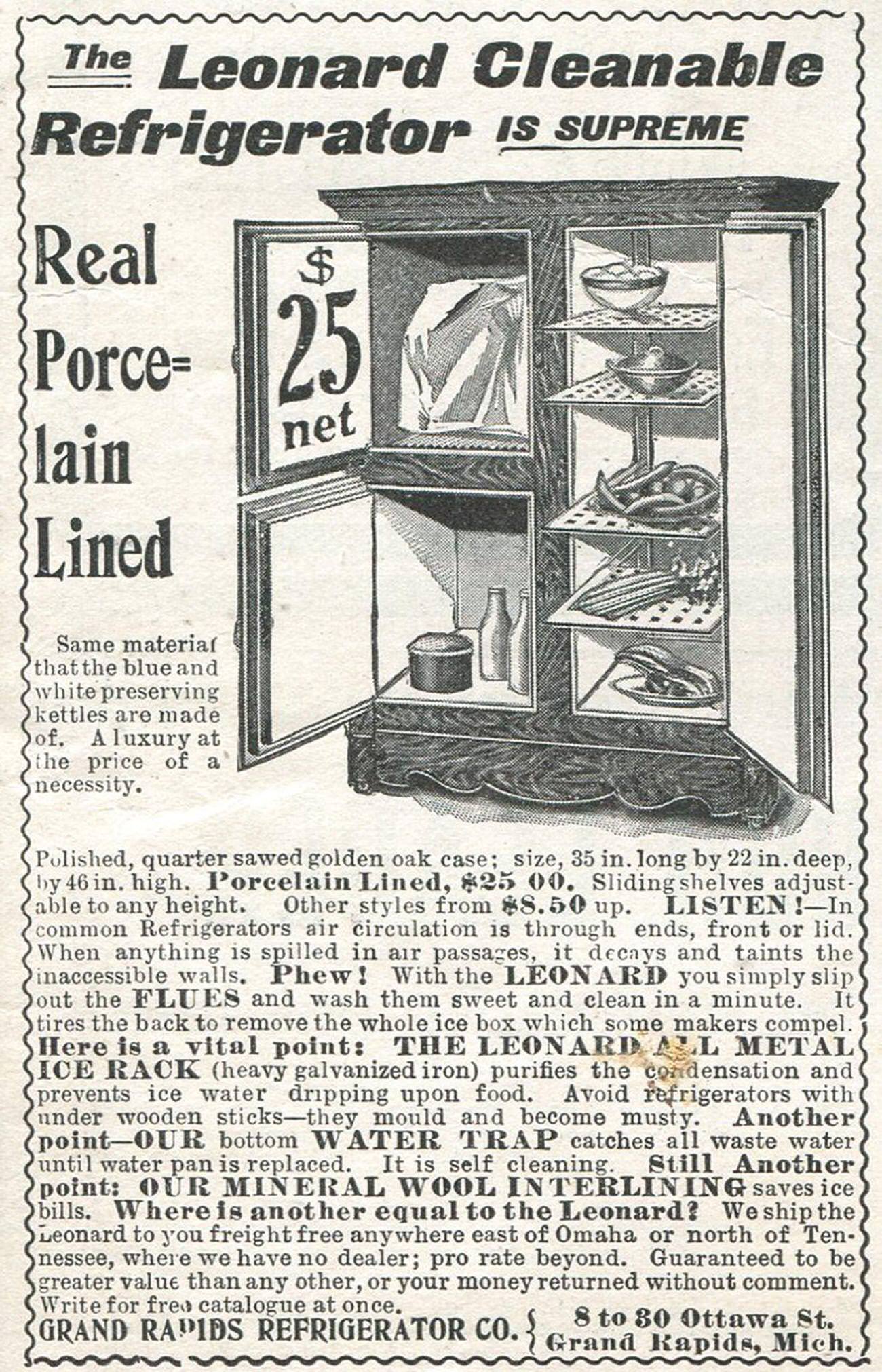
The late 1800s brought a wave of icebox manufacturers competing for the same customers. Companies promoted their products using features like porcelain tile linings, which were easier to clean and more hygienic than older wood interiors. The Leonard Cleanable Refrigerator, made by Grand Rapids Refrigerator Company, was one of the most widely advertised of these models, appearing in publications through the 1890s.
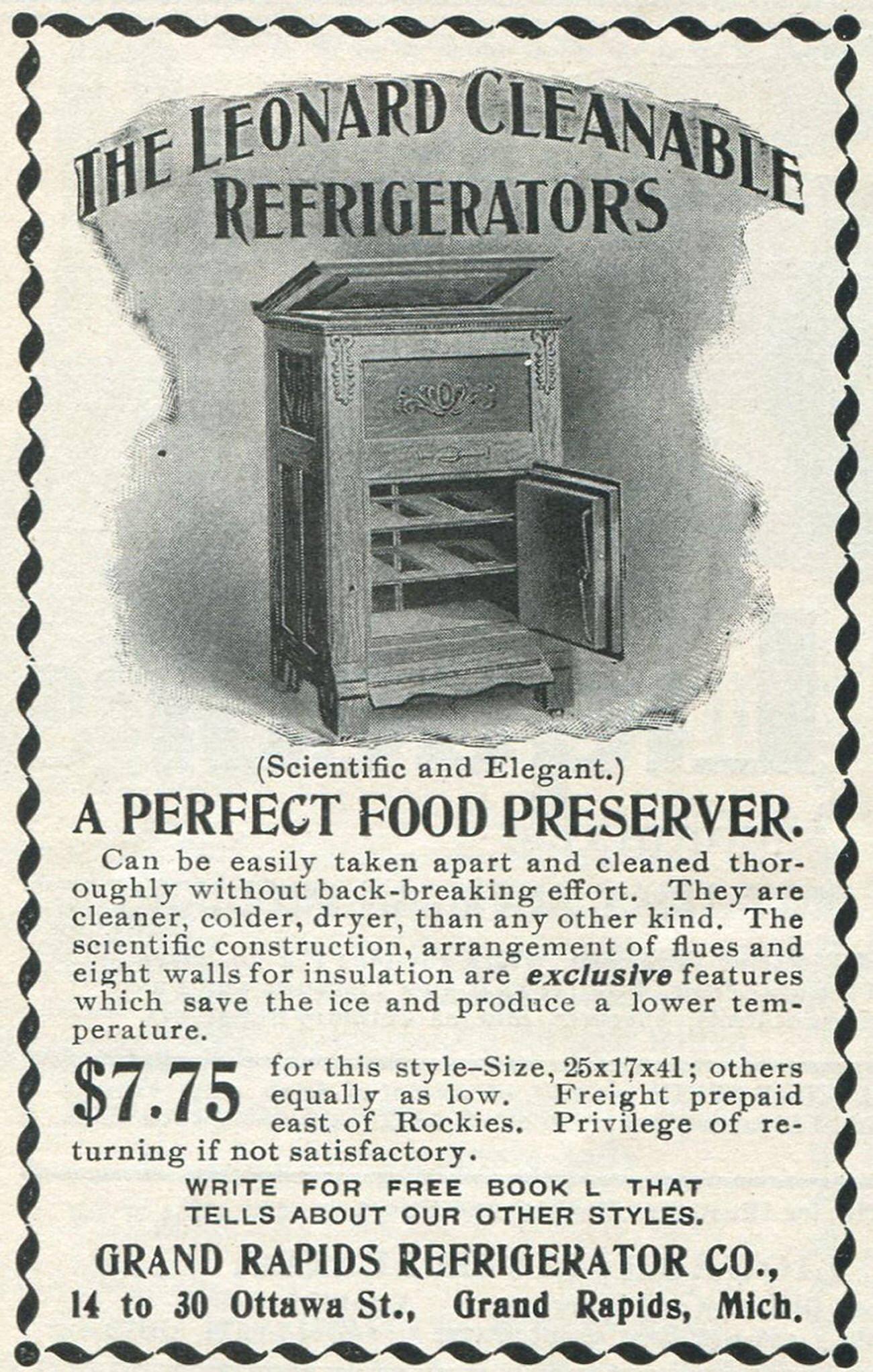
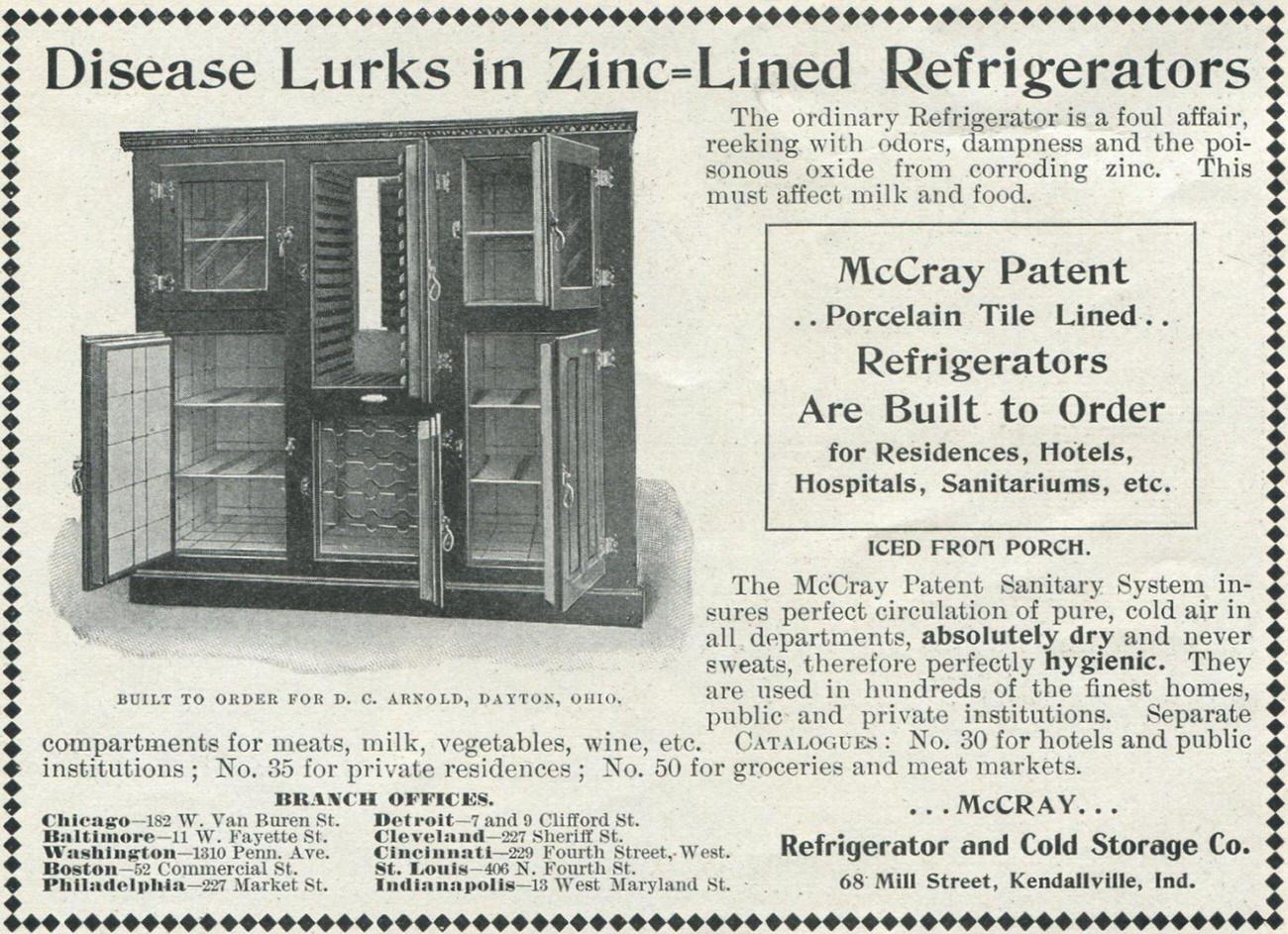
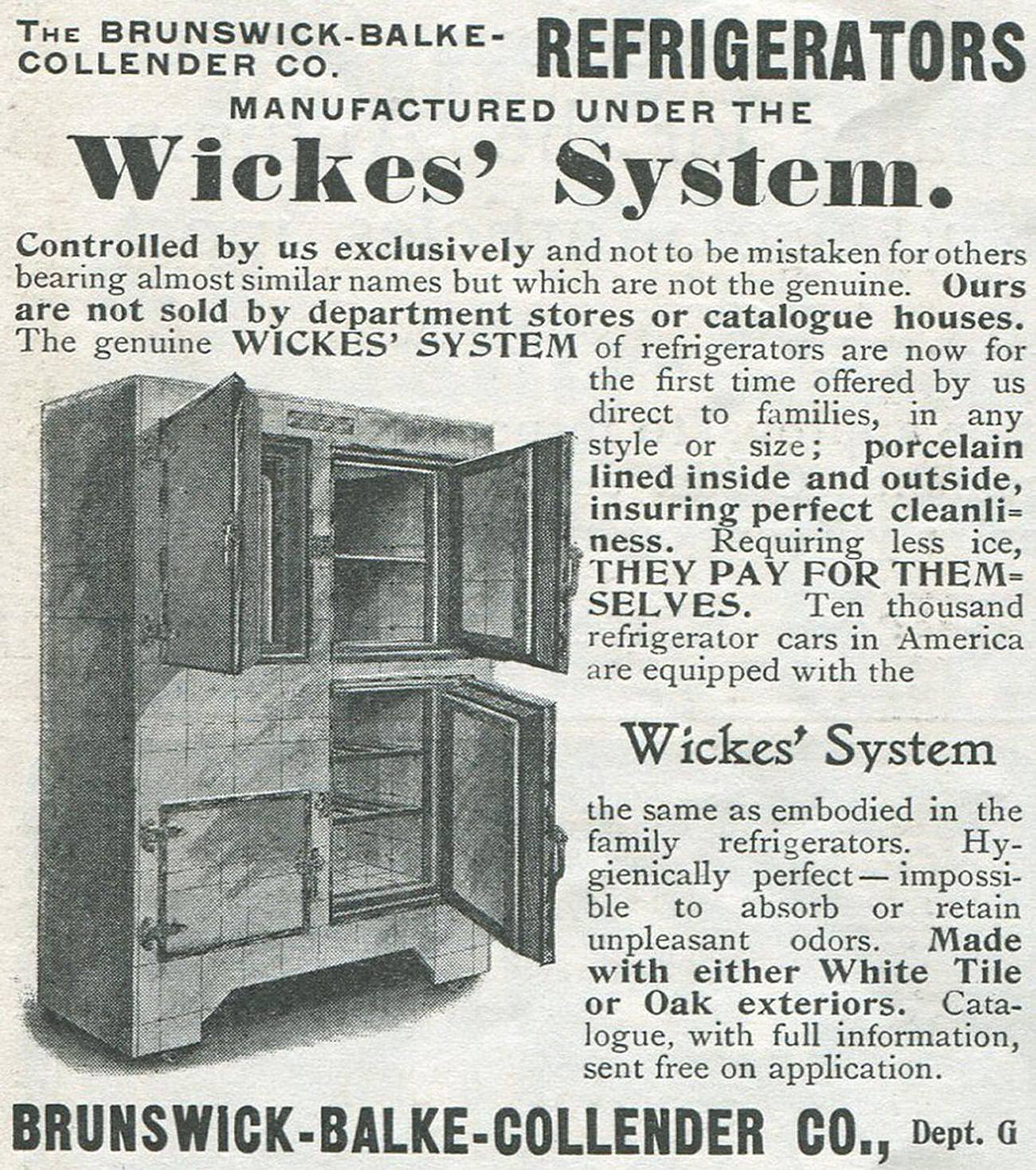
As the century turned, the market for iceboxes kept expanding. Ads from 1900 and 1901 show just how many brands were competing for kitchen space. The Grand Rapids Refrigerator Company, Wilke Manufacturing, and the Brunswick-Balke-Collender Company all ran prominent campaigns. Their ads emphasized durability, cleanliness, and construction quality — the things buyers cared most about at the time.
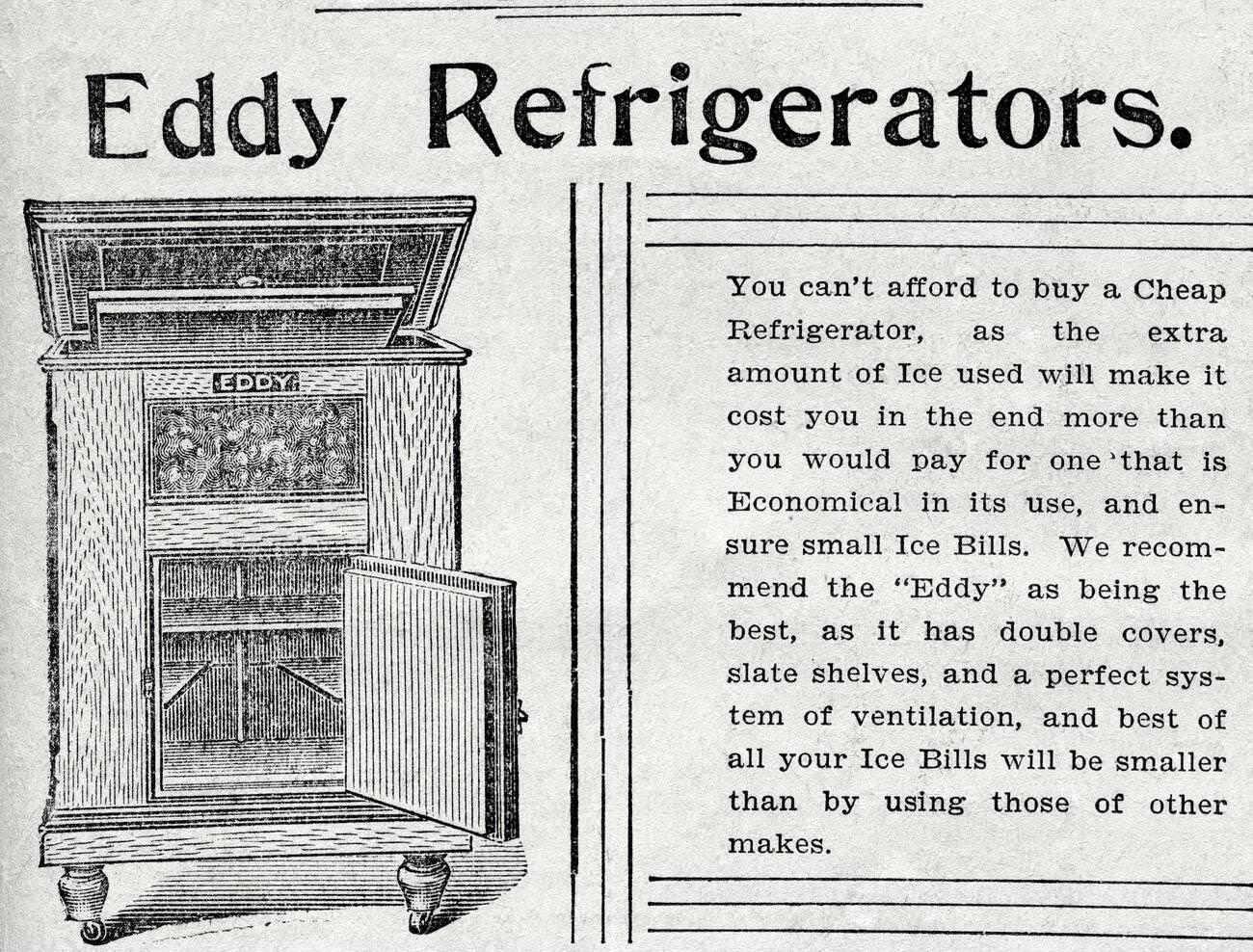
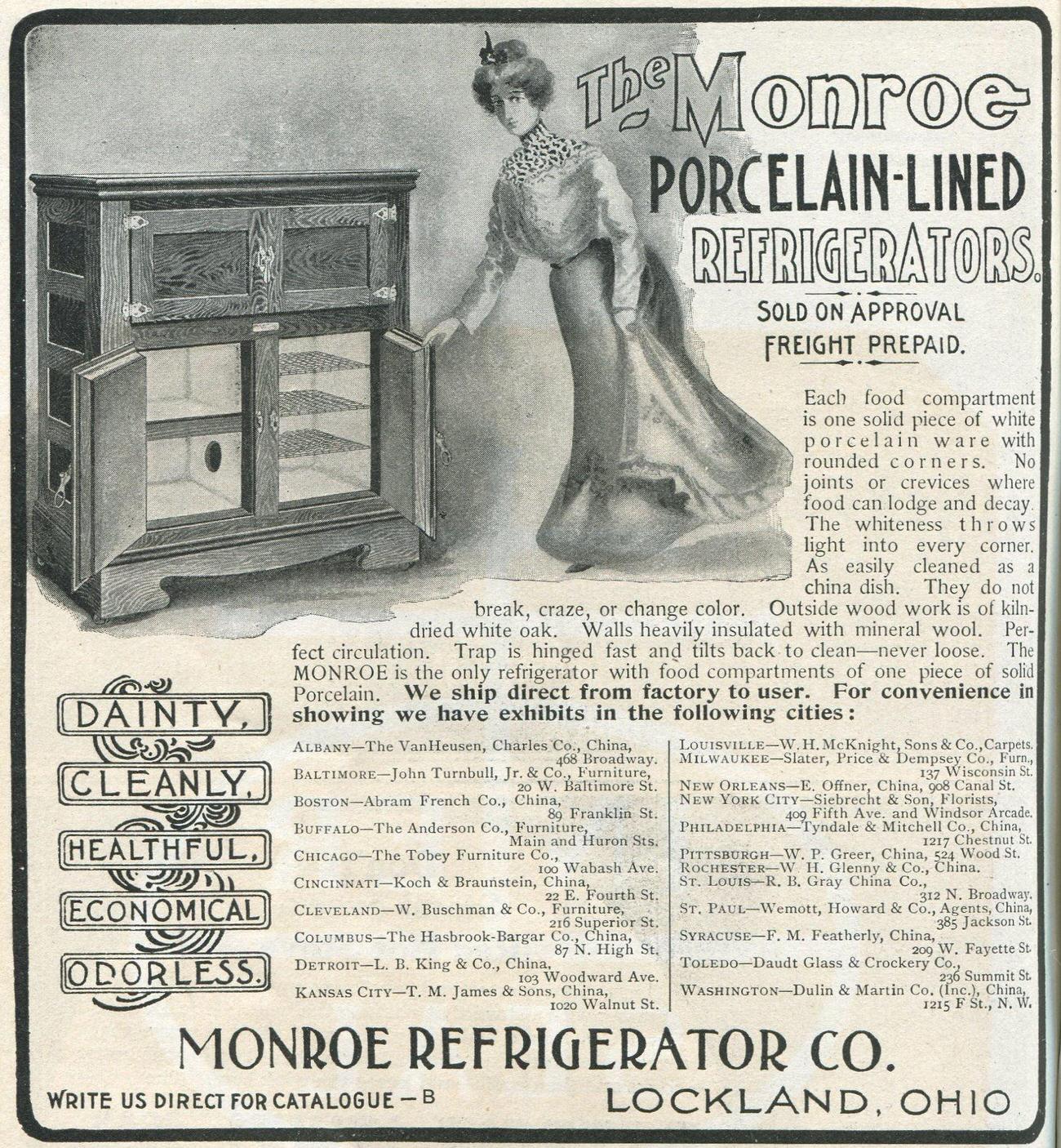
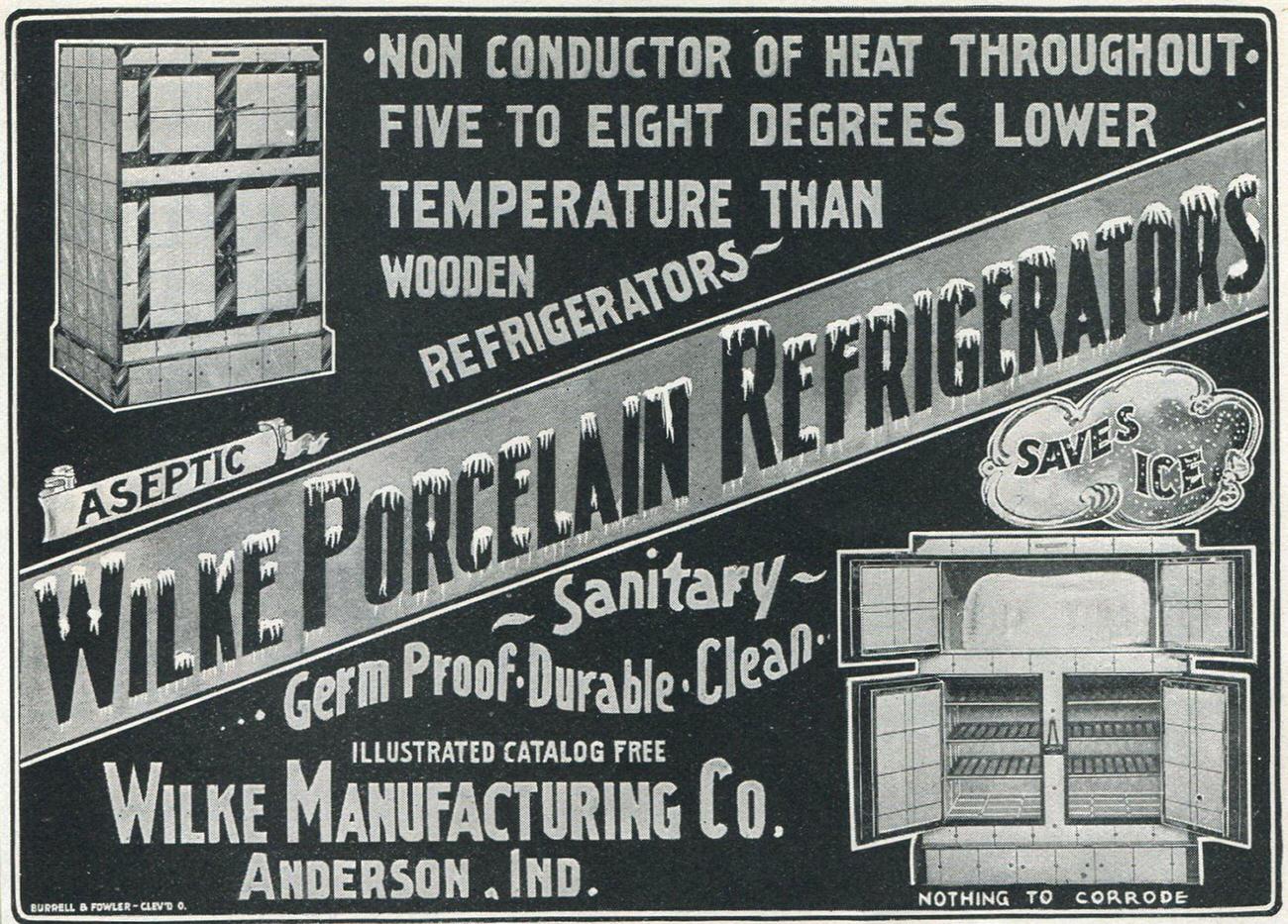
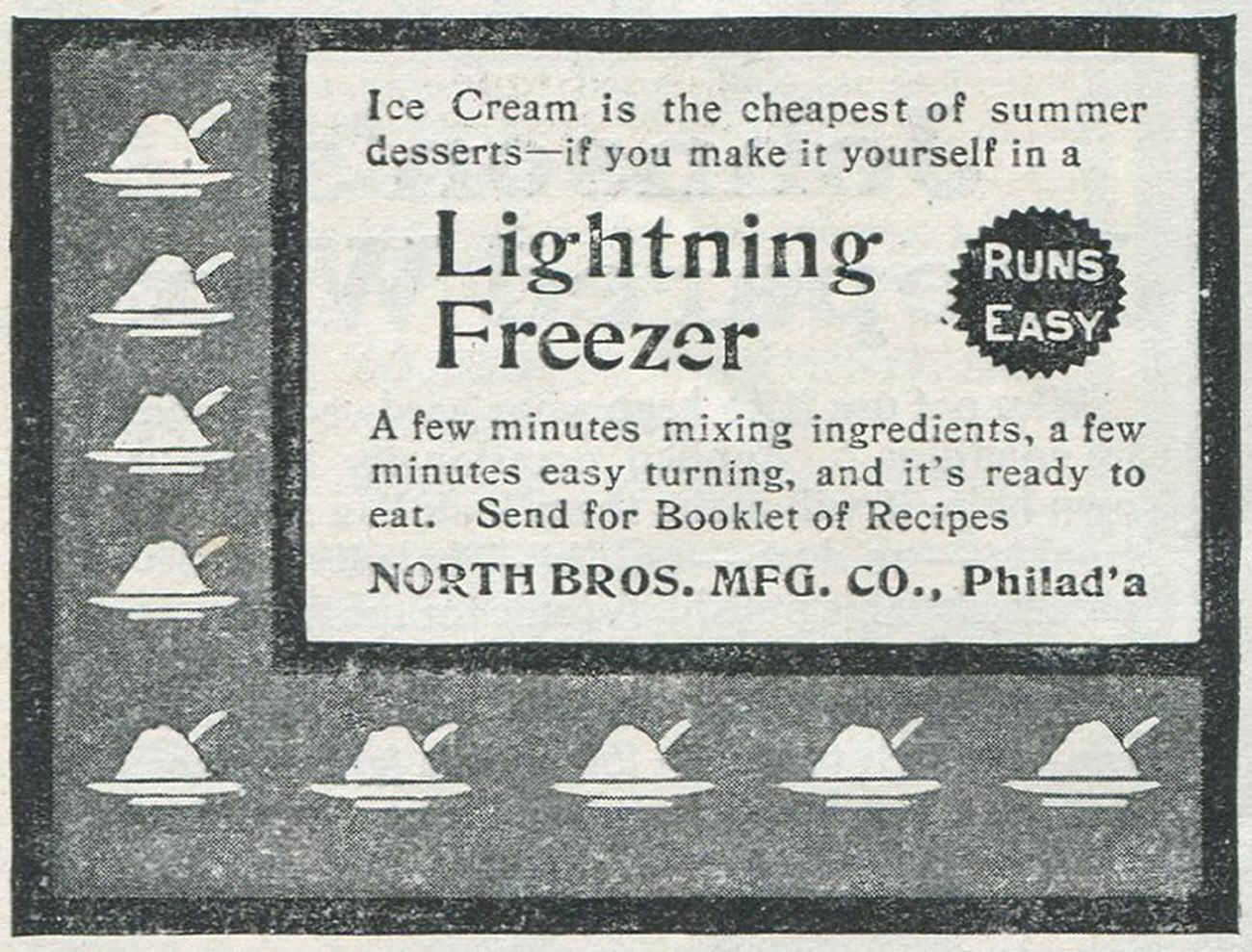
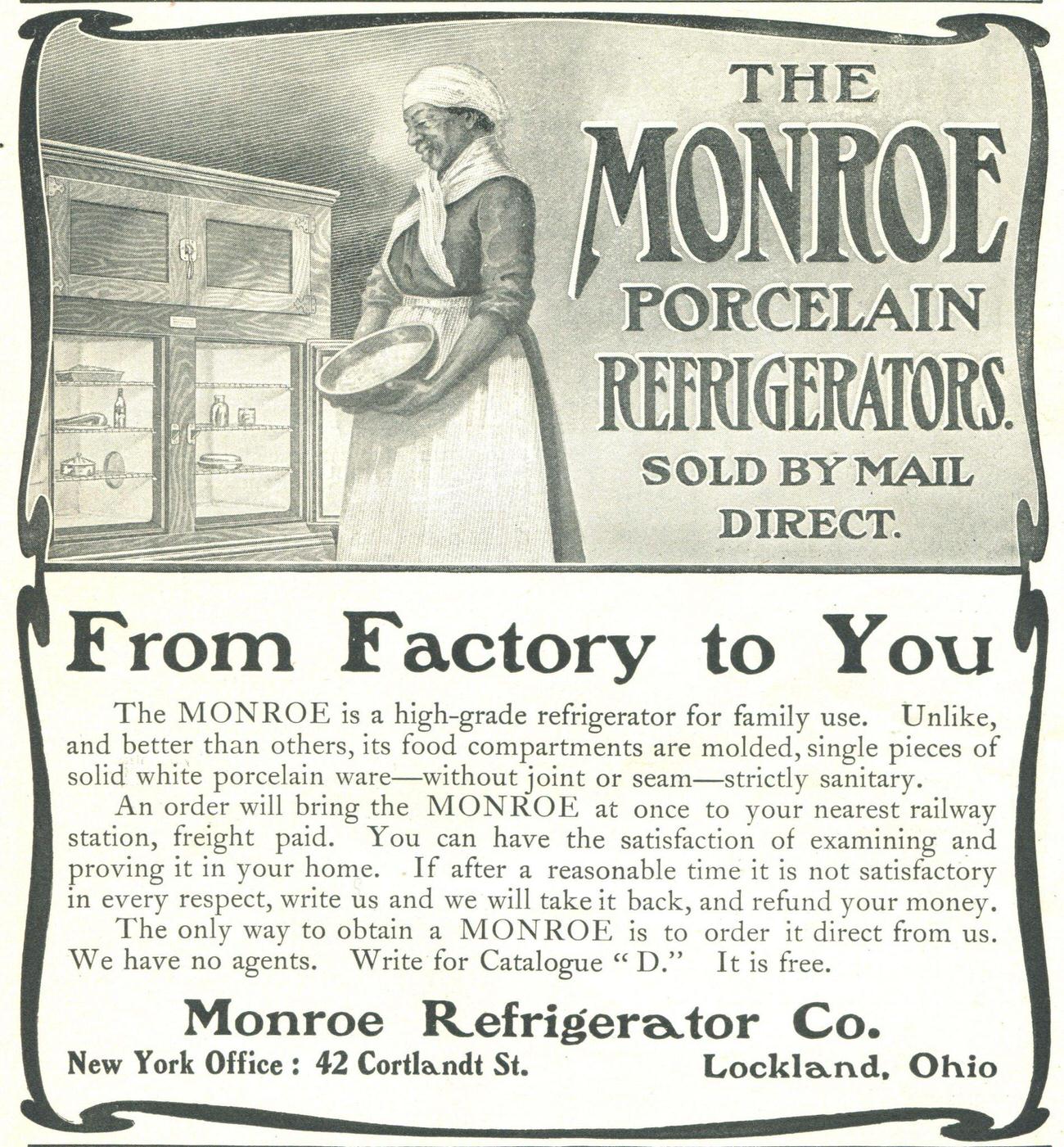
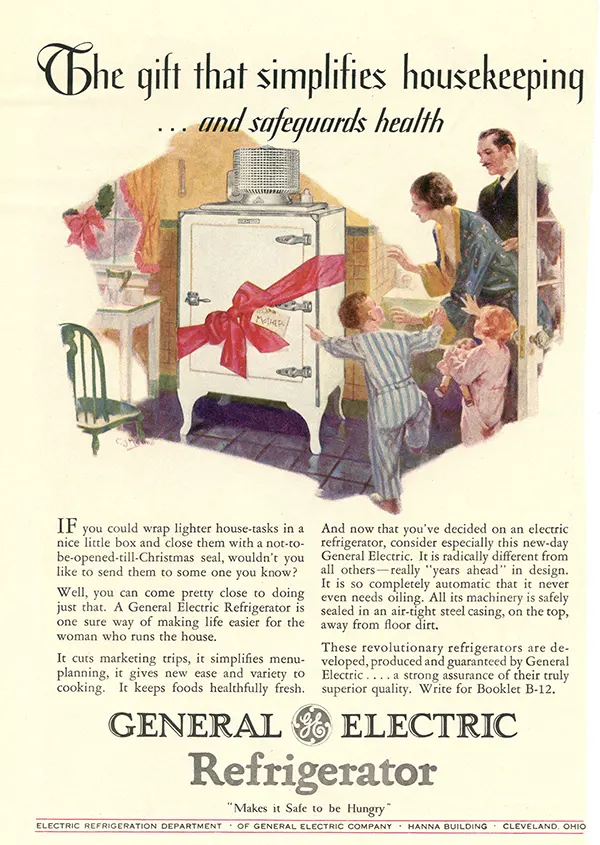
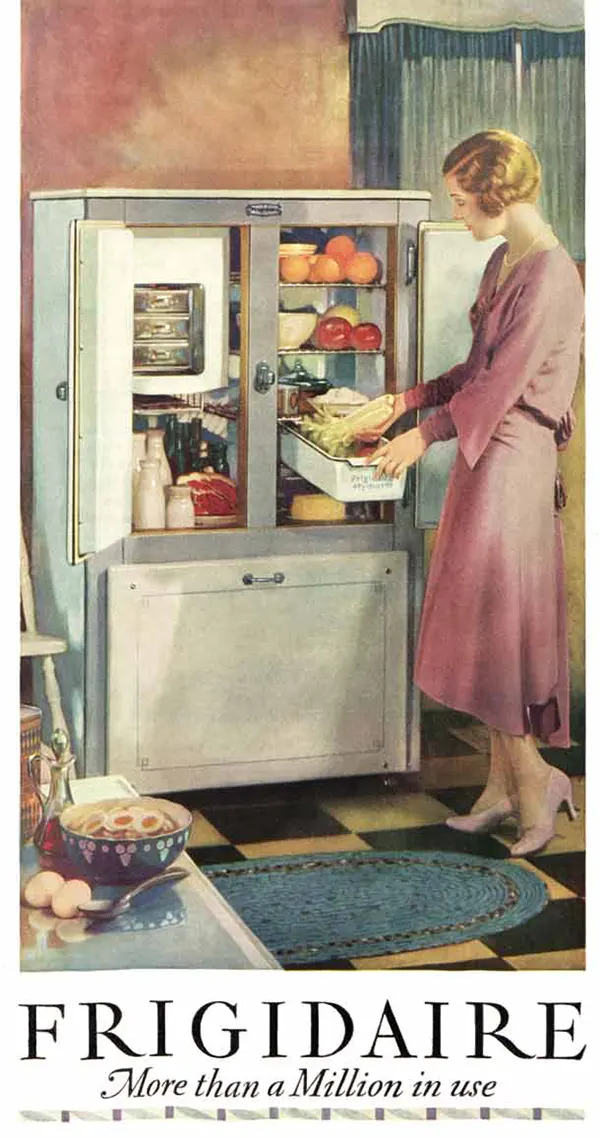
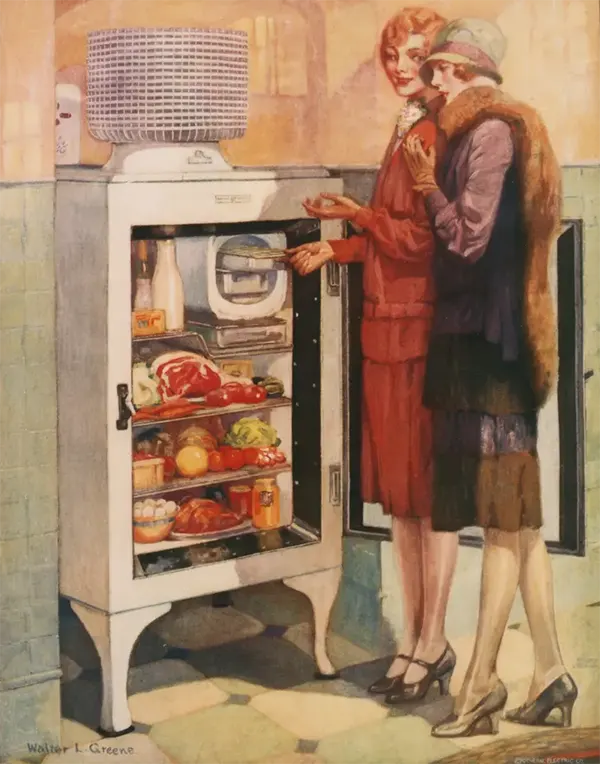
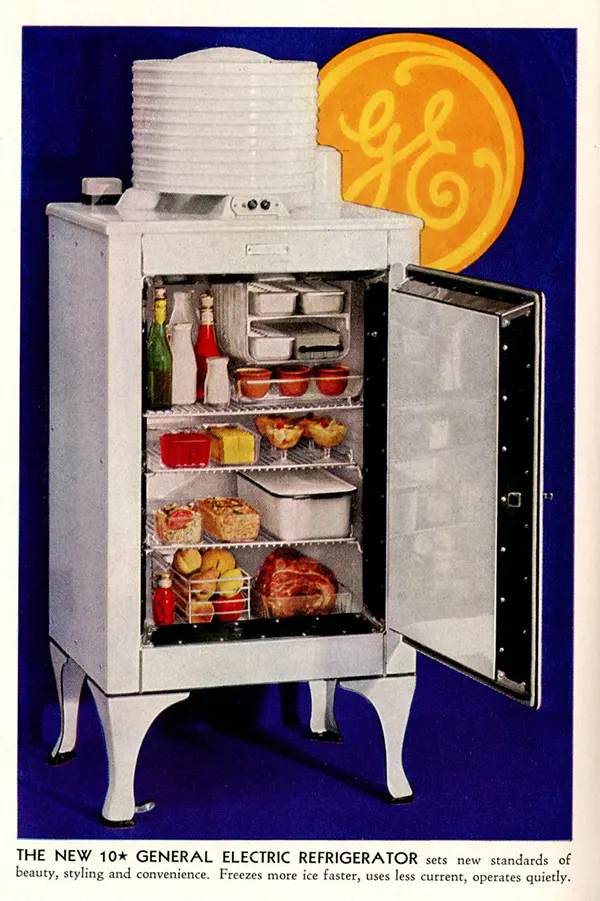
The electric refrigerator changed everything. By the 1920s, companies like General Electric and Frigidaire were bringing electrically powered cooling into American homes. These machines didn’t need ice deliveries. They ran on electricity and kept food cold automatically. Advertisers leaned hard into the novelty, pitching electric refrigerators as modern marvels that freed housewives from the hassle of managing ice. GE’s Monitor Top refrigerator, introduced in 1927, became one of the first mass-market electric models and was featured prominently in print campaigns.
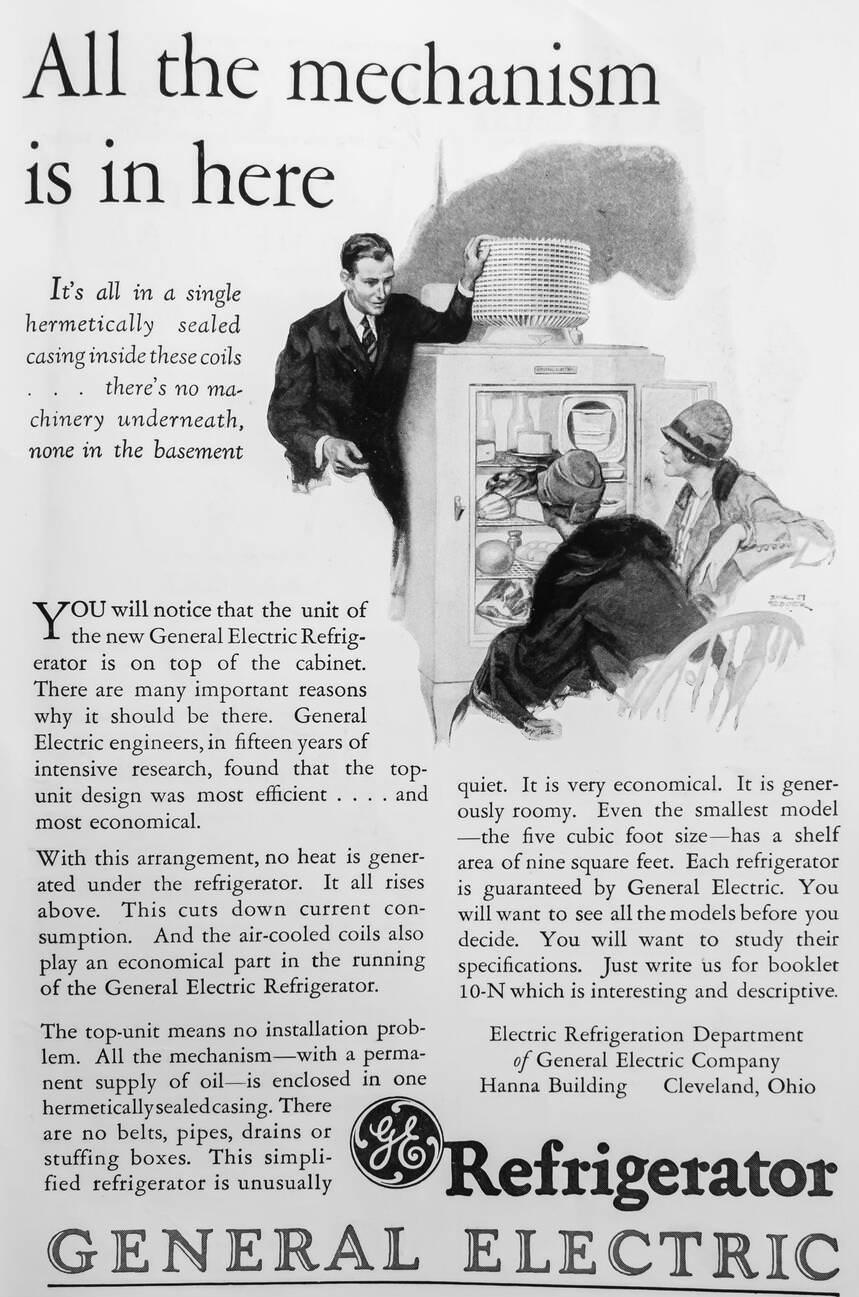
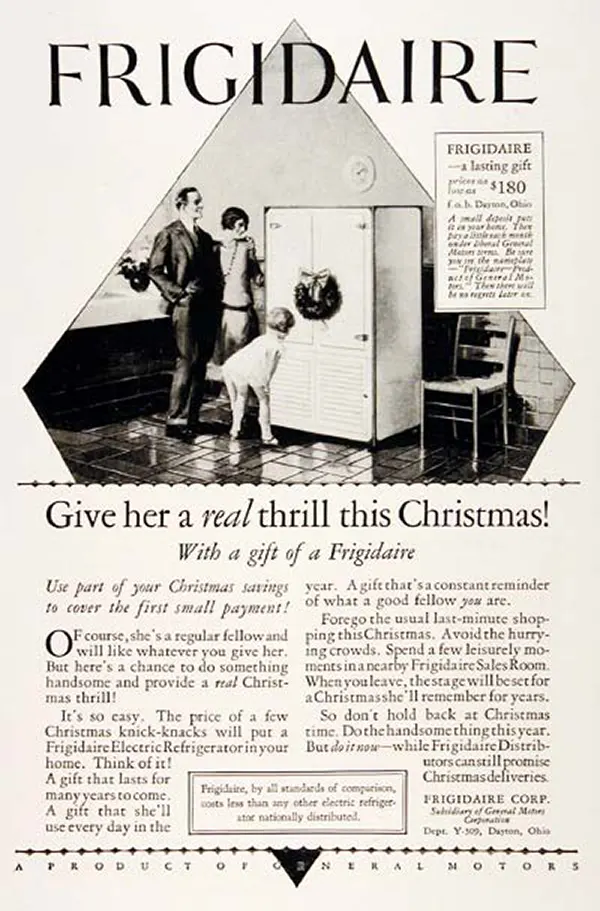
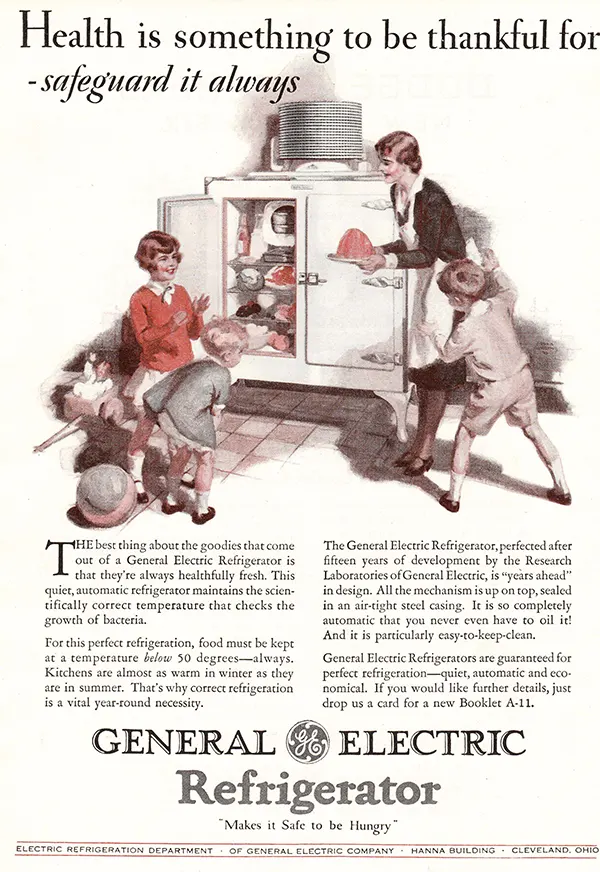
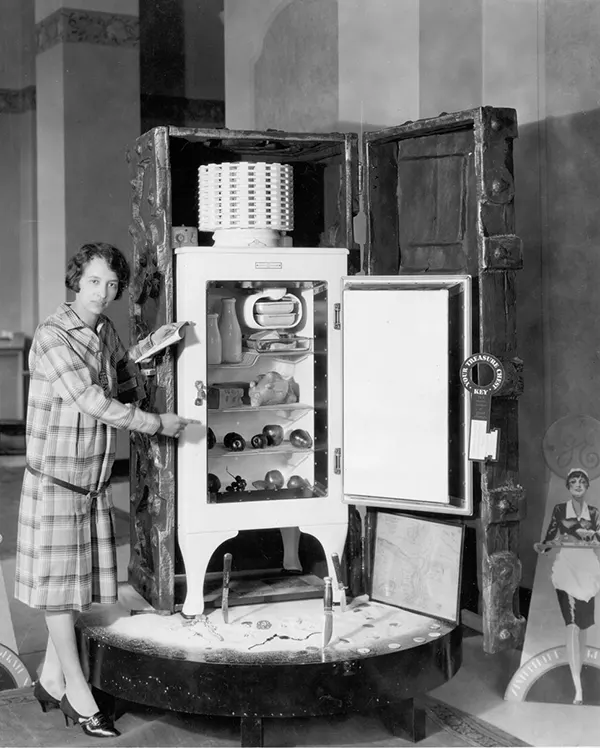
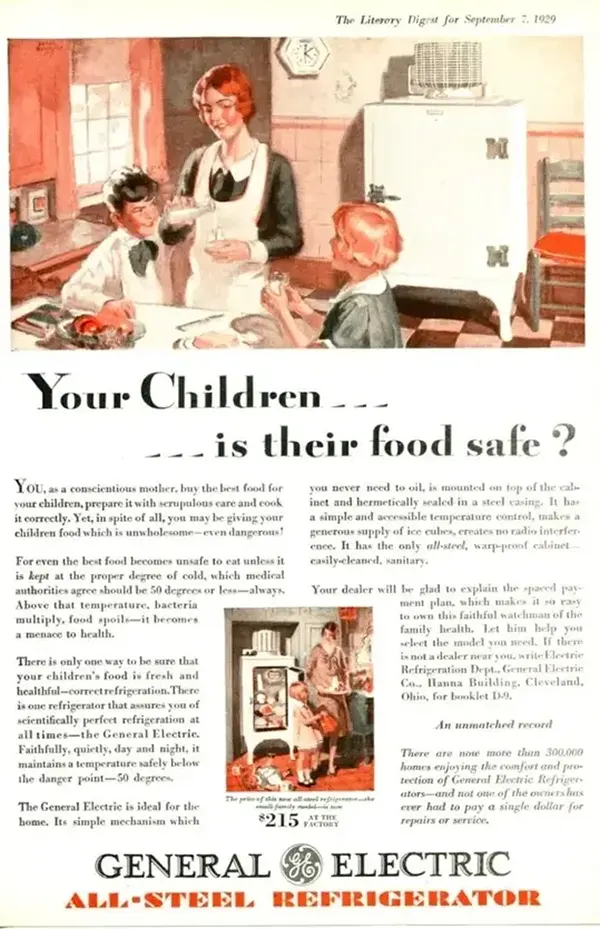
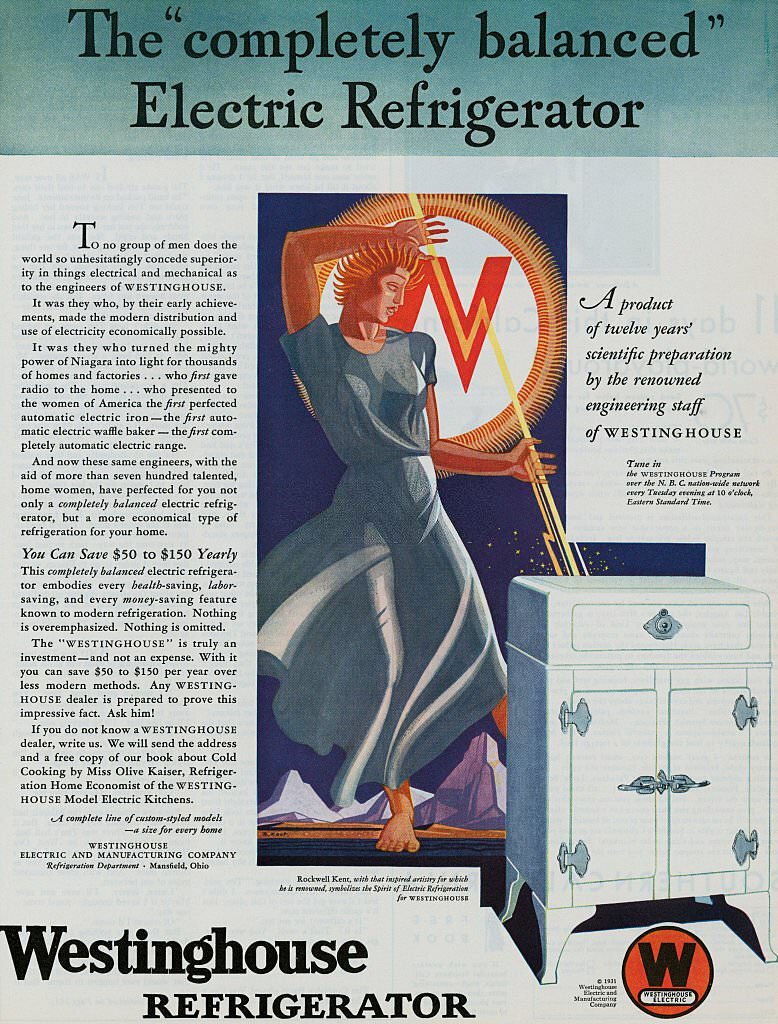
GE continued to push its refrigerators heavily into the 1930s, running multiple print ad campaigns that highlighted new features and modern design. Westinghouse also entered the space with its “completely balanced” electric refrigerator, a phrase meant to convey engineering precision. These ads spoke to an audience that was still getting used to the idea of mechanical home cooling and needed reassurance that the technology was reliable.
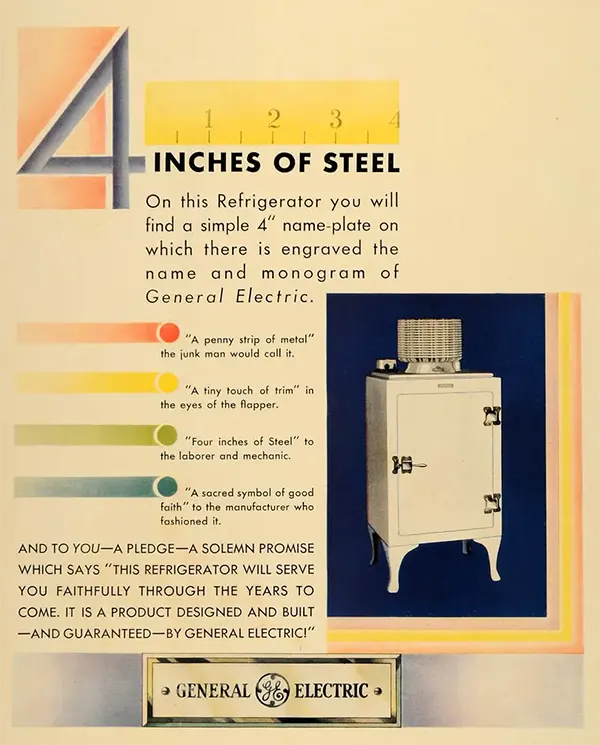
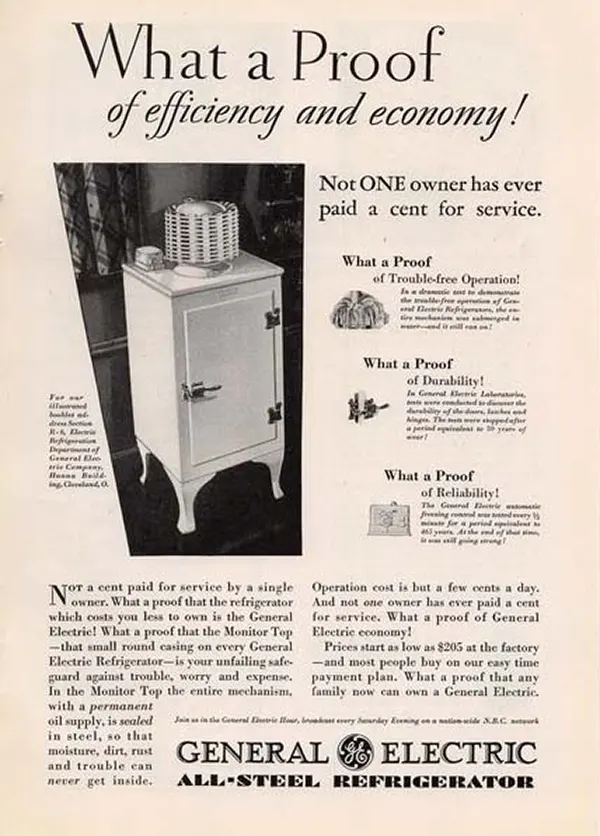
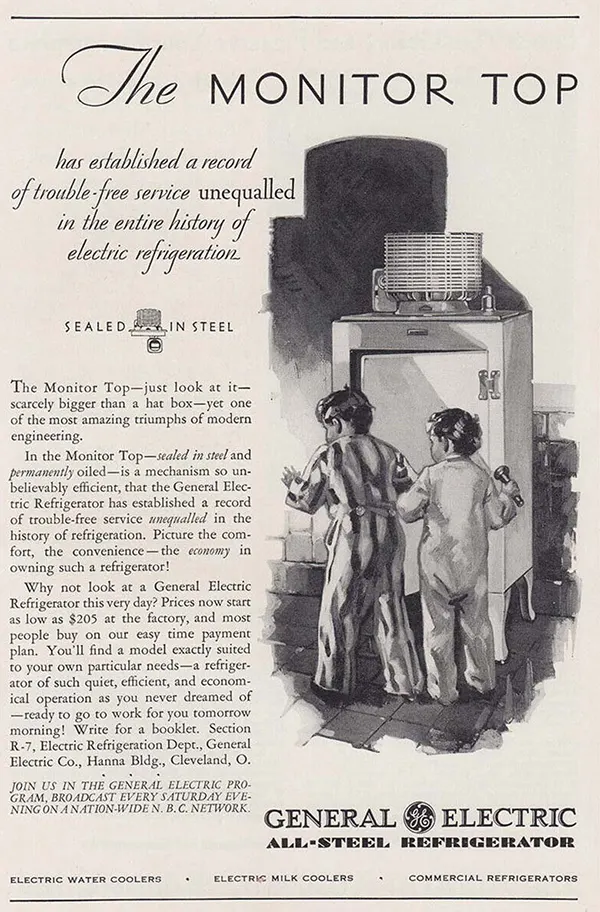
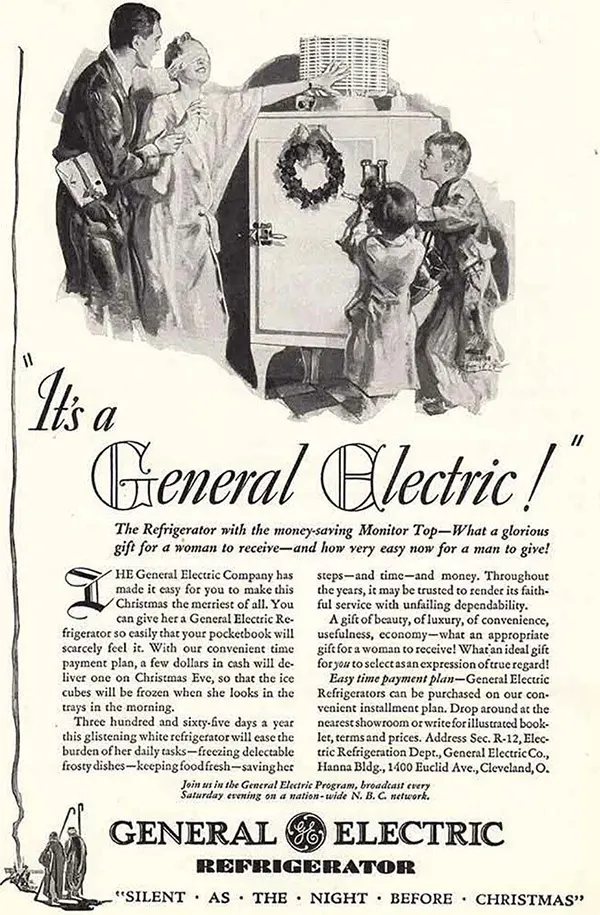
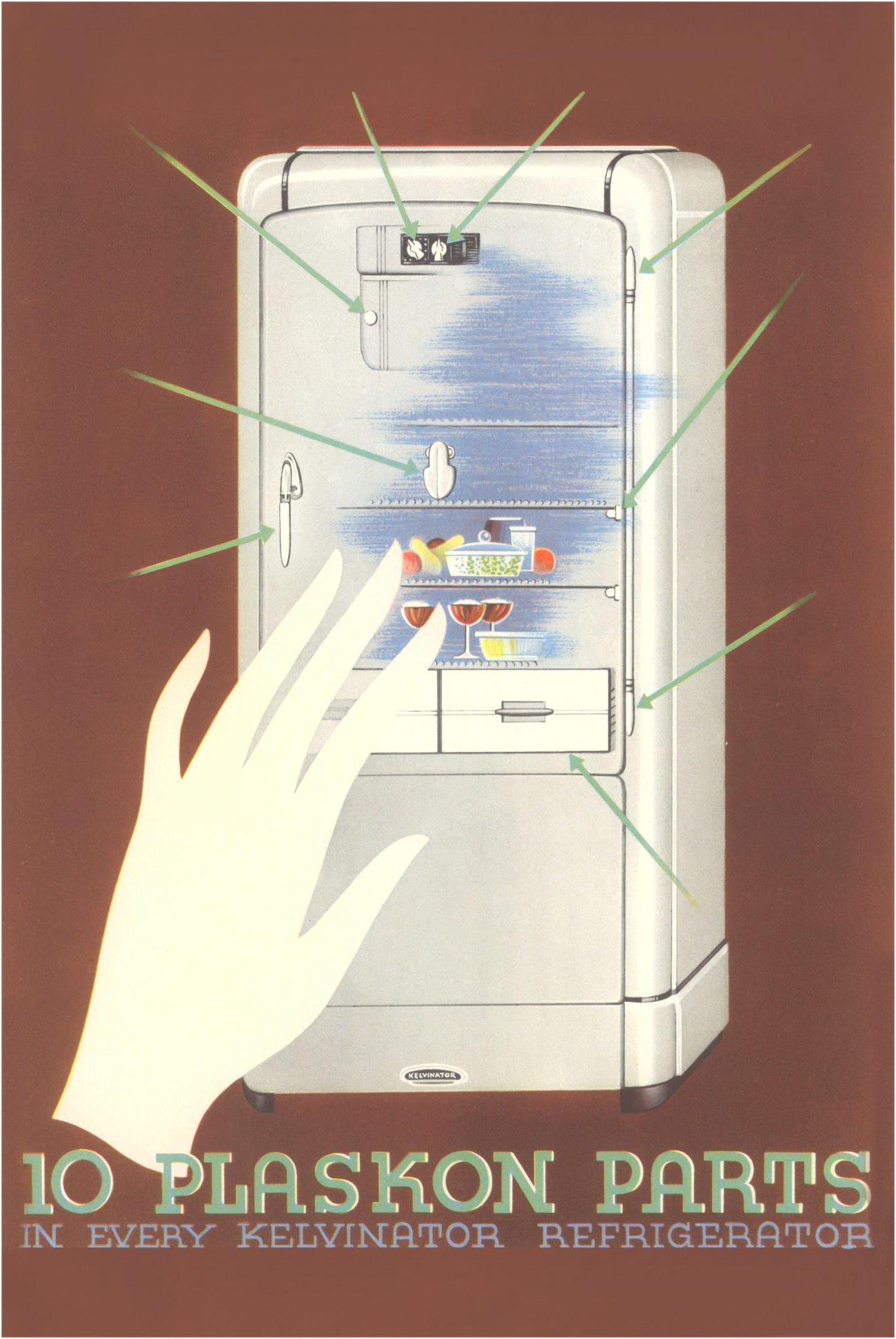
The 1930s brought the Art Deco movement to refrigerator design. Sleek lines, chrome details, and a sense of streamlined modernity replaced the boxy forms of earlier models. Brands like Frigidaire, Kelvinator, and Norge ran ads that positioned their refrigerators as luxury items — symbols of a sophisticated modern home. The Kelvinator 4-Way Cold ad from 1930 and the NorgeRollator ads of 1934 and 1938 are strong examples of this era’s advertising style, blending technical claims with elegant visual presentation.
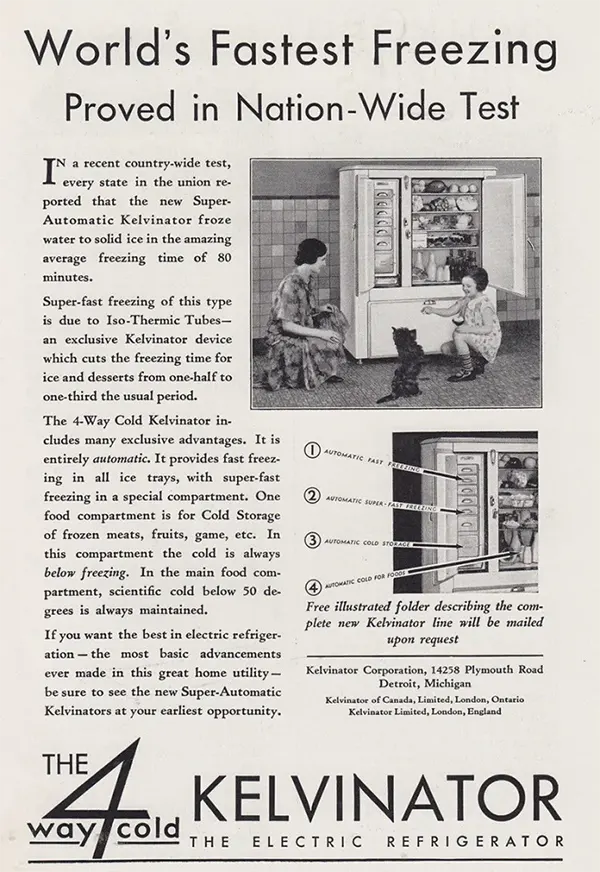
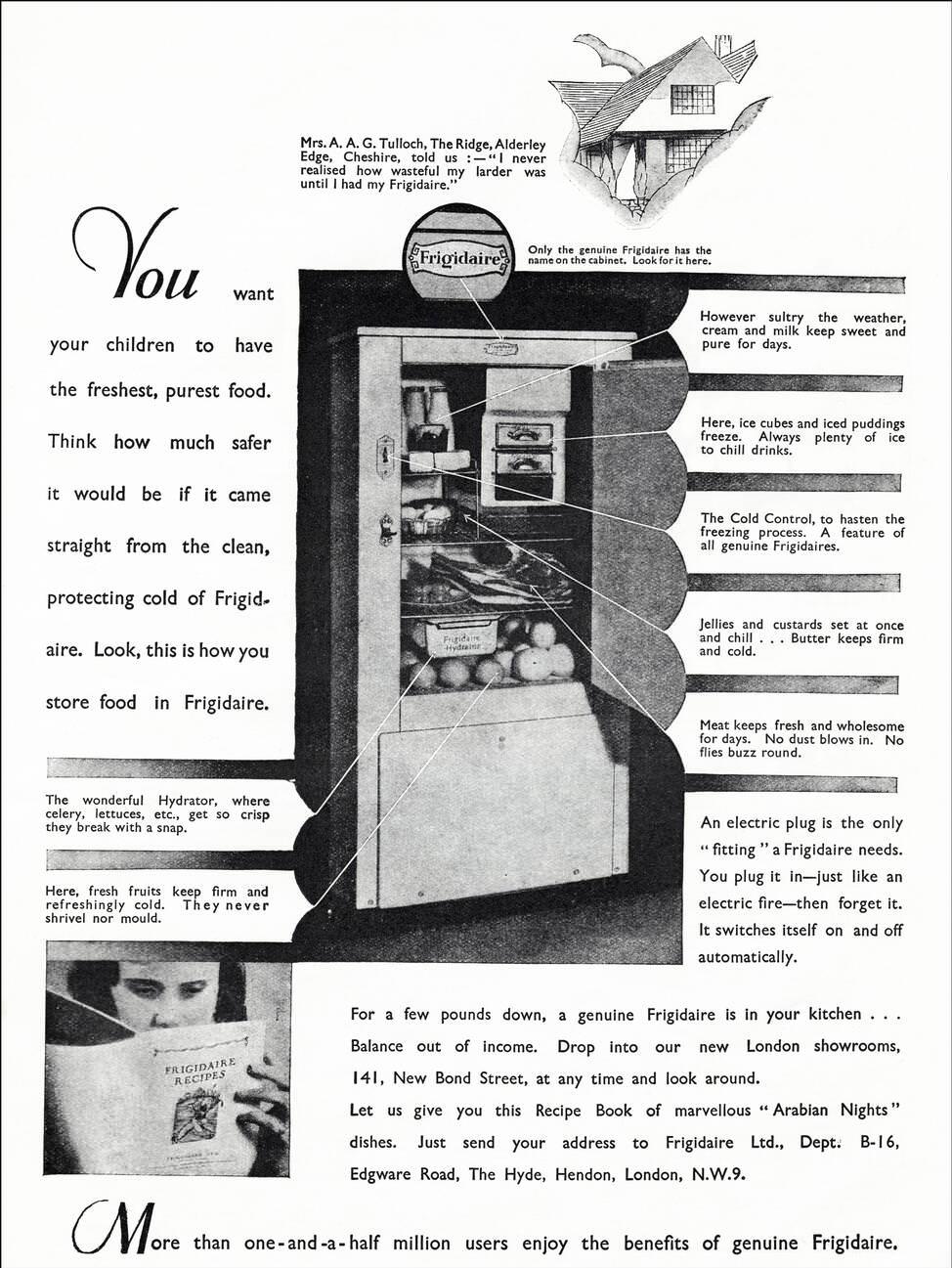
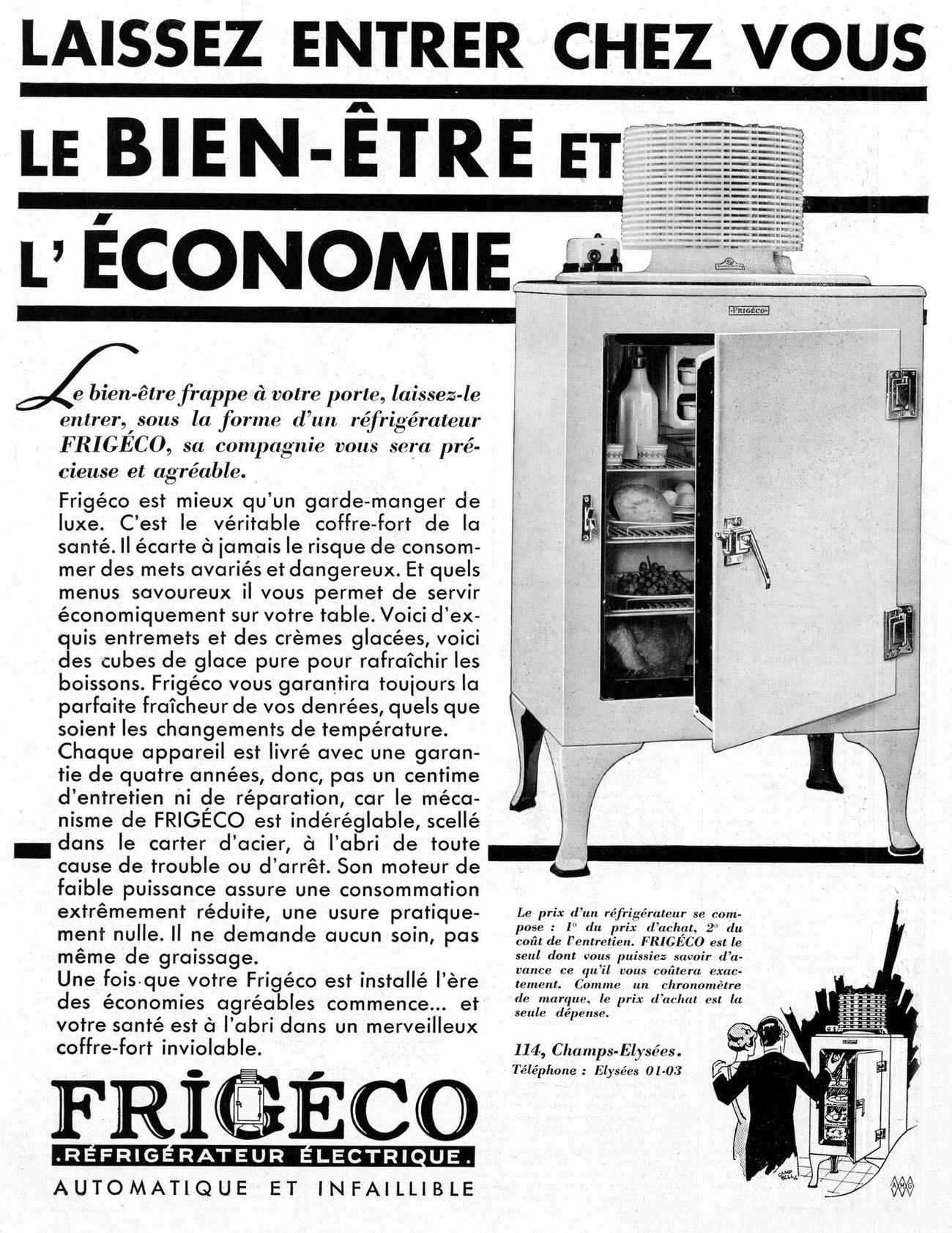
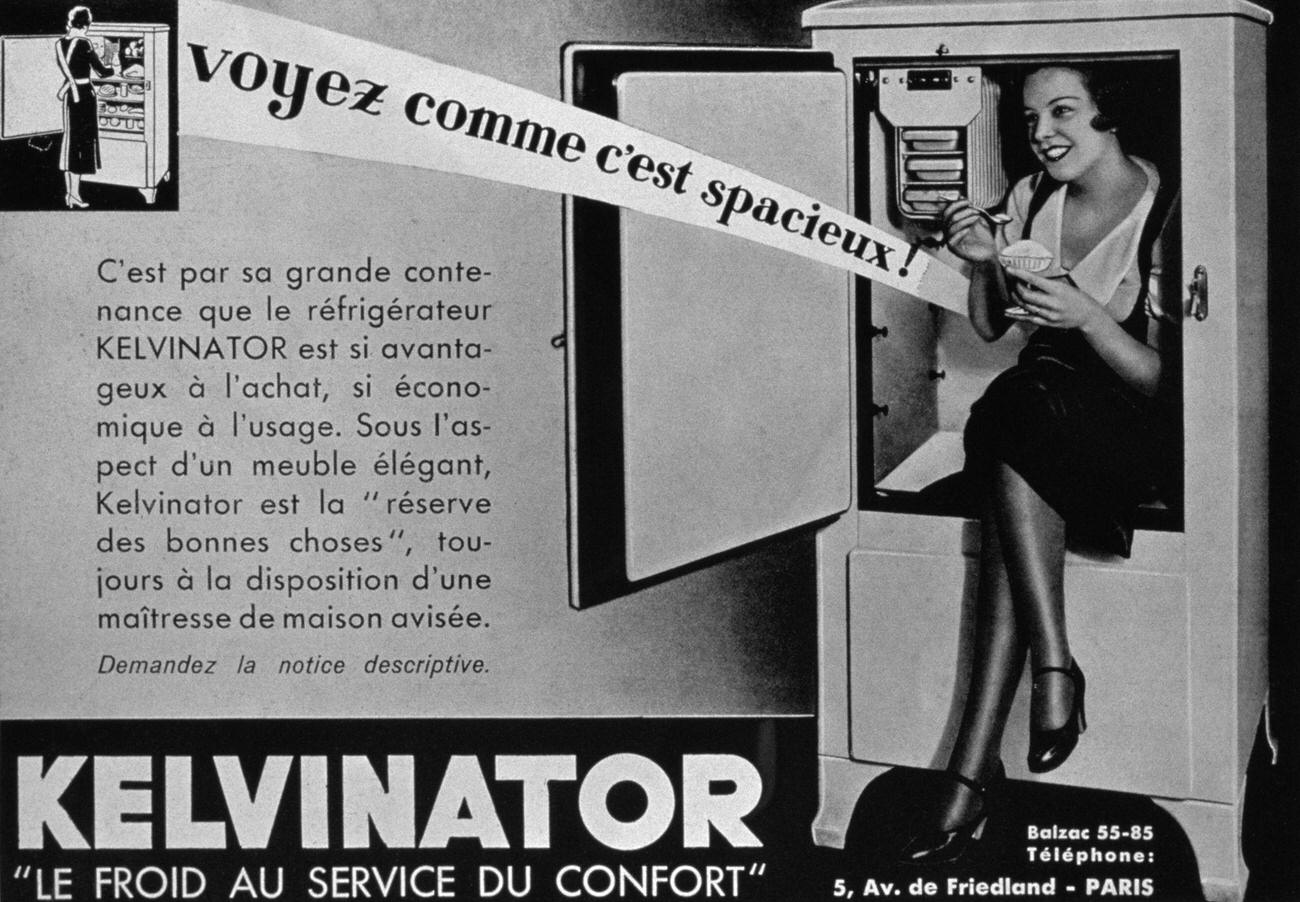
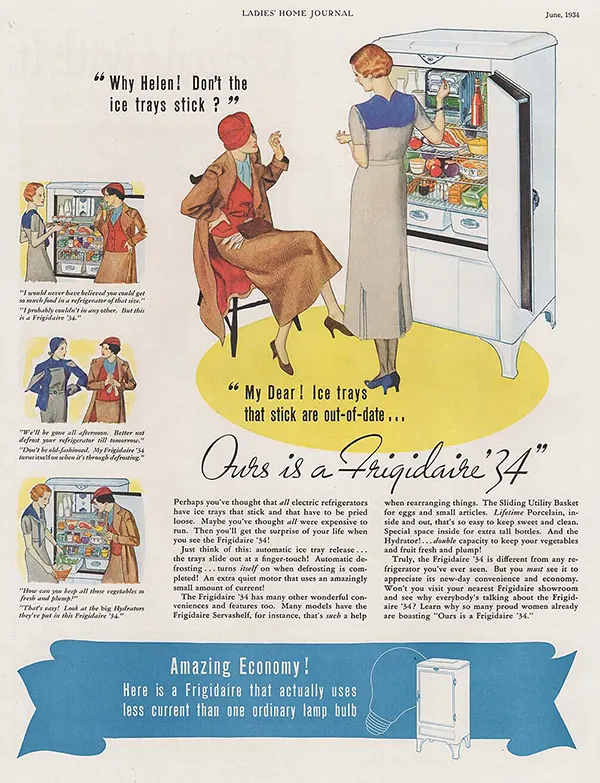
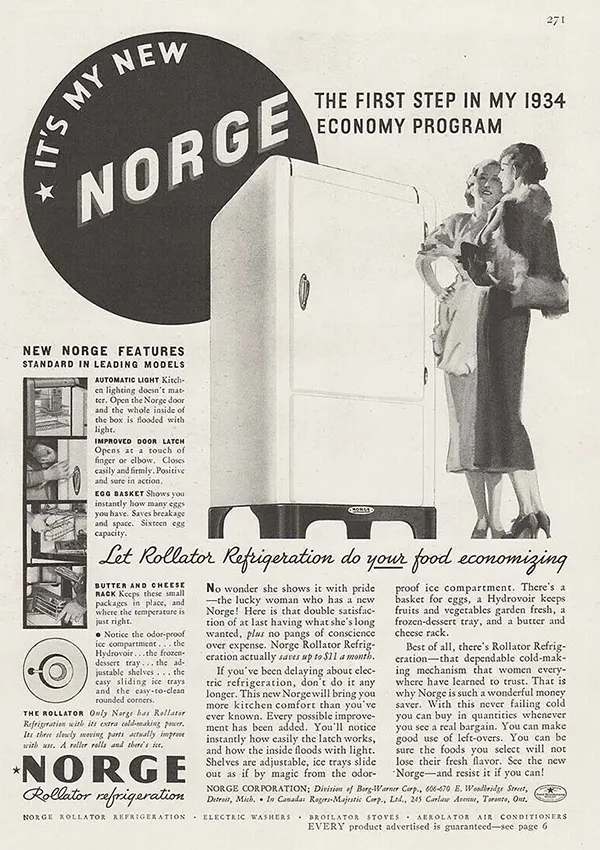
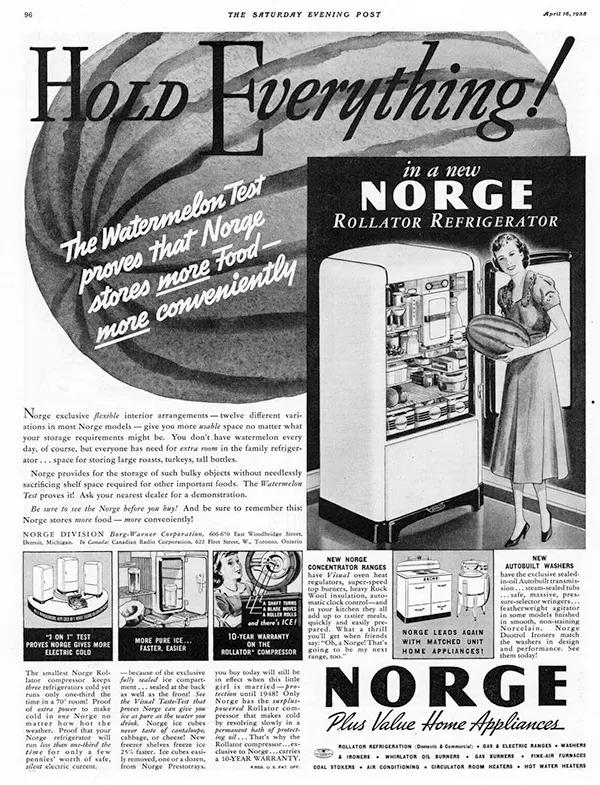
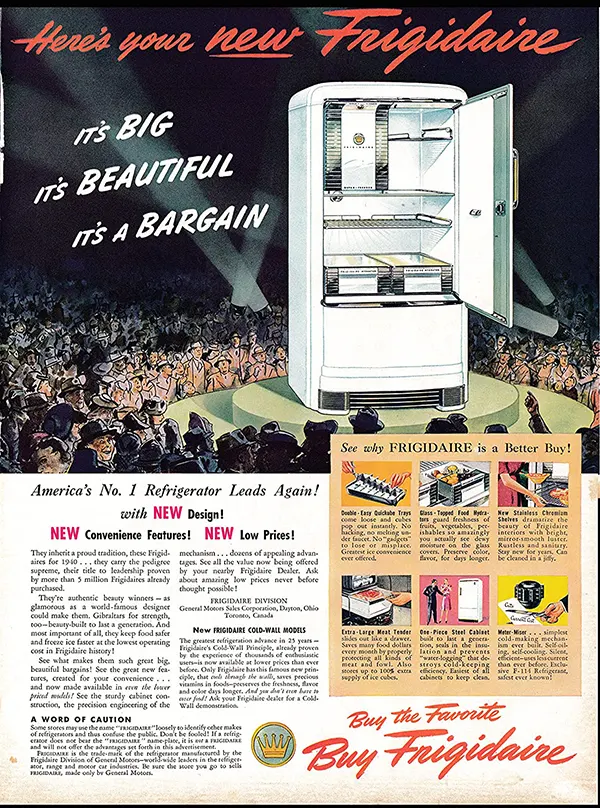
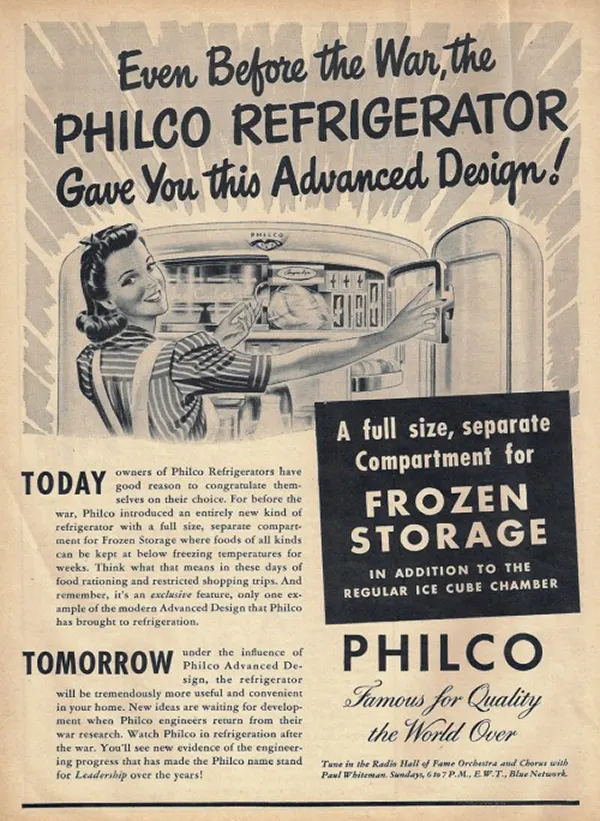
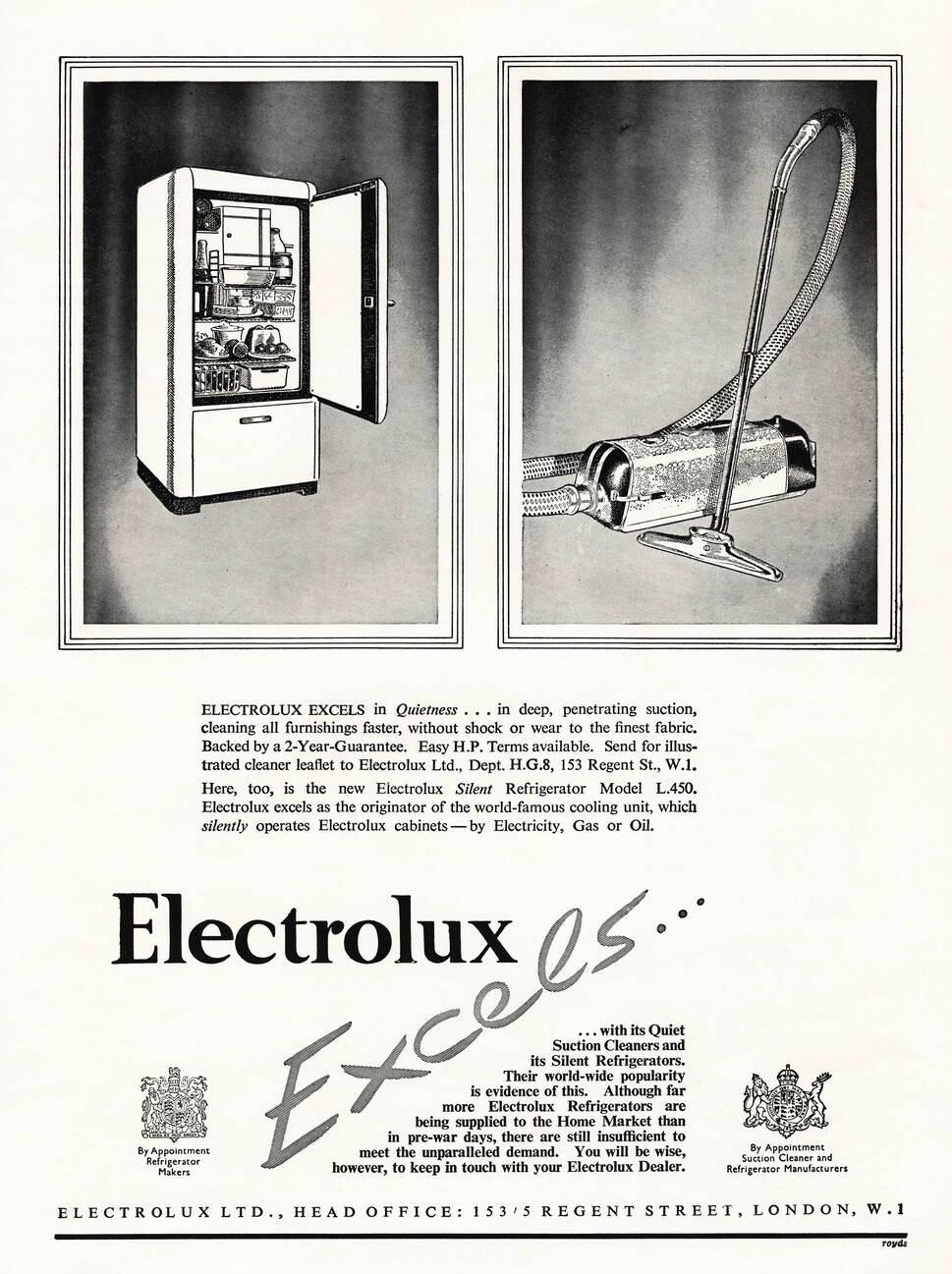
World War II slowed the consumer appliance market considerably. Raw materials were redirected to the war effort, and many manufacturers paused civilian production. Some refrigerator ads from this period — like the 1942 College Park ad — acknowledged the wartime situation while keeping brand awareness alive. The Philco 1944 ad and Servel’s gas refrigerator campaign from 1941 show how brands stayed visible even as production was constrained. A 1940s Frigidaire ad also continued to promote the brand’s household credibility during these years.
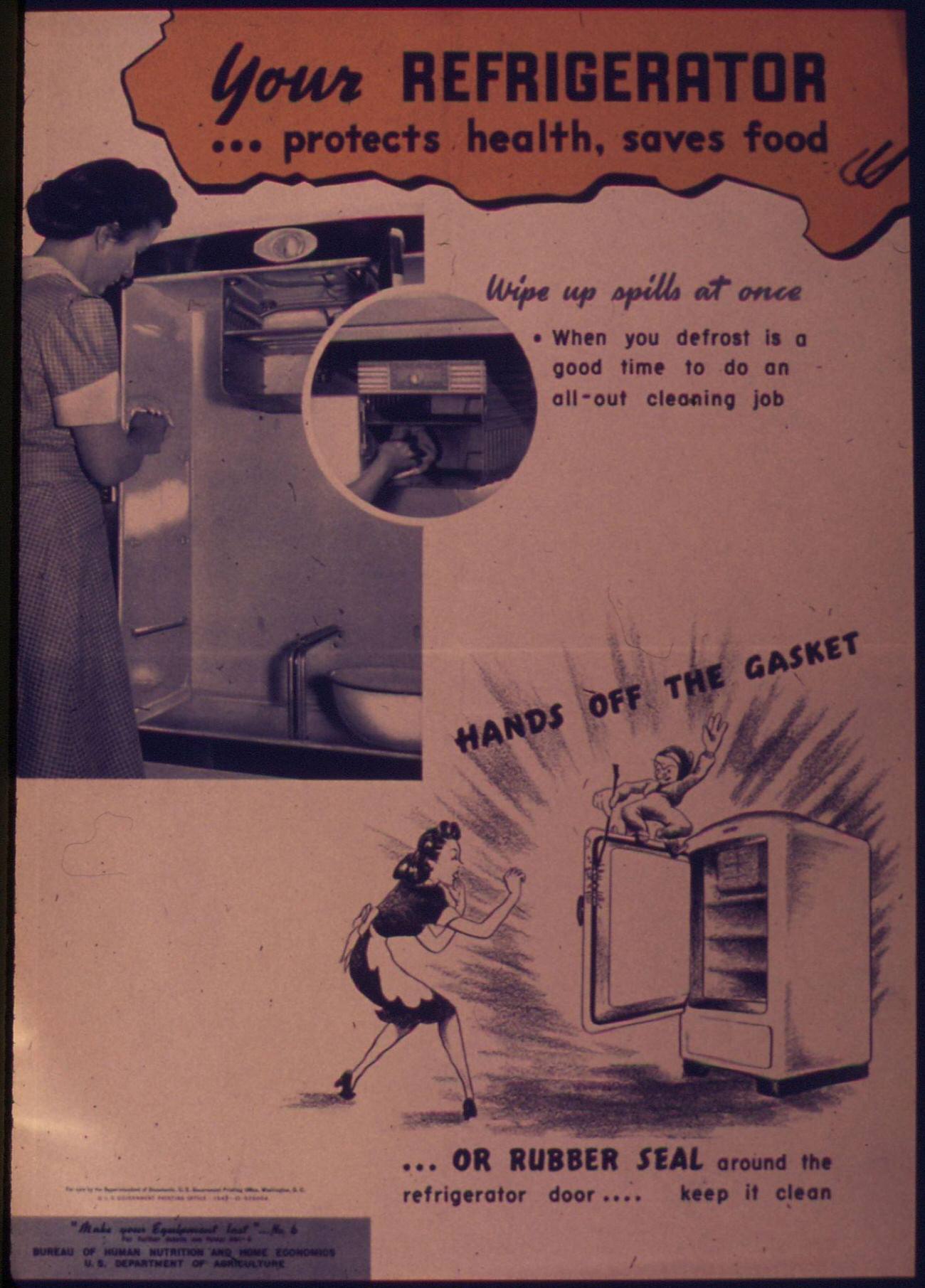
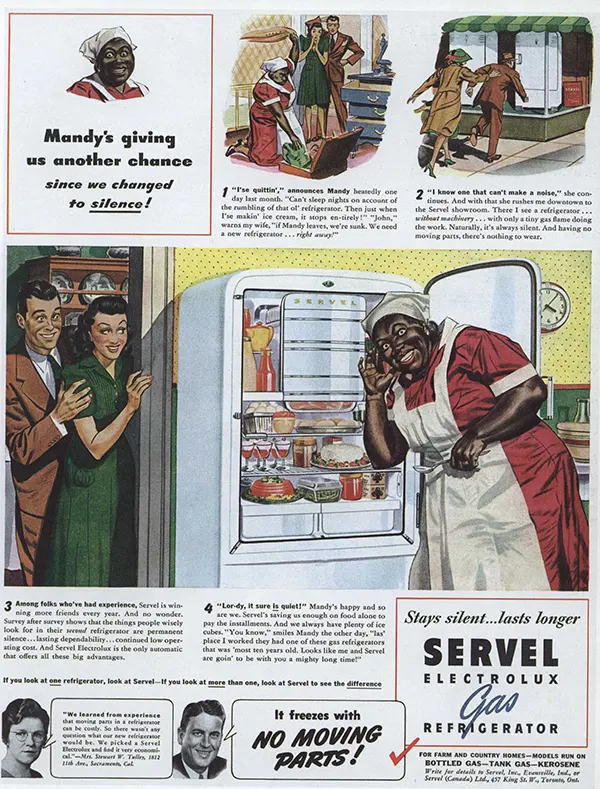
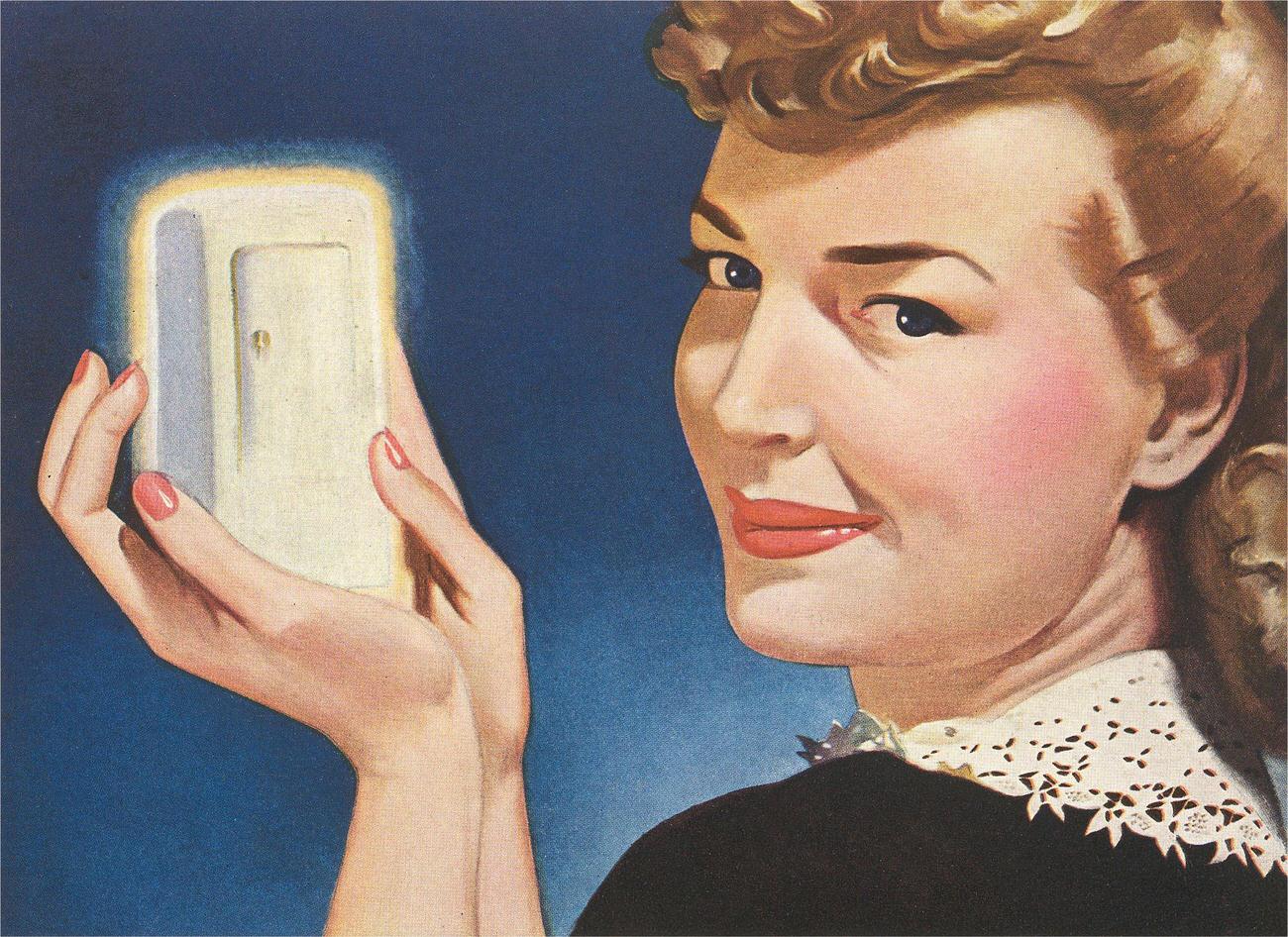
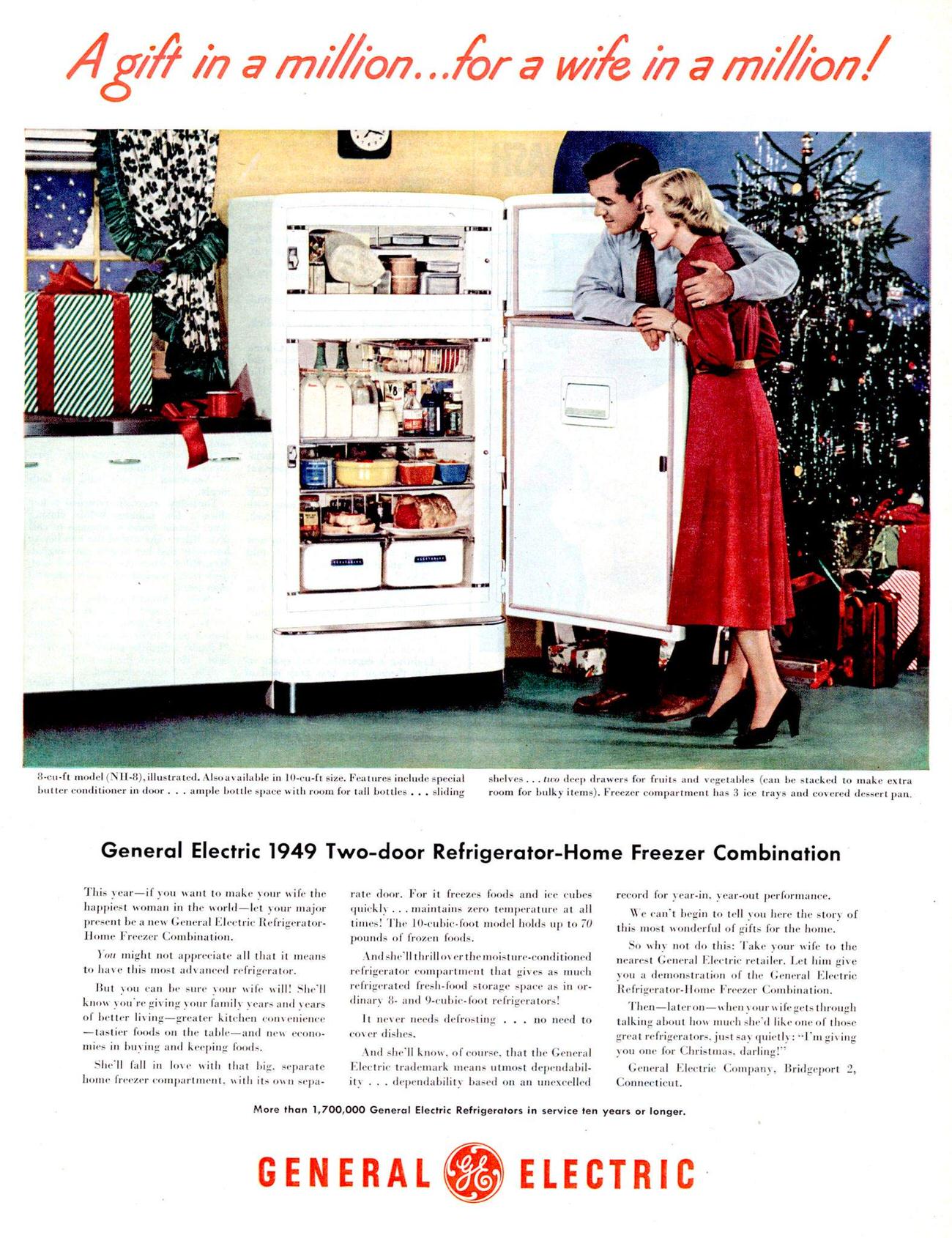
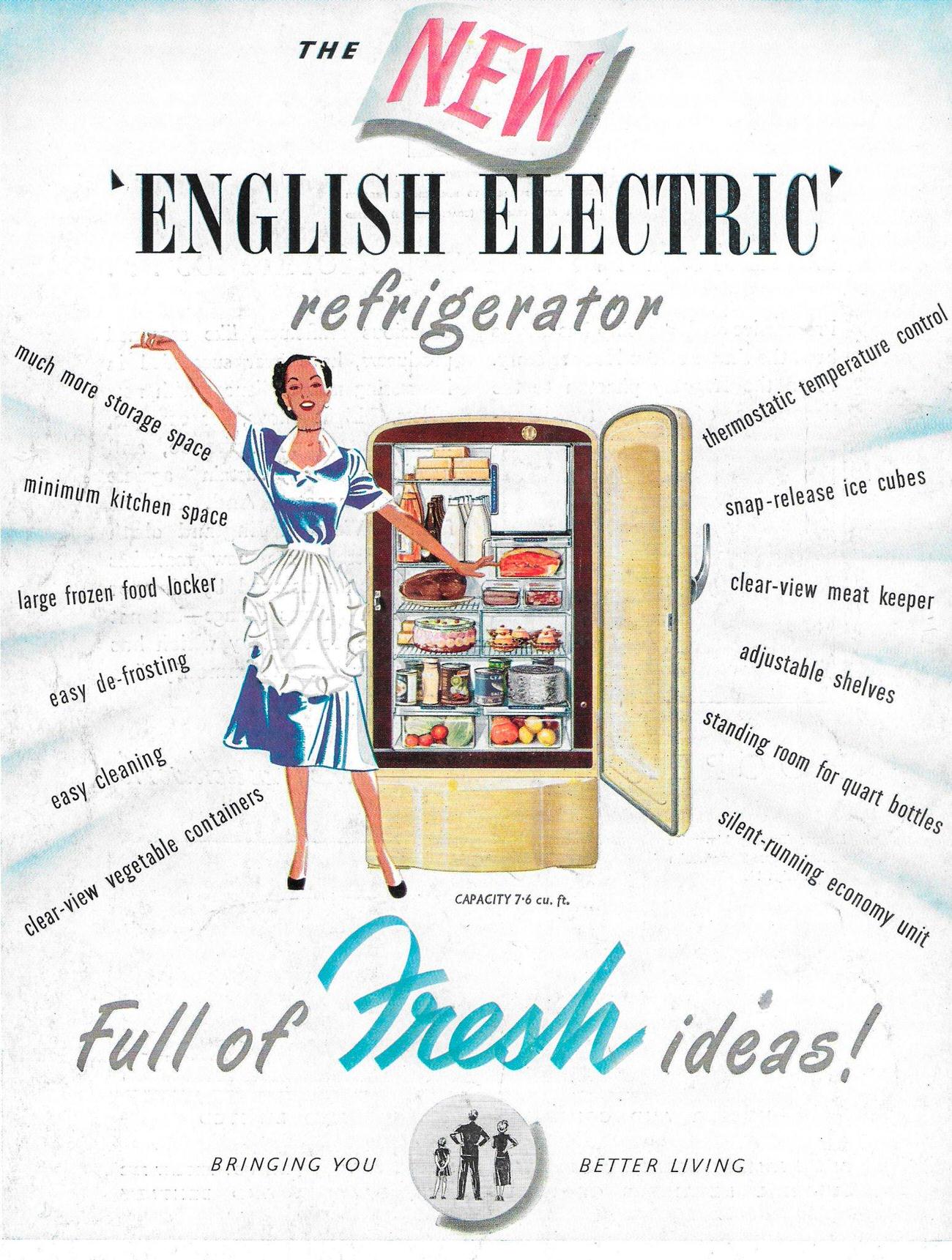
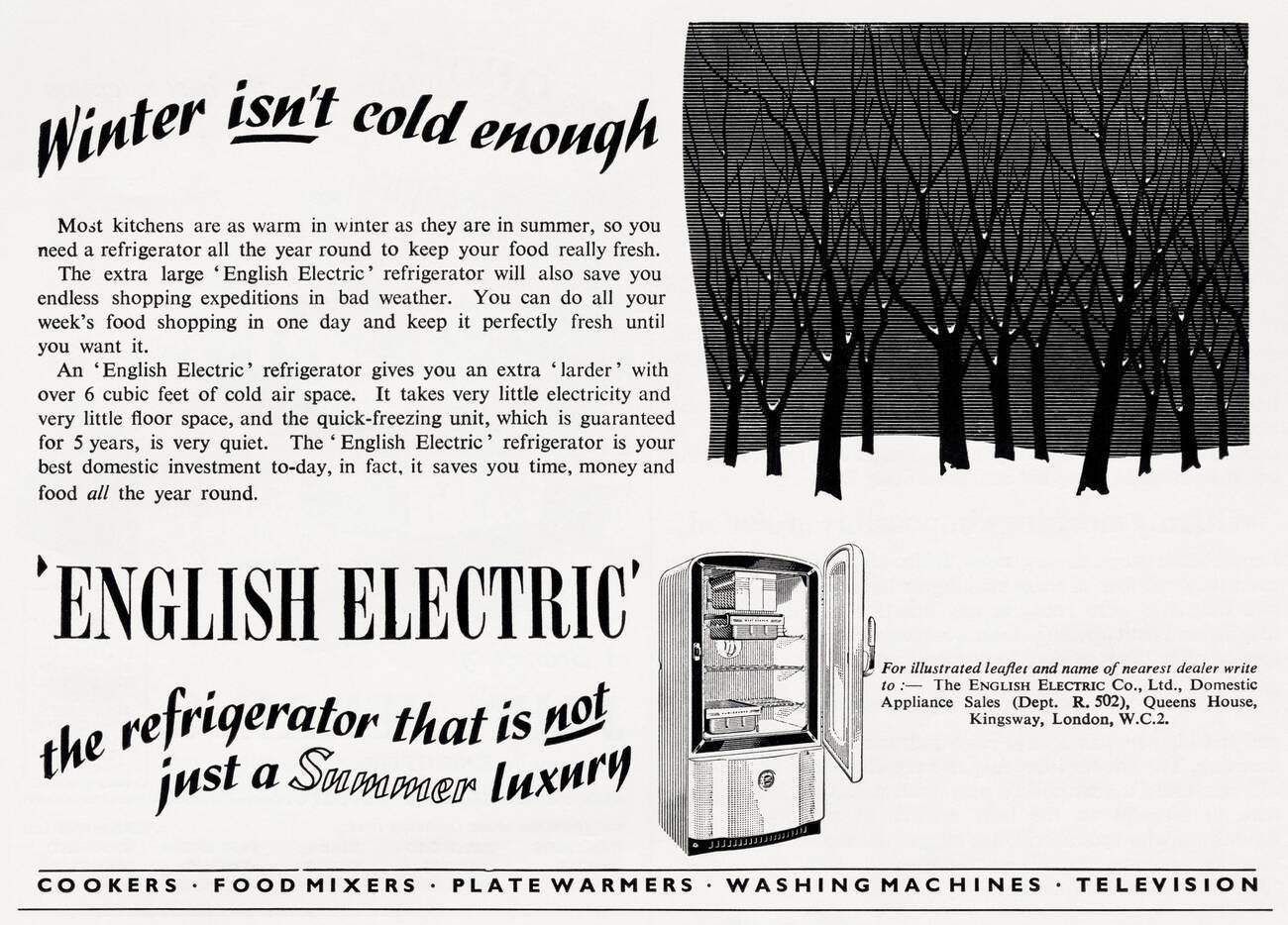
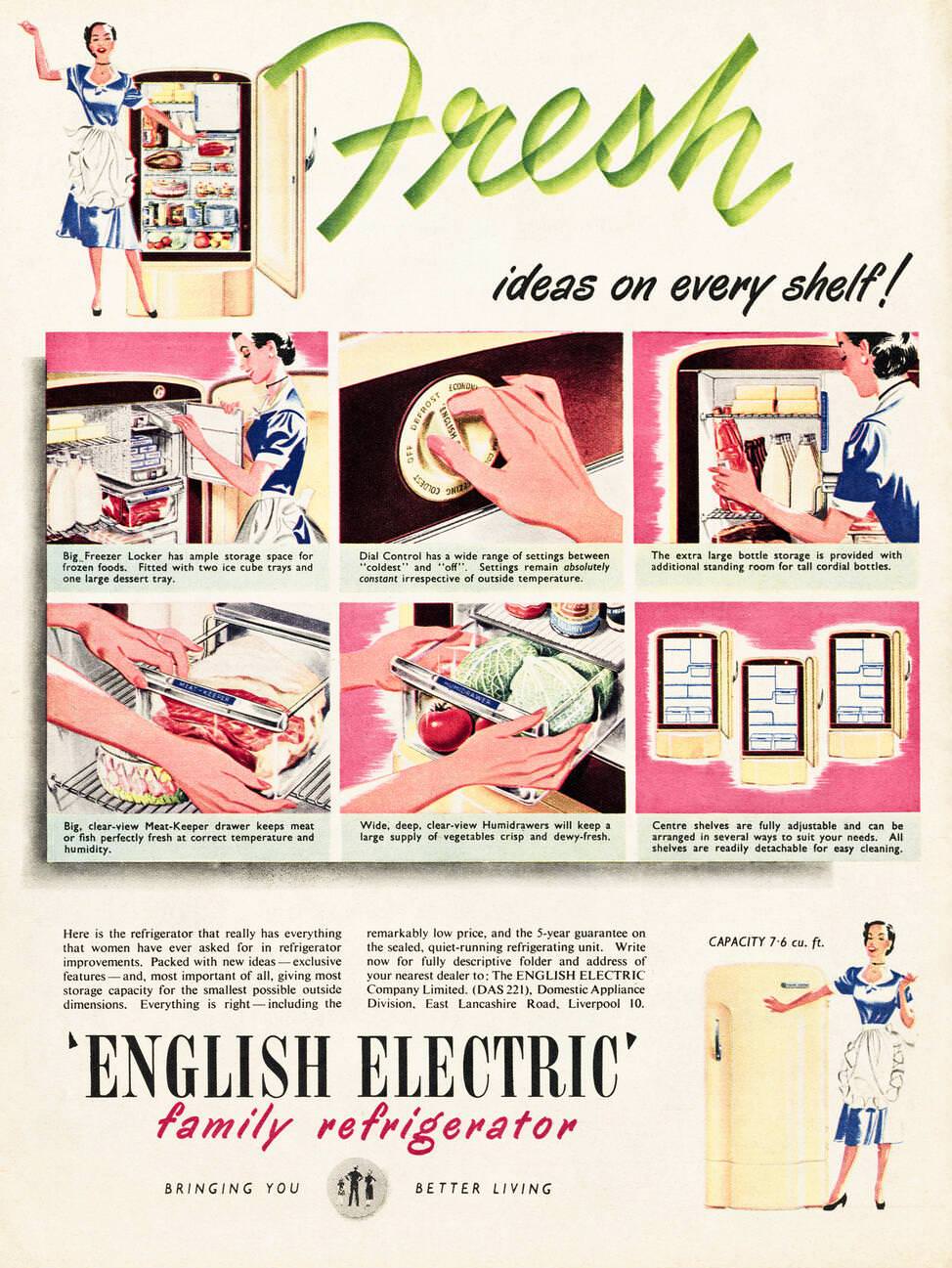
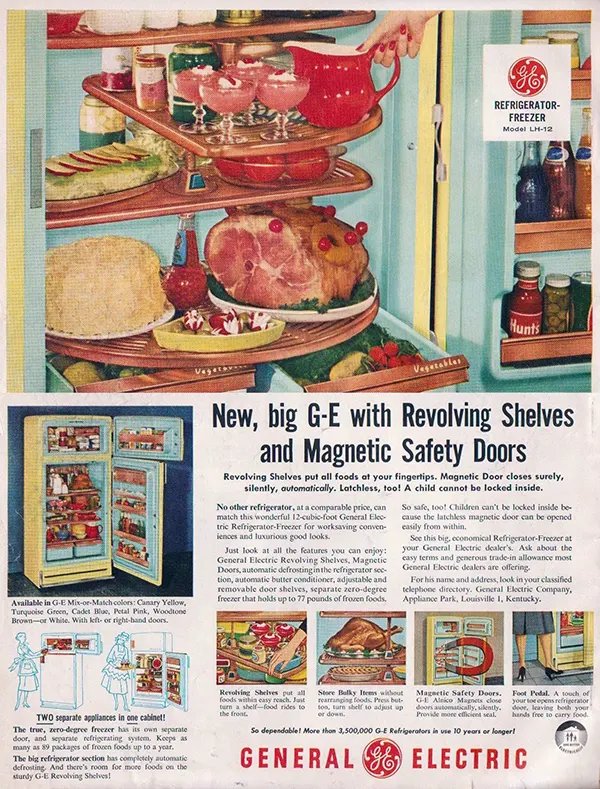
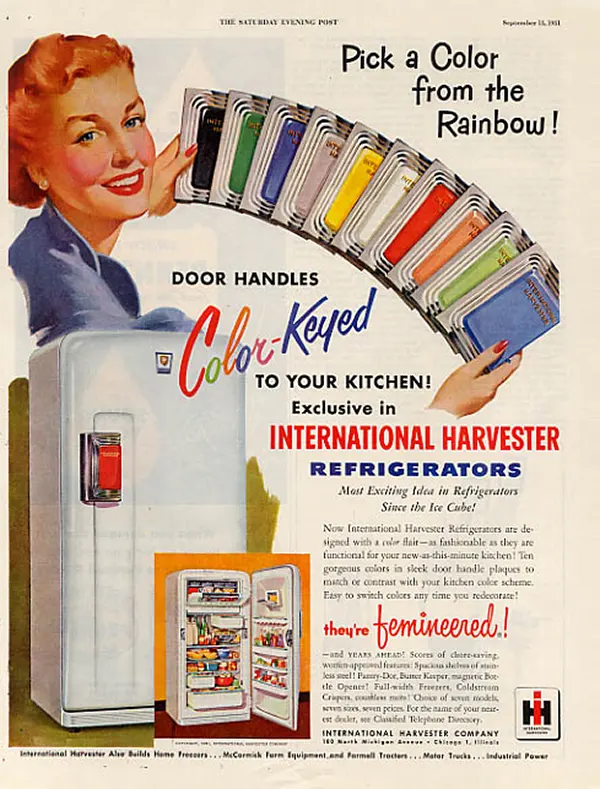
Once the war ended, pent-up consumer demand exploded. The late 1940s saw refrigerator ads become more aspirational. Families were depicted enjoying well-stocked refrigerators, with a new emphasis on abundance and domestic comfort. GE’s 1949 fridge and freezer combo ad, the English Electric campaigns in Country Life magazine, and the International Harvester demonstrations of 1950 all reflect this postwar optimism. Refrigerators were no longer just appliances — they were symbols of prosperity.
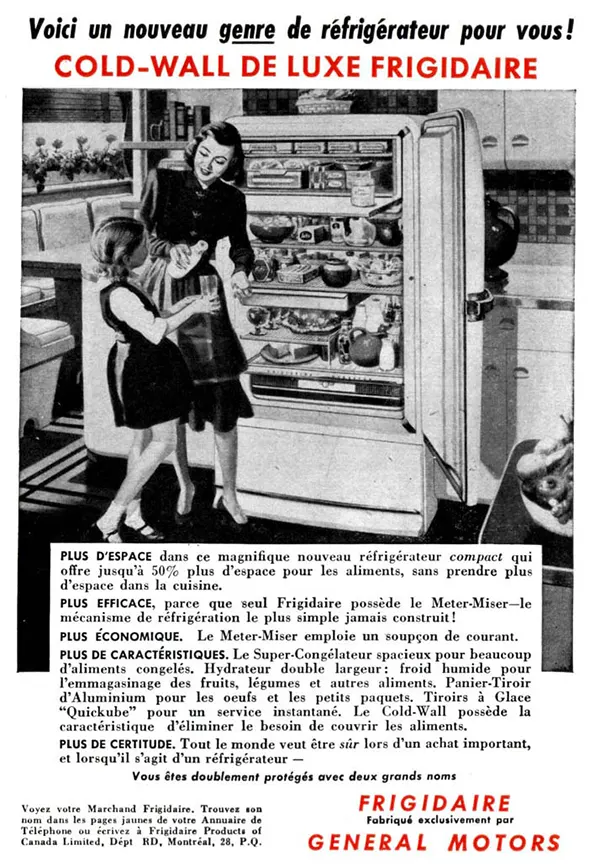
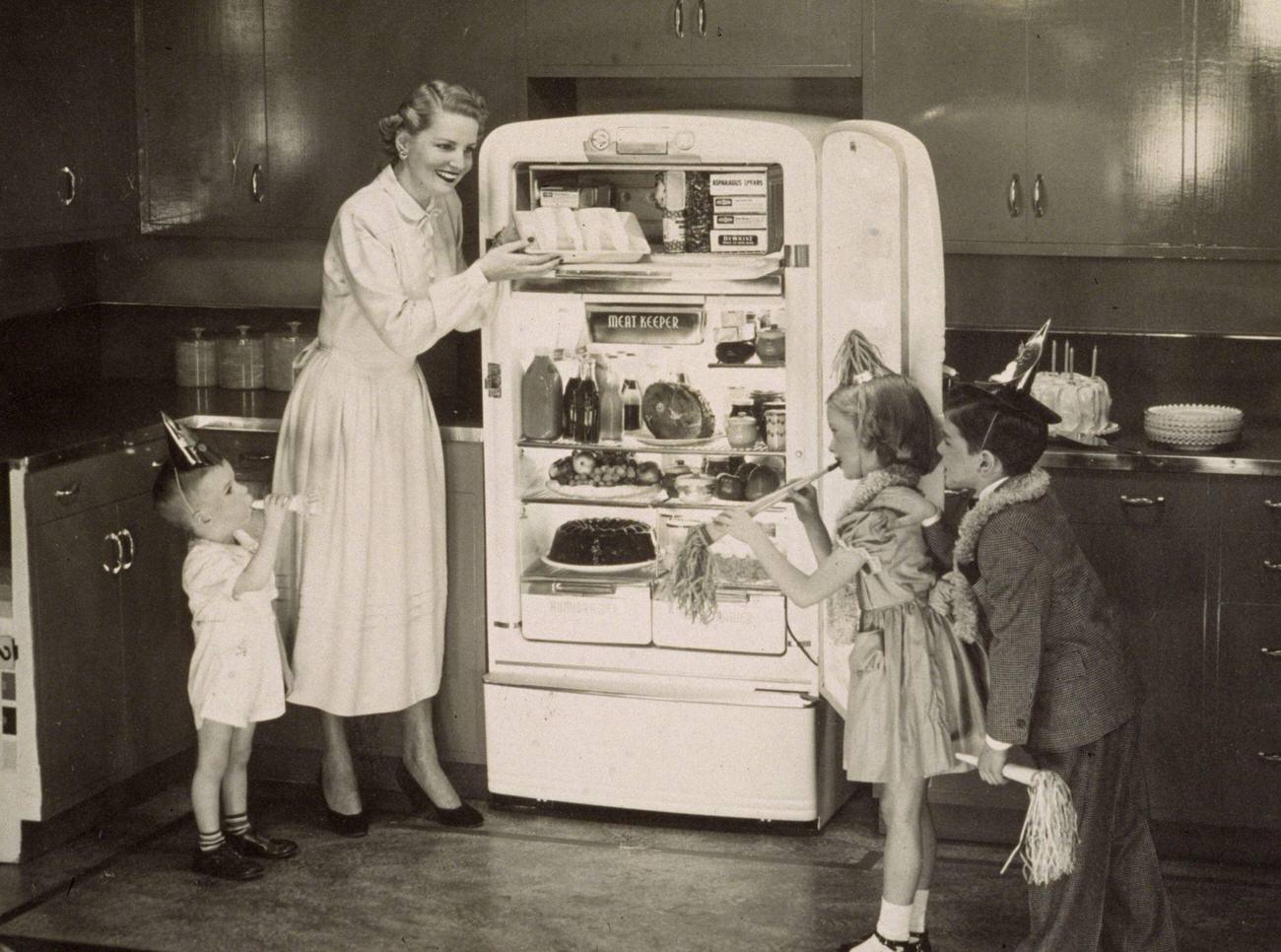
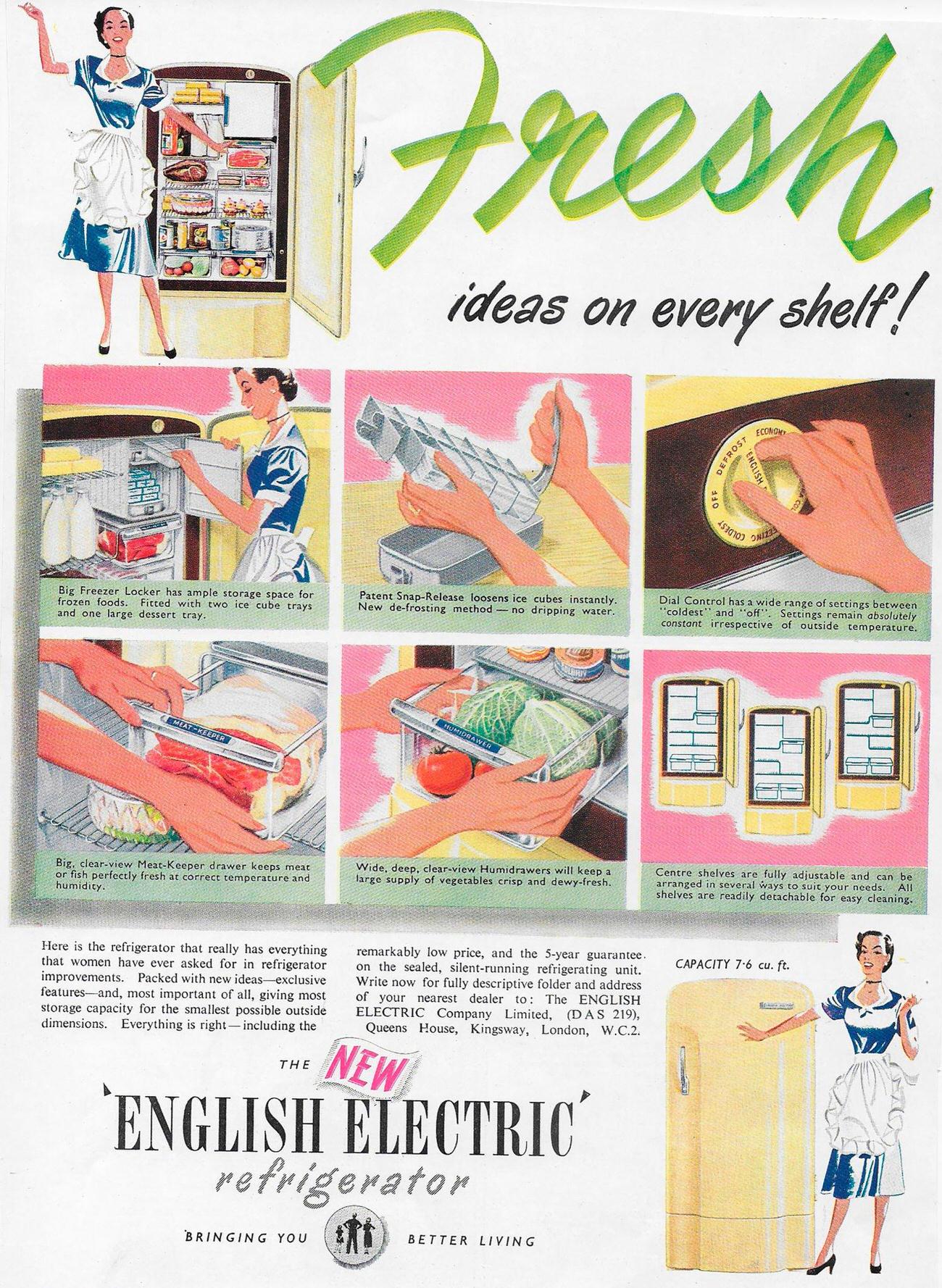
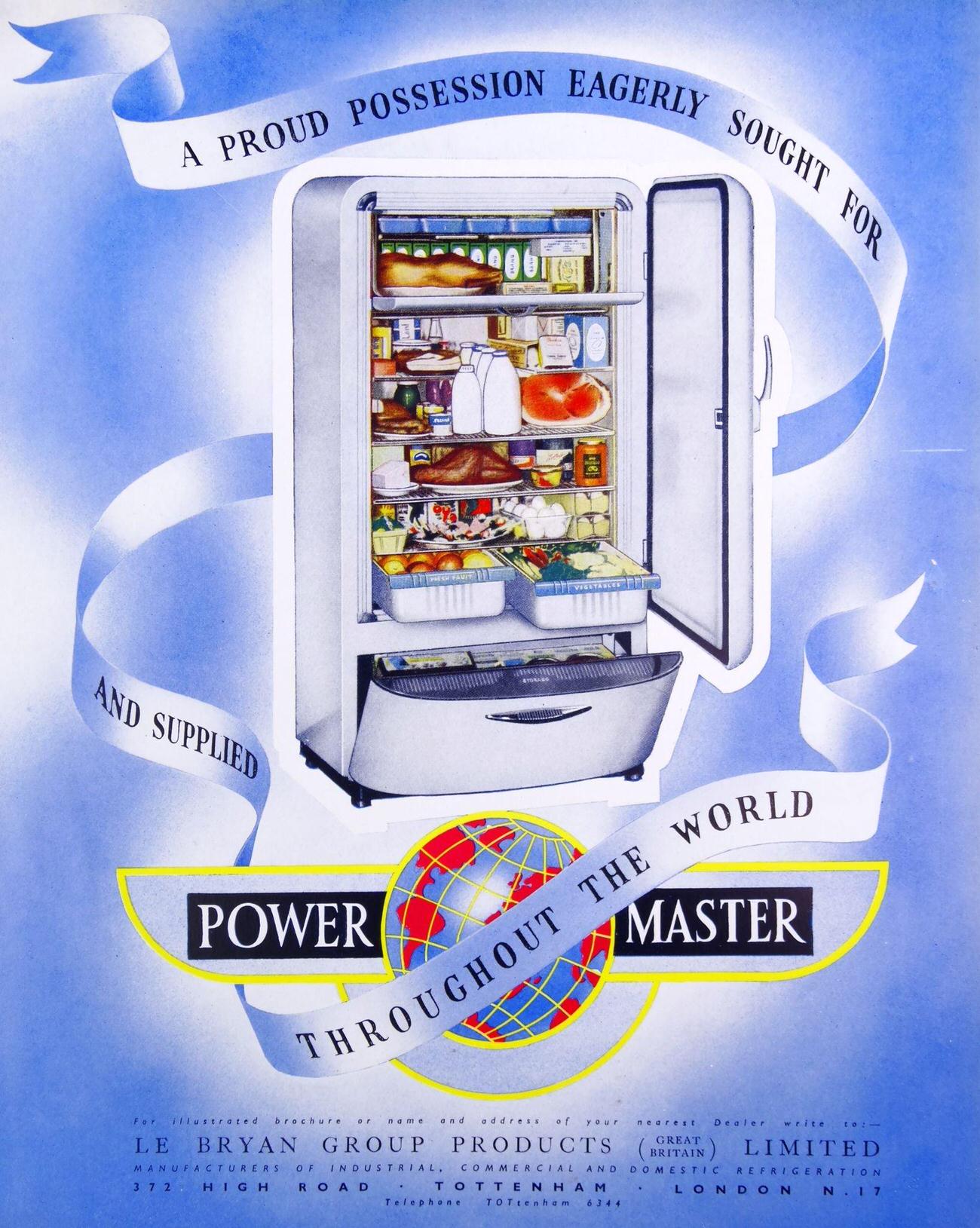
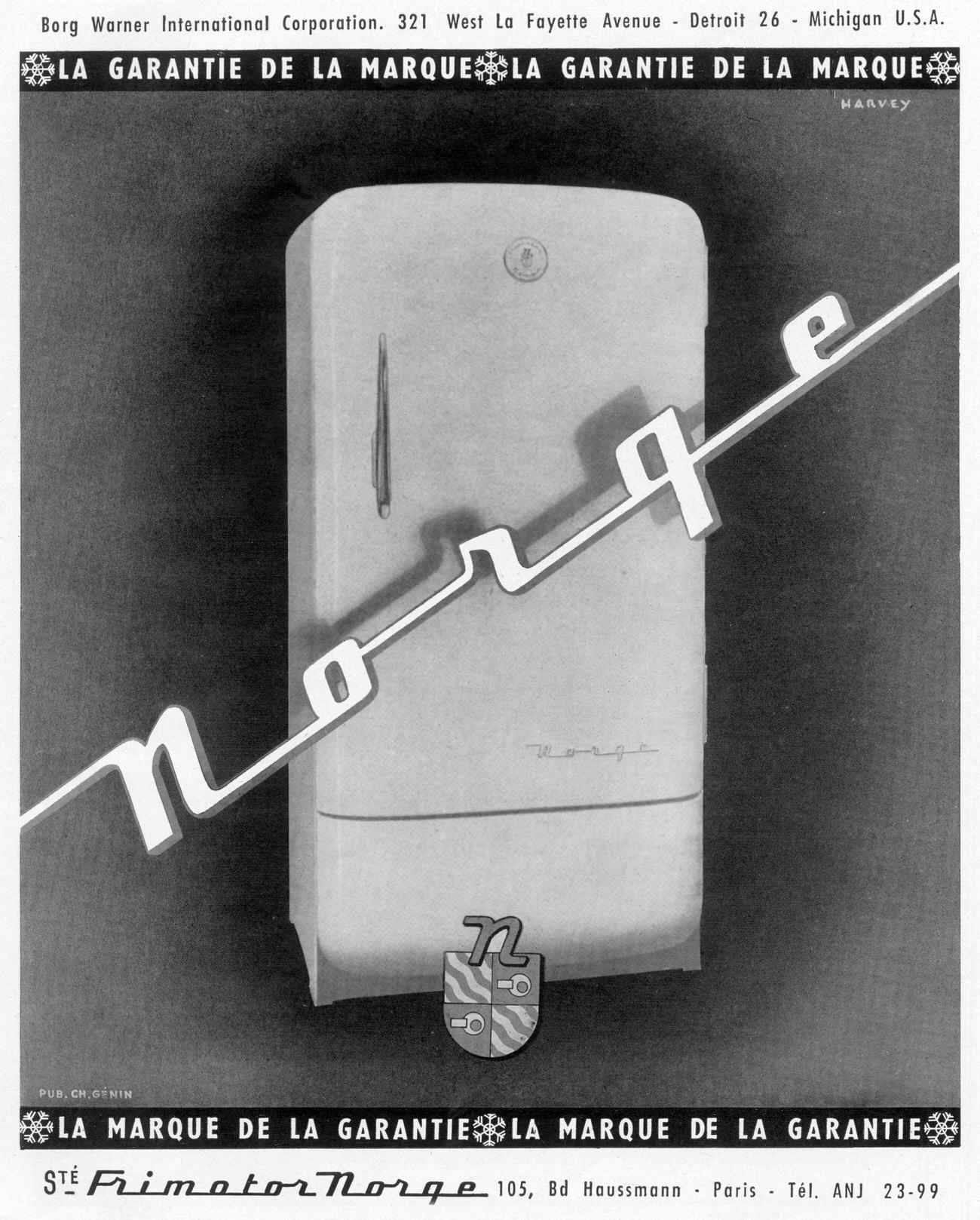
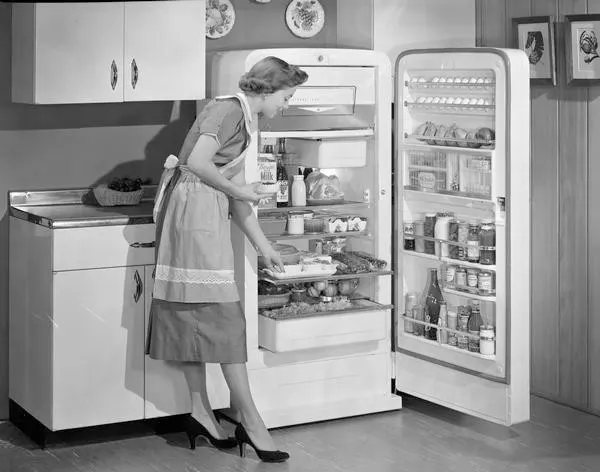
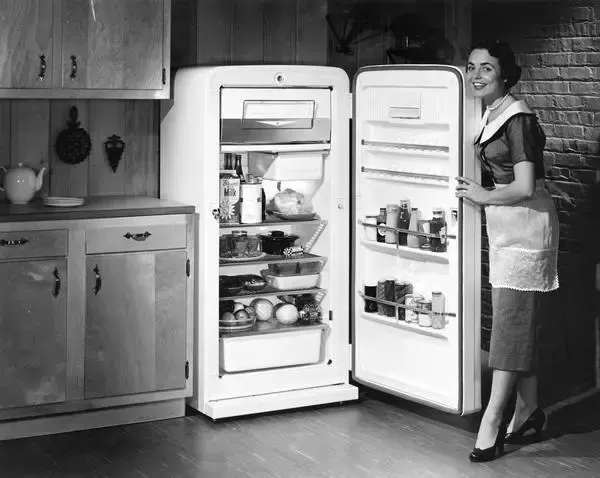
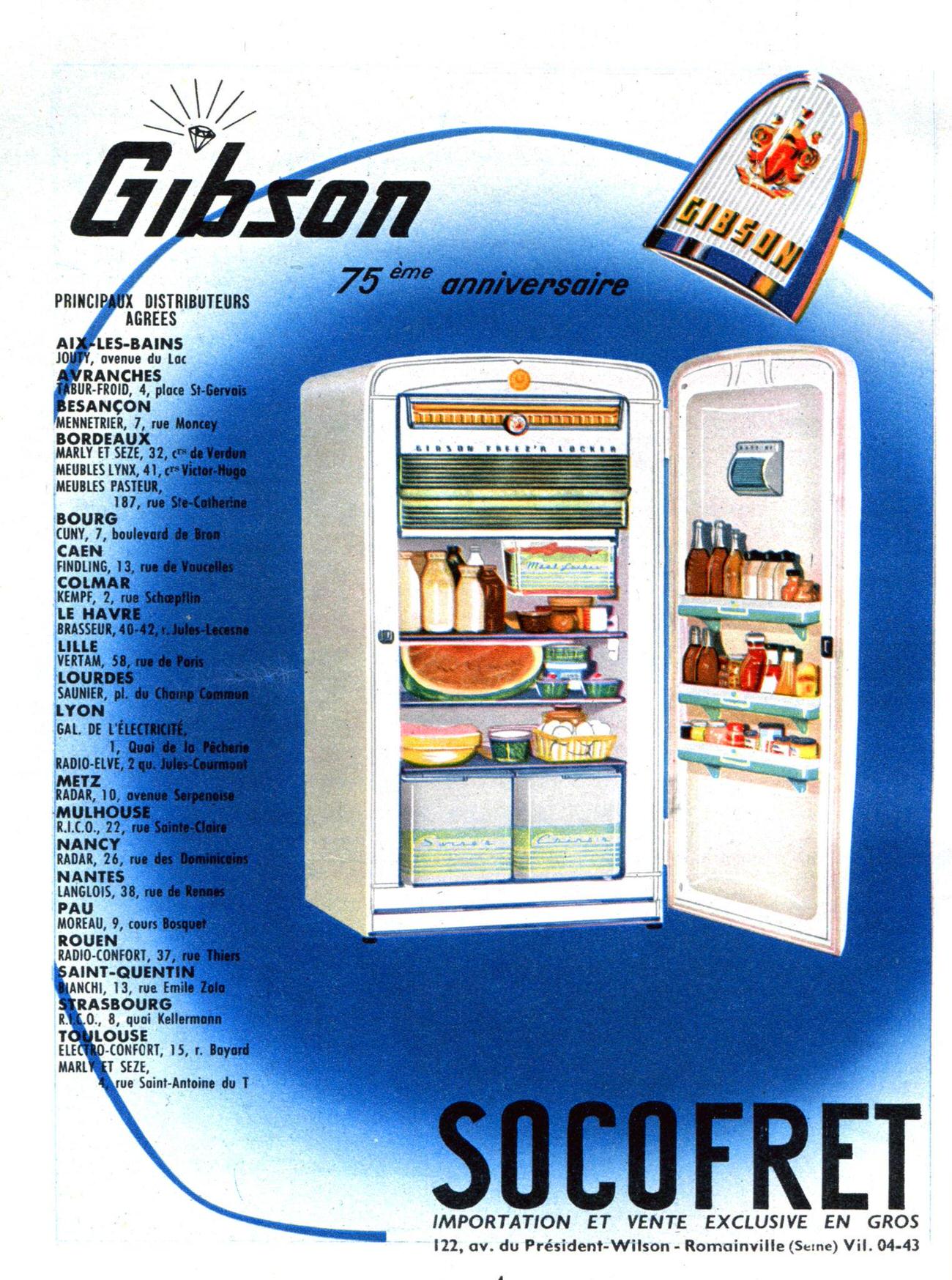
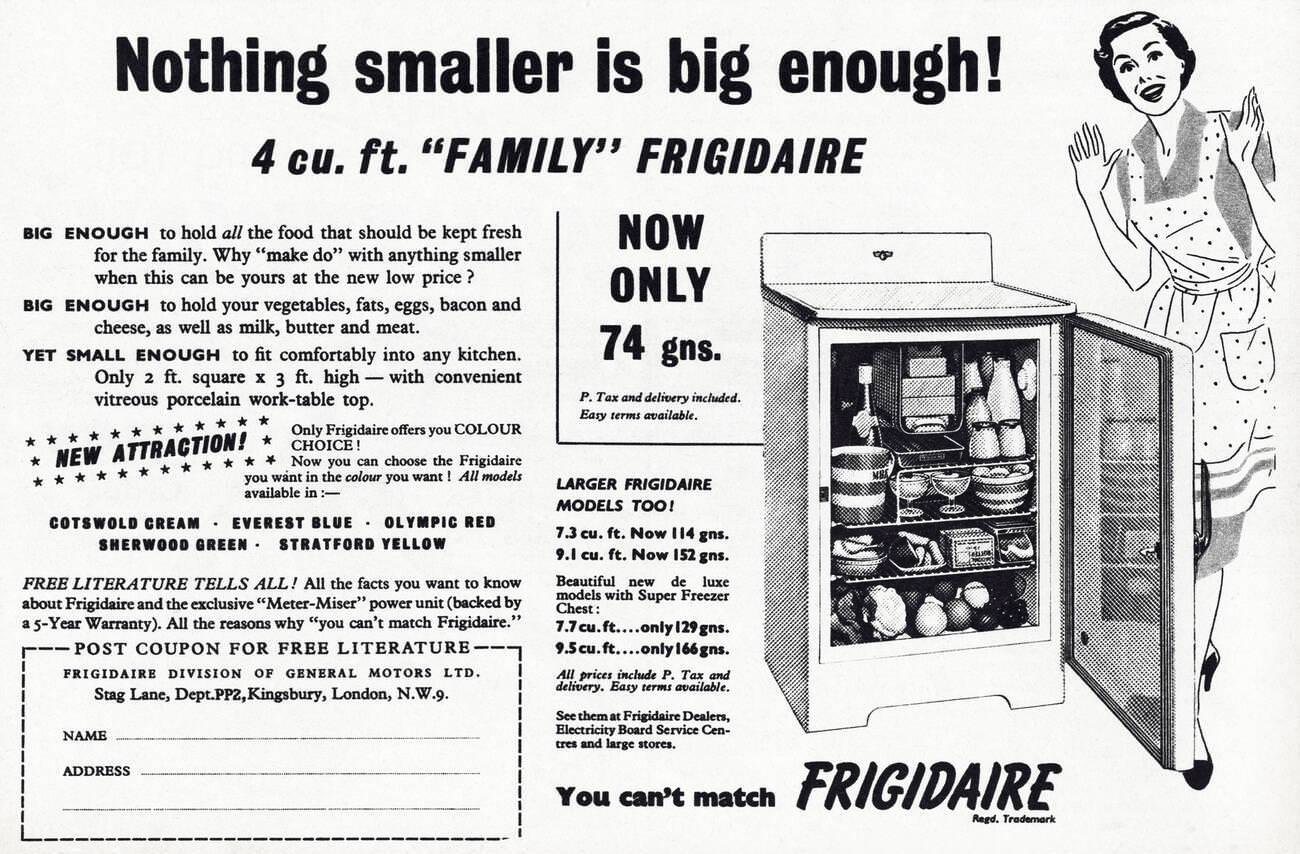
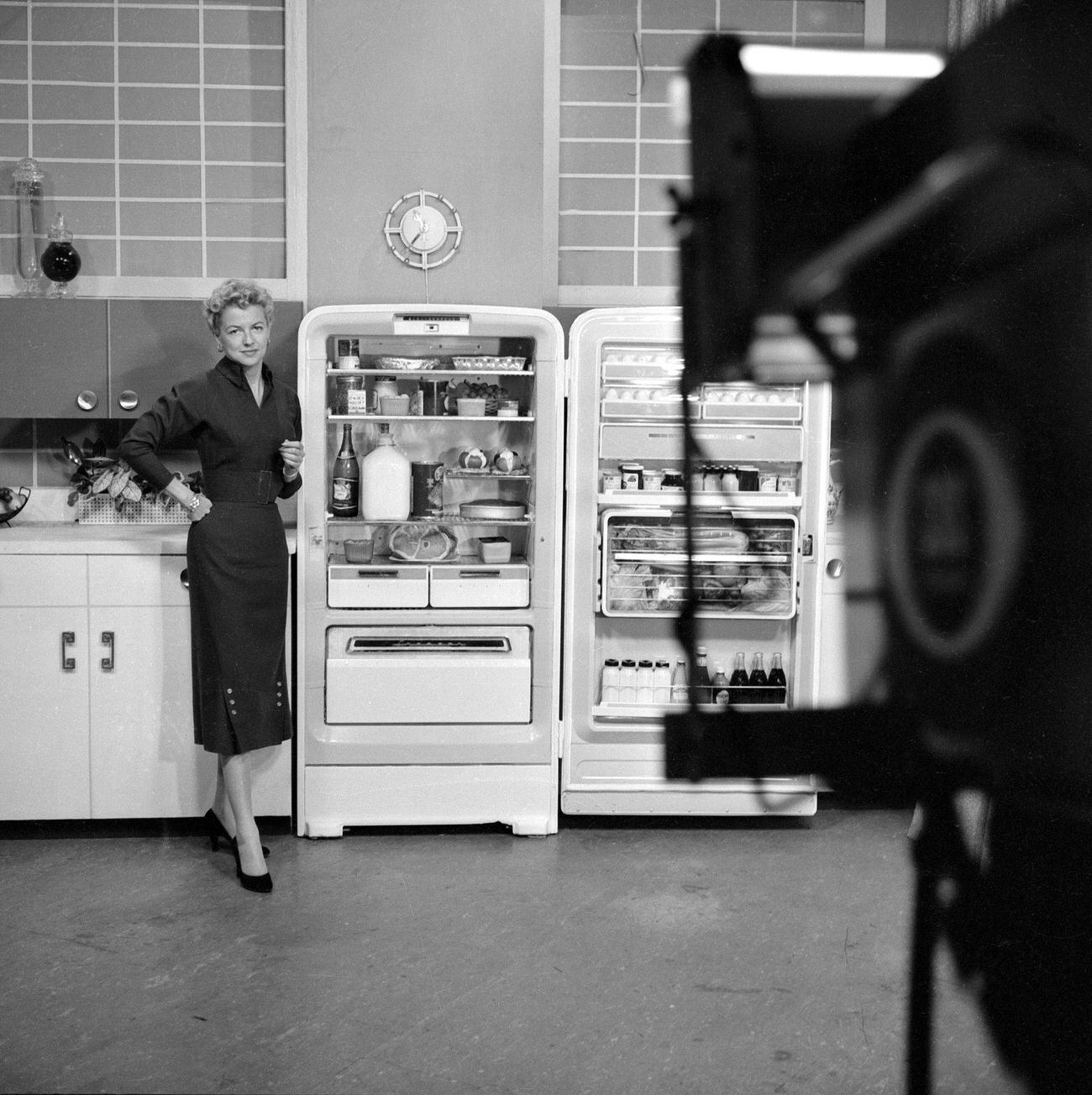
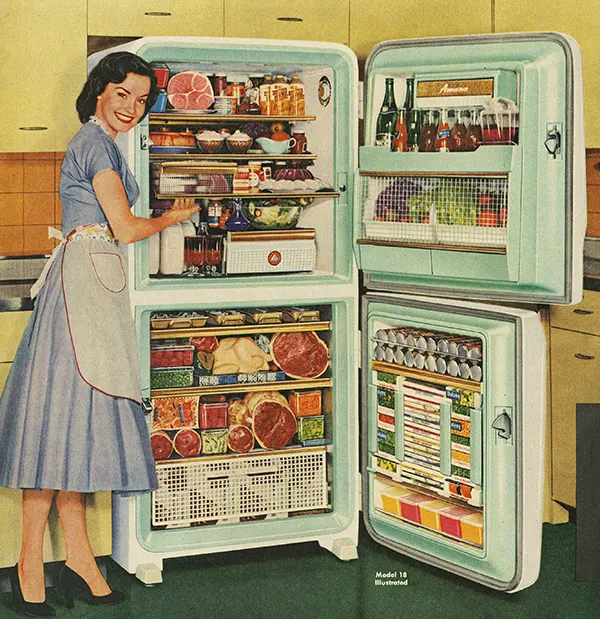
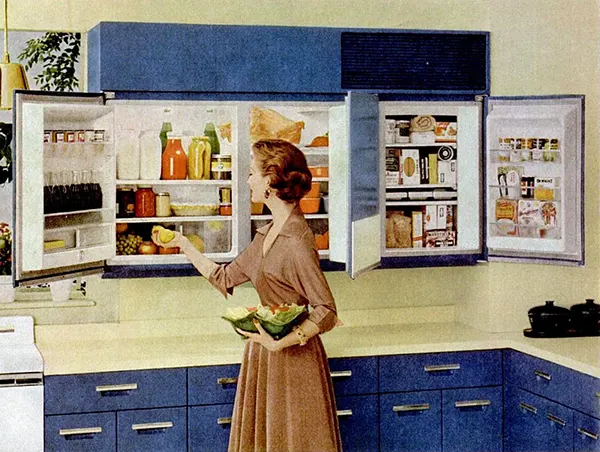
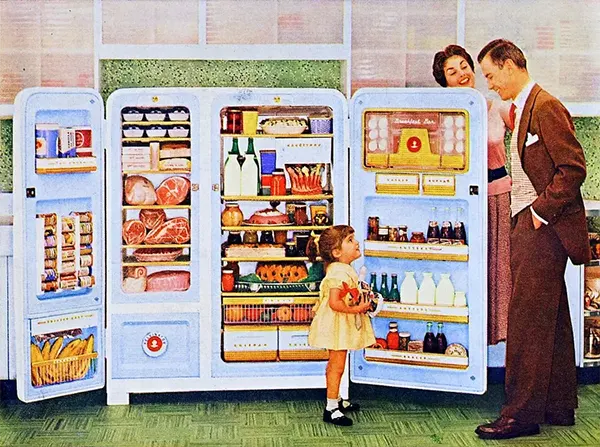
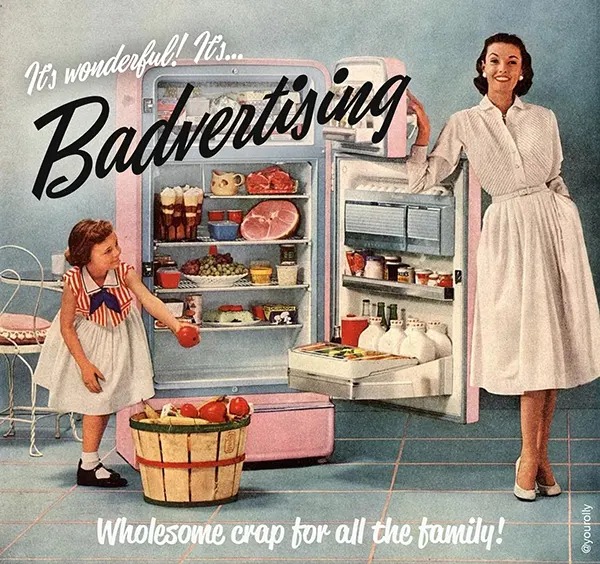
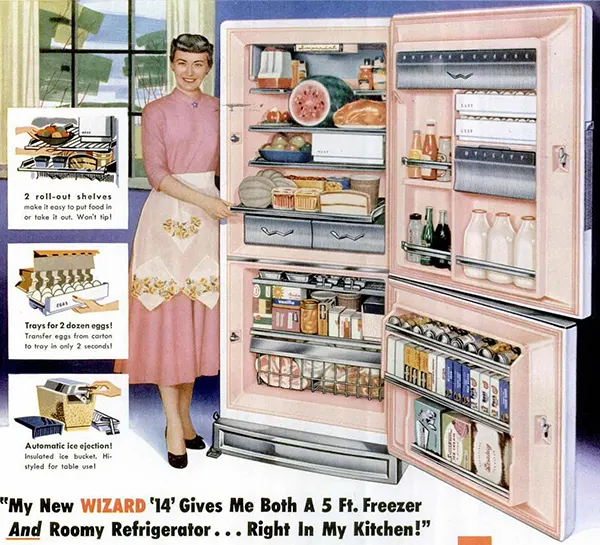
The 1950s were the golden age of the American kitchen. Refrigerators grew larger, and manufacturers introduced them in pastel colors — pink, turquoise, and yellow — designed to match the bold aesthetic of postwar American homes. Ads from this decade were bright, cheerful, and loaded with imagery of happy families, full kitchens, and modern living. The Gibson refrigerator ad from 1952, the Frigidaire campaigns of 1954 and 1957, and GE’s 1955 wall refrigerator all capture the decade’s energetic consumer culture. Television also became a powerful advertising channel — actress Betty Furness became one of the most recognized faces in appliance advertising through her Westinghouse refrigerator segments on CBS.
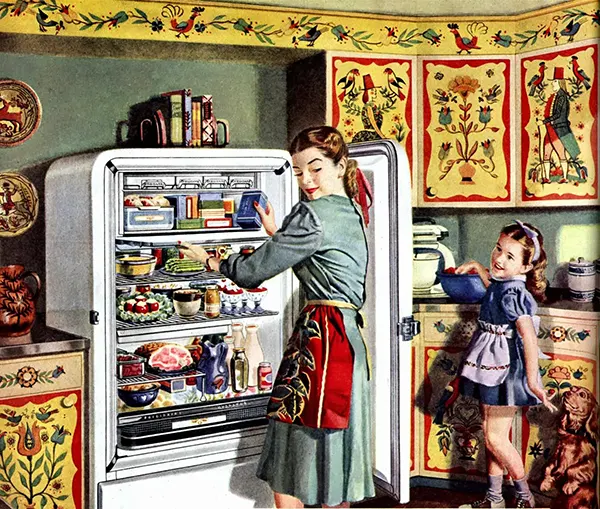
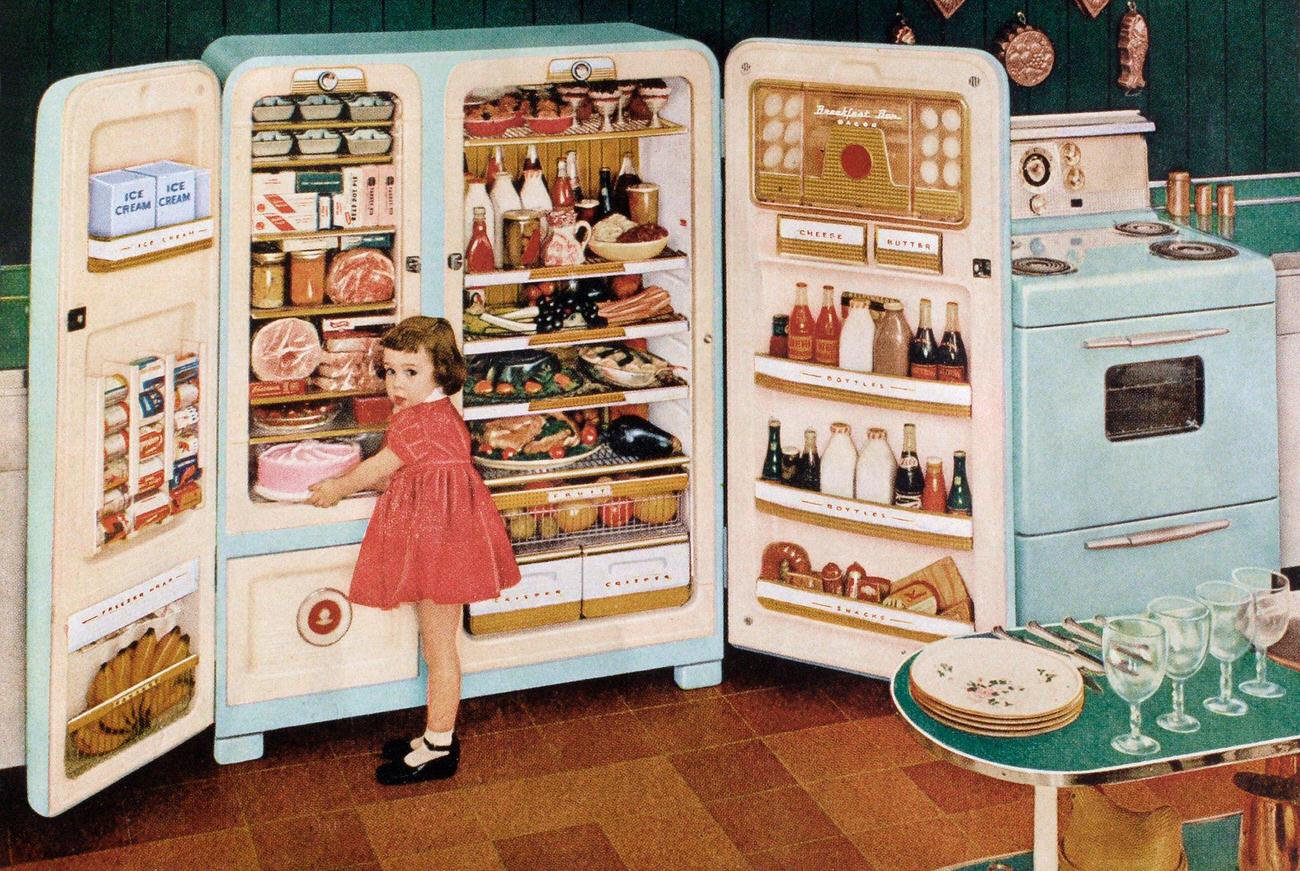
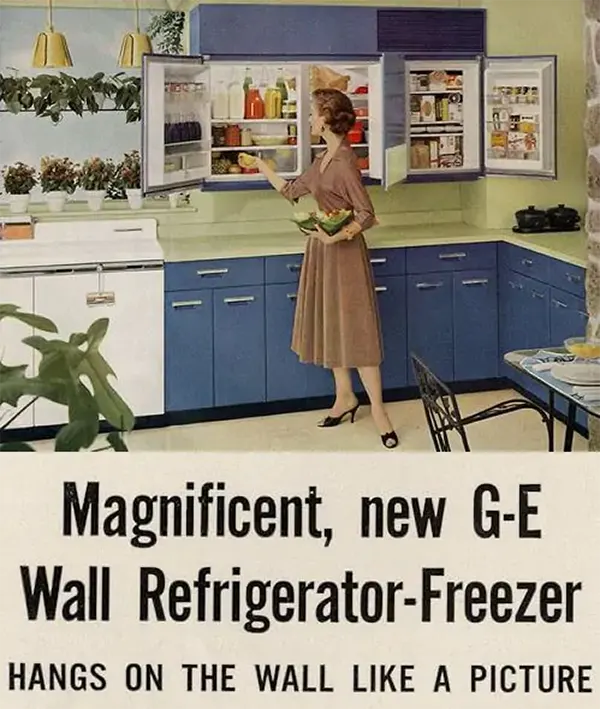
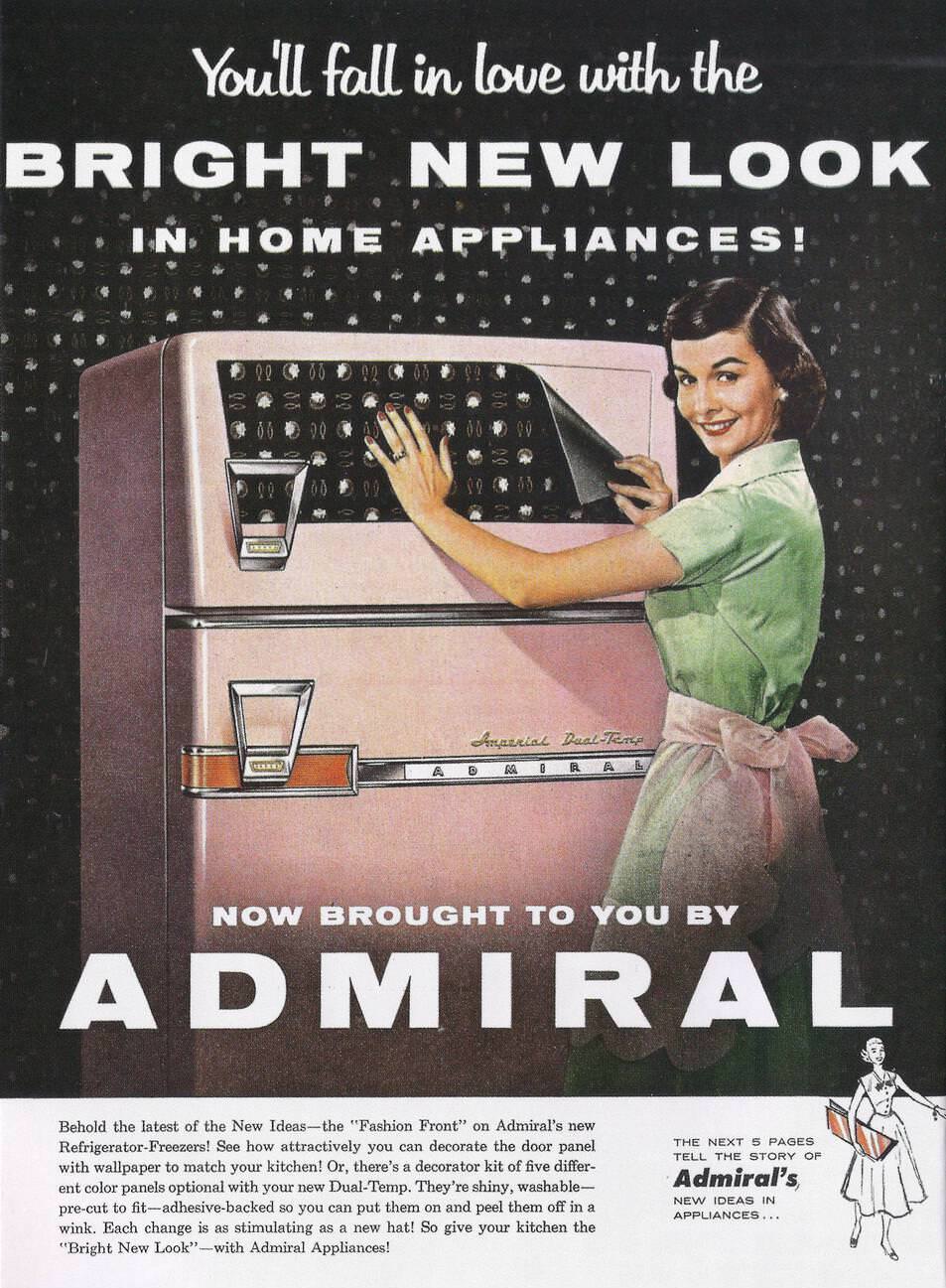
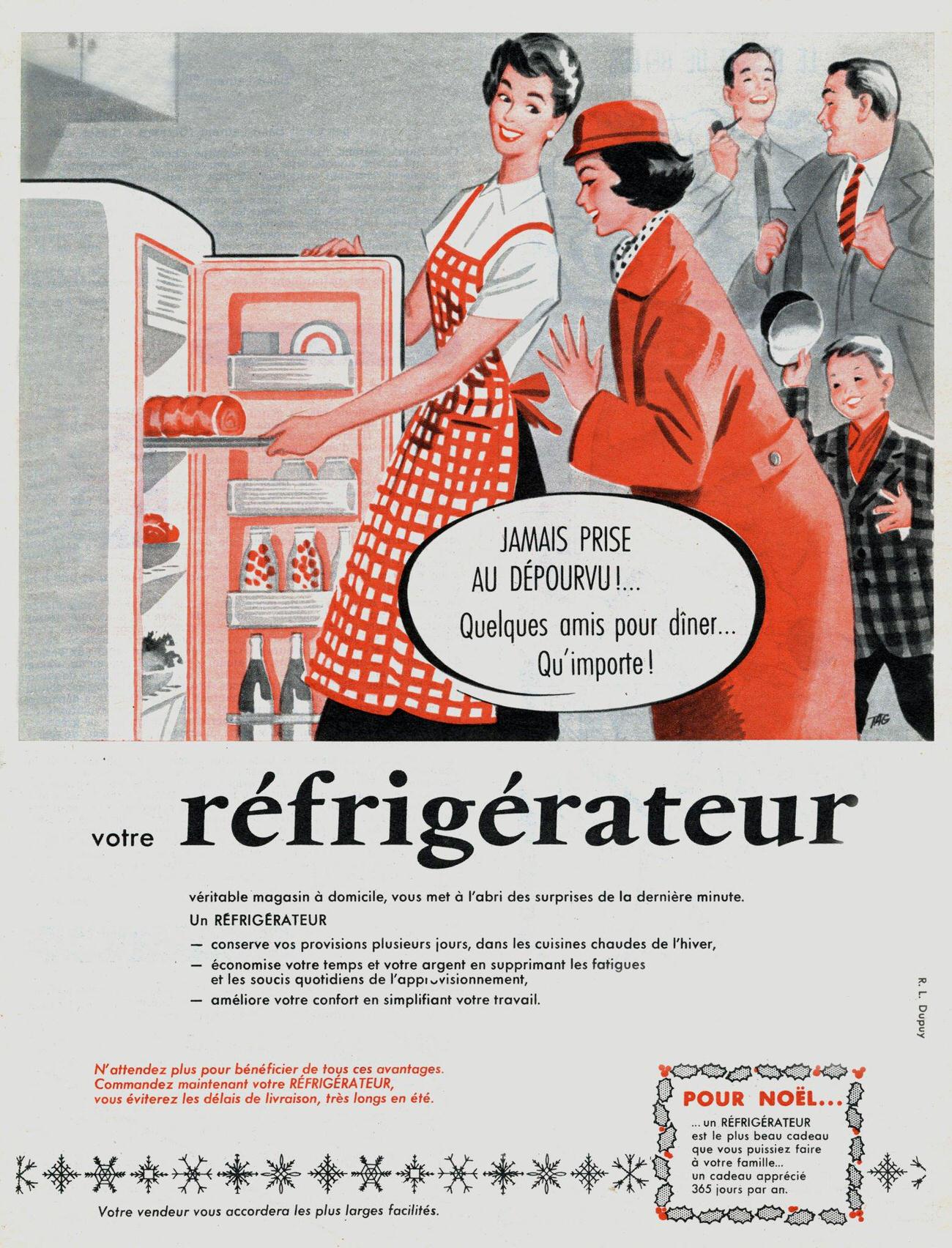
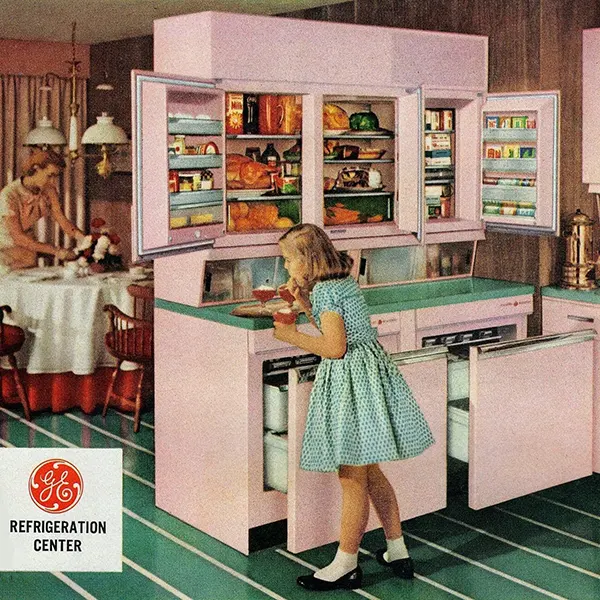
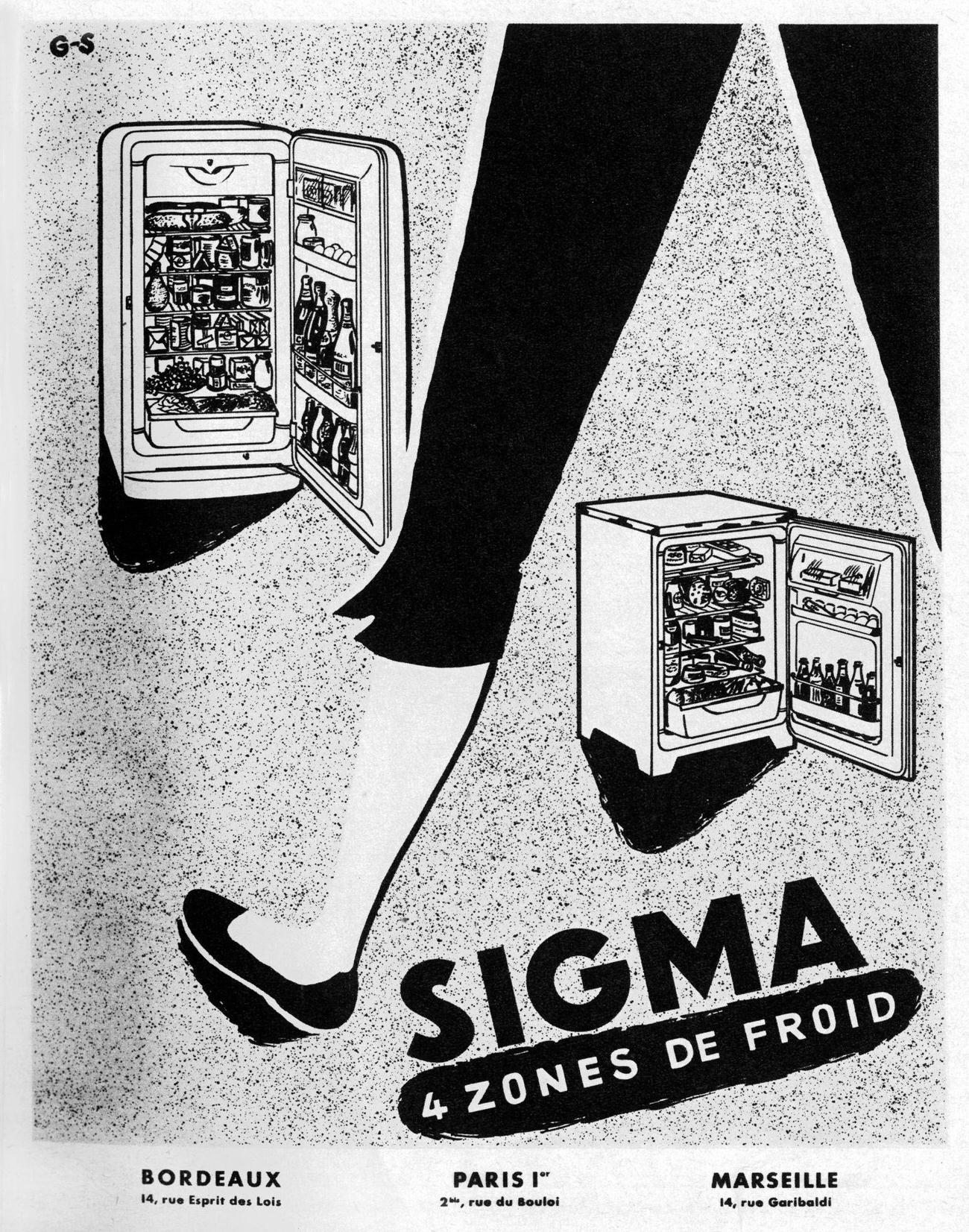
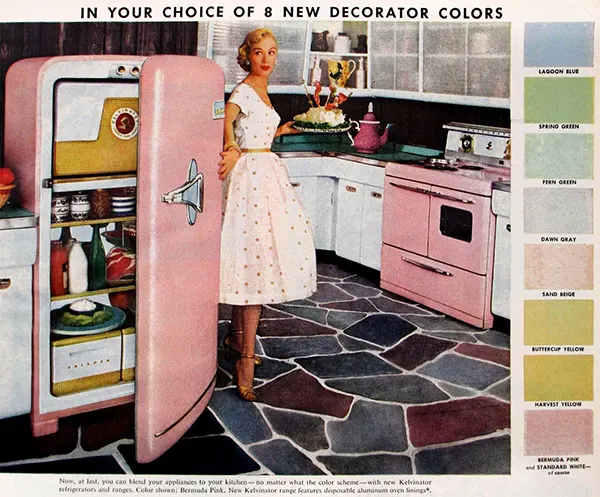
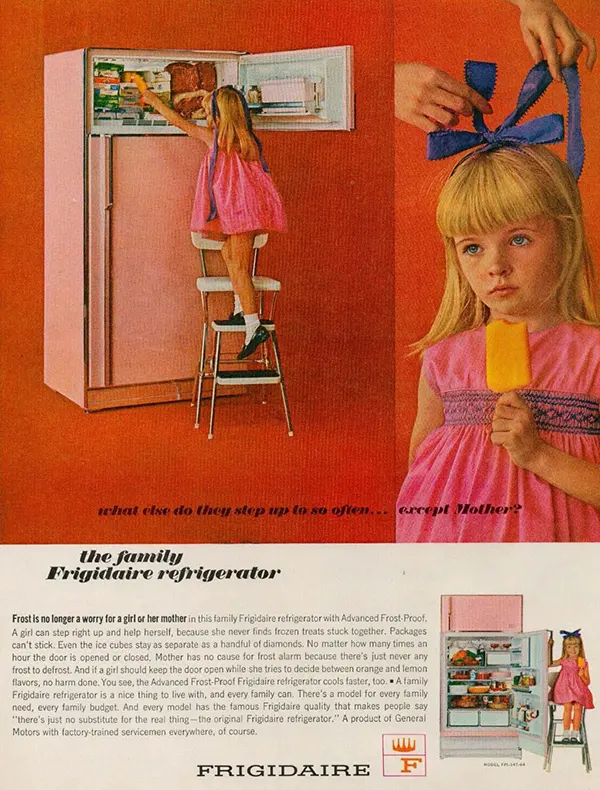
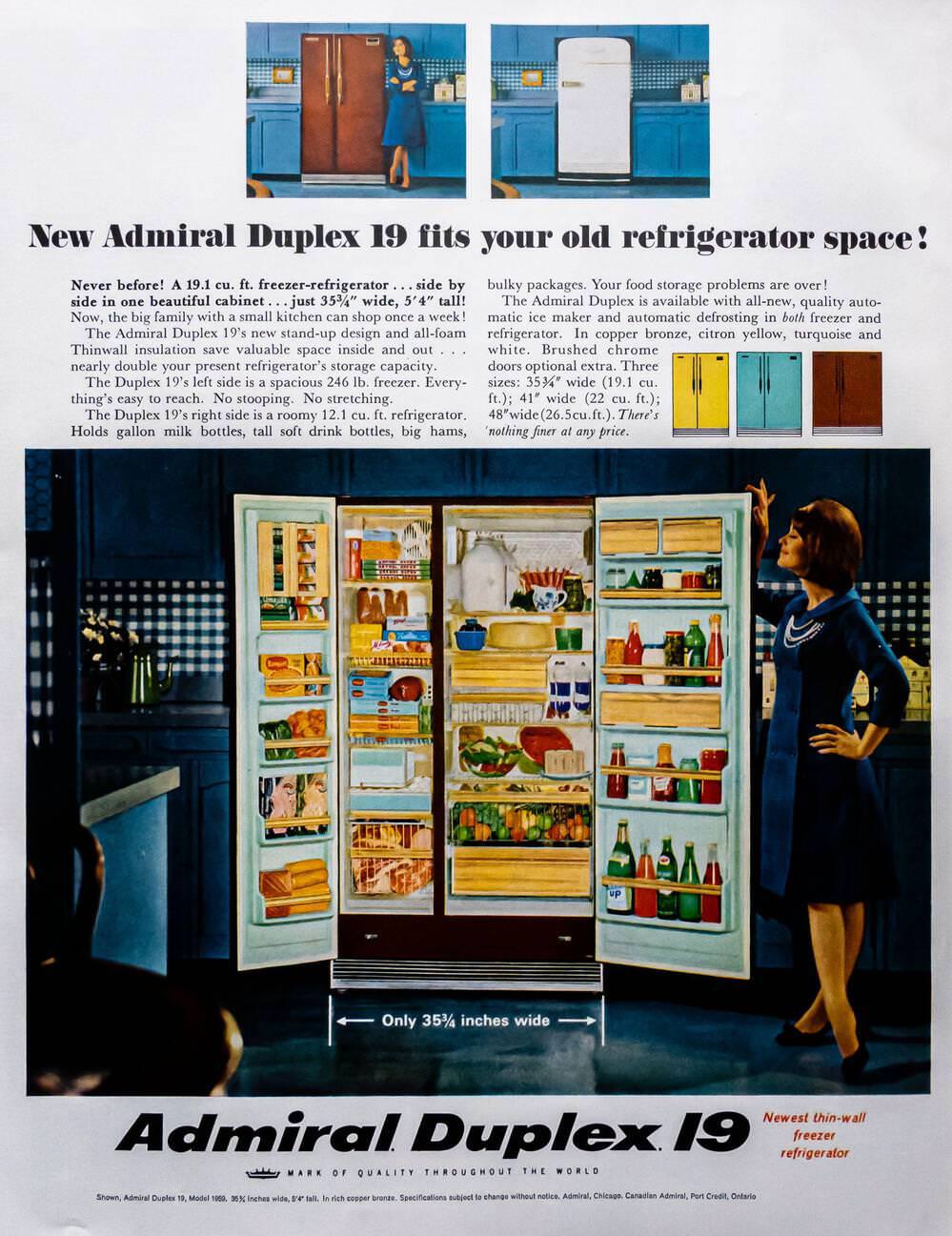
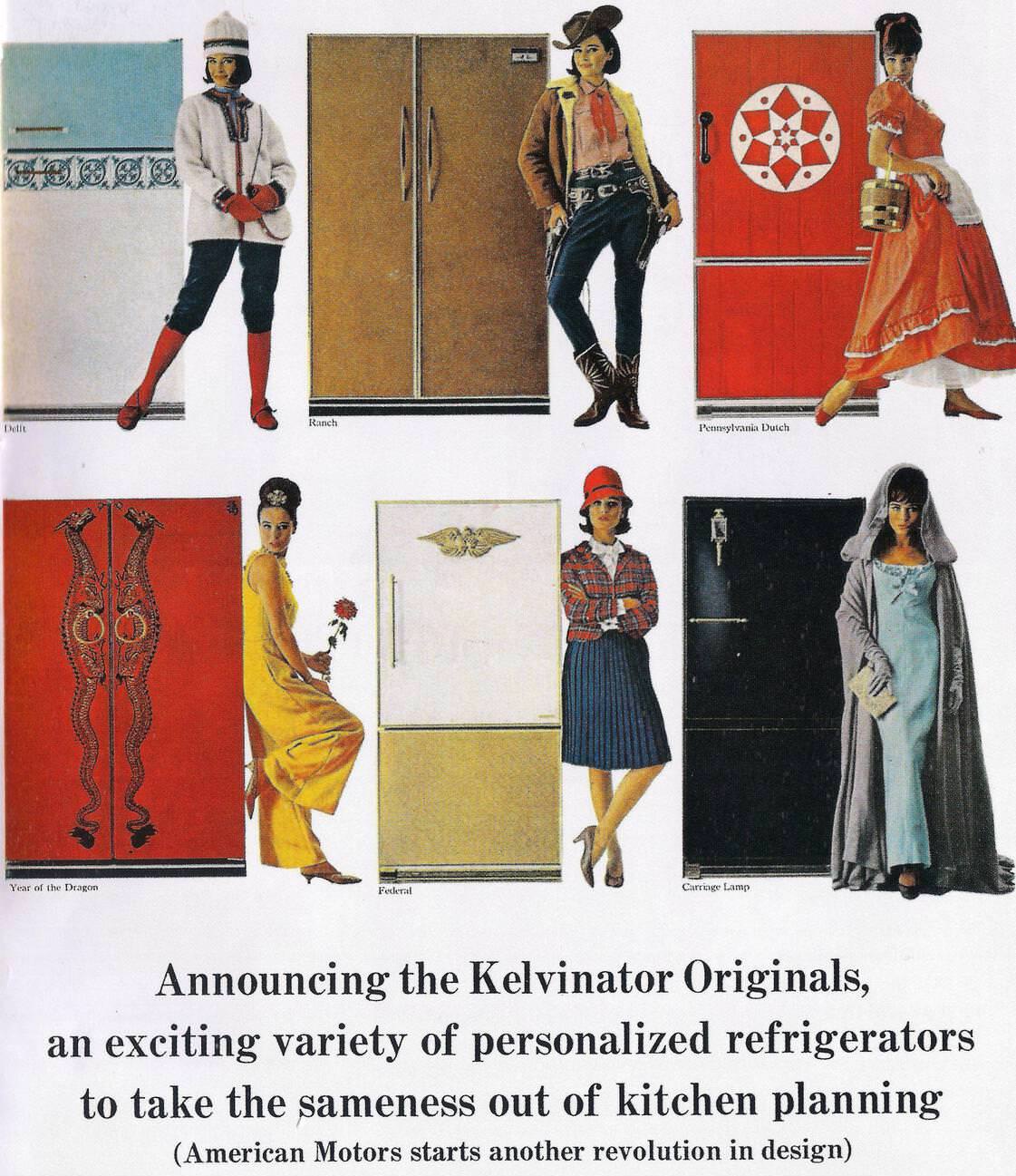
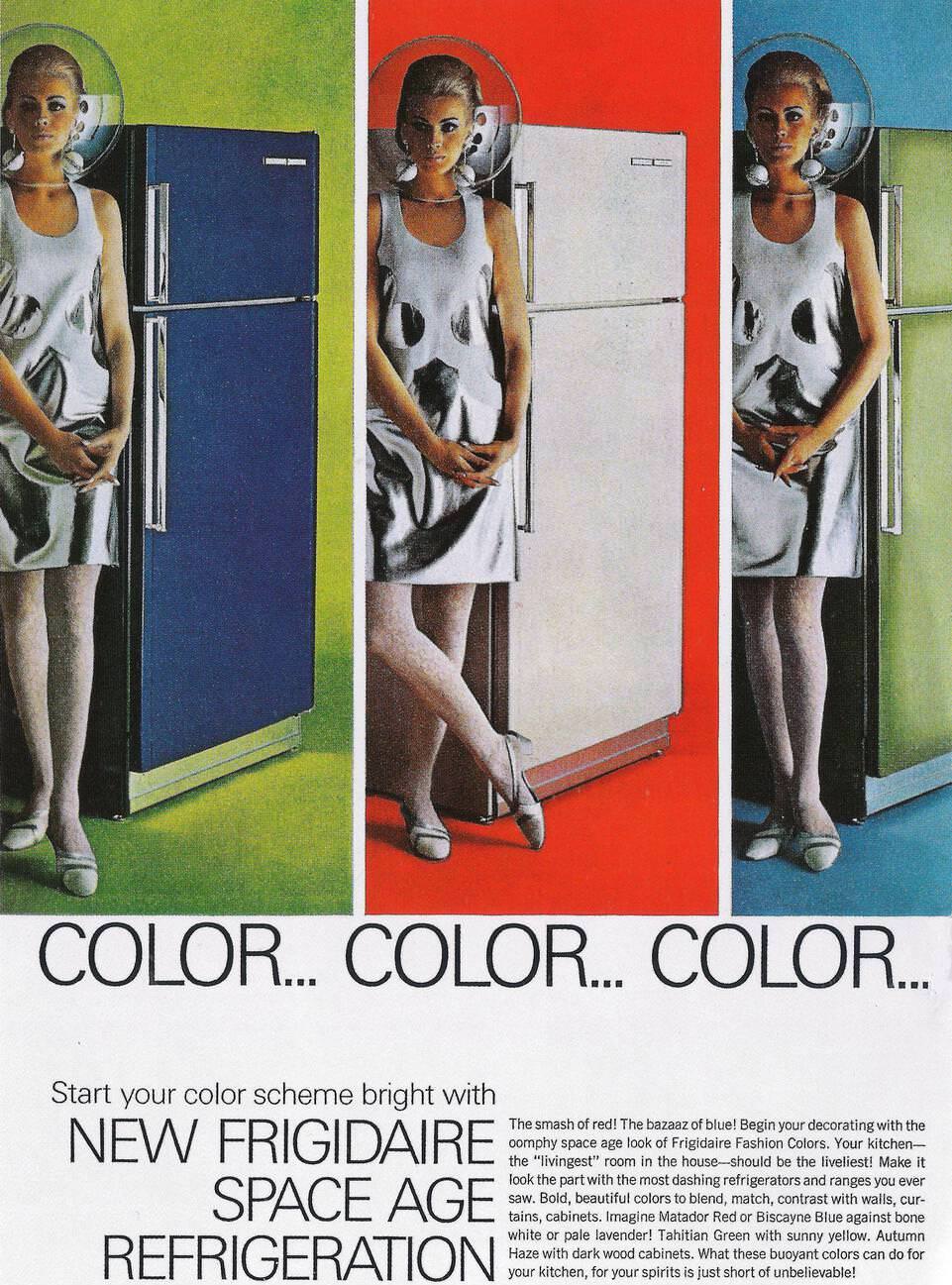
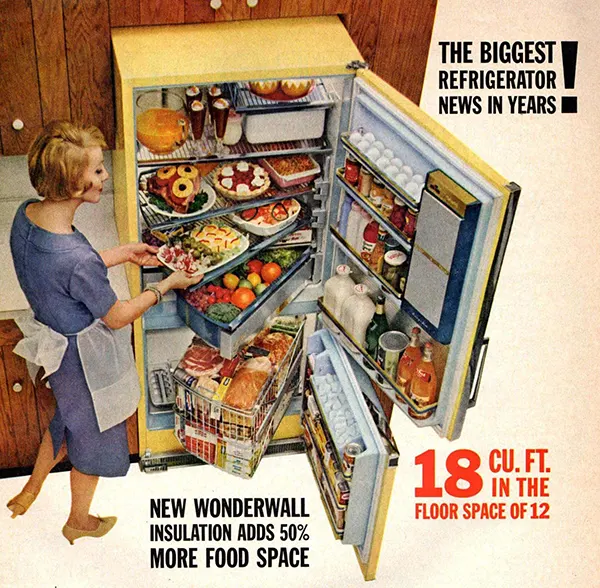
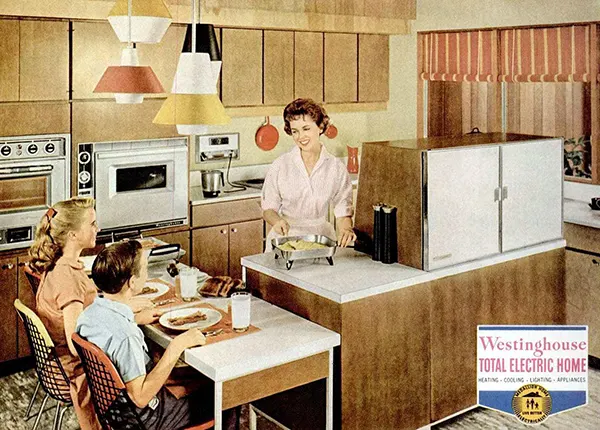
The 1960s pushed refrigerator design in bold new directions. Manufacturers experimented with bright oranges, greens, and even printed patterns inspired by the pop art movement and the broader cultural shift toward self-expression. Ads from this decade featured refrigerators as fashion statements, often placed in modern or futuristic settings. The Admiral Duplex I9 ad from 1965, the Kelvinator ad from that same year, and Frigidaire’s 1966 campaign all reflect this design-forward attitude. Some concepts went further — the two-sided countertop refrigerator and swing-out shelf designs shown in 1960s ads were experimental ideas that imagined a completely different relationship between kitchen and appliance.
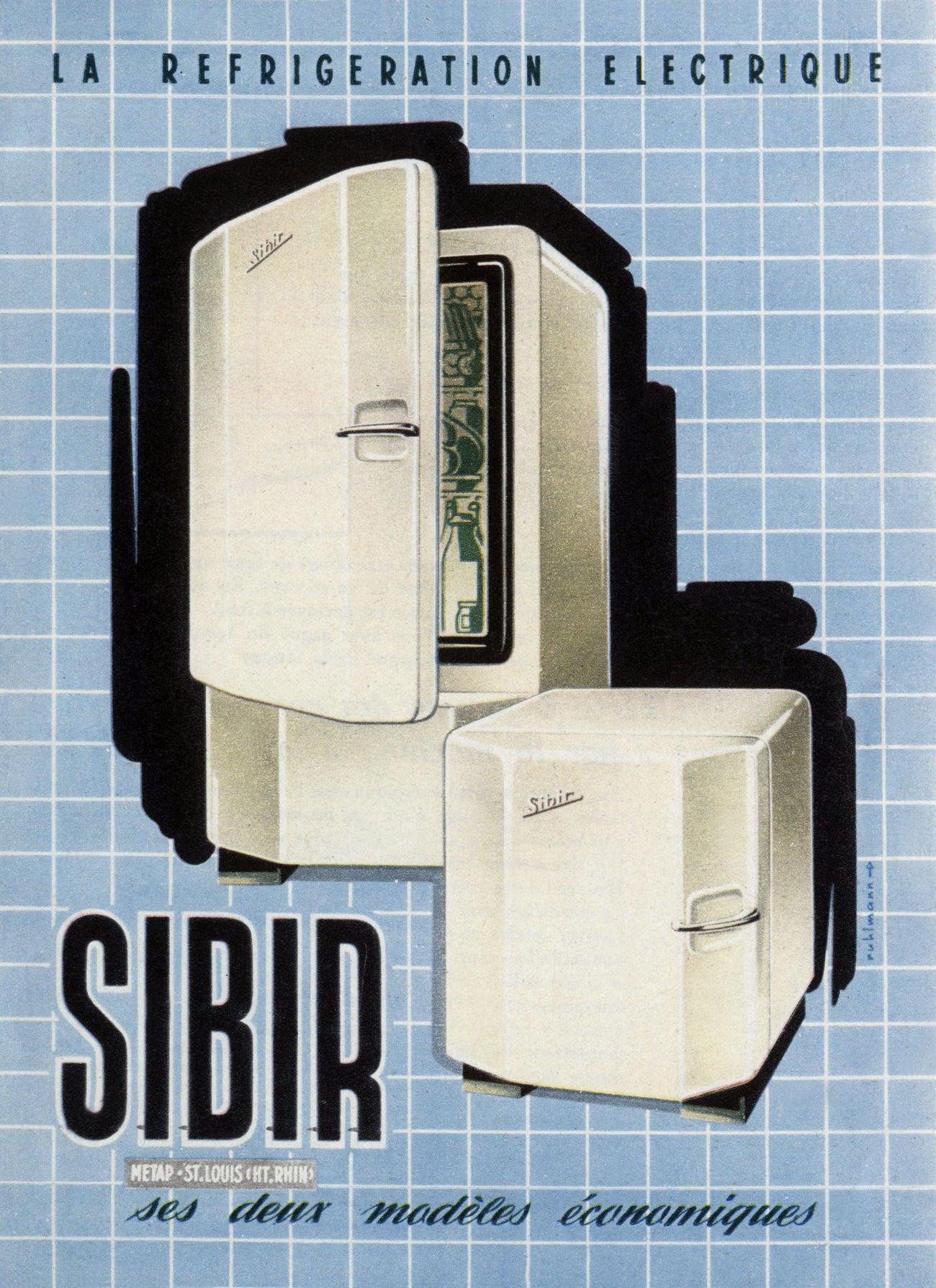
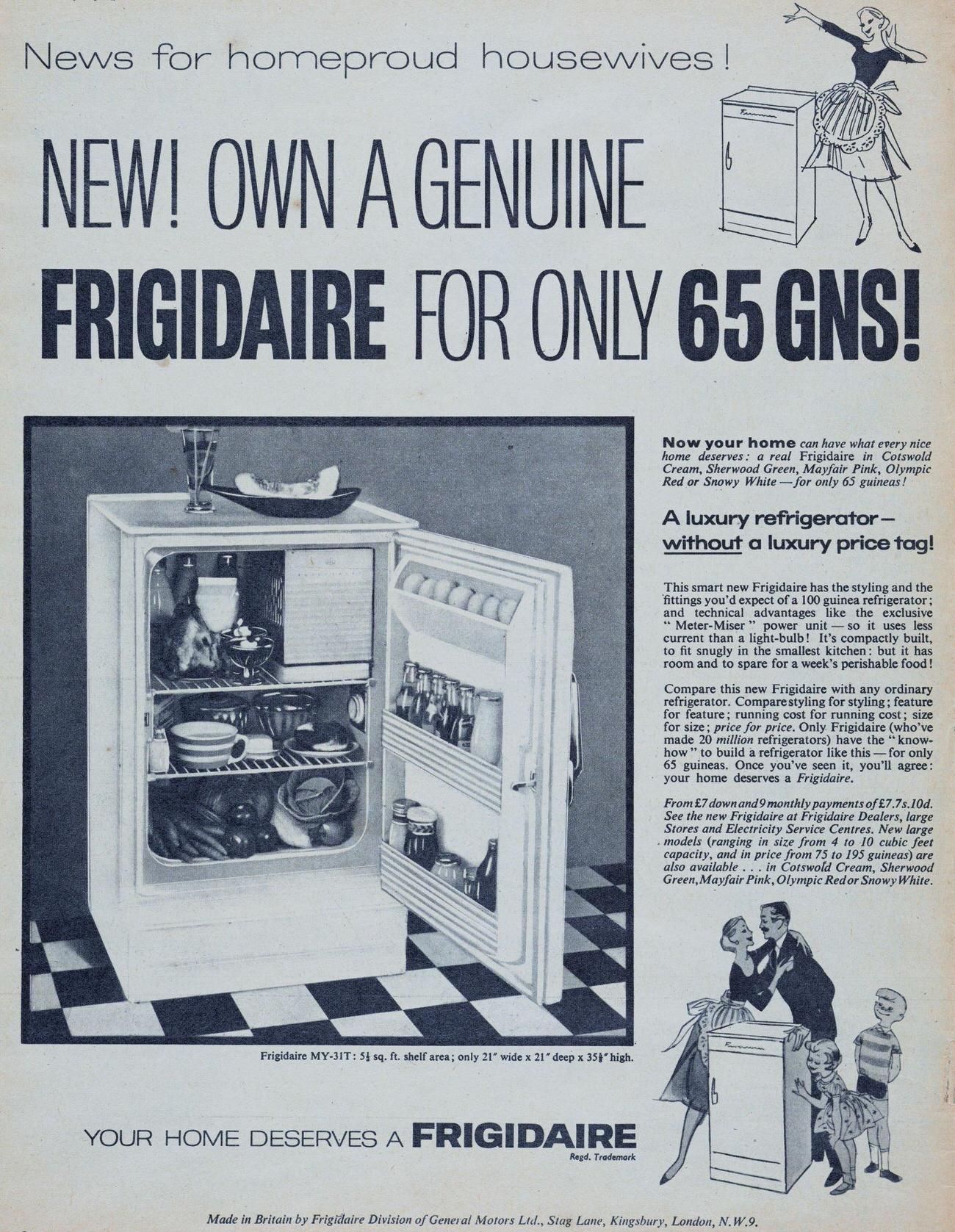
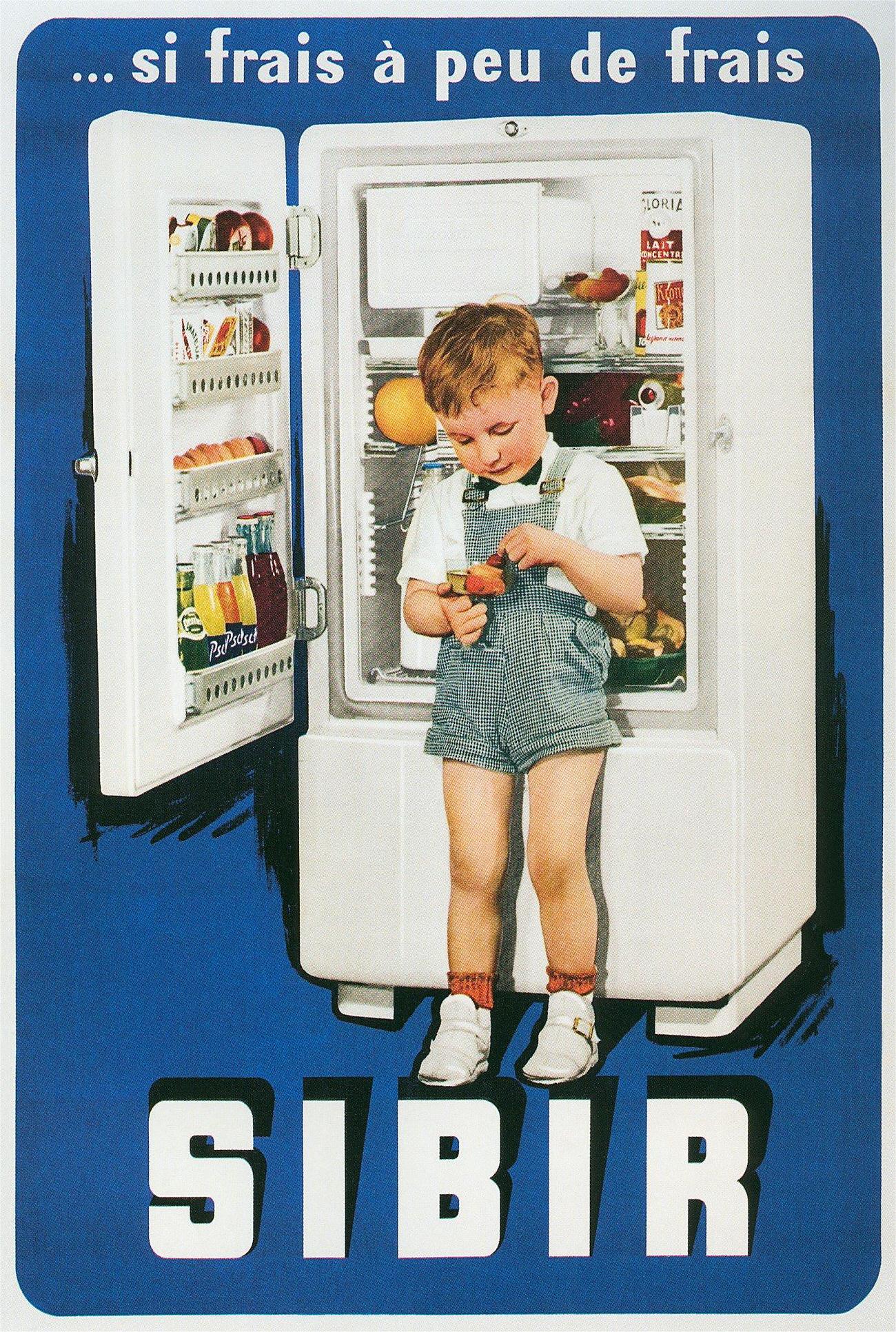
By the 1980s and 1990s, the tone of refrigerator advertising shifted from style to technology. Digital temperature controls, adjustable shelving, and in-door water and ice dispensers became the headline features. Ads emphasized precision, energy efficiency, and convenience. The refrigerator was now a high-tech household system, not just a place to store food. French brands like Sibir also used clever advertising — one French Sibir ad used the tagline “…si frais à peu de frais,” a play on words meaning “so fresh at little cost.” International markets had developed their own refrigerator advertising cultures, as seen across British, French, and Swiss campaigns spanning the decades.

No pictures?