Hey There! Before You Go. 😧
Get the best vintage content straight into your inbox!

Don't worry, we don't spam

The Bombing of Dresden: When the German city of Dresden was Reduced to Rubble in the Final Winter of WWII

Before World War II, Dresden was one of the most admired cities in all of Europe. Germans called it the “Florence of the Elbe.” The city was filled with baroque and rococo palaces, grand cathedrals, world-class art galleries, and centuries-old streets that had survived wars and plagues. It was a cultural center, not a military one. Its contribution to Germany’s war production was small compared to cities like Hamburg, Cologne, or Berlin. None of that spared it from what was coming.
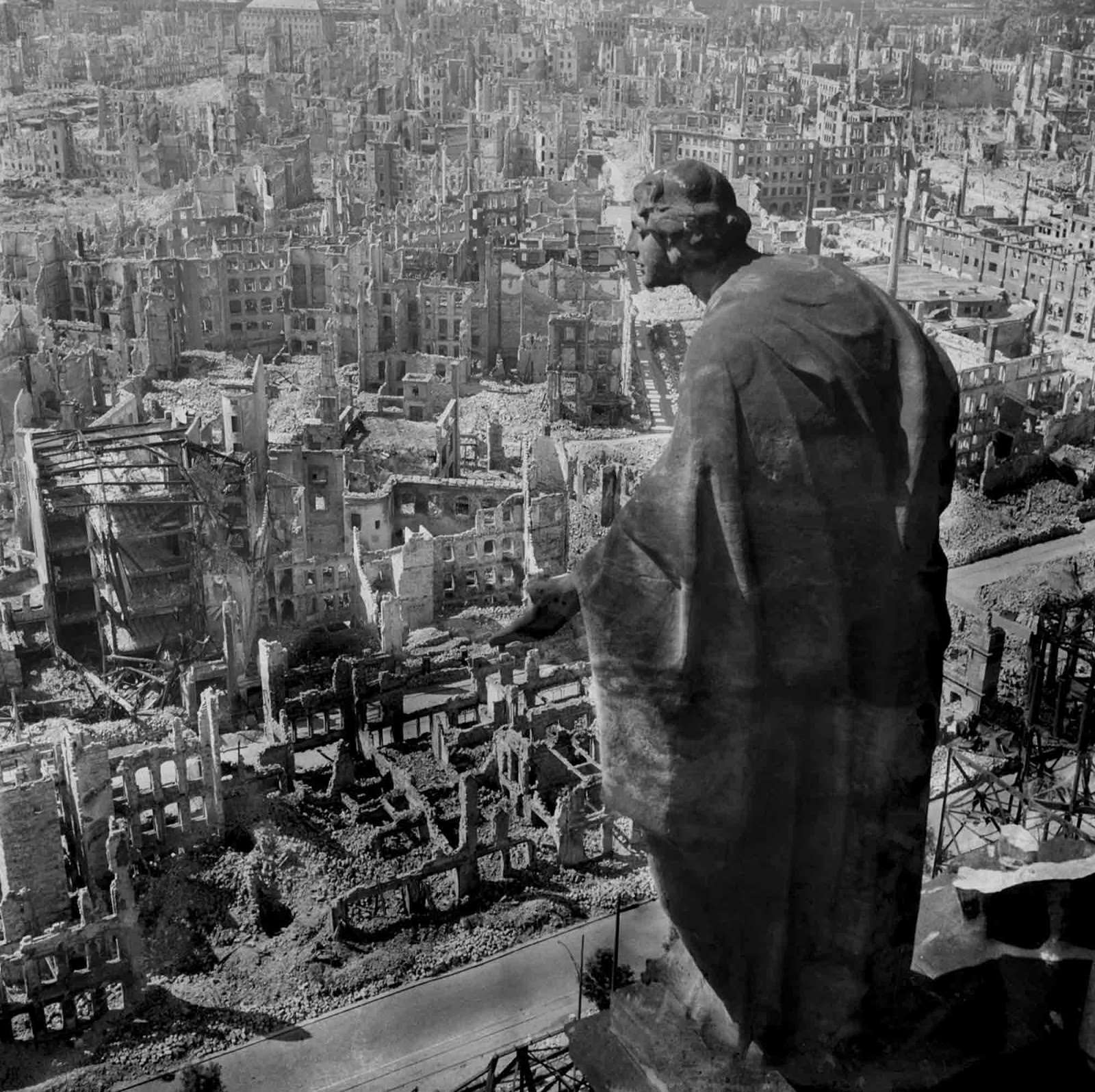
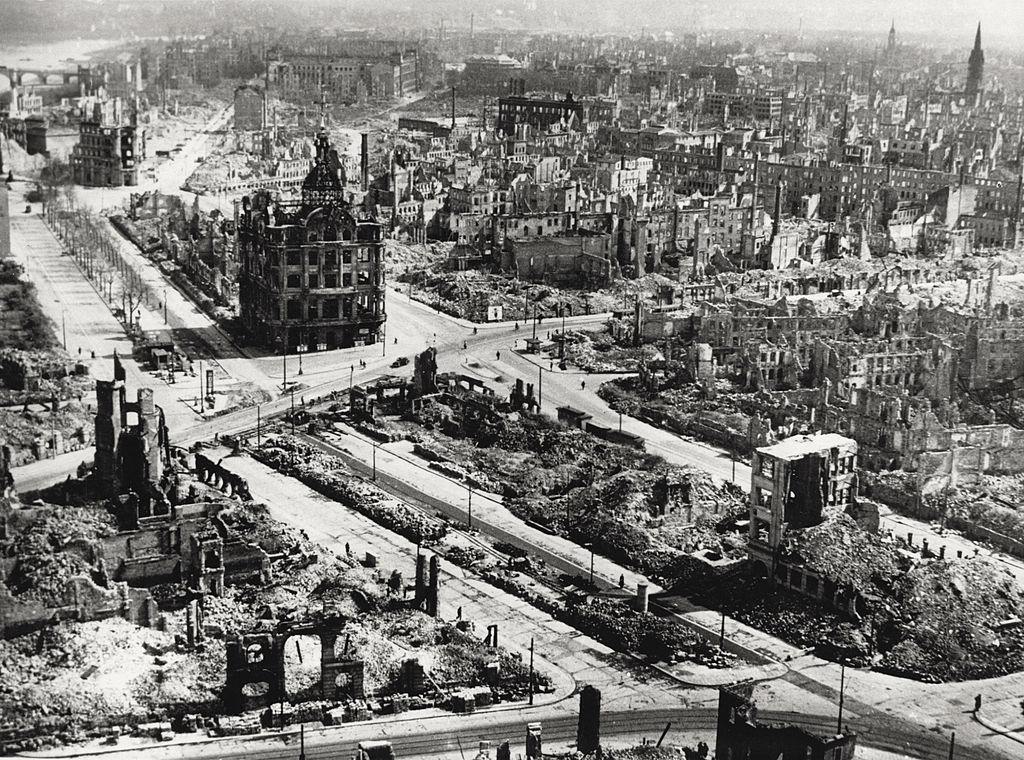
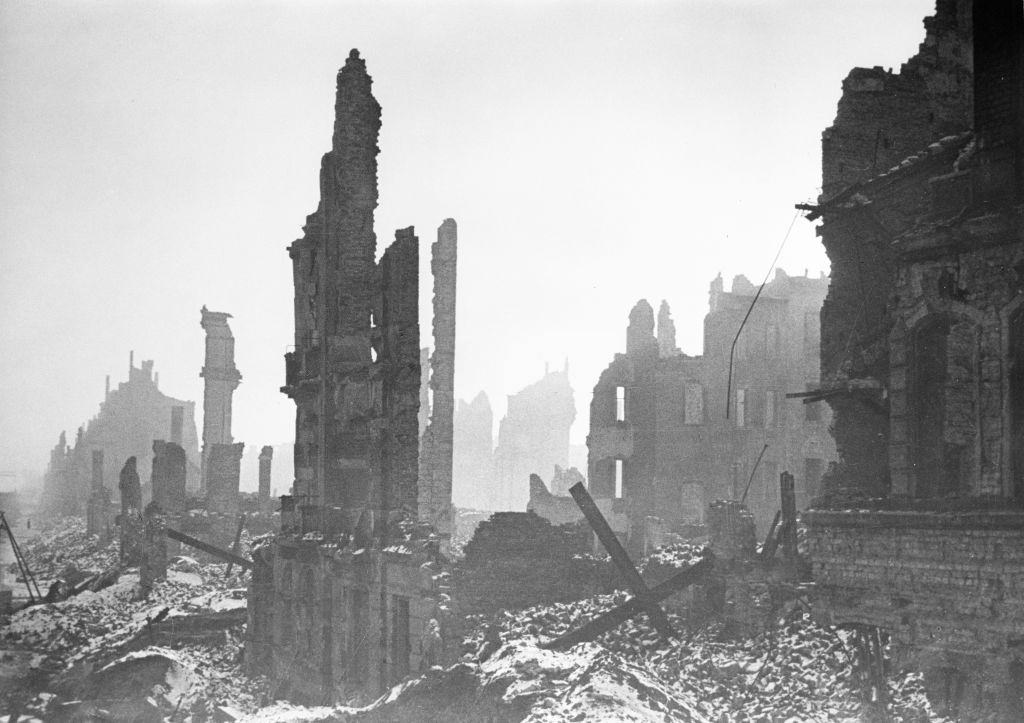
Dresden in ruins after Allied bombings, February 1945.

By early 1945, the war in Europe was entering its final phase. The Soviet Red Army was pushing hard from the east, capturing German city after city with little resistance. Hitler concentrated his forces around Berlin, leaving many other cities poorly defended. Dresden fell into that category. Its anti-aircraft defenses were thin, and its population had swelled with refugees fleeing the Soviet advance. Estimates suggest the city held anywhere from 300,000 to over a million people in those final weeks, far more than its usual population.

Allied strategic planners had adopted a bombing doctrine known as saturation bombing. The idea was to destroy not just military targets but entire urban areas — factories, rail lines, roads, and civilian neighborhoods alike. Allied command believed this approach would break Germany’s economy and shatter the morale of its people, forcing an earlier surrender. Dresden, as a rail hub connecting the Eastern and Western fronts, was placed on the target list.
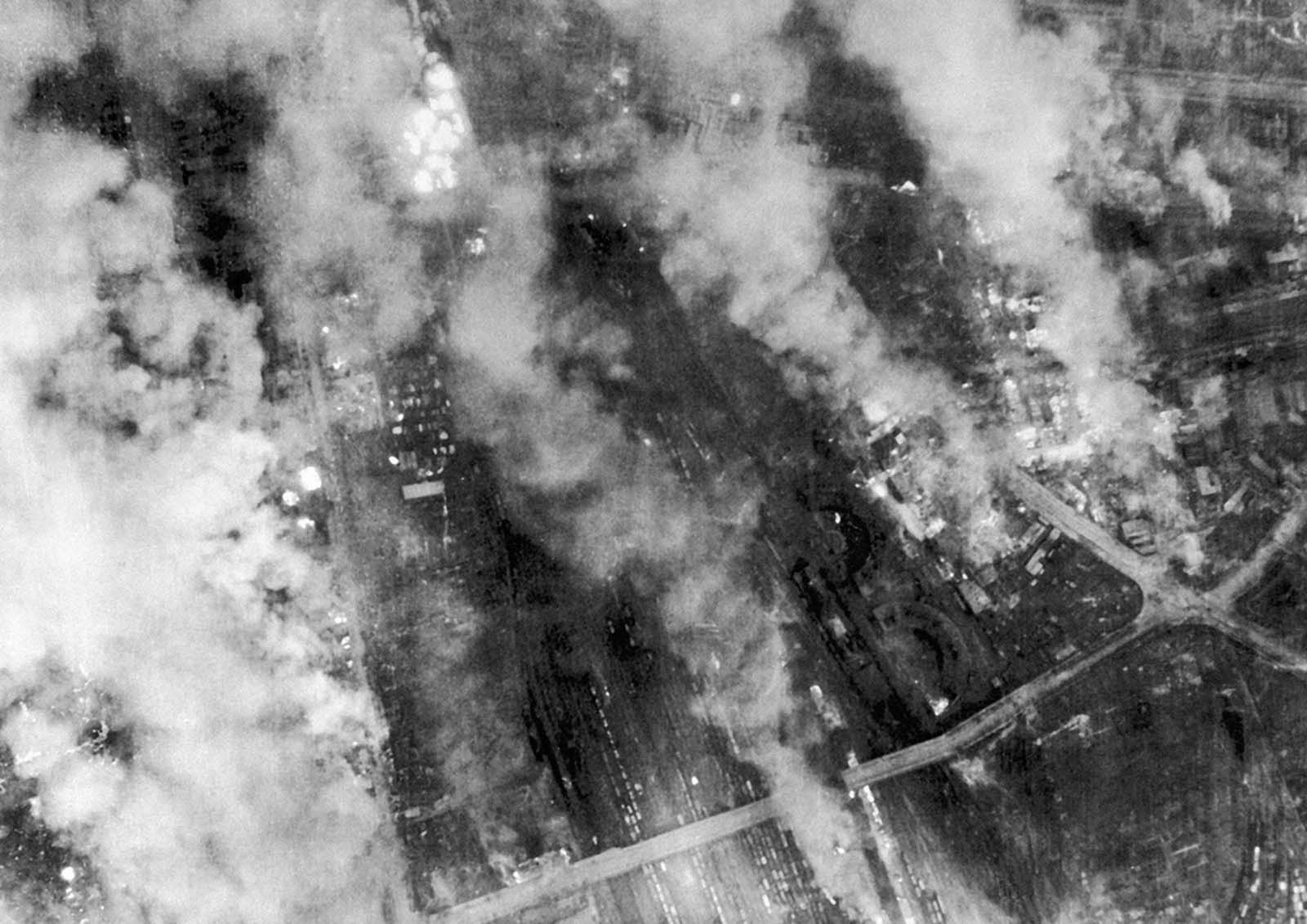
The smoke from fires still burning drifted across Dresden on February 14, 1945.

The attack began on the night of February 13, 1945. Royal Air Force Lancasters arrived over the city in two waves. Dresden’s defenses were so weak that only six Lancaster bombers were shot down across the entire operation. By morning, the RAF had dropped more than 1,400 tons of high-explosive bombs and over 1,100 tons of incendiary bombs on the city. The bombing method was deliberate in its design: high-explosive bombs first blew apart the outer walls of buildings, exposing their wooden frames. Incendiary bombs then ignited the exposed timber. A final round of explosives was dropped to hamper firefighting crews and keep the fires burning.
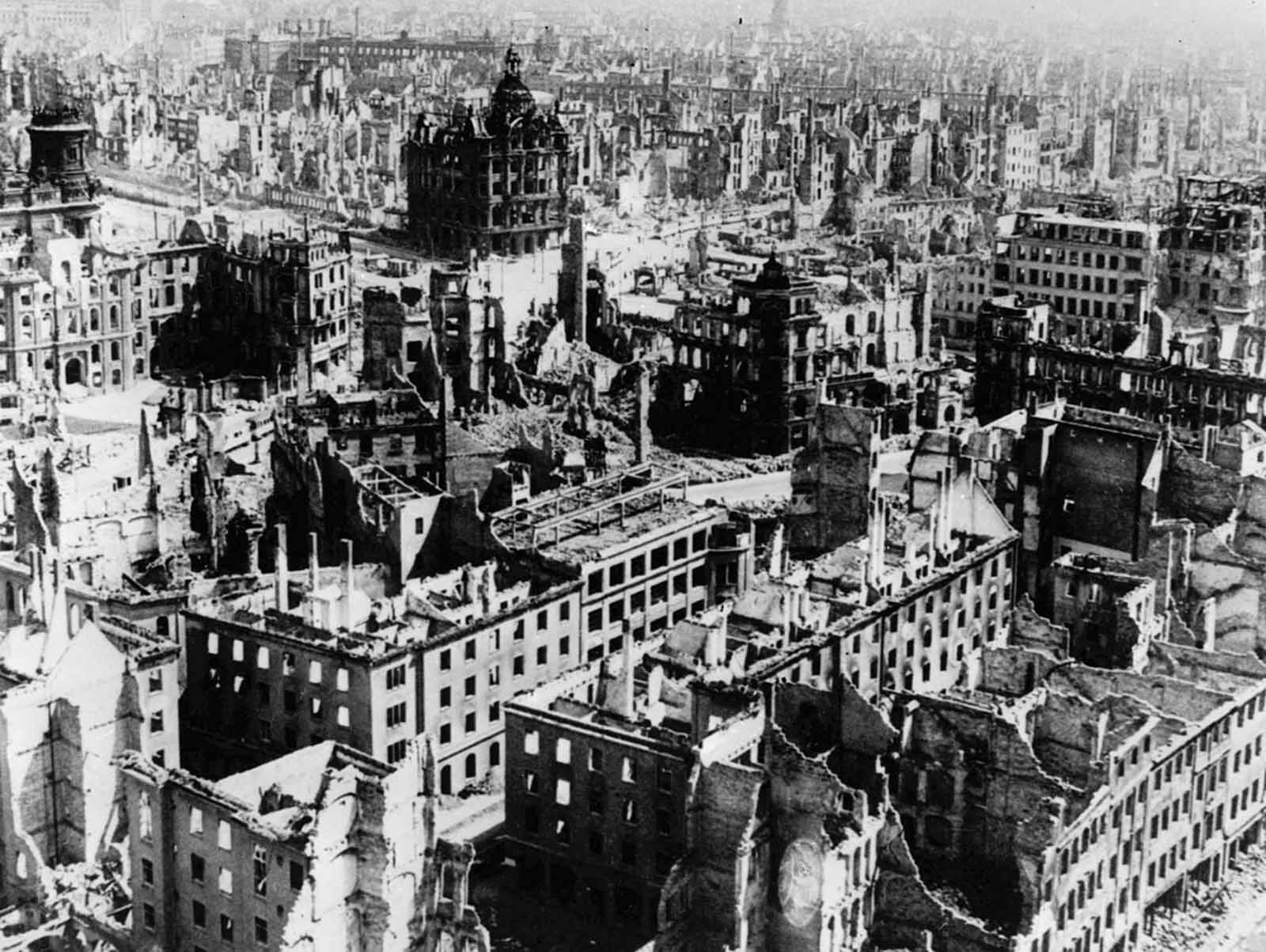
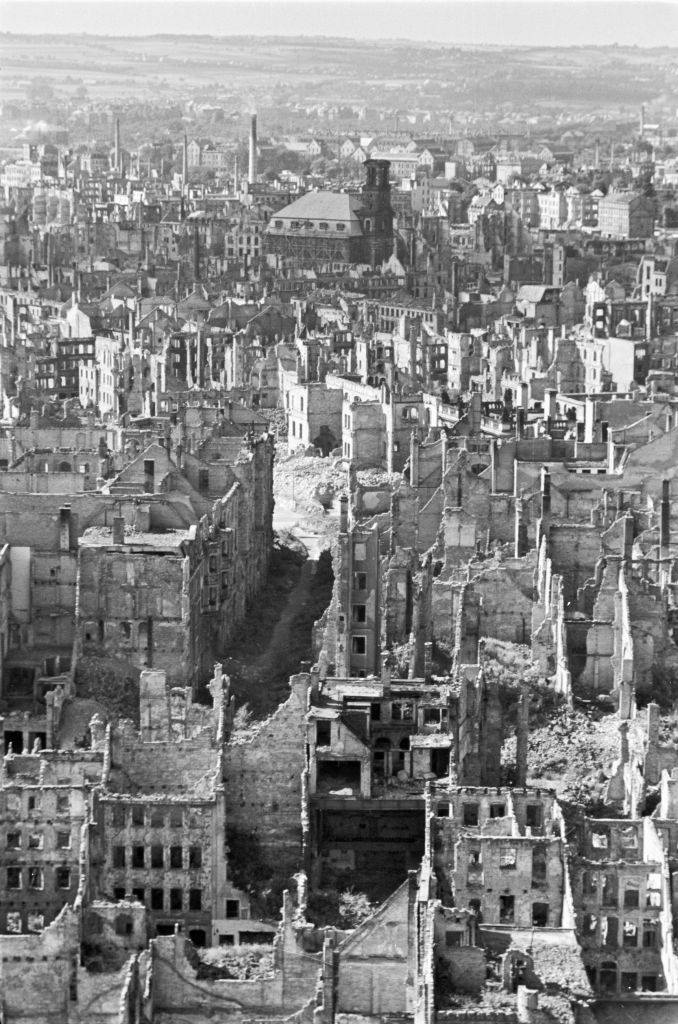
The demolished city of Dresden.

The fires merged into a single massive firestorm. Temperatures inside the burning city reached above 3,000 degrees Fahrenheit. The firestorm created its own wind system, pulling oxygen toward the center and feeding the flames with enormous force. People in shelters suffocated as the fire consumed the available oxygen. Others who ran into the streets were overtaken by walls of flame or collapsed from the heat.
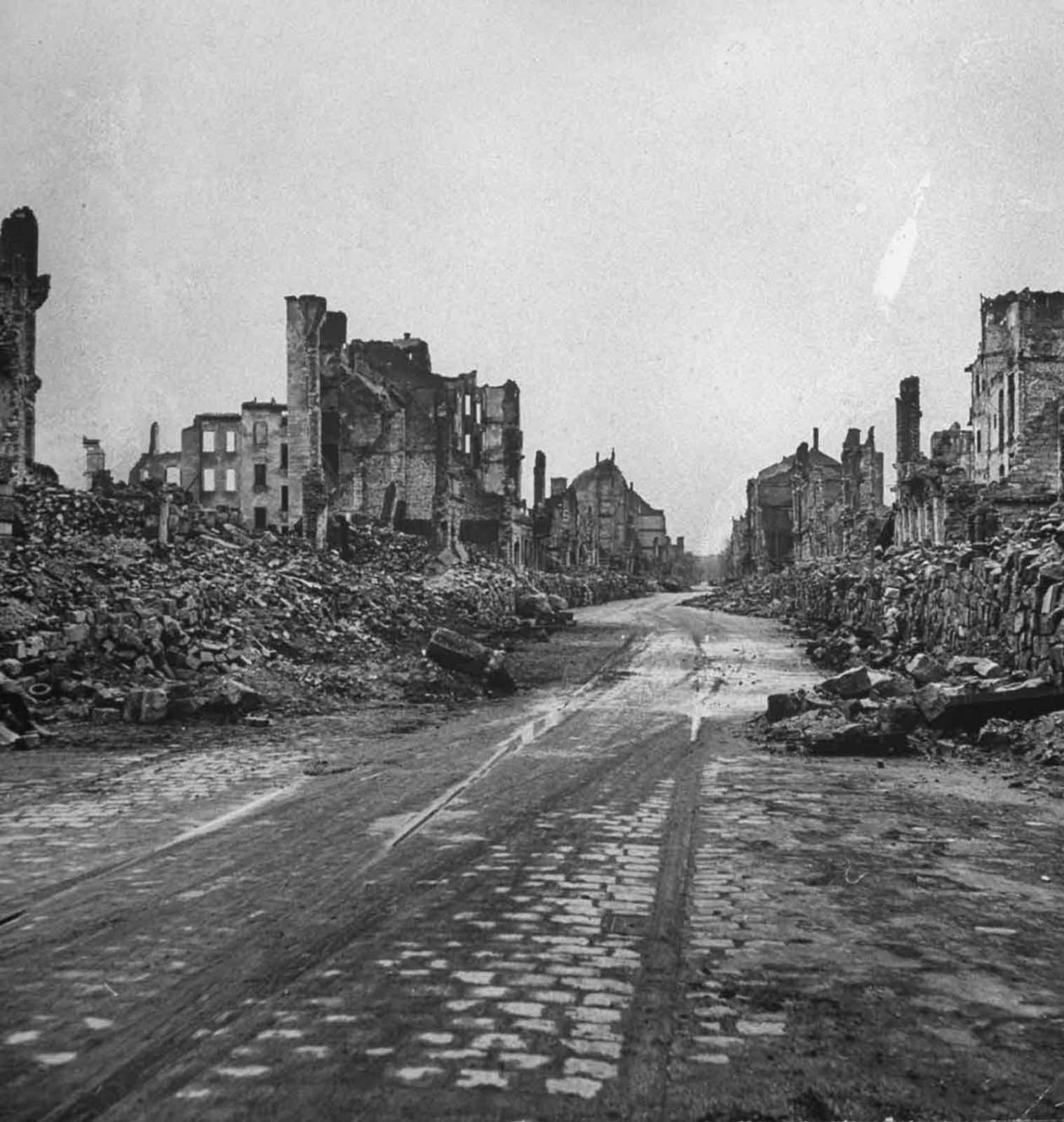
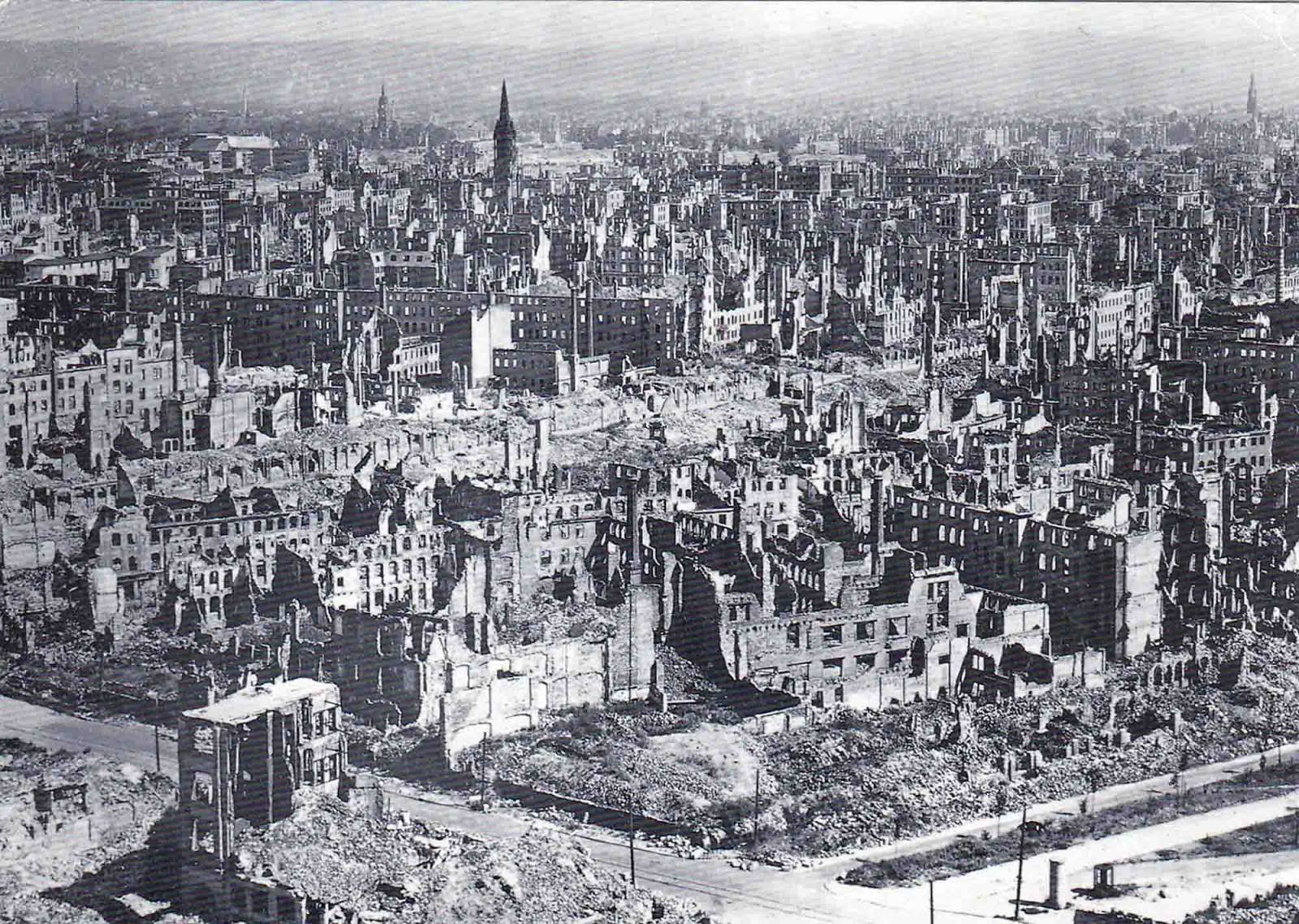
The explosive force created a firestorm, at a temperature above 3,000 degrees Fahrenheit.
Over ninety percent of the city center was destroyed.

When daylight came on February 14, survivors began to emerge from cellars and shelters into a smoldering wasteland. That same afternoon, the United States Eighth Air Force arrived over Dresden. American bombers targeted roads, bridges, railways, and residential areas, killing thousands more. On February 15, another 200 U.S. bombers continued the assault, dropping 950 tons of high-explosive bombs and more than 290 tons of incendiaries. The Eighth Air Force returned to Dresden in three additional raids before the war ended, dropping a further 2,800 tons of bombs on the already devastated city.
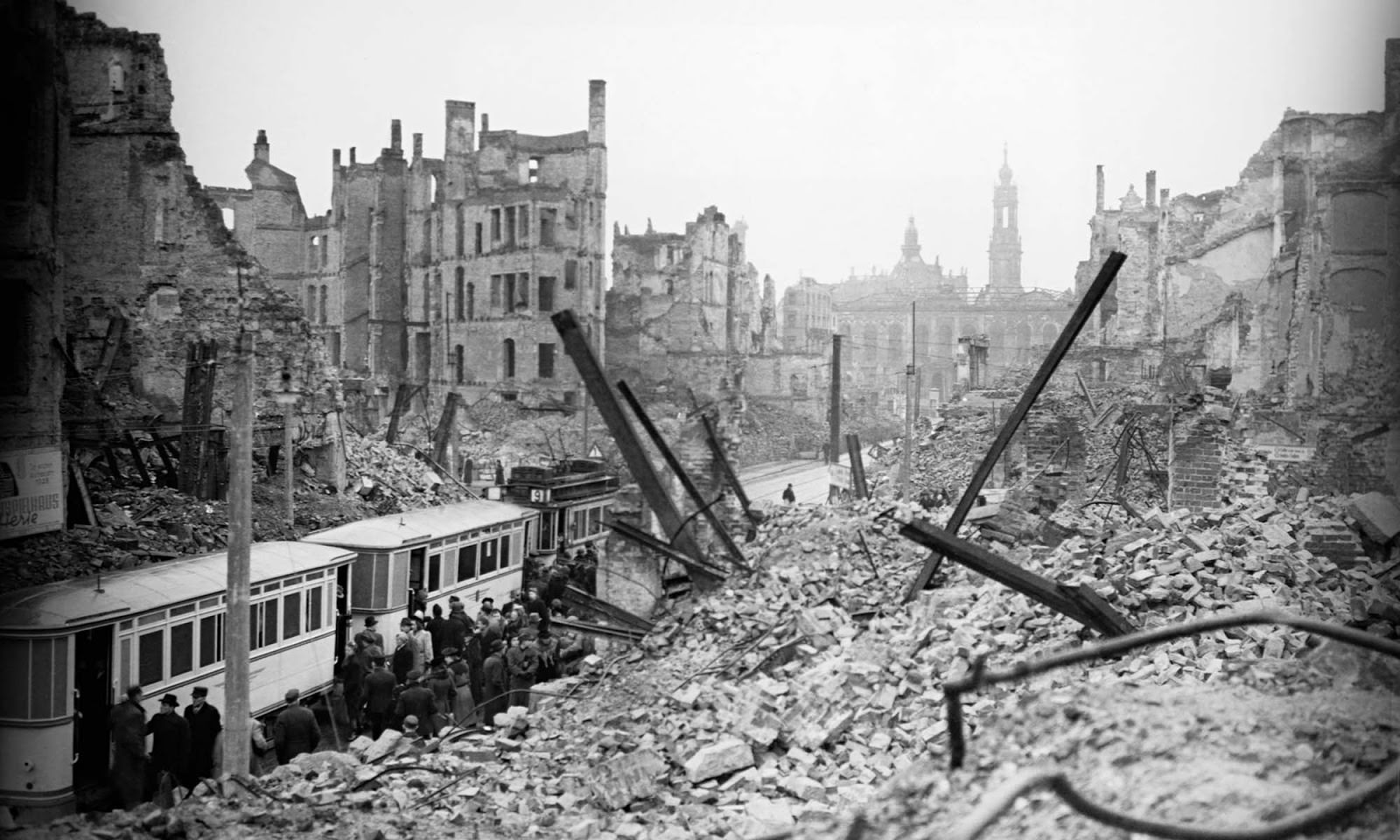
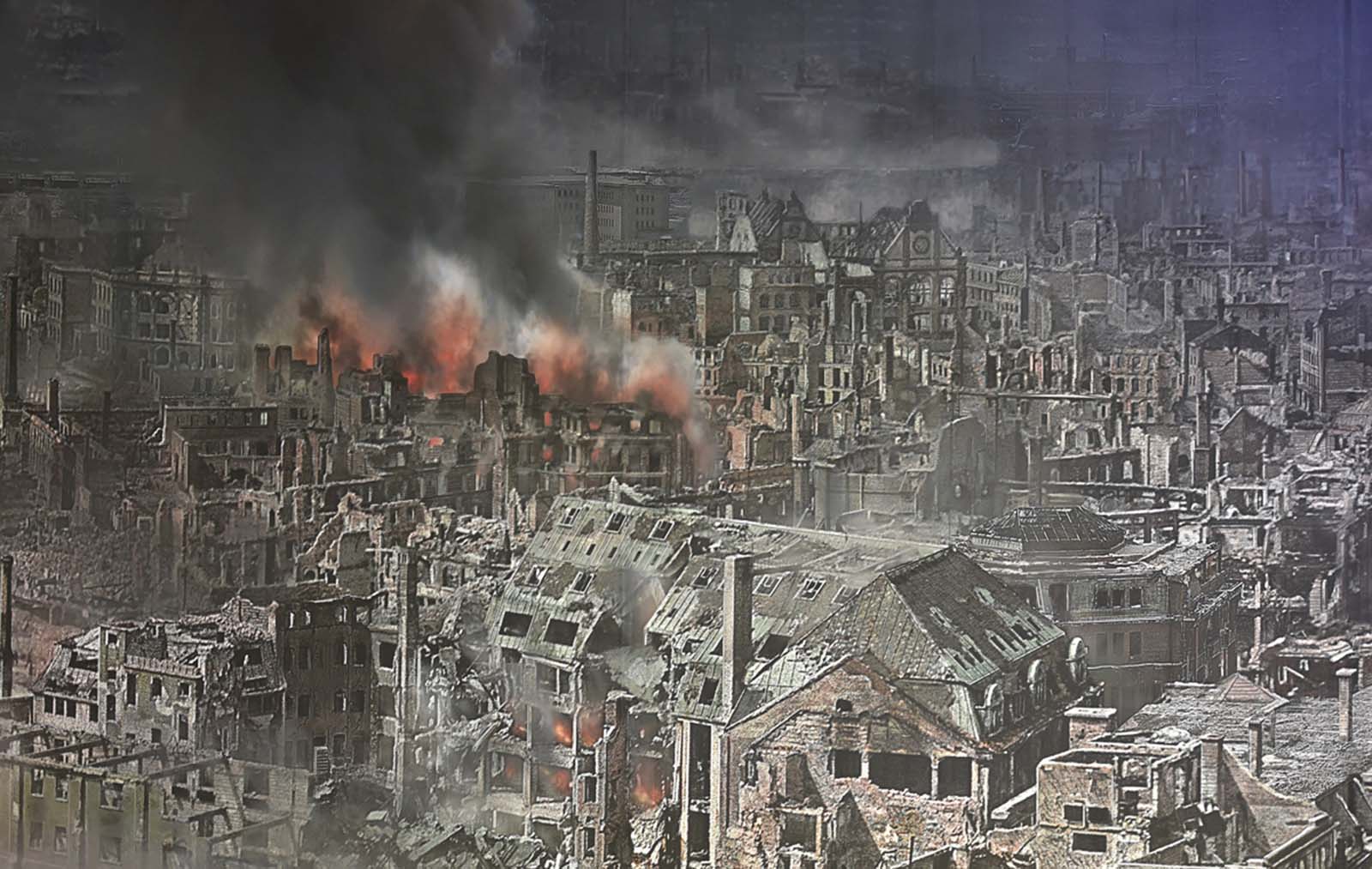
The destruction of the city provoked unease in intellectual circles in Britain.
A general view of the a panorama display depicting the city of Dresden in the aftermath of the 1945 Allied firebombing.

The human cost was staggering, and the exact death toll remains a point of historical debate. Post-war investigators and journalists estimated casualties ranging from 10,000 to as high as 200,000. More recent historical research, including a 2010 study commissioned by the city of Dresden, settled on a figure of approximately 22,700 to 25,000 dead — though the chaos of the final months of war, the vast number of unregistered refugees in the city, and the sheer scale of the destruction make a precise count impossible.
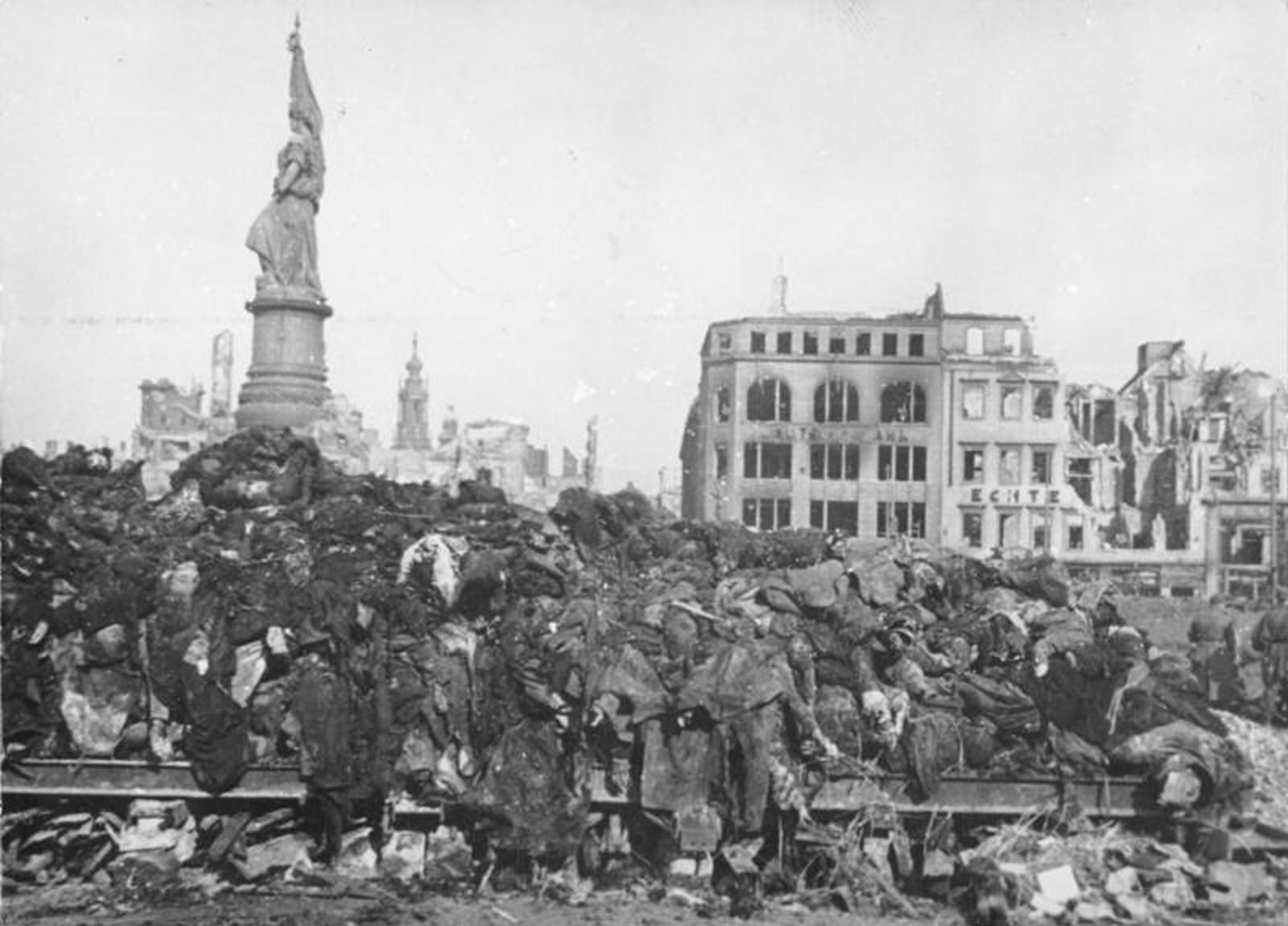
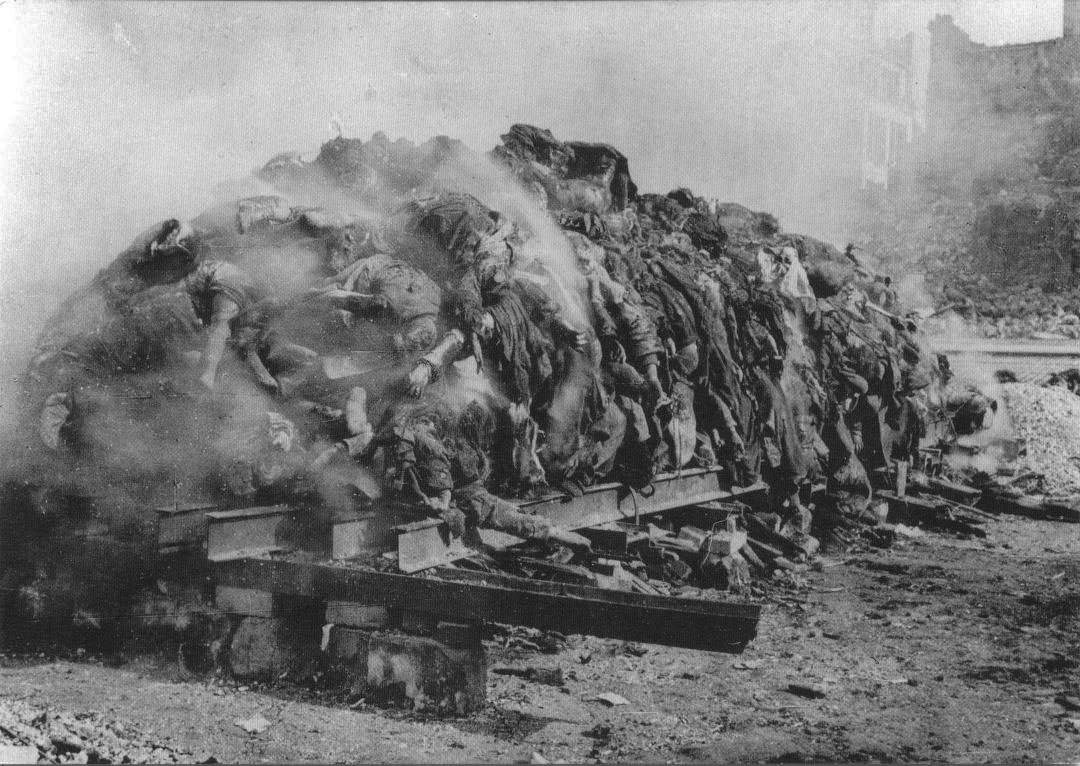
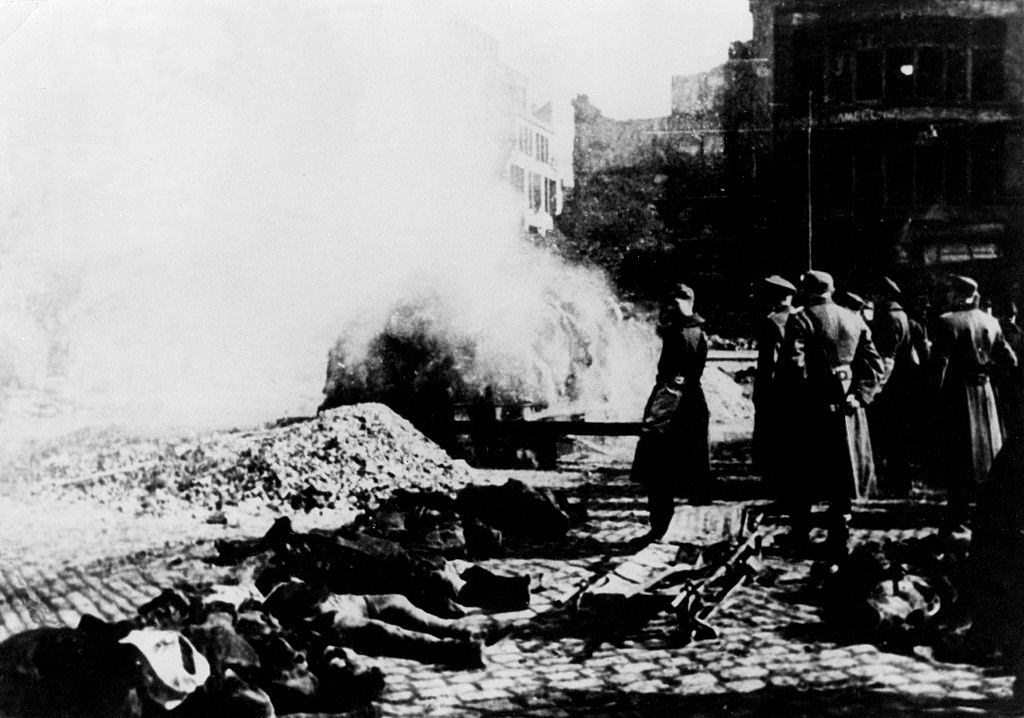
A pile of bodies awaits cremation after the firebombing of Dresden, February 1945.
Bodies awaits cremation after the bombing, 1945.

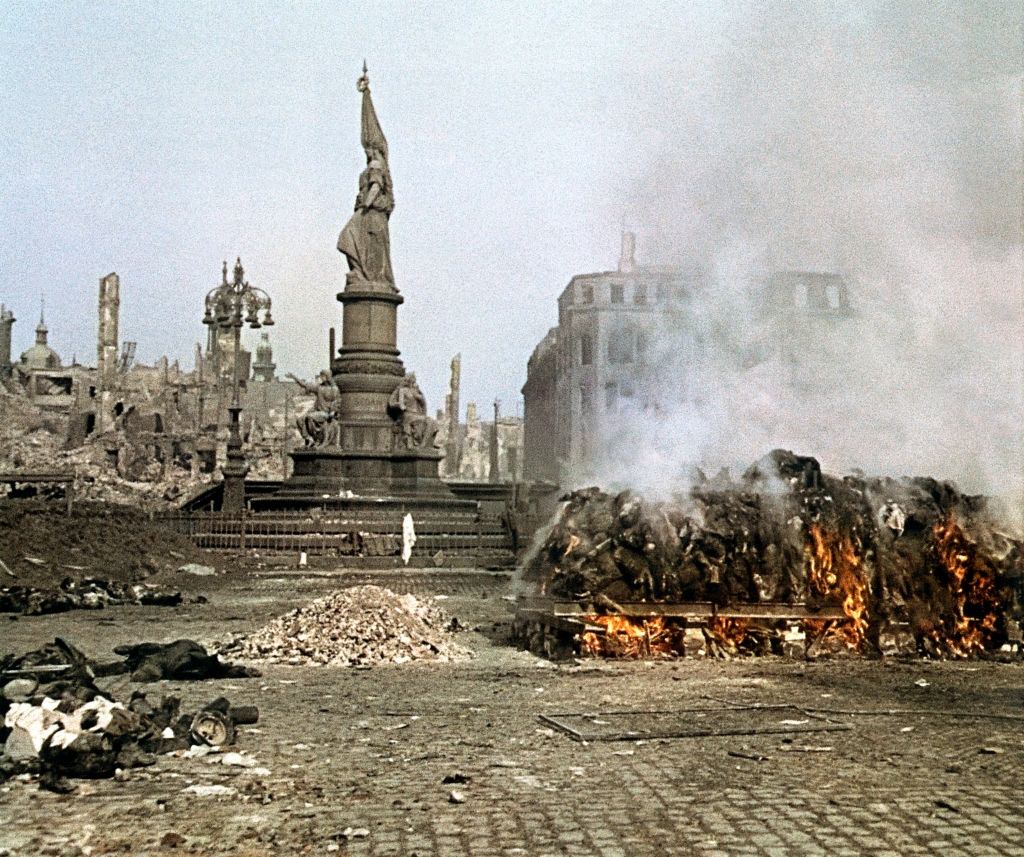
Mass cremations were carried out in the open streets and public squares. Bodies were stacked on iron grates and burned at sites across the city center, including the Altmarkt. German authorities feared that the sheer number of corpses posed a serious disease risk as temperatures began to rise. Soldiers and civilian workers moved through the rubble for weeks, pulling the dead from collapsed shelters and bombed-out cellars.
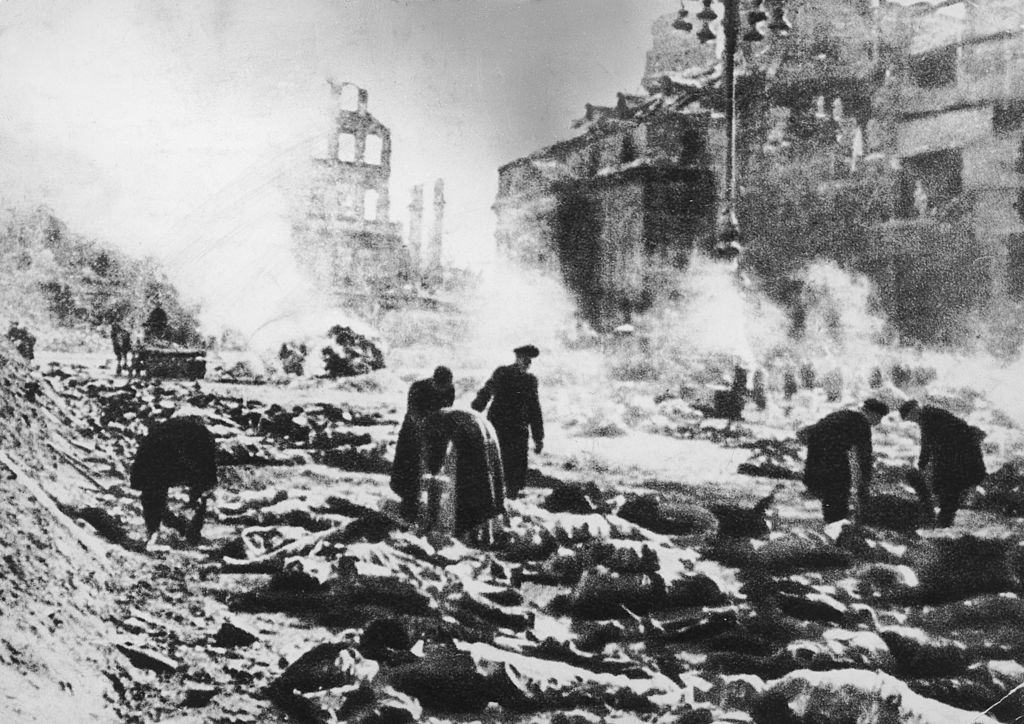
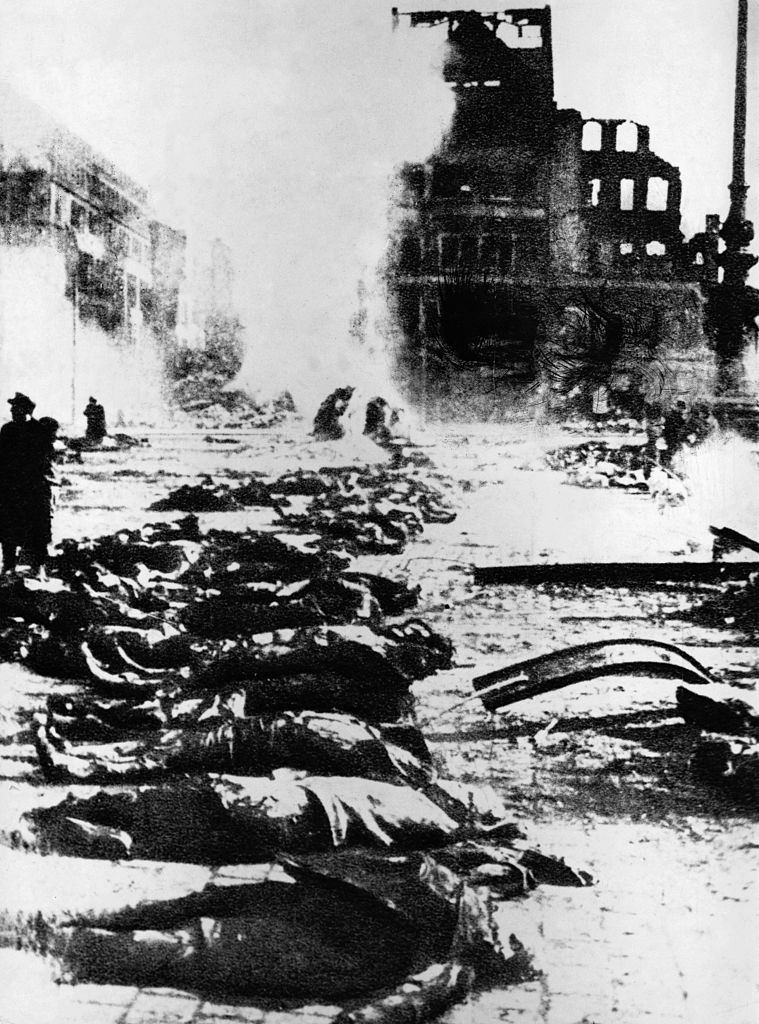
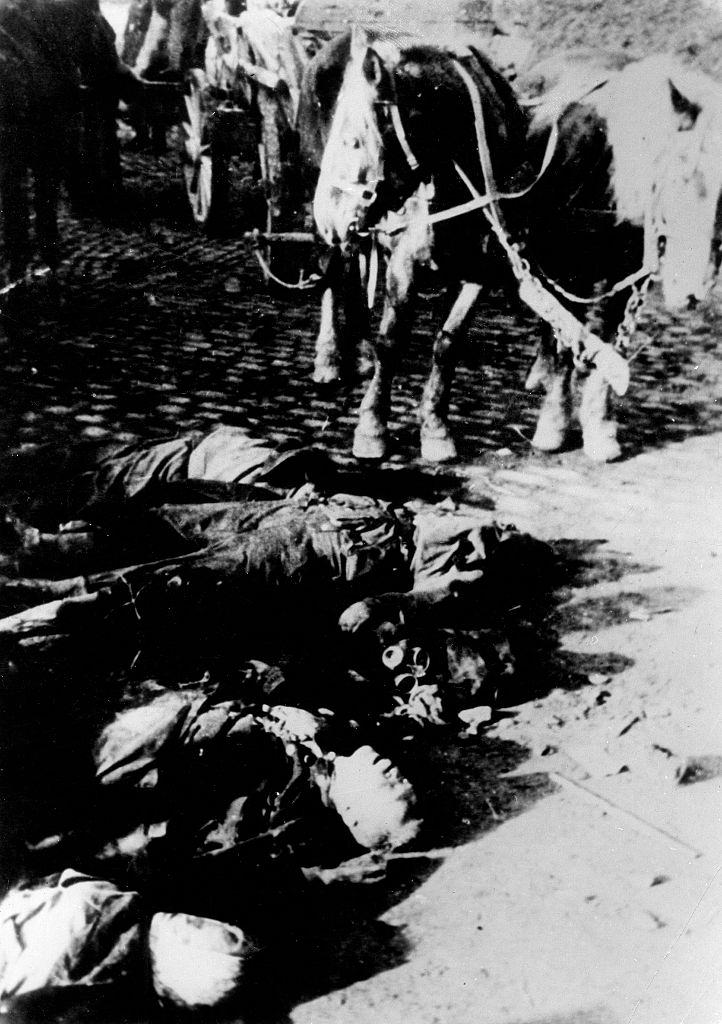
Bodies in the street after the allied fire bombing of Dresden, 1945.
Dead bodies lie in a street in Dresden after a bombing raid on the city.
Cremation of dead bodies in the center of the city, 1945.
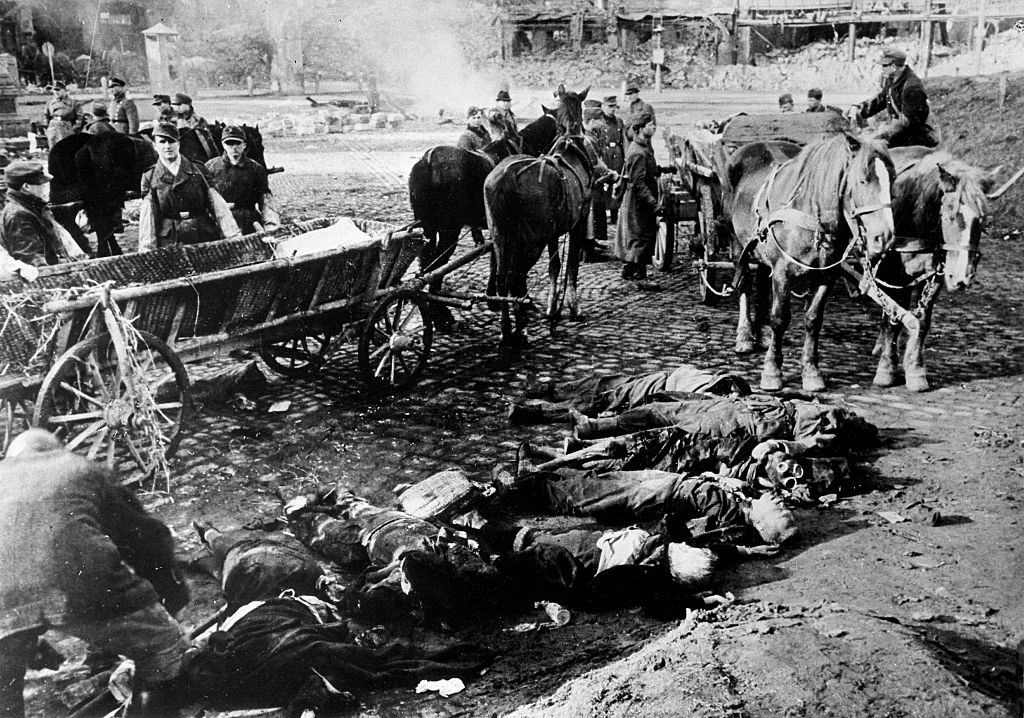
Recovering of bodies in the central city, 1945.
In the heap of rubble of the city centre, some soldiers unload from two carts the bodies of some victims of the violent bombing of the allied forces of February 13 and 14.
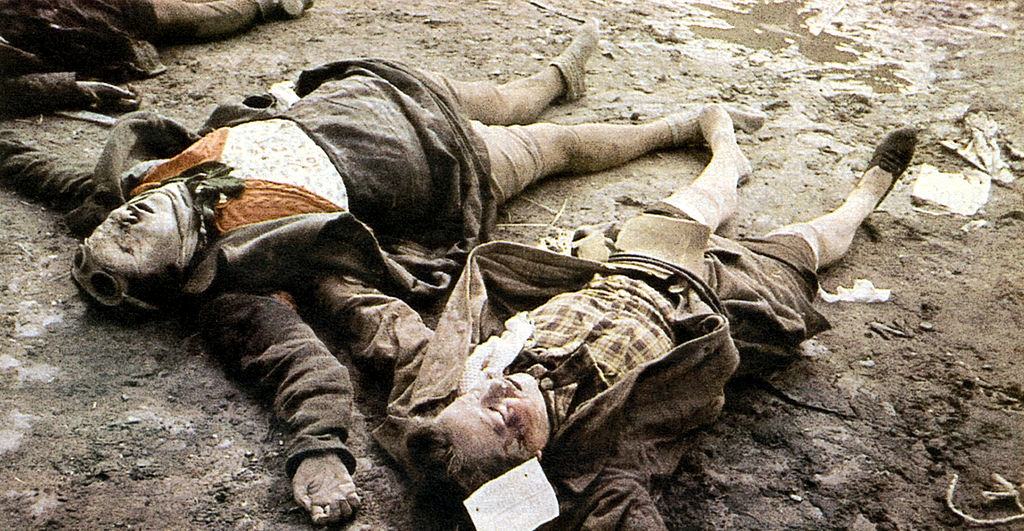
The bodies of two girls are laid out on the pavement. 25th February 1945.
Bodies are burned at the Altmarkt near the Victory Monument (Germaniadenkmal). 25th February 1945.

Among those who survived were thousands of civilians — refugees, women, children, and elderly residents who had no role in the war. They emerged into a city that barely existed anymore. Entire neighborhoods were gone. Churches, palaces, schools, and hospitals lay in ruins. Over ninety percent of the city center had been destroyed.
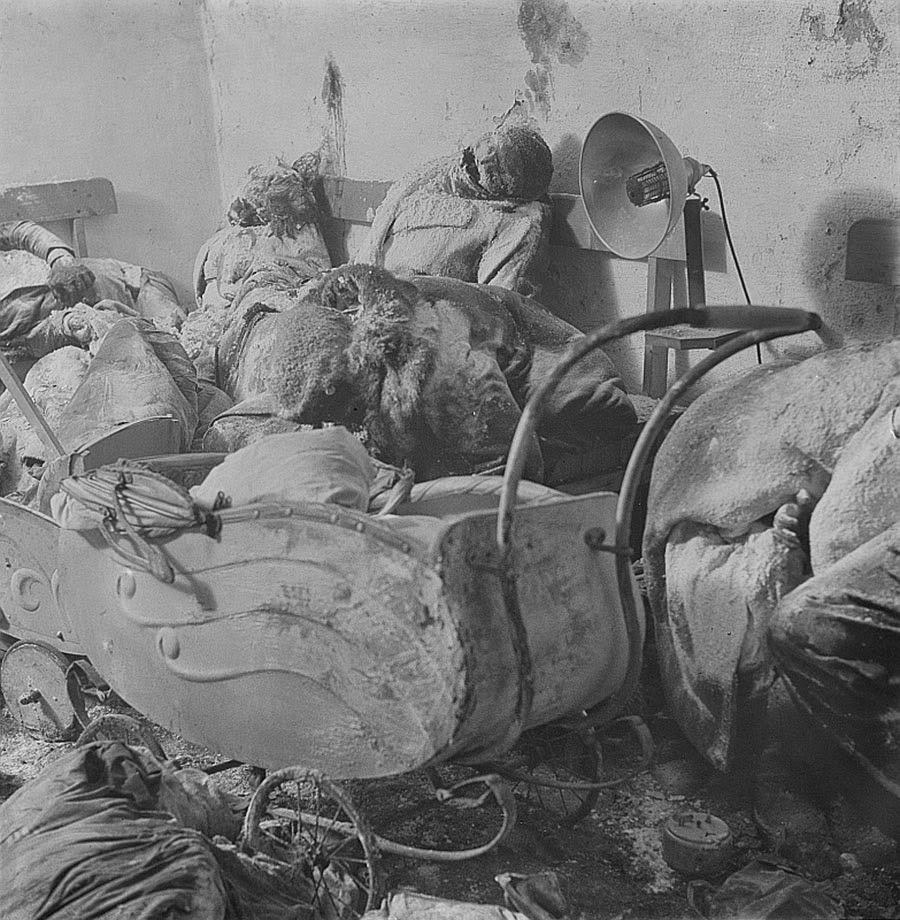
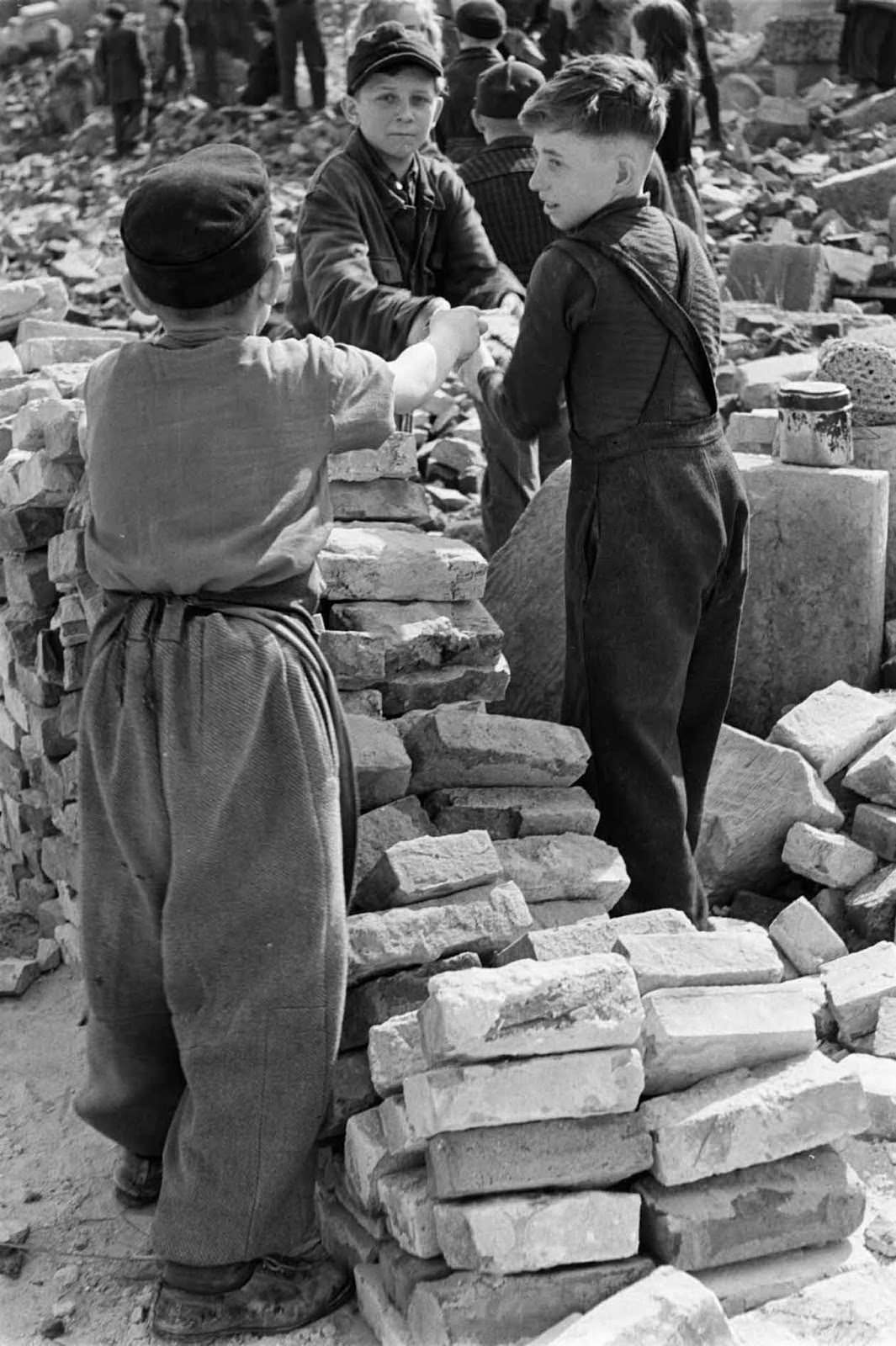
A mother with her children.
Children cleaning up the ruined city.

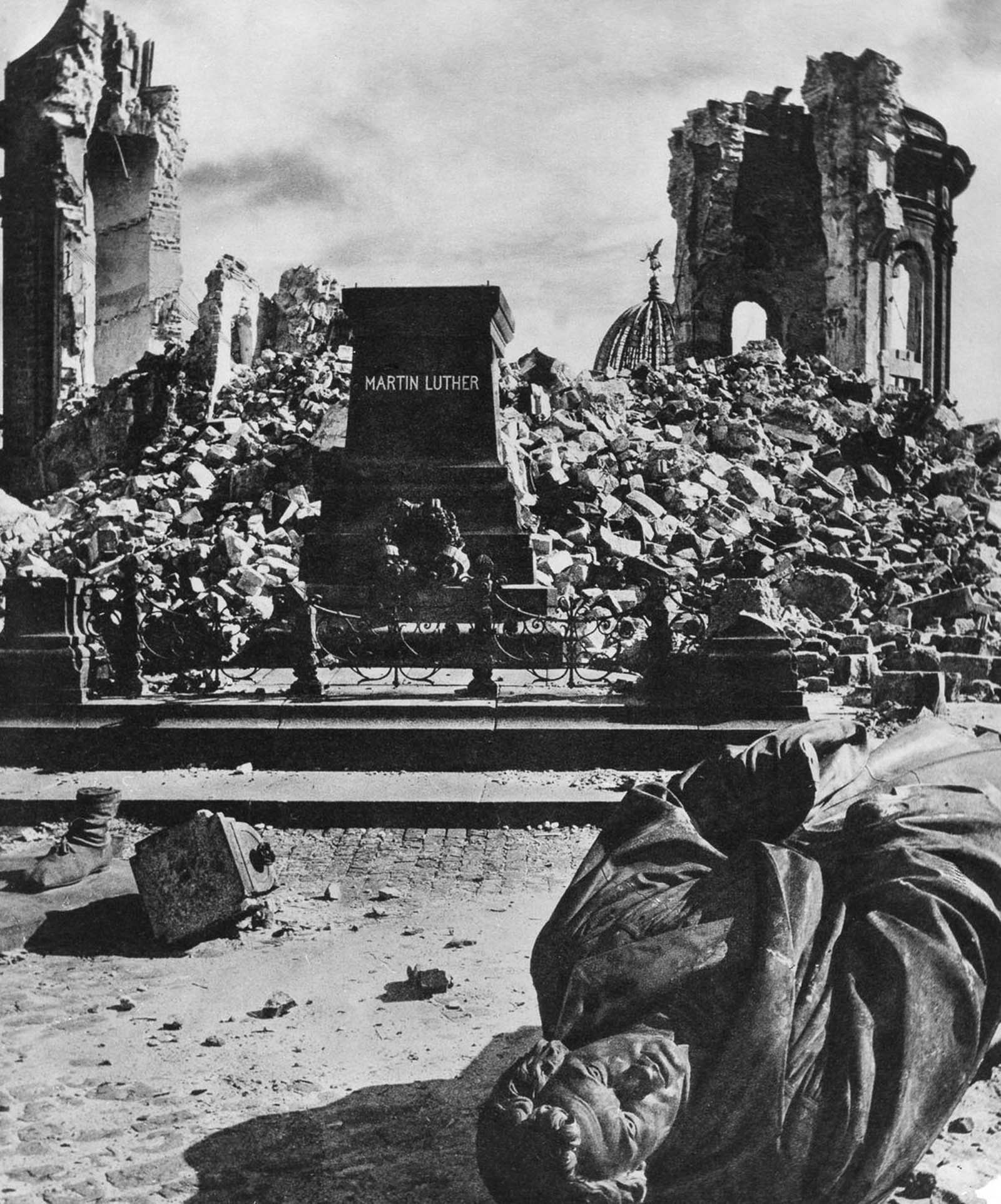
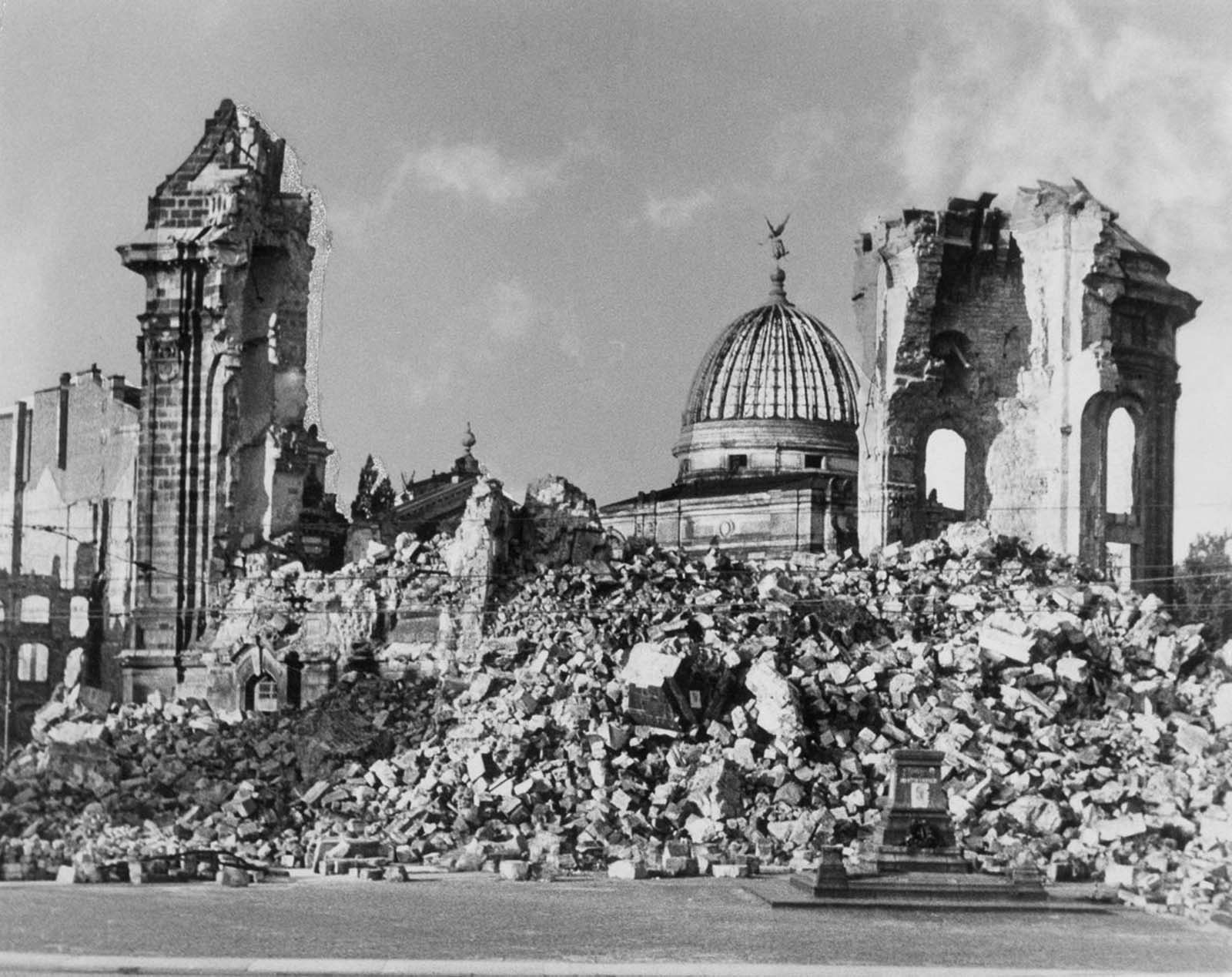
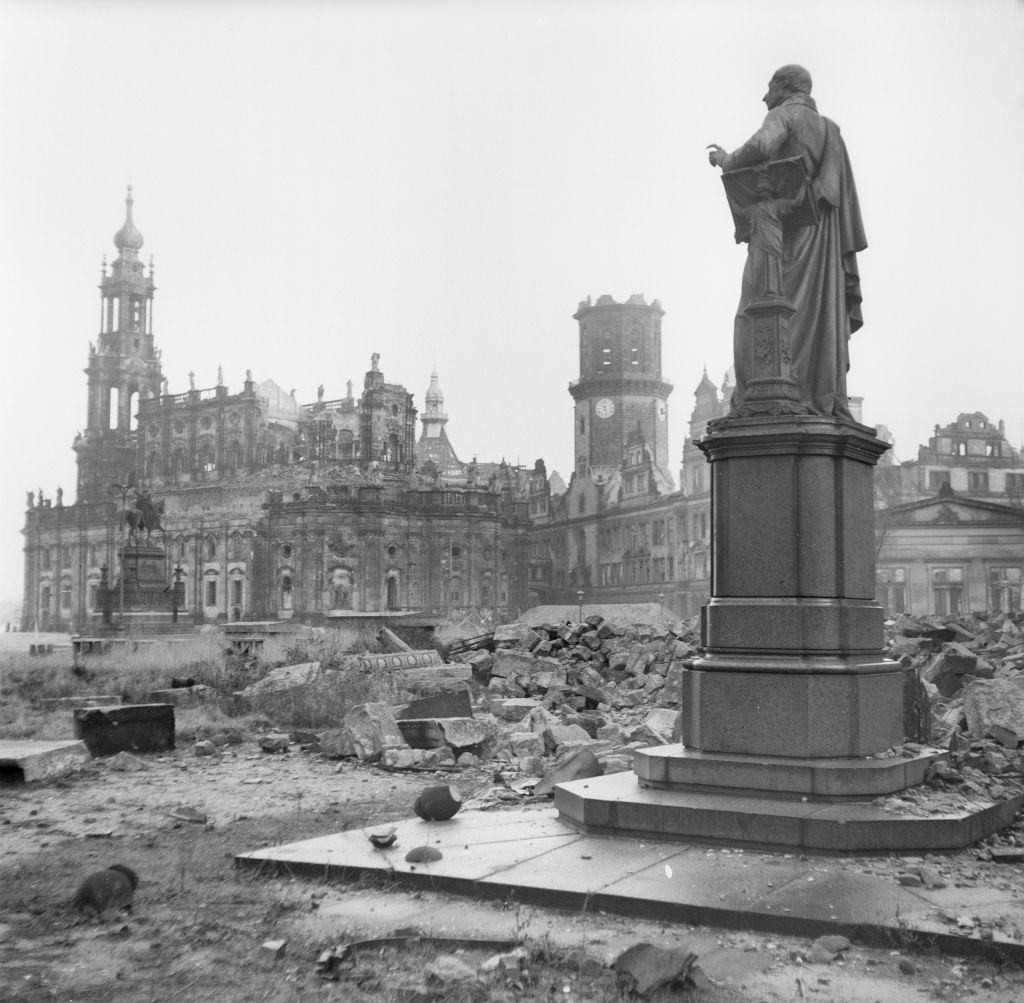
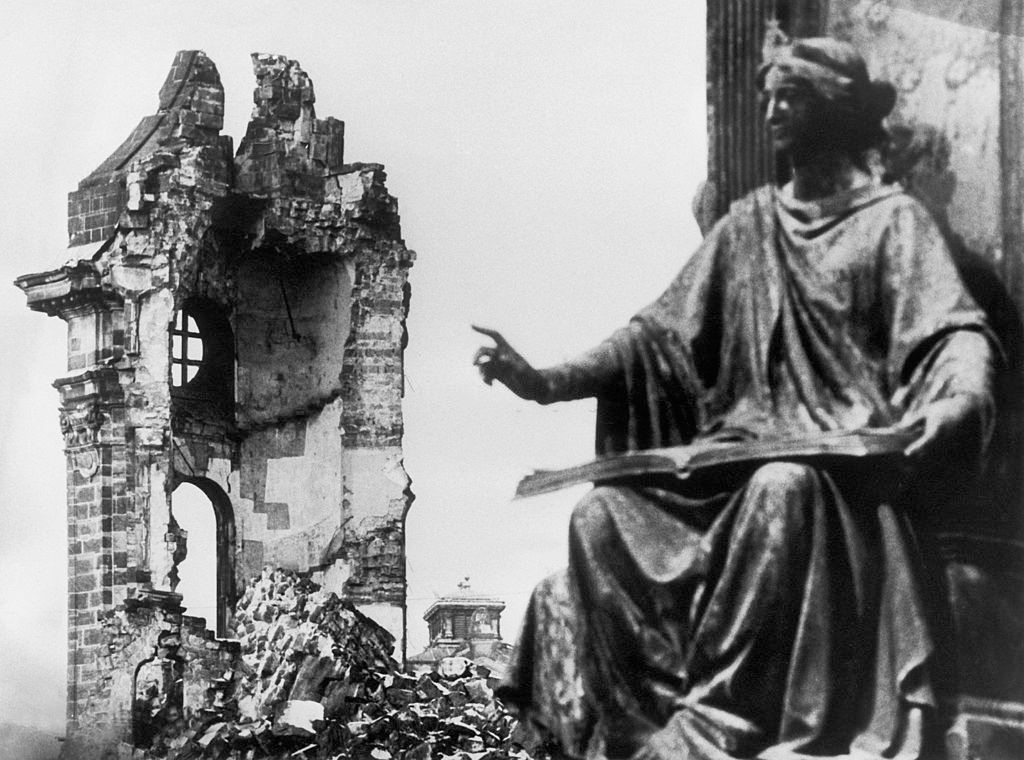
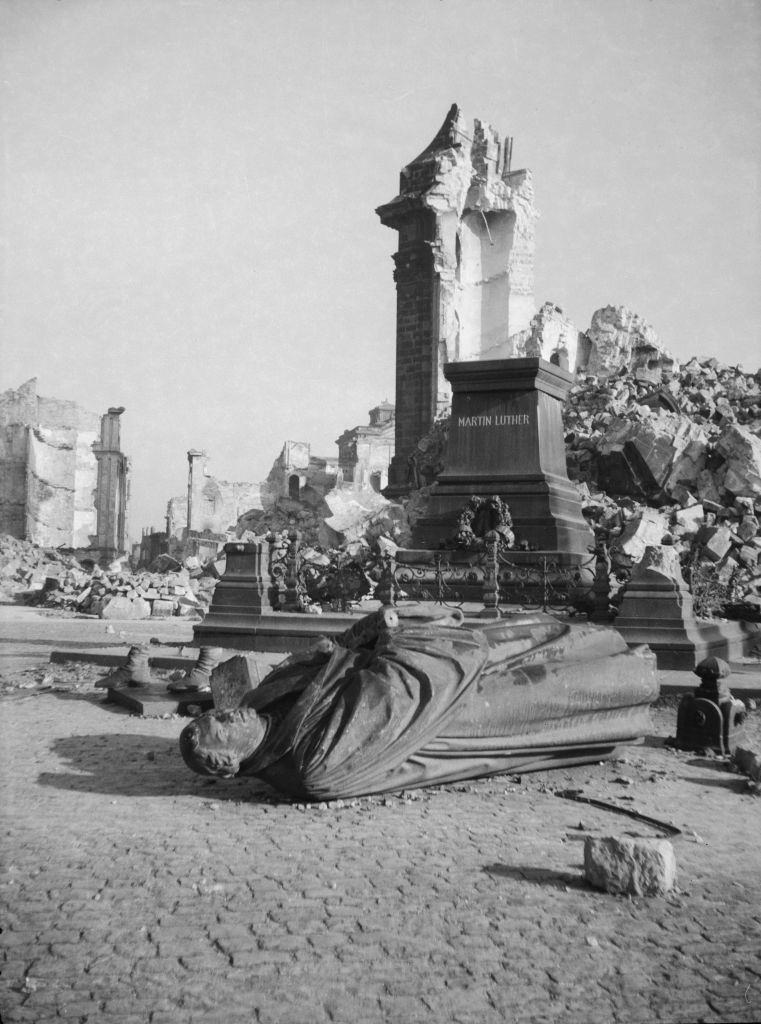
The physical destruction extended across nearly every landmark Dresden had ever been known for. The Frauenkirche, one of Germany’s most celebrated Protestant churches, was reduced to a mound of stone. The Luther memorial in front of it toppled. The Dresden Castle, the Hofkirche cathedral, the Zwinger palace complex, the City Art Gallery, and dozens of other historic structures were gutted or collapsed entirely.
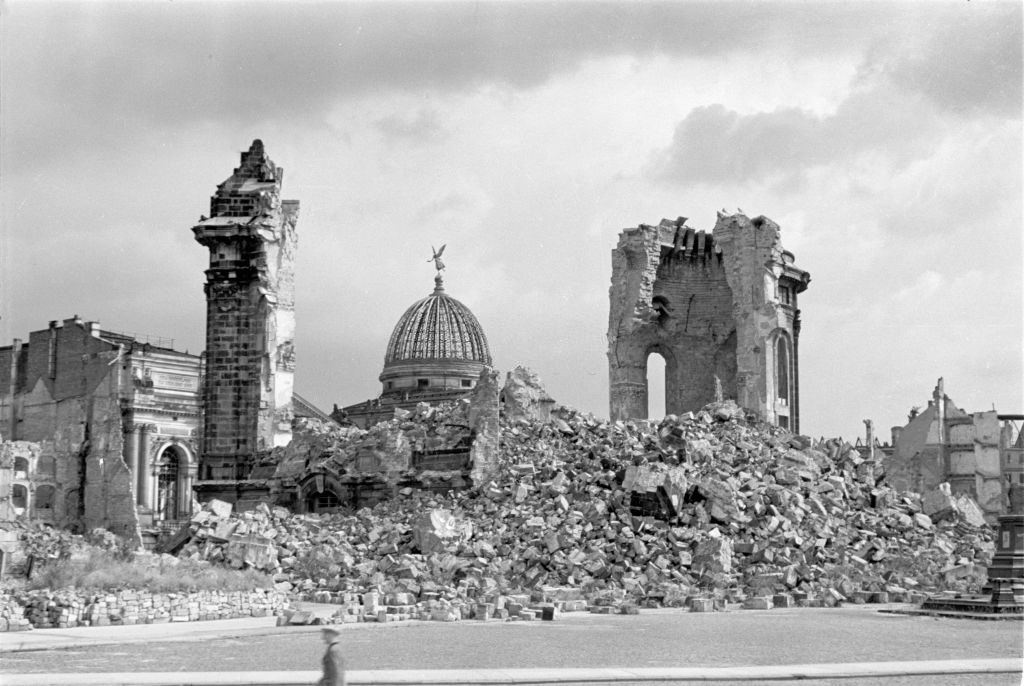
Ruins of the Dresden Frauenkirche.  In the background is the dome of the Dresden Academy of Fine Arts, 1945.
Ruins of the Dresden Frauenkirche. In the background is the dome of the Dresden Academy of Fine Arts, 1945.
The destroyed Luther memorial in front of the ruins of the Dresden Frauenkirche in Dresden, 1945.
A statue of Martin Luther lies toppled in front of the ruins of the Frauenkirche. 1945.
The ruins of the Frauenkirche and the dome of the Kunstakademie.

The city’s rail infrastructure, one of the primary justifications for targeting Dresden, was also destroyed. The Deutsche Reichsbahn yards were left with wrecked locomotives and torn-up tracks. Roads and bridges were impassable. The same transport network that Allied planners cited as a military necessity now lay in complete ruin alongside everything else.
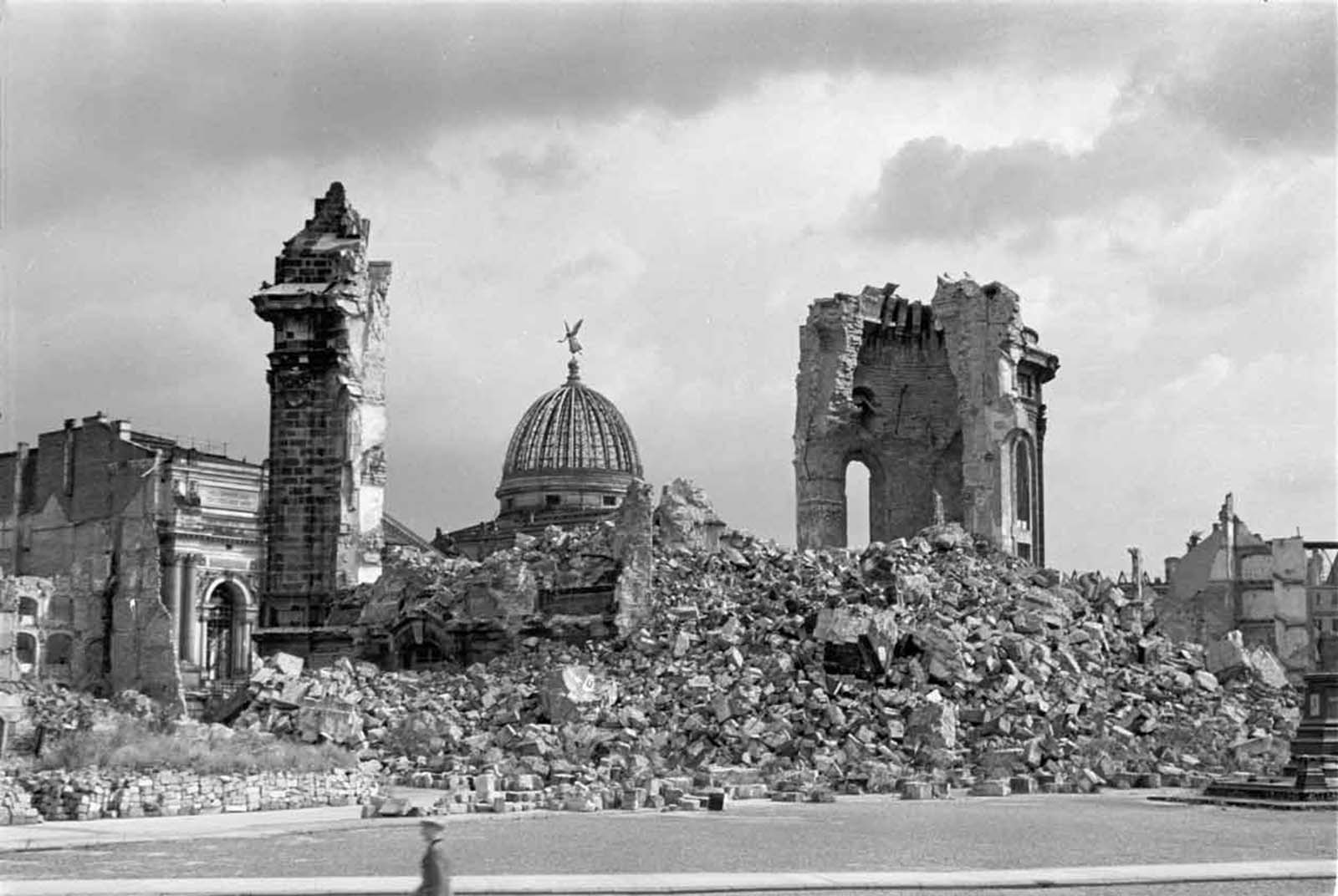
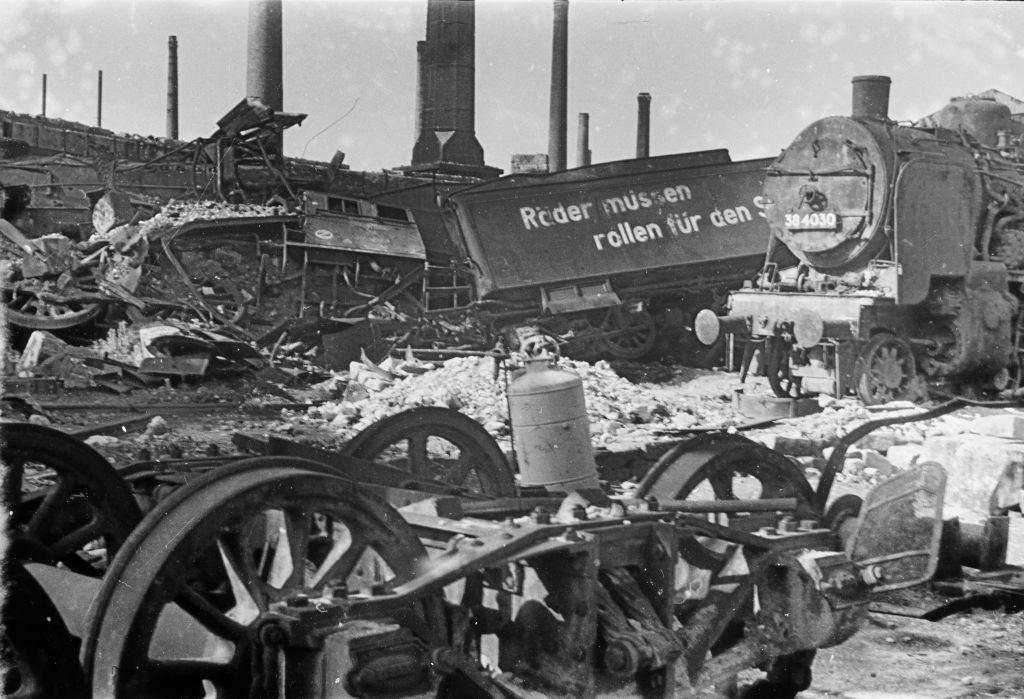
The attack had been prompted by Dresden's position as a significant hub for both transport and industry.
The attack had been prompted by Dresden’s position as a significant hub for both transport and industry.
The terrain of the Deutsche Reichsbahn in Dresden with destroyed locomotives and track installations, 1945.
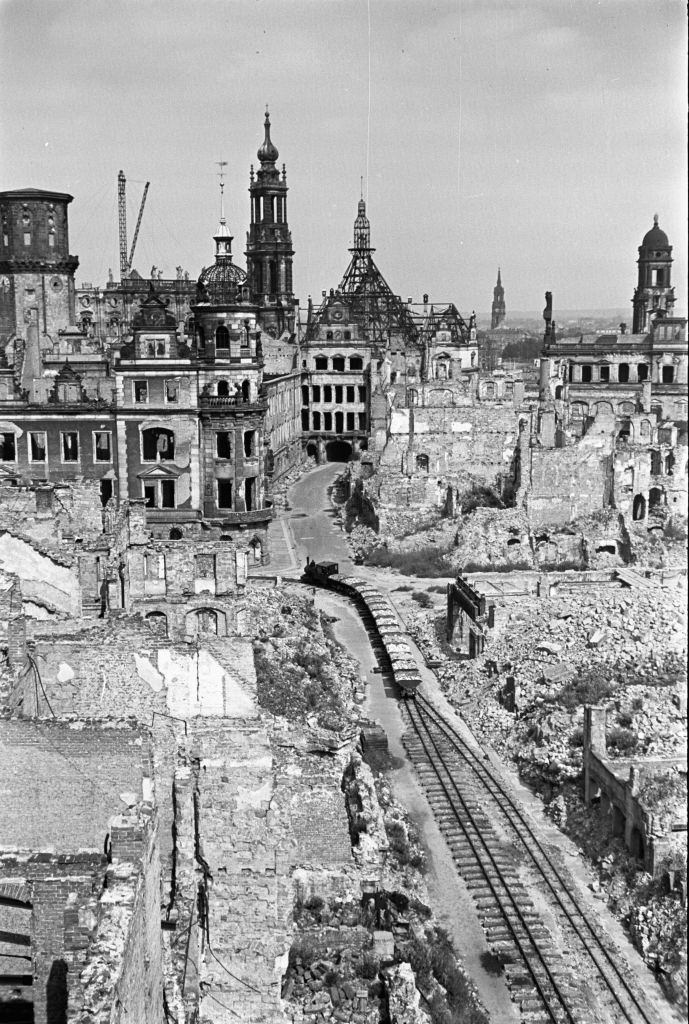
Trümmerbahn (rubble train) in the Schloßstraße in front of the destroyed Dresden Castle with the Hausmannsturm, 1945.

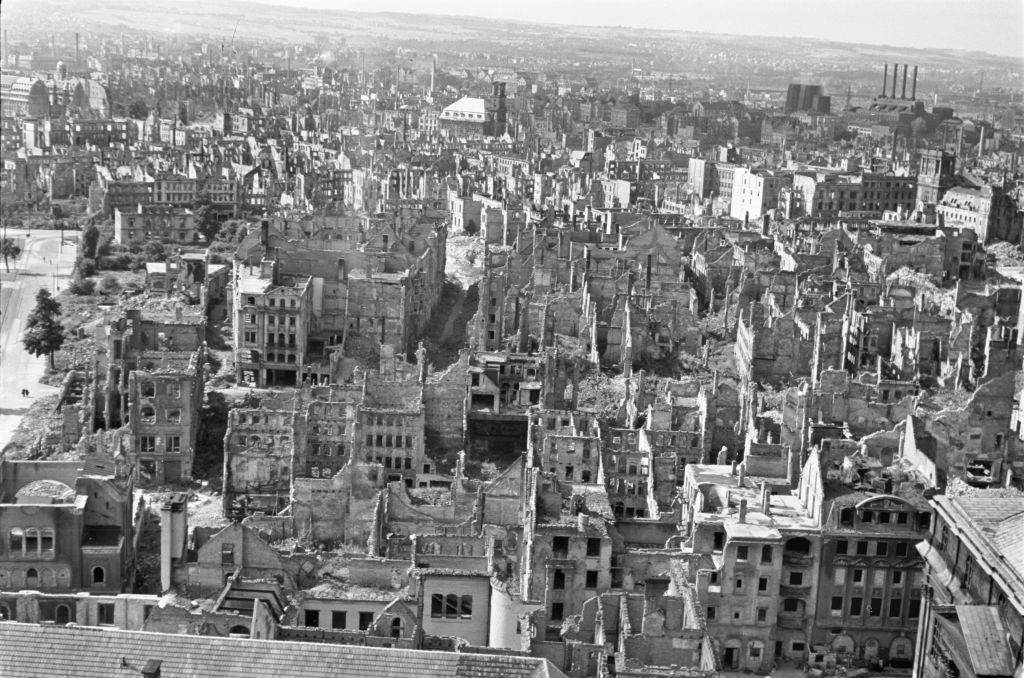
Photographs taken in the weeks and months after the bombing captured the full scale of the devastation. Views from the Town Hall tower showed an unbroken horizon of rubble stretching in every direction. Churches, schools, and courtyard buildings stood as hollow shells. In one photograph, artist Theodor Rosenhauer is seen painting amid the ruins, documenting the destroyed Japanese Palace on canvas while surrounded by its wreckage.
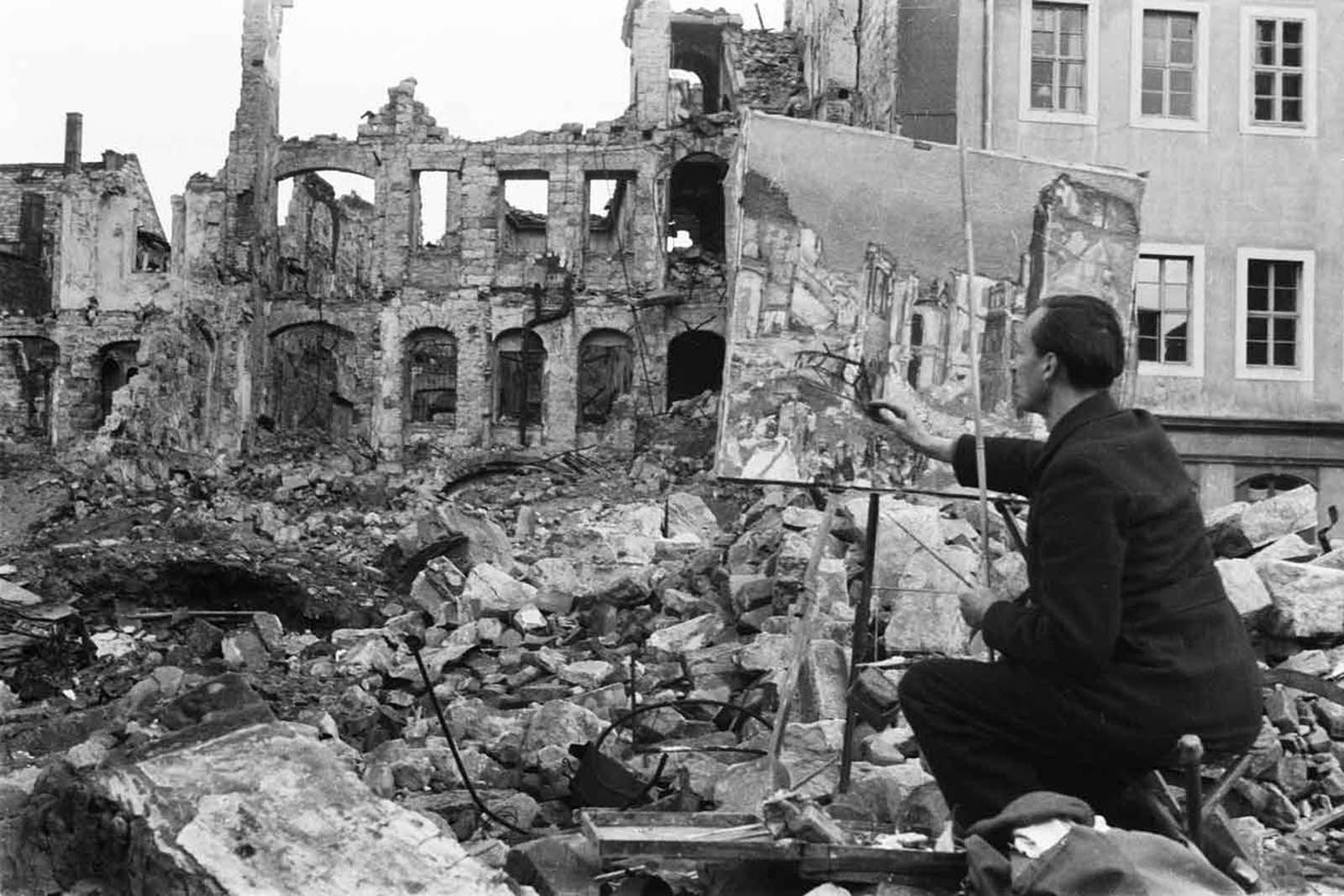
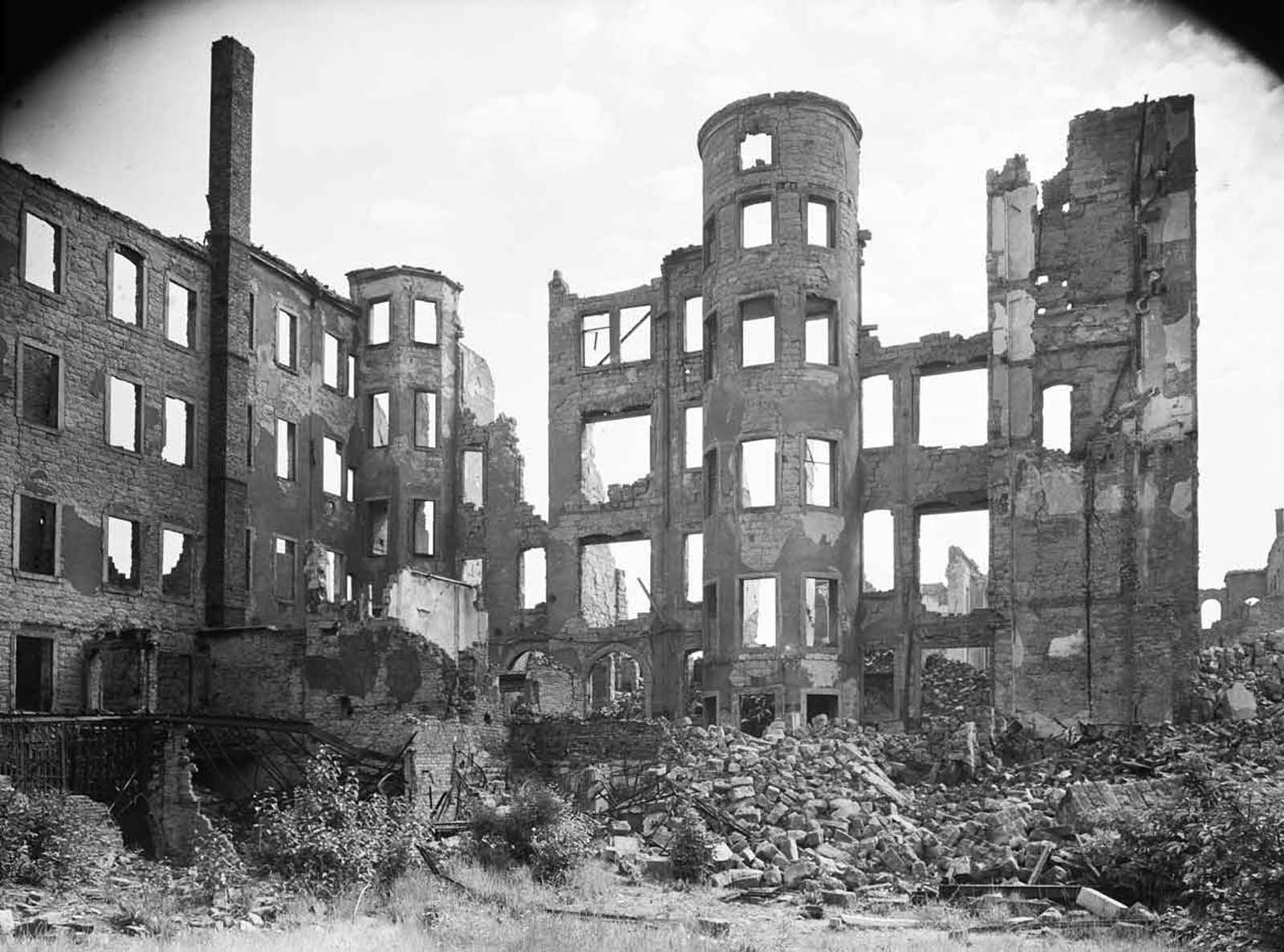
Theodor Rosenhauer in the midst of ruins in Dresden working on his oil painting "View of the Japanese Palace after the Bombing".
Theodor Rosenhauer in the midst of ruins in Dresden working on his oil painting “View of the Japanese Palace after the Bombing”.
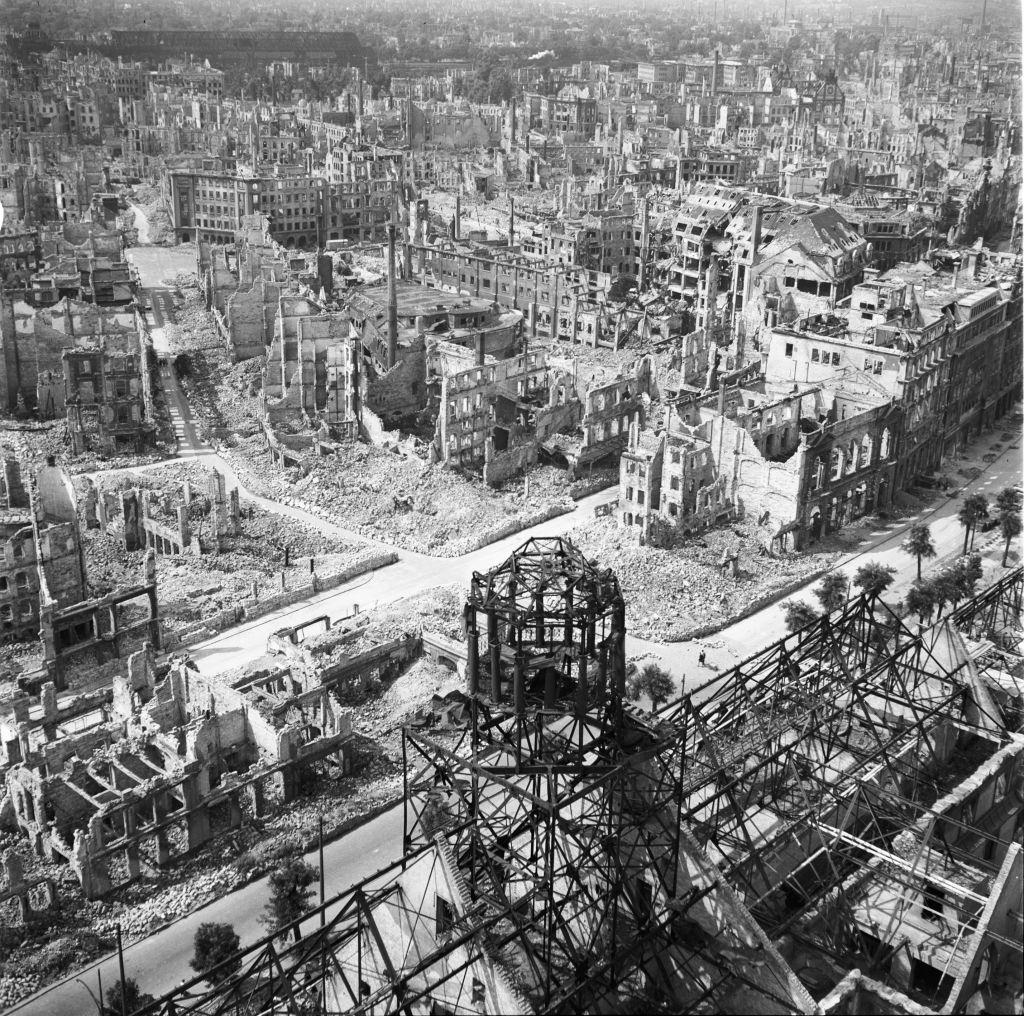
The destruction was appalling.
View from the Town Hall Tower over the destroyed city of Dresden towards Southwest.
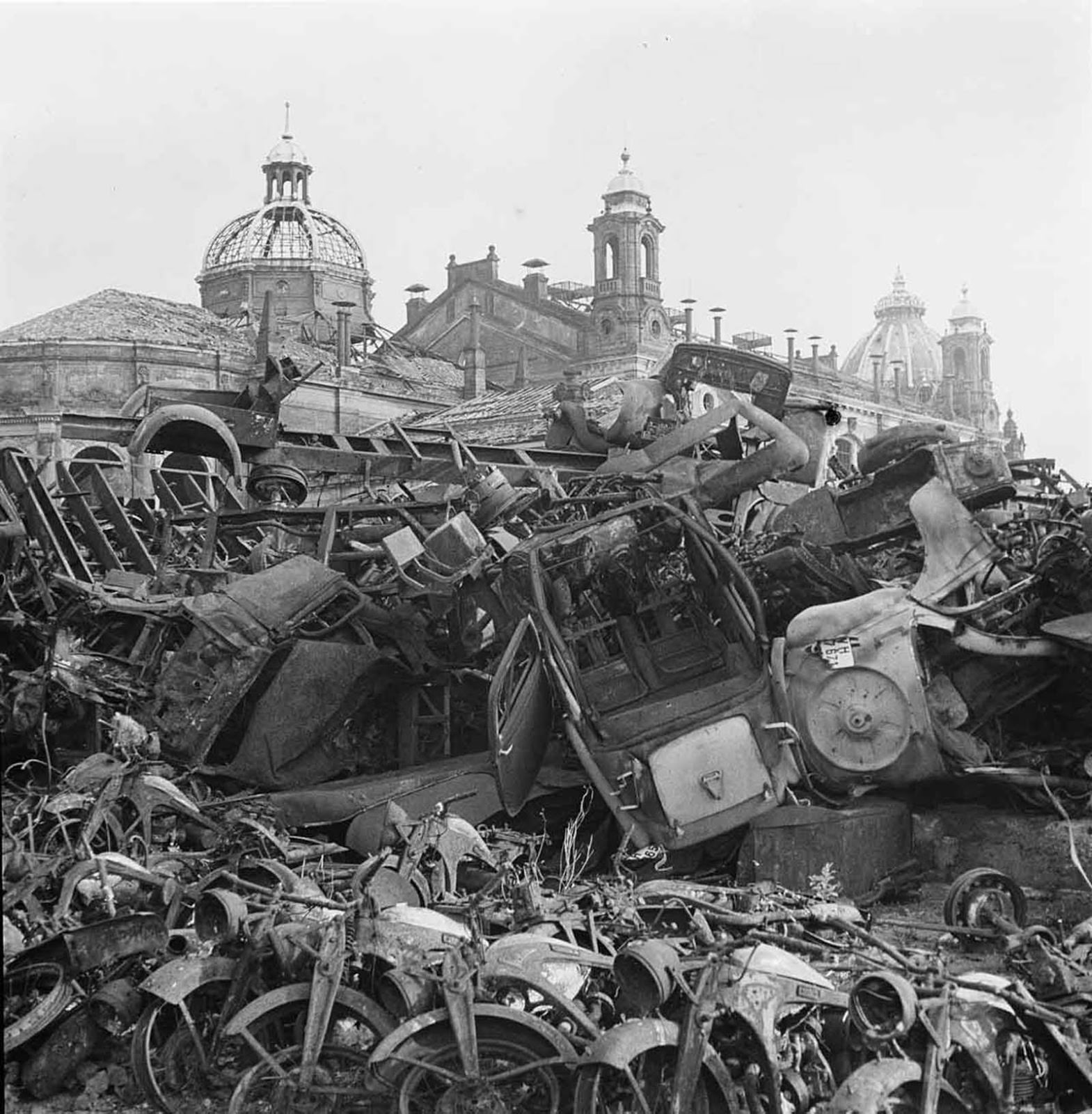
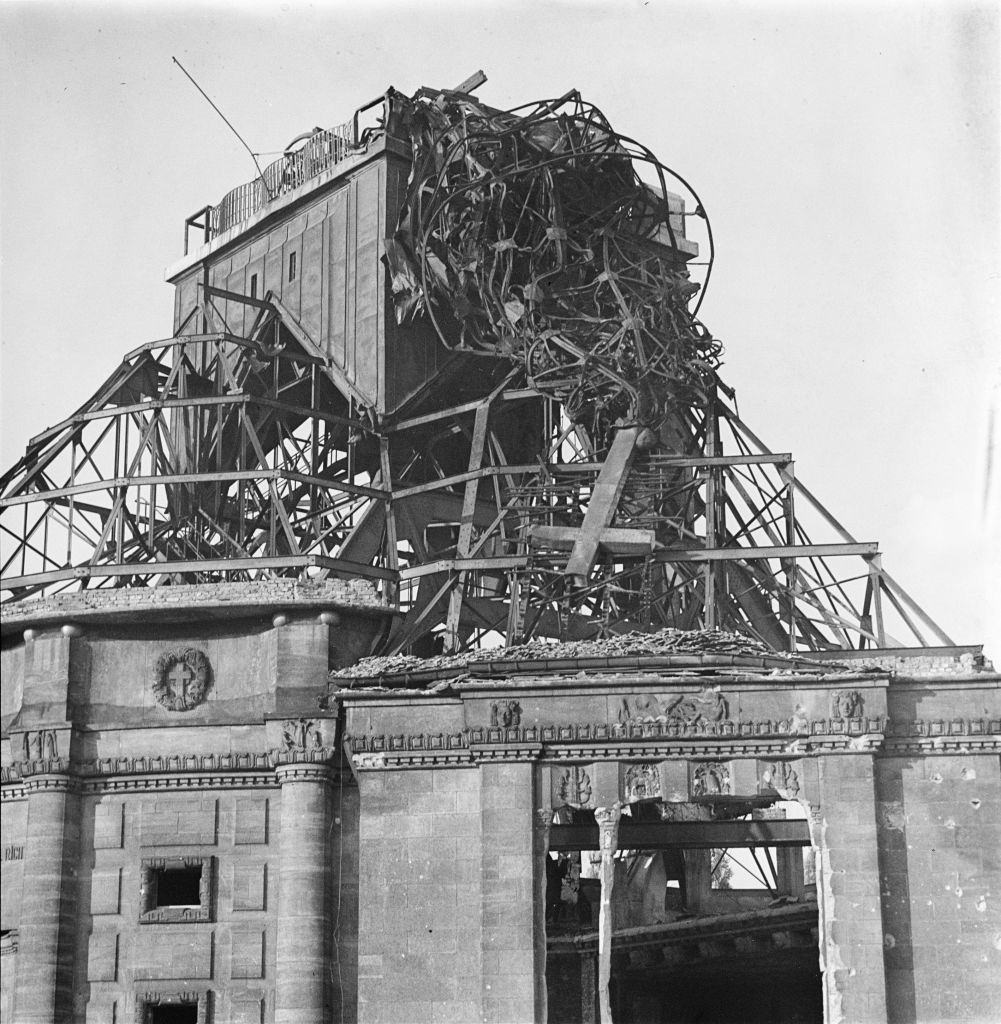
A provisional scrap yard with wrecked vehicles in front of the ruins of the exhibition palace in the Stübelallee in Dresden.
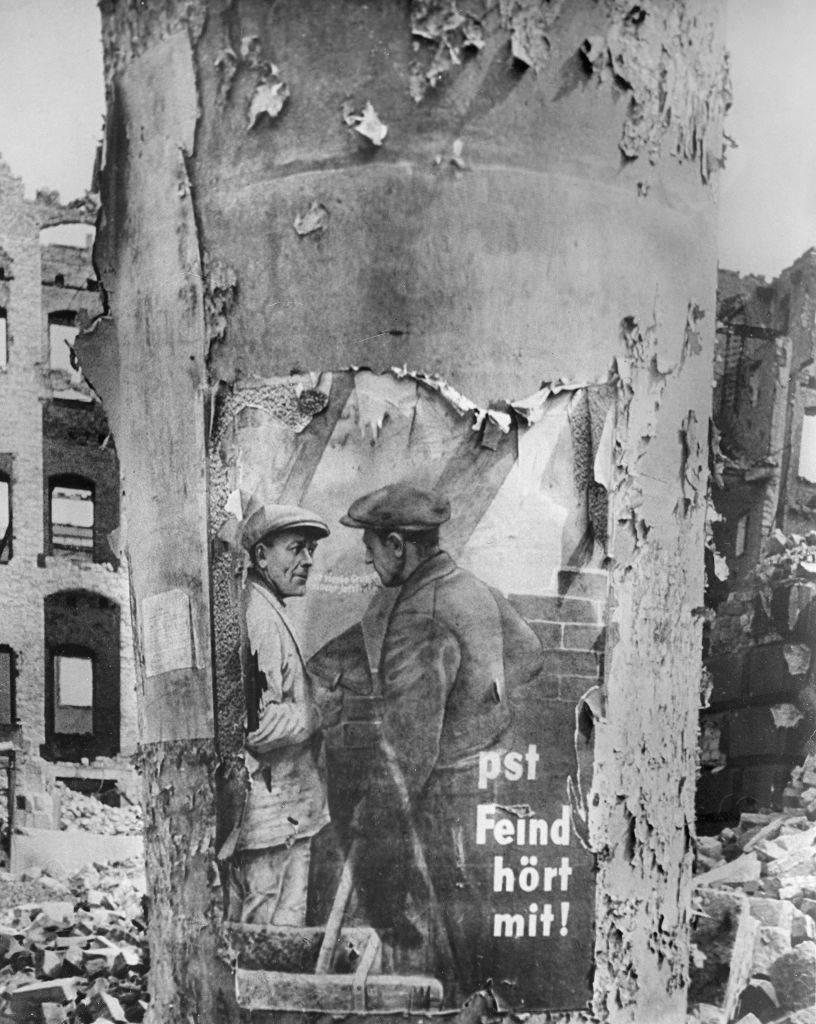
An advertising column with the remains of a Nazi poster which says "pst - Feind hört mit!", 1945.
An advertising column with the remains of a Nazi poster which says “pst – Feind hört mit!”, 1945.

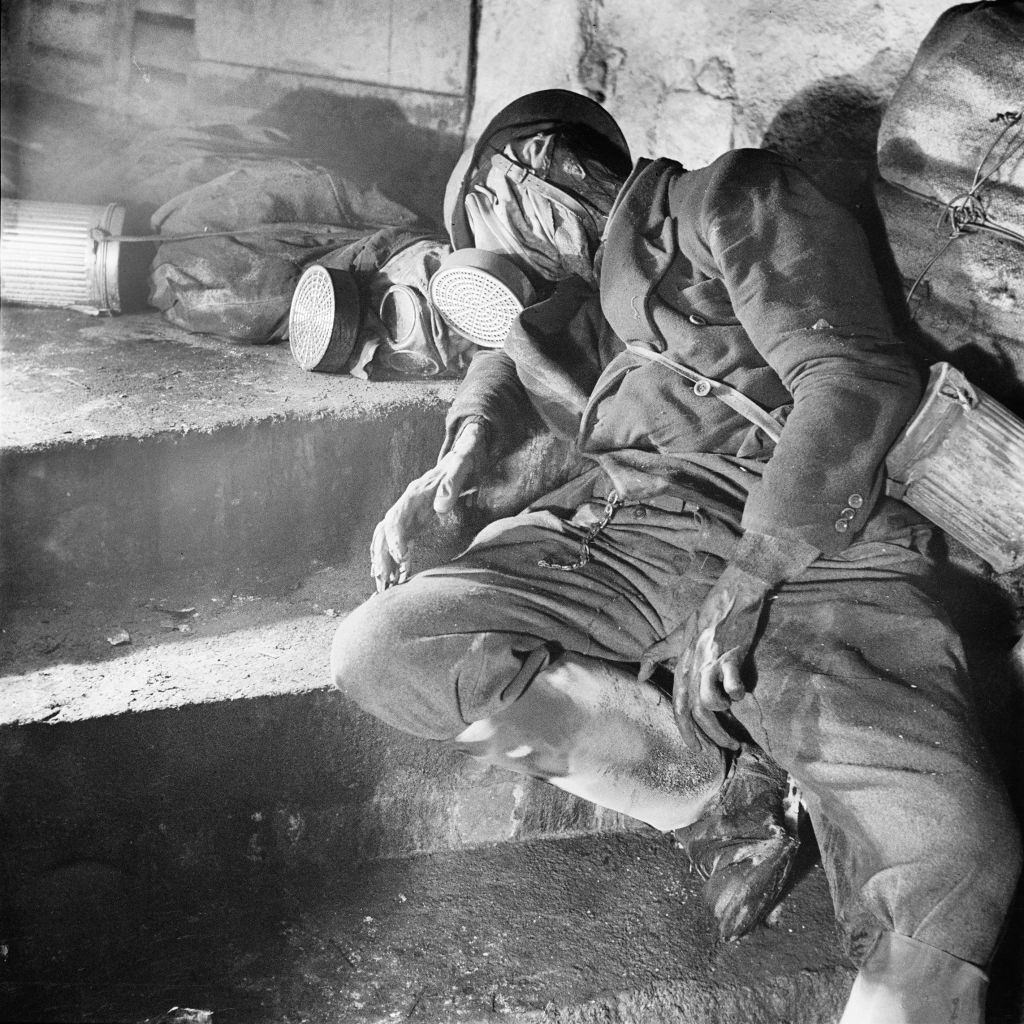
Life in the ruined city resumed in a basic, almost incomprehensible way. Residents lined up for streetcars that ran through avenues flanked by burned-out shells of buildings. Workers cleared rubble by hand, and makeshift scrap yards collected the twisted metal of destroyed vehicles. Some who had sheltered in air-raid bunkers never made it out — their bodies were found still seated, with gas masks on, dead from smoke and oxygen deprivation.
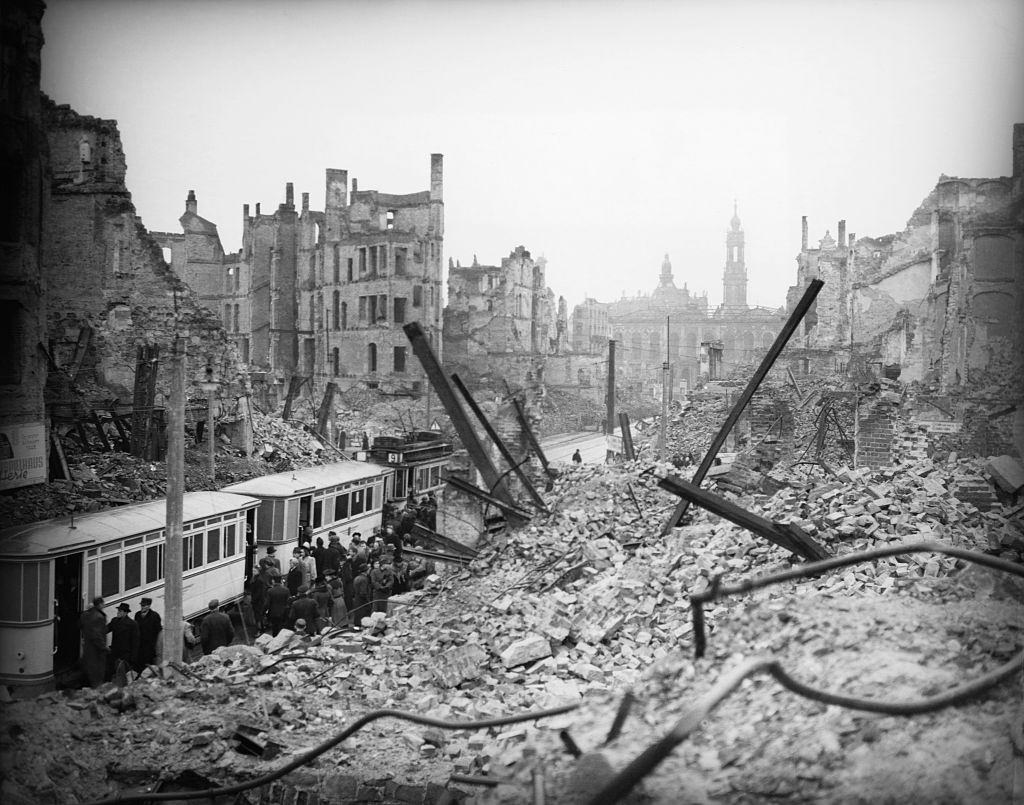
Residents of Dresden line up for a streetcar amid the ruins of the city.
A deceased body with a gas mask and a steel helmet in an air-raid shelter in Dresden
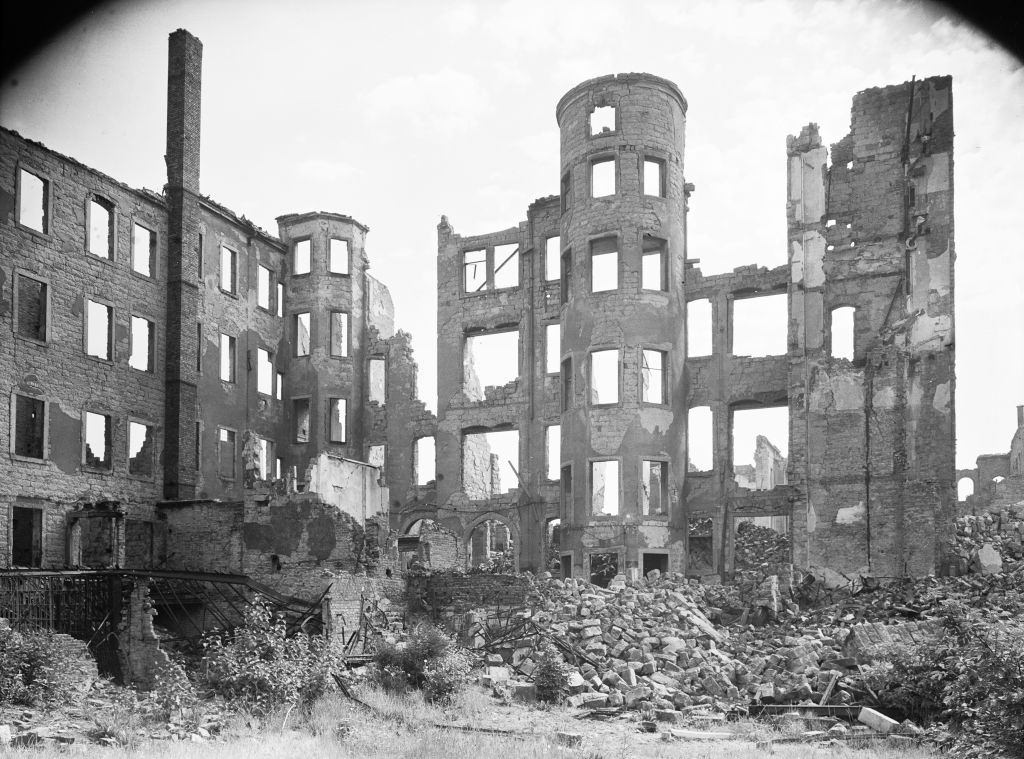
The ruins of buildings in the city of Dresden after firebombing raids, 1945.
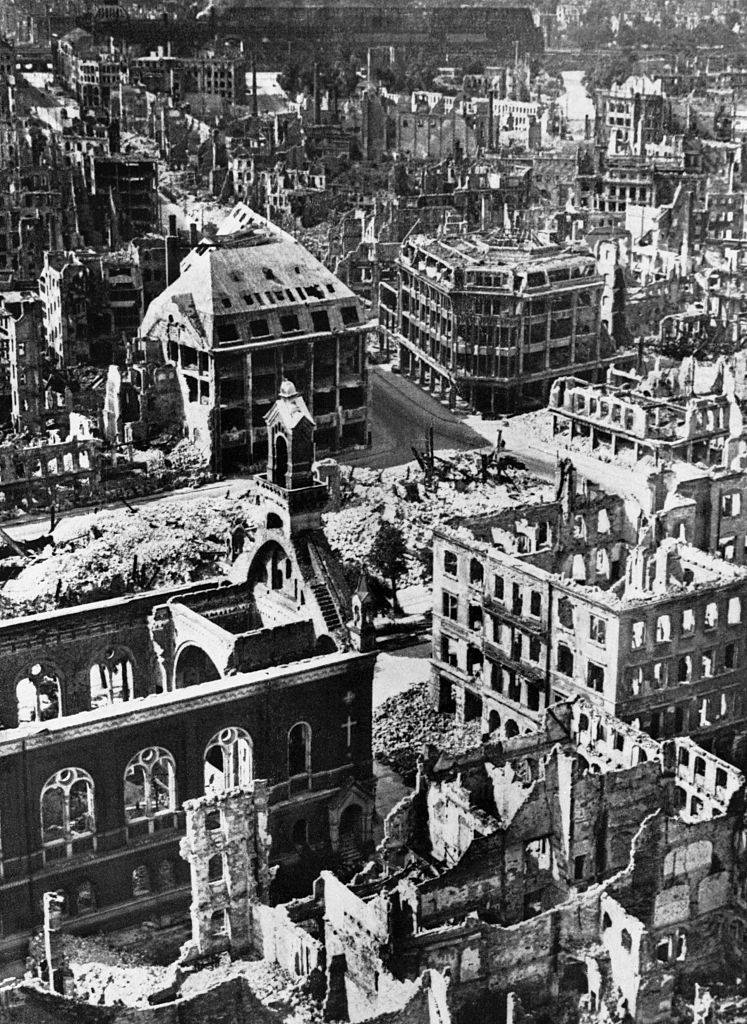
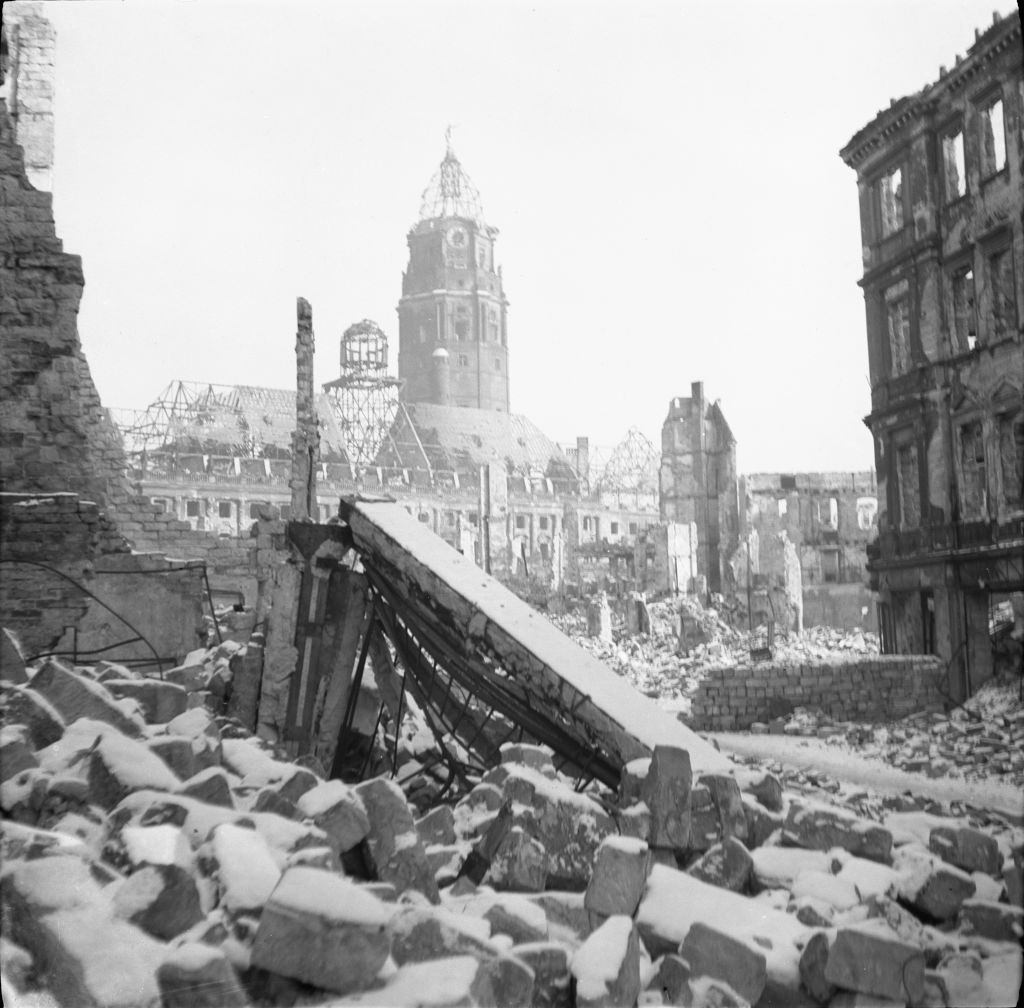
Town Hall tower over destroyed houses to the Annenkirche in Dresden, 1945.
Town Hall tower overlooking destroyed apartment buildings, 1945.
The Carl Maria von Weber monument (right), the Theatre Square and the ruins of the Dresden Cathedral (left) and the Dresden Castle with Hausmannsturm.
The ruins of the Church Notre-Dame in Dresden, Gdr, After Anglo-American Bombings in February Of 1945.
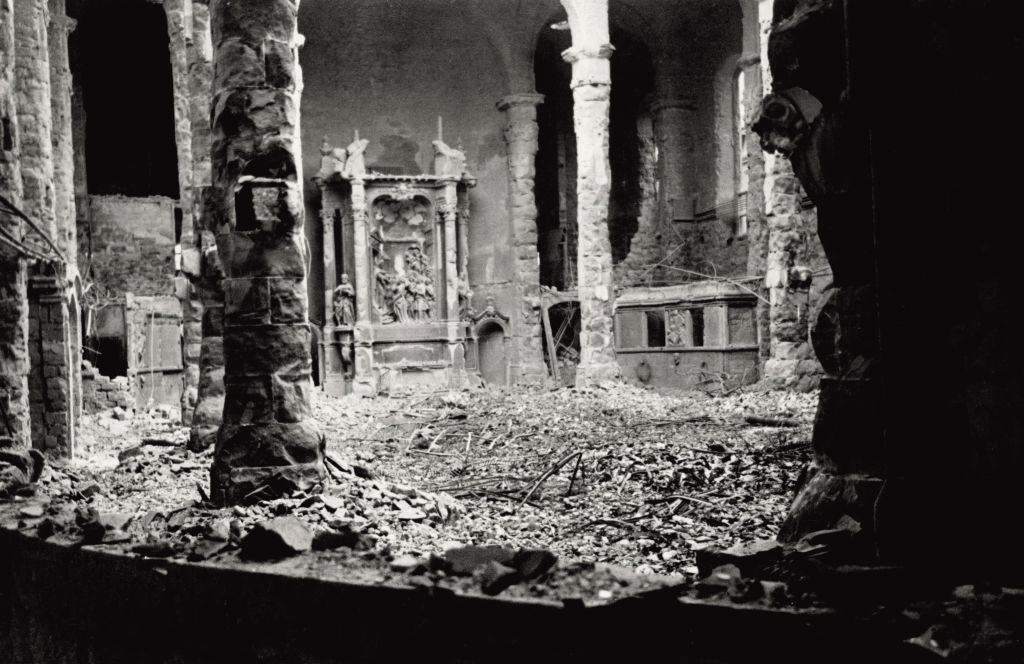
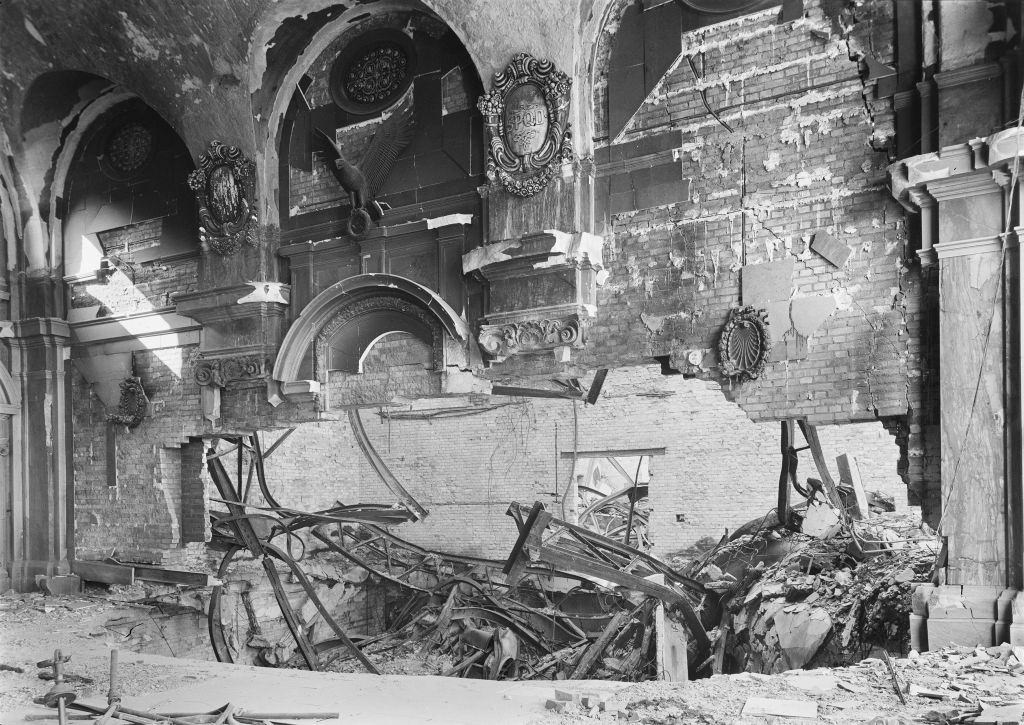
Heap of rubble of the church of the Three Kings' interior after the violent allied bombing of February 13 and 14.
Heap of rubble of the church of the Three Kings’ interior after the violent allied bombing of February 13 and 14.
Dresden city centre, the area around Pirnaischer Platz, 1945.
The ruin of the Zionskirche in the Nürnberger Straße in Dresden, 1945.
The Josephinenstraße with a cleared sidewalk in viewing towards the Vitzhumsches Gymnasium (High School) in Dresden.
The ruins of the Dresden City Art Gallery in the Lennéstraße. The photo was taken after 17 September 1945.
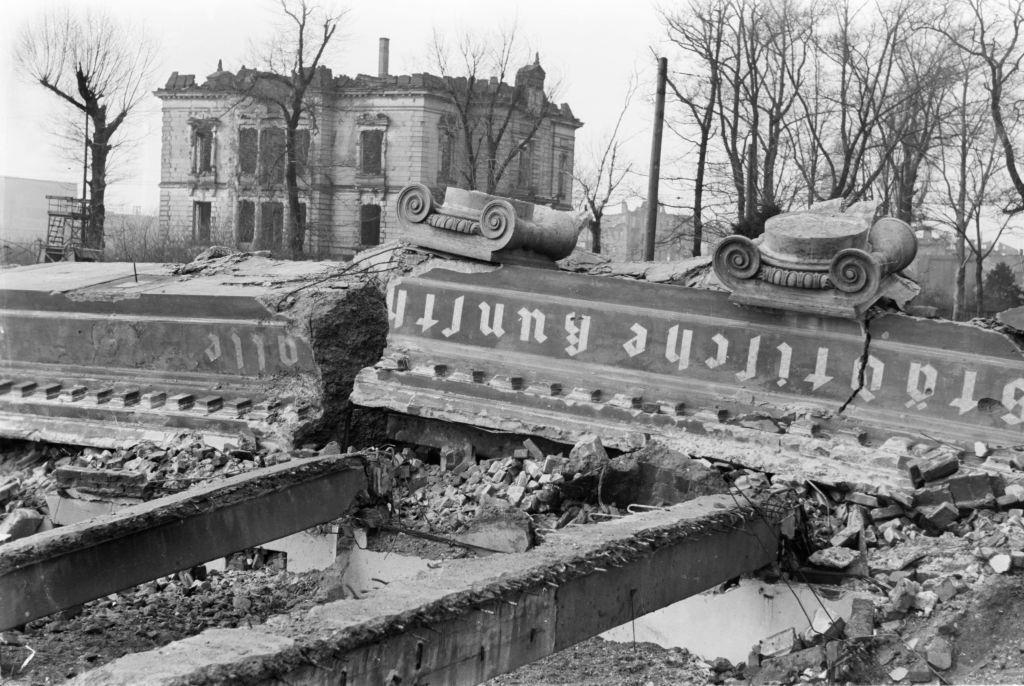
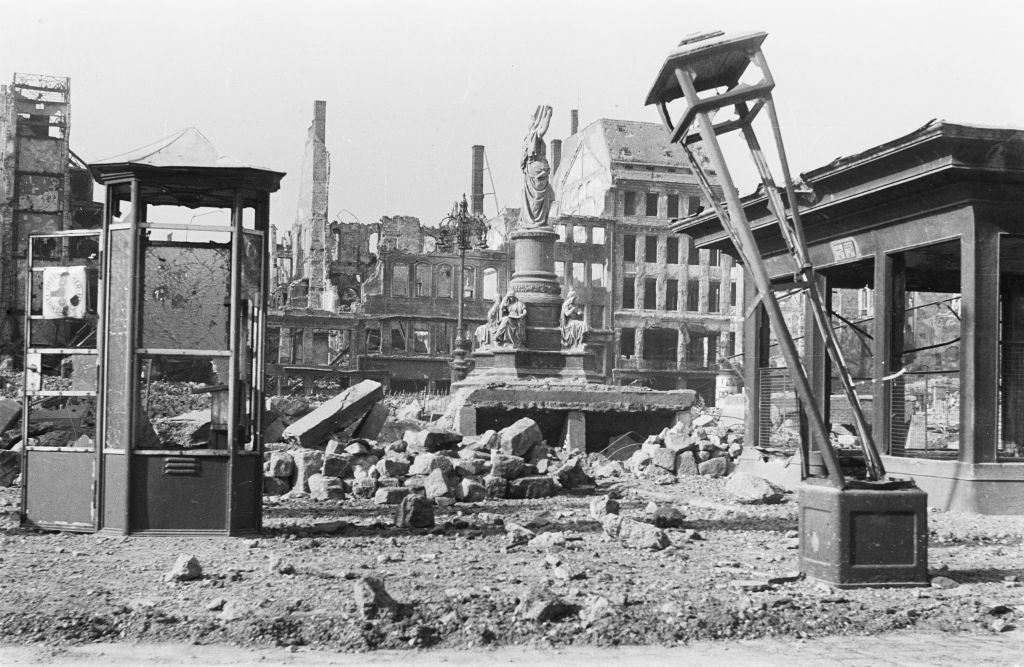
The Old Market in Dresden with the destroyed Germania monument, 17 September 1945.
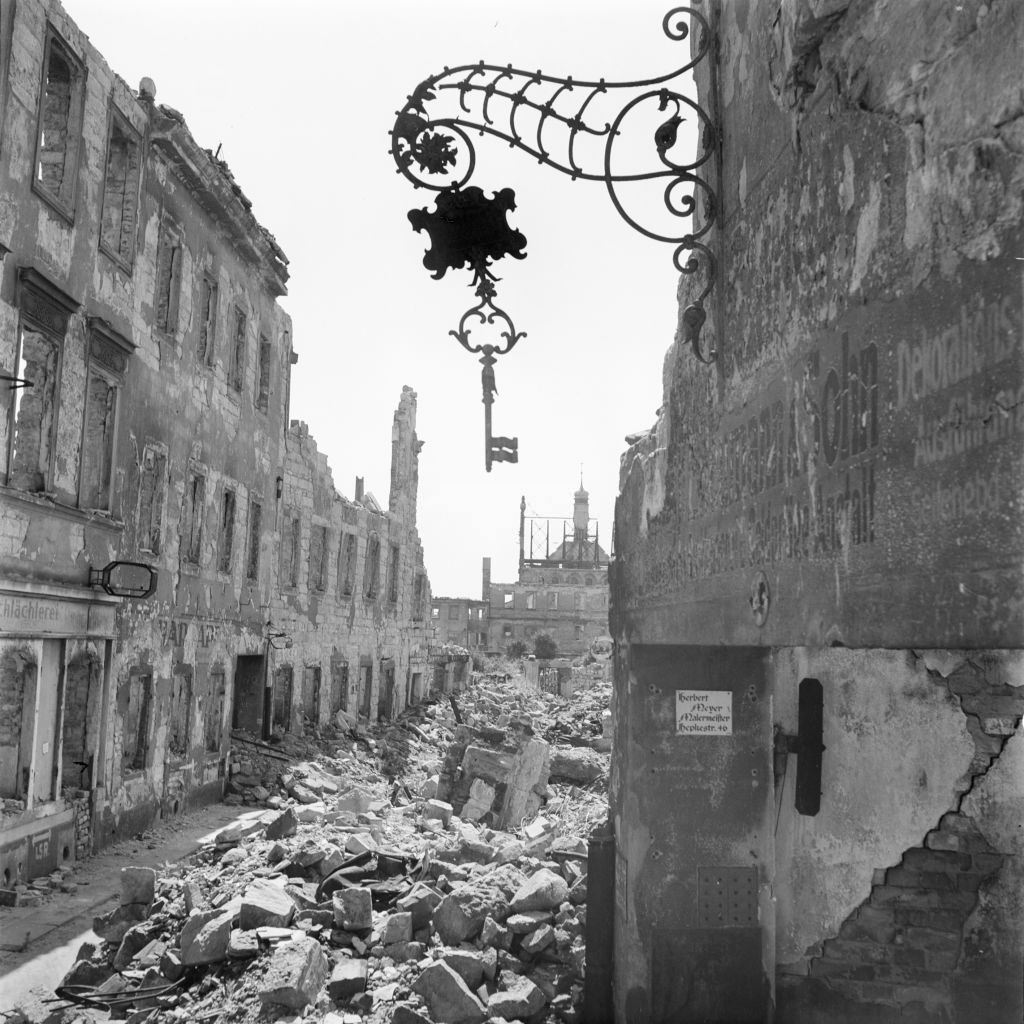
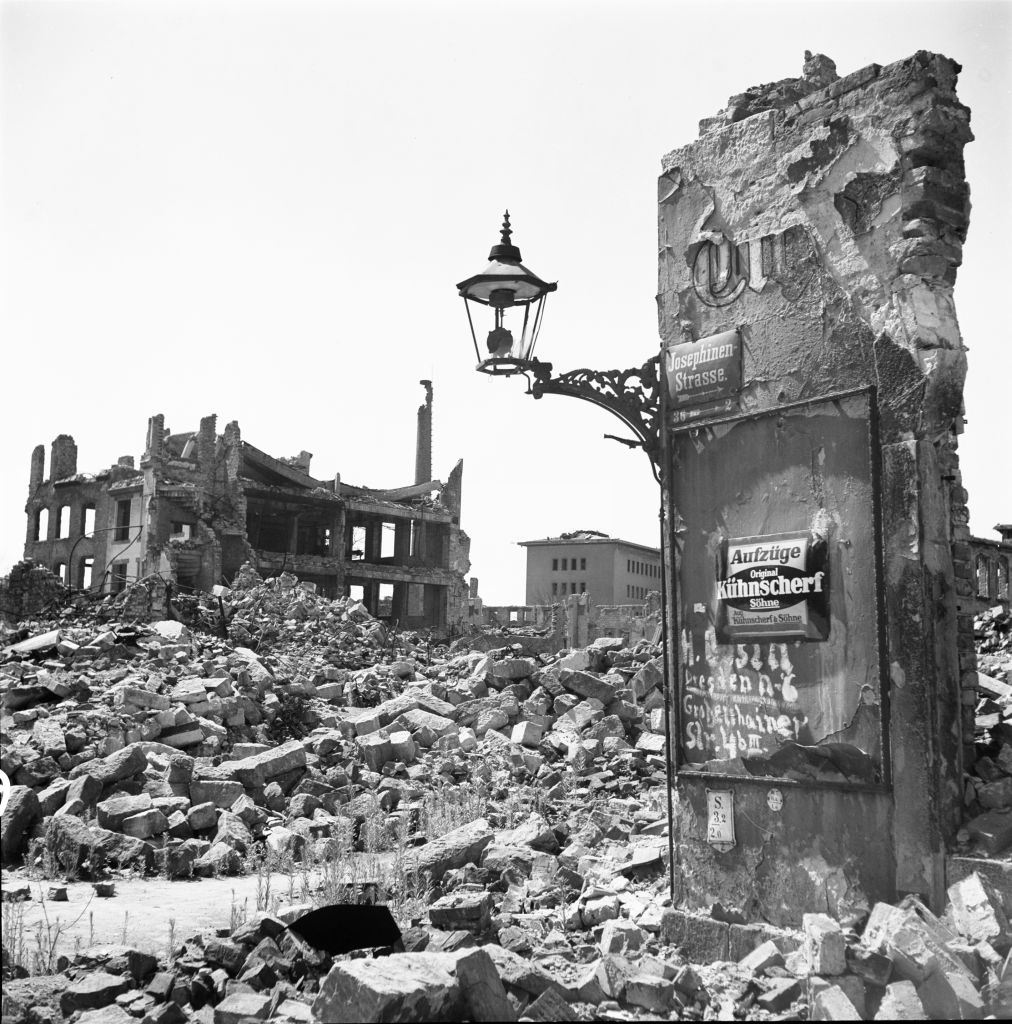
A gas lamp at a facade piece of a destroyed building in the Josephinenstraße in Dresden.
View from South West to the ruins of the New City Hall in Dresden, 17 September 1945.
Masses of rubble surrounded by ruins in Dresden, 17 September 1945.
The ruins of the graphic buildings in the Lindenaustraße no 11.
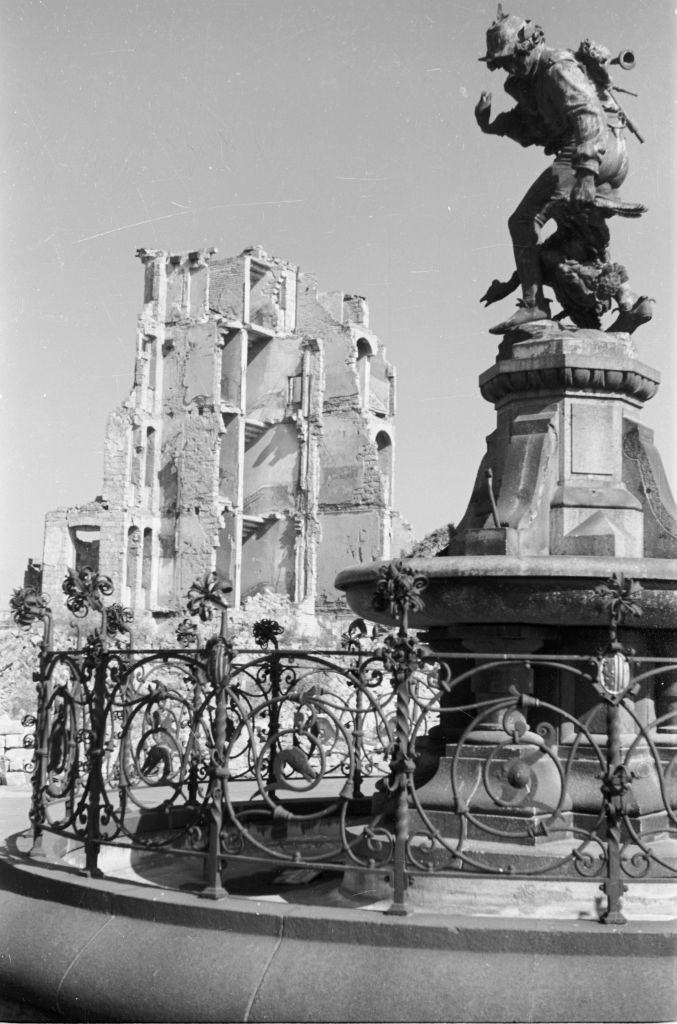
The Gänsediebbrunnen with a bronze figure by artist Robert Dietz on the Ferdinandplatz in Dresden, 1945.
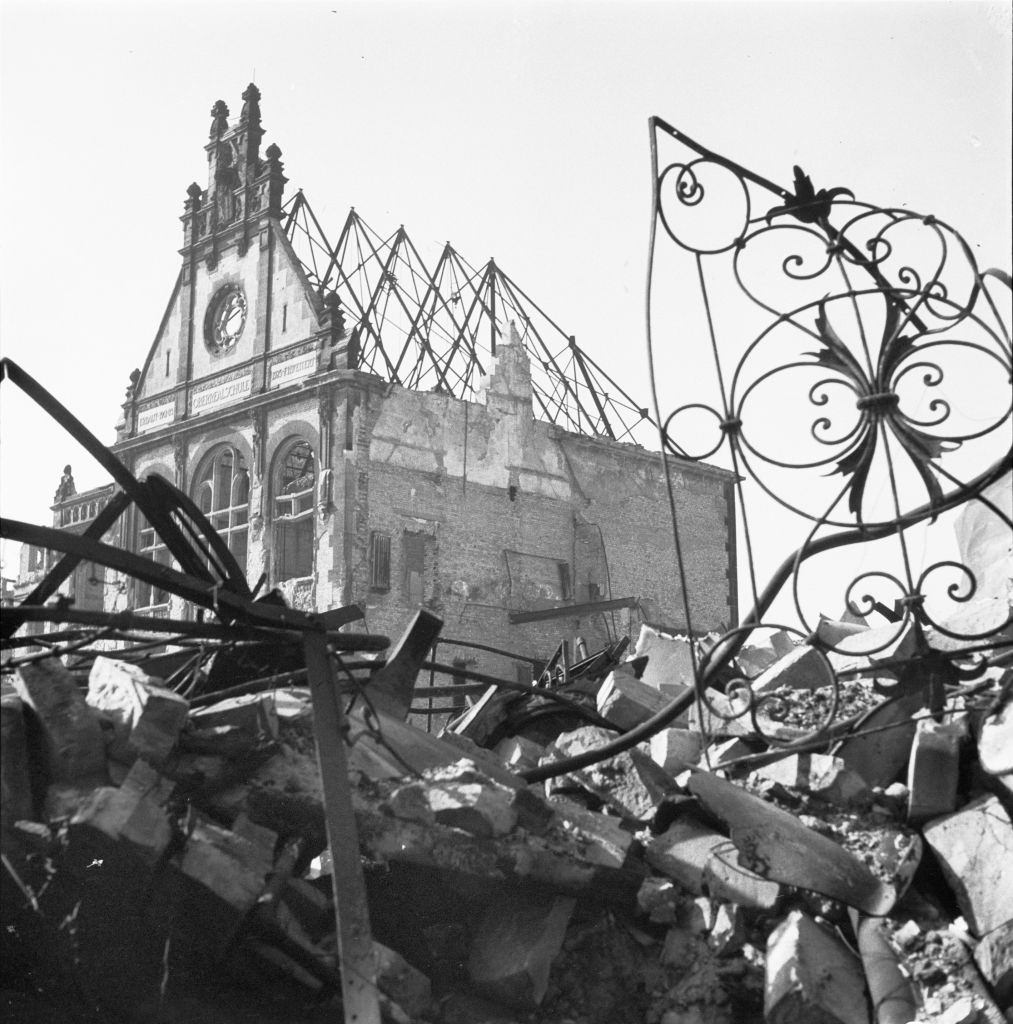
The ruins of the Vitzthumsch High School in the Josephinenstraße in Dresden.
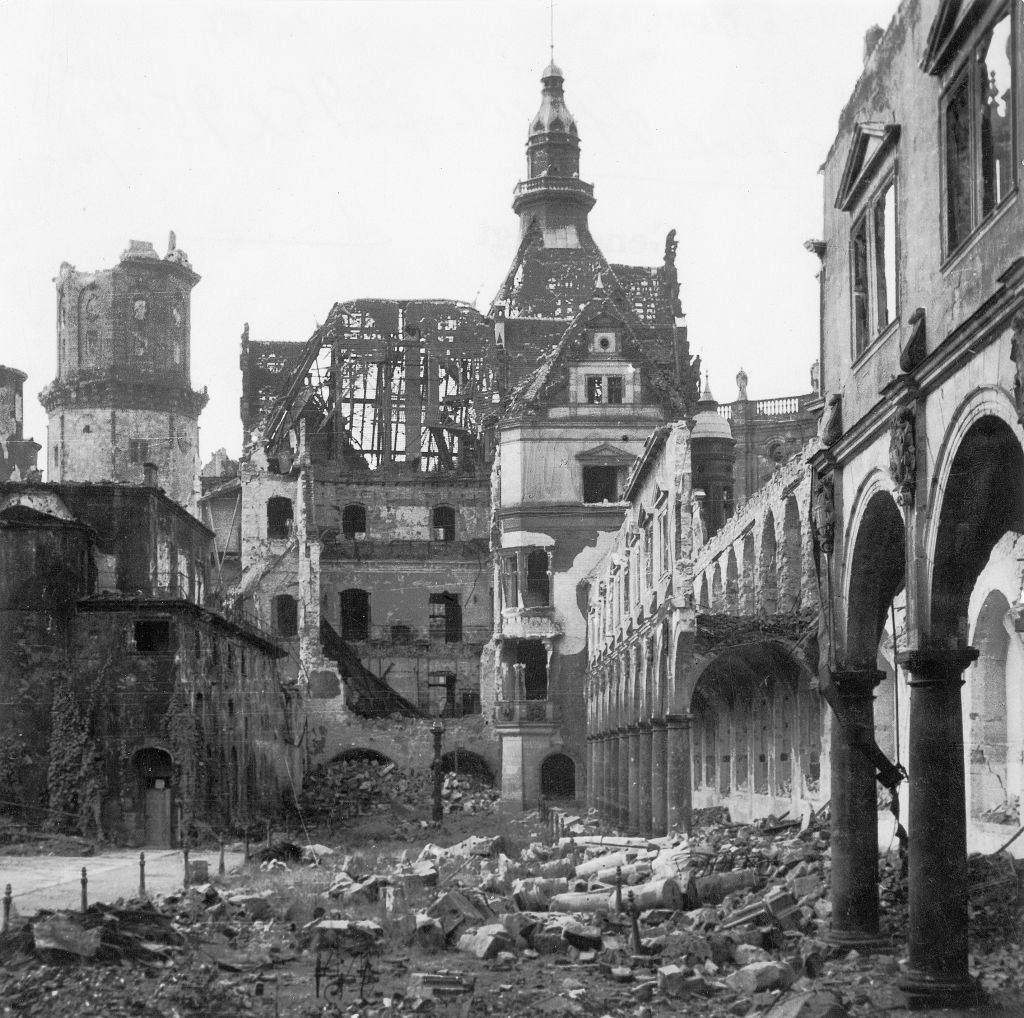
The ruin of the Stallhof (Stall Courtyard) at the Dresden Castle with the Hausmannsturm.
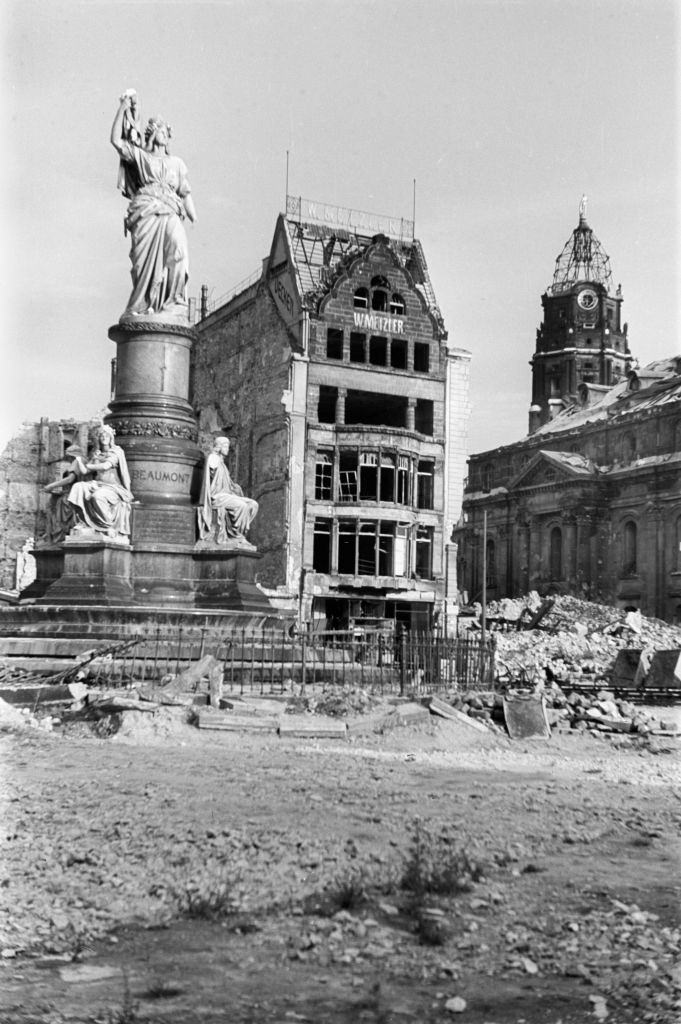
The destructions on the Altmarkt in Dresden with the damaged victory monument.
The Main Hall in the ruins of the New Town Hall in Dresden.
The ruin of the Jakobikirche in Dresden, 17 September 1945.
Enjoyed this post? Get new ones in your inbox.

Leave a Comment

Your email address will not be published. Required fields are marked *

20 Comments

  1. An article I read claimed many civilians who made it to air raid shelters and basements within the city were cooked alive by the heat of the bombs; when rescuers opened the doors, they found only pools of brown liquid and bones floating about. I’ll try to locate it again and link it.

          • The rain/snow thing isn’t clear to me, but I know that human tissues such as skin, eyes, and various organs can and will melt at high temperatures. I haven’t been able to locate the exact article that says this, but I’ve found quite a few that claim people in Dresden were indeed boiled alive inside tanks and freezers during the war. Similar stories were told about the firebombing of Tokyo during World War II

            • Which part of them would melt? The only thing I could see melting is fat, which would quickly dry out, given the long-term exposure to heat in the shelters. In those photographs, the bodies are blackened because water evaporates and carbon simply burns. I cannot imagine any part of the body turning into enough liquid to pool on the ground, much less wholly dissolved.

Load more comments

Share this Post 🥺

Please take a moment to share this content. Your support is greatly appreciated! 🙌🙏

Share this Post 🥺

Please take a moment to share this content. Your support is greatly appreciated! 🙌🙏
Scroll to Top
 
Hey Friend, Before You Go.. Please like & follow for more interesting content