
On the night of February 13–14, 1945, Dresden — a city of more than 650,000 people — became the target of one of the most destructive bombing campaigns of World War II. British Royal Air Force bombers dropped 1,478 tons of high explosives and 1,182 tons of incendiary bombs in the first wave, followed by a second wave carrying another 800 tons. The following day, U.S. Army Air Forces added 950 tons of high-explosive bombs and more than 290 tons of incendiaries. The firestorm that erupted consumed street after street, reducing a city known for its baroque architecture and cultural treasures to a smoldering wasteland.
The destruction was staggering in scale. Of the 28,410 houses in Dresden’s inner city, 24,866 were destroyed. Schools, hospitals, churches, bridges, and centuries-old landmarks were gutted or flattened. The city that had once been called the “Florence of the Elbe” was, in a matter of hours, unrecognizable. What remained standing was often too damaged to be saved. The work of rebuilding would take decades — and in some cases, it was never fully completed.
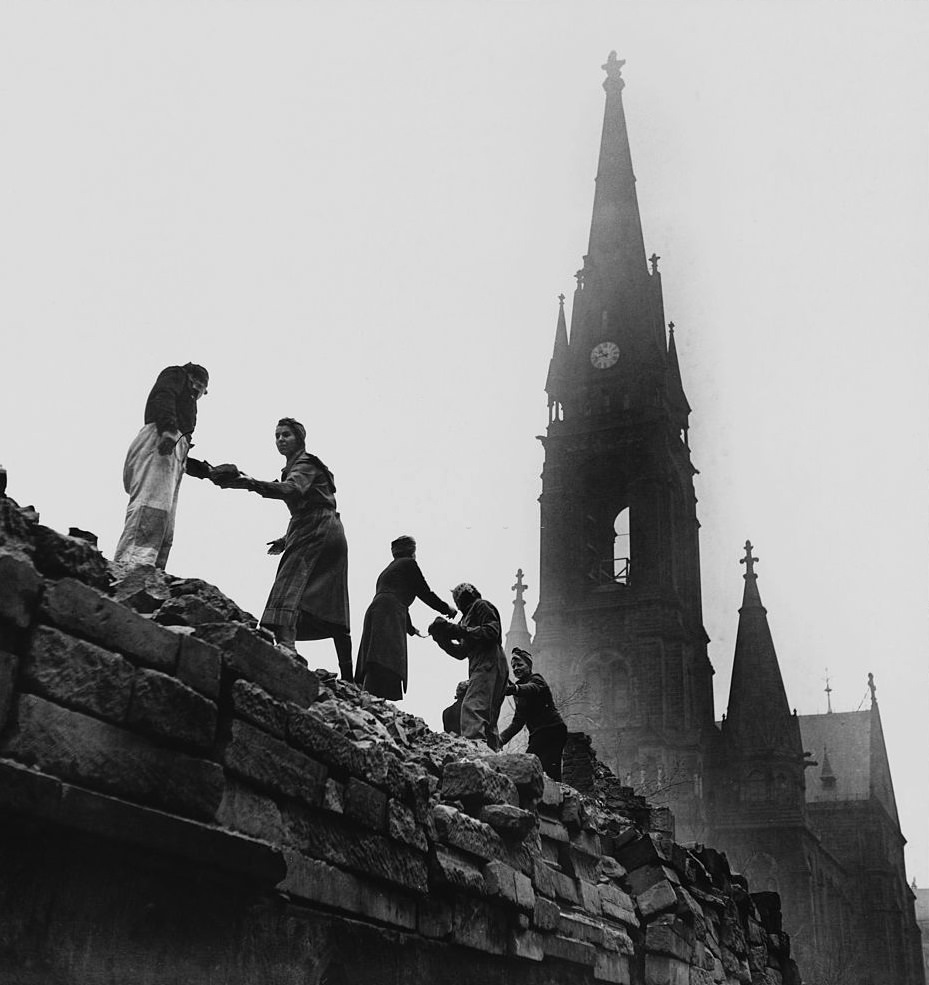
In the weeks and months that followed the bombing, thousands of Dresden’s residents stepped forward to begin the enormous task of clearing the rubble. These were not professional construction crews — they were ordinary men and women, many of them elderly, who hauled debris by hand, formed human chains, and shoveled ash and broken stone from streets and buildings. The sheer volume of wreckage made every day’s work feel like a drop in the bucket, but the effort was relentless.
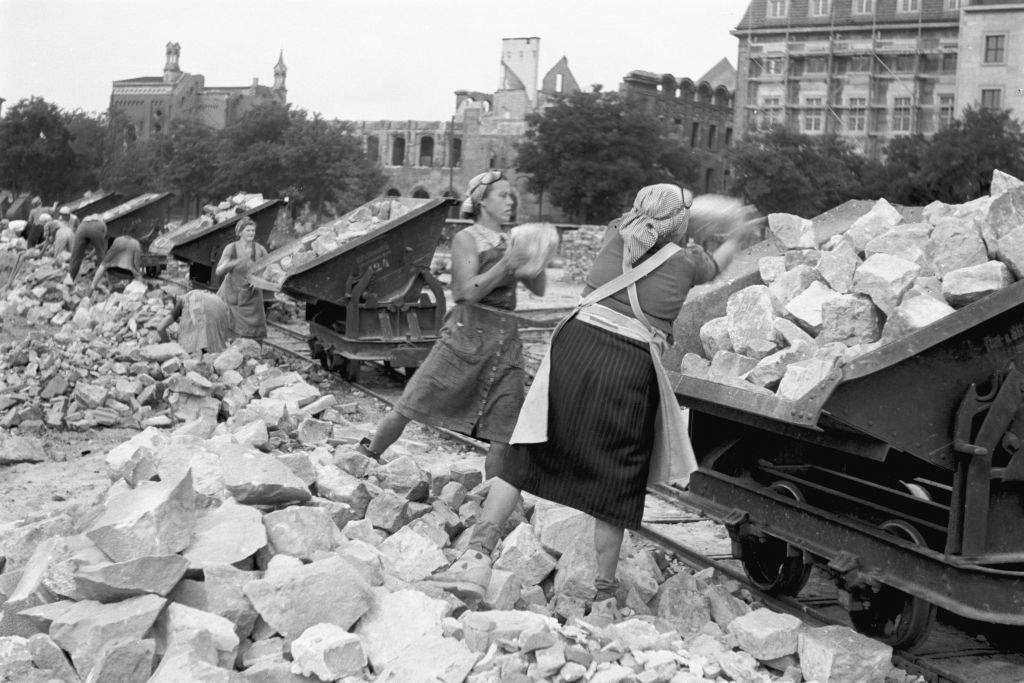
Women formed the backbone of the cleanup workforce. With so many men either dead, imprisoned, or still absent from the war, women took on the physically grueling work of moving rubble. They loaded it onto carts, passed it down lines, and hauled it to collection points around the city. Their presence in the ruins of Dresden became one of the defining images of postwar Germany — the so-called Trümmerfrauen, or “rubble women.”
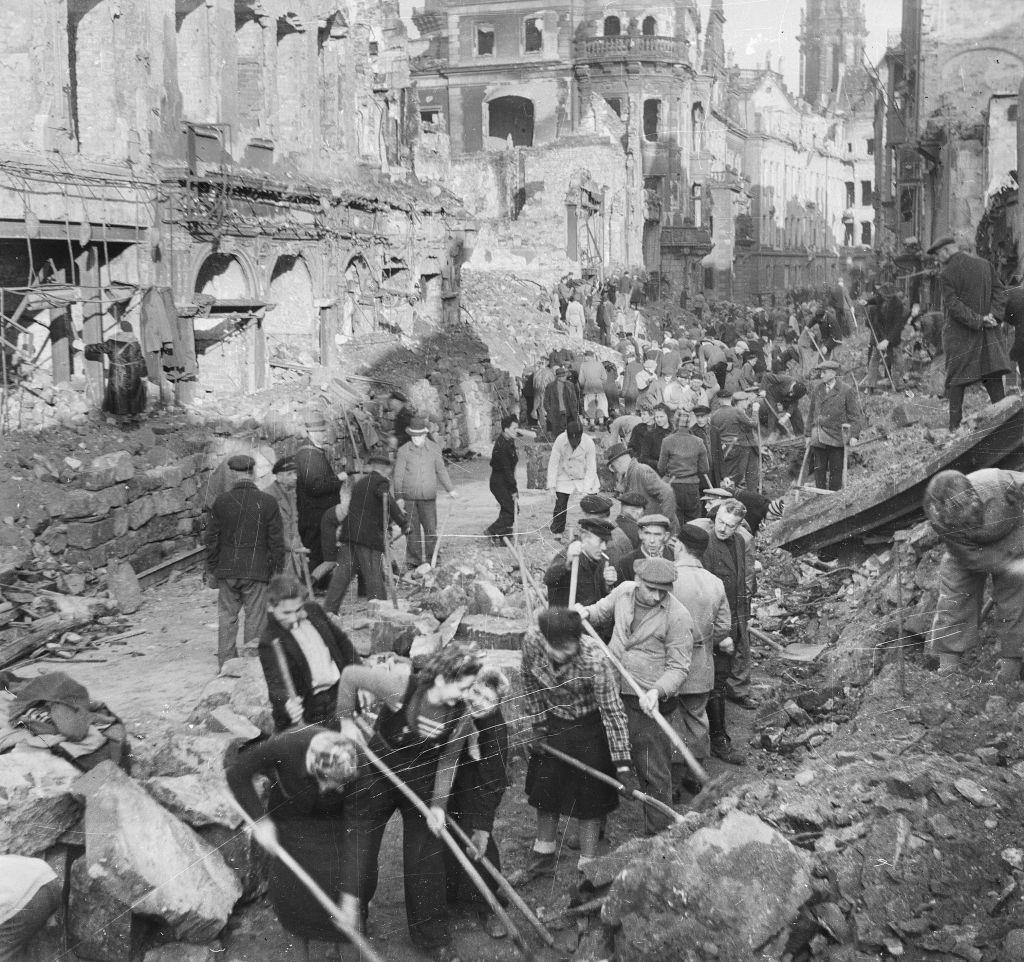
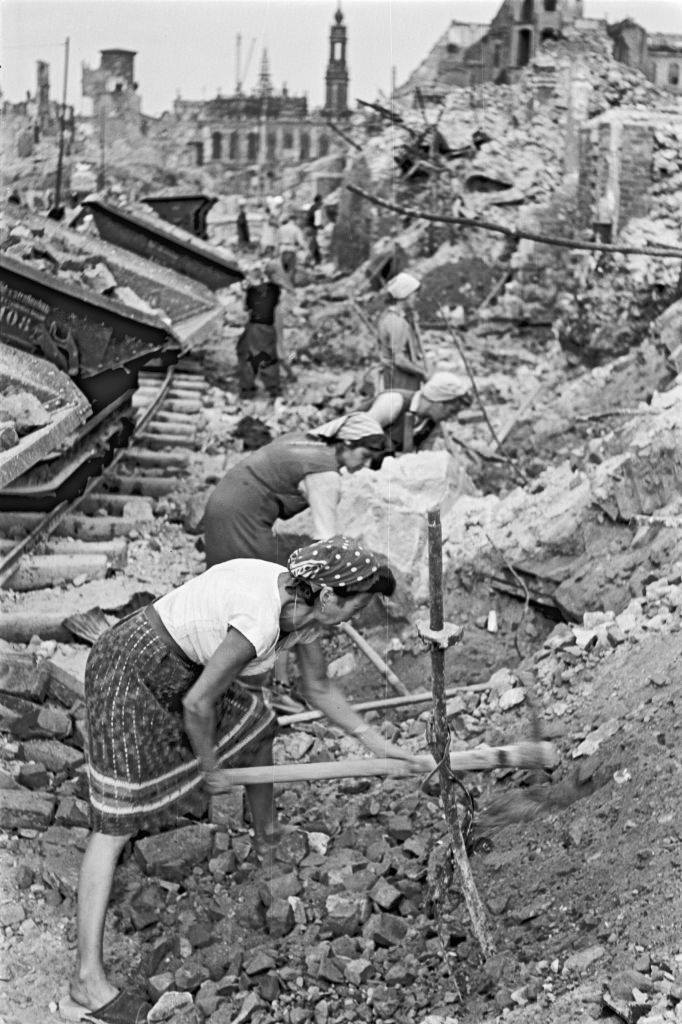
To manage the enormous quantities of rubble, a narrow-gauge railway system known as the Trümmerbahn was set up throughout the old city. Workers loaded broken masonry onto small rail cars, which were then transported away from the historic center. This system allowed rubble to be moved far more efficiently than by hand alone. Even so, the sheer amount of debris meant that clearing operations dragged on for years.
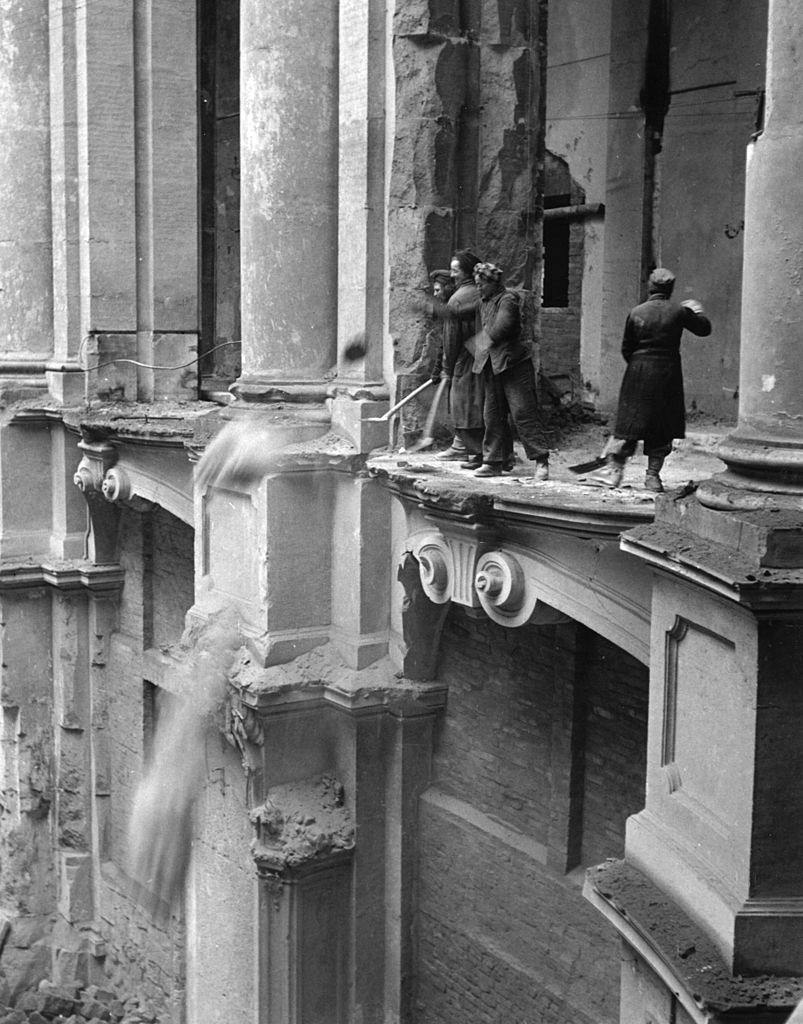
Some of the most important cultural sites demanded especially careful attention. The Zwinger — a magnificent baroque palace and art gallery complex — had been badly damaged in the bombing. Workers cleared debris from its floors and courtyards with as much care as they could manage, aware that buried beneath the rubble were irreplaceable architectural details, stonework, and artworks that had not been evacuated in time.
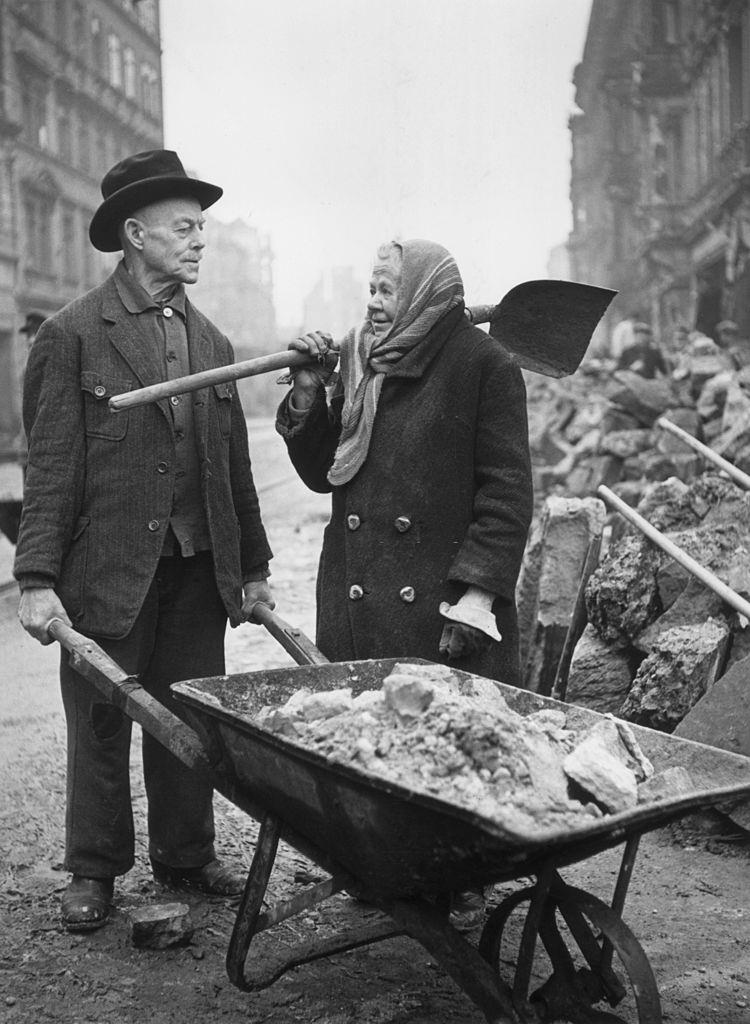
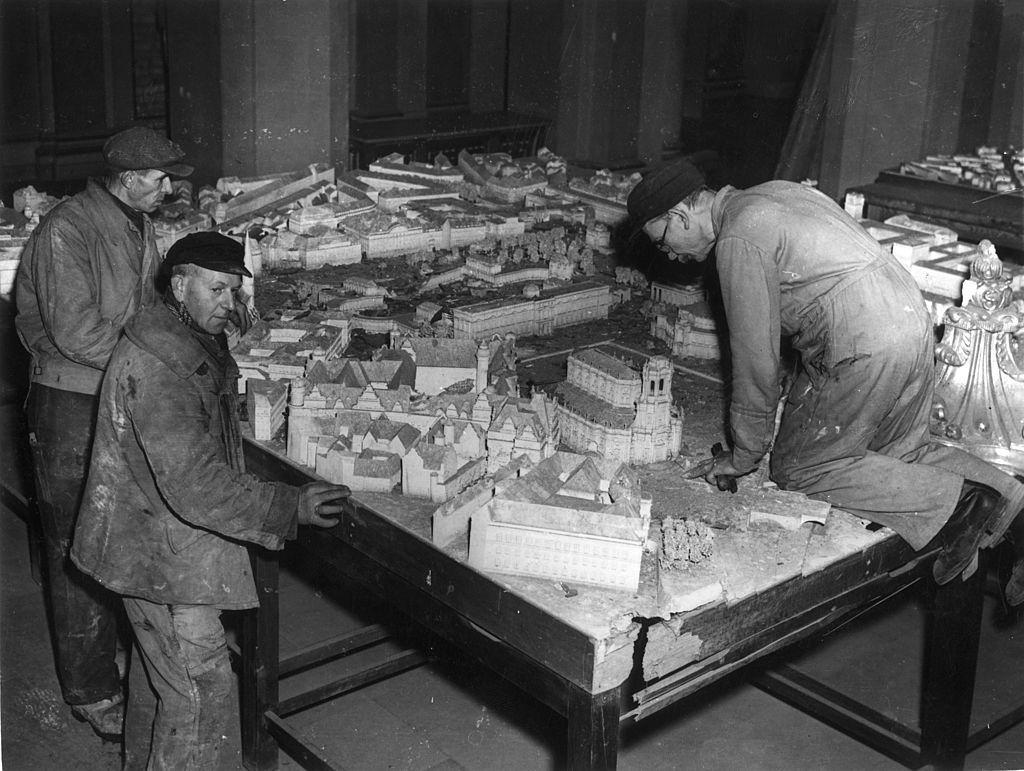
Dresden fell within the Soviet occupation zone after the war, and Soviet authorities took an active role in planning the city’s future. Workers assembled detailed scale models showing what Dresden was expected to look like after twelve years of reconstruction. These models guided decisions about which structures to prioritize, how the street grid would be reorganized, and where new public buildings would rise. The plans blended restoration of historic sites with the construction of Soviet-style residential and civic buildings.
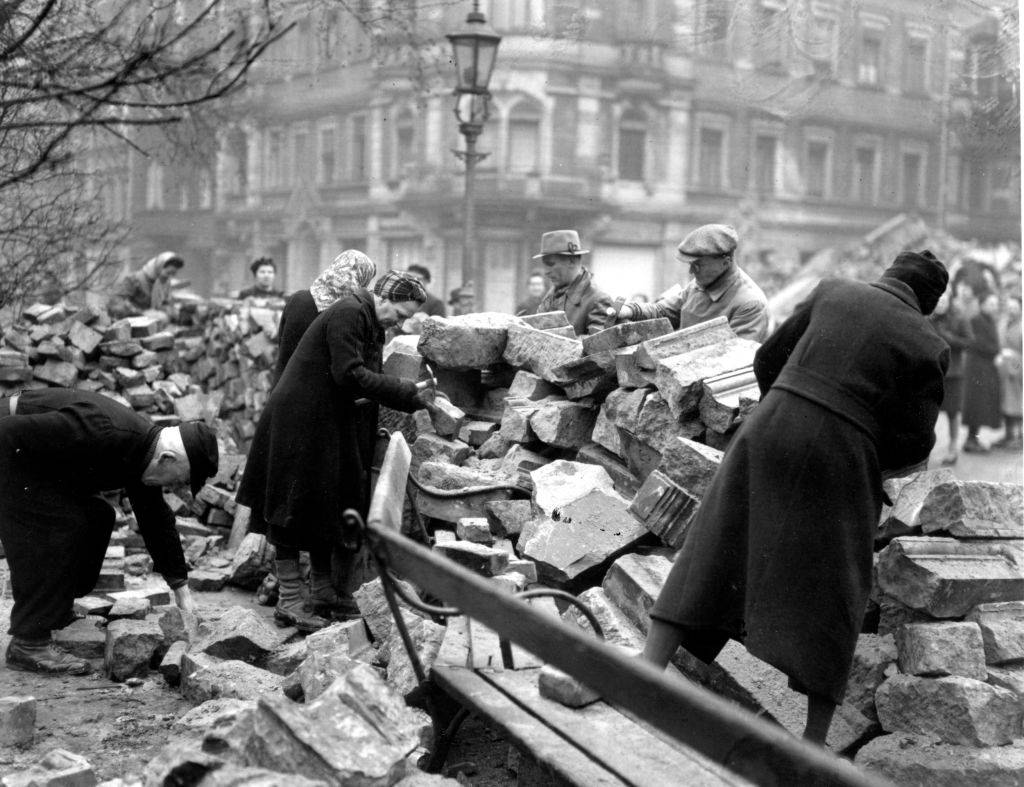
Volunteering on Sundays became a common practice in Dresden during 1946. Even as most of Europe tried to rest and recover from years of war, Dresden’s residents gave up their days off to keep the rubble-clearing effort moving forward. Photographs from March 1946 show crowds of civilians — men, women, and the elderly — working side by side in the ruins without any sign of stopping.
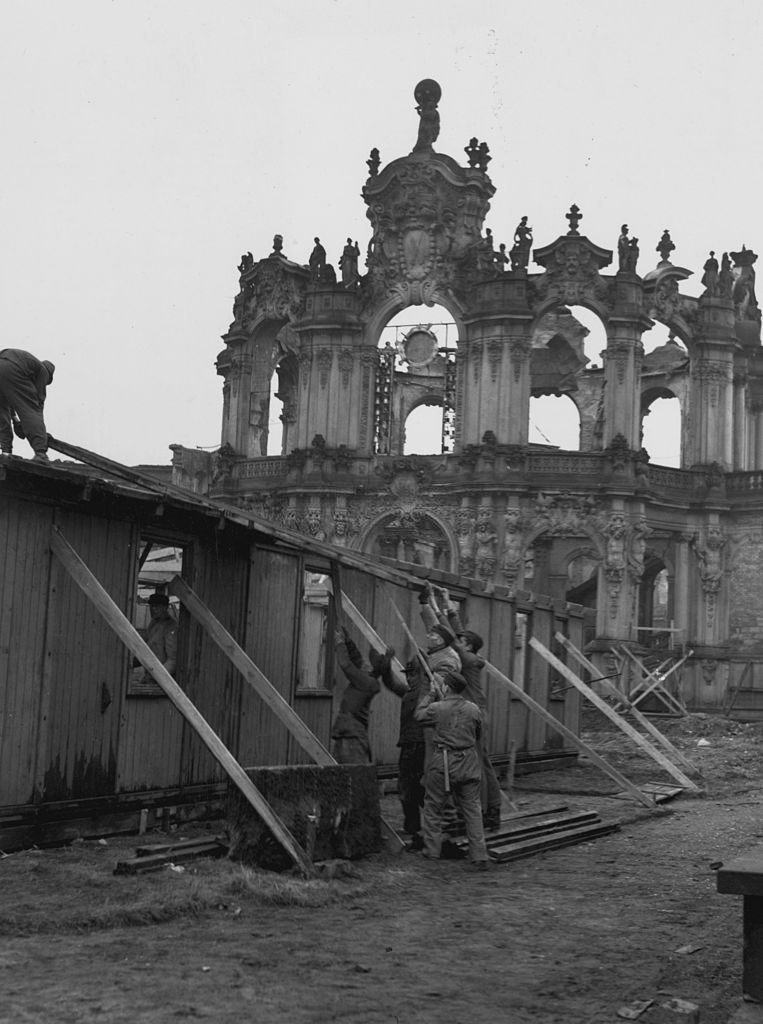
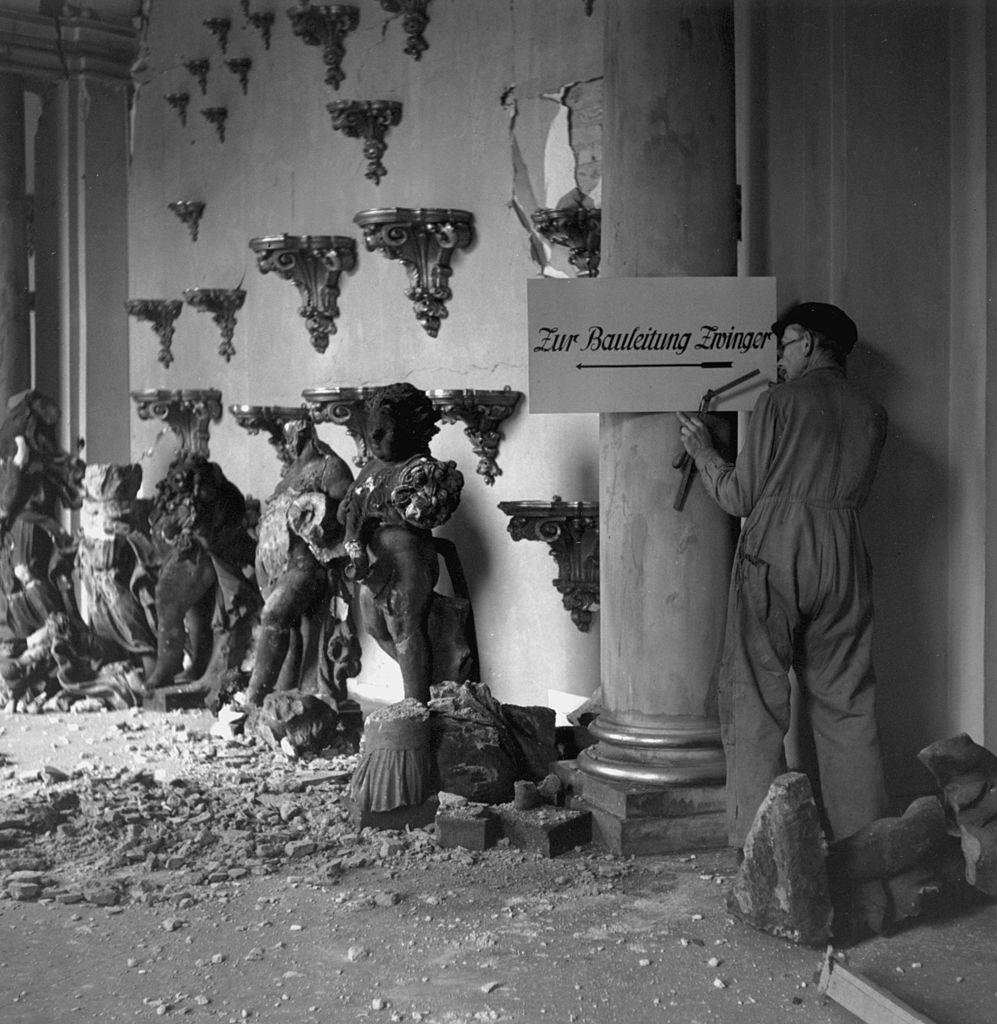
Formal reconstruction of the Zwinger Gallery began in earnest in early 1946. A site office was erected on the grounds so that a Clerk of the Works could oversee the project directly. Restoring the Zwinger was considered a top priority — it was one of the most recognized symbols of Dresden’s prewar identity, and its recovery carried enormous symbolic weight for the city’s residents. Workers carefully documented surviving architectural elements and matched new stonework to original designs.
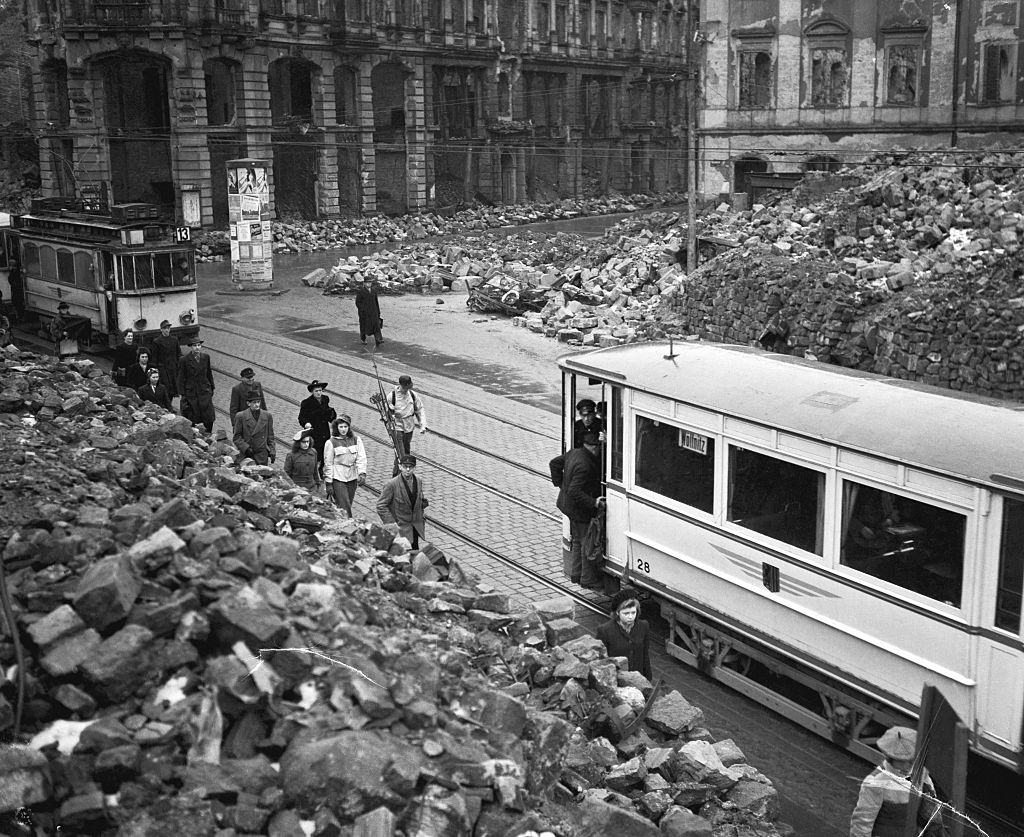
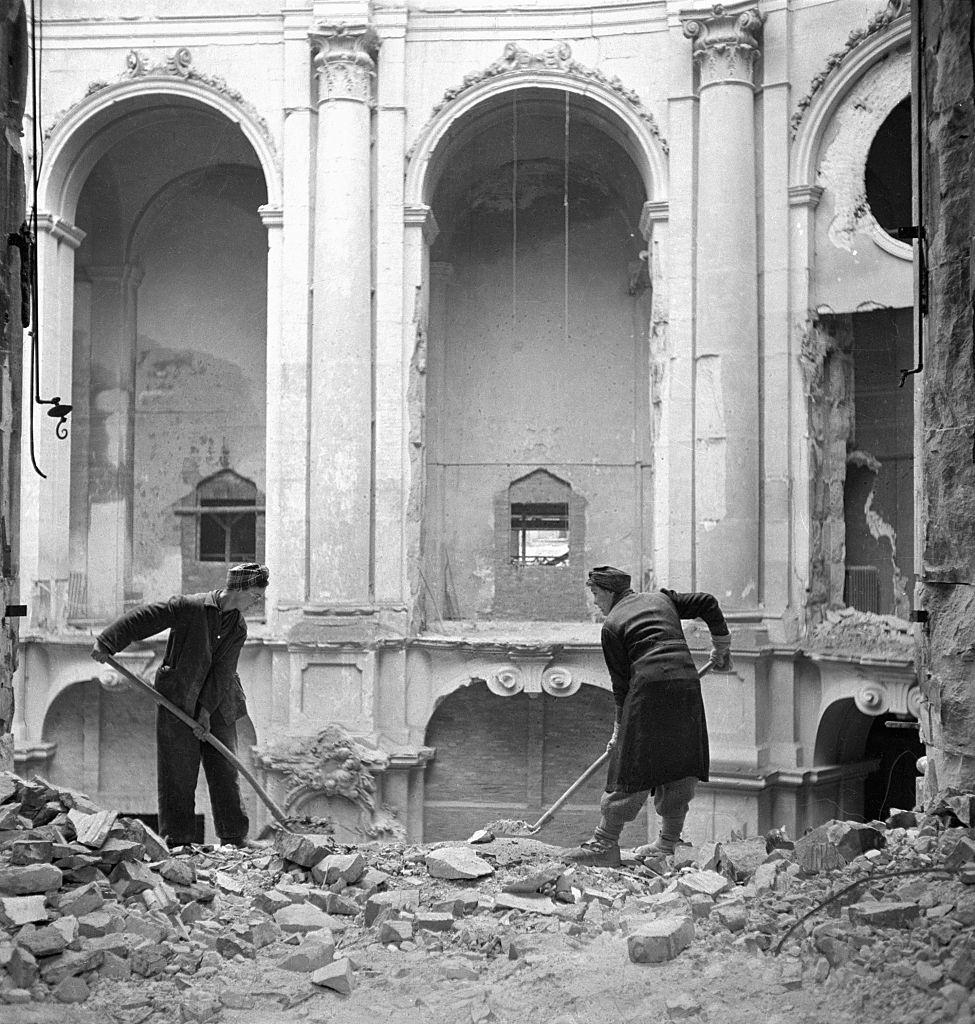
Even a year after the bombing, vast areas of Dresden still looked like an open wound. Tram lines that had been repaired enough to function again carried passengers through neighborhoods where entire blocks had been leveled. People stepped off trams and stood in silence, taking in the scope of a destruction that photographs alone struggle to convey. Inside heavily damaged structures, workers continued shoveling debris, often in buildings whose roofs and upper floors had entirely collapsed.
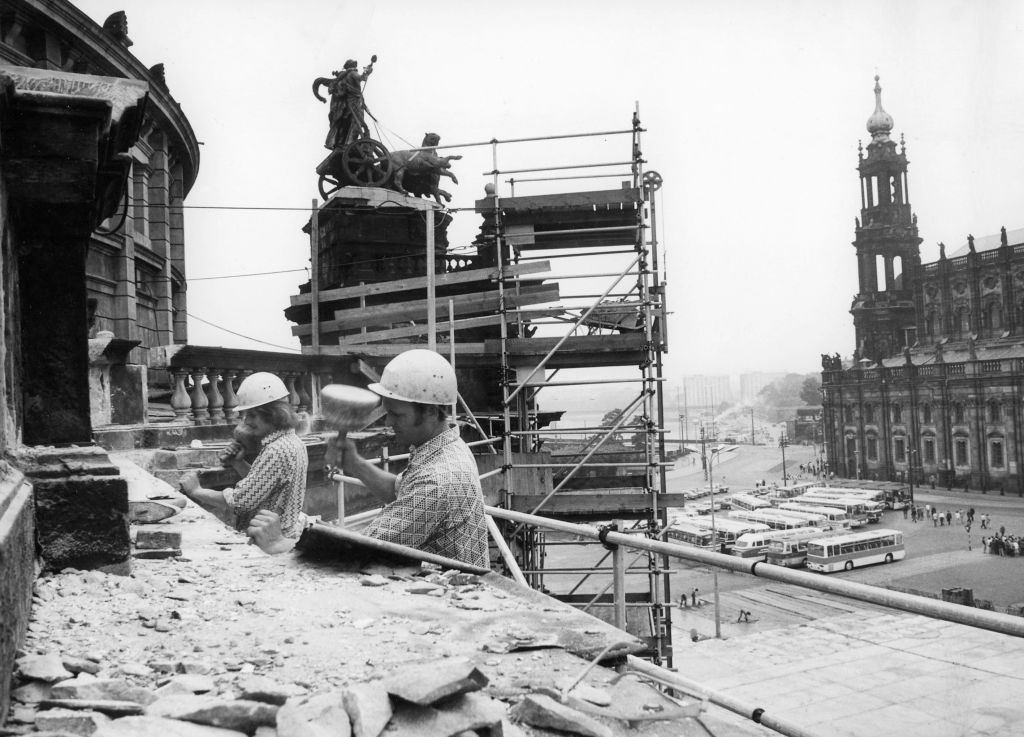
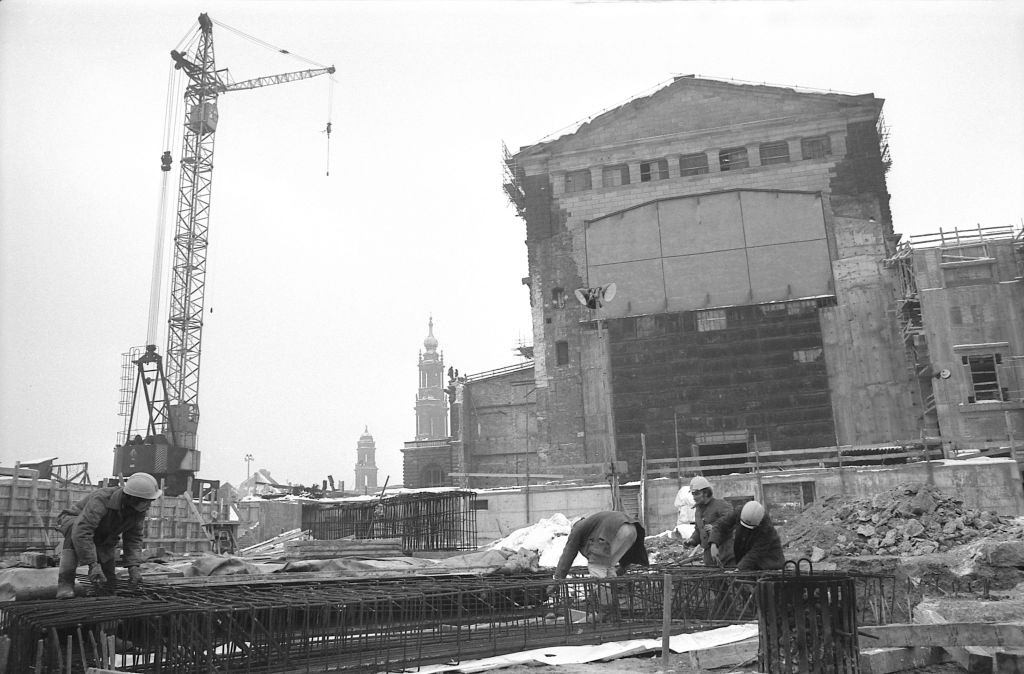
Not every reconstruction effort moved quickly. The Semperoper — Dresden’s famous opera house, designed by architect Gottfried Semper in the 19th century — sat in ruins for decades before serious rebuilding began. Construction work documented in 1977 shows scaffolding surrounding the shell of the building as workers gradually brought it back to life. The restoration of the Semperoper became one of the most ambitious and technically demanding projects in Dresden’s entire reconstruction program.
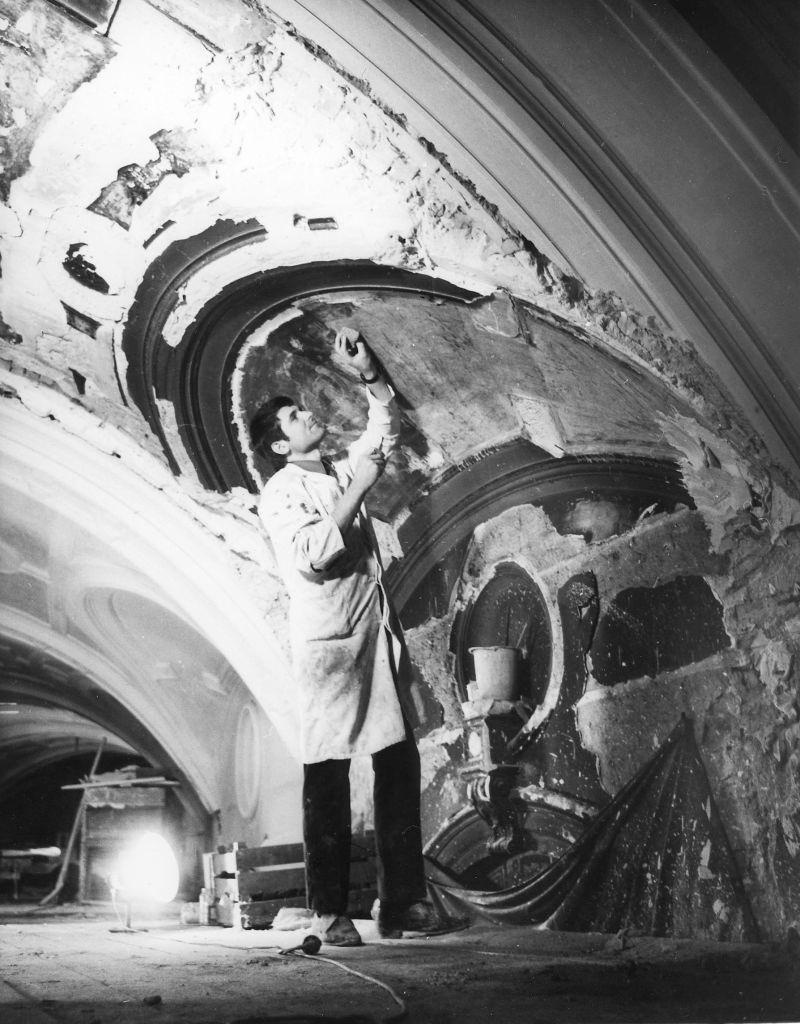
Restoring the Semperoper required more than just structural reconstruction. Workers searched the entrance vestibule for surviving traces of the original painted decoration, scraping back layers of soot and damage to find remnants that could guide the restoration of the interior’s historic appearance. The goal was not simply to rebuild the opera house but to return it as closely as possible to the form it held before February 1945.
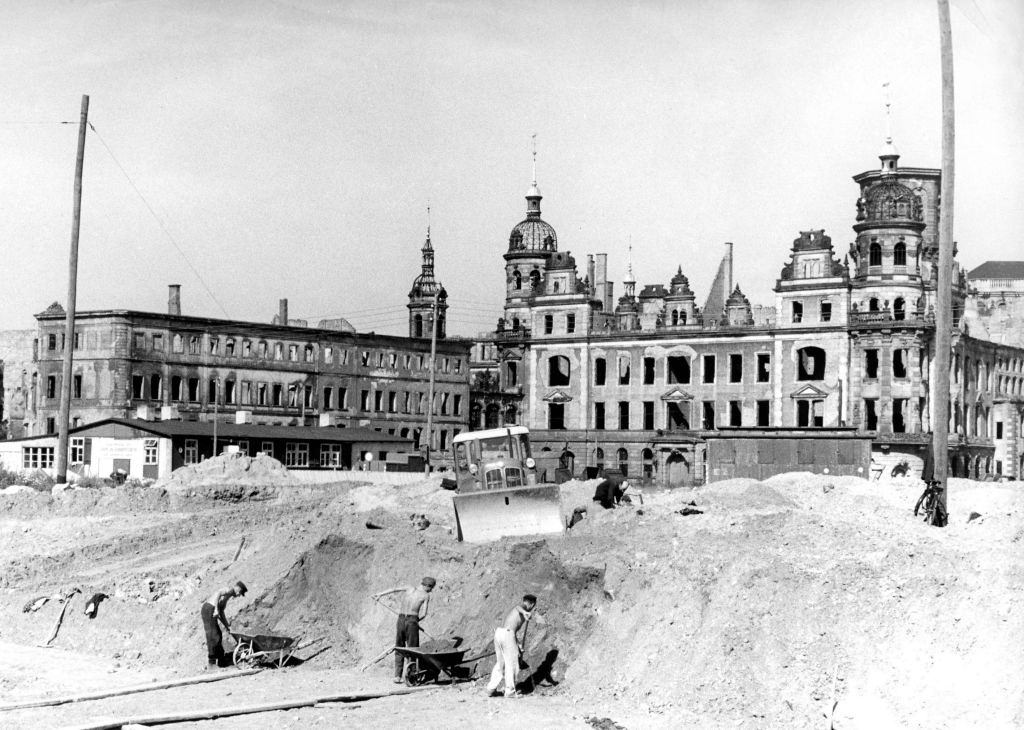
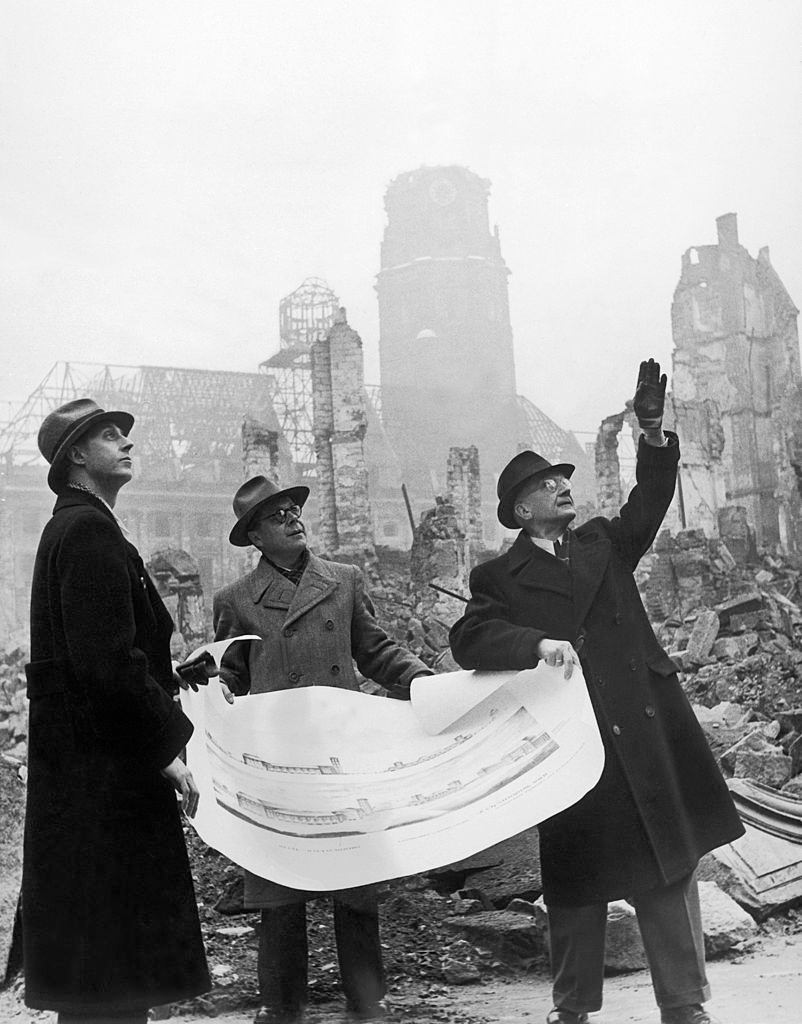
The reconstruction of Dresden was not a spontaneous effort — it was carefully coordinated at the civic level. Mayor Walter Wiedauer and architect Herbert Conert worked together to plan how the city would be rebuilt. Their decisions determined which ruins would be restored, which would be demolished entirely, and how new construction would fit alongside historic structures. Some ruins — including the Gothic Sophienkirche, the Alberttheater, and the Wackerbarth-Palais — were cleared away entirely rather than repaired, a decision that permanently changed the character of certain parts of the city.
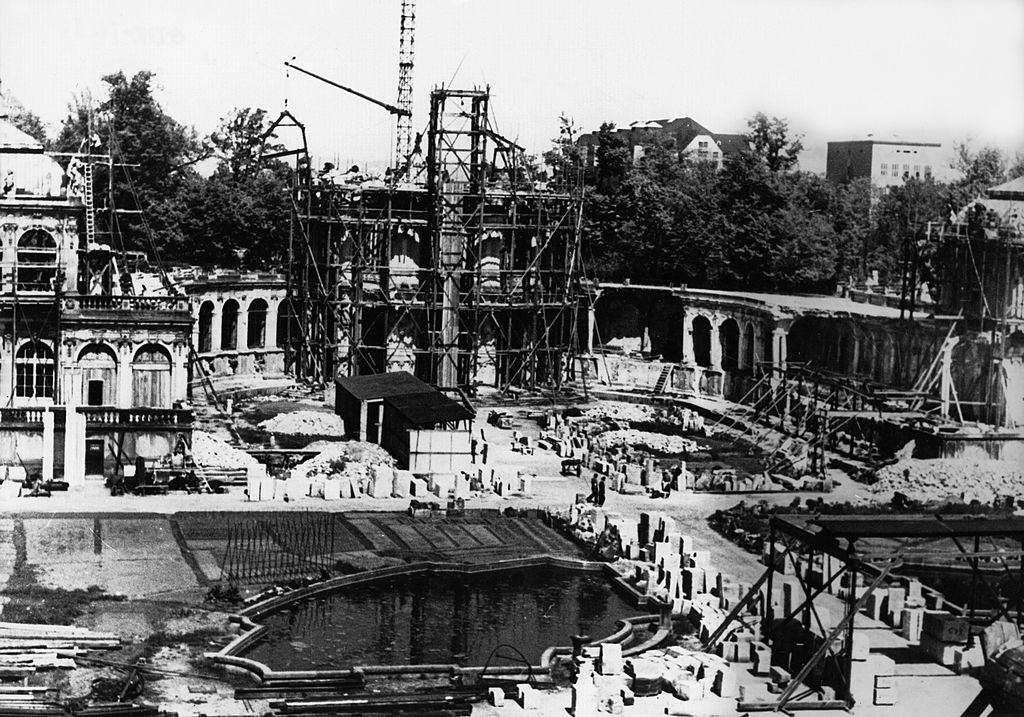
By 1953, the Zwinger Palace was visibly taking shape again. Restoration work had progressed enough that the outlines of the original baroque structure were clearly re-emerging from the scaffolding. The project had required enormous quantities of matching stone, skilled craftsmen capable of replicating baroque ornamentation, and careful architectural research to ensure accuracy. The result was a meticulous reconstruction that drew visitors and became a centerpiece of East Germany’s cultural identity.
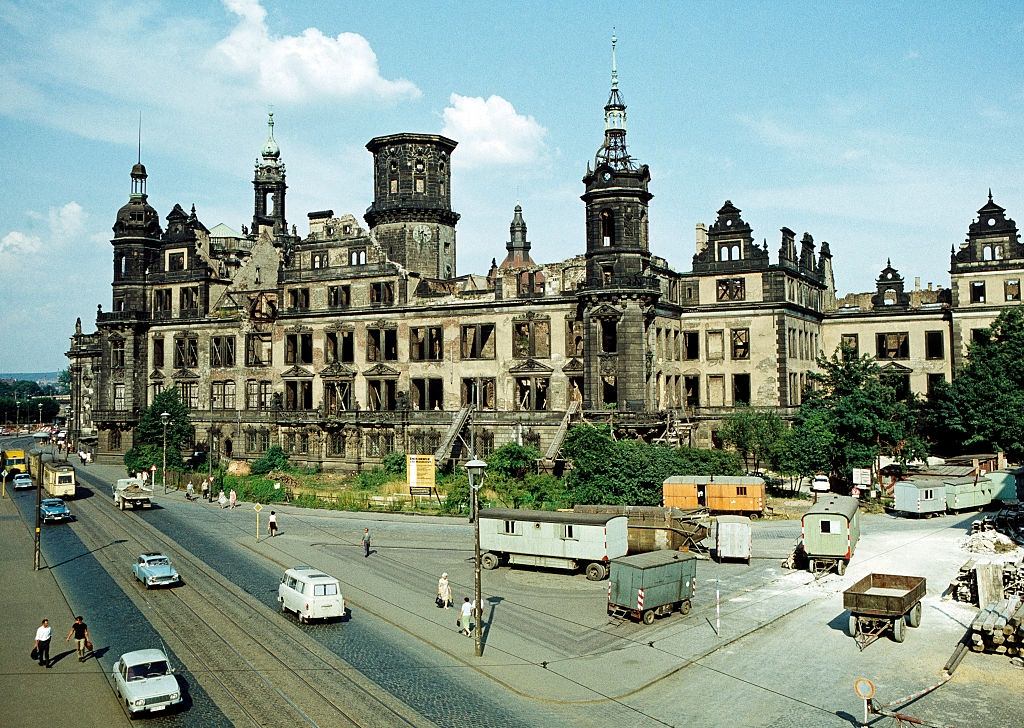
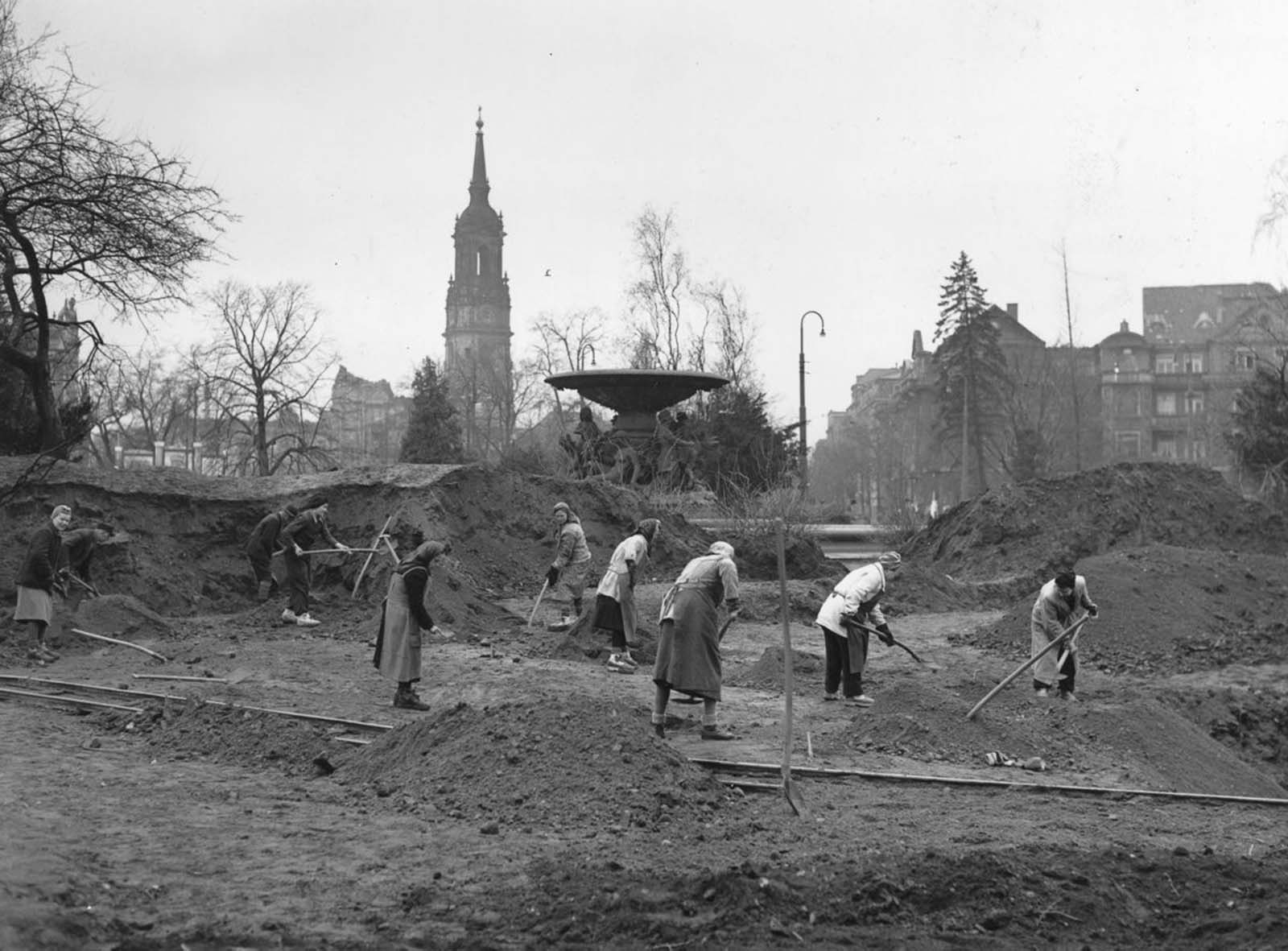
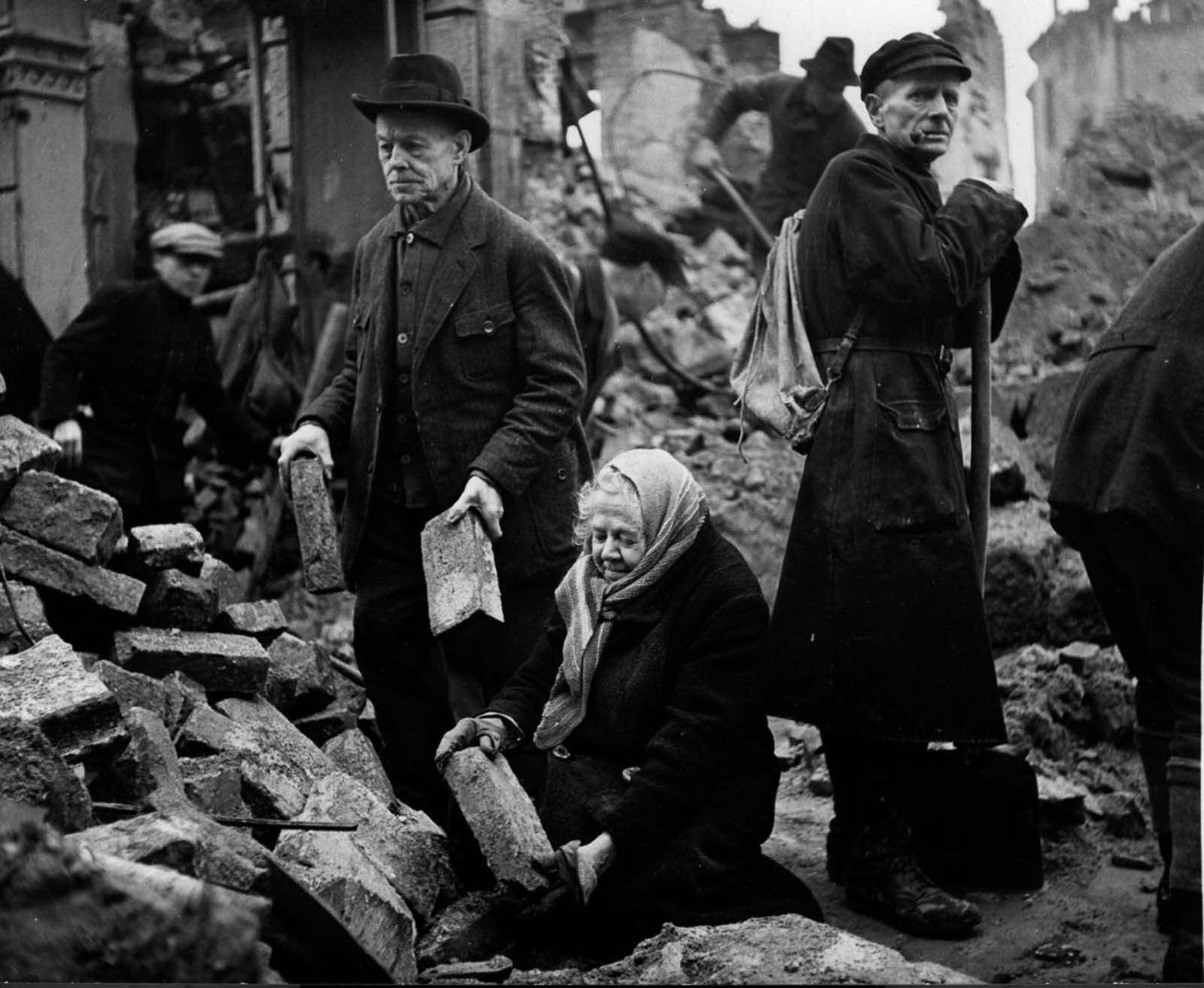
Ordinary Dresdeners like Gustav and Alma Piltz became part of the reconstruction story. Couples, families, and neighbors worked alongside each other, turning the clearing of rubble into a communal act. Sunday morning work sessions drew crowds of volunteers who treated the labor as both a civic duty and a form of collective mourning. The repetitive, exhausting work of moving broken stone was the foundation on which all future rebuilding depended.
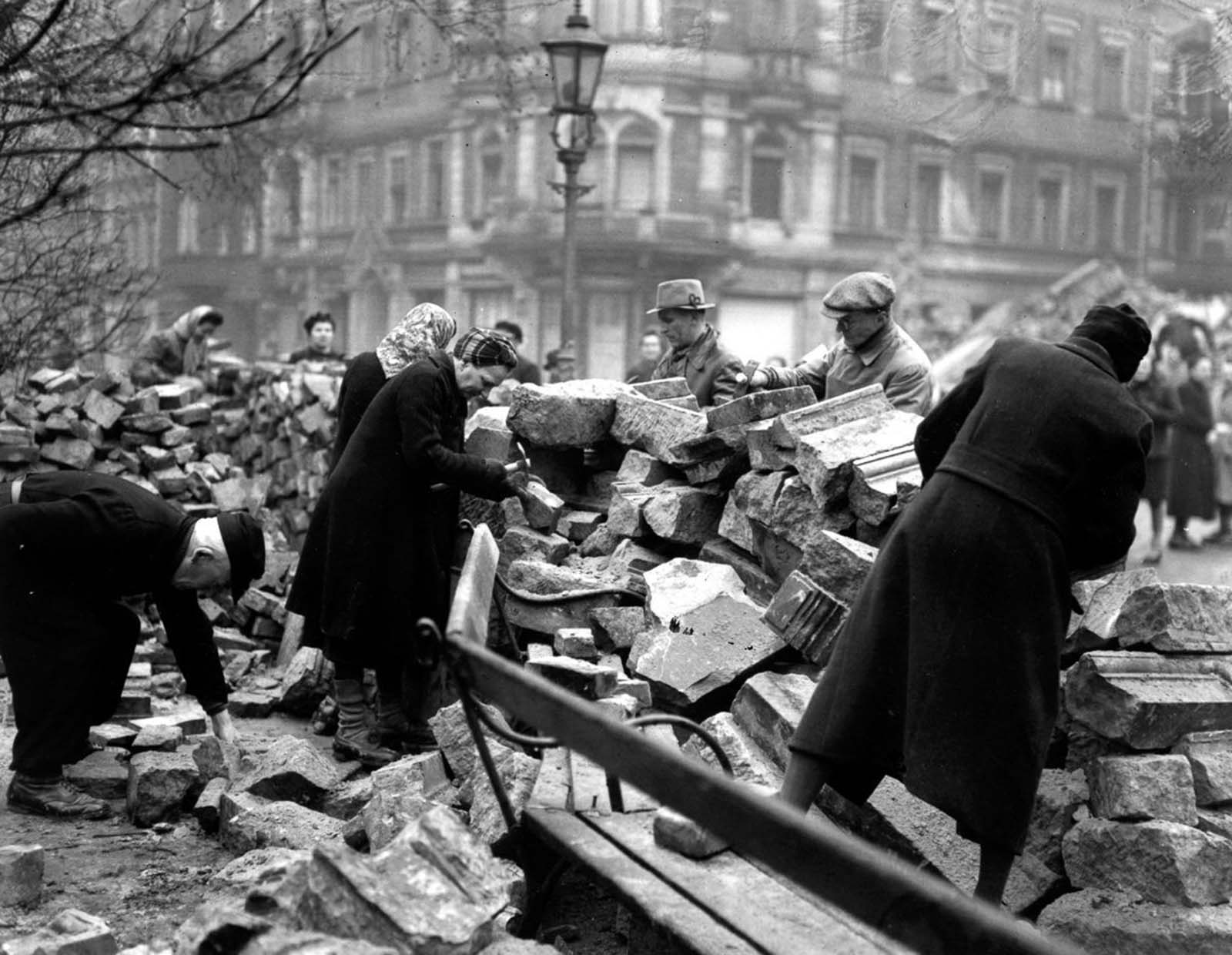
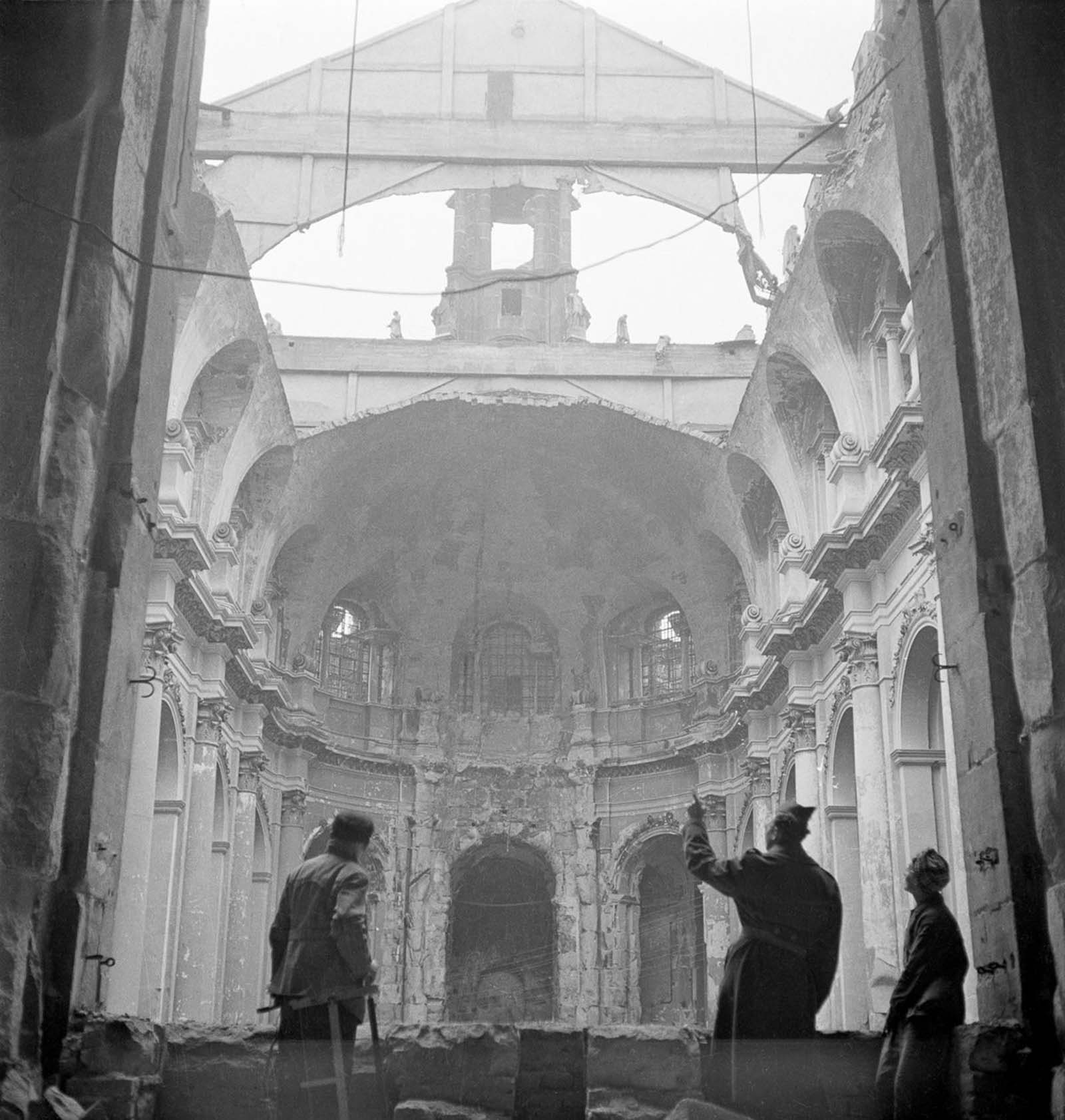
Throughout 1946, rebuilding efforts expanded from rubble clearing to actual construction. Damaged walls were shored up, surviving buildings were repaired, and the first new structures began to appear. The pace was slow given the scale of the destruction, but every repaired building represented a tangible step forward. Streets that had been impassable with rubble gradually reopened, and the city began to function again in a limited way.
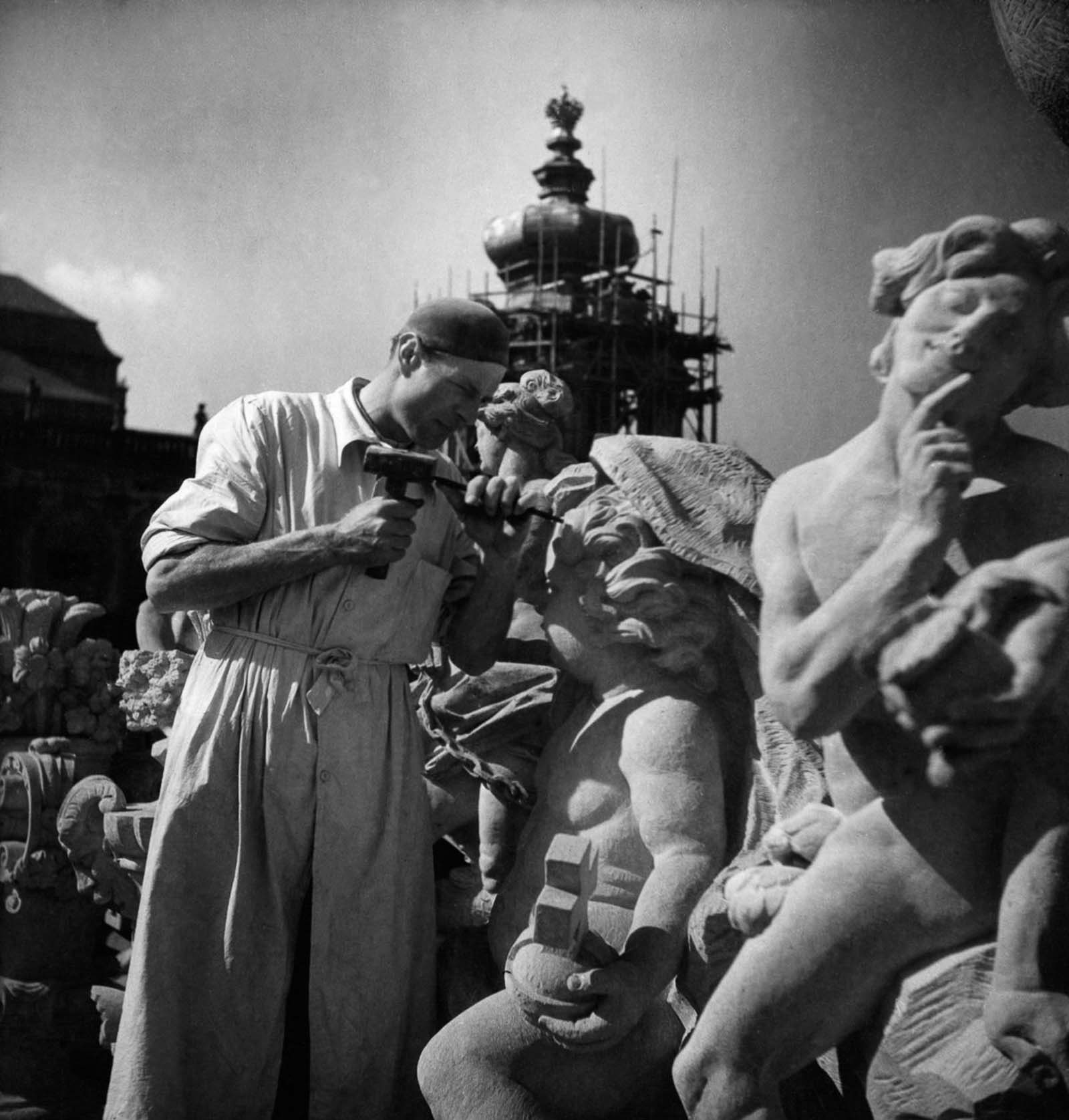
Beyond buildings, Dresden’s reconstruction extended to its public art. By 1949, skilled workers were carefully repairing damaged statues — piecing together broken stone and bronze figures that had survived the bombing in fragments. These statues were part of Dresden’s public identity, placed on bridges, in squares, and on the facades of important buildings. Restoring them required a different kind of craftsmanship than structural reconstruction — patience, artistic skill, and an intimate knowledge of the original works.
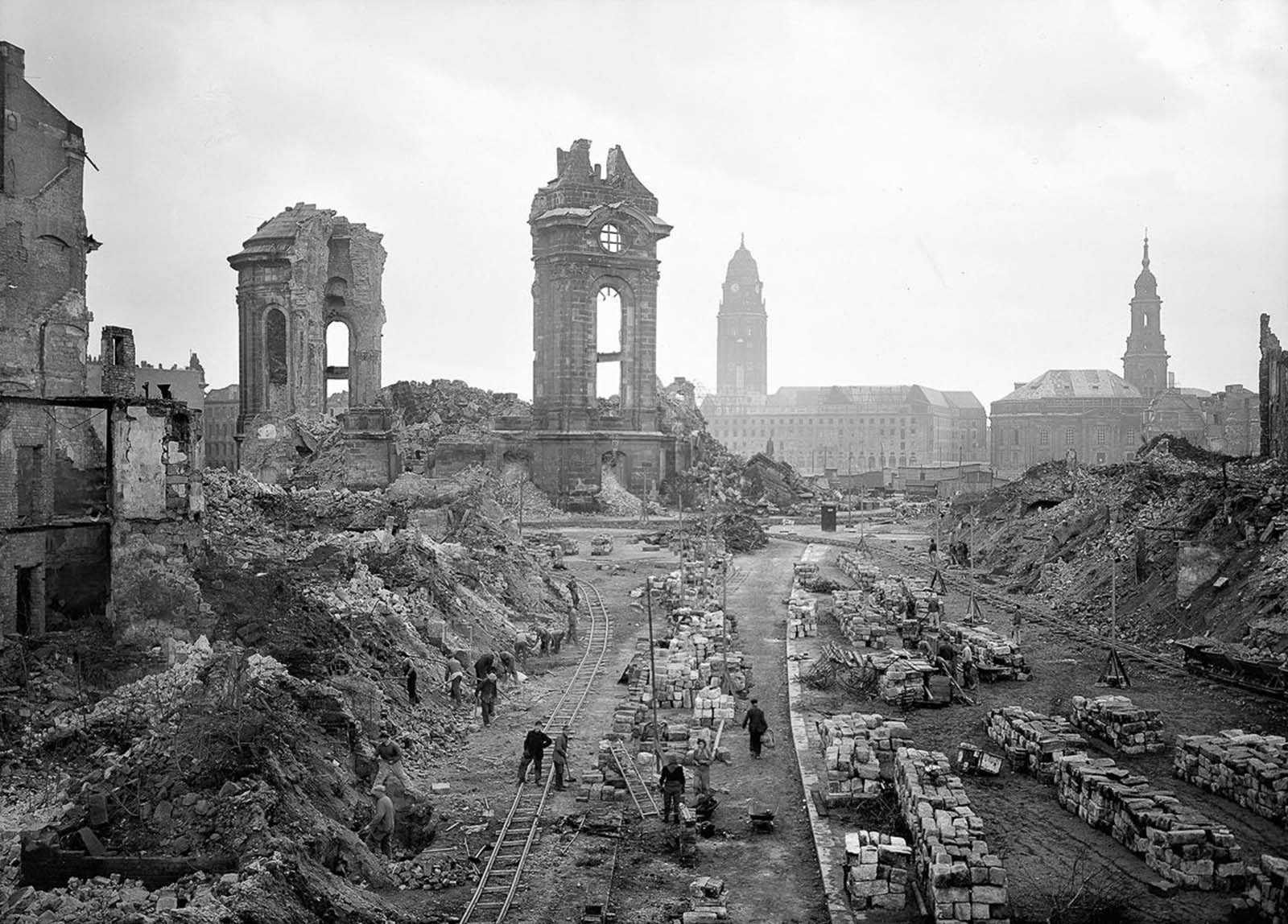
The Frauenkirche — Dresden’s iconic domed Lutheran church — stood as a blackened pile of rubble throughout the postwar decades. As late as 1952, workers were still clearing debris from around its base. Under East German authorities, the ruins were deliberately left standing as a monument to the destruction of war rather than being rebuilt. The charred stones remained in place for decades, a deliberate and sobering reminder of what had happened in February 1945.
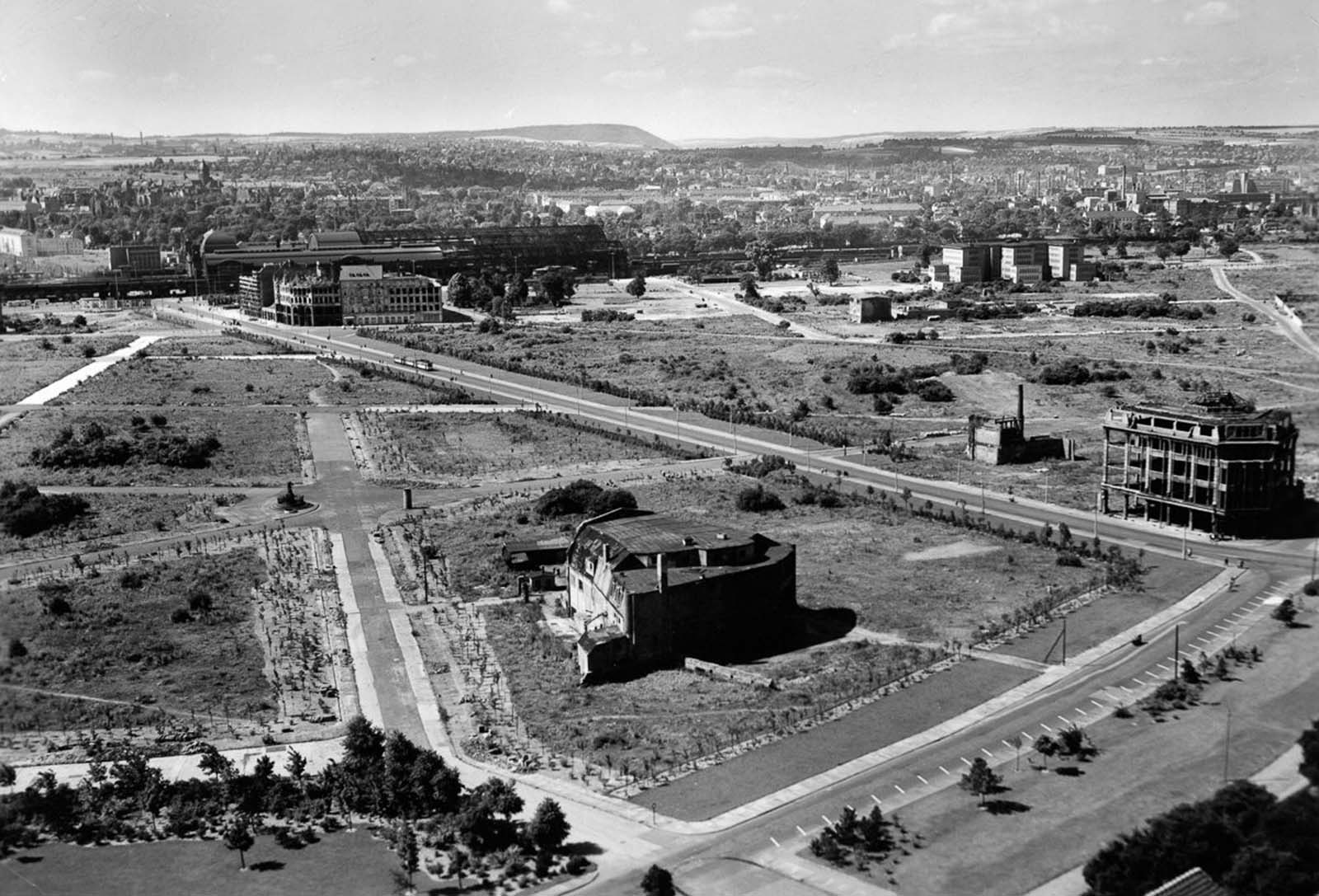
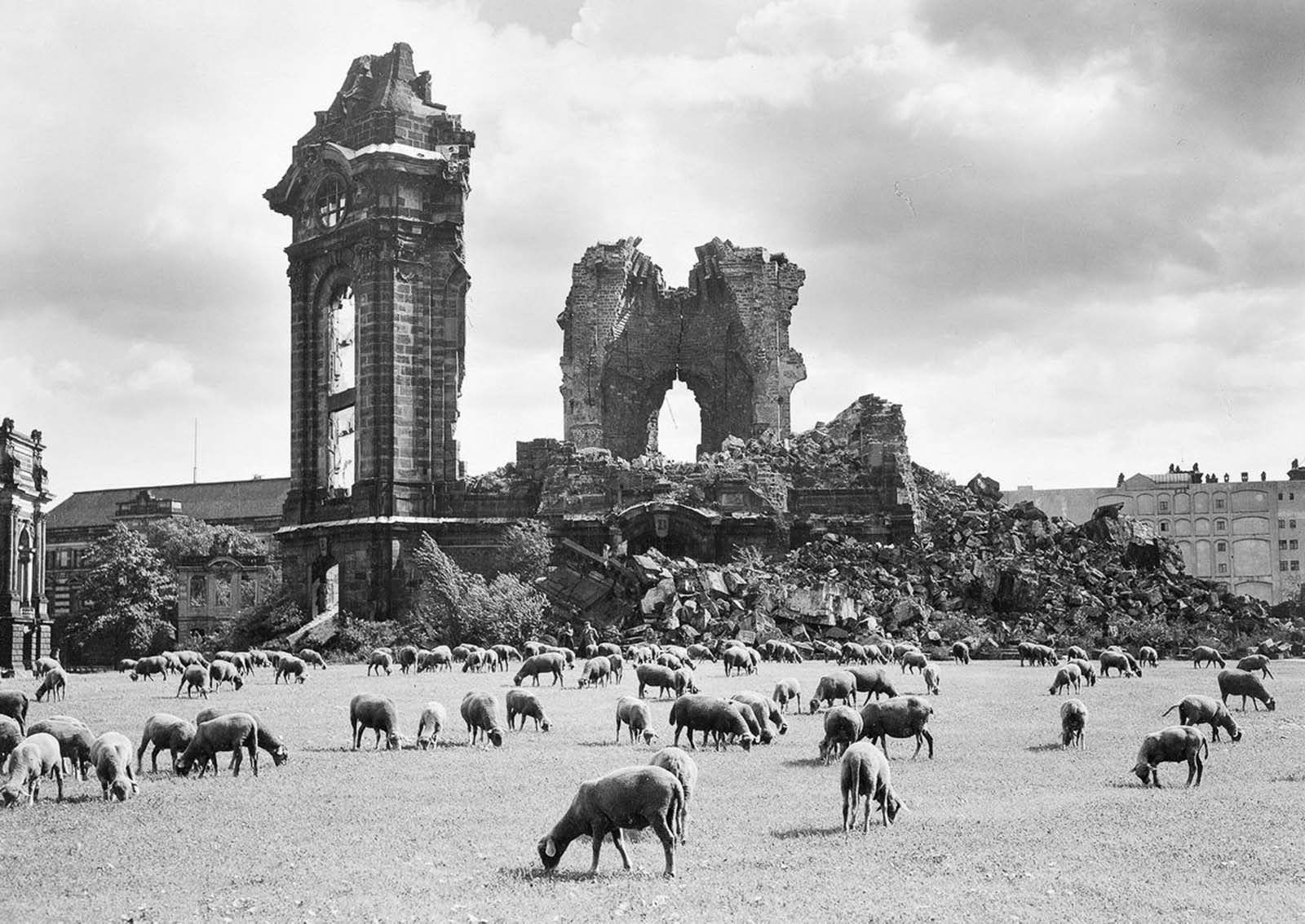
By the mid-1950s, Dresden had been transformed in some areas while others remained frozen in destruction. Photos from 1956 and 1957 capture this strange duality — new buildings rising on some streets while the Frauenkirche still loomed as a ruin, with sheep grazing in the overgrown open space around its collapsed walls. The contrast captured the uneven pace of reconstruction across a city that was too large and too damaged to be restored all at once.
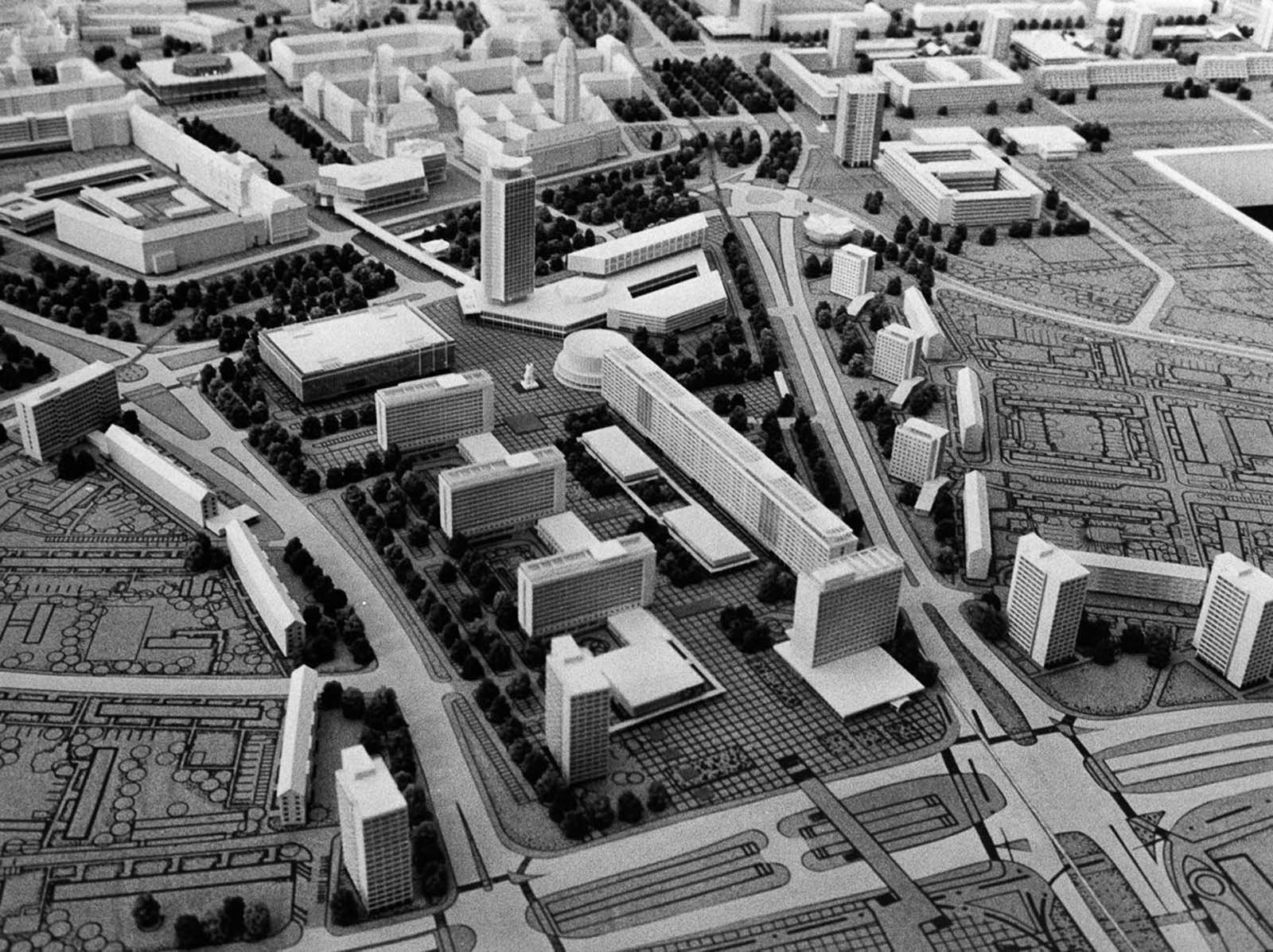
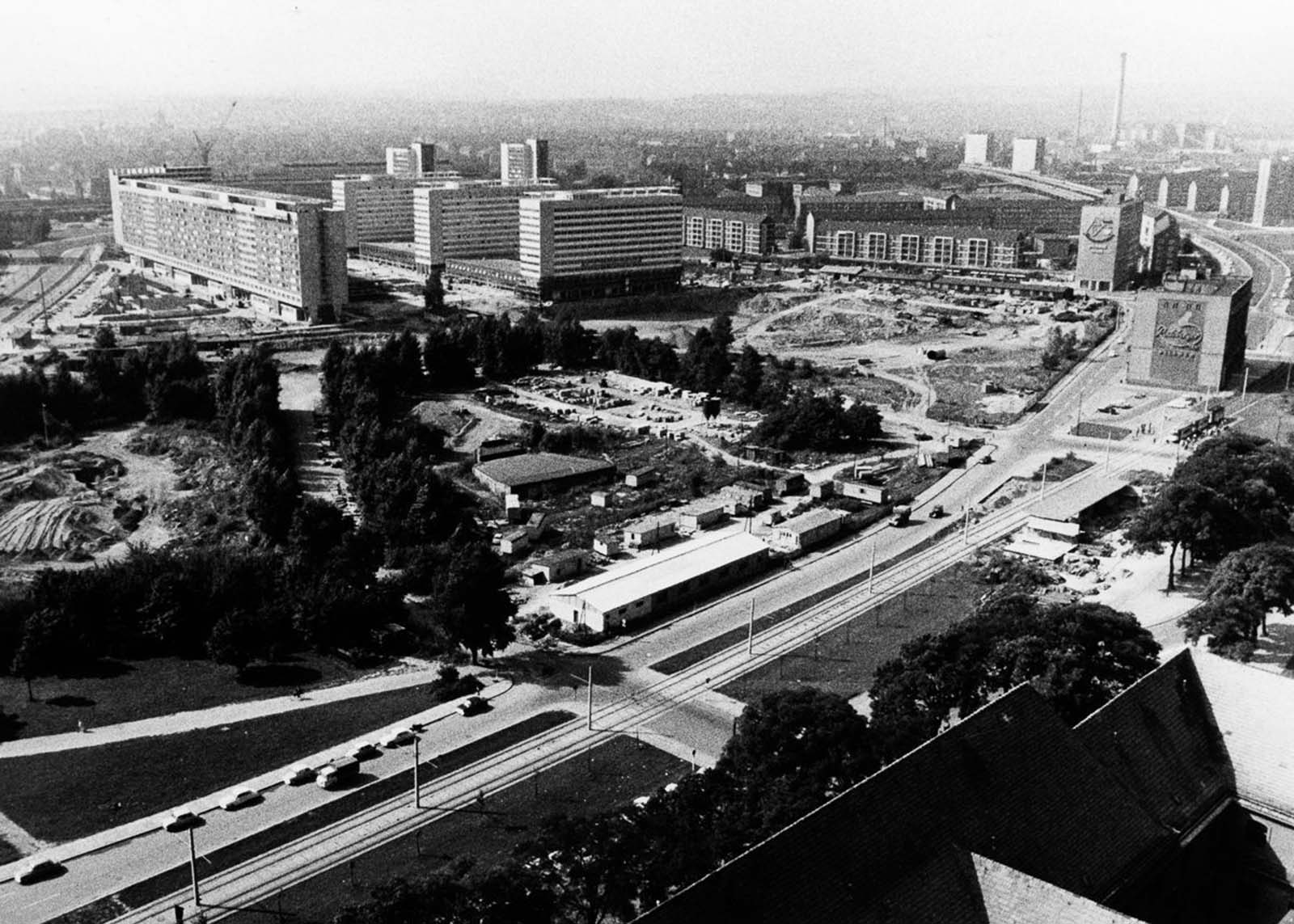
By 1969, Dresden’s planners were still refining their vision for the city center. Architectural models from that year show how city officials continued to think long-term about Dresden’s layout, balancing the need for modern housing and civic infrastructure with the preservation of historic areas. The Dresden of 1969 bore only a partial resemblance to the city that existed before the war — rebuilt in some parts, modernized in others, and still marked in places by gaps where destroyed buildings had never been replaced.