
Asbury Park sits on the Jersey Shore in Monmouth County, New Jersey, with a population of over 16,000 people. Its story begins in 1871, when New York brush manufacturer James A. Bradley purchased a stretch of coastal land and developed it as a planned residential resort. Bradley laid out streets, built public facilities, and set strict rules for the community — no alcohol was permitted within city limits, a nod to the influence of the neighboring religious community of Ocean Grove.
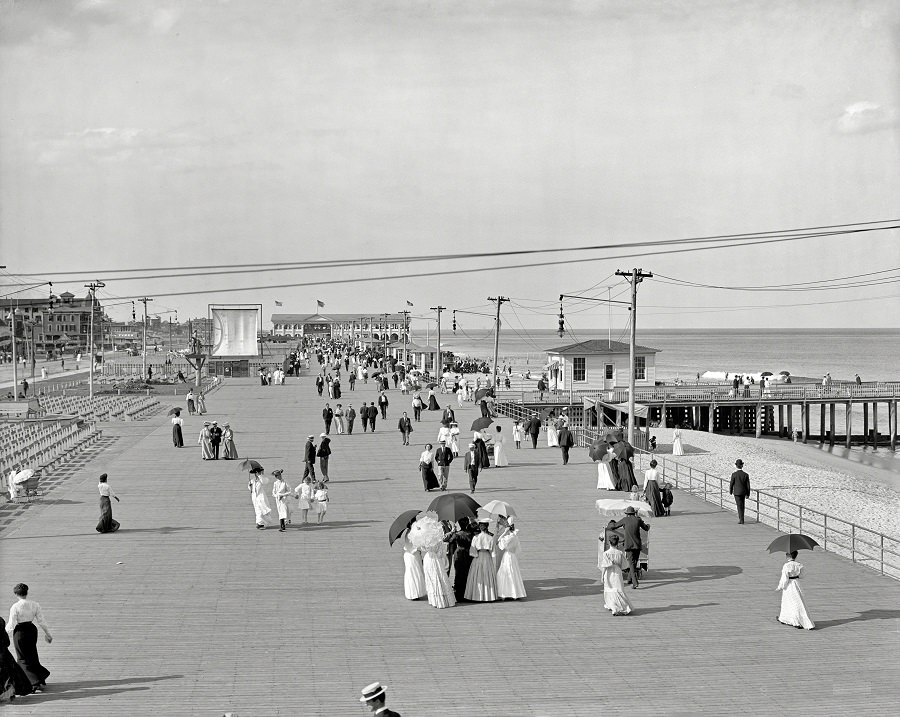
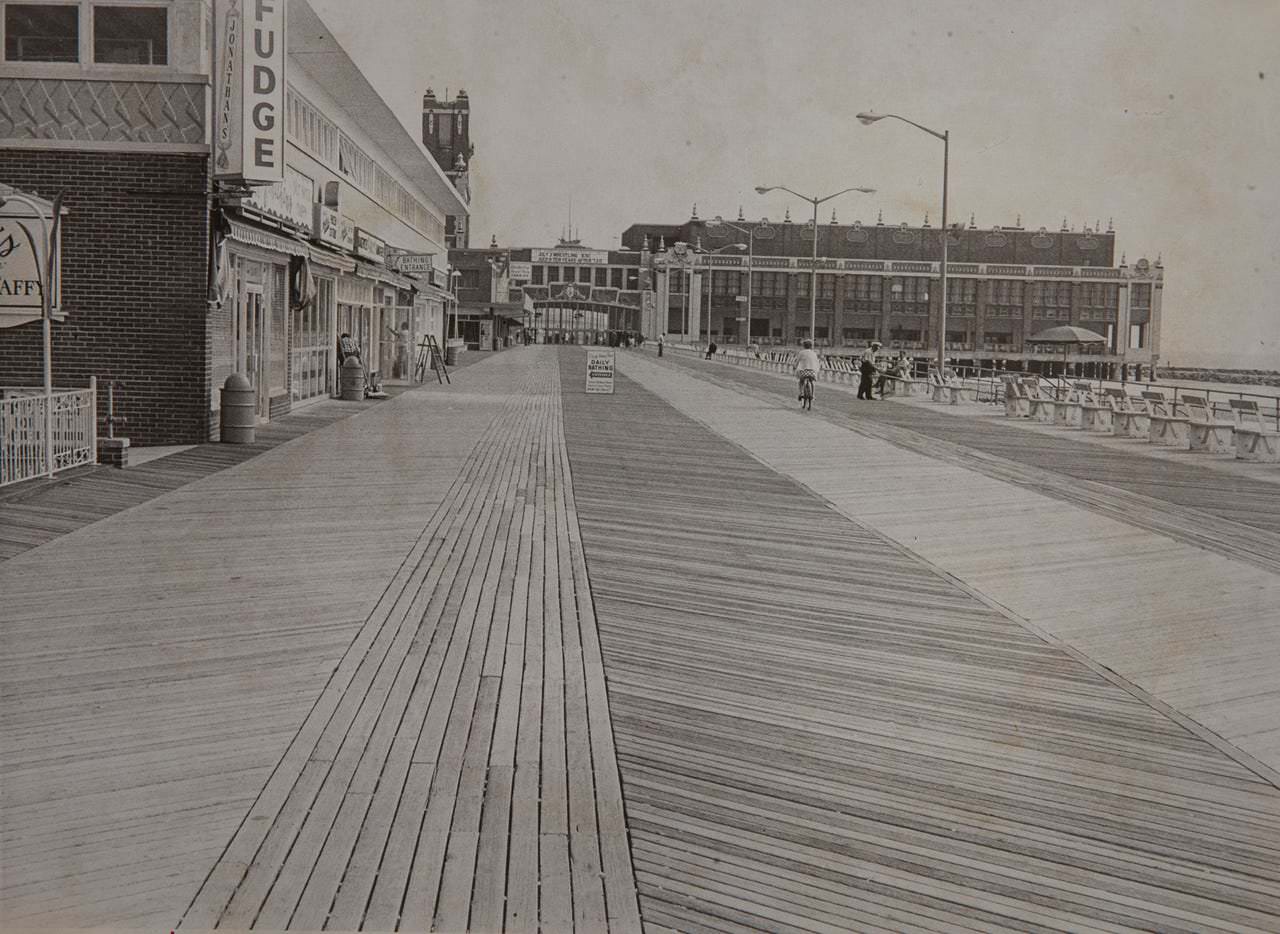
By the early 1900s, Asbury Park had grown into one of the most popular seaside destinations on the East Coast. The boardwalk was the heart of the city, stretching along the oceanfront and packed with pavilions, public changing rooms, and a pier. Thousands of visitors arrived by train each summer, drawn by the cool ocean breeze and the promise of entertainment. These early photographs capture the city at the height of its Gilded Age charm.
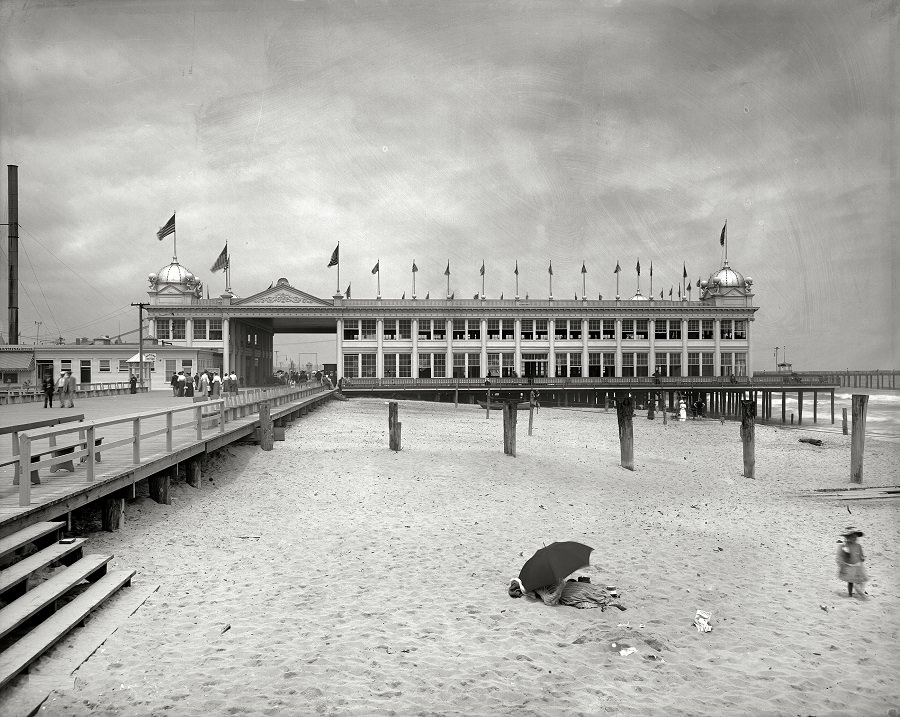
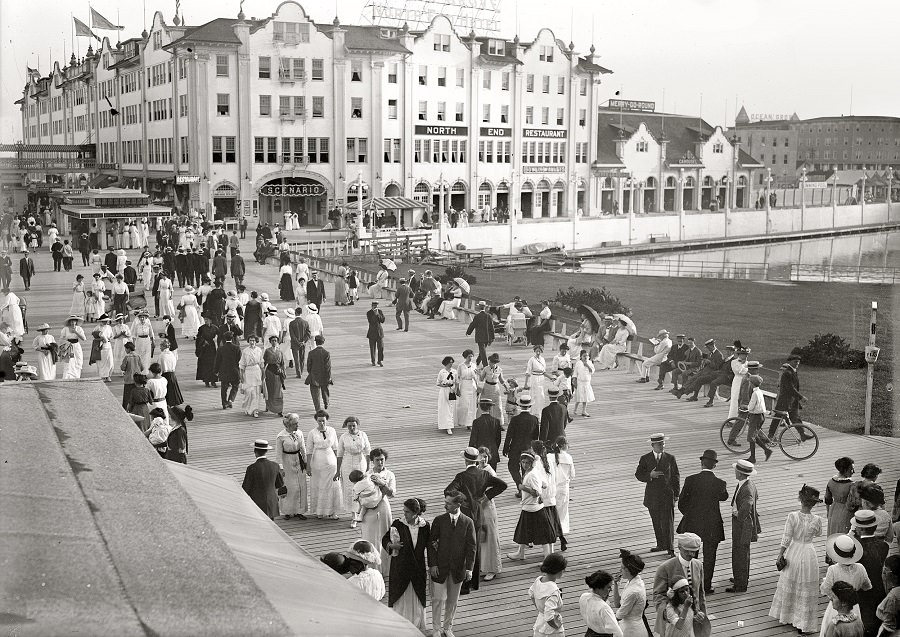
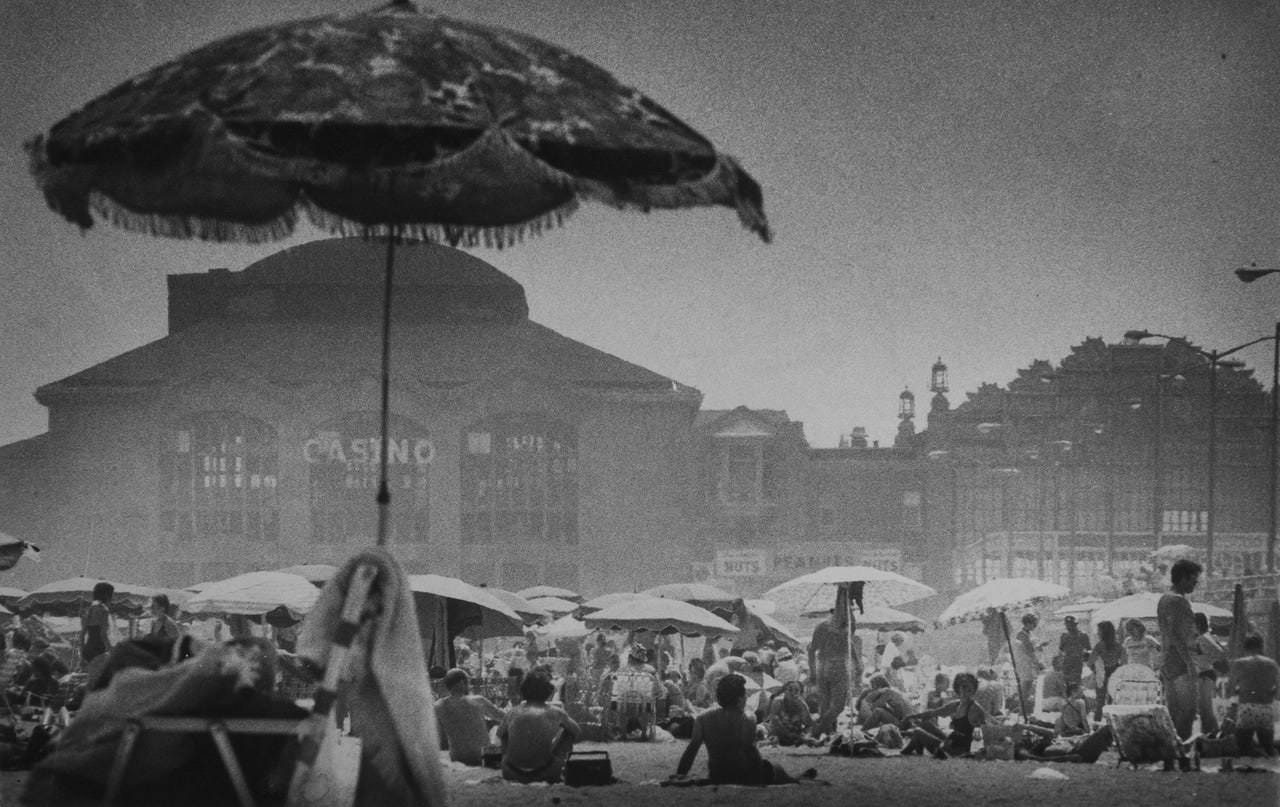
The Casino at Asbury Park was not a gambling hall — the word “casino” in the Victorian era simply referred to a public gathering place for recreation and entertainment. Built near the oceanfront, it served as one of the city’s main social hubs, hosting dances, concerts, and public events. The structure became one of the most photographed buildings in early Asbury Park.
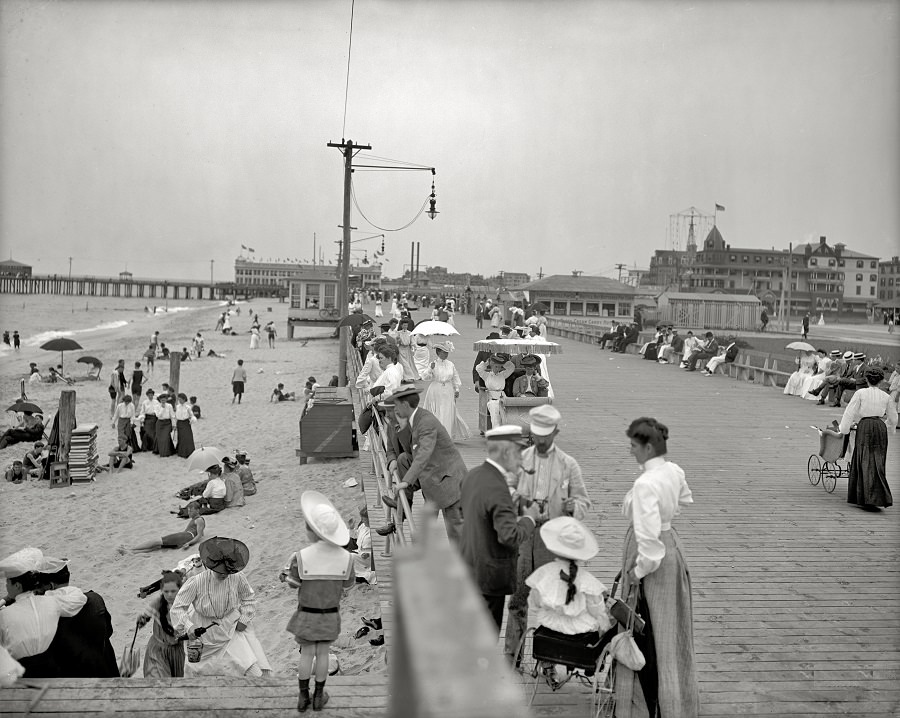
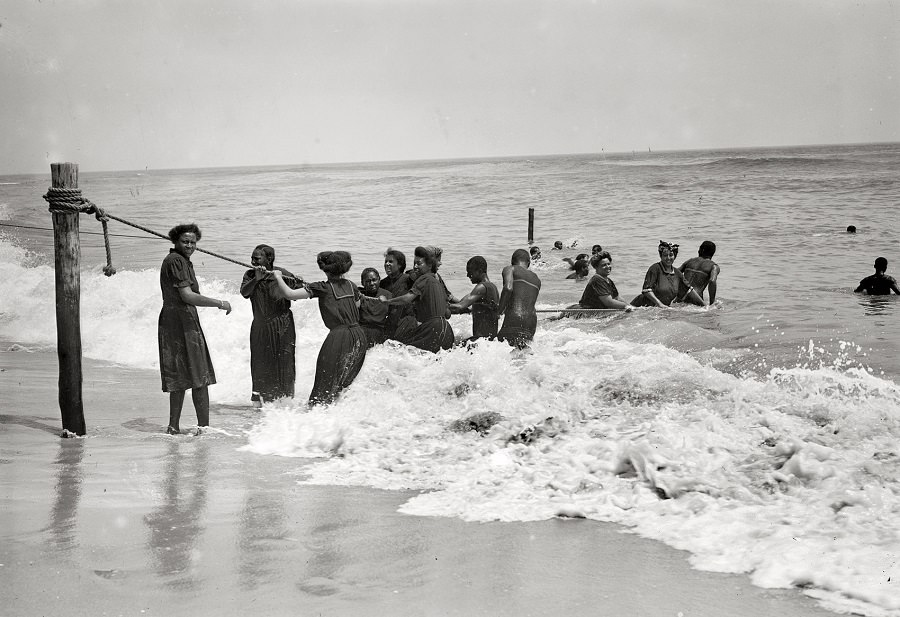
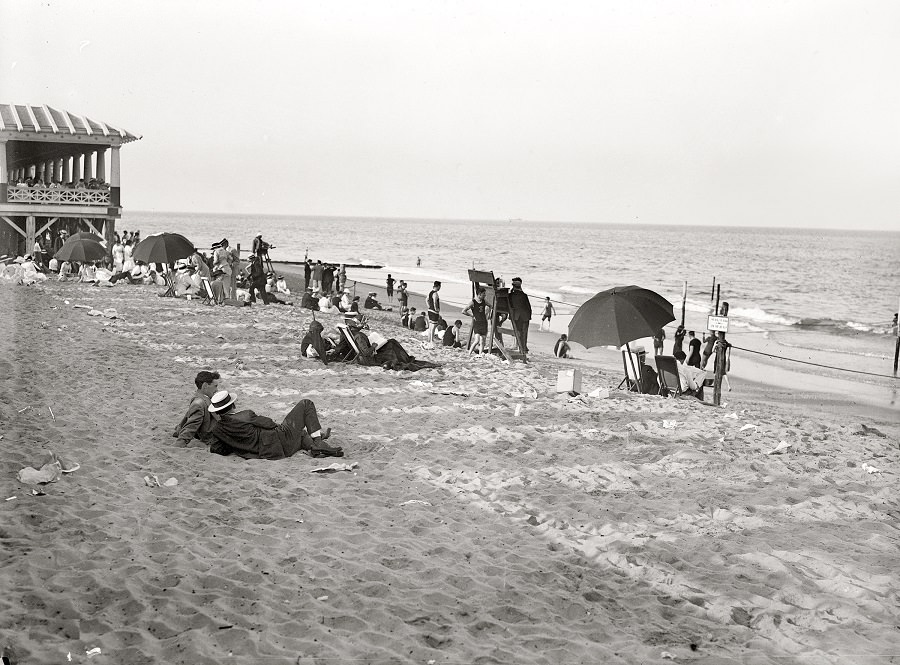
The boardwalk and beach scenes from 1905 show crowds dressed in the full Victorian bathing fashions of the era — women in long wool dresses and stockings, men in striped one-piece suits. Swimming was still a largely supervised activity, and the beach was divided into sections. Bathing machines and wooden pavilions lined the sand, giving bathers a place to change and shelter from the sun.
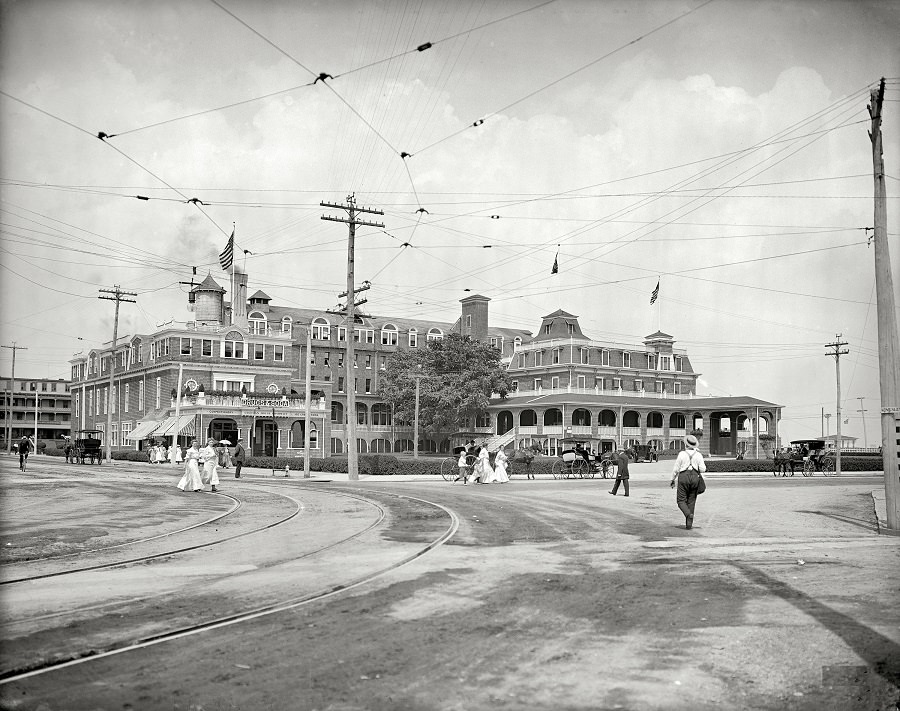
The Coleman House was one of Asbury Park’s most prestigious hotels in the early twentieth century. It catered to wealthy vacationers who came to spend weeks at the shore rather than just a day trip. Hotels like the Coleman House were central to the local economy, and their grand facades reflected the ambitions of a city that saw itself as a premier resort destination.
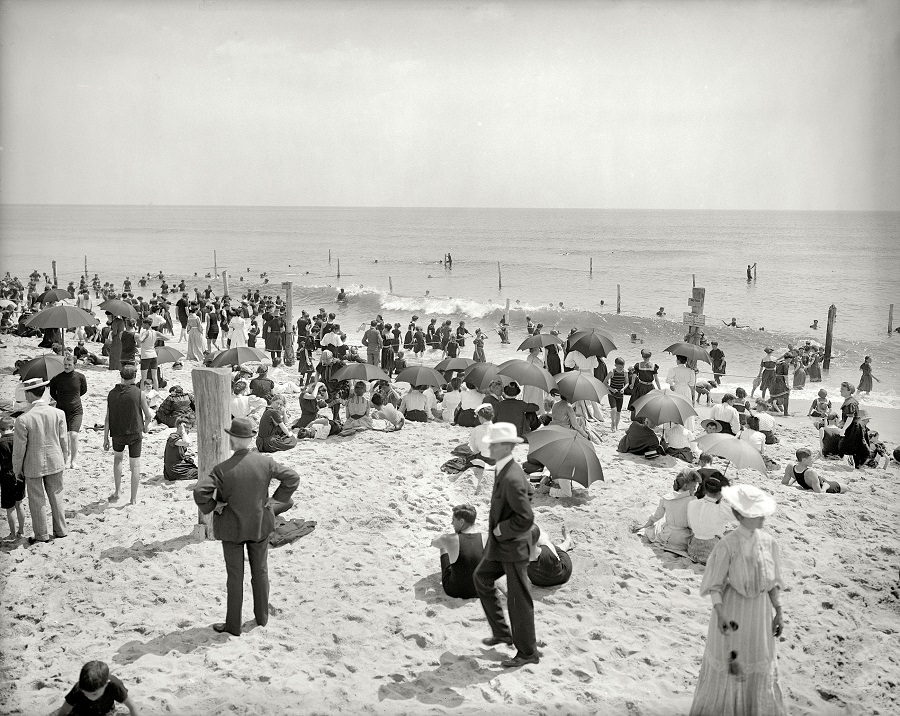
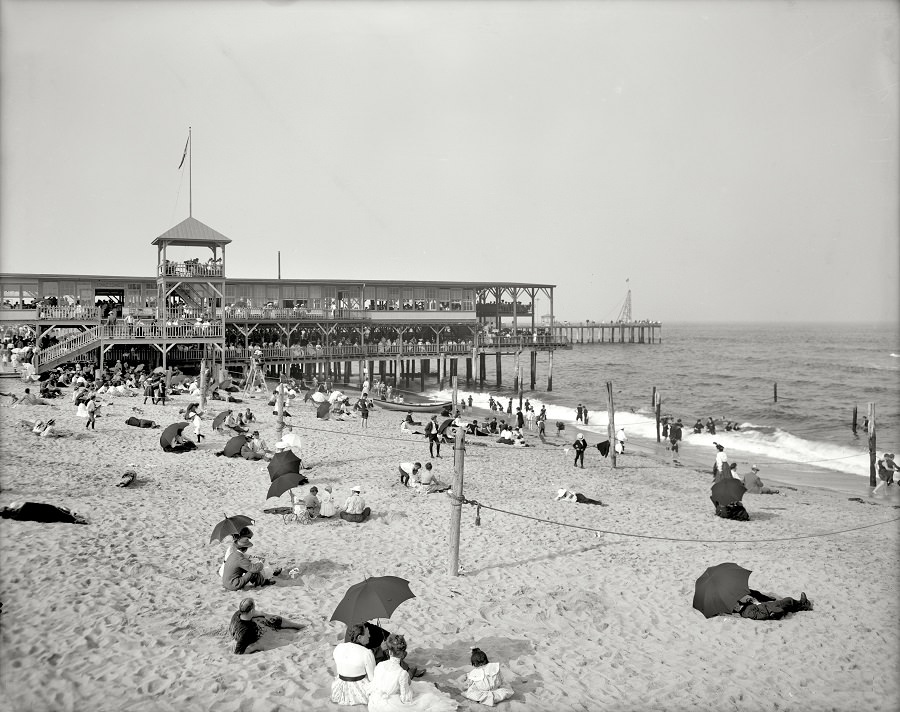
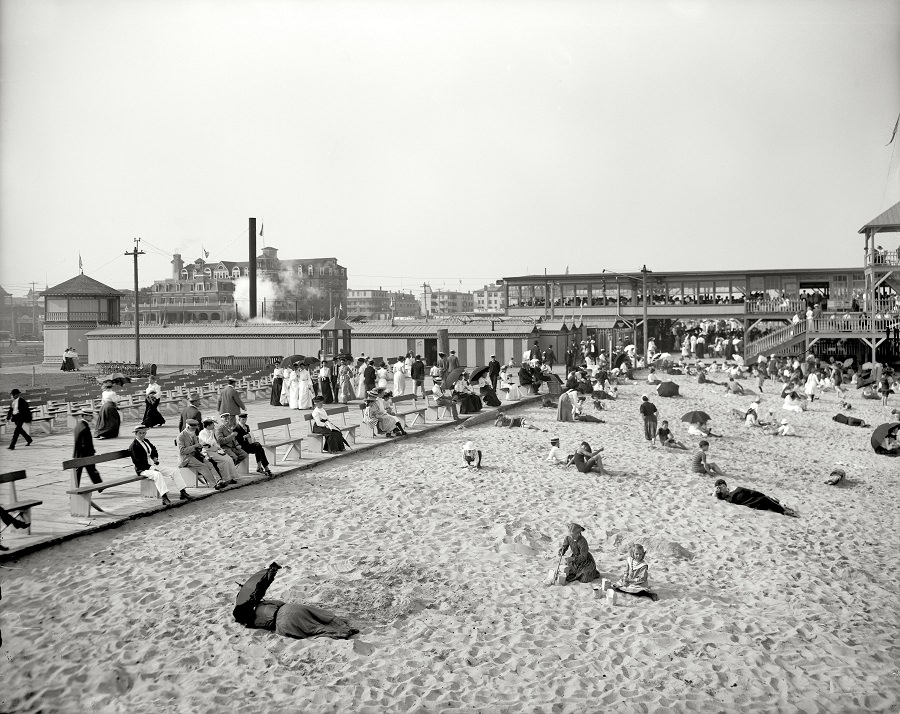
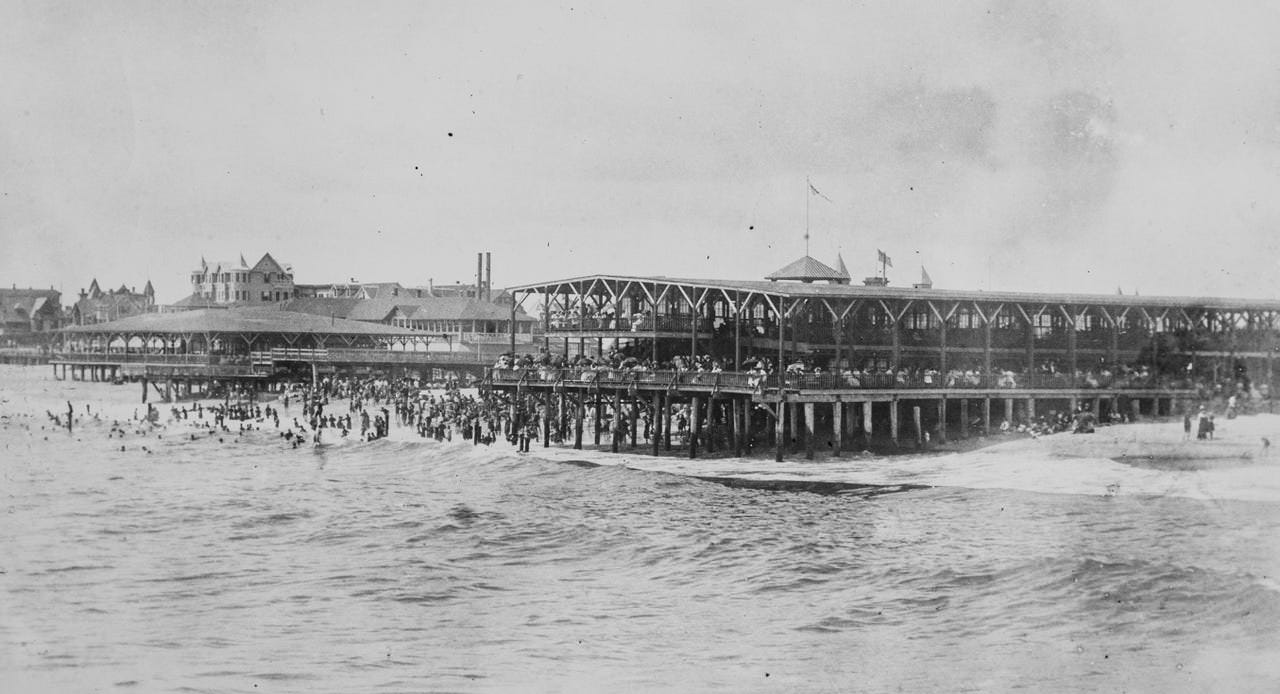
The boardwalk pavilions served a practical purpose beyond shade and shelter. They were gathering points where families met, vendors sold refreshments, and musicians performed. The architecture of these early pavilions was ornate and detailed, reflecting the Victorian taste for decorative woodwork and covered verandas facing the sea.
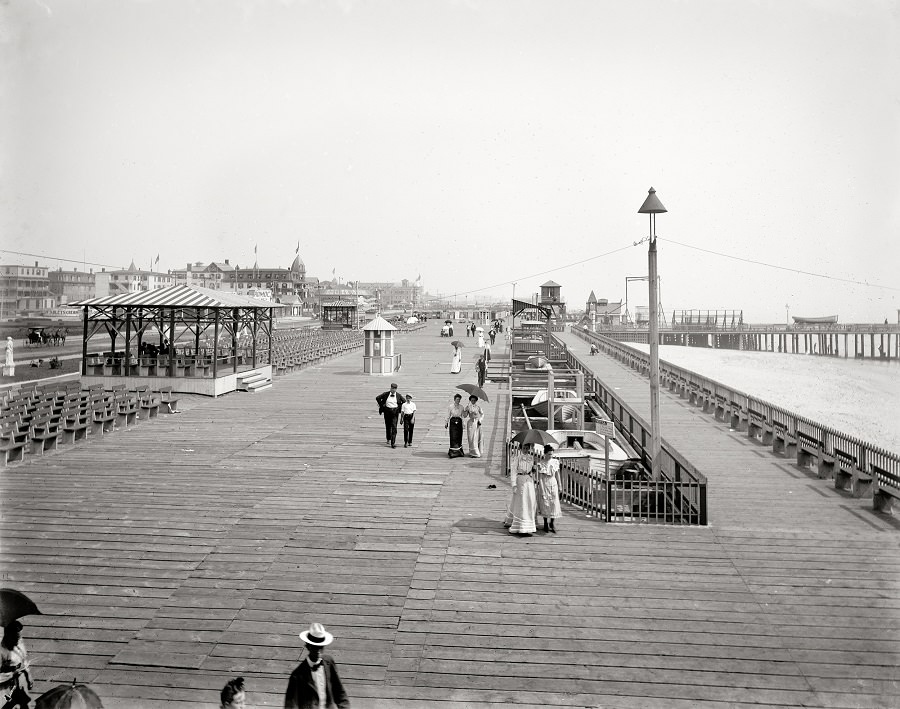
Racial segregation was a stark reality at Asbury Park in the early 1900s. Black beachgoers were restricted to designated sections of the beach, separated from white bathers by enforced social and sometimes physical boundaries. This photograph from 1908 documents that reality plainly — Black residents and visitors still came to enjoy the shore, but they did so under conditions of enforced segregation that persisted for decades.
The North End Hotel stood on the Ocean Grove side of the boardwalk, marking the boundary between Asbury Park and its deeply religious neighbor. Ocean Grove was founded as a Methodist camp meeting site, and the contrast between the two communities was visible in their architecture and culture. The North End Hotel sat at that intersection, attracting guests who wanted ocean access while staying near the quieter, more reverent atmosphere of Ocean Grove.
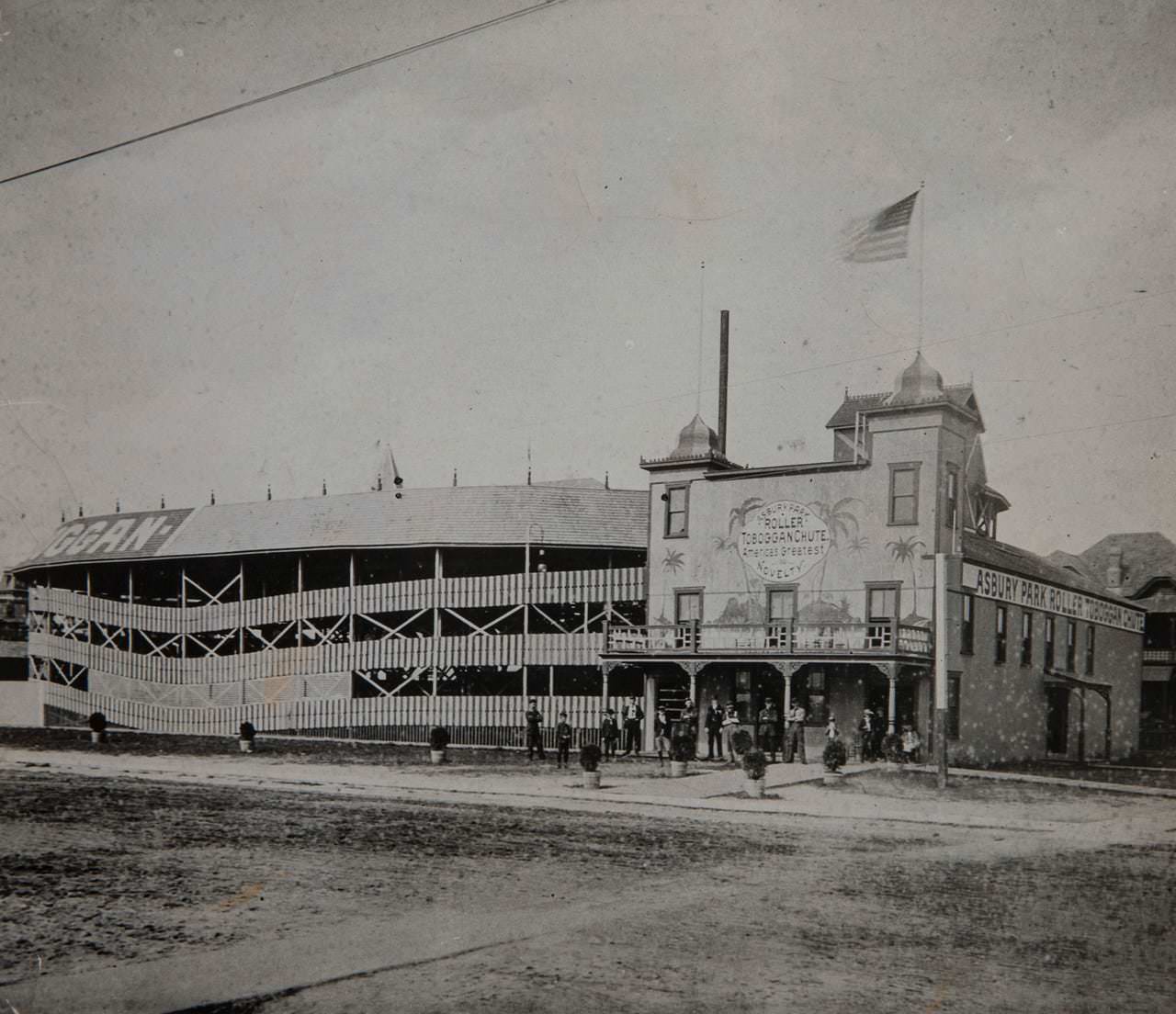
Before the grand boardwalk structures of the early twentieth century took shape, Asbury Park had a more rustic identity. A steeplechase attraction operated in the city as early as 1886, offering mechanical amusement rides to visitors. These early amusement features predate the large-scale entertainment complexes that would define the boardwalk in later decades.
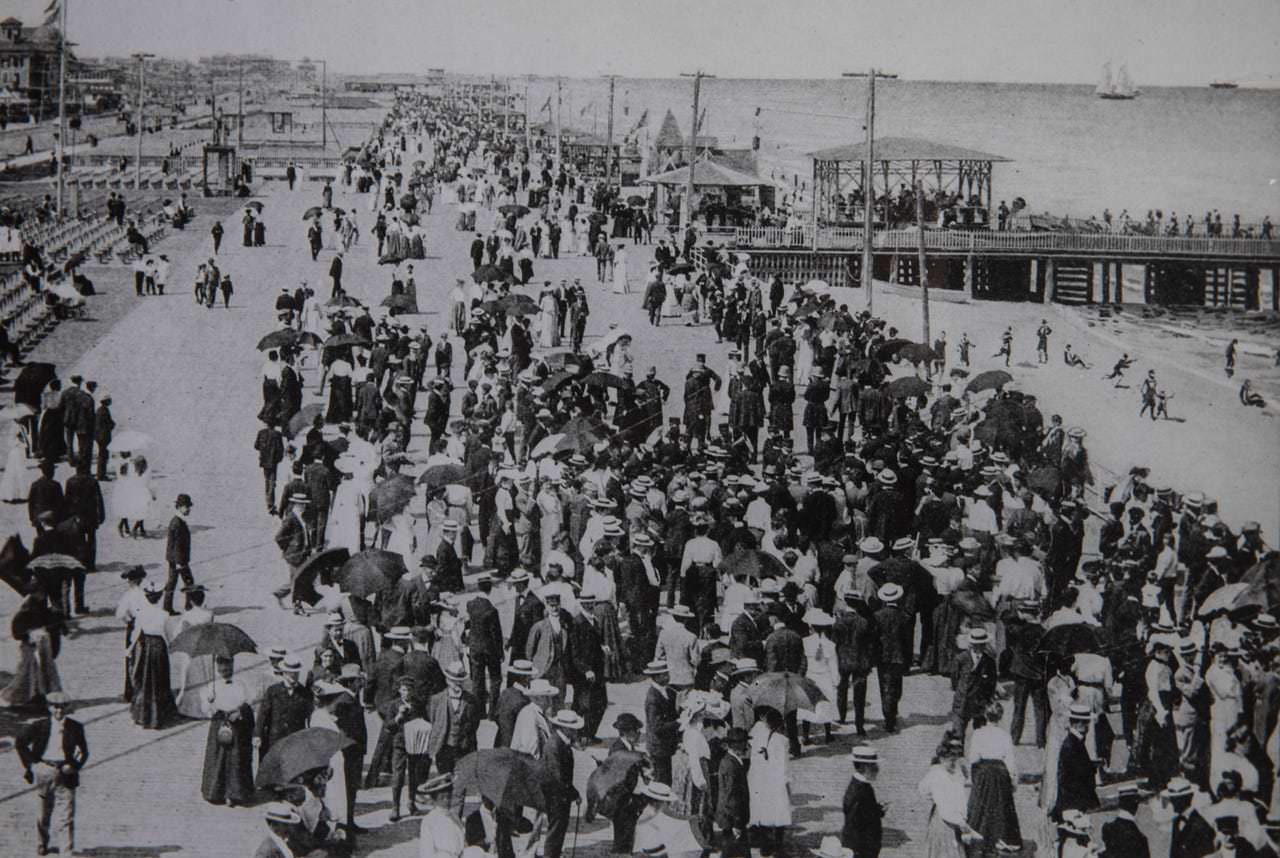
The original wooden pavilion structures visible in photographs from 1901 were simpler and more utilitarian than what would replace them. The Ocean Grove Rose Pavilion, seen to the left in this image, reflected the neighboring community’s preference for modest, functional design. These early structures were eventually replaced by larger, more permanent buildings as both communities grew and invested in their shorefront infrastructure.
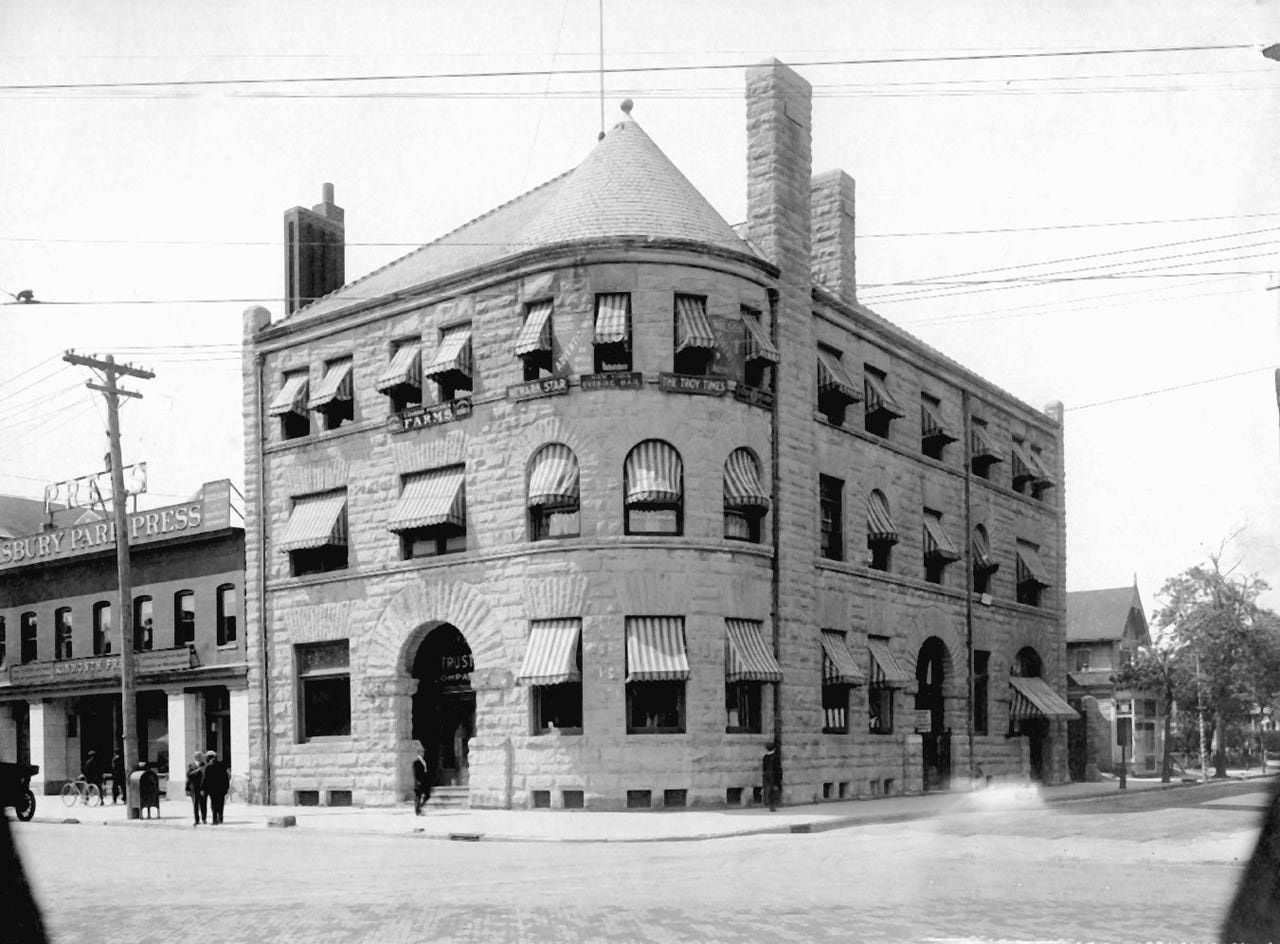
Mattison Avenue was one of Asbury Park’s main commercial streets. By 1917, it was home to both the Asbury Park Trust Company and the Asbury Park Press, placing the city’s financial and media institutions side by side. The Press became one of the most important newspapers on the Jersey Shore, covering local news for generations of residents.
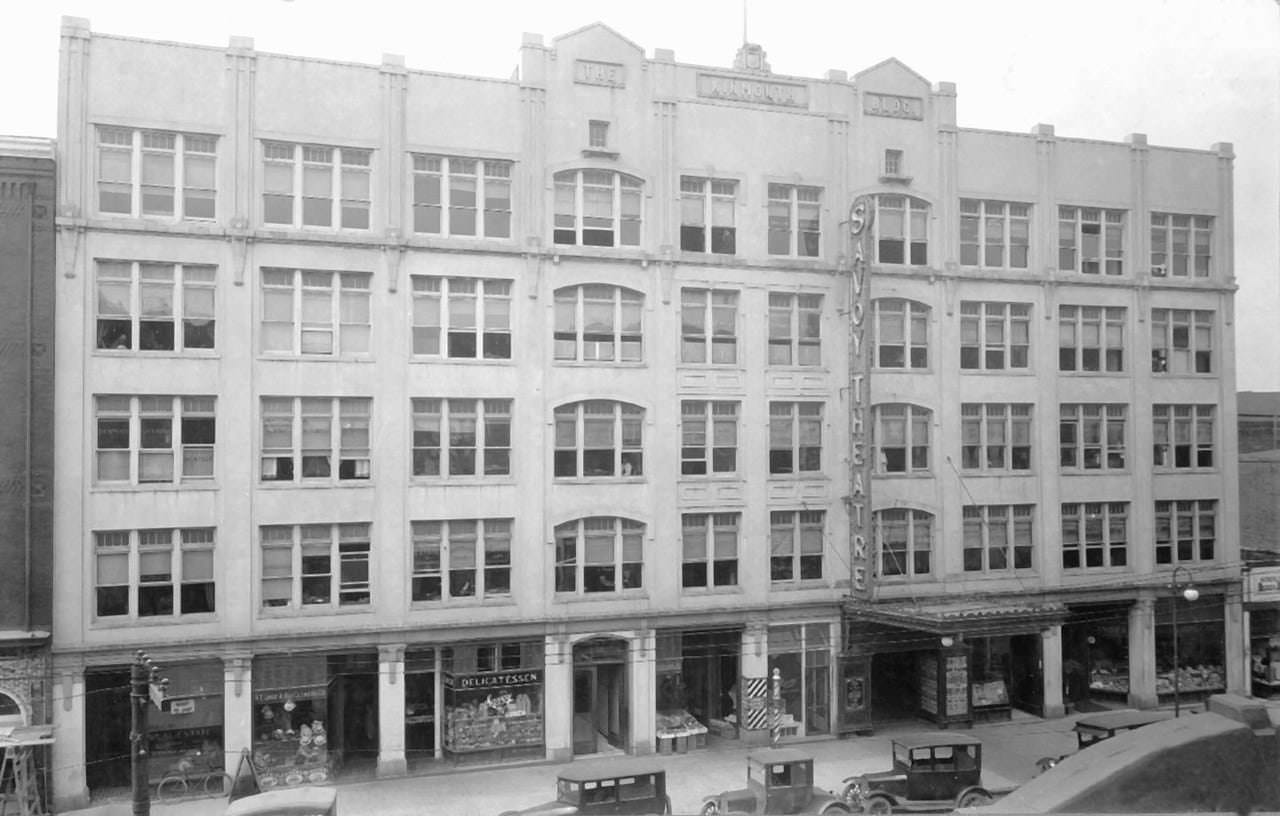
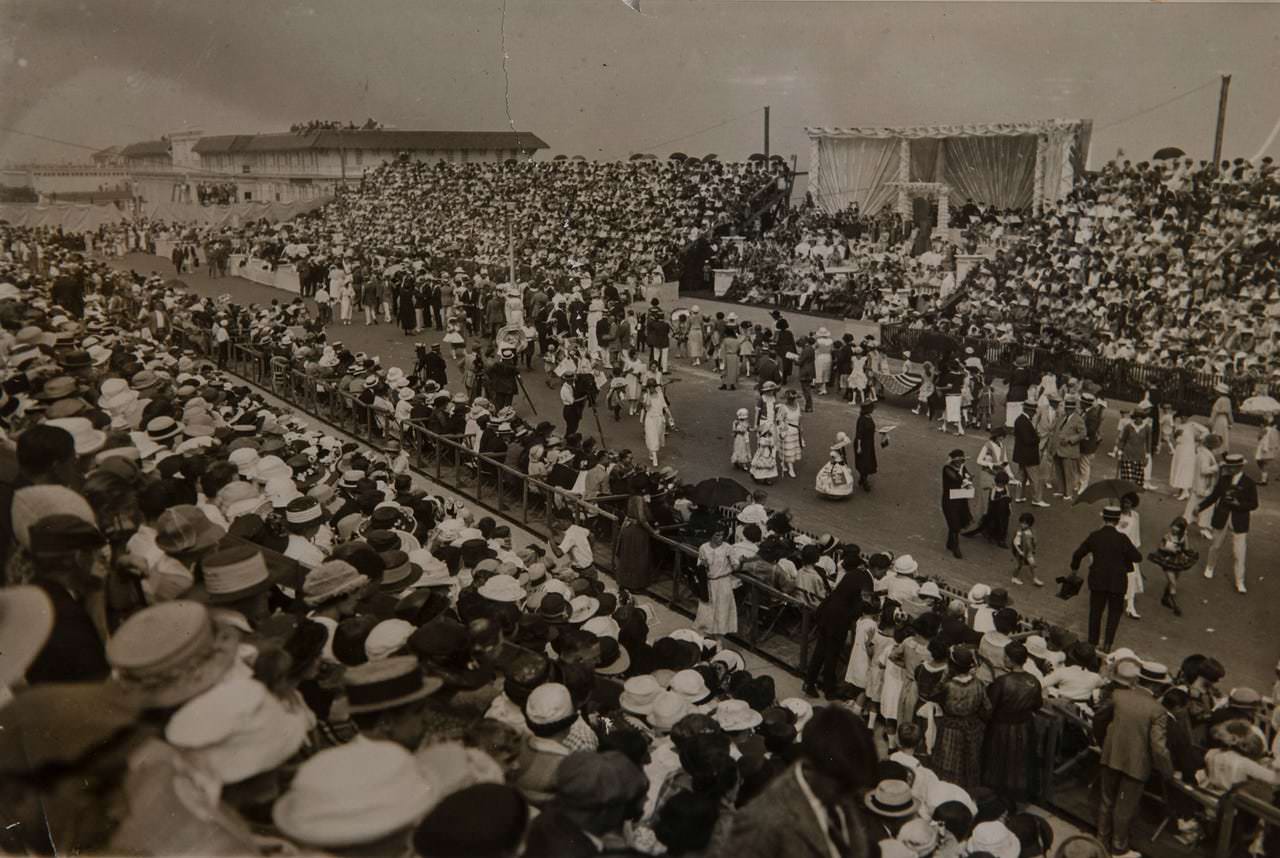
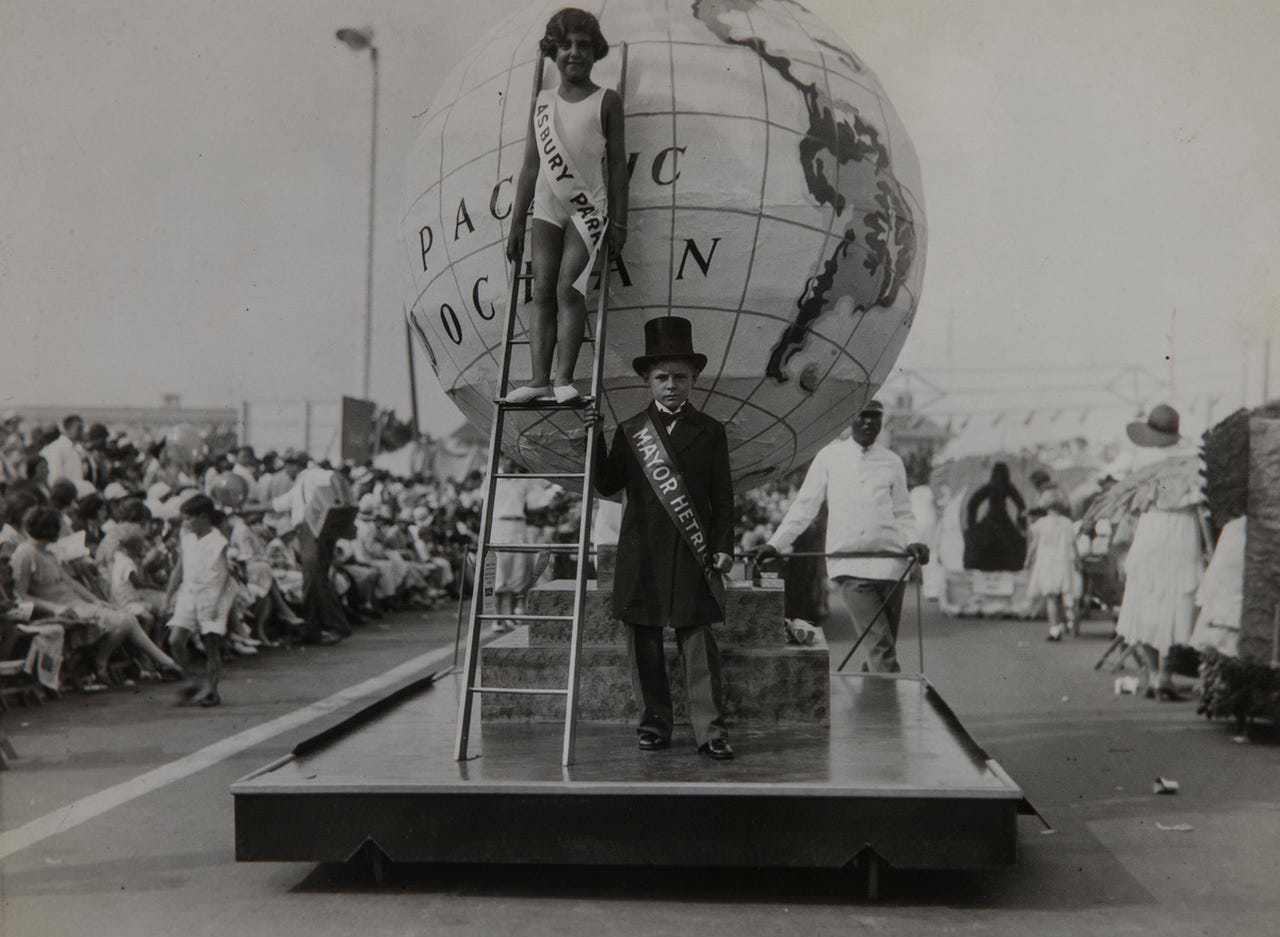
The annual Baby Parade became one of Asbury Park’s most beloved summer traditions. Parents dressed their children and infants in elaborate costumes and pushed them in decorated carriages along the boardwalk in front of large crowds. The parade drew participants and spectators from across the region. Photographs from 1922 and 1924 show the event at full scale, with wide crowds lining the route and officials presiding over the procession.
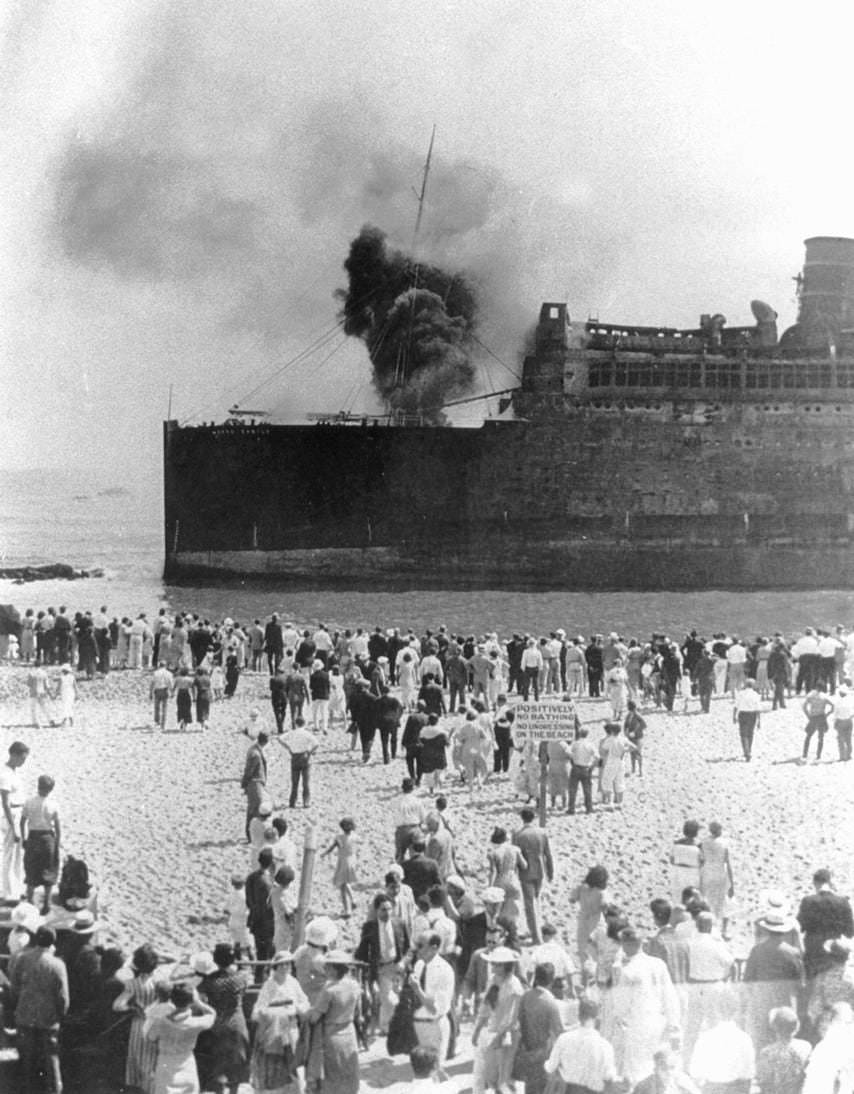
One of the most dramatic events in Asbury Park’s history unfolded on September 8, 1934, when the passenger cruise ship SS Morro Castle caught fire off the coast and drifted toward the shoreline. The ship ran aground near Convention Hall, where it remained for months. The disaster killed 137 people and drew enormous national media coverage. Crowds gathered on the beach and boardwalk to watch the burning hulk from the shore.
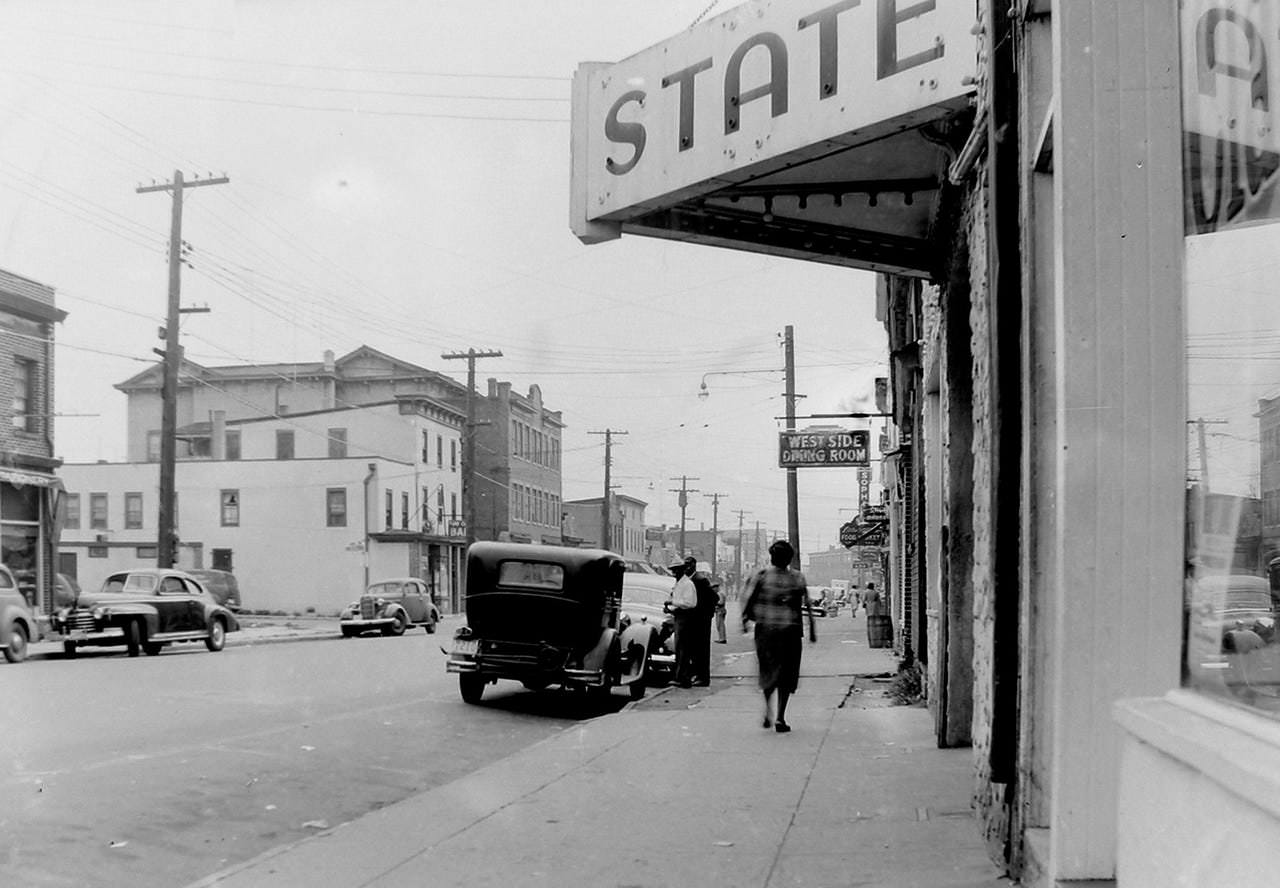
Springwood Avenue was the center of Asbury Park’s Black commercial and cultural life for much of the twentieth century. By the 1940s, the avenue was lined with businesses, jazz clubs, and social institutions that served the city’s African American community. The State Ballroom was a fixture on the strip, hosting live music that drew audiences from across the region.
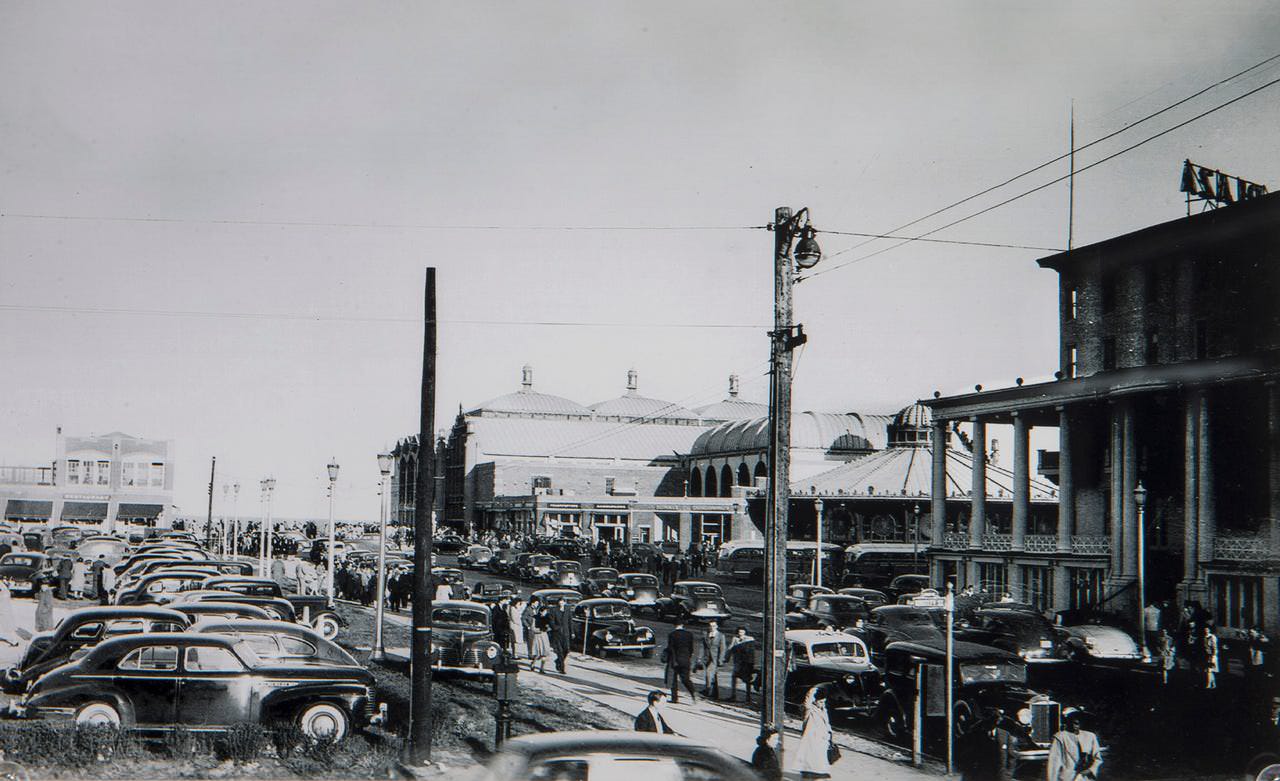
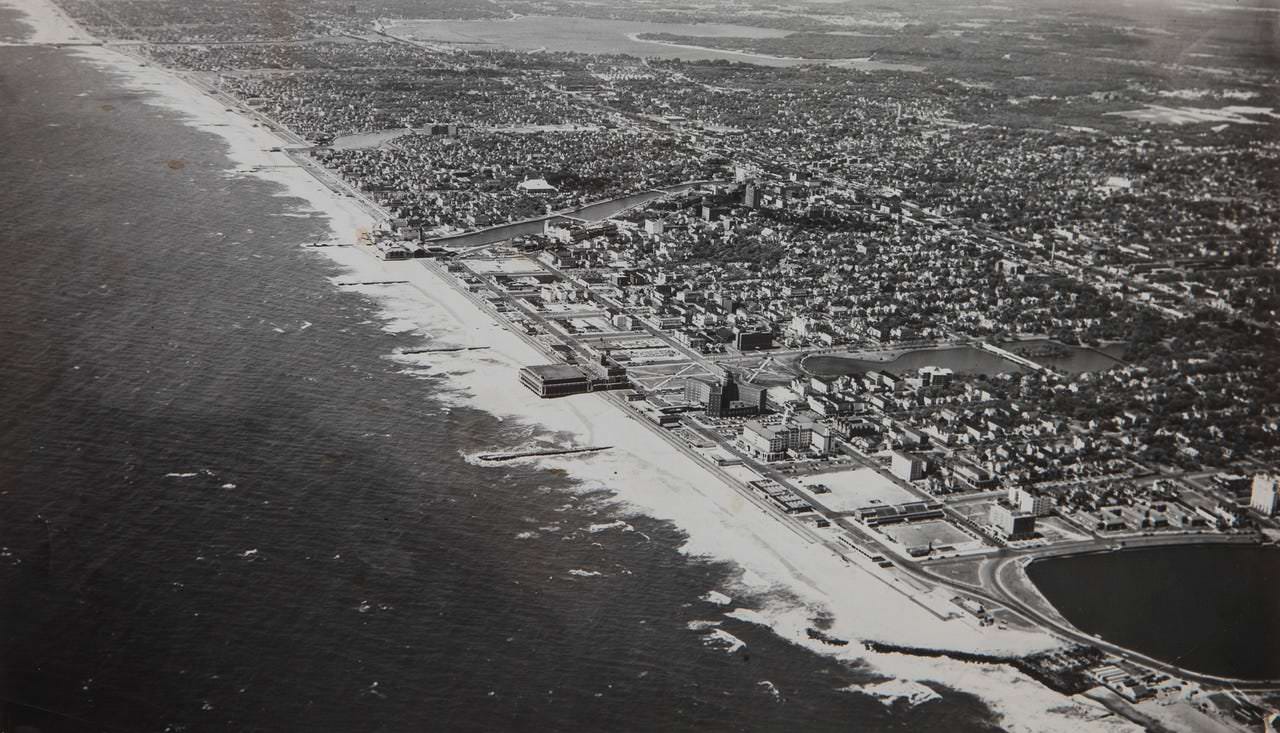
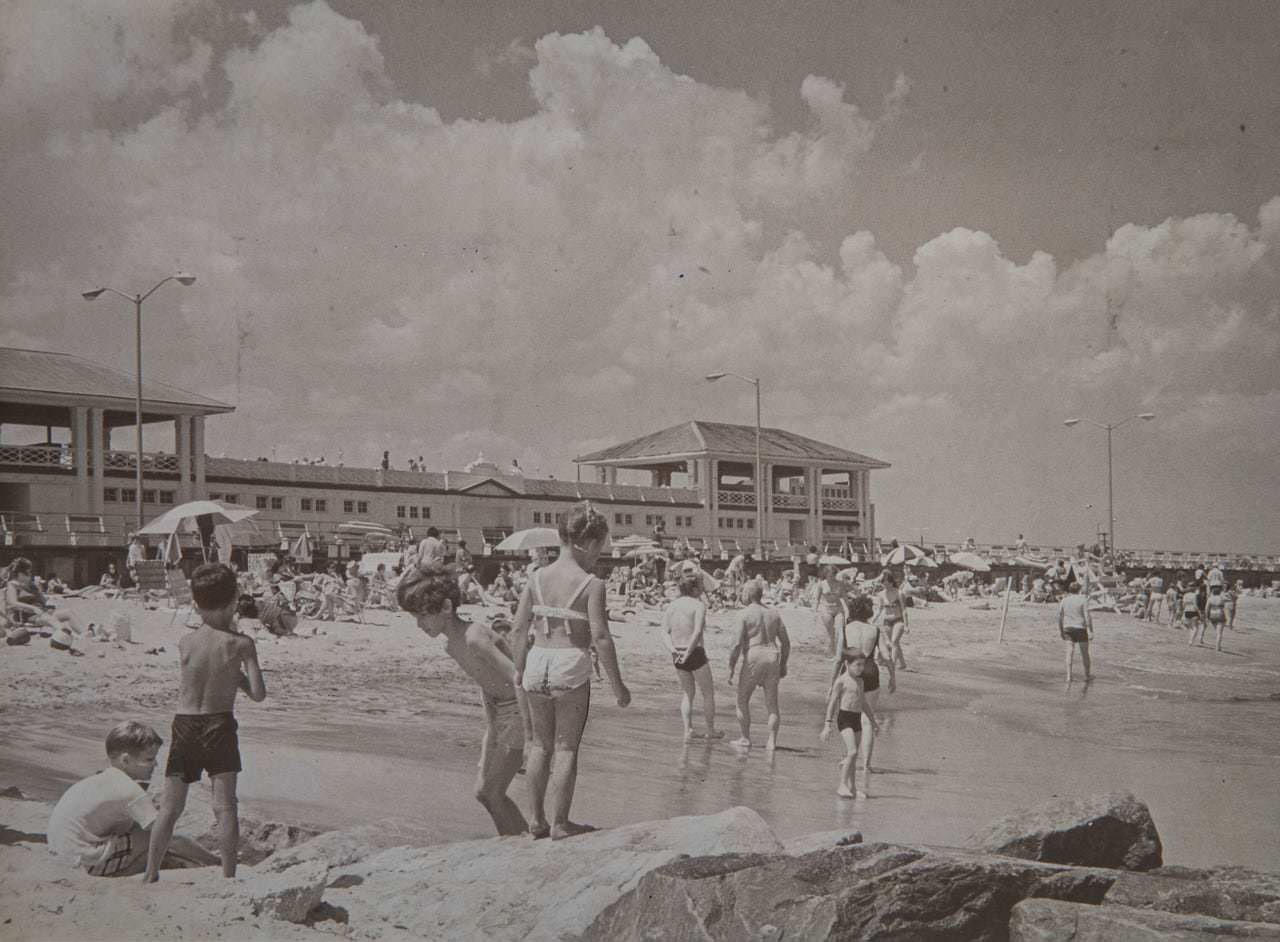
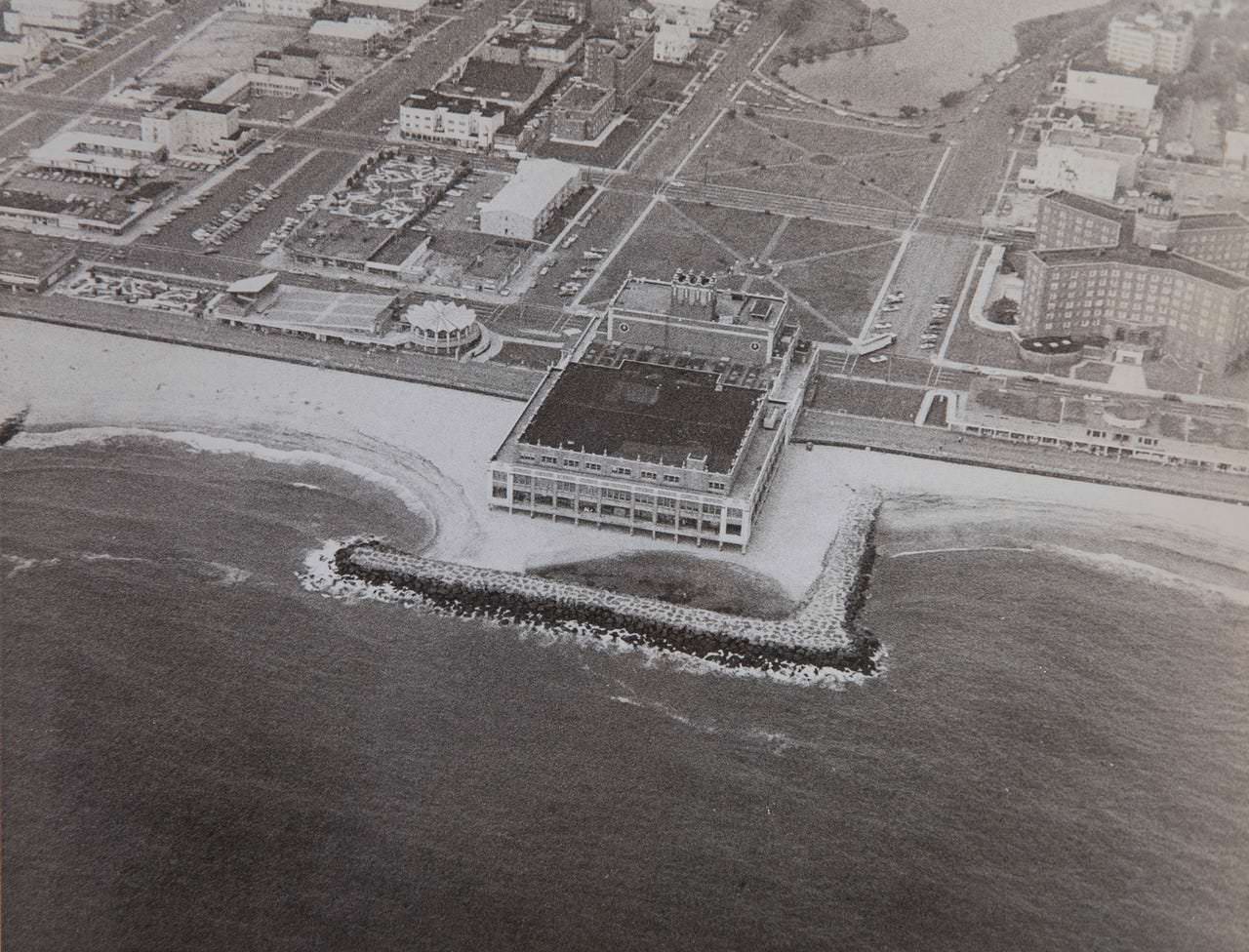
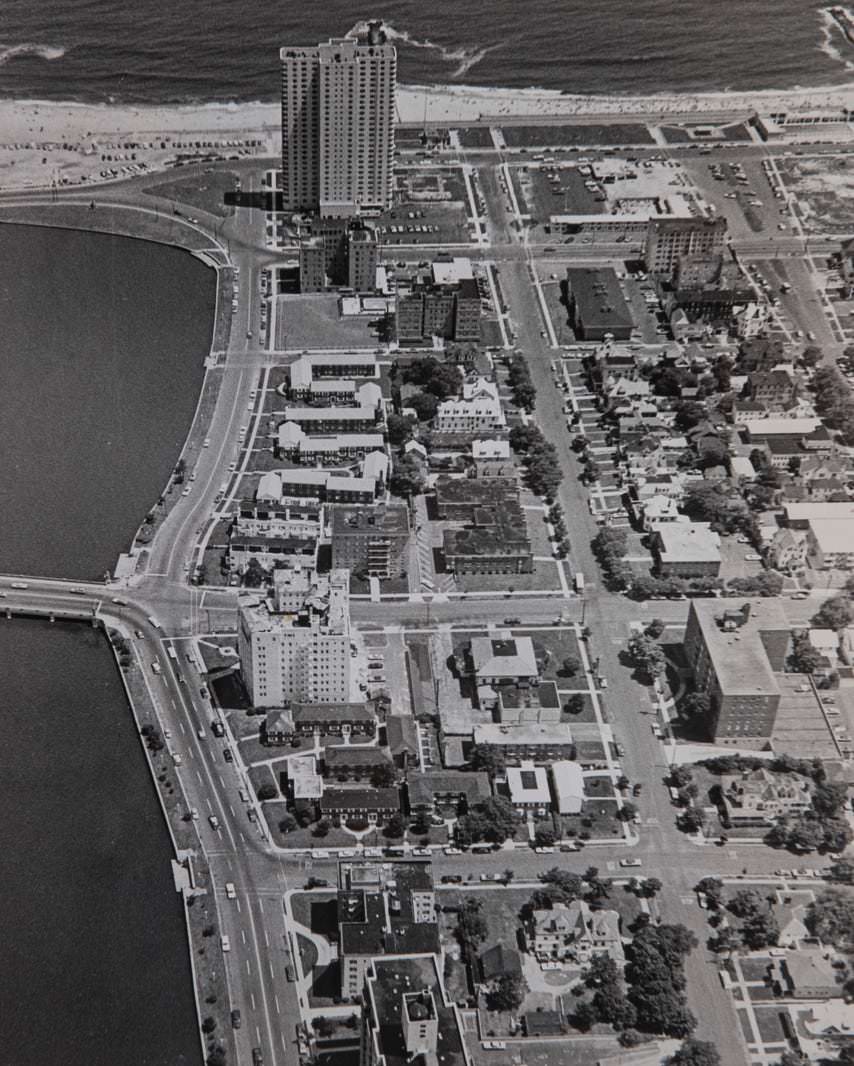
By the 1950s, Asbury Park had fully developed its boardwalk entertainment complex. Aerial photographs from 1953 and 1954 show the full scale of the city’s oceanfront — Convention Hall, the Casino, the boardwalk arcade buildings, and the dense residential and commercial blocks stretching inland. The city was at a high-water mark in terms of infrastructure and summer tourism.
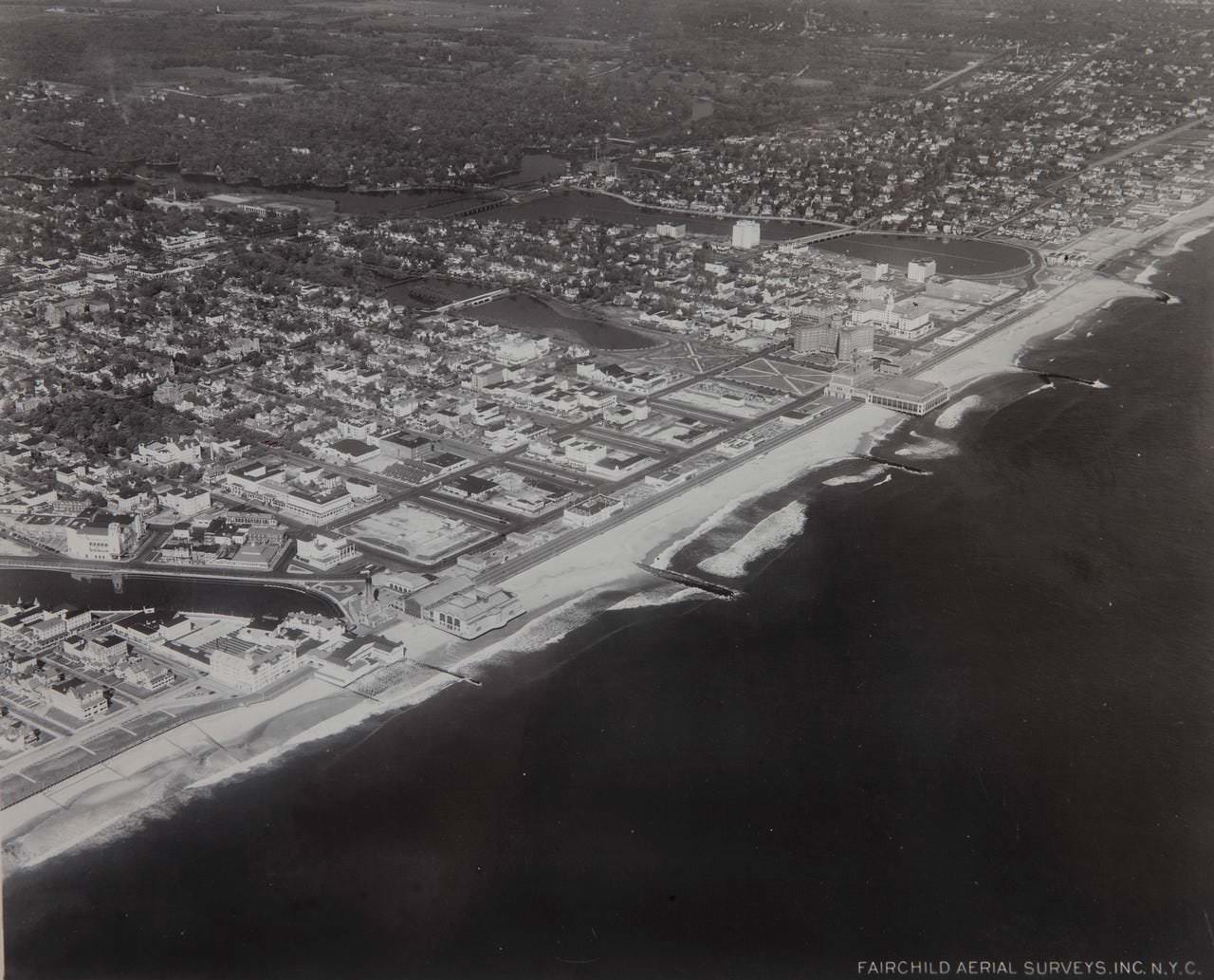
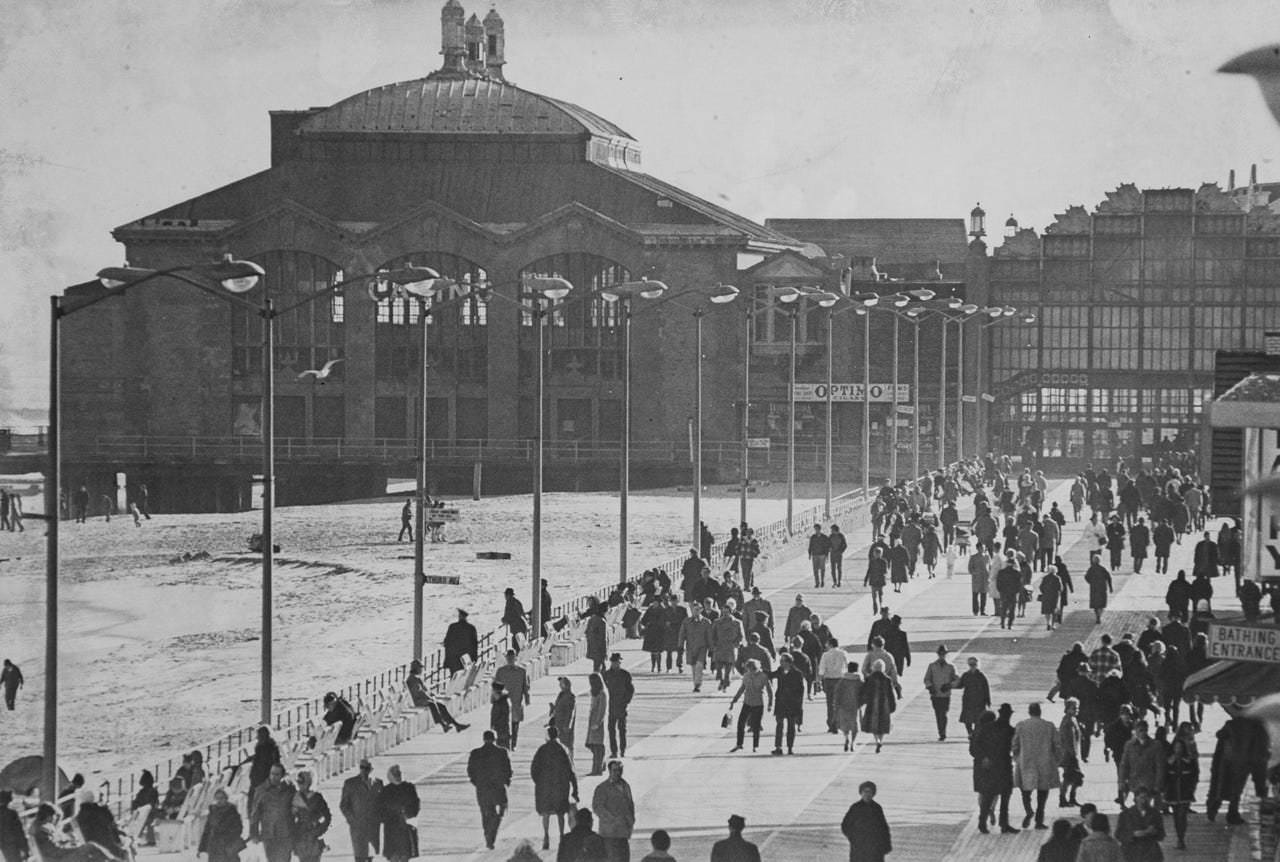
Convention Hall was the crown jewel of Asbury Park’s boardwalk. Built in the 1920s as part of a major expansion of public entertainment facilities, it stretched directly over the beach and connected to the Casino Arena. The complex hosted concerts, boxing matches, political rallies, and public exhibitions throughout its history. By the 1960s and 1970s, it had become one of the most recognizable structures on the Jersey Shore.
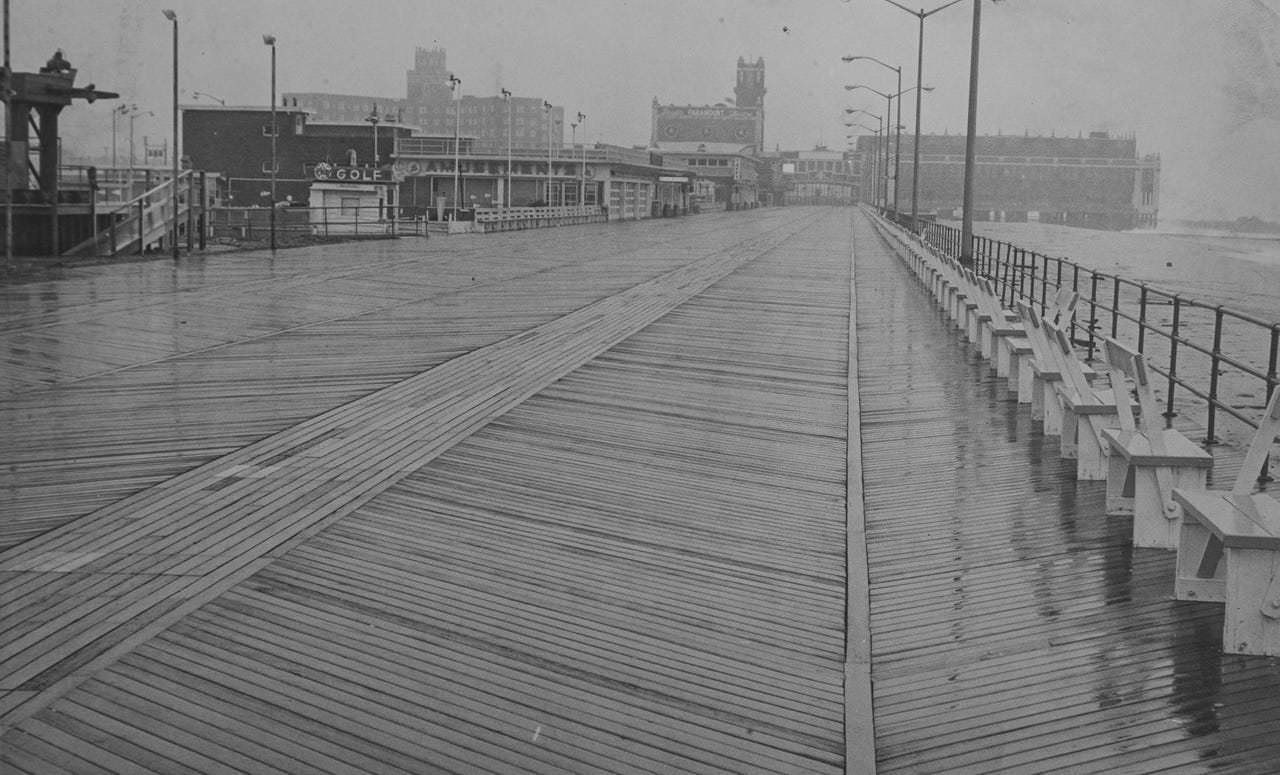
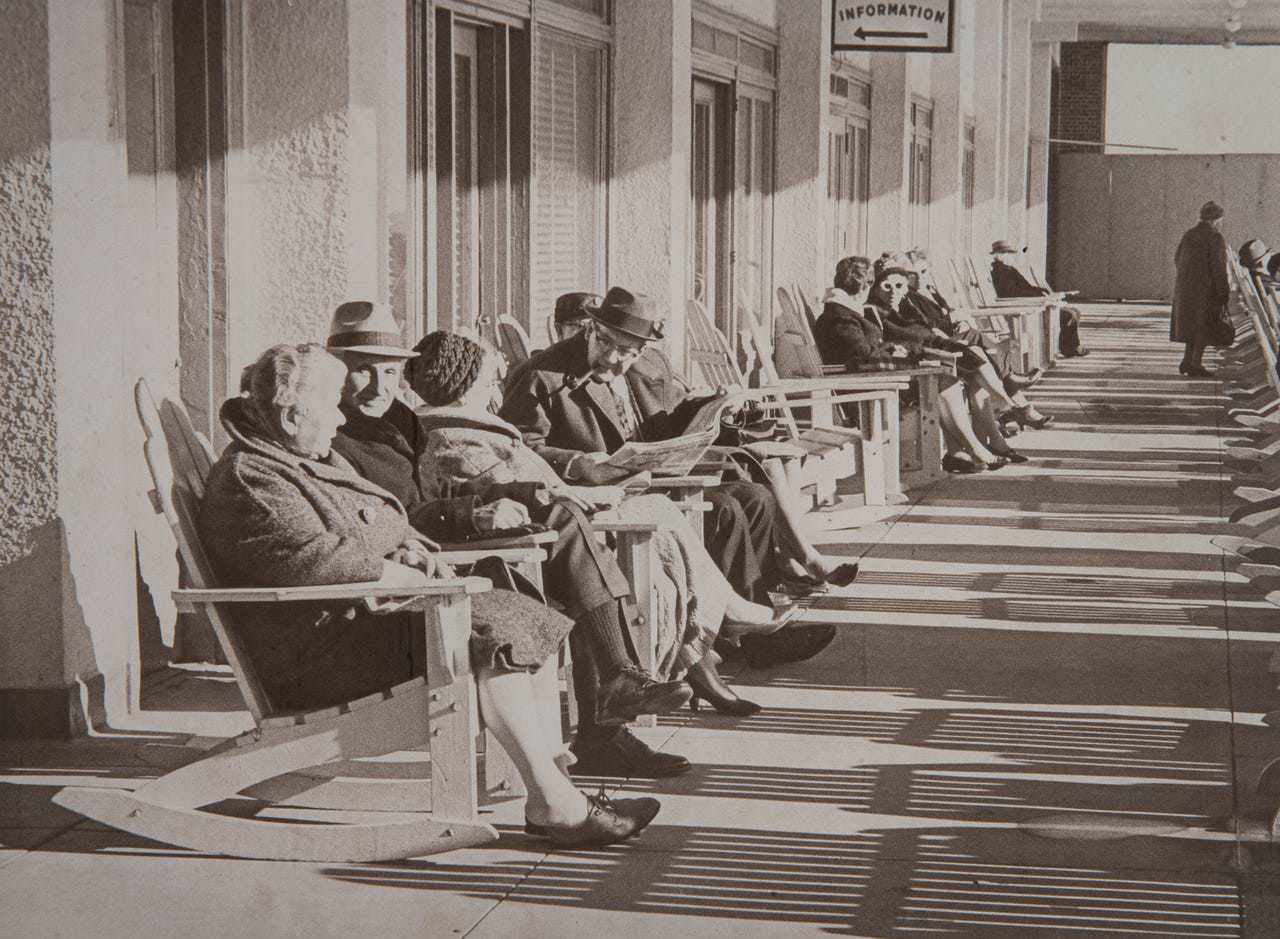
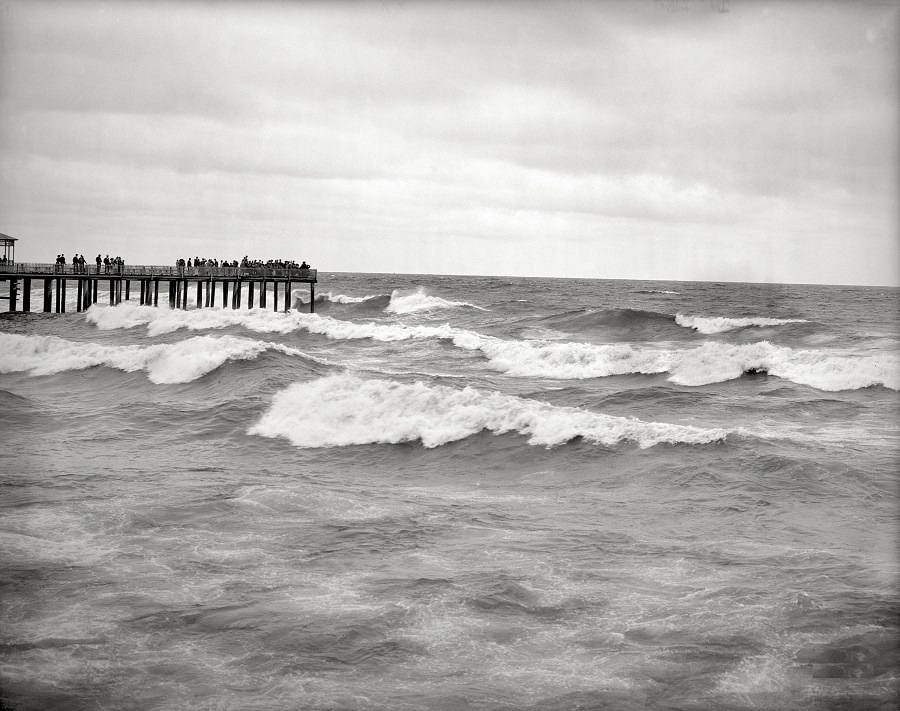
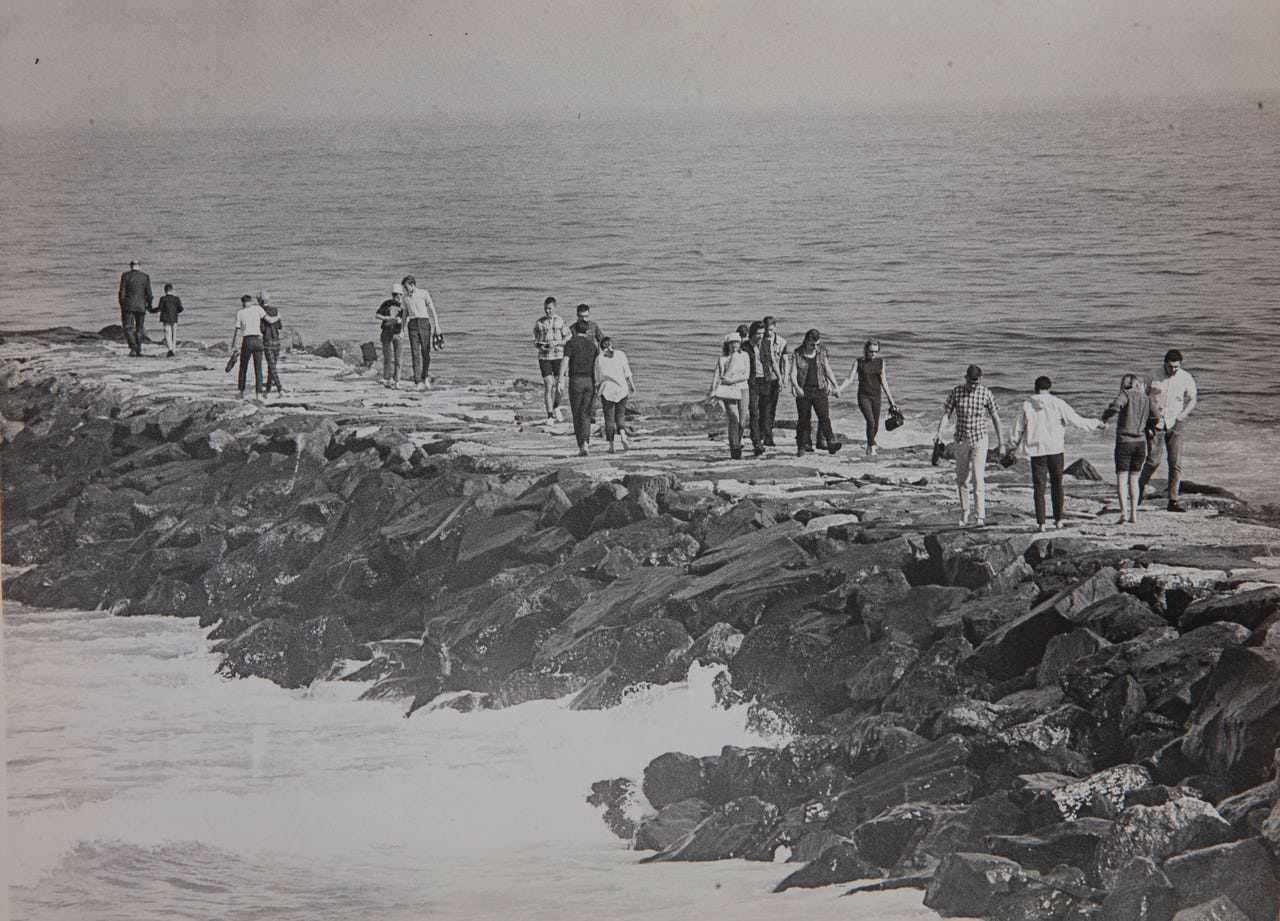
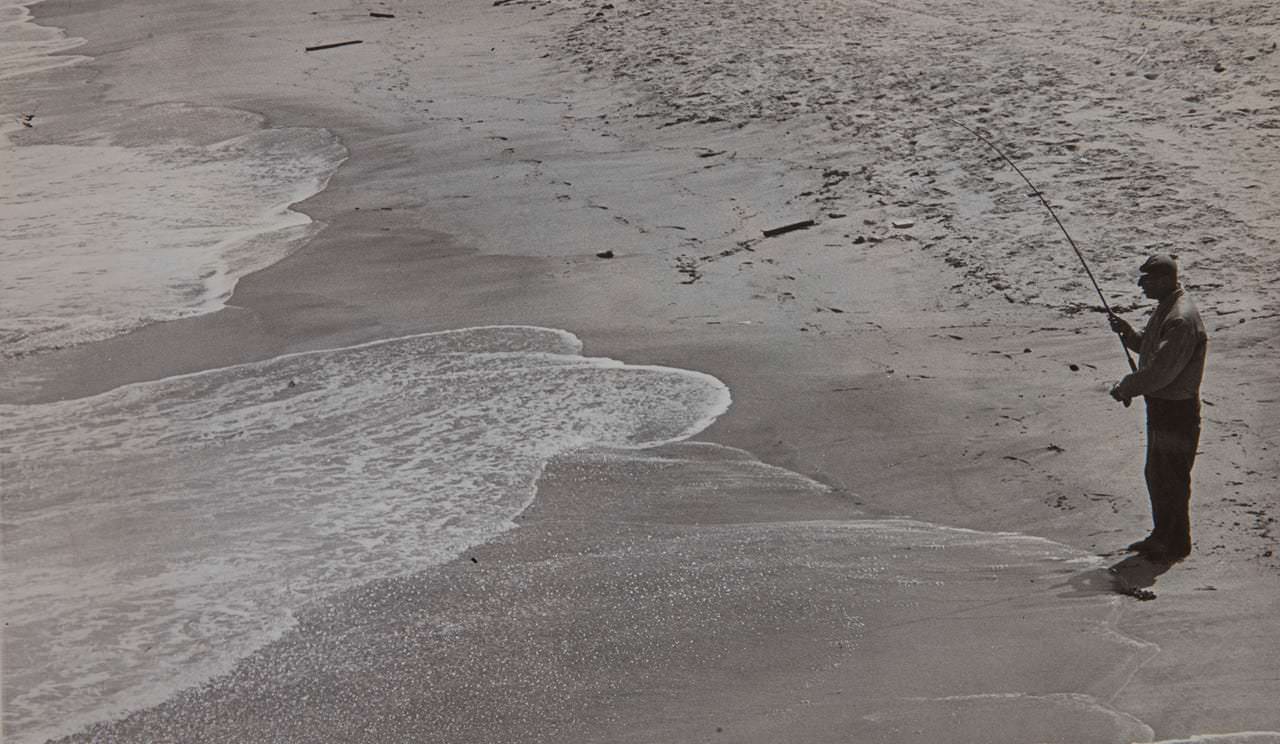
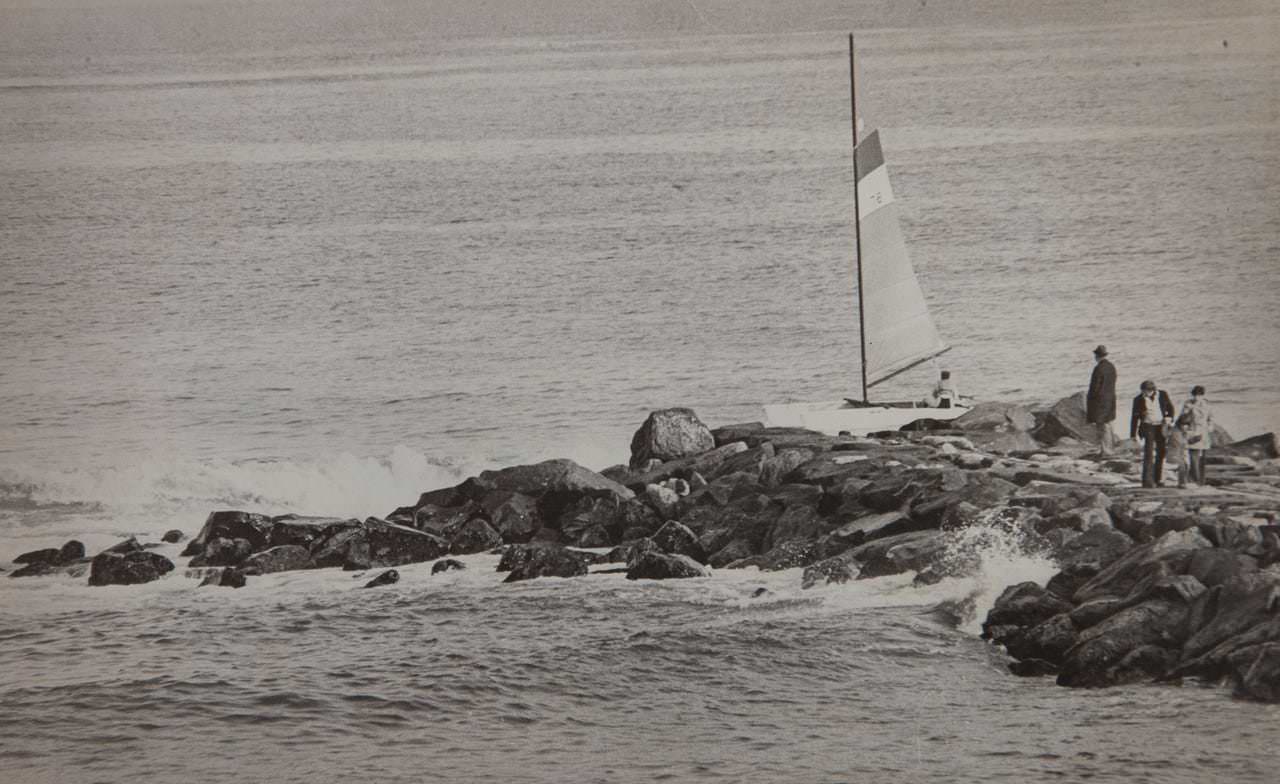
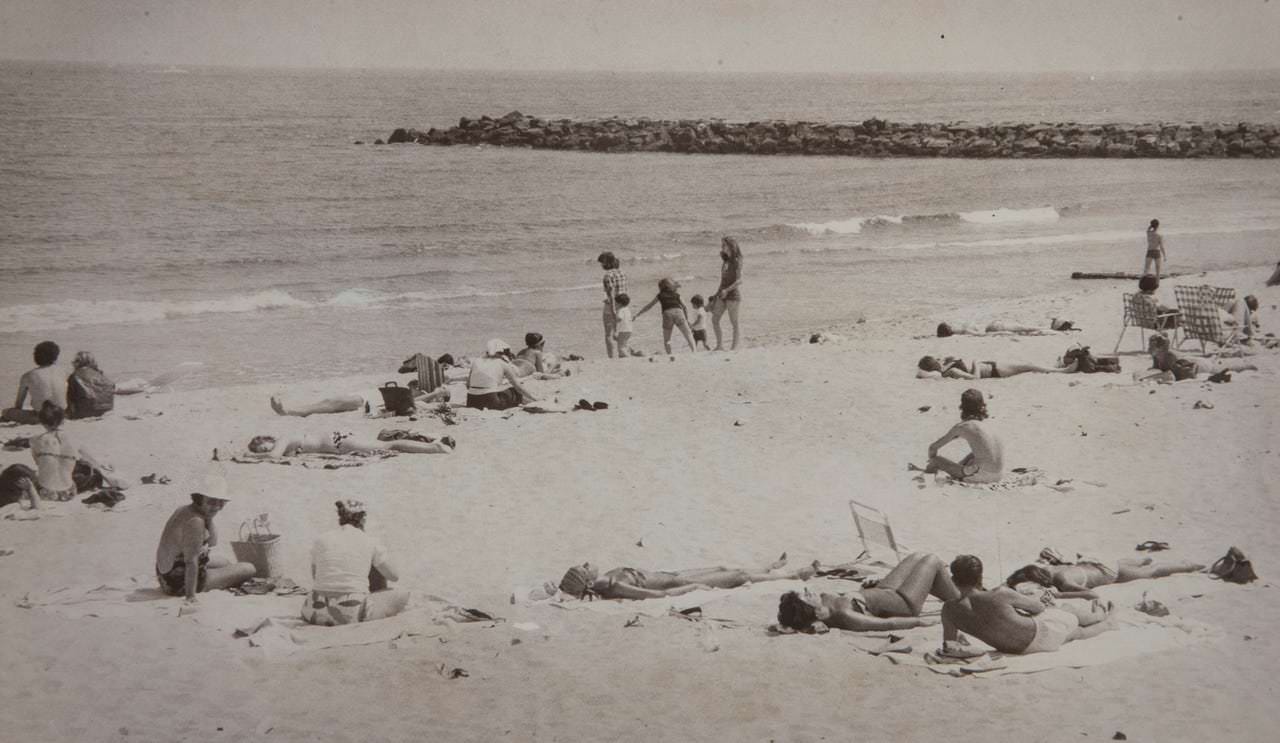
The jetties and beach access points along Asbury Park’s numbered avenues were busy gathering spots during the summer months. Fishermen, swimmers, and sunbathers shared the space, and the piers provided clear views up and down the coastline. The 4th Avenue jetty, captured in a 1968 photograph, shows ordinary residents enjoying the shore against the backdrop of the city’s aging but still active waterfront.
The Asbury Park Press relocated to a prominent corner building at Mattison and Cookman Avenues, cementing its place as a fixture of the city’s downtown. The 1963 photograph of this building captures a moment when Cookman Avenue was still a functioning commercial corridor with storefronts and foot traffic. Both the Press building and the street around it would change significantly in the decades that followed.
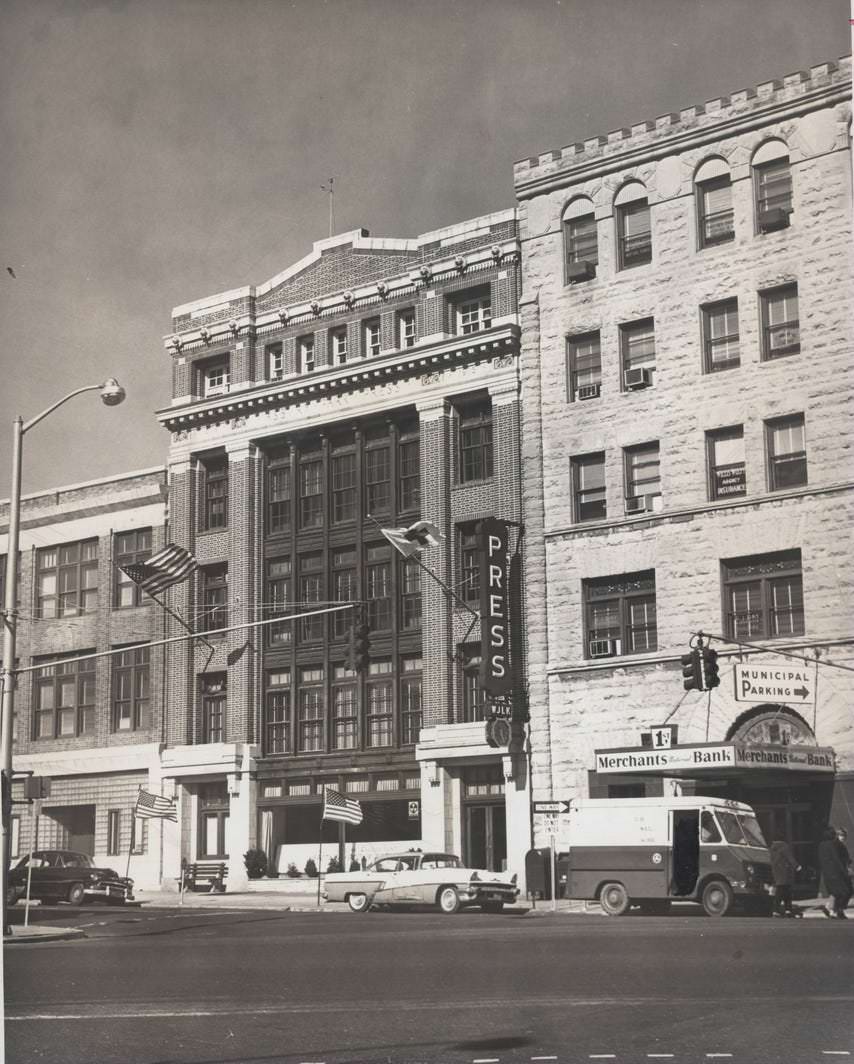
Springwood Avenue in 1968 told a story of a neighborhood under pressure. The city had been experiencing economic decline through the 1960s, and tensions rooted in decades of inequality and neglect culminated in a civil uprising in July 1970. The photographs from Springwood Avenue in the late 1960s capture a community in transition, still commercially active but facing the strains that would soon reshape the entire city.
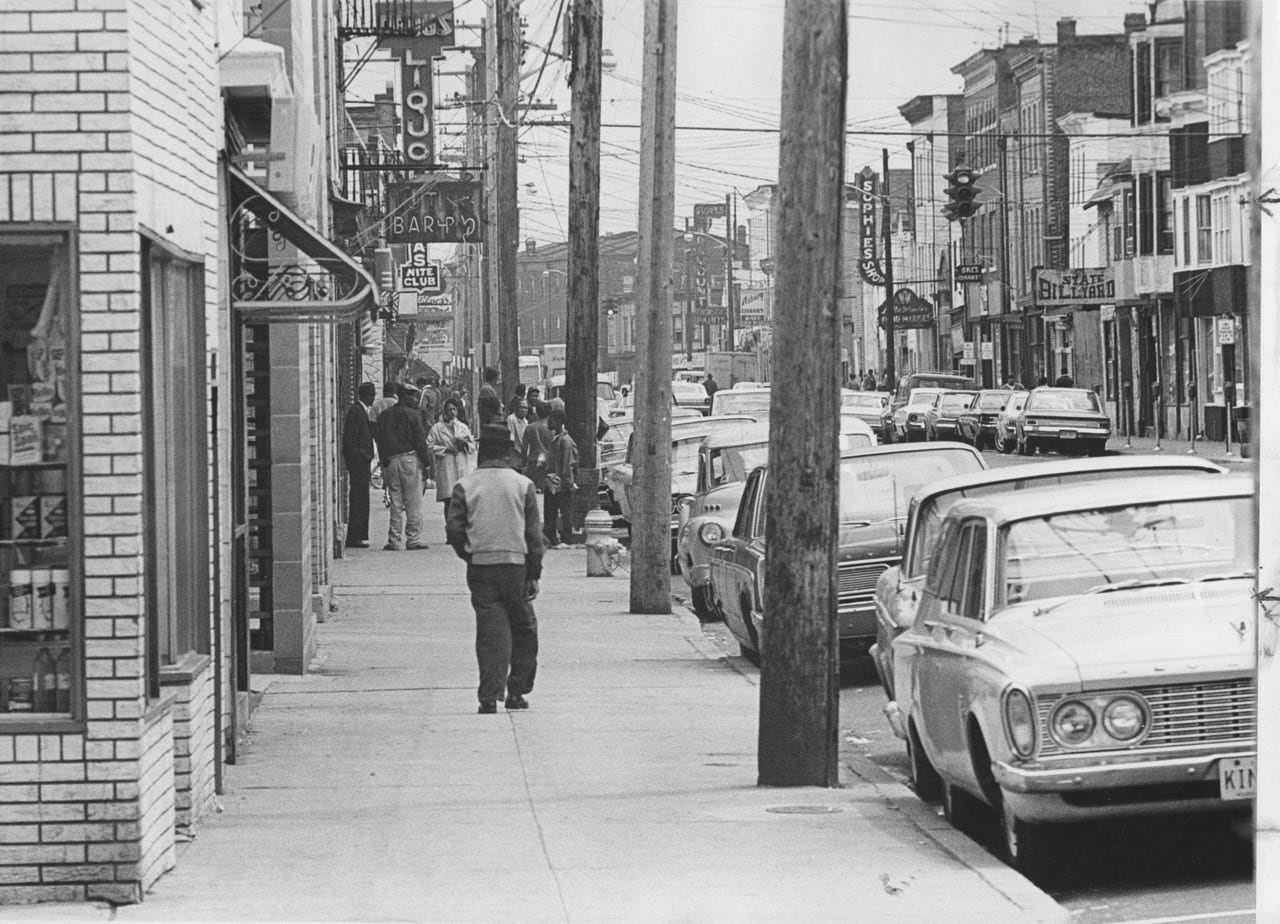
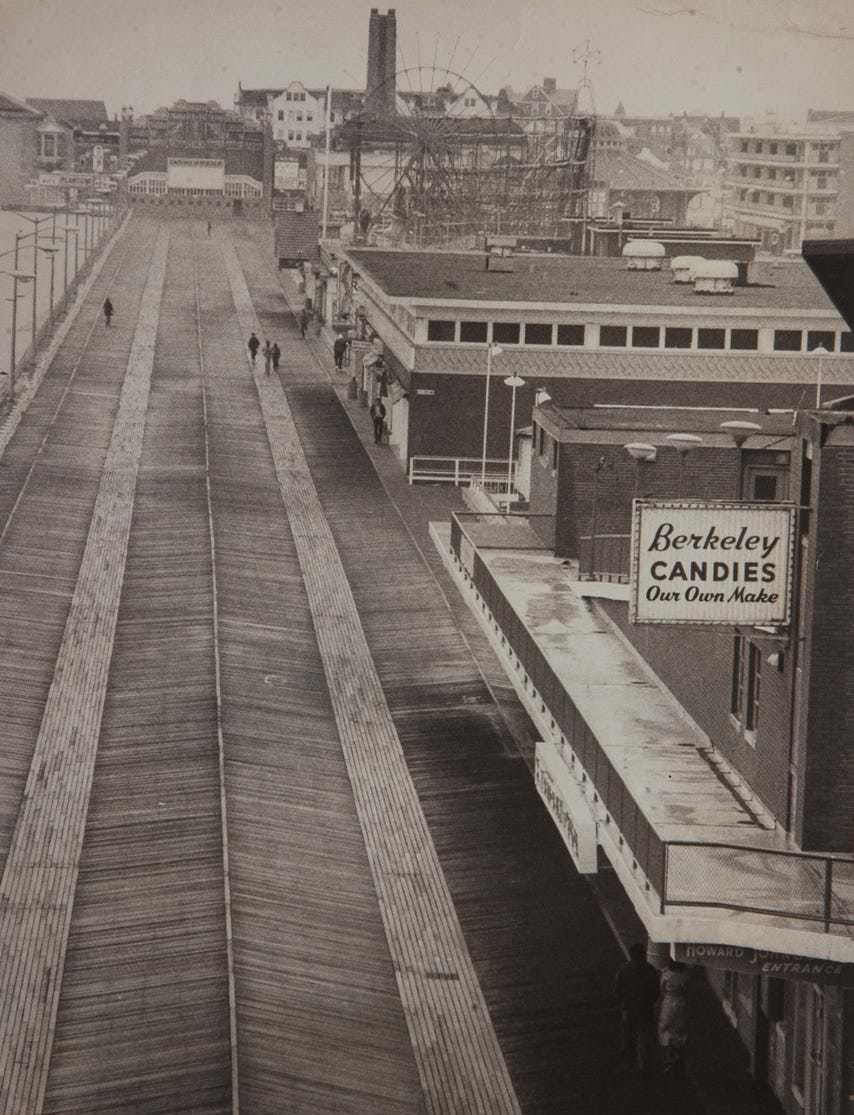
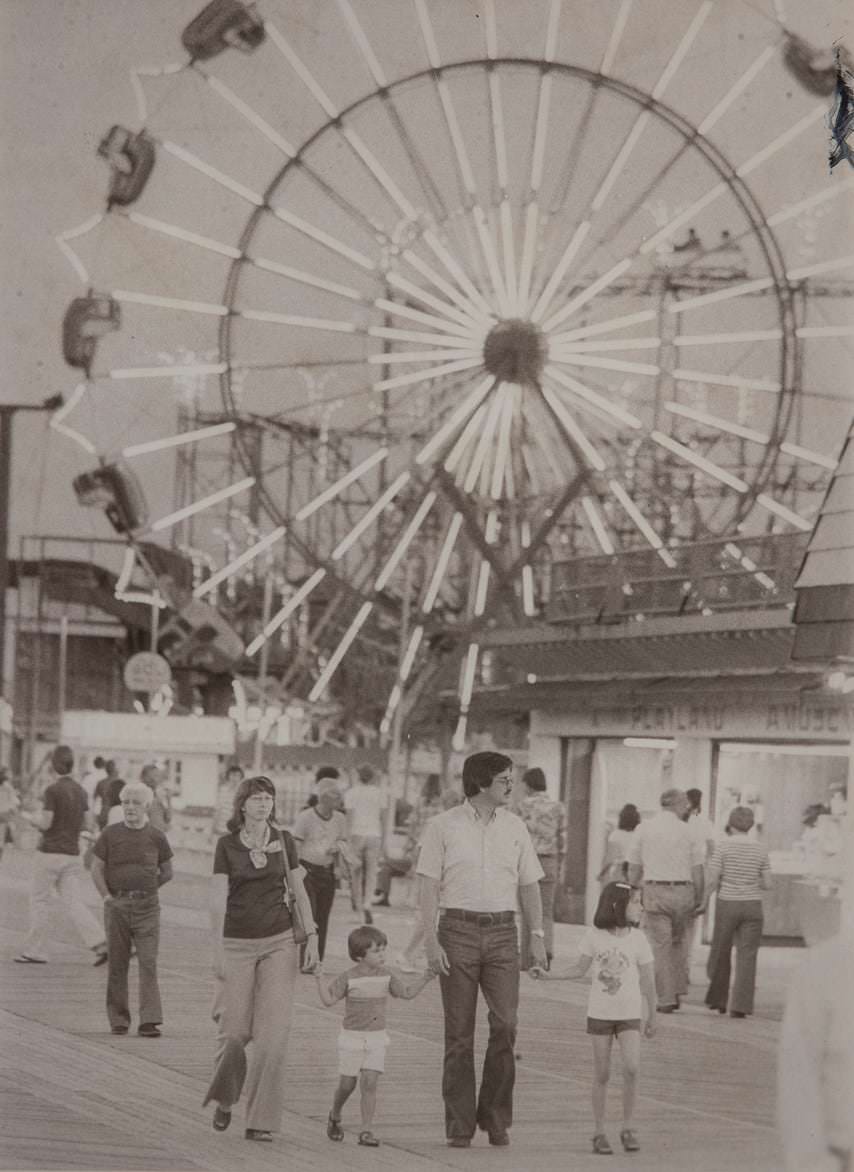
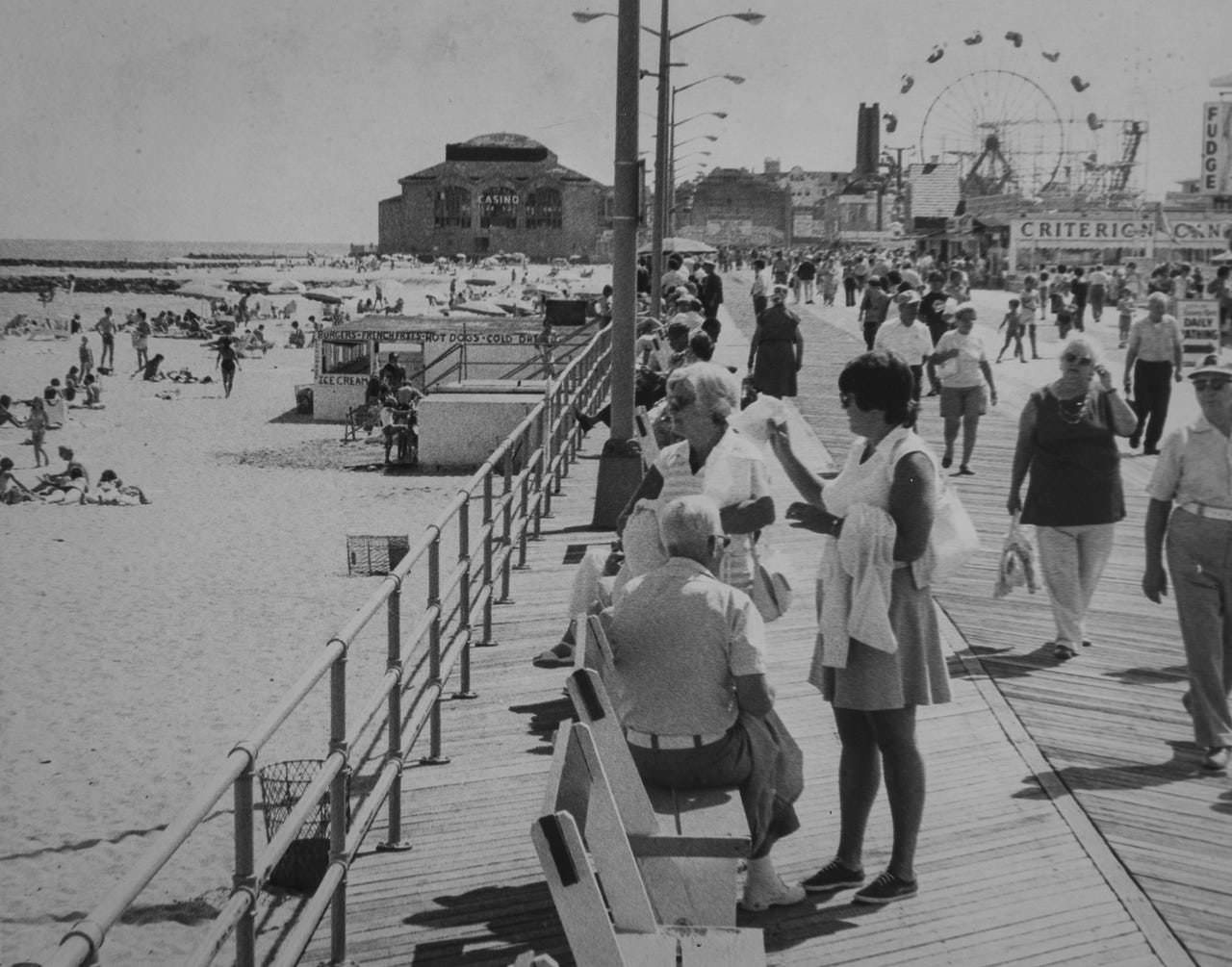
Through the 1970s, the boardwalk still drew visitors even as the city faced broader economic difficulties. Amusement rides, miniature golf, arcades, and food stands continued to operate. The Oceanic Rides were a fixture at the boardwalk’s amusement zone, and the sight of families crowding the rides on summer evenings remained a constant even as the city’s fortunes shifted. The boardwalk’s more than 600 working pinball machines, many dating to the 1950s, continued to pull in quarters from generations of players.
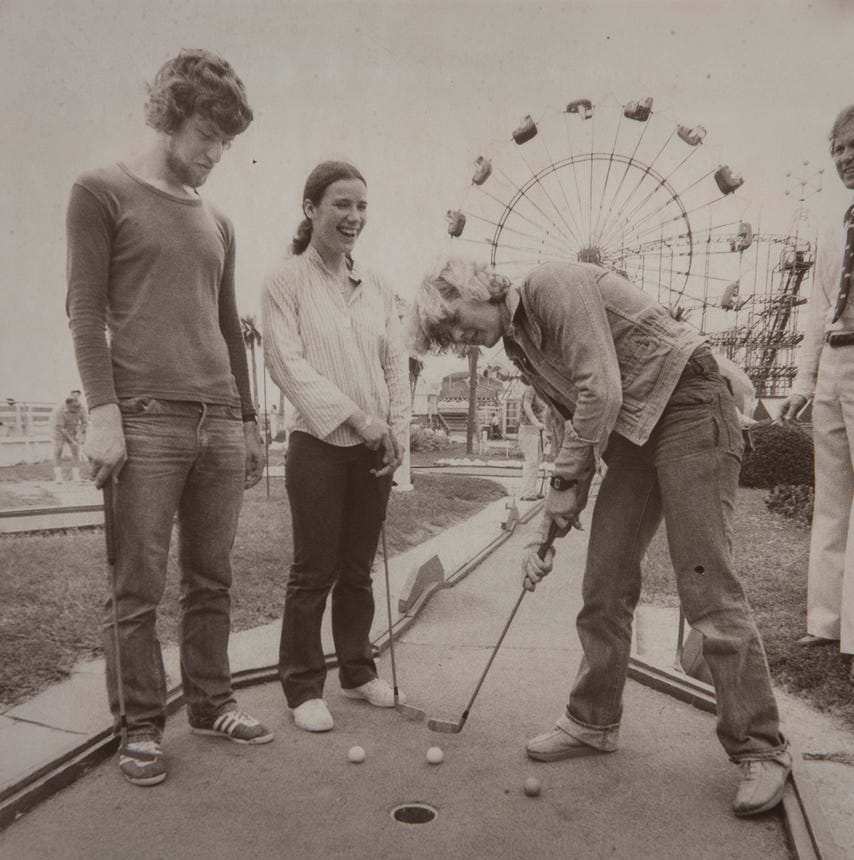
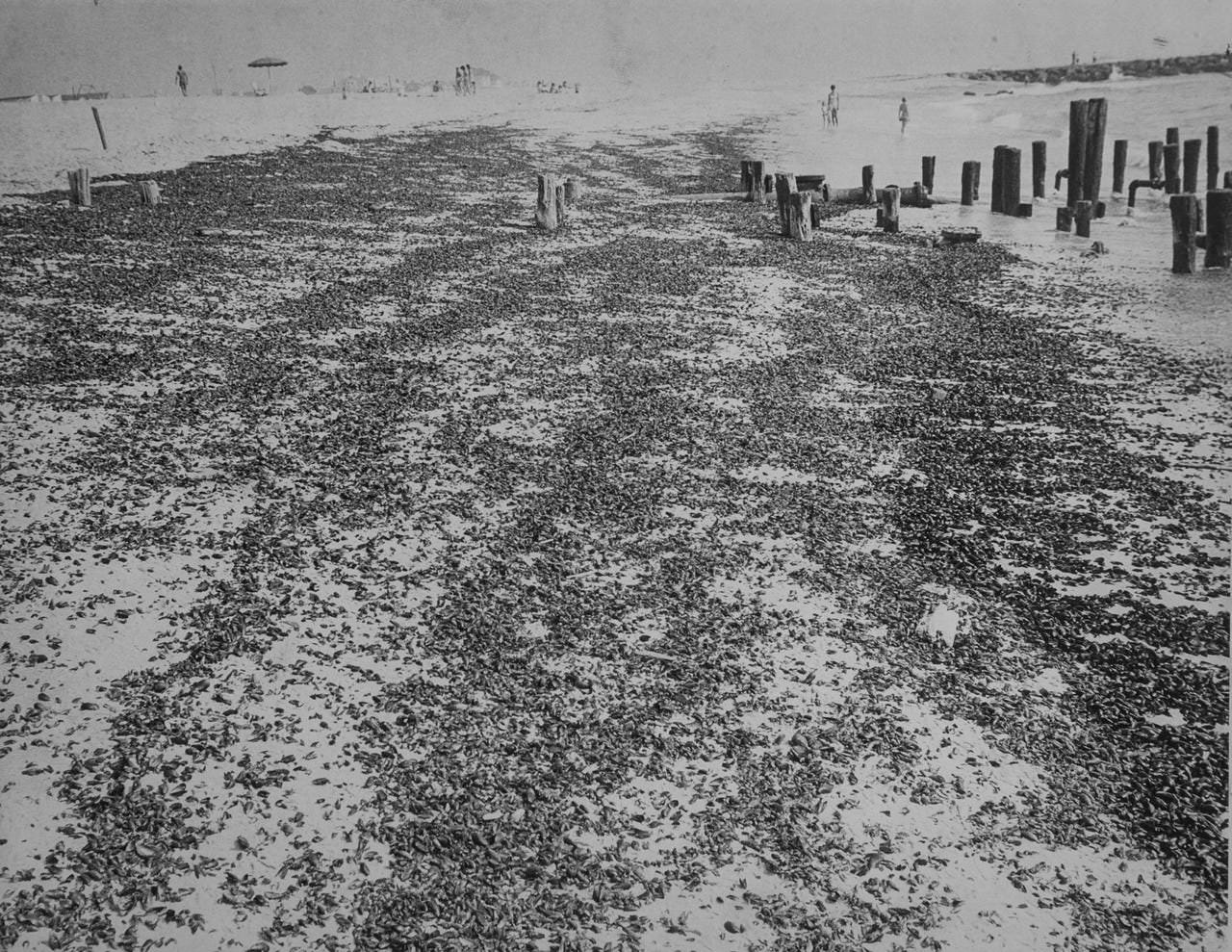
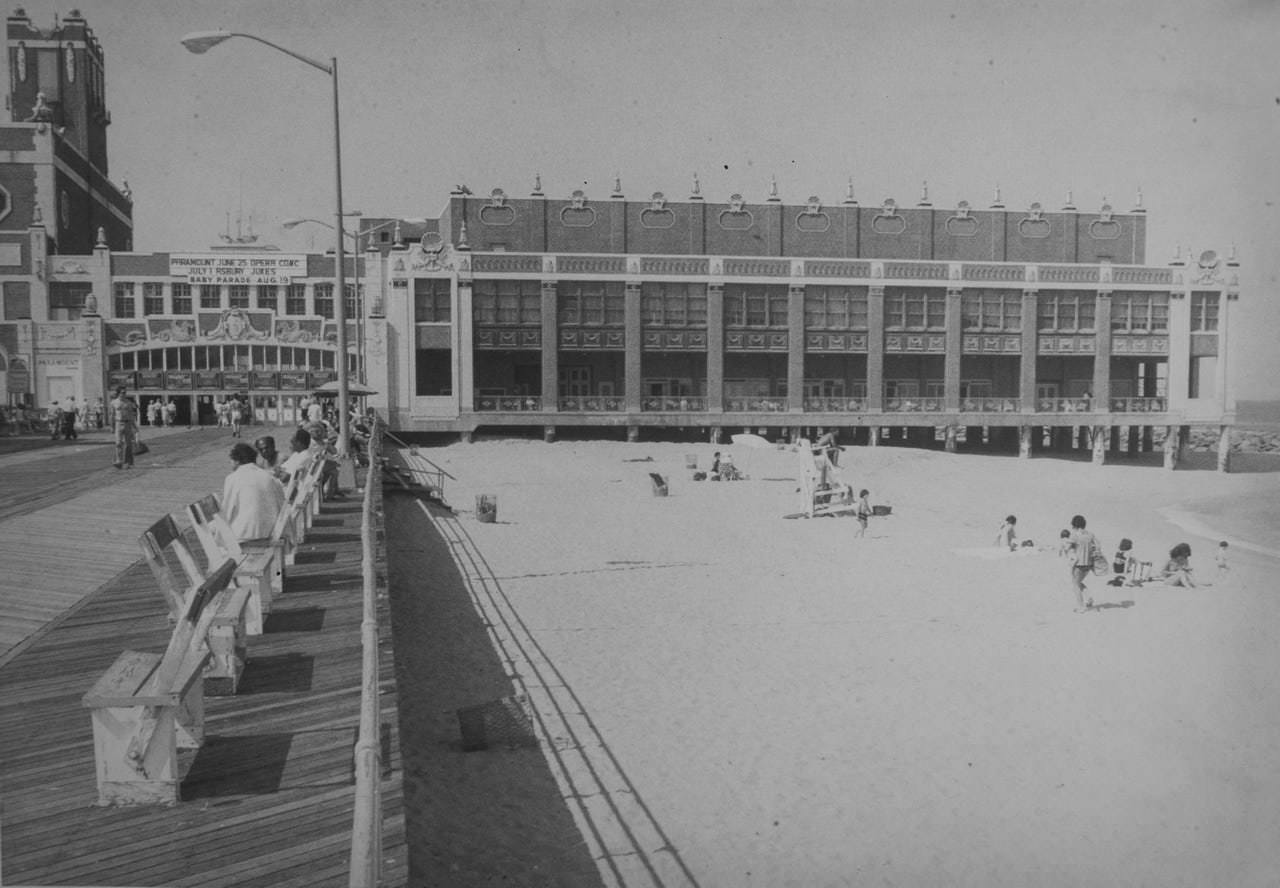
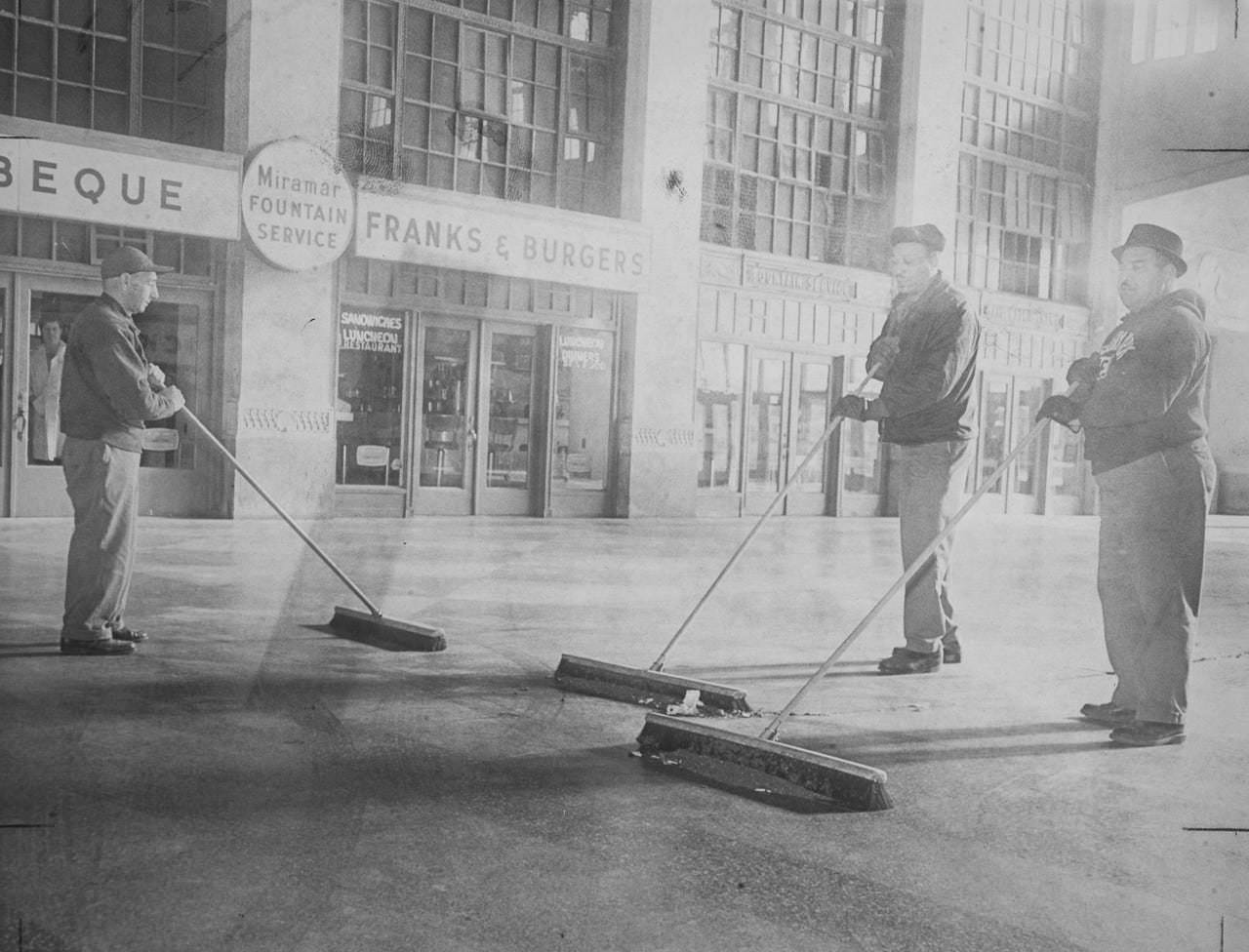
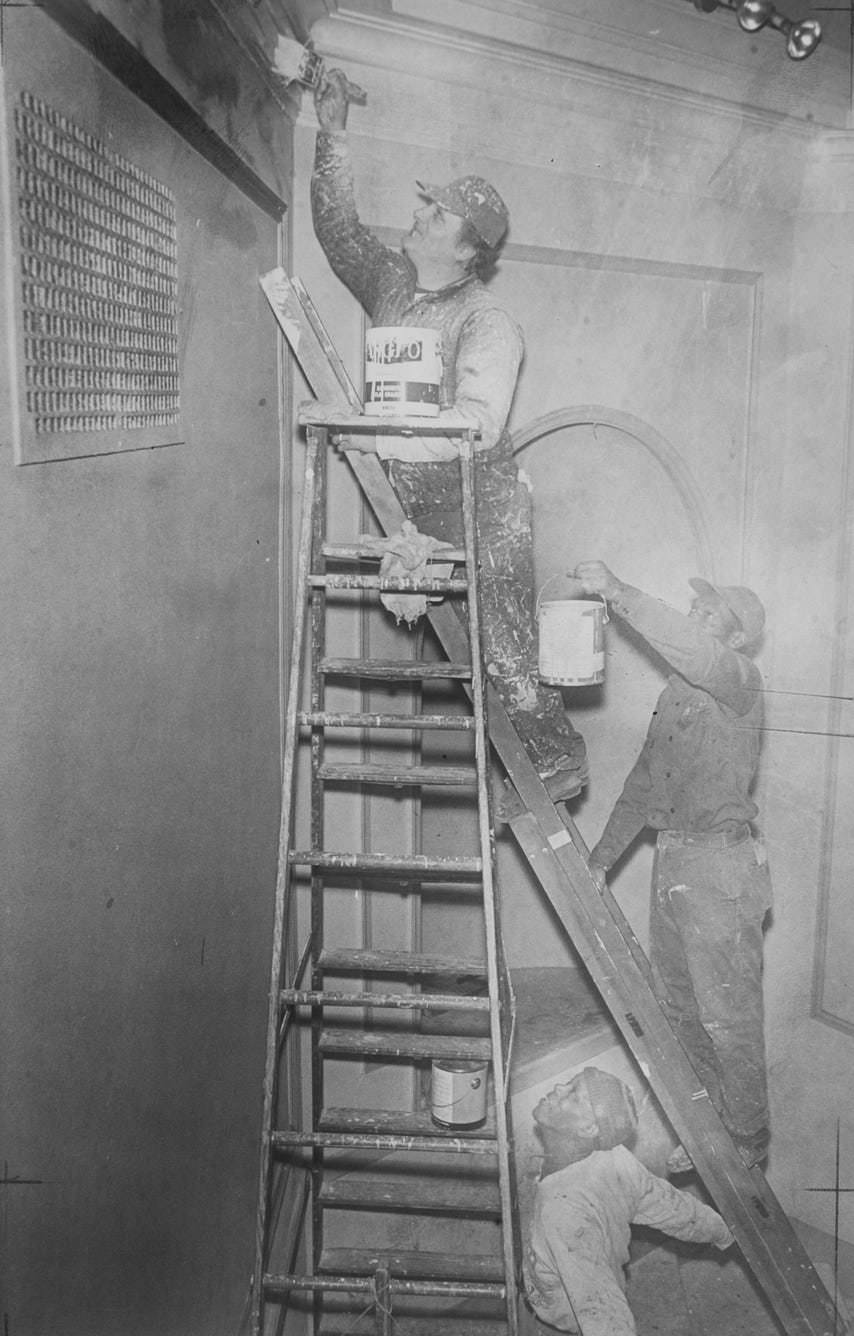
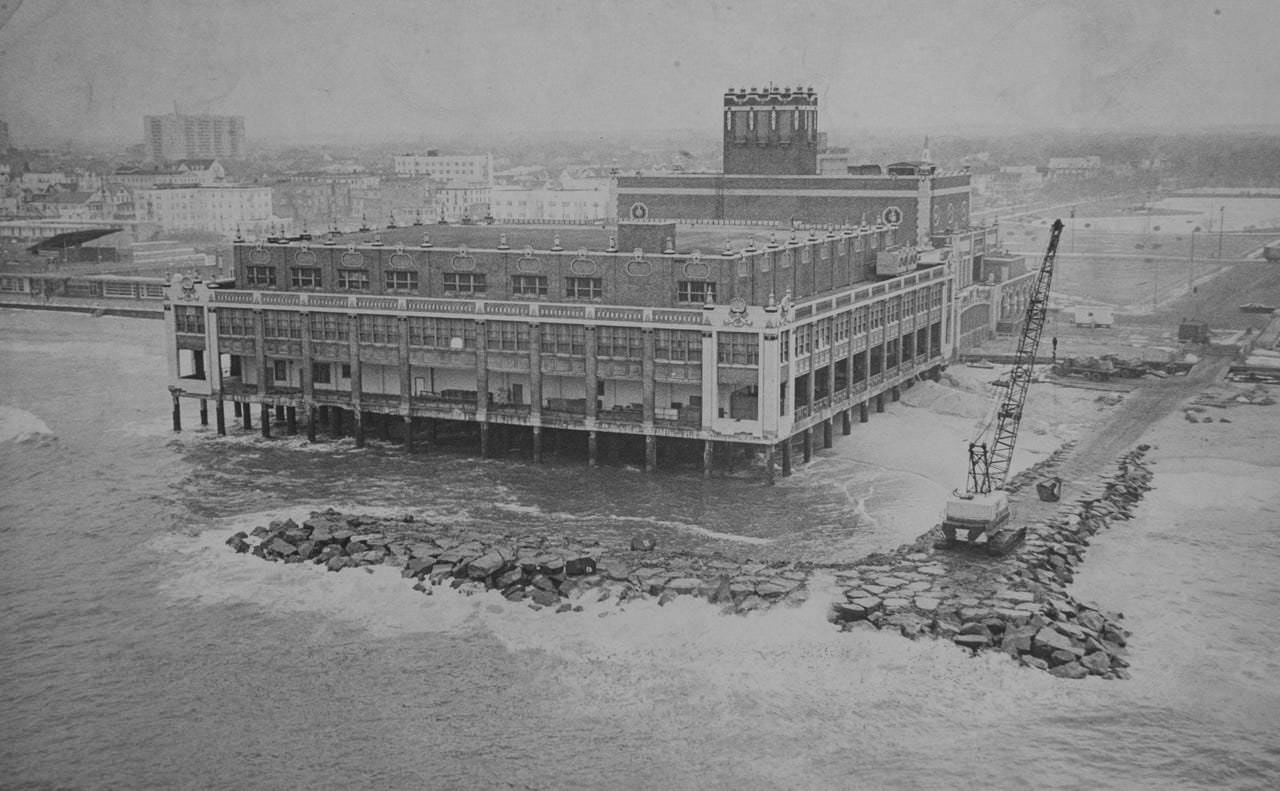
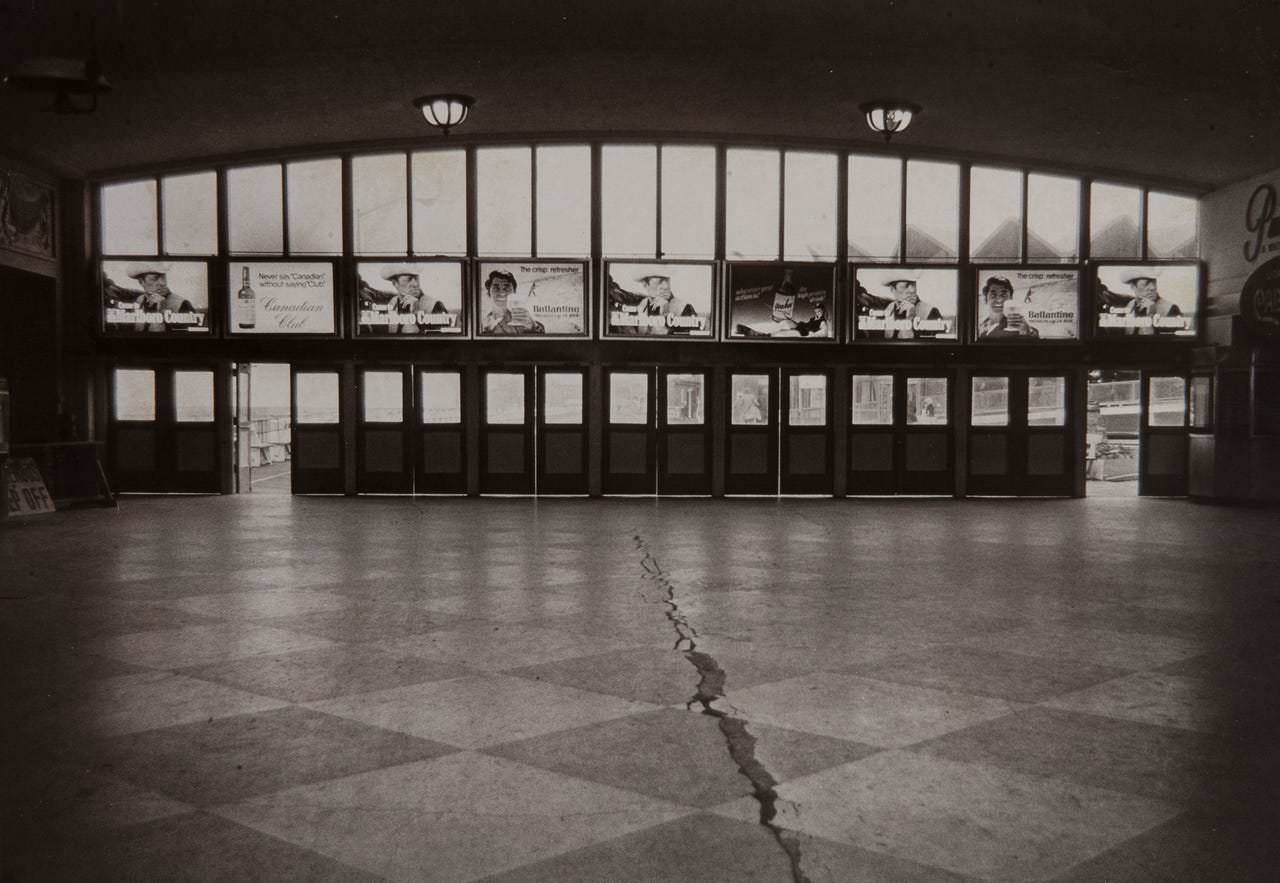
Convention Hall required ongoing maintenance throughout its history. A breakwater project in 1970 addressed erosion and structural concerns near the building’s ocean-facing foundation. Workers spent months on the project, reinforcing the structure against the relentless pressure of the Atlantic. Interior photographs from 1972 show the vast open floor of the hall, capable of holding thousands of people for large-scale events.
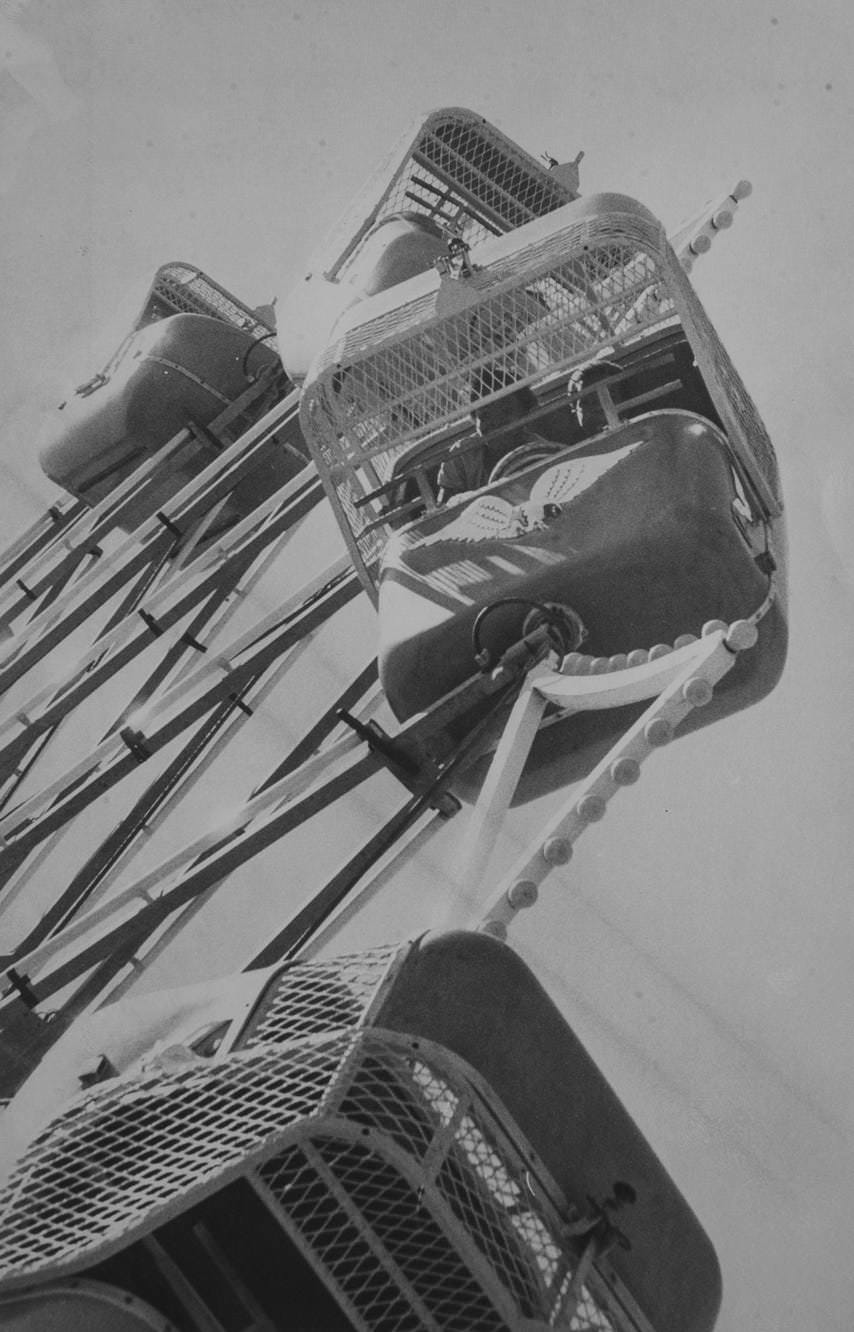
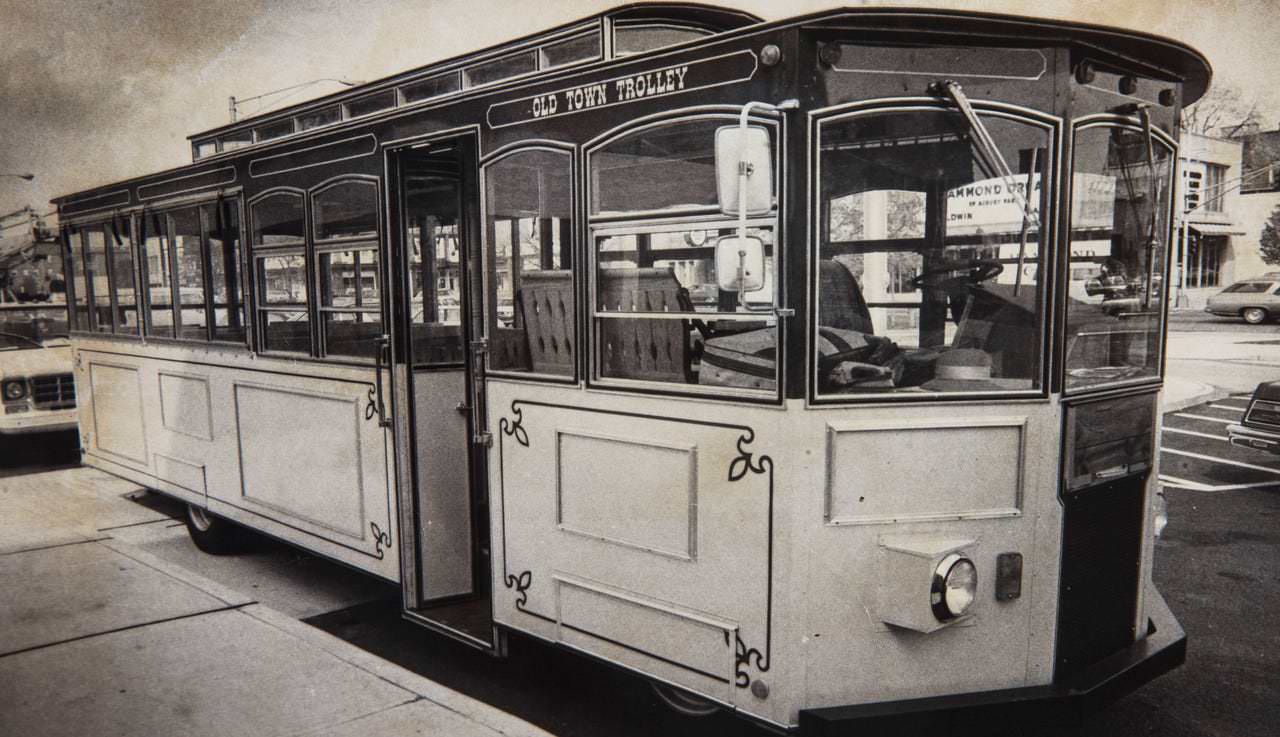
The Oceanic Rides section of the boardwalk was a major draw for families visiting Asbury Park through the late 1970s. Photographs from 1979 show the rides still in active operation, with colorful signage and mechanical attractions clustered near the water. A trackless trolley toured the city in 1981, offering visitors a way to move through the downtown and boardwalk areas without walking the full length of the strip.
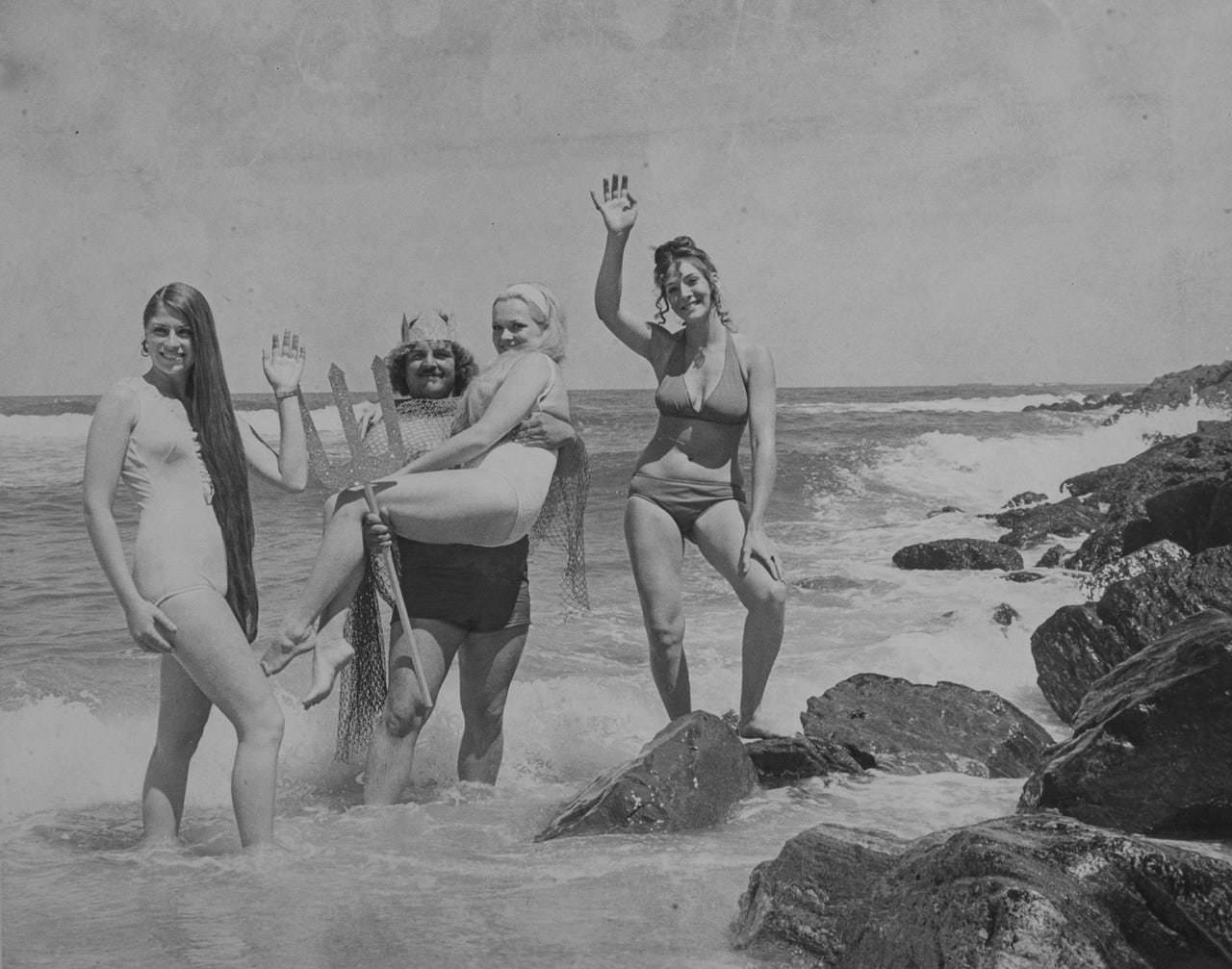
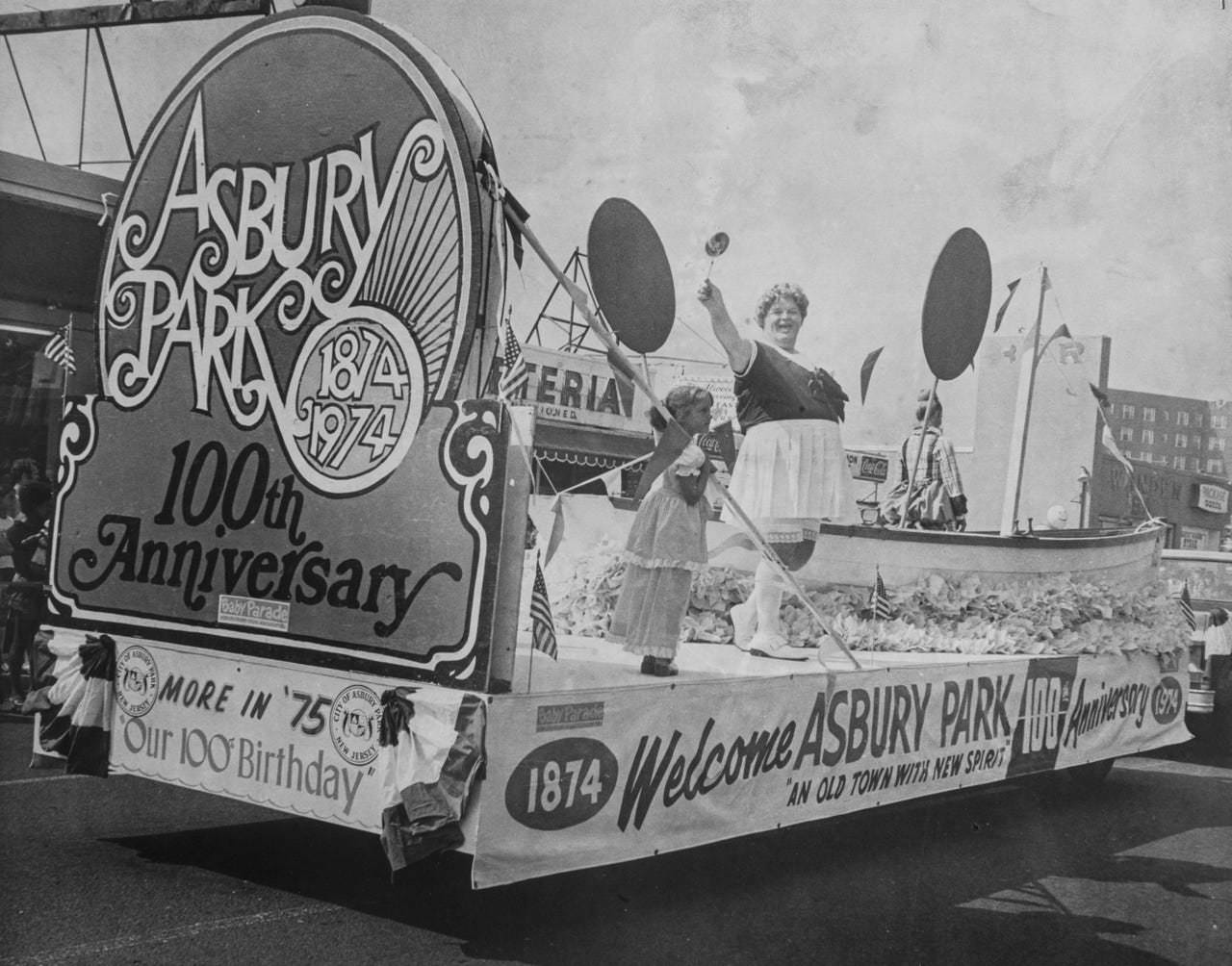
The Baby Parade tradition carried on well into the 1970s. The 1974 parade drew crowds just as it had in the 1920s, with decorated floats and costumed children moving along the boardwalk route. It remained one of the few civic traditions that connected Asbury Park’s early resort identity to its later decades, offering a direct thread from the city’s Gilded Age origins to its mid-century and modern character.
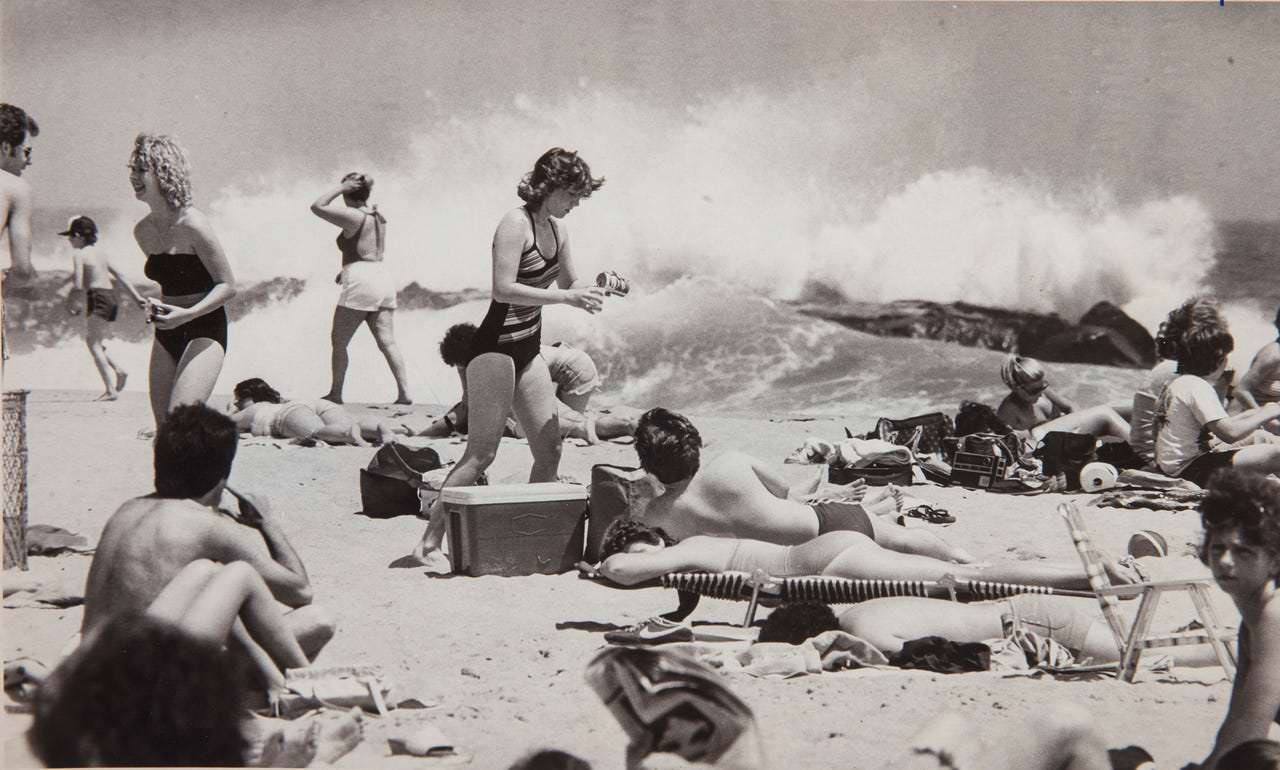
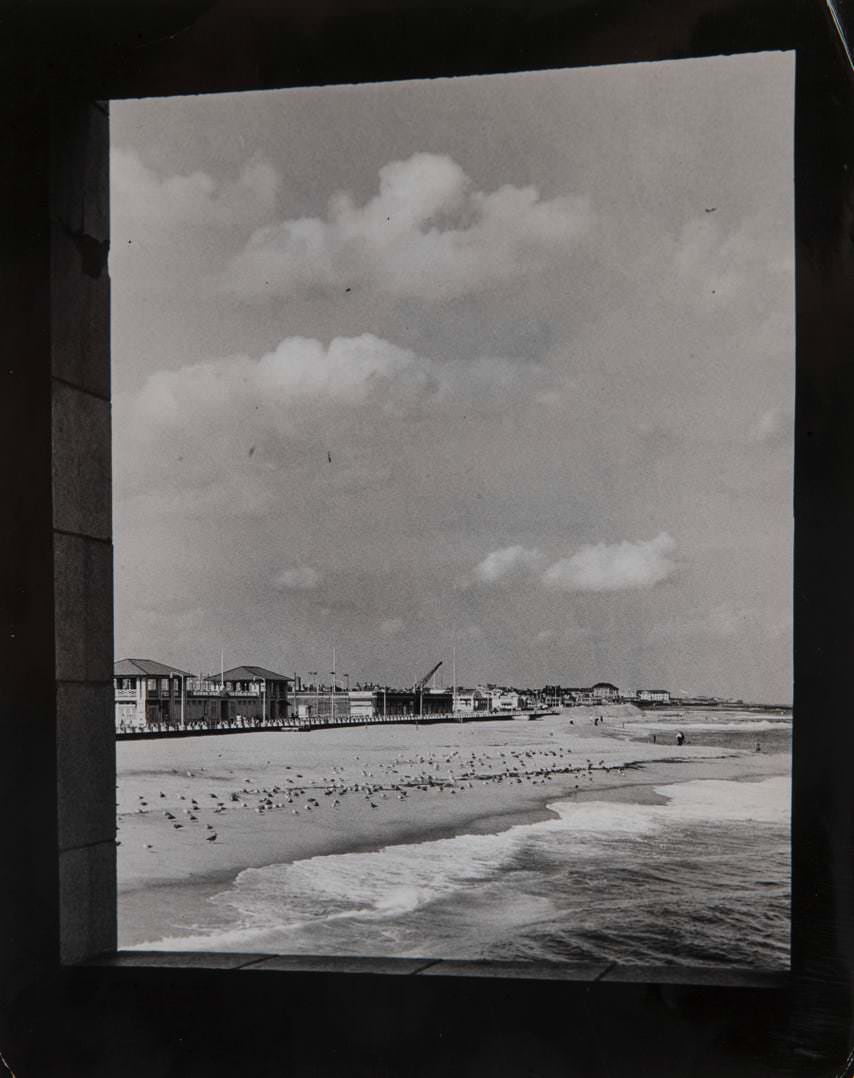
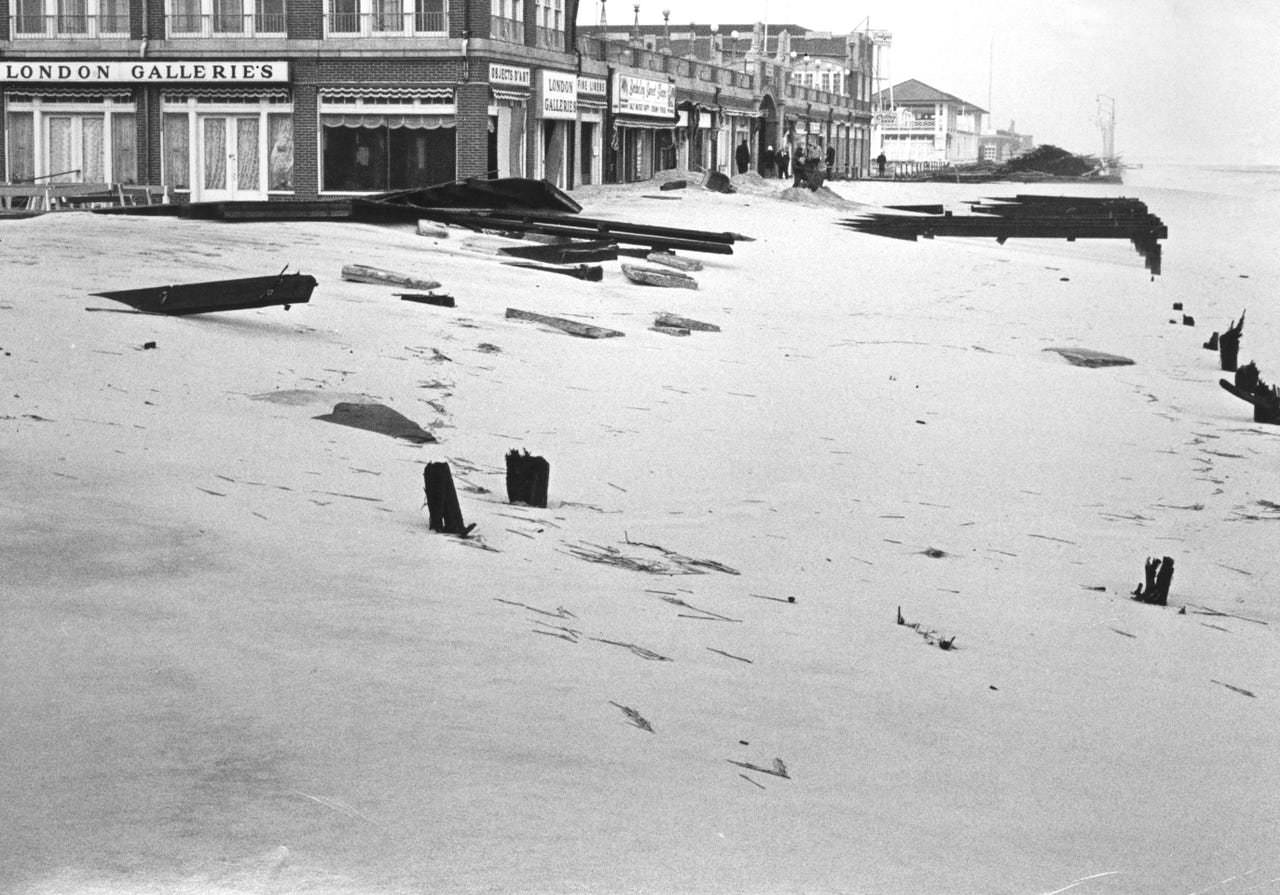
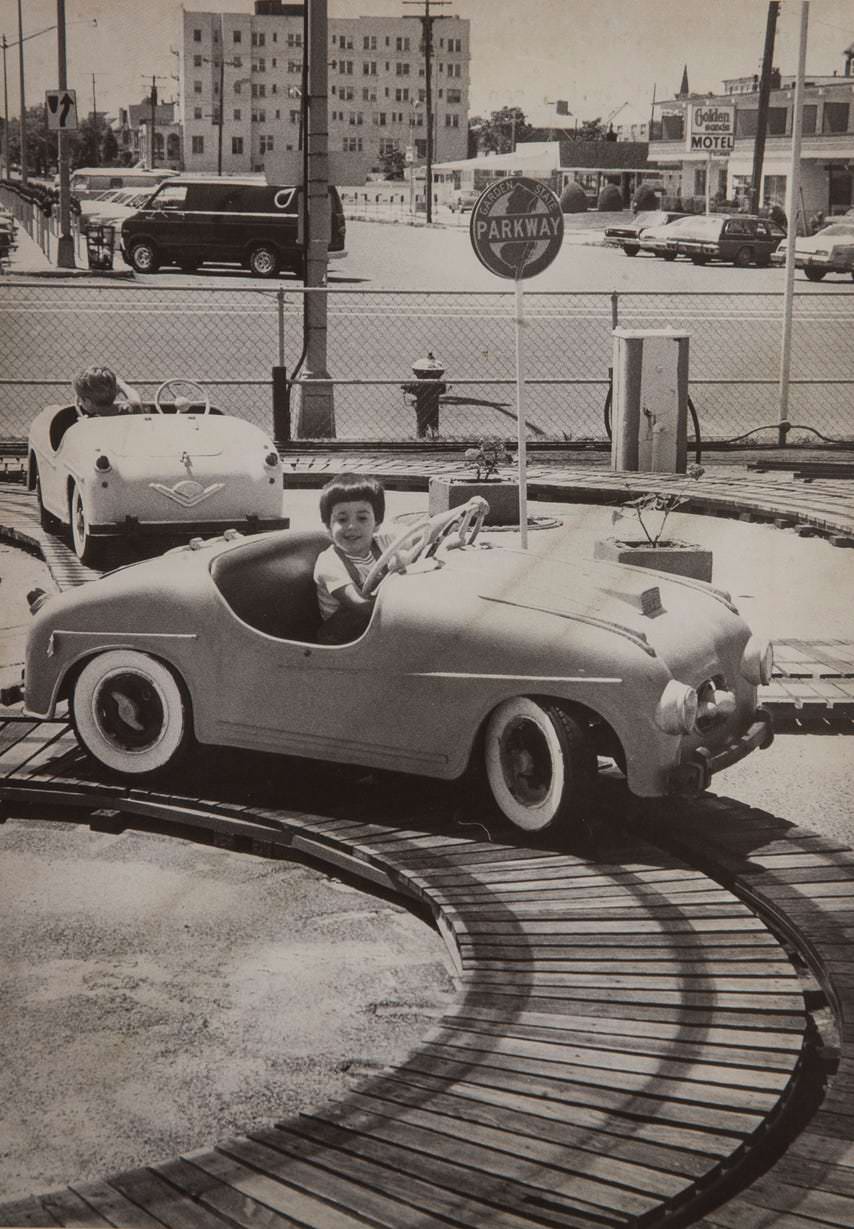
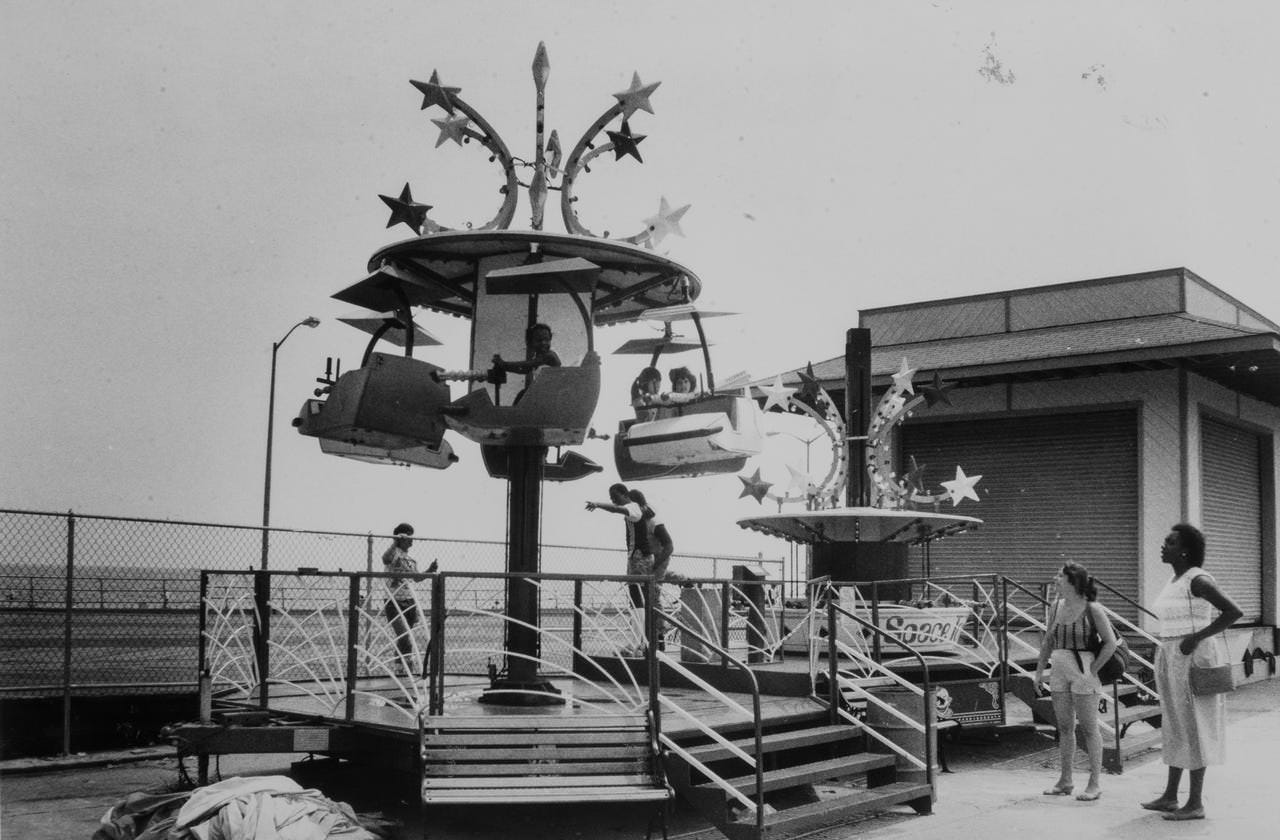
The Kiddie Amusement Center, photographed in 1987, was one of the last active amusement attractions on the boardwalk before the city’s full commercial decline set in. Small rides scaled for young children occupied a section of the boardwalk that had once been packed with larger mechanical attractions. By the 1980s, the boardwalk’s amusement zone was a much quieter version of what it had been at its peak. The beachfront photograph from 1980 shows a stretch of sand and sea wall that still carried the bones of a great resort city — one that had spent over a century drawing people to the Jersey Shore.





These are awesome
No one in this photo is obese.
It didn’t matter. Life expectancy in mid- late 40’s…
Why don’t we dress up like that to go out anymore?
Do you really want to go to the beach in a suit, bowtie, and hat where all the girls are covered from head to foot? I don’t think that’s a good idea.
Did you ever see a photo of people at baseball games in the early 1900s? There are top hats everywhere.
Did the boardwalk move inland or were the water levels higher back then?
Our tax dollars were spent on dumping sand on the beaches and making them bigger by the Army Corp. of Engineers. They argued that they were eroding. Although pictures like this make it clear they weren’t eroding as much as they claim. Everything was built really close to the water from the beginning.
Lots of these at JSUMC