Dolls are among the oldest objects ever made by human hands. Across every known culture and civilization, people crafted figures from whatever materials they had — clay, stone, wood, bone, leather, and ivory. Archaeologists uncovered wooden paddle dolls inside Egyptian tombs dating to the 21st century BC. By at least 200 BC, dolls with movable limbs and removable clothing already existed. In ancient Rome, children played with figures made from clay, wood, or ivory. Written accounts from ancient Greece around 100 AD confirm that young girls used dolls as everyday playthings. In some traditions, dolls carried far more weight than a child’s toy — they held spiritual, magical, and ritual meaning. The fifteen dolls shown here span roughly four centuries, from the mid-1400s to the late 1800s. Some were children’s toys. Others served ceremonial or decorative purposes. All of them carry the particular strangeness that comes with age — worn faces, fixed expressions, and the quiet weight of hands long gone.
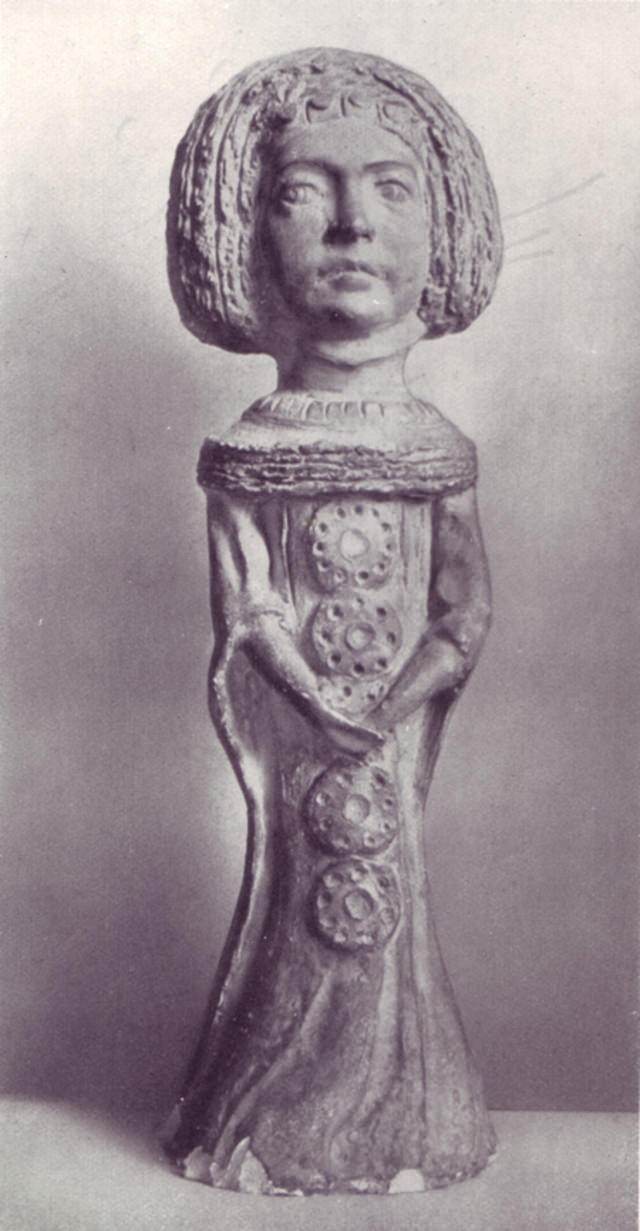
This Gothic clay doll from Nuremberg dates to around 1450, placing it squarely in the late medieval period. Nuremberg was already becoming one of Europe’s leading toy-making centers at this time, and clay figures like this one were common playthings for children of modest means. The rough, hand-formed features give it an almost mask-like quality that feels far removed from the polished dolls of later centuries.
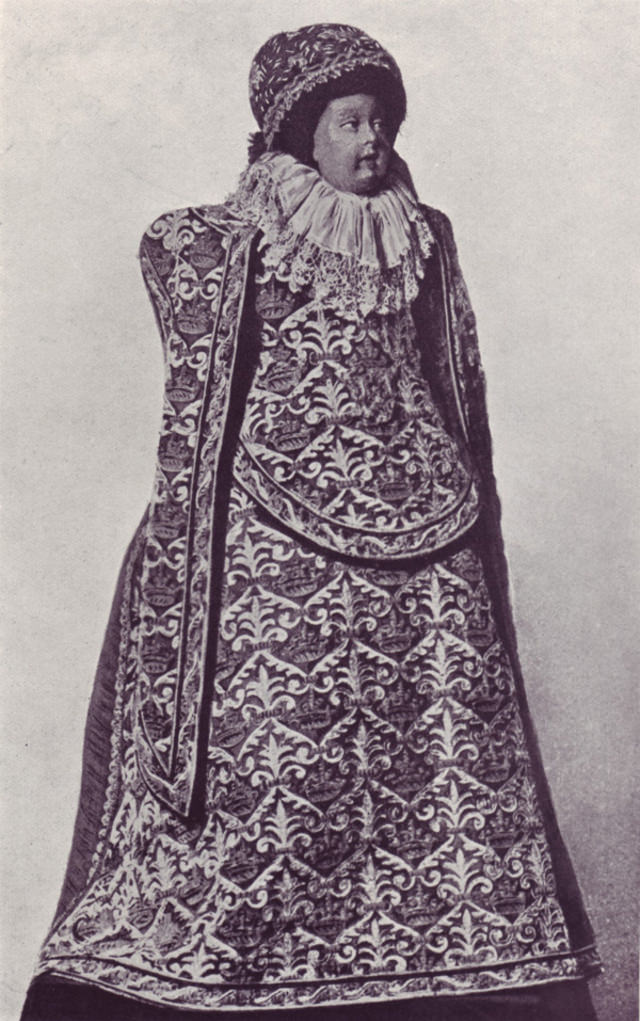
By the end of the 16th century, Spanish doll-making had developed its own distinct character. This example shows the detailed clothing construction that was typical of the era — fabric, stitching, and layered garments were often as carefully made as the doll’s body itself. Dolls from this period in Spain frequently reflected the fashions of the upper class, serving as miniature portraits of contemporary dress.
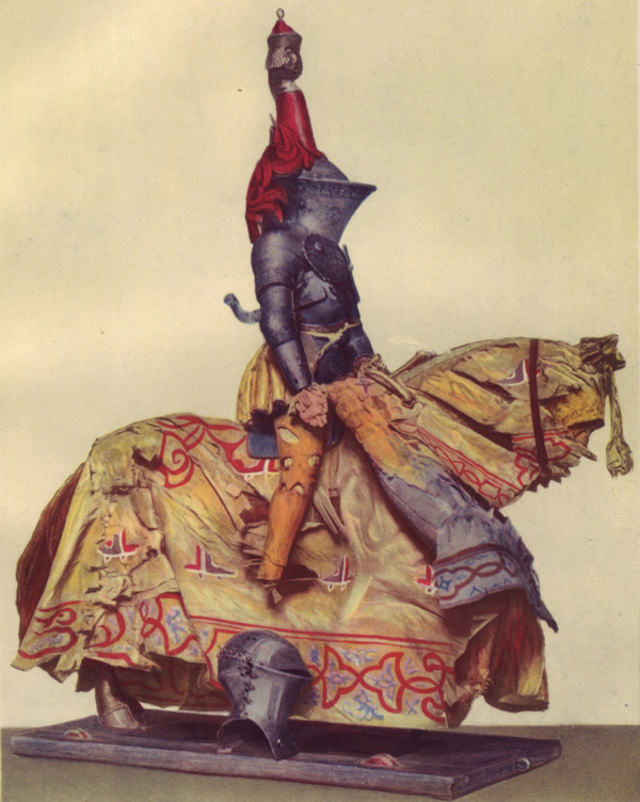
Not all early figures were made for children. This German knight figure from around 1520 bears the heraldic arms of a patrician Nuremberg family and was dressed in full tournament armor. Figures like this were crafted to commemorate real people and real events, functioning more as status objects than toys. The level of detail in the armor and insignia marks it as the work of a skilled craftsman, not a mass-produced item.
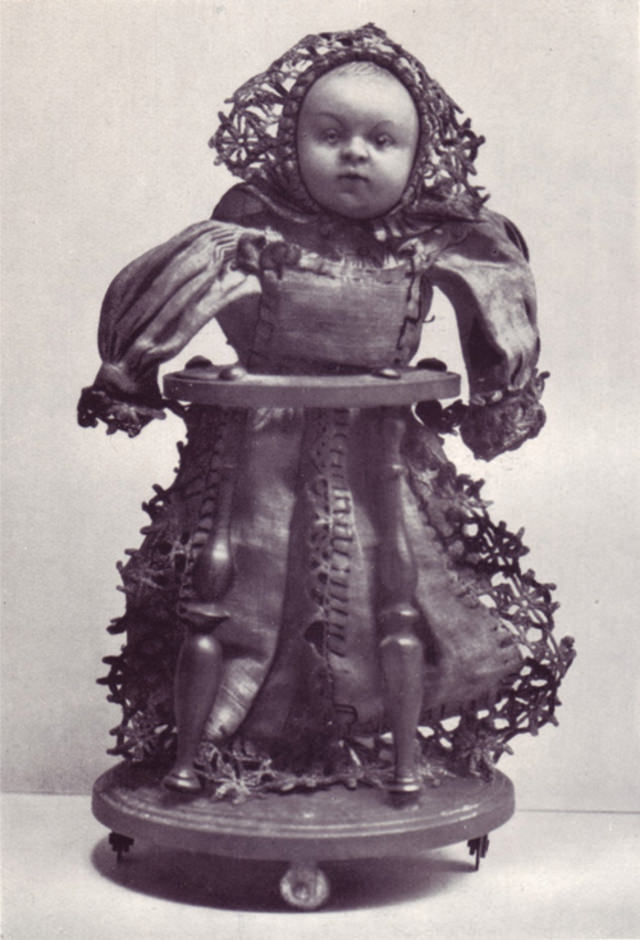
German doll-making expanded significantly through the 17th century, with workshops in cities like Nuremberg and Sonneberg producing figures for both domestic use and export across Europe. This 17th-century German doll shows the stiff, upright posture and simplified facial features common to the period. The face was often painted directly onto wood or papier-mâché, with little variation between individual pieces.
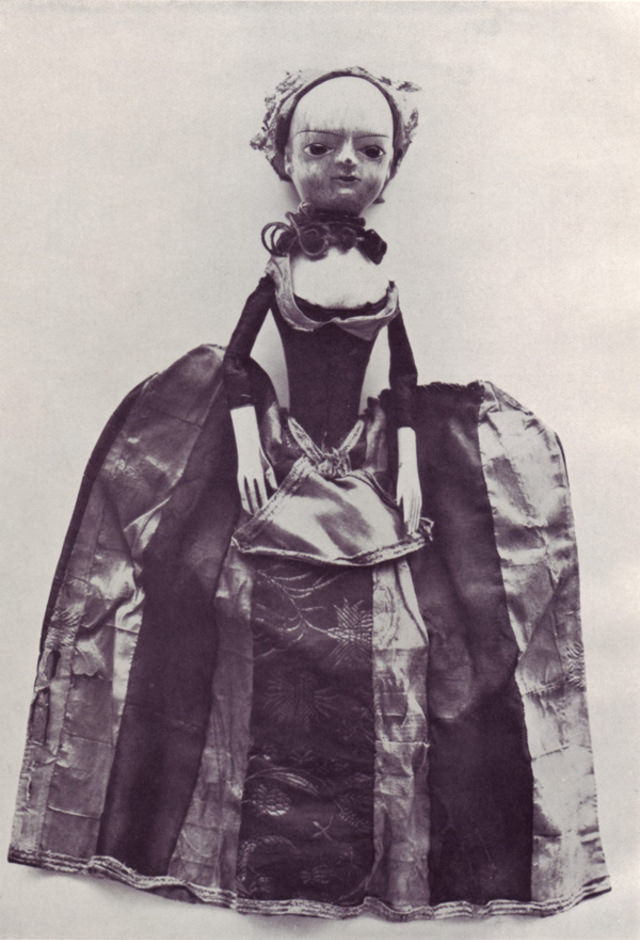
English dolls from the late 17th century tended to use fabric-stuffed bodies with wooden or wax heads. This example reflects the simpler construction methods used in England compared to the more industrious German workshops of the same era. The clothing on English dolls from this period is often the most historically valuable element, as it was frequently made from actual fabric scraps that mirrored real garments worn at the time.
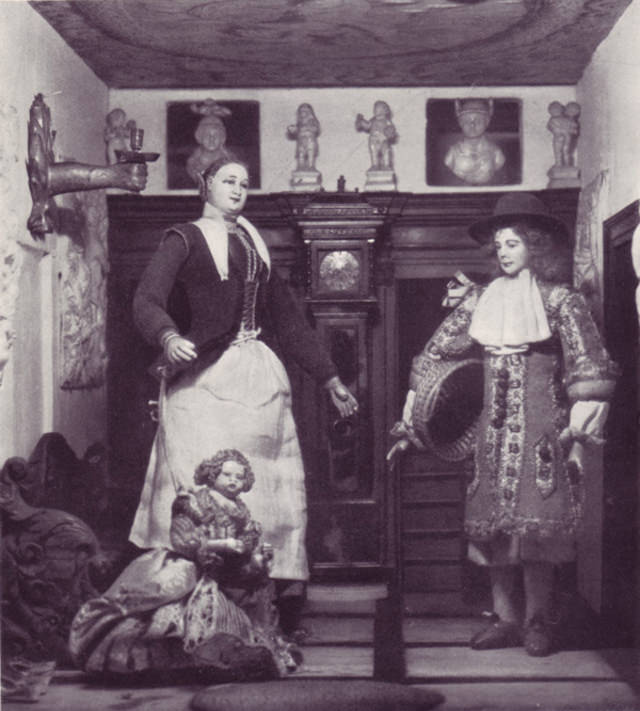
Doll’s houses were a serious and expensive hobby among wealthy Dutch and German households in the 17th century. These domestic figures from the Utrecht doll’s house, made around 1670, were not toys for children — they were display pieces owned by adult women. The figures represent household servants, dressed in period-accurate working clothes. Every detail of a doll’s house, including its human figures, was meant to reflect the real world in miniature.
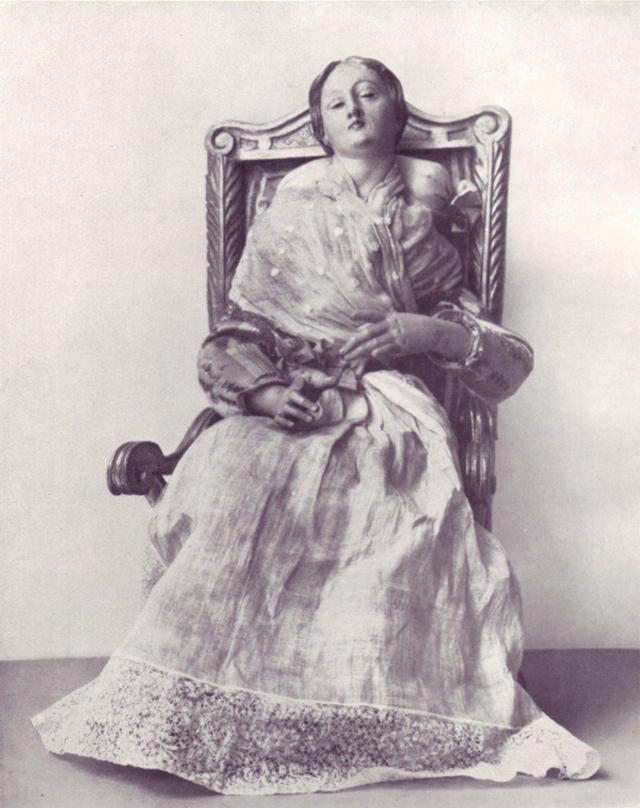
France became a dominant force in the European doll trade during the 18th century, largely because French dolls were used as fashion vehicles. Dressmakers and merchants sent elaborately dressed dolls to clients across Europe and the Americas to showcase the latest Parisian styles. This 18th-century French doll carries that tradition — its clothing and presentation were likely just as important as the figure itself.
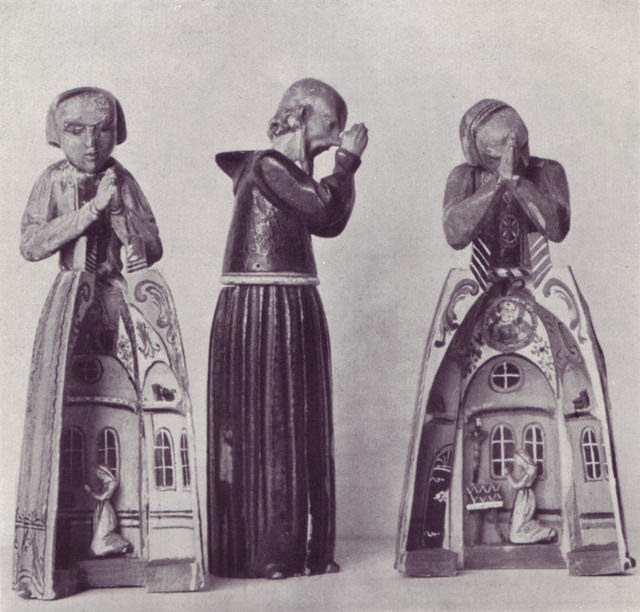
Berchtesgaden, a town in the Bavarian Alps, was famous throughout Europe for its carved wooden toys. These monk and nun figures, designed to open up, were among the region’s most recognized export products in the 18th century. The religious subject matter was not unusual for the period — carved religious figures occupied a space between devotional object and novelty toy, particularly in Catholic regions of Germany and Austria.
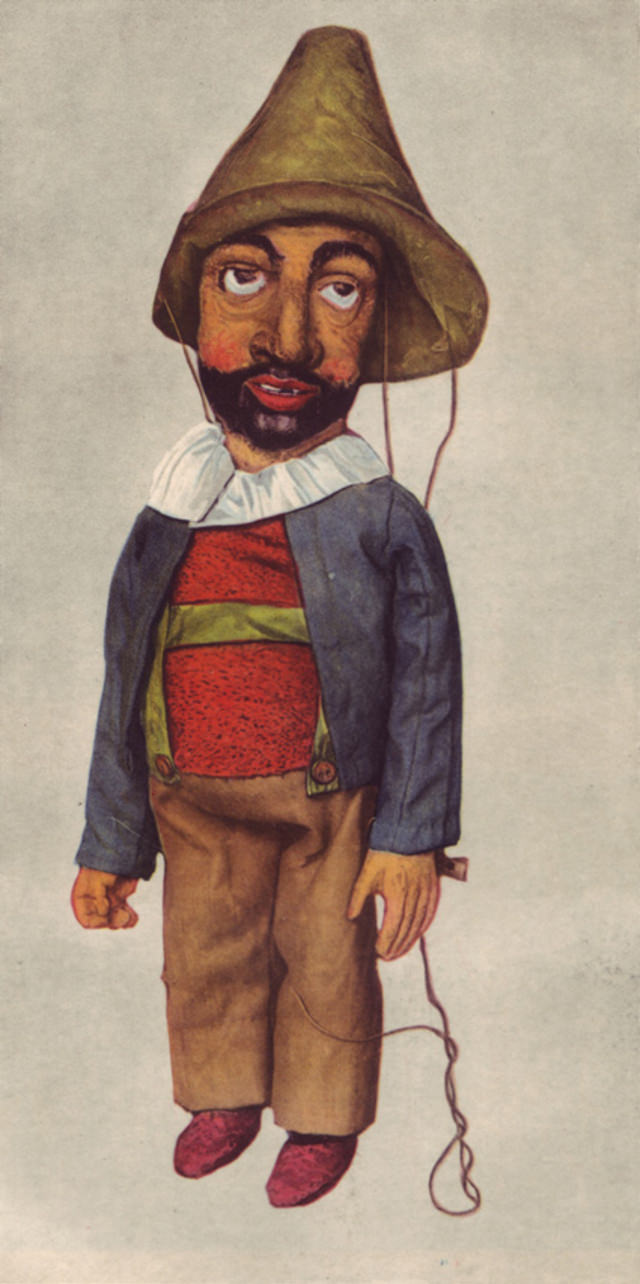
Kasperl — the German and Austrian equivalent of the English Punch — was the central character of popular puppet theater throughout the 18th century. This marionette version shows the exaggerated, grotesque features that defined the character: a broad grin, oversized nose, and wide eyes. Marionette theaters traveled through towns and city squares, and Kasperl’s crude humor and chaotic energy made him a crowd favorite across all social classes.
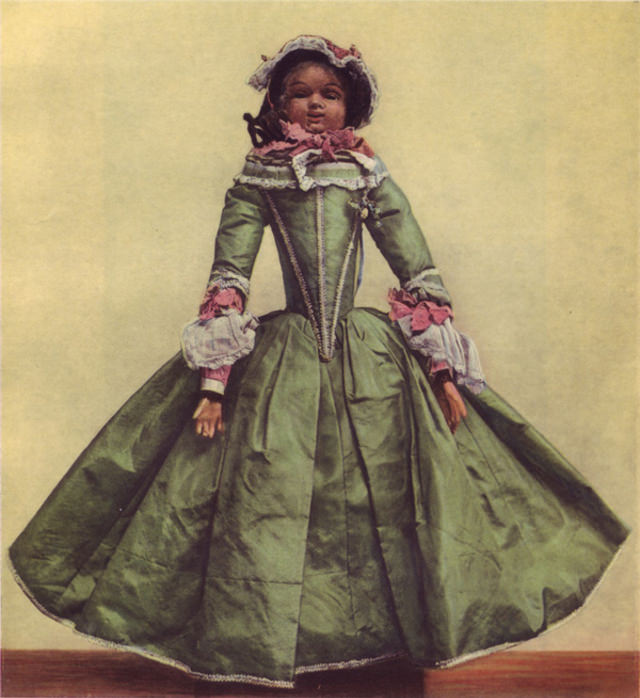
The rococo period brought more elaborate dress and ornamentation to German doll-making. Figures from this era were often clothed in silk, lace, and embroidered fabrics that mirrored the fashions of the aristocracy. The doll’s fixed porcelain or wax face, framed by an elaborate wig or styled hair, gave it the frozen, formal expression that many people today find deeply unsettling.
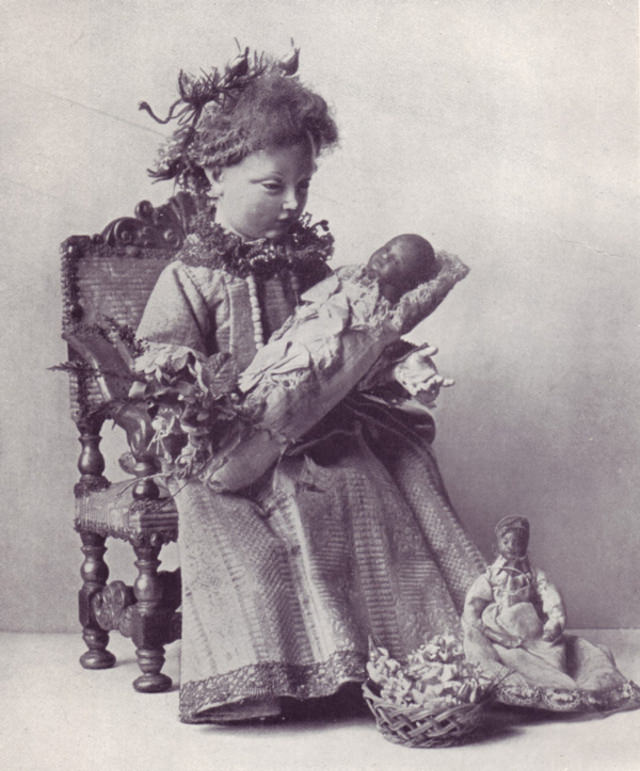
This German image from the 18th century shows a child holding a doll, offering a rare glimpse of how these objects actually appeared in use. The child’s doll is small and simply made, a stark contrast to the elaborate rococo pieces produced for wealthier households. For most children of the period, a doll was a roughly shaped figure of wood or cloth, not a finely crafted object.
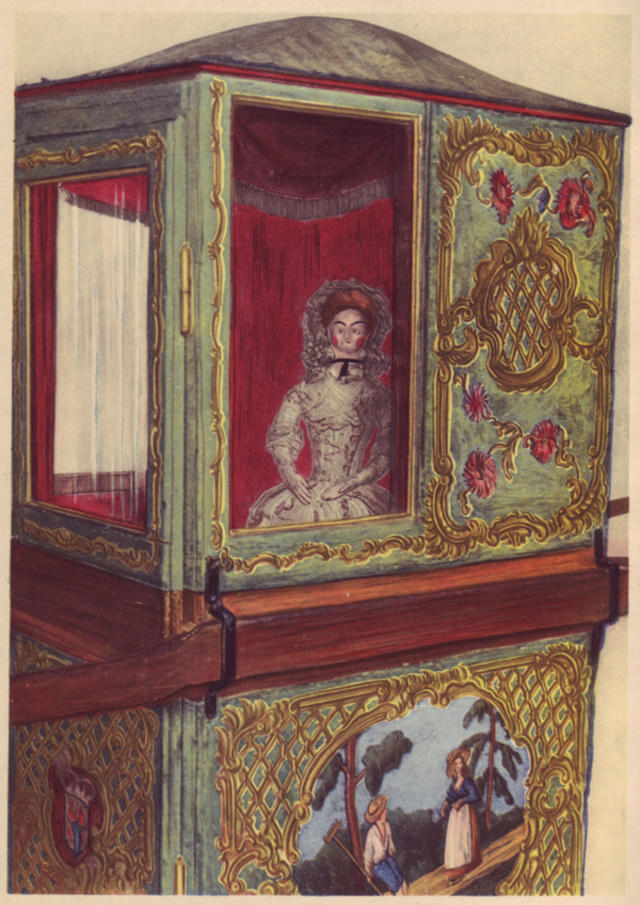
Around 1750, German craftsmen produced this extraordinary piece — a doll seated inside a fully detailed rococo sedan chair. Sedan chairs were a common form of upper-class transport in 18th-century Europe, carried through city streets by servants. Recreating one in miniature, complete with a dressed doll passenger, required significant skill and expense. Objects like this blurred the line between toy and decorative art.
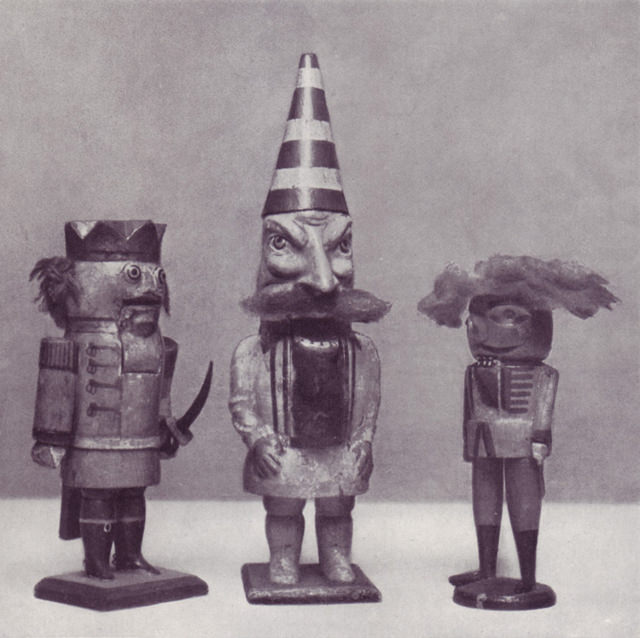
The Thuringia region of Germany was one of the most productive toy-making areas in the world throughout the 19th century. Wooden toys from Thuringia — including turned figures, animals, and dolls — were exported globally, reaching markets in North America, Britain, and beyond. The figures shown here reflect the simplified, lathe-turned style that allowed craftsmen to produce large quantities efficiently while keeping costs low.
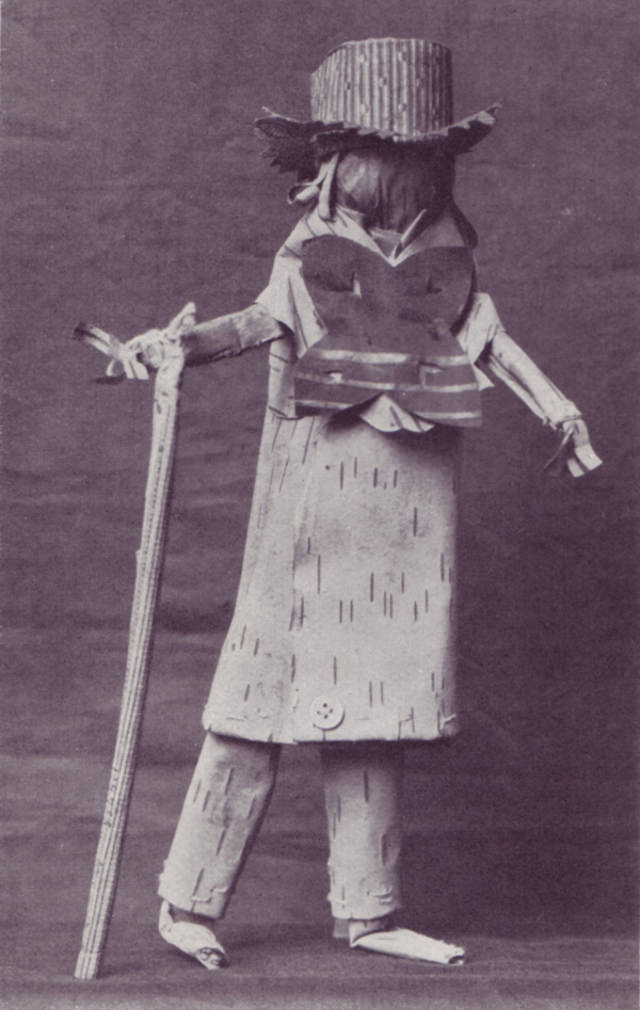
In Scandinavia, birchbark was a readily available and practical material for folk crafts. These 19th-century Swedish dolls made from birchbark represent a regional tradition quite separate from the commercial toy industries of Germany and France. Birchbark is flexible, durable, and easy to shape, making it well-suited for simple figure-making. These dolls were almost certainly homemade rather than commercially produced.
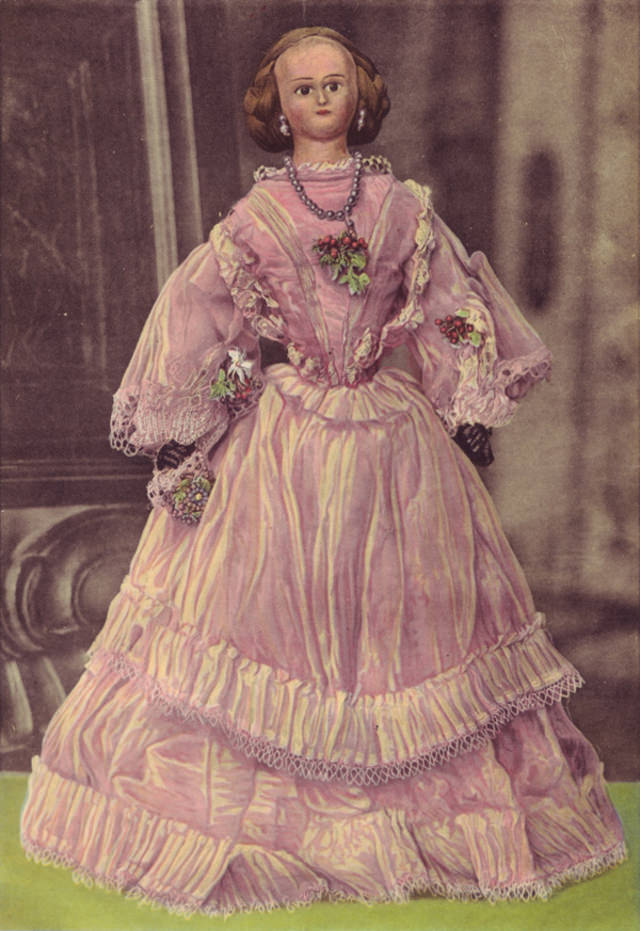
By 1860, German doll manufacturing had shifted toward industrialized production. Papier-mâché and later bisque porcelain heads were produced in large numbers, fitted onto cloth or leather bodies. This 1860 German doll shows the more refined facial molding that became possible with improved manufacturing techniques. The glassy fixed stare — a result of painted or glass eyes set into a rigid head — is what gives dolls of this era their particularly haunting quality when viewed today.