
Tallahassee has served as Florida’s capital city since 1824, three years after the city was founded in 1821. It sits at the center of a region built on lumbering, agriculture, and livestock, making it both a political hub and a working trade city. The area carries a humid subtropical climate — long, hot summers, short mild winters, and notably dry springs and autumns. During the Civil War, Union forces swept through Confederate state capitals east of the Mississippi River and captured every single one — except Tallahassee. That distinction stuck. By the 1950s, the city was a lively mix of government, university culture, rural tradition, and social change. The photographs below were taken by press photographers working across the region during that decade, capturing moments both ordinary and remarkable.
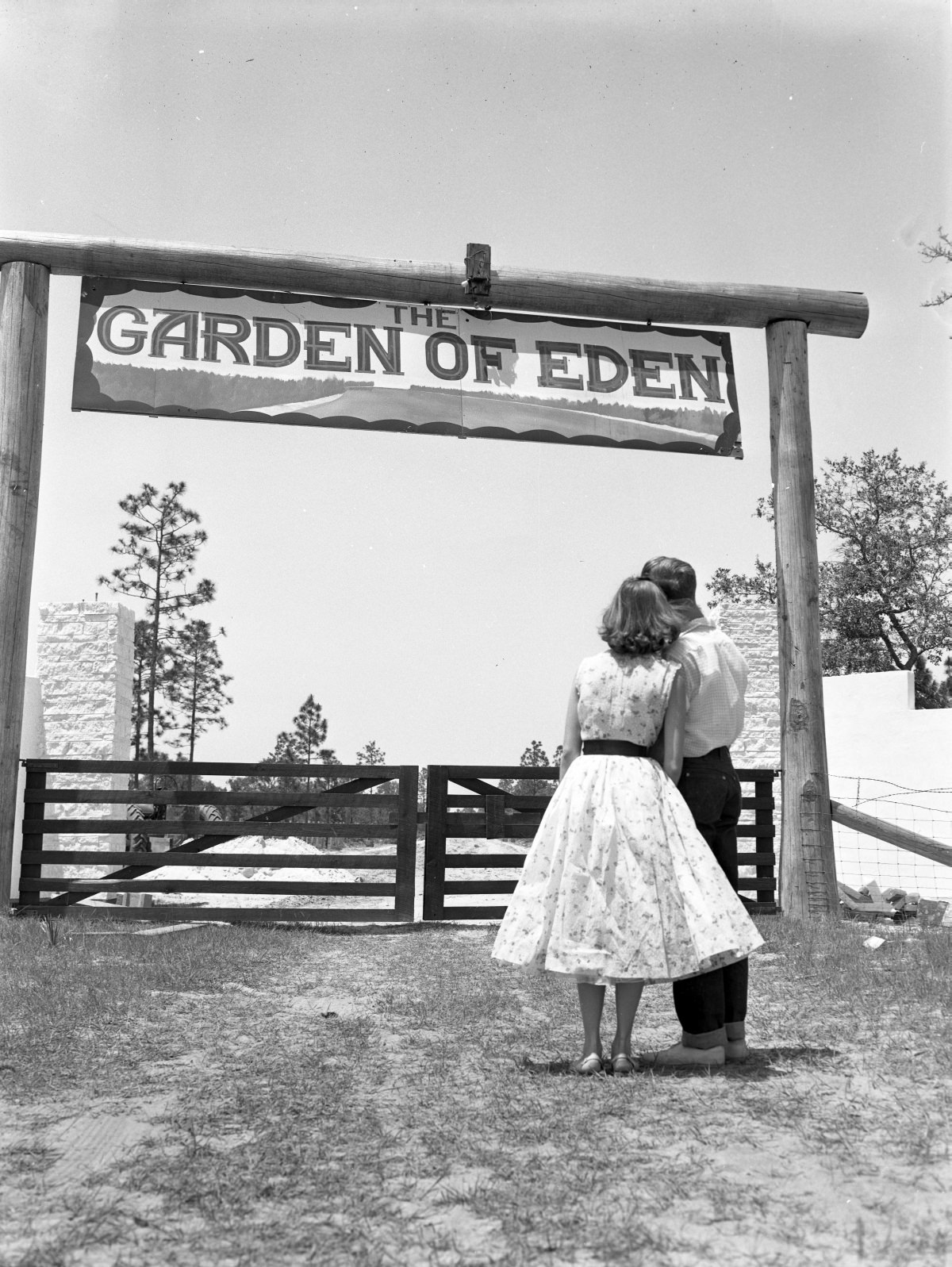
Just northwest of Tallahassee, near the small town of Bristol, lies a stretch of land along the Apalachicola River that locals have long called the Garden of Eden. In March 1953, photographers documented visitors exploring the site, which features ancient ravines, rare plant species, and a local belief that it marks the actual biblical Garden of Eden.
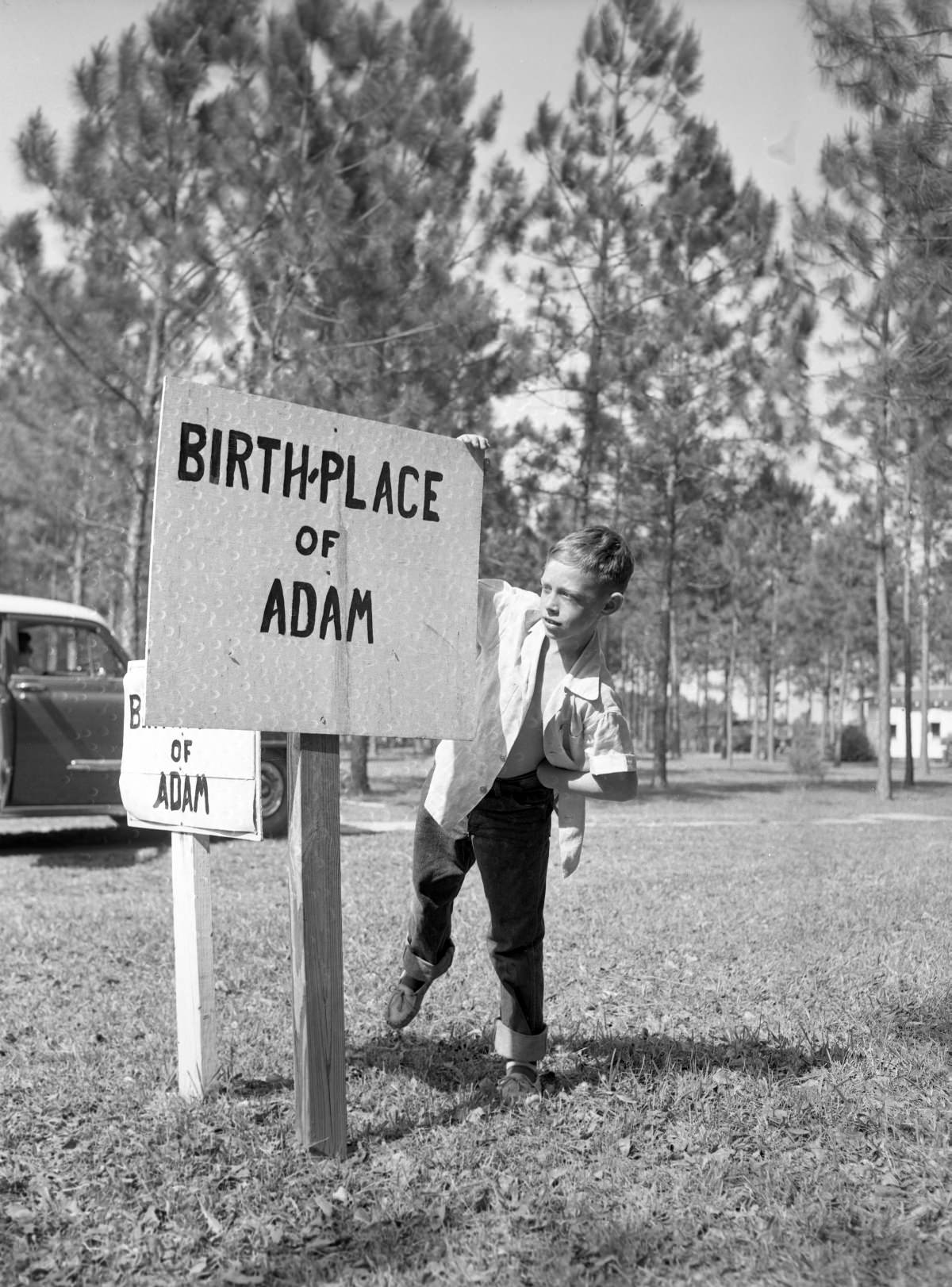
The site drew curious visitors from across the state. One of them was Joe Kerce, photographed standing beside a sign that boldly declared the location the “birthplace of Adam.” The claim was promoted by E.E. Callaway, a local minister and amateur historian who spent years building the case that northwest Florida was the cradle of human civilization.
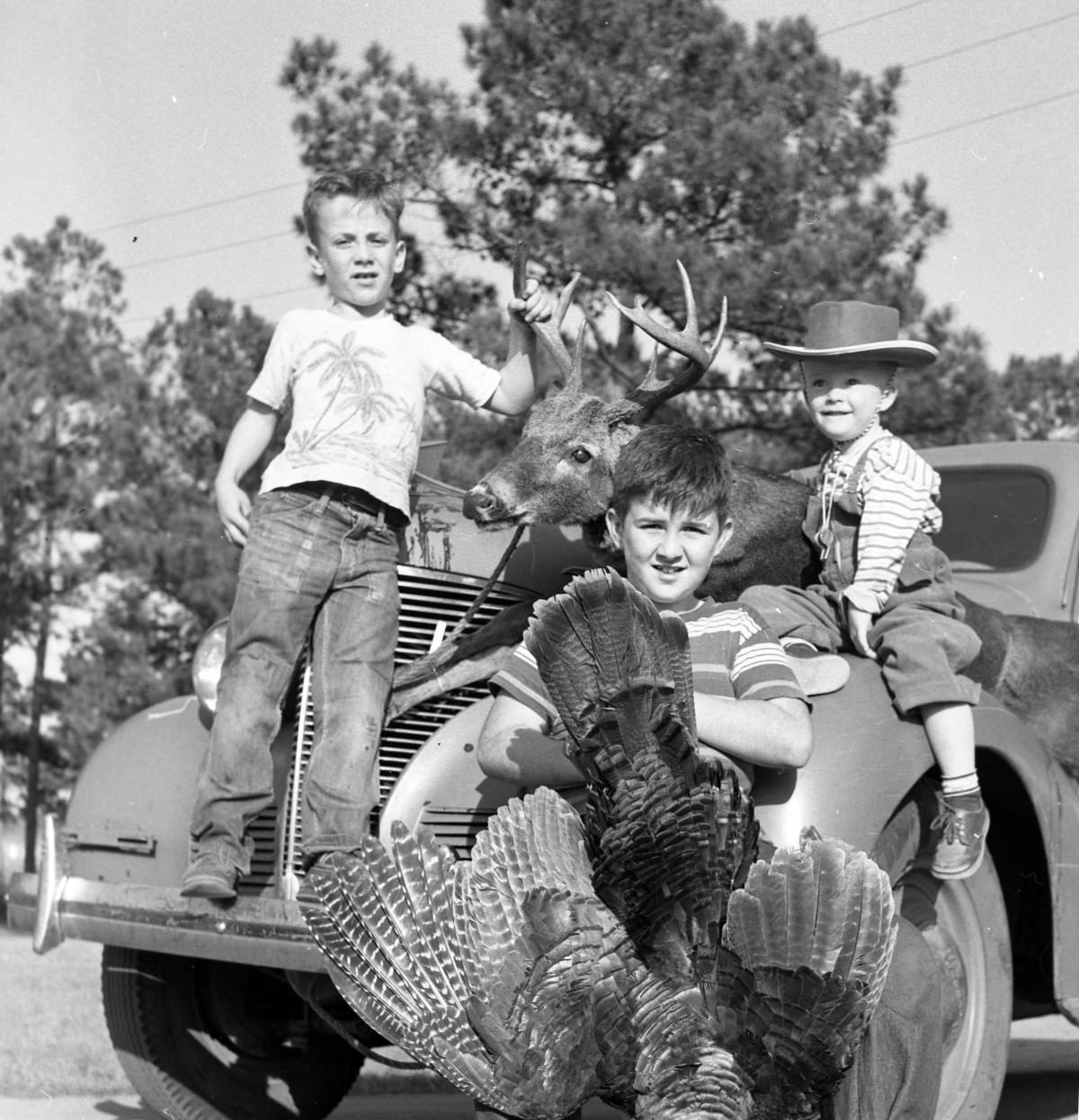
Hunting was a deeply rooted part of life across the Florida panhandle. In January 1955, the Clark children were photographed with the results of a successful outing — deer and wild turkey, the two prizes of a North Florida hunt. For many rural families in Leon County and the surrounding area, hunting was less a hobby and more a way of supplementing the household.
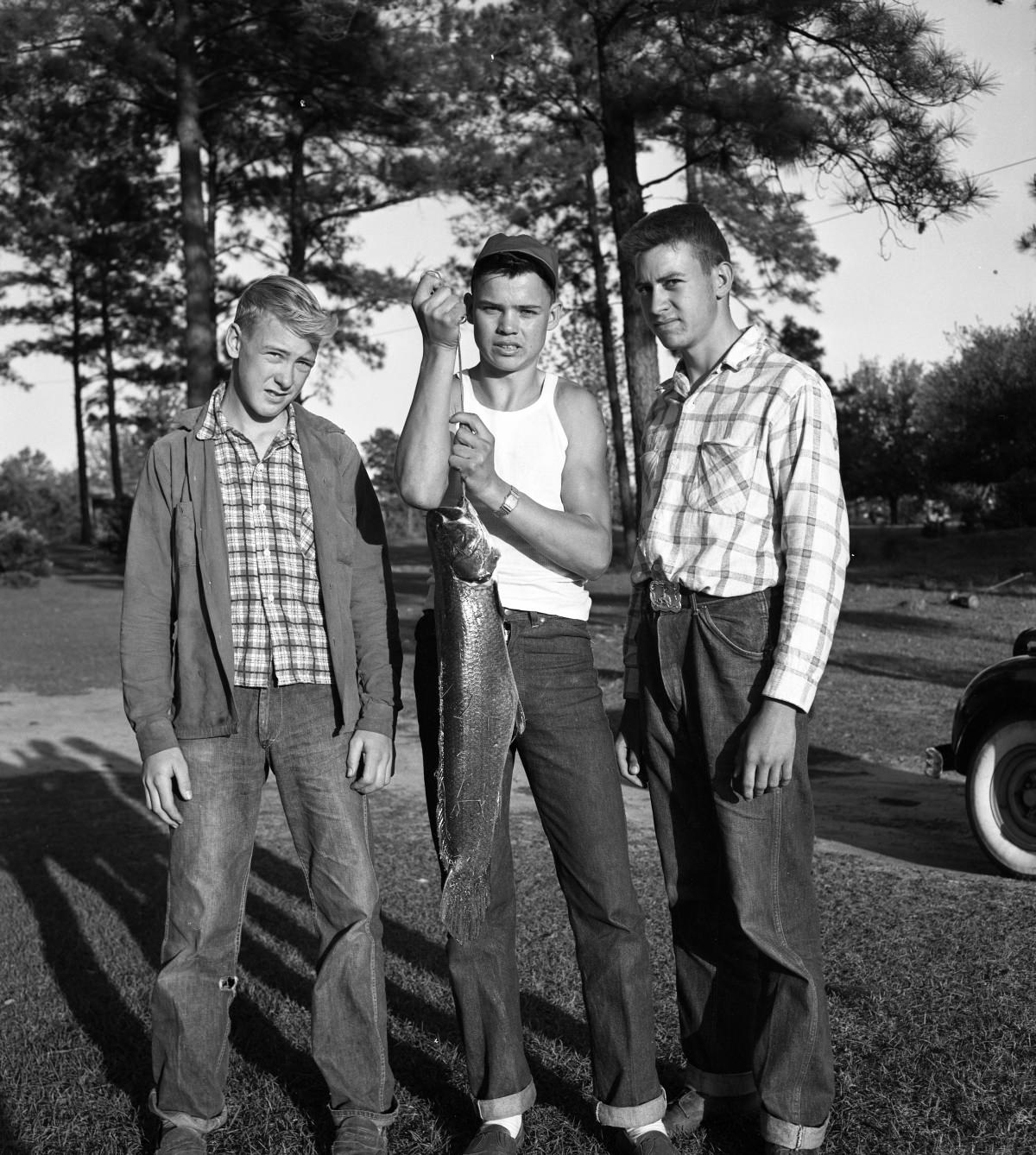
Fishing was just as popular. The Davis boys were snapped in April 1955 holding up a solid catch, a common sight along the rivers and lakes that cut through the panhandle. Waters around Tallahassee offered bass, catfish, and bream year-round, and weekend fishing trips were a staple of family life.
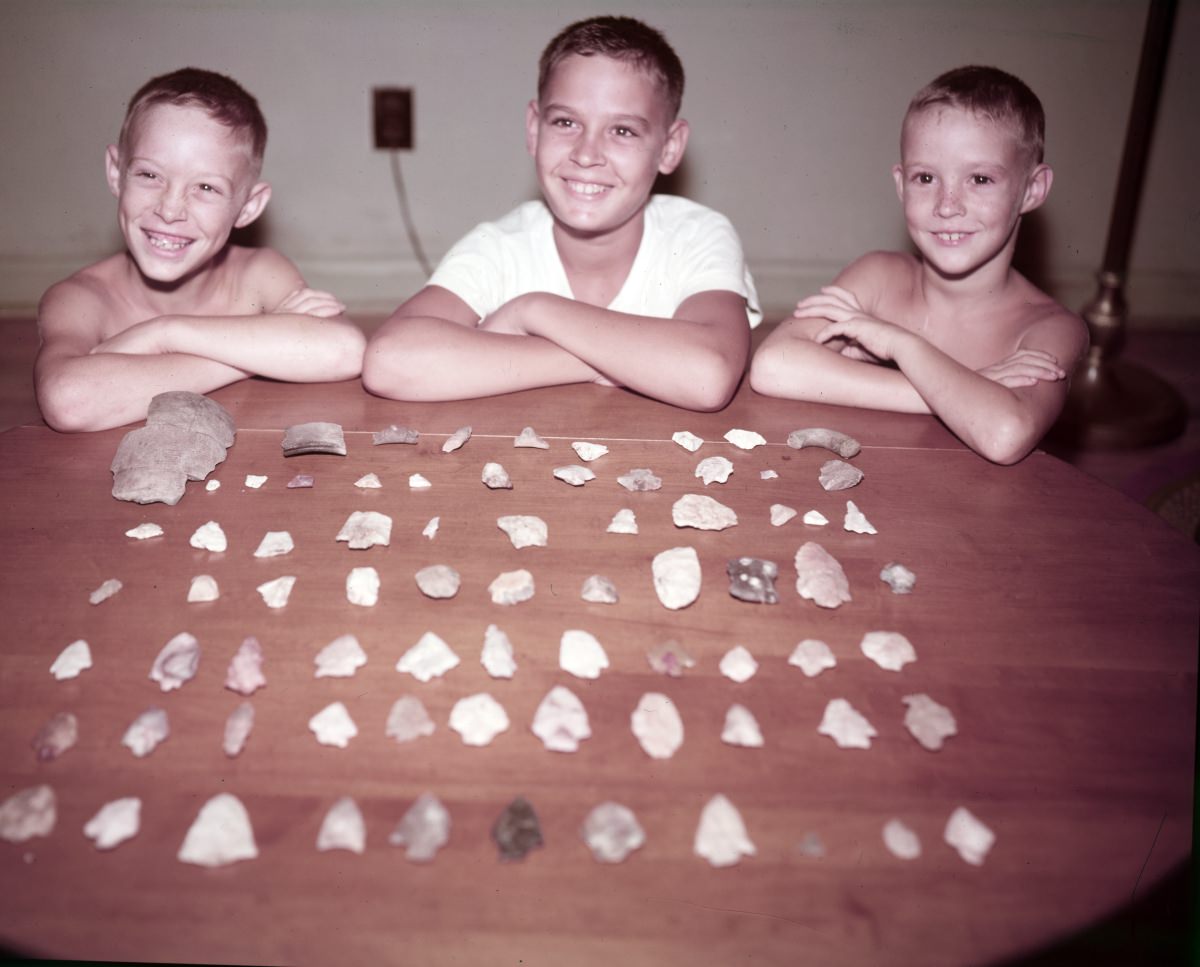
The Kerce brothers had a different kind of collection. Photographed in 1950, they displayed a spread of arrowheads and spear points gathered from the region’s rich archaeological terrain. The land around Tallahassee holds some of the densest concentrations of Native American artifacts in the southeastern United States, and amateur collectors actively combed fields and riverbanks for pieces.
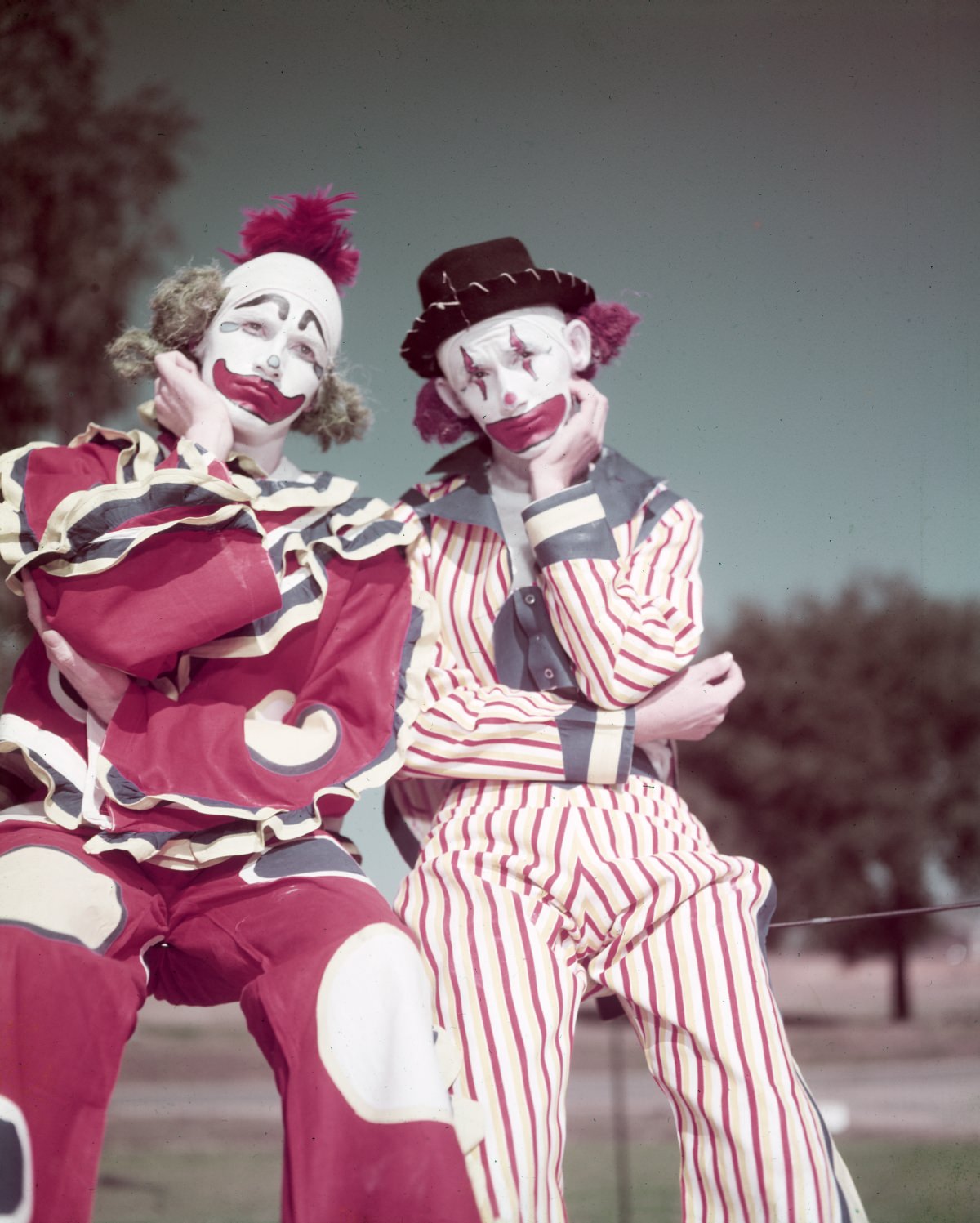
Florida State University was a defining institution in 1950s Tallahassee. The campus was known for more than academics — it hosted one of the most unusual student programs in the country. The FSU Flying High Circus, founded in 1947, was the only collegiate circus in the United States performed entirely by students. Clown performers were photographed in 1950, full costume and all, as part of the troupe’s regular productions.
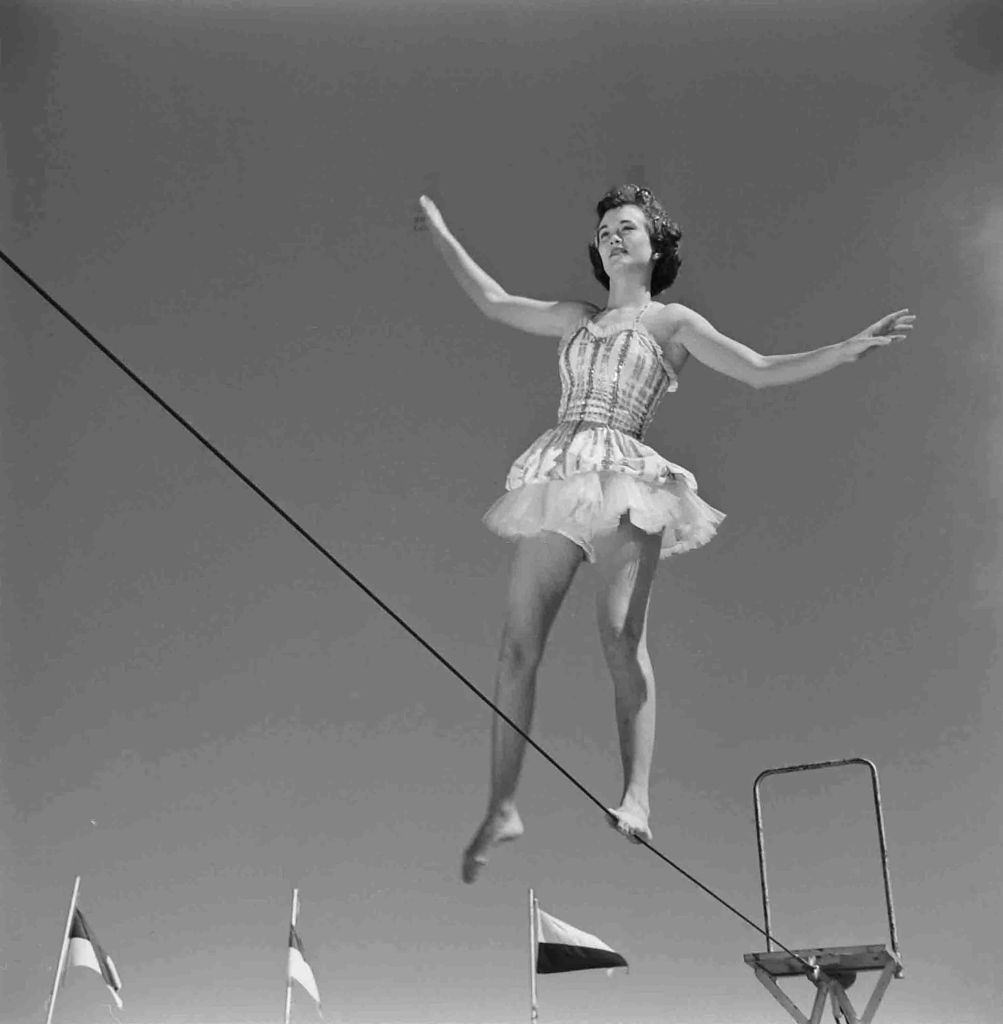
Students in the circus program trained seriously. Tightrope walking was one of the core skills taught as part of the curriculum, and performers were expected to master it before appearing in front of an audience. One student was photographed mid-balance on campus, working through the routine that would eventually become part of a live show.
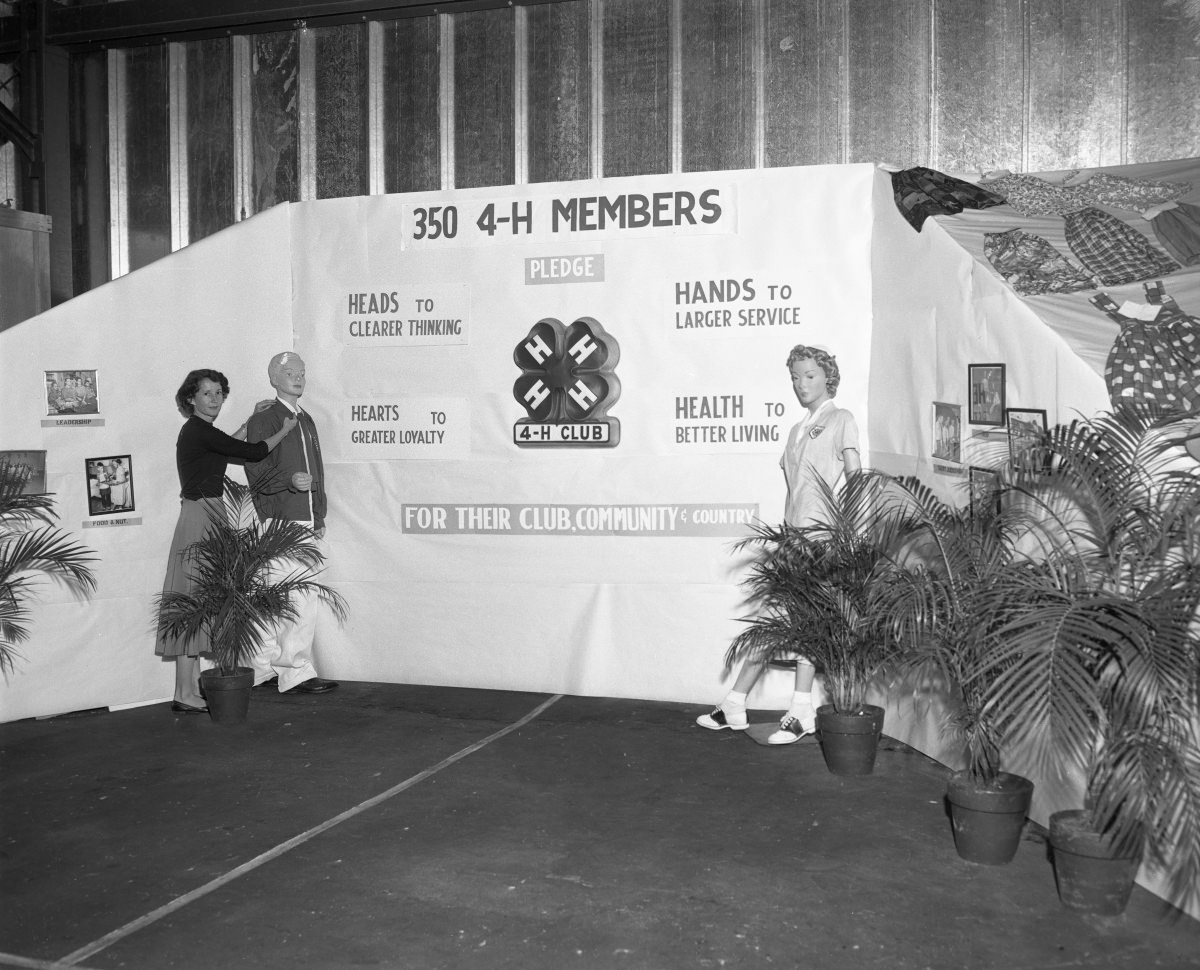
The North Florida Fair was one of the biggest annual events in the region. By 1955, the 4-H Club had carved out a prominent booth at the fair, showcasing the agricultural work of young members from across the area. 4-H clubs in Leon County and neighboring counties focused heavily on farming, livestock, and home economics — skills that matched the rural economy surrounding the capital.
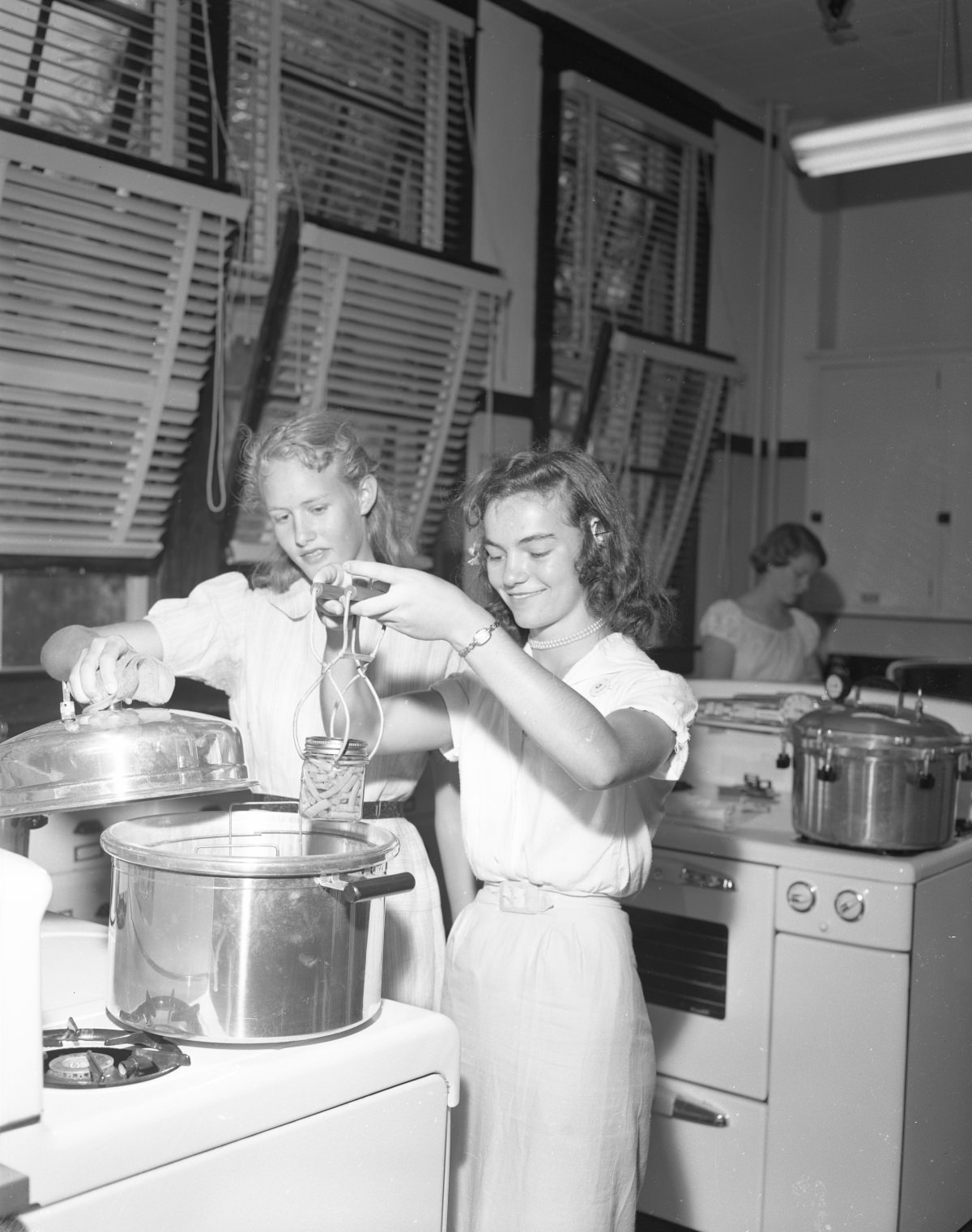
Home economics instruction extended beyond school halls. A 1954 cooking class captured women learning the process of canning — preserving fruits and vegetables in sealed jars for use through the winter months. Canning was still a practical, widely practiced skill in the early 1950s, particularly for families with gardens or access to fresh produce from the surrounding farmland.
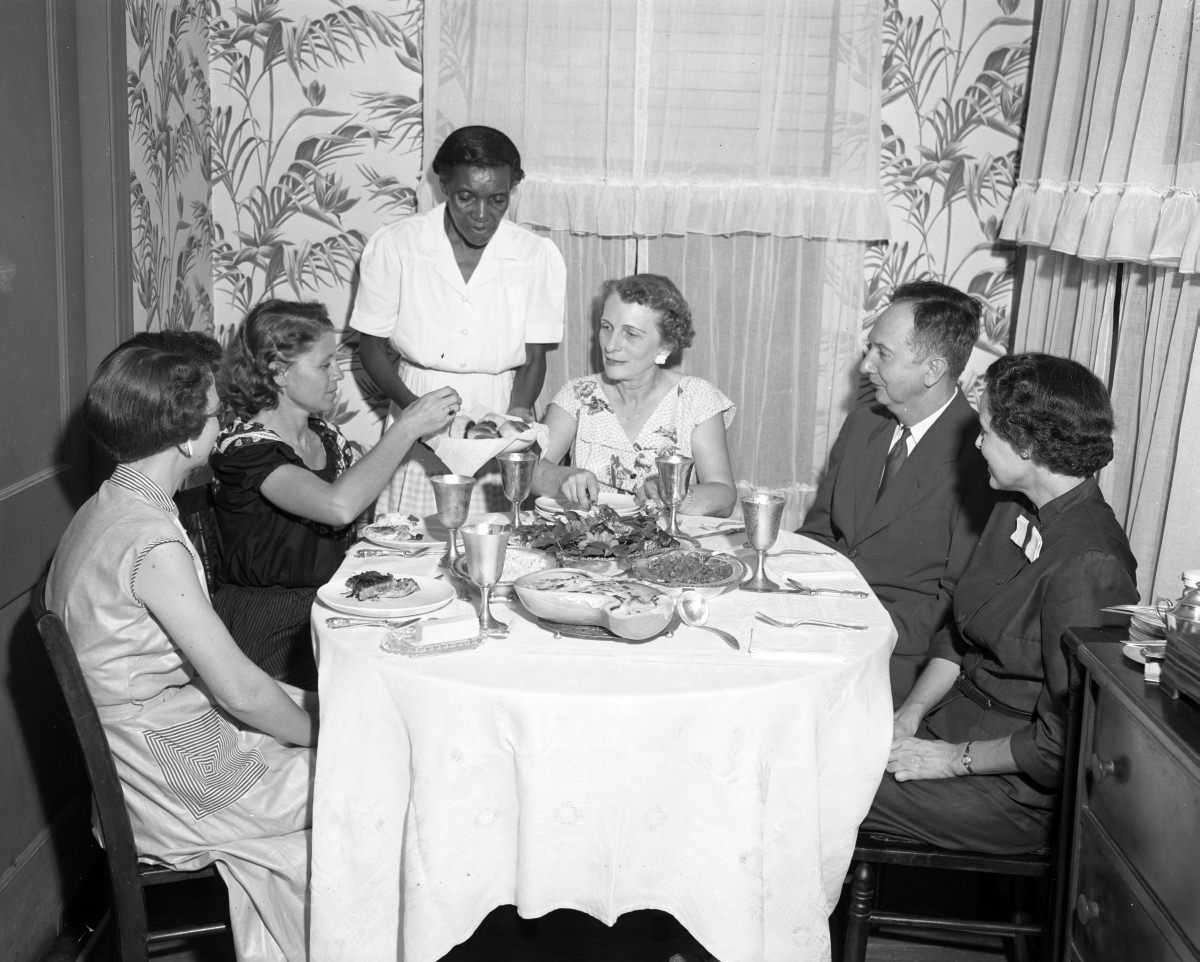
Social life in Tallahassee mixed formal gatherings with local customs. In August 1953, Lamar Bledsoe and other guests were photographed being served at a dinner party — the kind of well-dressed social event that was common among Tallahassee’s professional and political circles during that era.
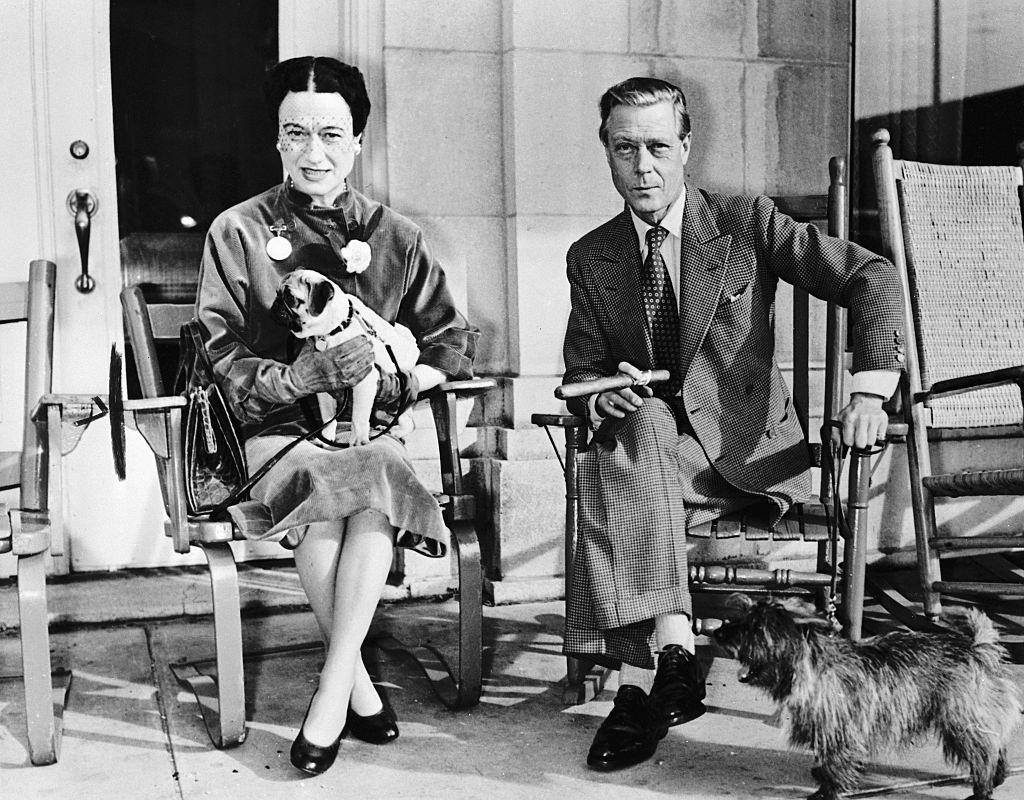
In 1953, one of the most recognizable couples in the world passed through the region. The Duke and Duchess of Windsor — the former King Edward VIII of Britain and his American wife Wallis Simpson — were photographed relaxing on the porch of a hotel in Waycross, Georgia, during a breakfast stop on their way to Tallahassee.
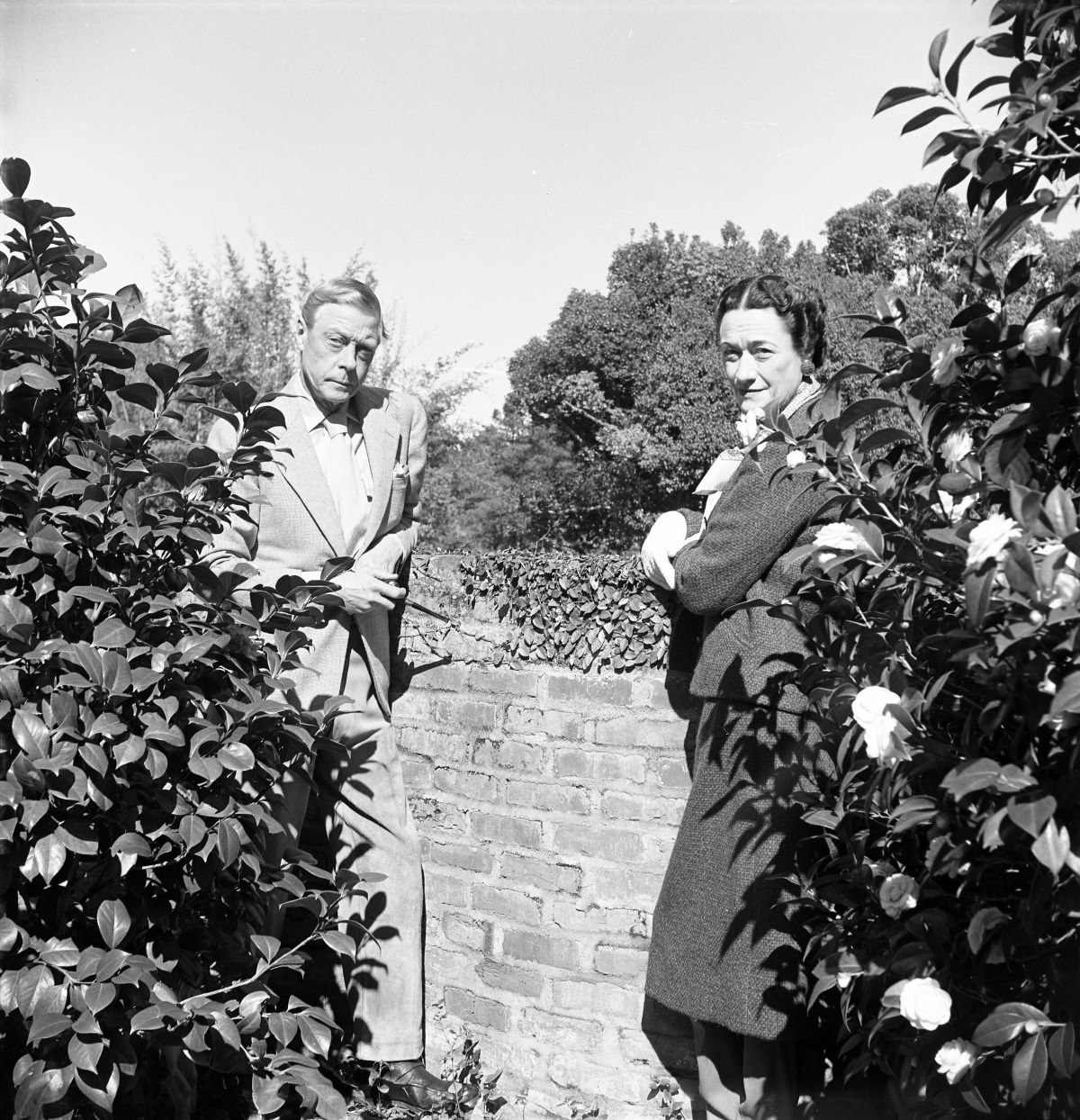
Their arrival in Tallahassee itself was also documented. The Duke and Duchess were photographed during their visit to the city in 1953, an event that drew considerable attention in local press coverage.
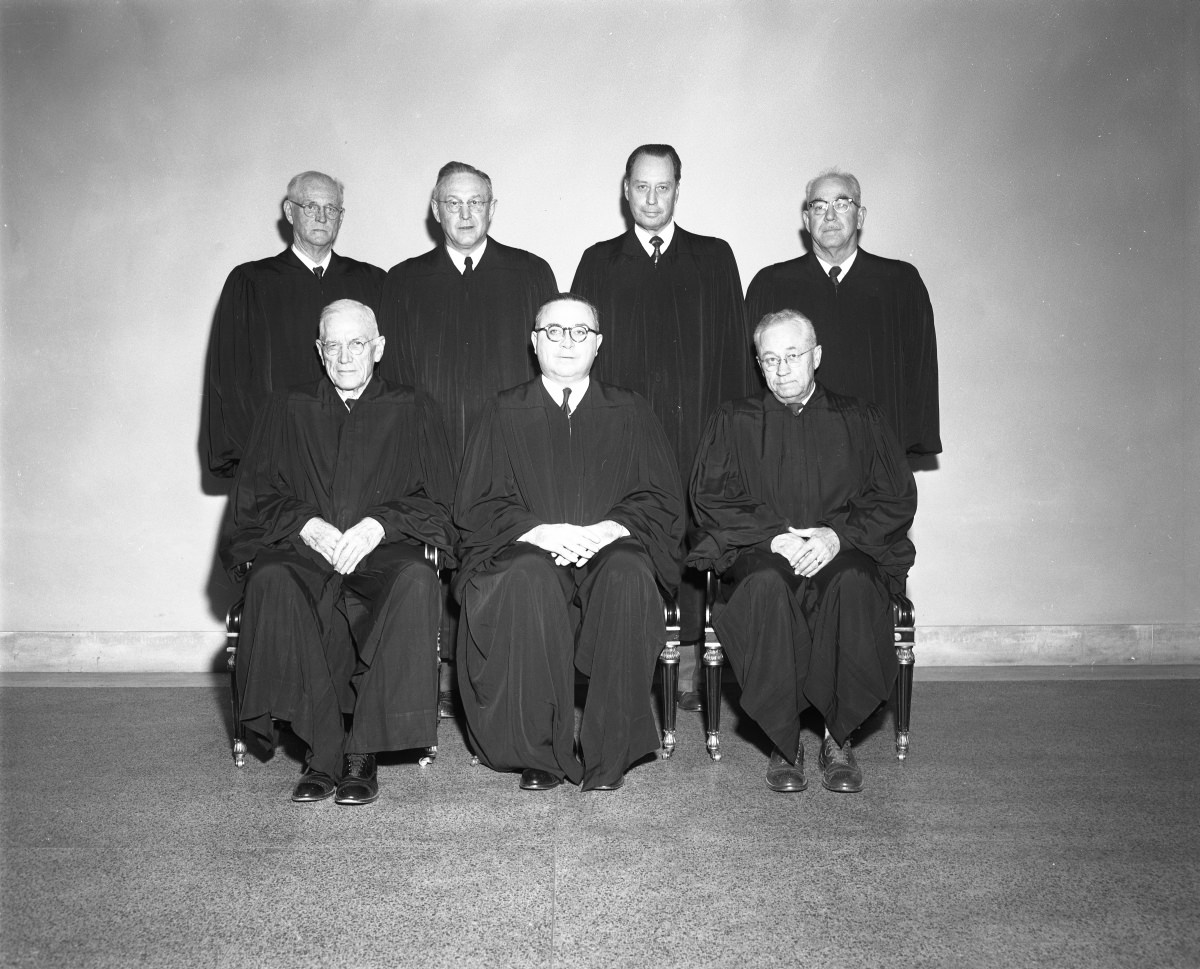
As Florida’s capital, Tallahassee was the seat of state government, and the Florida Supreme Court operated from its chambers there. In January 1954, the sitting justices were photographed together — a formal portrait of the men who held the highest judicial authority in the state.
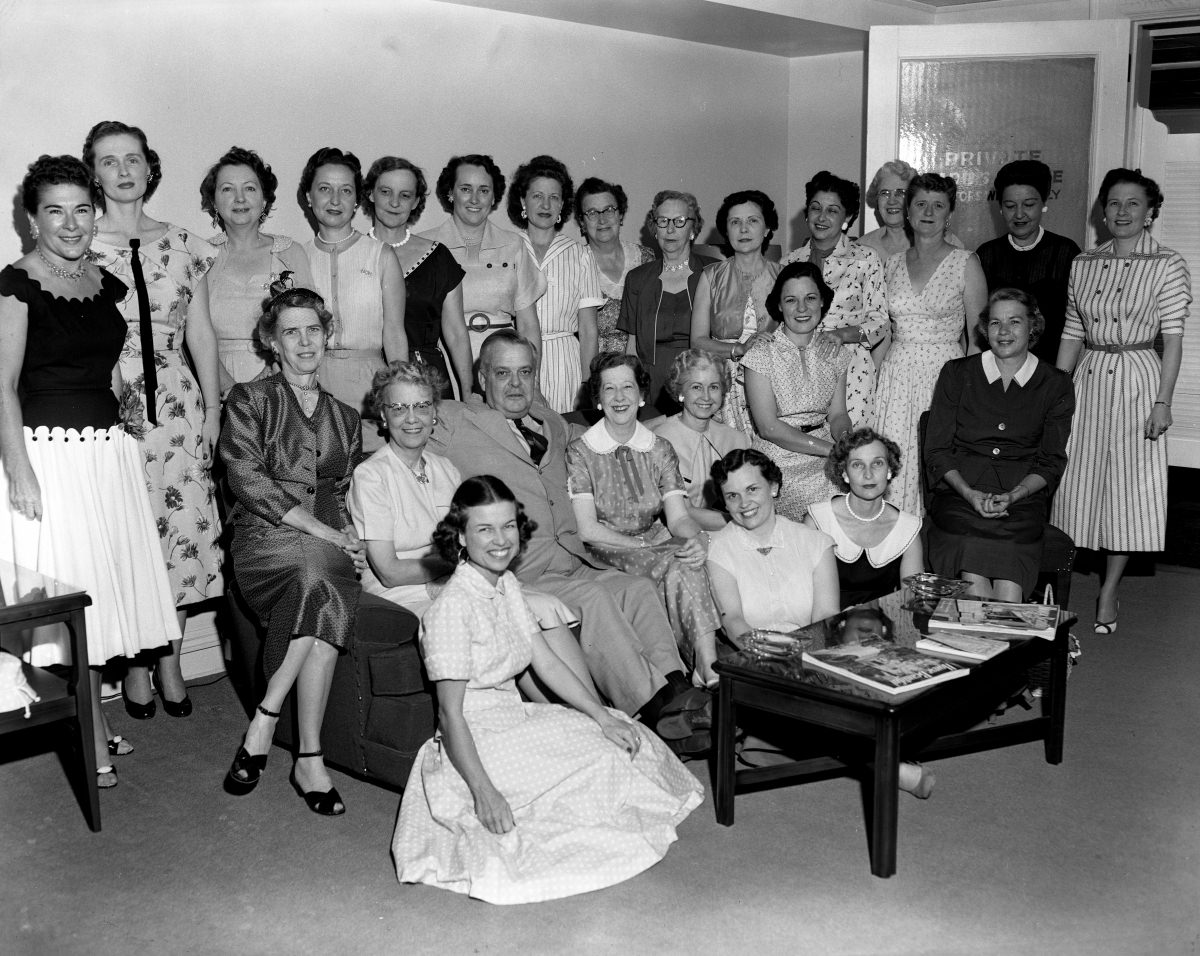
The wives of state senators were also photographed in 1954, reflecting the visible social role that political families played in Tallahassee’s public life. Legislative sessions brought politicians and their families to the city for extended periods, and their presence shaped the capital’s social calendar.
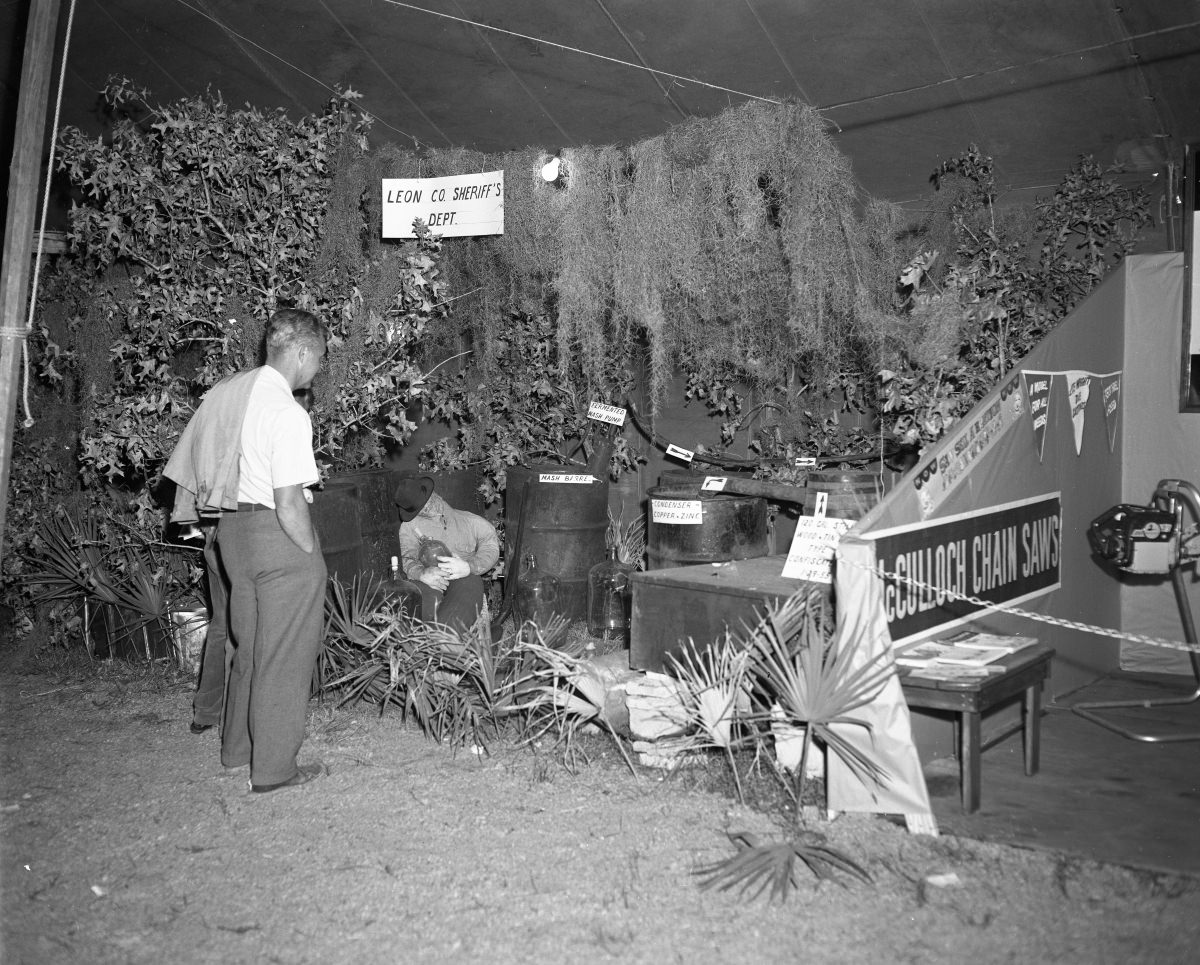
Law enforcement was a visible presence in the region. The Leon County Sheriff’s Department put together a striking exhibit on moonshine operations in 1955, displaying confiscated equipment used in illegal distilling. The Florida panhandle had a long history of moonshining, and sheriffs’ departments regularly conducted raids on backwoods stills hidden throughout the pine forests.
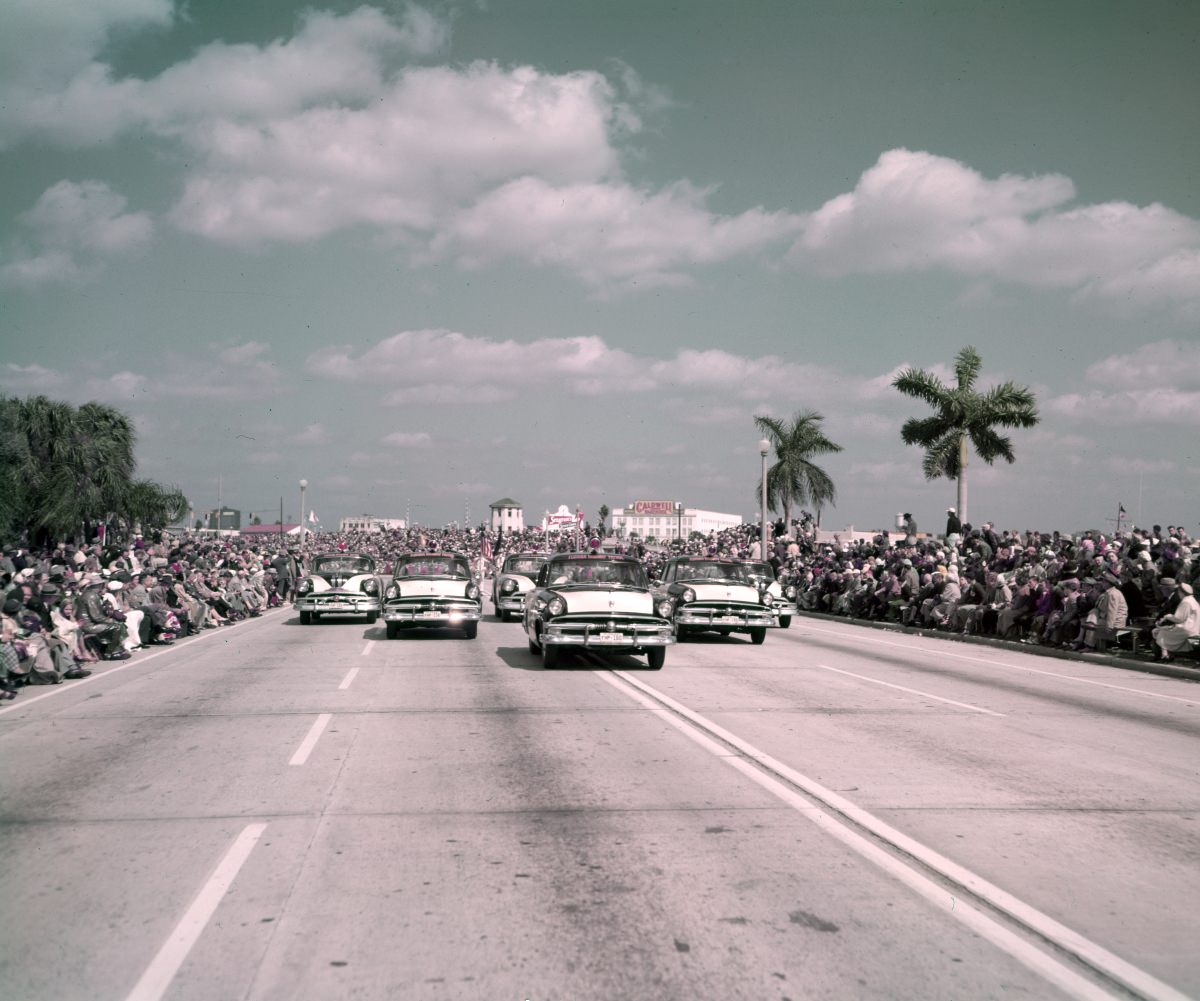
Florida’s Highway Patrol also made headlines beyond Tallahassee. In 1954, patrol cars participated in the Tampa Gasparilla parade — an annual event rooted in the legend of the pirate José Gaspar. The patrol’s presence in the parade mixed official ceremony with the festive, pirate-themed pageantry Tampa had celebrated since the early 1900s.
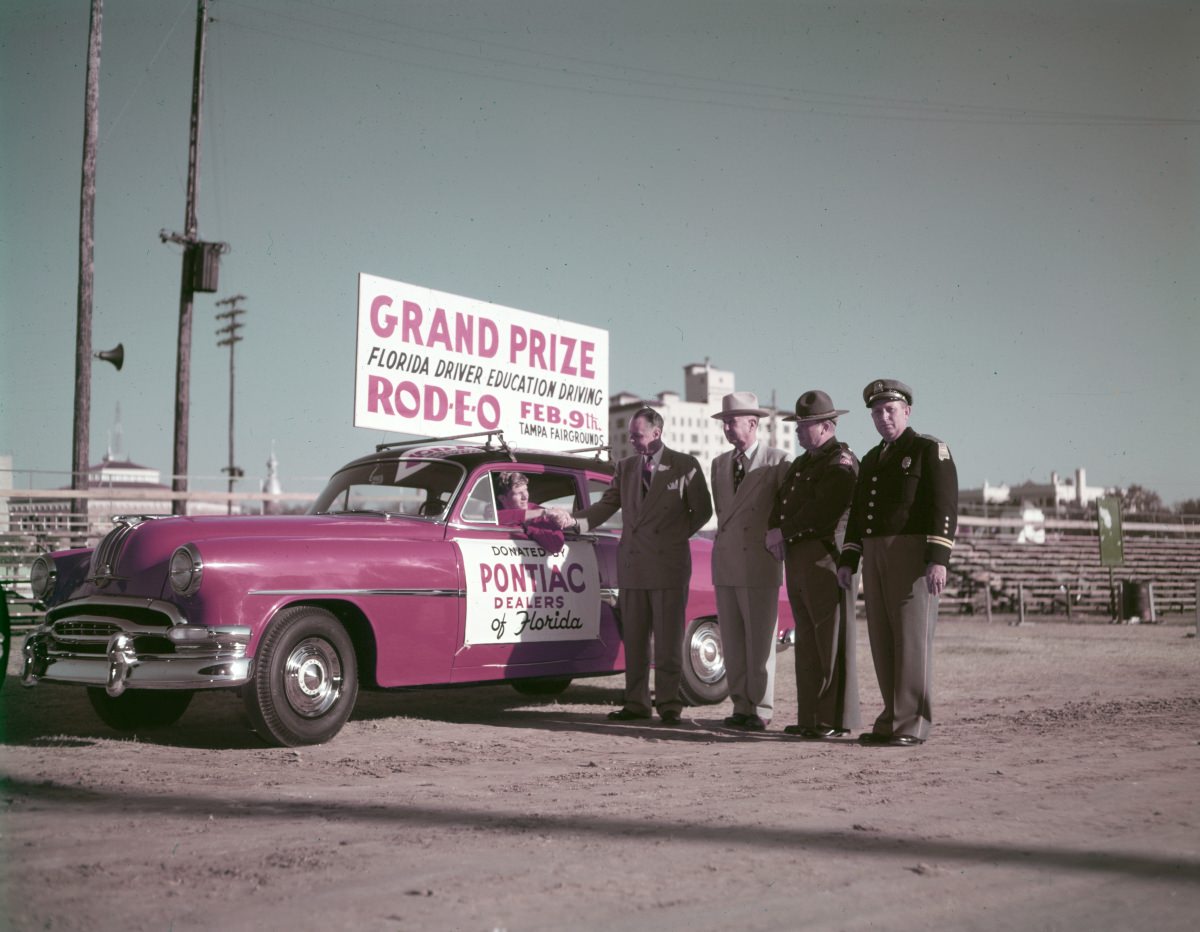
Driver safety was a growing concern in Florida’s postwar years. A Pontiac automobile was displayed as the prize for the Florida Driver Education Rodeo, a competition designed to test and promote safe driving skills among young drivers. The program reflected a national push during the 1950s to reduce traffic fatalities as car ownership rapidly expanded.
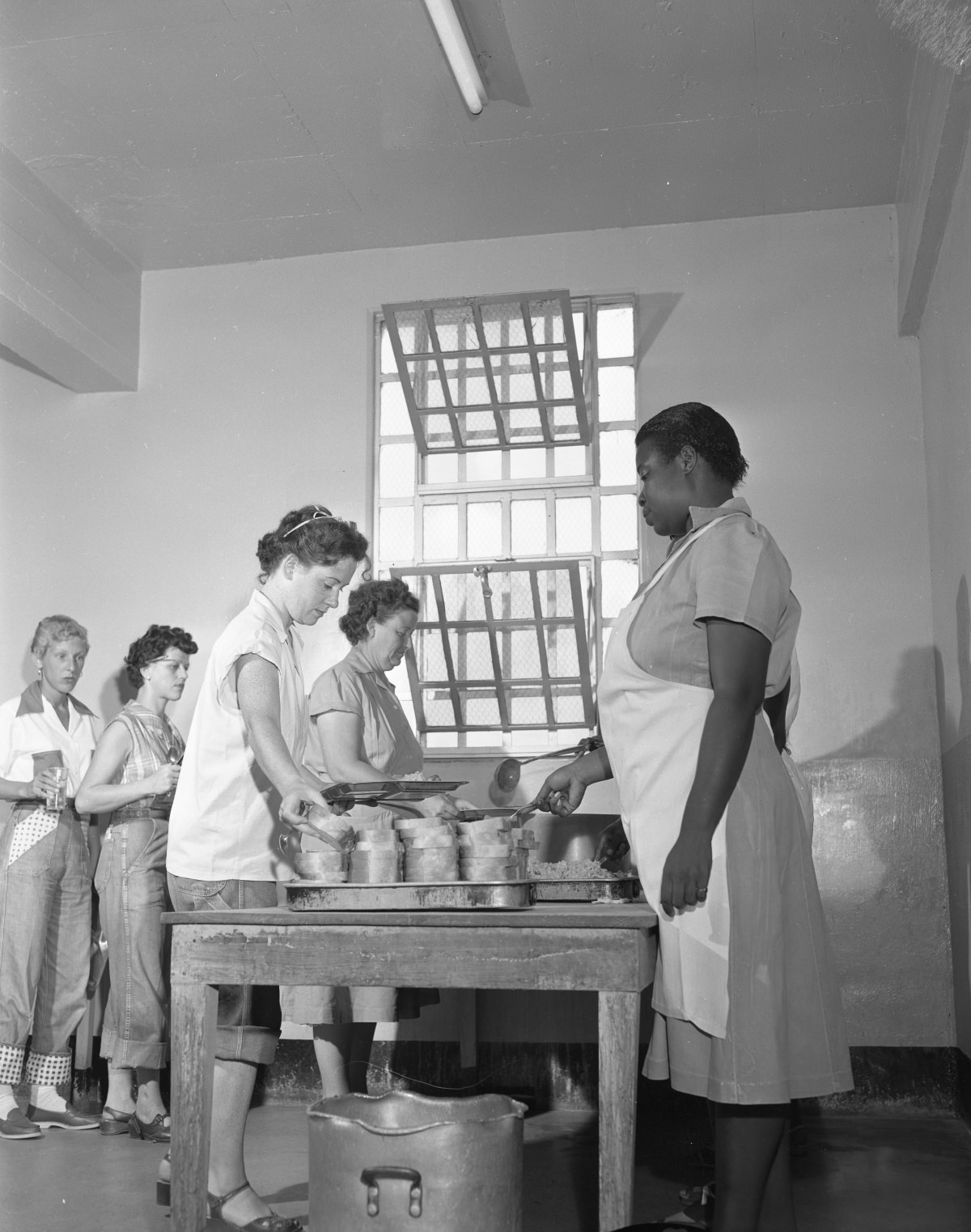
Inmates at a Tallahassee-area facility were photographed in September 1954 during mealtime in the cafeteria. The image is a straightforward documentary record of institutional life, showing rows of inmates seated at tables during a routine meal service.
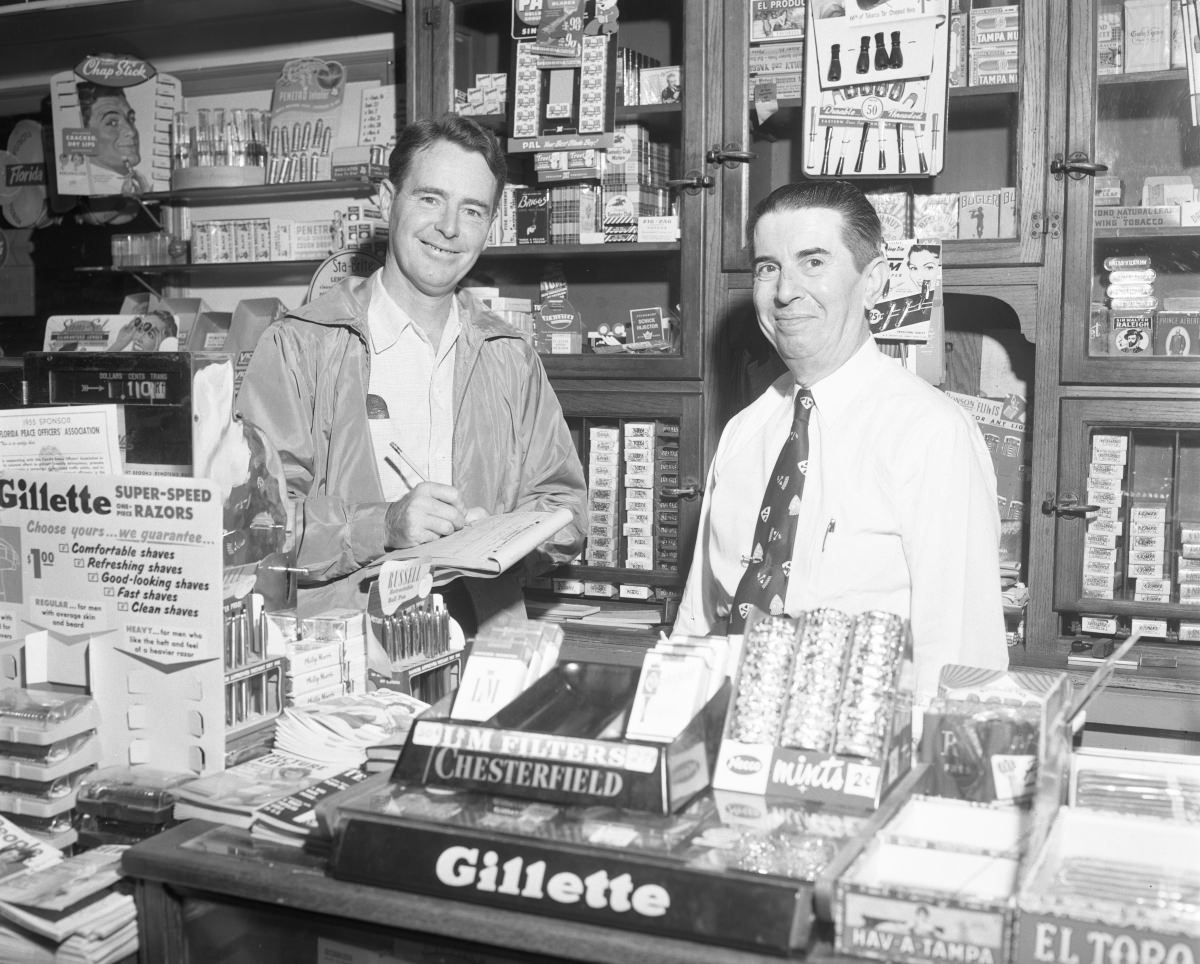
In October 1955, Dennis Christie was photographed alongside a salesman inside a Tallahassee business — a snapshot of the city’s commercial activity during a decade of economic growth. Local businesses in Tallahassee during this period served a mix of government workers, university students, and residents from the surrounding rural counties.
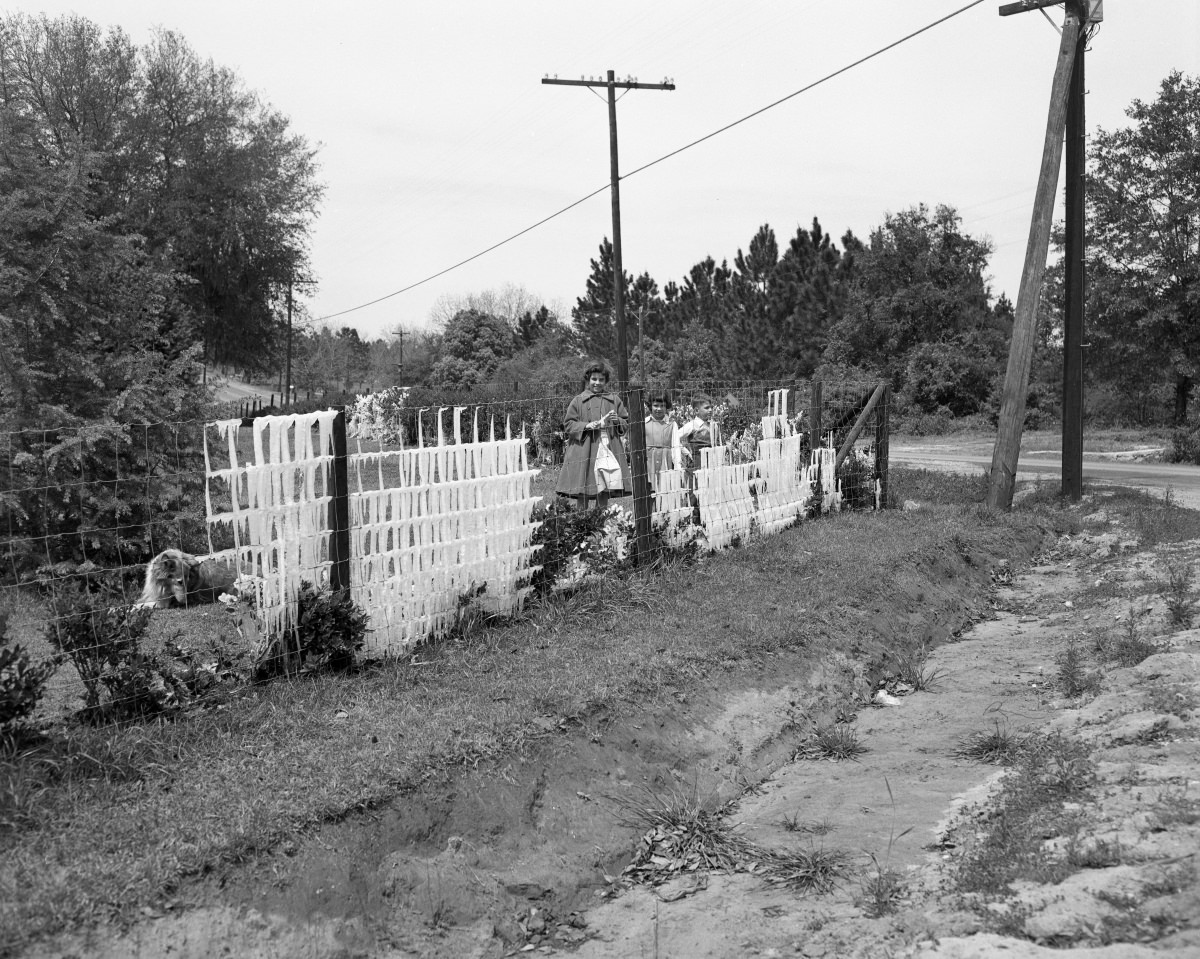
Florida’s climate occasionally surprised its residents. In March 1955, children in Tallahassee were photographed standing next to a fence coated in ice — an unusual sight in a state better known for heat. Tallahassee sits far enough north that winter cold snaps can bring freezing temperatures, though they remain rare.
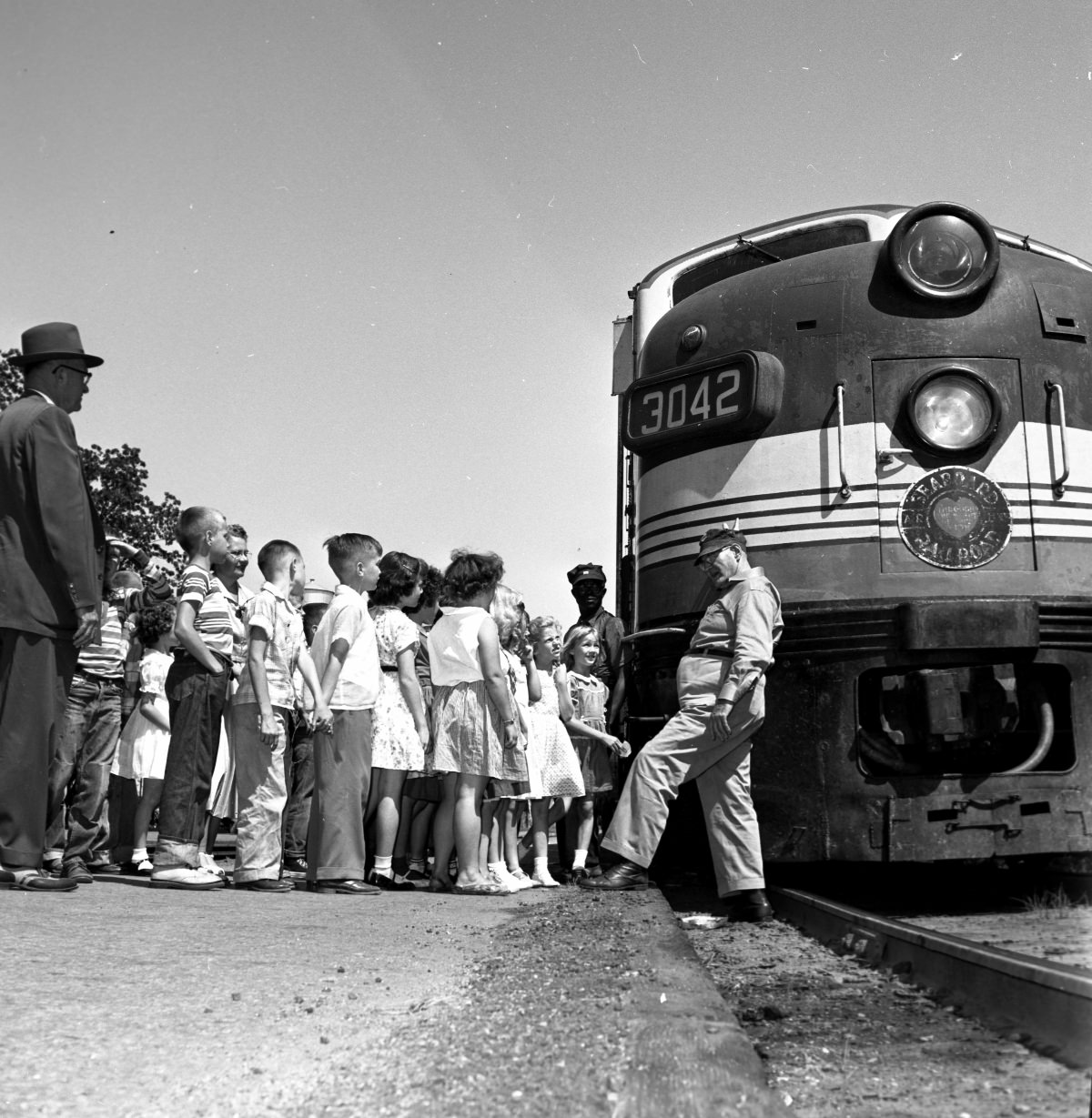
In April 1955, a train conductor was photographed speaking with a group of children in front of a stopped locomotive. Rail travel was still a relevant part of transportation in the mid-1950s, and the image captures the curiosity children brought to an encounter with a working train and its crew.
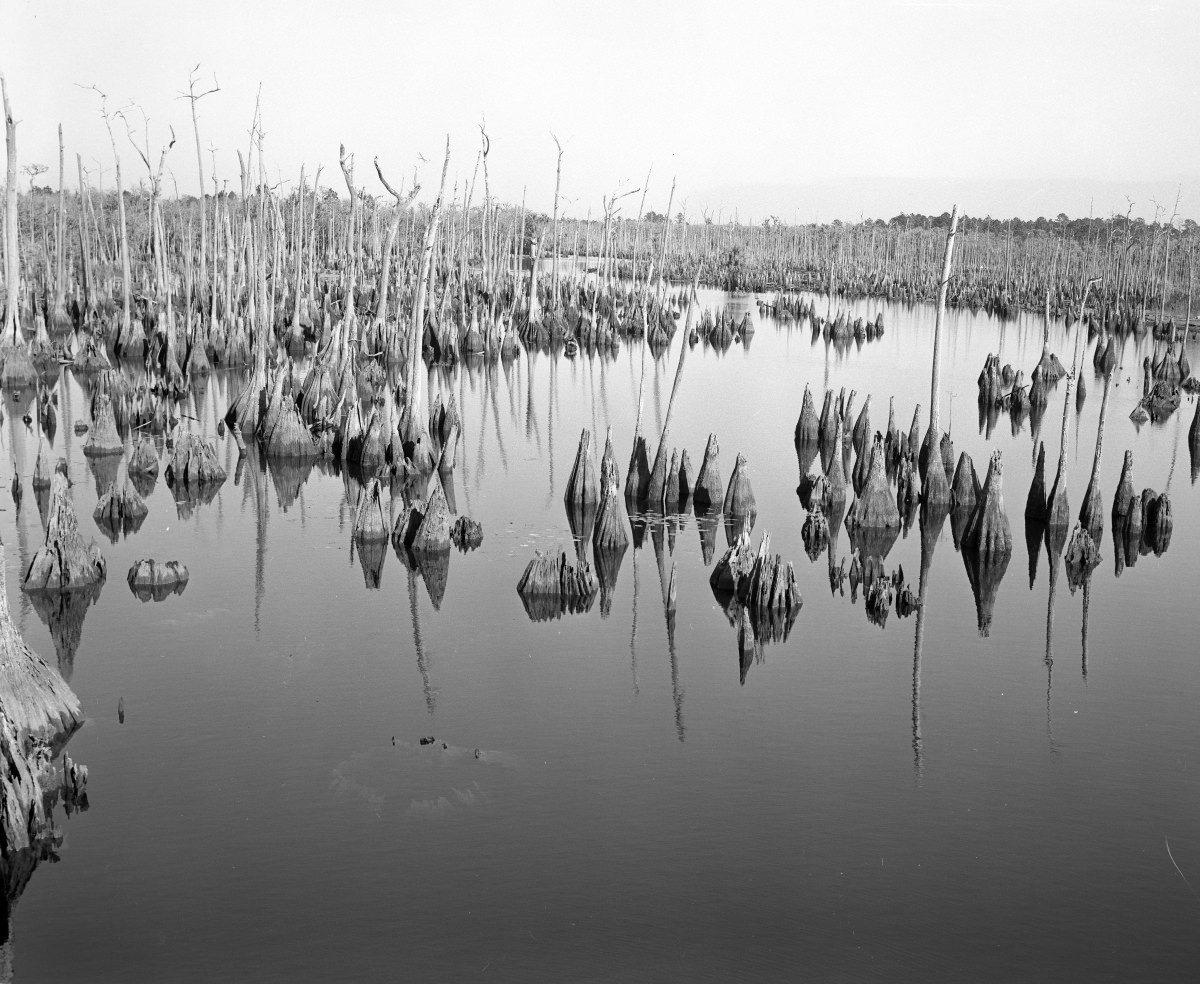
The natural landscape around Tallahassee offered its own striking scenes. A 1955 photograph documented a dead lake surrounded by cypress knees — the distinctive root projections that rise above the waterline from bald cypress trees. These formations are common in Florida’s swampy lowlands, and the image captures the quiet, eerie character of the region’s wetland environments.
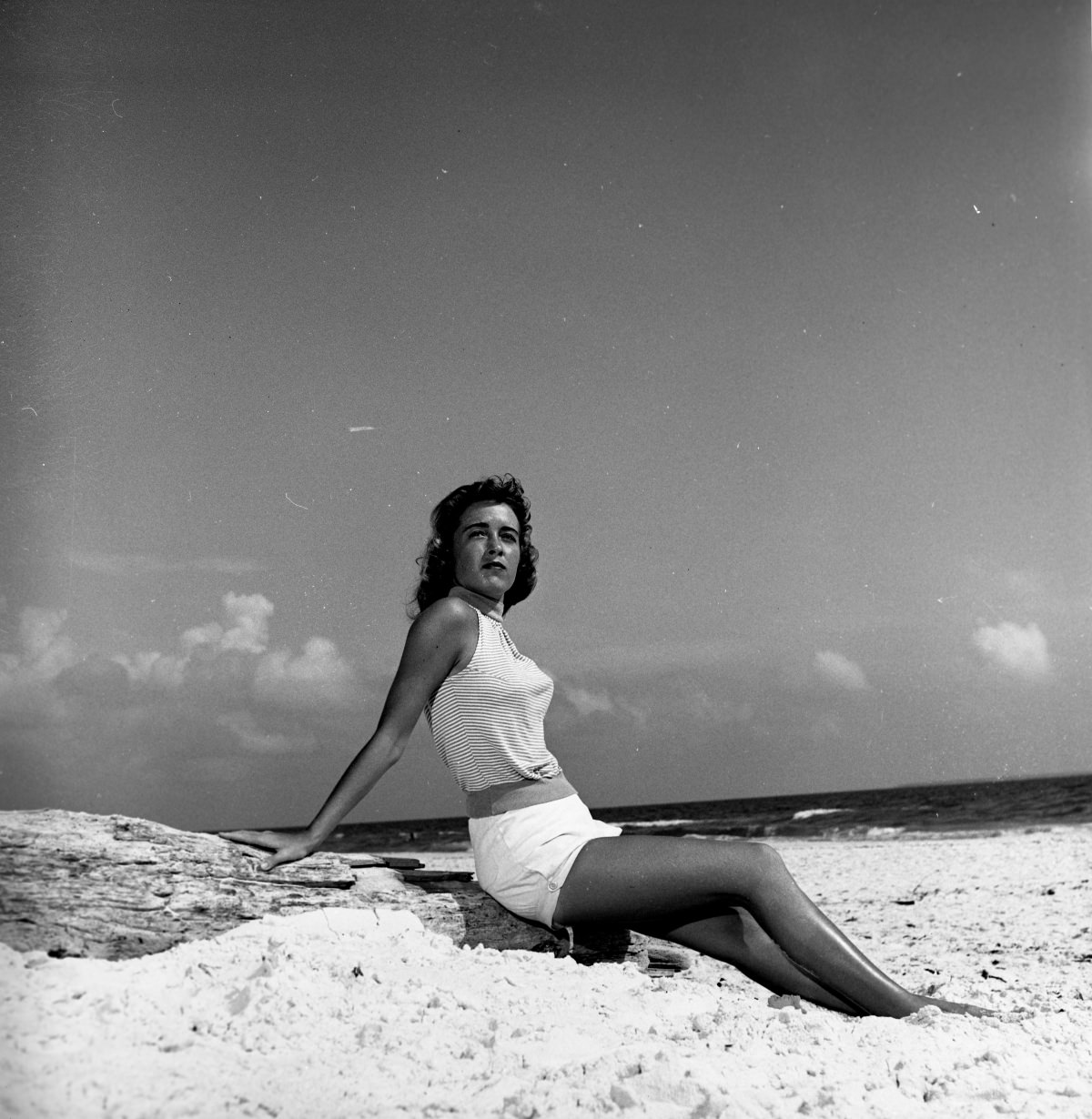
In May 1955, Kay Cromartie was photographed modeling bathing suits — a routine assignment for a press photographer covering local fashion and retail. Tallahassee’s warm climate made swimwear a year-round commercial interest, and local businesses regularly staged promotional photos to advertise seasonal merchandise.
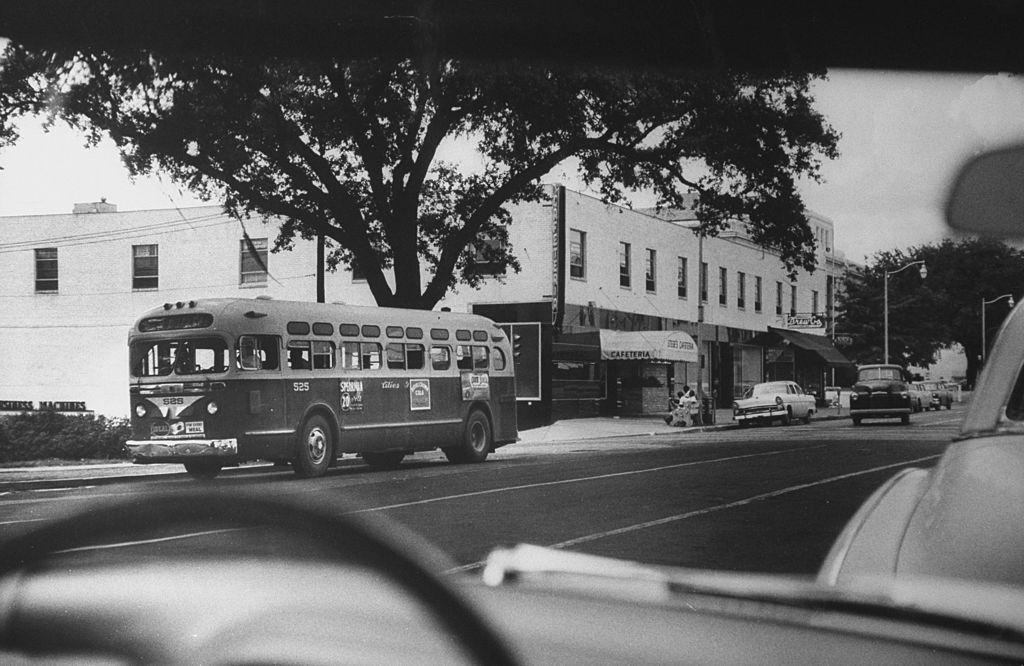
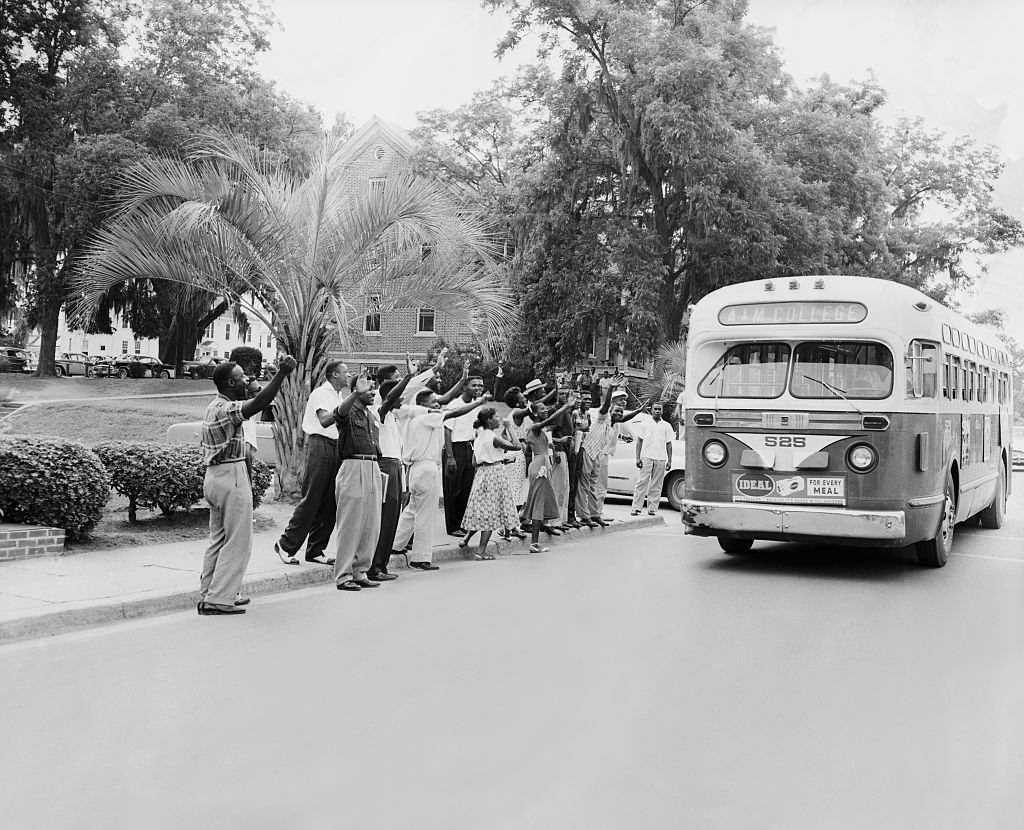
In 1951, a photograph captured Black students sitting on a bench as an empty city bus rolled past them without stopping. The image documented the reality of segregated public transit in Tallahassee, where Black riders faced routine discrimination on the bus system. By 1956, that reality became the flashpoint for a direct challenge. Black residents organized a boycott of Tallahassee’s bus lines, refusing to ride until their demands for equal treatment were met. The protest ran parallel to the Montgomery Bus Boycott happening in Alabama at the same time, and it forced a prolonged public confrontation with the city’s segregation policies.





I did not expect so much KKK.
How close is the city to Alabama and Georgia? The KKK was everywhere in secession states. They held a rally in Chapel Hill, NC, during Patrick Ewing’s recruiting visit to UNC (by coincidence). So that’s…1980-ish?
For a long time, the KKK was a political party in Florida. That’s disgusting. It’s no wonder Tally is so racially charged. Daytona and Cocoa were the only places I’ve ever been in Florida that felt like this.
I didn’t either. Looks like a much slower pace than Tallahassee today.
50s America is so gross
I have no idea why people idolize that period; it was a pretty fucking horrible time. The red scare, nuclear annihilation, and racist mobs have been present.
There is no need to glorify “history” with statues. This is how we should remember it. Even though I’m white, I can’t look at any of the white people in these photos without thinking, “evil effs.” Are we in the same position as we watch our government separate children from their parents and detain families indefinitely at the border? If we eat ourselves sick at dinner and throw away leftovers while people all over the world starve? Perhaps we are not as actively abhorrent as the racists were then, but we still bear responsibility for our complacency.
If you haven’t already, read Devil in the Grove.
I think it’s silly to assume that many of these are actually from Tallahassee. Many of them are just some guy’s name on some pictures he put together.
Amusing how much this is triggering people, LOL
Truggered by beautiful pictures of a bygone era. Lmao stay mad 😂😂