Between 1967 and 1969, an Oxford-based photographer named RB Reed made regular trips to London and pointed his camera at the city’s streets, landmarks, and everyday moments. The result is a vivid color record of a city at full tilt — when London was the fashion, music, and cultural capital of the world. Reed himself later reflected, “Some of the sights I took time to photograph. I wish I had taken more and more that reflected the culture of the sixties.” His modest regret is our gain. What he did capture is remarkable.
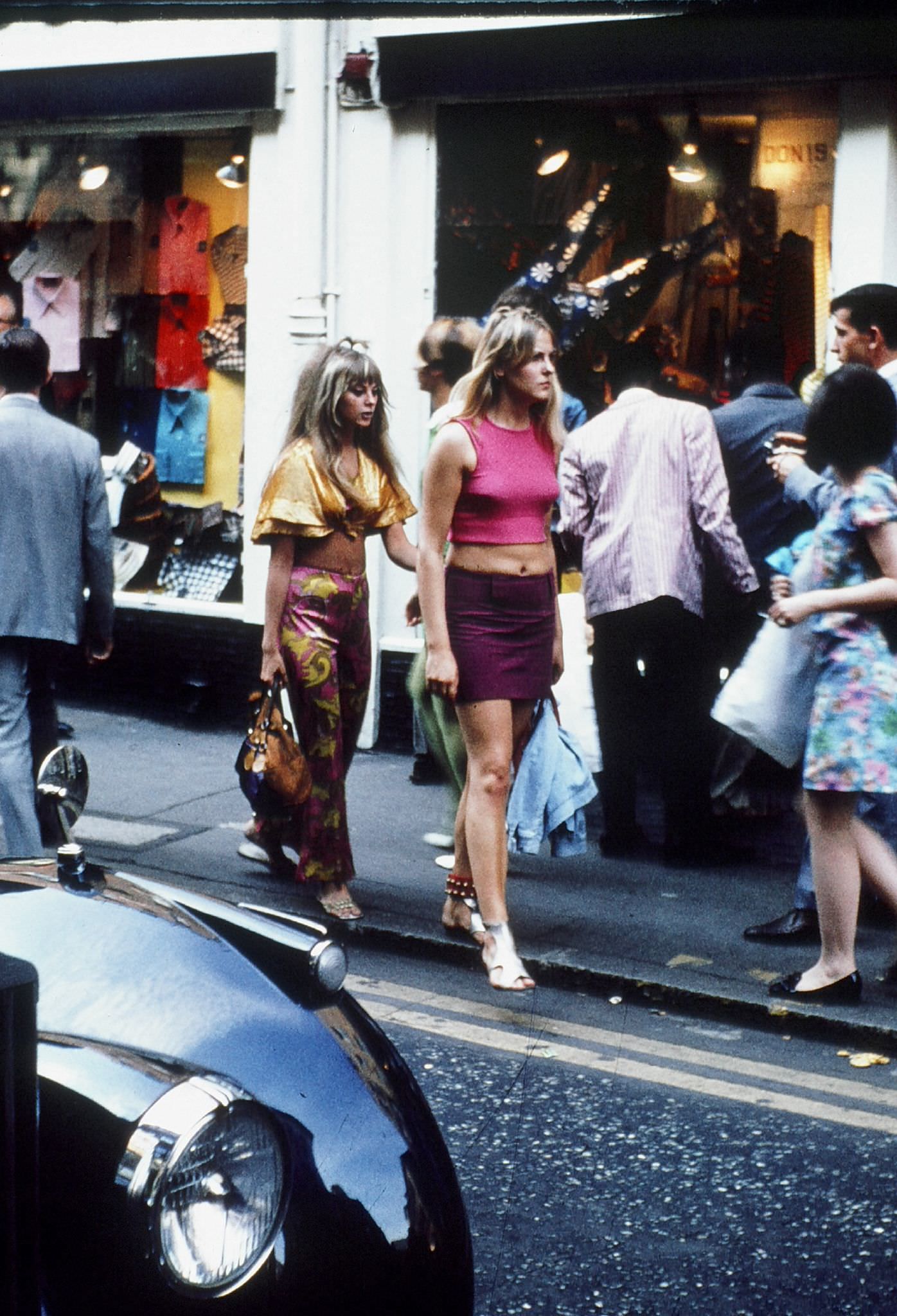
No street defined Swinging London more sharply than Carnaby Street. By 1968, it had become the beating heart of British youth fashion, lined with boutiques selling bold prints, miniskirts, and mod clothing that had no equivalent anywhere else in the world.
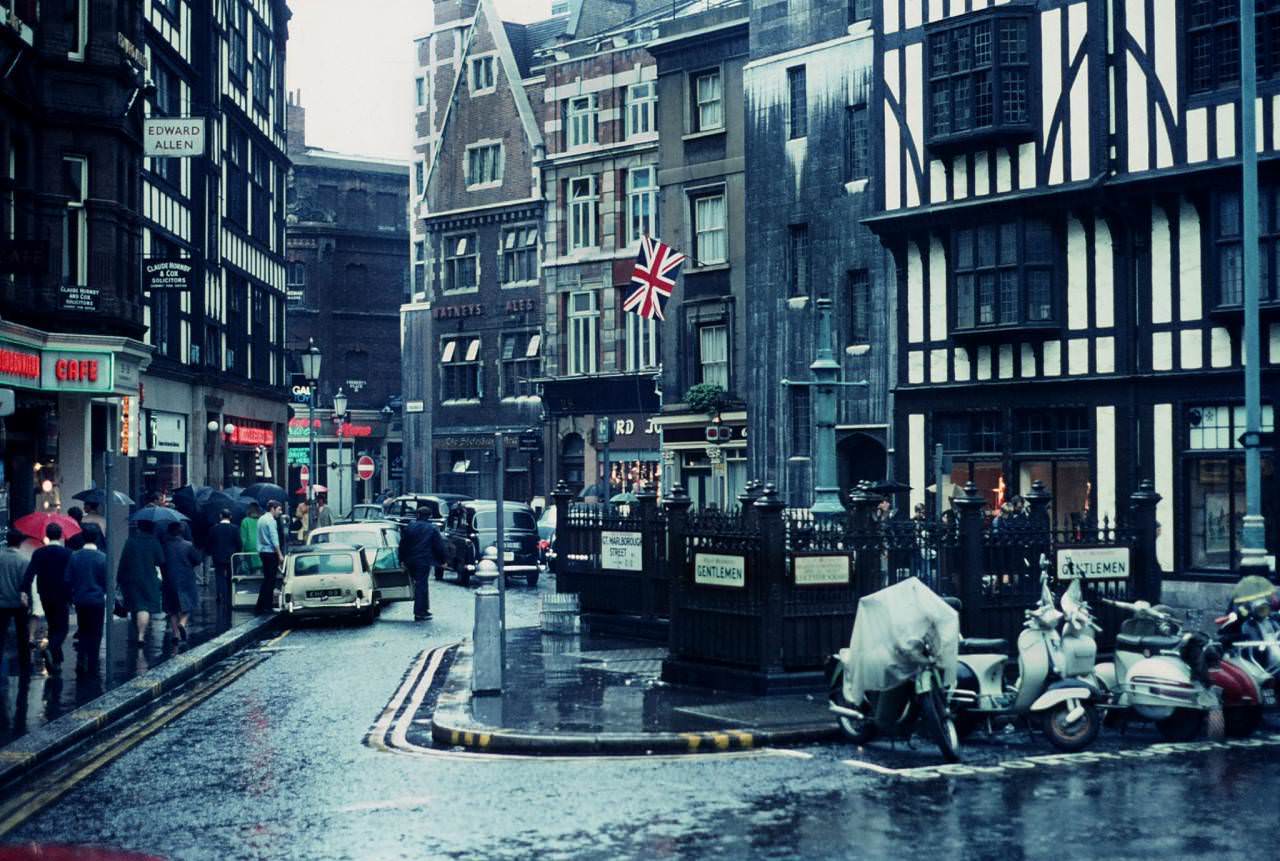
Just around the corner, Great Marlborough Street offered a slightly different pace — wider, more commercial, but still very much part of the same energetic West End scene that Reed was documenting.
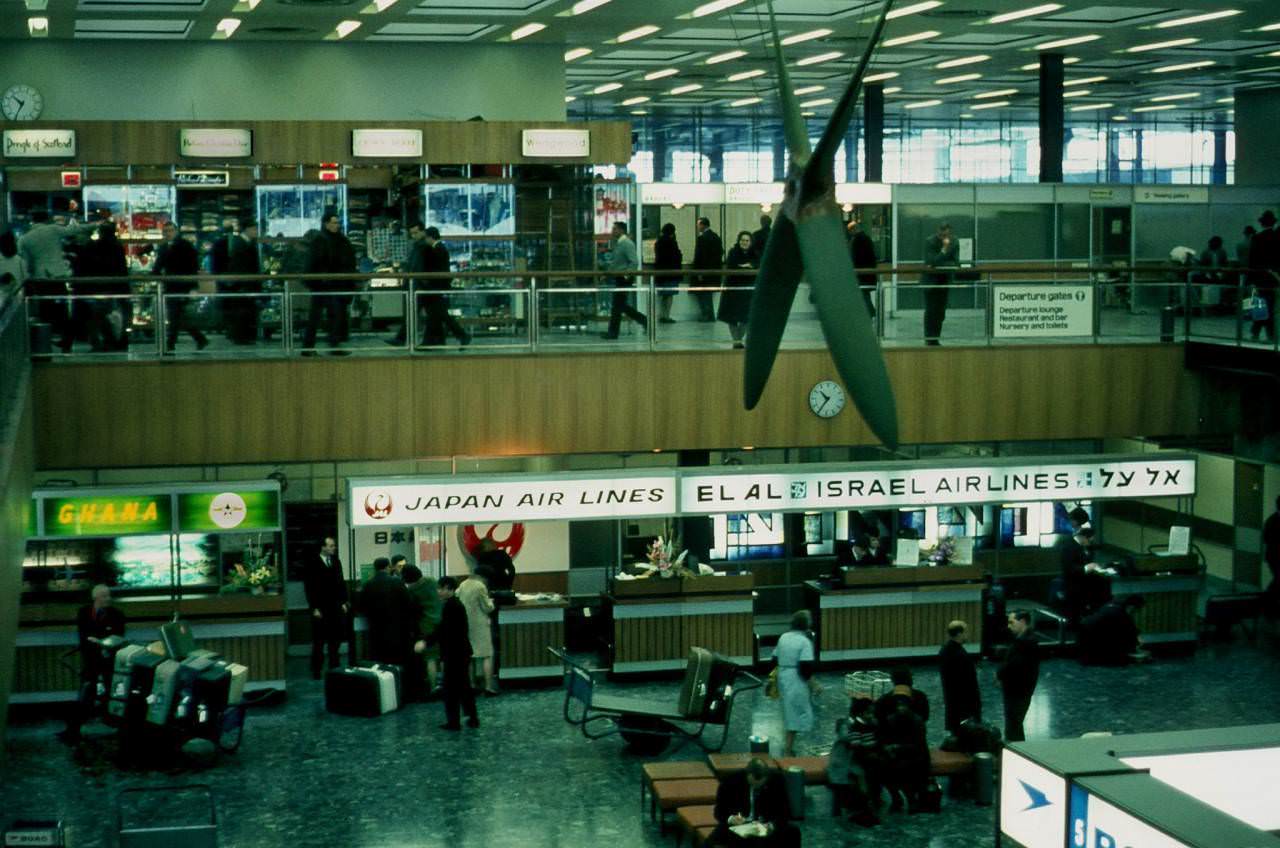
Reed also ventured out to Heathrow Airport in 1968, where jet travel was rapidly reshaping how Britons experienced the world. The airport was growing fast, connecting London to a global stage it was already dominating culturally.
Back on Carnaby Street, the Lord John boutique was one of the most recognizable names of the era — a men’s fashion shop that dressed a generation in sharp, slim-cut suits and eye-catching colors that broke every rule of traditional British menswear.
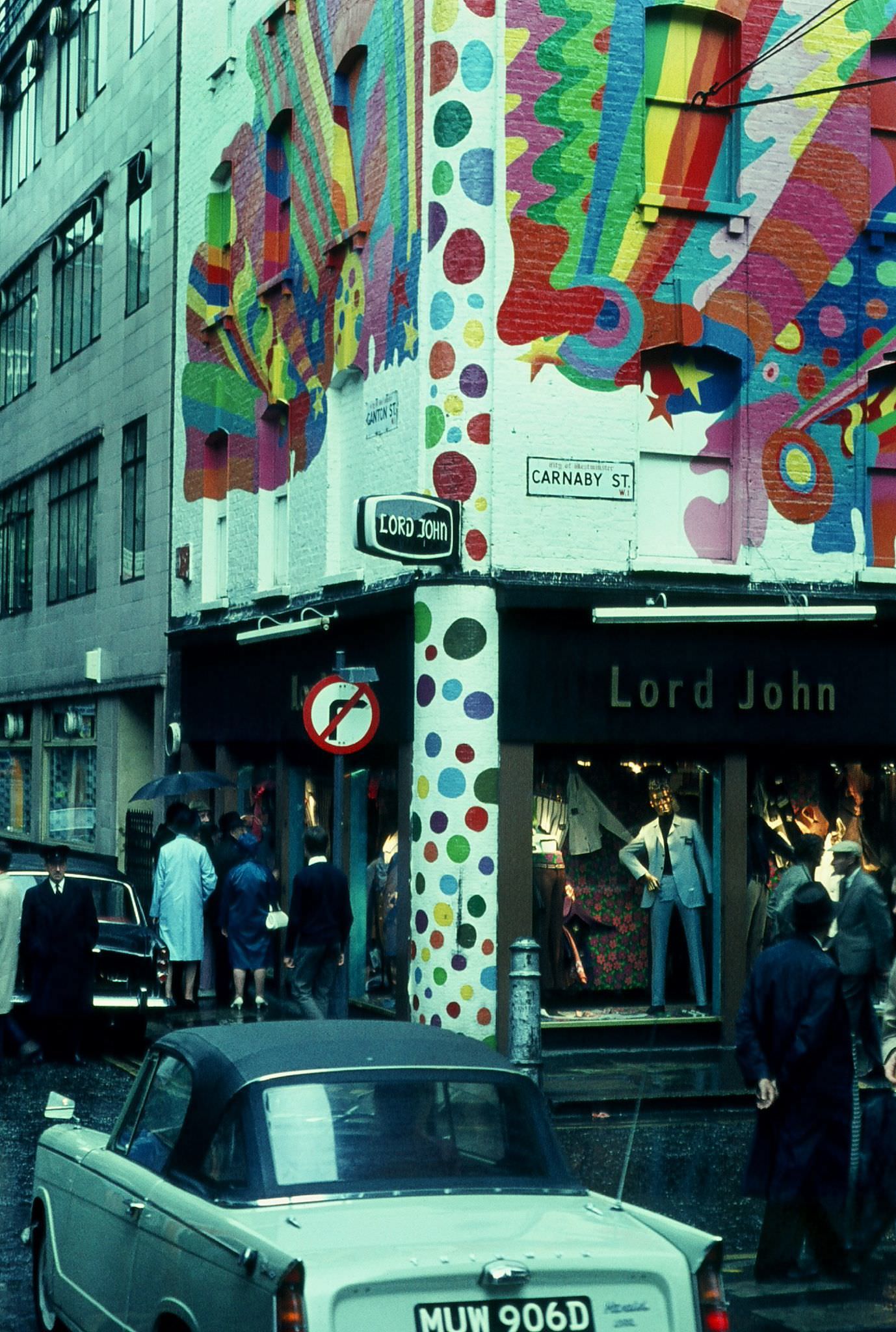
Reed also turned his lens toward the corridors of power. Number 10 Downing Street, photographed around 1967, stood as it always had — understated black door, a single lamp above — while the city around it buzzed with change.
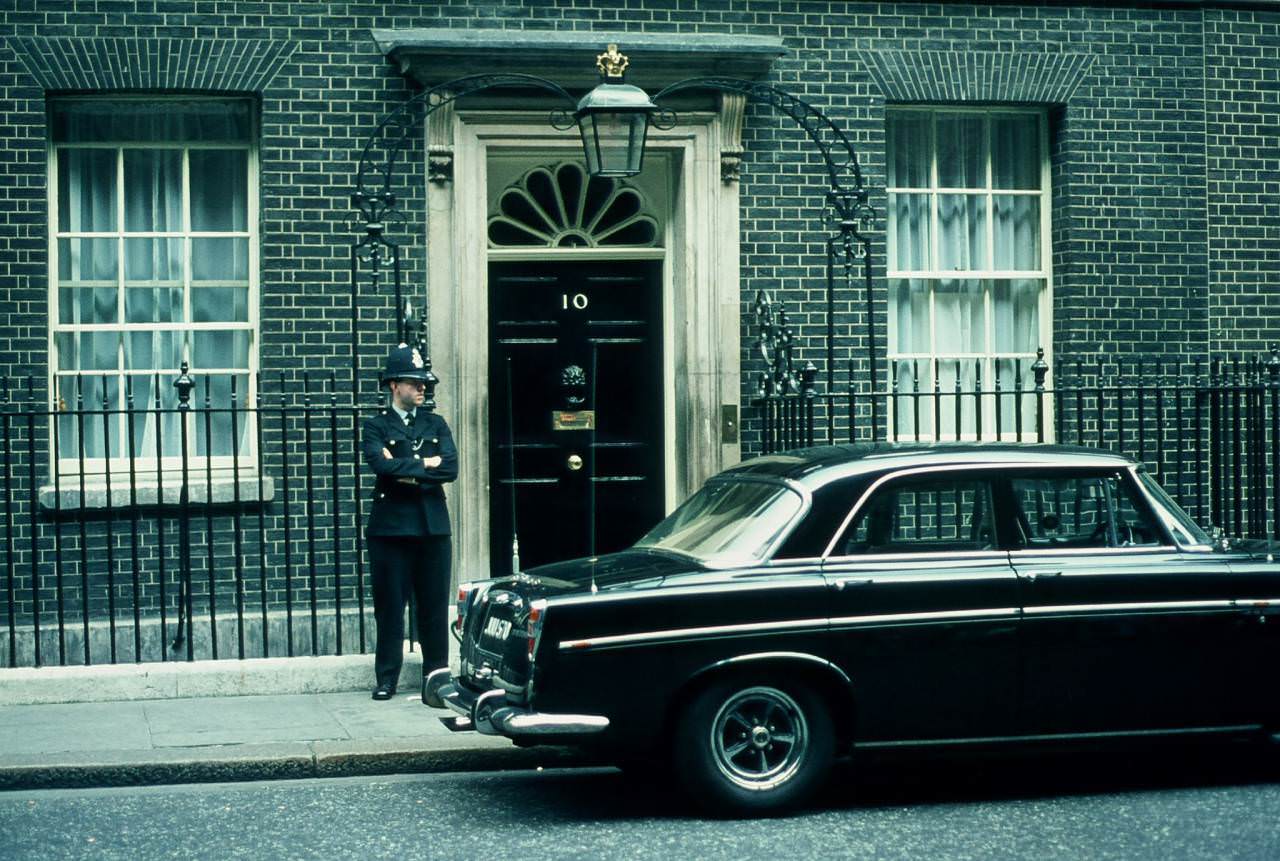
Oxford Street in 1967 was already one of the busiest shopping roads in Europe. Reed’s photograph shows the dense flow of traffic and pedestrians that made it a daily spectacle — double-decker buses, storefronts, and crowds moving in every direction.
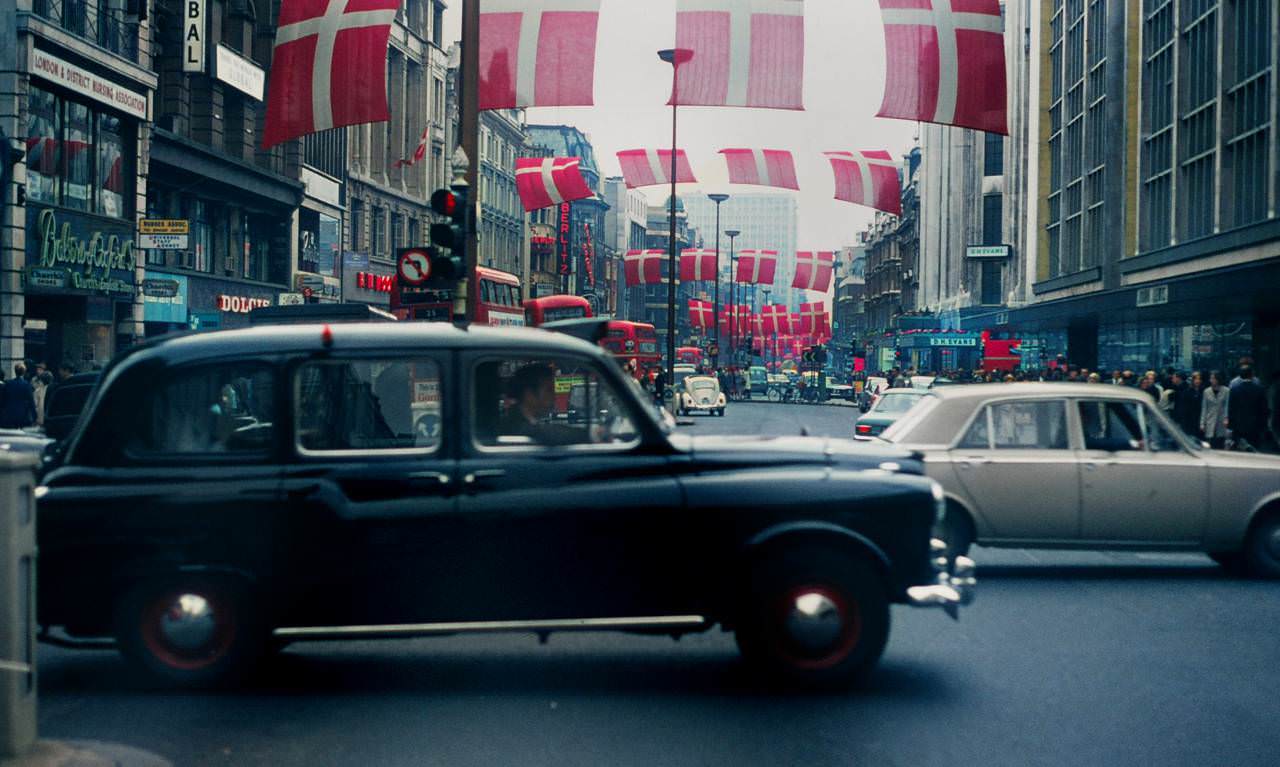
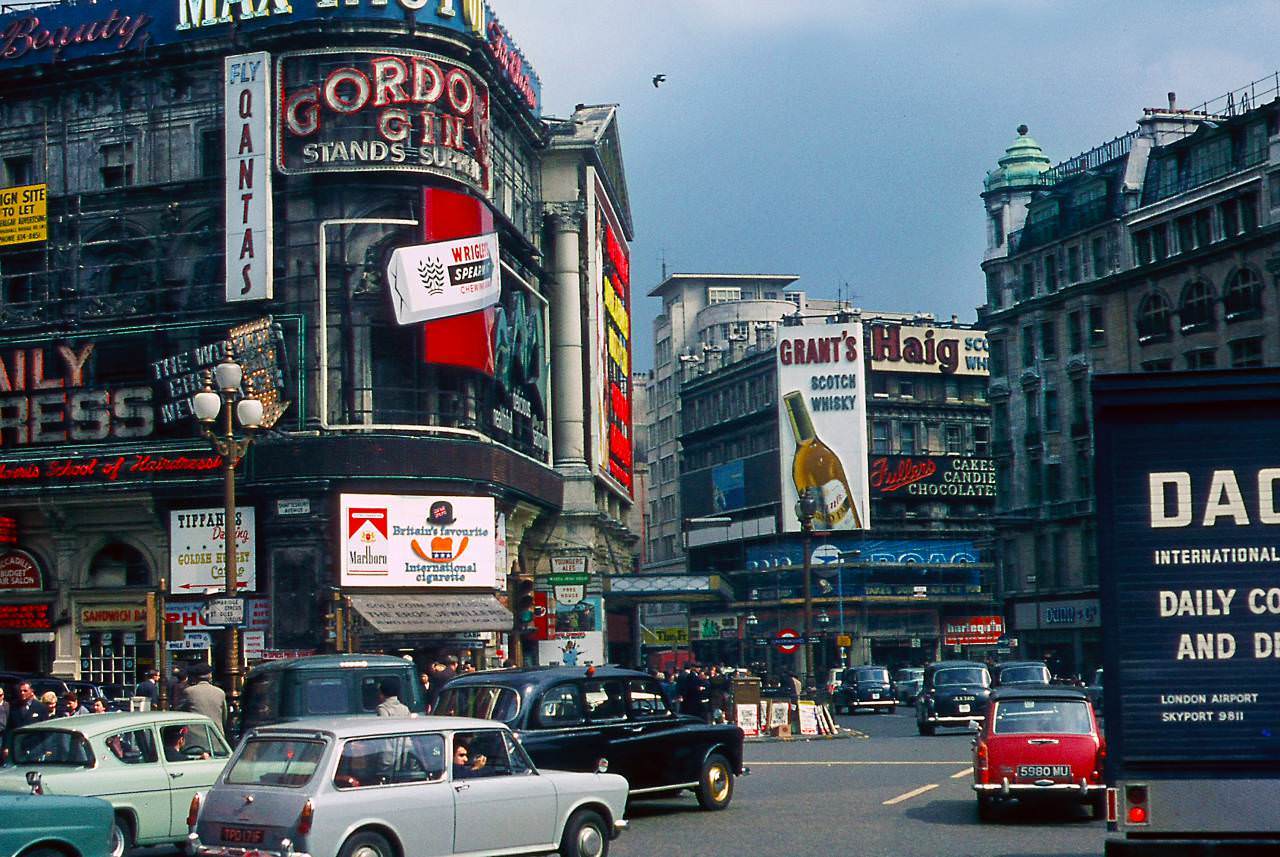
Piccadilly Circus appears multiple times throughout Reed’s collection, and for good reason. It was London’s most electric intersection — lit up with advertisements and constantly moving. In 1967, the Italian spy film Operation Kid Brother was playing, its promotional presence visible in the Circus’s famous advertisement boards.
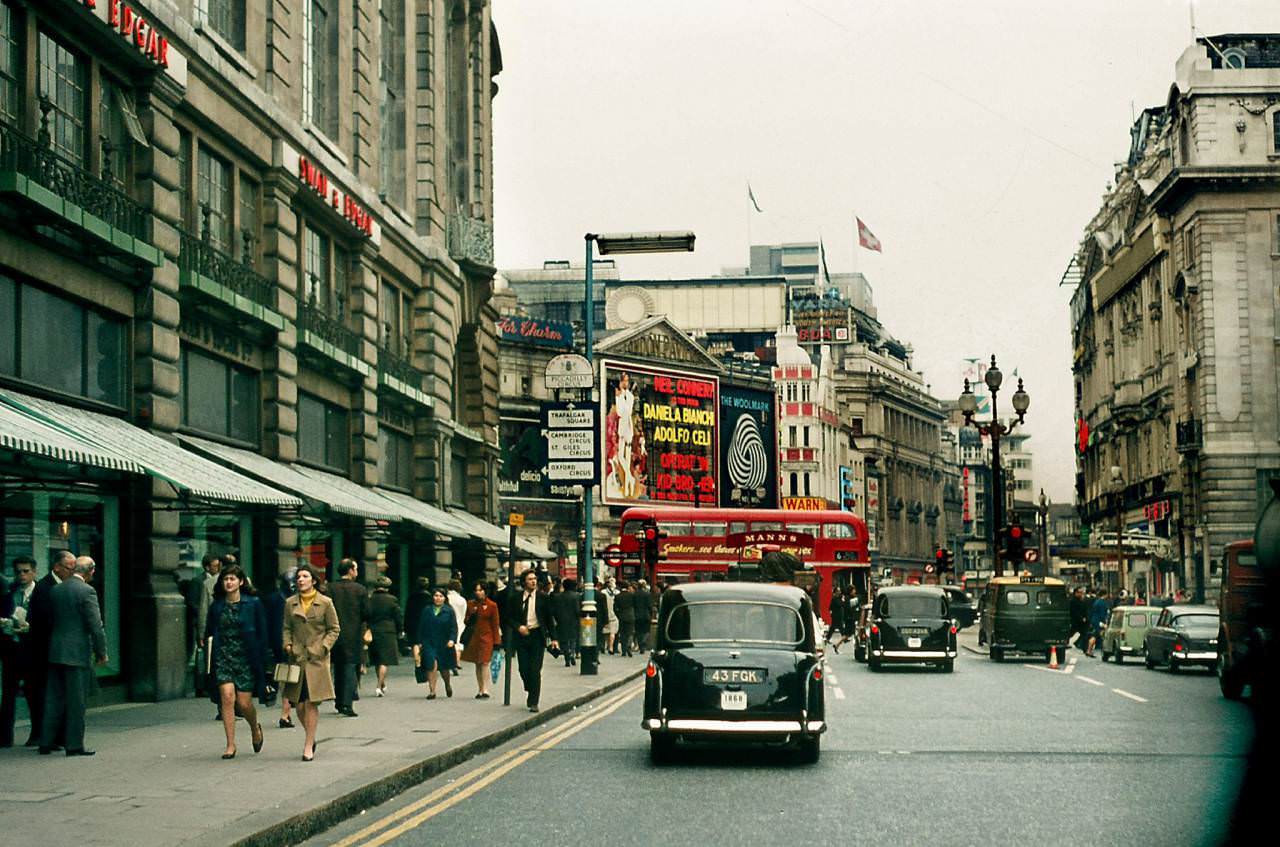
By 1968, the Circus was advertising the opening of the film The Graduate — Mike Nichols’ landmark American drama that was drawing huge audiences on both sides of the Atlantic.
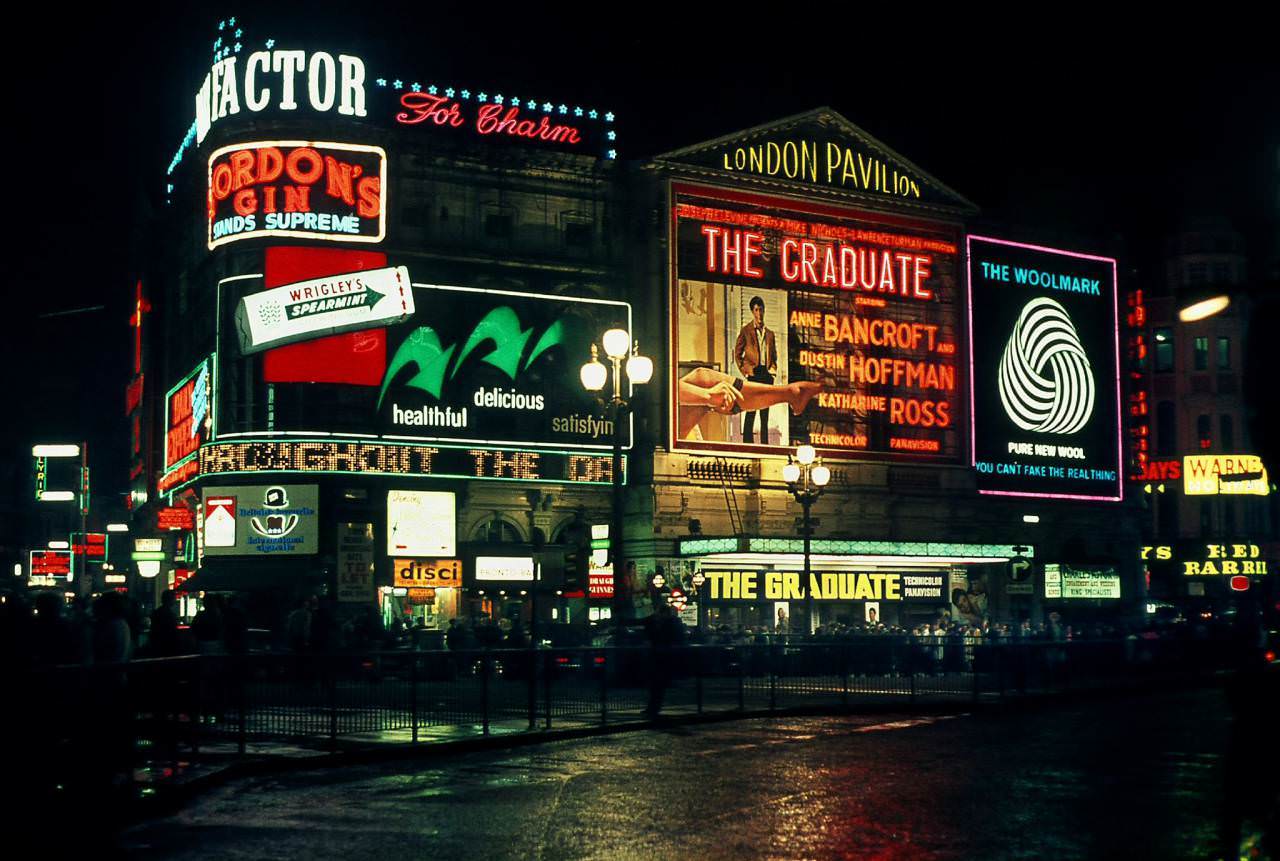
Reed returned to Piccadilly Circus again in 1969, capturing how the location continued to evolve while remaining the visual center of London’s public life.
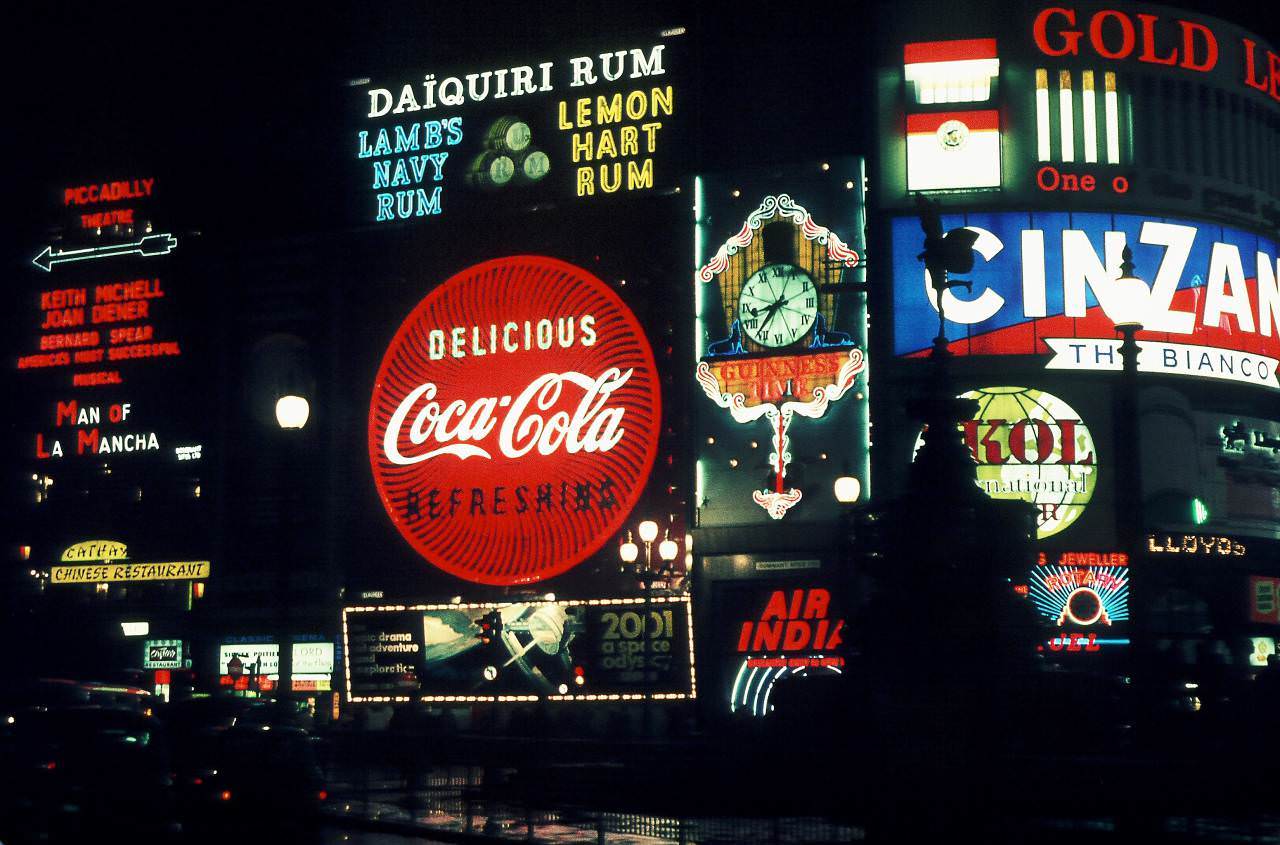
Another 1968 shot at Piccadilly Circus shows the marquee for Man of La Mancha, the Broadway musical that transferred to the West End and drew strong crowds during its London run.
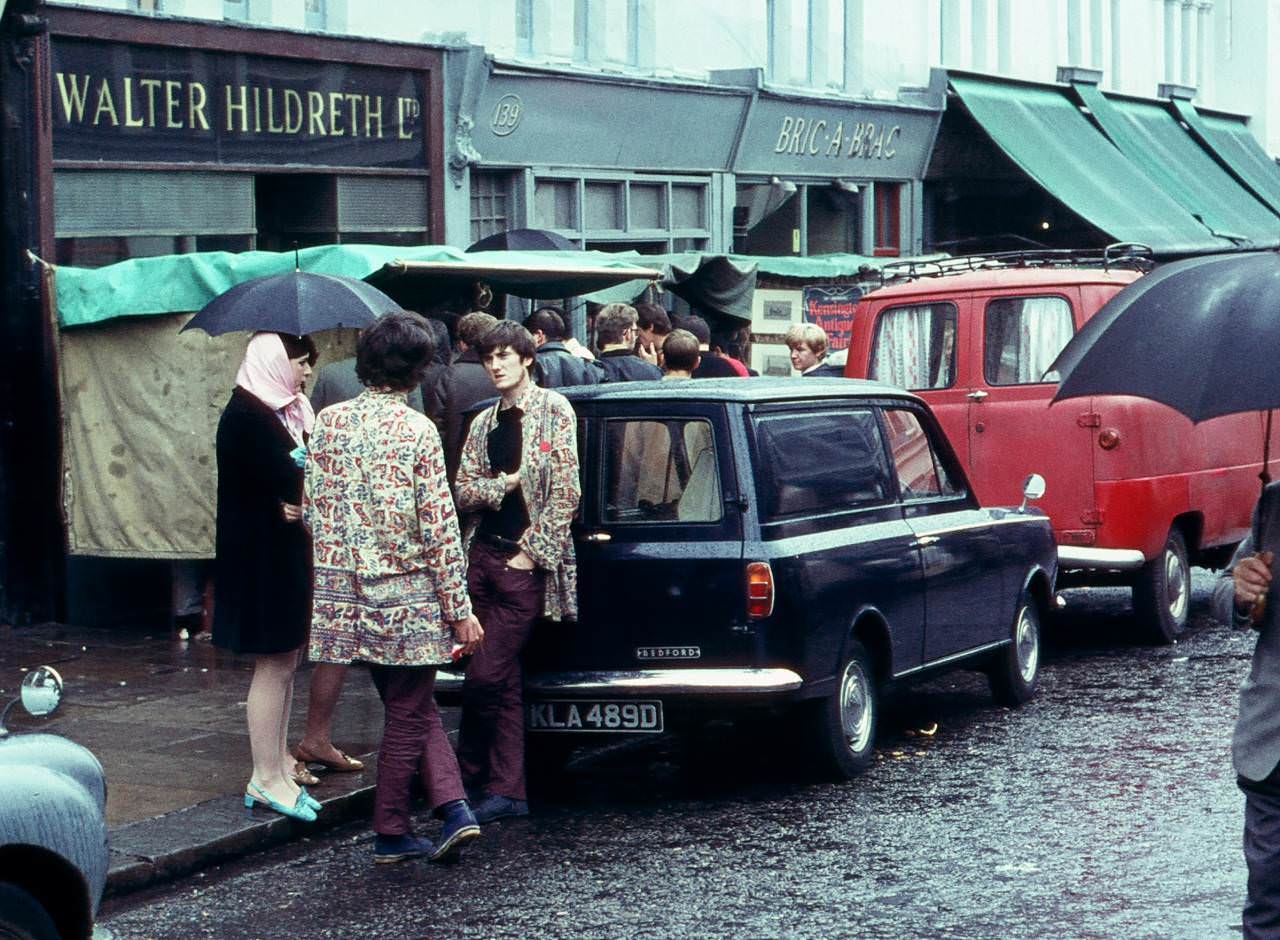
Portobello Road in Notting Hill was already a destination by 1969 — its market drawing antique hunters, young trendsetters, and tourists alike. Reed’s photograph there captures the eclectic, street-level character that set it apart from the more commercial shopping strips elsewhere in the city.
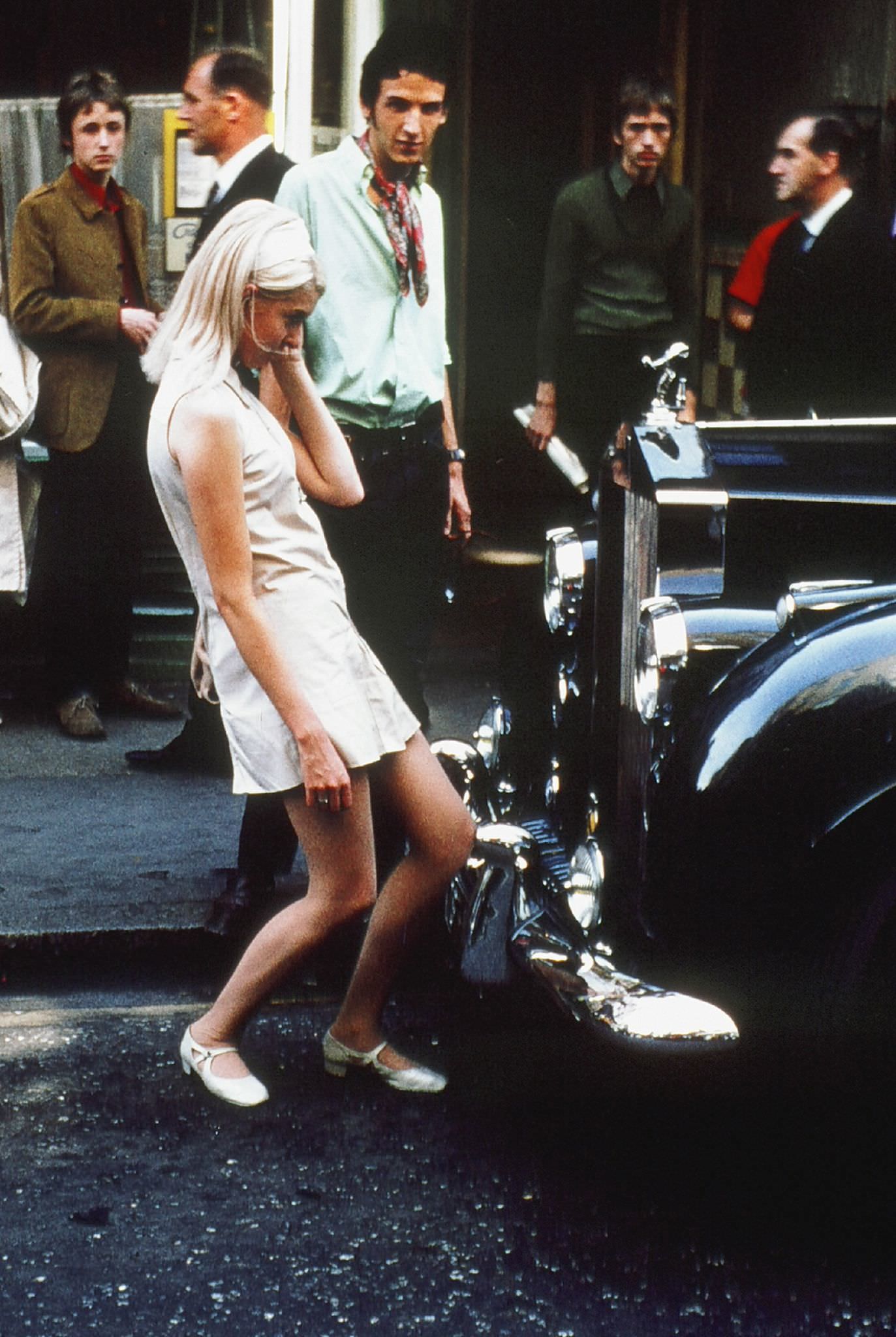
Back on Carnaby Street in 1968, Reed photographed a more intimate scene — someone preening, adjusting their appearance on the street itself. It was exactly the kind of casual, confident self-expression that the era encouraged.
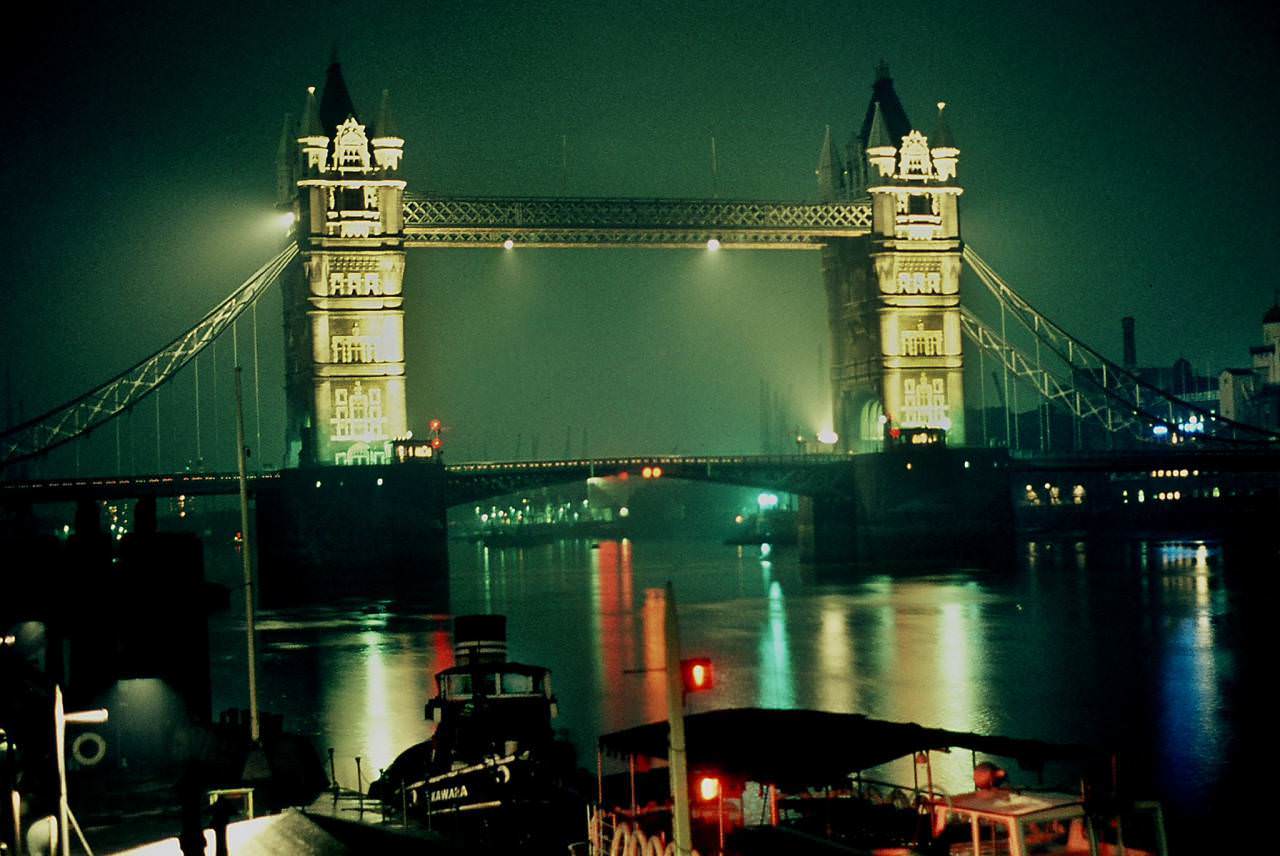
By 1969, Reed was photographing Tower Bridge — one of London’s most enduring landmarks. Seen in color against the city’s skyline, it serves as a reminder that beneath all the mod fashion and pop culture, London was still an ancient city with deep roots.
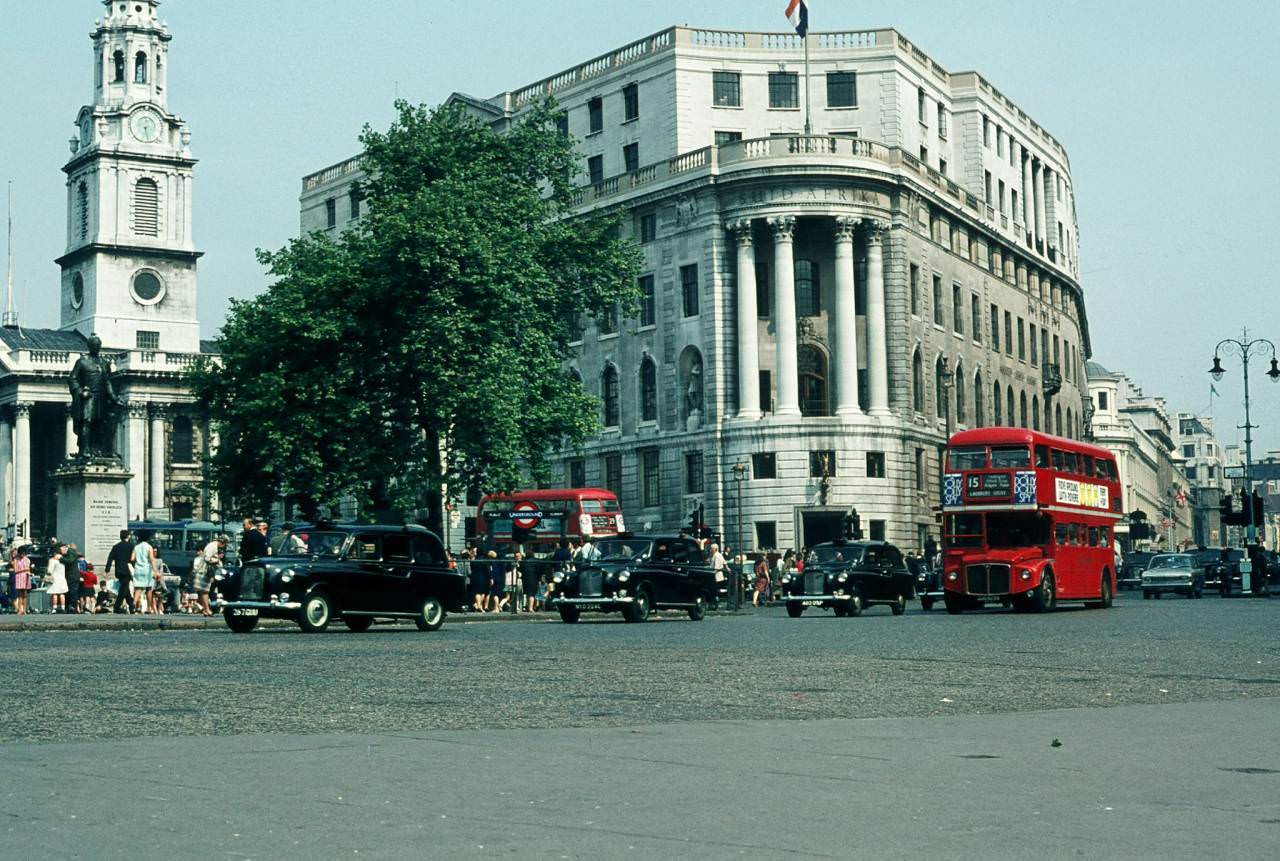
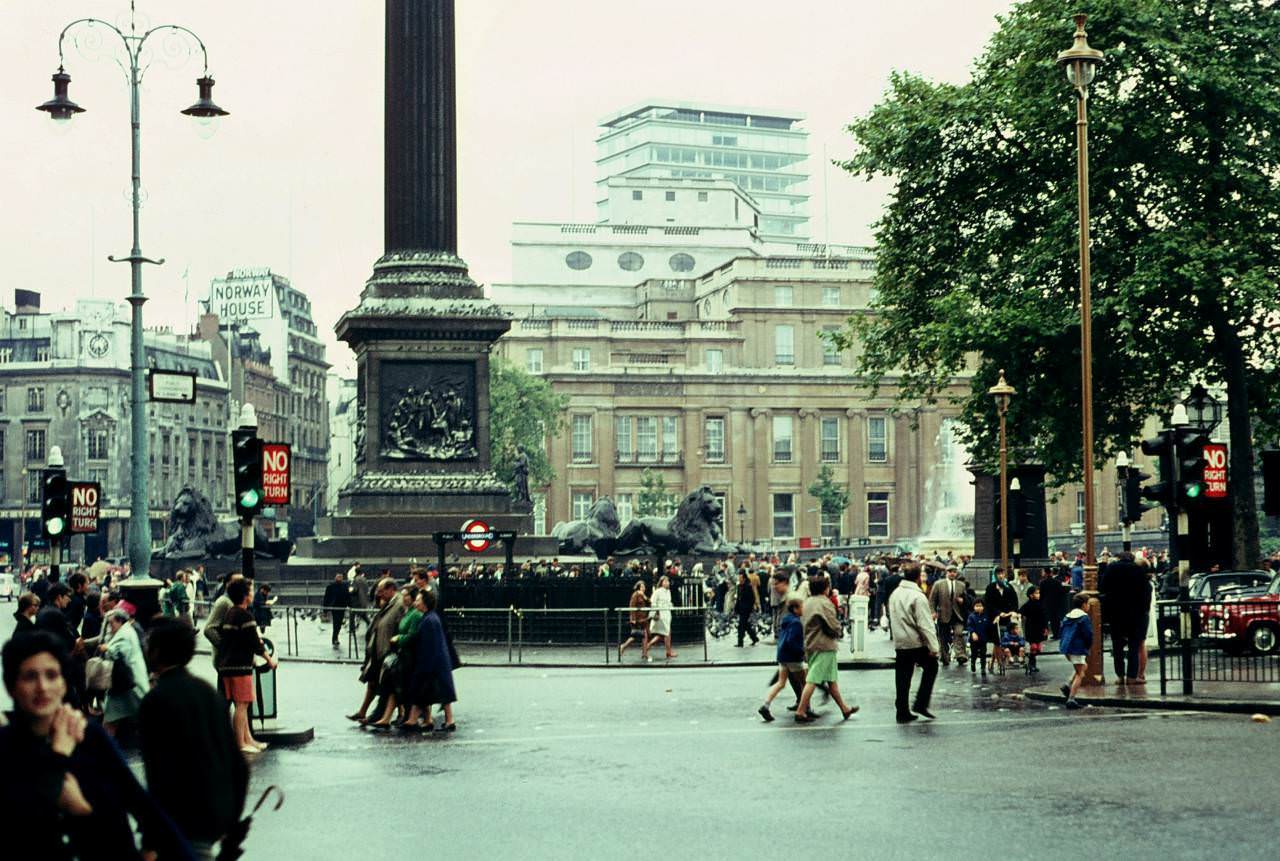
Trafalgar Square drew Reed’s camera more than once. In 1968, the square was a regular gathering point for protests, tourists, and ordinary Londoners passing through the city’s grand civic center.
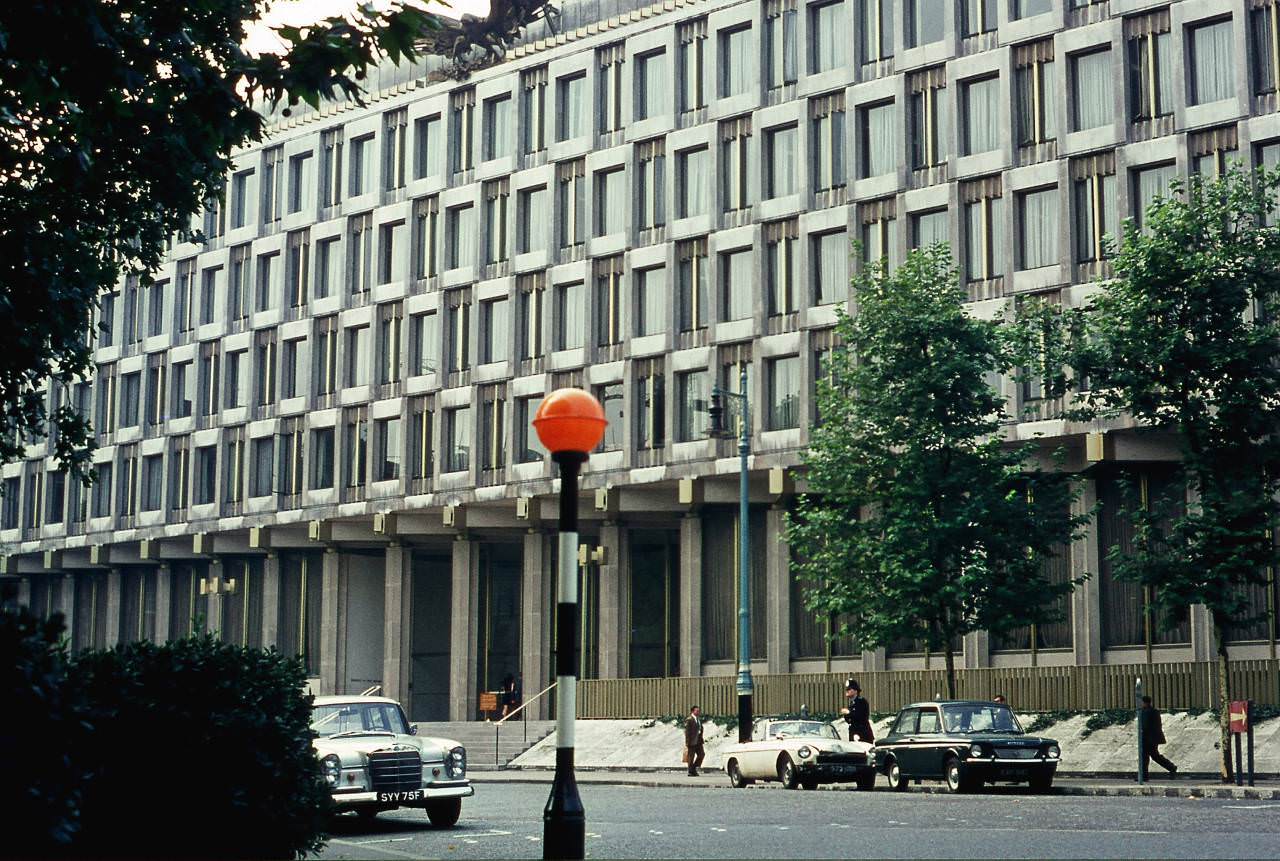
The US Embassy on Grosvenor Square was a flashpoint in 1968. That year saw one of the largest anti-Vietnam War demonstrations in British history take place right outside its walls. Reed’s photograph of the building places it in that charged political moment.
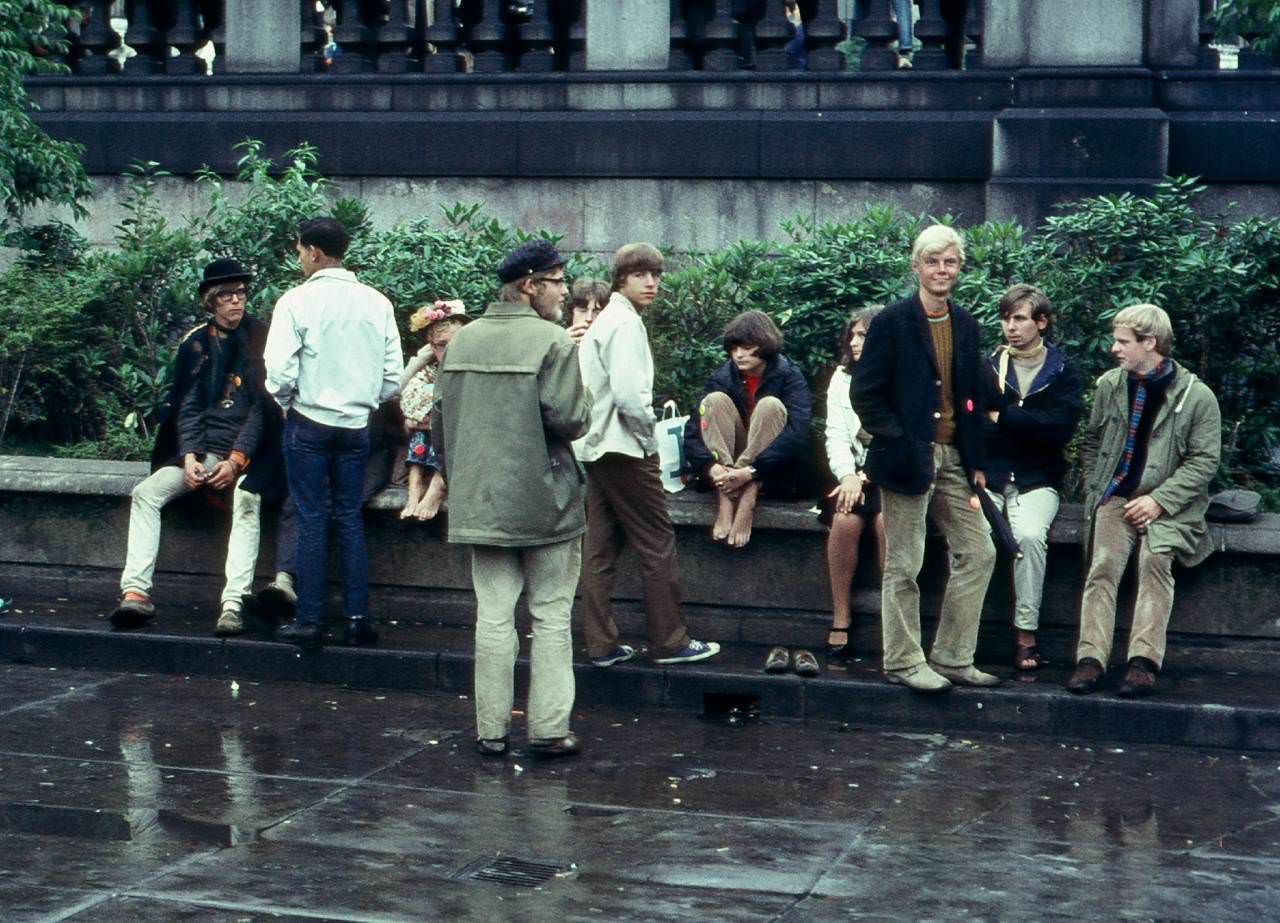
Reed’s final image of Trafalgar Square shows a group of young people gathered there in 1968 — the kind of spontaneous, relaxed scene that defined how the youth of the decade inhabited public space. They owned the street, the square, and the moment.