College students have always found creative ways to prove themselves to their peers. Daring stunts, wild bets, and outrageous challenges have been part of campus life for generations. But few fads from American history are as strange — or as well-documented — as the goldfish-swallowing craze of 1939. It swept through universities across the country in a matter of weeks, alarmed public health officials, and even prompted lawmakers to step in.
It all started with a boast. Lothrop Withington Jr., a freshman at Harvard University and the son of a prominent Boston lawyer, told his friends that he had once eaten a live fish. They didn’t believe him — or rather, they believed he wouldn’t do it again. So they bet him ten dollars to prove it. Withington accepted.
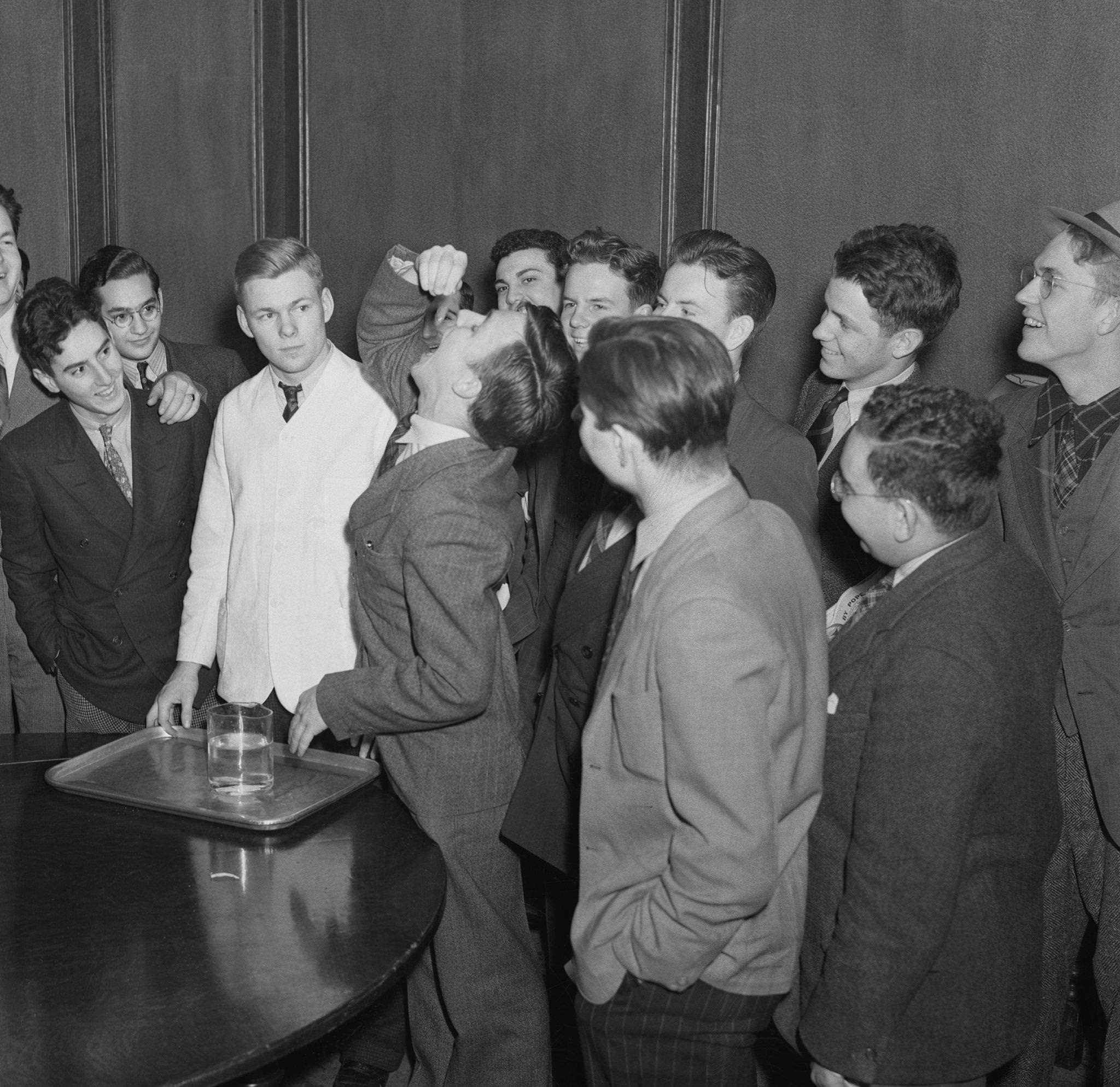
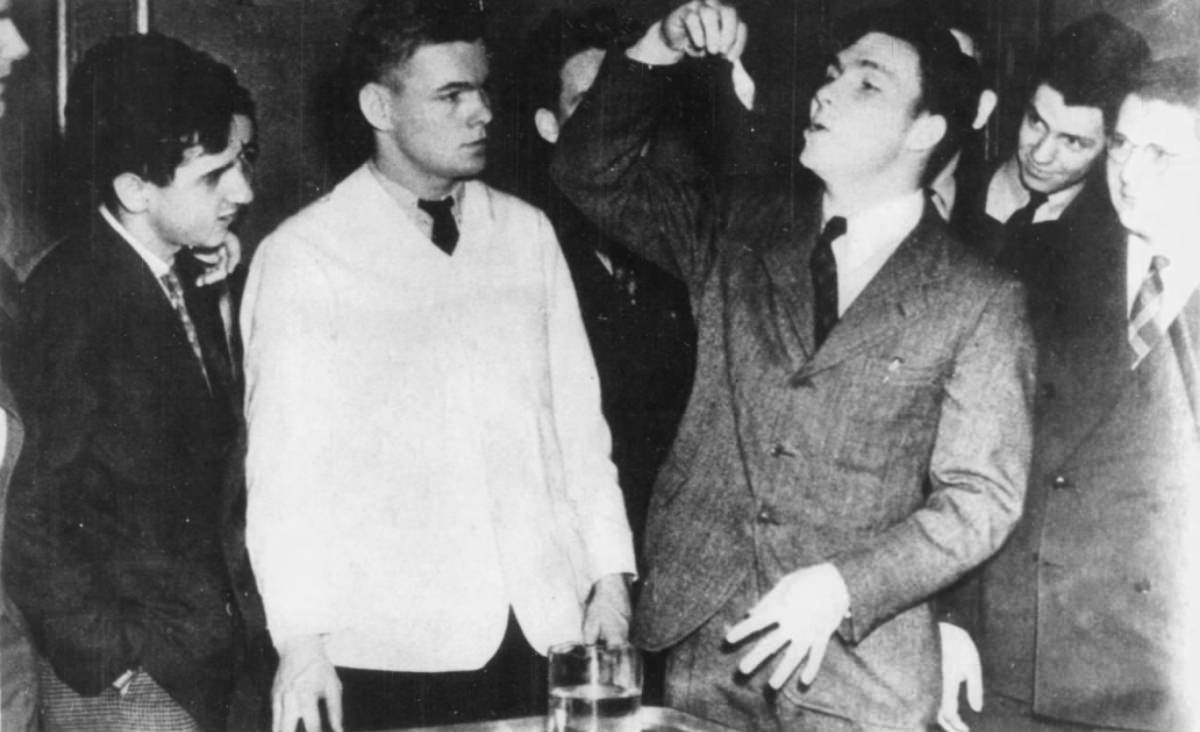
Lothrop Withington, Jr., Harvard freshman and son of a prominent Boston Lawyer, swallows a, live, squarming, 4 inch gold fish to win a ten dollar bet and to take “Revenge” for Jonah, for whom the process was reversed. he practiced for the great event for days, eating baby goldfish and tadpoles.
On March 3, 1939, Withington made good on his word inside the hallowed halls of Harvard. He swallowed a live, squirming, four-inch goldfish in front of a crowd of grinning classmates and a reporter from Boston. He had spent days preparing for the stunt, working his way up by eating baby goldfish and tadpoles beforehand. The ten-dollar bet was won. The story, however, was just beginning.
The Boston reporter’s account spread fast. Within days, students at other colleges across Massachusetts and beyond had heard about the stunt. The competitive nature of college life did the rest. If one student could swallow a goldfish, another could swallow two. Then five. Then ten. What started as a single bet quickly became a full-blown contest of endurance and nerve, with students trying to outdo each other’s numbers in front of ever-larger audiences.
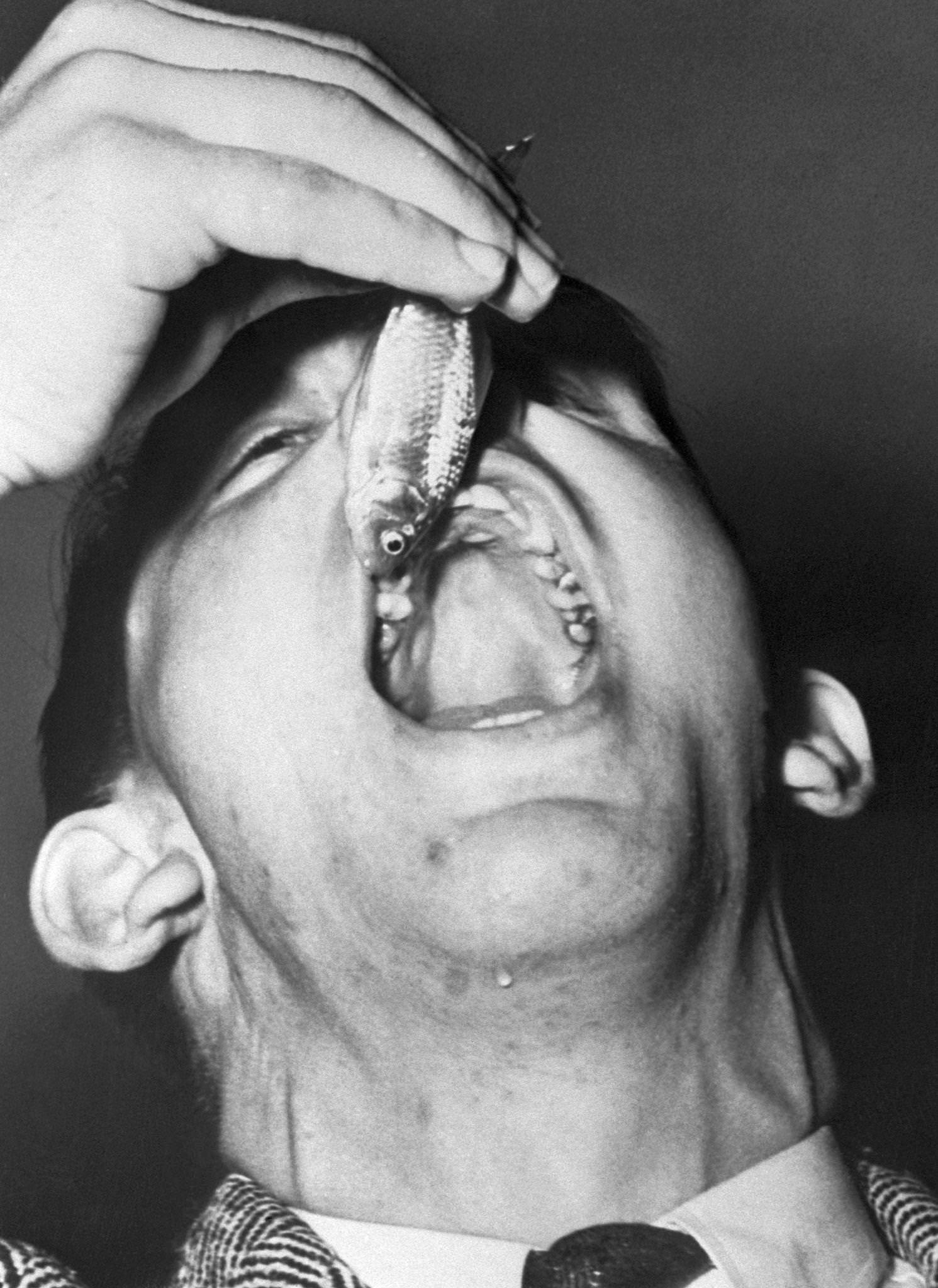
The fad crossed gender lines and state borders with ease. Young women on campuses joined in as readily as men, eager to show they could match or beat the boys. The stunt became a point of school pride — a way to prove that your campus was tougher, bolder, or simply more willing to do something outrageous than the one across town. Schools competed by record. Each new high score made the news, which only fueled the next attempt.
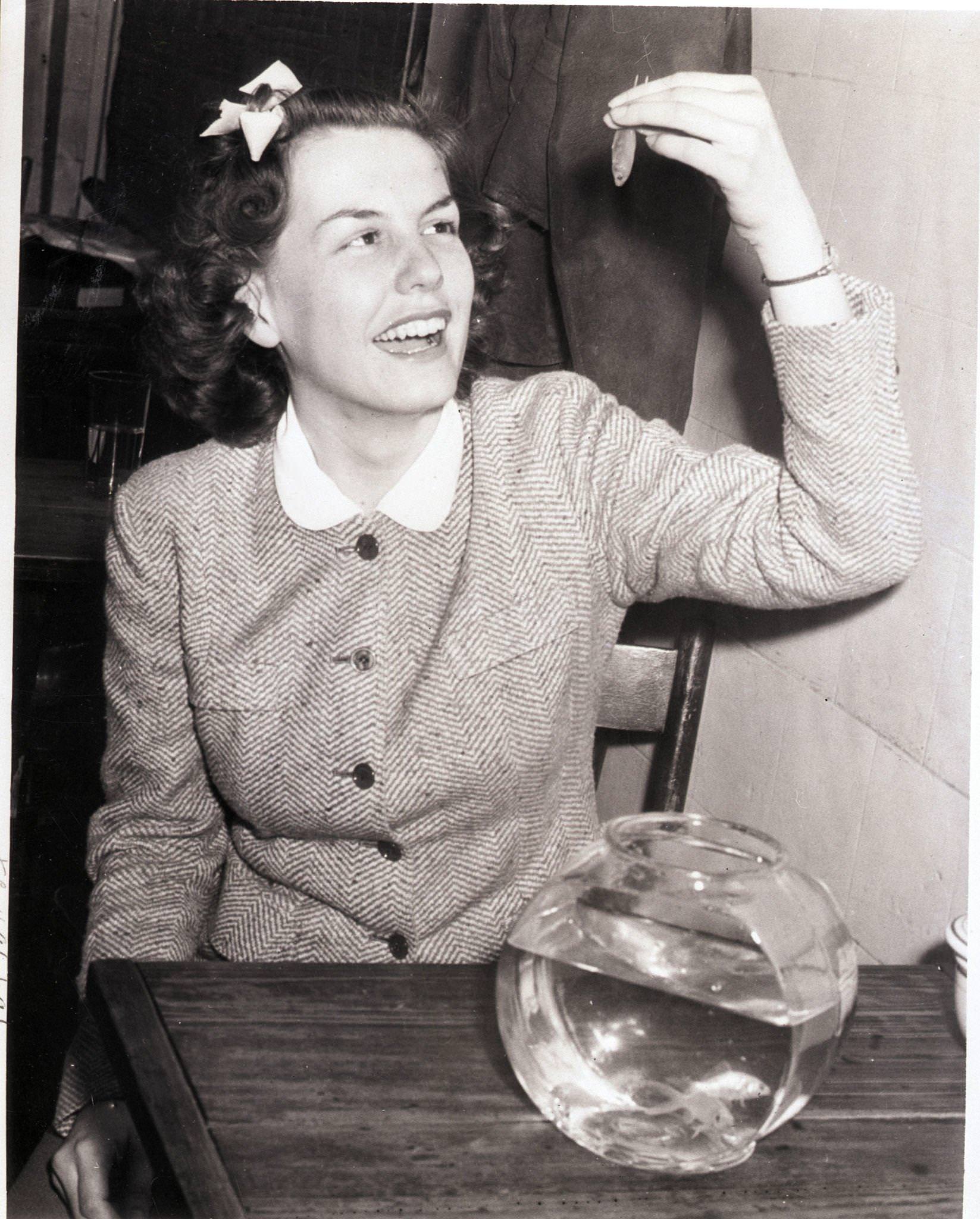
MO- Marie Hensen, pretty Memphis co-ed, at the University of Missouri School of Journalism, called in fellow students and swallowed this live goldfish to prove that Eastern college boys, now in the throes of a goldfish swallowing derby.
Not everyone found the craze amusing. The Massachusetts state legislature moved to pass a law specifically protecting goldfish from being swallowed alive. The U.S. Public Health Service issued a formal warning, noting that goldfish could carry tapeworms and other diseases that would be passed on to anyone who ate them. Neither warning made much of a dent at first — at least not until the novelty of the whole thing simply wore off. Within a few months of starting, the fad faded almost as quickly as it had erupted.
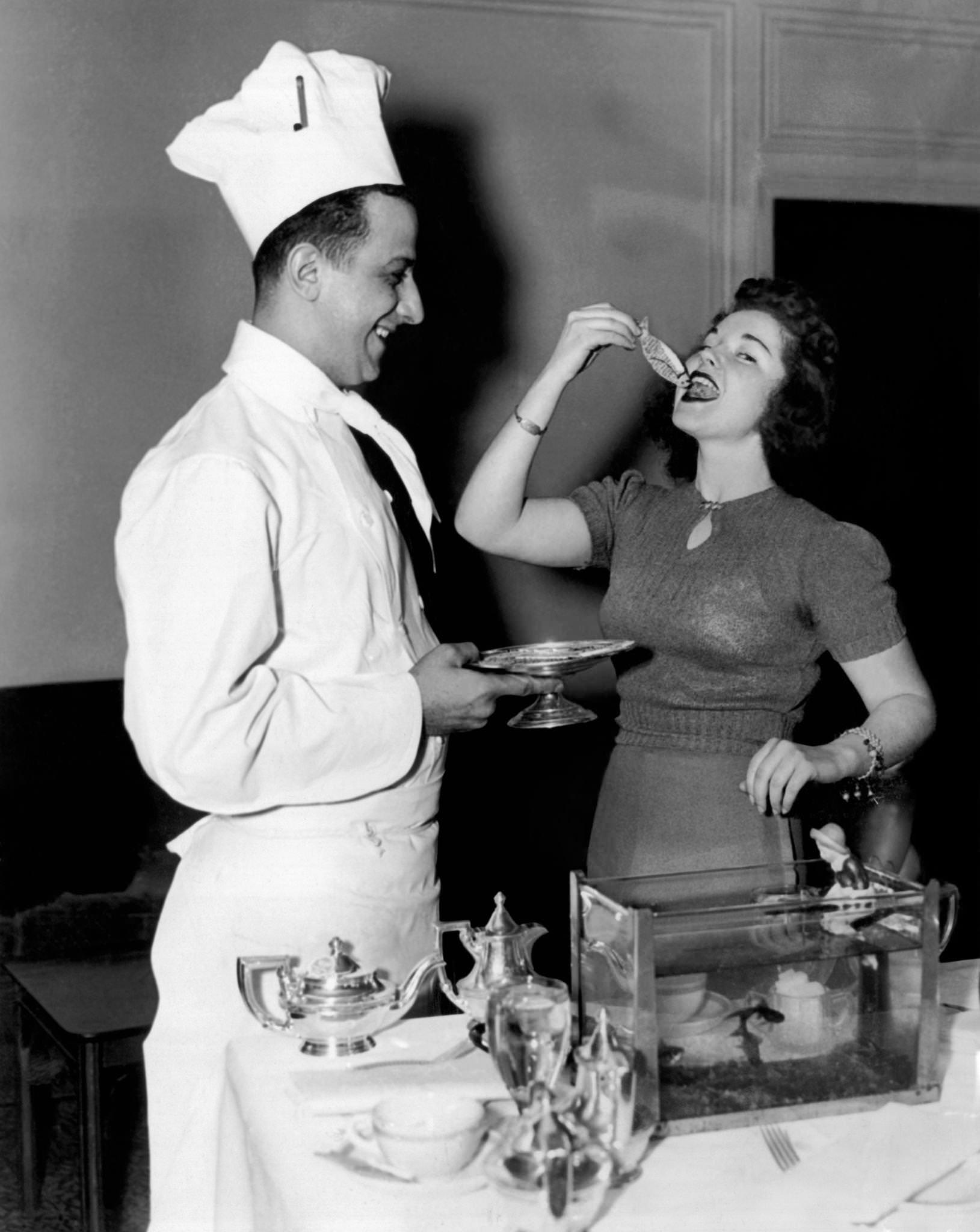
Some students found a middle ground. At Boston University, a member of the Kappa Kappa Gamma sorority swapped the real thing for a goldfish-shaped piece of cake — a nod to the craze without the health risks or the live fish. It was one of many signs that the fad had reached its peak and was already starting to tip into parody.
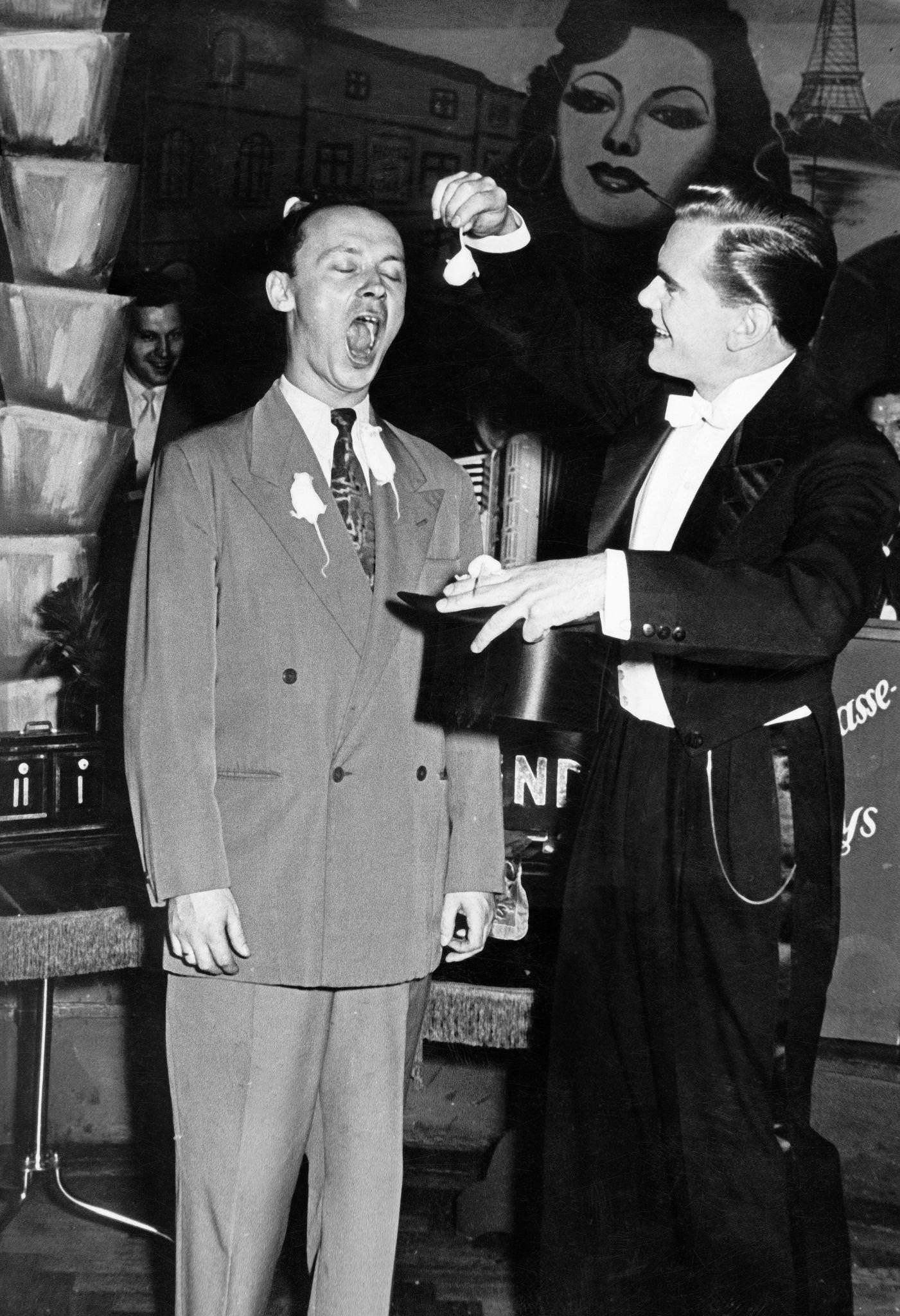
The goldfish-swallowing stunt didn’t stay locked in 1939. It reappeared in the decades that followed, picked up by entertainers and daredevils looking for a reaction from a crowd. By the 1970s, at least one student claimed to have swallowed 300 live goldfish in a single sitting — a number that, if accurate, far outpaced anything done during the original craze. The willingness to revive the challenge, generation after generation, says something about the enduring appeal of the stunt as a test of nerve.