Hey There! Before You Go. 😧
Get the best vintage content straight into your inbox!

Don't worry, we don't spam

Stunning Vintage Photos of Sunnfjord, Norway From the Early 1900s That Show Small Town Life

Sunnfjord is a traditional district in Western Norway, sitting roughly halfway between the cities of Bergen and Ålesund. To the south it borders the Sognefjord area, and to the north it meets Nordfjord. The district covers about 4,476 square kilometers and holds around 8% of the total population of Vestland county. Its landscape is defined by steep mountains, roaring waterfalls, and deep fjords that draw thousands of tourists every year for kayaking, rafting, hiking, and fishing.

During World War II, the skies above Sunnfjord became the site of the largest air battle ever fought over Norway. Today, a museum in the village of Naustdal commemorates that event. But long before the war, Sunnfjord was simply a place where people farmed, fished, raised families, and marked the milestones of everyday life. Norwegian photographer Olai Fauske captured that world with his camera in the early decades of the 20th century. His photographs document the rhythms of small-town life across the region with remarkable detail.
Fauske operated his home and studio in Førde, the main town of Sunnfjord. From there he traveled across the district photographing farms, families, weddings, funerals, and the natural landscape. The images he left behind are an extraordinary window into a time and place that has changed enormously since. Many of his subjects are identified by name, which makes the photographs feel especially personal. Here is a collection of his finest surviving work.

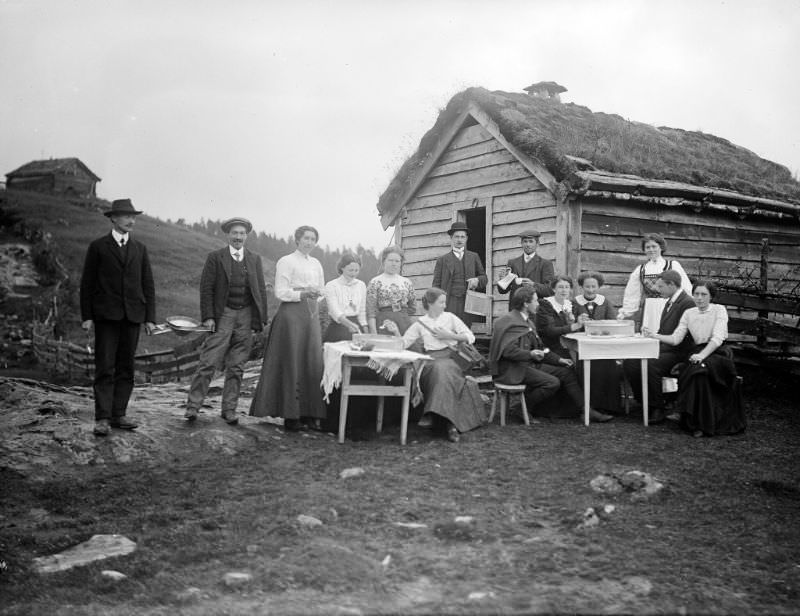
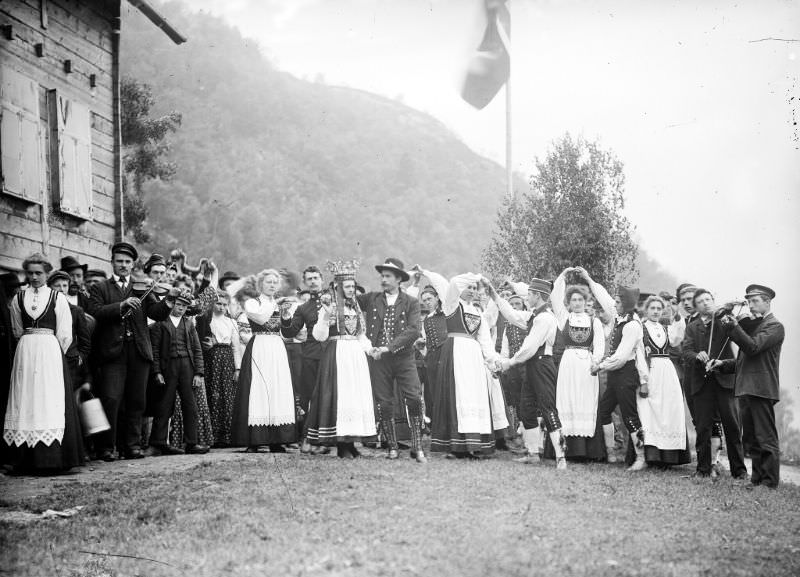
A group of people gathered outside Bakkeselet mountain hut at Brulandsstølen mountain farm

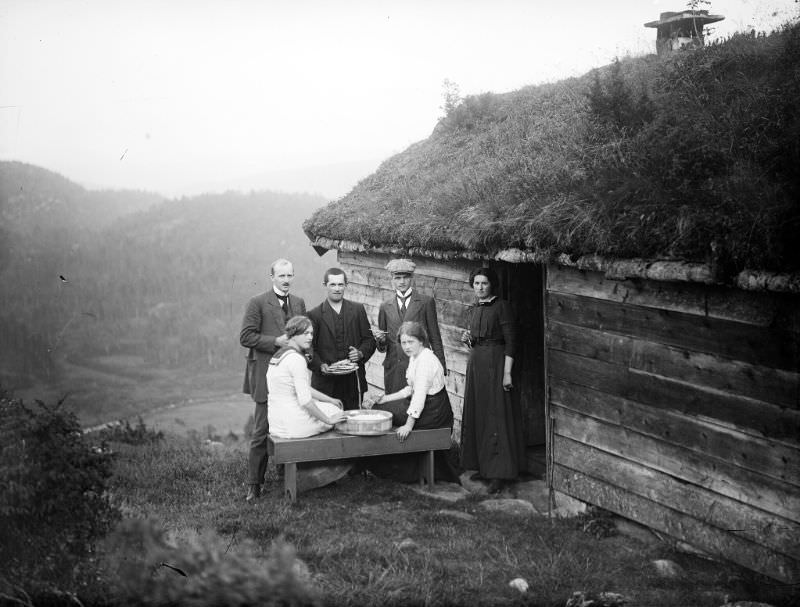
Mountain farms, known as støls, were a cornerstone of life in Western Norway. Families would move their livestock up to high-altitude grazing pastures during the summer months, living in simple huts while the animals fed on mountain grass. Fauske documented several of these farms, capturing the community that formed around them.
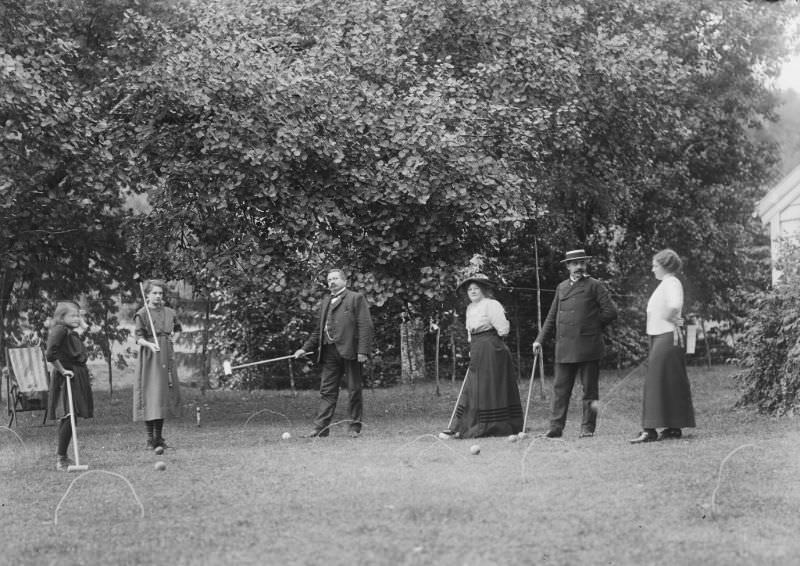
A game of croquetAdd caption

Leisure was not absent from life in Sunnfjord. Croquet was popular among middle-class families in Norway during this period, reflecting the same Victorian-era recreational trends sweeping much of Europe. Fauske photographed both the working lives and the lighter moments of the people around him.

A group of people gathered outside Steinaselet mountain hut at Halbrendsstølen monutain farm

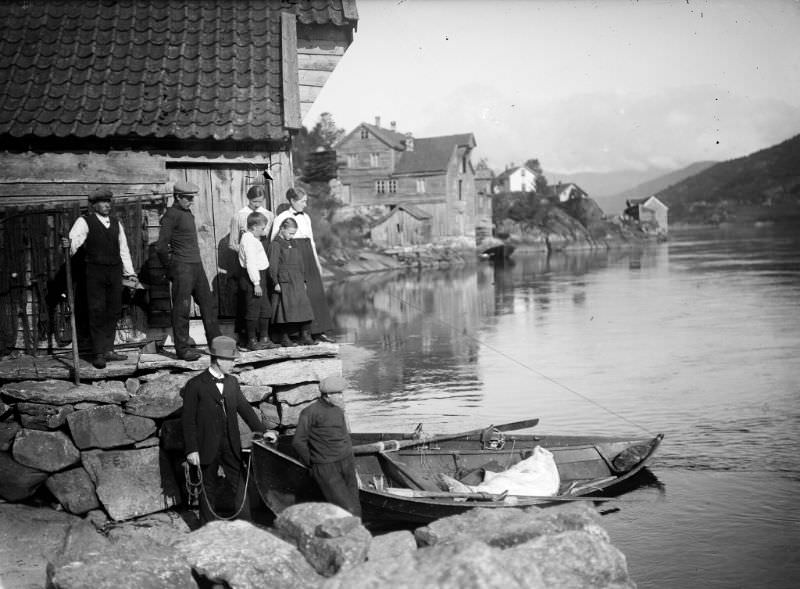
The Førdefjord was a vital source of food for communities across the district. Fishing was both a livelihood and a daily necessity, and a large catch was always worth documenting.

A halibut was caught close to Bjønnaholmen in the fjord Førdefjorden

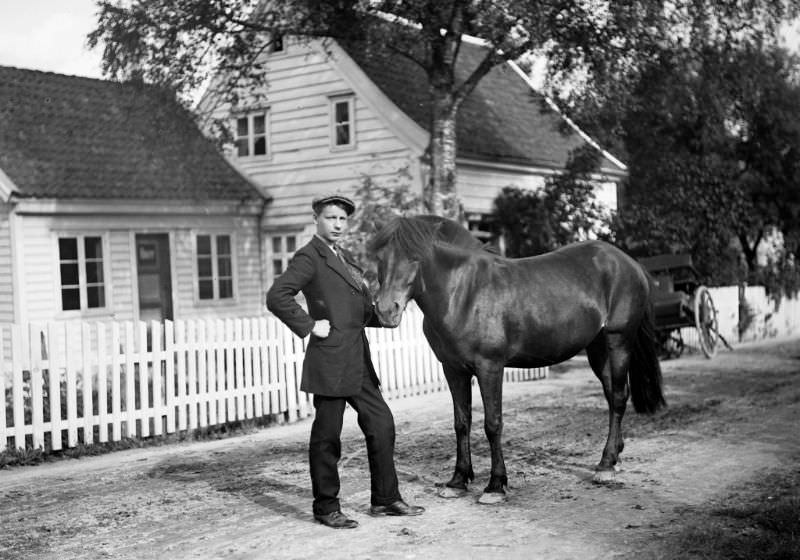
Horses were essential to daily life in Sunnfjord in the early 1900s. They pulled plows, hauled timber, and transported people along roads that were often little more than dirt tracks. Fauske photographed horses frequently, recognizing their central role in the community. One notable image was taken at Teigen in Førde, near the home of Kristian Ulltang — Fauske’s own neighbor — whose house, named “Nøysomhet” (meaning moderation), appears in the background.

A man and a horse portrayed at Teigen in Førde.
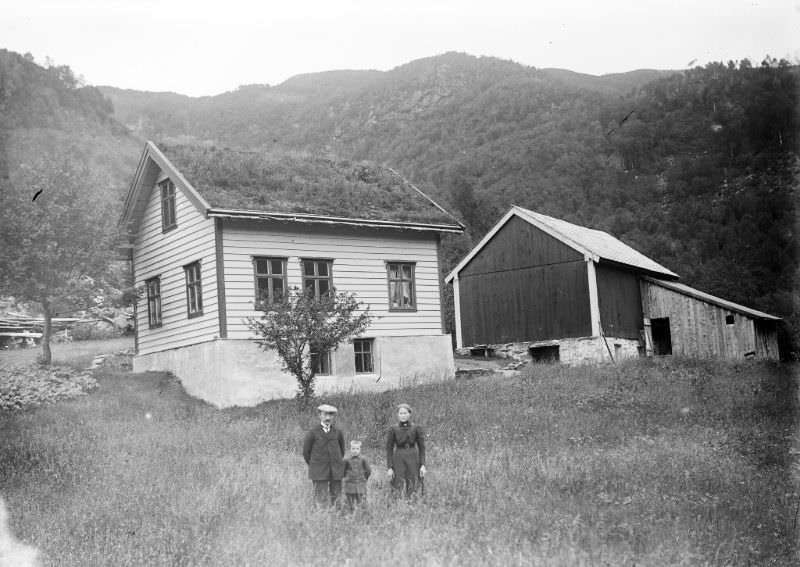
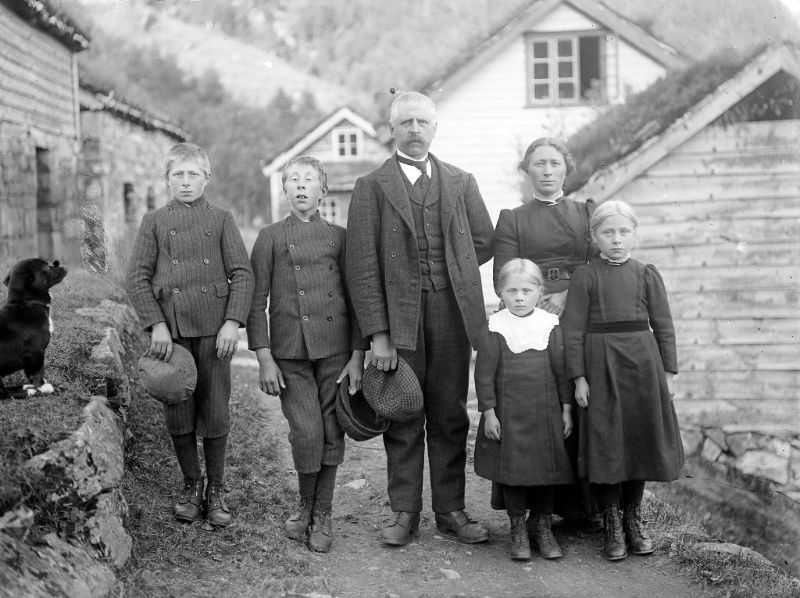
A small family outside their home

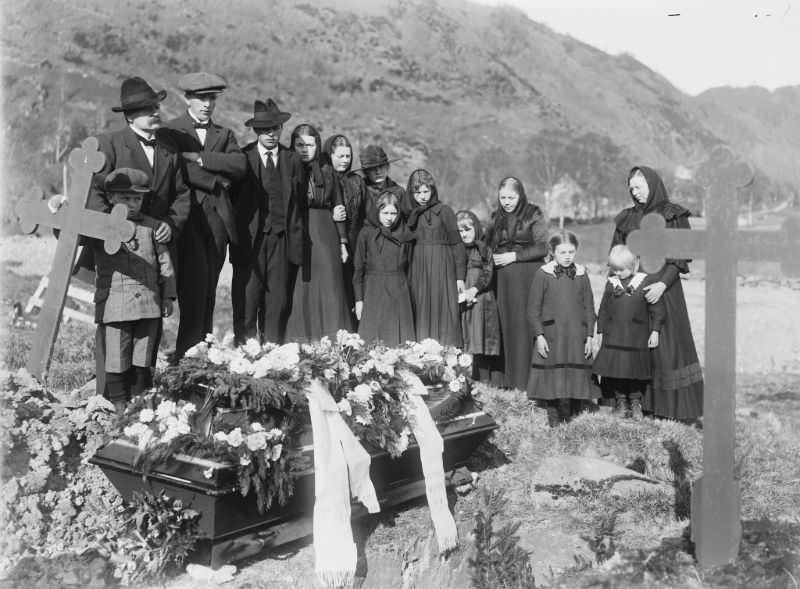
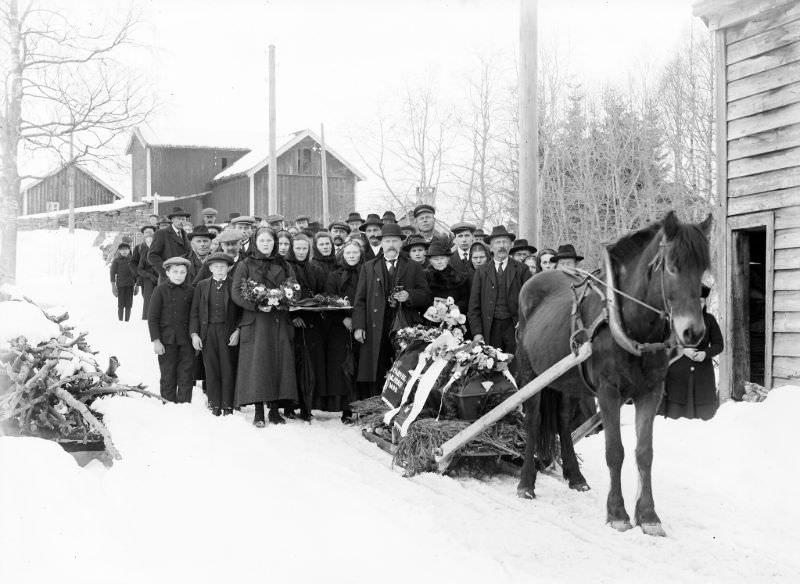
Death was a public and communal event in early 20th-century Norway. Families gathered at gravesides, and funerals were formal occasions documented with the same seriousness as weddings. Fauske photographed both. One image shows a family gathered around a coffin in a churchyard. Another captures a funeral procession at Teigen in Førde municipality — the deceased was a woman, and a wreath of flowers bears the inscription “Farvel kjære mor,” meaning “Goodbye dear mother.”

A family gathered around a coffin at the church yard

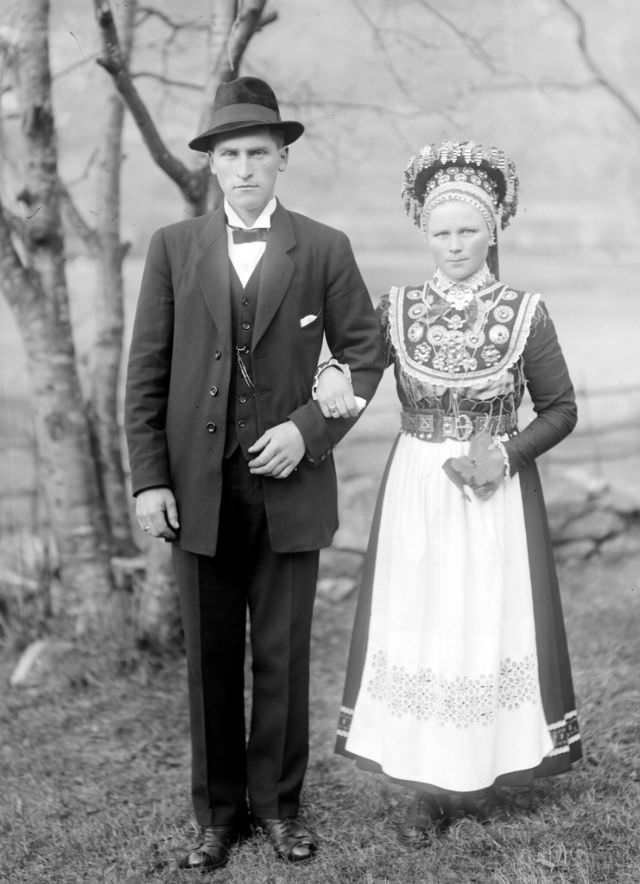
Weddings were among the most photographed events in Fauske’s career. Families commissioned portraits and group shots to mark the occasion, and Fauske’s studio work shows the care people took with their appearance for these ceremonies. One wedding portrait features Andreas Andersson Holsen, born in 1862, and Severine Kristiansdotter Holsen, born in 1854, photographed on the occasion of their son Kristoffer Nikolas A. Holsen’s wedding.

Andreas Andersson Holsen (b. 1862) and Severine Kristiansdotter Holsen (b. 1854) photographed on the occation of the wedding of their son Kristoffer Nikolas A. Holsen

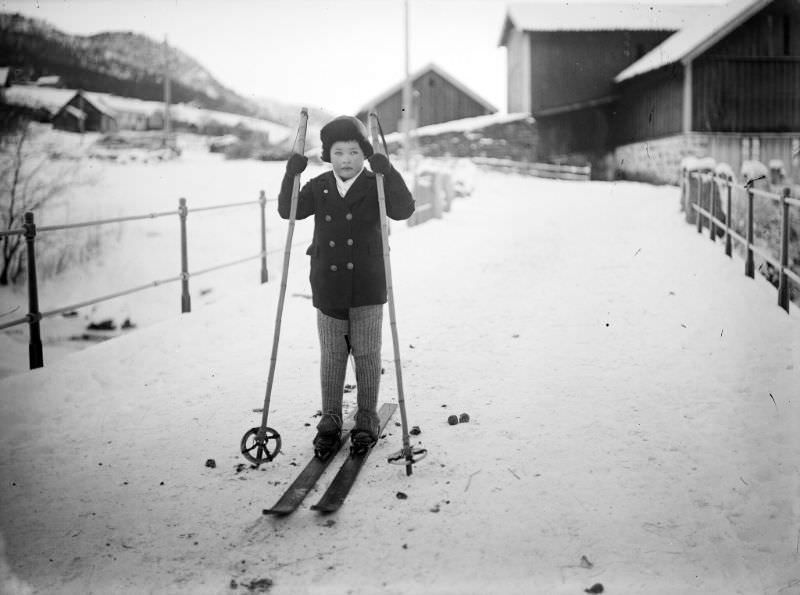
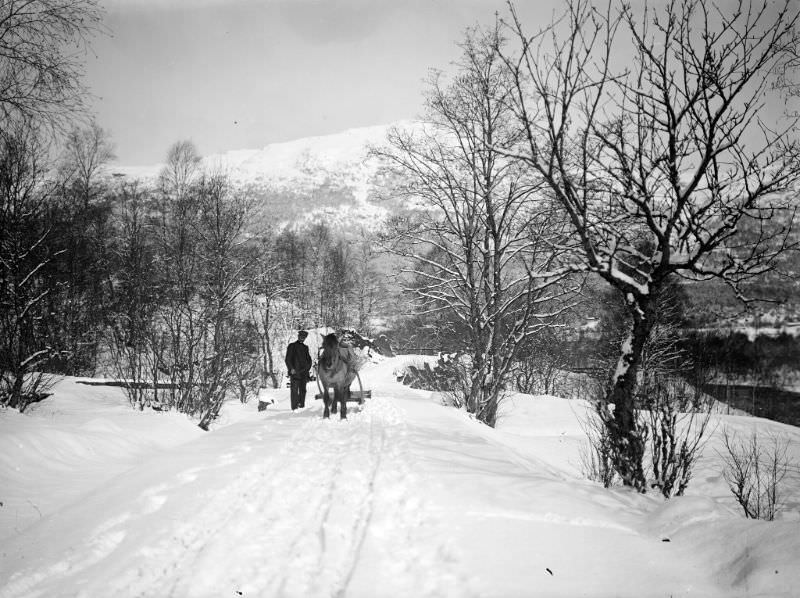
Winter in Sunnfjord meant snow, and skiing was a practical mode of transport long before it became a sport. Boys and men alike took to the slopes on wooden skis, navigating both bridges and open terrain. Fauske photographed skiers at Halbrendsbrua bridge and also captured Ragnvald Halbrend and Hermann Grimeland on skis together.

Boy skiing at Halbrendsbrua bridge
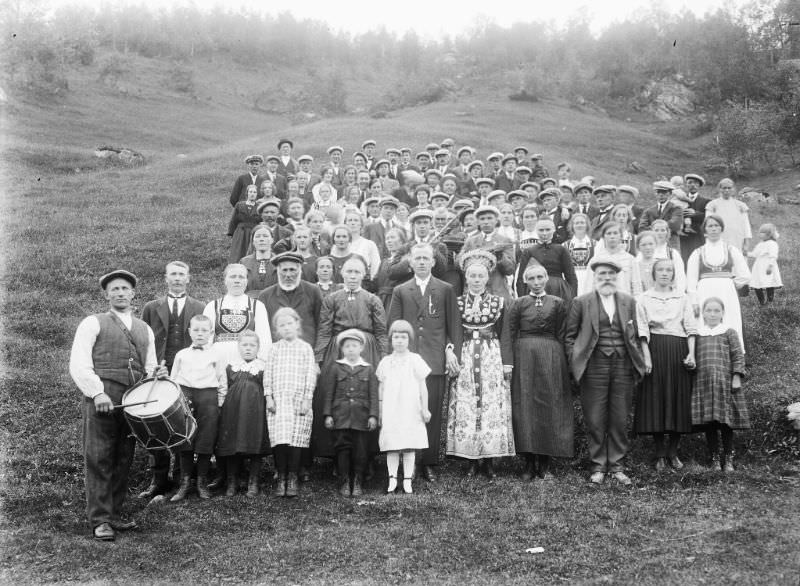
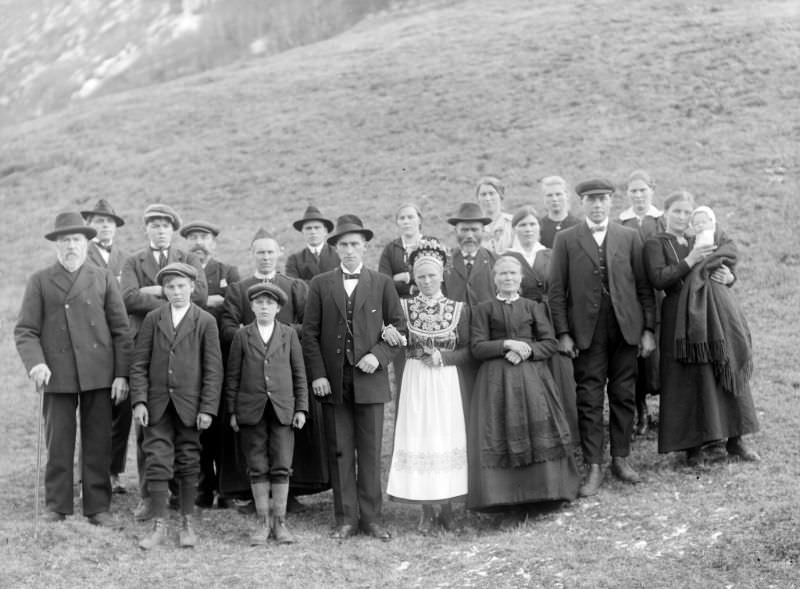
Bride and groom and their wedding guests

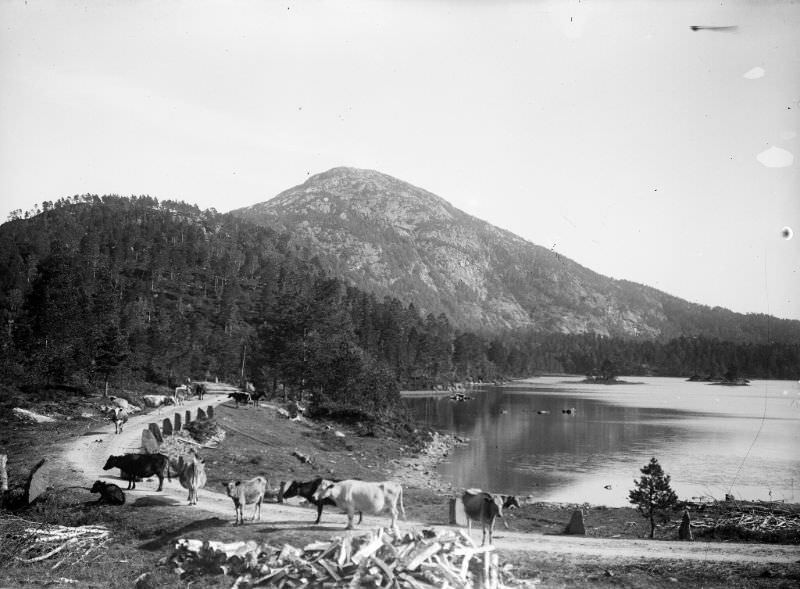
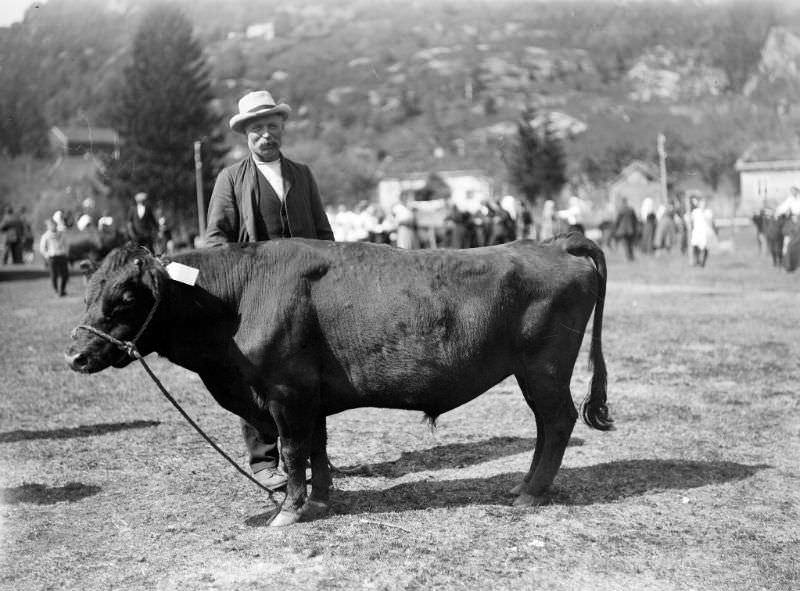
Agriculture shaped the calendar in Sunnfjord. Cattle were central to farming life, providing milk, butter, and meat. Fauske photographed herds at Bekkjavatnet lake in Førde, and also documented a cattle show where a man stands proudly alongside his bull — a sign of the importance placed on livestock quality in rural communities.

Cattle at Bekkjavatnet lake, Førde
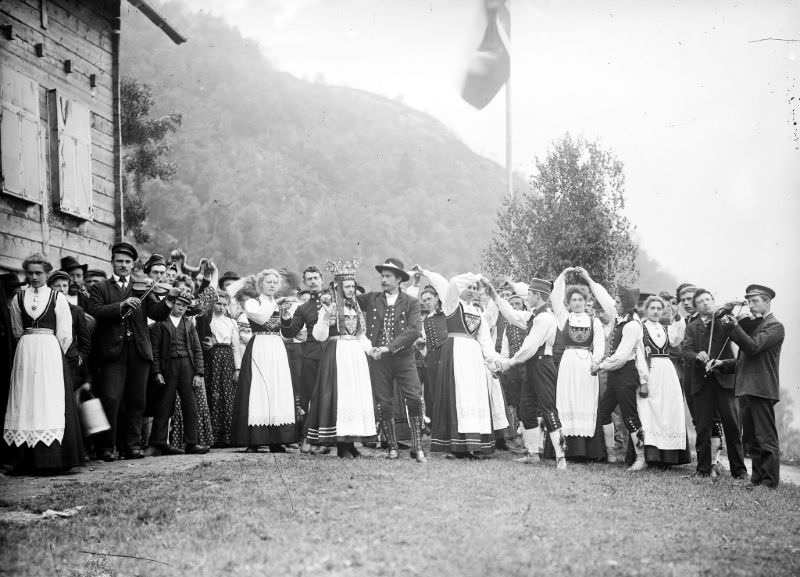
Celebrations
Celebrations

Kristian Ulltang’s house “Nøysomhet” at Teigen in Førde appears in more than one of Fauske’s photographs. In one image, cyclists pose outside the building. Because Fauske lived and worked next door, the neighborhood appears repeatedly in his archive, giving an unusually detailed view of a single Førde street over the years.

Cyclists outside Kristian Ulltang's house "Nøysomhet" (moderation) at Teigen in Førde
Cyclists outside Kristian Ulltang’s house “Nøysomhet” (moderation) at Teigen in Førde

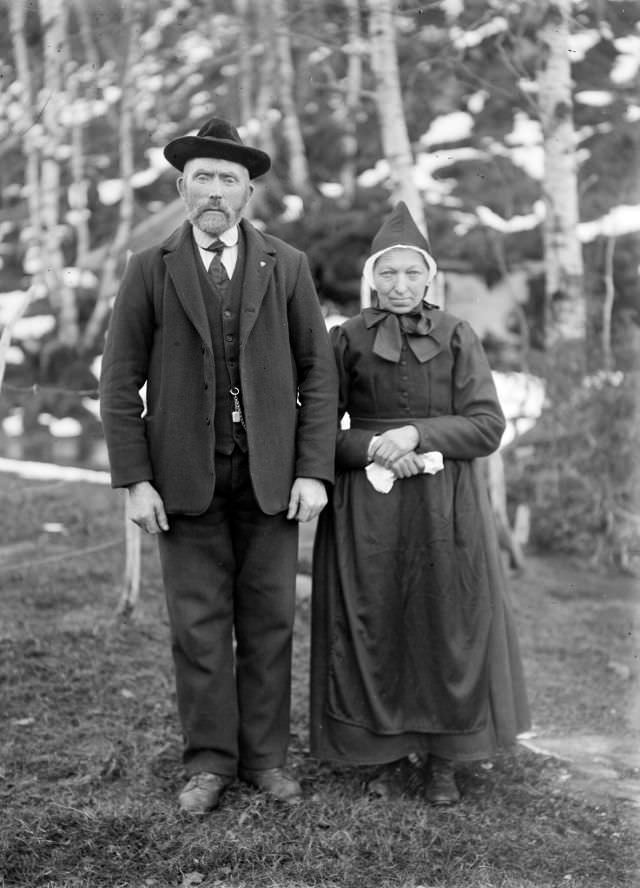
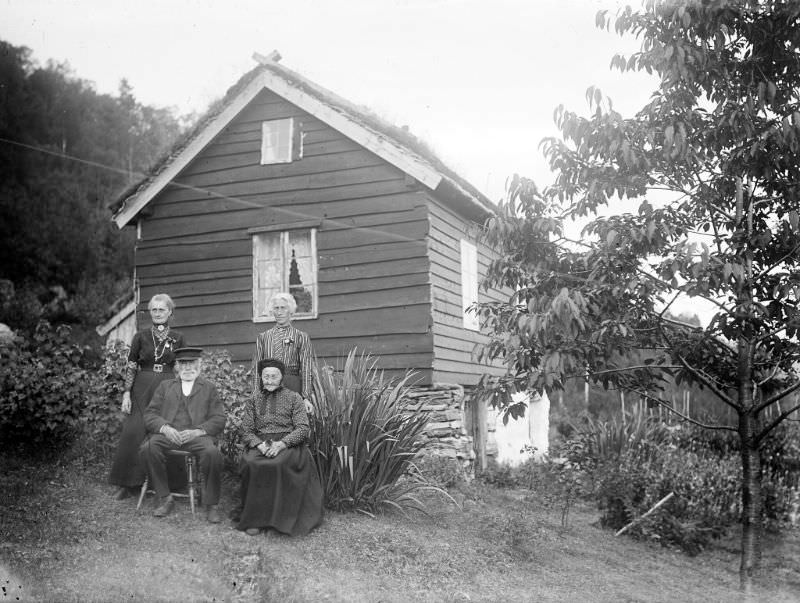
Traditional clothing in Sunnfjord carried deep regional identity. The “høgehue,” a distinctive cap worn by older women, was part of the formal dress of the district. One family portrait in Fauske’s collection shows a grandmother wearing traditional Sunnfjord clothing, including this cap — a clear marker of cultural continuity between generations.

A Family portrait. The grandmother is wearing traditional clothing from the Sunnfjord region, including a "høgehue" (cap)
A Family portrait. The grandmother is wearing traditional clothing from the Sunnfjord region, including a “høgehue” (cap)
Fauske in Ervika, Førde

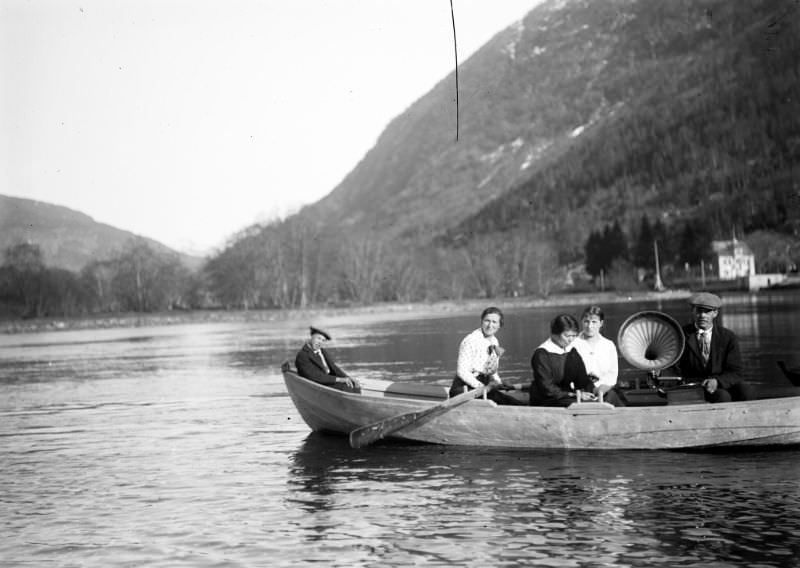
The river Jølstra runs through Førde, and the Hafstad Hotel sat along its banks. Five people in a rowing boat are pictured heading downstream from the hotel — a scene that speaks to both leisure and the everyday use of waterways for getting around. The hotel itself appears in several of Fauske’s landscape shots of the town.

Five people in a rowing boat downstream on the river Jølstra from Hafstad Hotel in Førde
Funeral procession photographed at Teigen, Førde municipality. The deceased is a woman.

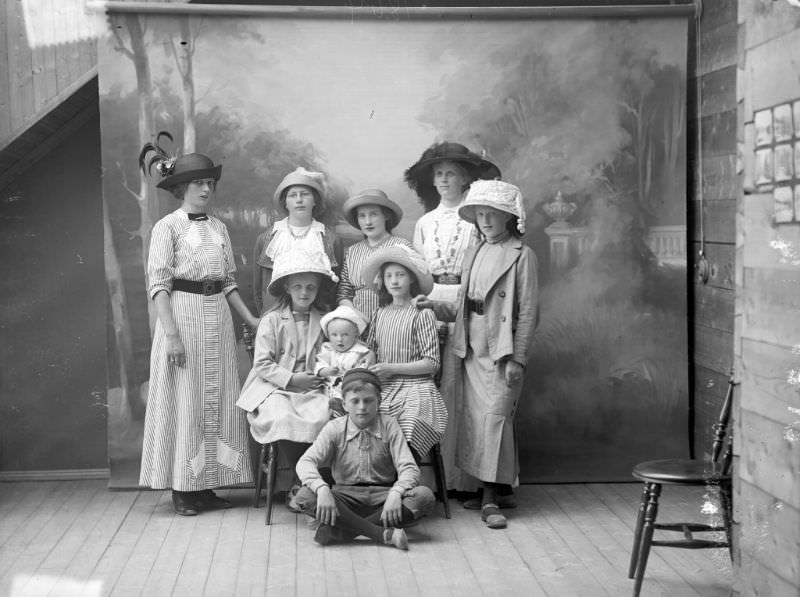
Fauske’s studio in Førde served as the setting for formal portraits. Group portraits taken there show people dressed in their best clothes, posed carefully for the camera. These studio sessions were significant events — having one’s photograph taken was still a notable occasion for most families in the early 1900s.

Group portrait from Fauske's studio in Førde
Group portrait from Fauske’s studio in Førde
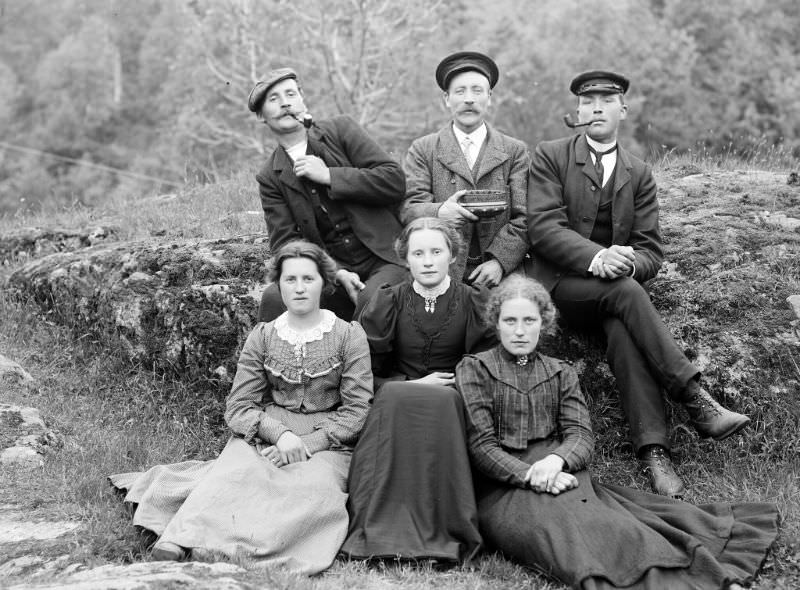
Group portrait of three men and three women.

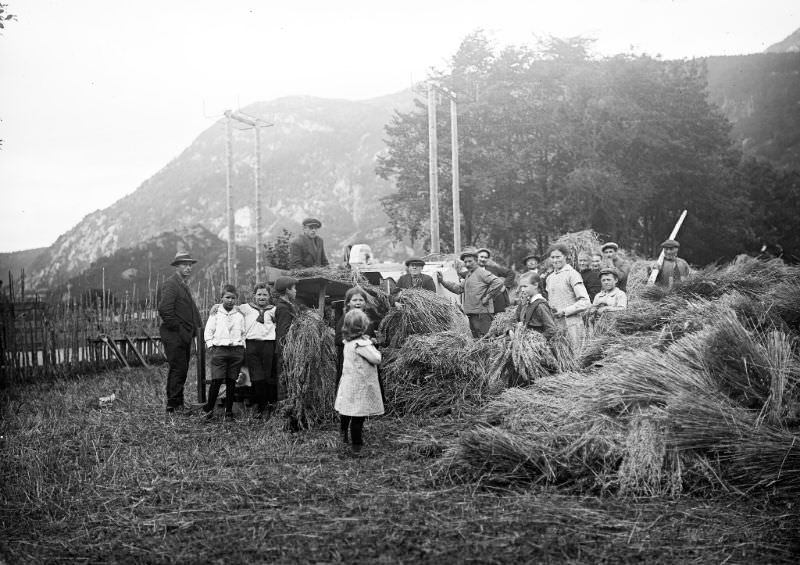
Harvest time was one of the busiest periods in the farming year. Fauske photographed harvesting at Øyrane in Førde municipality, documenting the physical labor that sustained rural families through the winter months. Grain and hay needed to be cut and stored before the autumn rains set in.

Harvesting at Øyrane in Førde municipality.

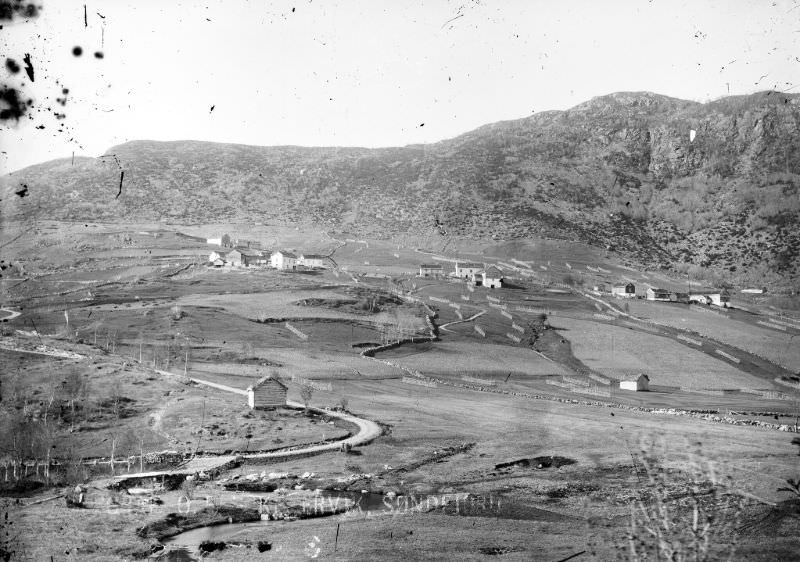
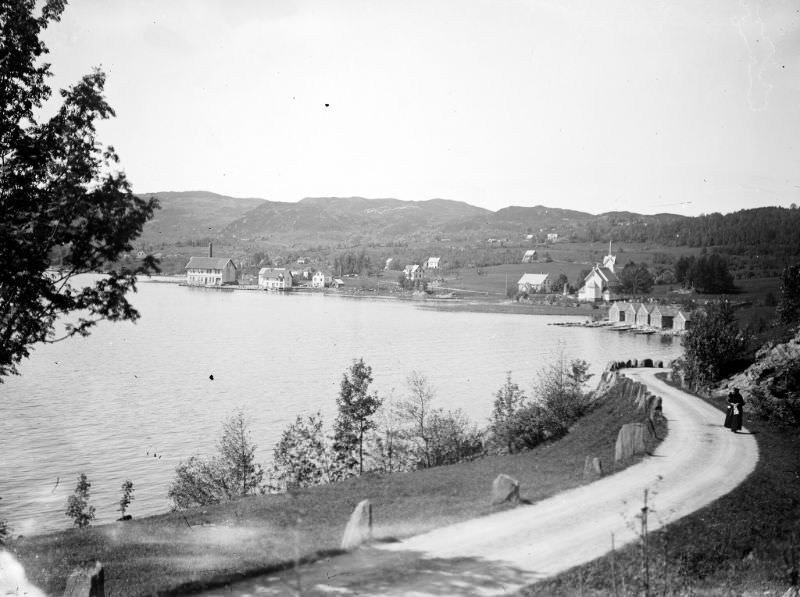
Holmedal, in Askvoll municipality, sits on the coast of the Sunnfjord district. Fauske’s photograph of the village shows its boat houses and the Holmedal church to the right, while the Flora butter factory is visible on the far left — a small detail that points to the dairy industry’s early foothold in the region.

Holmedal in Askvoll municipality. On the right are several boat houses and Holmedal church.
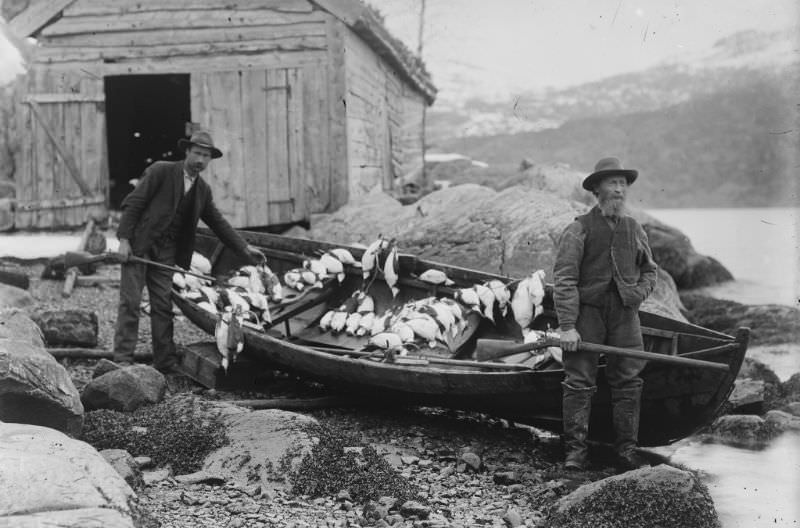
Hunters and their catch
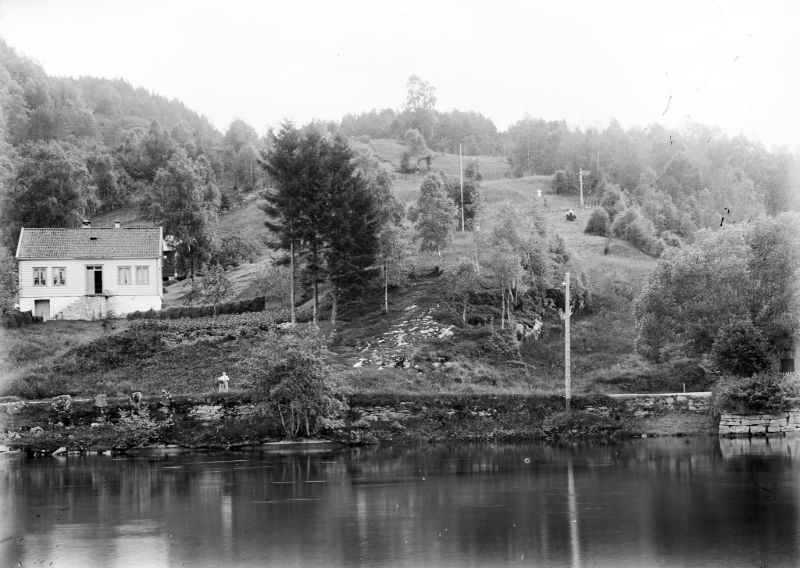
Kleivane, Ytre Hafstad, in Førde municipality

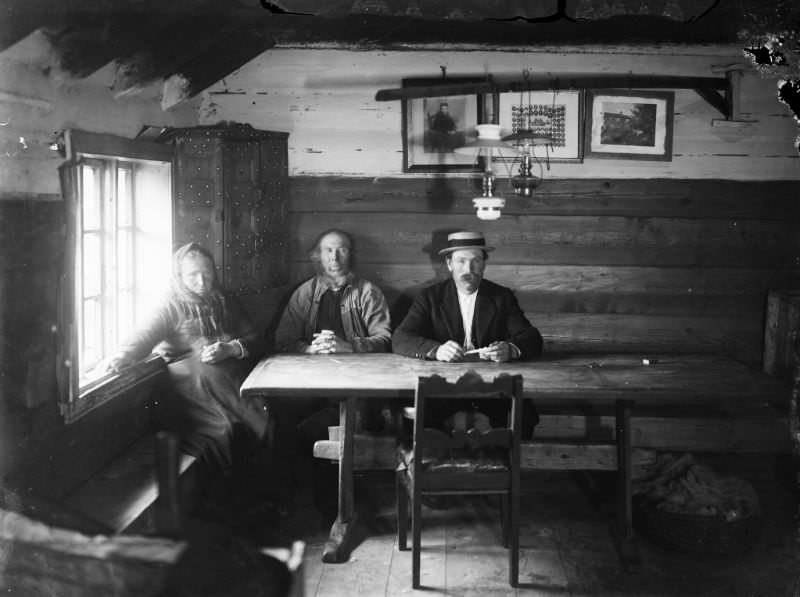
Fauske also photographed interiors, giving a rare look inside the homes of Sunnfjord families. Living rooms from this period featured simple wooden furniture, framed pictures on the walls, and patterned textiles — modest but carefully kept spaces that reflect the values of the households that occupied them.

Living room interior
Man and bull at a cattle show
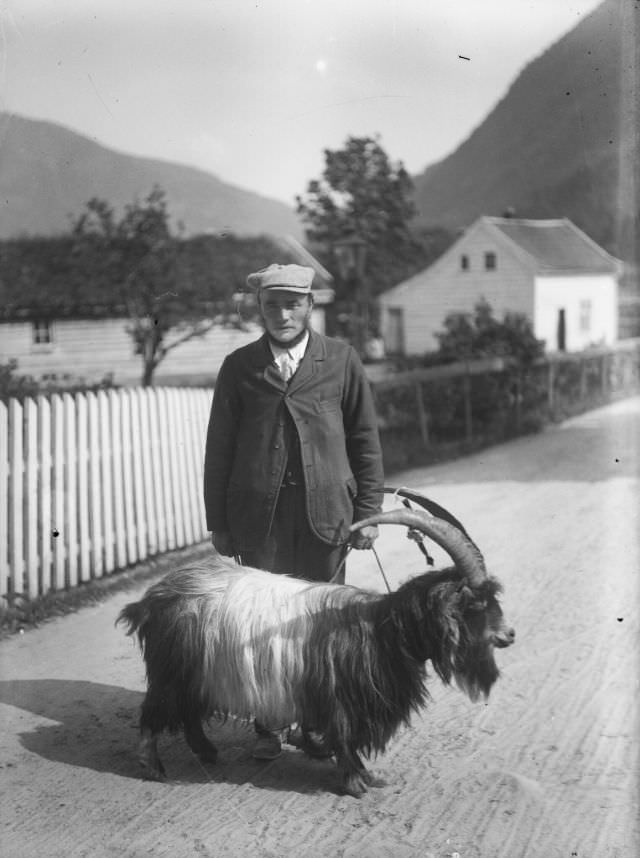
Man and goat
Man and goat

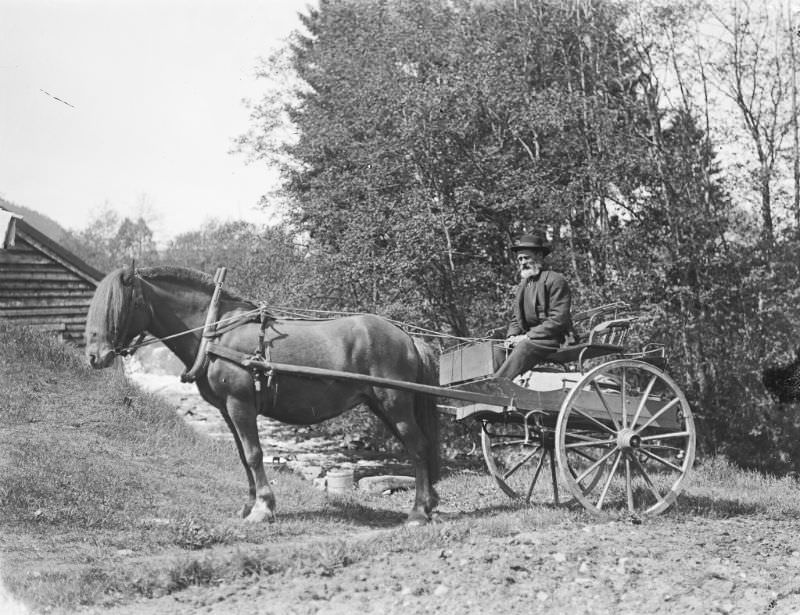
Horse-drawn carriages were the standard means of transport for longer journeys across the district. Roads in Sunnfjord in the early 1900s were narrow and often unpaved, making horses indispensable. The mountain Førdsnipa forms a dramatic backdrop in one of Fauske’s horse photographs taken at Bruland.

Man with horse and carriage.
Mand and horse at Bruland. The mountain in the background is Førdsnipa
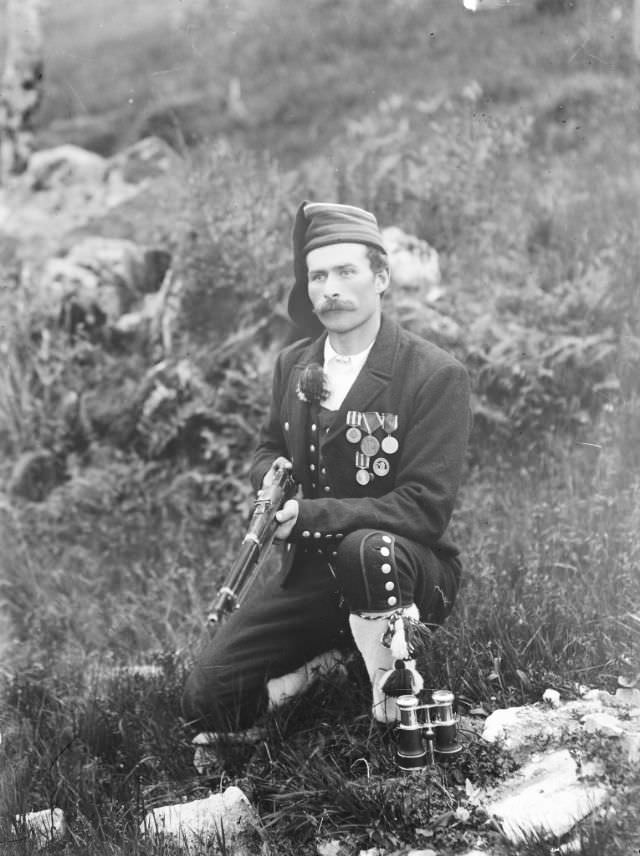
Marksman.
Marksman.

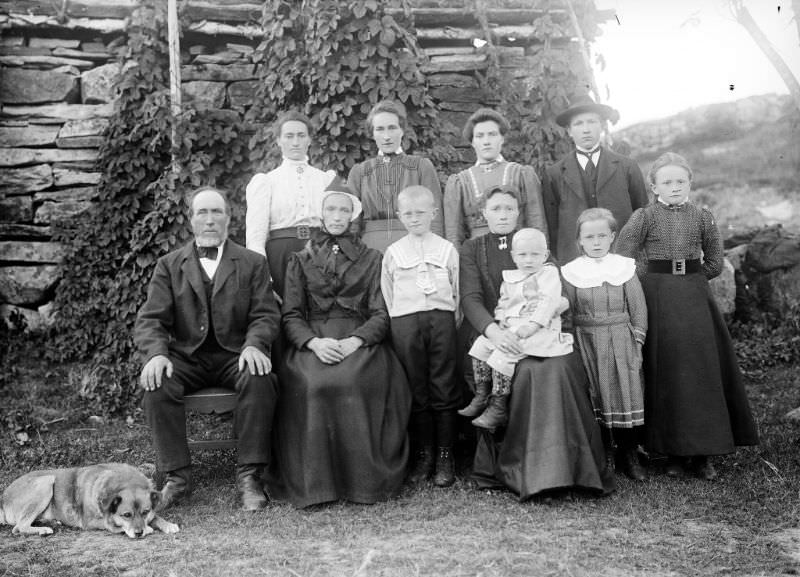
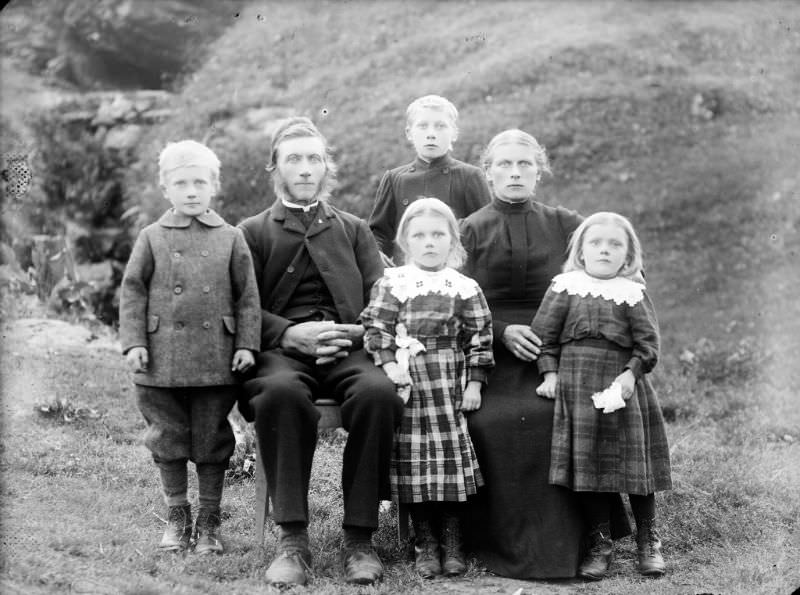
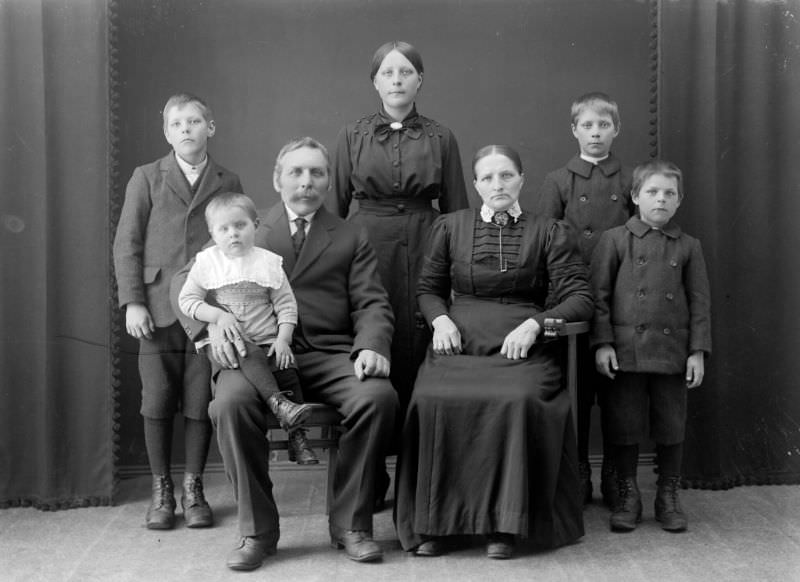
Family portraits were among the most common commissions Fauske received. One image identifies the family clearly: Ole Martinus and Bergitte Solheim with their children Johannes, Oliver, Gunhild, and Marie. Named portraits like this one are invaluable to genealogists and local historians, preserving family identities that might otherwise be lost.

Ole Martinus and Bergitte Solheim with their children Johanes, Oliver, Gunhild and Marie
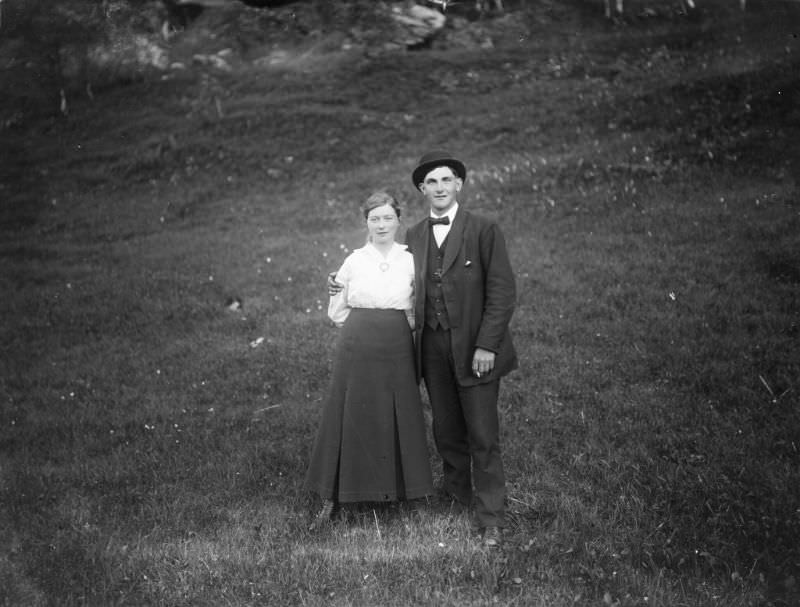
Portrait of a couple
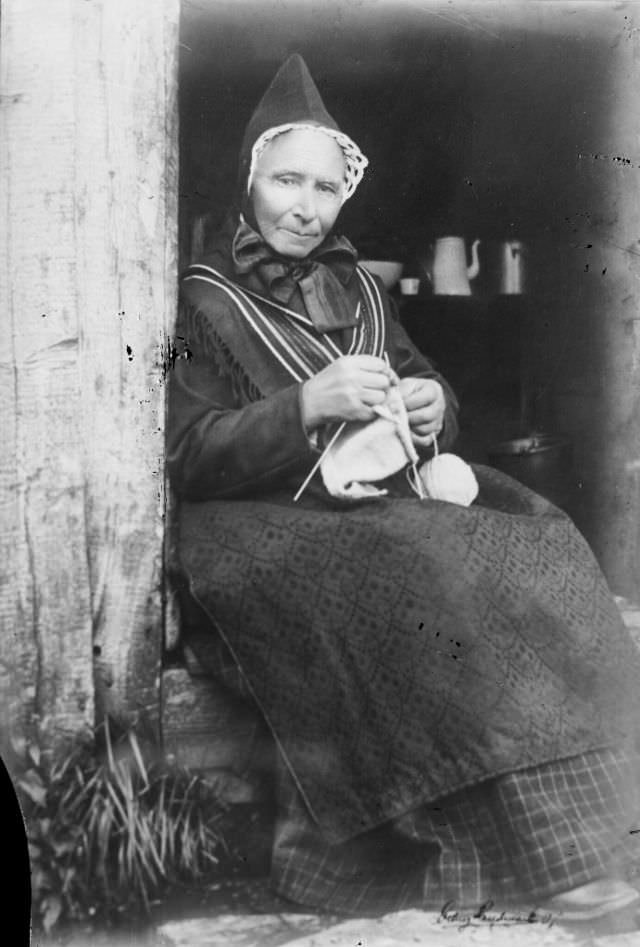
Portrait of a knitting woman

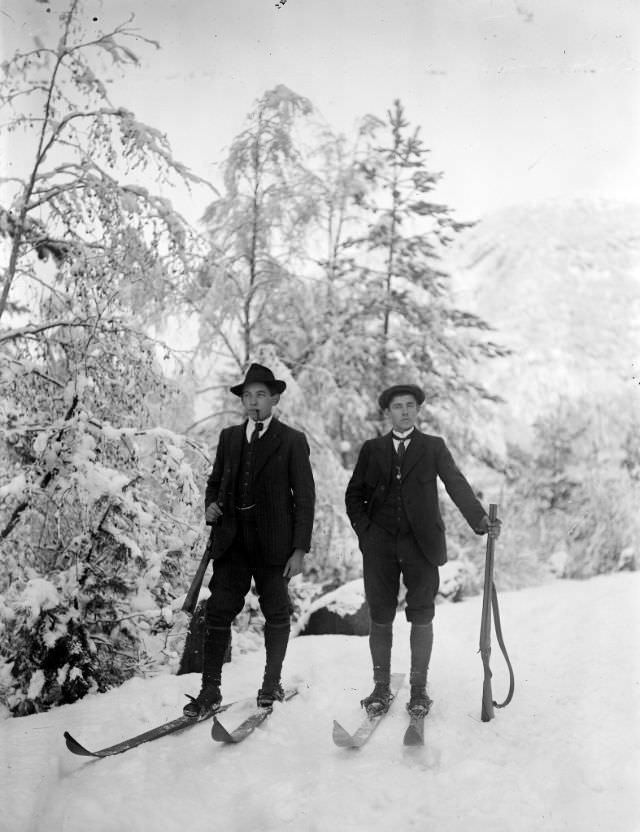
Skiing across the region served a practical purpose in winter, but it was also becoming a competitive pursuit in Norway during this era. Ragnvald Halbrend and Hermann Grimeland are photographed together on skis, two named individuals whose image survives more than a century after it was taken.

Ragnvald Halbrend and Hermann Grimeland skiing

Fauske’s work extended beyond the Førde area into neighboring municipalities. The Stevnebø farm in Gulen municipality and the church and vicarage at Ålhus in Jølster both appear in his collection, showing his range across the wider Sunnfjord district.

Stevnebø farm in Gulen municipality
Taking a stroll, Teigen, Førde
Teigen, Førde. The large white building in the background is Hafstad Hotel

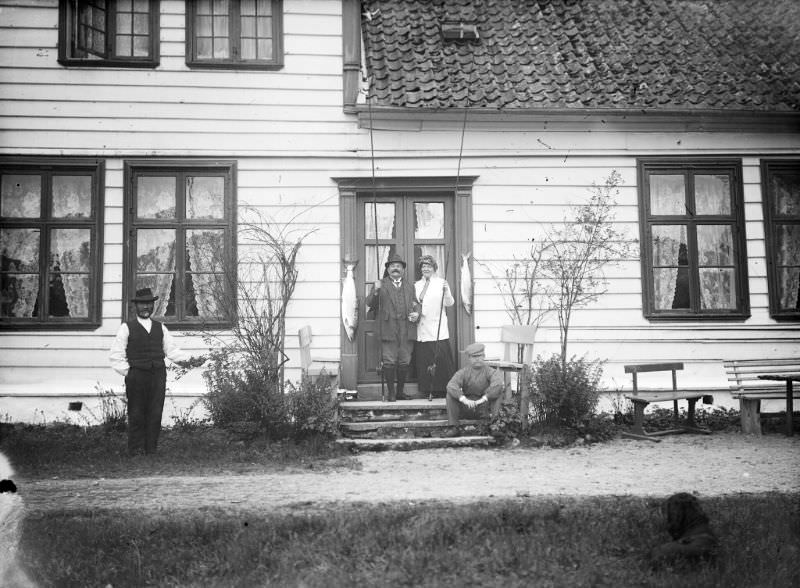
Fishing was not only a commercial activity — it was also a source of pride. At Bruland, the bailiff Ludvig August Kjær and Magdalene Beyer are photographed posing with their catch of the day, a relaxed image that shows the personal side of life at one of the district’s notable farms.

The bailiff's farm, Bruland. Ludvig August Kjær and Magdalene Beyer posing with their catch of the day
The bailiff’s farm, Bruland. Ludvig August Kjær and Magdalene Beyer posing with their catch of the day

The village of Naustdal appears in Fauske’s work as a modest but clearly defined settlement. His photograph of the village centre shows the scale of small-town life in Sunnfjord — a tight cluster of buildings set against the surrounding landscape.

The centre of Naustdal village
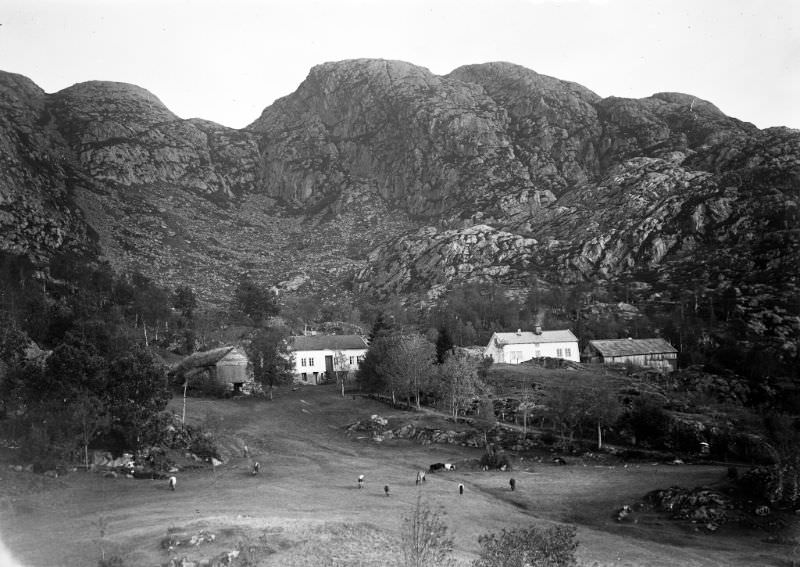
The farm Farsund
The farm Farsund

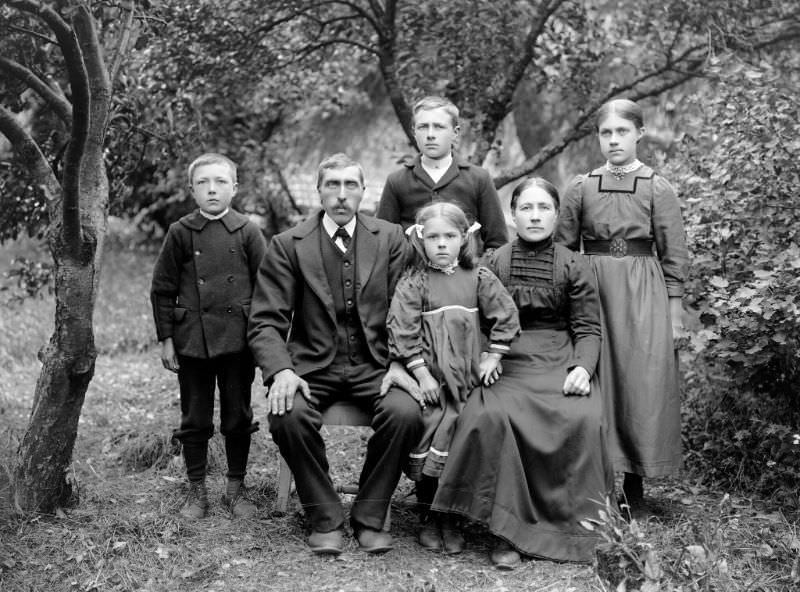
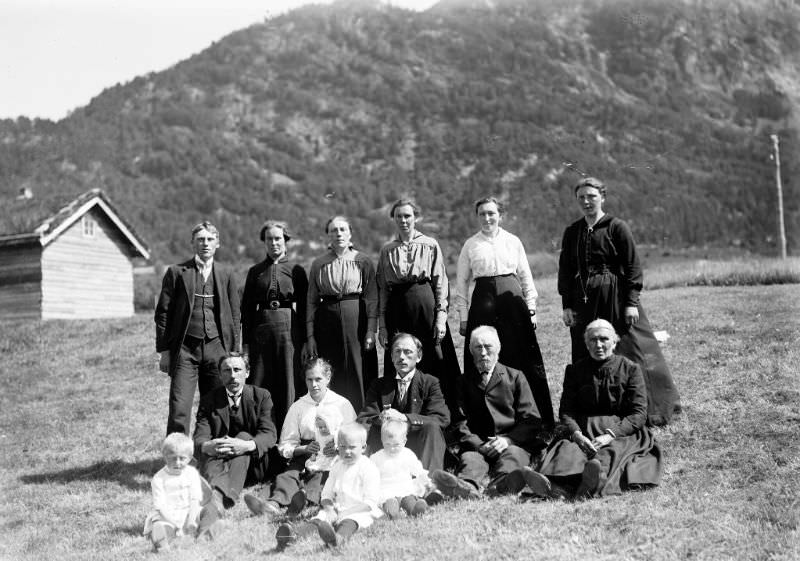
Farm families in Sunnfjord often had their portraits taken as a group, with the farm itself serving as the backdrop. The Fossen family was photographed at their farm, listed as farm number 19 in the municipality of Førde — a detail that reflects the formal land registry system used to track property in Norway at the time.

The Fossen family photographed at their farm Fossen, farm number 19 in the municipality of Førde
The Hafstad family
The Hafstad family

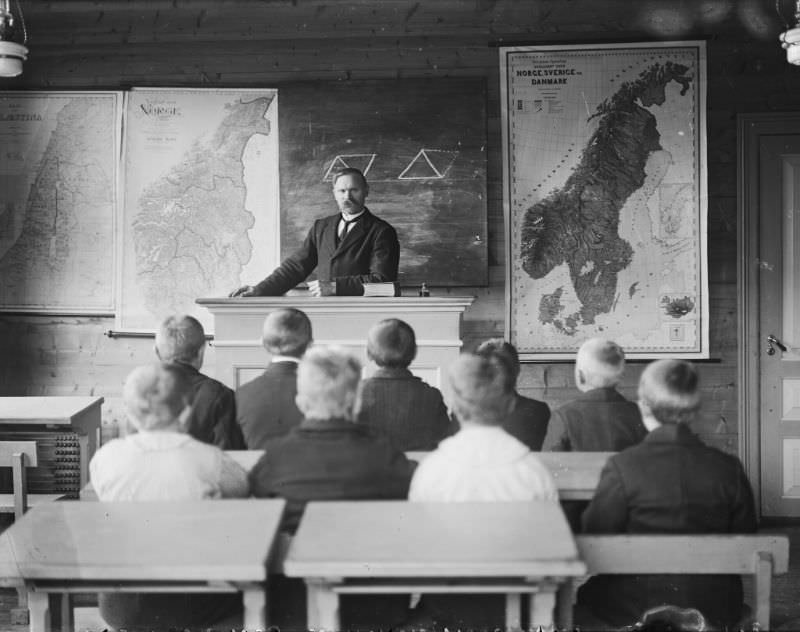
Education in early 20th-century Sunnfjord was basic but structured. One of Fauske’s classroom photographs shows a school class composed entirely of boys, with maps of Norway and Scandinavia hanging on the wall behind the teacher — standard equipment in Norwegian classrooms of the period.

The school class seems to boys only. Maps of Norway and Scandinavia are hanging on the wall behind the teacher
The Svardal family, Flora

The Ullaland family portrait from Urbø farm in Naustdal municipality is one of the more formally composed family images in Fauske’s collection. Nikolai Andersen Ullaland and his wife Kristianna Simonsdotter Ullaland are seated in front, while two of their daughters stand behind them — a classic generational arrangement common in formal family photography of the era.

The Ullaland family at Urbø farm in Naustdal municipality.
The Vie family
The Vie family

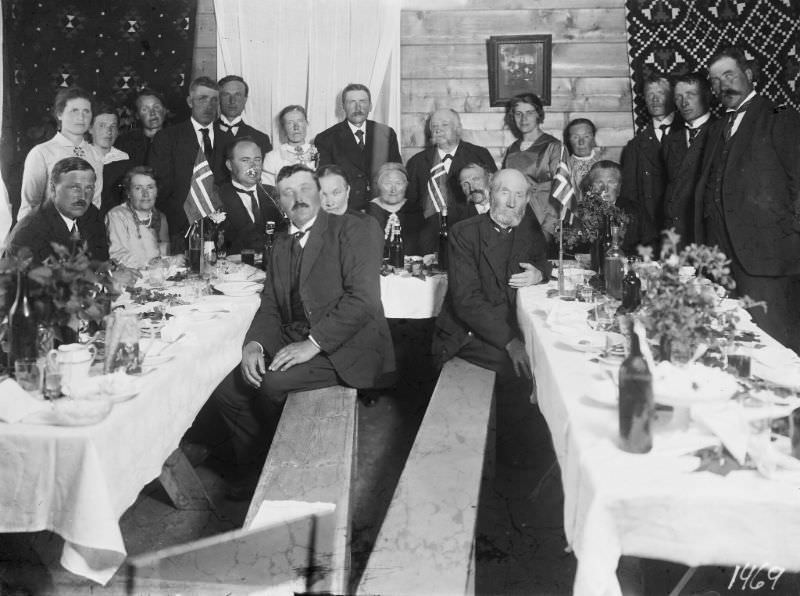
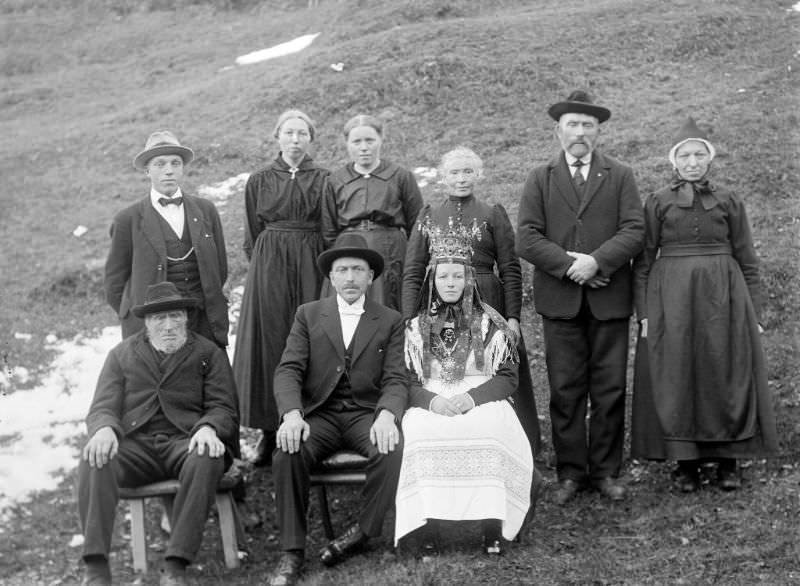
The wedding of Kristoffer Nikolas A. Holsen and Anna Øksenberg was documented by Fauske both in individual portraits and in a full wedding group photograph. Having both formats was a mark of a well-documented ceremony, and the Holsen wedding is one of the most fully preserved in his archive.

The wedding of Kristoffer Nikolas A. Holsen and Anna Øksenberg
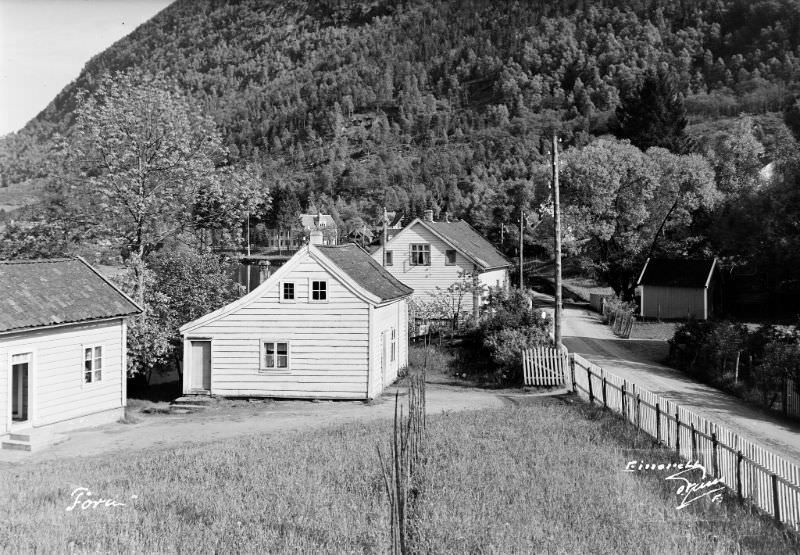
To the left is Kristian Ulltang's house "Nøysomhet" (Moderation) and photographer Fauske's home and studio
To the left is Kristian Ulltang’s house “Nøysomhet” (Moderation) and photographer Fauske’s home and studio

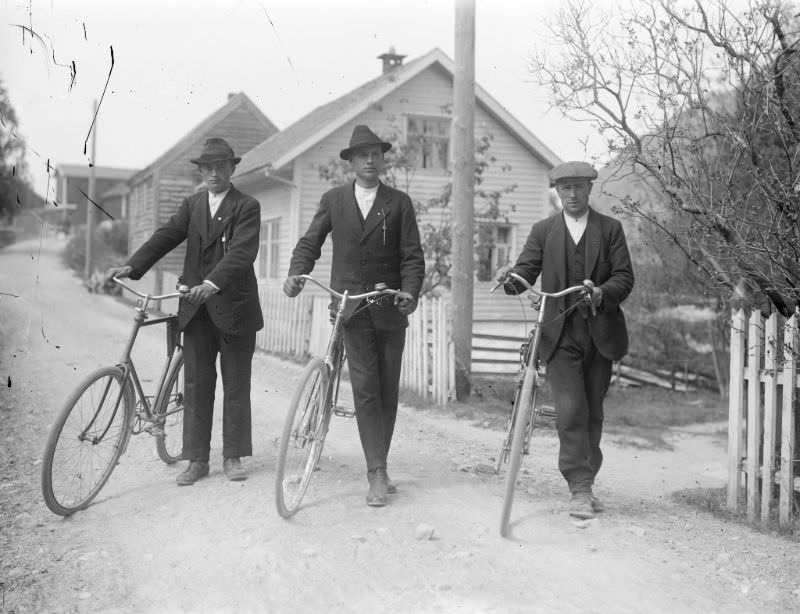
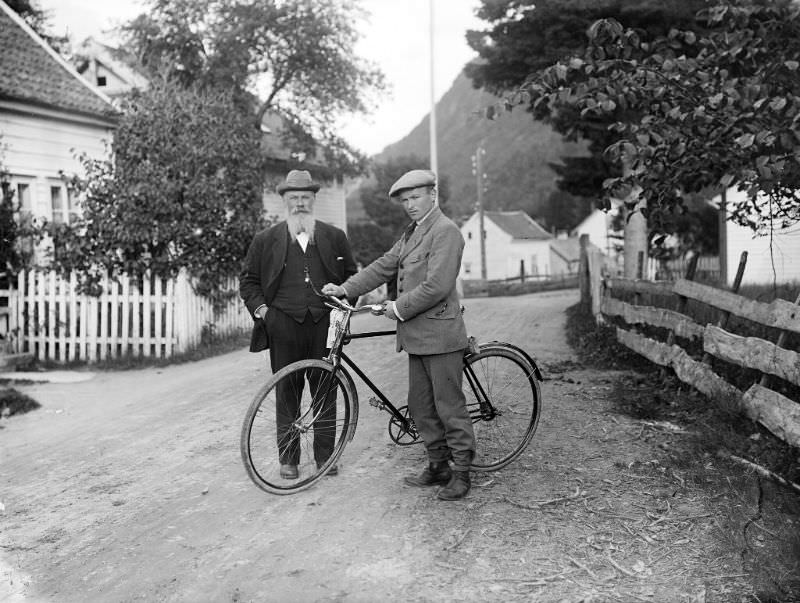
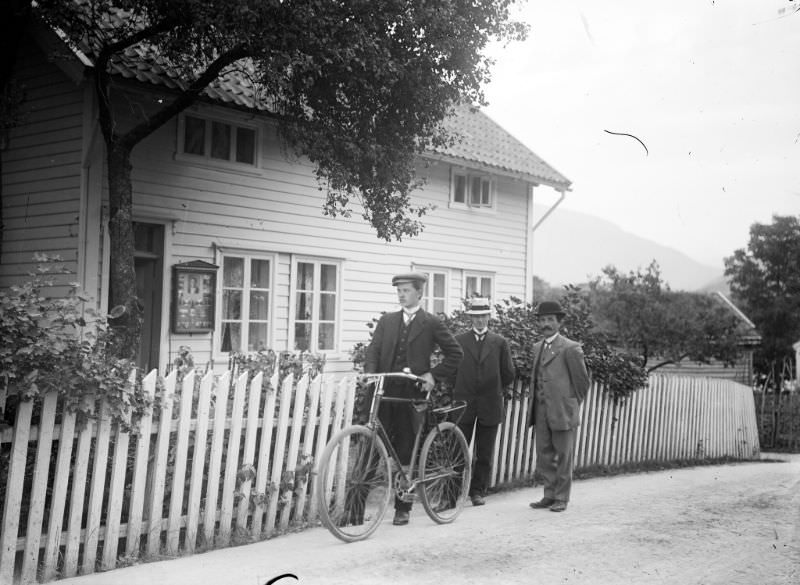
Fauske’s studio on the street in Førde was a neighborhood landmark. Three men are photographed standing outside his home and studio, a casual image that contrasts with the more formal indoor portraits he produced. The street-level photographs give a sense of what the town actually looked and felt like at ground level.

Three men photographed in the street outside photographer Olai Fauske's home and studio in Førde
Three men photographed in the street outside photographer Olai Fauske’s home and studio in Førde

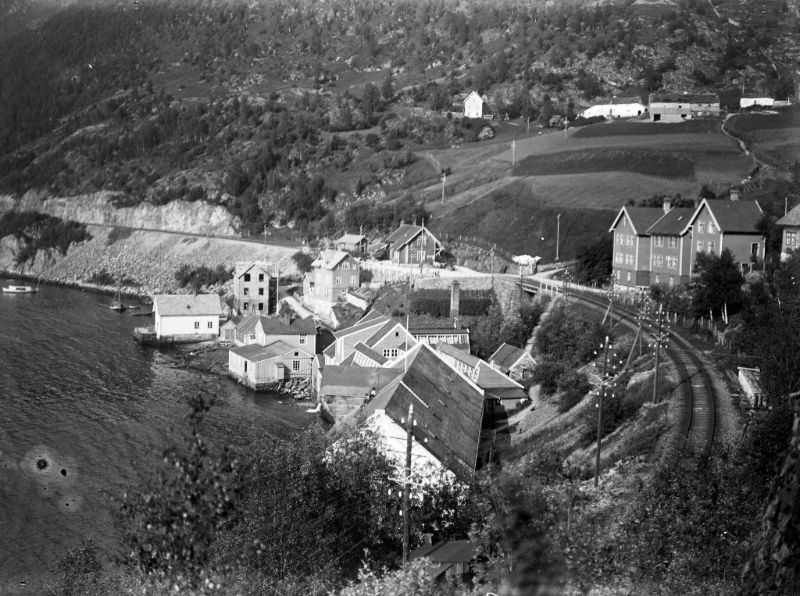
Rail travel was beginning to connect Norway’s western regions during this period. Trengereid, a small village in the eastern part of Bergen municipality, sat along the Vossebanen railway line. Fauske photographed the railway station, the line itself, and the houses of the village — documenting a community being linked to the wider world by train.

Trengereid, a small village in the eastern part of Bergen municipality.
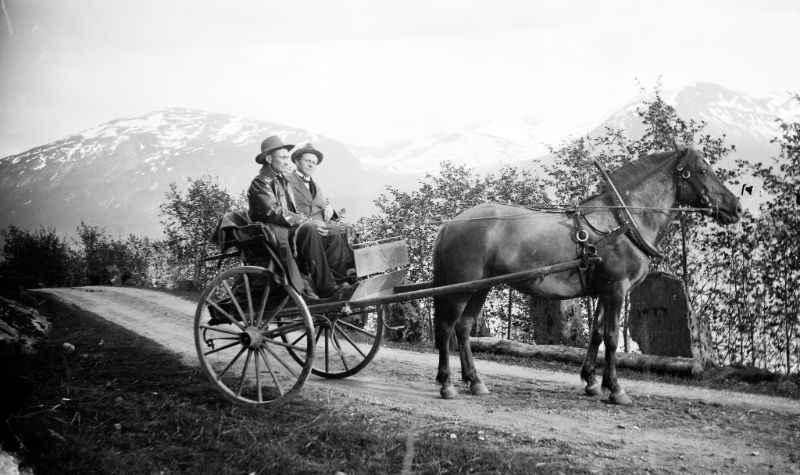
Two men traveling alongside Jølstravatnet lake.
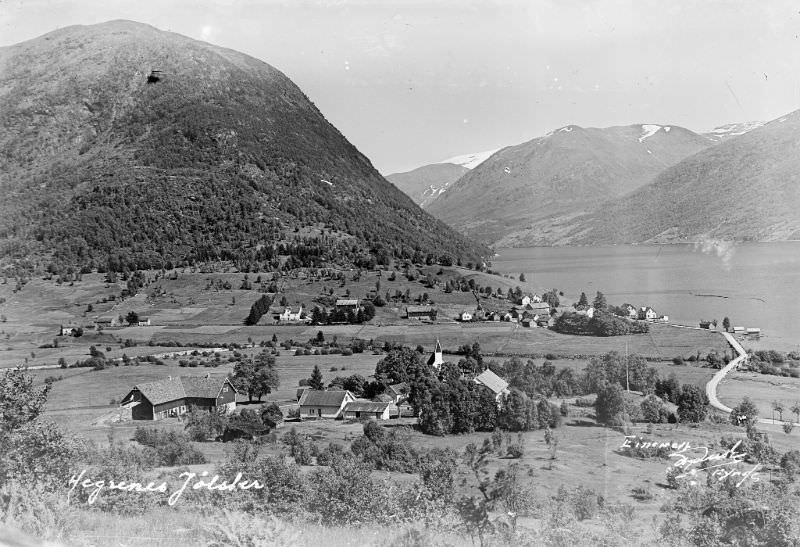
View of Ålhus, Jølster. The vicarage and church in front, and the Hegrenes farms in the background.
Stunning Vintage Photos of Sunnfjord, Norway From the Early 1900s That Show Small Town Life

In 1919, Fauske documented the wedding of Anna Støfringsdal and Johannes L. Fossheim in the Støfringsdalen valley in Jølster municipality. The couple’s outdoor wedding photograph, taken in the valley itself, is paired in Fauske’s archive with a formal wedding portrait taken in his studio. After the ceremony, Anna and Johannes took up residence at Fossheim farm, where their life together began.

Wedding in Støfringsdalen valley, Jølster municipality, 1919. The bride is Anna (b. Støfringsdal) and Johannes L. Fossheim. The couple took up residence at Fossheim farm
Wedding portrait of Anna (b. Støfringsdal) and Johannes L. Fossheim
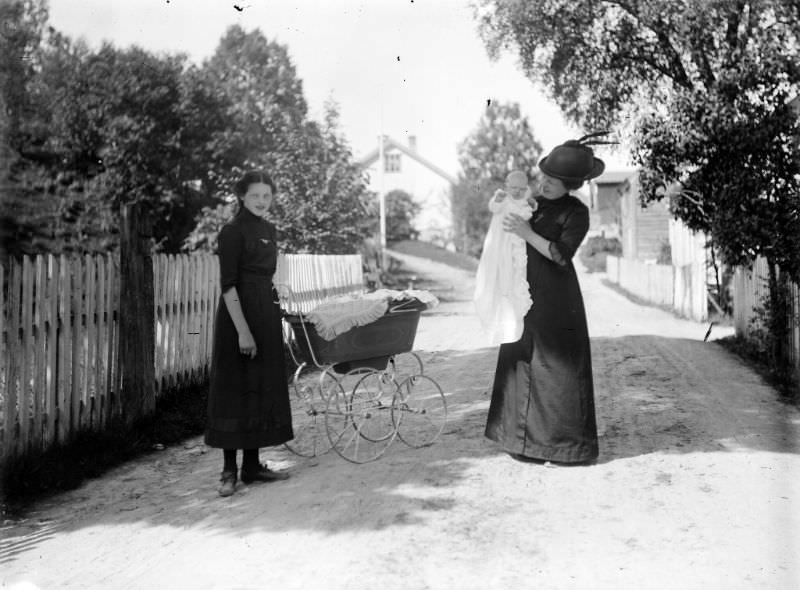
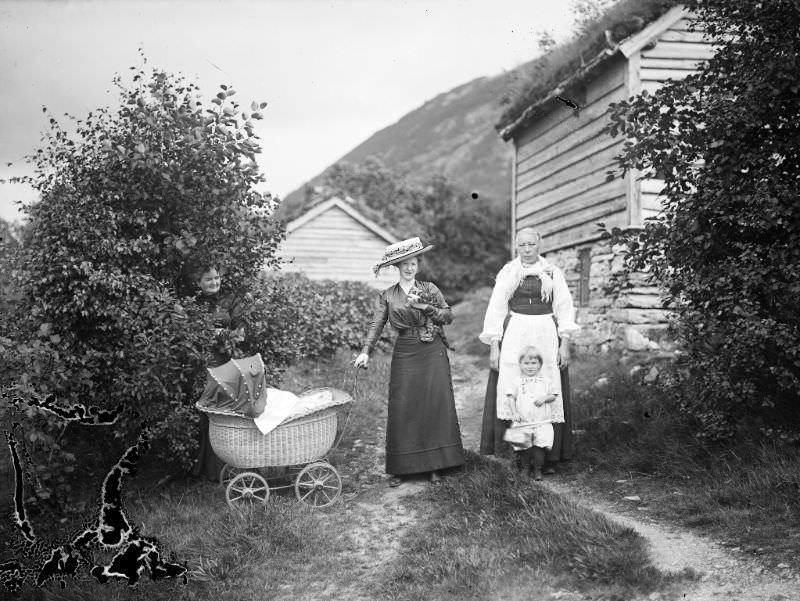
Women and children
Women and children
Wedding at Ervika
Wedding at Ervika
Enjoyed this post? Get new ones in your inbox.

1 thought on “Stunning Vintage Photos of Sunnfjord, Norway From the Early 1900s That Show Small Town Life”

Leave a Comment

Your email address will not be published. Required fields are marked *

Share this Post 🥺

Please take a moment to share this content. Your support is greatly appreciated! 🙌🙏

Share this Post 🥺

Please take a moment to share this content. Your support is greatly appreciated! 🙌🙏
Scroll to Top
 
Hey Friend, Before You Go.. Please like & follow for more interesting content