Steyr is not a name most car enthusiasts recognize today, but in its time, it was one of Austria’s most respected automobile brands. The company traces its roots to 1915, when it was established as a branch of the Österreichische Waffenfabriks-Gesellschaft (ÖWG), a major weapons manufacturing firm based in the city of Steyr. After World War I, the company shifted its focus toward civilian production, and automobiles became its new priority.
In 1926, the firm was renamed Steyr-Werke AG. A few years later, it merged with two other storied Austrian manufacturers — Austro-Daimler and Puch — to form Steyr-Daimler-Puch AG. Despite the corporate changes, Steyr-badged cars continued rolling off the production line all the way until 1959. The vehicles ranged from open touring cars to elegant cabriolets and sturdy saloons, attracting buyers from Austria, Germany, Hungary, and beyond.
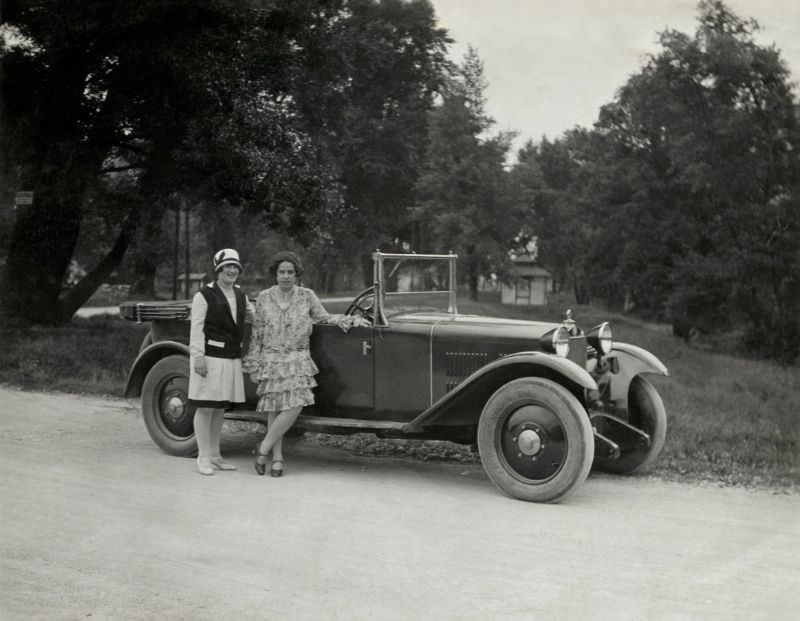
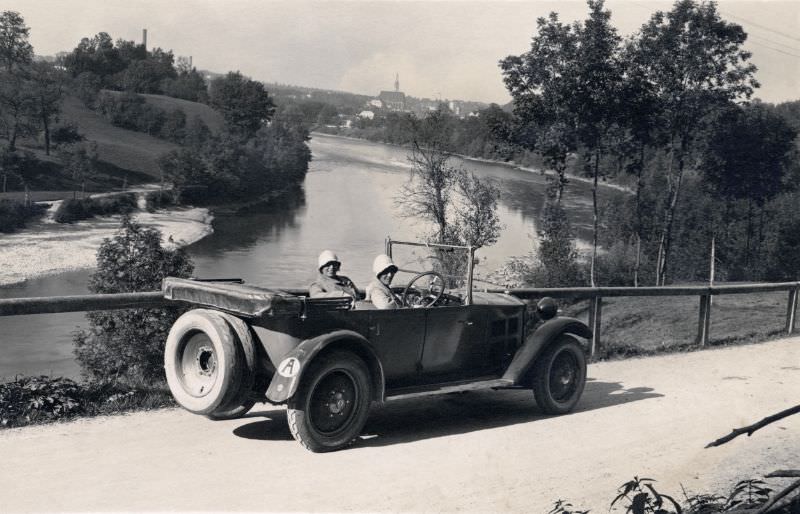
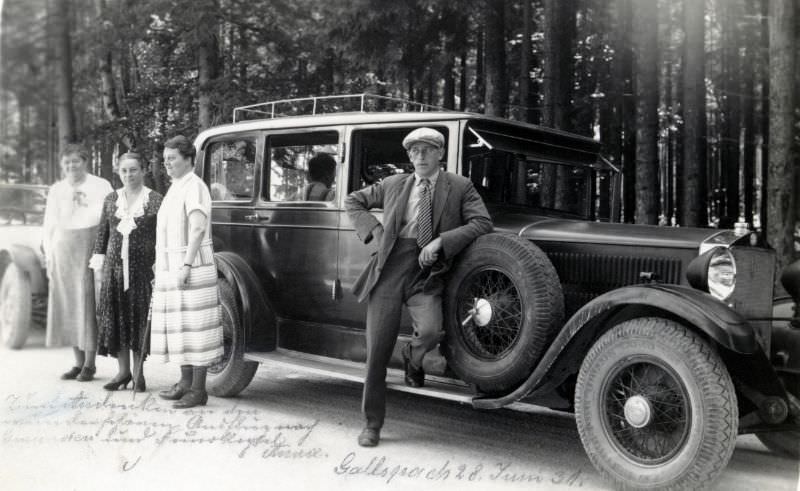
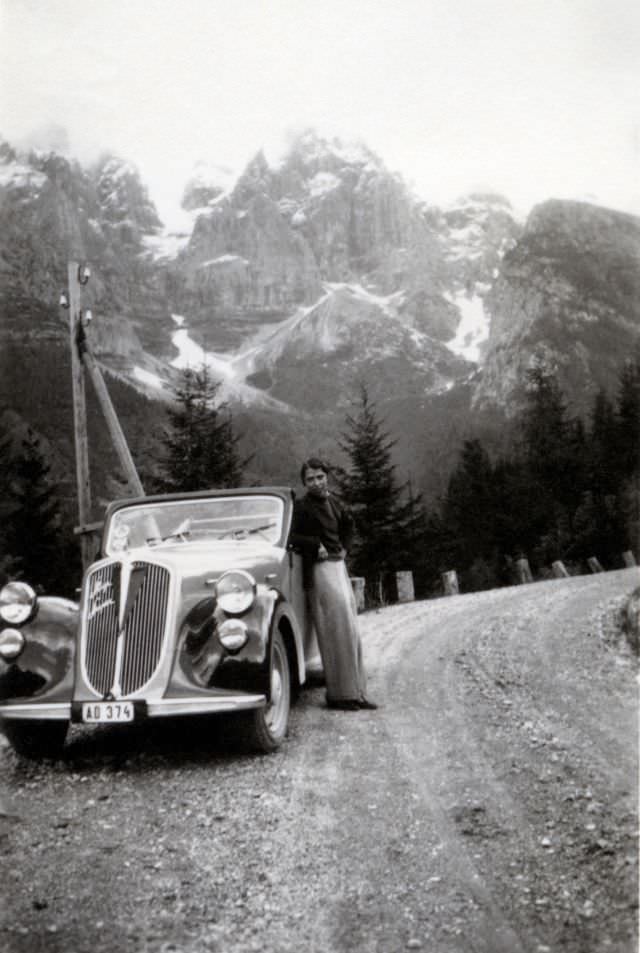
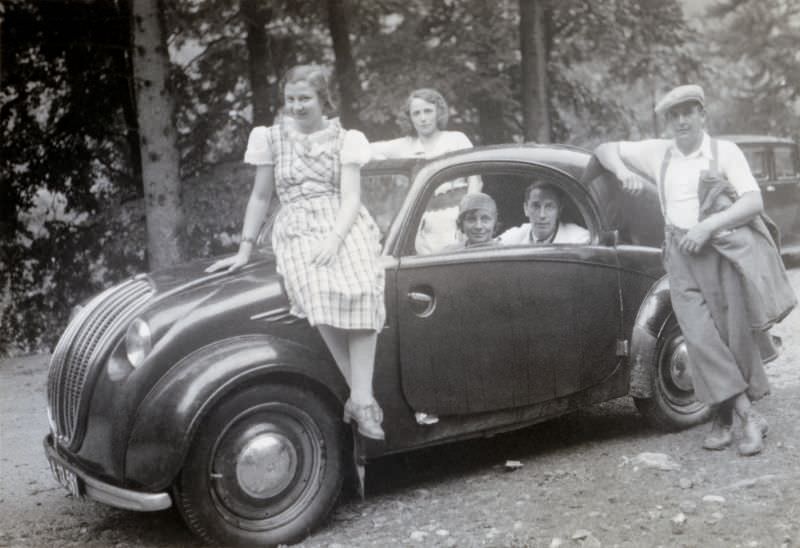
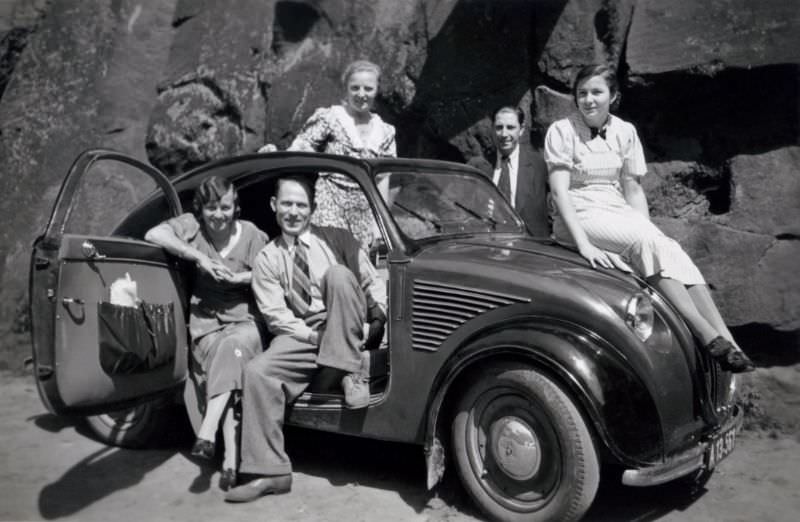
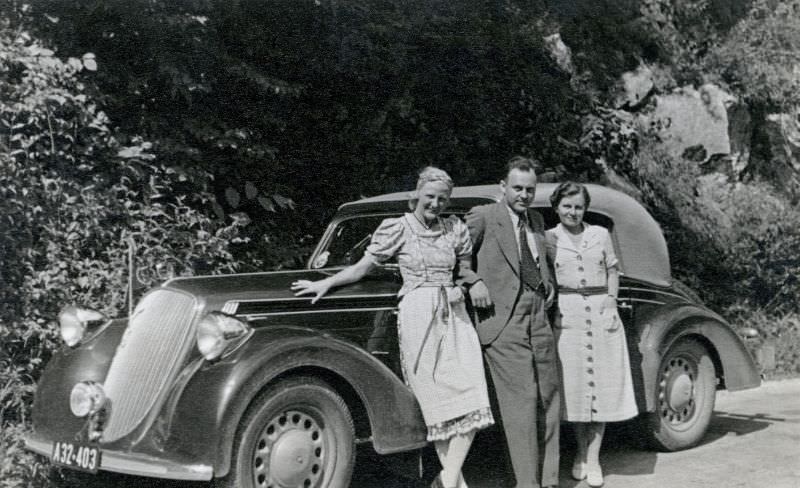
The photographs below were taken between the mid-1920s and the late 1930s. They show ordinary and well-to-do people alike — families, couples, stylish ladies, and dapper gentlemen — pausing to pose with their Steyr automobiles. Many shots were taken on country roads, mountain passes, lakesides, and village streets. Together, they form a vivid picture of Central European life during the interwar years. The earliest images feature the Steyr Typ IV, an open tourer that was among the brand’s first civilian offerings.
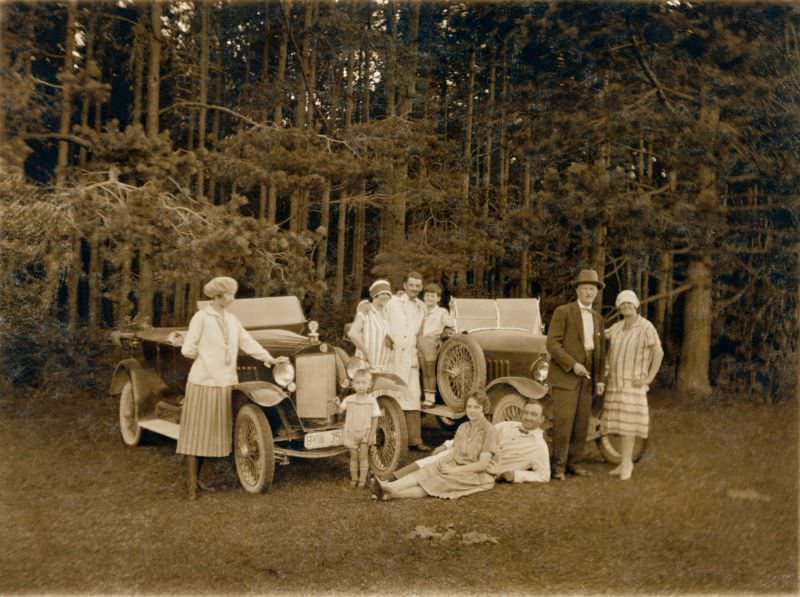
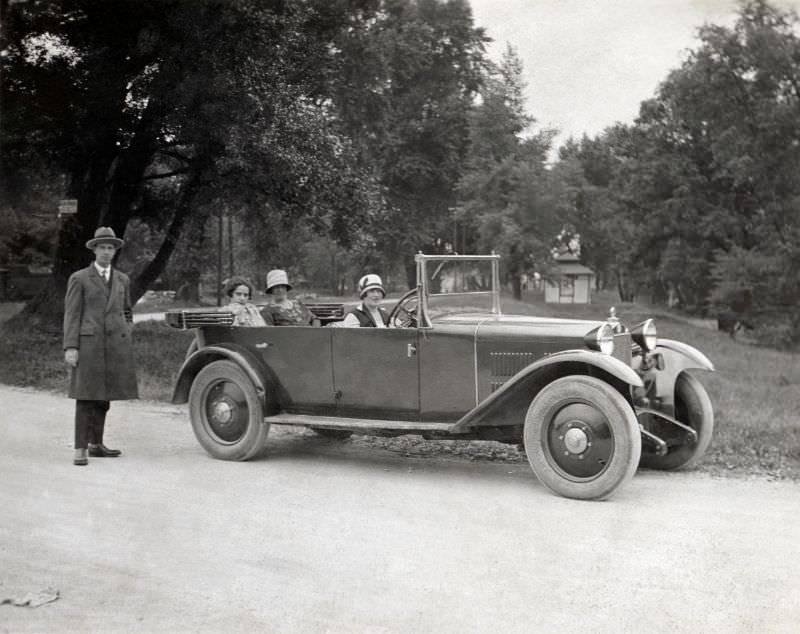
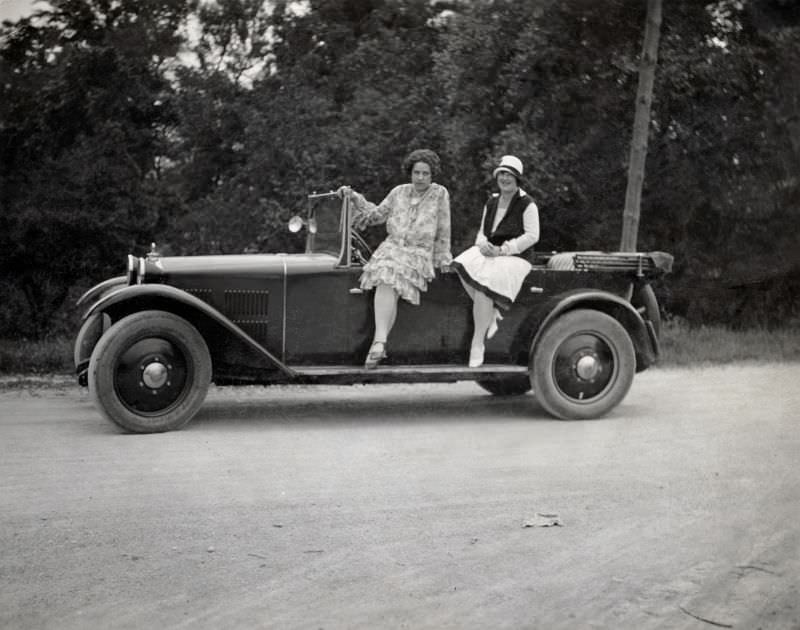
By 1927, the Steyr XII had become one of the brand’s most popular models. It appeared in a wide variety of body styles — saloons, convertibles, and double phaetons — and was registered by owners across Austria, Germany, and further afield. The XII was well-suited to the rough rural roads of the era, as evidenced by more than a few mud-splattered examples caught on camera.
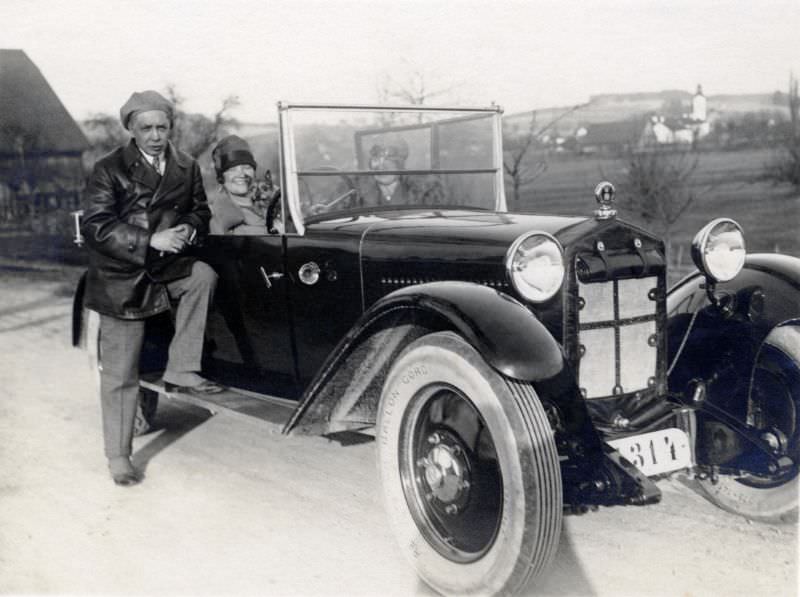
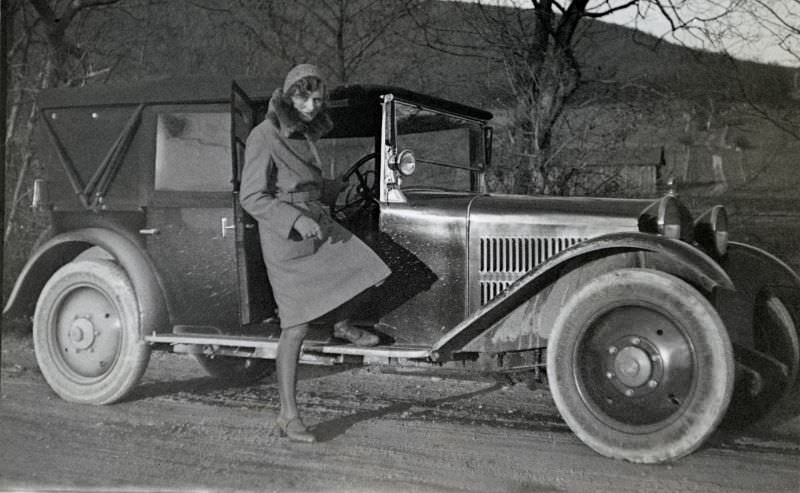
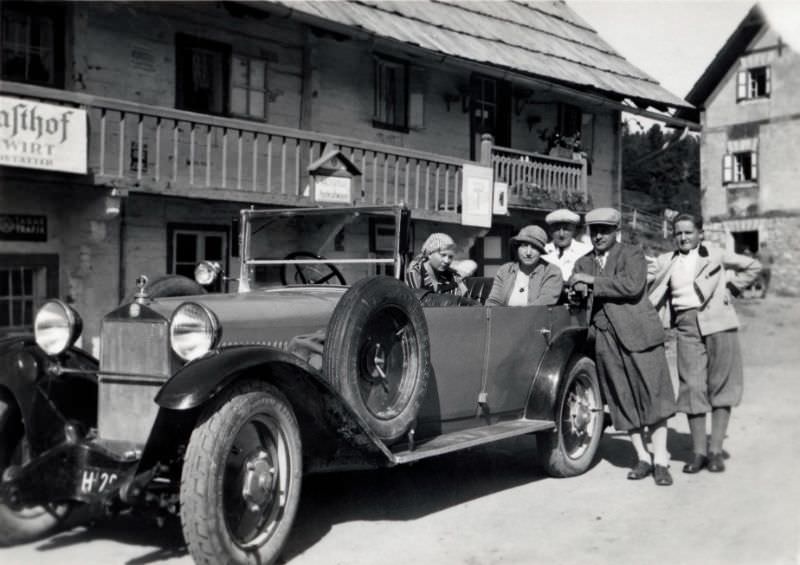
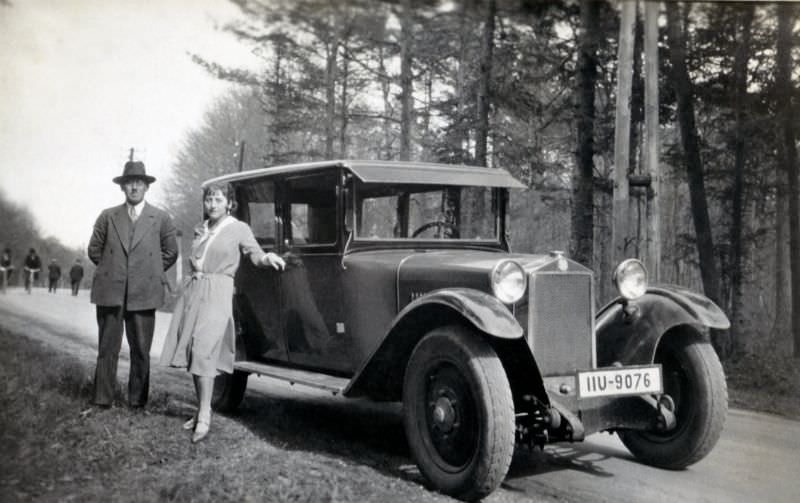
The Steyr XII appeared throughout the late 1920s in the hands of middle-class families, fashionable young women, and well-heeled couples. One example was registered in the Austrian state of Styria, photographed in front of a timber house in the countryside. Another turned up in Bavaria, registered in the district of Lower Franconia, posing beside a man in a three-piece suit and a lady in a knee-length dress.
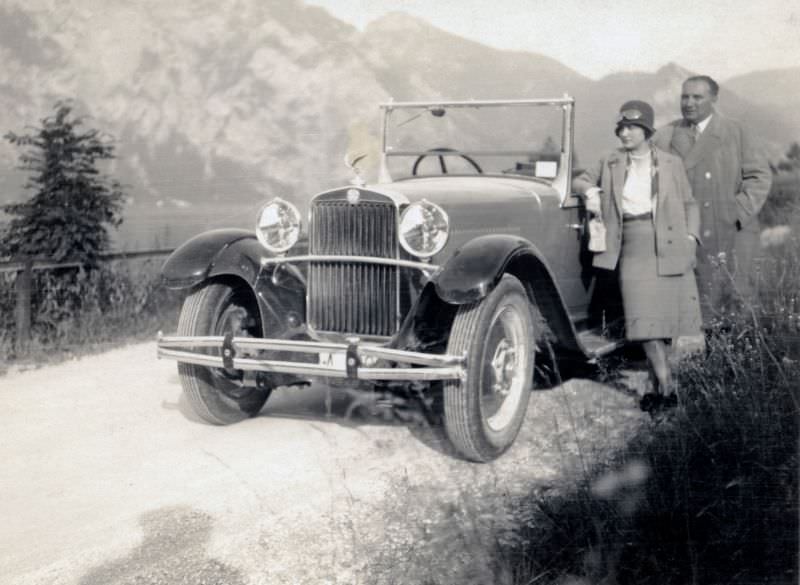
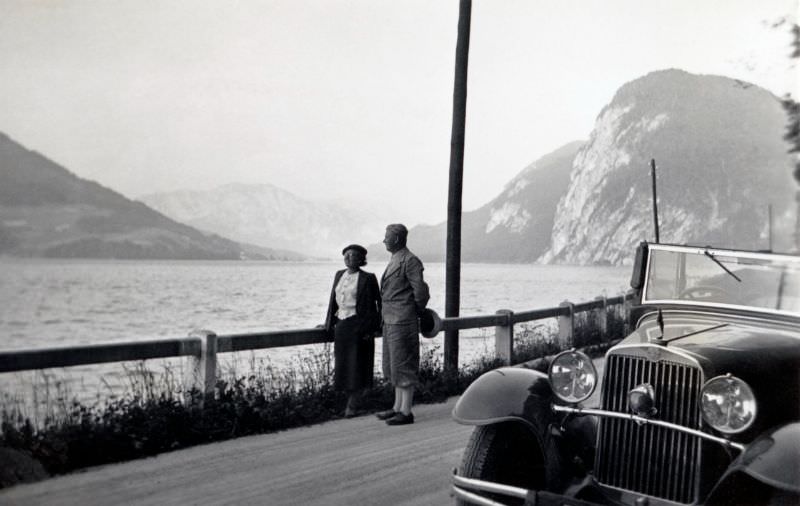
Moving up the model range, the Steyr XX was a larger, more powerful car aimed at wealthier buyers. The Double Phaeton body style offered open-air motoring with seating for several passengers, while the Weymann Saloon used a flexible, fabric-covered body construction popular in the late 1920s. A Vienna-registered XX Double Phaeton was photographed beside a lake in 1929, its well-dressed owners enjoying a summer outing.
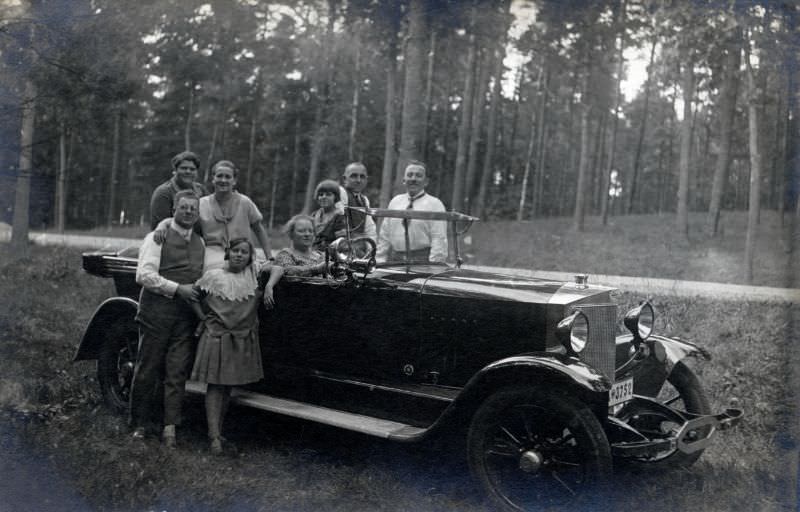
Not all Steyr owners drove Austrian-registered cars. A rare right-hand drive Steyr VII Tourenwagen, fitted with an additional searchlight and a Biflex-type spring bumper, was owned by a German family who posed with it in the countryside in 1929. Right-hand drive was an unusual choice for a continental European car at this time, making this particular vehicle a genuinely uncommon sight.
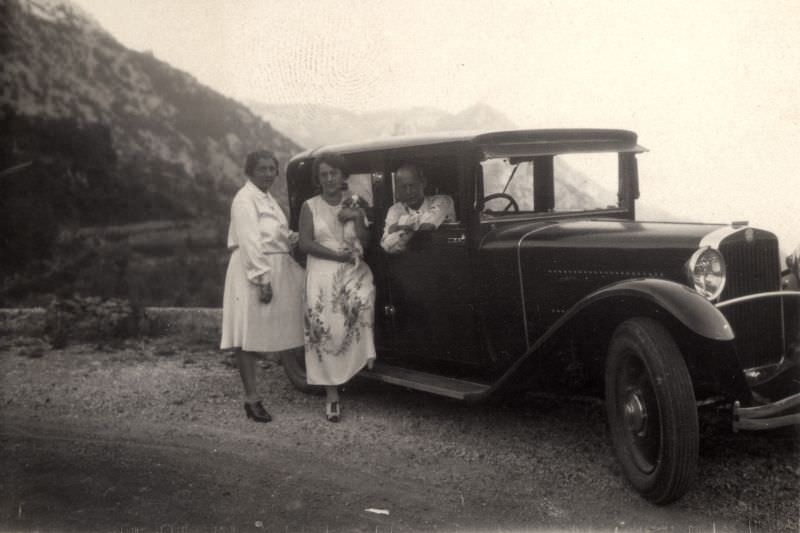
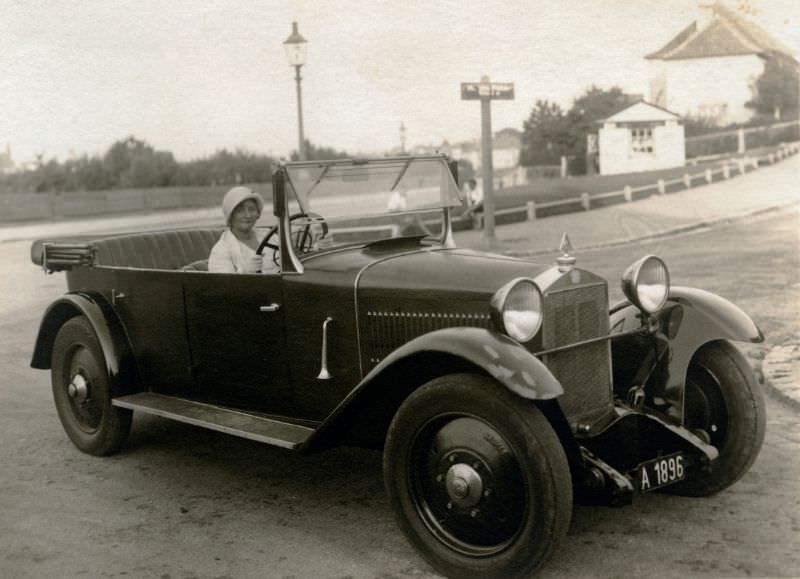
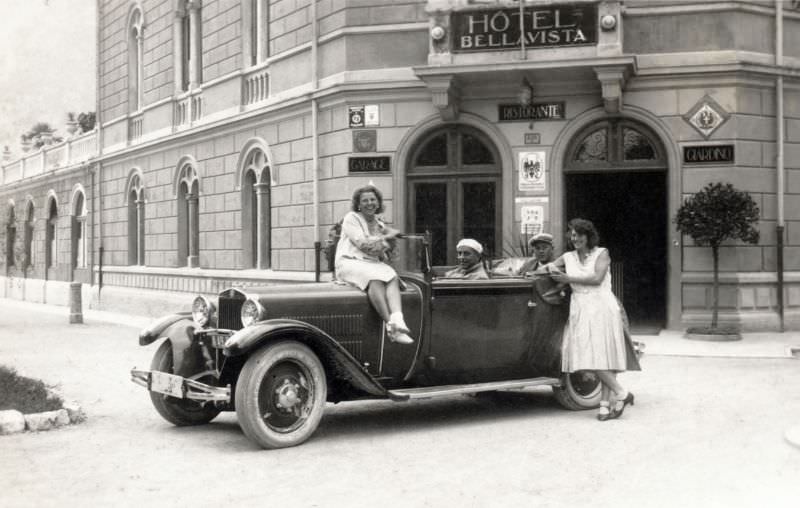
The early 1930s brought new models and new settings. A Vienna-registered Steyr XII Double Phaeton convertible was photographed on a suburban street in 1930, with a fashionable lady seated at the wheel in a white dress. That same year, a Steyr XX Cabriolet appeared at the Italian holiday resort of Riva del Garda, parked in front of Hotel Bellavista — a sign that these Austrian cars were crossing borders with their owners.
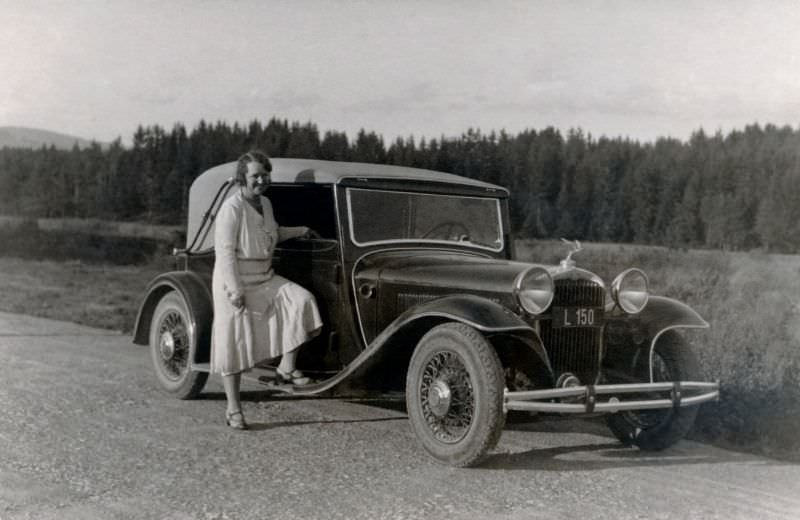
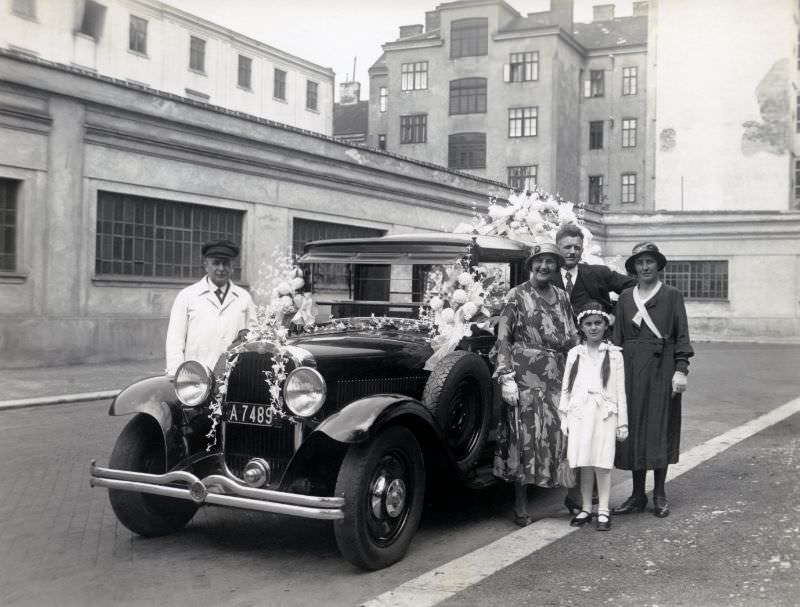
The Steyr 30 arrived in the early 1930s and came in several body variants. The Sport-Cabriolet was a particularly striking option, photographed in 1932 with a lady in a white dress on a gravel road outside Linz. Another Steyr 30, bodied as a Landaulet Typ 45 and lavishly decorated, was registered in Vienna and posed with a family and their chauffeur in an urban backstreet — a clear display of wealth and status.
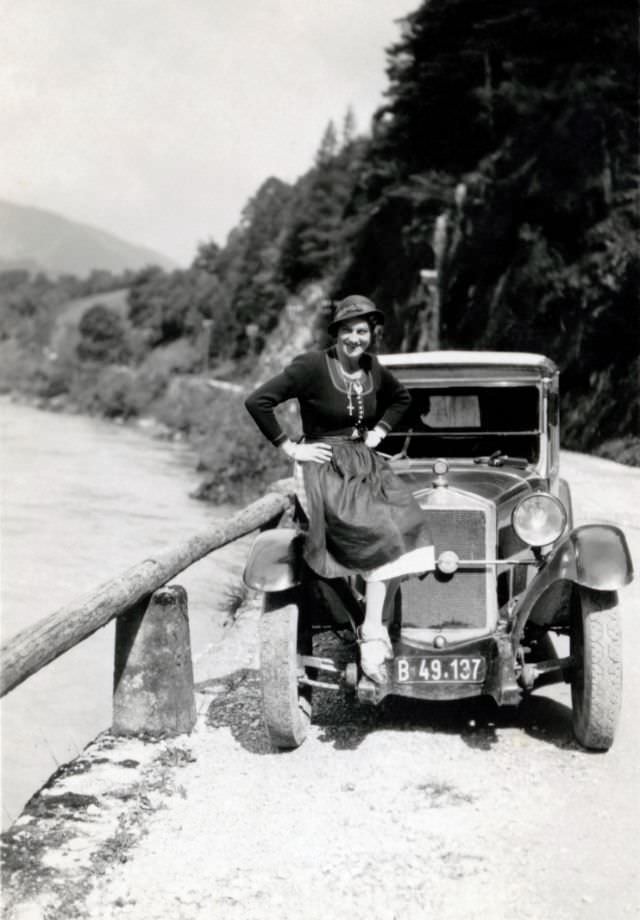
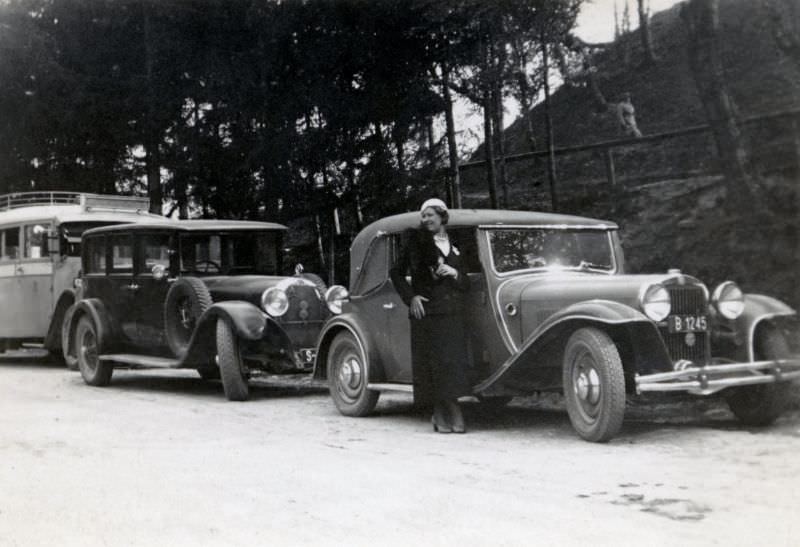
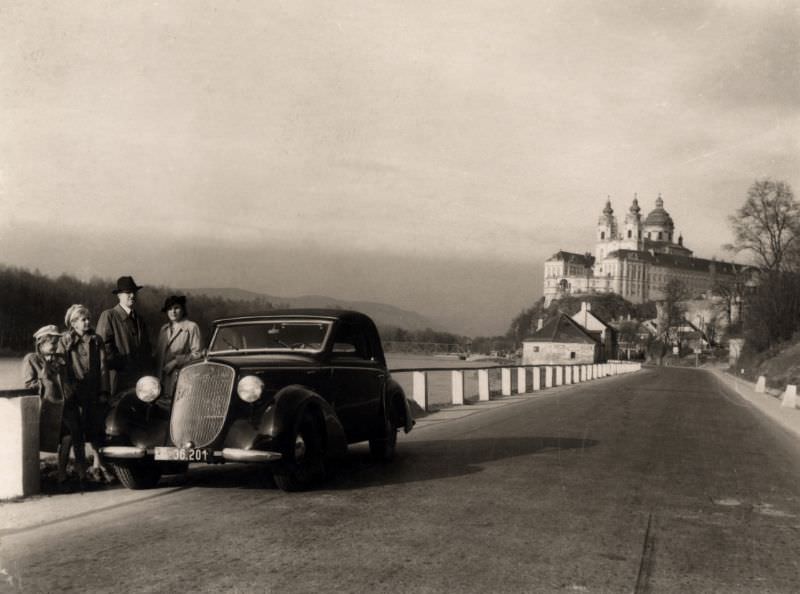
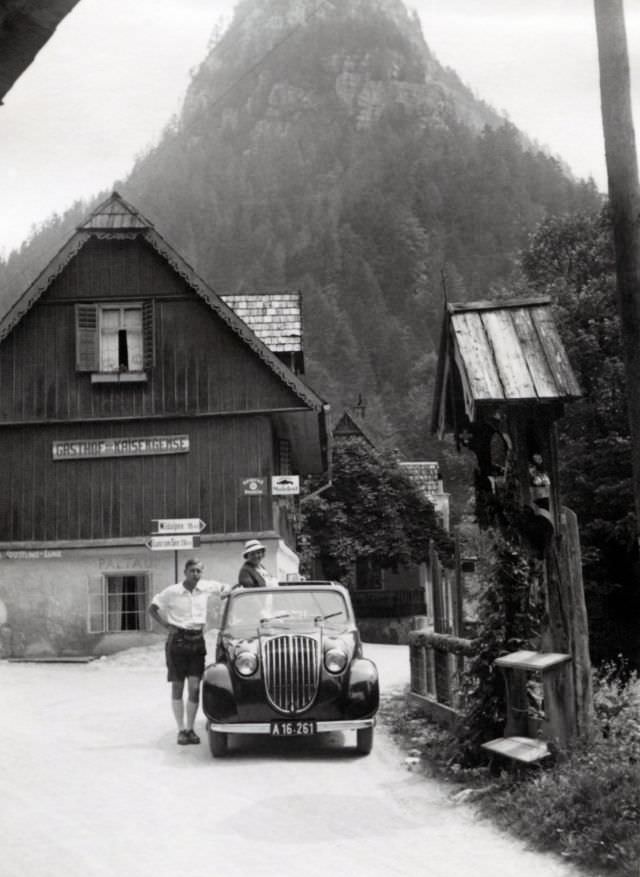
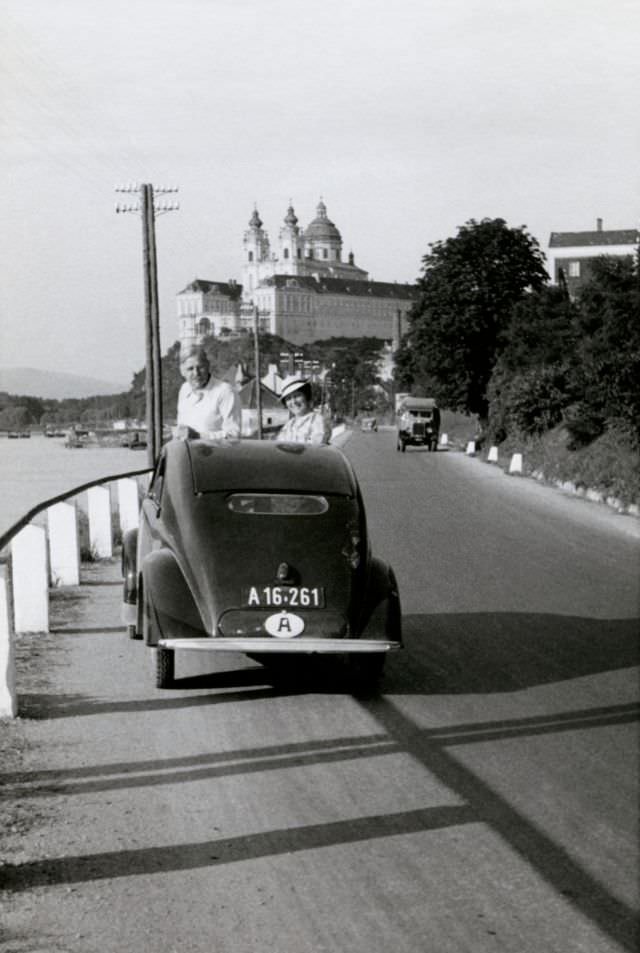
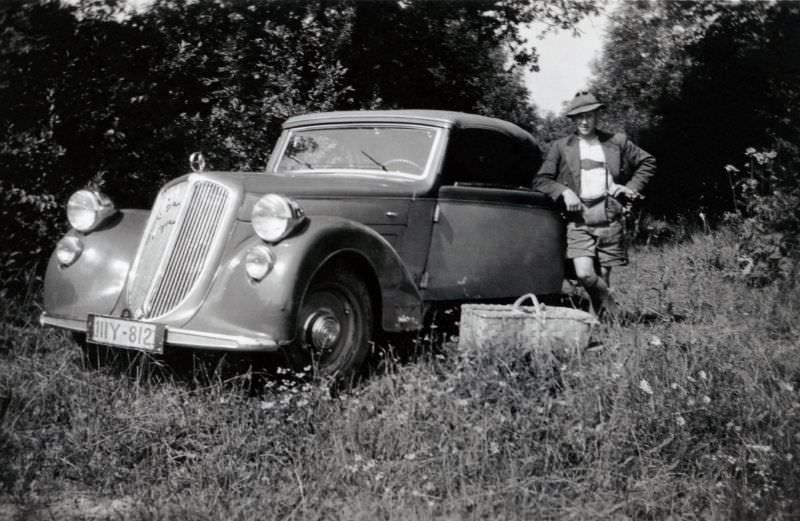
By the mid-to-late 1930s, Steyr had expanded its lineup considerably. The compact Steyr 50 — sometimes nicknamed the “Baby” — brought car ownership within reach of more modest budgets. Several photographs from 1937 and 1938 show couples and families with the Steyr 50 in the Styrian village of Palfau, on the banks of the Danube near Melk, and on mountain roads across Austria. One cheerful young woman was photographed peeking out through the car’s sunroof.
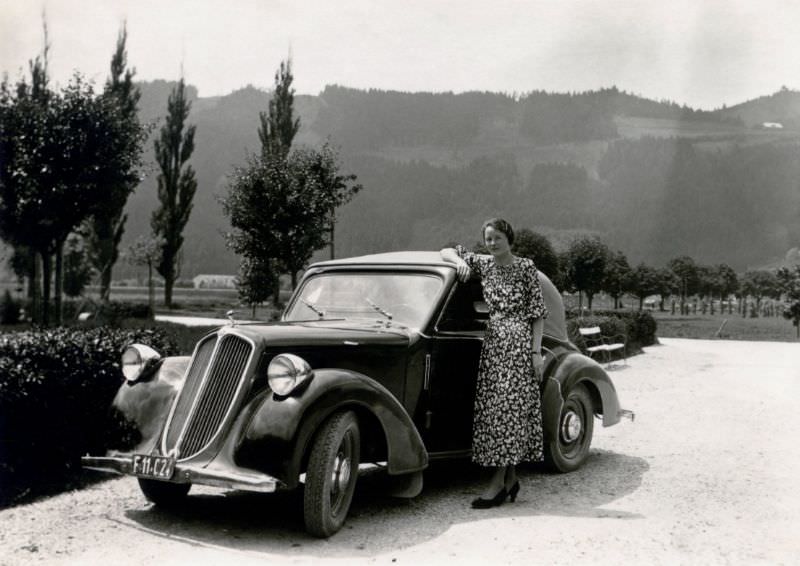
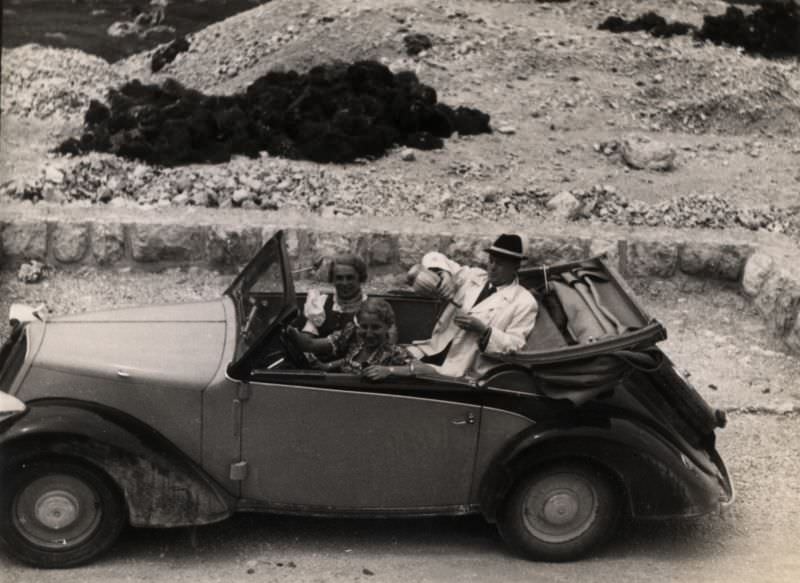
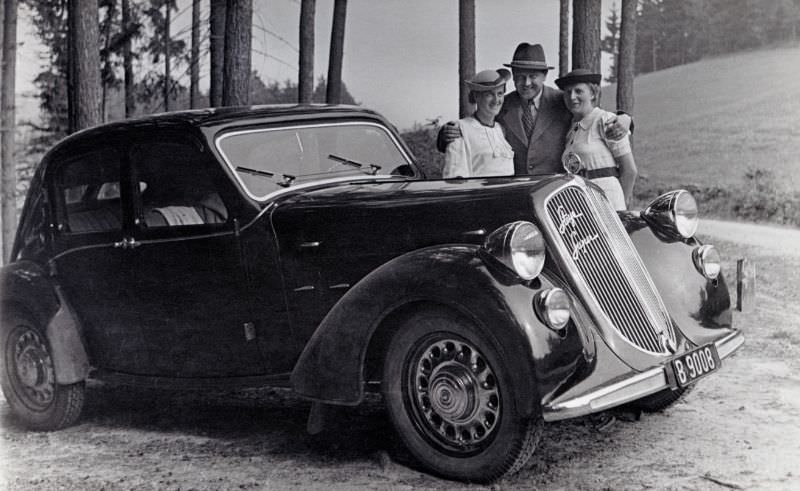
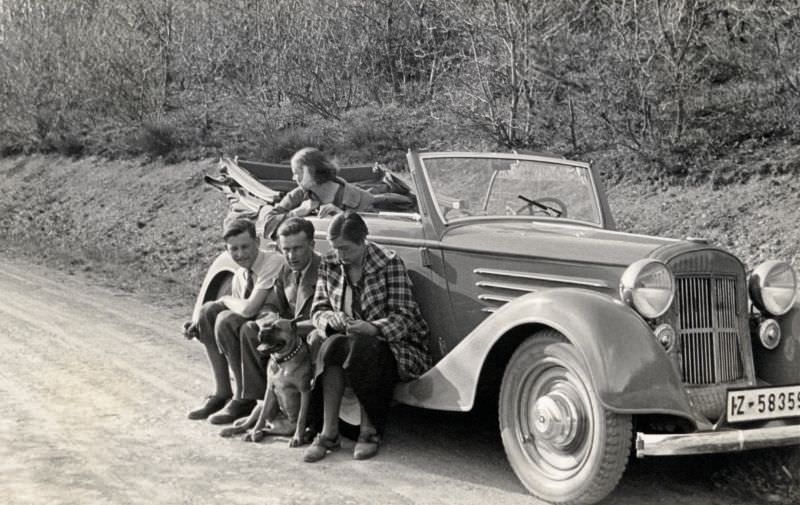
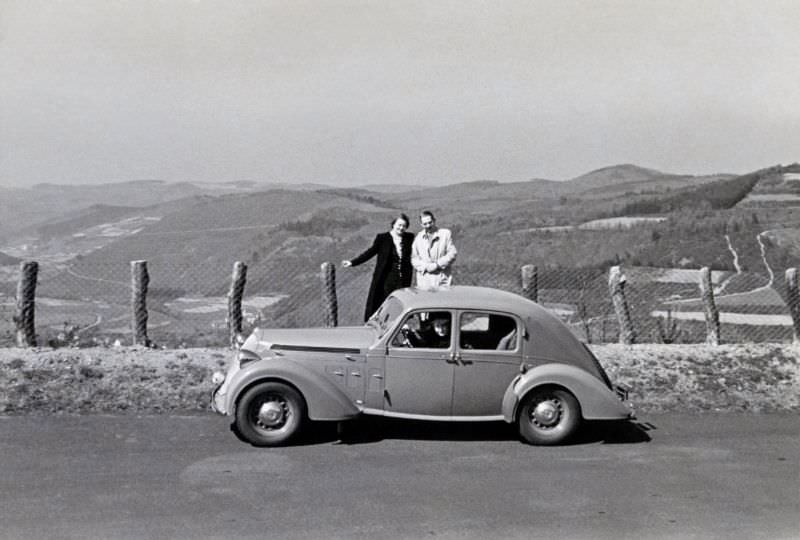
The larger Steyr 120 Super, 200, and 220 models attracted buyers in Germany as well as Austria. A Steyr 220 Limousine registered in the administrative region of Düsseldorf was photographed in the Ahr Valley wine region south of Bonn in early spring 1938. A Steyr 120 Super with Hungarian license plates — and a pennant in the Hungarian national colors — appeared on an Alpine road, showing how widely these cars traveled. At the upper end of the market, a Steyr 530 Cabriolet with a coachbuilt body by Gläser of Dresden was photographed with its owners and their pet boxer dog in 1938. Only a handful of such bodies were ever produced.
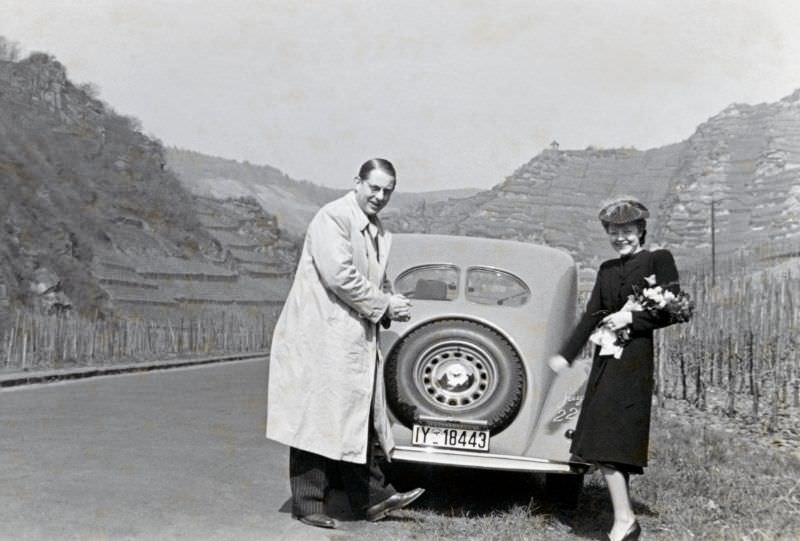
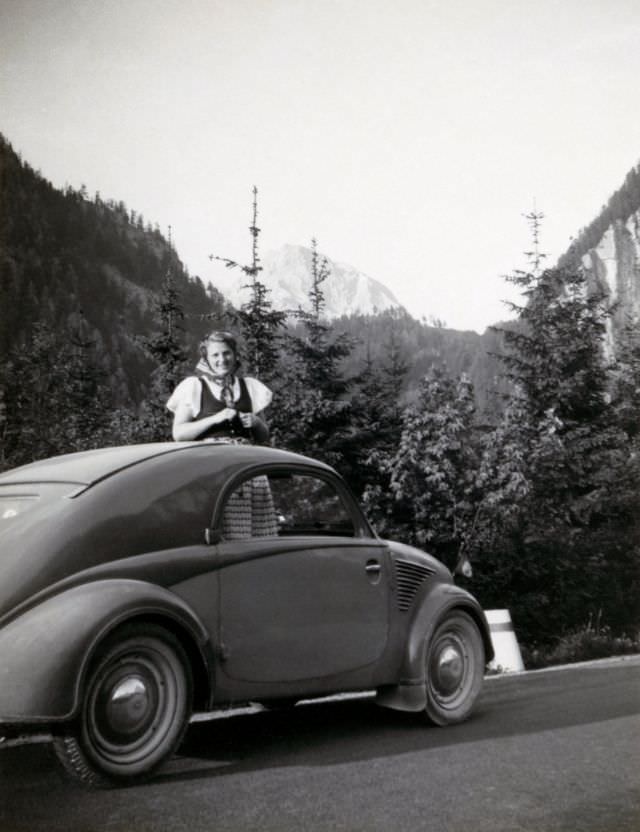
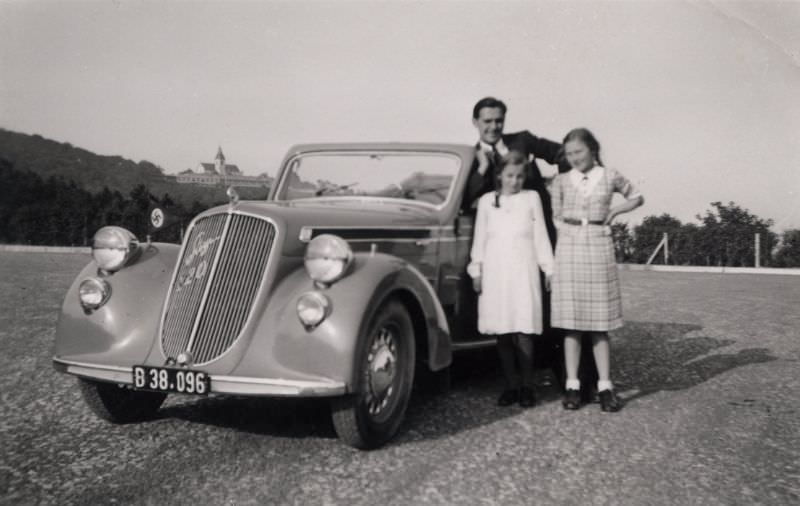
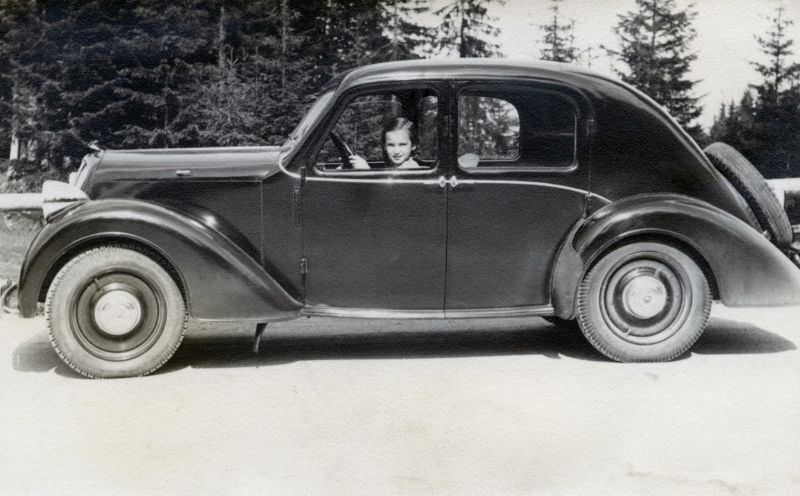
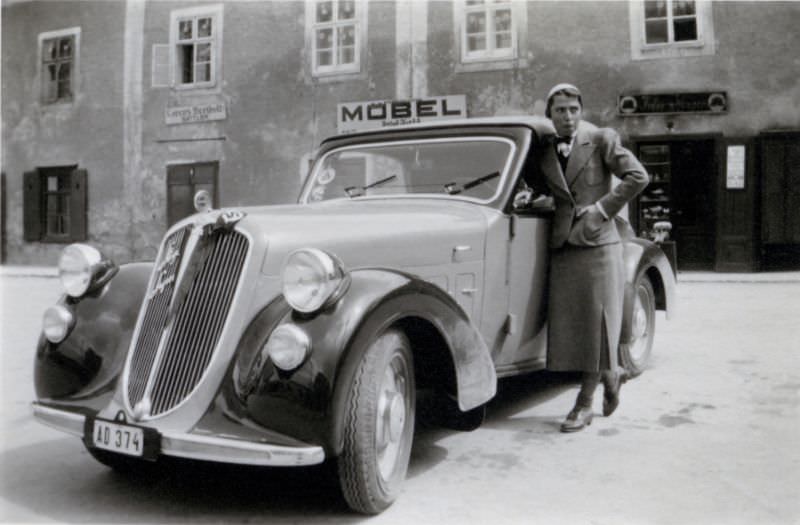
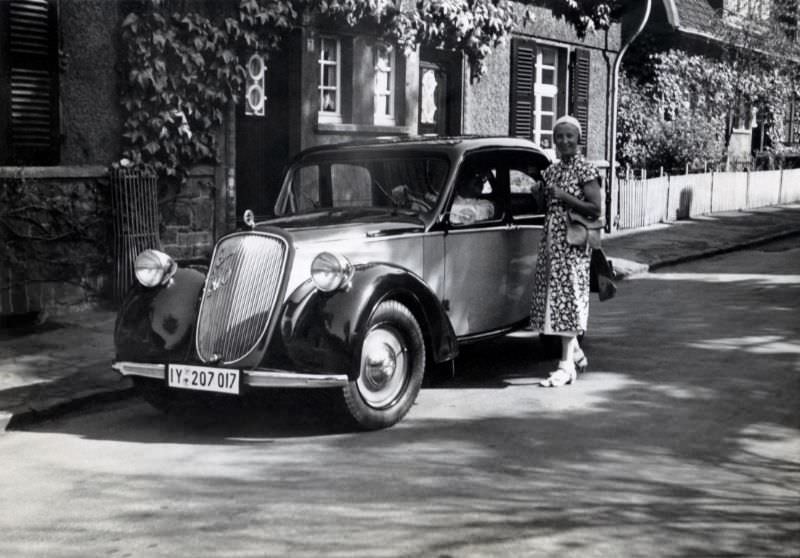
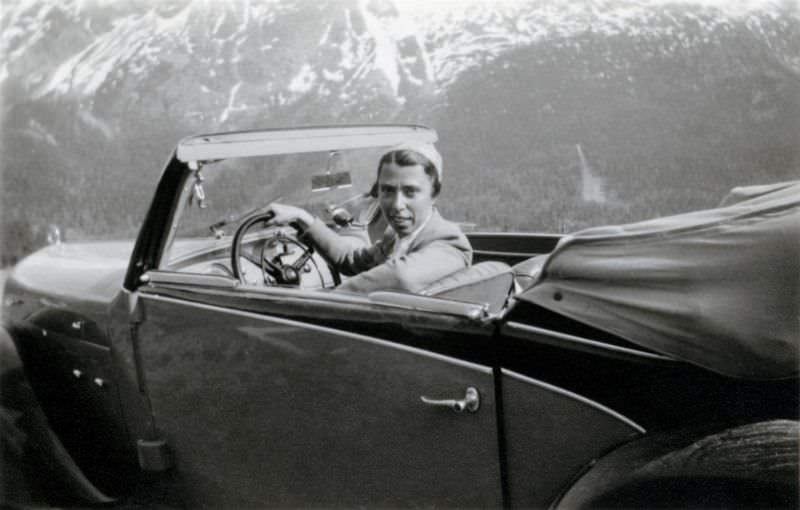
One of the final photographs in this collection was taken in 1939 in the town of Melk, with the famous Benedictine monastery looming on the hill behind the Danube. A family stands beside a Steyr 220 Gläser Cabriolet, registered in Upper Austria, on a sunny winter’s day. The scene is peaceful — yet by that point, the political landscape of Central Europe had been transformed entirely by the Anschluss of 1938, which absorbed Austria into Nazi Germany.