Hollywood in the 1960s ran on star power. The decade produced some of the most recognizable faces in American film history, and two of those faces — Steve McQueen and Sharon Tate — became connected through mutual attraction, shared circles, and ultimately, one of the most shocking murders of the twentieth century.
Terrence Stephen McQueen was born on March 24, 1930, in Beech Grove, Indiana. He came up through a rough childhood before finding his footing as an actor, and once he did, there was no slowing him. By the early 1960s, McQueen had established himself as a full-blown Hollywood force. “The Magnificent Seven” (1960), “The Great Escape” (1963), and “Bullitt” (1968) turned him into the highest-paid actor in the world at his peak. He drove fast cars, took real risks on set, and carried a cool detachment on screen that audiences found irresistible. The nickname “King of Cool” was not a studio invention — it was earned.
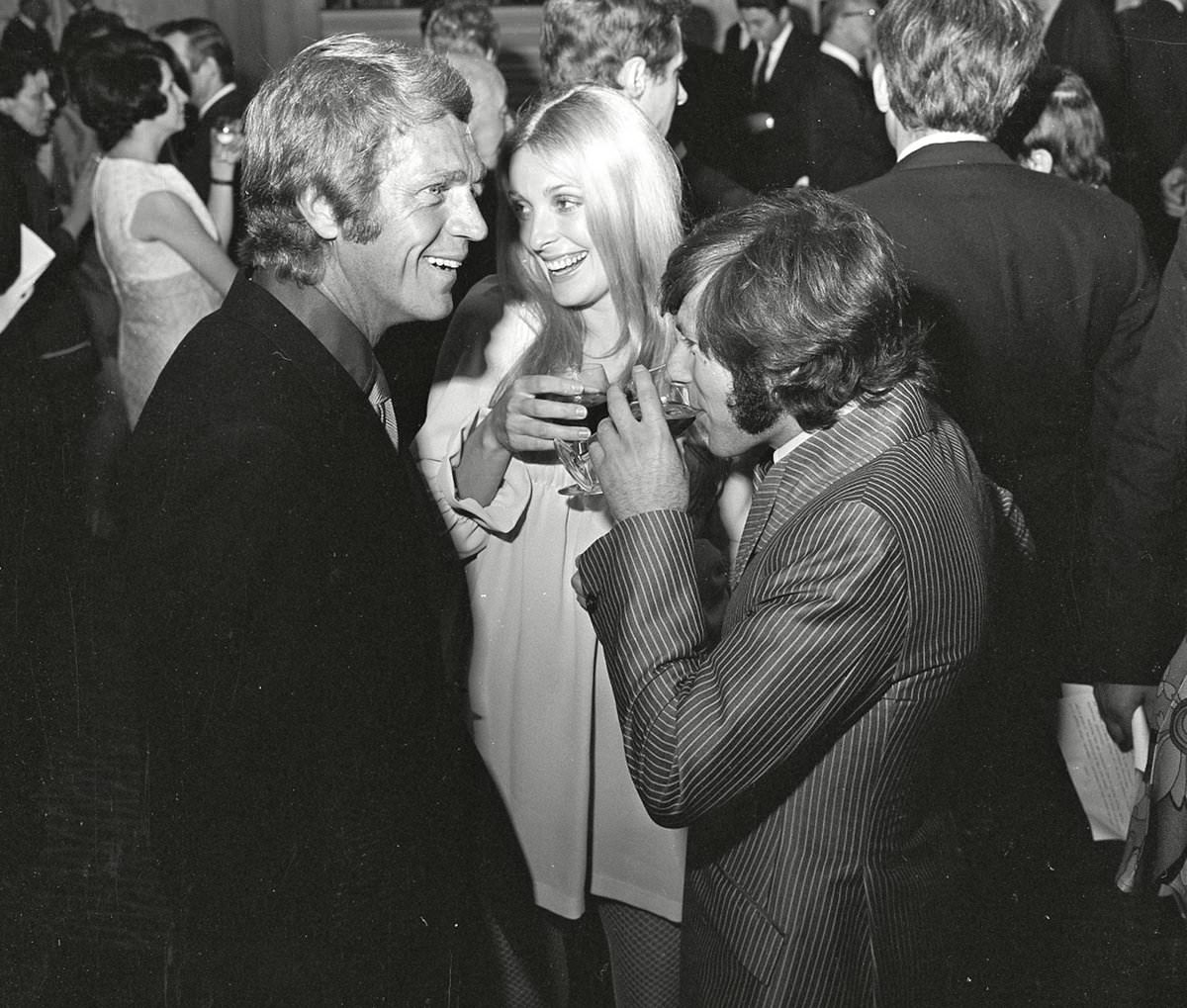
Sharon Marie Tate was born on January 24, 1943, in Dallas, Texas. She began modeling as a teenager and transitioned to acting in the mid-1960s. Her roles in “The Fearless Vampire Killers” (1967) and “Valley of the Dolls” (1967) brought her wider recognition and made clear she was more than just a pretty face. Critics noticed her timing, her range, and her ability to hold the screen. She was 26 years old and still building toward what many in the industry expected to be a long career.
McQueen and Tate moved in the same Hollywood social circles during the mid-1960s. Both were magnetic on screen and well-known at the parties, premieres, and gatherings that defined the era’s social scene. Reports from people who knew them describe a strong mutual attraction. Whether the relationship became fully romantic was never publicly confirmed, but those close to both of them acknowledged the chemistry was real and the bond between them genuine.
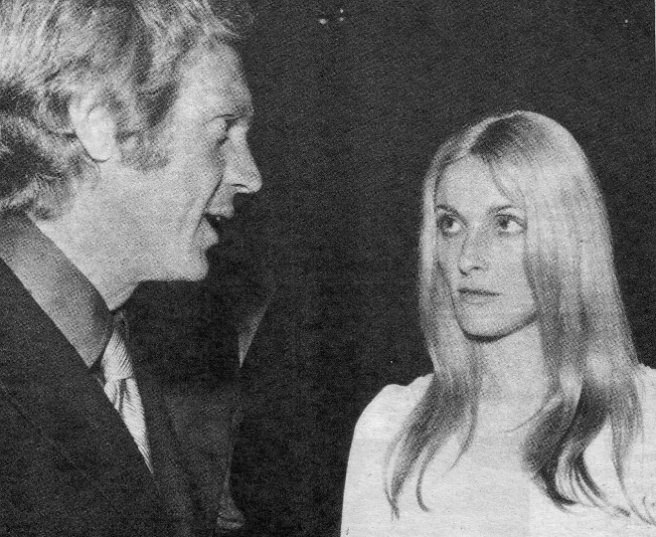
McQueen was married at the time to Neile Adams, his first wife and the mother of his two children. The marriage was under serious strain. McQueen’s frequent infidelities and his relentless focus on his career created ongoing tension at home. His connection with Tate, whatever its precise nature, existed against this backdrop of a troubled marriage and a life lived at full speed.
Tate’s personal life took a major public turn in 1968 when she married director Roman Polanski. The two had met on the set of “The Fearless Vampire Killers,” and their relationship moved quickly. Polanski was already an internationally respected filmmaker, and together they became one of Hollywood’s most high-profile couples. Their marriage faced real pressure from Polanski’s frequent work abroad and extended periods apart, but Tate remained committed. By the summer of 1969, she was eight and a half months pregnant with their first child.
On the night of August 8 into the early hours of August 9, 1969, members of the Manson Family entered the home at 10050 Cielo Drive in Los Angeles and killed everyone inside. Sharon Tate was murdered along with four others: Abigail Folger, Wojciech Frykowski, Jay Sebring, and Steven Parent. The killings were carried out on the orders of Charles Manson, whose followers believed the murders would ignite a race war he called “Helter Skelter.” The brutality of the crime stunned the country and shattered the loose sense of safety that had defined the decade’s counterculture.
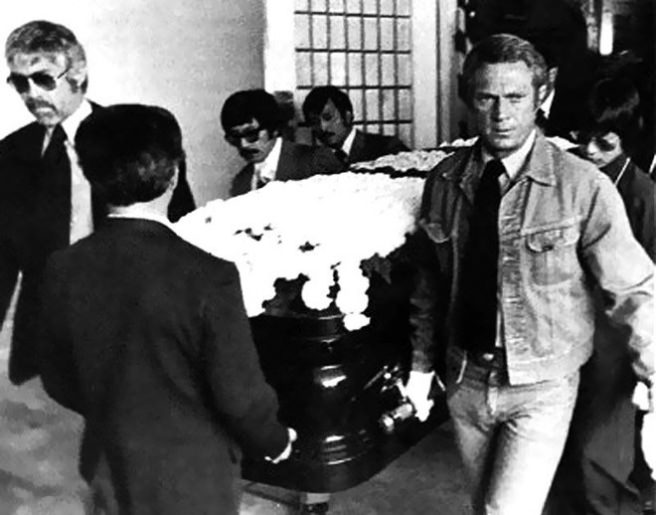
McQueen had been invited to a dinner party at the Cielo Drive house that night. He changed his plans at the last minute and did not attend. When news of the murders broke the following morning, the weight of that coincidence hit him hard. He attended Sharon Tate’s funeral, visibly shaken. He also began carrying a gun in the weeks that followed, fearing the killers were targeting Hollywood figures specifically. The investigation later confirmed the Manson Family had other targets on a list that included major celebrities.
The knowledge that he had come within a last-minute plan change of being at that house never left McQueen. People who knew him in the years that followed described a man who carried the weight of August 9, 1969, quietly but persistently. It shaped how he saw the industry, how he understood luck, and how he thought about the people he had lost.
Steve McQueen died on November 7, 1980, at the age of 50. The cause was pleural mesothelioma, a cancer of the lining of the lungs most often linked to asbestos exposure. He had been exposed to asbestos through racing suits, insulation in the vehicles he worked on, and other sources throughout his career. Sharon Tate was buried at Holy Cross Cemetery in Culver City, California. Her unborn son, whom she and Polanski had planned to name Paul Richard Polanski, was buried with her.