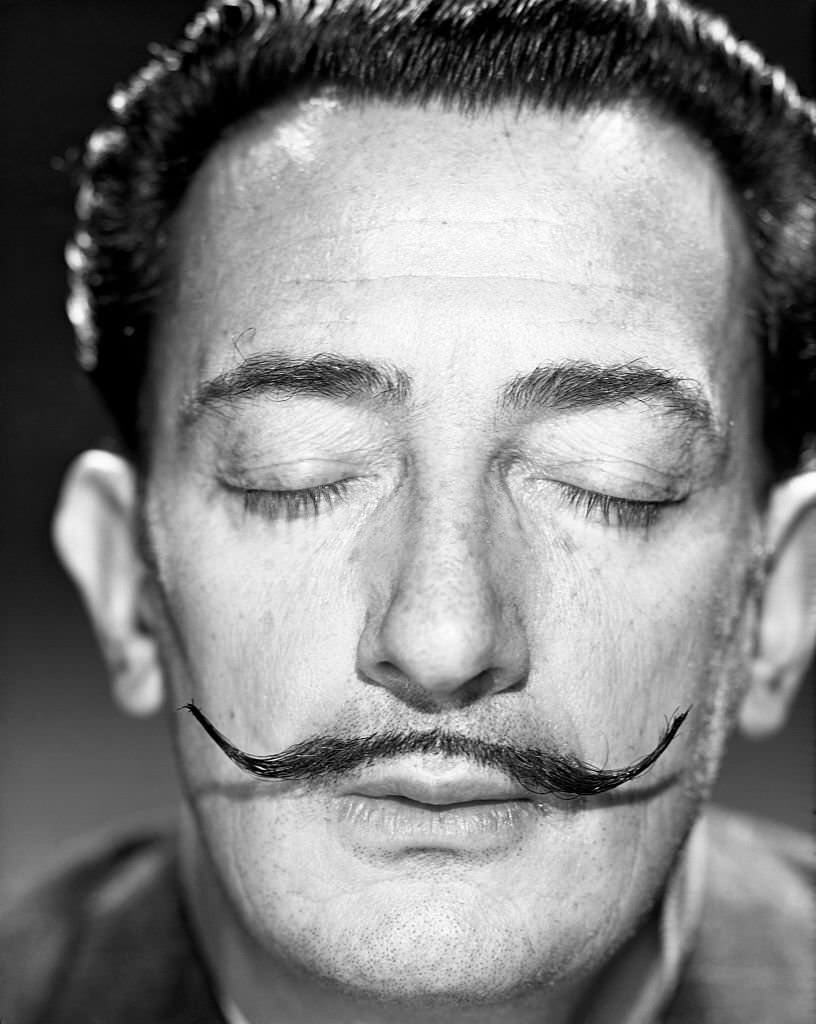
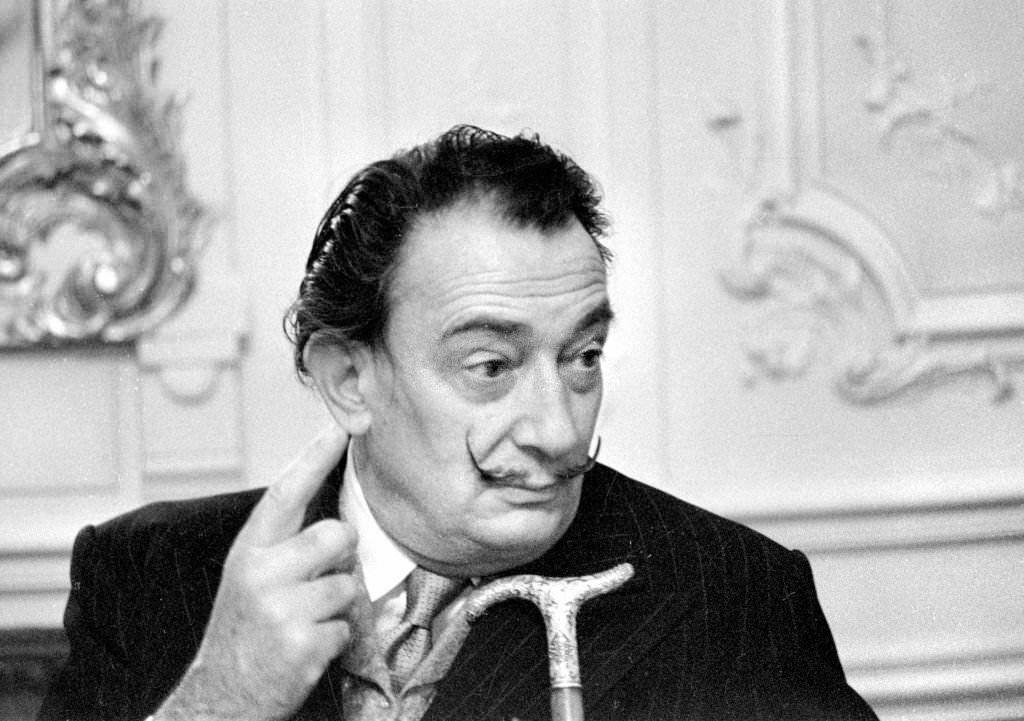
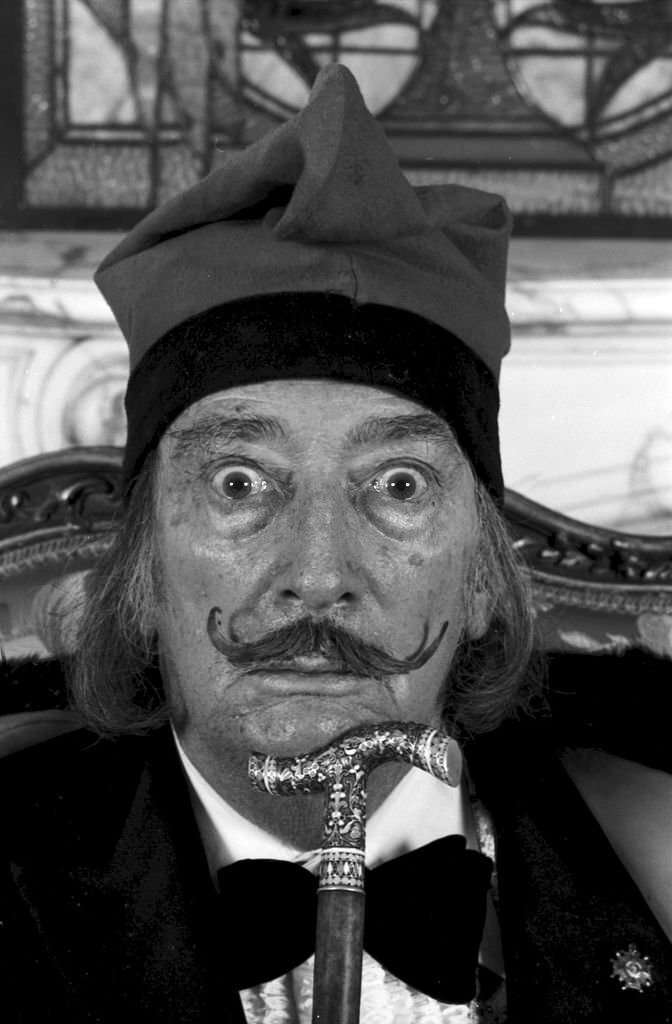
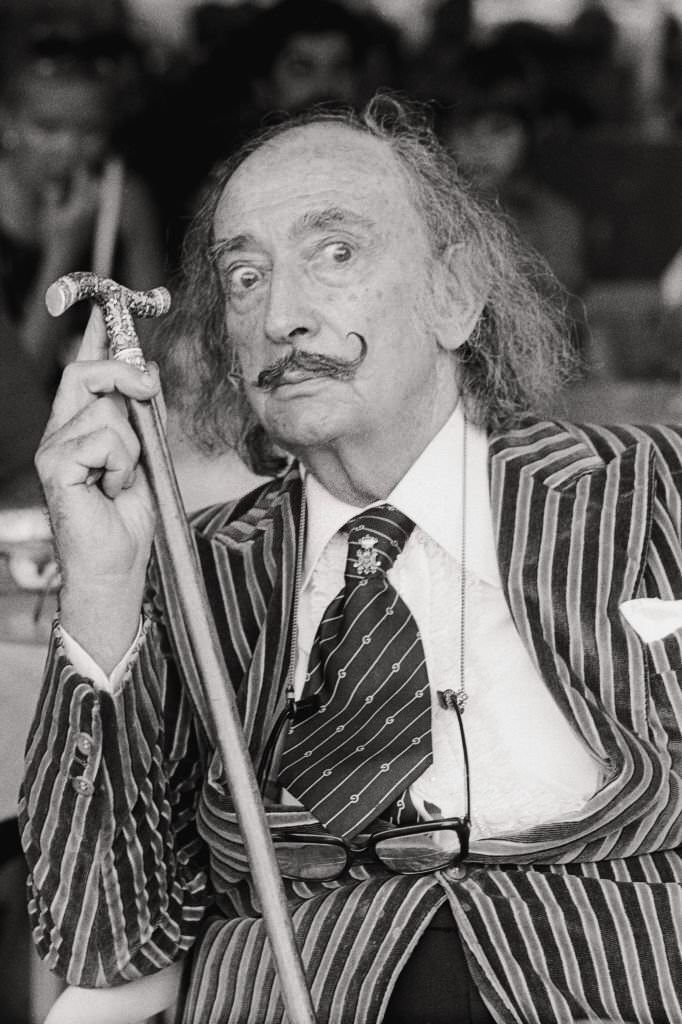
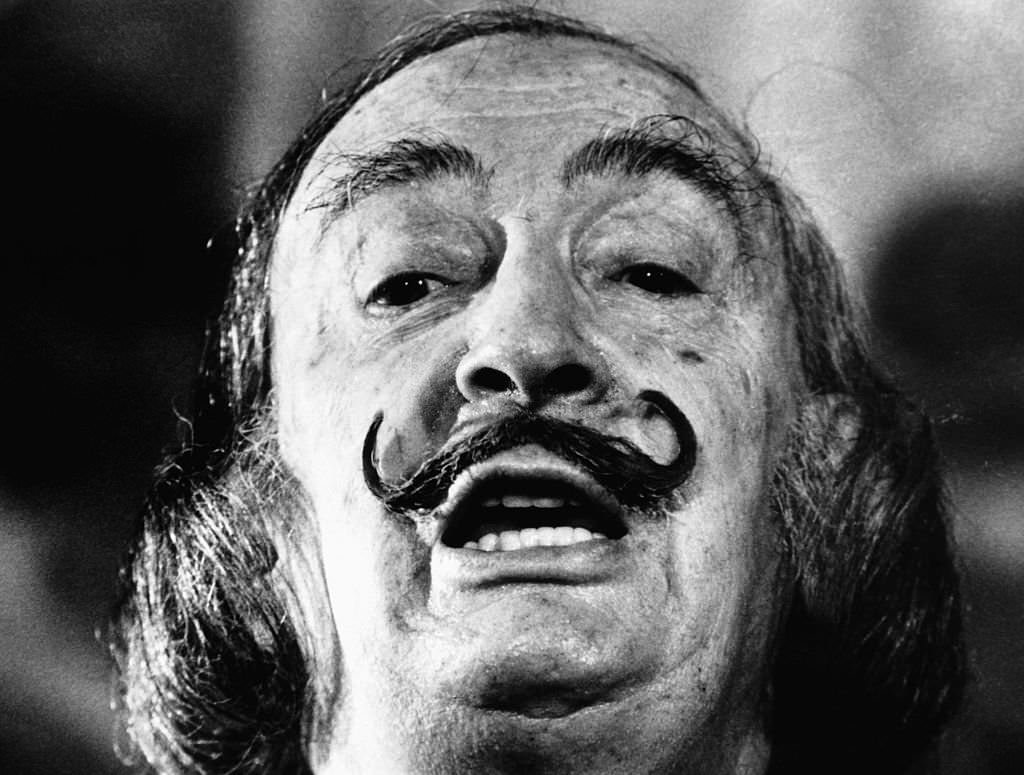
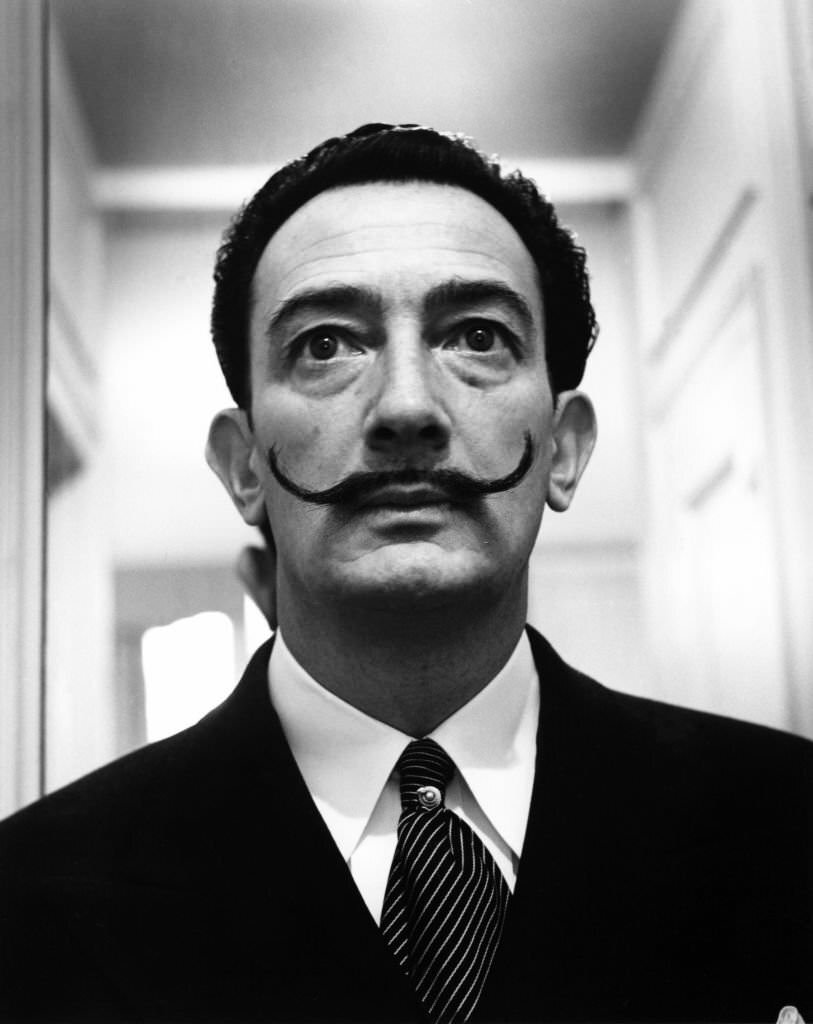
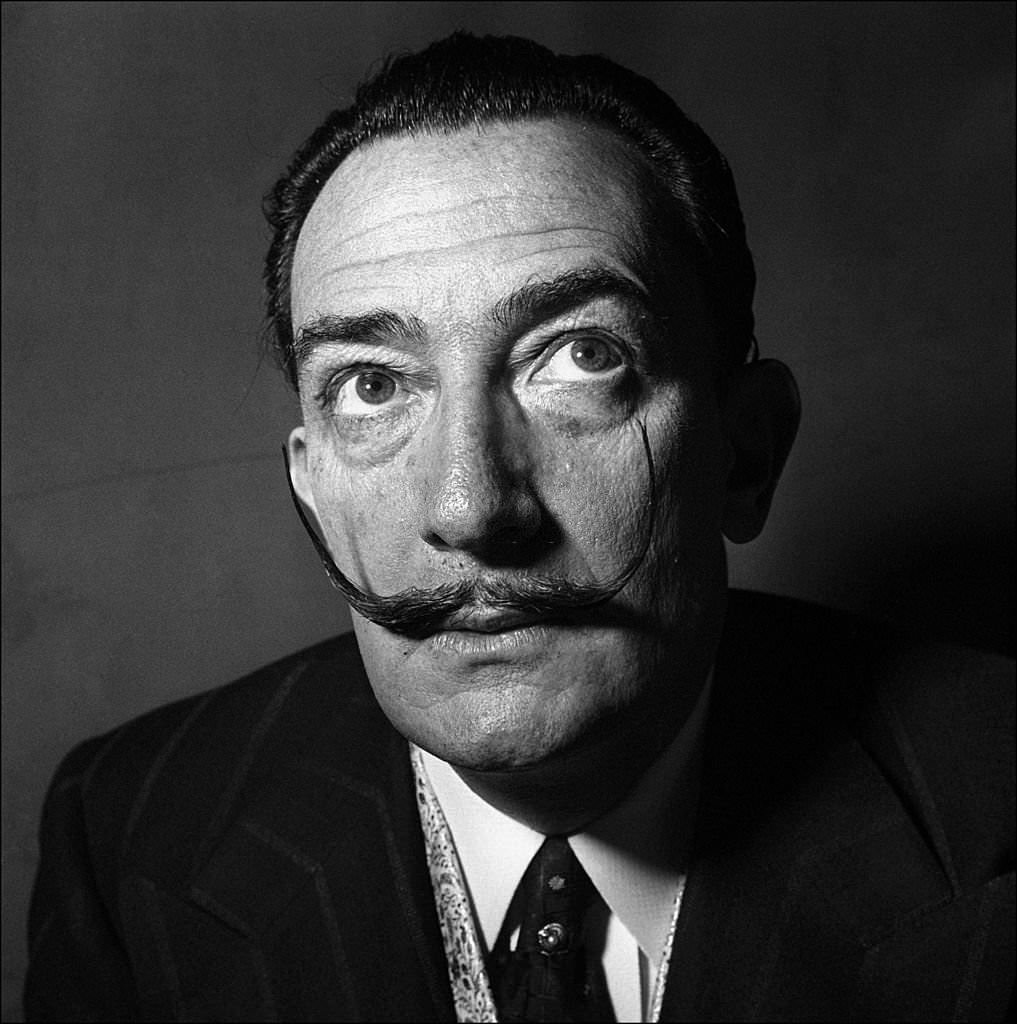
Salvador Dalí was a Spanish Catalan artist born in Figueres, Catalonia, in 1904. He worked across painting, sculpture, fashion, advertising, books, and film. No single feature defined his public image more than his mustache — thin, sharply waxed, and curled dramatically upward at both ends. It became as recognizable as any painting he ever made.
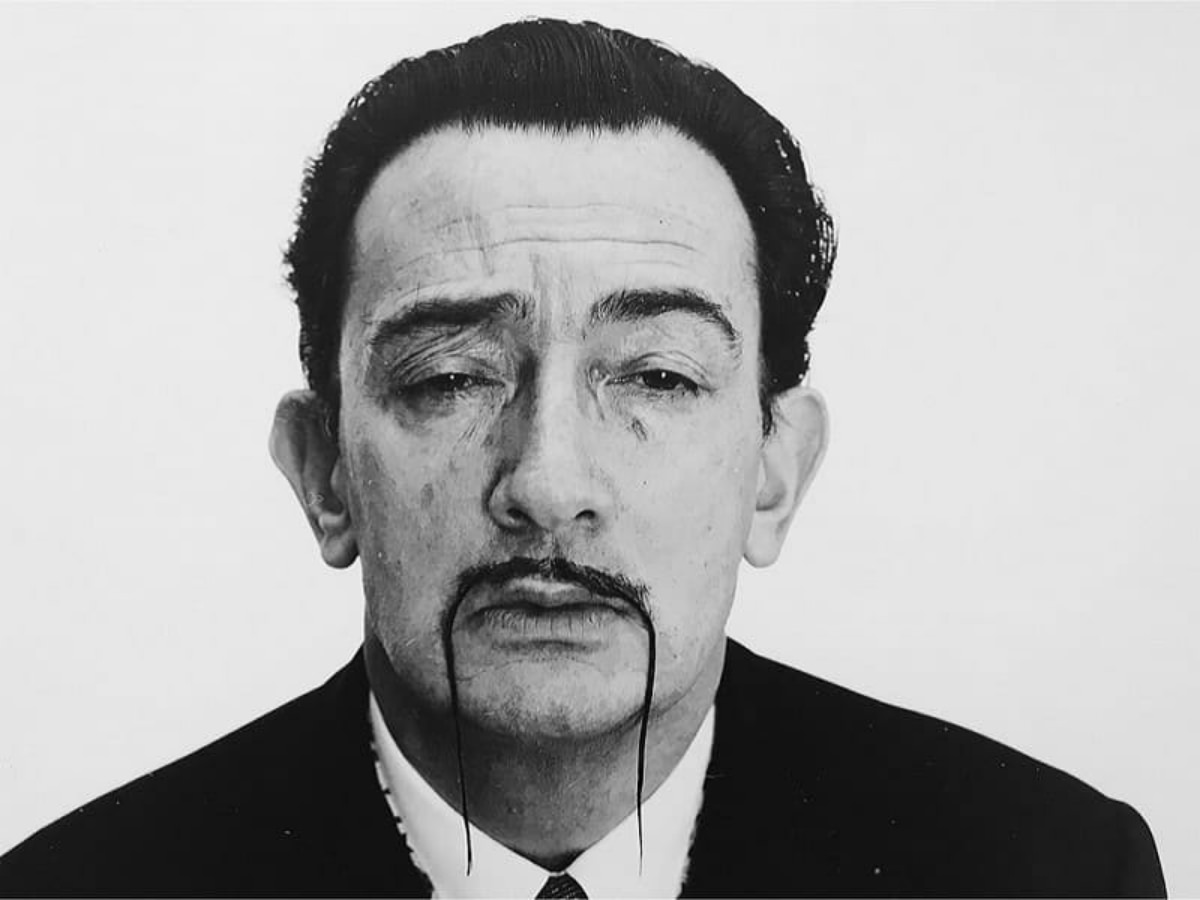
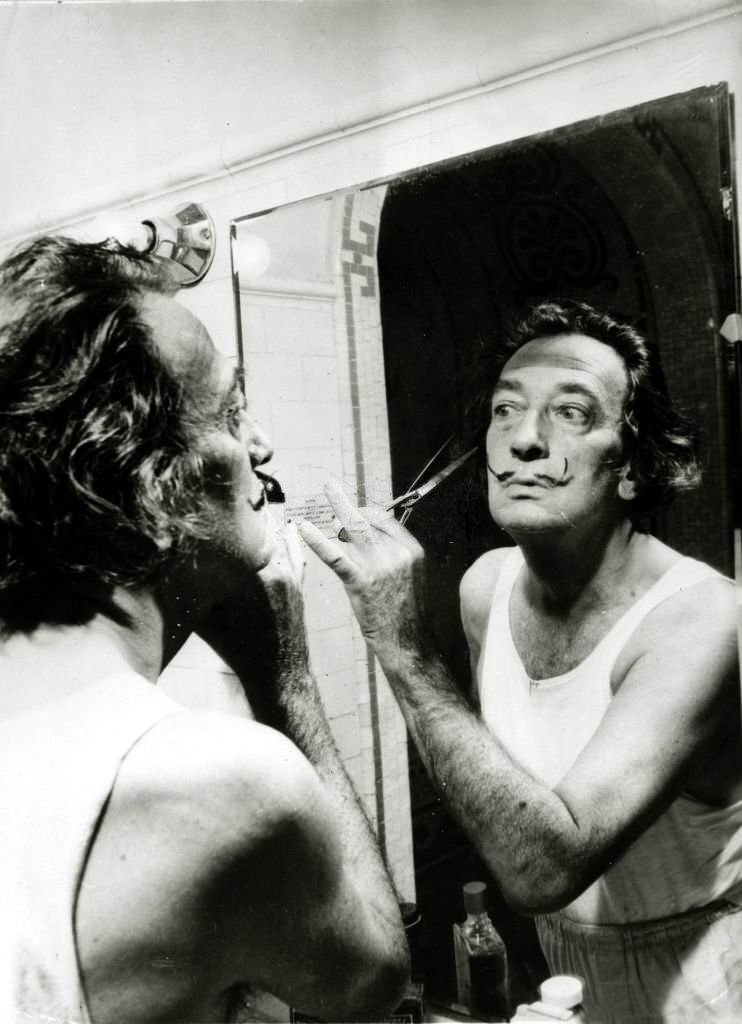
Dalí once explained his choice to grow the mustache with a simple logic: since he did not smoke, he needed something else to make a statement. He styled it in the manner of Adolphe Menjou, a Hollywood actor of the 1920s and 30s known for his own carefully groomed facial hair. Dalí treated the mustache not as a fashion choice but as something almost sacred.
To prove that point, Dalí carried a jewel-studded cigarette case wherever he went. Inside it, instead of cigarettes, he kept several spare mustaches — all styled in the Menjou fashion. When meeting friends, he would open the case and offer them around: “Mustache? Mustache? Mustache?” Nobody ever dared to take one.
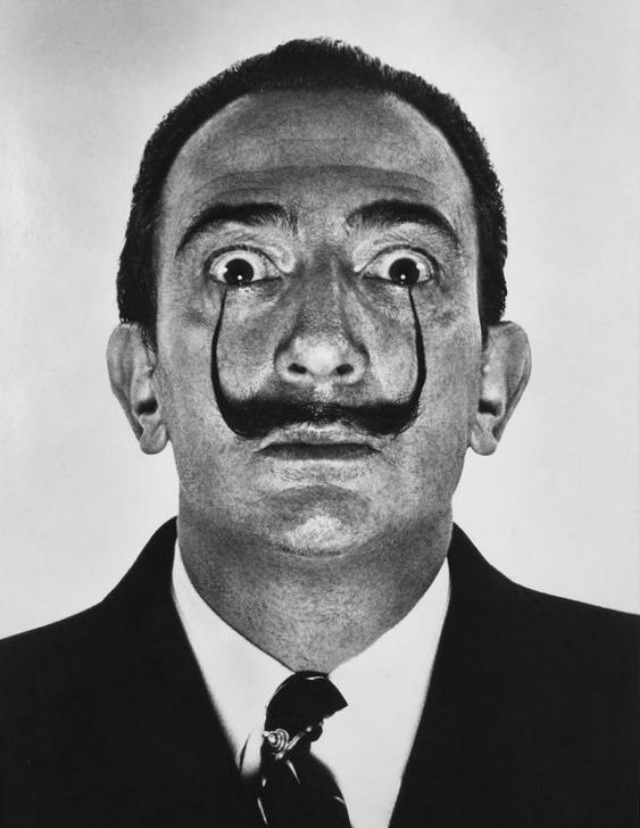
For Dalí, that reaction confirmed exactly what he believed — that the mustache carried a kind of power people were afraid to touch. It was a performance and a test at the same time. His whole personality worked this way: every gesture, every accessory, every outfit was designed to provoke a reaction.
Dalí’s surrealist paintings brought him international fame, but the surrealist movement itself eventually rejected him. The group’s leader, André Breton, expelled him in 1934, partly over political disagreements and partly because Dalí’s hunger for celebrity clashed with the movement’s ideals. Despite the expulsion, Dalí remained the most recognized surrealist in the world.
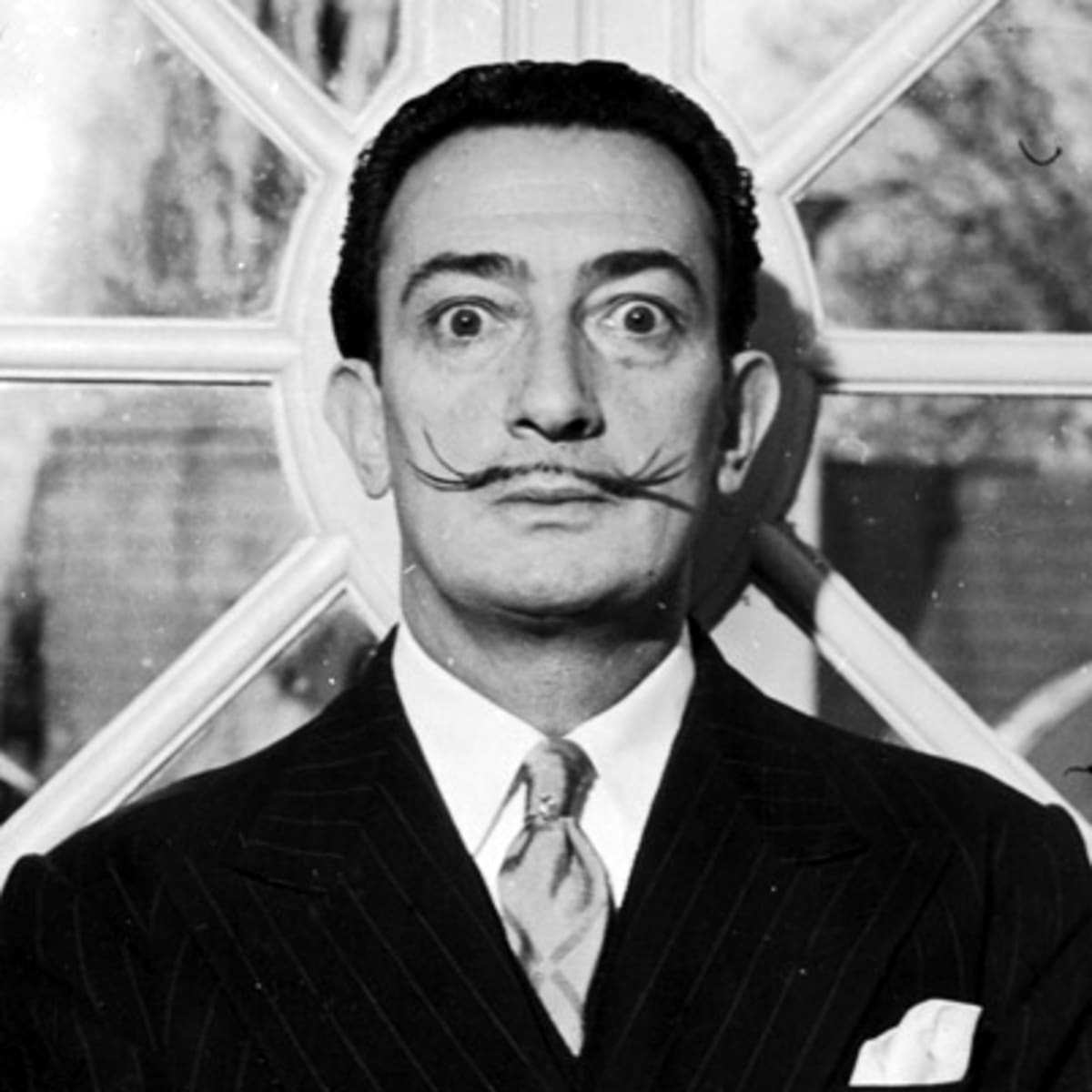
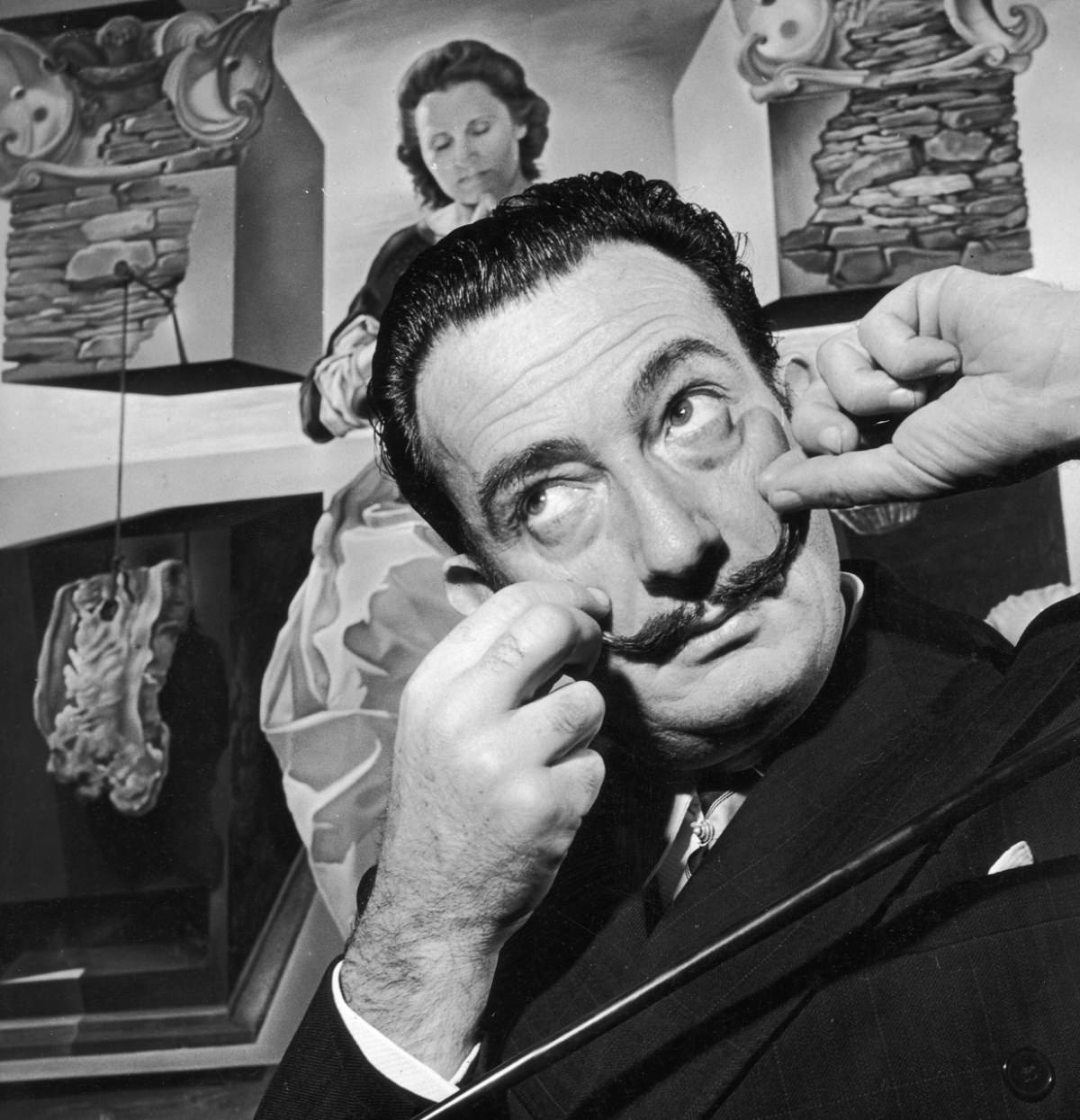
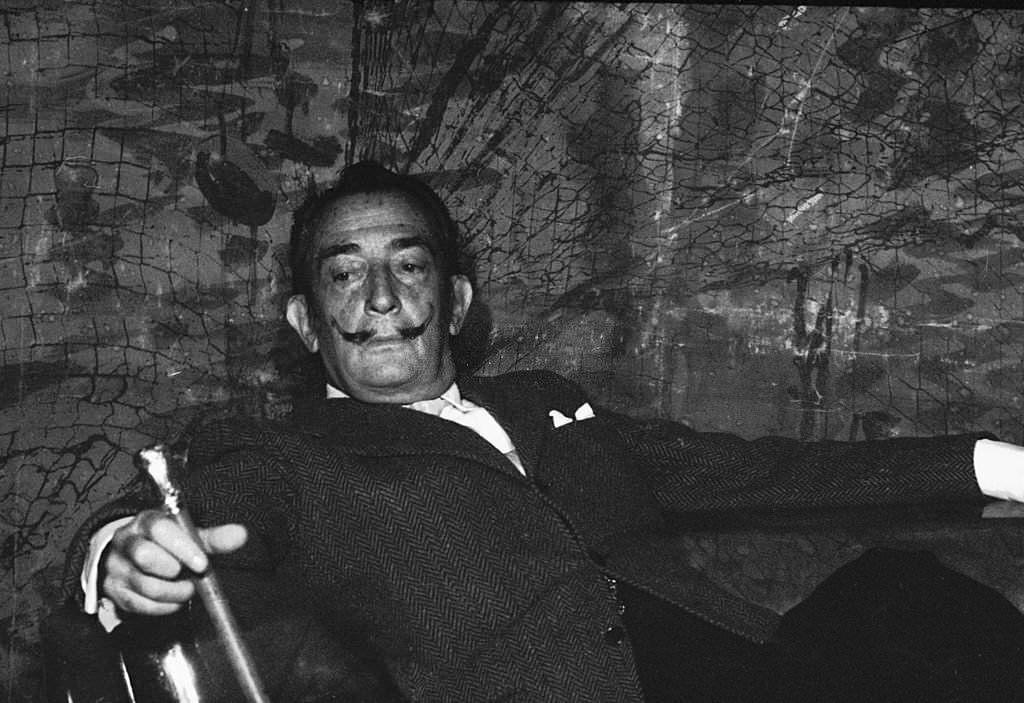
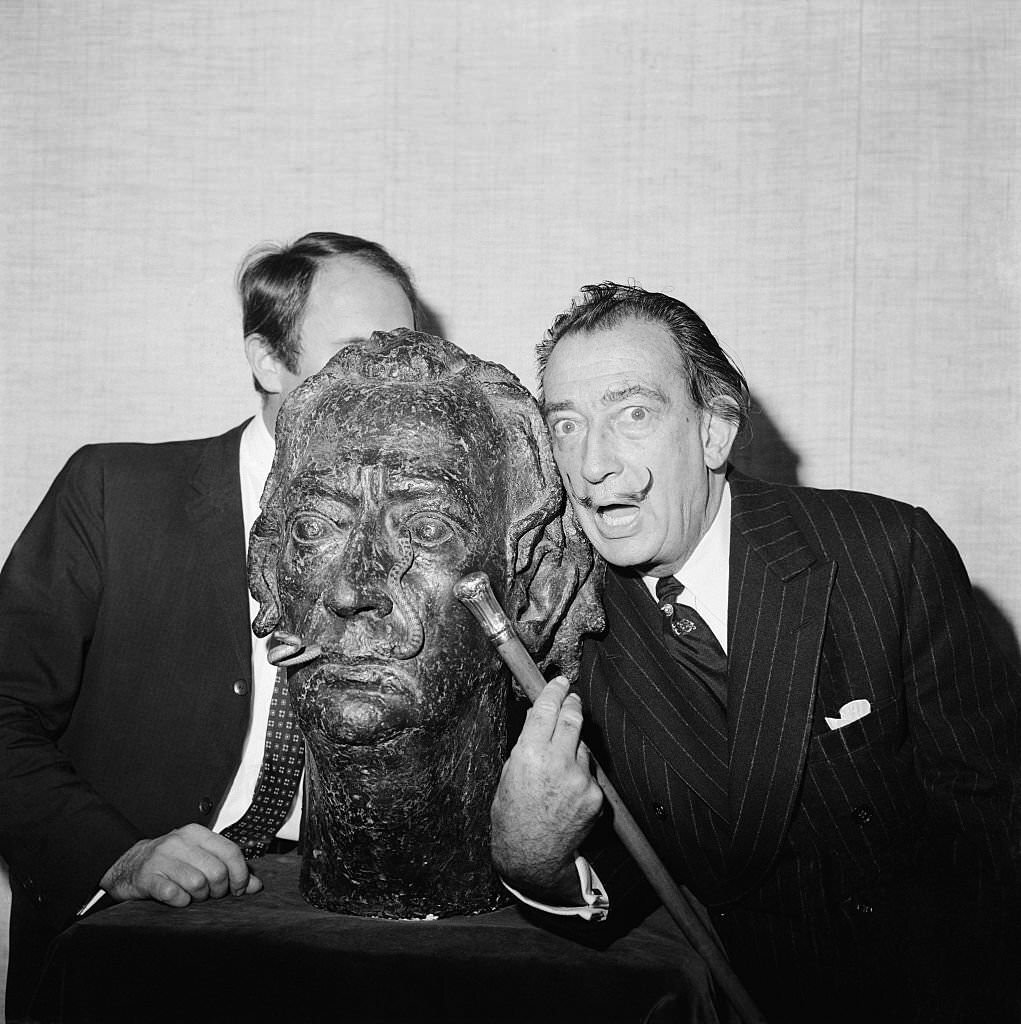
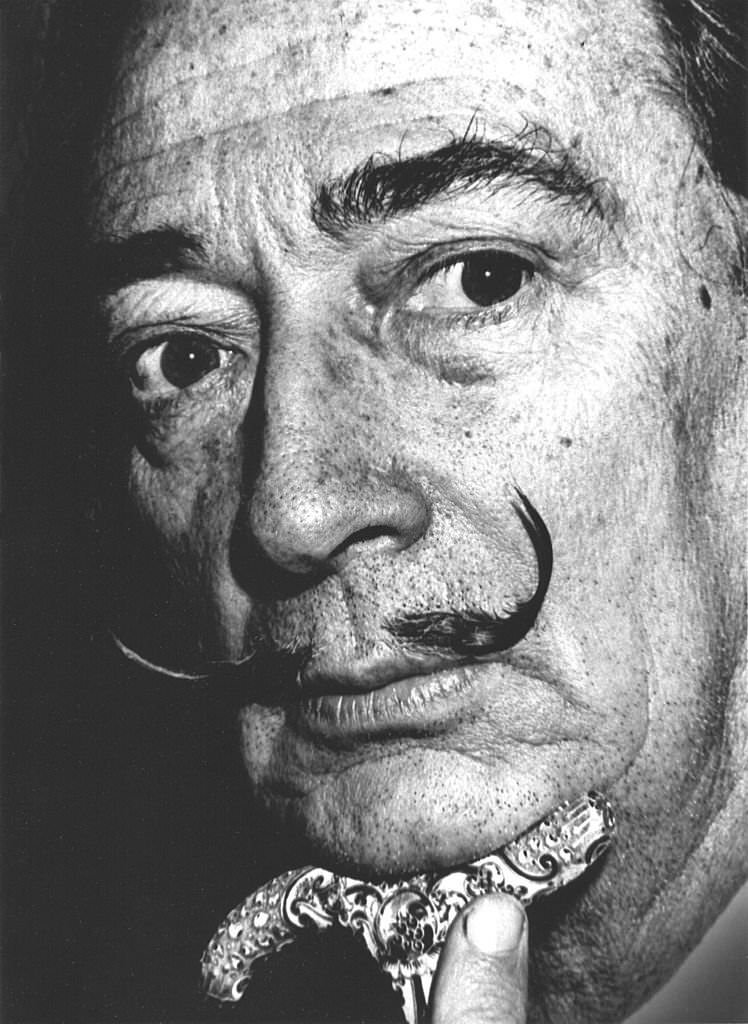
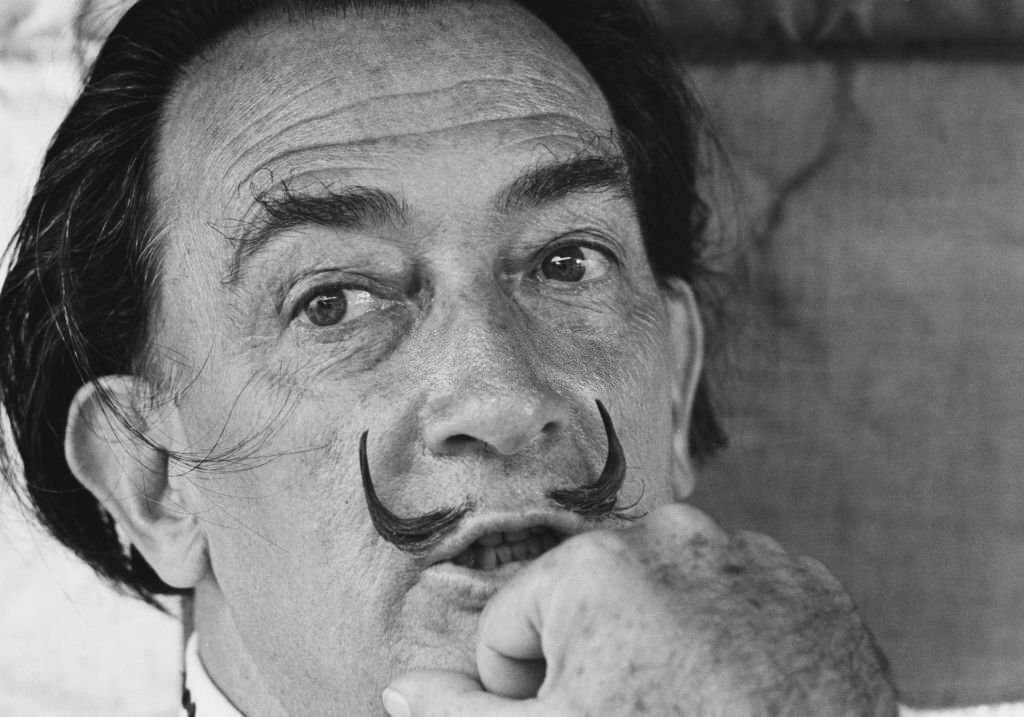
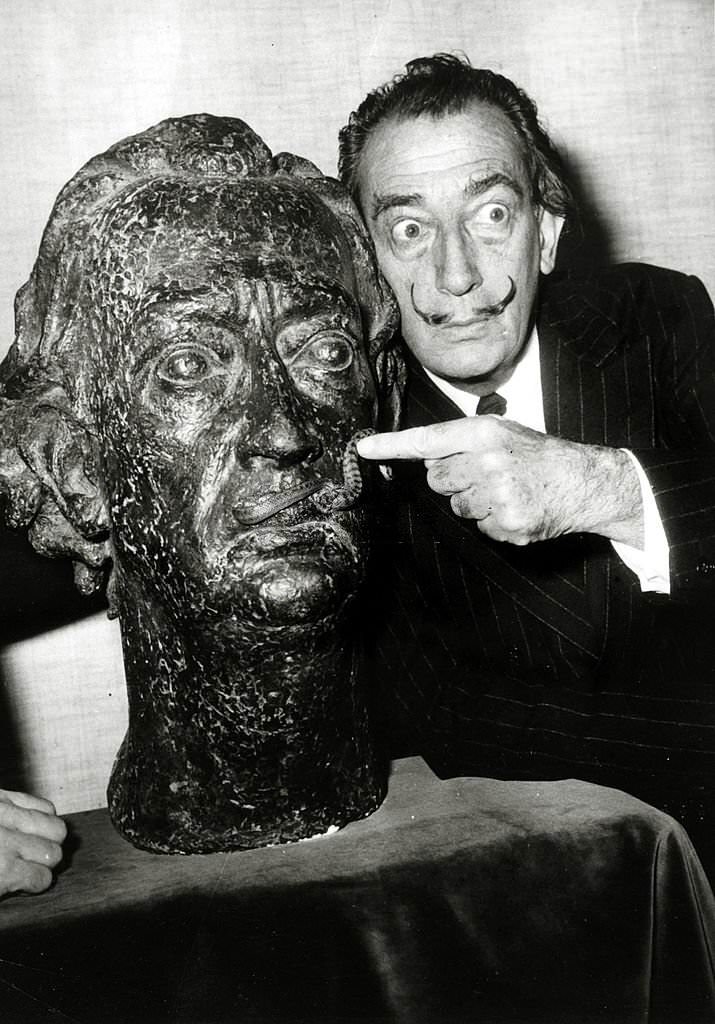
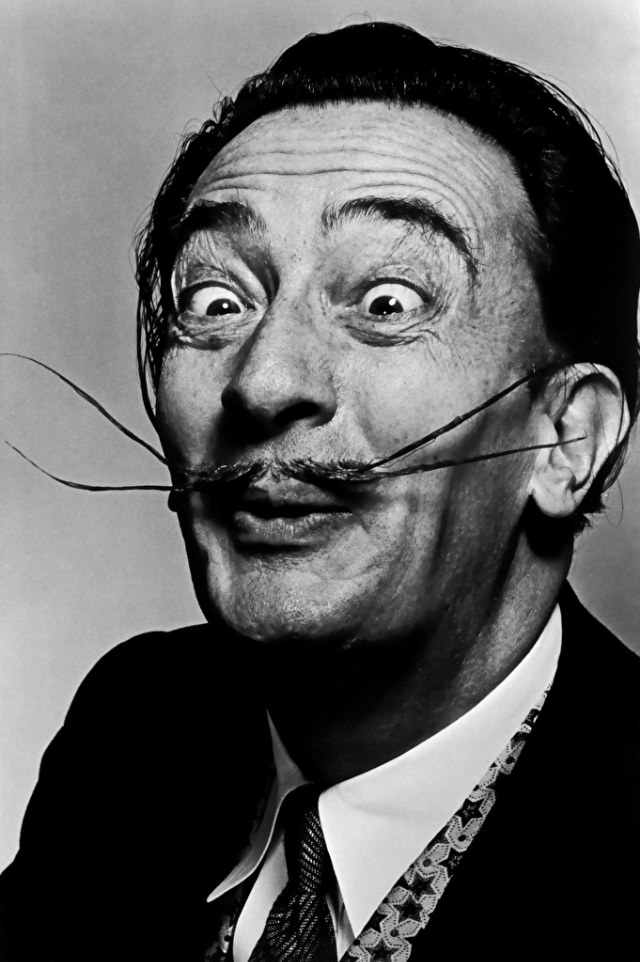
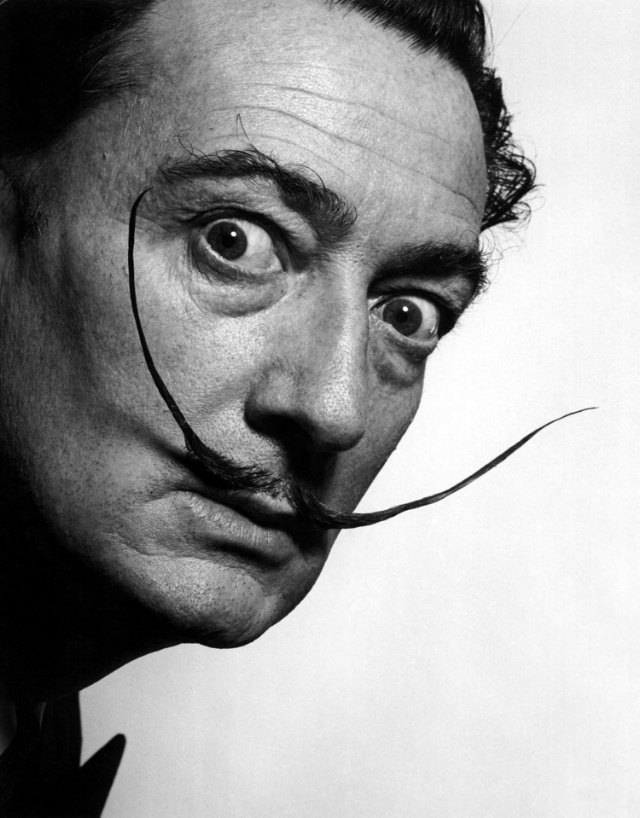
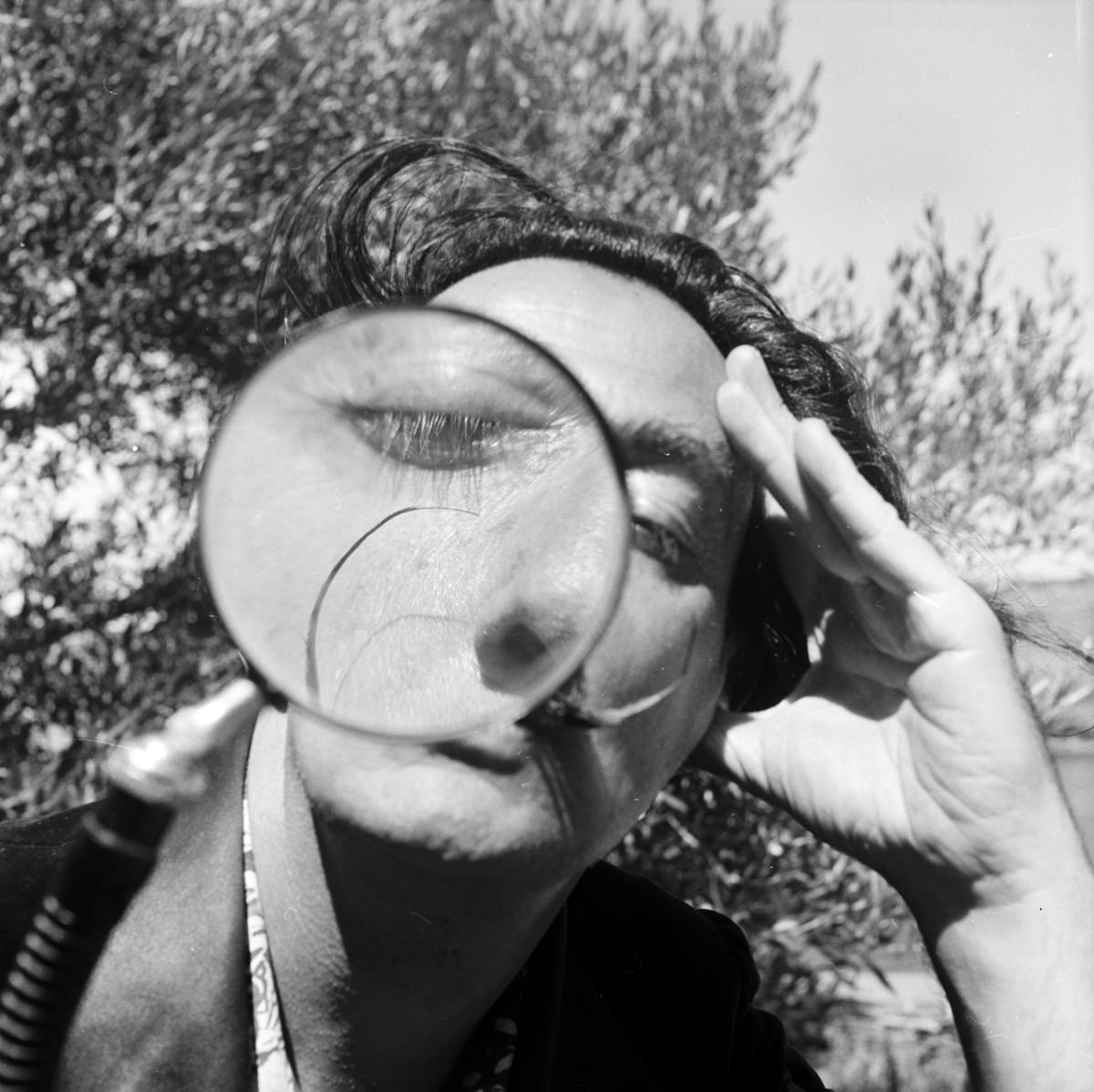
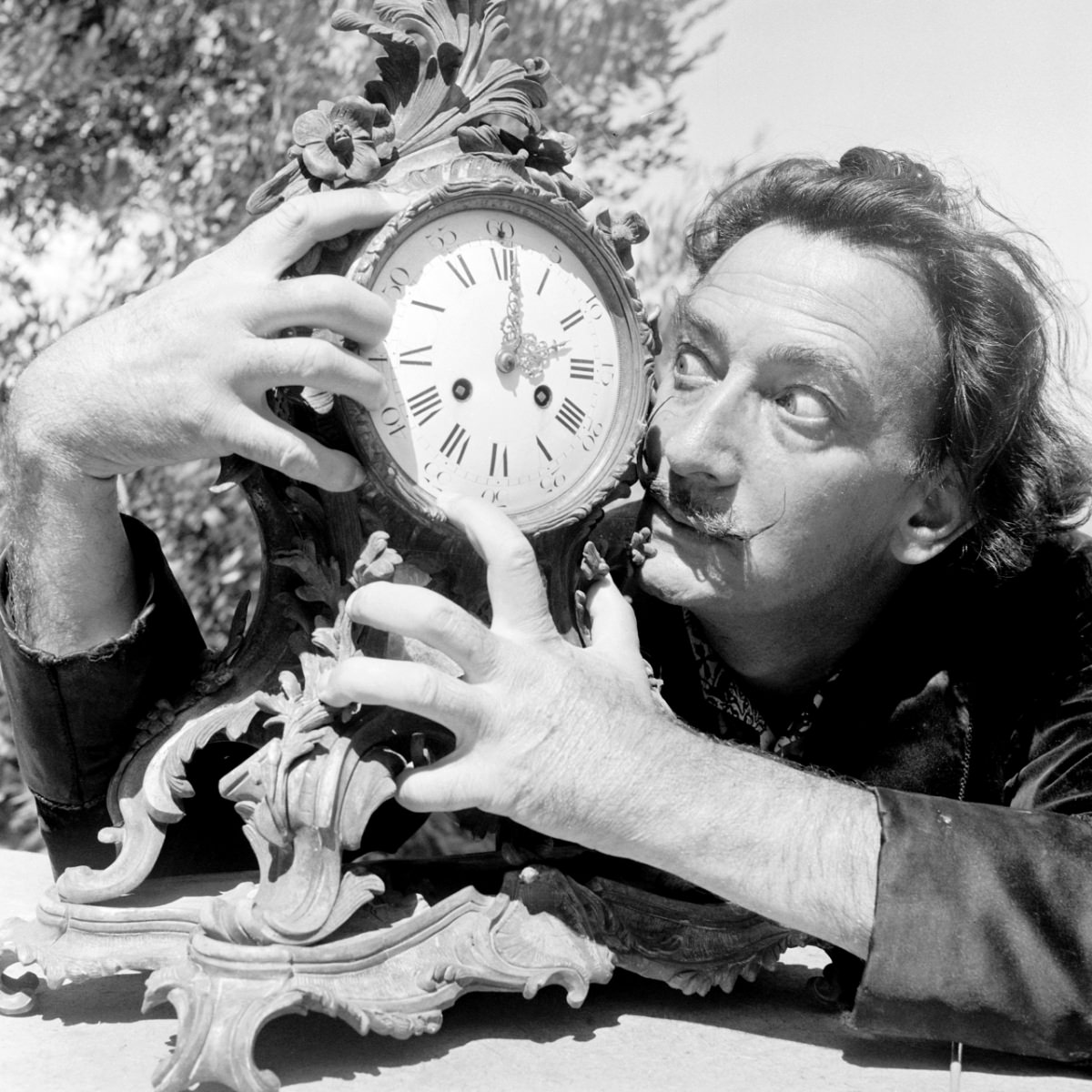
Photographers loved him. His face — especially the mustache — gave their cameras something that almost no other subject could: a face that already looked like a work of art before a single light was set up. Portraits of Dalí range from stiff and formal to completely absurd, often within the same photo session.
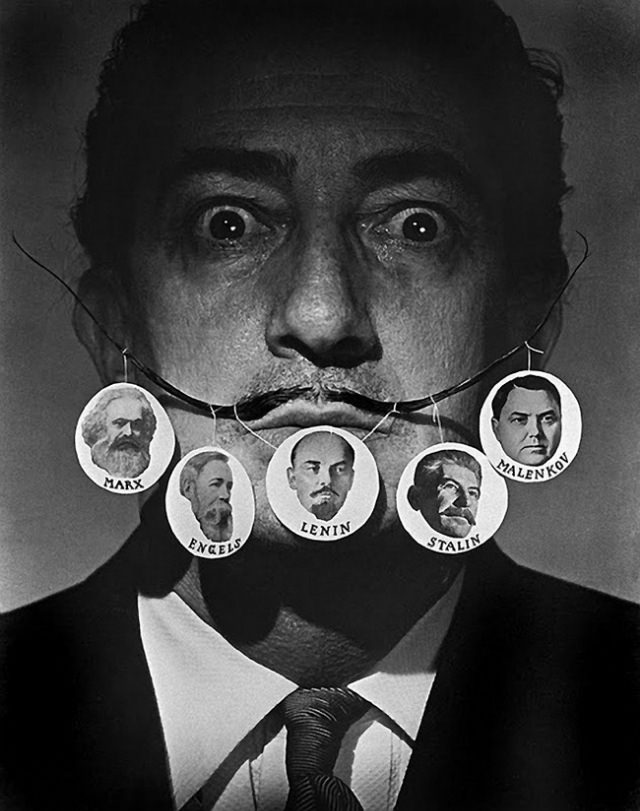
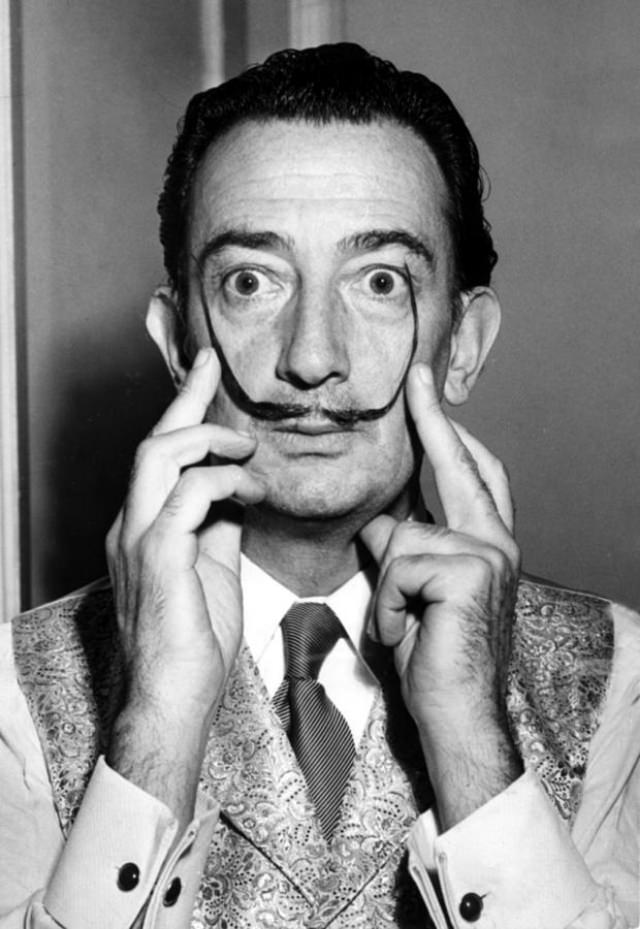
Many of the most famous photos of Dalí were taken by Philippe Halsman, a Latvian-American photographer who worked with him for decades. Halsman shot the well-known “Dalí Atomicus” in 1948, which involved flying cats, buckets of water, and Dalí himself — all suspended mid-air after 26 separate attempts to get the shot right.
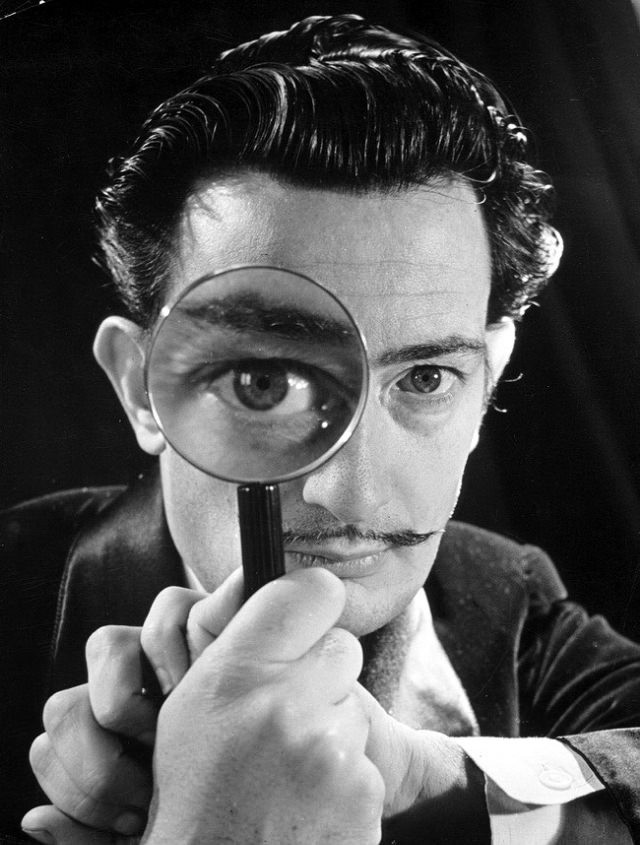
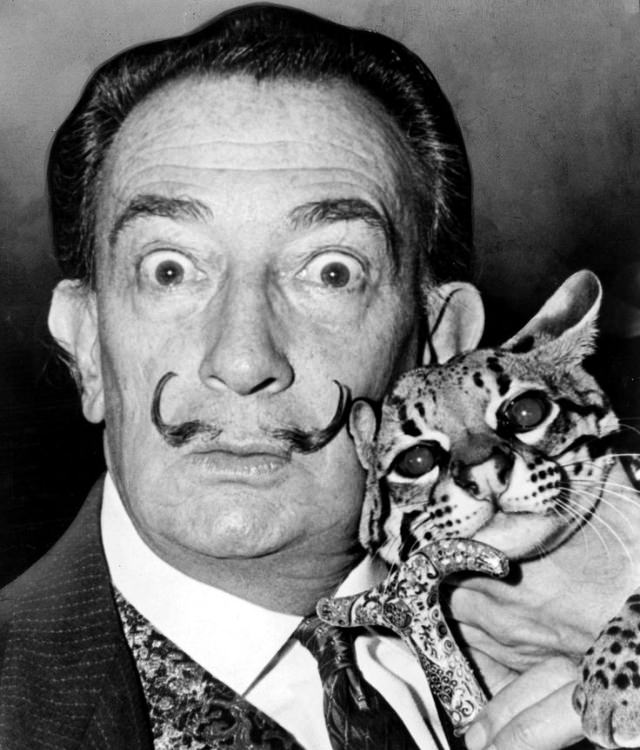
The mustache appeared in every setting and every era of his life. Whether he was photographed in his studio in Port Lligat, at glamorous parties in New York, or in the halls of European museums, the upturned tips were always perfectly maintained. It was a daily act of grooming that also served as a daily act of identity.
Dalí’s wife and lifelong muse, Gala, played a central role in managing his career and public image. Together they cultivated the persona that the world came to know. Gala handled negotiations, contracts, and the business side of being Salvador Dalí — a full-time job given how much of his life was theater.
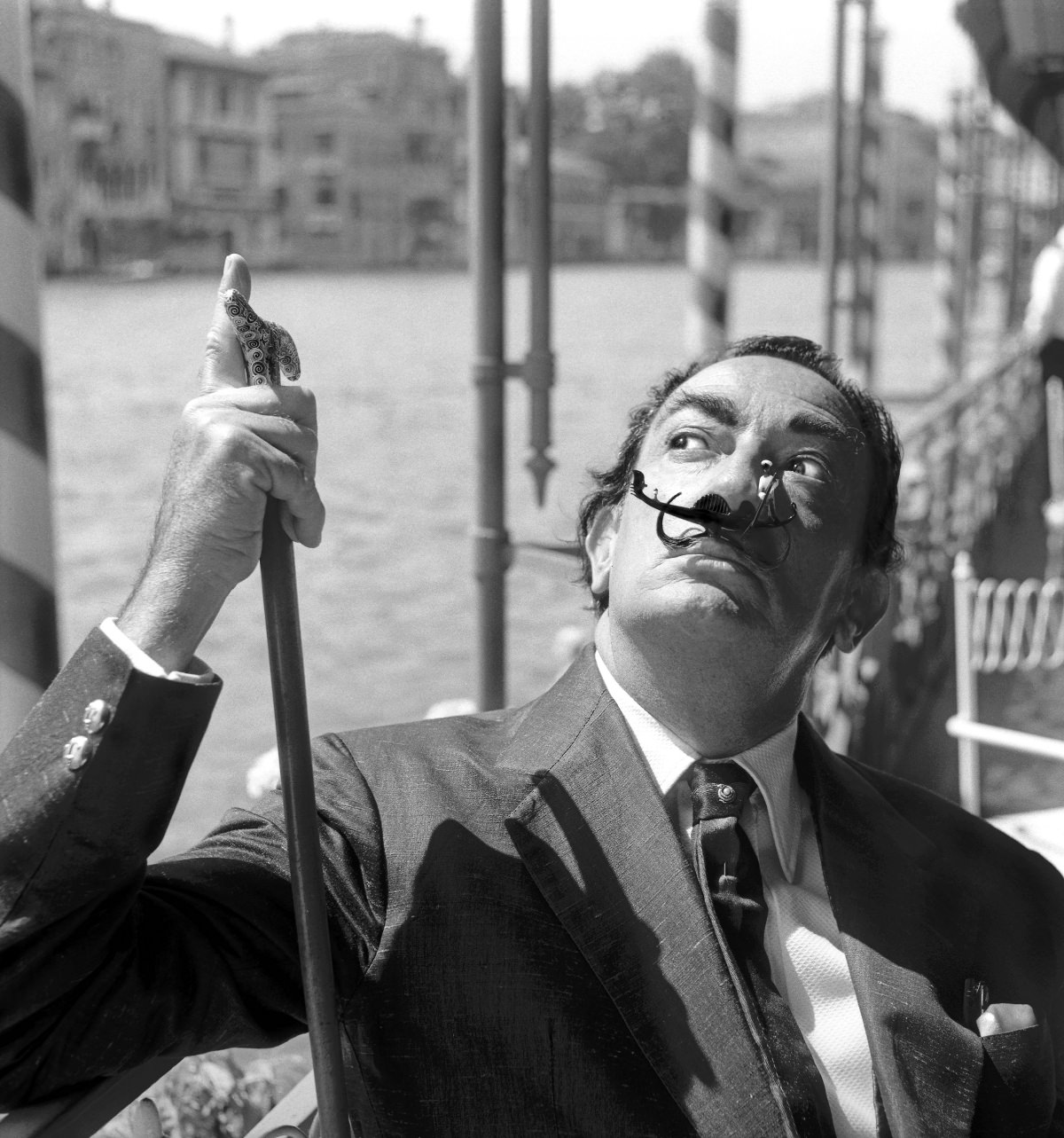
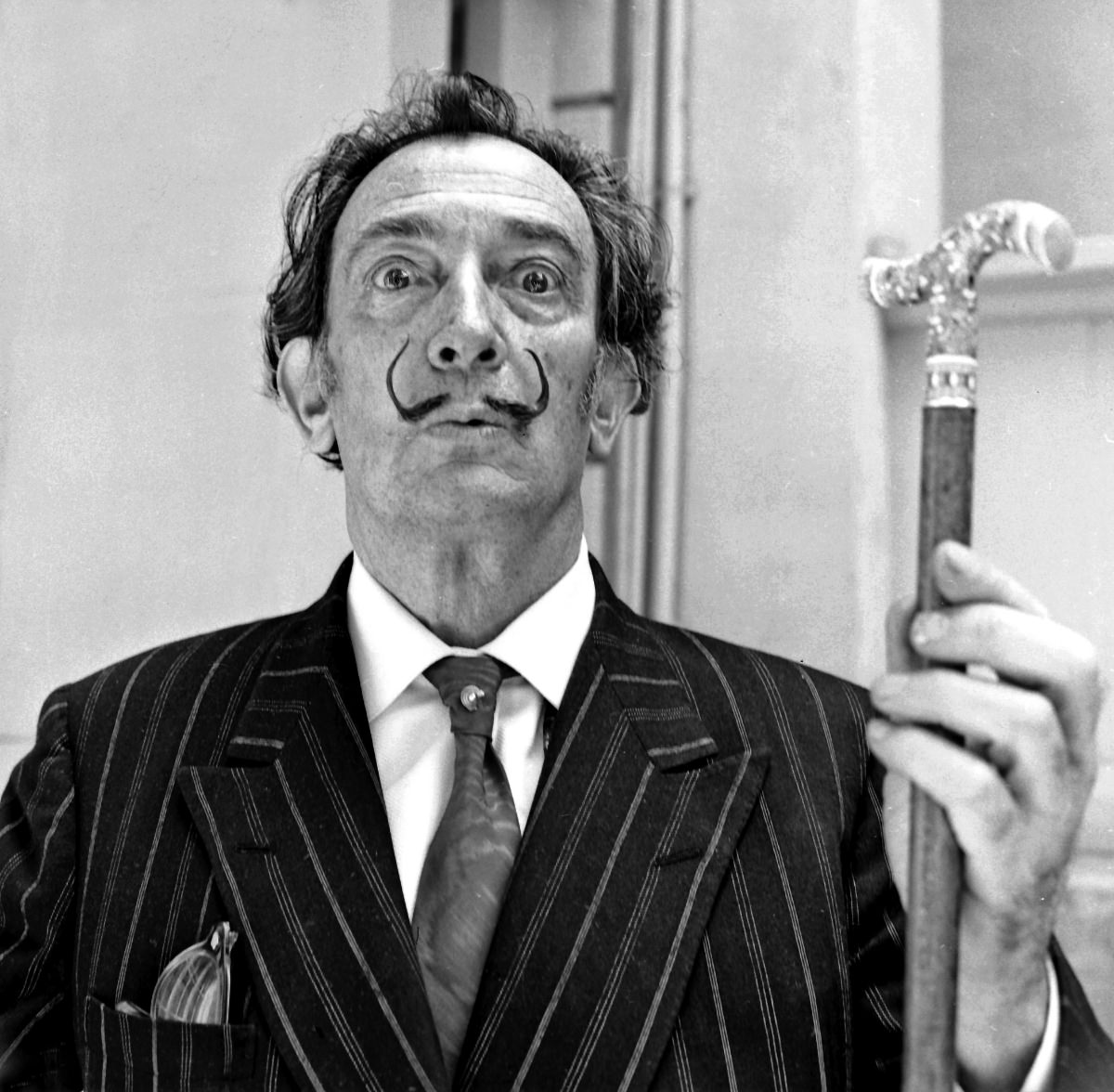
Beyond the mustache, Dalí’s broader appearance was equally deliberate. He regularly wore a long black cape, carried a golden walking cane, and dressed in elaborate costumes for public appearances. At the 1936 London International Surrealist Exhibition, he arrived to give a lecture wearing a deep-sea diving suit, nearly suffocating before someone loosened the helmet.
His pet ocelot, Babou, was another part of the public spectacle. Dalí brought the spotted wild cat to upscale restaurants and hotel lobbies in New York City during the 1960s and 70s. When fellow diners panicked, Dalí calmly explained that Babou was simply a cat he had painted in an op-art pattern.
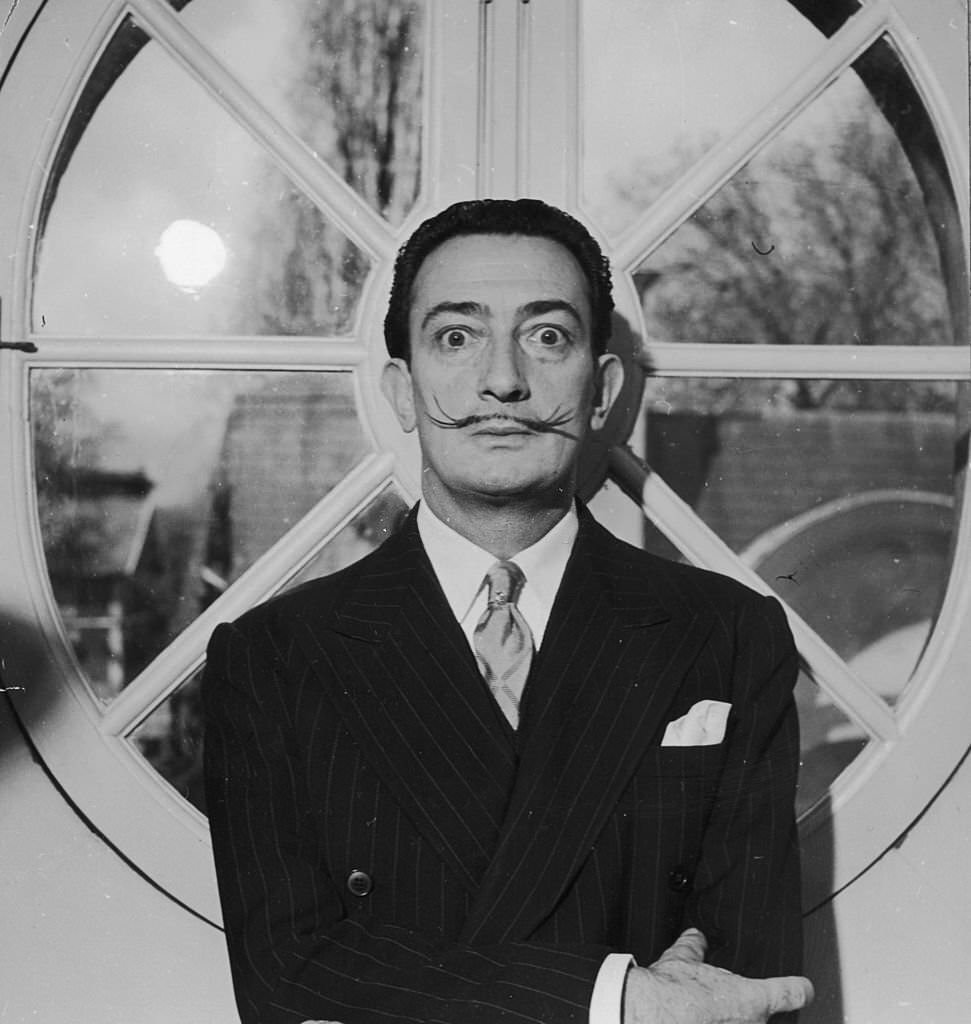
His antics filled newspapers and television screens for decades. Dalí understood early that being talked about kept his work visible. Shock, humor, and absurdity were tools he used as deliberately as any paintbrush. The mustache sat at the center of all of it — the first thing anyone noticed, and the last thing anyone forgot.
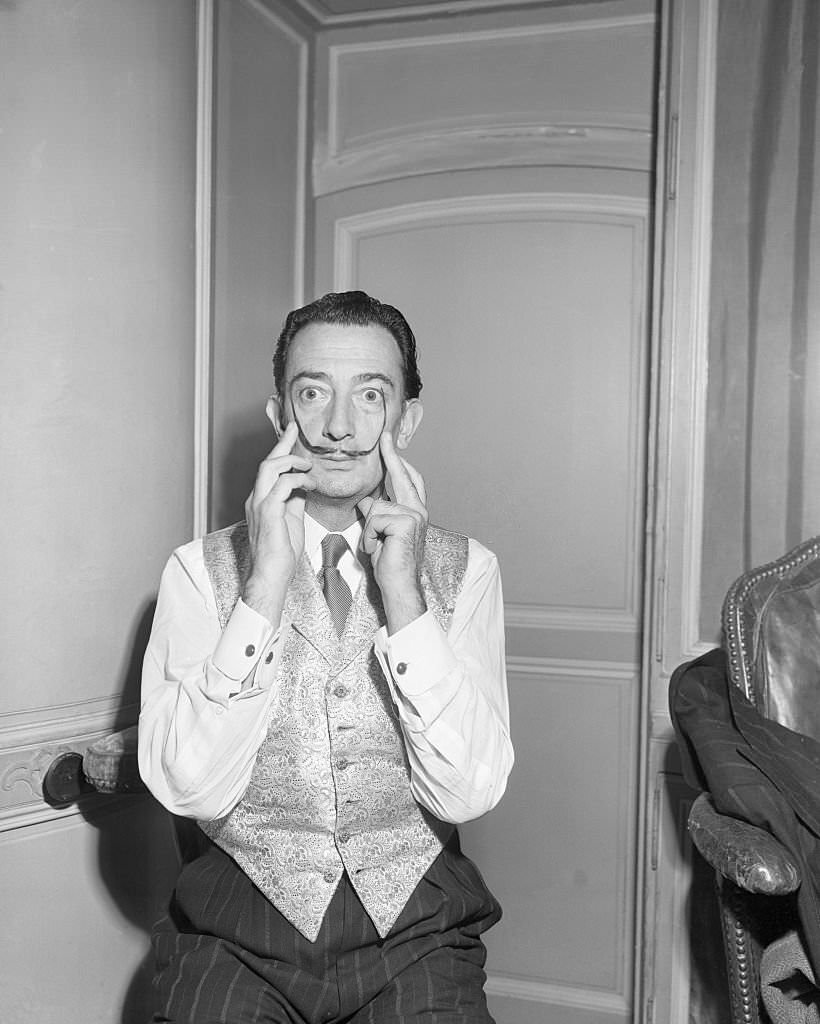
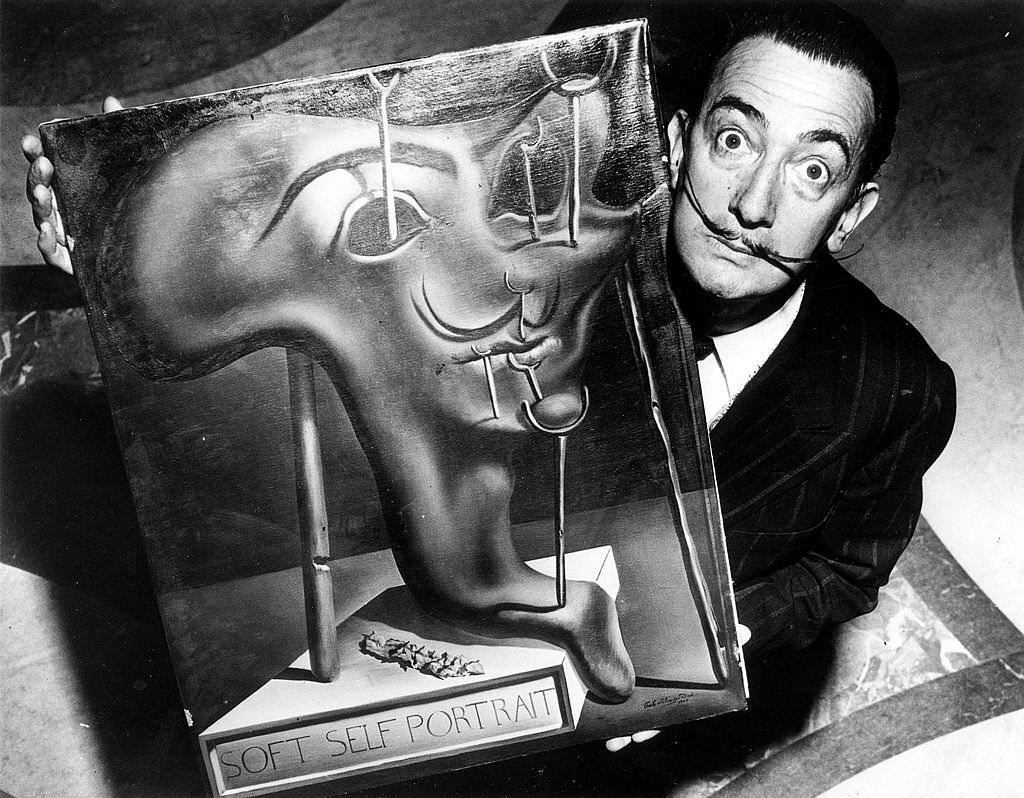
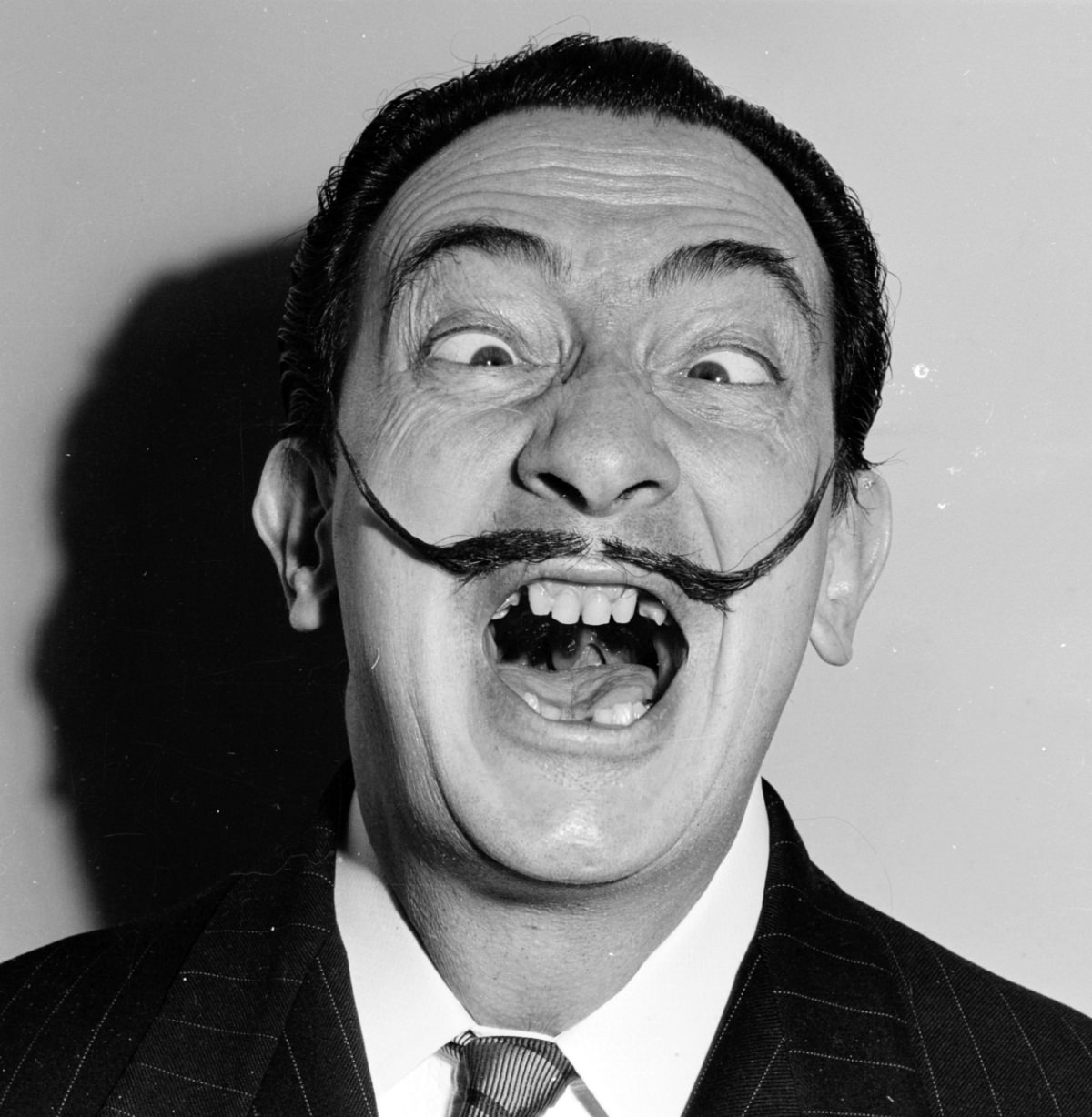
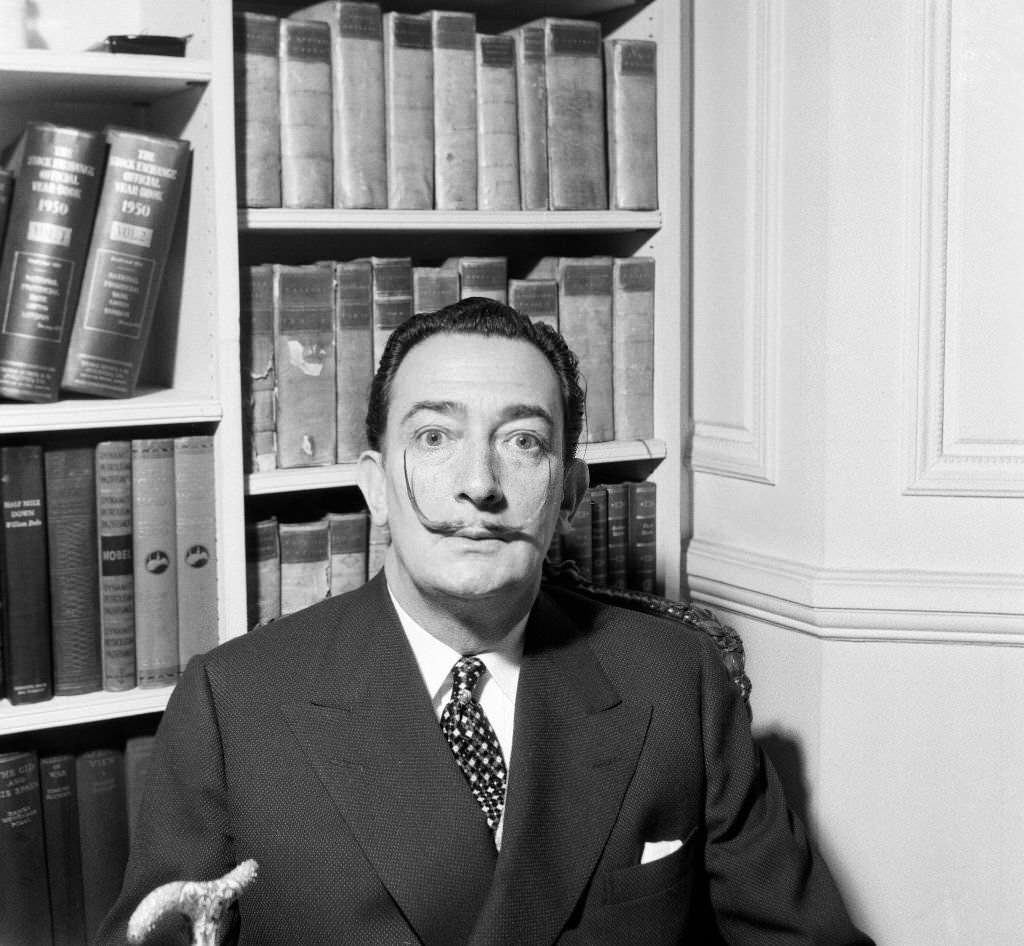
Portraits of Dalí made during the 1940s and 50s show the mustache in its most disciplined form — short, precise, and pointing nearly straight up. By the 1960s, the tips grew longer and more theatrical. By the 1970s, they had become almost wing-like, extending well past the edges of his face in some photographs.
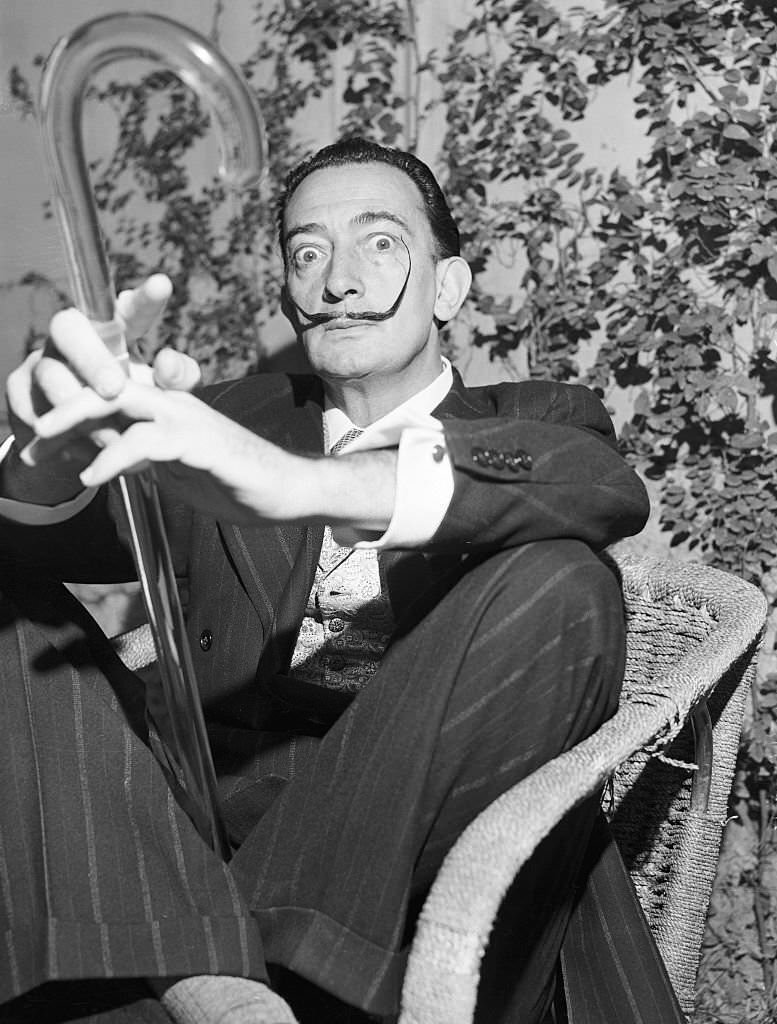
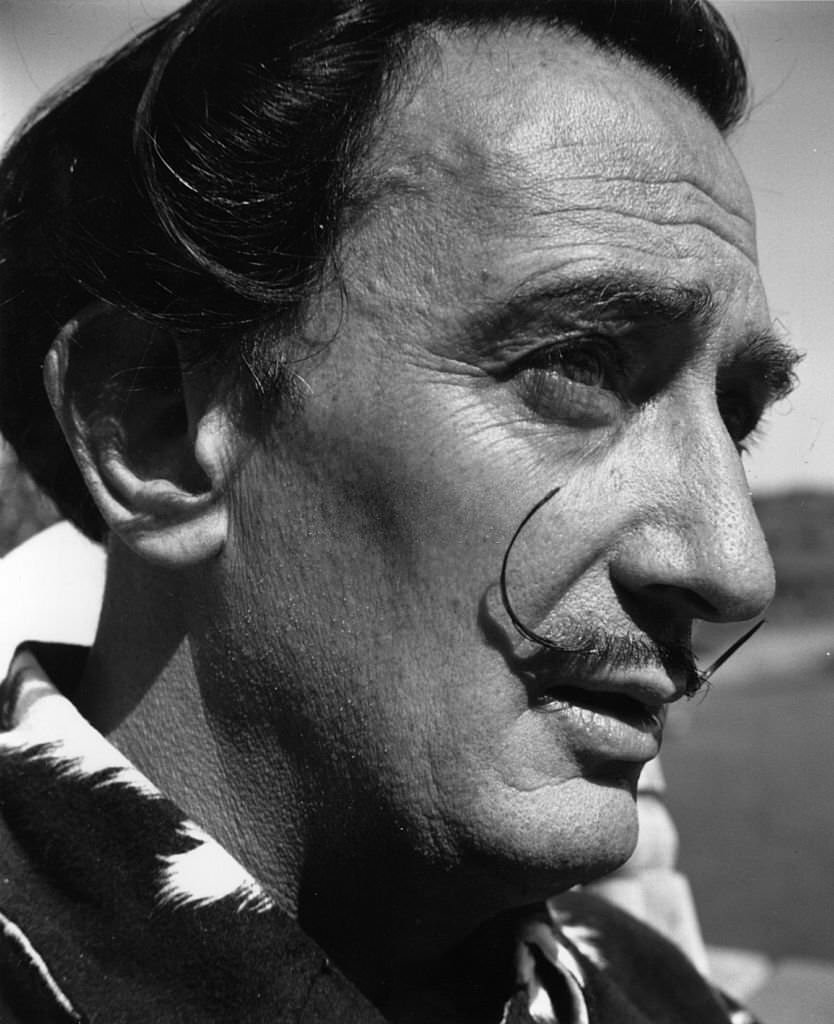
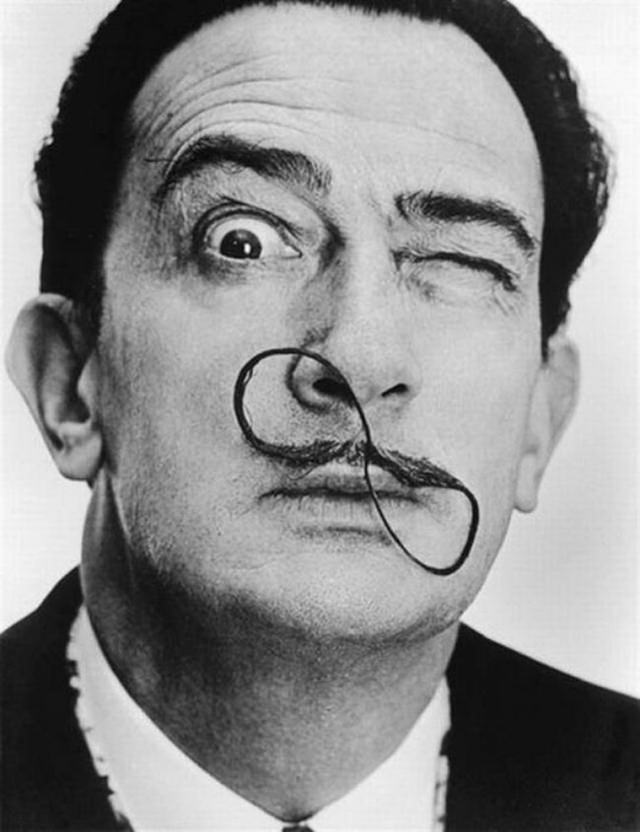
Artists, cartoonists, and satirists seized on the mustache as the single shorthand needed to identify Dalí in a caricature. Two curved lines pointing upward and a wild expression were enough. No other 20th-century artist had a physical feature that translated so directly into an instantly readable symbol.
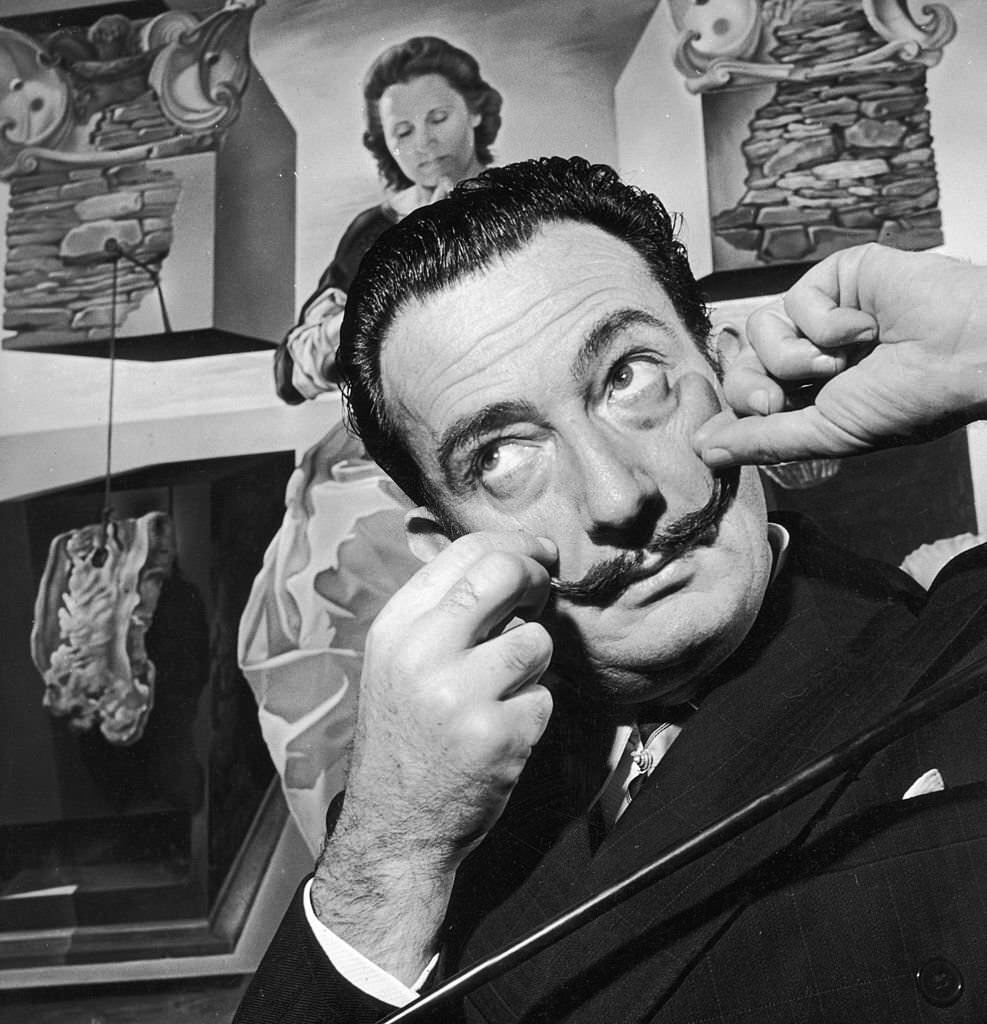
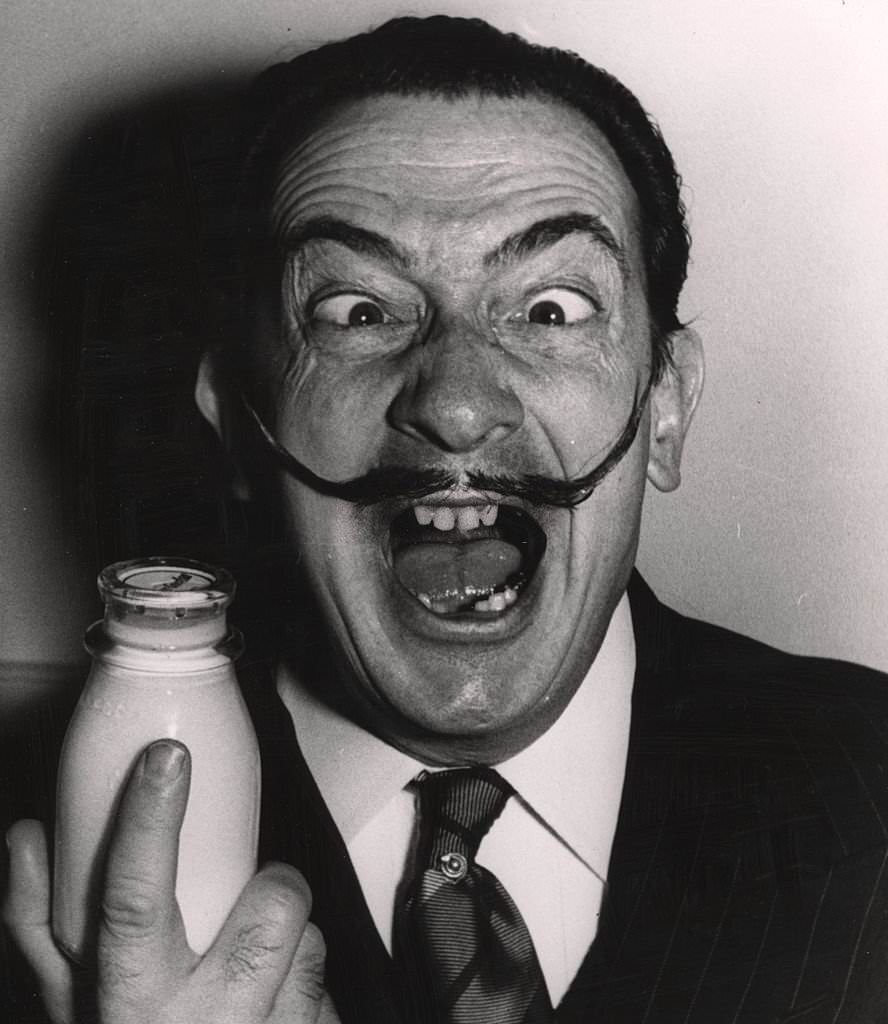
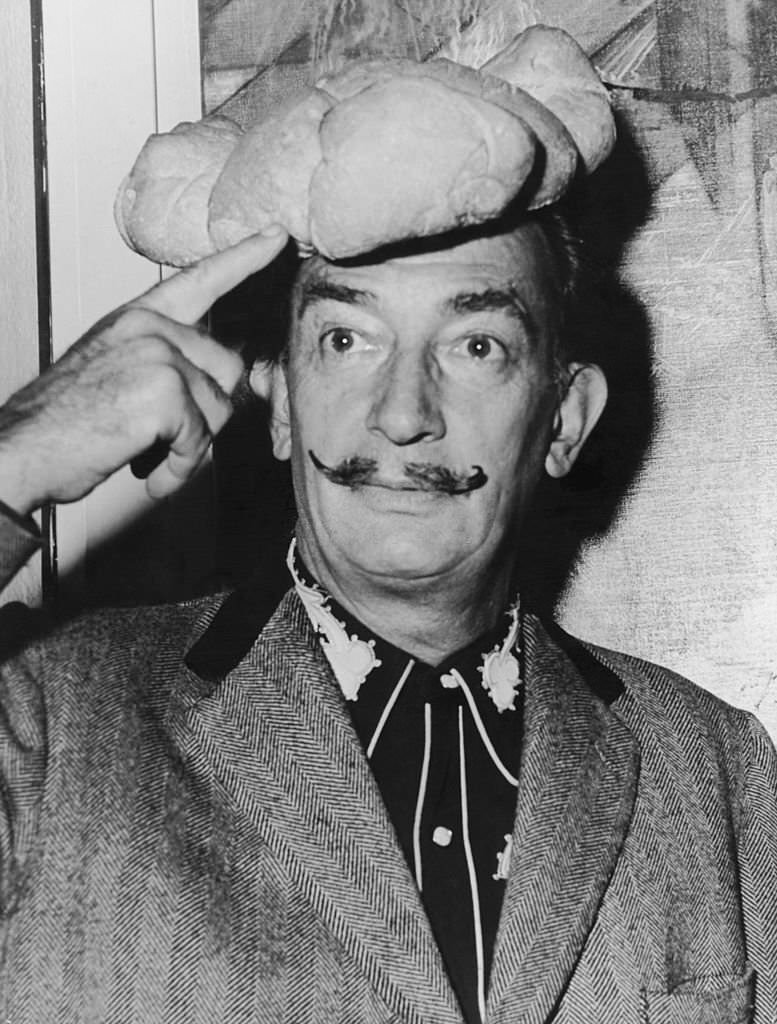
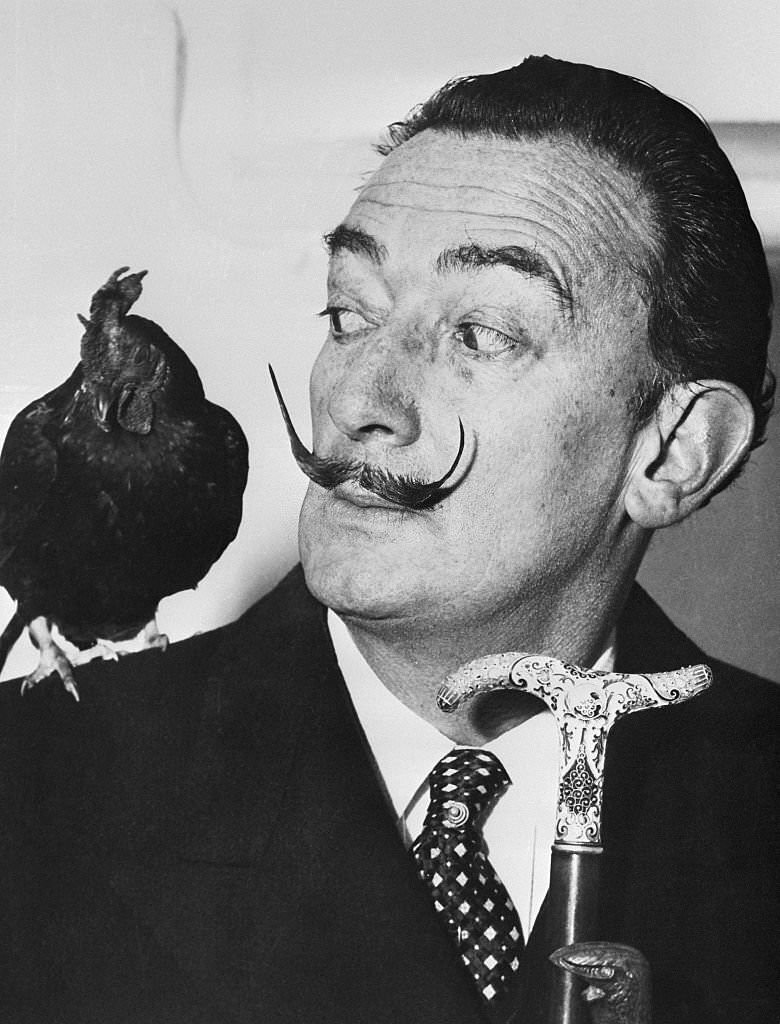
The humorous portraits collected here span several decades of Dalí’s public life. Some were taken during formal sittings. Others caught him mid-gesture, mid-laugh, or mid-performance. In all of them, the mustache holds its shape — coiled, upturned, and perfectly intact, as though it existed independently of the man beneath it.