Retrofuturism is what happens when the past’s big dreams about the future meet today’s eyes. The term describes old visions of advanced technology — flying cities, self-driving cars, rocket mail — filtered through the art styles of their time. It gained real traction as a cultural idea in the 1970s, when rapid changes like personal computers made people look back at how earlier generations had pictured tomorrow.
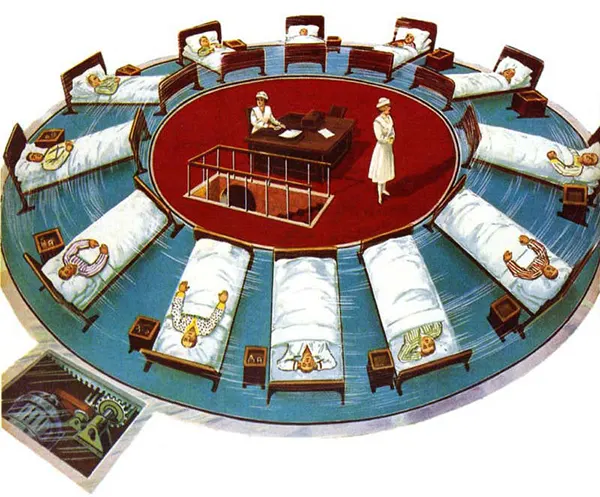
The roots of retrofuturism stretch back to movements like Italian Futurism in the early 1900s, which celebrated speed and machines. The Space Age of the 1960s added rocket travel and moon bases to the mix. Out of these eras grew distinct visual styles: Googie architecture used bold curves and neon signs. Raygun Gothic pushed sci-fi flair into everyday objects. Steampunk grafted modern ideas onto Victorian steam-powered tech. Dieselpunk drew from the gritty engines and war machines of the 1930s and 1940s.
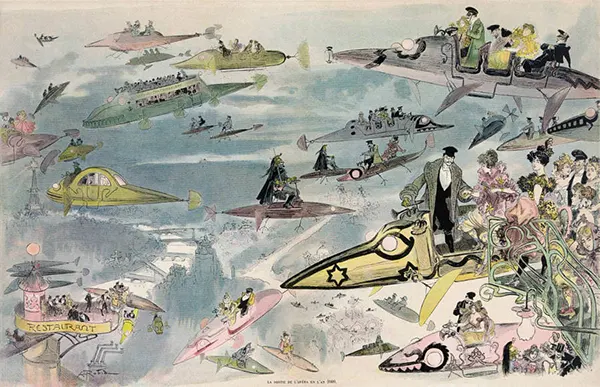
One of the earliest and most vivid examples is Albert Robida’s 1882 illustration of Paris in the year 2000. Personal flying vehicles zip between tall buildings while hot air balloons share the sky with winged crafts. People in Victorian-era clothes ride above the streets in machines that hadn’t yet been invented. The scene is dense with motion and optimism — a city fully conquered by flight.
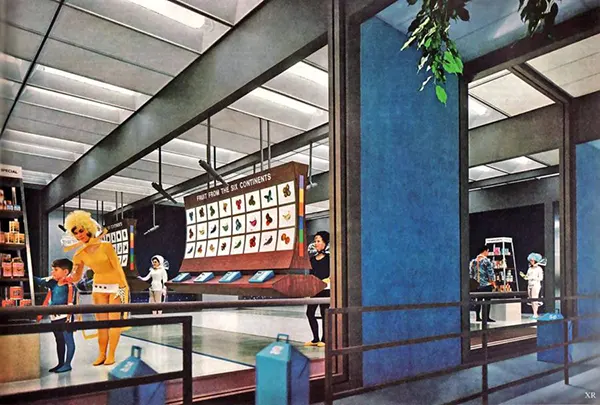
By the mid-20th century, visions of daily life had gone fully futuristic. A 1965 illustration reimagined the act of shopping: customers ride conveyor belts past goods while robotic arms hand out items under bright electric signs. Technology wasn’t just for transportation — it was coming for every corner of ordinary life.
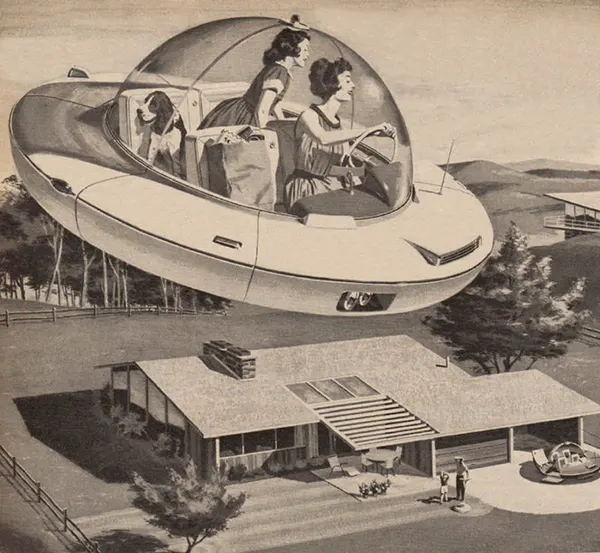
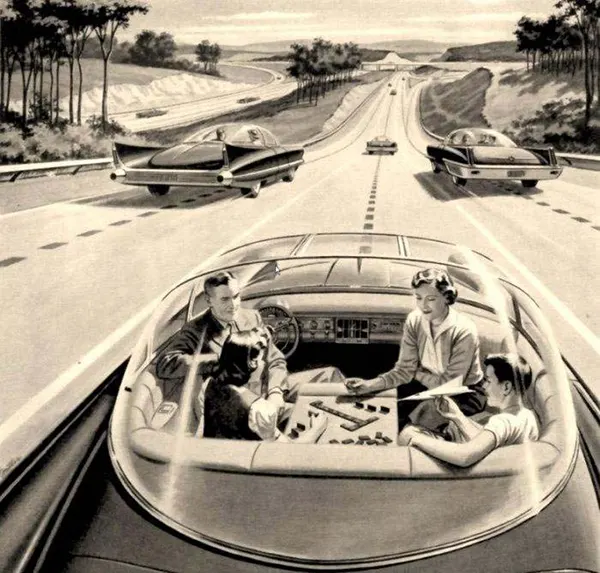
The 1950s were especially rich with domestic fantasies. Illustrators drew families riding in self-driving cars on gleaming highways — parents relaxed in their seats while children played games and dashboards glowed with automated controls. The car wasn’t just transport; it was a living room on wheels.
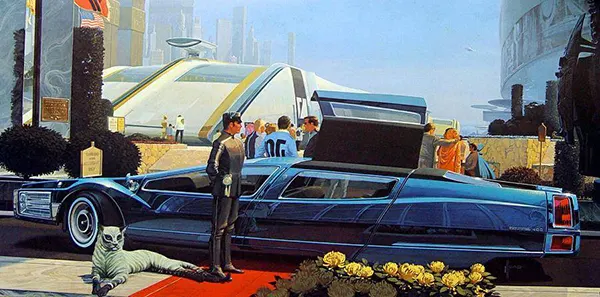
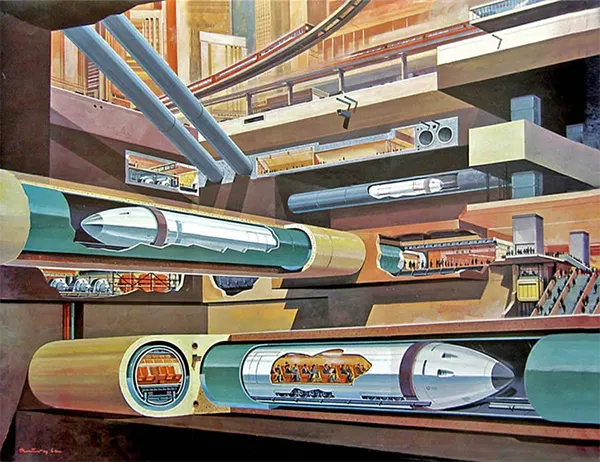
Transportation dominated retrofuturist thinking at every scale. Klaus Bürgle’s 1969 painting depicted a sprawling network of underground tube trains threading beneath a modern city — a clean, organized alternative to traffic-choked streets above.
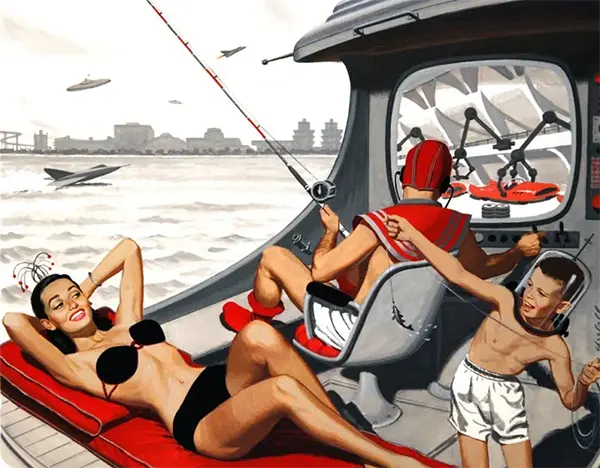
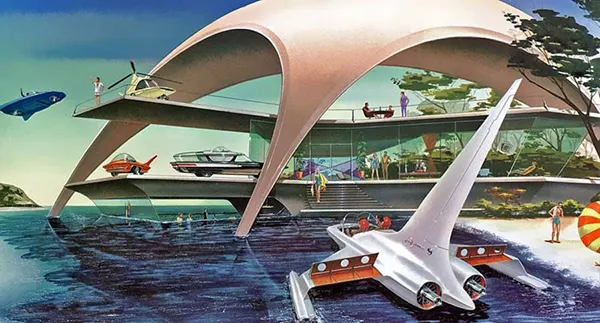
Leisure and recreation got the futurist treatment too. Artists imagined that even beach vacations would be transformed by technology — structured, mechanized, and altogether more spectacular than anything available at the time.
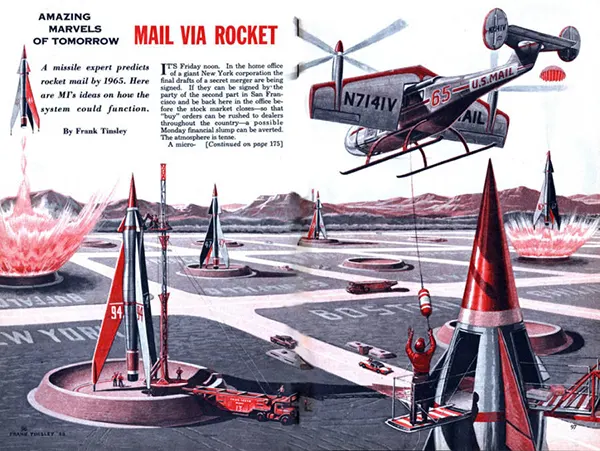
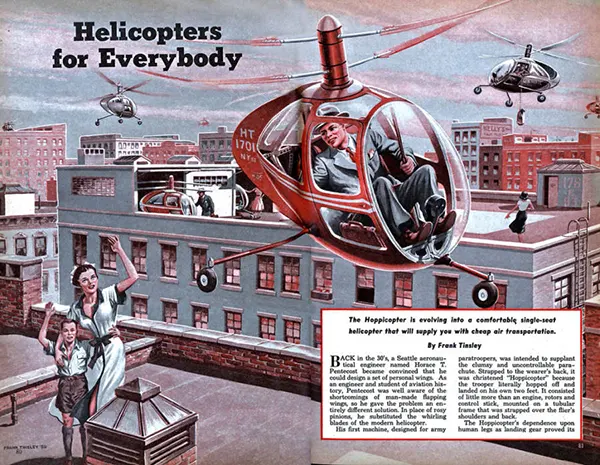
Frank Tinsley was one of the most prolific illustrators of mid-century retrofuturism. His 1957 piece showed mail delivered by rocket — a logical extension of the era’s faith that anything slow could be made fast with enough engineering. Tinsley also drew the “Hoppicopter” in 1950, a single-person flying vehicle meant to make personal air travel affordable for everyone.
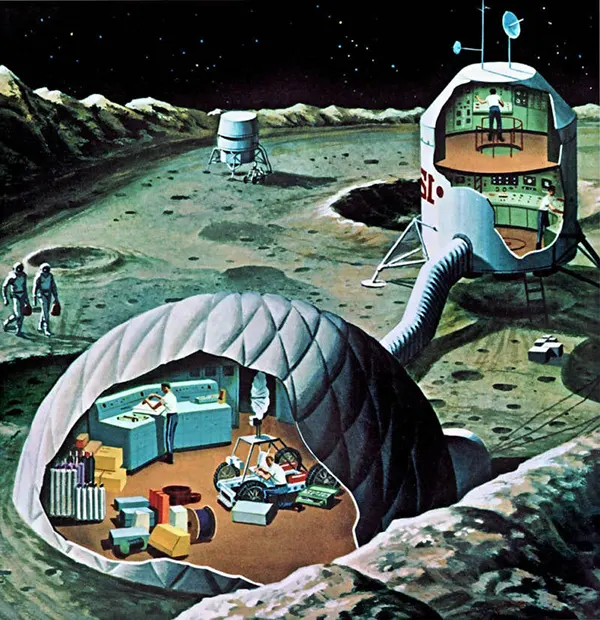
The Space Age pushed retrofuturist imagination off the planet entirely. Japanese artist Shigeru Komatsuzaki envisioned inflatable lunar bases in the 1970s — pressurized domes on the moon’s surface where humans could live and work. The concept was serious engineering speculation dressed in vivid illustration.
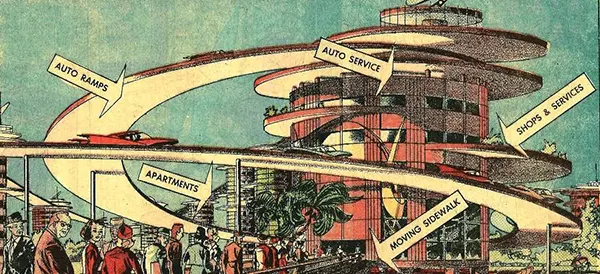
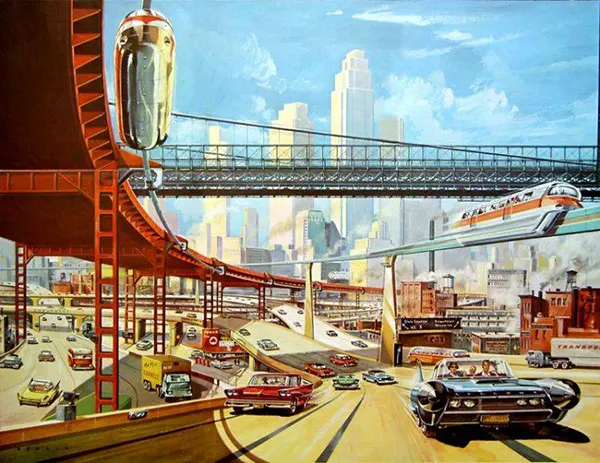
City planning visions from the mid-20th century often stacked infrastructure into the sky. Elevated trains ran between skyscrapers. Moving sidewalks replaced walking. Roads wound between towers hundreds of stories tall. The city of the future was always vertical, always in motion.
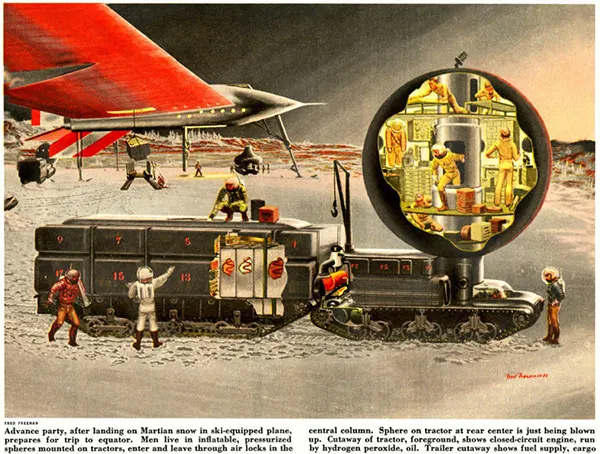
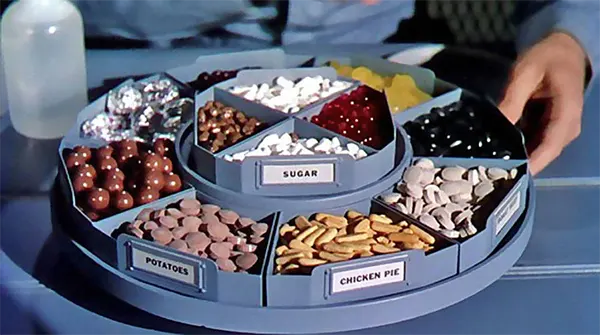
Fred Freeman’s 1954 painting showed astronauts walking the surface of another planet — not as fantasy, but as near-future fact. Two years later, George Pal’s film Conquest of Space tackled the unglamorous side of space travel: what astronauts would actually eat. Both works reflected a period when space exploration felt like a matter of when, not if.
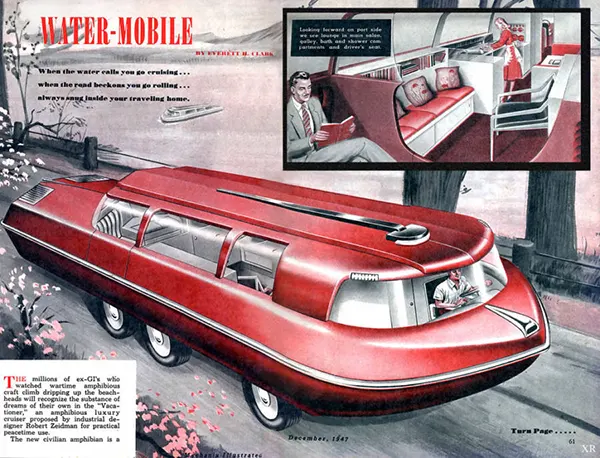
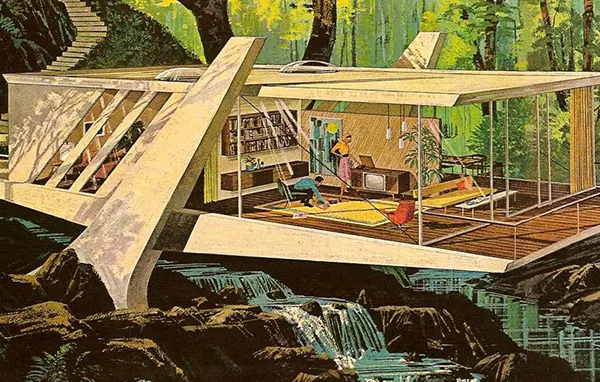
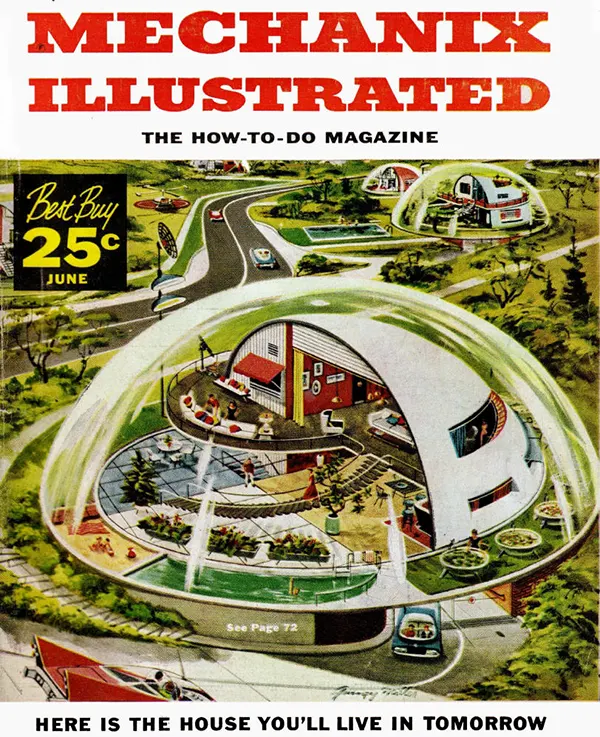
Not every retrofuturist vision was about speed or space. A 1947 amphibious RV concept merged road and water travel into one streamlined vehicle — practical futurism for the everyday family. Domestic architecture followed the same logic, with glass houses of the future offering open, transparent living spaces flooded with natural light.
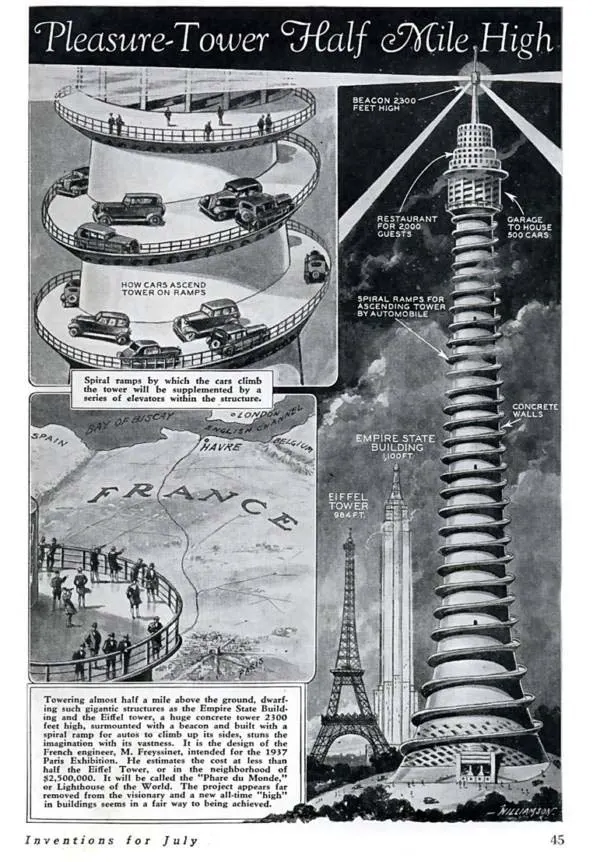
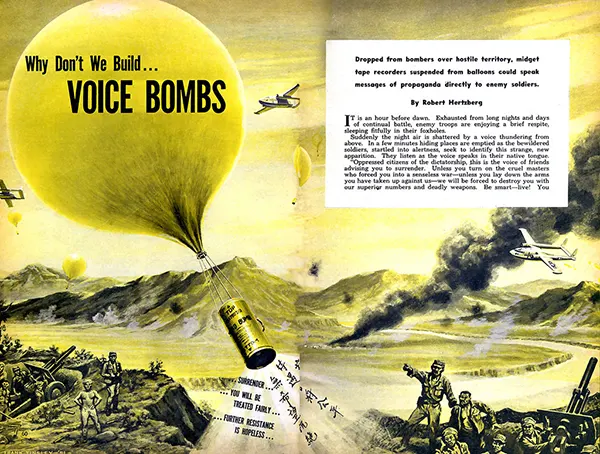
Not all retrofuturism was cheerful. A 1933 concept called for a half-mile-high pleasure tower complete with a restaurant and a 500-car garage — ambition colliding with the depths of the Great Depression. Frank Tinsley’s 1951 “voice bombs” concept was darker still: balloons carrying suspended tape recorders would drift over enemy territory, dropping recorded propaganda messages. The future had a military face too.
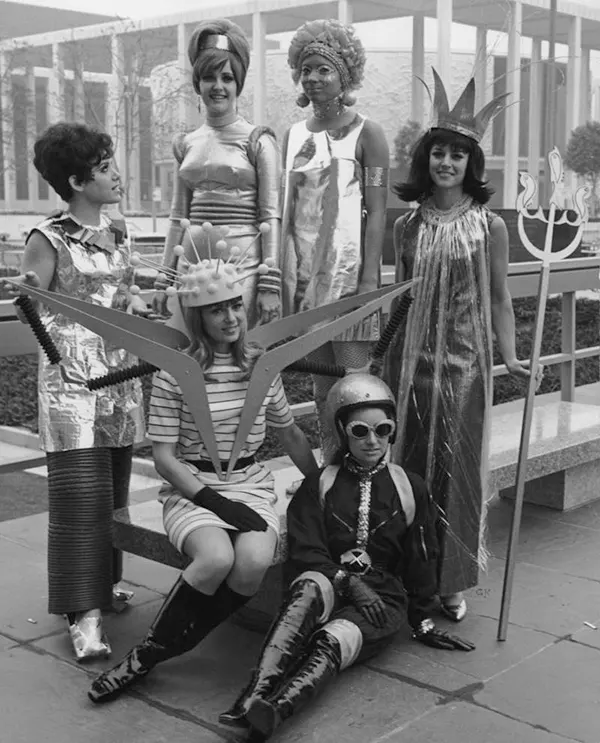
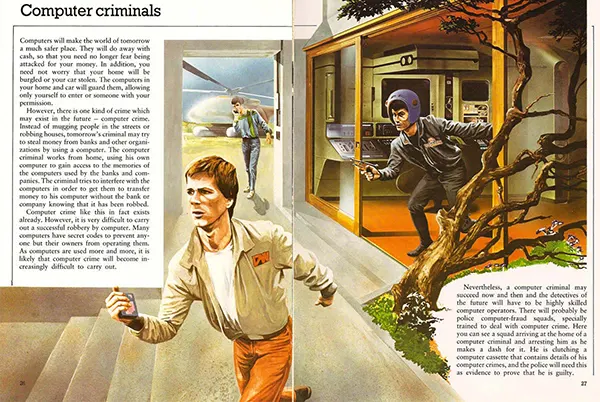
Fashion wasn’t exempt from future-gazing. During Engineering Week around 1965, women modeled outfits designed for the year 2000 — angular, synthetic, and space-ready. By 1981, the book World of Tomorrow — School, Work and Play was showing children how technology would reshape homework, jobs, and free time within their own lifetimes.
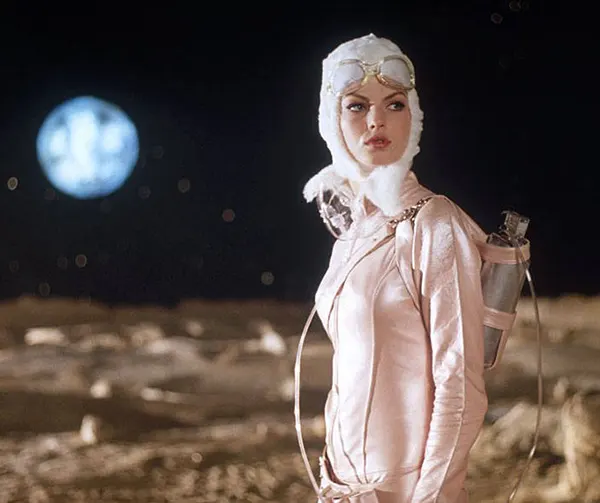
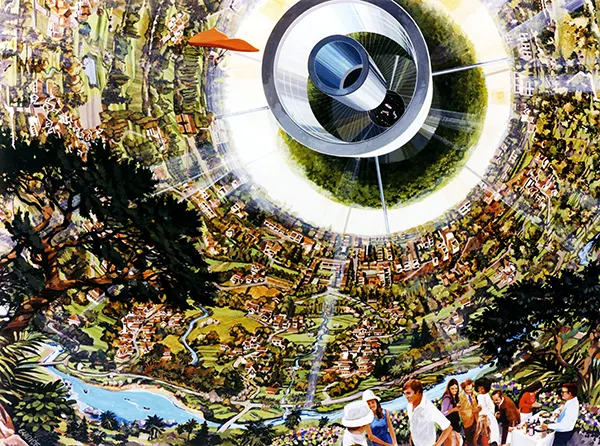
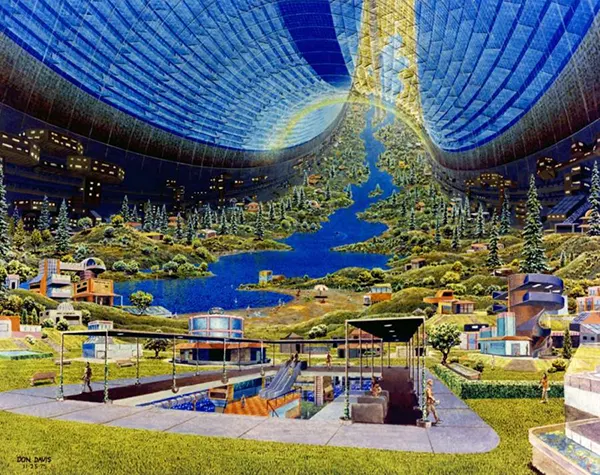
NASA’s own engineers produced some of the most ambitious retrofuturist images ever made. Their concept art for space colonies showed cylindrical habitats rotating in orbit — complete with houses, greenery, roads, rivers, and a giant central engine to simulate gravity. These weren’t illustrations from science fiction magazines. They were working proposals from government scientists.
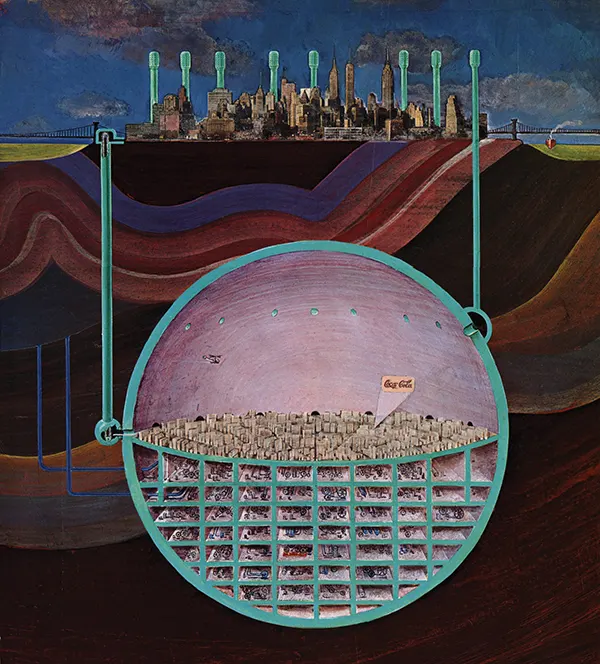
Fear shaped some visions as much as optimism did. A 1969 concept proposed a fully nuclear-proof city built beneath Manhattan — a subterranean urban network designed to survive atomic attack. Cold War anxiety gave retrofuturism its darker edge, and planners took it seriously enough to draw the blueprints.
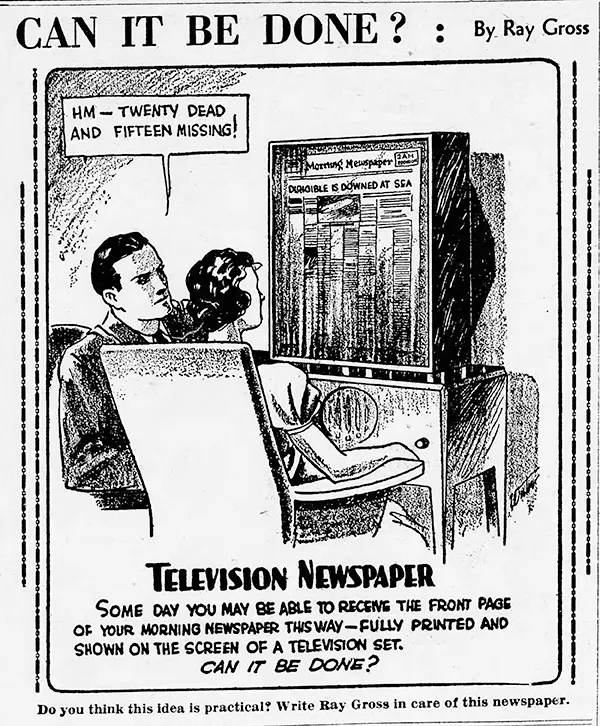
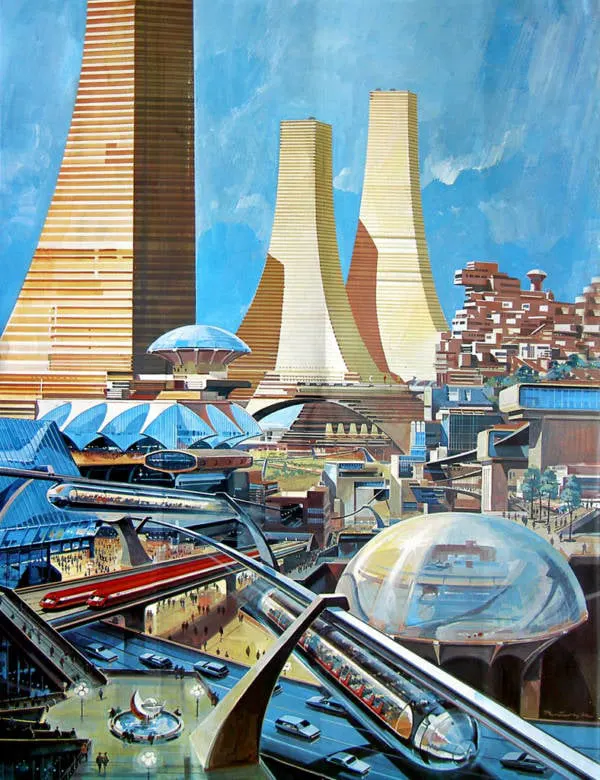
The television newspaper — illustrated in the early 1950s — showed news delivered directly to a screen at home, printed on demand. It was a near-perfect prediction of digital media, drawn decades before the internet existed. 1970s city concepts took a cooler, more geometric approach: smooth towers, elevated walkways, and clean lines replacing the organic chaos of real urban growth.
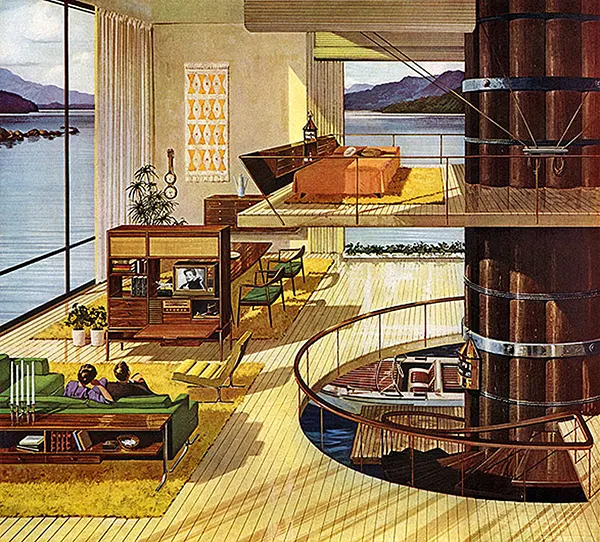
The 1960s retrofuturist home was a controlled environment — every surface designed, every system automated. These interiors looked more like spacecraft cabins than living rooms, with molded plastic furniture, built-in screens, and lighting that left no corner unplanned. Across every decade, retrofuturism told the same story differently: the future was coming, it would be extraordinary, and humans were ready for it.