In the 1930s, most gyms were built for men. Women trained in separate rooms or on entirely different days. Fitness programs aimed at female members focused on posture, grace, and beauty — not strength or endurance.
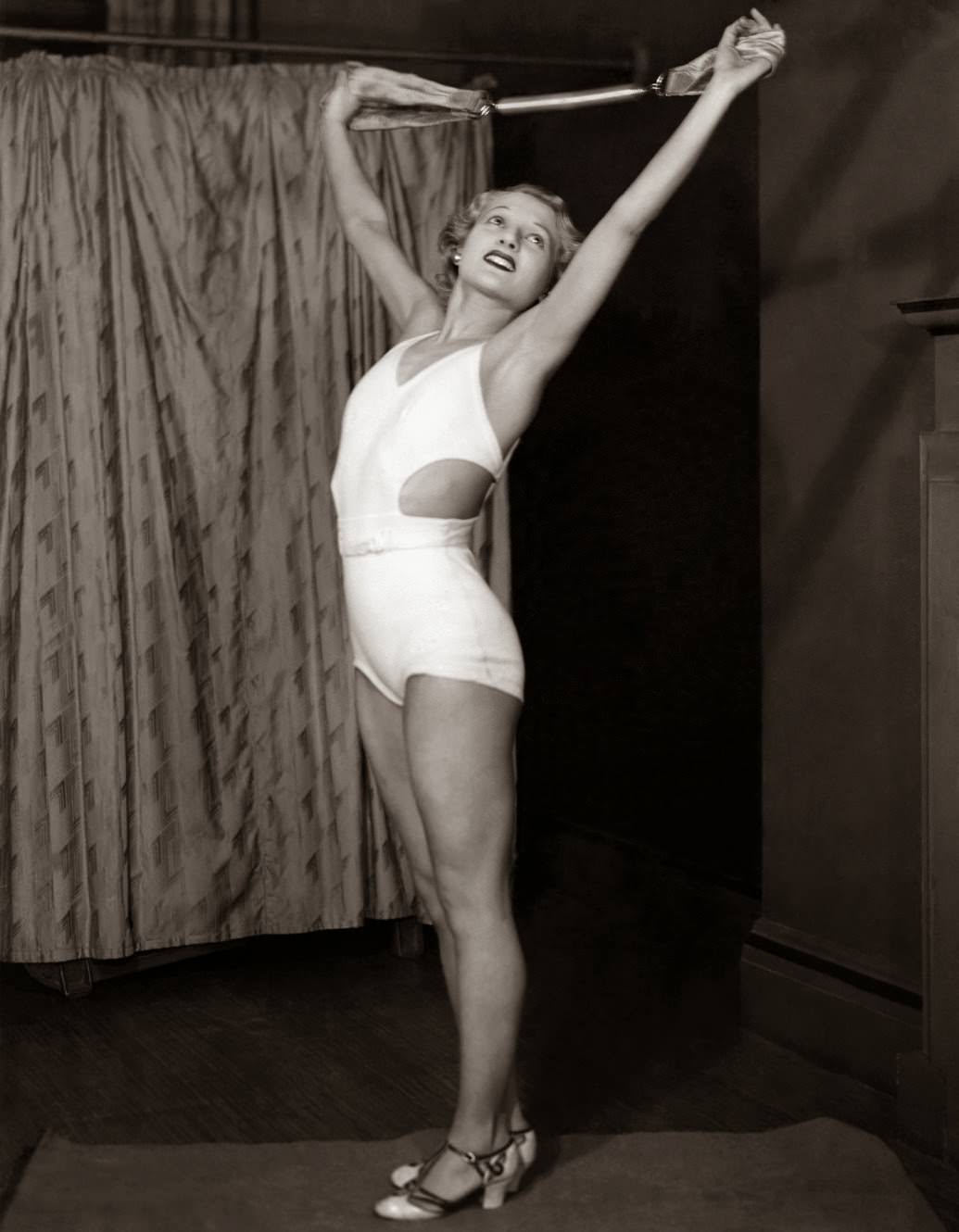
Workout clothing looked more like tailored streetwear than athletic gear. Women wore belted rompers or fitted blouses tucked into shorts. Fabrics were heavy cotton or wool blends, and shoes were flat canvas or low leather pumps with almost no arch support.
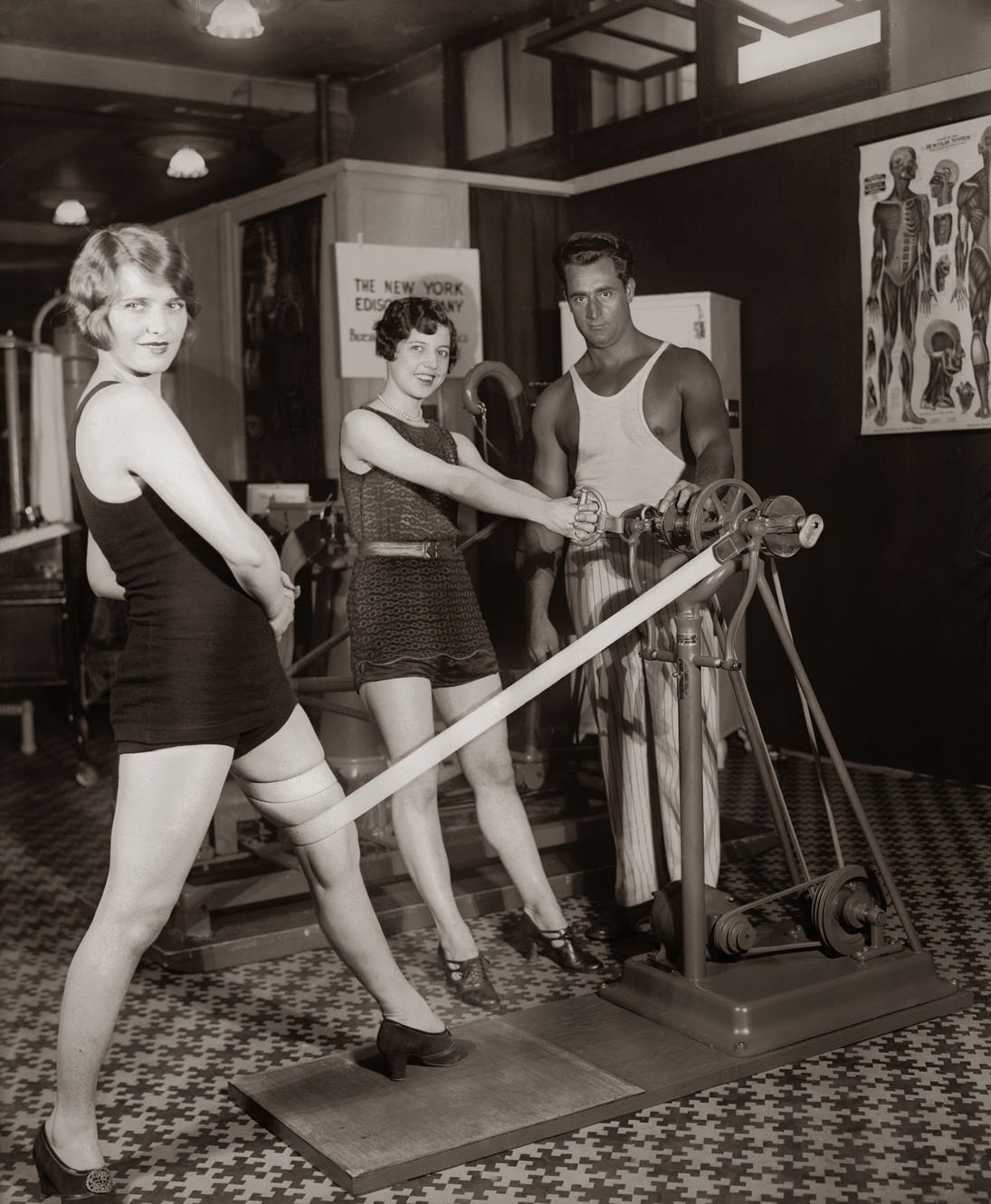
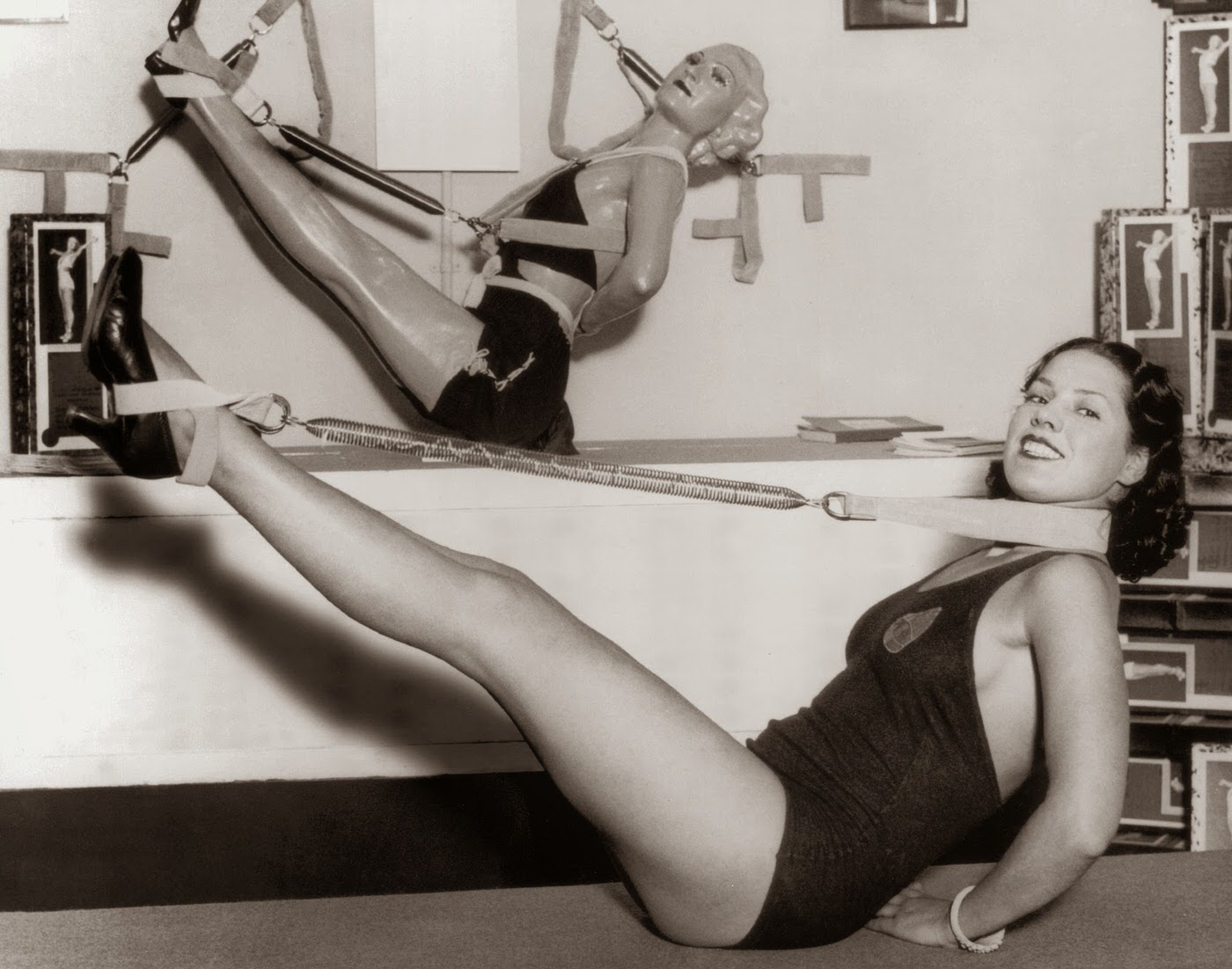
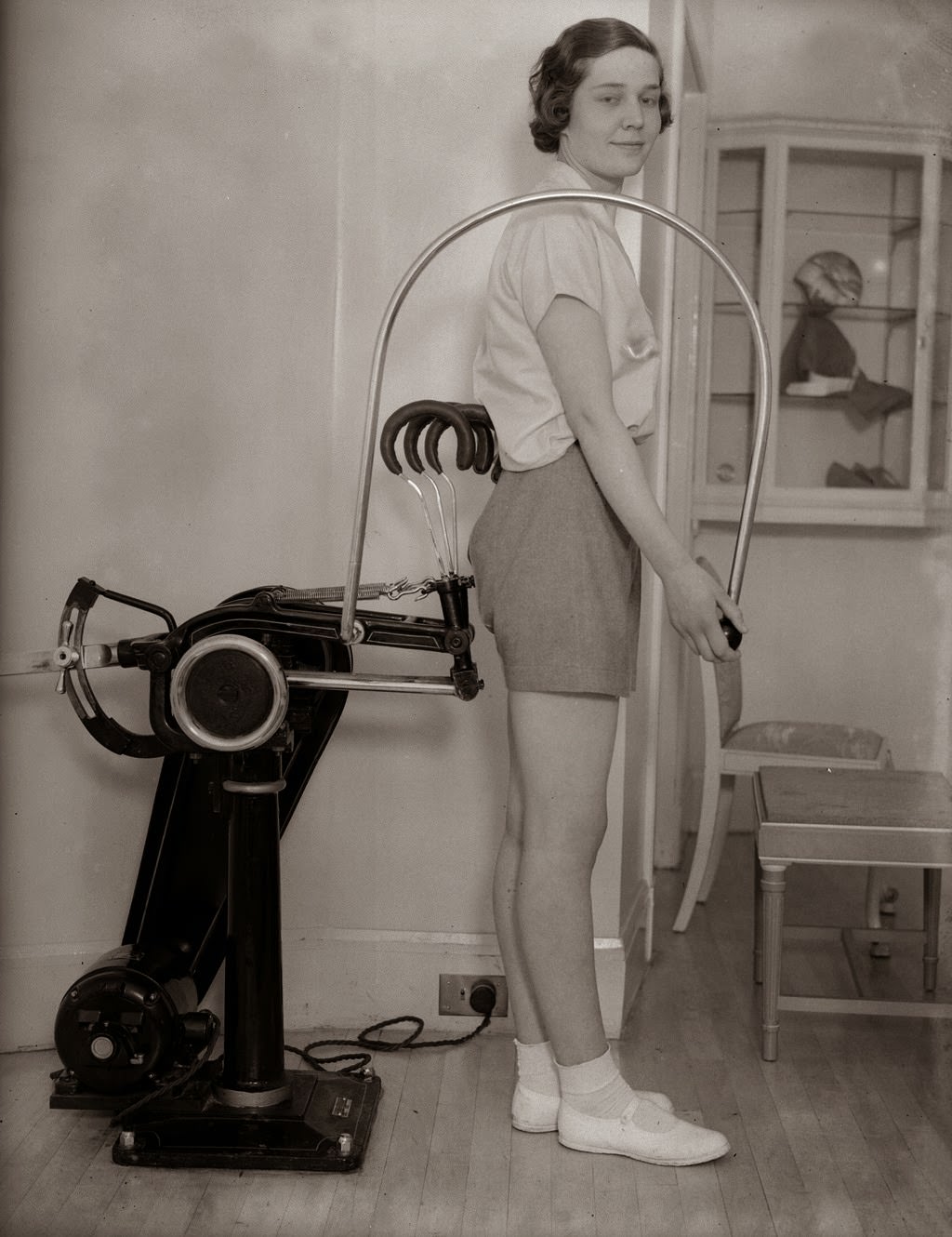
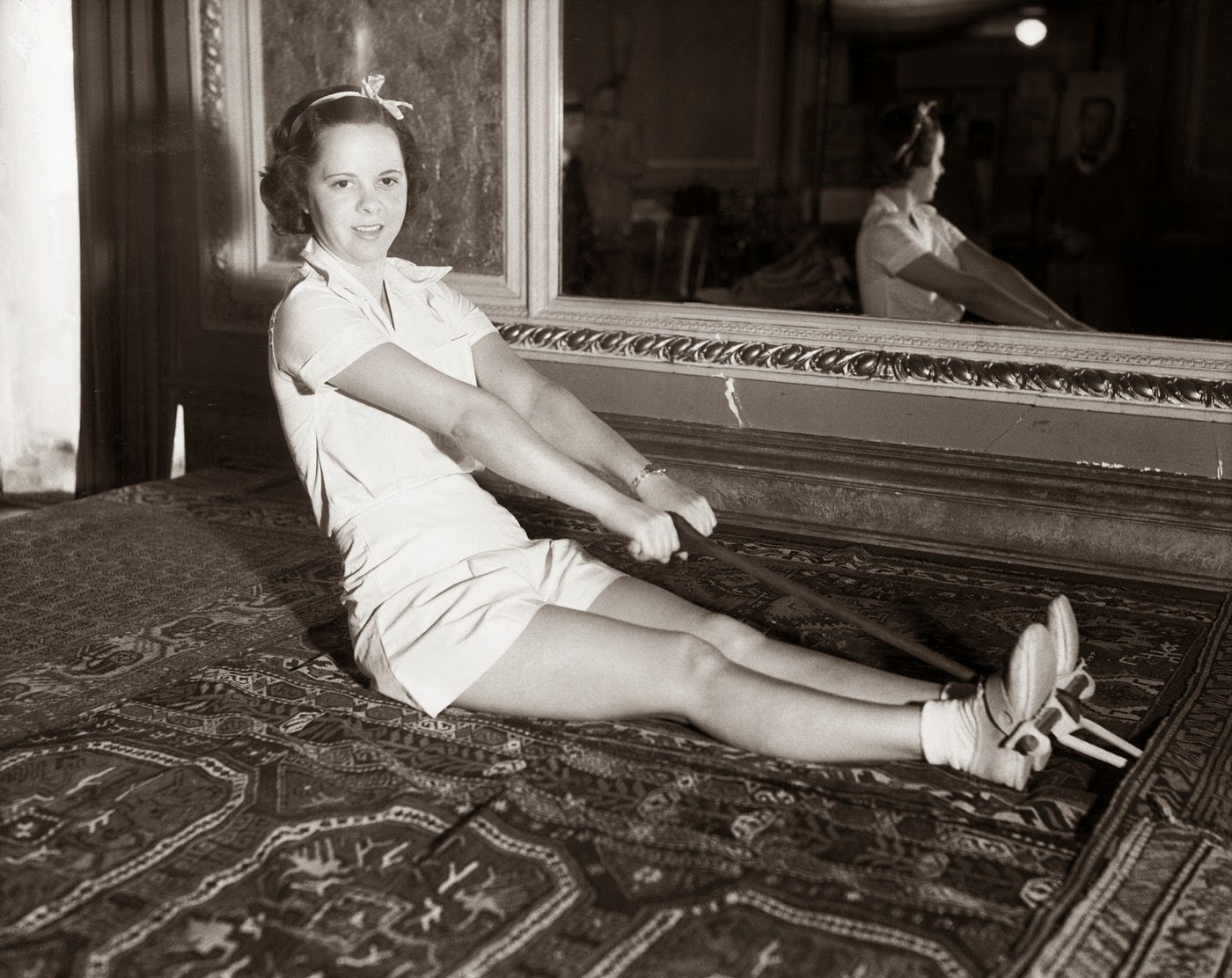
Equipment inside health clubs was limited to rowing machines, medicine balls, and pulley systems. One widely advertised device — the “vibrating belt” machine — claimed to shake fat off the body. It produced no real results, but studios promoted it heavily regardless.
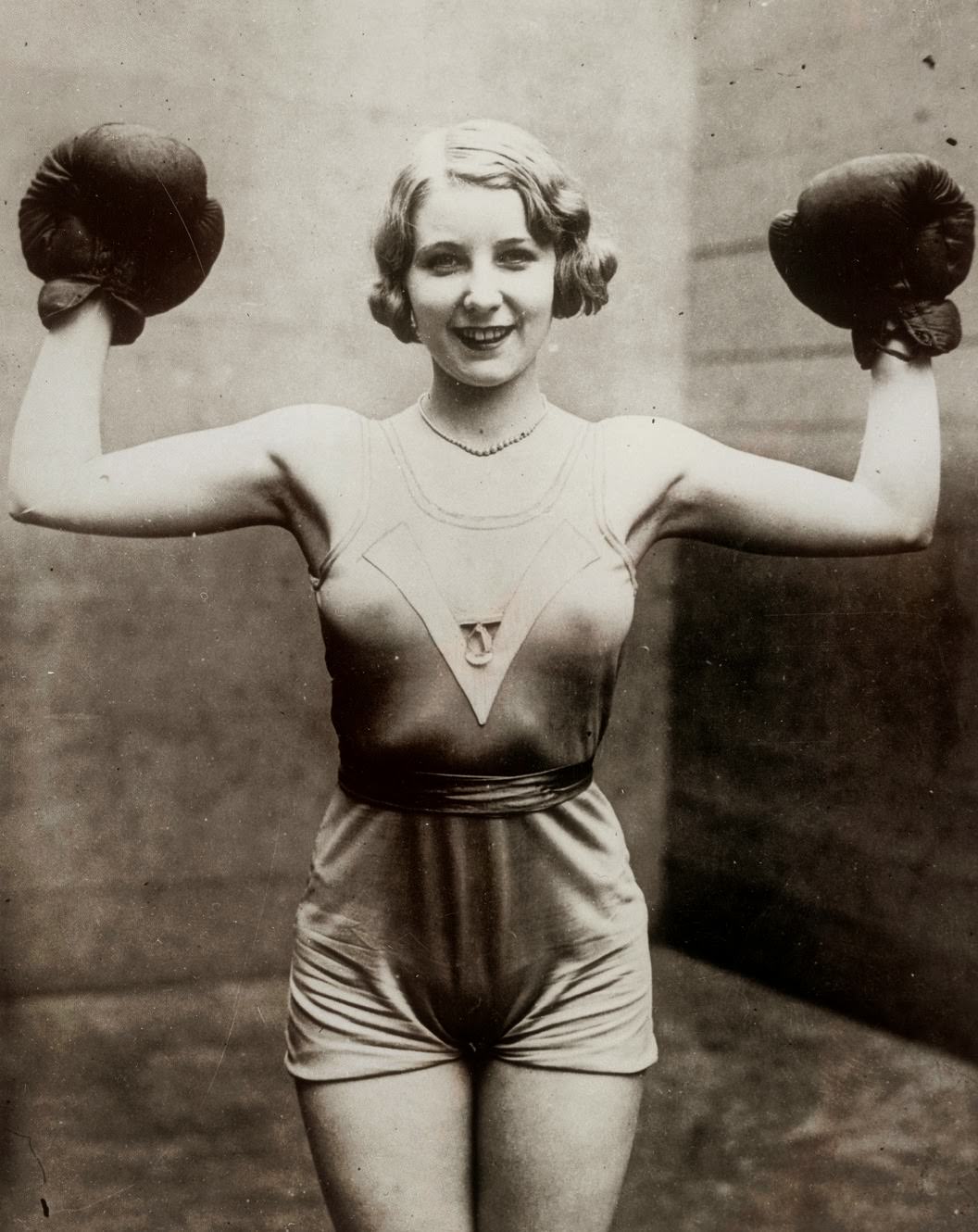
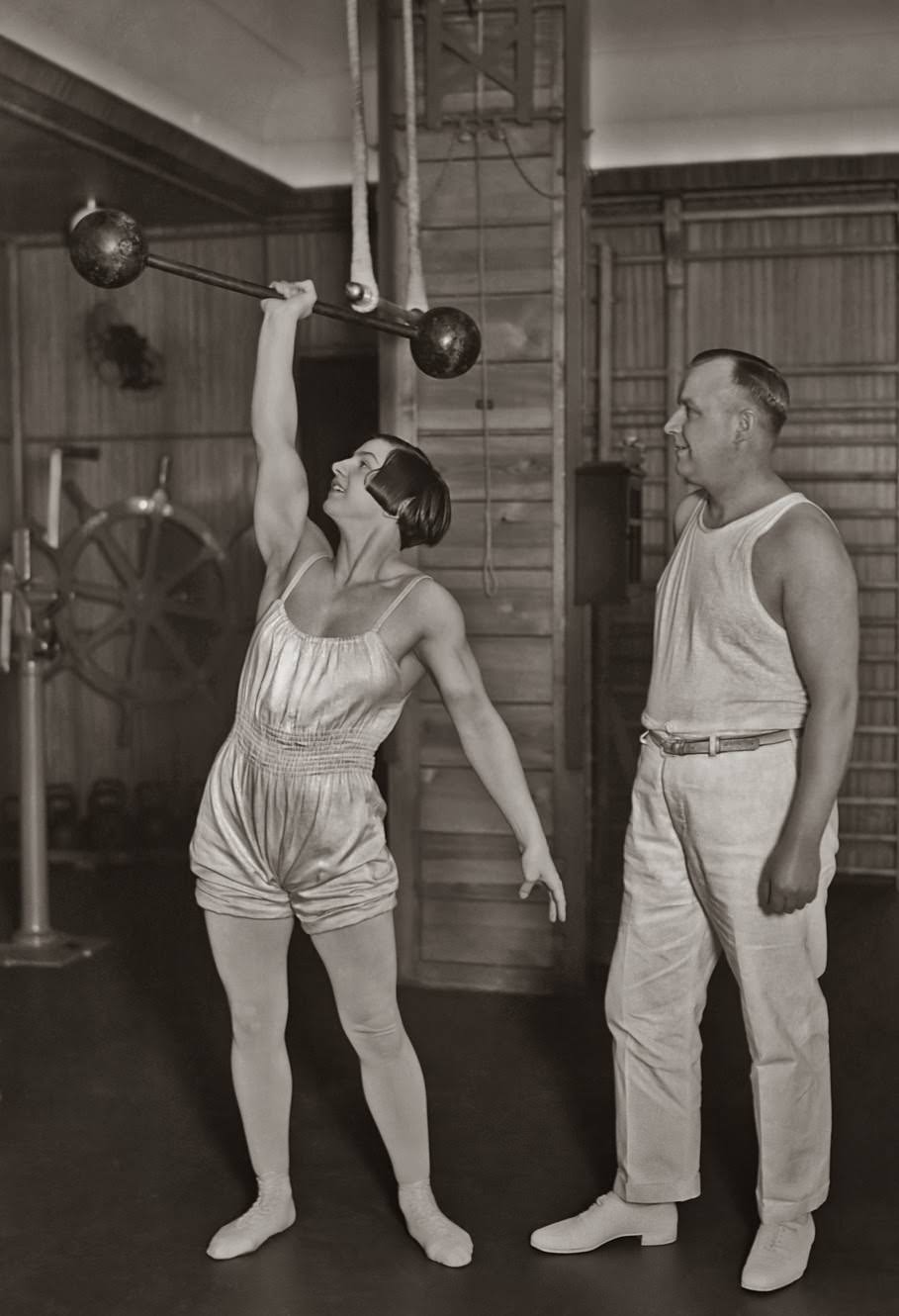
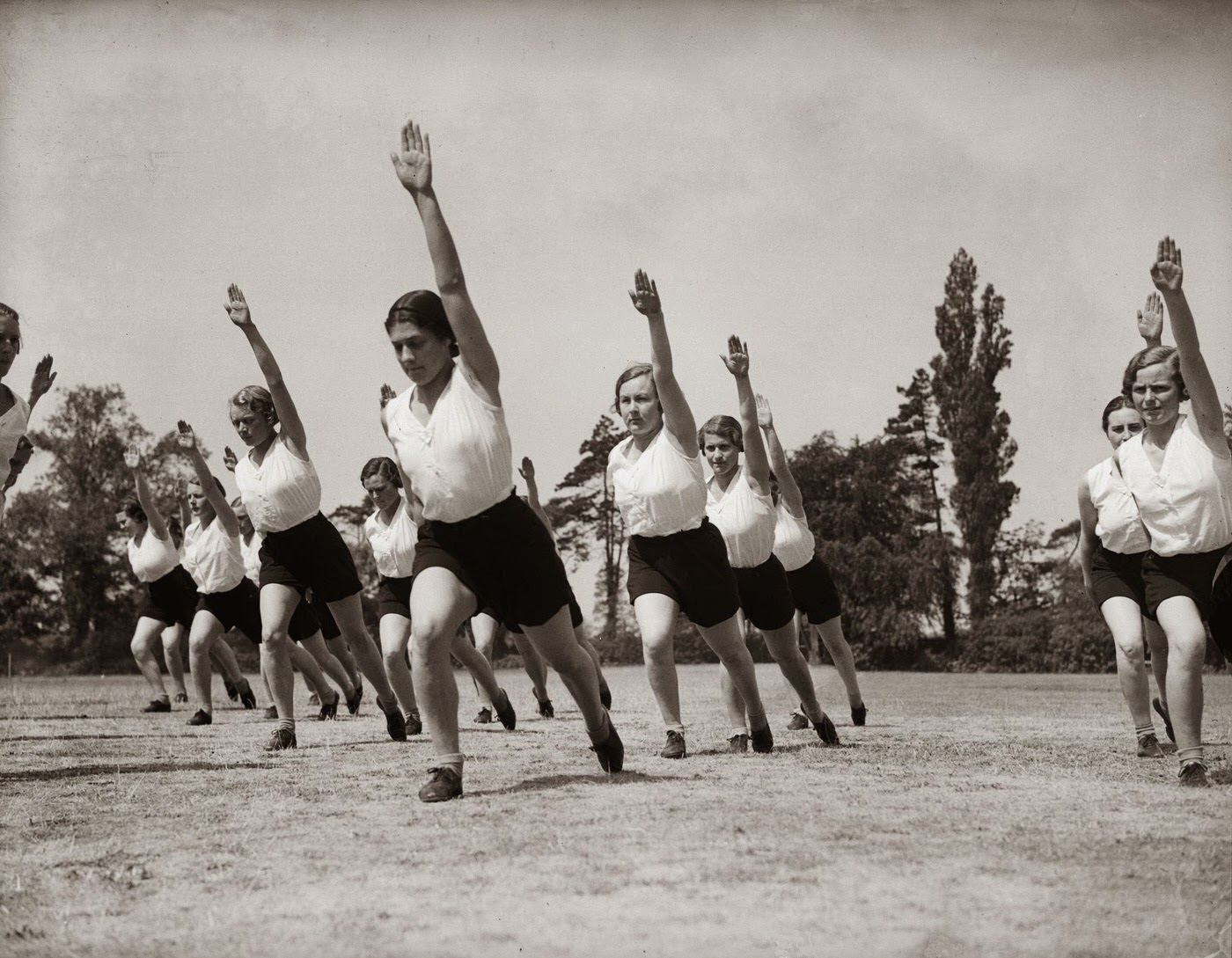
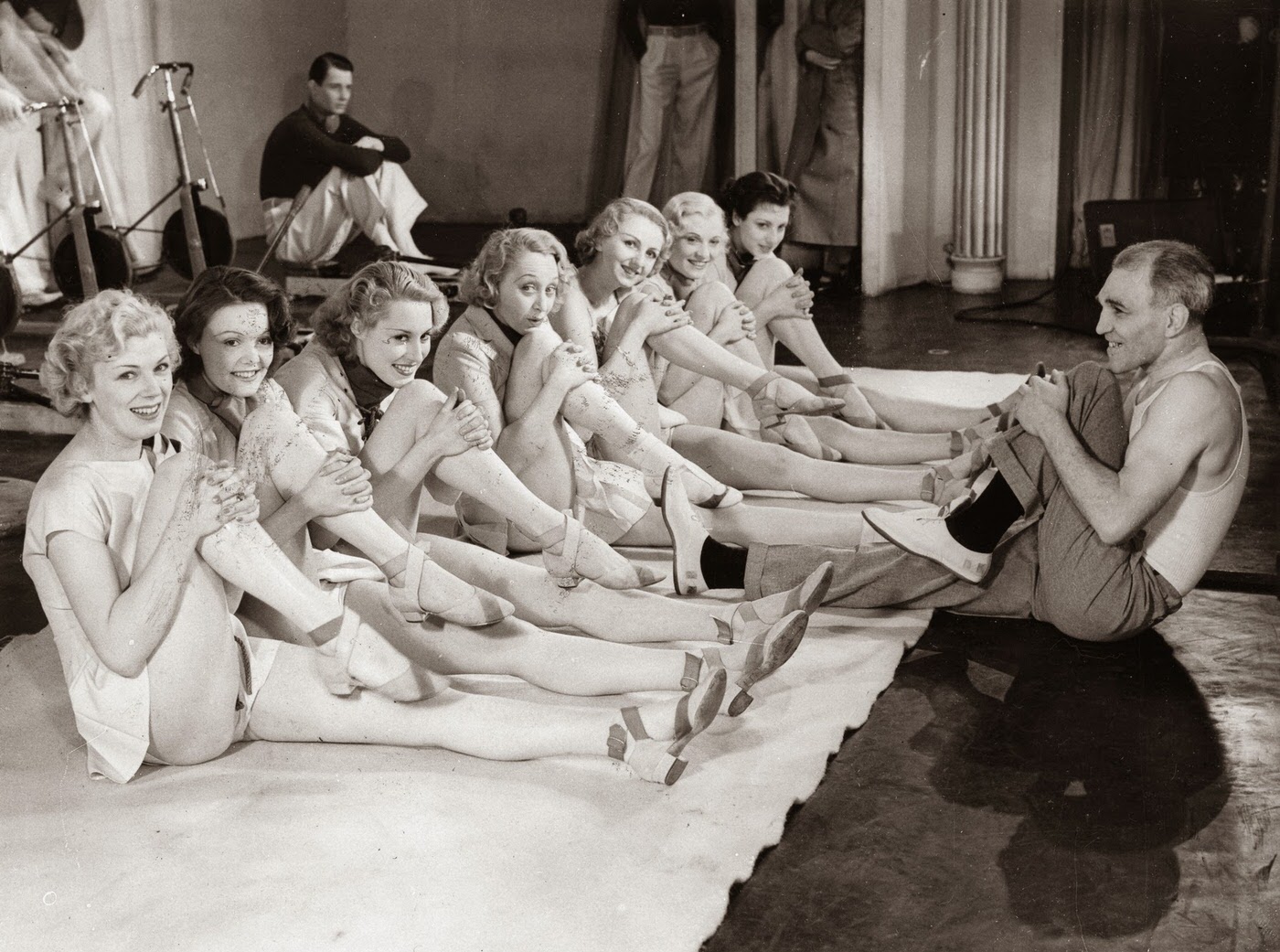
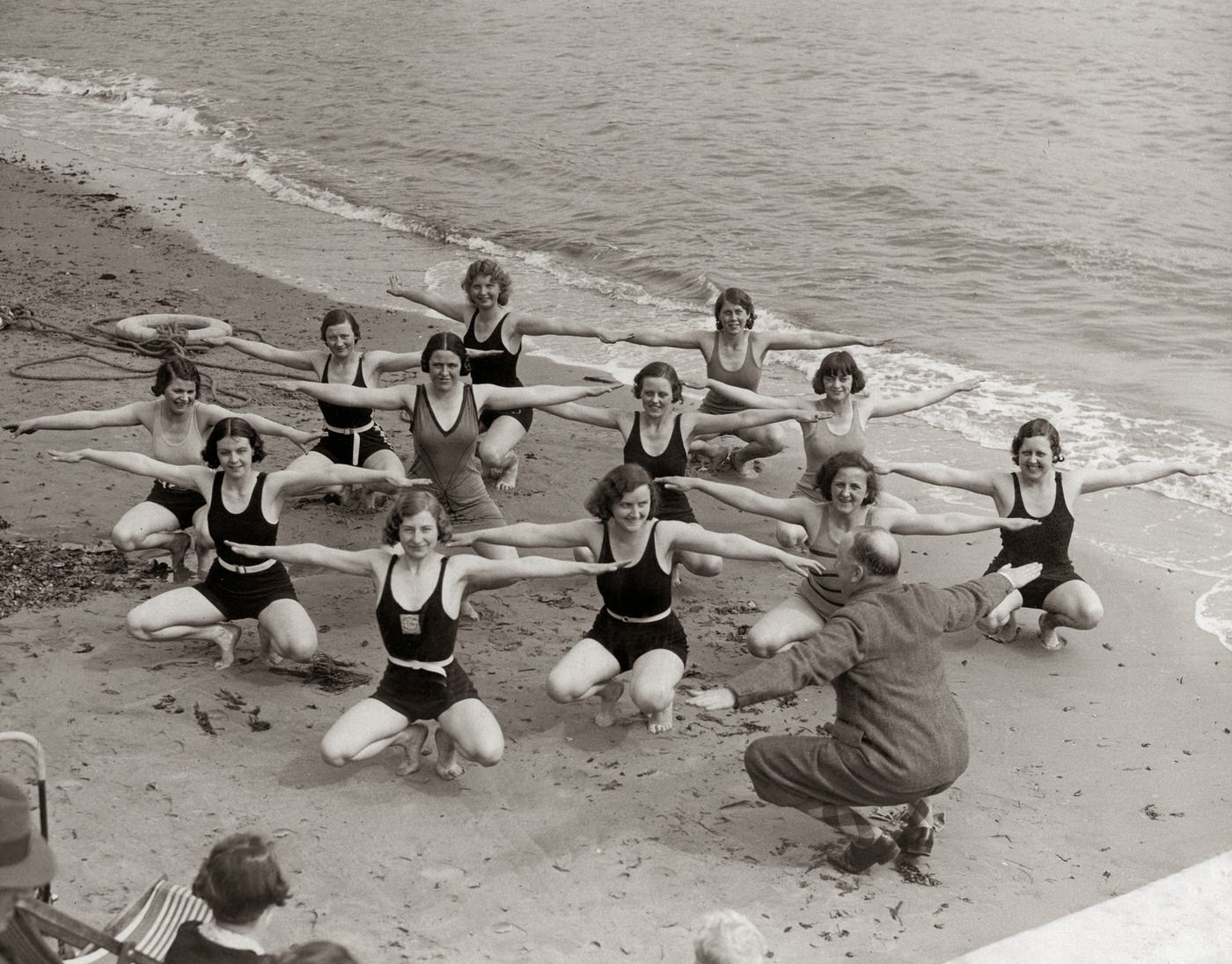
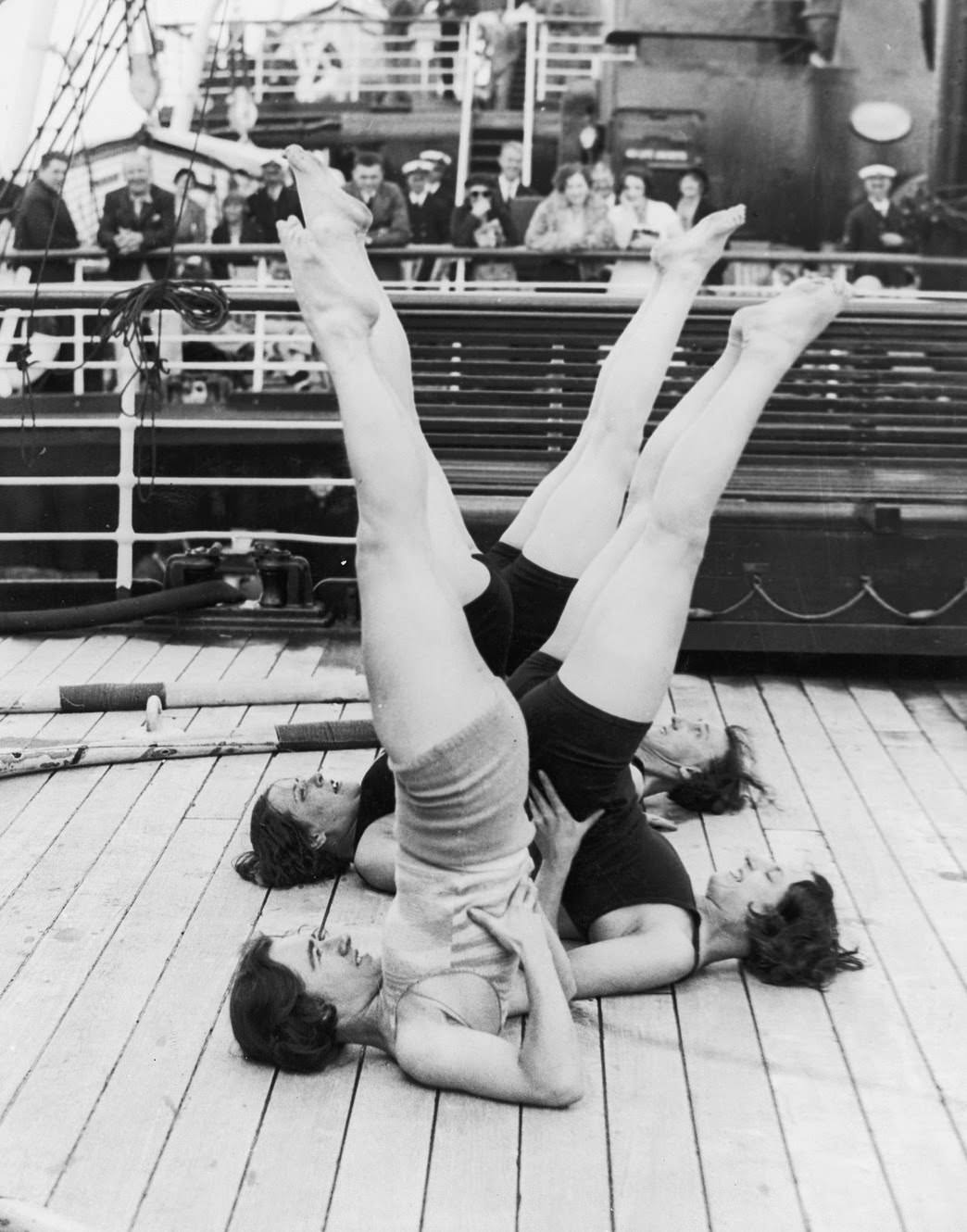
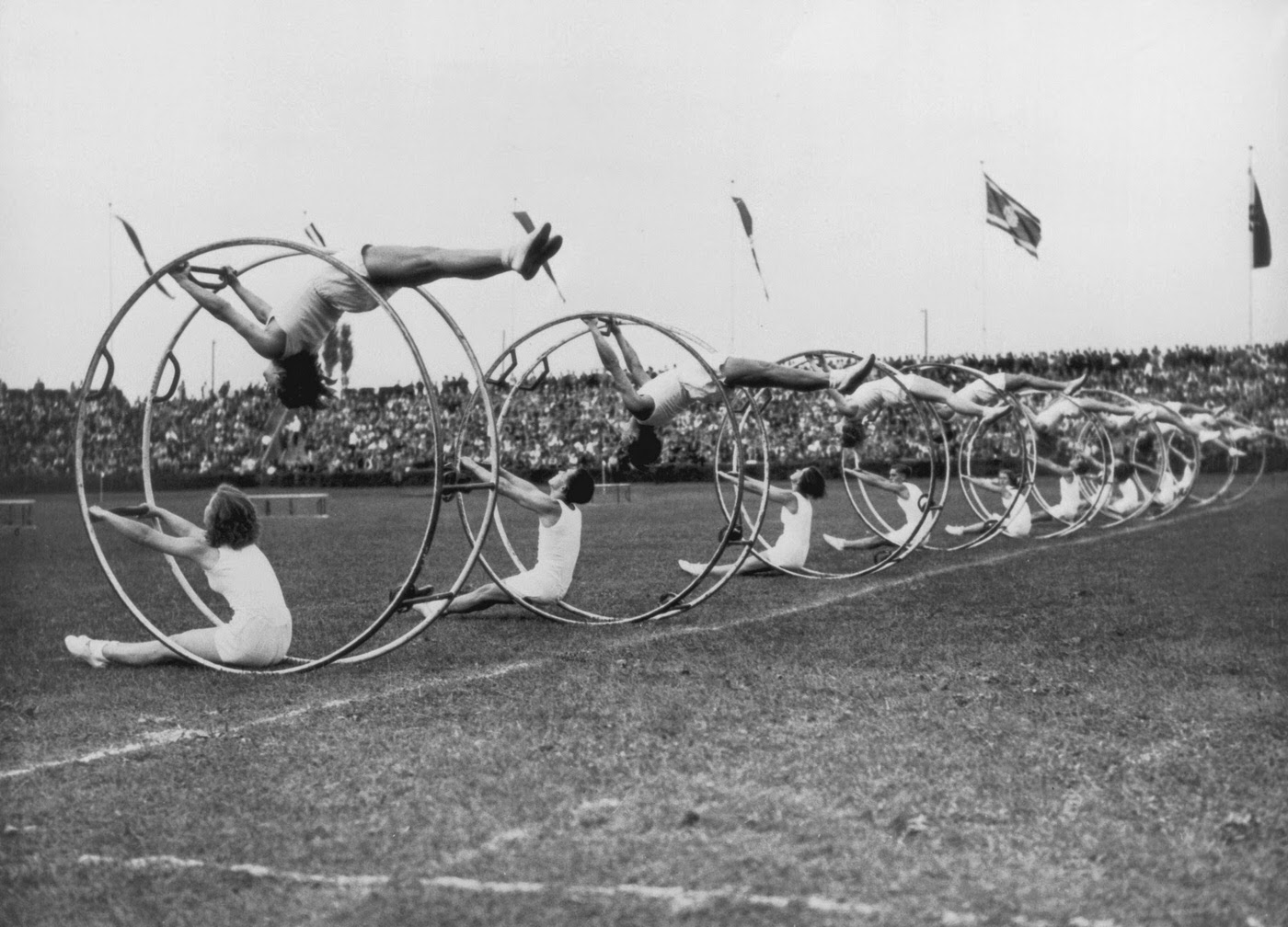
Group calisthenics classes featured jumping jacks, knee bends, and arm circles. Dance-based workouts were especially popular. Studios offered rhythmic exercise sessions inspired by ballet and modern dance, using flowing arm movements and light jumps set to music. The goal was a lean, elegant figure.
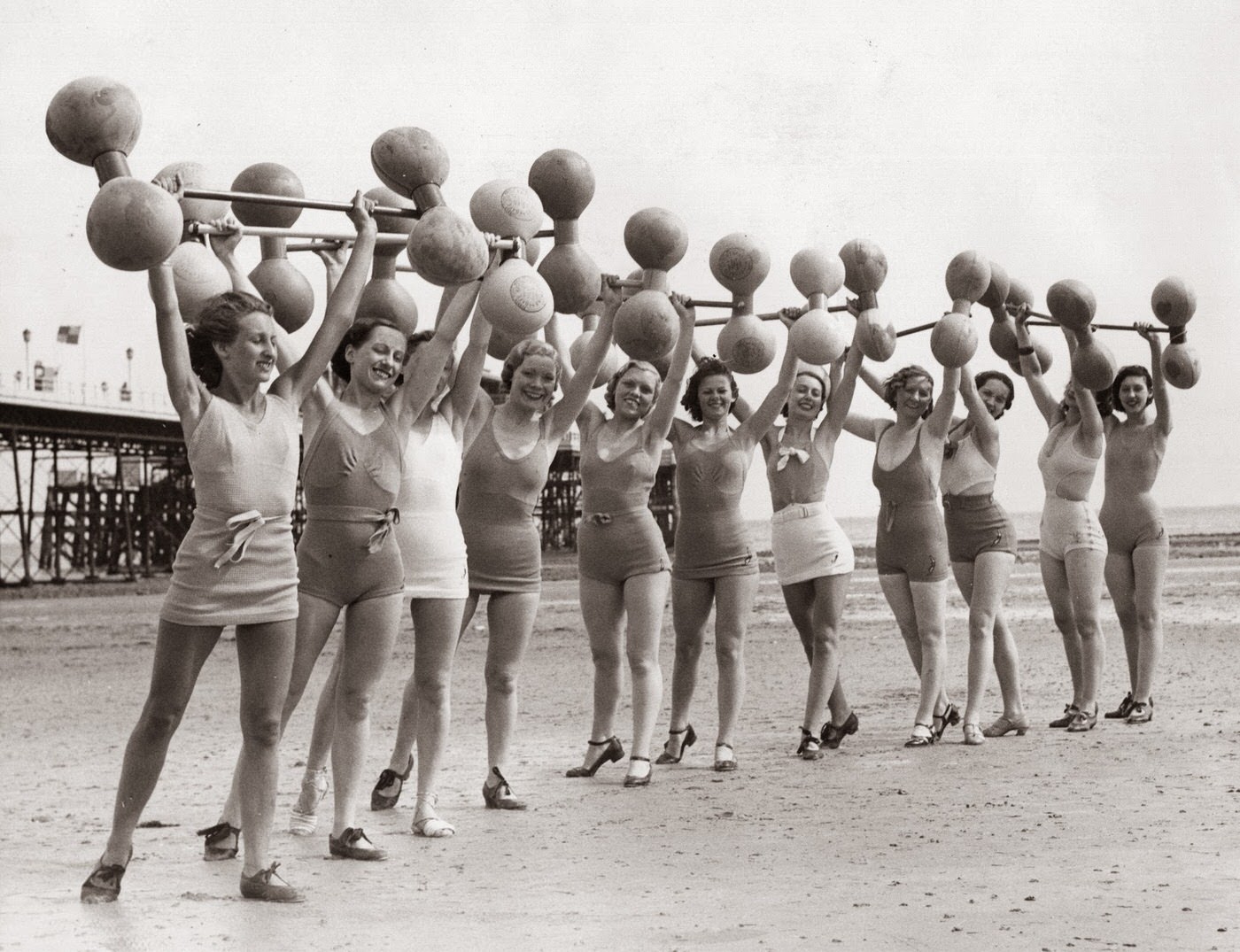
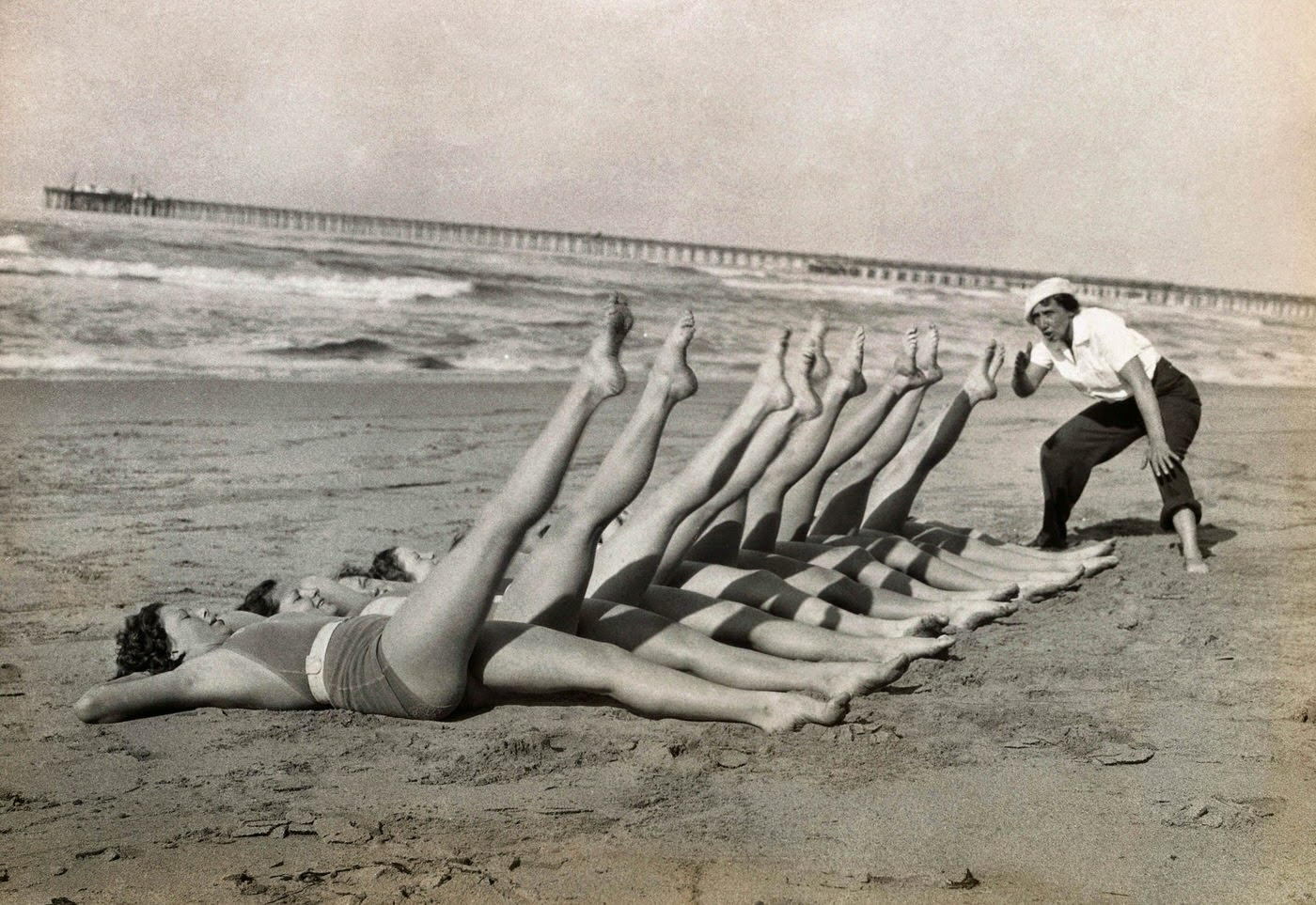
Outdoor fitness was common too. Parks and beaches hosted group exercise events, and women’s magazines promoted sunbathing and light stretching. Hiking and swimming were encouraged as wholesome ways to stay in shape, though competitive sports for women faced strong cultural pushback.
Hollywood shaped how women thought about exercise. Actresses like Ginger Rogers and Carole Lombard were photographed doing light workouts. Studio publicity framed fitness as a tool for maintaining a “movie star” figure, tying exercise directly to physical appearance.
The Great Depression cut off access to private gyms for most women. YWCAs and community centers stepped in, offering affordable programs that mixed physical training with social activities. These spaces drew women from many different backgrounds.
By the late 1930s, radio changed how women exercised. Instructors led routines live over the airwaves, letting women follow along from their living rooms. These broadcasts used simple movements that required zero equipment, making fitness available to almost anyone.