Long before missiles and airstrikes defined modern warfare, armies found another way to strike targets from extreme distances — they put their biggest guns on trains. Railway guns were exactly what the name suggests: enormous artillery pieces mounted on specially built rail carriages. They could move across a country’s existing rail network, fire shells weighing over a ton at targets more than 25 miles away, and then relocate before the enemy could respond. From the American Civil War to the closing years of World War II, these weapons left a distinct mark on military history.
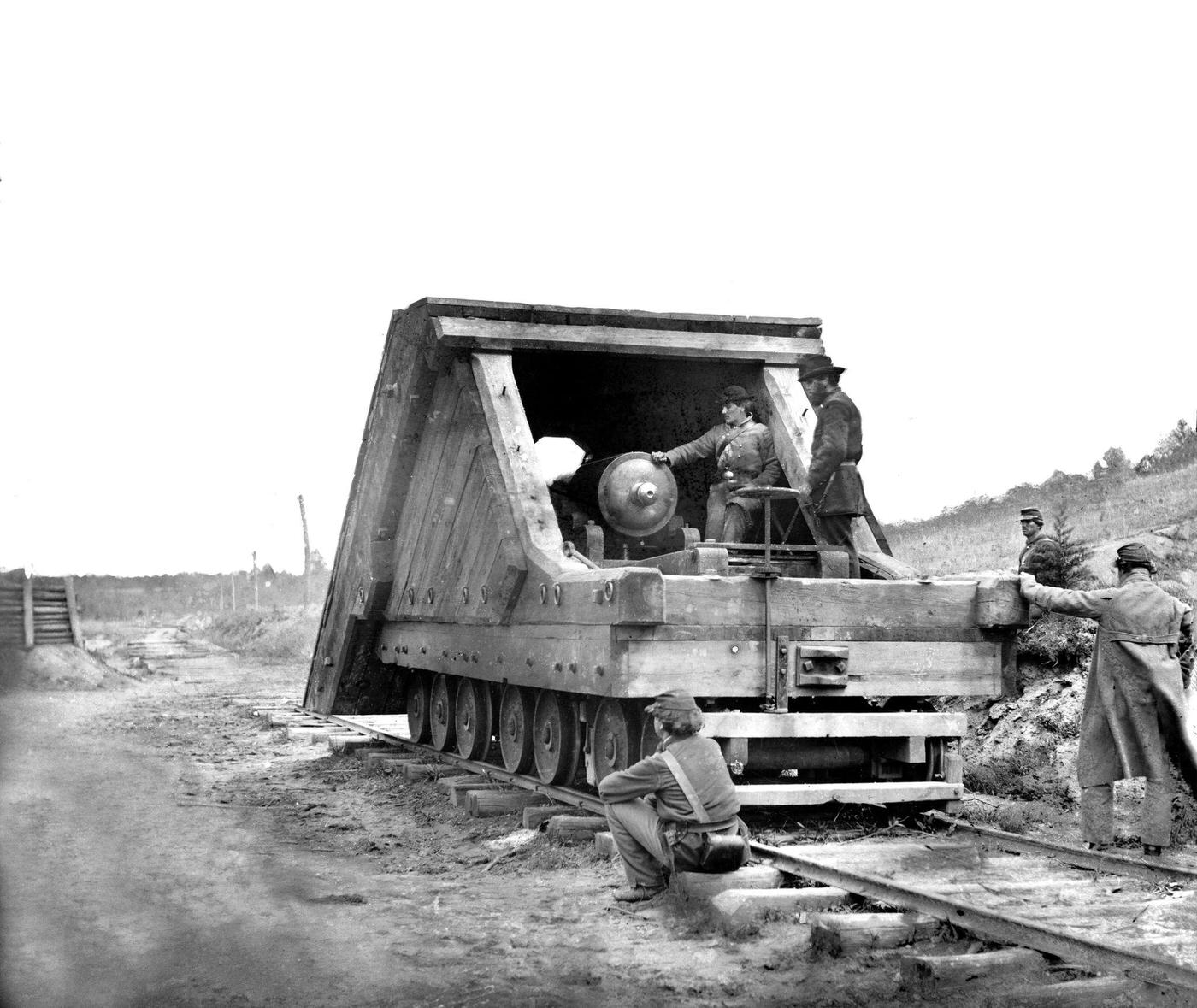
The roots of railway artillery stretch back to the mid-19th century. During the Siege of Petersburg in 1864, Confederate forces mounted guns on rail cars to move heavy artillery along defensive lines — one of the earliest documented uses of the concept in combat.
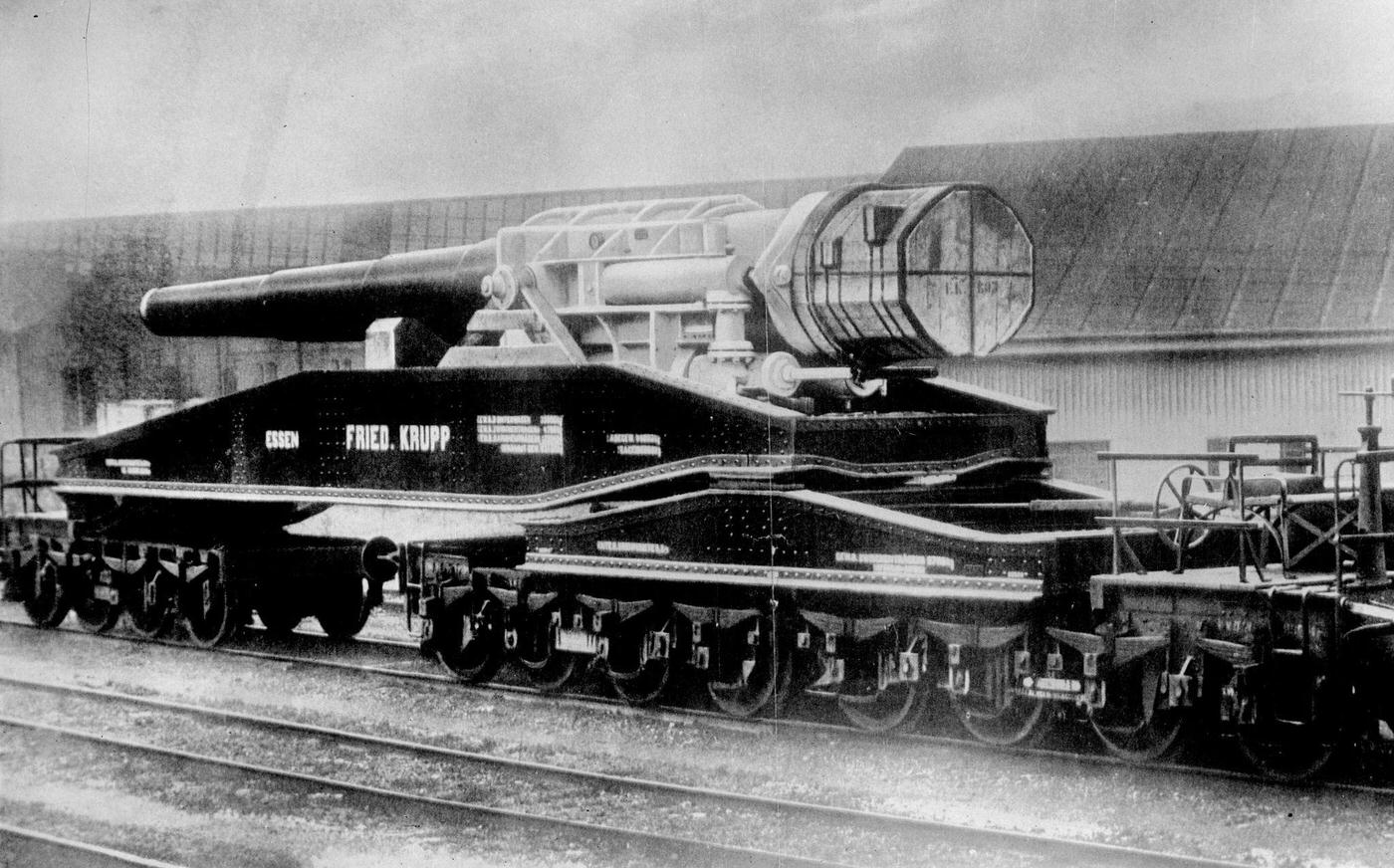
Following the Civil War, European arms manufacturers began developing purpose-built heavy guns designed for rail transport. Krupp of Essen, Germany, became one of the most prominent producers of large-caliber artillery in the late 19th century, engineering guns of remarkable size and power for their era.
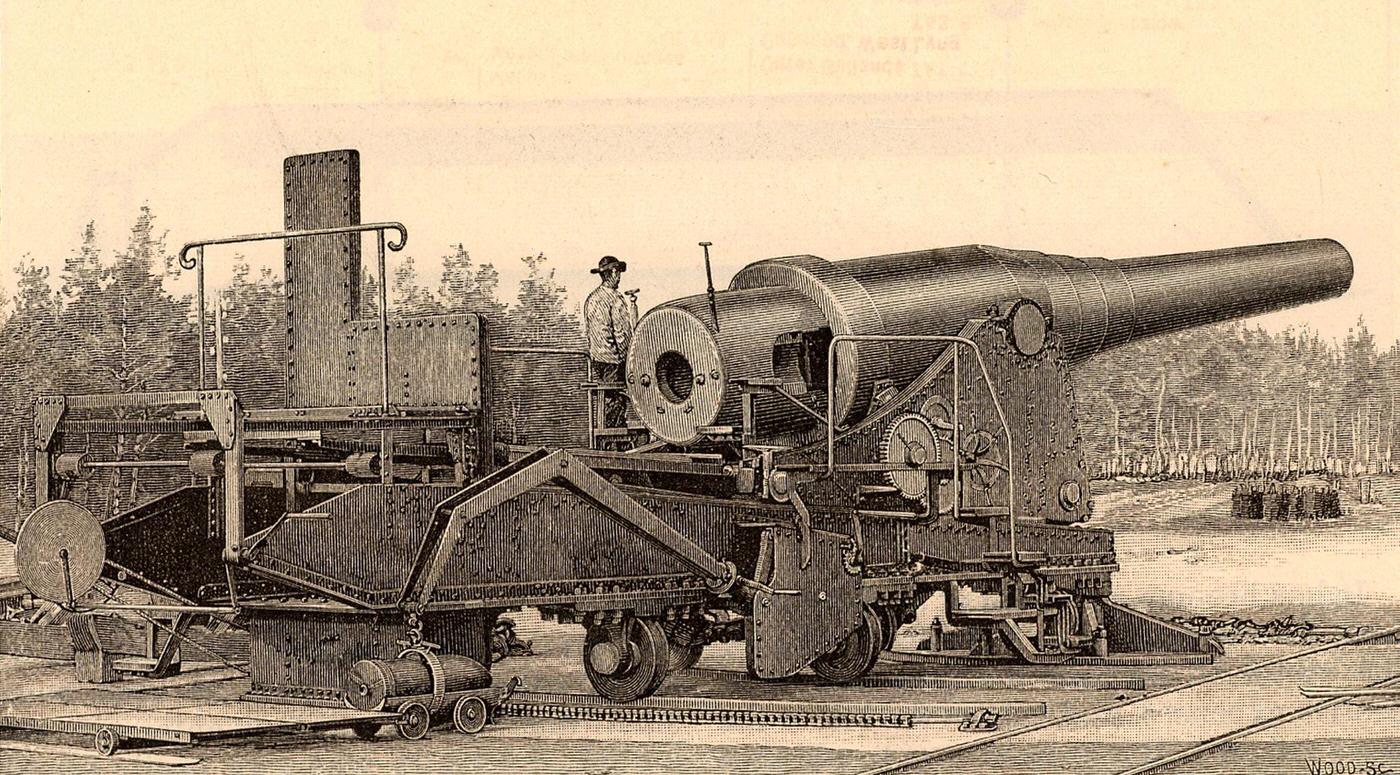
Rail-mounted artillery offered something that traditional field guns simply could not: the ability to move a truly massive weapon quickly and then bring it to bear on a fixed target. A standard horse-drawn gun was limited by the terrain and the strength of the animals pulling it. A railway gun was limited only by the reach of the tracks.
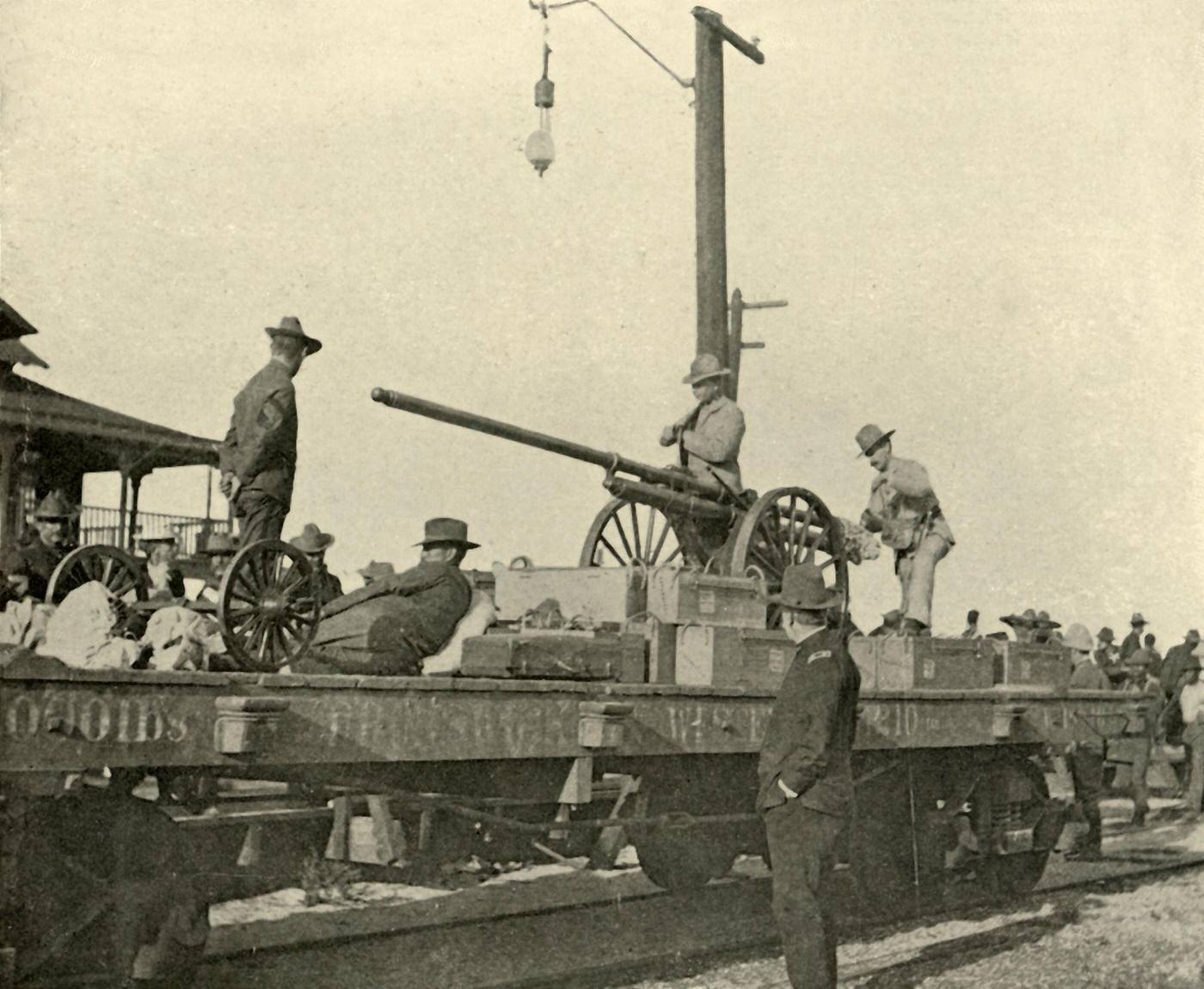
The Spanish-American War of 1898 gave the United States its own early encounter with rail-mounted and experimental heavy artillery. Weapons like the Dynamite Gun — which used compressed air to launch explosive charges — were tested and deployed during this period, reflecting a broader push across multiple nations to find new ways to project firepower.
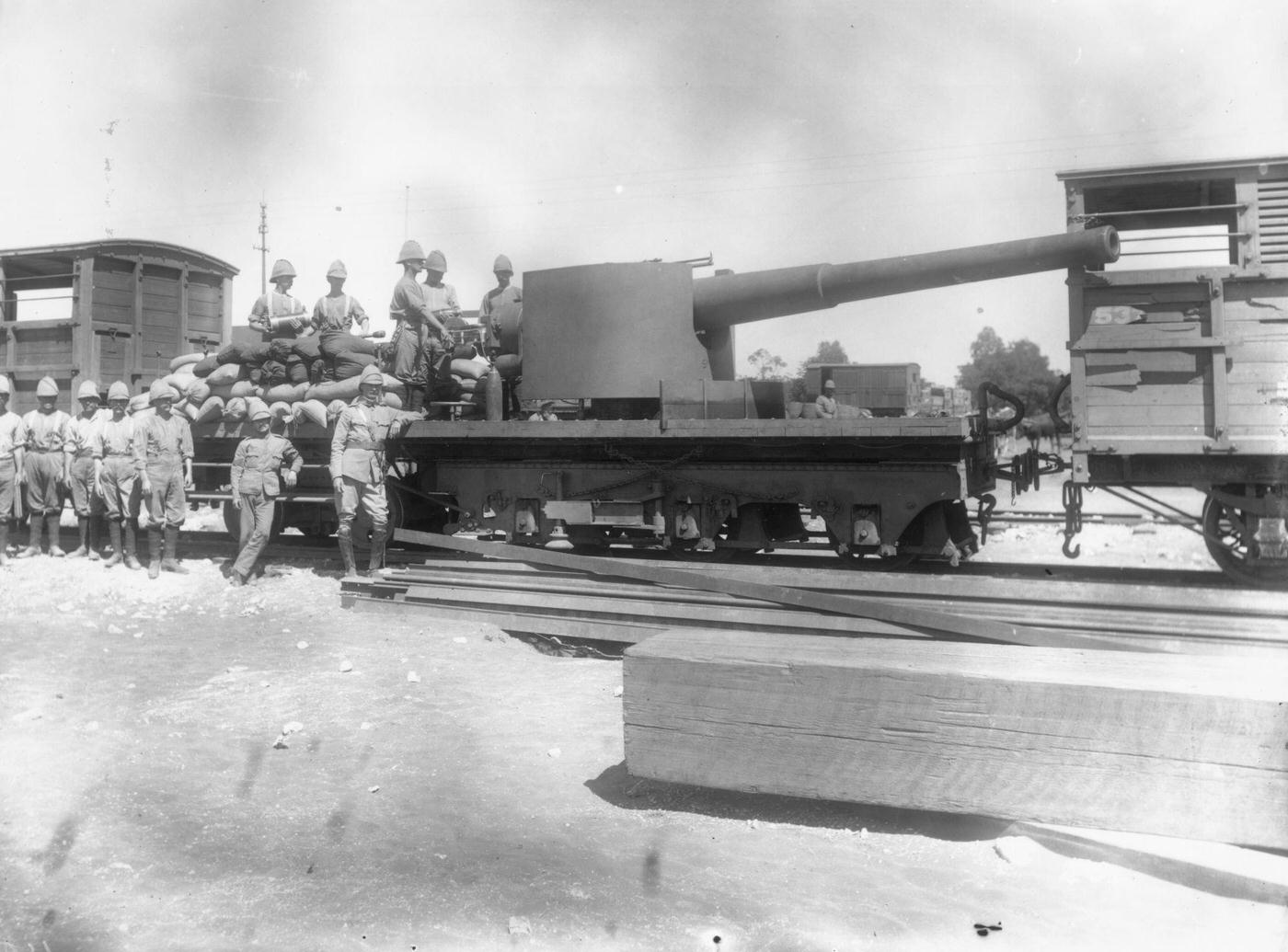
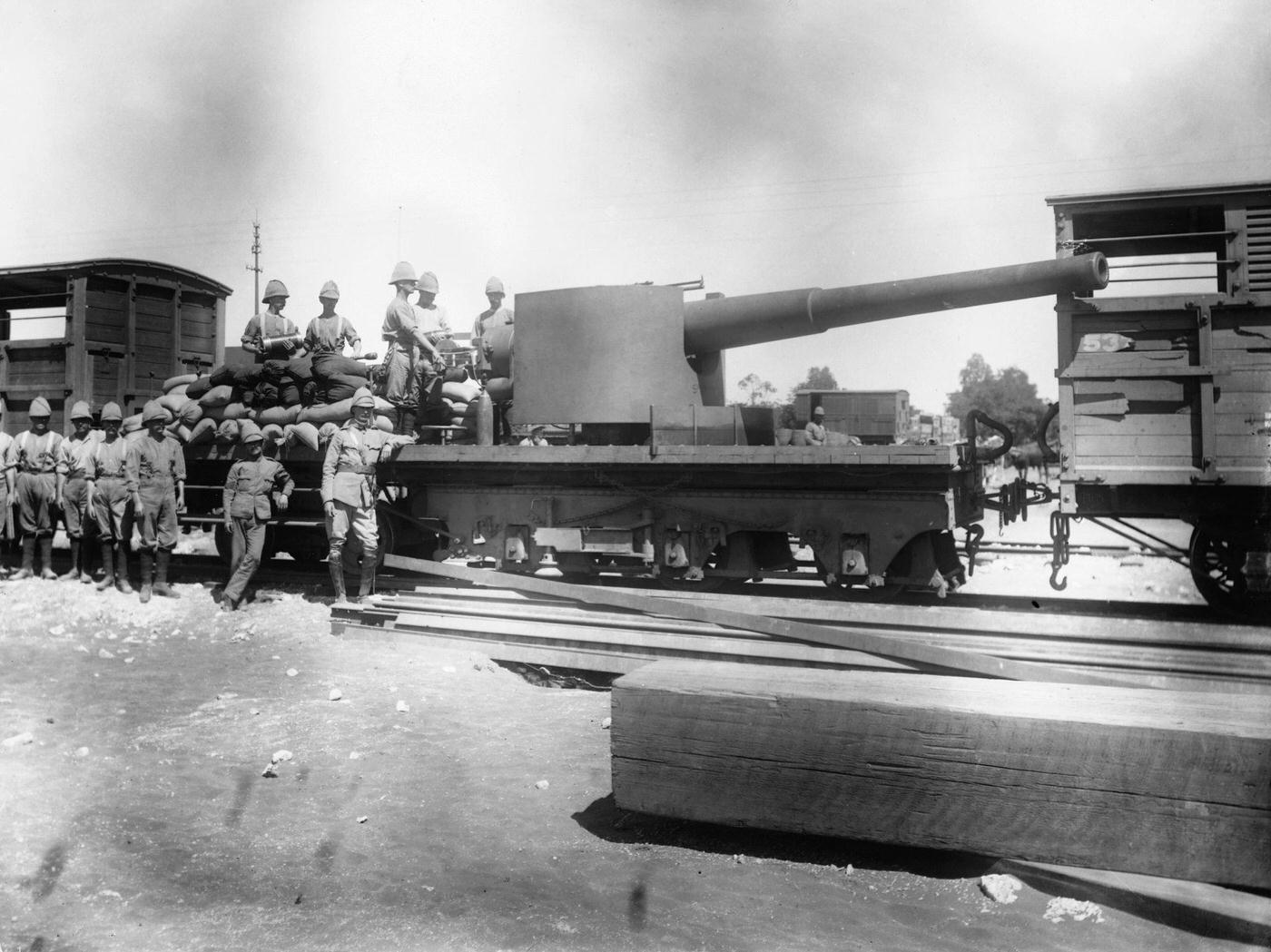
The British also recognized the value of moving naval guns overland by rail. During the Second Boer War in South Africa around 1900, large naval guns were loaded onto railway trucks and sent inland to support advancing troops — a direct precursor to the dedicated railway artillery that would dominate World War I.
When World War I erupted in 1914, the static nature of trench warfare made railway guns more valuable than ever before. The Western Front stretched for hundreds of miles, and both sides needed artillery that could pound fortified positions far behind enemy lines. Rail networks across France and Belgium became the arteries through which these weapons flowed.
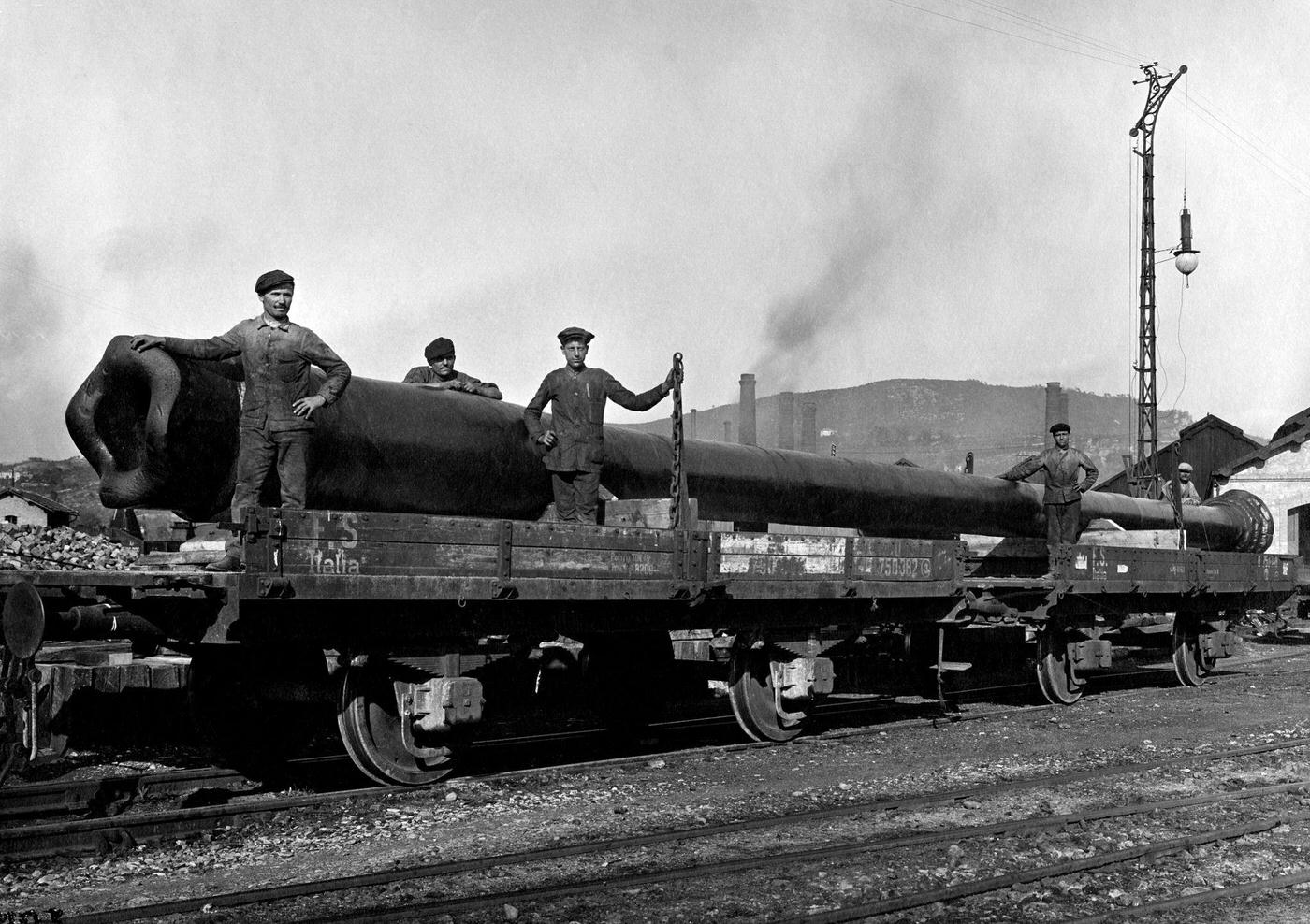
Building these weapons required enormous industrial effort. Gun barrels alone were massive engineering undertakings, requiring specialized foundries and months of precision manufacturing before a single round could be fired.
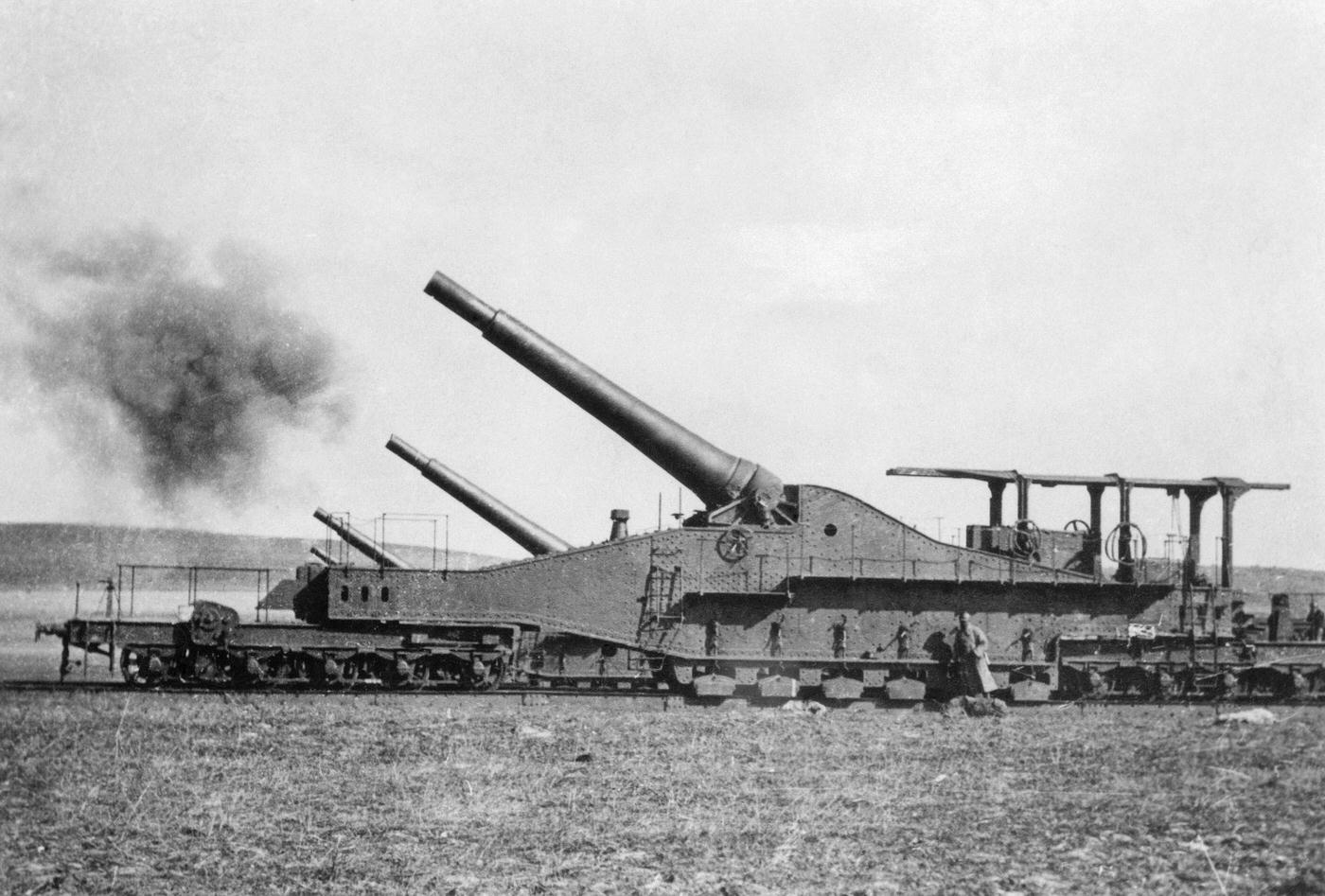
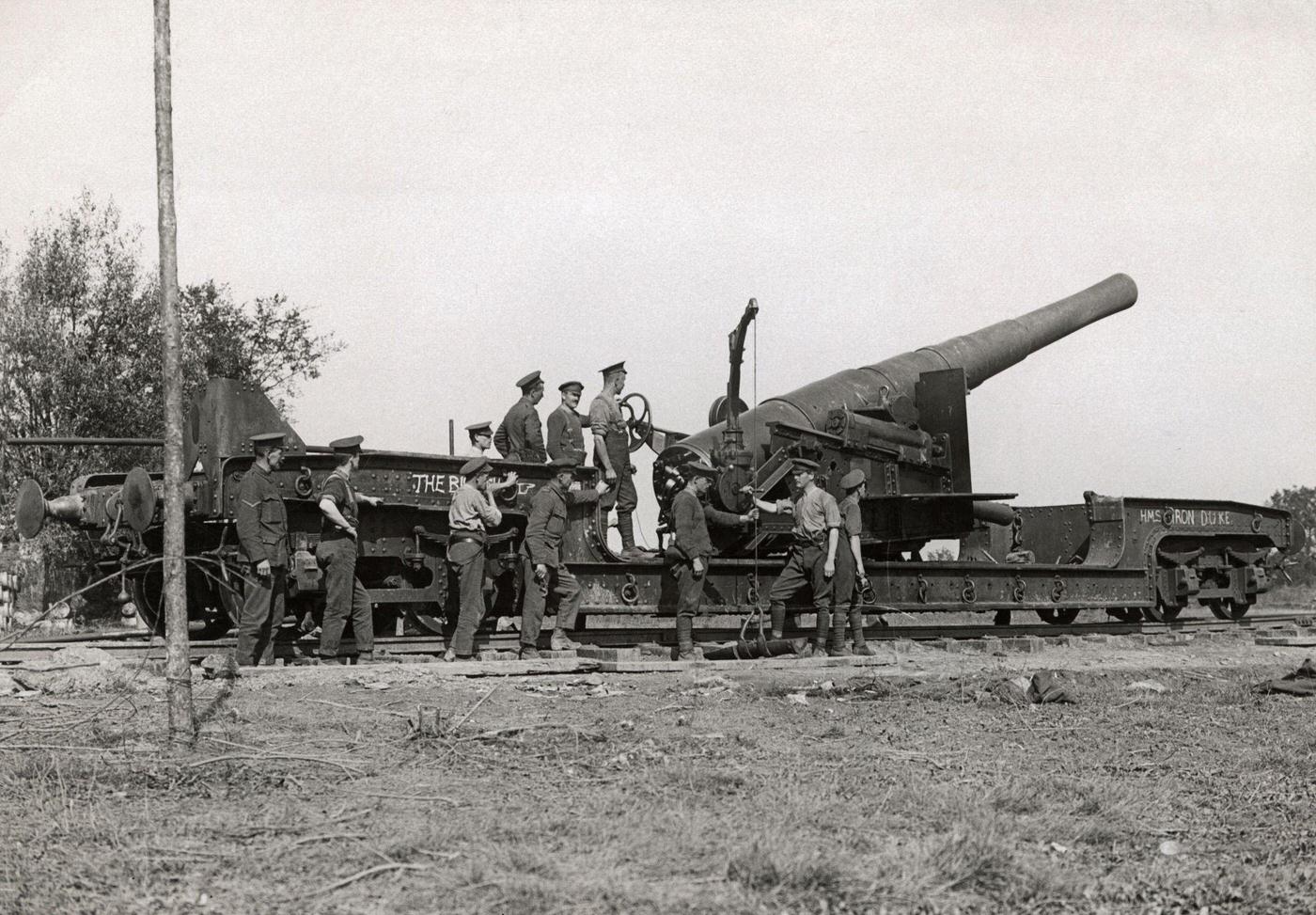
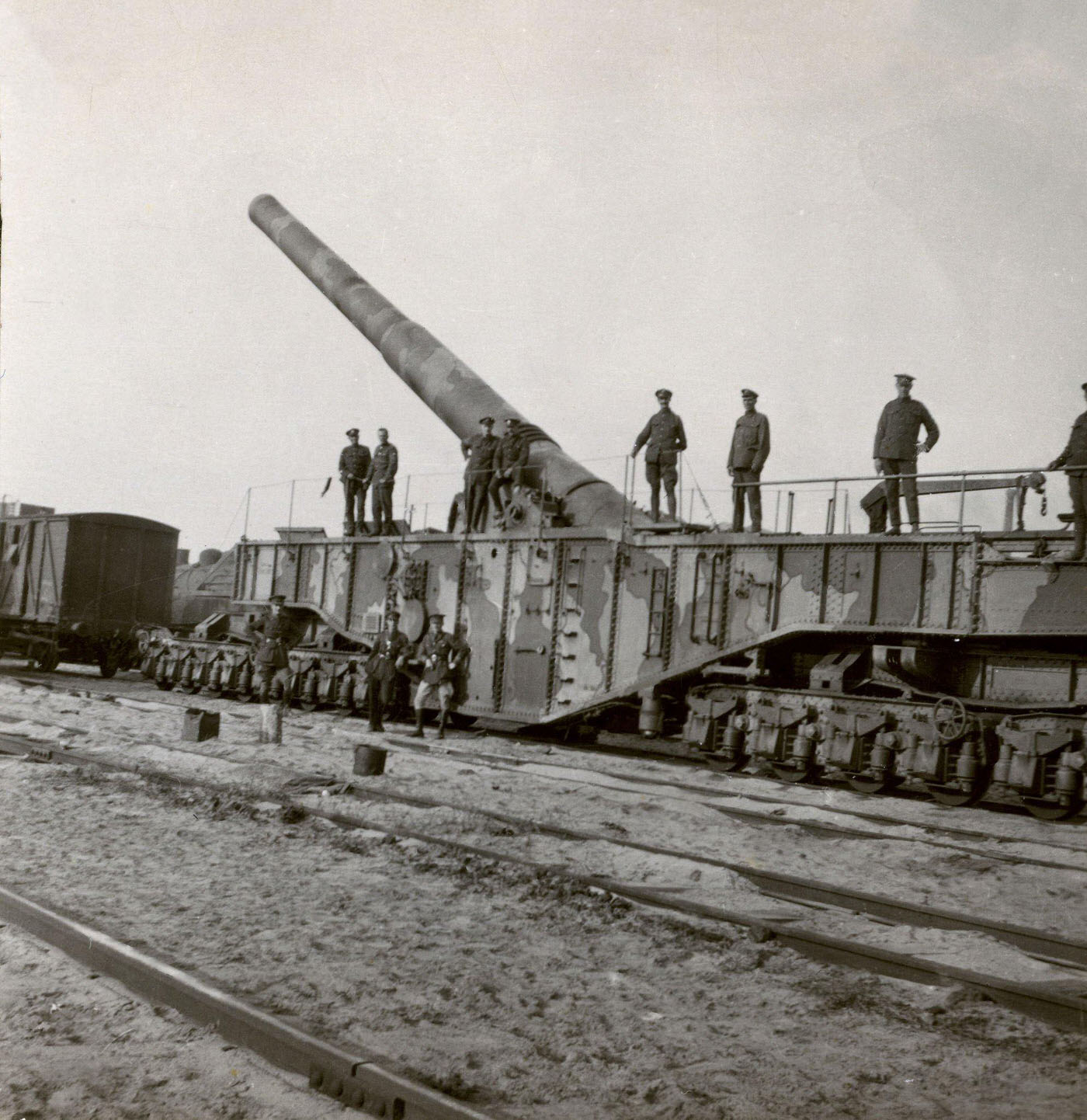
Britain fielded some of the largest railway guns on the Western Front. The 16-inch railway gun fired shells that could devastate fortified positions kilometers away, and these weapons saw action across multiple major engagements throughout the war.
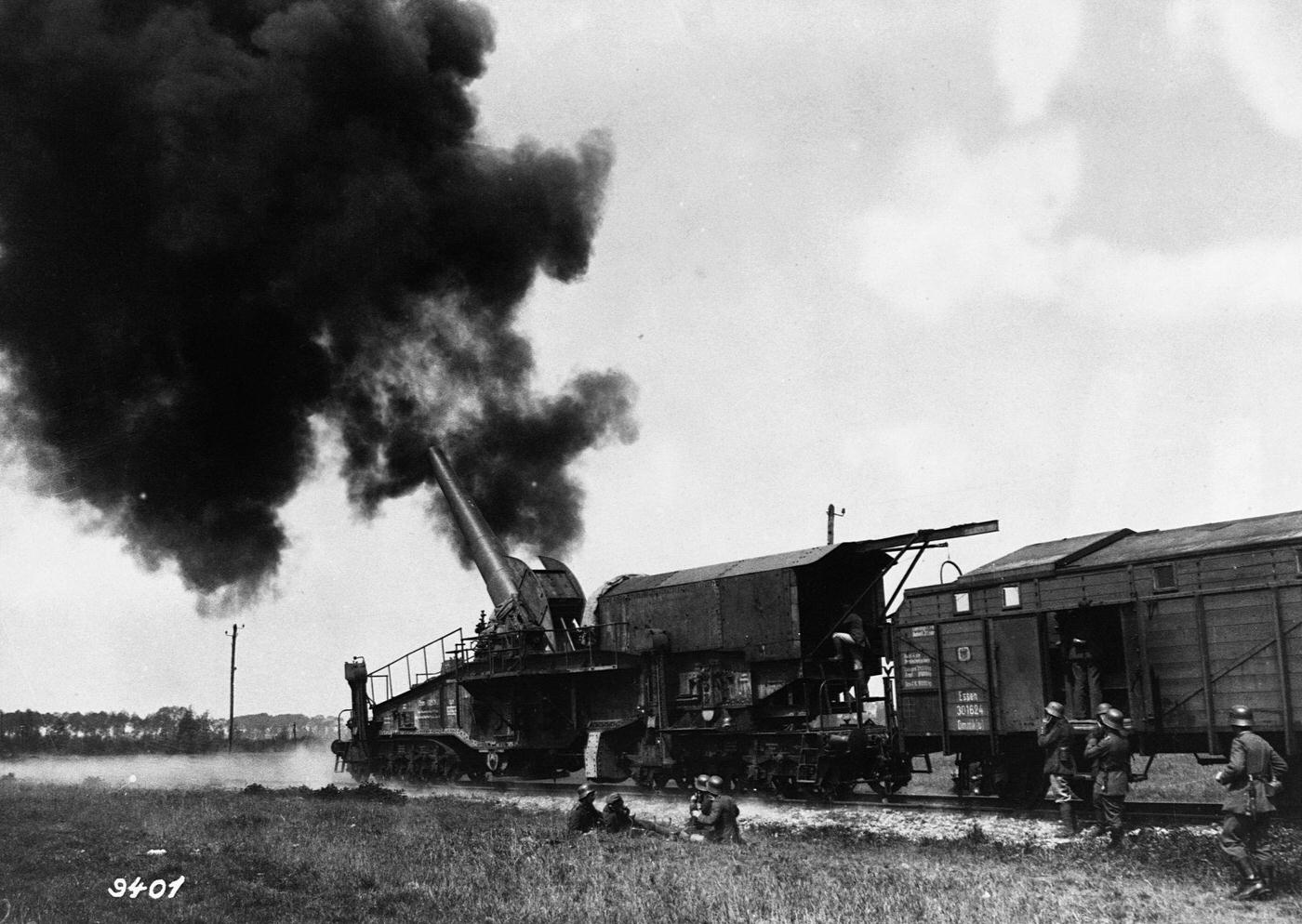
Germany developed its railway gun program to an extreme degree. The most notorious example was the Paris Gun, used in 1918, which had a barrel over 112 feet long, weighed 256 tons, and shelled the French capital from approximately 75 miles away. It was the longest-range artillery weapon used in combat up to that point in history. German crews also fielded a range of other rail-mounted guns, from rapid-firing 28 cm pieces to massive siege weapons.
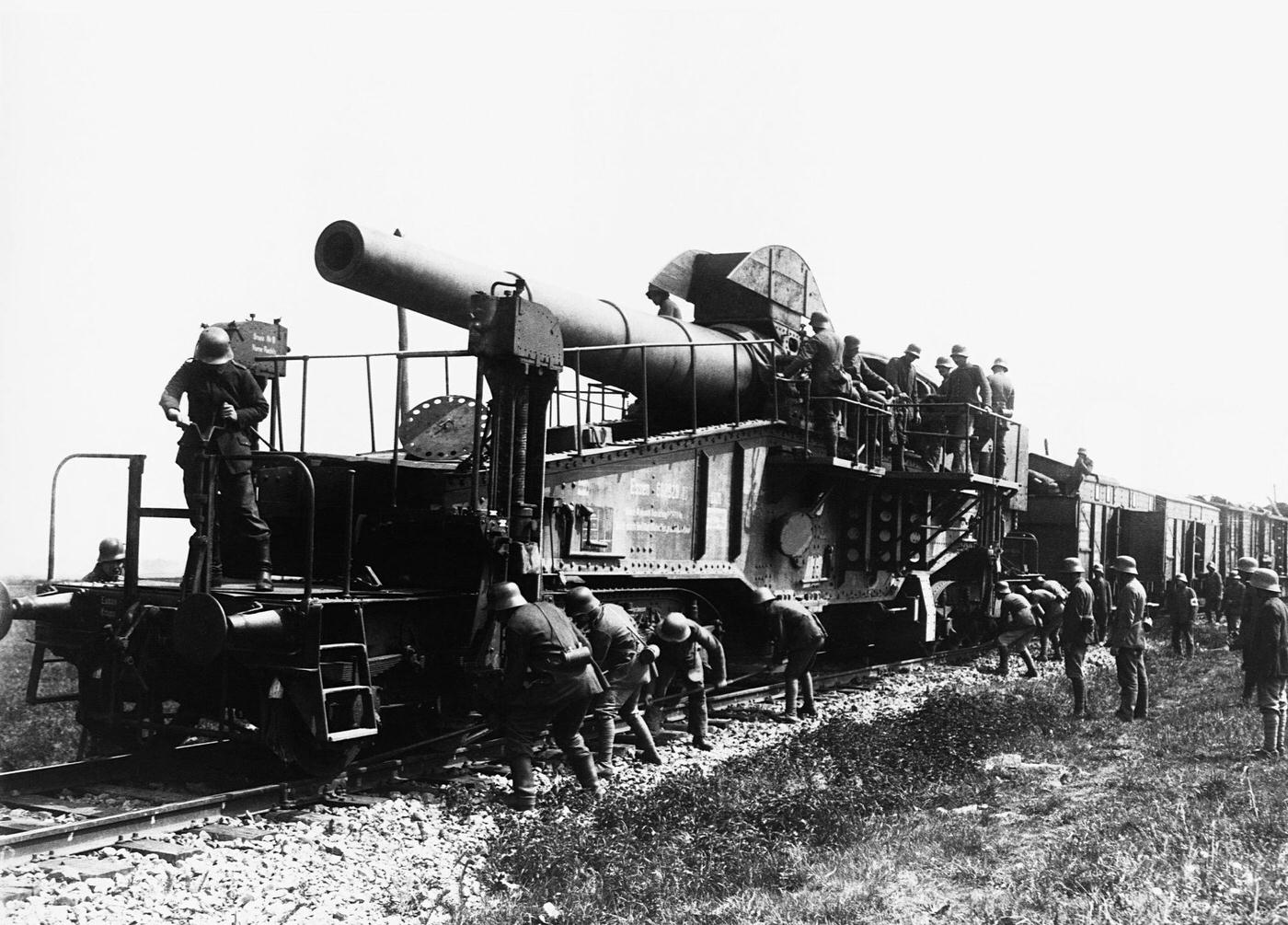
Getting these weapons into the field required moving enormous components across the country. Naval guns pulled from ships and adapted for land use were loaded onto rail cars at factories and ordnance works, then transported directly to the front.
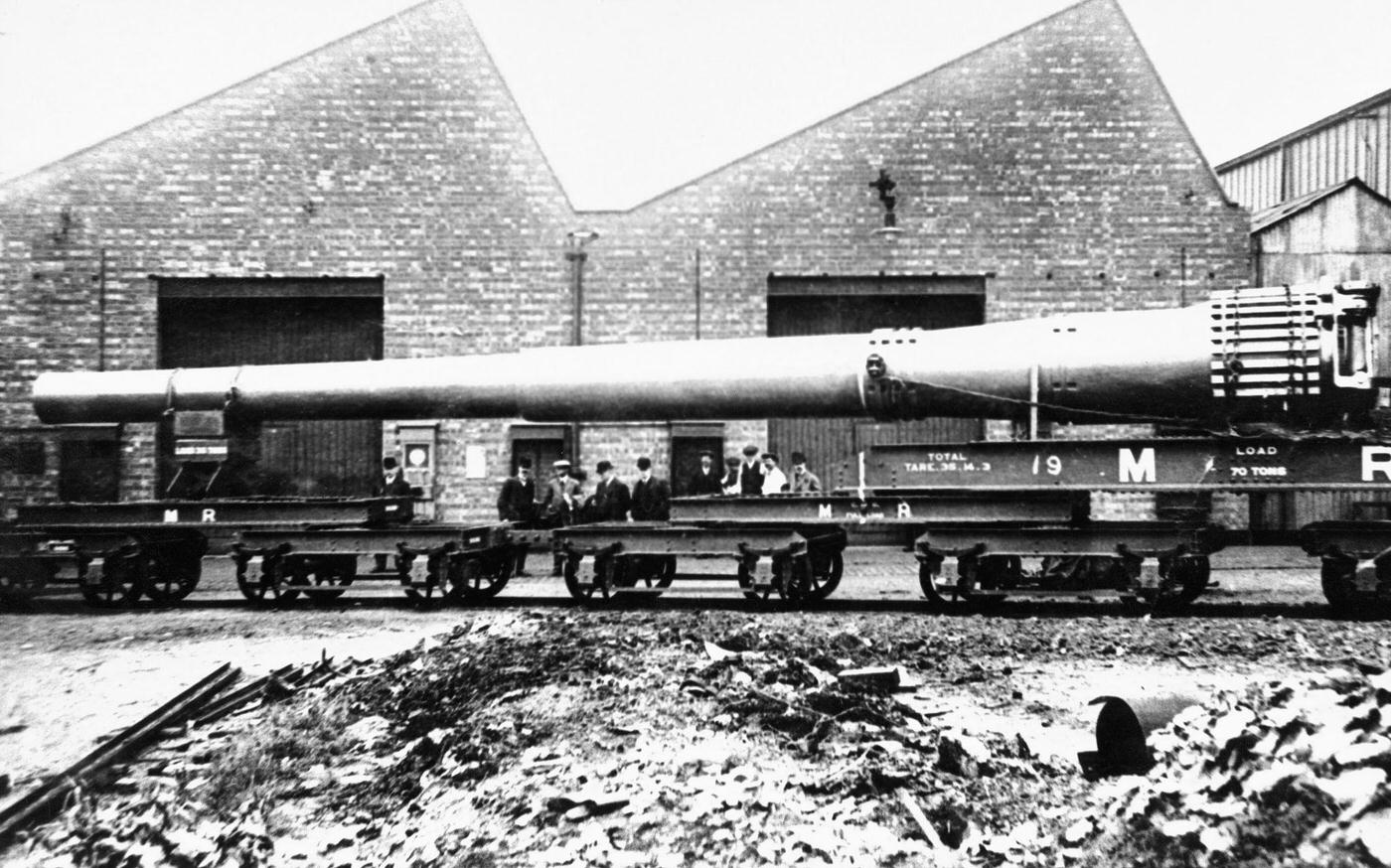
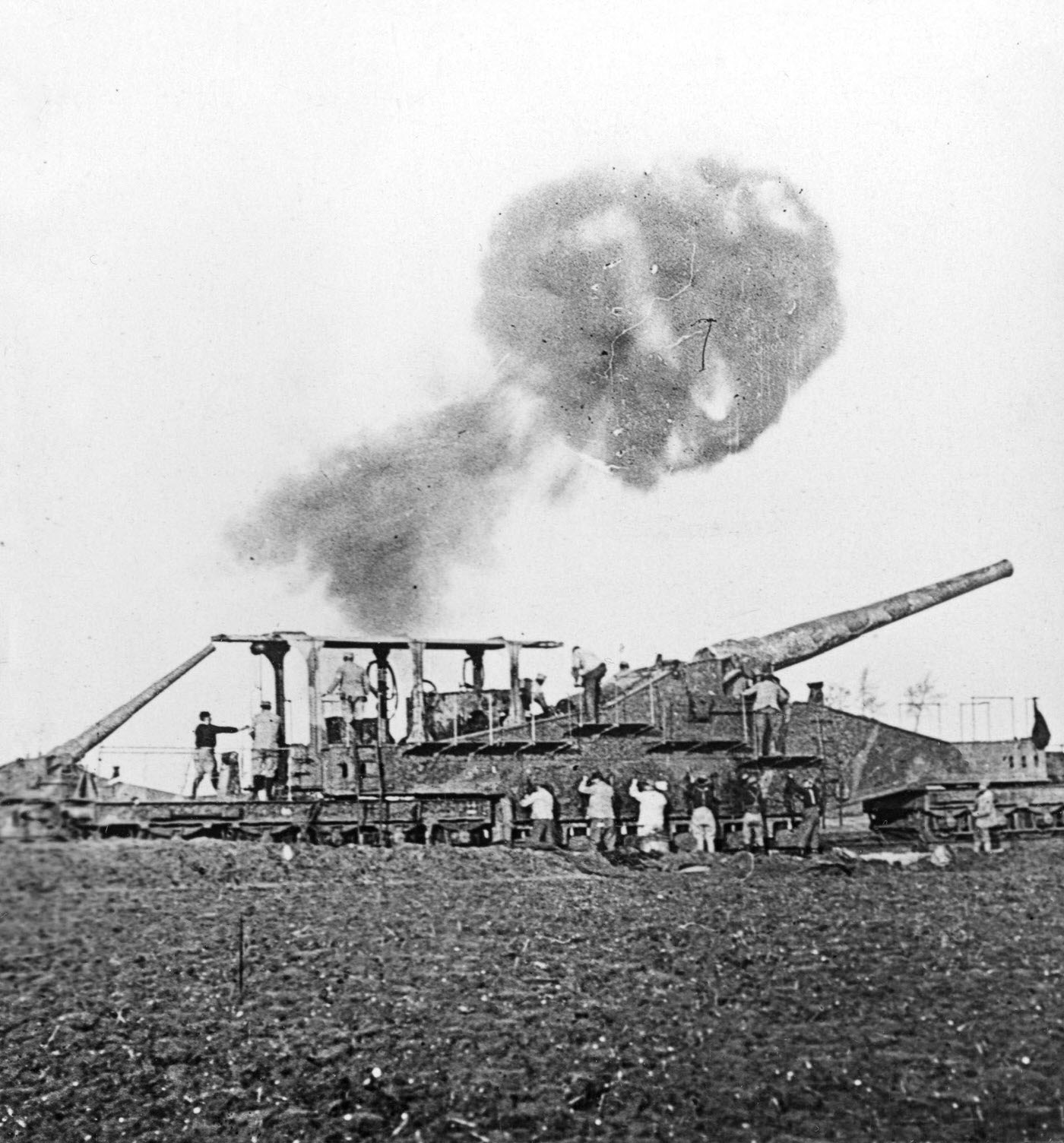
France was among the most prolific users of railway artillery during World War I. French forces deployed 274 mm and 370 mm rail guns along the Somme and throughout the northern front, battering German positions across wide stretches of contested ground.
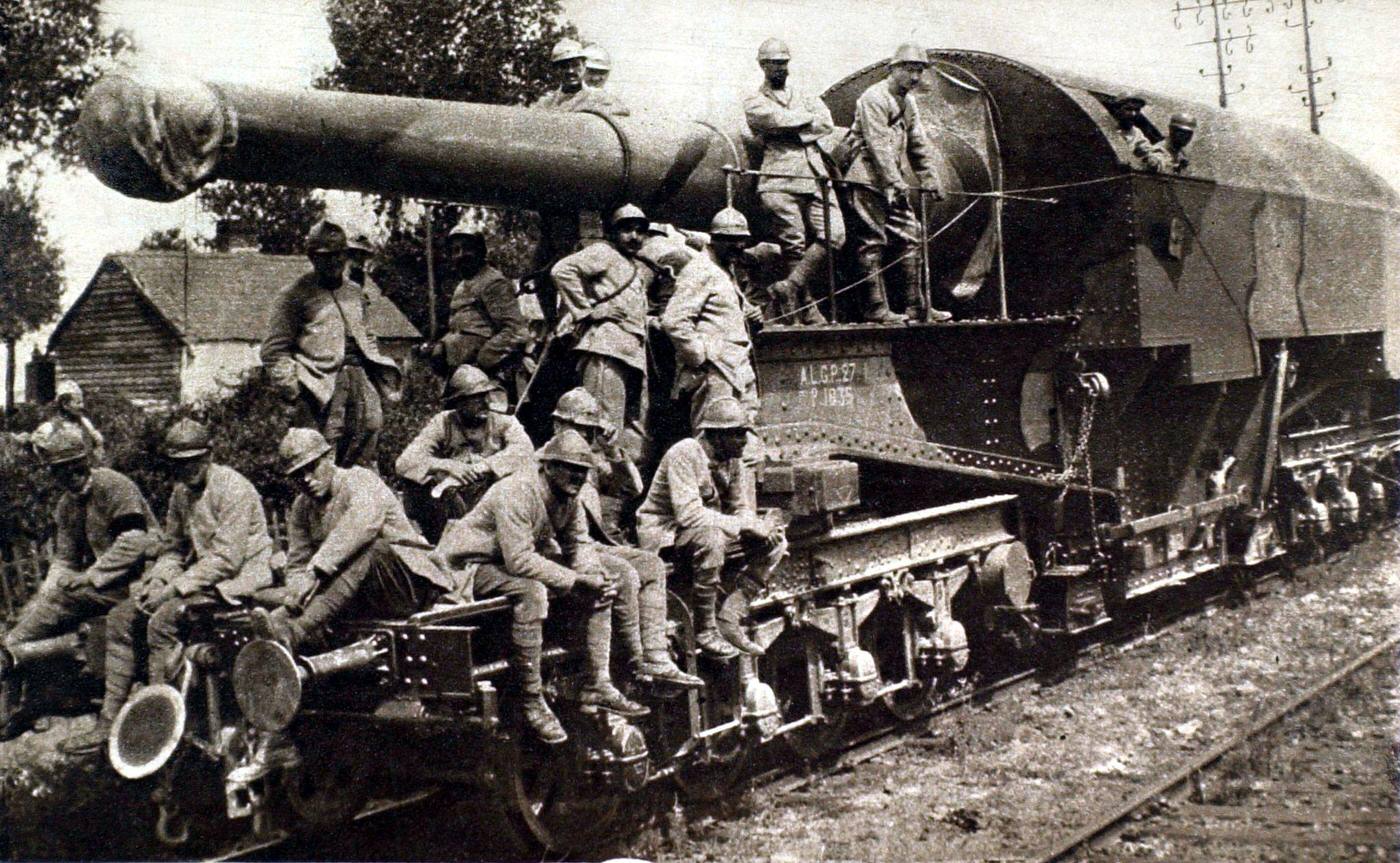
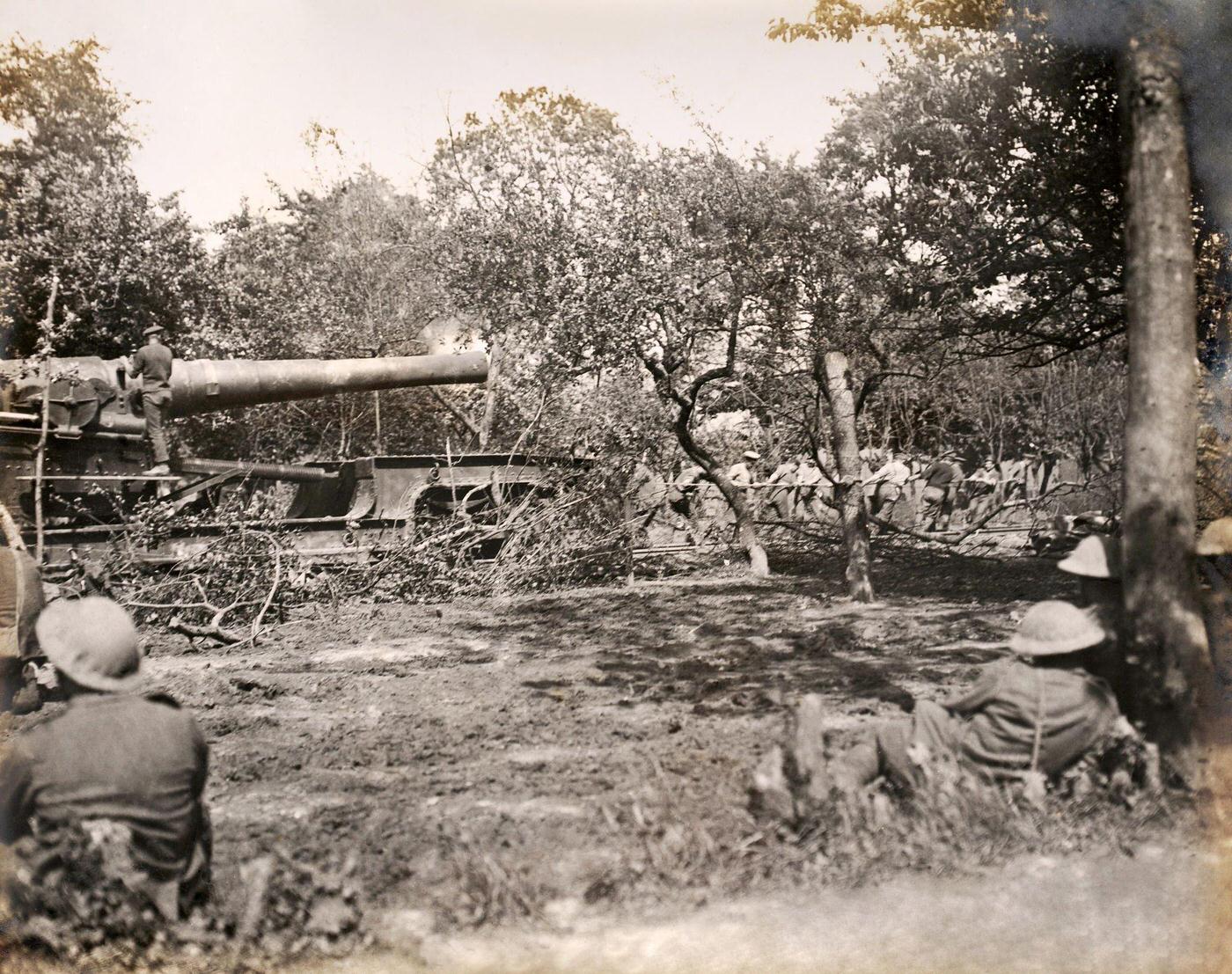
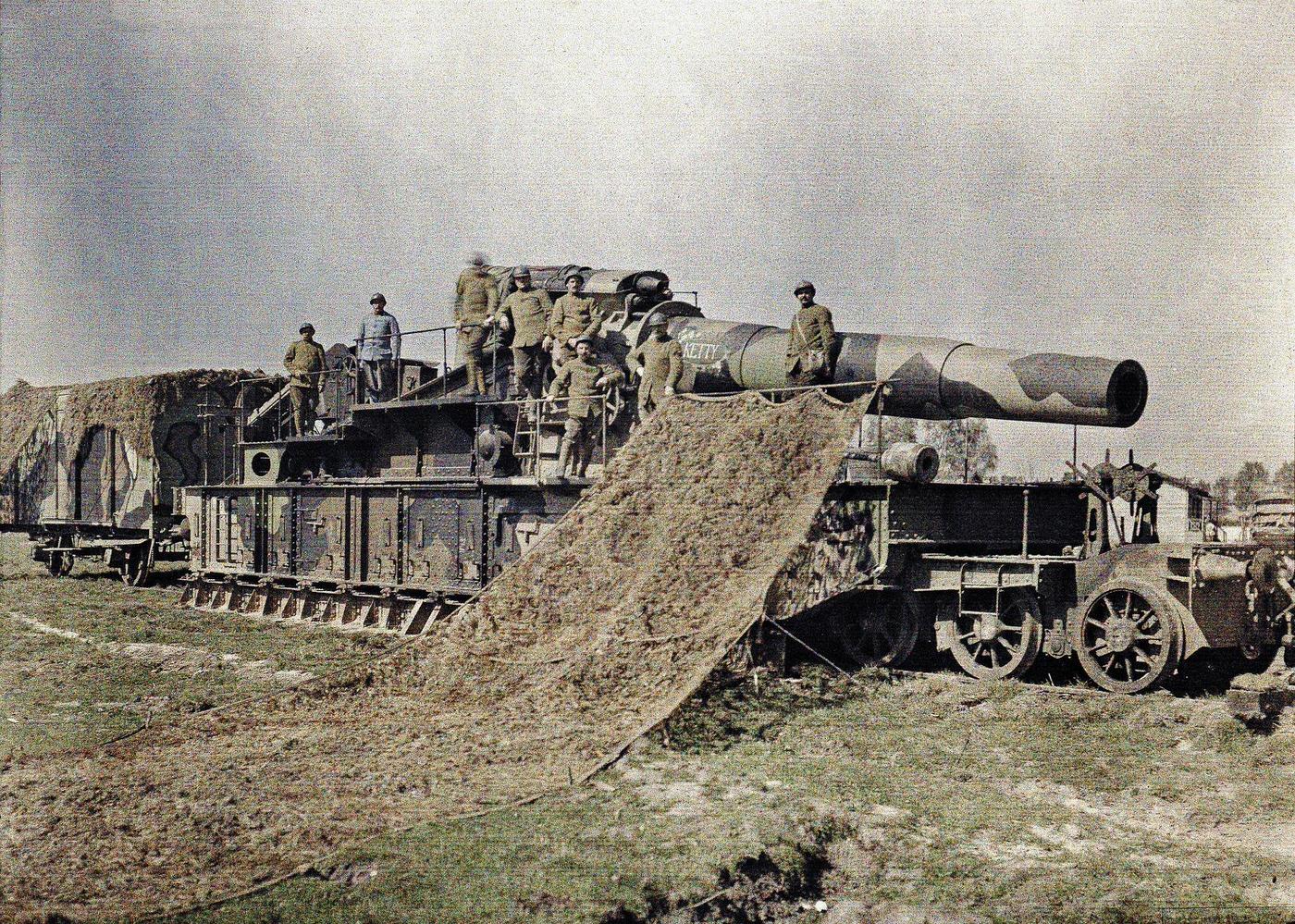
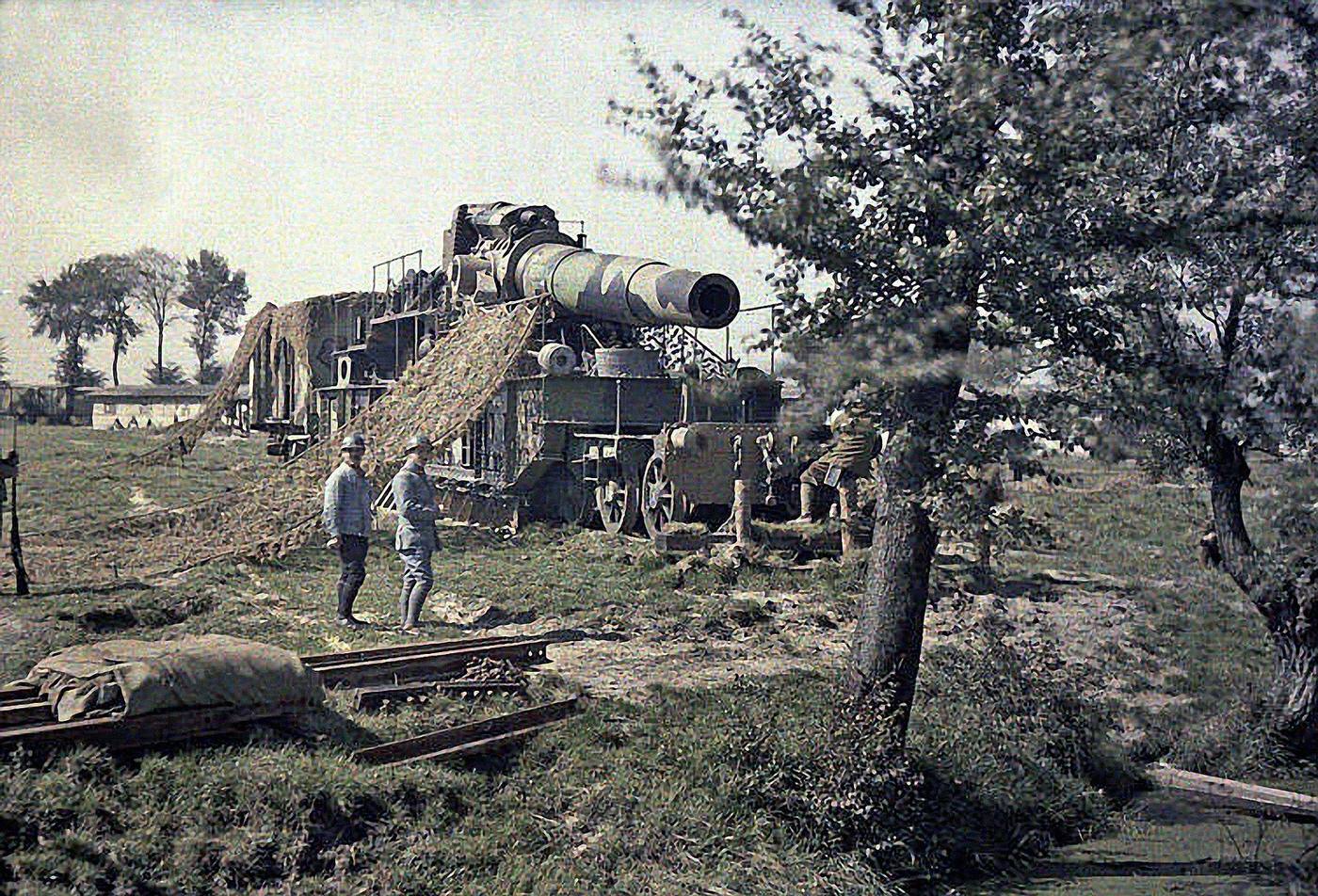
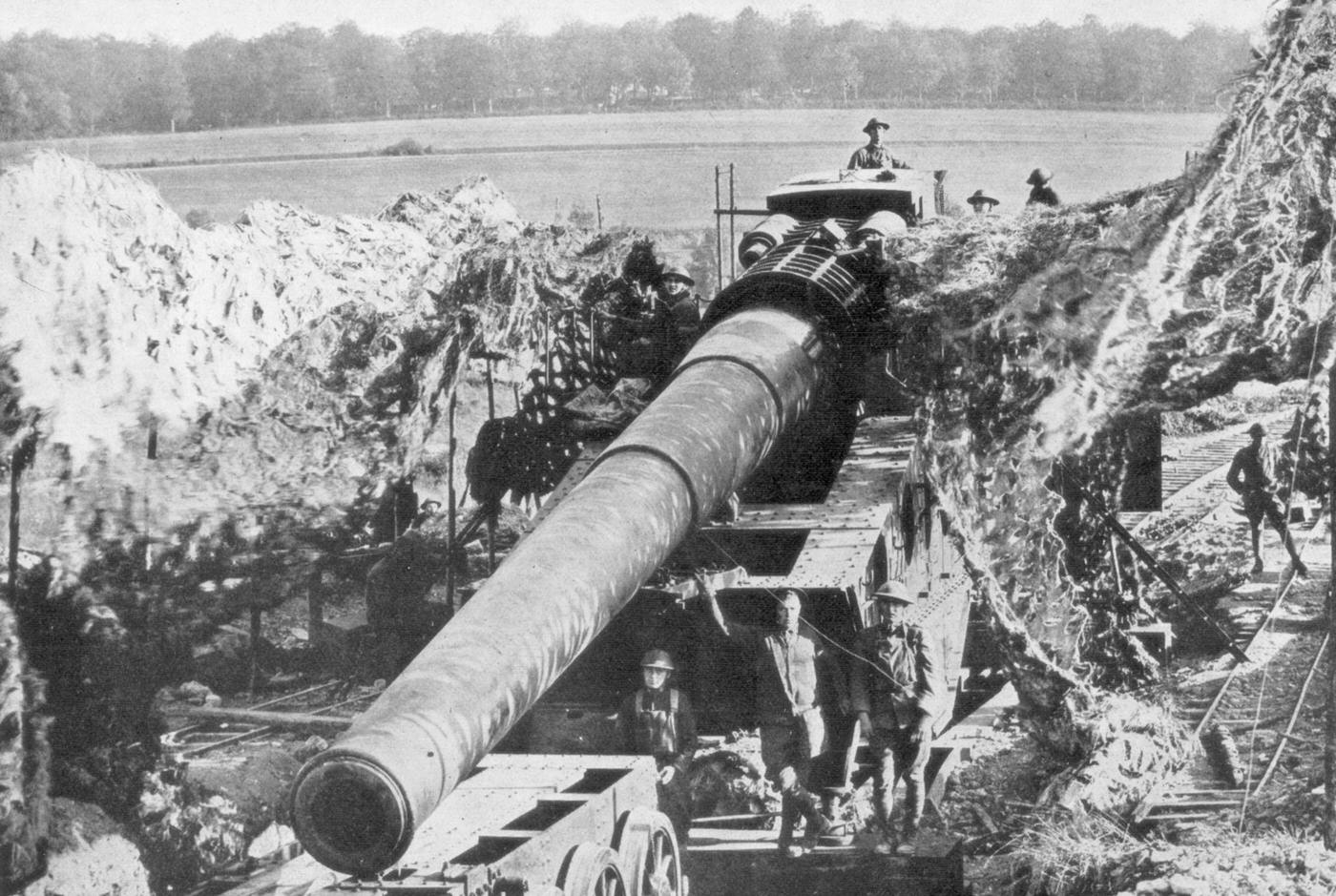
One persistent problem with railway guns was their visibility. A weapon weighing hundreds of tons and standing several stories tall was nearly impossible to hide. Crews went to great lengths to camouflage their guns using netting, branches, and any available material. In September 1917, French soldiers worked to conceal a 370 mm gun named “Keity” near Noyon in the Oise region — a routine but vital task that kept the weapon safe from enemy aircraft and spotters.
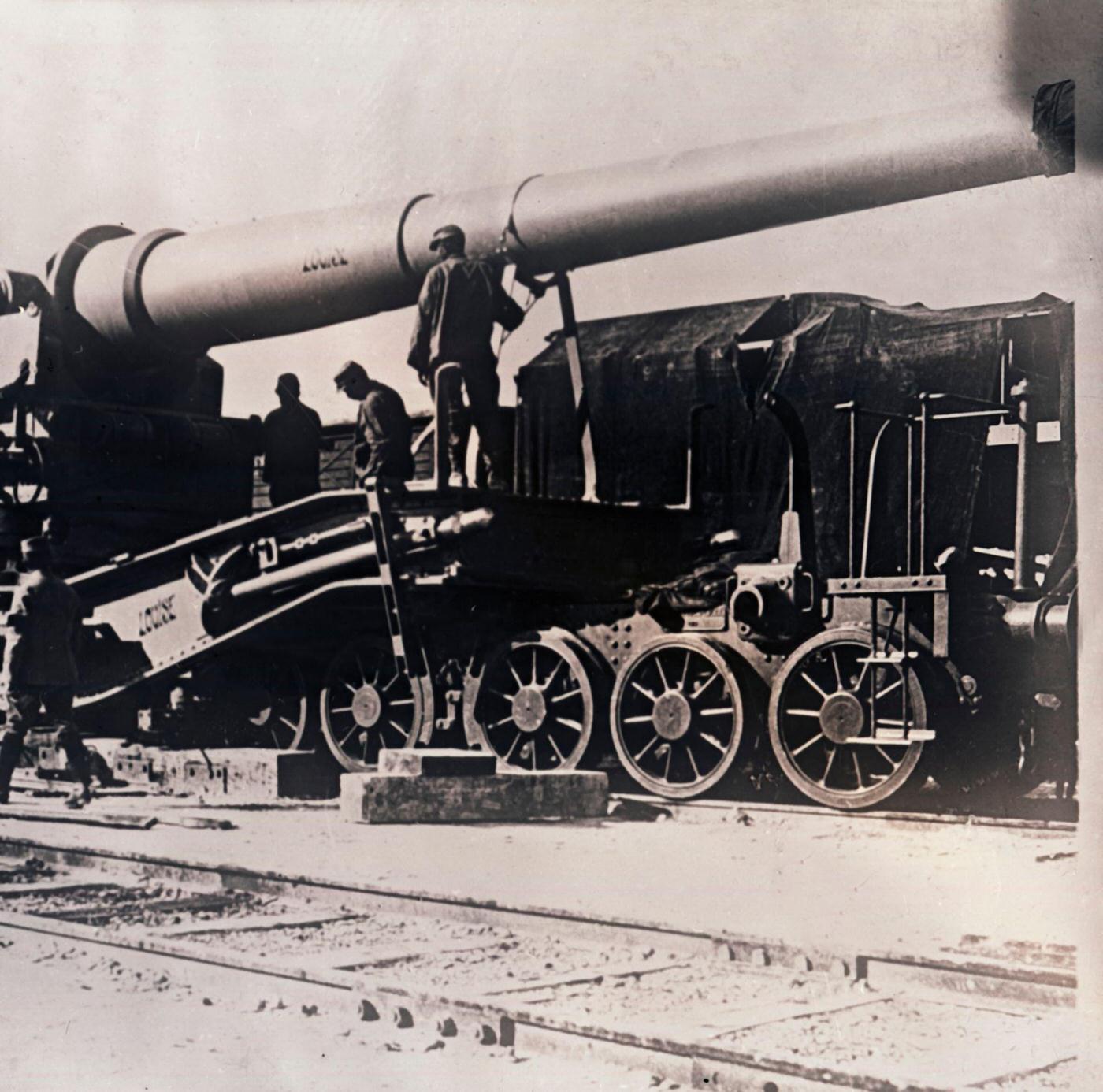
It was common practice for crews to give their guns personal names. The French 370 mm gun “Louise” was deployed at Mailly in northern France and, like many named guns, became a point of unit identity and pride among its crew.
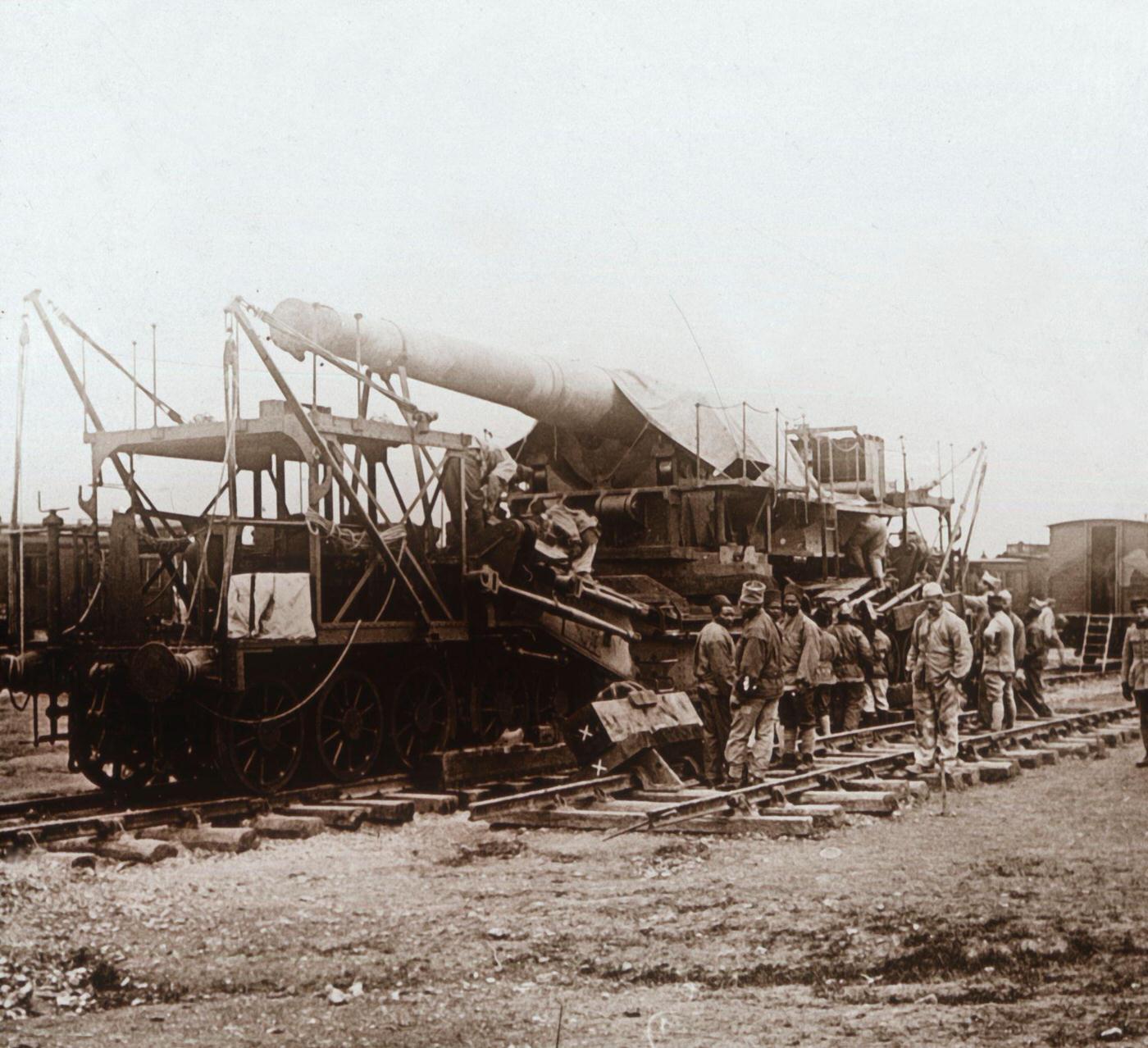
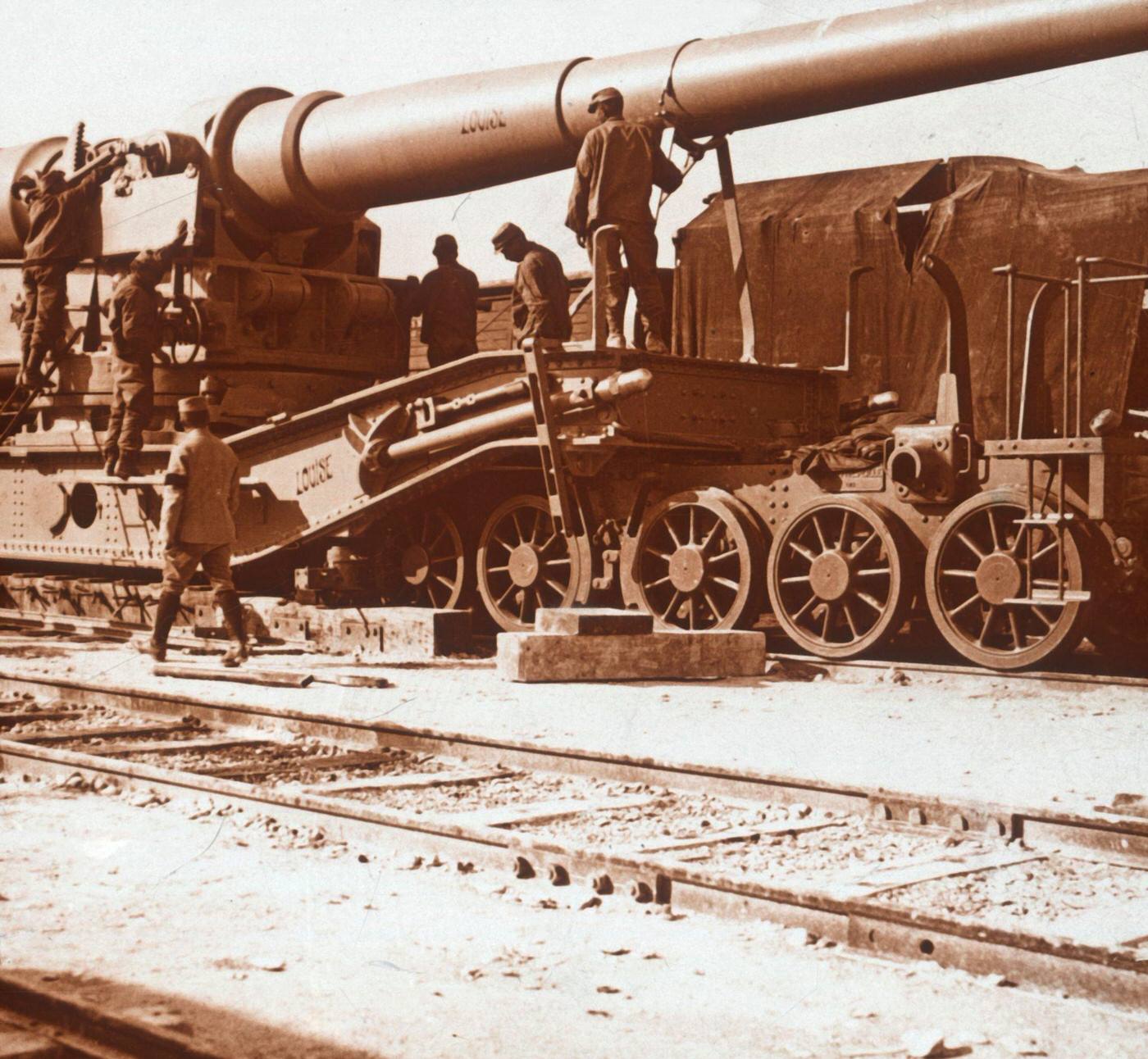
By 1918, railway gun designs had evolved significantly. Split-trail carriages allowed guns to be aimed across a wider arc without moving the entire train, making them more flexible in combat situations.
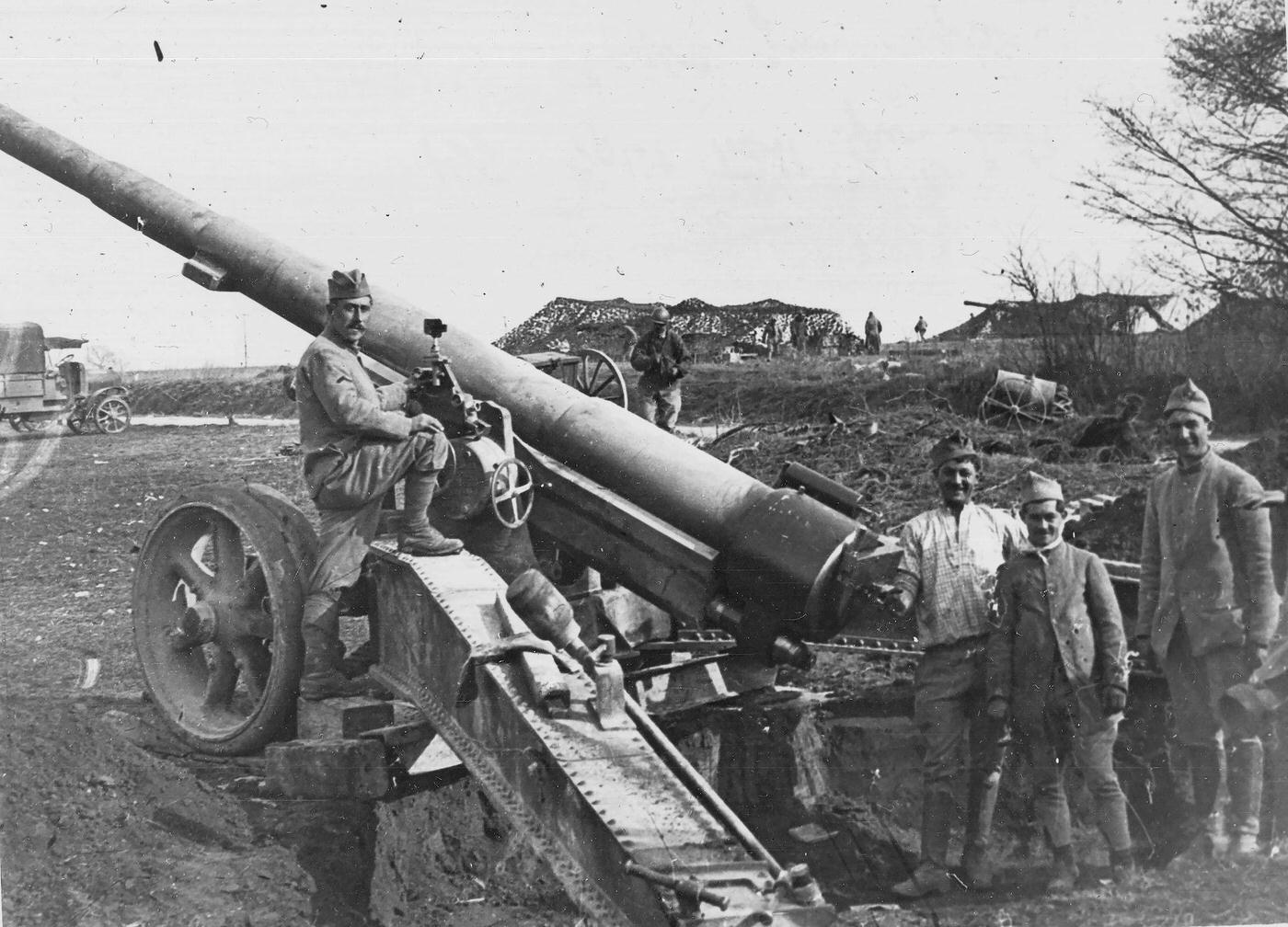
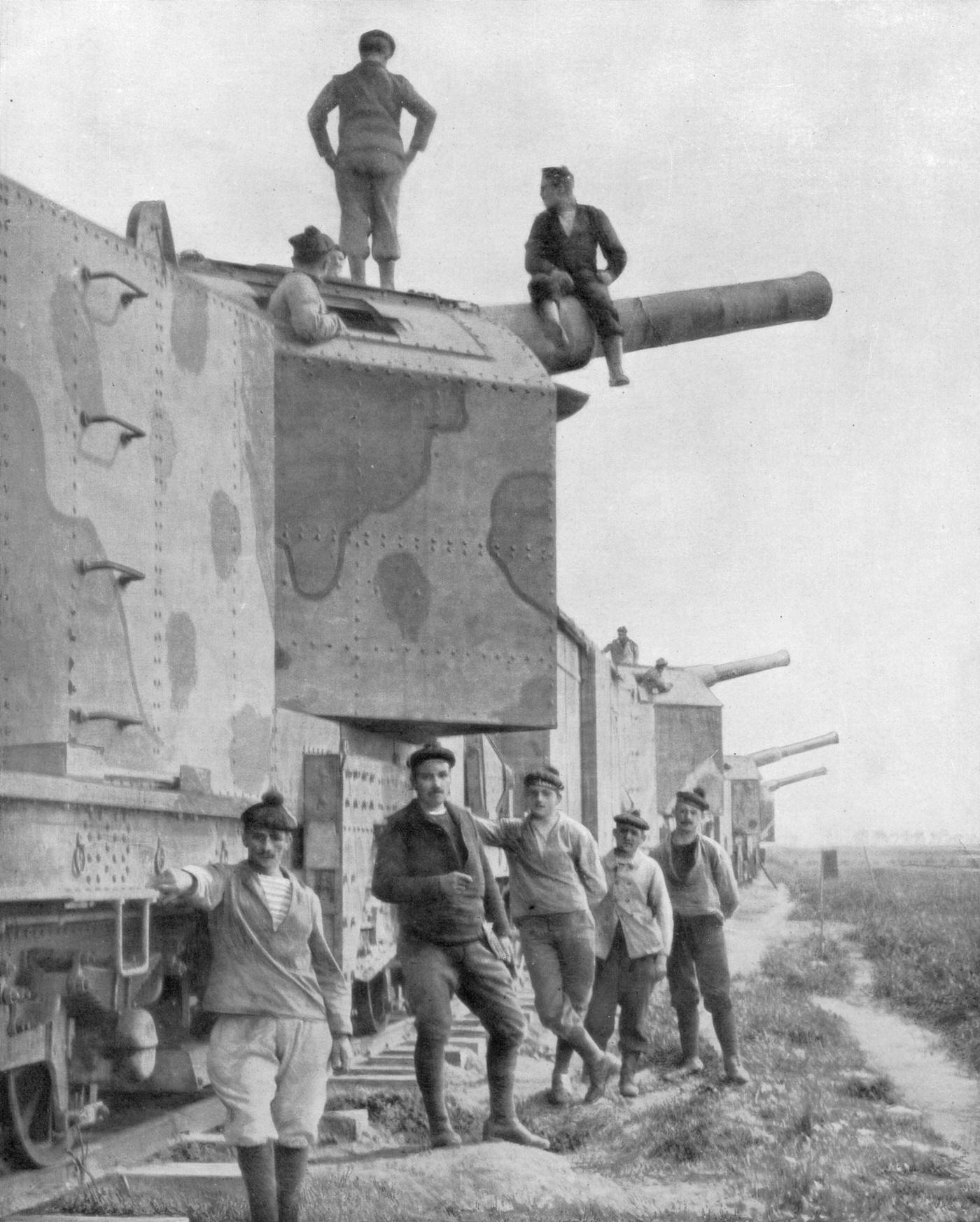
Among the most celebrated uses of British railway artillery was the bombardment of the Hindenburg Line, Germany’s heavily fortified defensive system in France. The 16-inch railway gun played a direct role in cracking open those defenses in 1917 and 1918.
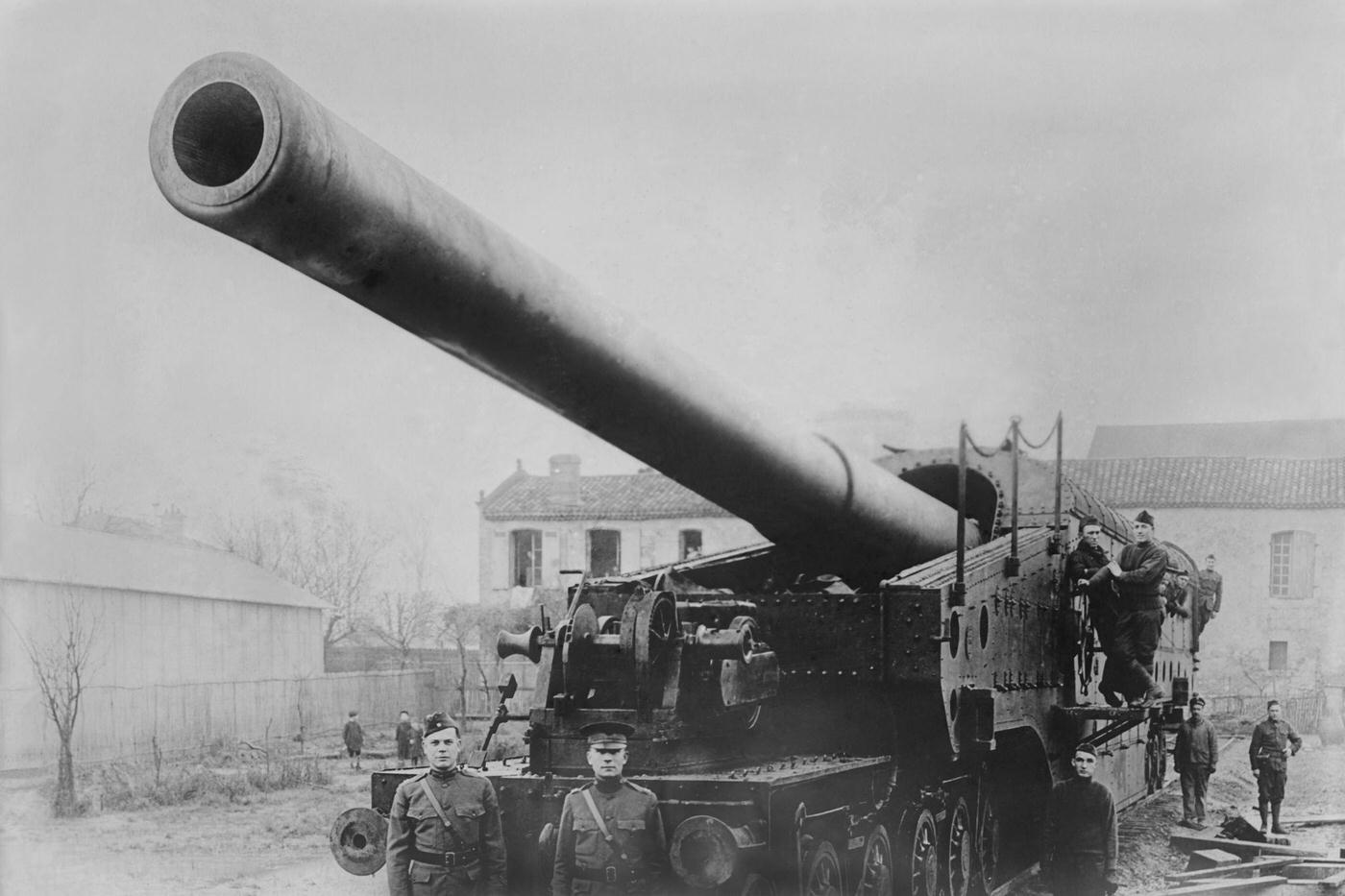
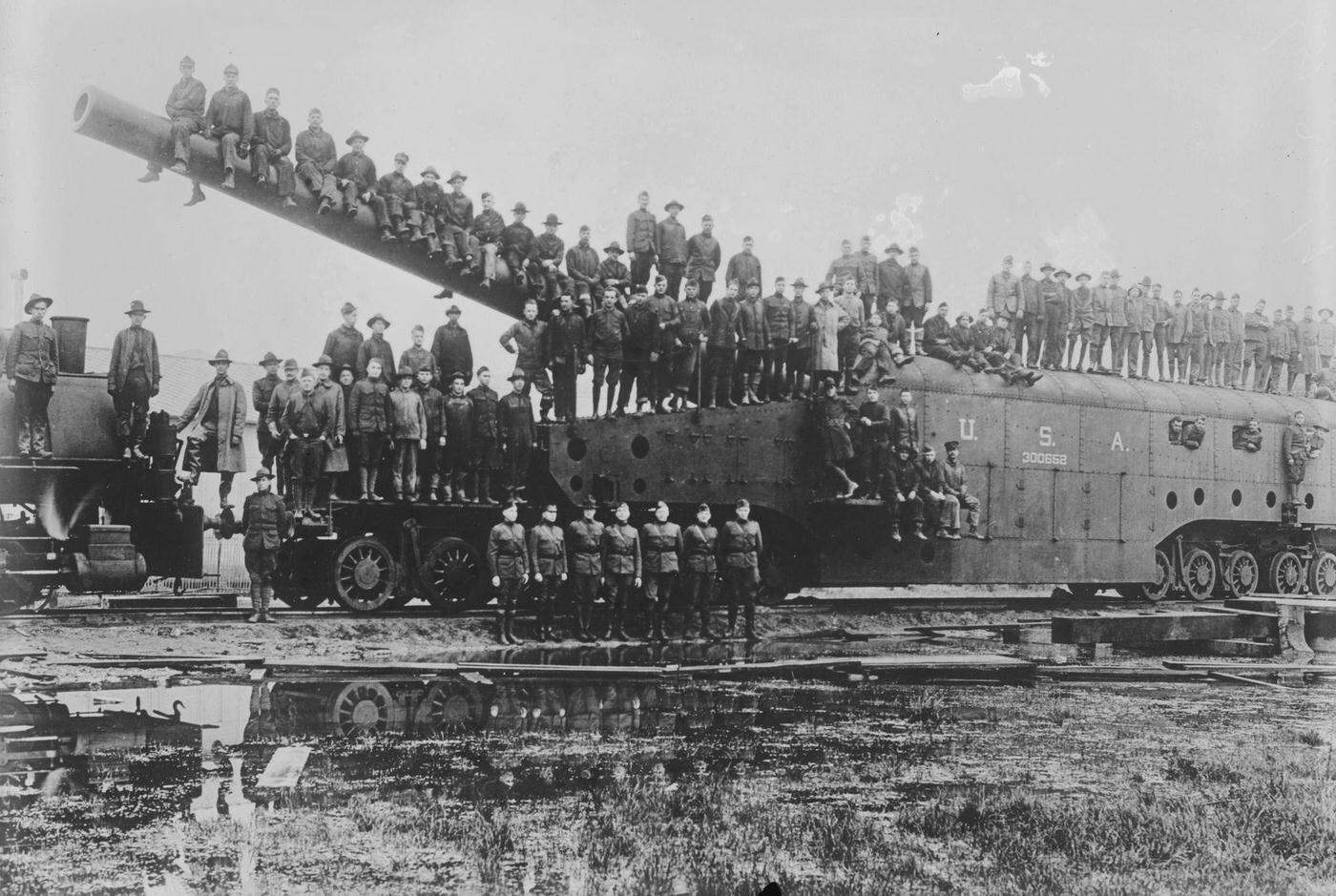
The United States entered the railway gun program on a large scale after joining the war in 1917. American 14-inch guns saw action during the Meuse-Argonne Offensive in 1918 — one of the largest and bloodiest military operations in U.S. history. These guns fired 1,400-pound shells at German positions deep behind the front lines.
After the Armistice in November 1918, the massive war machine began to wind down. Rail infrastructure that had served the guns — including buried trolley tracks used to move supplies and equipment — was torn up and the metal salvaged for postwar use.
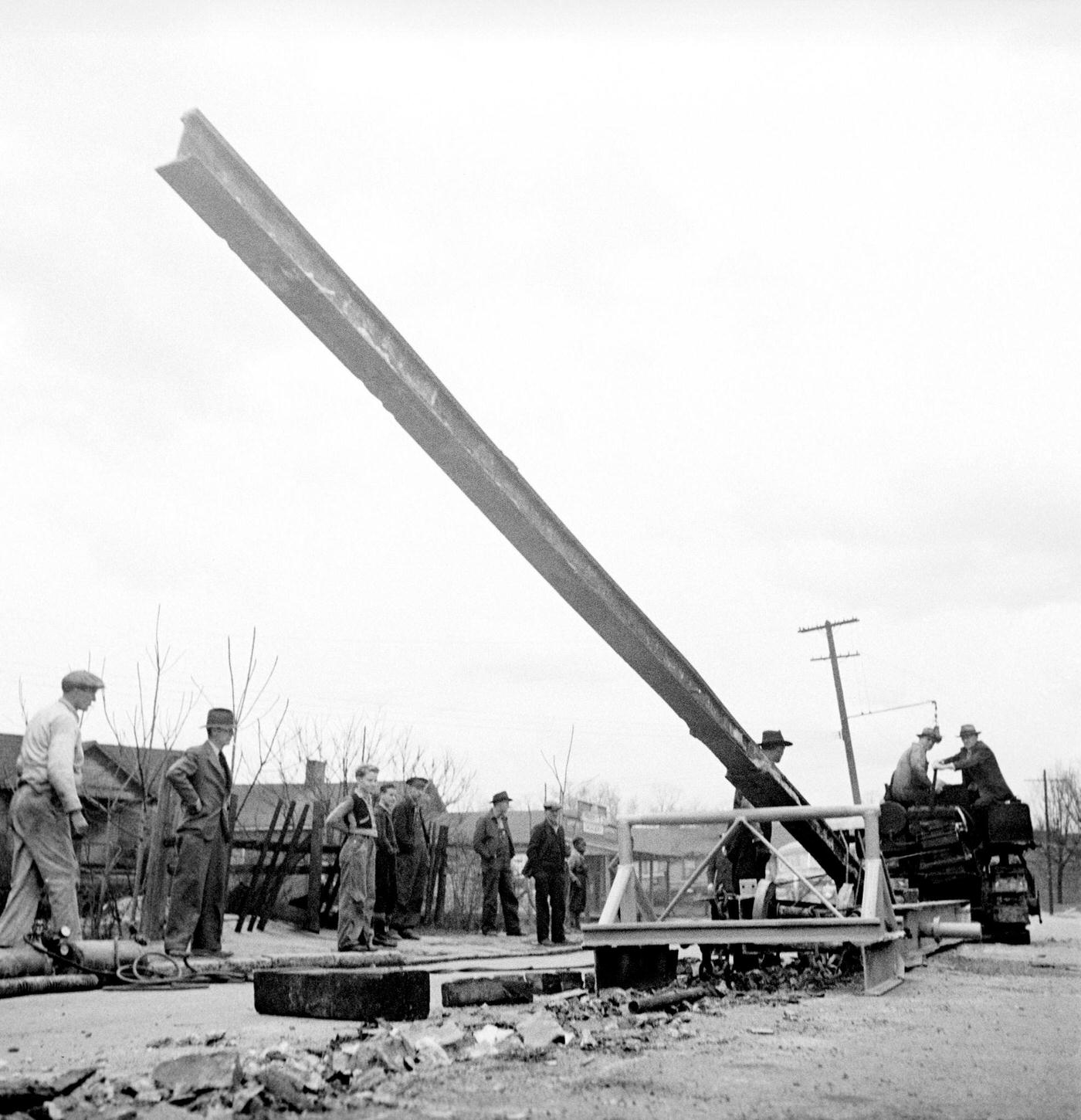
The 14-inch guns that had served in France were well documented in the immediate postwar years. One recorded in February 1919 could fire a 1,200-pound shell to a range of 19 miles, numbers that illustrated the raw destructive reach these weapons had achieved by the end of the war.
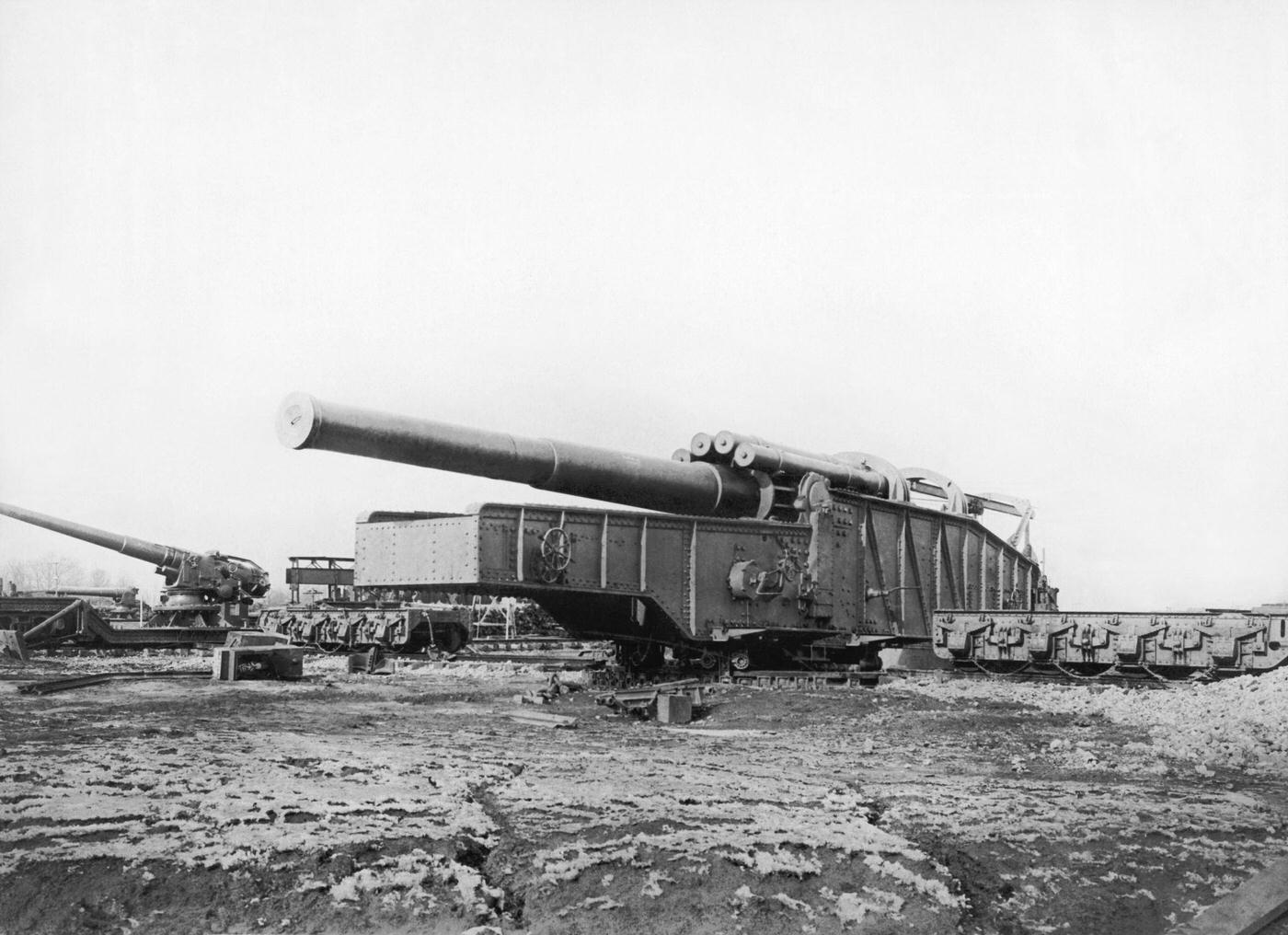
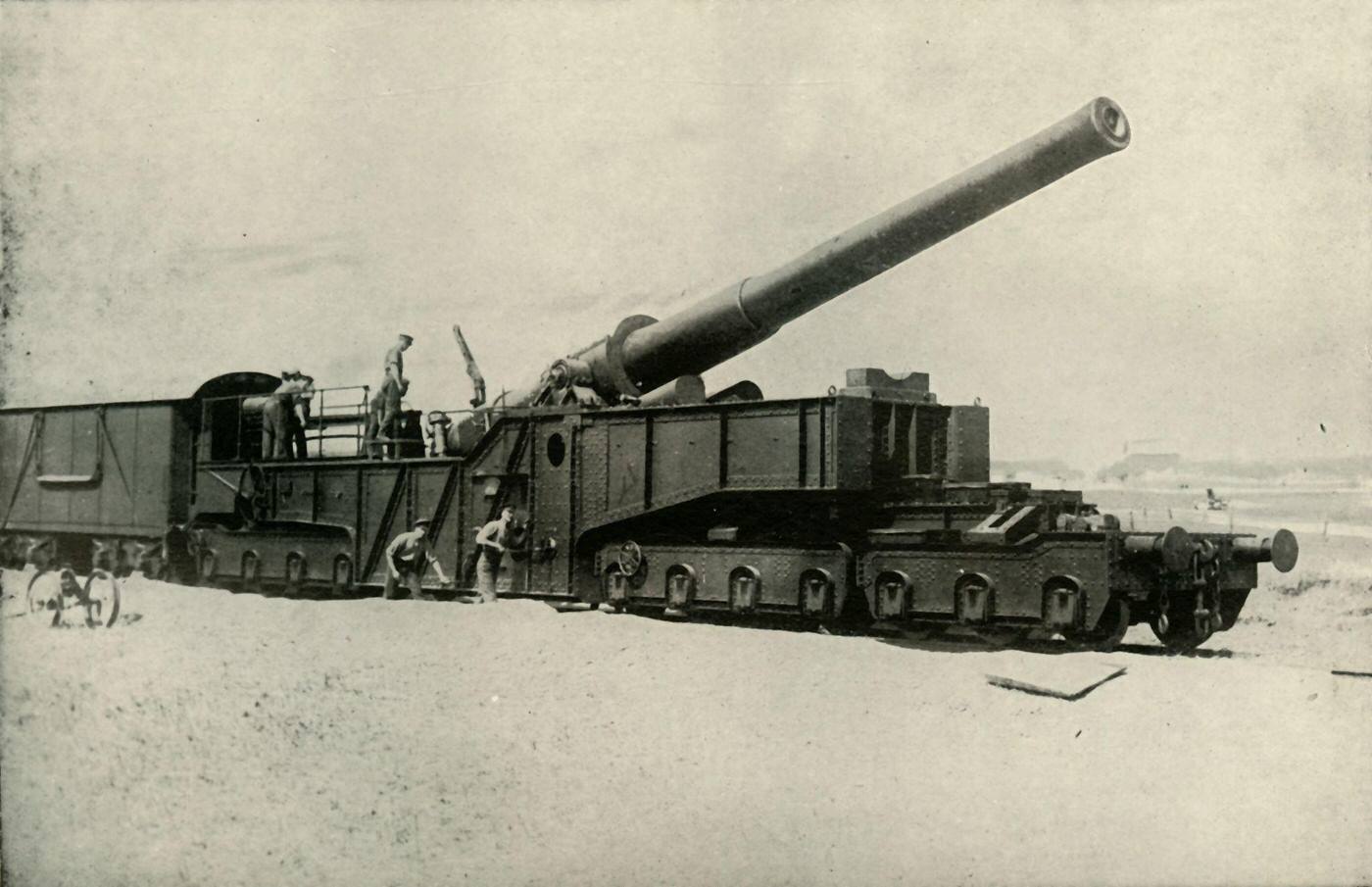
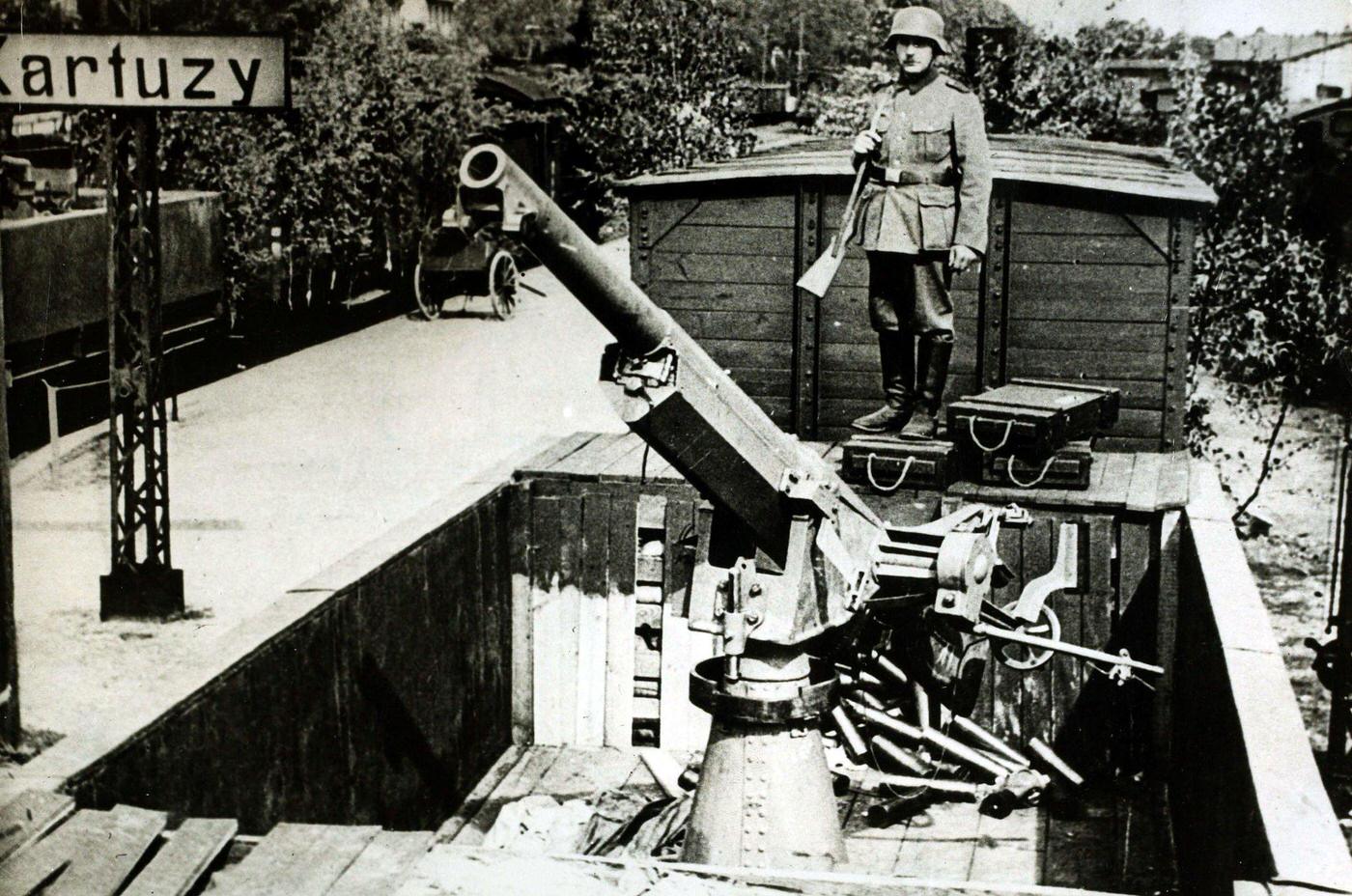
Despite the lessons of World War I, railway guns remained in service into World War II. Germany continued to develop and deploy them, and by 1939 rail-mounted anti-aircraft guns were already appearing in newly occupied Polish territory. In the 1940s, massive railroad guns were still in active use, towering over the troops that operated them.
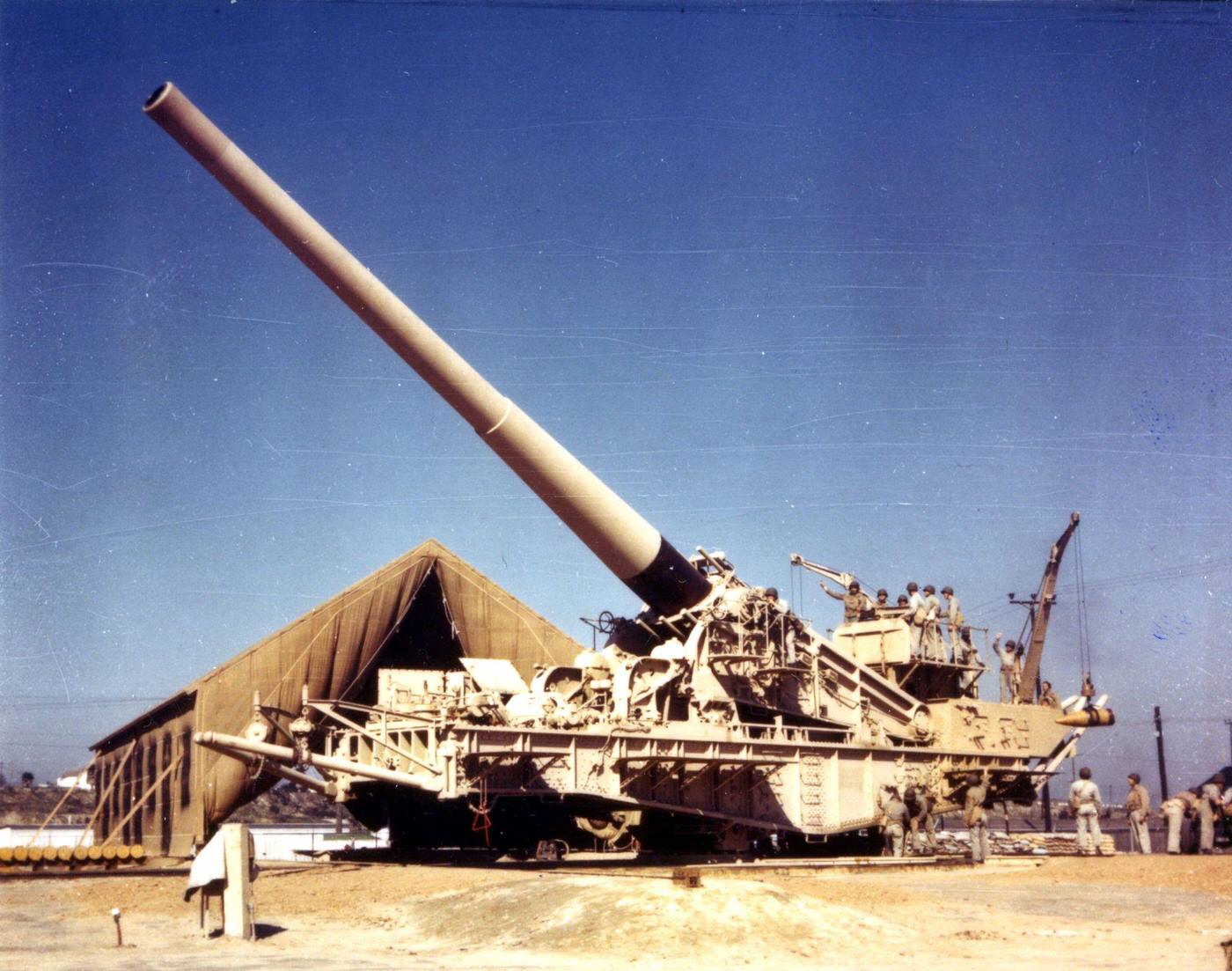
Some railway guns were positioned to serve as coastal defense weapons, aimed out to sea to repel naval landings. This role extended their usefulness into the second global conflict, where both Allied and Axis forces used rail-mounted guns to cover vulnerable stretches of coastline.
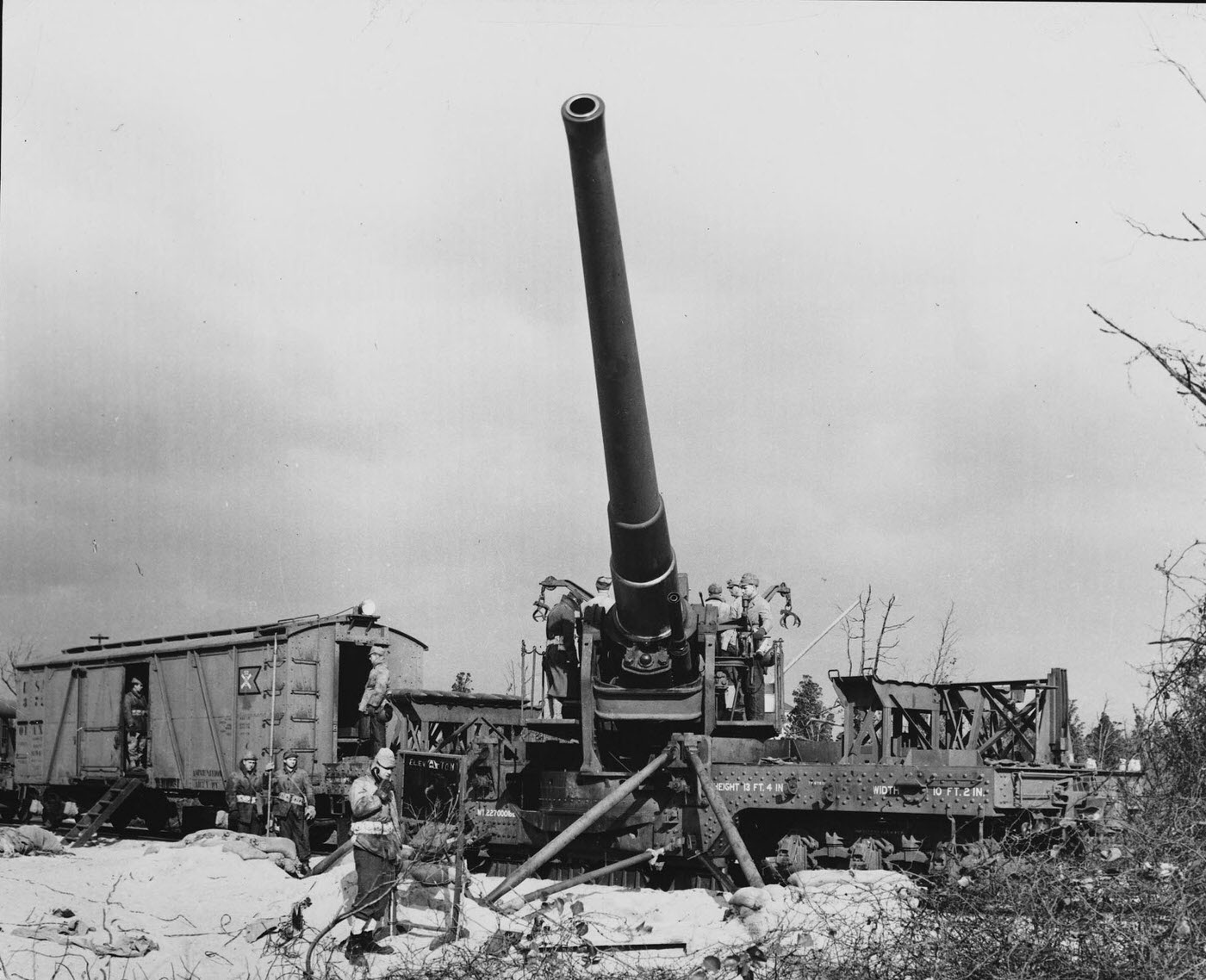
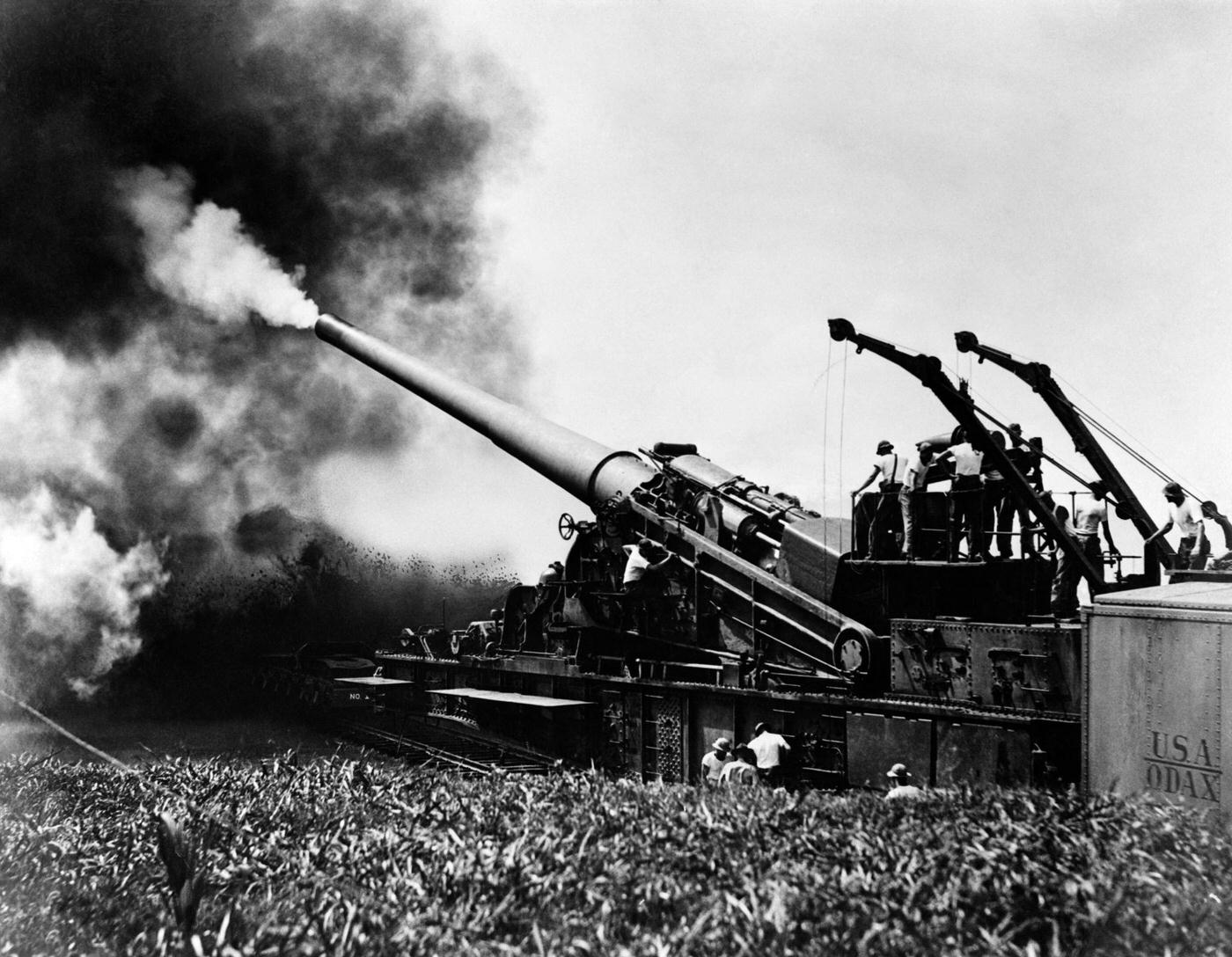
As Allied forces advanced through France in 1944, they encountered the physical remnants of Germany’s railway gun program firsthand. American soldiers examined captured and abandoned German guns across the French countryside, including a giant rail gun found southeast of Torigny-sur-Vire and a massive 10-inch gun on a circular track in the Cherbourg Peninsula. The circular track allowed the gun to rotate and fire in any direction — a design feature that addressed one of railway artillery’s central limitations.
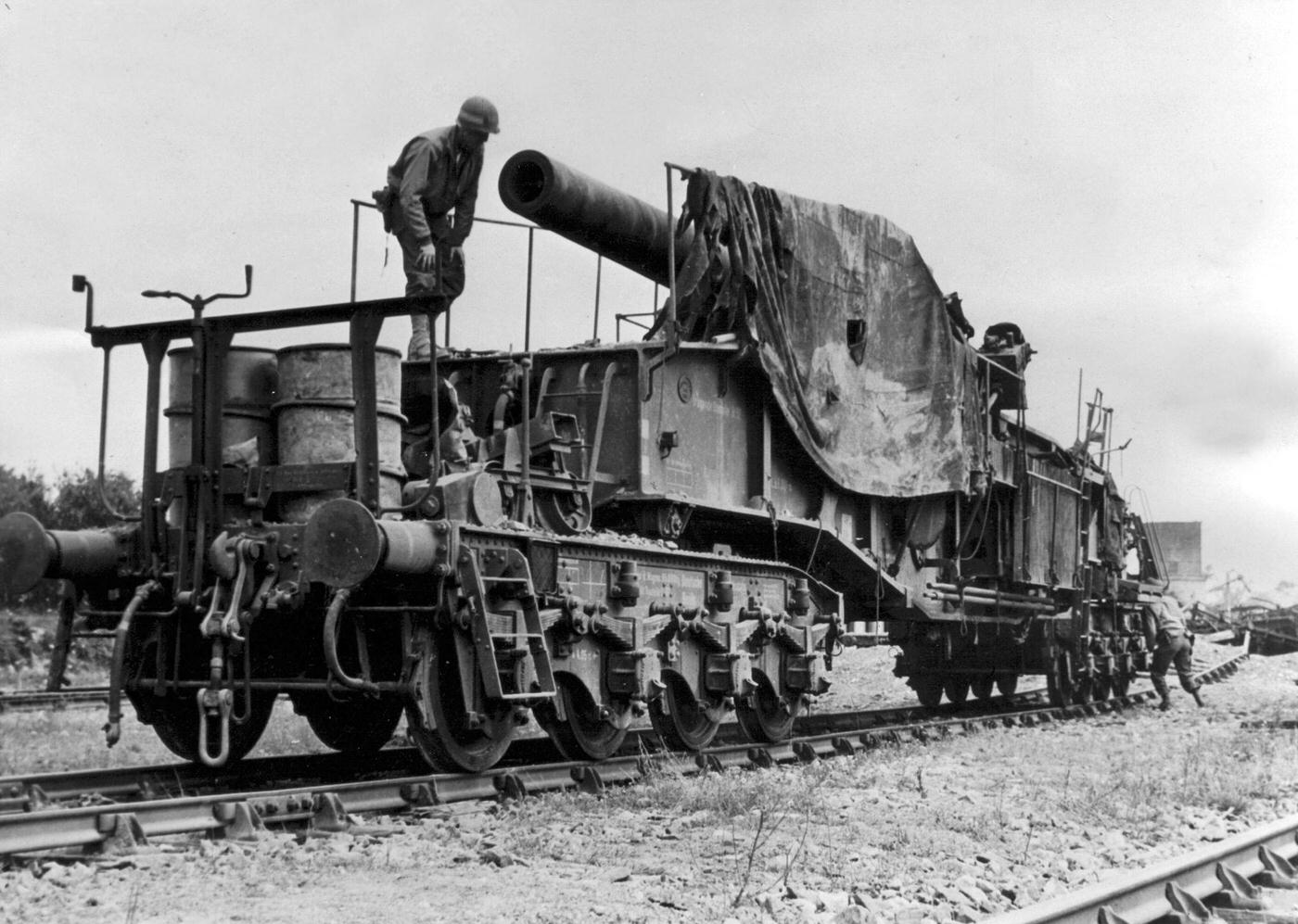
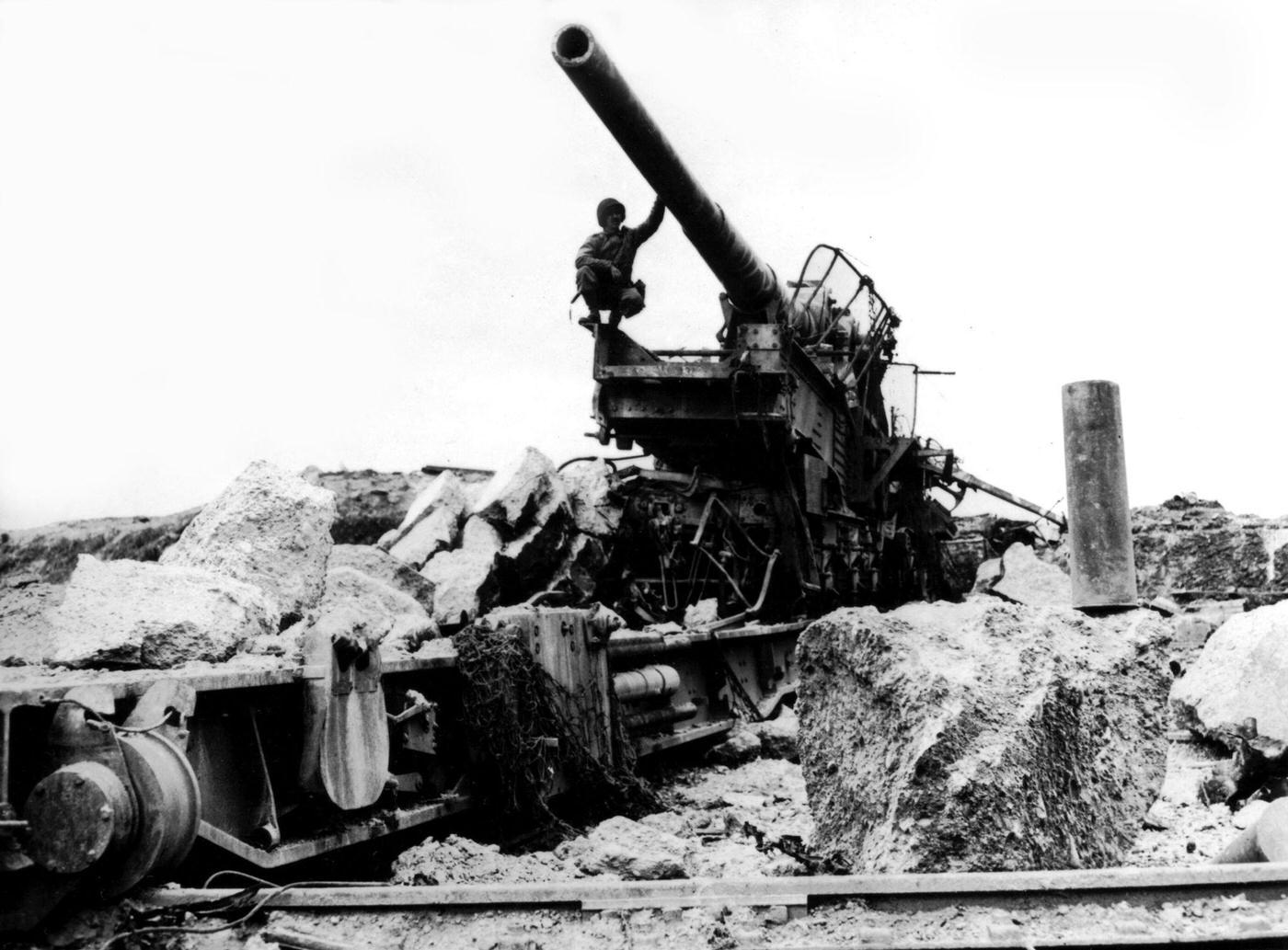
By the close of World War II, advances in aircraft range and bomb capacity, combined with the development of guided missiles, had made railway guns militarily obsolete. Enemy aircraft could locate and destroy a gun emplacement faster than crews could relocate along the tracks. The weapons that once represented the peak of long-range artillery had been overtaken by faster, more flexible technology. What remains today are the photographs, the abandoned gun emplacements, and the historical record of an era when steel rails and steel barrels defined the reach of military power.