Pittsburgh in the 1990s was a city finding its footing after decades defined by steel and smoke. The mills were mostly gone, but what replaced them was something unexpected — a growing reputation for technology, culture, and civic pride. The decade brought big changes to the neighborhoods, the universities, the riverfront, and the sports scene. These photos capture what daily life in the Steel City actually looked like during those ten years.
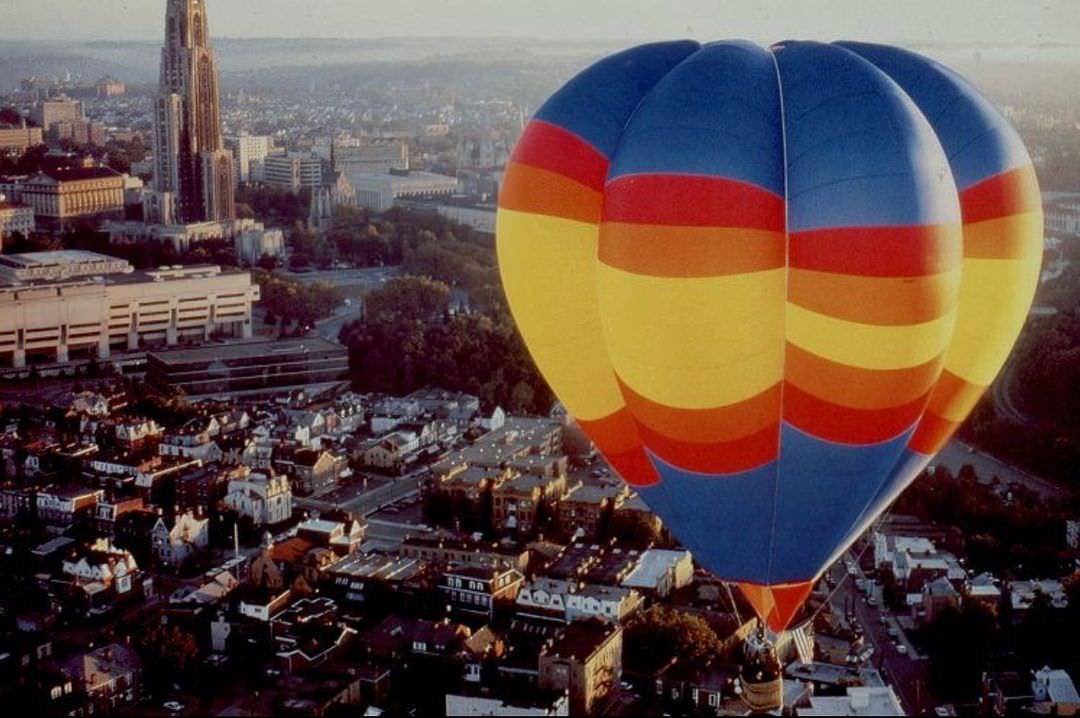
Oakland, home to both Carnegie Mellon University and the University of Pittsburgh, was the intellectual engine driving Pittsburgh’s transformation in the 1990s. Both schools pushed hard into robotics and health sciences during this period, drawing researchers, students, and grant money that helped reshape the city’s economy. The neighborhood buzzed with student life, and outdoor events — like what you see in that 1990 photo above — were part of the fabric of the community.
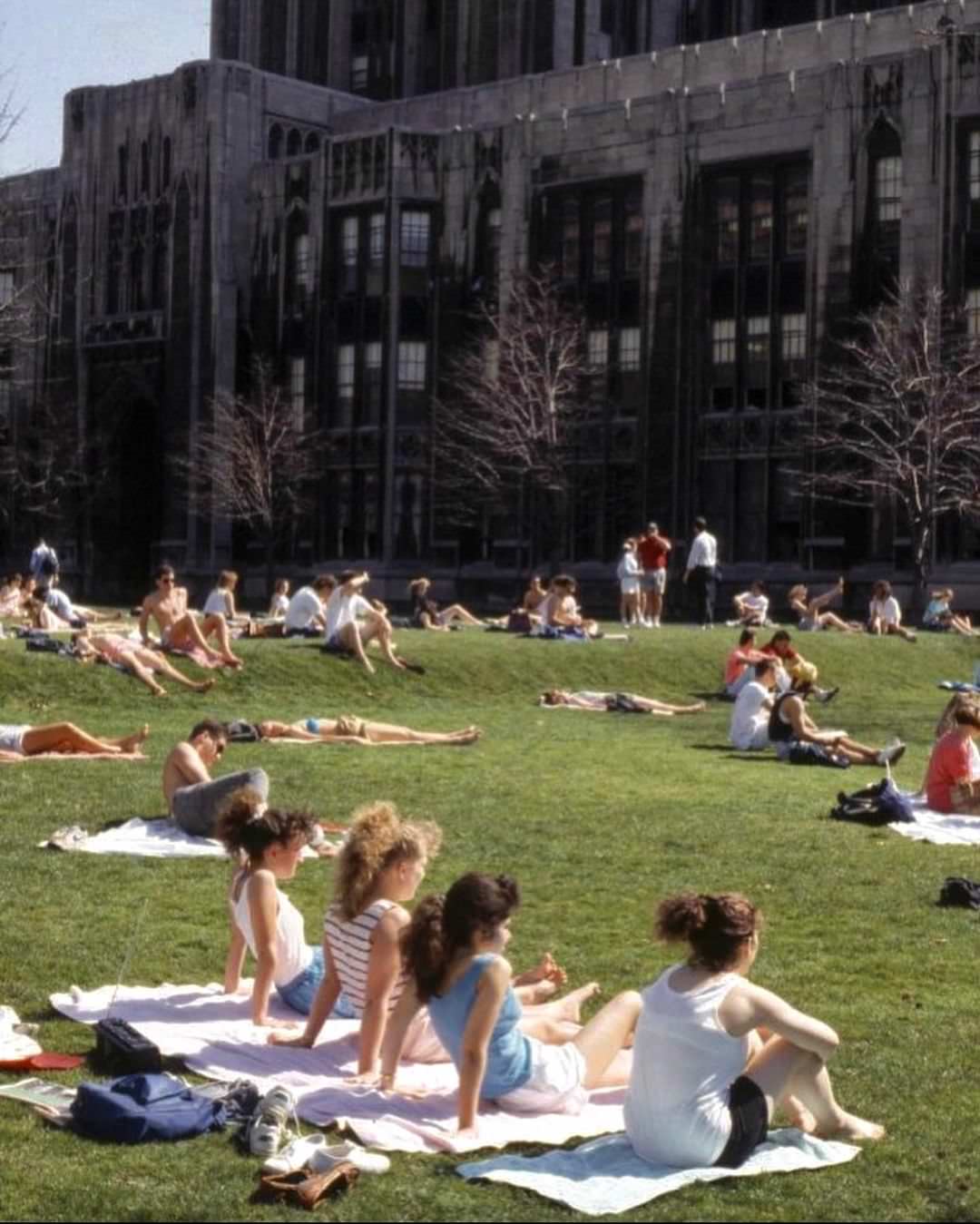
University of Pittsburgh students made the most of the Cathedral of Learning lawn when the weather broke. The Cathedral itself, standing 42 stories tall, was already an iconic part of the Pittsburgh skyline. Around it, campus life in the early 1990s carried a relaxed energy that contrasted with the major changes brewing in Pittsburgh at the time.
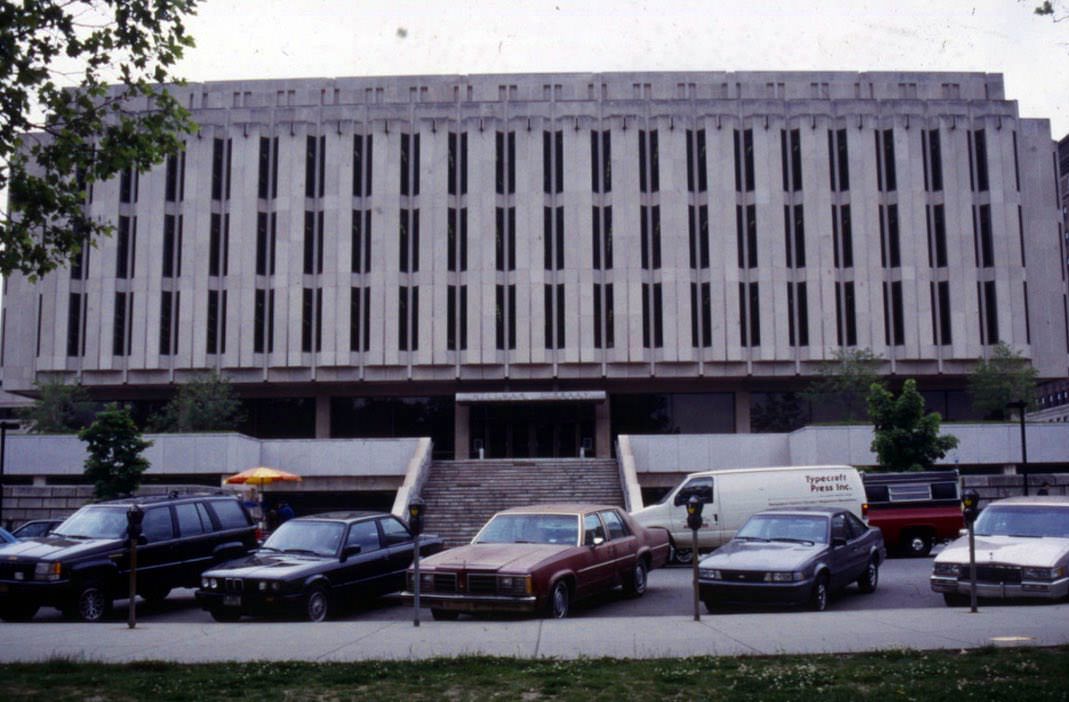
Hillman Library served as the main research library for Pitt students throughout the decade. Before the internet became a household tool, places like this were essential. Students spent long hours here working on coursework, and the library remained one of the most-used buildings on campus all through the 1990s.
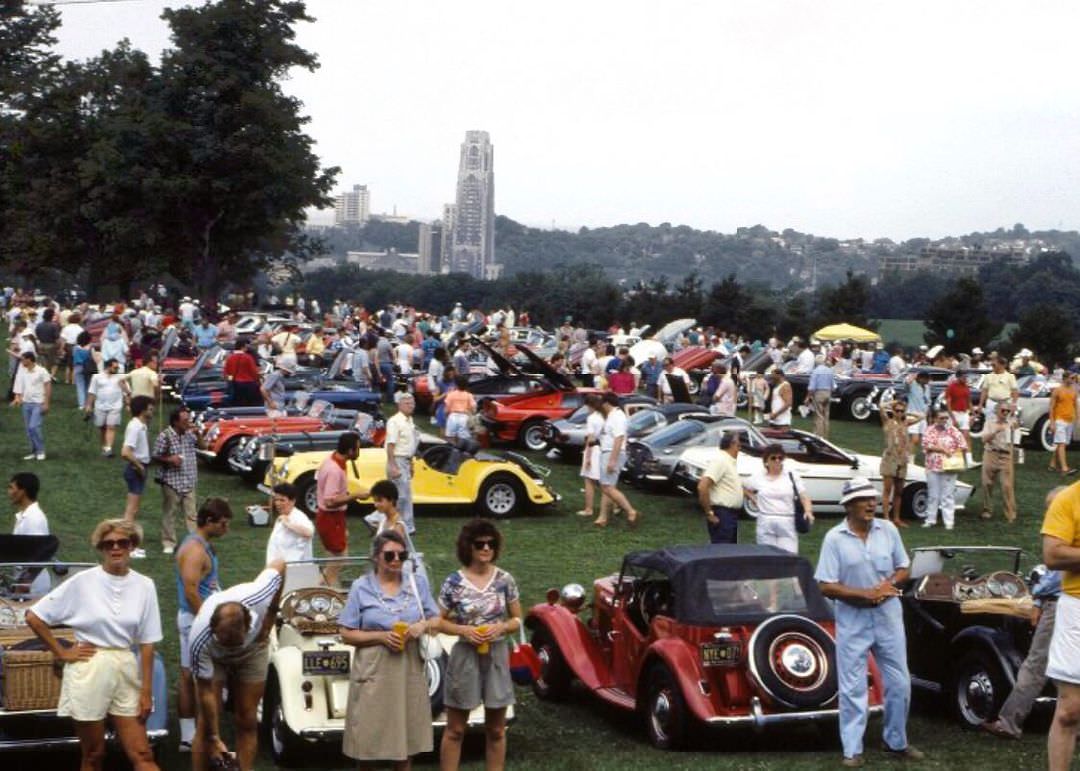
Schenley Park, located just next to Oakland, remained one of Pittsburgh’s most beloved public spaces throughout the decade. Events like this car show drew families from across the city. The park’s open meadows, tennis courts, and trails gave Pittsburghers a green escape right in the middle of an urban environment. It was a consistent gathering place when the weather cooperated.
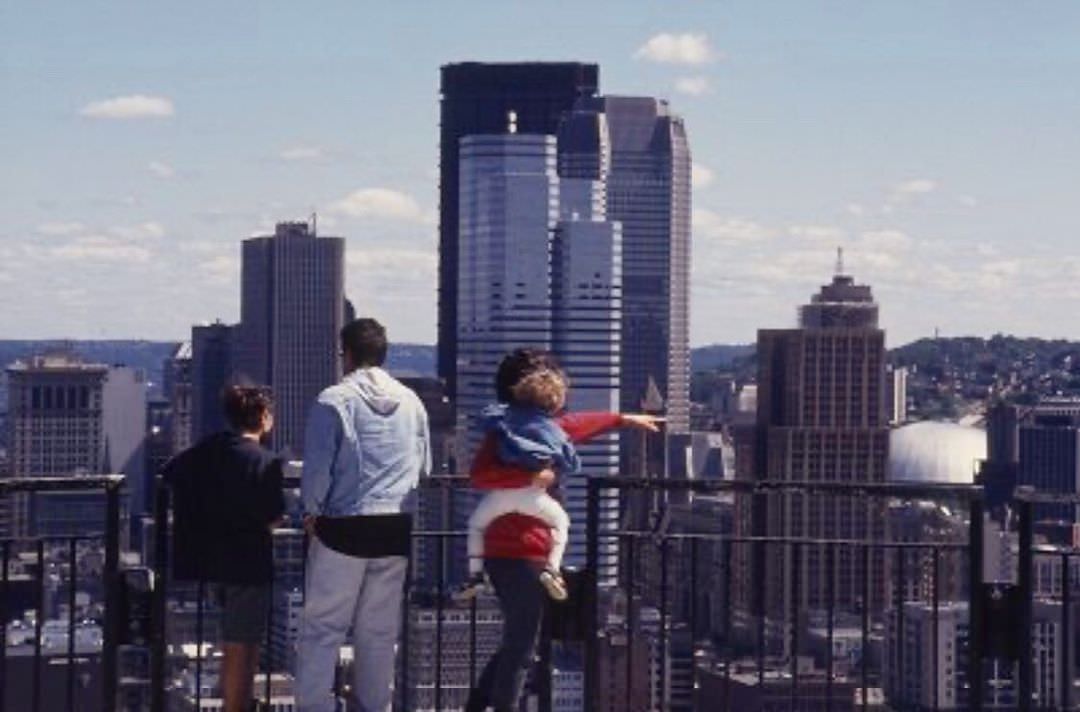
By 1994, Pittsburgh’s skyline told a different story than it had just twenty years earlier. The heavy industrial haze that once hung over the city had cleared, and the downtown skyline — the Golden Triangle formed by the Allegheny, Monongahela, and Ohio rivers — had become one of the most photographed views in the country. Mt. Washington, perched high on the South Side, was the best vantage point for taking it all in. That same year, 1994, the Andy Warhol Museum opened in the North Shore neighborhood, celebrating Pittsburgh’s most famous artist and drawing visitors from around the world.
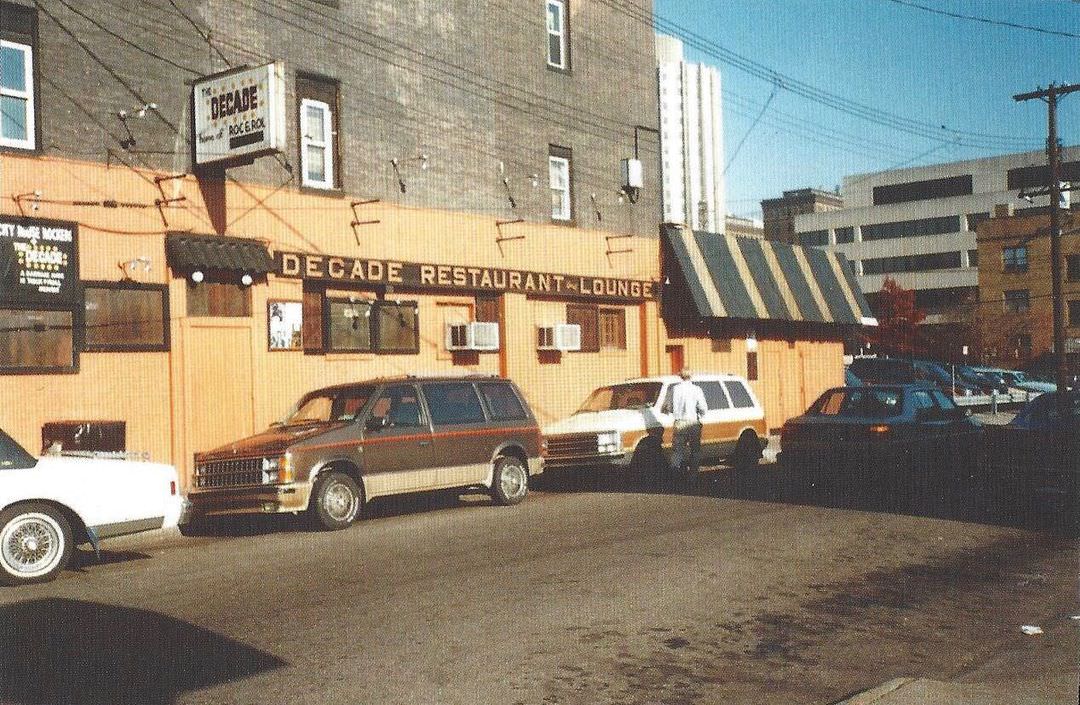
Pittsburgh’s music and nightlife scene was alive and evolving throughout the 1990s. The Decade was a well-known Oakland bar and music venue that had built a loyal following over the years. When it closed in 1995 and eventually became the Garage Door Saloon, it marked a shift in the neighborhood’s character — one of many transitions Oakland went through during the decade. Clubs across the city hosted grunge, hip-hop, and local acts, giving Pittsburgh a nightlife identity that went beyond just sports bars.
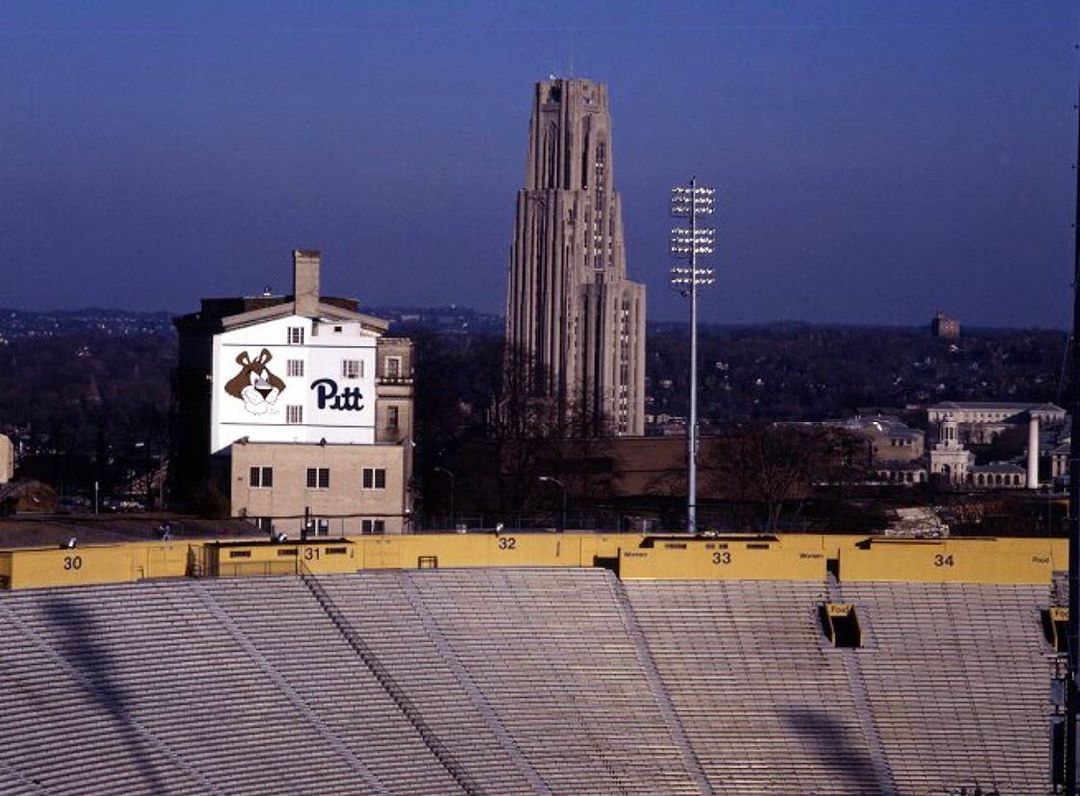
No single structure defined the University of Pittsburgh’s 1990s experience quite like Pitt Stadium. Built in 1925, the stadium sat on the edge of campus in Oakland and had hosted decades of Pitt Panthers football. By the 1990s, it was aging, and discussions about its future grew louder as the decade wore on. But before any wrecking ball arrived, the stadium still packed in crowds and gave students memories that lasted a lifetime.
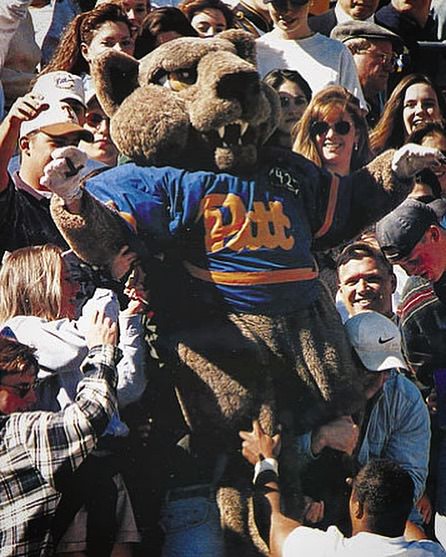
Roc the Panther, Pitt’s mascot, was a fixture at home games throughout the decade. The student section at Pitt Stadium had a reputation for being loud and passionate, and games in the mid-1990s drew fans who understood they were watching the final chapter of football at that location. The stadium’s days were numbered, but the energy inside it hadn’t faded.
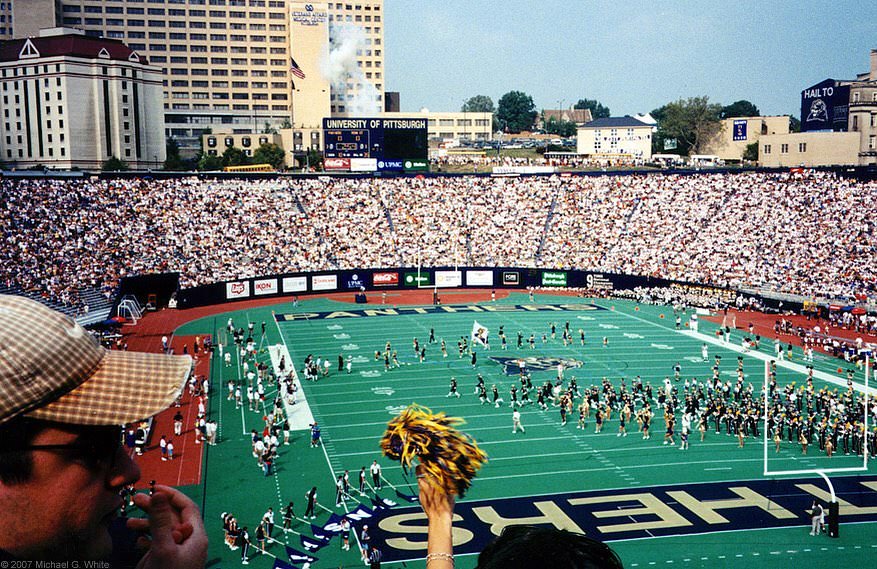
By 1998, it was clear that Pitt Stadium would not survive much longer. The university had already decided to move its football program to what would become Heinz Field, sharing a new venue with the Pittsburgh Steelers. Fans who attended that 1998 season knew they were witnessing the end of an era. The seats, the concrete, the sight lines — all of it would soon be gone.
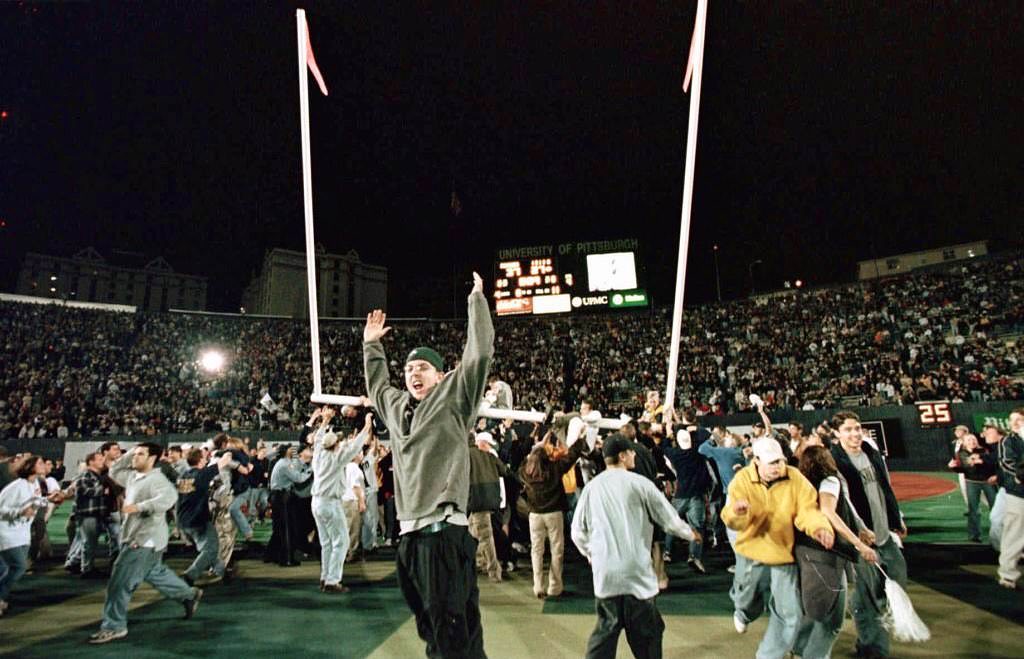
On November 13, 1999, Pitt played its final game at Pitt Stadium against Notre Dame. When the final whistle blew, students poured onto the field from every section. It was a spontaneous, emotional outpouring from a generation of fans who had grown up with the stadium as a backdrop to their college years. The scene was chaotic, joyful, and a little bittersweet all at once.
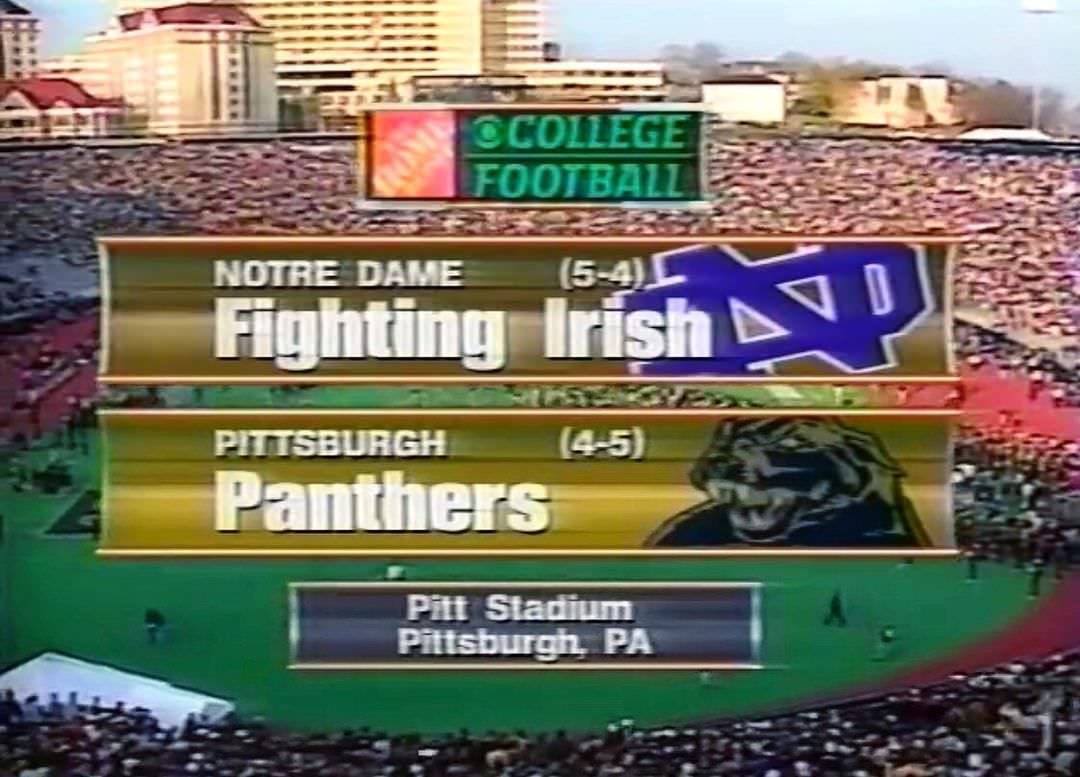
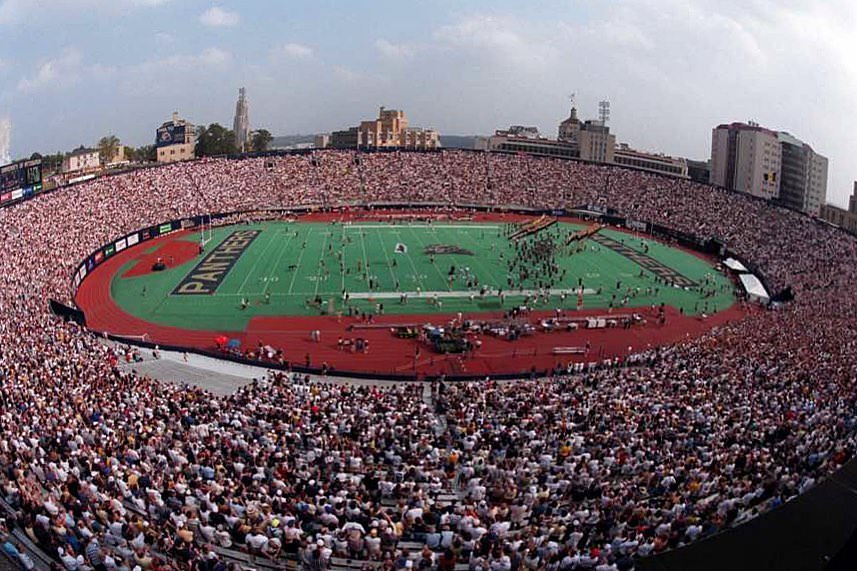
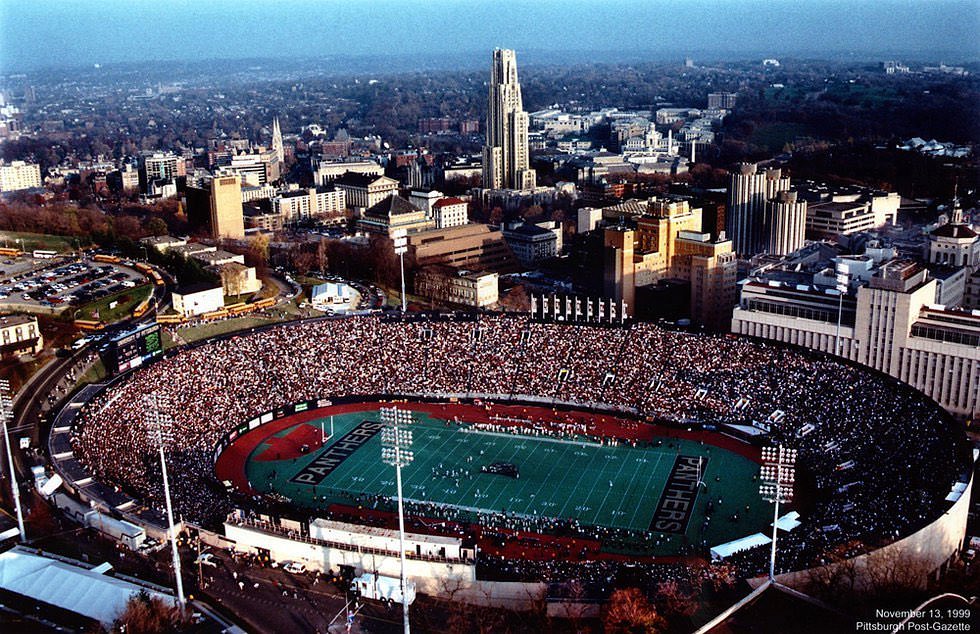
The final game drew heavy media coverage. Cameras captured the stadium from every angle — aerial shots, broadcast feeds, and wide-angle lenses that tried to squeeze the entire scene into a single frame. Looking at these images now, the Oakland neighborhood surrounding the stadium looks almost exactly as it does today, with the exception of the stadium itself, which would be completely gone within months.
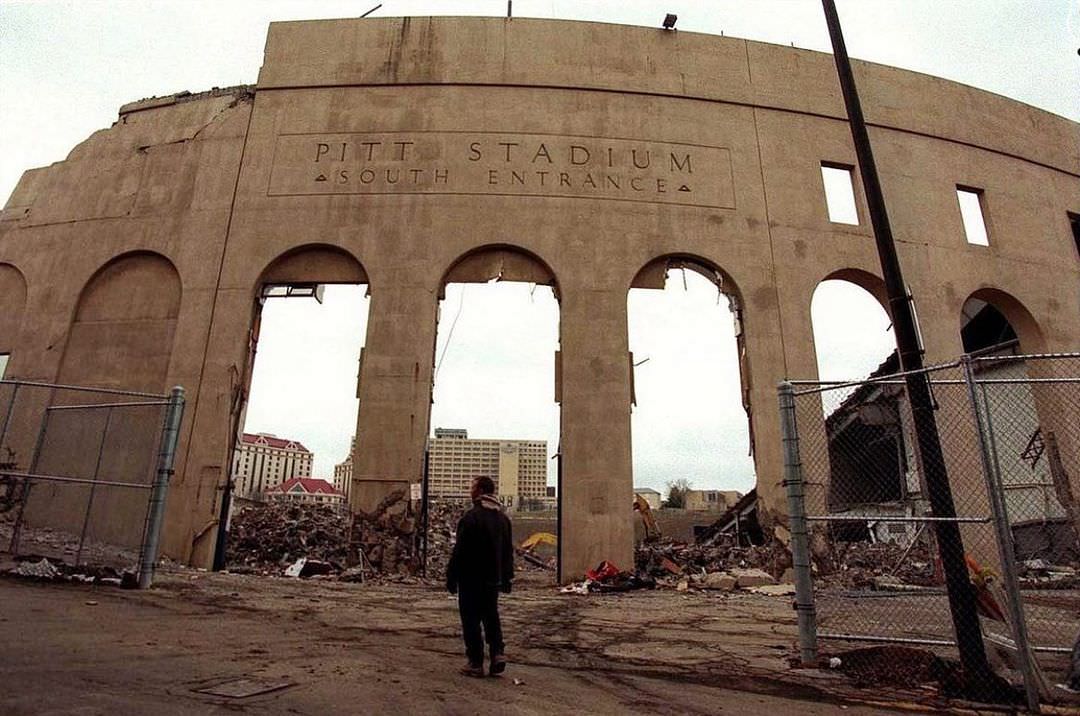
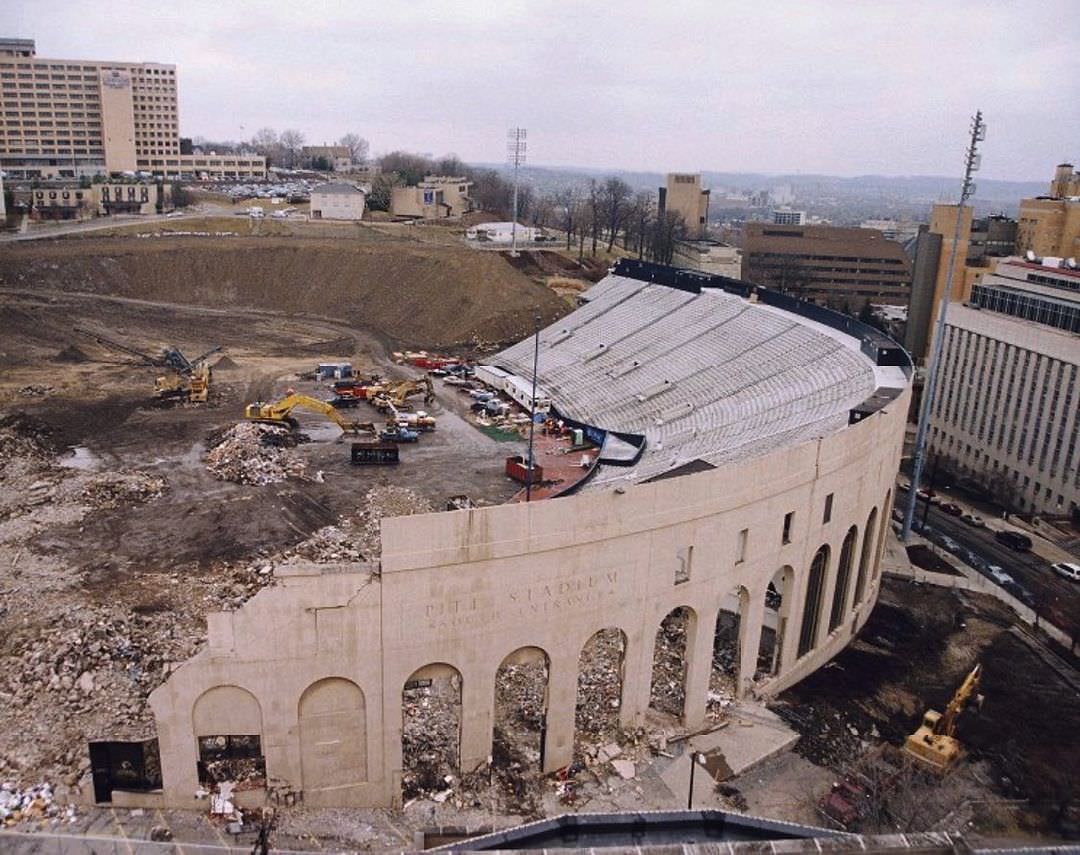
Demolition began quickly after the final game. By the end of 1999, Pitt Stadium was coming down piece by piece. The site was eventually redeveloped into the Petersen Events Center, the university’s basketball arena, which opened in 2002. For many who walked past the construction fencing in those months, watching the old stadium disappear was the clearest sign that Pittsburgh — and the university — were moving into a new era.
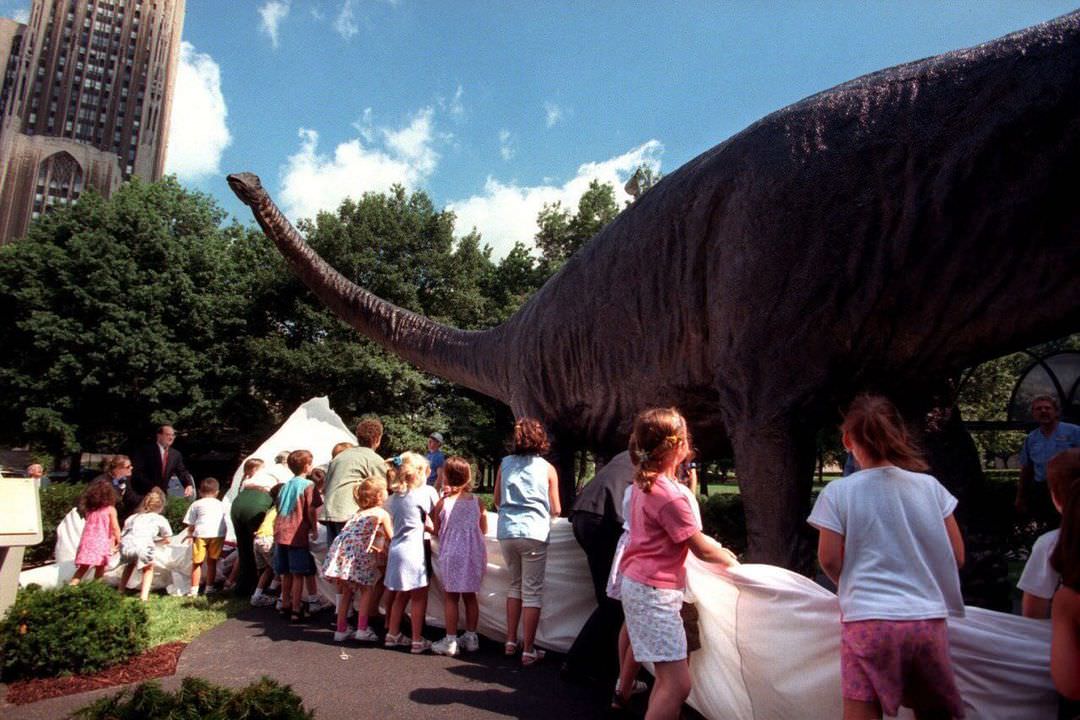
As one Pittsburgh landmark was torn down, another was going up. In 1999, the Carnegie Museum of Natural History unveiled a new outdoor sculpture of Diplodocus carnegii — nicknamed “Dippy” — right outside the museum on Forbes Avenue in Oakland. The sculpture was created to mark the 100th anniversary of the discovery of dinosaur fossils in Wyoming, fossils that had been donated to the museum by Andrew Carnegie himself. Kids gathered for the unveiling, and Dippy quickly became one of the most photographed spots on the Pitt campus.
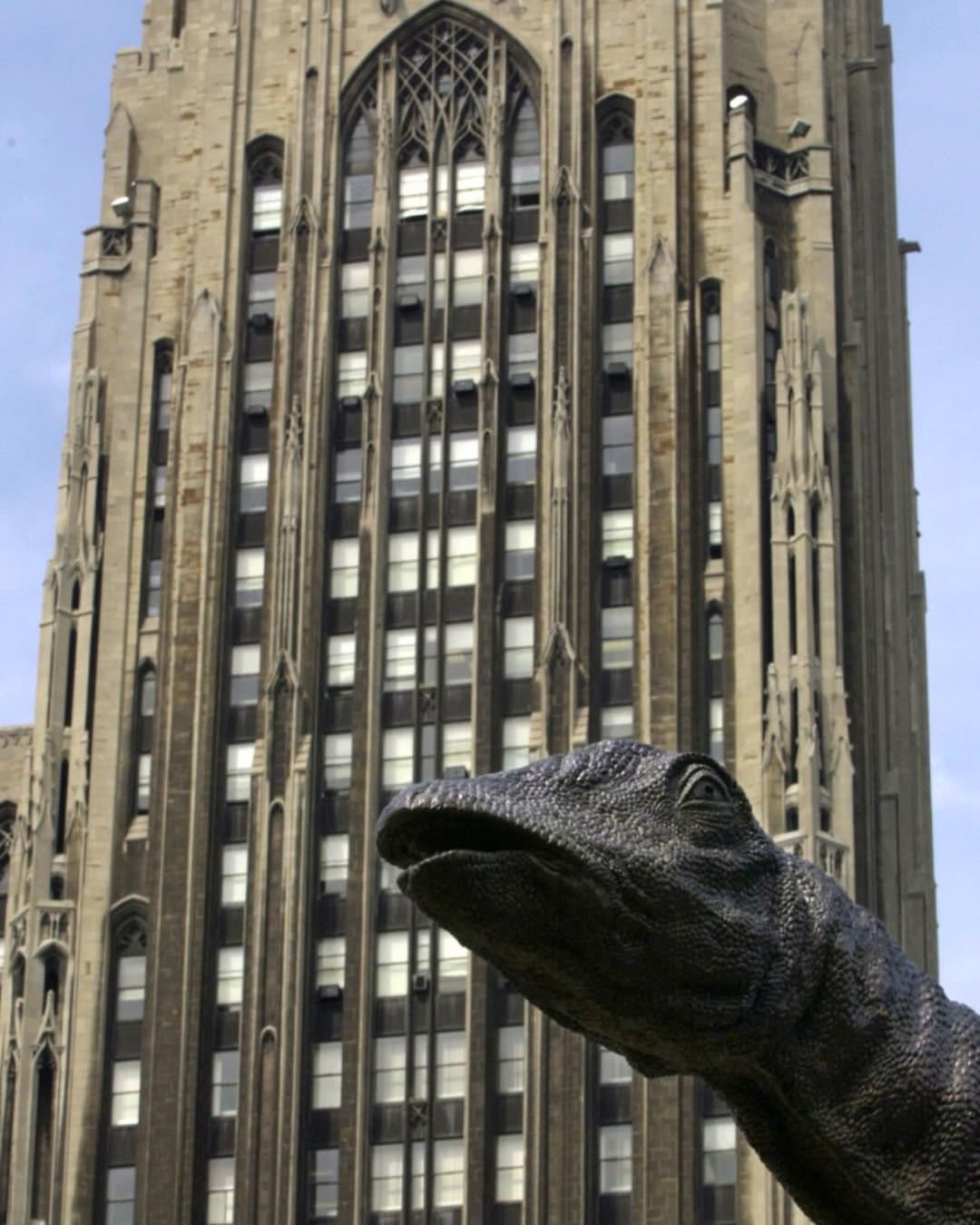
Dippy standing tall on Forbes Avenue became an instant landmark for the Oakland neighborhood. The full-scale cast stretches 84 feet long and stands 11 feet tall at the hip, making it impossible to miss. Pittsburghers quickly adopted it as a symbol of the city’s connection to science and history — a fitting tribute for a neighborhood built around two major research universities and one of the country’s great natural history collections. By the close of 1999, Pittsburgh had demolished a stadium, unveiled a dinosaur, and stepped firmly into a new century.