Wayne Sorce was born in Chicago, Illinois in 1946. Before he ever picked up a camera professionally, he worked as a liturgical artist. That background in visual composition never left him. By 1966, he had shifted his focus to photographing people and their everyday surroundings. He went on to earn a BFA in 1969 and an MFA in 1971, both from the Art Institute of Chicago — one of the most respected art schools in the country.
Sorce built a career as a freelance photographic essayist and taught photography at both Columbia College and the Art Institute of Chicago. He eventually left Chicago and moved to New York, where the streets handed him an entirely new set of subjects. He also spent time in the Philippines, broadening the range of his documentary work. But it was the urban landscape of New York in the 1970s and ’80s that produced some of his most striking images.
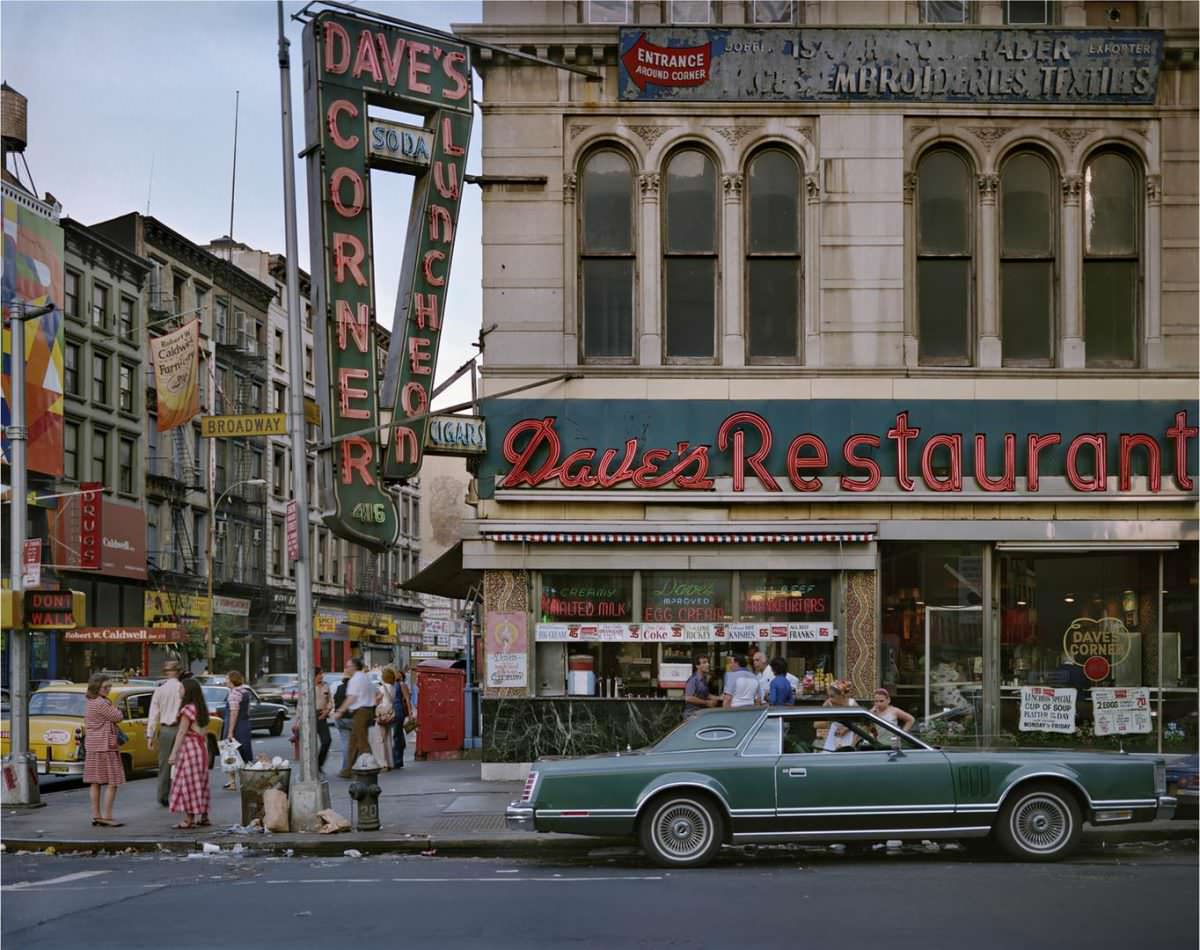
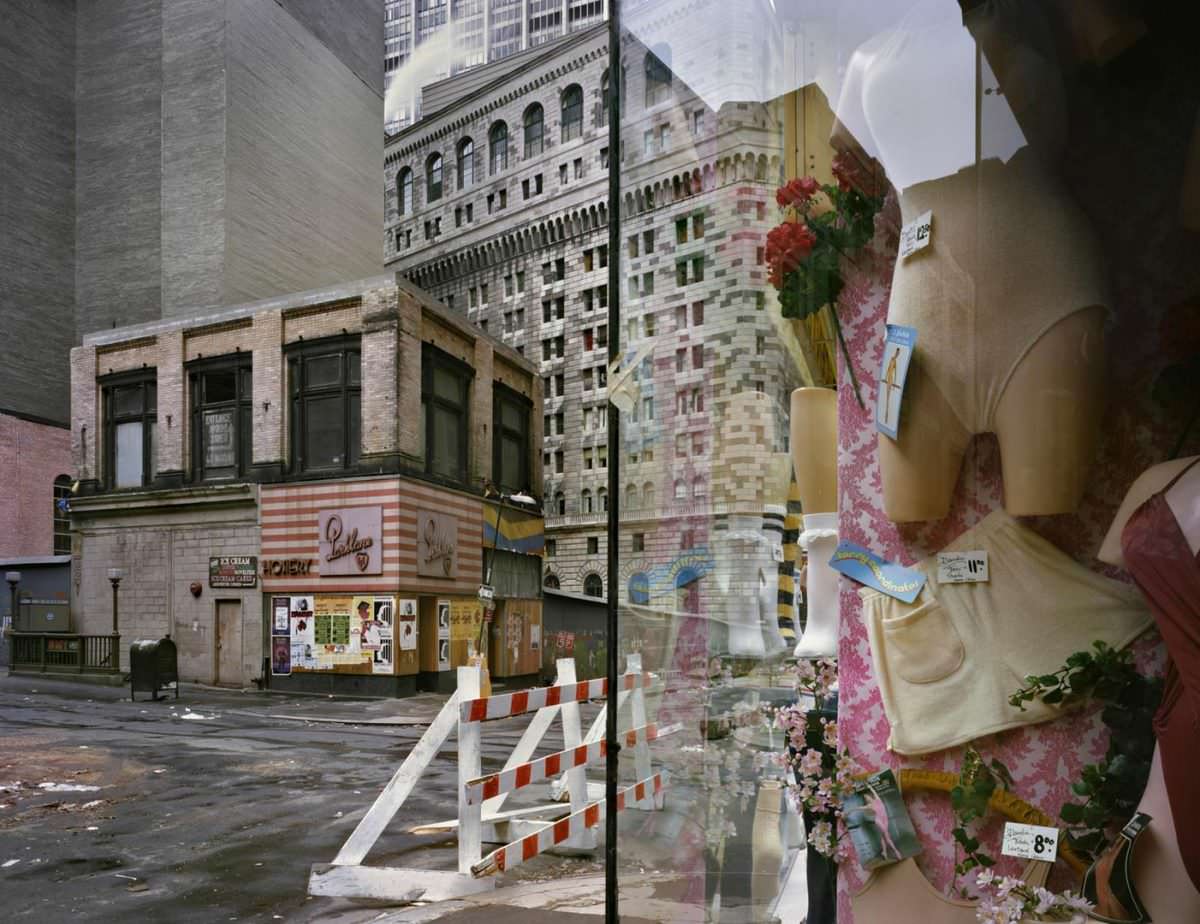
Working with a large-format camera, Sorce approached New York’s streets with a deliberate, structural eye. He used color and geometry not just as aesthetic tools but as a way to document the visual language of the city itself — the layered signage, the painted storefronts, the curves and chrome of American automobiles parked along the curb. Every frame was a record of a specific moment in a city that was changing fast.
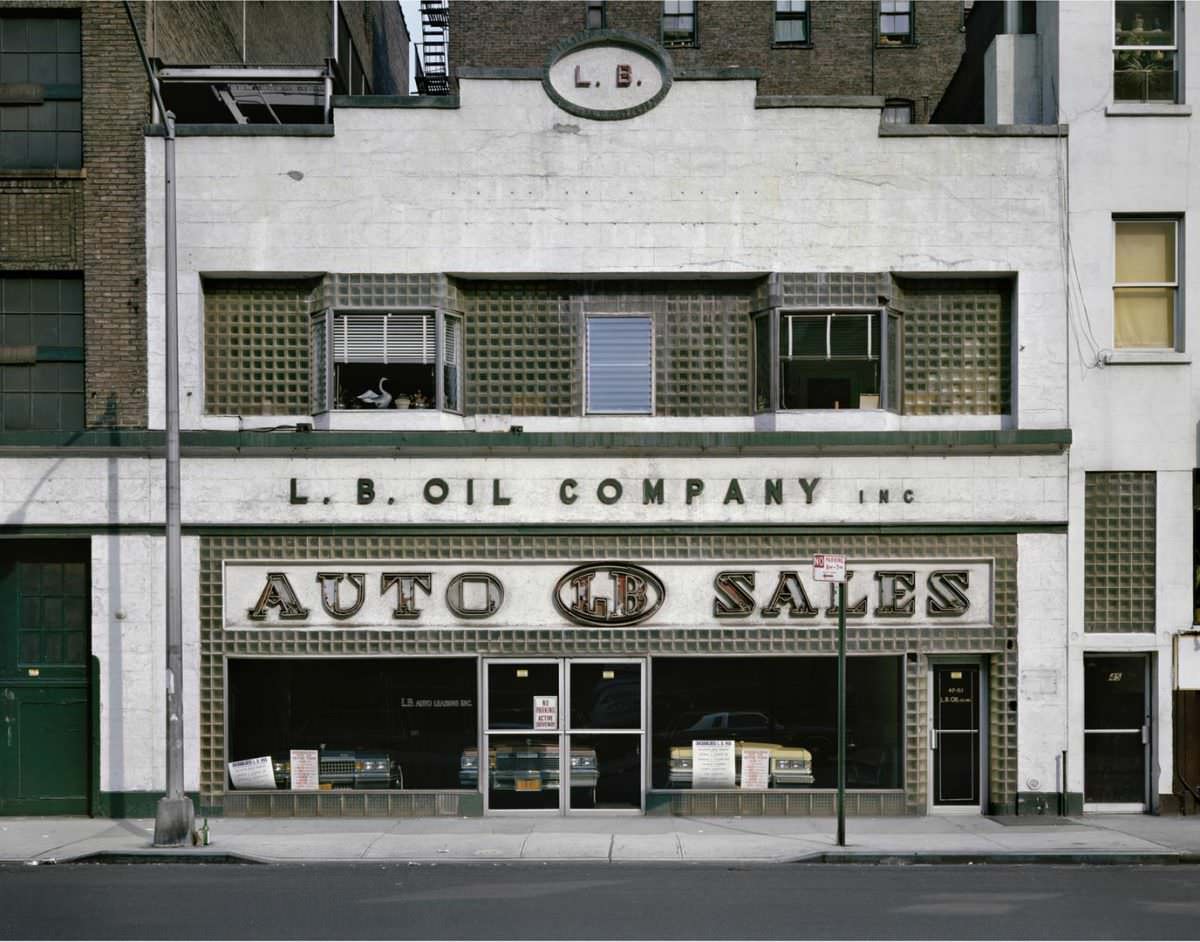
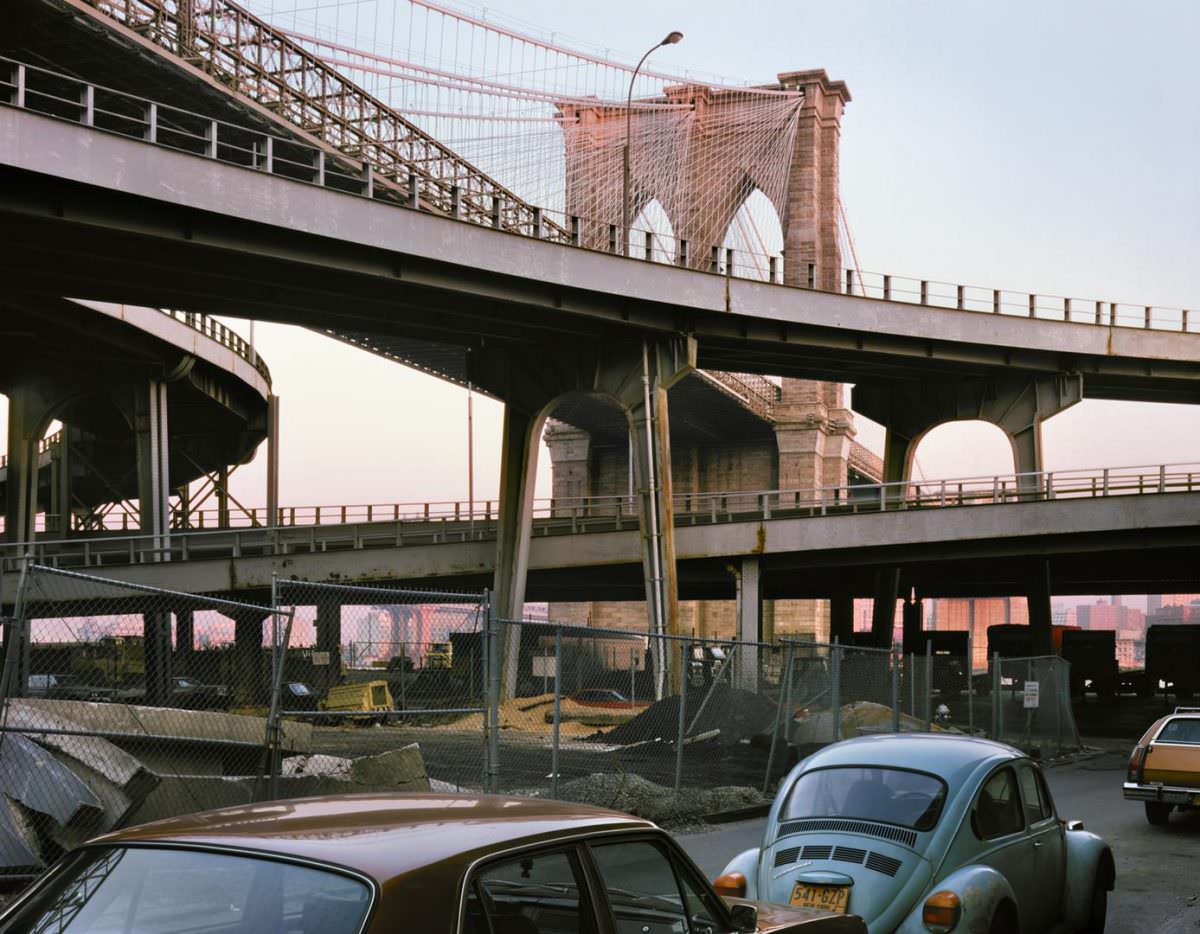
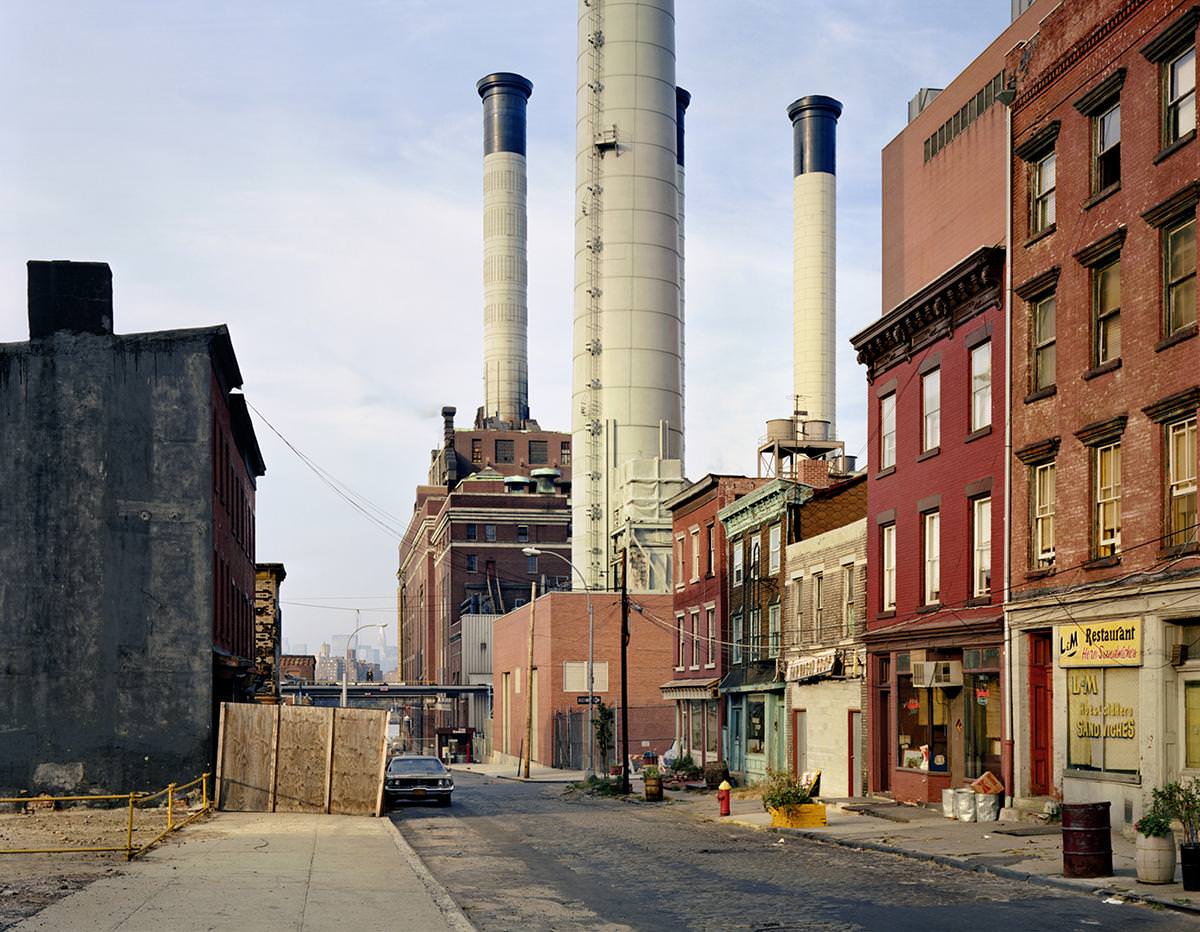
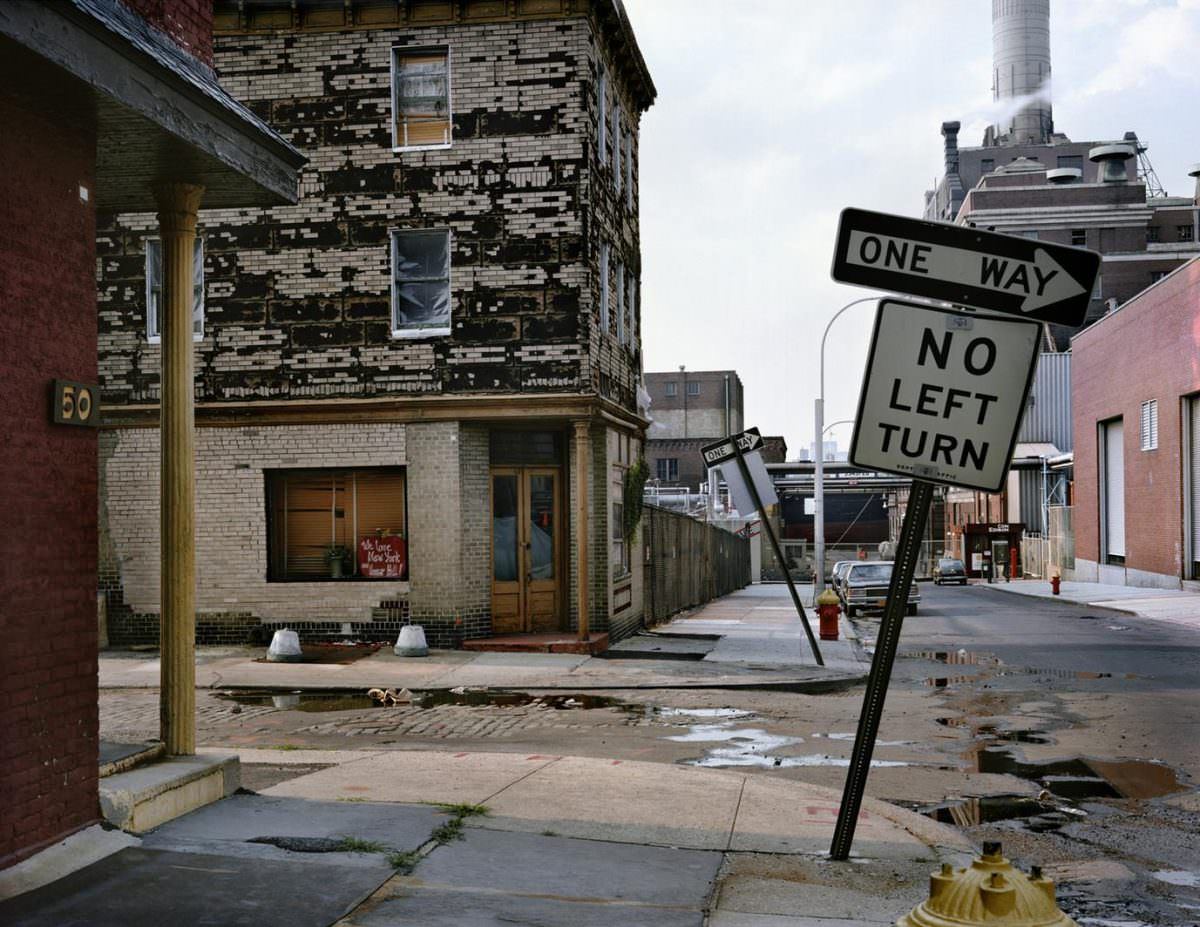
The New York that Sorce photographed in the 1980s was a city defined by contrast. Gritty industrial blocks sat next to busy diners. Hand-lettered shop signs competed with neon advertisements. Neighborhoods like Vinegar Hill in Brooklyn — an area of old factory buildings and quiet, worn streets — gave him geometry that felt entirely different from the dense commercial corridors of Manhattan.
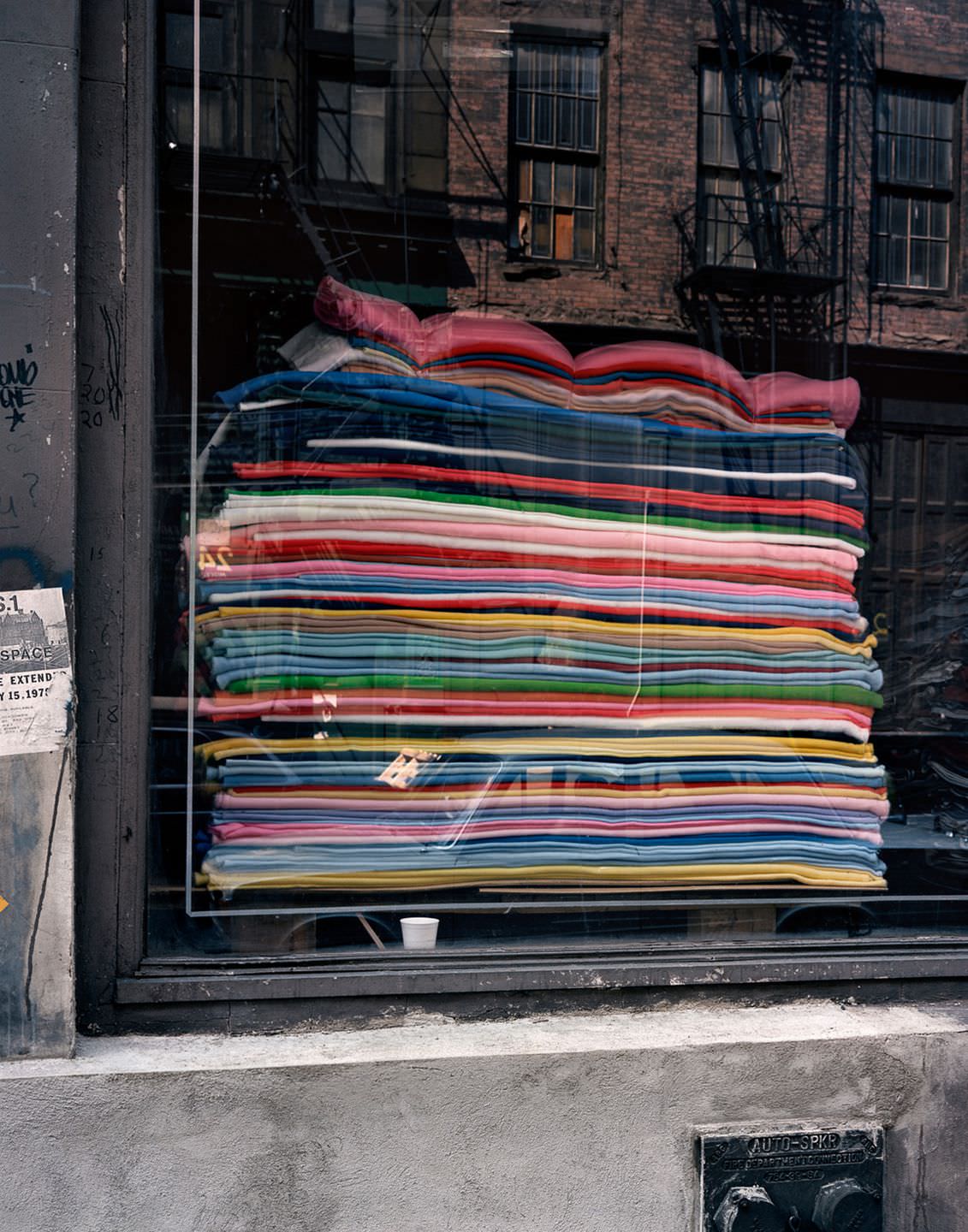
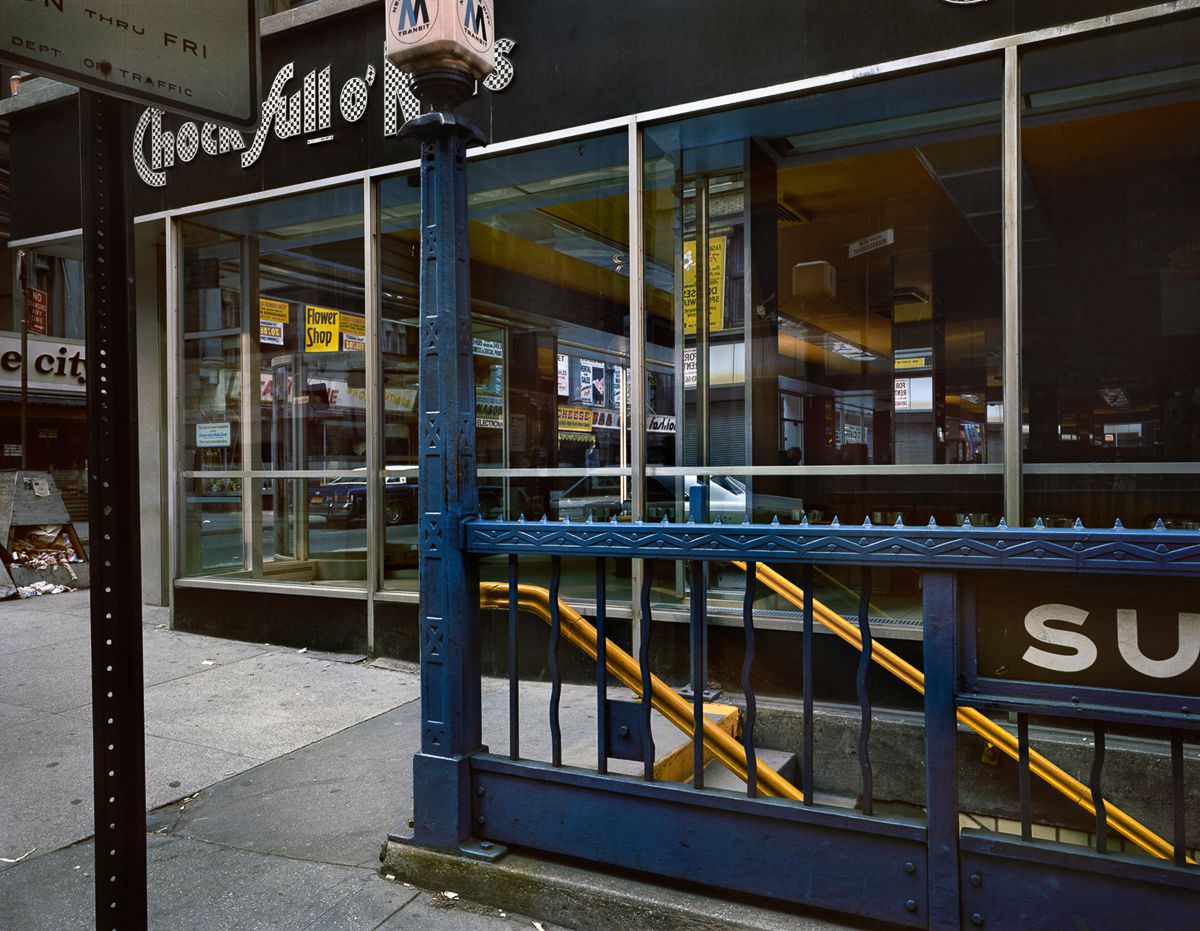
Color was central to how Sorce read a scene. A diner counter bathed in fluorescent light, a stack of blankets displayed on a sidewalk, the faded yellow of a storefront — these weren’t incidental details. They were the subject. The color photography of this era was still far from standard in fine art circles, and Sorce was among the photographers treating it as a serious compositional element rather than a commercial afterthought.
Sorce’s solo exhibition at the Art Institute of Chicago in 1972 came early in his career and established him as a photographer worth watching. His work went on to be shown at the Renaissance Society and the Museum of Contemporary Art in Chicago, as well as the Museum of Modern Art in New York. These were not minor venues — they placed him alongside photographers and artists at the top of the field.
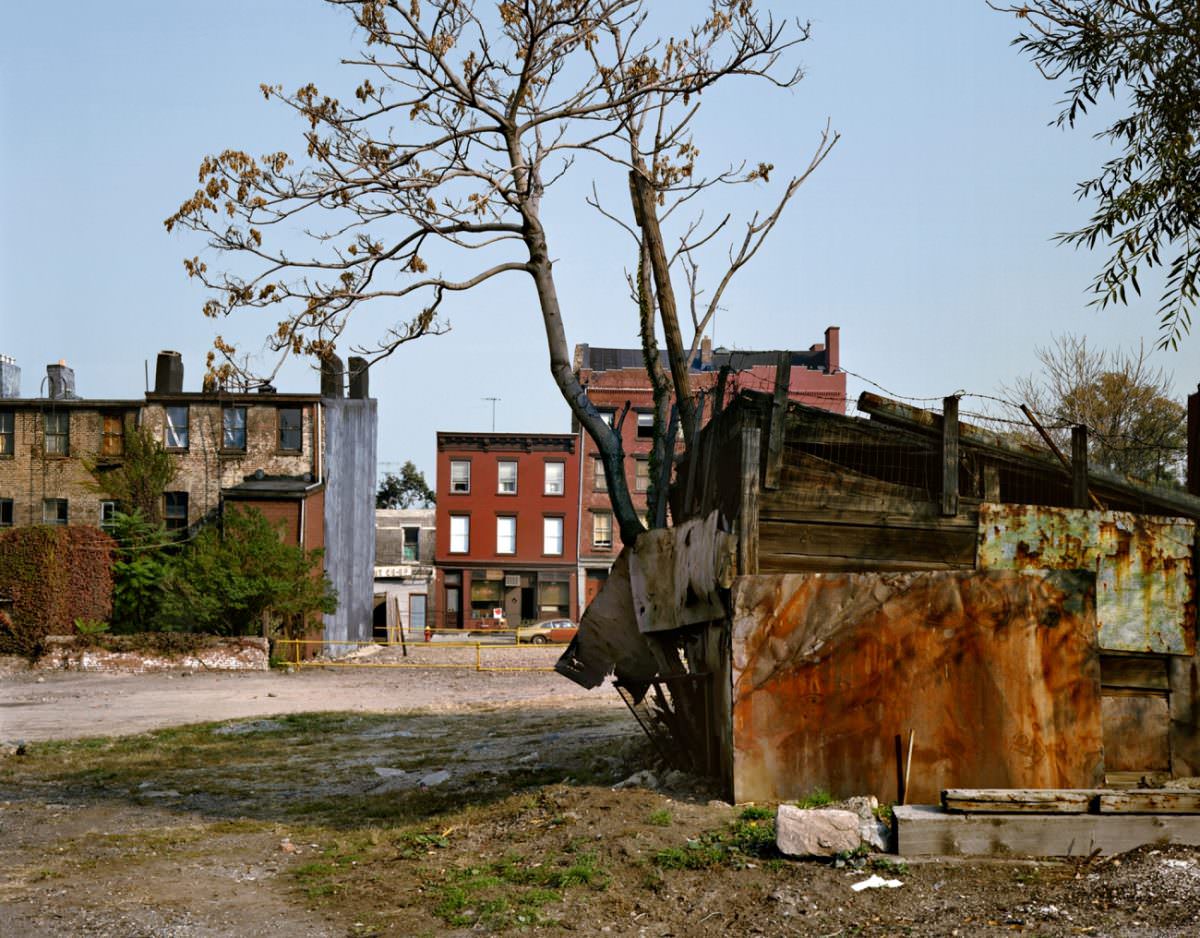
What sets Sorce’s street work apart is its patience. Large-format photography requires a tripod, a slower process, and a conscious decision about every shot. There is no quick snap of a passing moment. Each photograph of a barbershop window, a street corner, or a stretch of pavement in Vinegar Hill was composed with intention. The camera forced him — and now forces the viewer — to look carefully.
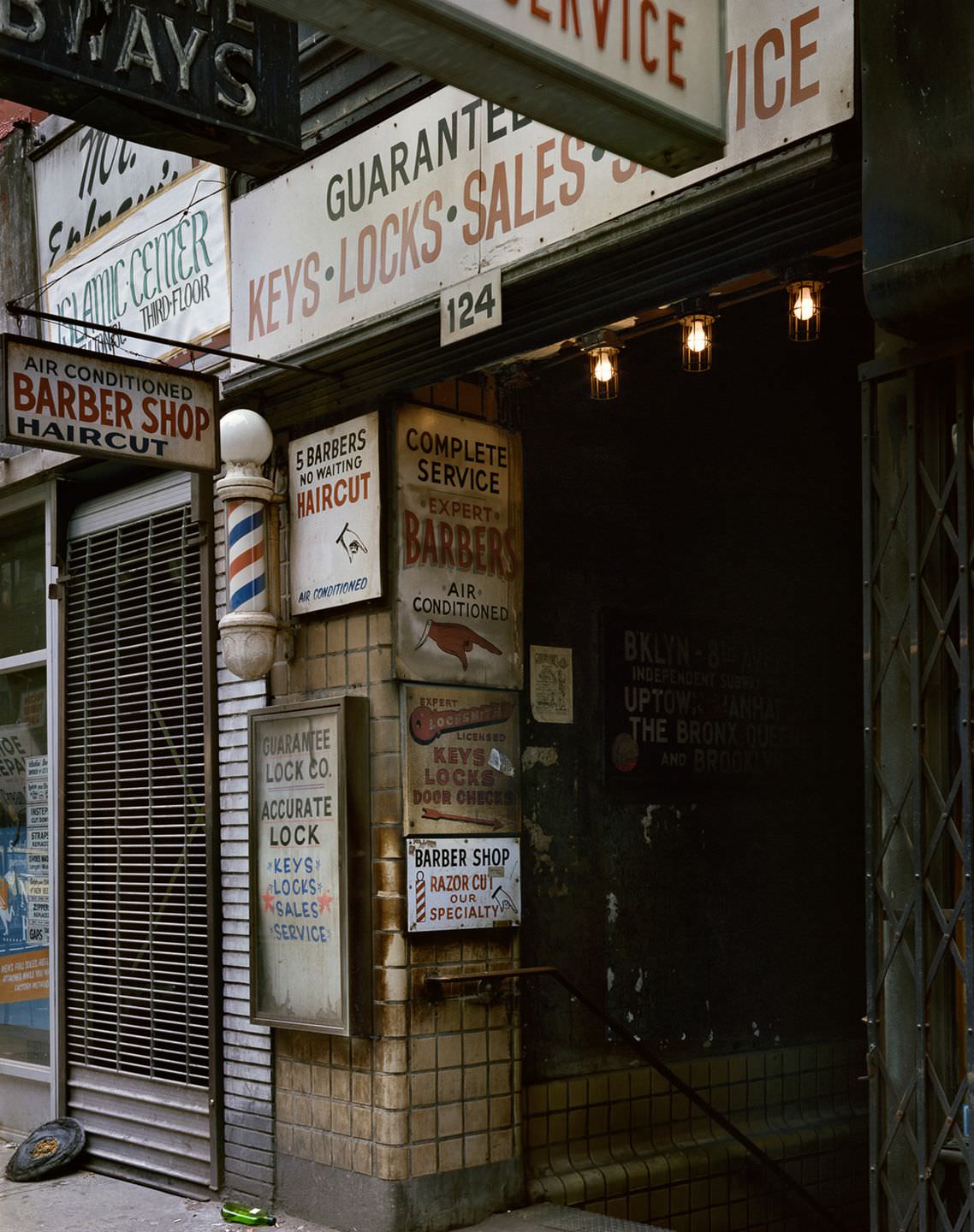
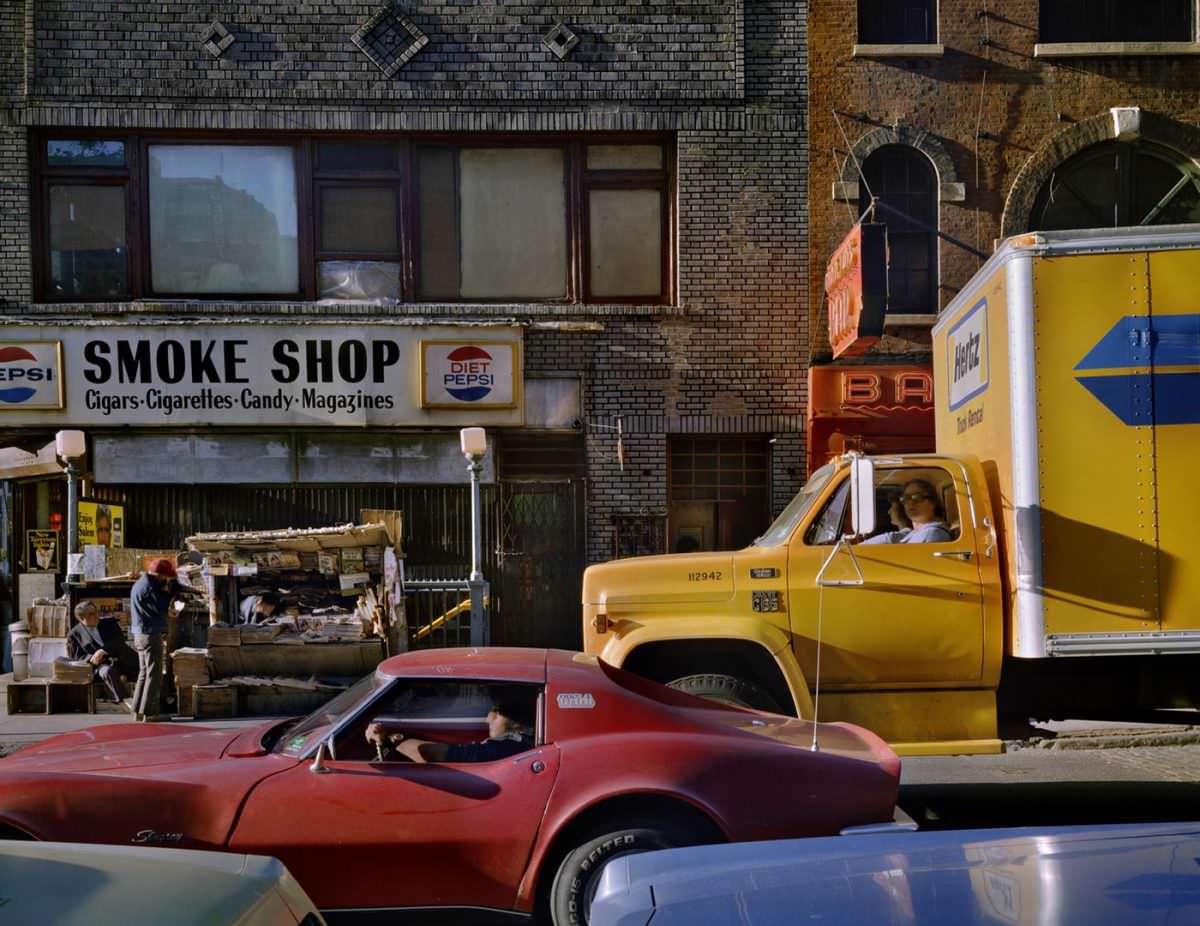
The streets Sorce documented in the 1980s no longer look the way they did then. Storefronts have turned over many times. Entire blocks have been rebuilt. The automobiles that anchored the streetscapes of those years are long gone from the curb. Sorce’s photographs hold those details in place — the typography on a coffee shop window, the oil-stained concrete of a service lot, the geometry of a Brooklyn intersection on a quiet afternoon.