
The United States recognizes 574 distinct Native American tribes. The term “Native Americans,” as defined by the U.S. Census, covers Indigenous peoples of the continental United States and Alaska, including Alaska Natives. These tribes are not a single culture — they are hundreds of separate nations, each with their own languages, traditions, and histories. The photographs in this collection, taken by Rick Soloway during the late nineteenth and early twentieth centuries, put faces to that diversity. They are portraits of chiefs, warriors, families, and everyday men and women at a pivotal and painful moment in American history.
By the close of the nineteenth century, Native populations had been devastated across the continent. In California alone, the number of Indigenous people dropped by 90 percent — from more than 200,000 in the early 1800s to roughly 15,000 by 1900. The 1833 malaria epidemic was one major cause. The California Gold Rush added to the death toll, as newly arrived settlers and state-supported militia groups killed large numbers of Indigenous people throughout the region. These were not isolated incidents but part of a broader, systematic collapse of Native communities across the United States.
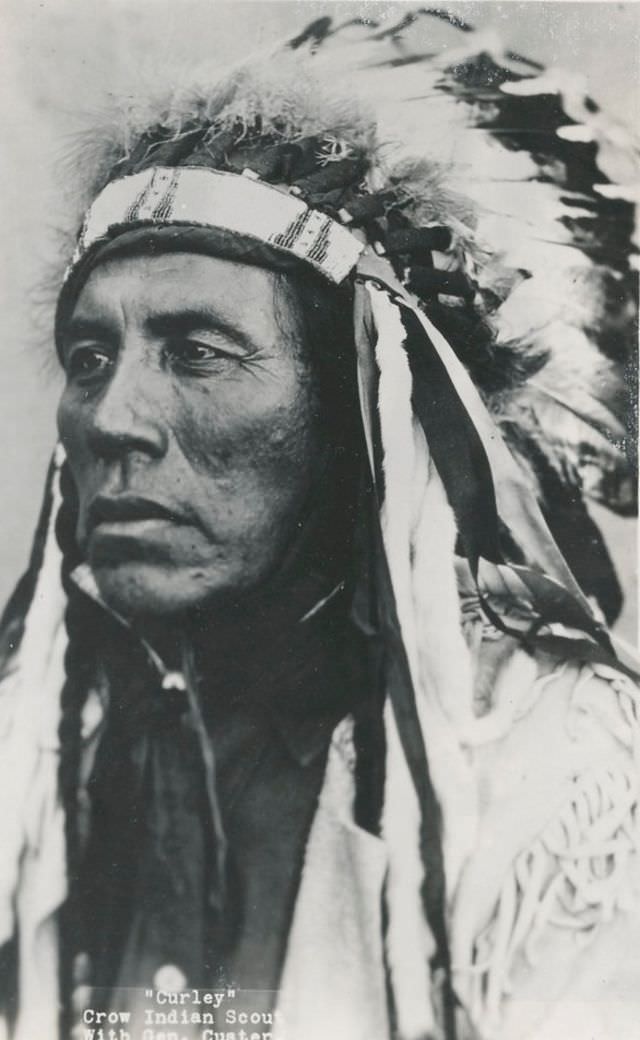
One of the most recognized figures in this collection is Curley, a Crow scout who served under General George Armstrong Custer. He is one of the few survivors associated with the Battle of the Little Bighorn in 1876, having left the battlefield before the final engagement.
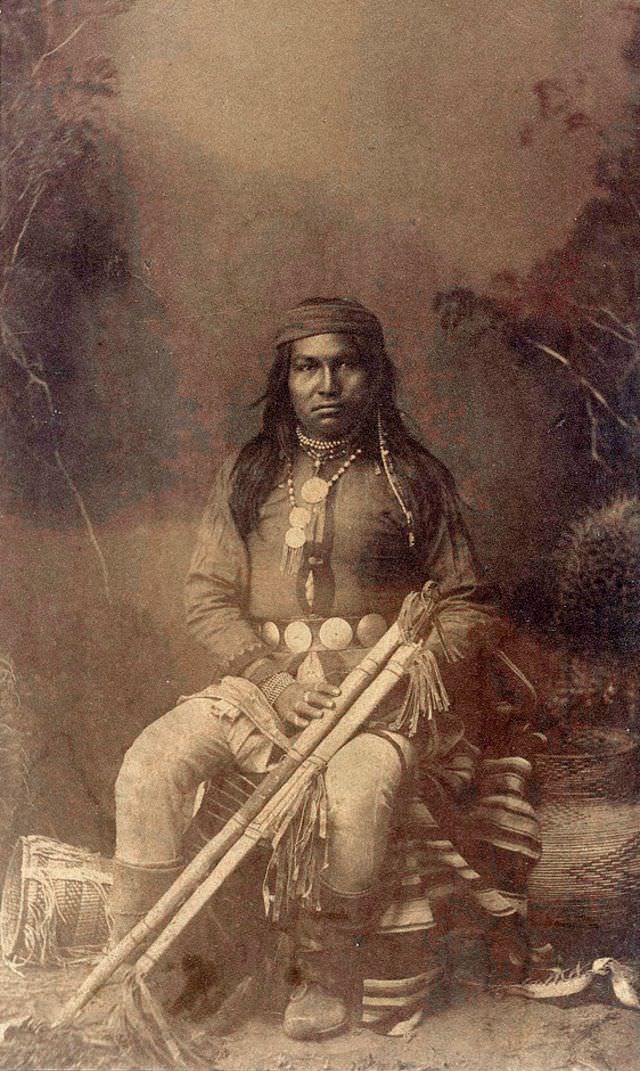
Apache warriors were known across the Southwest for their fierce resistance to both Spanish colonizers and, later, the U.S. military. This portrait captures an Apache warrior in a moment of stillness, fully equipped with a sheathed bow and arrow quiver — tools that defined both hunting and warfare for generations.
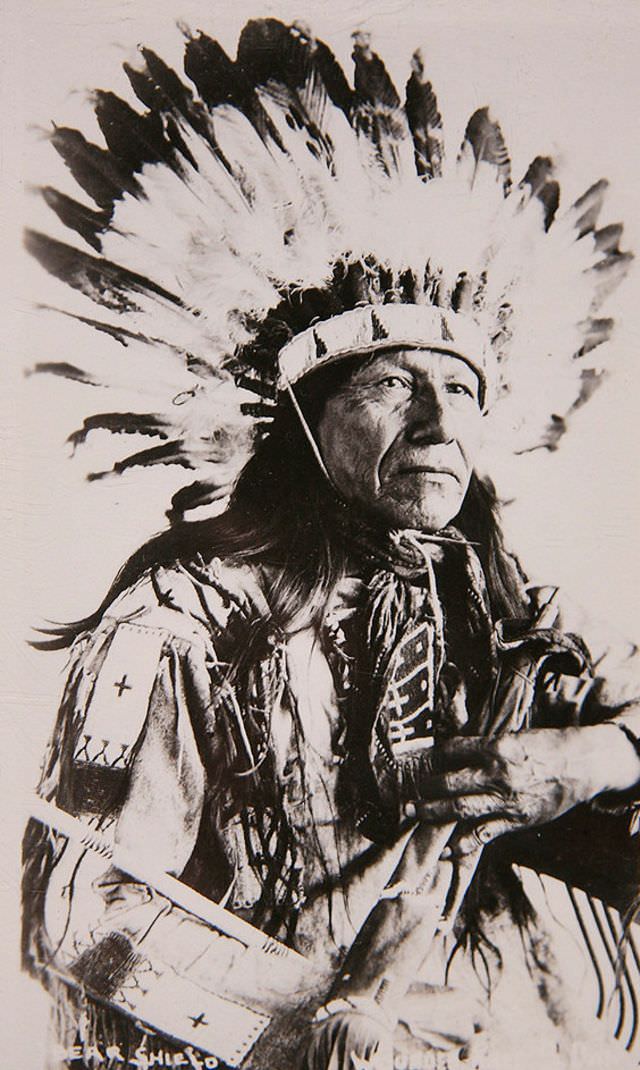
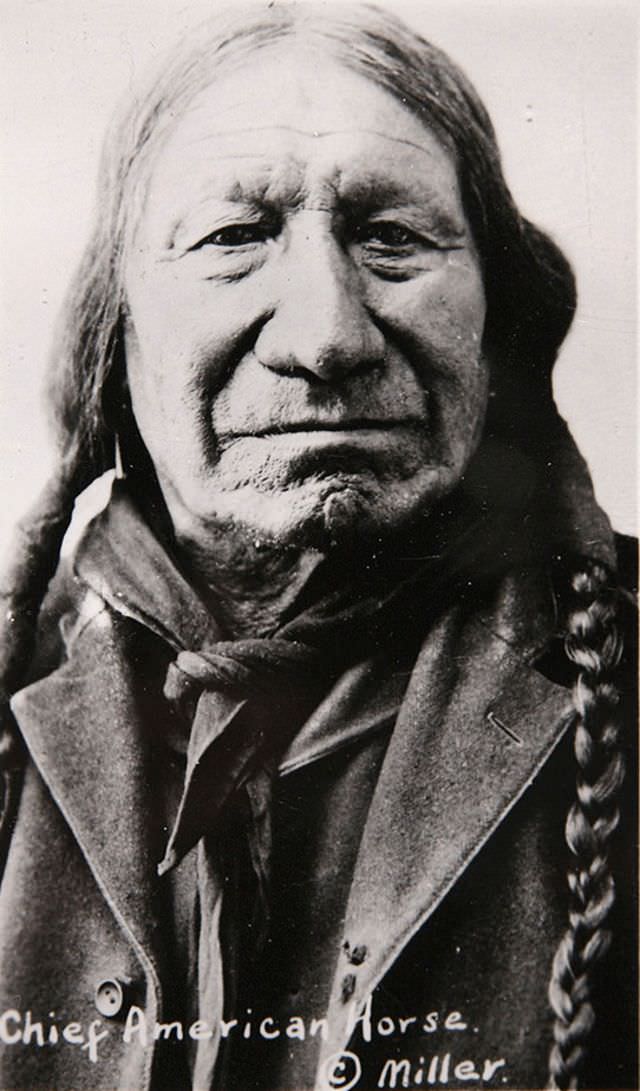
Among the portraits are several prominent chiefs, men who led their nations through some of the most turbulent decades in Native American history. Chief American Horse was a significant Oglala Lakota leader who participated in treaty negotiations with the U.S. government in the latter half of the nineteenth century.
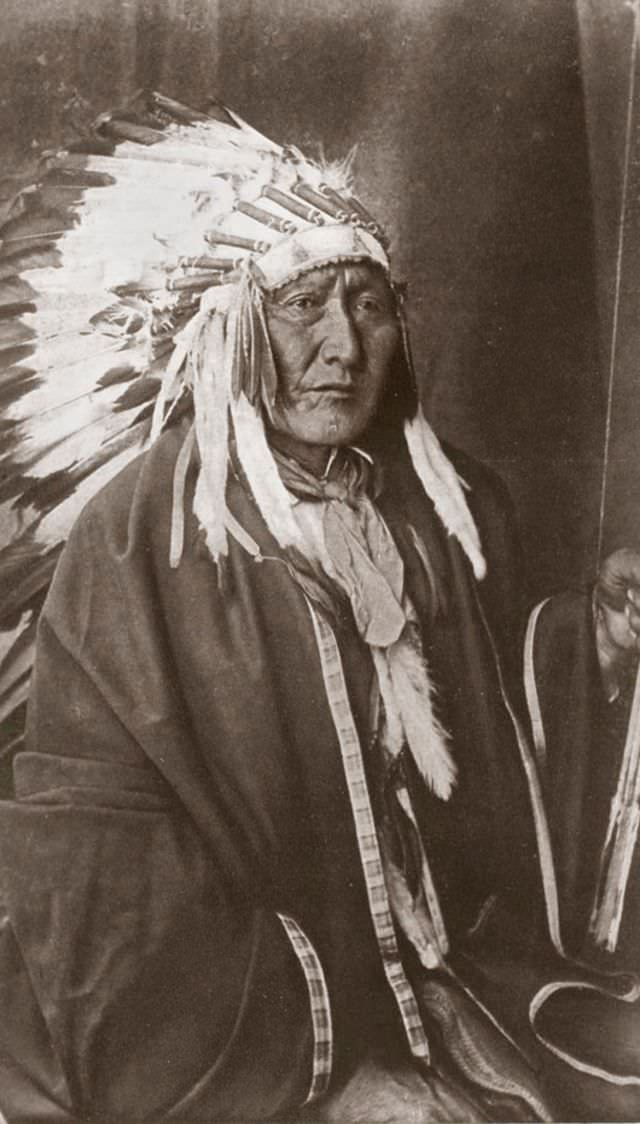
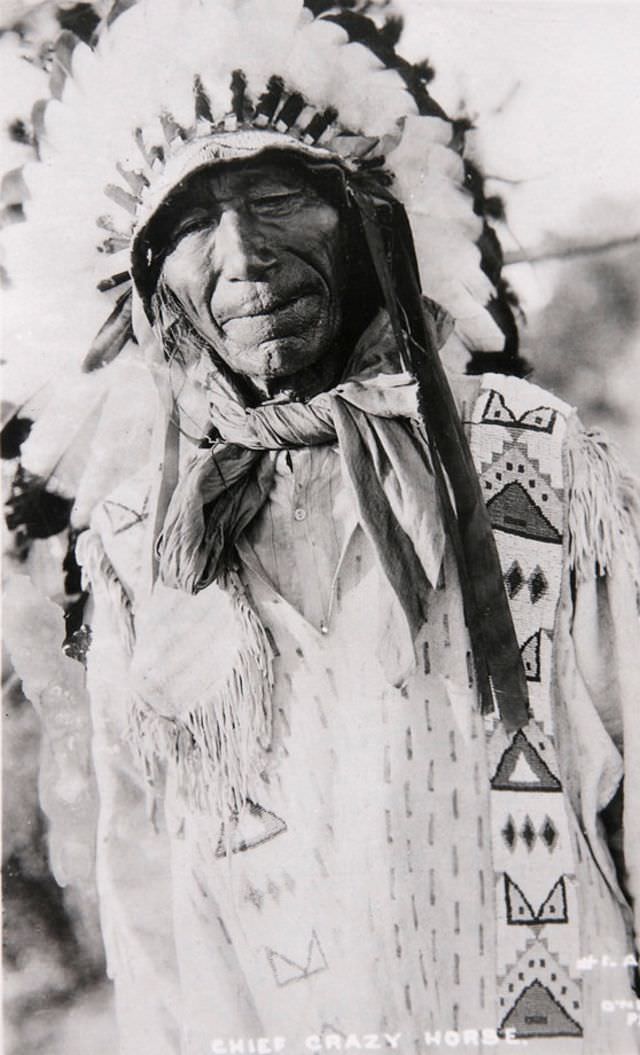
Chief Crazy Horse remains one of the most legendary figures in Lakota Sioux history. He led warriors at the Battle of the Little Bighorn and never signed a treaty with the U.S. government. His portrait, like many in this collection, carries the weight of a man who spent his life fighting for his people’s survival.
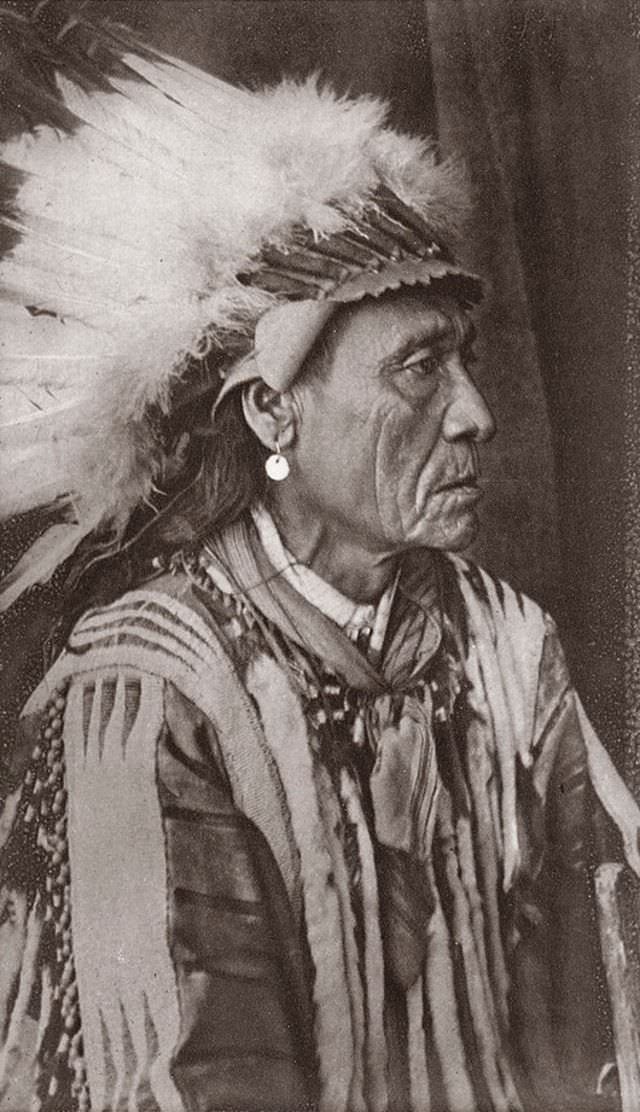
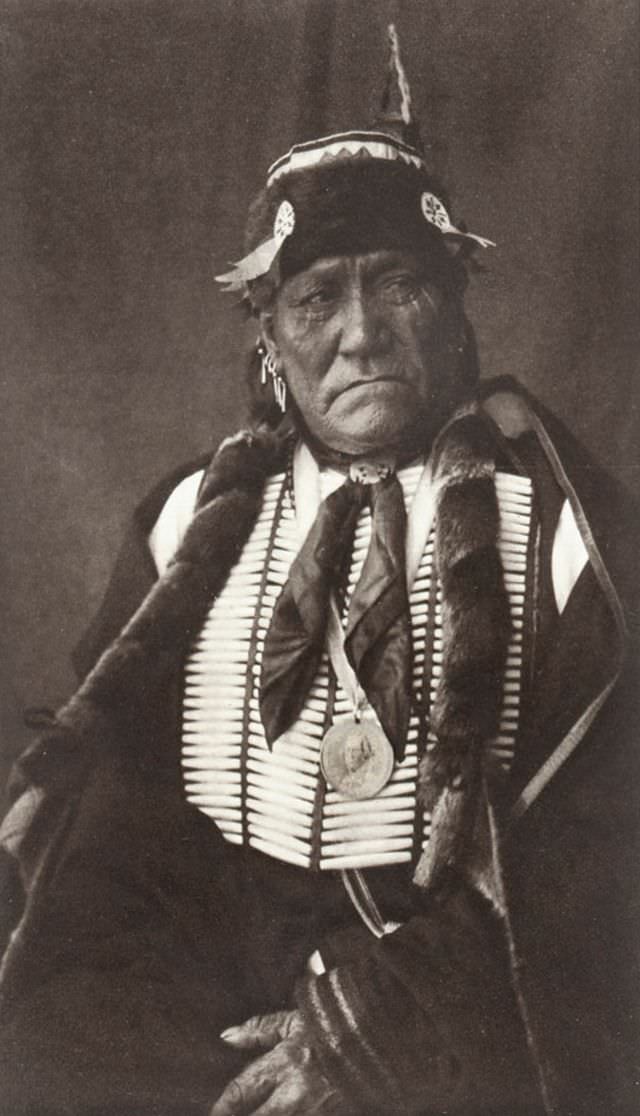
The formal portrait style of this era was often used to document Native leaders for government records, but photographers like Soloway also captured a deeper dignity in their subjects. Chief White Horse sits for his portrait with the composed authority of a man fully aware of his standing.
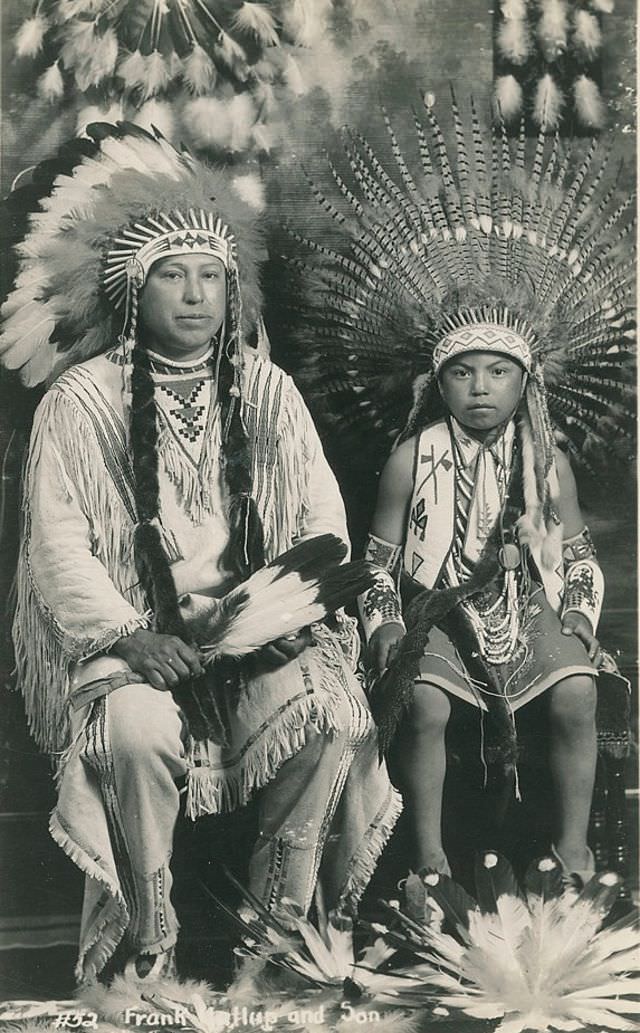
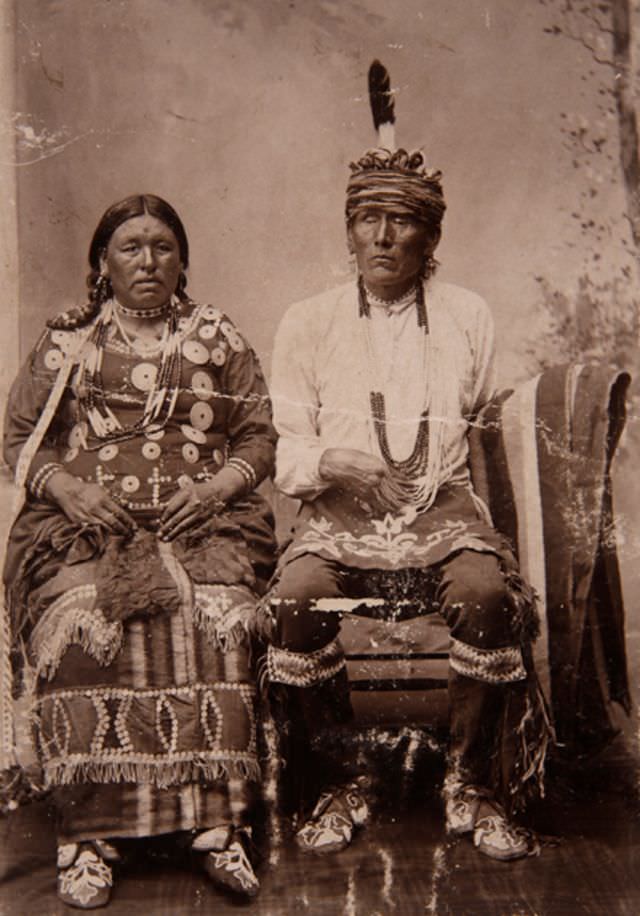
Not all of these photographs focus on leaders and warriors. Many capture family life — fathers with sons, husbands with wives, mothers with children. Frank Hup and his son appear together in a portrait that reflects the everyday bonds that persisted even as outside pressures mounted on Native communities.
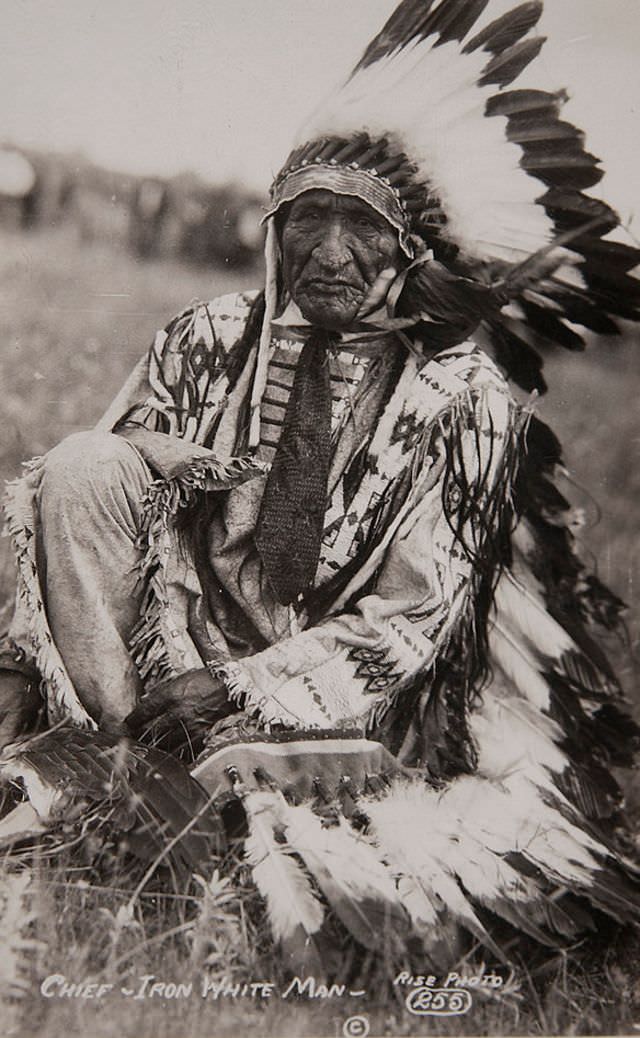
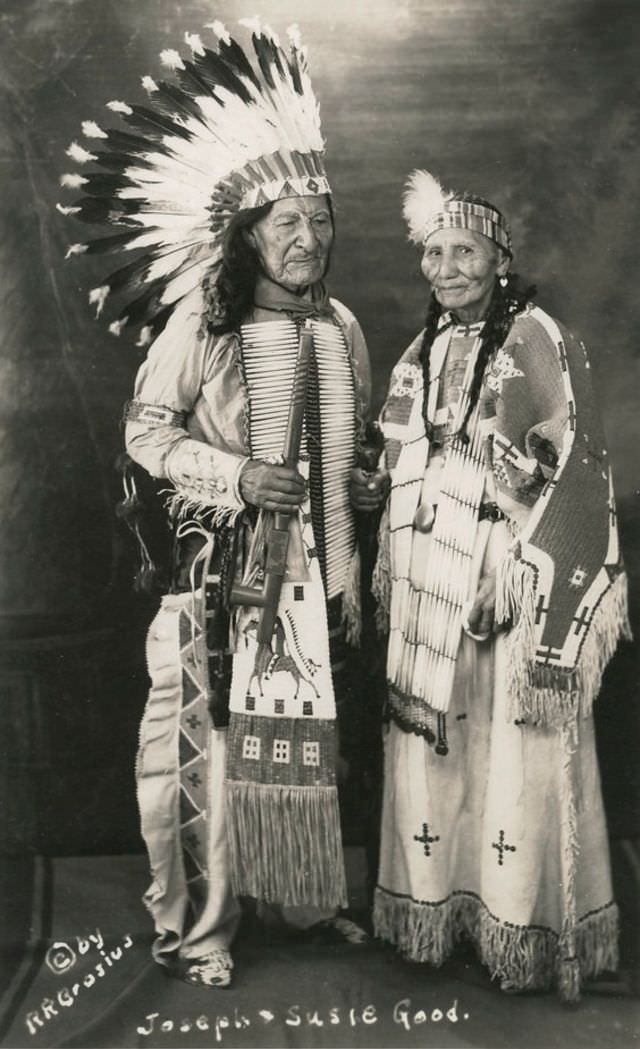
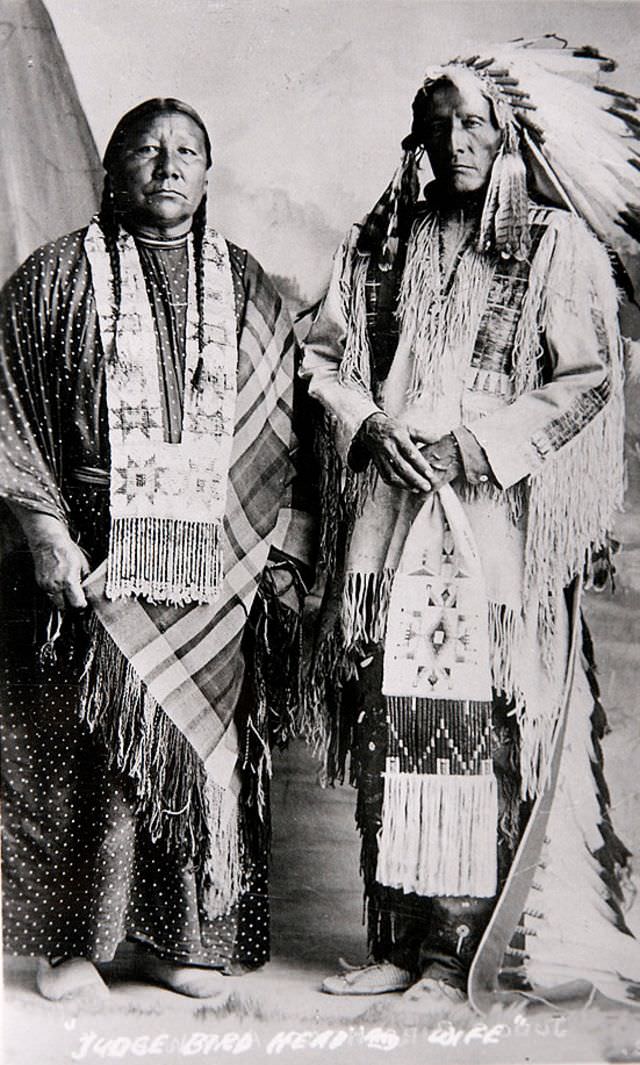
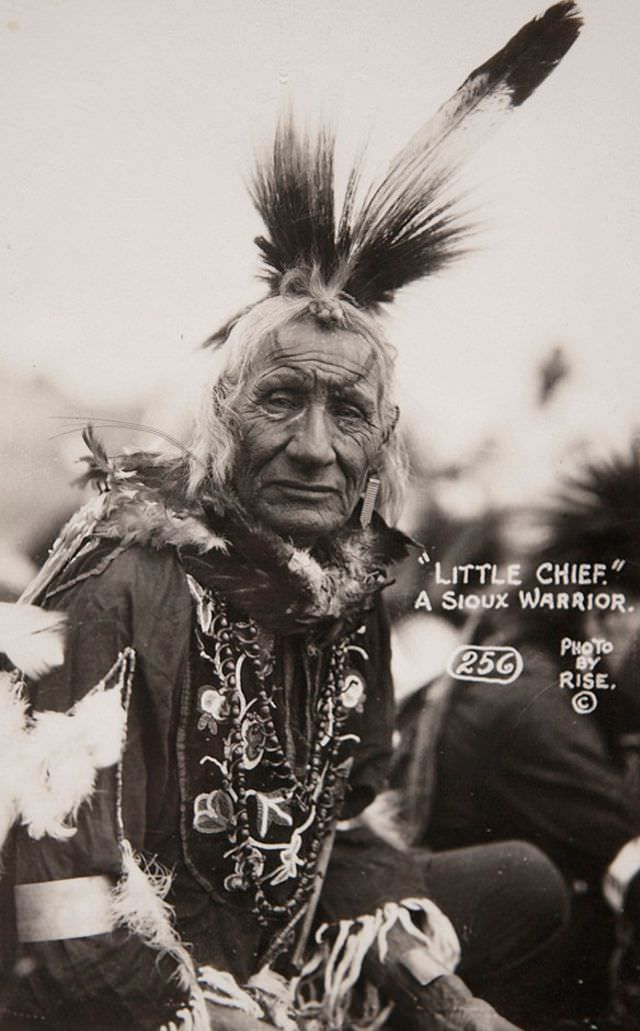
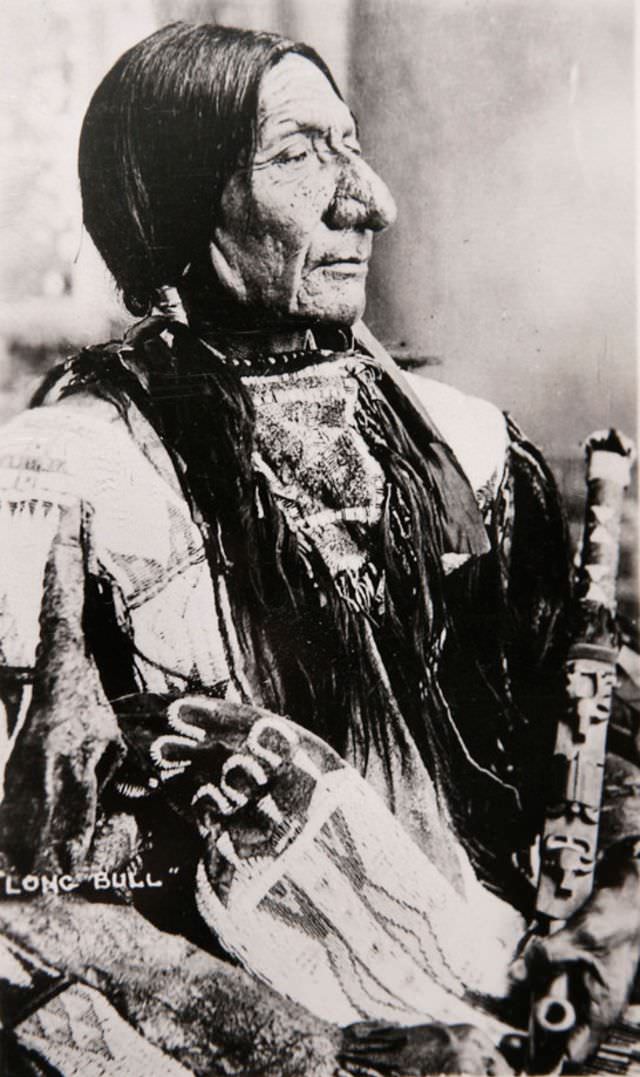
The range of subjects in this collection spans many different tribes and regions. Little Chief, Long Bull, and Mountain Chief each represent distinct nations and leadership traditions, connected by the shared experience of navigating a rapidly changing world.
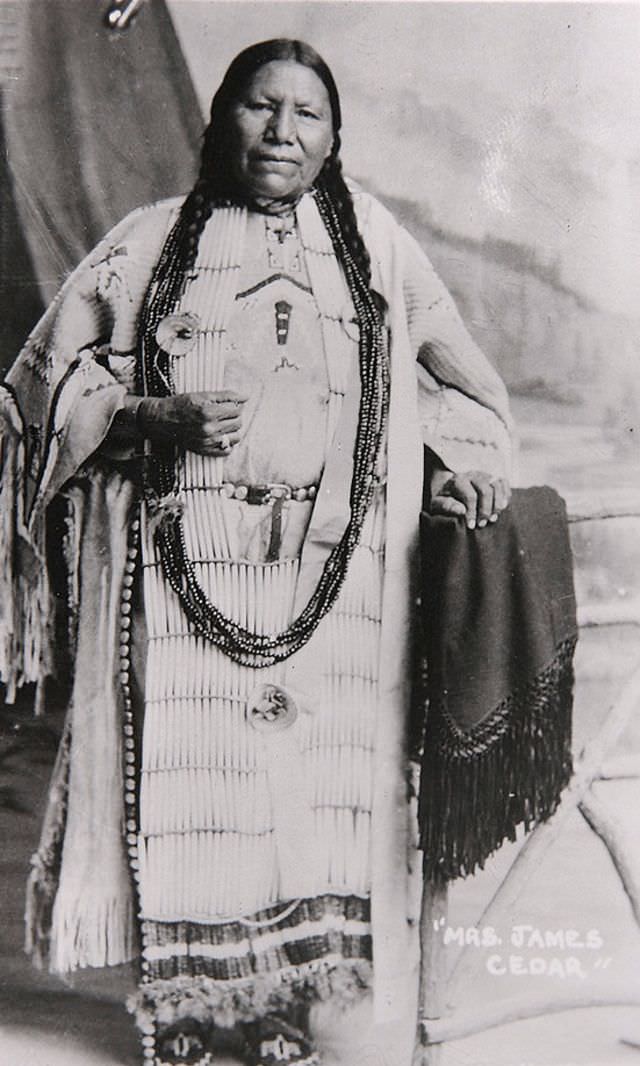
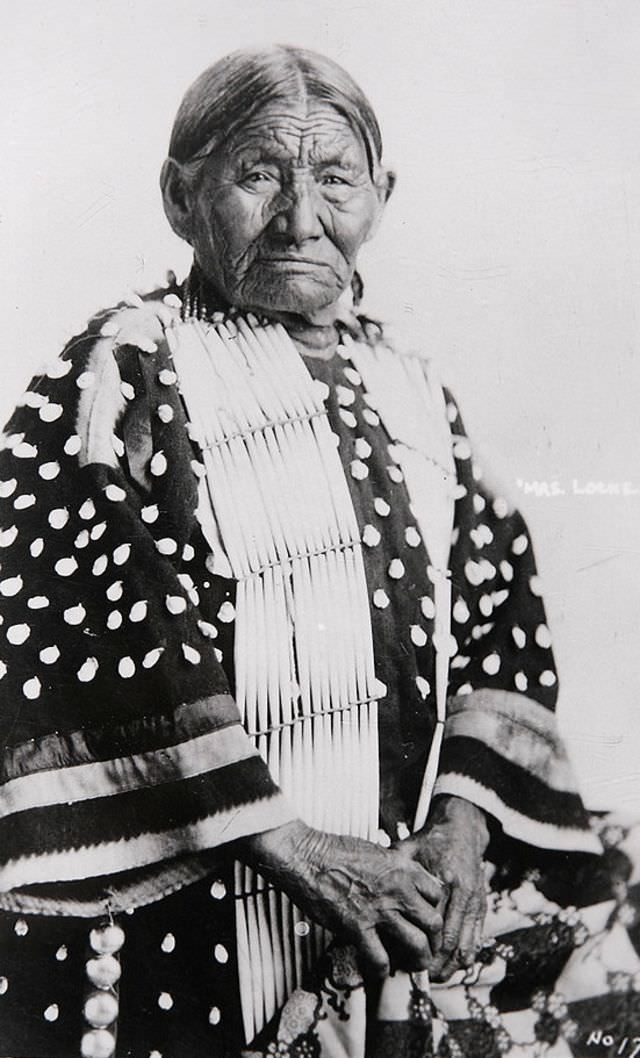
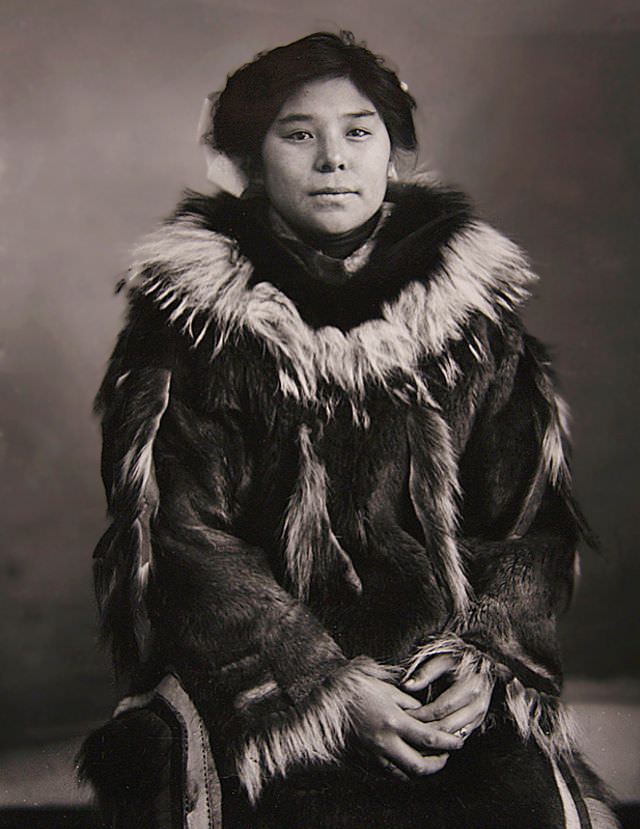
Women appear throughout the collection in portraits that are equally striking. This image of a woman identified as Enohet offers a rare window into the lives of Native women of the period — figures who are far less represented in the historical photographic record than chiefs or warriors.
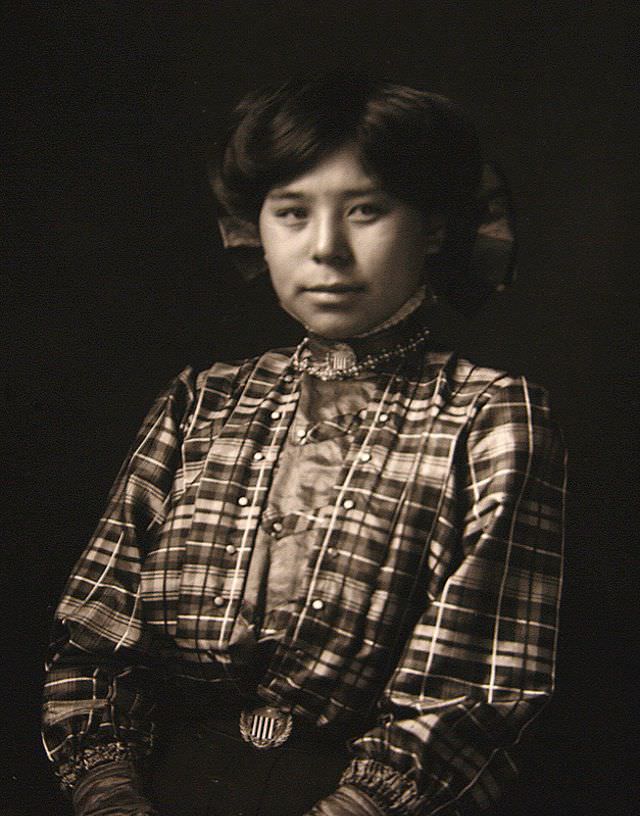
The Pawnee Nation, based in what is now Nebraska, is represented in multiple portraits taken in Genoa — a town that was also home to one of the federal government’s Indian boarding schools. These images of a couple, a tribesman, and a woman capture members of a nation that had itself lost tremendous numbers to disease and displacement throughout the 1800s.
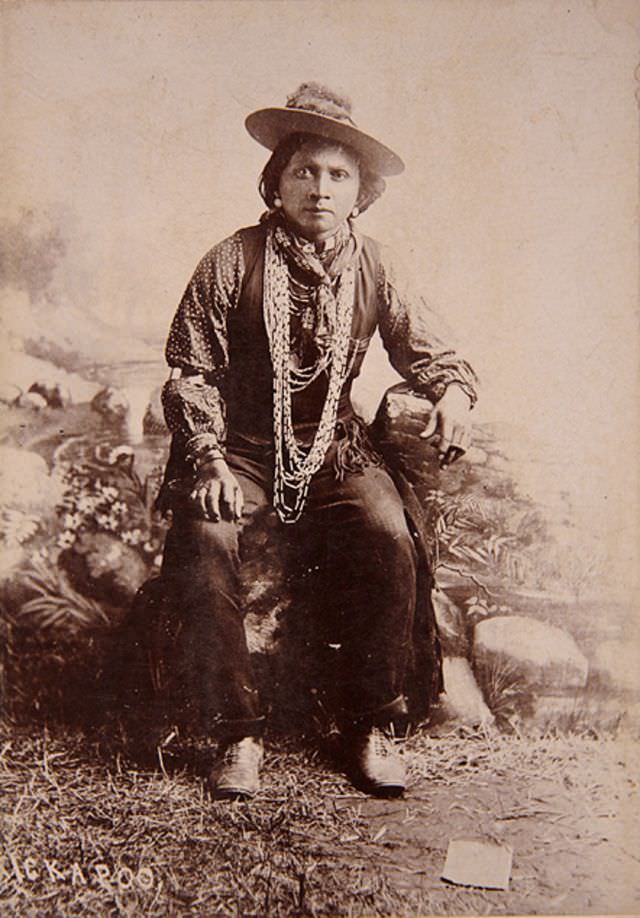
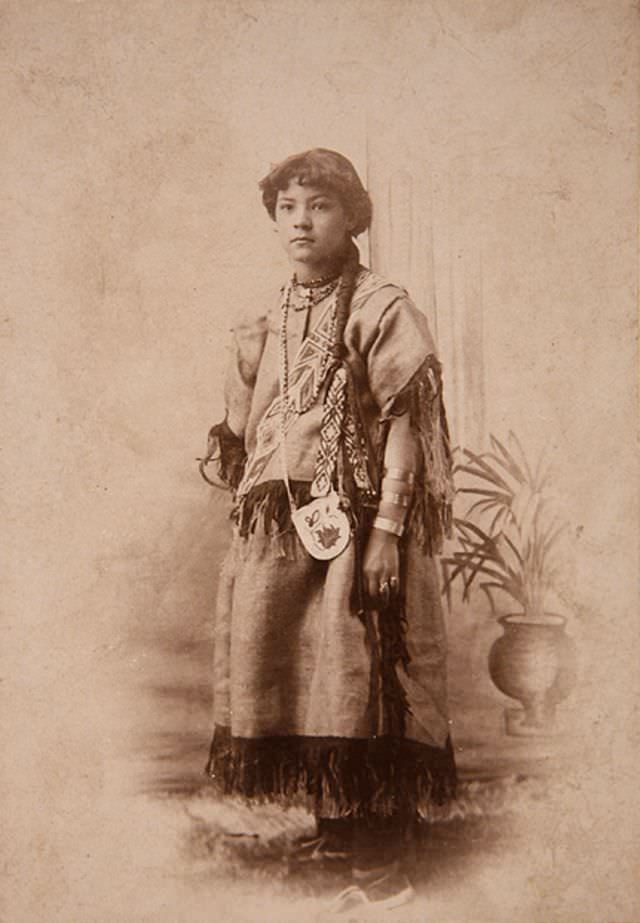
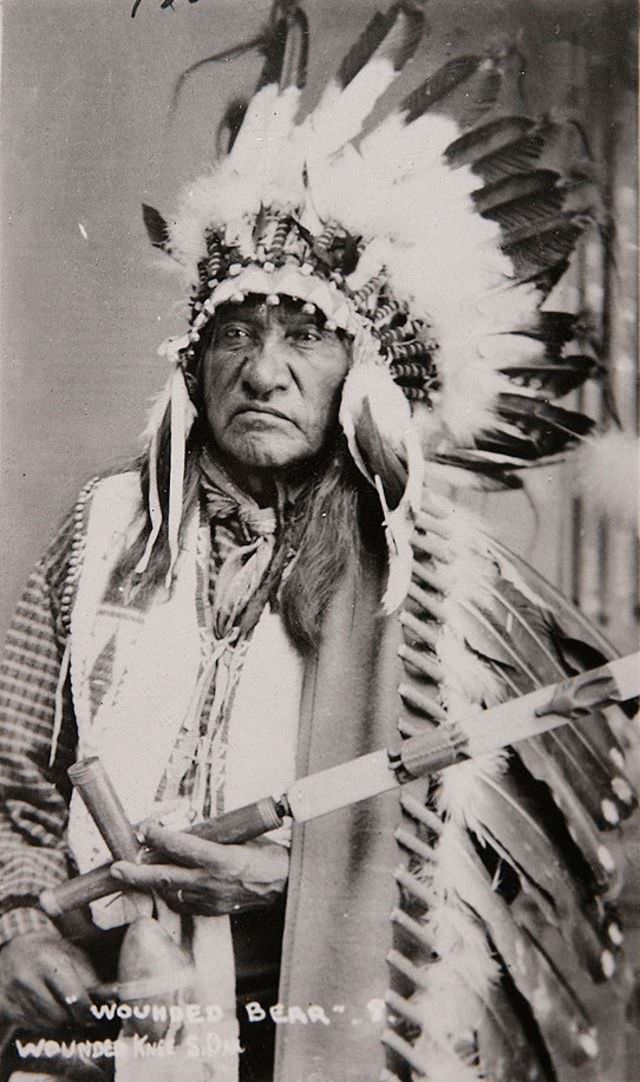
The Sioux Nation is heavily represented in this collection, reflecting the prominence of Sioux resistance and diplomacy during this era. Wounded Knee, South Dakota, appears in the captions of multiple subjects — a location that carries enormous historical significance as the site of the 1890 massacre in which U.S. Army troops killed between 250 and 300 Lakota men, women, and children.
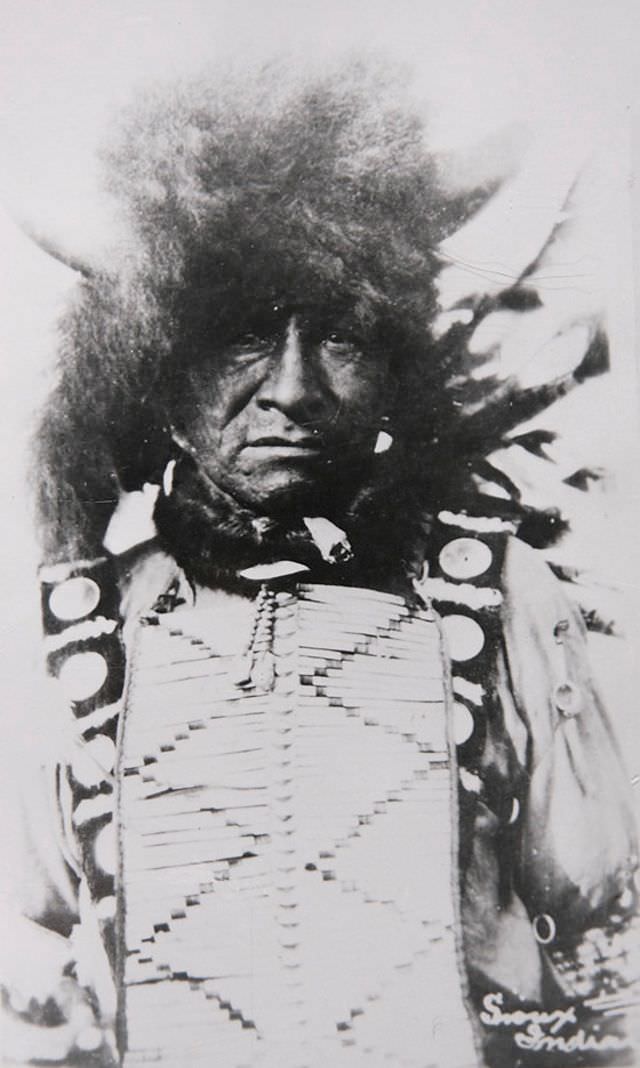
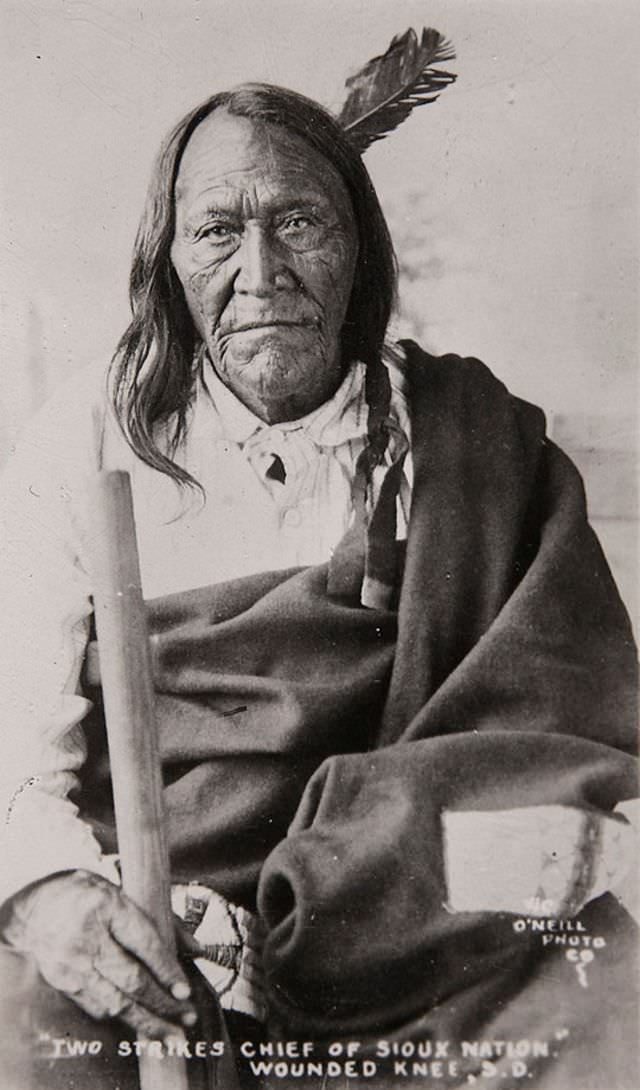
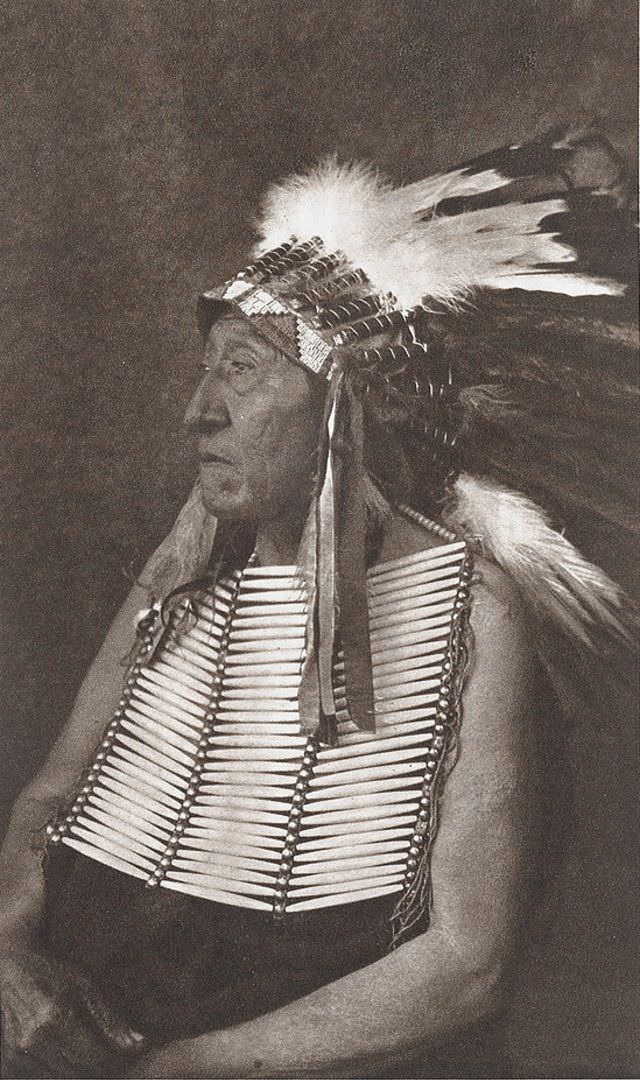
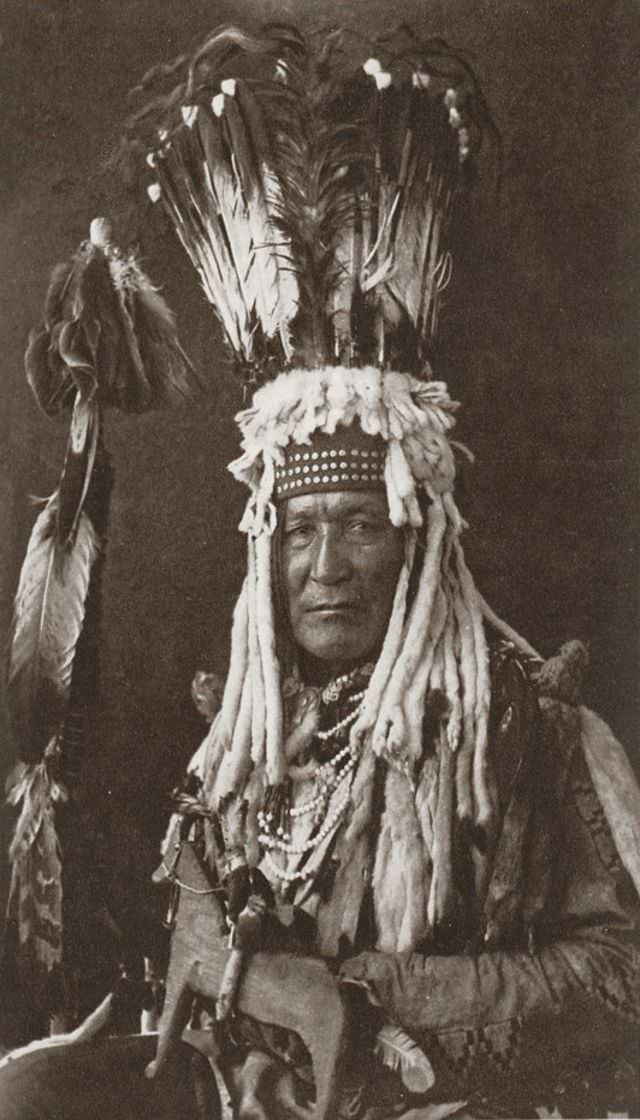
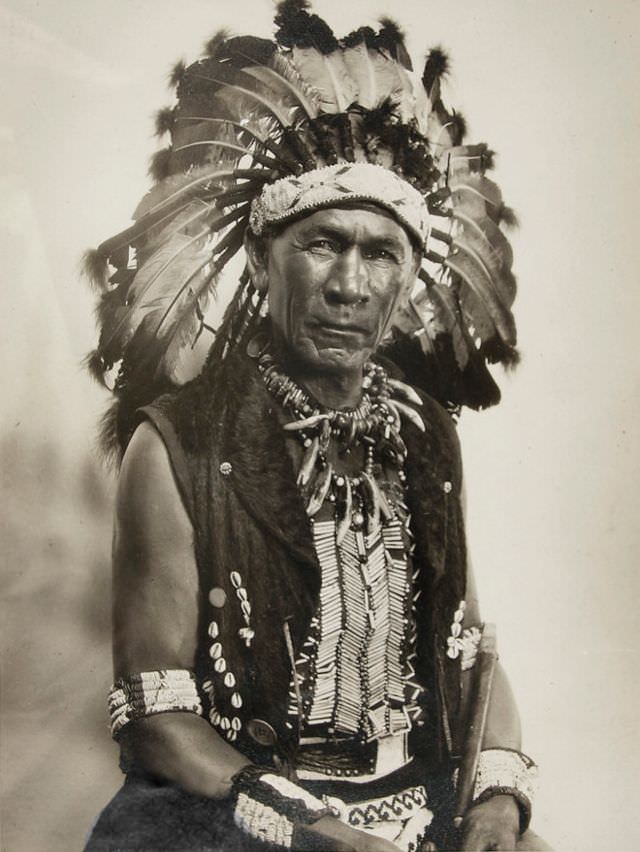
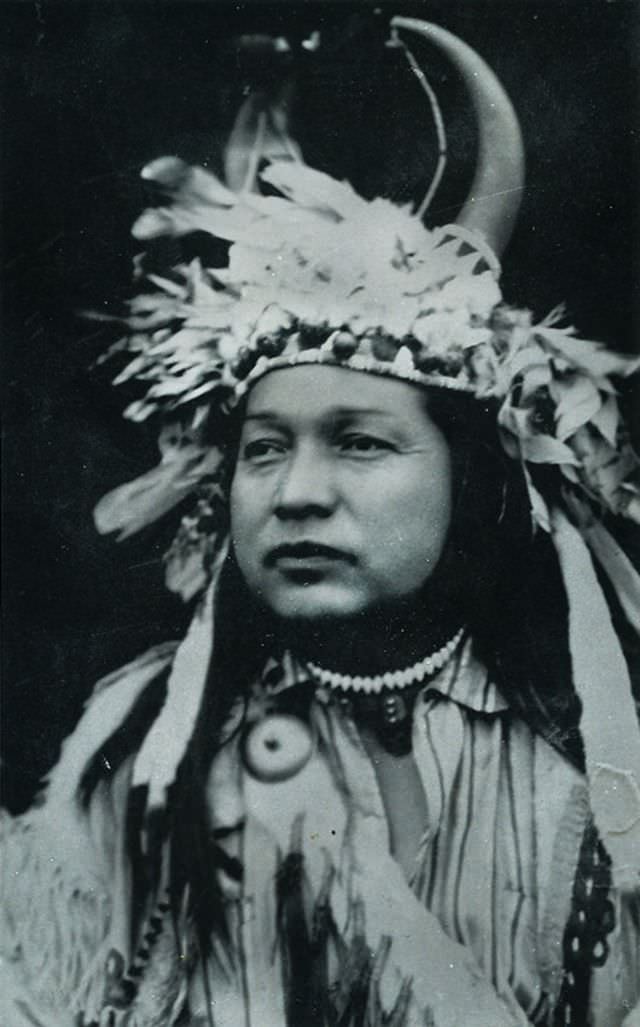
Elaborate headdresses appear in several portraits, serving as markers of status, spiritual identity, and tribal affiliation. Each feather and bead carried meaning specific to the wearer’s nation and personal history. While the exact identities of some subjects were not recorded, the richness of their regalia speaks clearly.
Today, the United States is home to more than five million Native Americans. Roughly 78 percent live outside of reservations, with the largest populations concentrated in California, Arizona, and Oklahoma. Most live in small towns or rural areas. The overwhelming majority are members of one of the 574 federally recognized tribes — nations that survived the epidemics, the wars, the land seizures, and the forced assimilation policies that defined the very era these photographs were taken.
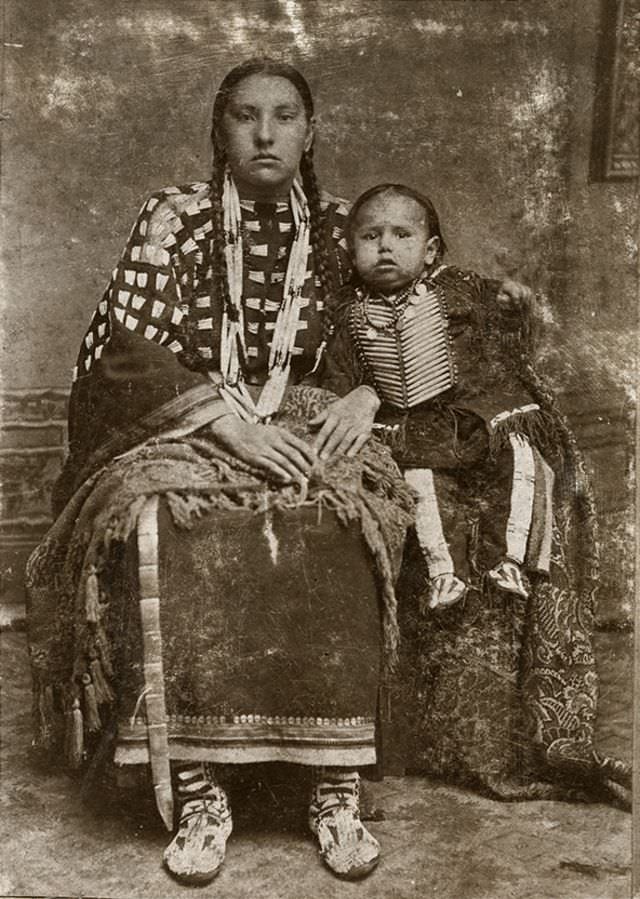
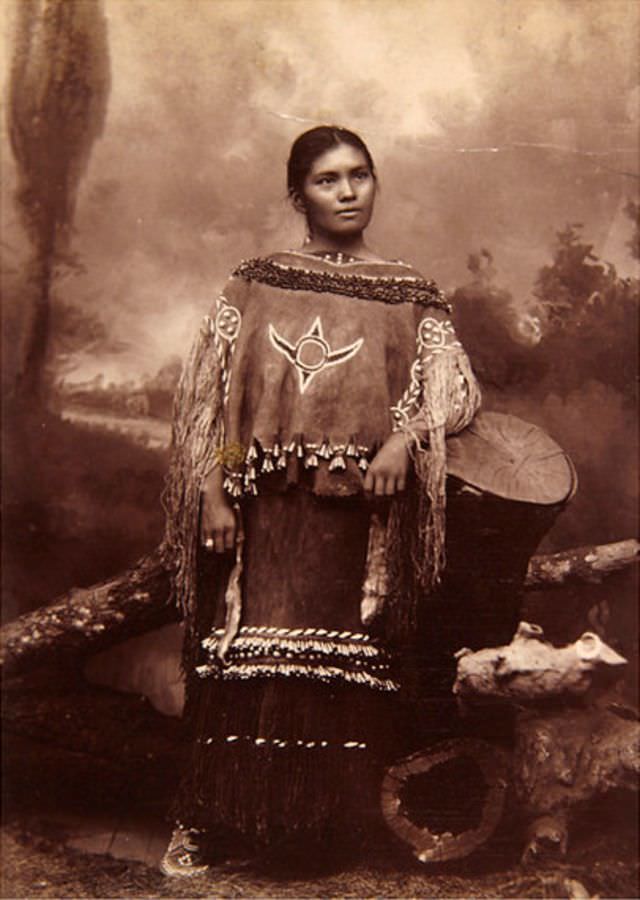
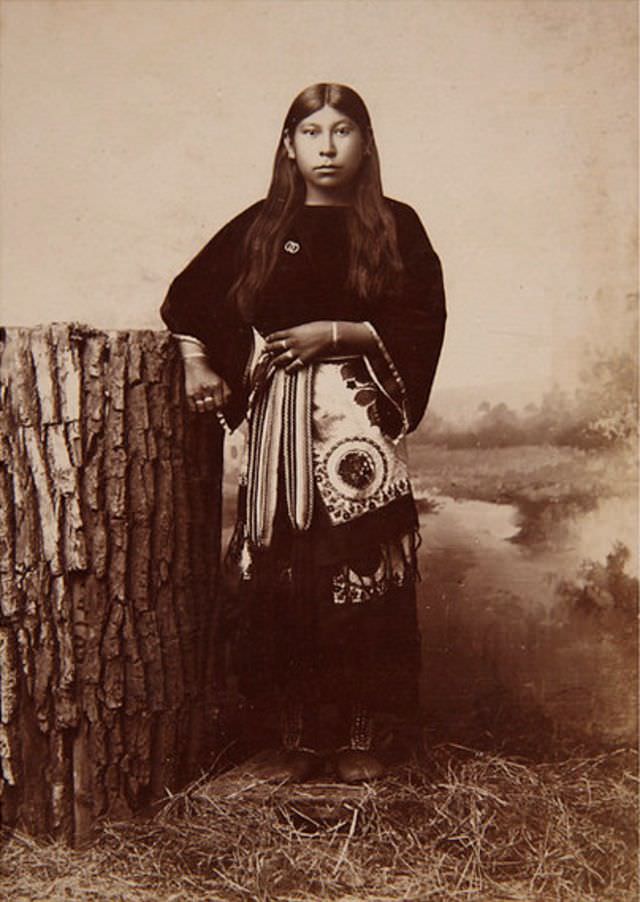
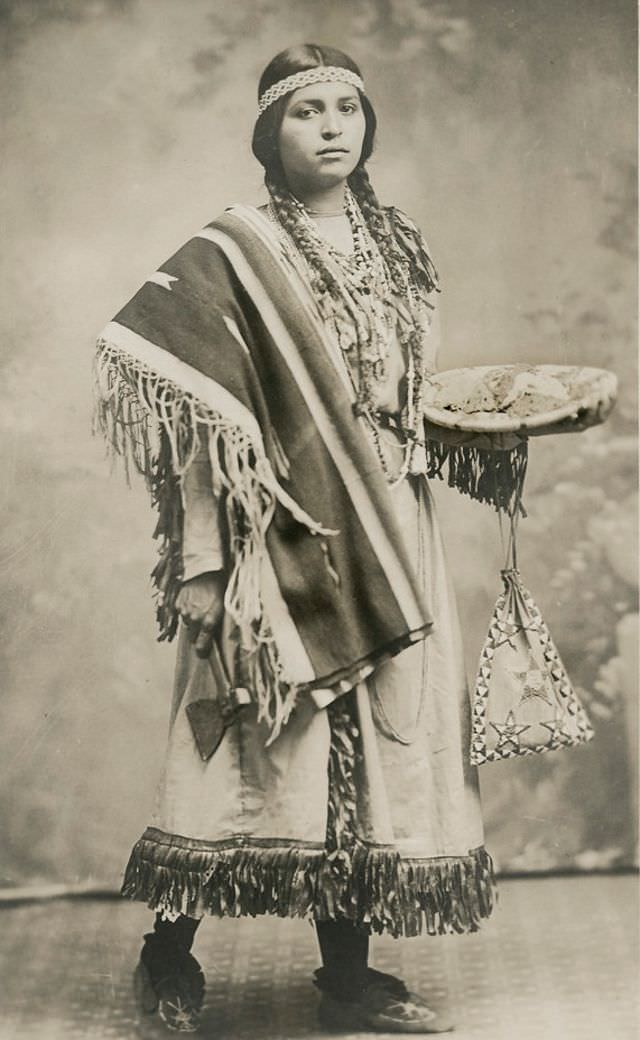
The Chiricahua Apache and Kiowa nations each produced distinctive traditions of dress, and both are represented here in portraits of young women wearing their native clothing. The Chiricahua Apache, led for a time by Geronimo, were among the last to resist U.S. military campaigns in the Southwest. The Kiowa, based on the Southern Plains, were forced onto a reservation in Oklahoma following the Red River War of 1874–75.
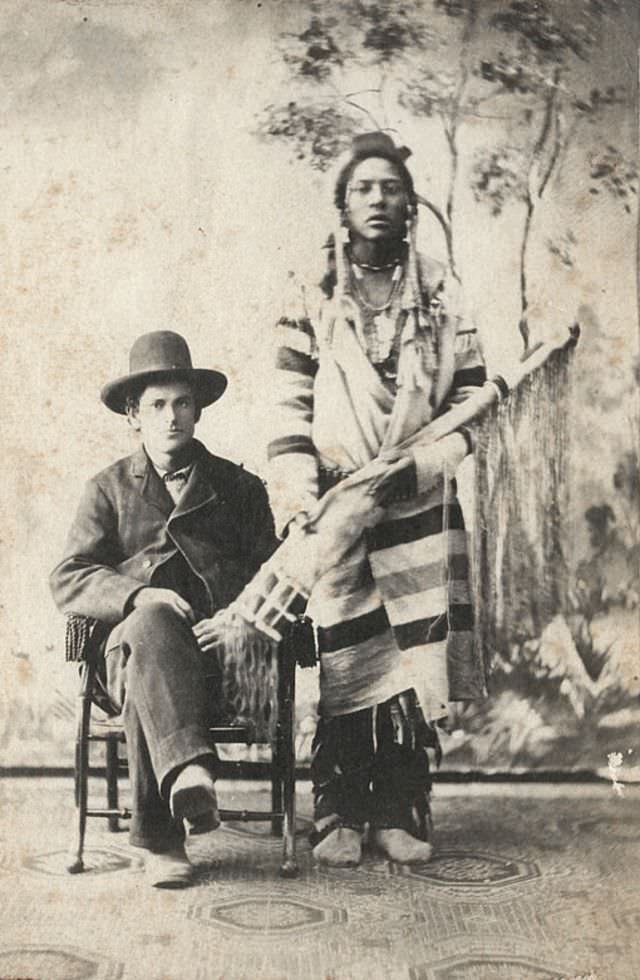
Some photographs in the collection document the intersection of Native and non-Native worlds that defined this transitional period. A young Native American man stands with a rifle beside a seated white man — a single frame that quietly holds the complex power dynamics of the late nineteenth century American frontier.





You could tell most of these people had a hard living in the outside in the sun.
Great pictures.