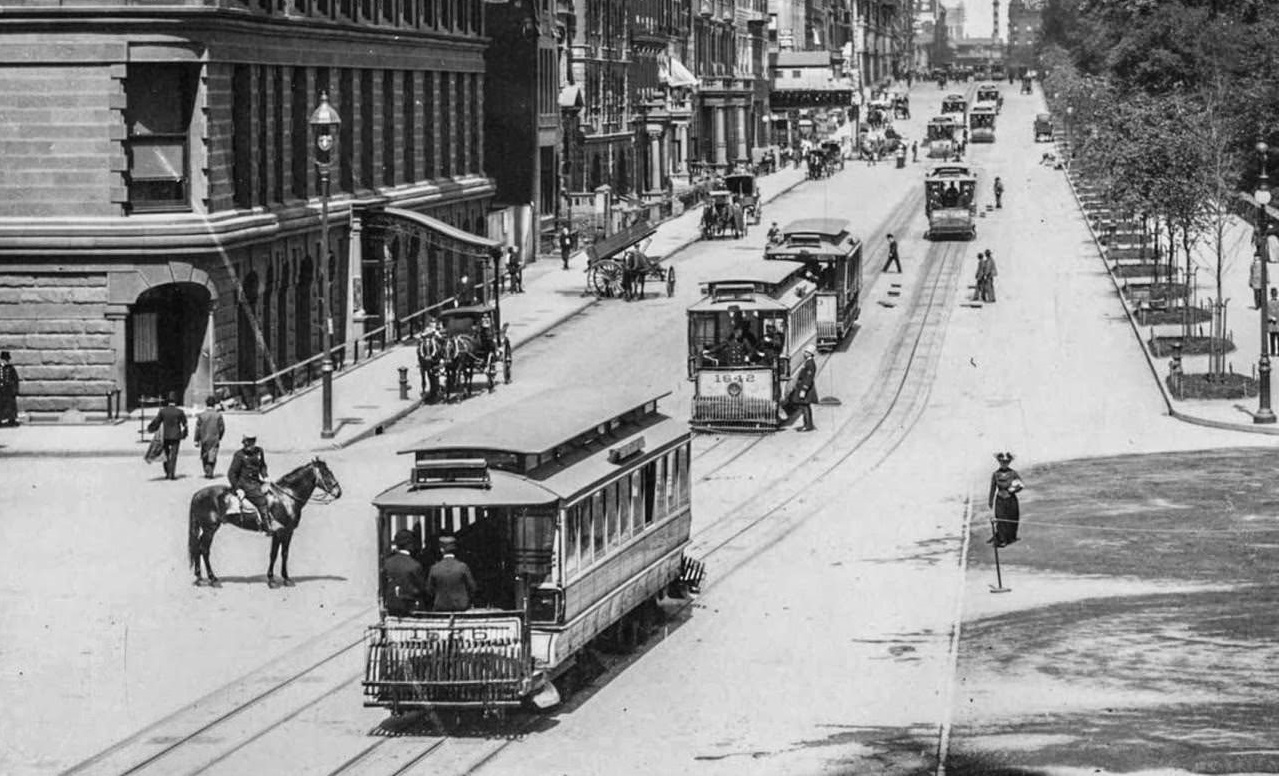
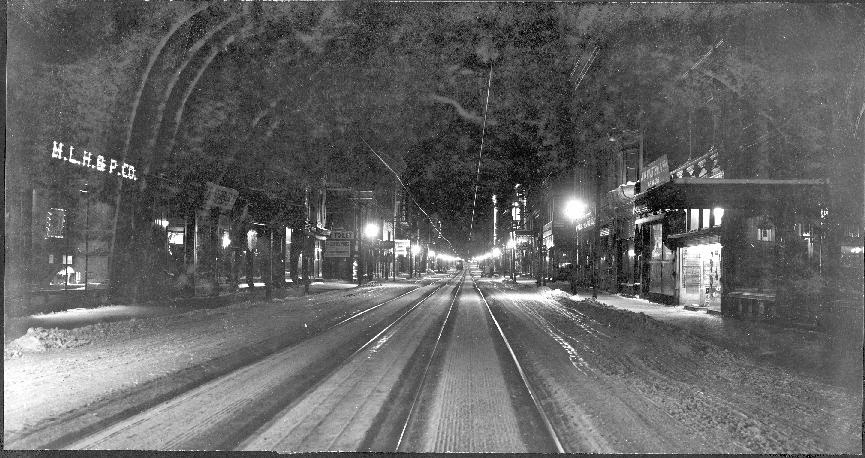
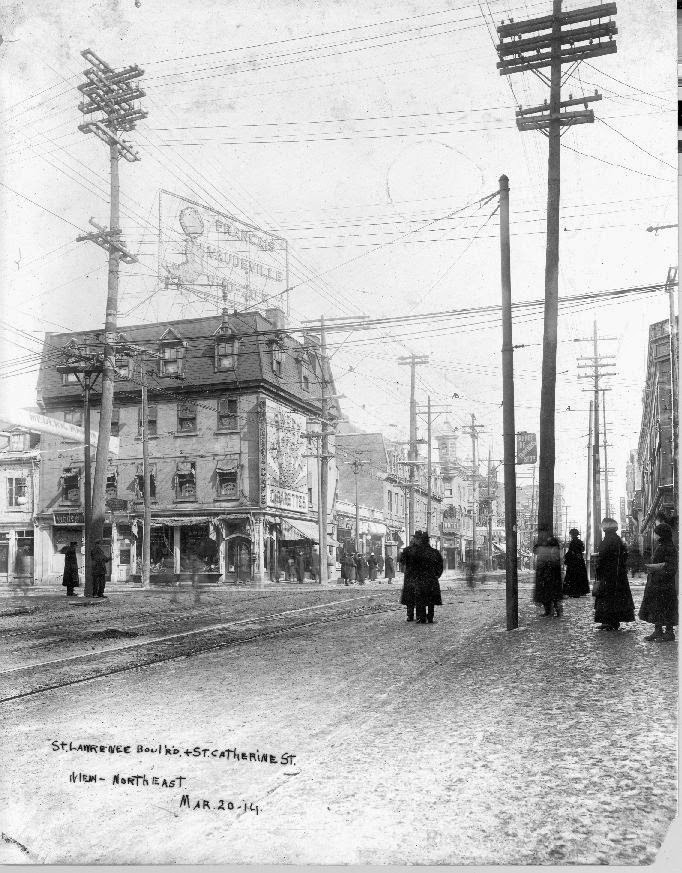
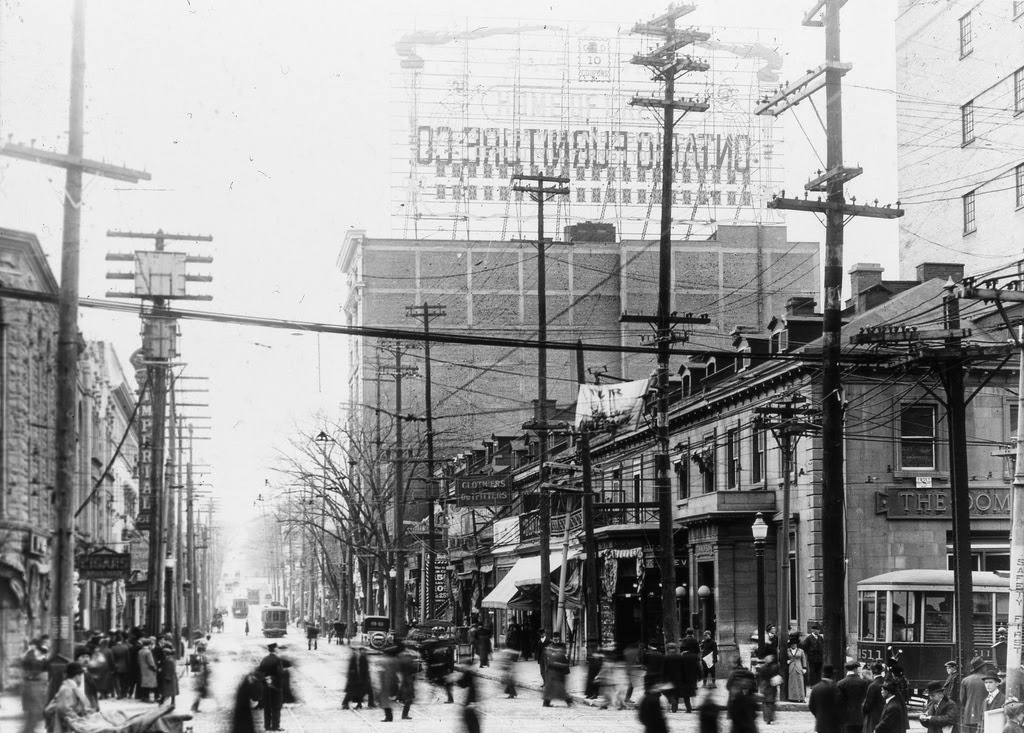
In the decades following the turn of the twentieth century, Montreal grew rapidly into a massive Canadian industrial hub. Horse-drawn delivery wagons shared icy or muddy pavement with early electric streetcars that sparked overhead wires. Pedestrians wore heavy wool coats, stiff bowler hats, and long floor-sweeping skirts to brave the bitter Quebec winters and damp spring thaws. The city population surged as thousands of factory workers arrived from rural provinces.
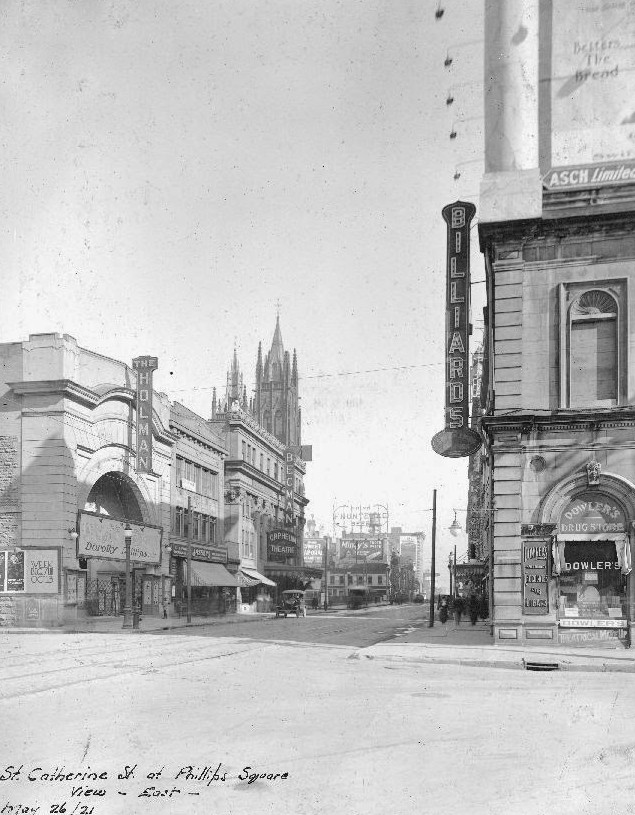
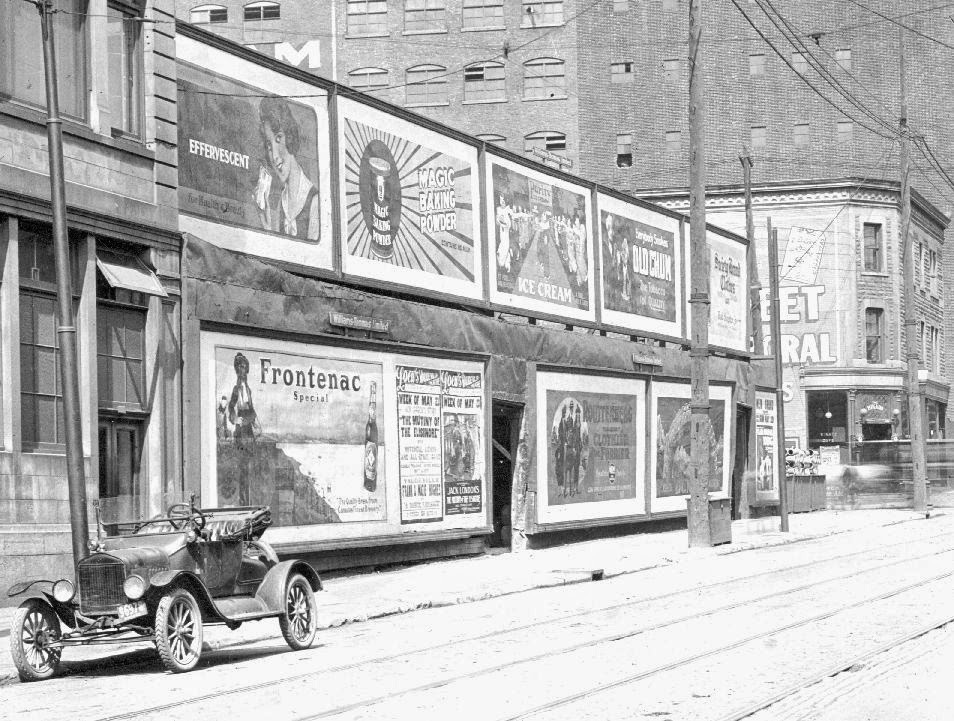
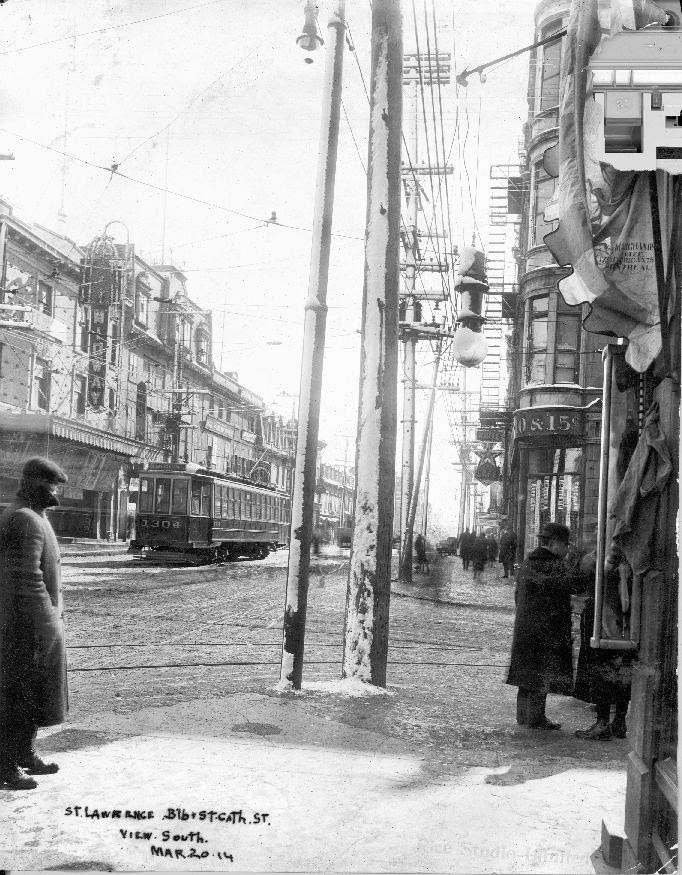
Sainte-Catherine Street served as the main retail artery for local shoppers and wealthy merchants. Multi-story department stores drew large crowds of middle-class buyers looking for the latest fashions. Storefronts displayed hand-painted wooden signs and large glass display windows filled with imported goods from Europe and factories in the United States.
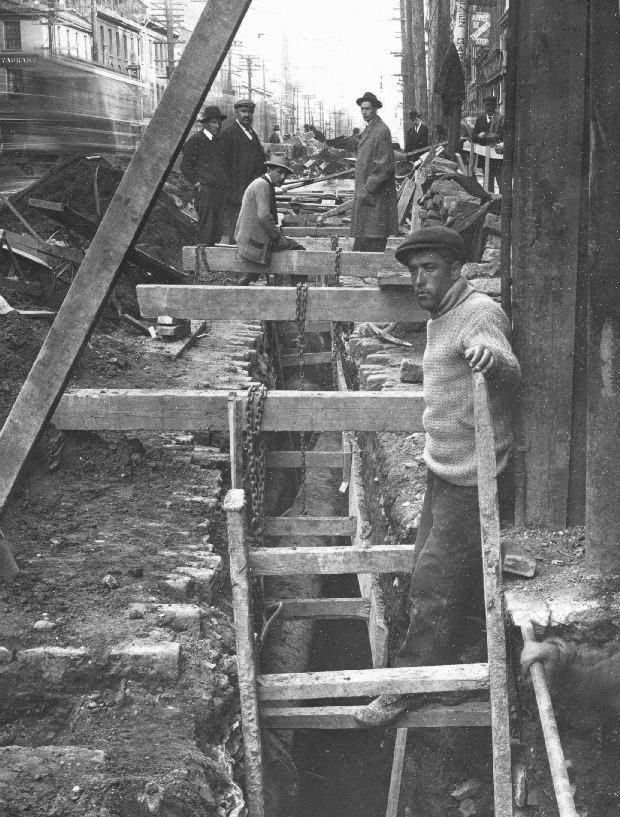
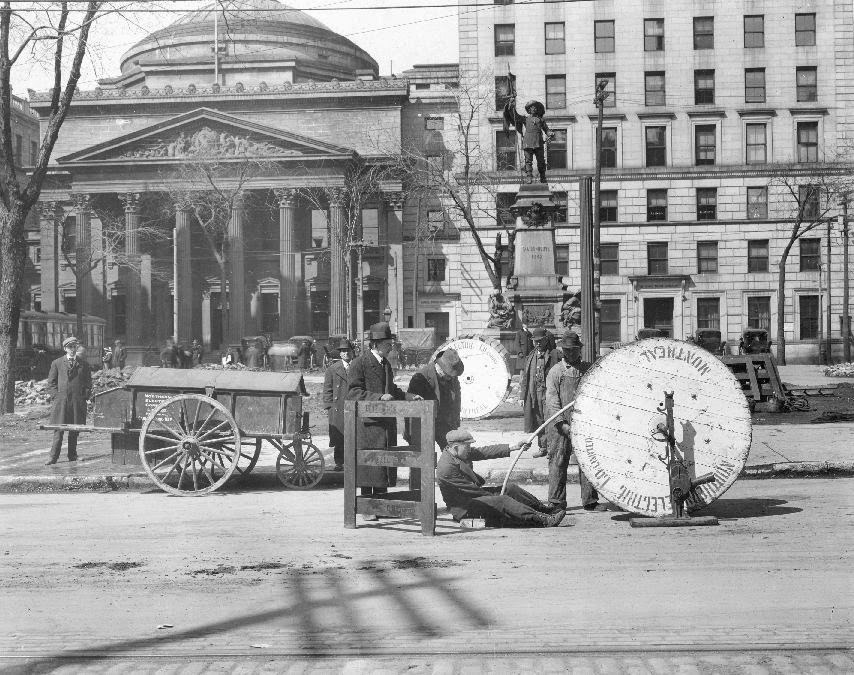
Heavy industry dominated areas near the St. Lawrence River port and downtown rail yards. Laborers gathered in thick wool caps and canvas work jackets near major commercial intersections. They dug deep foundations for massive stone skyscrapers, laid down heavy iron water pipes, and expanded the municipal electrical grid across growing residential neighborhoods. Steam engines puffed black coal smoke into the gray sky.
Saint-Laurent Boulevard divided the growing city cleanly down the middle. East of the boulevard, French-speaking working-class residents built dense residential neighborhoods, Catholic parishes, and neighborhood social clubs. West of the dividing line, English-speaking immigrants and wealthy businessmen established Protestant churches and dominant financial institutions.
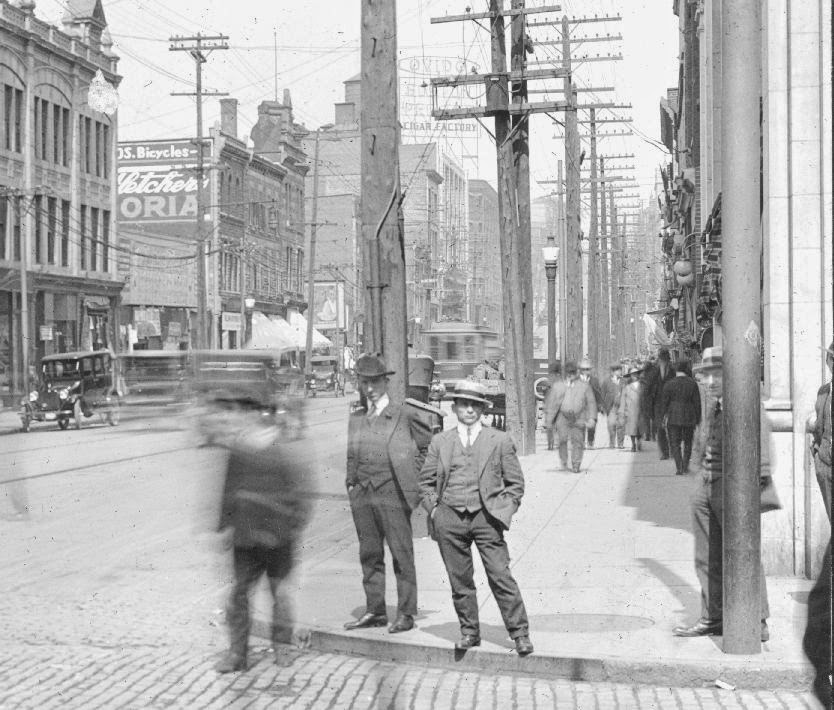
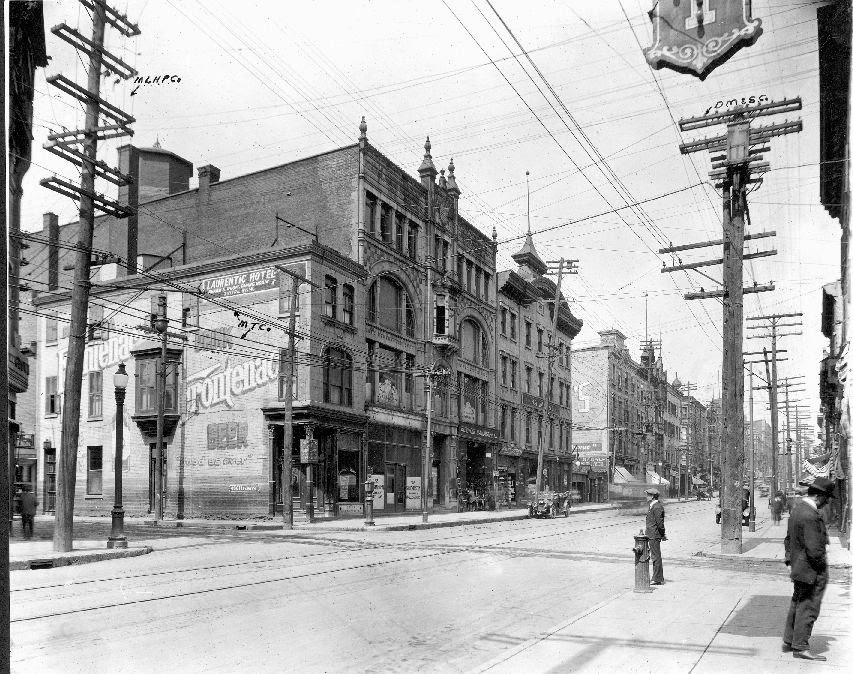
Street corners hummed with constant activity from early morning until late evening. Young newsboys shouted bold headlines about European battles and local labor strikes. Delivery boys pushed wooden carts loaded with fresh bread, glass milk bottles, and heavy blocks of ice for household wooden iceboxes.
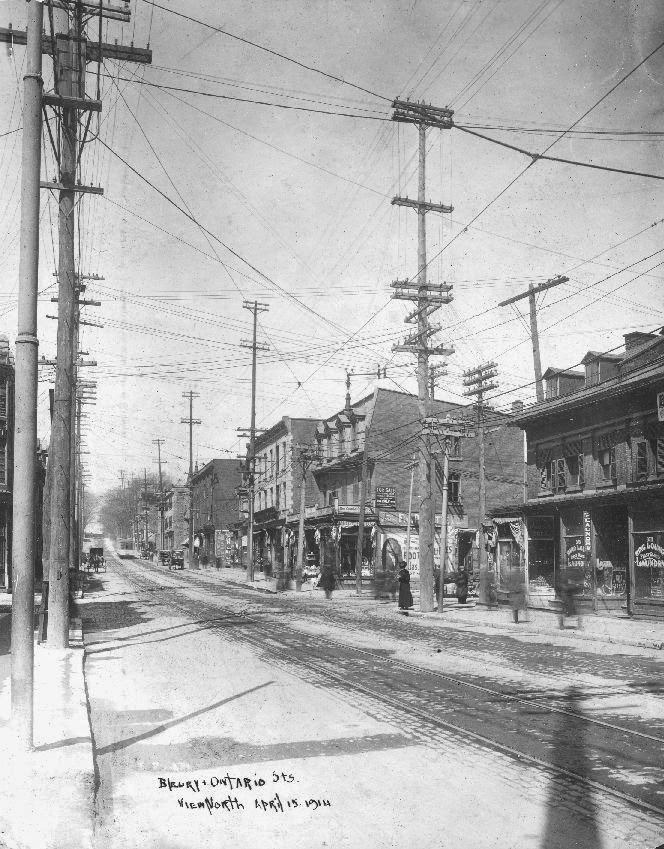
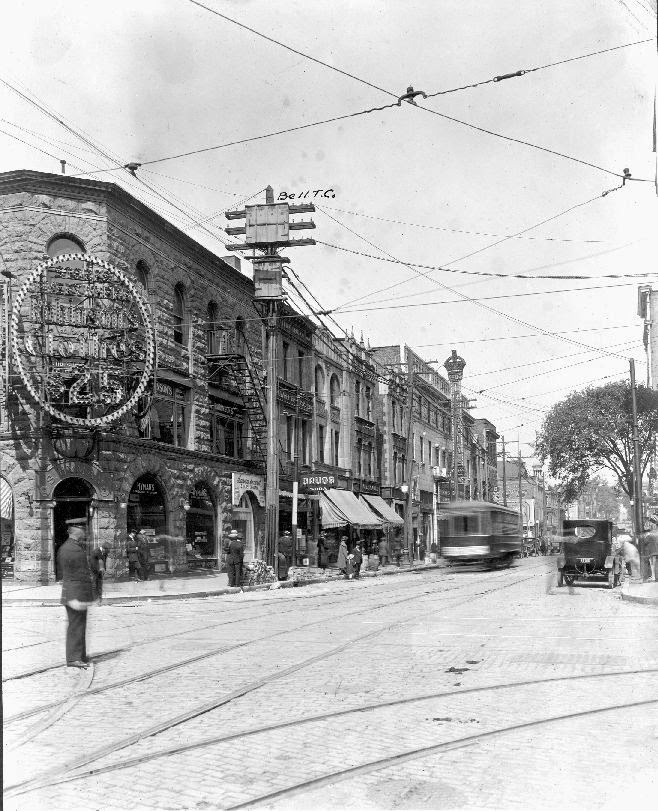
Public transportation drove the strict daily rhythm of urban life for thousands of residents. Electric trams rolled down steel tracks embedded directly into cobblestone streets, carrying factory workers to the industrial suburbs and office clerks to downtown banks. Newspaper stands and small tobacco shops operated on nearly every busy corner. Passengers stood shoulder-to-shoulder inside unheated cars while conductors punched paper tickets by hand.
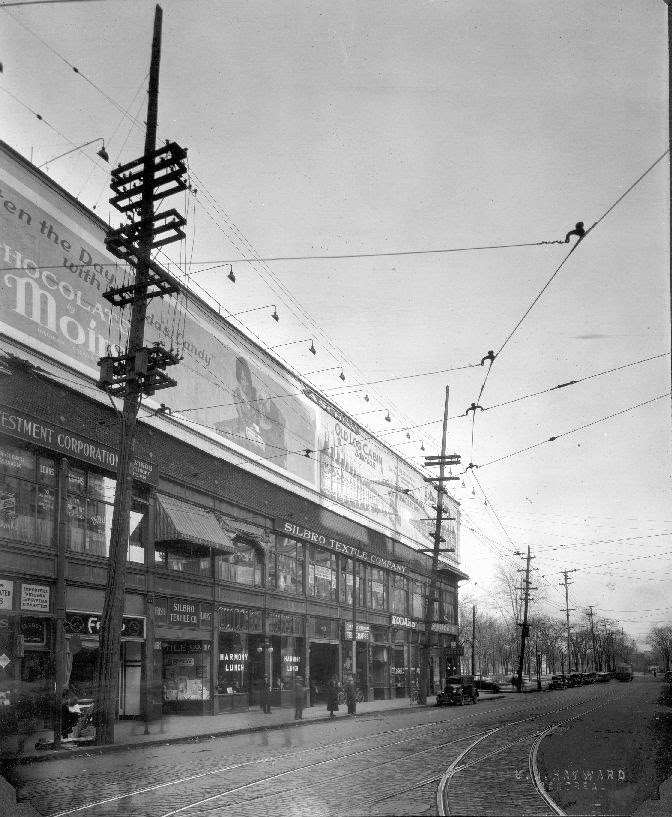
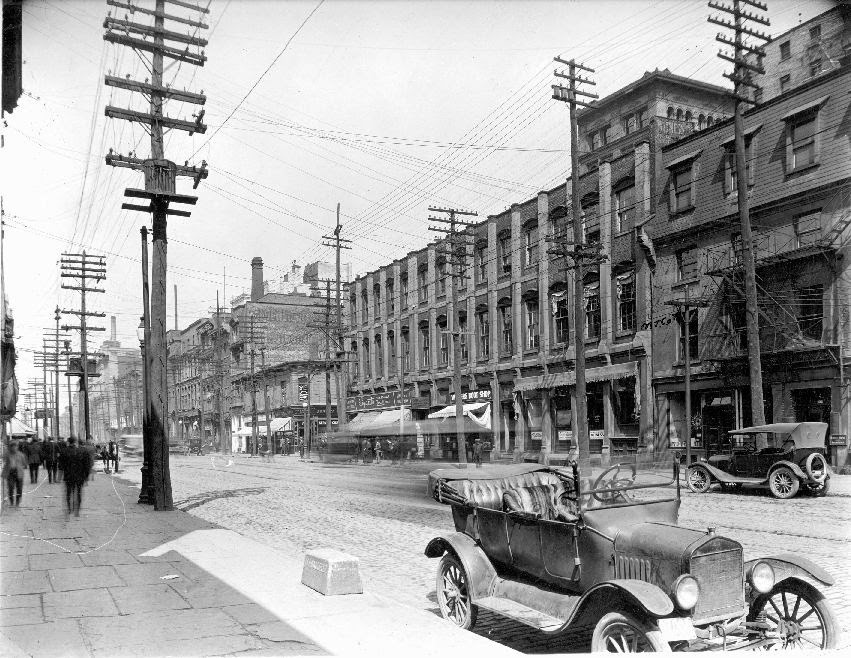
Municipal workers paved over old dirt roads with durable granite blocks and modern asphalt as motor vehicles began to appear in greater numbers. Local mechanics and gas station attendants set up small repair shops right next to traditional blacksmiths who still shod heavy horses for freight companies. Traffic police officers directed the chaotic flow of vehicles wearing thick winter coats and heavy leather gloves.
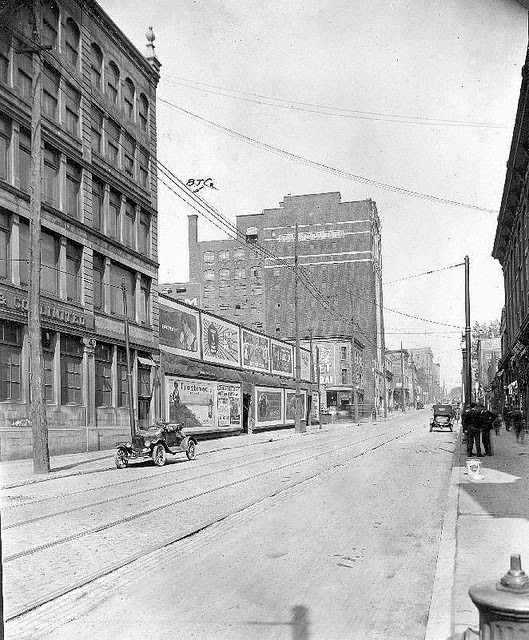
By the end of the 1920s, the visual landscape shifted permanently toward modern consumer culture. Electric neon signs replaced flickering gas lamps, and fast delivery trucks pushed horse-drawn freight carts off the busiest thoroughfares.
Municipal tax records show that horse registrations dropped by half between 1925 and 1930.