
Miami in the 1990s was a city in motion — growing, struggling, and reshaping itself all at once. New neighborhoods were forming, landmark buildings were being restored, and tourists were discovering the Art Deco strip along South Beach. But beneath that colorful surface, the city was dealing with serious financial and political problems that would define the decade. These photos capture Miami as it actually was: vivid, busy, and complicated.
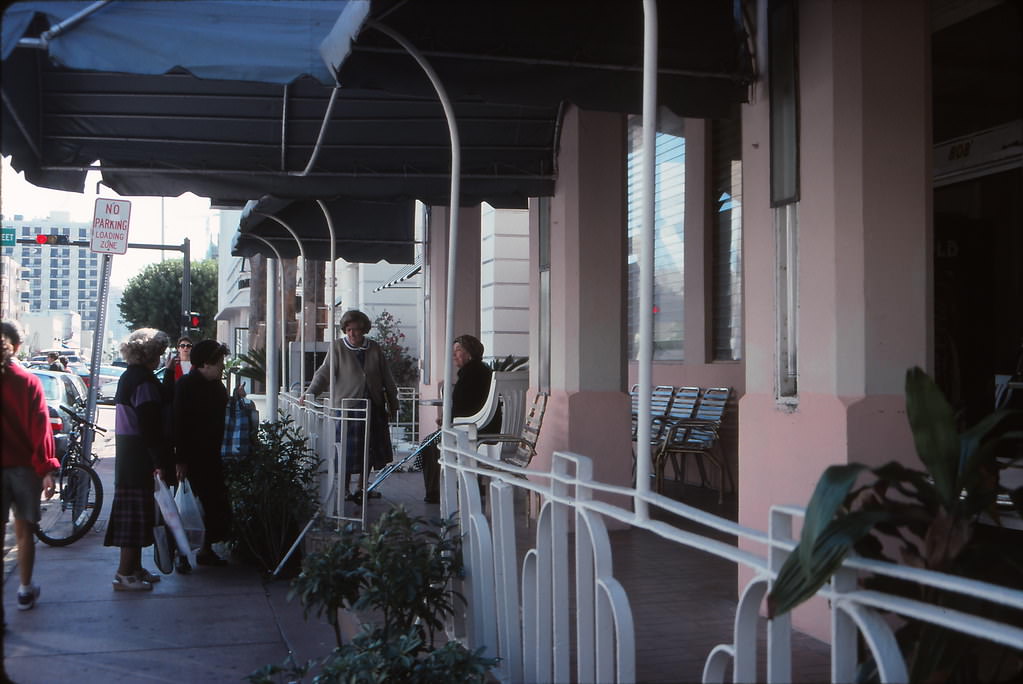
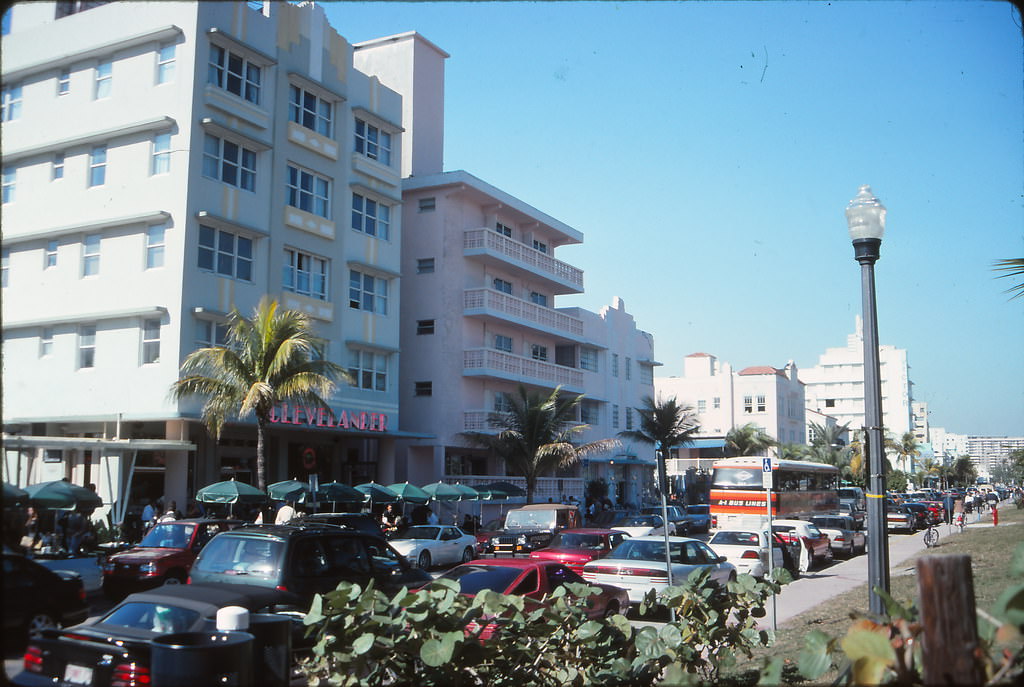
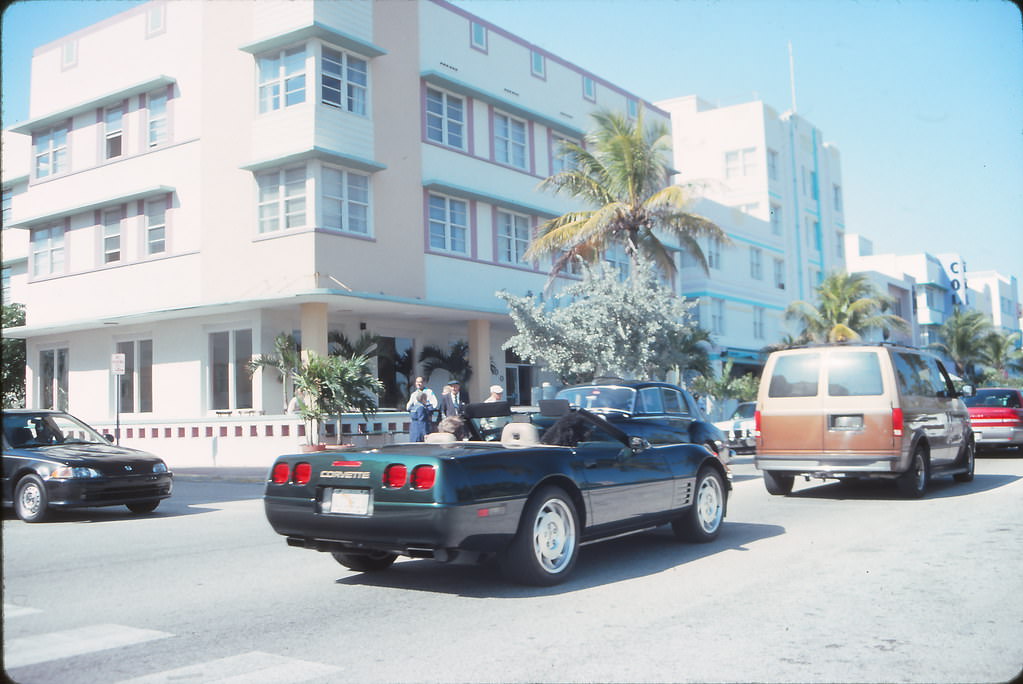
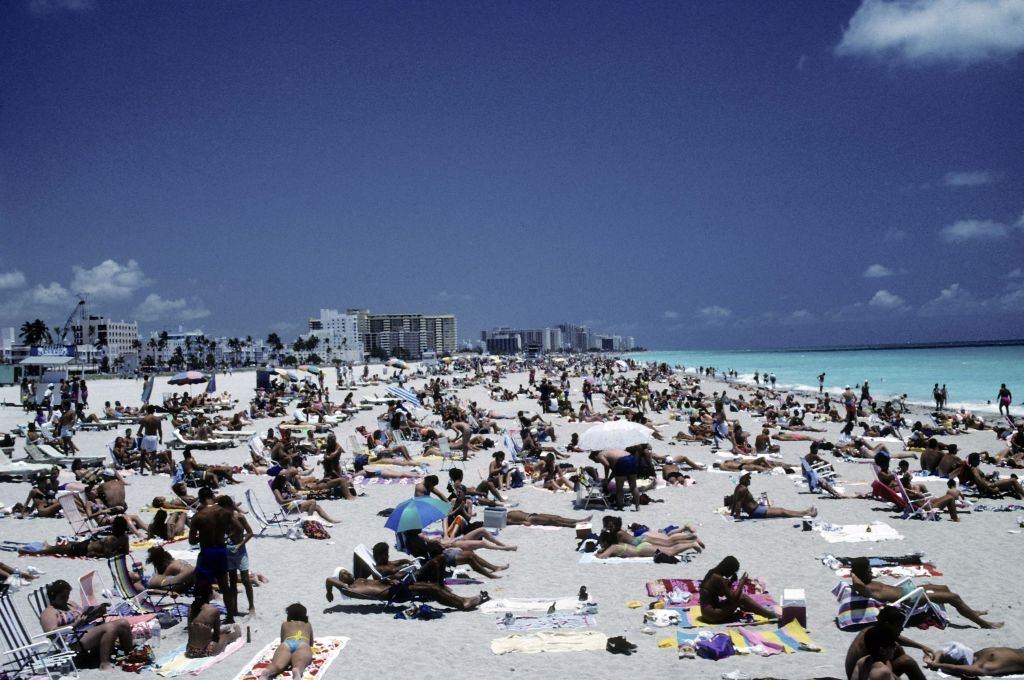
Miami Beach was one of the most recognizable stretches of coastline in America during the 1990s. Collins Avenue served as the neighborhood’s main artery, lined with hotels that ranged from freshly renovated Art Deco landmarks to older buildings still showing their age. The area had gone through a rough period in the 1970s and 1980s, but by the 1990s, restoration efforts and a surge in tourism had brought it back to life.
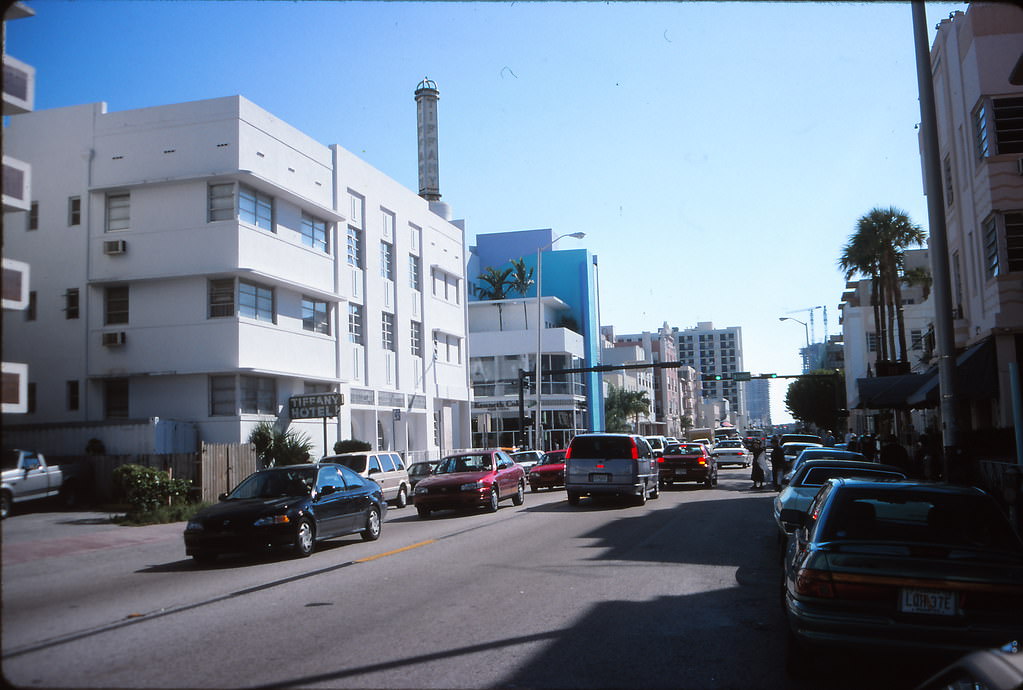
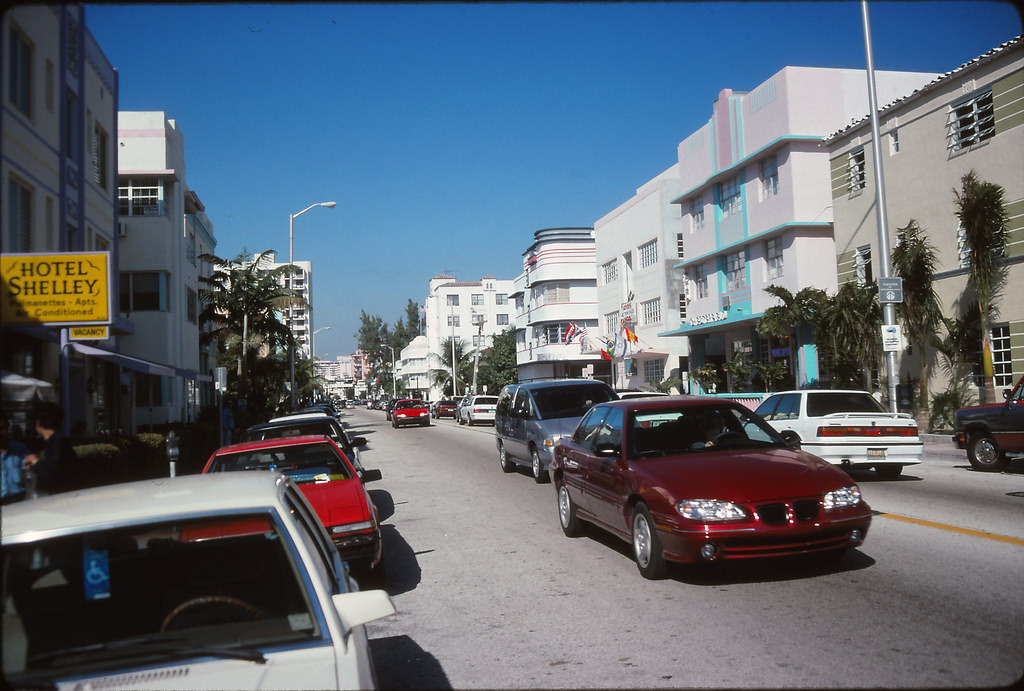
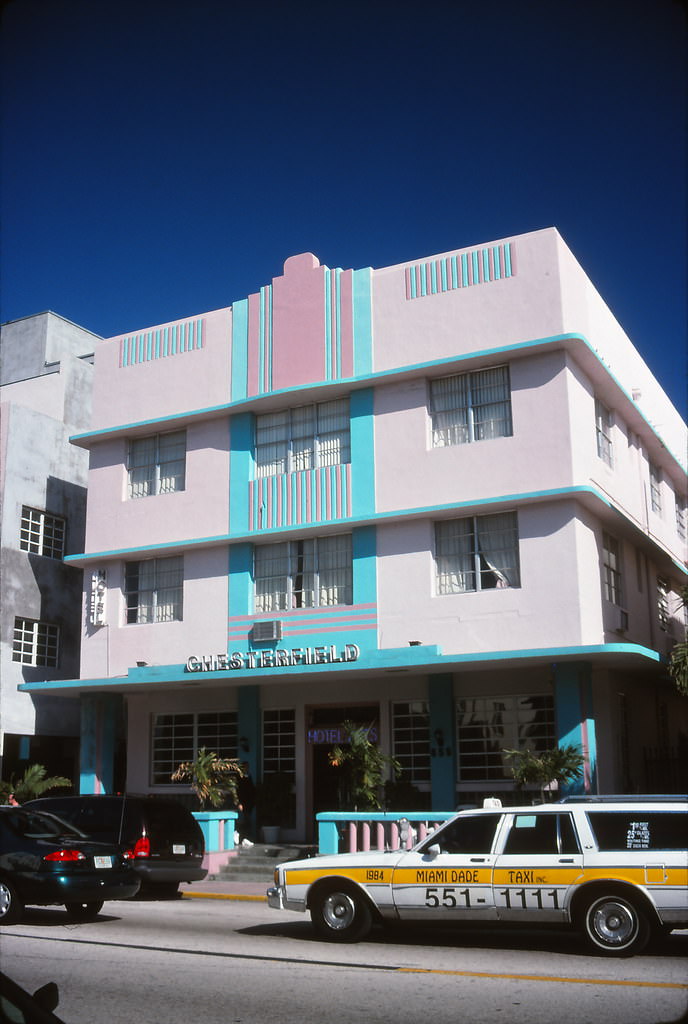
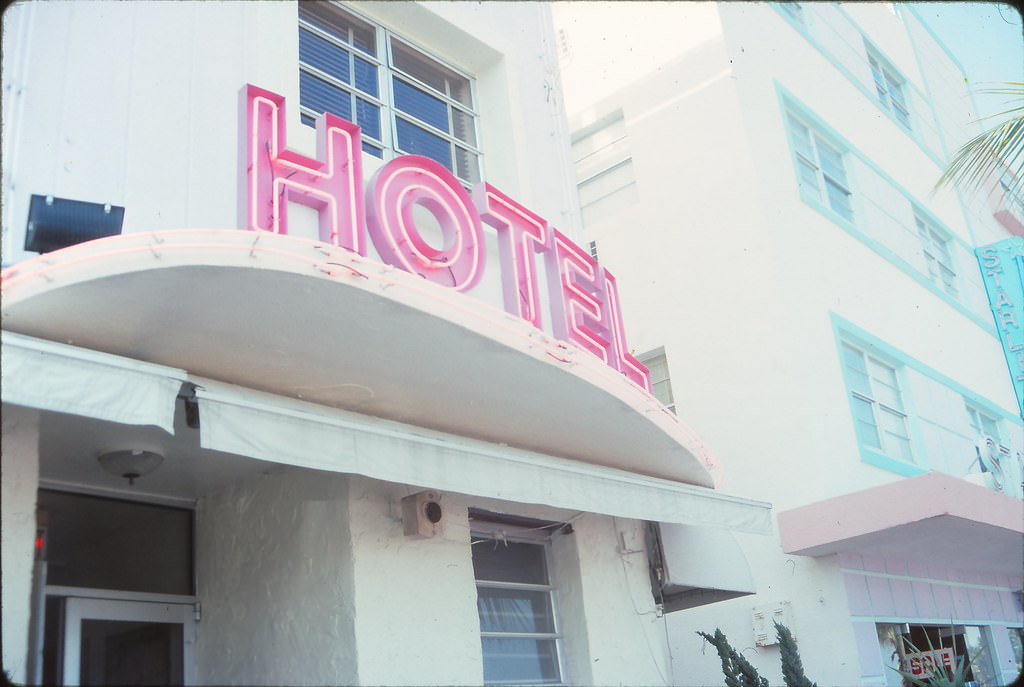
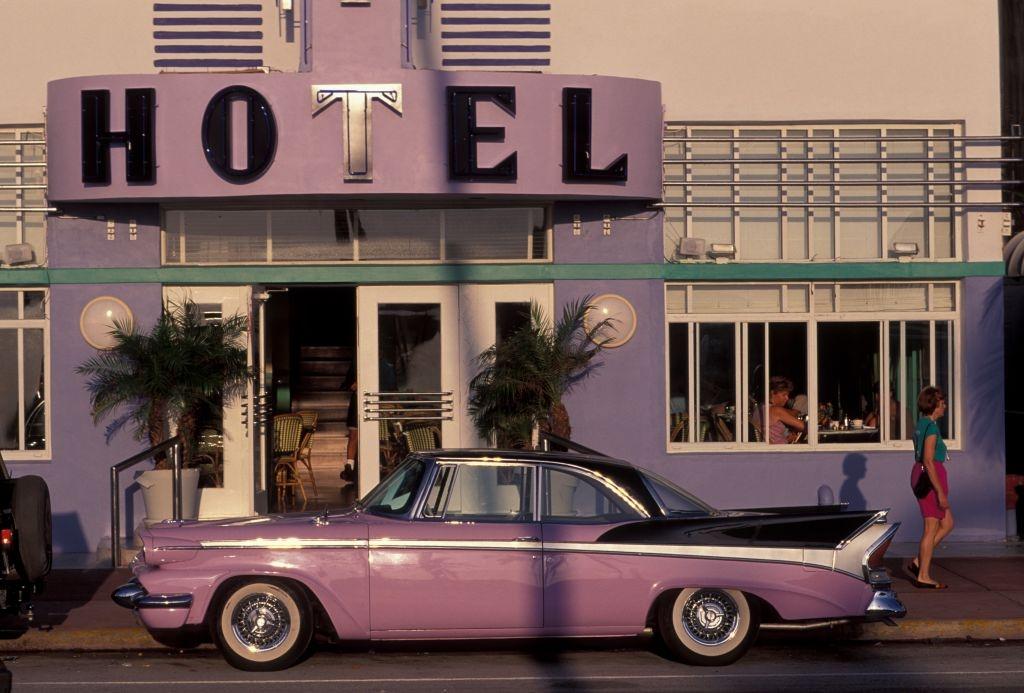
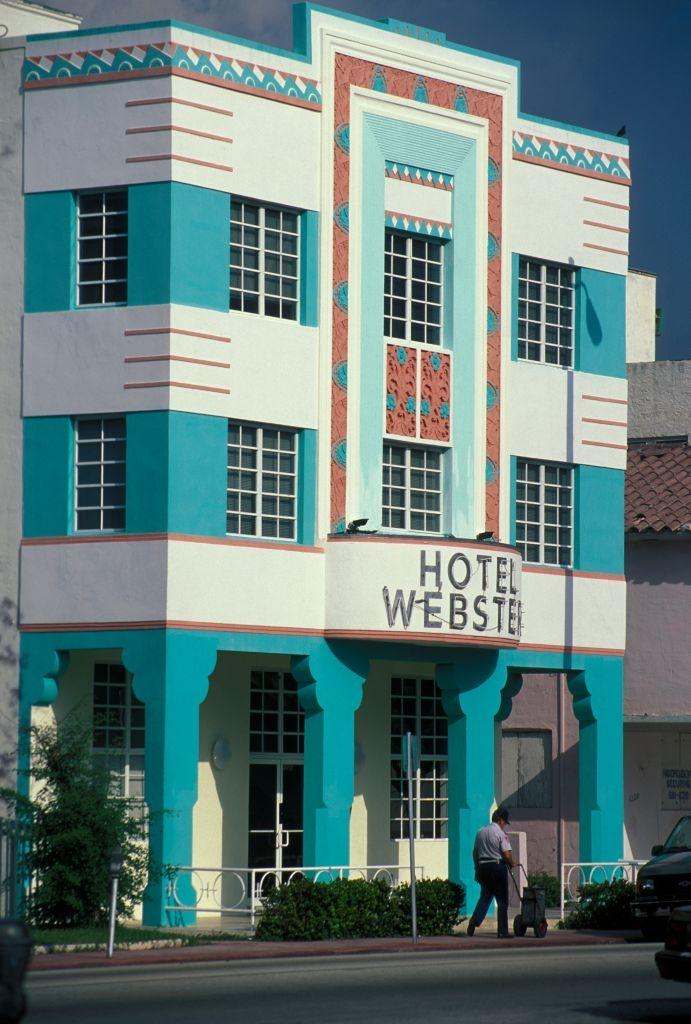
Hotels along Collins Avenue became symbols of the decade’s energy. The Chesterfield, the Sherbrooke, and the Fairmont each had their own character — some freshly painted in pastel shades, others still worn but full of history. These buildings weren’t just backdrops; they were working hotels where tourists, snowbirds, and locals mixed together on a daily basis.
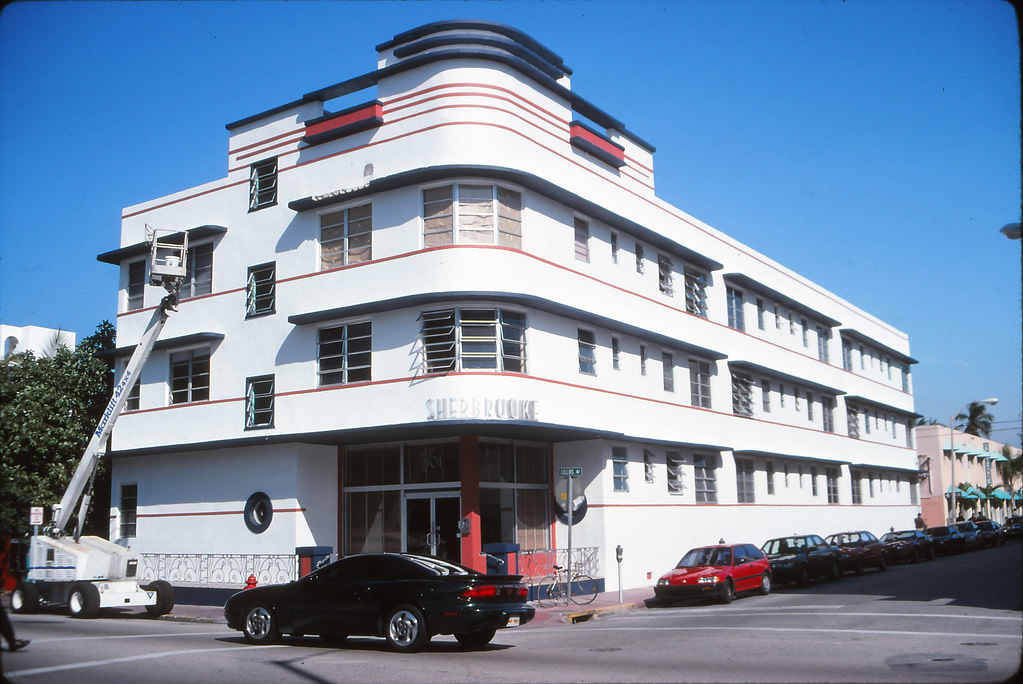
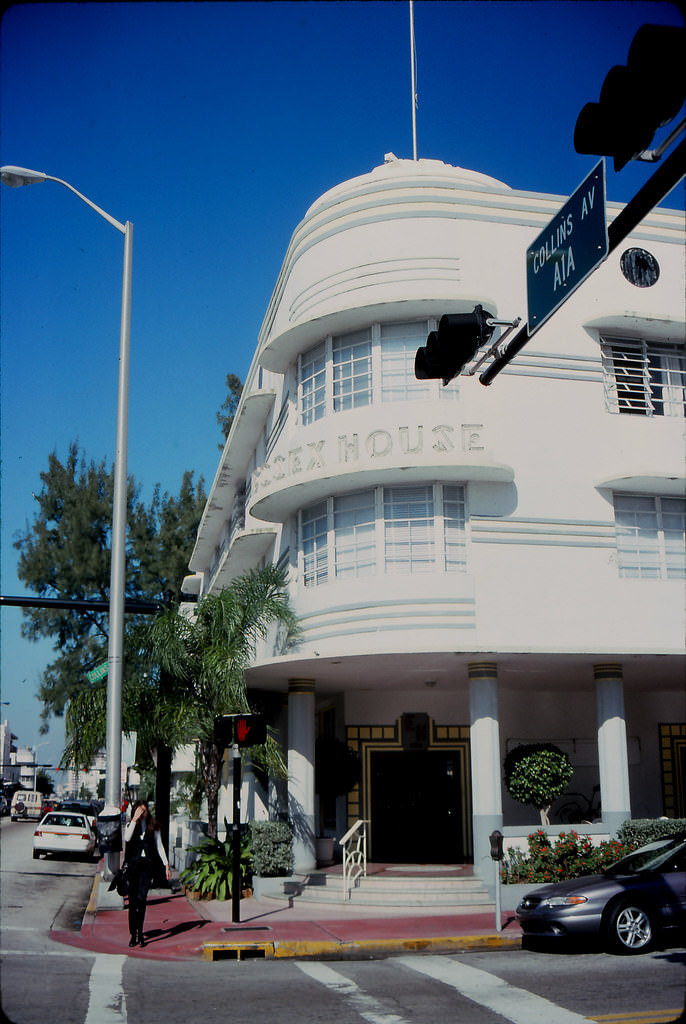
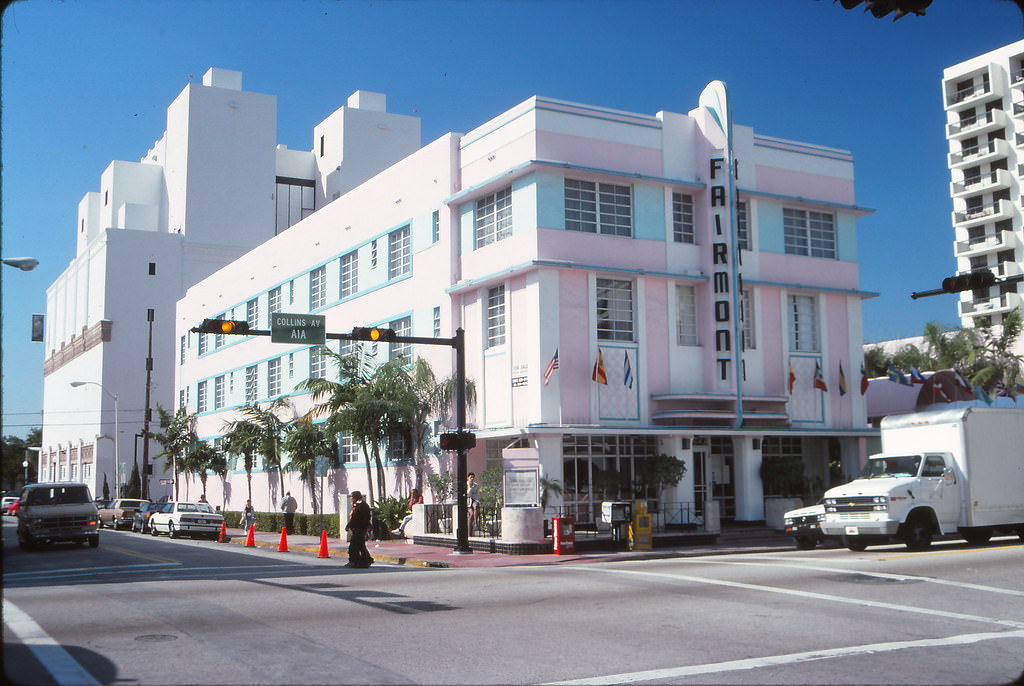
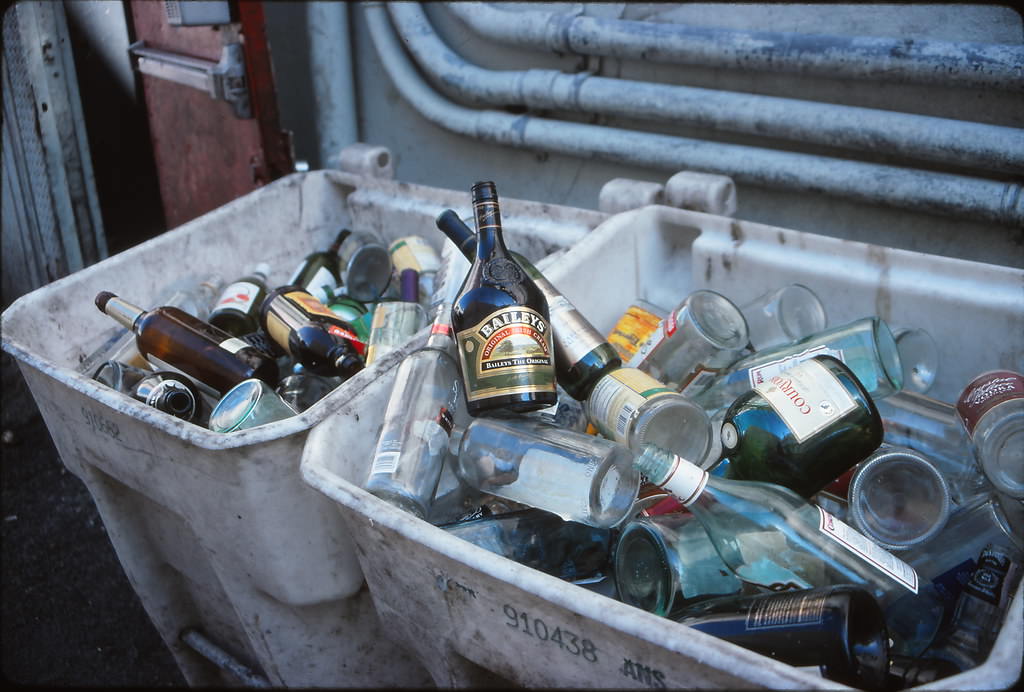
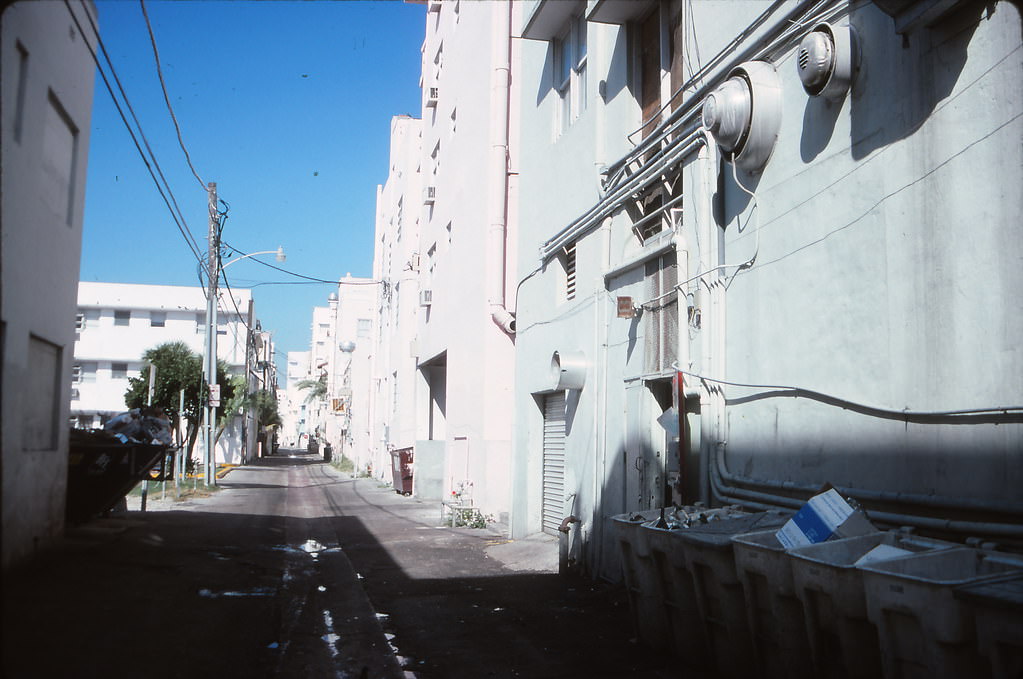
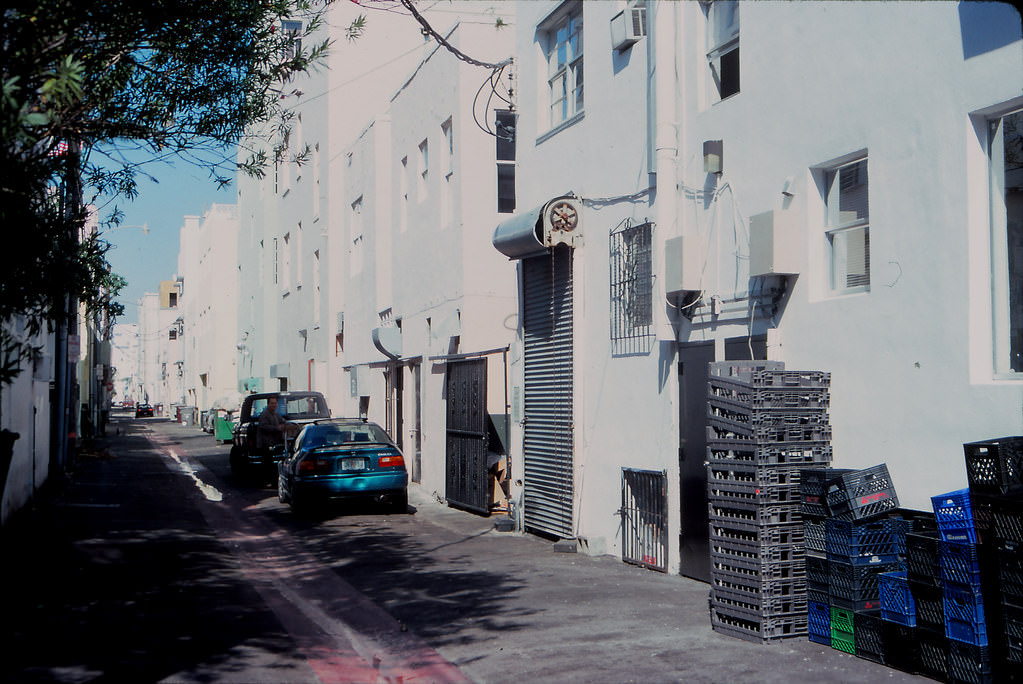
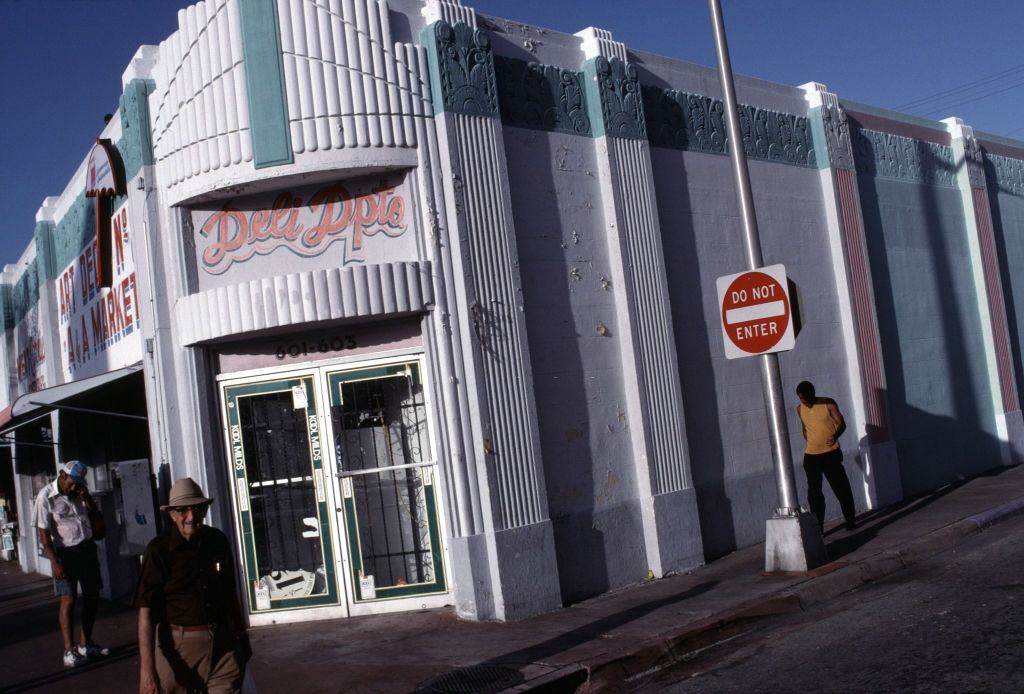
Not every corner of Miami Beach looked like a postcard. The alleys running behind Collins Avenue and Ocean Drive told a different story — quiet, utilitarian spaces where empty bottles gathered and service workers moved between shifts. These back lanes were as much a part of the neighborhood as the neon-lit storefronts out front.
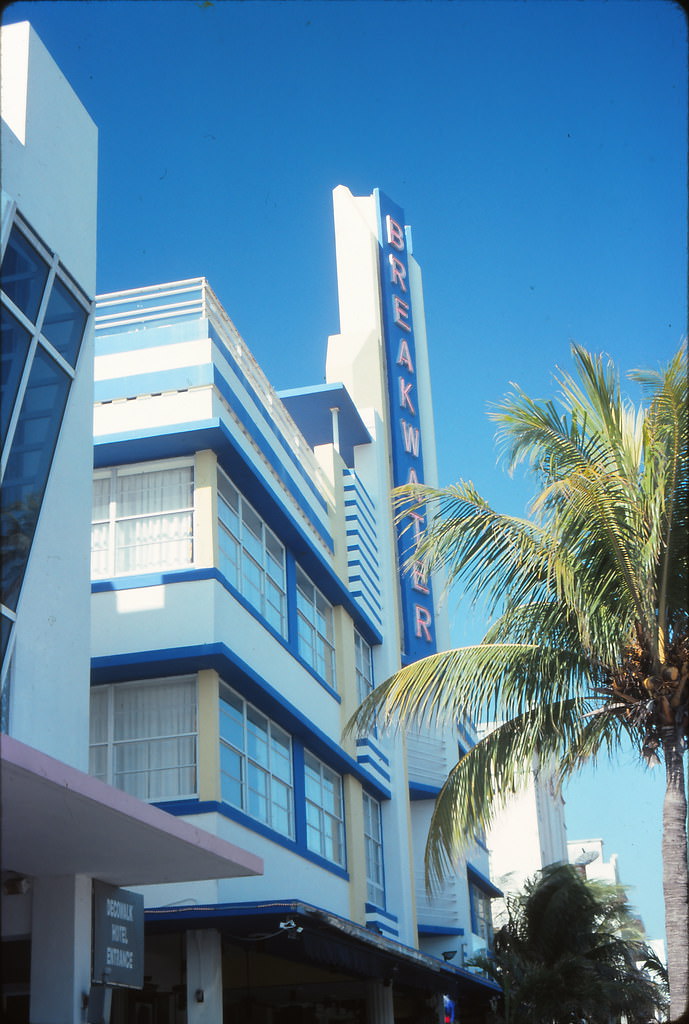
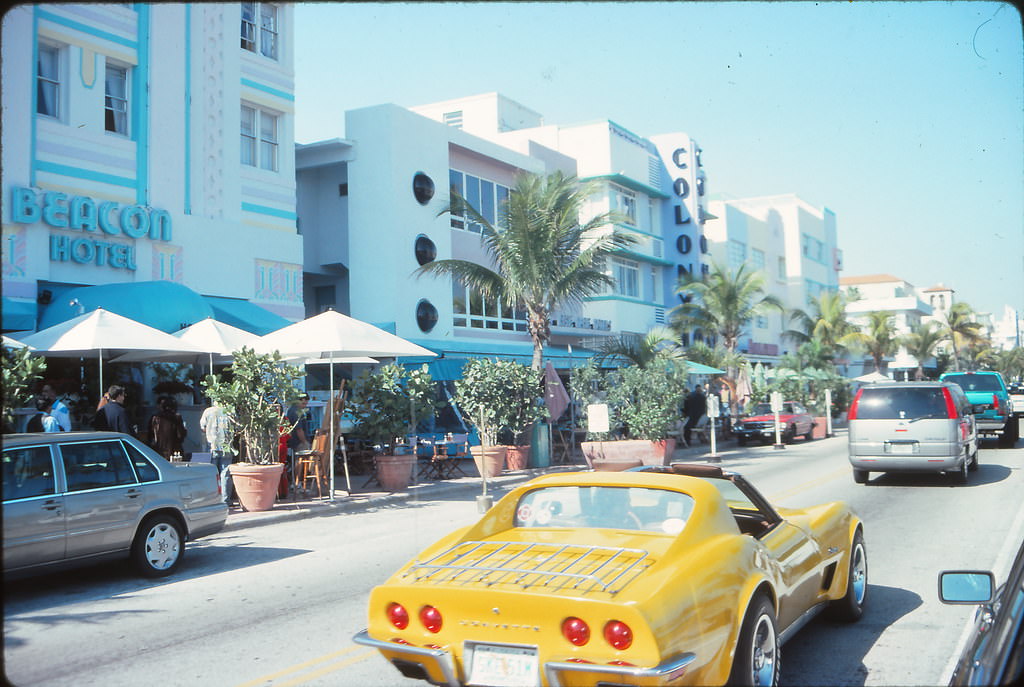
Ocean Drive was the heart of South Beach’s social scene. Outdoor cafes spilled onto wide sidewalks, and the street stayed busy well into the night. The Breakwater Hotel, with its bold vertical sign, became one of the most photographed buildings on the strip. News Cafe, open 24 hours a day, was a gathering place for locals, models, and celebrities throughout the decade.
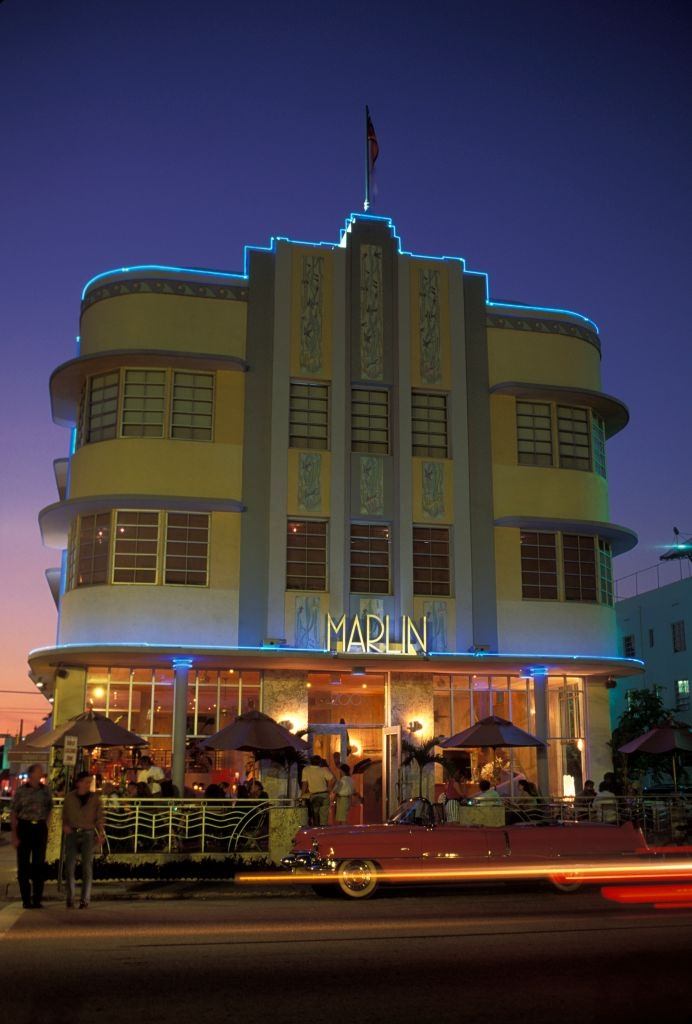
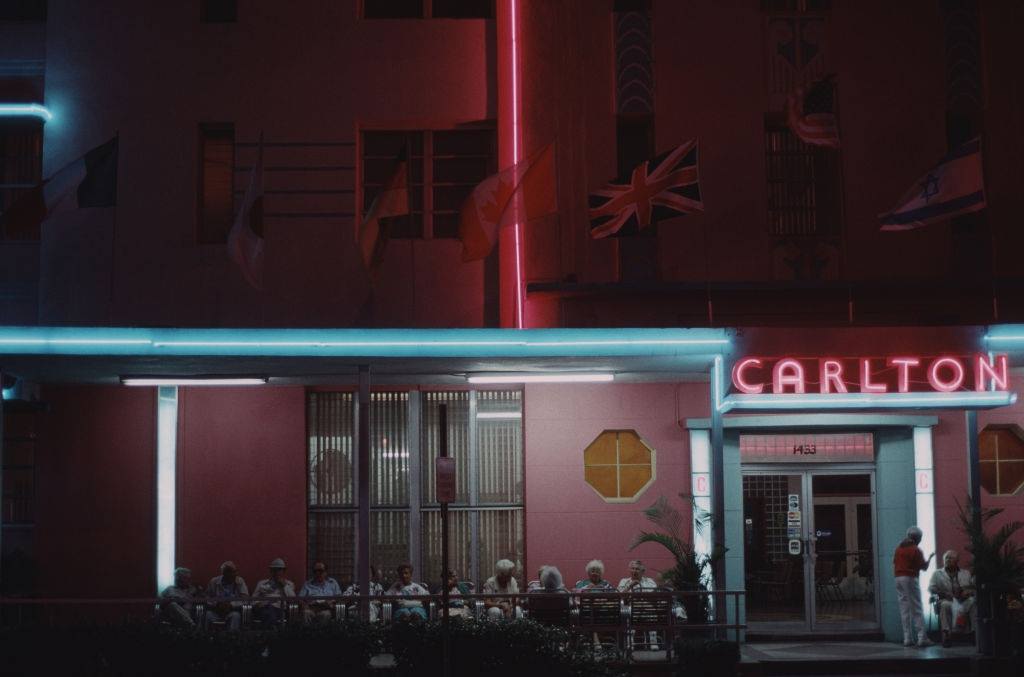
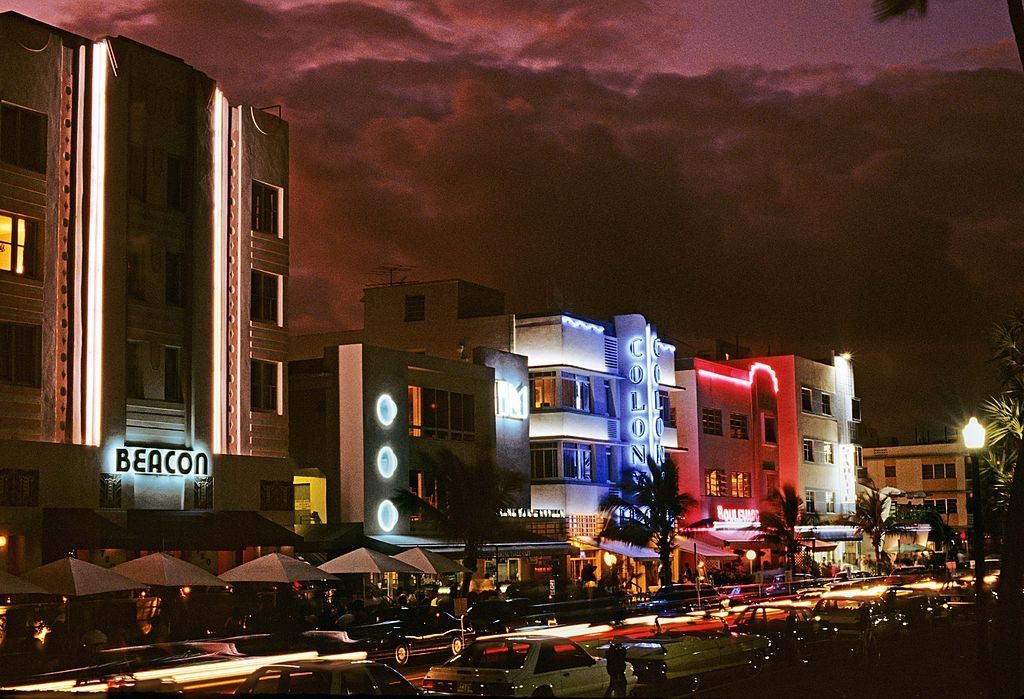
After dark, Miami Beach lit up with neon. The signs along Ocean Drive and the surrounding blocks cast a warm glow over the sidewalks, turning the neighborhood into something that felt almost cinematic. Film crews took notice — the city served as a backdrop for countless music videos, magazine shoots, and TV productions throughout the 1990s.
The alleys between Ocean Drive and Collins Avenue were narrow corridors connecting two very different worlds. On one side was the glamour of Ocean Drive; on the other, the steady foot traffic of Collins. These in-between spaces — often overlooked by visitors — were where much of the neighborhood’s everyday activity actually happened.
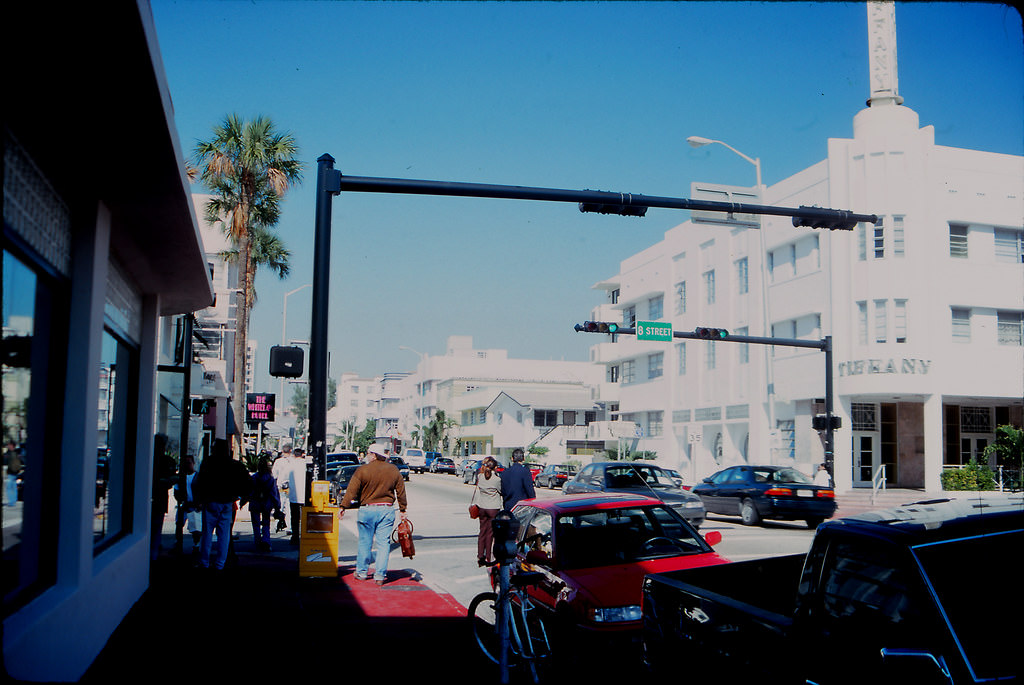
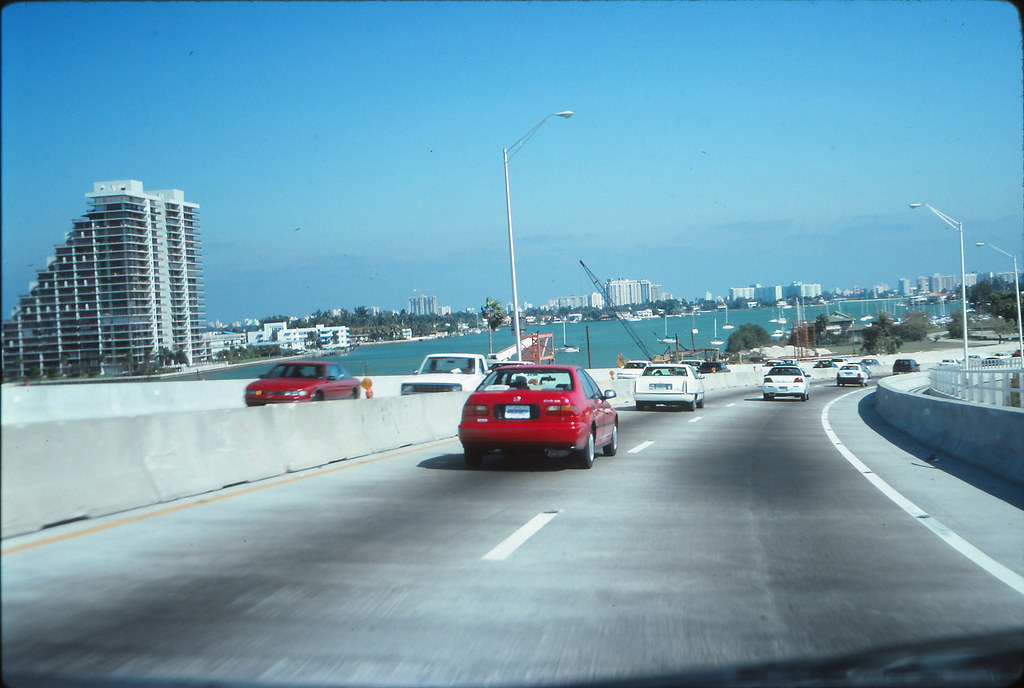
Crossing the MacArthur Causeway from the mainland toward Miami Beach offered one of the most striking views of the decade. The skyline of Miami Beach rose from the water, a mix of low Art Deco buildings and taller modern structures. The causeway itself was a daily commuter route, connecting the island to the city’s financial and residential neighborhoods on the mainland.
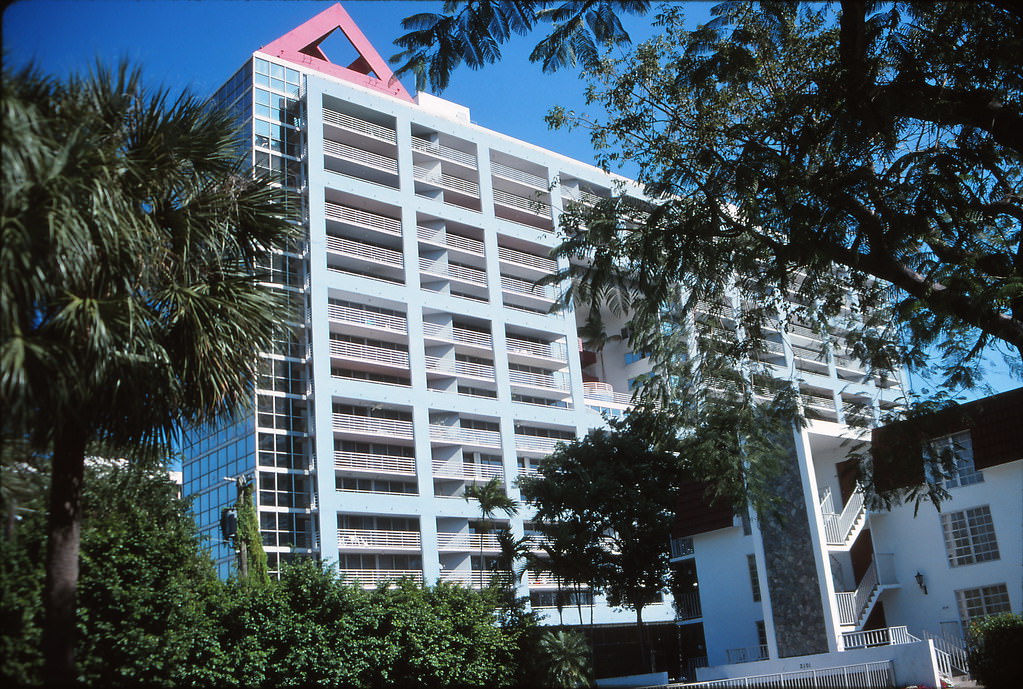
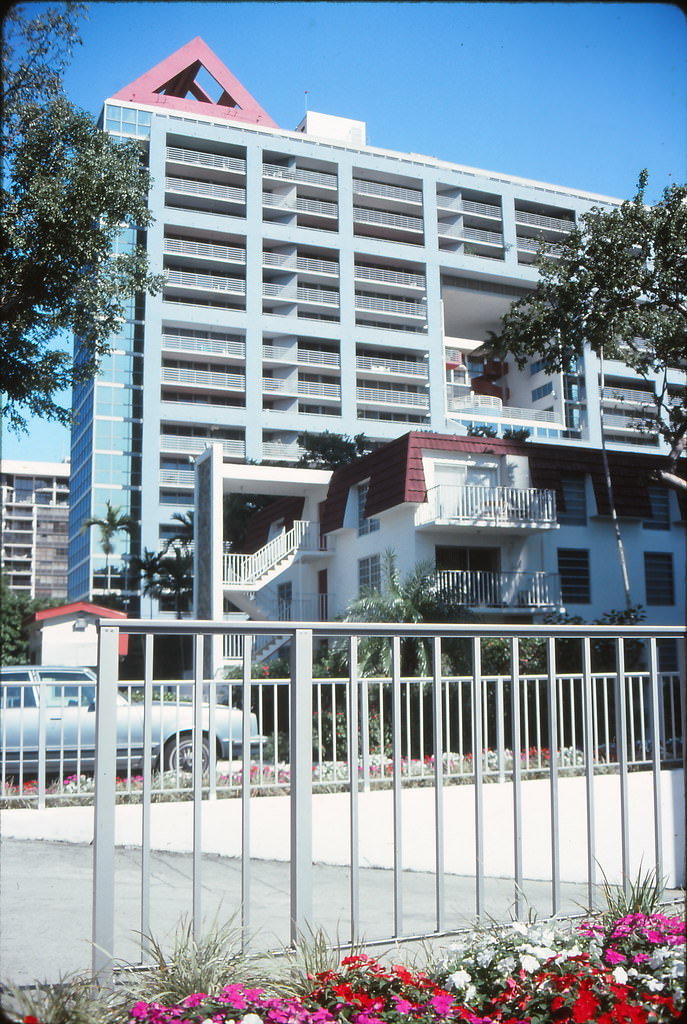
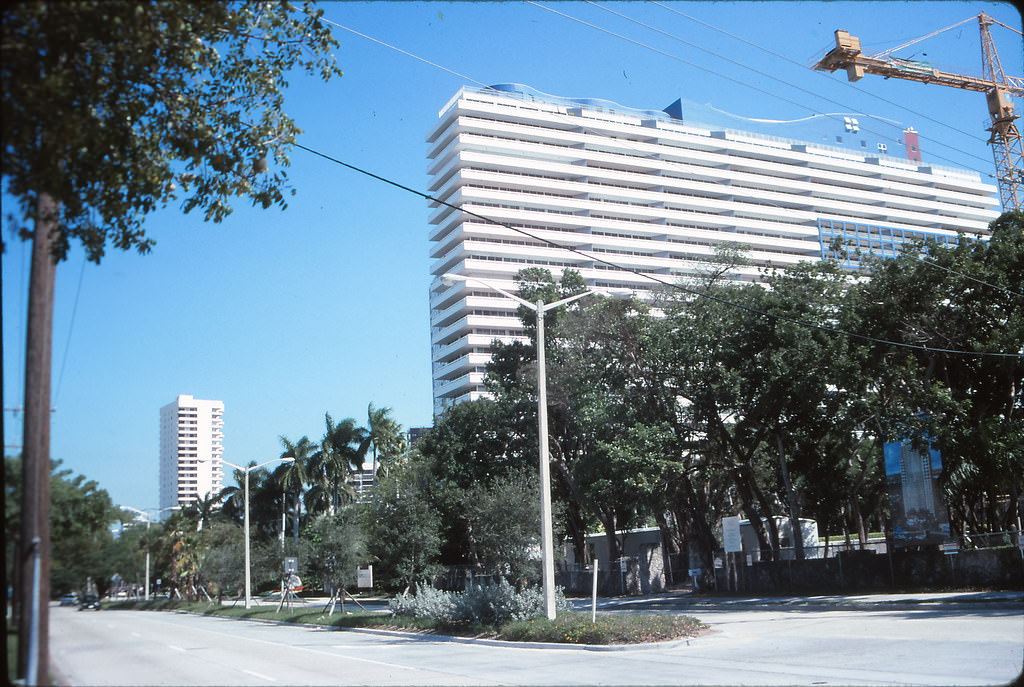
On the mainland, Brickell Avenue was Miami’s financial corridor. The Atlantis Brickell condominium — designed by the firm Arquitectonica and completed in the early 1980s — remained one of the most talked-about buildings in the city throughout the 1990s. Its bold design featured a large square hole cut through the middle of the structure, with a red spiral staircase and a palm tree visible through the gap. It was an unmistakable landmark along the avenue.
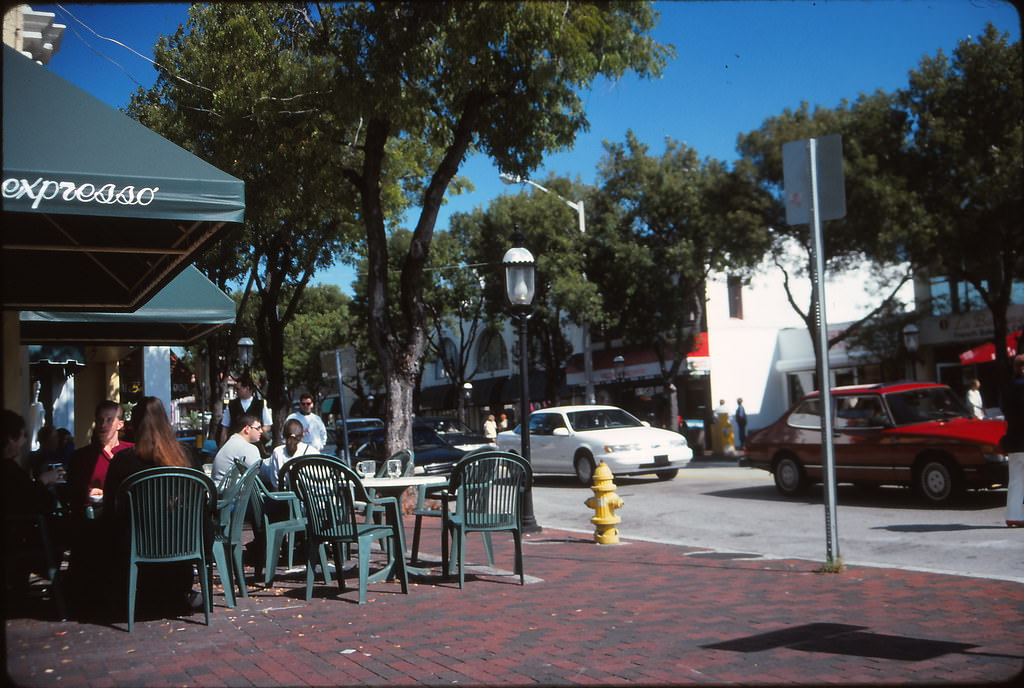
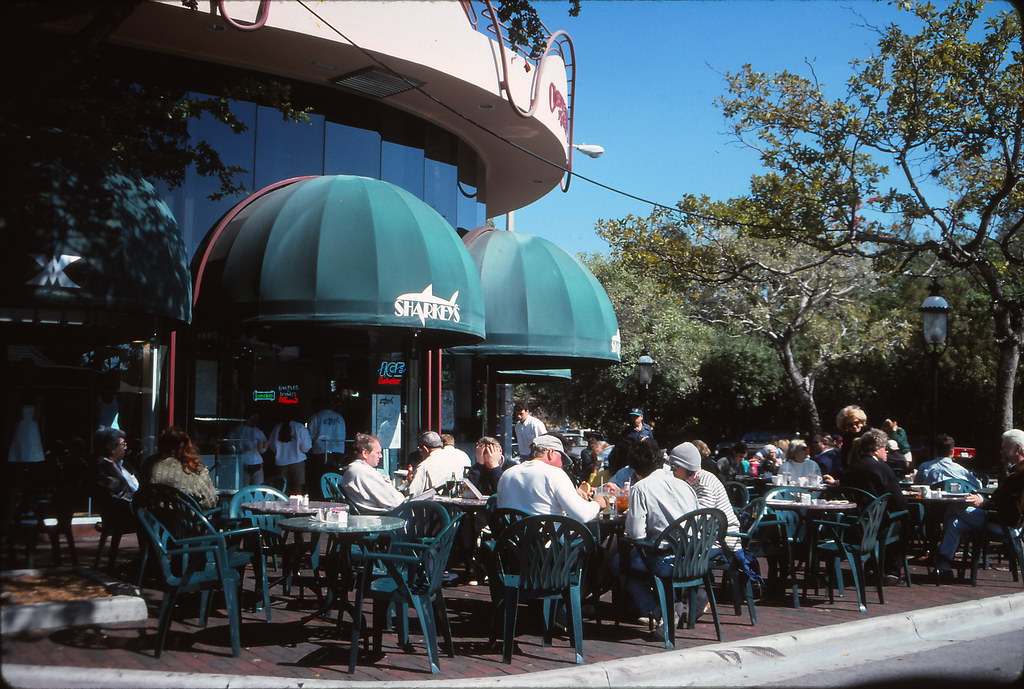
South of downtown, Coconut Grove offered a slower pace. Bayshore Drive ran along the water’s edge, shaded by large trees and lined with boats moored at the marina. The Grove, as locals called it, was a neighborhood of galleries, independent shops, and waterfront restaurants. It had a distinctly different atmosphere from the neon energy of South Beach.
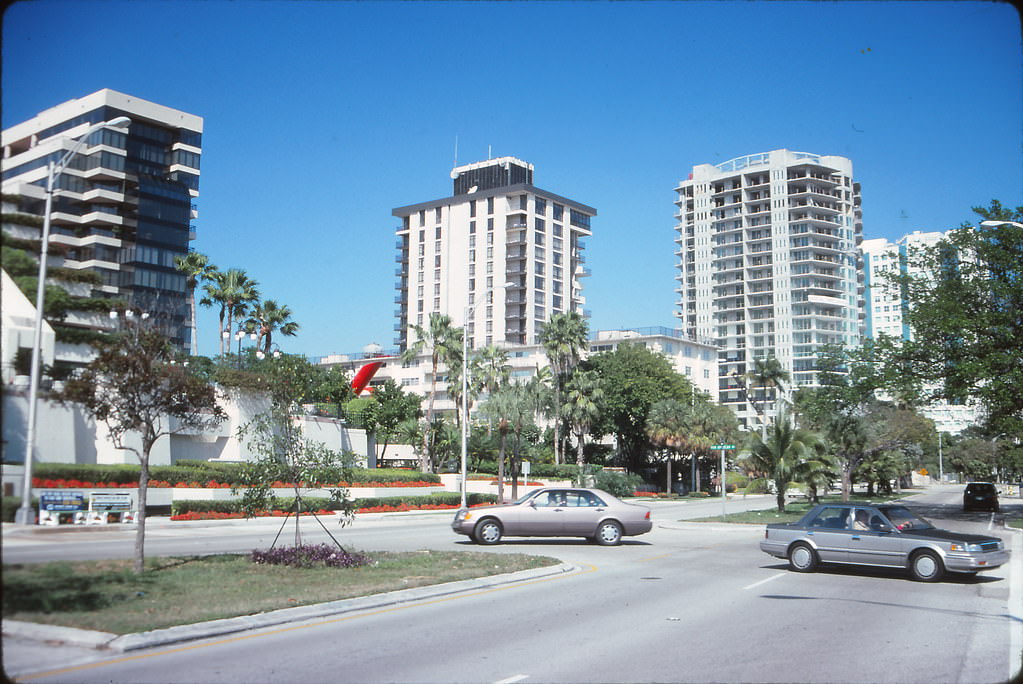
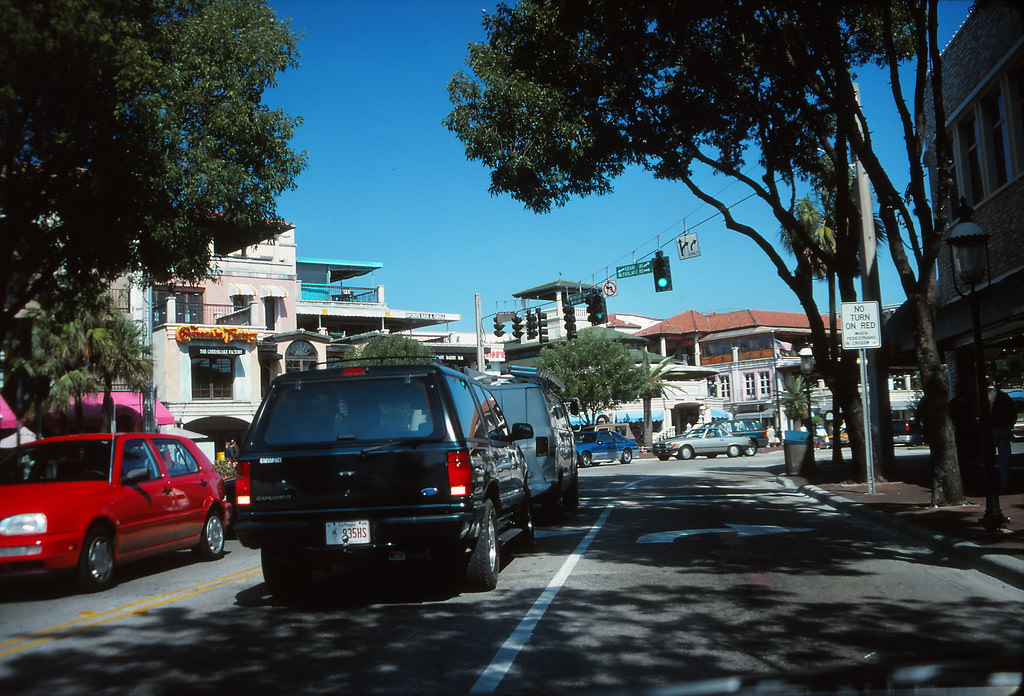
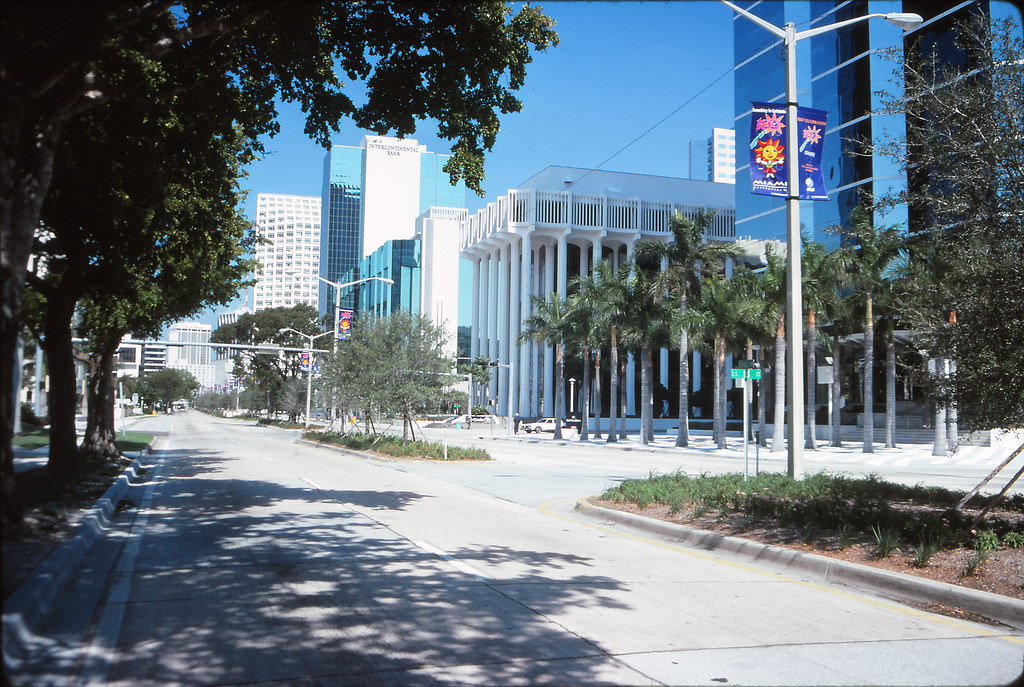
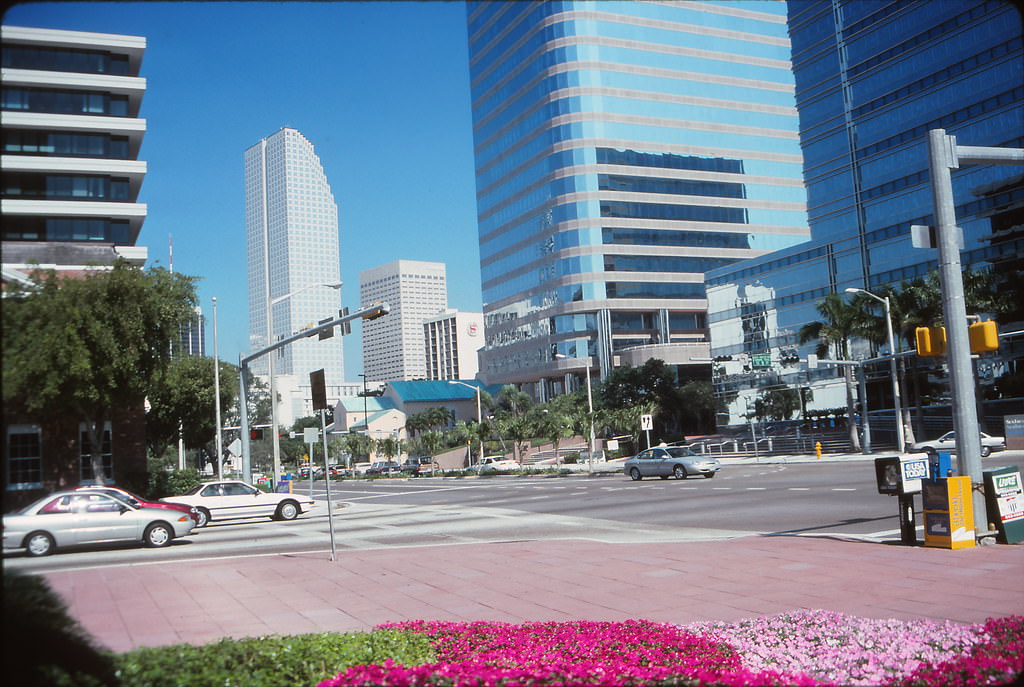
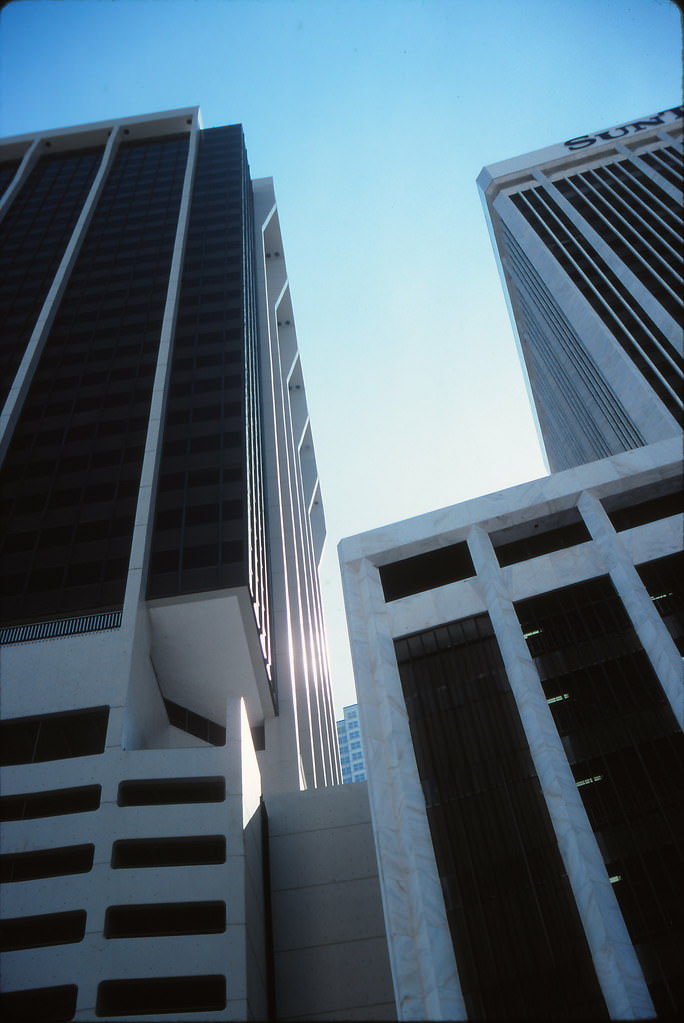
Brickell Avenue ran through the center of Miami’s banking and business district. By the 1990s, the avenue was lined with glass towers housing international banks and law firms. Miami had become a major hub for Latin American commerce, and Brickell reflected that role — polished, corporate, and fast-moving. Looking north from Brickell toward downtown, the skyline continued to fill in with new construction throughout the decade.
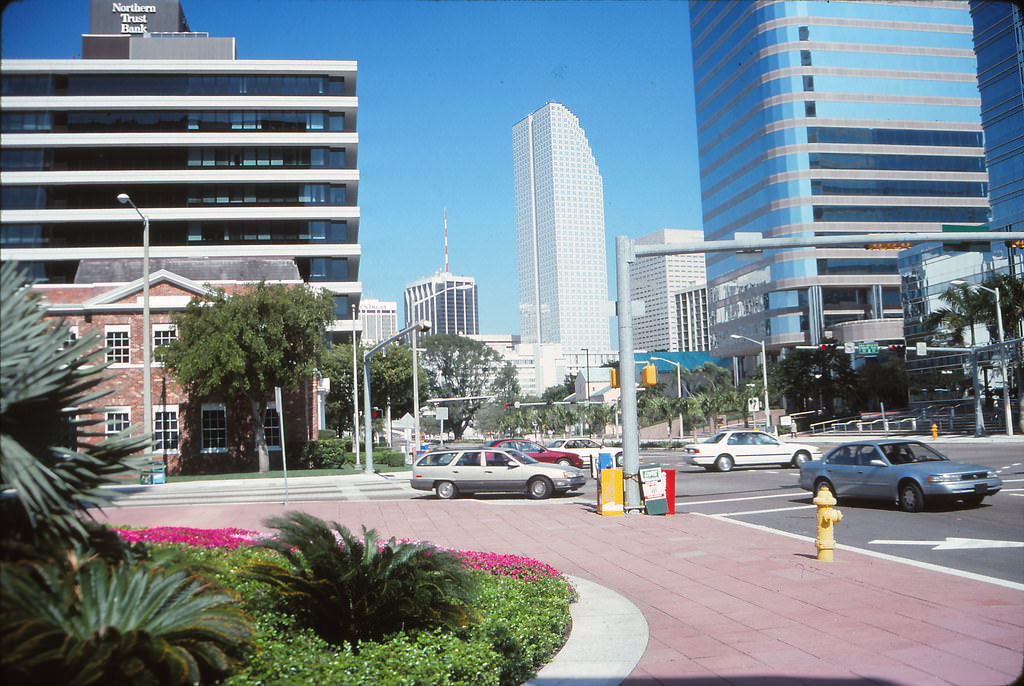
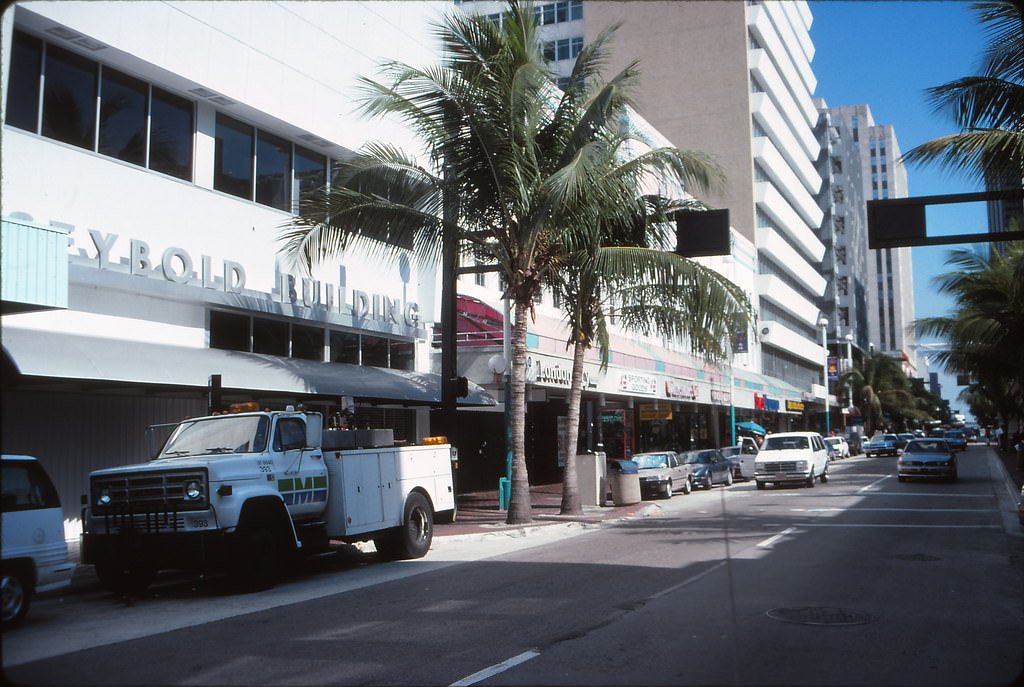
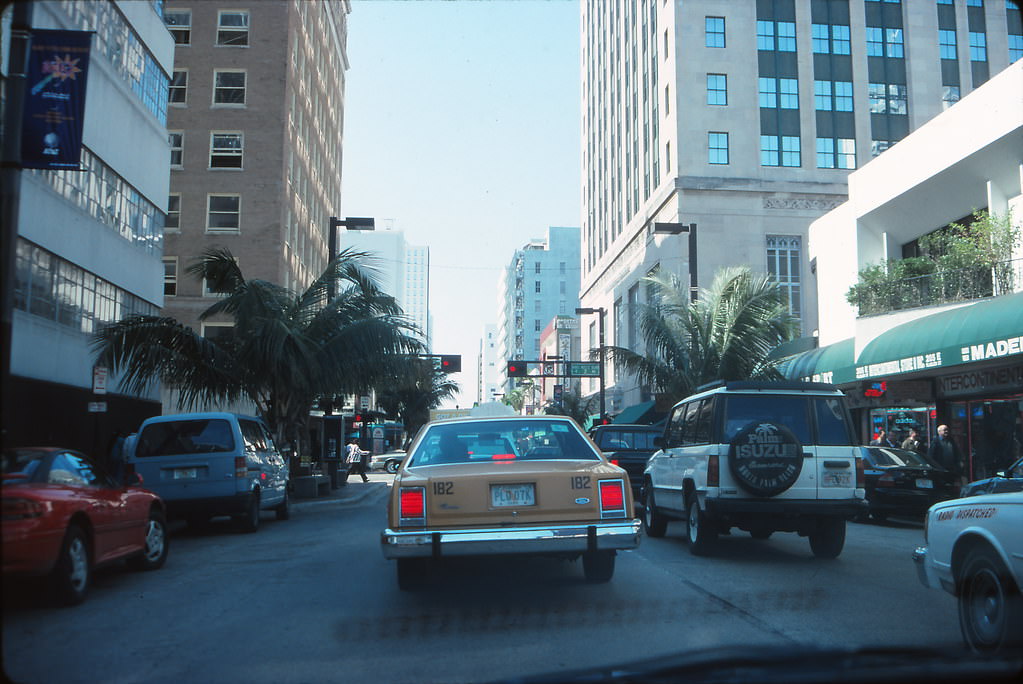
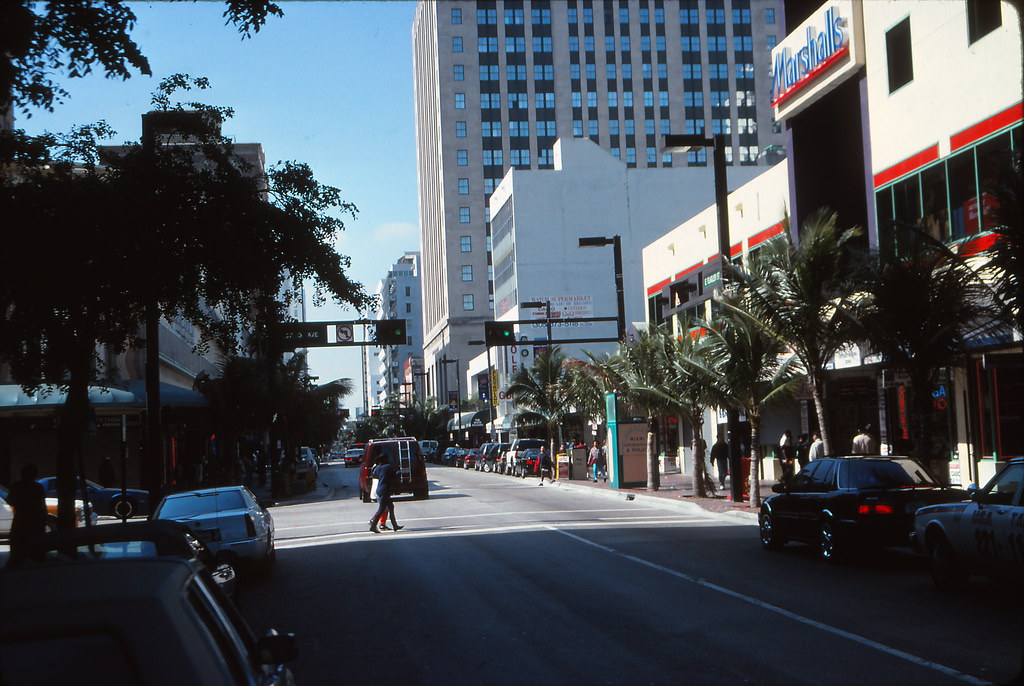
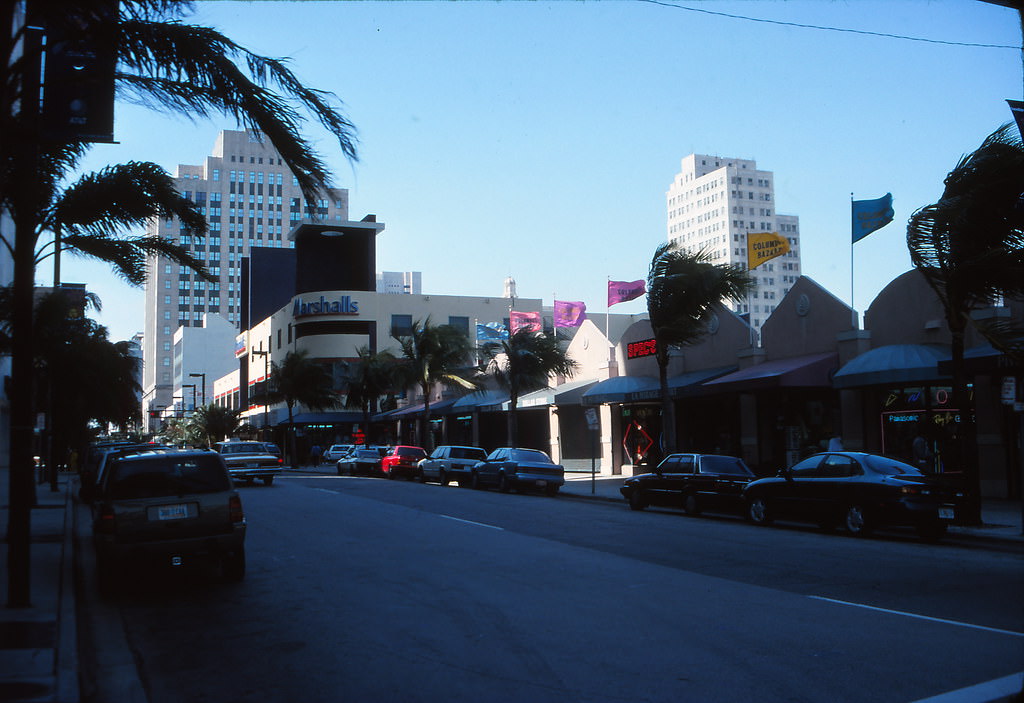
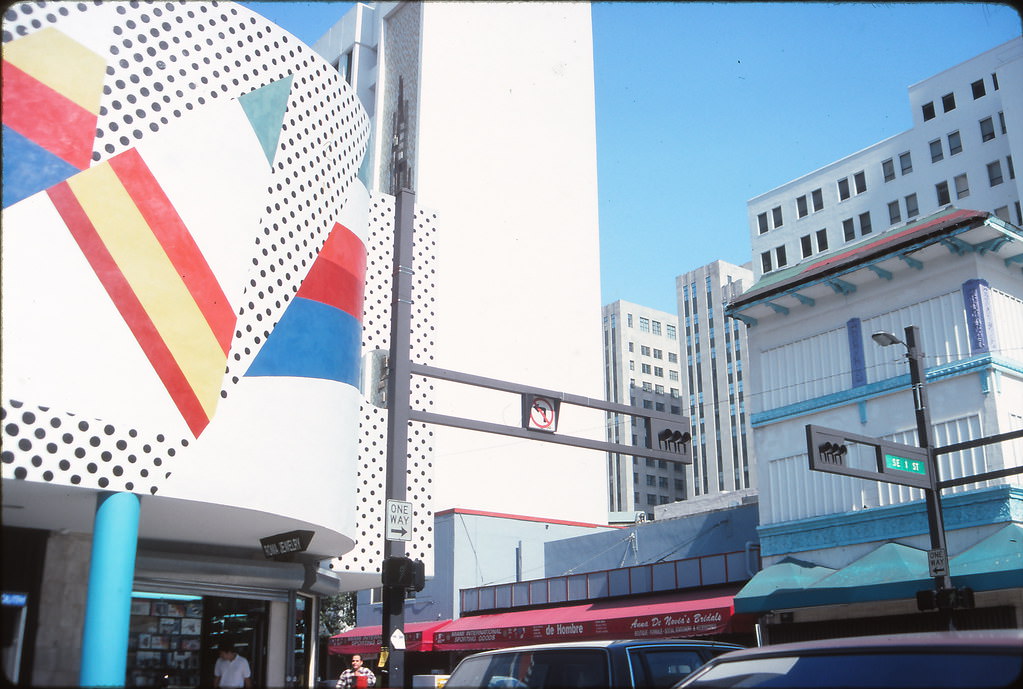
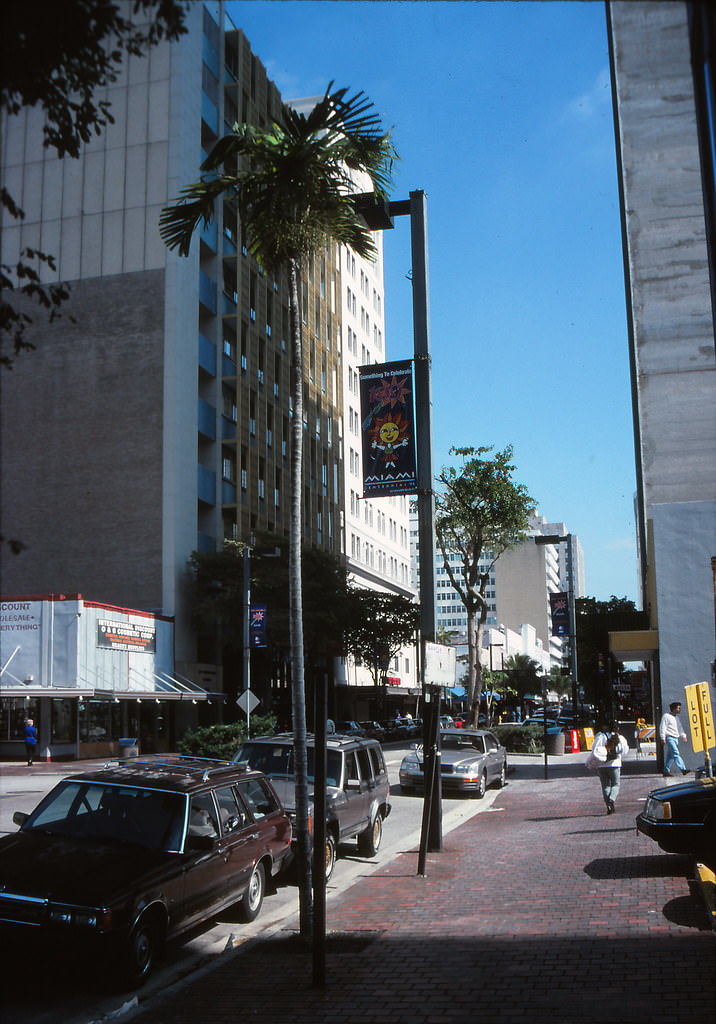
Downtown Miami’s main street, Flagler Street, was a busy commercial strip where discount stores, jewelry shops, and fast food restaurants competed for space. Sidewalks were crowded on weekday afternoons, and street vendors set up near the bus stops. The area served a largely working-class customer base and had a density and energy that set it apart from the beach communities just a few miles away.
Miami’s financial situation during the 1990s was dire. The city ran up a $68 million budget shortfall and received a junk bond rating from Wall Street — a designation that signals a borrower is considered high-risk. Florida responded by appointing a state oversight board to manage Miami’s finances, making it the first city in the state to be placed under that kind of supervision. A vote to dissolve Miami and merge it into Dade County failed, keeping the city intact but still deep in debt.
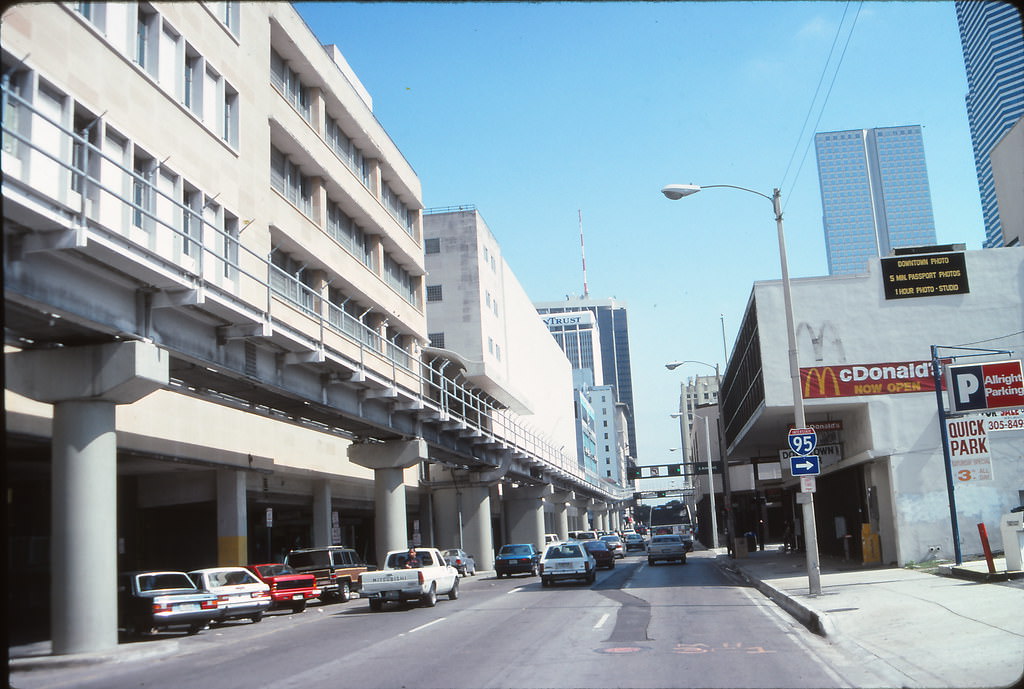
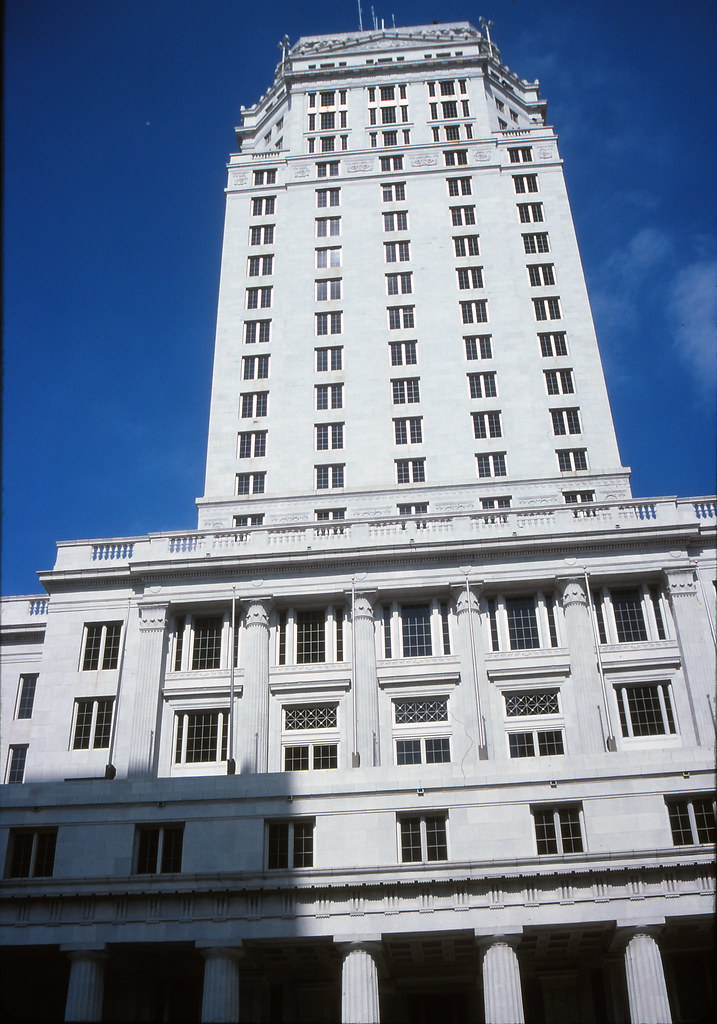
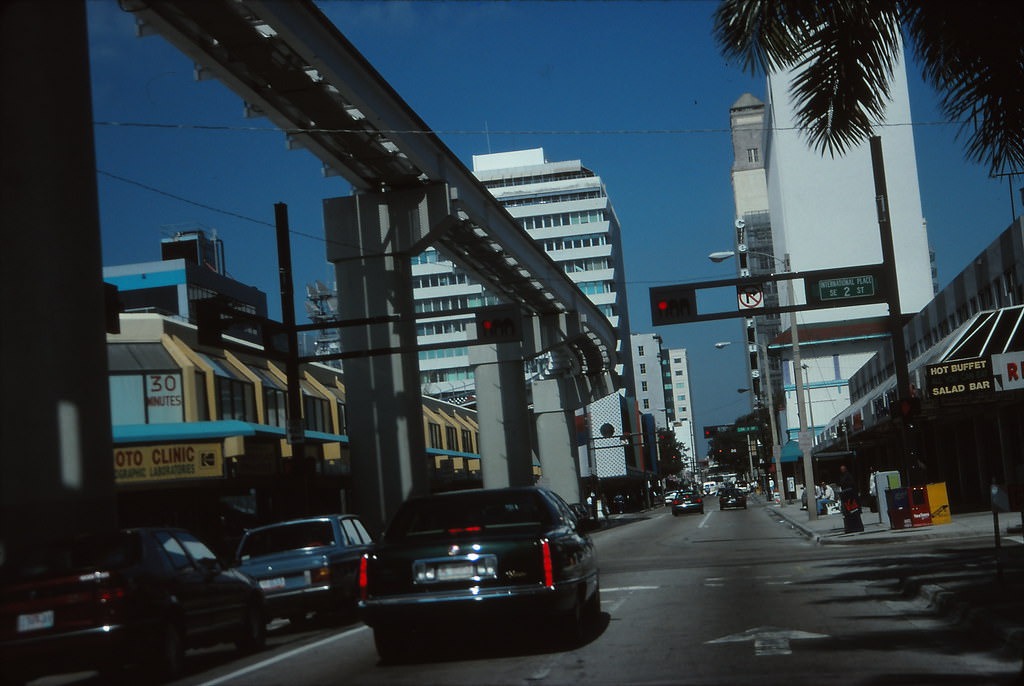
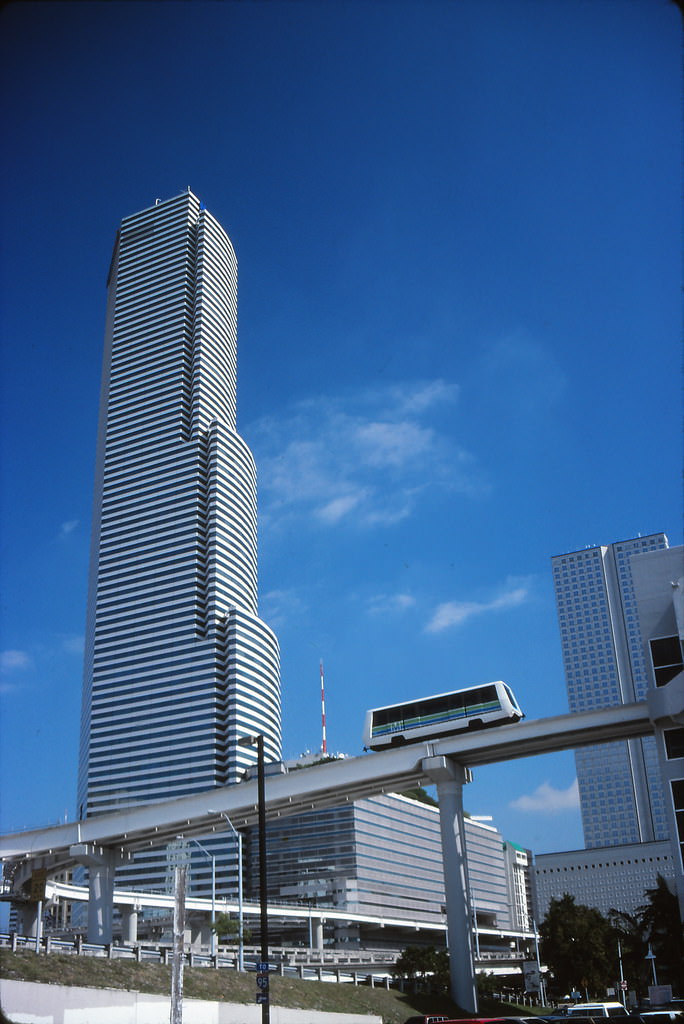
The Miami-Dade County Courthouse stood as one of downtown’s most prominent structures. Built in 1928, it remained a working courthouse throughout the 1990s and was one of the tallest buildings in Florida for decades. Nearby, the Miami Tower — illuminated at night with changing color patterns — became one of the most recognizable features of the downtown skyline. The Metromover, a free elevated rail system that looped through downtown, carried thousands of commuters past it every day.
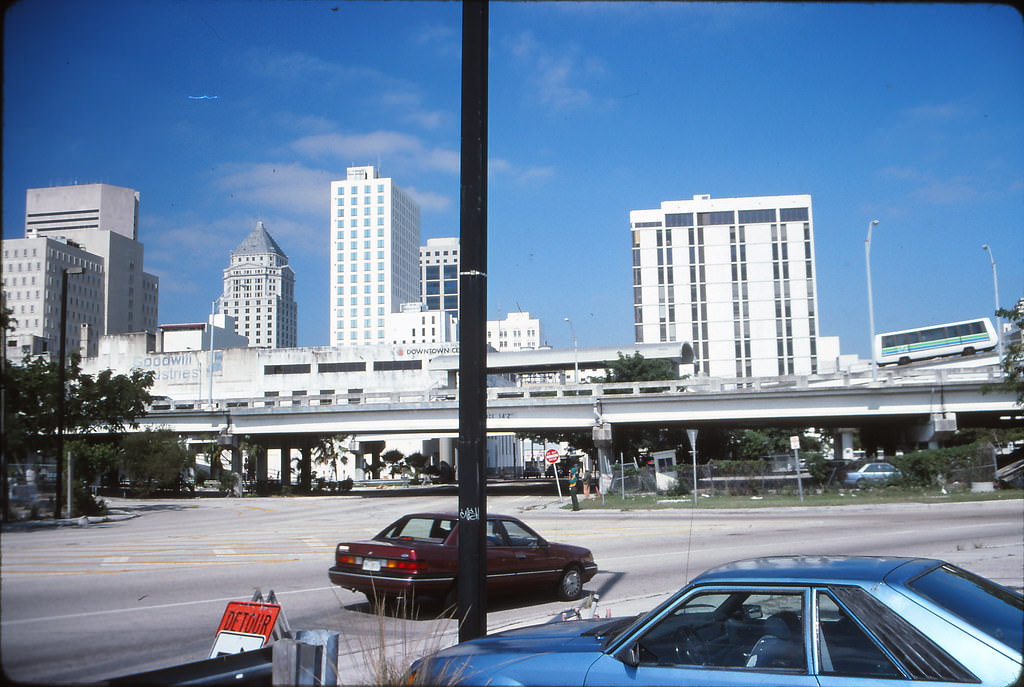
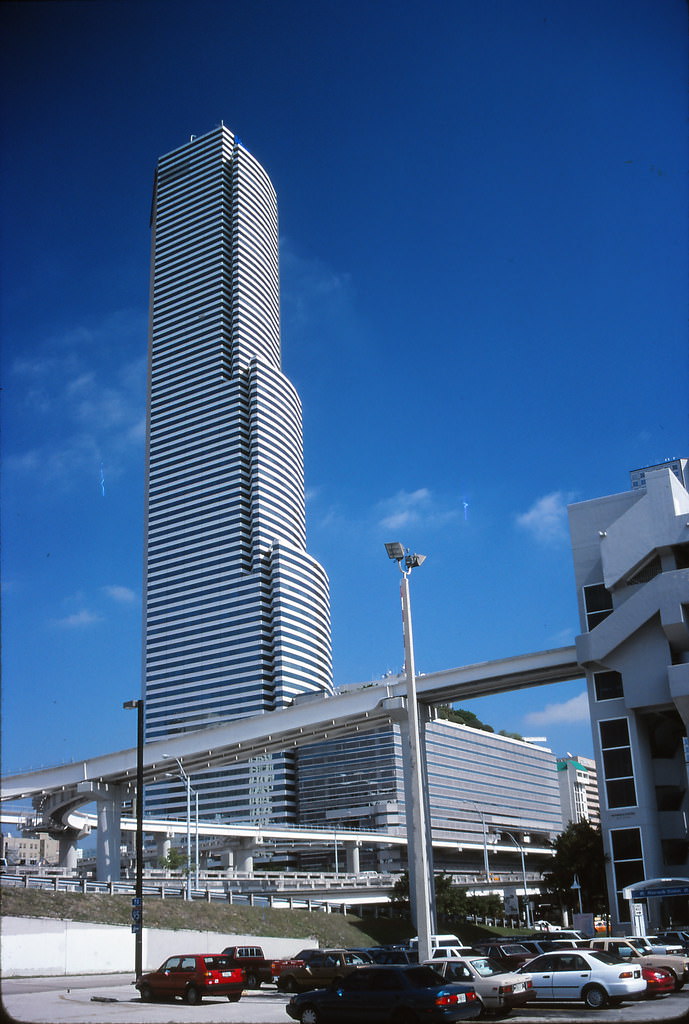
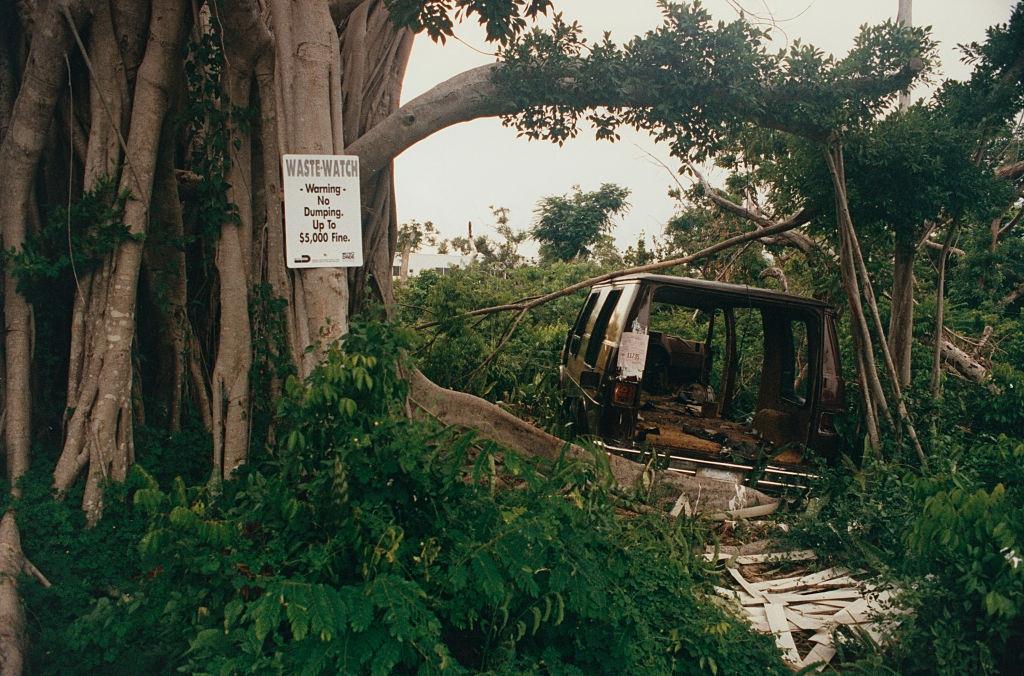
Away from the urban core, quieter corners of Miami showed a different side of the city. Old Cutler Road wound through one of Miami’s older residential areas, lined with massive banyan trees whose aerial roots created dense, tunnel-like canopies over the road. In 1990, an abandoned van sat beneath one of those trees — an image that captured the contrast between Miami’s polished tourist face and its more neglected edges.
At sunrise, Ocean Drive looked entirely different from the late-night scene it hosted just hours earlier. The Art Deco buildings — with their curved edges, porthole windows, and pastel facades — caught the early morning light in a way that made the street look almost frozen in time. The architectural preservation efforts of the 1980s had saved these buildings from demolition, and by 1990 they were drawing visitors from around the world.
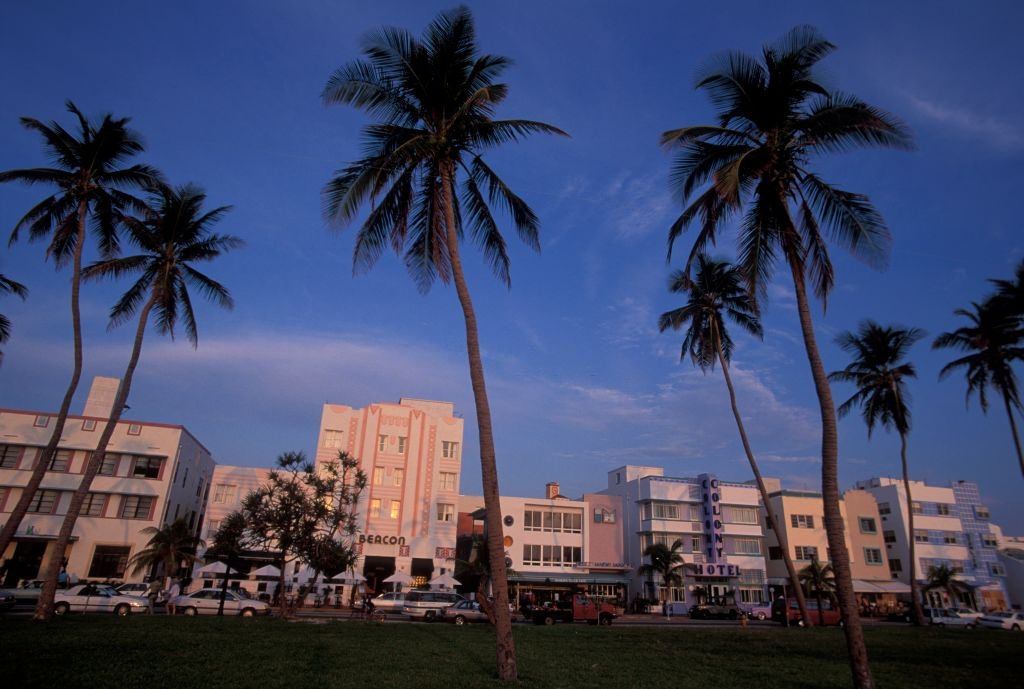
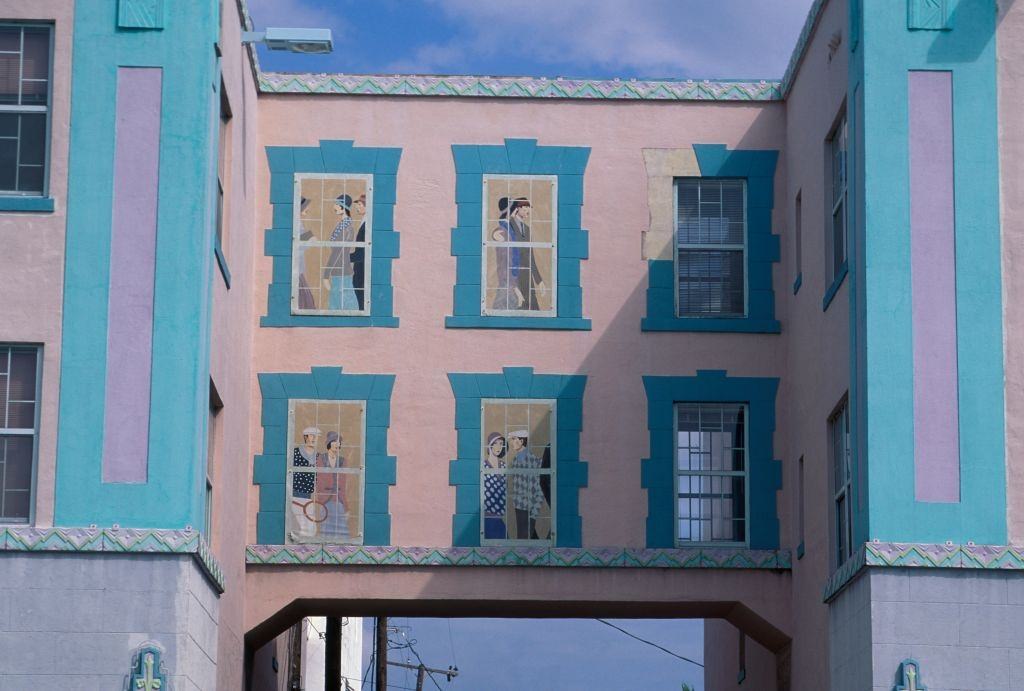
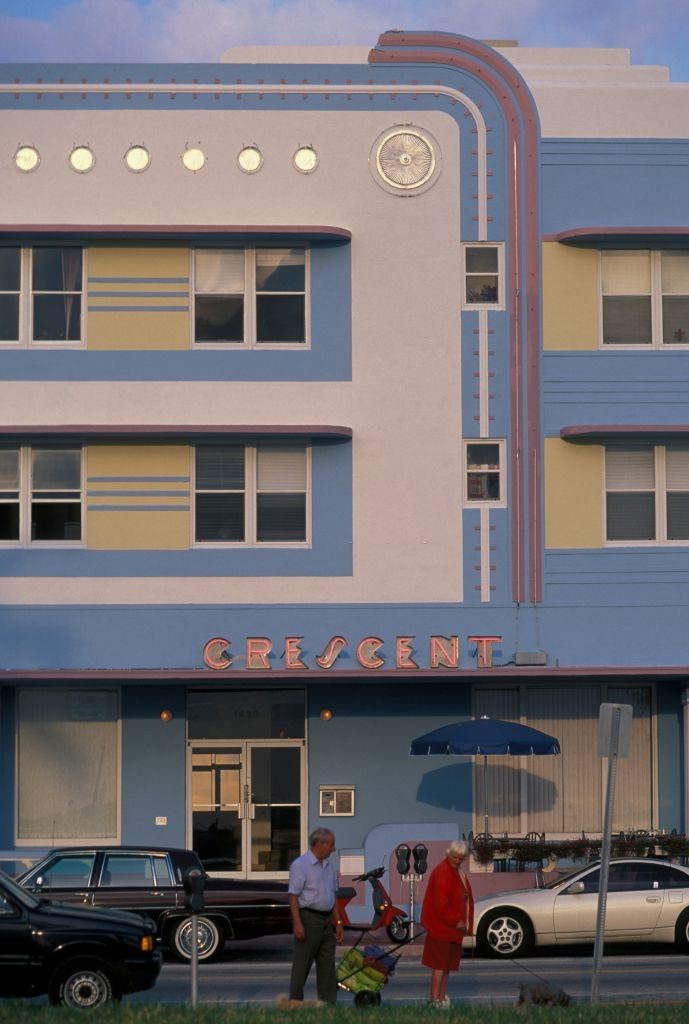
South Beach’s Art Deco architecture was not just about hotel facades. Decorative details appeared across the neighborhood — including trompe l’oeil, a French painting technique used to create the illusion of three-dimensional features like windows on flat walls. Buildings at Deco Plaza on 5th Street used this technique to add visual depth without any actual construction. The Crescent apartment building on Ocean Drive, designed by architect Henry Hohauser, was another well-known example of the style — its curved canopy and symmetrical design made it one of the most photographed buildings on the strip.
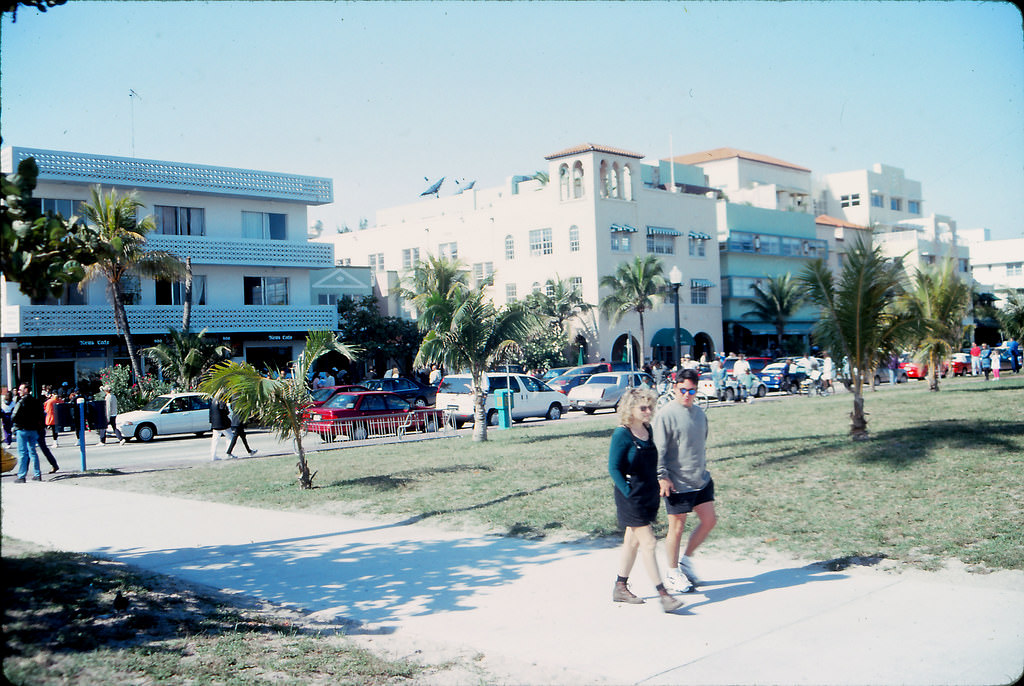
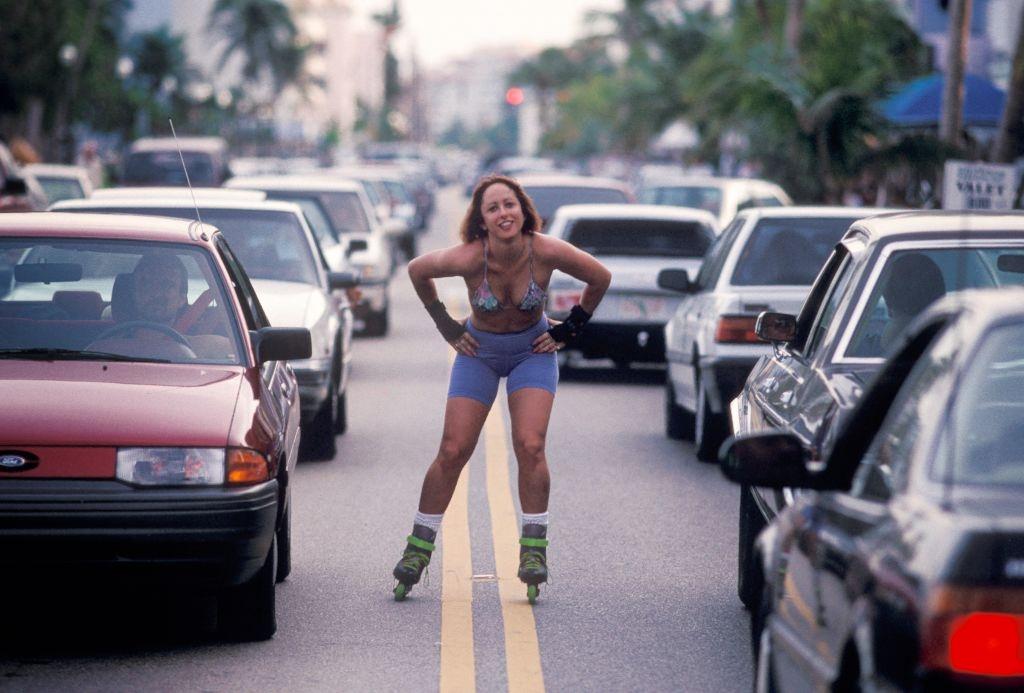
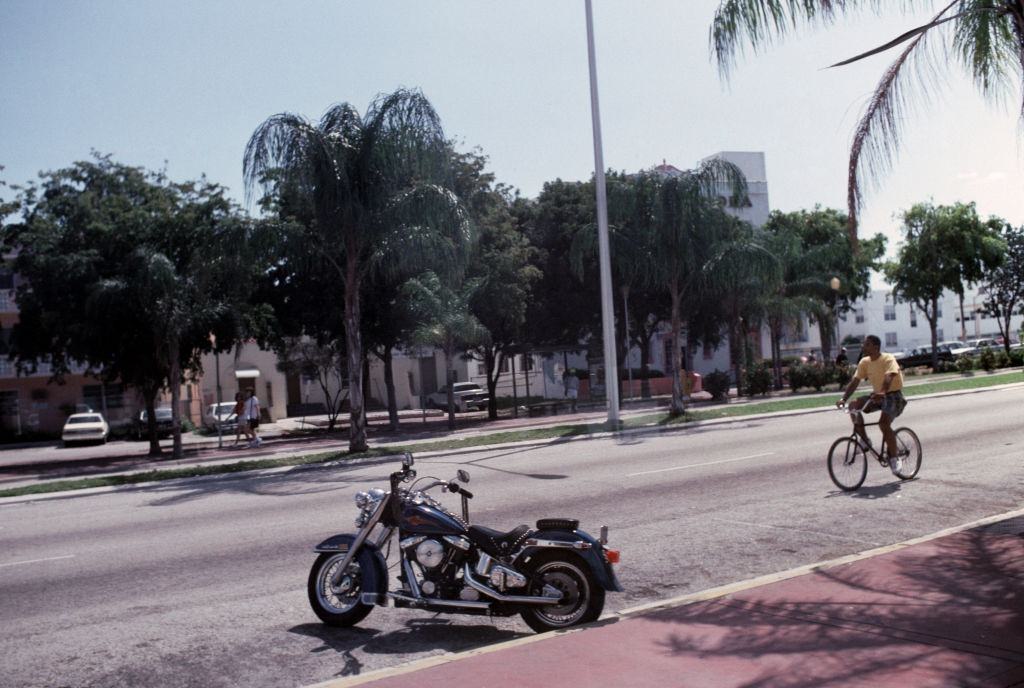
Street life on South Beach was lively and visible. Rollerblading had become one of the most popular ways to get around the neighborhood by 1990, and it wasn’t unusual to see skaters weaving through slow-moving traffic on Ocean Drive. Motorcycles and bicycles shared the roads, and the sidewalks stayed busy from morning until well past midnight. On May 23, 1992, crowds filled South Miami Beach in a scene that showed just how much foot traffic the area was pulling in.
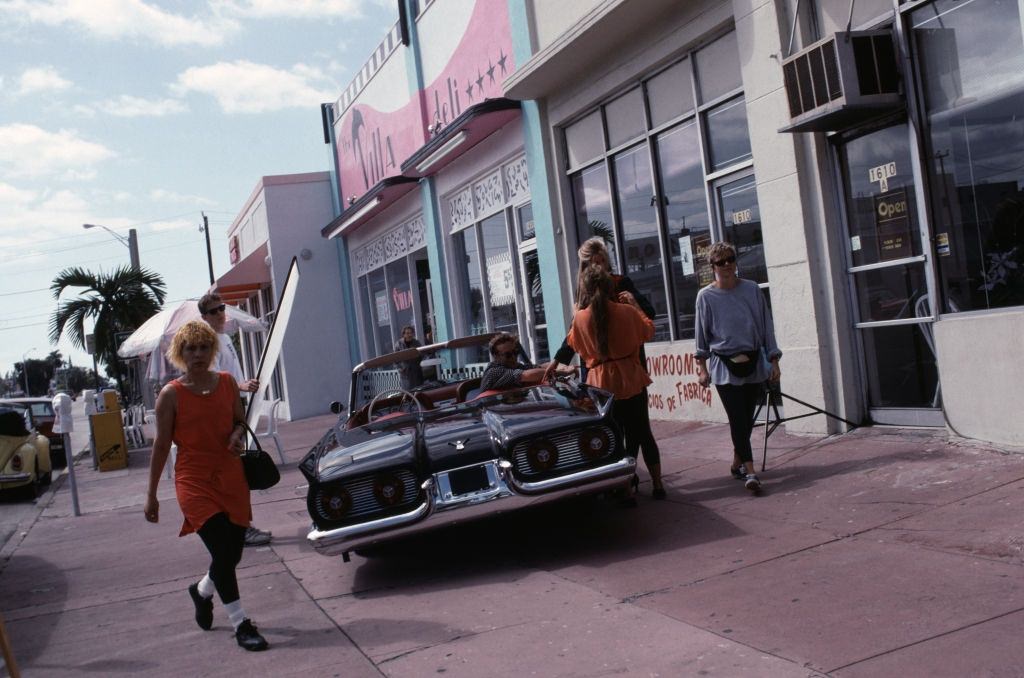
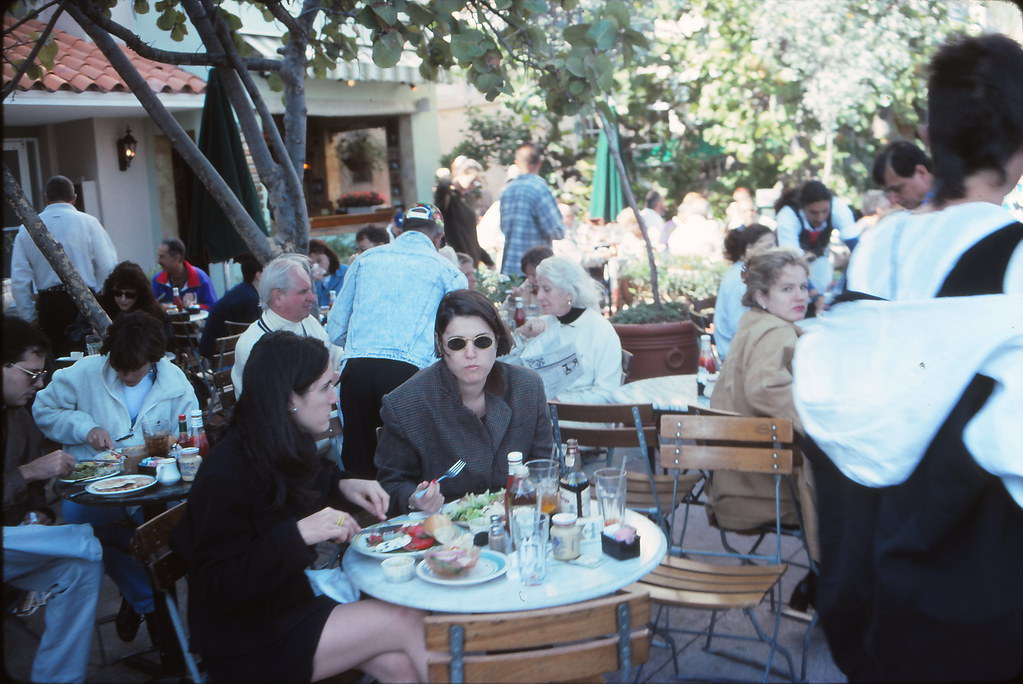
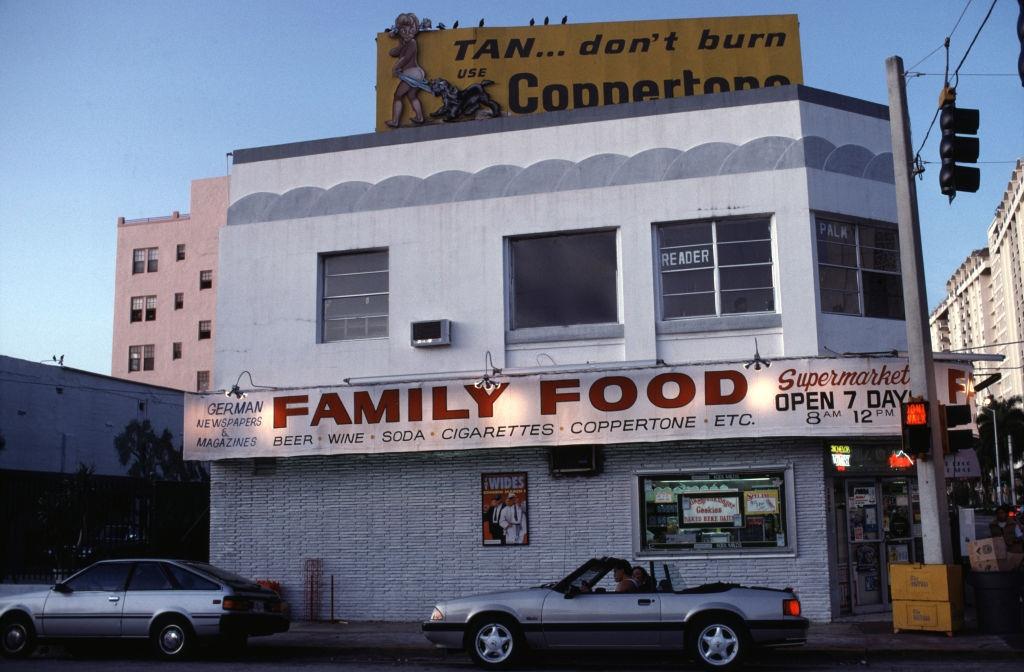
The restaurant scene on Miami Beach in 1992 was thriving. Bold signage and decorated facades competed for attention along the main streets. Cars lined up outside artistically painted restaurants, and diners sat at outdoor tables facing the street. The Carlton Hotel, with its distinctive facade, was one of several mid-range hotels that catered to the growing number of visitors arriving each year.
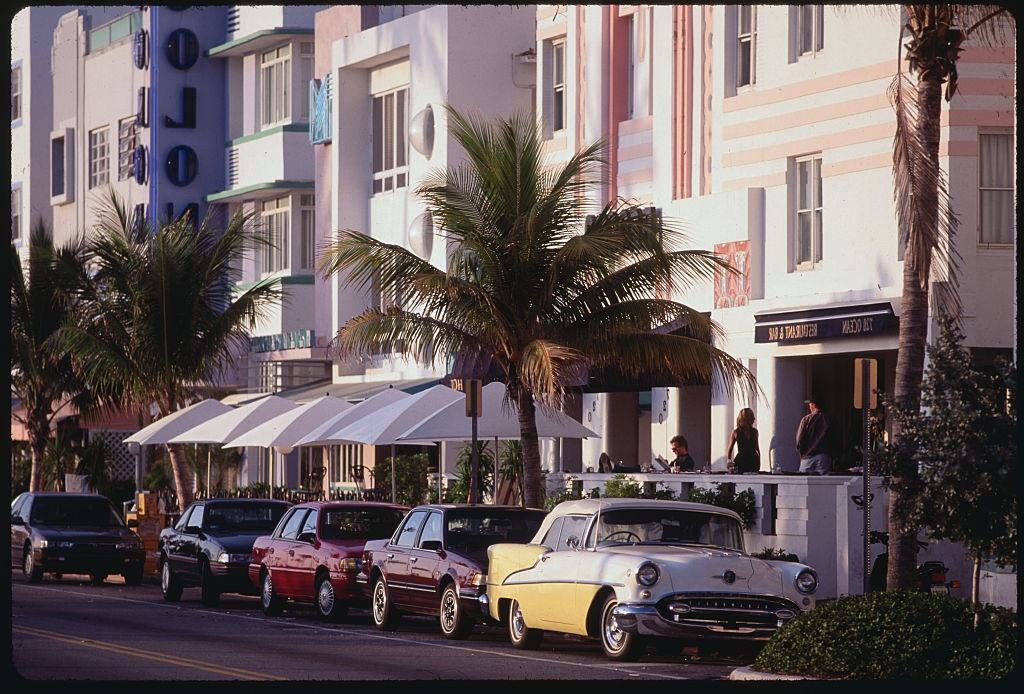
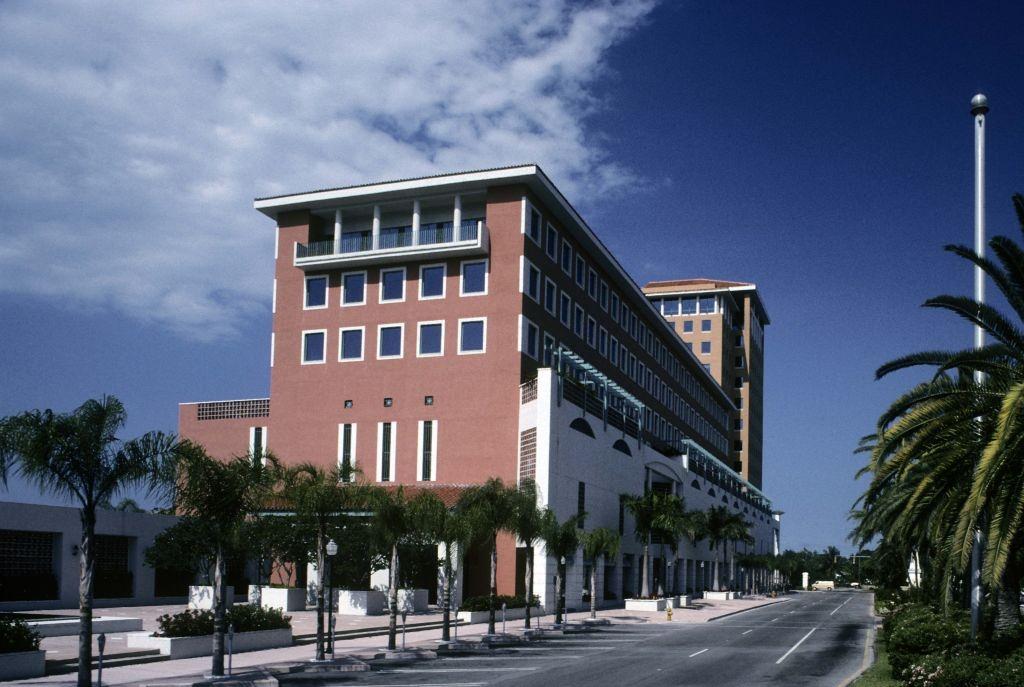
Few sights defined 1990s Miami more than Ocean Drive at sunset. The sky behind the Art Deco buildings turned shades of orange and pink, and the street below filled with the sounds of music, car engines, and conversation. The Hyatt Hotel in Coral Gables, photographed on May 25, 1992, represented a different side of Miami — more upscale and residential, situated in one of the city’s wealthier suburbs just southwest of downtown.
In August 1992, Hurricane Andrew made landfall just south of Miami-Dade, causing more than $20 billion in damage. Entire neighborhoods were leveled, and the storm left a massive recovery burden on a city already under financial strain. The destruction Andrew caused was among the worst ever recorded in Florida at that point. Miami pressed on through the rest of the decade, dealing with its budget crisis, a growing Haitian immigrant community establishing itself in Little Haiti, and ongoing political turbulence — all while its beaches and streets continued to attract the world’s attention.
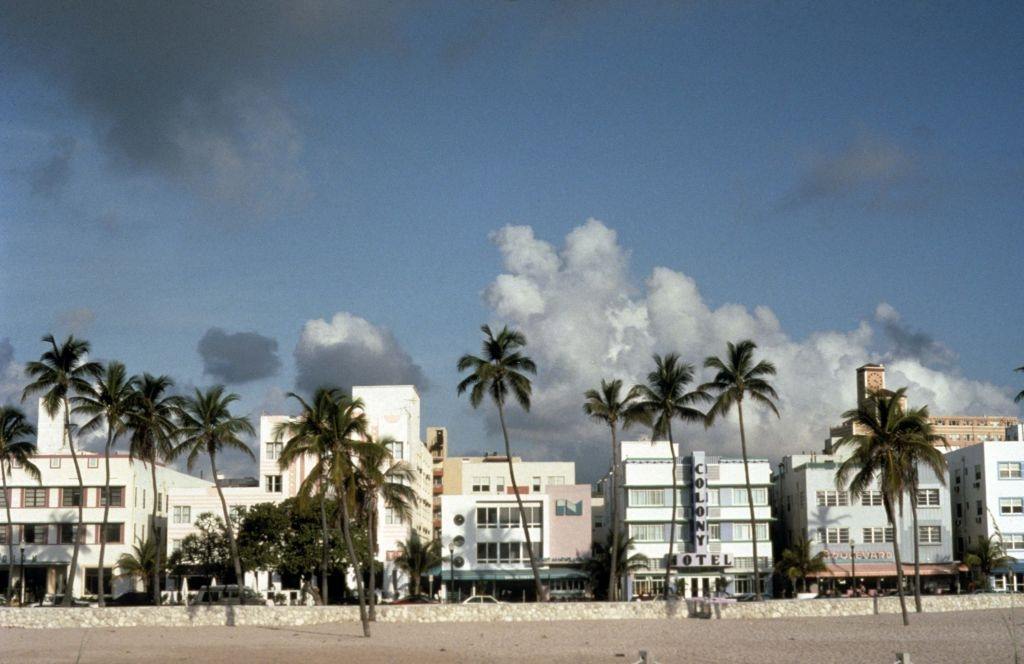





I find it odd how the lack of condos and apartment buildings makes Miami and Miami Beach seem like sleepy towns when I’ve heard it’s anything but. Would anyone like to comment on Miami nightlife during the early 90s?
Older houses from the 1940s or earlier all had fireplaces, as Miami used to be colder. People in their older years used to turn them on a lot. Now you rarely turn on the heater, maybe three or four days a year?
The nightlife was still a bit too young for me, but I remember seeing Phat Black PussyCat, as well as Pearl Jam and Beastie Boys at the Cameo and Smashing Pumpkins at Washington Square. South Beach was still somewhat shady at night, and we parked wherever we wanted.
South Beach in the 1990s was amazing.
It was so much better bohemian and less touristy & commercial.
Agree…
I have no idea how old this comment is but I lived on SoBe in the 90s and it was amazing! Models mixed with devout Jews mixed with retirees mixed with Cuban folks. Wasn’t stupid expensive and the party was always on tap. Amazing.
not that old 😒😒😒😒…. Thank you for the info 😊
Downtown looks nicer and newer. In comparison to today, half of the buildings and storefronts are derelict.
The malls and shopping districts put them out of business. In contrast to South Beach which had just been redeveloped and upgraded, Downtown Miami was once a destination
Anyone who wanted to buy really good and affordable electronics would come to downtown to buy anything from Cameras to TVs along with huge selection of clothes at really cheap prices, but all that changed with all the brand name stuff and overpriced.
To be honest, it doesn’t seem that different to me! The camera took some great pictures, so that’s good. I might even mistake some of those images for being from today if I didn’t know beforehand.
Yeah, it looks mostly the same to me
It’s weird to be reminded of life before smart phones. Nobody is hunched over a phone in these pictures.
Due to hurricane Andrews, there are fewer trees. This is especially true on south beach. The grove looks the same. Downtown looks better than before.
The closure of Ocean Drive is a good thing. When it was open, it must have been a terrible show.
It was a fun time in the 90s. At the time, South Beach was transitioning from an old folks home to a fashionable district. The elderly were mingling (more like gawking!) at the young people on the beach, though. Nightlife was awesome. Start at a restaurant and end at a club (Club Nu, 1235, the Cameo, or the Warsaw Ballroom). The hotspot of Sunday night at the Cameo was Disco Inferno despite the popularity of grunge in the 90s… Though disco never really died in Miami…
90’s Miami was a beautiful thing. People talk about the 80’s, and I’m sure it was awesome. But 90’s was just a vibe and life was good.
The 90’s were great for three main reasons:
1) People had not yet started fucking each other via the housing market.
2) We didn’t yet carry around devices that stole our presence and simultaneously subjected us to the opinions of irredeemable assholes on a daily basis.
3) There were 56 million fewer people in the U.S. in 1999 vs today.
1980s Miami was awesome? Interesting yes but not awesome lol. Drug dealers everywhere, police corruption, shootings etc.
Talk to people that lived in Miami during the 80’s and they’ll tell you how awesome it was. That would be boomers and Gen x’ers. As a millennial, I remember back fondly on growing up in Miami in the 90’s.
Exactly, it’s safer now than it was in the 80’s and 90’s. Most people aren’t on crack now as well.
I had a nice dinner at the Clevelander back in 1989. Lovely meal. When I went to the bathroom I was followed in by the host and was offered cocaine for free. Since I was in 8 th grade and there with my dad I passed.
But Jesus people today have no idea what south beach was back then. Clevelander was owned by the mob. Now it’s owned by a Disney family company.
Disney is bigger and more ruthless than the mob
And more expensive
News Café
I saw this old YouTube video of South Beach in the 90’s. They filmed it on Washington Avenue and it was definitely a vibe. Would love to have a Time Machine after watching it.
I remember those nights going from club to club. It’s hard to imagine if we had smartphones
At this point even looking at pictures of Miami from the 2000s looks like it was a simpler time that I would wanna revisit.
More like what Miami Beach looked like.
Show me Don Carters.
Bro…you just unlocked a flood of teenage memories. Loved that place.
Gorgeous time. People actually……….. talked?
Well it’s not really Miami, just Miami Beach + a few photos of downtown and an abandoned van down south.
But it’s fascinating to see a Miami Beach where everything wasn’t a big chain or completely overpriced junk.
This person had quite the fascination with alley ways
I was born in 73 and raised in Miami (left to Orlando in 2001). I went down to Miami for a day for an event in June this year and I didnt recognize alot. It all looks so different for the most part; my husband and I were so shocked. (Traffic was still the same chaos though)
I was born in ‘74, lived in Miami until I left at age 25 (now almost twenty-five years later). I’ve been traveling to Miami frequently post-pandemic. Makes me sad that I know less about the place now than I did when I left, but that’s the nature of things.
I had a tryst in that alley and am surprised we weren’t arrested. Ah, the good old days. I think in all Americana, Miami during the cocaine cowboys era stands out.
That’s so disgusting.
Too much of Miami Beach, but cool pictures. 80s and 90s MIA were quite the experience. What’s crazy is seeing pics a couple months away from Andrew in 1992. Shit got crazy that year!
Like 75% of those photographs are Miami Beach. Which is NOT Miami. Miami Beach is a whole different city of its own. The real nitty gritty Miami did not look like that in the 90s
Yeah but no one wants to see photos of Kendal in the 90s or today
Exactly
Before the Chicago/NY people ruined the city
The shots on ocean drive gave me vibes from the movie: The Last Resort
It was more or less just like this in 2010
Wow. This warmed me up to see. Thanks for posting!
Miami Beach does a good job at least of maintaining the character of the buildings. I think at this point they should change it (like 5th to 15th) to just a pedestrian walk way and get rid of the cars. It’s historic now, so let it be enjoyed that way without having to hear and smell cars driving down that street for absolutely no reason.
Title should be more like “What Miami Beach looked like in the 90s”
Was so relaxing to go to sobe w seems crazy now. Used to go to news cafe to get the foreign paper and drink coladas. Now the booty music starts at 10am and the fights at 2. Parking was free and one could chill the entire day at the beach for 40$ lunch included. I can’t believe 🤦🏼♂️ I would actually park on ocean drive with no problem. Now I wouldn’t dare leave a nice car there overnight.
Booty music and fights sounds like Collins/ocean drive. I avoid the east side of the beach like the plague. South of fifth, sunset harbor and west ave are all pretty chill.. definitely no free parking tho lol
I was a regular at news cafe from 2014 to 2019. Would go either friday or saturday midnight at stay till sunrise. It was getting more and more ghetto by the month. I’ve witnessed booty twerking and shootings. I remember one time shortly after I left someone got shot and killed near where I sat. My bartender was never the same person since the incident and was so traumatized it drained his personality and he just quit without a word.
You can only imagine what it was like 2000-2010. Dead quiet from 3am till 10am, cheap and back in those days was fun to see all the celebrities go there and not be bothered with anything. As soon as Jlo showed up (she was surprisingly plain and short, most waitresses where prettier) with her 4 massive bodyguards and they took fotos it all changed.
Where is the real Miami? This is just the beach . Where is everything else cross the bridge.
Thank you for these awesome pictures! They really take me back to my childhood and when my parents moved to Miami Beach in 1989.
This makes me think of those times that I take random pics of places or structures and when i go through my album, I end up deleting a lot of them because they’re pointless. But maybe 20, 30 yrs down the road those same pointless pics will be seen with fascination like the ones on this link. Cool.
This was the Miami I knew in my mid 20’s.
Much less trashy
Nothing changed in most of the locations shown here.
Wonder what the grove was like back then..
Lovely, these were primarily the years I spent working and playing in Miami and South Beach so these all brought back many memories. I have had so many Sunday morning breakfasts at the News Cafe.
was there around 2000. I remember some of the places. I guess it changed much now.
1990s in Miami – you could find parking spaces.