By the late 1930s, the American meat and frozen food industry was growing fast. Sales of frozen meat, vegetables, fruit, and fish climbed from 10,000,000 pounds to more than 130,000,000 pounds between 1939 and 1945. But even as the numbers soared, companies faced a stubborn problem: how do you properly package meat and poultry before freezing it?
Cuts of meat and whole birds don’t come in neat, uniform shapes. They can’t be dropped into a standard square box the way a loaf of bread can. Left unwrapped in a freezer, they dry out and develop “freezer burns” — discolored, damaged patches that made the product look unappealing and hurt sales. The industry needed a better solution, and it came from an unexpected place: France.
In 1937, a French scientist named Maurice Piettre presented a new wrapping material at a food processing conference. The material was latex — pure natural rubber that had been chemically adjusted just enough to be shaped and molded. Piettre’s process was already being used in France for refrigerated meats, and it worked. Now the question was whether an American company could scale it up commercially.
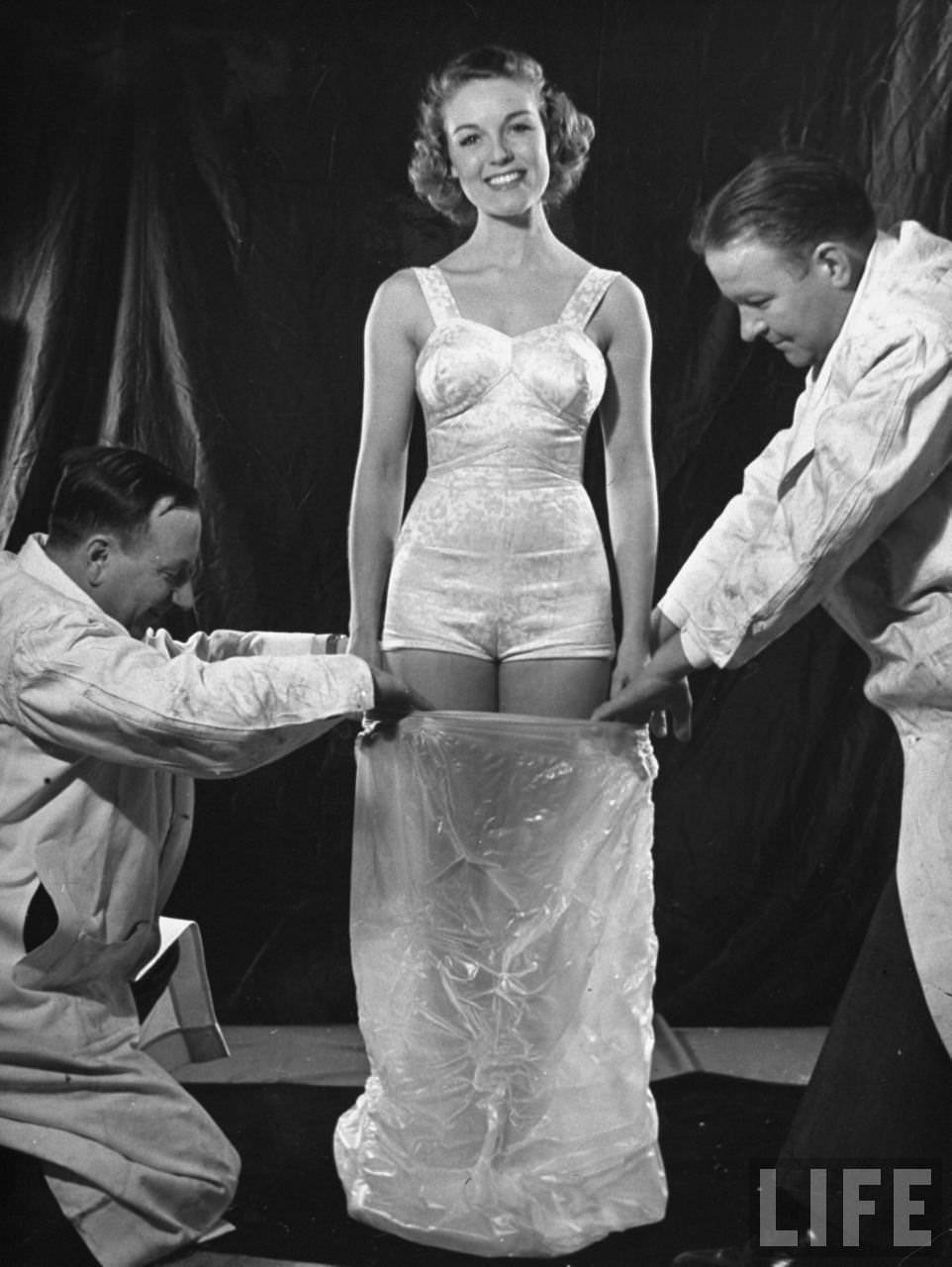
Dewey and Almy Chemical Co., based in Cambridge, Massachusetts, took on that challenge. Their researchers developed a commercial version of what they called the Cryovac process — a name derived from the Latin words for “cold” and “empty.” The concept was straightforward: wrap meat or poultry tightly inside a latex balloon, then remove the air. The sealed latex skin clung to the product, kept moisture in, prevented freezer burn, and created a clean, presentable package.
To show the public just how effective the process was, Dewey and Almy staged one of the more unusual product demonstrations of the era. They didn’t pack a chicken or a cut of beef — they sealed a young woman inside one of their Cryovac containers.
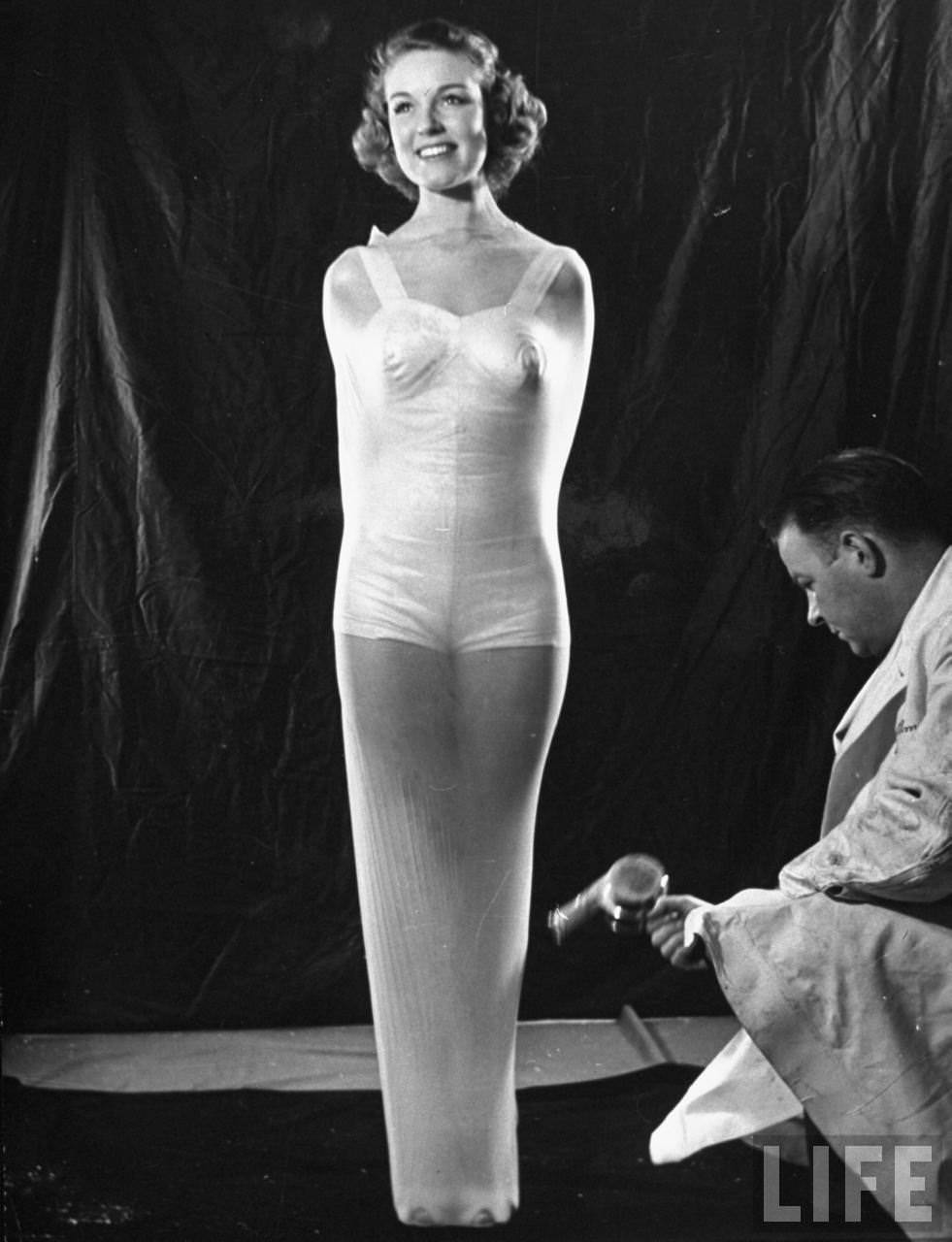
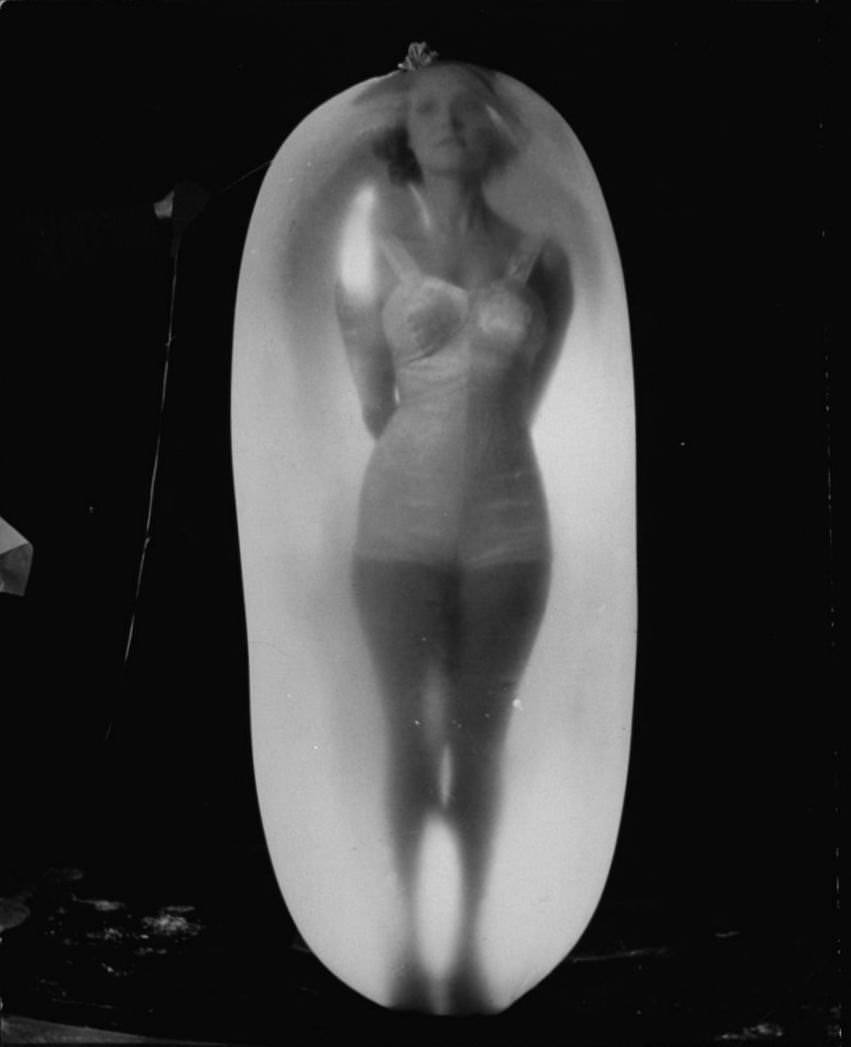
The process followed the same steps used on actual food products. First, a large latex balloon was inflated and then chilled, which caused it to hold its stretched-out shape and stay wide enough to step into. The girl climbed inside the expanded balloon. Once she was in, the bag was tied off at the top.
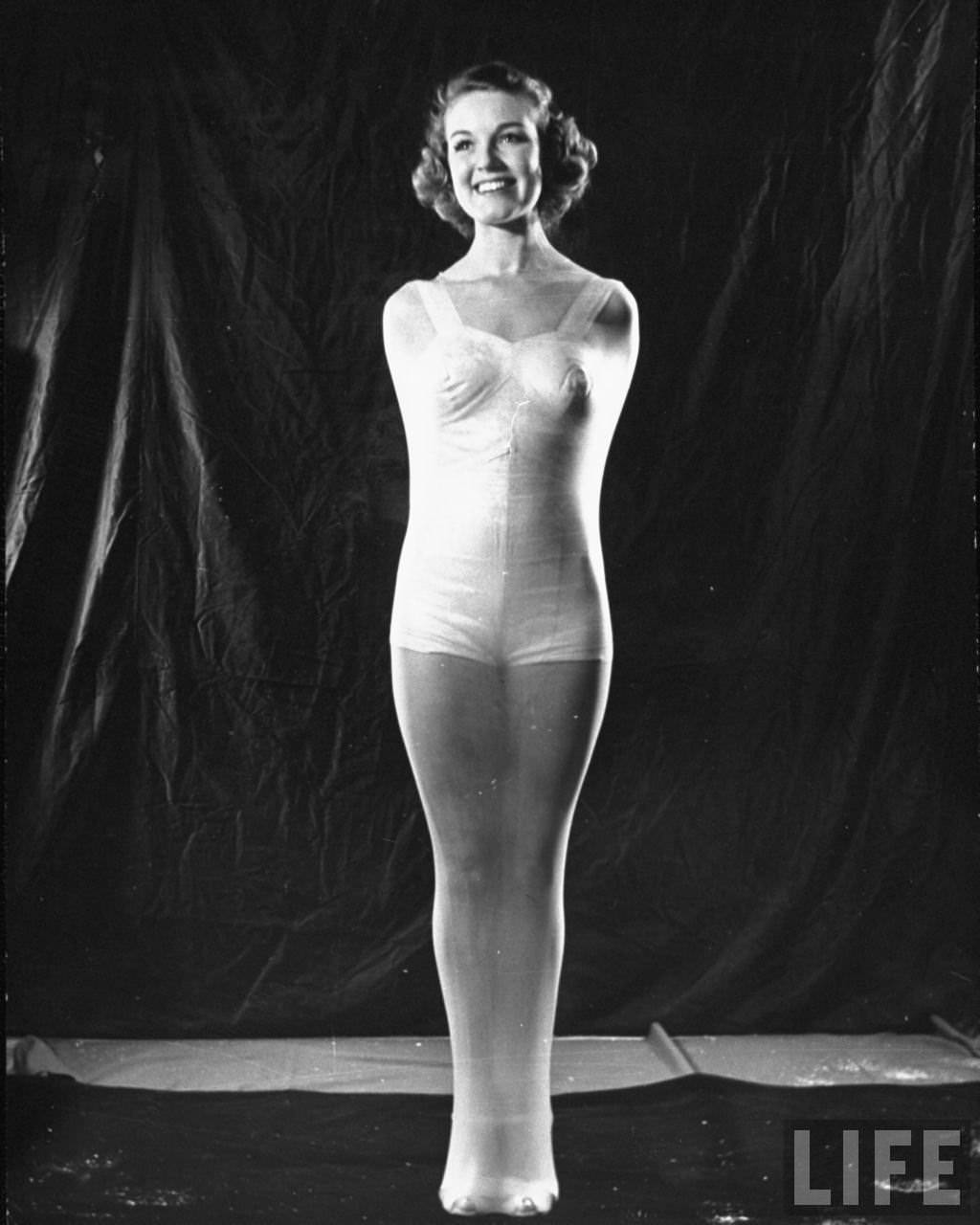
With the bag sealed, air was drawn out of it. Then warm air was sprayed onto the outside of the balloon. The heat caused the latex to shrink and contract, pulling the material snugly inward — exactly as it would around a whole turkey or a large cut of meat. The result was a tight, form-fitting wrap that left no gaps for air or moisture to escape.
Dewey and Almy were well positioned to develop this kind of product. The company had two established lines of business before Cryovac came along. One was manufacturing the sealing compound that food canners used to attach lids to tin cans. The other was producing large latex meteorological balloons used for weather observation and atmospheric research. Cryovac brought both areas of expertise together under one roof.
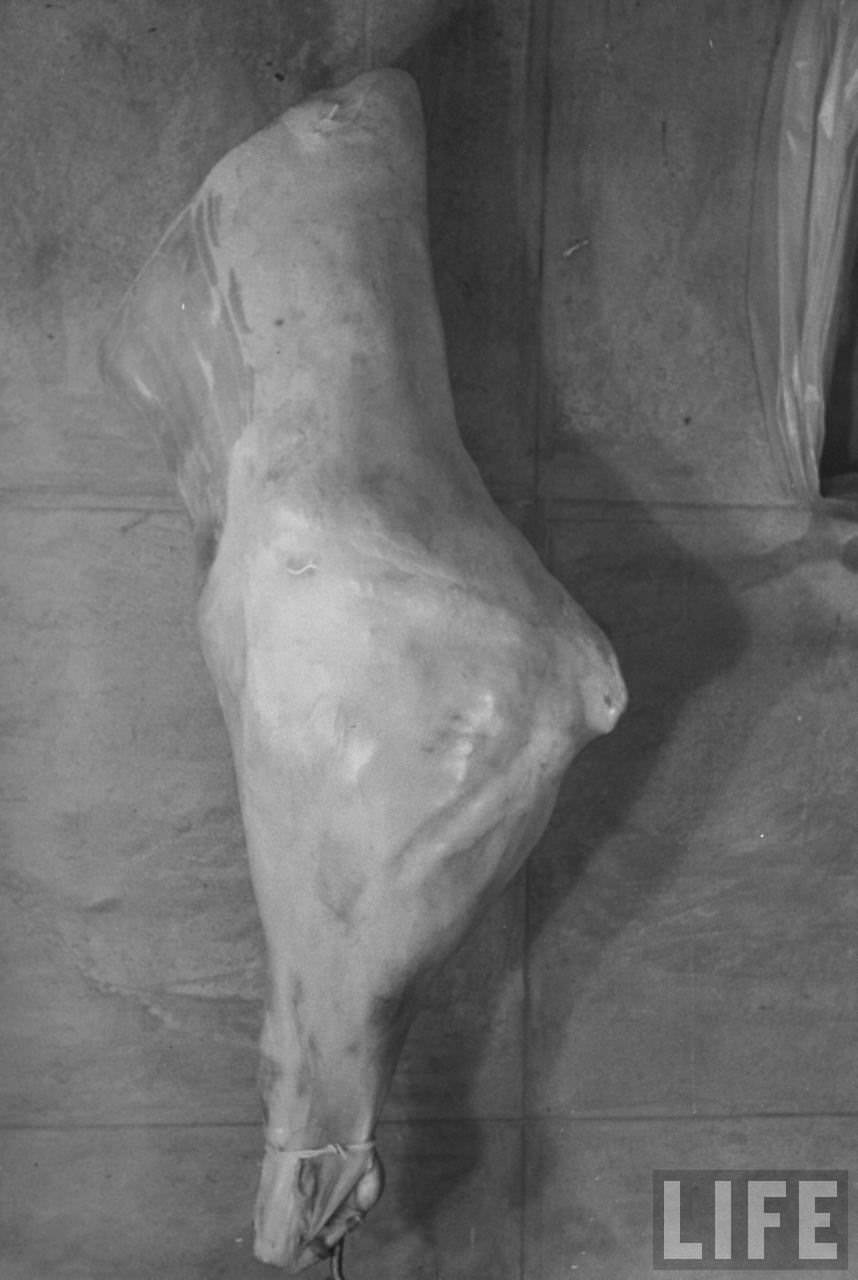
In practice, the process worked just as well on actual product. A quarter of beef — a large, irregularly shaped cut that would normally be difficult to package — could be loaded into a Cryovac balloon just as easily as anything else. The latex conformed to whatever shape was inside it, making the package both airtight and visually uniform. For meat processors, that combination of preservation and presentation was exactly what they had been looking for.
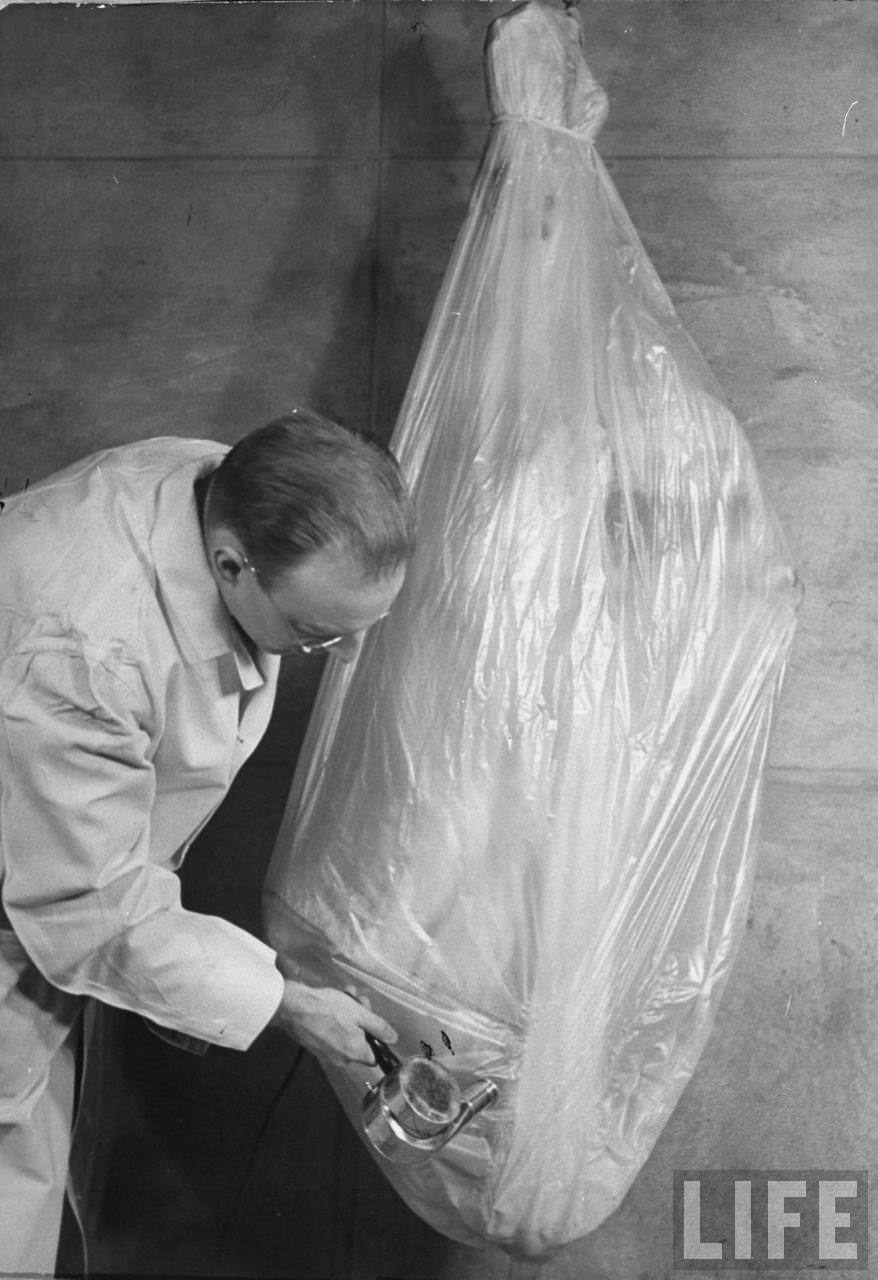
The 1939 demonstration with the girl in the balloon was designed to grab attention, and it did. By putting a human subject through the Cryovac process, Dewey and Almy made it undeniably clear that the seal was complete, the shrinkage was visible, and the method worked on any shape — no matter how irregular. It was a bold publicity move that captured the mechanics of the process better than any photograph of a wrapped chicken ever could.