Hey There! Before You Go. 😧
Get the best vintage content straight into your inbox!

Don't worry, we don't spam

Martin Luther King Jr.’s Assassination: Historic Photos Documenting The Assassination And Chaos After King’s Death

On the evening of April 3, 1968, Martin Luther King Jr. stood before roughly 2,000 people at the Mason Temple in Memphis, Tennessee. He delivered what would later be called the “I’ve Been to the Mountaintop” speech — a powerful address that seemed, to many who heard it, almost prophetic. King spoke about threats on his life and said he was not afraid of death. Less than 24 hours later, he was dead.
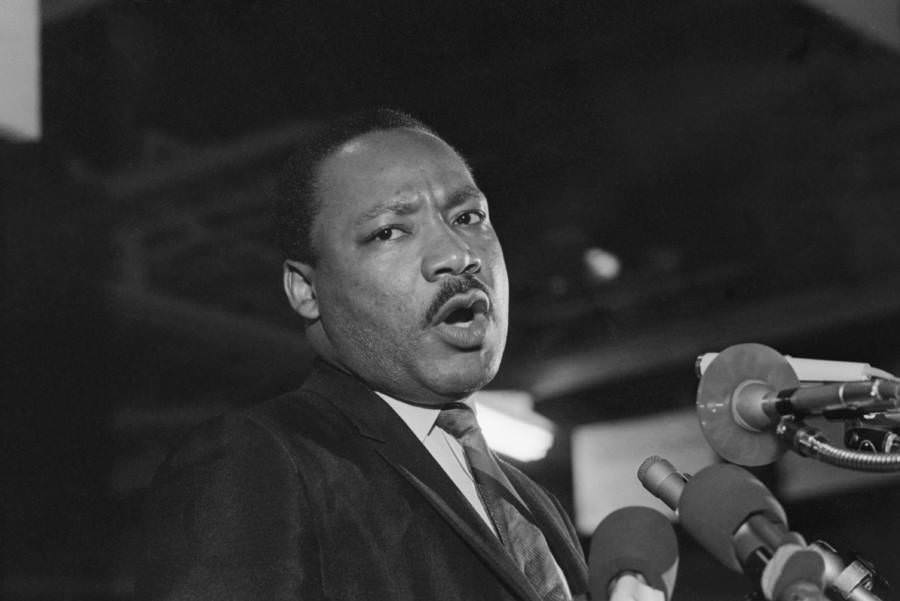
King delivering his now famous "I've Been to the Mountaintop" speech at the Mason Temple in Memphis to 2,000 people the night before he was killed. April 3, 1968
King delivering his now famous “I’ve Been to the Mountaintop” speech at the Mason Temple in Memphis to 2,000 people the night before he was killed. April 3, 1968

King had come to Memphis in support of the city’s striking sanitation workers, a labor dispute that had drawn national attention. He was staying at the Lorraine Motel, a two-story establishment that was a common stop for Black travelers in the segregated South. On April 4, 1968, King stepped out onto the second-floor balcony of the motel just after 6 p.m. He was accompanied by close friends and fellow civil rights leaders, including Ralph Abernathy and Jesse Jackson.
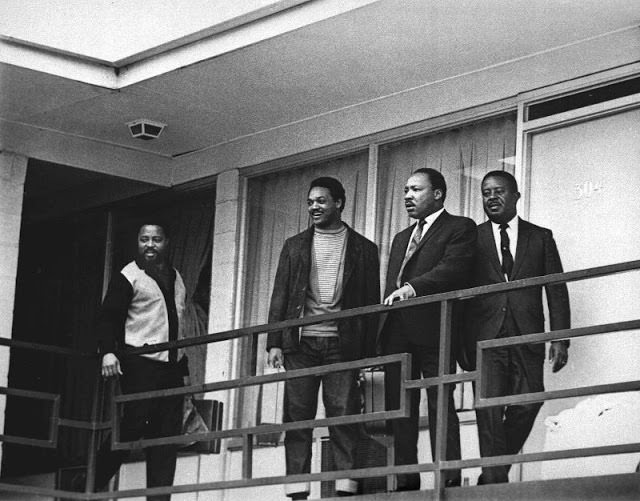
Martin Luther King standing on the balcony on the day of his assassination along with his best friend Ralph Abernathy on the right. On the left is Jesse Jackson, to his left another preacher.

At 6:01 p.m., a single rifle shot rang out. The bullet struck King in the right jaw, passed through his neck, and severed his spinal cord. He collapsed immediately onto the balcony floor. His aides rushed to him. In the frantic seconds that followed, several of them turned toward the direction the shot had come from — a rooming house across the street called Bessie Brewer’s — and pointed. That moment was captured on film.
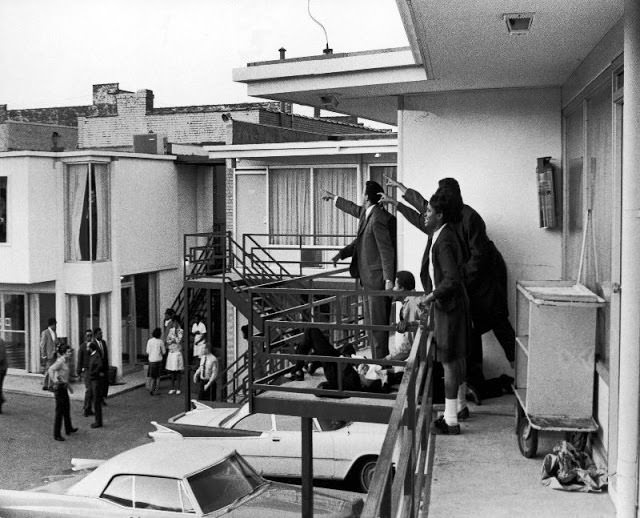
Civil rights leader Andrew Young (L) and others standing on balcony of Lorraine motel pointing in direction of assailant after assassination of civil rights ldr. Dr. Martin Luther King, Jr., who is lying at their feet.

The photographer who captured these images was Joseph Louw, a South African documentary filmmaker who had been working on a film about King. Louw was staying just three doors down from King’s room when he heard the shot. He grabbed his camera and ran. “It was just a matter of realizing the horror of the thing,” he later told Life magazine. “Then I knew I must record it for the world to see.” He shot four rolls of film that night. One photograph — the image of King’s comrades pointing toward the source of the gunshot — became one of the most recognized images in American history.
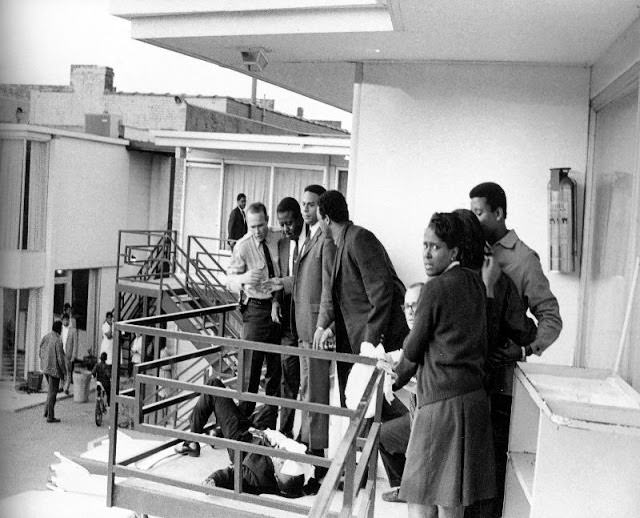
The first police officer made it on to the balcony. The man standing to the right of the police officer is King's best friend Ralph Abernathy. You can see the pain on that man's face as he's looking down at his friend dying.
The first police officer made it on to the balcony. The man standing to the right of the police officer is King’s best friend Ralph Abernathy. You can see the pain on that man’s face as he’s looking down at his friend dying.

Ralph Abernathy, King’s closest friend, was among the first to kneel beside him. A small white motel towel was pressed against the wound in King’s jaw. Those around him were visibly shaken. Police arrived on the balcony within minutes, but there was little they could do. King was alive but unconscious and bleeding severely.
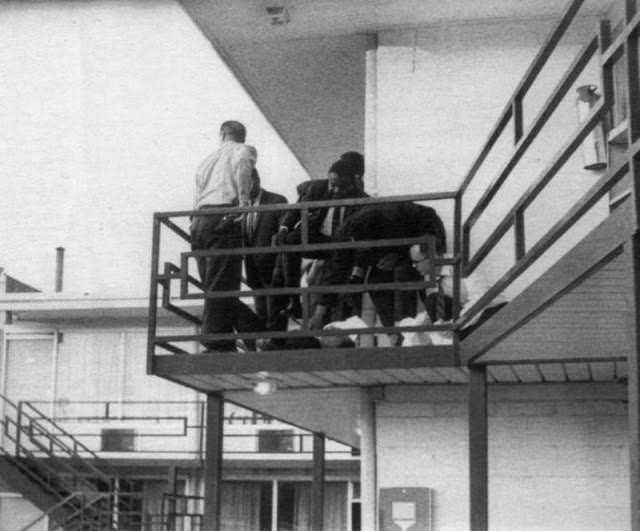
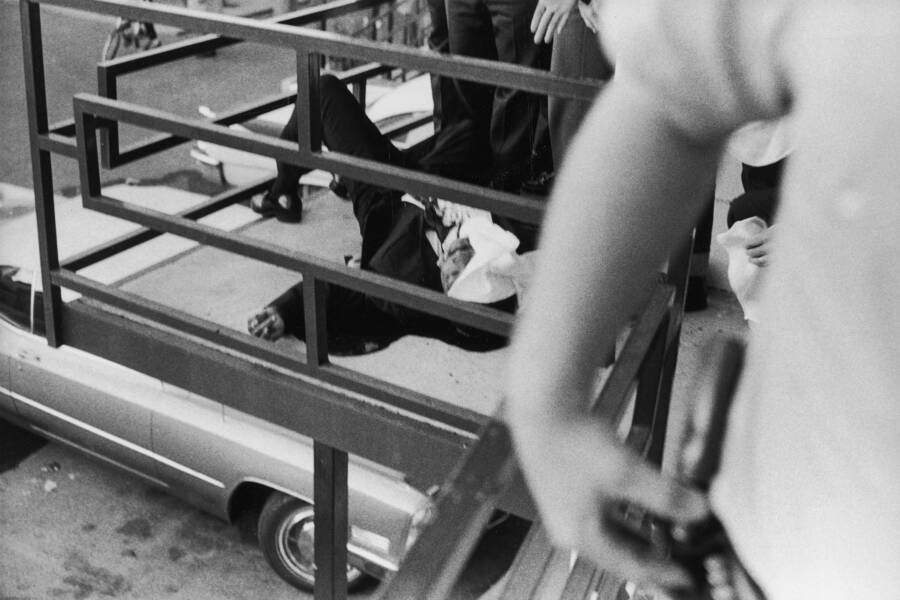
Ralph Abernathy and others crouched down tending to King who has a small white Motel towel on the wound in his right jaw.
The limp, lifeless body of Dr. Martin Luther King, splayed out on the second-floor balcon of the Lorraine Motel — which is now a National Civil Rights Museum.

King’s aides did everything they could in those desperate minutes on the balcony. Andrew Young, a preacher and close colleague, crouched beside King along with Abernathy and others. Paramedics arrived and worked quickly to get King onto a stretcher. The photographs from this period show the raw, unfiltered panic of the scene — blood on an officer’s hand, men straining to lift a stretcher, faces tight with shock and grief.
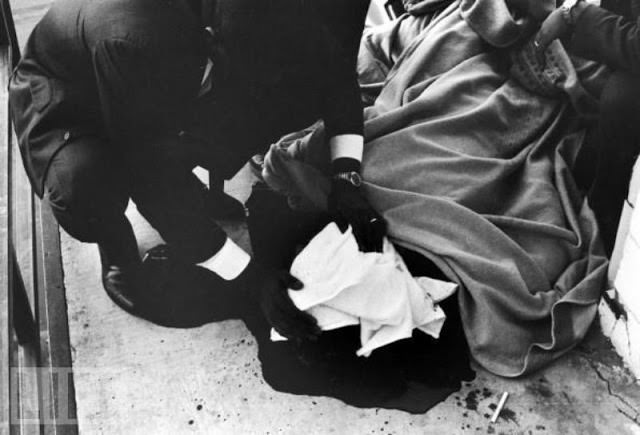
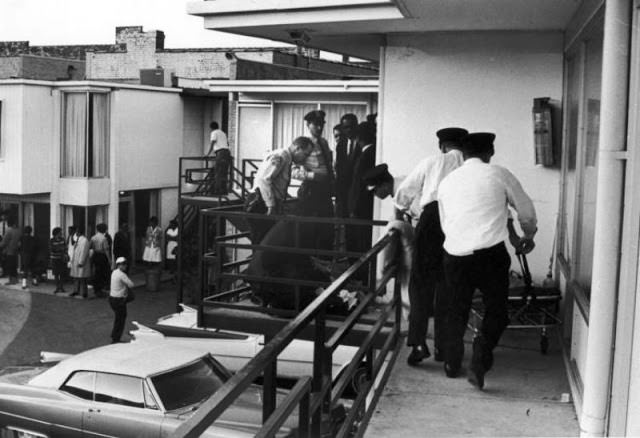
King's aides try to help their leader in any way they can, after he was shot by self-confessed assassin James Earl Ray. Ray later claimed others were involved, which many in the King family believe.
King’s aides try to help their leader in any way they can, after he was shot by self-confessed assassin James Earl Ray. Ray later claimed others were involved, which many in the King family believe.
The other man bent down on the right side of Martin Luther King is Andrew Young, a preacher and friend of King.
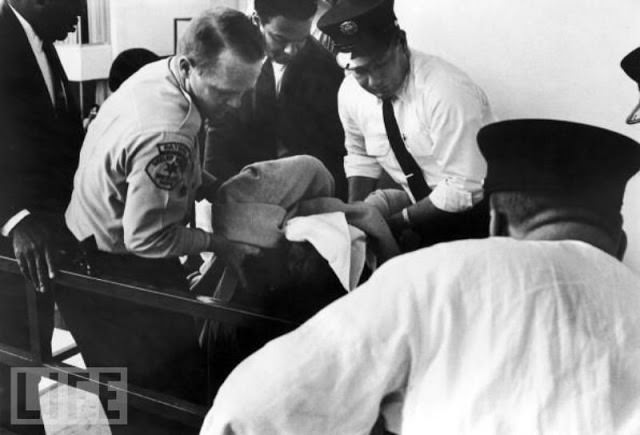
Police try to get him onto a stretcher.
Police and paramedics getting King situated on the stretcher by strapping him on and what not. Notice the spot of blood on one of the officer's hands.
Police and paramedics getting King situated on the stretcher by strapping him on and what not. Notice the spot of blood on one of the officer’s hands.

King was rushed to St. Joseph’s Hospital in Memphis, where doctors worked to save him. He was pronounced dead at 7:05 p.m. — one hour and four minutes after the bullet struck him. Back at the Lorraine Motel, the balcony where he had stood moments before was now a crime scene.
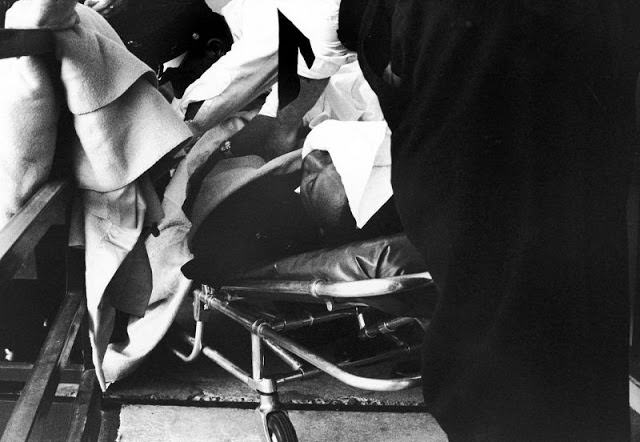
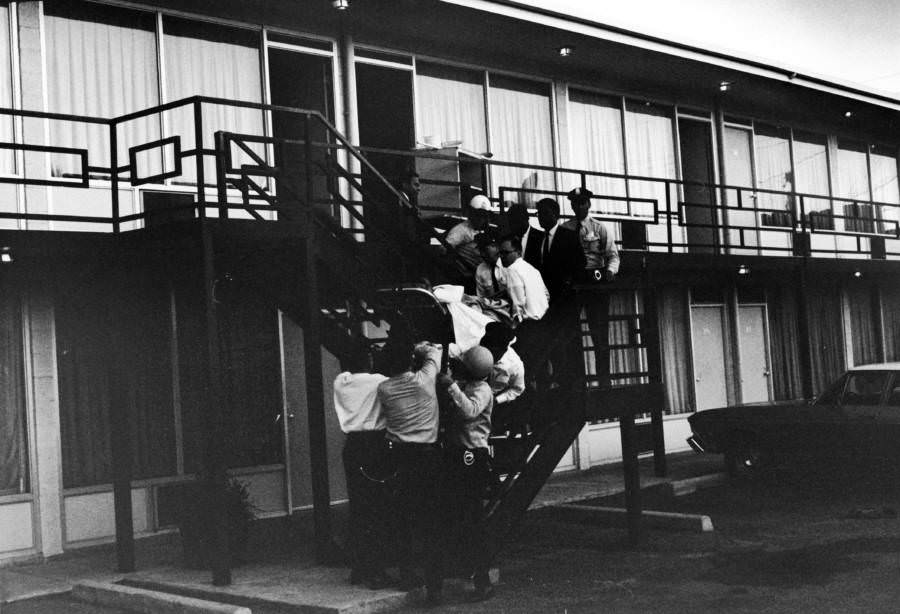
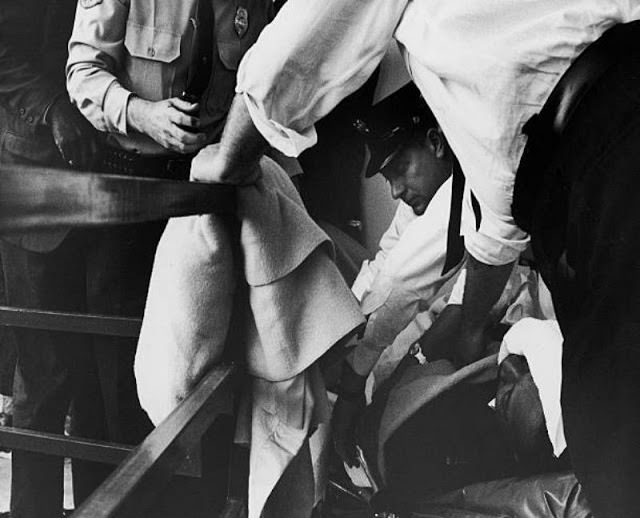
An unidentified man uses a blanket to cover the body of Martin Luther King, Jr., moments after he was shot in the face.
Police and ambulance workers carry the body of Martin Luther King, Jr. down the stairs of the Lorraine Motel. Riots in over 100 American cities would break out shortly after.
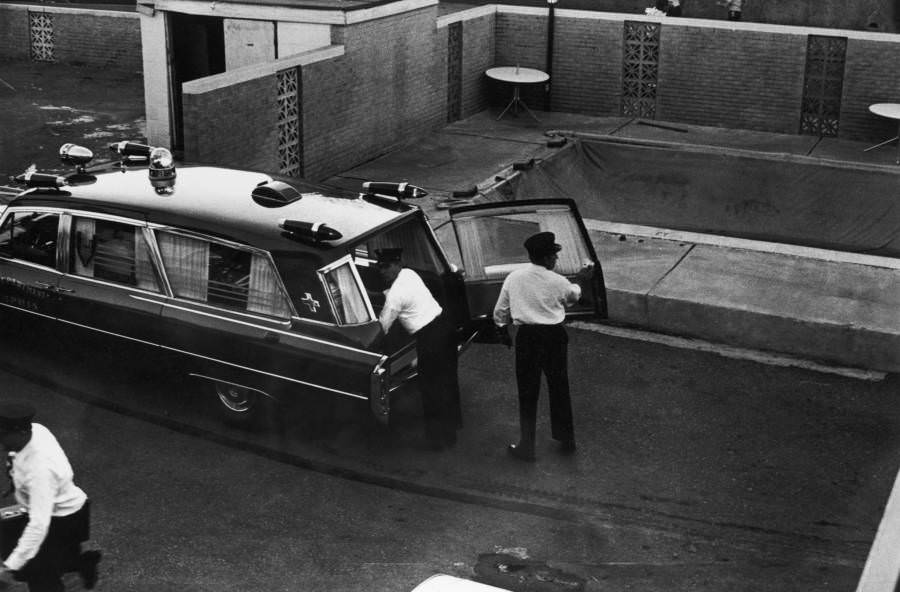
An ambulance arrives at site of Martin Luther King's assassination.
An ambulance arrives at site of Martin Luther King’s assassination.

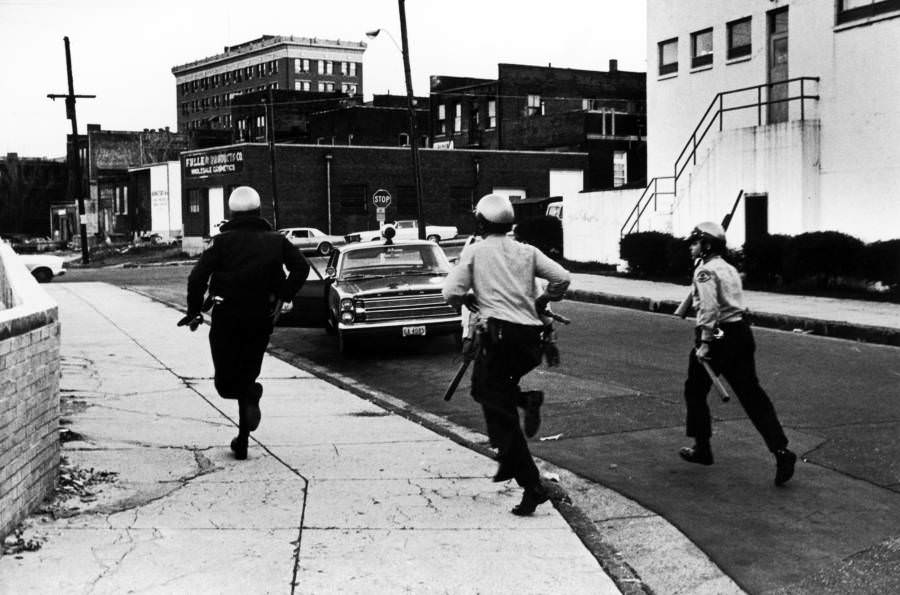
As emergency workers cleared the scene, bystanders scattered across the streets surrounding the motel in search of the shooter. The gunshot had come from a bathroom window in Bessie Brewer’s rooming house, directly across from the Lorraine Motel. The shooter had fled, leaving behind a rifle and a bundle of belongings. Witnesses ran through the area in confusion, not yet knowing who had fired or where they had gone.
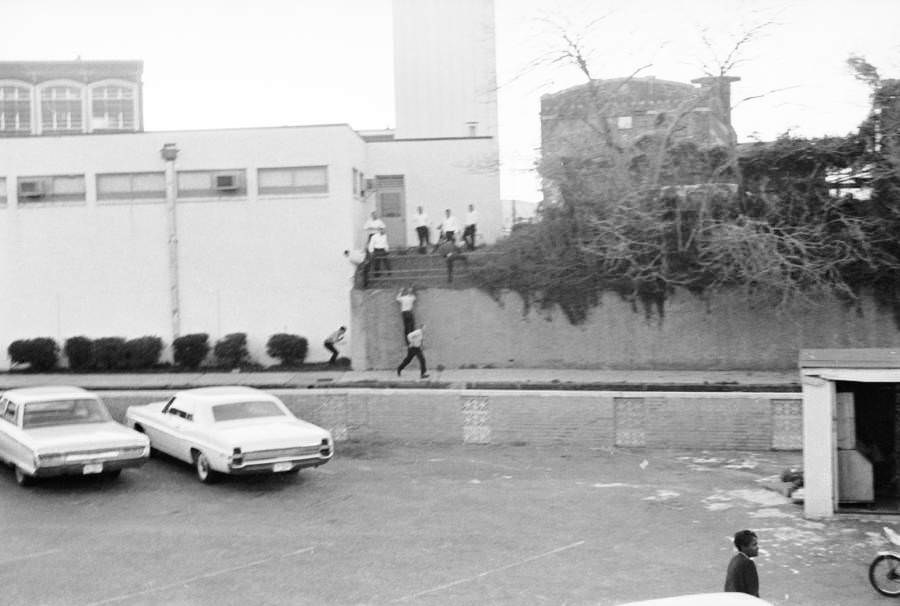
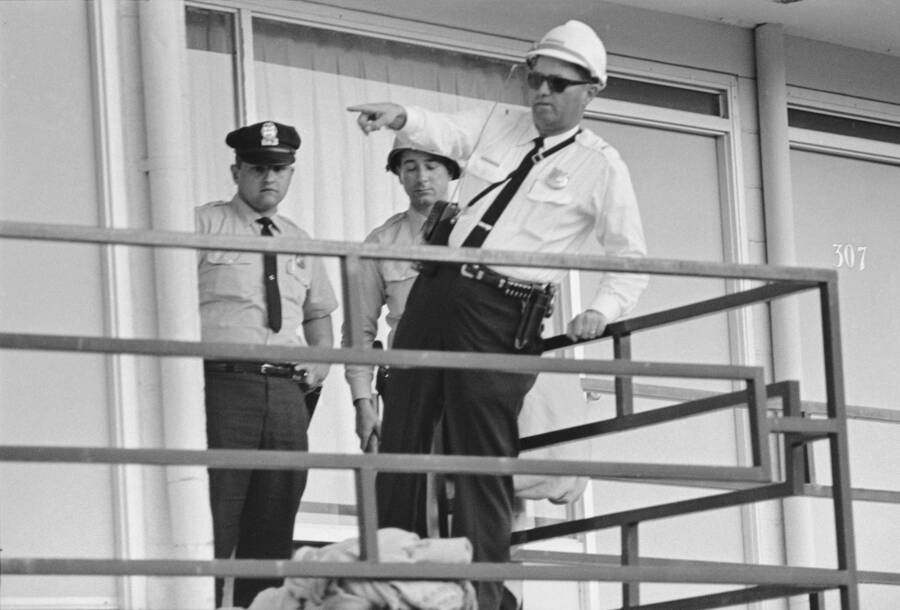
Bystanders run to search for the then-unknown assassin who shot Martin Luther King Jr. from a building just across the Lorraine Motel.
Police officers assess the scene at the Lorraine Motel, moments after King is rushed to the hospital and pronounced dead.
Police respond to assassination of civil rights leader Martin Luther King Jr.

Later that same night, Life photographer Henry Groskinsky and writer Mike Silva arrived at the Lorraine Motel to document the aftermath. Groskinsky photographed the motel grounds, the balcony, and the interior of King’s room. He also entered an abandoned building across from the motel — likely near the same vantage point the shooter had used — to photograph the scene from that angle. “It was a little scary crawling into the building,” Groskinsky later recalled, “because who knew who was going to be there? The atmosphere was very dark, very creepy.”
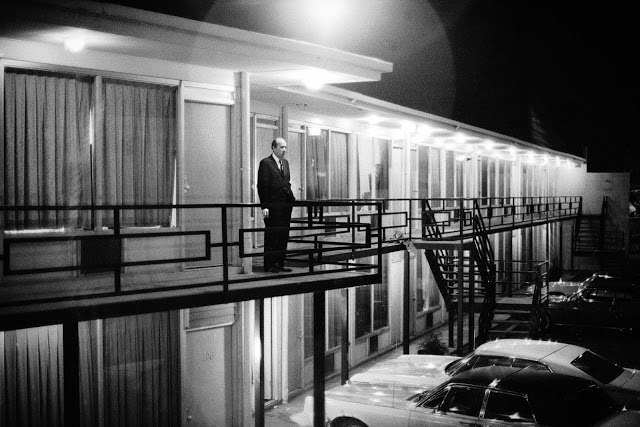
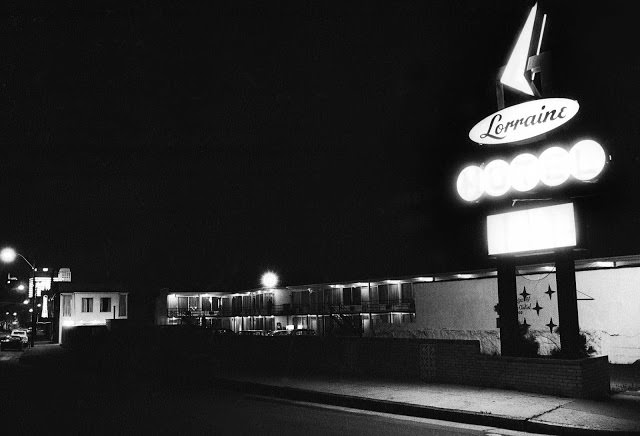
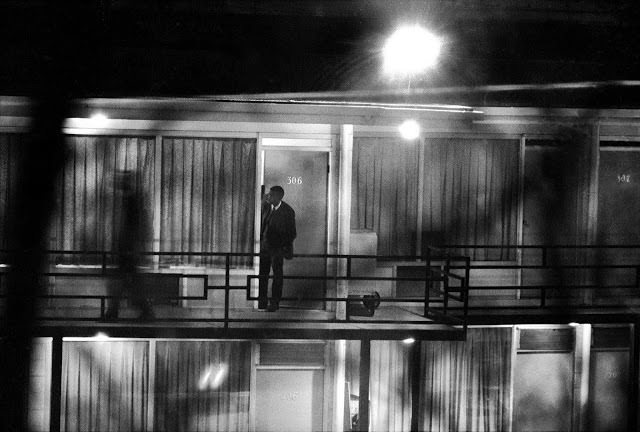
Will D. Campbell, alone on the Lorraine Motel balcony, gazes out into the night.
The Lorraine Motel photographed in the hours after Dr. King's assassination, April 4, 1968.
The Lorraine Motel photographed in the hours after Dr. King’s assassination, April 4, 1968.

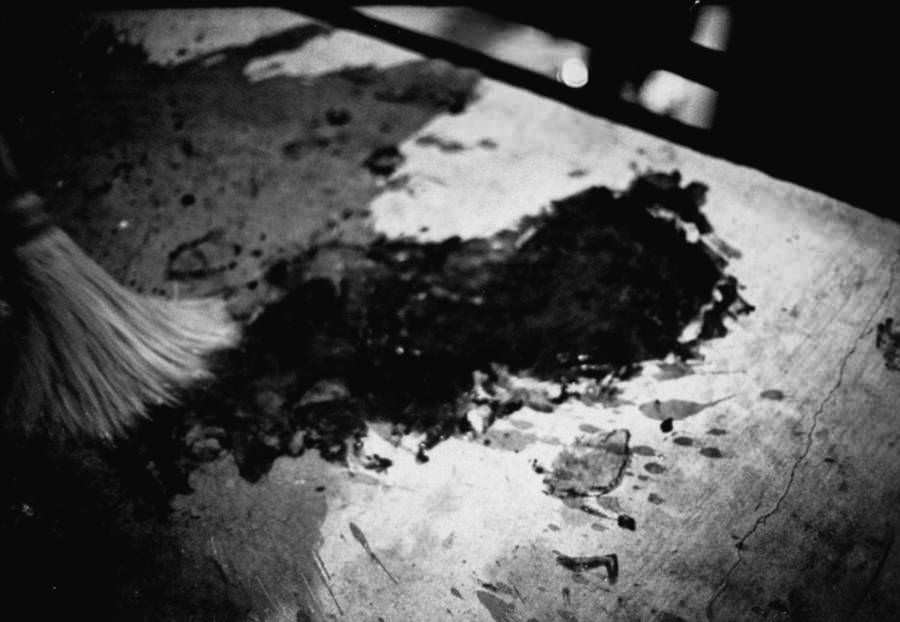
Outside room 306 — King’s room — Theatrice Bailey, the brother of the Lorraine Motel’s owner, cleaned blood from the balcony floor. Groskinsky documented this too. “There was no friction with the people there at the Lorraine,” he recalled, “even though here was this white man with a camera on the scene.” The balcony, still stained with King’s blood, was photographed in detail.
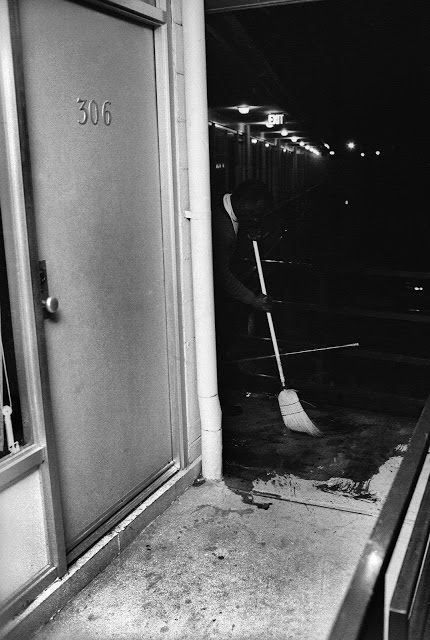
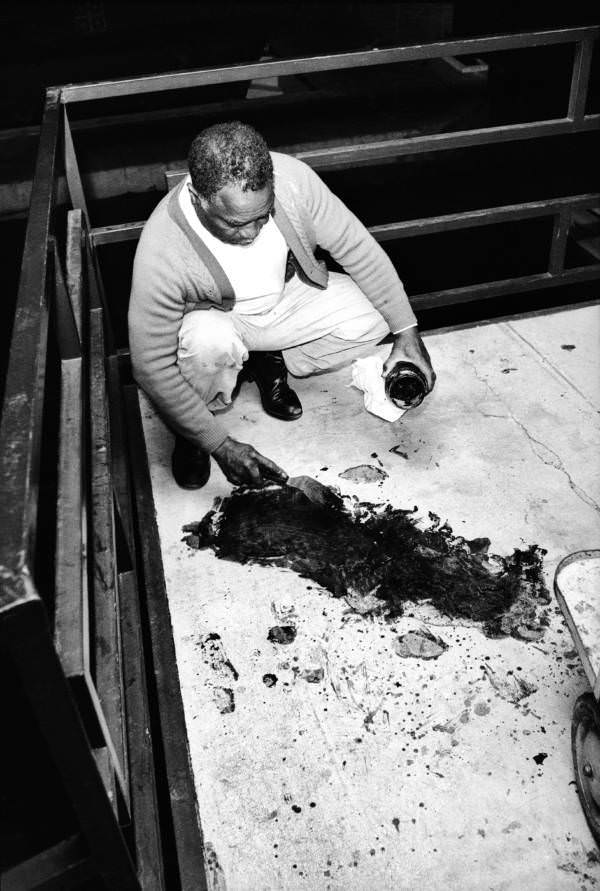
Outside of room 306, Theatrice Bailey, the brother of the Lorraine Motel's owner, cleans blood from the balcony. "There was no friction with the people there at the Lorraine," Groskinsky recalled, "even though here was this white man with a camera on the scene."
Outside of room 306, Theatrice Bailey, the brother of the Lorraine Motel’s owner, cleans blood from the balcony. “There was no friction with the people there at the Lorraine,” Groskinsky recalled, “even though here was this white man with a camera on the scene.”
Theatrice Bailey, brother of the motel's owner, scrapes King's blood from the balcony on the night of the man's death.
Theatrice Bailey, brother of the motel’s owner, scrapes King’s blood from the balcony on the night of the man’s death.
The bloodstained second-floor balcony of the Lorraine Motel, where Dr. Martin Luther King, Jr. was gunned down by an assassin.
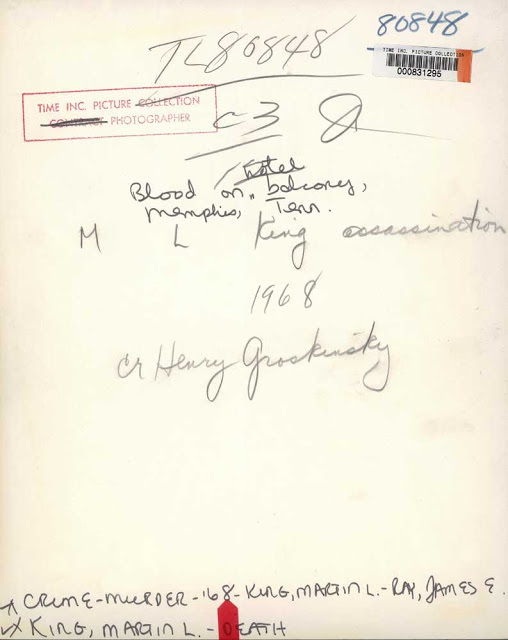
The back of a photograph taken by LIFE photographer Henry Groskinsky on April 4, 1968, at the Lorraine Motel, Memphis, Tenn.
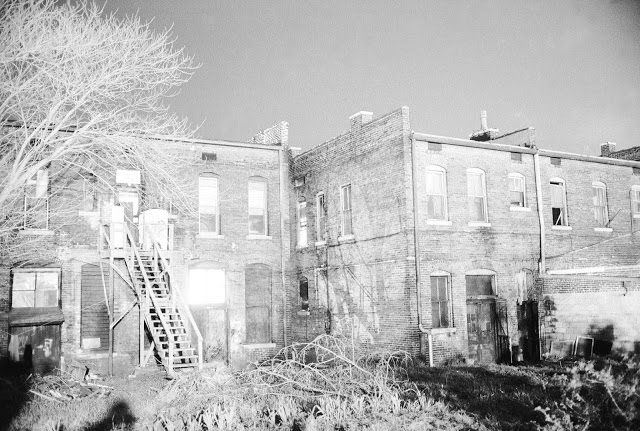
#23	The building on the left is the abandoned building from which Groskinsky took several of his photographs on the night of April 4.
#23 The building on the left is the abandoned building from which Groskinsky took several of his photographs on the night of April 4.

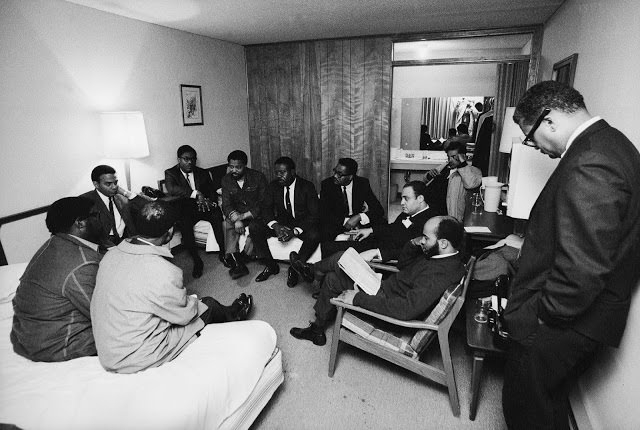
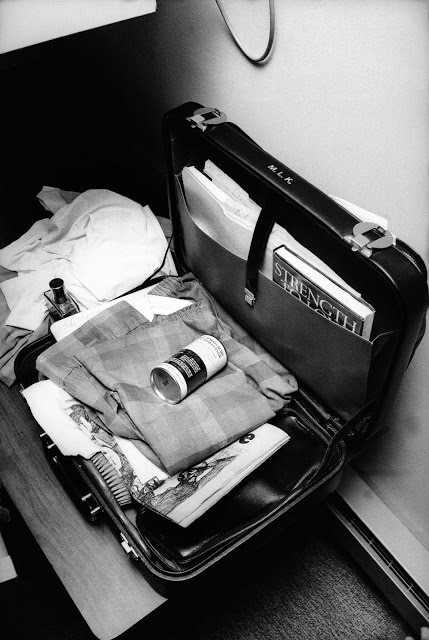
Inside King’s room, Groskinsky photographed the Southern Christian Leadership Conference members who had gathered there in silence. Andrew Young sat under a lamp on the far left. Ralph Abernathy sat on a bed in the center of the room. Groskinsky later said he was deliberate about being quiet and unobtrusive: “I shot just enough to document what was going on.” In one photo, his own reflection appears faintly in a mirror on the wall. King’s neatly packed briefcase sat nearby, monogrammed and undisturbed — his brush, pajamas, a can of shaving cream, and a copy of his book, Strength to Love, still tucked in the pocket.
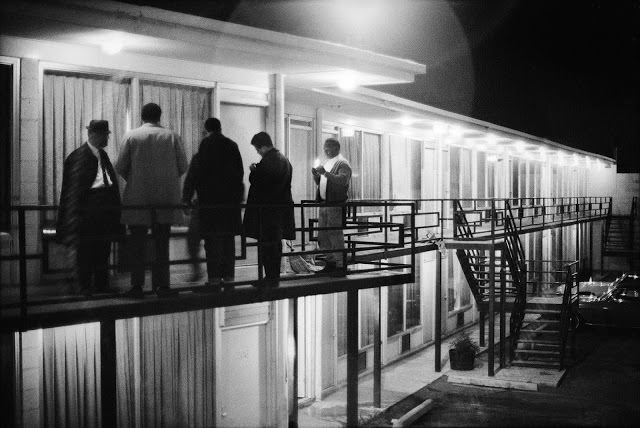
Colleagues gather on the balcony outside the Lorraine Motel's room 306, just a few feet from where Dr. King was shot, April 4, 1968.
Colleagues gather on the balcony outside the Lorraine Motel’s room 306, just a few feet from where Dr. King was shot, April 4, 1968.
Martin Luther King, Jr.'s neatly packed, monogrammed briefcase in his room at the Lorraine Motel, April 4, 1968 — with his brush, his pajamas, a can of shaving cream and his book, Strength to Love, visible in the pocket.
Martin Luther King, Jr.’s neatly packed, monogrammed briefcase in his room at the Lorraine Motel, April 4, 1968 — with his brush, his pajamas, a can of shaving cream and his book, Strength to Love, visible in the pocket.
Stunned, silent members of the Southern Christian Leadership Conference in Dr. King's room at the Lorraine Motel, April 4, 1968.
Stunned, silent members of the Southern Christian Leadership Conference in Dr. King’s room at the Lorraine Motel, April 4, 1968.
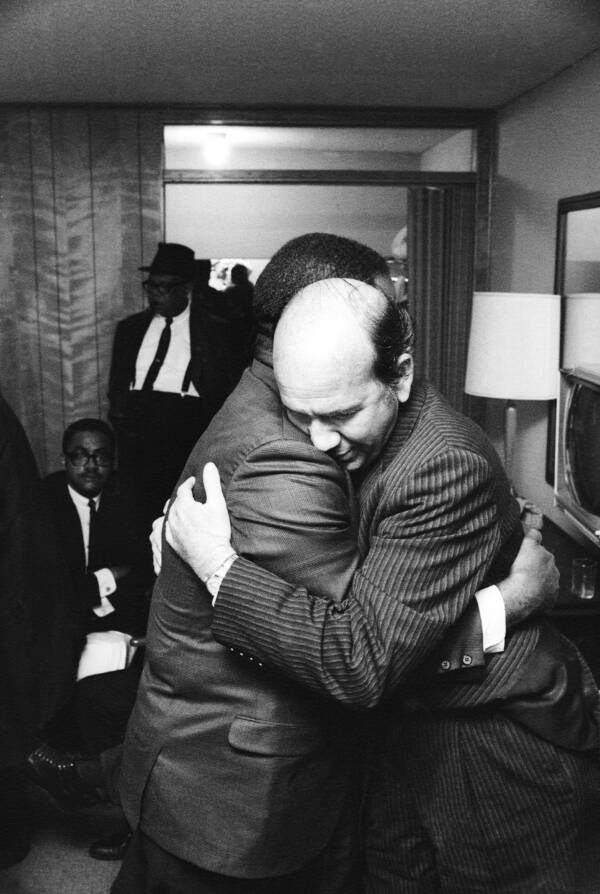
Religious and Civil Rights leaders Will D. Campbell (right) and Ralph Abernathy embrace and comfort one another in King's room (no. 306) at the Lorraine Motel on the night of his death.
Religious and Civil Rights leaders Will D. Campbell (right) and Ralph Abernathy embrace and comfort one another in King’s room (no. 306) at the Lorraine Motel on the night of his death.
A photo taken through tree branches by Henry Groskinsky from a derelict building across the street from the Lorraine Motel, April 4, 1968, very close to where the shot that killed Dr. King likely came from.

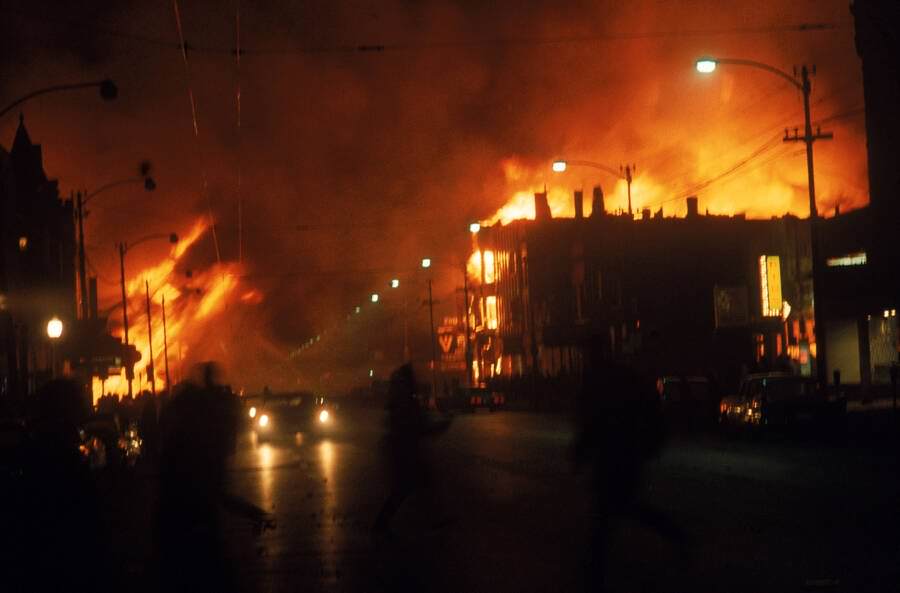
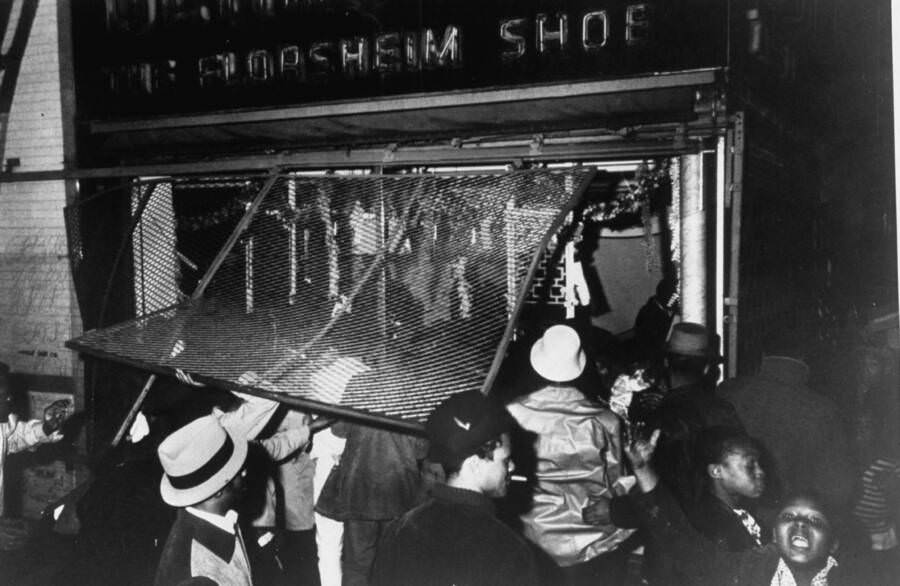
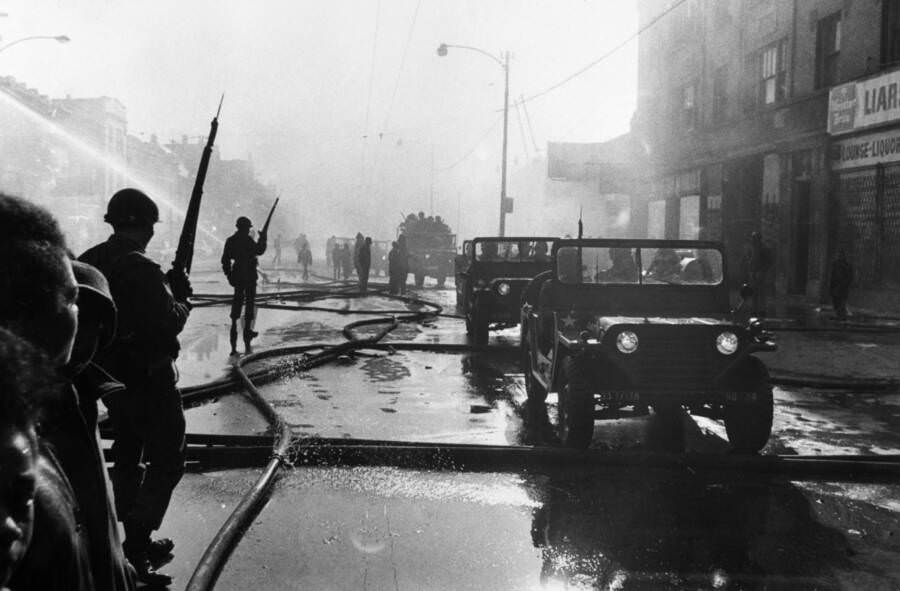
The next day, a U.S. government aircraft arrived at Memphis airport to transport King’s body back to Atlanta, Georgia. As preparations were made to return King home, the streets of Memphis — and cities across the country — erupted. Riots broke out in more than 100 American cities in the days following the assassination. In Chicago alone, 11 people died, thousands were left homeless, and property damage exceeded $10 million. In Washington, D.C., 1,000 people were injured and 6,000 were arrested. Around 3,000 National Guard troops were deployed in Chicago to contain the violence.
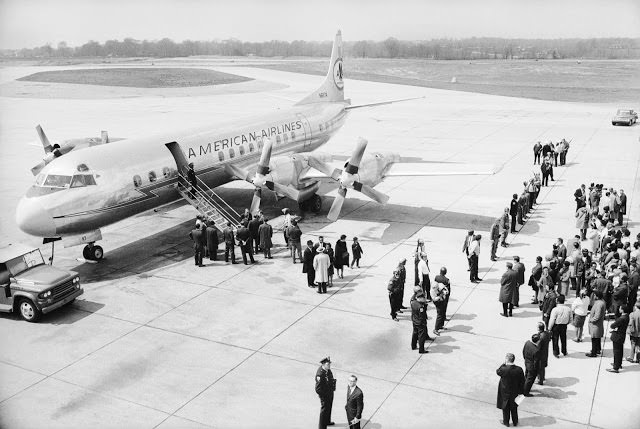
An airplane dispatched by the U.S. government to retrieve Dr. King's body and return it to Atlanta, Ga., waits on the tarmac in Memphis, Tenn., the day after MLK's assassination.
An airplane dispatched by the U.S. government to retrieve Dr. King’s body and return it to Atlanta, Ga., waits on the tarmac in Memphis, Tenn., the day after MLK’s assassination.
The population of Memphis, as well as people in 100 other American cities, took to the streets in anger, fear, and desperation. April 4, 1968. Memphis, Tennessee.

Jesse Jackson, who had been with King on the balcony the evening before and had watched him deliver what Jackson later called “the most brilliant speech of his life,” flew back to Chicago after the assassination. He was photographed at O’Hare Airport the following morning, April 5, reading the Chicago Daily Defender, searching for details about what had happened to his friend and leader.
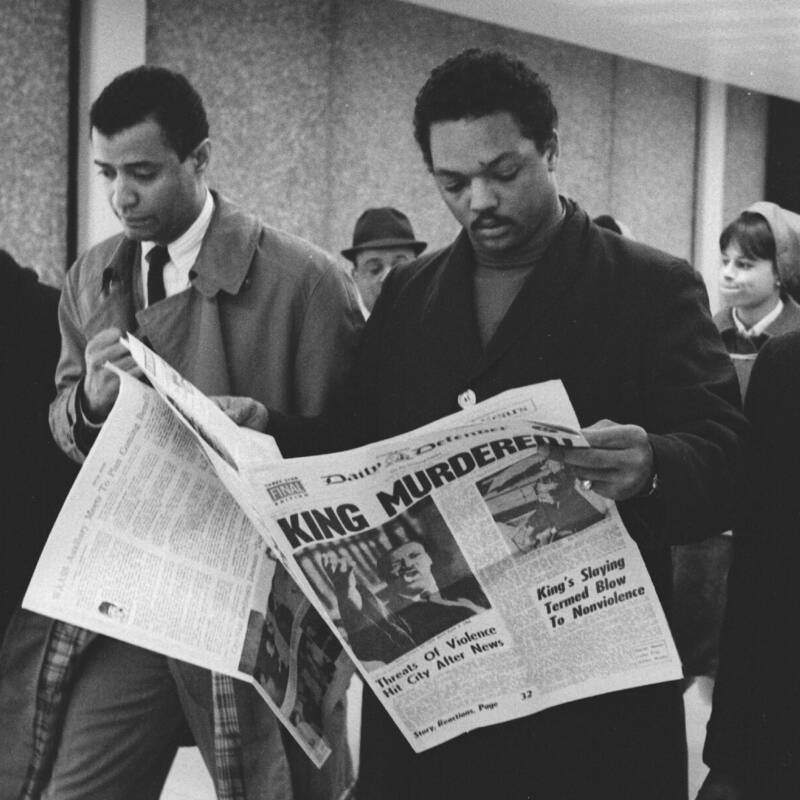
Jesse Jackson saw King give "the most brilliant speech of his life" the night before he was gunned down. He's seen here at O'Hare Airport in Chicago, reading the Daily Defender newspaper in hopes to learn more. April 5, 1968. Chicago, Illinois.
Jesse Jackson saw King give “the most brilliant speech of his life” the night before he was gunned down. He’s seen here at O’Hare Airport in Chicago, reading the Daily Defender newspaper in hopes to learn more. April 5, 1968. Chicago, Illinois.
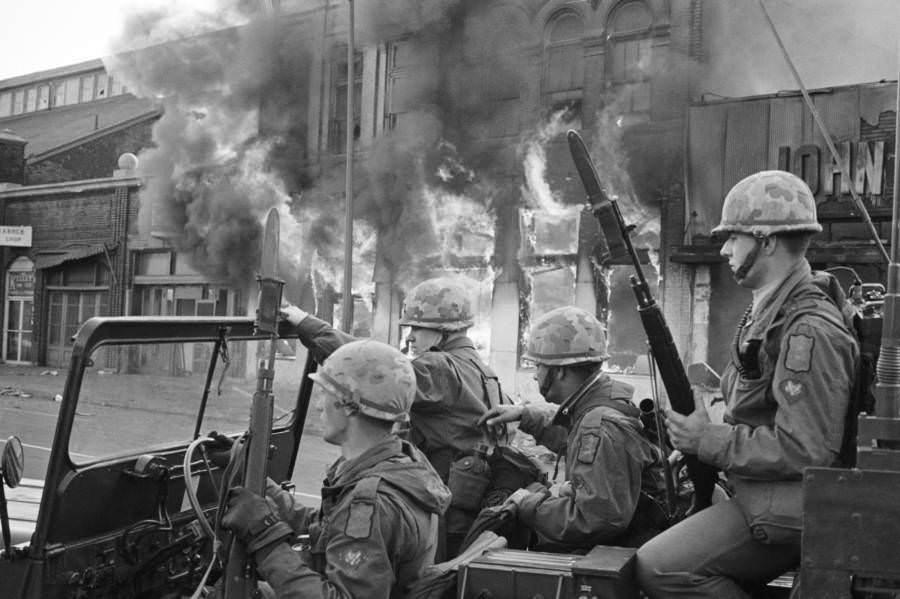
The Illinois National Guard patrol the riot-affected Westside of the city. Police said at least nine people were killed during the chaos, with over 343 arrested.
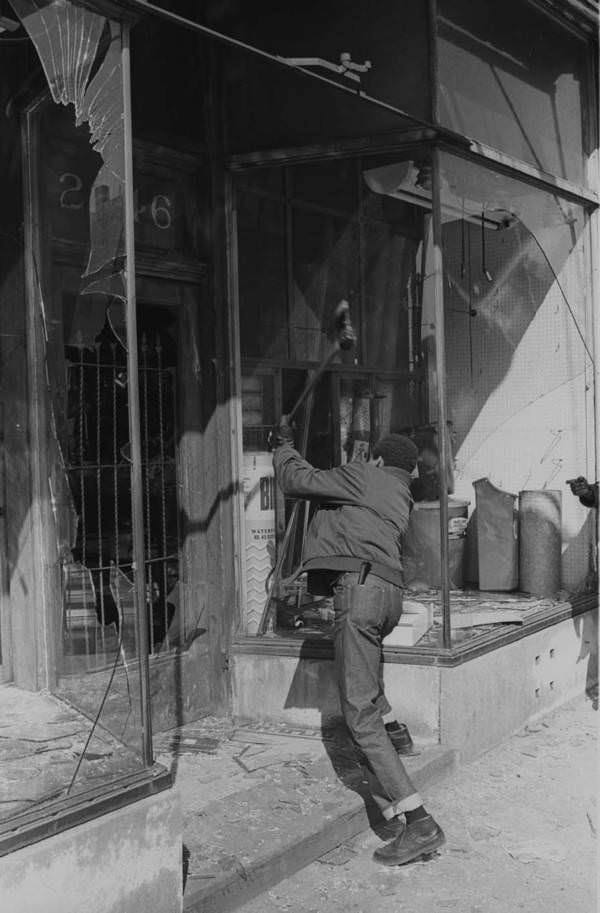
Streets and buildings are ablaze from rioting and looting following the tragic assassination of Martin Luther King Jr.

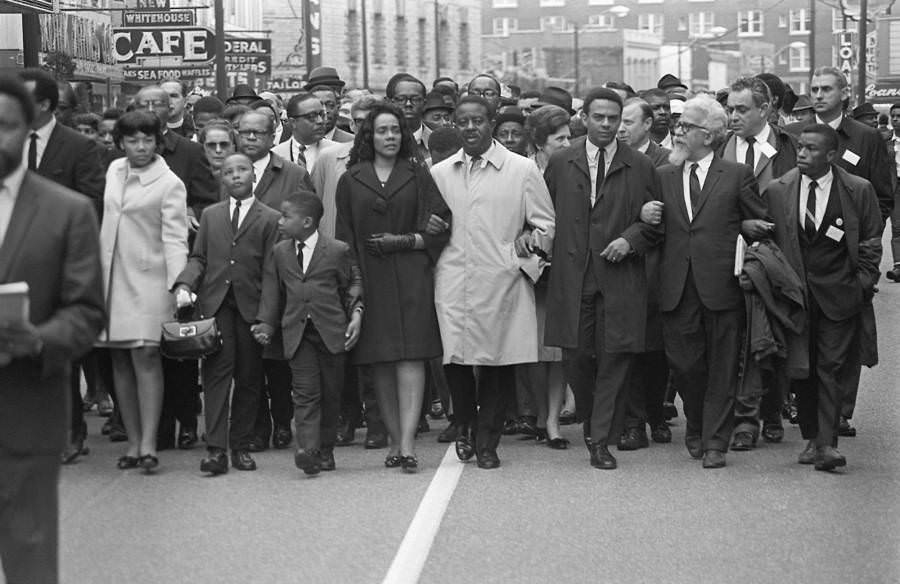
On April 8 — four days after the shooting — women at the Abe Schrader clothing shop in New York City paused their work to listen to King’s funeral service on a portable radio. The same day, the March on Memphis that King had planned to lead for the city’s striking sanitation workers went forward. His widow, Coretta Scott King, led it in his place.
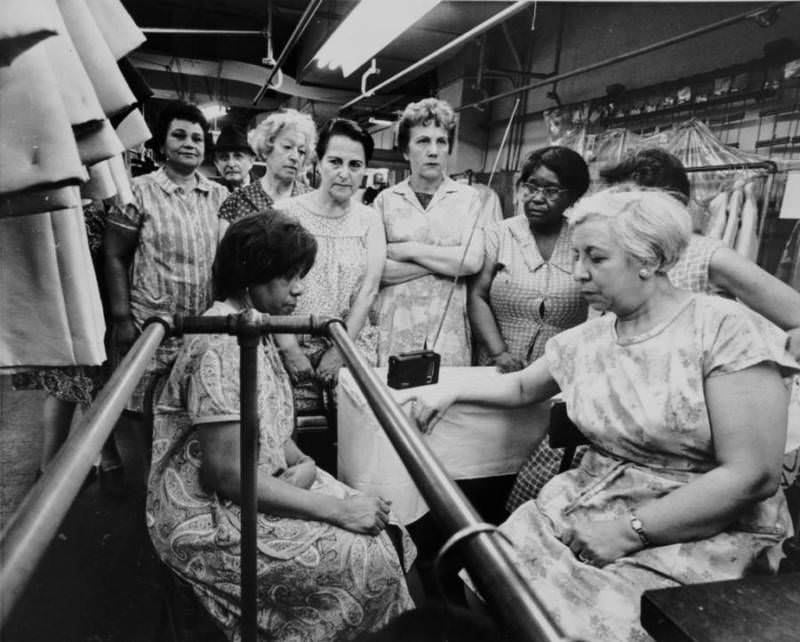
Women at the Abe Schrader clothing shop in New York pause during work to listen to the funeral service for Martin Luther King Jr. on a portable radio. April 8, 1968. Memphis, Tennessee.
King intended to lead the "March on Memphis" for the striking sanitation workers, but tragically didn't live to see it. His widowed wife, Coretta Scott King (fifth from right), led it instead. April 9, 1968. Memphis, Tennessee.
King intended to lead the “March on Memphis” for the striking sanitation workers, but tragically didn’t live to see it. His widowed wife, Coretta Scott King (fifth from right), led it instead. April 9, 1968. Memphis, Tennessee.
In the days and weeks that followed MLK's assassination, devastated demonstrators in more than 100 cities across the U.S. hit the streets in a wave of rioting that remains unprecedented in the nation's history.
In the days and weeks that followed MLK’s assassination, devastated demonstrators in more than 100 cities across the U.S. hit the streets in a wave of rioting that remains unprecedented in the nation’s history.
In Chicago, 11 people died during the riots, which left thousands homeless, and damaged over $10 million worth of property.

James Earl Ray, a 40-year-old escaped convict from Missouri, was identified as the shooter. He had checked into Bessie Brewer’s rooming house under a false name on April 4, selected a bathroom with a direct line of sight to the Lorraine Motel’s balcony, and fled immediately after firing. He was arrested two months later at London’s Heathrow Airport on June 8, 1968, while attempting to travel to a white-ruled African country using a fake Canadian passport. Ray confessed to the murder and was sentenced to 99 years in prison — later adjusted to life imprisonment. He died in prison in 1998 at the age of 70. Ray later recanted his confession and claimed others were involved in the plot, a claim that members of the King family came to believe.
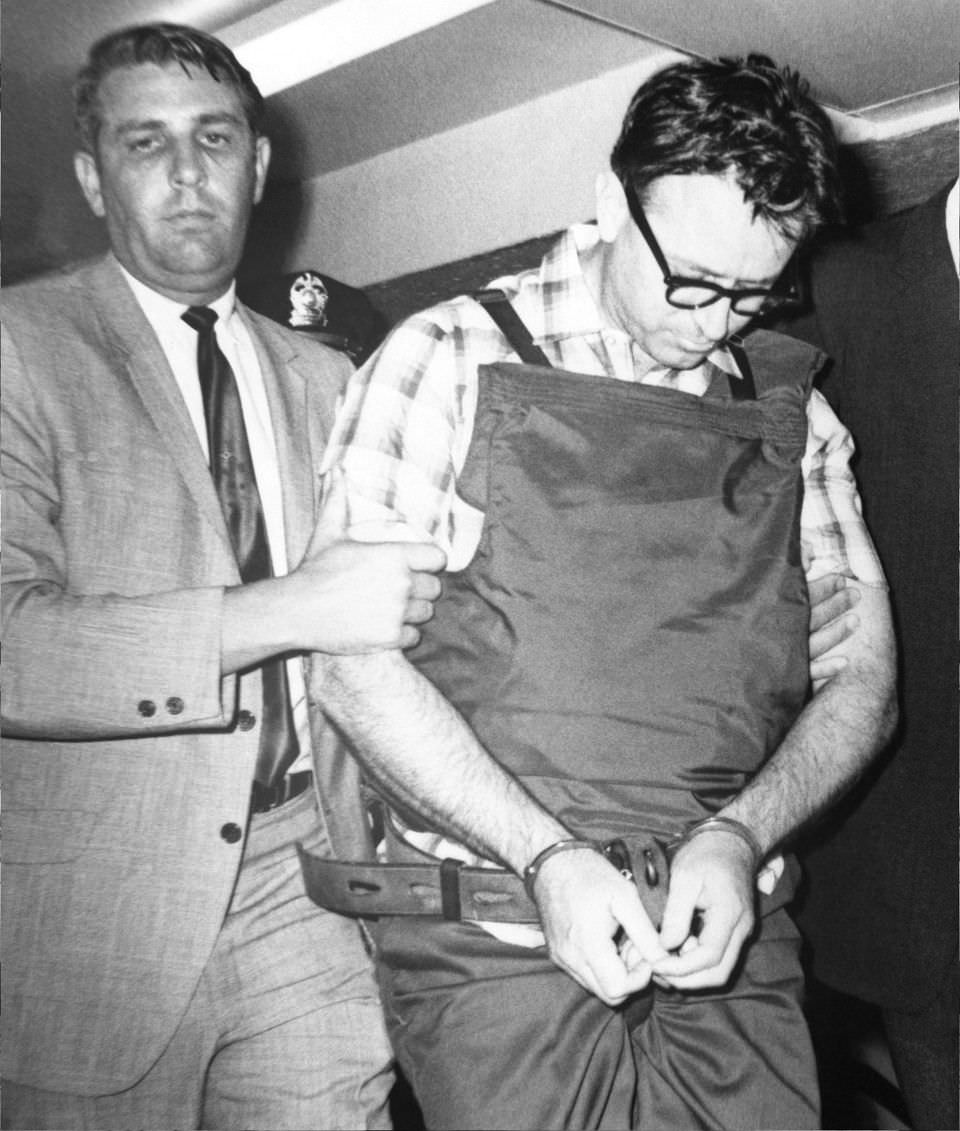

James Earl Ray, Martin Luther King's assassin, being led to his cell in Memphis after his arrest in London, June 8, 1968.
James Earl Ray, Martin Luther King’s assassin, being led to his cell in Memphis after his arrest in London, June 8, 1968.
Enjoyed this post? Get new ones in your inbox.

4 thoughts on “Martin Luther King Jr.’s Assassination: Historic Photos Documenting The Assassination And Chaos After King’s Death”

Leave a Comment

Your email address will not be published. Required fields are marked *

Share this Post 🥺

Please take a moment to share this content. Your support is greatly appreciated! 🙌🙏

Share this Post 🥺

Please take a moment to share this content. Your support is greatly appreciated! 🙌🙏
Scroll to Top
 
Hey Friend, Before You Go.. Please like & follow for more interesting content