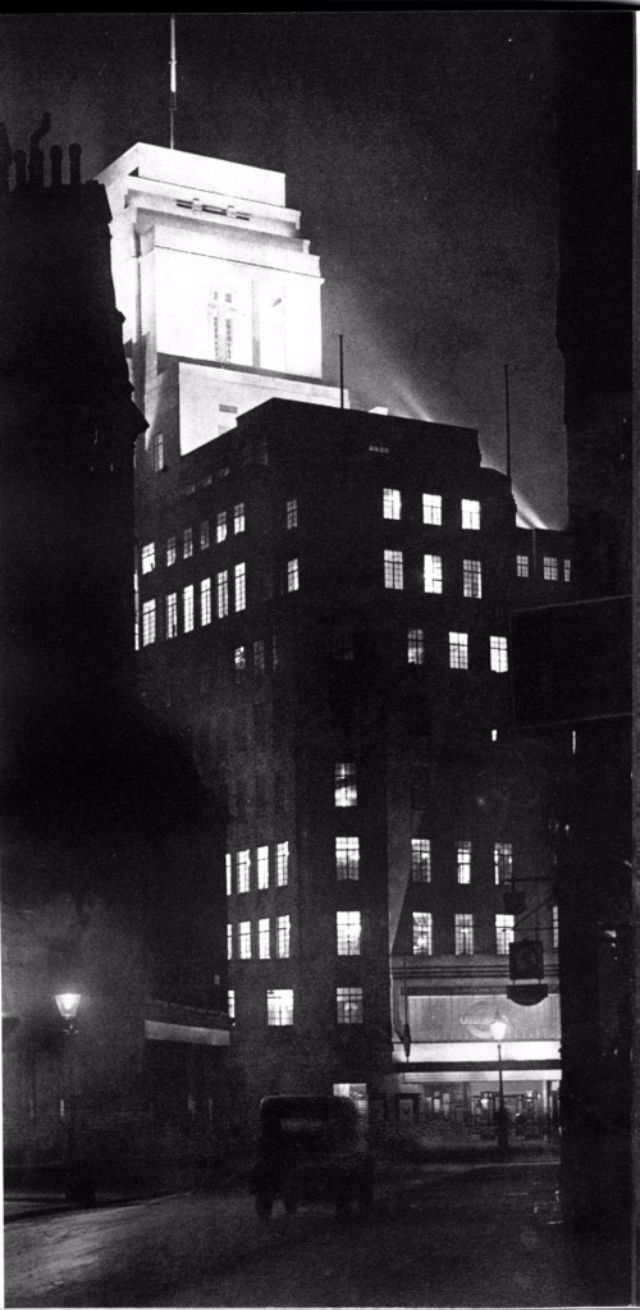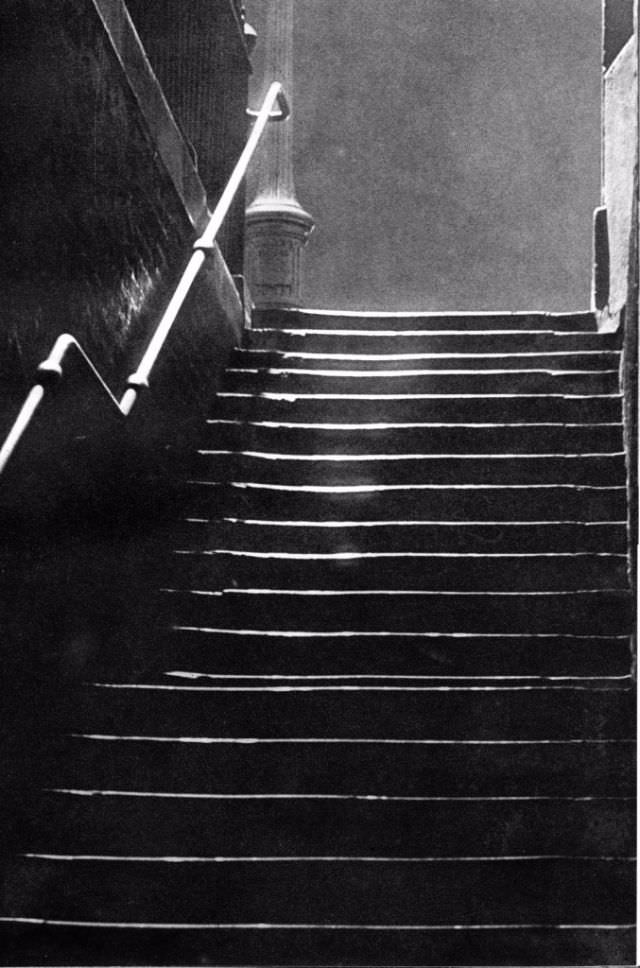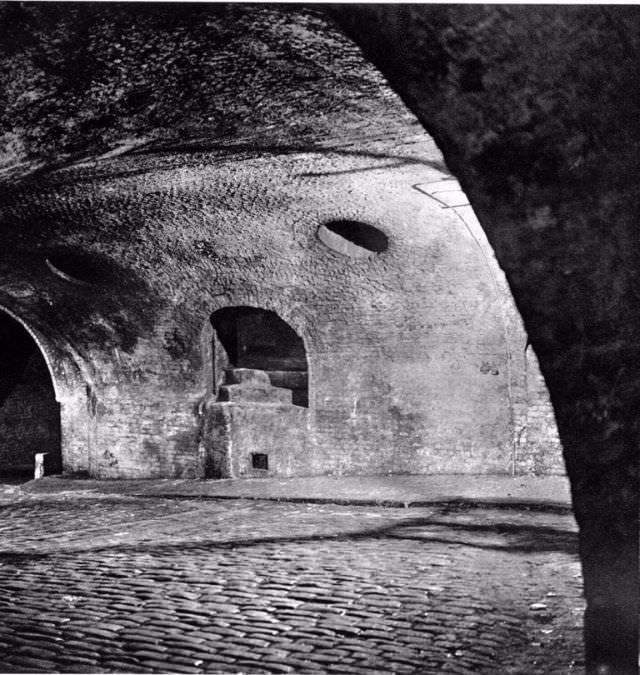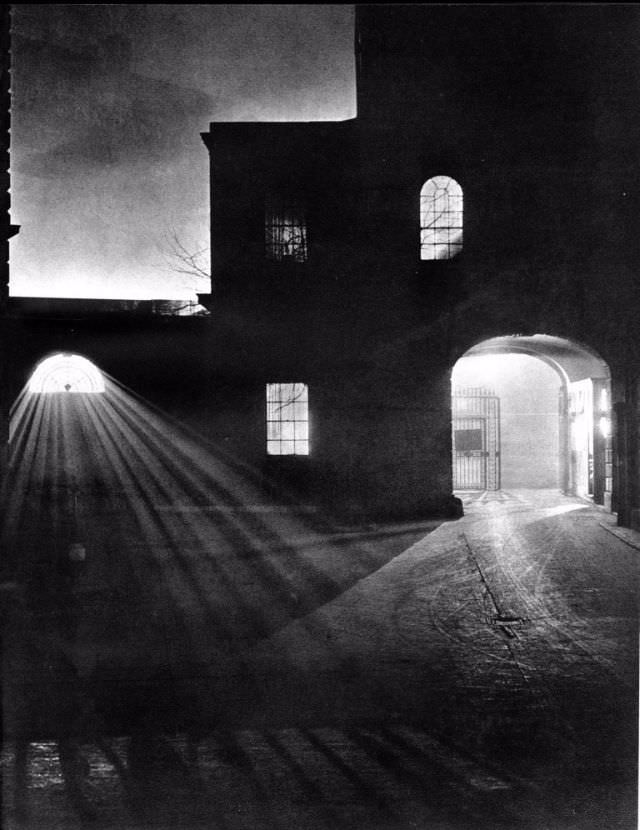
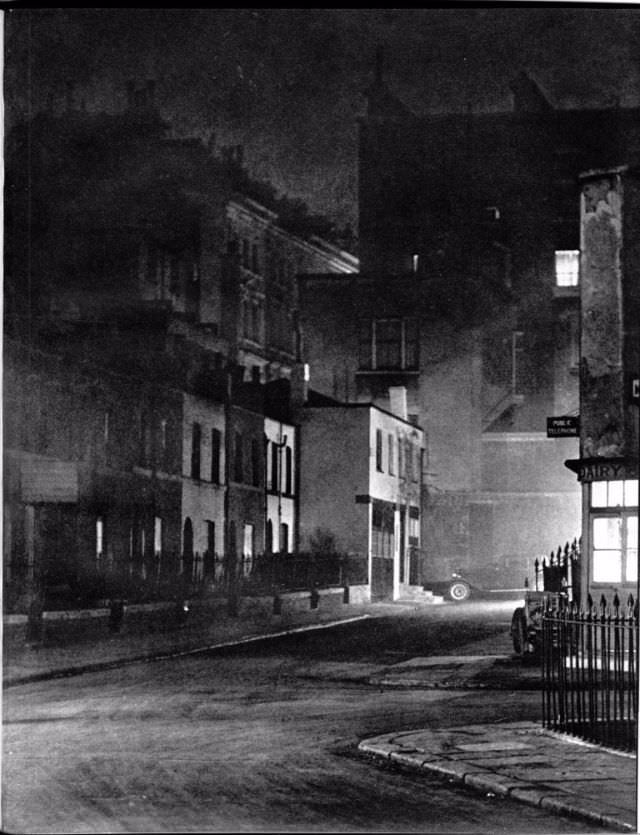
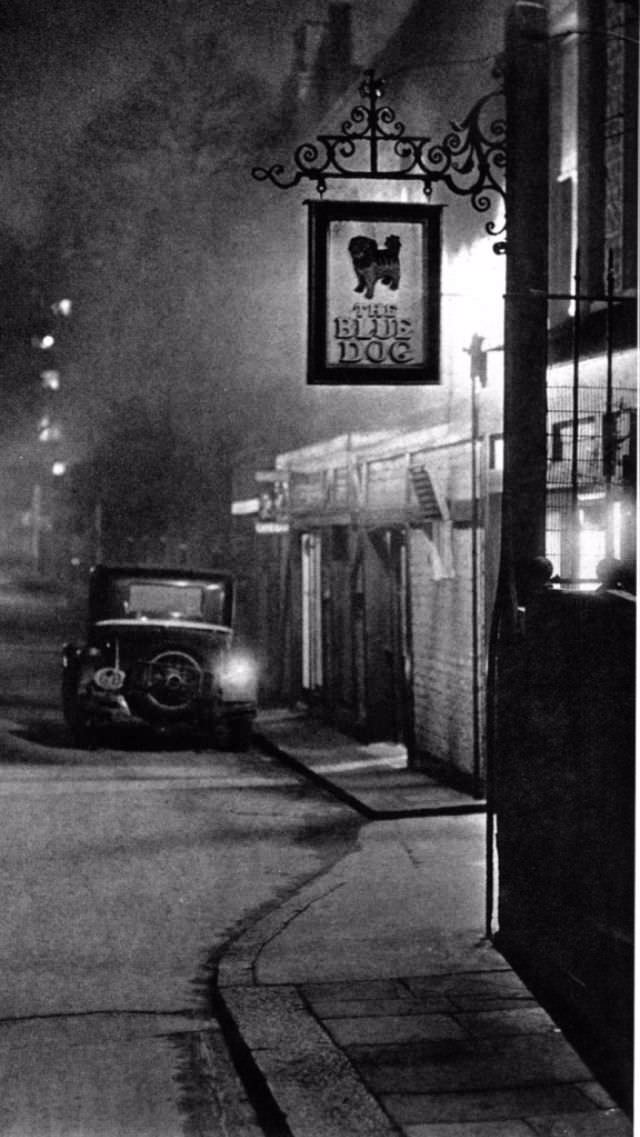
In 1934, photographer Harold Burdekin and writer John Morrison published a book simply called “London Night.” It captured the city after dark with a quiet precision that still feels striking today. The streets in these images are dim, often empty, and wrapped in the kind of thick fog that was a routine part of London life in that era.
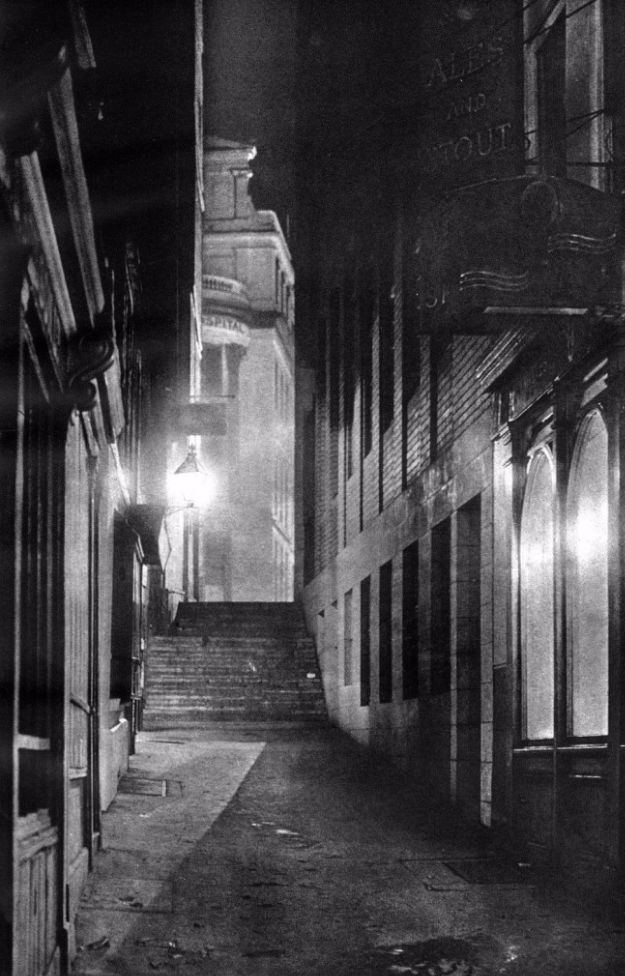
The 1930s were years of real economic hardship across Britain. That weight shows up quietly in these photographs. Lone figures move quickly along wet pavements. Streetlamps cast long, narrow pools of light across cobblestones, leaving the spaces between them almost completely dark.
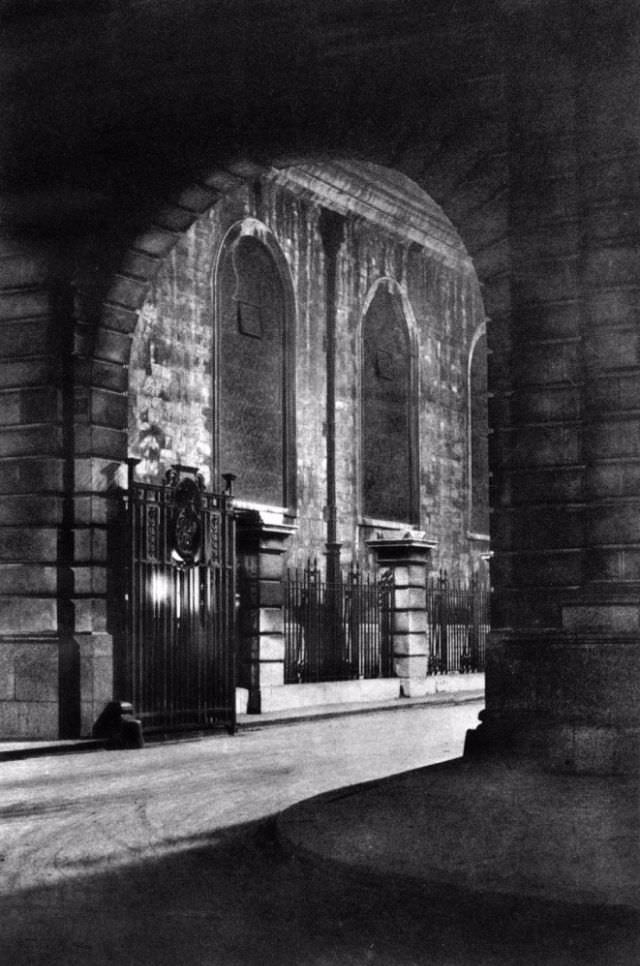
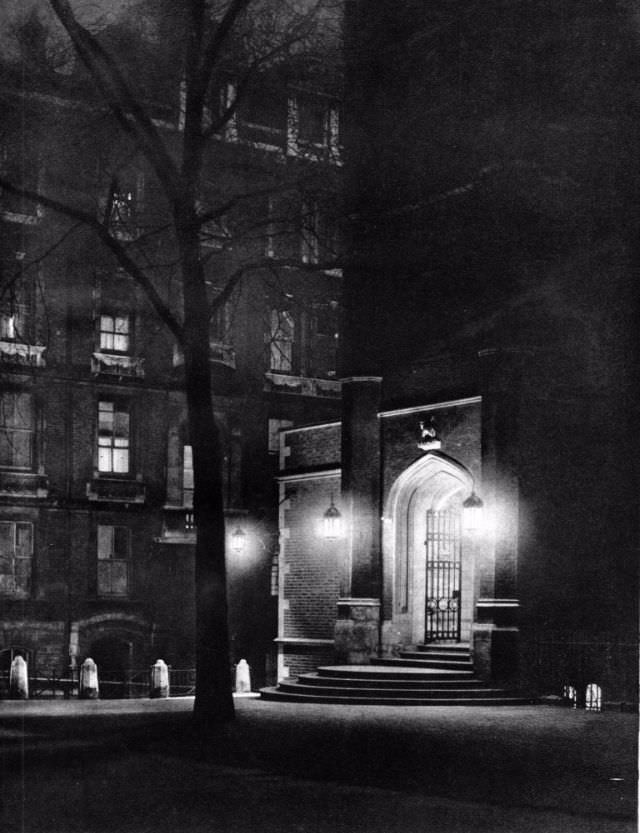
London’s architecture shapes every frame. Tall buildings and narrow lanes compress the darkness, making shadows deeper and the atmosphere more enclosed. The fog — a near-constant presence before the city’s air quality reforms — softens hard edges and turns familiar streets into something almost dreamlike.
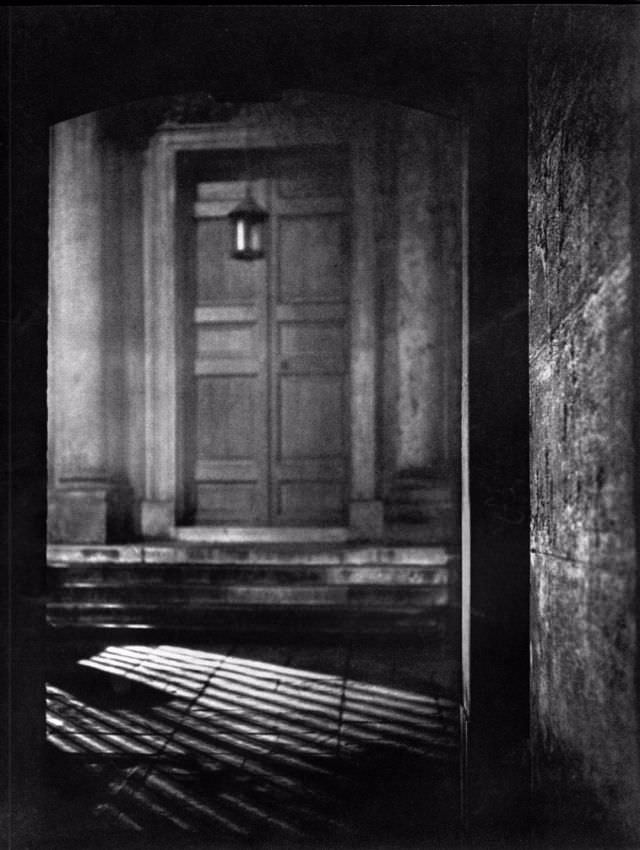
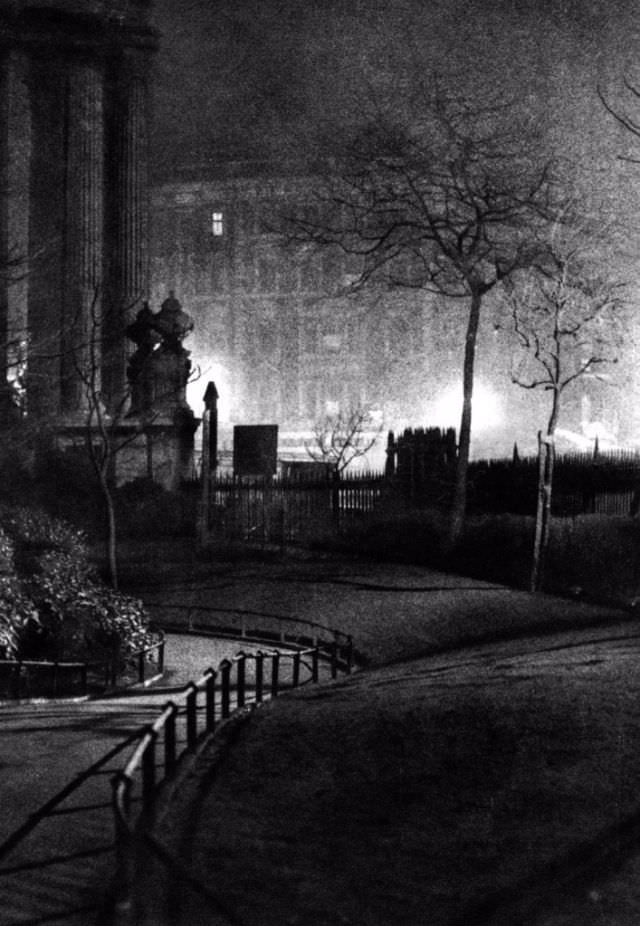
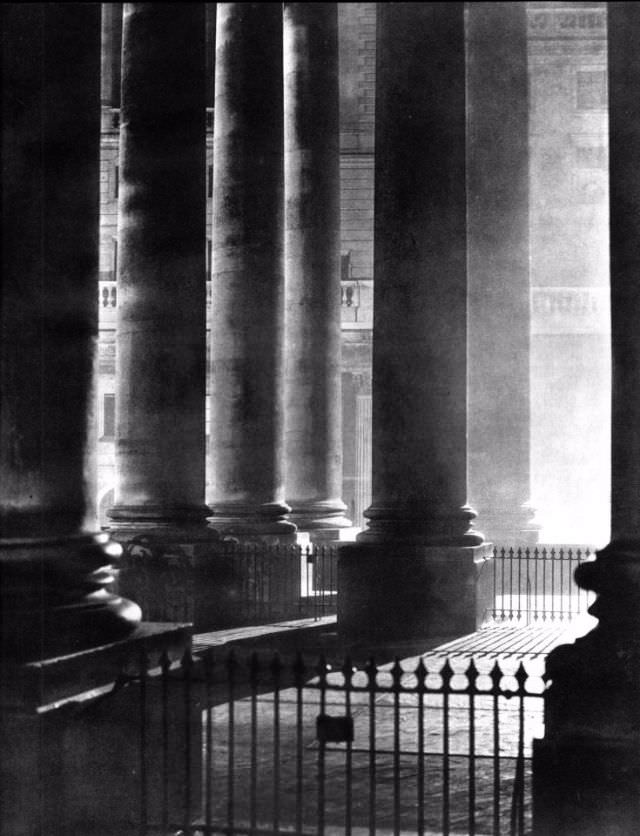
There are almost no cars. The city moves on foot or by public transport. That absence gives these scenes a stillness that modern London simply does not have. Landmarks like the Royal Exchange and St. Paul’s Cathedral appear stripped of their daytime crowds, reduced to stone, shadow, and light.
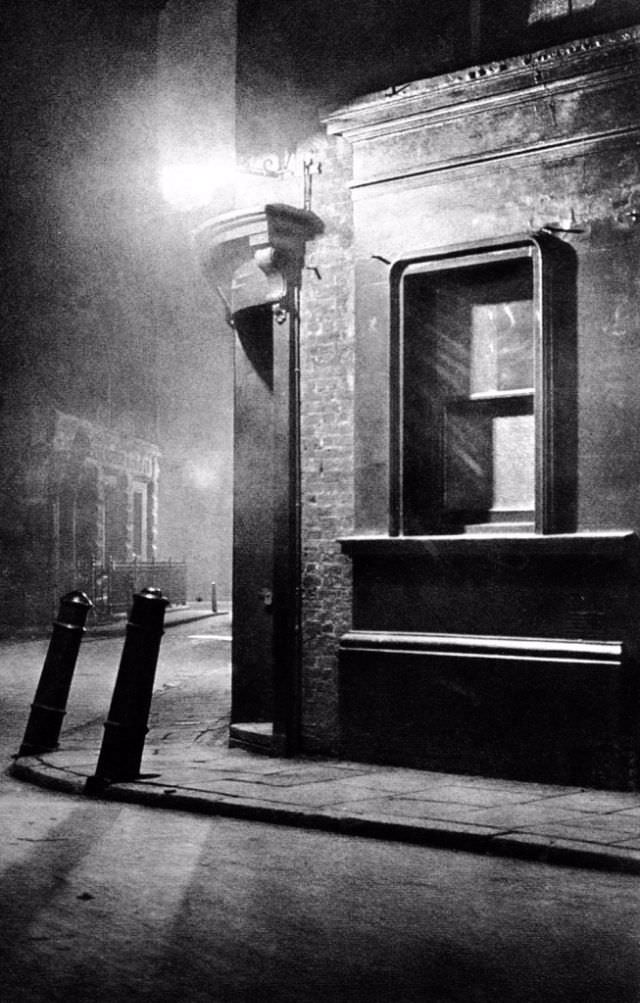
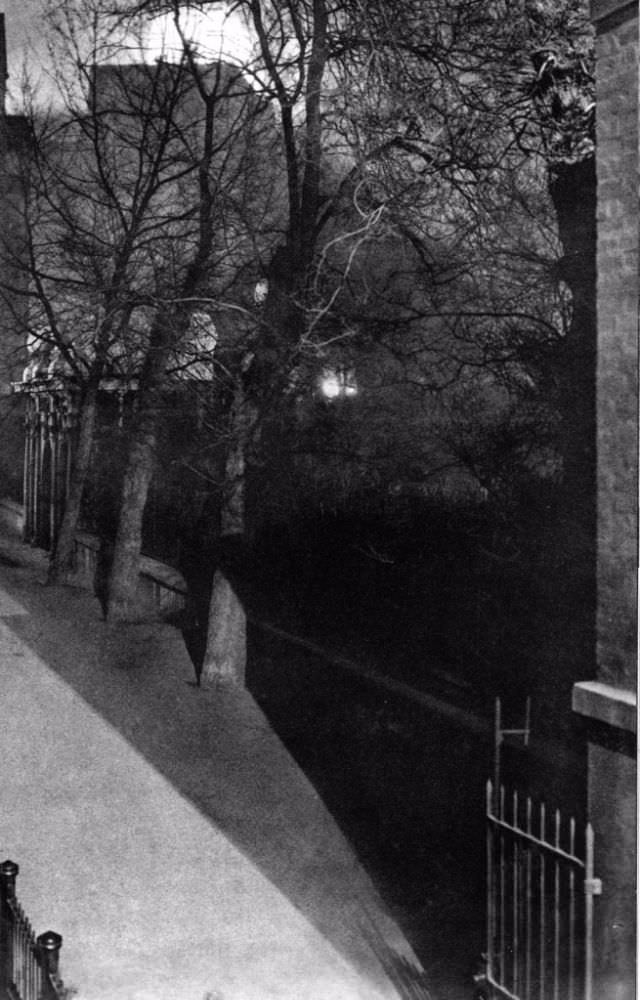
Side streets and tucked-away corners feature prominently throughout the book. These quieter spots — dead ends off Brompton Road, narrow passages near the Temple — reveal a London that existed just steps away from the main thoroughfares but felt worlds apart.
Even civic and commercial landmarks take on a different character at night. The London Transport headquarters at 55 Broadway and the grand arches of the Adelphi lose their official tone entirely. In the dark, they become geometric studies in light, stone, and silence.