The limbo dance, sometimes called the “Under Stick Dance,” has a history that runs much deeper than the party trick it became in the mid-20th century. It originated in Trinidad, where it was performed at wakes as a ritual act. Its roots are not West African, which sets it apart from many other traditions that traveled through the African diaspora. The dance was a physical representation of enslaved people being transported on a slave ship — bodies forced to twist, arch, and contort through the narrow gap between the upper deck and the floor, where standing upright was simply not possible.
That tight, painful crouch — back bent, knees lowered, body inching forward — was not a stylistic choice. It was a survival position. The lower you went, the more the reality of that confined space pressed down. Over generations, local entertainers in Trinidad took this ritual and shaped it into a stage performance, keeping the physical challenge while giving it new life as an art form and a form of entertainment.
The woman most credited with bringing limbo to global audiences is Julia Edwards, known as the First Lady of Limbo. In the 1950s, Edwards made the dance famous far beyond the Caribbean. Her performances helped land the limbo in mainstream film — most notably Fire Down Below in 1957 — and she took it on tour across Europe, North America, South America, Asia, and Africa throughout the 1960s. The dance spread fast, and audiences everywhere were captivated by the skill it demanded.
One extreme variation that emerged on stage was Fire Limbo. In this version, the horizontal stick is set on fire. A performer also holds a lit torch and blows alcohol into it, producing a burst of flame. Fire Limbo was strictly a professional stage act. Legal consequences eventually put a stop to it in formal contest settings, but it remained a dramatic spectacle while it lasted.
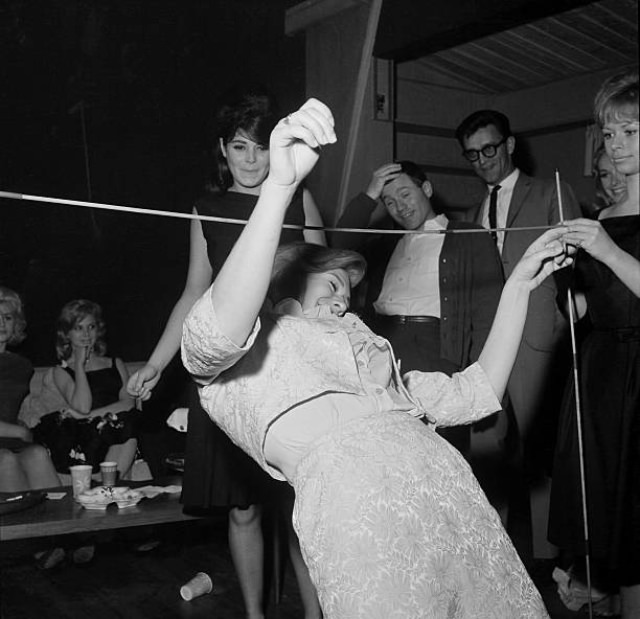
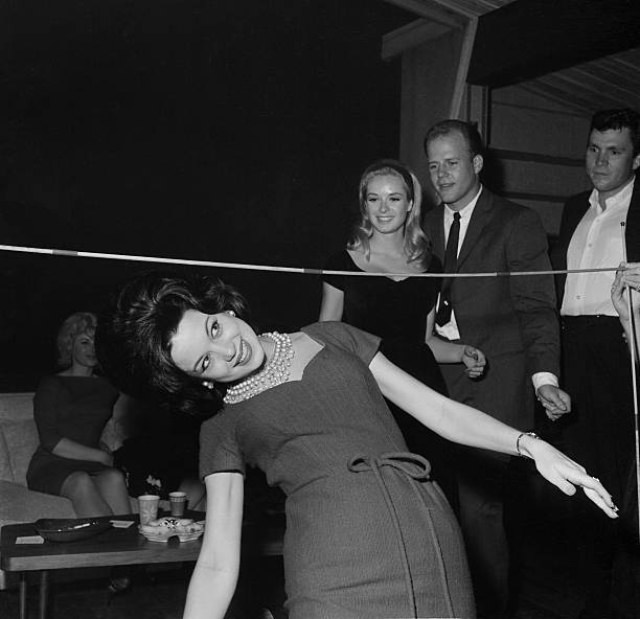
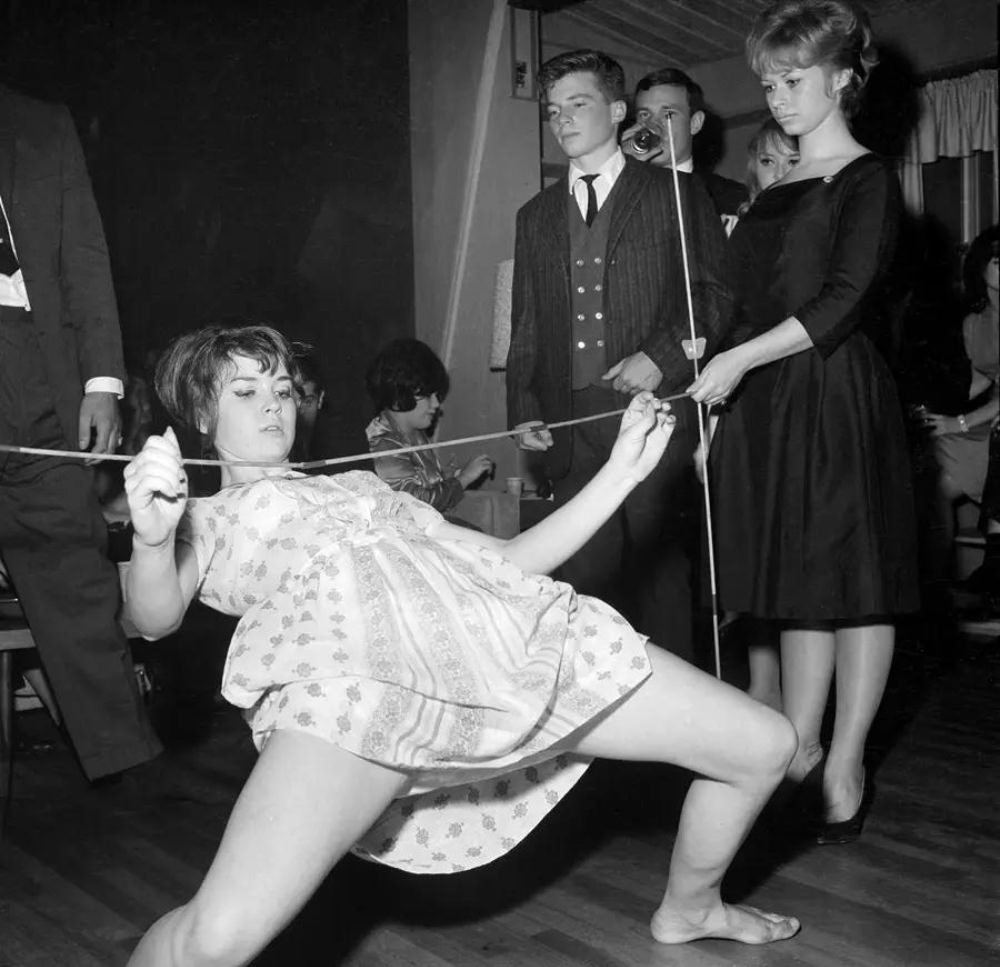
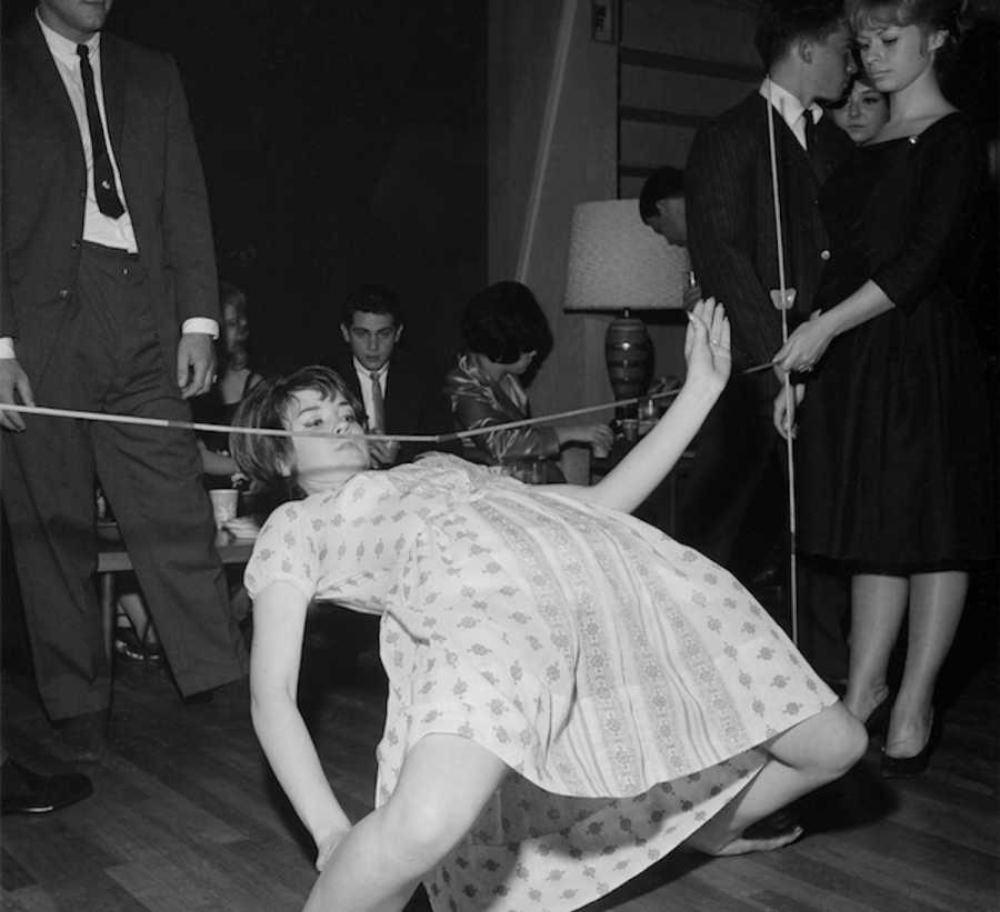
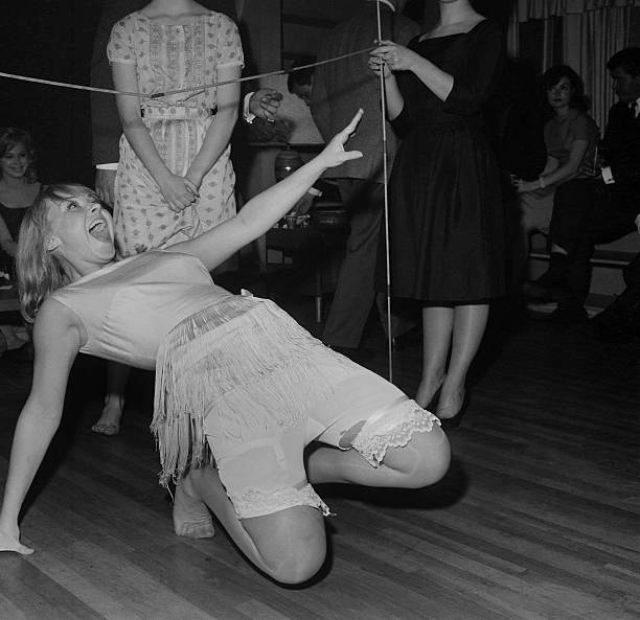
By 1964, the limbo had firmly planted itself in American nightlife. Los Angeles was no exception. Night clubs across the city featured live limbo performances, drawing crowds eager to watch dancers bend backward under the stick with precision and style. The photos below were taken at one such club that year, capturing young women mid-performance — bodies angled, expressions focused, the stick hovering just above them.
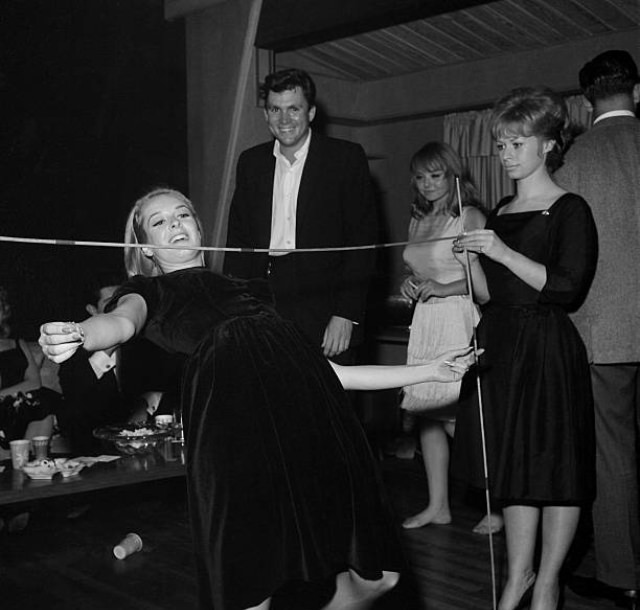
What these images show is a moment when a centuries-old Trinidadian ritual had fully crossed into American popular culture. The nightclub setting, the crowd, the electric atmosphere — all of it reflects how far the dance had traveled from the wakes of Trinidad to the stages of Los Angeles. The skill on display in each frame is a reminder that the limbo, no matter the setting, has always demanded real physical control and discipline from its performers.