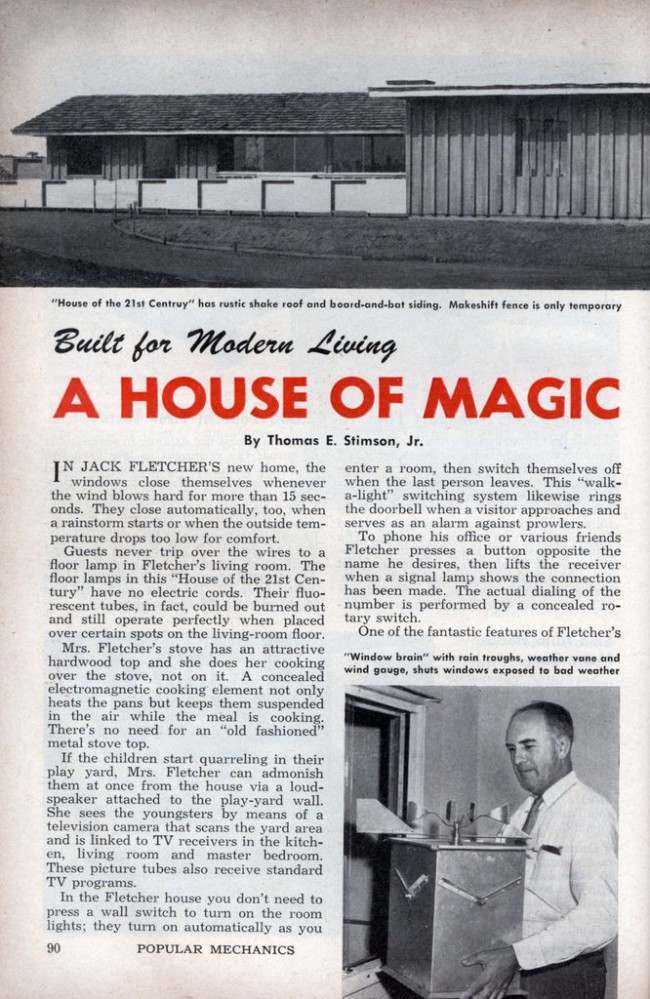
On October 25, 1954, a 23-year-old designer named Jack Fletcher opened his home to the public in West Covina, California. He called it the 21st Century House, and the name was not an exaggeration. While most American families were settling into the postwar suburban routine of televisions and two-car garages, Fletcher was demonstrating technology that the rest of the world would not catch up to for decades. He lived in the house full-time with his wife Joan, their three-year-old daughter Janie, and twin baby sons Johnny and Ricky, both 21 months old.
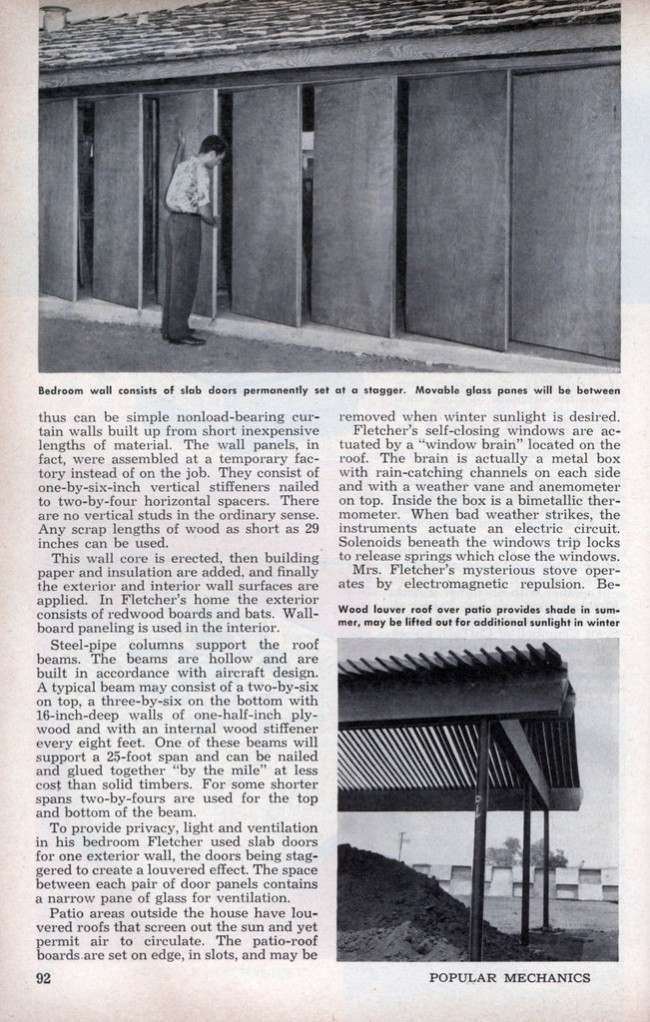
The house was built around a philosophy of convenience and smart design. Fletcher wanted every feature to serve a real purpose. Large windows pulled natural light into every room. Built-in appliances, including a wall-mounted oven and a refrigerator with a dedicated quick-access compartment, kept the kitchen functional and clutter-free. Furniture was chosen for flexibility — pieces that could be folded away or rearranged depending on whether the family needed a play area or space for guests. The décor leaned into the bold optimism of the 1950s, with vibrant wallpapers and sharp, modern furniture giving each room its own identity.
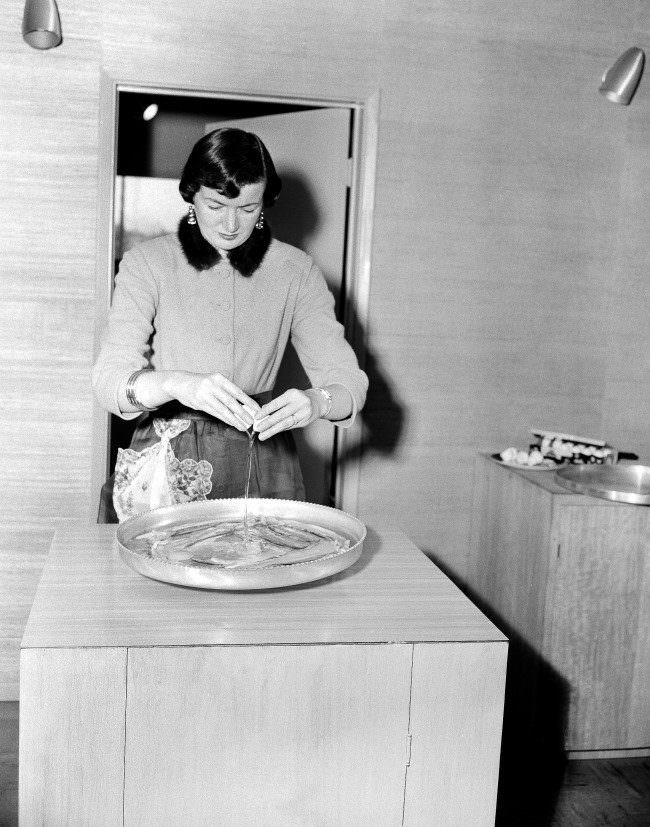
The most jaw-dropping feature of the kitchen was a stove that cooked food without ever touching it. Fletcher’s electromagnetic stove used seven coils of wire mounted on laminated iron cores inside a plywood cabinet. Those coils generated a magnetic field strong enough to induce eddy currents in a 19-inch, one-inch-thick aluminum pan — lifting it three inches off the surface and into the air. The eddy currents themselves produced the heat that cooked the food, while the stove top stayed completely cold. On opening day, Joan Fletcher stood at the stove and fried bacon and eggs in a pan floating above the surface.
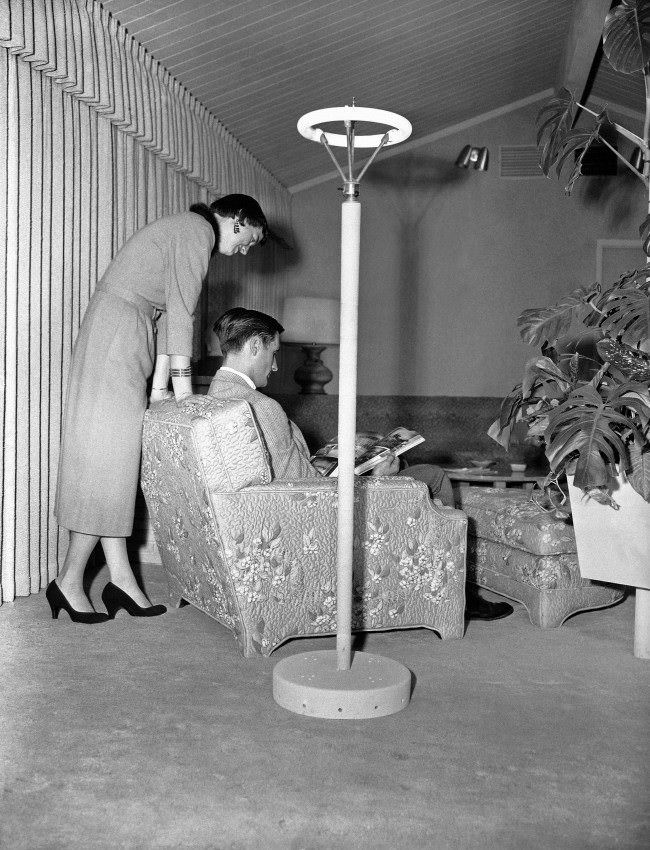
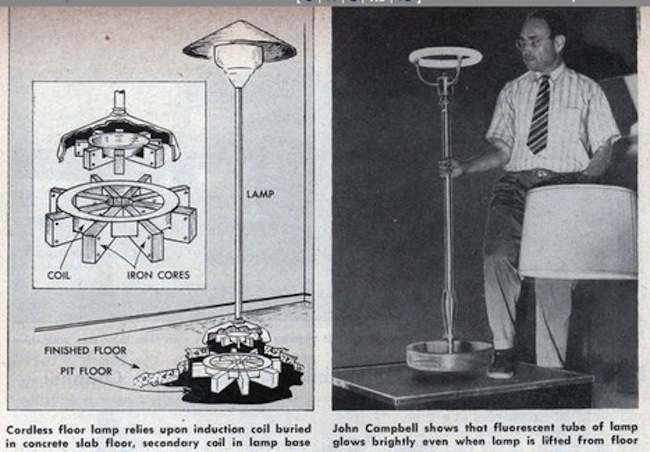
The same magnetic induction principle ran through the entire house. Fletcher eliminated conventional electrical outlets almost entirely. Instead, induction coils were embedded beneath the concrete floors. Any lamp or device with a built-in receiving coil simply needed to be set on the floor above a hot spot to draw power. No plugs, no cords, no outlets on the walls. The current flowing through the floor was strong enough that fluorescent bulbs placed over the active zones lit up without being connected to anything at all.
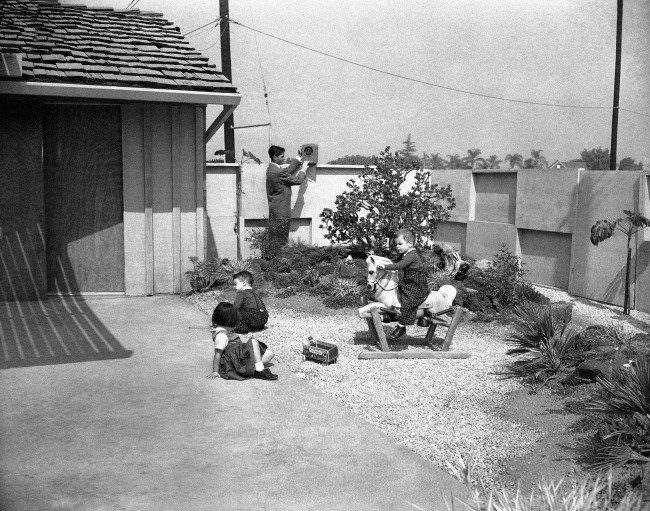
Fletcher’s attention to the family’s daily comfort extended beyond the walls of the house. The backyard was designed as an outdoor living space, with a patio for gatherings and a garden space where the children could play. A built-in sound system pushed music through the home. Central heating kept the house warm through cooler California nights. Every material was chosen with durability and easy cleaning in mind — a practical acknowledgment that three children under four years old were living there.
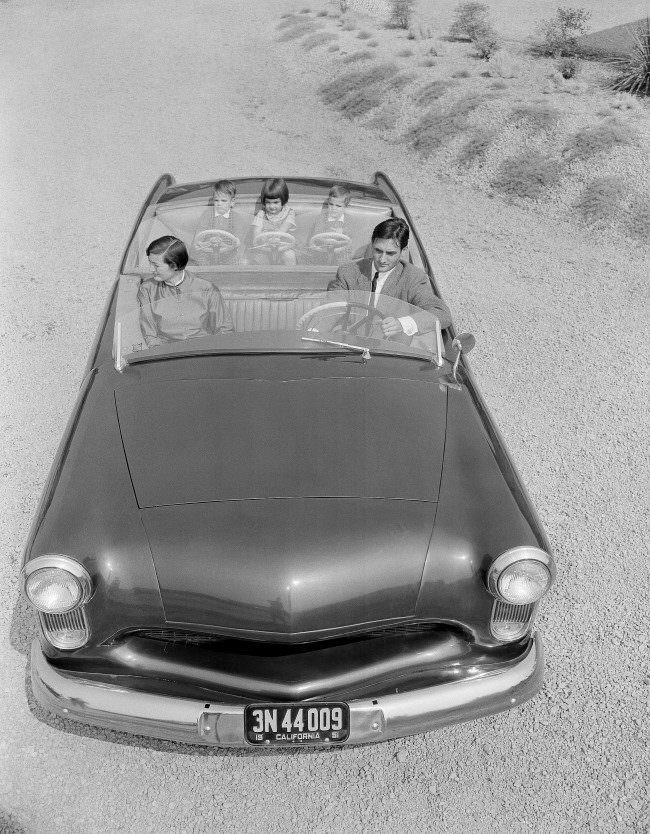
Fletcher’s design thinking extended to the family car as well. By January 1955, he had retrofitted the vehicle with three miniature steering wheels and a plastic windshield in the back seat so that Johnny, Janie, and Ricky could feel like they were driving too. It was a small but telling detail — Fletcher consistently looked at every part of family life and asked how it could be improved.
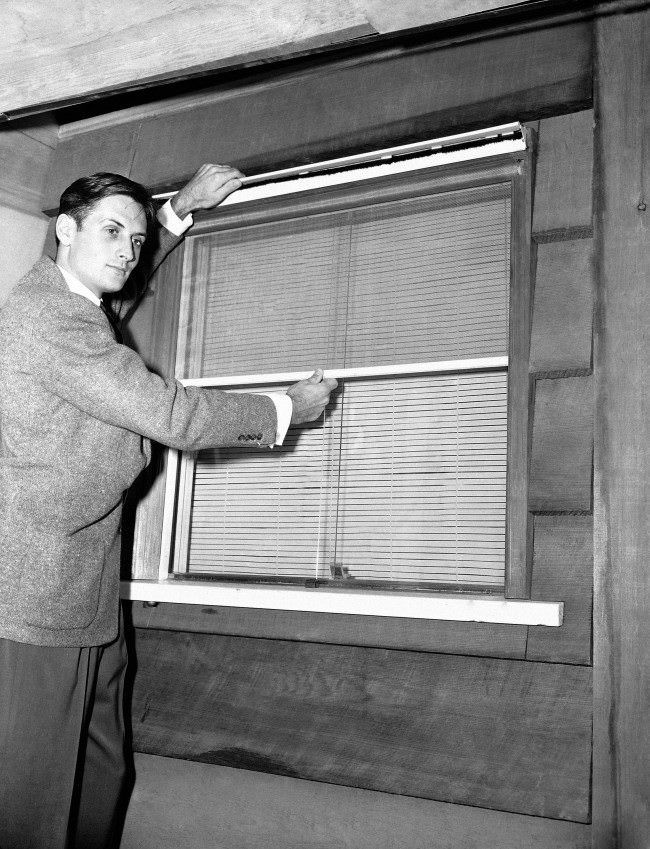
Back inside, even the window screens got the Fletcher treatment. A steel cover was hinged over a brush that rested against the movable metal screen. As the screen was raised or lowered, the brush automatically cleaned it. No manual wiping, no buildup — just a simple mechanical solution baked into the design.
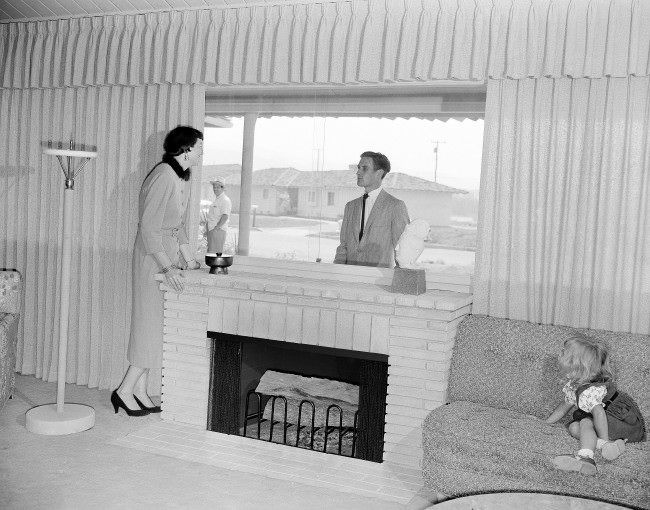
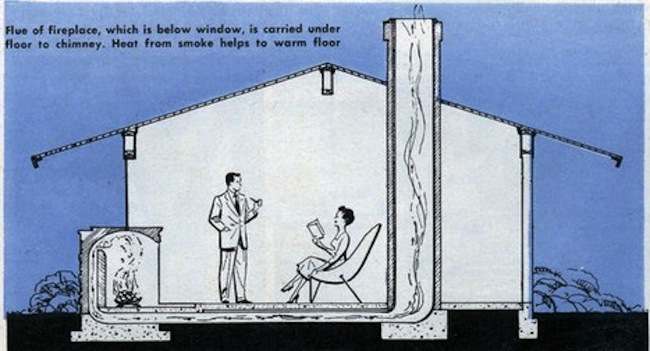
One of the most visually striking features of the house was its fireplace. Fletcher drew on an ancient Chinese heating technique in which smoke was routed down behind the firebox, under the floor, and out through a flue on the opposite side of the room. This pulled the heat through the floor before exhausting it, warming the space more efficiently. Fletcher’s adaptation replaced the solid wall above the mantle with a large picture window, so the family could enjoy the fire and the view through the glass at the same time. The flue ran from above the fireplace opening, doubled back down beneath the floor, and connected to a central chimney in the middle of the house.
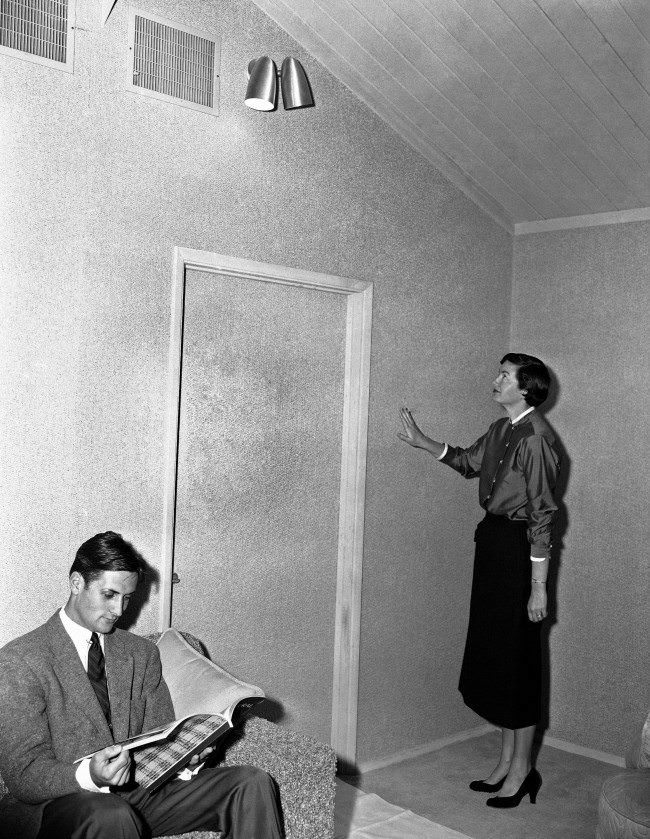
Perhaps the most quietly futuristic system in the entire house was the light anticipation setup. Fletcher installed capacity relay sensors in the walls that detected when a person’s hand passed near the surface. The lights in a room would activate before the person fully entered, eliminating the need to walk into a dark room at all. Joan Fletcher demonstrated the feature simply by passing her hand across the wall — no switch, no fumbling in the dark.