In 1952, Hong Kong was a city in the middle of a dramatic transformation. Its population had surged from around 600,000 to 2.1 million in just a few years, driven largely by a massive wave of refugees fleeing unrest on mainland China. The colonial government struggled to keep pace with the demand for shelter, food, and basic services. These photographs capture daily life at one of the most pivotal moments in the city’s history.
Much of the refugee crisis was tied to the political upheaval in China. As the new People’s Republic consolidated power, businesses and wealthy families relocated their assets and capital from Shanghai to Hong Kong. This brought not only money but also manufacturing expertise. Combined with an abundant supply of cheap labor from the refugee population, the foundations of Hong Kong’s later economic boom were quietly being laid.
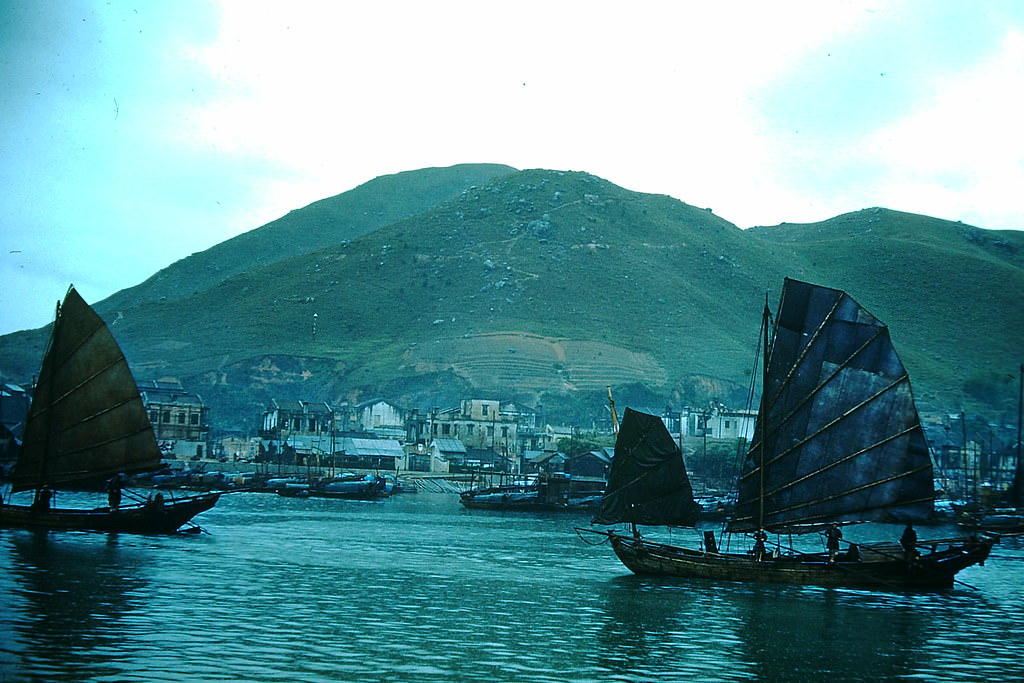
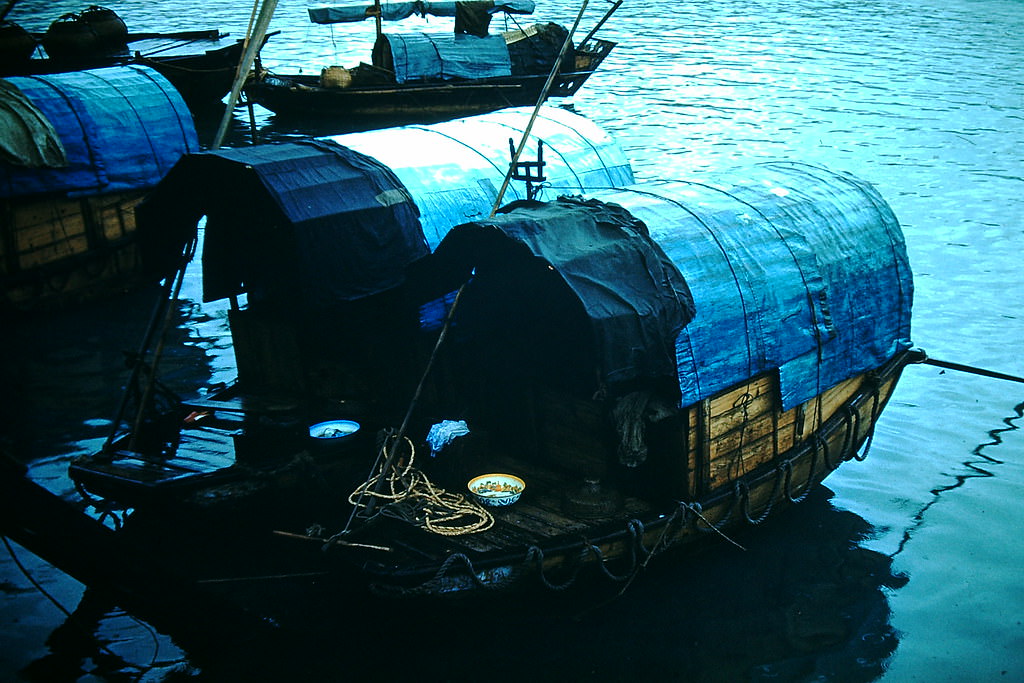
Aberdeen Bay was one of Hong Kong’s most distinctive waterways. Thousands of people lived permanently aboard junks and sampans anchored in the bay, forming a floating community with its own social rhythms and economy. Fishing was central to life here, and the bay’s sheltered waters made it a natural hub for the city’s maritime trade and daily commerce.
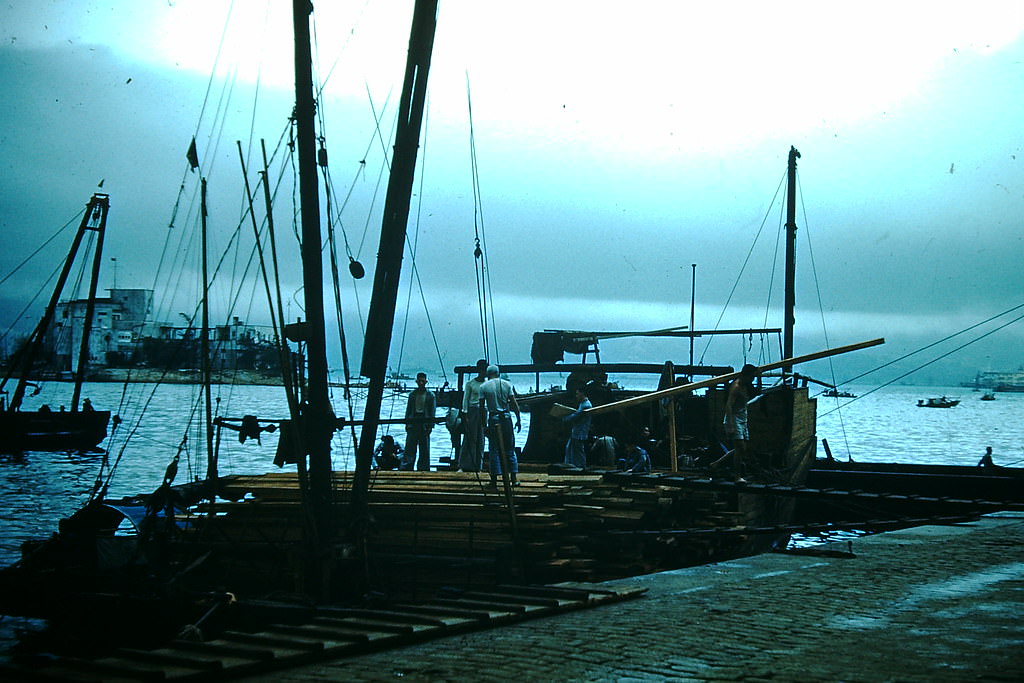
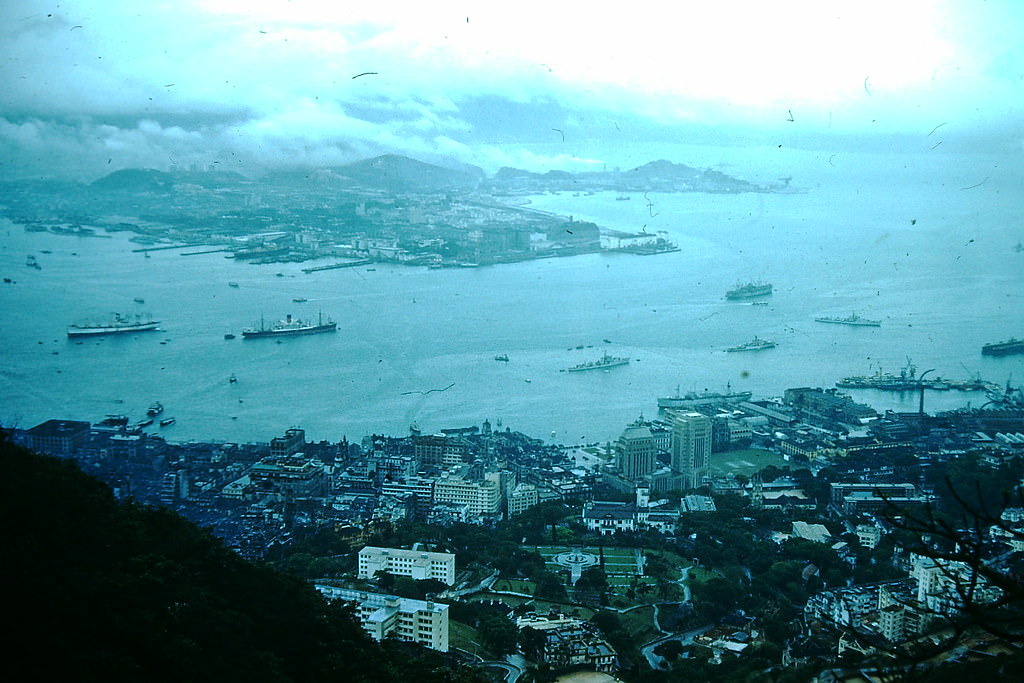
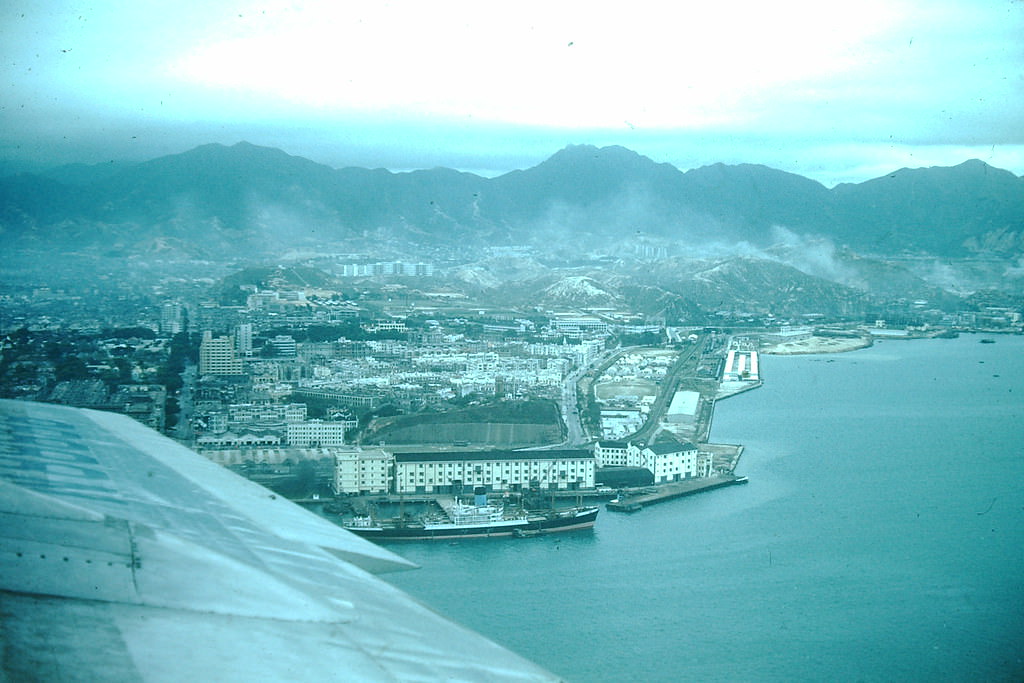
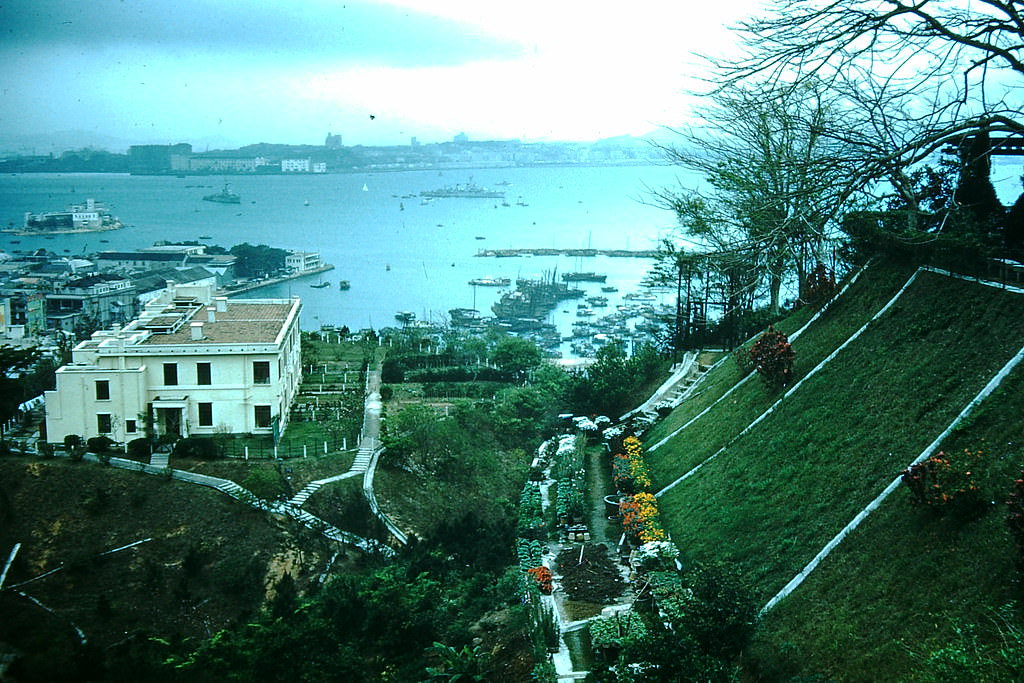
Viewed from Victoria Peak, Hong Kong’s harbour was one of the busiest in Asia. Ferries, cargo vessels, and traditional junks crossed the water between Hong Kong Island and Kowloon in a constant flow of traffic. The harbour was not just a scenic backdrop — it was the economic artery of the entire territory.
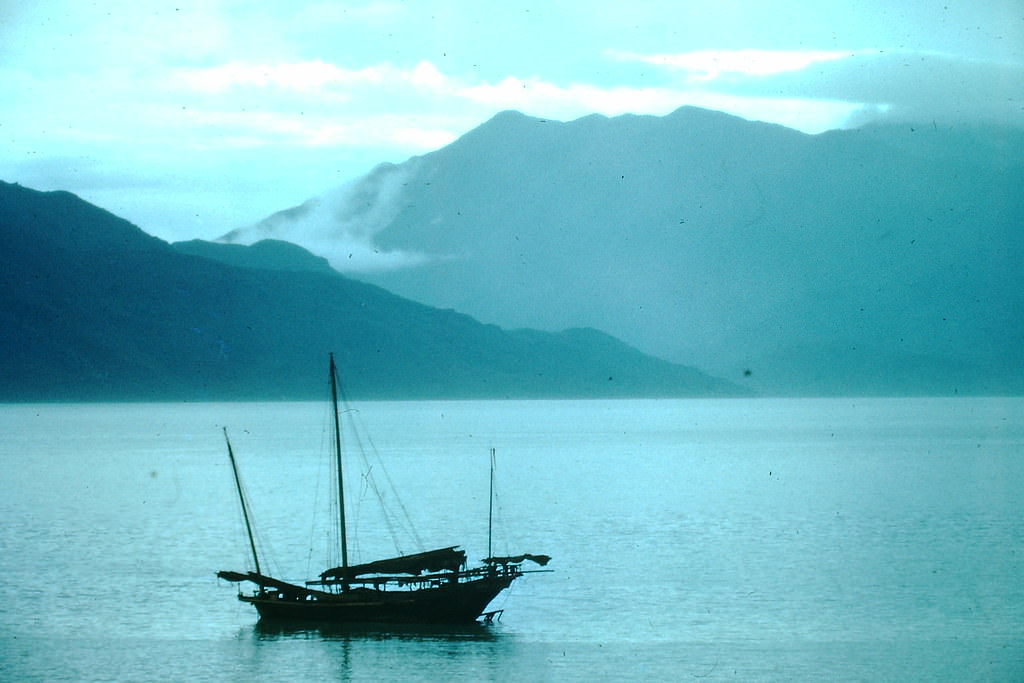
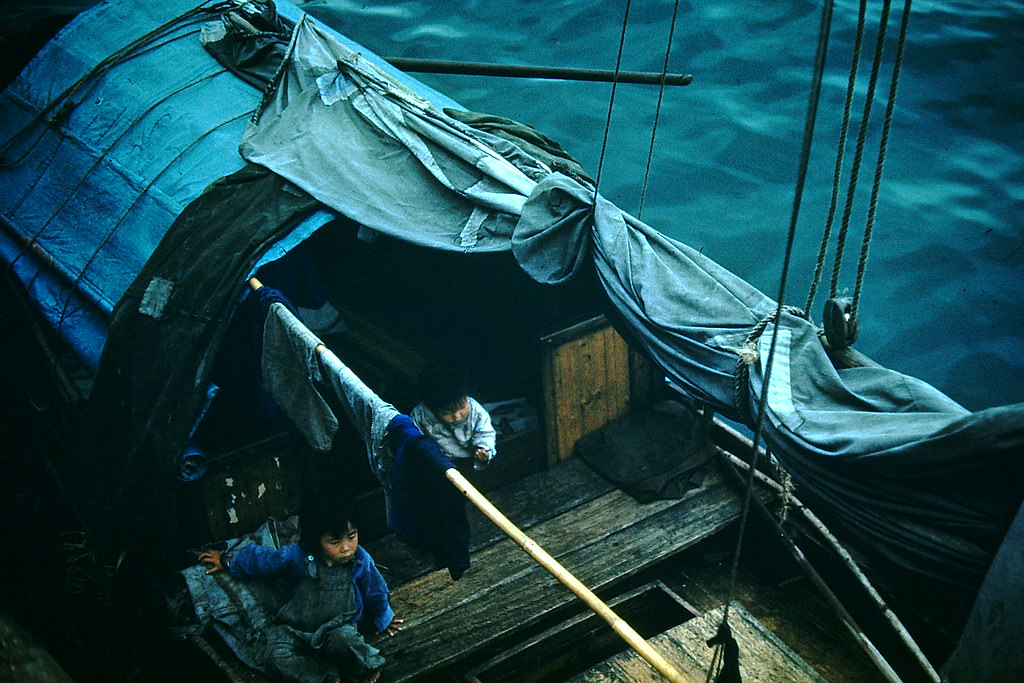
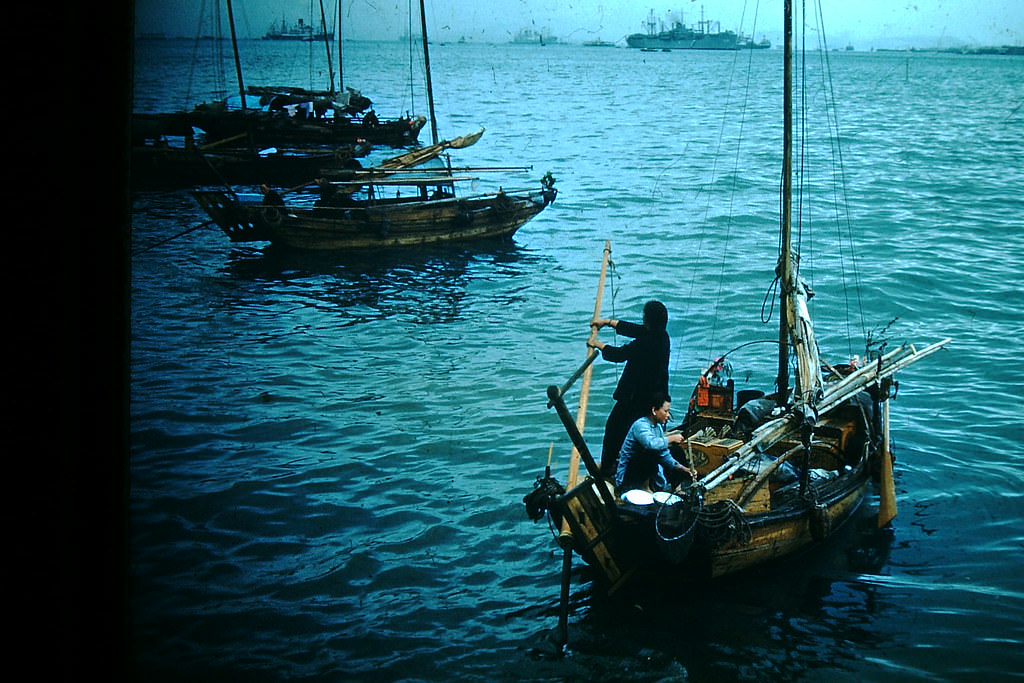
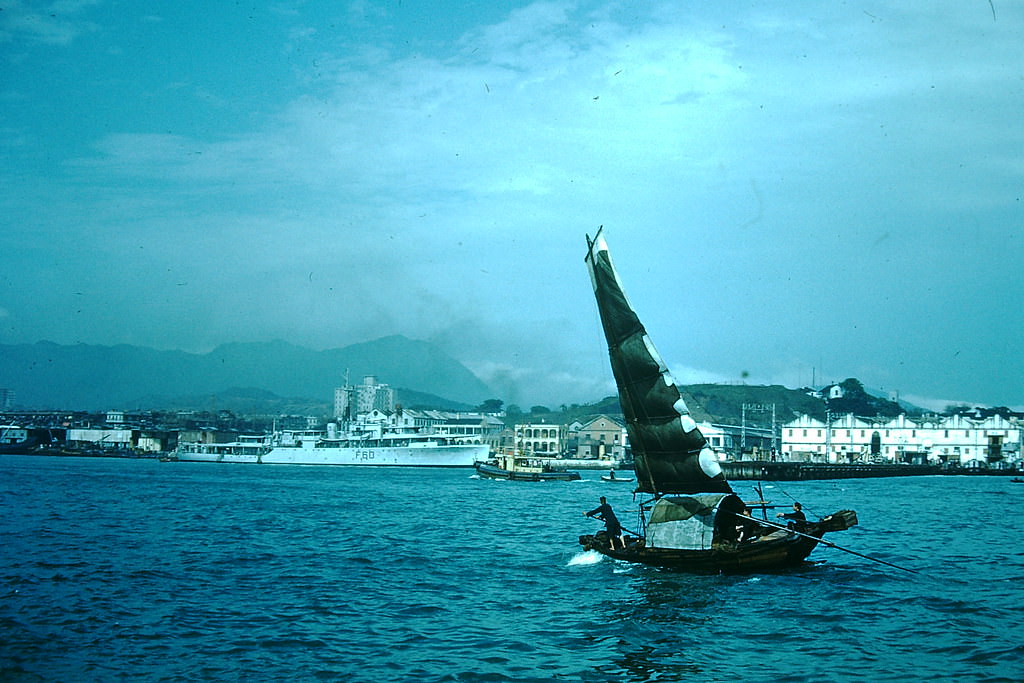
Traditional Chinese junks were a defining feature of Hong Kong’s coastline in 1952. These wooden sailing vessels, with their distinctive battened sails, served both as fishing boats and as permanent homes for entire families. Castle Peak, near Kowloon, was a common anchorage point where fishing communities gathered and nets were spread out to dry along the shore.
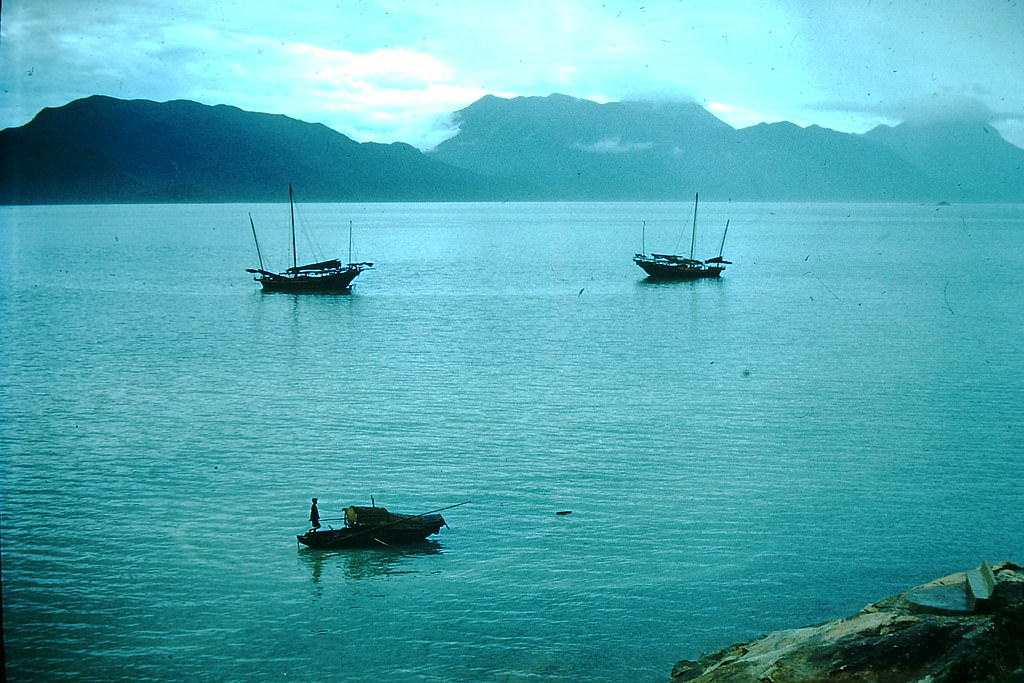
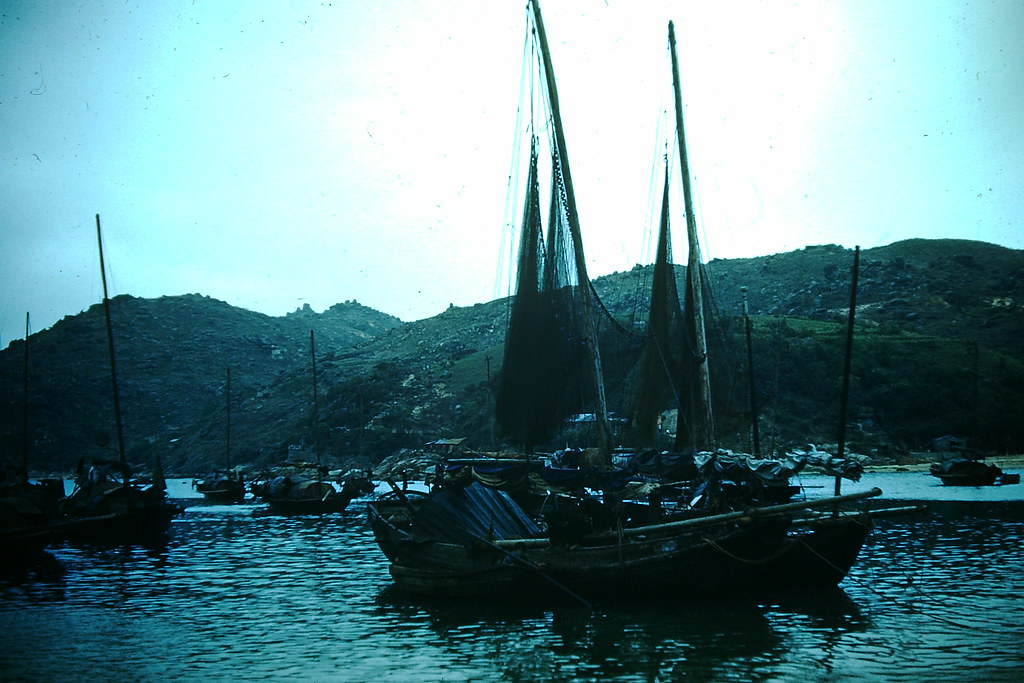
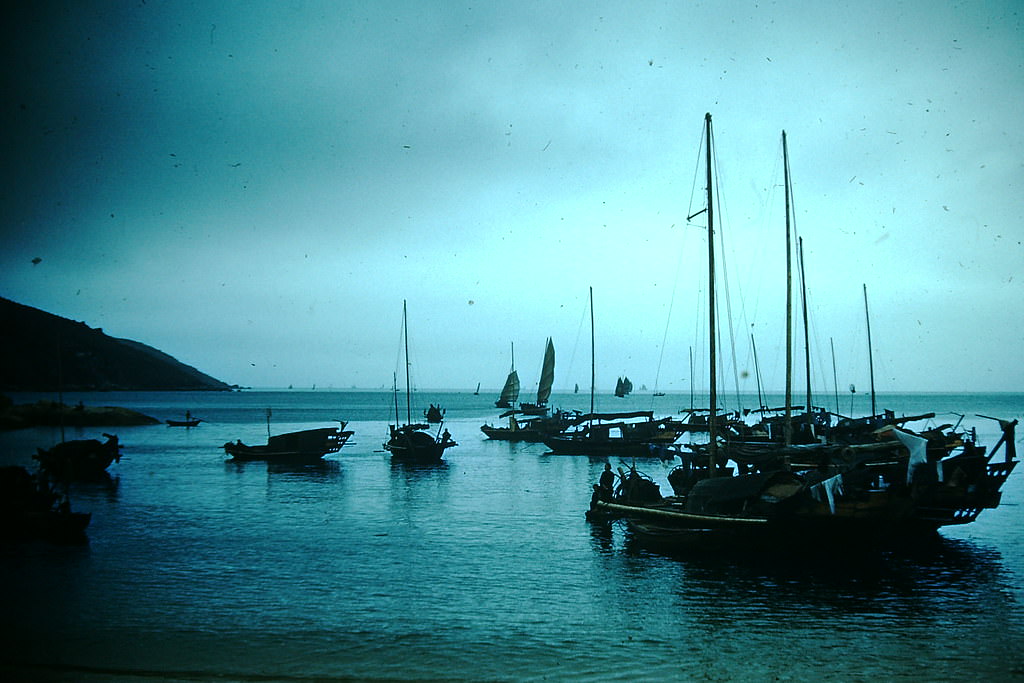
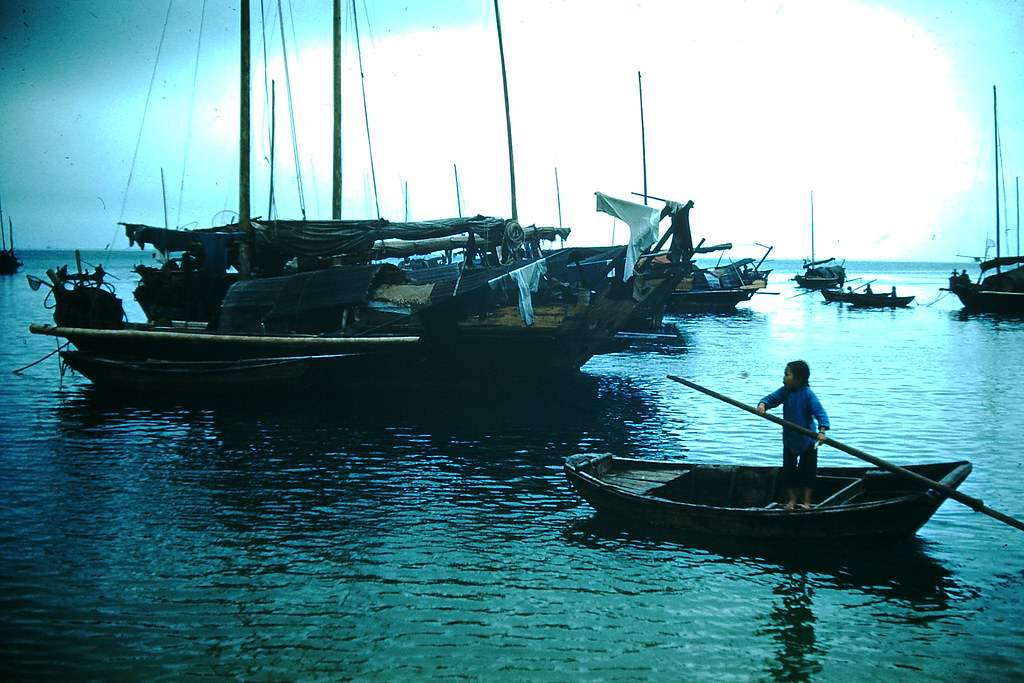
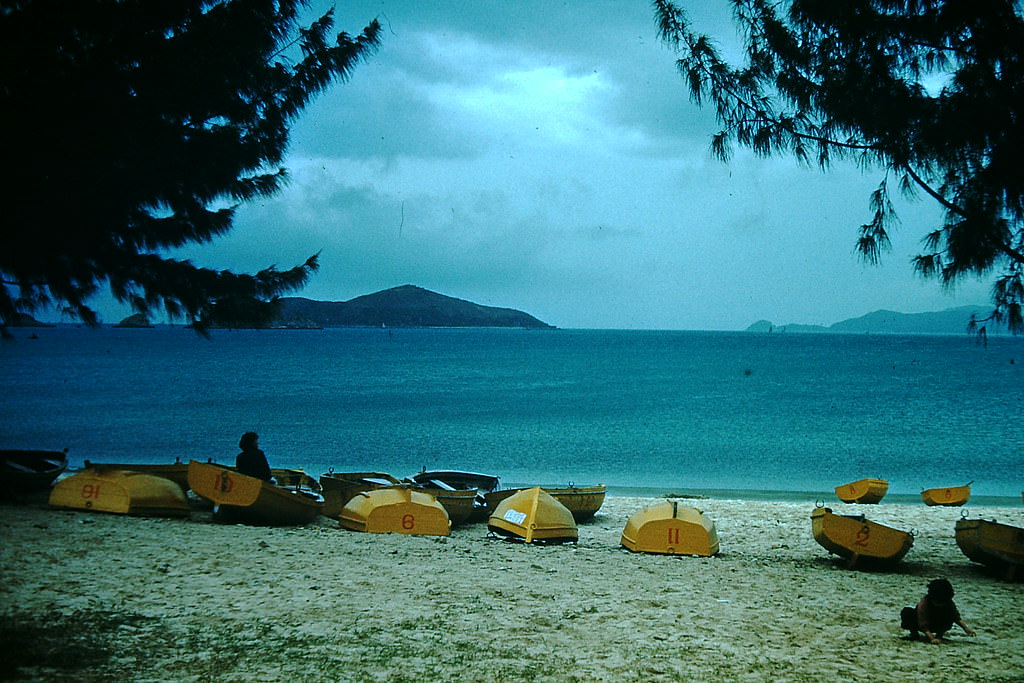
Stanley Beach, on the southern side of Hong Kong Island, offered calmer waters and was another gathering point for junk operators and fishing families. The beach itself sat near Stanley Market and the old colonial prison, making it a place where very different worlds of Hong Kong life overlapped in close proximity.
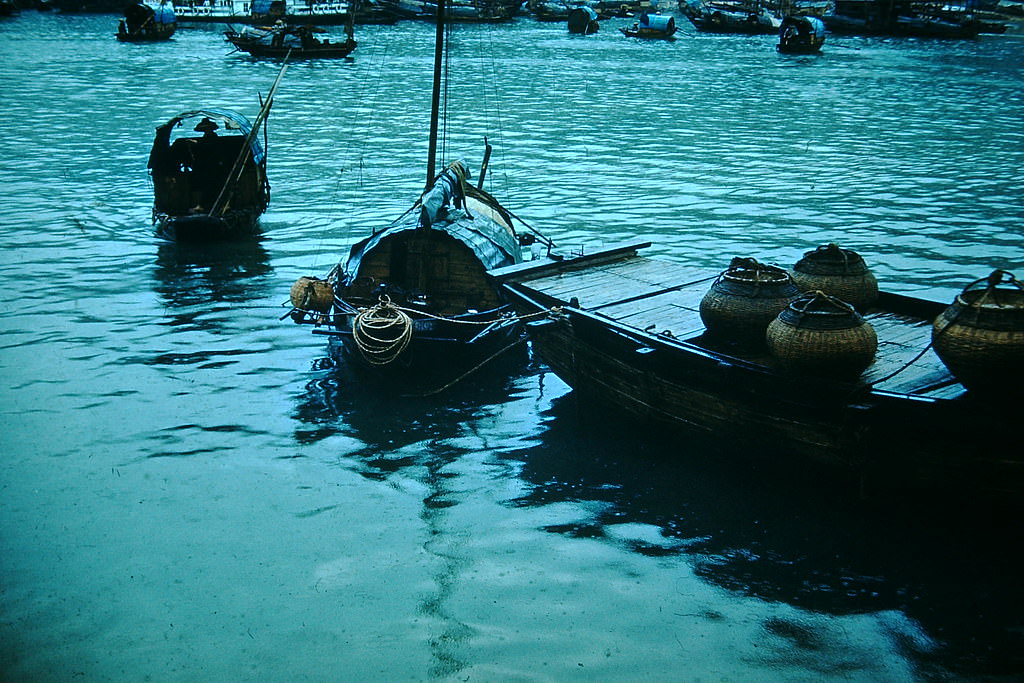
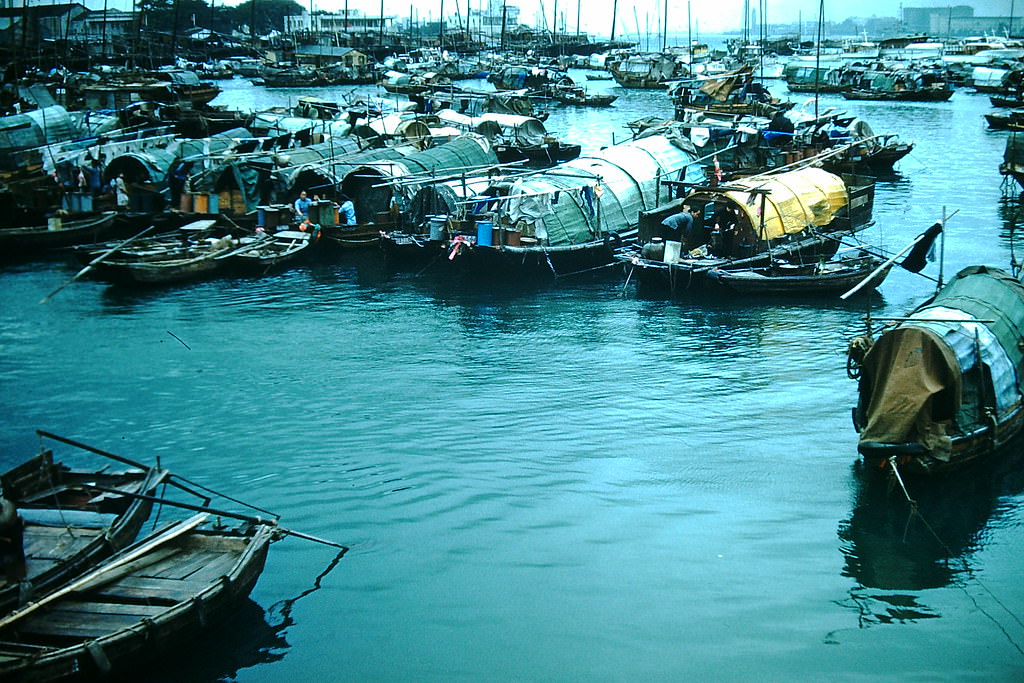
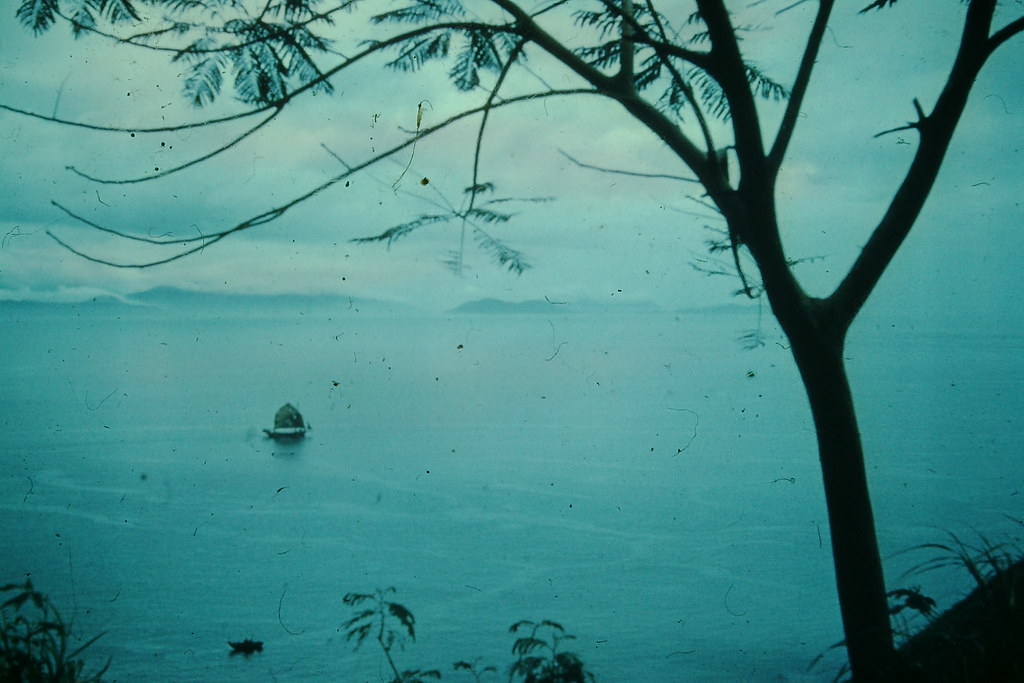
Hong Kong’s typhoon seasons brought fierce storms that posed serious dangers to the boat-dwelling population. Causeway Bay’s typhoon shelter was a designated refuge where hundreds of junks crowded together to ride out bad weather. During storms over Aberdeen Bay, the sky could darken within minutes, forcing fishermen to secure their vessels and wait out the rain.
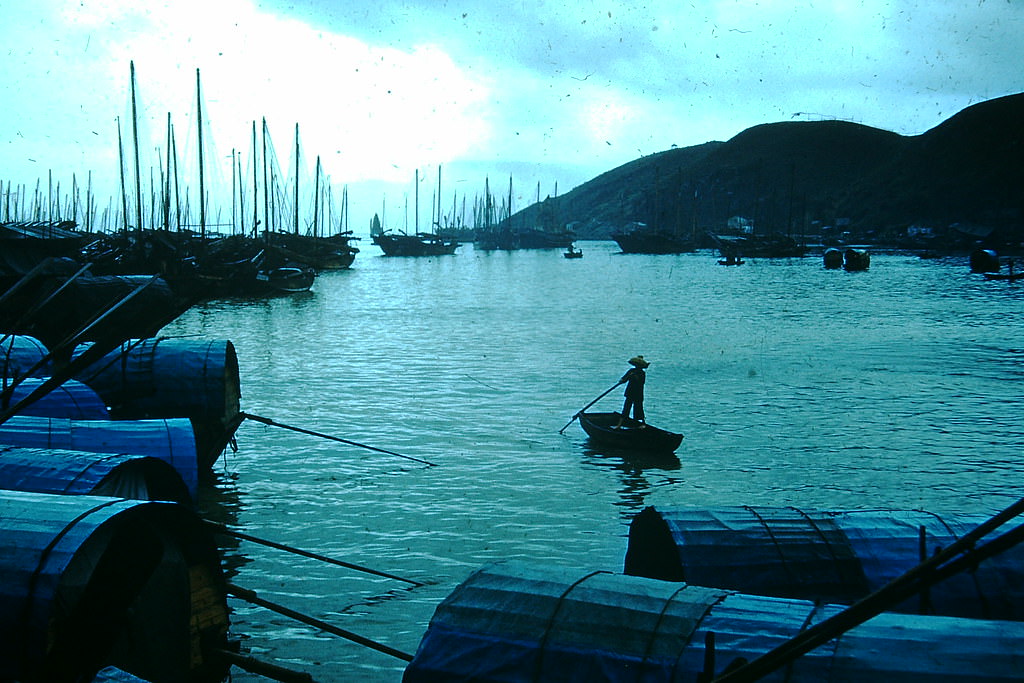
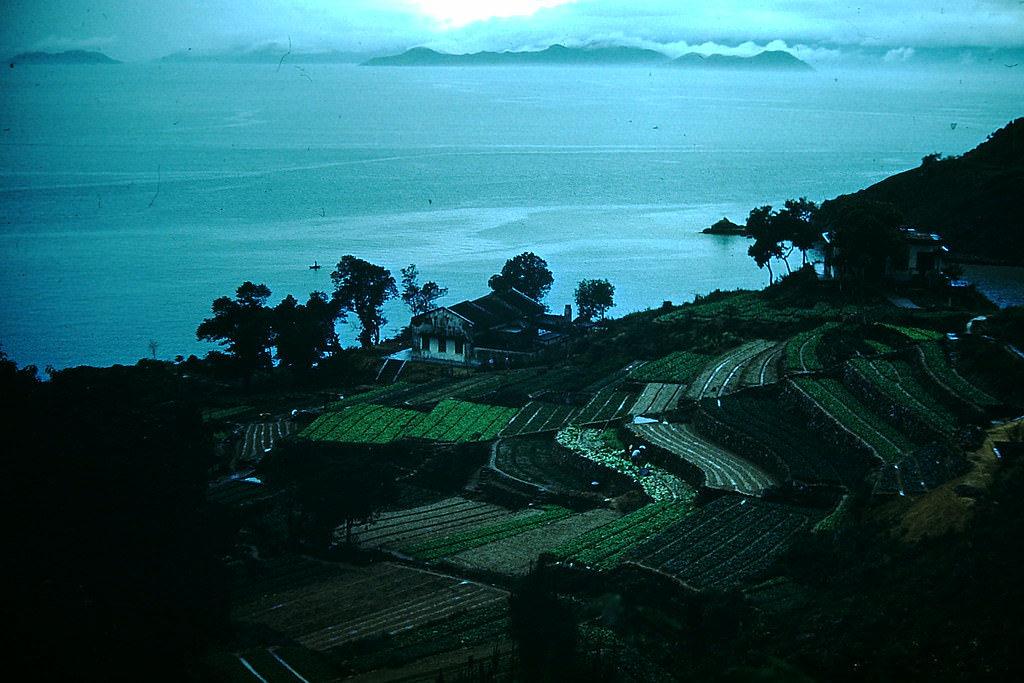
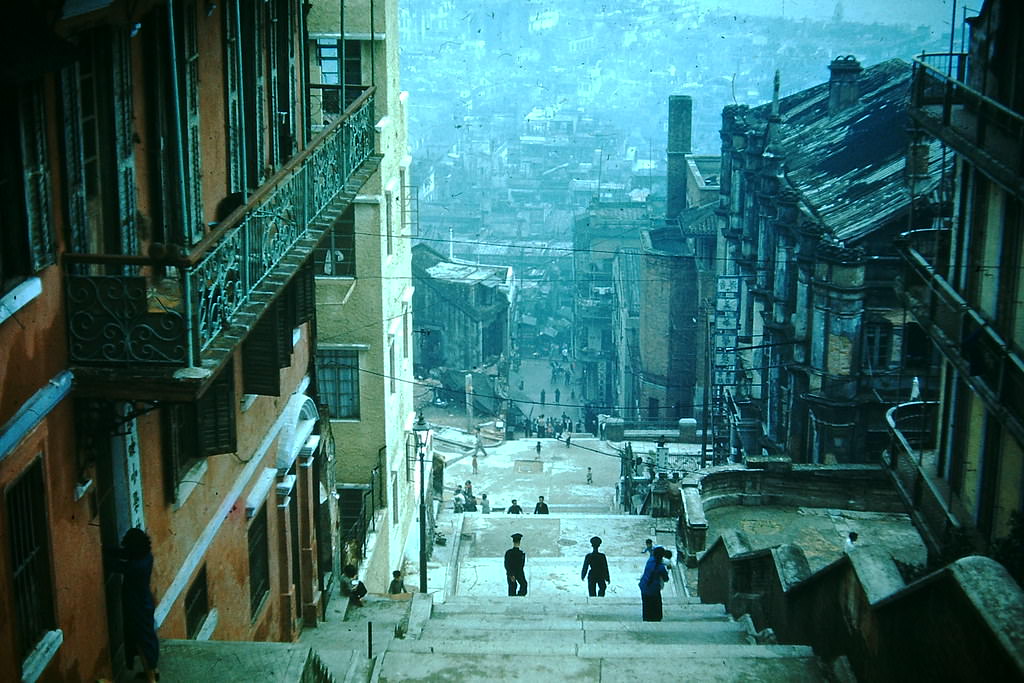
On the western side of Hong Kong Island, terraced hillsides showed how residents adapted the steep terrain for agriculture and housing. The density of the city was not just horizontal — it pushed upward along the slopes, with buildings and garden plots carved into the hills wherever space allowed.
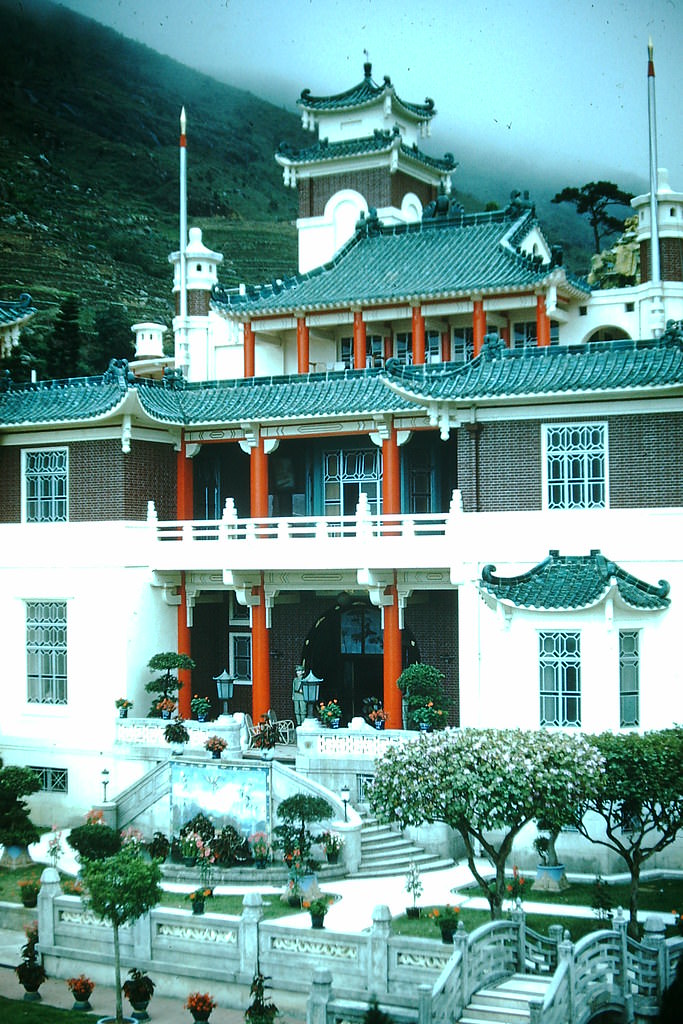
Tiger Balm House, also known as Haw Par Villa, was built by Aw Boon Haw, the creator of the famous Tiger Balm ointment. The mansion and its surrounding gardens featured vivid statues depicting scenes from Chinese mythology and folklore. It stood as one of Hong Kong’s most unusual landmarks and was open to the public as a gift from its owner.
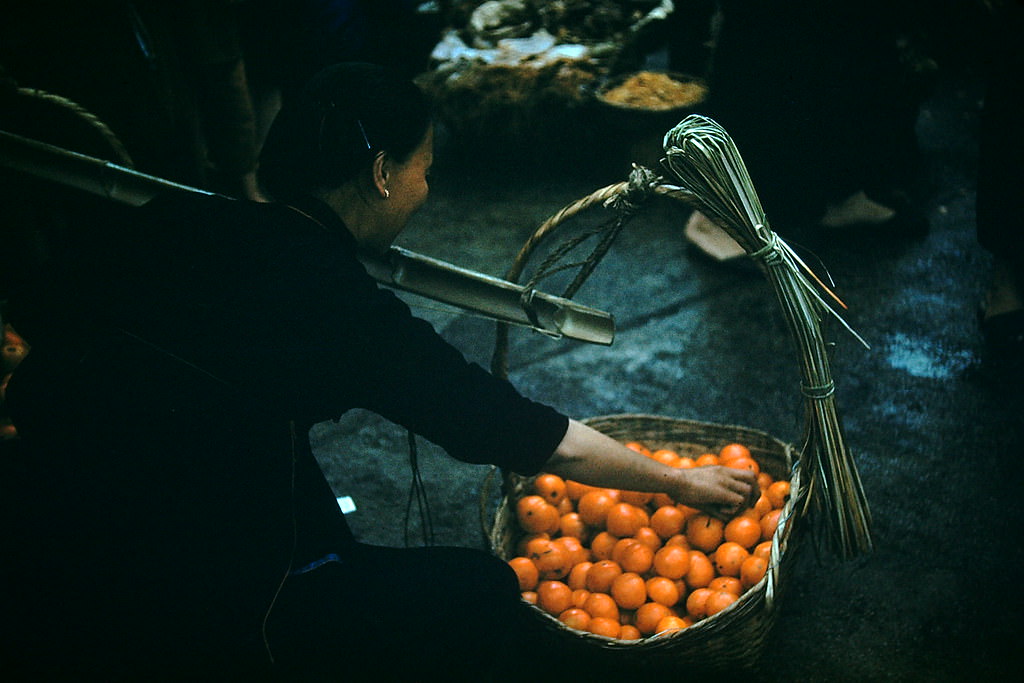
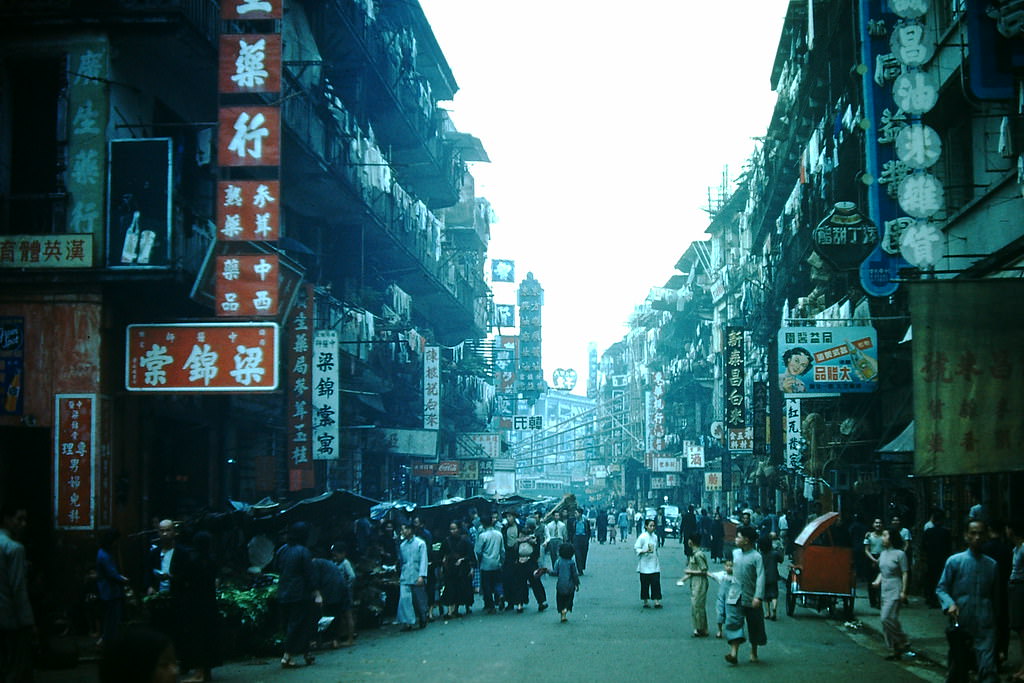
Street vendors were a constant presence across Hong Kong’s urban neighborhoods. On Lockhart Road in Wan Chai, vendors sold fresh produce directly from baskets and wooden stalls. These small traders formed a critical part of the local food supply chain, especially for the tens of thousands of newly arrived residents who had little money and no established connections in the city.
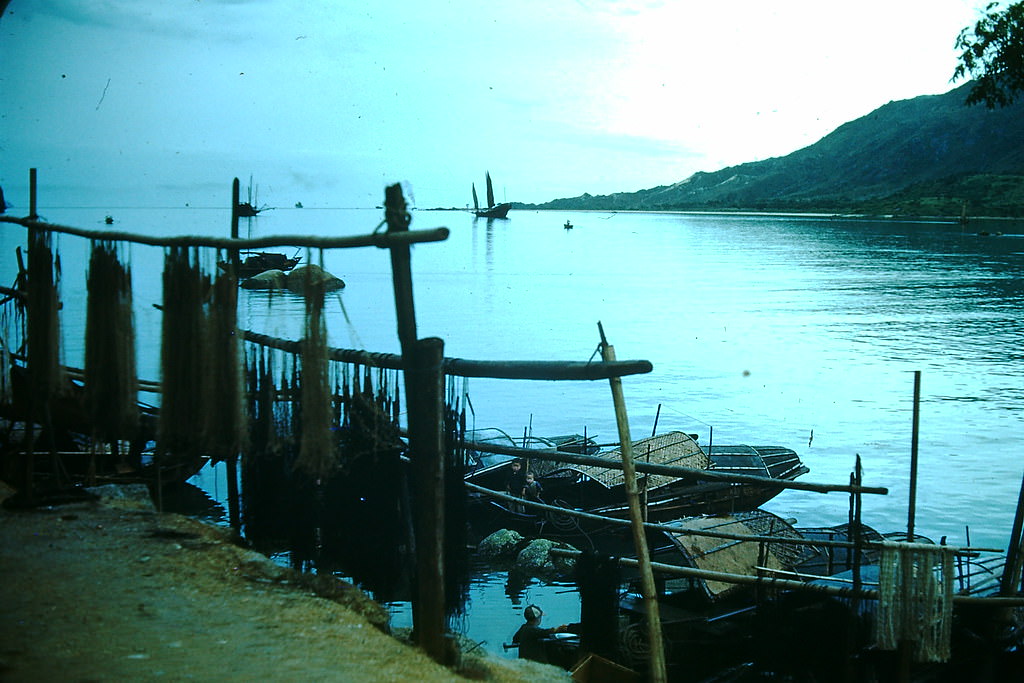
At Castle Peak Bay, large fishing nets were strung out along the waterfront to dry between uses. Fishing was one of the primary livelihoods for communities on the outskirts of the urban center, and the nets — some stretching dozens of feet — represented a significant investment for families who depended entirely on the sea for their income.
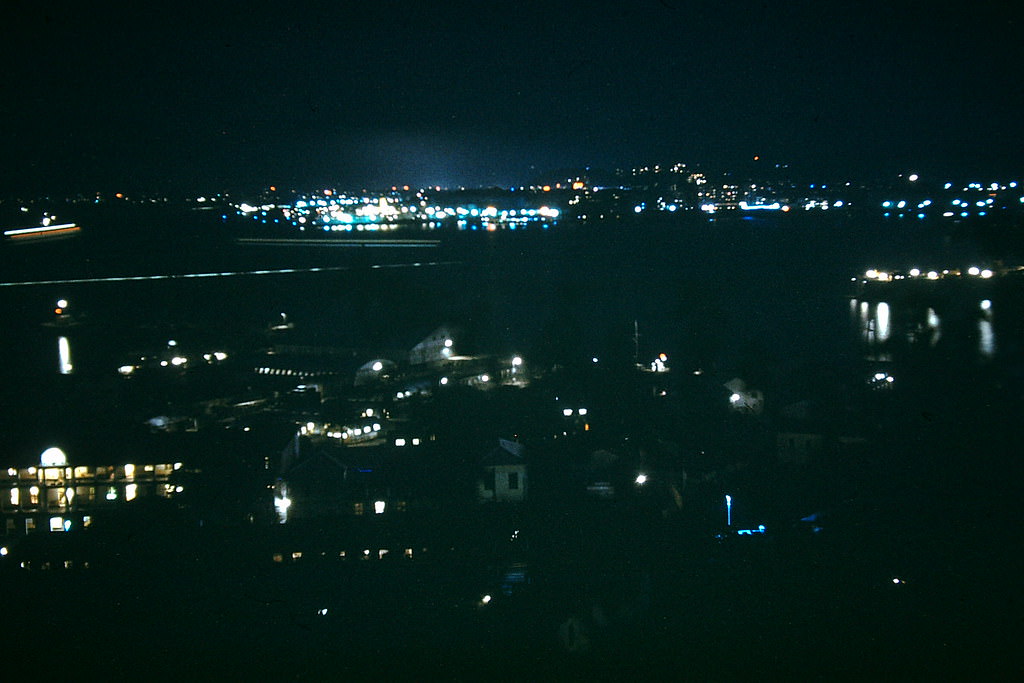
After dark, Hong Kong’s harbour took on a different character. Lights from ships, shoreside buildings, and the ferry terminals reflected across the water, creating a vivid nighttime scene. The harbour never truly went quiet — cargo operations and passenger ferry crossings continued well into the evening hours.
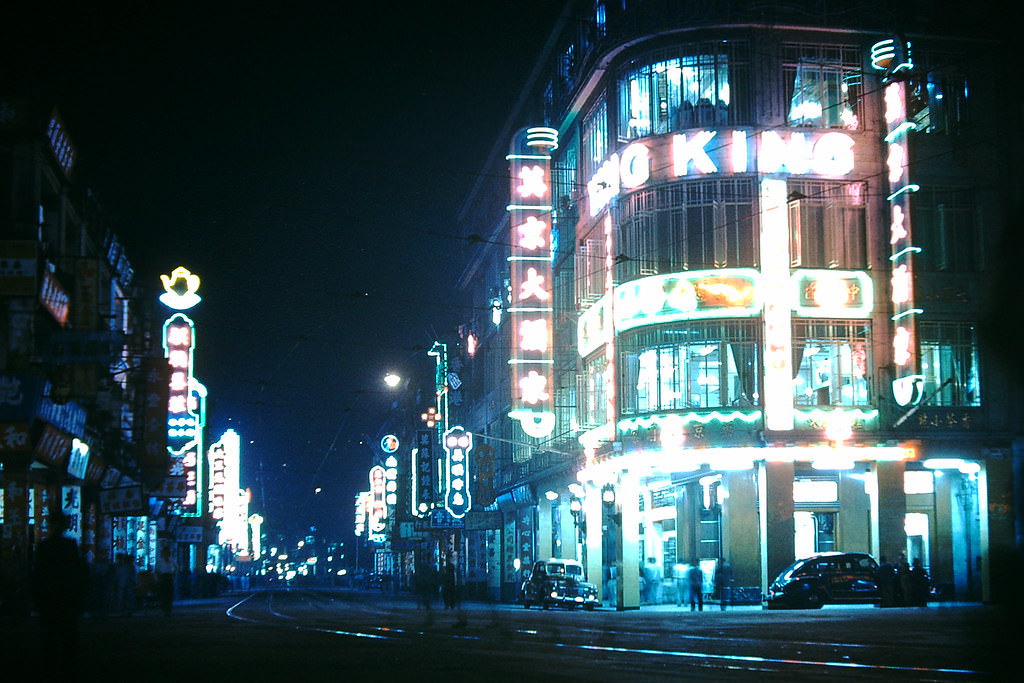
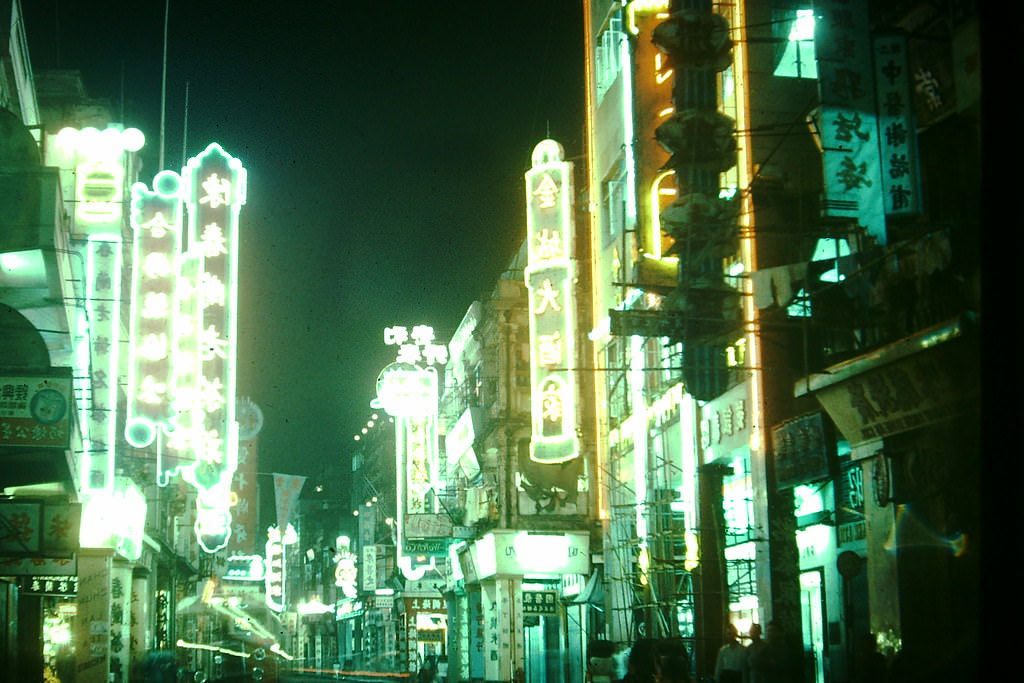
Johnston Road in Wan Chai was one of the busiest streets on Hong Kong Island after nightfall. Neon signs, open-front shops, and street stalls lit up the road, drawing crowds of workers, merchants, and newcomers navigating their first months in the city. The street was a crossroads of commerce and community life.
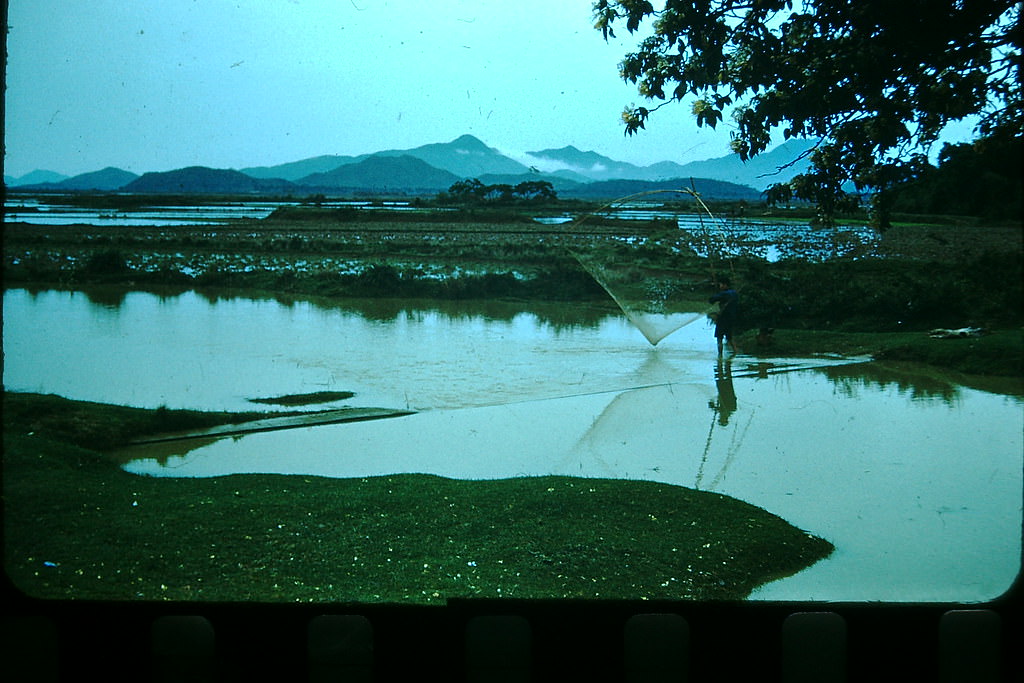
Shrimp netting was a common activity along Hong Kong’s shallower coastal stretches. Fishermen waded into the water with hand nets or used small boats to drag fine-mesh nets through the shallows. Dried and salted shrimp were a staple ingredient in Cantonese cooking, and the trade supplied both local markets and export.
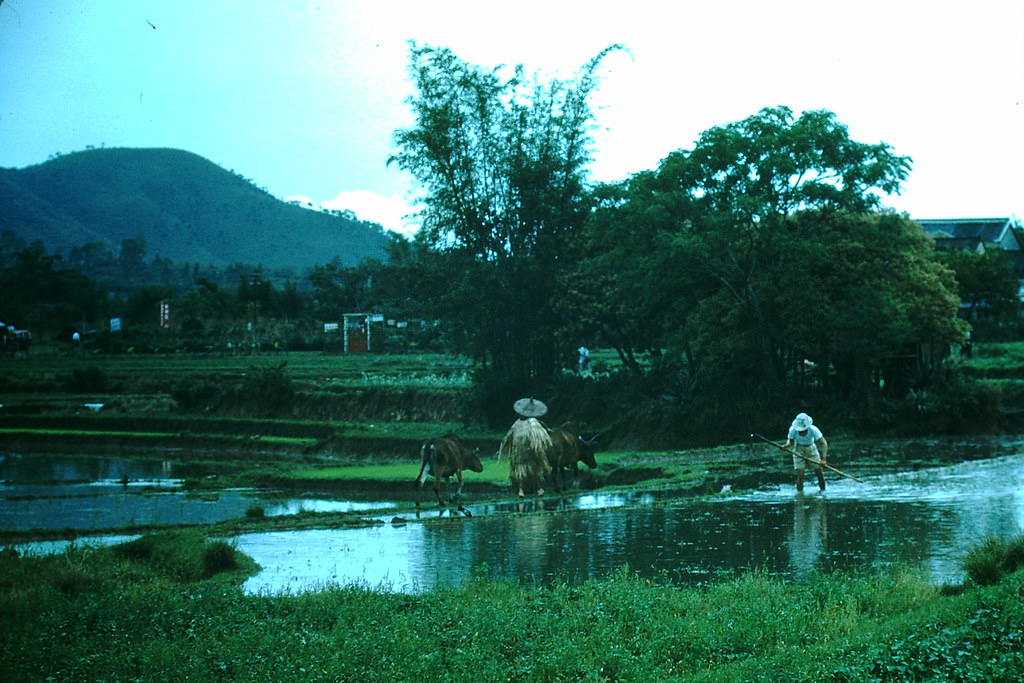
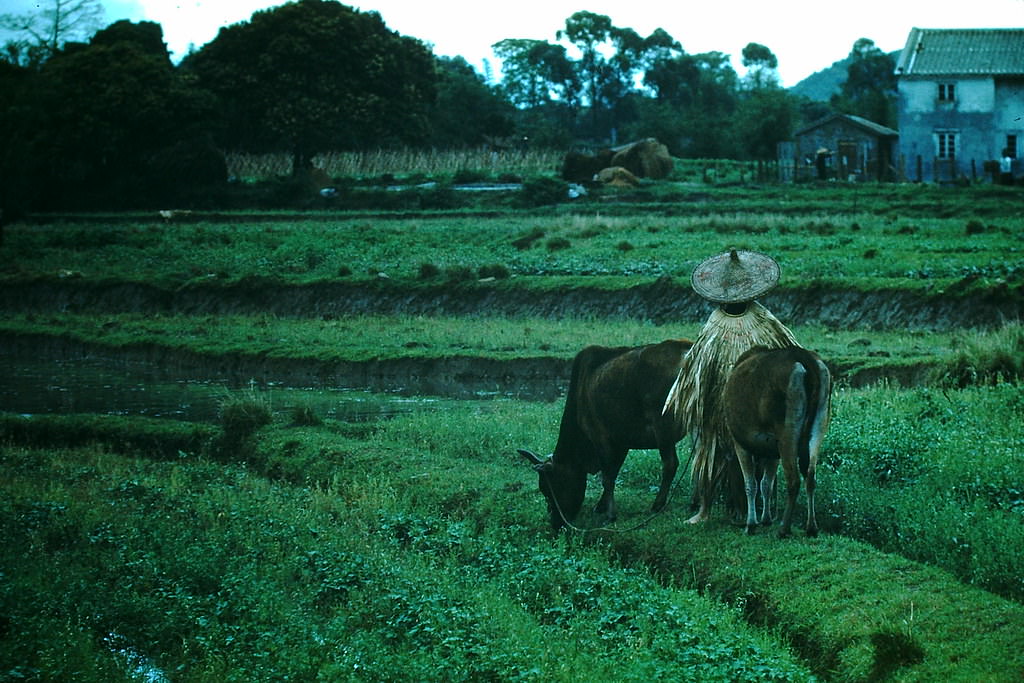
The New Territories in 1952 looked almost nothing like the dense urban sprawl it would later become. Villages were separated by rice paddies, hillside forests, and dirt paths. Life here moved at an agricultural pace, shaped by the seasons and the demands of farming rather than by the pressures of the rapidly growing city nearby.
Queen’s Road Central was the commercial heart of Hong Kong Island. Banks, trading houses, and government offices lined the street, which had been the original shoreline road before land reclamation pushed the waterfront further north. By 1952, it was firmly established as the city’s most important business address.
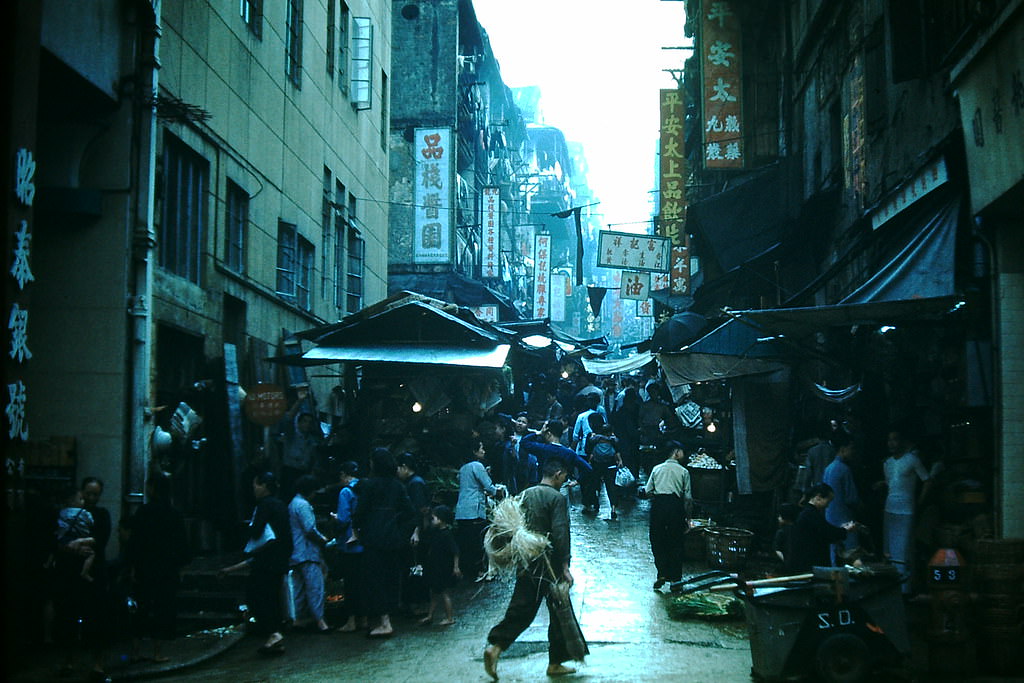
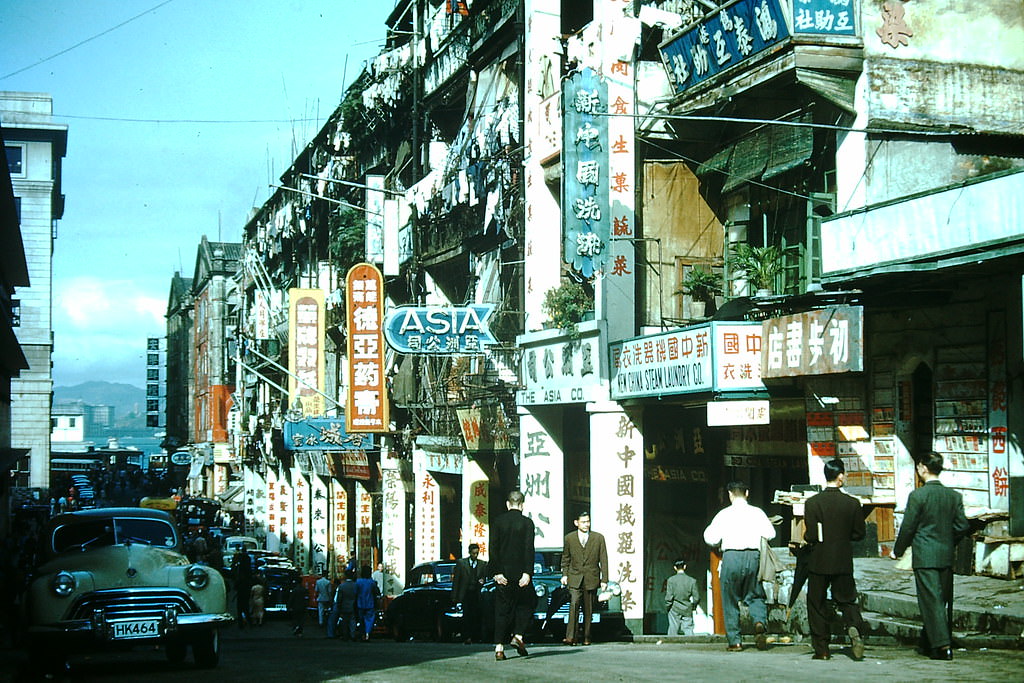
Street scenes from 1952 show a city that was overcrowded but very much alive. Trams, rickshaws, pedestrians, and vendors competed for space on narrow roads. Victoria Street, running through the western districts of Hong Kong Island, was home to a mix of print shops, schools, and residential tenements packed tightly together.
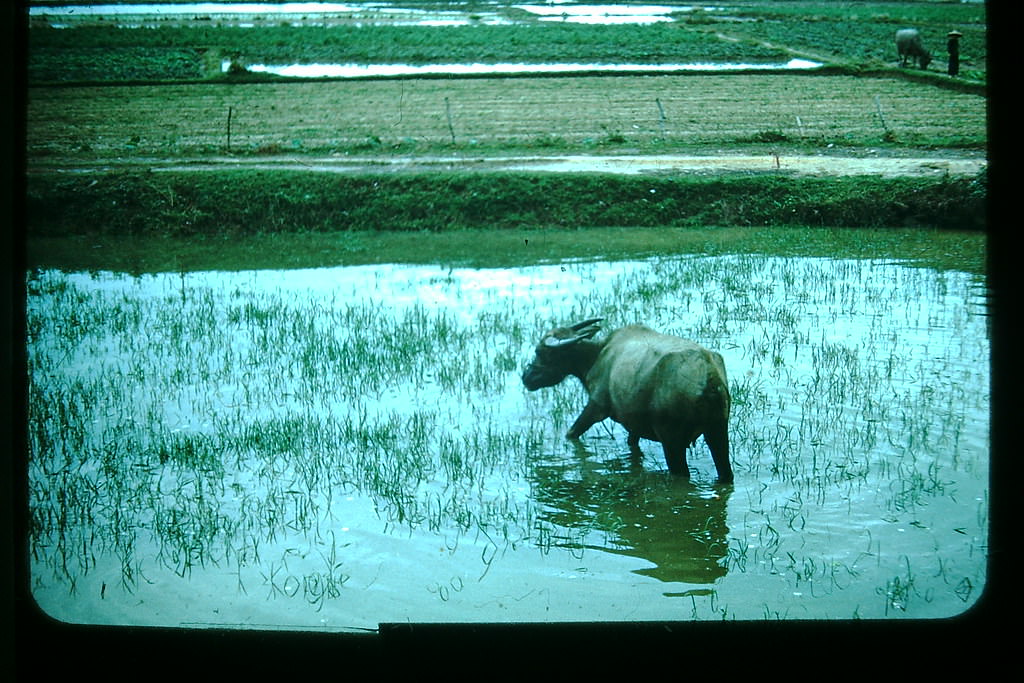
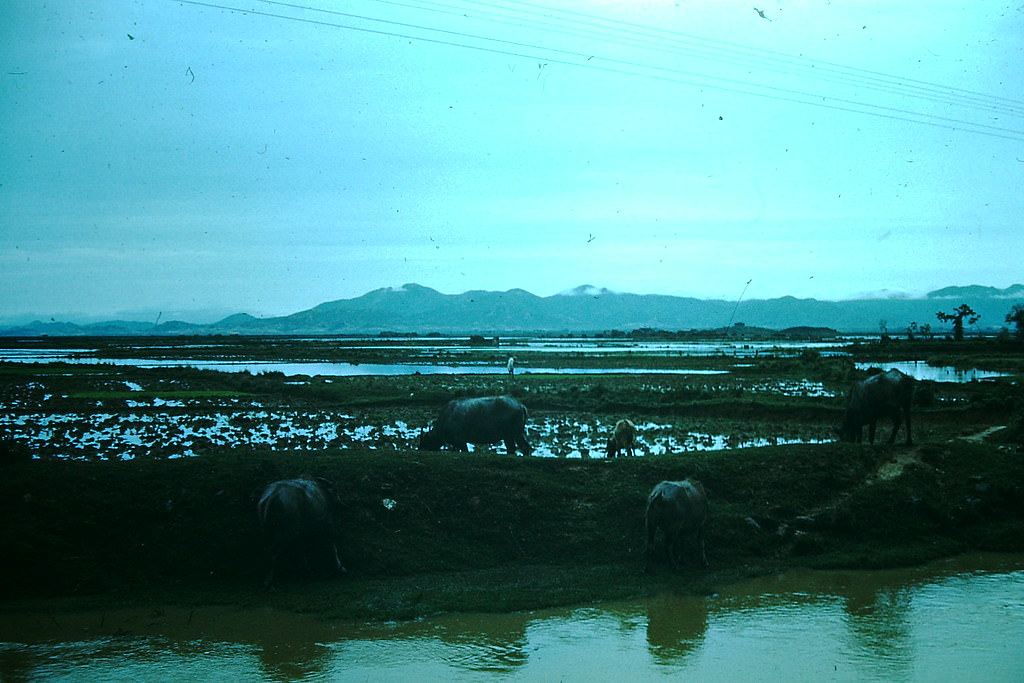
Water buffalo were a regular sight in the New Territories, where they were used as working animals to plow rice paddies and haul heavy loads. Farming in this region relied heavily on these animals, and they remained essential to agricultural work throughout the 1950s. Their presence in these photographs underscores just how rural much of Hong Kong still was at the time.
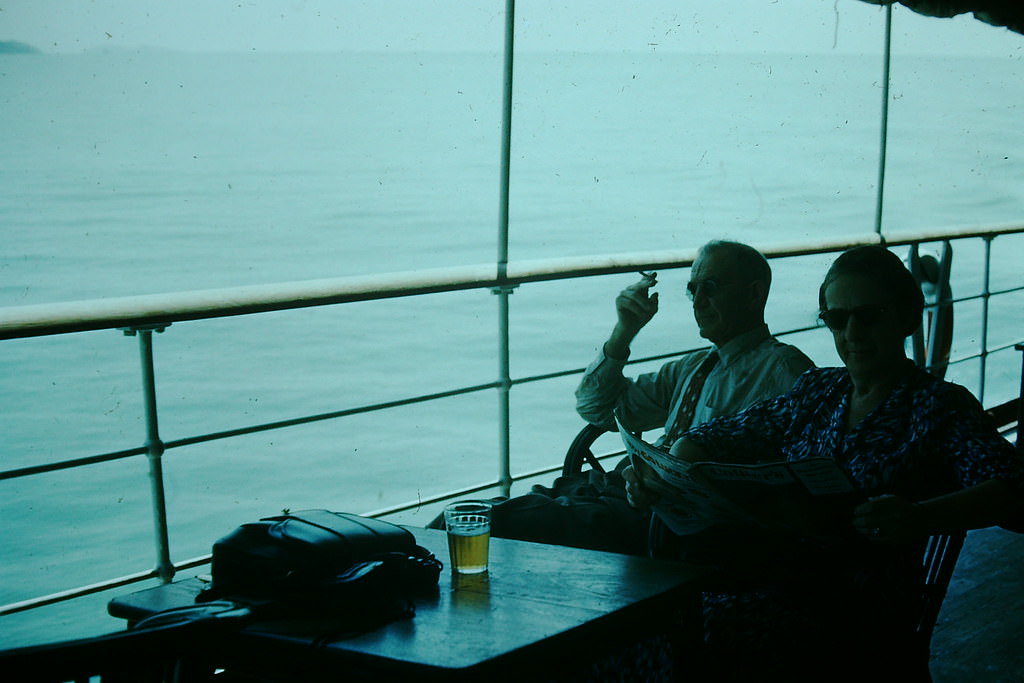
The SS Takshing was one of the vessels operating in Hong Kong waters in the early 1950s. Ships like this carried passengers and goods between Hong Kong and ports along the South China coast. For many refugees, vessels like the Takshing had been their means of escape from the mainland, making ships a charged and significant presence in the harbor.
Just one year after these photographs were taken, the Shek Kip Mei Fire of December 1953 destroyed a vast squatter settlement and left 53,000 people homeless overnight. In response, Governor Sir Alexander Grantham — the 22nd Governor of Hong Kong — introduced a new form of public housing: fire- and flood-resistant multi-story buildings capable of housing up to 2,500 people each. Every floor included communal washrooms and toilets. The goal was simple — house as many people as possible, as quickly as possible.