
In 1953, Vienna was a city caught between its imperial past and an uncertain future. World War II had ended eight years earlier, but its scars were still visible across the city. Austria had ceased to exist as an independent nation in 1938 when Nazi Germany annexed it, and it would not regain full sovereignty until the Austrian State Treaty was signed on May 15, 1955. Until then, Vienna remained divided into four occupation zones — American, British, French, and Soviet — each controlled by one of the Allied powers.
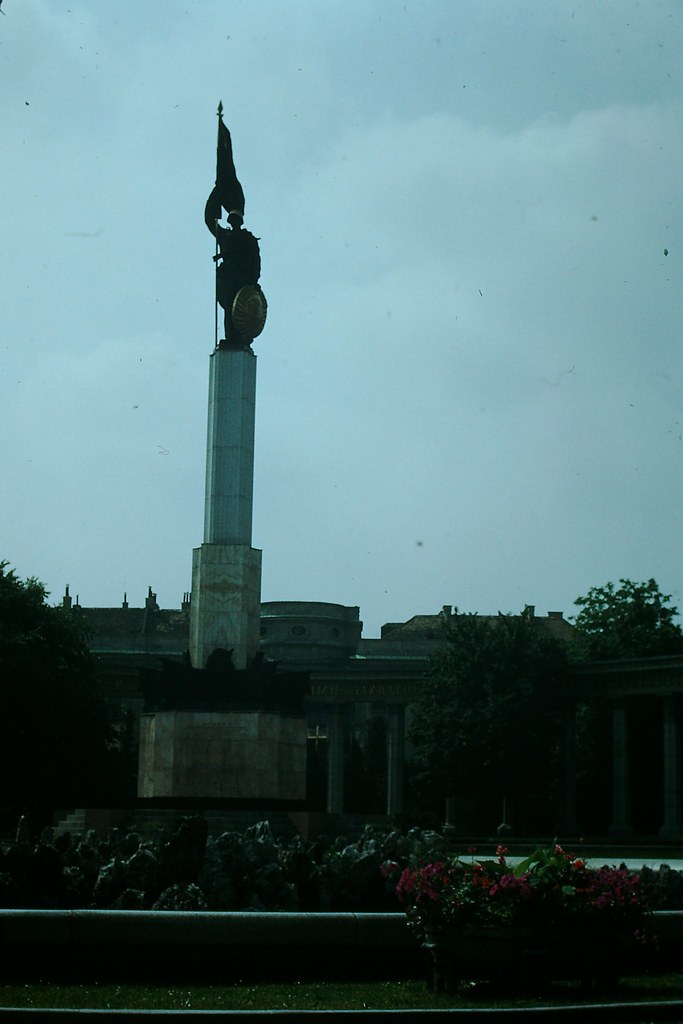
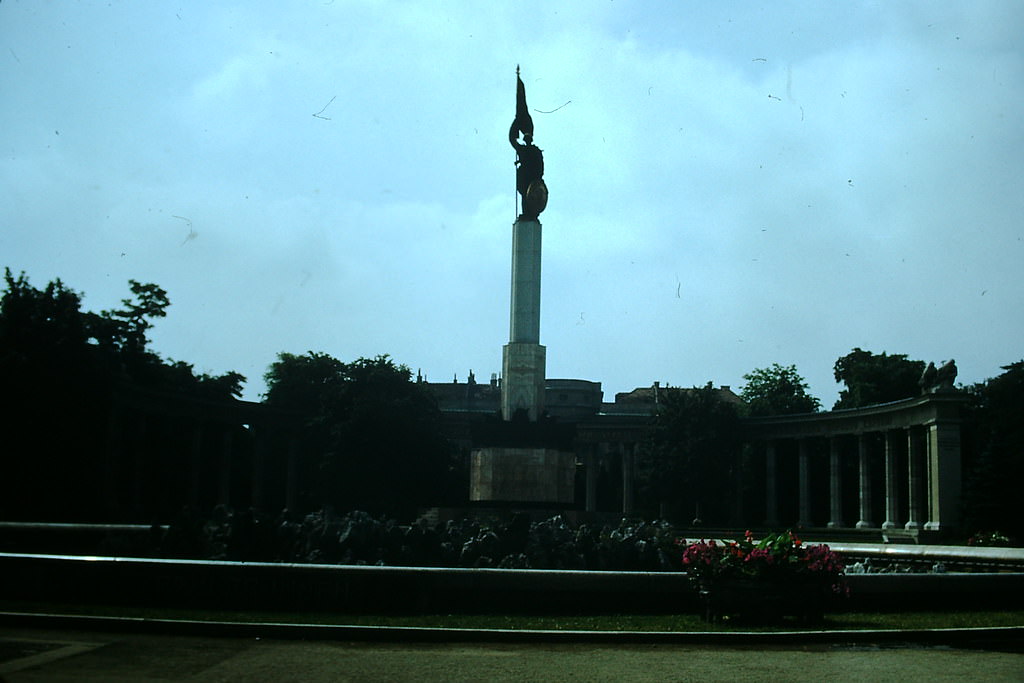
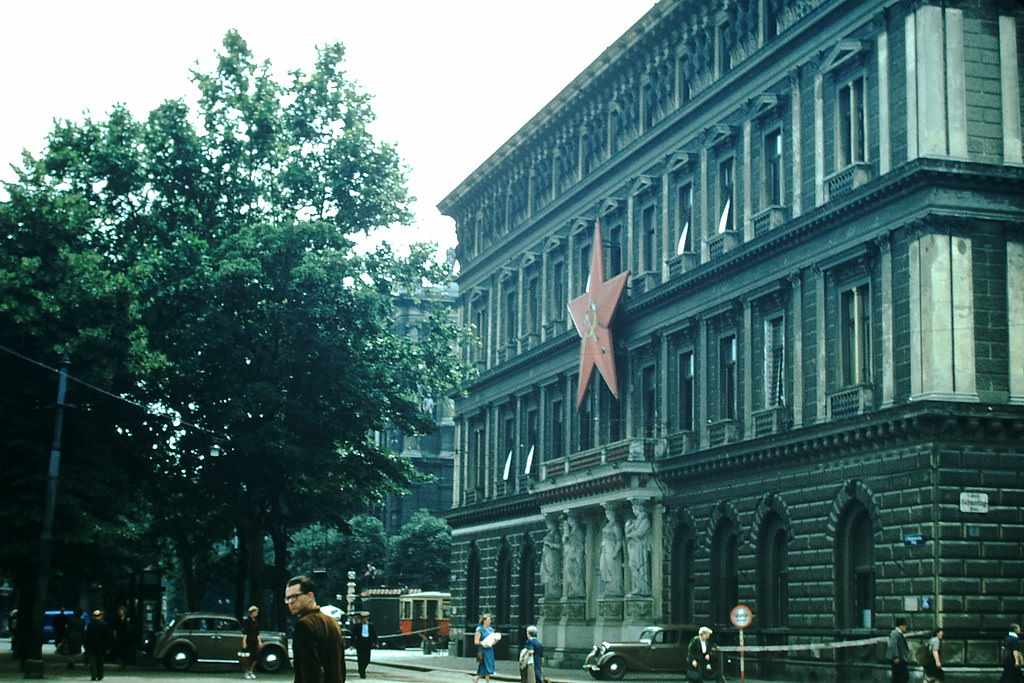
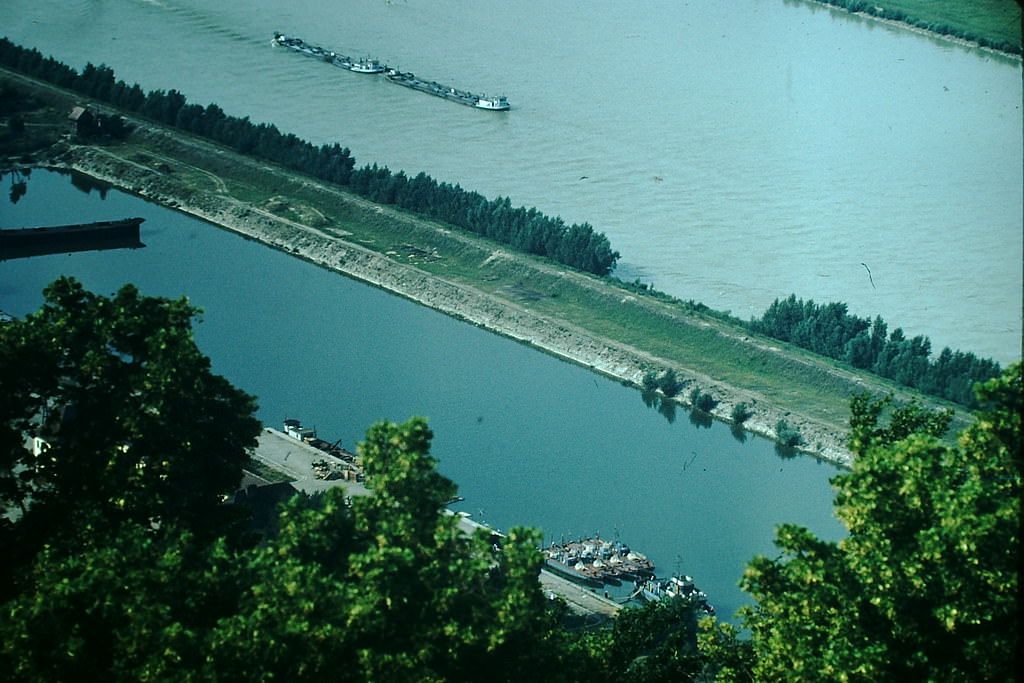
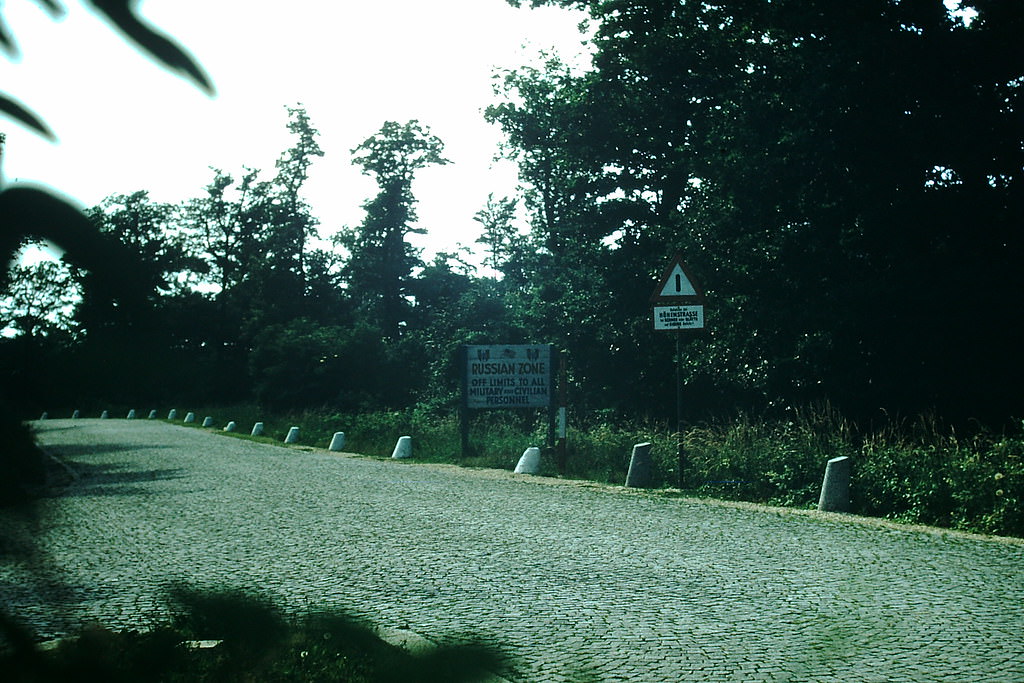
The Soviet presence in Vienna was hard to miss. Russian patrol boats moved along the Danube, occupation zone signs were posted at district boundaries, and Soviet military buildings lined the Ringstrasse. The Russian Liberation Monument, erected by the Soviets to commemorate their soldiers killed in the Battle of Vienna in 1945, stood as one of the most visible symbols of that occupation.
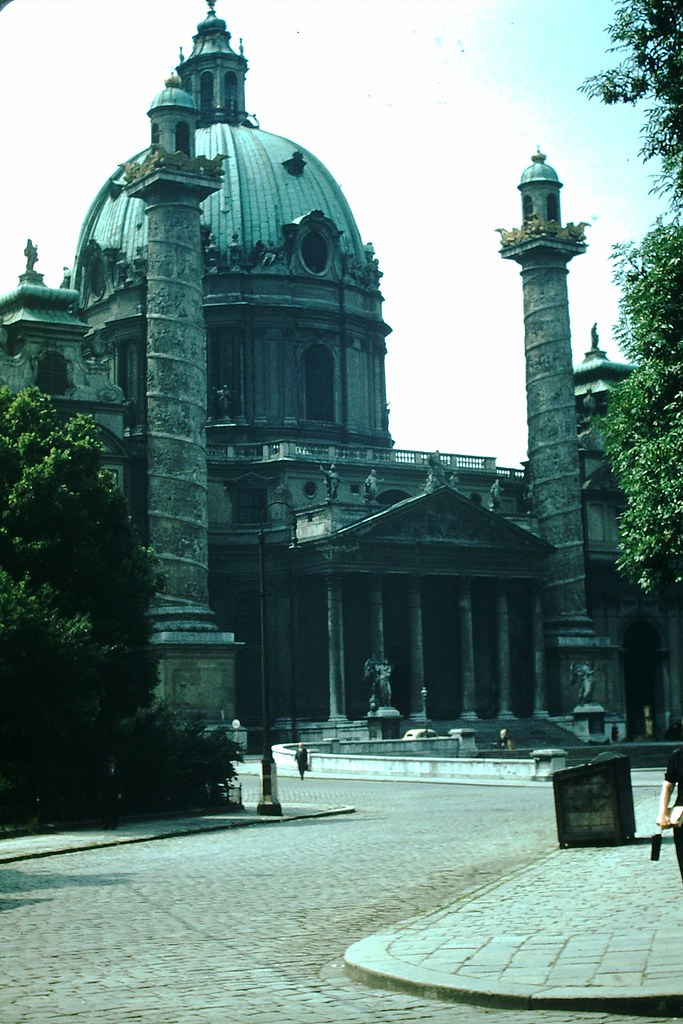
Vienna’s grand historic architecture remained largely intact in the city center, offering a striking contrast to the bomb-damaged neighborhoods nearby. The Karlskirche — St. Charles Cathedral — still dominated its square with its twin columns and baroque dome, much as it had since Emperor Charles VI commissioned it in the early 18th century.
The Ringstrasse, Vienna’s famous boulevard built under Emperor Franz Joseph I in the 19th century, remained a showcase of monumental public buildings. The Parliament Building, the City Hall, and the Burgtheater all lined this grand ring road, standing as reminders of when Vienna was the capital of a vast empire.
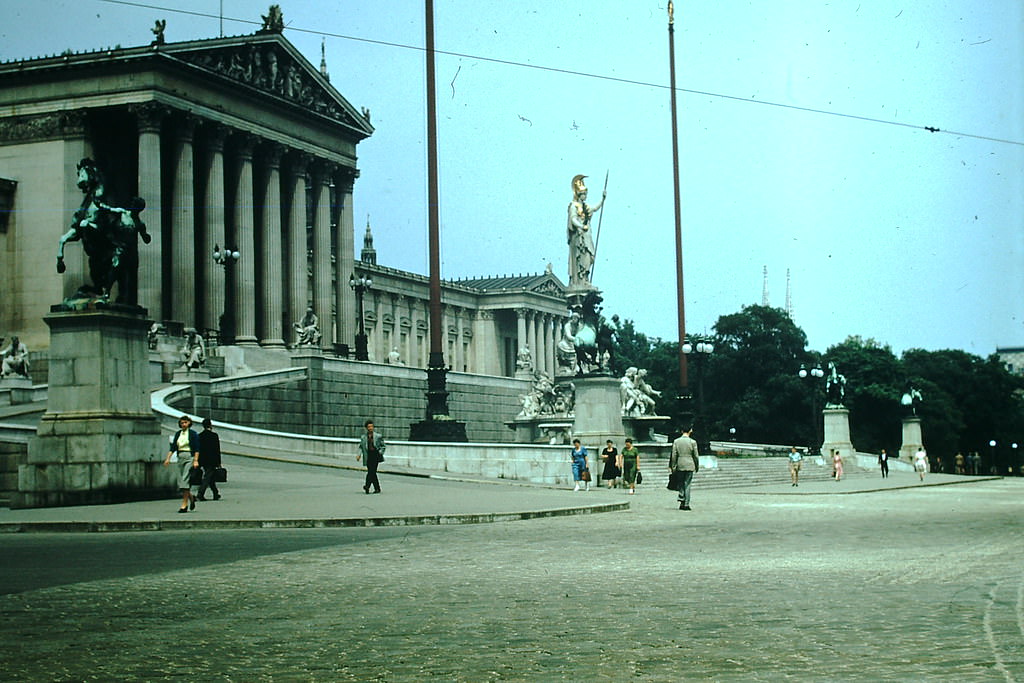
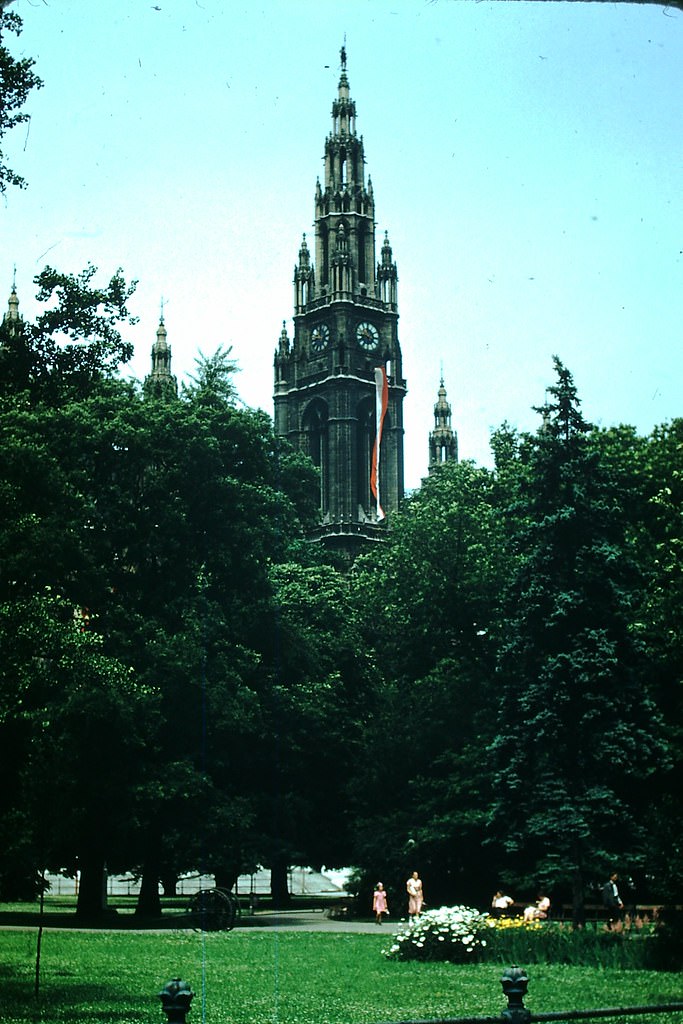
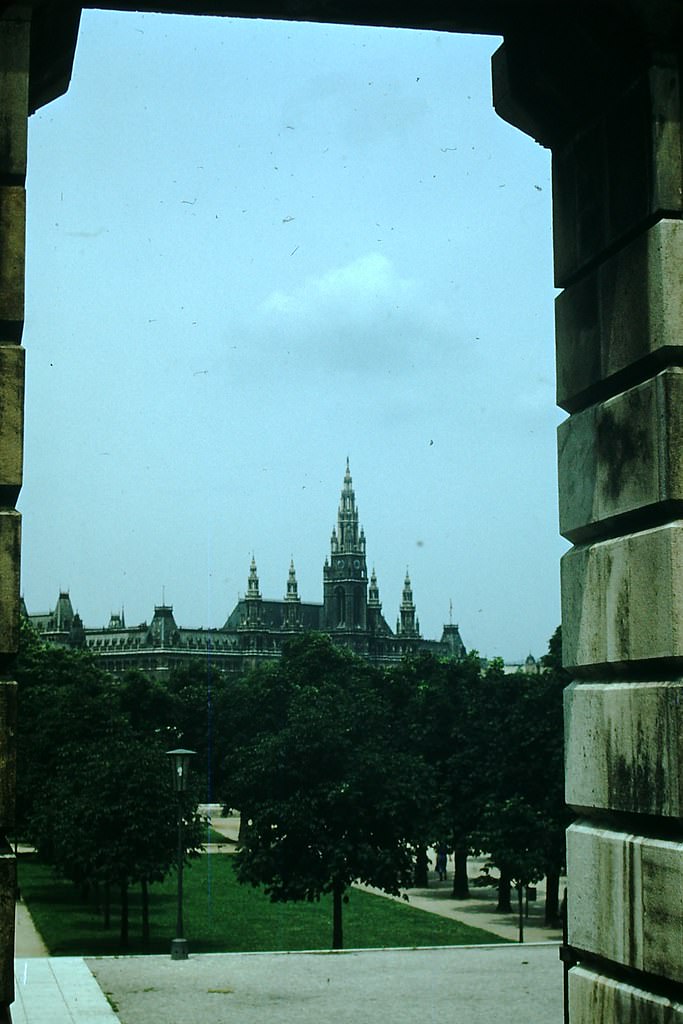
Museums and imperial monuments also remained central to Vienna’s identity. The Kaiser Franz Joseph Museum and the Palace of the Kaisers — the Hofburg — drew visitors through spaces that once housed the Habsburg court. In the Burggarten, a marble statue of Wolfgang Amadeus Mozart stood as one of the city’s most photographed landmarks, while a bronze statue of Franz Joseph kept watch over the imperial legacy nearby.
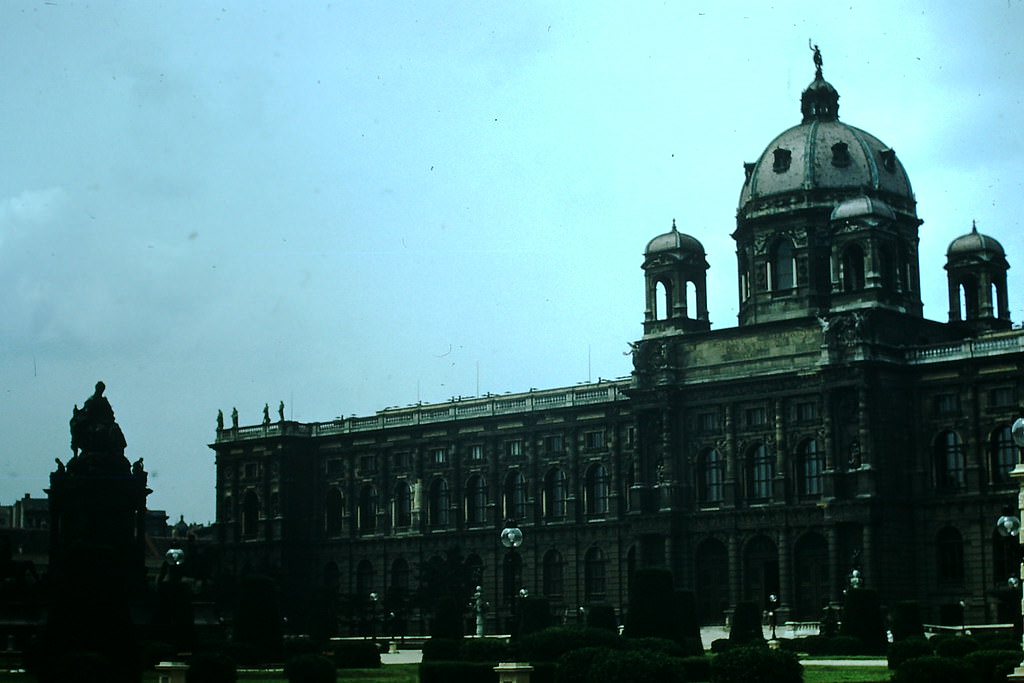
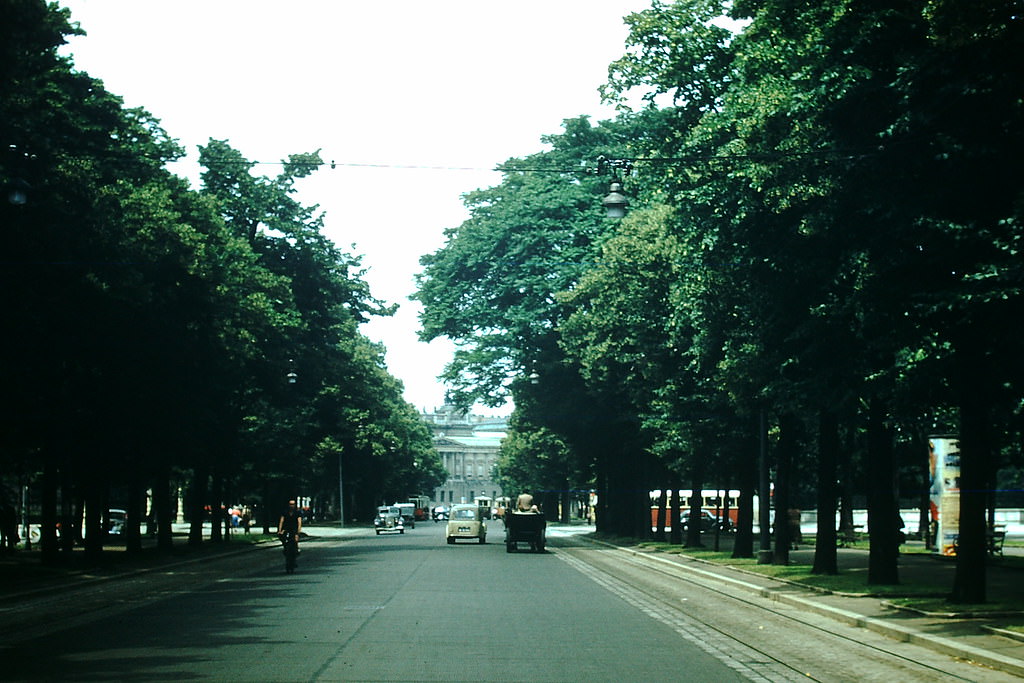
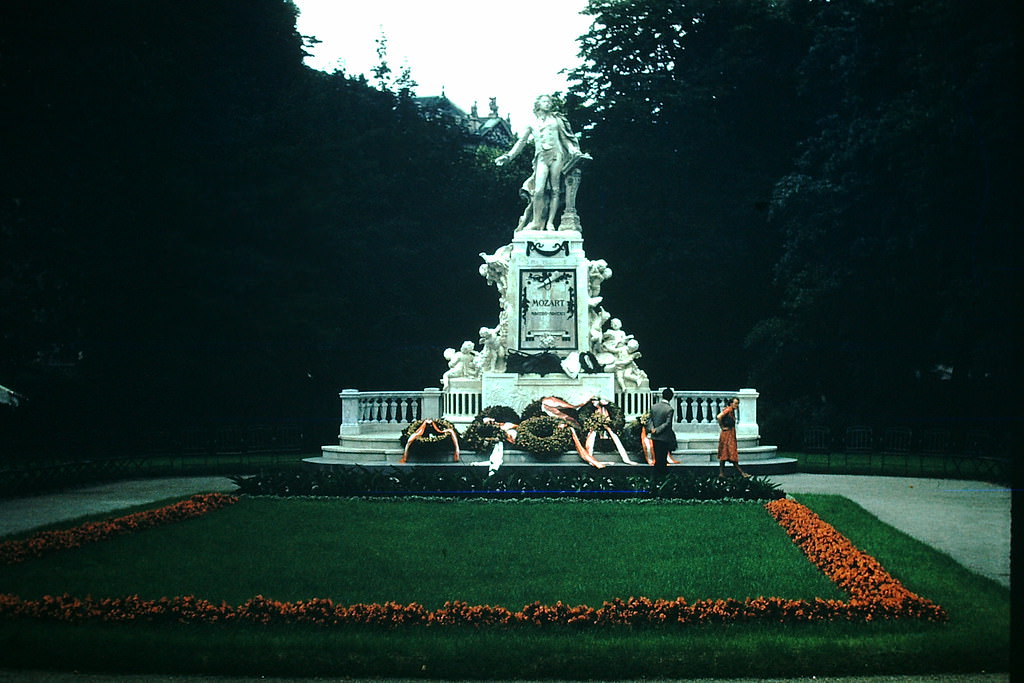
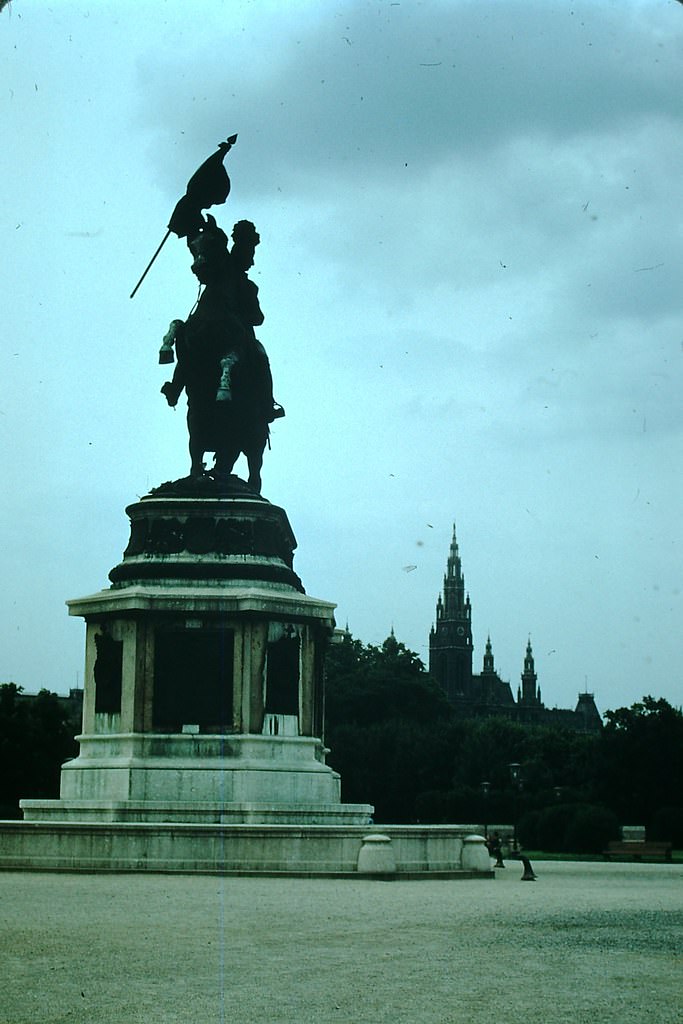
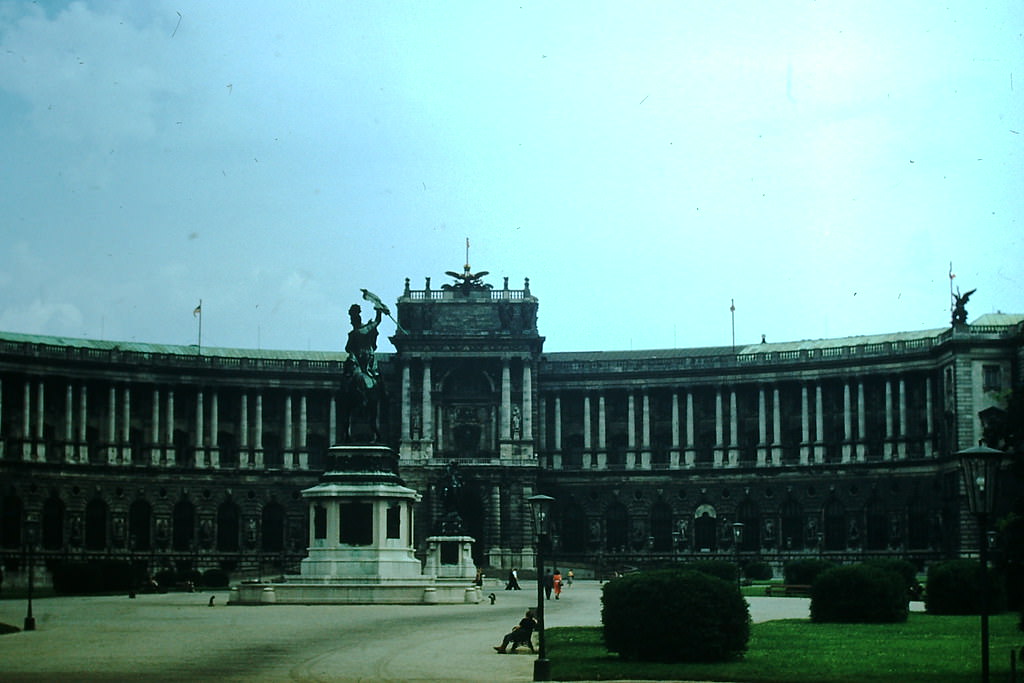
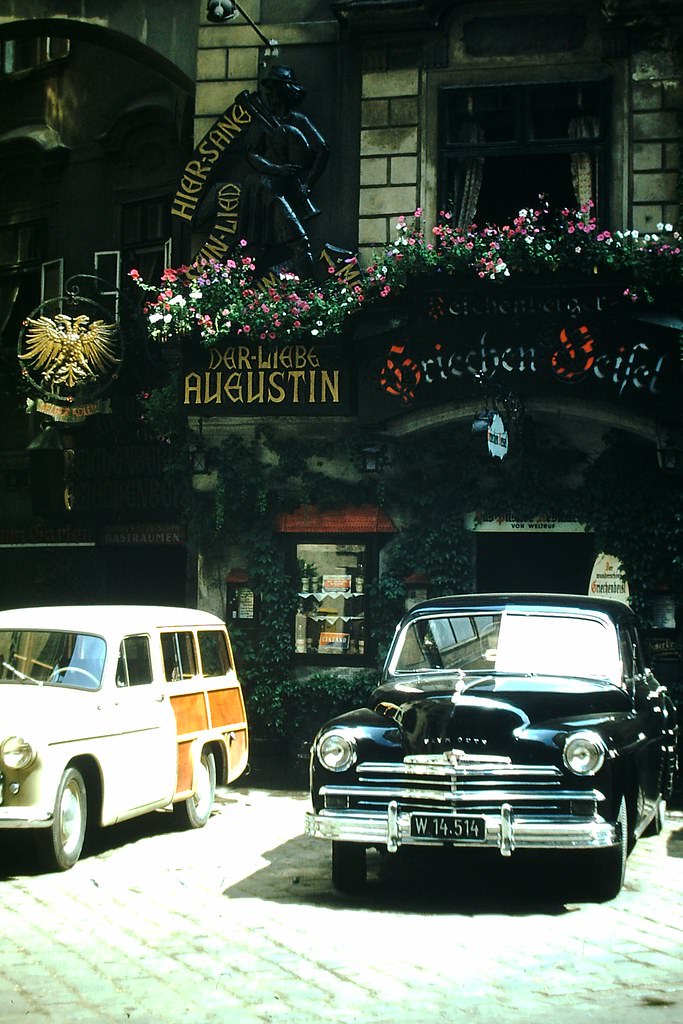
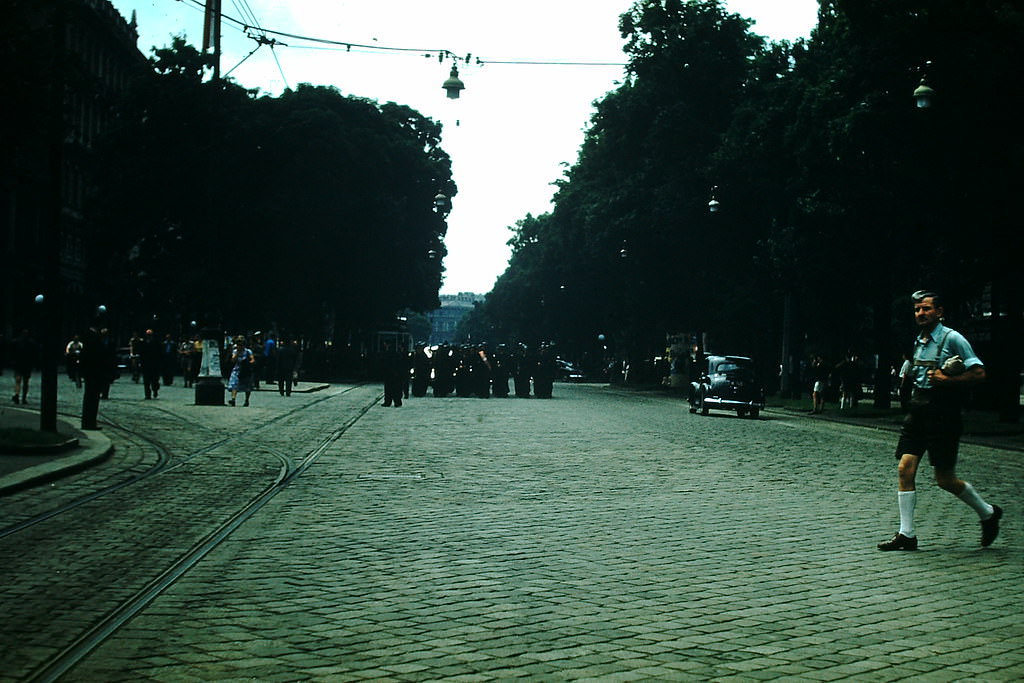
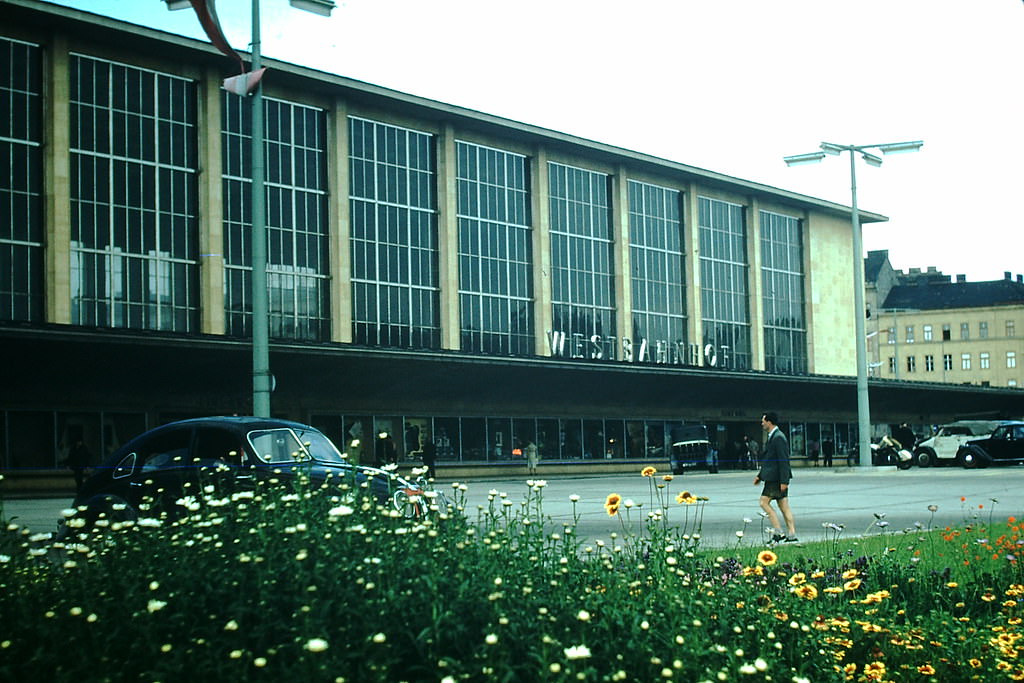
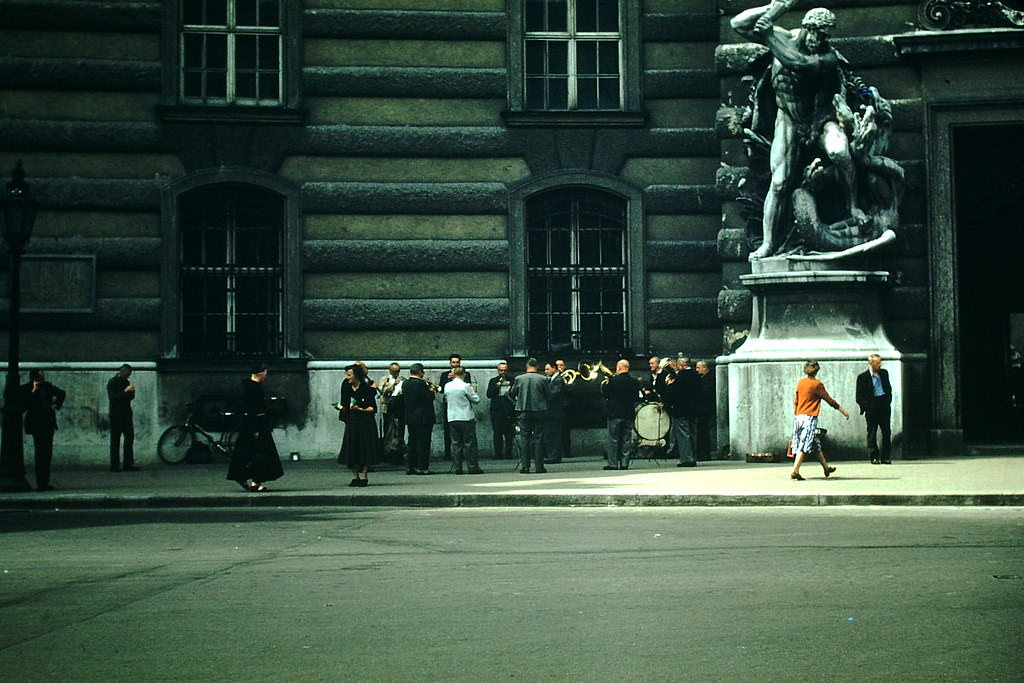
Street-level Vienna in 1953 showed a city rebuilding. The business districts mixed old storefronts with newer construction, and establishments like a restaurant claiming 500 years of continuous operation reminded residents of how long the city had endured. The Westbahnhof train station served as a major transit hub, connecting Vienna to the rest of Austria and Western Europe. The Austrian Police Band performed publicly, offering some cultural normalcy amid the ongoing occupation.
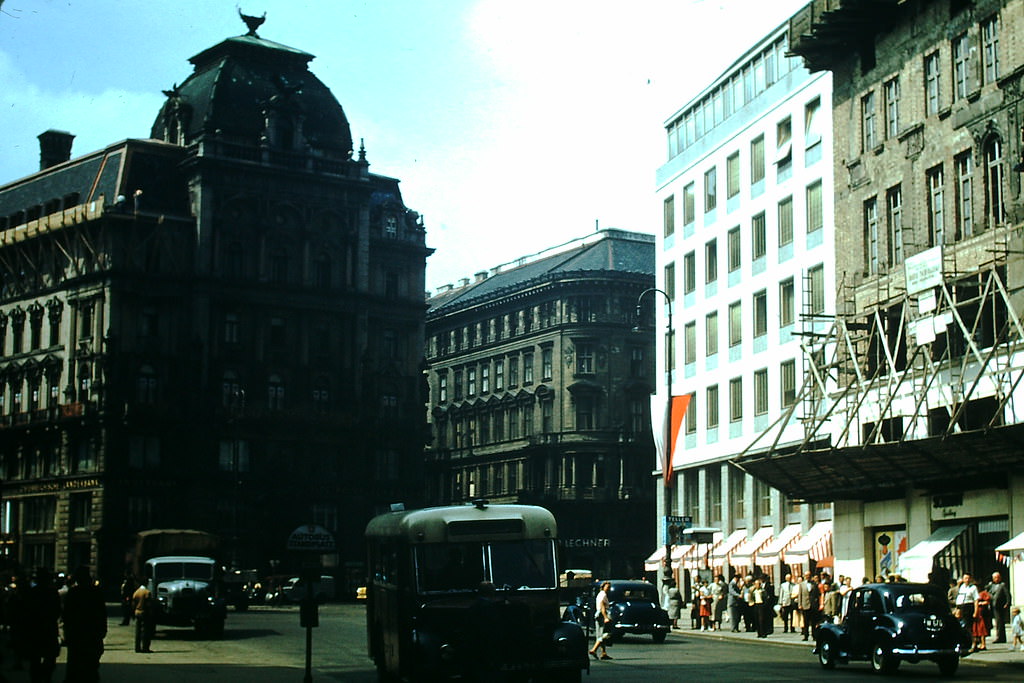
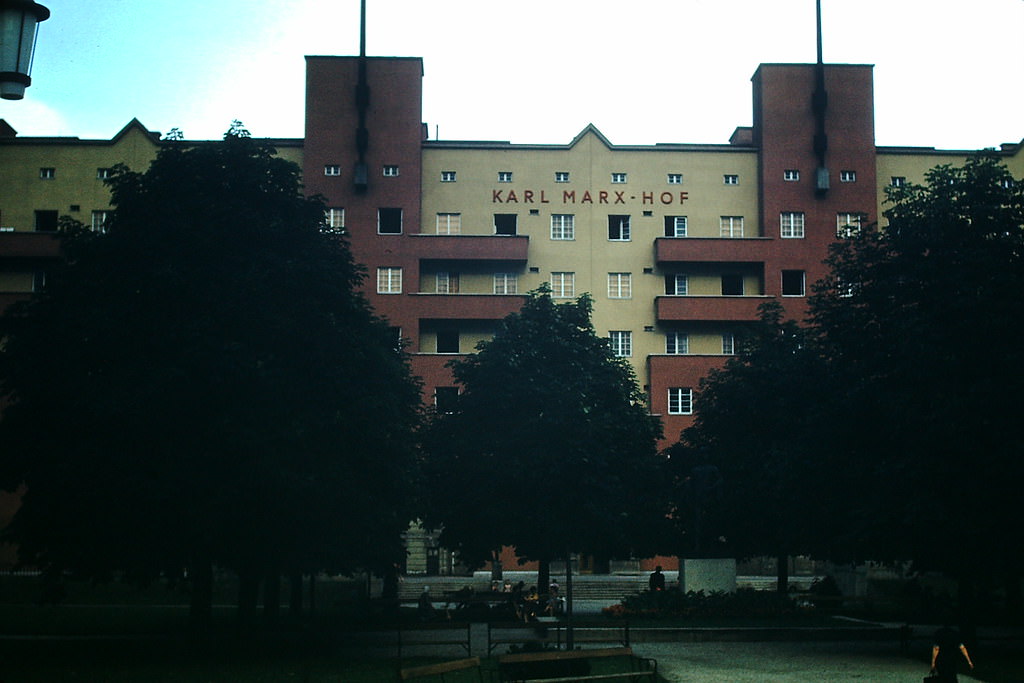
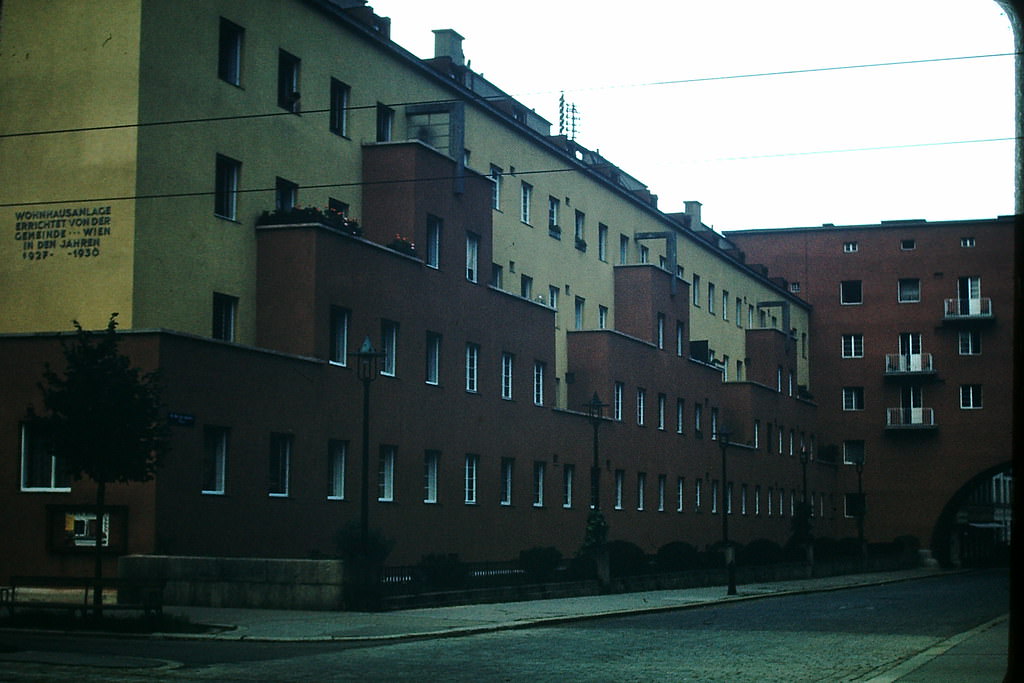
Wartime bombing had left deep marks on parts of the city. Along the Donau Canal, entire blocks showed structural damage or had been reduced to rubble. Reconstruction was underway in several areas, with workers building new housing projects to replace what had been destroyed. These new residential developments were a direct response to the severe housing shortage the city faced after the war.
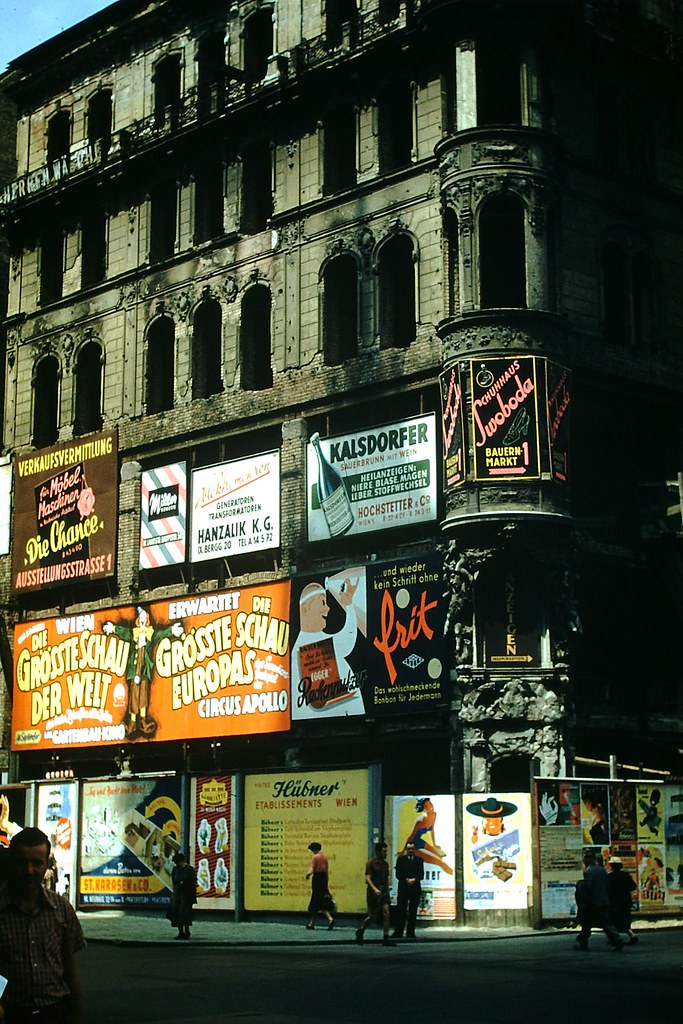
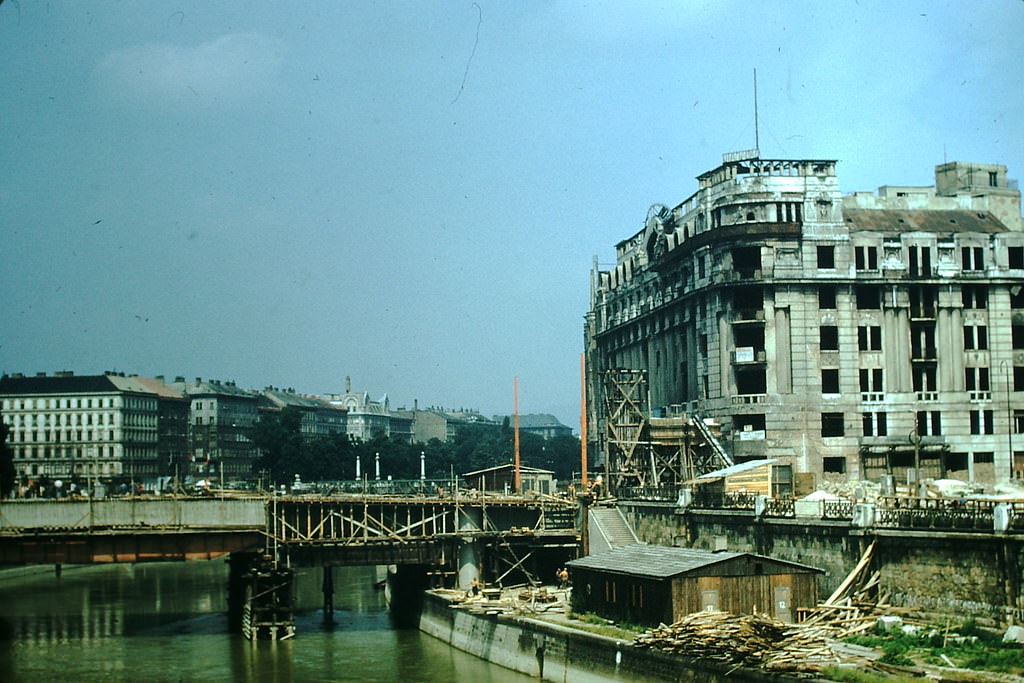
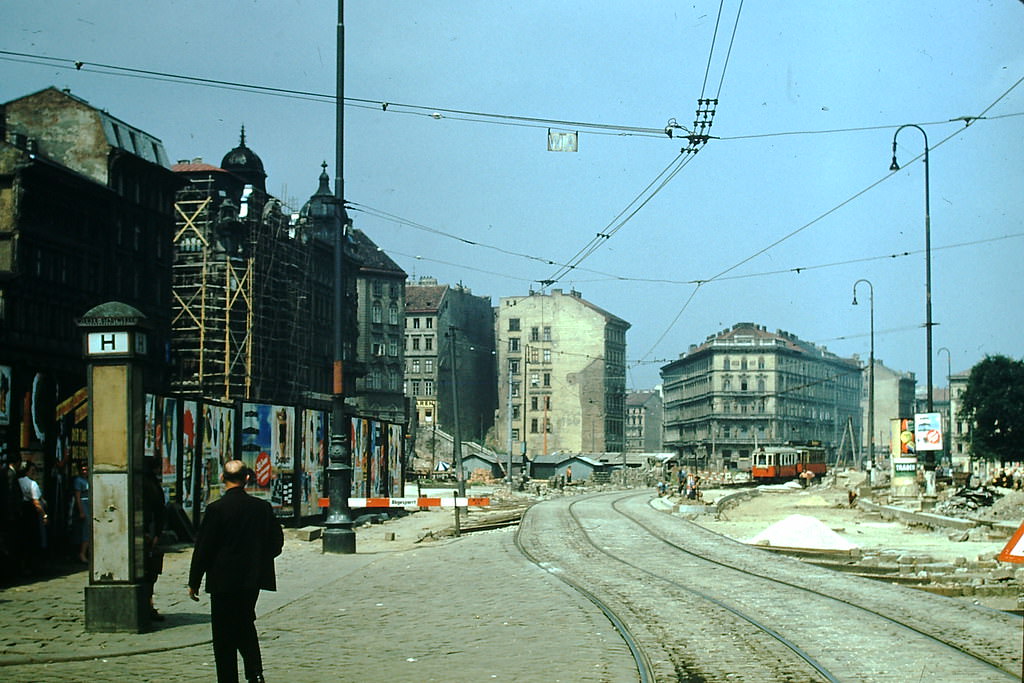
Economic hardship was still a daily reality for many Viennese. Groups of unemployed musicians gathered in the streets, reflecting a job market that had not yet recovered. Vienna’s economy relied heavily on commerce and industry, but full recovery was still years away. New housing projects were rising across the city, a sign that reconstruction was gaining pace even under occupation.
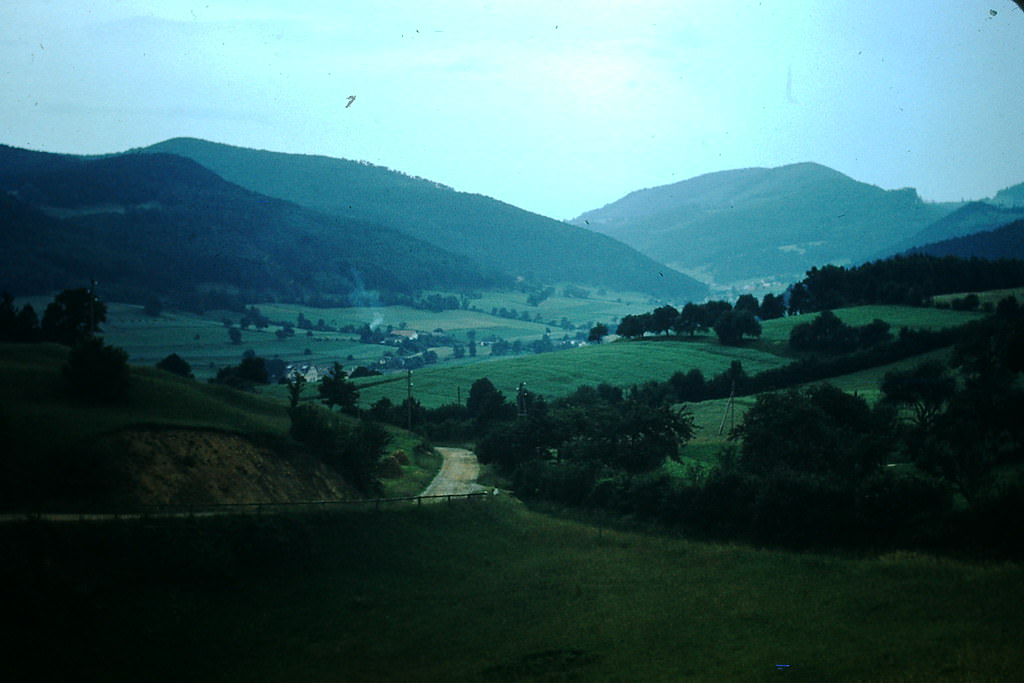
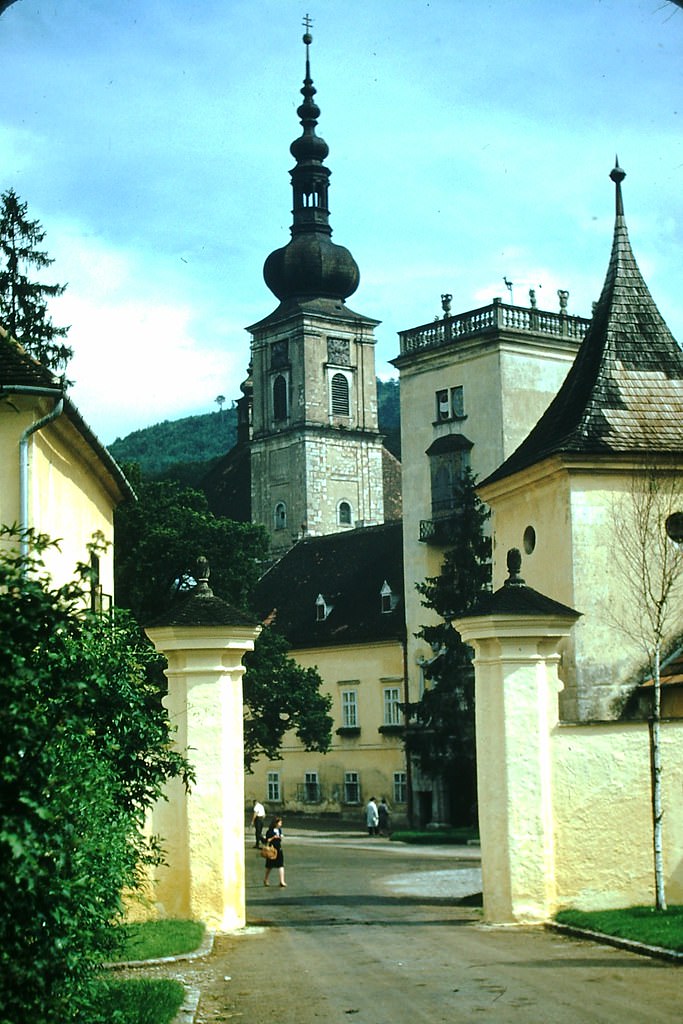
Outside the urban core, the Vienna Woods offered a quieter side of the city. Hunting lodges sat tucked into forested hillsides, and the Holy Cross Monastery provided a glimpse of the religious and rural traditions that still shaped life in the surrounding areas.
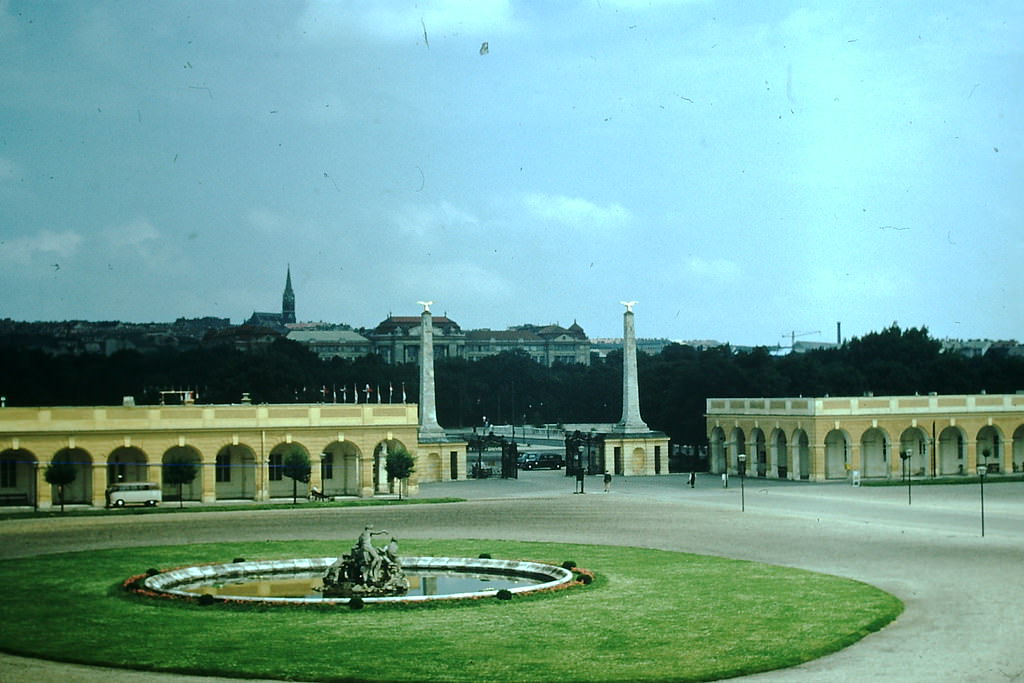
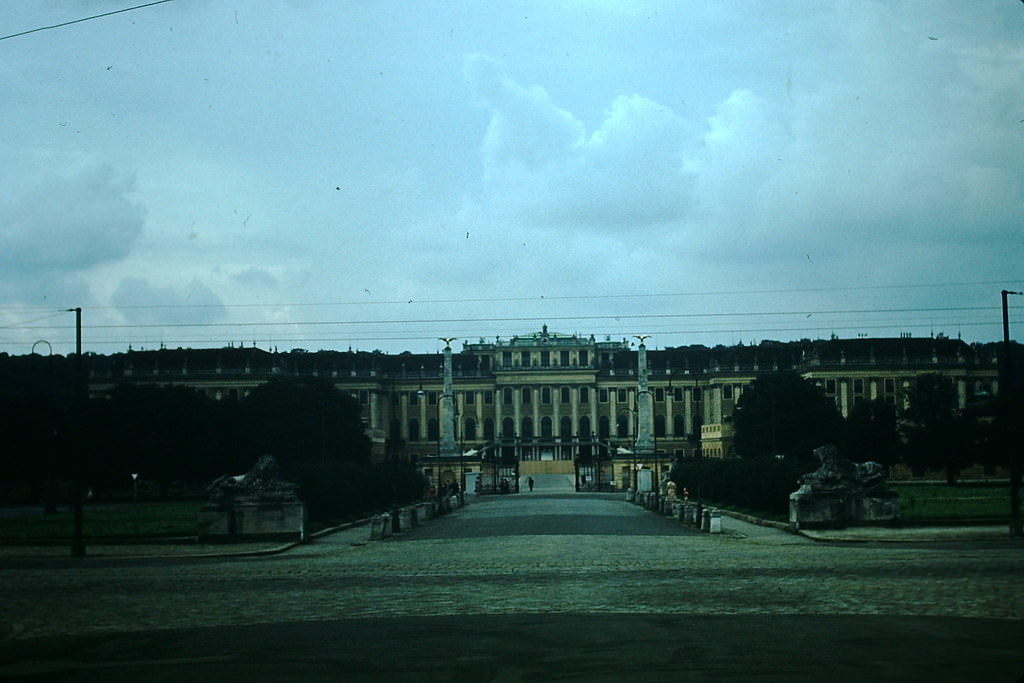
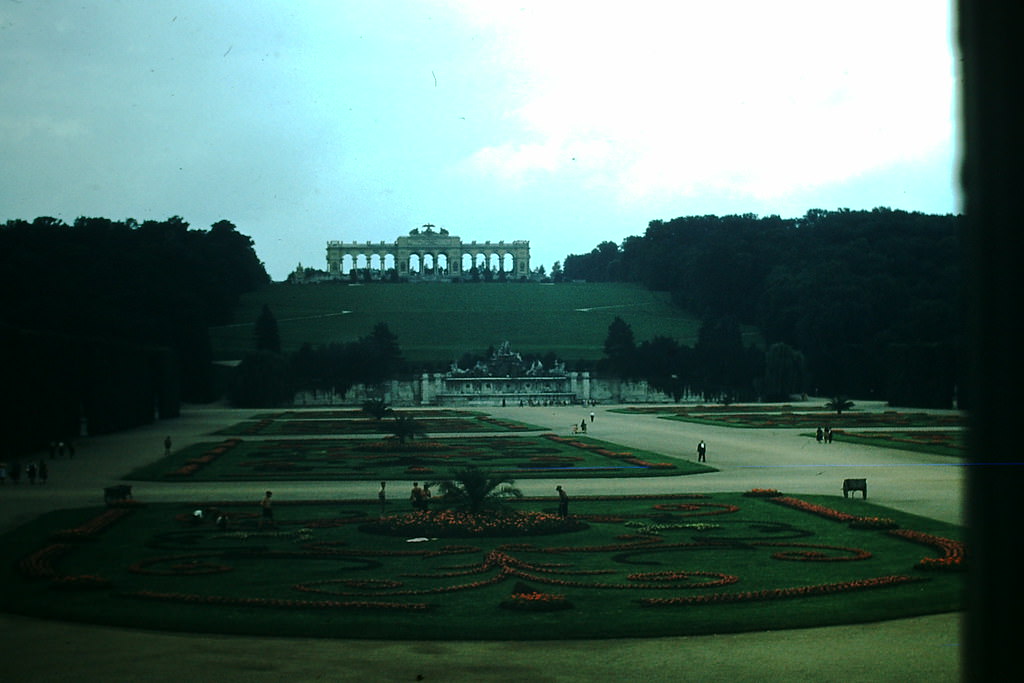
Schönbrunn Palace, the former summer residence of the Habsburgs, remained one of Vienna’s most spectacular landmarks. Its formal gardens stretched out behind the palace in precise geometric patterns, and the grand fountain at the main entrance still greeted visitors just as it had for centuries.
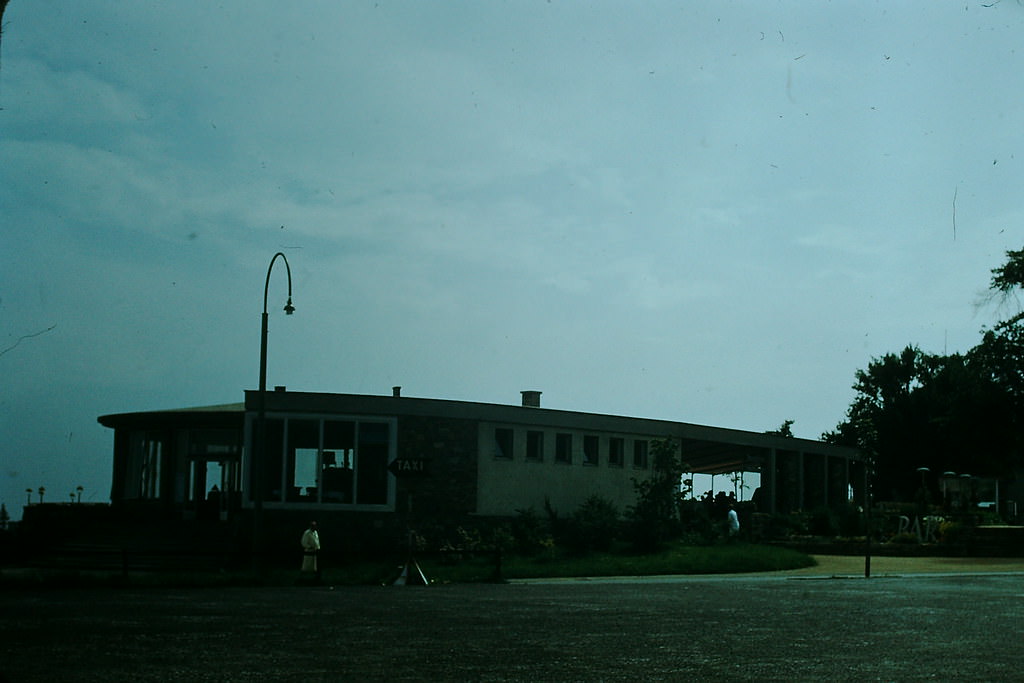
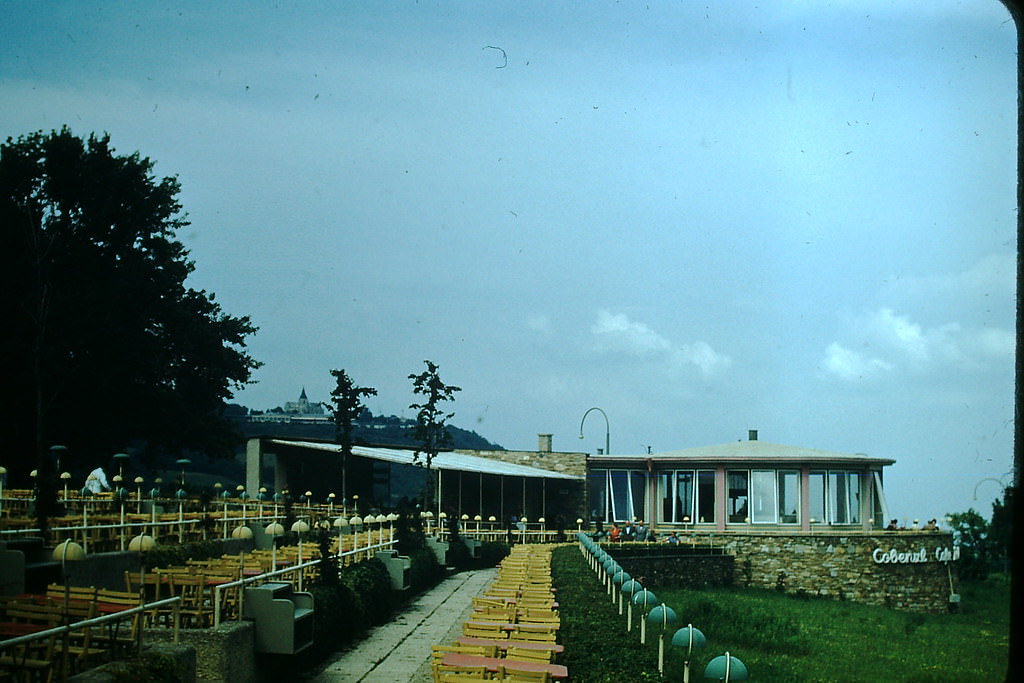
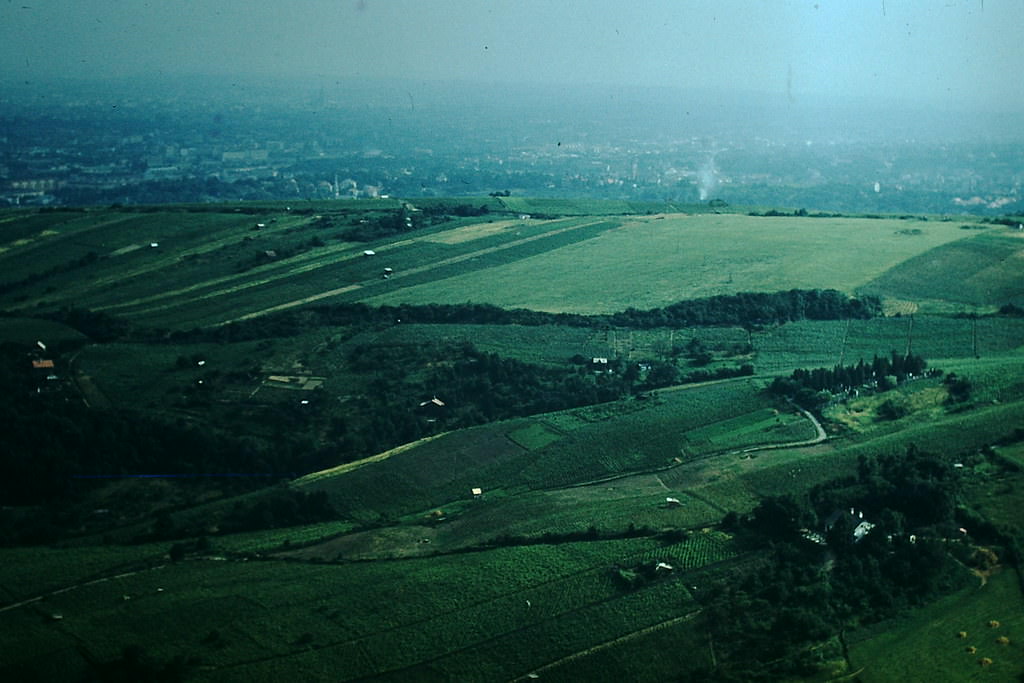
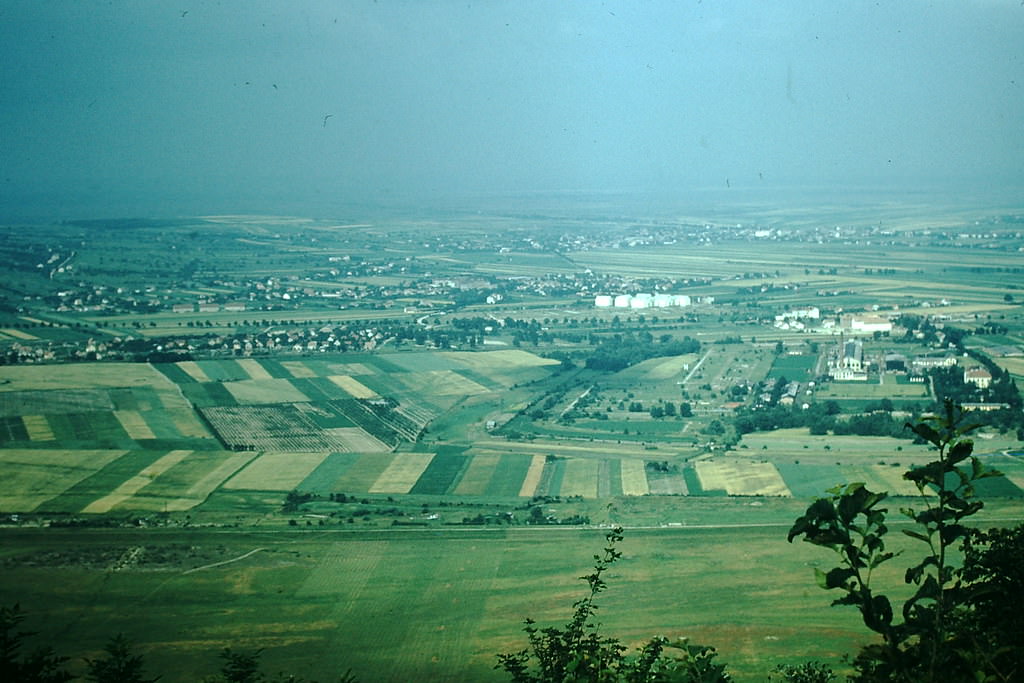
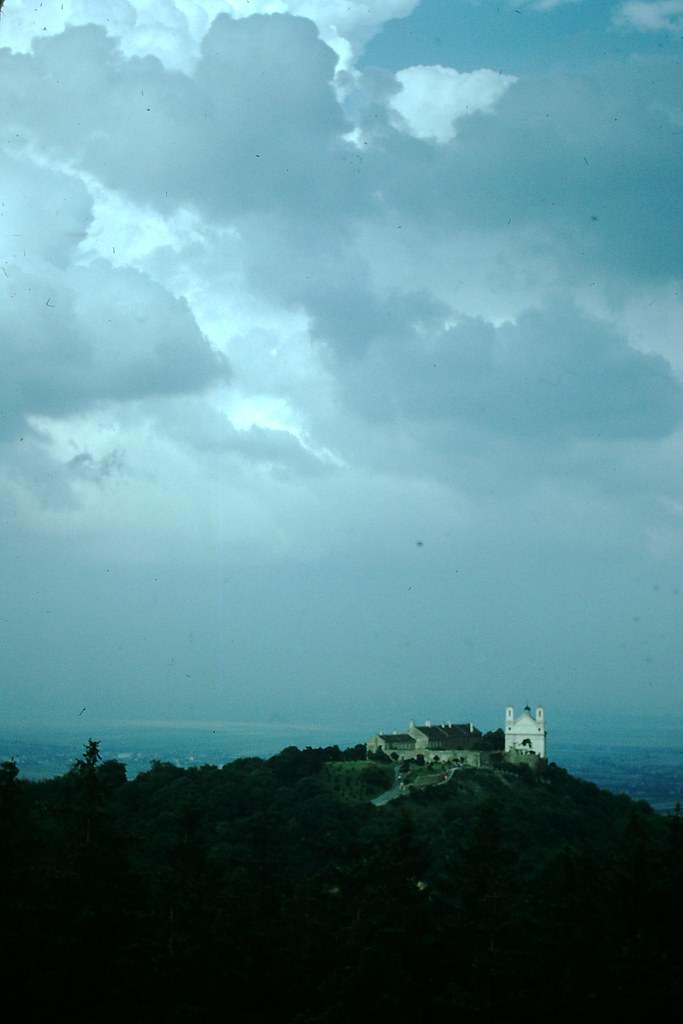
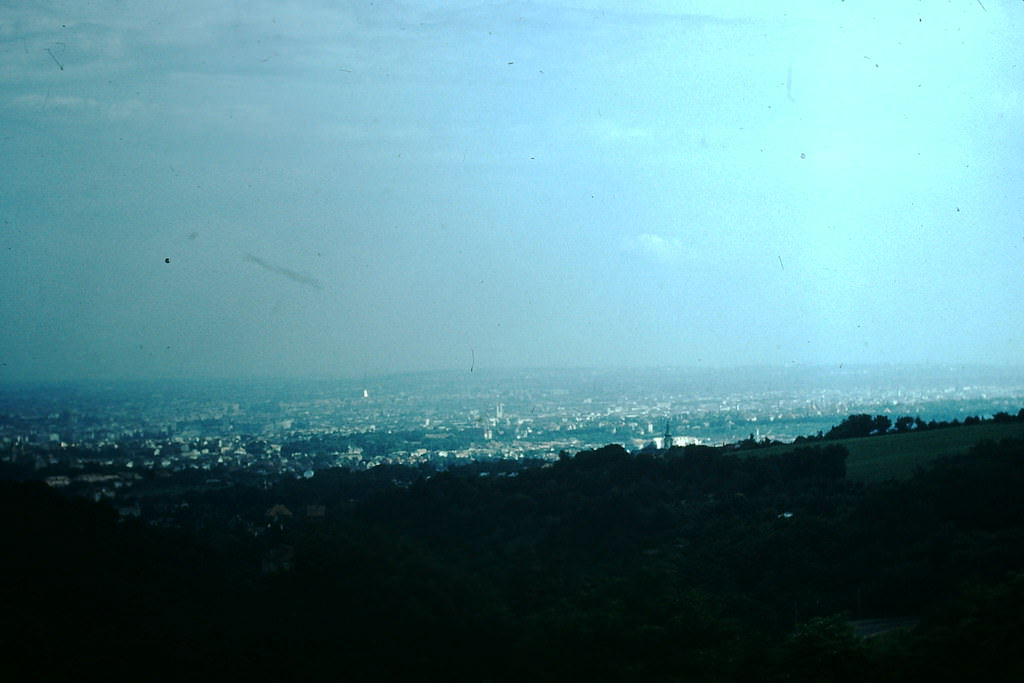
The hillside areas north and west of Vienna offered restaurants with panoramic views over the city. The Cobenzl Restaurant, perched above the vineyards, was a popular destination. The Grinzing wine district, known for its traditional Heurigen wine taverns, continued to draw locals and visitors looking to sample the region’s white wines. From Grinzing, the full sweep of Vienna spread out below, with the Leopoldsberg Castle crowning the ridge above the Danube.
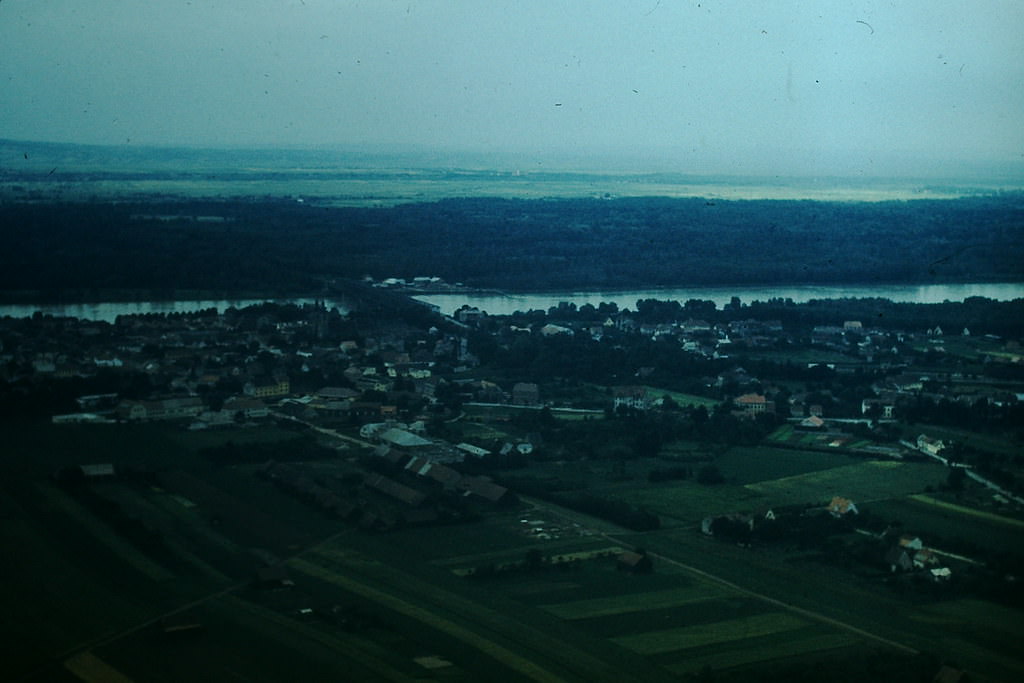
East of the Danube, the Soviet zone was a visible reminder of how the city remained politically split. Russian patrol boats monitored the river, and zone signs marked the boundary between the Soviet-controlled district and the Allied sectors. Leopoldsberg Castle looked out over the Danube from its hilltop position, while bridges across the river connected the divided parts of the city.





Really nice, thanks for sharing