
Harlem sits in the northern part of Manhattan, New York City, and by the 1940s it had become one of the most culturally rich African-American neighborhoods in the United States. Its rise began decades earlier, when Black Americans migrated north in large numbers to escape racial violence, poverty, and the rigid segregation of the South. Harlem offered something different — jobs, community, and the possibility of a better life. But the Great Depression hit hard. Unemployment in Harlem climbed past 20%, and many residents were forced out of their homes. By the time the 1940s arrived, the neighborhood was rebuilding itself, and its streets, clubs, and churches were full of life.
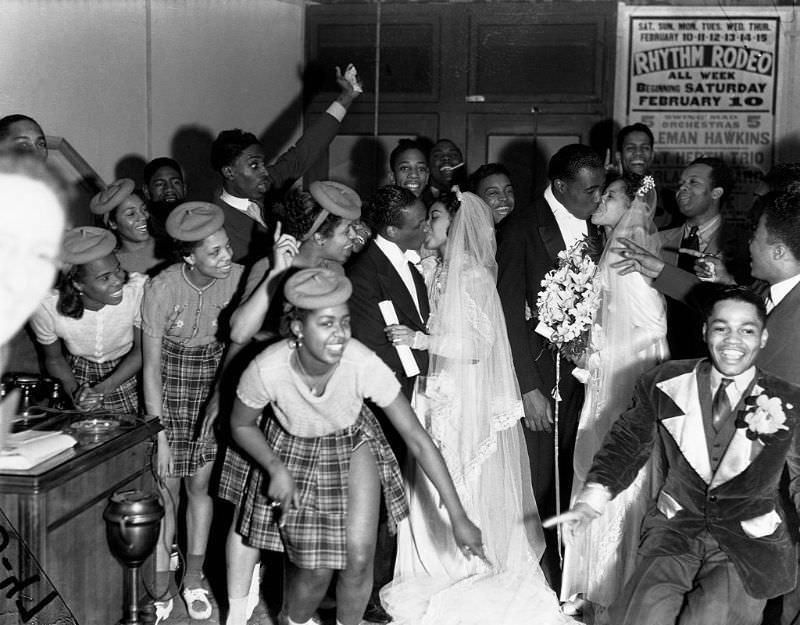
Celebrations were a big part of Harlem’s social fabric. Weddings brought entire communities together, with families dressed in their finest clothes to mark the occasion.
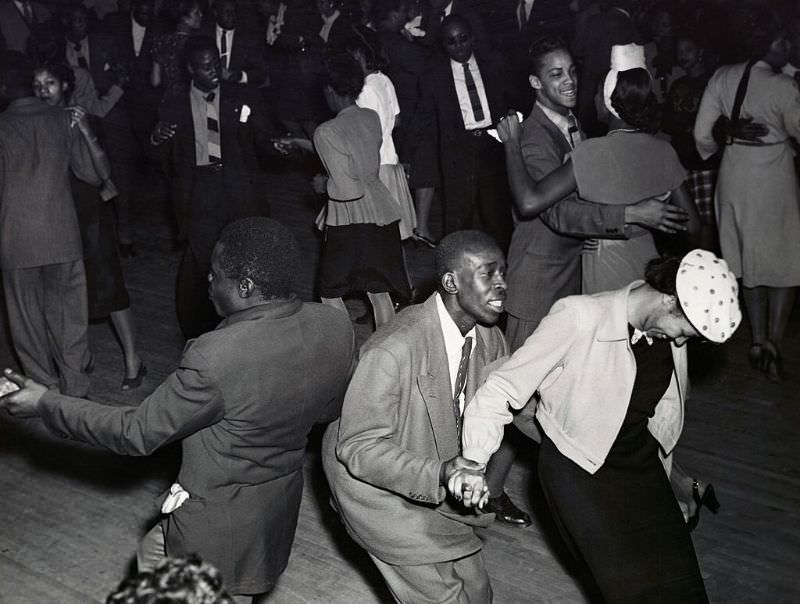
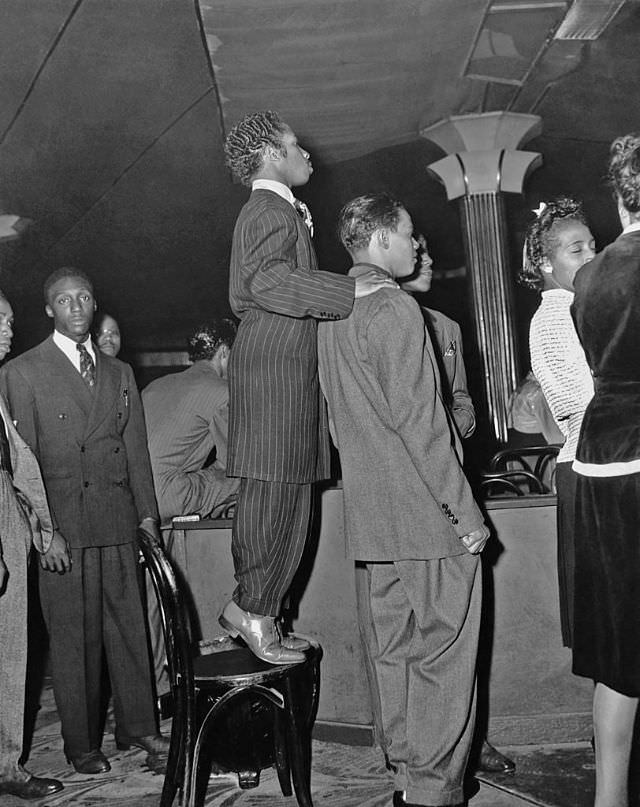
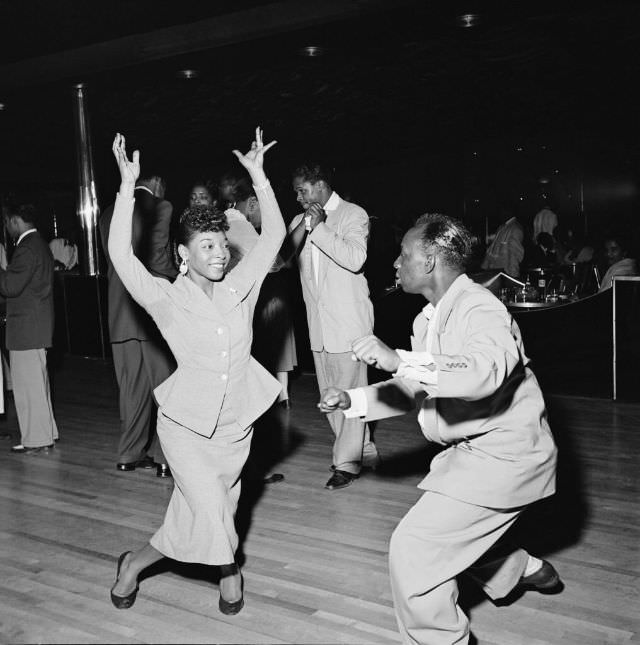
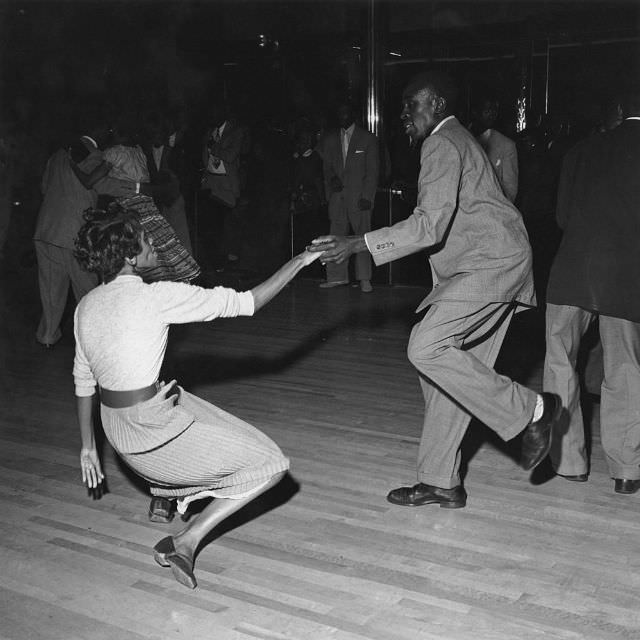
The Savoy Ballroom on Lenox Avenue was one of the most famous dance halls in the country. It opened in 1926 and quickly became a landmark for jazz and swing dancing. Unlike most venues of the era, the Savoy was racially integrated — Black and white dancers shared the same floor. By the 1940s, it was a fixture of Harlem nightlife, drawing locals and visitors alike.
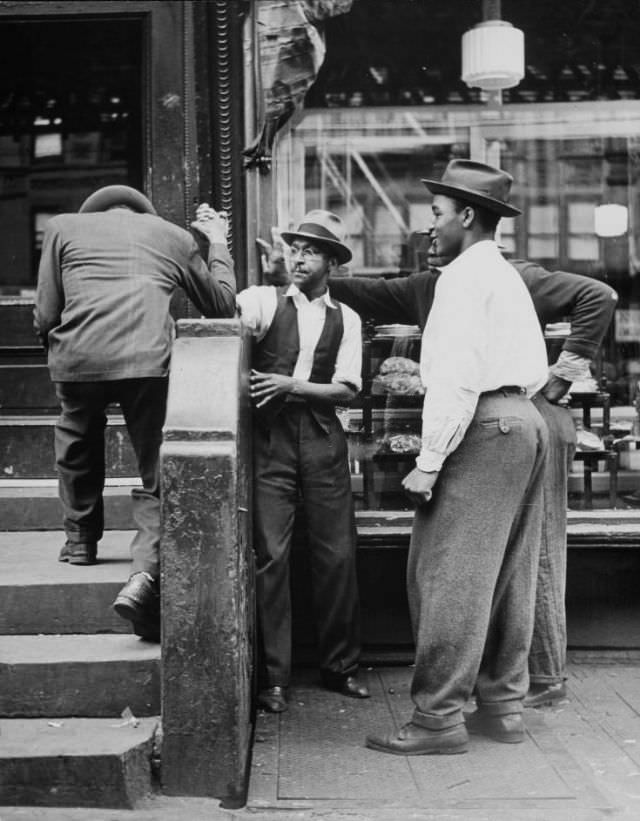
Life on Harlem’s streets mixed the serious with the playful. Friendly competitions were a common way for neighbors to pass the time and show off a little strength.
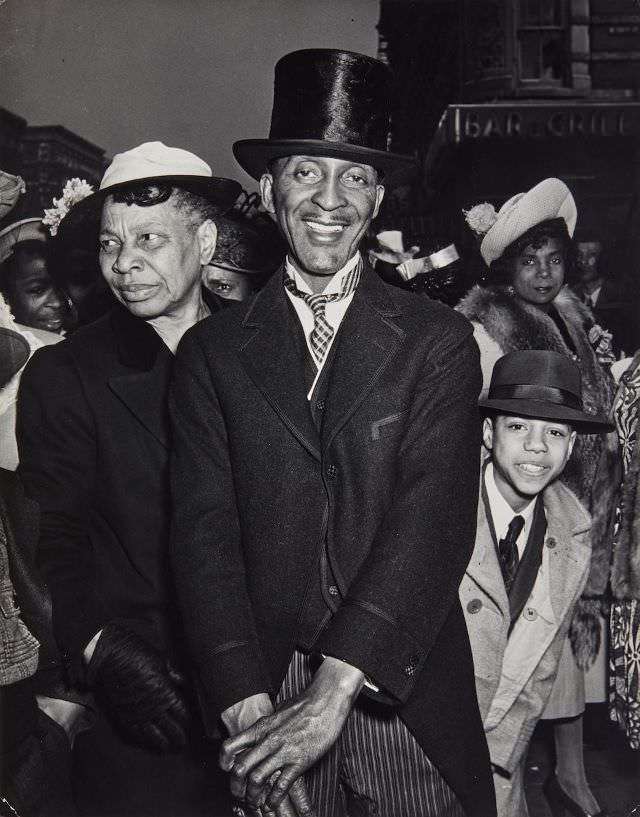
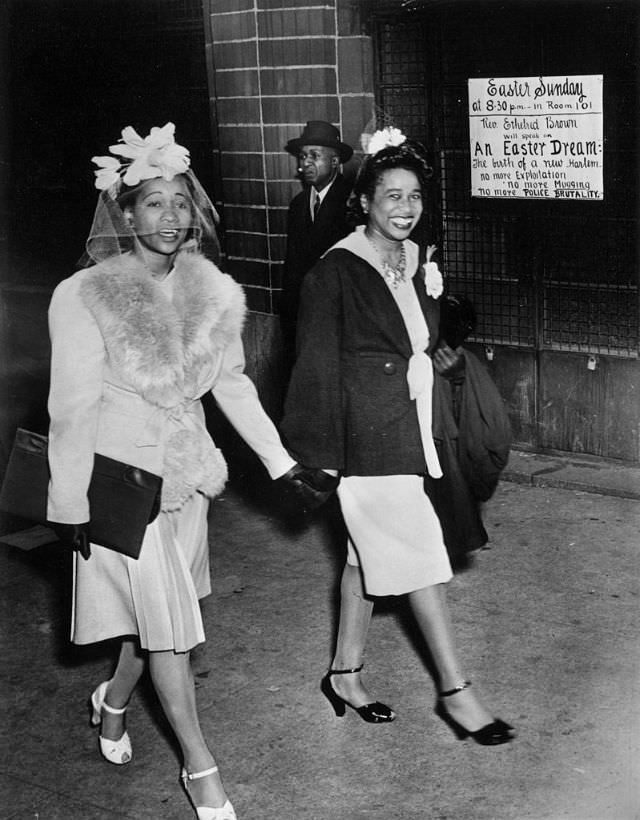
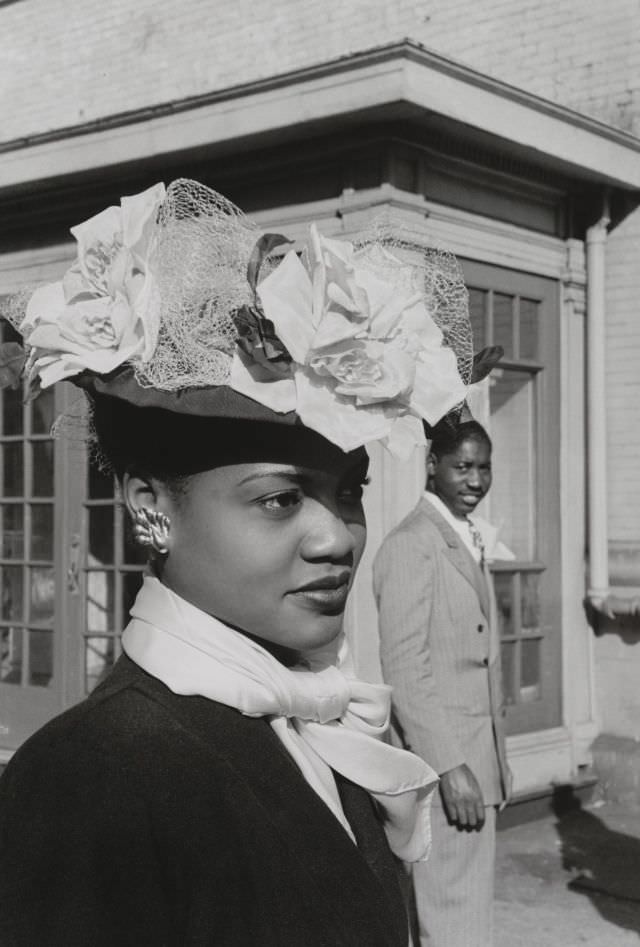
Easter Sunday was one of the most important days of the year in Harlem. Churches overflowed with worshippers, and the streets outside became an informal fashion showcase. Residents wore their best outfits — hats, gloves, tailored suits, and bright dresses — making the holiday as much a community event as a religious one.
The Savoy Ballroom attracted all kinds of people. The zoot suit — a wide-shouldered jacket with high-waisted, wide-legged trousers — was a bold fashion statement among young men in 1940s Harlem, tied closely to jazz culture and a sense of pride.
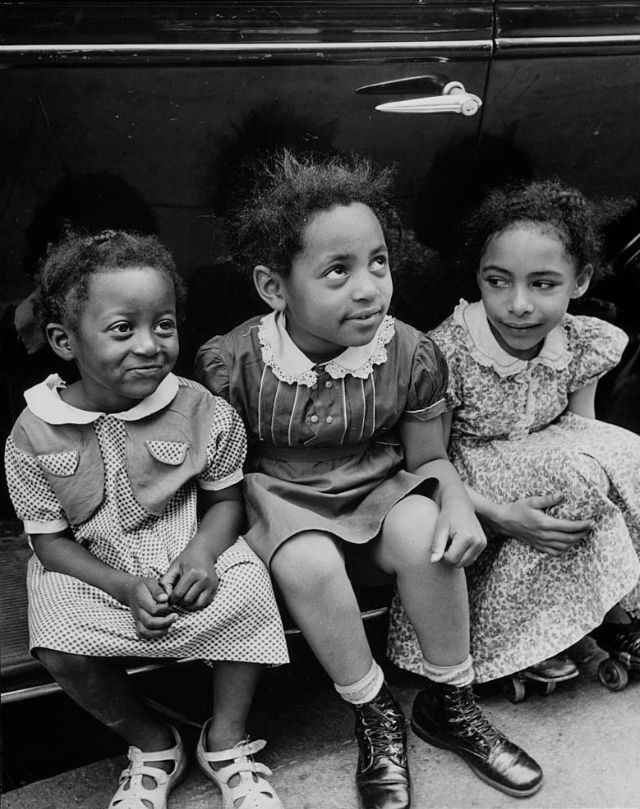
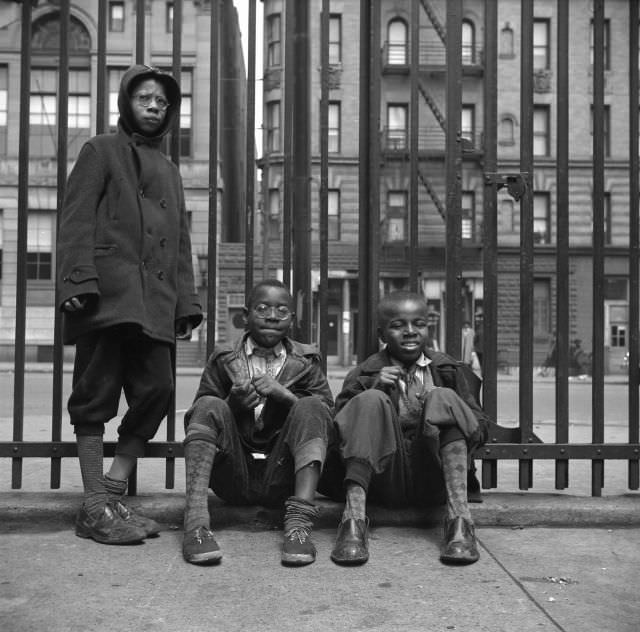
Children were everywhere in 1940s Harlem — on stoops, in alleyways, and along busy sidewalks. The neighborhood’s density meant kids grew up surrounded by community, with the street itself serving as their playground.
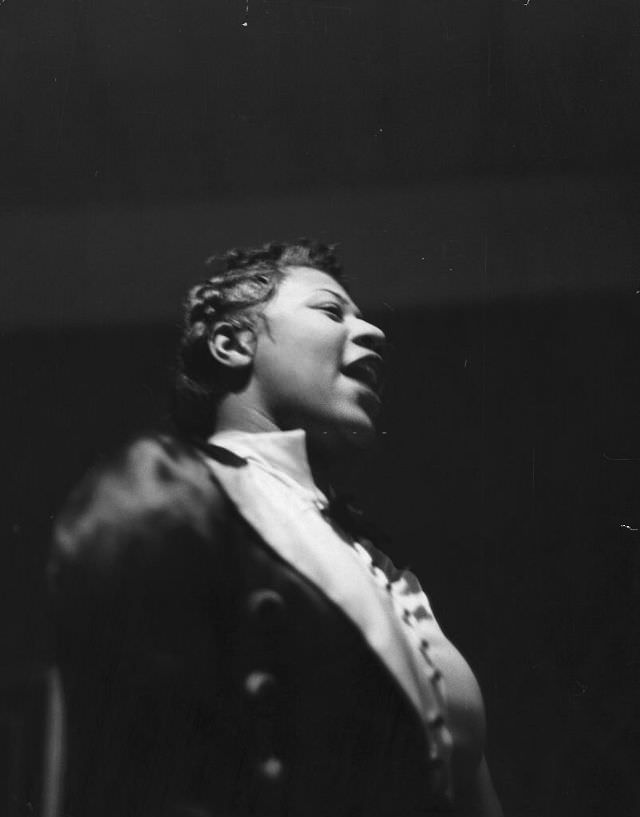
Harlem’s nightclub scene produced some of the biggest names in American music. Ella Fitzgerald, who had won the Apollo Theater’s amateur night contest back in 1934, was a regular presence in the neighborhood’s jazz venues throughout the 1940s. Her voice drew packed crowds on any given night.
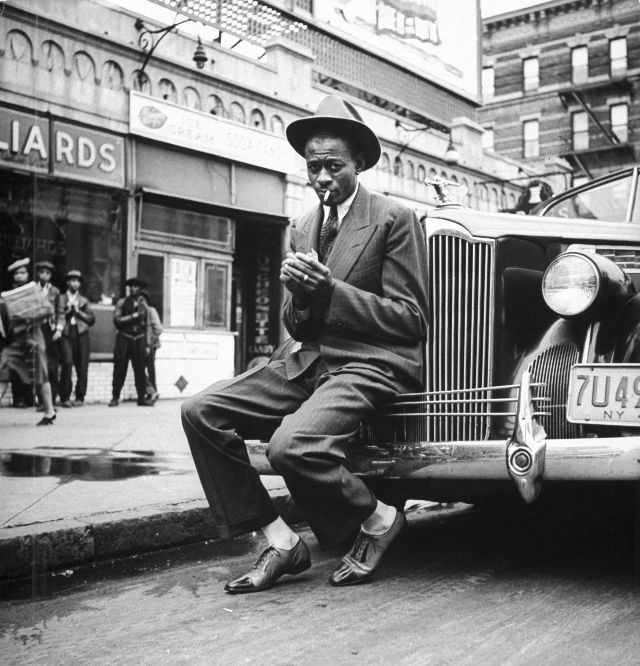
Sports heroes were deeply admired in Harlem. Satchel Paige was one of the greatest pitchers in baseball history, spending most of his career in the Negro Leagues because Major League Baseball remained segregated until 1947. In Harlem, athletes like Paige carried a status that went beyond the game — they were symbols of excellence against the odds.
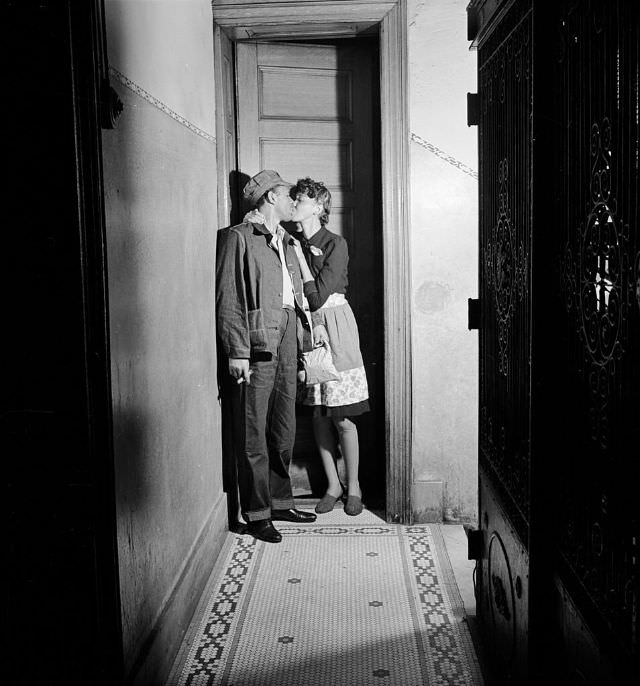
Harlem’s apartment buildings and tenement hallways were shared spaces where private moments still managed to unfold.
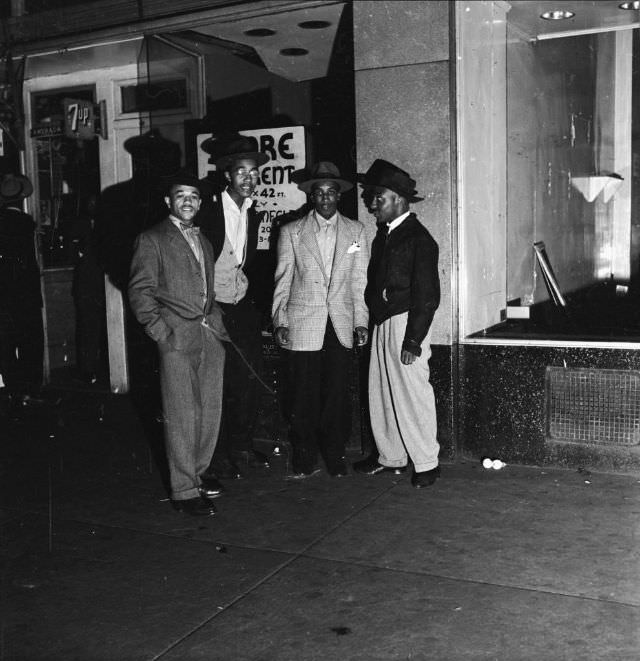
Despite widespread poverty, Harlem also had a professional class — doctors, lawyers, business owners, and entertainers who carved out prosperous lives within the neighborhood. Their presence on the street at night spoke to the full range of people who called Harlem home.
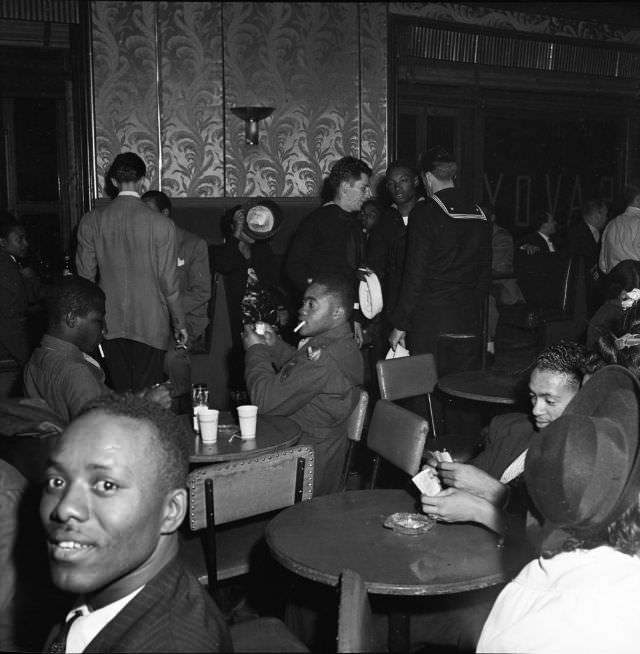
Harlem’s clubs weren’t just about music — they were places where people unwound after long workweeks, caught up with friends, and felt a sense of belonging.
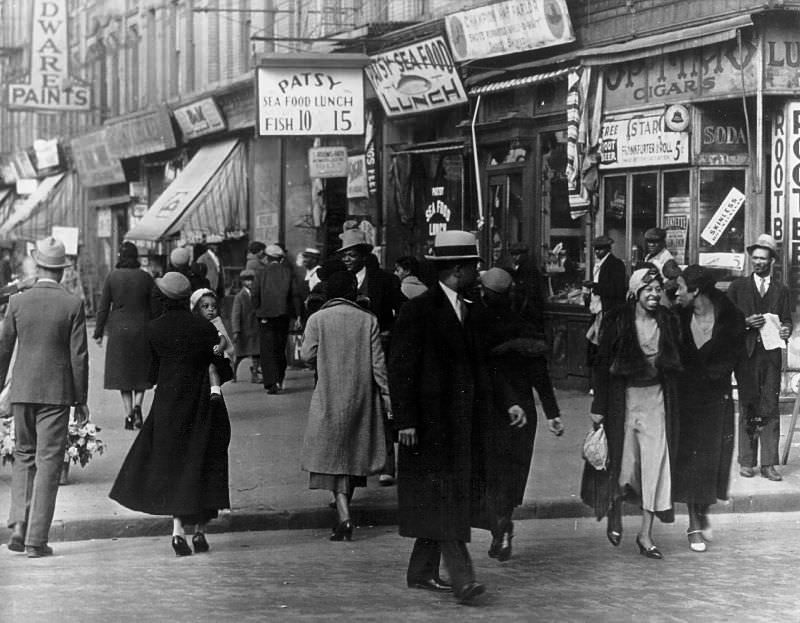
125th Street was Harlem’s main commercial artery. Shops, vendors, restaurants, and theaters lined the boulevard, making it the beating heart of the neighborhood’s daily life.
The Abyssinian Baptist Church, founded in 1808, was one of the most prominent Black churches in the country by the 1940s. Under the leadership of Adam Clayton Powell Sr. and then his son Adam Clayton Powell Jr., the church served as both a spiritual home and a center for political organizing. Easter Sunday drew enormous crowds.
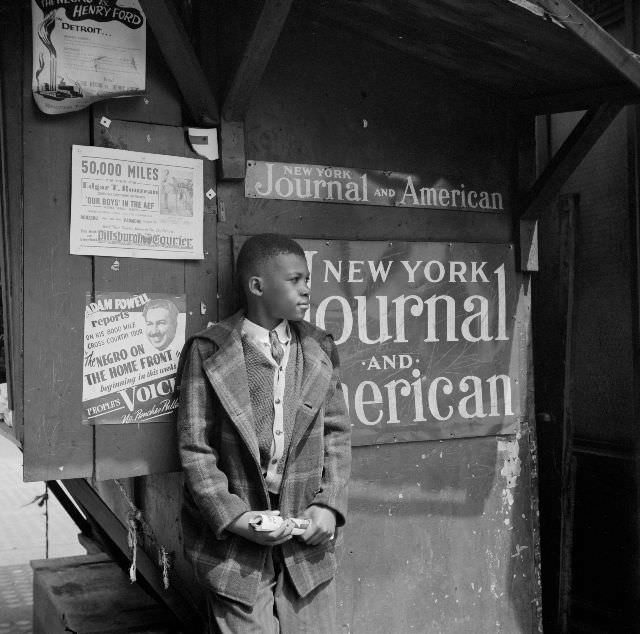
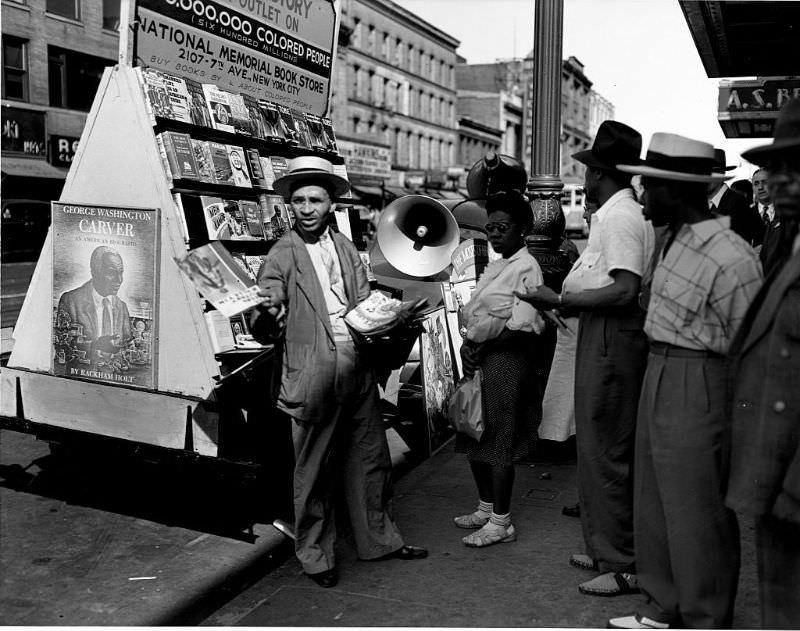
Street commerce was a daily reality in Harlem. Newsstands and bookstalls gave people access to newspapers, magazines, and literature — including publications by Black writers and journalists that mainstream outlets largely ignored.
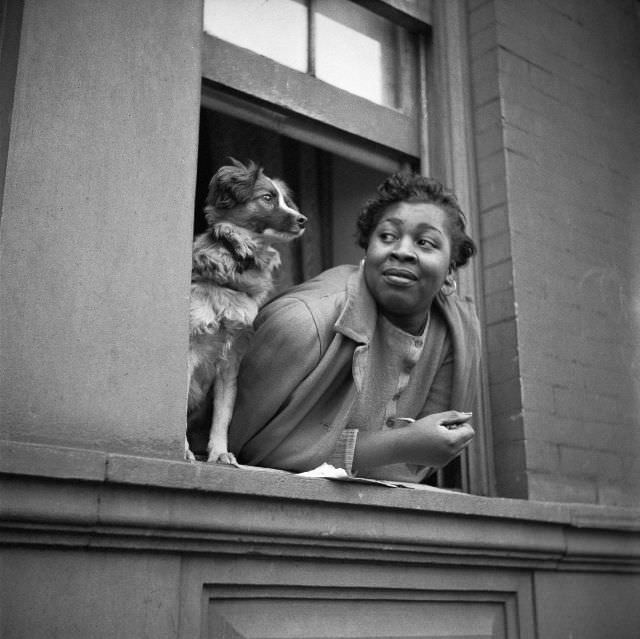
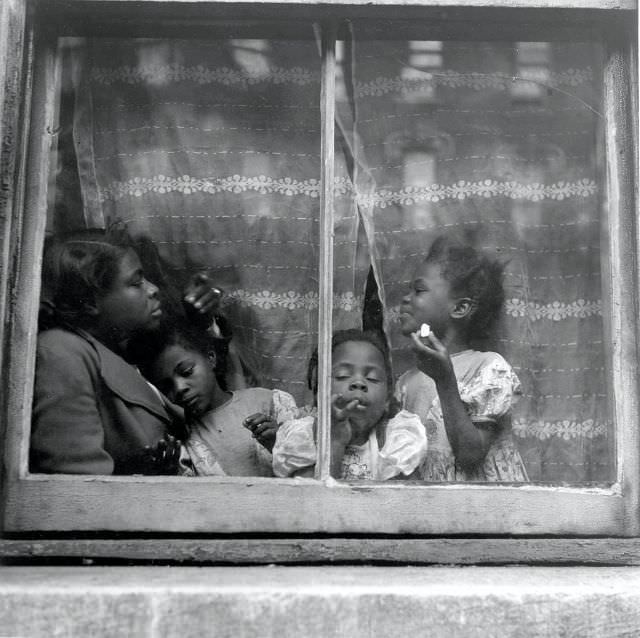
In Harlem’s densely packed tenements, open windows were a lifeline. During warm months, residents leaned out to catch a breeze, watch the street below, and stay connected to the world outside their small apartments.
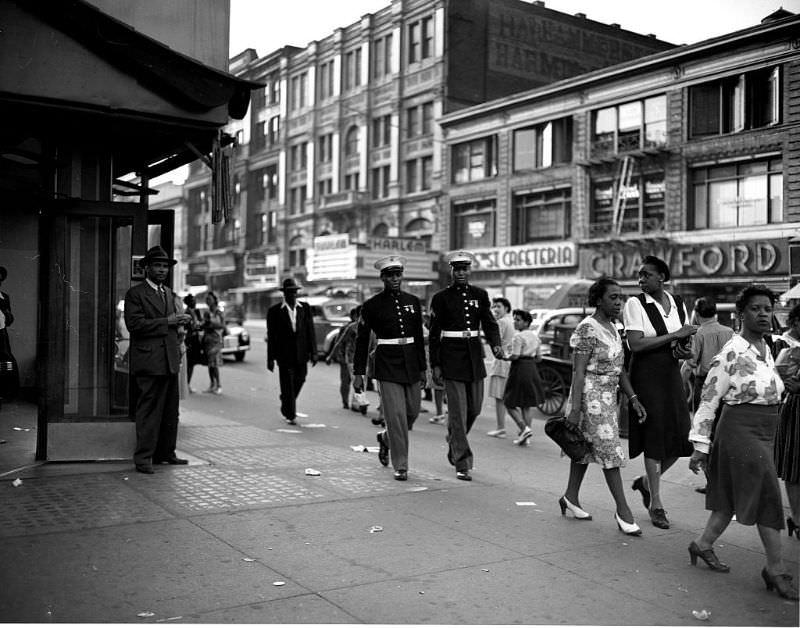
World War II touched every part of American life, including Harlem. Over a million Black Americans served in the armed forces during the war, despite fighting in a segregated military. Seeing uniformed soldiers on the streets of Harlem was a common sight throughout the early 1940s.
Books and literature held a special place in Harlem. The neighborhood had been the center of the Harlem Renaissance — a cultural and intellectual movement that had peaked in the 1920s — and that respect for written ideas carried forward into the following decades. Outdoor booksellers on 125th Street catered to a community that was hungry for knowledge.
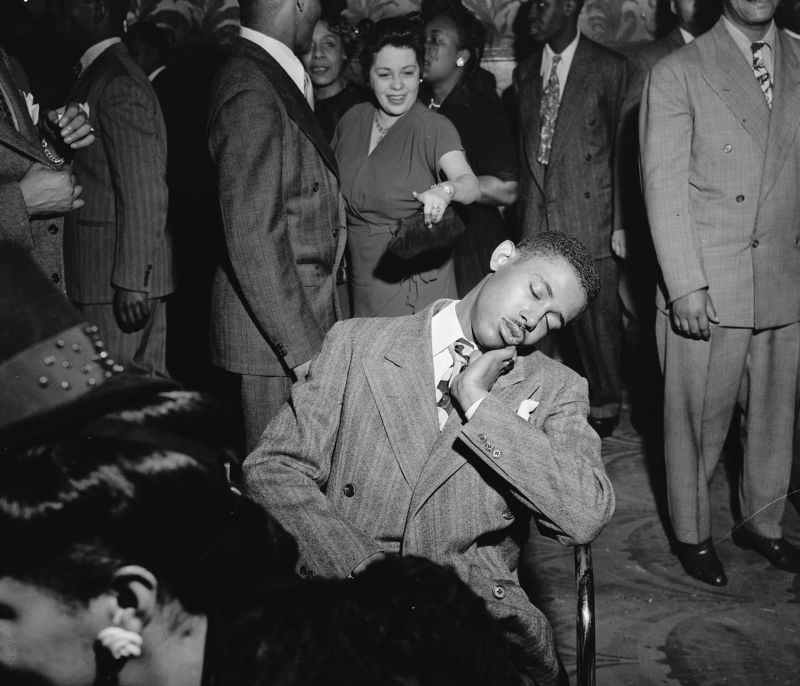
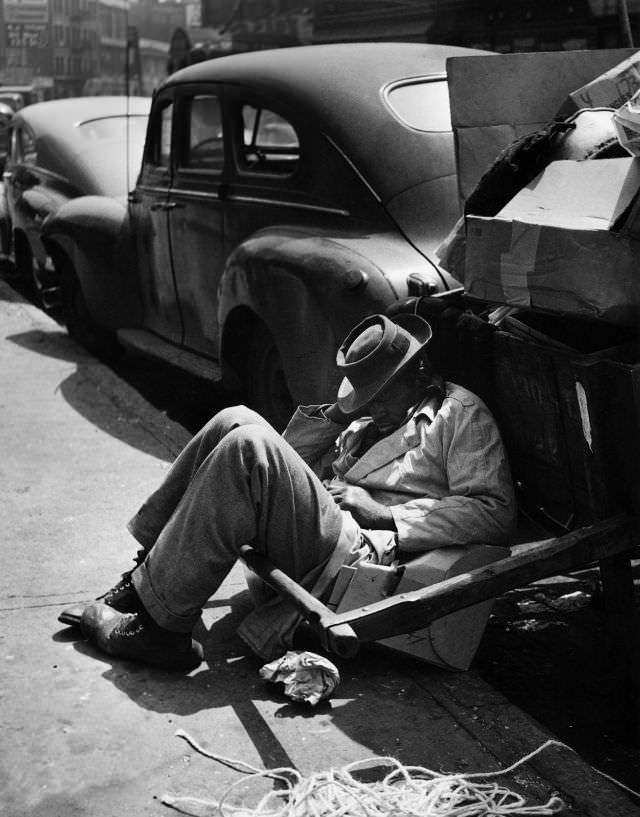
The pace of life in Harlem was relentless. Long days on the job, whether in factories, service industries, or domestic work, left residents exhausted. Moments of rest were grabbed wherever they could be found.
By the late 1940s, Easter Sunday in Harlem had grown into one of the neighborhood’s signature annual events. The tradition of dressing up for the holiday had deep roots, and the post-war years brought a new sense of optimism that was visible in the streets.
The Savoy Ballroom remained one of New York City’s premier entertainment destinations well into the late 1940s. Swing dancing — fast, athletic, and improvisational — was the style that defined the floor. Dancers trained seriously, and the Savoy produced some of the best in the country.
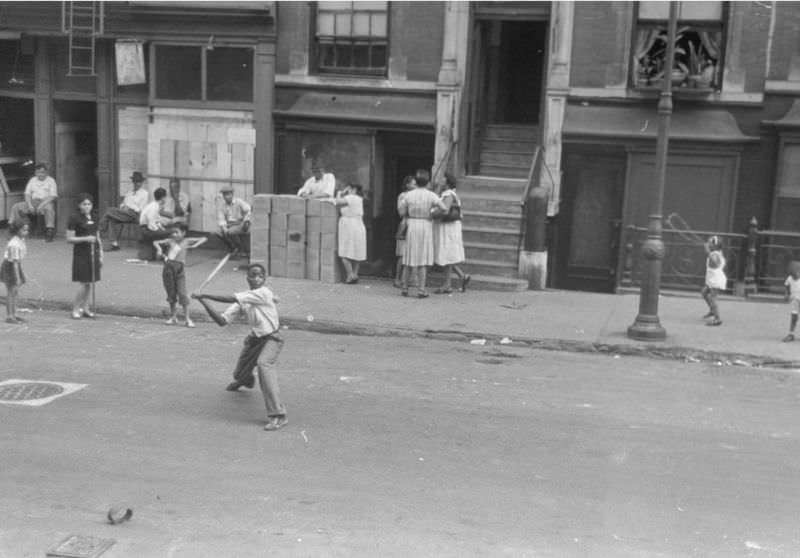
Baseball was a passion for Harlem’s youth. With limited access to formal parks and equipment, kids found ways to play wherever there was open space — vacant lots, side streets, and any flat stretch of pavement they could claim.
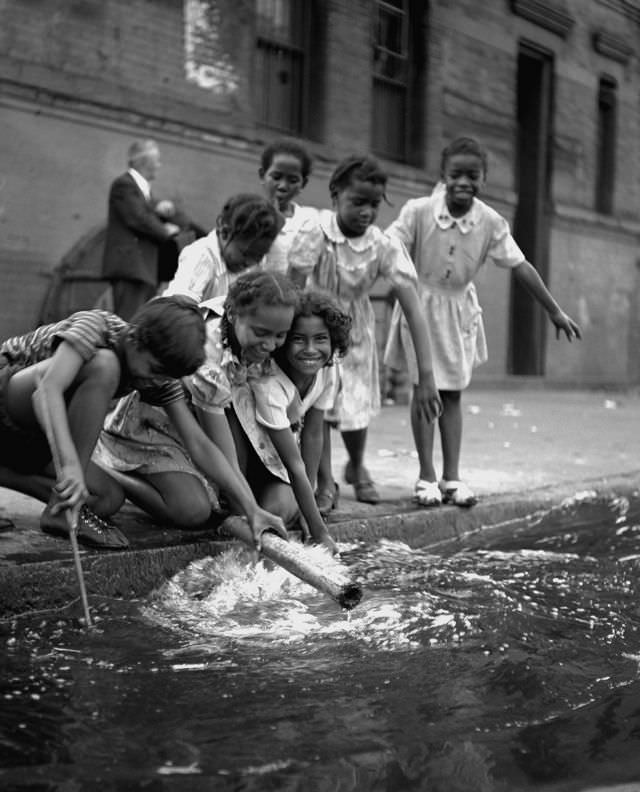
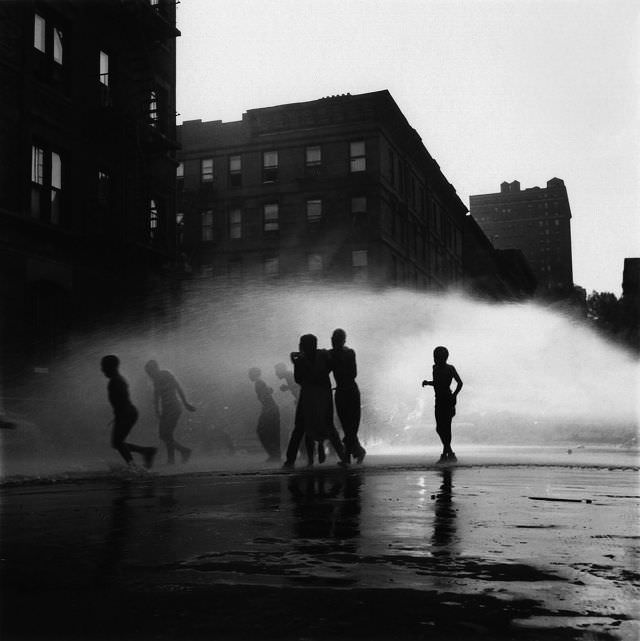
Street drains and fire hydrants became gathering spots for children during the warmer months. With no air conditioning and cramped apartments, the outdoors offered the only real relief from the heat.
Family life in Harlem was close-knit. Extended families often shared apartments or lived within a few blocks of each other, creating tight community bonds that helped residents survive hard economic times.
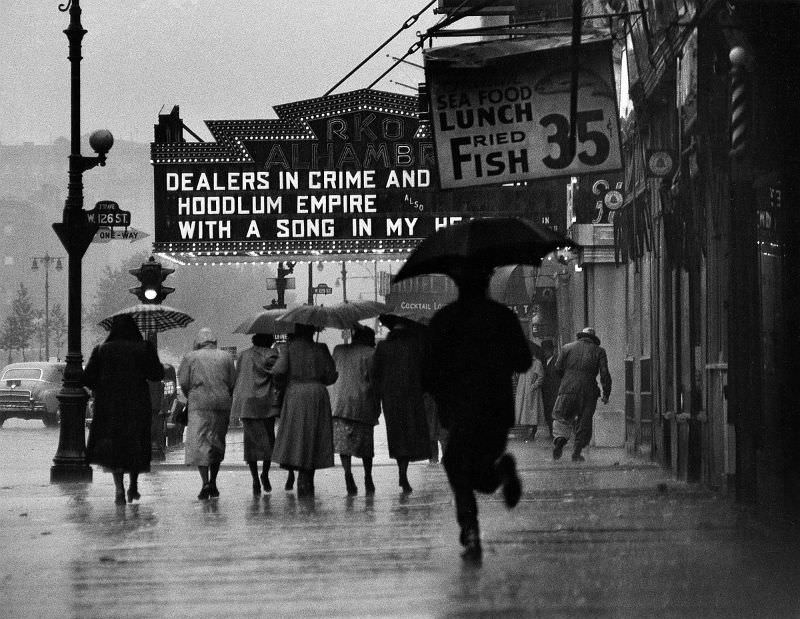
Harlem’s streets were active in all weather. Rain brought out umbrellas and sent street vendors scrambling, but the neighborhood never really slowed down — the sidewalks stayed busy regardless of what the sky was doing.
Summer heat in New York City was brutal before air conditioning became widespread, and Harlem’s children found their own solutions. Open fire hydrants and flooded gutters turned ordinary streets into swimming holes.
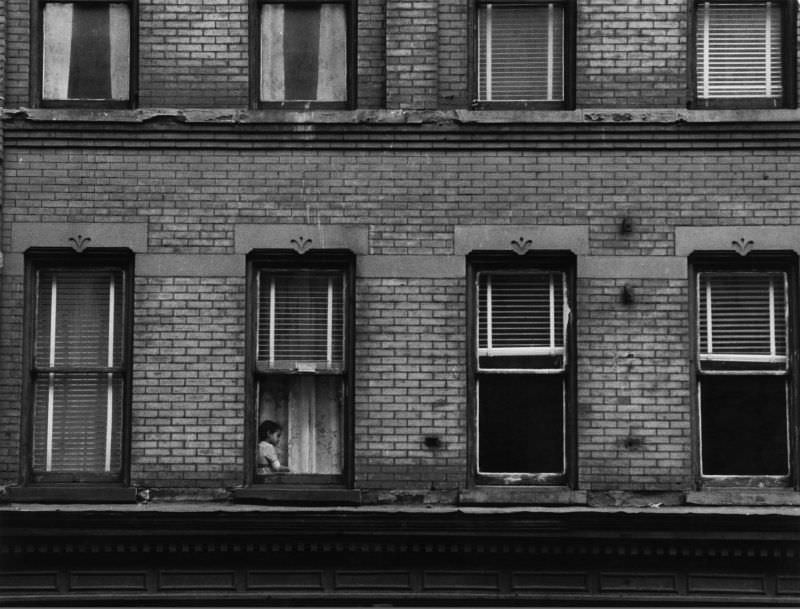
Tenement buildings defined the physical landscape of Harlem. These multi-story blocks housed large numbers of families in small apartments, often with shared bathrooms and poor ventilation. Overcrowding was a persistent problem, but these buildings were also the places where communities formed and neighbors became extended family.
Work in 1940s Harlem was often physical and exhausting. Laborers, delivery workers, and tradesmen spent long hours on their feet, and a moment’s rest between jobs was never wasted.
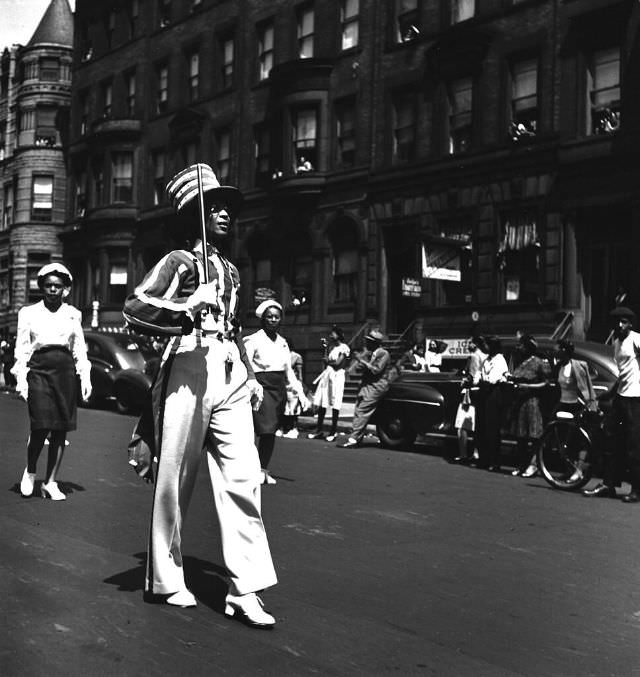
Public parades were a regular part of Harlem’s calendar, marking everything from religious holidays to political movements. By 1949, the neighborhood had lived through depression, war, and rapid social change — and its residents still filled the streets to march together.





Must‘ve been worth the trip back then。Who‘s a New Yorker these days but generational residents?
The caption for the first photo says the men are affluent. Not necessarily. A lot of Harlemites took pride in their appearance and enjoyed dressing up regardless of their income level.
Some of those pictures look like my grandparents and their friends. Though they were mainly in the Bronx at the time.