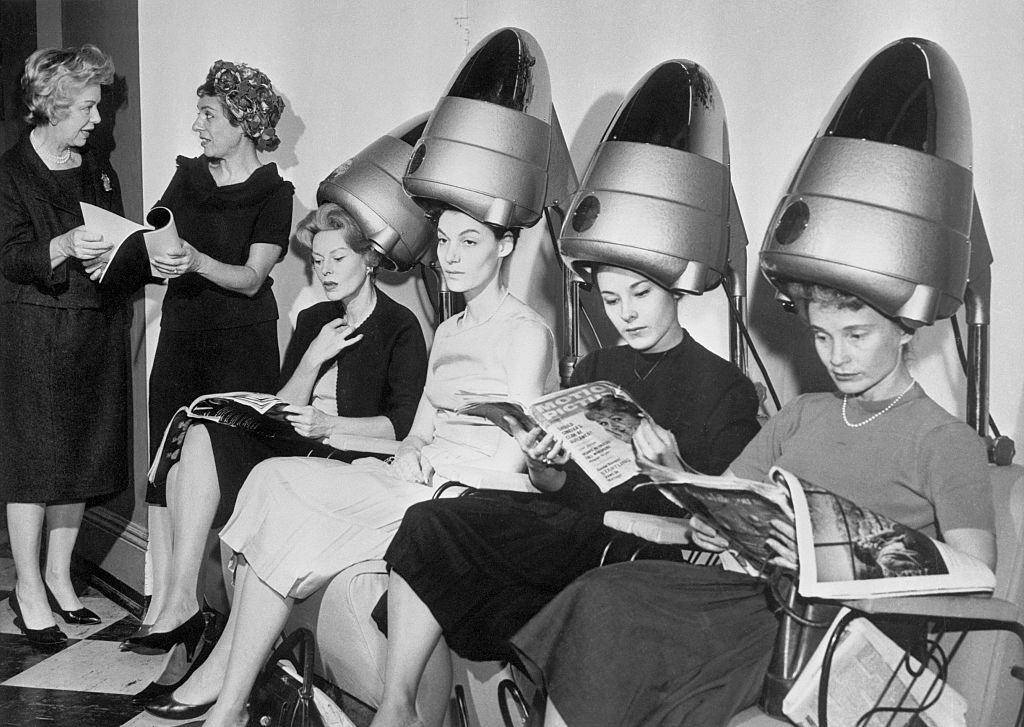
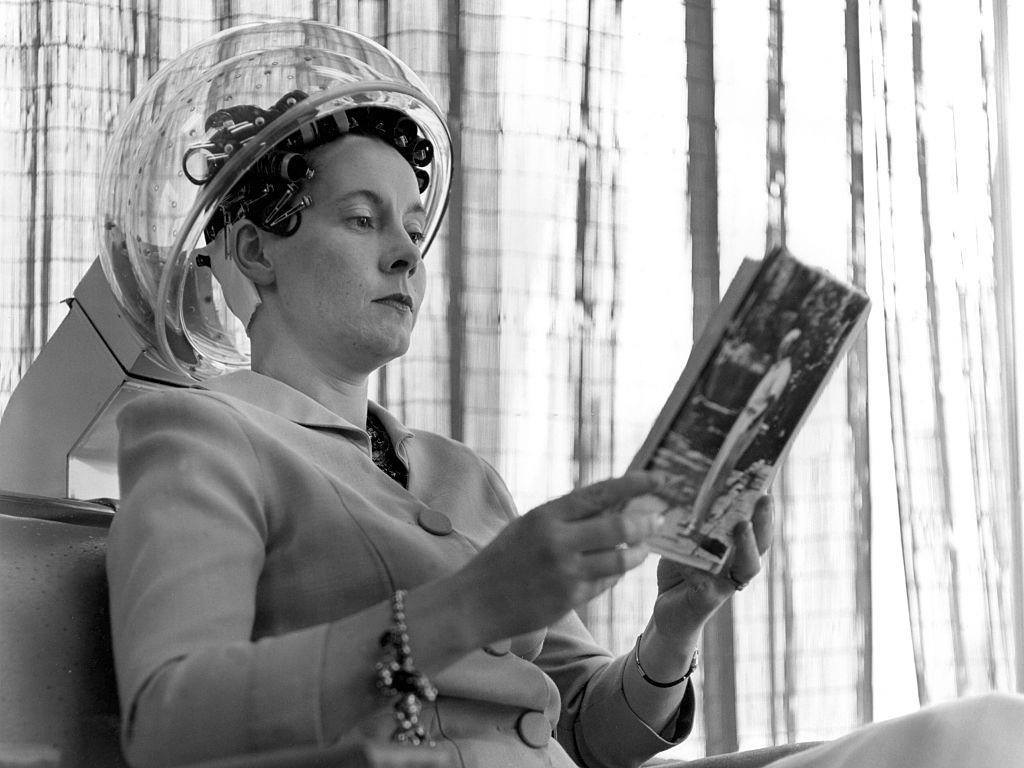
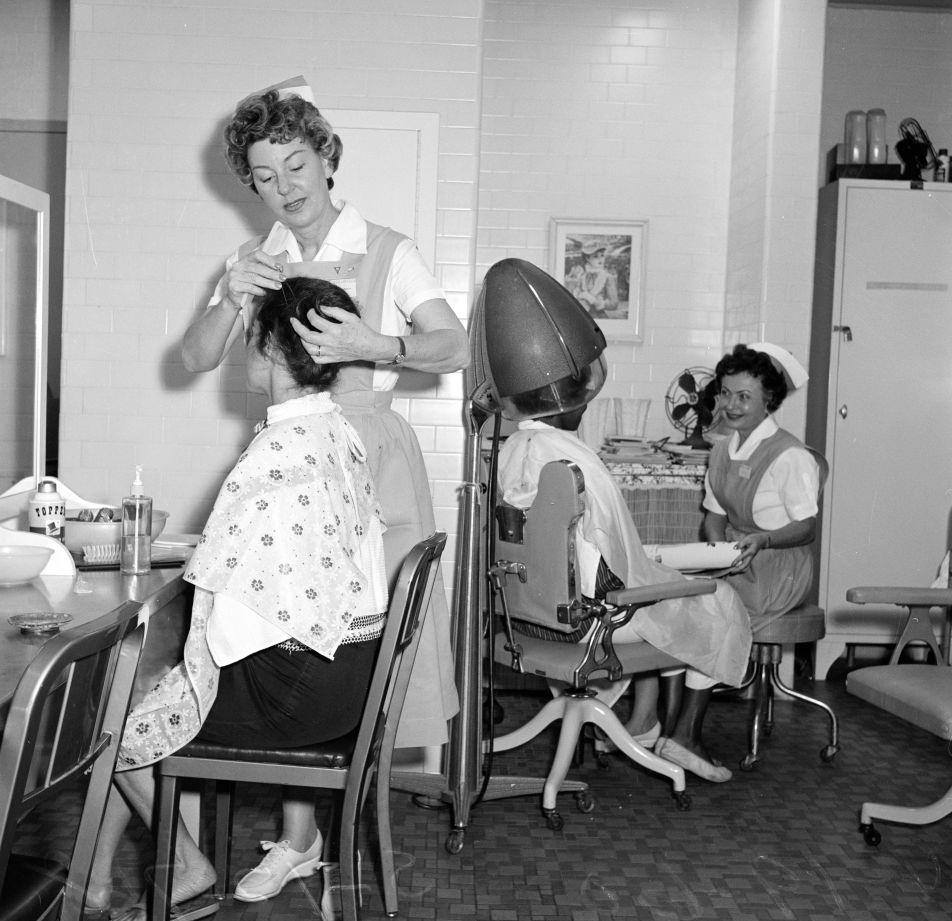
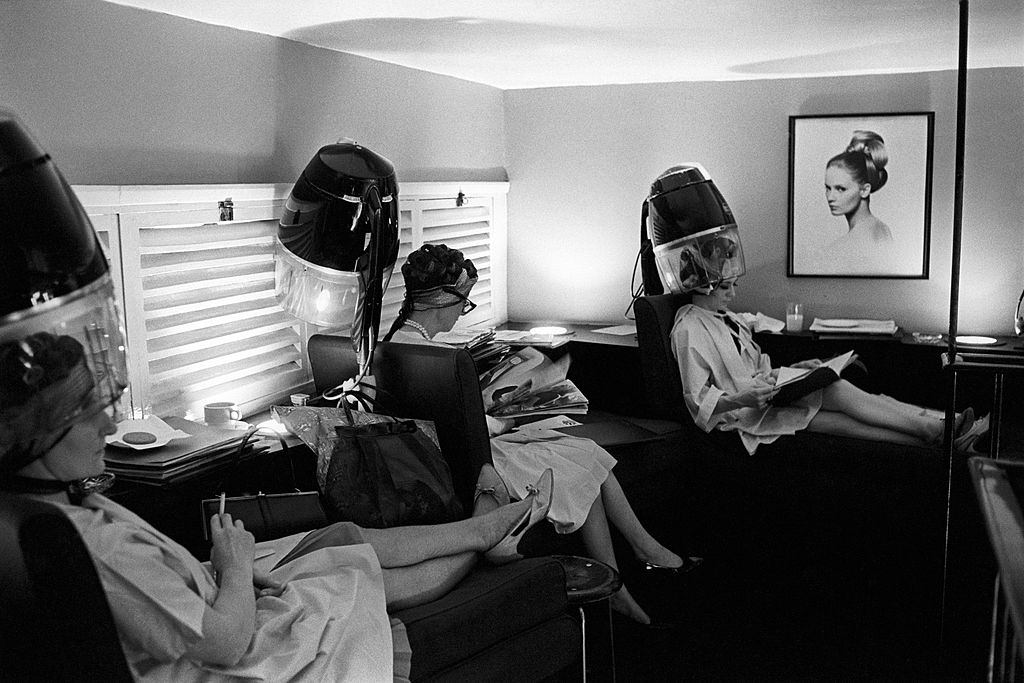
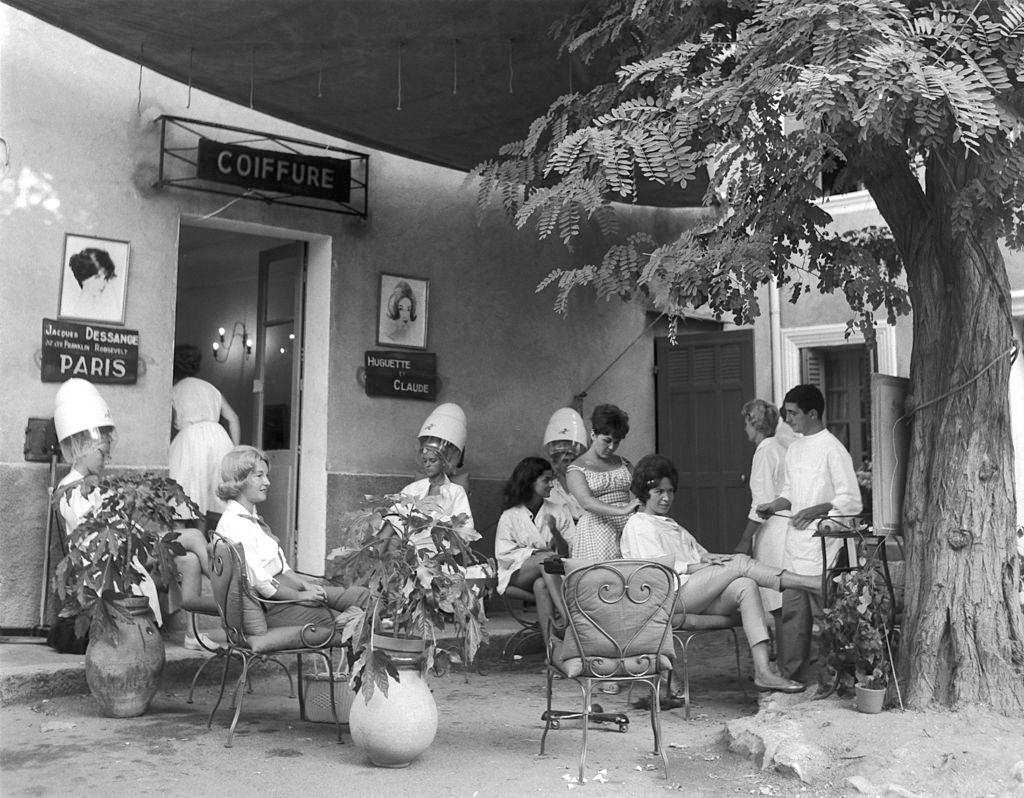
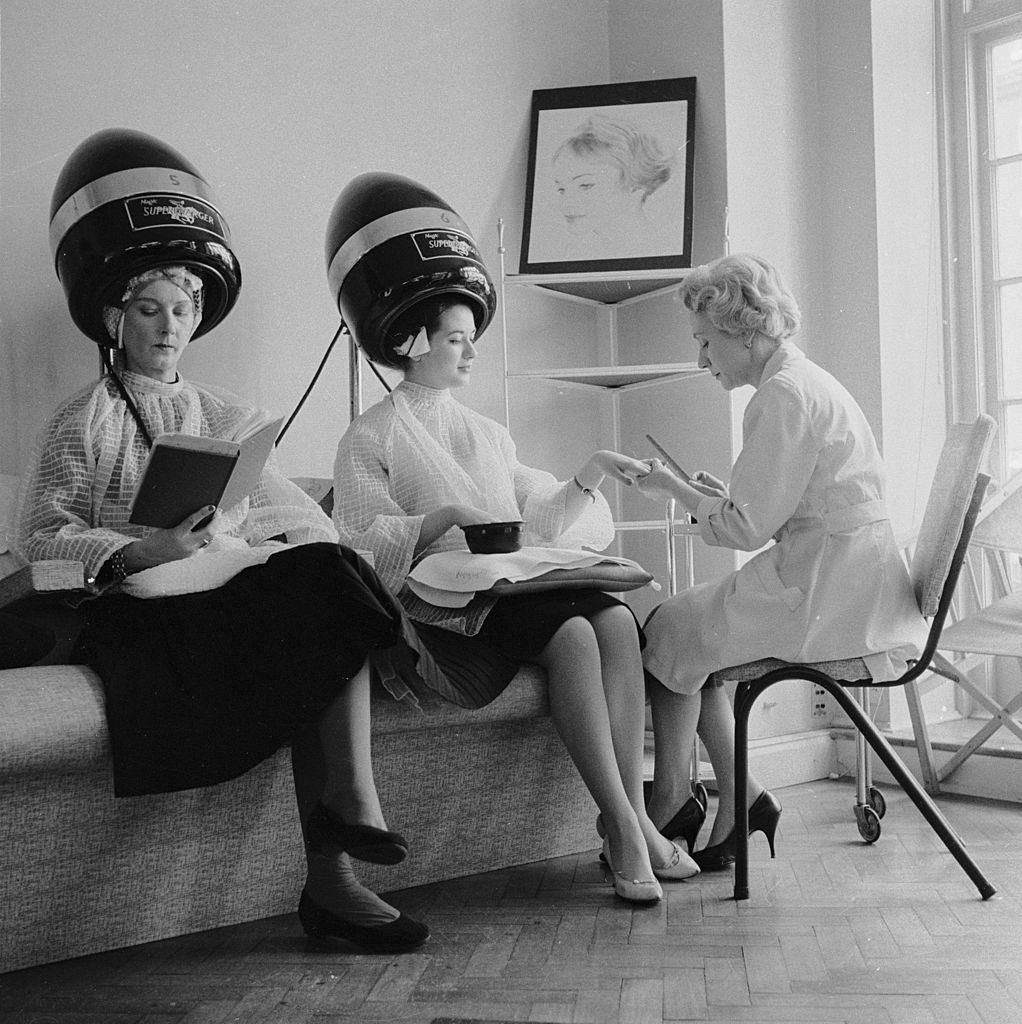
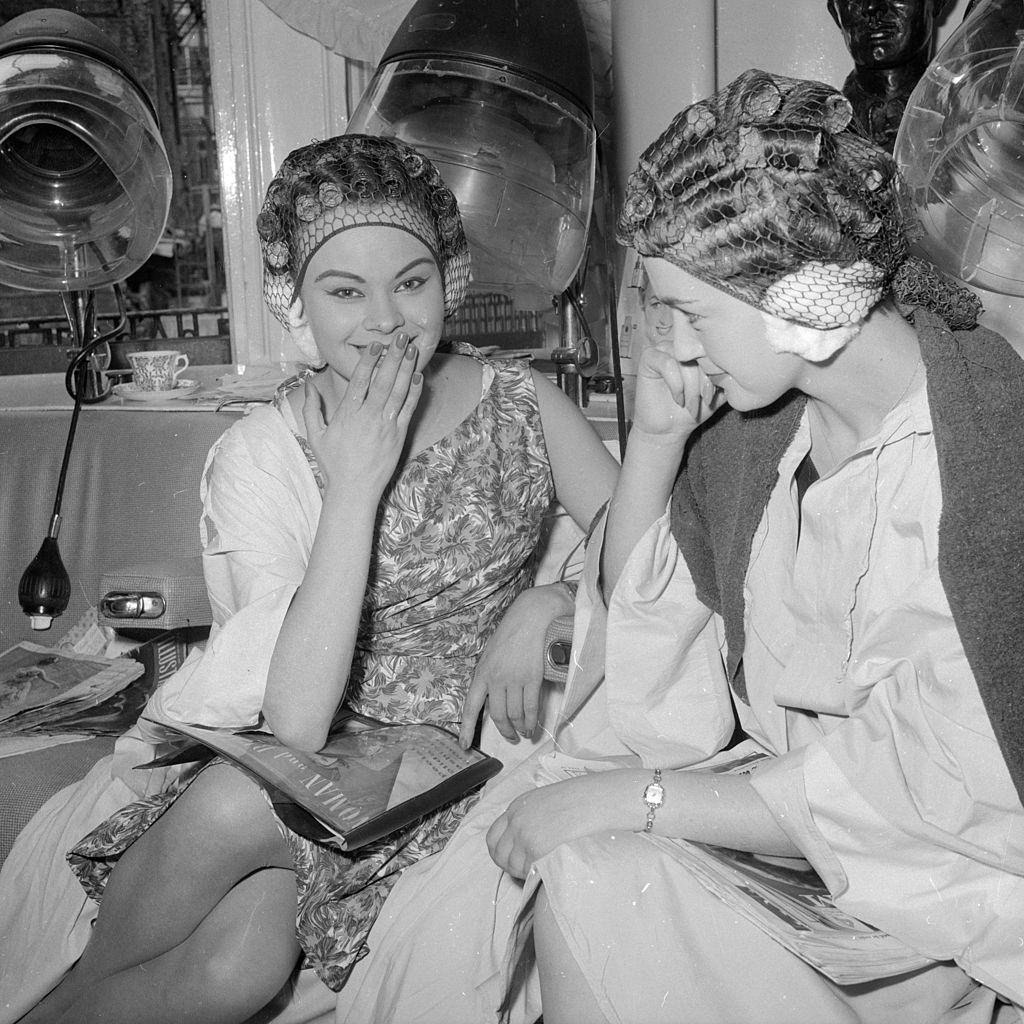
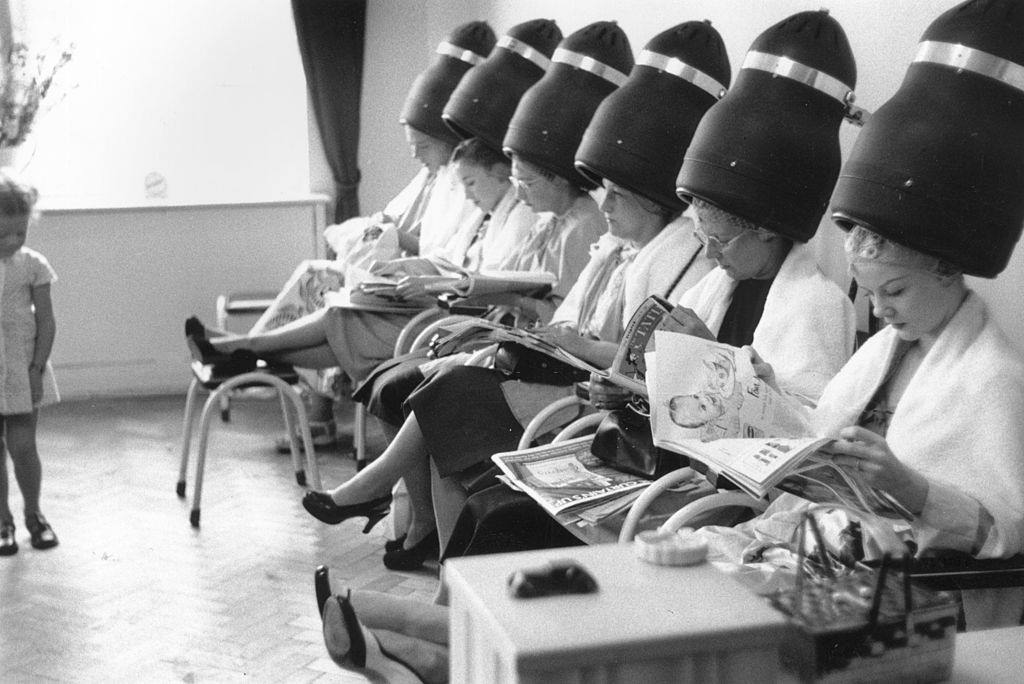
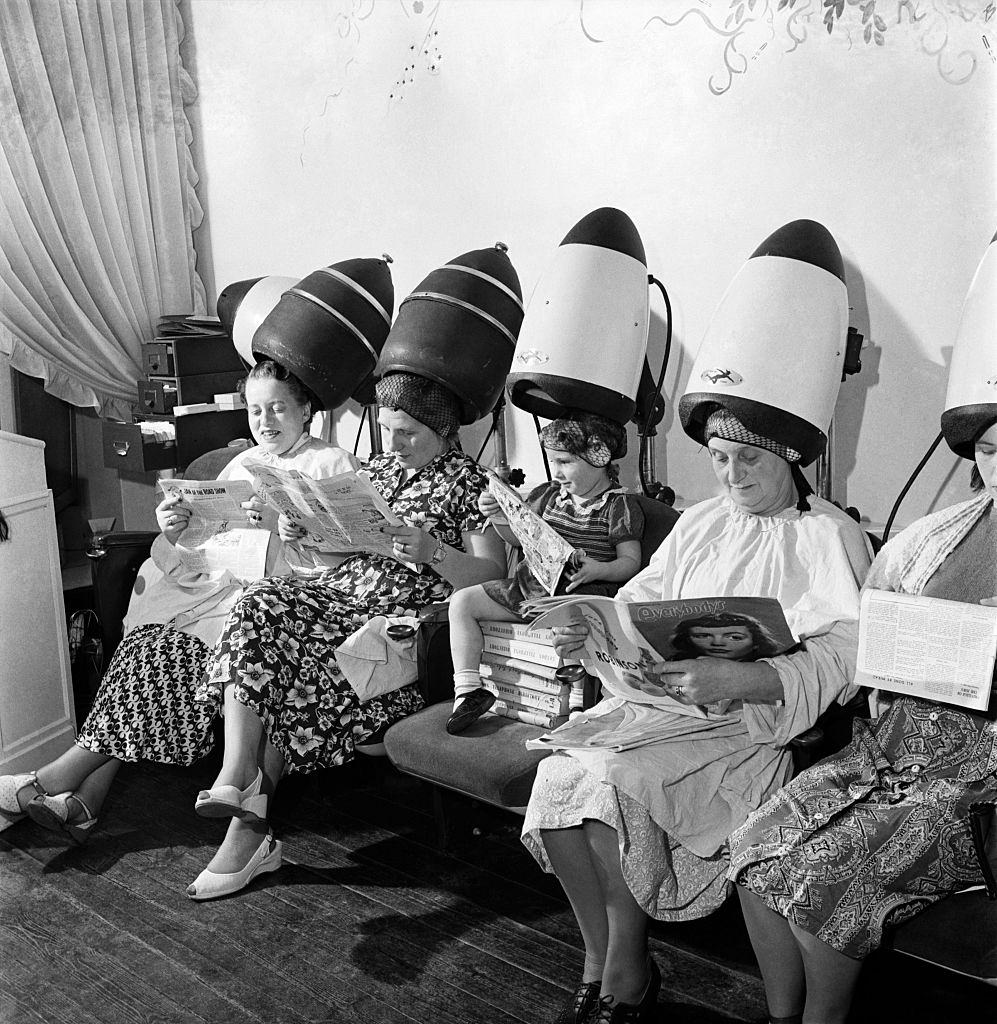
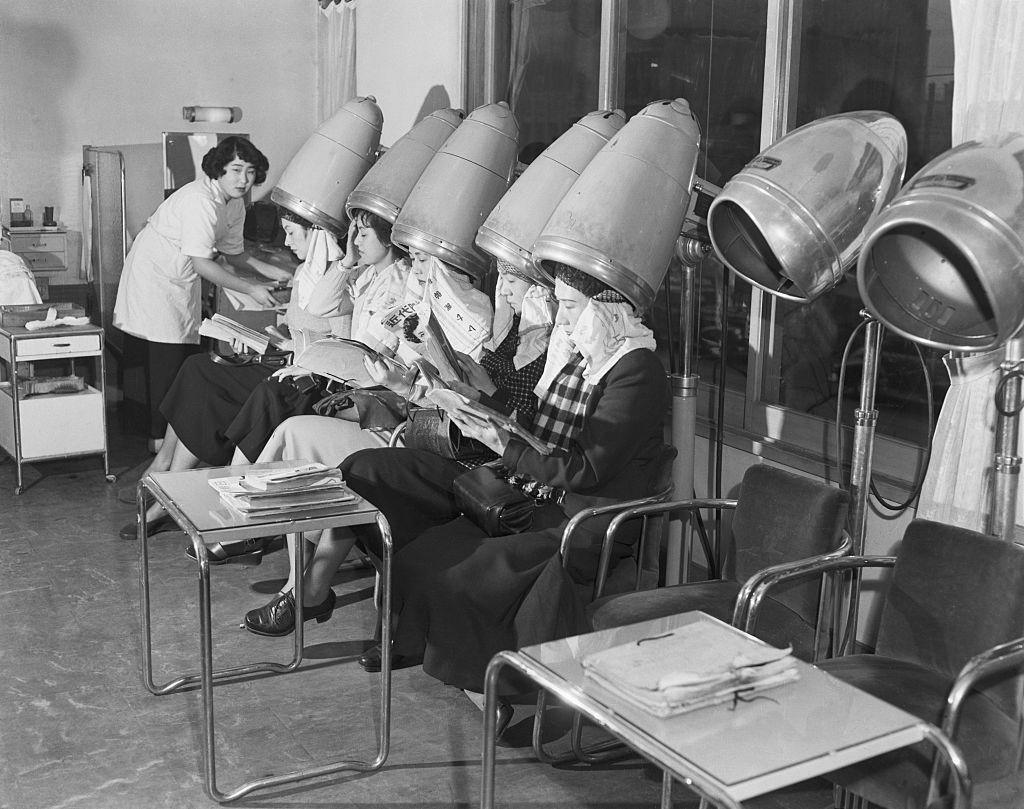
Before home hair tools became part of everyday life, the salon was a destination. Women — and sometimes men — carved time out of their week to sit under a large, humming hood dryer, and they didn’t see it as a chore. They saw it as an event. From the 1930s through the 1970s, the salon chair was a social seat, and the hood dryer was its crown.
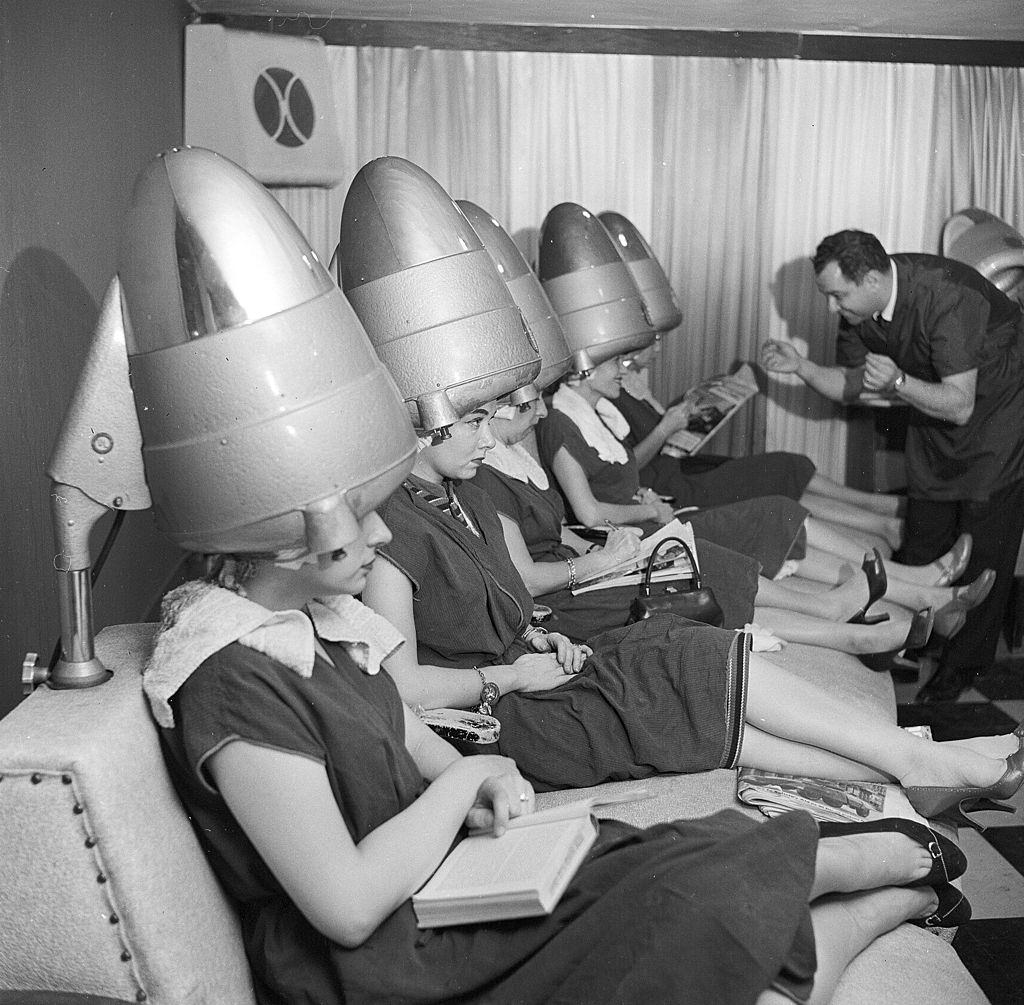
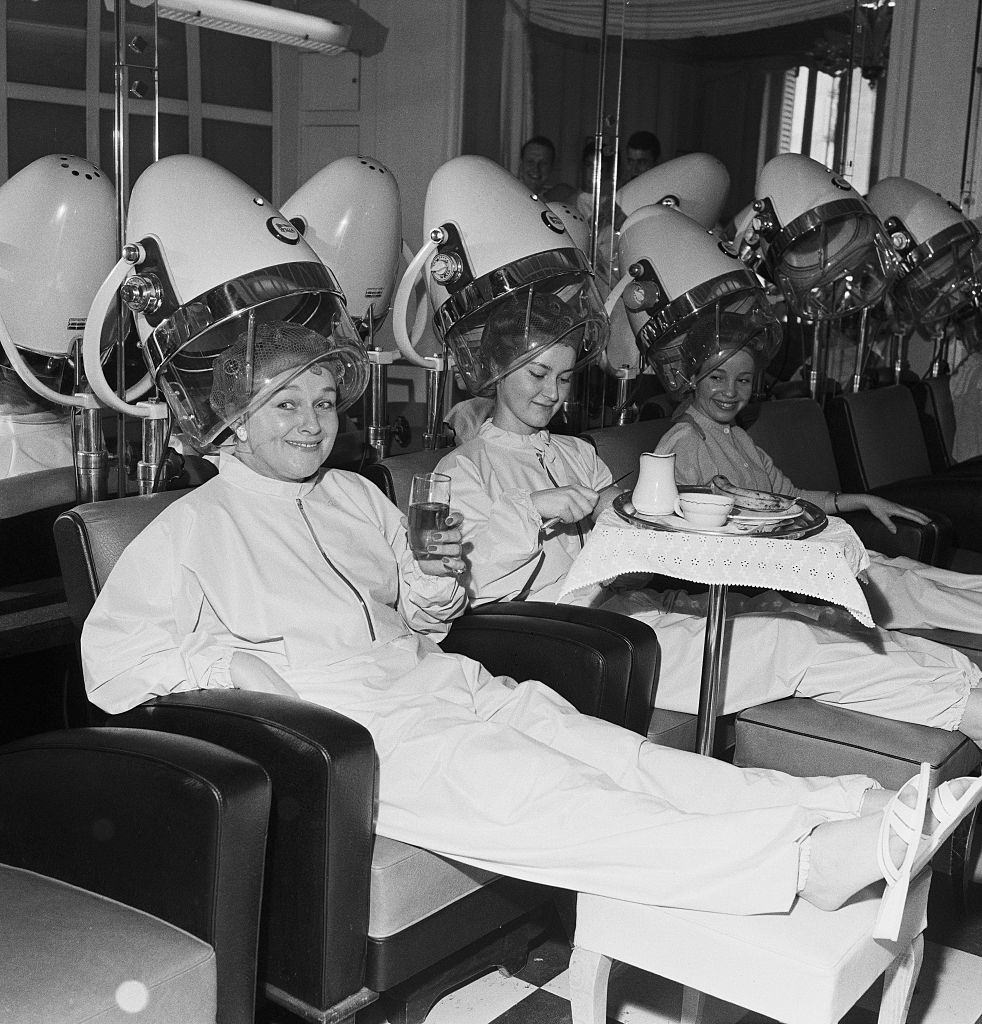
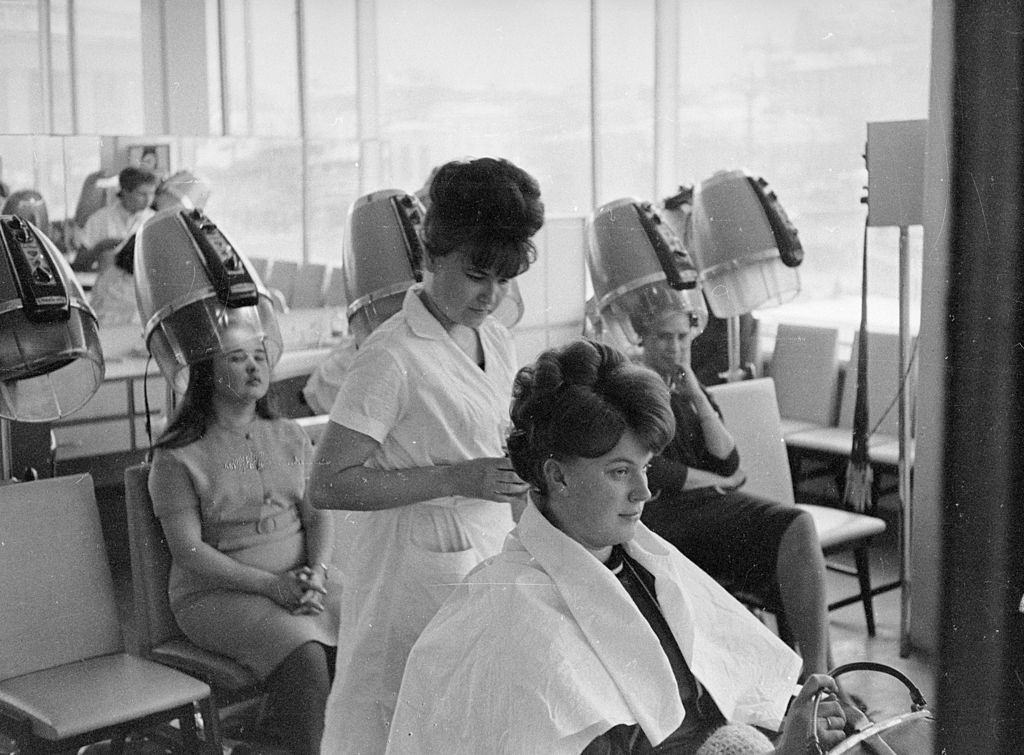
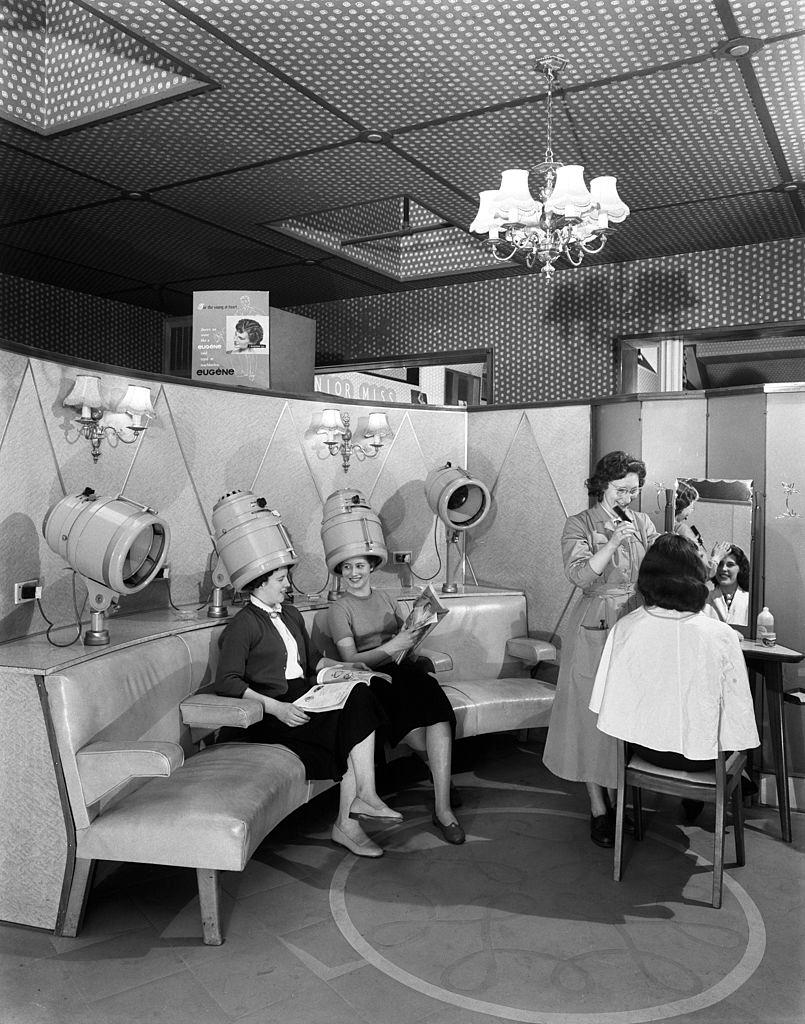
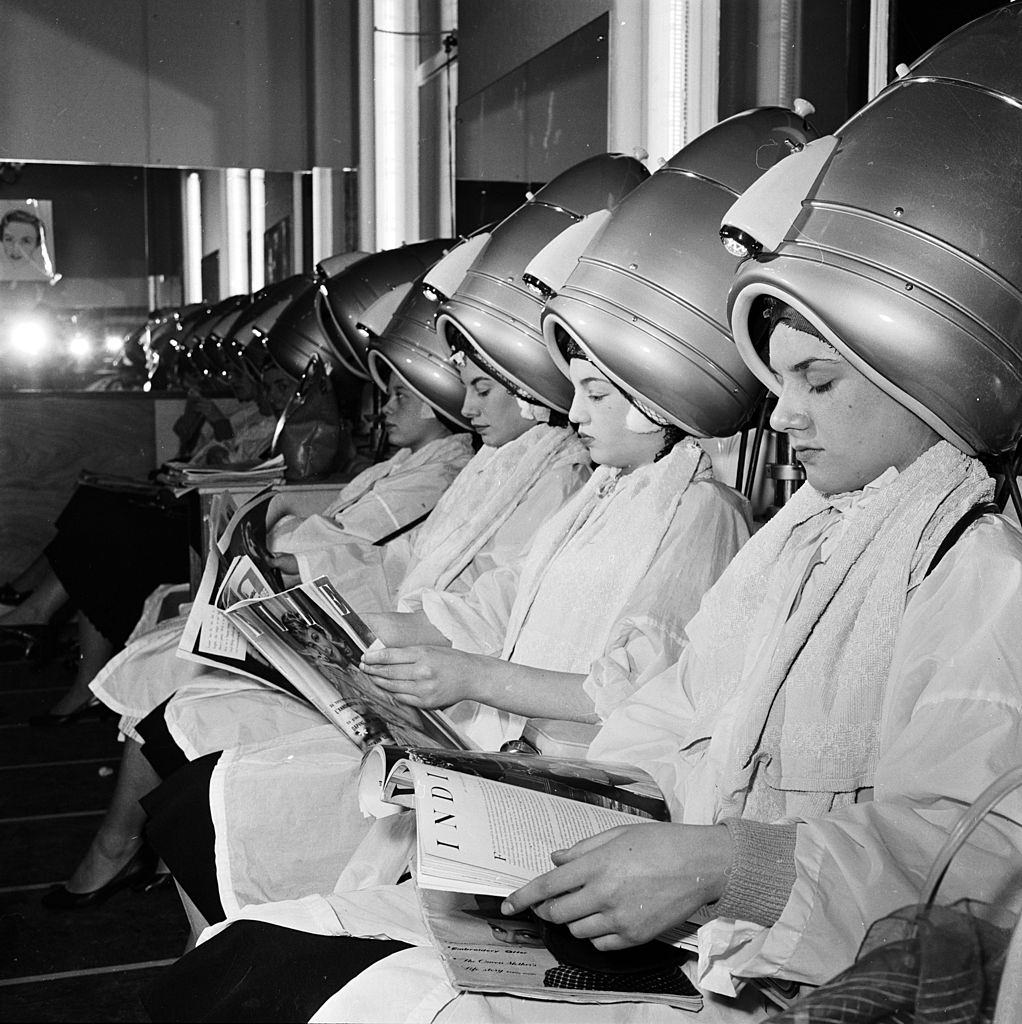
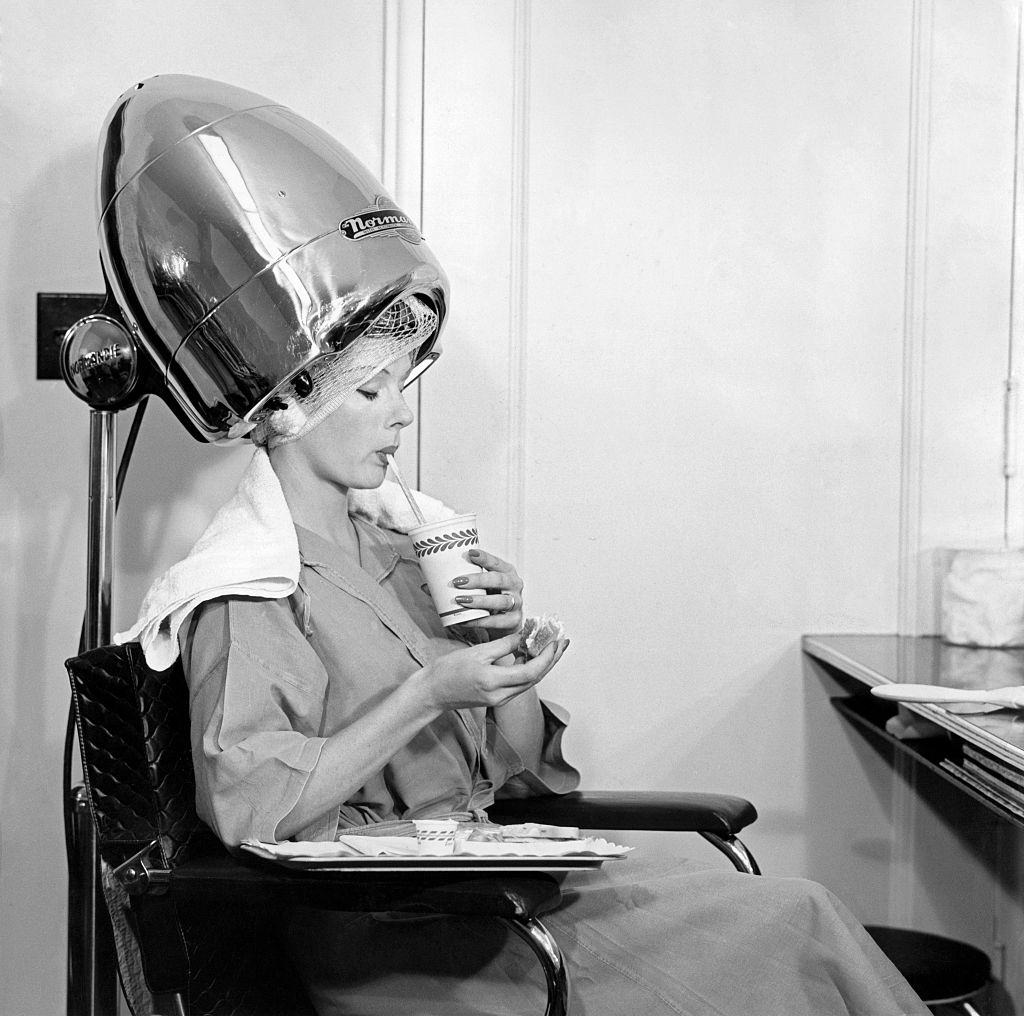
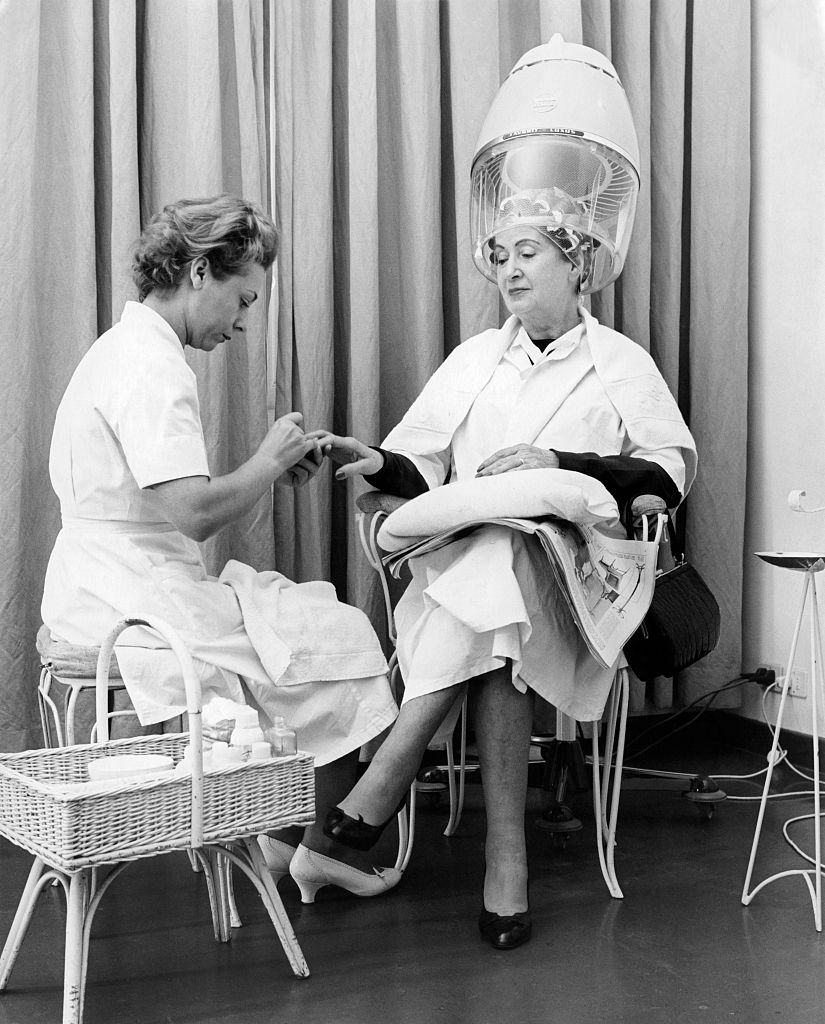
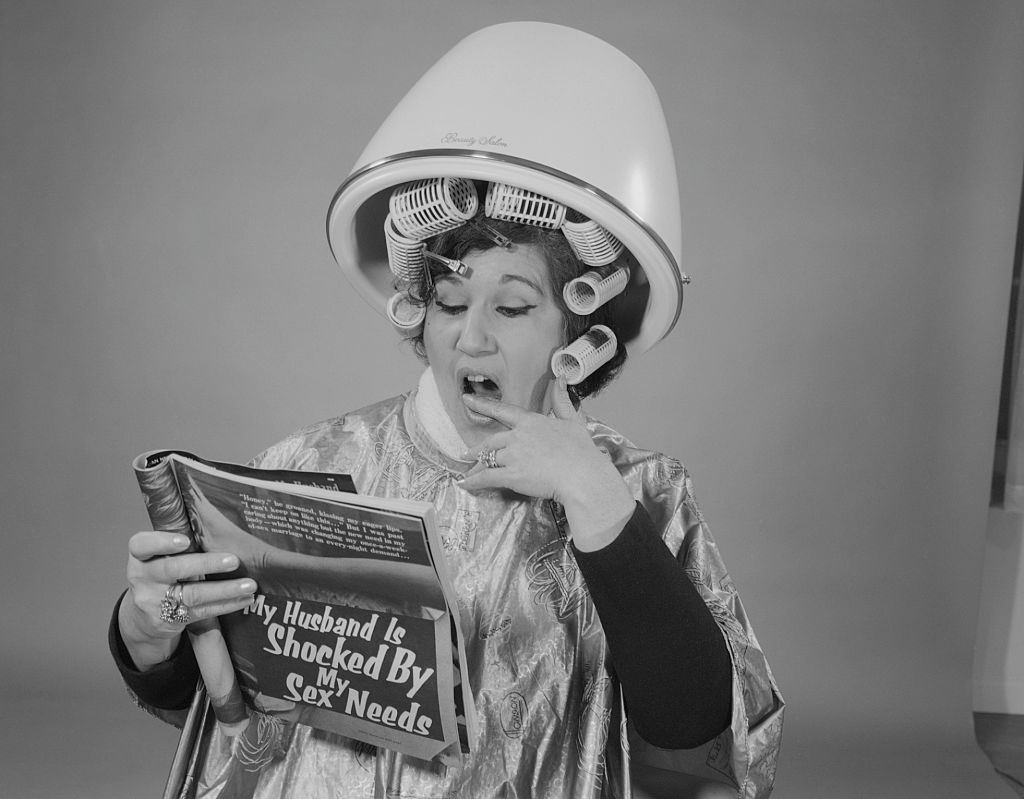
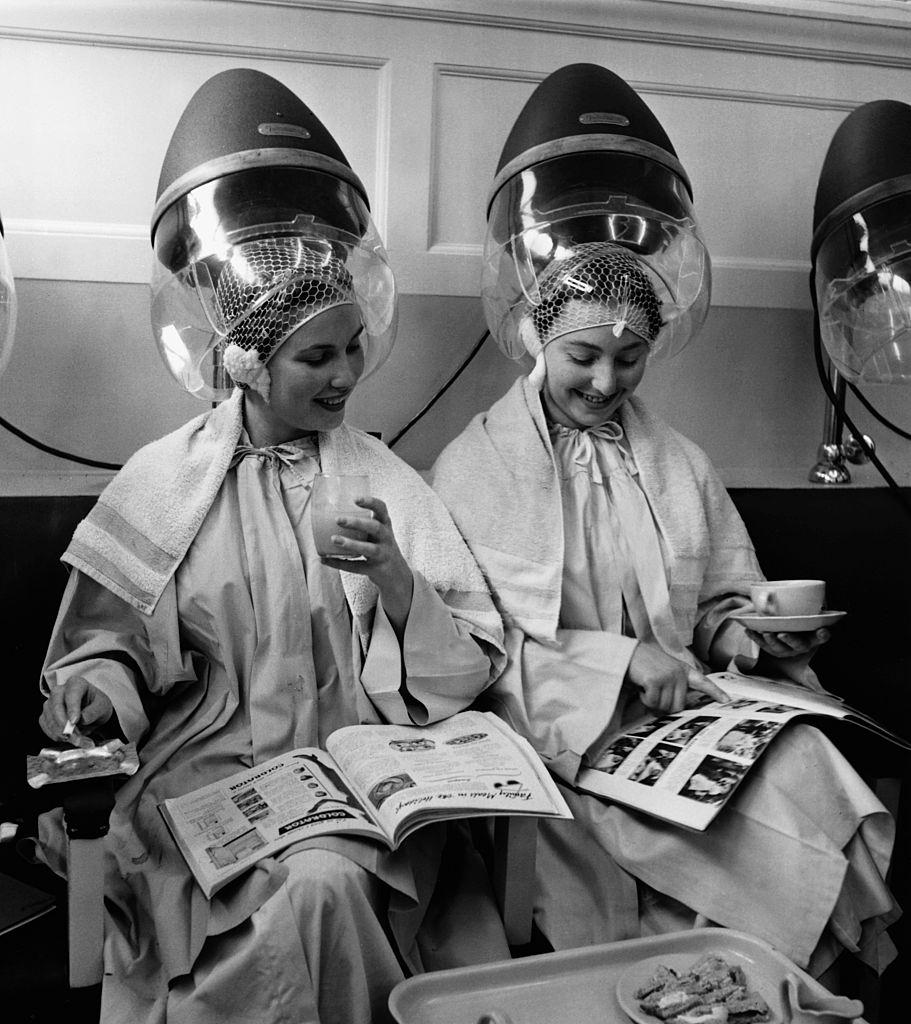
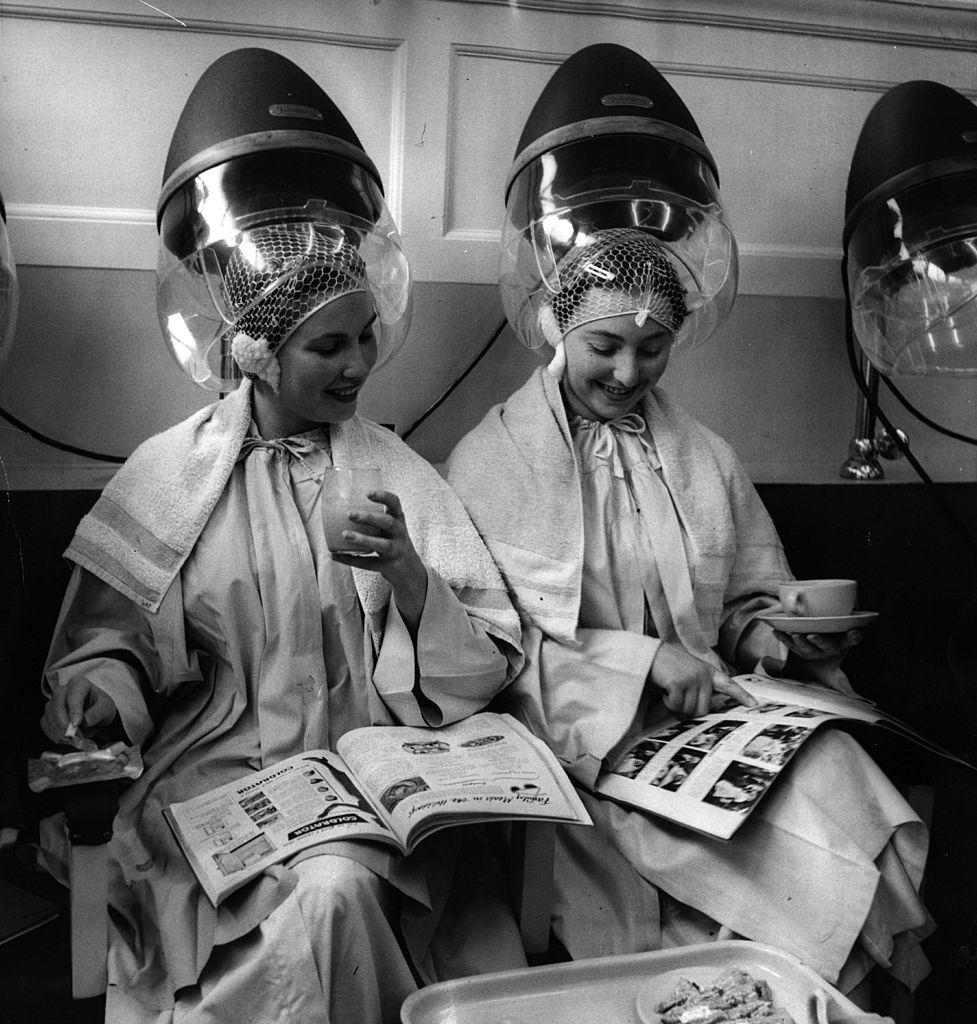
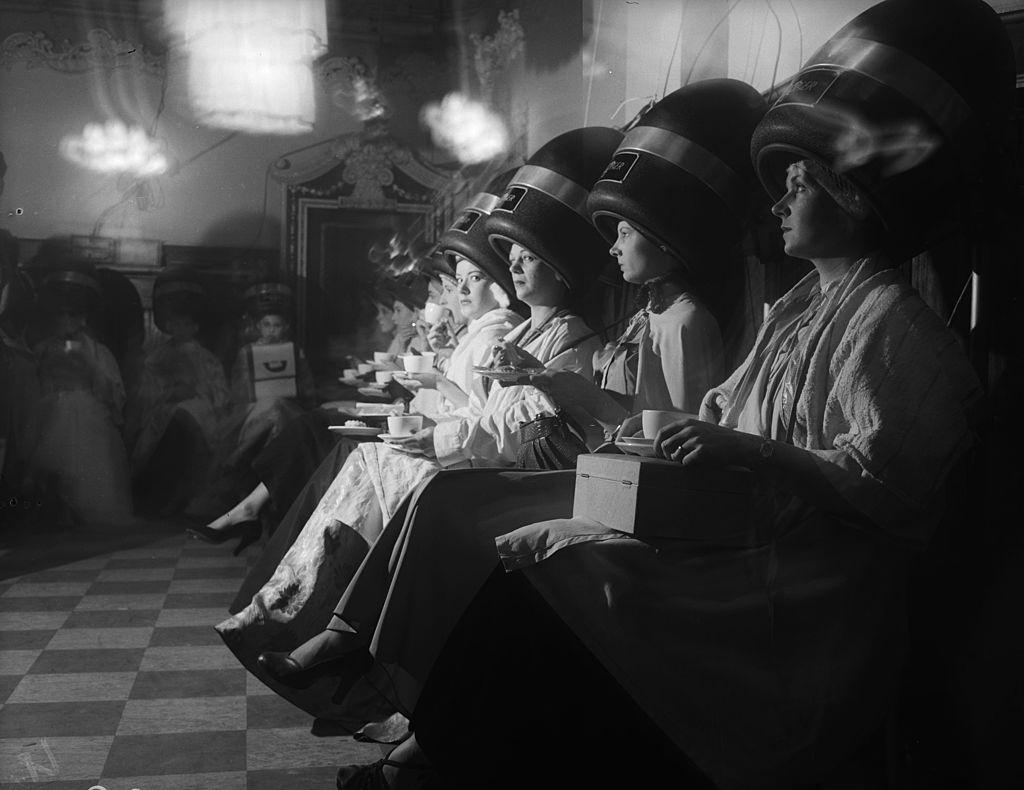
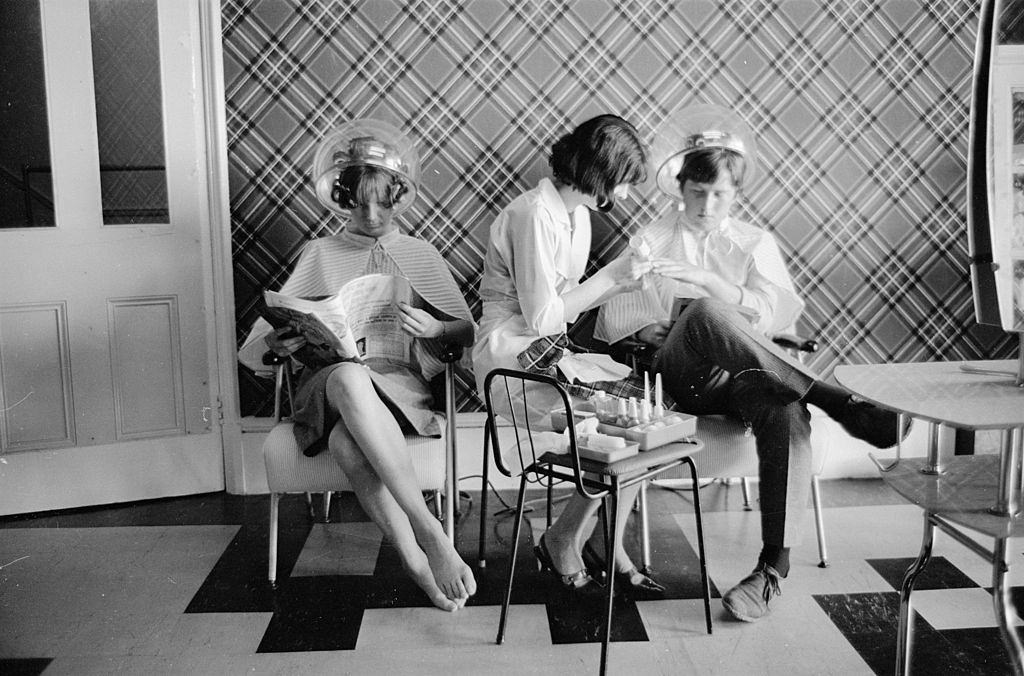
The ritual was well-established by the mid-20th century. You booked your appointment, had your hair set in rollers, and then settled in under the dryer for however long it took. While the hot air worked through your set, you flipped through fashion magazines, caught up with the woman sitting next to you, or simply took a rare moment to sit still. Salons understood this and leaned into it — some served tea, others brought lunch directly to clients seated under the hoods.
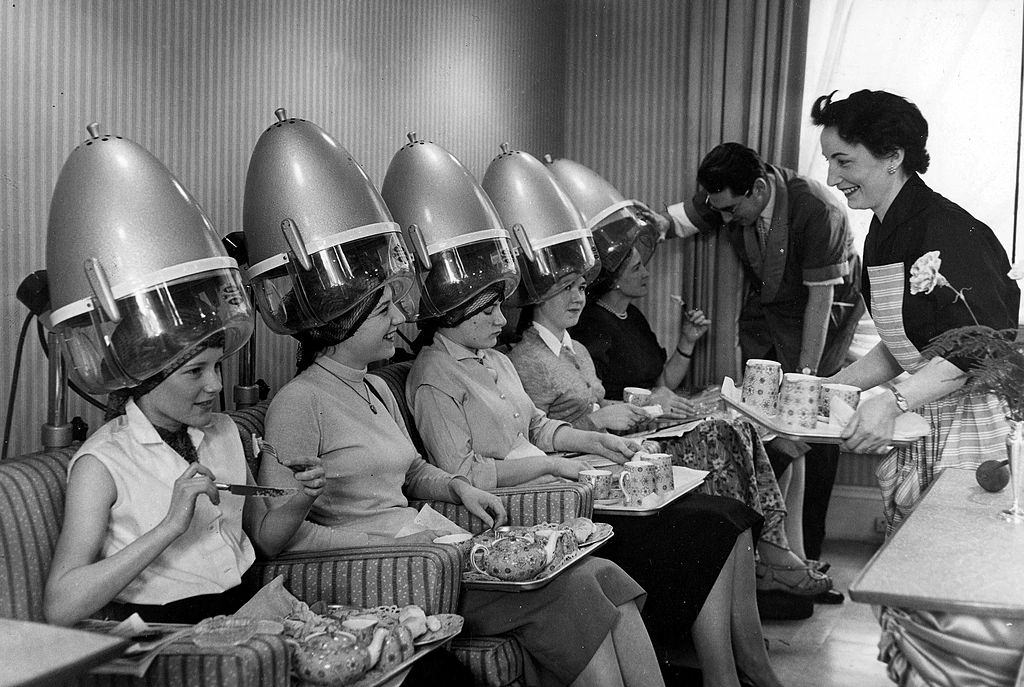
Serving food to clients mid-dry was not unusual. A 1957 photo shows a salon attendant delivering a full luncheon tray to women seated under their dryers, their rollers set and their hands free. The salon had become an extension of the dining room. Efficiency was part of the appeal — why lose an hour to drying when you could also eat, read, or socialize?
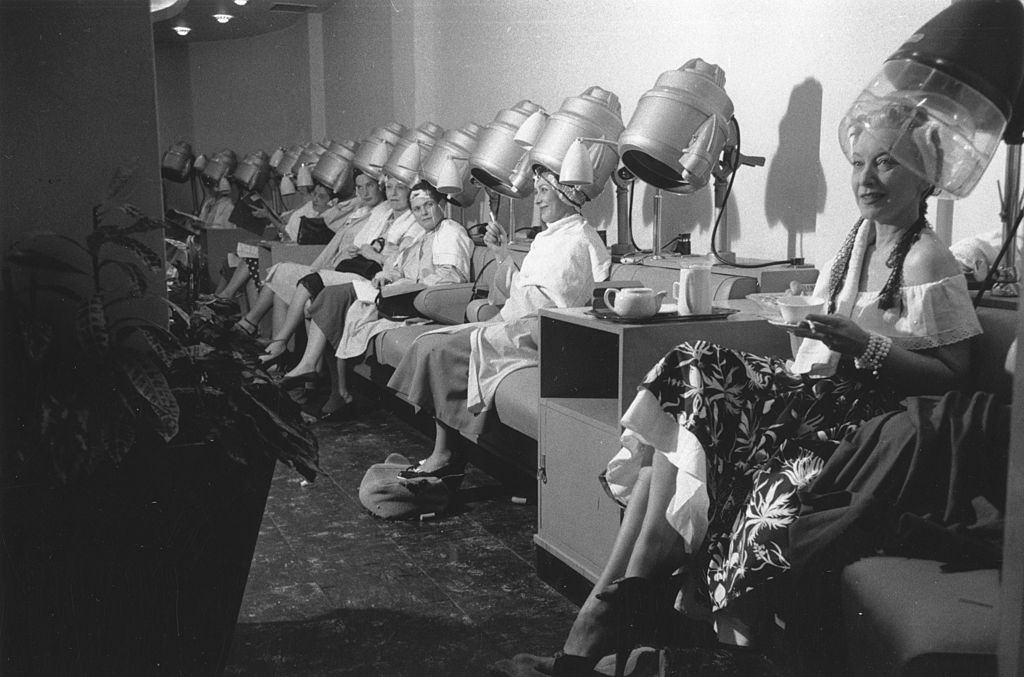
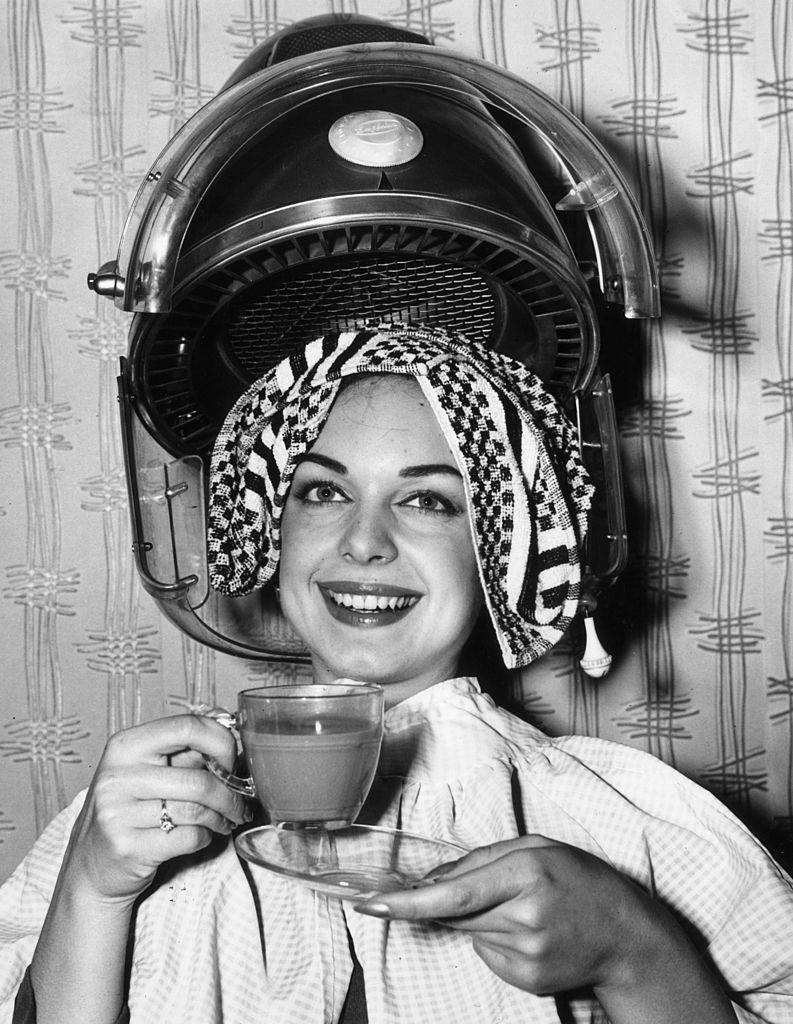
Actress Frances Day was photographed doing exactly that — sharing a cup of tea with other salon clients under the dryers at the Martin Douglas and Rene salon. It wasn’t unusual for celebrities to be seen in the same salon chairs as everyone else. The dryer hood was a great equalizer.
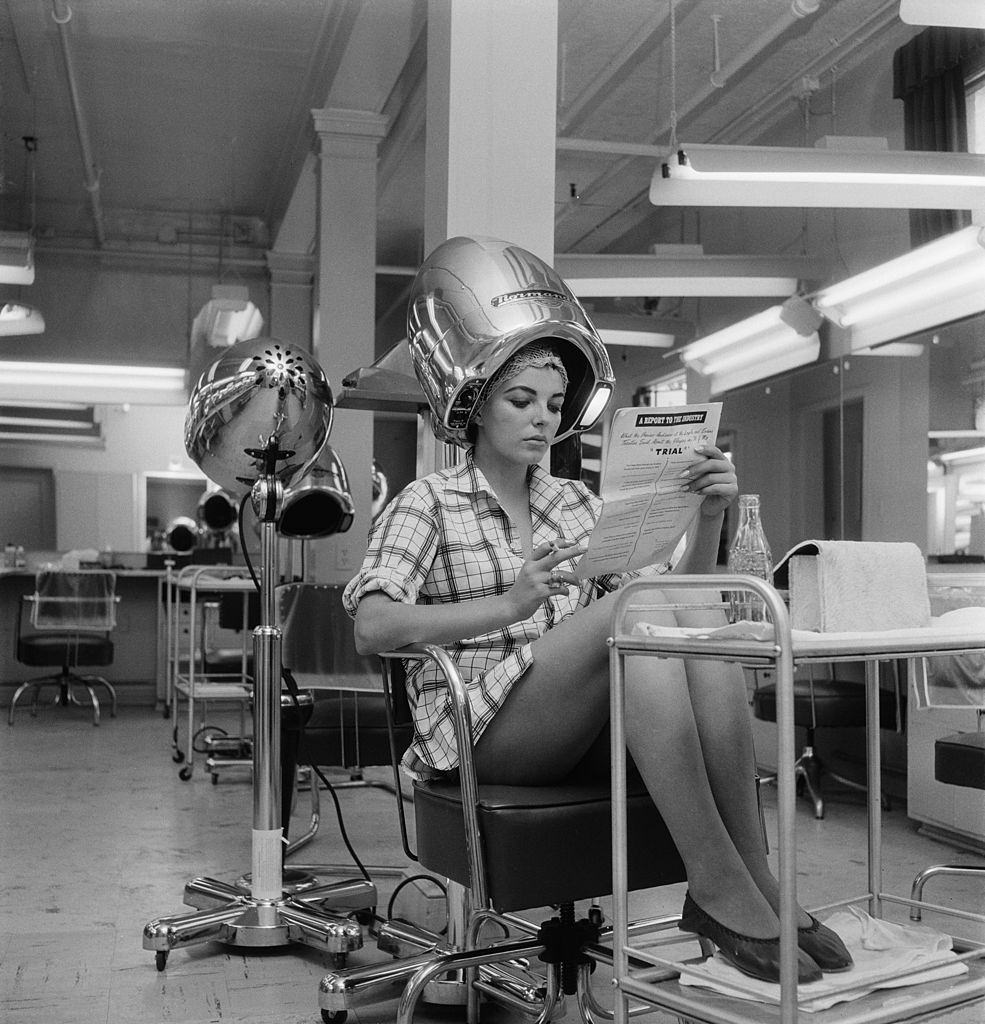
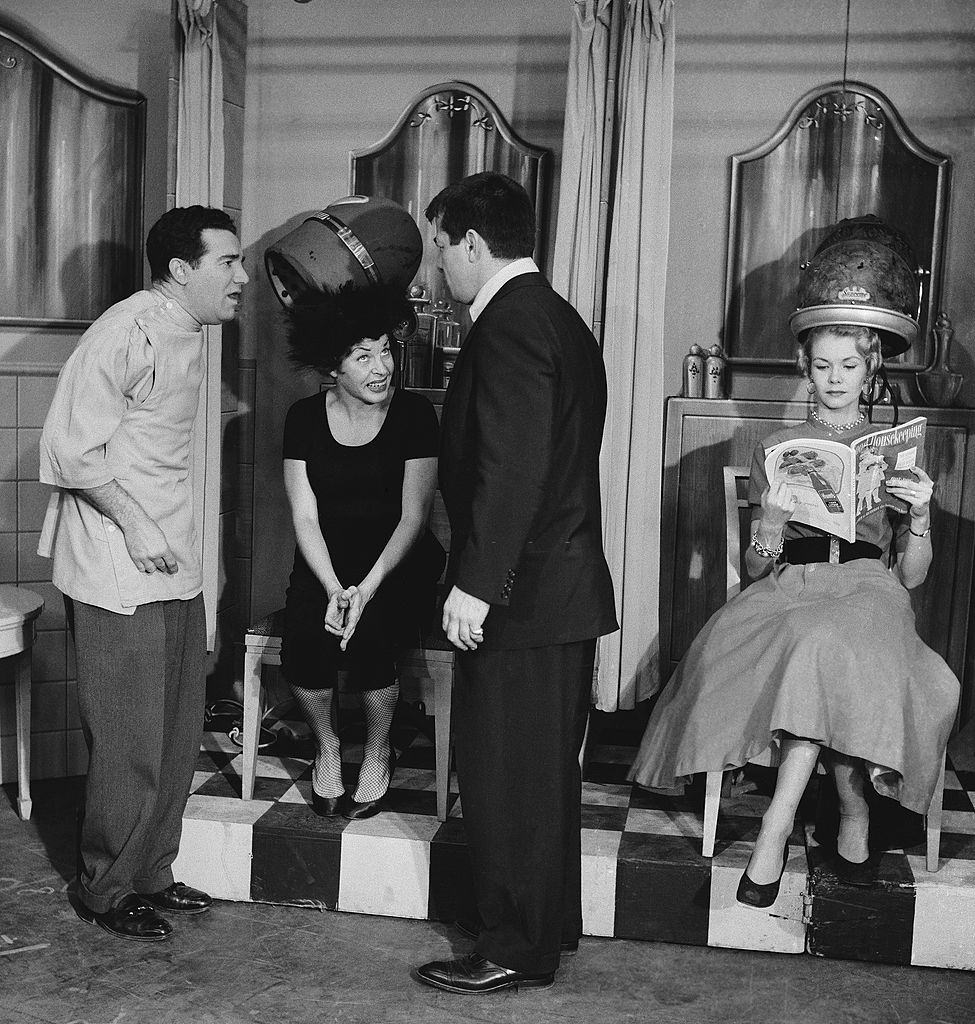
Even on film sets, the hood dryer appeared. Joan Collins was photographed waiting under one at a film studio in August 1955 — glamour and practicality combined in one image. Stars needed their hair done just like everyone else, and the hood dryer was the standard method.
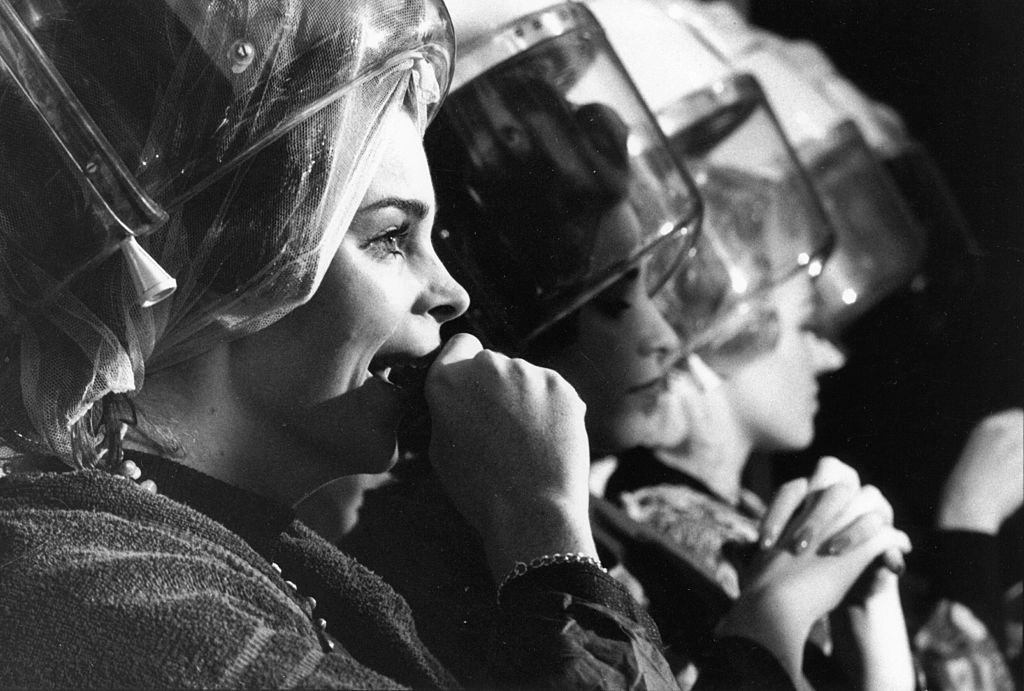
Beauty pageant contestants were frequent salon subjects. Miss Canada was photographed under the dryer in 1973, and she was far from alone in that regard. Miss World contestants made salon visits a near-annual tradition in the lead-up to the competition.
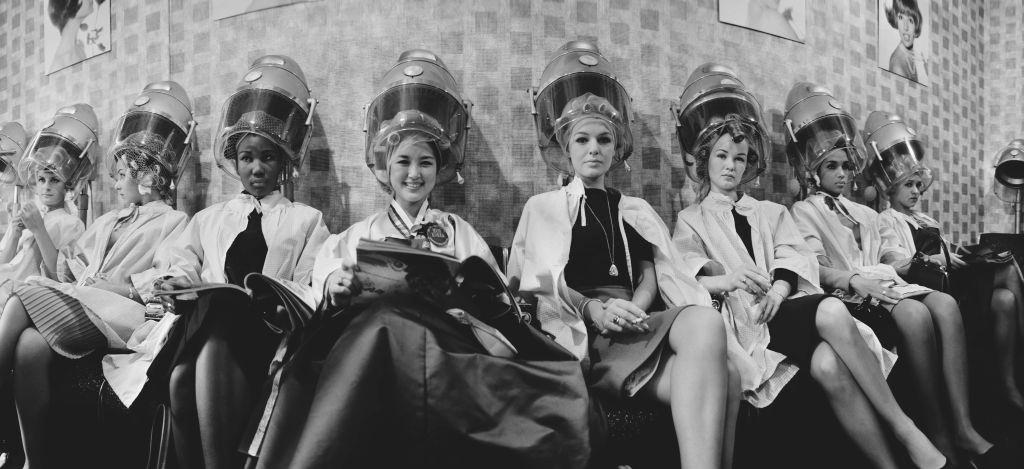
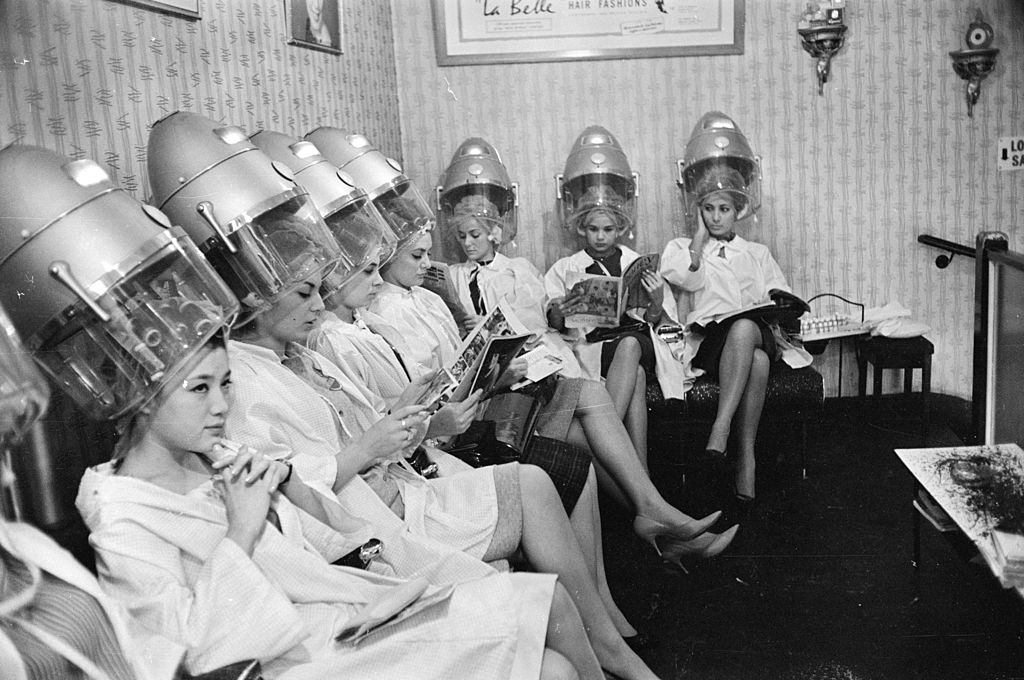
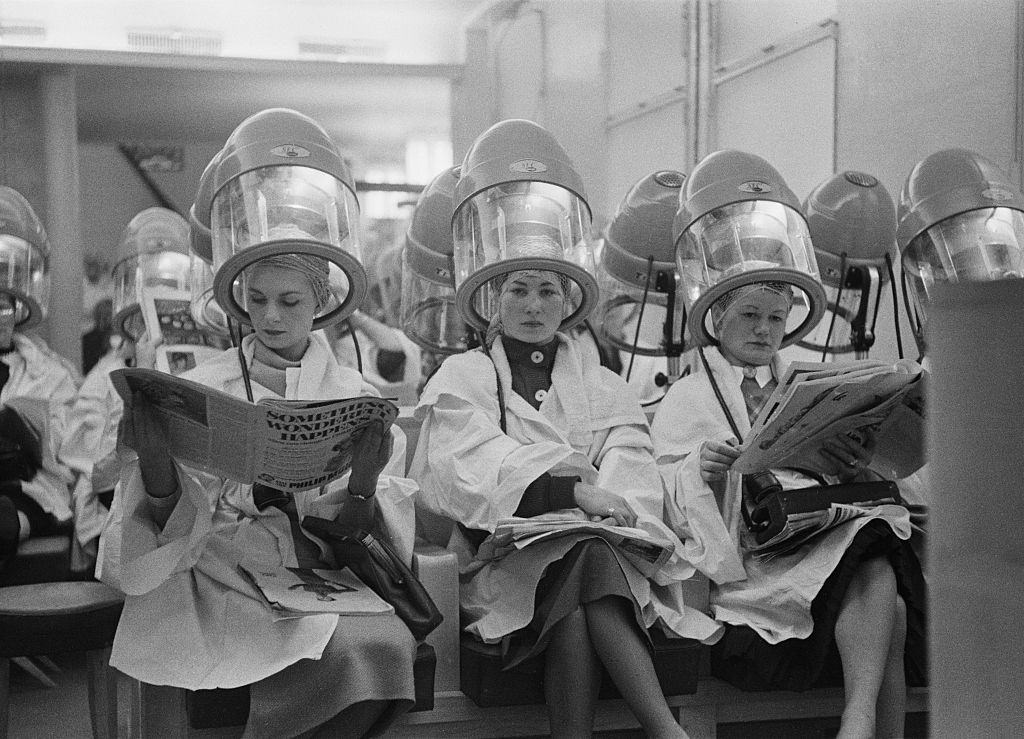
In 1964, a row of Miss World contestants sat together under dryers at a London salon ahead of the pageant. The year before, the same event drew a full lineup of international competitors to La Belle hairdressing salon in Aldwych.
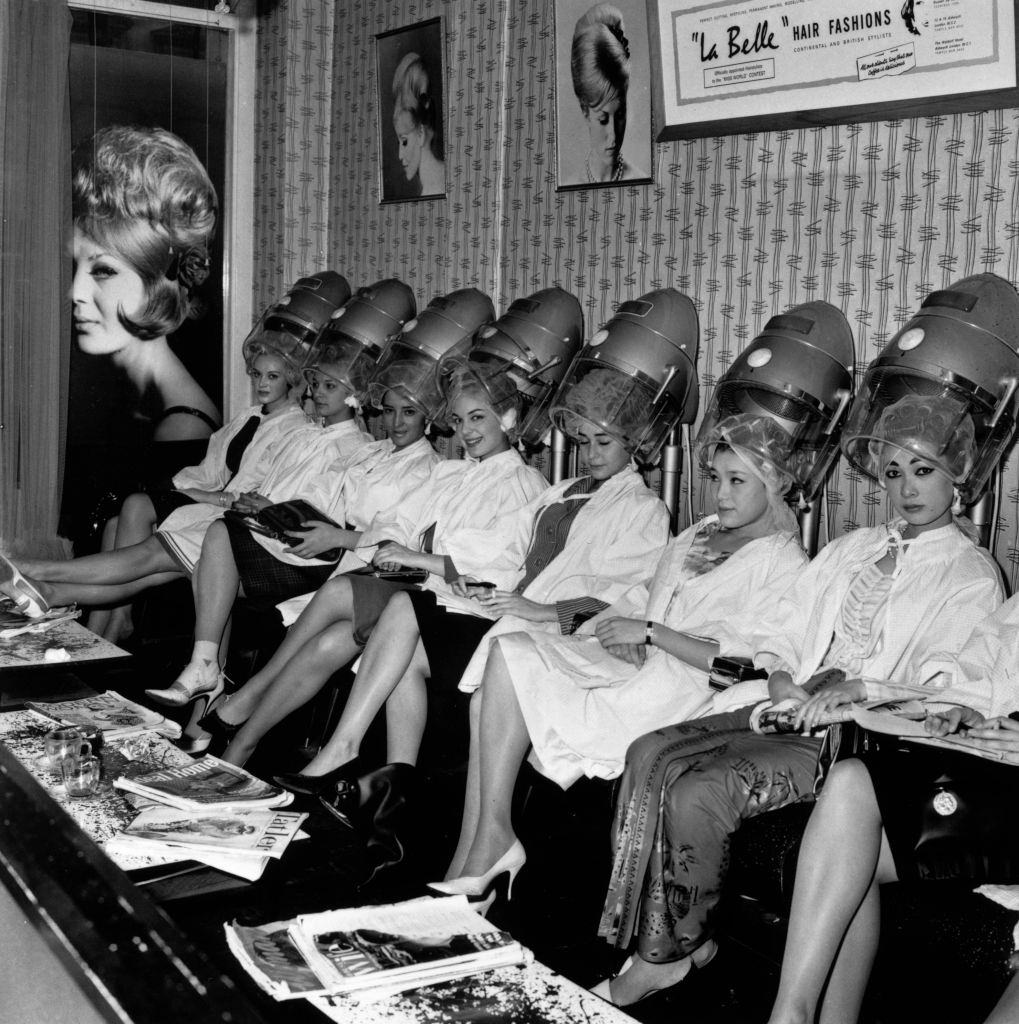
They include Miss Finland, Miss Brazil, Miss Spain, Miss South Africa, Miss Israel and Miss Japan.
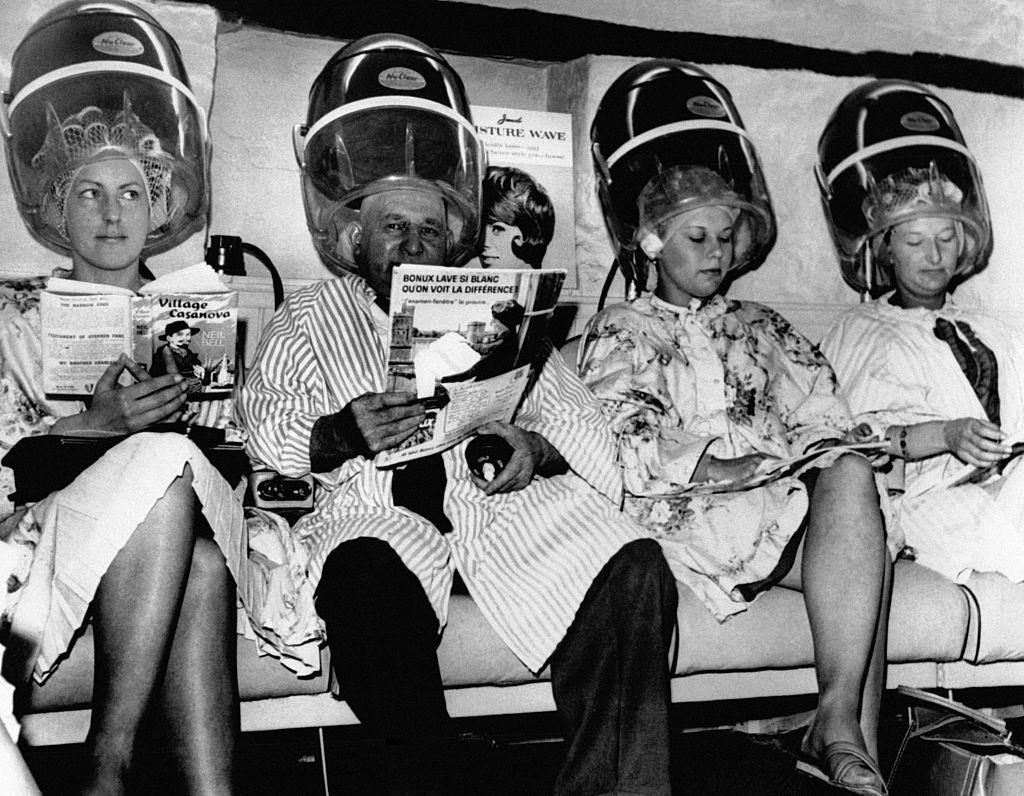
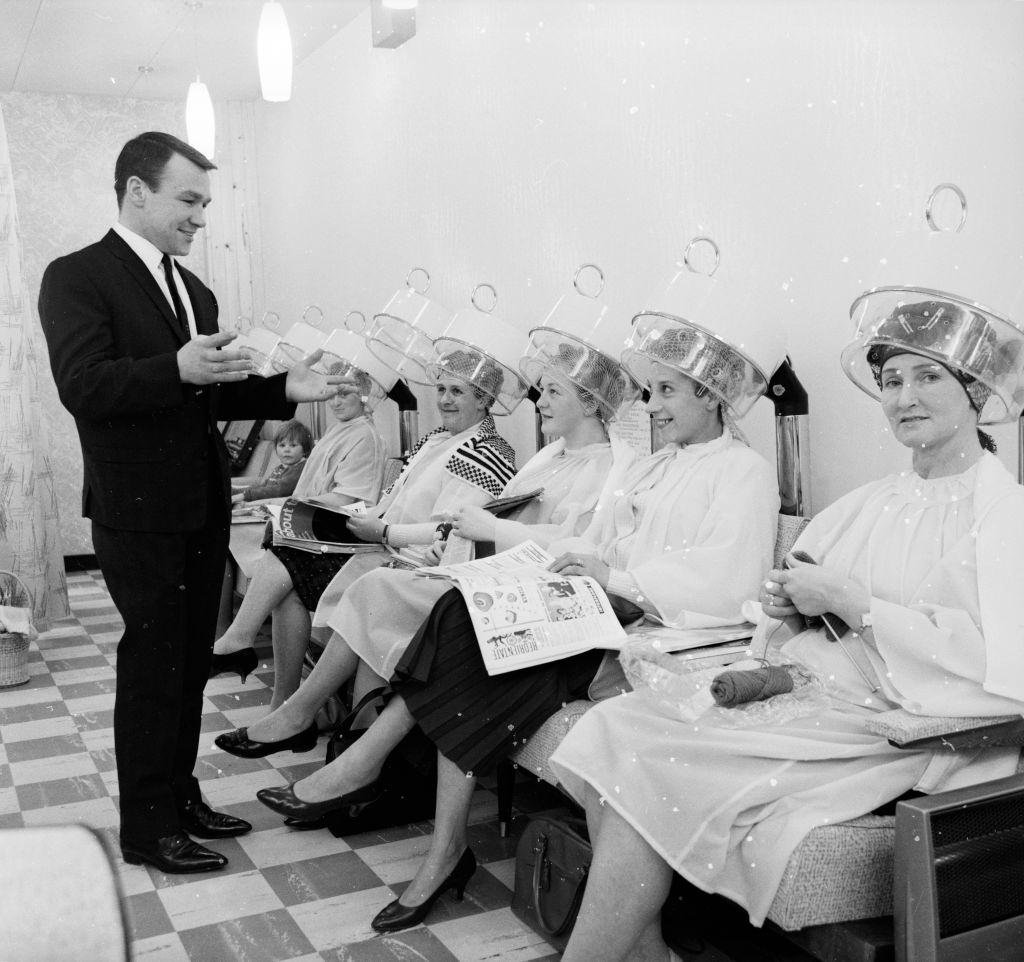
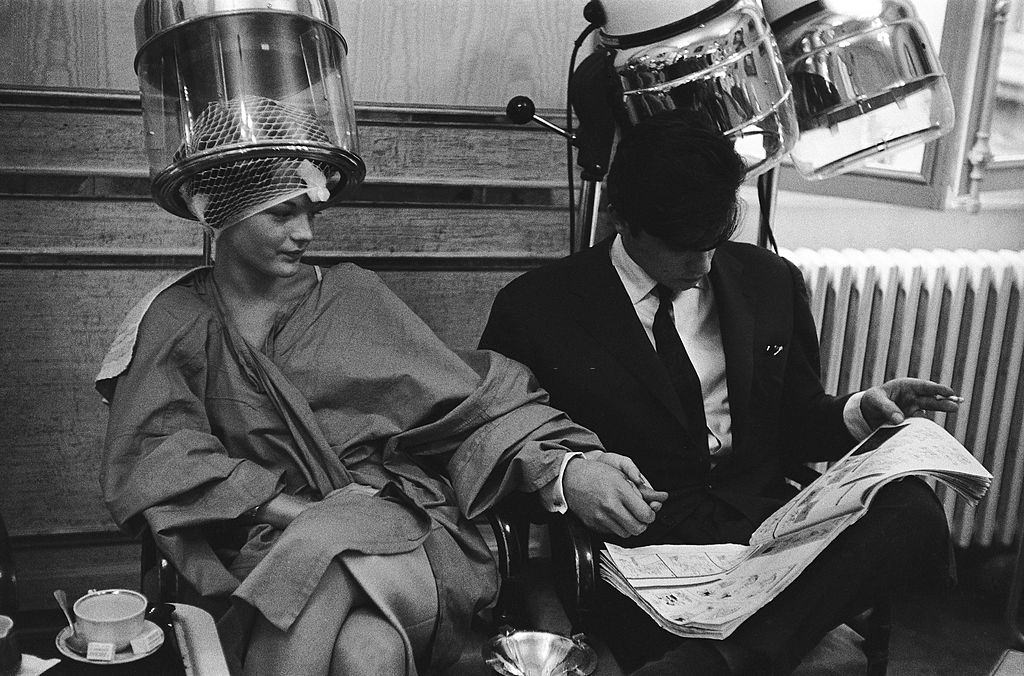
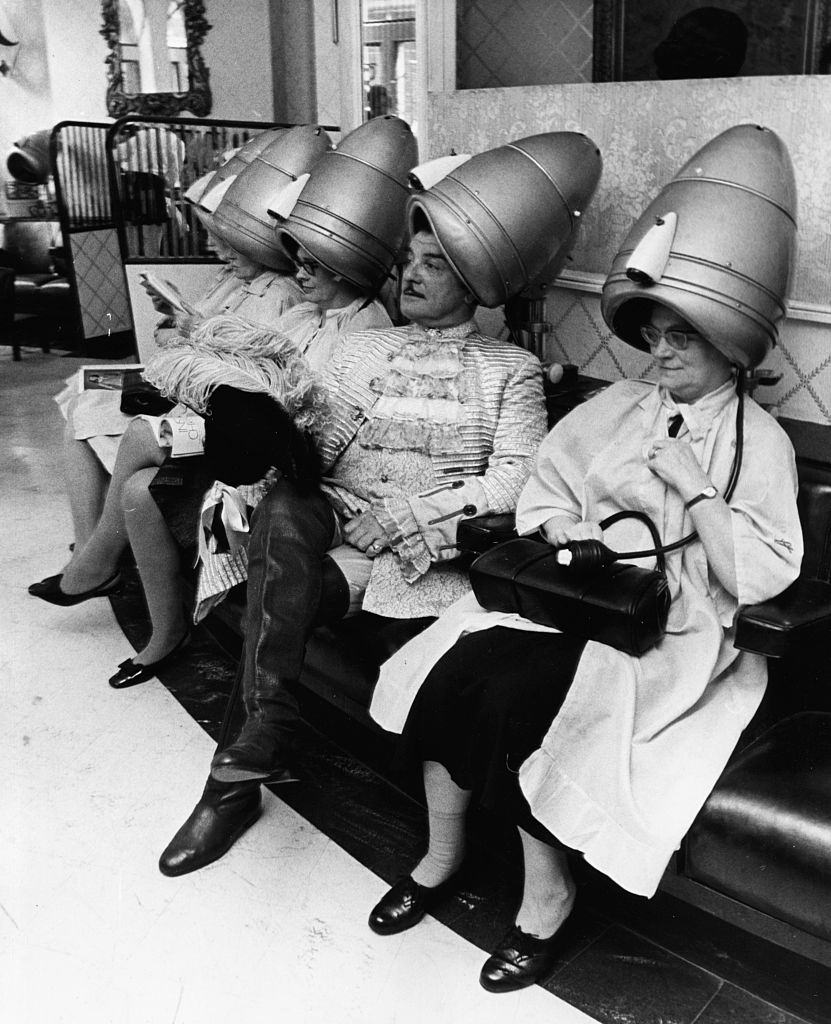
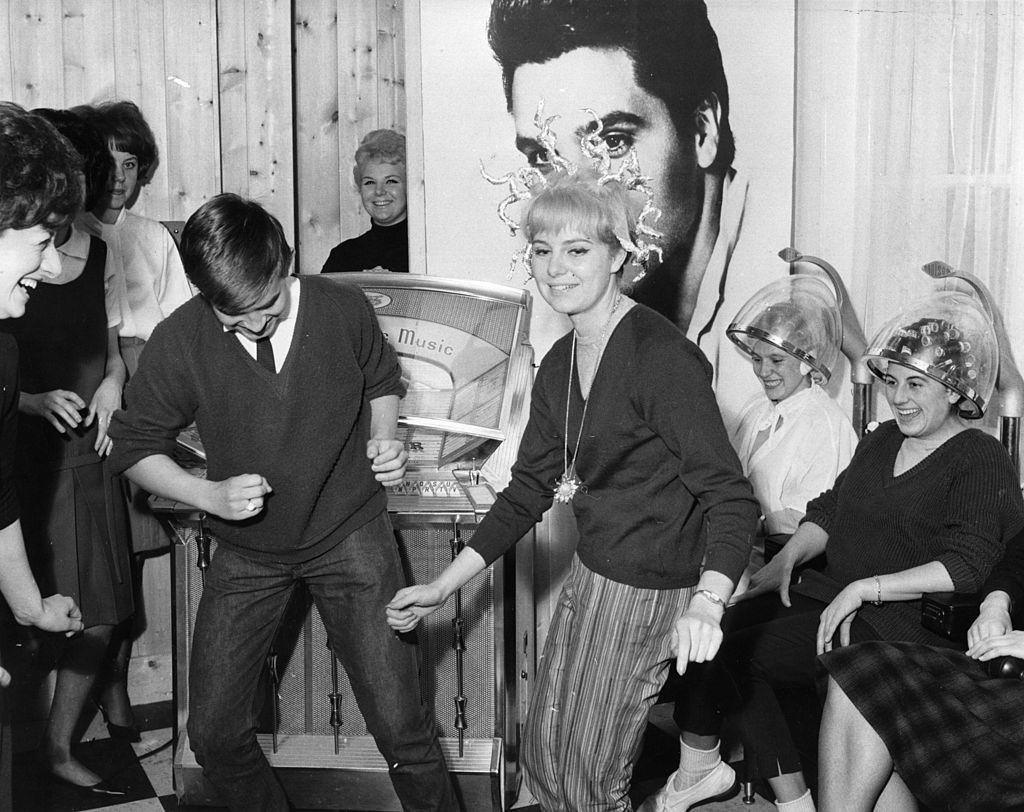
The salon was also a place where the social rules of the time occasionally bent. Unisex salons began appearing in the 1950s and grew more common through the 1960s and into the 1970s. Men and women sat side by side under the same dryers, flipping through magazines while music played from a jukebox.
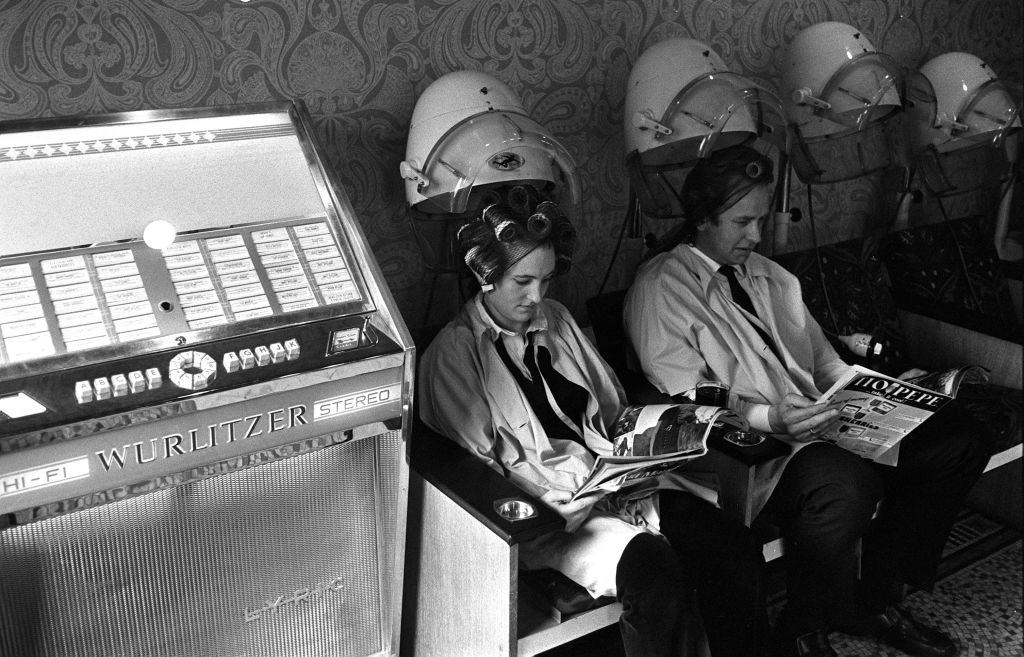
The first unisex hairdressing salon in London made headlines in 1970 partly for the novelty of men sitting under hood dryers next to women. The Wurlitzer jukebox in the background signals just how much salons were trying to make the experience feel like a social venue rather than a service appointment.
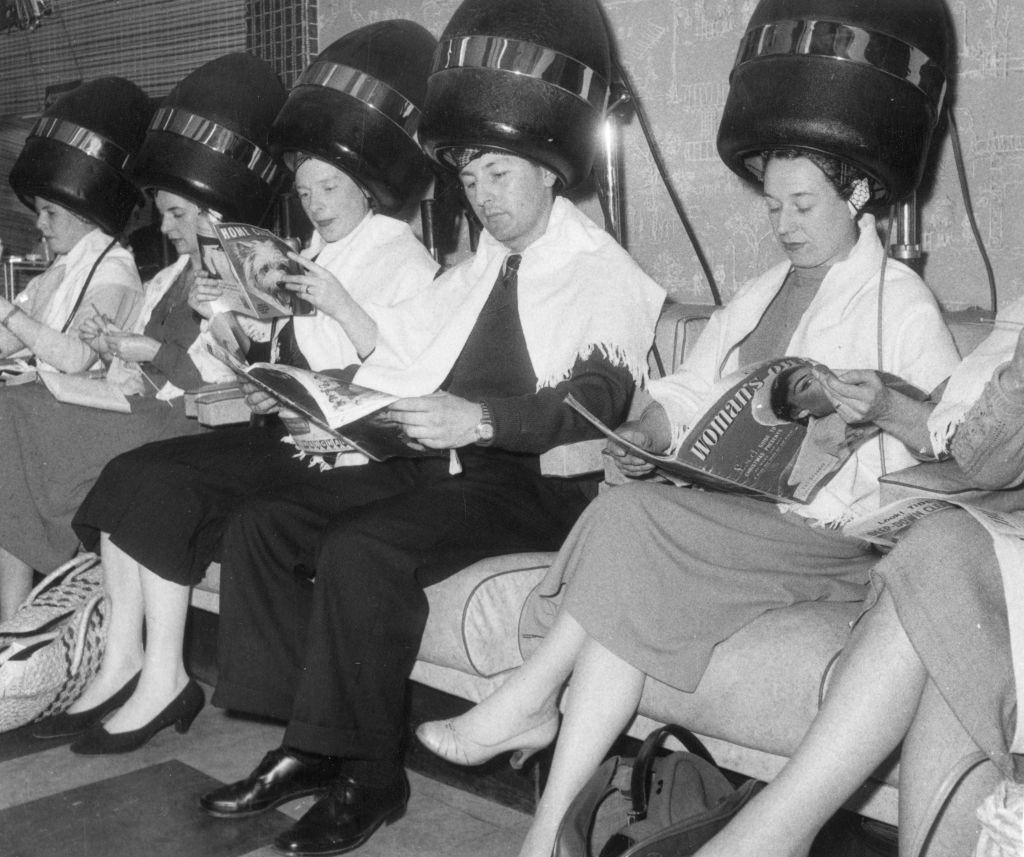
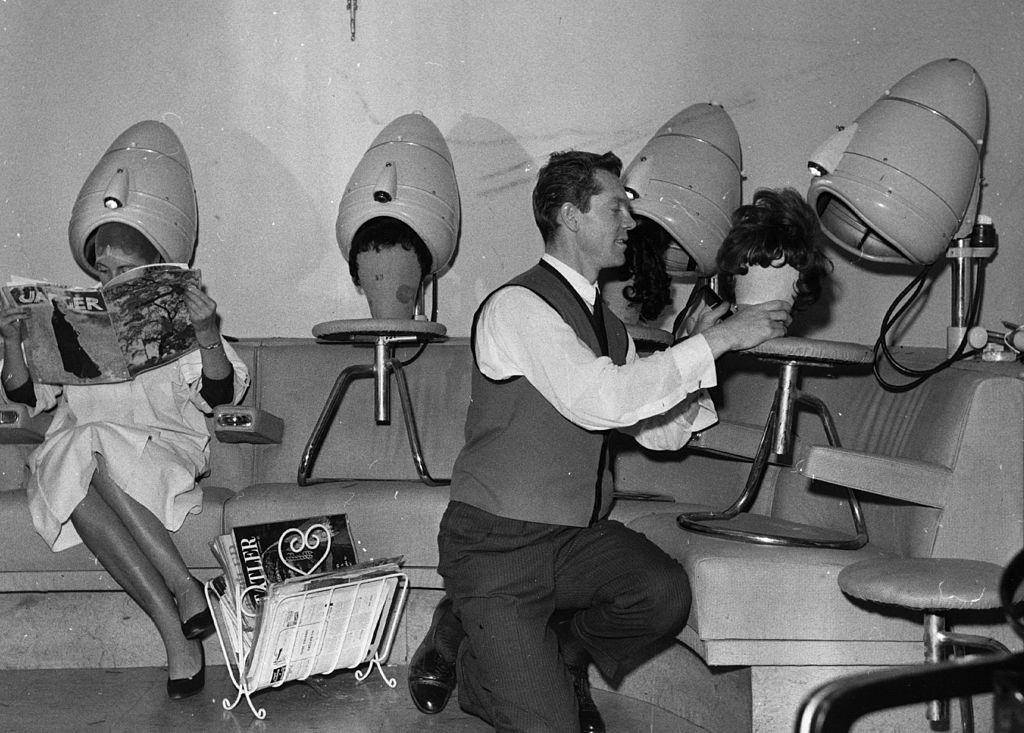
Even in the 1950s, some salons were already experimenting with the concept, as shown in this photo of a lone man surrounded by women under the dryers at an early unisex salon. The novelty was obvious, but it reflects a broader shift in how the salon was being repositioned — not just for women, but for anyone who cared about their appearance.
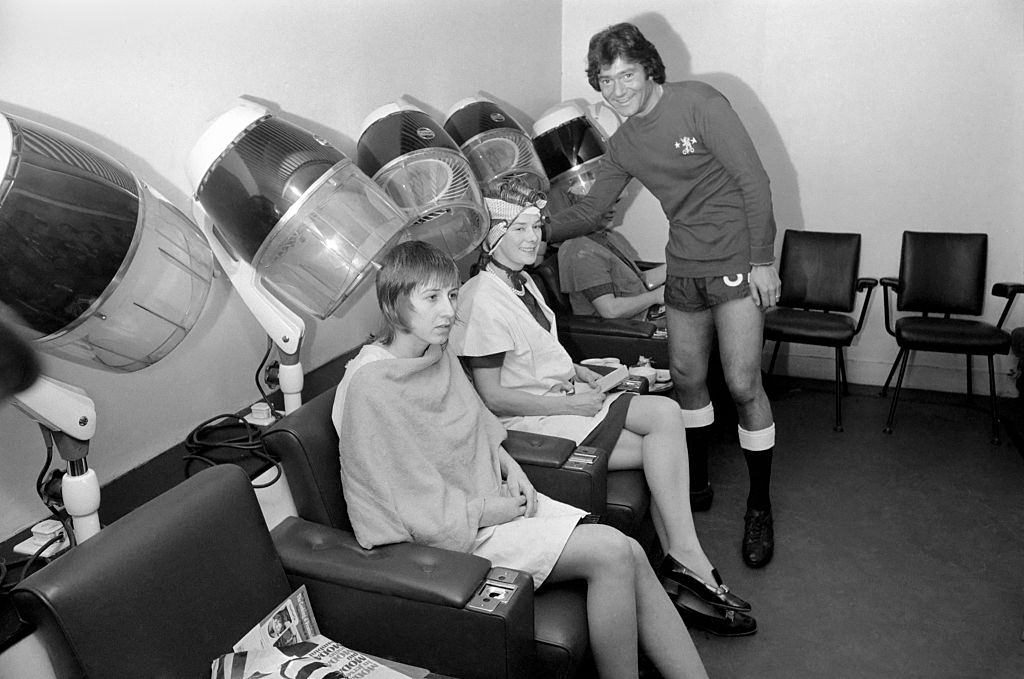
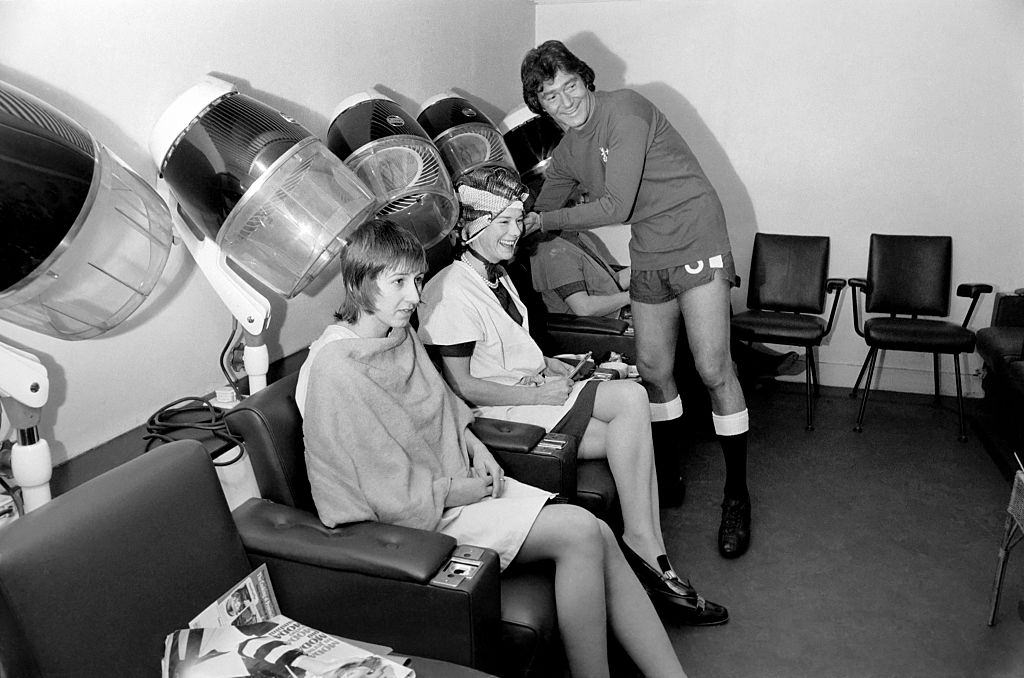
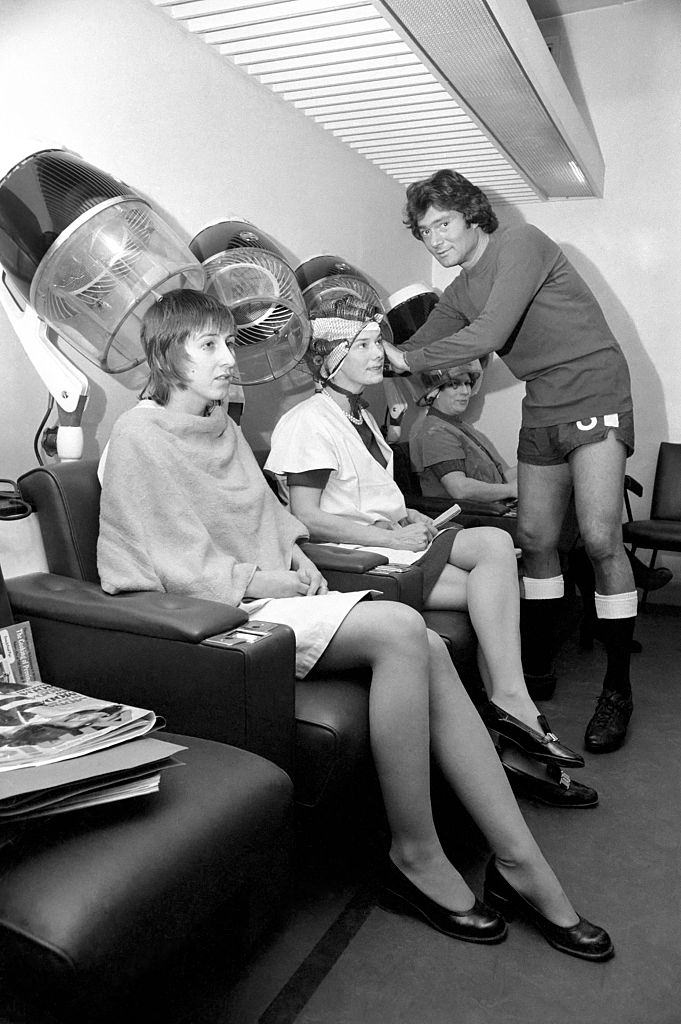
Vidal Sassoon was one of the most famous names in hairdressing during this era. A devoted Chelsea FC supporter, he made a public promise that if Chelsea reached the Football League Cup final, he would work in his salon wearing the team’s football strip. Chelsea made the final, and Sassoon kept his word.
The 1960s also produced some genuinely unusual salon moments. Raymond Bessone, the television hairdresser known as ‘Teazy Weazy,’ was photographed in 1969 sitting under a dryer alongside a group of ladies at his own salon — the showman fully embedded in the experience he created for his clients.
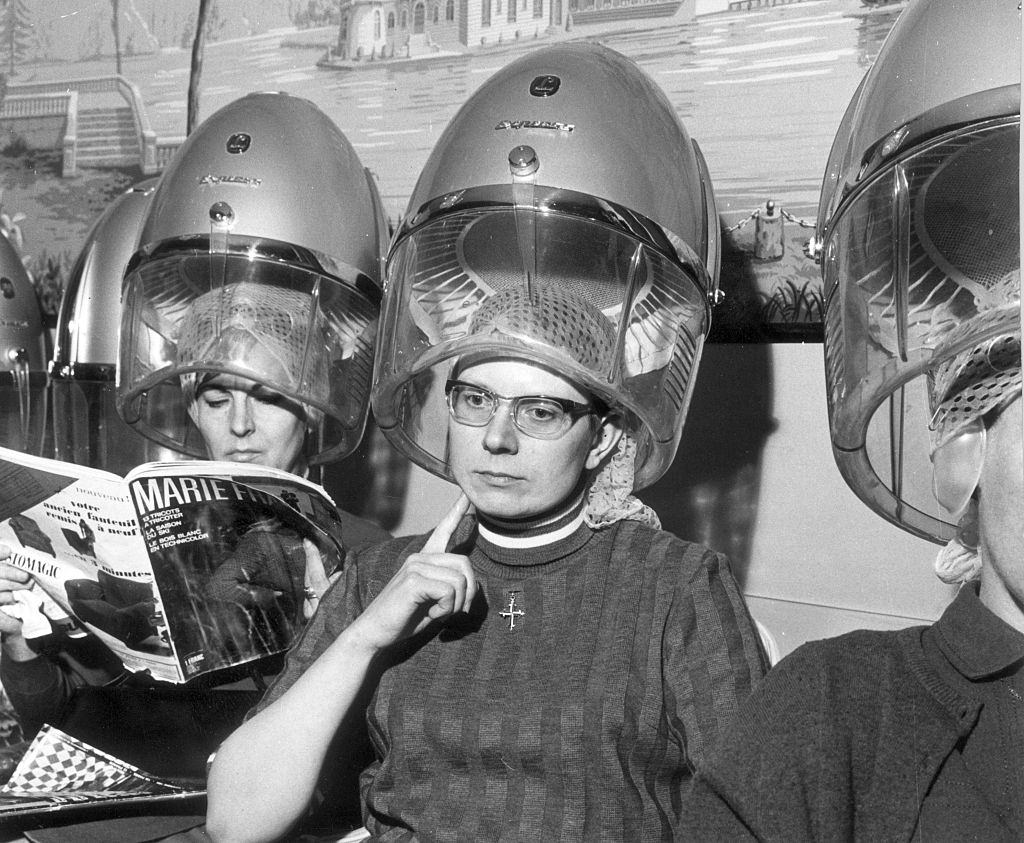
Technology also tried to shake things up. The Lady Braun hover hood, introduced in the 1960s, used fine streams of air from a fan built into the peak of the hood to make it hover slightly above the hair. Combs held it in place. It was designed to be gentler than the traditional seated dryer, and it was marketed to both men and women.
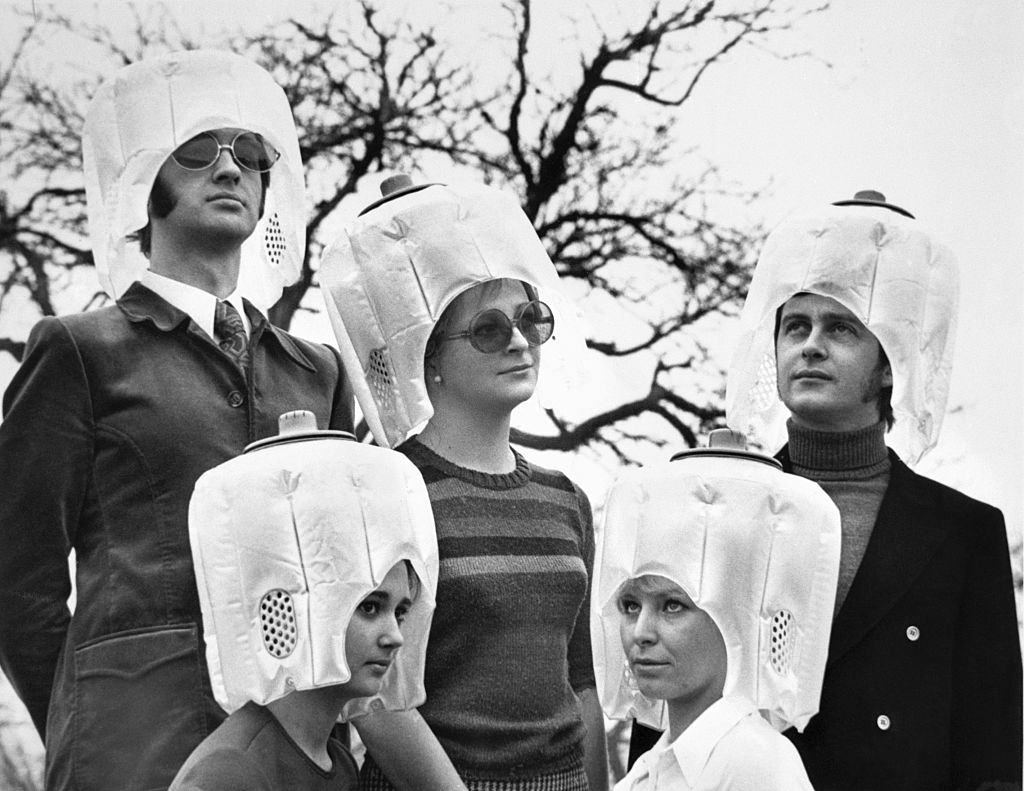
Fine streams of air make the hood hover over the hair with a fan system house in the peak of the hood and combs to hold it in place.
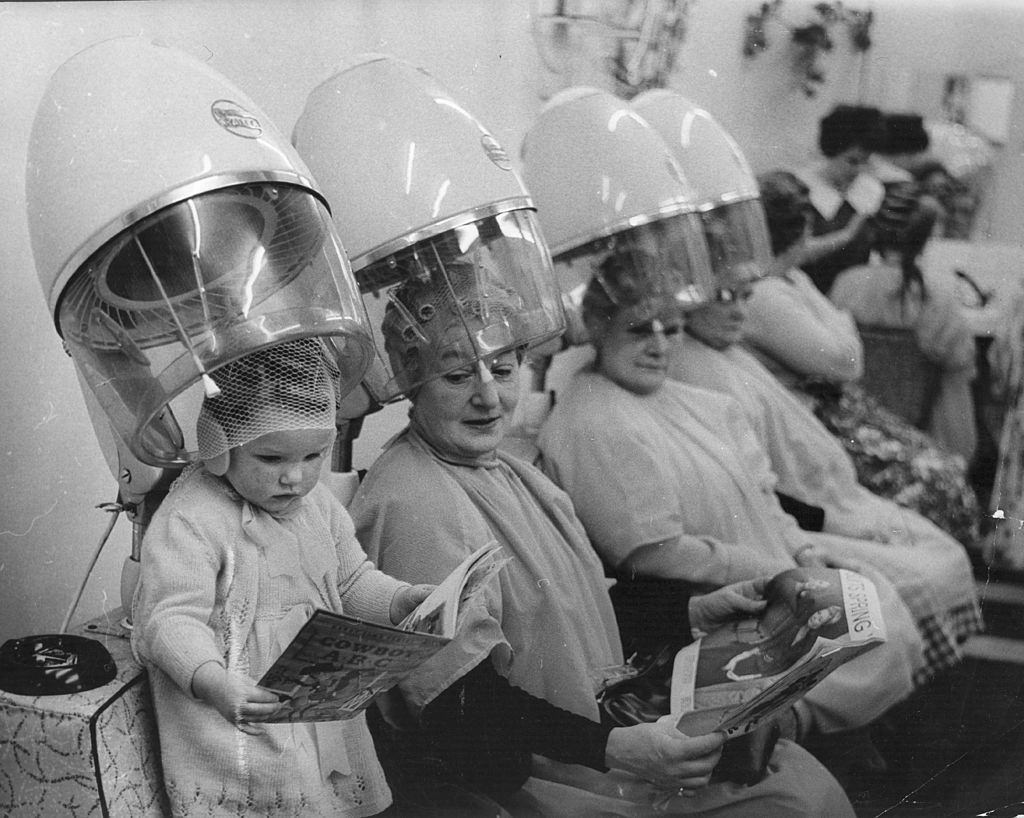
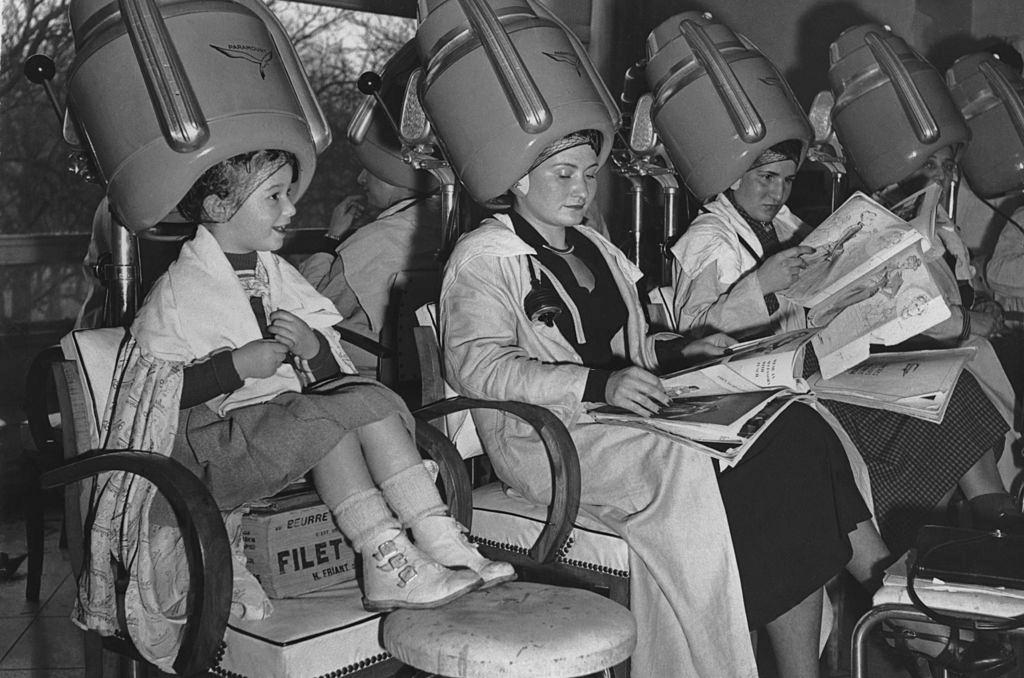
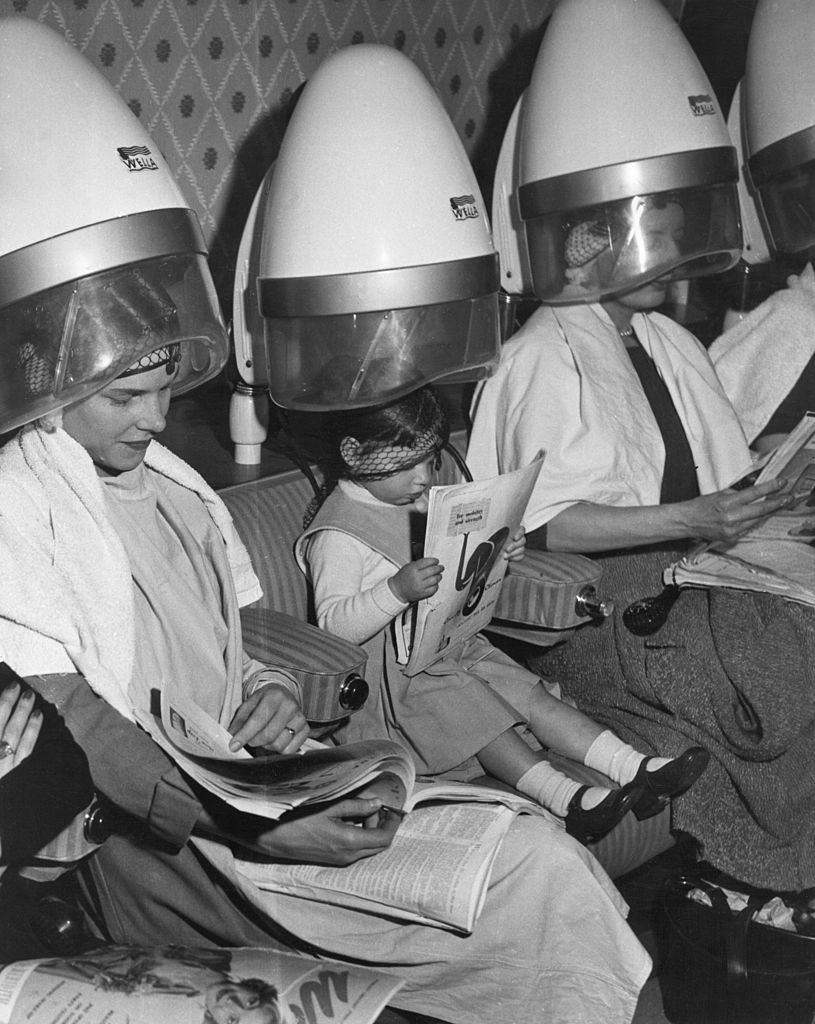
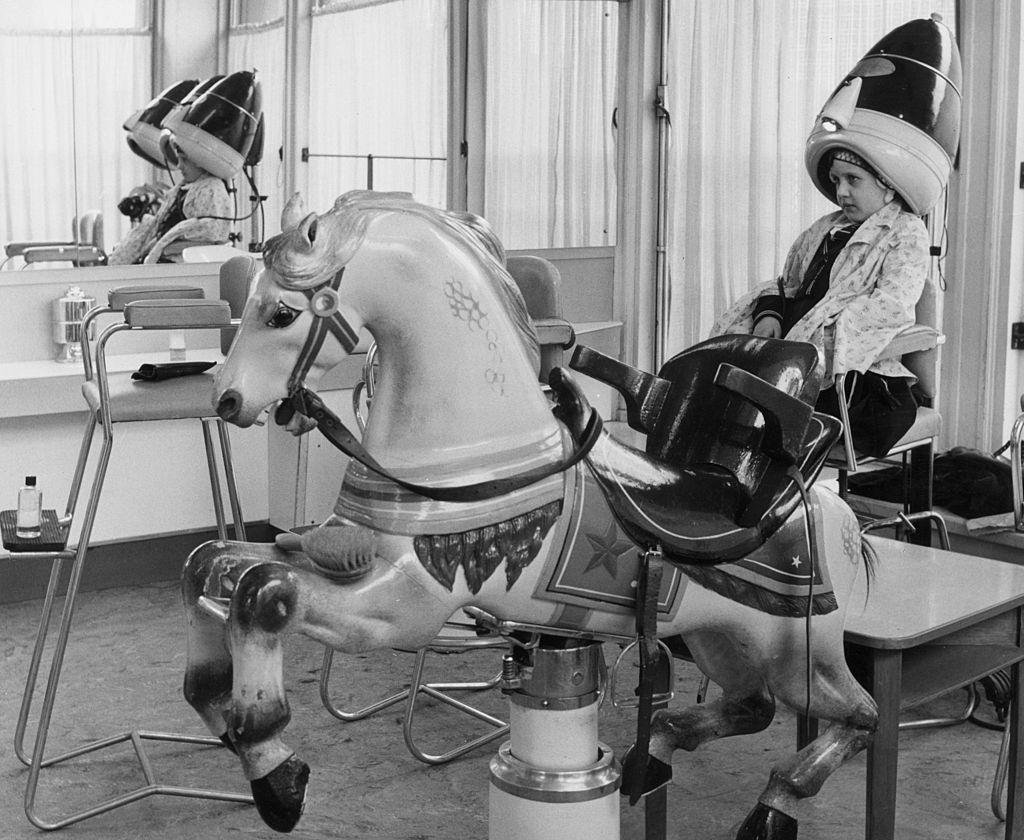
Children were not exempt from salon culture. Toddlers and young girls were brought in alongside adults, sometimes sitting on makeshift boosts to fit under the adult-sized hoods. In 1957, a three-year-old girl named Jacqueline Power was photographed sitting under a dryer at a Golders Green salon, flanked by older customers. Some salons kept rocking horses on hand specifically to keep young clients occupied while their hair dried.
In 1959, Liverpool hairdresser Jean Belle went further, offering half-price hairstyling for toddlers during National Hairdressing and Beauty Week. Three children — Shirley Turner, aged 19 months, Brenda Calderhead, age two, and Judith Oakee — were photographed going through the process.
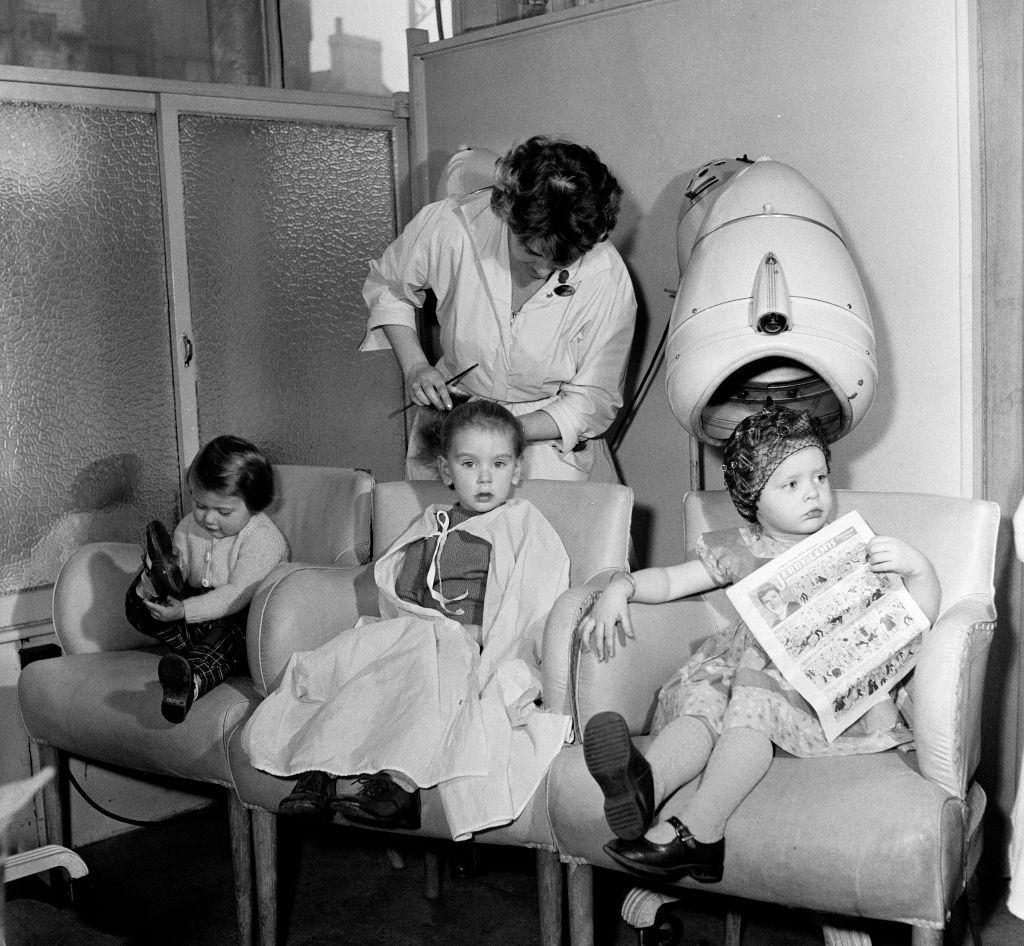
In connection with National Hairdressing and Beauty Week a Liverpool hairdresser, Miss Jean Belle, is offering half-price hairstyling for tiny tots. Going through the ‘mill’ are Shirley Turner, aged 19 months, Brenda Calderhead, 2 years and Judith Oakee.
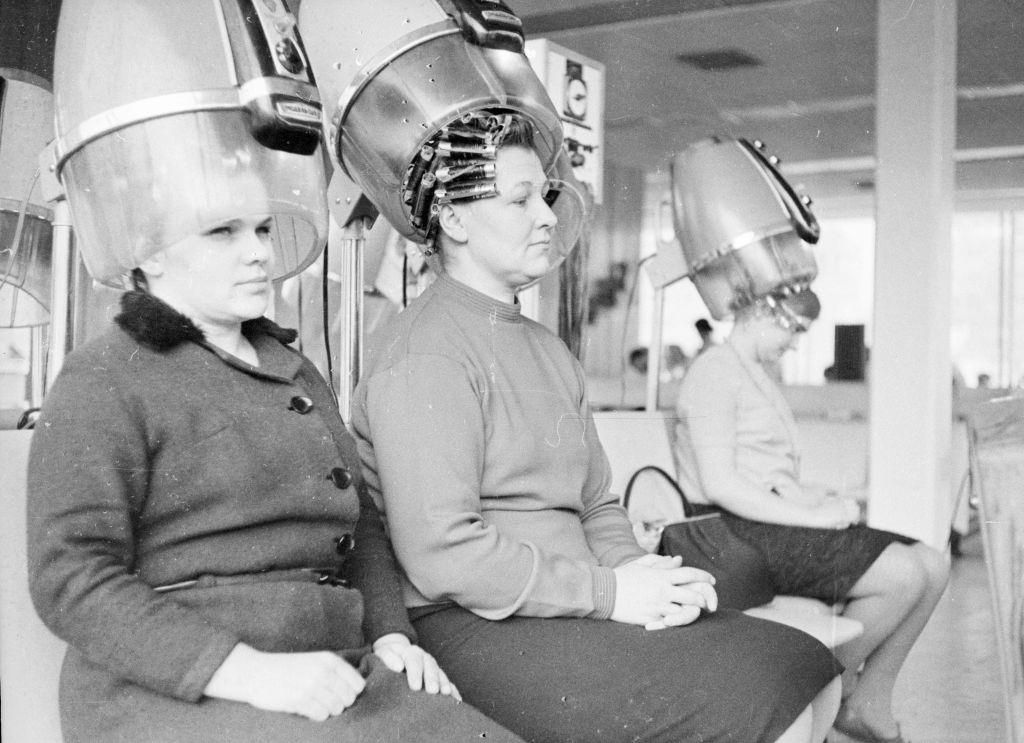
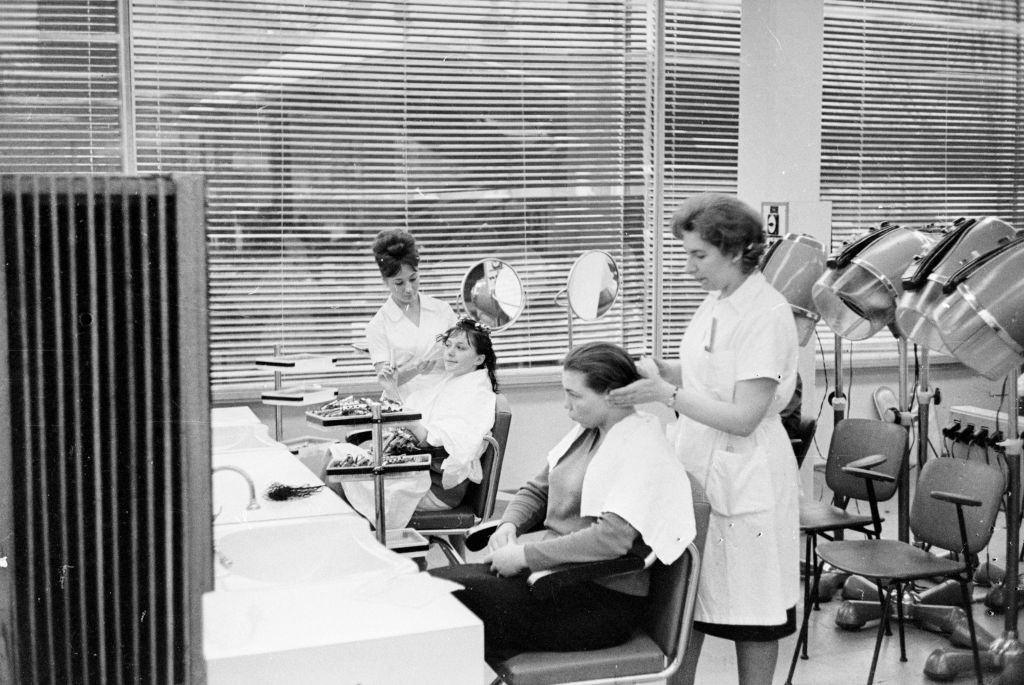
The salon experience extended far beyond England. In Moscow, the Beauty Palace offered a full hairdressing service, with women relaxing under dryers in a setting that mirrored Western salons almost exactly. Photos from 1965 show stylists at work and clients settled under the hoods, the experience nearly identical to what was happening in London or New York at the same time.
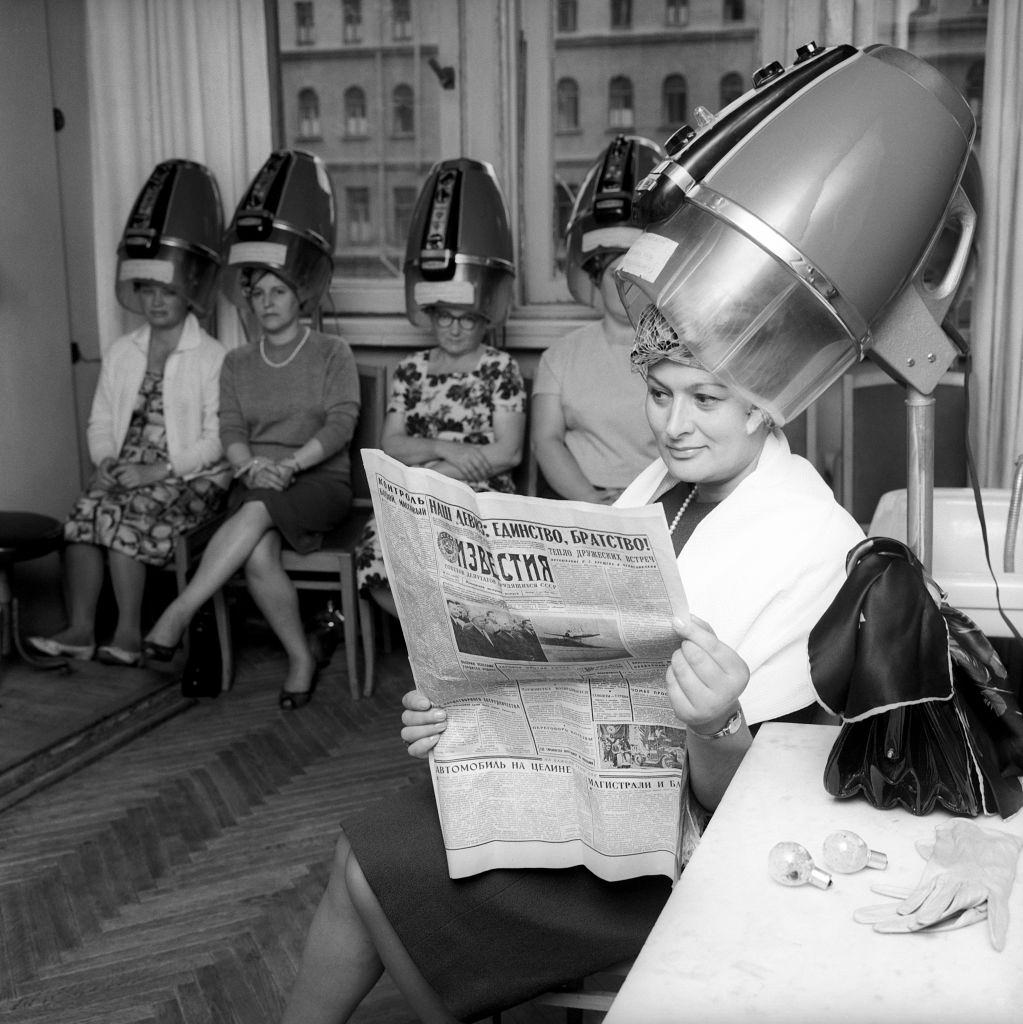
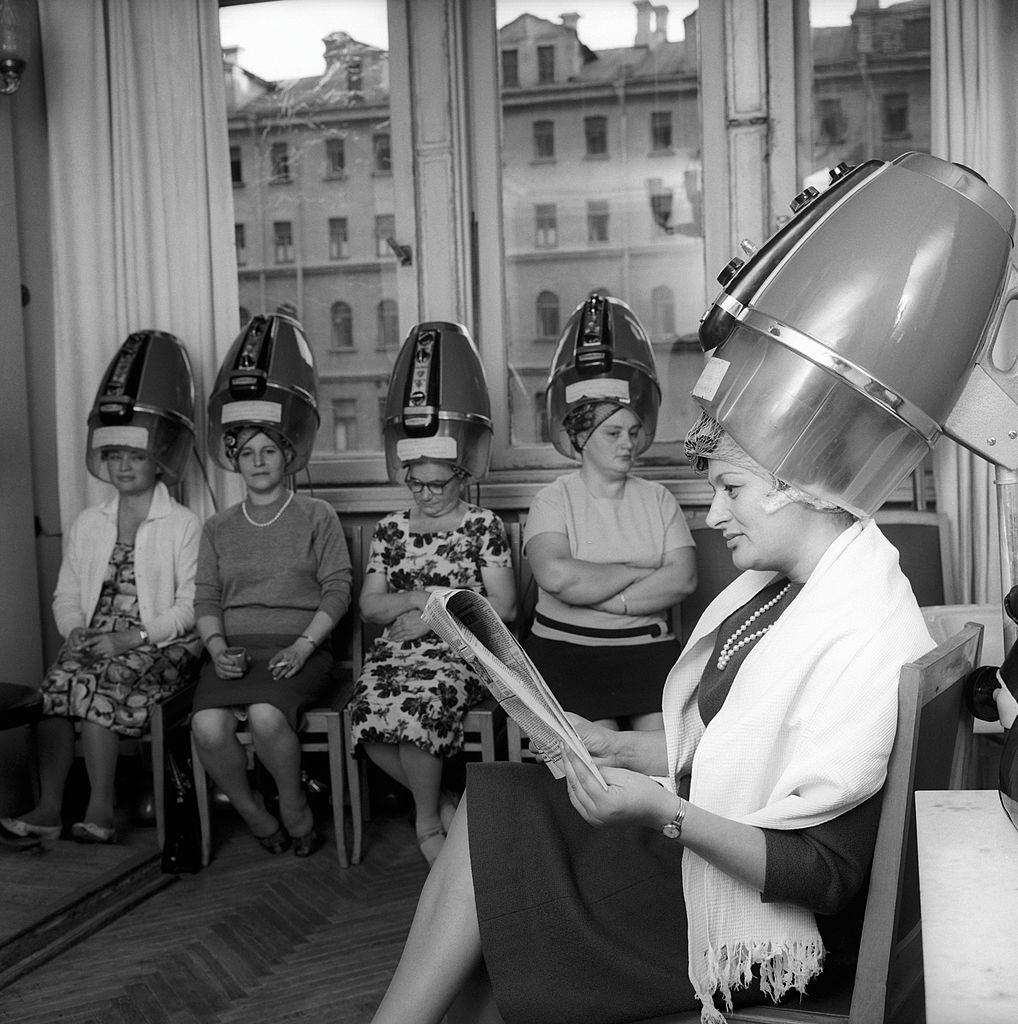
Italian actress Edda Vincenzi was photographed in Moscow in September 1964, seated under the dryer at a salon and reading a Russian newspaper. She was also photographed backstage before a performance with her hair being arranged — the salon and the stage connected through the same preparation ritual.
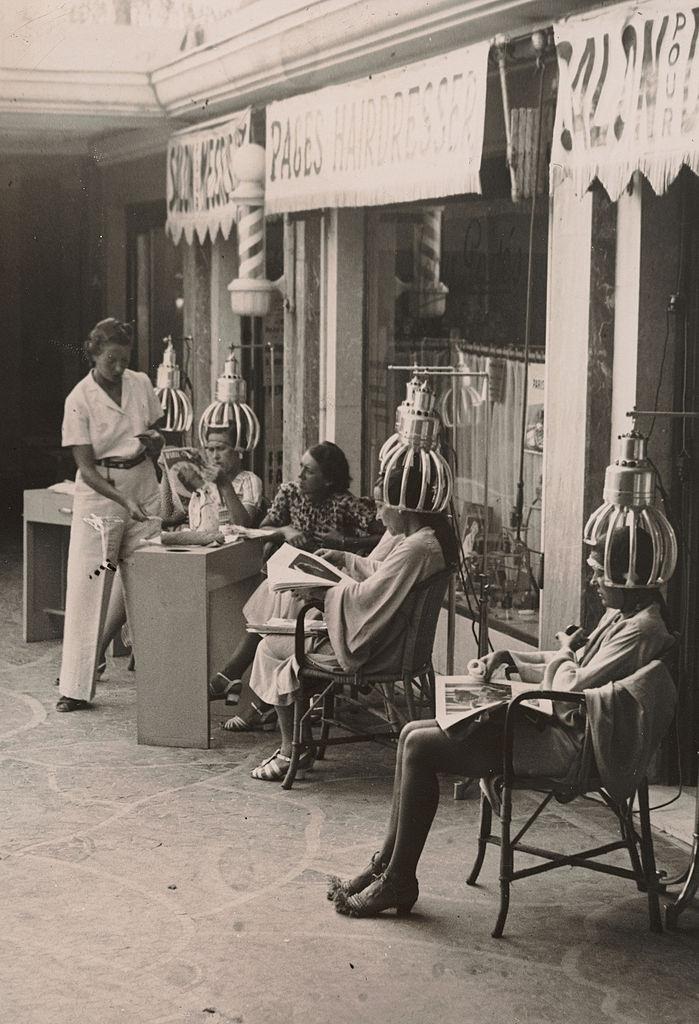
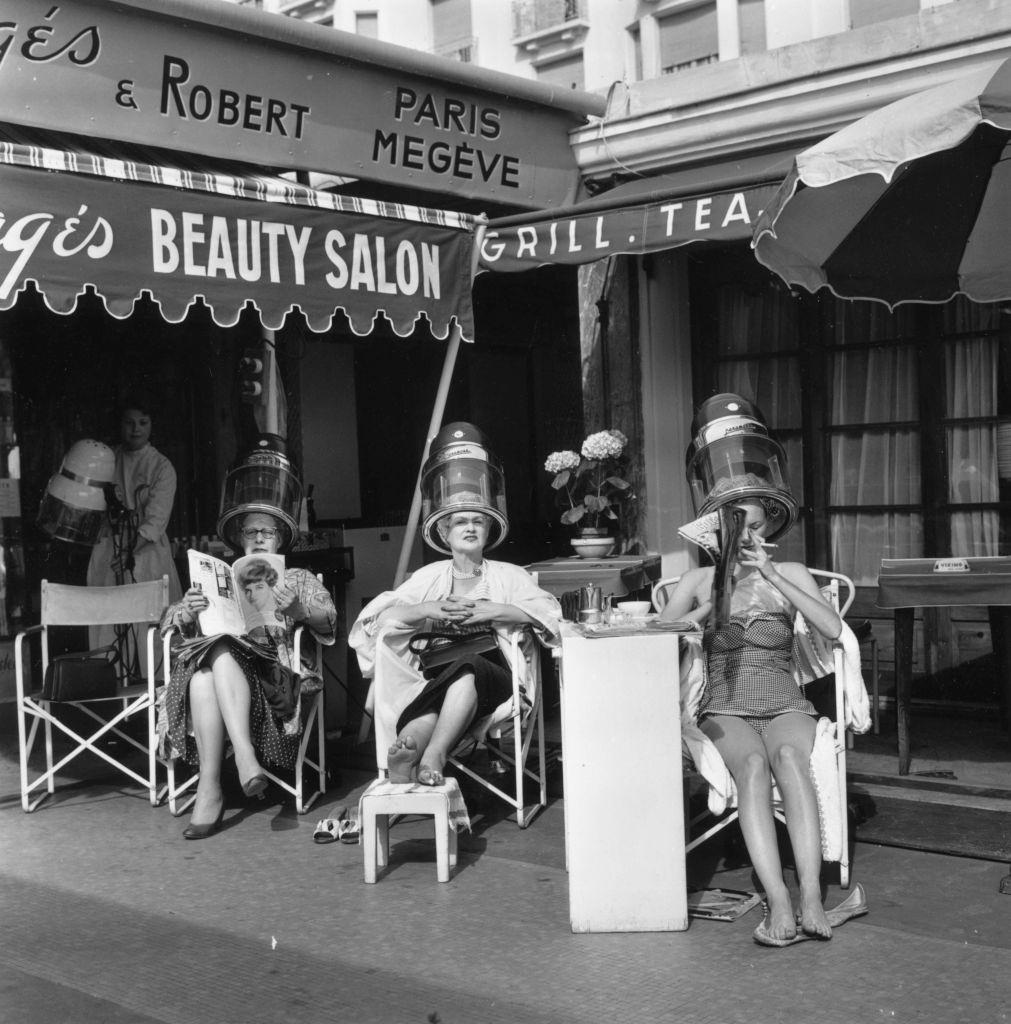
At the 1958 Cannes Film Festival, a salon was set up outdoors, overlooking the Mediterranean Sea. Visitors sat beneath the dryers with the French coastline as their backdrop — the salon experience made cinematic.
At Lilly Dache’s salon in New York in 1958, International News Service Women’s Editor Olga Curtis sat with two Russian dancers under pink dryers, showing them an American fashion magazine. The salon became a small stage for cross-cultural exchange.
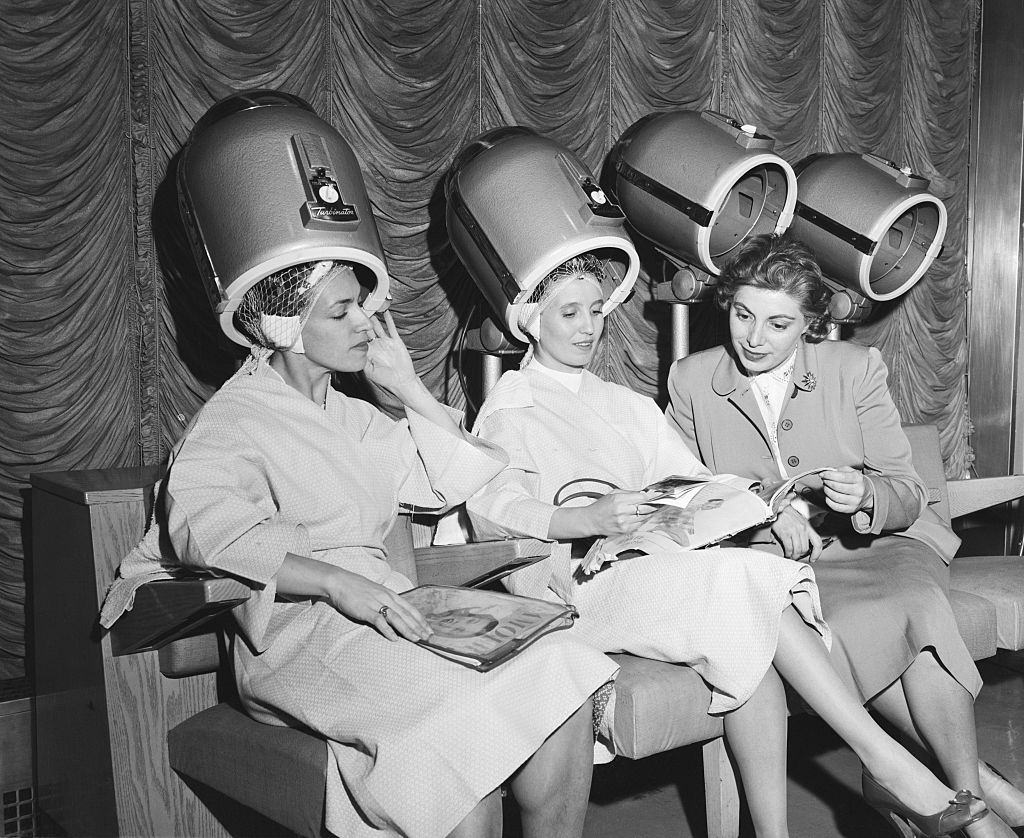
International News Service Women’s Editor Olga Curtis explains an American fashion magazine to two Russian dancers as they sit under pink dryers at Lilly Dache’s Salon in New York.
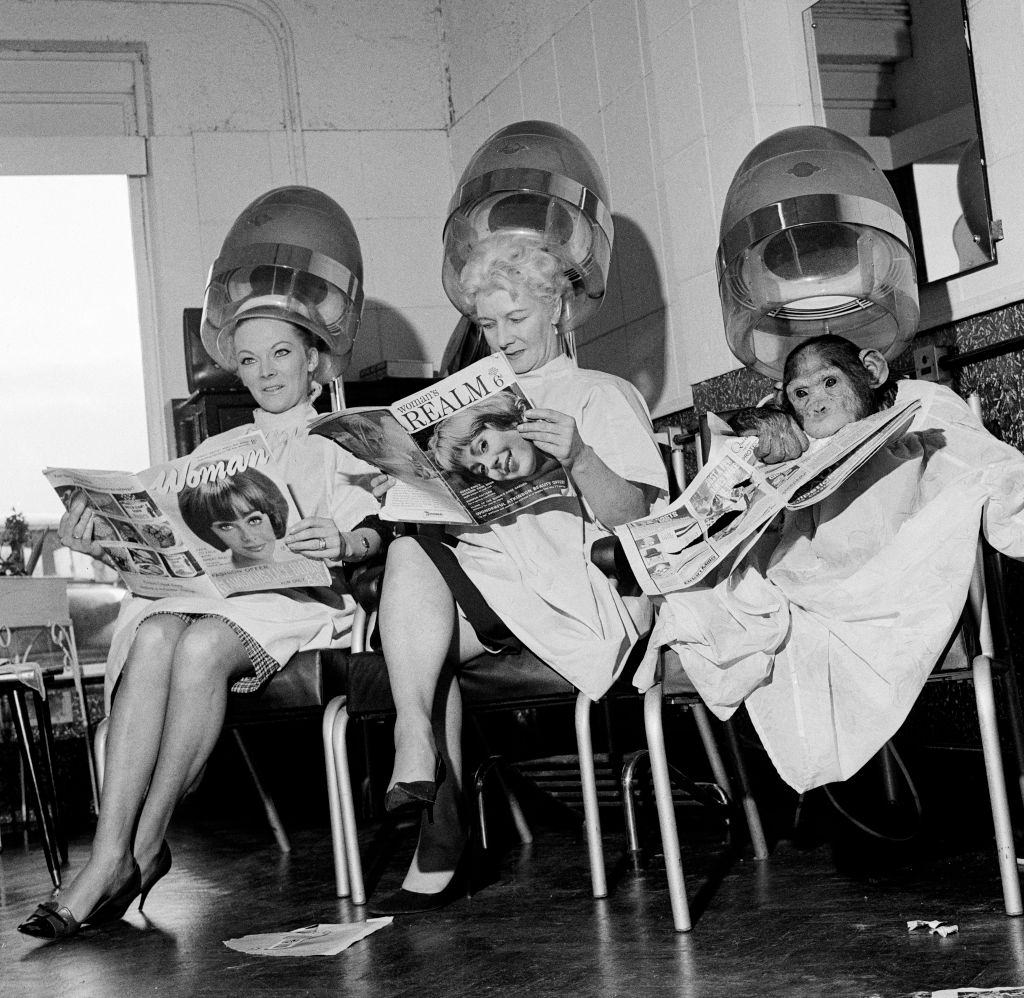
Animals made their way into salon culture too. A chimpanzee was photographed in 1964 sitting between two women under the dryers, holding a magazine. At George Constantinides’ salon on Hornsey Road in London in 1968, a dog had its fur set in curlers.
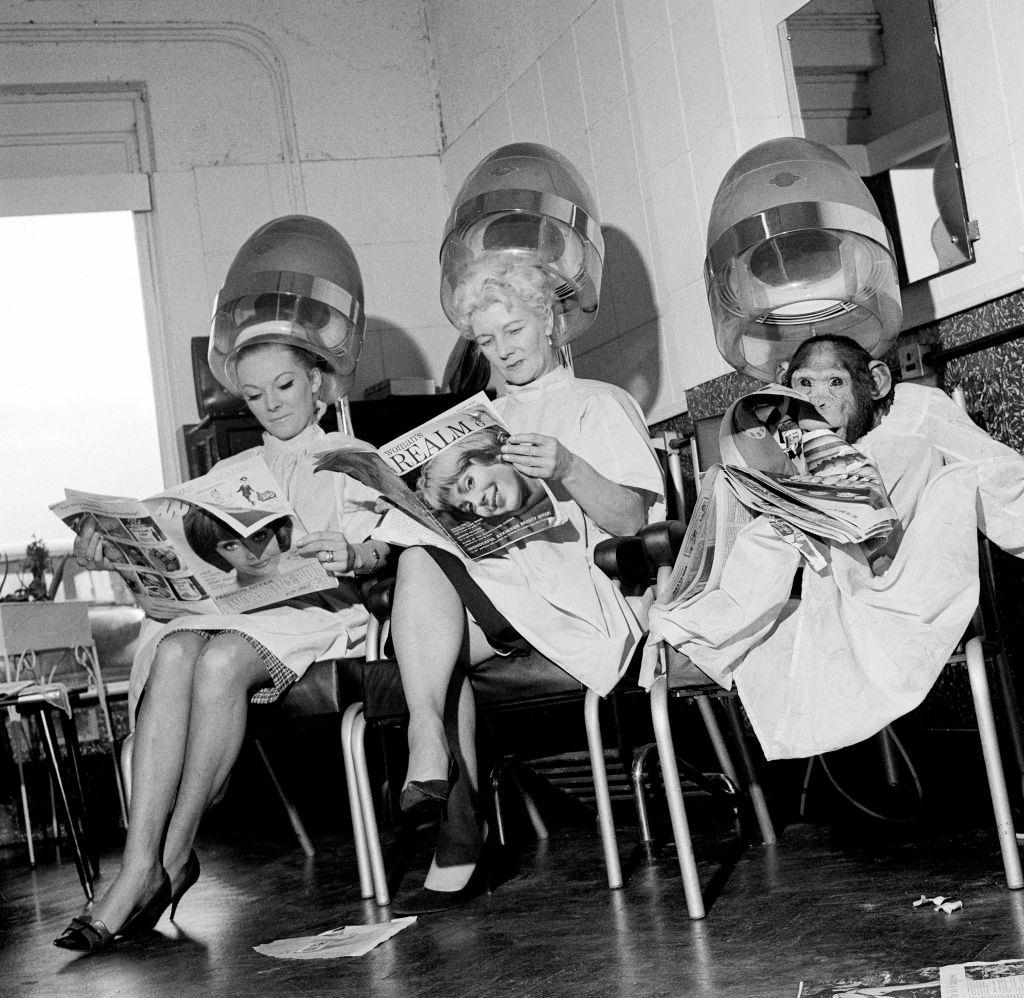
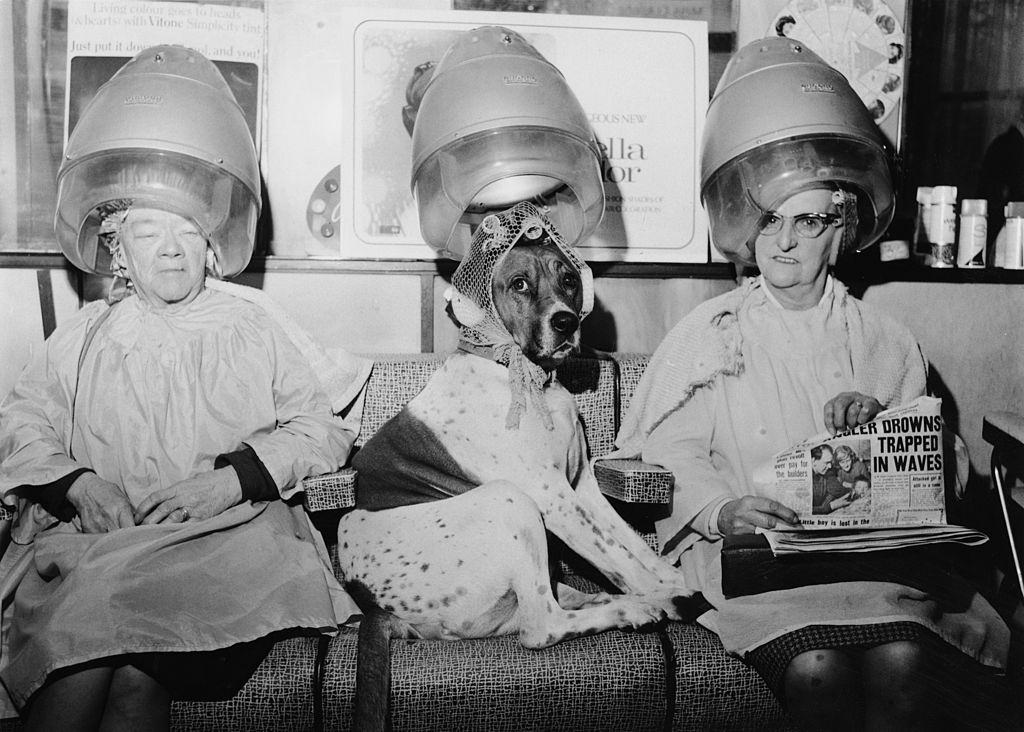
Teenagers also had their own salon spaces. A 1962 photo shows young people dancing at a salon in Egham, Surrey, opened specifically for teenagers by photographer John French. In Bognor Regis in 1965, the Caribbean Hotel ran a beauty parlour catering exclusively to teen guests on holiday.
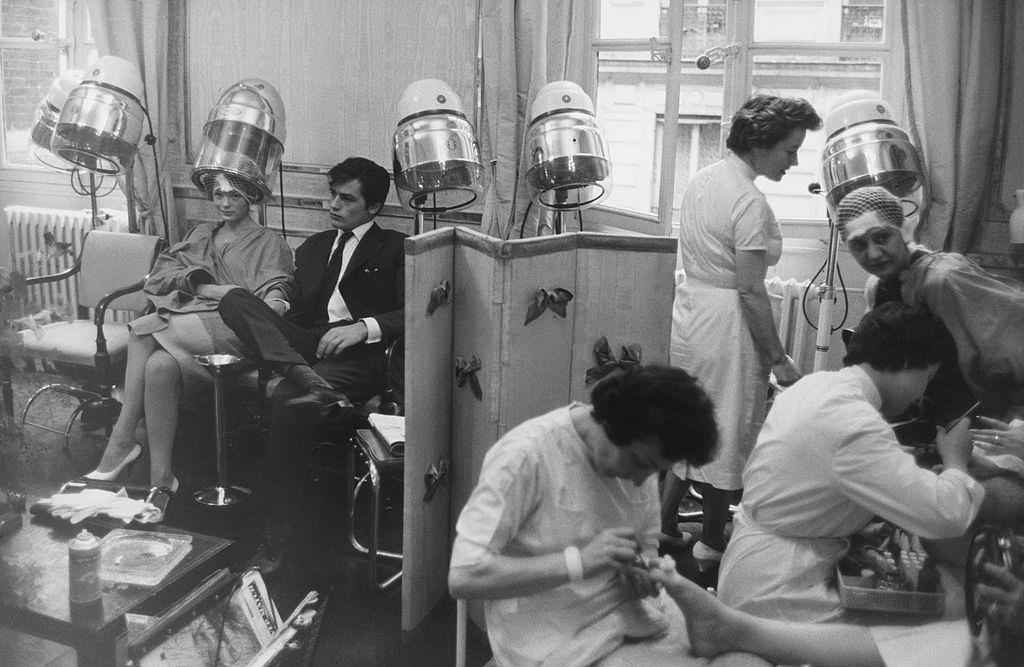
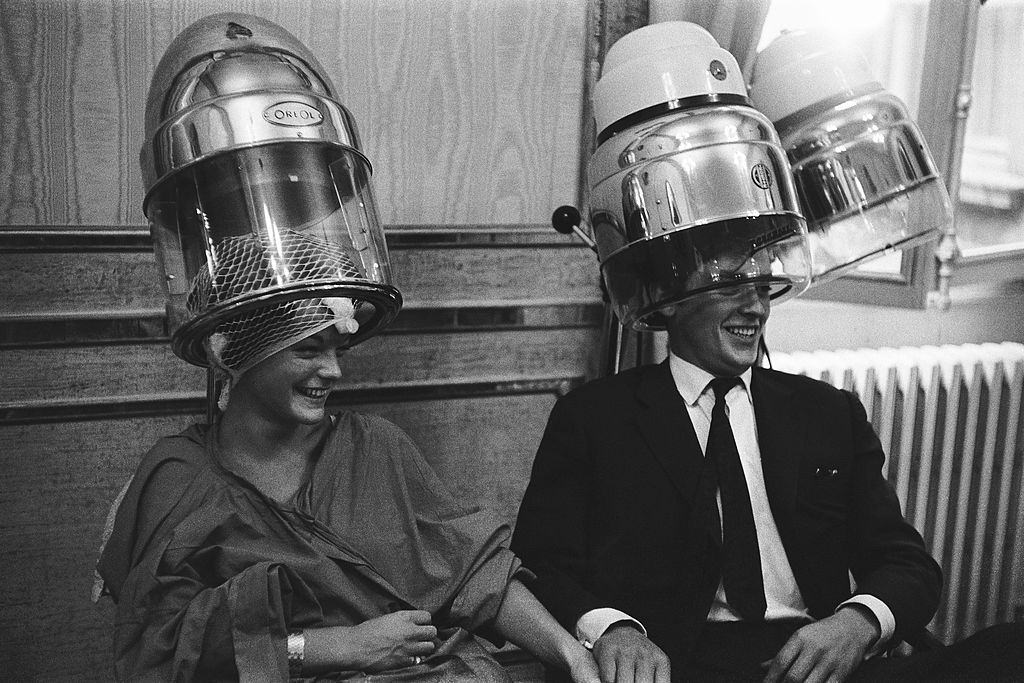
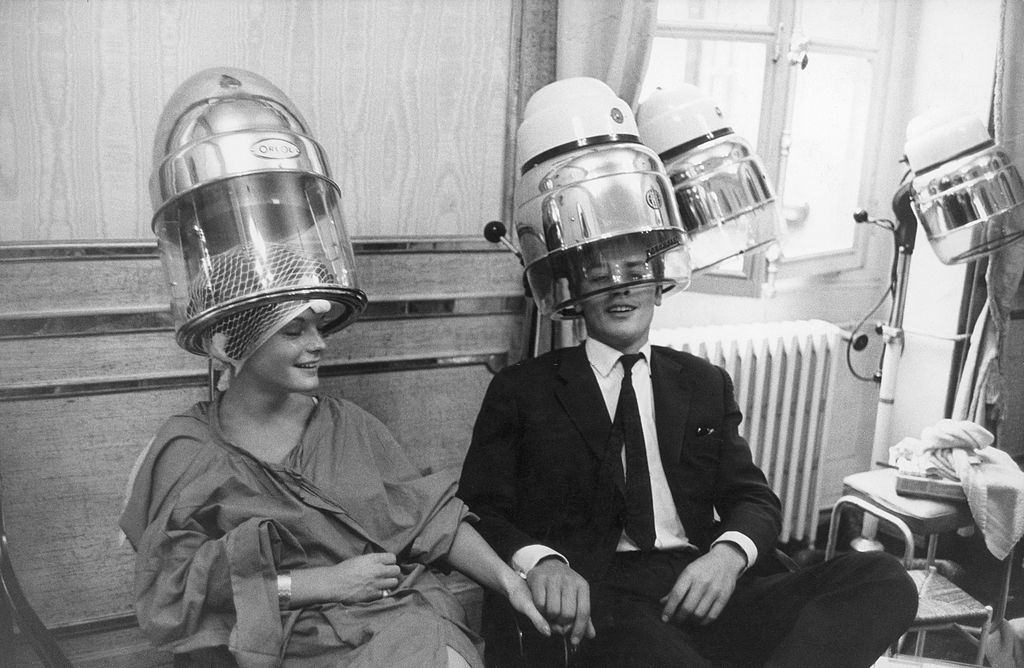
Romy Schneider and Alain Delon were photographed together at hairdresser Alexandre’s salon — one of the most famous names in Parisian hairdressing. Their presence at the salon was itself a public event, a reminder of how deeply embedded salon culture was in the social lives of even the most famous people of the era.
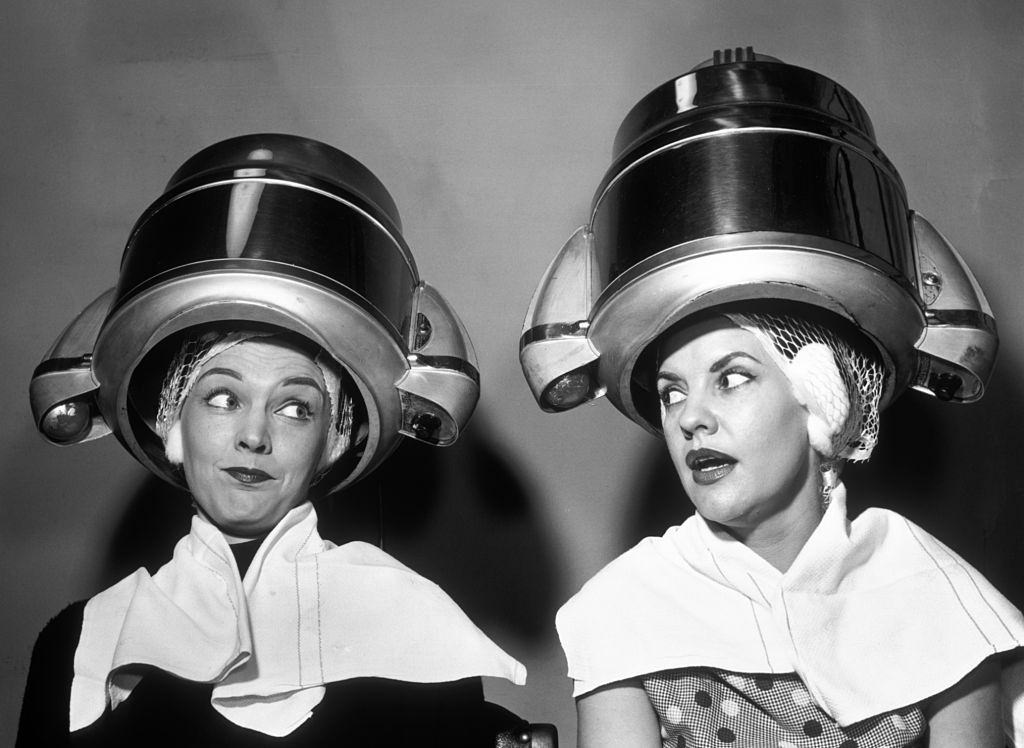
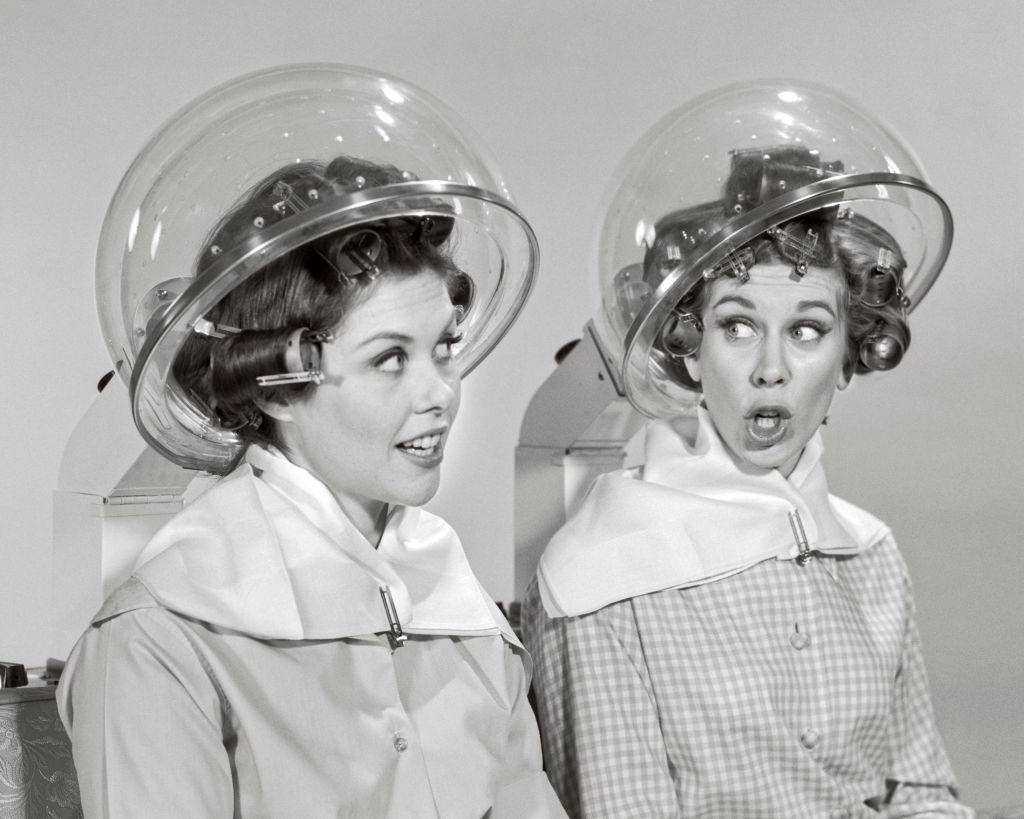
The gossip that flowed between dryers was a well-known feature of salon life. Women leaned toward each other, rollers in, voices raised just enough to be heard over the hum of the machines. The shared wait time created a specific kind of intimacy — strangers became confidantes for the length of a drying cycle.
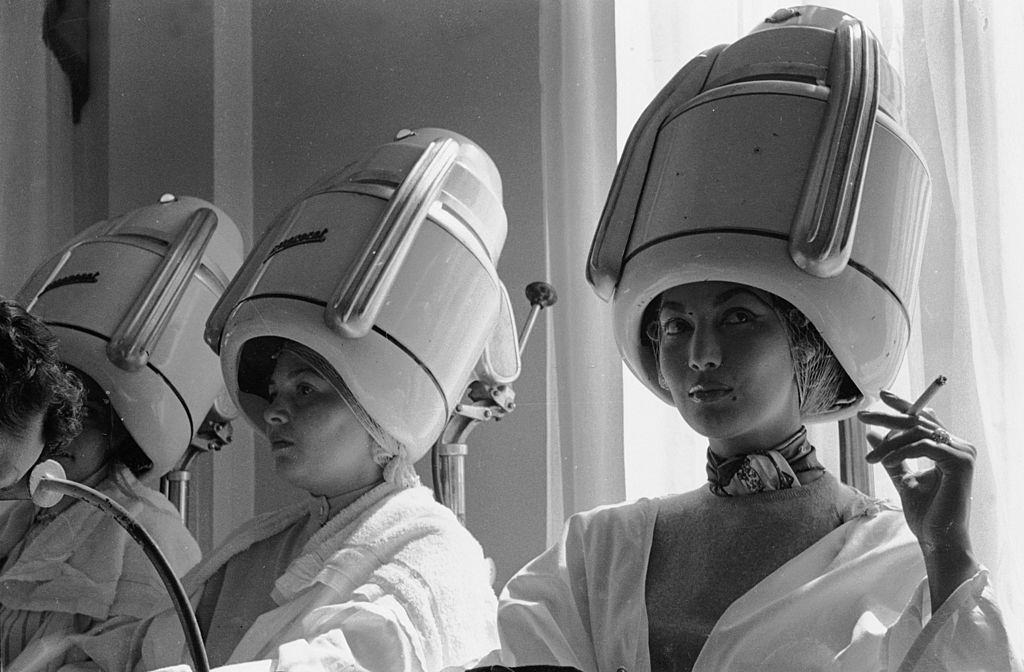
Spanish model Teresita Montes — sister of film star Maria Montes — was photographed in 1955 sitting under a Parisian salon’s dryer with a cigarette. Smoking under the dryer was common enough in the period that it barely registered as remarkable. The salon was a relaxation space first, a beauty service second.
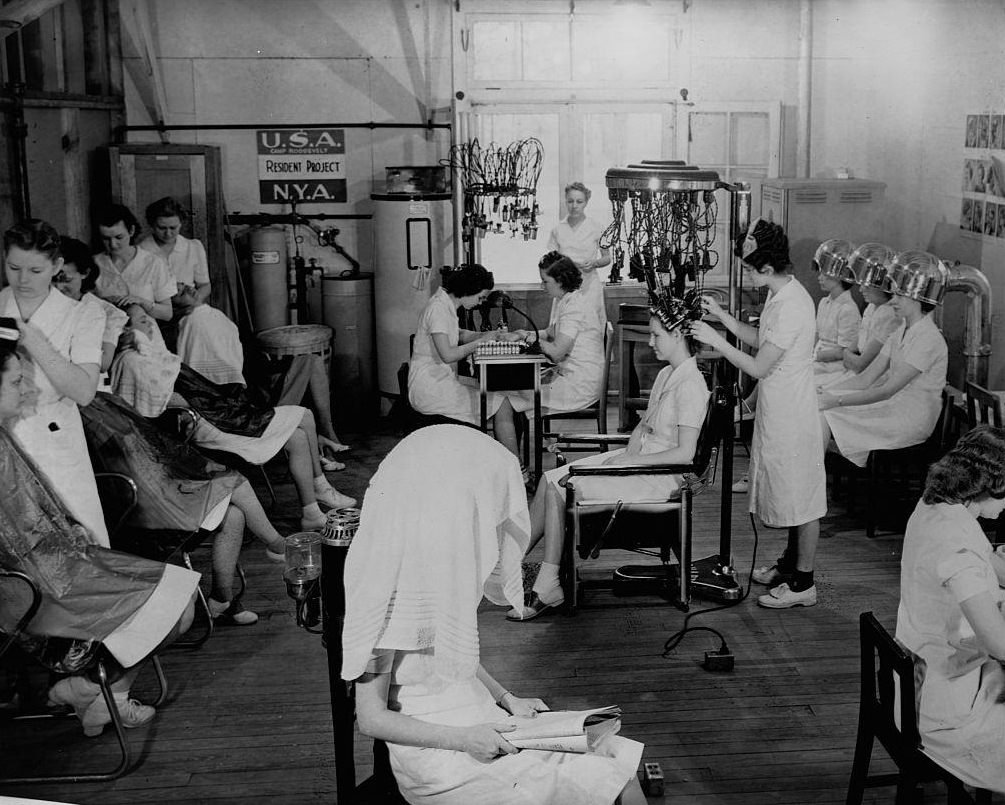
The training of new stylists was formalized during this period as well. Young women in the National Youth Administration learned beautician skills at Camp Roosevelt in Ocala, Florida, working in a fully equipped beauty shop as part of a federal work-training program.
The photos from this era show the salon as something larger than a place to get your hair done. It was a women’s social space, a venue for celebrities, a training ground, a newsroom of sorts, and occasionally a place where a chimpanzee sat reading a magazine. The hood dryer was the fixture that made it all possible — it imposed a waiting period, and that waiting period became the point.