
When Paramount Pictures acquired the film rights to Mario Puzo’s novel The Godfather for $80,000, few people inside the studio believed they were sitting on something historic. Gangster films had a troubled track record at the box office. Audiences had seen organized crime stories before, and most of them had come and gone without much fanfare. Nobody was predicting a masterpiece.
What followed proved every skeptic wrong. The 1972 film became one of the most profitable in Hollywood history, and the trilogy as a whole grossed over a billion dollars. For Marlon Brando, it was a career-defining moment — a role that redefined what screen acting could look like. Director Francis Ford Coppola built a world so detailed and so carefully constructed that audiences felt they were watching real people, not characters.
The trilogy’s three films each occupy a distinct era of American history. The first film is rooted in post-World War II America, where immigrant families carved out power in the shadows of legitimate society. The second film steps back to the 1960s, tracing both the origins of Vito Corleone and the rise of his son Michael. The third film shows the Corleone family attempting to merge into mainstream, modern life — with brutal consequences.
The dialogue throughout all three films is razor-sharp. Lines like “I’ll make him an offer he can’t refuse” became part of the American cultural vocabulary almost immediately after the first film’s release. But the words only worked because of the performances behind them, and no performance was more central than Brando’s Don Vito Corleone.
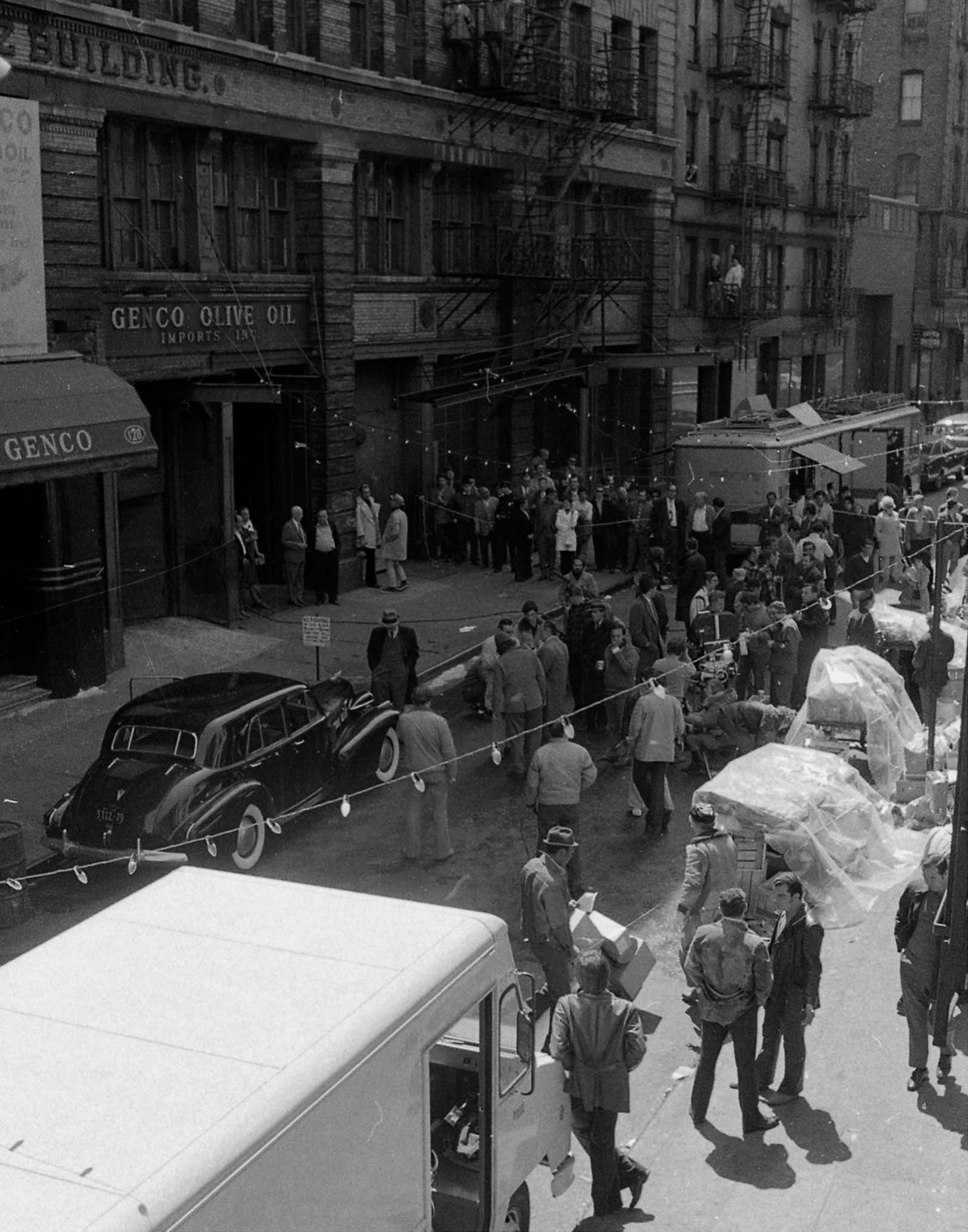
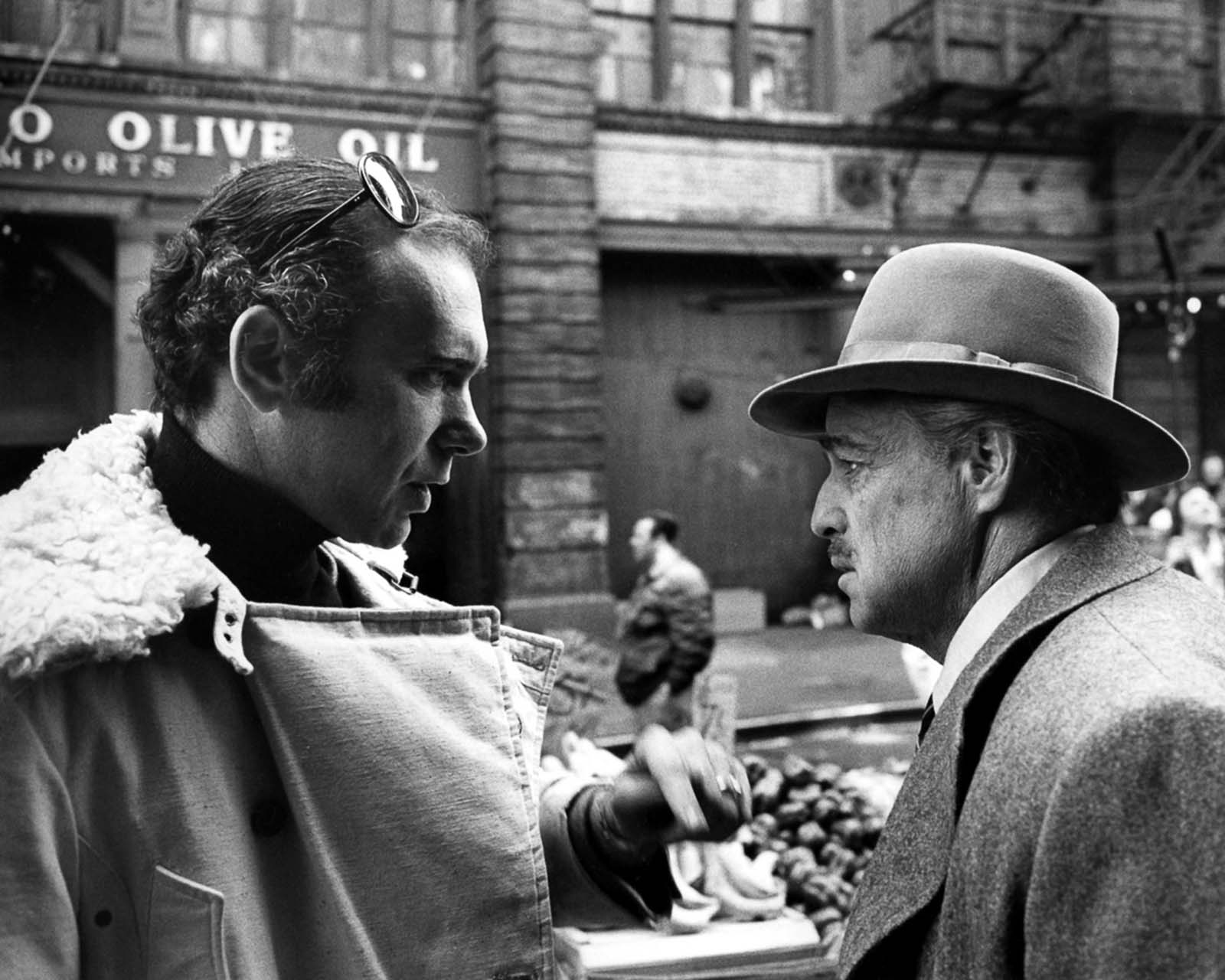
One of the most pivotal scenes in the entire trilogy is Vito Corleone’s ambush. While browsing a fruit stand outside his office, the Don is gunned down by rival mobsters — a shocking act of violence against a man who had always seemed untouchable. Coppola chose to film this scene on location at 128 Mott Street in New York City, between Hester and Grand Streets, in the heart of Little Italy. The real neighborhood gave the scene an authenticity that a studio backlot never could have matched.
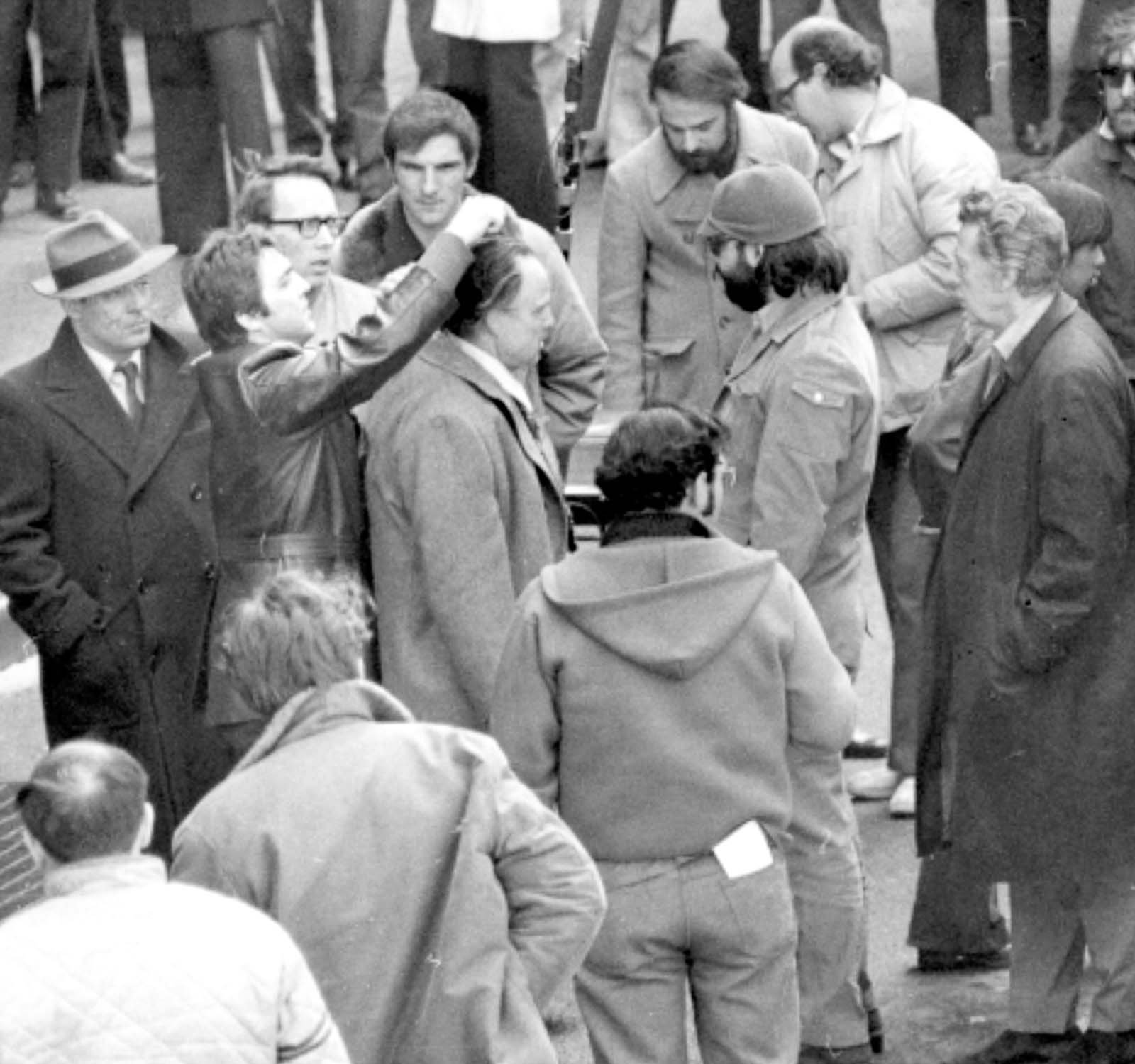
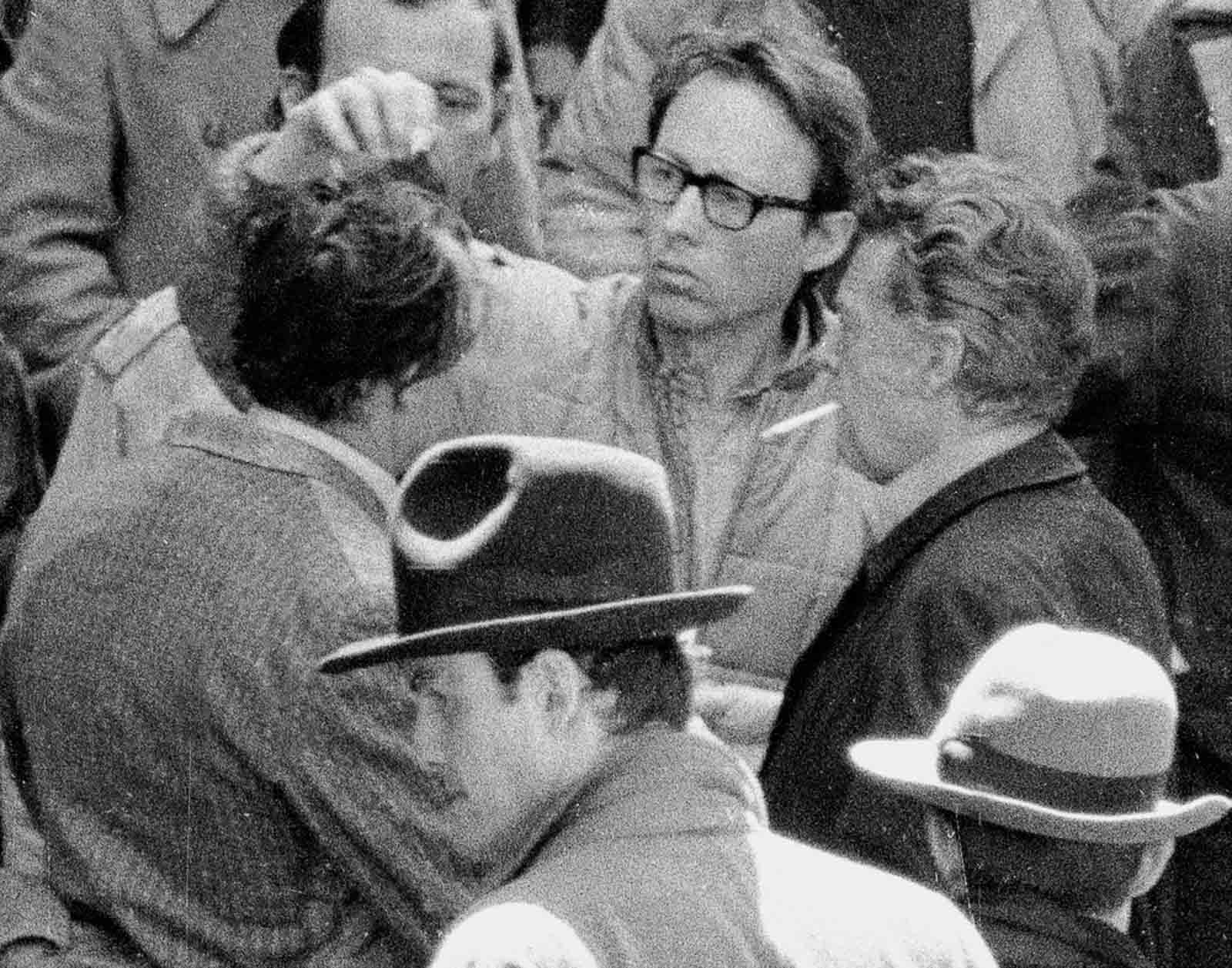
Getting Brando ready for a scene was itself a production. As these behind-the-scenes photographs show, crew members worked carefully on his appearance between takes, adjusting every detail to maintain the physical presence of the aging Don. Brando had famously stuffed his cheeks with cotton for his audition to achieve Corleone’s distinctive jawline — a choice that made it into the finished film and became one of cinema’s most recognizable looks.
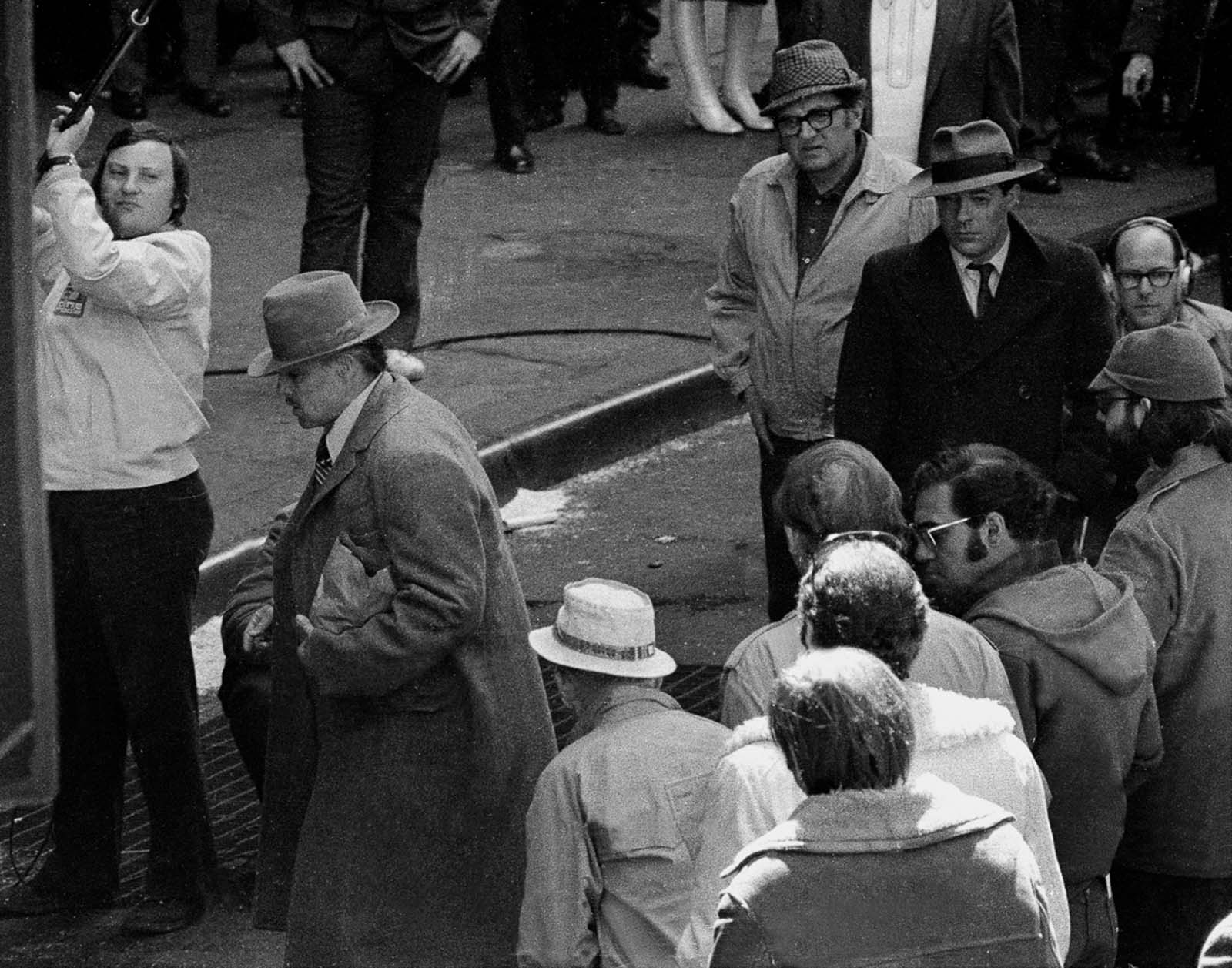
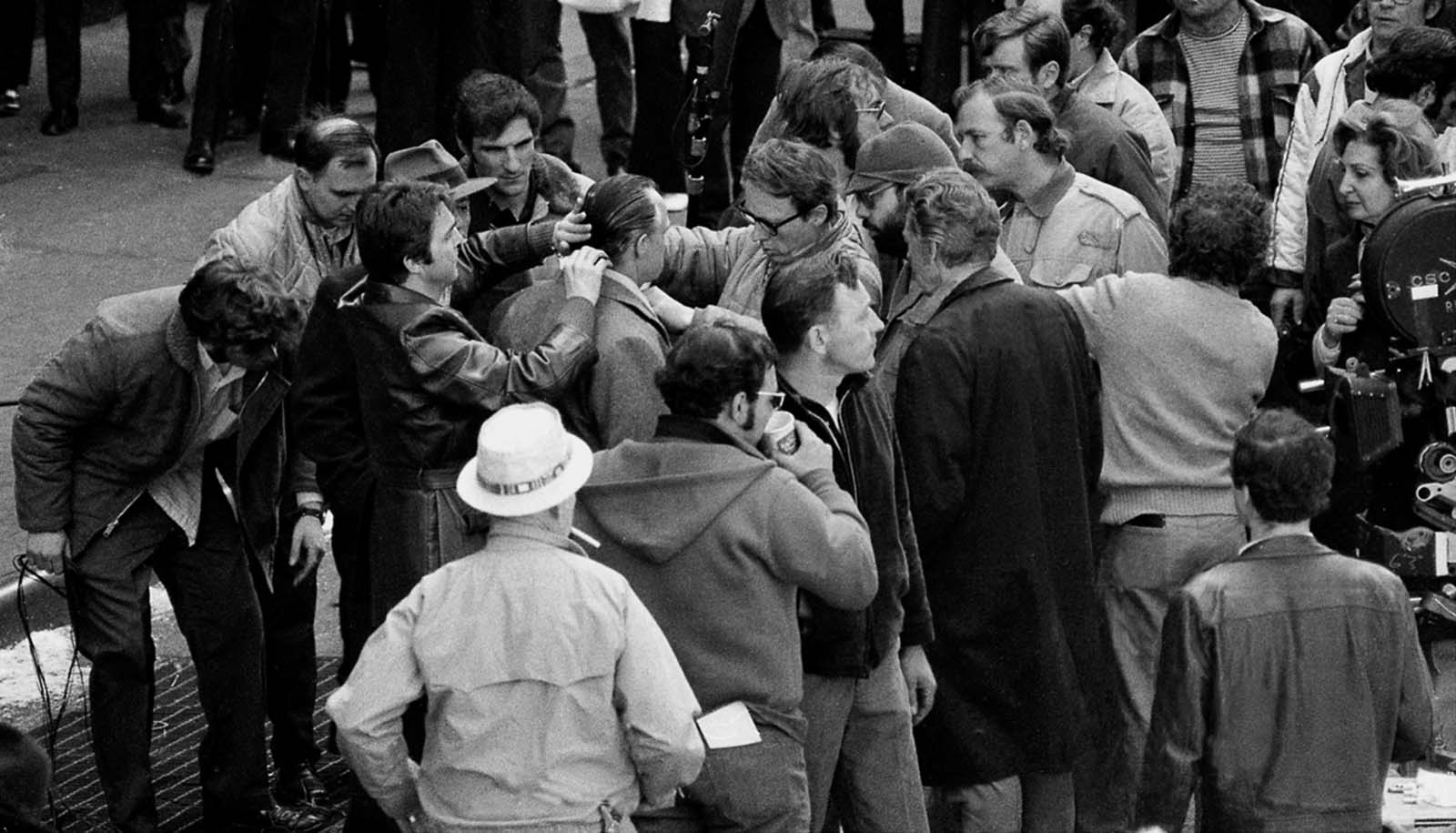
The Mott Street location brought the production directly into a living neighborhood. Residents went about their daily routines while cameras, lights, and crew filled the streets below. The production team had to balance the demands of filmmaking with the reality of shooting in an active urban block, where the local community was always just a few feet away from the action.
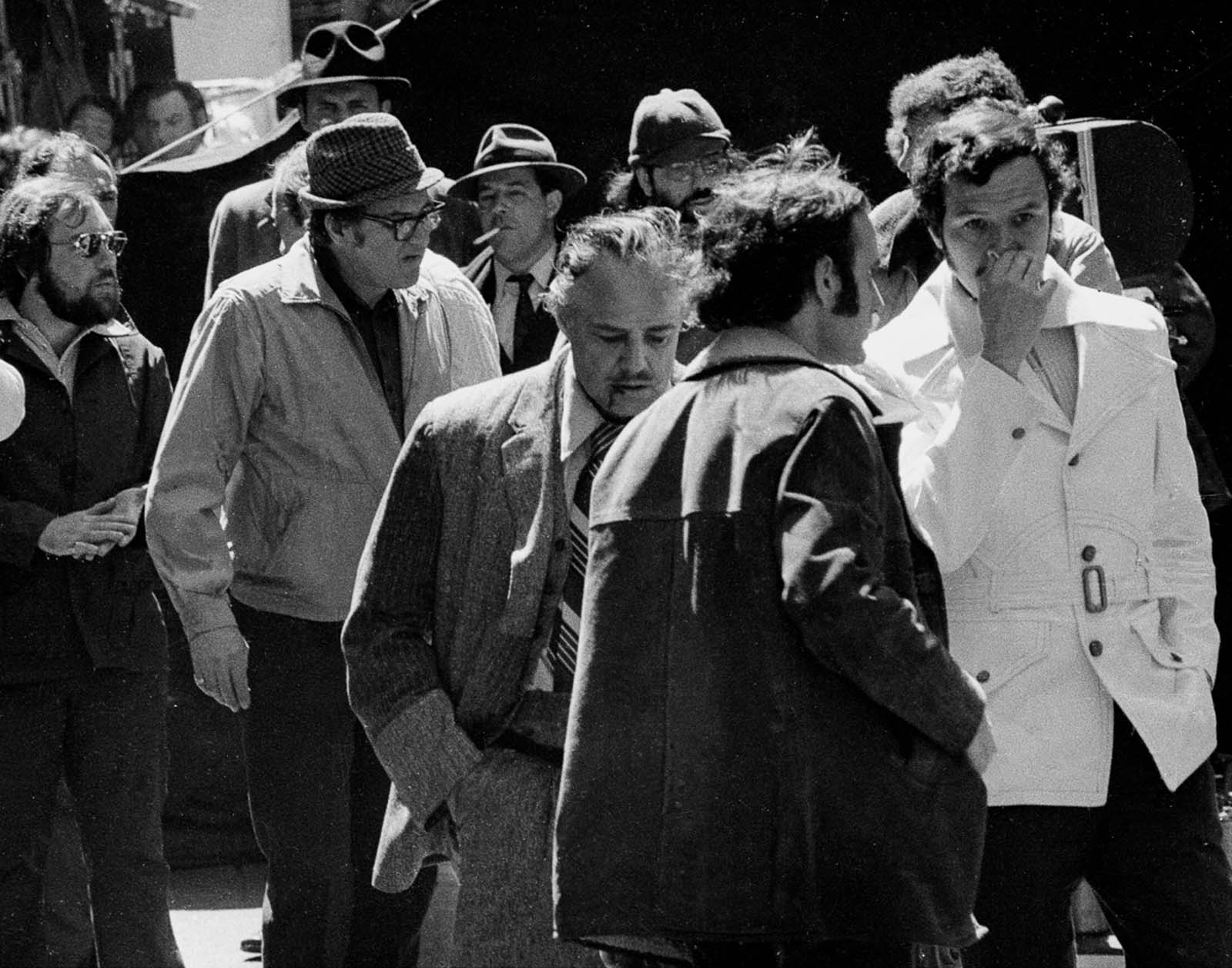
The shooting scene required multiple takes, and each one involved Brando collapsing to the pavement with stage blood applied to sell the violence of the moment. Between takes, the blood was reapplied, his wardrobe was reset, and the fruit stand was carefully restored to its original state. The physical and logistical demands of the sequence were significant, yet the final cut makes it look effortless.
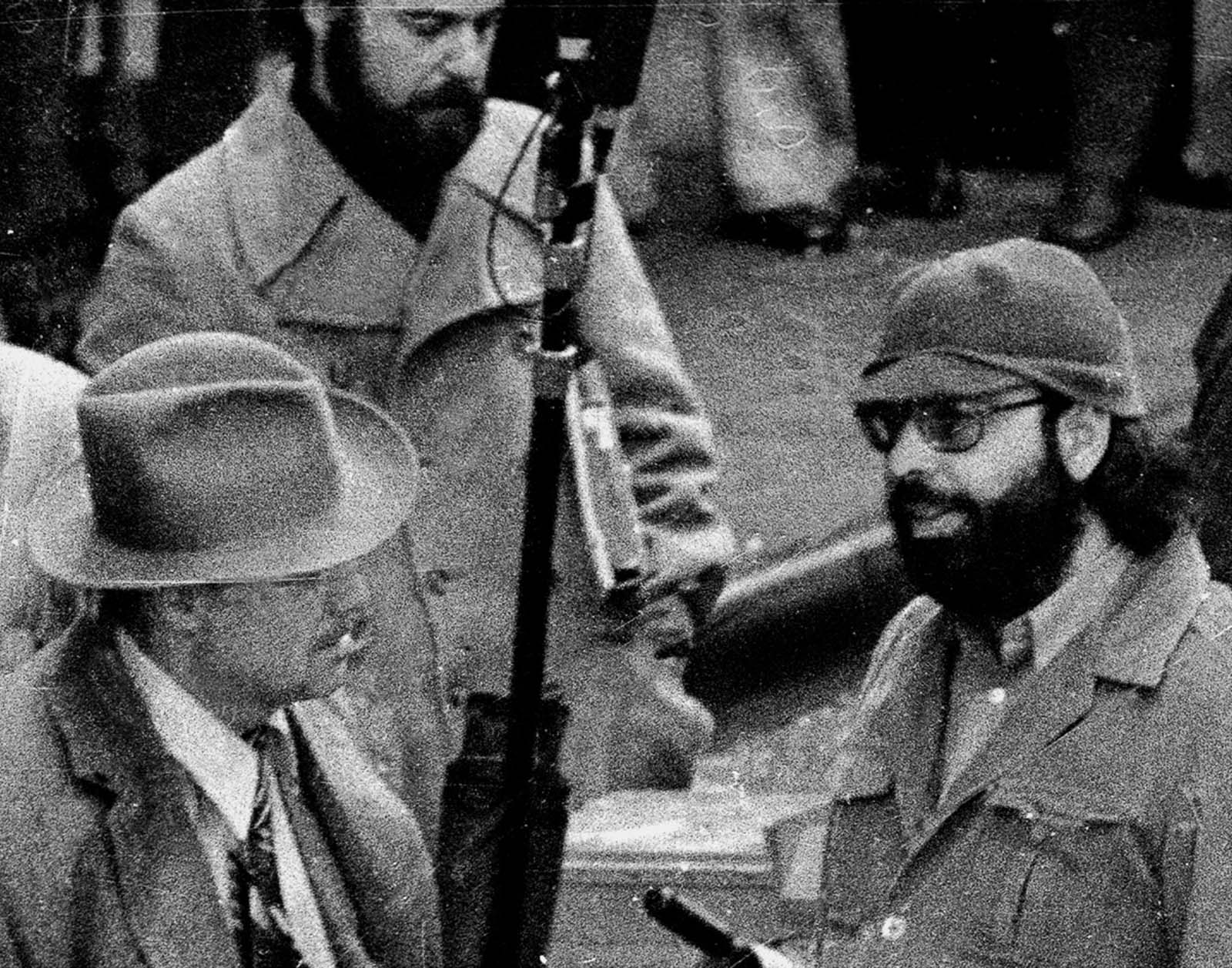
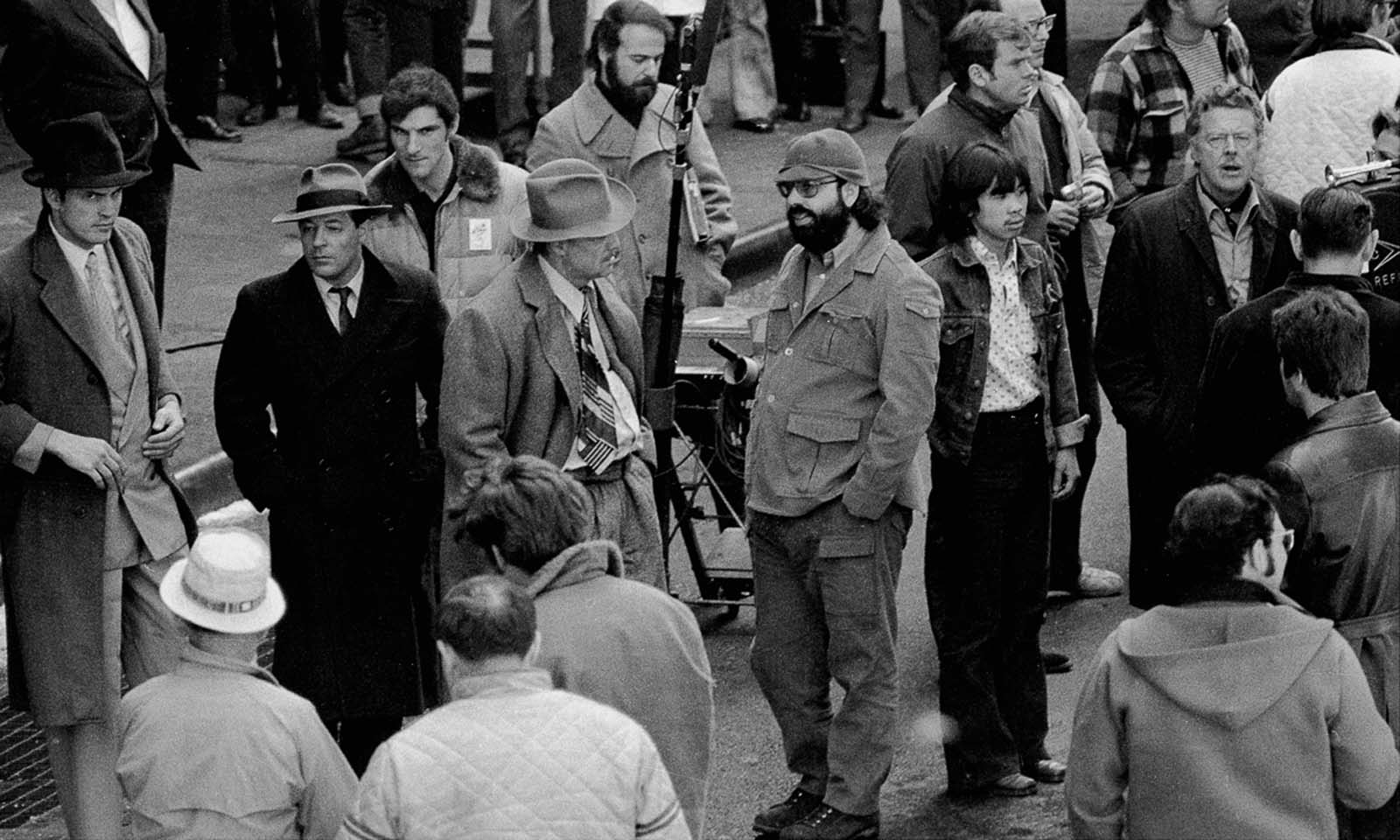
Coppola’s collaboration with Brando on set was hands-on and constant. The two men discussed each take in detail, with Coppola guiding the tone and pacing while Brando brought his own instincts to the character. Their working relationship on location was a key factor in making the scene feel grounded and real rather than staged.
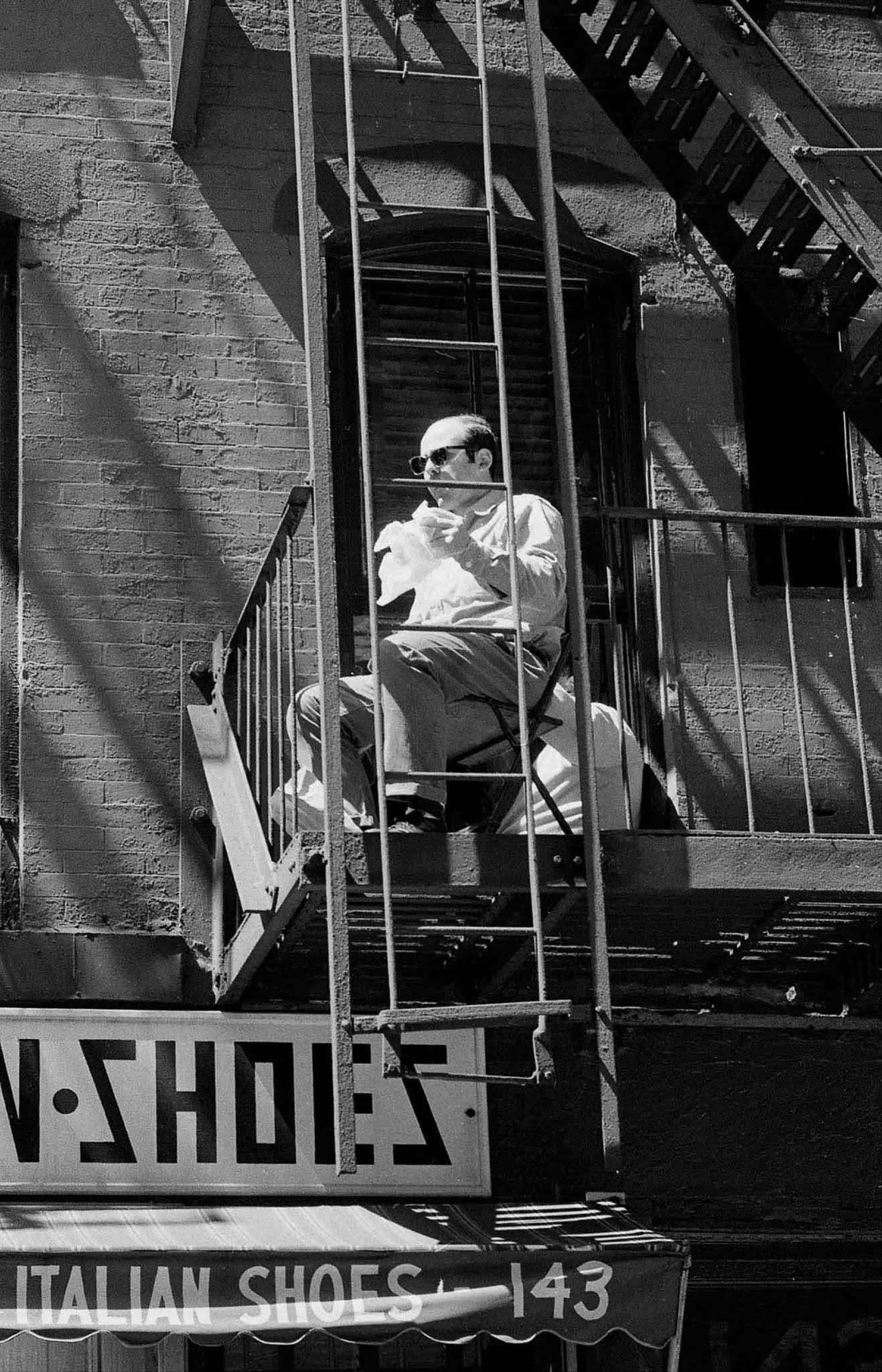
Not everyone watching the shoot was part of the crew. At least one local resident pulled up a front-row seat on his own fire escape, eating lunch while watching the production unfold below. It’s a candid snapshot of what it actually looked like to film a Hollywood blockbuster in the middle of a densely populated New York City neighborhood in 1971.
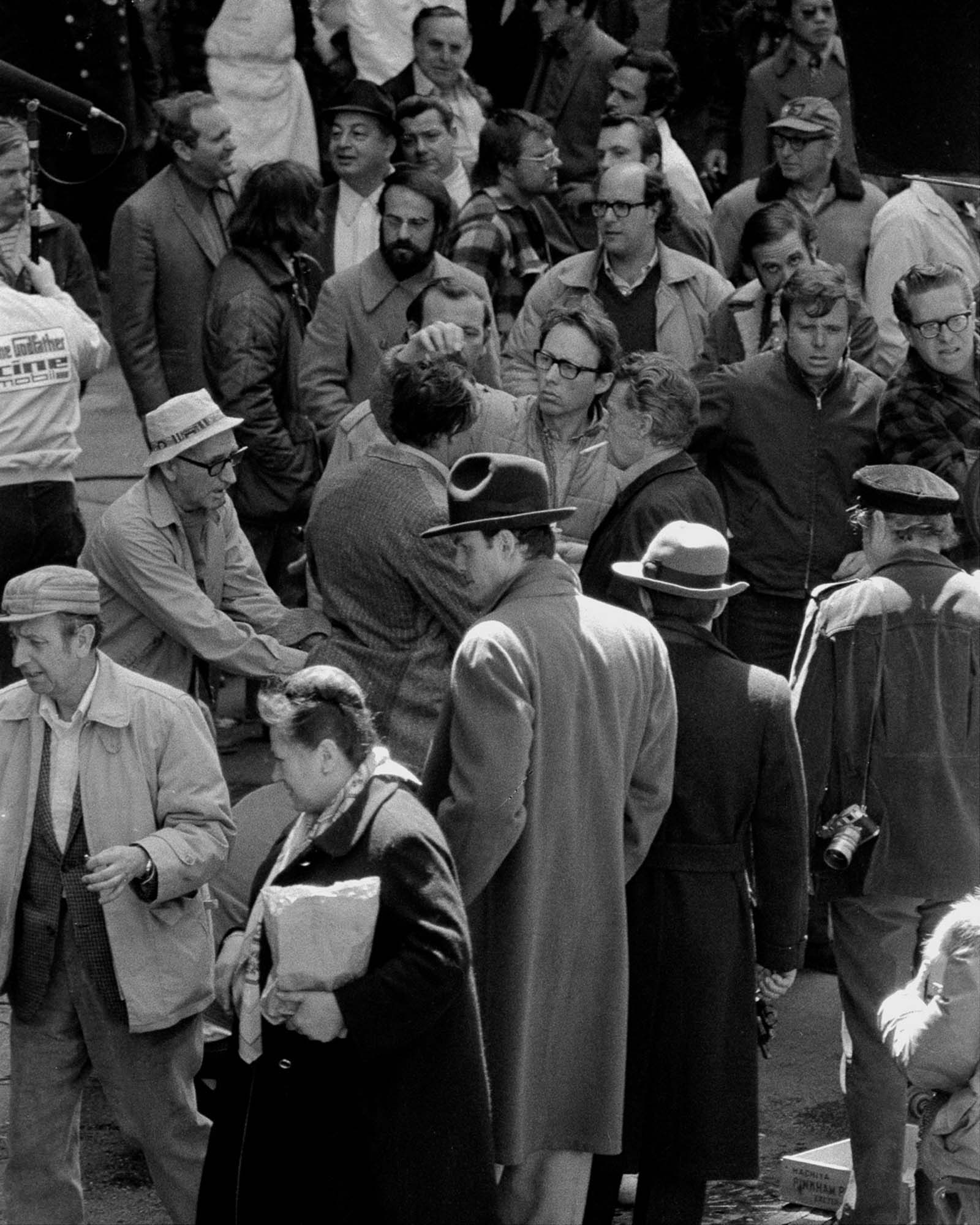
The fruit stand ambush is one of the most carefully constructed scenes in the film. Every element — the crowded sidewalk, the stacked produce, the sudden eruption of gunfire — was designed to shatter the sense of safety that had surrounded the Corleone patriarch. It works because the location feels real, the performance is precise, and the camera doesn’t flinch.
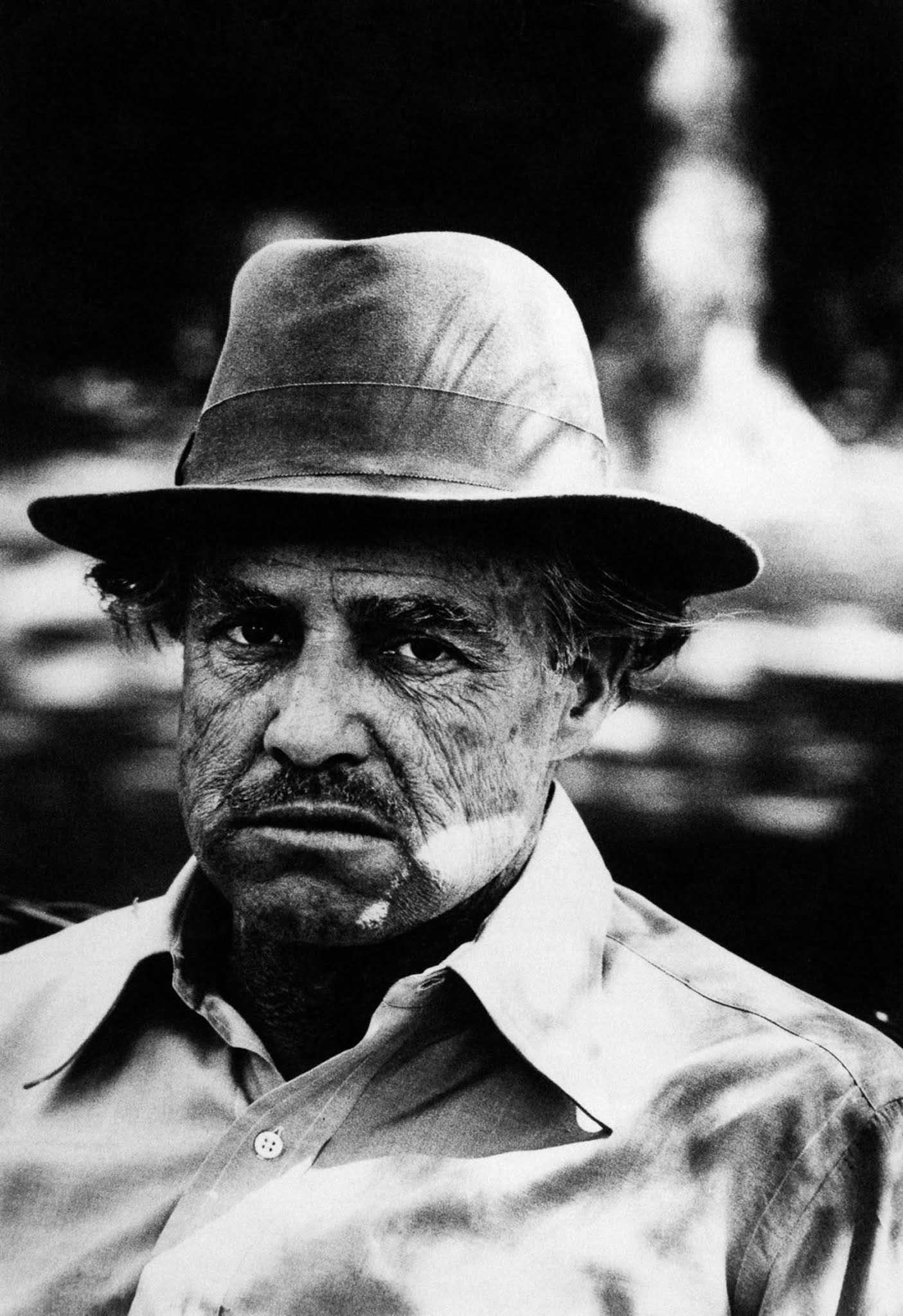
These photographs offer a rare look at the mechanical work behind one of cinema’s most memorable sequences. The lights, the crew adjustments, the stage blood, the fire escape spectator — together they show that even the most iconic scenes in film history are built piece by piece, take by take, on ordinary city streets.

Great stuff! Brando was only what, 47 in RL when this was shot? Amazing.
Number 4 isn’t just a producer. That’s legendary makeup artist Dick Smith.
The production kept Brandon’s transformation under wraps until this scene. There was a lot of speculation in the press about how sex symbol Brando (only in his 40s) would look. So many people came out to watch it….they would sometimes clap before Coppola could get his shot. Frustrating.
Some of Joe Colombo’s men did crowd control. You can see them in the photos.