Hey There! Before You Go. 😧
Get the best vintage content straight into your inbox!

Don't worry, we don't spam

Rare Historical Photos Show the construction of Iconic Golden Gate Bridge

The Golden Gate Bridge stands as one of the most recognized structures on earth. Connecting San Francisco to Marin County across a notoriously treacherous strait, it draws comparisons to the Empire State Building and the Statue of Liberty as a symbol of American ambition. In 1994, the American Society of Civil Engineers officially named it one of the seven wonders of the United States. But before it became an icon, it was a construction site — four years of steel, wire, cement, and dangerous labor carried out above cold, churning water.
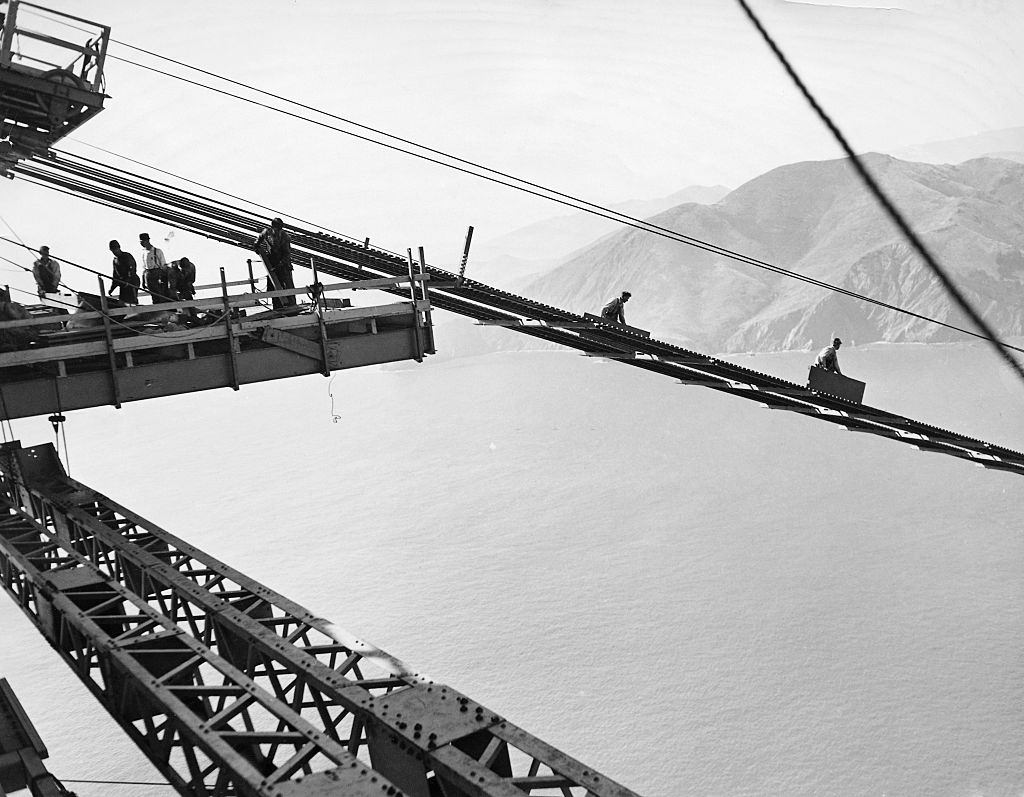
Labors are working on the catwalk, sending pieces down a ramp system, 1930s.

Ground broke on the project in 1933. Chief Engineer Joseph Strauss led the effort alongside two key engineering consultants: Charles Ellis and Leon Moisseiff. Together, they determined that a suspension bridge was the right design for the Golden Gate. The location presented serious challenges — strong tidal currents, high winds, frequent storms, and an active earthquake zone all had to be factored into every decision. The finished bridge stretches 1.7 miles and measures 90 feet wide.
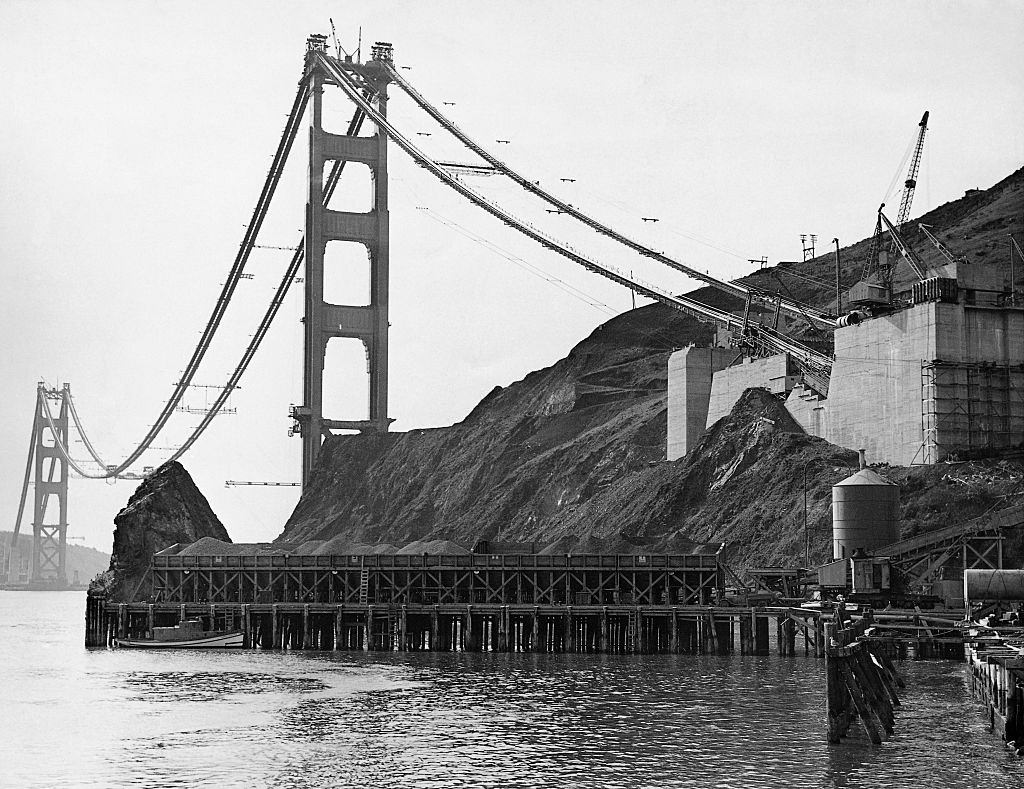
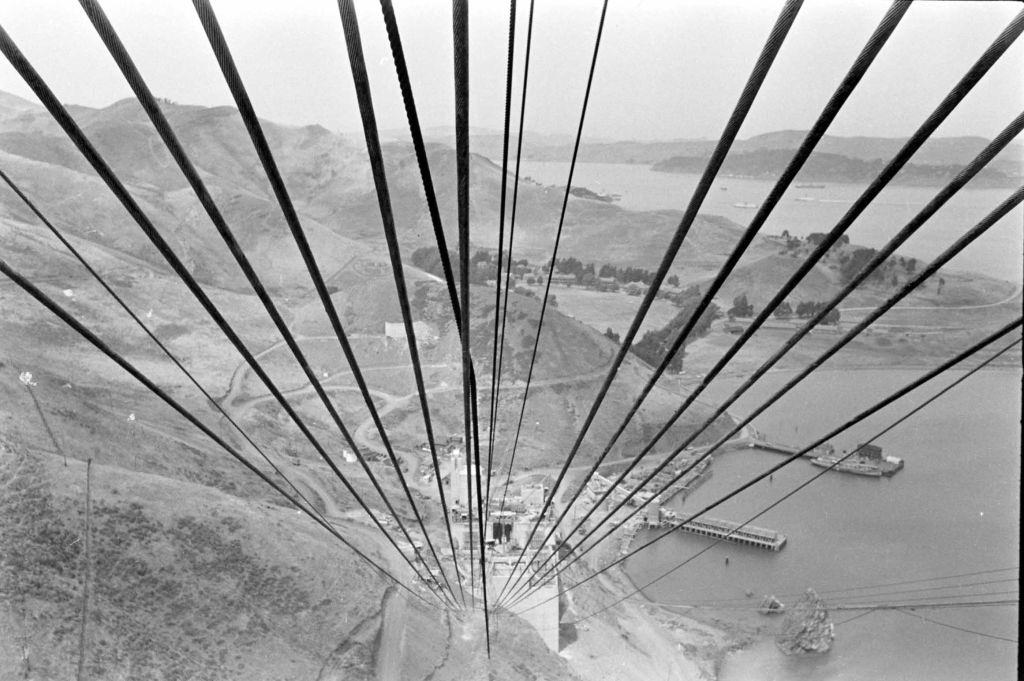
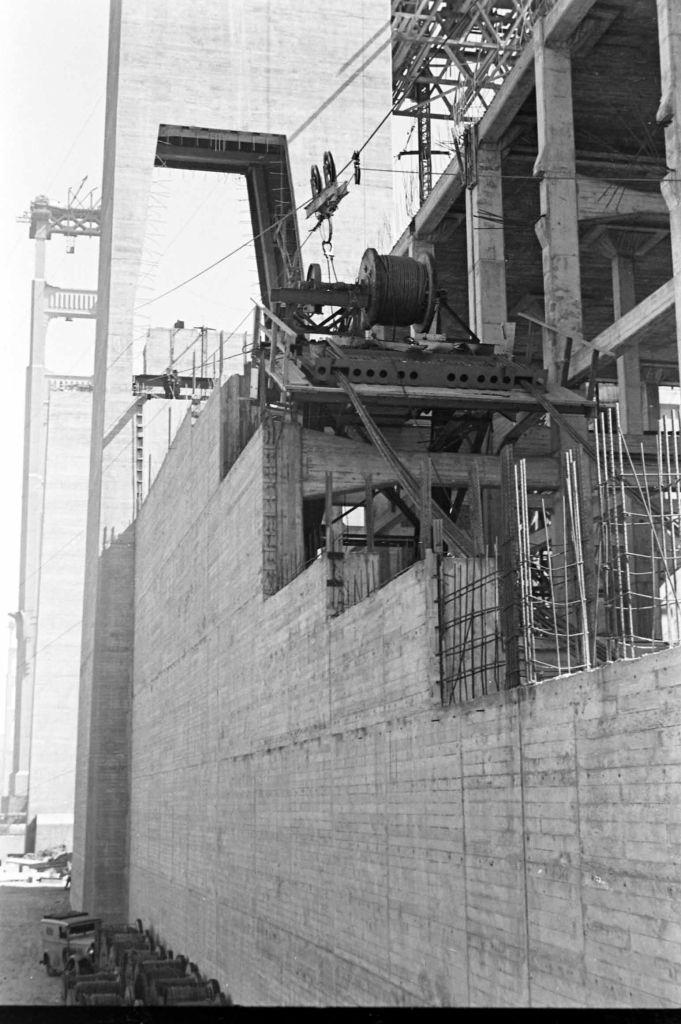
The anchorage of the cables supporting the bridge across the golden gate, which must support the terrific weight of the structure.

Anchorages are one of the most critical elements of a suspension bridge. Built from massive blocks of thick concrete, they are buried into the ground at each shore and grip the ends of the main cables, keeping the entire structure from pulling apart. The sheer weight and tension the anchorages must hold is enormous — they are essentially the foundation that the whole bridge hangs from.
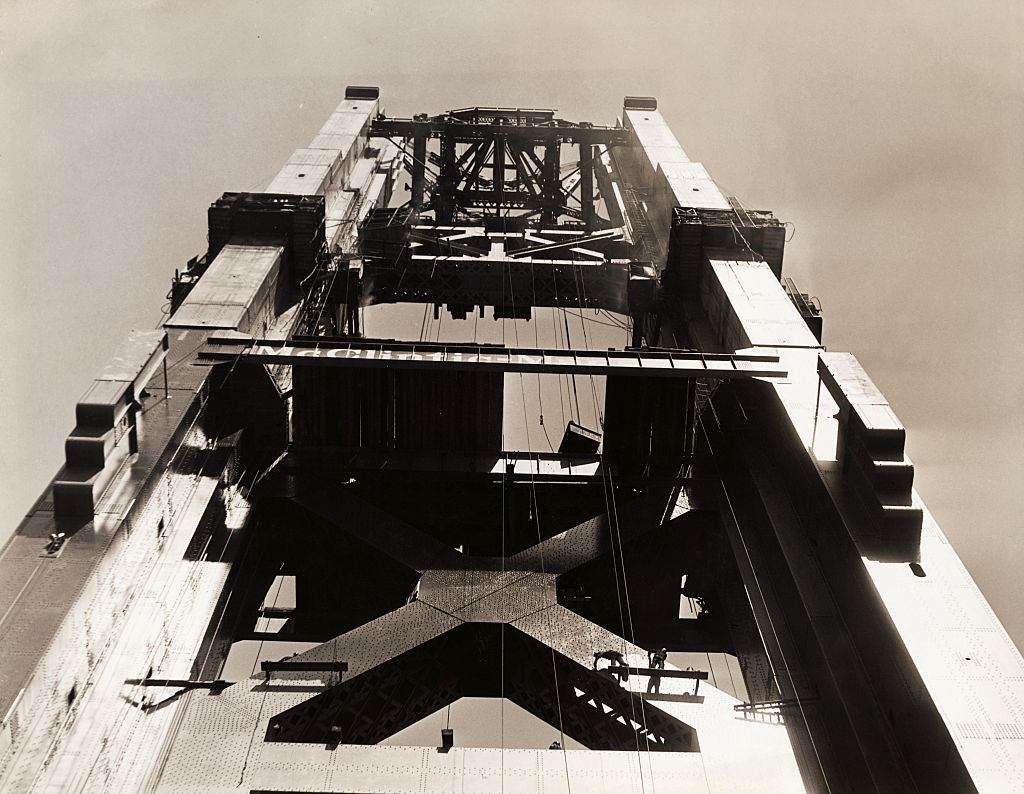
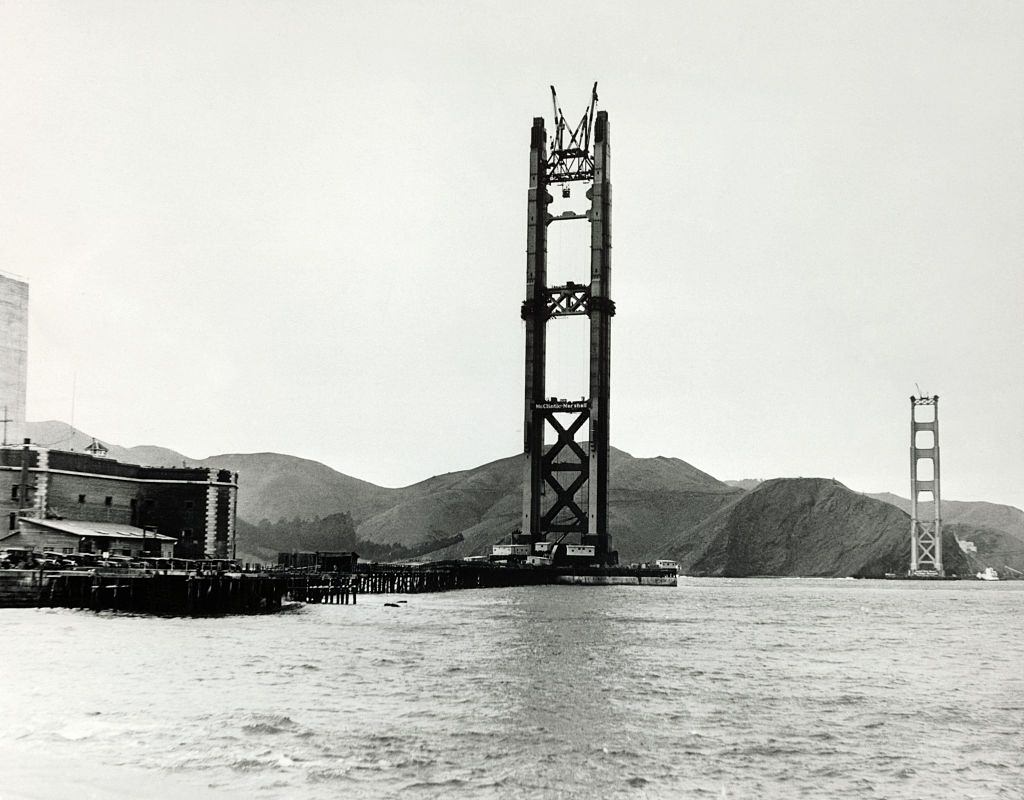
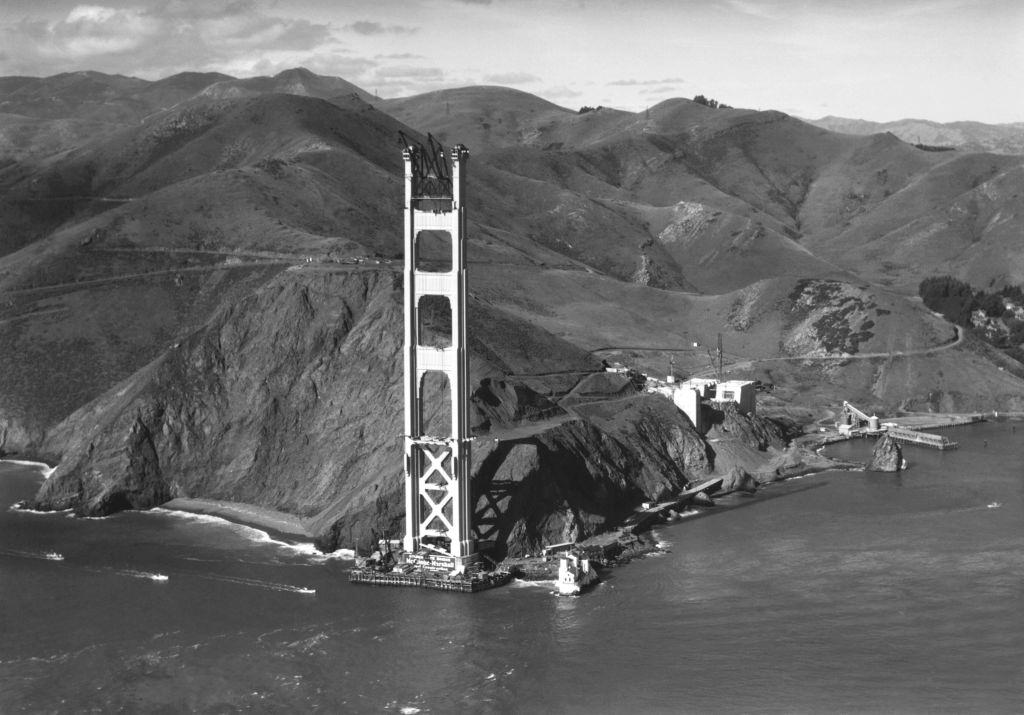
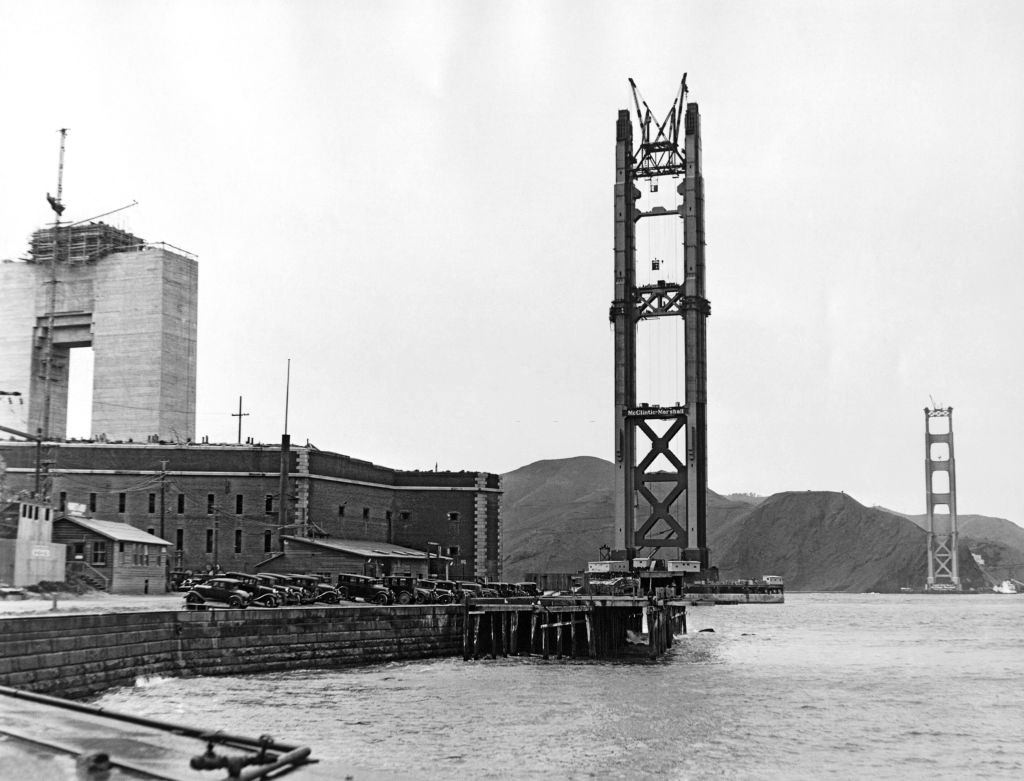
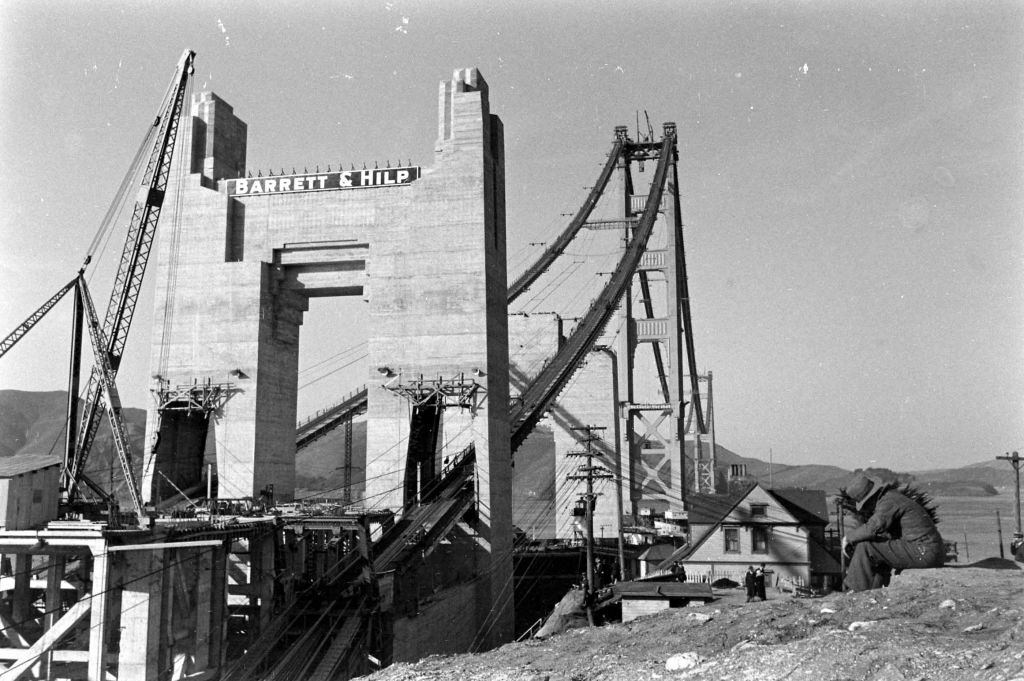
South tower of Golden Gate Bridge under construction.
Pylon S-1, Old Fort Point the North and South Towers.

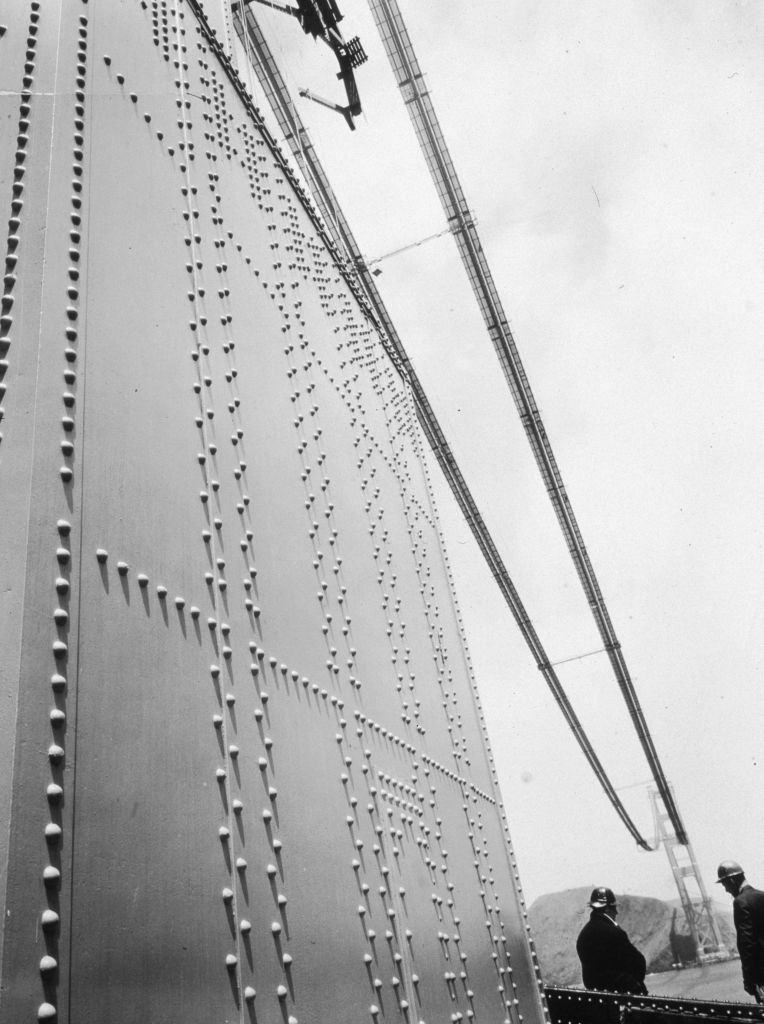
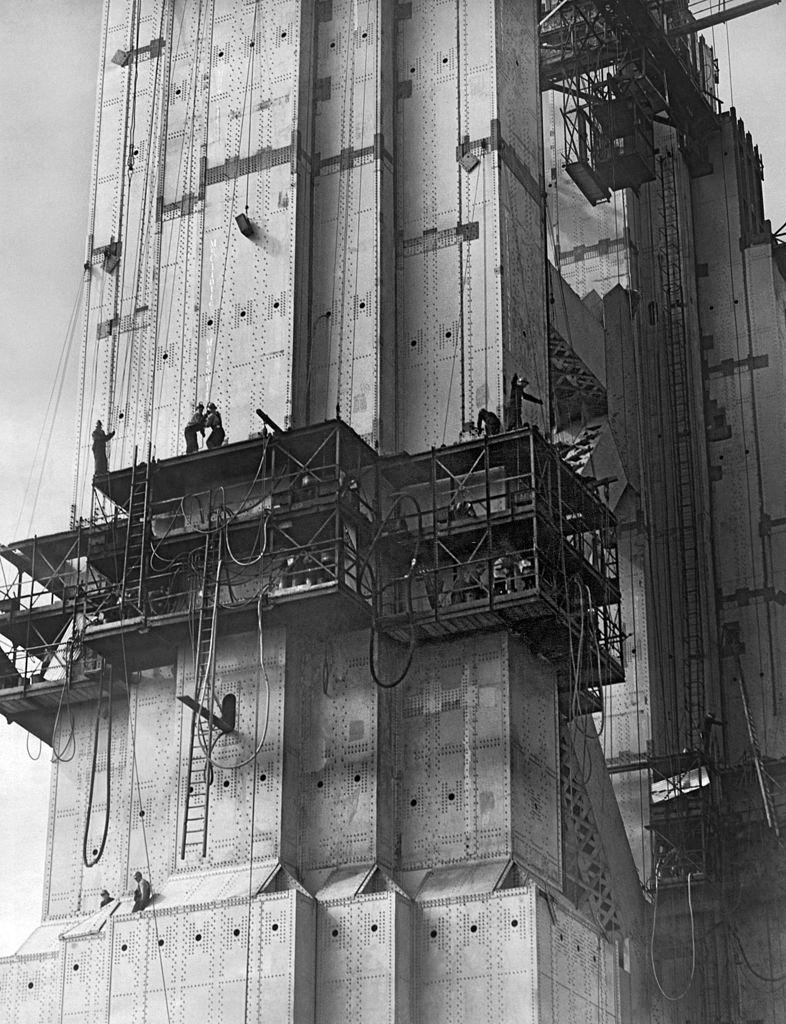
The bridge’s two towers were fabricated from steel and rose hundreds of feet above the water during construction. Workers assembled them section by section, with riveters working in cages and on open platforms high above the bay. The south tower stands directly above Fort Point, a Civil War-era fort that was preserved intact beneath the structure — an engineering decision that required building a curved section of roadway to arch over it.
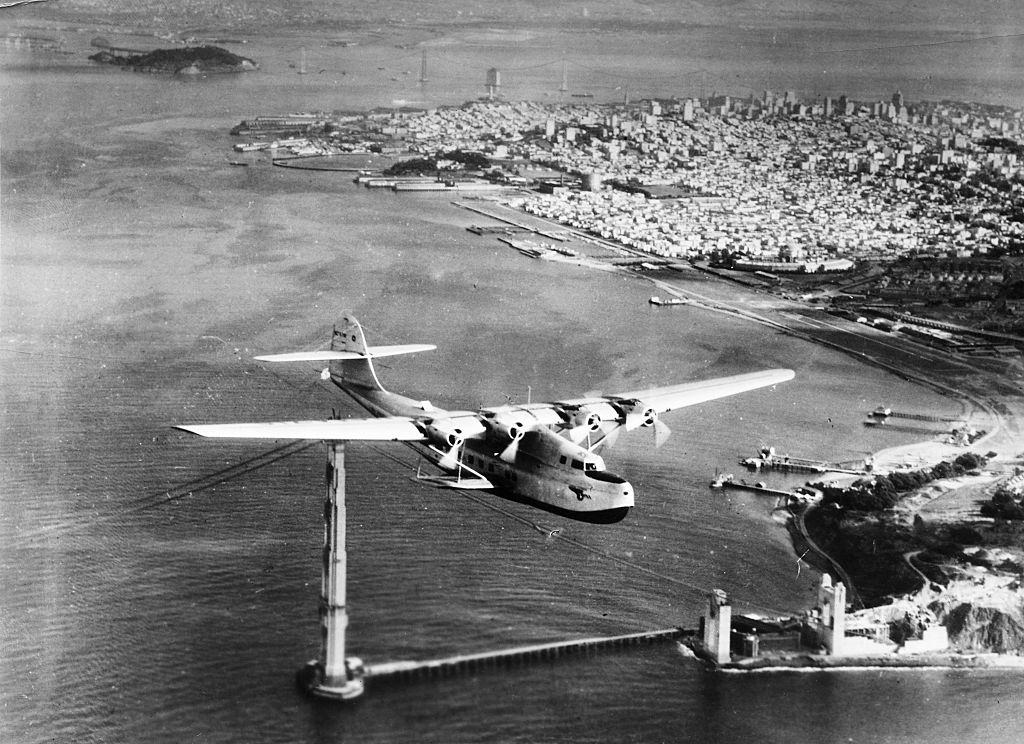
The China Clipper is shown flying over the incomplete Golden Gate Bridge.
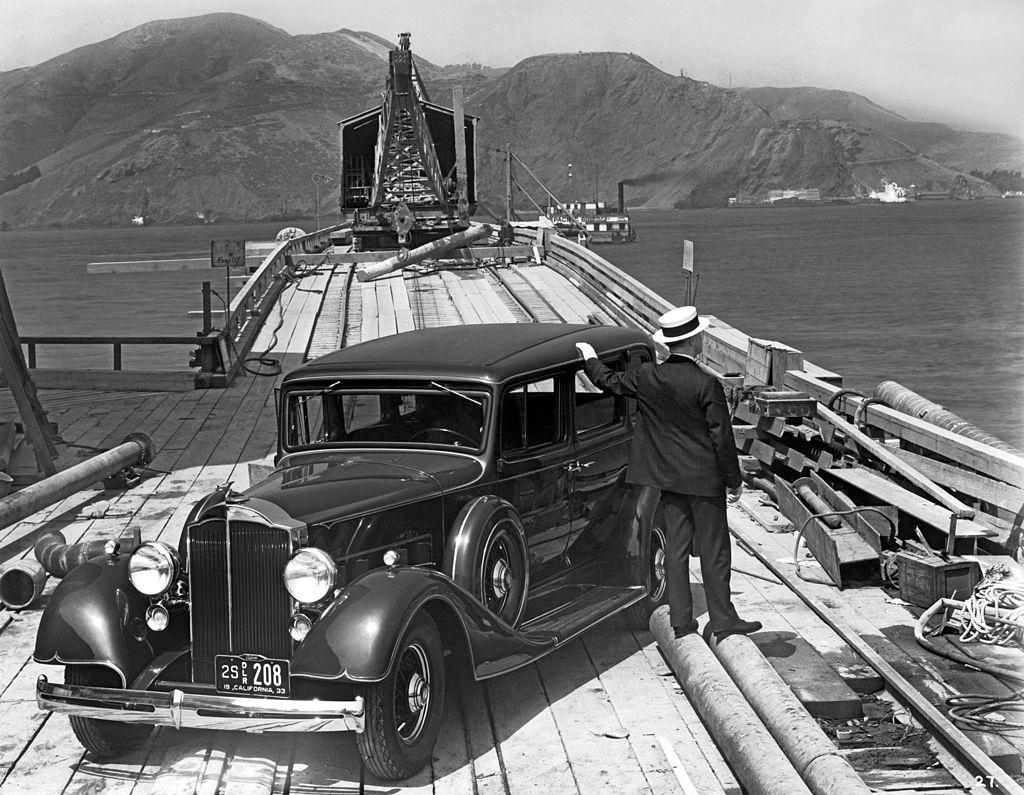
A man with a 1933 Packard on the trestle to the South Tower during the beginning of the construction of the Golden Gate Bridge

As the towers climbed skyward, the construction site became a spectacle for the entire region. Photographs from the early 1930s show the bridge in its skeletal stages, with towers rising above the waterline and temporary trestles connecting workers to the base of each structure. The project employed thousands of men during the Great Depression, making it not just an engineering feat but a vital source of work for the region.
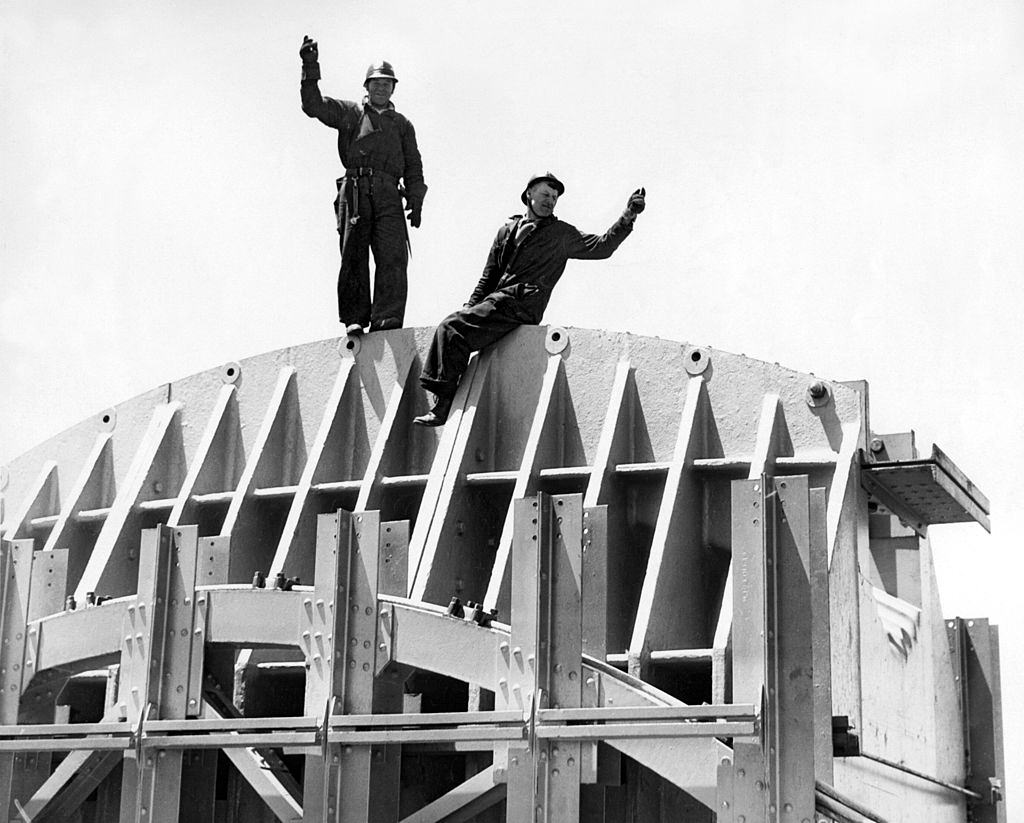
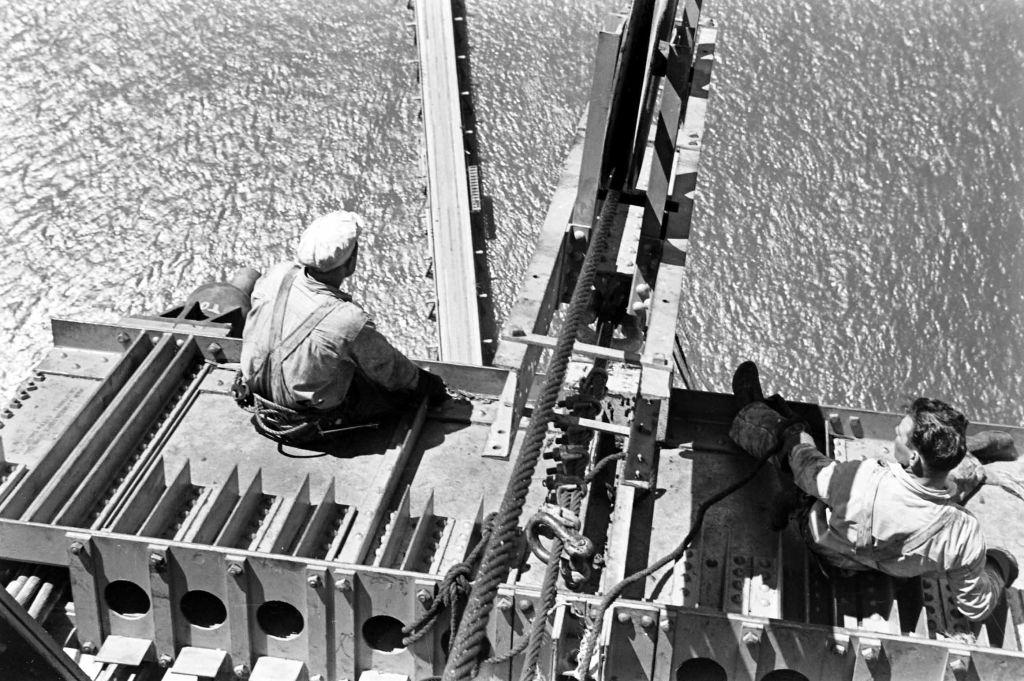
The Golden Gate Bridge under construction with two workers on the saddle atop the Marin Tower, 746 feet above the water, San Francisco, California, 1934.
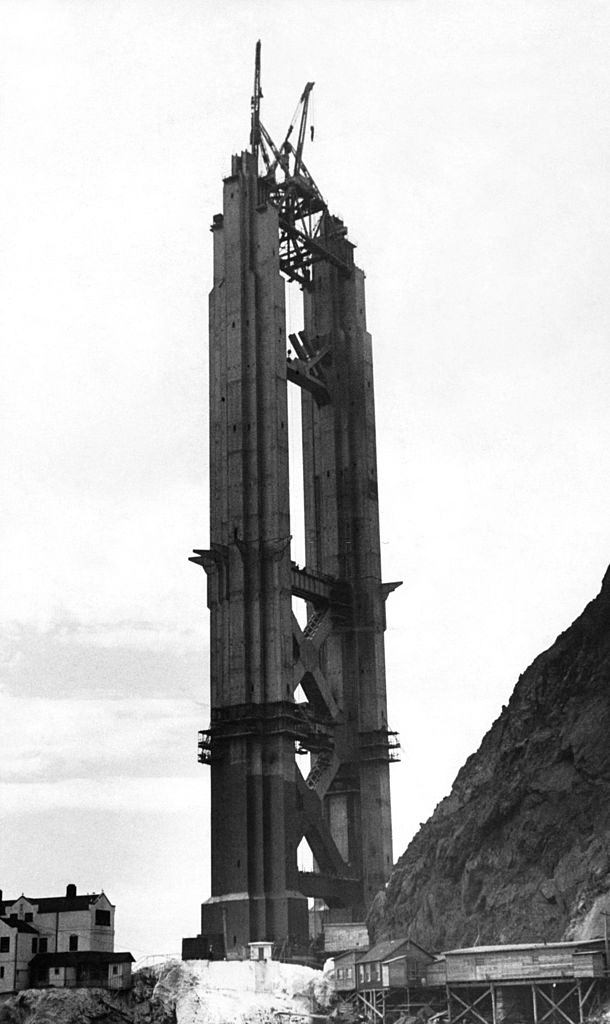
View of the Marin Tower of the Golden Gate Bridge under construction at a current height of 520 feet.
Marin Tower of the Golden Gate Bridge under construction, 1934

By 1934, the Marin Tower was climbing steadily. Photos from that year show the tower at 520 feet, still short of its final height, with the surrounding landscape of Marin County visible in the background. Workers on the saddle at the top — 746 feet above the water — appear almost impossibly small against the scale of the structure. There were no harnesses of the kind modern workers rely on. Falls were a constant risk, and the job demanded nerve as much as skill.
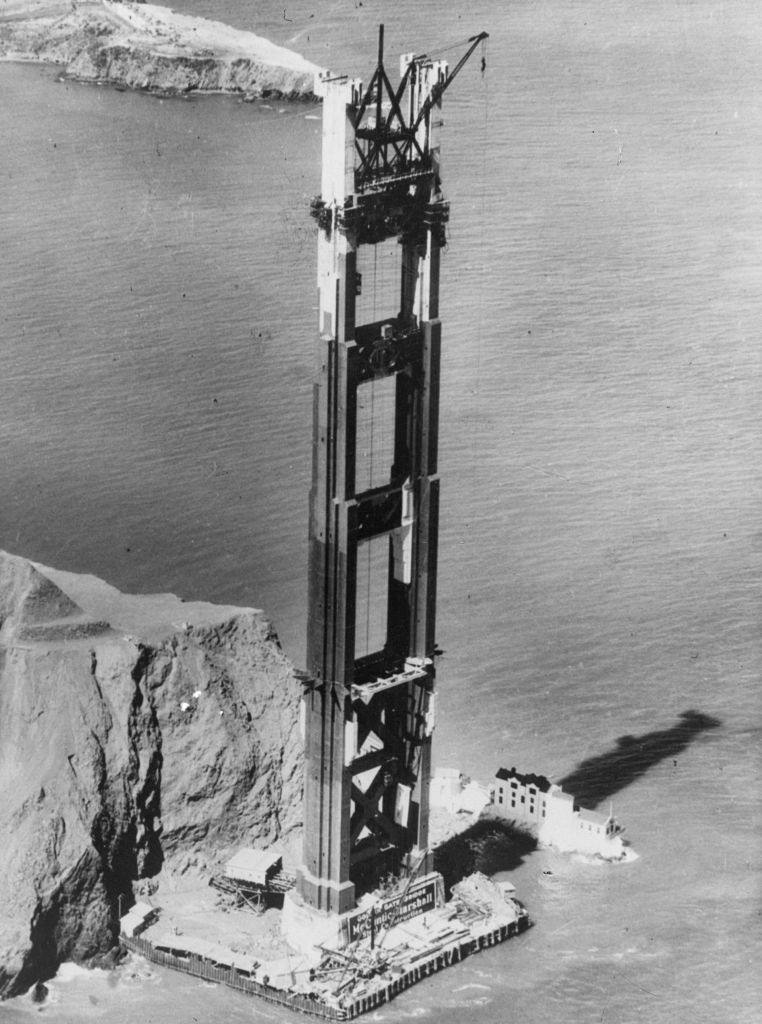
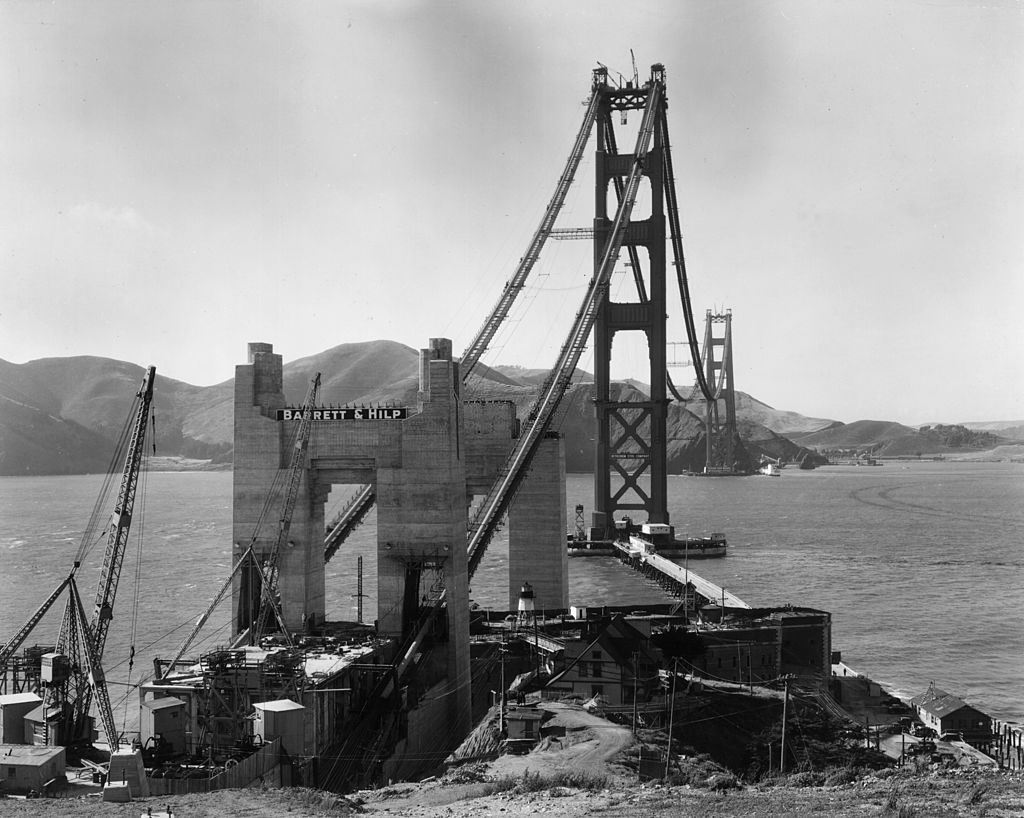
One of the stanchions erected in the building of the Golden Gate bridge, connecting Marin and San Francisco, casts a shadow over houses at its foot.
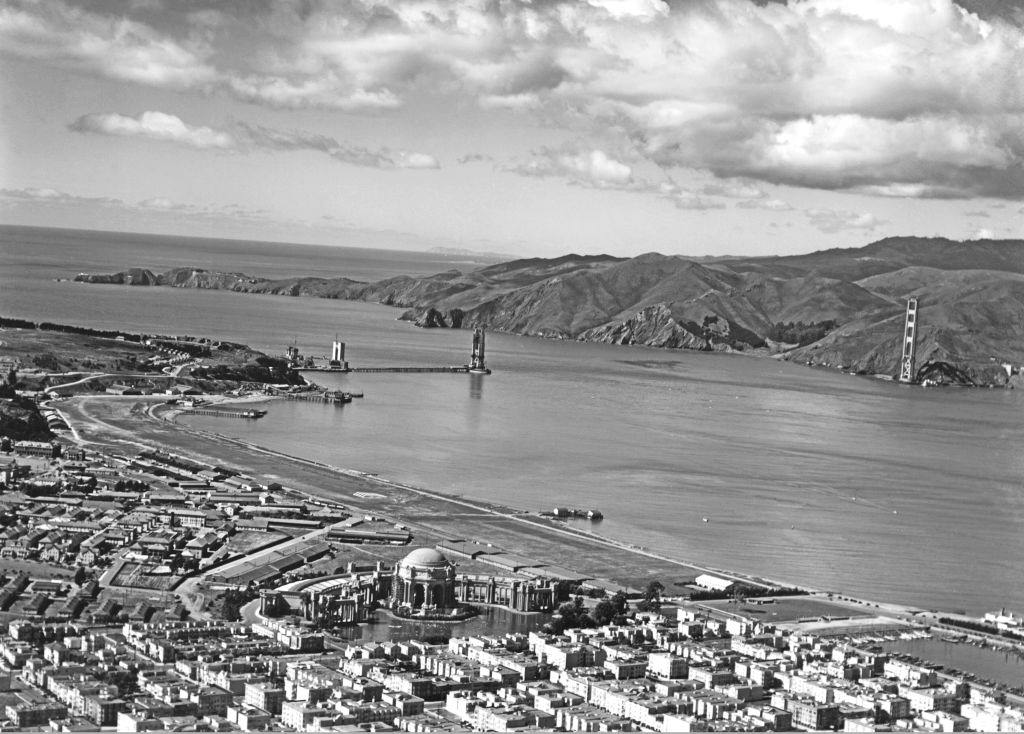
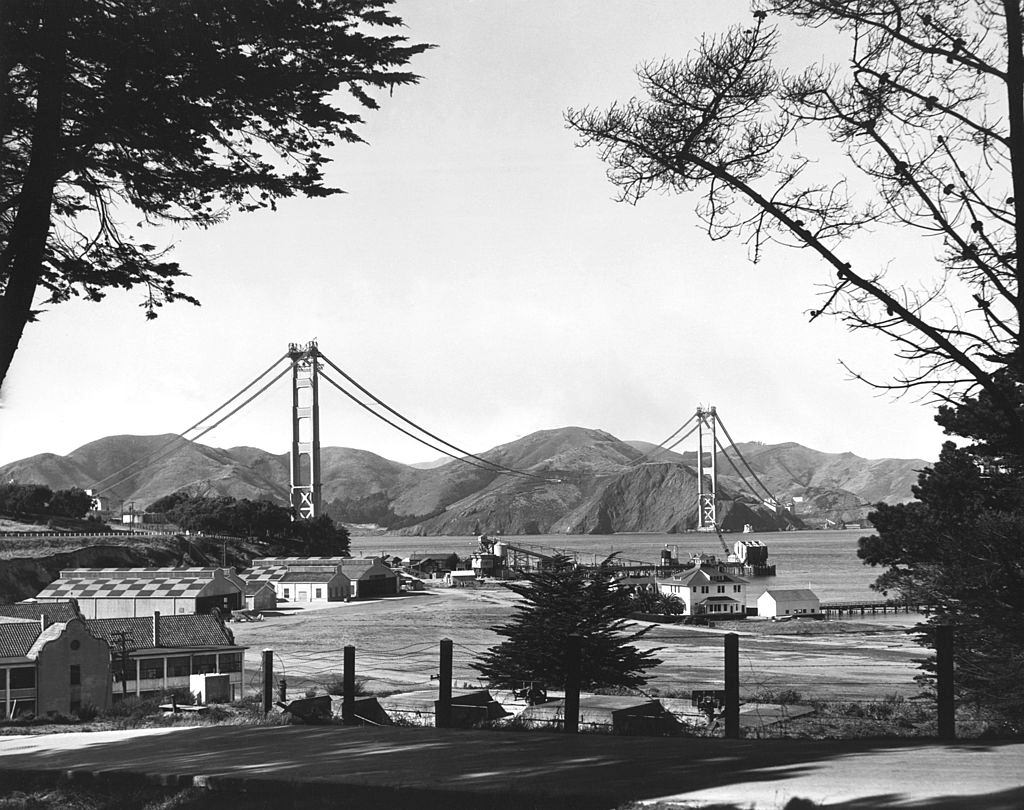
Golden Gate Tower under construction from San Francisco looking towards the mountains of Marin County
Marina and the Presidio of the Golden Gate Bridge under construction with the Palace of Fine Arts in the lower center, 1935.

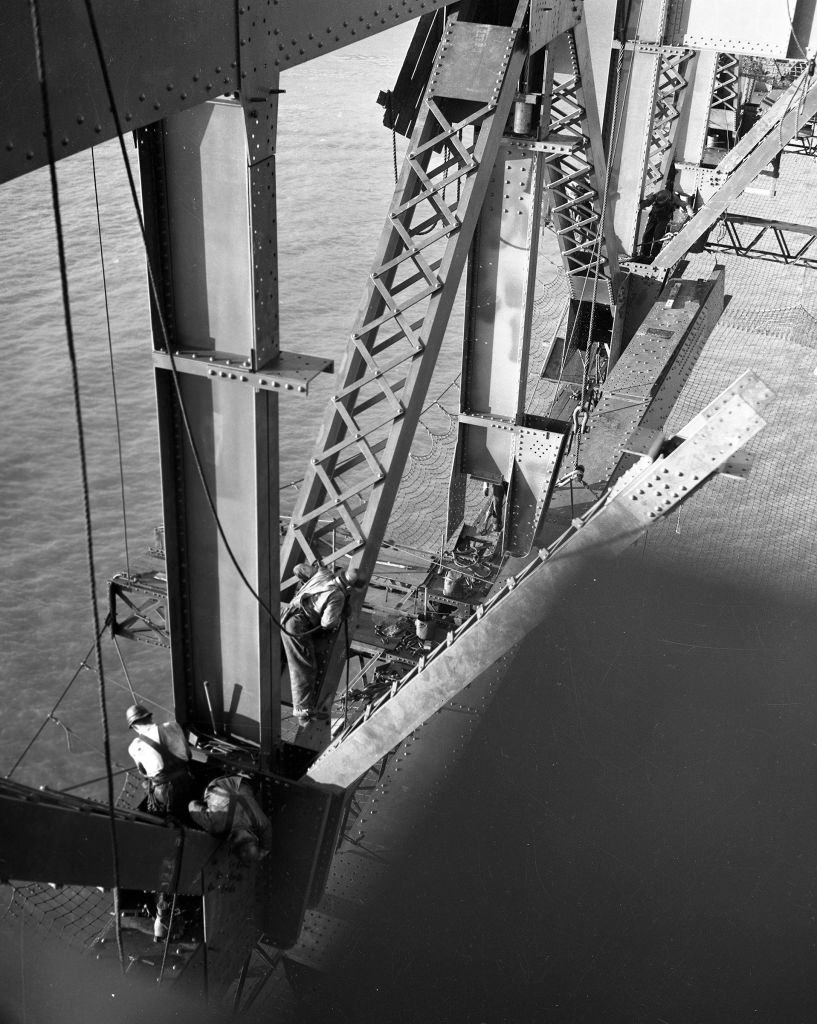
Joseph Strauss and his team insisted on safety nets beneath the construction area — a measure that was unusual for the era. The nets saved the lives of 19 workers who fell during the project. Those men became known informally as the “Halfway to Hell Club.” Despite the nets, eleven workers died during construction, most in a single accident in February 1937 when a scaffold fell and broke through the net.
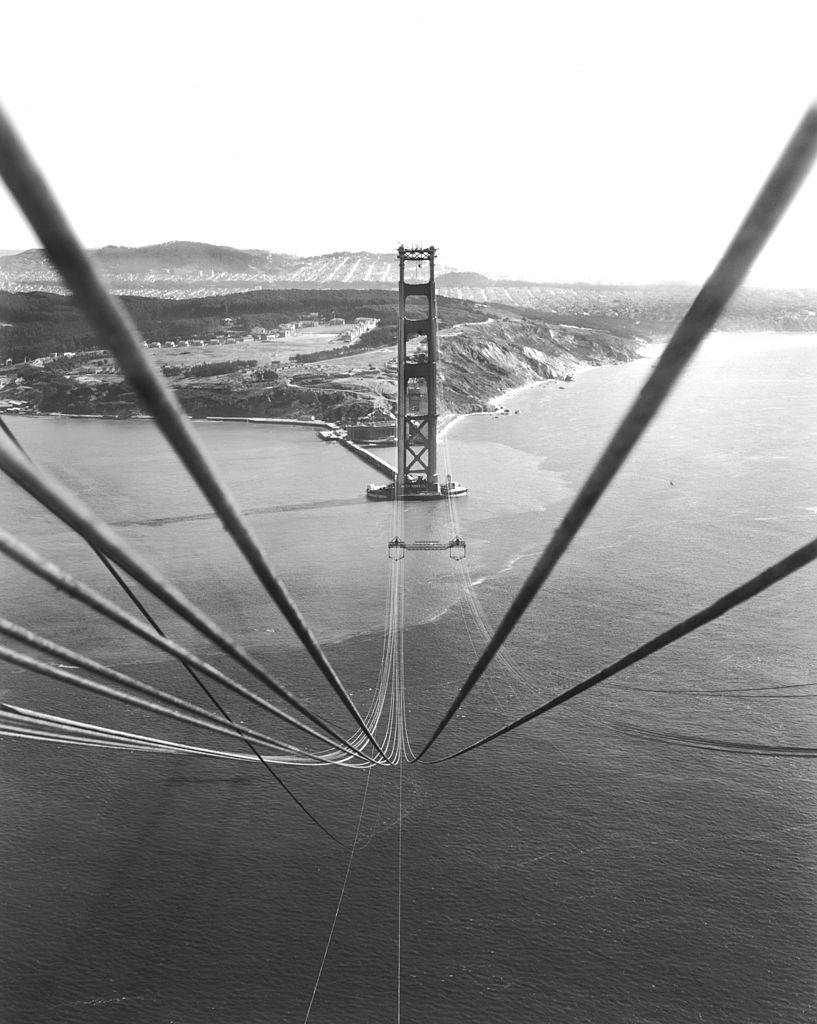
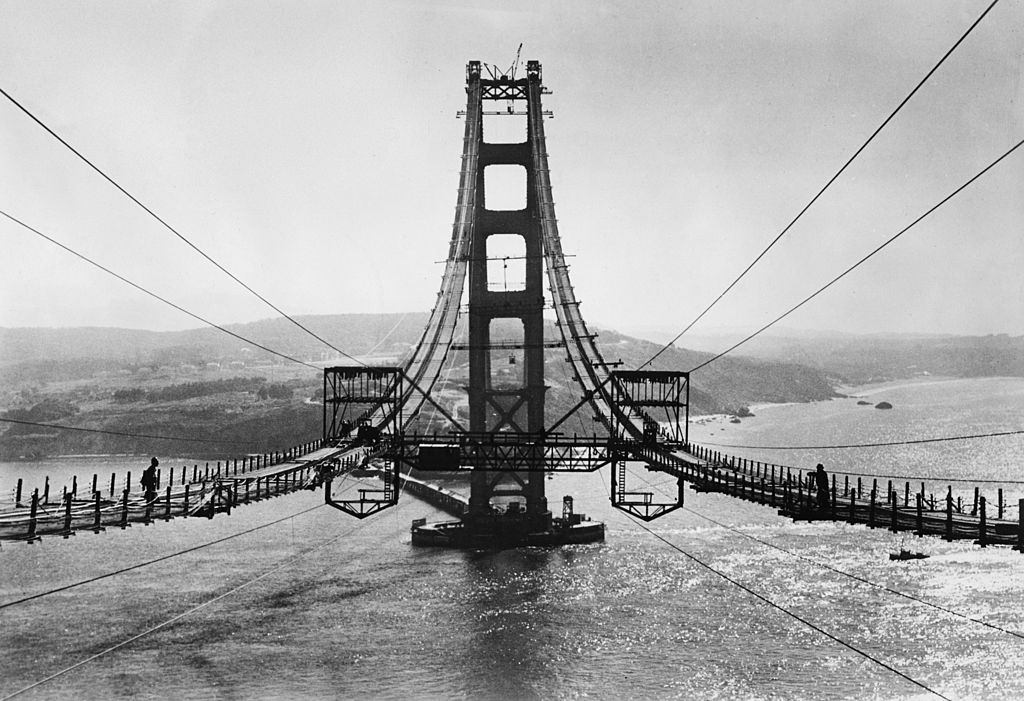
Cables suspended on the Golden Gate Bridge between the towers before being bound together to support the roadbed that will hang below them.
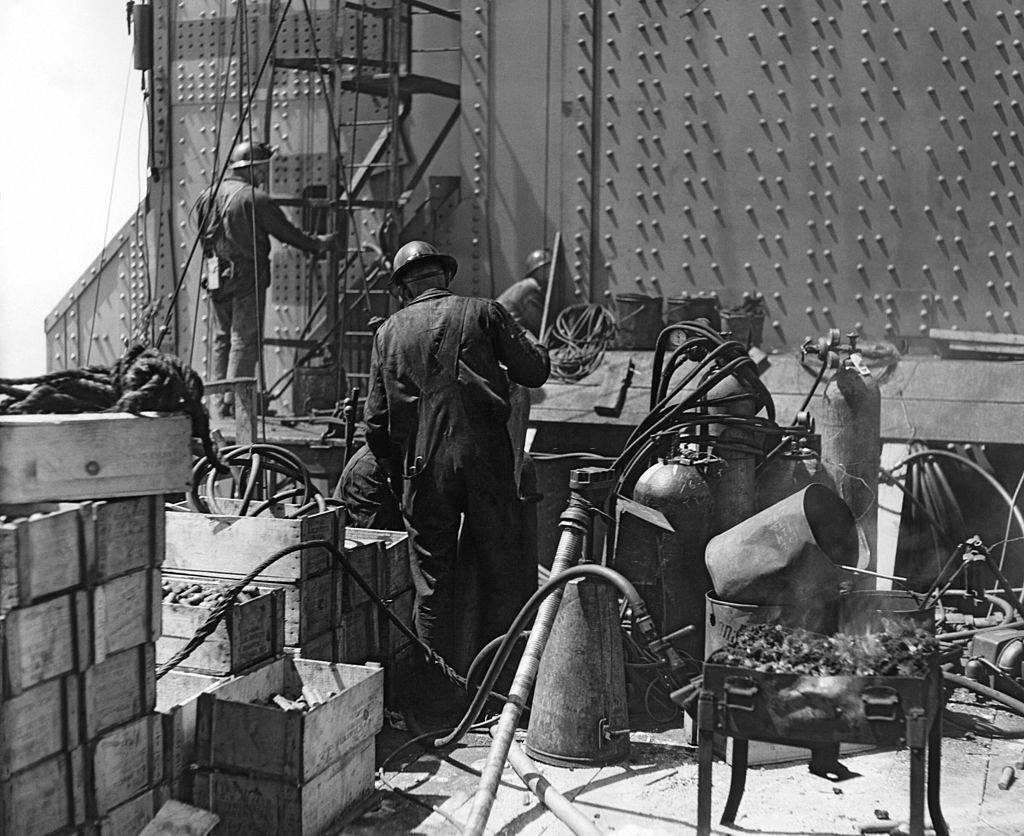
The Golden Gate Bridge under construction with riveters at work in cages on the South Tower, 1935.
The Golden Gate Bridge under construction with workmen putting the finishing touches on the South Tower, 1935.

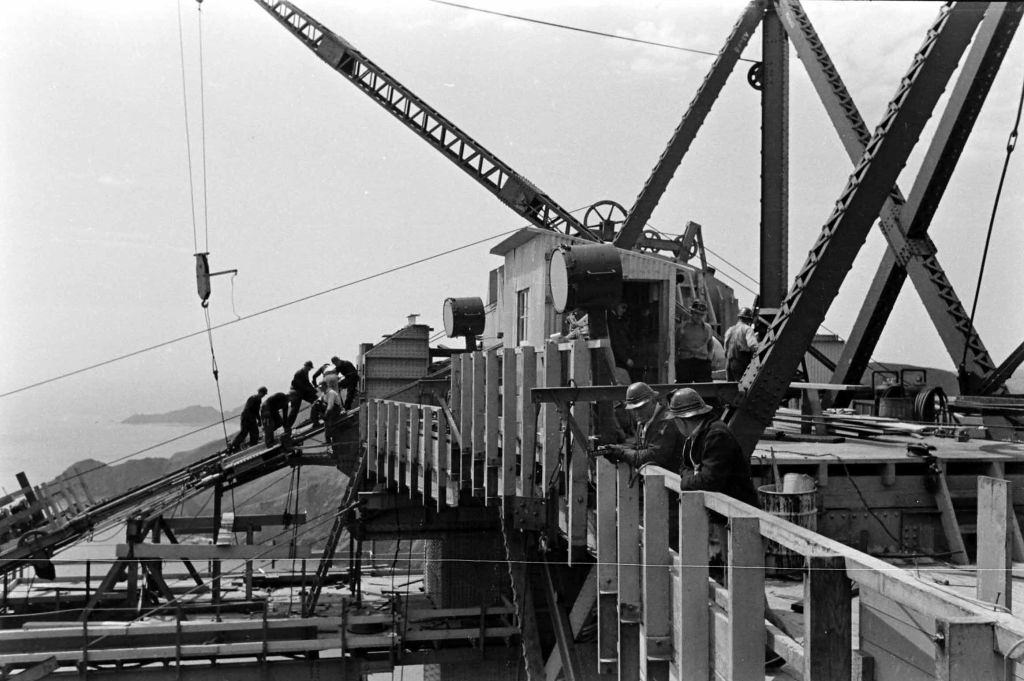
Once the towers were complete, workers began the cable-spinning process. Catwalks — long, narrow walkways strung between the towers — gave workers access to spin thousands of individual wire strands into the main cables. Each of the two main cables is made up of 27,572 individual wires. The cables are flexible by design, allowing the bridge to expand and contract with temperature changes and to swing in high winds without snapping.
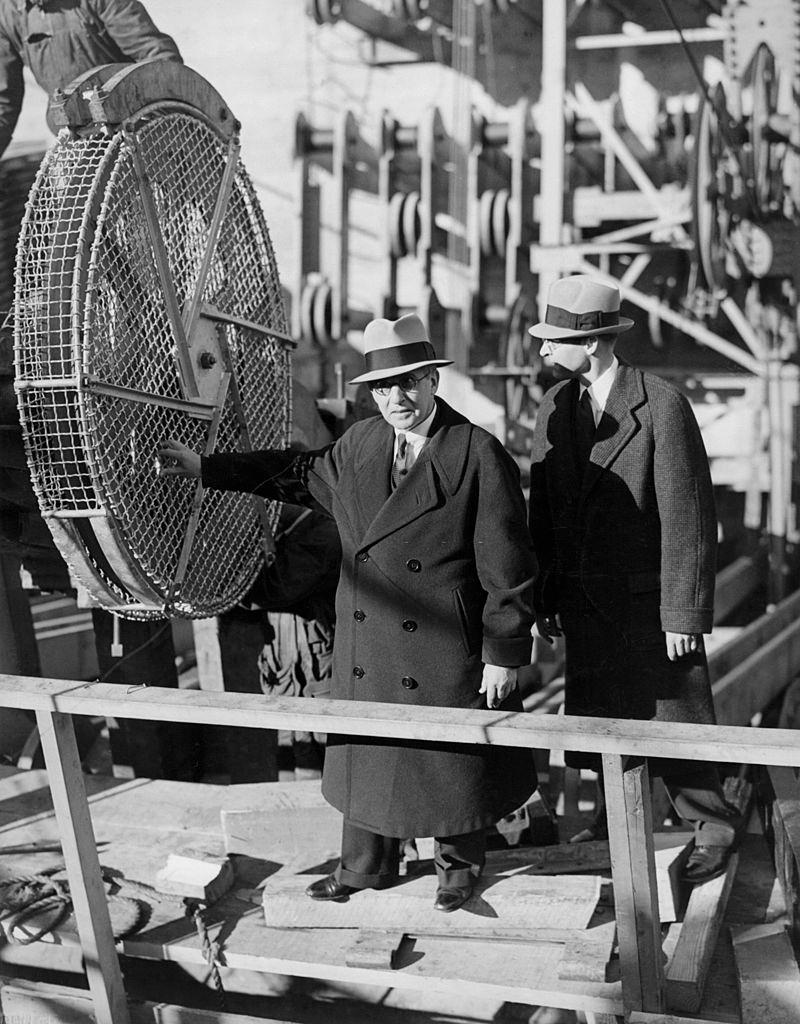
Chief Engineer and builder of the Golden Gate Bridge, Joseph Strauss, and Assistant Chief Engineer William Payne.
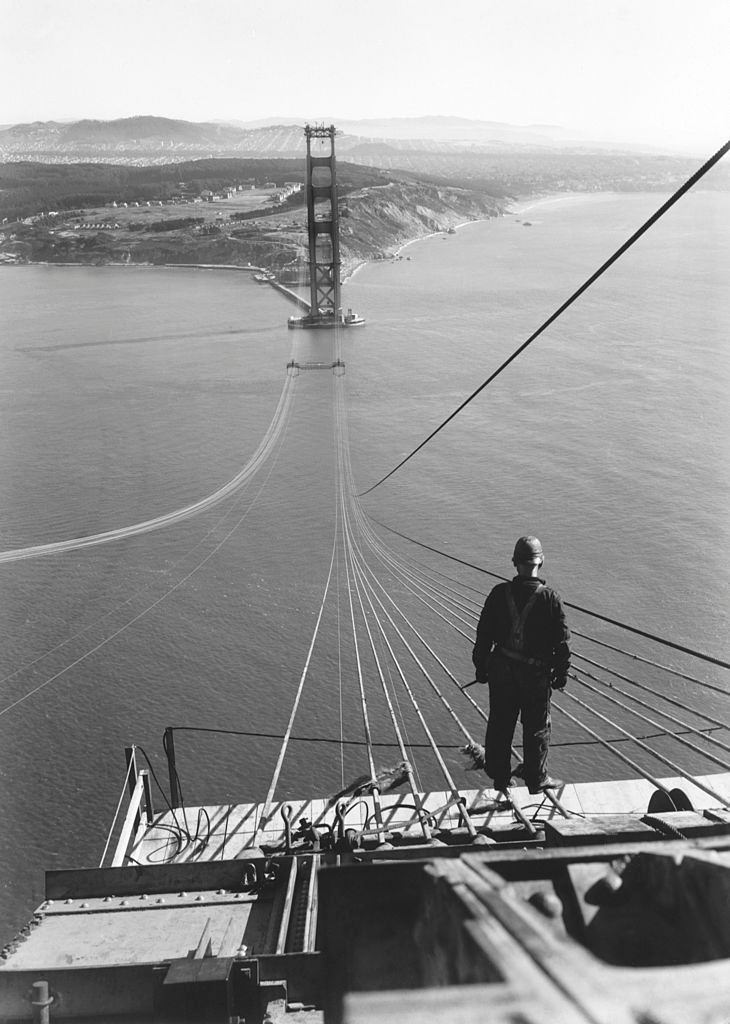
A man standing on the first cables during the construction of the Golden Gate Bridge with the Presidio and San Francisco, 1935.
View of the Golden Gate Bridge under construction, 1935.

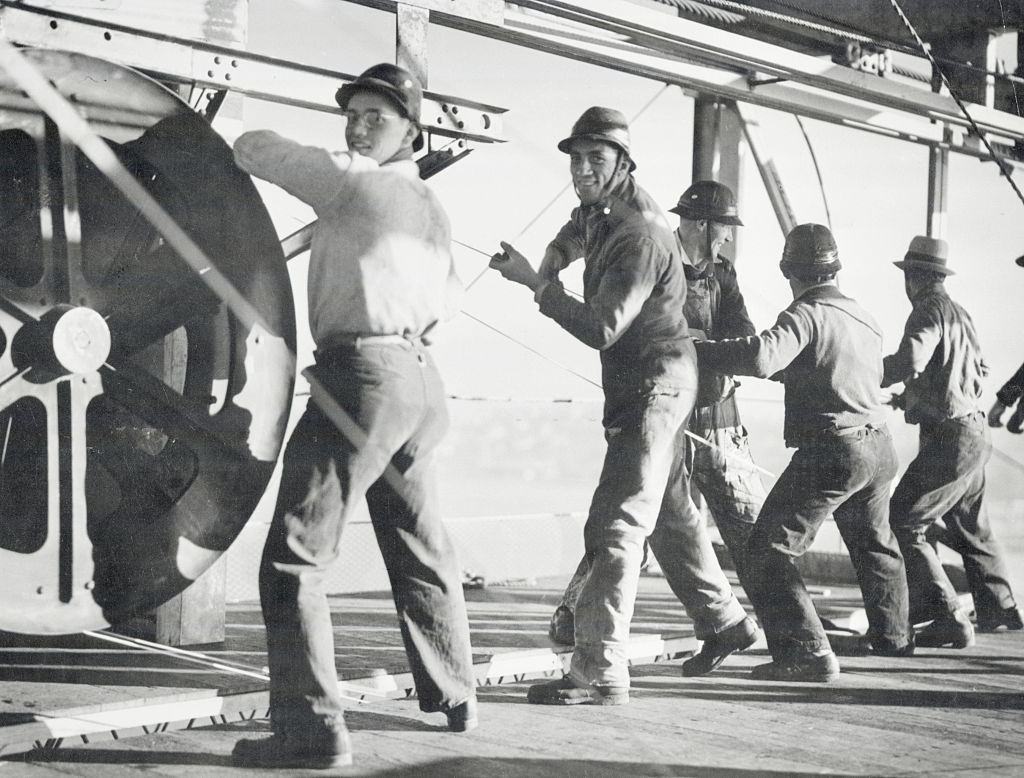
By 1935, cable spinning was well underway. Workers balanced on the catwalks hundreds of feet above the water, guiding wire reels back and forth between the anchorages and the towers. The work was physically demanding and exposed workers to the full force of Bay Area weather — cold, wet, and windy conditions were the norm. Photos from this period show men moving along the catwalks with a matter-of-fact confidence that belies the danger beneath their feet.
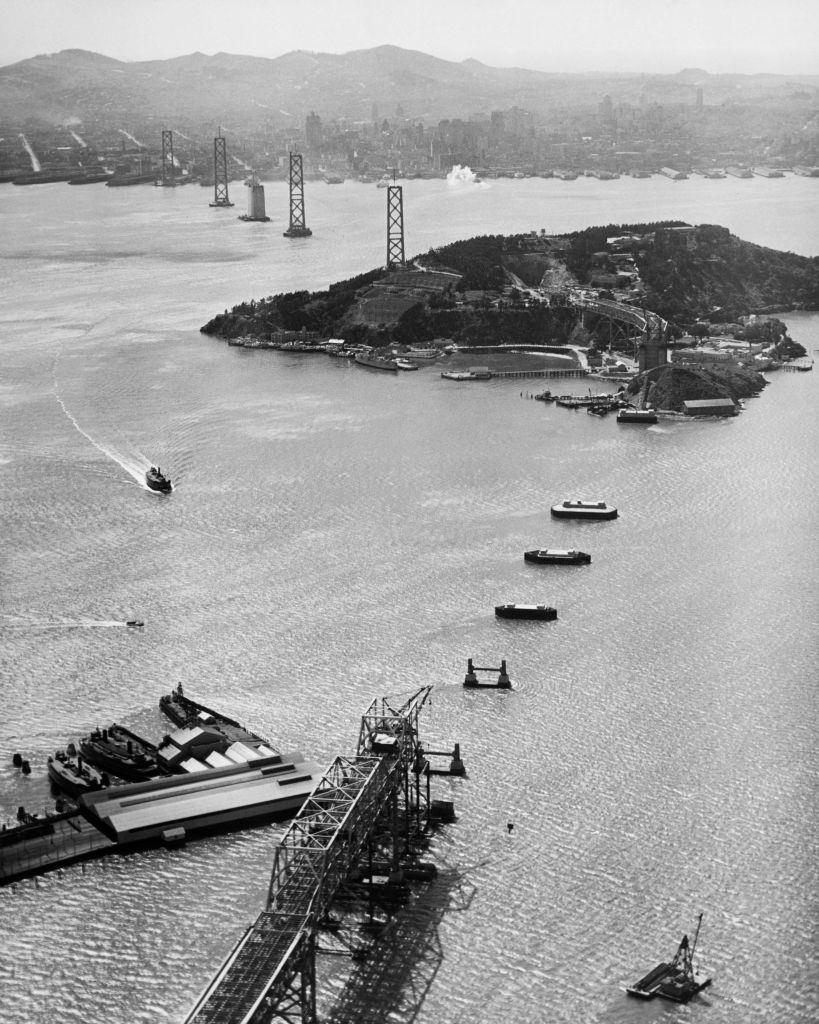
View of the construction of the Bay Bridge, 1935.
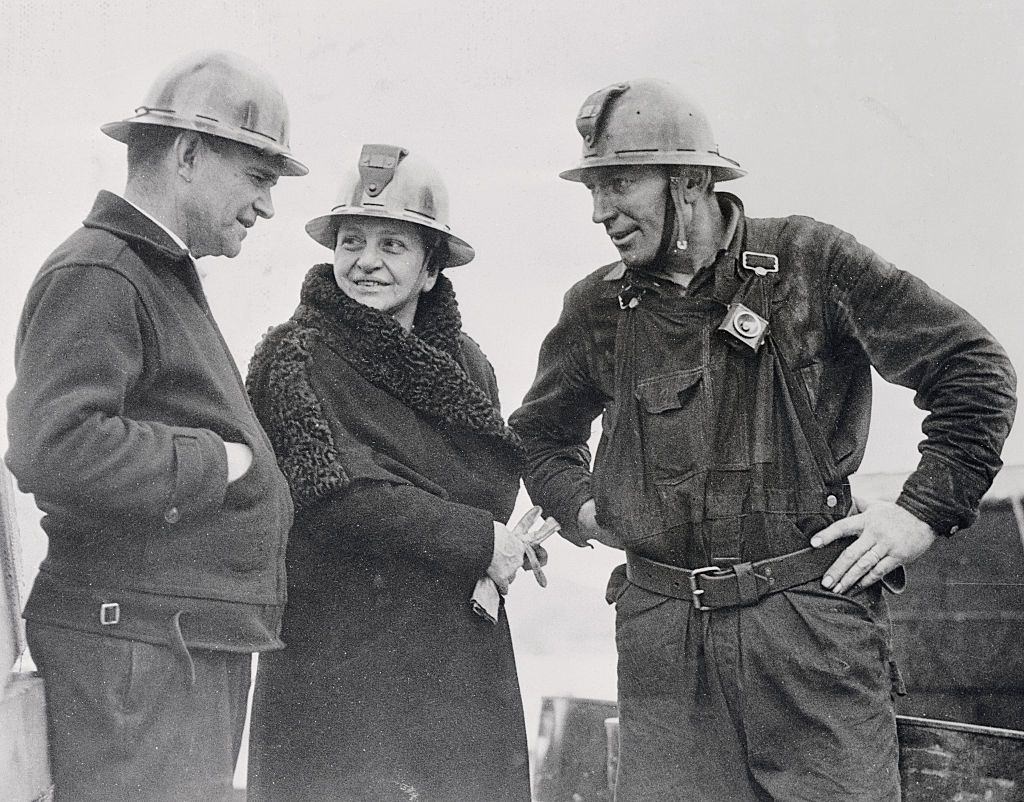
Labor Secretary Frances Perkins Visits Golden Gate Bridge Construction.
The Golden Gate Bridge under construction with the Pylon #1 and the North and South Towers rising above Fort Point, 1935.

The scale of the construction drew prominent visitors, including Labor Secretary Frances Perkins, who toured the site during construction. The project was also closely watched by the public — photographs circulated widely in newspapers, and locals tracked its progress with pride. The sight of the two towers connected by their growing web of cable became one of the defining images of 1930s San Francisco.
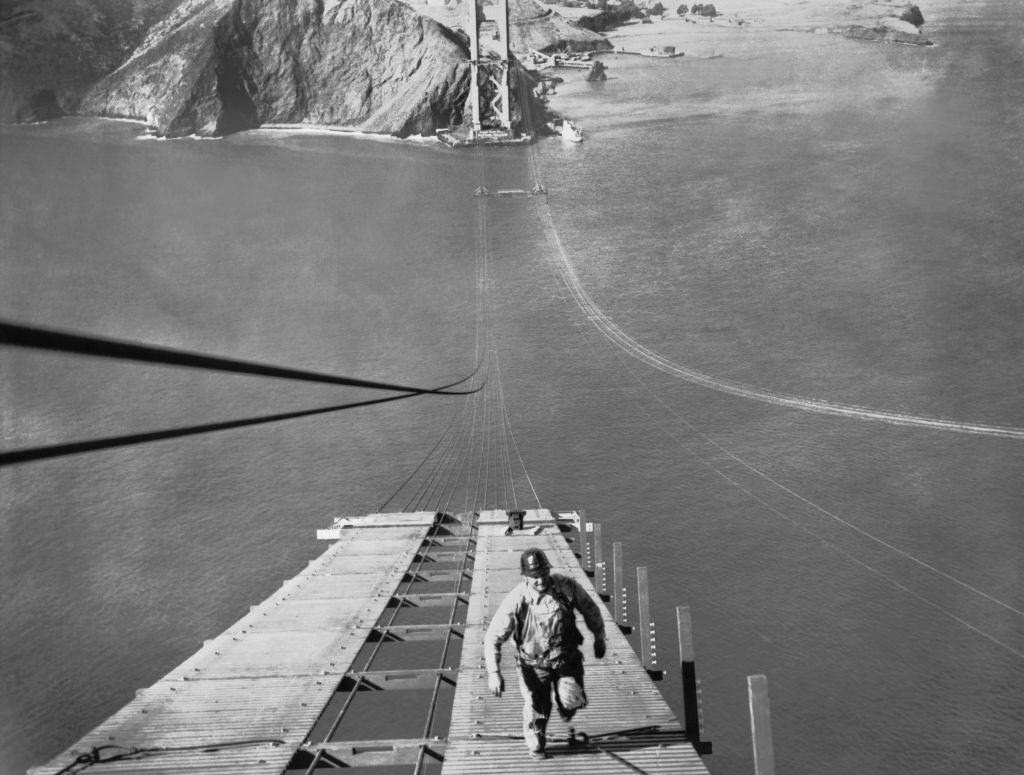
A worker running up one of the catwalks being built for the construction of the cable of the Golden Gate Bridge.
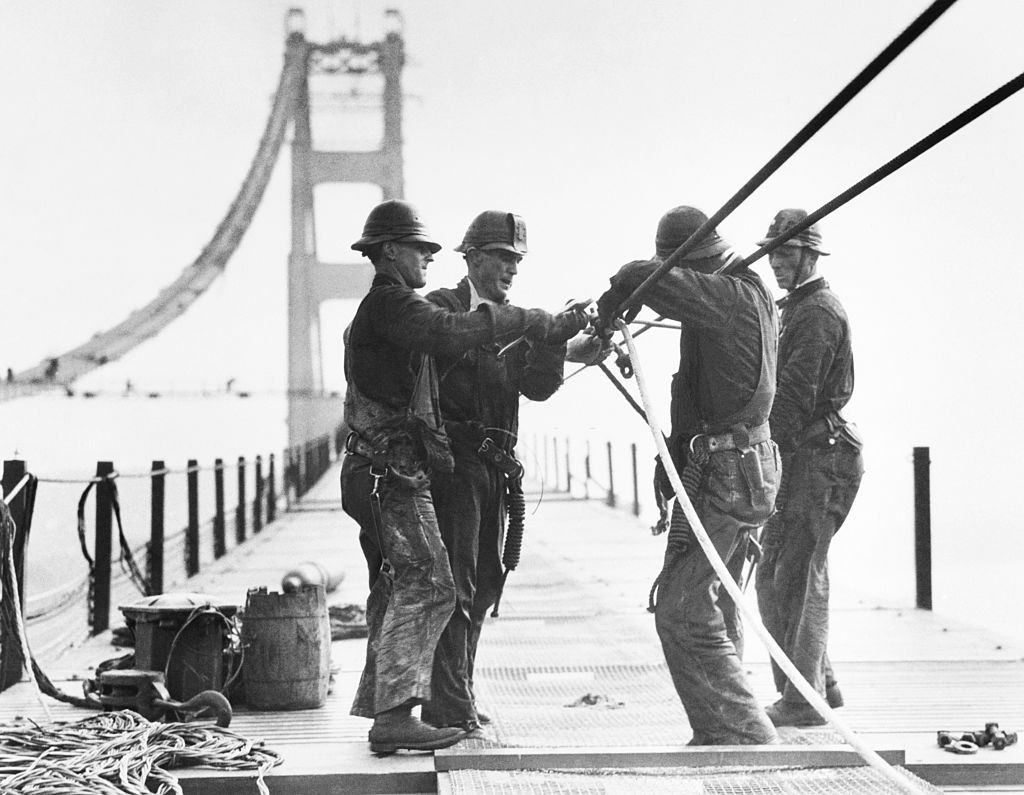
Workers are shown standing on a catwalk working on the cables of the Golden Gate Bridge spanning San Francisco Bay.
Presidio of the construction of the Golden Gate Bridge with the cables being installed, 1935.

The cable-spinning stage required precision. Workers bundled the individual wire strands into larger groups, then compressed those groups into the final cables using hydraulic equipment. The completed main cables measure 36.5 inches in diameter. If all the wire in both cables were laid end to end, it would circle the earth more than three times.
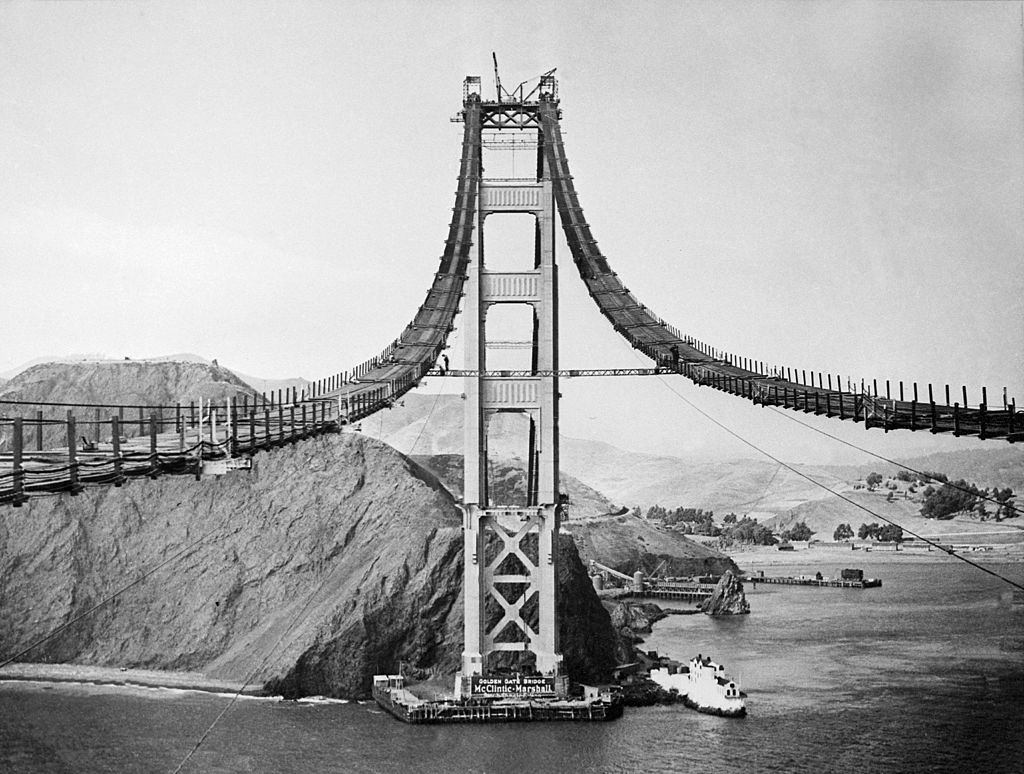
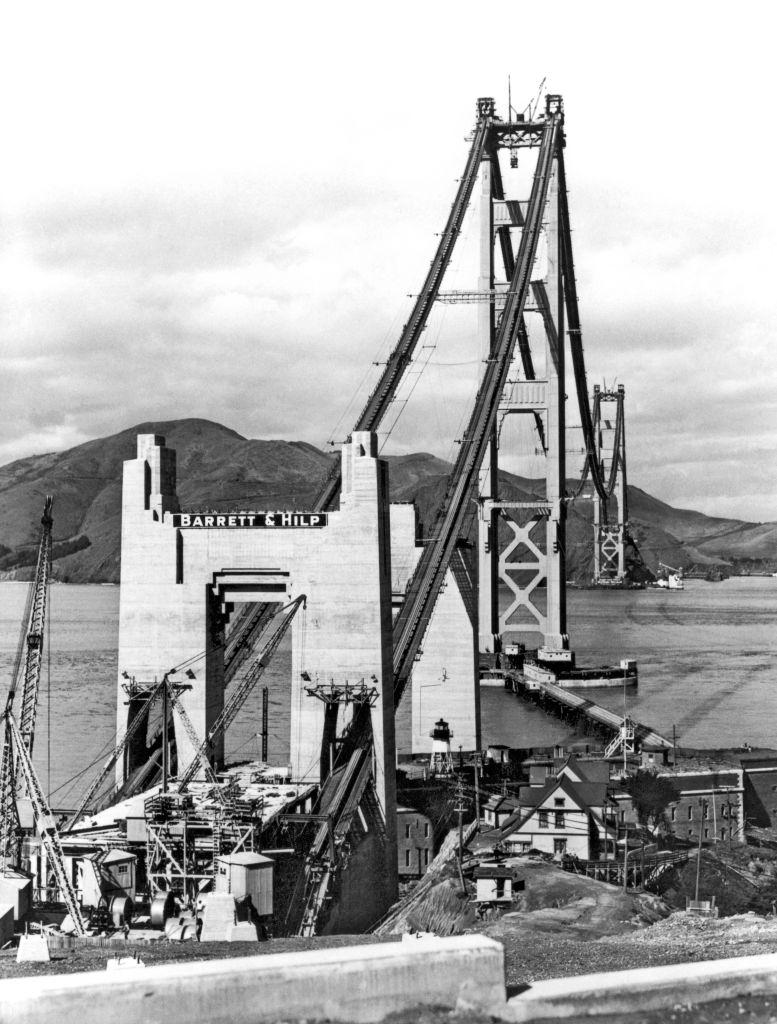
The Golden Gate Bridge under construction, 1934.
The construction of the Golden Gate Bridge, with the catwalks attached to the cables in preparation of the building of the roadbed, 1935.
Men on the catwalk cable spinning, 1935.

With the main cables in place, the next phase involved hanging the vertical suspender ropes from the cables and attaching the steel roadbed sections below. This was the stage where the bridge began to look like a bridge. Sections of the roadway were lowered into position and bolted together, working outward from each tower toward the center of the span and toward each shoreline simultaneously.
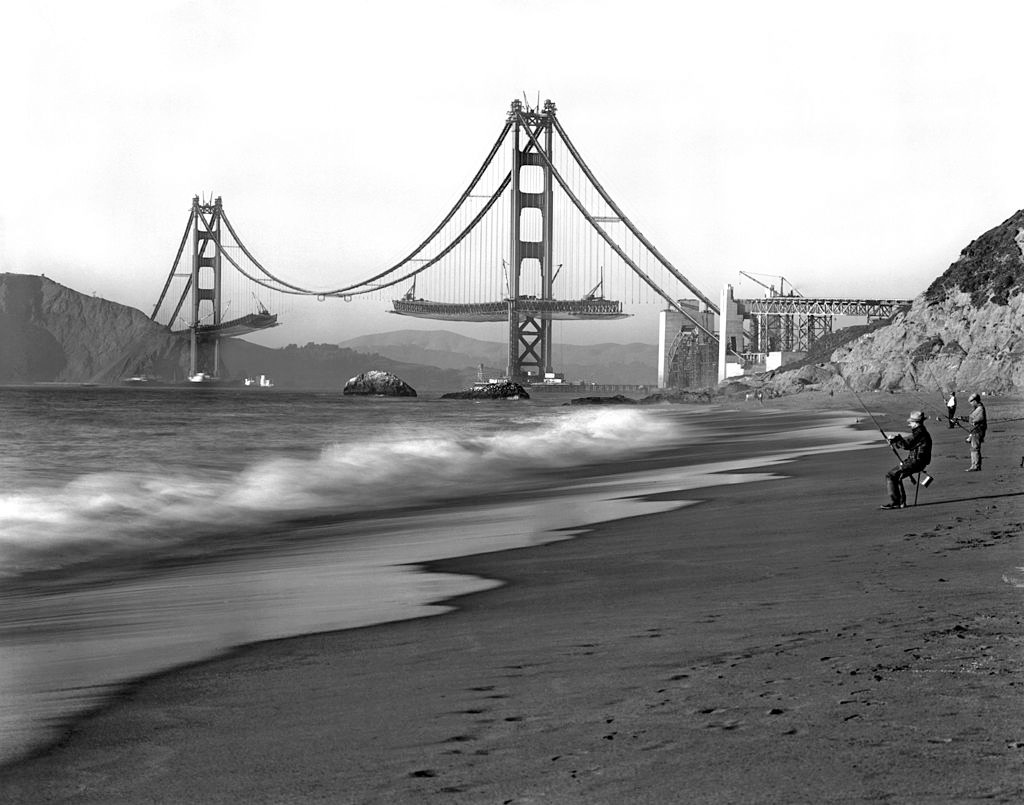
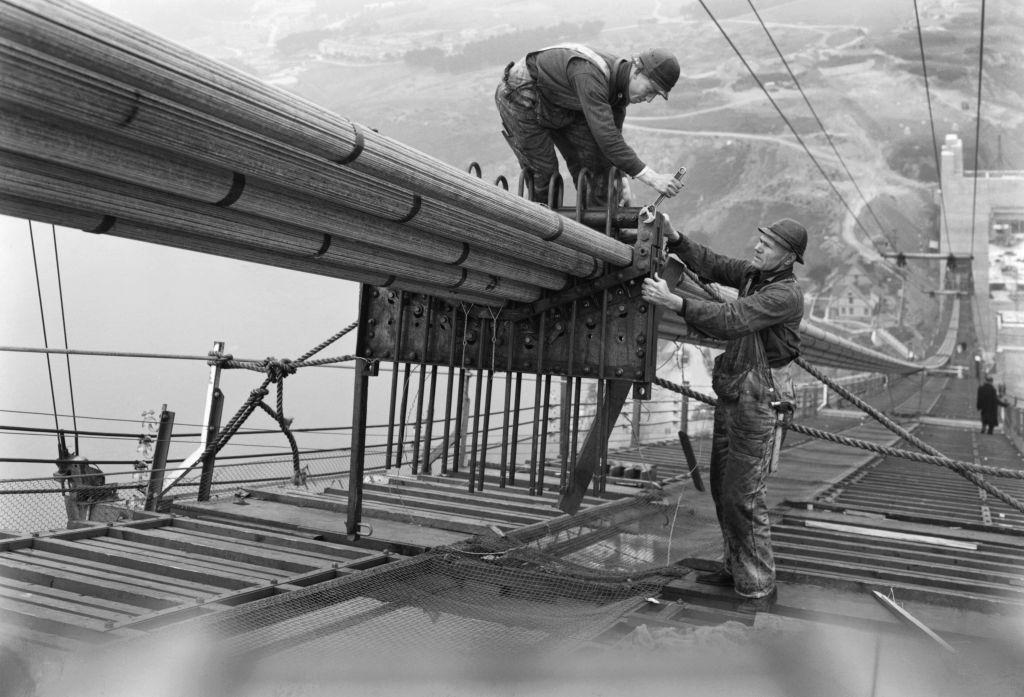
Fishermen on Baker Beach enjoy the view of the Golden Gate Bridge under construction, 1936.
Workers on the catwalks bundling the cables during the construction of the cables of the Golden Gate Bridge, 1935.
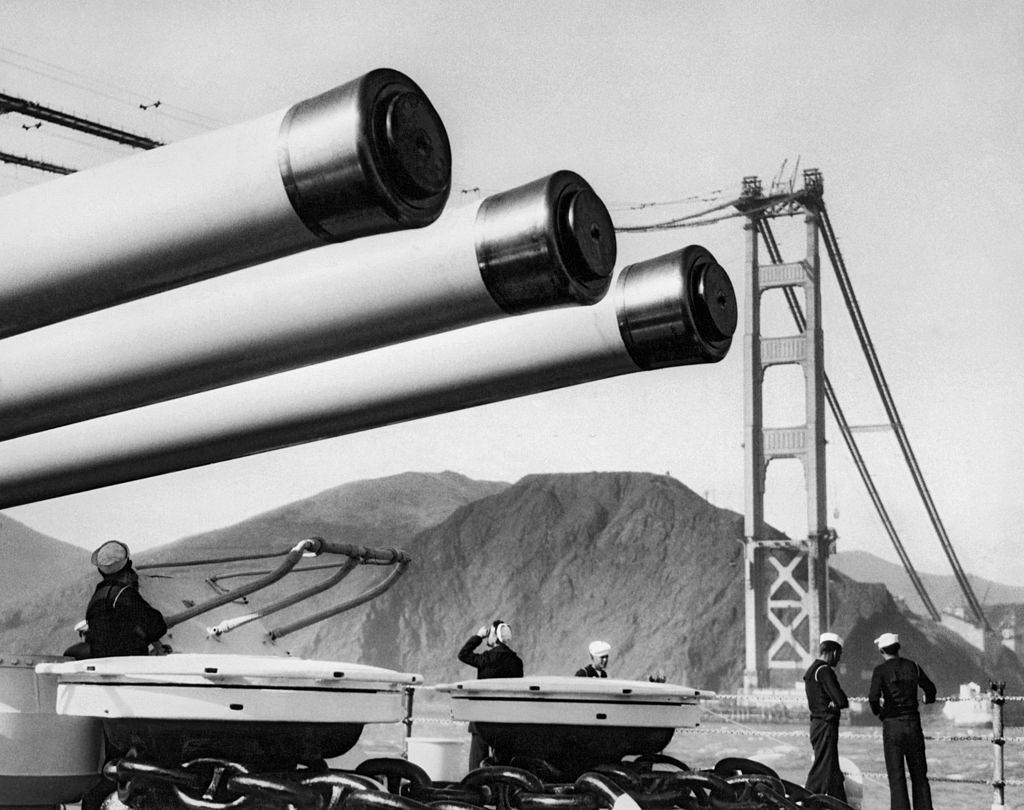
A US Navy battleship cruises under the cables of the Golden Gate Bridge as it is being built, 1936.

Even as construction continued overhead, the strait remained an active waterway. US Navy ships passed beneath the growing structure in 1936, offering a striking contrast between military power and civil engineering. Fishermen at nearby Baker Beach watched from the shoreline as the roadbed sections were set into position, often obscured by the thick San Francisco fog that routinely rolled in off the Pacific.
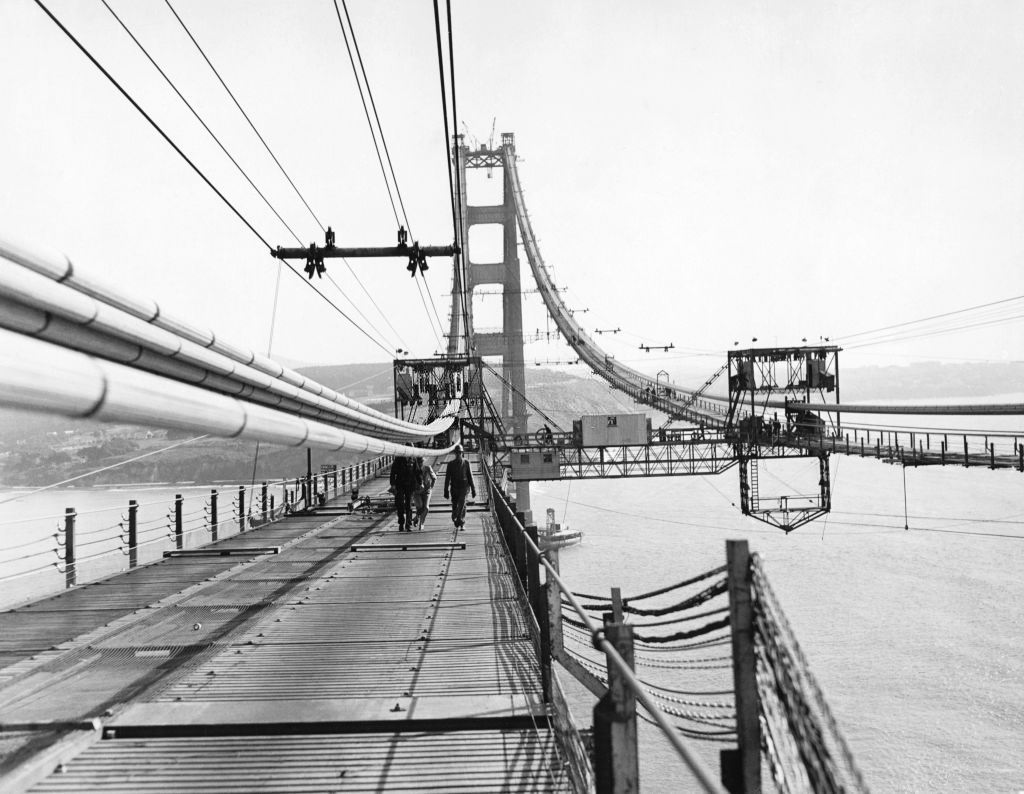
Construction of the Golden Gate Bridge with a view of the catwalks being placed under the cables, 1936.
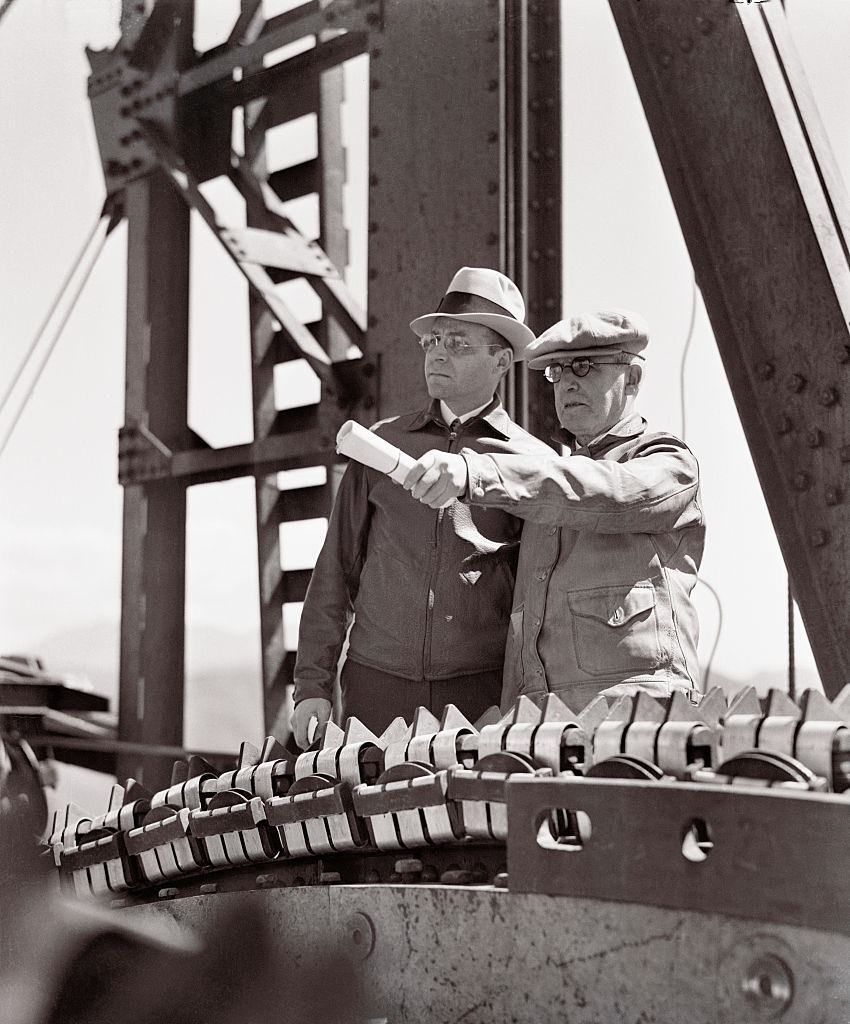
Engineers surveying Golden Gate Bridge construction, 1936.
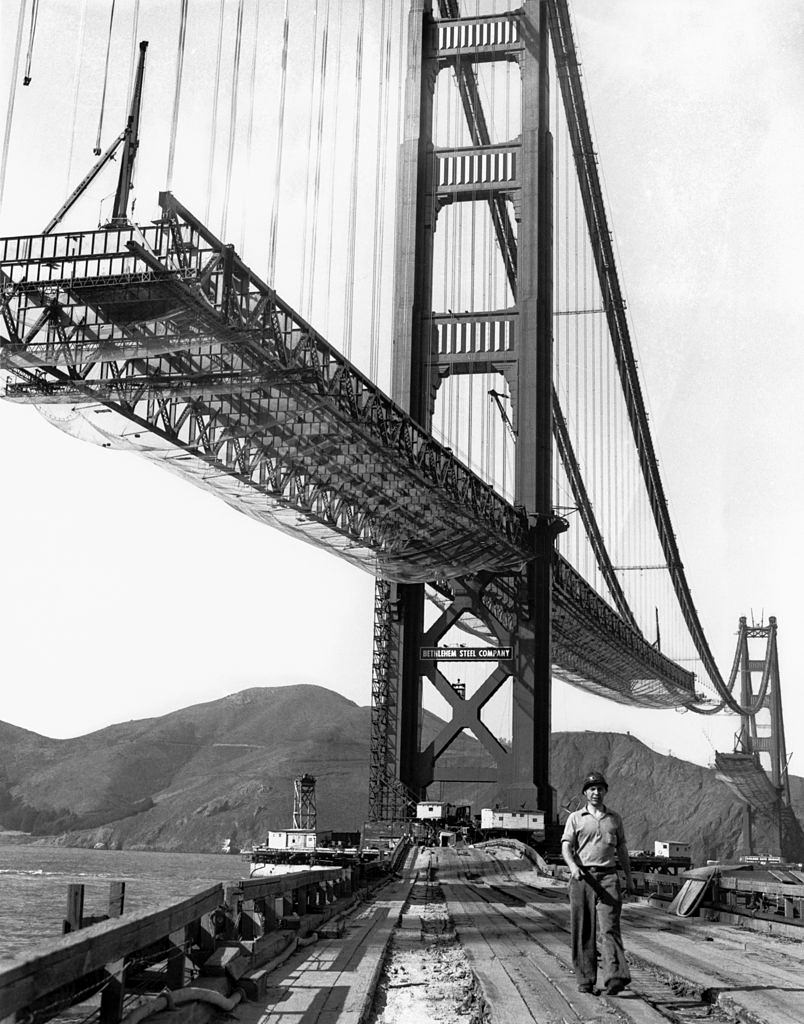
A workman walks on the levee that connects Fort Point to the south tower of the Golden Gate Bridge while it is under construction, 1936.

Engineers surveyed the structure continuously throughout 1936, checking alignment and load distribution as each new section was added. Every beam had to be placed with precision — errors in alignment at this stage could affect the structural integrity of the entire span. The photographs from this period capture the methodical, grinding nature of the work: men with instruments, workers on platforms, steel sections swinging into position.
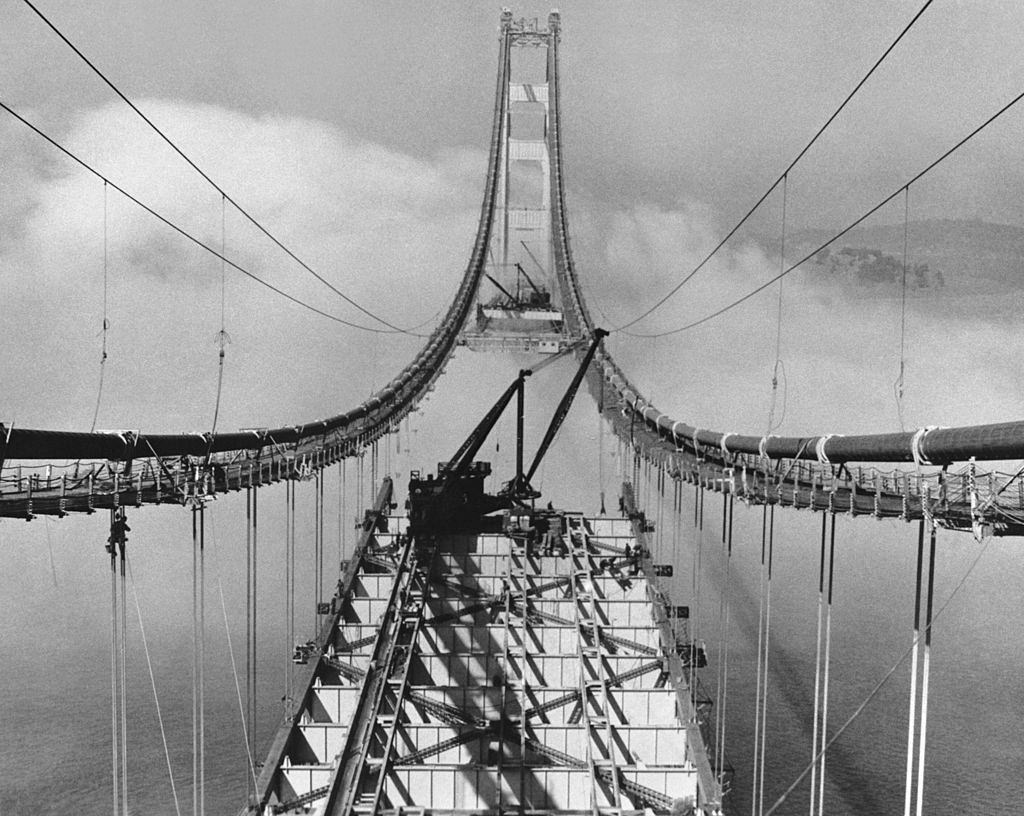
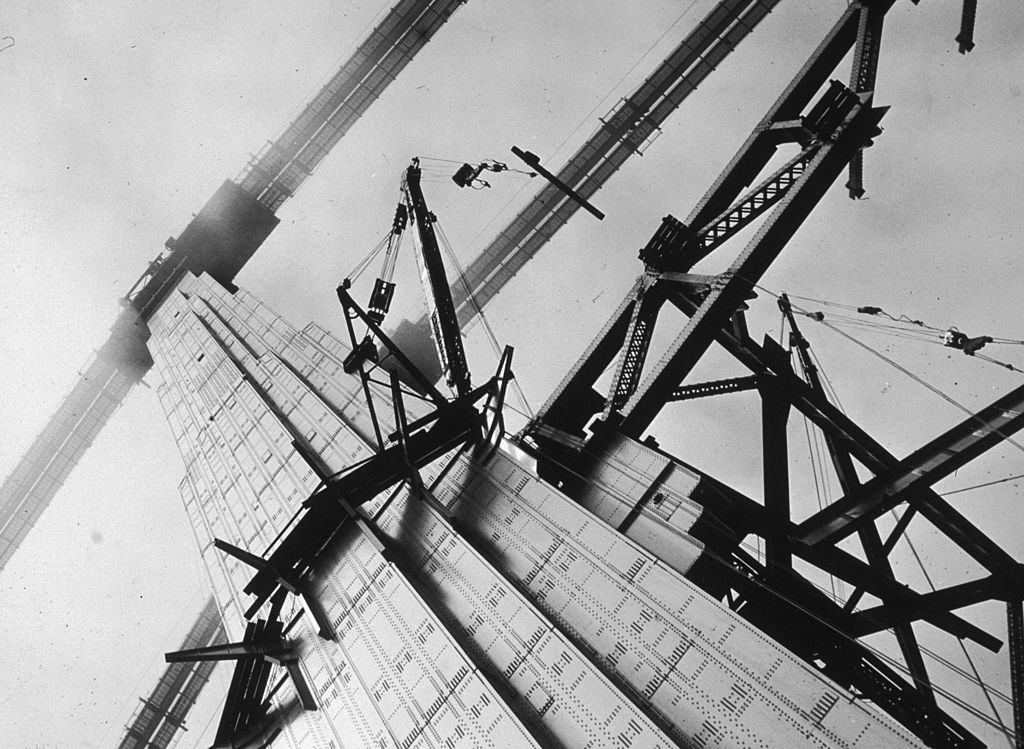
Setting roadbed sections in the fog during the construction of the Golden Gate Bridge, San Francisco, October 29, 1936.
Construction workers attaching steel beams to the Golden Gate Bridge in San Francisco during its construction.
Two construction workers on the Golden Gate Bridge in San Francisco during its construction.

By late 1936 and into 1937, the roadbed was nearing completion. Workers attached steel beams and finished the surface of what would become a six-lane highway suspended above the water. The final wire strands were added to the main cables, a milestone captured in photographs showing two workmen completing the last additions to the enormous cable structure.
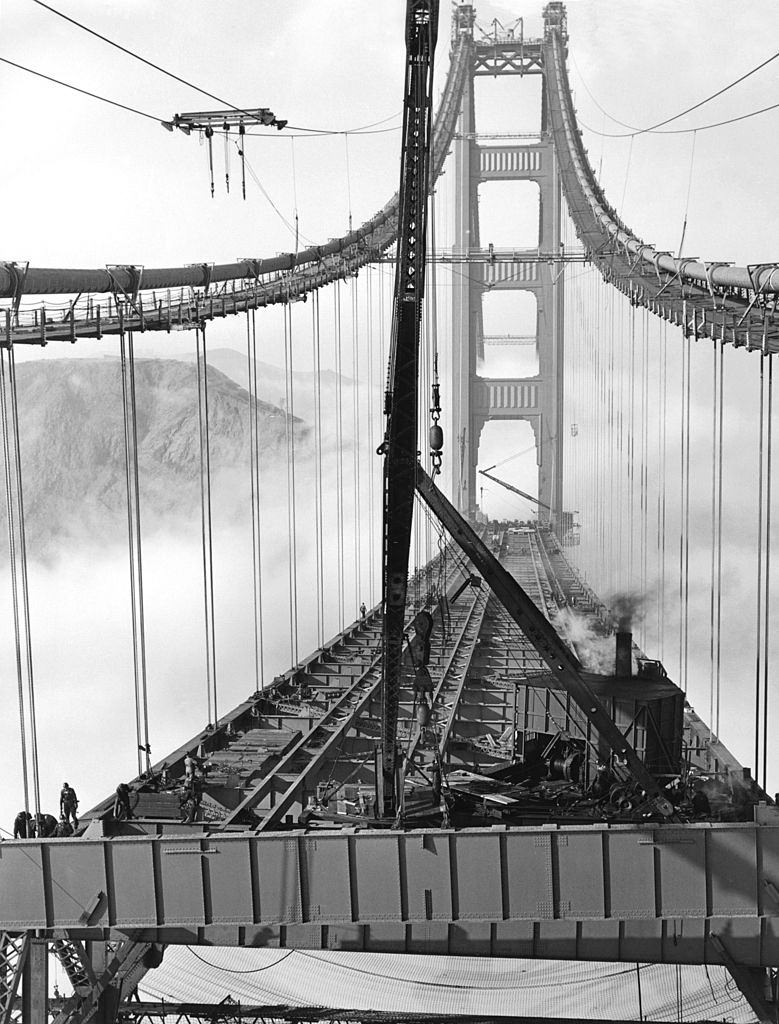
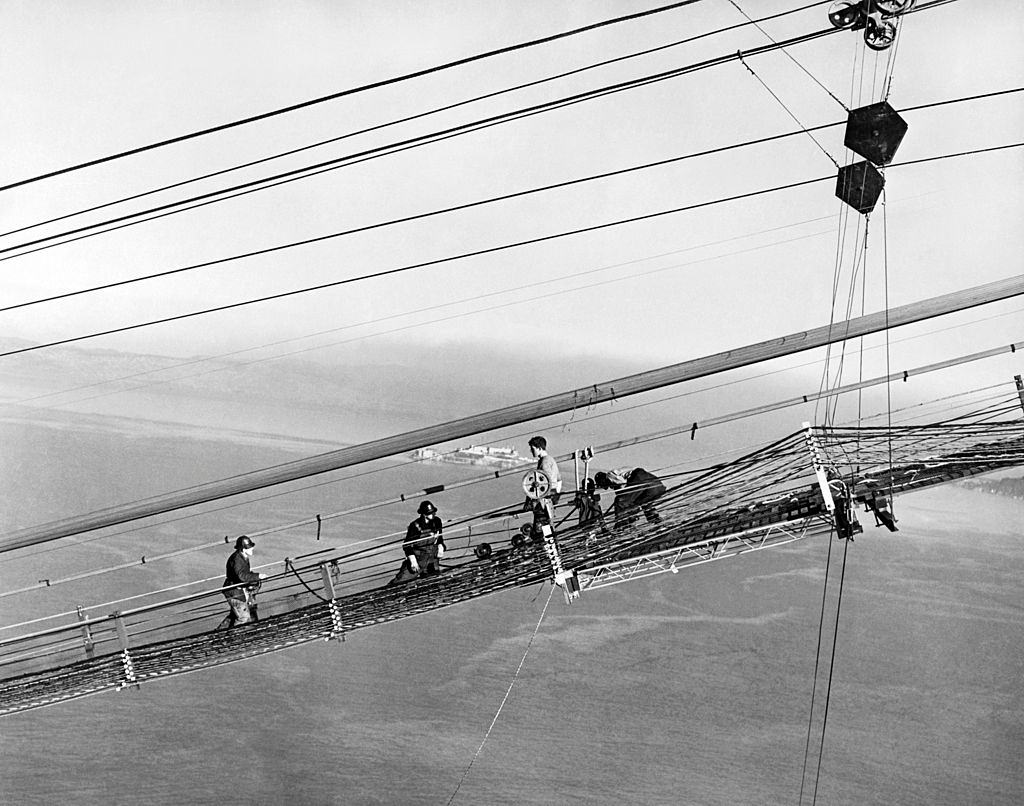
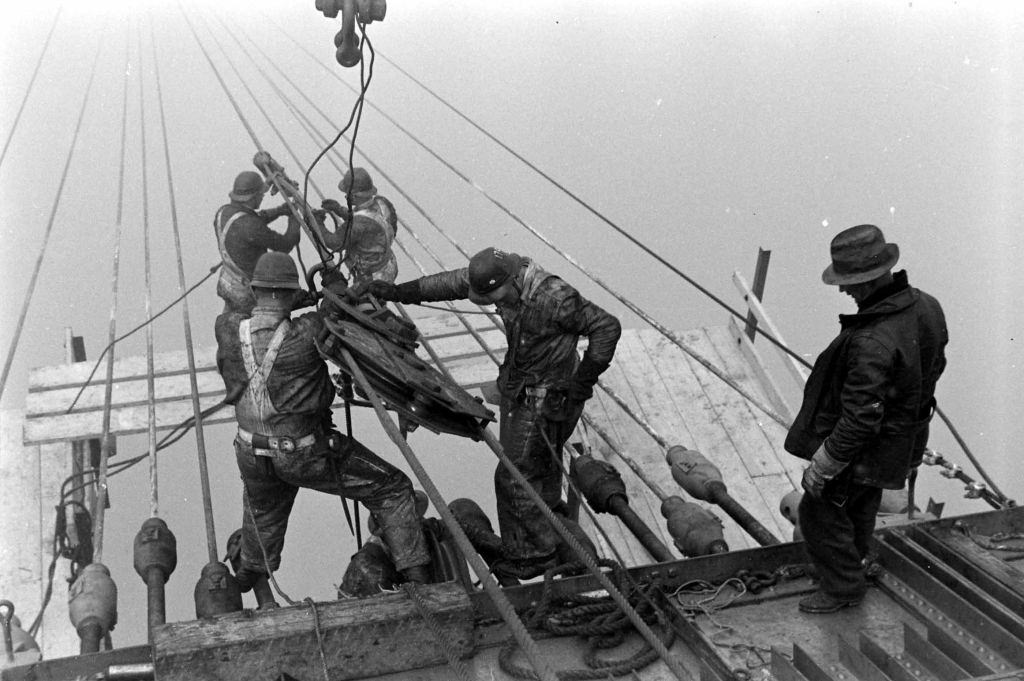
Workers in the fog installing the roadbed during the construction of the Golden Gate Bridge, 1937.
Construction of the Golden Gate Bridge with men on the catwalks working on the cables, San Francisco, 1937.
Golden Gate bridge construction, 1937.

The bridge opened on May 27, 1937 — first to pedestrians, then to vehicles the following day. On opening day alone, 1,800 cars and 2,100 pedestrians crossed in the first hour. By midnight, an estimated 25,000 vehicles and 19,350 pedestrians had paid their tolls. The rate was fifty cents per car and five cents per pedestrian. By the end of its first full fiscal year, 3,326,521 vehicles had made the crossing. By the end of 1970, that annual figure had climbed to 33 million.

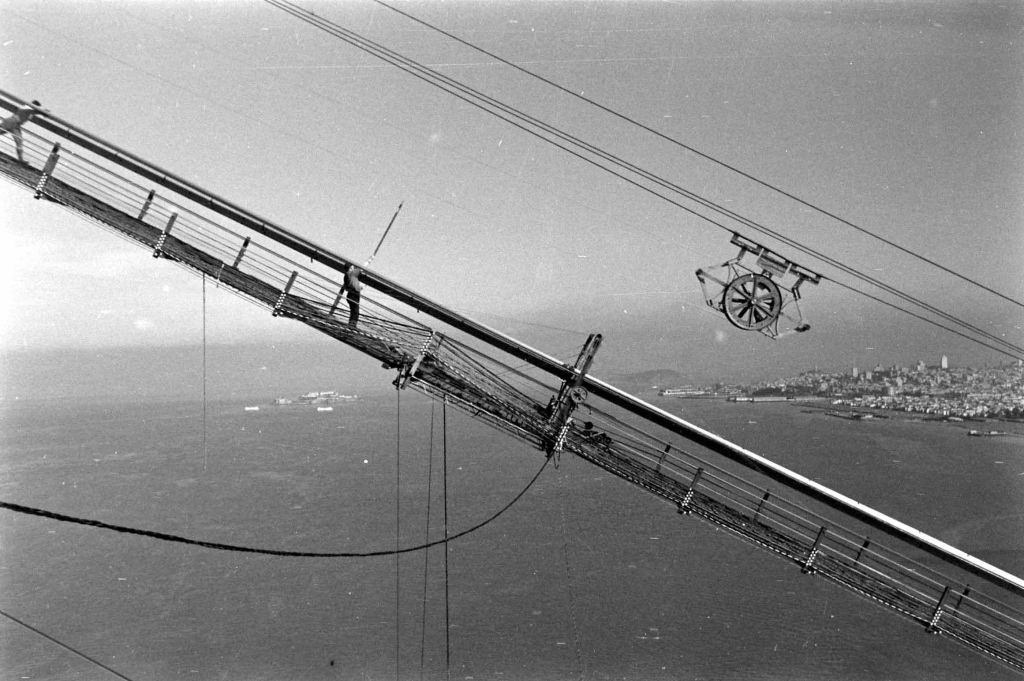
Two workmen adding the last two strands to one of the two enormous cables to the structure that supports a 6-lane highway, during construction of the Golden Gate Bridge.
Aerial view of cables during the construction of the Golden Gate Bridge in San Francisco.
Men standing on a platform during the construction of the Golden Gate Bridge in San Francisco.
Aerial view of cables during the construction of the Golden Gate Bridge in San Francisco, 1940.
Scene of the Golden Gate Bridge during its construction in San Francisco, 1940.
Gate Bridge during its construction in San Francisco, California, 1940.
Men sitting on a platform during the construction of the Golden Gate Bridge in San Francisco, 1940.
People working on the Golden Gate Bridge in San Francisco, 1940.
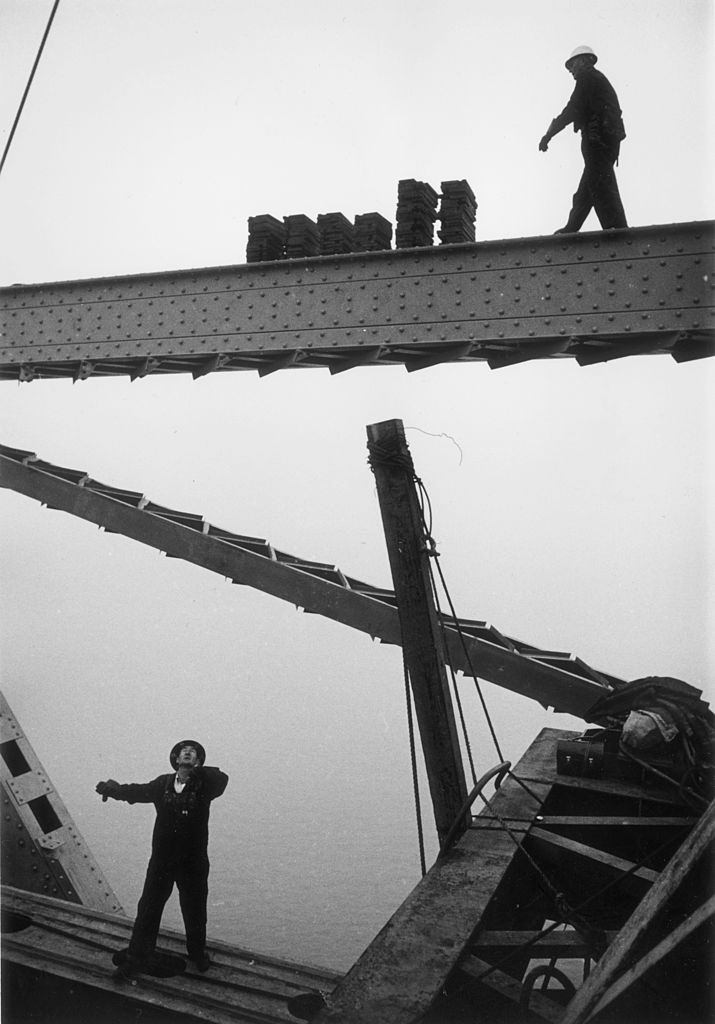
Construction workers crossing a girder during building work on the Golden Gate Bridge in San Francisco.
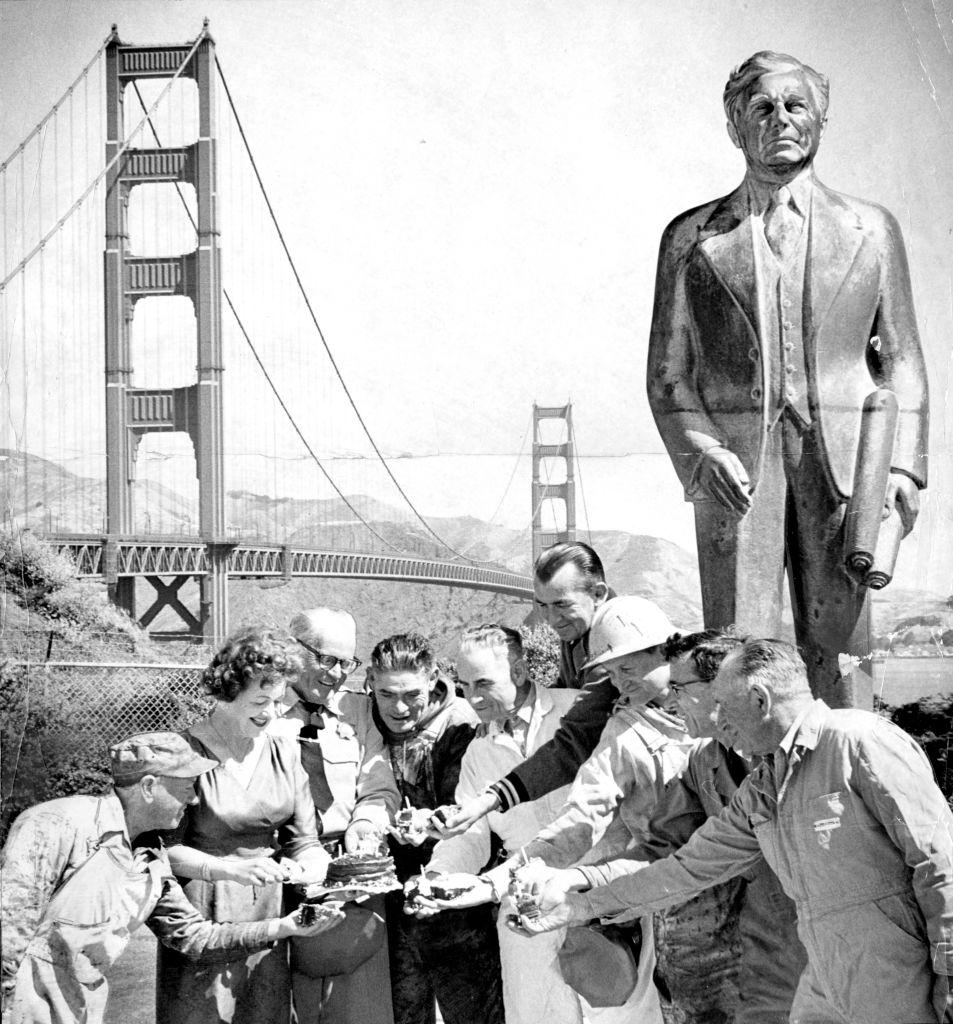
Golden Gate Bridge employees since before construction enjoy some birthday cake. May 25, 1961.
Enjoyed this post? Get new ones in your inbox.

1 thought on “Rare Historical Photos Show the construction of Iconic Golden Gate Bridge”

Leave a Comment

Your email address will not be published. Required fields are marked *

Share this Post 🥺

Please take a moment to share this content. Your support is greatly appreciated! 🙌🙏

Share this Post 🥺

Please take a moment to share this content. Your support is greatly appreciated! 🙌🙏
Scroll to Top
 
Hey Friend, Before You Go.. Please like & follow for more interesting content