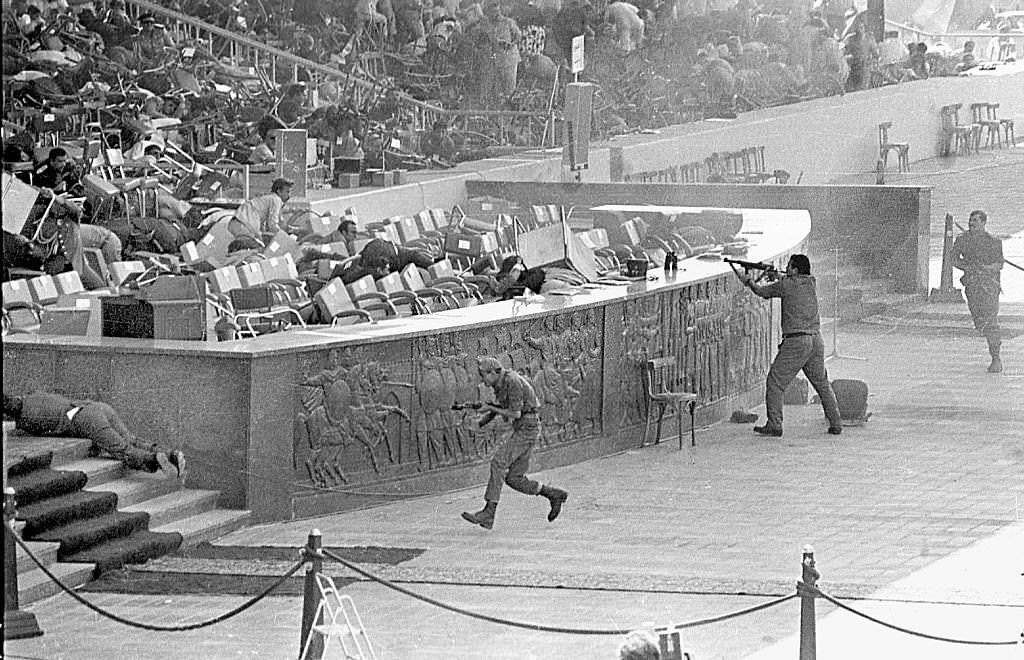
On October 6, 1981, Egyptian President Anwar Sadat was shot and killed during Cairo’s annual victory parade. Soldiers disguised as part of the procession opened fire on the reviewing stand, killing him in full public view. The assassination ended one era and launched another. Hosni Mubarak, Sadat’s vice president and a decorated air force general from the 1973 Yom Kippur War, stepped into power almost immediately.
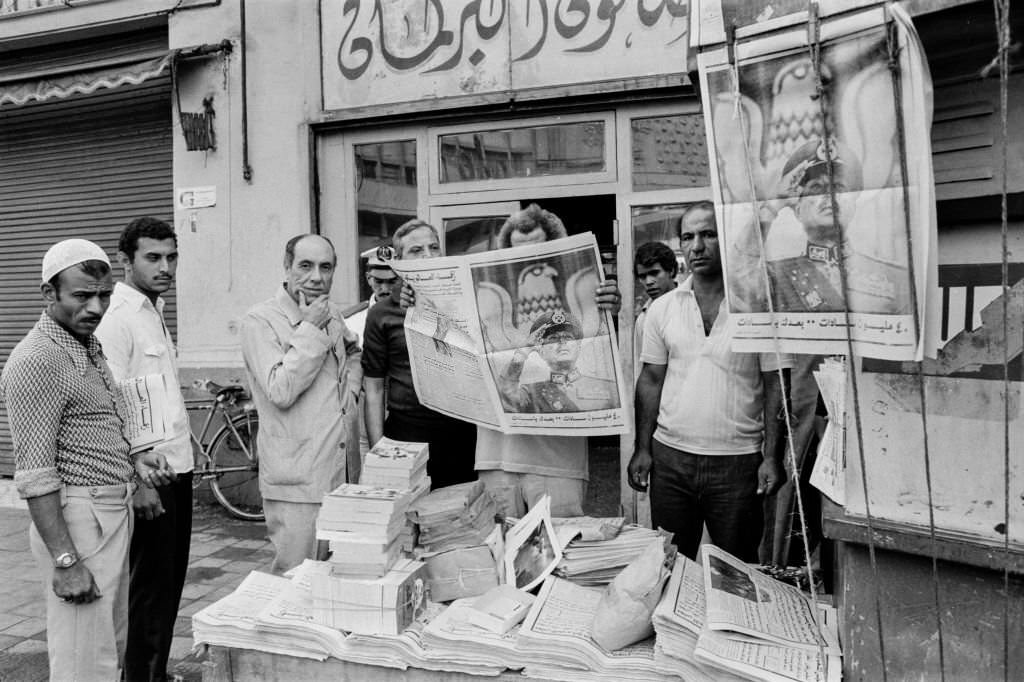
Mubarak inherited a country under intense pressure. He freed Sadat’s political prisoners, prosecuted the Islamic militants behind the assassination, and made clear he would not abandon the peace process with Israel or the alliance with the United States. In the days following Sadat’s death, Egyptians gathered around newspapers searching for answers about what had just happened to their country.
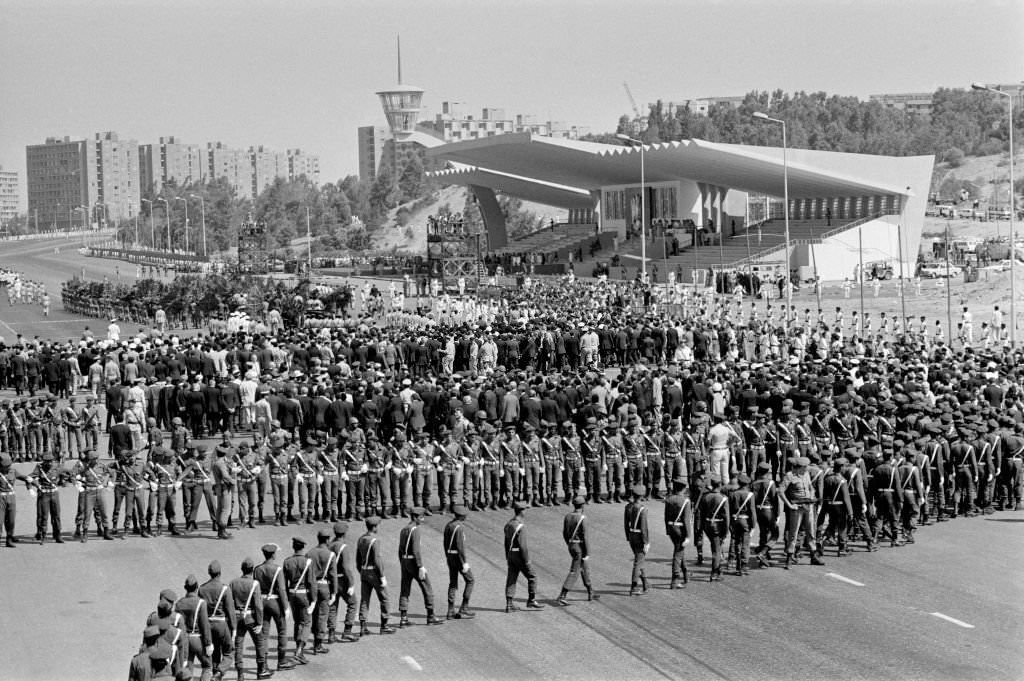
World leaders arrived in Cairo to pay their respects. The funeral brought together heads of state who rarely appeared in the same place, a rare moment of global attention fixed on Egypt.
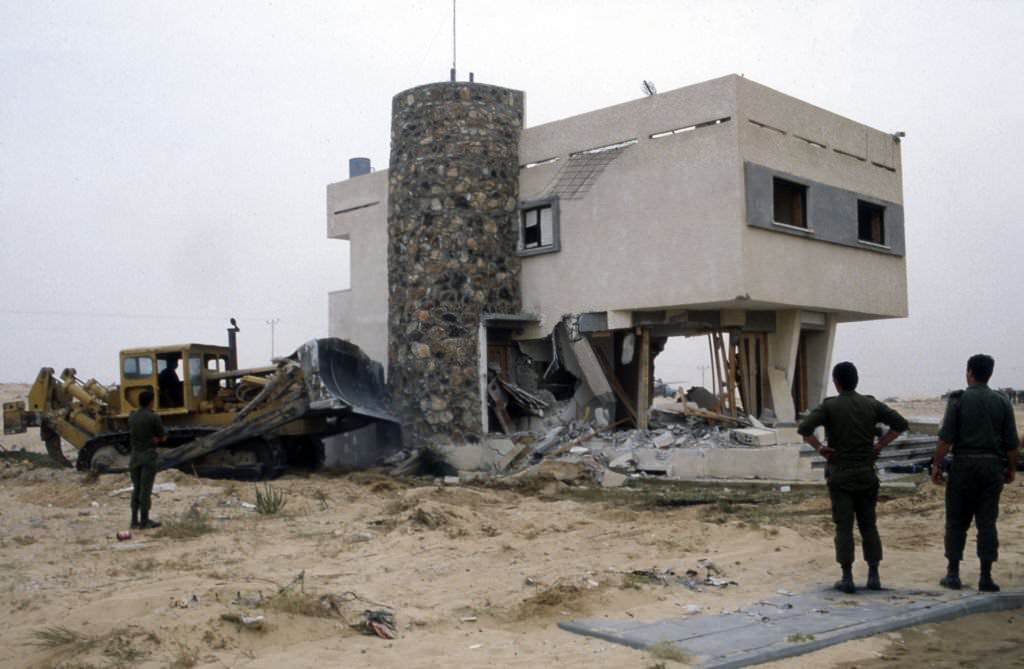
Before his death, Sadat had already set a major geopolitical change in motion. The Camp David Accords, signed in 1978, required Israel to withdraw from the Sinai Peninsula, which it had occupied since the 1967 Six-Day War. That withdrawal was completed in April 1982. The final handover of the Sinai was one of the most significant events of the decade — Israeli settlers were evacuated, settlements were demolished, and Egyptian soldiers reclaimed the land.
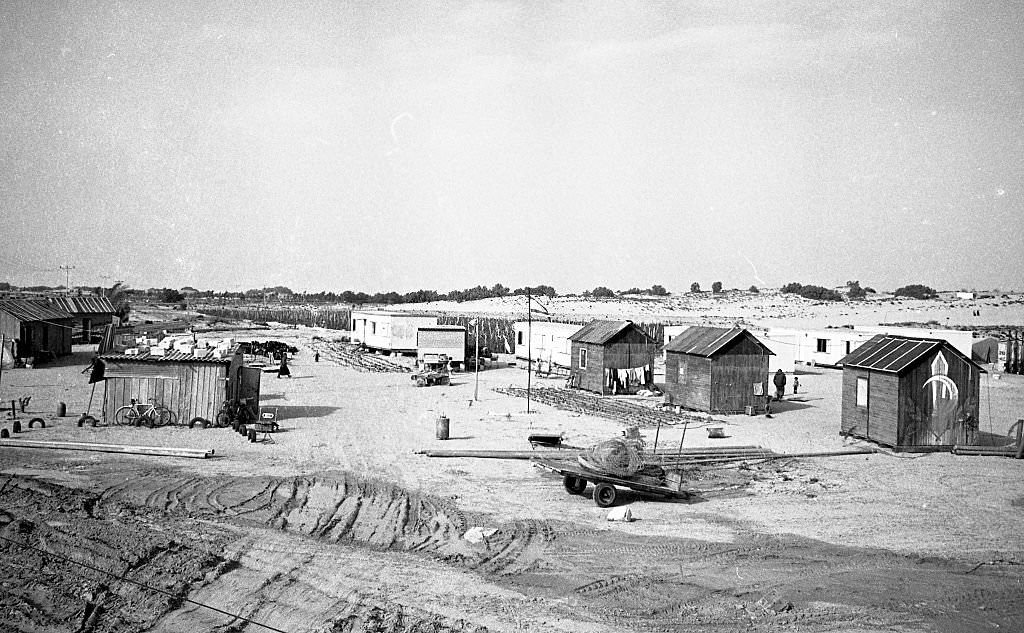
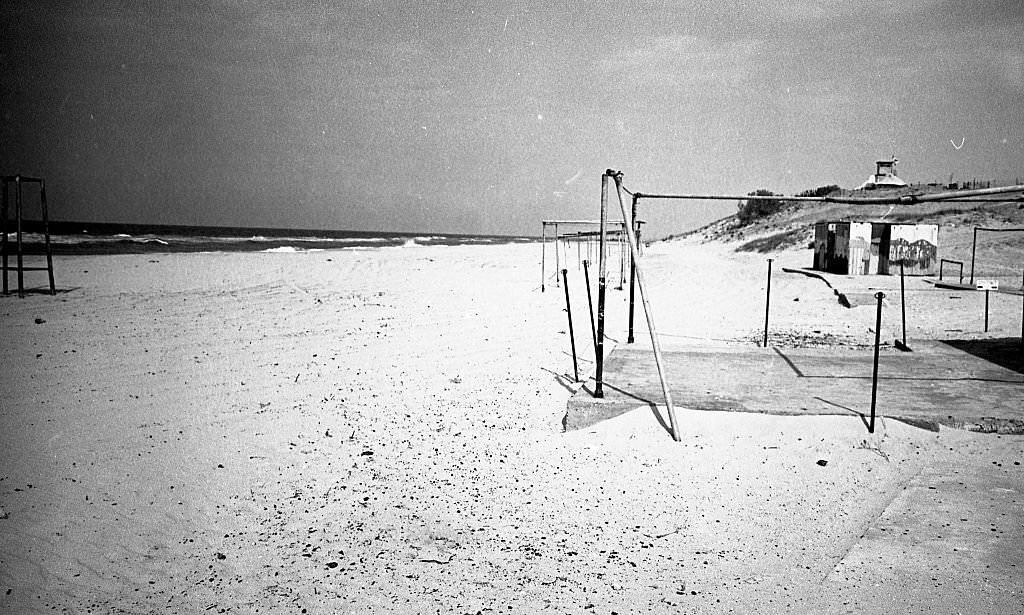
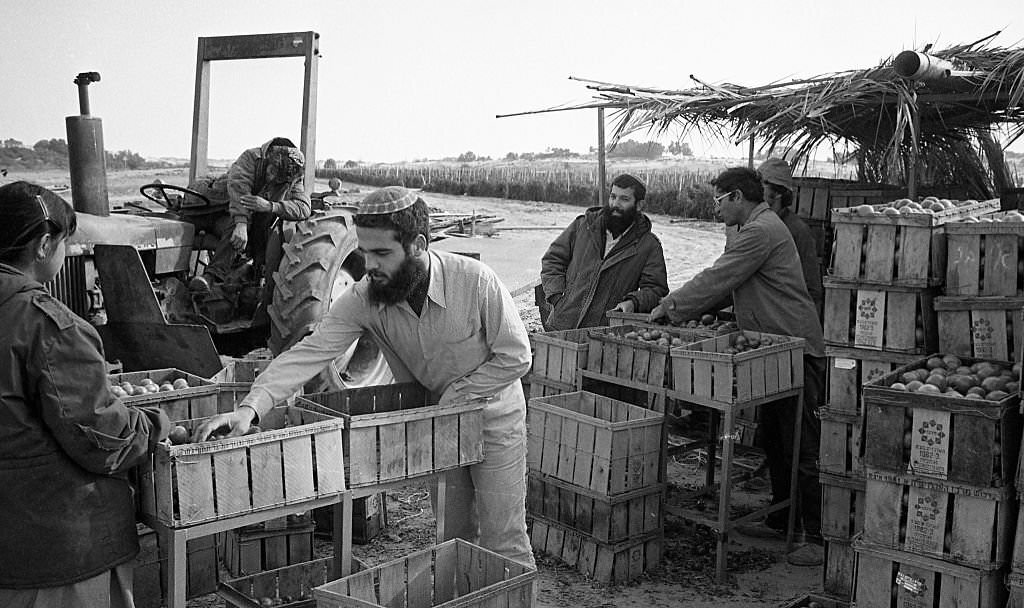
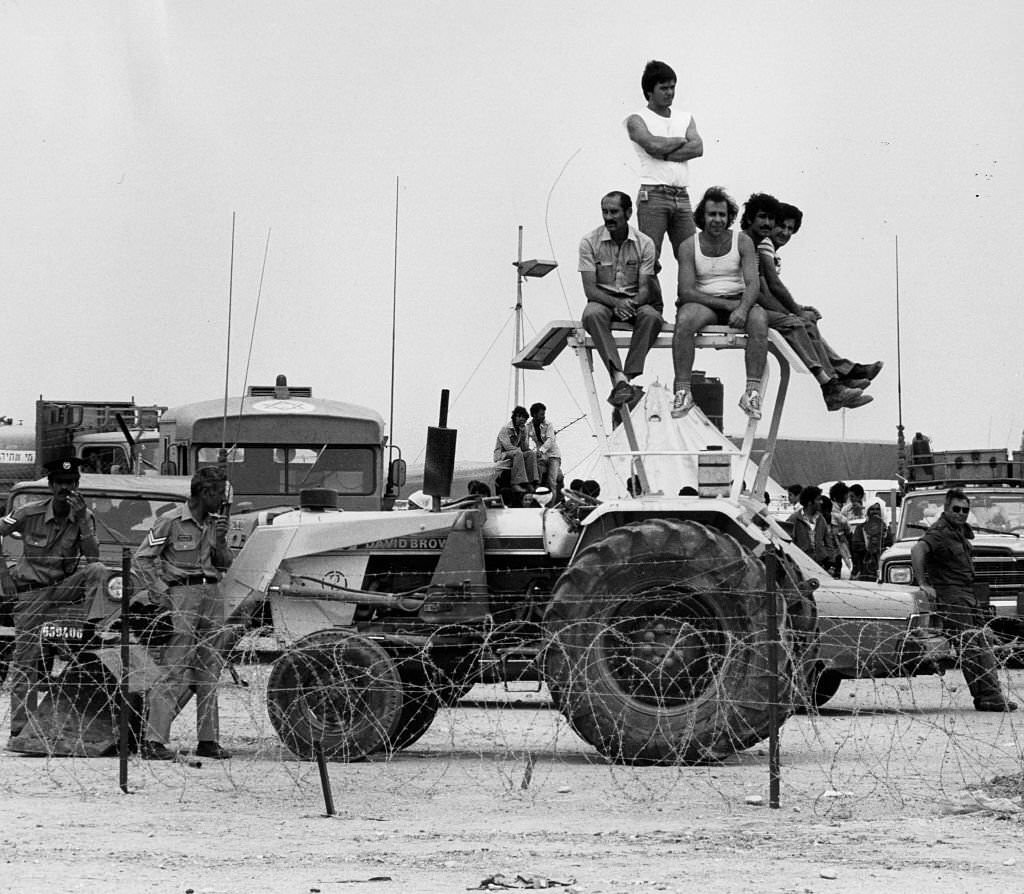
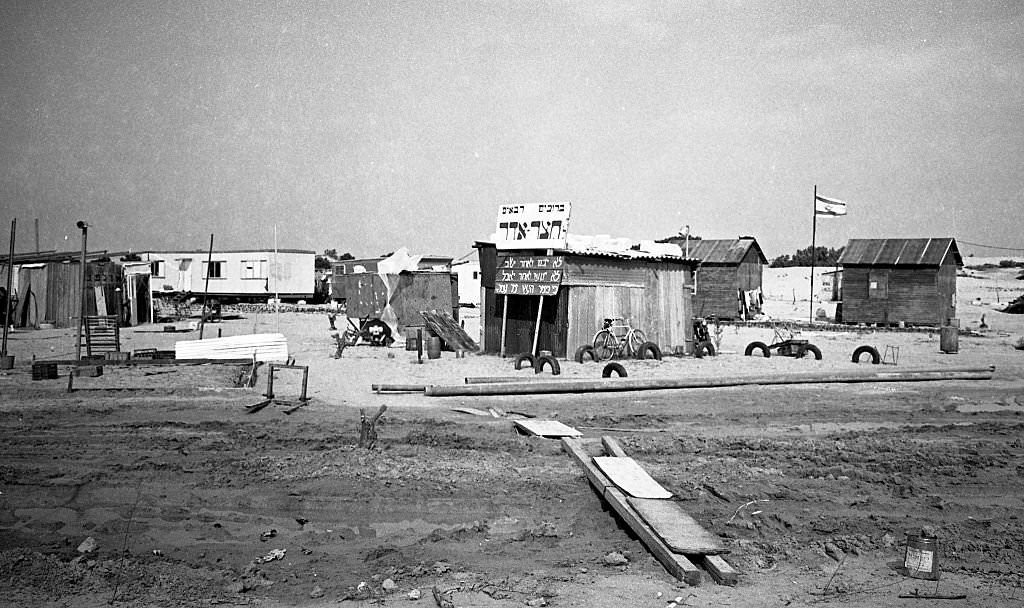
The settlement of Yamit, near the Egyptian border, became a flashpoint during the evacuation. Israeli settlers resisted the withdrawal, and the Israeli army was ordered to remove them by force. Once cleared, the settlement was demolished completely to prevent any future dispute over its status.
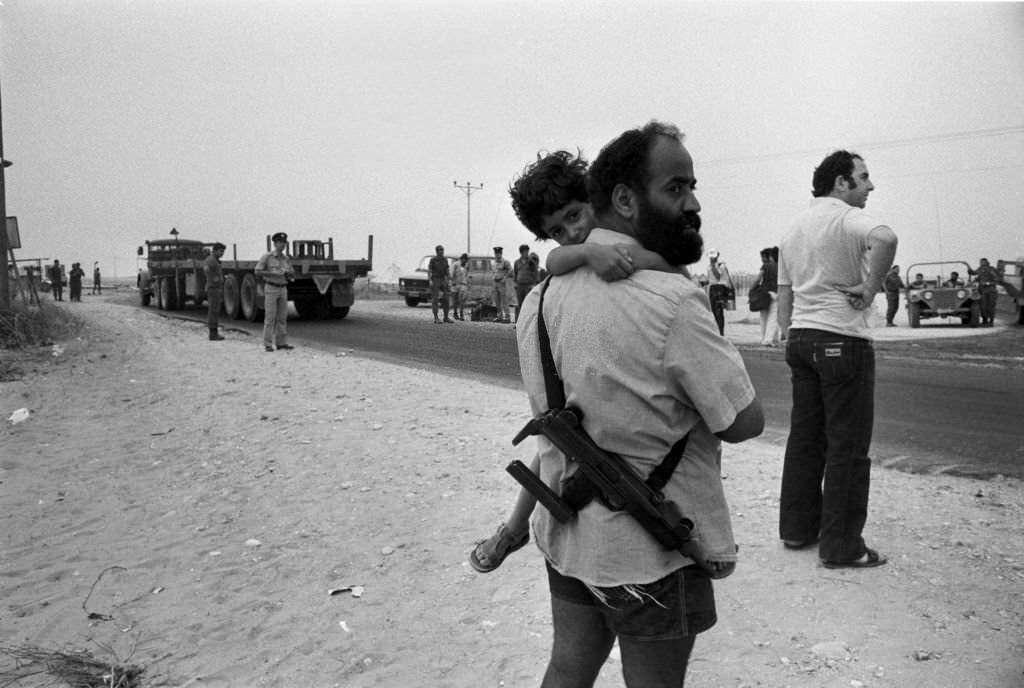
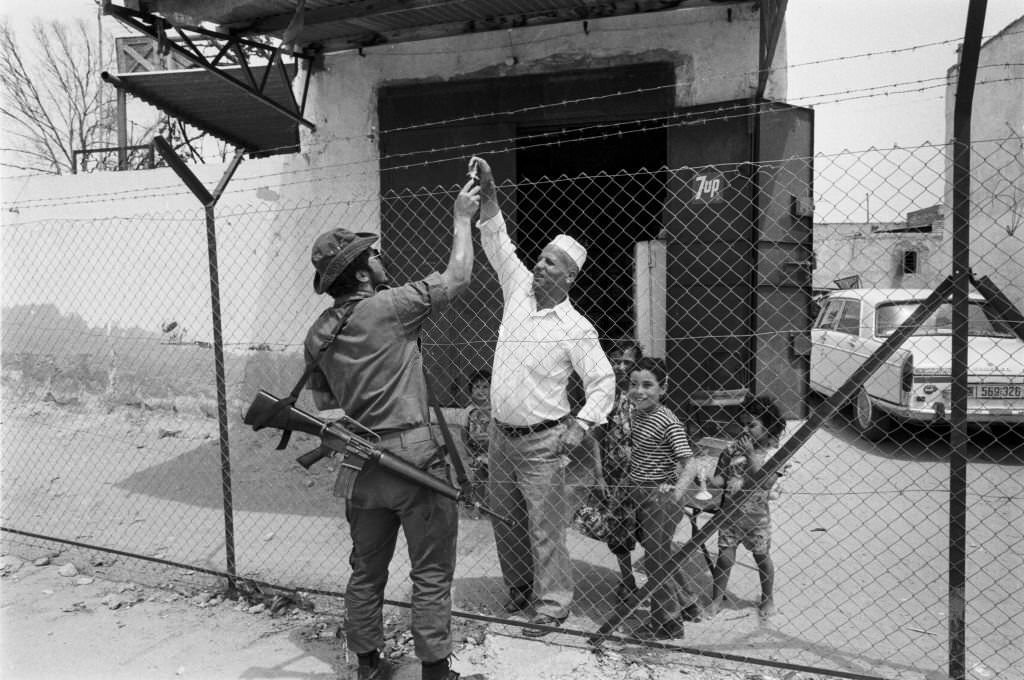
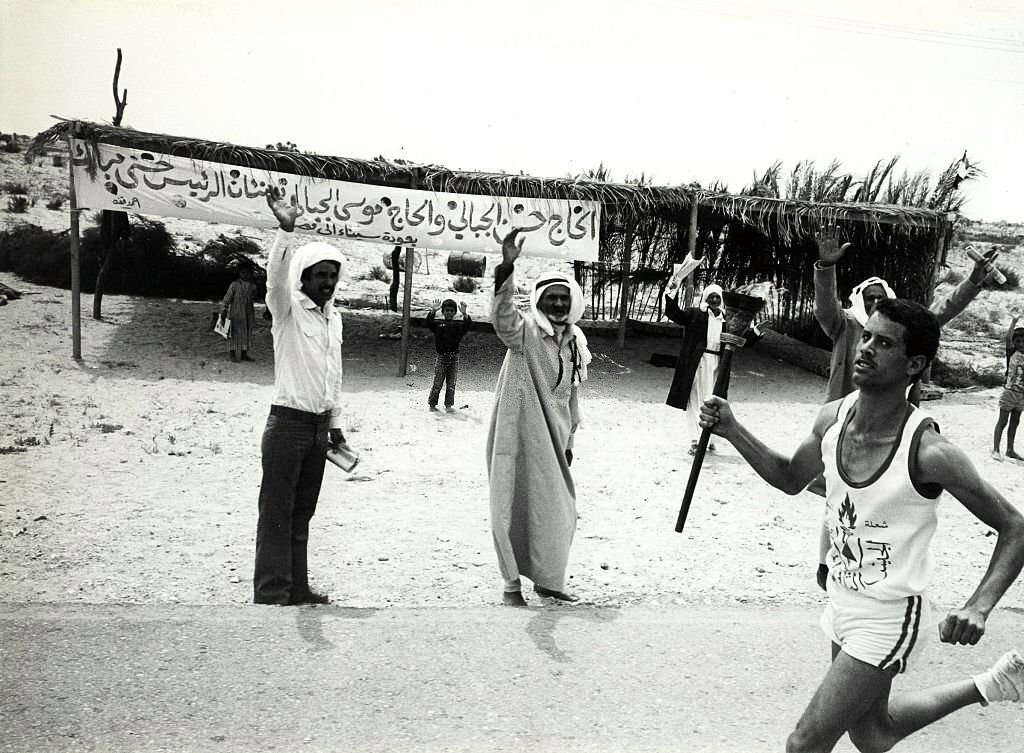
On April 26, 1982, Egyptian soldiers stood on Sinai soil again as their own. A marathon was even run through the desert that day to mark the occasion. The return of Sinai was a defining national moment, a reward for Sadat’s controversial peace deal that cost him his life but delivered a major territorial victory.
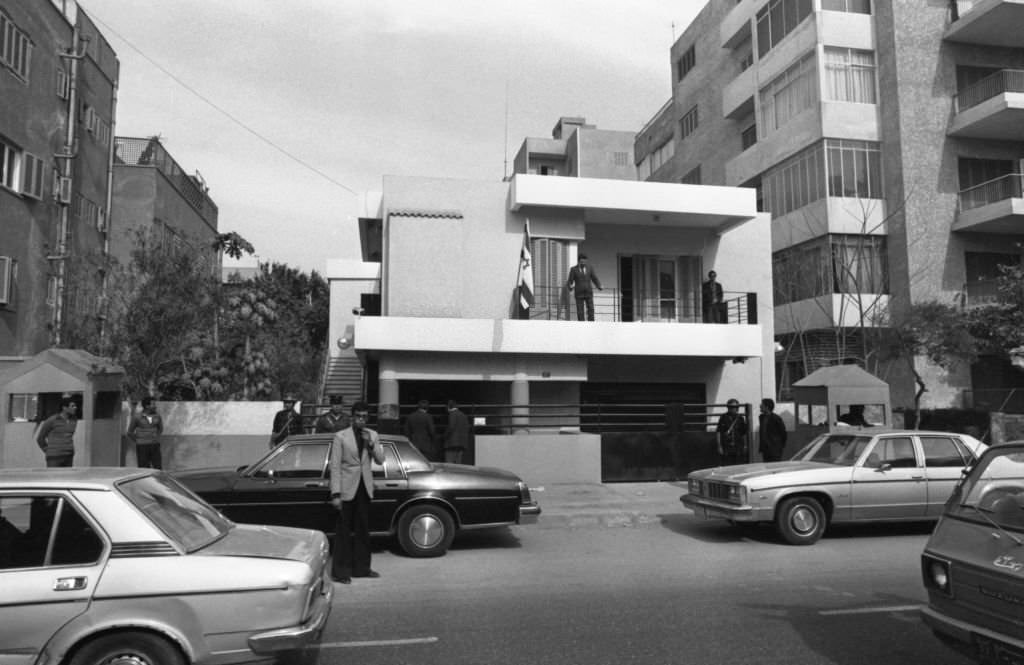
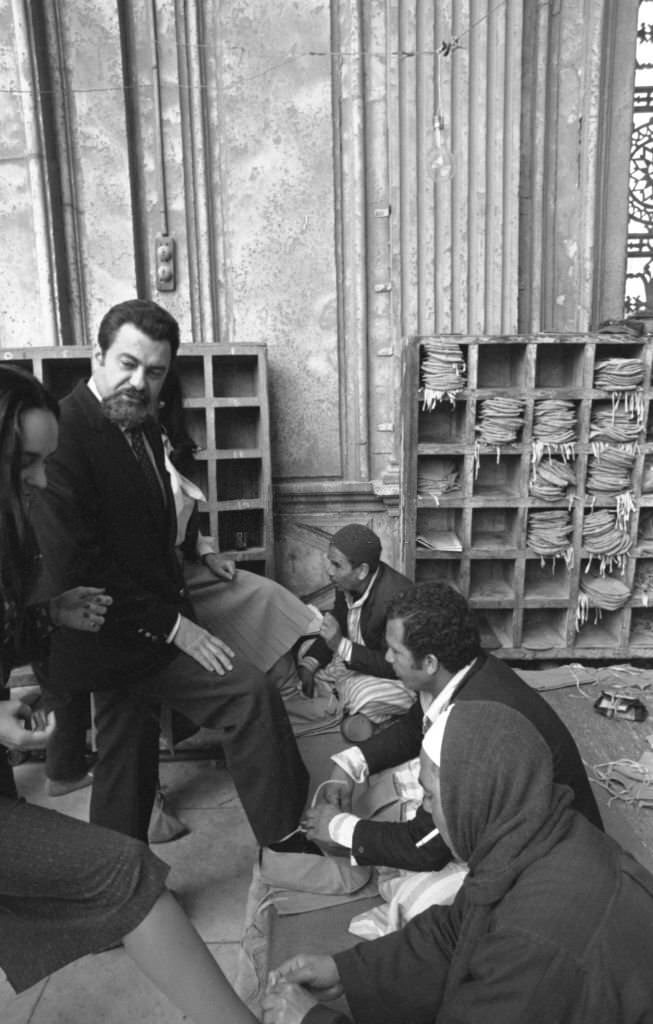
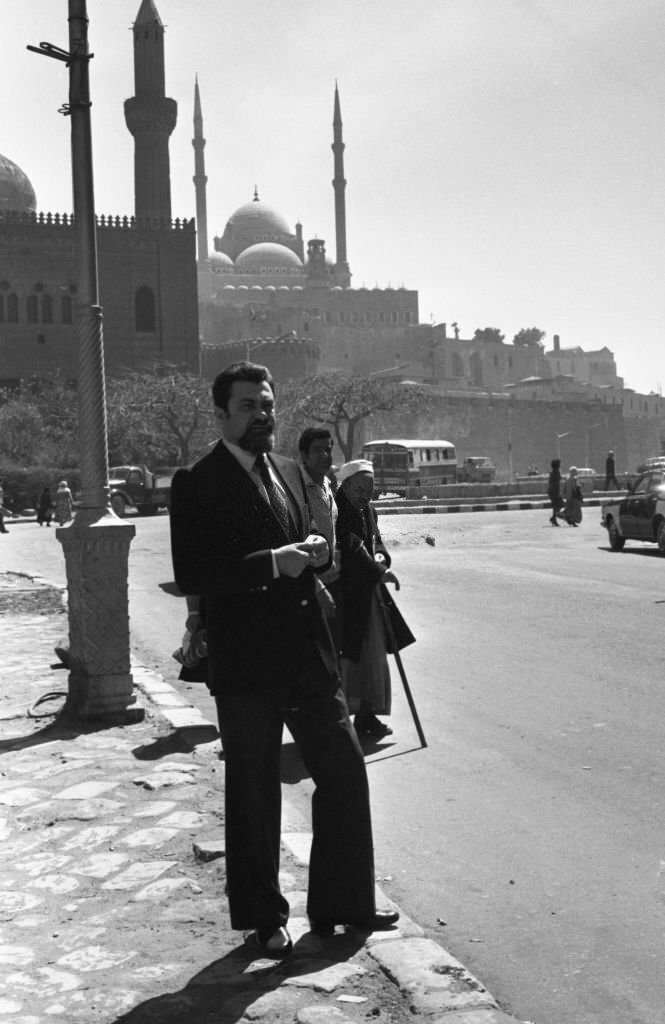
Earlier that year, Israel had established an embassy in Cairo, a direct result of the normalization of relations. Eliyahu Ben-Elissar became Israel’s first ambassador to Egypt in 1980, walking Cairo’s streets at a time when much of the Arab world viewed Egypt’s peace with Israel as a betrayal.
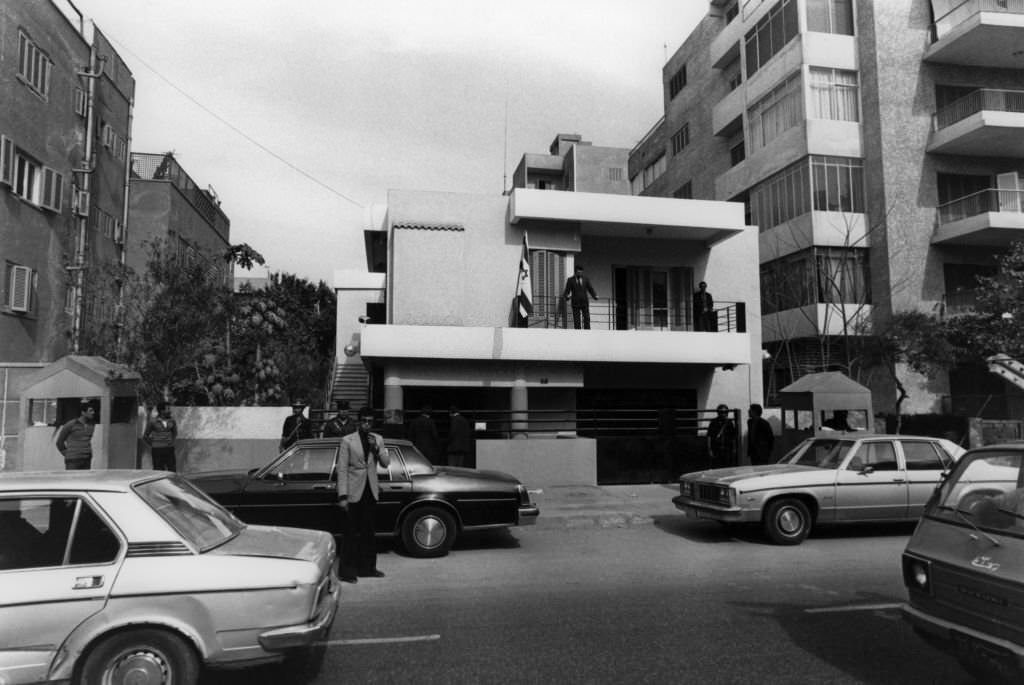
Sadat had already made another bold diplomatic gesture by hosting the funeral of the deposed Shah of Iran in Cairo in 1980. Few world leaders were willing to receive the Shah after his fall, but Sadat did so openly.
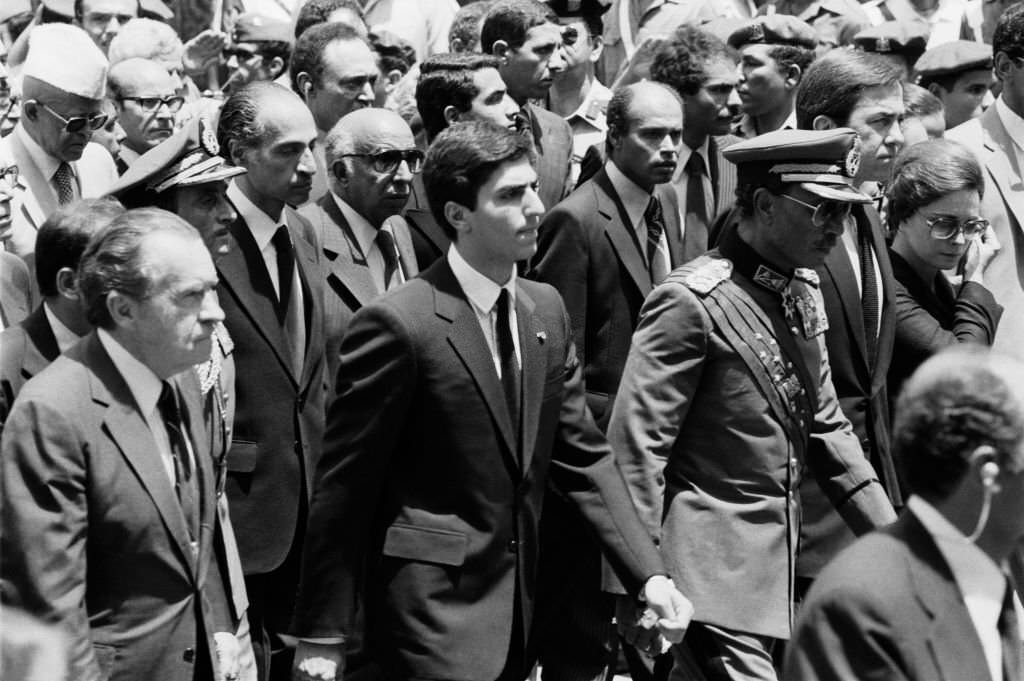
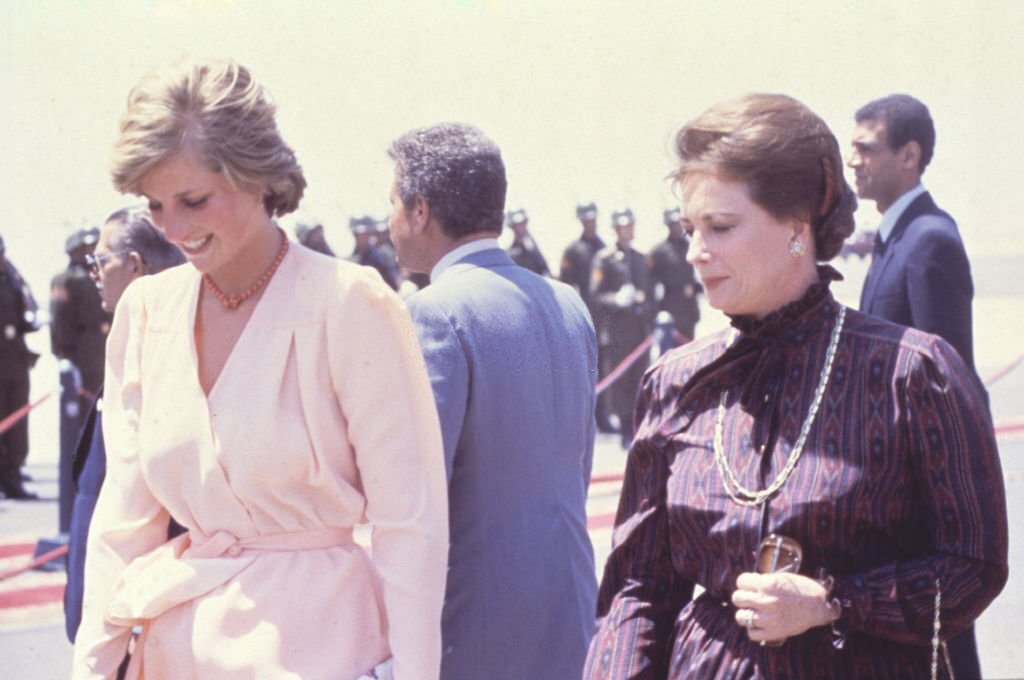
Princess Diana visited Egypt in 1981, hosted by Jehan Sadat, the Egyptian First Lady. The visit captured attention both inside Egypt and abroad, putting a spotlight on the country at a turbulent moment in its history.
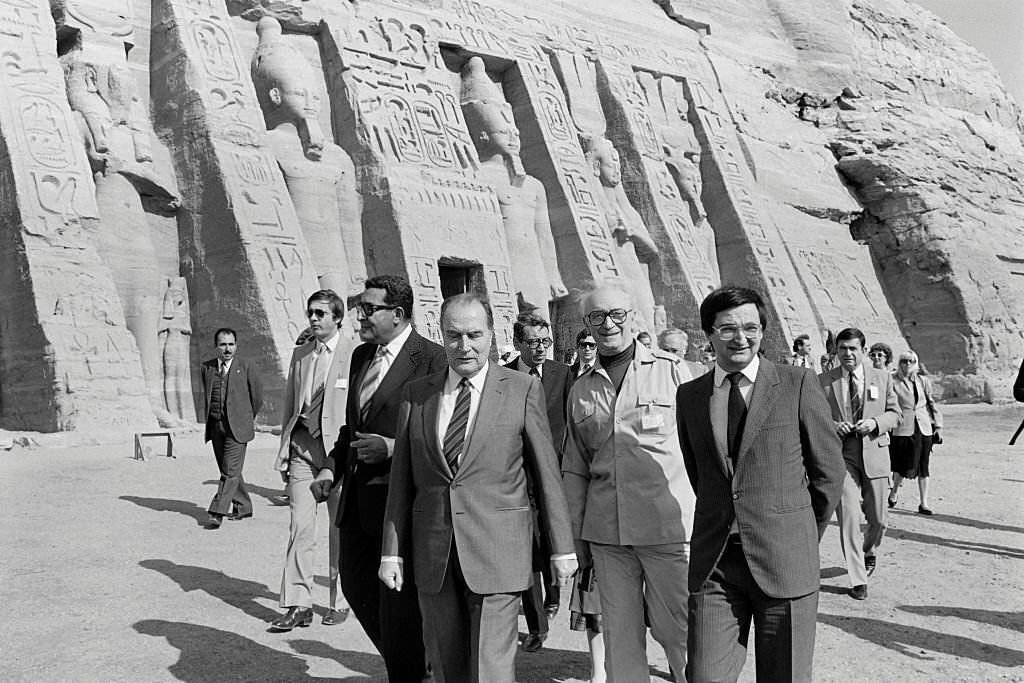
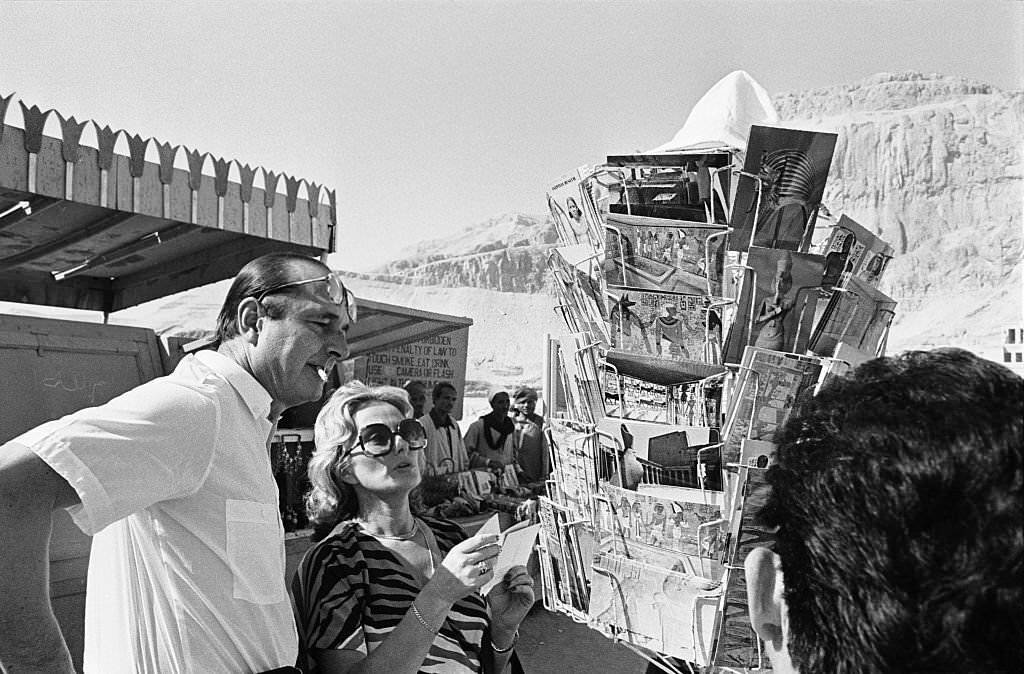
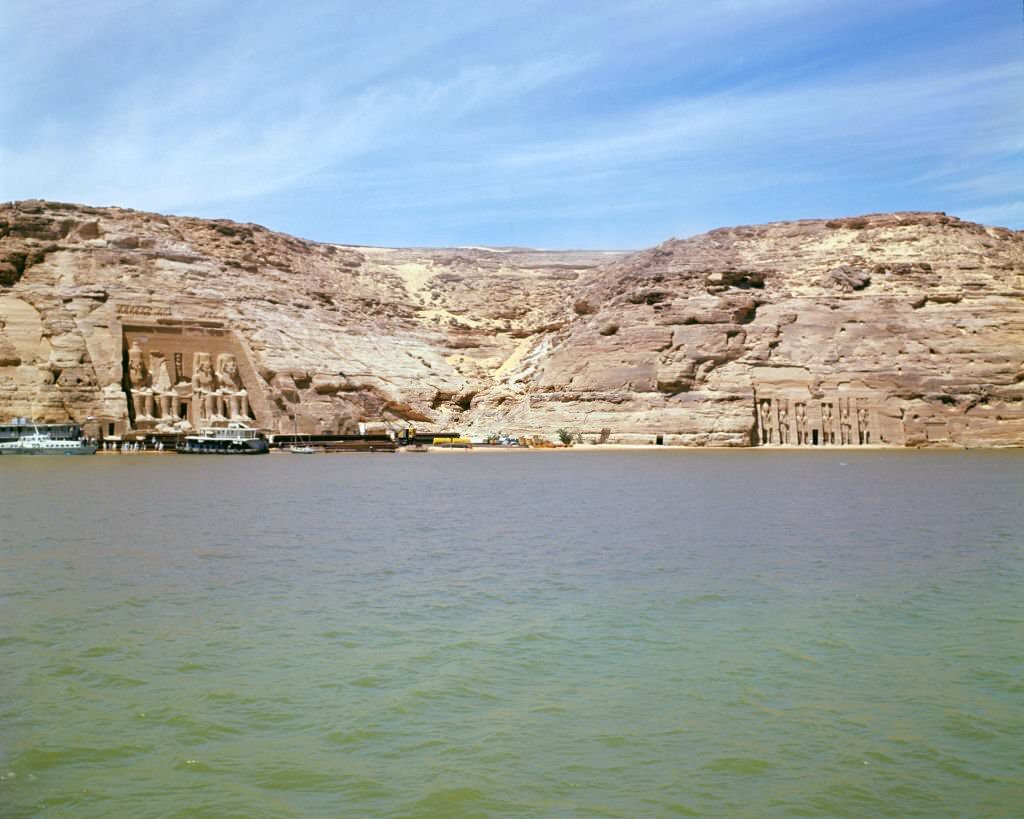
Foreign dignitaries continued to visit throughout the decade. French President François Mitterrand toured the Abu Simbel temples in November 1982 during an official state visit, and Jacques Chirac, then Mayor of Paris, visited Cairo as well. Egypt’s monuments drew global attention even as the country managed political and economic difficulties at home.
On the economic side, the 1980s were a difficult decade. Falling oil prices cut into revenues and reduced the money sent home by Egypt’s roughly three million workers abroad. The government became heavily dependent on foreign aid, which gave the International Monetary Fund growing influence over Egyptian economic policy. Labor strikes and food riots broke out at various points, and Mubarak’s government suppressed them. The economic pressures were visible in daily life across the country.
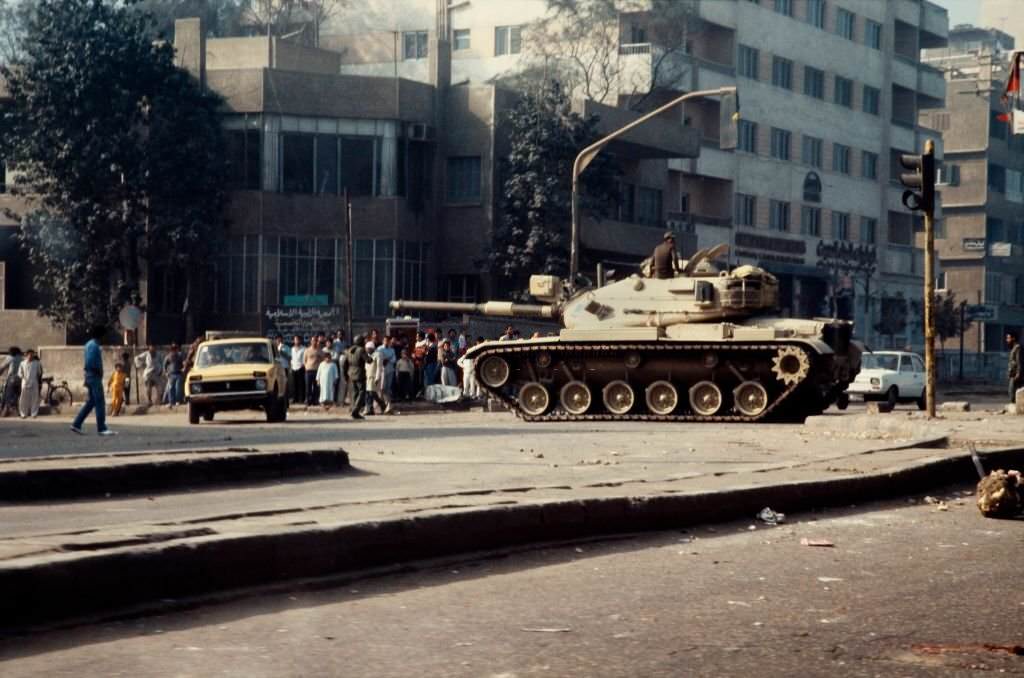
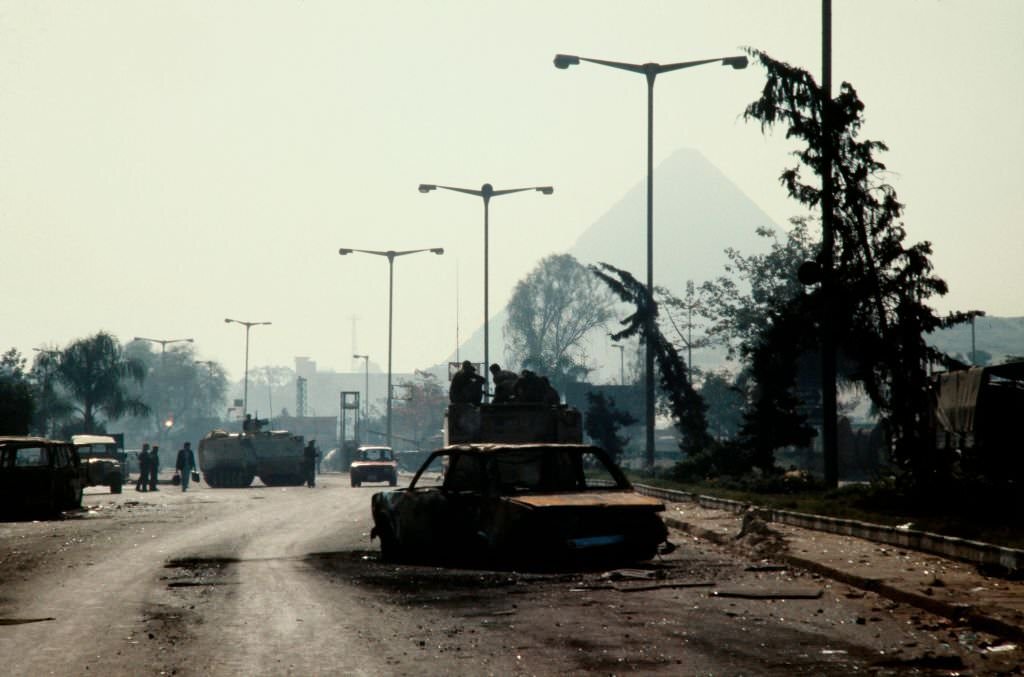
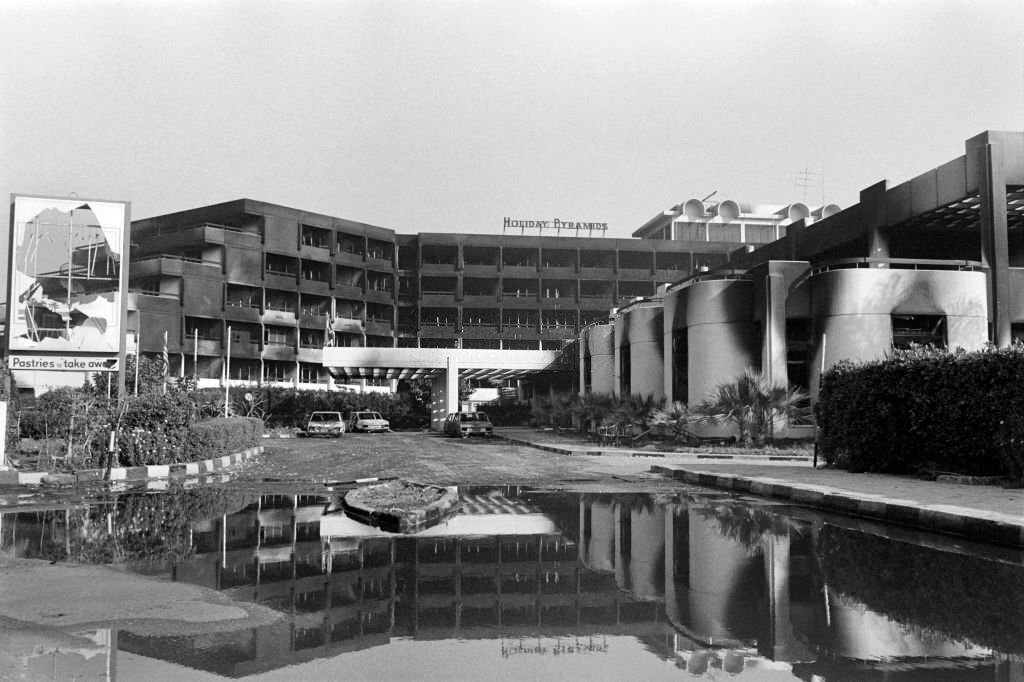
Religion played a visible role in public life throughout the decade. Salafist preachers appeared on Cairo’s streets, and the government kept close watch on Islamic extremist groups following Sadat’s assassination. Al-Azhar Mosque, one of the oldest centers of Islamic learning in the world, remained a focal point of religious and intellectual life in the capital.
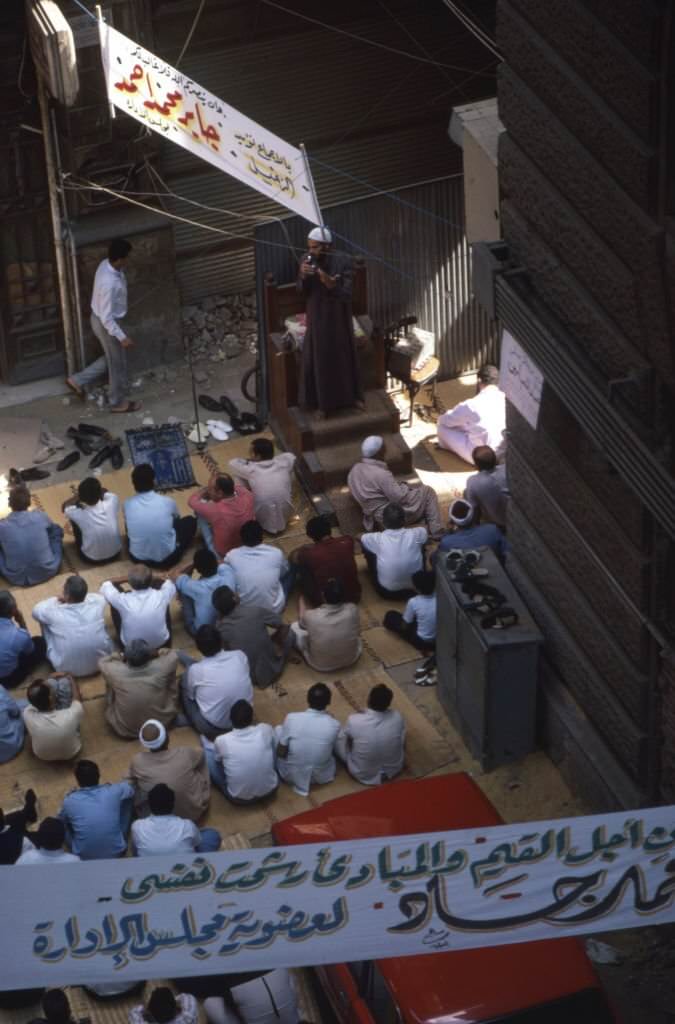
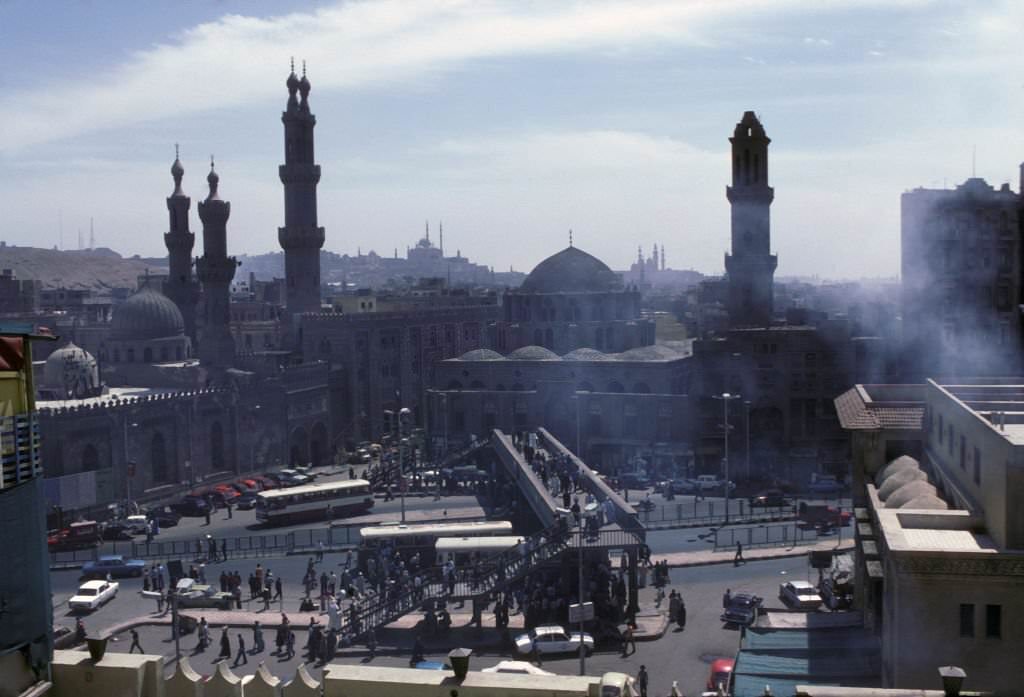
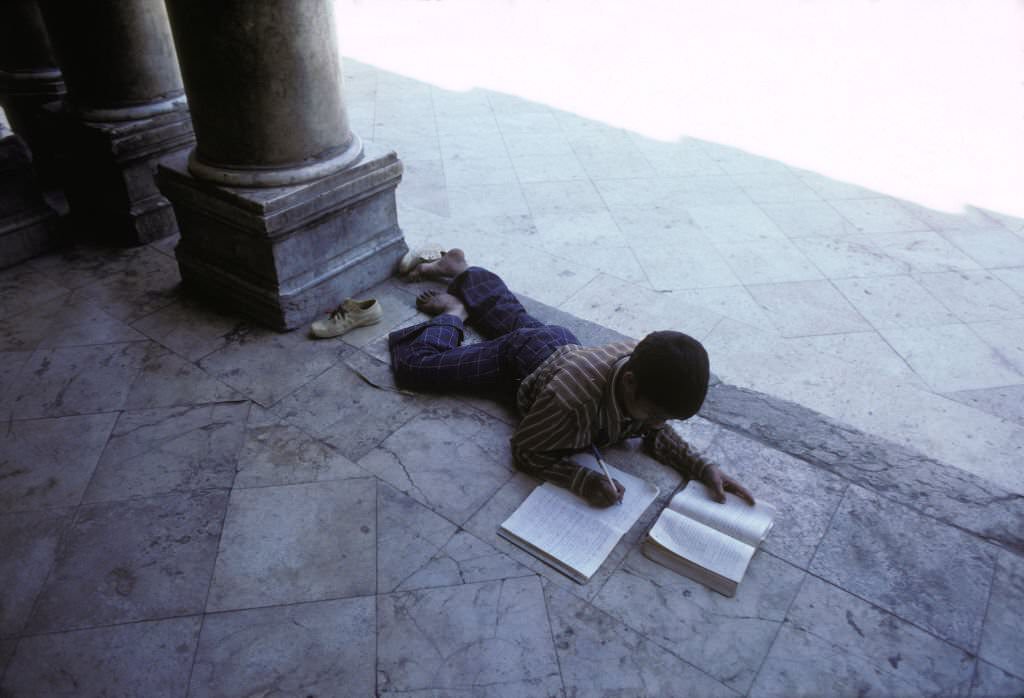
Boys attended Koranic schools, known as madrasas, where they learned religious texts alongside basic literacy. These institutions were woven into the fabric of Egyptian neighborhoods, particularly in older parts of cities like Cairo.
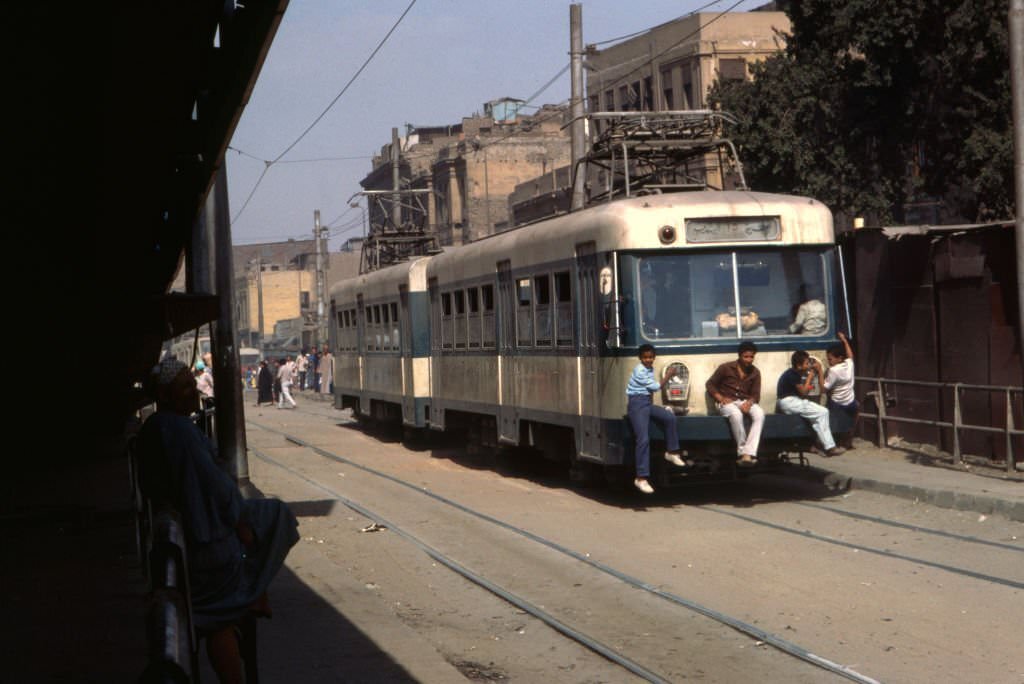
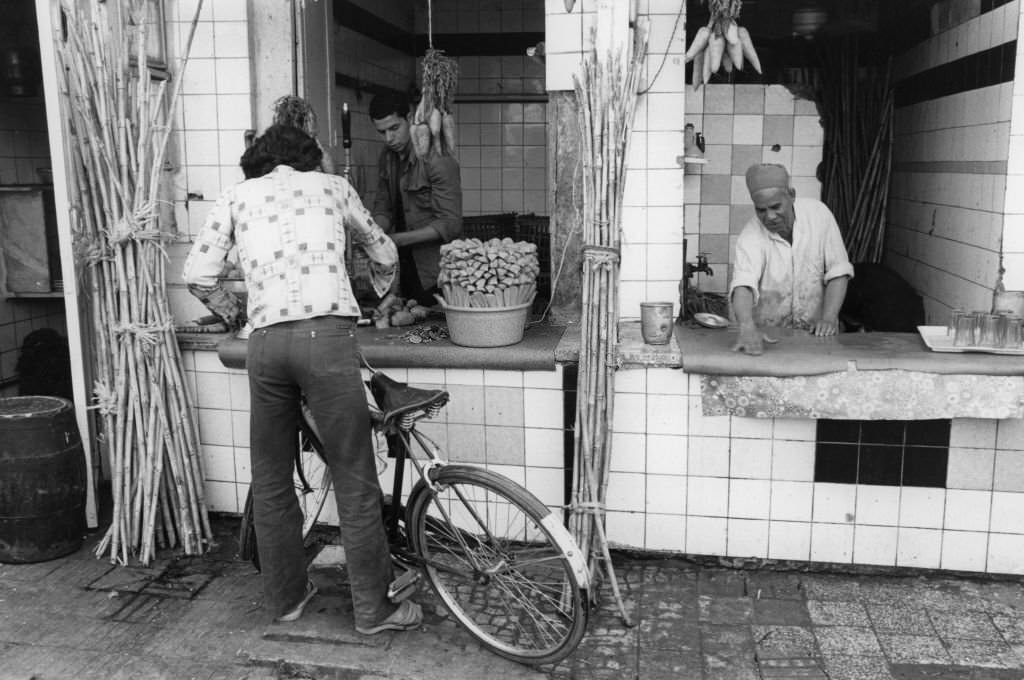
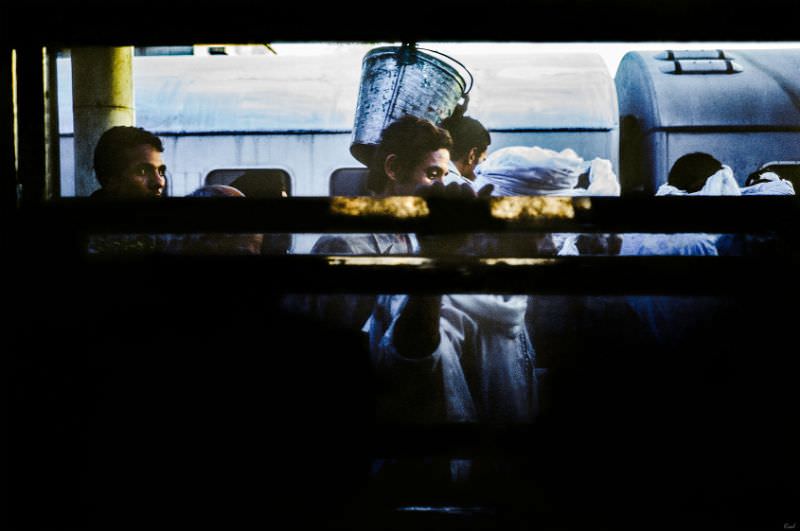
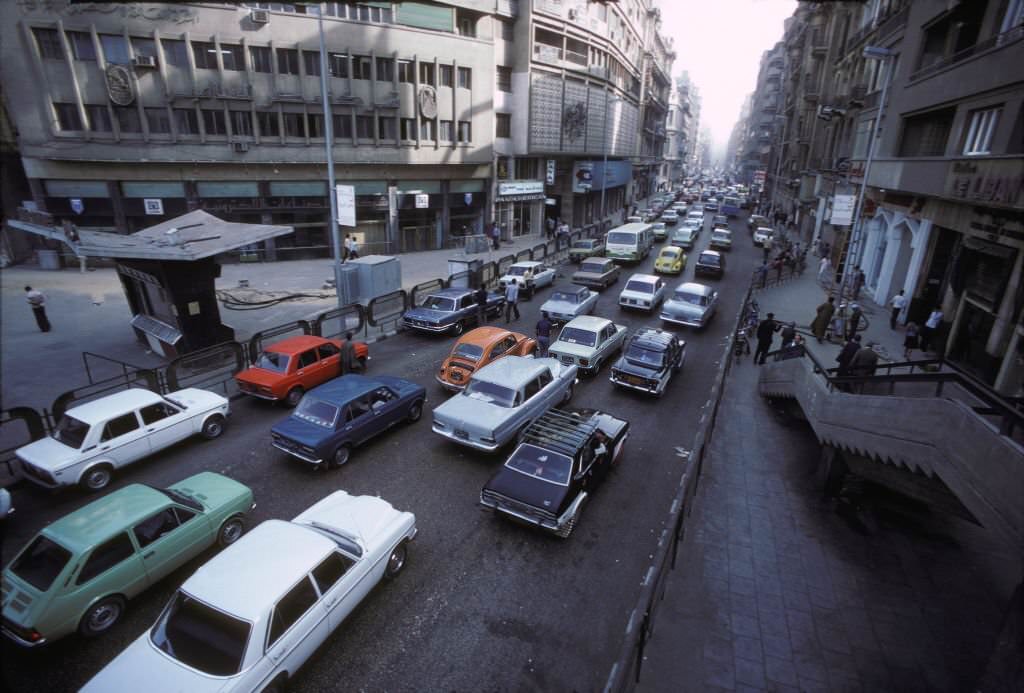
Cairo’s streets in the 1980s were dense with activity. Trams were so packed that passengers hung from their sides. Market souks were stacked with goods — ceramic mugs, textiles, fresh produce, and more. The smell of shisha filled teahouses, and street restaurants fed the city’s working population.
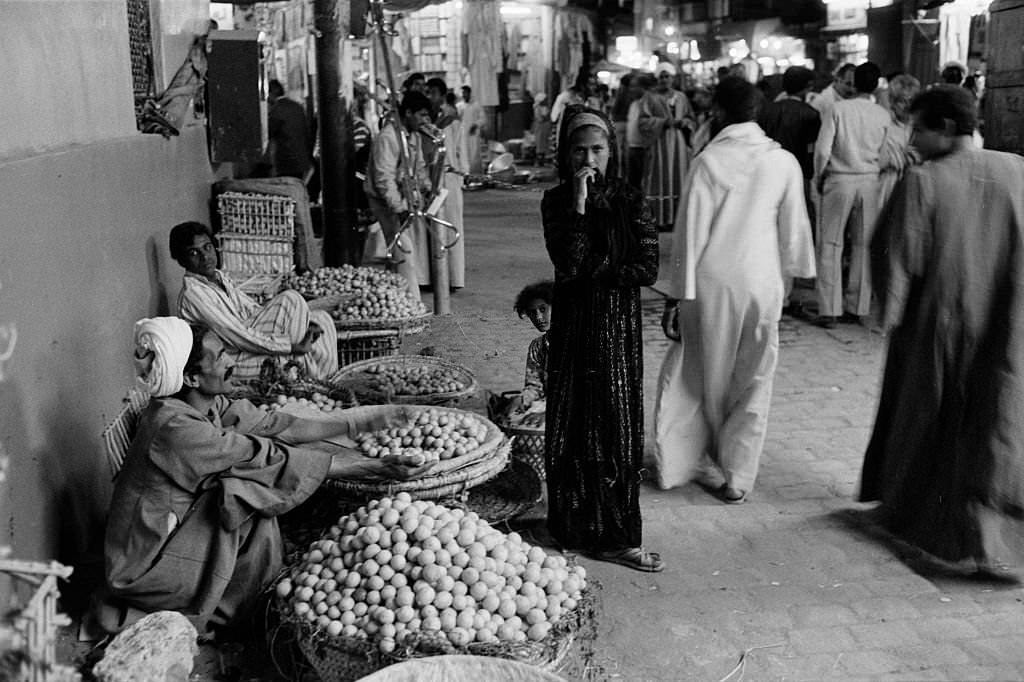
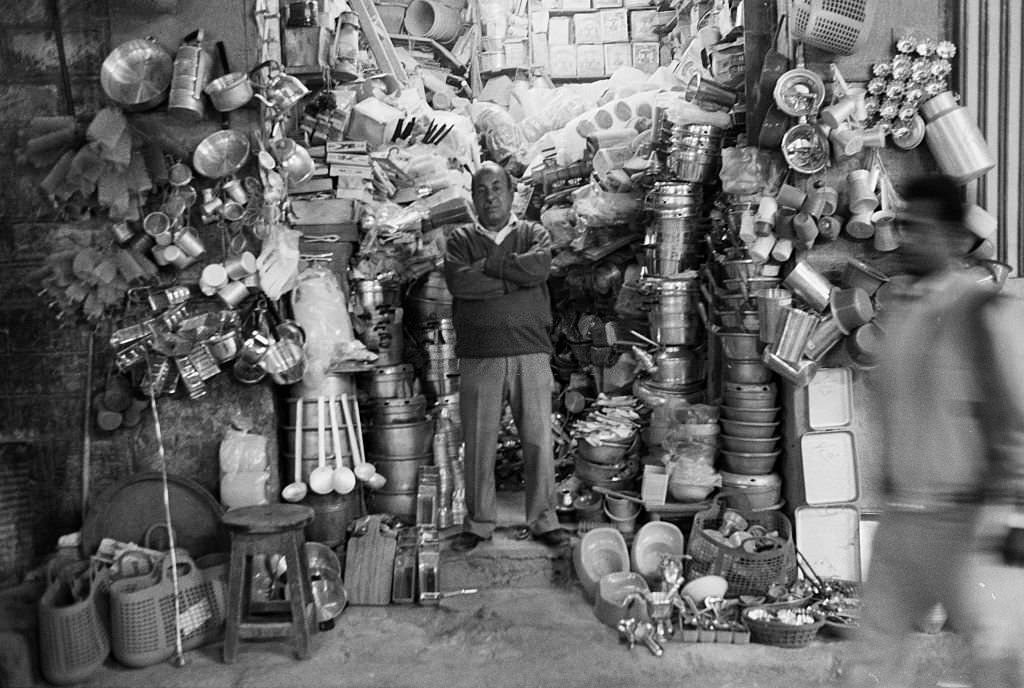
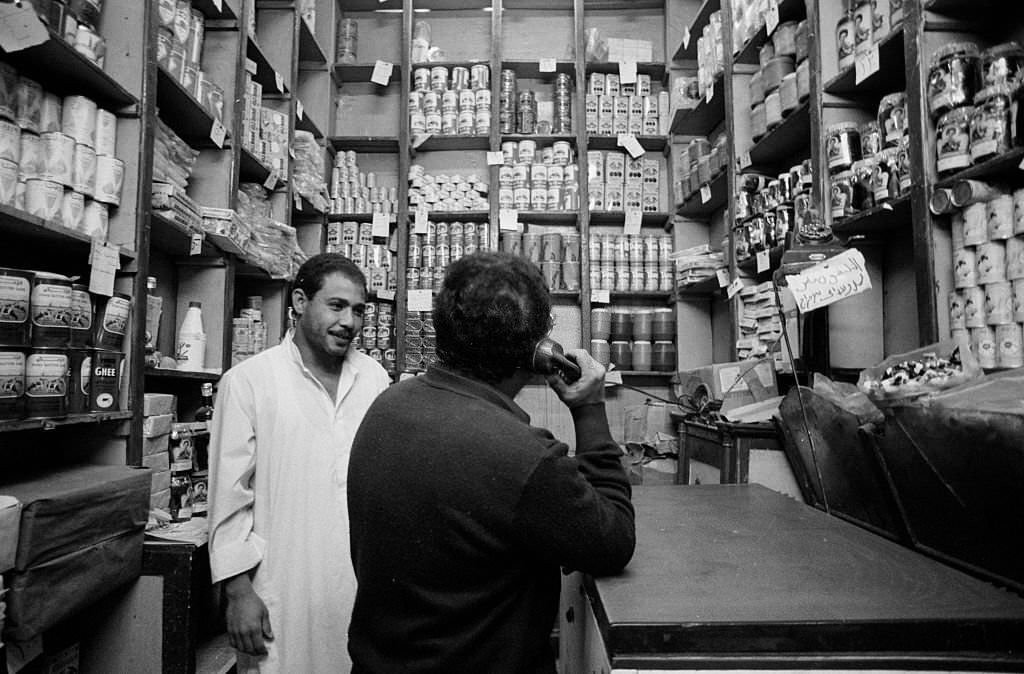
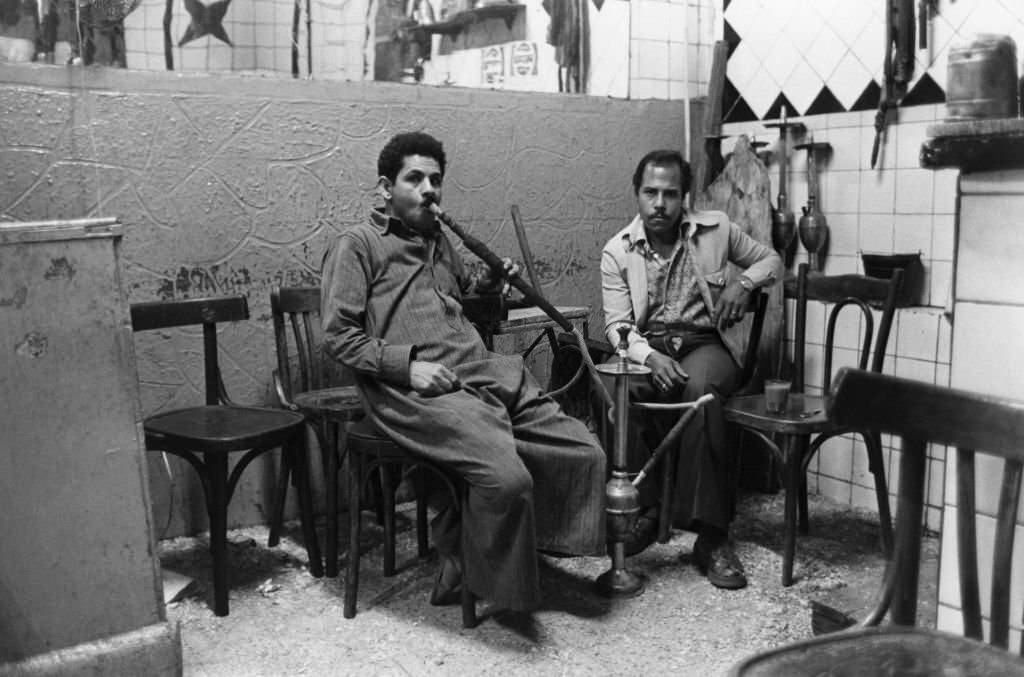
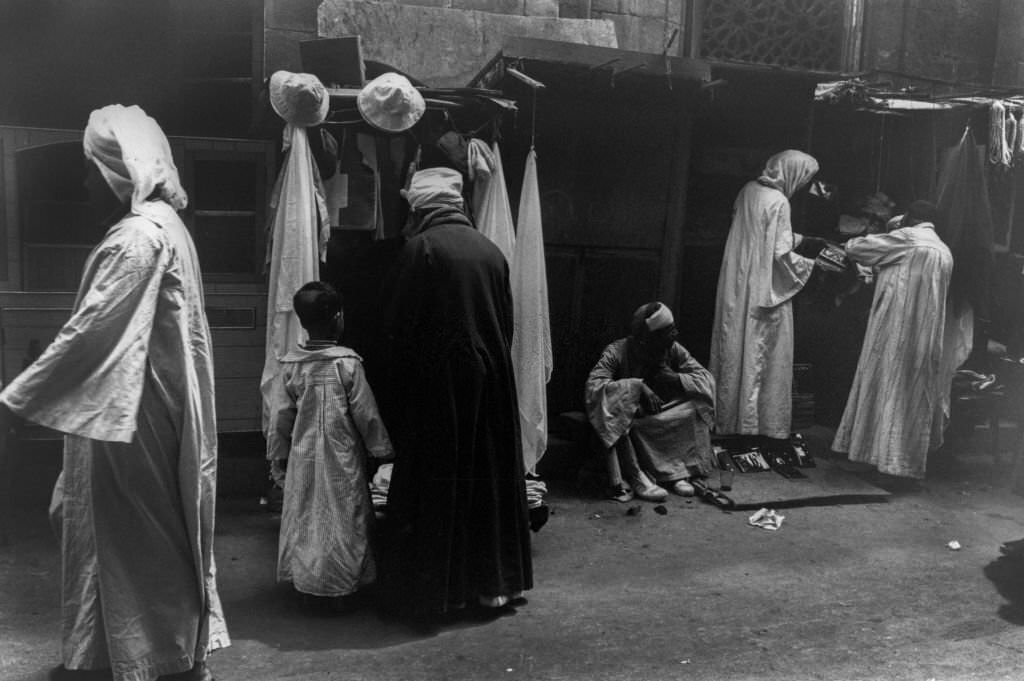
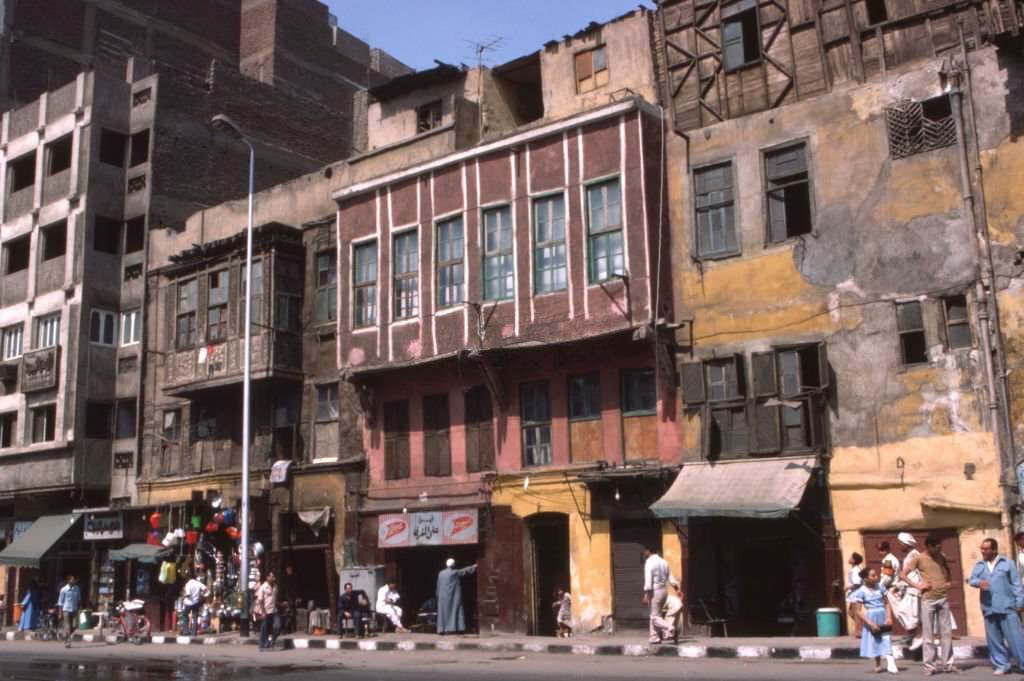
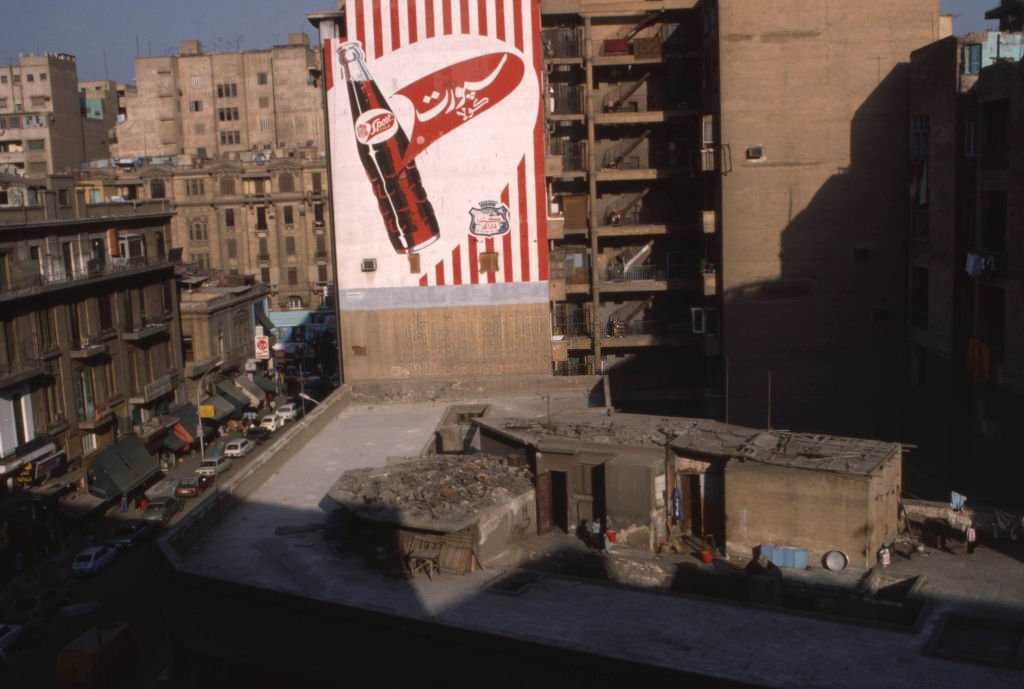
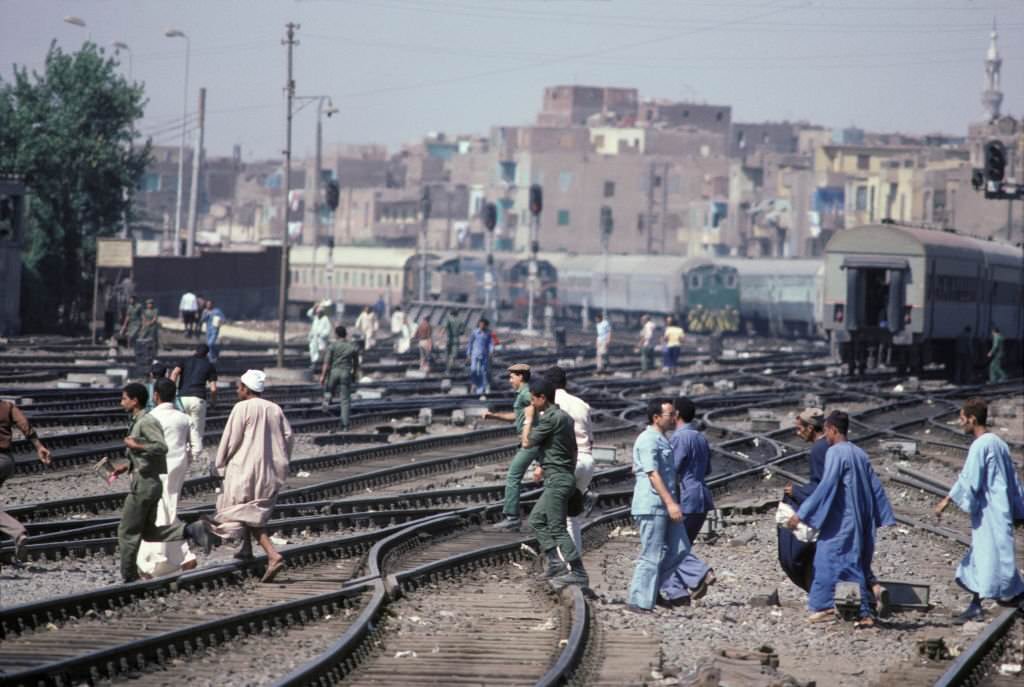
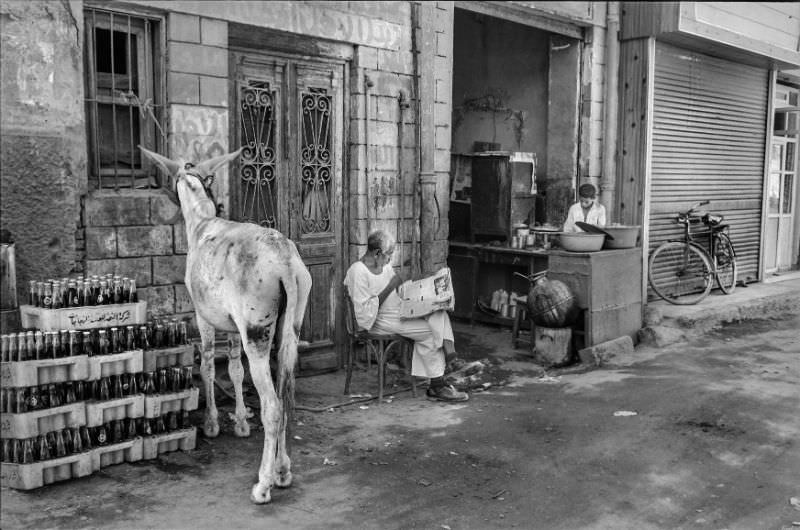
Cairo’s older neighborhoods showed their age in the 1980s. Buildings with ornate but crumbling facades lined the streets, and global brands like Coca-Cola had already made their mark on the urban landscape. Cairo’s main train station was a hub of constant movement, connecting the capital to cities like Luxor, Aswan, and Alexandria.
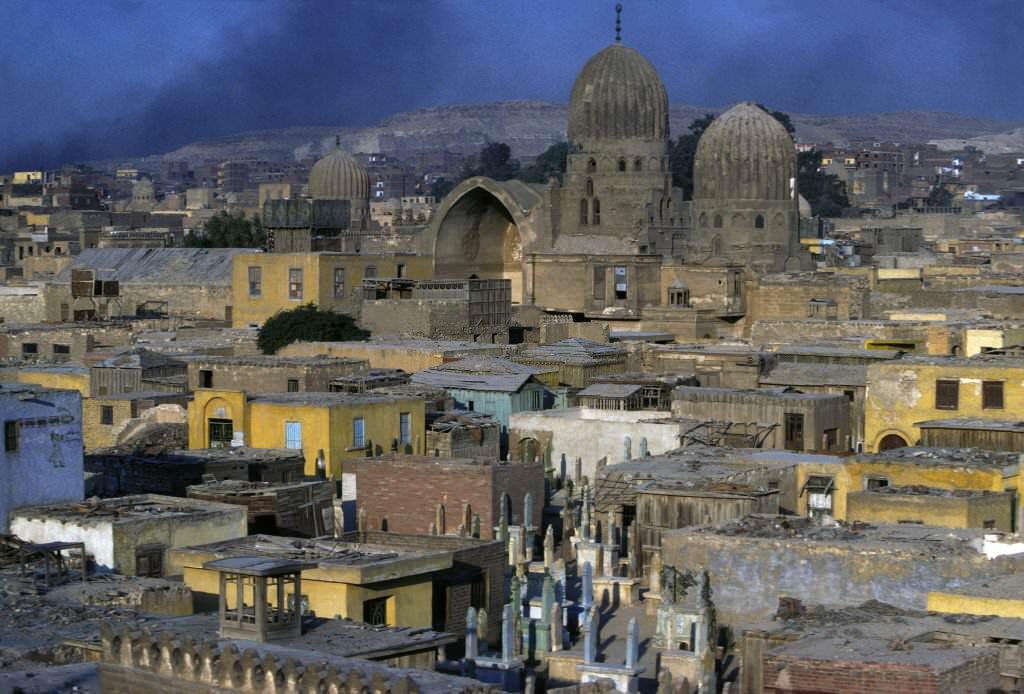
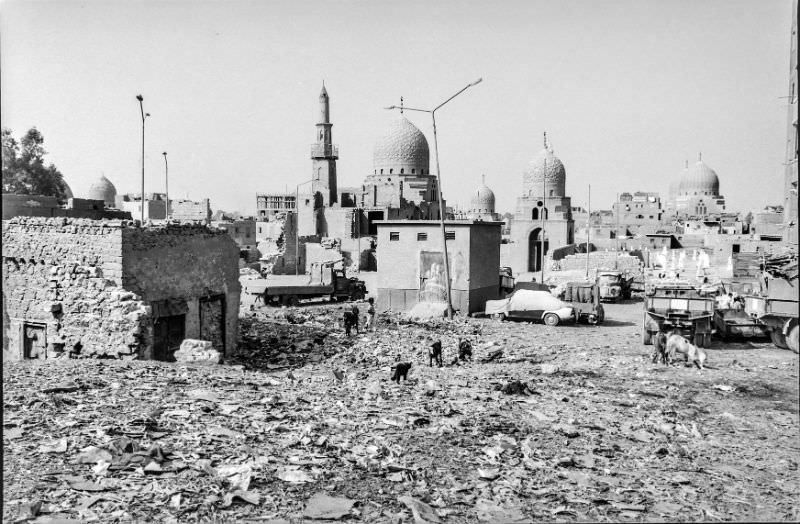
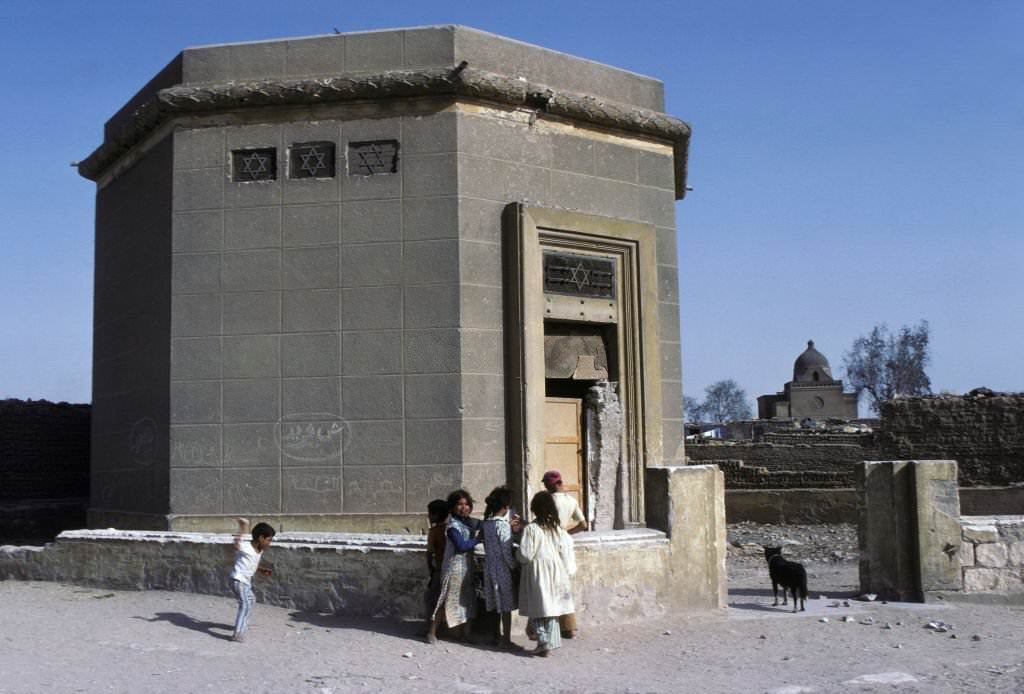
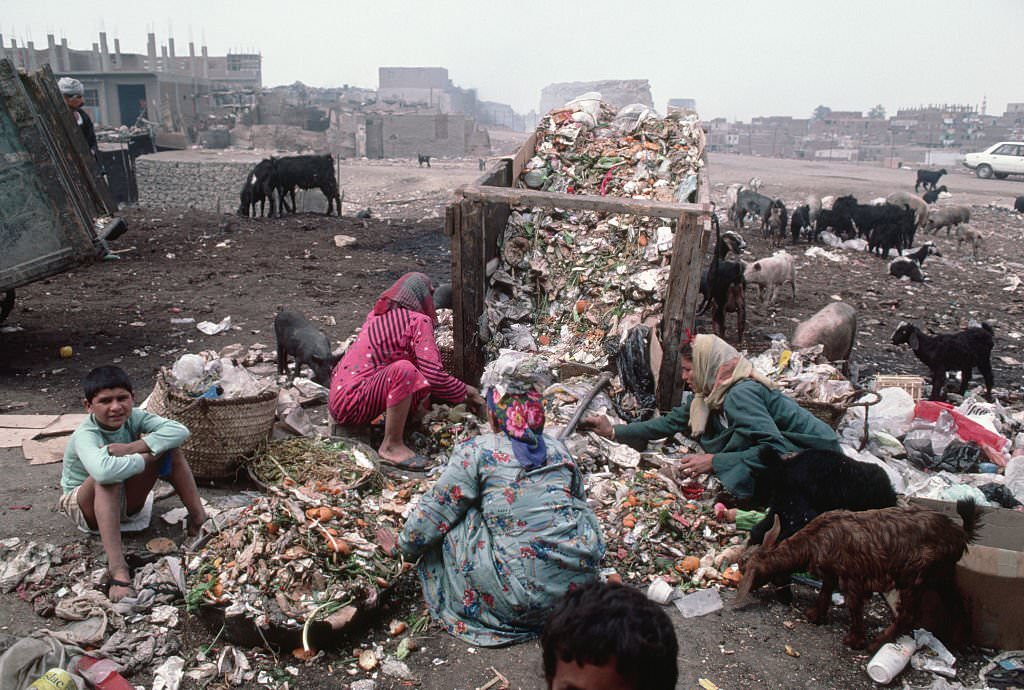
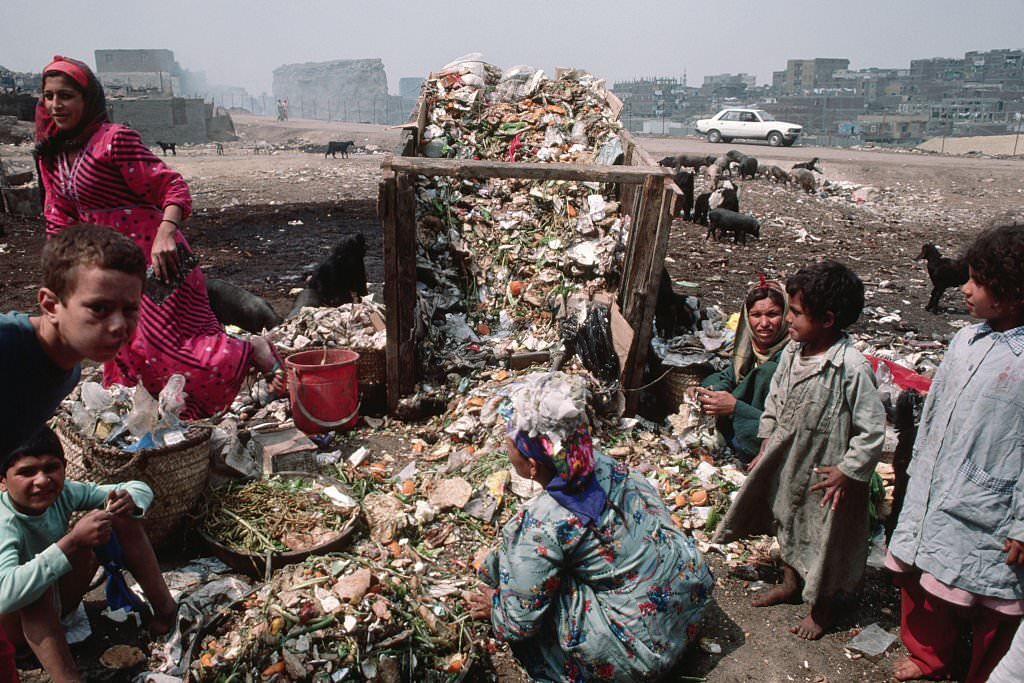
Outside the commercial center, some Cairenes lived in Cairo’s famous City of the Dead — a vast cemetery complex where families built homes among the tombs. Children played in its lanes, and tradespeople operated shops within it. Others, known as the zabaleen, or “garbage people,” lived and worked among the city’s waste dumps, surviving by sorting and recycling what they could find.
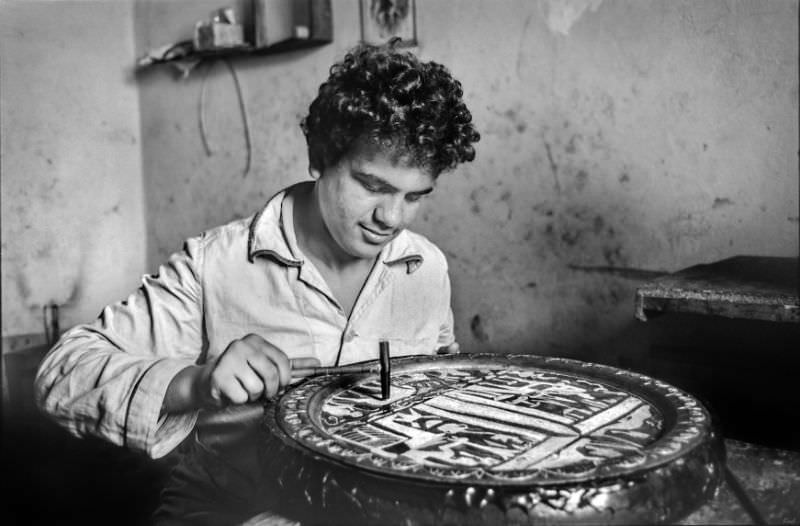
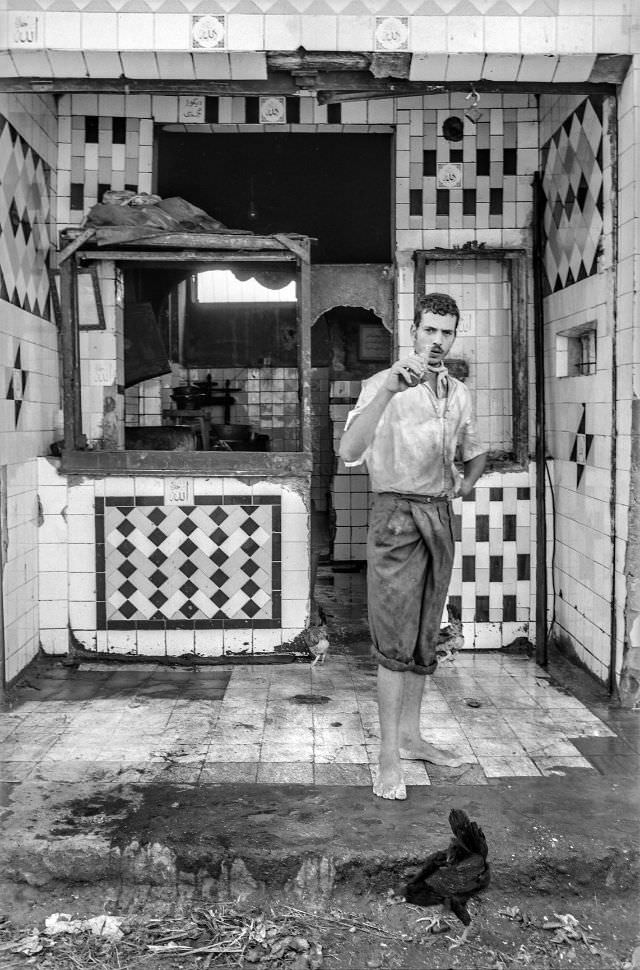
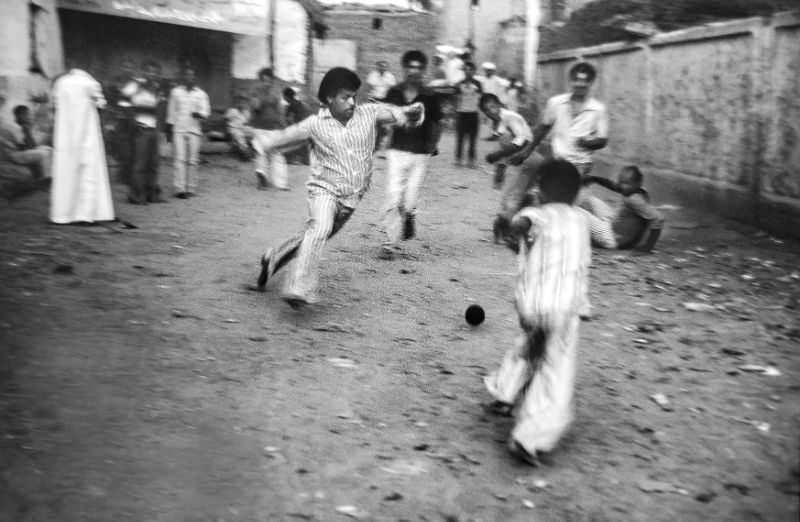
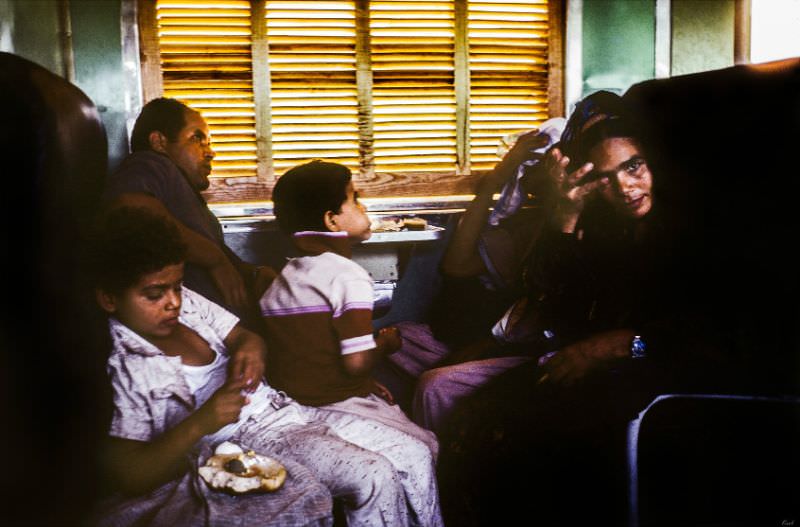
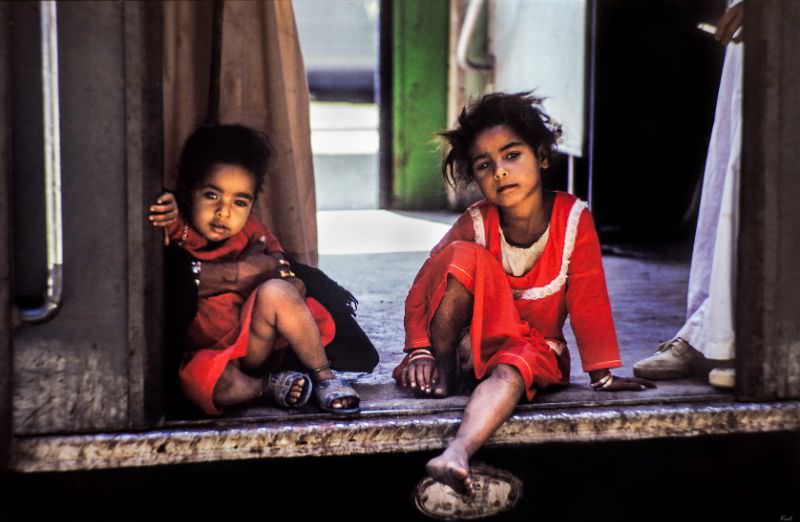
A rich street-level portrait of Cairo from July and August 1981 captures the city’s tradespeople in sharp detail. Brass craftsmen, butchers, fishmongers, ironers, tailors, and seamsters all appear in these photographs, each one a working part of the city’s economy. Children kicked sock balls in alleys, commuters packed themselves onto any available transport, and families posed together in cramped but busy neighborhoods.
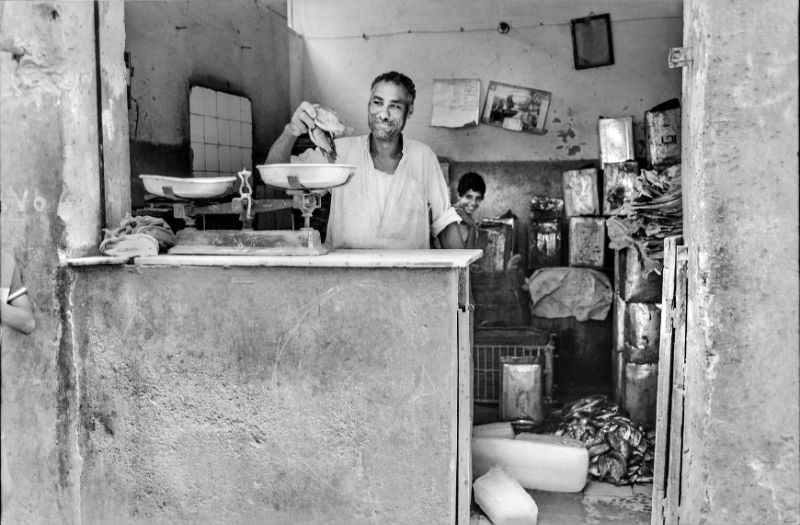
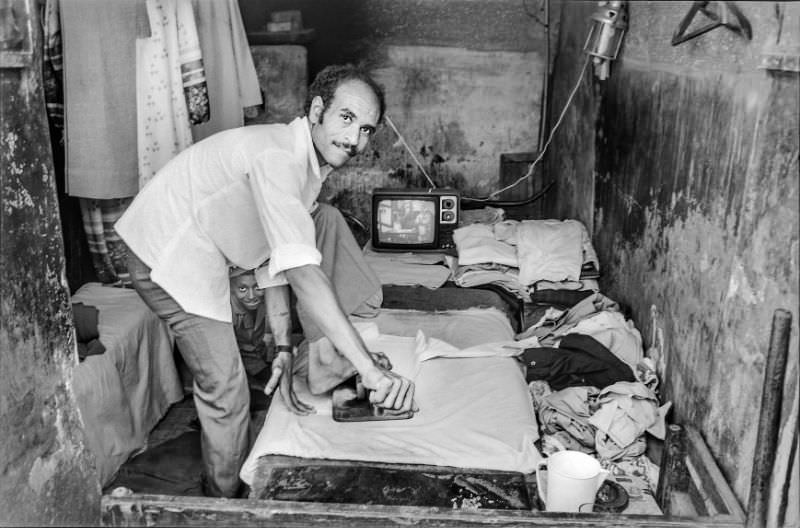
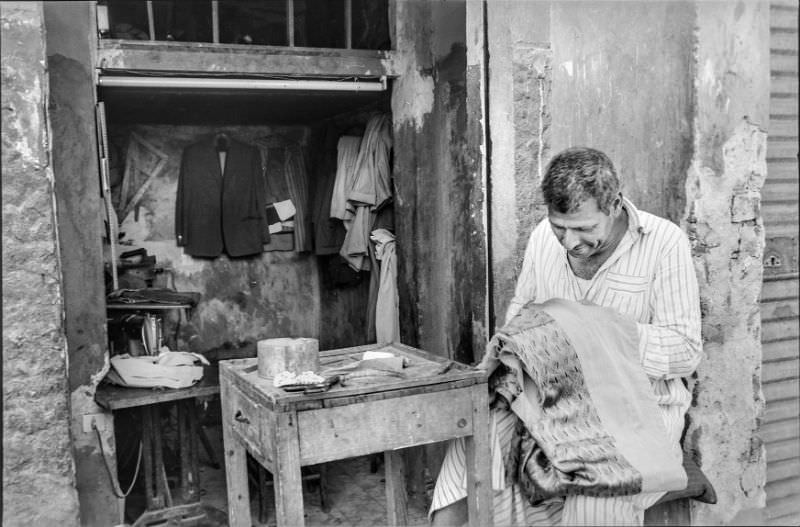
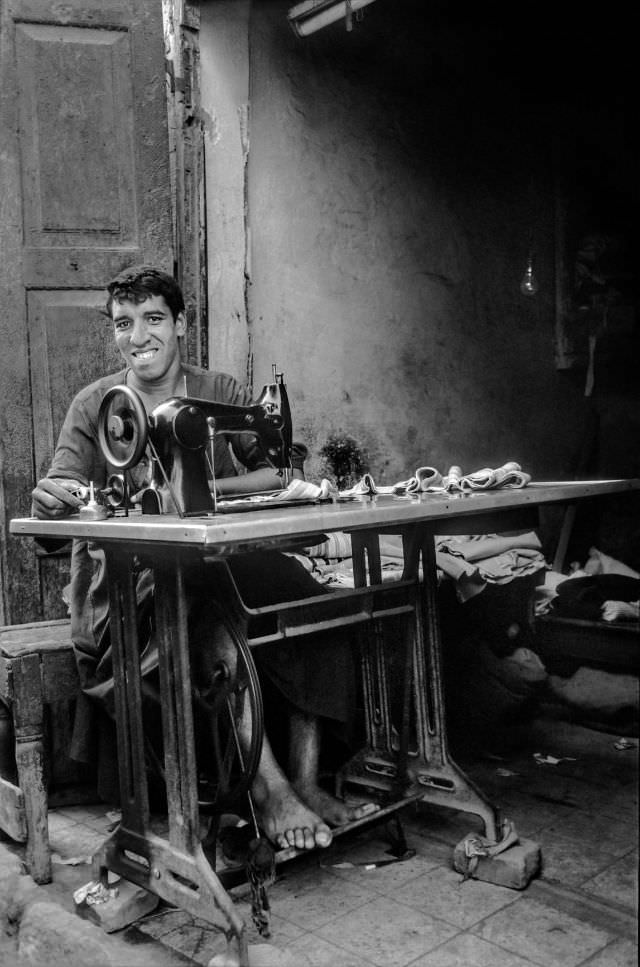
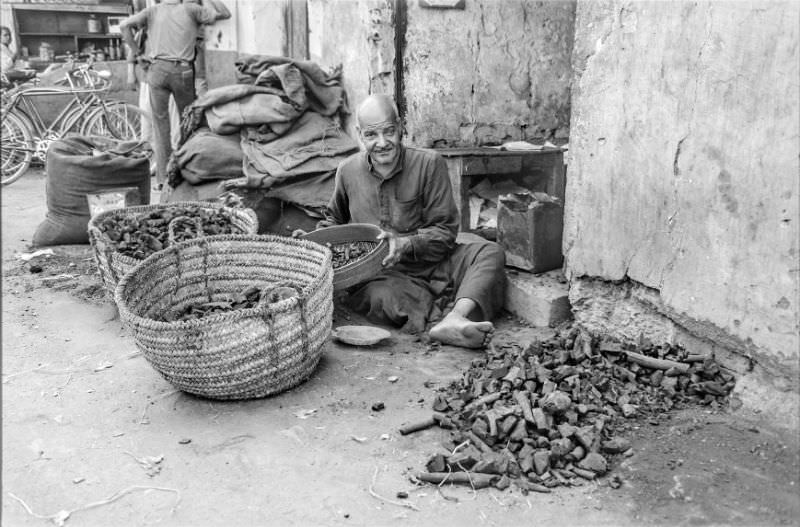
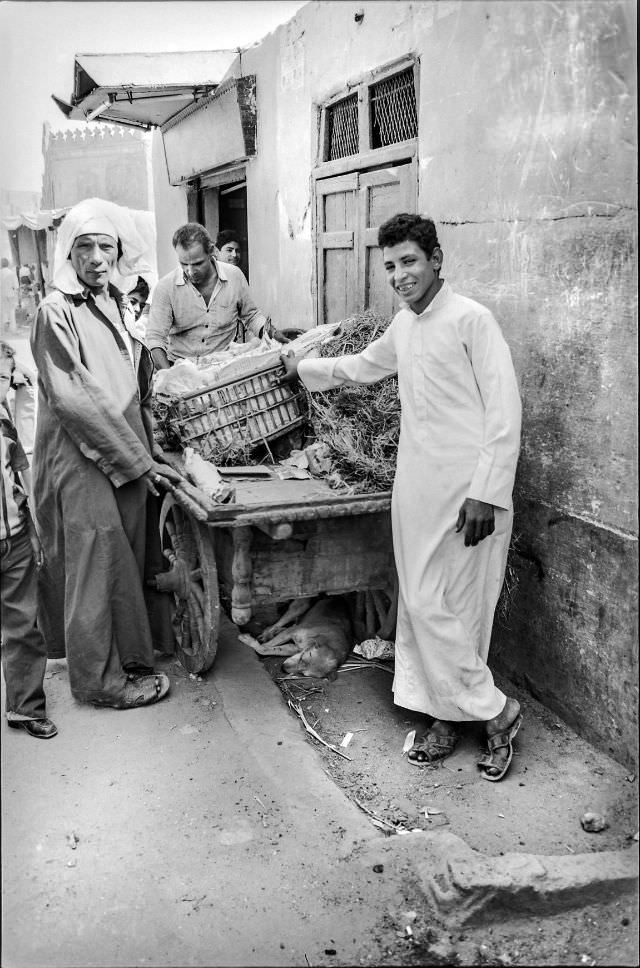
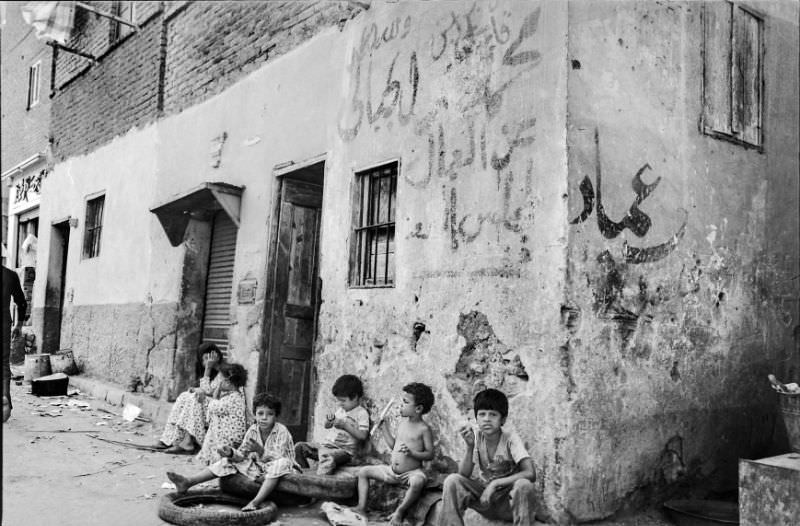
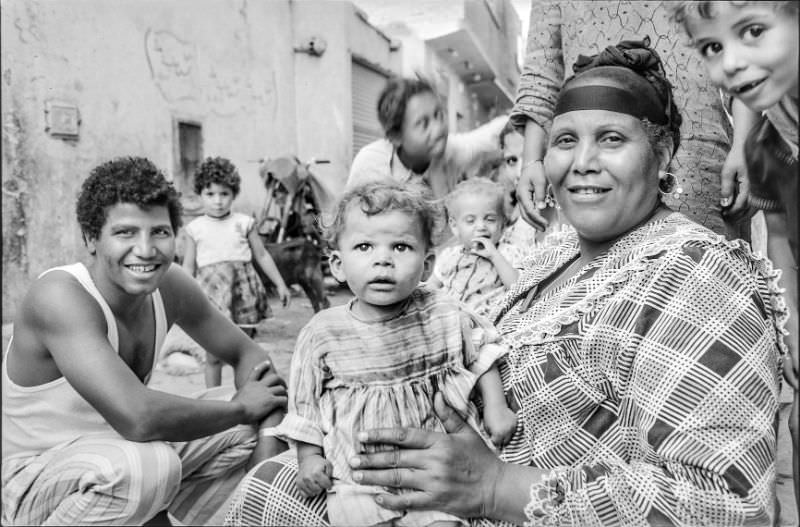
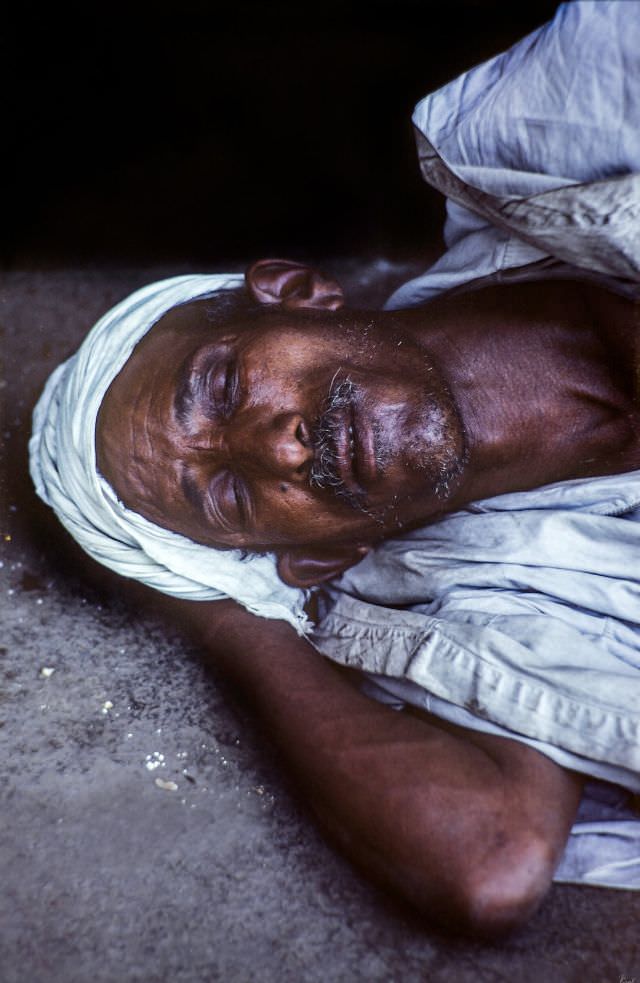
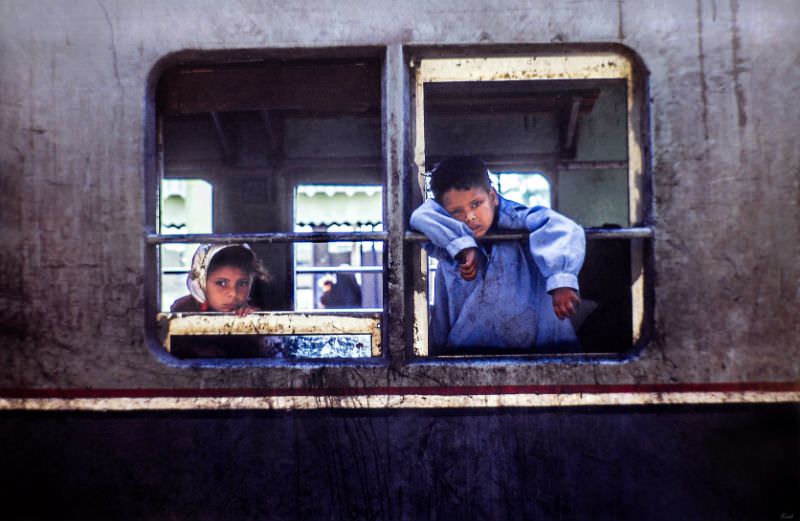
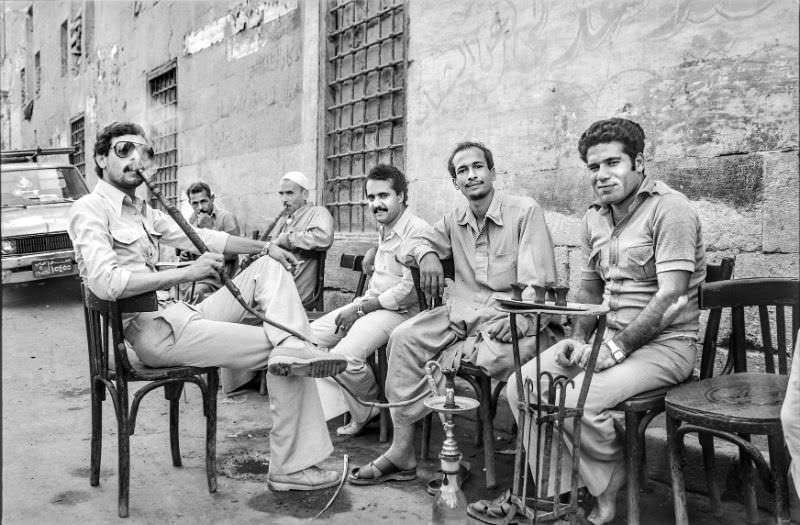
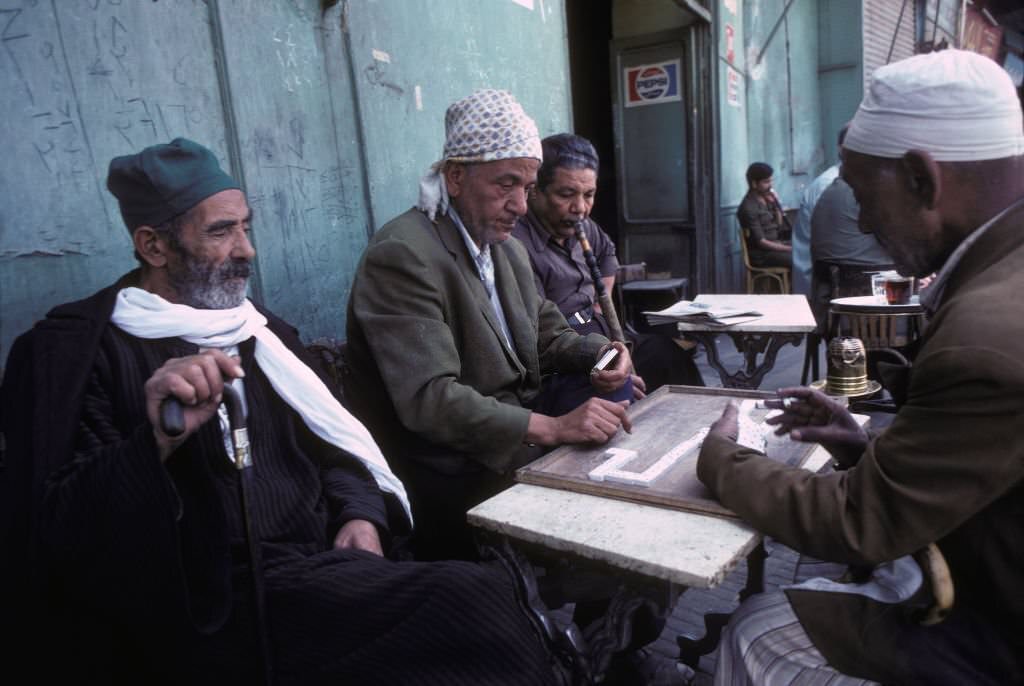
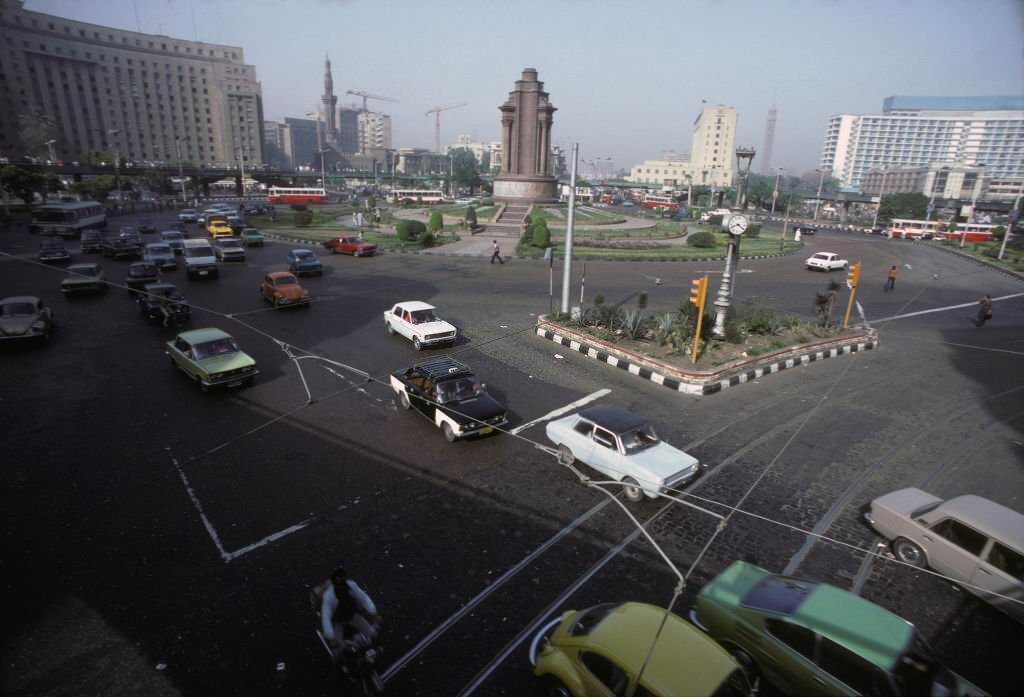
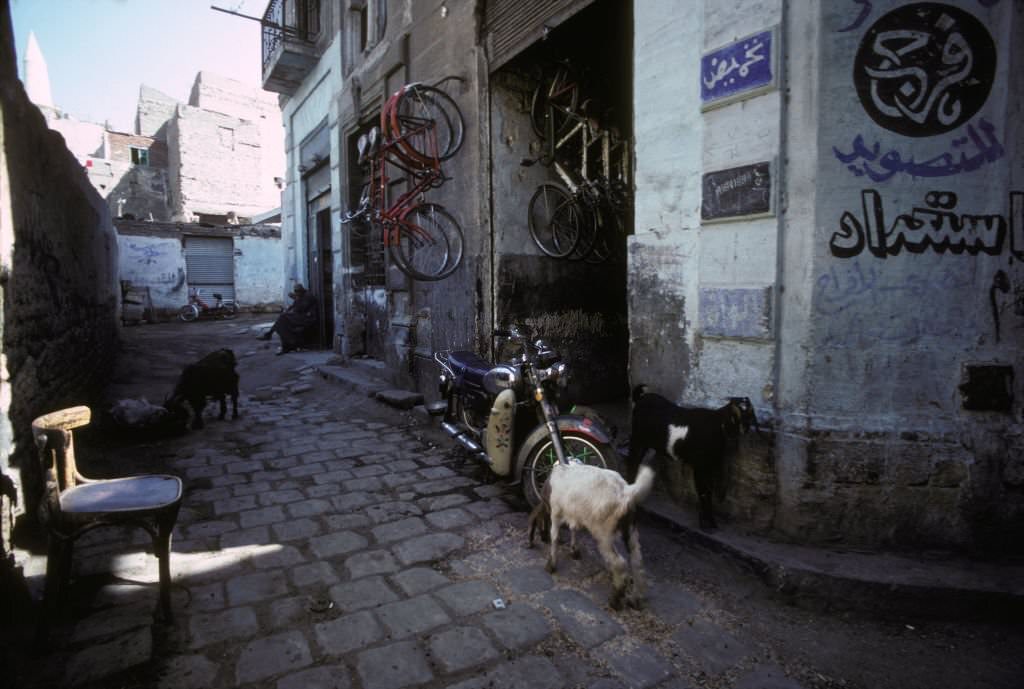
Cairo’s other everyday scenes from 1980 paint a similarly detailed picture. Fruit juice shops, bottling operations, dominoes games, roundabouts choked with traffic, and goats wandering through streets all feature in photographs from that year. A single image of the city’s busy passages shows Cairenes going about their day entirely unbothered by the political turbulence happening around them.
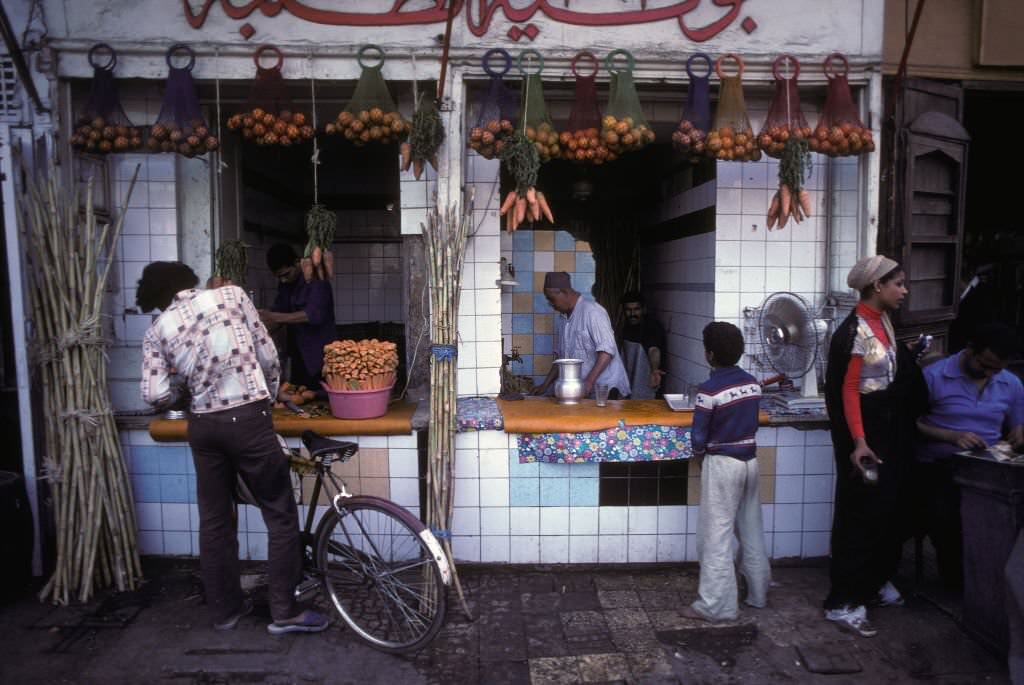
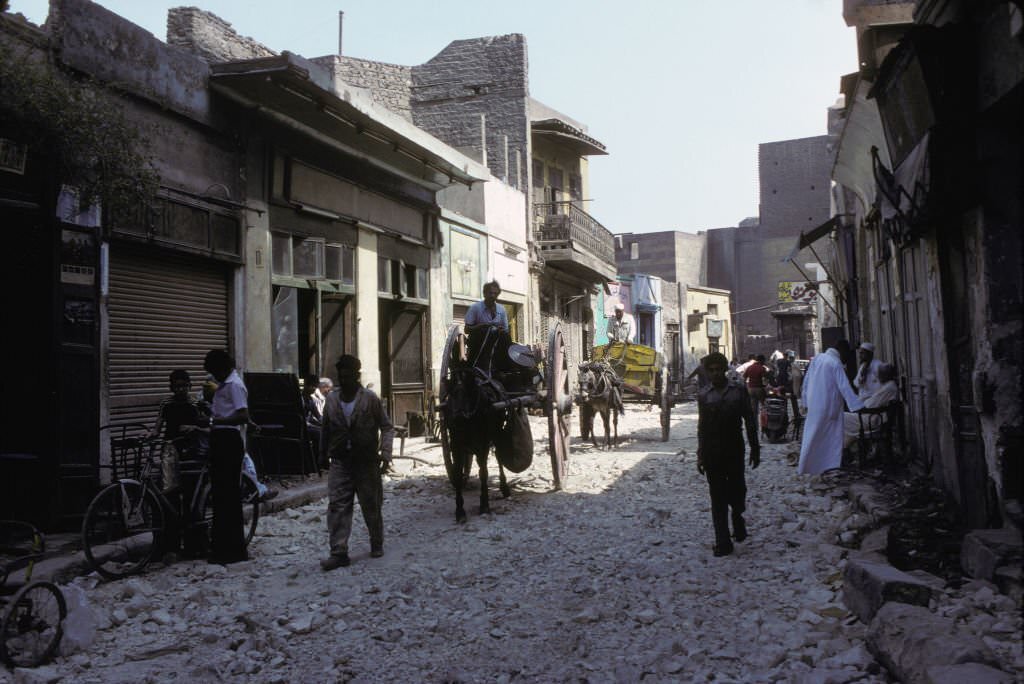
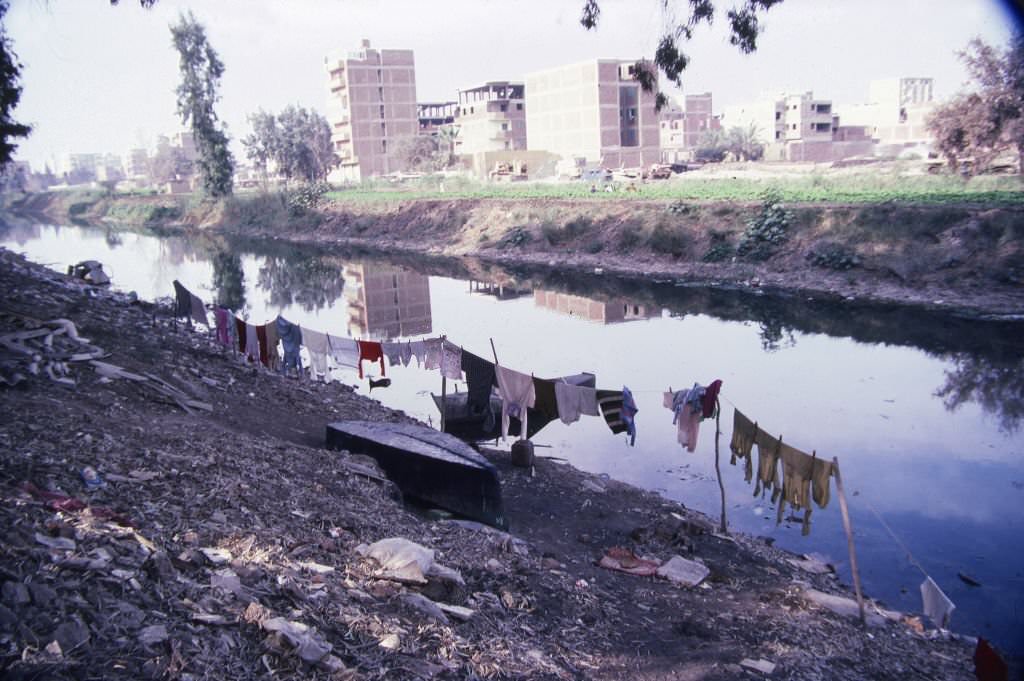
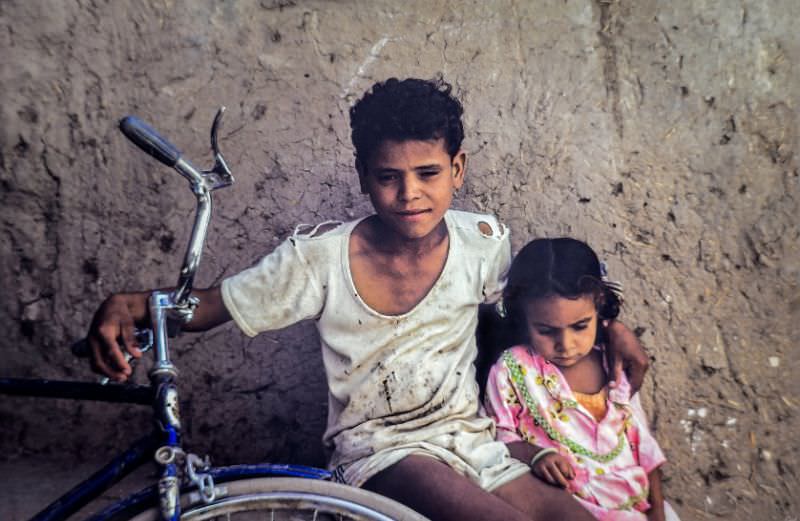
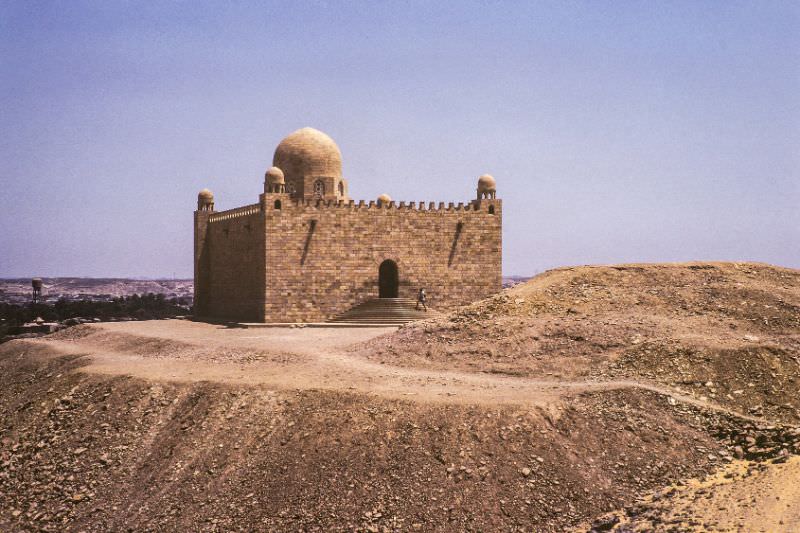
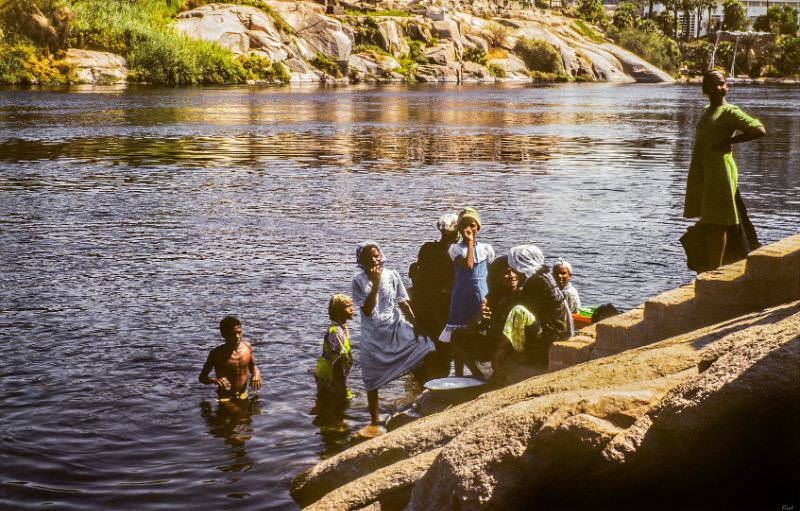
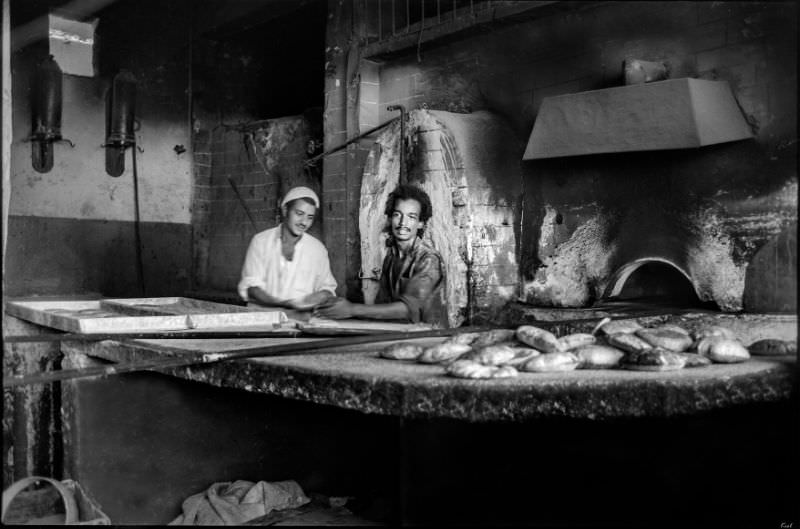
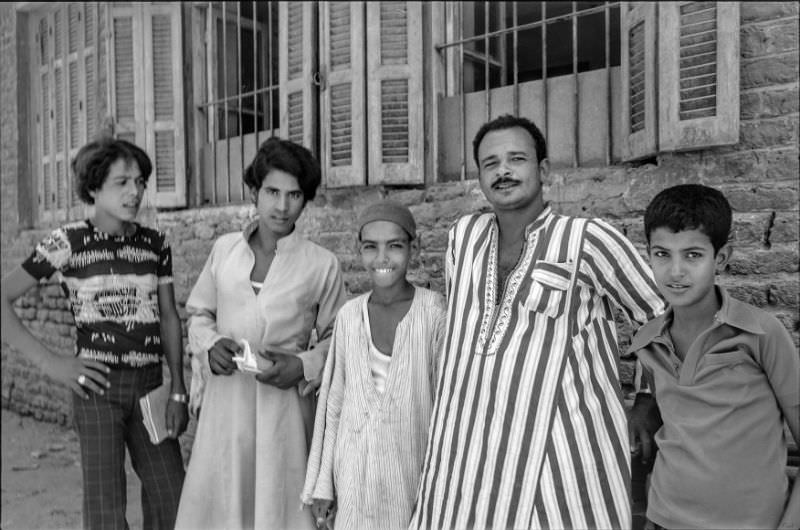
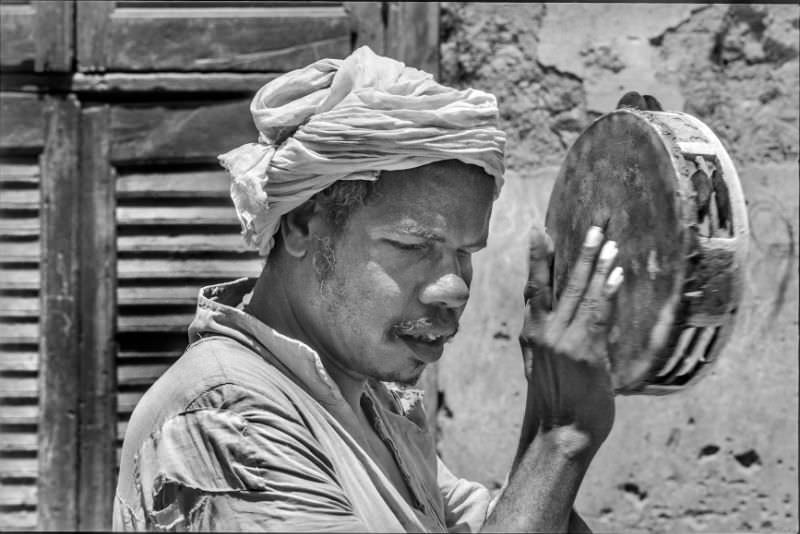
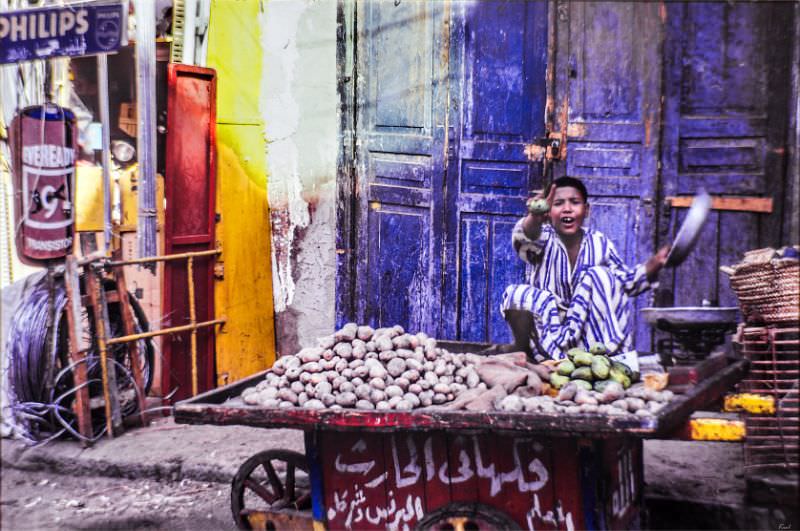
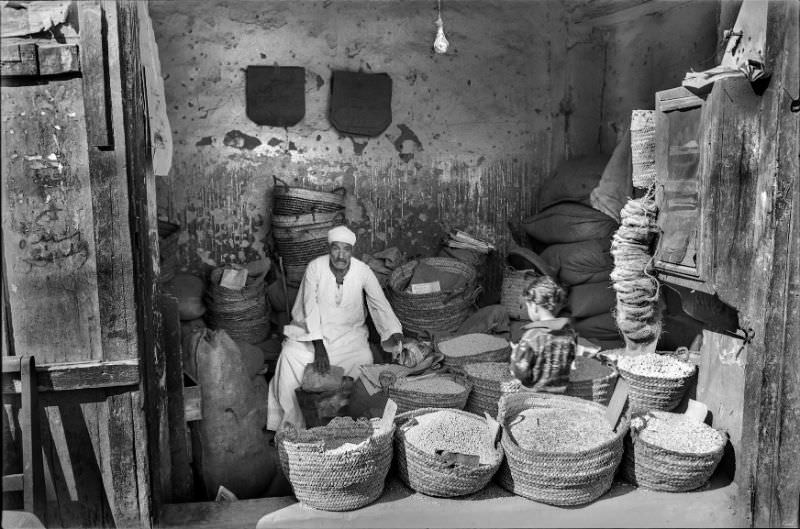
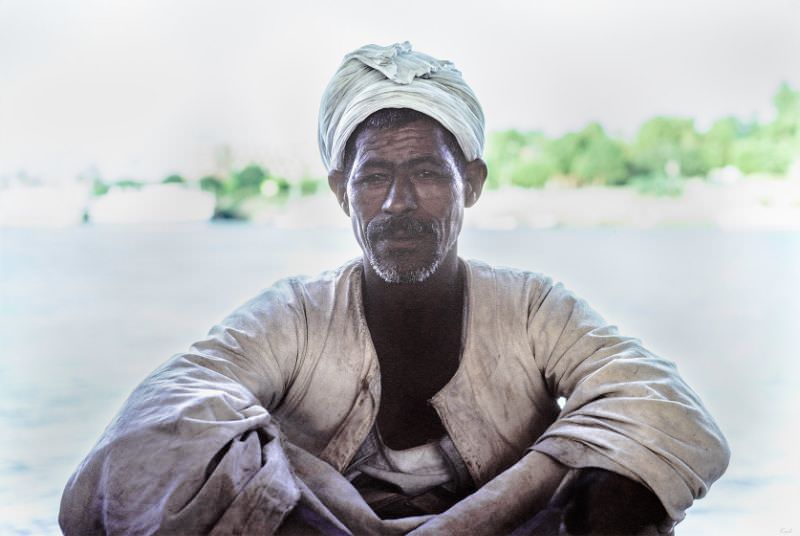
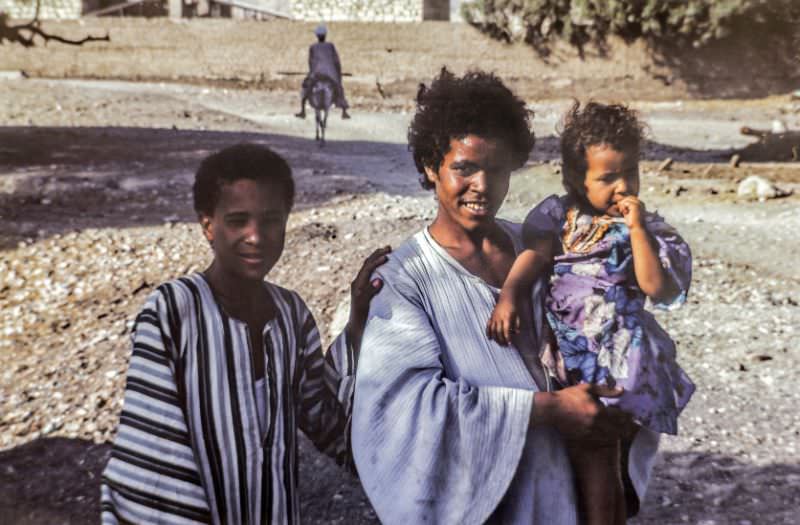
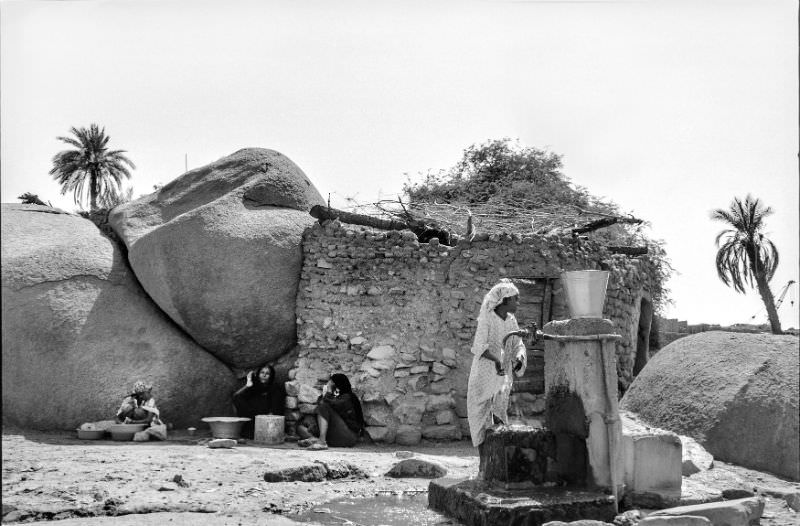
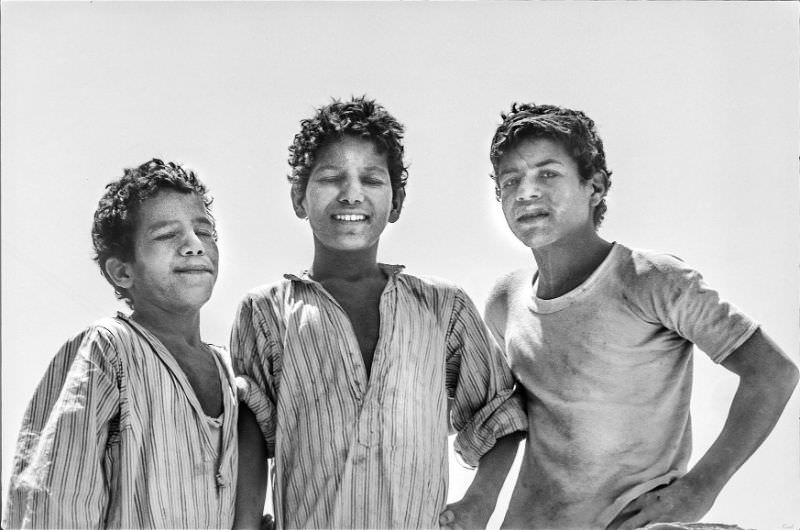
Aswan in August 1981 was captured in a remarkable photographic series showing the full texture of daily life in one of Egypt’s southernmost cities. Camel drivers, cobblers, bakers, falafel cooks, seamstresses, shoemakers, and merchants of potatoes, pulses, soft drinks, vegetables, and chickpeas all appear. The Aga Khan Mausoleum overlooked the city from a hillside. The Nile passed quietly alongside it all. Families posed for portraits, a musaharati walked the streets during Ramadan waking people for the pre-dawn meal, and neighbors gathered at a water fountain.
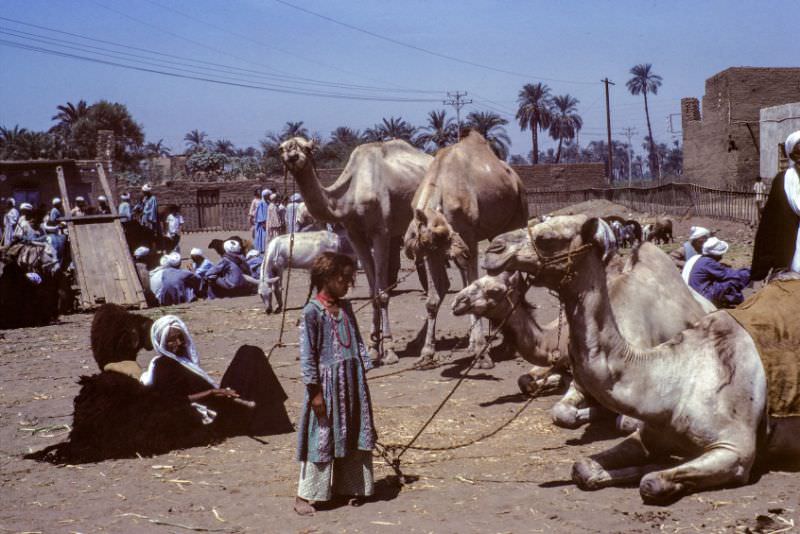
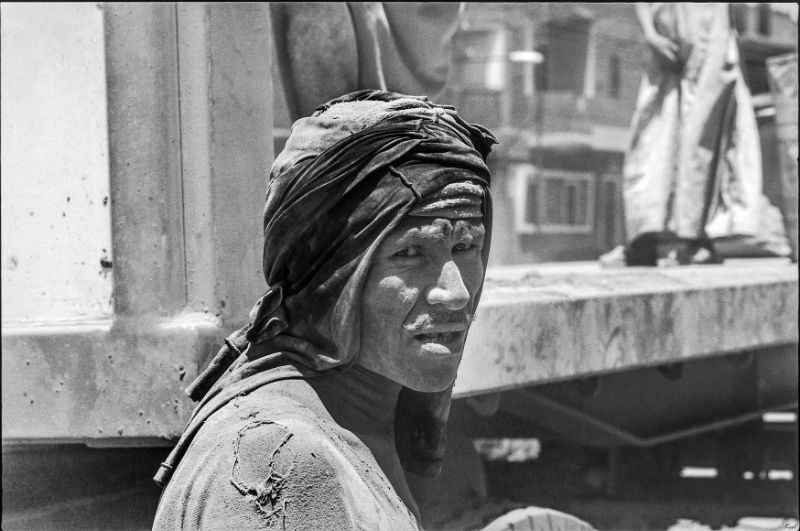
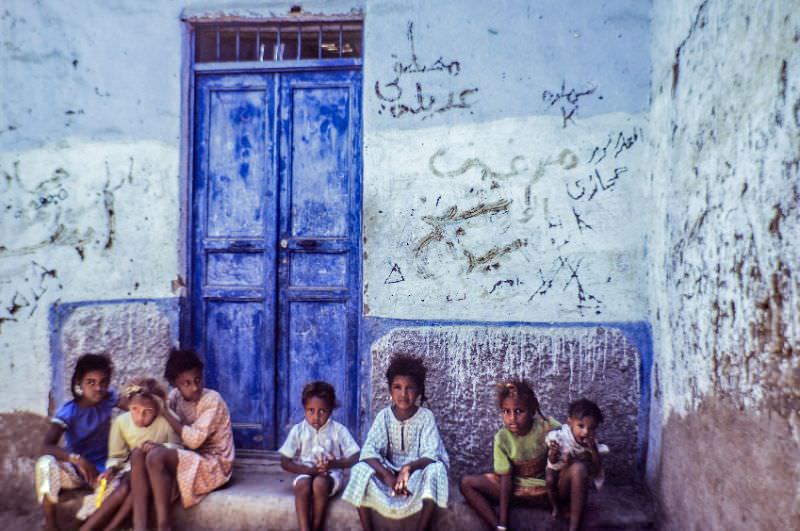
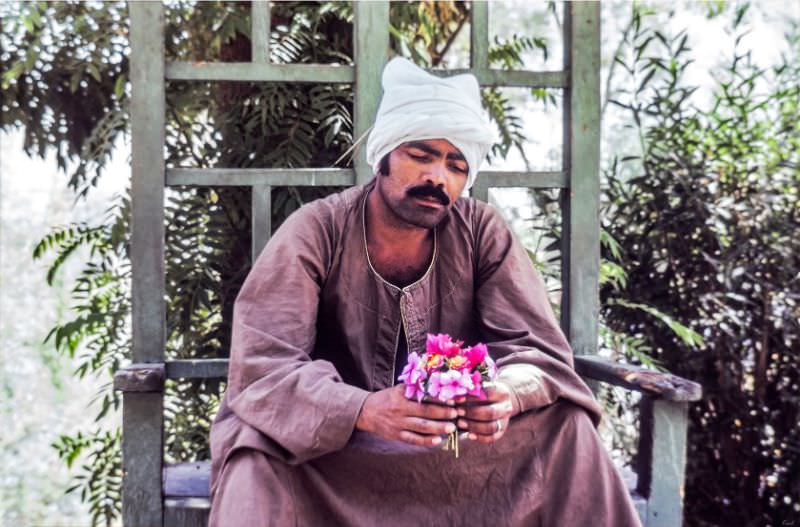
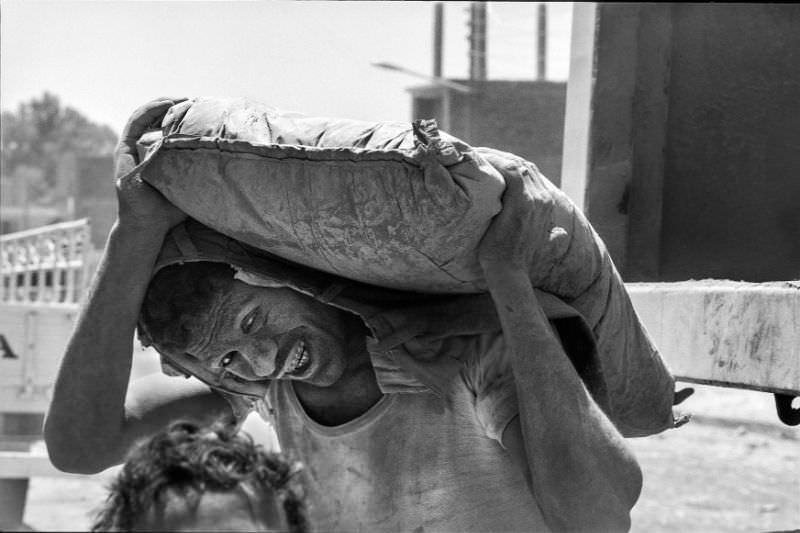
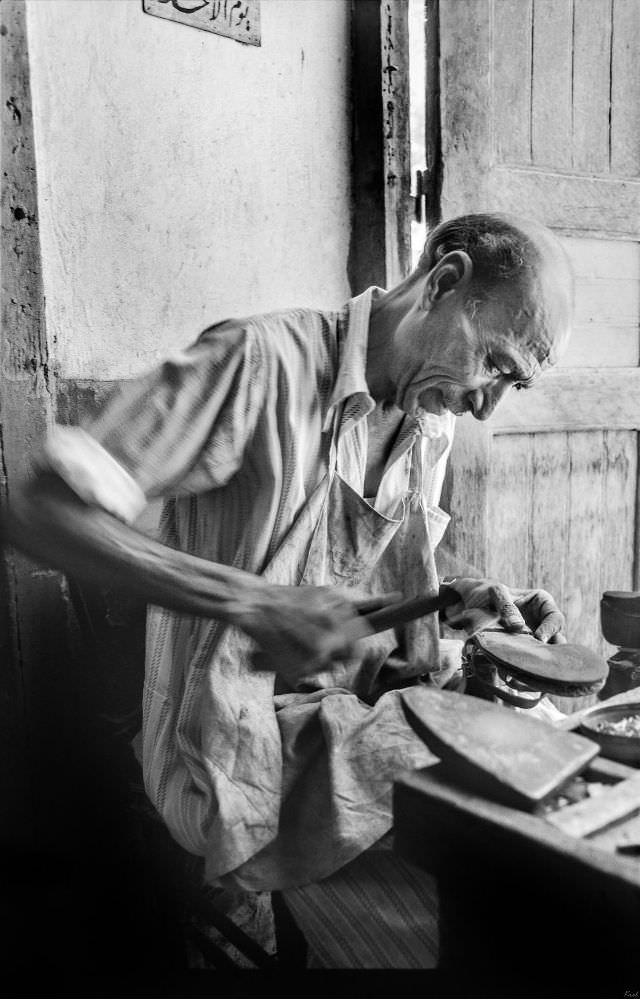
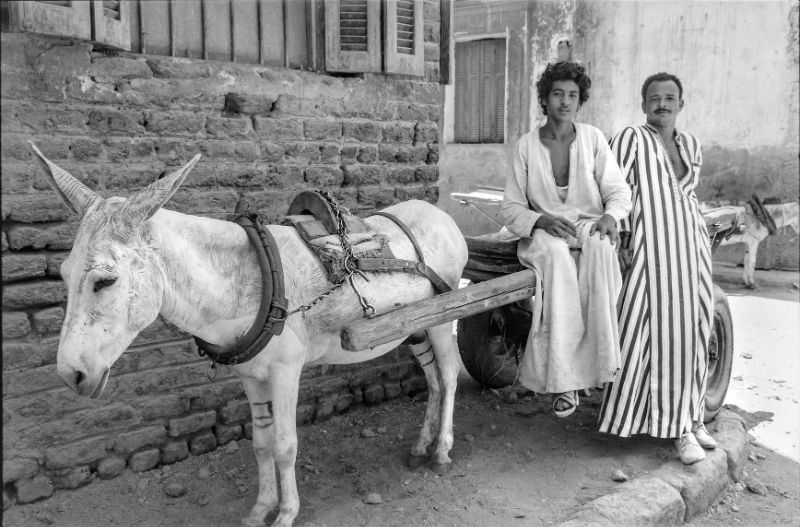
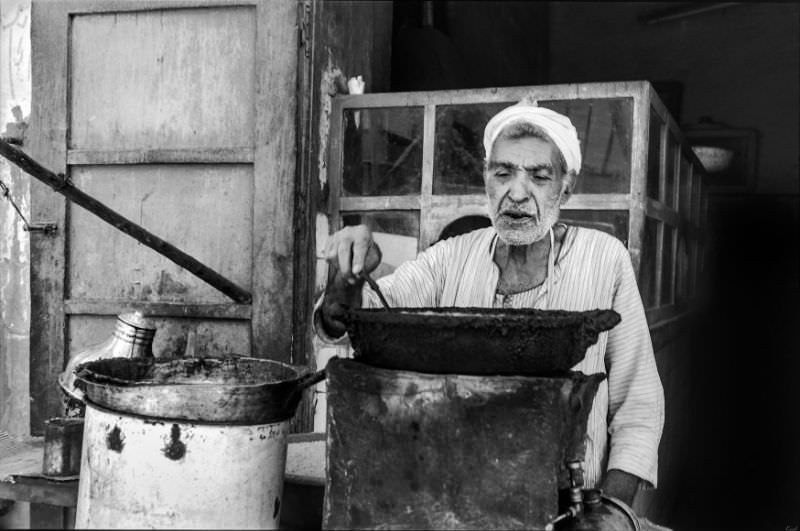
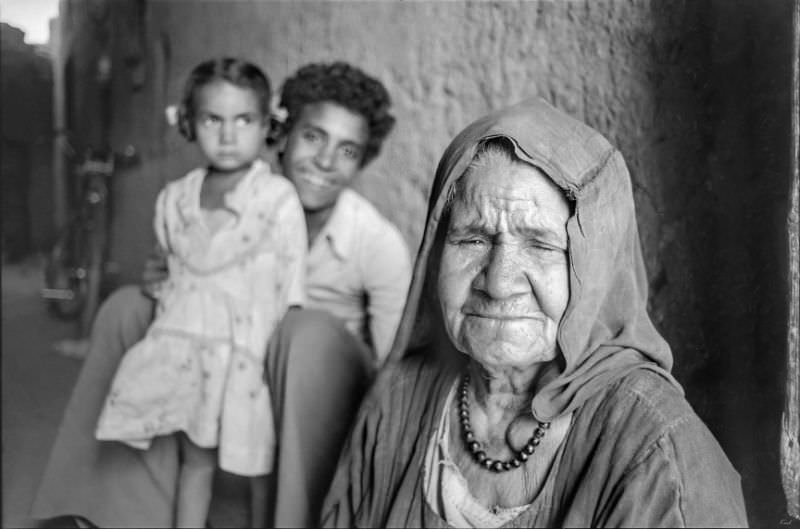
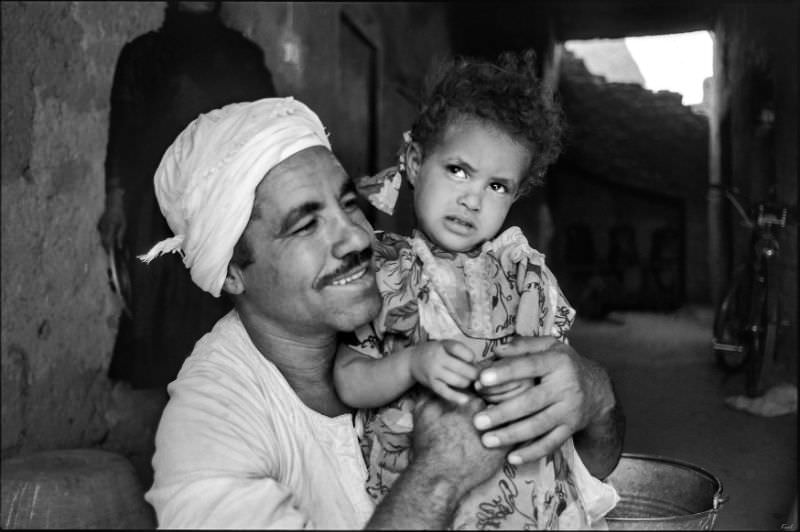
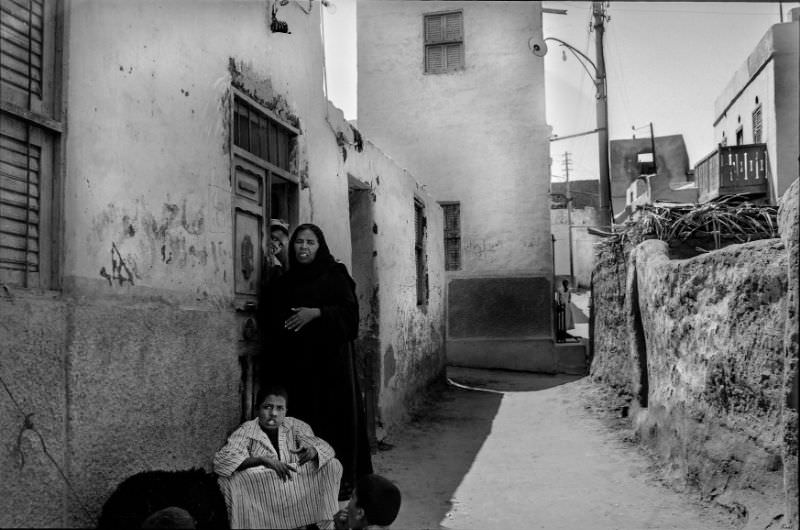
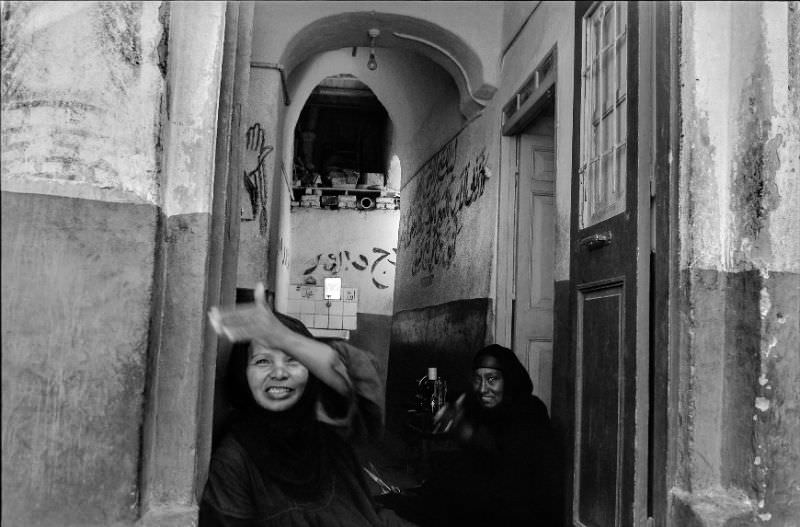
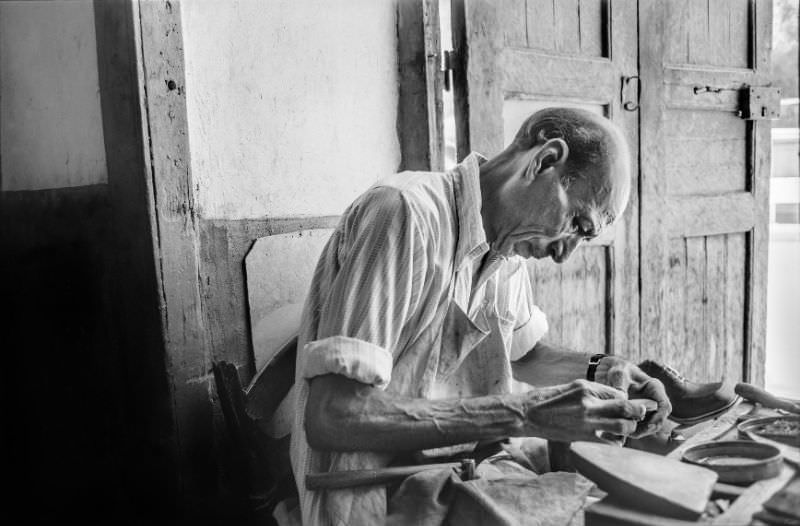
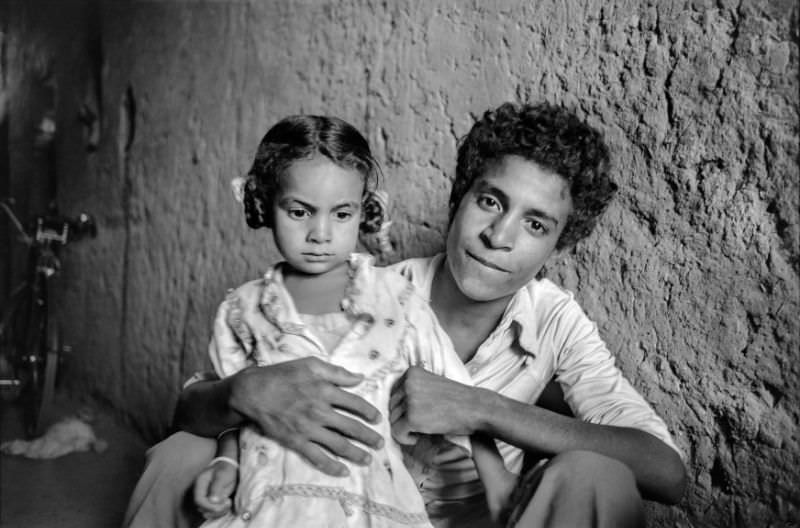
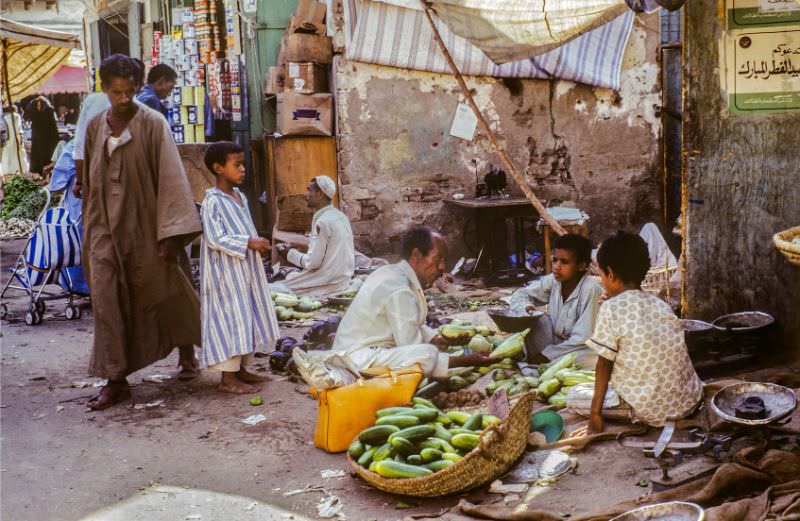
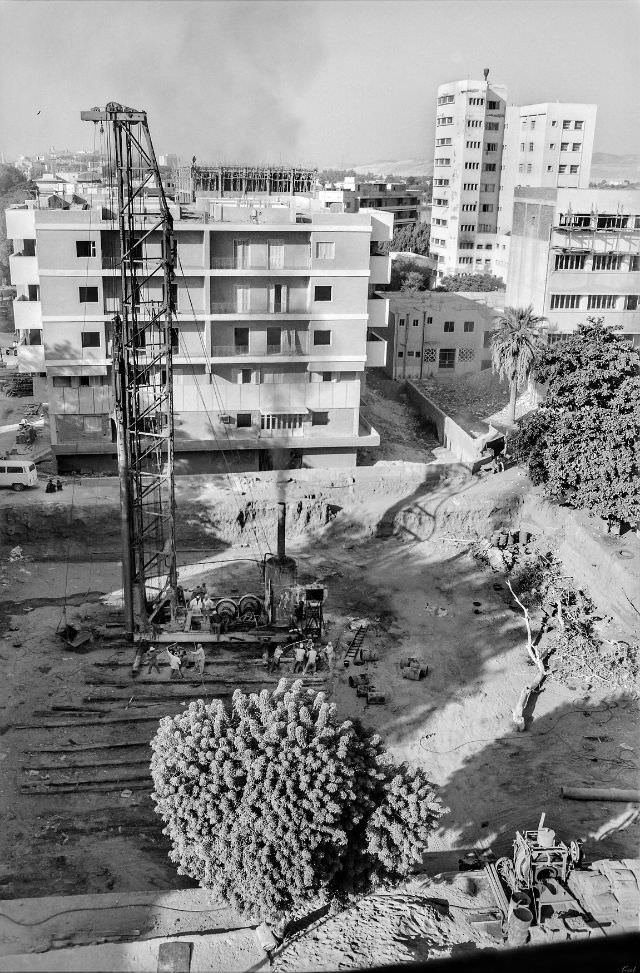
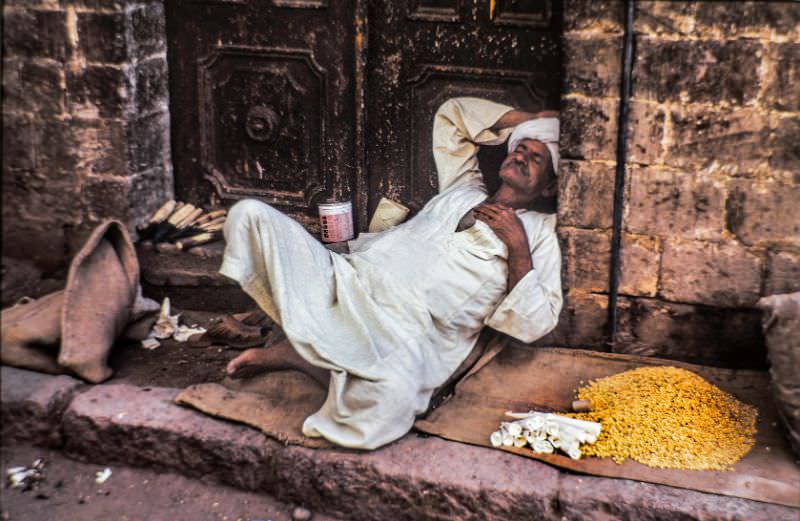
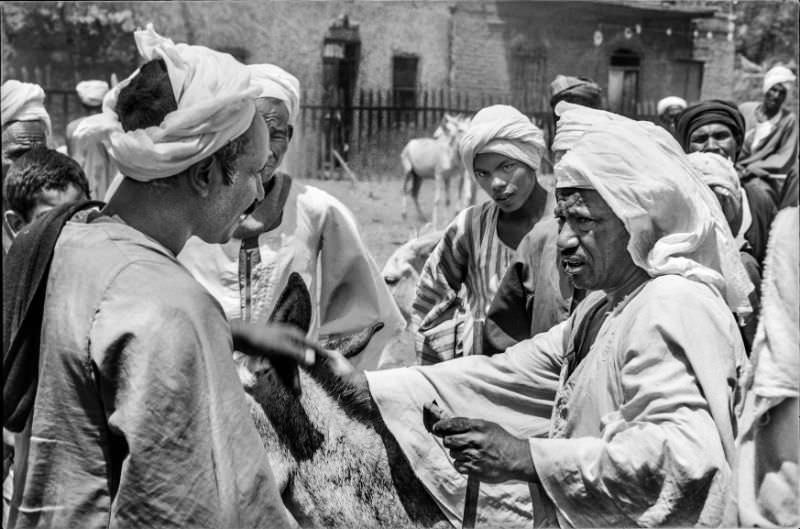
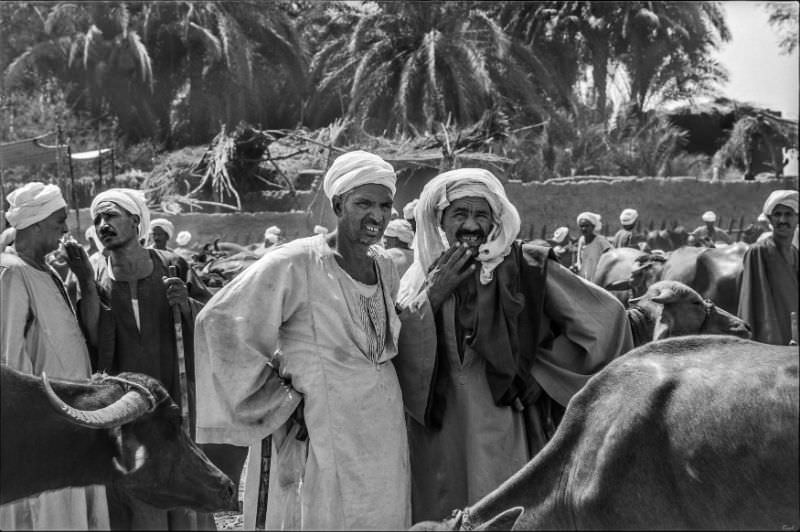
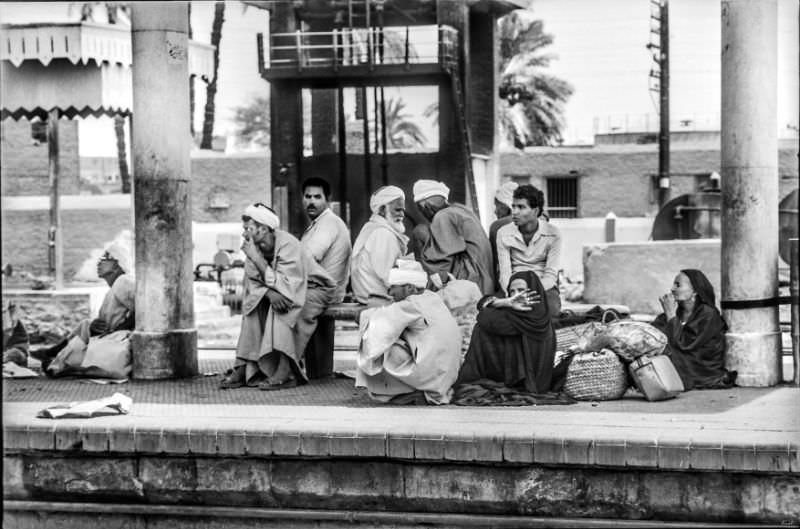
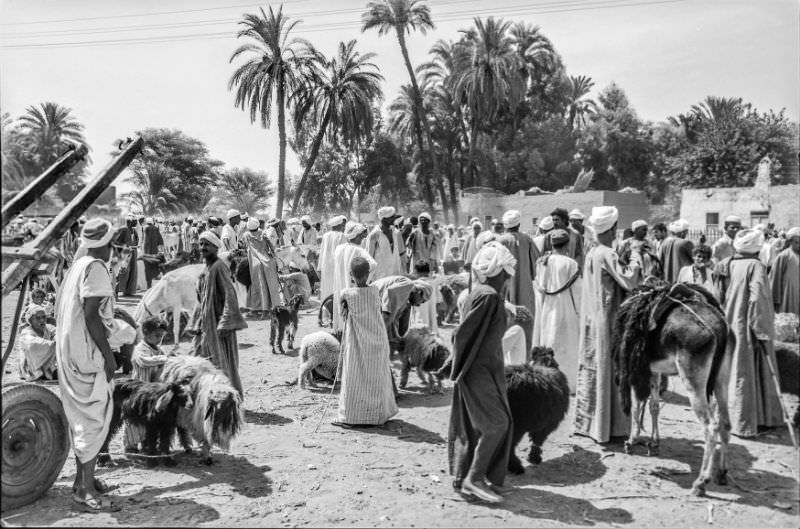
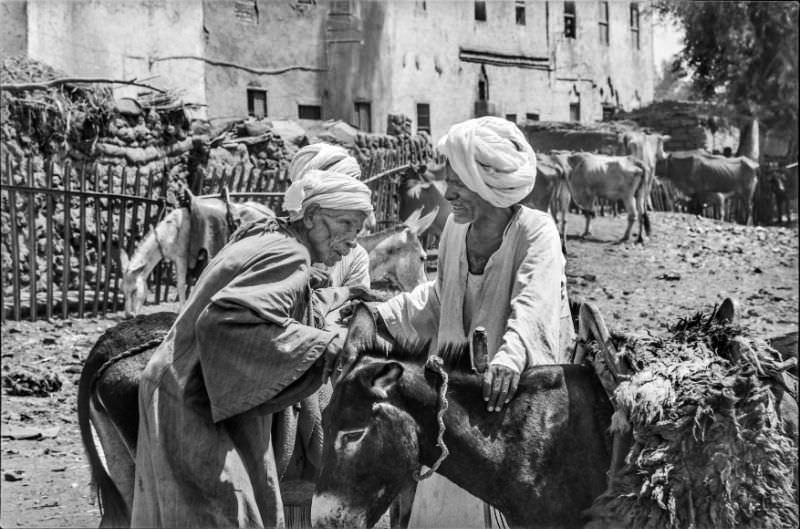
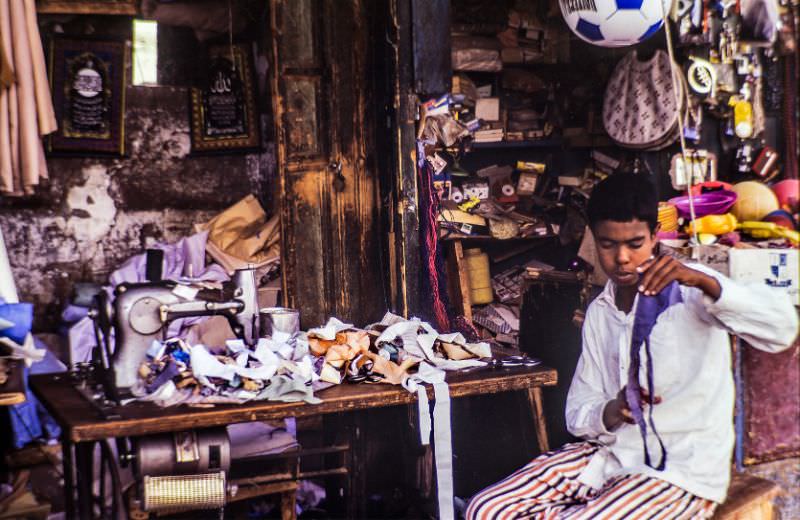
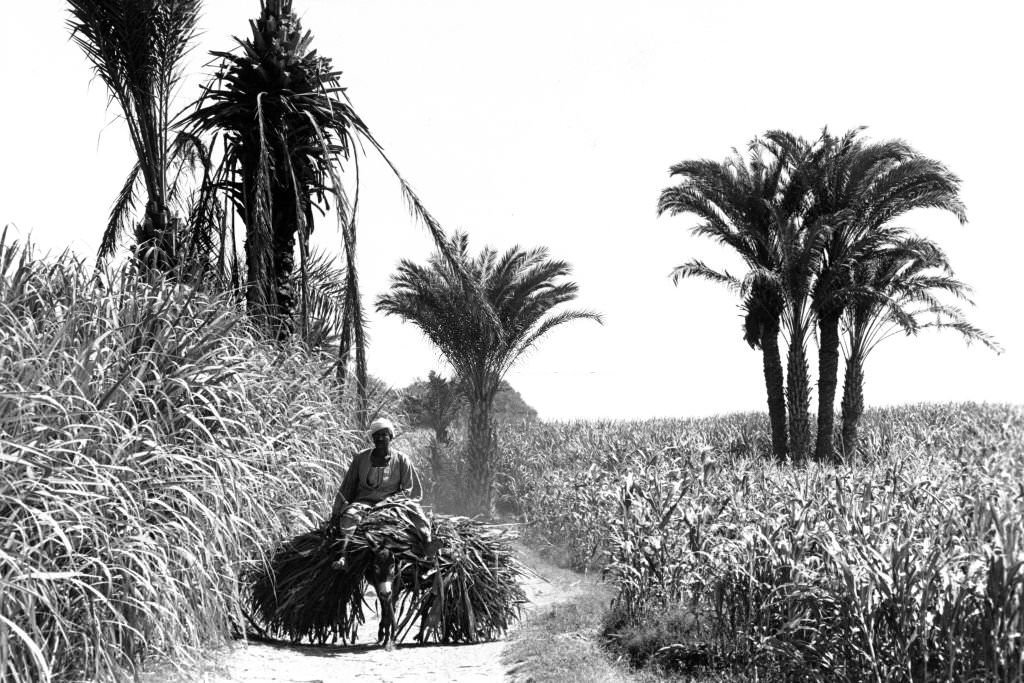
Luxor in August 1981 had its own pace. A livestock market drew traders and farmers. Travelers rested in the midday heat. Neighbors chatted outside their homes, and a sewing machine apprentice worked alongside his teacher. Sugar cane grew in the fields outside the city, a crop that defined the Luxor region’s agricultural economy.
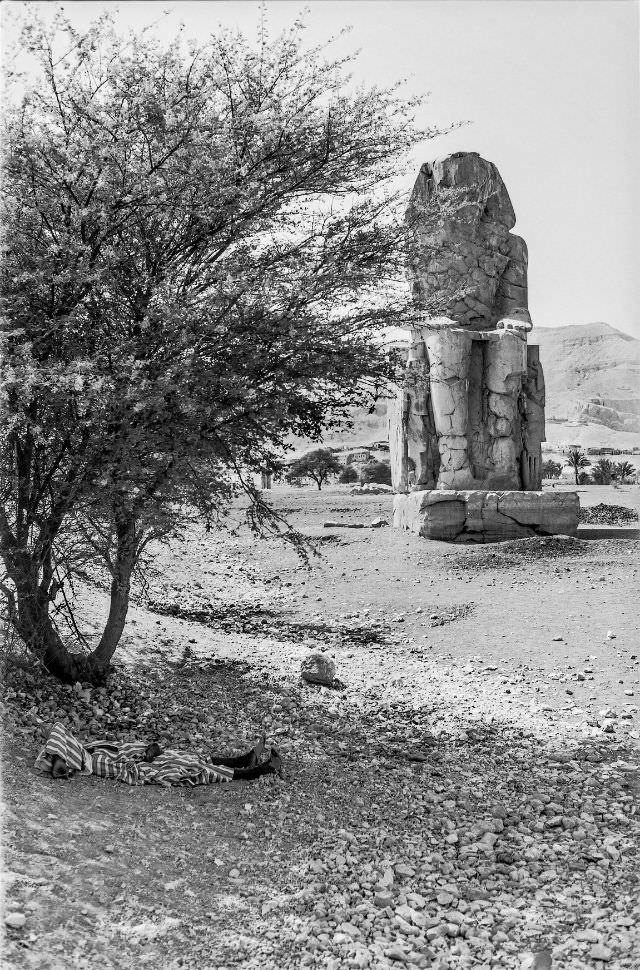
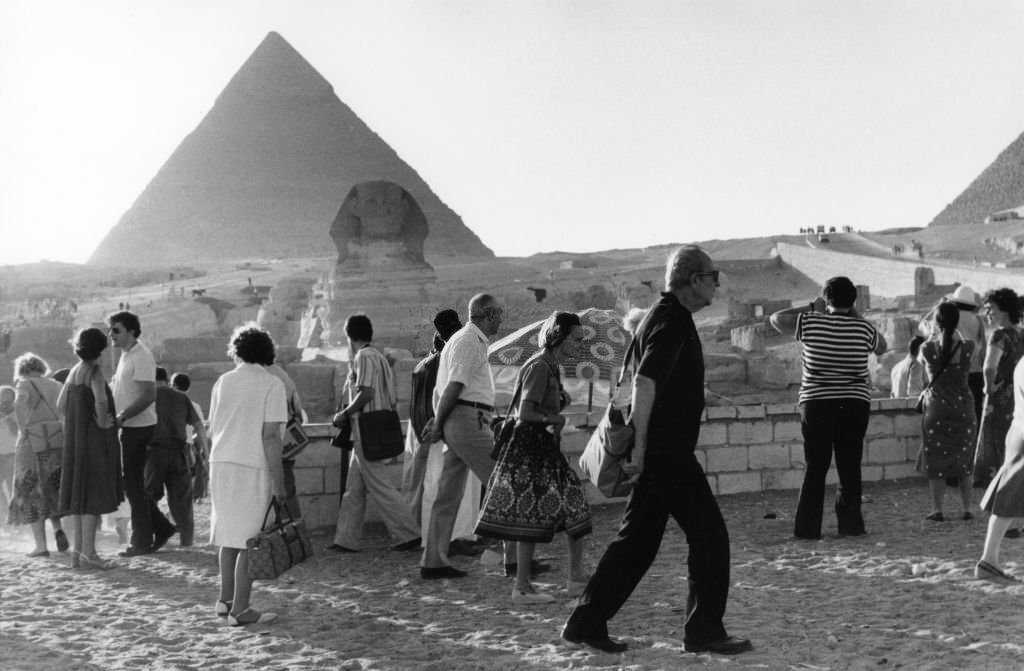
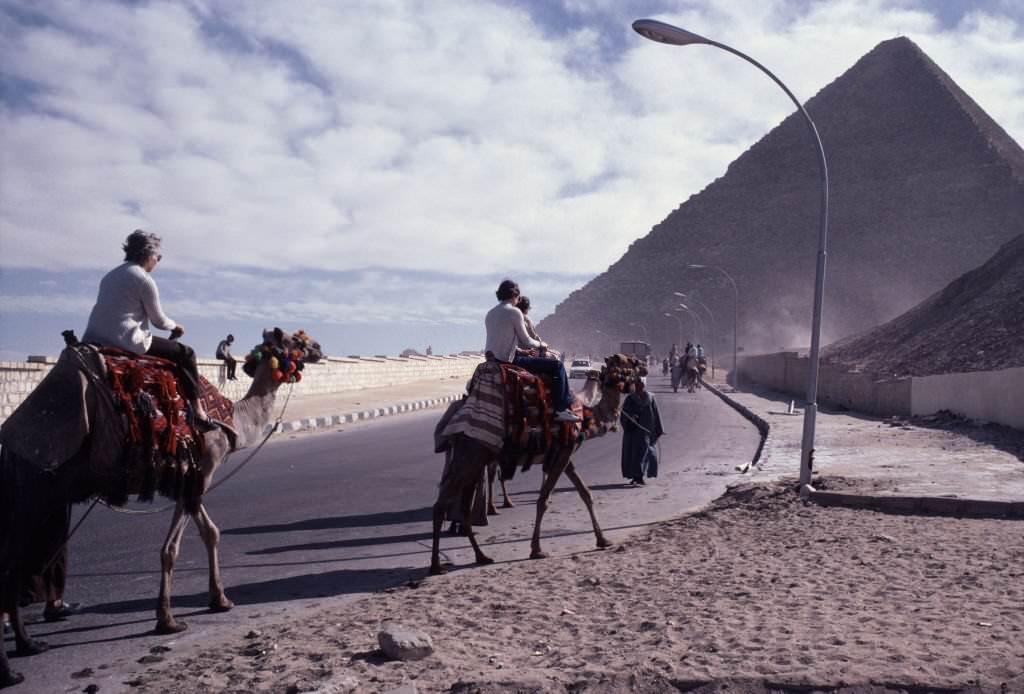
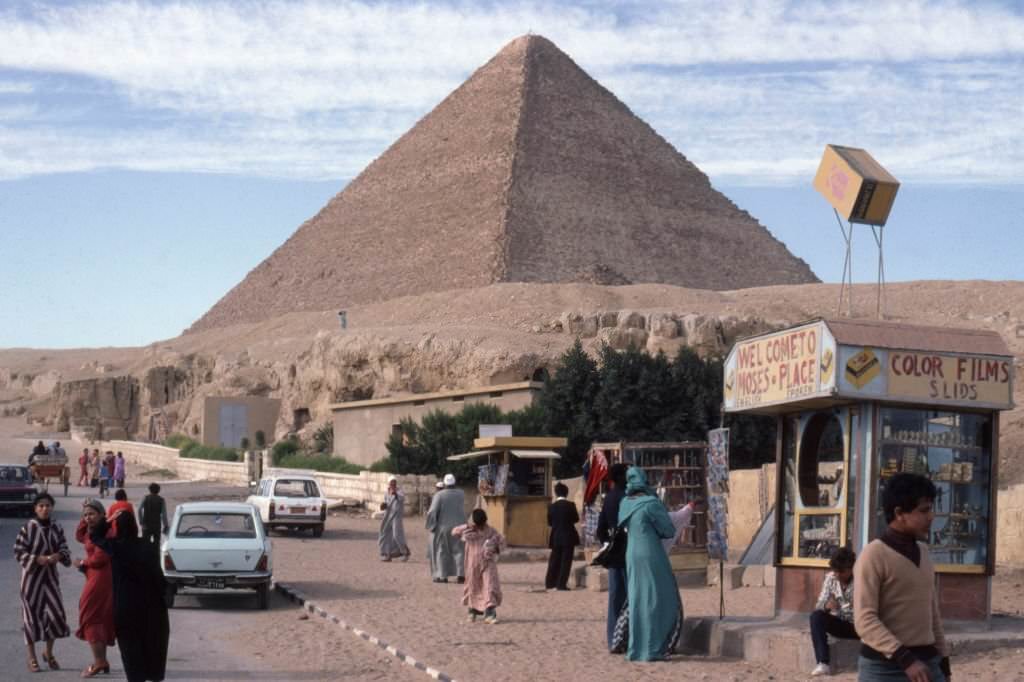
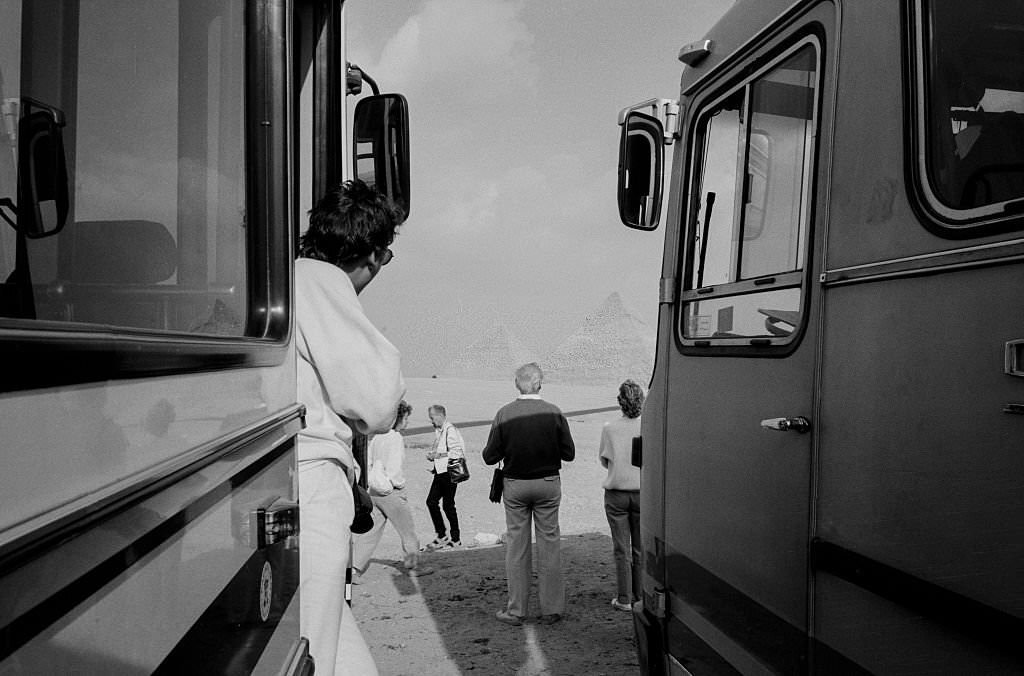
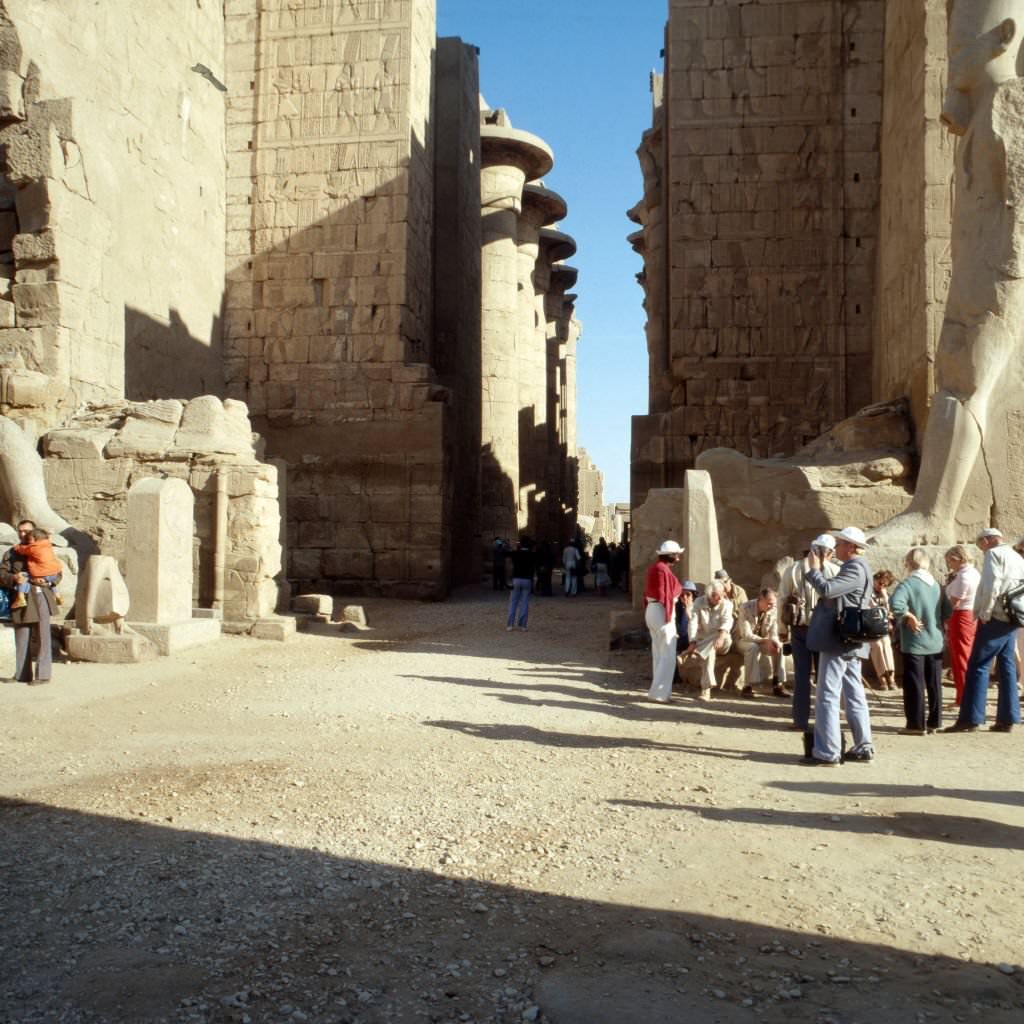
Tourism remained active throughout the decade, drawing visitors to the Giza plateau, the temples at Luxor, and the ancient site of Abu Simbel. Tourists rode dromedaries in front of the pyramids, browsed souvenir shops at the foot of the Great Pyramid of Cheops, and wandered through the ruins of Luxor Temple. The Giza plateau drew crowds as always, with visitors photographing the monuments against the desert horizon.
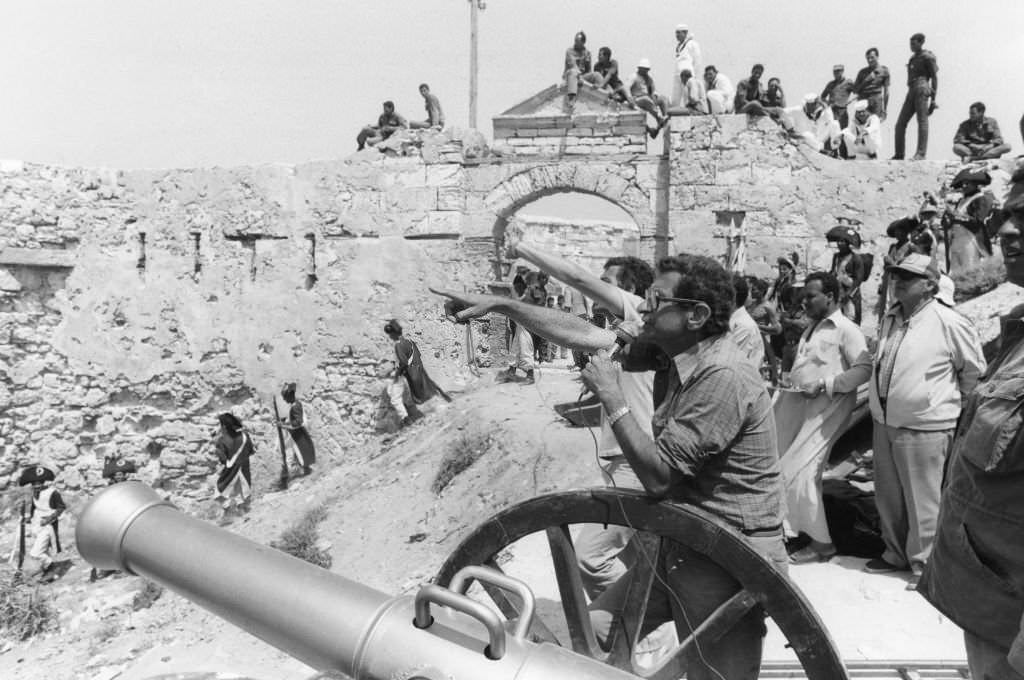
Egypt’s film industry was alive and working in this period. Director Youssef Chahine shot his film *Adieu Bonaparte* at the foot of the pyramids in June 1984. The film told the story of Napoleon’s Egyptian campaign from the perspective of Egyptians, and filming it on location gave the production a visual weight that few historical films achieved.
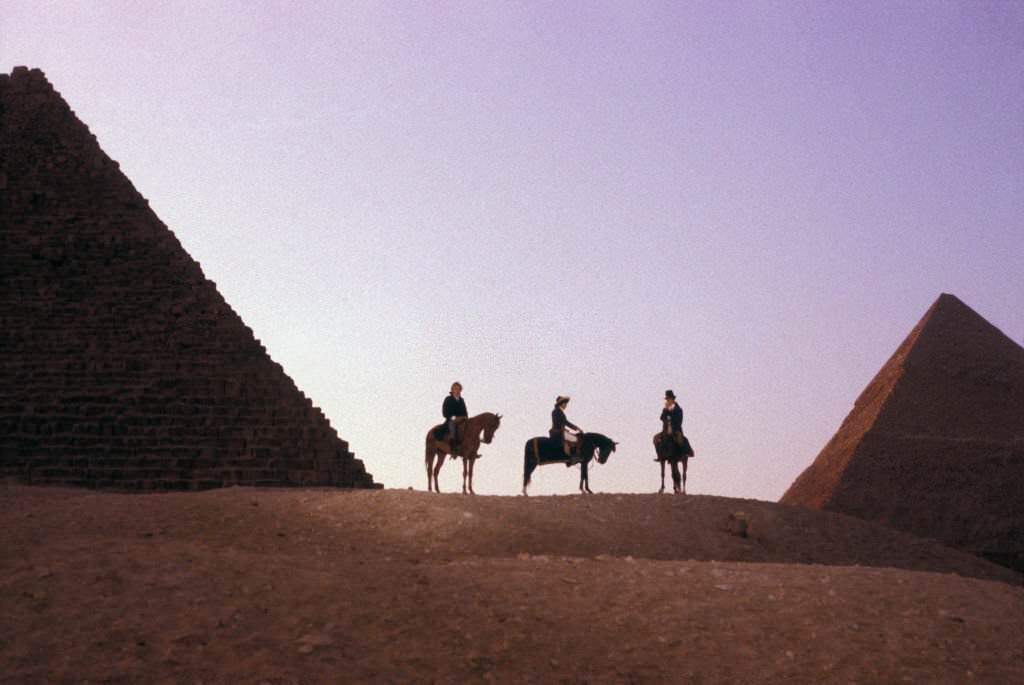
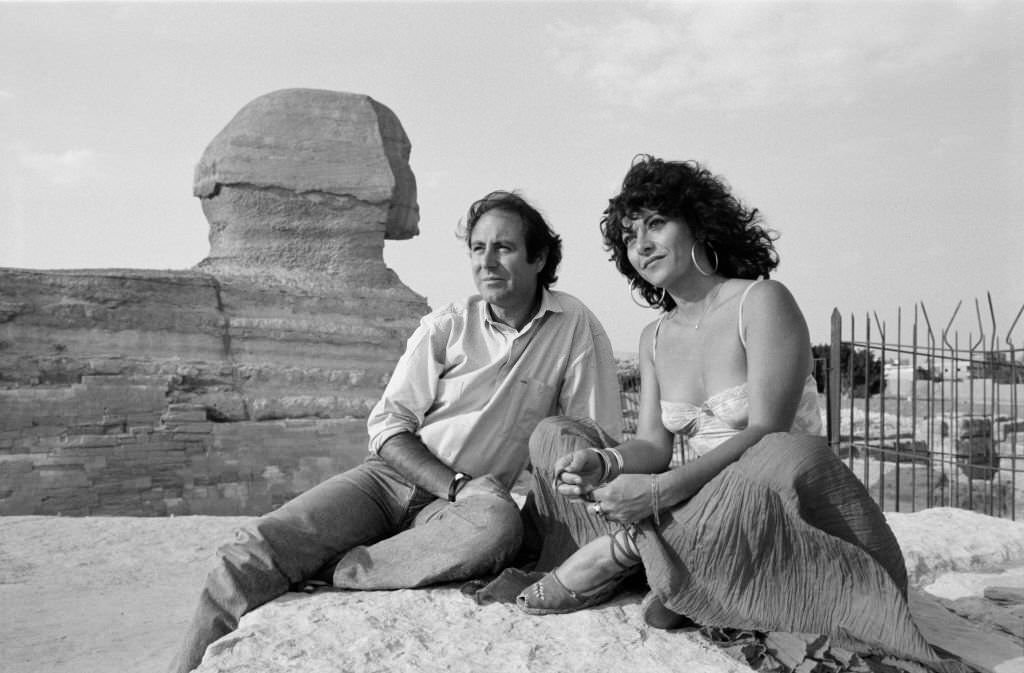
French singer Michel Delpech and his wife Geneviève also visited Egypt in 1986, one of many public figures drawn to the country during the decade.
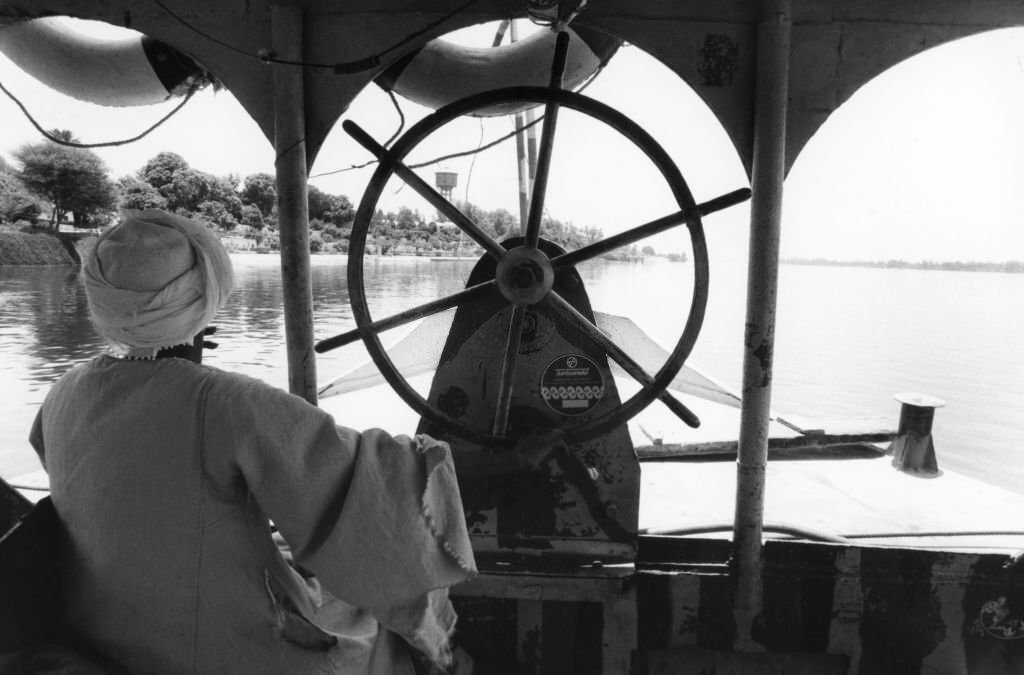
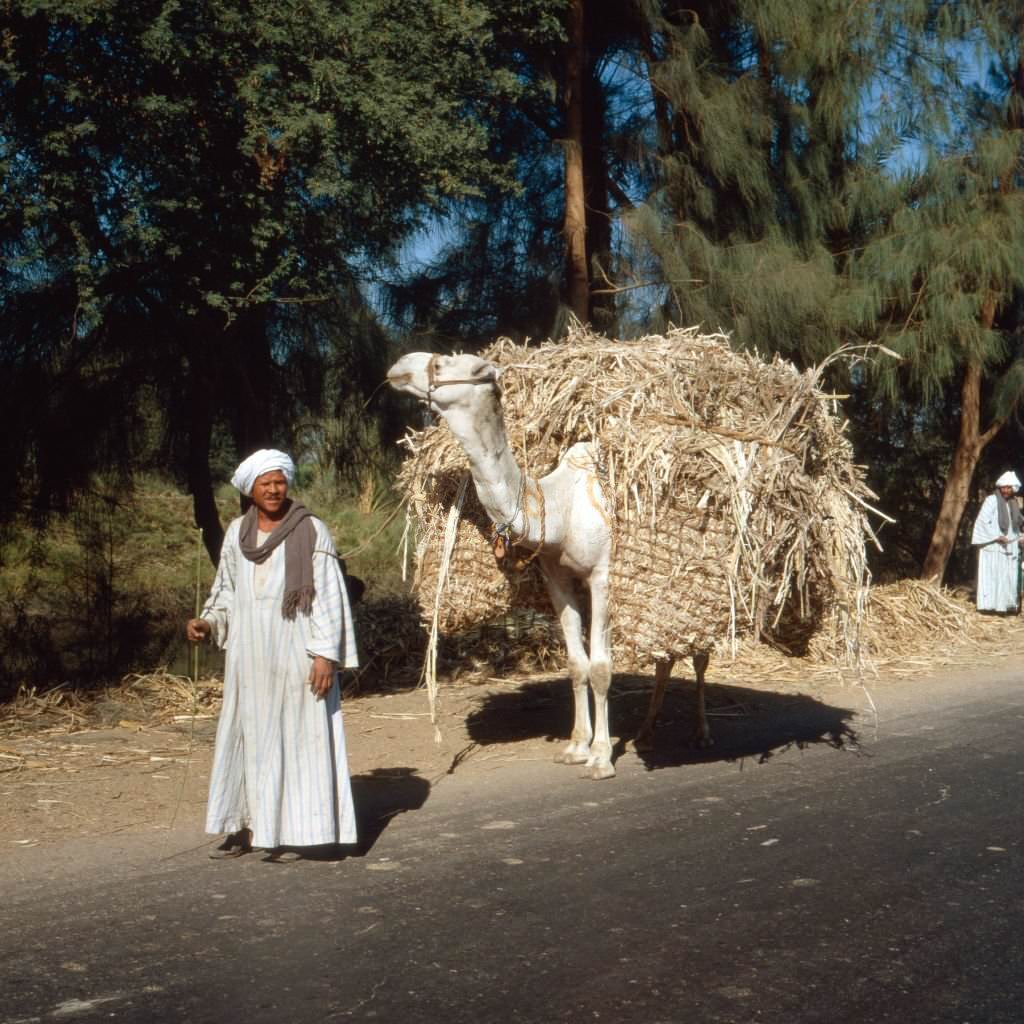
The Nile was a constant in every era of Egyptian life. Boats moved along it in 1984 just as they had for thousands of years. A fellah, the traditional Egyptian farmer, worked near its banks with his camel. The river tied the country together from the Nile Delta in the north to Aswan in the south.
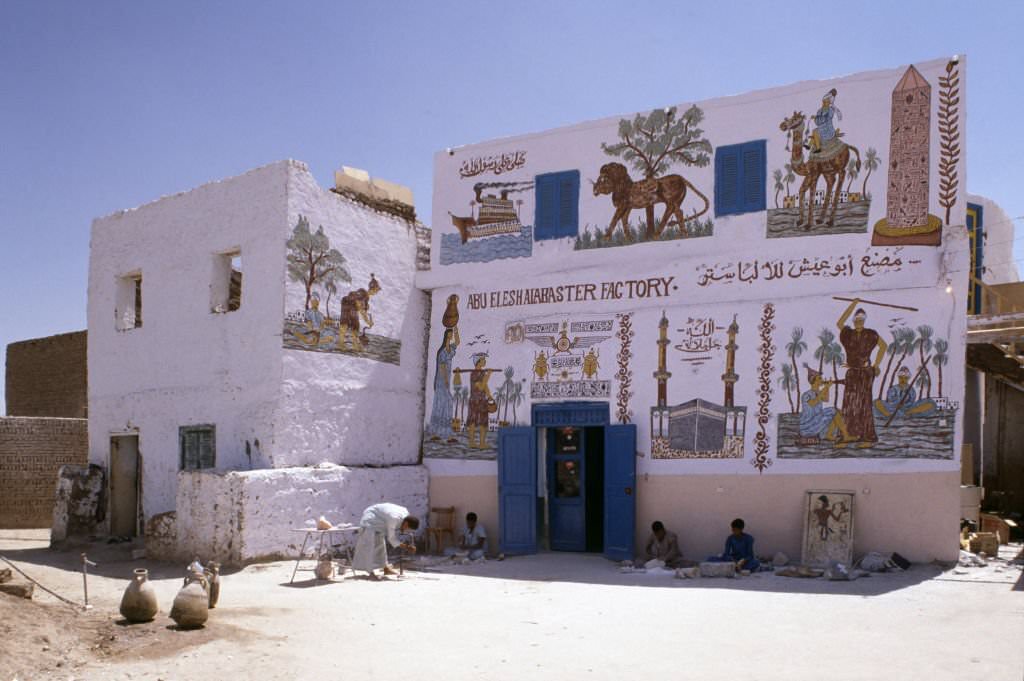
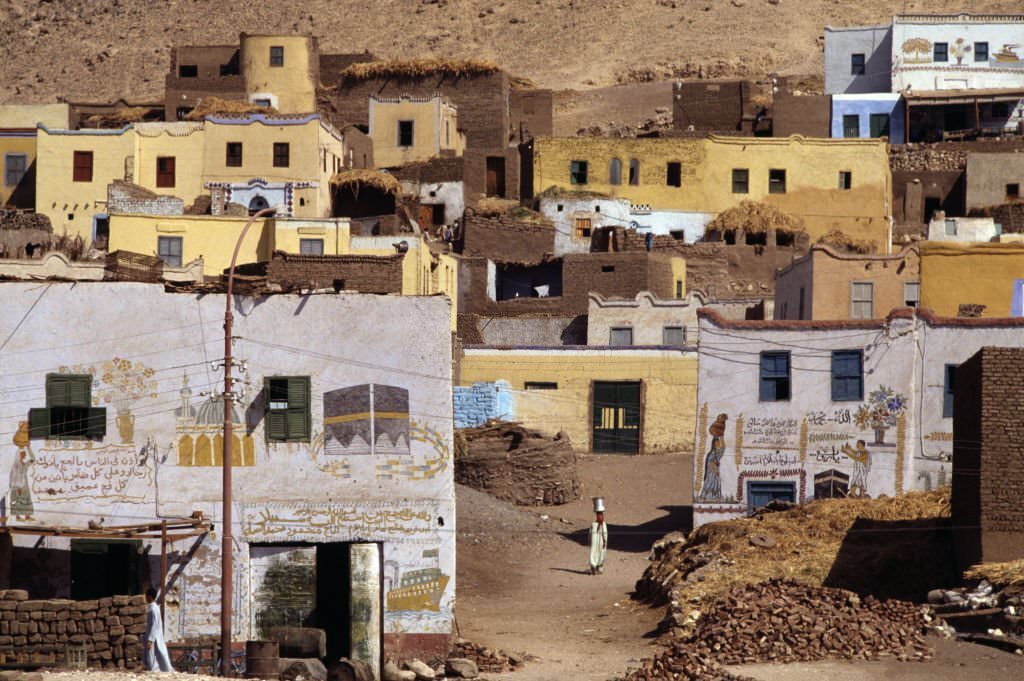
The village of Gournah, built on the necropolis of ancient Thebes, had a distinctive visual identity. Residents decorated their house facades with colorful paintings. The village sat directly above ancient tombs, making it one of the more unusual inhabited places in Egypt.
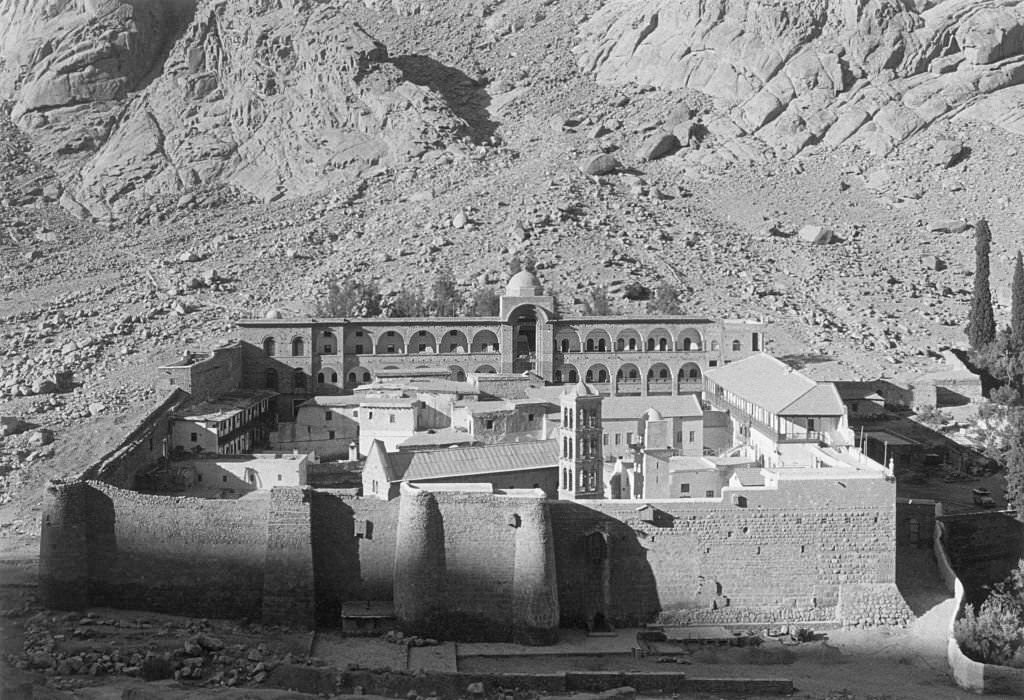
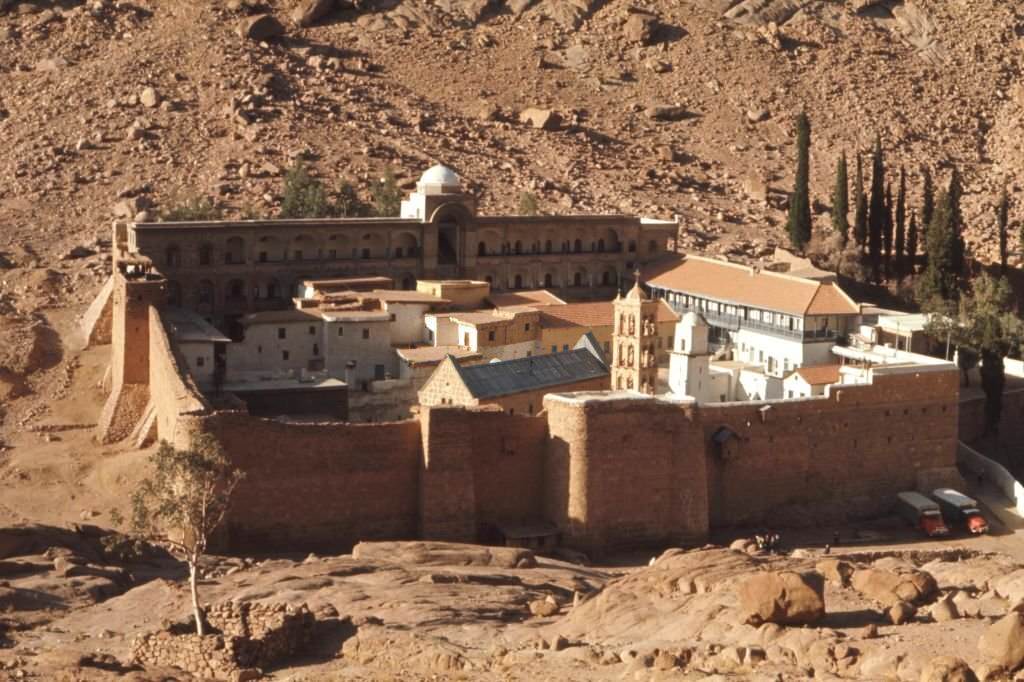
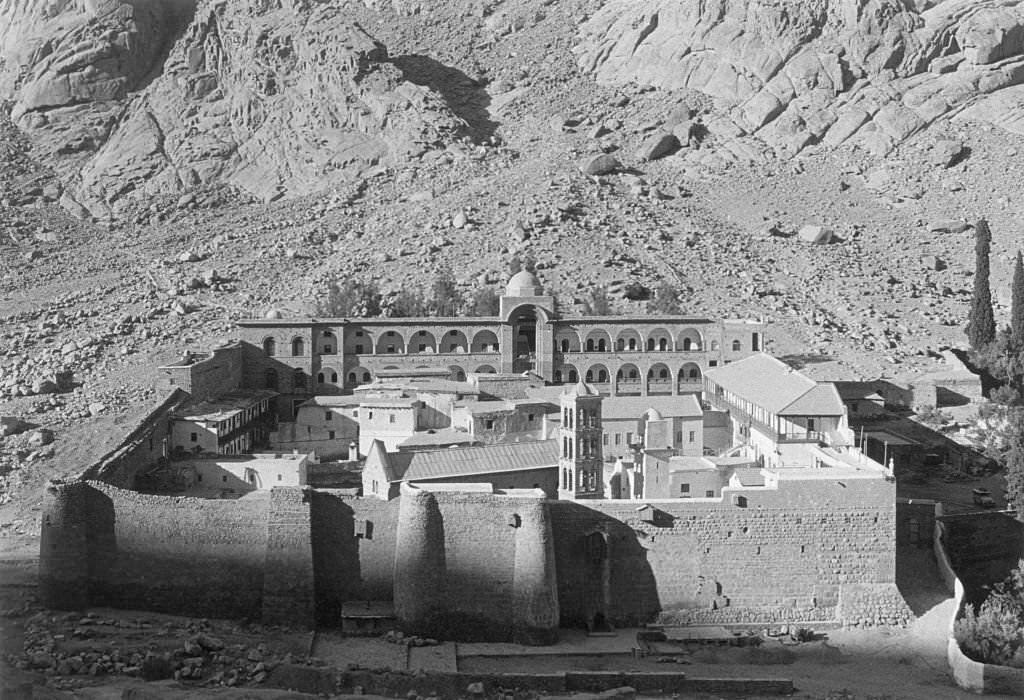
Saint Catherine’s Monastery in Sinai is one of the oldest continuously inhabited Christian monasteries in the world. Nestled at the foot of Mount Sinai, it held major religious significance for Christians, Jews, and Muslims. Its remote location in the desert gave it a quality of isolation that photographers found compelling throughout the decade.
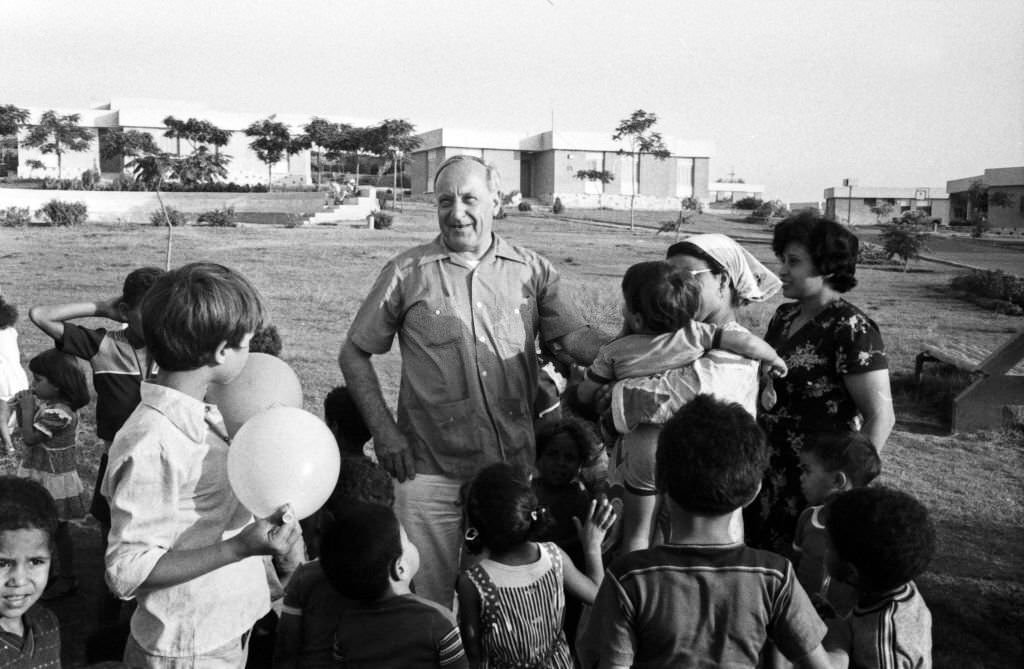
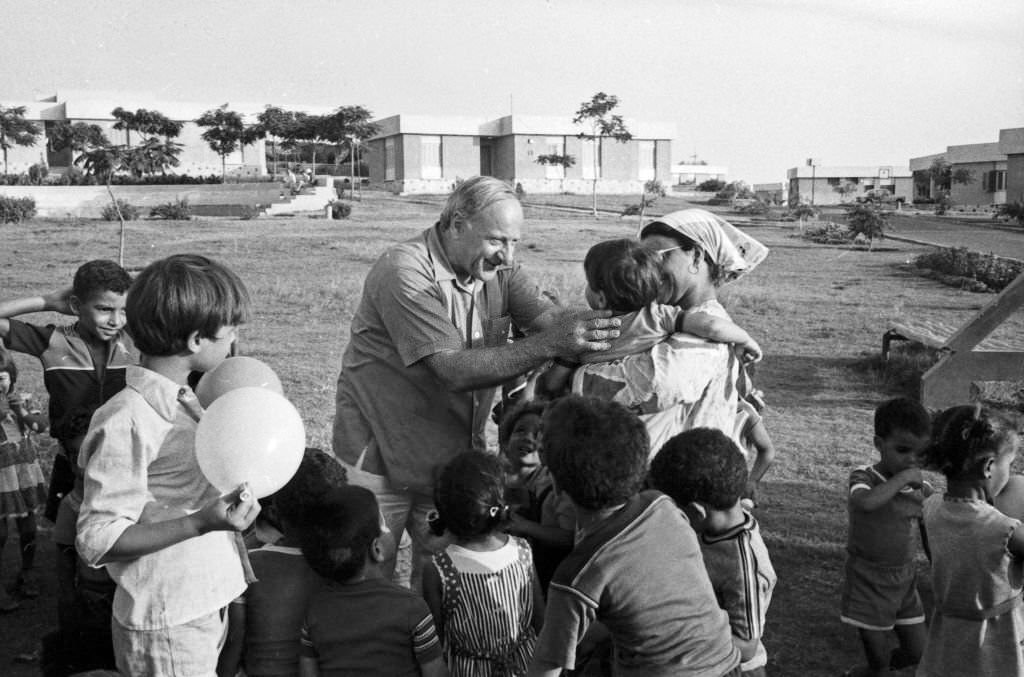
The SOS Children’s Village in Alexandria opened in the 1980s with Hermann Gmeiner, the organization’s founder, attending the ceremony. The village provided homes for orphaned and abandoned children. Housing development was also a priority for the government, with projects like the Alexandria Housing Complex opening during this period.
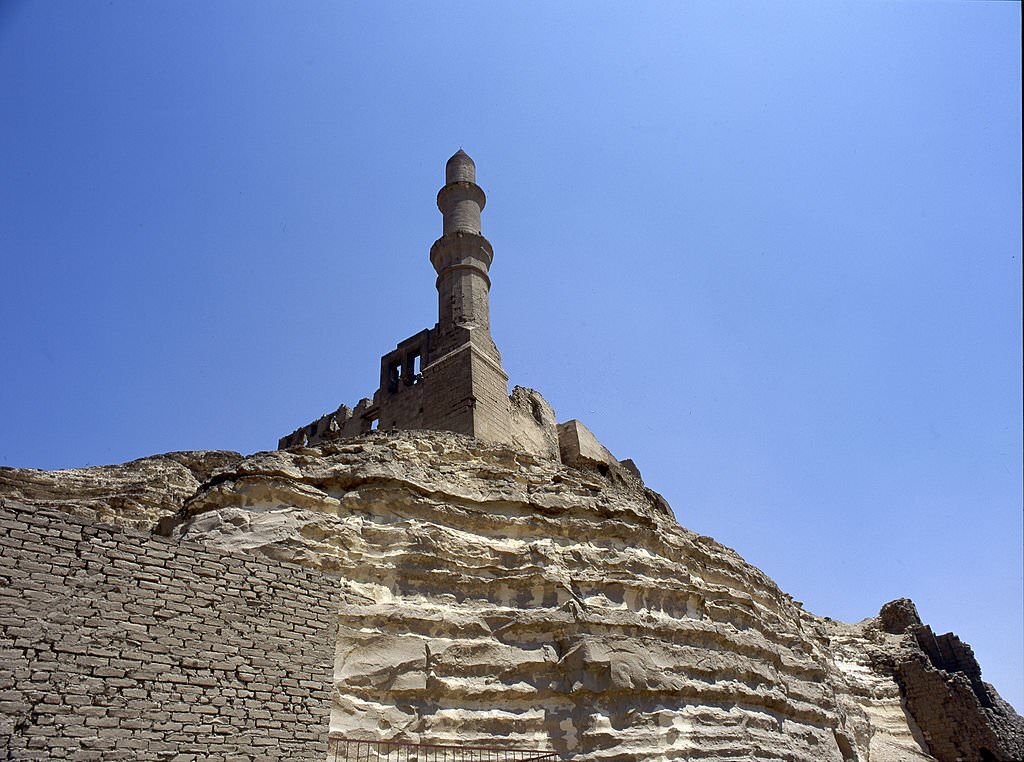
The ruins of the Shahin al-Khalwati complex, once a center for Sufi studies, stood as a reminder of another layer of Cairo’s deep religious history. Built by Sheikh Shahin al-Khalwati as a spiritual retreat, the structure had fallen into disrepair by the time photographers captured it in the 1980s.
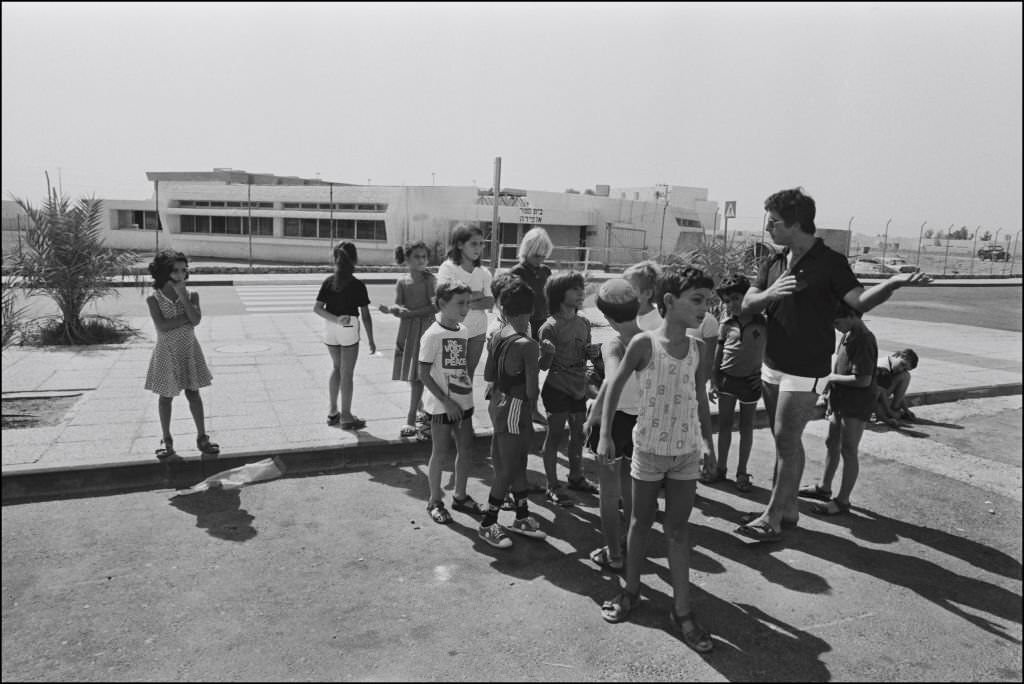
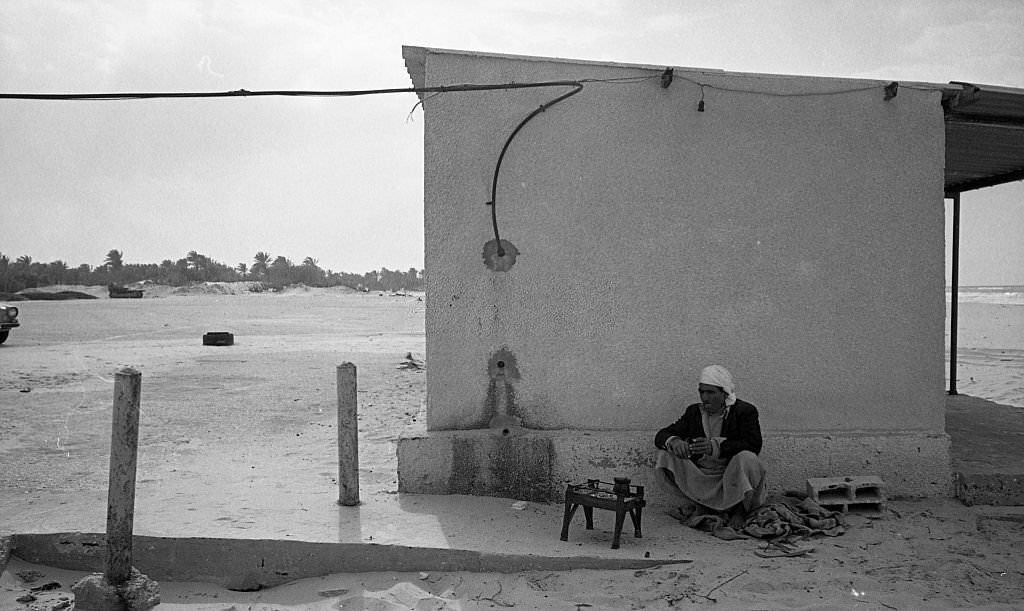
Israeli settlers who remained in the Sinai before the 1982 handover were photographed in 1981, with roughly 200 days left before the final withdrawal. They had occupied the territory for 15 years since the 1967 war. Their impending departure marked the end of an occupation that had reshaped the lives of everyone in the region.