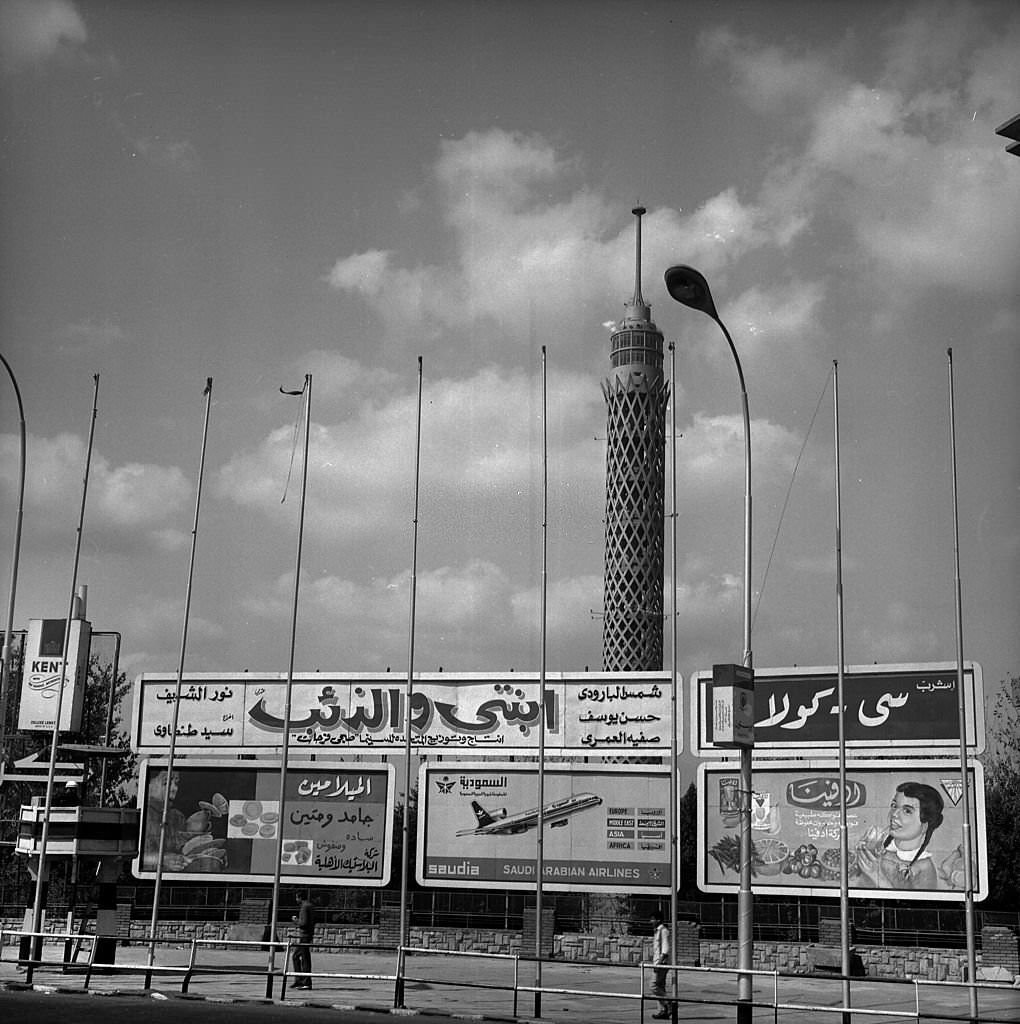
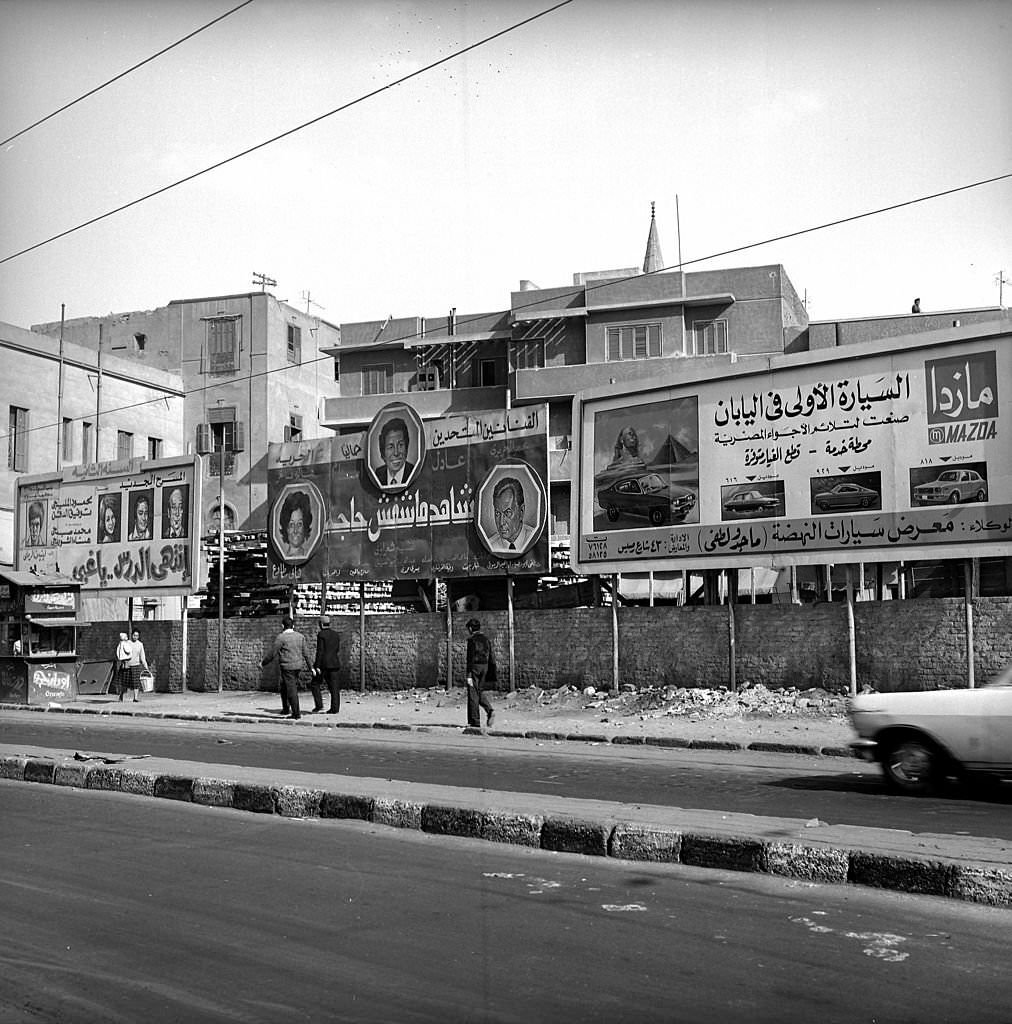
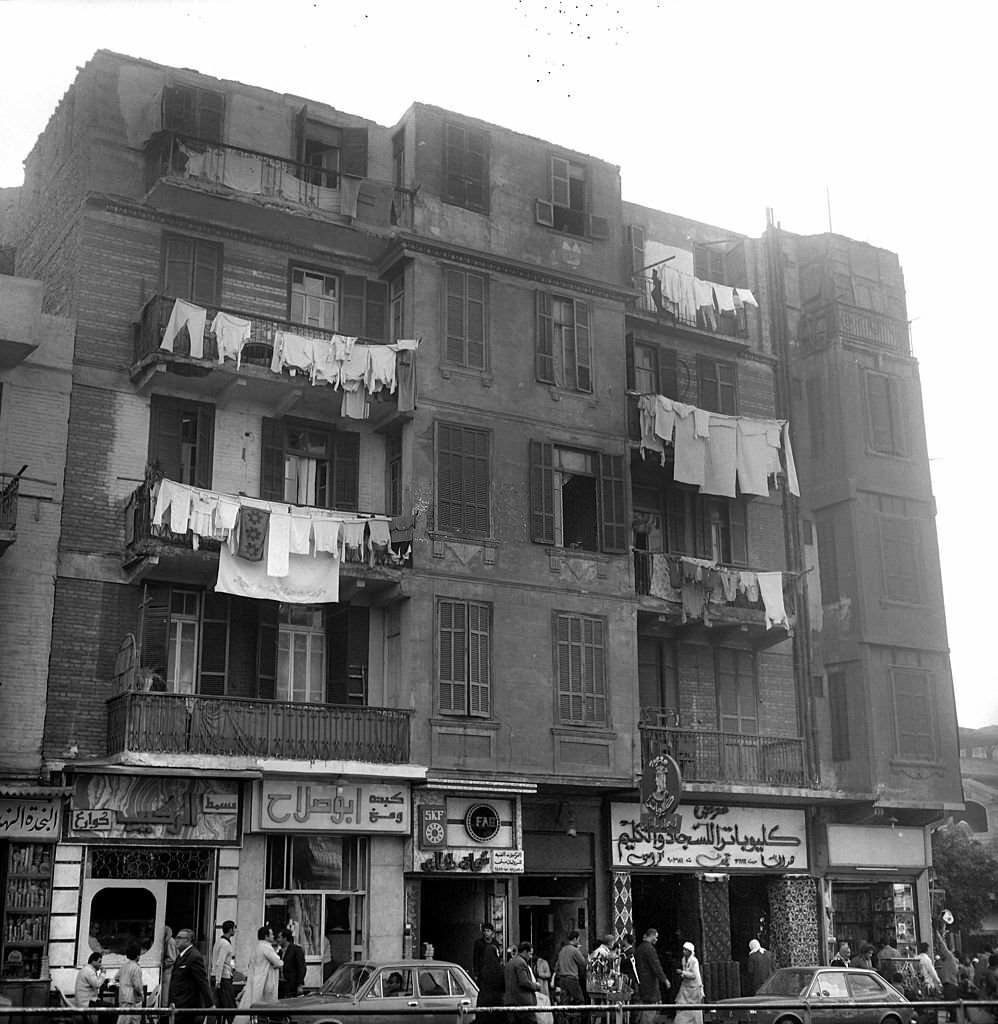
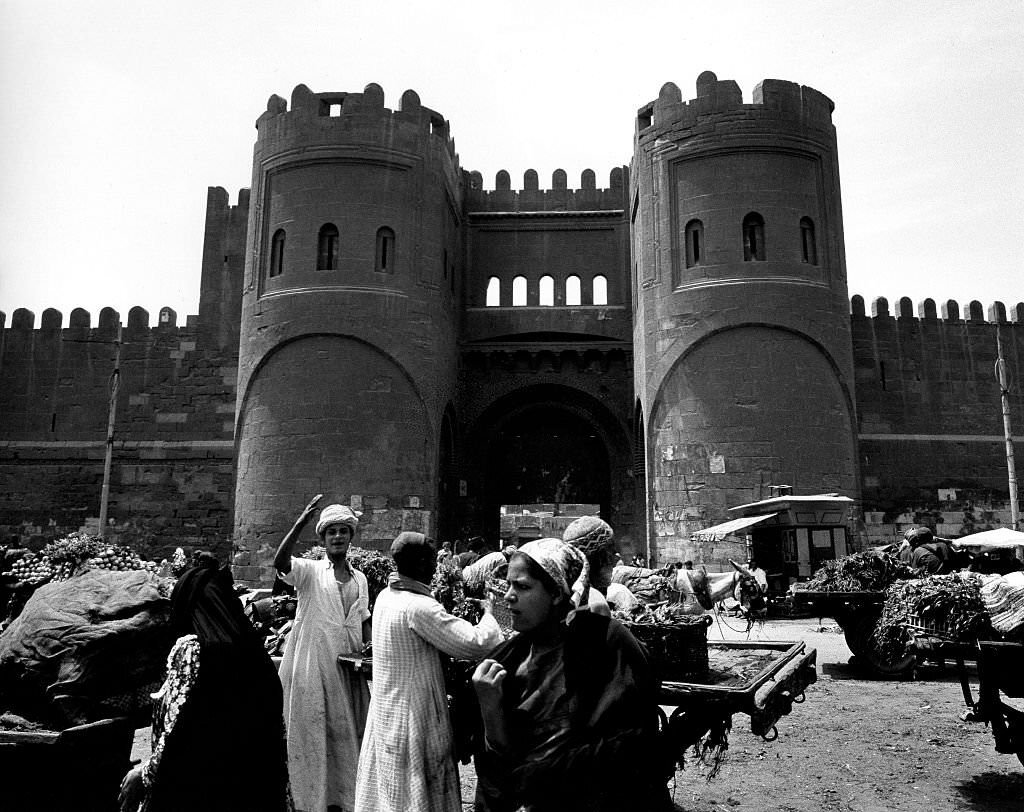
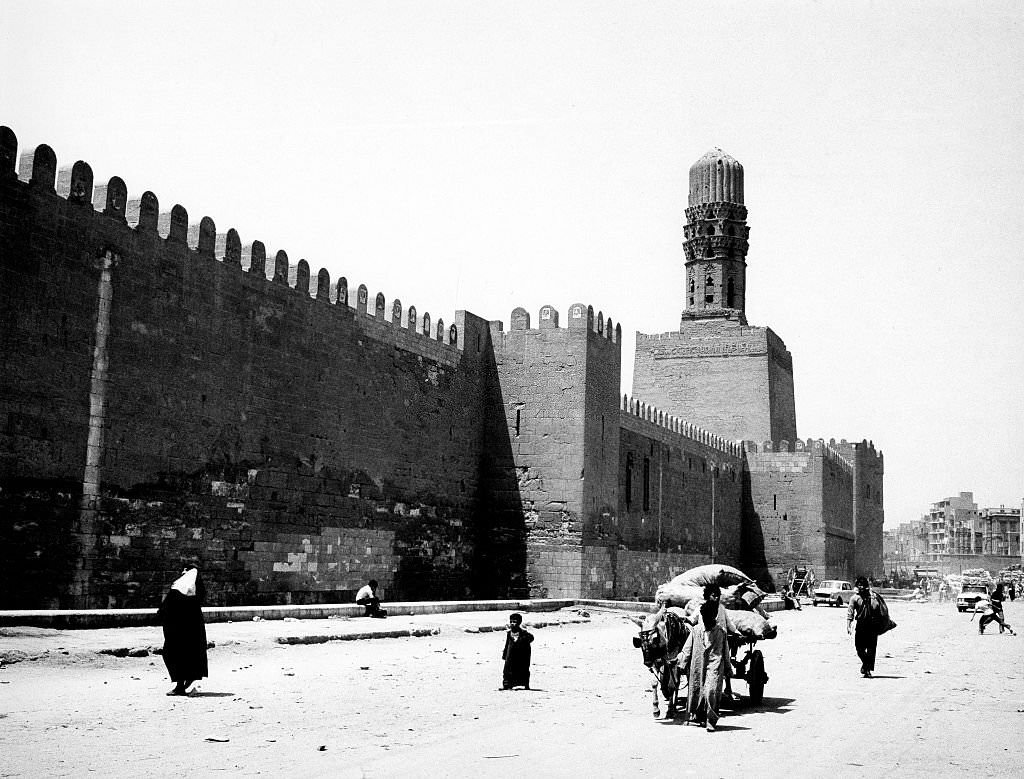
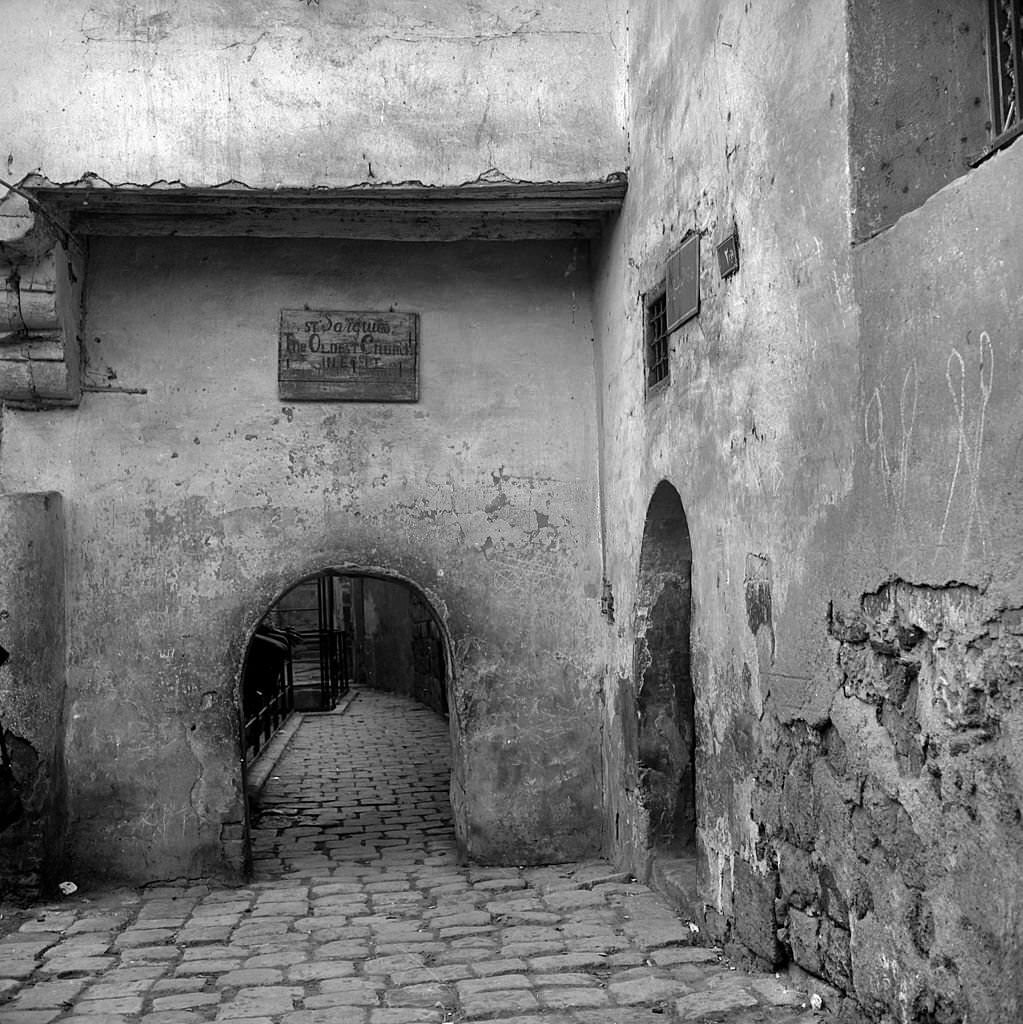
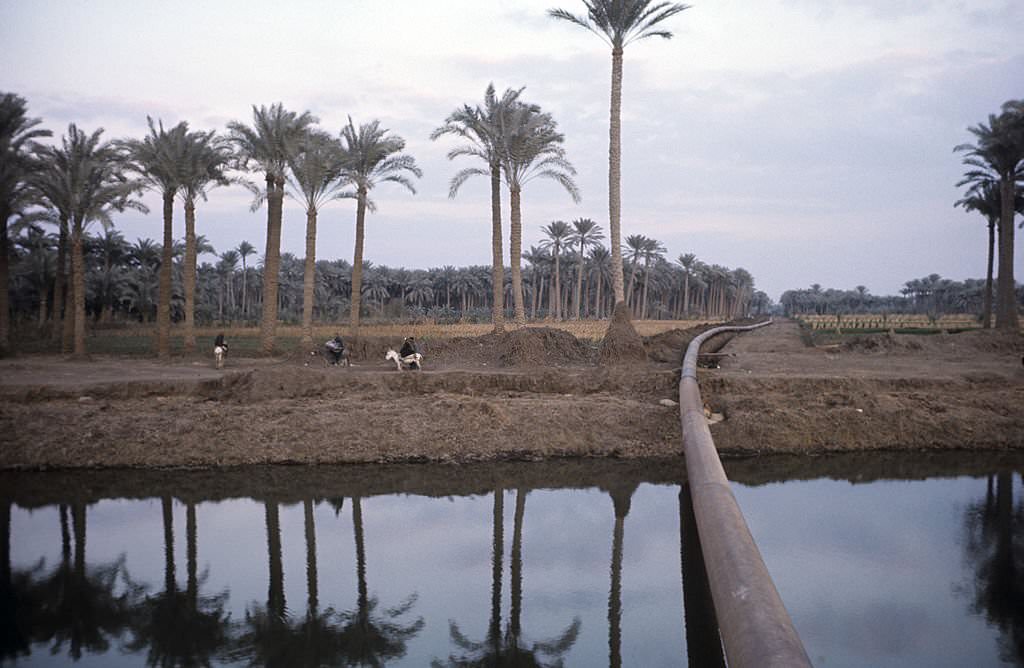
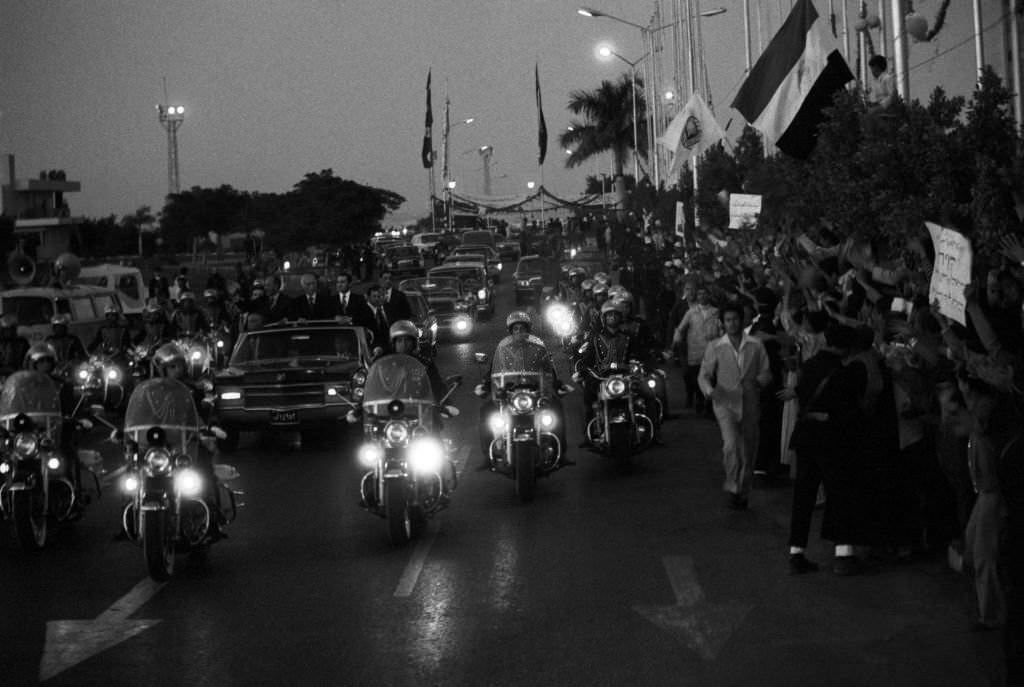
The 1970s were one of the most dramatic decades in Egypt’s modern history. The country went through war, political upheaval, economic transformation, and rapid social change — all within a single ten-year span. These photographs capture that era in vivid detail, from the ancient temples along the Nile to the crowded streets of Cairo, from war-torn Suez to the bustling bazaars where daily life carried on regardless of what was happening in the halls of power.
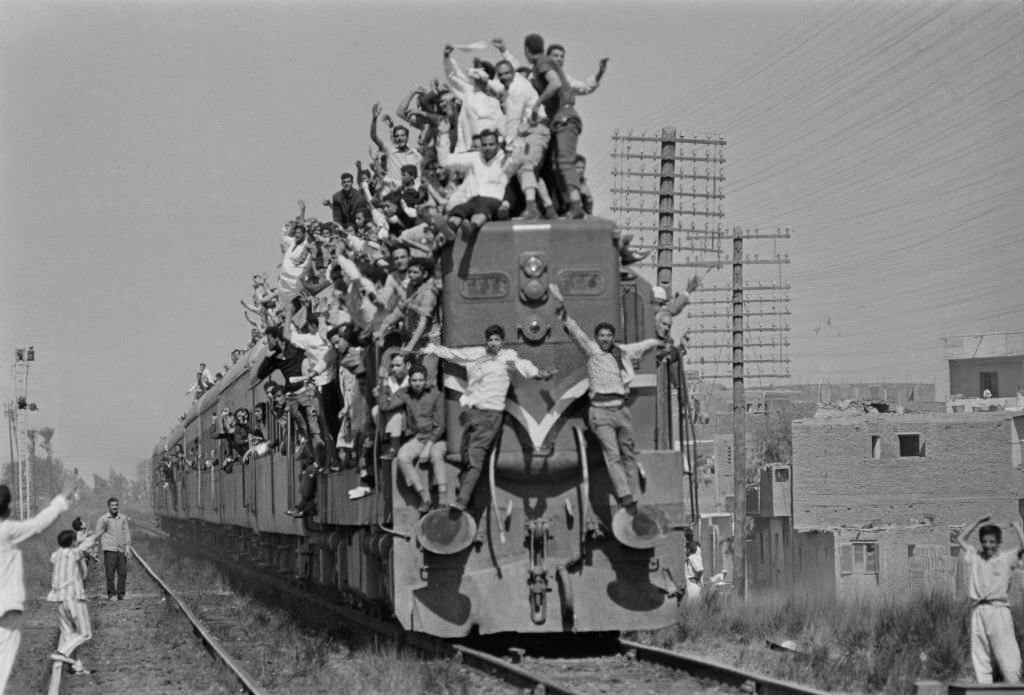
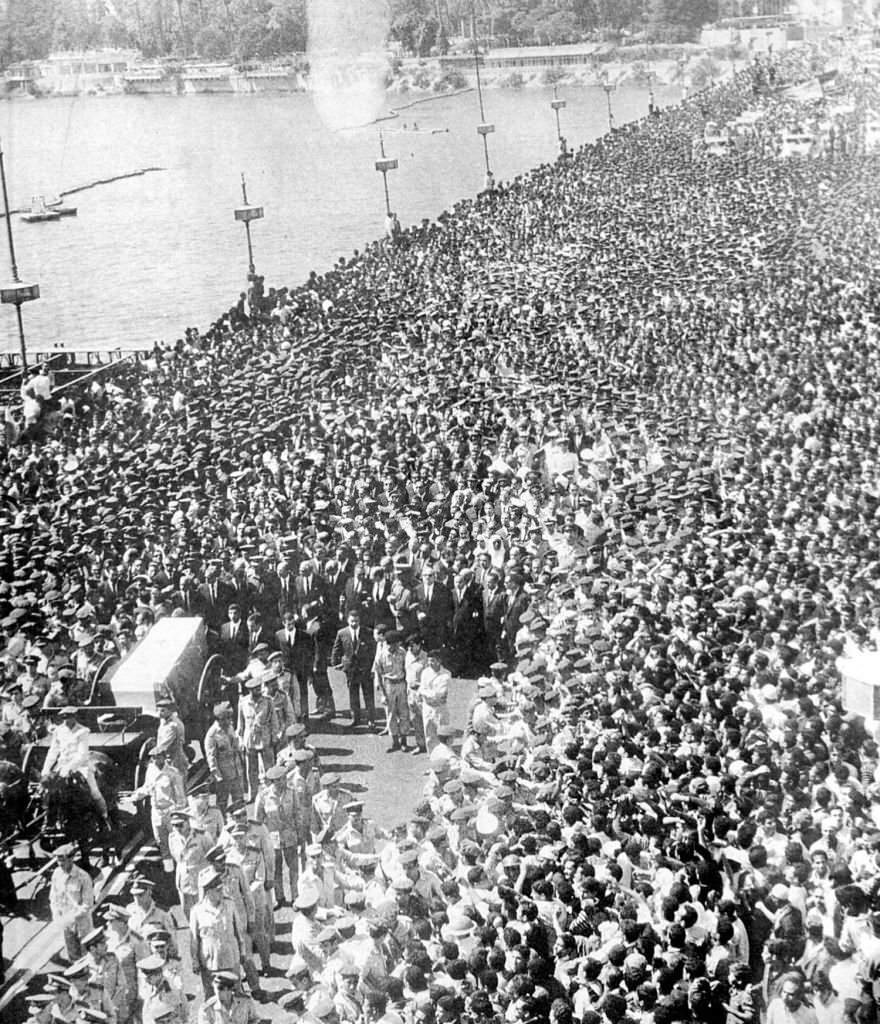
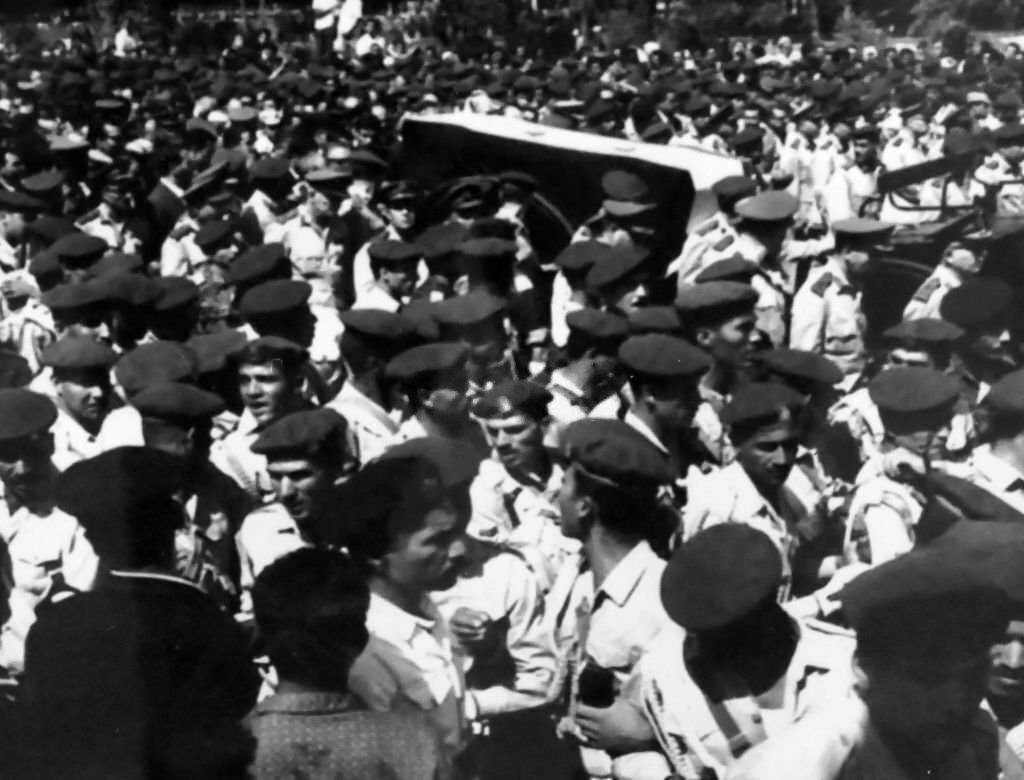
The decade began with a seismic event. On September 28, 1970, President Gamal Abdel Nasser died of a heart attack. He had led Egypt since the early 1950s, and his death sent millions of Egyptians into the streets in grief. The crowds that turned out for his funeral were among the largest ever witnessed in the Arab world.
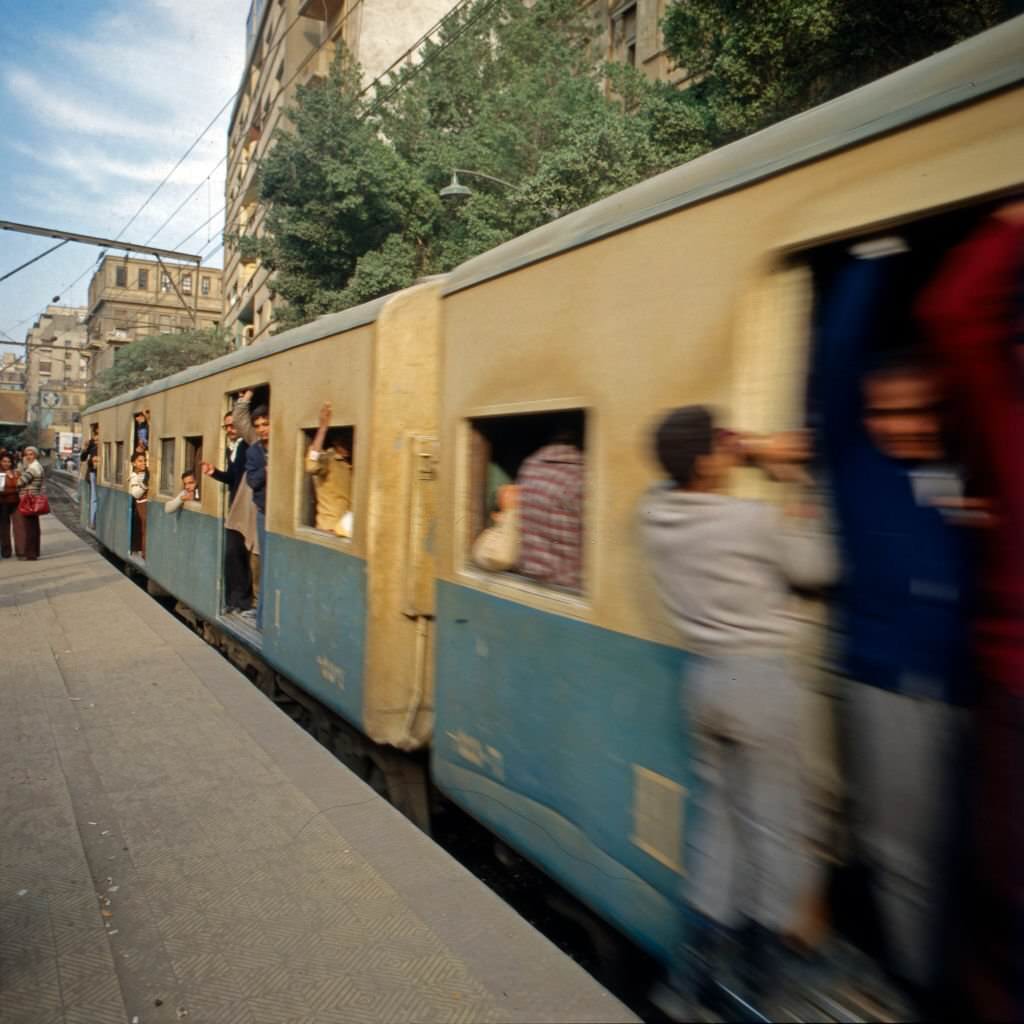
Egyptians overcrowd a train during President Gamal Abdel Nasser’s funeral, Cairo, 28th September 1970.Mllions of Egyptians attending the funeral of their leader Gamal Abdel Nasser who died of a heart attack in Cairo 28 September 1970.Funeral of Gamal Abdel Nasser, 1970
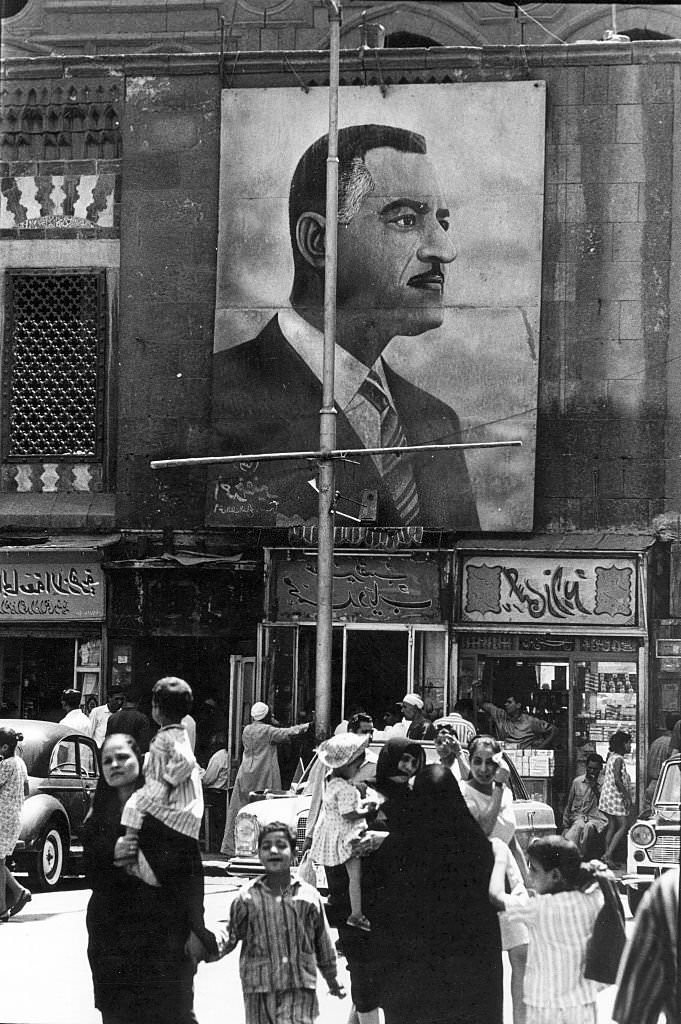
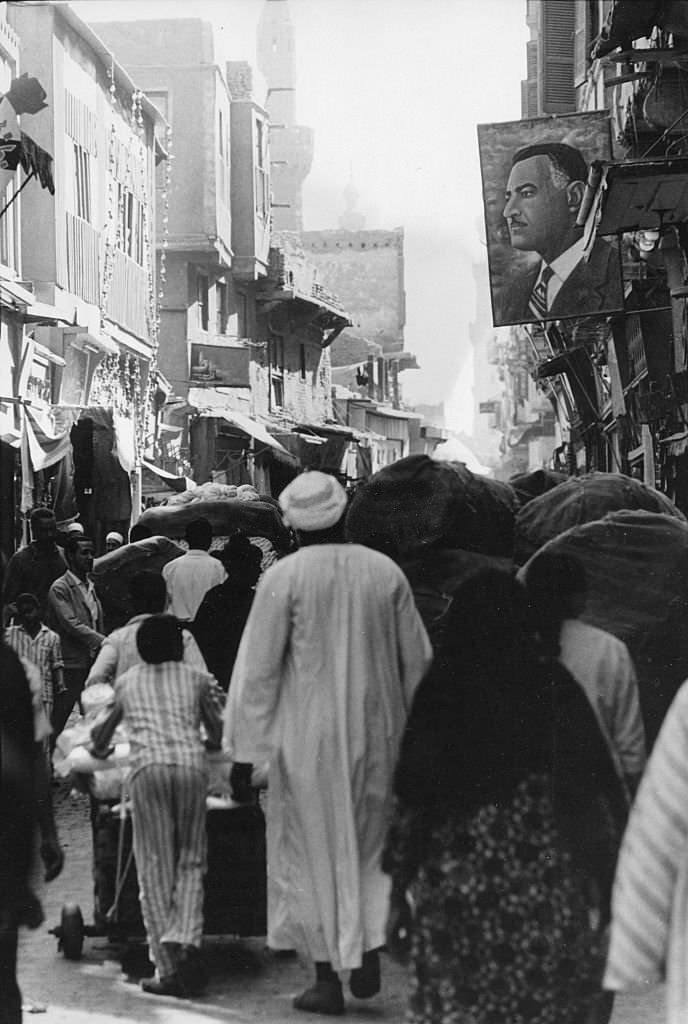
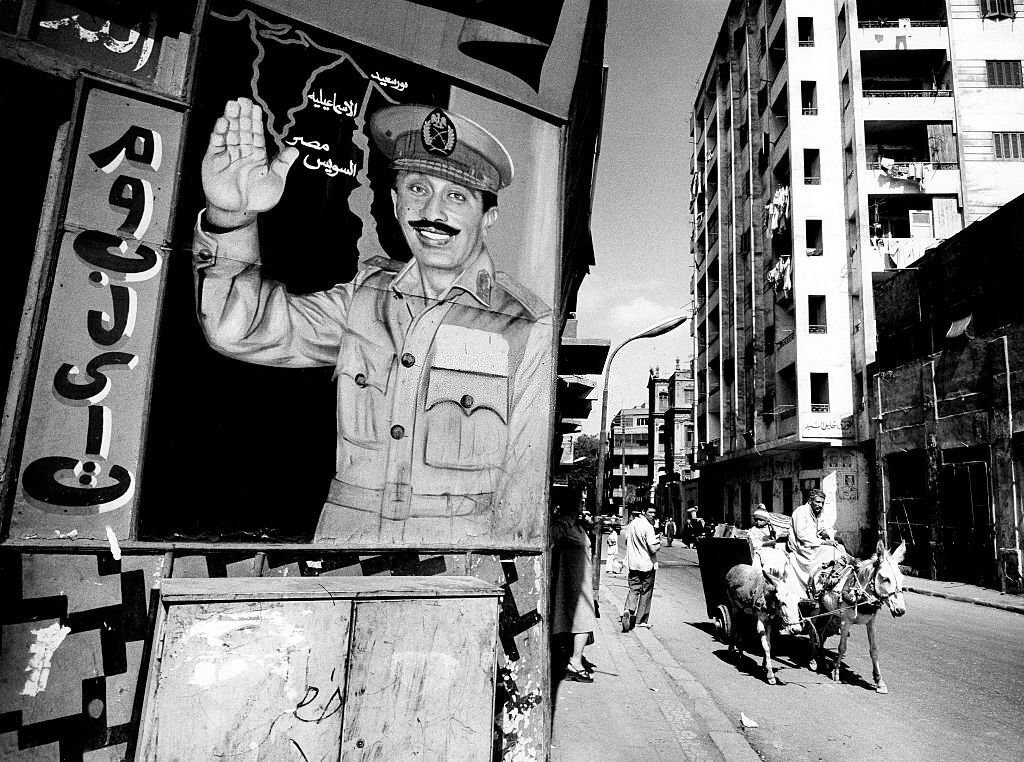
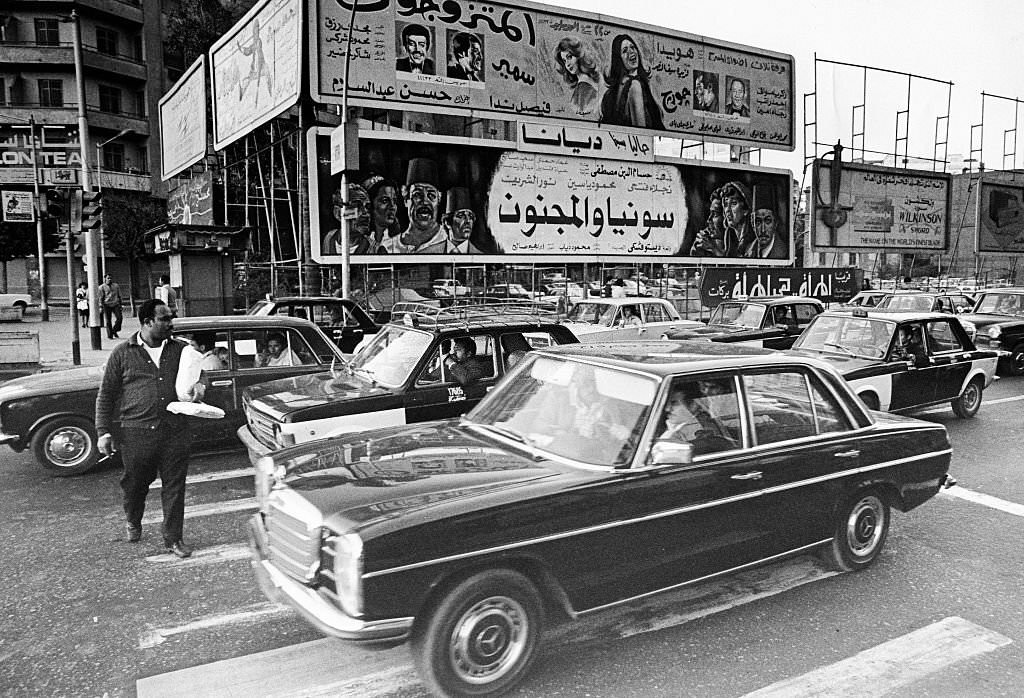
Nasser’s image remained a powerful presence on Egyptian streets long after his death. Massive banners bearing his face hung over busy Cairo thoroughfares, and pedestrians walked beneath them as if they were a permanent part of the city’s landscape.
Under a large banner that depicts Egyptian President Gamal Abdel Nasser, pedestrians, some with children, walk on a city street, Cairo, Egypt, 1970.
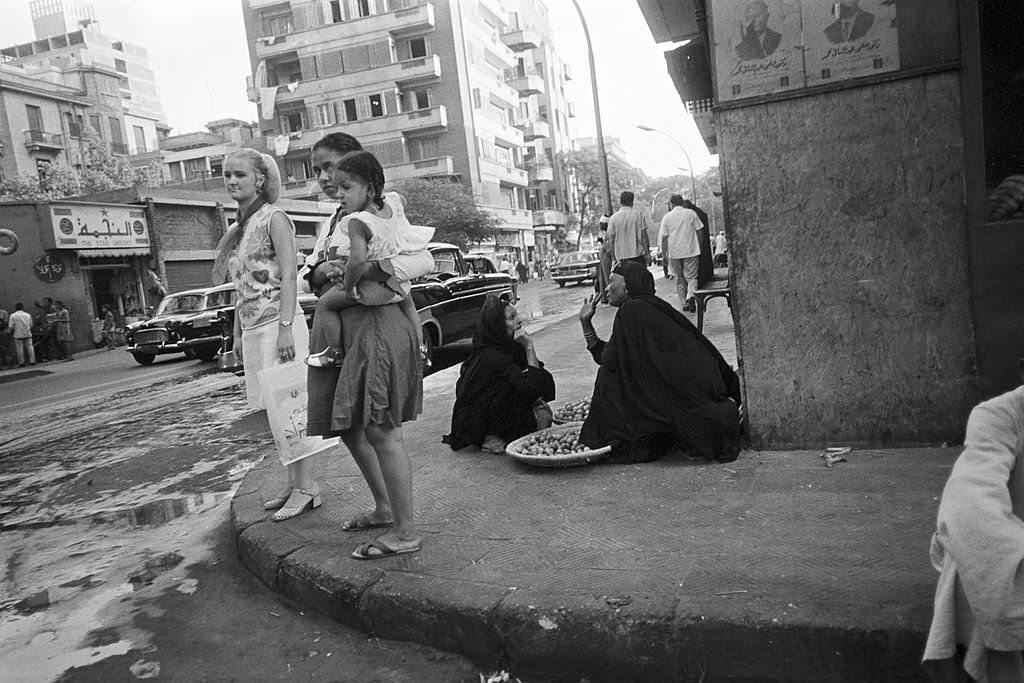
View of pedestrians on a crowded street, Cairo, Egypt, 1970.
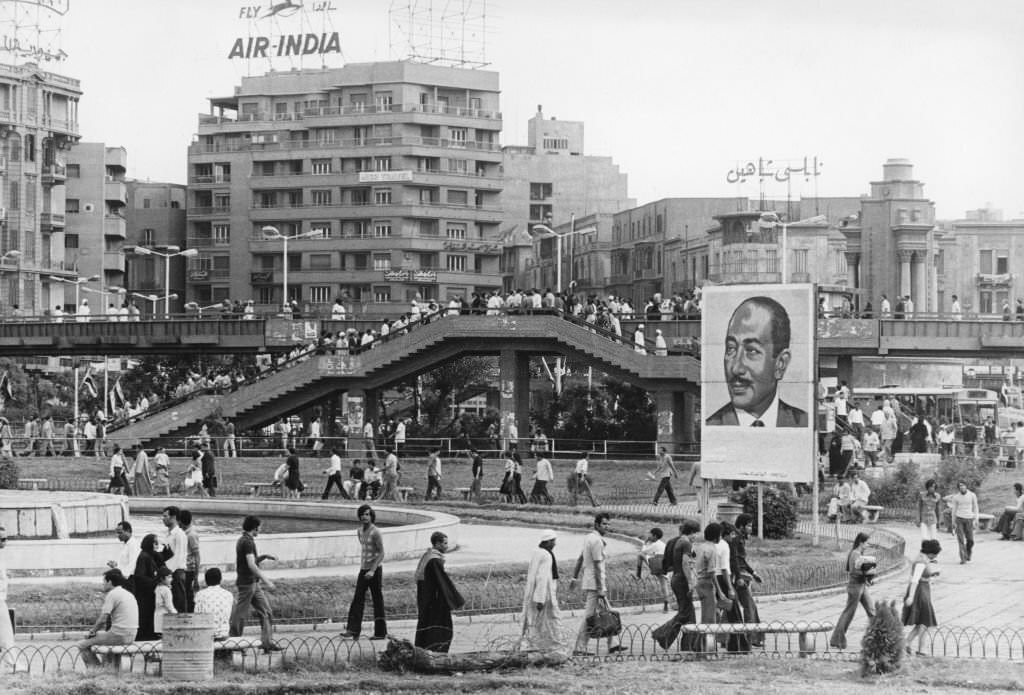
Anwar el-Sadat succeeded Nasser immediately and wasted no time establishing his own authority. In May 1971, he launched what he called the “Corrective Revolution,” consolidating his control over the government and the military. His face soon replaced Nasser’s on public posters across the country.
A square in downtown Cairo with a poster of President Anouar el-Sadat, 1970Speech by the President Sadat, 1972
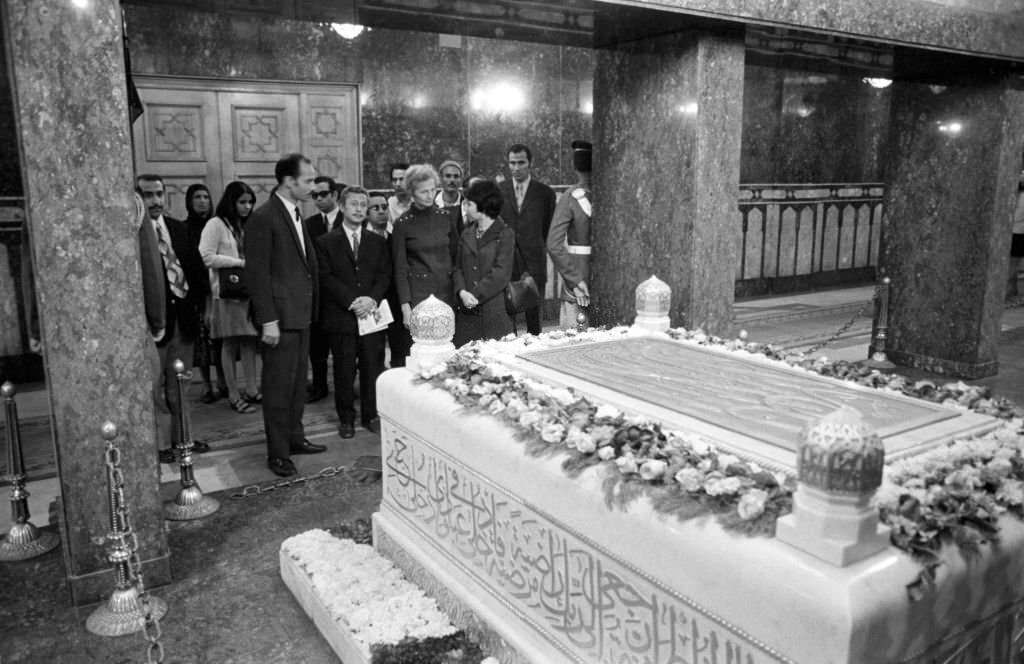
Nasser’s mausoleum became a site of regular visits by both ordinary Egyptians and political figures. Sadat himself was photographed there on multiple occasions, reinforcing his connection to his predecessor’s legacy while charting a very different political course.
Visitors at the tomb of Gamal Abdel Nasser in Cairo, 1972President Anwar el-Sadat at Nasser’s mausoleum, 1972President Anwar el-Sadat at Nasser’s mausoleum, 1972President Anwar el-Sadat at Nasser’s mausoleum, 1972President Anwar el-Sadat at Nasser’s mausoleum, 1972
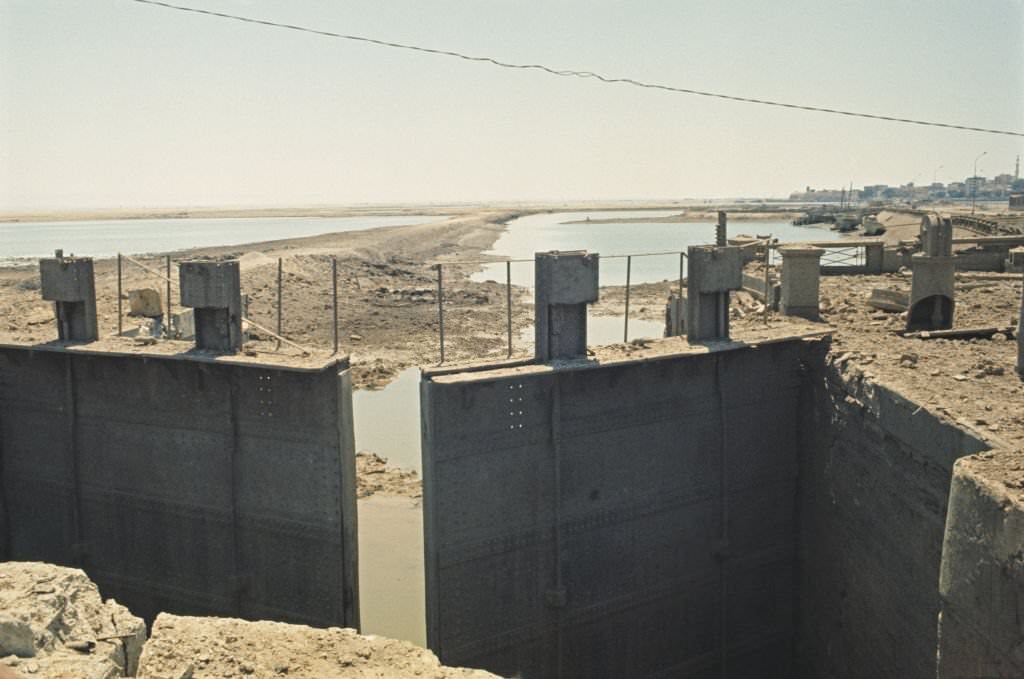
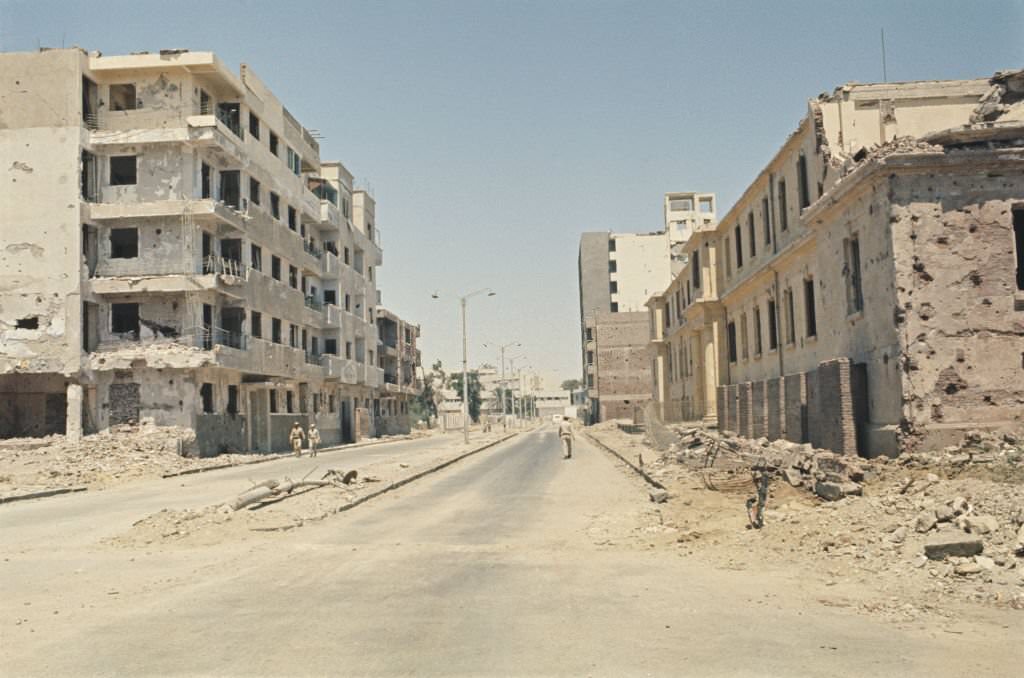
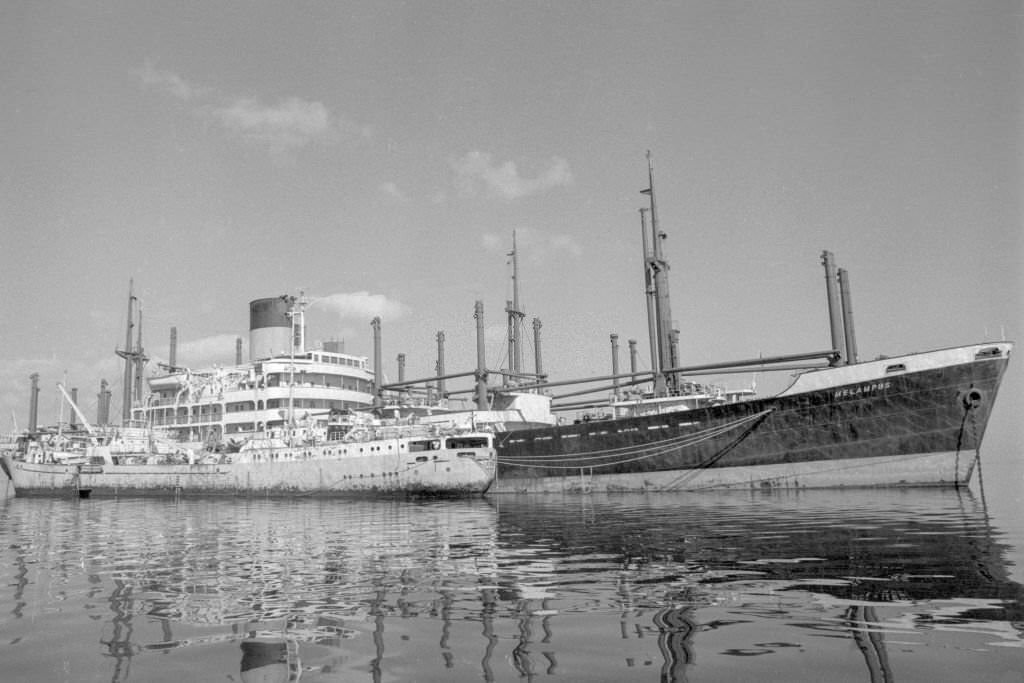
While the political transition was underway, the Suez Canal remained closed — a consequence of the 1967 Six-Day War. The canal zone bore visible scars. Damaged lock gates and abandoned military hardware lined the waterway’s banks. Cargo ships sat stranded, stuck in place as international shipping rerouted around Africa.
View of damaged lock gates at Port Tewfik, Suez Port at the southern end of the Suez Canal in Egypt on 8th September 1970.Suez Canal Zone Damage, 1970Suez Canal Blockade, 1970s
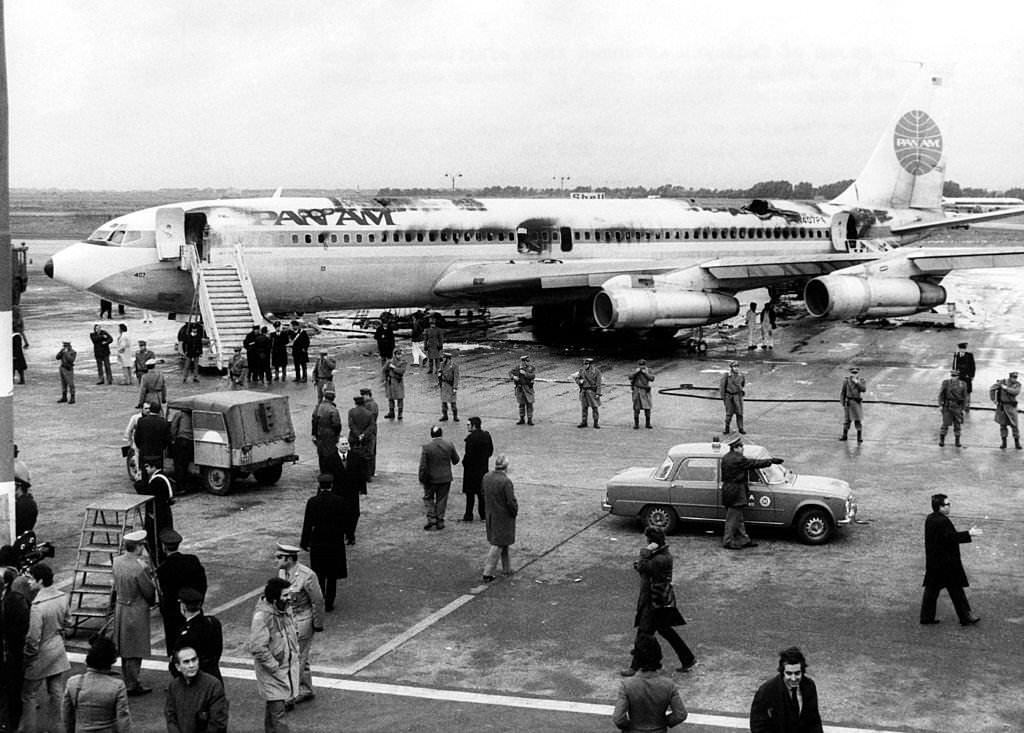
The year 1970 also brought a violent episode at Cairo’s airport. A group of PFLP fighters attacked a Pan American Airways aircraft. Around 25 people were killed and many others were injured in the assault.
The Aircraft Hijacked by the Fplp at the Caire, 1970
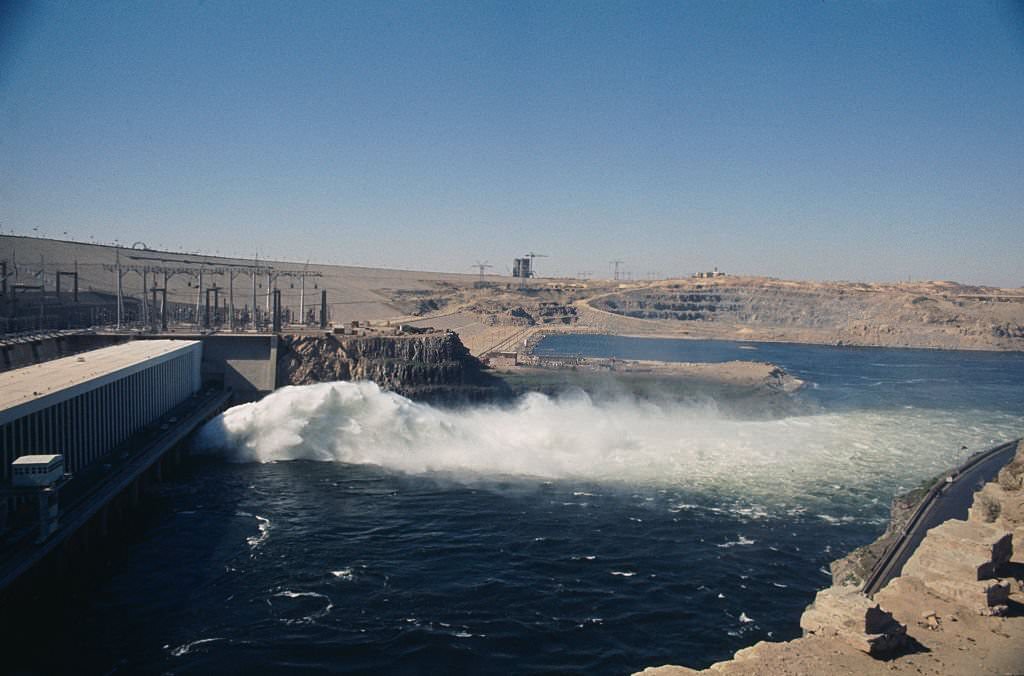
One of the few bright spots of 1970 was the opening of the Aswan High Dam’s hydroelectric power station on January 18. Water from the newly formed Lake Nasser rushed through turbine pipes, generating electricity for a country that desperately needed it. The dam was a flagship project of the Nasser era, built with Soviet assistance, and its completion marked a new chapter in Egypt’s relationship with the Nile.
Aswan High Dam and Power Station, 1970
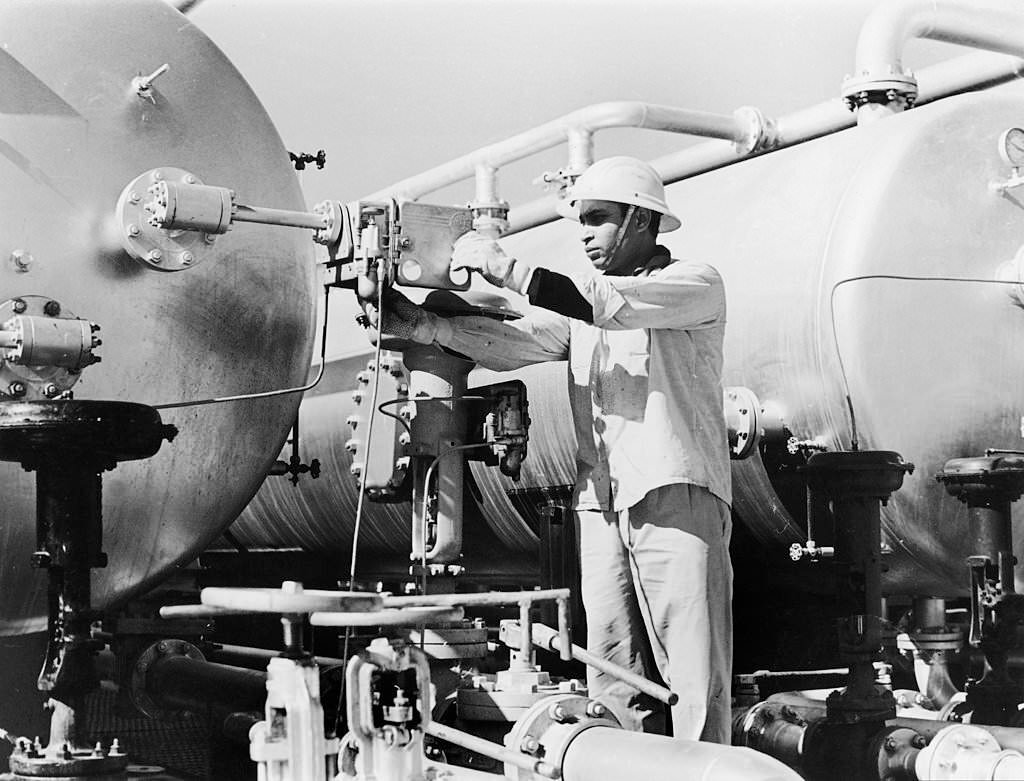
Egypt’s oil industry was also growing. Workers were already active in oilfields near Al Alamein, and petroleum would go on to become one of the country’s most important economic pillars by the end of the decade.
Egyptian Man Working in an Oilfield, Near Al Alamein, 1970
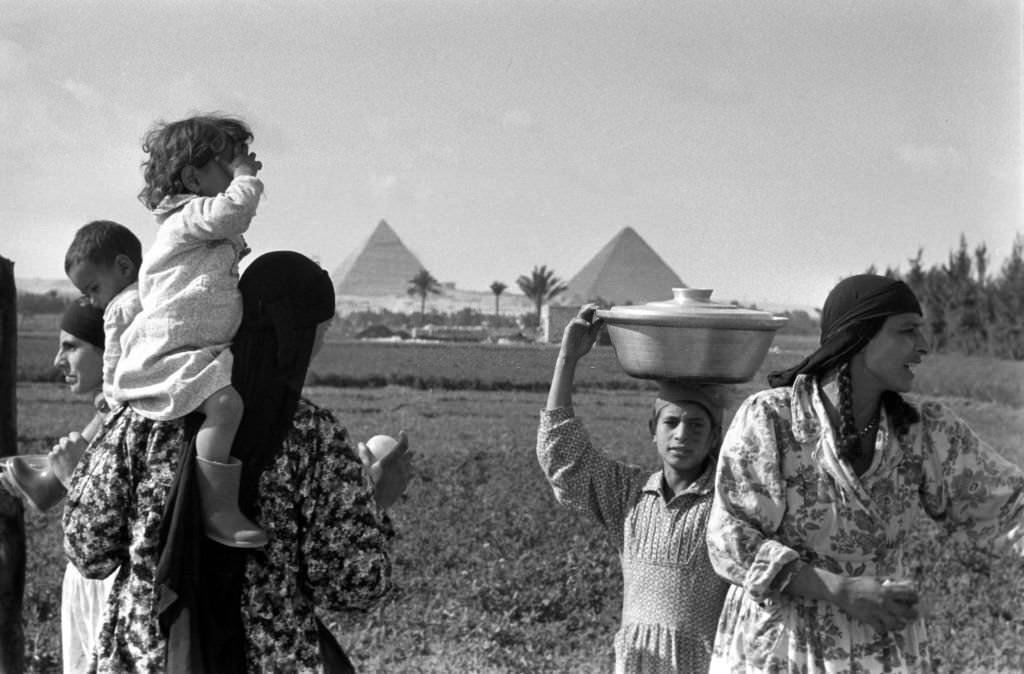
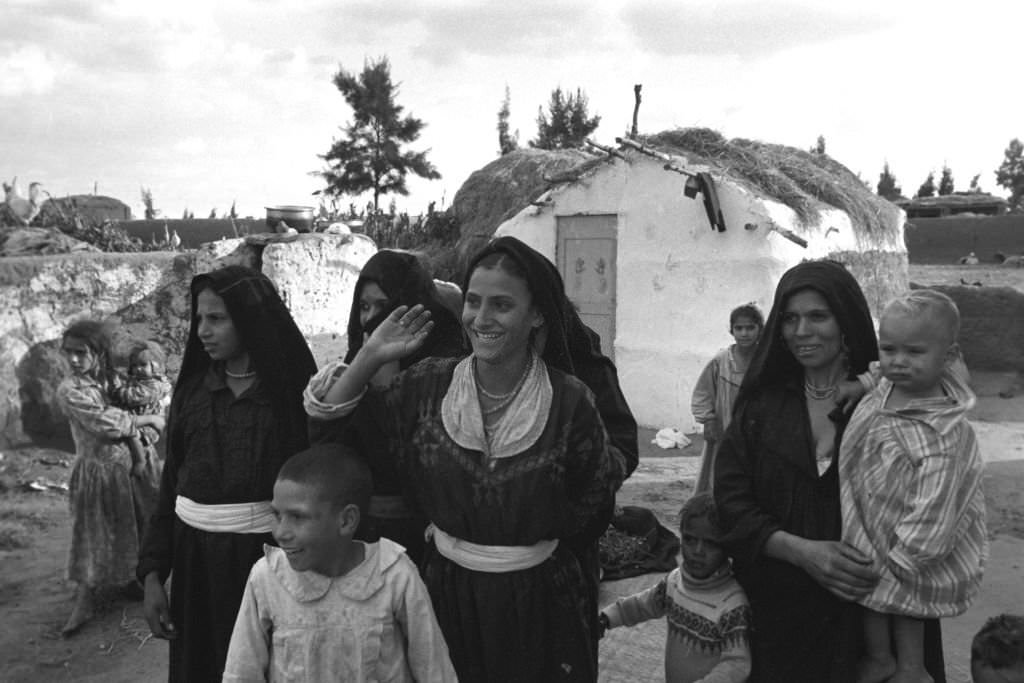
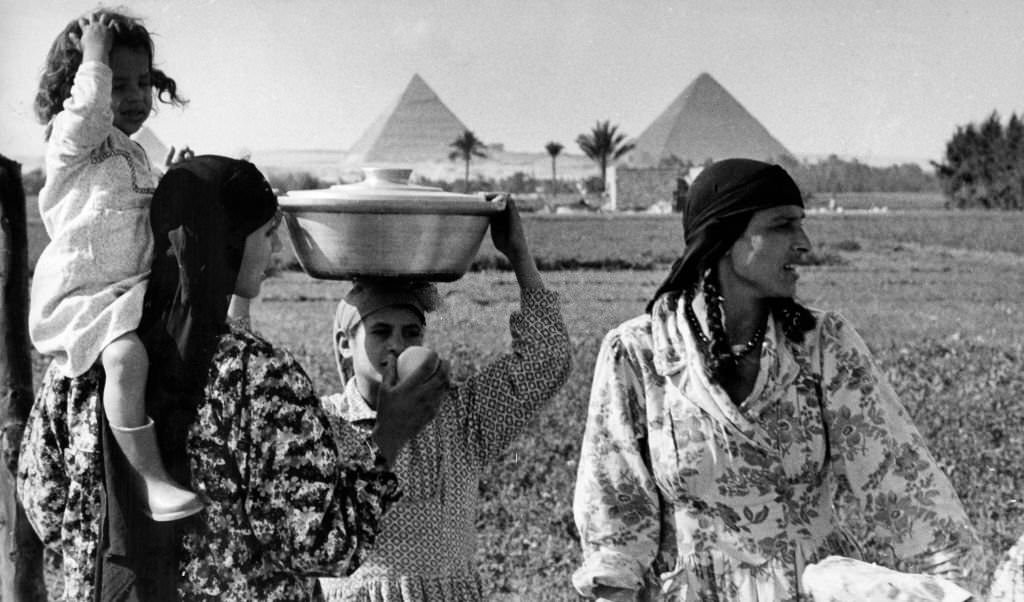
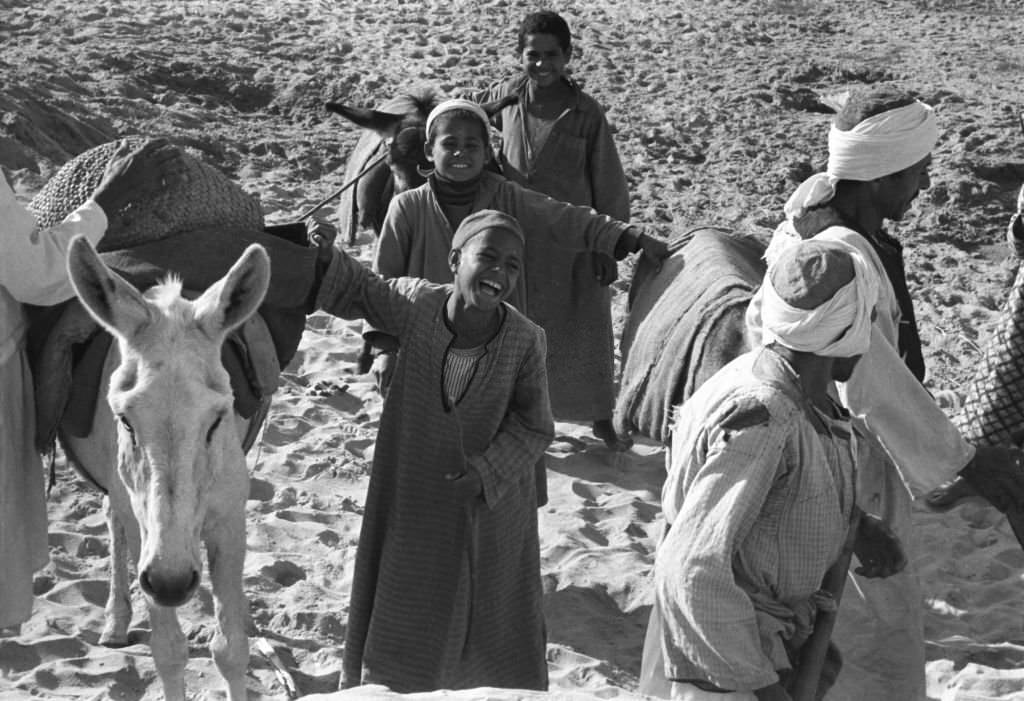
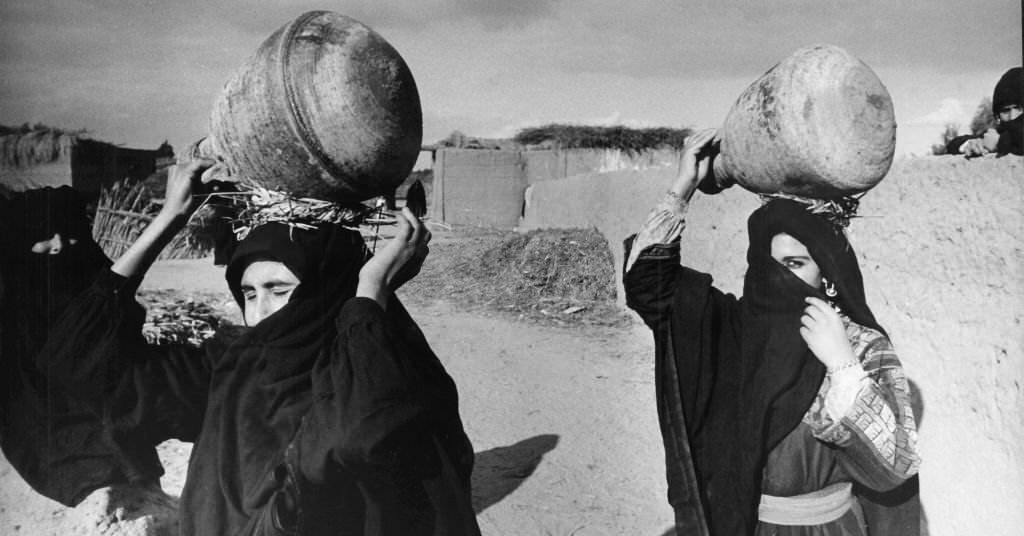
Early in the decade, life in Egyptian villages and cities carried on with a rhythm shaped by centuries of tradition. Along the Nile, women carried water jars on their heads, children worked in the fields, and craftspeople ran small workshops on the riverbanks. In Cairo’s bazaars, vendors hauled bread and fruit through narrow lanes, and merchants waited with their pack animals for customers.
Fellach women with their children in a field near Cairo, 1971Women and children in a village near Cairo, 1972Fellah women in a field in front of the pyramids near Cairo, 1972Peasant children working in the fields, photographed in a village near Cairo, 1972Veiled women from a village near Luxor (Egypt) carry water jars on their heads, 1972
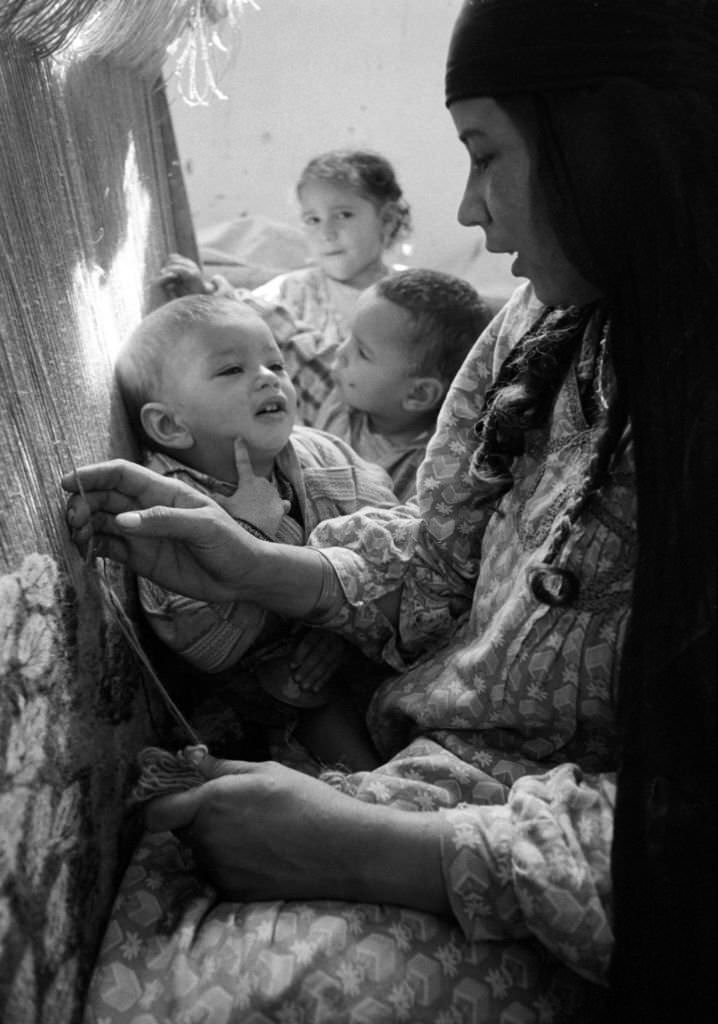
A carpet weaver with her children at work in a village near Cairo, 1972
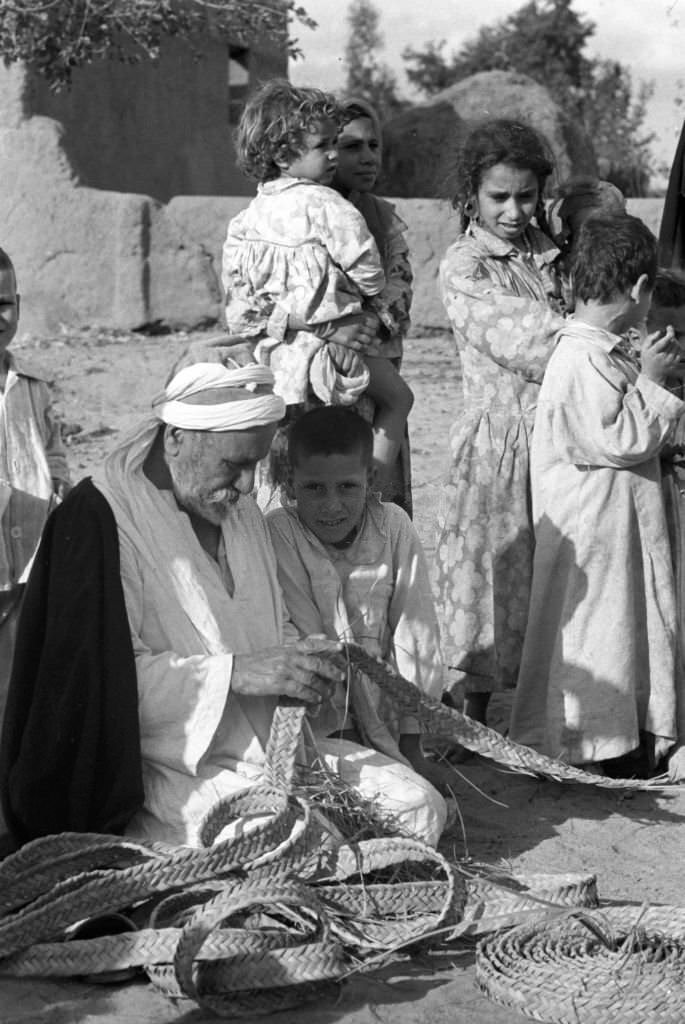
A grandfather with his grandchildren in a village near Cairo, 1972
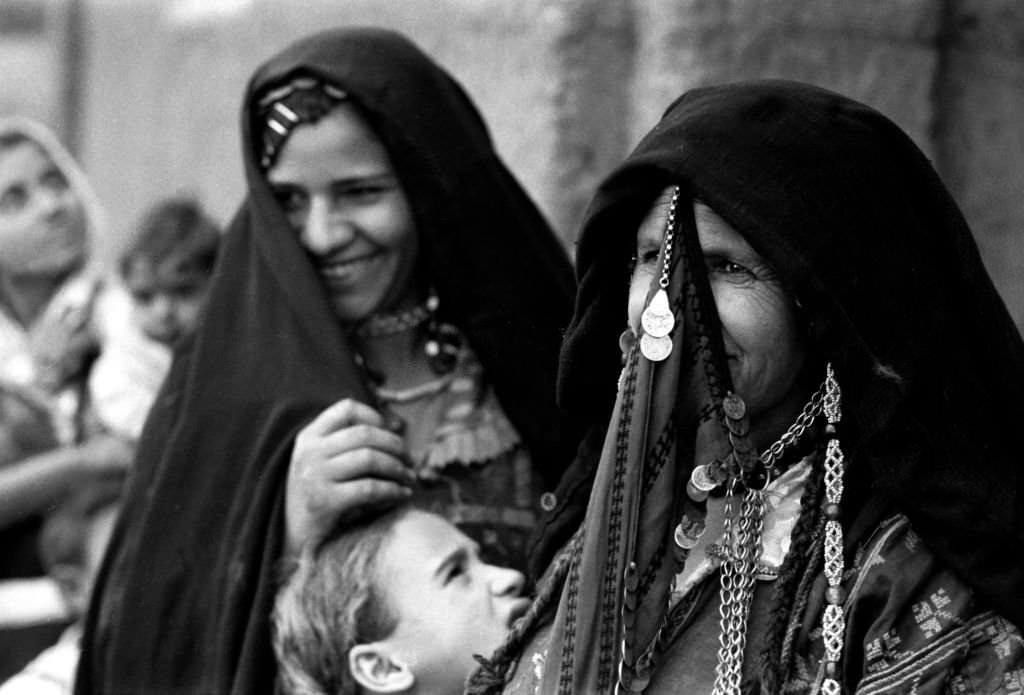
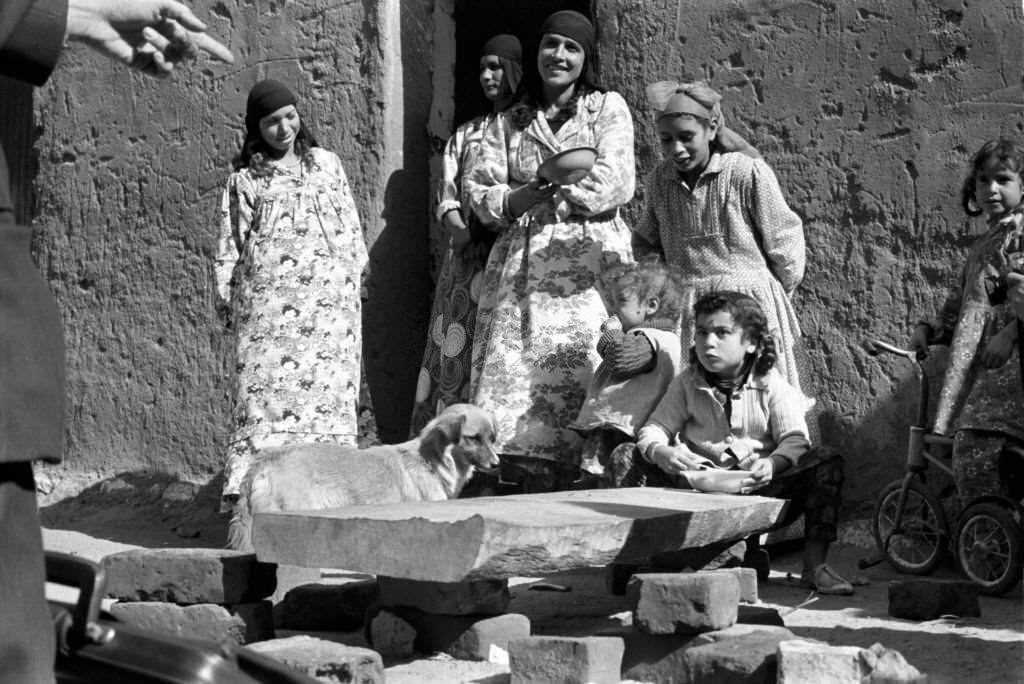
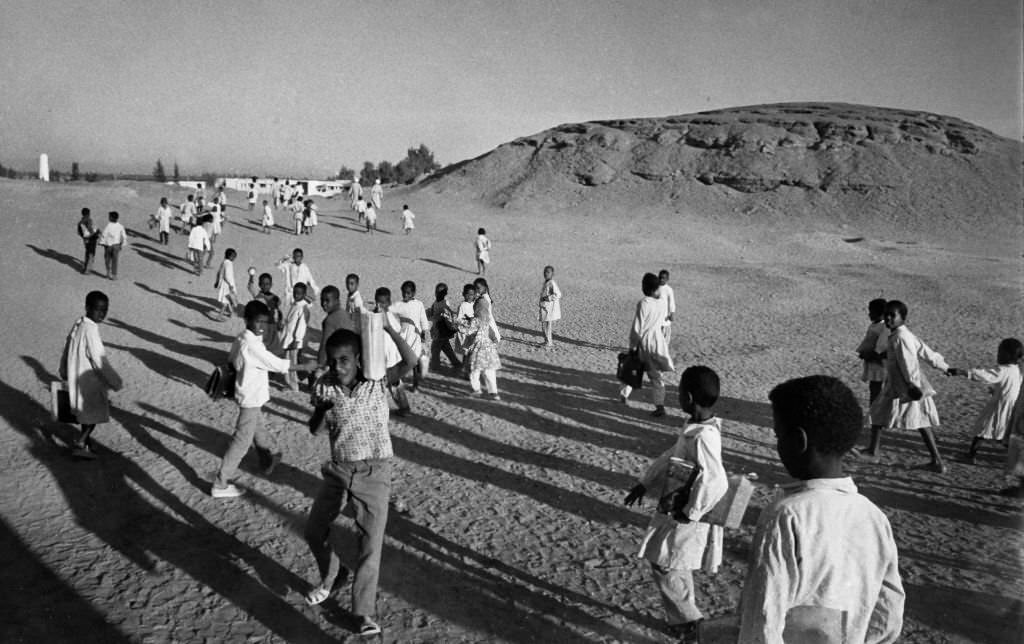
Woman in festival clothes in a village near Cairo (Egypt), 1972Young mothers with their children in front of a house in Cairo, 1972Pupils near Aswan (Egypt) on their way to the new school, 1972
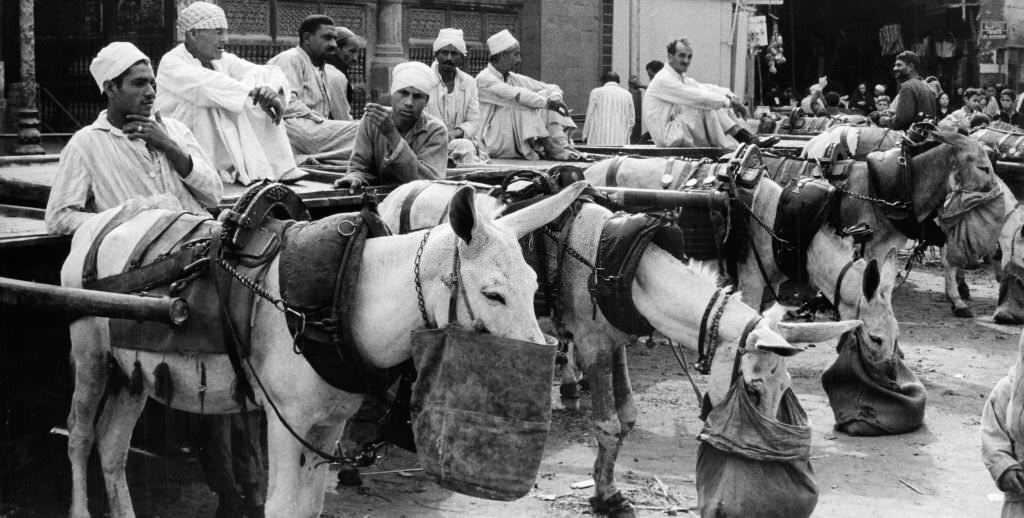
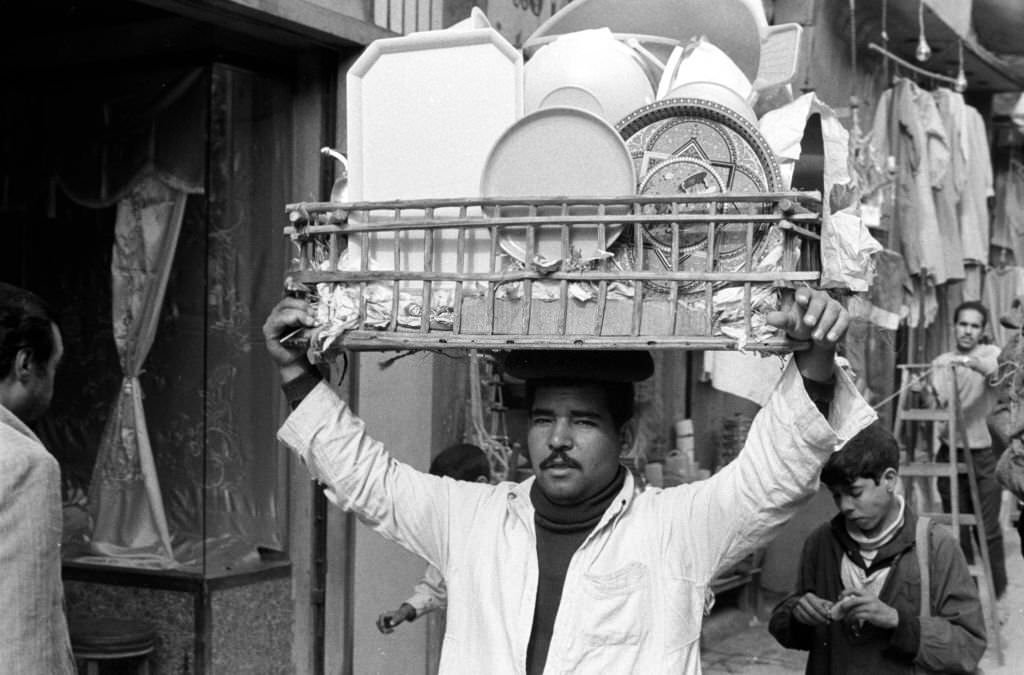
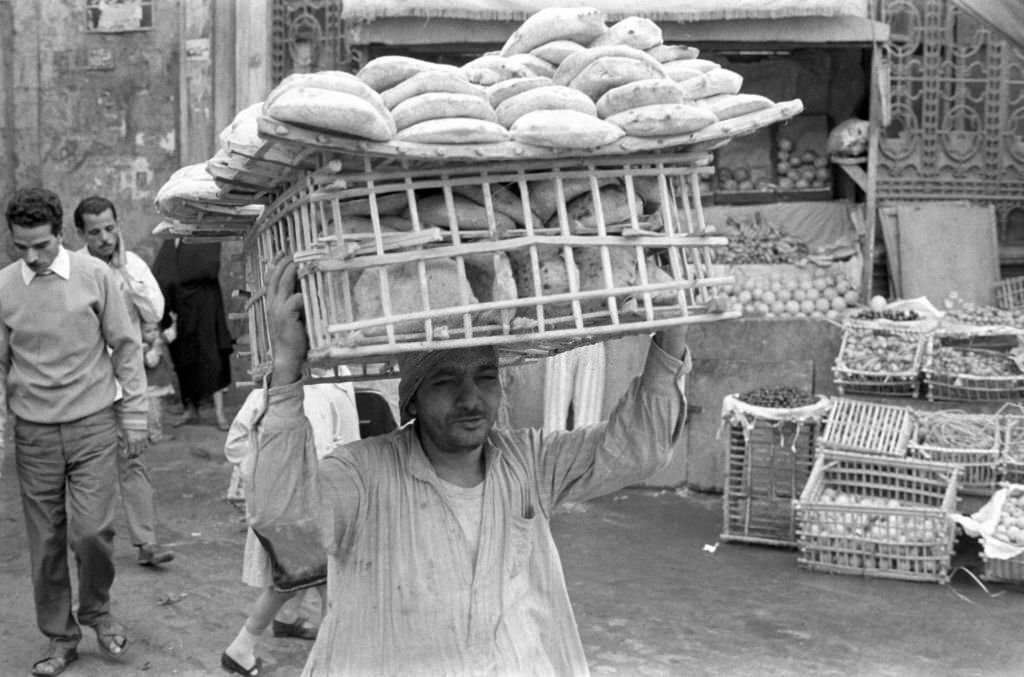
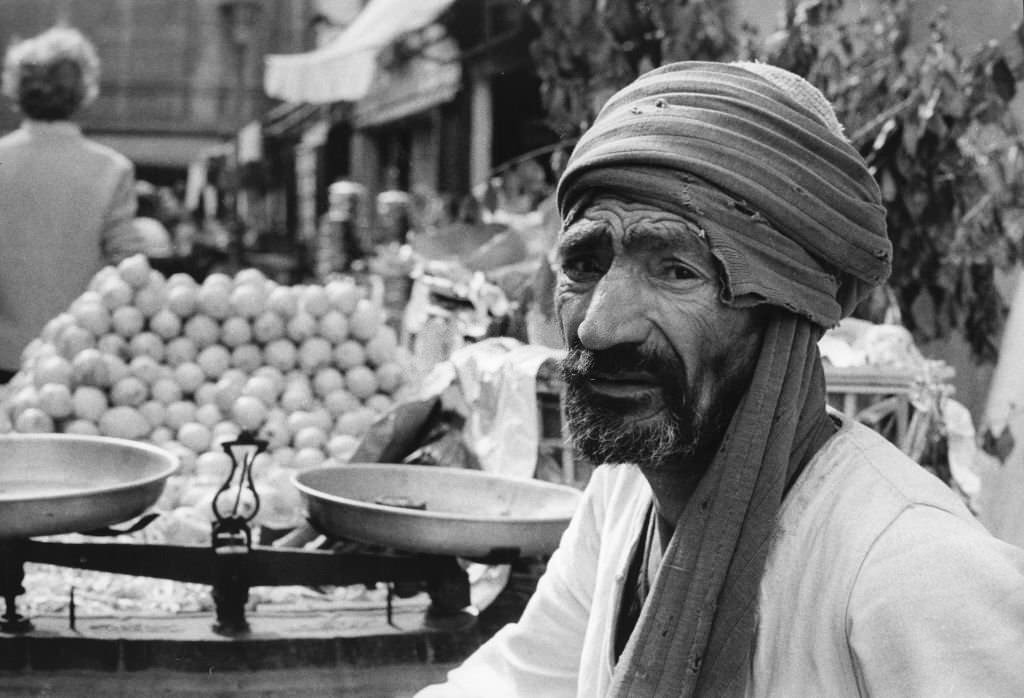
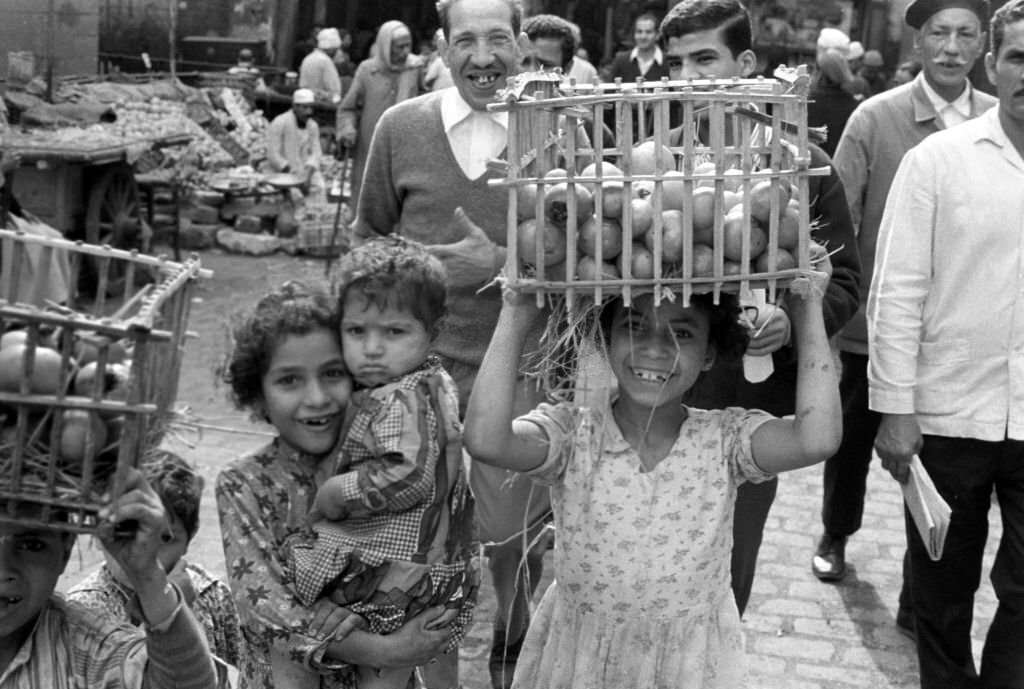
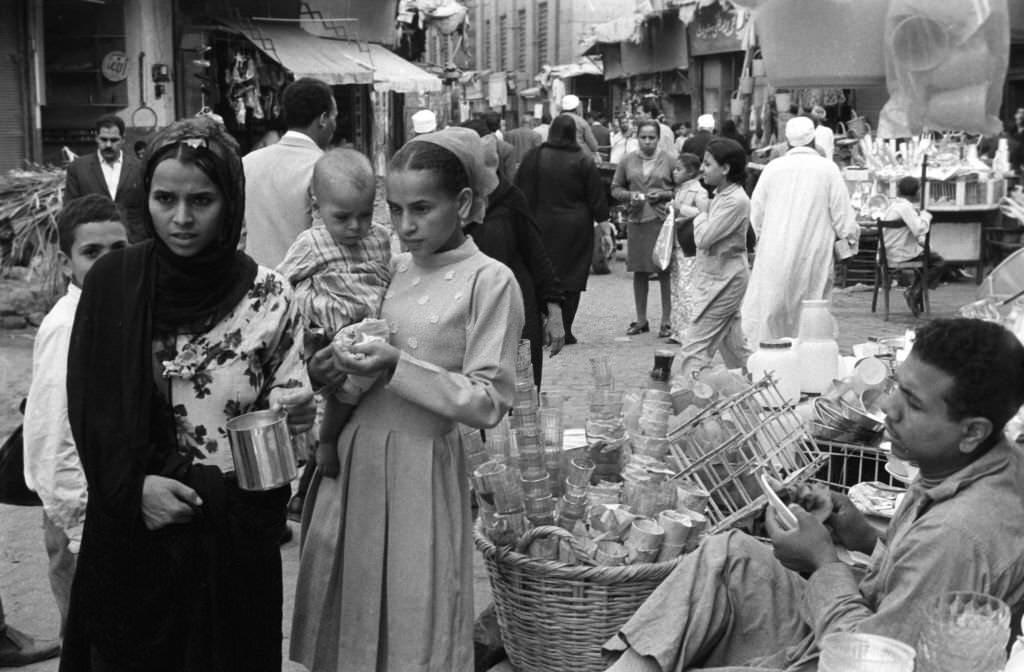
Cairo’s markets were a world of their own. At the famous Khan El Khalili bazaar, vendors balanced woven baskets of flatbread and fruit on their heads. Merchants and porters with pack animals crowded the streets around Ataba Square. Two young women without veils shopped side by side, a reminder that Egyptian society in the early 1970s was far more openly diverse than it would later become.
Merchants and transport port workers wait with their pack animals for customers at a bazaar in Cairo, 1972A vendor carries a basket of household goods on his head at a bazaar in Cairo, 1972A baker carries a woven basket with flatbread on his head to a stall in a bazaar in Cairo, 1972A fruit wither in front of its scales at a stand in the Khan El Khalili bazaar in Cairo, 1972A girl carries a woven basket with fruit on her head to a stall at a bazaar in Cairo, 1972Two young women without veils shopping in a bazaar in Cairo, 1972A mother with her daughter on their way to go shopping in a bazaar in Cairo, 1972
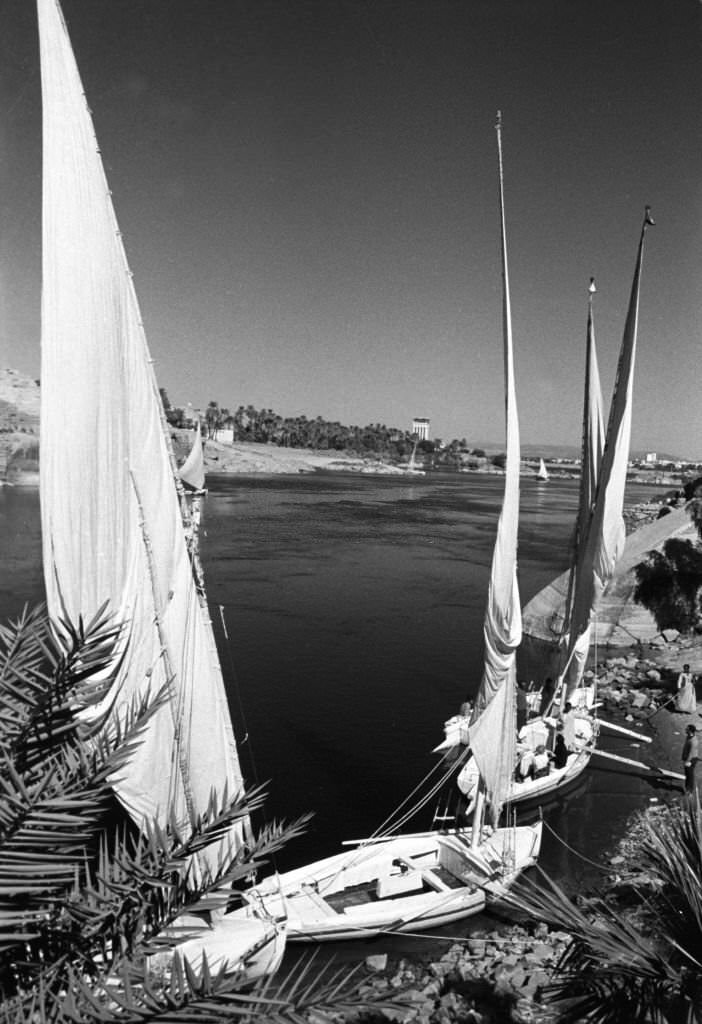
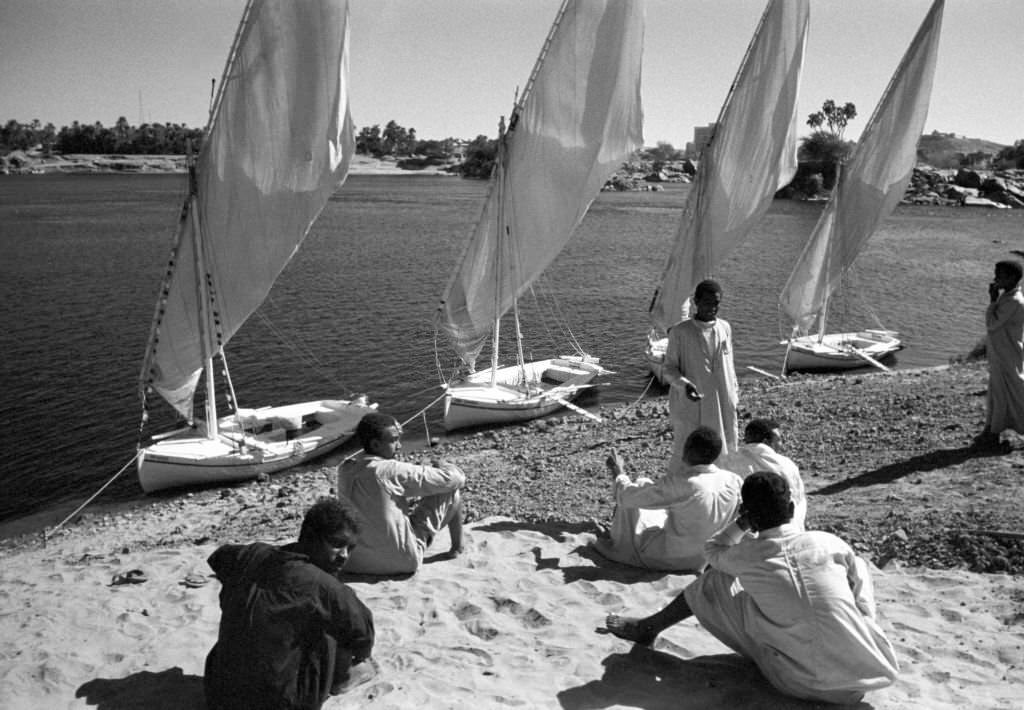
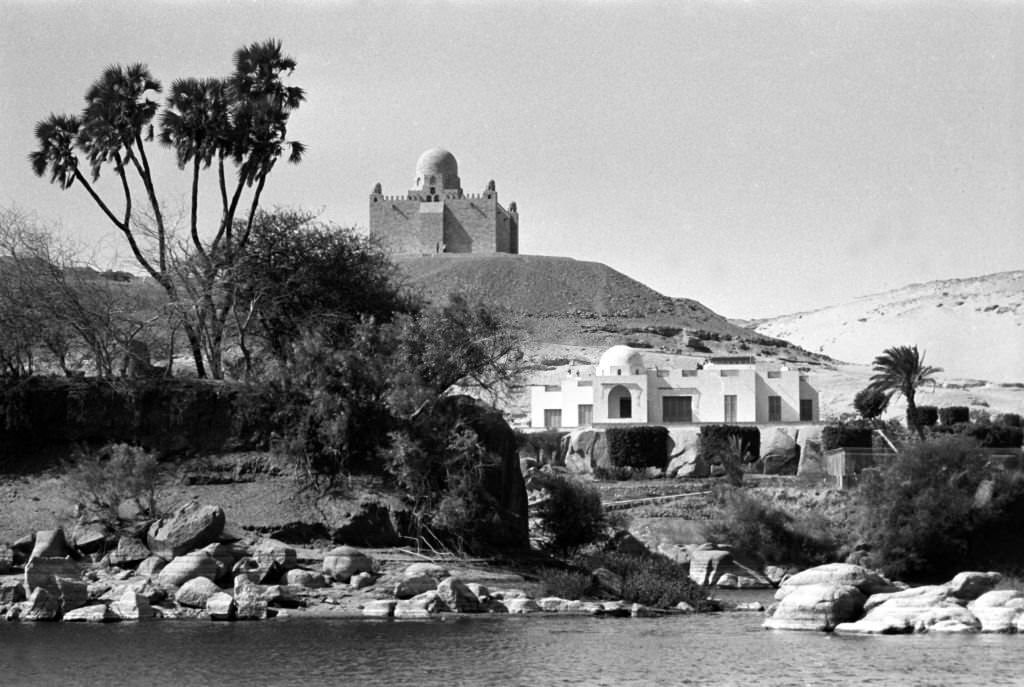
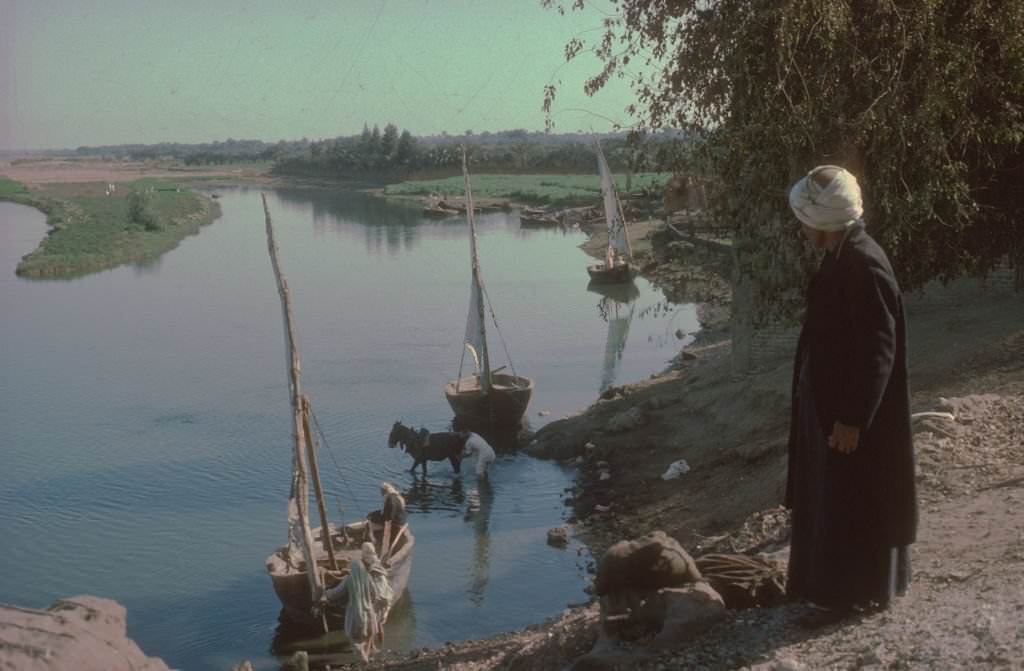
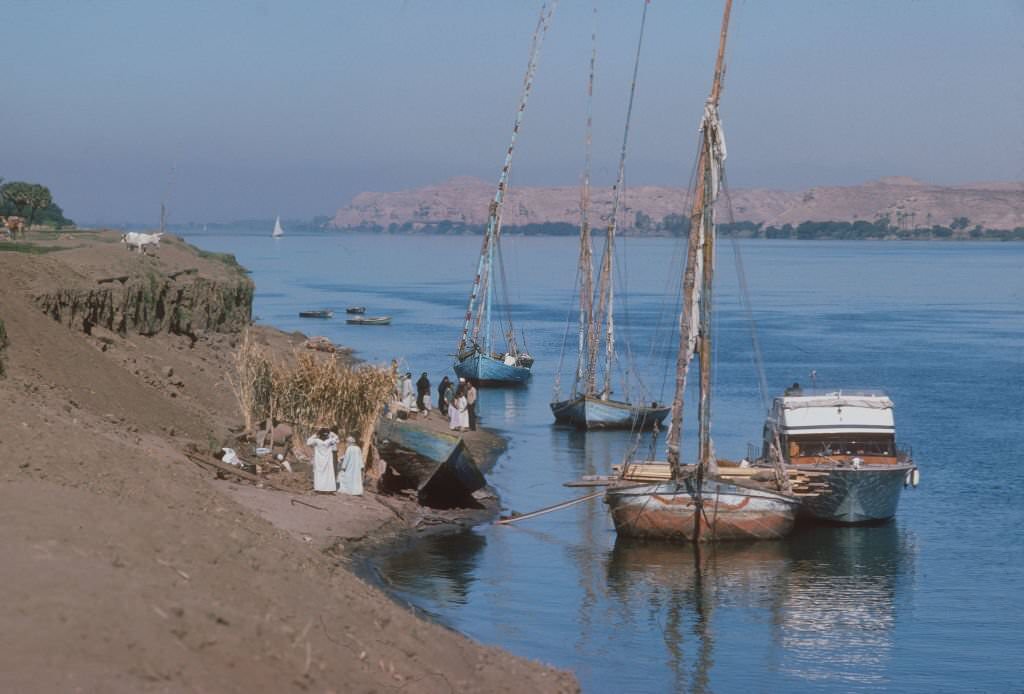
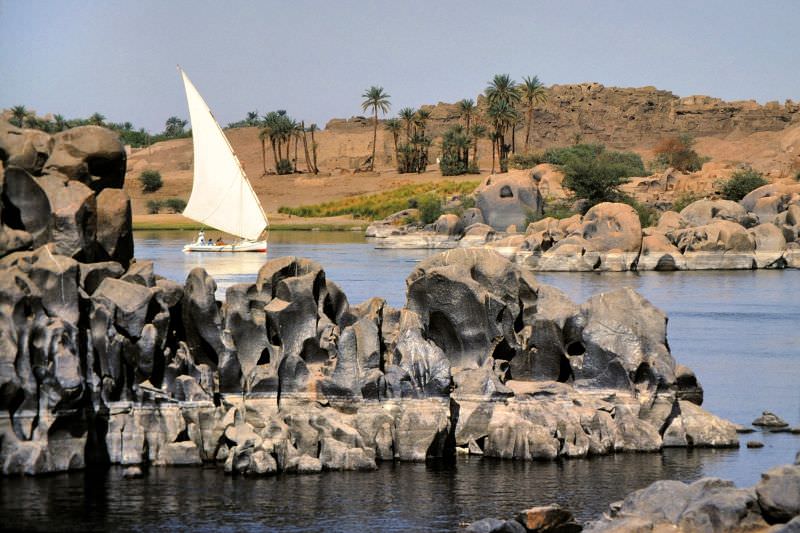
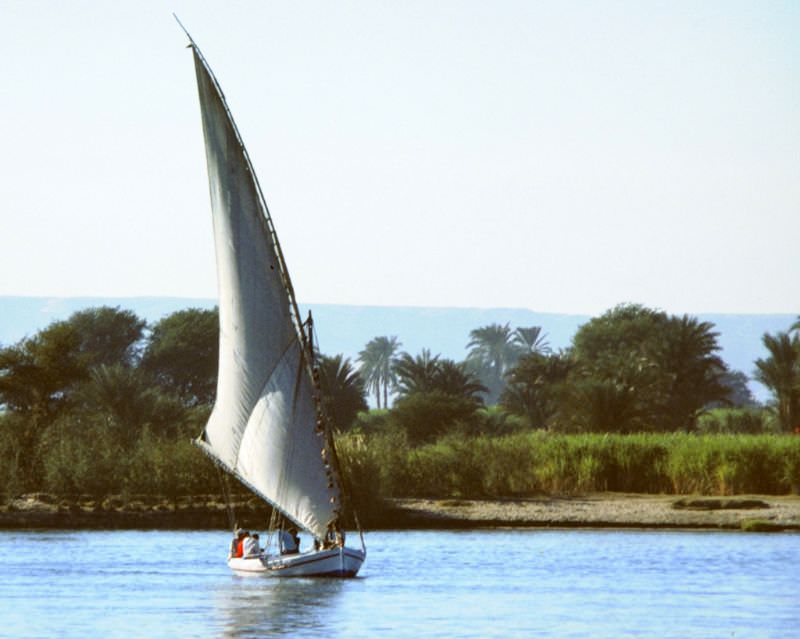
The Nile near Aswan drew its own kind of life. Feluccas — the traditional wooden sailboats that had been used on the river for thousands of years — dotted the water. Men sat on the banks in the shade, watching the boats drift past. Across the river stood the mausoleum of the Aga Khan on the western hillside, a landmark that had become part of the landscape since his burial there in 1957.
Small sailing boats, so-called feluccas, on the banks of the Nile near Aswan, Egypt, 1972Men sit on the banks of the Nile near Aswan (Egypt) in front of small boats, so-called feluccas, 1972View over the Nile near Aswan (Egypt) with the mausoleum of the Aga Khan on a mountain on the west bank, 1972
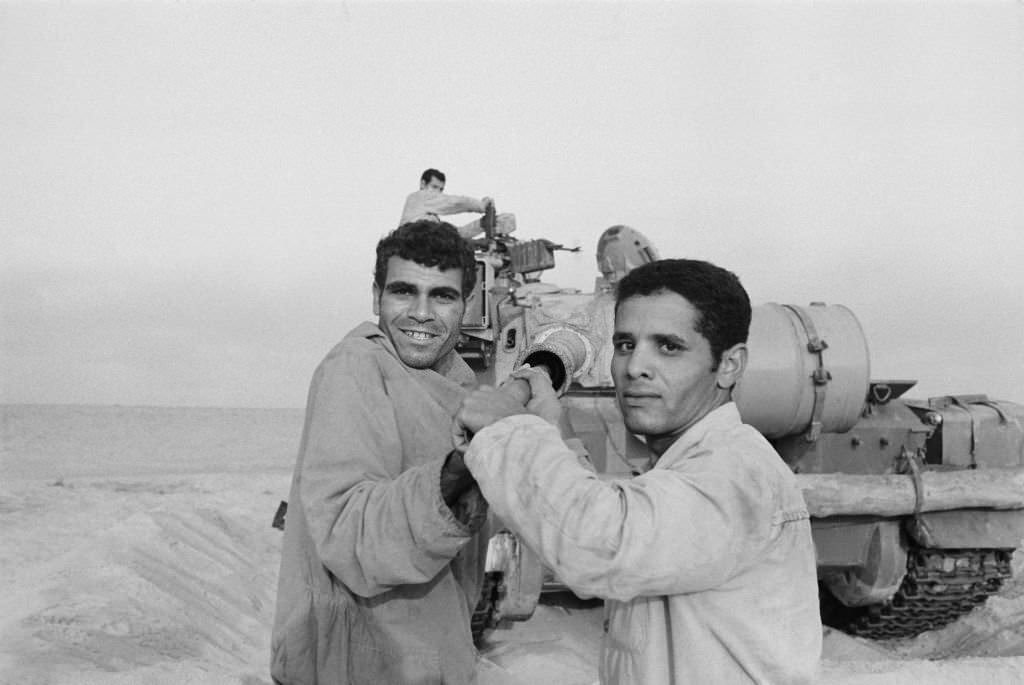
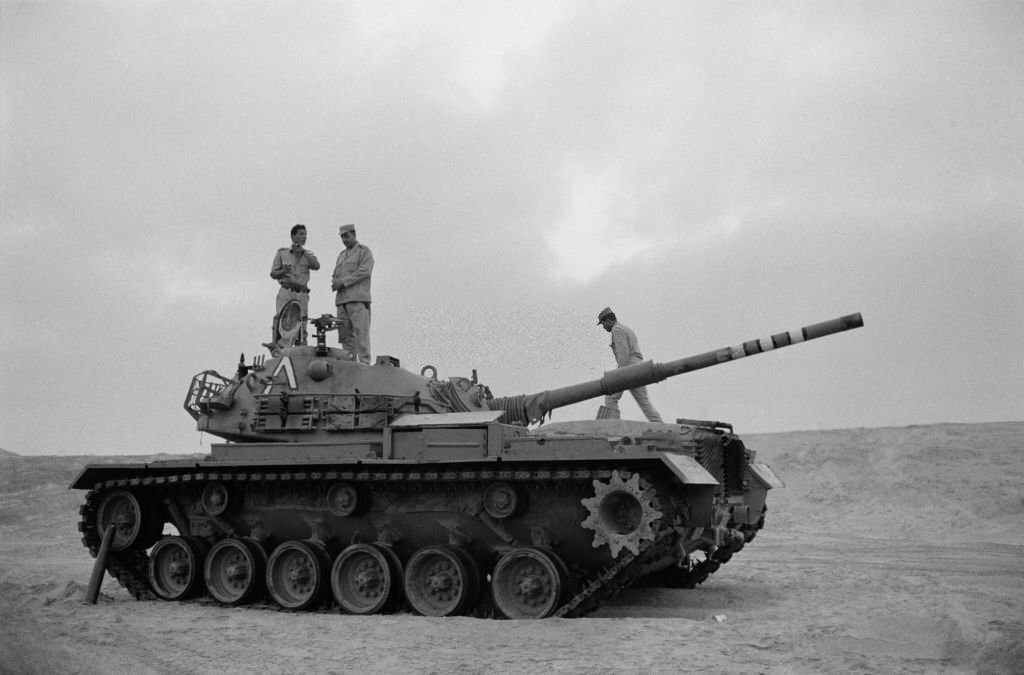
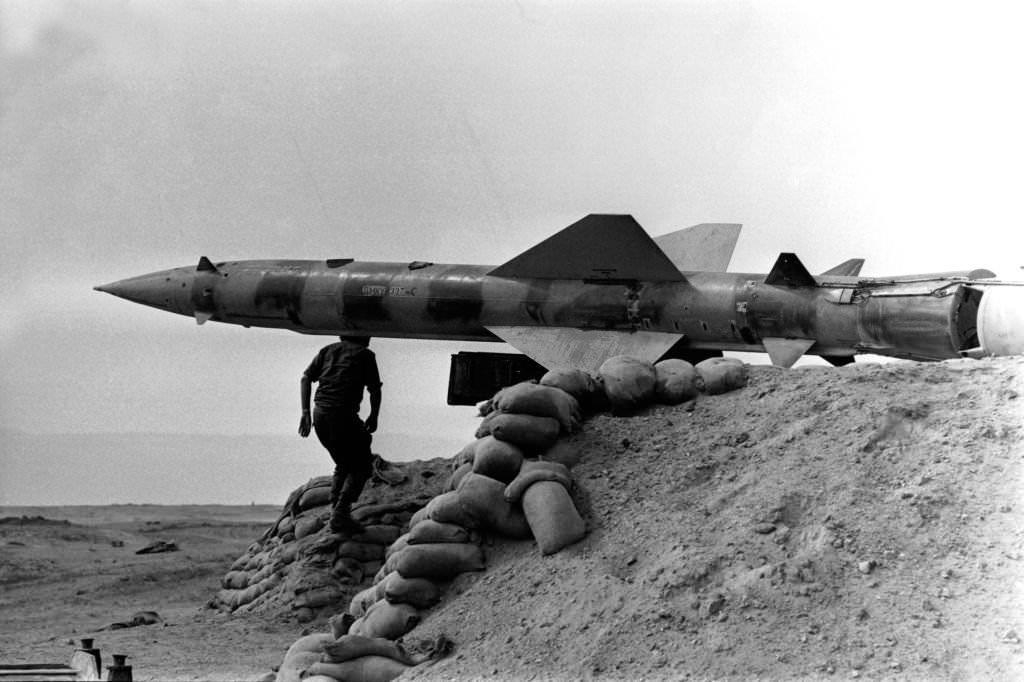
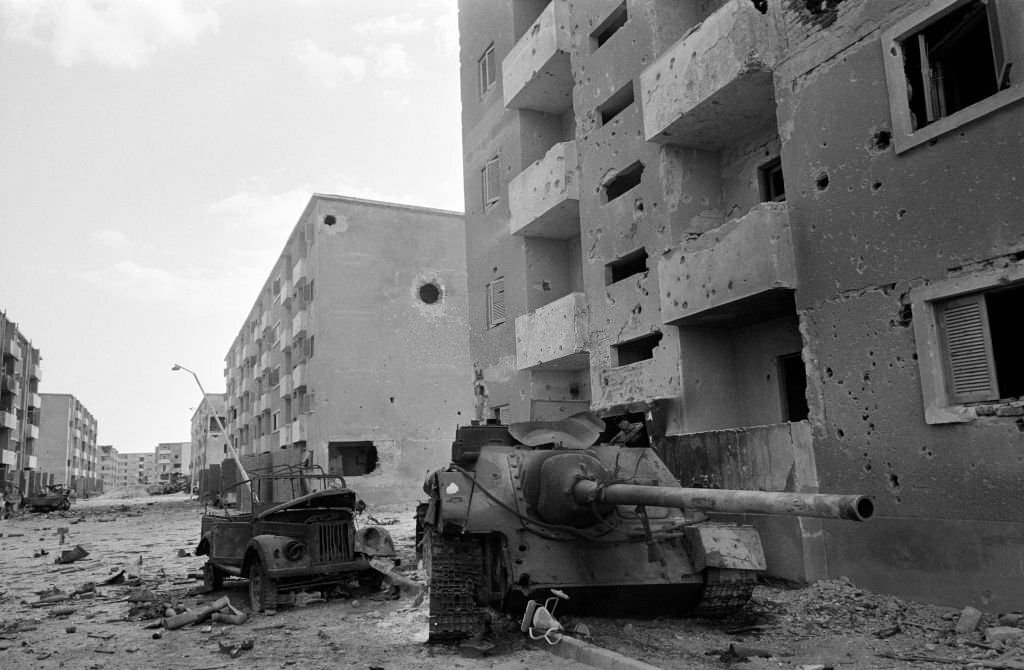
In October 1973, Egypt launched the Yom Kippur War — a surprise military offensive across the Suez Canal into the Israeli-held Sinai Peninsula. Egyptian soldiers crossed the canal and captured Israeli positions. The war was a defining moment for Sadat, who framed it as a military and psychological victory, even after a ceasefire was negotiated. The images from the front show soldiers on tanks captured from the Israeli army, supply lines running near Suez, and the visible cost of the fighting on the ground.
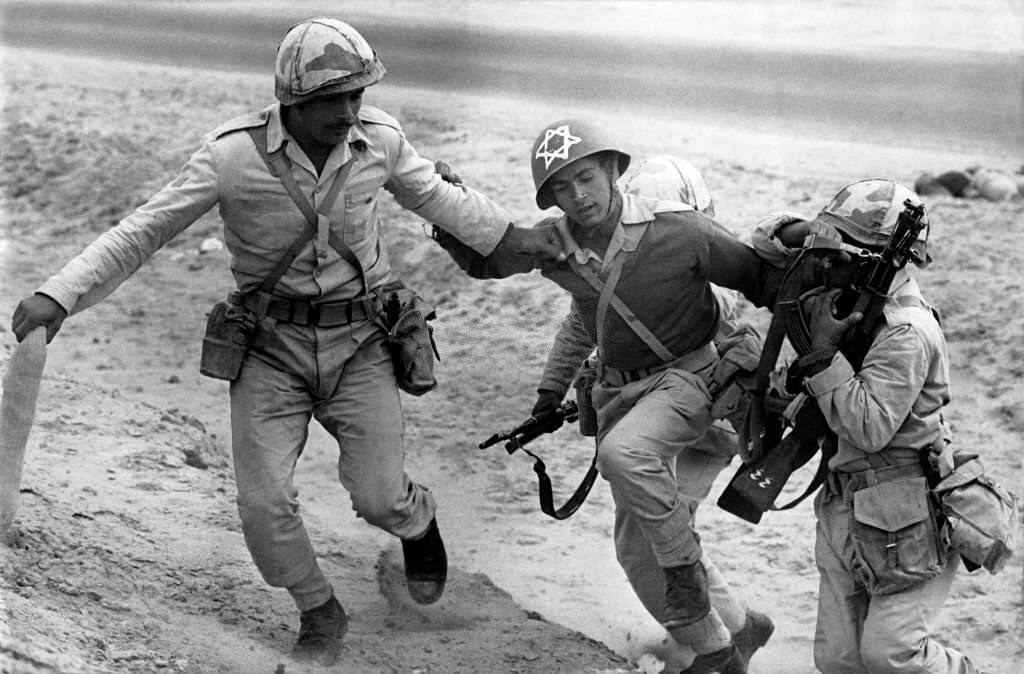
Egyptian soldiers on the Suez Canal front during the Yom Kippur War in October 1973, Egypt.Egyptian soldiers on a tank captured from the Israeli army near the front at the Suez Canal during the Yom Kippur War in October 1973Supplying the Egyptian Third Army during the Yom Kippur War in November 1973 near Suez, Egypt.An Egyptian plays the role of an Israeli prisoner during training in 1973.Destroyed Egyptian military vehicles in a deserted Suez street, 1973An Egyptian woman transports a water cistern on her head in a desolated background of the war passage, 1973
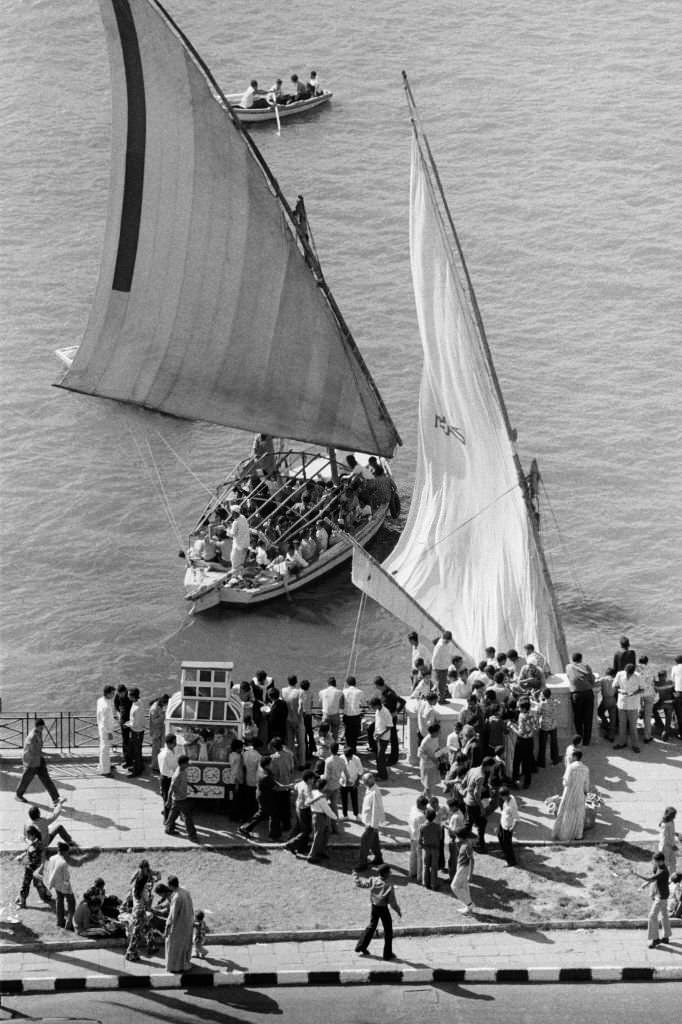
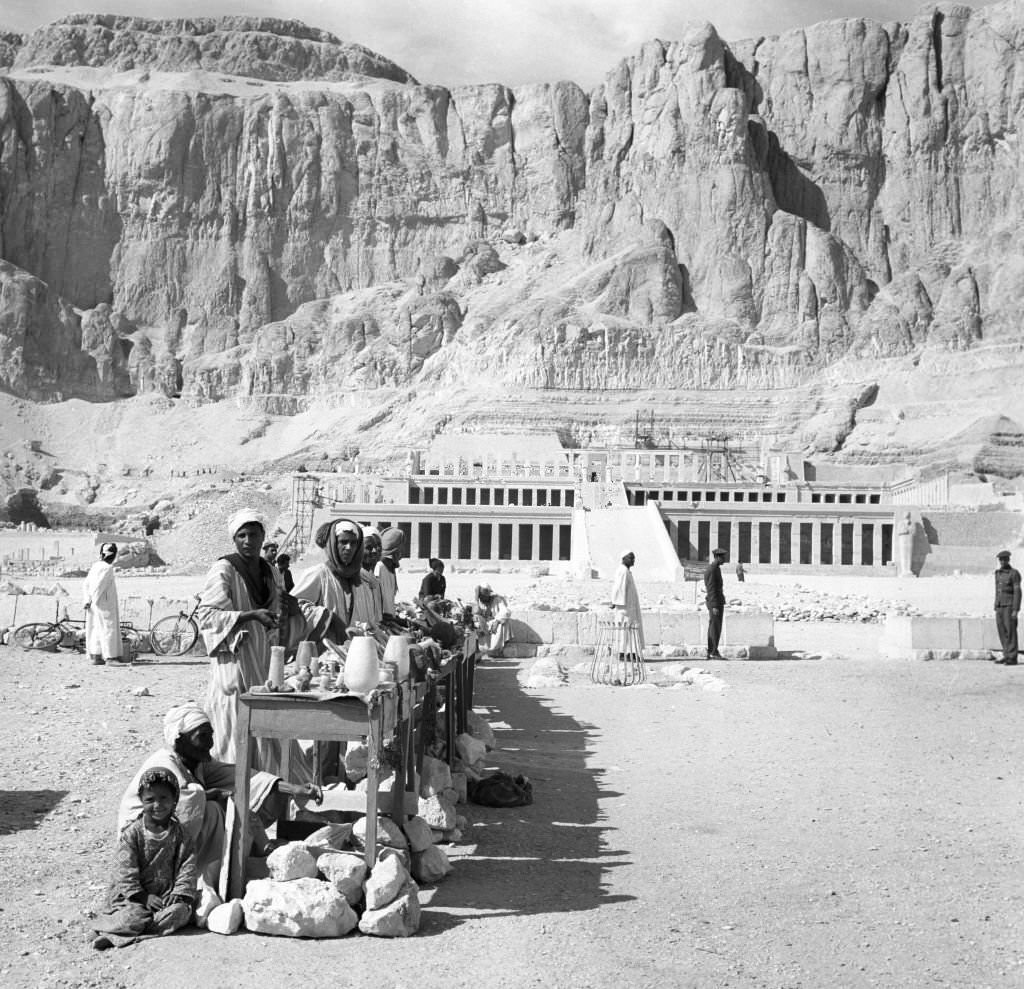
Even as war raged near the canal, life along the Nile continued. Feluccas still sailed past Cairo in October 1973, and the great temples of Thebes stood as they had for millennia.
Feluccas on the Nile in Cairo in October 1973, Egypt.Temple of Hatshepsut in Thebes 1973
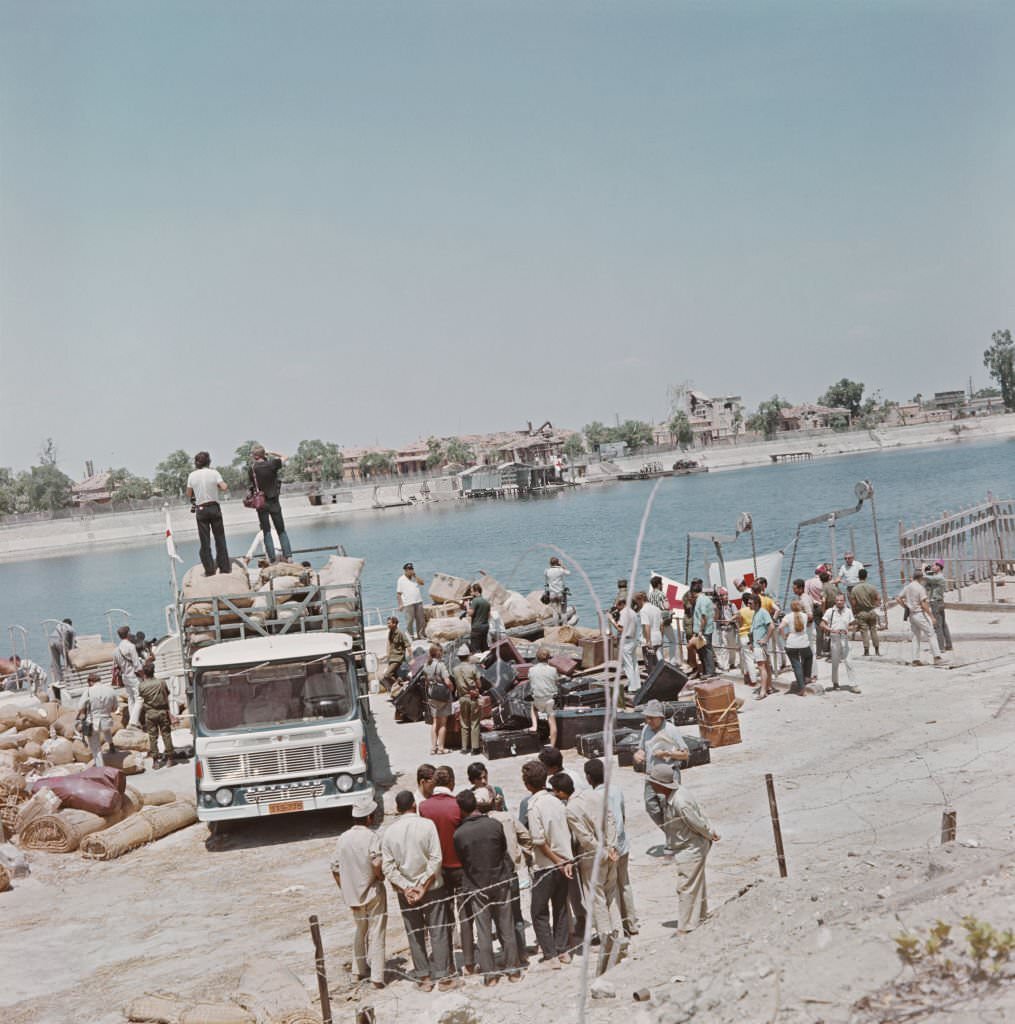
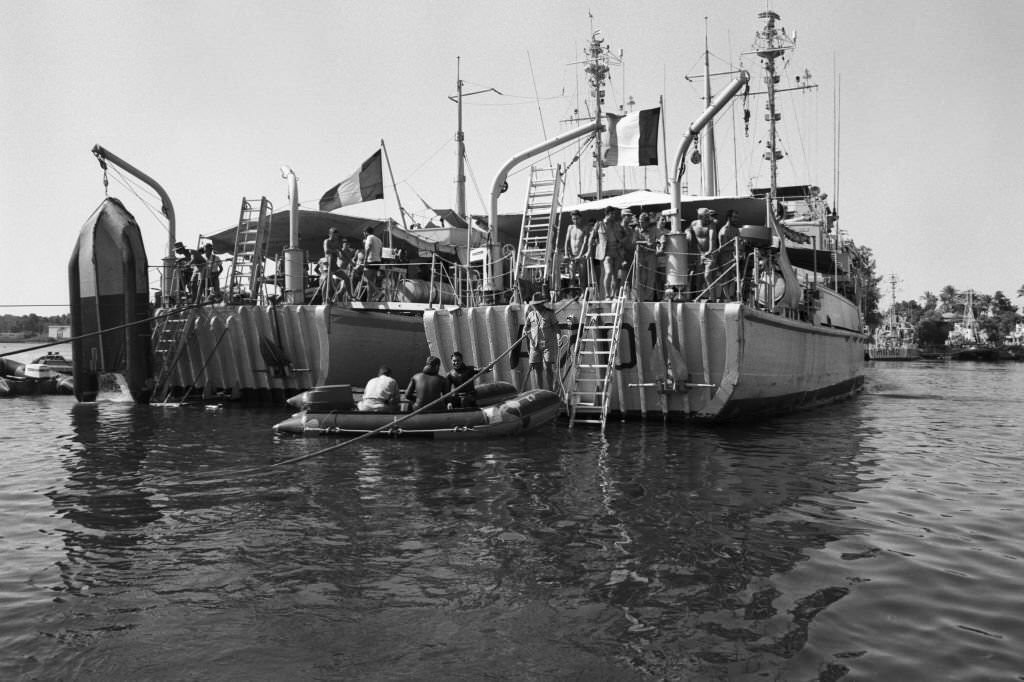
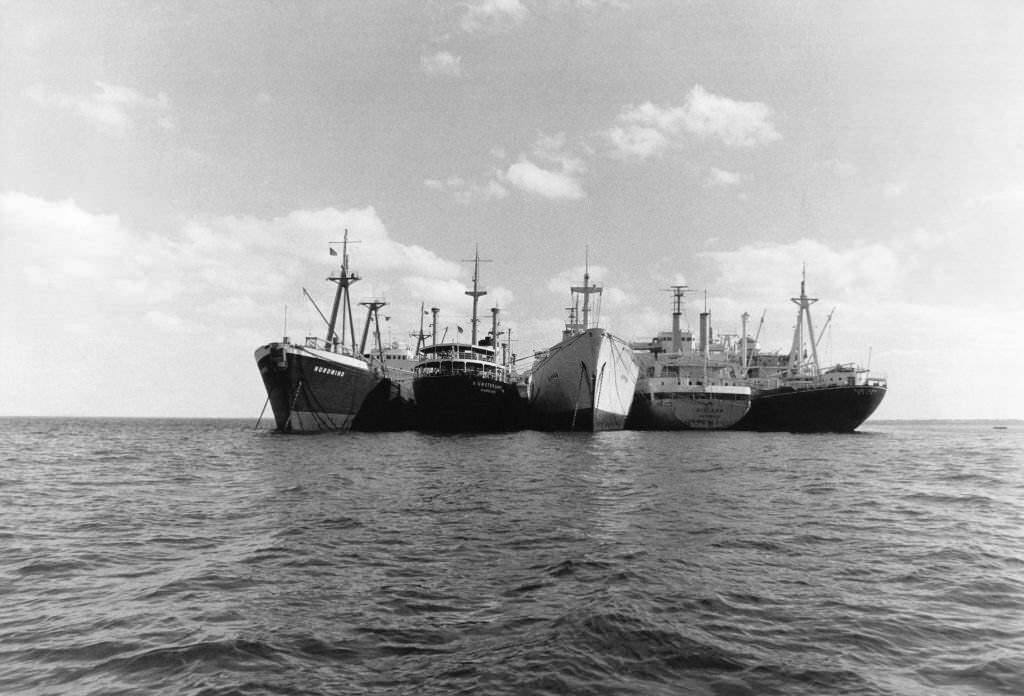
With the war over, attention turned to reopening the Suez Canal. French Navy clearance divers conducted mine-clearing operations in September 1974. Ships that had been stranded in the canal for years waited for the signal to move. Crews rotated on and off their vessels in shifts during the long months of preparation before the waterway finally reopened to traffic.
Clearance divers during a mine clearance operation carried out by the French Navy in the Suez Canal on September 24, 1974, EgyptCargo ships stranded in the Suez Canal in 1974Crews take turns on board ships while waiting for the reopening of the canal, January 3, 1974, Egypt.
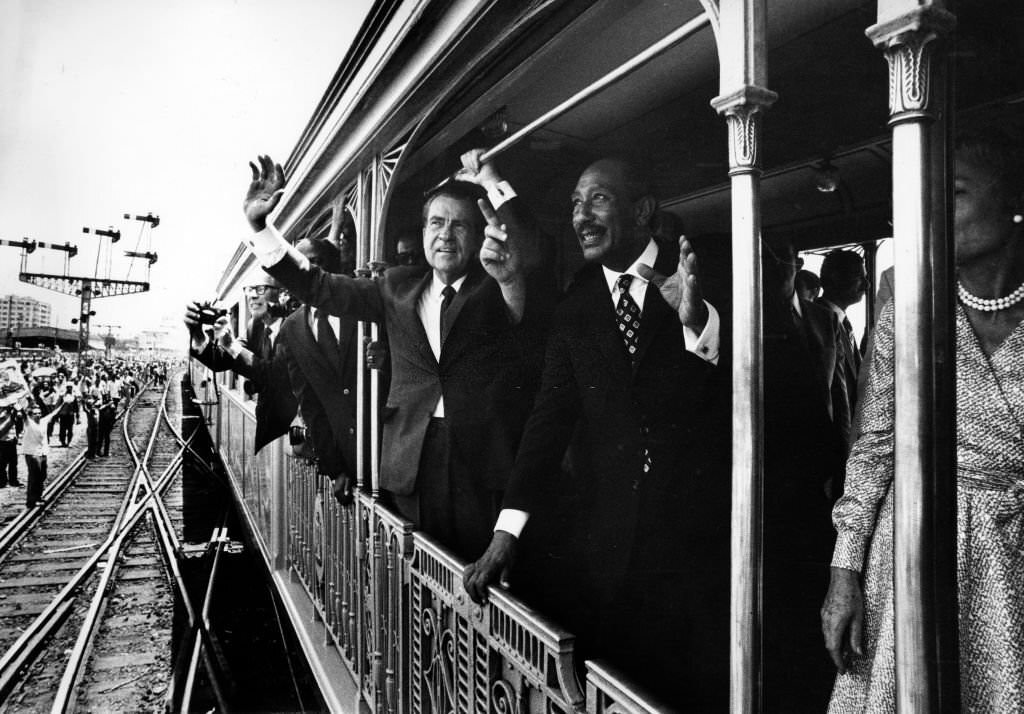
In June 1974, U.S. President Richard Nixon visited Cairo. He and Sadat rode together on a train through the city, waving to enormous crowds. The visit signaled a dramatic shift in Egypt’s foreign alignment — away from the Soviet Union and toward the United States.
Egyptian President Anwar al-Sadat and US President Richard Nixon wave to crowds aboard a train in Cairo in June 1974
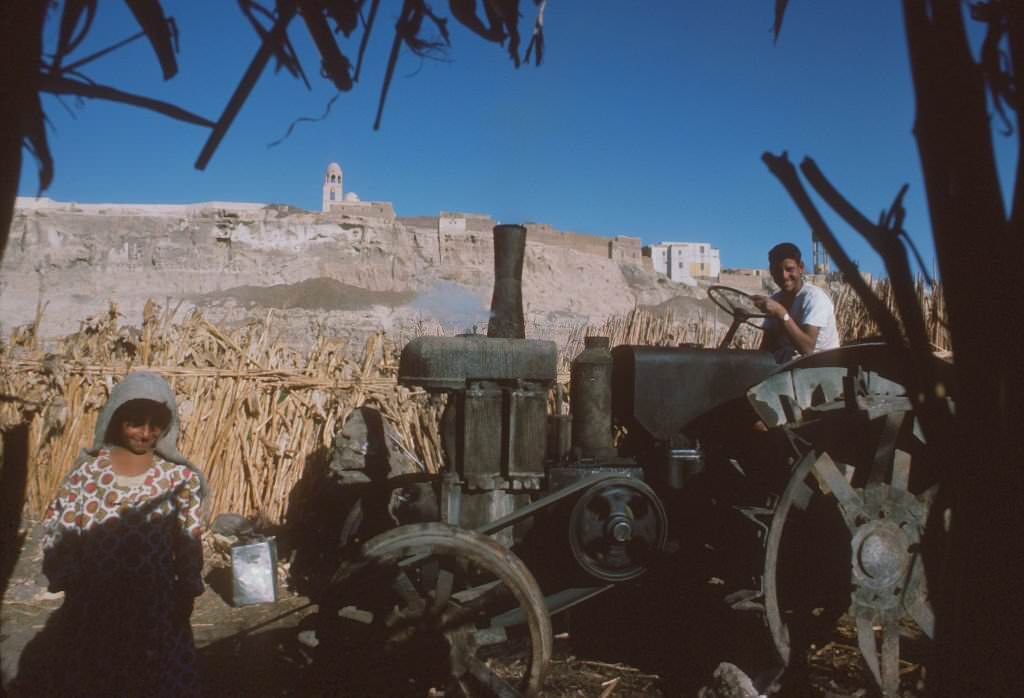
Sadat’s economic policy, known as infitah — meaning “opening” — began taking formal shape with Law 43 of 1974. The policy liberalized the economy and invited foreign investment. From 1970 to 1979, agriculture’s share of GDP dropped from roughly a third to just over 22%, as oil, remittances from Egyptians working in Gulf countries, Suez Canal revenues, and tourism all grew in importance. By 1978, petroleum had become so central to the economy that Egypt was classified as oil-dependent.
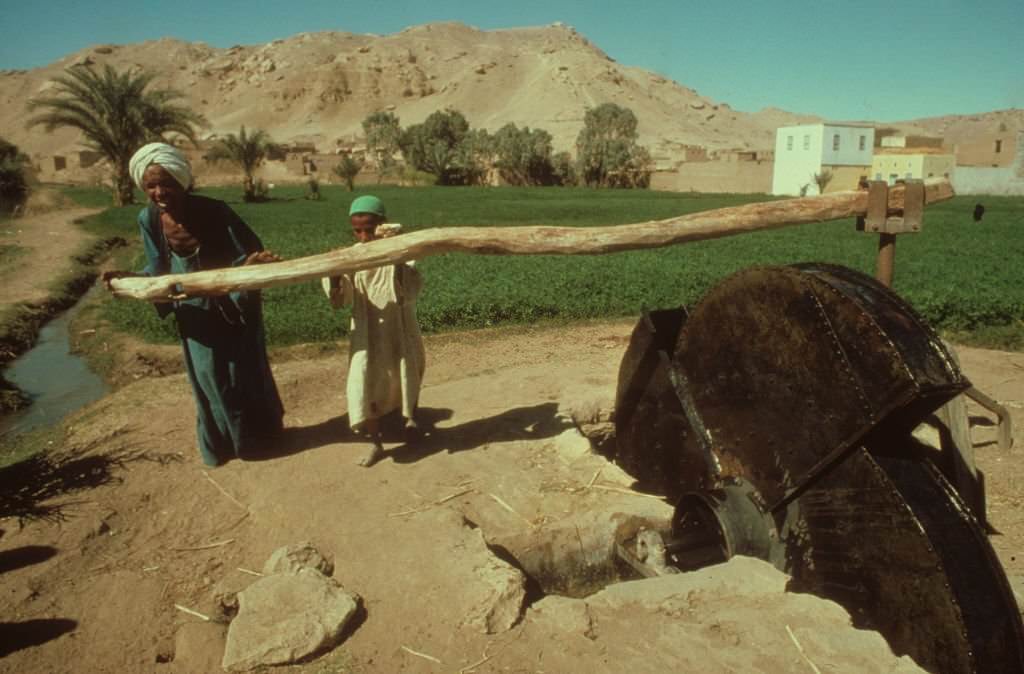
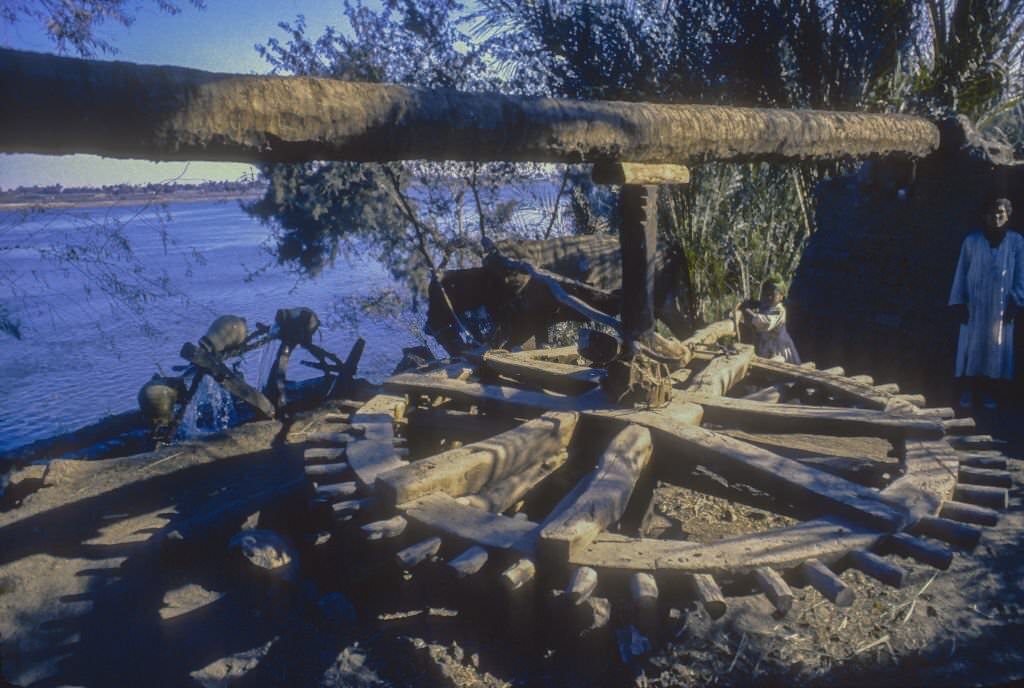
A man on his tractor, 1970sA farmer and his son pushing the wheel for the water pump to water their field next to the Nile river.A water pump next to the Nile river.
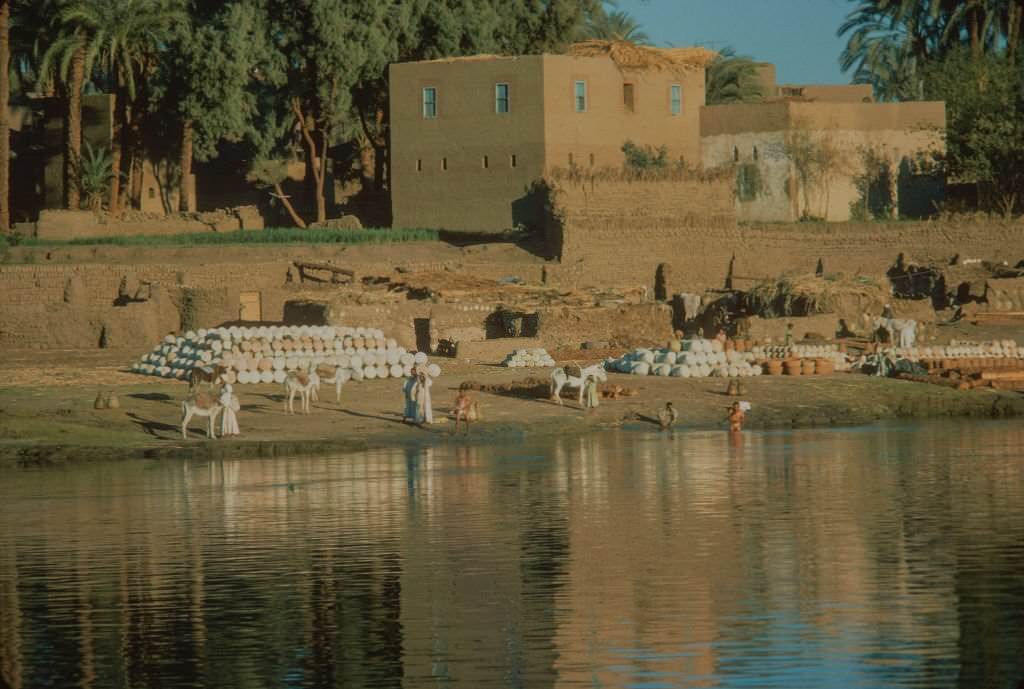
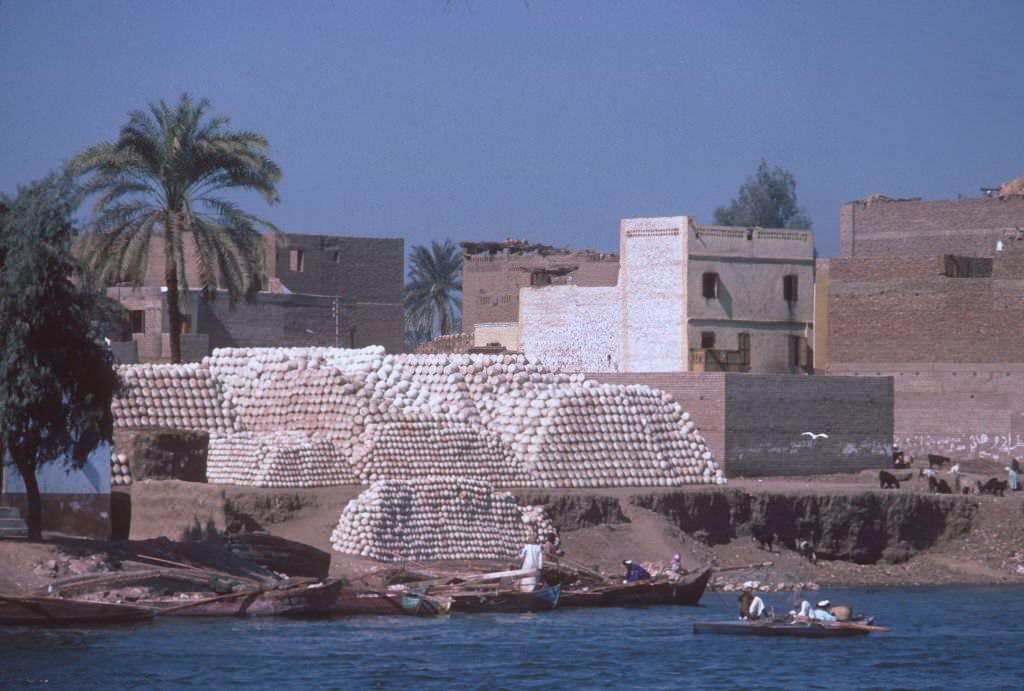
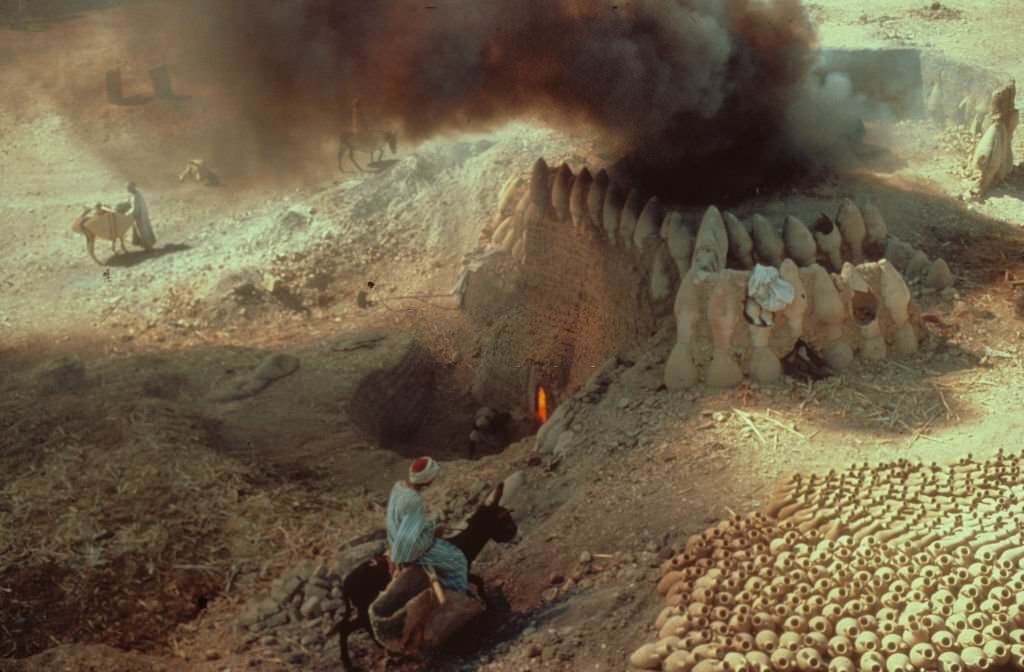
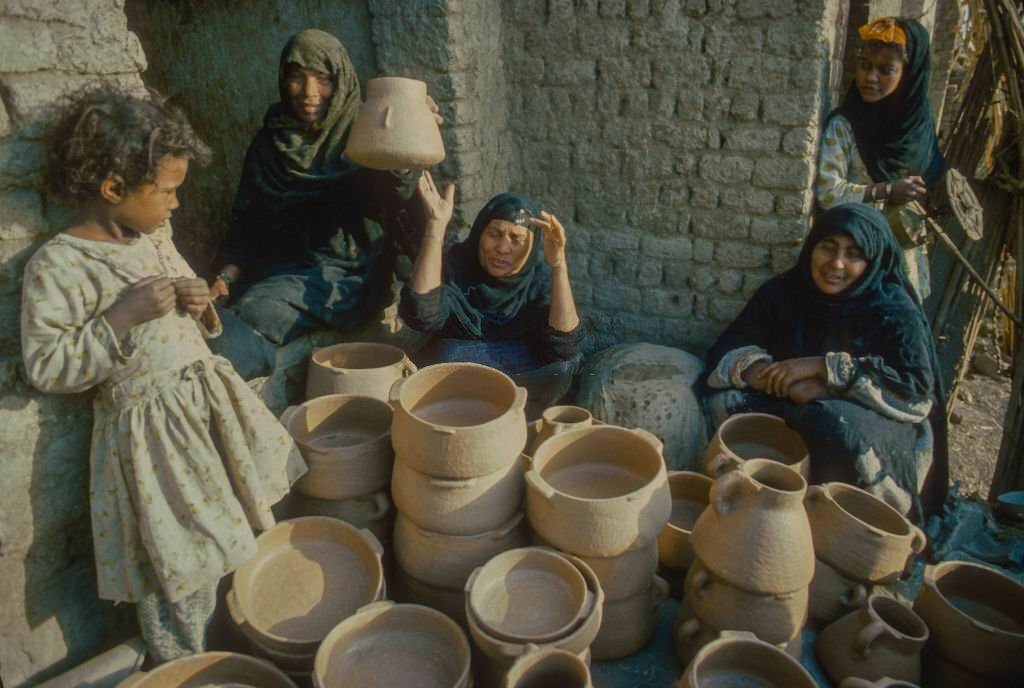
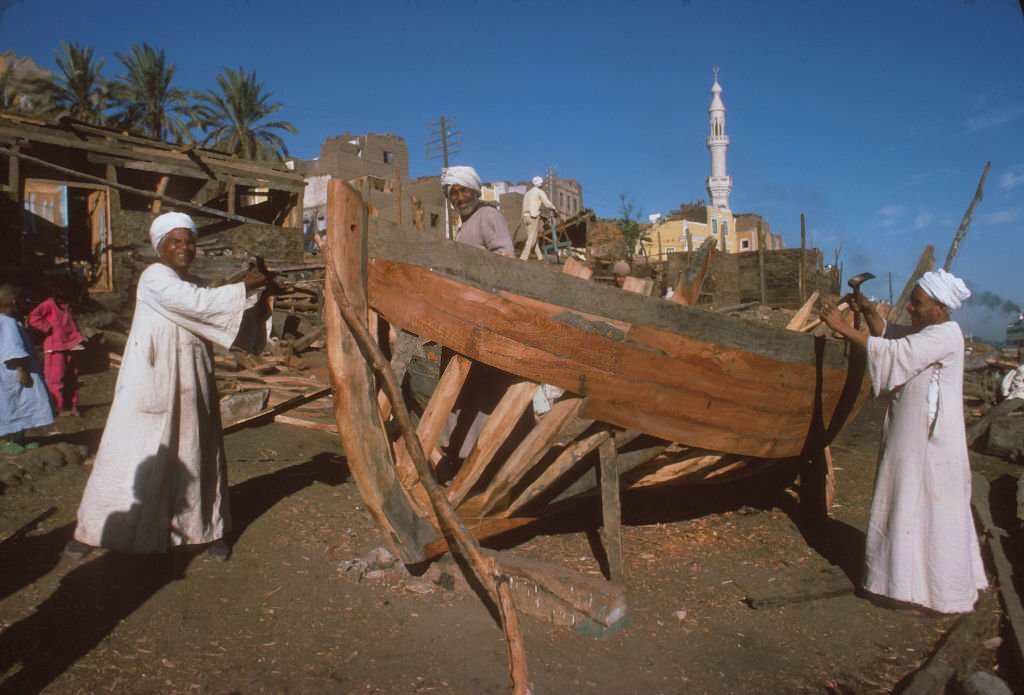
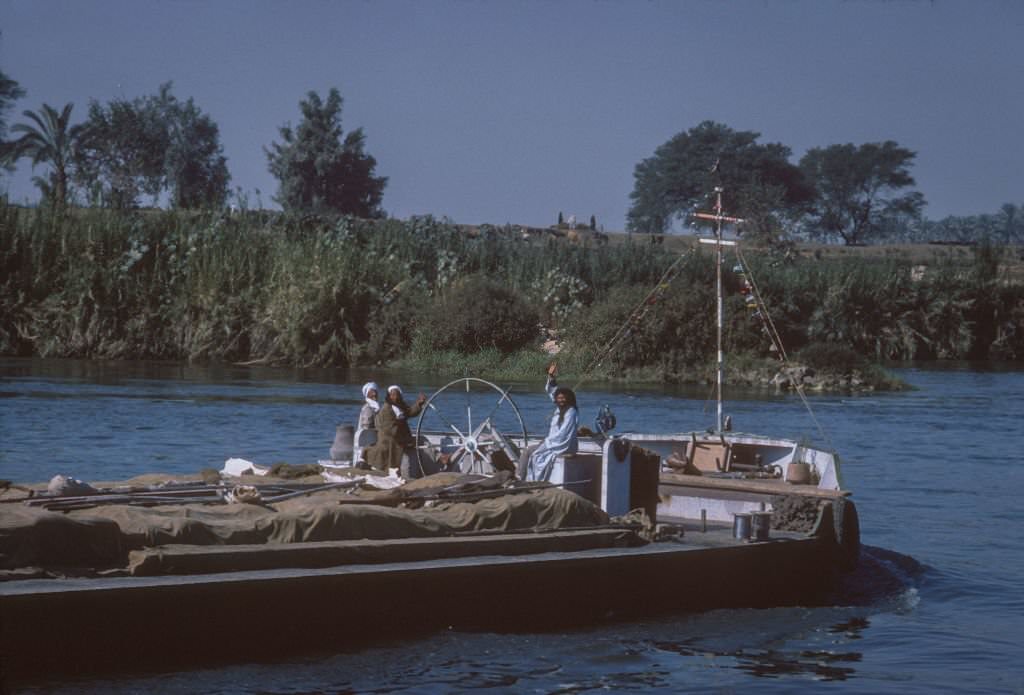
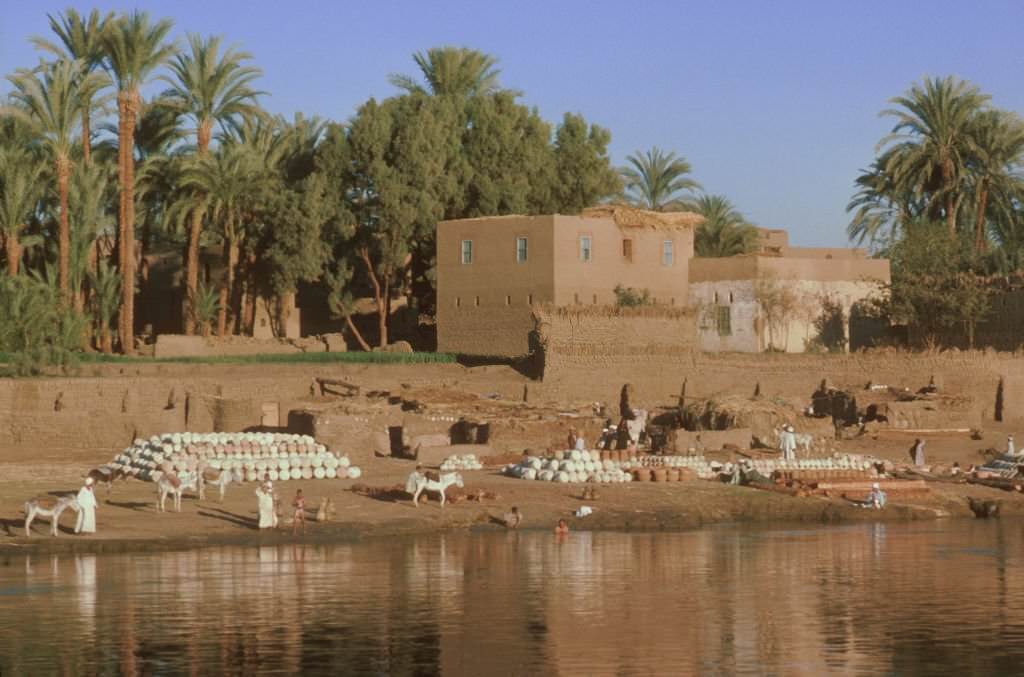
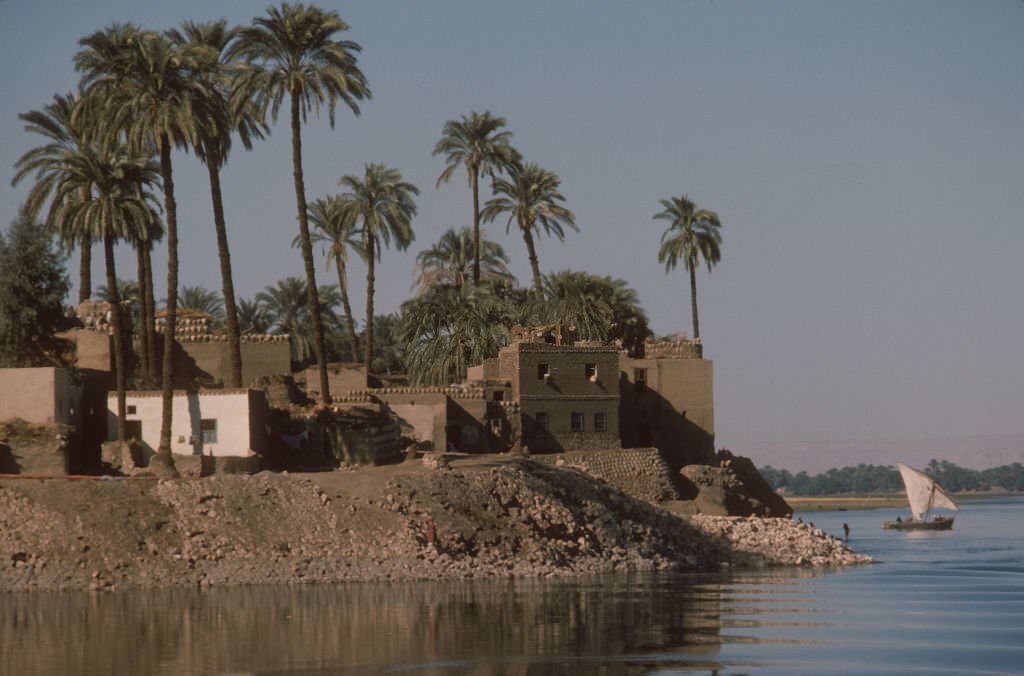
Along the Nile, traditional industries persisted. Jar and jug factories operated directly on the riverbanks, their workers shaping clay by hand. Women sold finished vessels in village markets. Boatbuilders worked in open-air shipyards. Goods moved up and down the river by boat, just as they had for generations.
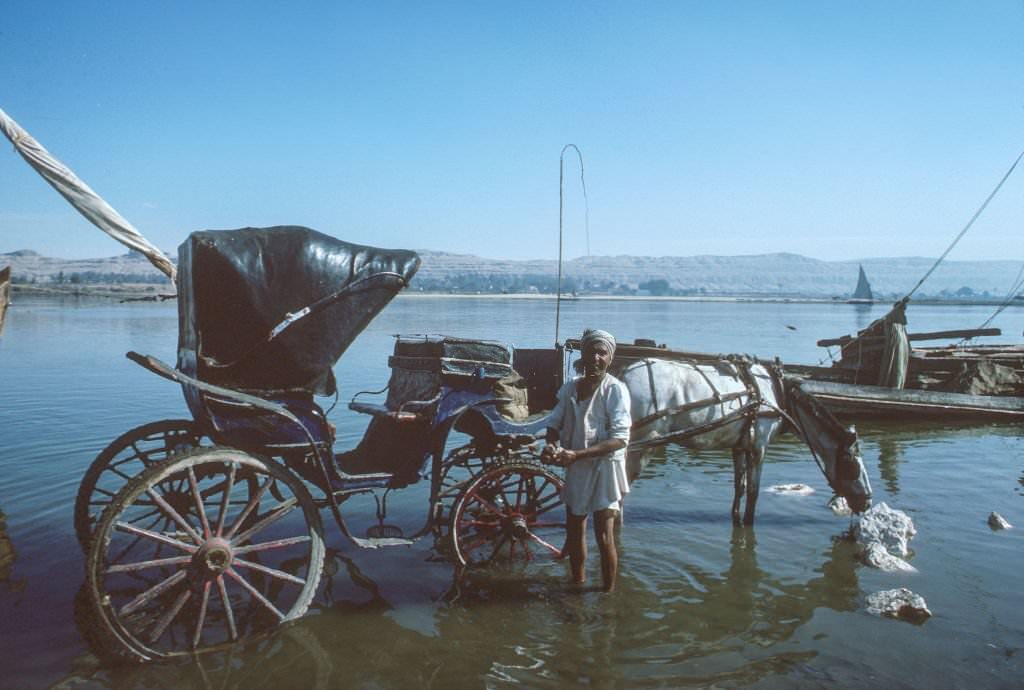
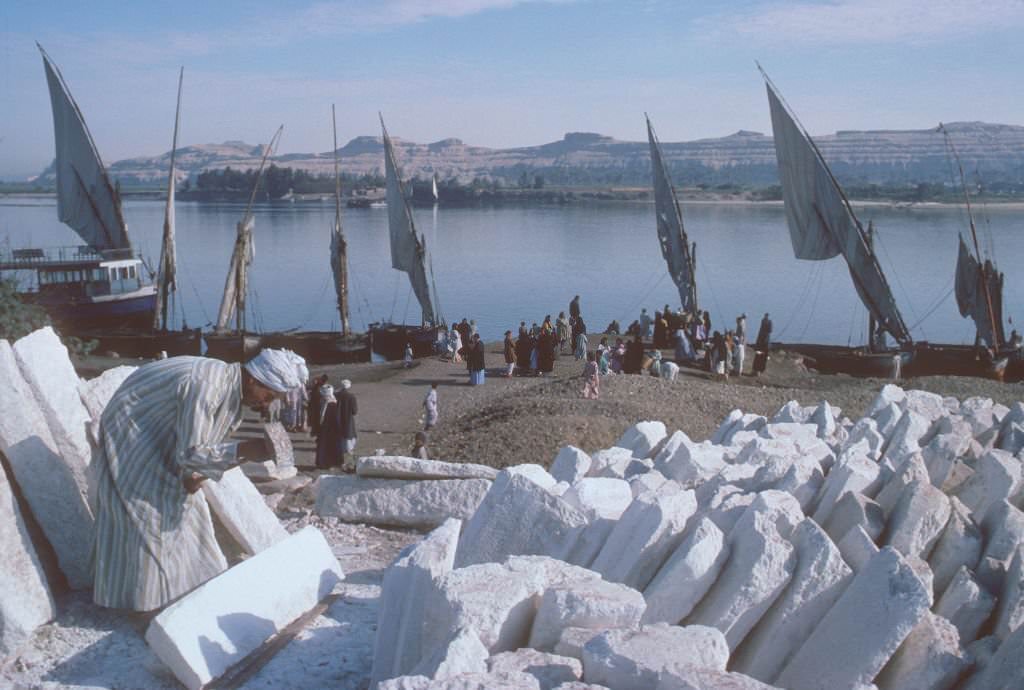
A jar factory on the banks of the Nile river, 1970s.A jar factory on the river bed of the Nile.Handcrafted Jug factory in an Egyptian village next to the Niles river.A group of women selling jugs in their village, 1970sMen building boats in a shipyard by the Nile River.Men transporting goods on their boat on the Nile river.A man washing his horse carriage standing in the river bed of the Nile.A mason working by the Nile river bed, 1977A jar factory on the banks of the Nile river, 1977
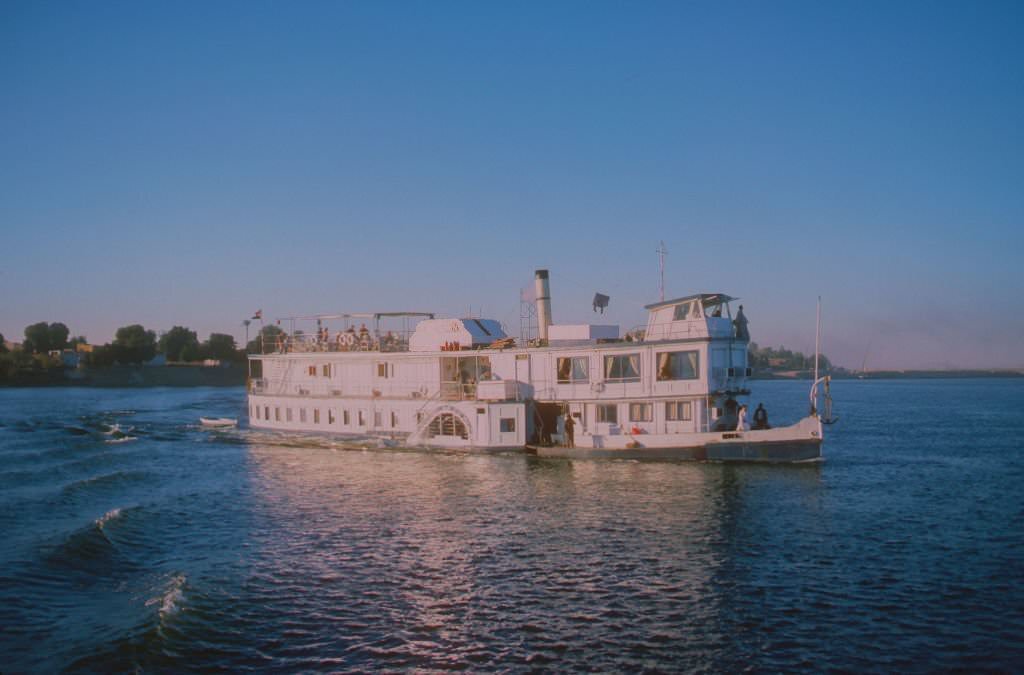
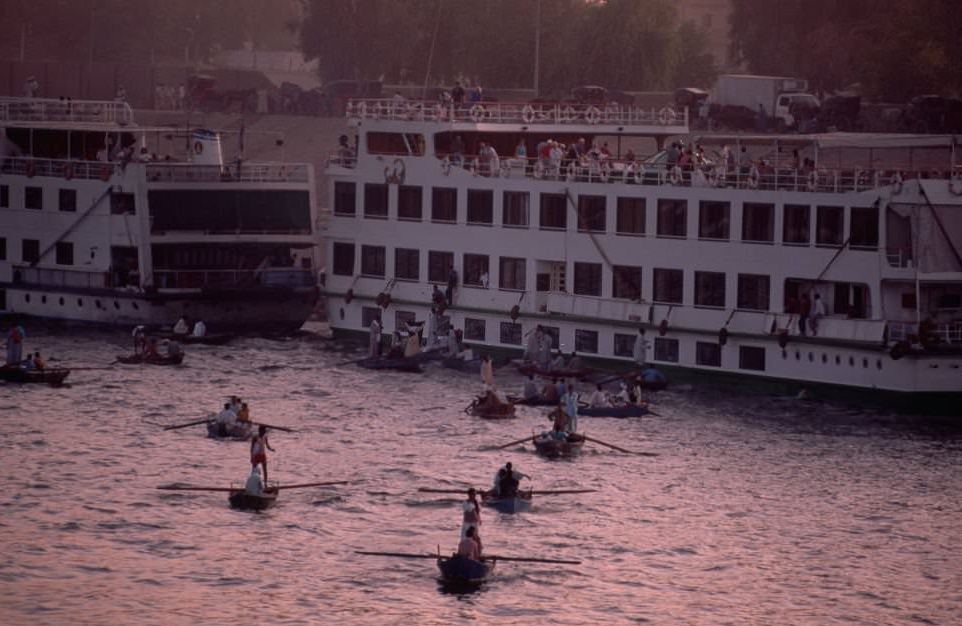
Tourism had also become a significant source of foreign exchange by the mid-1970s. River cruise boats carried visitors along the Nile, passing ancient temples and rural villages. Local vendors at towns like Esna paddled out in small boats to sell galabiyas and trinkets to passengers on the large hotel-boats. Feluccas remained the most iconic sight on the water.
River Cruise Boat on the Nile in 1977.Felucca sail boat on the Nile river, 1977.Local vendors at Esna pull up alongside the large hotel-boats that cruise the Nile, to sell galabiyas and other local trinkets.Felucca sail boats on the Nile river, 1977..
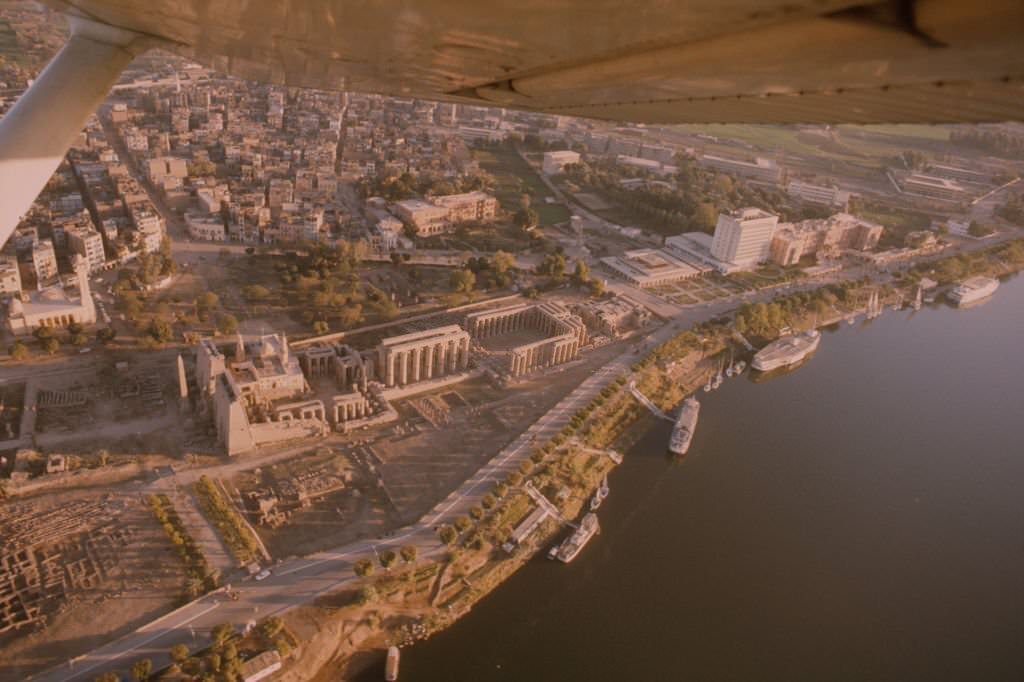
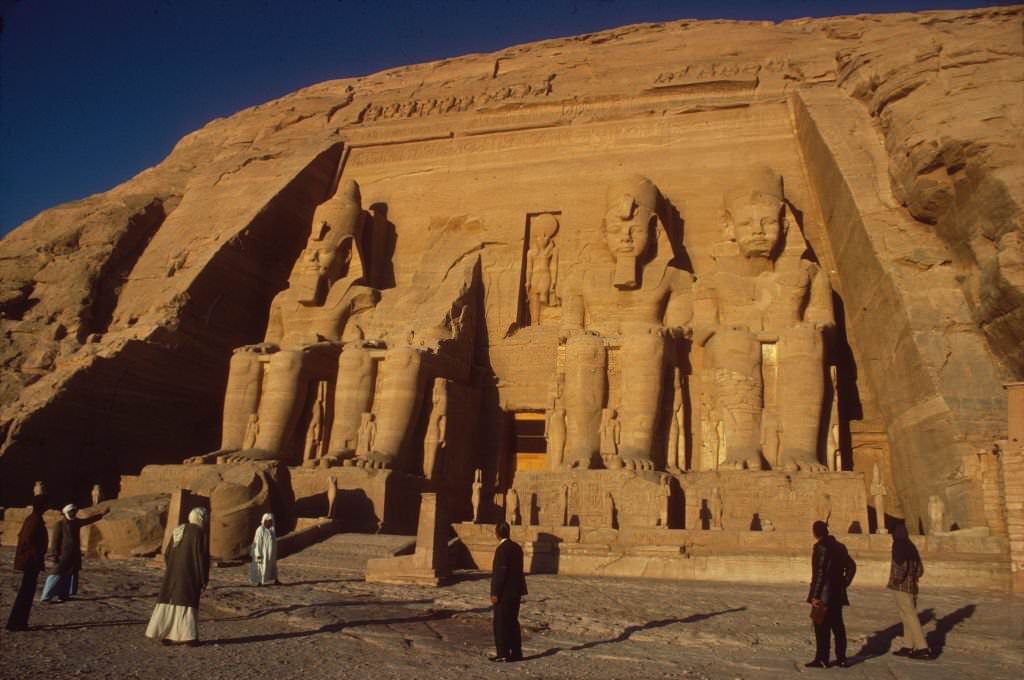
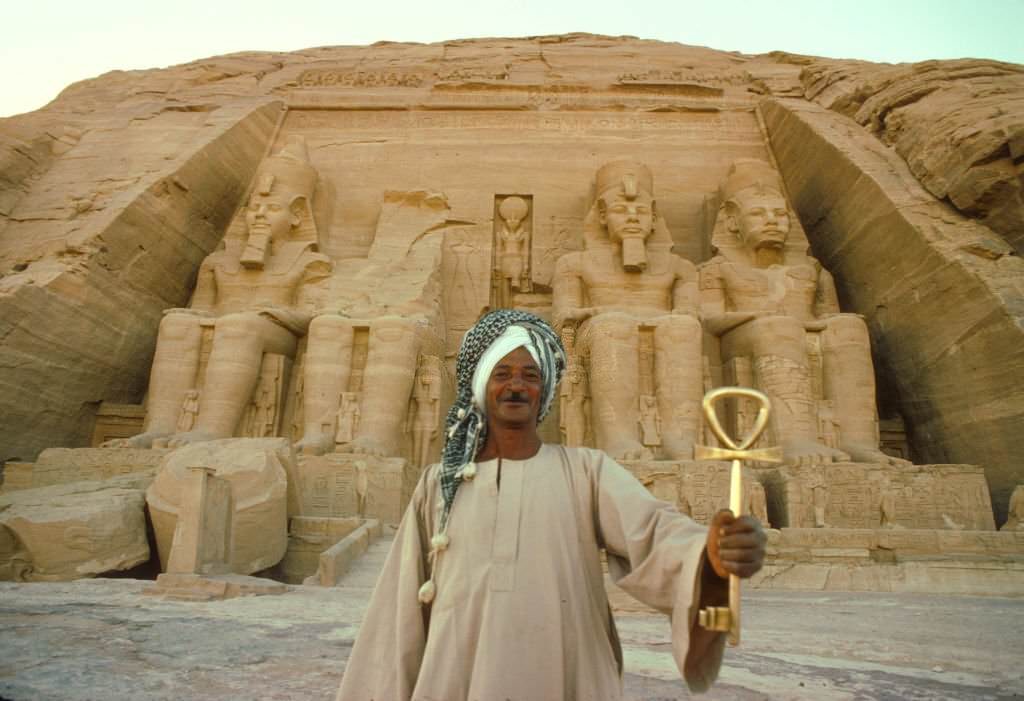
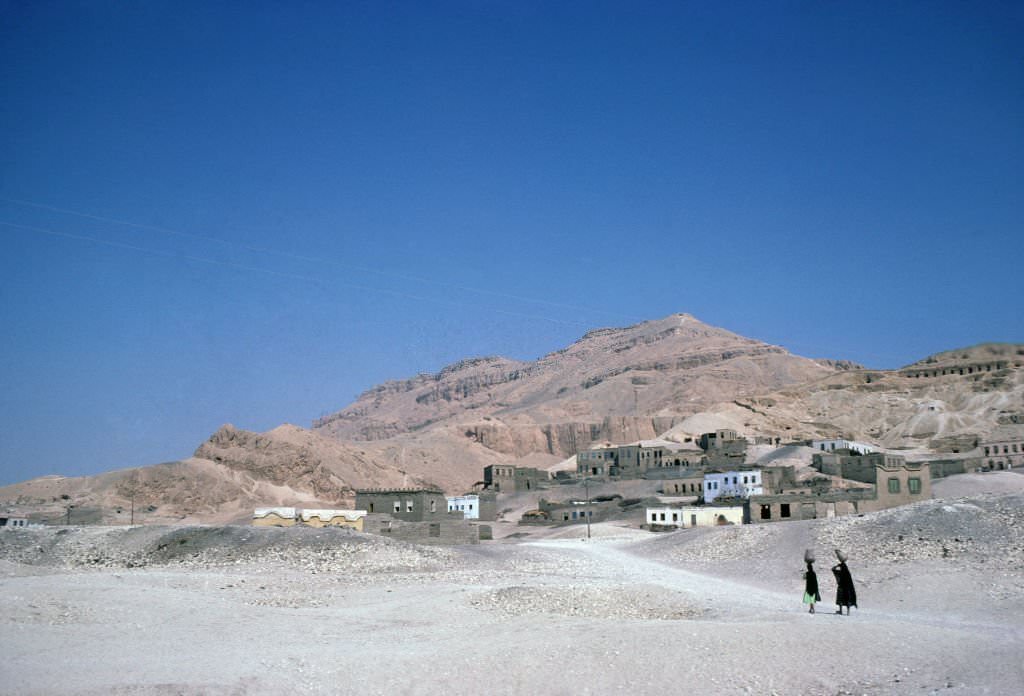
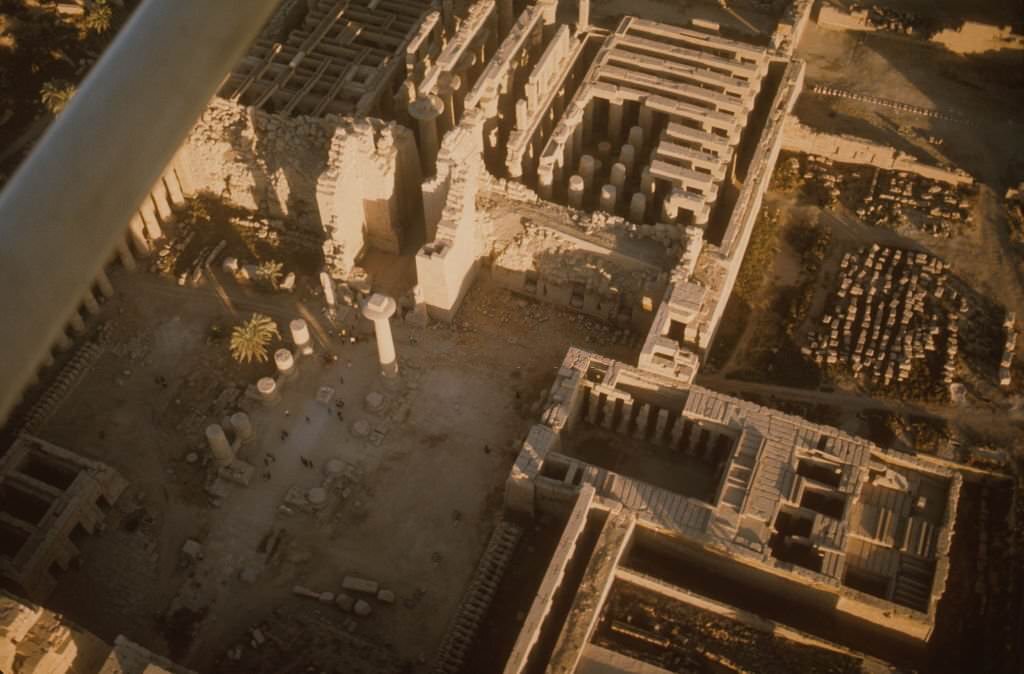
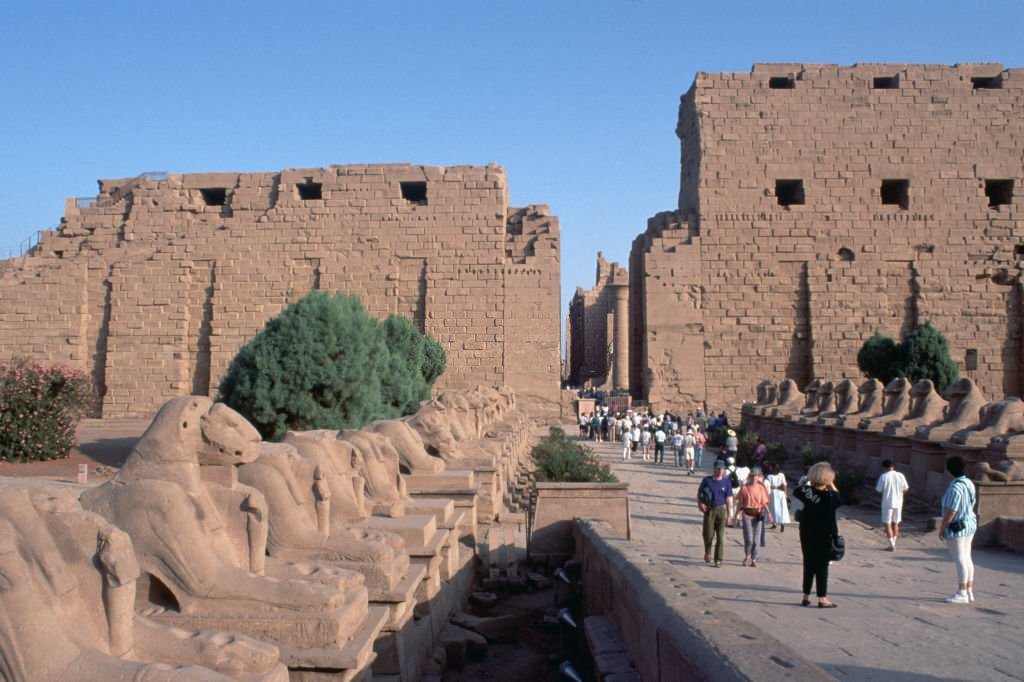
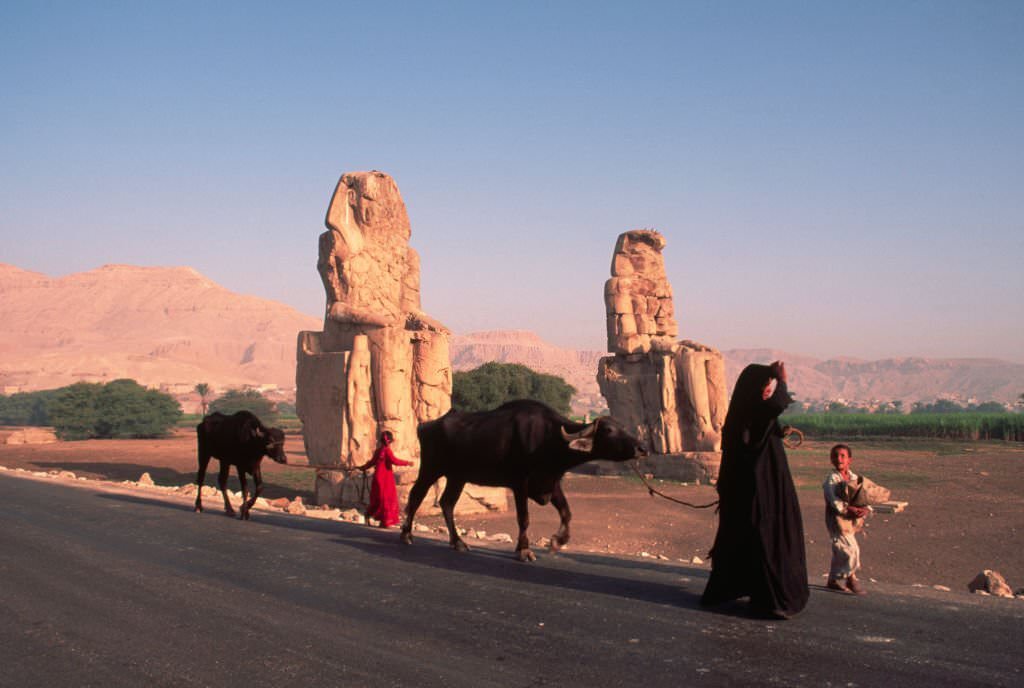
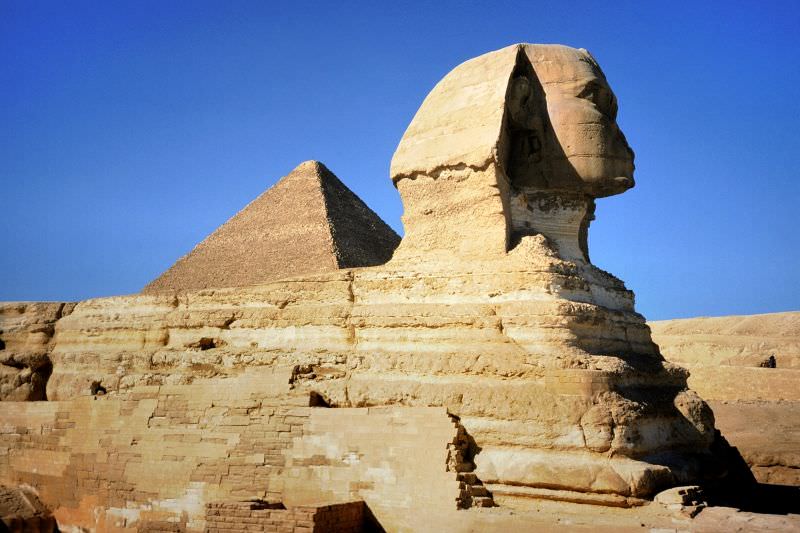
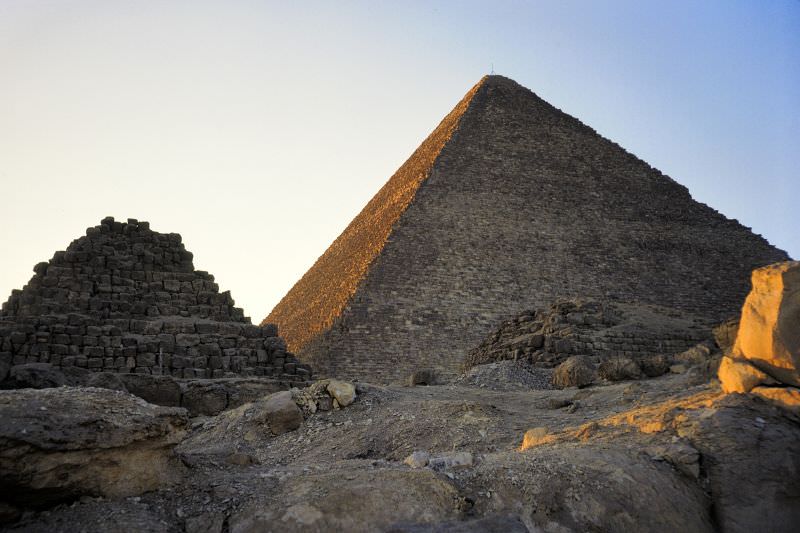
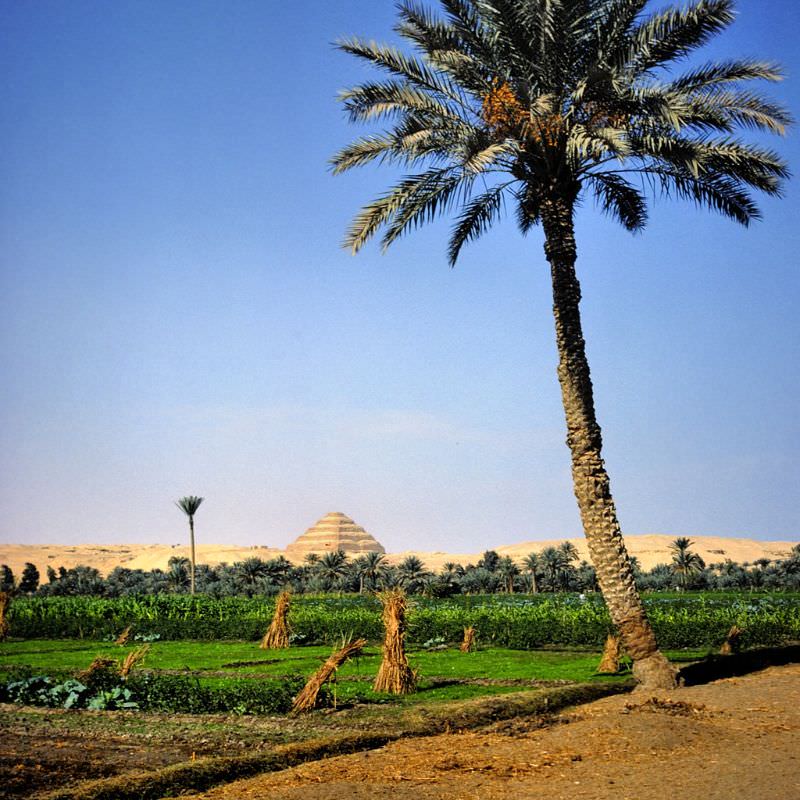
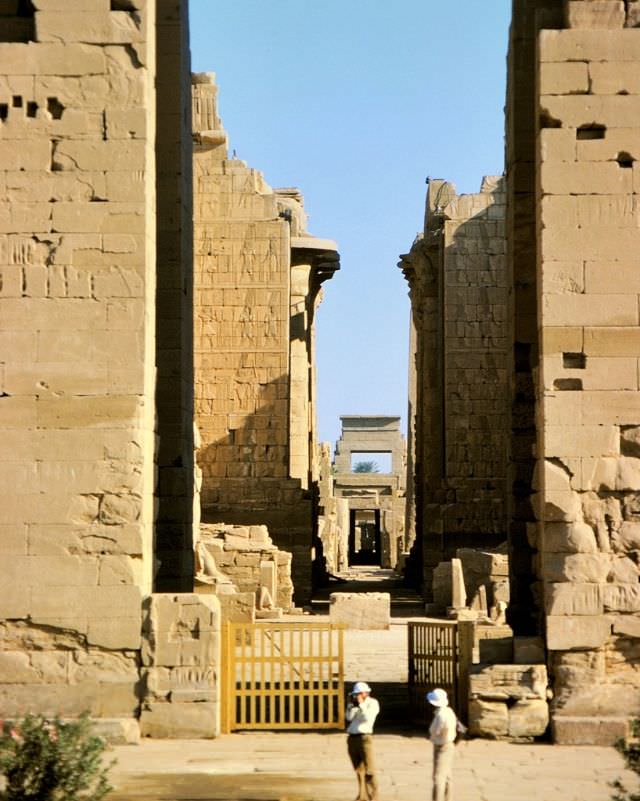
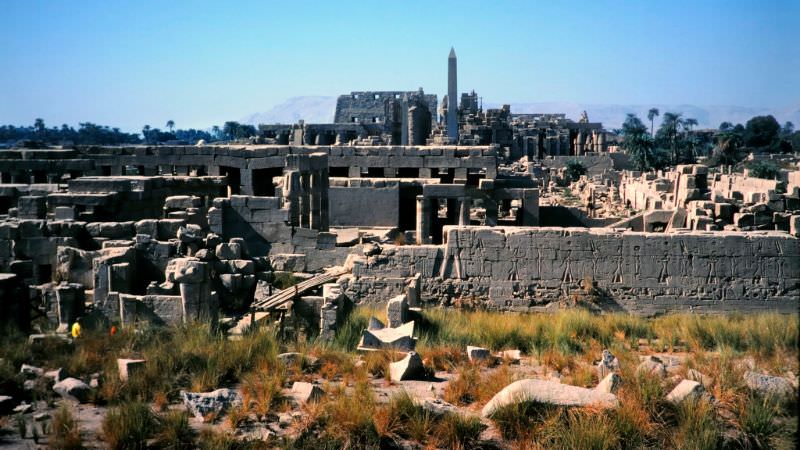
The ancient monuments that tourists came to see were some of the best-preserved in the world. The temples at Luxor and Karnak, the colossi at Abu Simbel, the Valley of the Kings, and the pyramids at Giza all drew growing numbers of visitors throughout the decade. Aerial photographs from 1977 show just how vast these complexes were, and how dramatically the ancient world sat alongside the modern one.
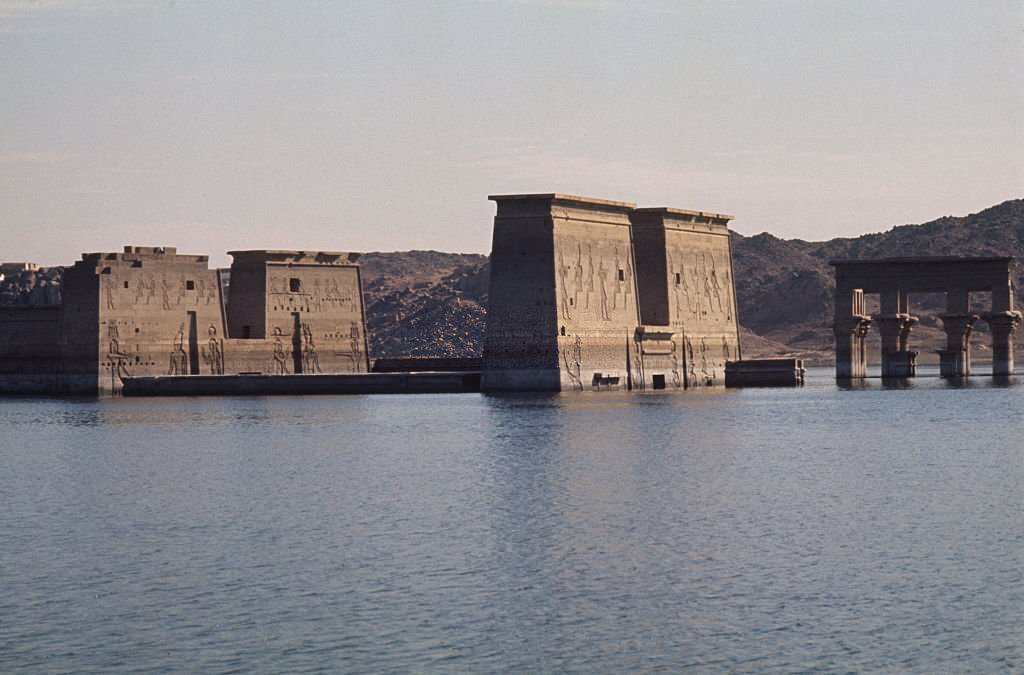
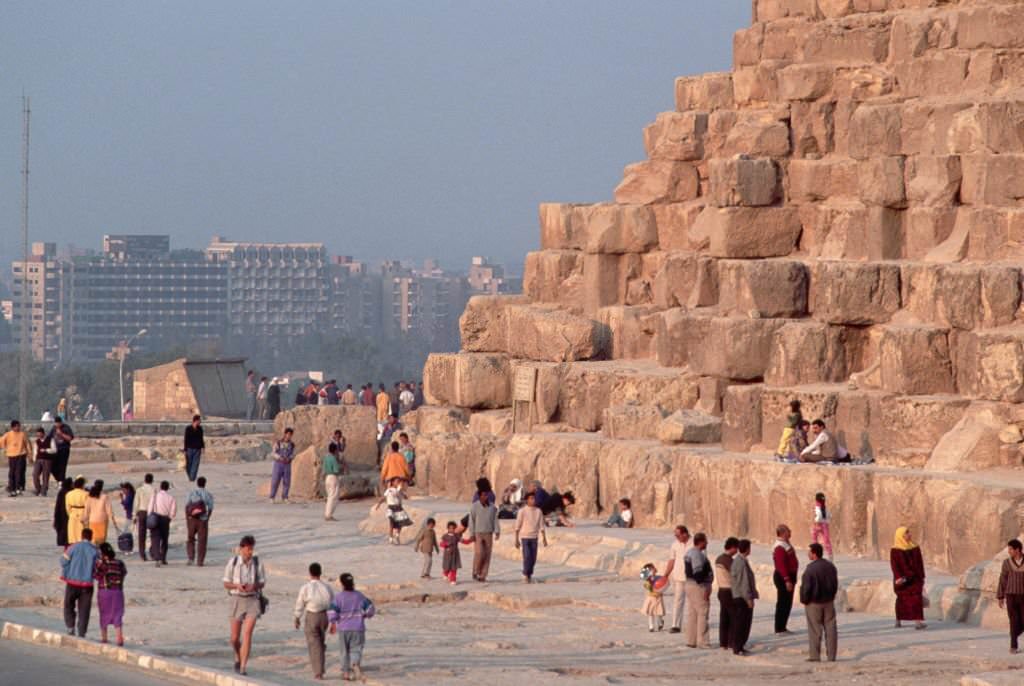
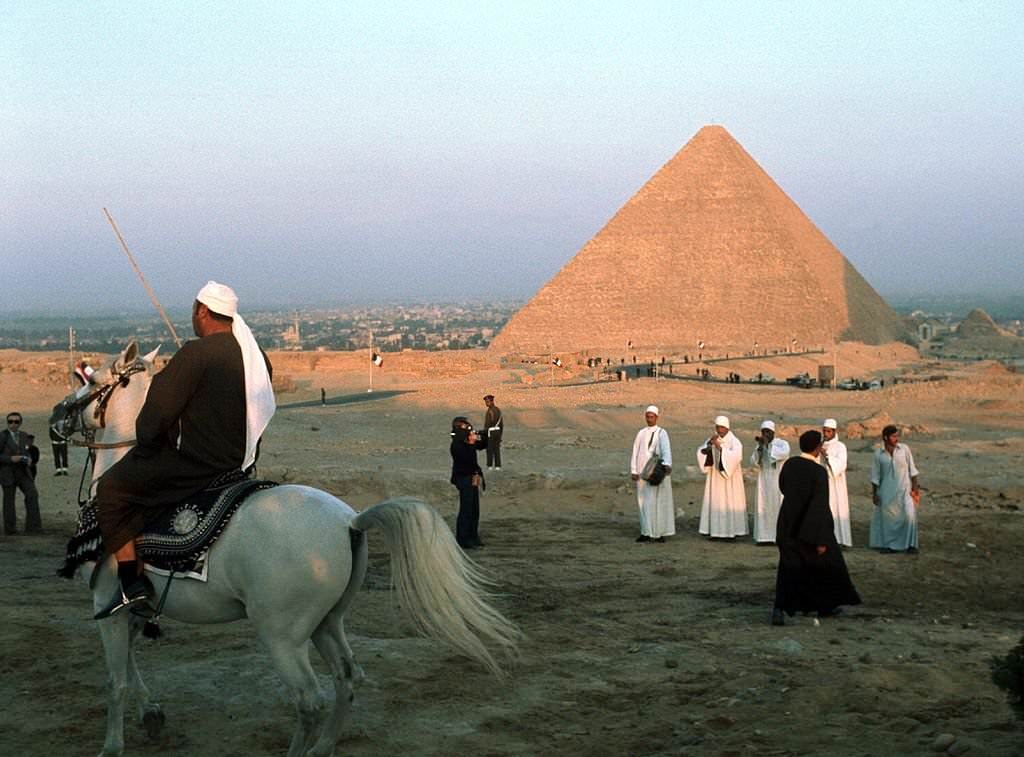
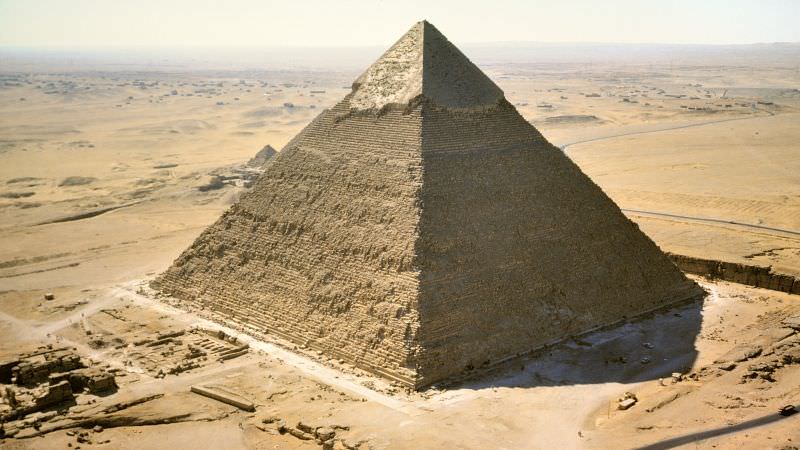
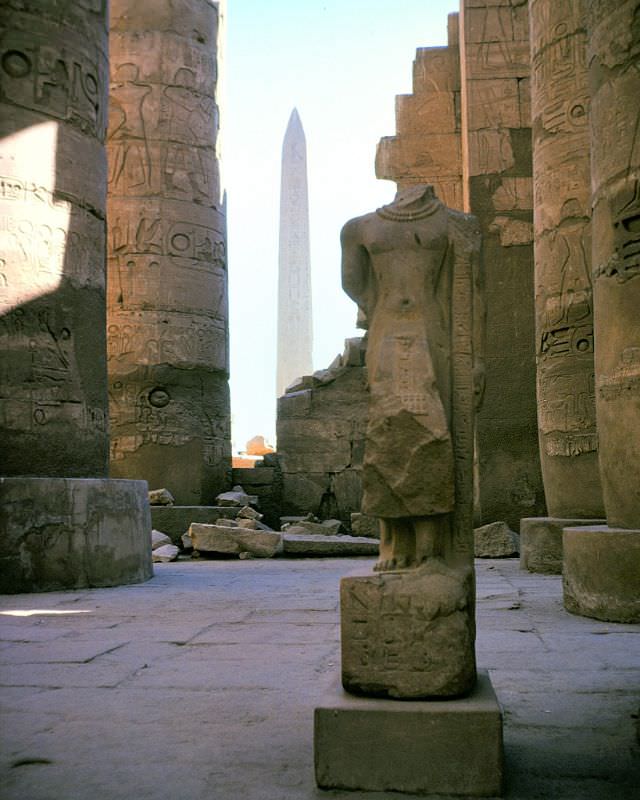
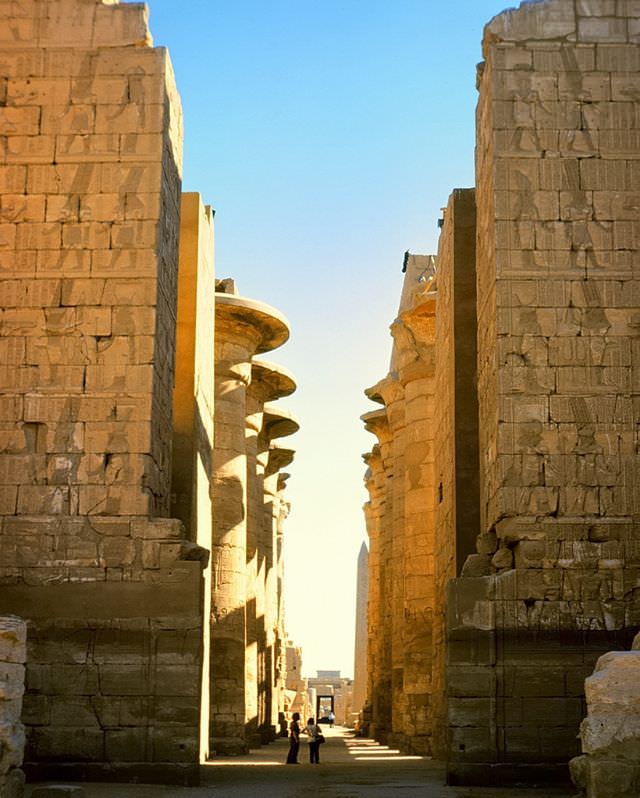
Aerial View of Luxor Temple of Thebes, Egypt, 1977.Temple of Pharaoh Ramesses II, Abu Simbel, Egypt, 1977.Egyptian man holding the Pharonic symbol, called the Ankh. Egypt, Abu Simbel, 1977.View of the Valley of the Kings in Egypt in 1977.Aerial view of Karnak Temple in 1977…Avenue of the Sphinxes at Karnak Temple Complex.Colossi of Memnon, 1970sLocated on the island of Philae in the River Nile in Egypt and flooded by construction of the Aswan Low Dam.Egyptians at Foot of PyramidA general view of a group of Egyptians near the Pyramid of Kheops, 1970s136m Khafre pyramid from Great Pyramid of Khufu’s 140m summit, Giza, EgyptGreat Sphinx of Giza, circa 2500 BCE, Cairo, EgyptPyramids, Giza, Cairo, EgyptStep Pyramid of Djoser, circa 2660 BCE, 3rd Dynasty, and local farmland, Saqqara, EgyptEntrance to Karnak Temple complex, hieroglyphics all over massive structures, Luxor, EgyptKarnak temple complex ruins, Luxor, Egypt
Karnak Temple complex, hieroglyphics all over massive structures, Luxor, Egypt
Karnak Temple complex, Luxor, Egypt
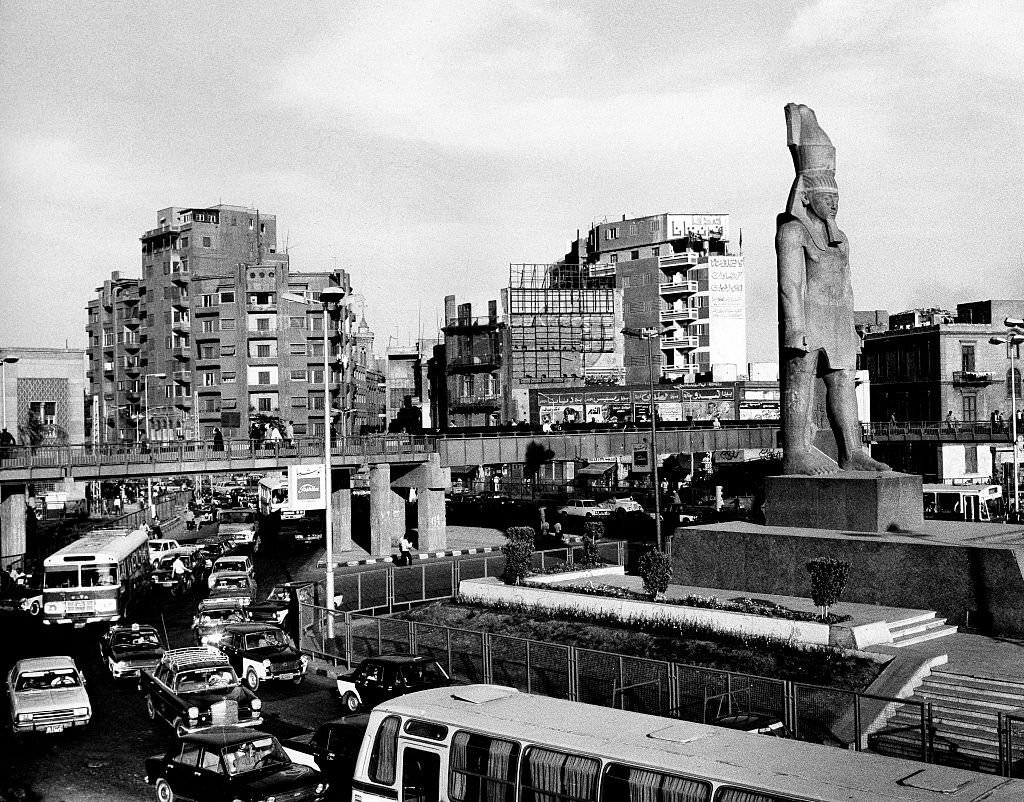
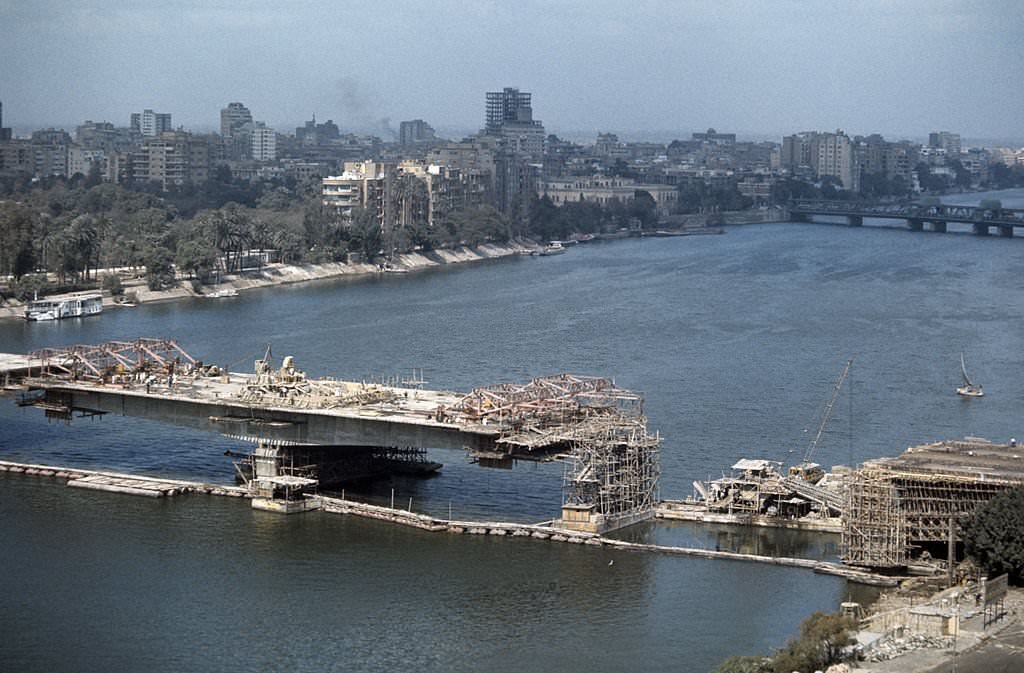
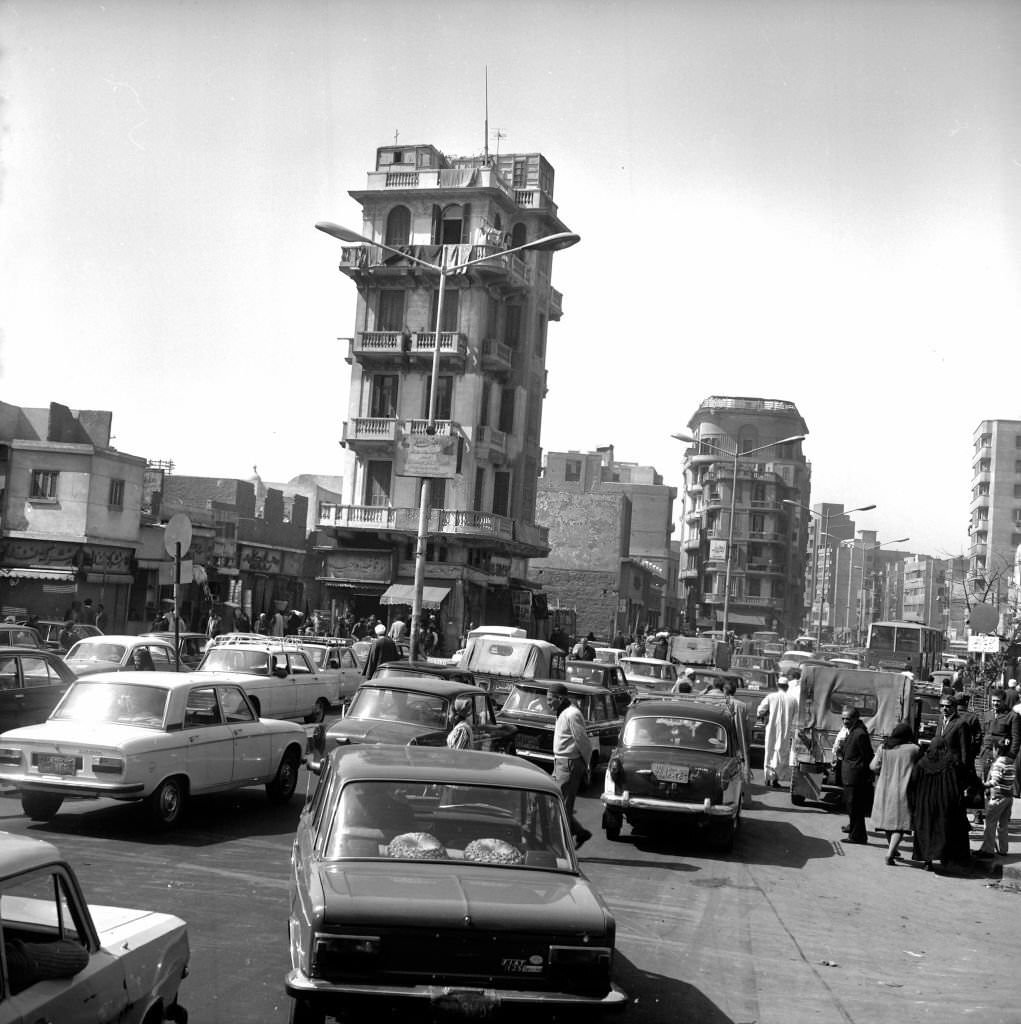
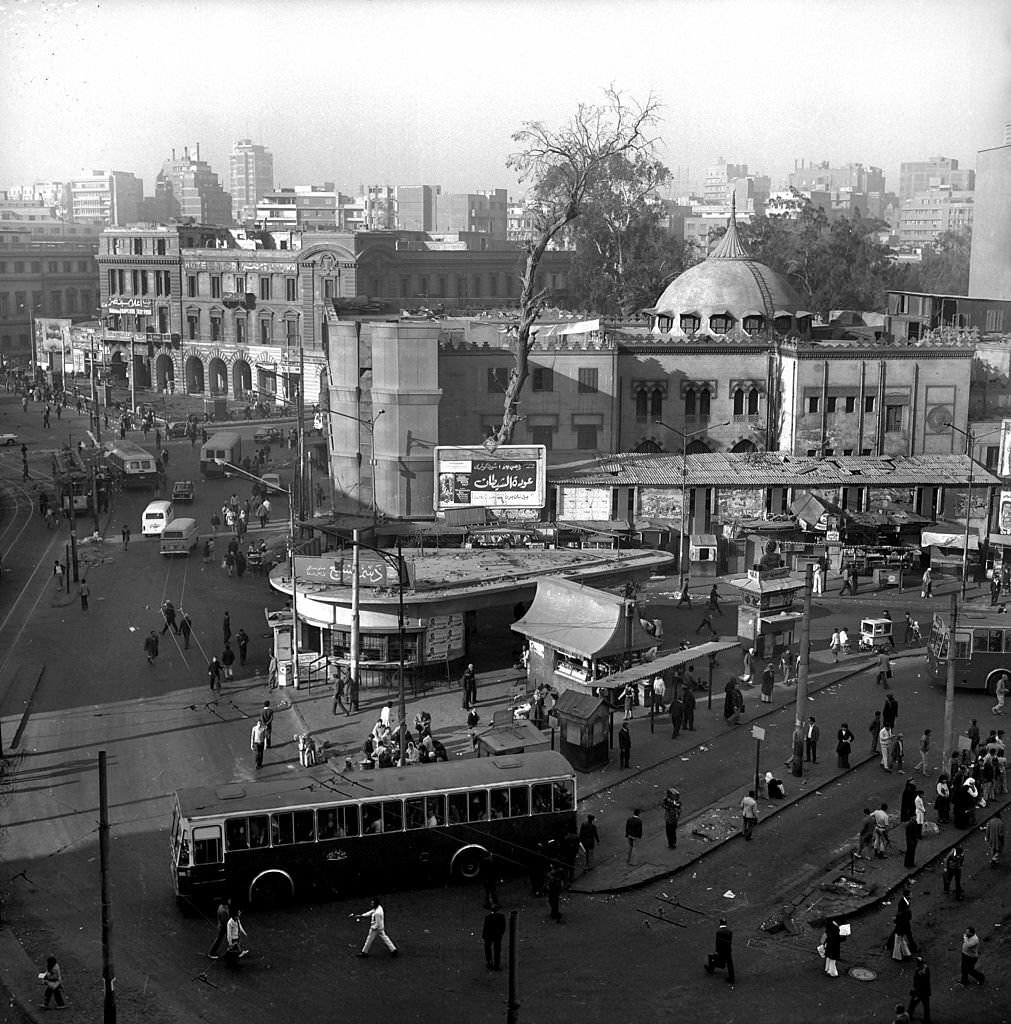
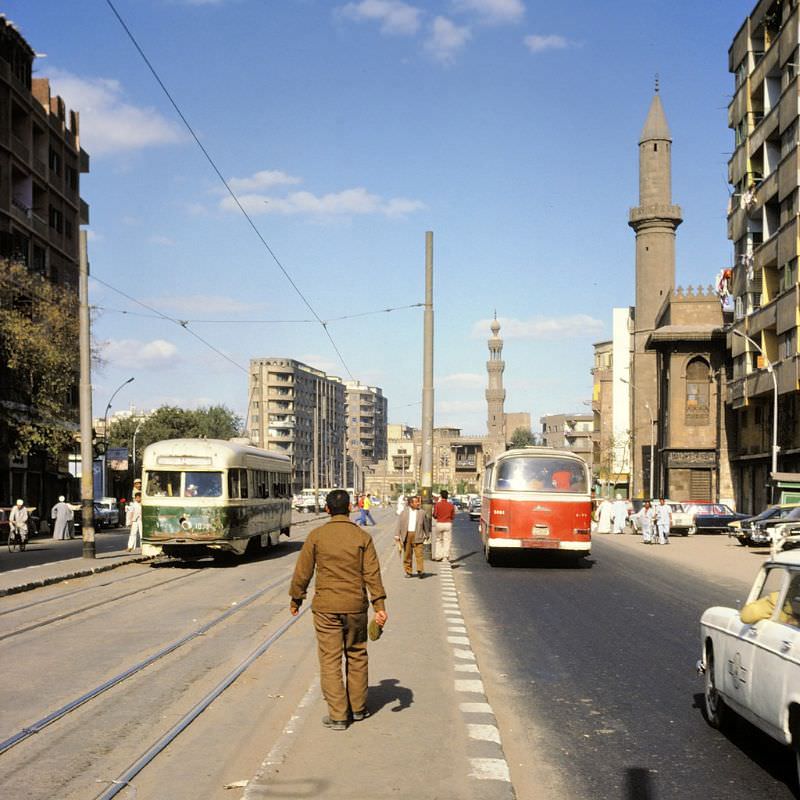
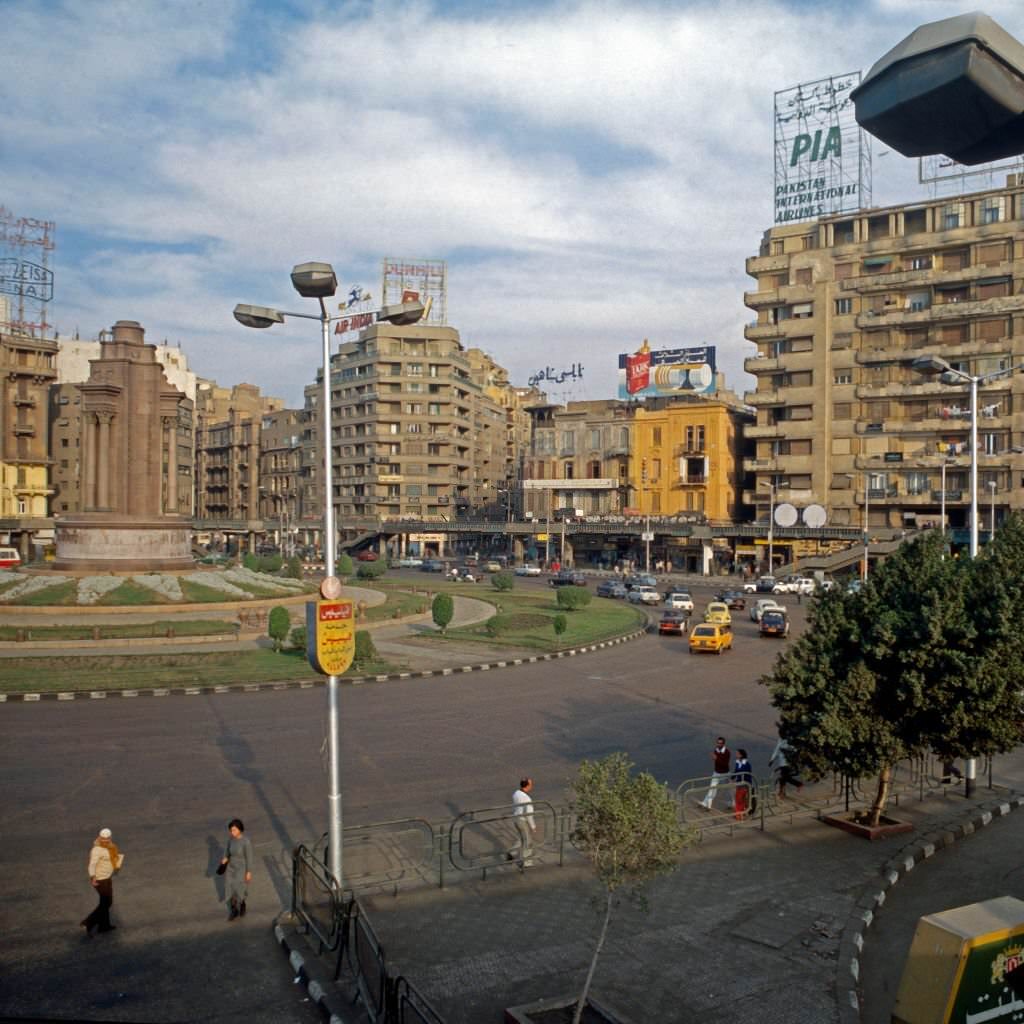
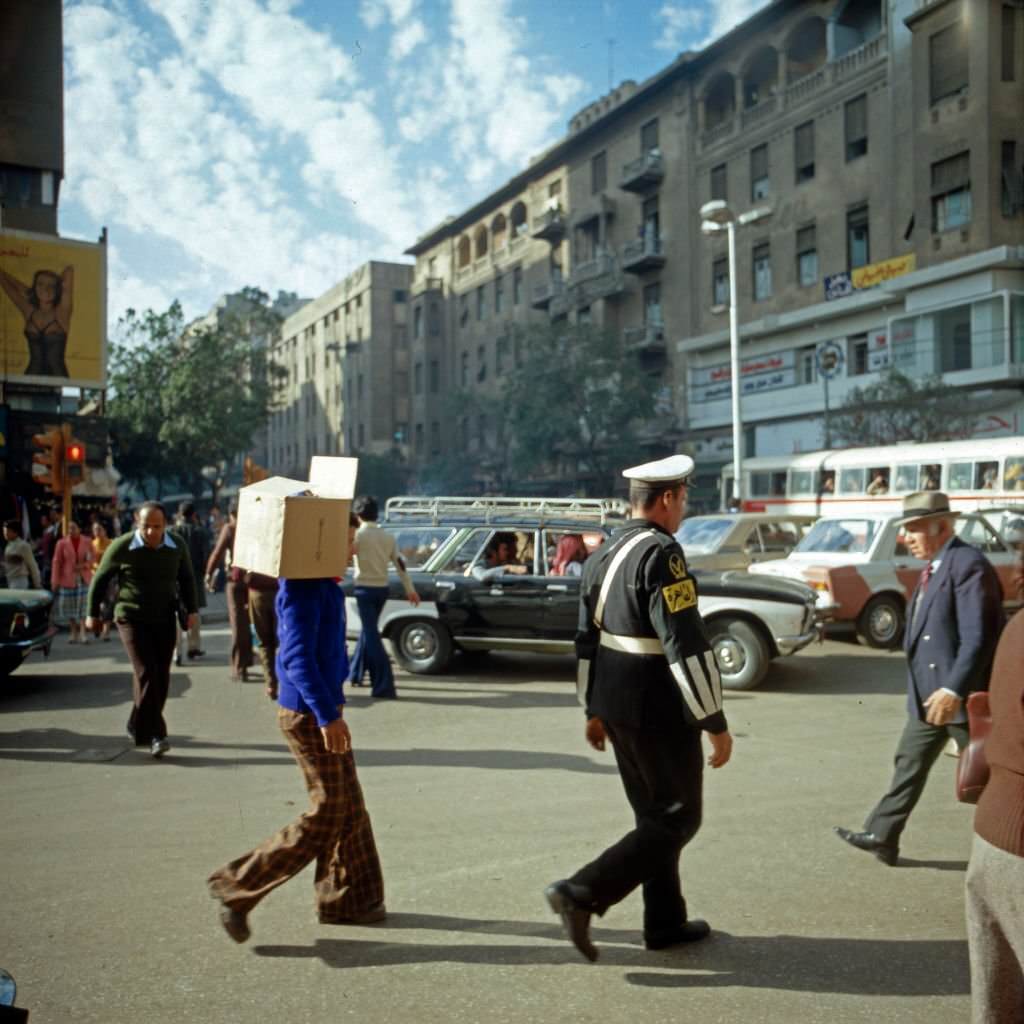
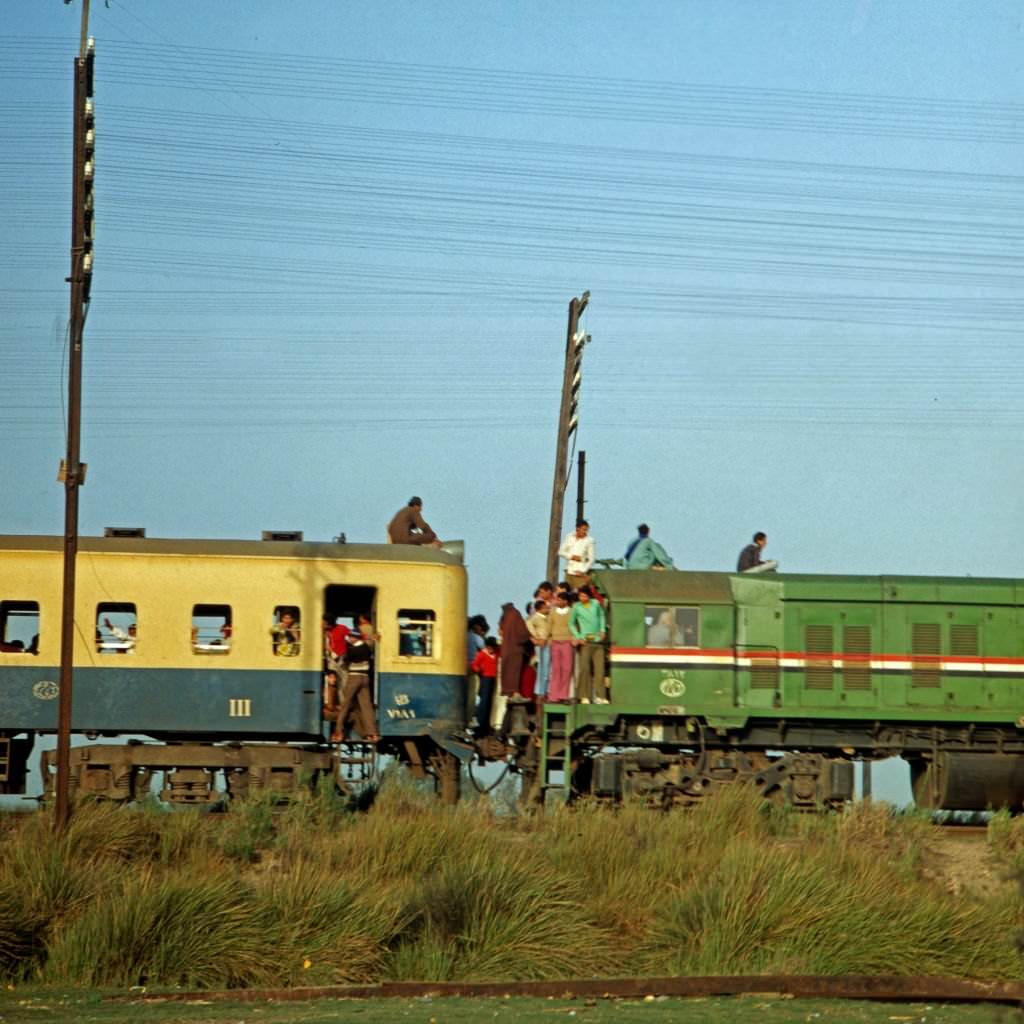
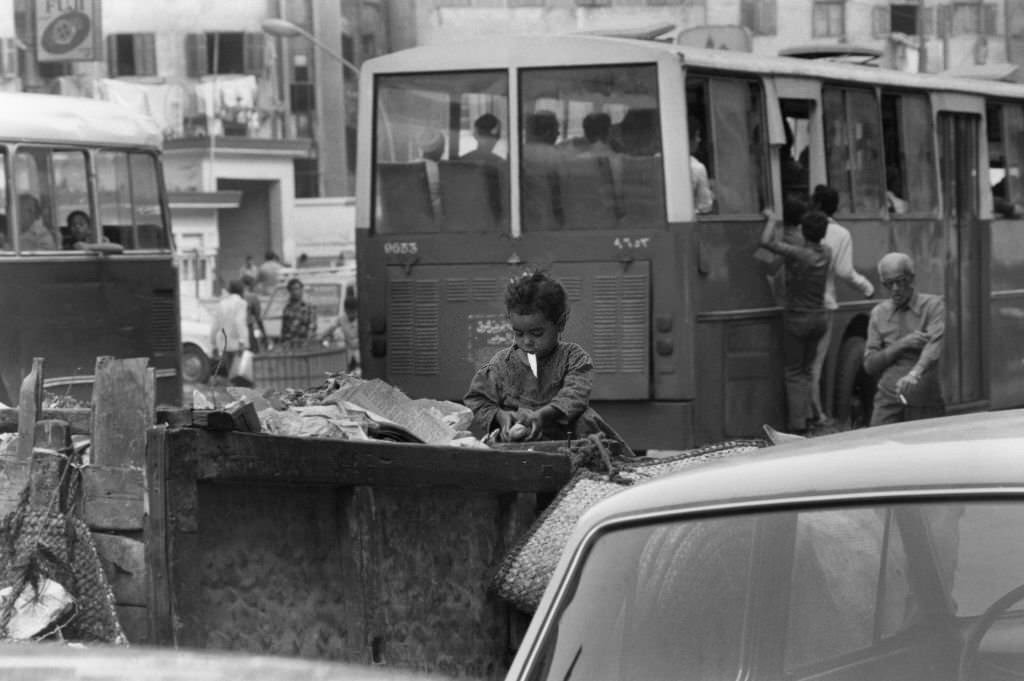
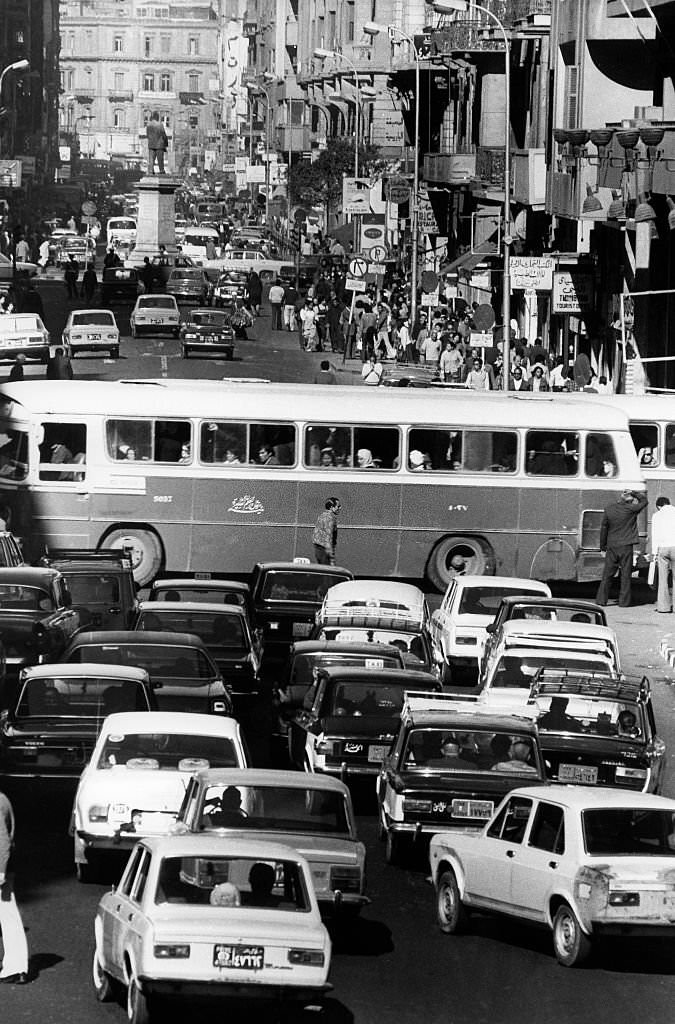
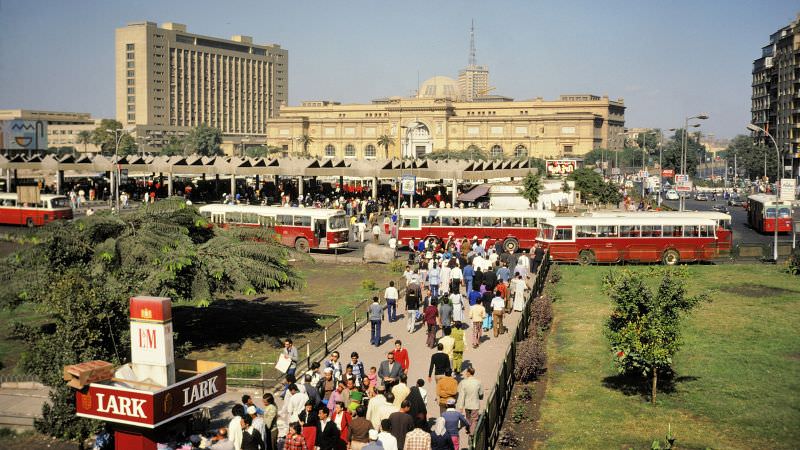
Cairo in the mid-1970s was a city straining under the weight of rapid growth. Traffic jams choked the main squares. Buses ran so overcrowded that passengers hung out of windows and doors. Construction cranes rose over new hotels and bridges. Ramses Square was a focal point of the gridlock, and the streets around Tahrir Square hummed with activity day and night.
Heavy traffic at ramses square in Cairo, 1976.Heavy traffic in Cairo, 1976Construction of a bridge with several piles in Cairo, 1976Traffic on El-Azhar street, 1976The coach station, Ataba square in Cairo, 1976Cairo street with battered PCC streetcar tram
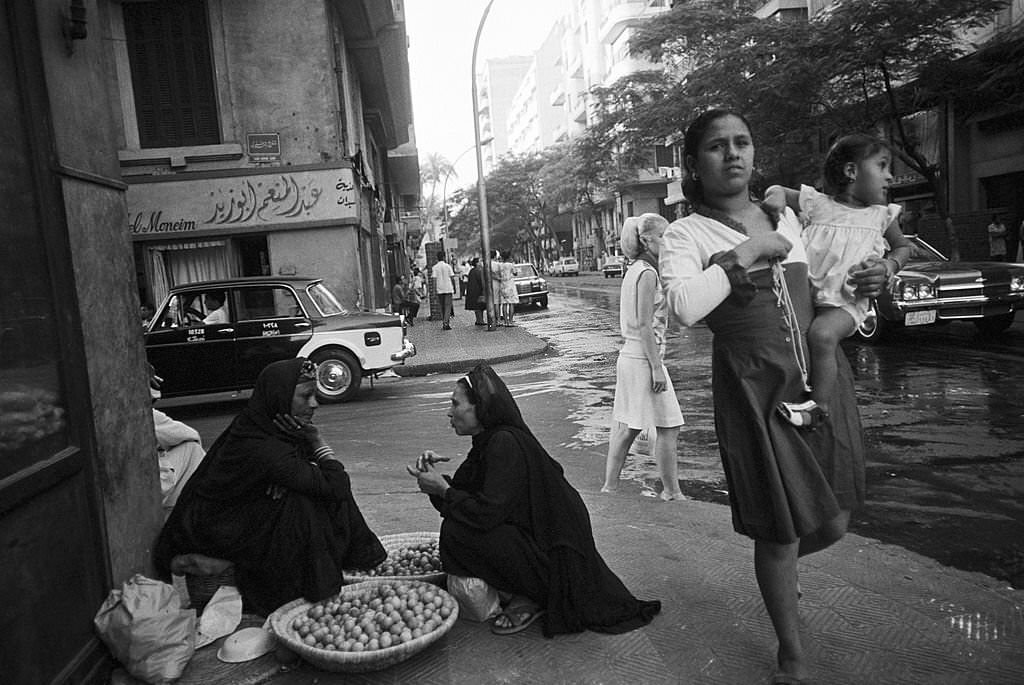
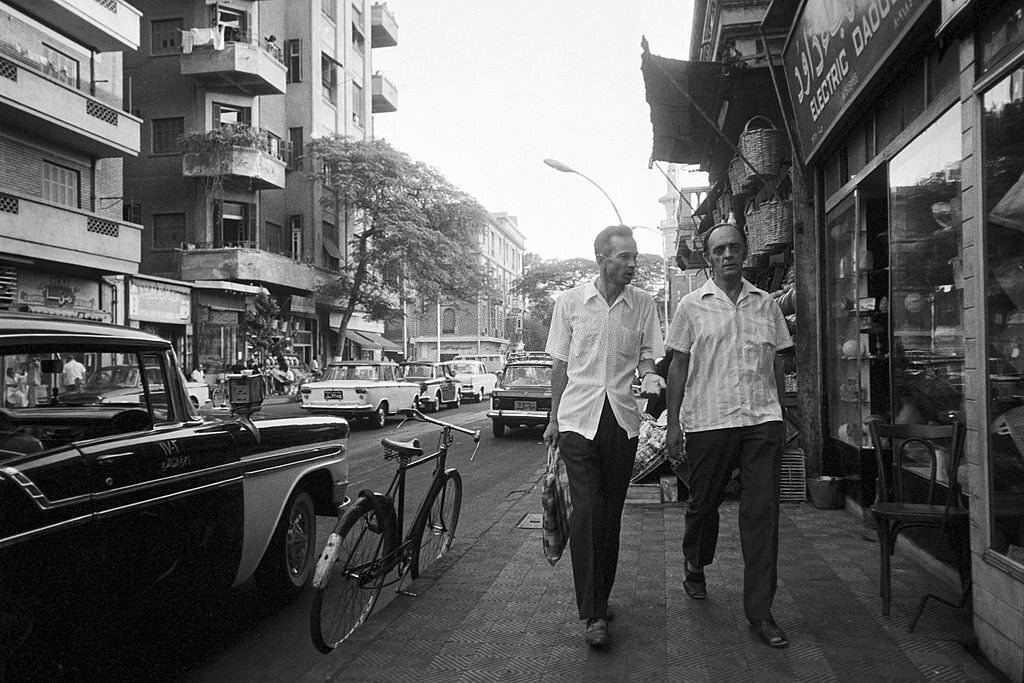
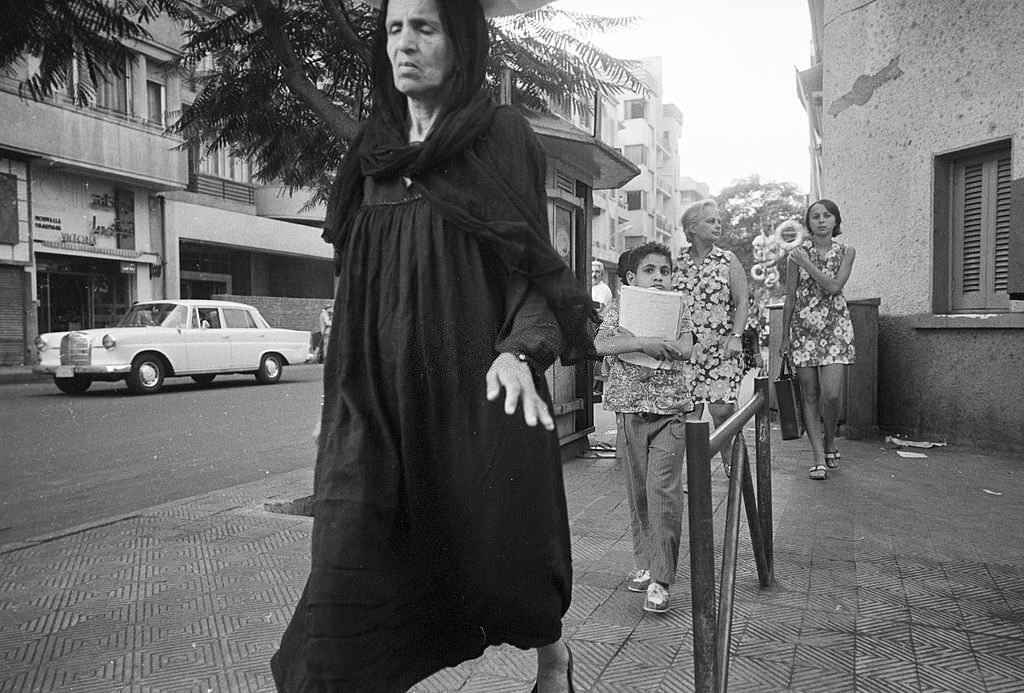
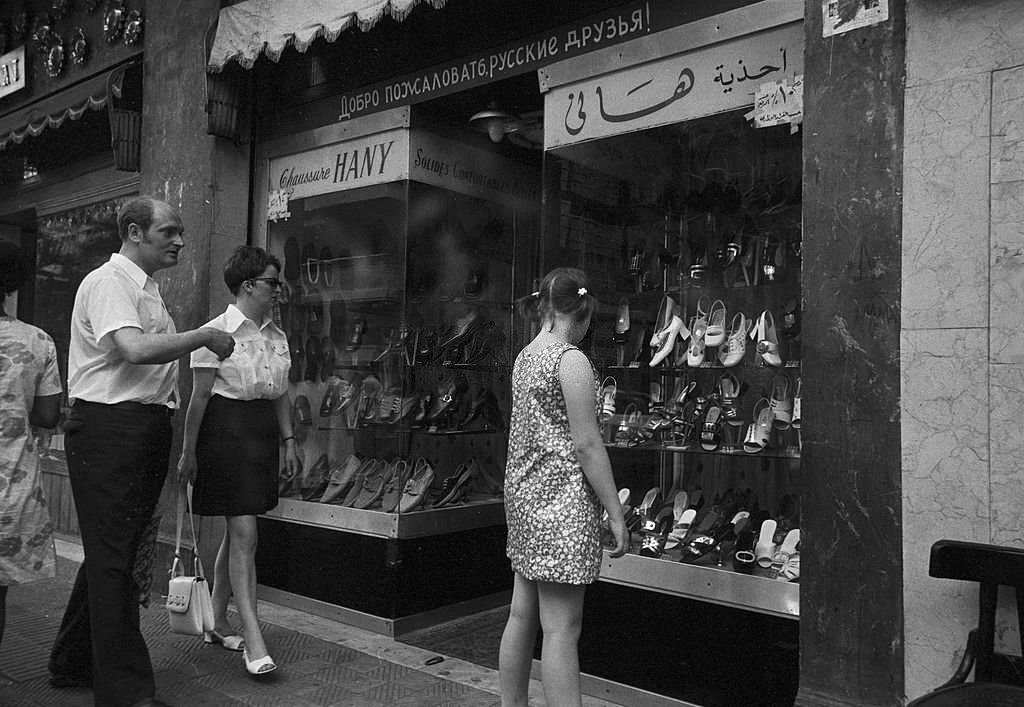
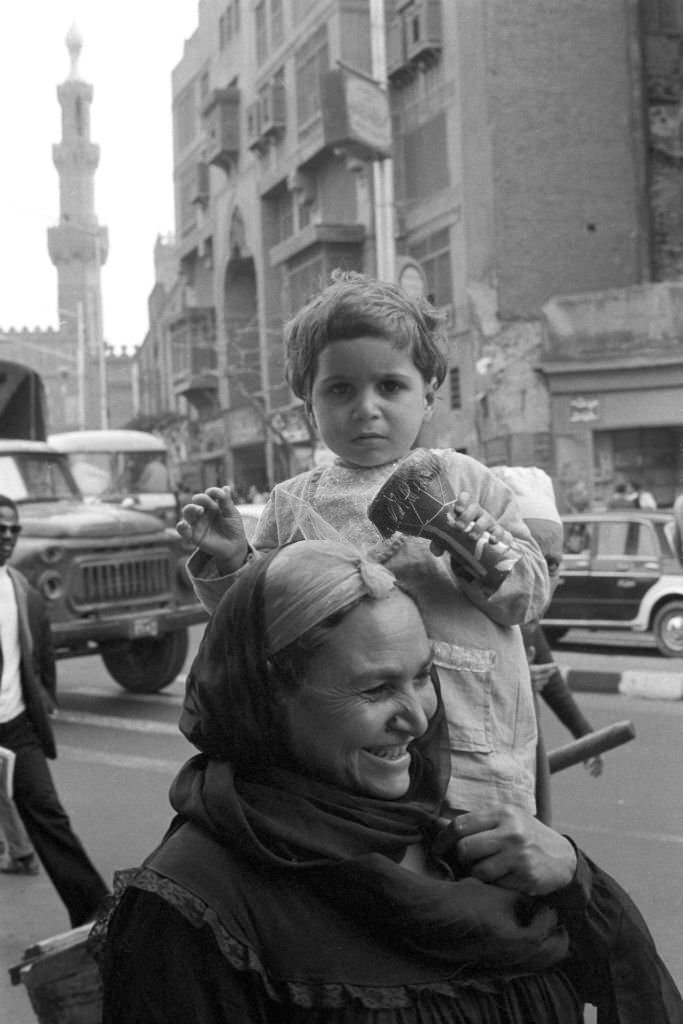
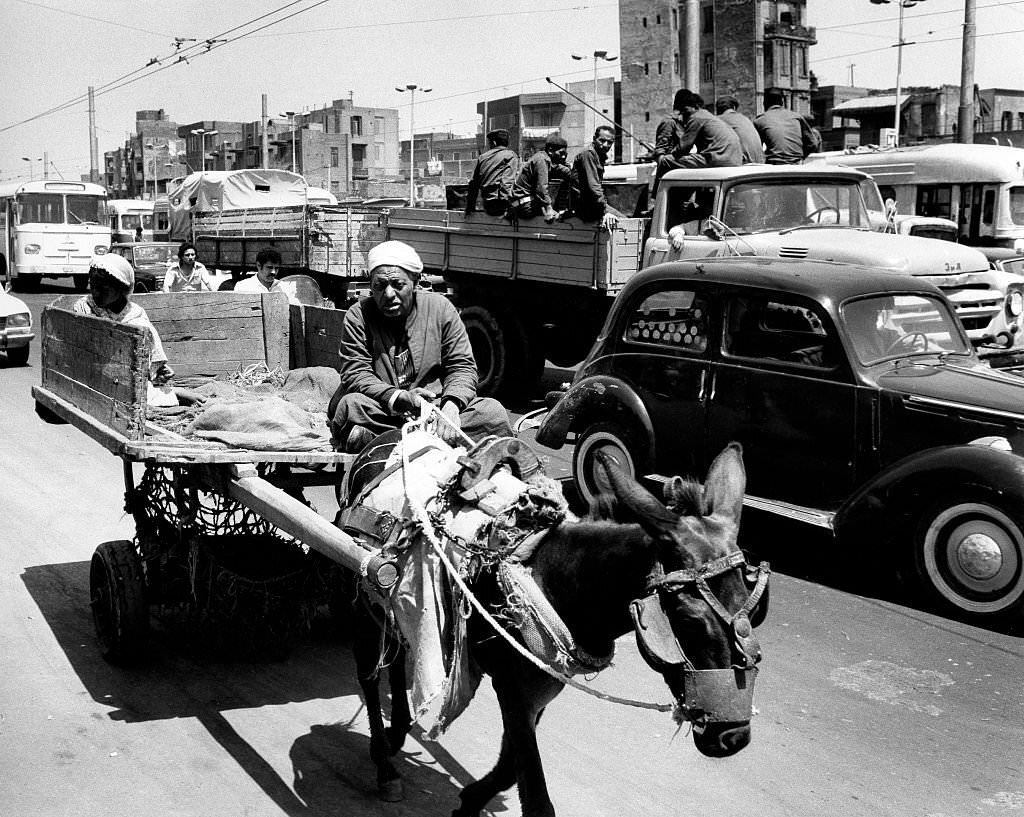
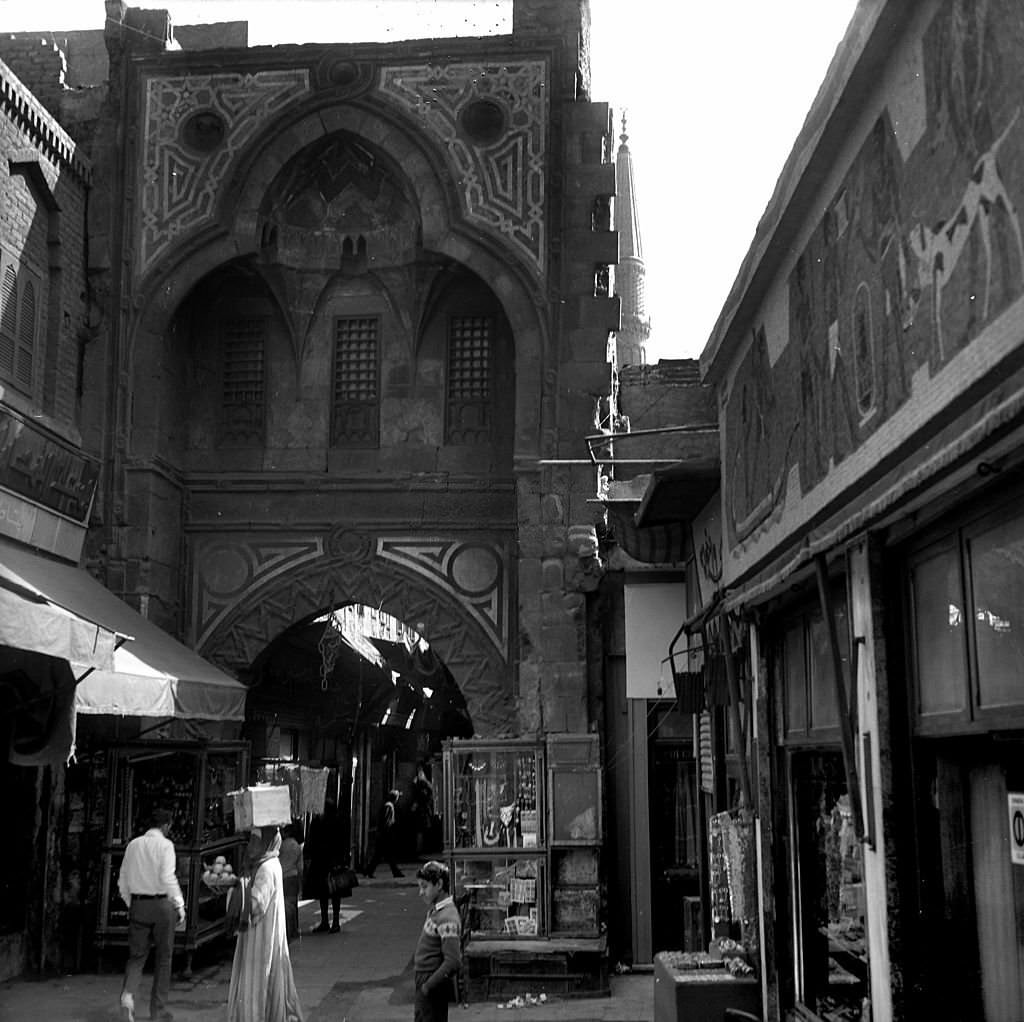
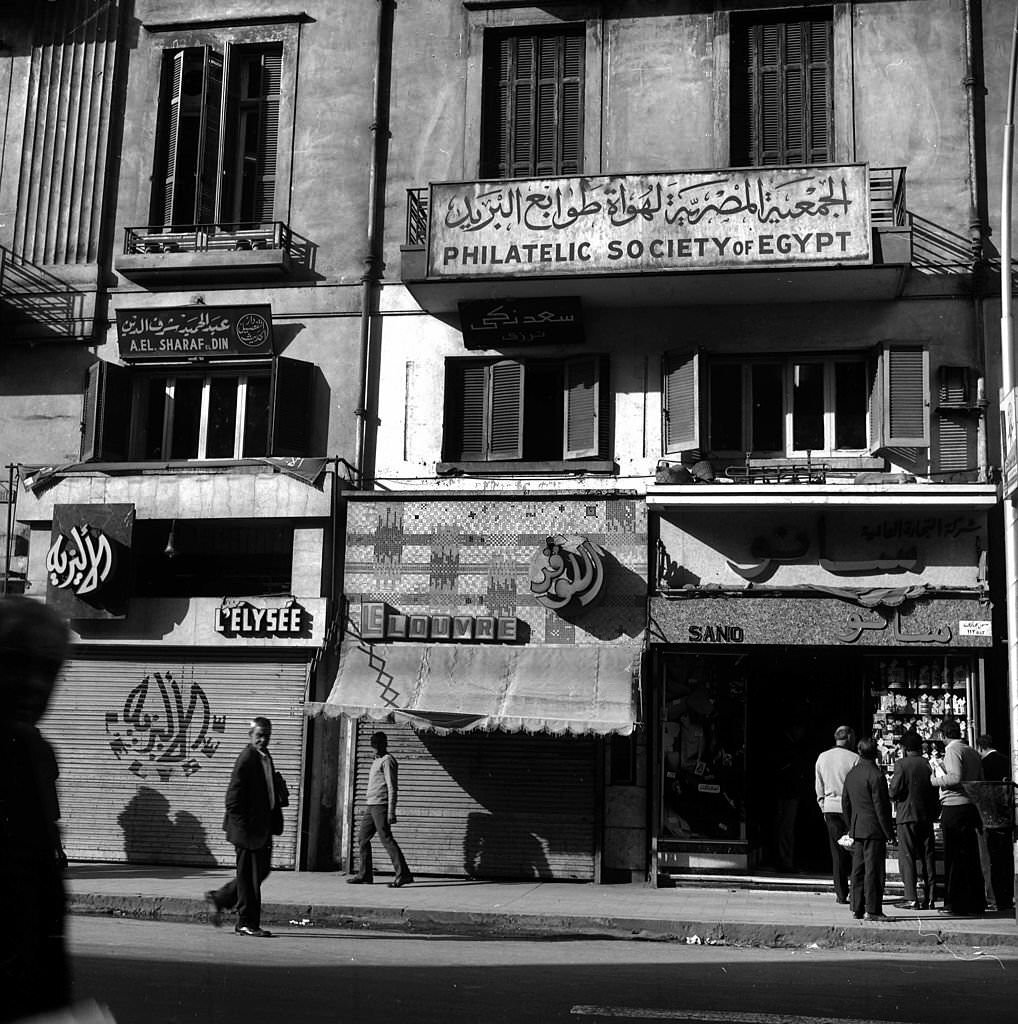
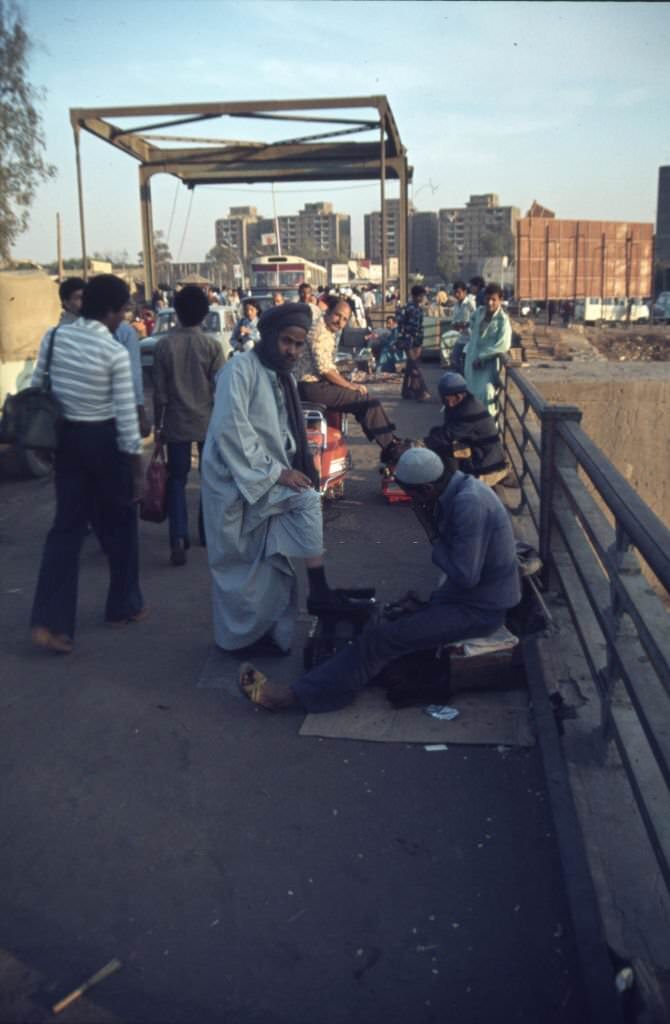
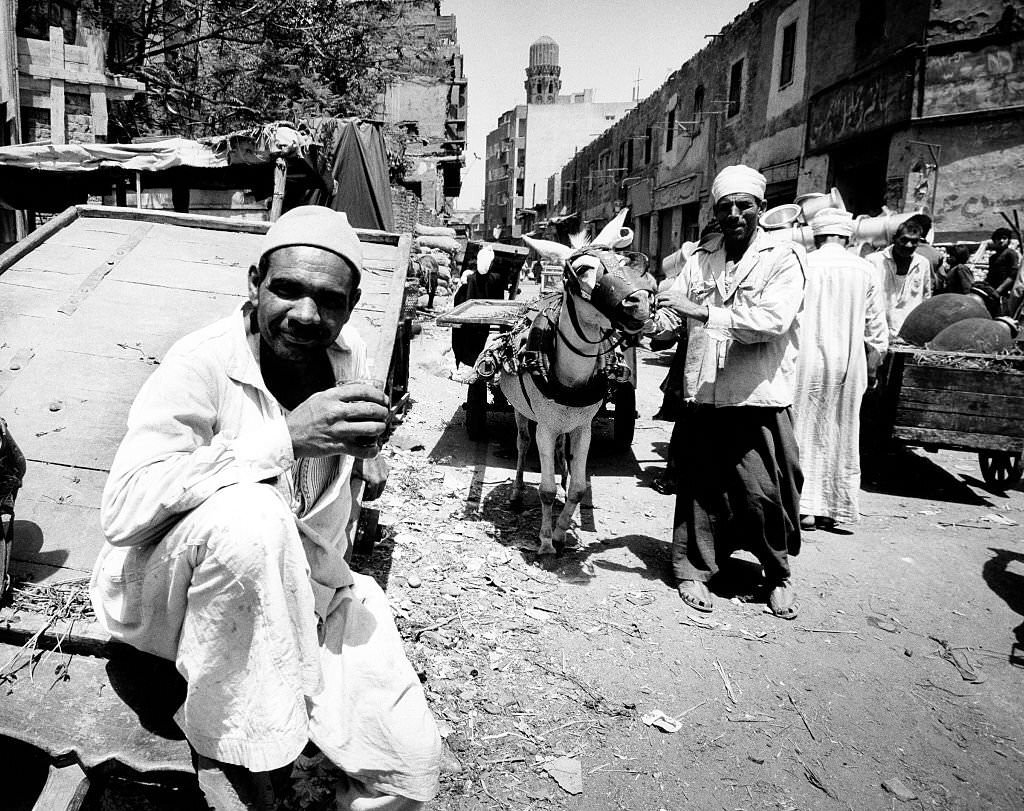
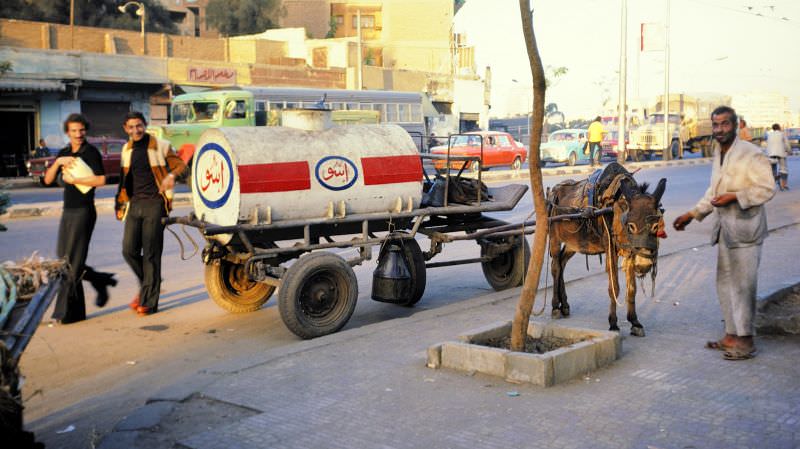
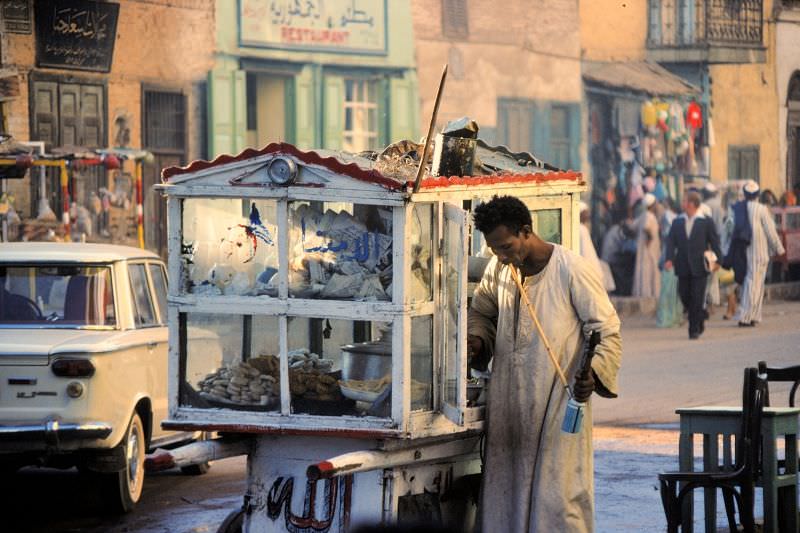
The streets of 1970s Cairo had their own distinct character. Donkey carts moved through the same lanes as cars. Shoeshine boys worked corners near busy intersections. Vendors sold goods from wooden carts. The Khan El Khalili market remained the heart of Cairo’s commerce, its entrance a gateway to lanes filled with spice sellers, fabric merchants, and craftspeople.
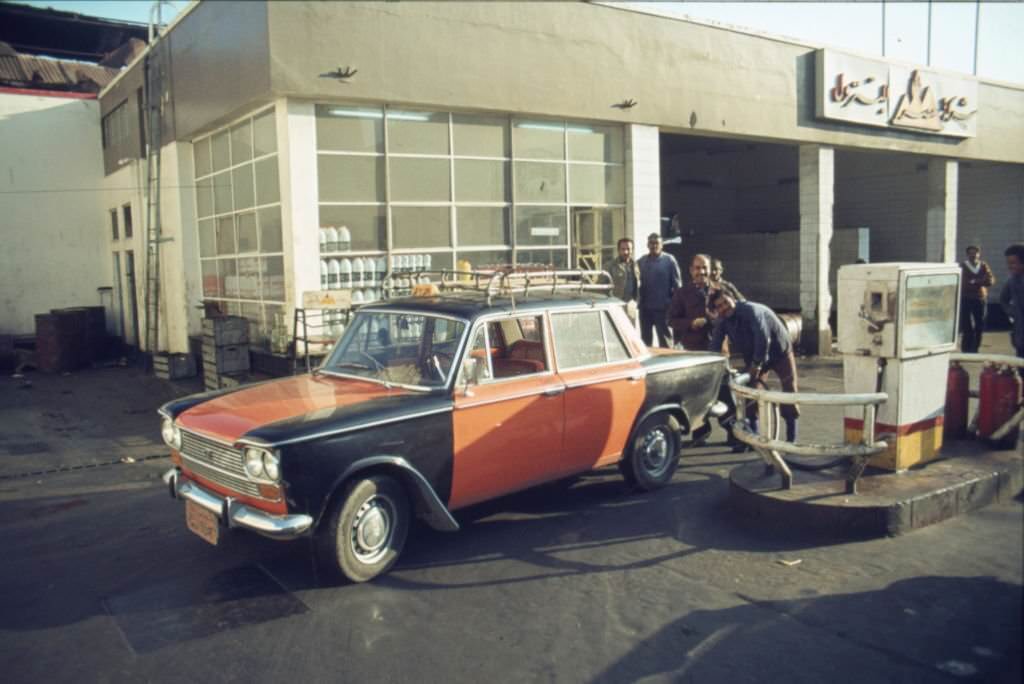
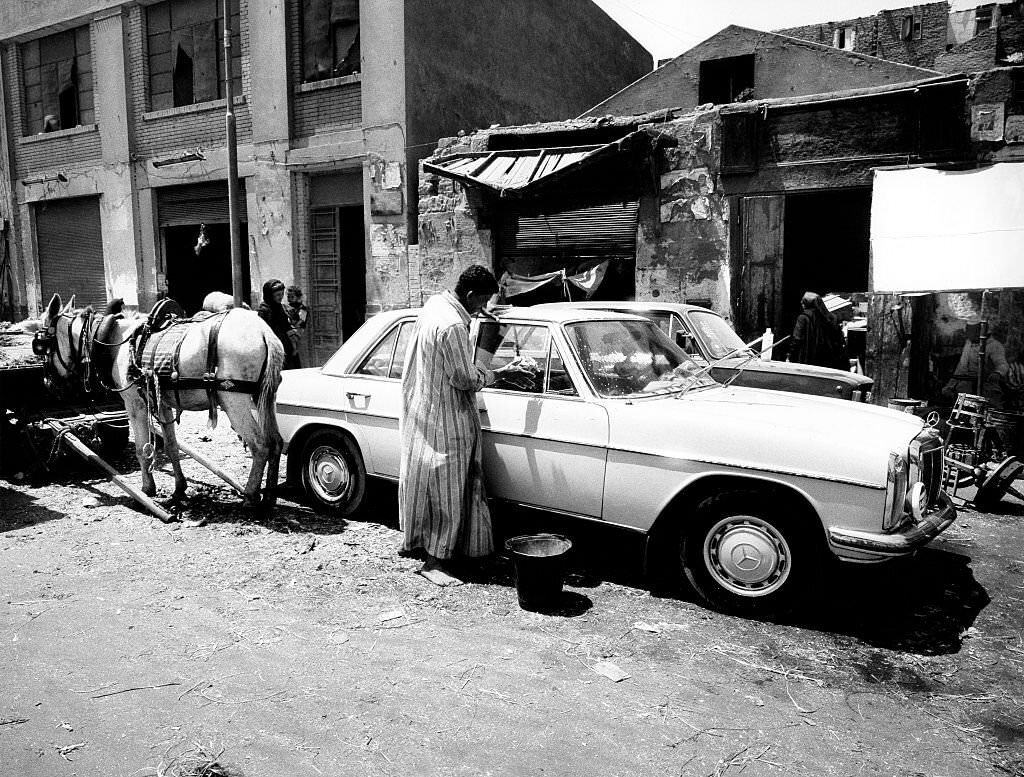
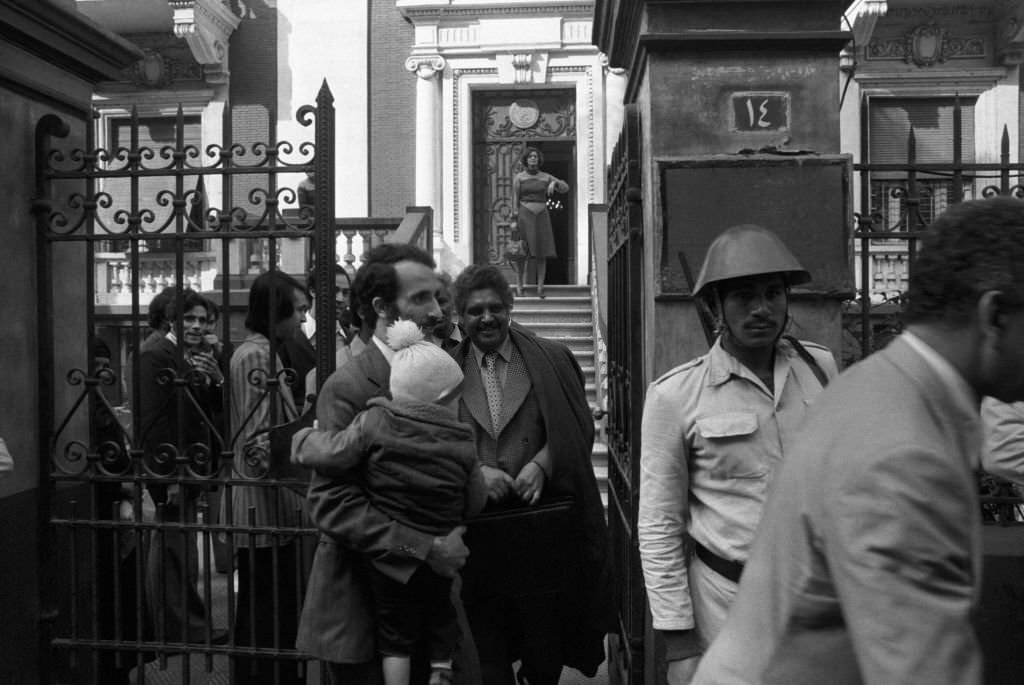
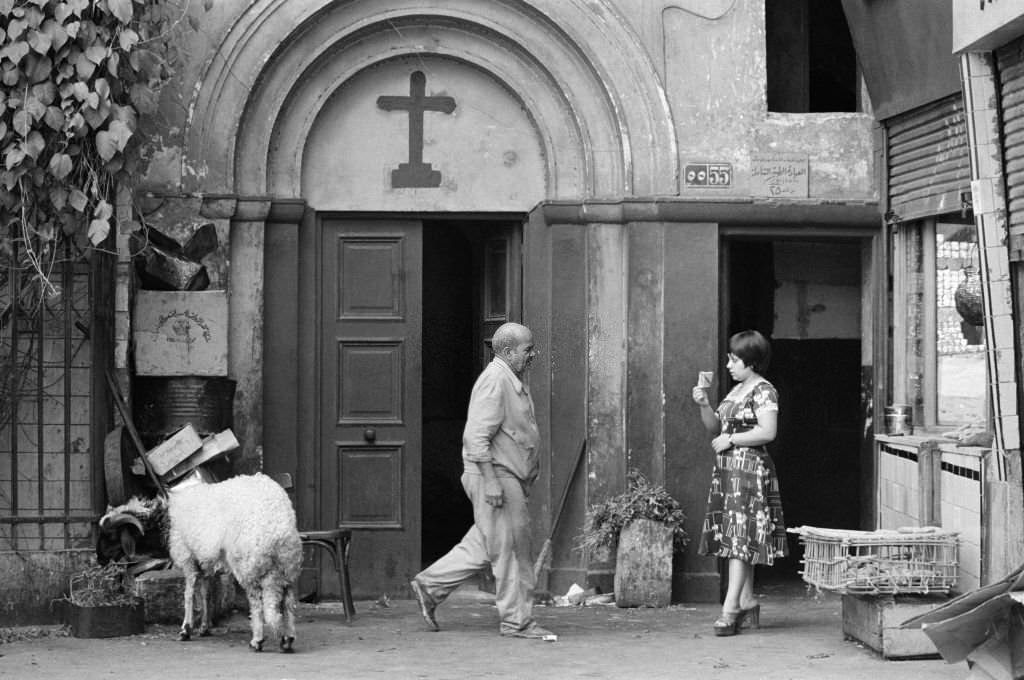
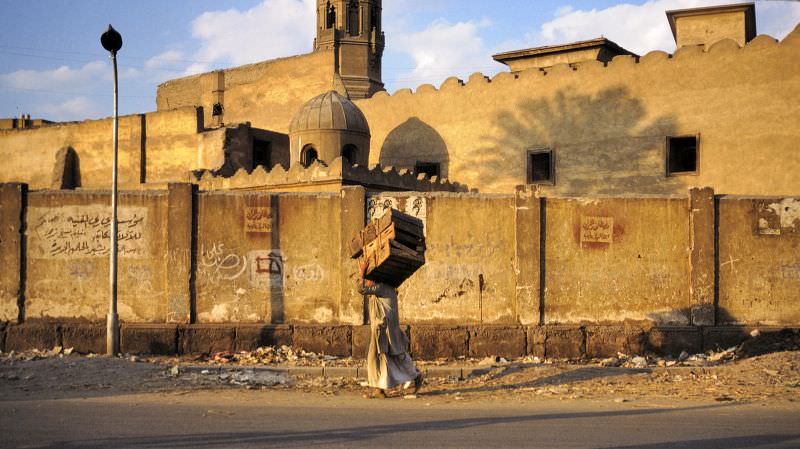
Door of the Khan el-Khalily souk, Cairo, 1976Stores on Ksar el-Nil street, 1976Shoeshine boy in Cairo, 1976Gas station in Cairo, 1976Man cleaning his car in Cairo, 1976Cairo – Traders in Cairo, 1976President Anwar el Sadat in the front of a house, 1976Adverting notices in front of the Guezira in Cairo, 1976. RV-892634. (Photo by Roger Viollet via Getty Images)Advertising notices surrounding a building site, 1976 February, 1976. RV-892635. (Photo by Roger Viollet via Getty Images)Building in Cairo, February 1976City wall Cairo, 1976City wall Cairo, 1976- 1976A street of the Coptic district, 1976The Nile, 1976
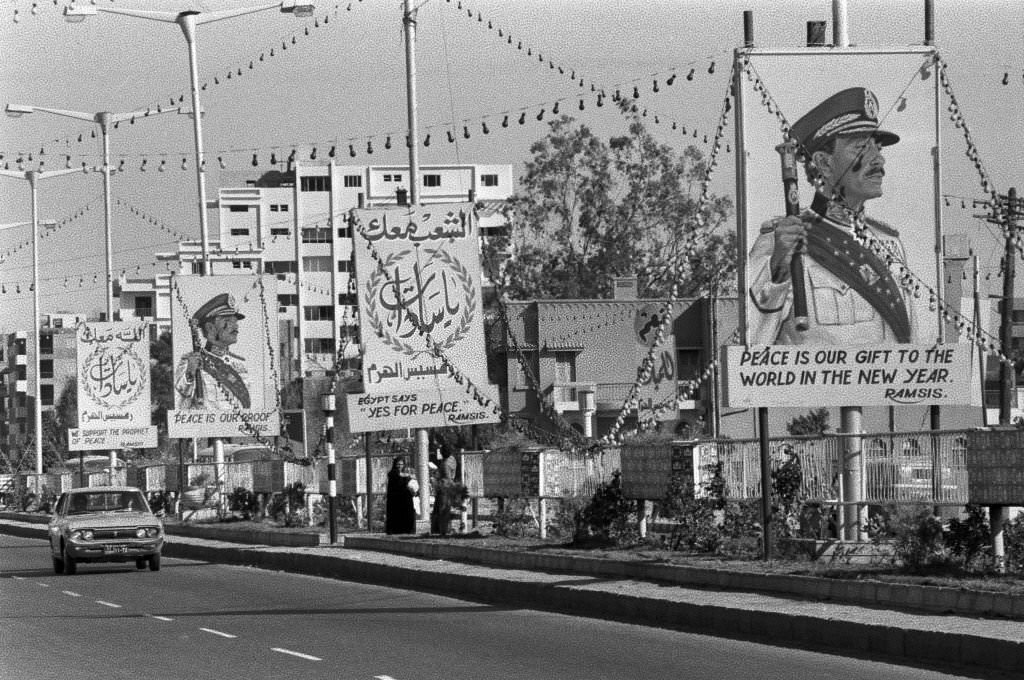
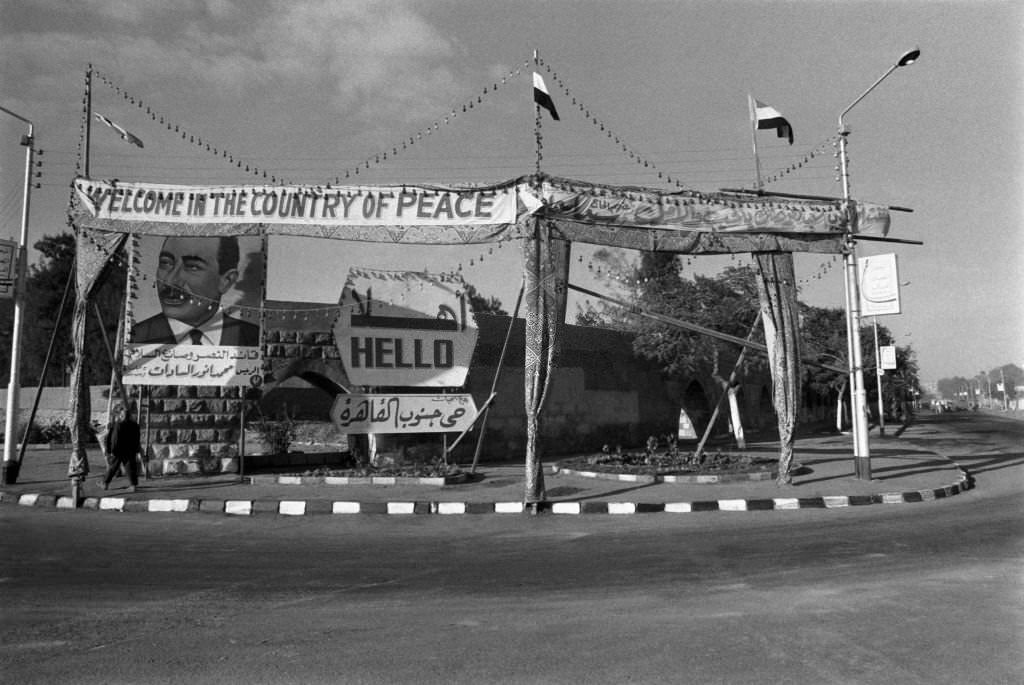
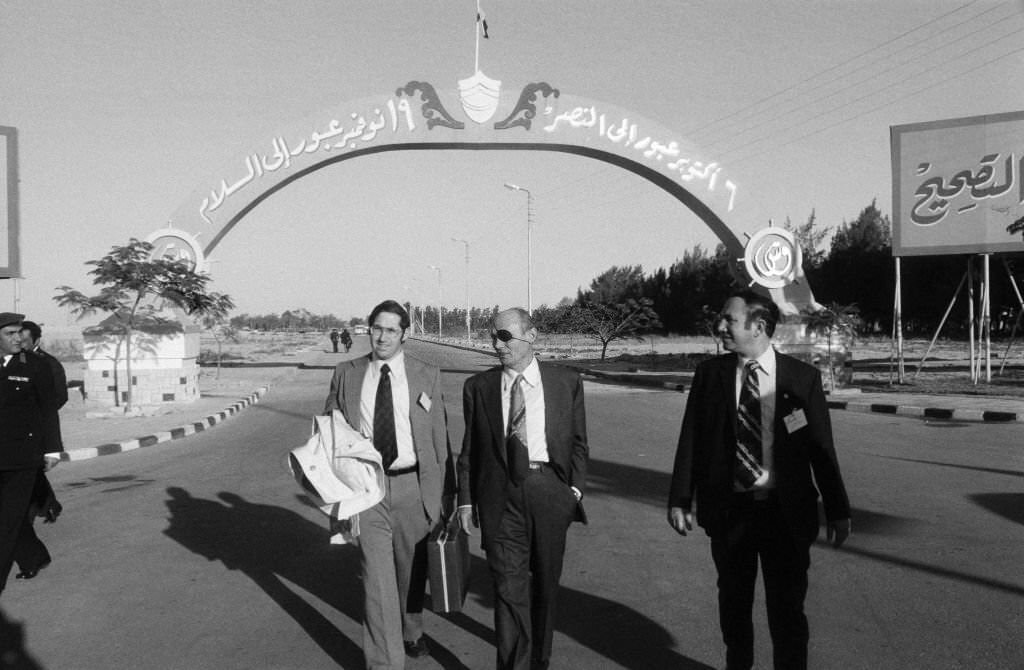
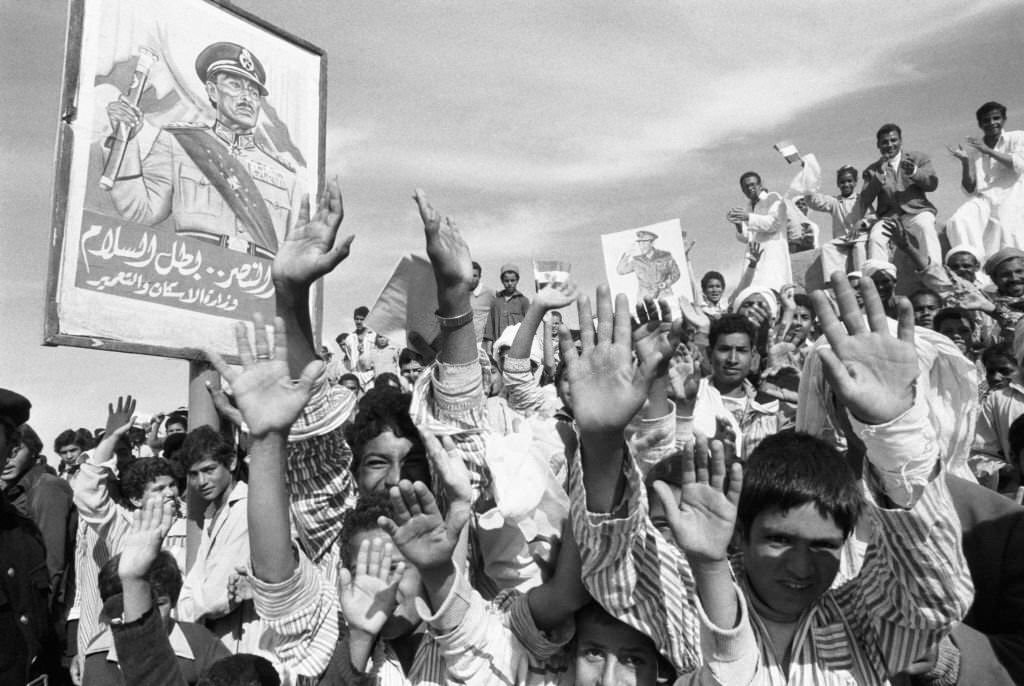
The biggest political event of the late 1970s came in November 1977, when Sadat made the unprecedented decision to travel to Israel and address the Israeli parliament — the Knesset. No Arab head of state had ever done this. When he returned to Cairo on November 21, crowds greeted him with extraordinary enthusiasm. Portraits of Sadat lined the avenues of Cairo ahead of the Israeli-Egyptian negotiations, and within weeks, Israeli Defense Minister Moshe Dayan was in Ismailia for direct peace talks.
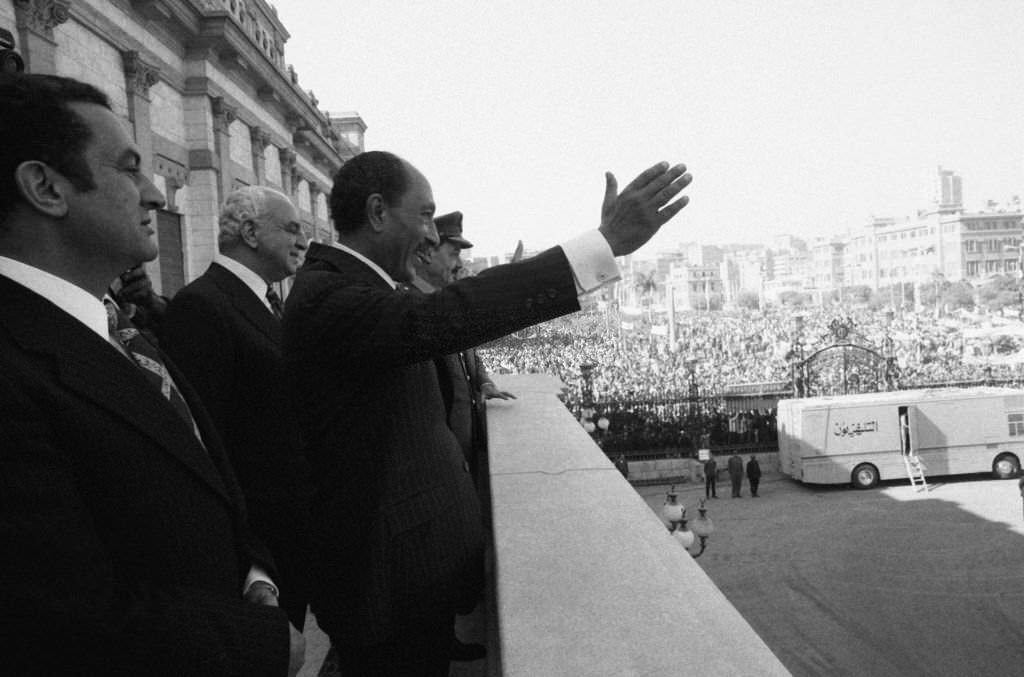
Supporters during the triumphant return of Egyptian President Anouar el-Sadat to Cairo on November 21, 1977Portraits of Anwar al-Sadat on an avenue ahead of the Israeli-Egyptian negotiations, 1977Anwar al-Sadat on an avenue ahead of the Israeli-Egyptian negotiations on December 17, 1977Speech by Egyptian President Anwar al-Sadat to Cairo residents with Egyptian Vice President Hosni Mubarak in the foreground on December 8, 1977 in CairoMoshe Dayan during the peace process between Israel and Egypt in Isamilia in December 1977, Egypt.Anouar el-Sadat acclaimed by the Egyptian people during his visit to the village of Serpium, near Ismailia on December 2, 1977, Egypt.The Algerian ambassador to Egypt leaves Cairo after the diplomatic rupture between the two countries, 1977
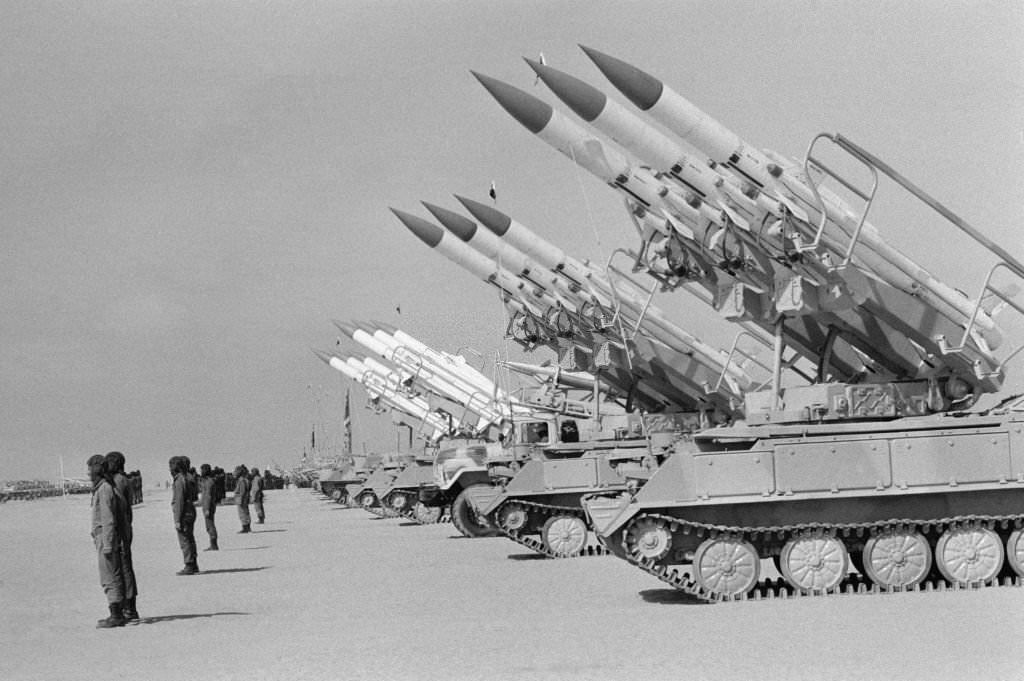
The peace process angered many Arab nations, which severed diplomatic ties with Egypt. But Sadat pressed on, and in September 1978, he signed the Camp David Accords with Israeli Prime Minister Menachem Begin, mediated by U.S. President Jimmy Carter. Sadat returned to Cairo to a hero’s welcome. Military parades in October 1978 marked the anniversary of the Yom Kippur War, with rocket launchers rolling through the streets as a show of strength even as Egypt moved toward peace.
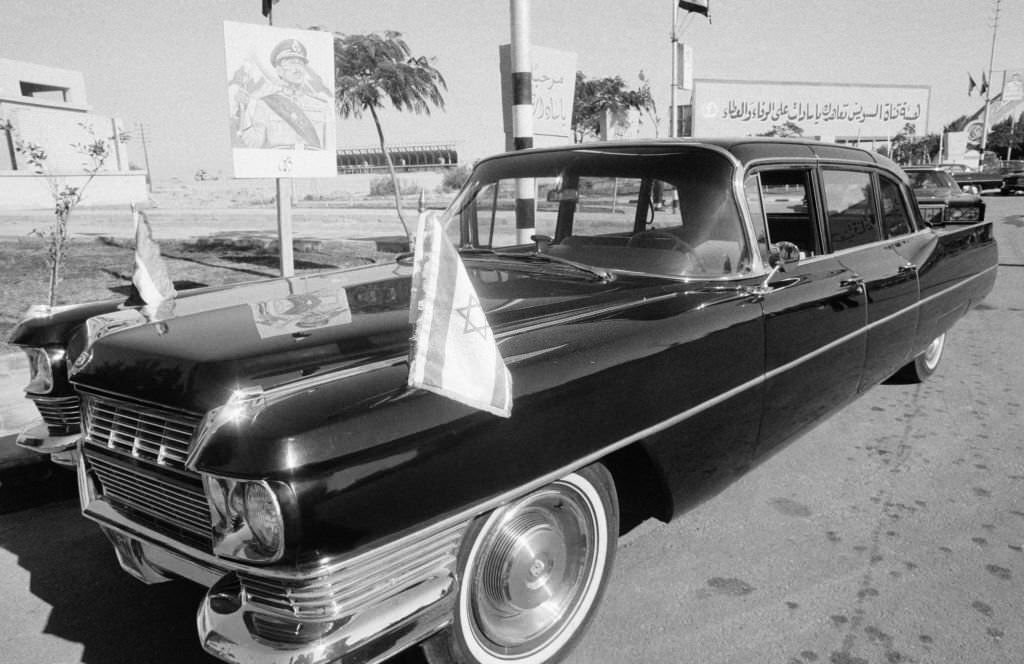
Return of Anouar el-Sadat to Cairo after the Camp David agreements, 1978Multiple rocket launchers during the military parade in commemoration of the Yom Kippur War, Cairo, 1978President of Cadillac with President Anouar el-Sadat in 1977
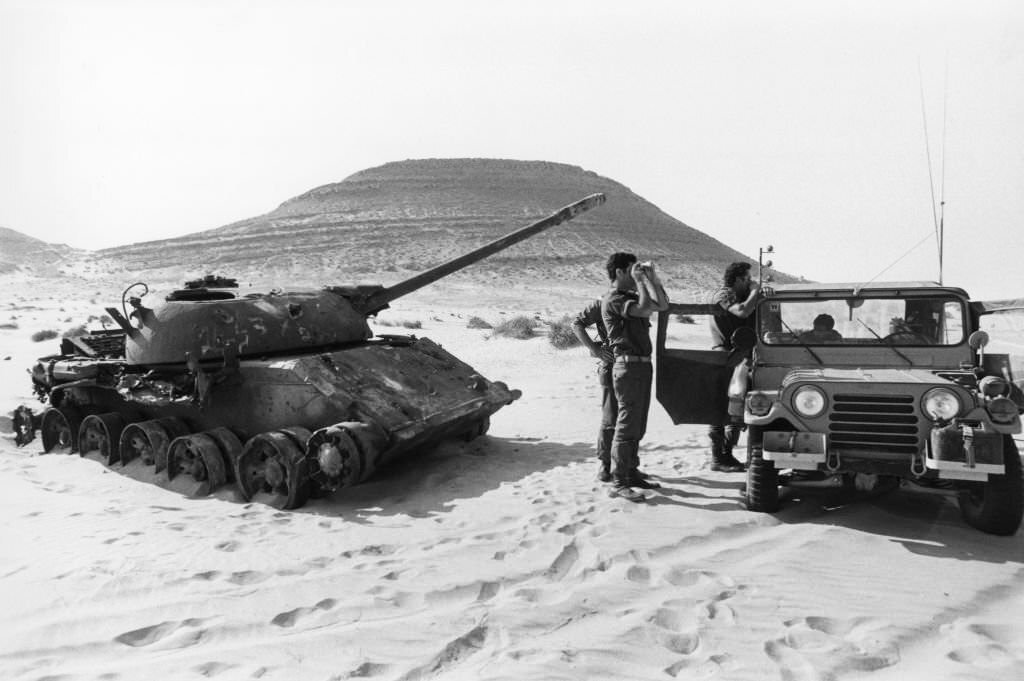
In 1978, the Sinai Peninsula was still partially under Israeli control. In the Jewish settlement of Yamit, Arab laborers worked construction sites alongside Israeli residents. New barracks were going up. Israeli tank exercises took place next to Egyptian tanks destroyed in 1967, left rusting in the desert sand. Bedouin women moved across the landscape as they always had, largely unchanged by the political changes happening around them.
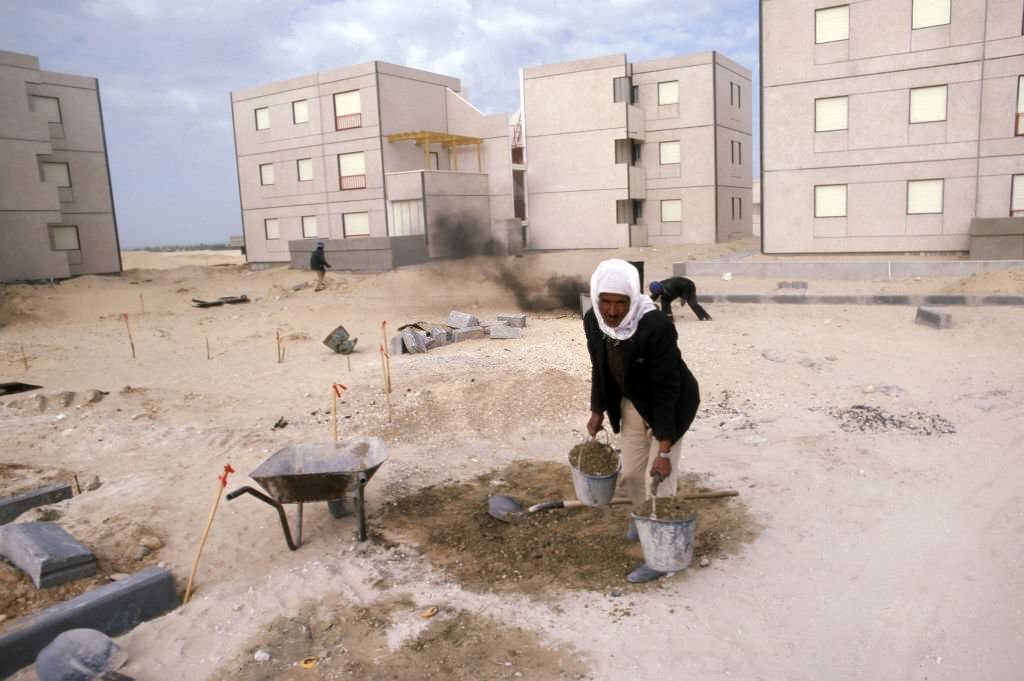
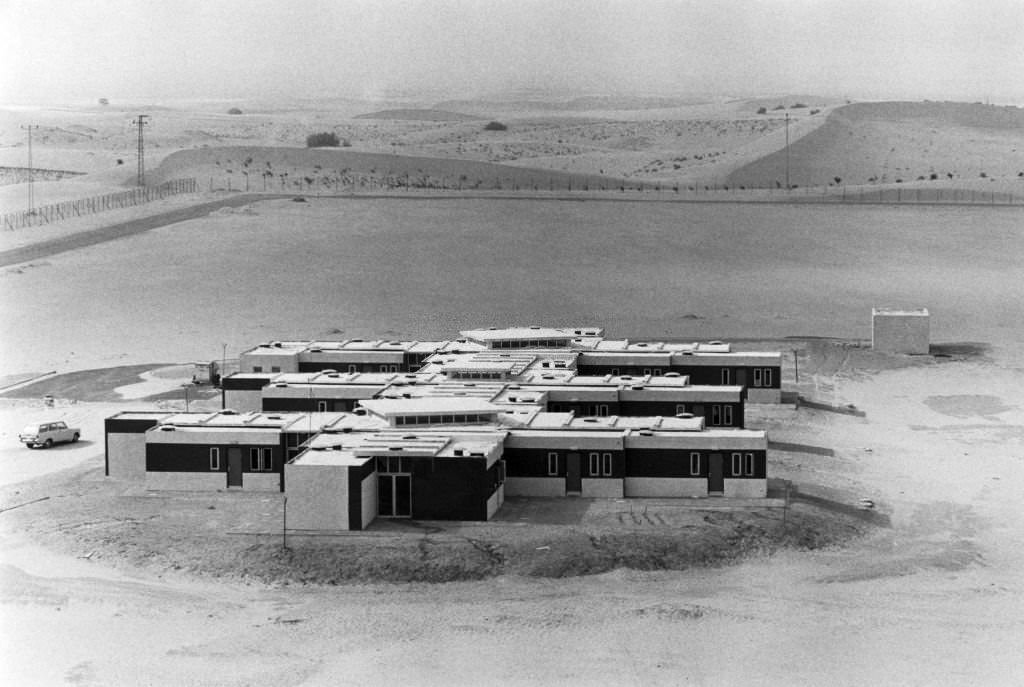
Arab laborer working in the Israeli settlement of Yamit in the Sinai, January 1978.An Israeli tank exercise next to an Egyptian tank destroyed in June 1967 in the Sinai desert, 1978New barracks in the Jewish settlement of Yamit, 1978Bedouin women in Sinai, January 1978.
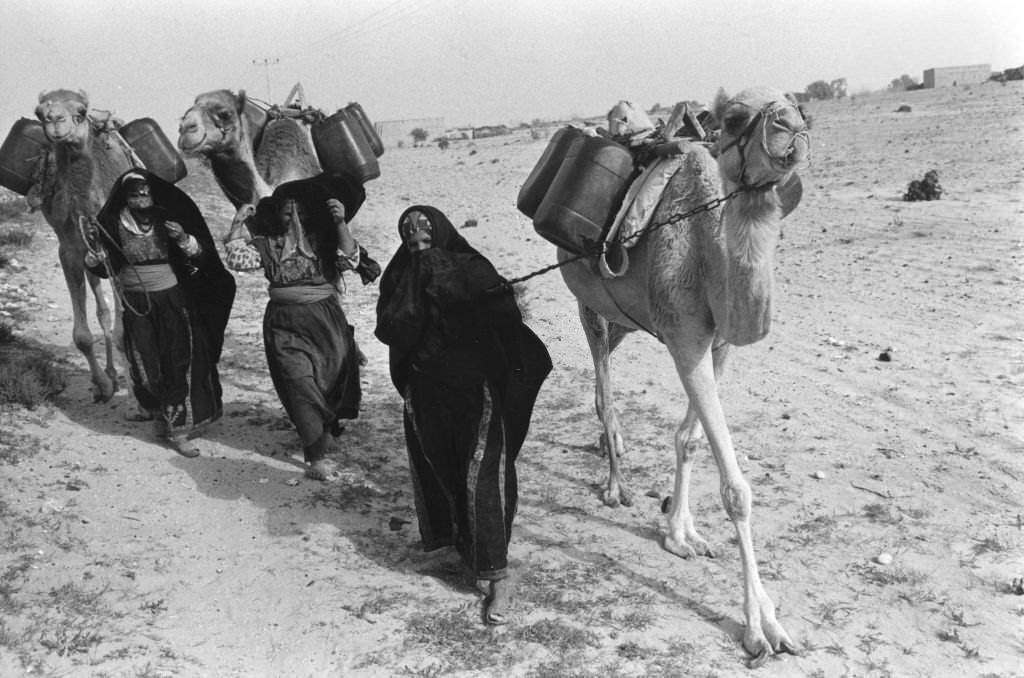
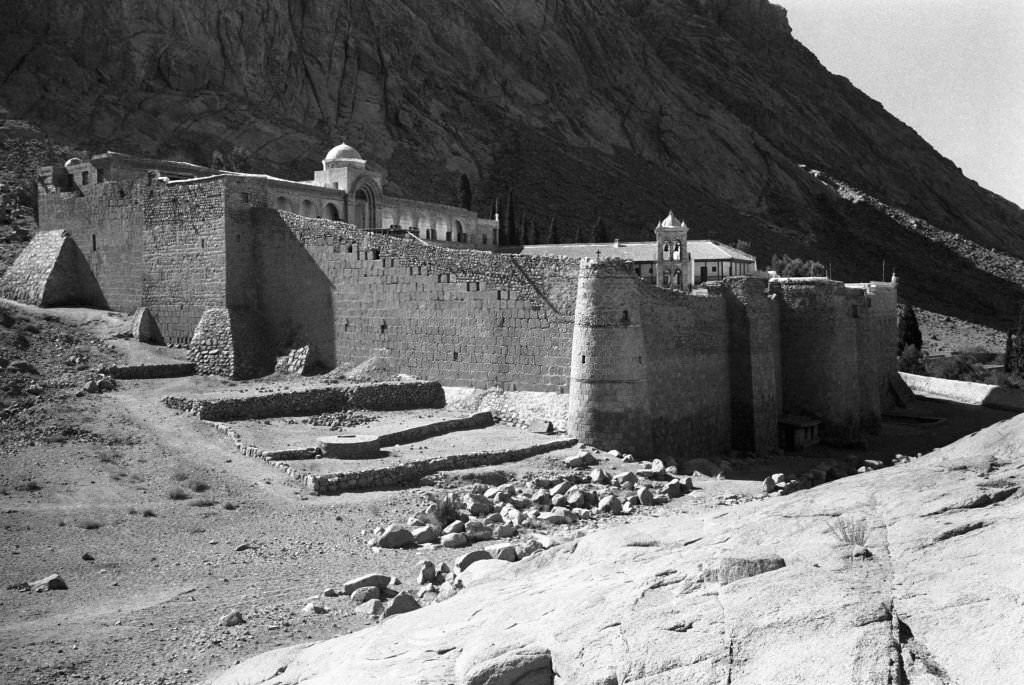
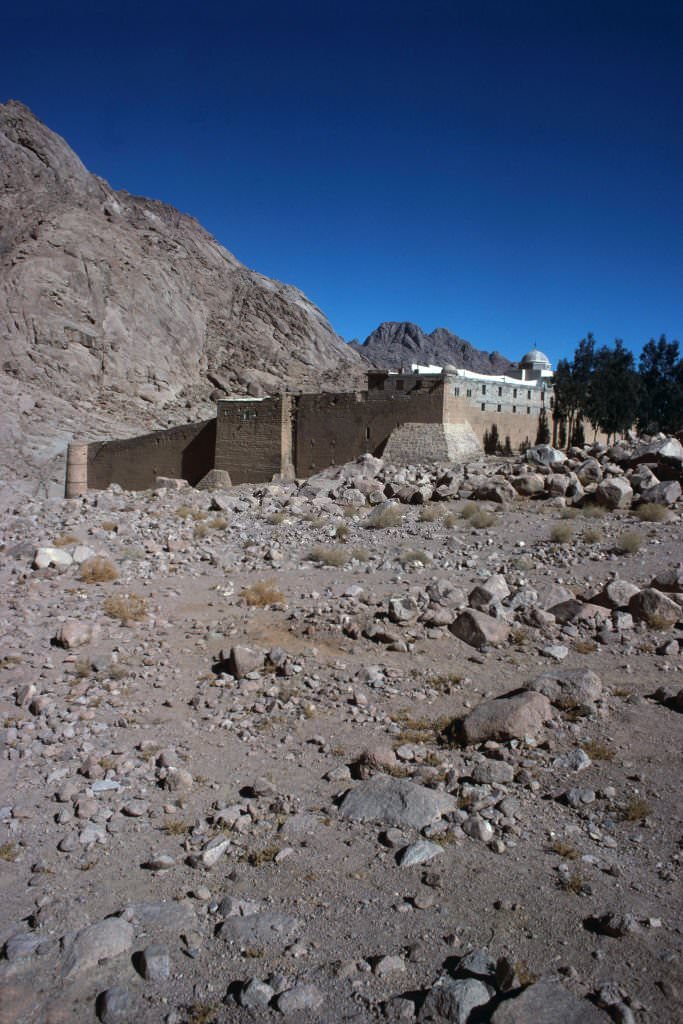
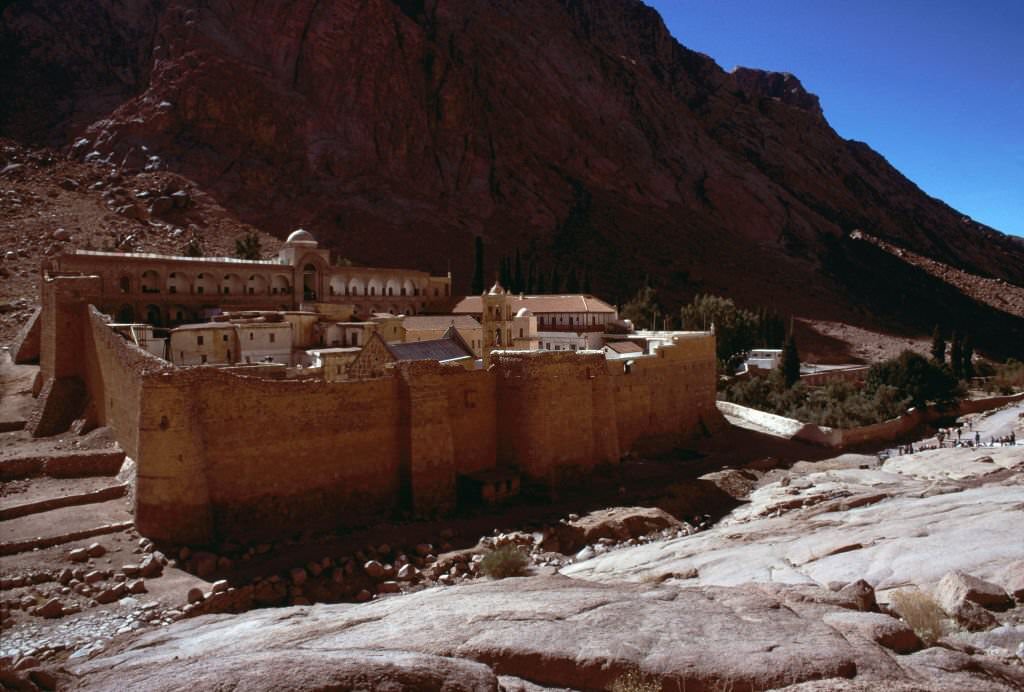
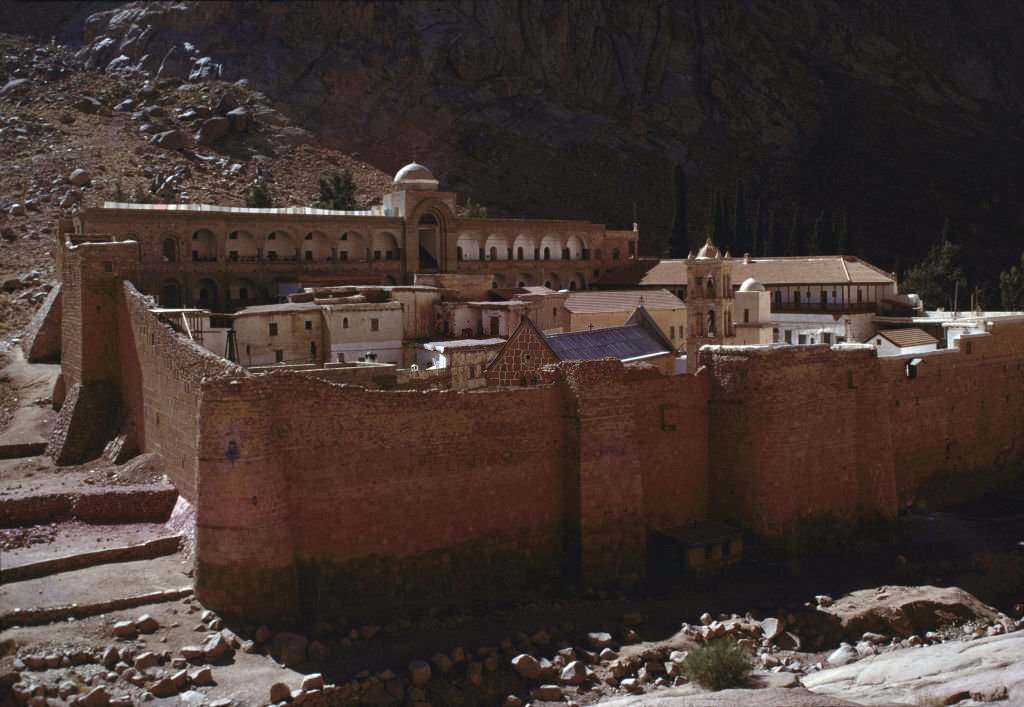
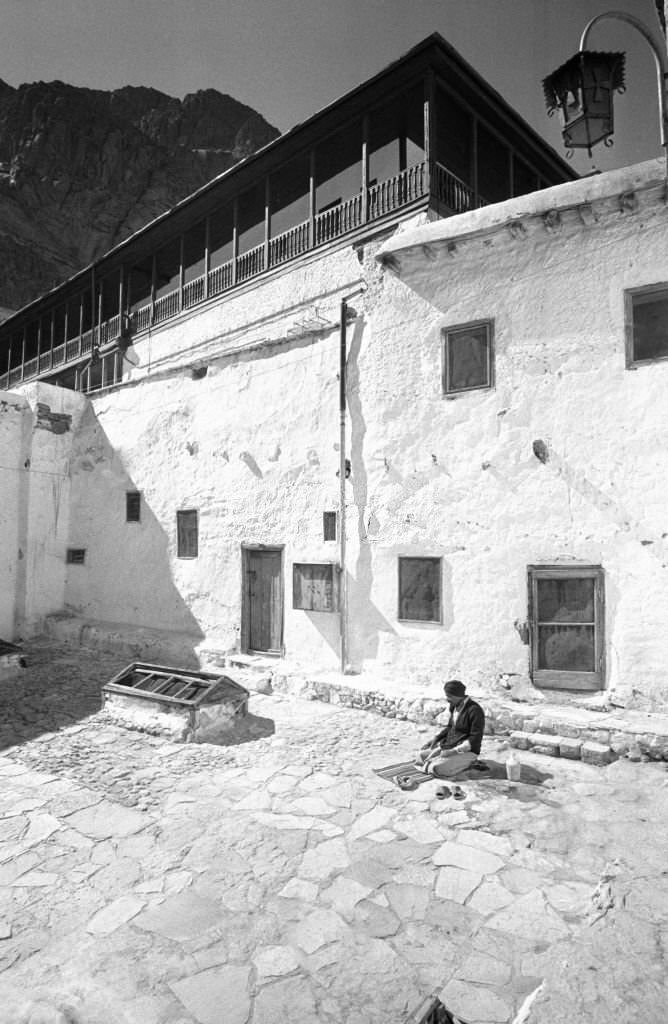
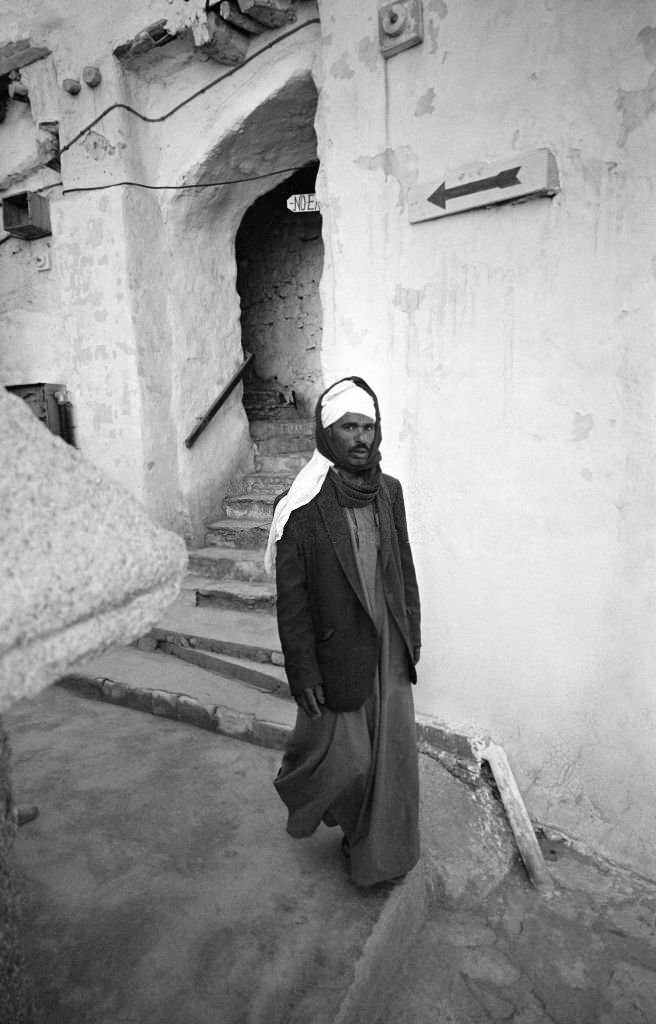
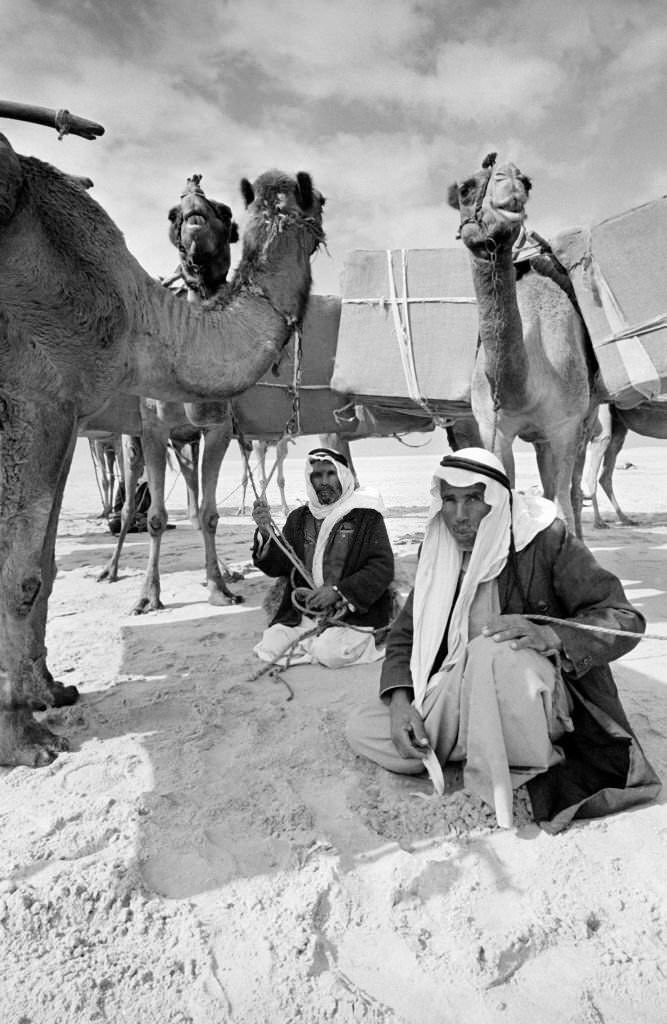
Saint Catherine’s Monastery in the Sinai desert was a place where ancient and contemporary Egypt coexisted in remarkable ways. The monastery, one of the oldest in the world, sat at the foot of Mount Sinai. In November 1978, Bedouins could be seen praying in its courtyard and moving through its corridors. Camel caravans still crossed the desert nearby, carrying goods between remote communities.
Saint Catherine’s Monastery located in South Sinai, 1978The monastery of Saint Catherine in August 1978 in the Sinai desert in Egypt.The monastery of Saint Catherine in August 1978 in the Sinai desert in Egypt.Saint Catherine’s Monastery in Sinai in November 1978 in Egypt.
A Bedouin prays in the courtyard of Saint Catherine’s Monastery in South Sinai in November 1978
A bedouin in Saint Catherine’s Monastery located in South Sinai in November 1978
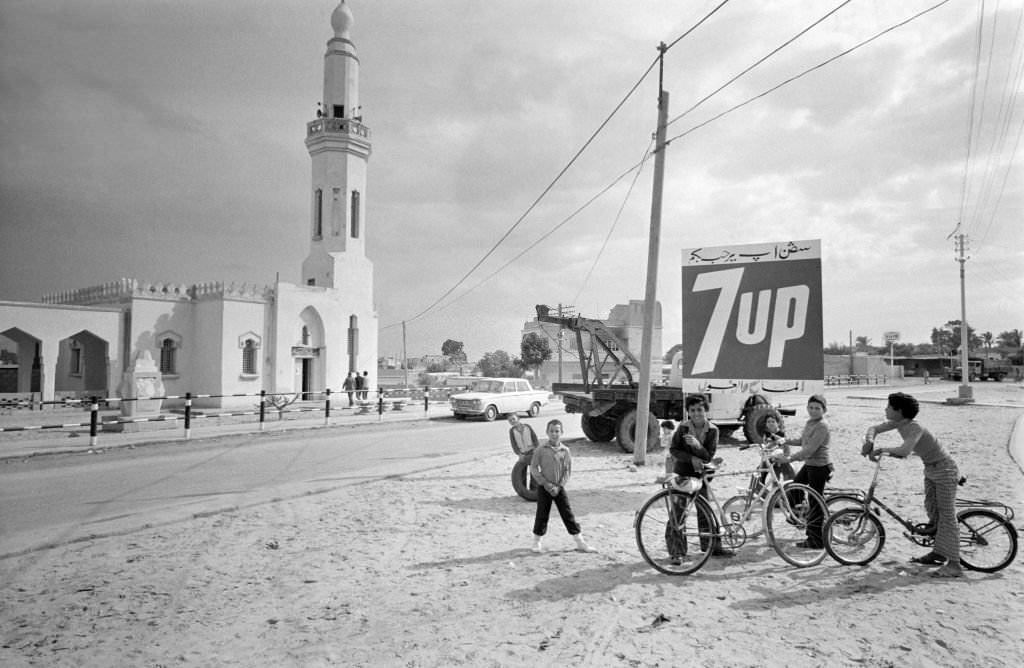
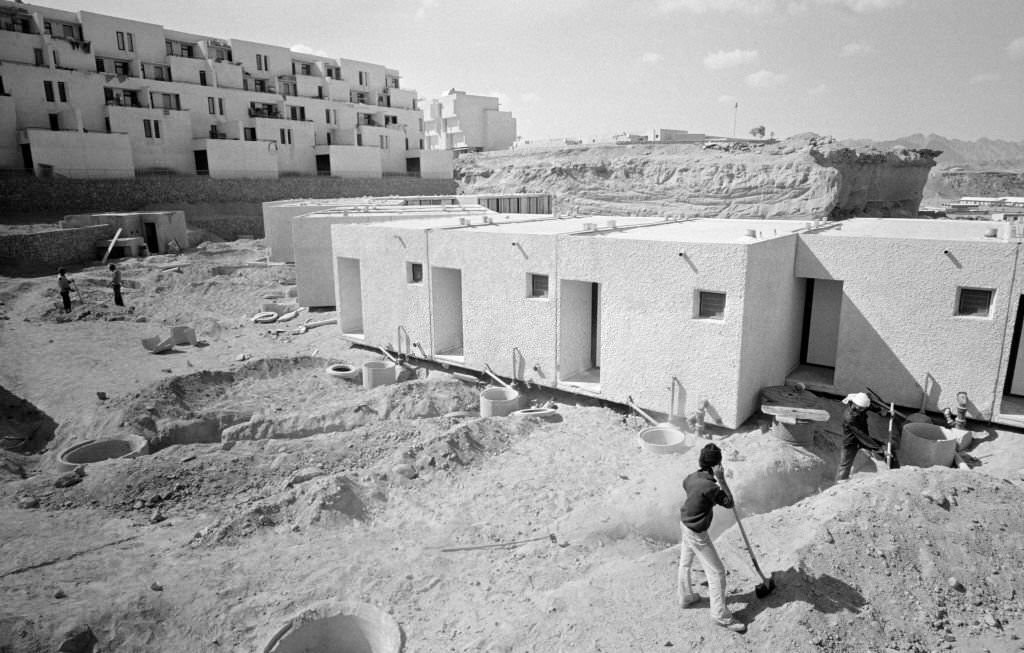
Bedouins transporting parcels of goods on camels in the Sinai desert in November 1978Children in a street in El-Arich in North Sinai with a mosque in the background, 1978Tourist residence under construction in Sharm el-Sheikh in November 1978
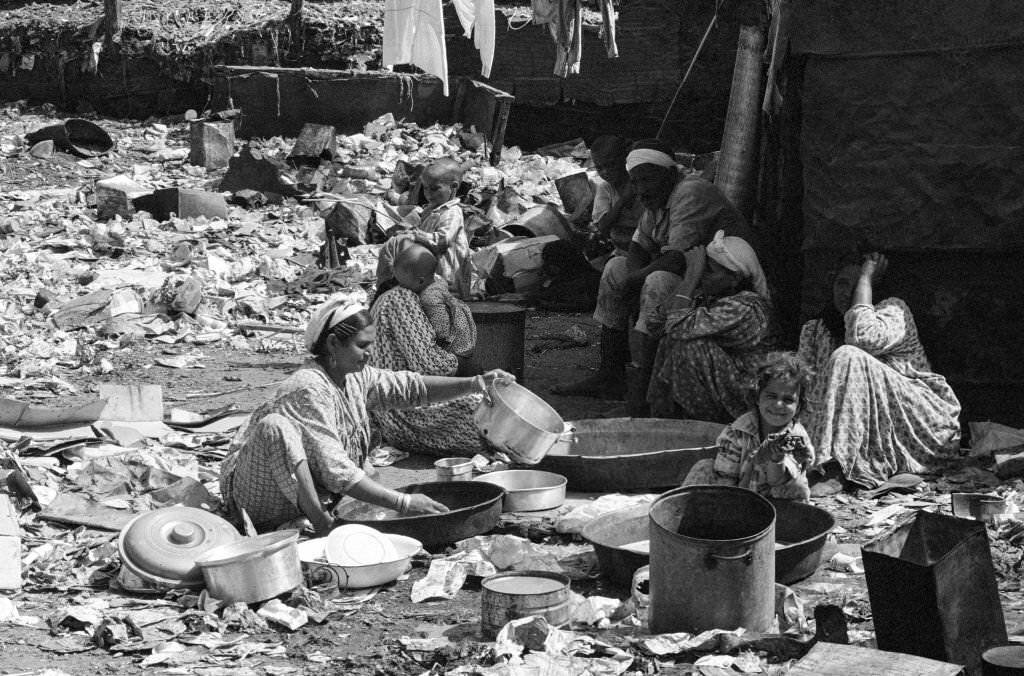
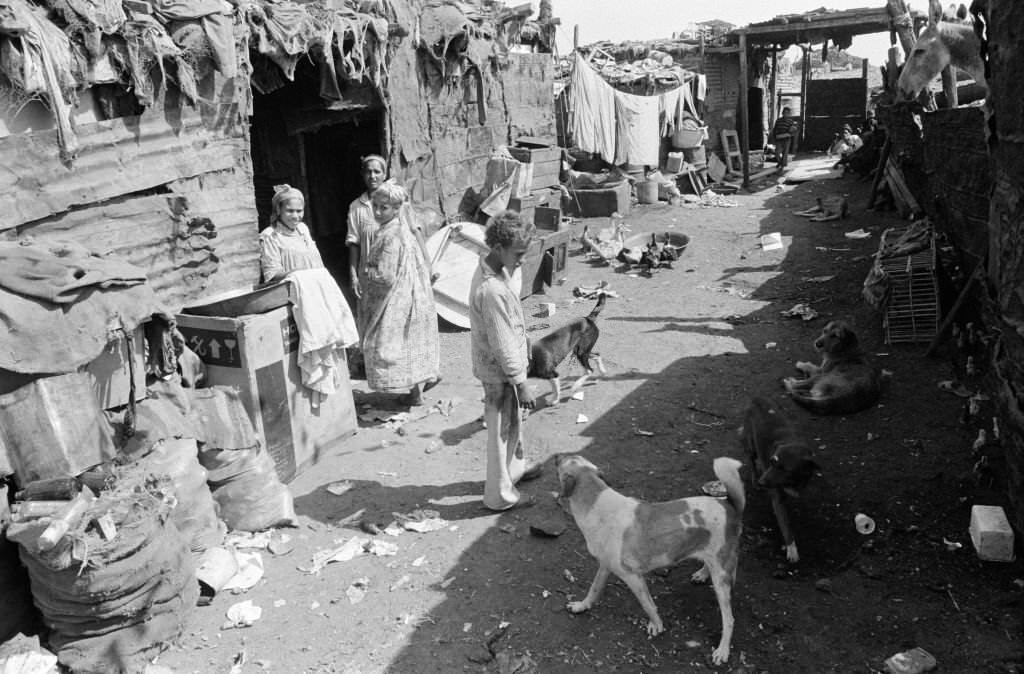
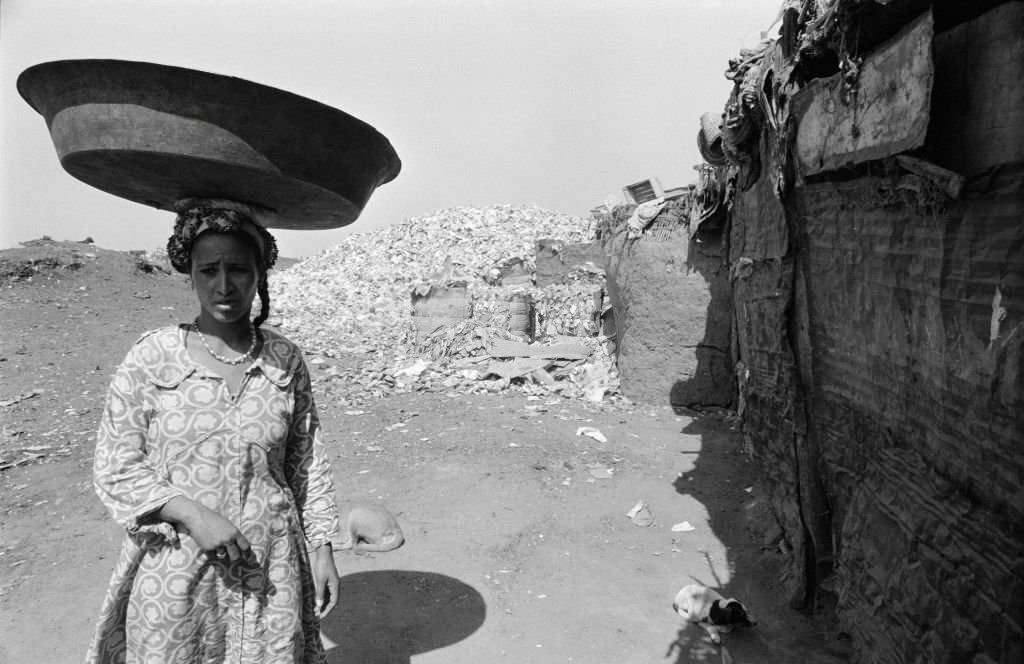
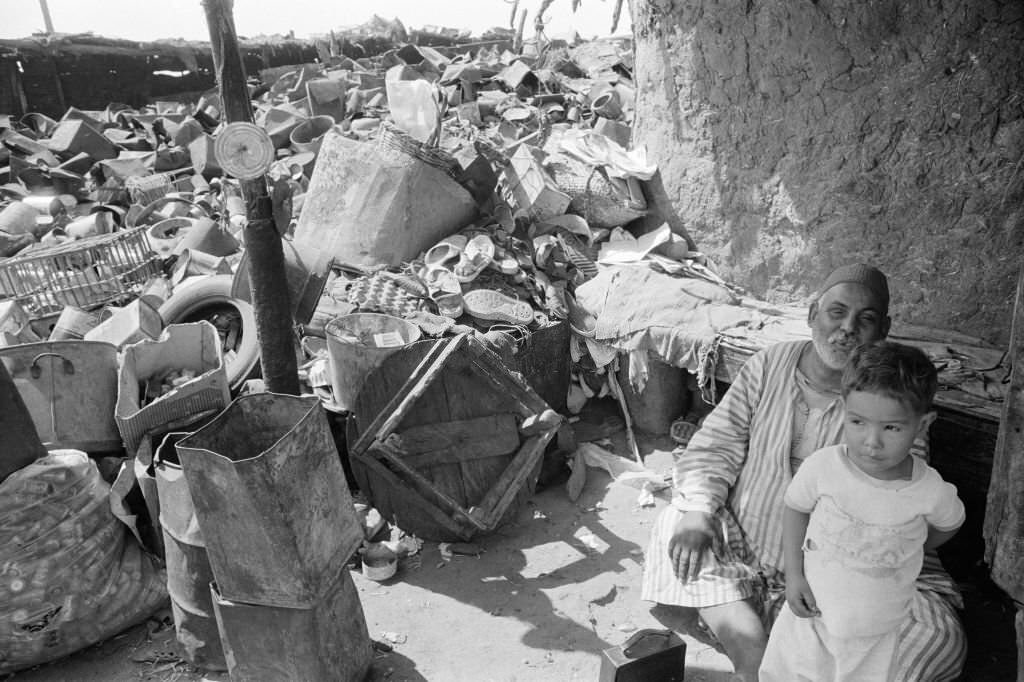
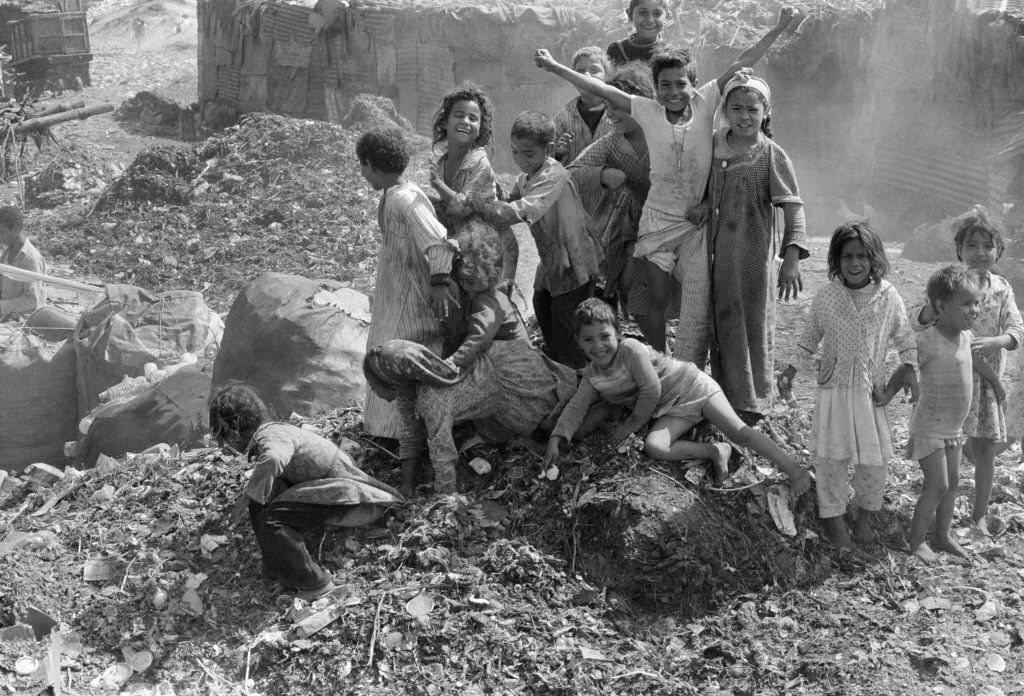
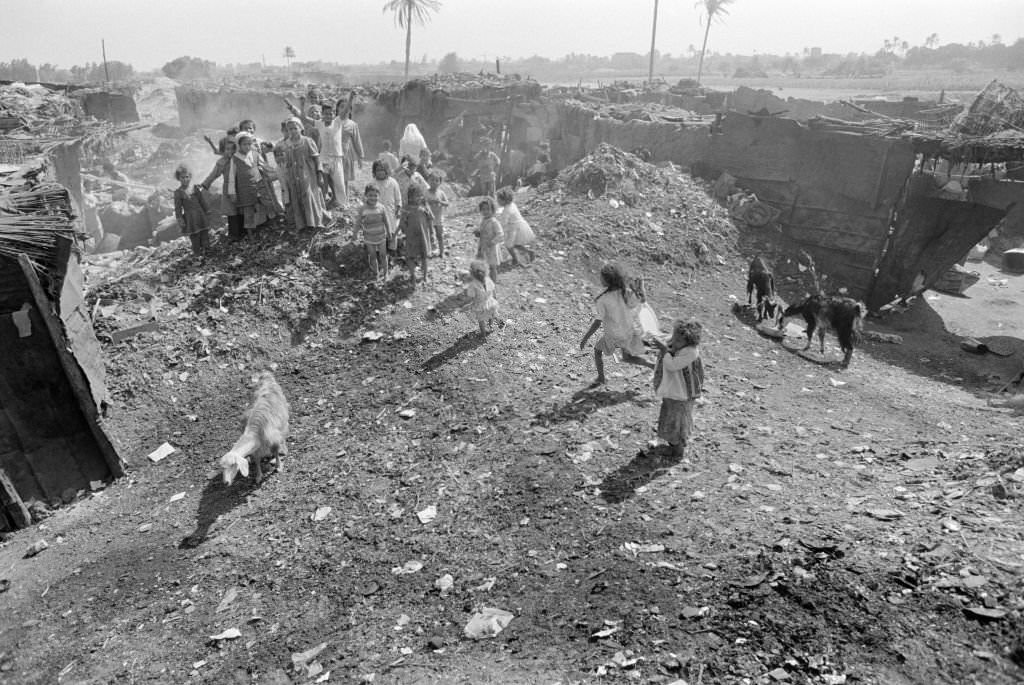
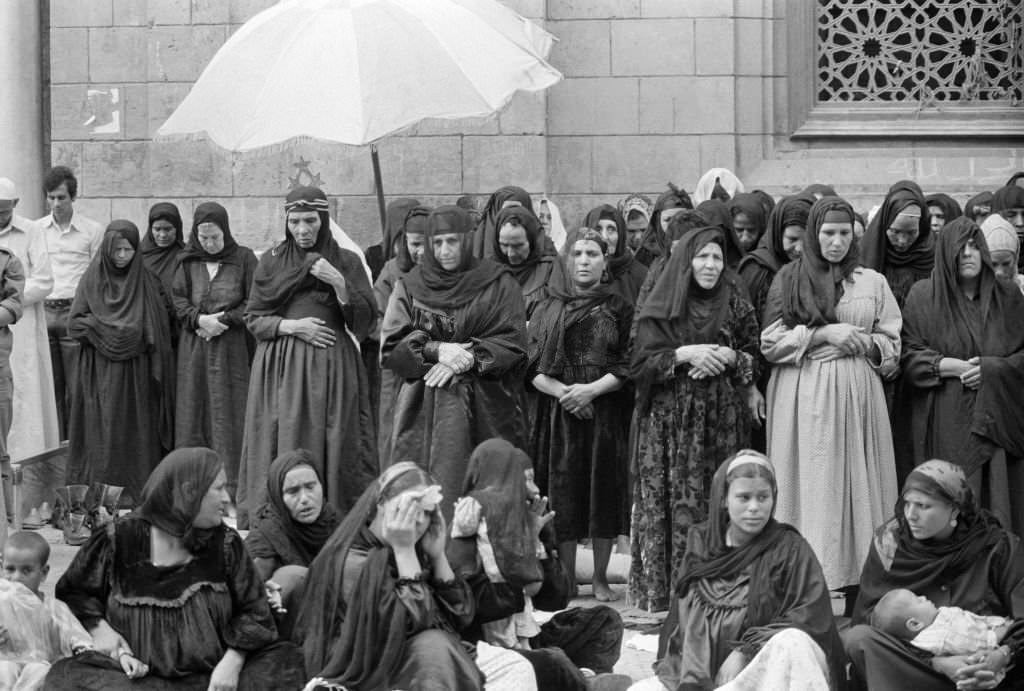
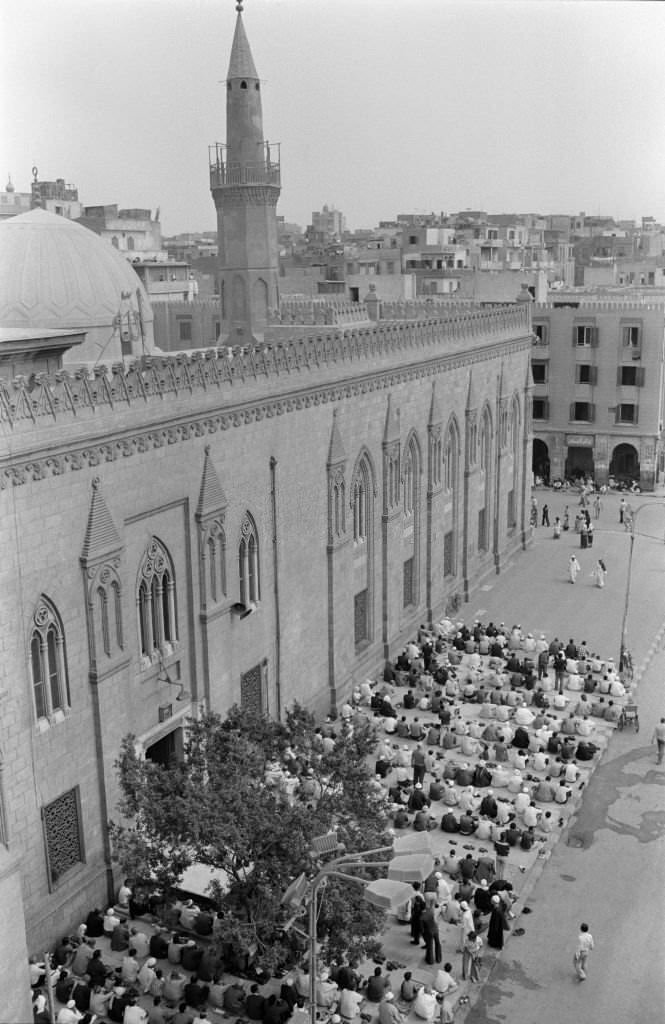
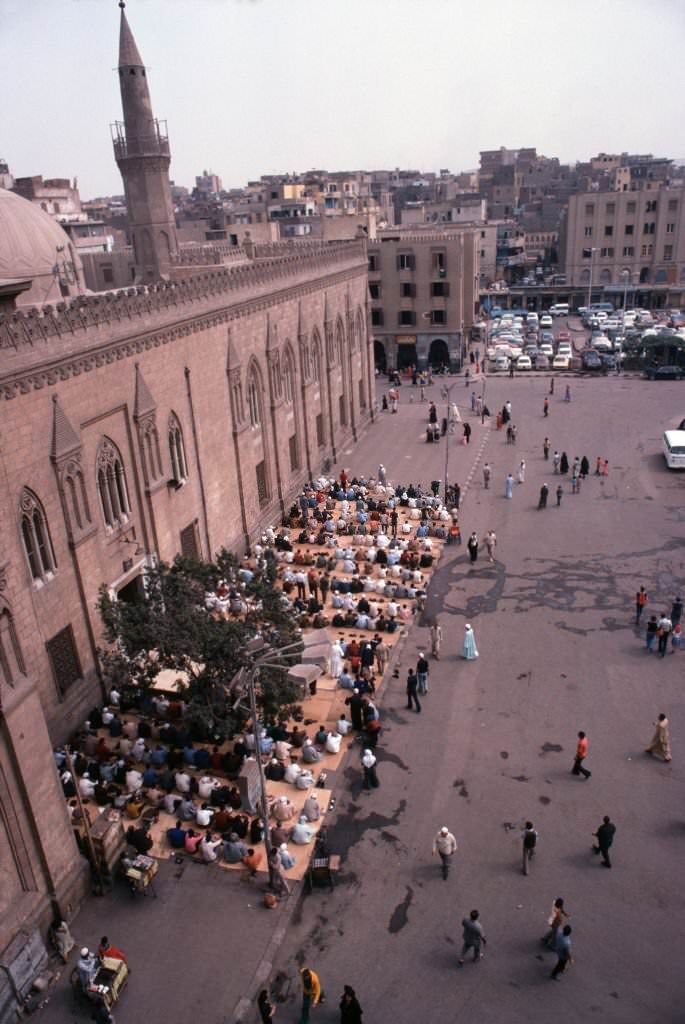
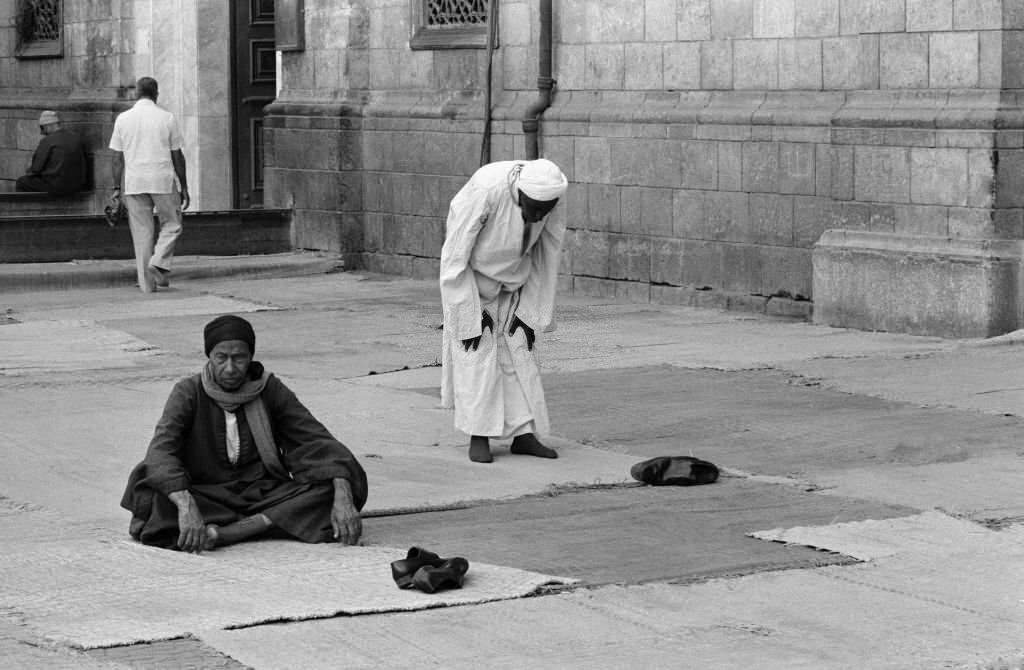
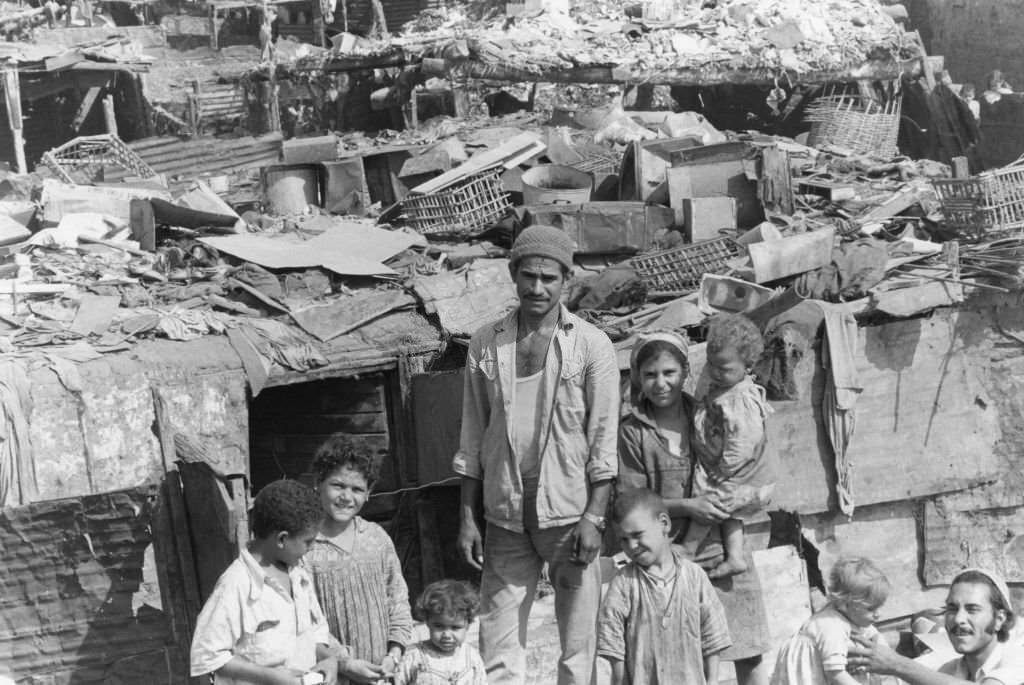
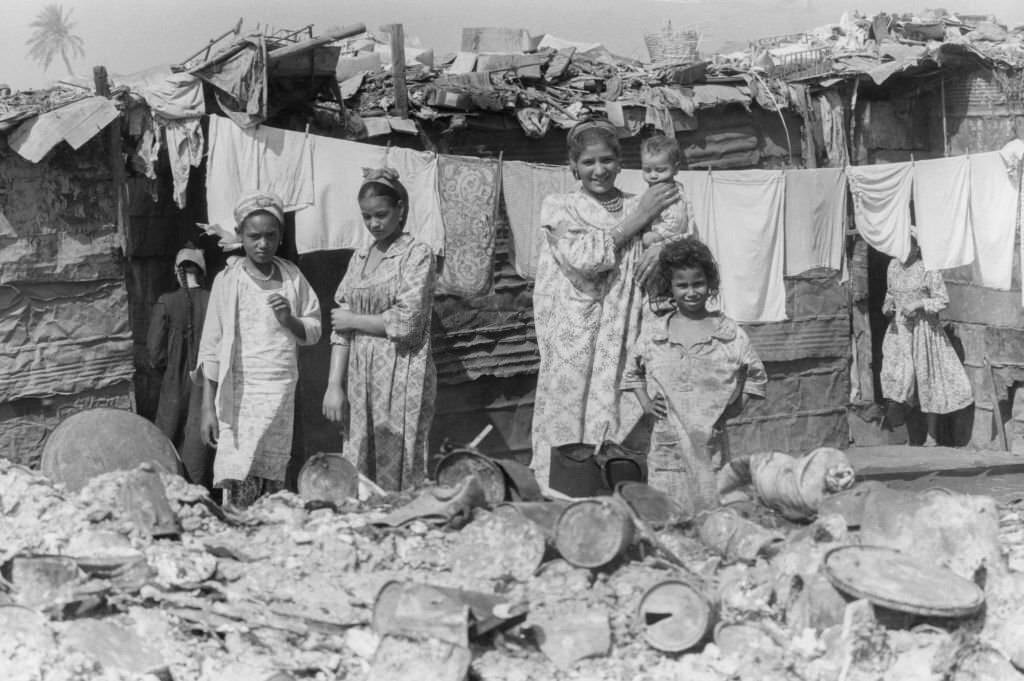
Back in Cairo, the gap between the country’s new economic openness and the reality faced by its poorest residents was stark. In October 1978, photographers documented life on the outskirts of Cairo, where overcrowded slums had grown rapidly as rural Egyptians migrated to the capital. Children played near garbage dumps. Families crowded into unfinished buildings. Women carried trays balanced on their heads through narrow lanes between makeshift structures. Religious life remained a constant — people gathered to pray on the streets outside mosques, and Al-Azhar’s courtyard filled with worshippers.
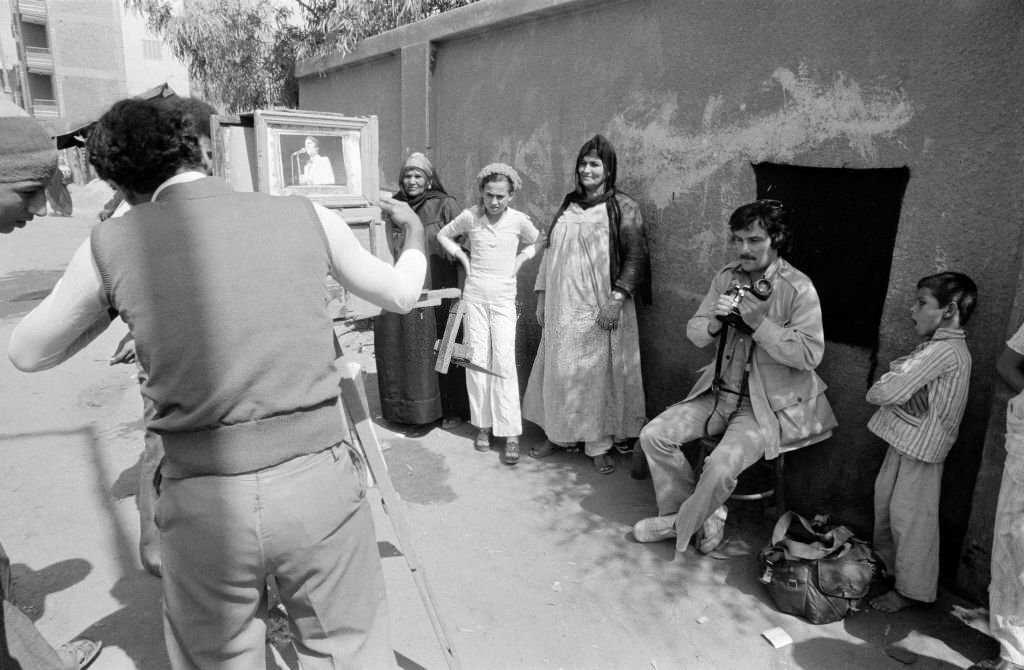
Women and children in a slum on the outskirts of Cairo in October 1978, Egypt.Little girl living in a didonville in the suburbs of Cairo in October 1978, Egypt.Women and children in a slum on the outskirts of Cairo in October 1978, Egypt.Residents of a slum in the suburbs of Cairo in October 1978, Egypt.Young man in a slum on the outskirts of Cairo in October 1978, Egypt.Young girl in a slum on the outskirts of Cairo in October 1978, Egypt.Street scene in a slum on the outskirts of Cairo in October 1978, Egypt.Scenes of life in Cairo in October 1978, Egypt.Young woman carrying a tray on her head in a slum on the outskirts of Cairo in October 1978, Egypt.Old man and a child in a slum in the suburbs of Cairo in October 1978, Egypt.Children at a garbage dump in a slum on the outskirts of Cairo, 1978Children at a garbage dump in a slum on the outskirts of Cairo, 1978Scene of life in a slum in the suburbs of Cairo in October 1978Gathering of women for prayer in a Cairo street in October 1978People praying in front of a mosque on a street in Cairo in October 1978Young man at a dump in a slum on the outskirts of Cairo in October 1978Prayer at the Al Azhar Mosque in October 1978 in CairoPeople praying in a Cairo street in October 1978, Egypt.Alain Mingam photographed by a street photographer in October 1978 in Cairo, Egypt.
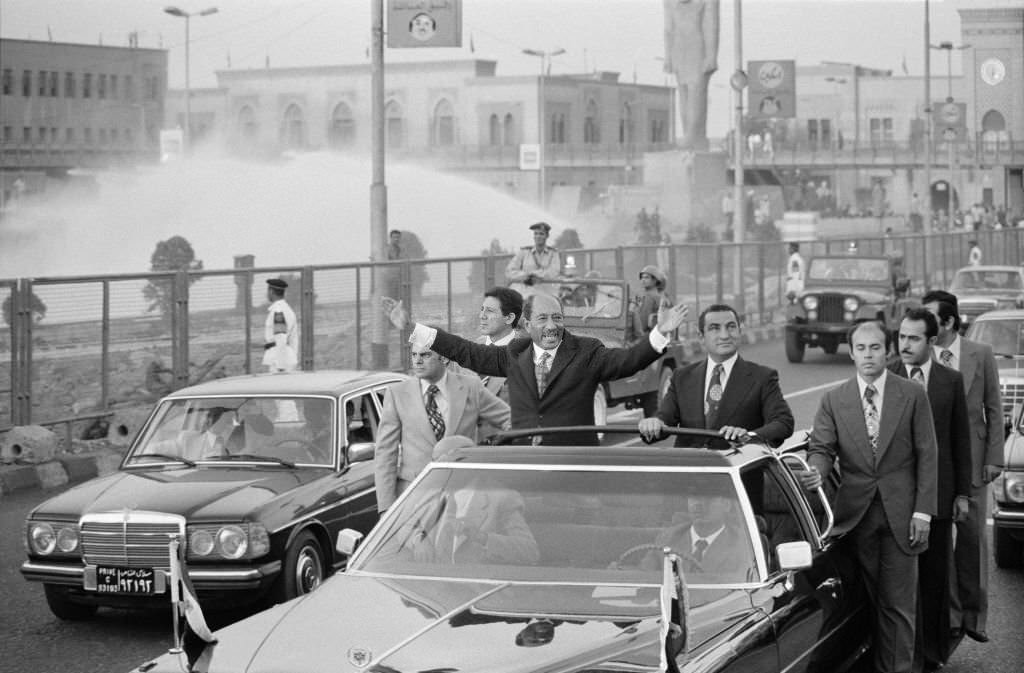
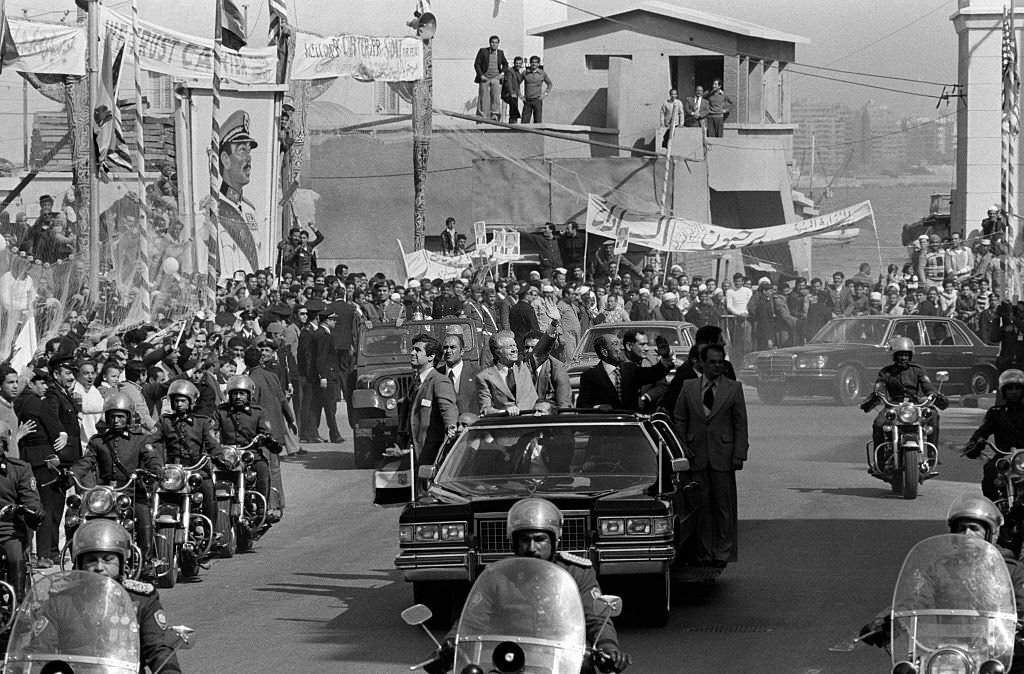
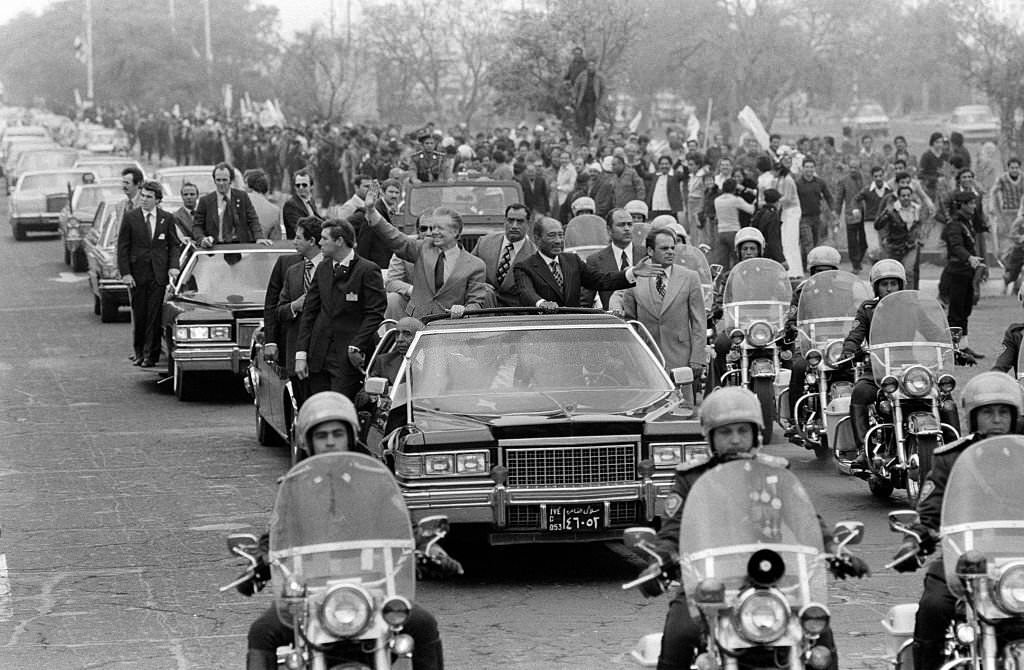
The late 1970s brought more dramatic developments. In January 1979, the Shah of Iran fled his country and landed in exile at Aswan. His plane sat on the tarmac at Aswan airport, a visible symbol of the regional upheaval reshaping the Middle East. In March 1979, U.S. President Jimmy Carter visited Cairo to mark the signing of the Egypt-Israel Peace Treaty. He and Sadat waved to enormous crowds in the streets.
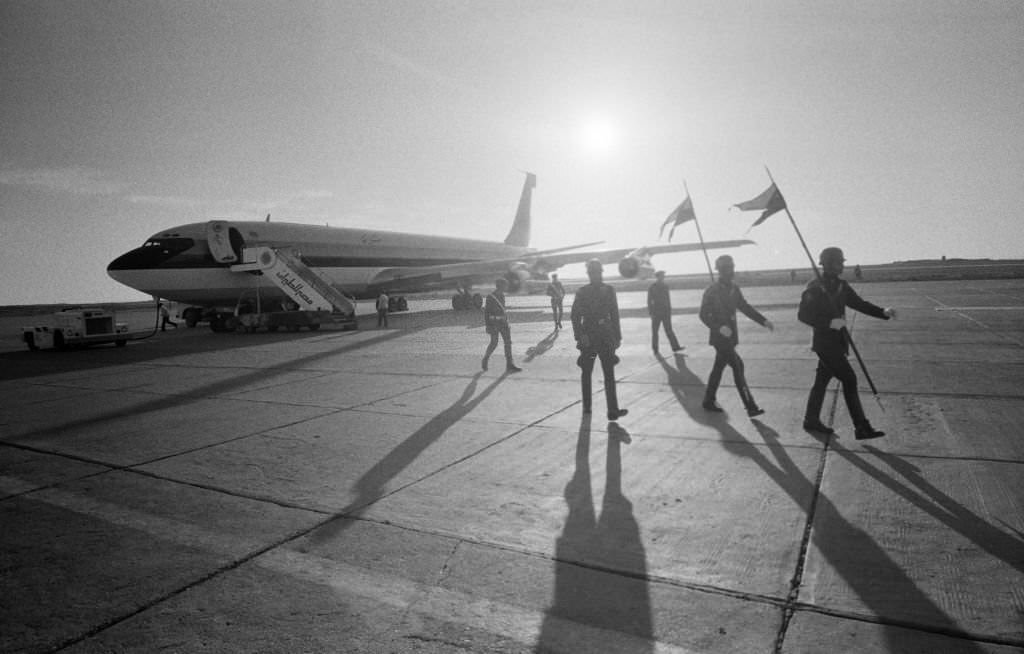
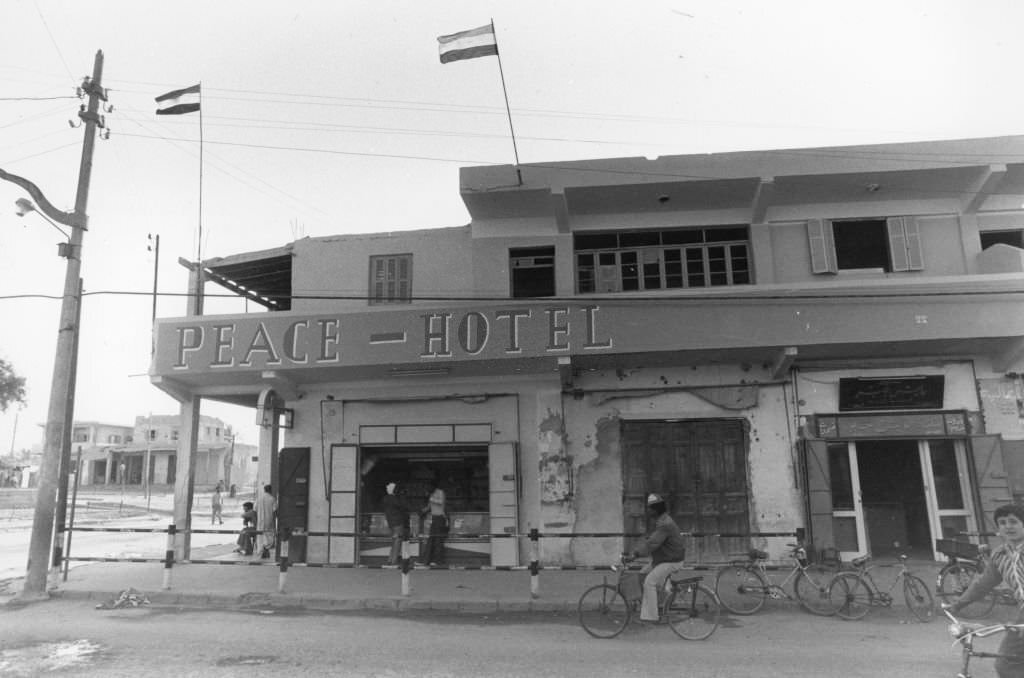
The plane of the Shah of Iran during his exile at Aswan airport on January 16, 1979, in Egypt.Jimmy Carter and Anwar el-Sadat wave to the crowd during the US President’s visit to Cairo, 1979Jimmy Carter and Anwar Sadat wave to the crowd during the US President’s visit to Cairo, 1979Jimmy Carter In Cairo, Egypt On March 10, 1979.The ‘Peace Hotel’ in El-Arich, April 25, 1979.
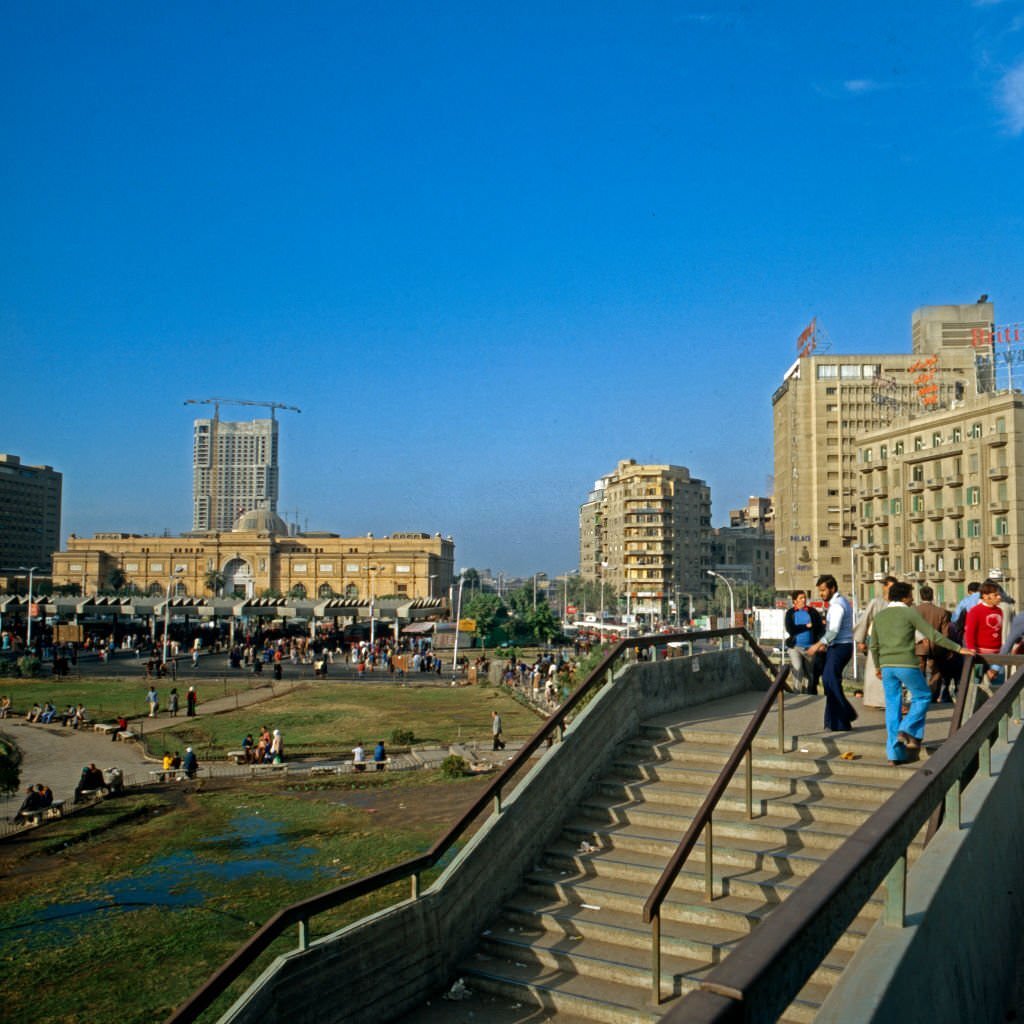
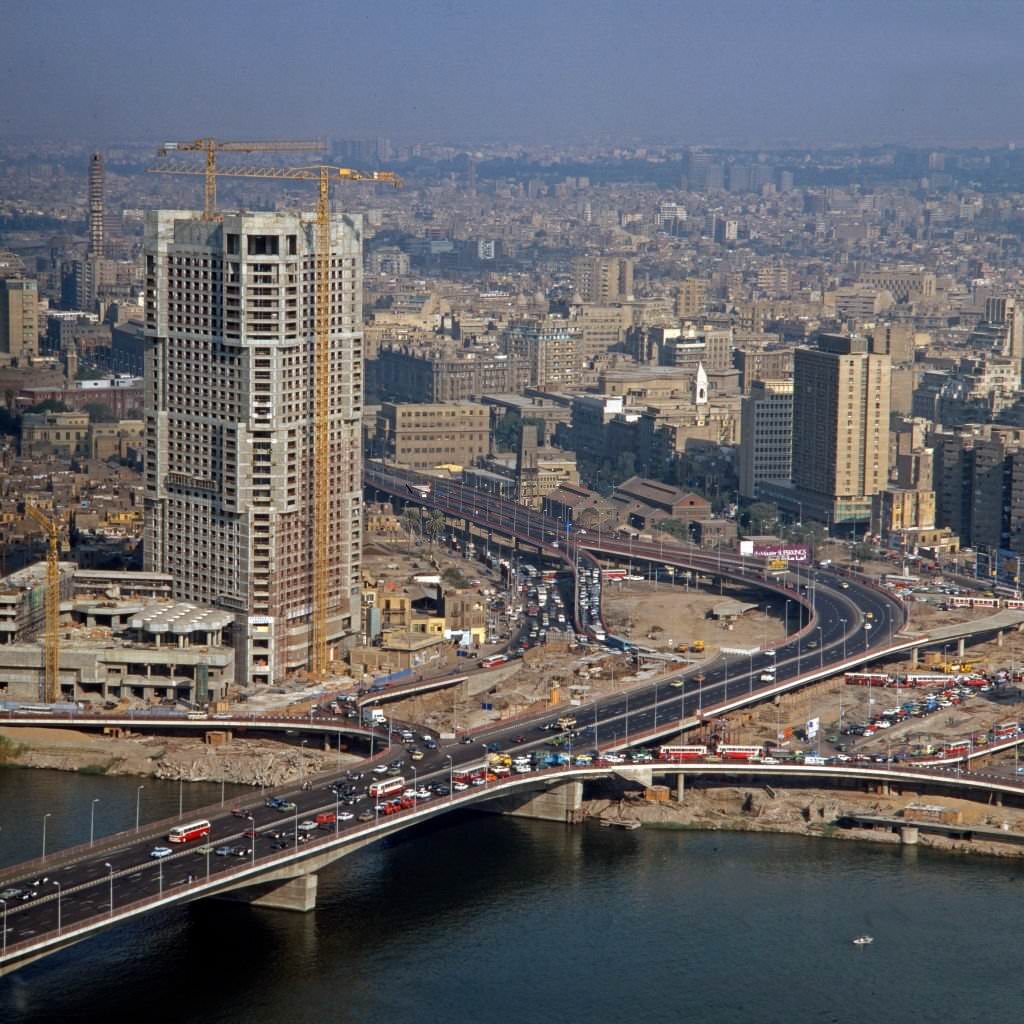
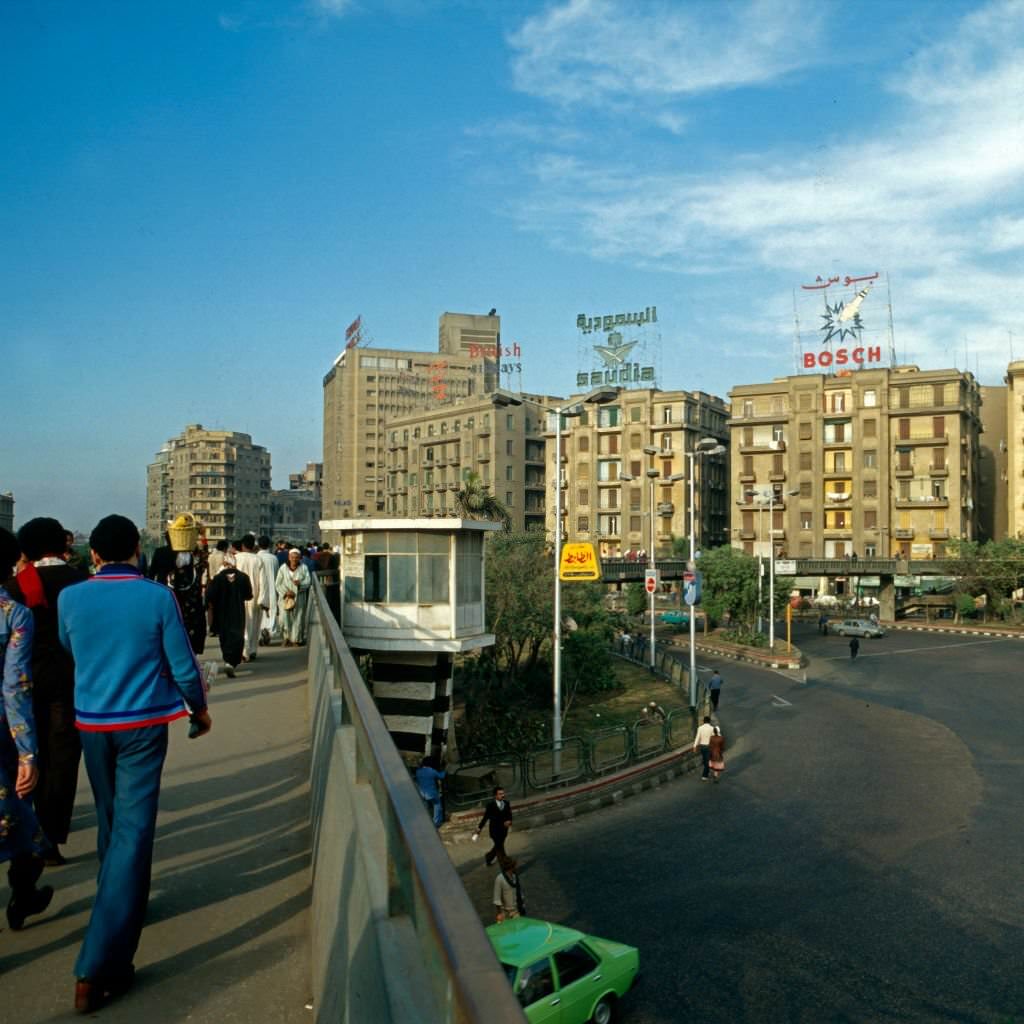
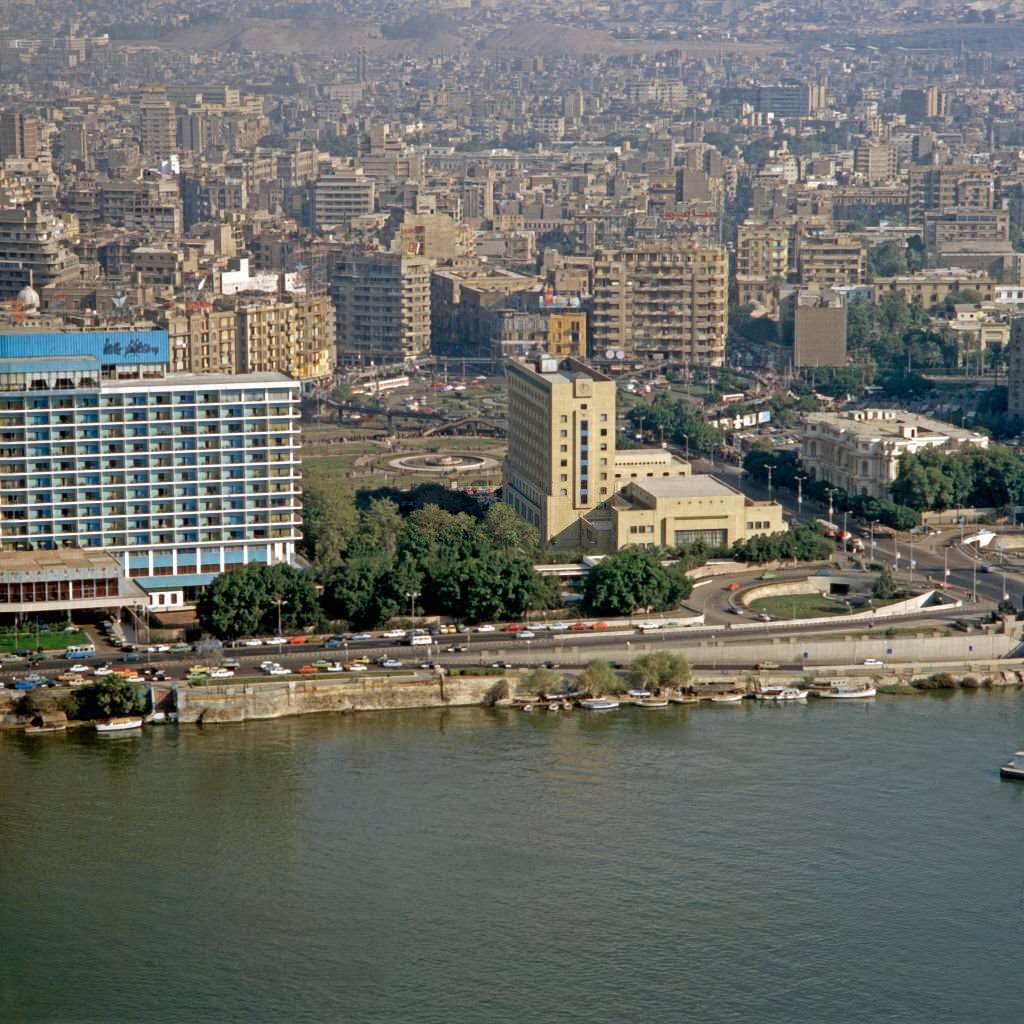
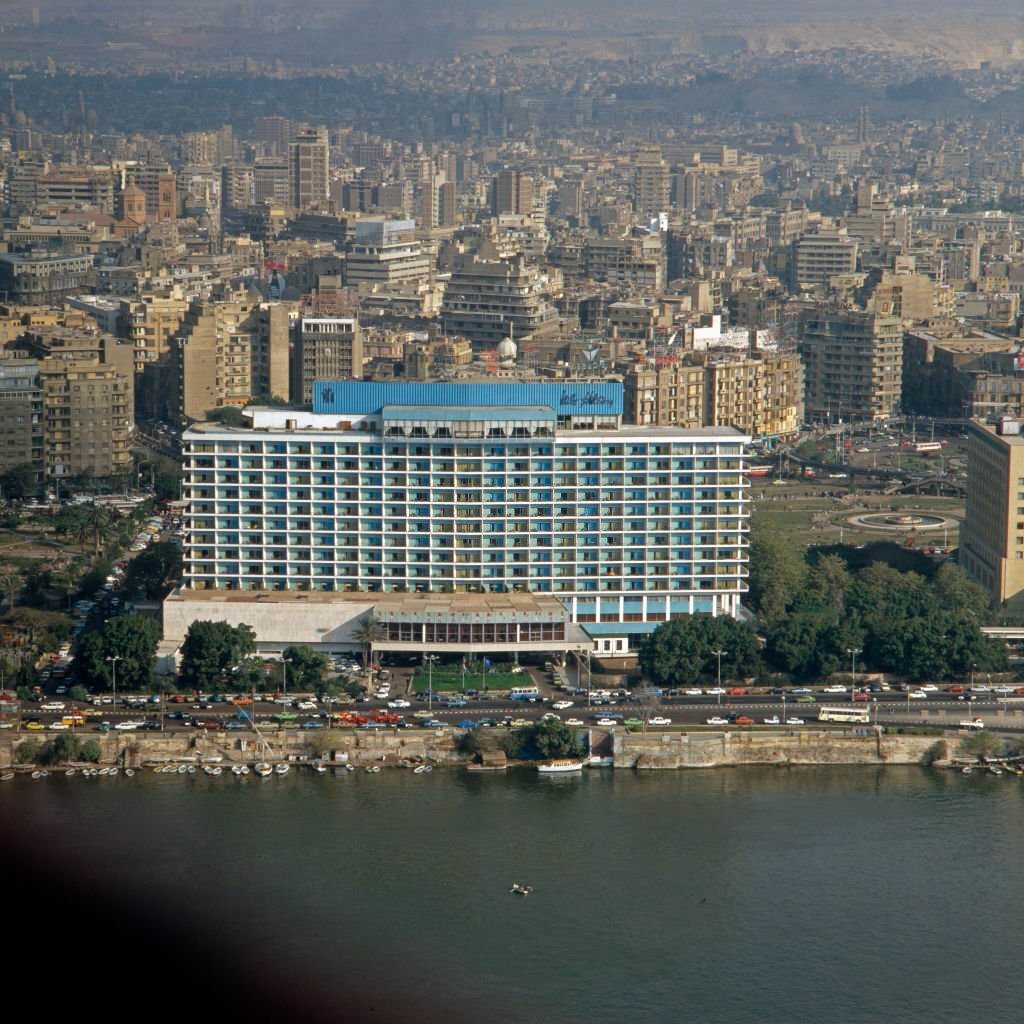
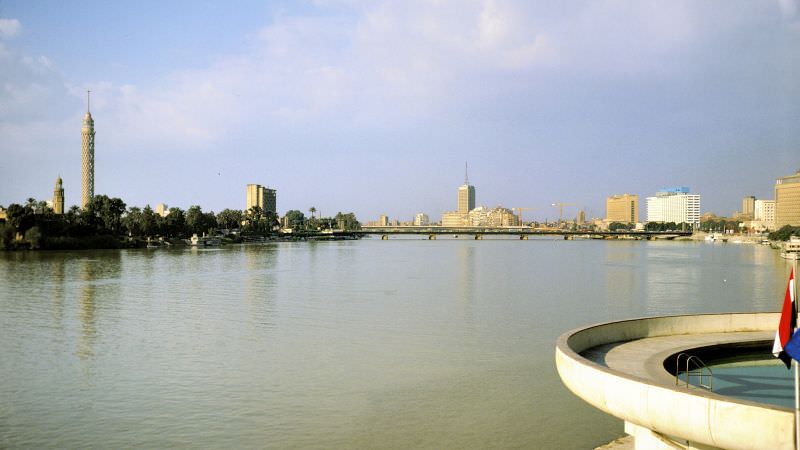
The strategy of 1978 to 1980 was built on importing large quantities of consumer goods — both basic foodstuffs and luxury items — while using Egypt’s new flood of foreign exchange from oil, the canal, remittances, and tourism to fund it all. Cairo reflected this boom in concrete and glass. New hotels rose along the Nile. The Ramses Hilton was under construction. The October 6 Bridge was taking shape. Tahrir Square, already the symbolic center of Cairo, was surrounded by cranes and scaffolding.
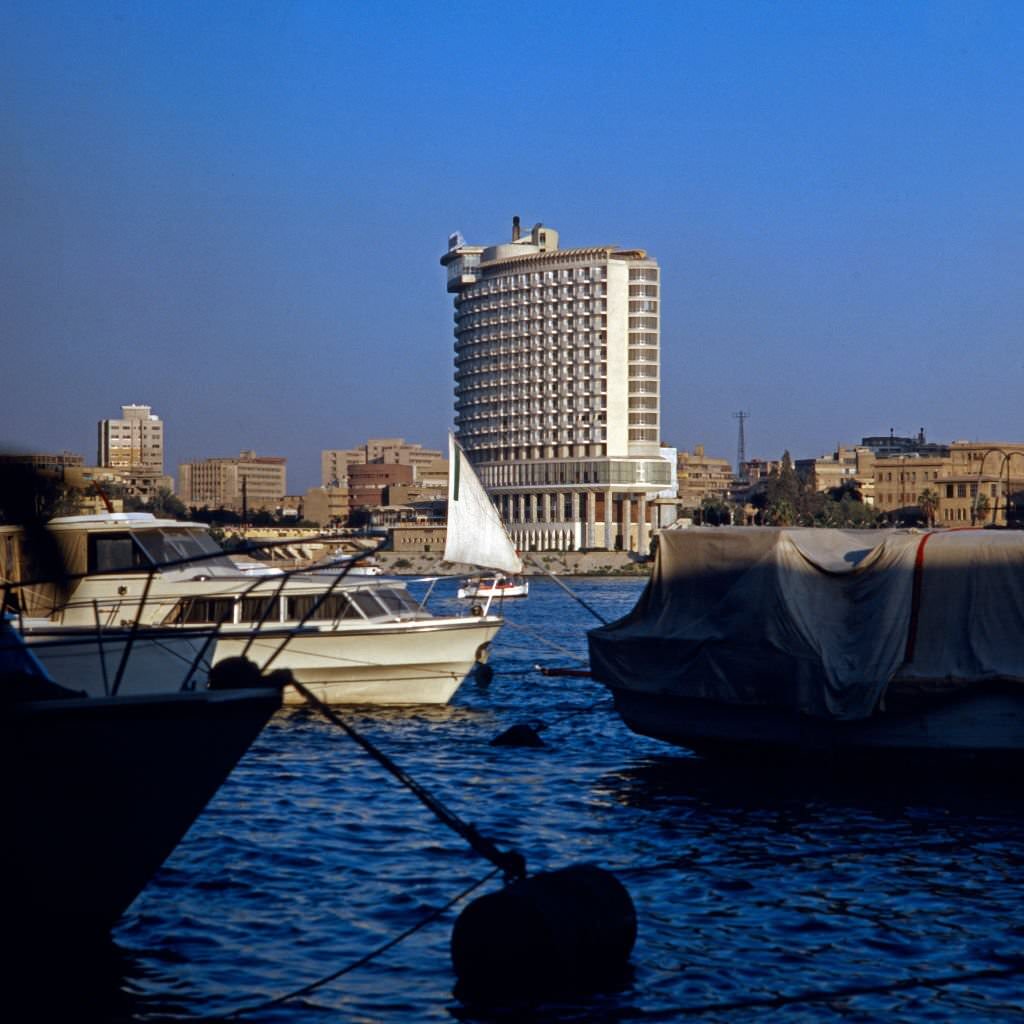
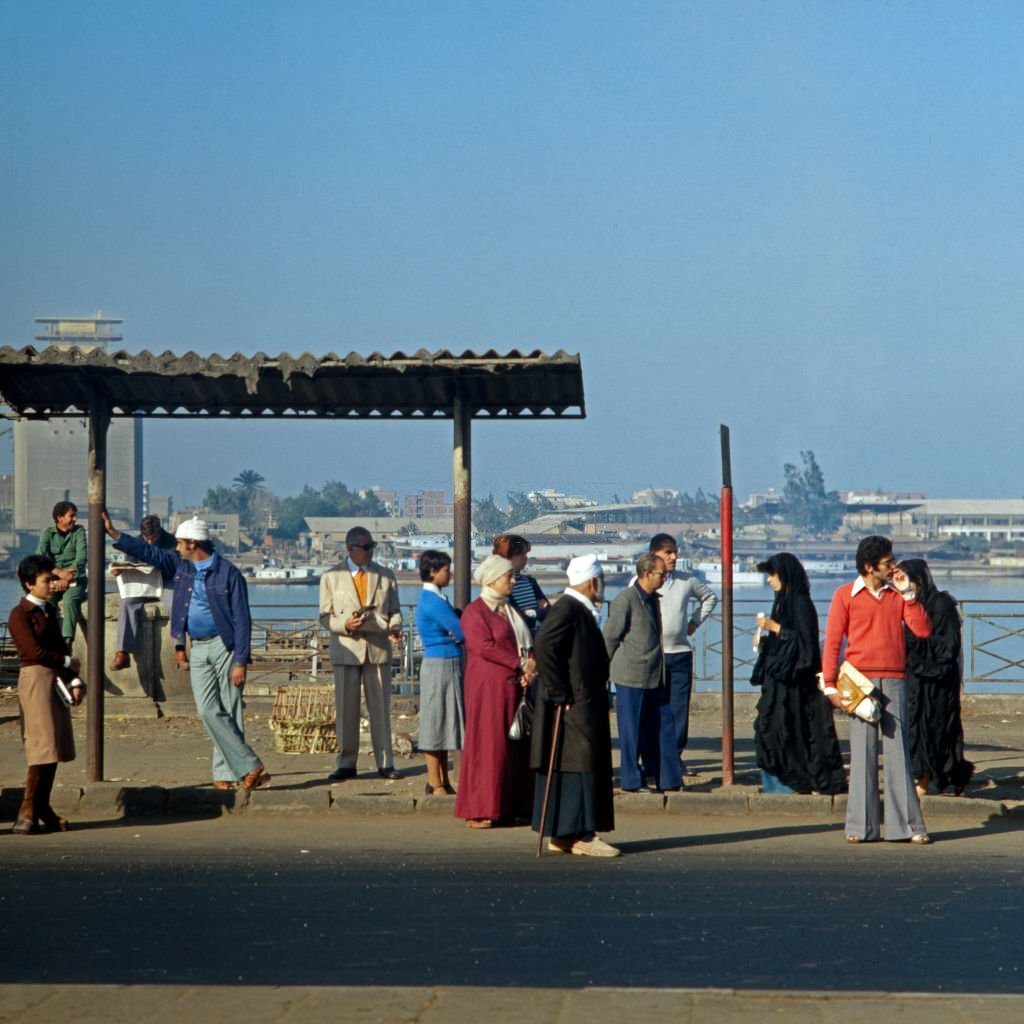
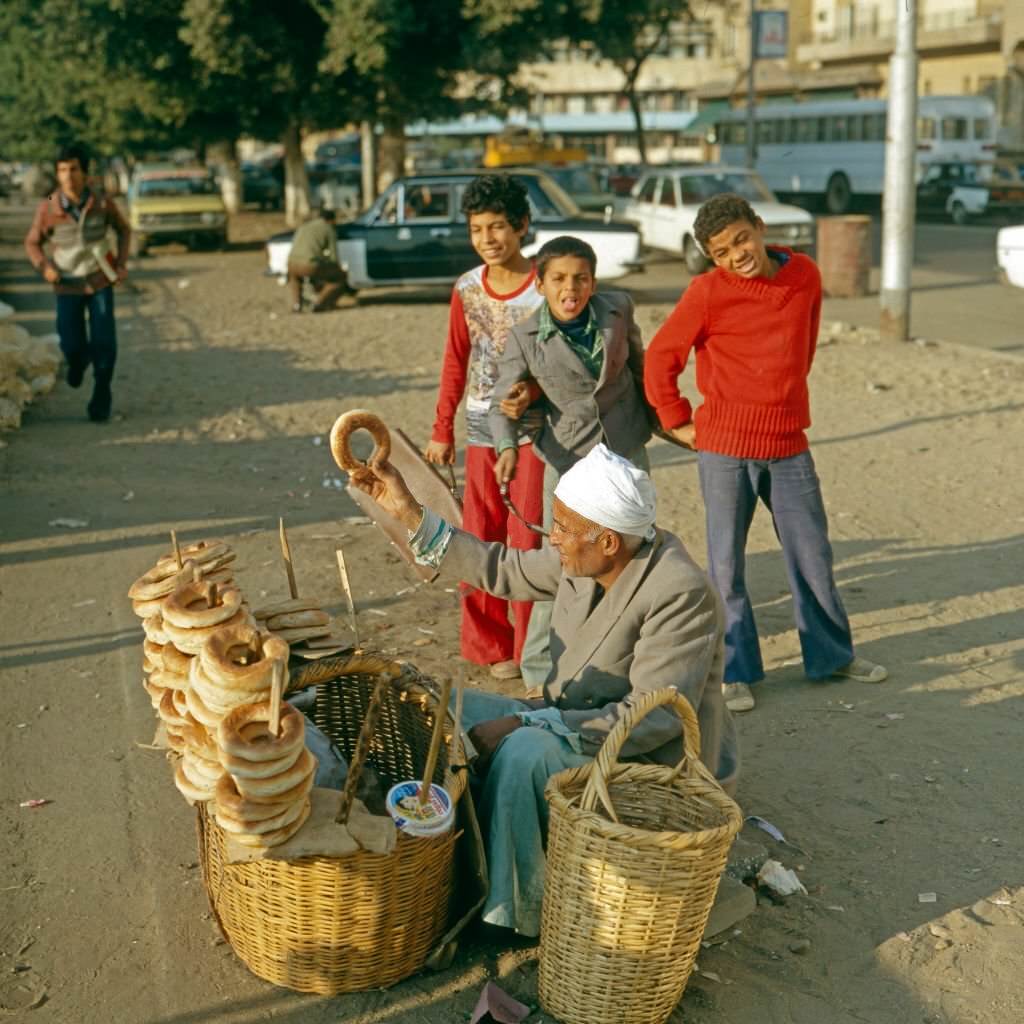
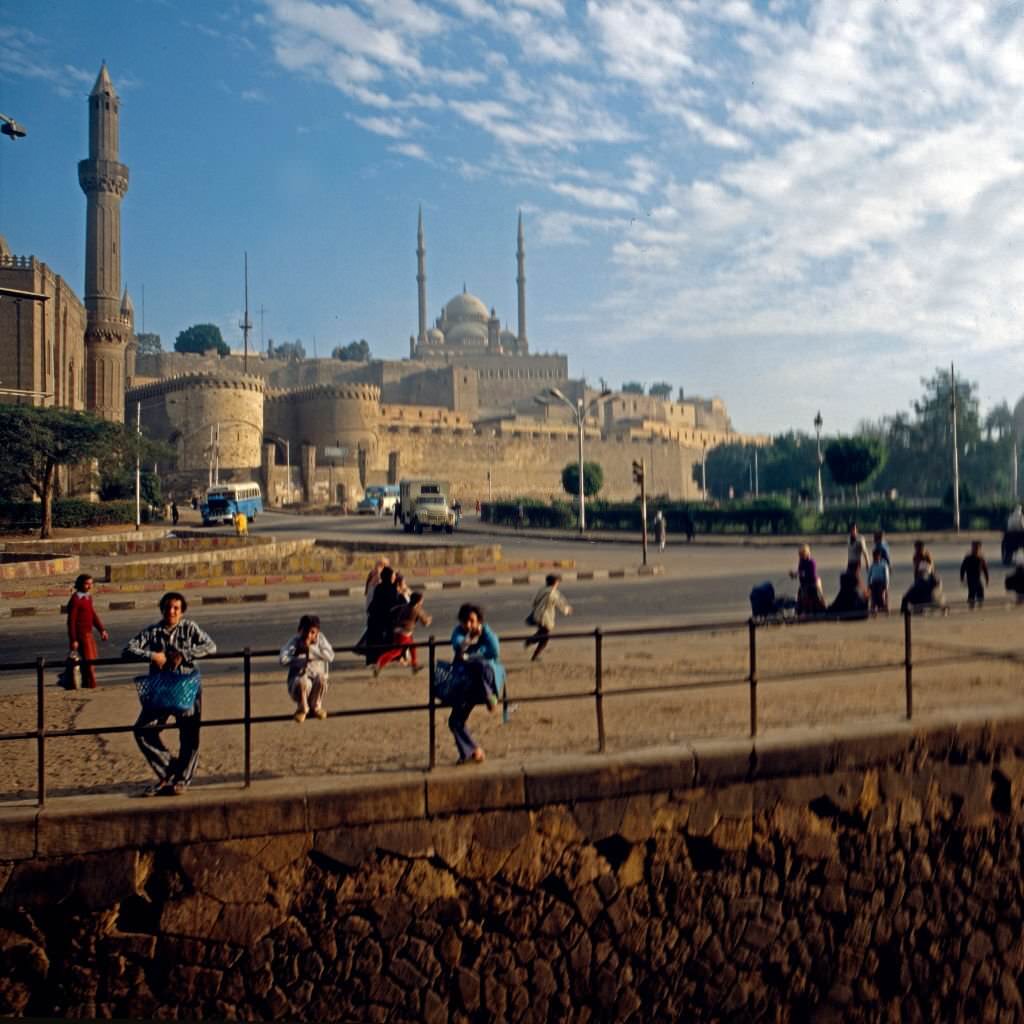
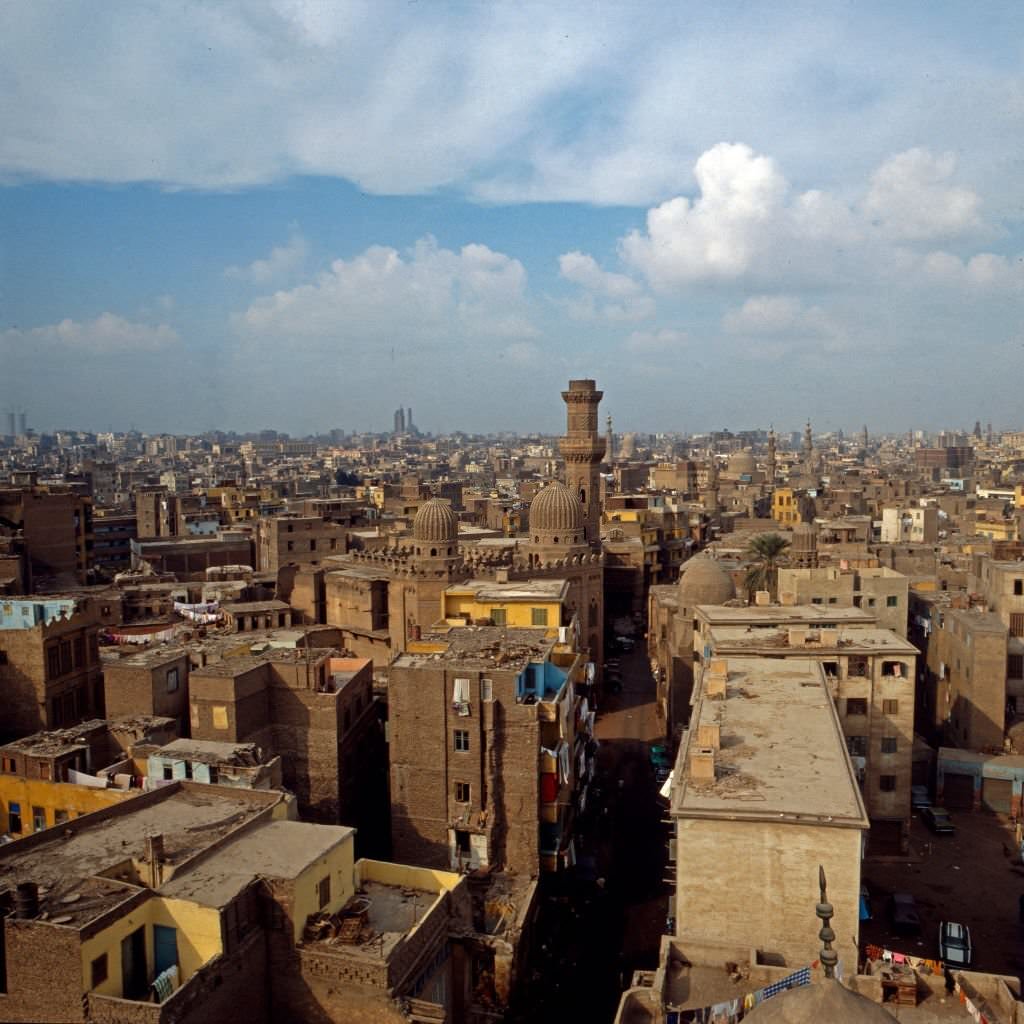
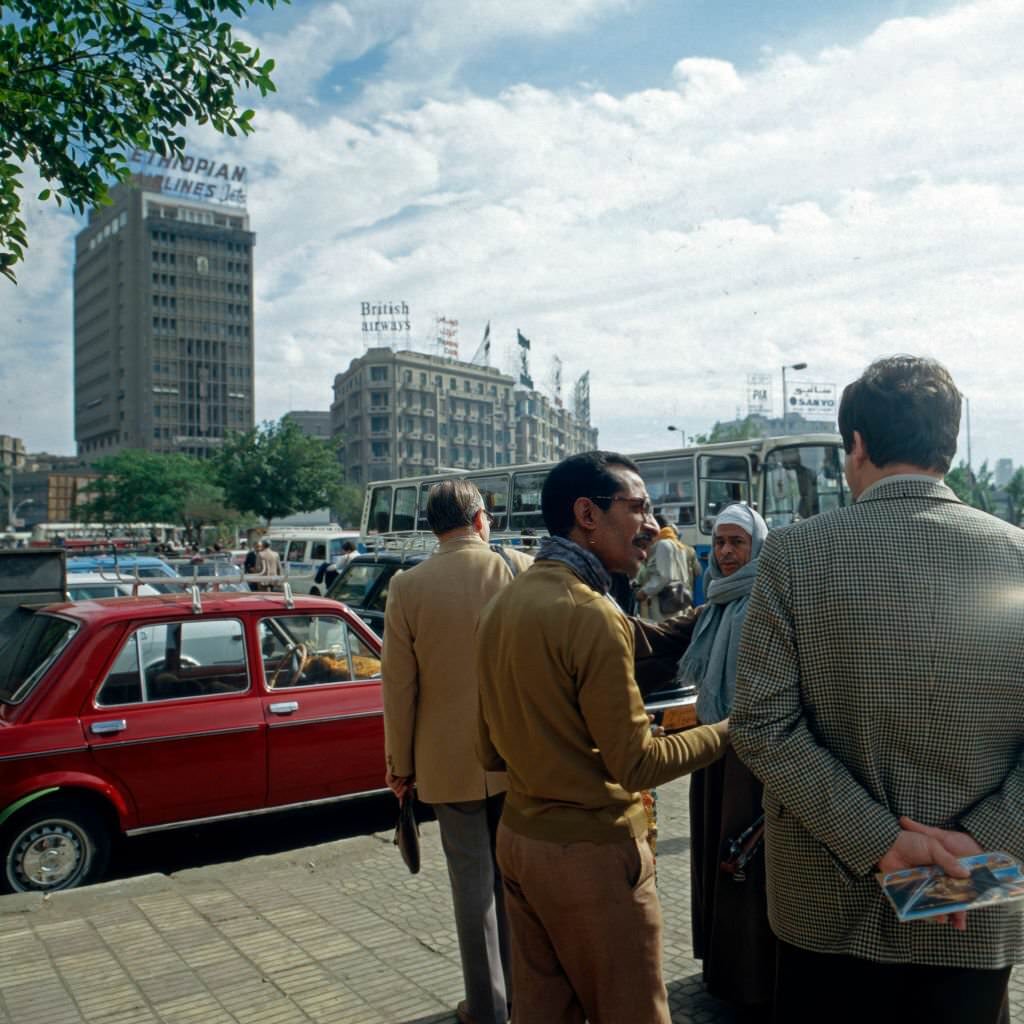
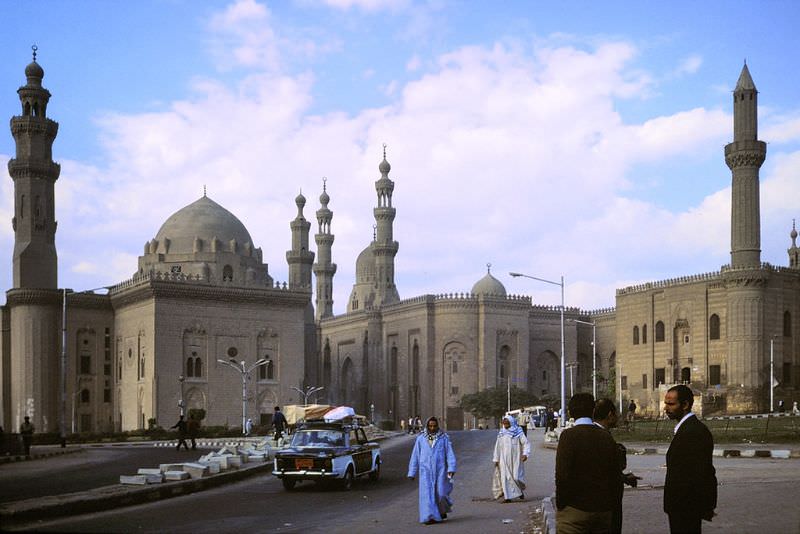
Le Meridien Le Cairo Hotel at Corniche Road, Cairo, 1970sMidan al Tahrir square with the Egyptian Museum and Ramses Hilton Hotel under construction in the background, Cairo, 1970sRamses Hilton Hotel under construction and “6 October” bridge at Cairo, Egypt, late 1970s.Passers by crossing a pavement bridge at Midan al Tahrir square, Cairo, Egypt, late 1970s.View from Cairo Tower to the Nile Hilton (left) and Midan al Tahrir square, Egypt, late 1970s.View to the central Midan al Tahrir square at Cairo, Egypt, late 1970s.View from Cairo Tower to the Nile Hilton and Midan al Tahrir square (right), Egypt, late 1970s.Traffic jam and passers by in the streets of Cairo, Egypt, late 1970s.Cairenes waiting at a bus stop in the city of Cairo, Egypt, late 1970s.Public transport on a train near Cairo, Egypt, late 1970s.Public transport the Egyptian way: the ridership of Cairo Metro Line 1 hanging out of the windows and doors of a train, Egypt, late 1970s.A bread vendor in the streets of Cairo, Egypt, late 1970s.View to the citadel with Muhammad Ali mosque at Cairo, Egypt, late 1970s.View to the old city of Cairo, Egypt, late 1970s.Cairenes discussing on the streets near Midan al Tahrir square at Cairo, Egypt, late 1970s.
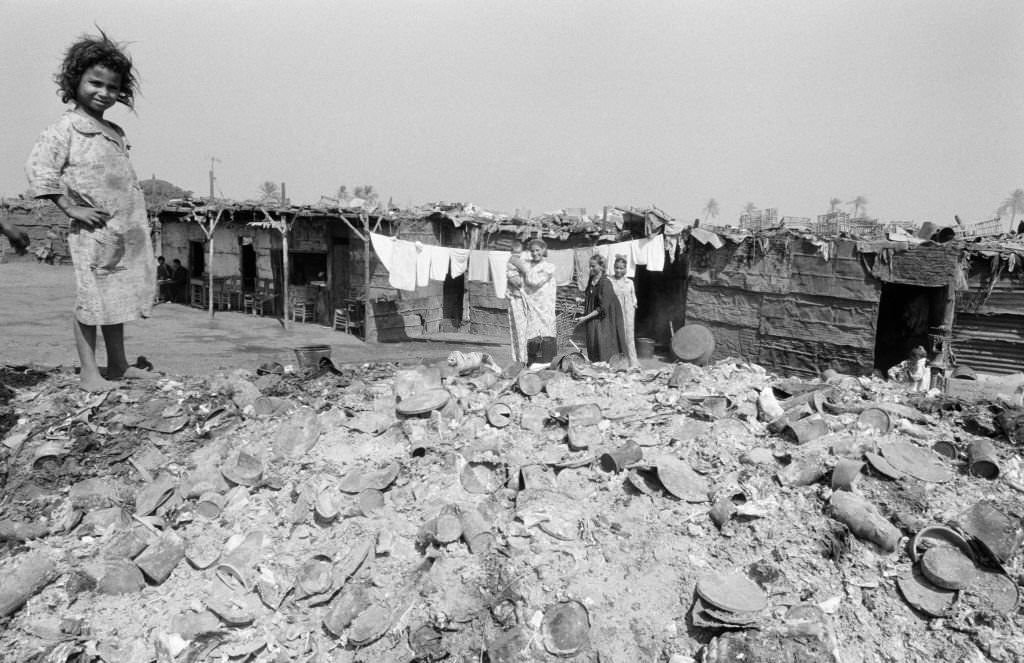
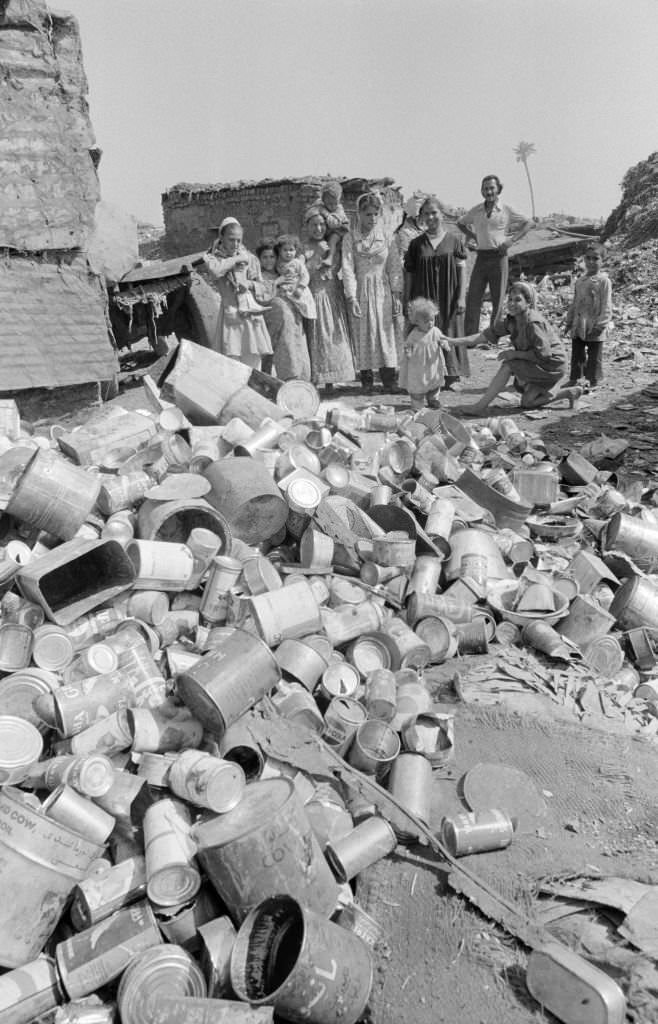
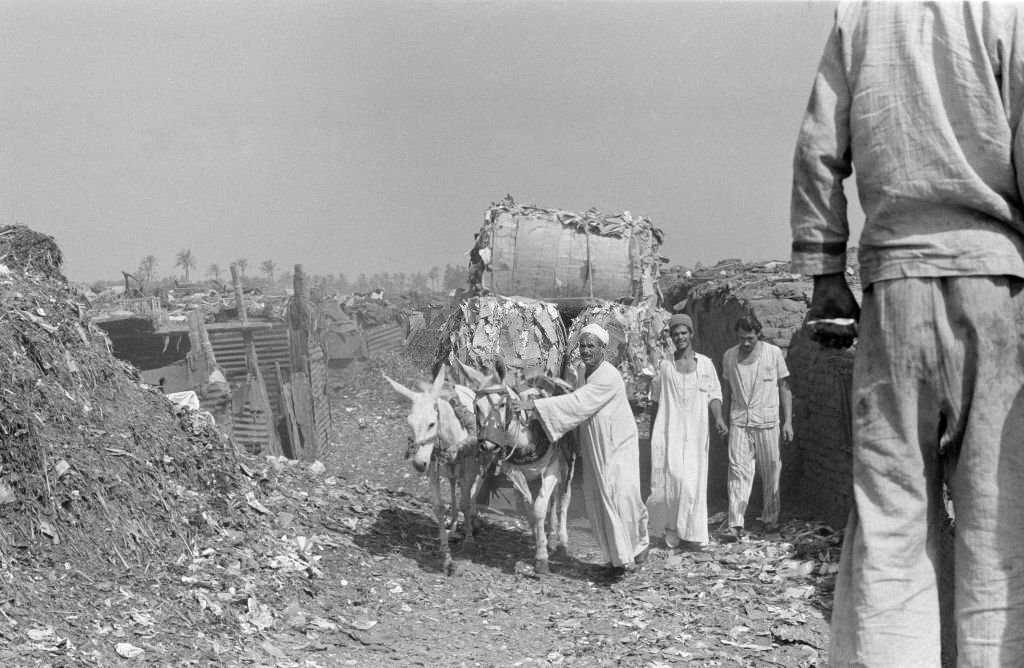
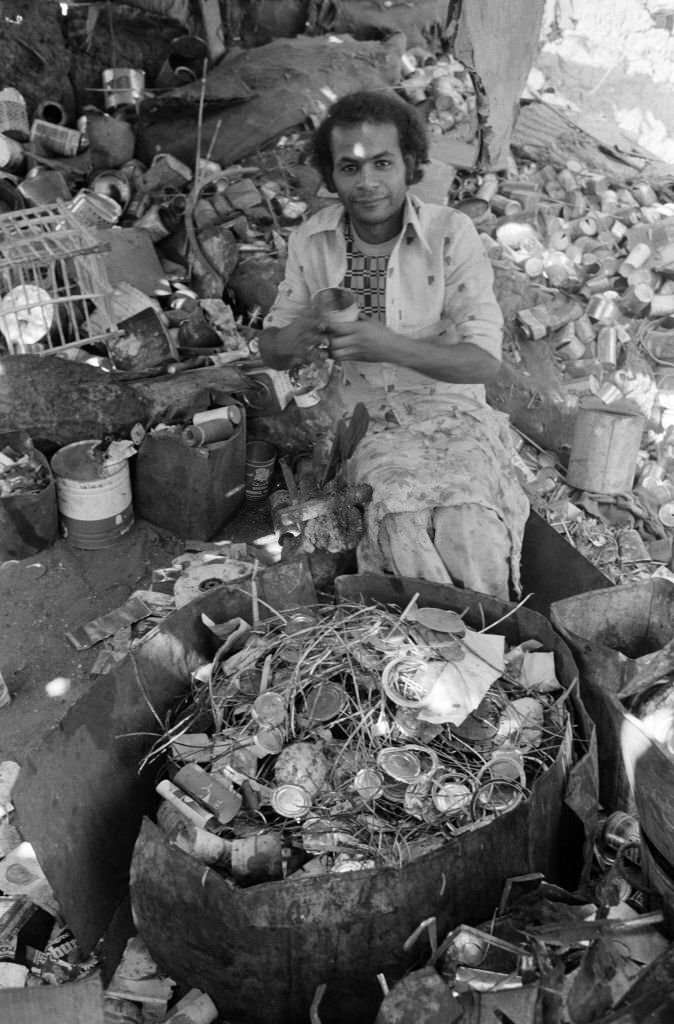
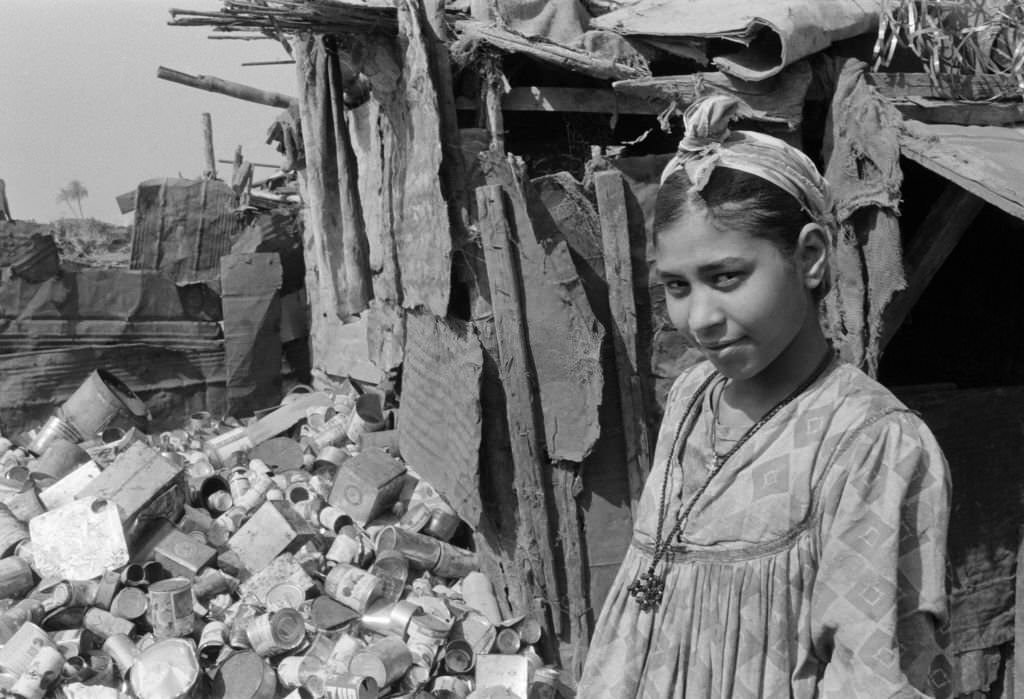
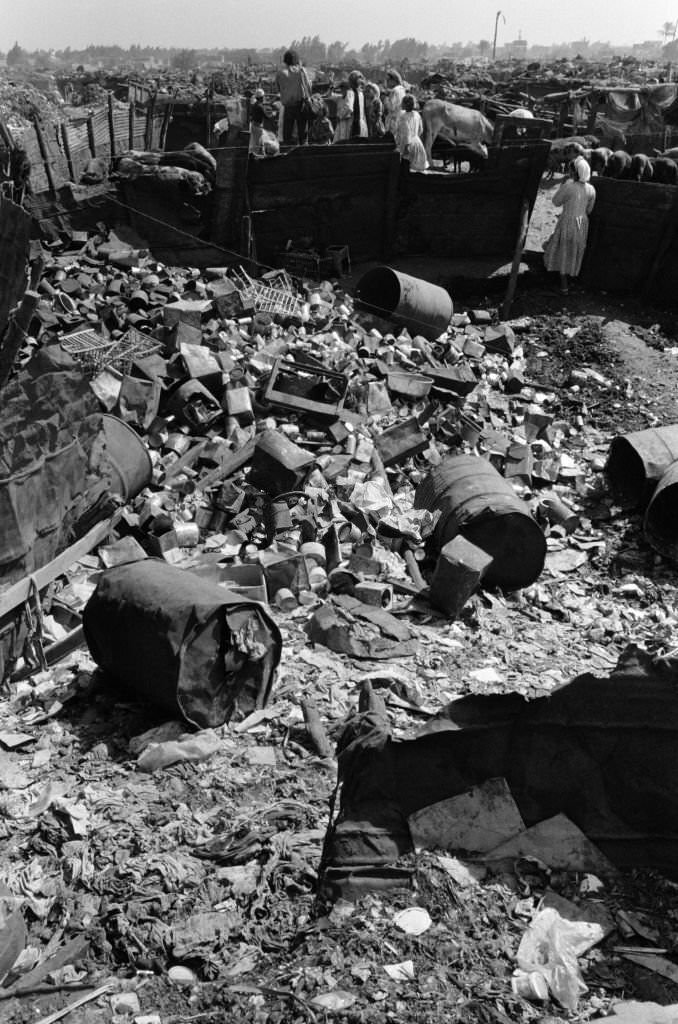
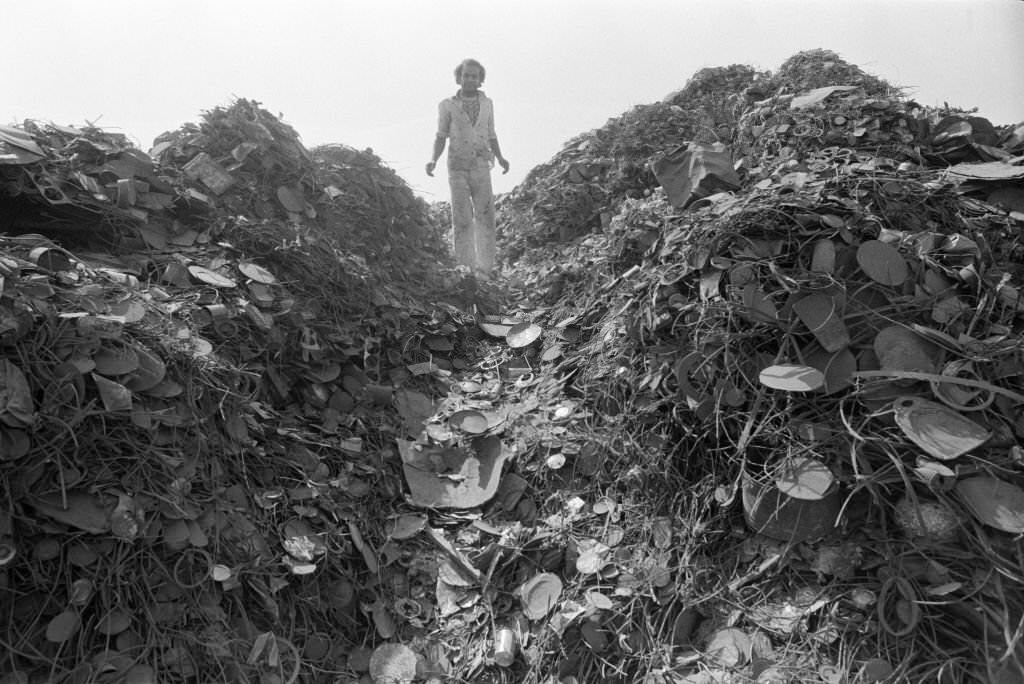
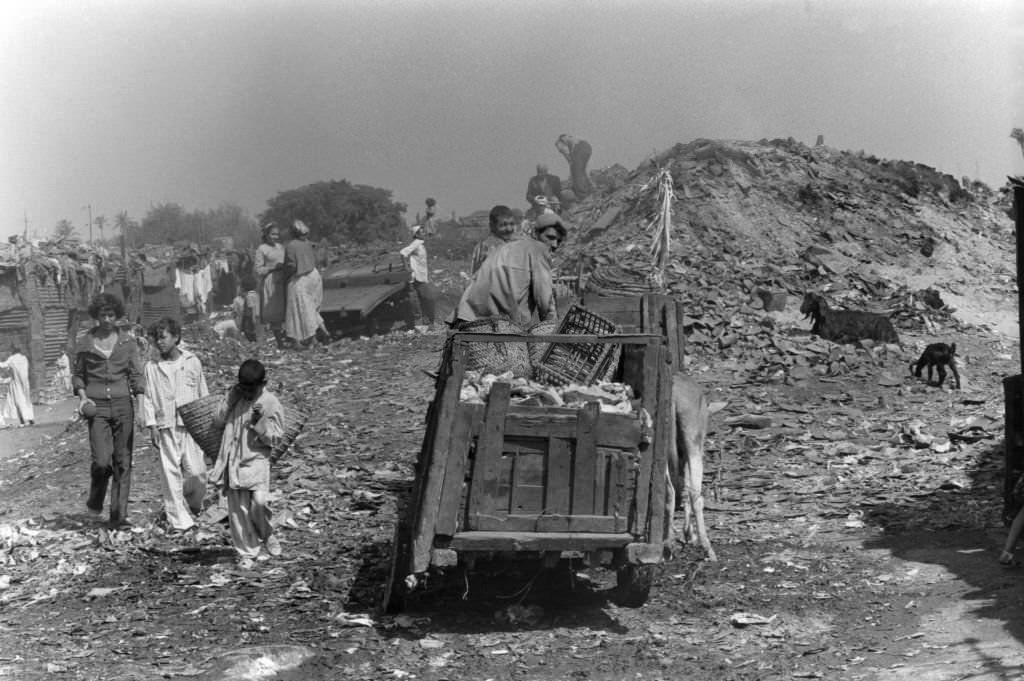
The economic boom did not reach everyone equally. In May 1979, photographers documented families living inside a Cairo garbage dump, surviving by sorting through the waste of the city. Children collected rubbish. Carts piled with rags moved through the dump’s lanes. These images exist alongside photos of gleaming new hotels and packed bazaars, showing the two realities that coexisted in Egypt at the end of the decade.
A family of scavengers living in a Cairo dump in May 1979.Cart of ragpickers in a Cairo dump, in May 1979.Child collecting rubbish in Cairo, May 1979.A family of scavengers living in a Cairo dump in May 1979.
By the close of the 1970s, Egypt had gone through more political and economic change than in almost any other decade of the 20th century. The Nile, the pyramids, and the ancient temples remained as they had always been — but the country surrounding them had been fundamentally transformed.
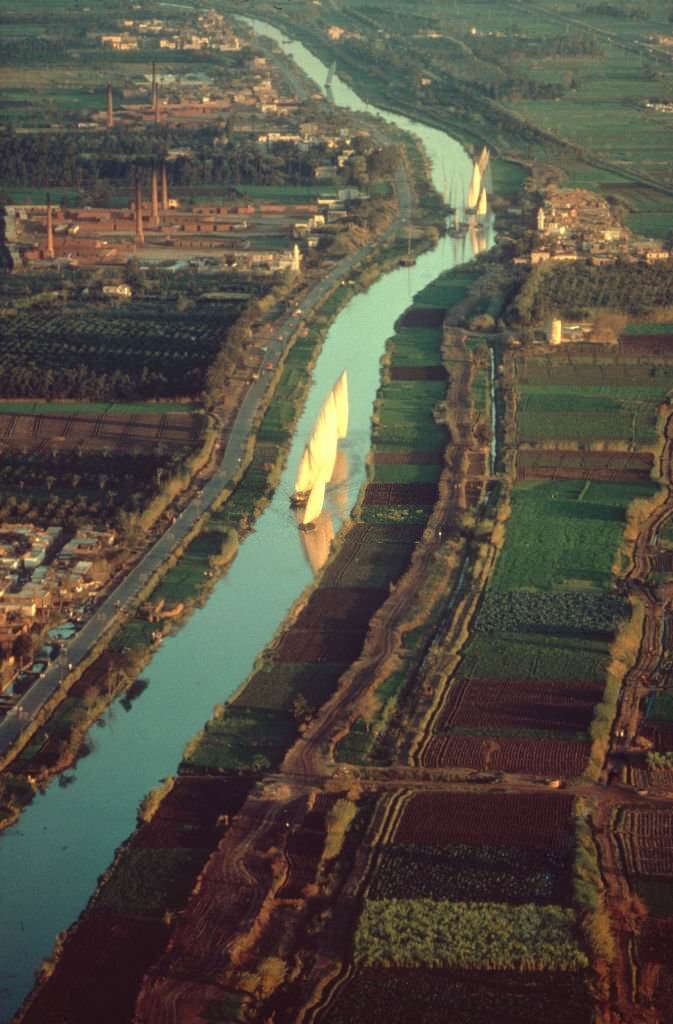
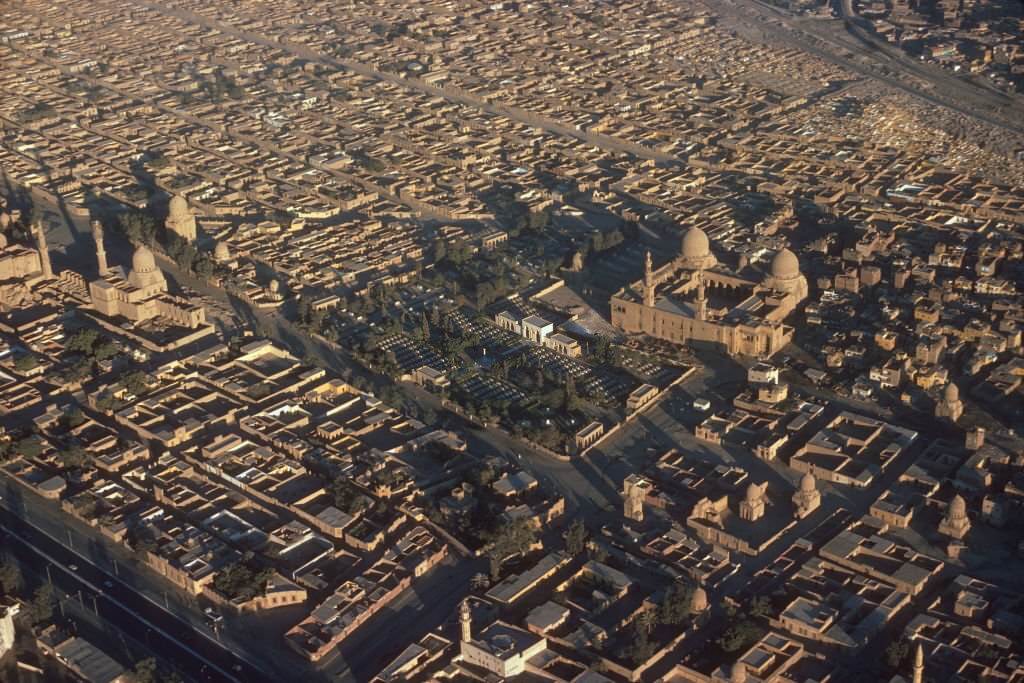
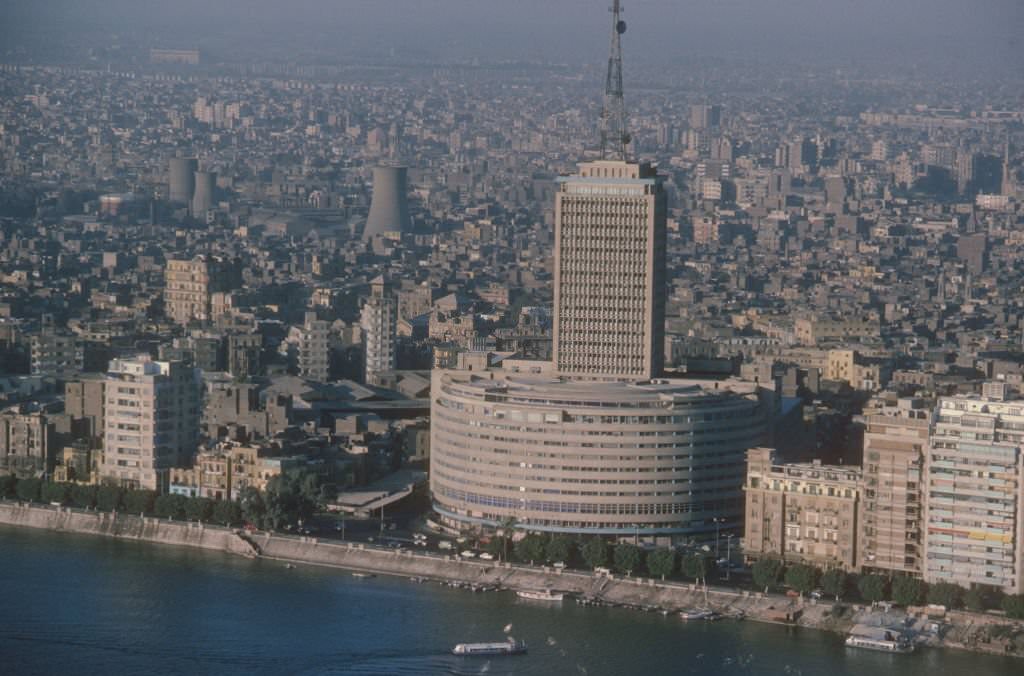
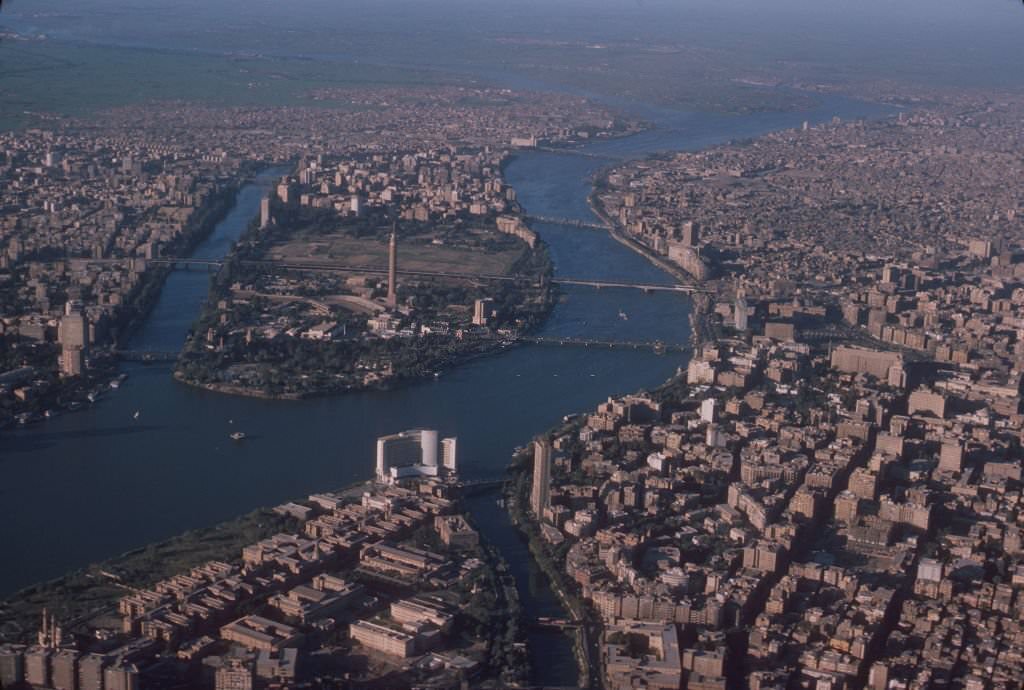
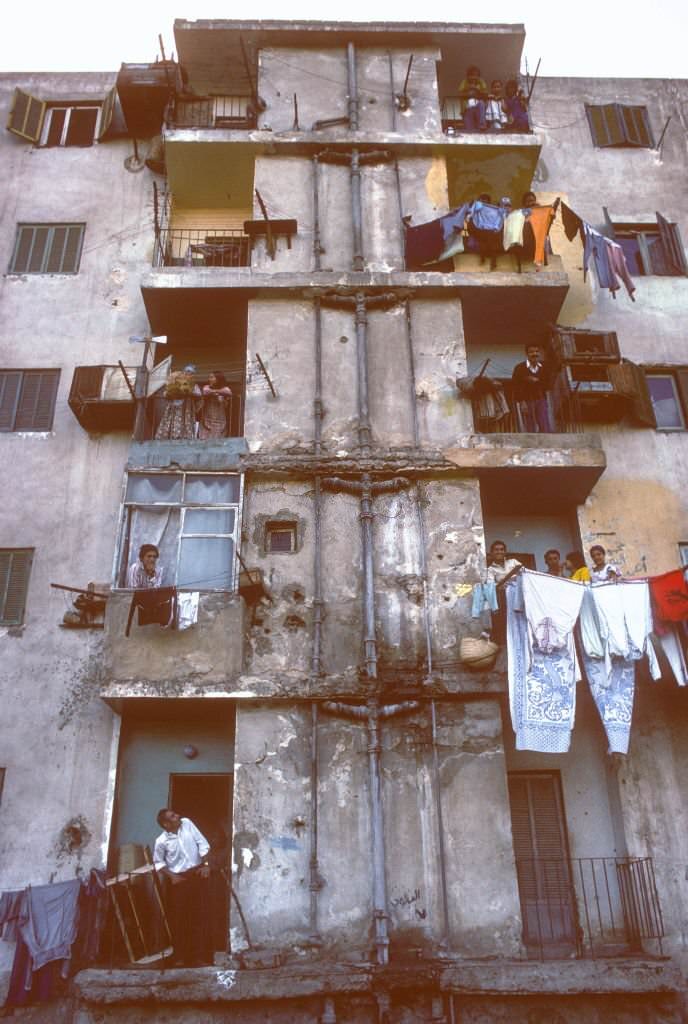
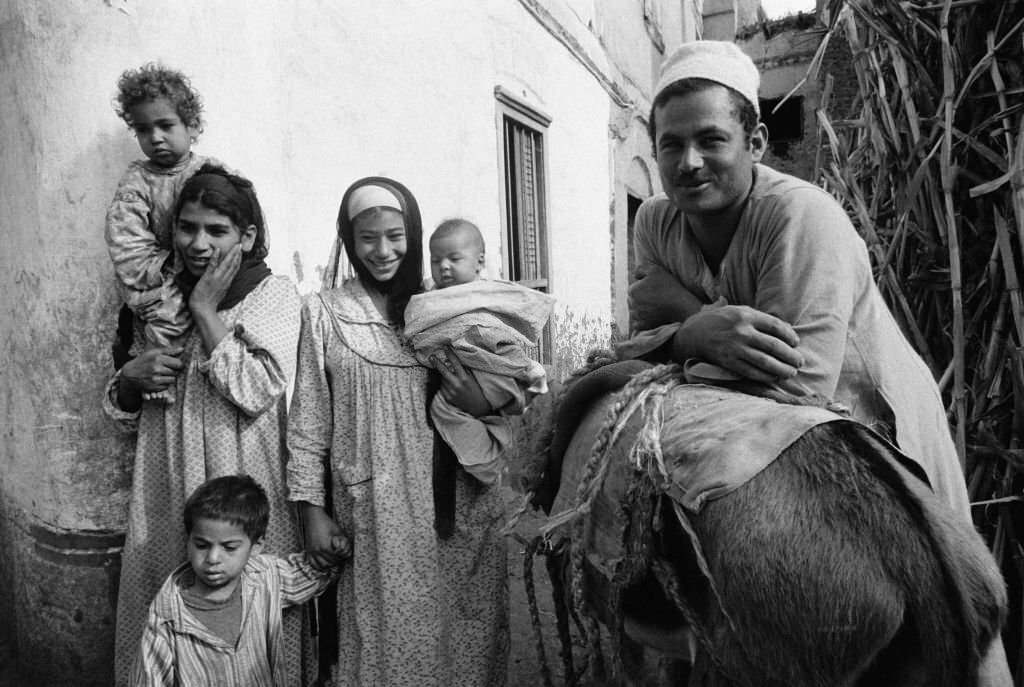
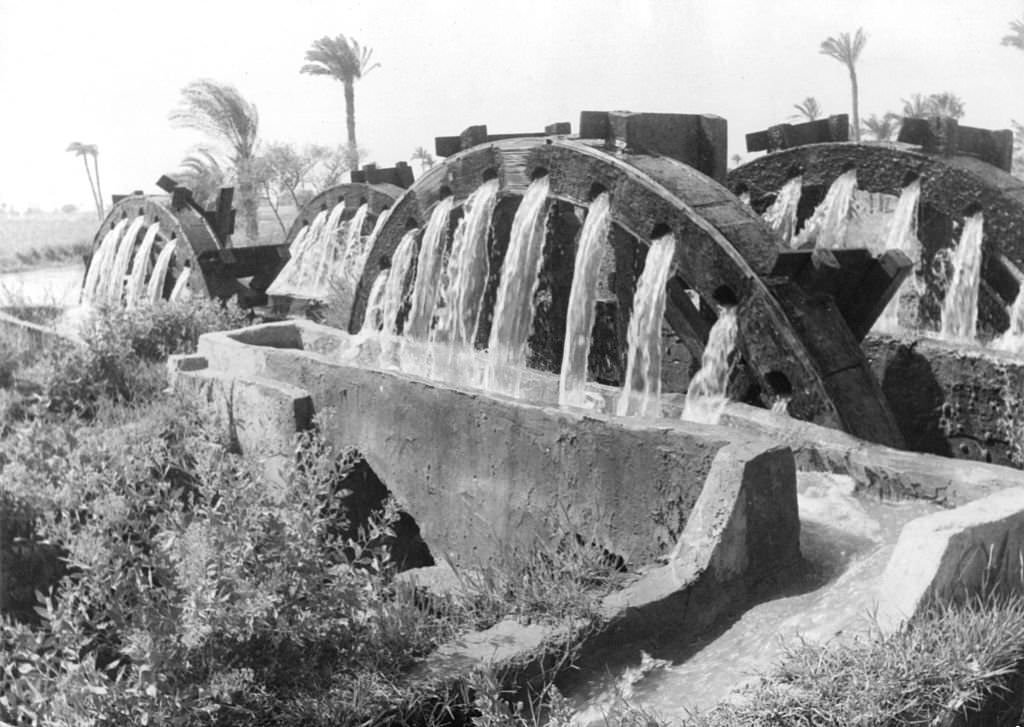
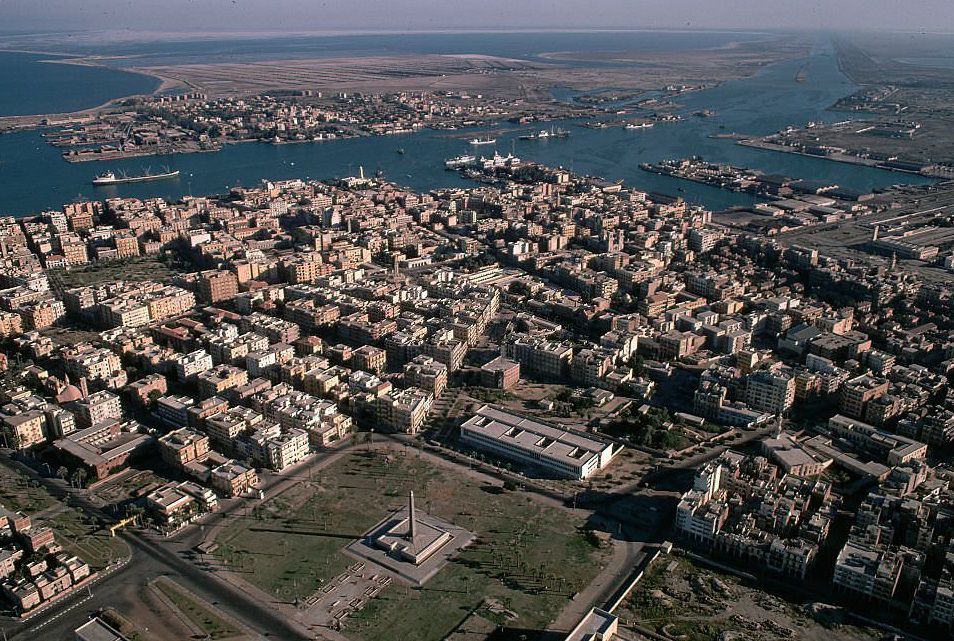
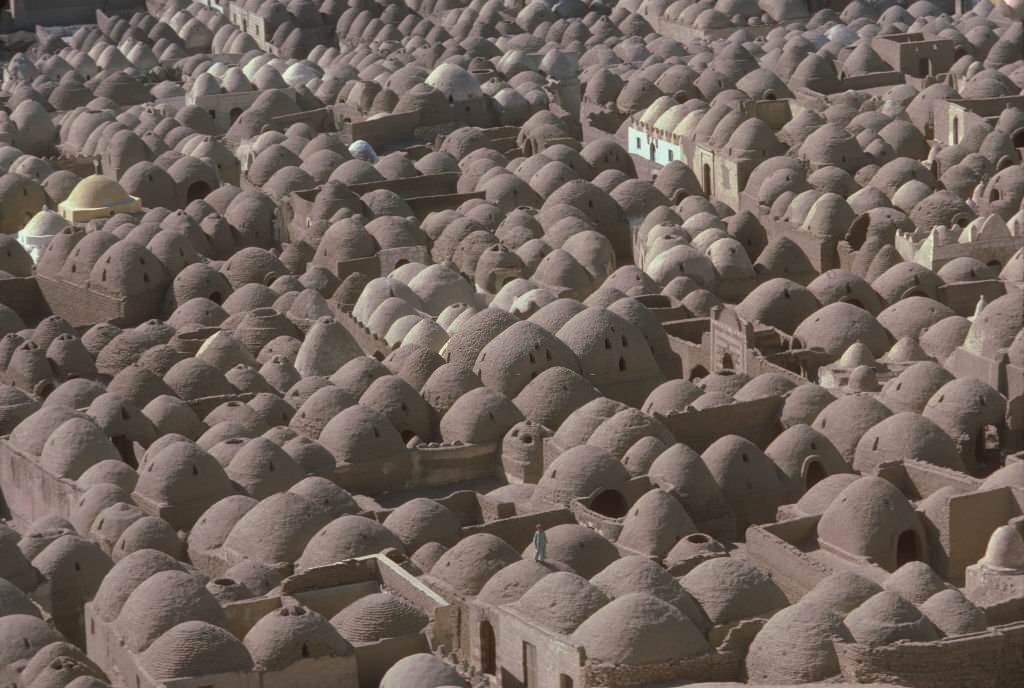
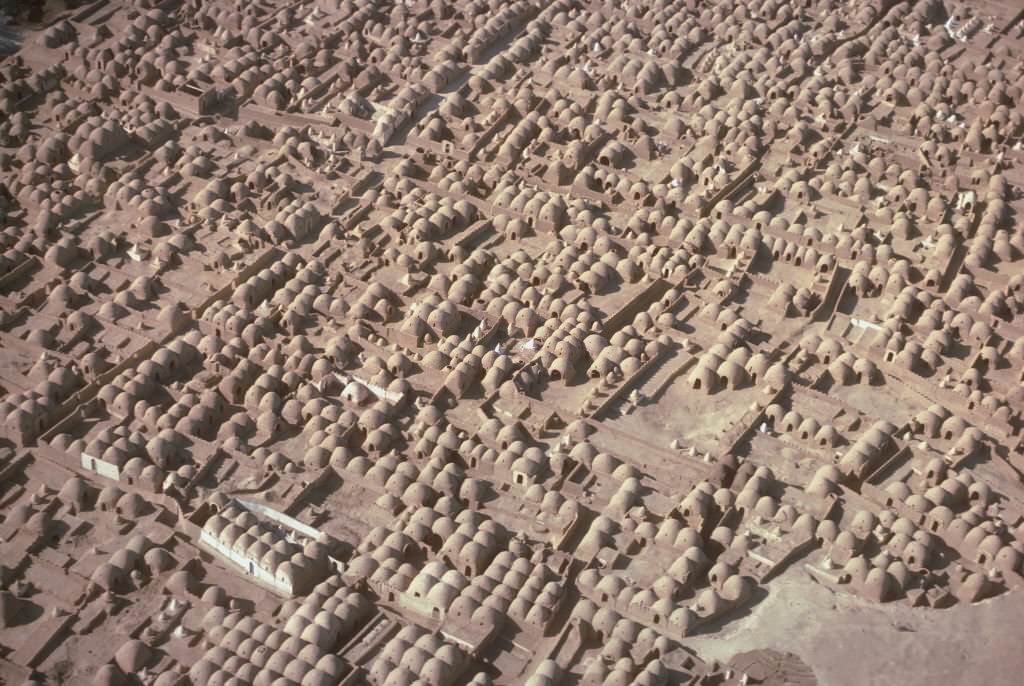
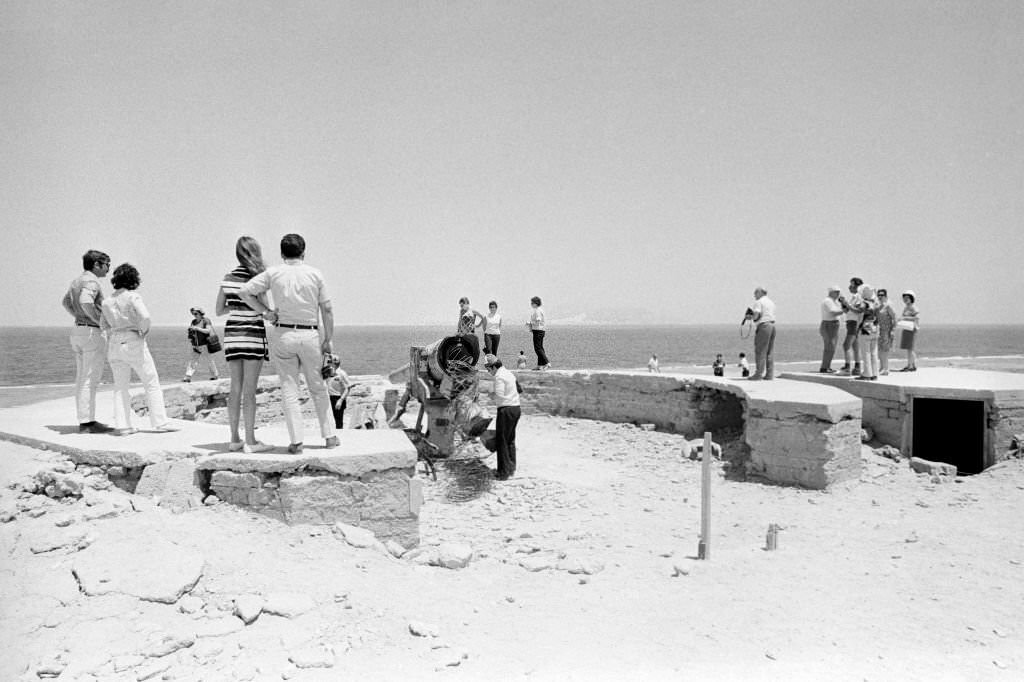
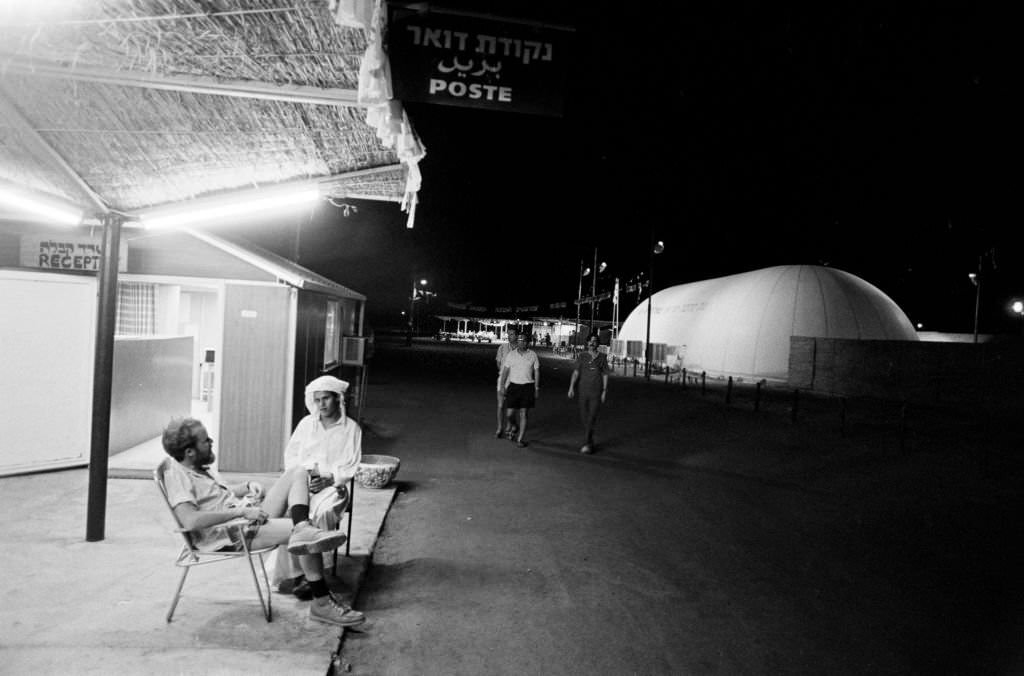
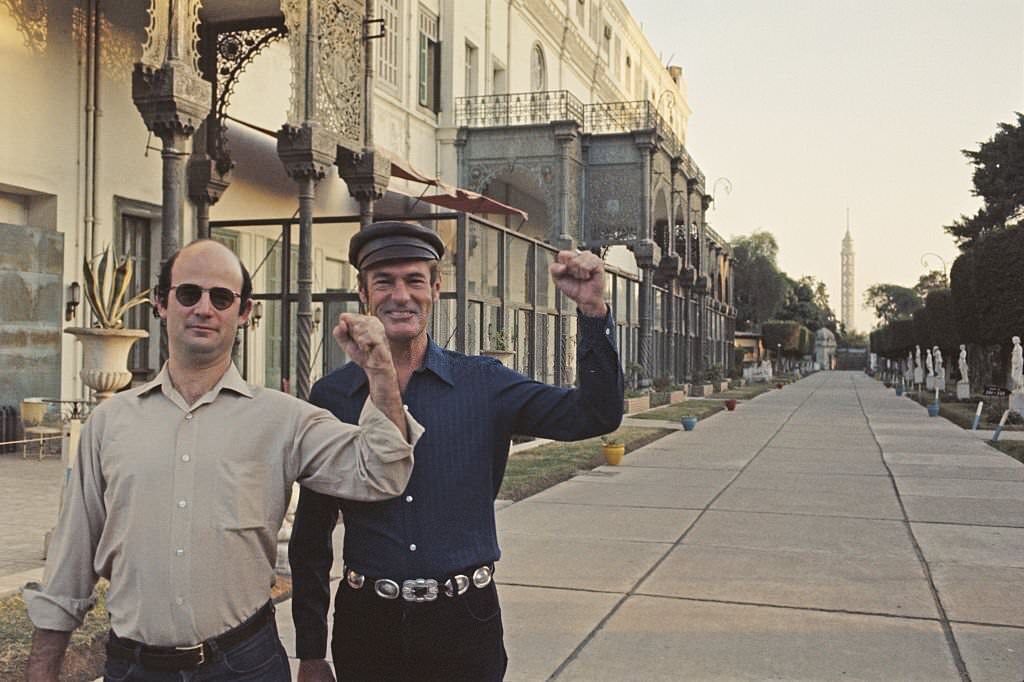
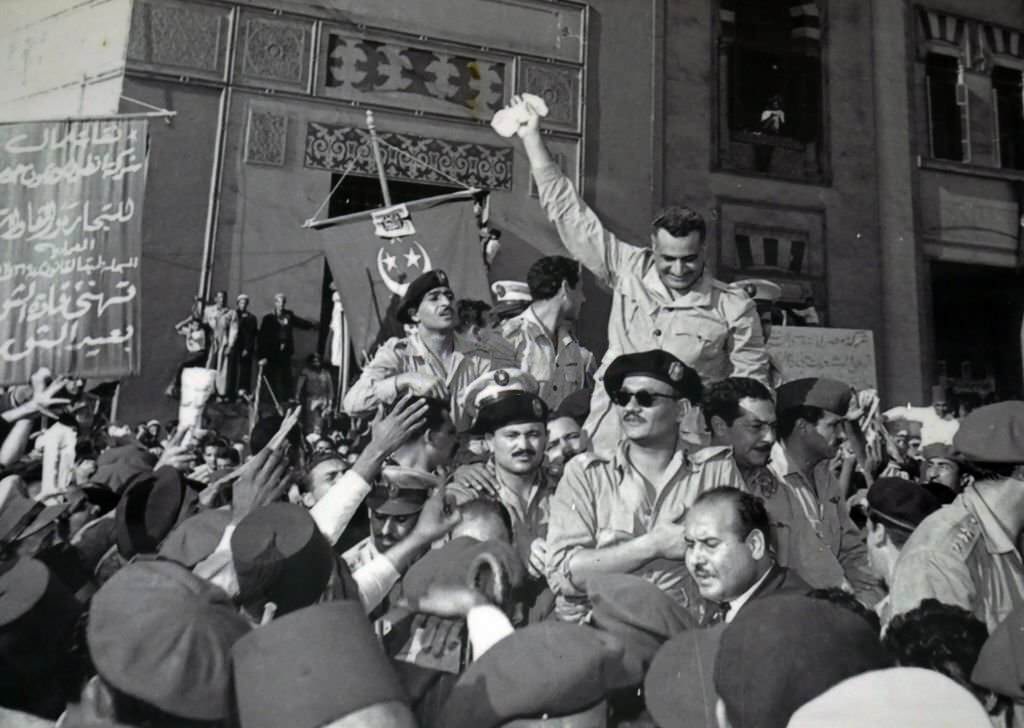
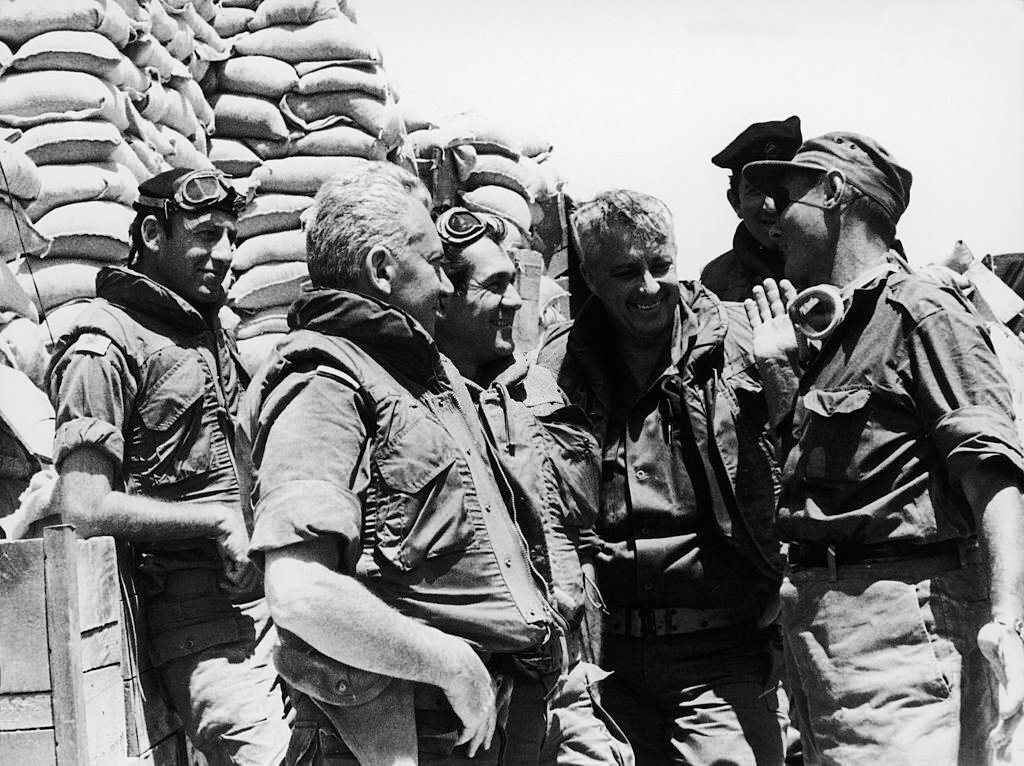
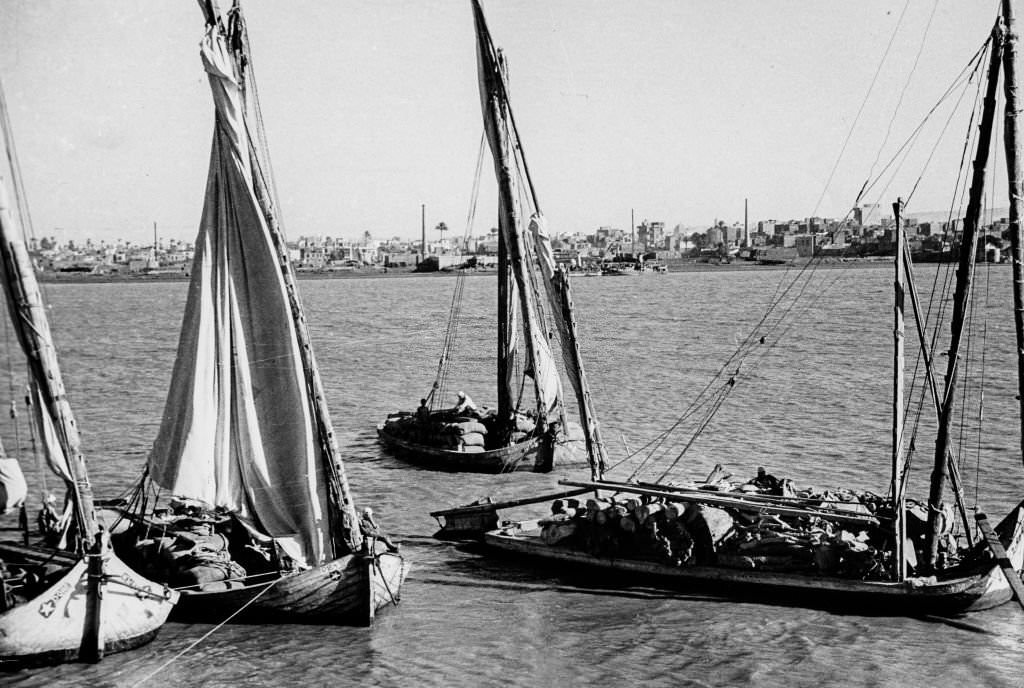
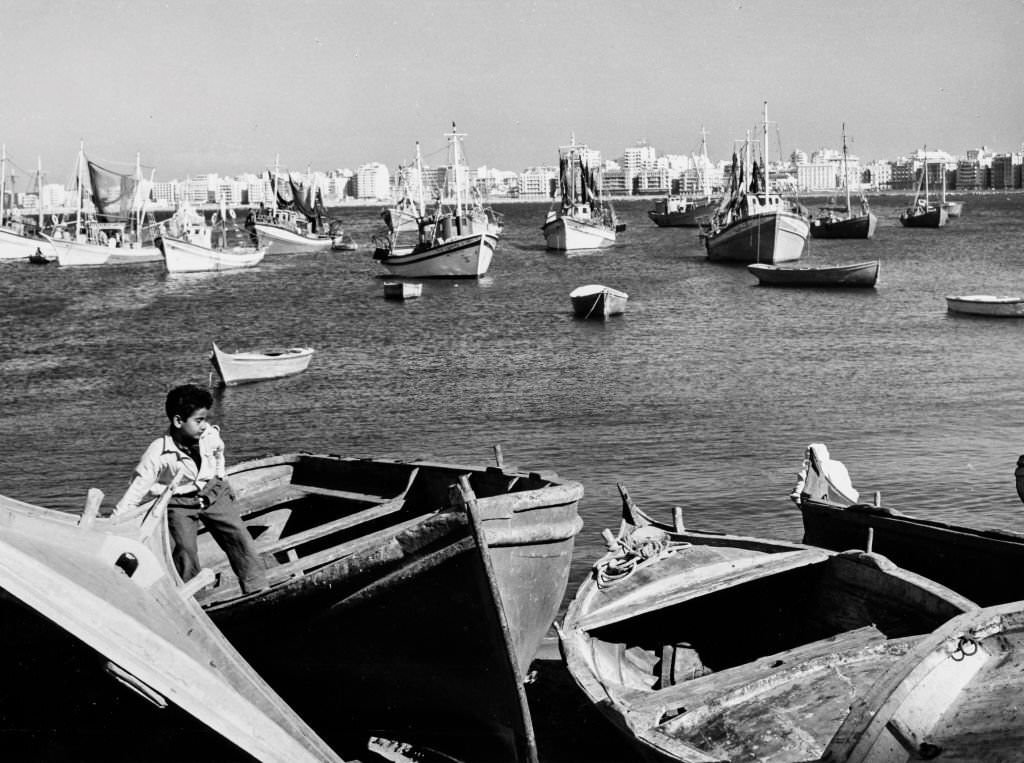
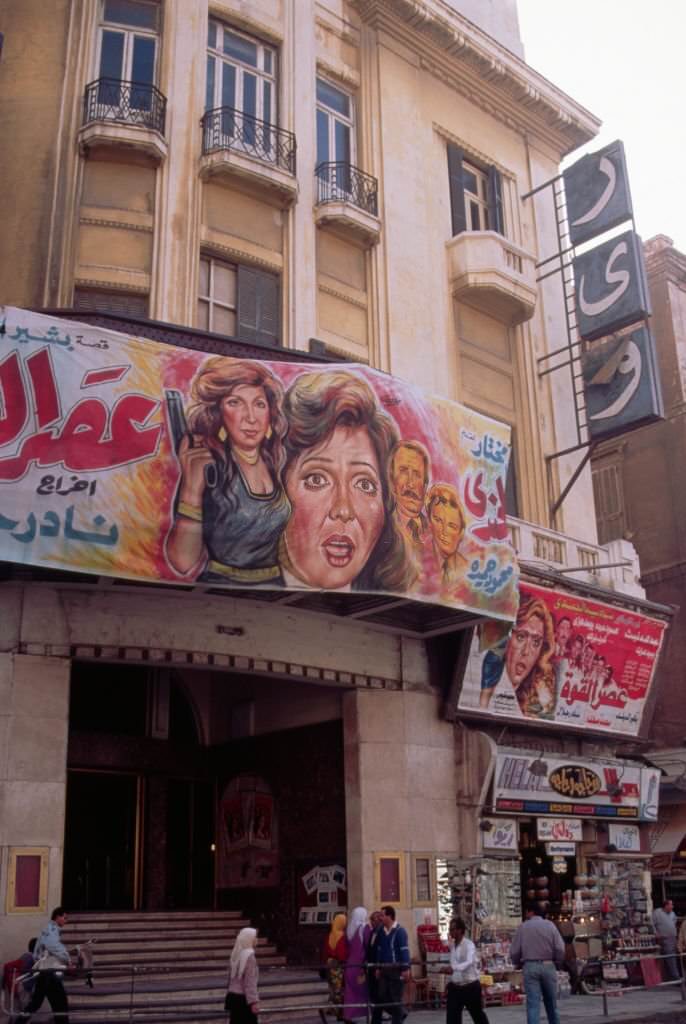
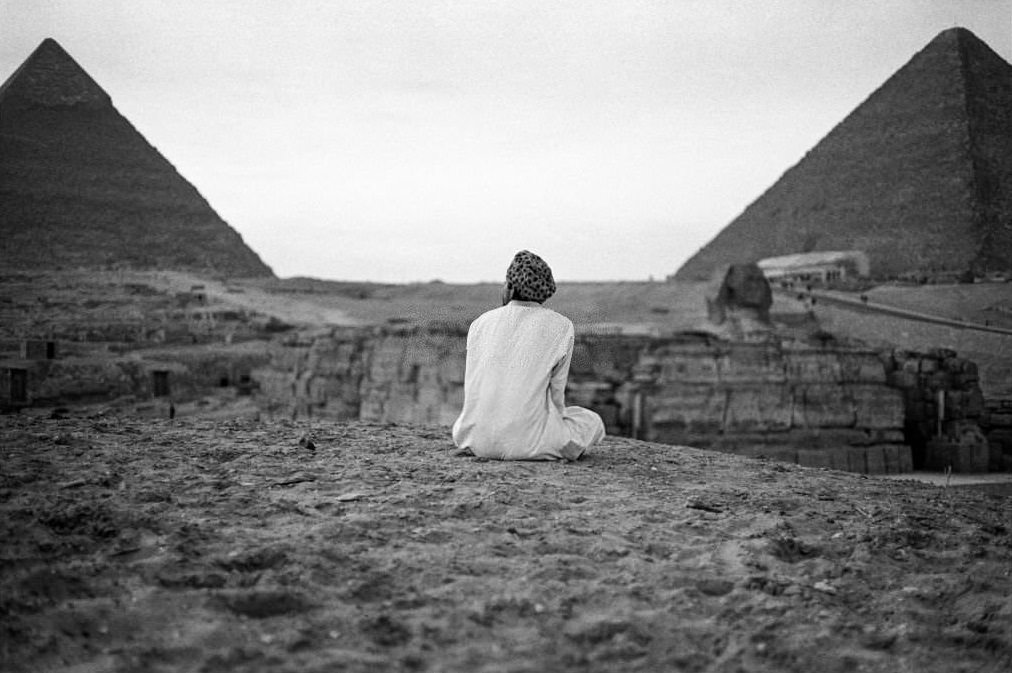
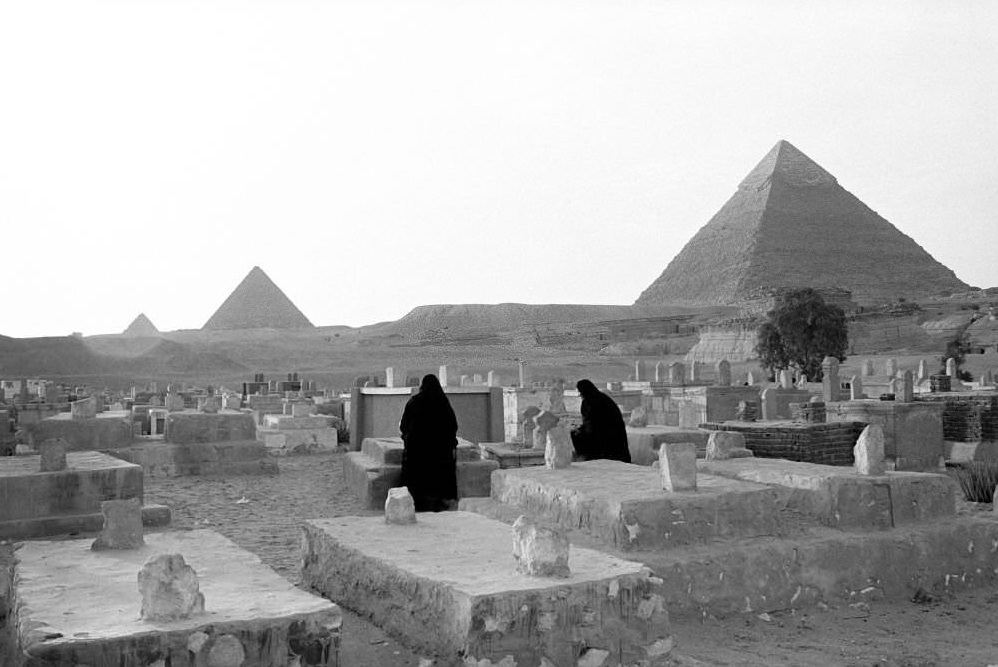
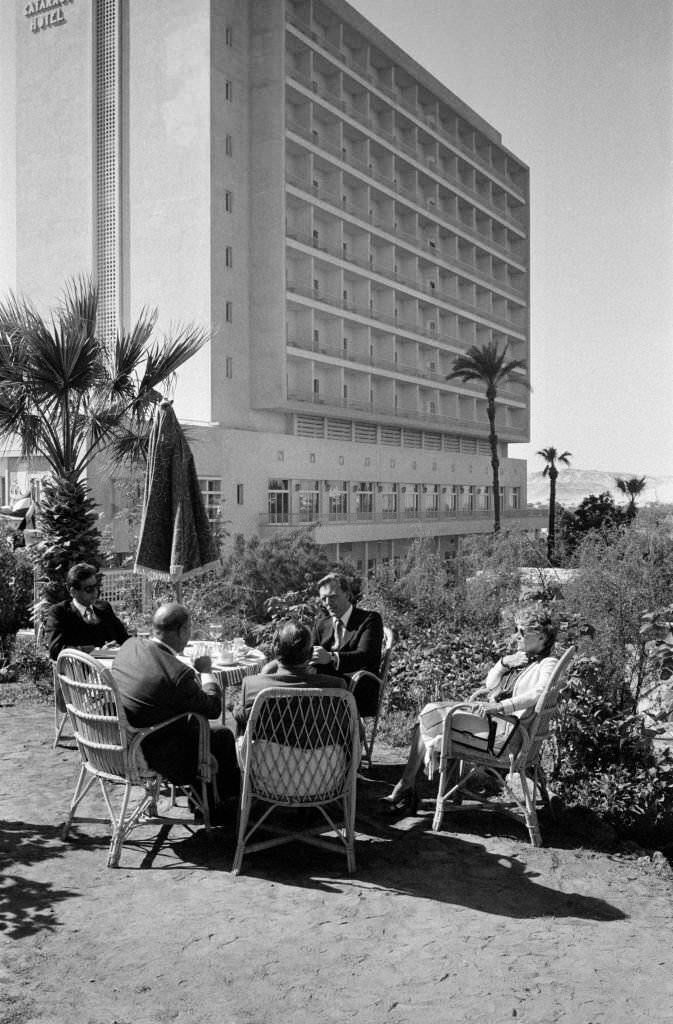
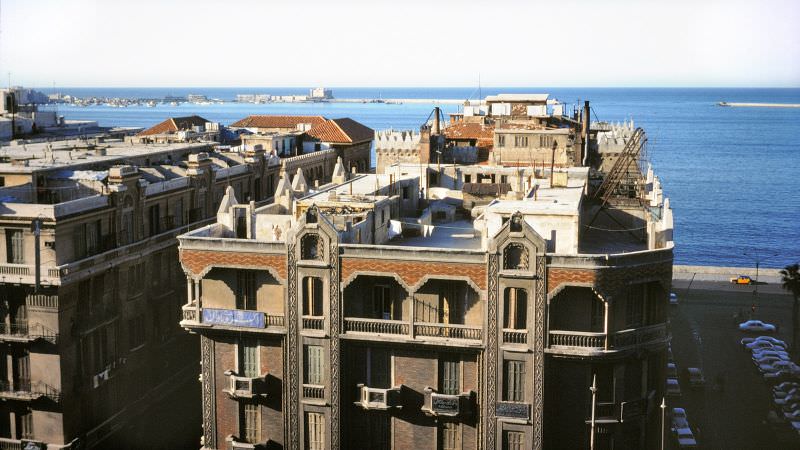
Nile river Aerial view in 1977.Buildings on the shoreline of the Nile river.River Nile panorama, CairoCity of Cairo, Egypt, 1977,City of Cairo, Egypt, 1977,City of Cairo, Egypt, 1977Apartment complex with their inhabitants in Cairo.A family in Cairo in December 1977, Egypt.A view of an Aqueduct bringing water to Egypt, 1975Port Said, Egypt, 1977Zawiyat Al Amwat, City Of The Dead, Minya, Egypt, Muslim Cemetery, 1977Zawiyat Al Amwat, City Of The Dead, Minya, Egypt, 1977Tourists in Sharm el-Sheikh in May 1971, EgyptNight street scene in Sharm el-Sheikh in May 1971, EgyptAmerican psychologist and author, Timothy Leary with his associate Martin Kenner in Cairo, Egypt in October 1970Gamal Abdel Nasser and members of the RCC. welcomed by cheering crowds in Alexandria 1954.Haim Bar-Lev, David Elazar, Ariel Sharon and Moshe Dayan in Egypt 1970Nilo, Cairo, 1970sAlexandria of Egypt, 1970sMovie Theater in Alexandria, 1970sMan at Giza Pyramid Complex, 1979Women at Giza Pyramid Complex, 1979
Baron Edouard-Jean Empain, in the center, with his mother on the right, Aswan, 1979
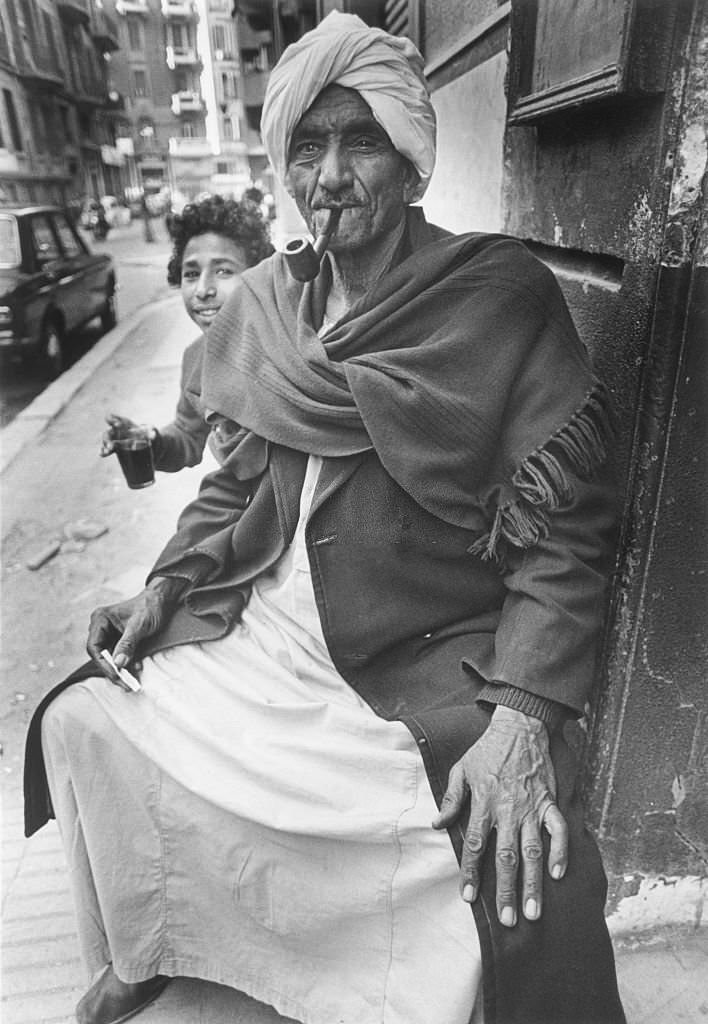
old man caretaker, 1970s
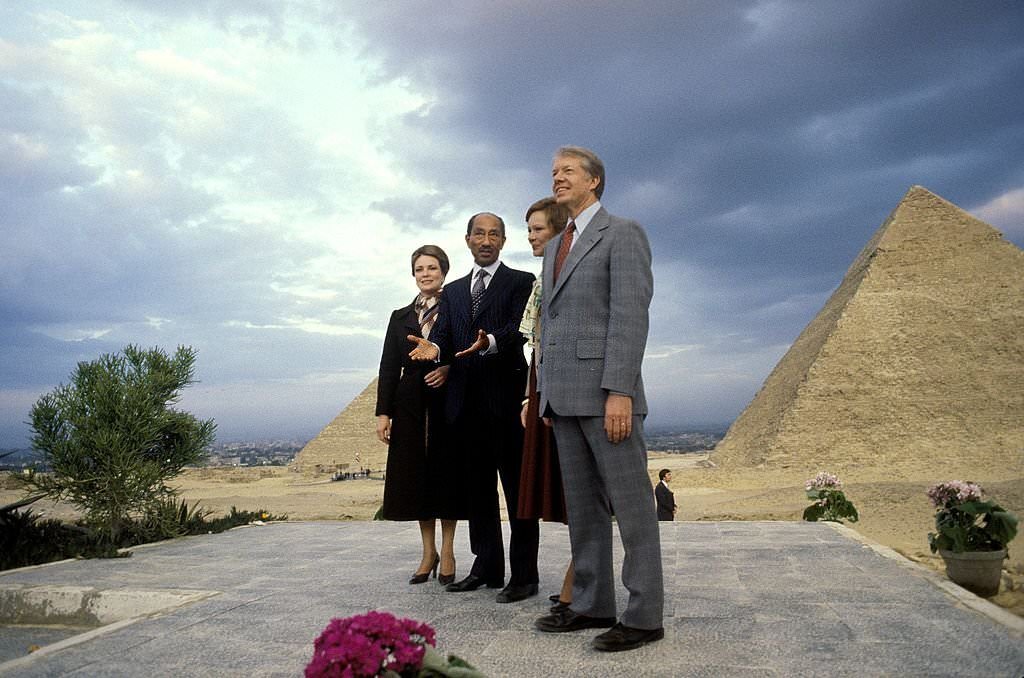
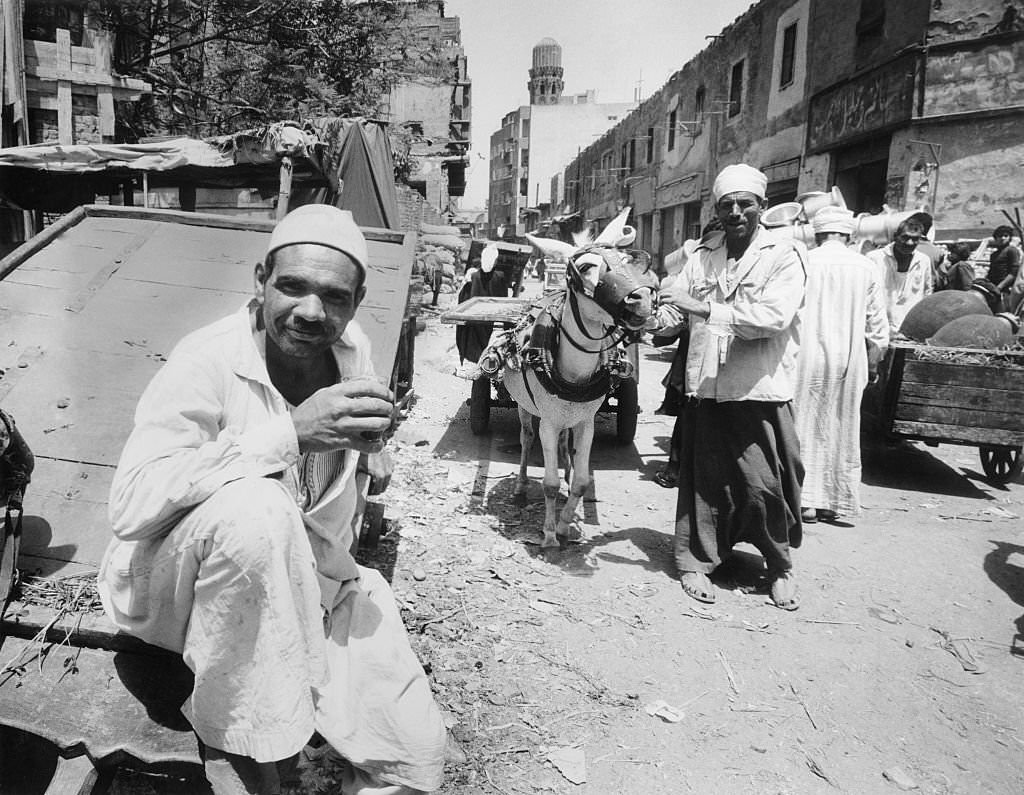
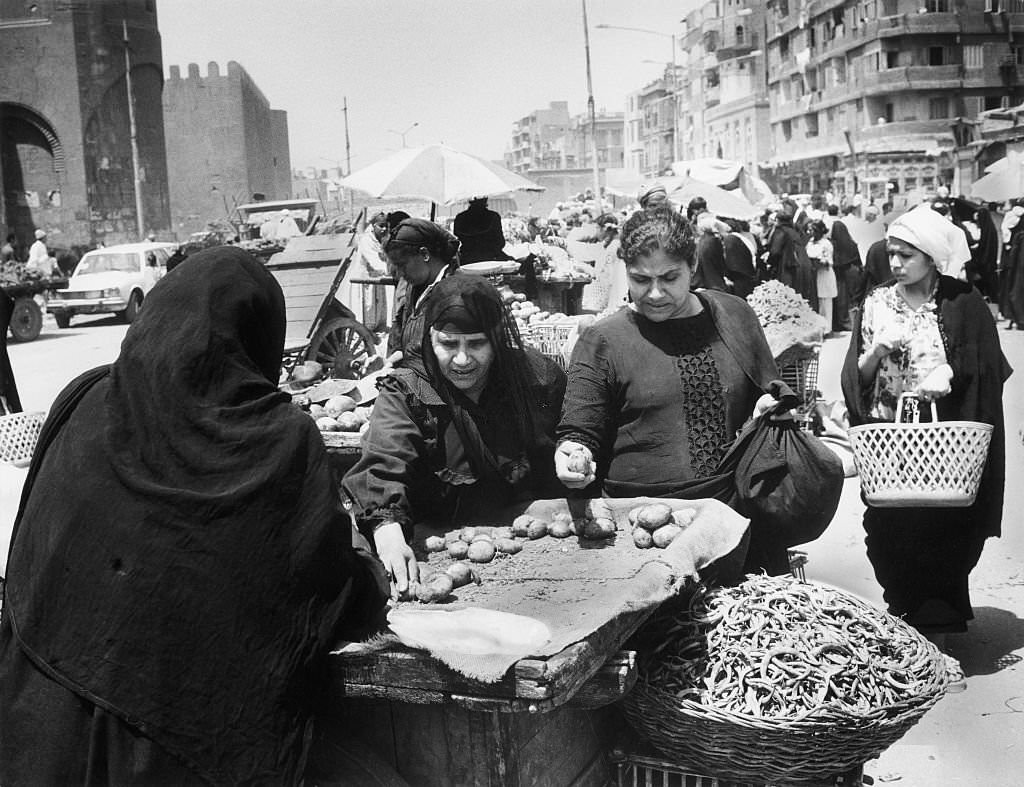
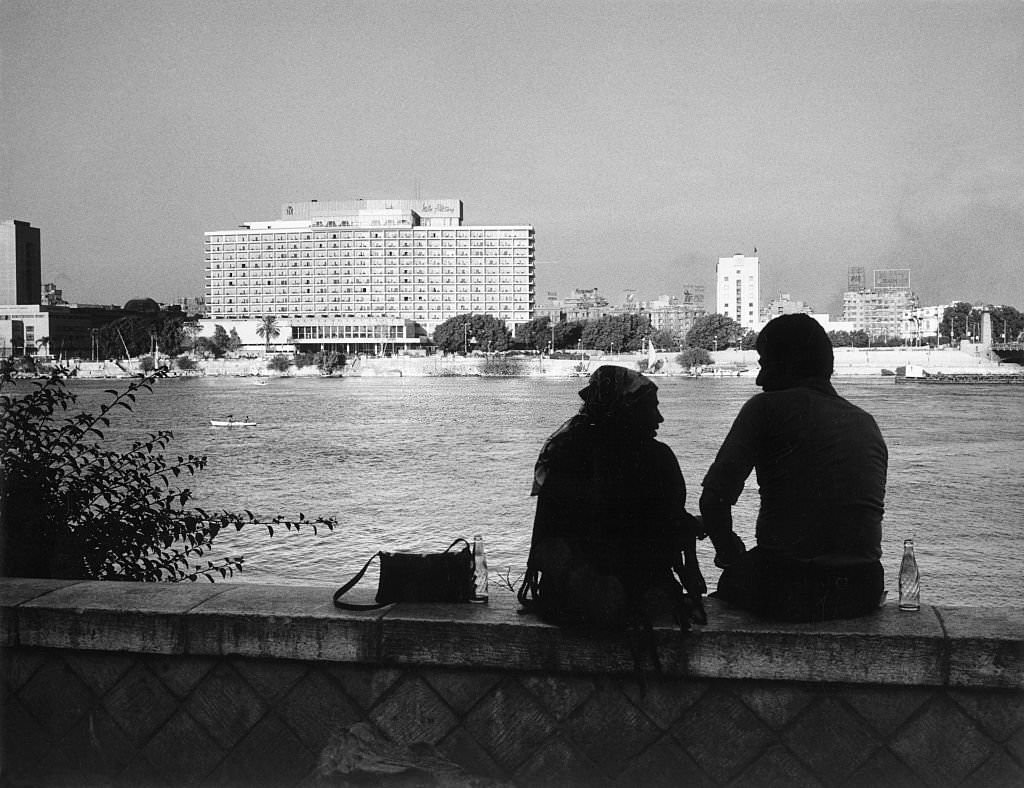
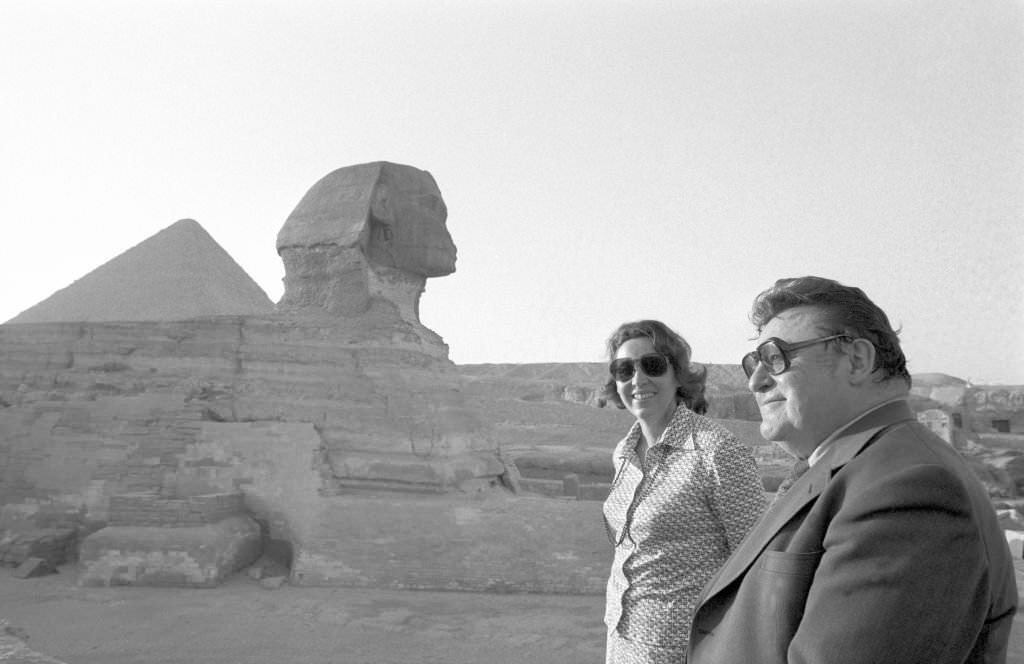
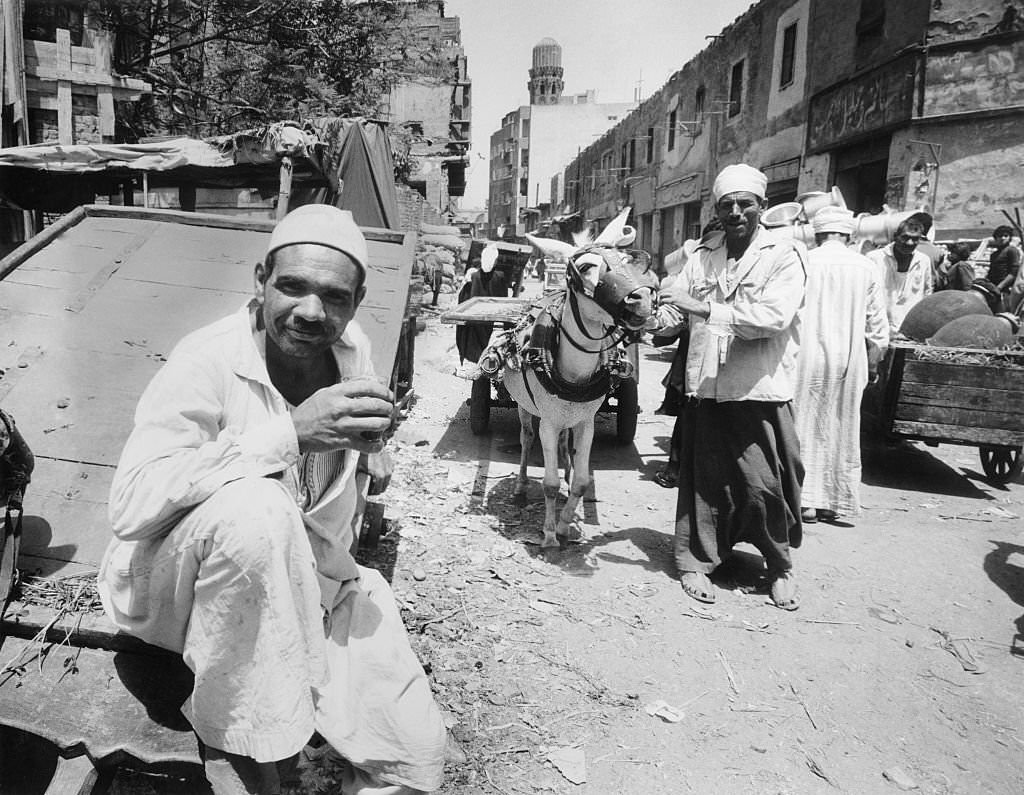
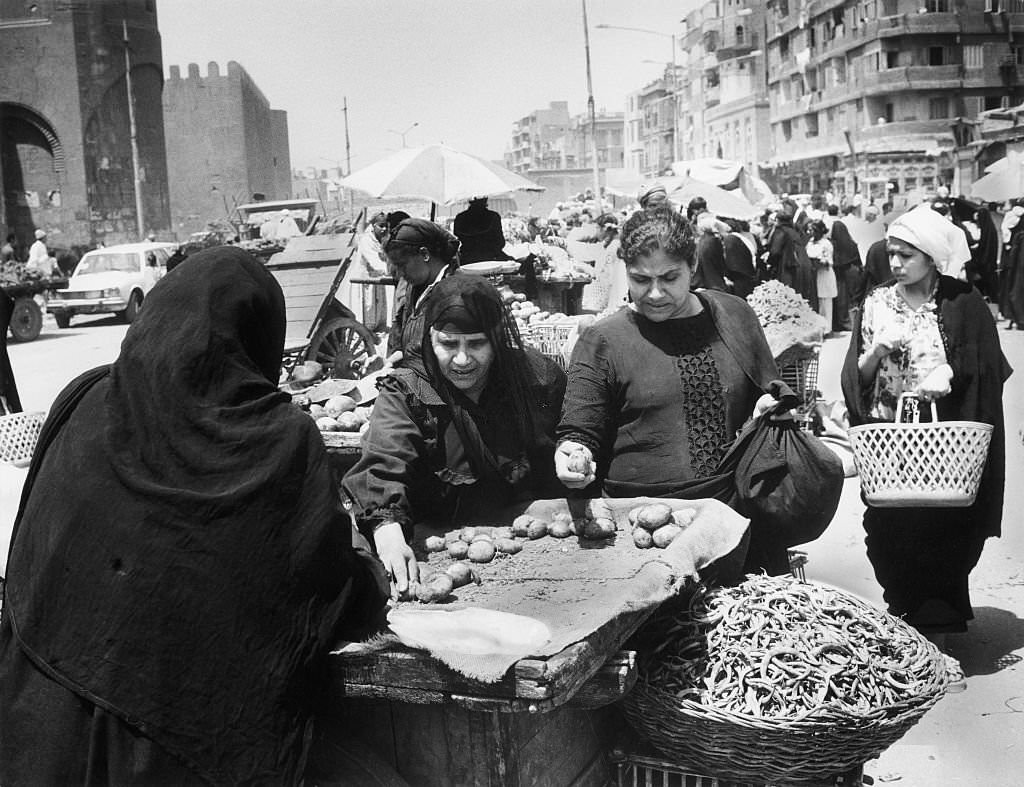
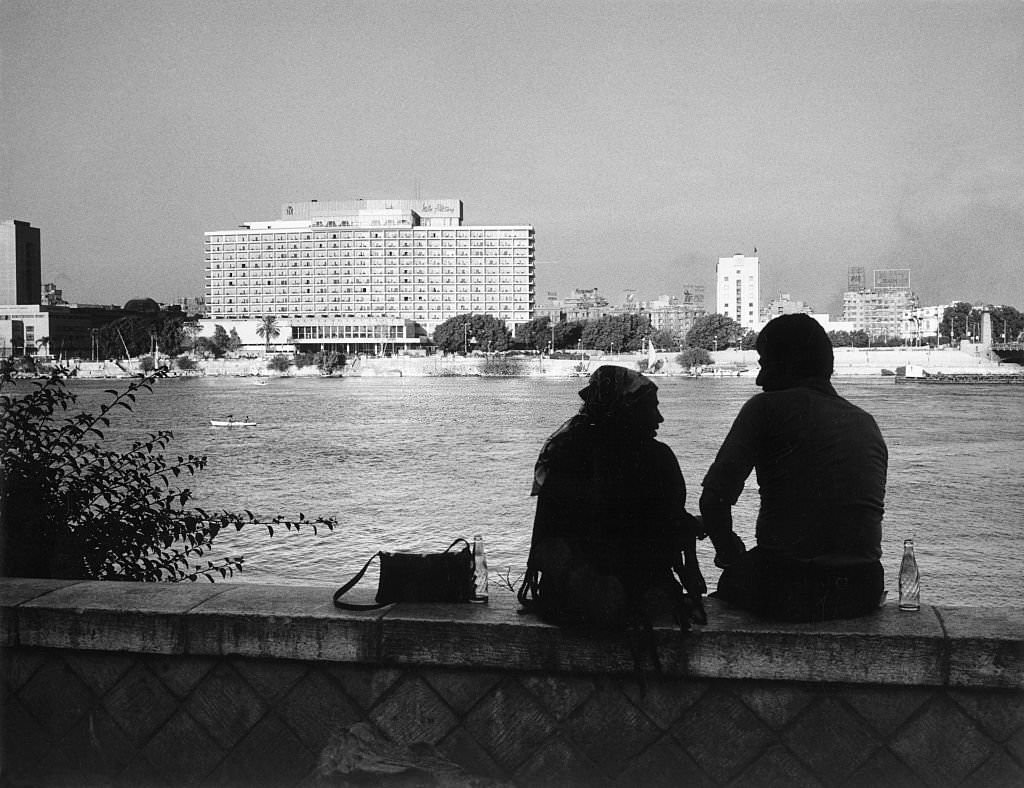
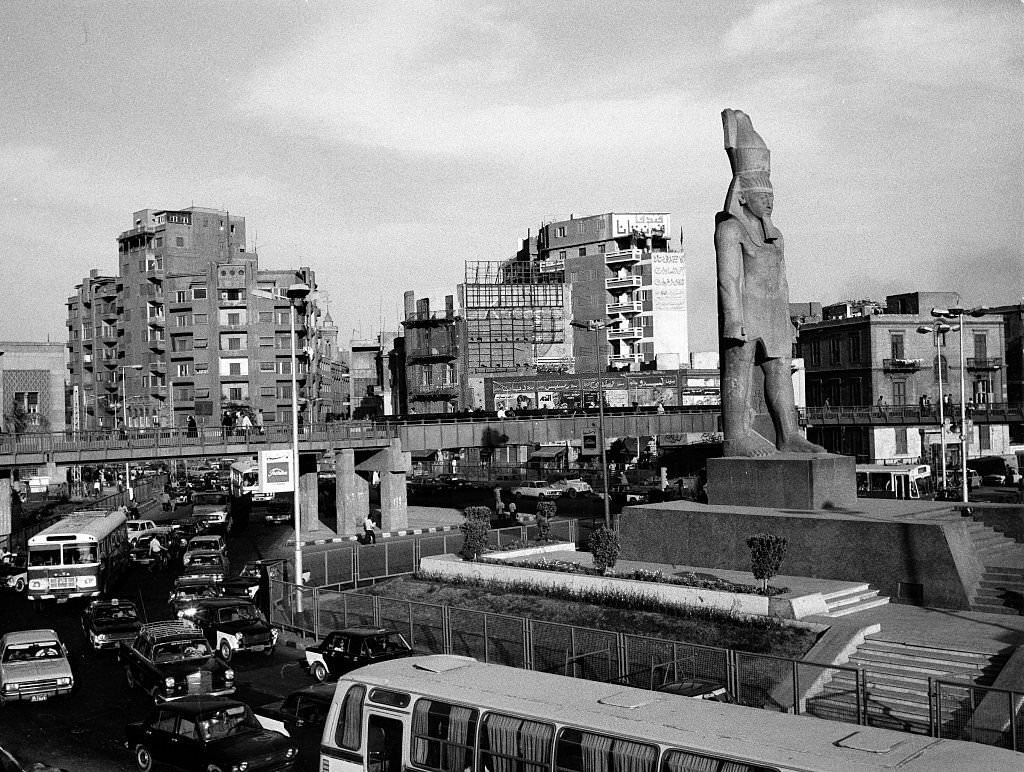
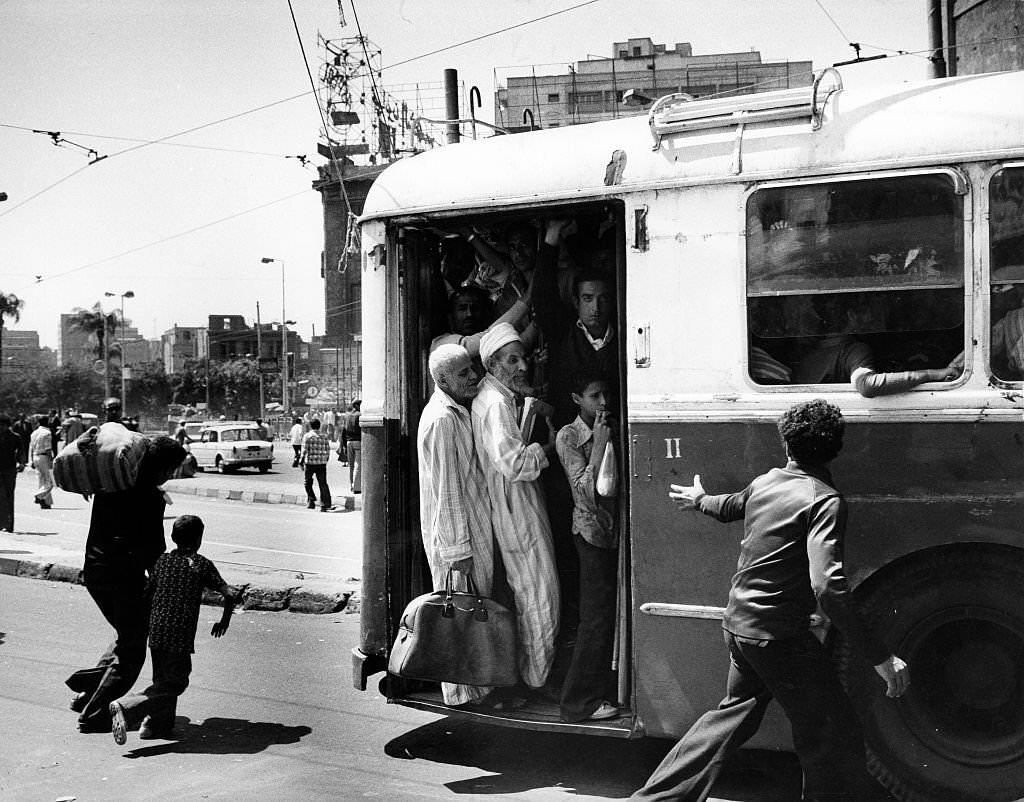
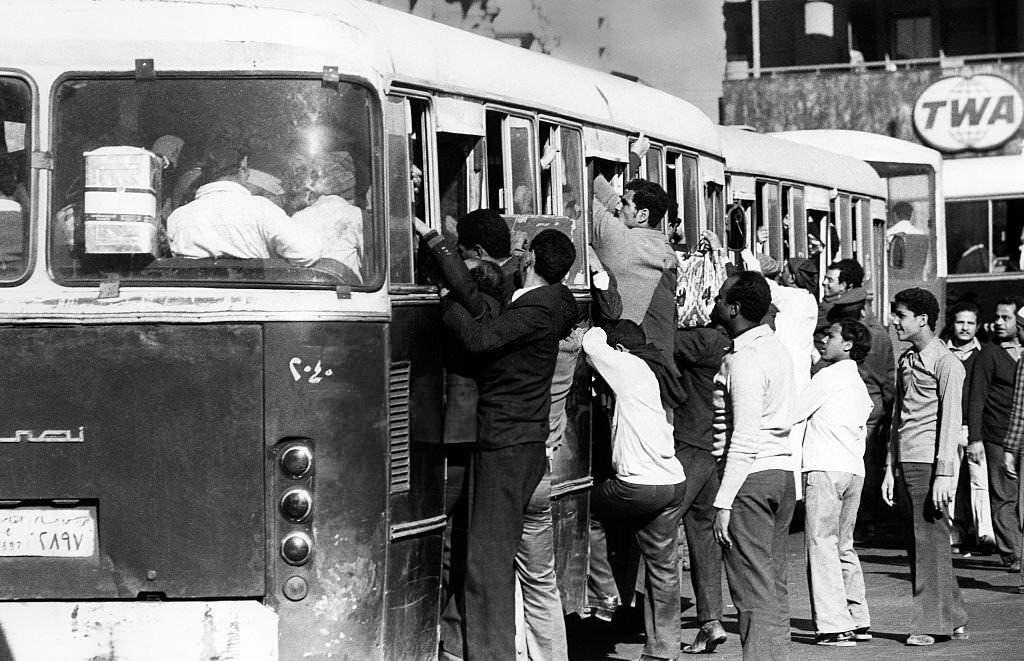
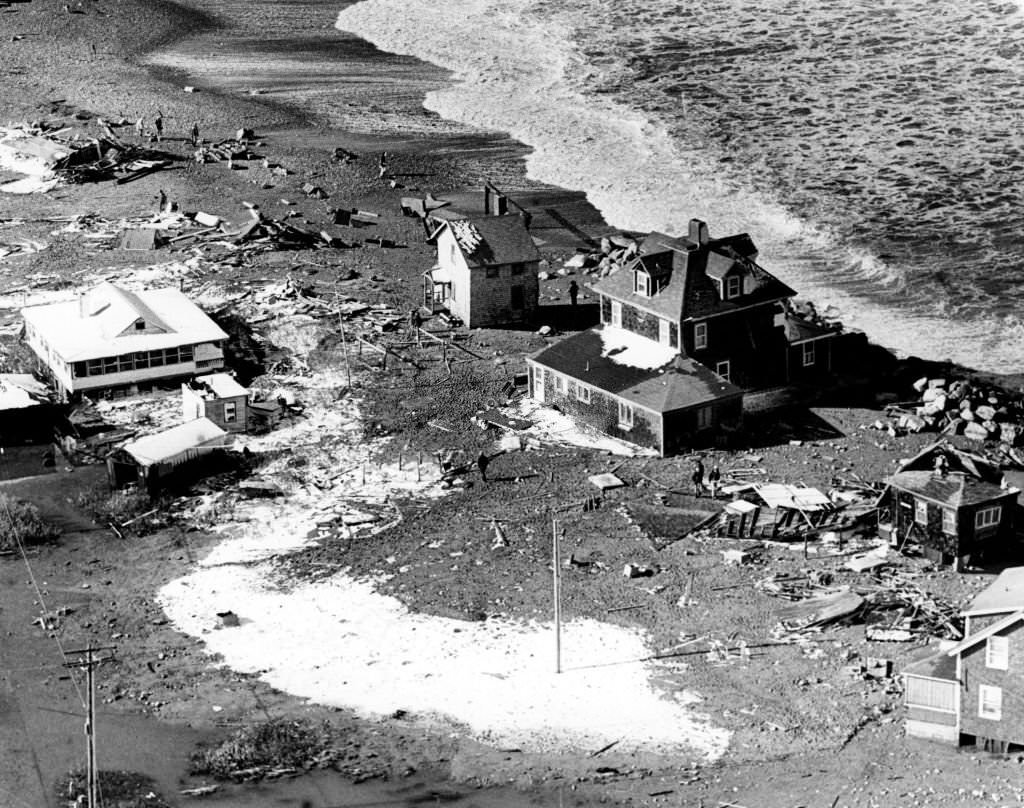
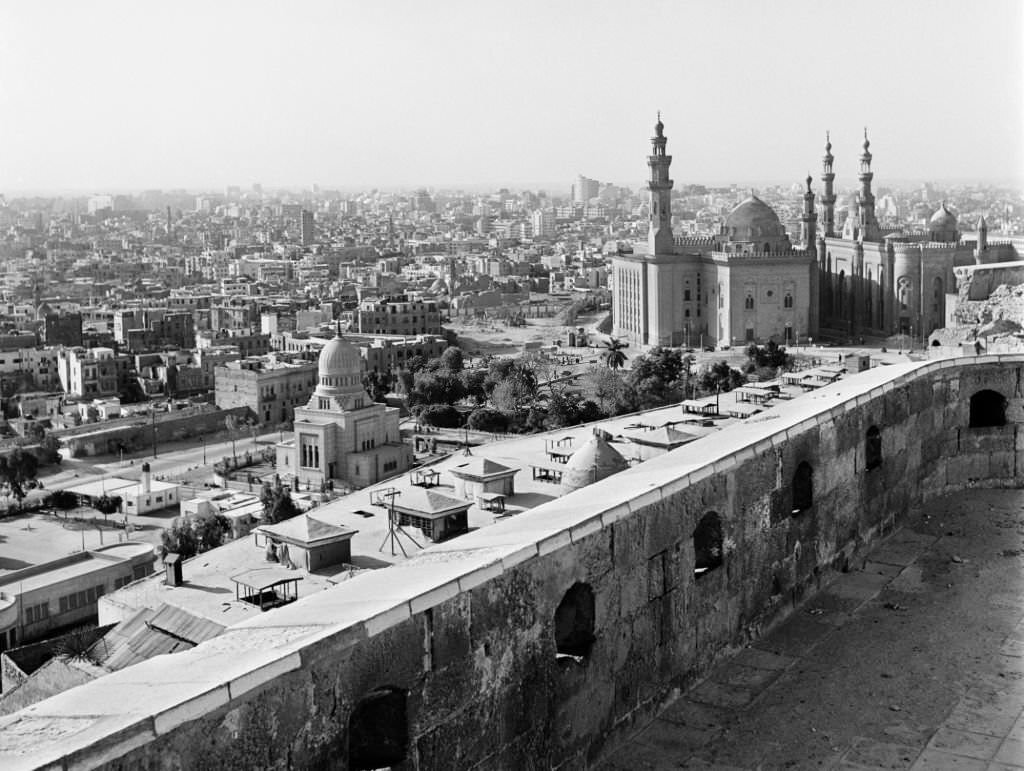
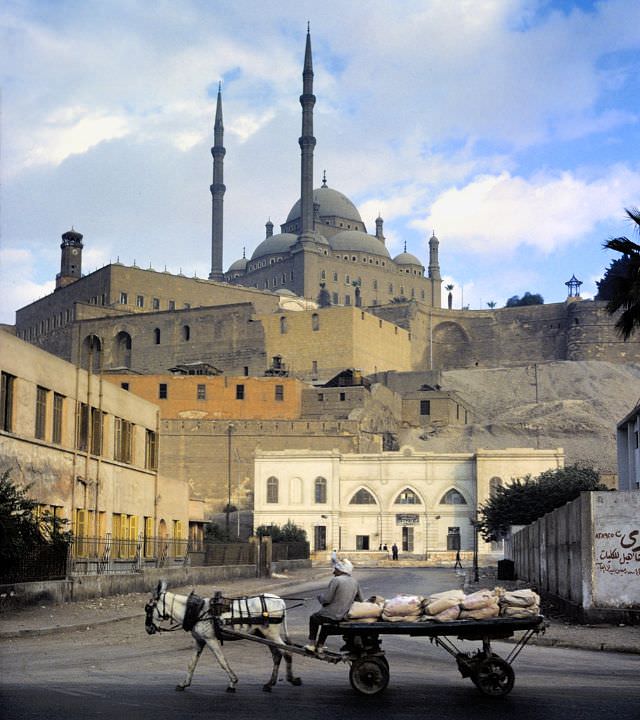
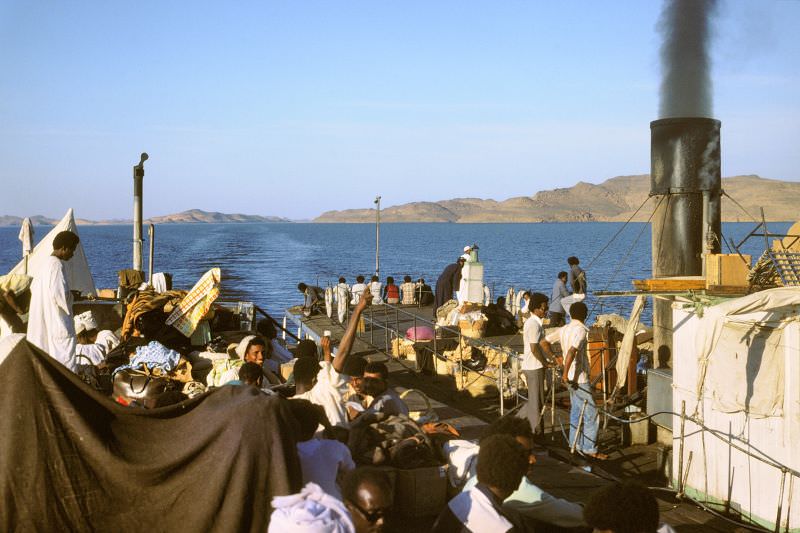
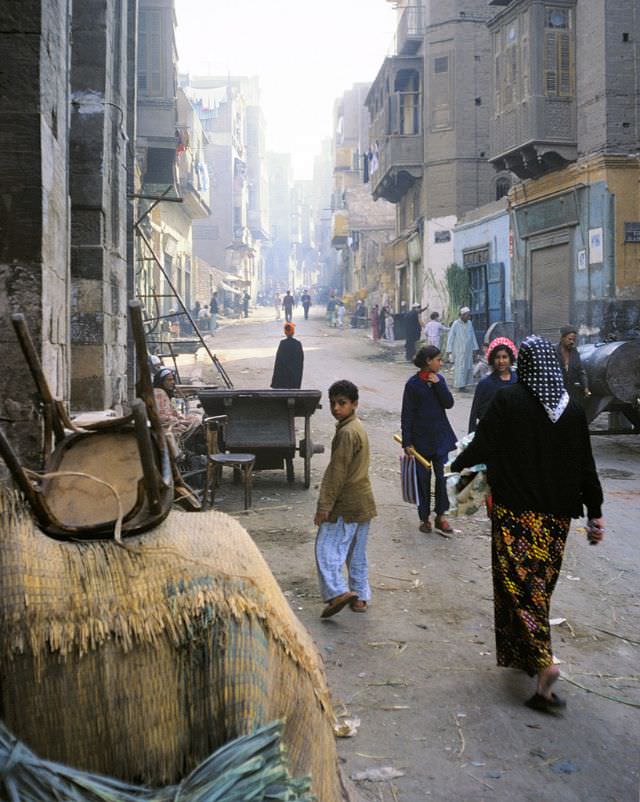
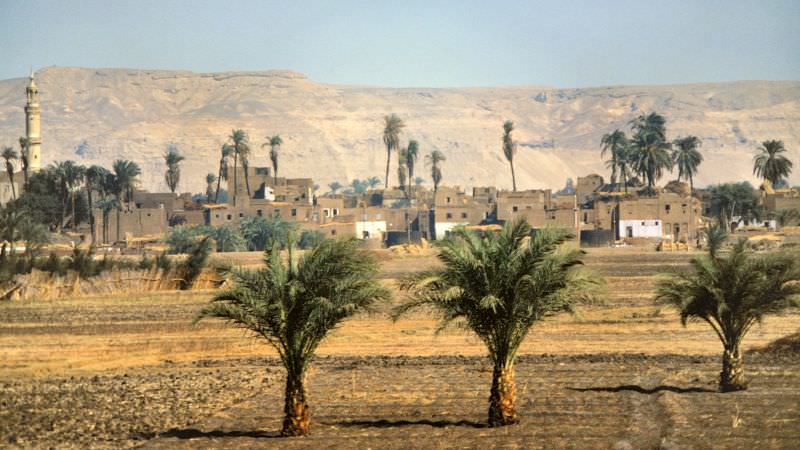
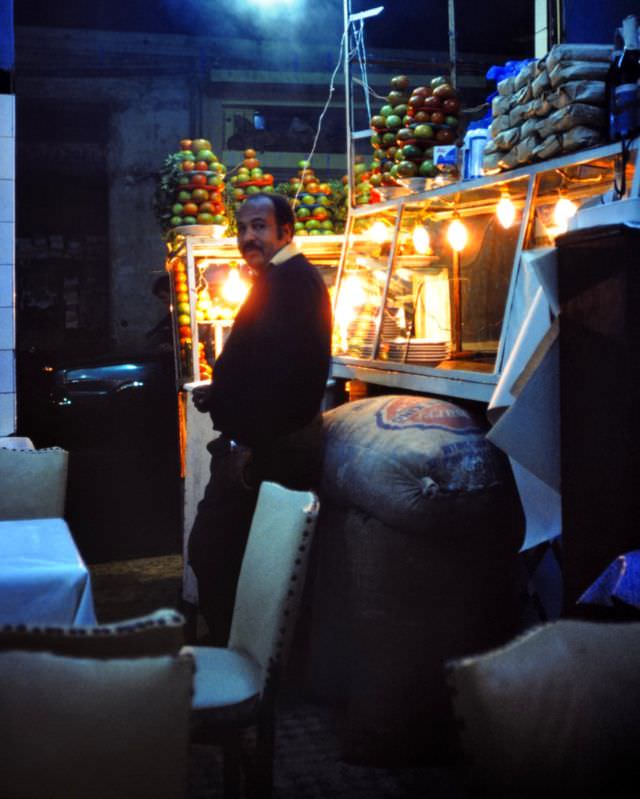
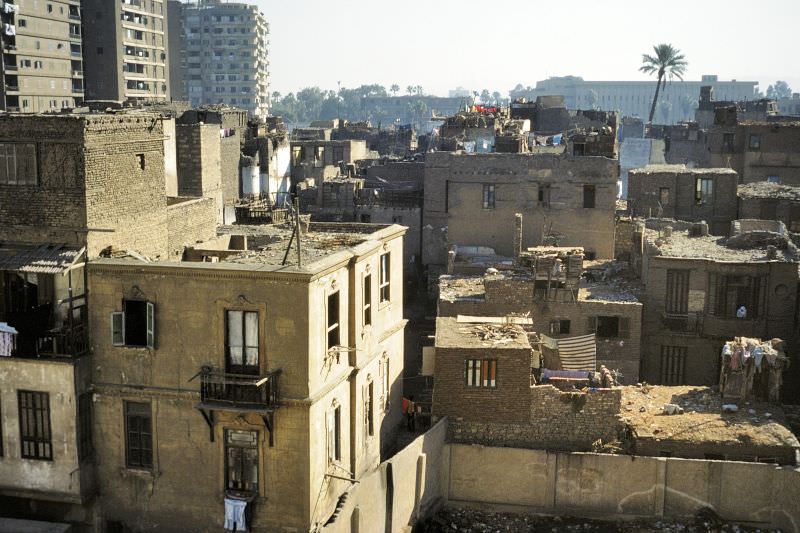
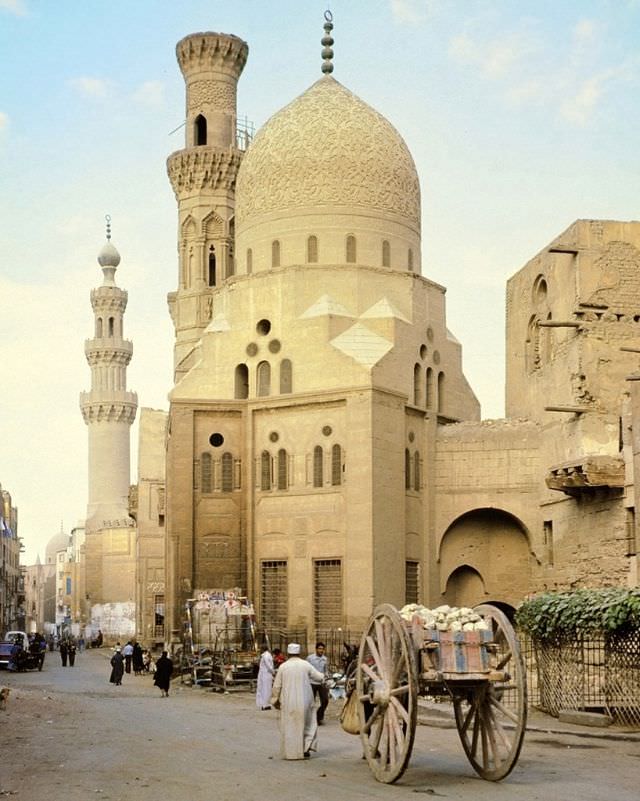
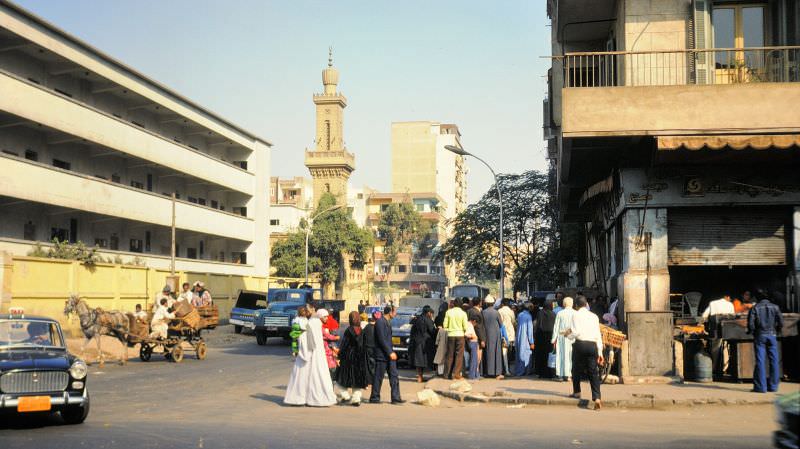
Marketeer with donkey cart in Cairo, 1970sMarket scenery in Cairo, 1970sCouple at the riverbank of the Nile, in background the Hilton hotel, 1970CSU chairman Franz Josef Strauss and his wife Marianne visit the pyramids and the Sphinx in Giza near Cairo on May 16, 1977.Marketeer with donkey cart, Cairo, 1970sMarket scenery, Cairo, 1970sCouple at the riverbank of the Nil, in background the Hilton hotelStatue of the Pharao Ramses in front of the Central StationOvercrowded bus in Cairo, 1979Overcrowded buses in Cairo, 1979An aerial view of the damage on Egypt Beach in Scuitate, 1978Street scene in Cairo – 1978Traffic jam in Cairo, 1978- 1978View of city and Mohammed Ali Mosque from the Cairo, 1970sDonkey cart beneath Citadel mosque, Cairo, EgyptAncient overcrowded rickety steam boat heading south to Sudan, Lake Nasser, Nubia, EgyptCairo back street with porter and mosque, EgyptCairo street scene with minarets and mosquesCairo street sceneCentral bus station and Egyptian Museum, Cairo, EgyptEgypt Alexandria apartment buildings and harbourEsso fuel oil vendor and donkey, Cairo, EgyptFelucca sailboat amid weathered rocks, Aswan, EgyptFelucca sailboat on River Nile, Aswan, EgyptFood vendor with shisha pipe and wooden cart, town centre, Luxor, EgyptNile Valley village, between Memphis and Luxor, EgyptRestaurant serving fantastically flavoured fūl midammis bean casseroles, Alexandria, EgyptRooftops and rubble, Cairo, EgyptStreet scene with mosque and big-wheel donkey cart, Cairo, EgyptStreet scene with mosque, Cairo, Egypt