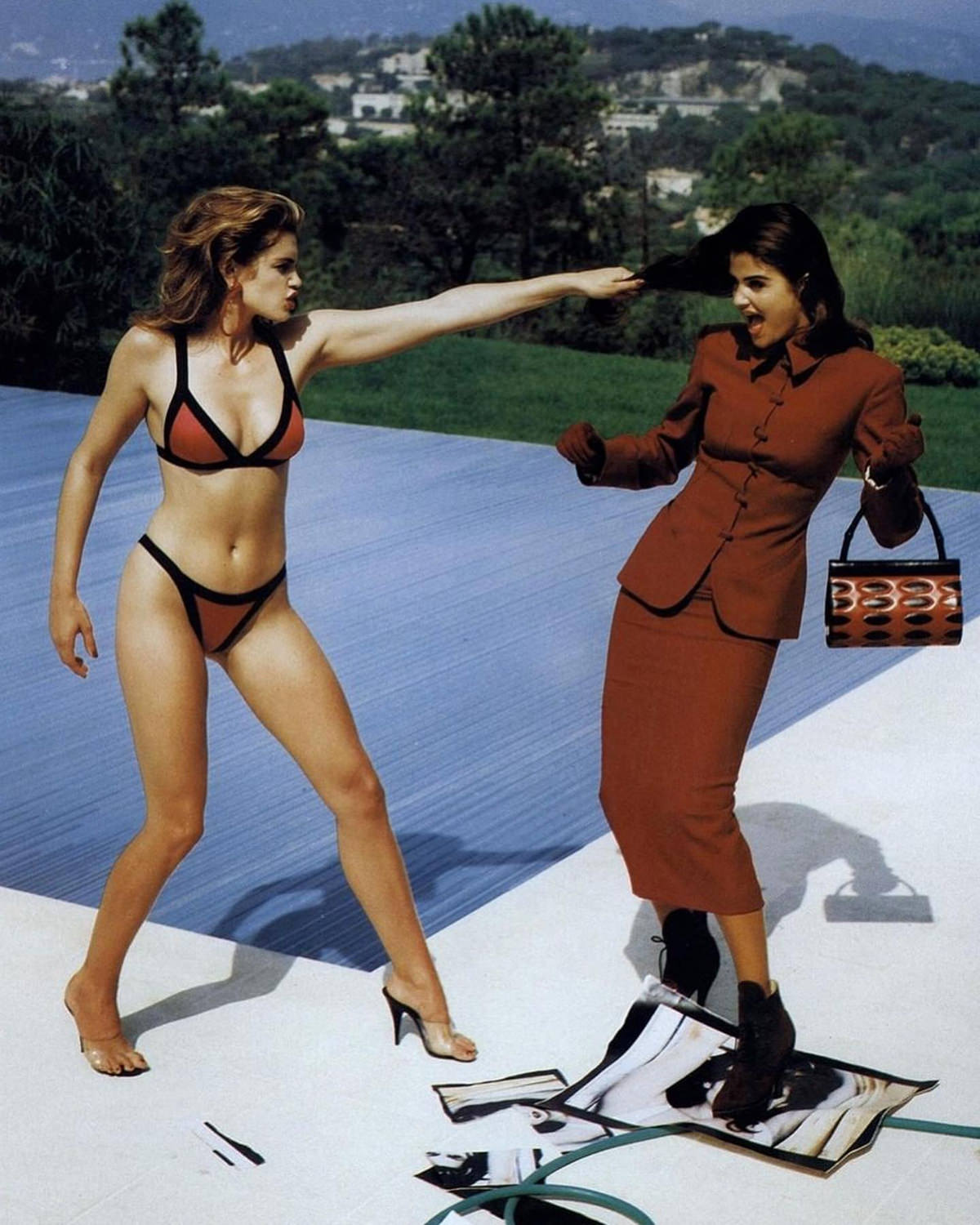
In December 1991, Vogue published a fashion shoot that stopped the industry cold. Photographer Helmut Newton placed two of the era’s biggest supermodels — Cindy Crawford and Helena Christensen — in front of his lens, and what he produced became one of the most talked-about editorial spreads of the decade. The images were bold, charged, and unapologetically provocative, exactly the kind of work Newton had built his career on.
Helmut Newton was born in Berlin in 1920 and later became an Australian citizen after fleeing Nazi Germany. He built his reputation through decades of fashion photography that pushed against the boundaries of what magazines would print. His work appeared regularly in Vogue, Playboy, and other major publications. Newton’s style was defined by high contrast lighting, dominant female figures, and a tension between glamour and power that made his images impossible to ignore.
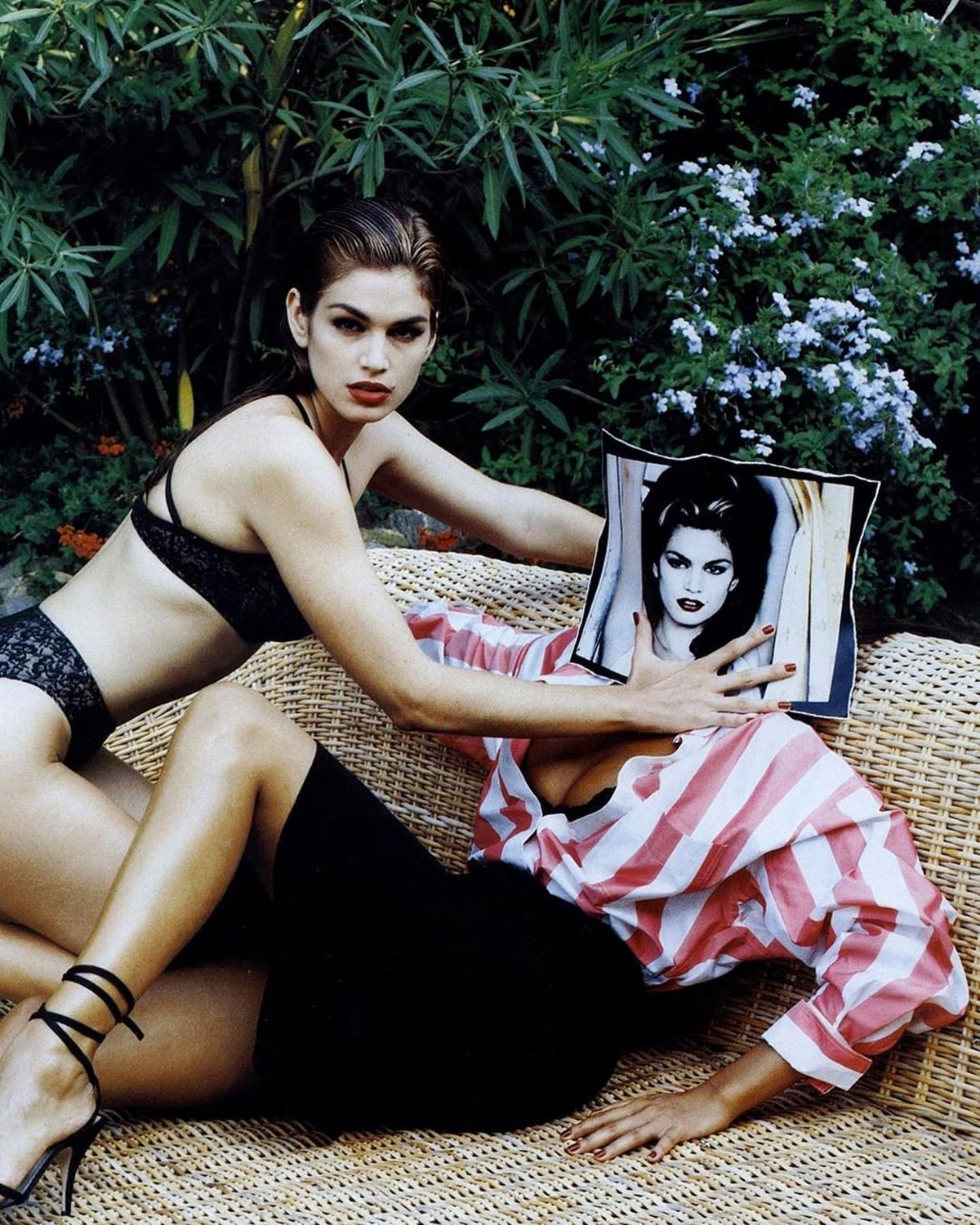
By 1991, Cindy Crawford was one of the most recognized faces in the world. She had appeared on hundreds of magazine covers and was a fixture in major advertising campaigns. Helena Christensen, the Danish-Peruvian model, was building her own profile at the same speed. Together, they represented the supermodel era at its peak — a moment when models became household names and commanded the same cultural attention as film stars. Newton understood exactly how to use that star power.
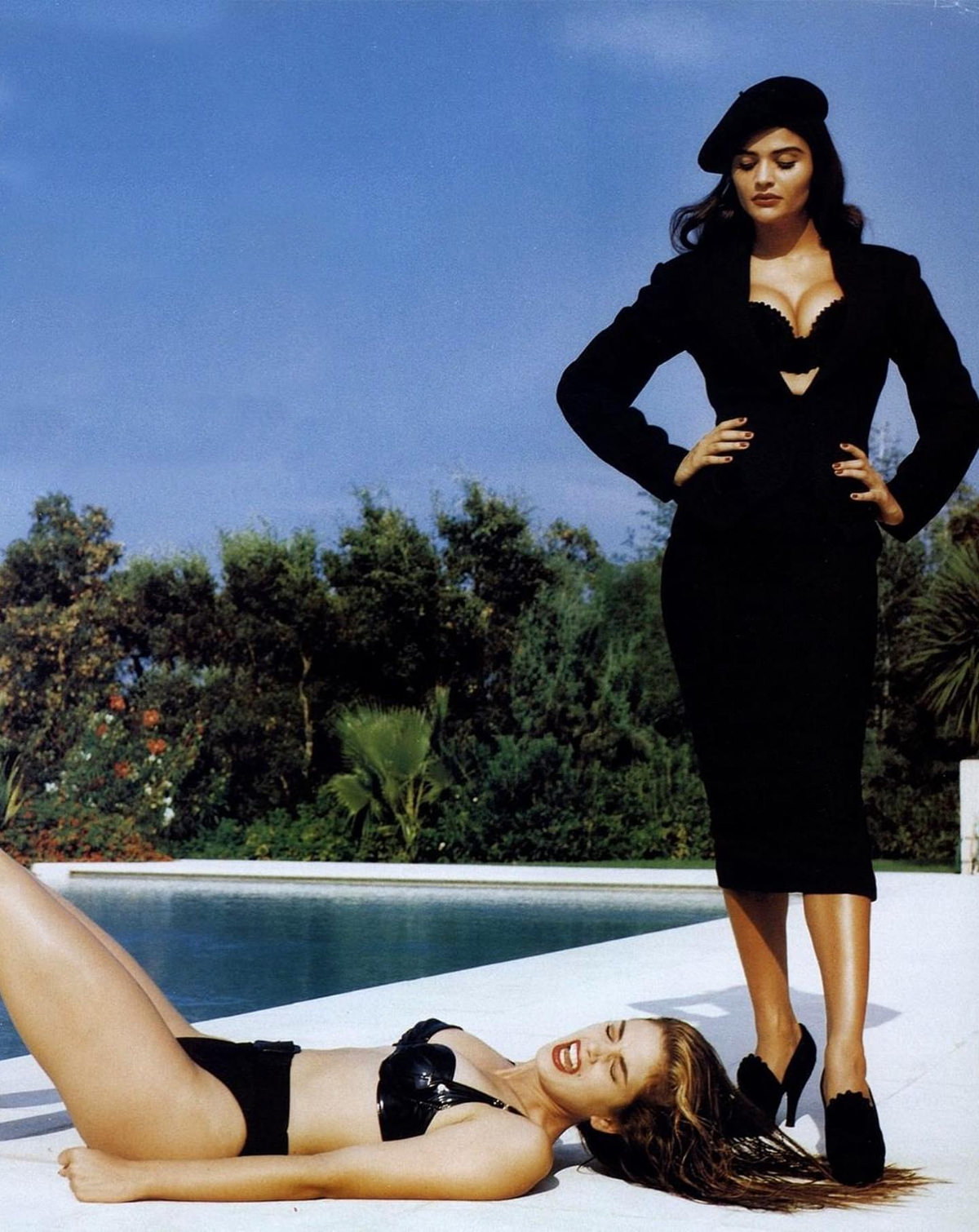
The shoot featured Crawford and Christensen in highly stylized poses, wearing revealing and carefully chosen clothing that reflected Newton’s signature aesthetic. Nothing in the shoot was accidental. Each frame was composed to project a specific kind of authority — the women were not passive subjects but active, commanding presences. Newton directed his subjects to project strength and sensuality simultaneously, a combination that defined his editorial vision throughout his career.
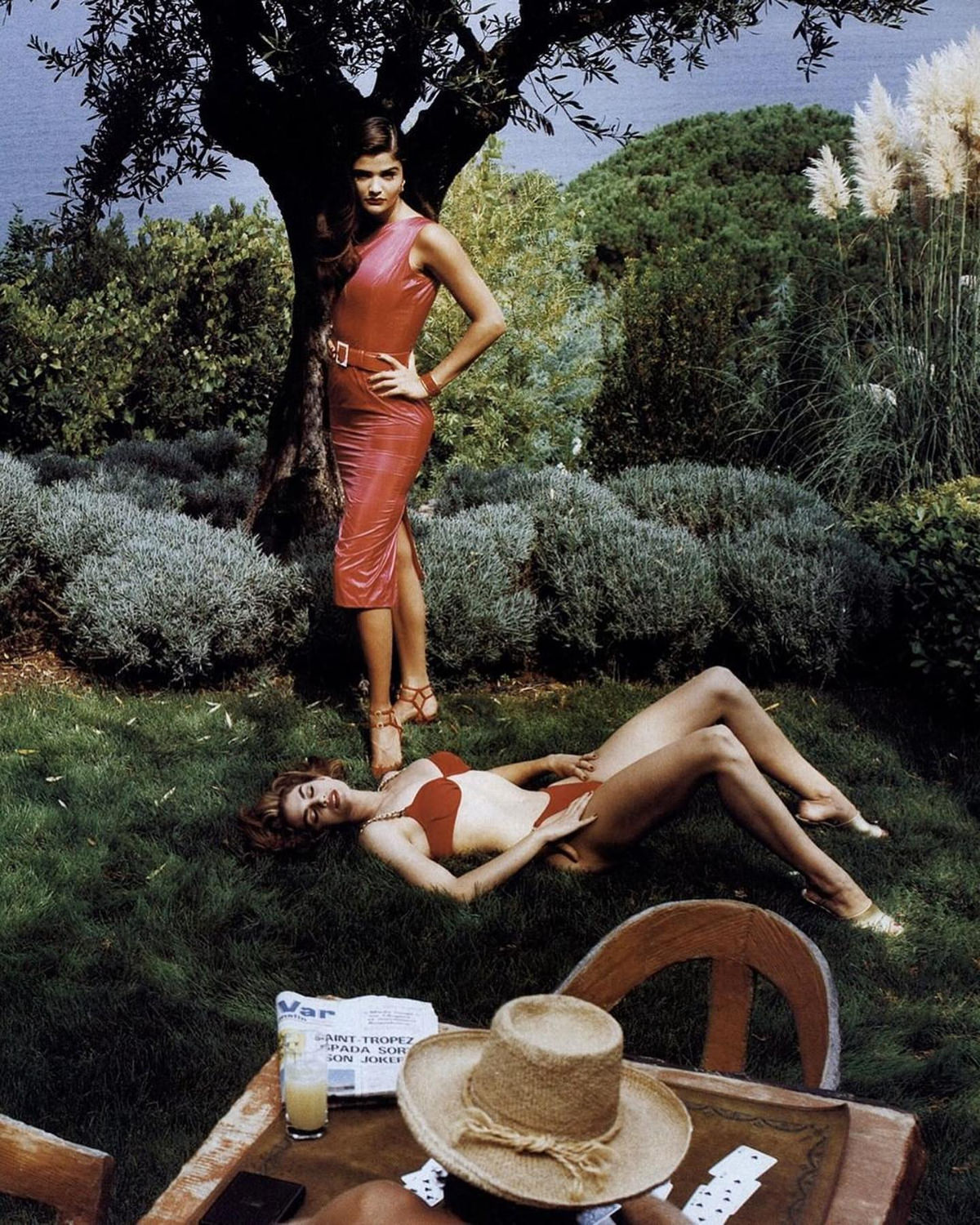
The December 1991 spread circulated widely beyond the pages of Vogue itself. Fashion editors, photographers, and critics reproduced and referenced the images across print and broadcast media. The shoot drew both admiration and controversy, which was a predictable response to Newton’s work. Critics who found his photography exploitative were matched by those who saw it as a powerful reframing of femininity. That debate played out loudly in fashion circles throughout the early 1990s. The images remained a fixed reference point in discussions of fashion photography from that period.