Cessna Aircraft Company grew from one man’s stubborn determination into one of the most recognized names in aviation history. Headquartered in Wichita, Kansas, the company produced small piston-powered aircraft and business jets for much of the 20th century. But before it became a global brand, it started with a farmer and a dream.
Clyde Cessna built and flew his first aircraft in June 1911, making him the first person to do so between the Mississippi River and the Rocky Mountains. He began his wood-and-fabric aircraft work in Enid, Oklahoma, testing early designs on open salt flats. When local bankers refused to fund his work further, he packed up and moved to Wichita.
In 1927, Clyde partnered with Victor Roos to form the Cessna-Roos Aircraft Company. The partnership lasted just one month before Roos sold his stake back to Cessna, and the company was renamed simply Cessna Aircraft Company. Two years later, the Cessna DC-6 earned its certification on October 29, 1929 — the same day the stock market crashed.
The Great Depression hit the company hard, forcing Cessna Aircraft to close its doors in 1932. Even so, the Cessna name stayed alive in the racing world. The CR-3 custom racer made its first flight in 1933, won the American Air Race in Chicago that same year, and set a world speed record for engines under 500 cubic inches — averaging 237 mph.
In 1934, Clyde Cessna’s nephews, Dwane and Dwight Wallace, bought the company and reopened it. Their leadership set Cessna on a path toward serious commercial and military growth. By 1937, Cessna introduced the C-37, their first seaplane, outfitted with Edo floats.
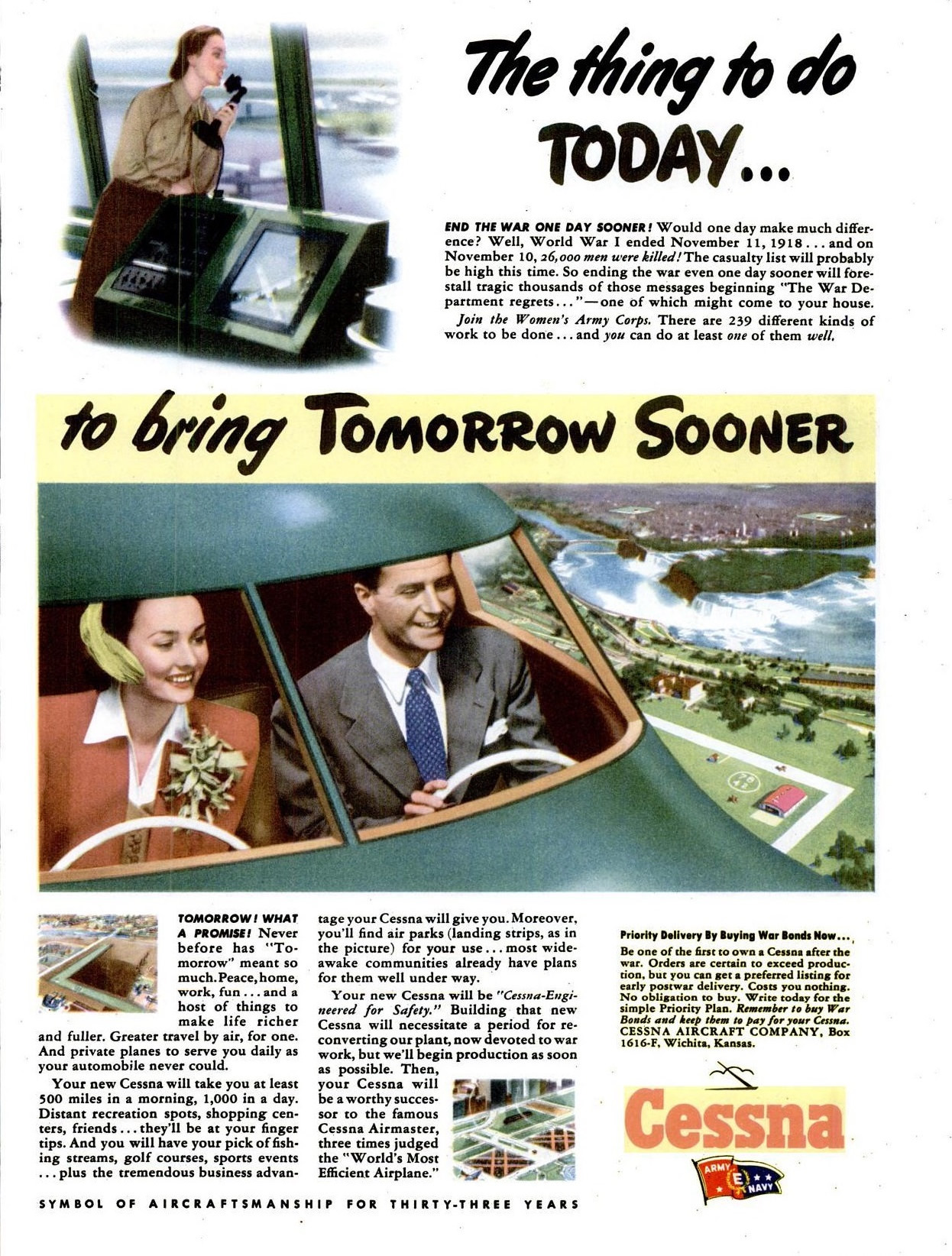
The early 1940s marked a turning point for the company. In 1940, Cessna landed its most significant contract when the U.S. Army ordered 33 specially equipped Cessna T-50s. That same year, the Royal Canadian Air Force placed an order for 180 T-50s, cementing Cessna’s role as a key supplier during World War II.
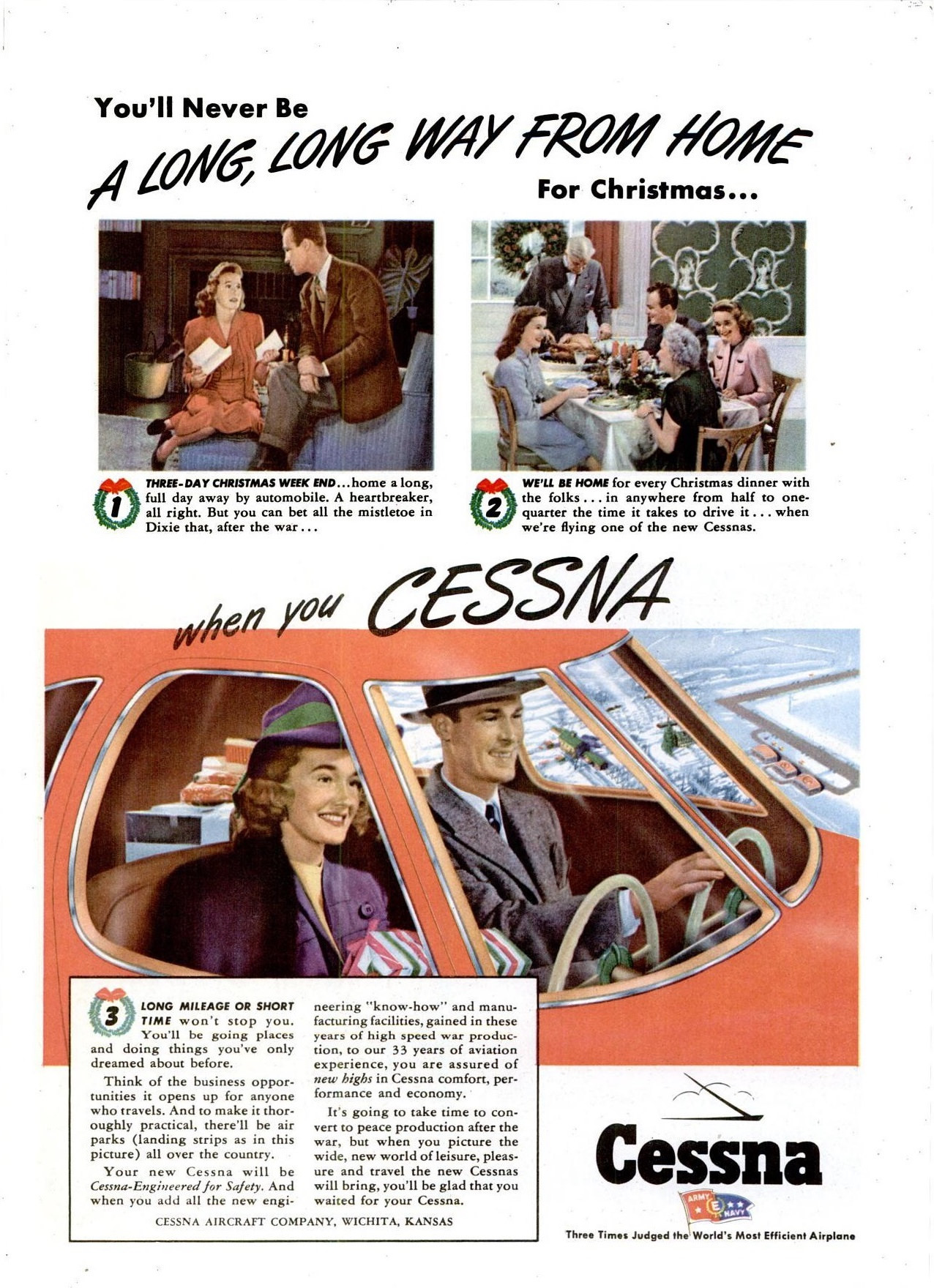
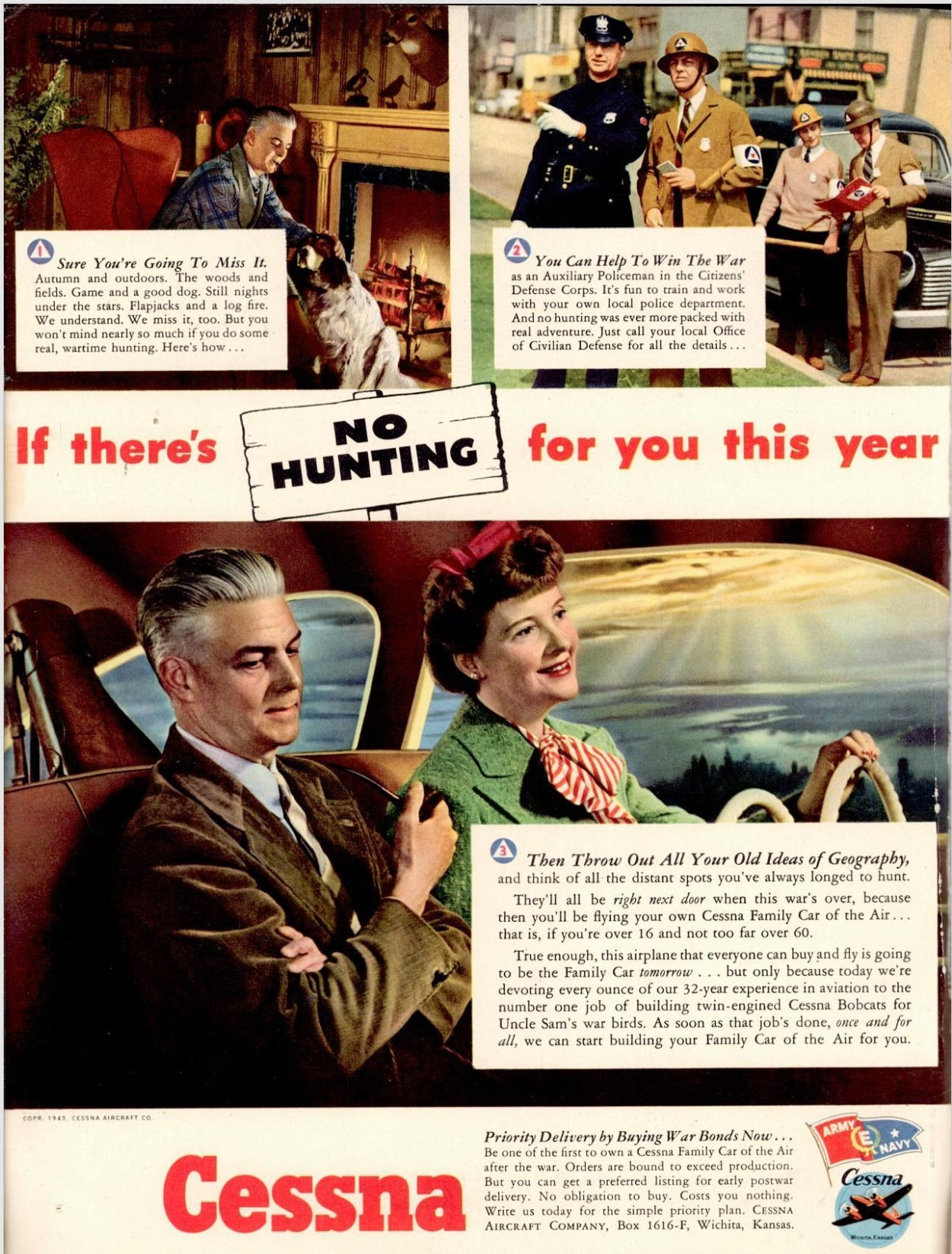
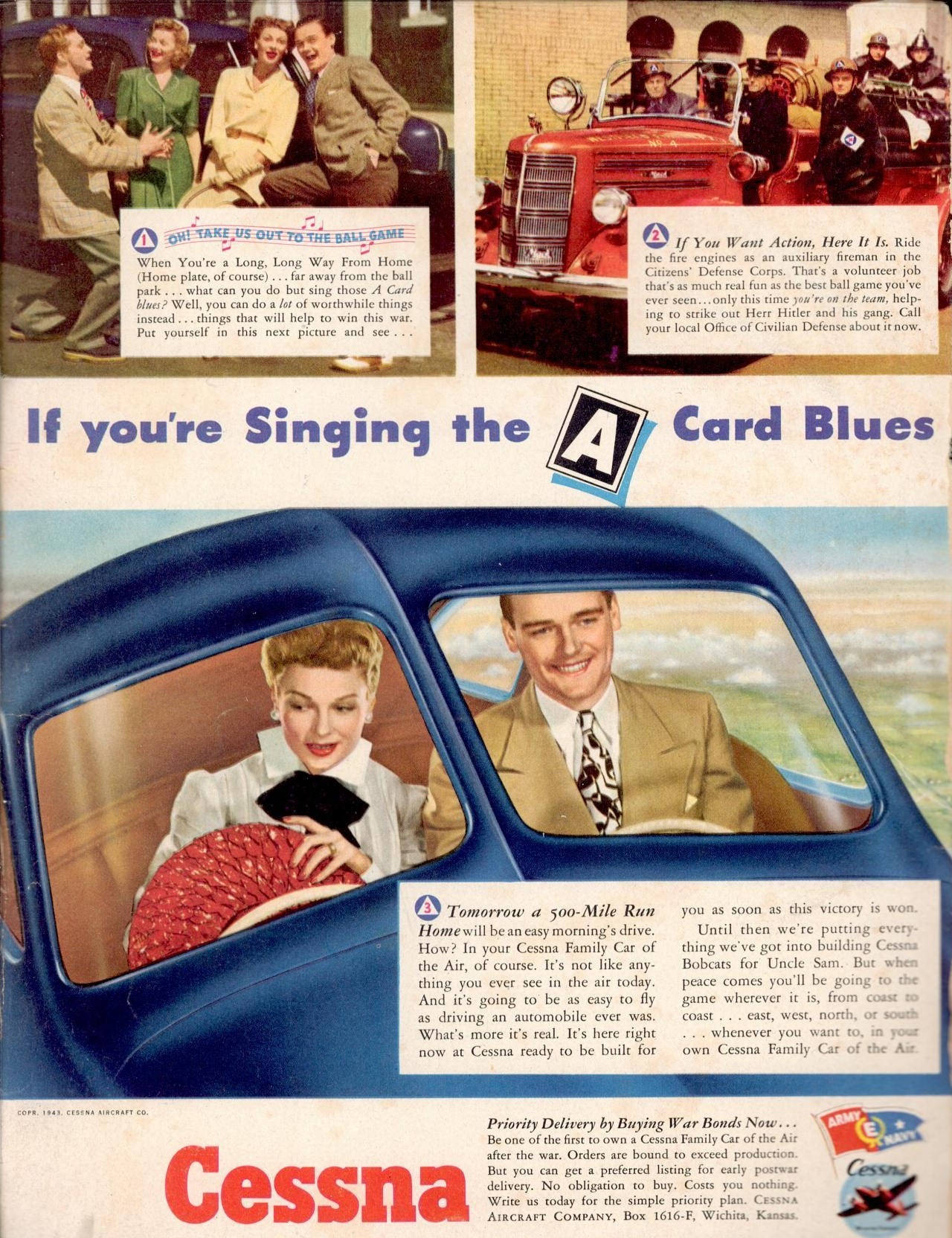
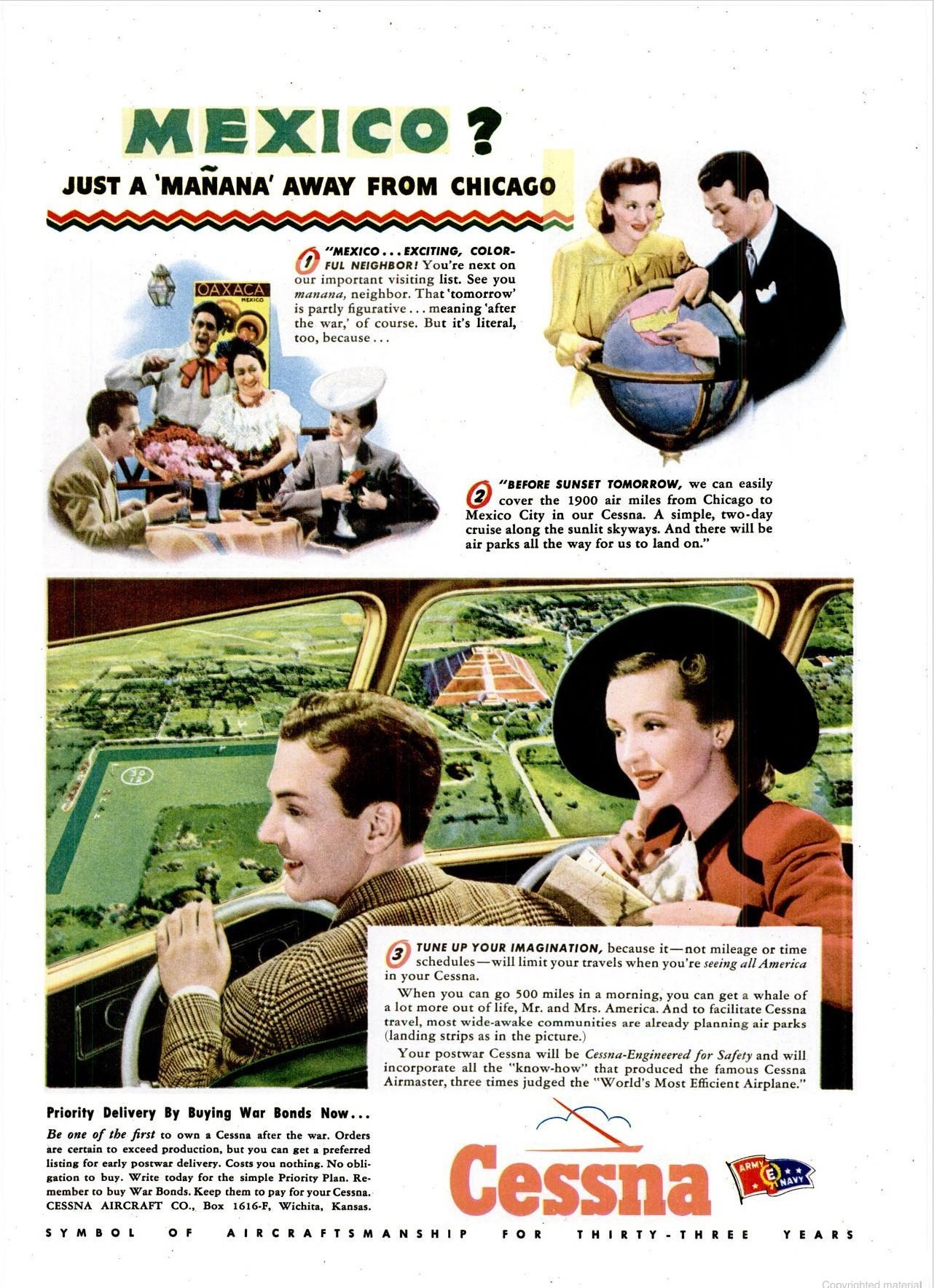
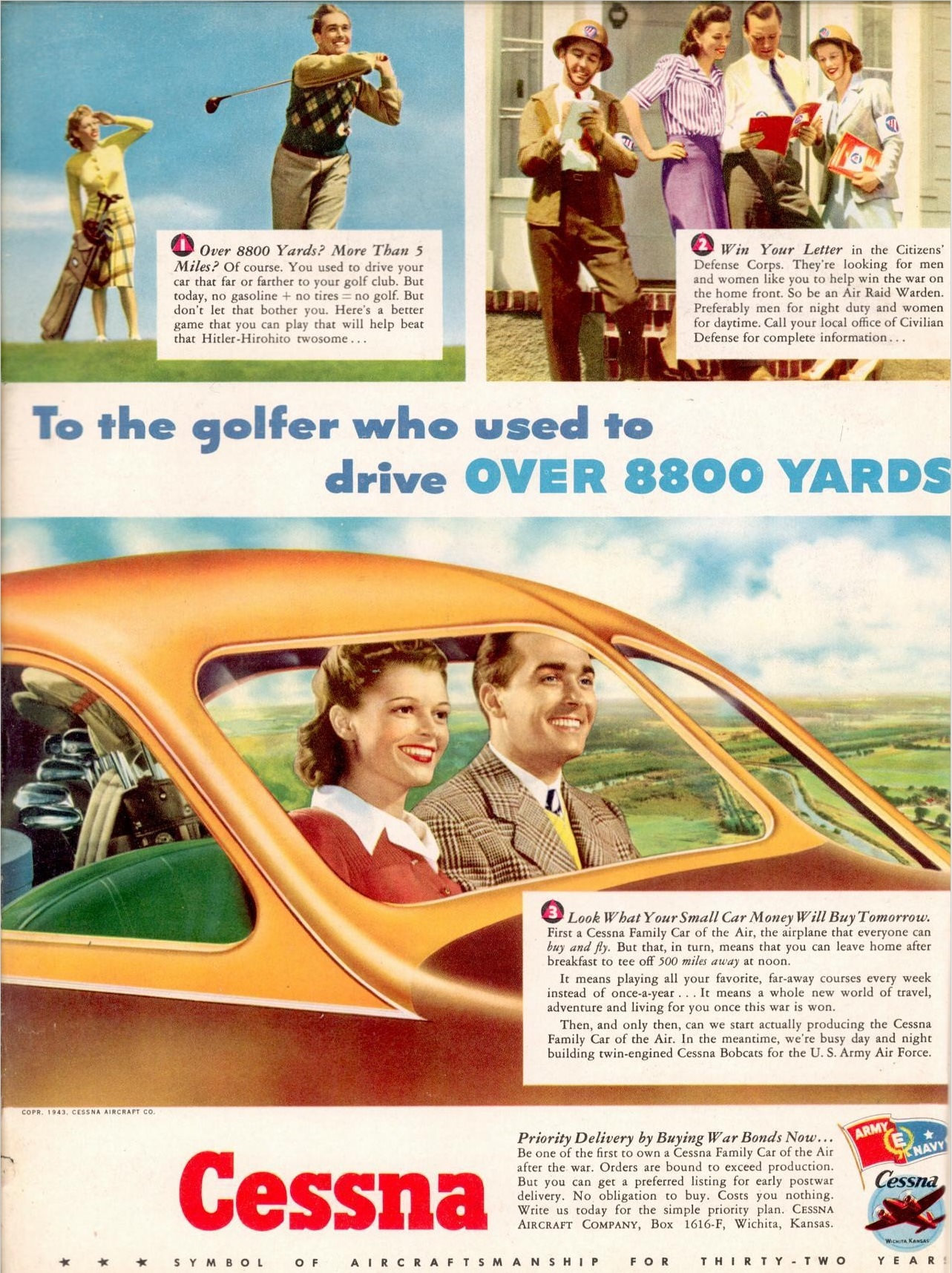
It was during this period of military momentum that Cessna published a series of vintage advertisements between 1942 and 1943. These ads captured the spirit of wartime aviation and showcased the company’s commitment to both military and civilian markets.
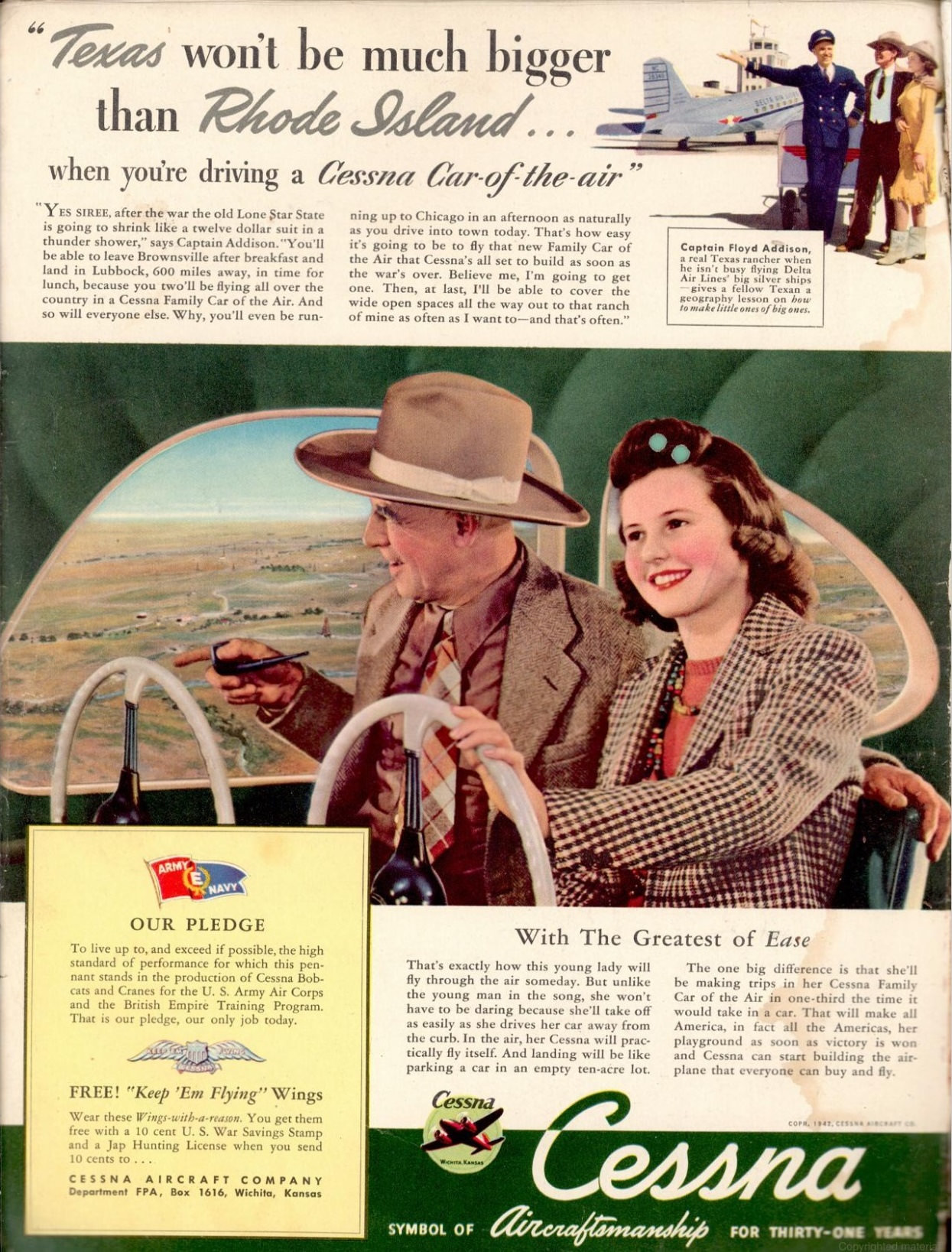
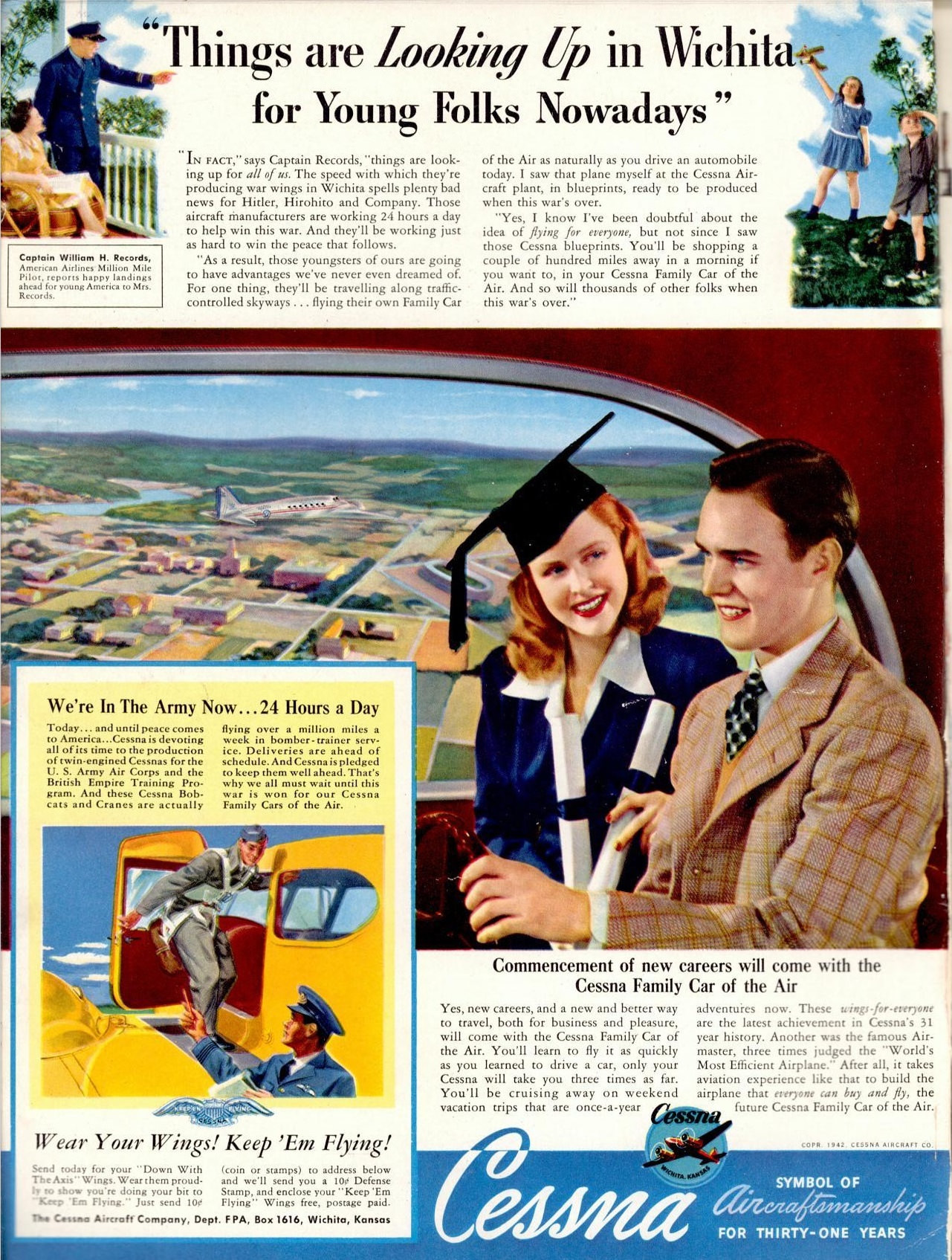
The advertisements from this era reflect how Cessna positioned itself during wartime — proud of its military contracts while keeping one eye on the future of civilian aviation. The artwork and messaging in these ads are a direct window into how aviation companies communicated with the American public during World War II.
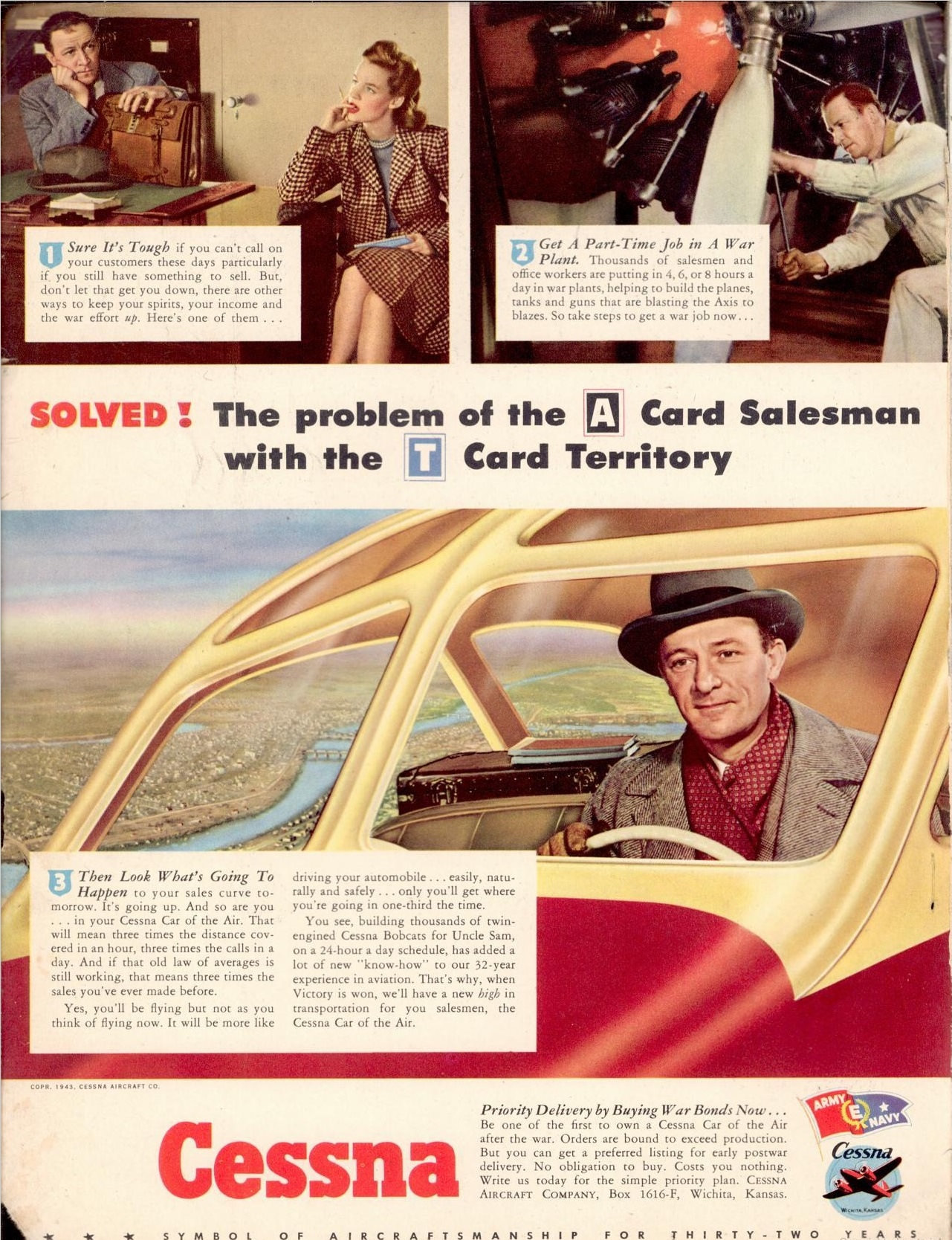
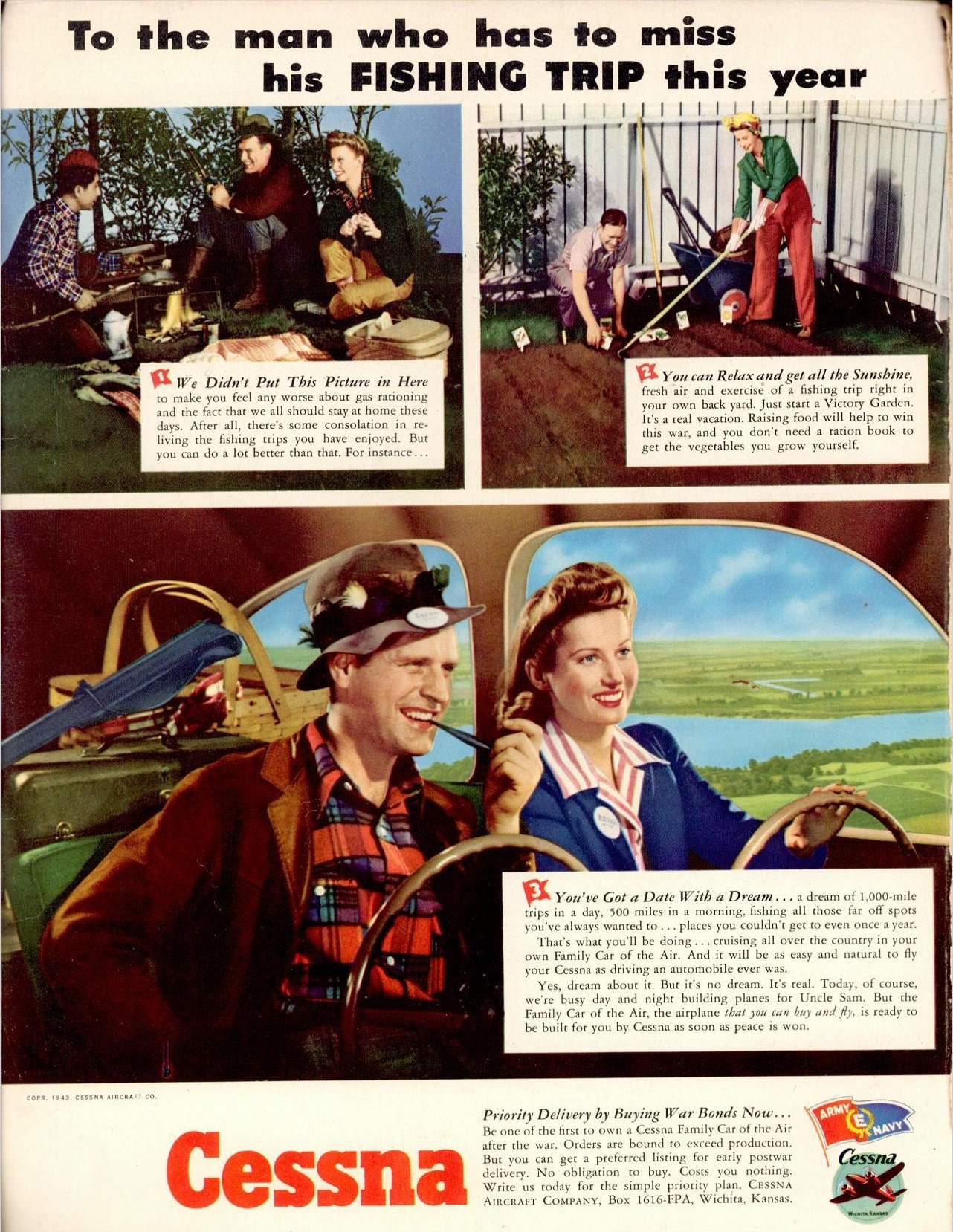
Each ad tells a piece of a larger story — a company born on salt flats in Oklahoma, rebuilt by two nephews during the Depression, and then thrust into the center of wartime aircraft production. By the early 1940s, Cessna was no longer just a regional name. It was a critical part of the Allied war effort.
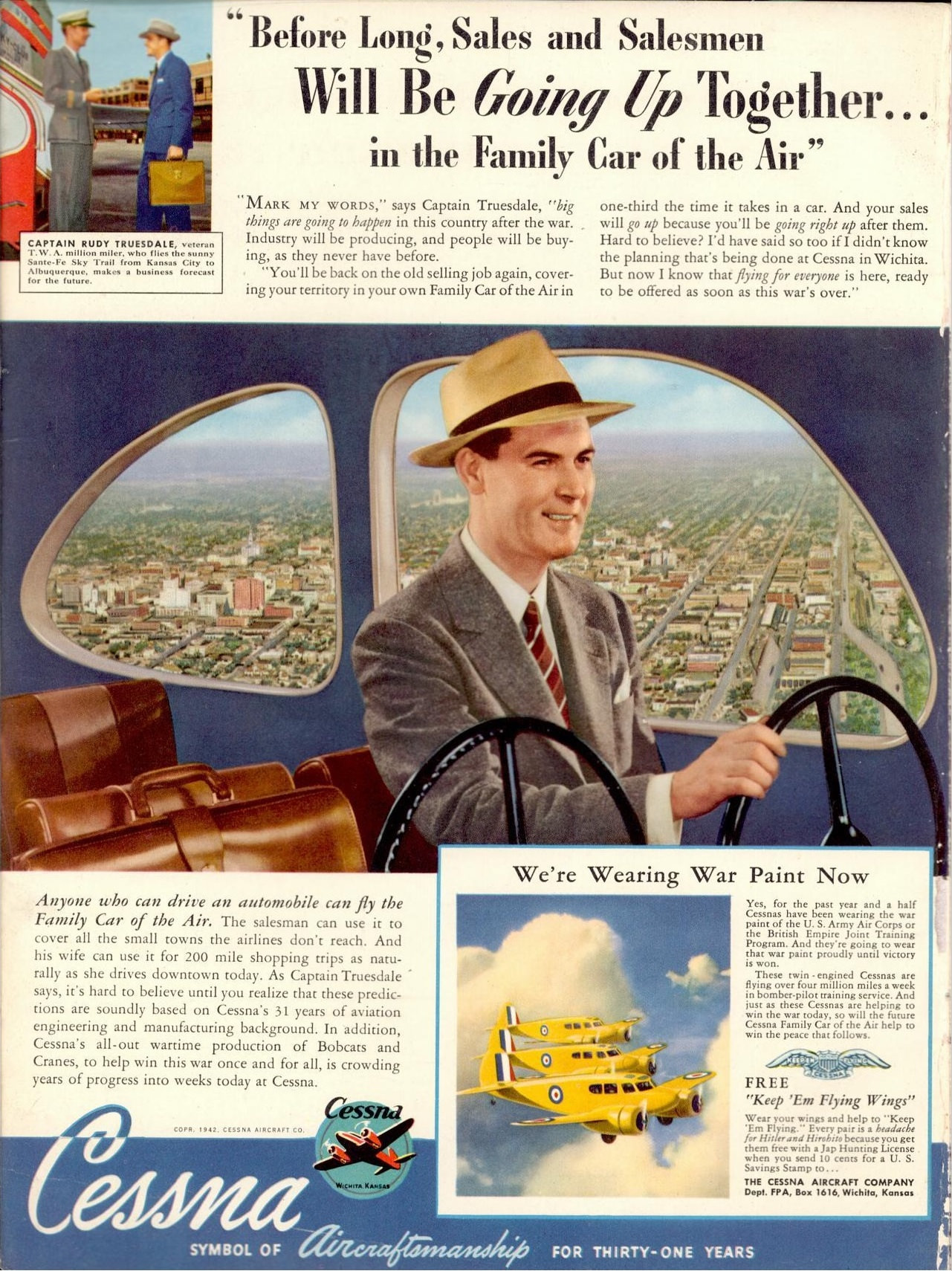
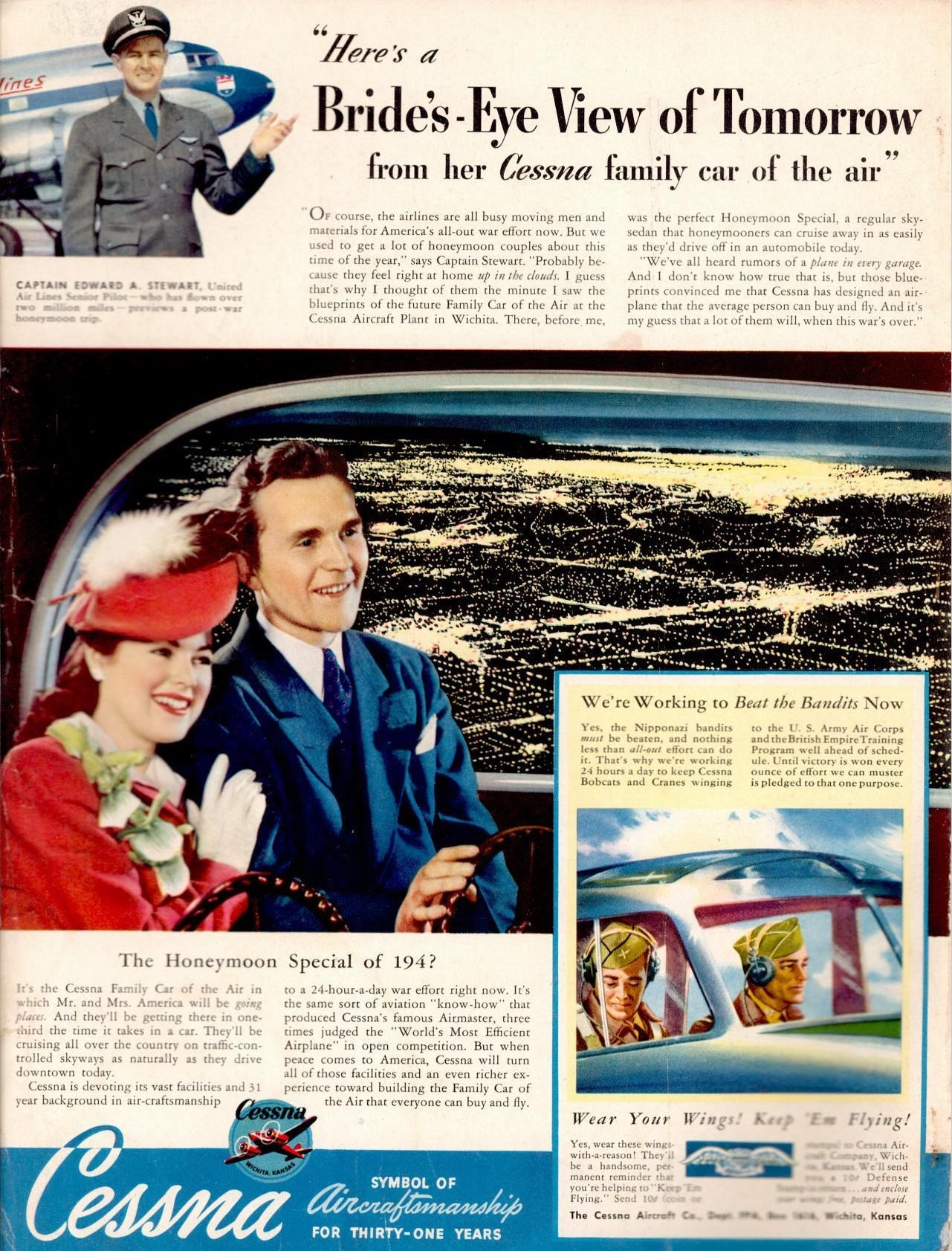
Cessna continued to grow through the latter half of the 20th century. General Dynamics purchased the company in 1985, and Textron acquired it in 1992. In March 2014, when Textron Aviation absorbed Beechcraft and Hawker Aircraft, Cessna ceased to operate as a separate subsidiary and merged under the Textron Aviation banner alongside those two brands.