In 1915, a silent film hit American theaters and caused an immediate uproar. A Fool There Was, produced by William Fox and directed by Frank Powell, starred Theda Bara in a role that audiences had simply never seen before. The film told the story of a dangerous, seductive woman who destroys the men she lures in — draining them of their money, dignity, and self-respect. It was bold, dark, and deliberately provocative.
Bara played the story’s central predator with a cold, magnetic intensity. The film’s intertitle cards pushed the boundaries of what was considered acceptable on screen. The line “Kiss me, my fool!” became one of the most talked-about phrases in early cinema, and it helped make the film notorious across the country. Audiences were shocked — and they kept coming back.
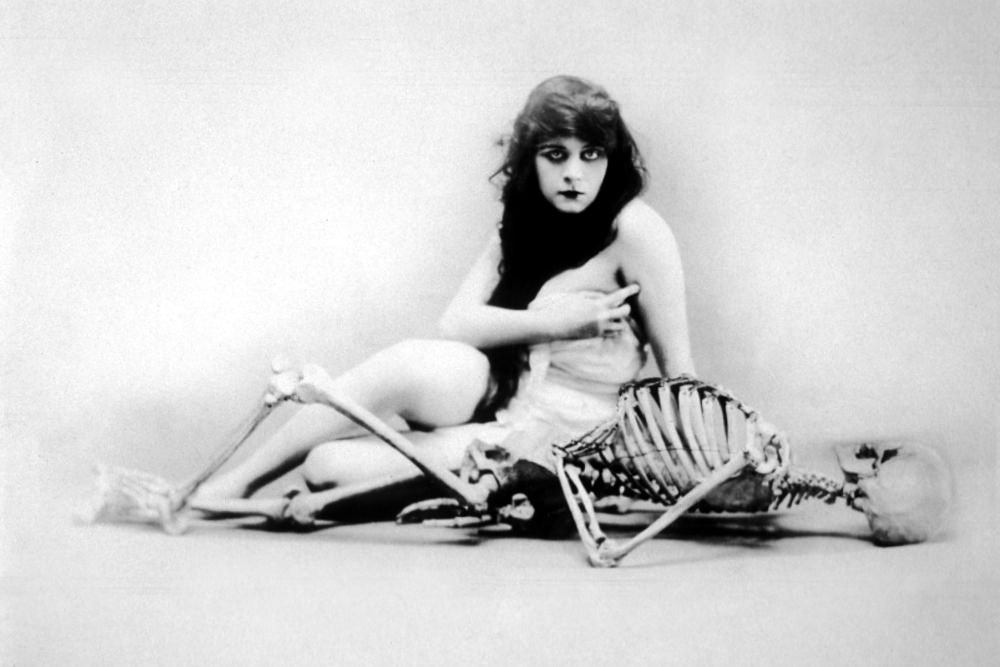
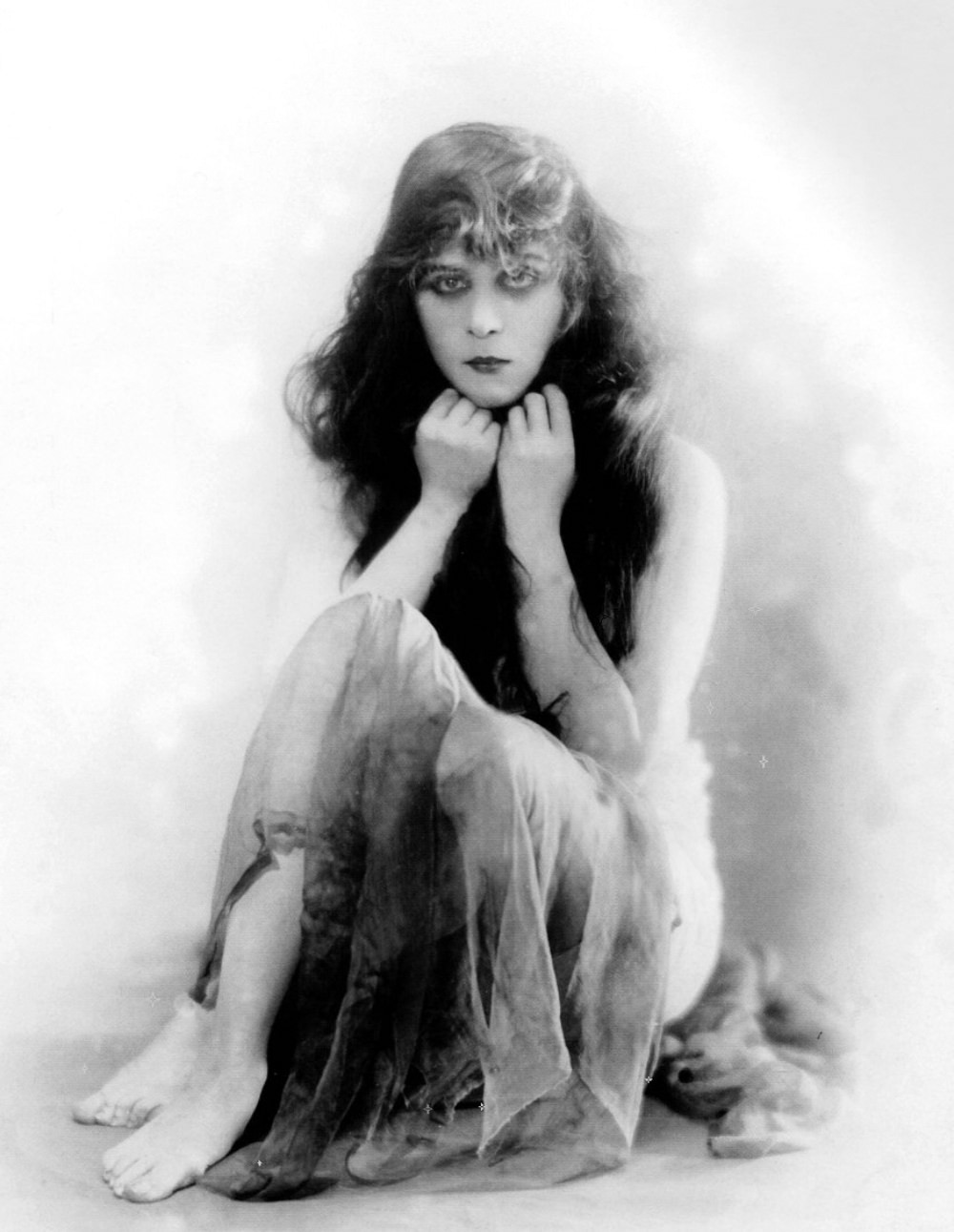
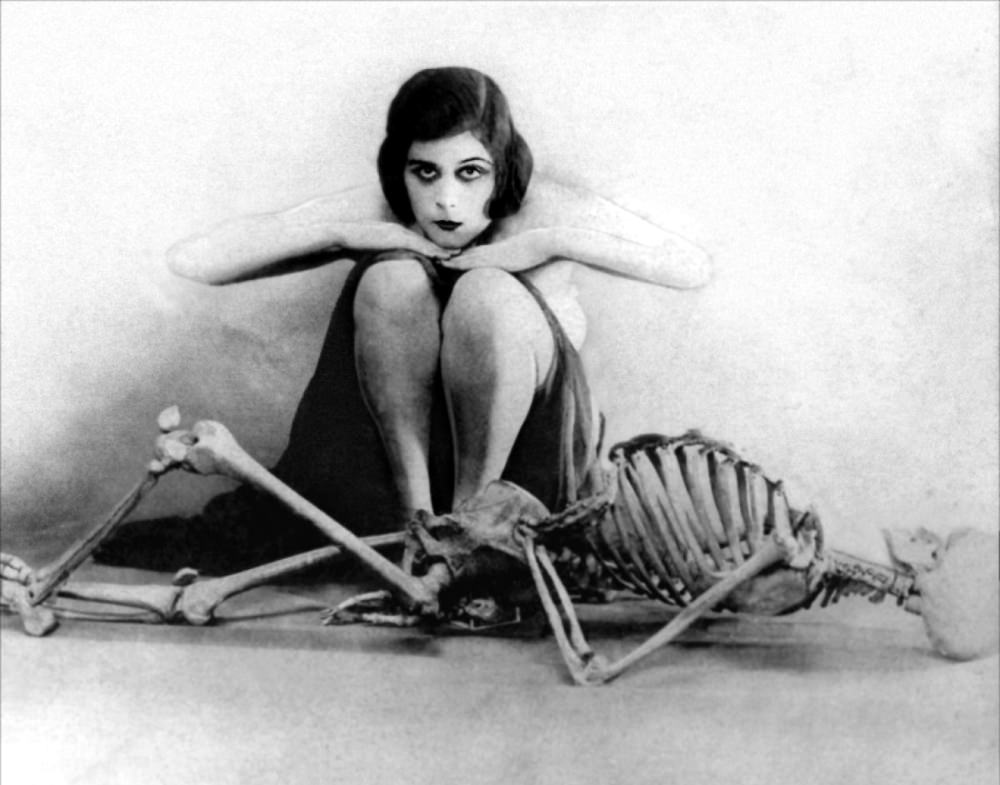
The promotional campaign around the film leaned hard into Bara’s image as something otherworldly and dangerous. Studio photographers posed her alongside skulls and skeletons, dressing her in dark, dramatic costumes. These images were meant to suggest death, seduction, and the supernatural all at once. The photos worked — they made Bara look less like an actress and more like a living myth.
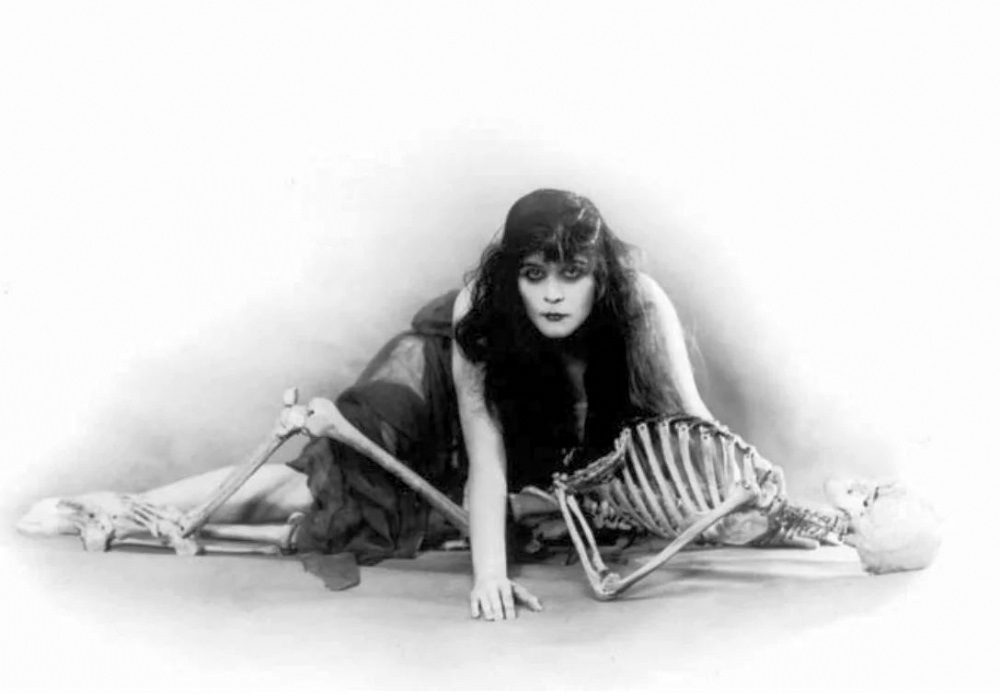
A Fool There Was is widely credited with popularizing the word “vamp,” short for vampire. In this context, a vamp was not a creature of horror fiction but a femme fatale — a woman who uses seduction to strip her victims of their morals and ruin their lives. The term stuck, and it became a permanent part of the language used to describe a certain type of dangerous screen woman.
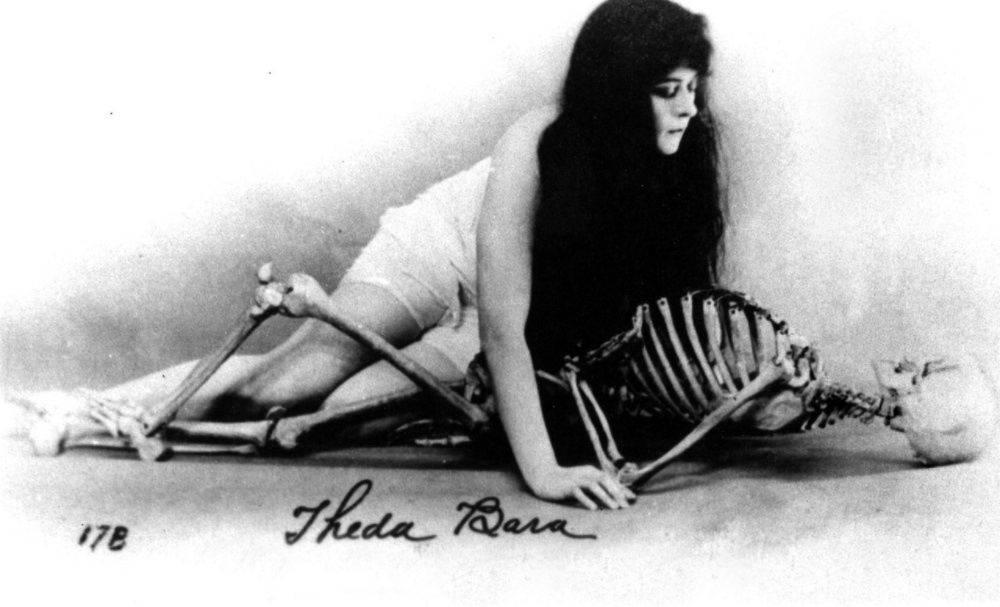
Bara appeared in only a small number of films during her career, but her presence in A Fool There Was was enough to define her entirely. The United States Library of Congress recognized the film’s cultural and historical weight by selecting it for preservation in the National Film Registry in 2015 — exactly one hundred years after its release. The selection acknowledged it as a landmark of American cinema, one that reshaped how Hollywood depicted women on screen.