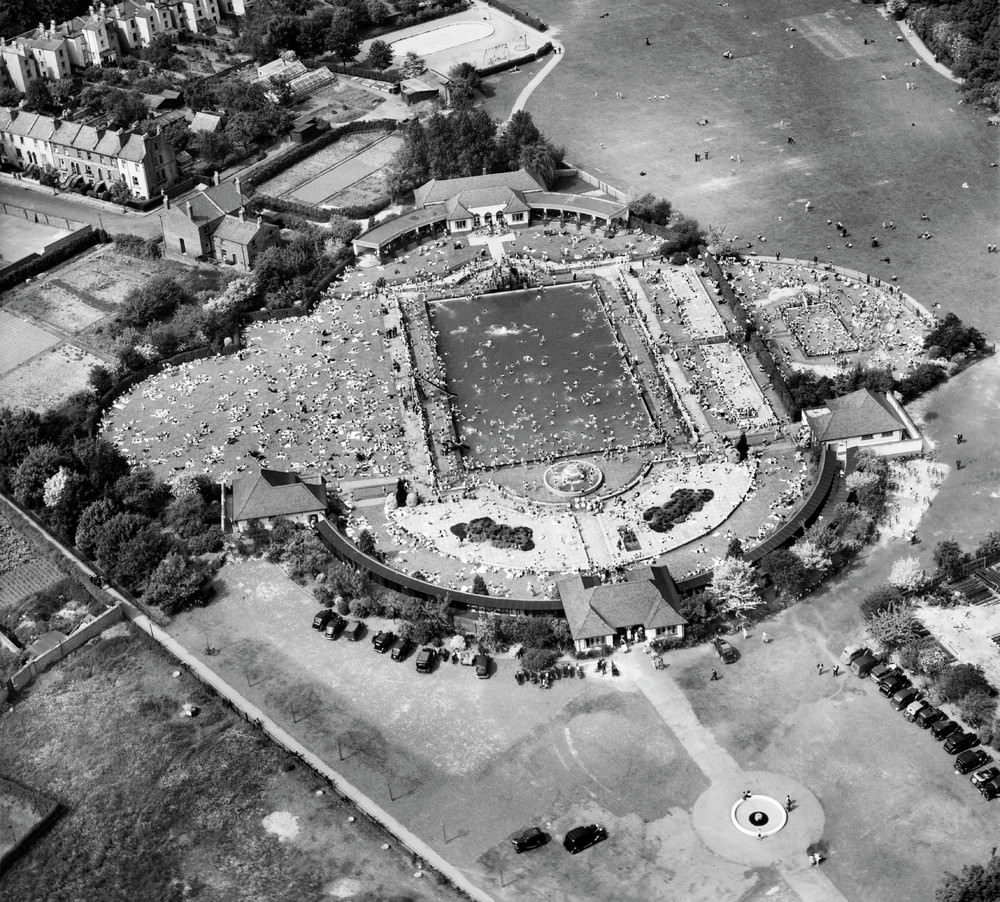
The Aerofilms collection offers a rare window into Britain between the 1920s and 1940s. These photographs, taken from aircraft, reveal a changing landscape from industrial cities to rural coastlines. The Britain from Above project has preserved 95,000 of these images, drawn from a much larger archive of over 1.2 million negatives and 2,000 albums. From the original Wembley Stadium to the bombed streets of the Blitz, each frame captures details invisible from the ground — revealing how Britain’s towns, industries, and landscapes fit together in the first half of the 20th century.
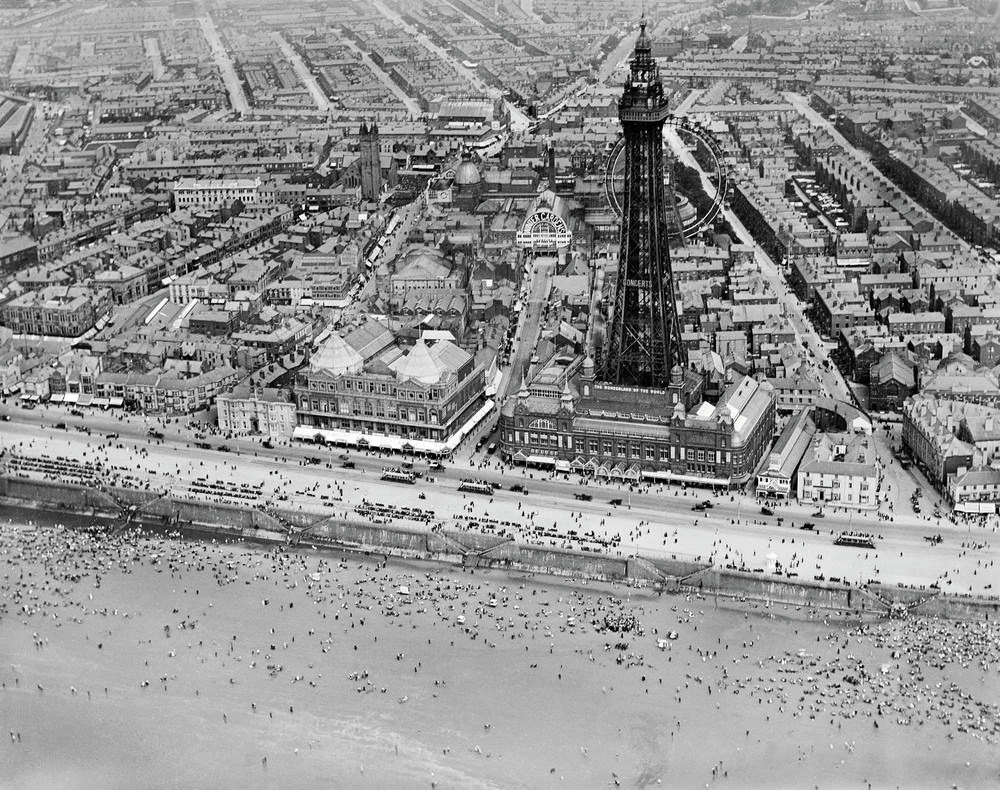
Both the Blackpool Gazette and the Radio Times bought the image — most likely to advertise the town and its increasingly famous attractions to prospective tourists. The Winter Gardens first opened in July 1878 as a six-acre pleasure park made up of concert halls, skating rinks, and ballrooms. The year this photograph was taken also marked the first ever staging of the Blackpool Dance Festival in the wonderfully grand Empress Ballroom. Partly hidden in the background here is the ‘Big Wheel’, a 220-foot-high ride built by the Winter Gardens as direct competition for the Tower. It remained — literally and metaphorically — in the shadow of its more celebrated counterpart, and was eventually pulled down in June 1929.
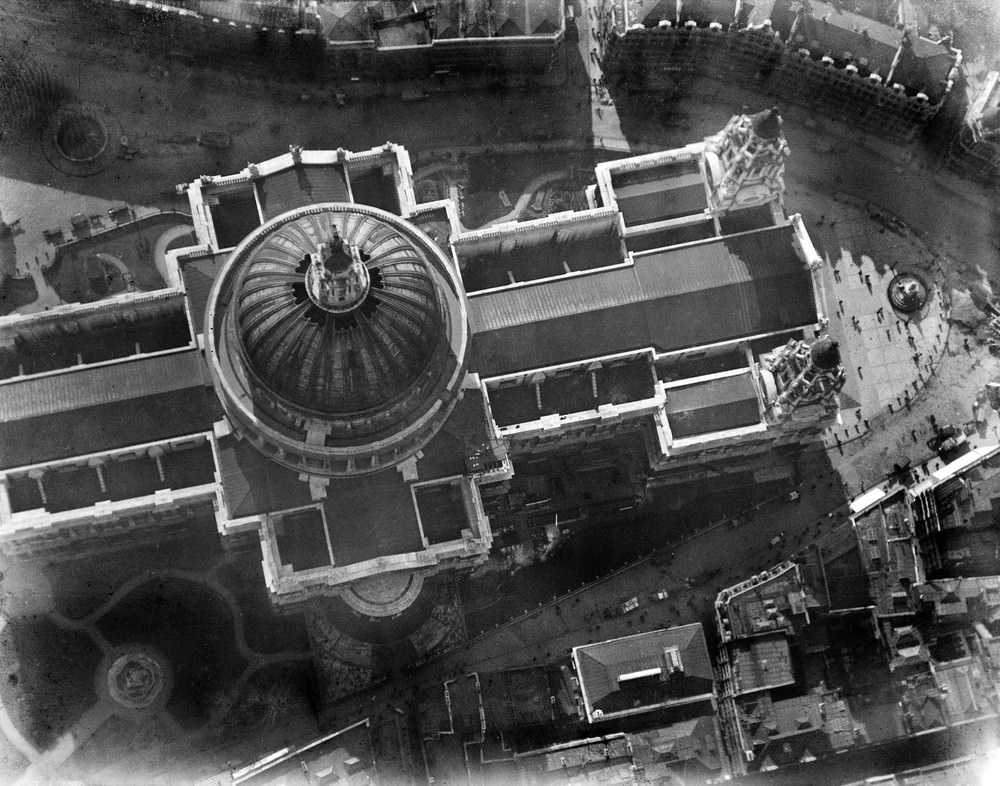
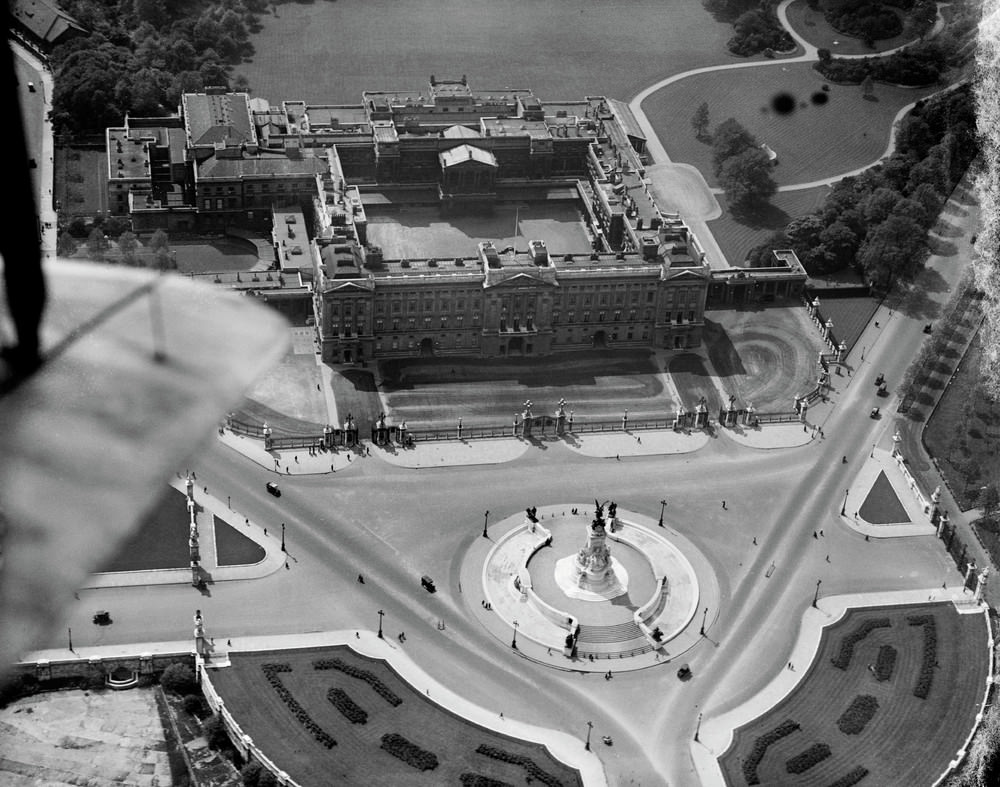
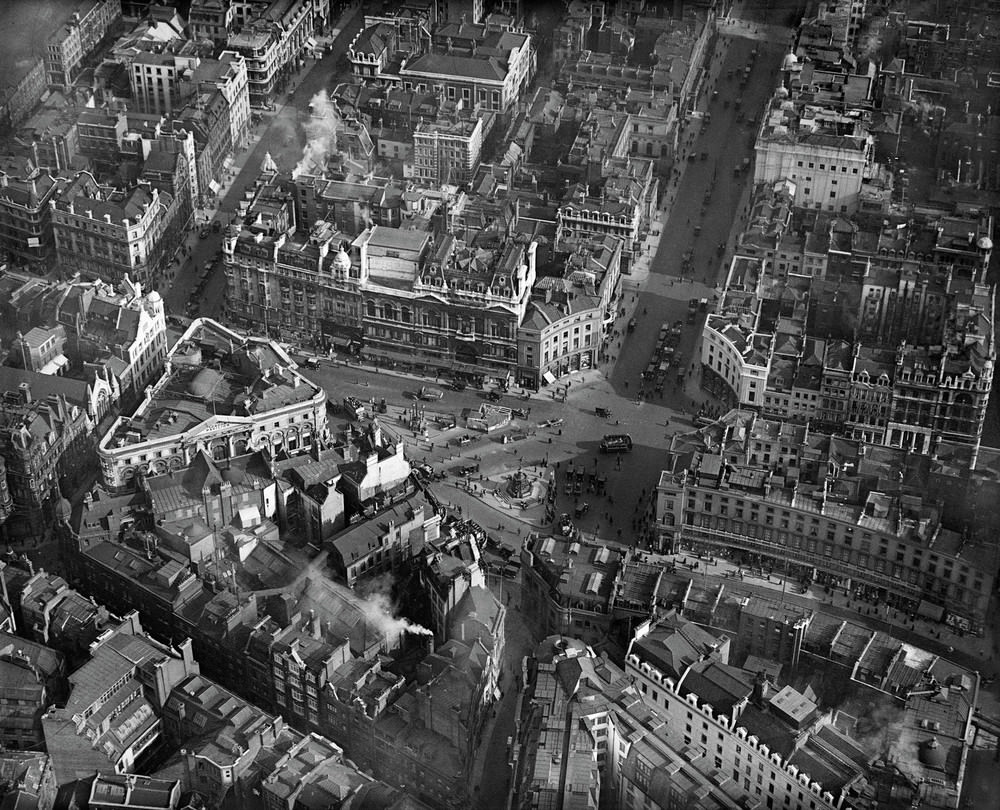
Even at this early stage in Aerofilms’ existence, the company was targeting well-known sites and landmarks to sell to postcard manufacturers. Early clients for this kind of material included “Ludo Press” — a company that is still in business today — and “LepAerial Travel Bureau”, one of the first ever travel agencies to arrange passenger transport on aircraft. That LepAerial also had an office in Piccadilly Circus was unlikely to be a coincidence.
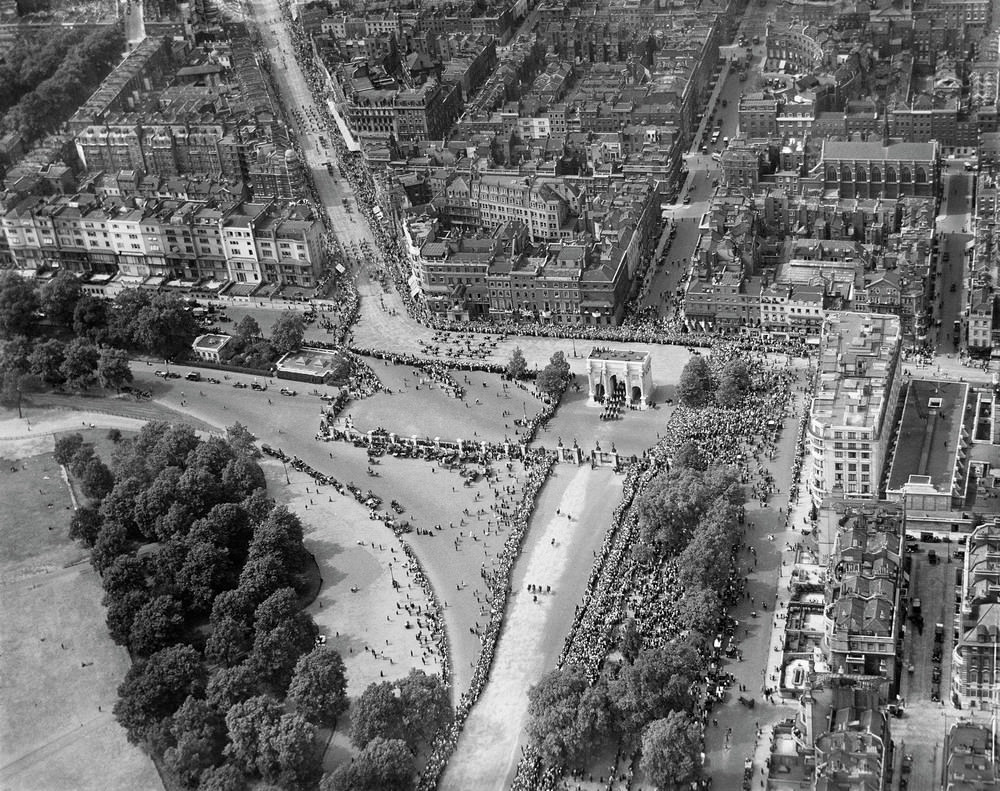
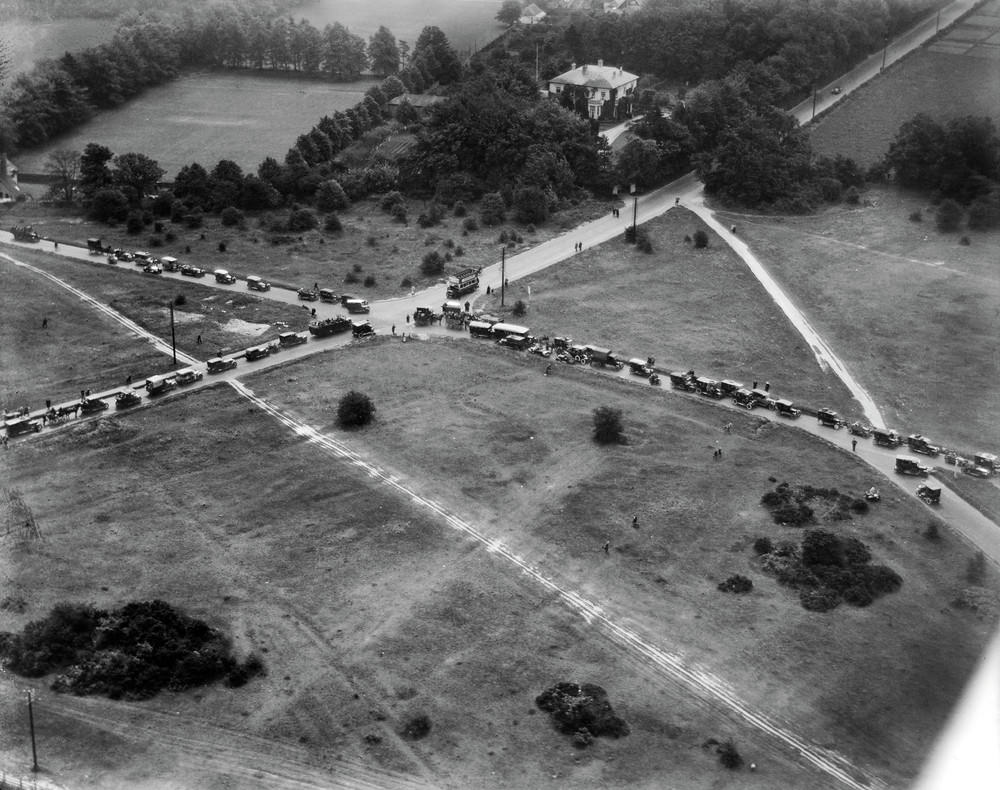
In this photograph of a three-way traffic jam at Fir Tree Road in Banstead in Surrey, taken on the day of the 1923 Epsom Derby, it is easy to see why Alan Cobham saw aviation as the ‘only solution’ to Britain’s ‘road congestion business’. In his autobiography A Time to Fly, Cobham recalled how Francis Wills came up with the idea of flying over Epsom to survey and photograph the worst of the Derby Day jams to help the police plan anti-congestion measures in the future. They even invited a senior officer to go up in an Aerofilms aircraft to direct operations on the ground by radio. As Cobham recalled, this was a qualified success. Unused to aviation, the officer ‘was so horribly sick that he was able to do practically nothing. So the pilot and photographer took over the job, passing messages down to the police on the ground about the traffic situation as it developed, and taking pictures of it at the same time: and the joke is that when they landed the suffering officer was summoned to receive the King’s congratulations. Nobody revealed his secret.’
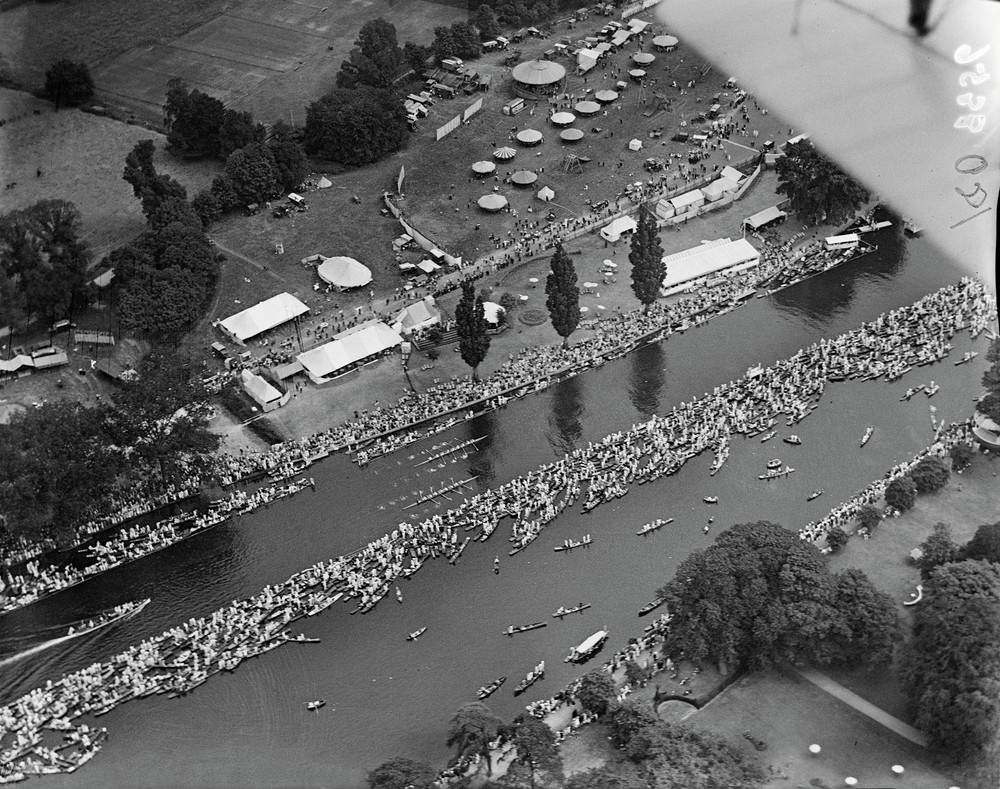
Two crews of eights race between the riverbank and a chaotic jumble of spectator boats to approach the finish line of the Royal Regatta at Henley-on-Thames. First held in 1839, the Regatta has been staged annually ever since — apart from during the two World Wars. This spectacular image from 7 July 1923 — the last day of the Regatta — captures the massed crowds of one of the largest attendances that the event had ever seen. A report in The Times two days later remarked that ‘in the afternoon it was not possible to hire a boat of any description. Trains from Paddington had to be run in duplicate, and the motor traffic was much heavier than ever before.’
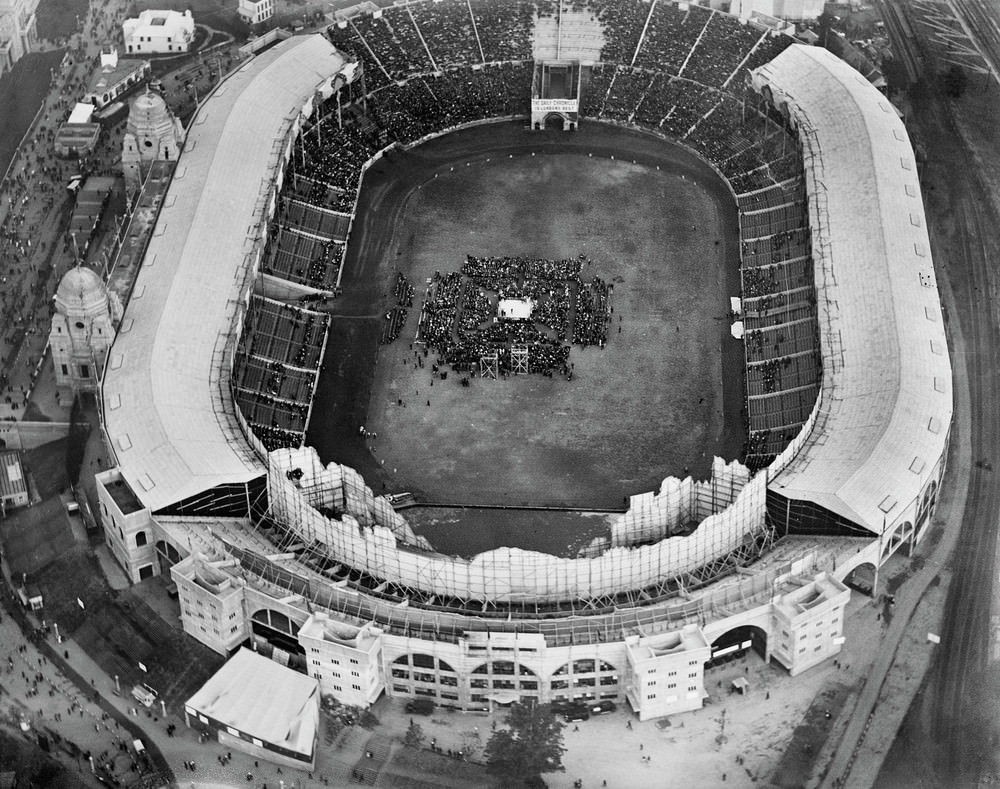
Pictured on 9 August 1924, Wembley Stadium is the somewhat unexpected venue for a boxing match between the American heavyweight Tom Gibbons and his British opponent Jack Bloomfield. The stadium was constructed earlier that year as part of the British Empire Exhibition and was described in glowing terms by the official guidebook: ‘There is not in all England a modern building that can compete with the Empire Stadium in the effect it creates upon the mind of the spectator. In a world that has developed so great a devotion to sport there is no arena that can compare with Wembley’s.’ While the bout — which was won easily by Gibbons — drew a crowd of 50,000, this experiment with boxing in the stadium’s wide open spaces was not considered a success. The press reported that the combination of ringside standing room and distant seating failed to create a compelling spectacle or atmosphere, and the fight’s promoter, Major Arnold Wilson, had to file for bankruptcy immediately afterwards.
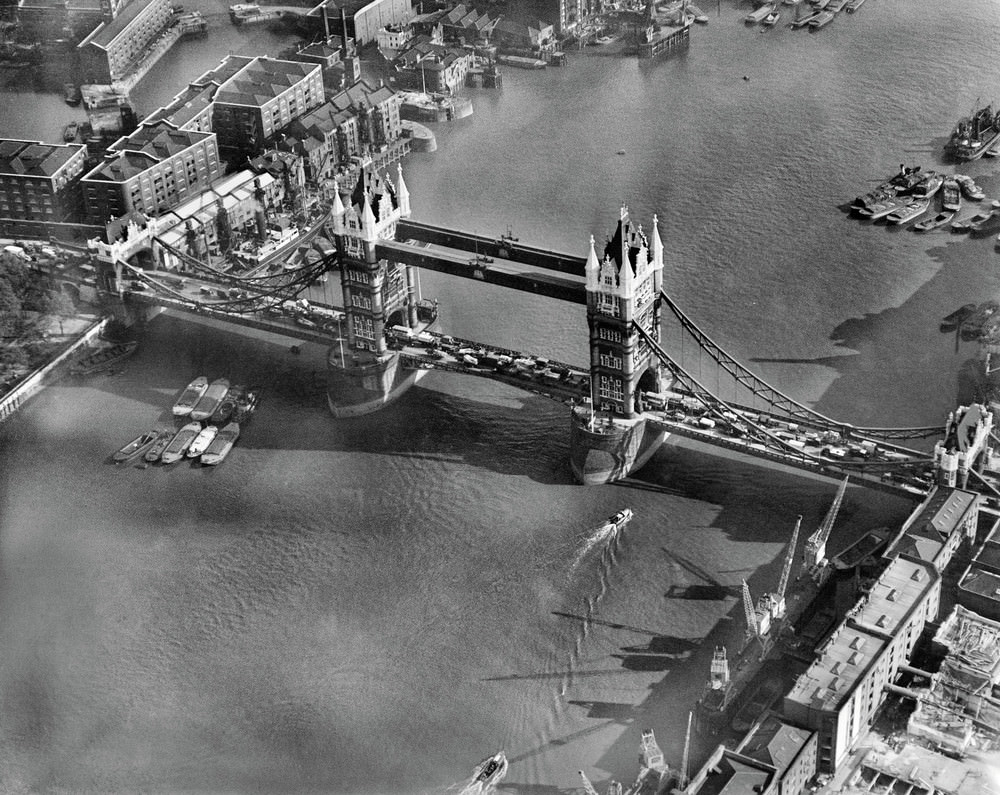
Here, Tower Bridge is the site of a chaotic logjam of traffic — caused by what seems to be an accident right at the centre of its span, 1929. Newspapers at the time reported the closure of the Rotherhithe Tunnel for road works, with Tower Bridge and the Blackwall Tunnel advised as alternative routes. Despite the novelty of horses and carts mixing in the traffic lanes with motorcars, this eight-decade-old image of London congestion may appear wearily familiar to any modern commuter.
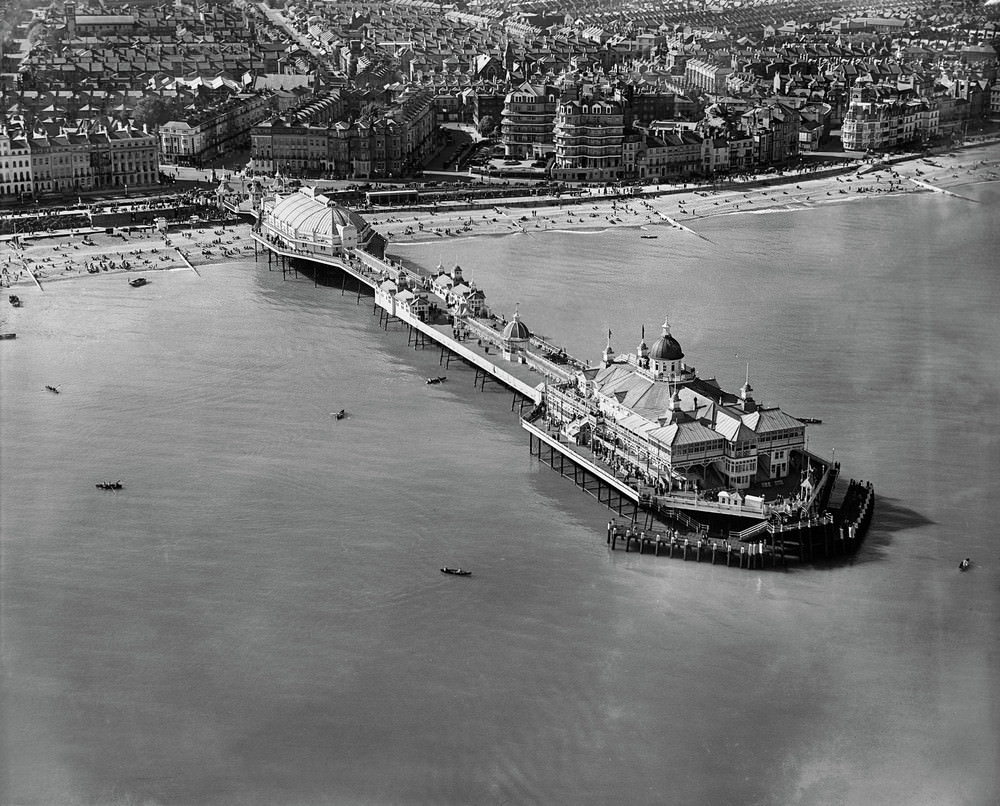
In the latter half of the nineteenth century, the fashion was for local authorities to build great piers stretching from the promenade out into the sea. The Eastbourne Pier, pictured here in May 1931, was erected between 1866 and 1870 to an ingenious design by Eugenius Birch, which saw the structure sitting on special cups allowing the supporting struts to “move” in bad weather. Arranged on the pier’s 1,000-foot length were kiosks, a theatre, a ballroom, and a camera obscura.
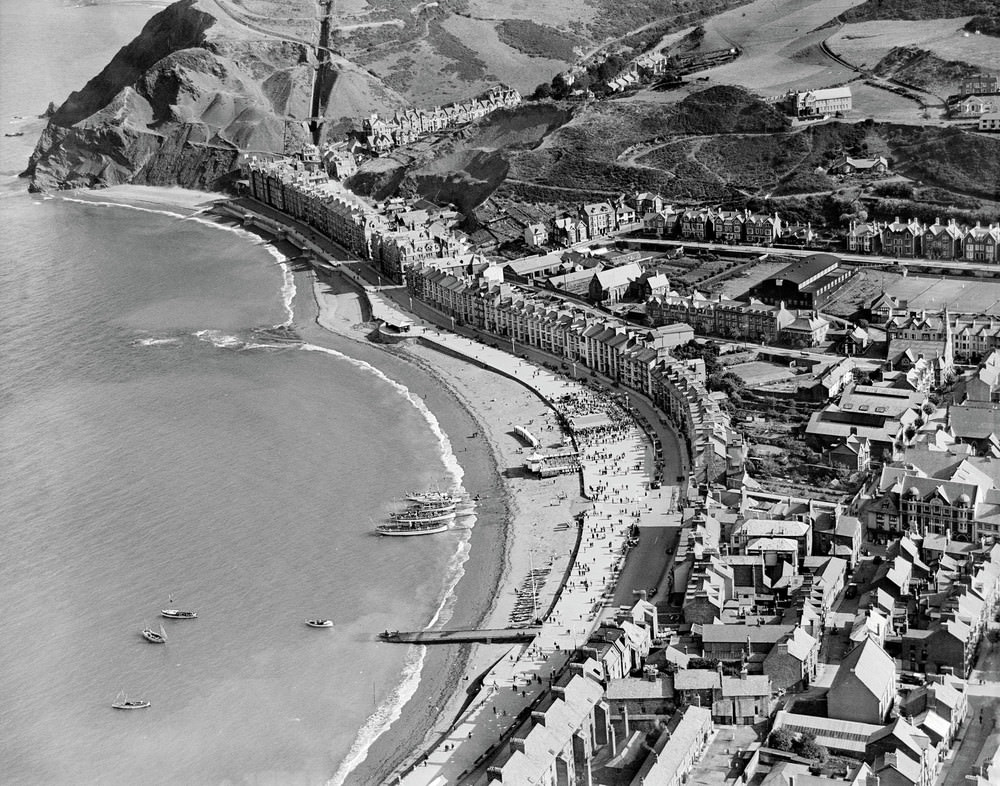
This mid-Wales market town enjoyed a sustained tourist boom following the arrival of the railways in the latter half of the nineteenth century — which also coincided with the evolution of the religious ceremony of ‘wakes week’ into a regular summer holiday for industrial workers from the West Midlands. As the nearest seaside resort to the Midlands, Aberystwyth quickly became a popular destination, and was even billed as the ‘Biarritz of Wales’. The Great Western Railway Company promoted the town intensively during the 1930s through a series of eye-catching graphic posters. When Aerofilms toured west Wales in 1932, Aberystwyth was an obvious target for aerial photography to sell on for potential publicity and marketing purposes.
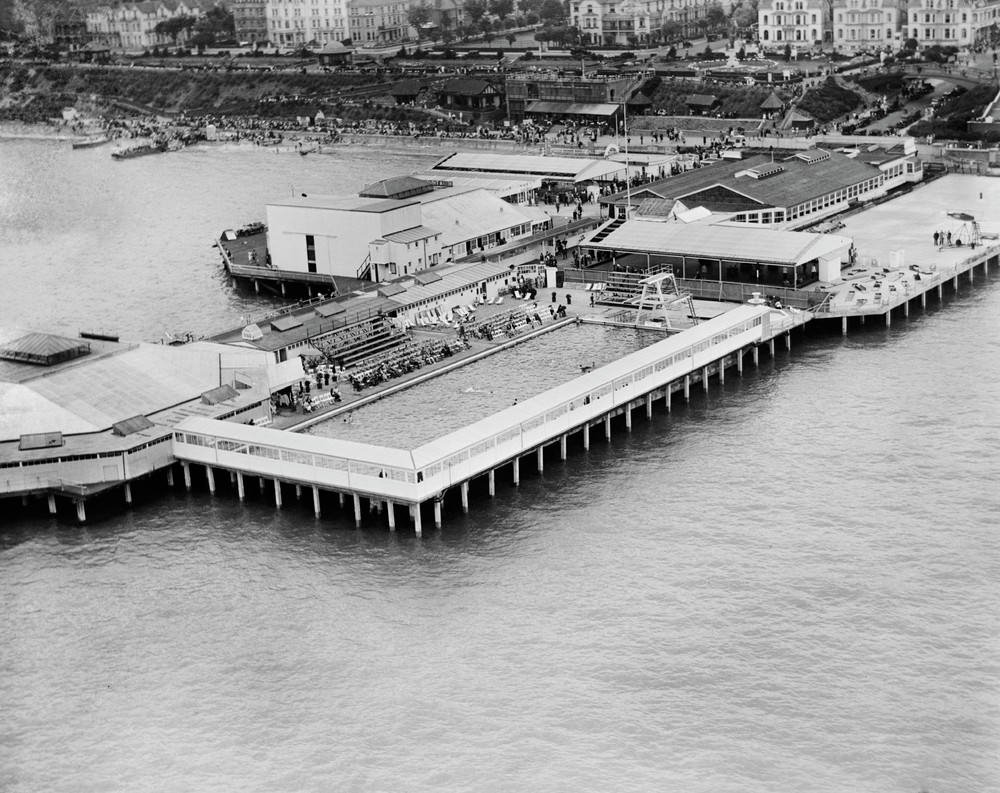
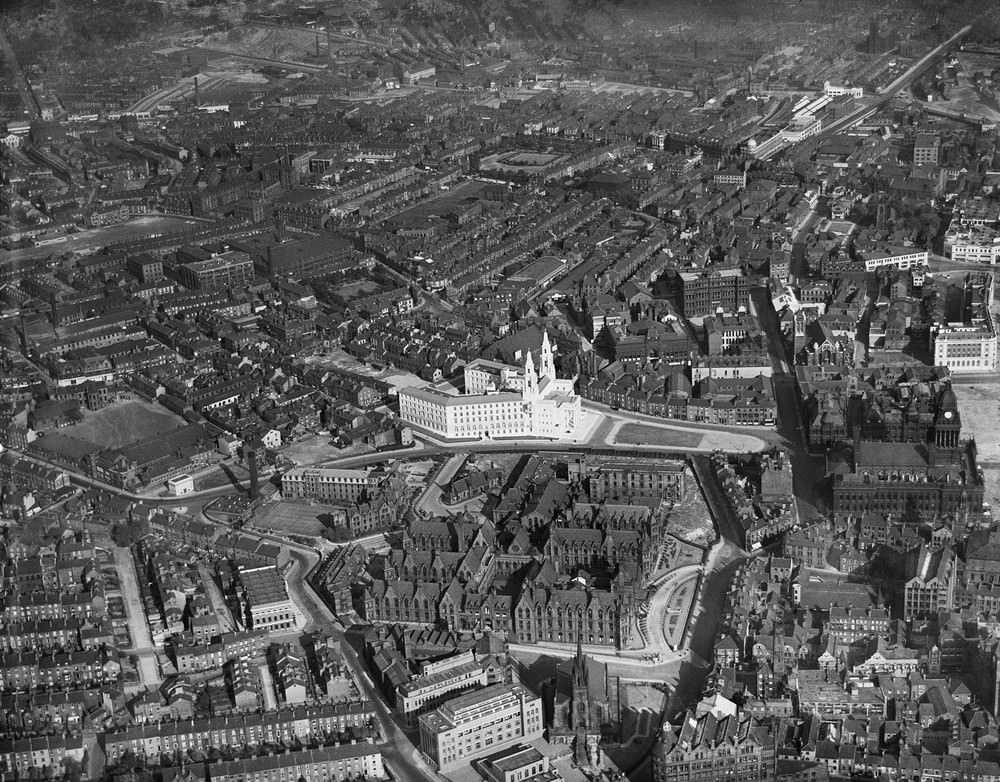
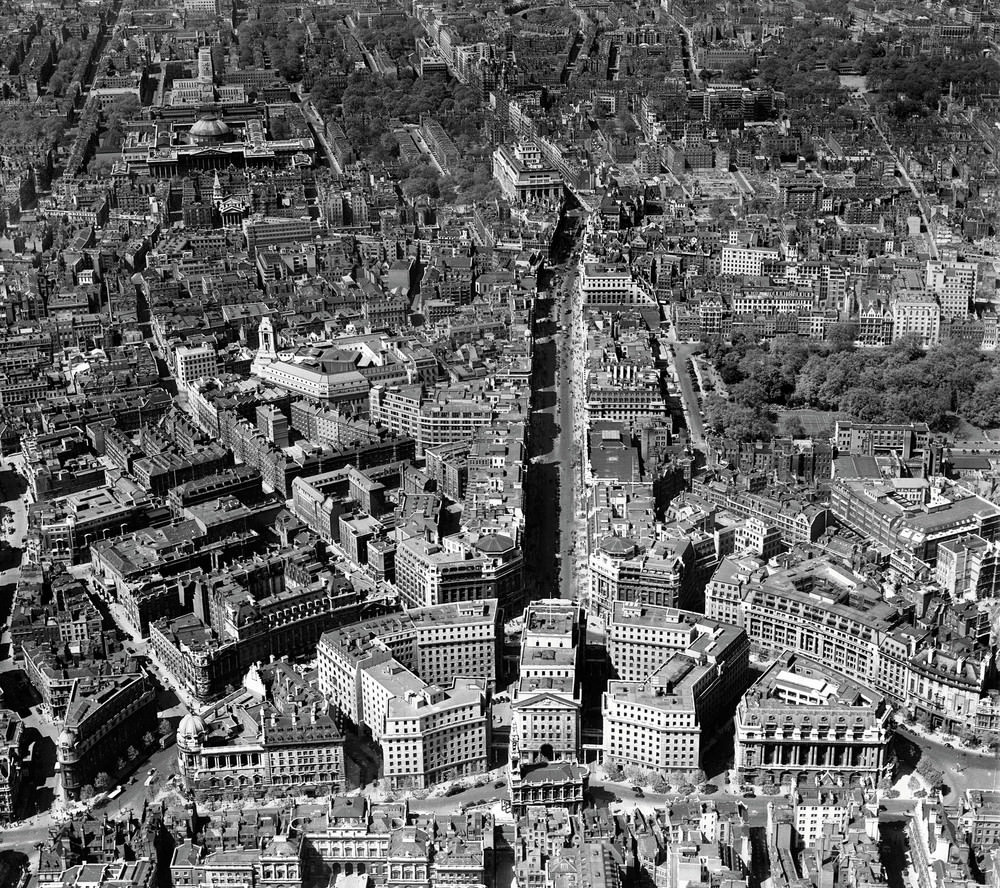
With the grand façade of the British Museum just visible in the top left, the central London transport artery of Kingsway is picked out here in strong shadow running down to the monolithic Bush House office complex. When first opened in July 1925 — at a construction cost of £2 million — Bush House was declared the most expensive building in the world. Originally built for an Anglo-American trading organisation headed by a man called Irving T. Bush, its huge size soon saw other firms leasing office space — including Aerofilms. In 1932, Francis Wills oversaw the rental of 1,000 square feet of the basement of Bush House to accommodate the company’s drawing offices, darkrooms, and, most important of all, the vast photo library.
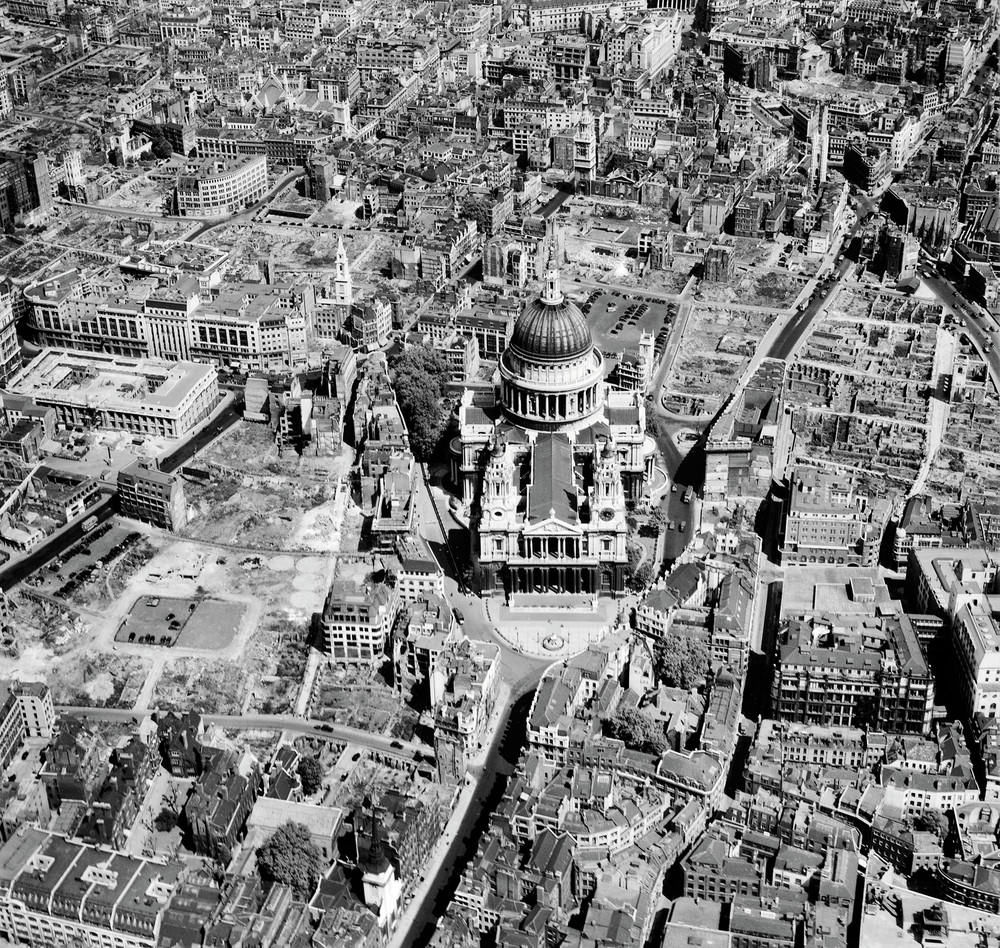
Patrols monitored the building day and night, with firefighters on constant standby. Despite mass incendiary bombing raids on central London — including an attack on the night of 29 September 1940, which saw the lead in the roof of the Cathedral’s dome begin to melt after a direct hit — St Paul’s remained standing. The media used imagery of the building as potent propaganda, with the famous BBC war correspondent Ernie Pyle going as far as describing it as ‘a picture of some miraculous figure that appears before peace-hungry soldiers on a battlefield’. Pyle used the building’s survival to allude rather neatly to a collective spirit of fortitude: ‘St Paul’s was surrounded by fire, but it came through.’ This symbolism remained just as important after the War. In this photograph from 2 June 1947, Aerofilms captured a perfect image of the cathedral as a source of inspiration to begin the rebuilding process — both in London, and in Britain as a whole.
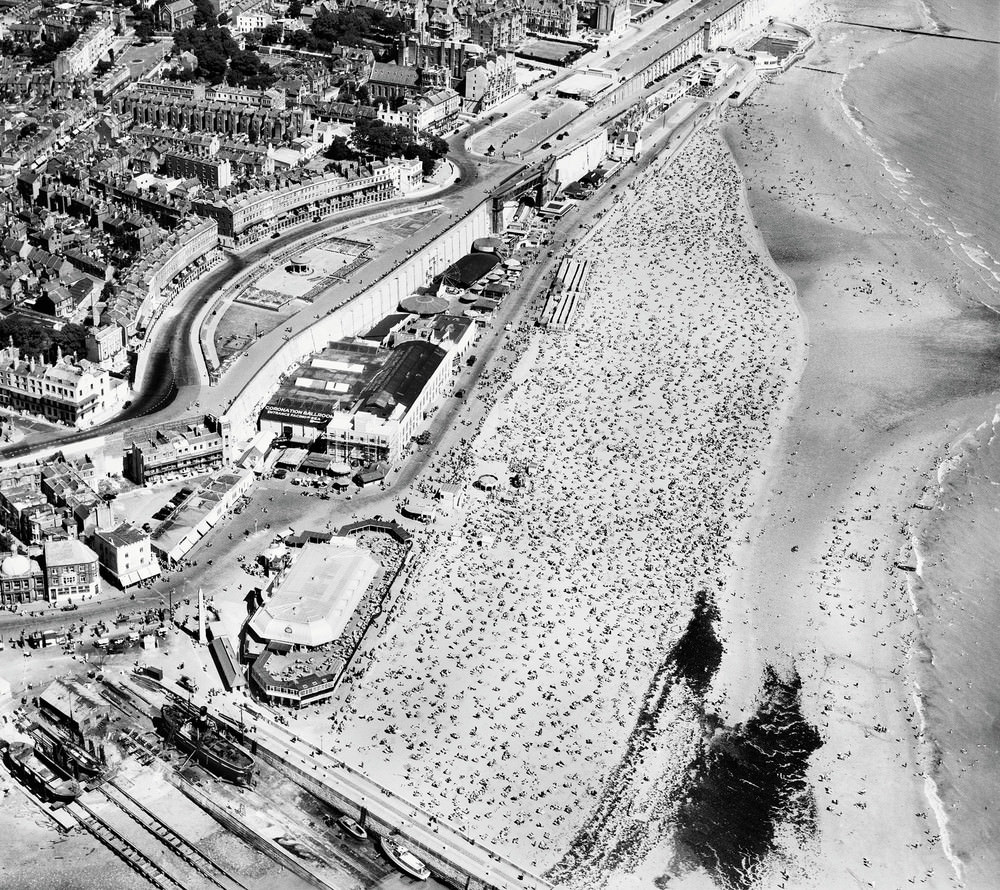
Just like the thousands of holidaymakers shown here spread out across nearly every grain of the Ramsgate Sands, Aerofilms were keen followers of the weather. Clear skies and bright sunlight provided optimal conditions for aerial photography and, particularly in the summer months, almost guaranteed that a flight to the coast would offer up iconic, postcard-friendly shots of the British seaside experience.