Hey There! Before You Go. 😧
Get the best vintage content straight into your inbox!

Don't worry, we don't spam

The forgotten victims of Bosnia’s War: Haunting Photos of the Children Affected by the Genocide

Between 1992 and 1995, the war in Bosnia and Herzegovina tore through communities with a ferocity that left no part of society untouched — least of all its children. The International Committee of the Red Cross (ICRC) documented more than 200,000 deaths during the conflict. Among them were at least 12,000 children. These were not abstract statistics. They were boys and girls who lived in apartment blocks, attended schools, and played in the same streets that became killing grounds.

Sarajevo, the capital and largest city, became the epicenter of childhood suffering. UNICEF reported that between 65,000 and 80,000 children in the city had been directly shot at by snipers. Many witnessed people being killed in front of them — including their own family members. Studies of children who survived the siege showed that those from large cities, and those who had witnessed death, injury, or torture within their own families, carried the heaviest psychological burden. Older children showed more symptoms than younger ones, but no group was spared.
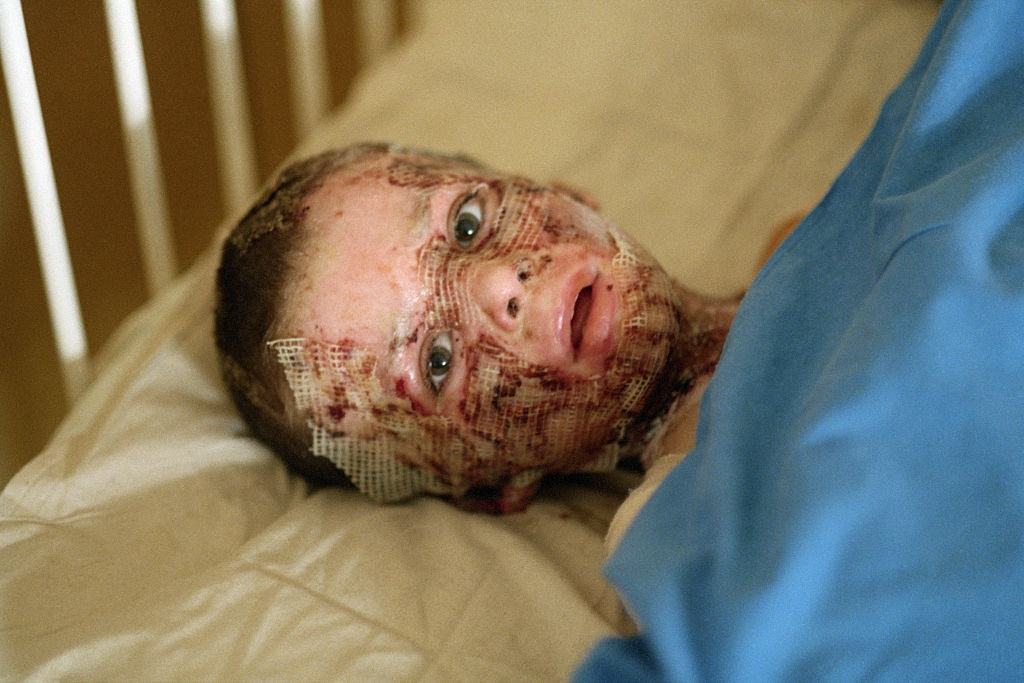
Four-year-old Jasmin Hreljic is being treated at Sarajevo's children's hospital for burns suffered to his face when a kerosene lamp exploded.
Four-year-old Jasmin Hreljic is being treated at Sarajevo’s children’s hospital for burns suffered to his face when a kerosene lamp exploded.

Hospitals across Sarajevo were overwhelmed. Children arrived with shrapnel wounds, bullet injuries, burns, and limbs destroyed by mortar blasts. Many had been hurt simply by being in their homes when shells struck nearby buildings. Kerosene lamps — used because the city’s electricity supply was routinely cut — became a hazard of their own, adding to the list of ways the war found children even in their most private spaces.
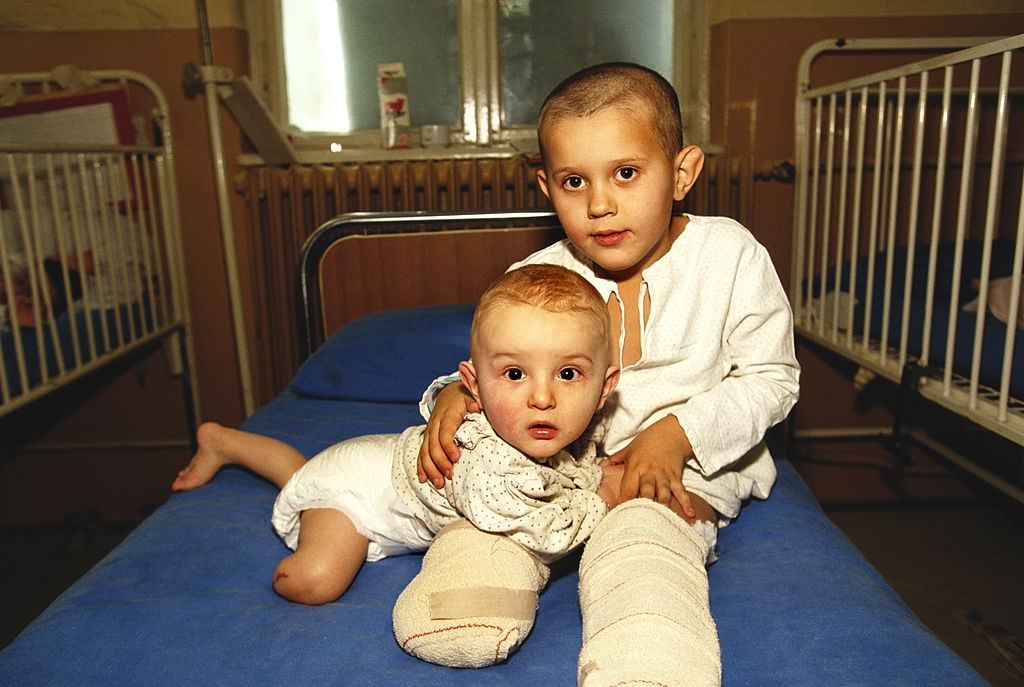
Amputee children, wounded during the siege of Sarajevo, photographed in a Sarajevo hospital while they wait to be evacuated to a sympathetic European country.
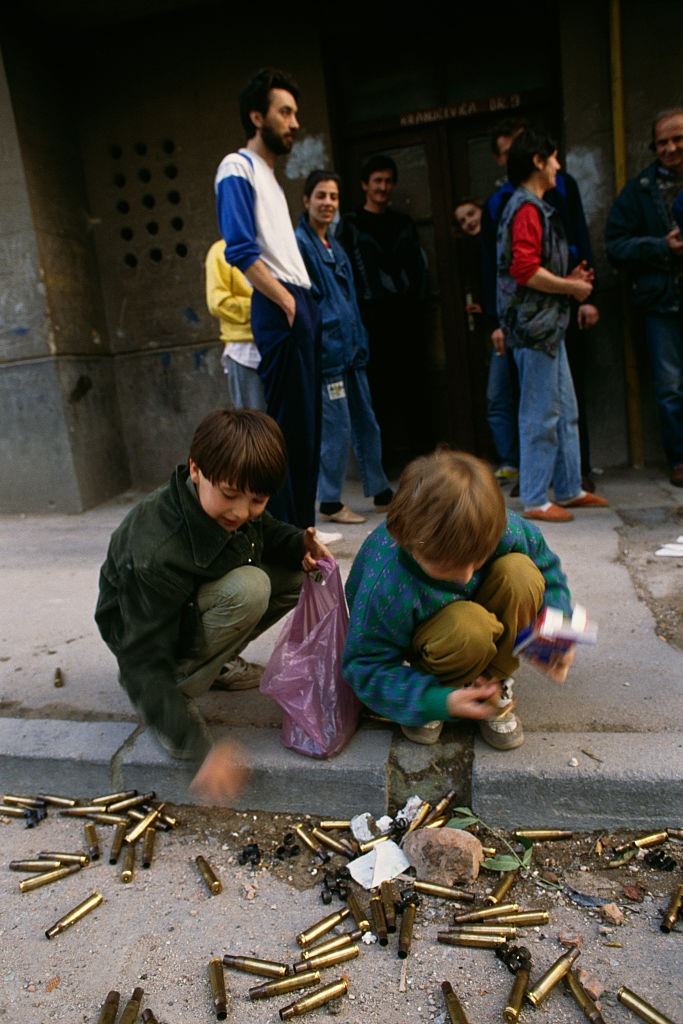
A group of adults watches two Bosnian boys collect machine gun cartridge casings in the streets of Sarajevo while the city is besieged.

Survival in a besieged city reshaped what childhood looked like. Boys collected spent cartridge casings from the streets. Children ran errands in neighborhoods where snipers held steady aim on open ground. Bread lines required courage — or desperation — that no child should need.
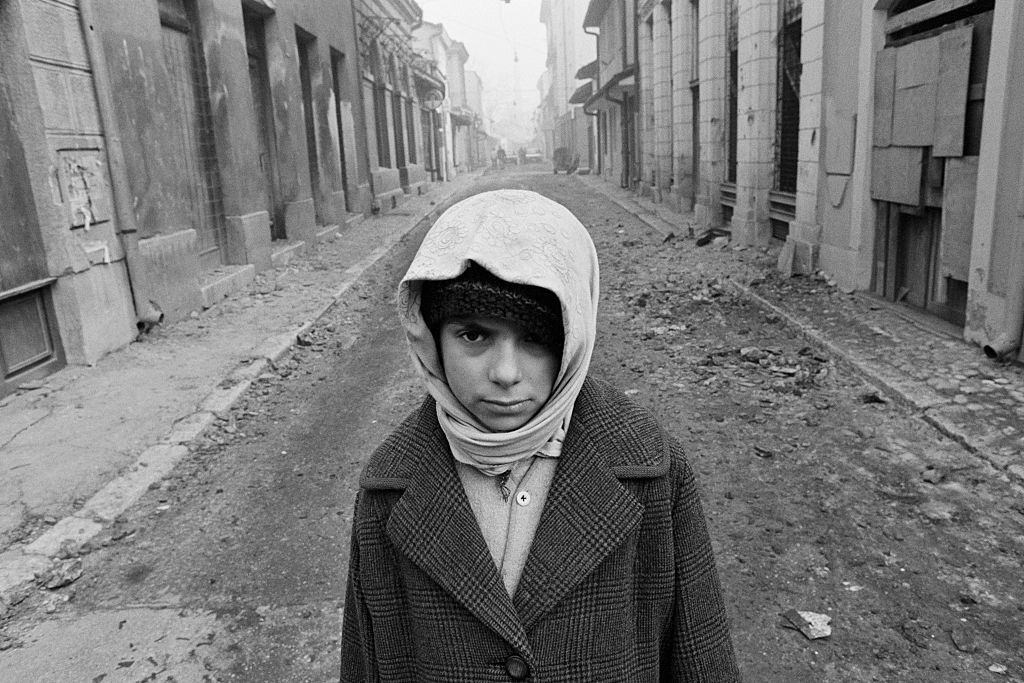
Mirza Mangajic, a 10-year-old Muslim boy, survives in Sarajevo's Old Town quarter with his grandmother. He has no news of his parents and sisters.
Mirza Mangajic, a 10-year-old Muslim boy, survives in Sarajevo’s Old Town quarter with his grandmother. He has no news of his parents and sisters.

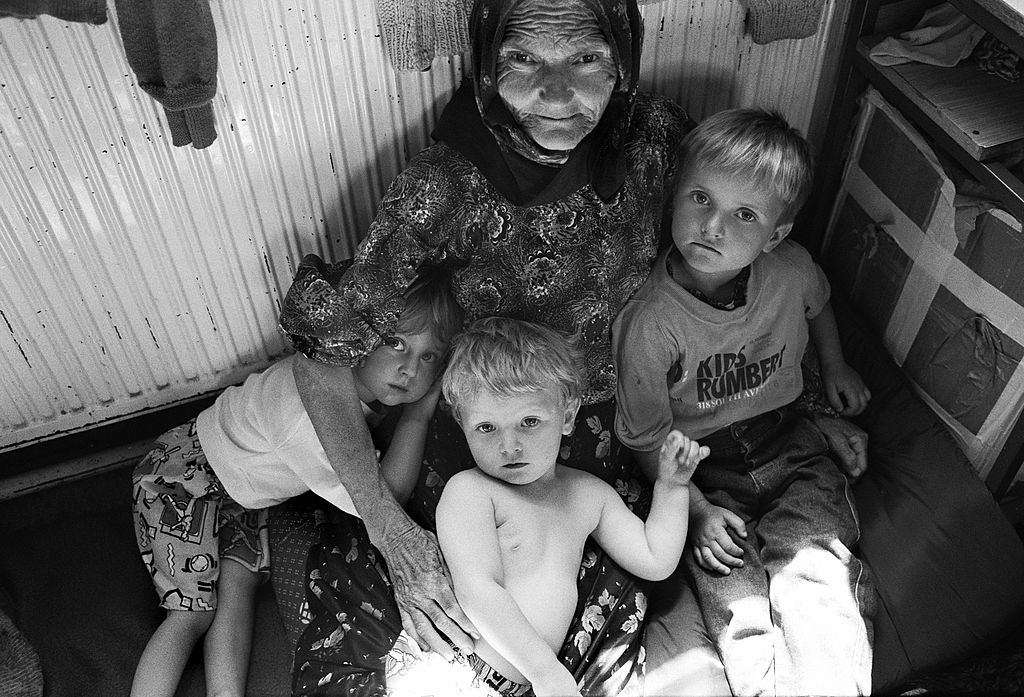
Separation from family was one of the war’s most common wounds. Thousands of children lost contact with parents — some permanently. Mirza Mangajic, a 10-year-old Muslim boy from Sarajevo’s Old Town quarter, survived with only his grandmother. He had no news of his parents or sisters. He was not an exception. Across the country, grandparents took in grandchildren whose parents had been killed, conscripted, or simply lost to the chaos of displacement.
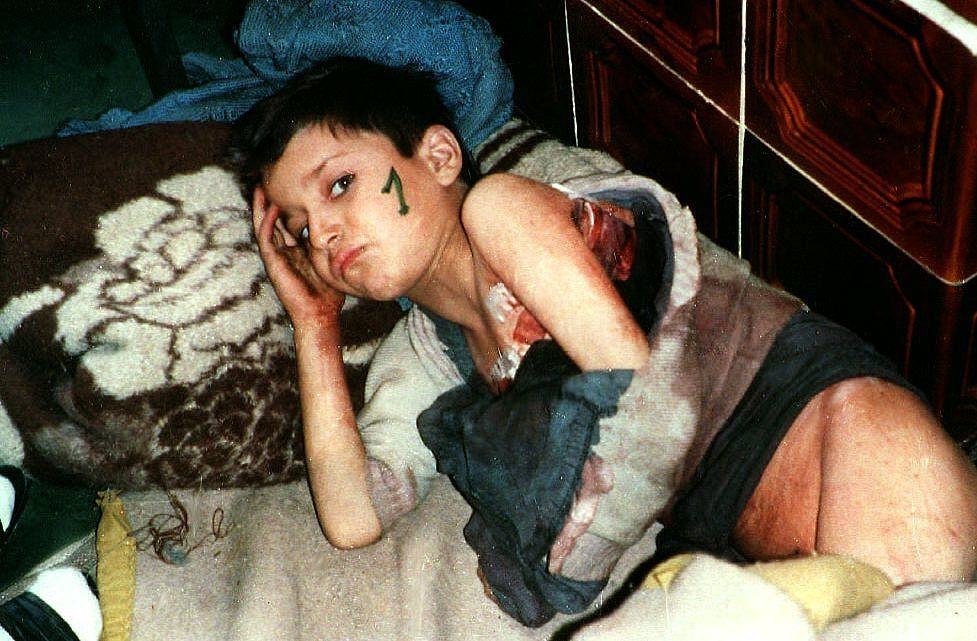
A poorly nourished and wounded Bosnian child lies on a makeshift hospital bed waiting for his evacuation from Srebrenica, 1993.
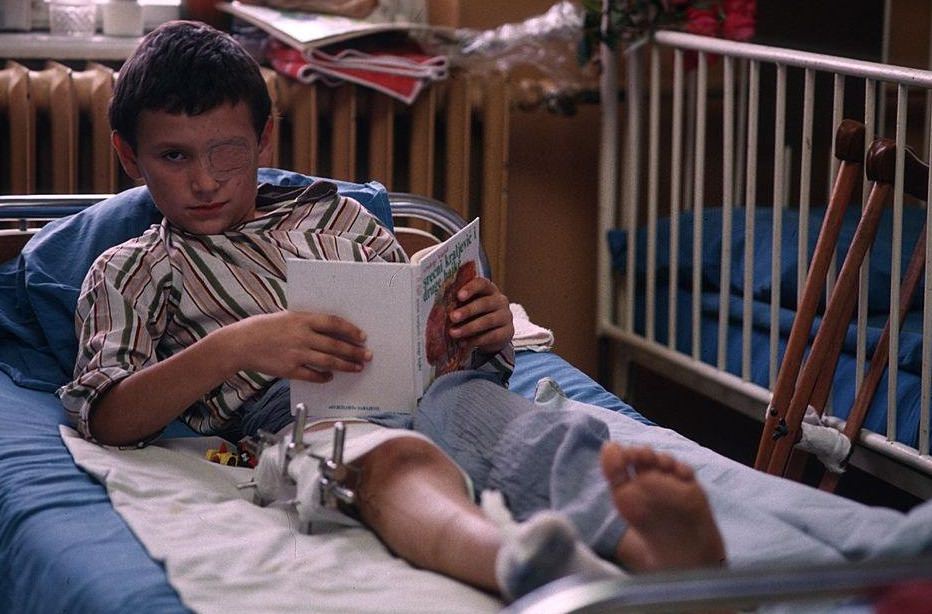
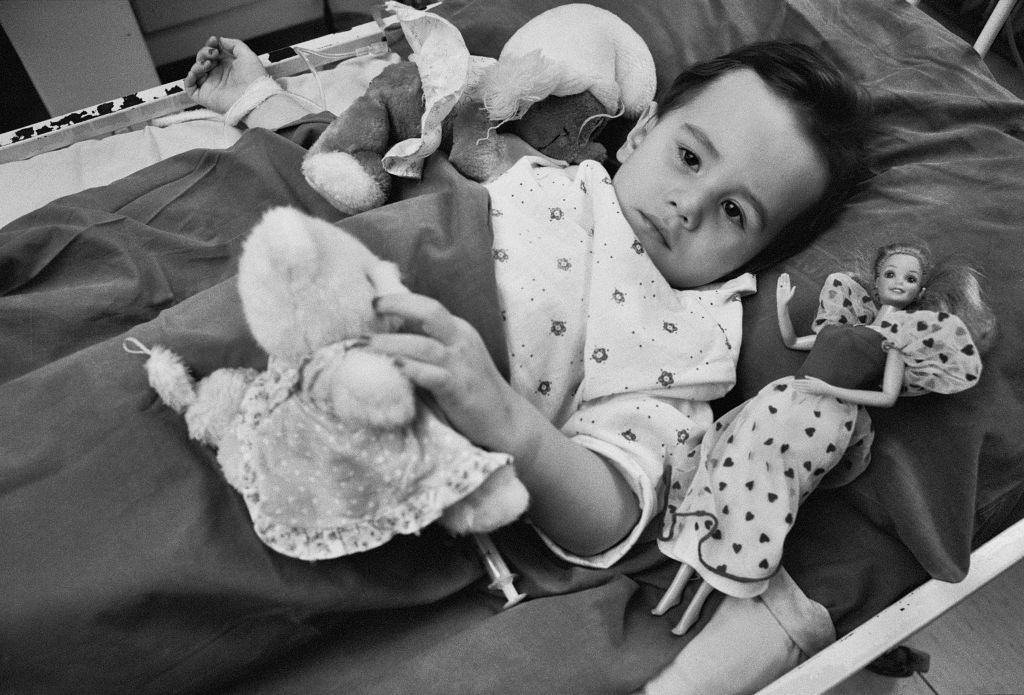
A 6-year-old child in the hospital injured from the bombing, 1994.

Srebrenica was under siege long before the 1995 massacre that the world eventually acknowledged as genocide. As early as 1993, malnourished and wounded children were being evacuated from the enclave on trucks, some lying on makeshift beds, too weak to sit upright. Medical care inside Srebrenica was nearly nonexistent. Children arrived at refugee camps and field hospitals in states of severe malnutrition, and outbreaks of measles spread rapidly through the crowded, unsanitary conditions.
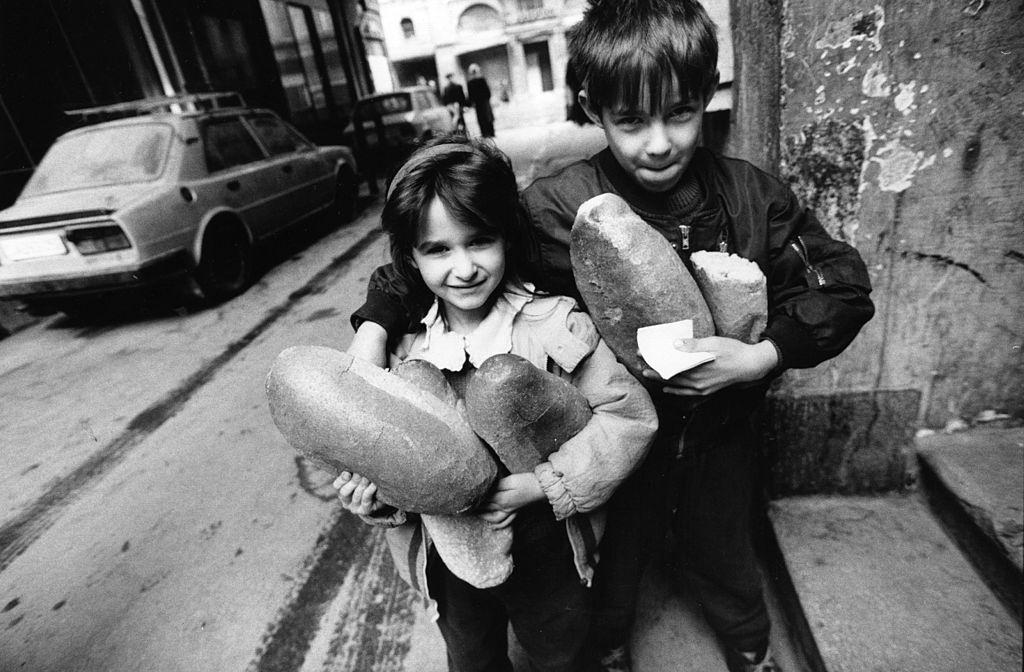
Young children buying bread in Sarajevo, 1994.
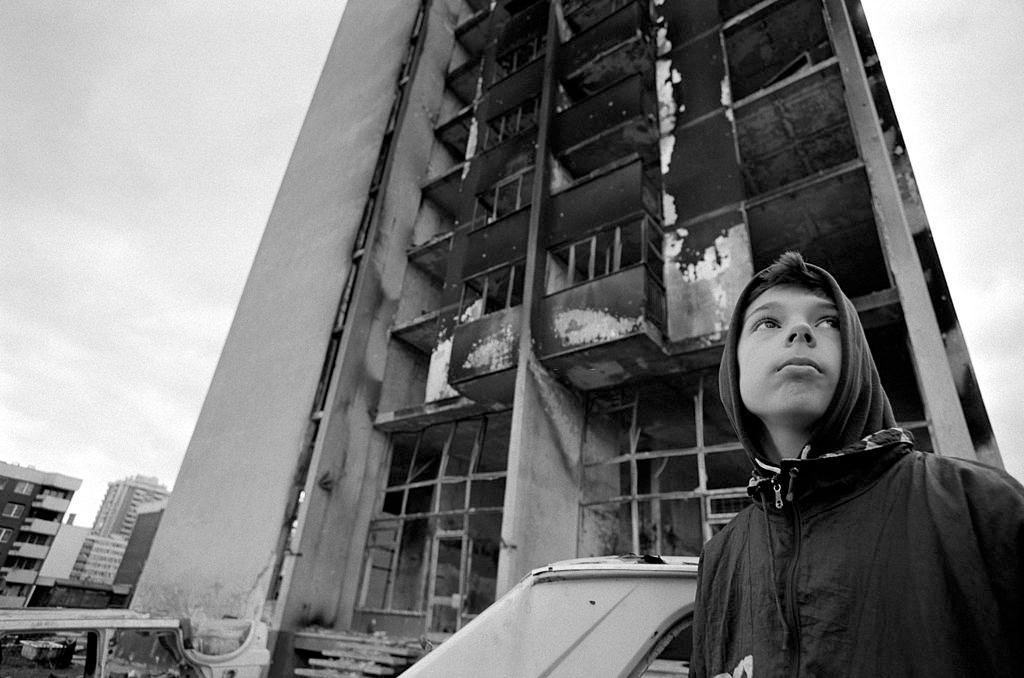
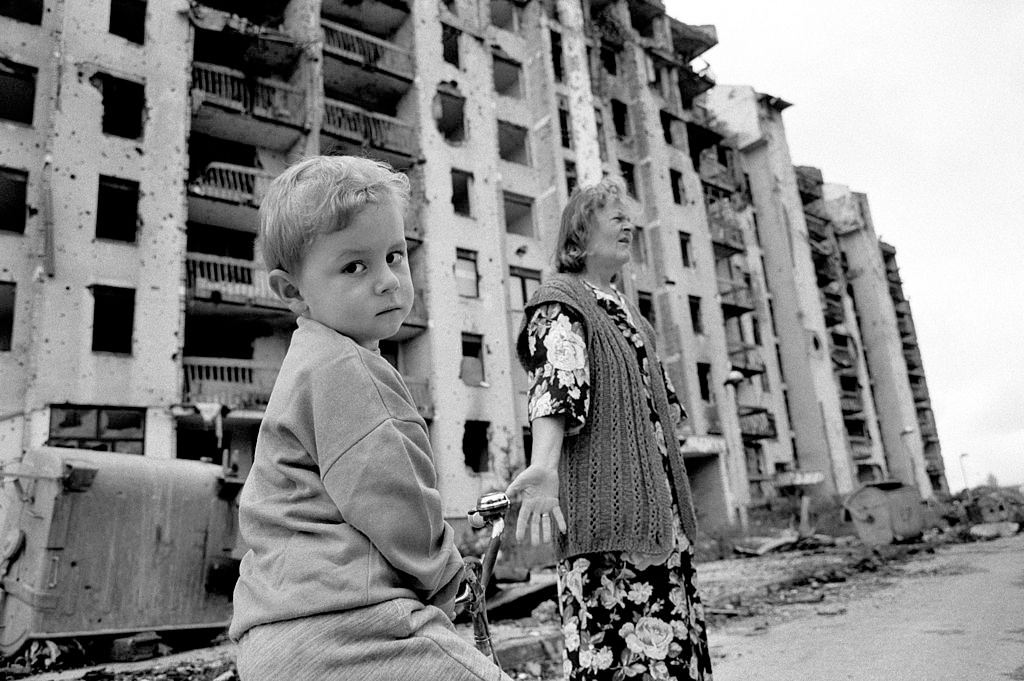
A traumatised child and his grandmother outside their devastated shell damaged apartment block.
A child lies in a hospital bed December 1, 1994 in Sarajevo, Bosnia-Herzegovina.

The physical destruction of Sarajevo was total in many neighborhoods. Apartment blocks were gutted by shells, their walls blown open, their roofs caved in. Families who had nowhere else to go lived in the ruins. Children played in rubble because there was nowhere else to play.
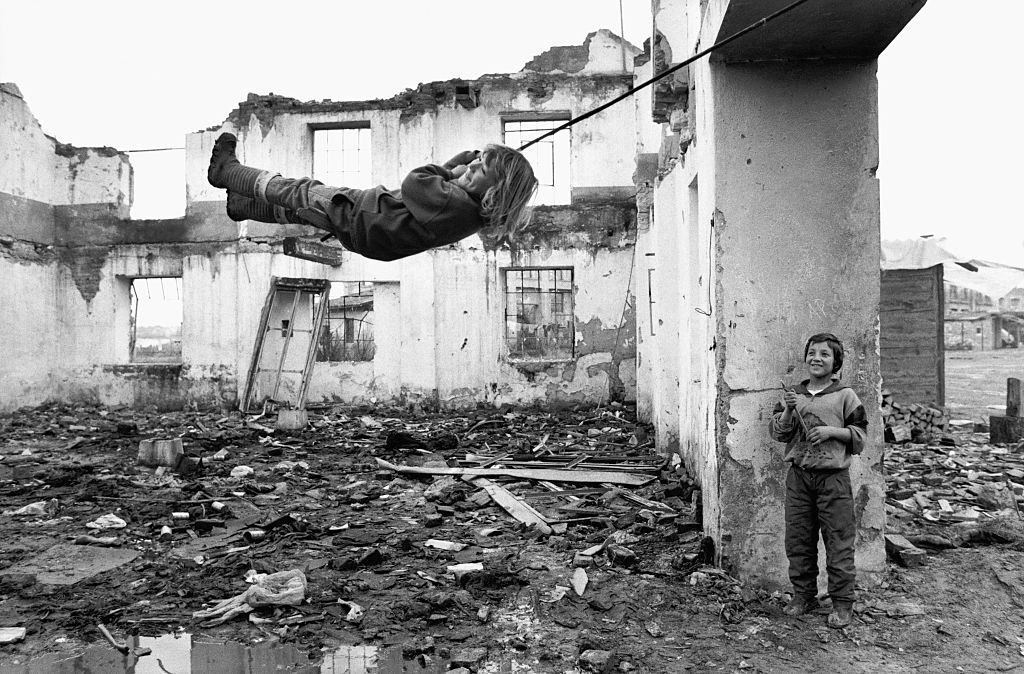
Muslim refugee children swing on a rope swing amongst the rubble in a roofless building.
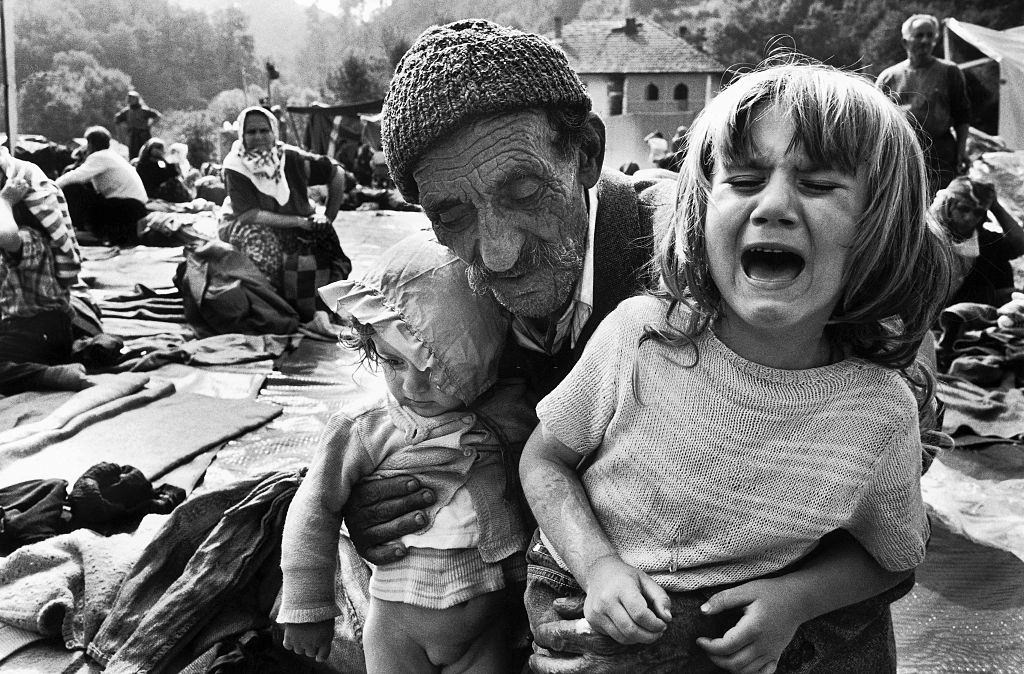
A Muslim grandfather holds his exhausted, crying granddaughters on his lap after a long, frightening journey on foot to a United Nations refugee camp at Kladanj.

Refugee camps offered shelter, but little comfort. Families who had walked for days through dangerous terrain arrived exhausted and traumatized. Grandparents clutched grandchildren. Mothers carried infants across fields and through forests to reach UN-protected zones. The journey itself claimed lives. Those who made it faced overcrowded camps with limited food and medicine.
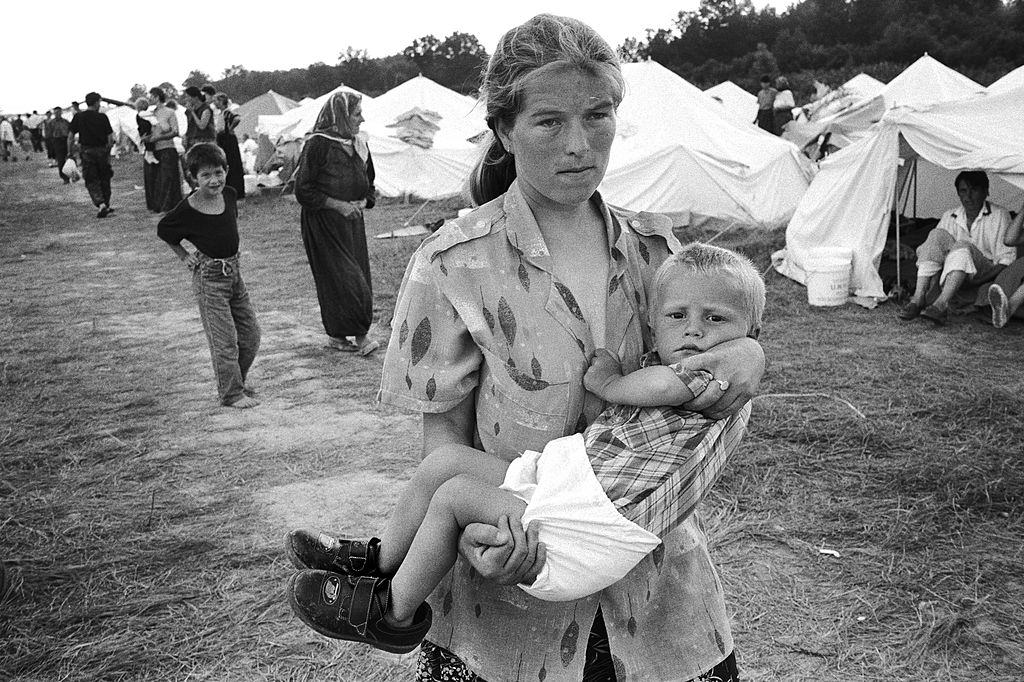
A Muslim mother carries her child at a refugee camp set up at Tuzla airport.
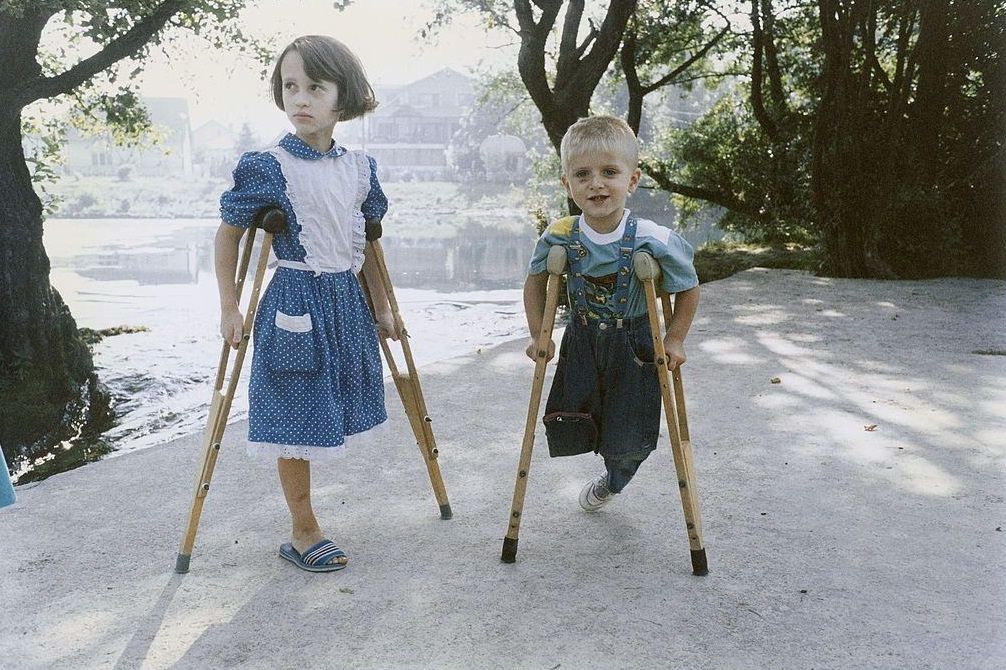
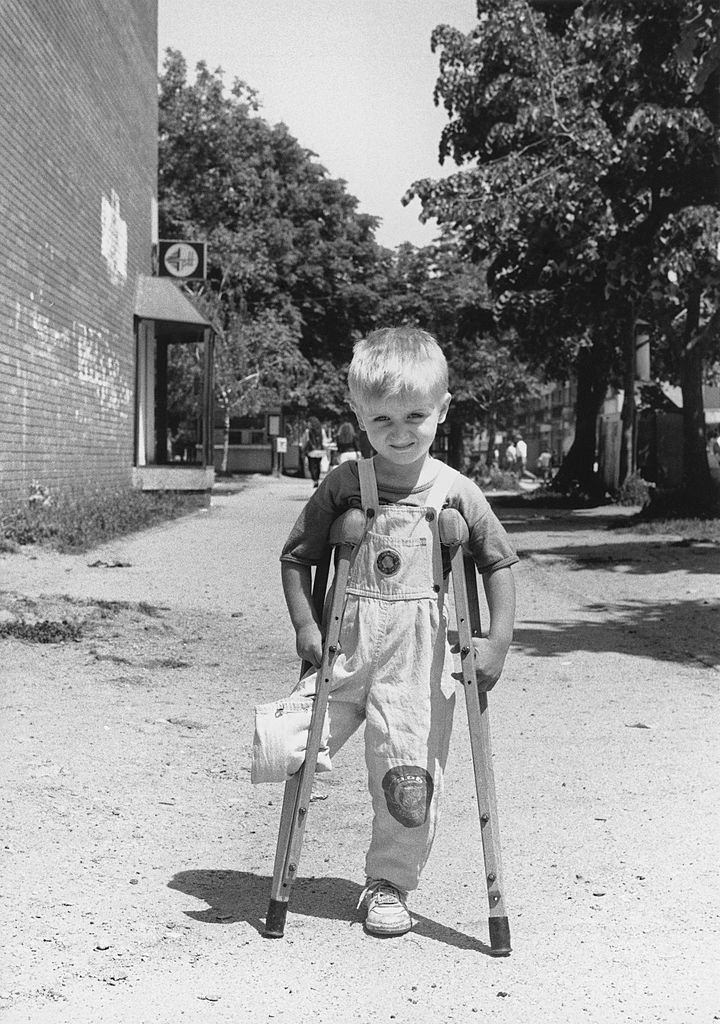
Child victims of war - Sanja, 7, Serbian Orthodox, and Aladdin, 4, Muslim, each lost a leg during the siege of the Bihac enclave.
Child victims of war – Sanja, 7, Serbian Orthodox, and Aladdin, 4, Muslim, each lost a leg during the siege of the Bihac enclave.

The Bihac enclave, like Srebrenica, became a site of prolonged siege. Seven-year-old Sanja, Serbian Orthodox, and four-year-old Aladdin, Muslim, each lost a leg there. They were on opposite sides of the conflict’s ethnic lines — and yet their injuries, their losses, and their hospital beds looked the same. Land mines and shrapnel did not distinguish between ethnicities or ages.
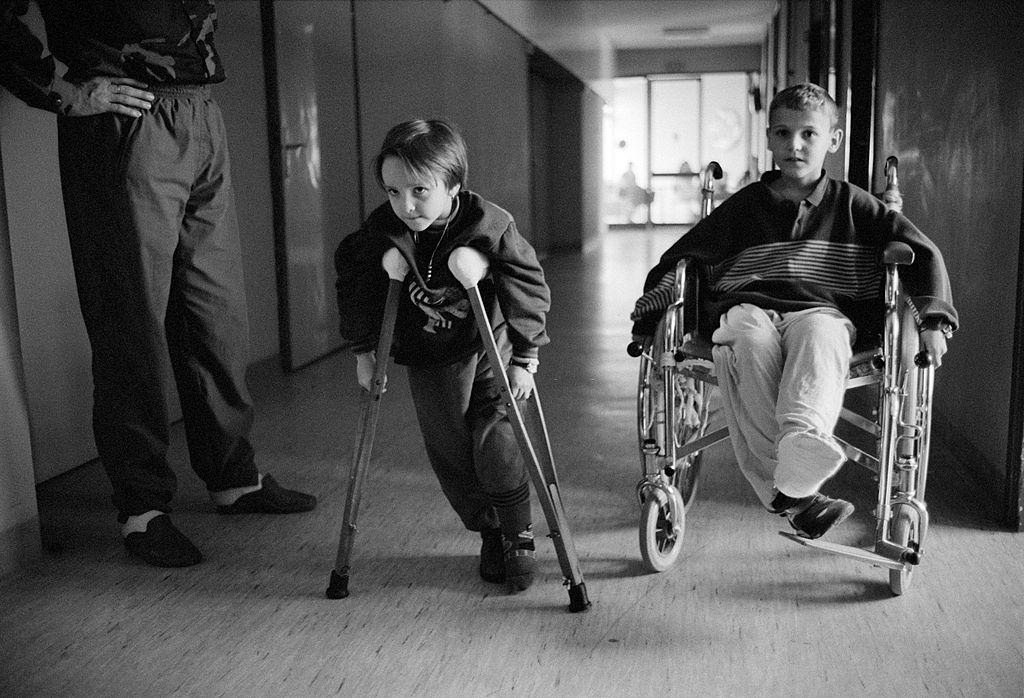
Children injured in the Yugoslav war moving along the corridors of Kosevo Hospital in Sarajevo.
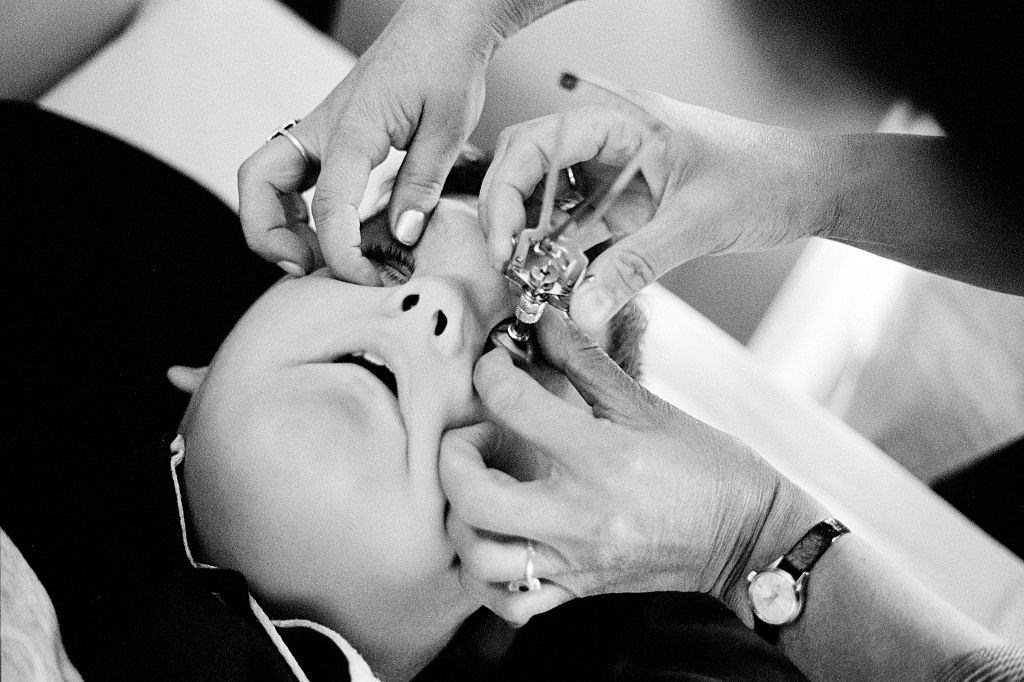
A boy has his eyes measured The Blind School Sarajevo, is the only centre in Bosnia for children and young adults.
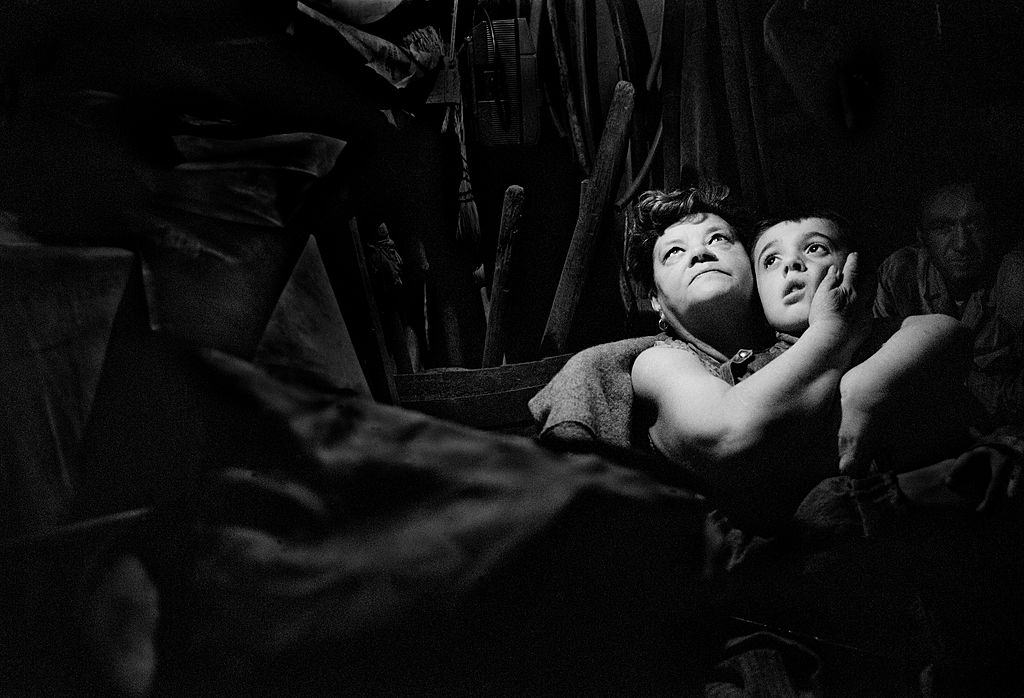
Sheltering from a heavy mortar bombardment, 67 year old Antonia Arapovic, hugs her neighbour's terrified child in the darkness of a underground cellar in Sarajevo.
Sheltering from a heavy mortar bombardment, 67 year old Antonia Arapovic, hugs her neighbour’s terrified child in the darkness of a underground cellar in Sarajevo.

Mortar bombardments sent civilians scrambling into cellars for hours at a time. In the darkness underground, neighbors became substitutes for absent parents. Children were held by whoever was closest when the shells began to fall.
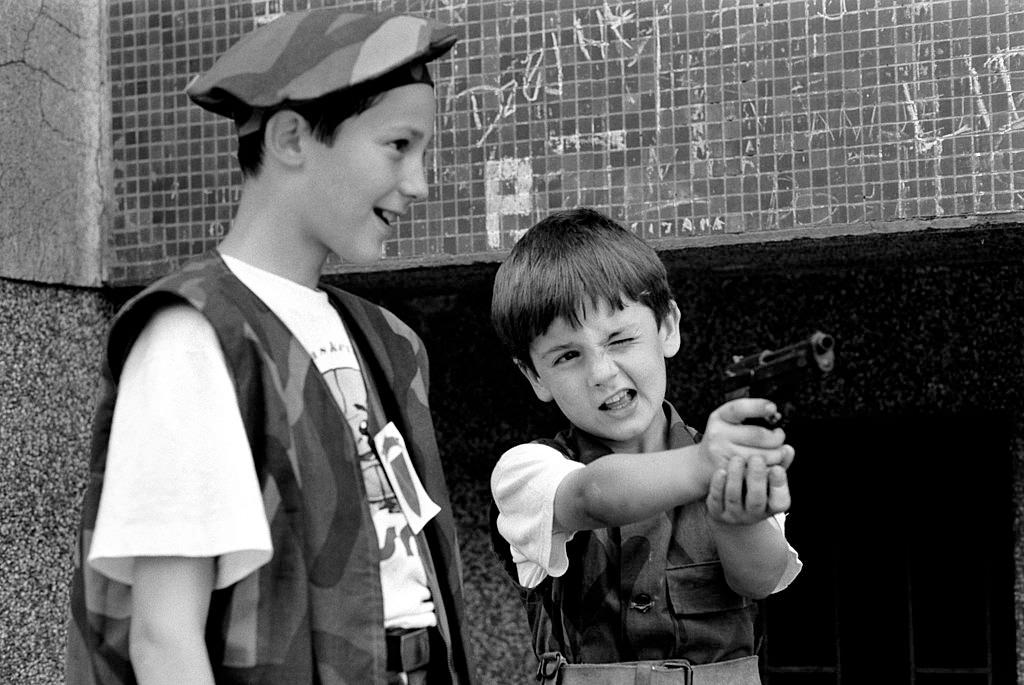
Boys dressed in the uniform of Bosnian army fighters play with a real pistol

War normalized weapons in ways that were immediately visible. Boys dressed in army uniforms and handled real firearms. The line between play and combat dissolved in a city where fighting was a constant backdrop. Some of these boys would later serve in the conflict before they were old enough to have finished school.
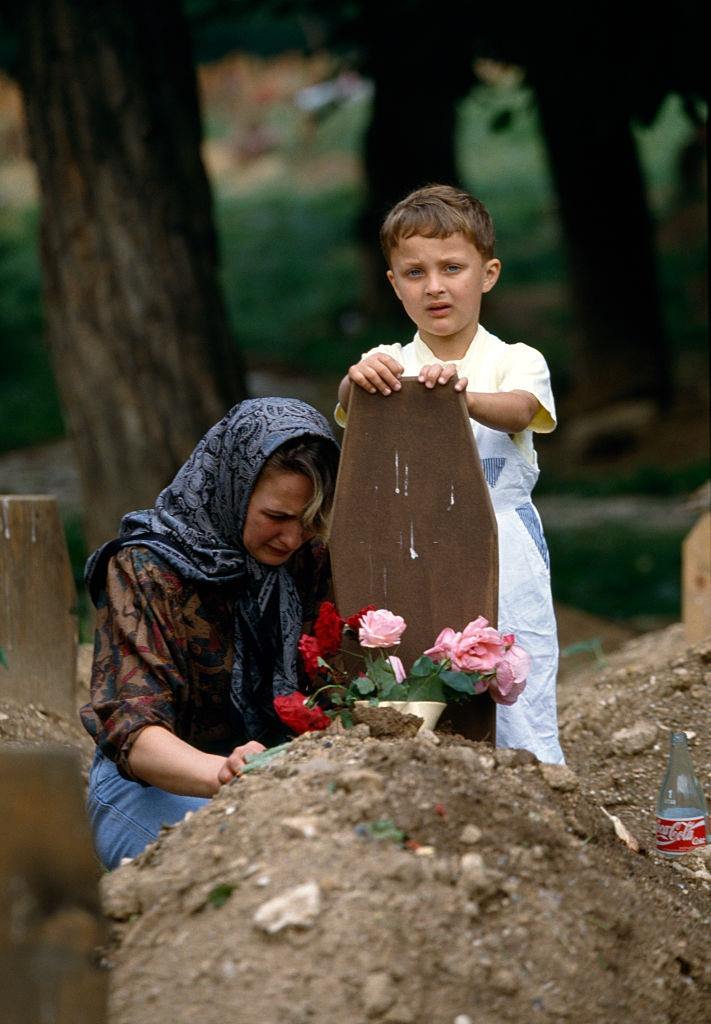
A young Bosnian boy and his mother mourning their father and husband, respectively, at his grave.
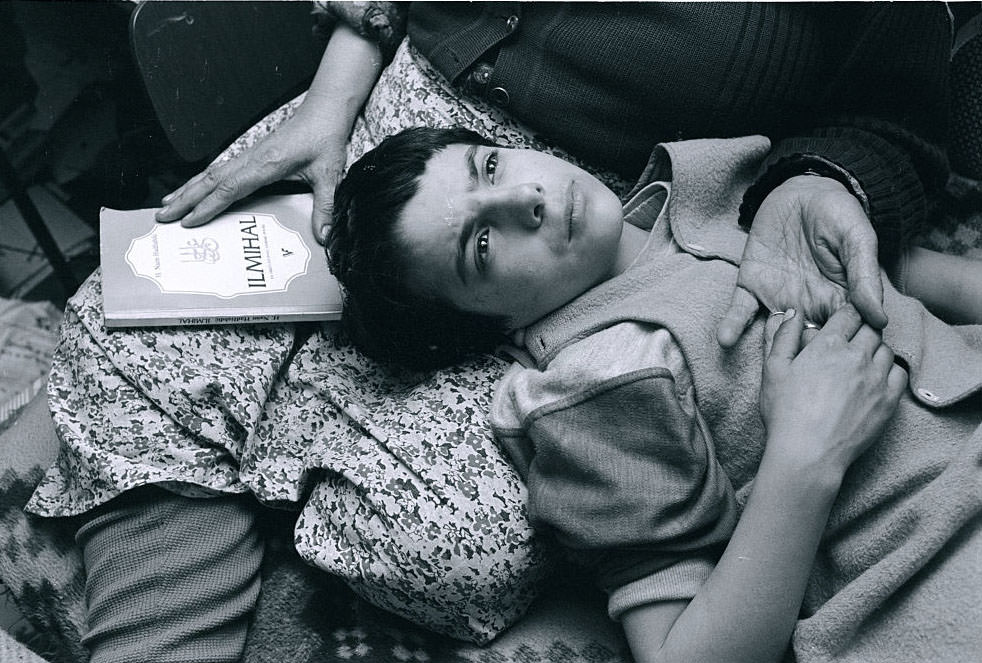
Mirza Mangajic, a 10-year-old Muslim boy, lays his head in his grandmother's lap as he prays with her.
Mirza Mangajic, a 10-year-old Muslim boy, lays his head in his grandmother’s lap as he prays with her.
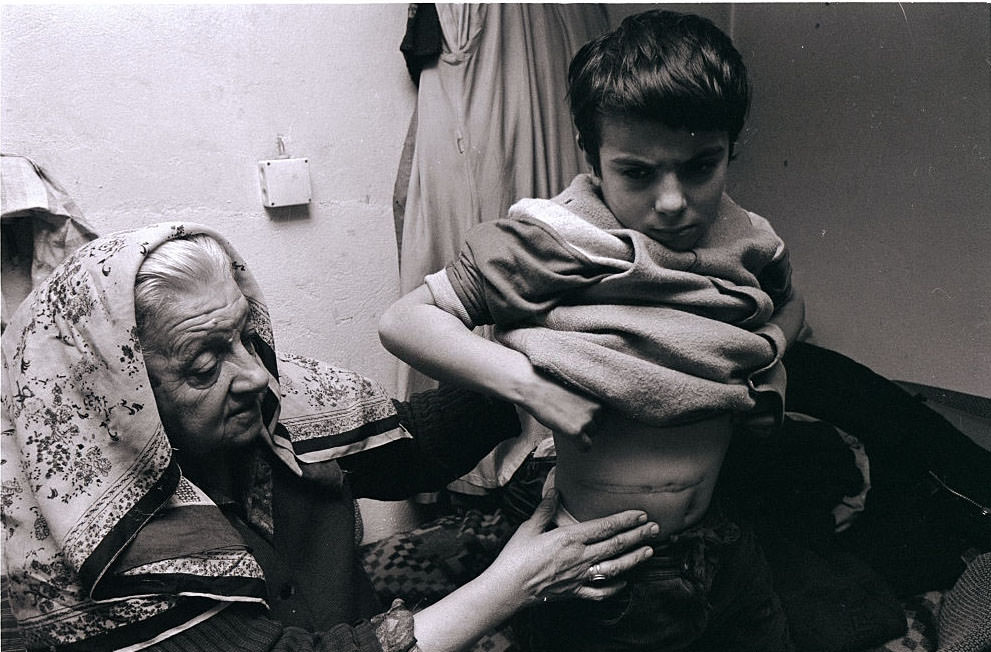
Mirza Mangajic, a 10-year-old Muslim boy, survives in Sarajevo's Old Town quarter with his grandmother, showing a scar on his belly he received from a grenade explosion.
Mirza Mangajic, a 10-year-old Muslim boy, survives in Sarajevo’s Old Town quarter with his grandmother, showing a scar on his belly he received from a grenade explosion.

Mirza Mangajic carried a long scar across his belly from a grenade explosion. He prayed with his grandmother. He waited for news of his family that never came. His story repeated itself in thousands of variations across Sarajevo and beyond.
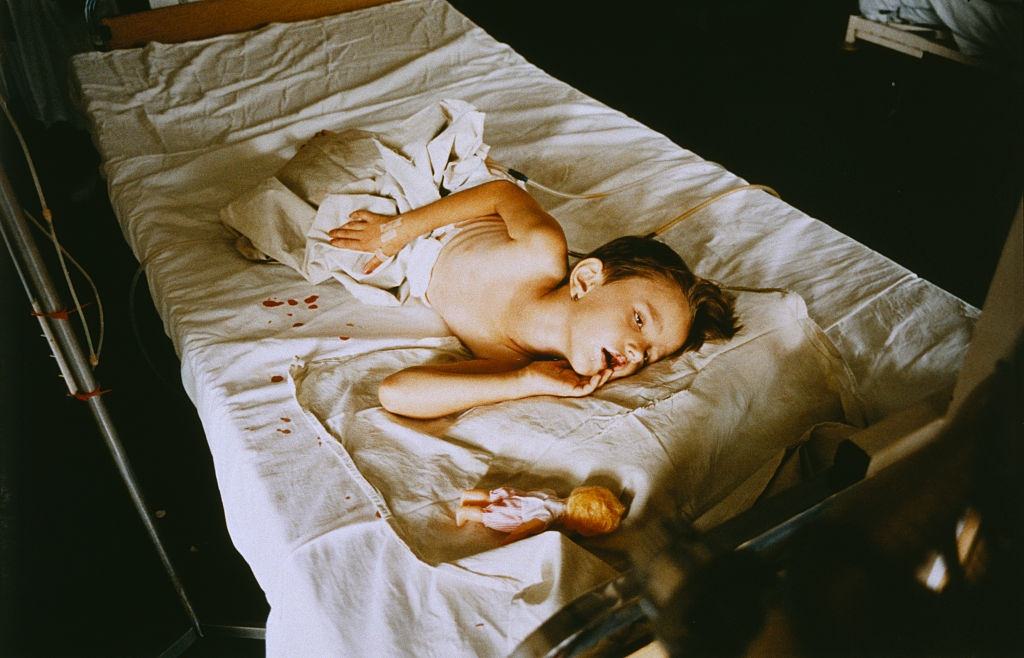
A young girl named Irma, injured in Sarajevo, waits to be evacuated to London.
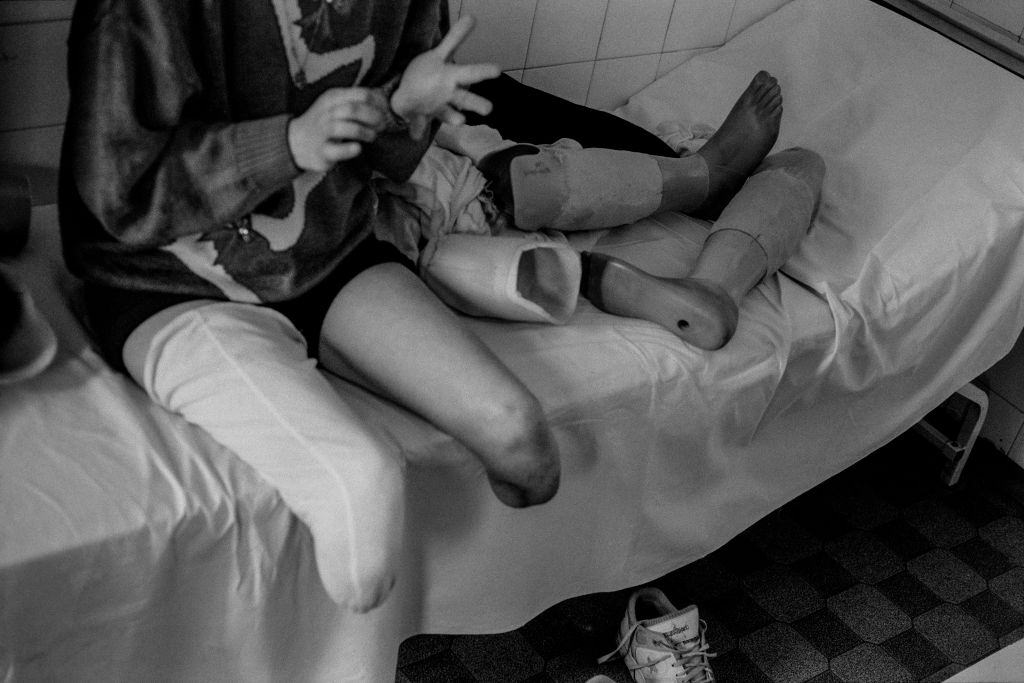
A young boy who lost his both legs in the hospital.

Some injured children were evacuated to hospitals in Western Europe when their injuries exceeded what Sarajevo’s overwhelmed medical staff could treat. A memorial unveiled on May 9, 2010, in Sarajevo lists the names of 521 children killed during the siege alone. Each name represents a child who was shot, shelled, or otherwise killed in a city that the world watched under siege for nearly four years.
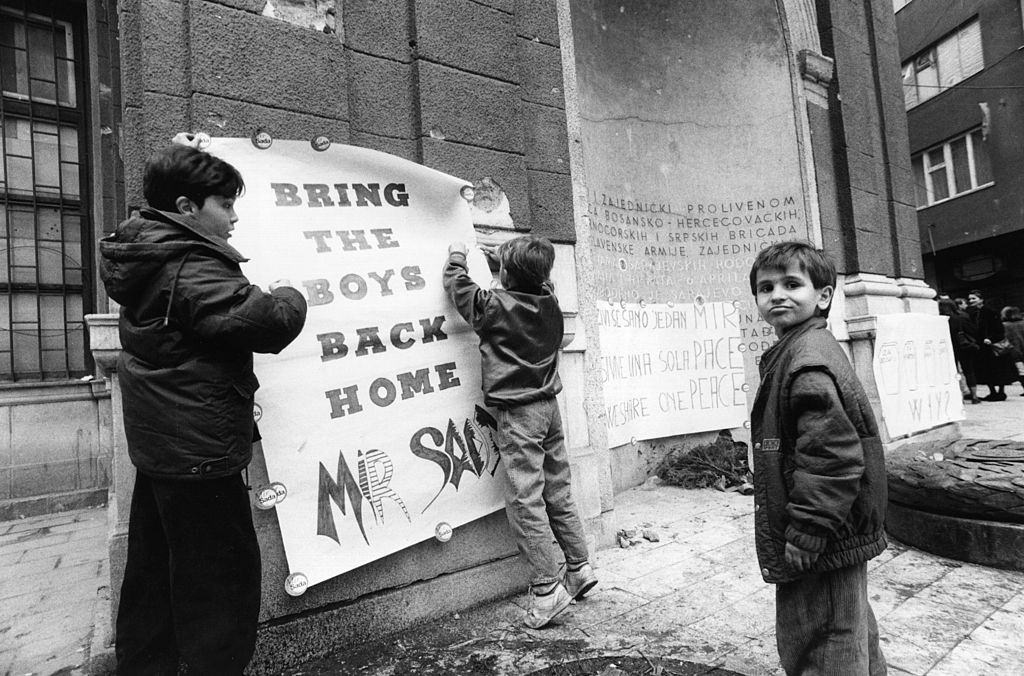
Boys putting up a poster saying 'Bring the boys back home' as part of a peace demonstration in Sarajevo, 1994.
Boys putting up a poster saying ‘Bring the boys back home’ as part of a peace demonstration in Sarajevo, 1994.
Child victims of war - Aladdin, 4, Muslim, lost a leg during the siege of the Bihac enclave on January 9, 1994.
Child victims of war – Aladdin, 4, Muslim, lost a leg during the siege of the Bihac enclave on January 9, 1994.
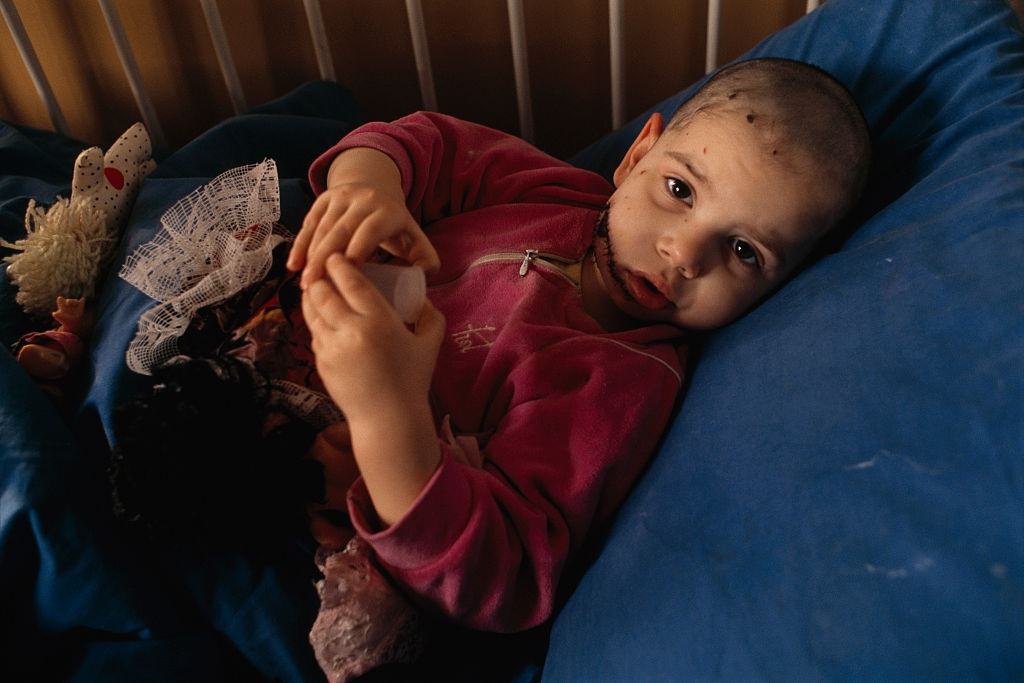
A young child lies in bed and plays with toys while recovering from face wounds received during the siege of Sarajevo
A boy in the area known as Heroes Square, so called because of the extreme dangers of living there during the war.

Certain streets and public squares in Sarajevo were known killing zones, yet people — including children — had to cross them to survive. The area known as Heroes Square earned its name from the constant danger that defined it. Sniper Alley was perhaps the most notorious stretch, where snipers from surrounding hills fired into crowds. It was on Sniper Alley that seven-year-old Nermin Divovic was shot in the head on November 18, 1994. UN firefighters arrived within minutes. He died immediately.
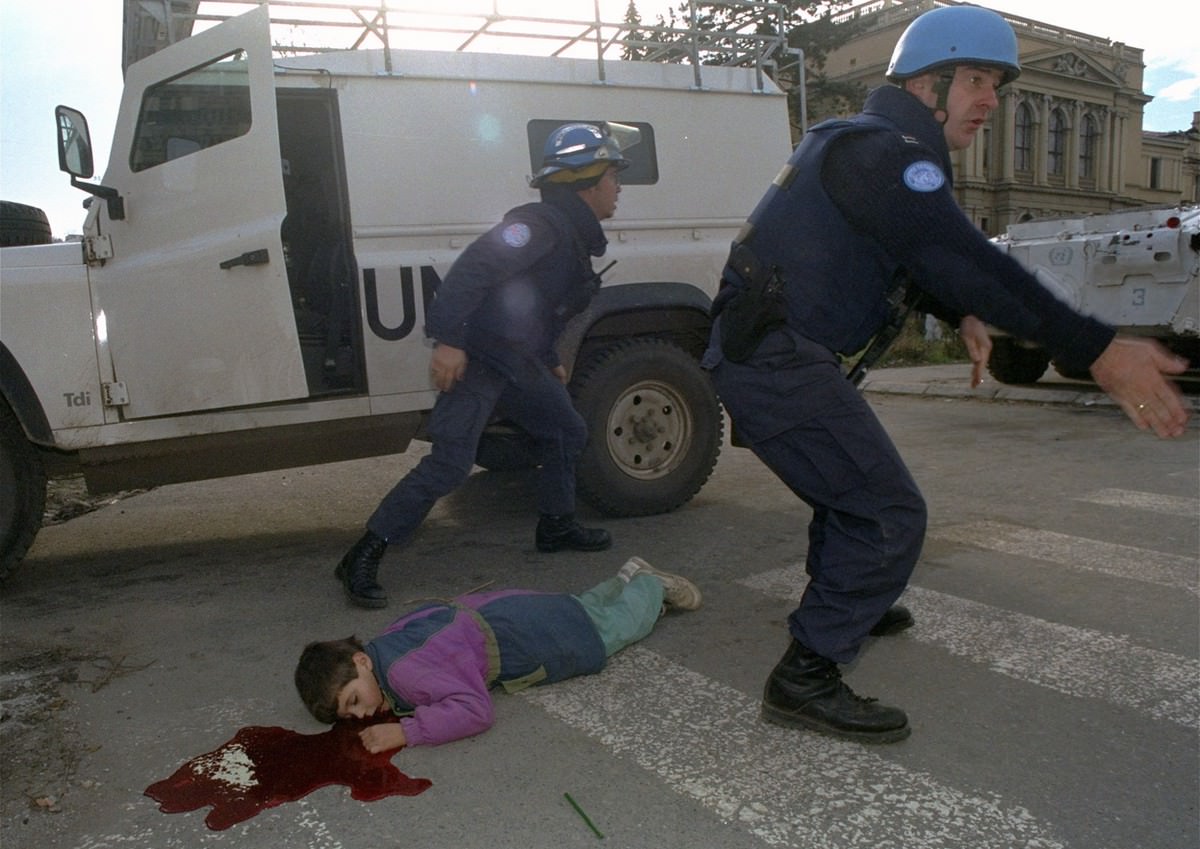
Seven-year-old Nermin Divovic lies mortally wounded in a pool of blood as unidentified American and British U.N. firefighters arrive to assist after he was shot in the head in Sarajevo Friday, November 18, 1994.
A Muslim grandmother hugs her young grandchildren at a refugee centre set up near Tuzla for people fleeing the Srebrenica massacre.
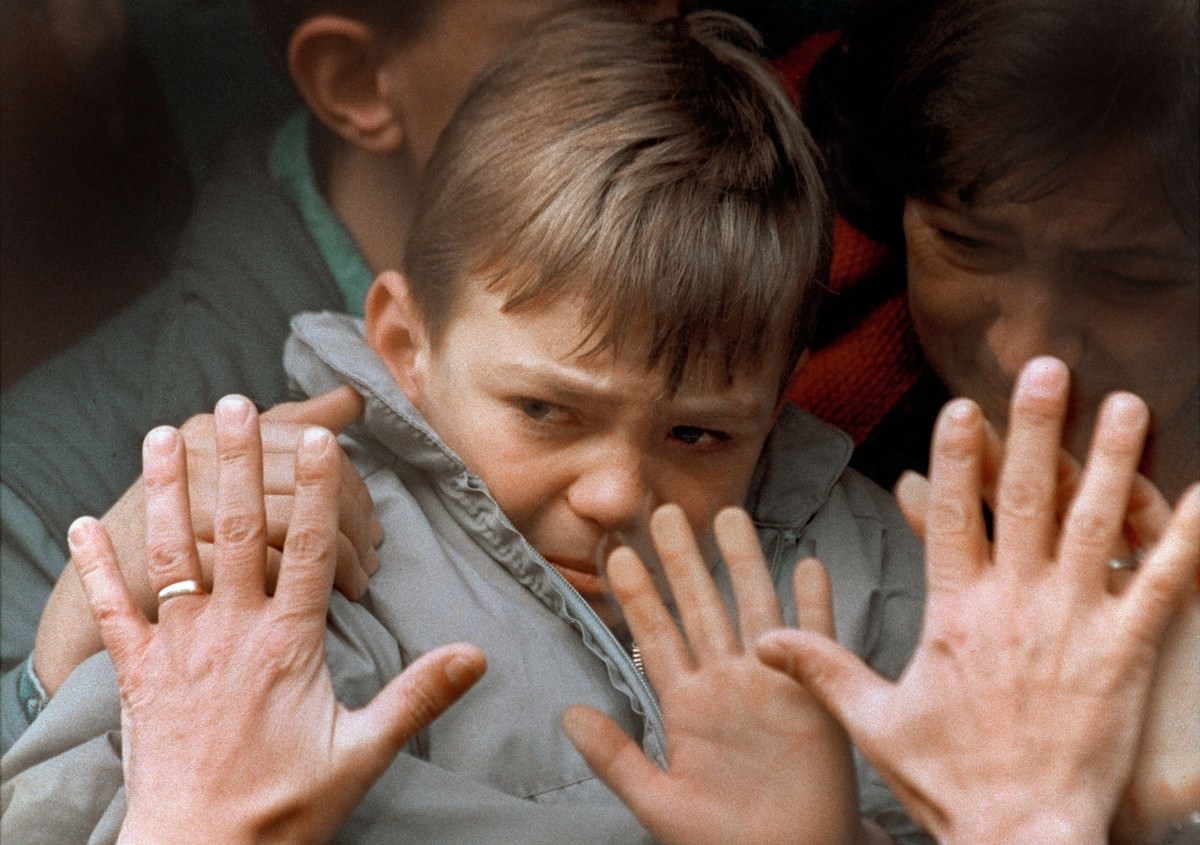
A father's hands press against the window of a bus carrying his tearful son and wife to safety from the besieged city of Sarajevo during the Bosnian War on November 10, 1992
A father’s hands press against the window of a bus carrying his tearful son and wife to safety from the besieged city of Sarajevo during the Bosnian War on November 10, 1992

Evacuation brought its own grief. Families were split apart at bus doors and truck tailgates. Fathers pressed their hands against glass as vehicles pulled away carrying their children to safety — not knowing if they would ever see each other again. For many, they would not.
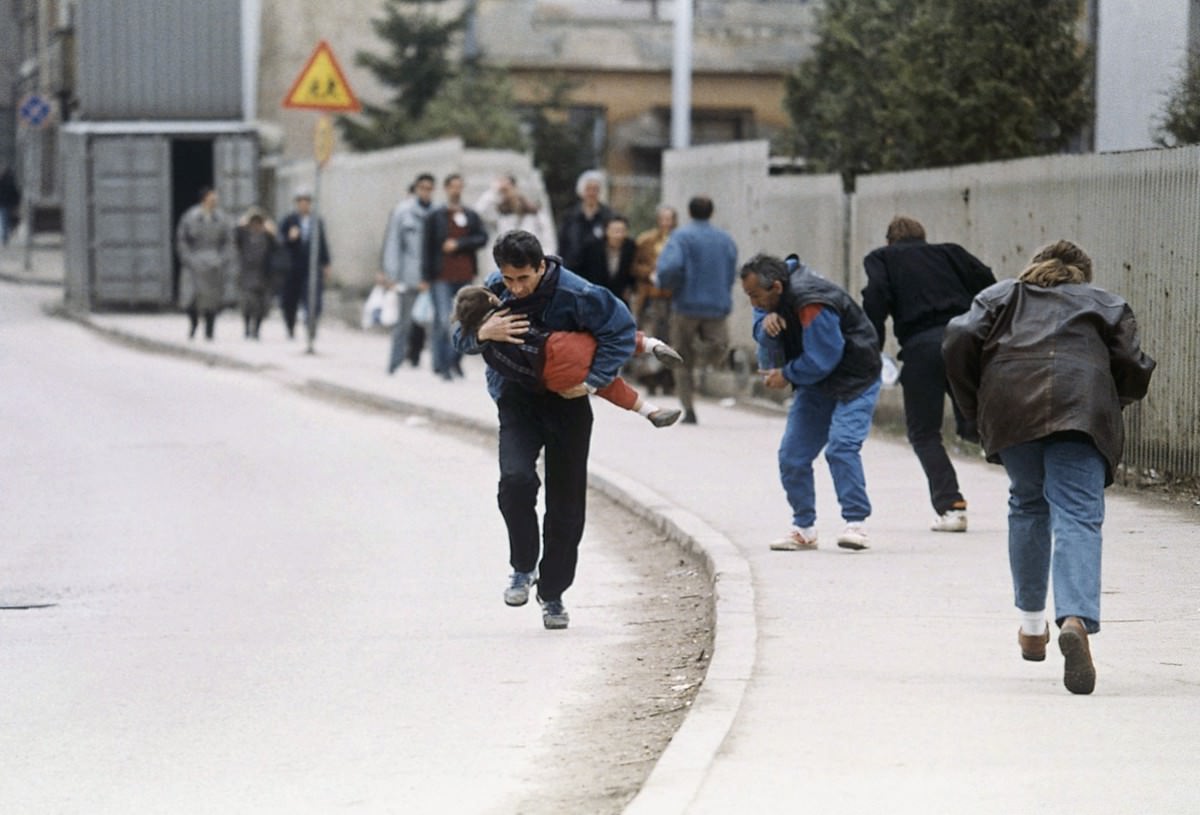
A Bosnian man cradles his child as they and others run past one of the worst spots for snipers that pedestrians have to pass in Sarajevo, on April 11, 1993.
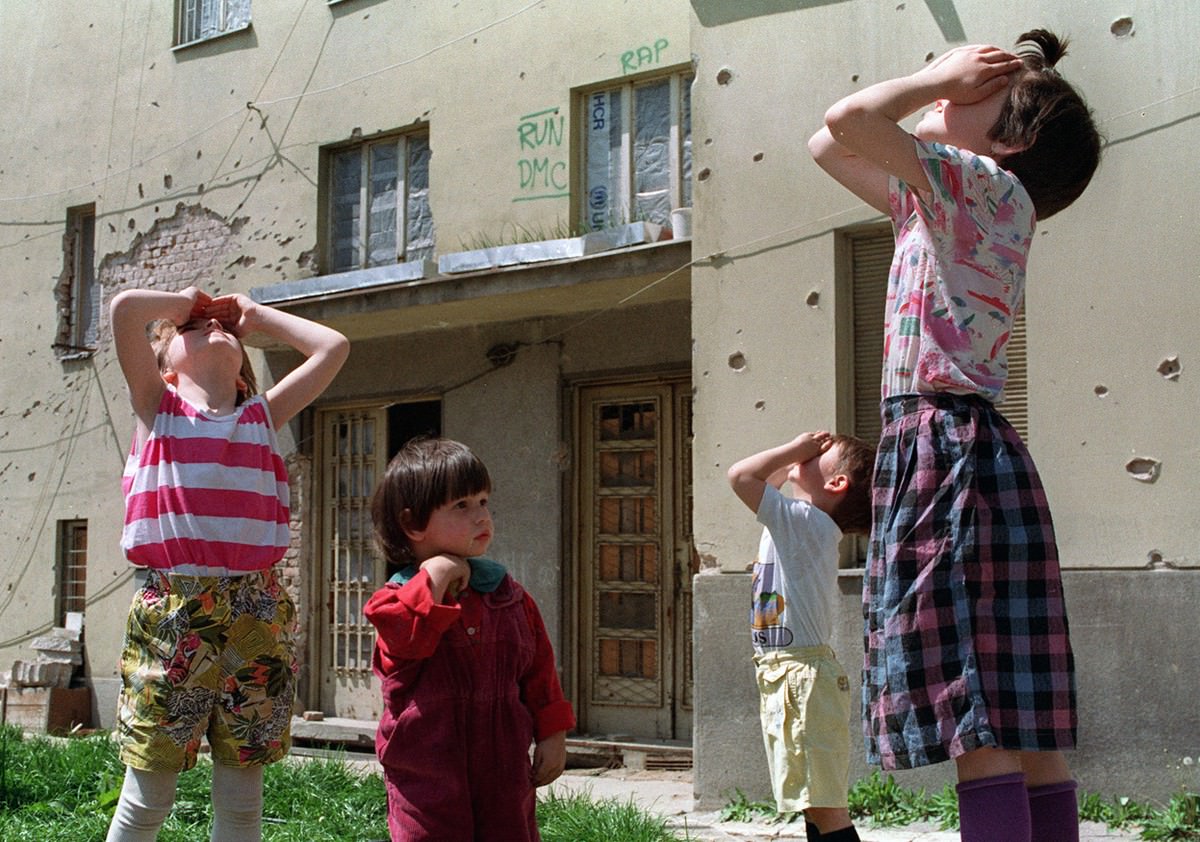
Children look up at fighter jets enforcing the no-fly-zone over Sarajevo, Bosnia Herzegovina, on May 12, 1993.

Among the least-told stories of the war are those of children born from wartime rape. It is estimated that between 25,000 and 50,000 women and girls were raped by enemy soldiers during the conflict. A small number of rapes were also committed by foreign soldiers serving with UN peacekeeping forces in Bosnia. The children born from these assaults grew up largely without knowledge of their origins. Stigma surrounding rape victims kept most of these stories buried for decades.
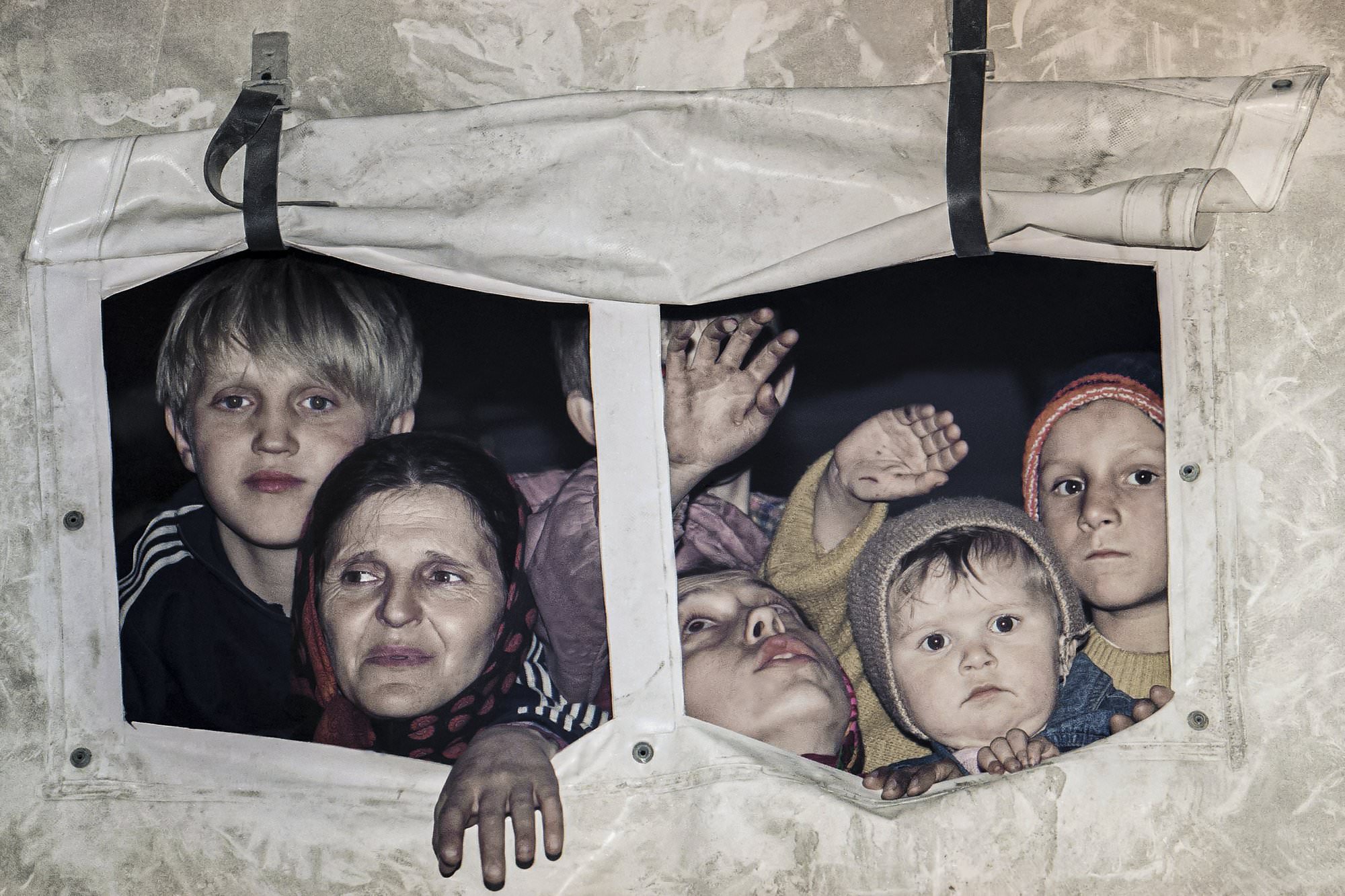
Evacuees form Srebrenica look out from a U.N. truck in Medgas, Bosnia, north of Sarajevo, as a U.N. truck convoy carrying people from the besieged Bosnian town made its way to Tuzla, March 20, 1993.
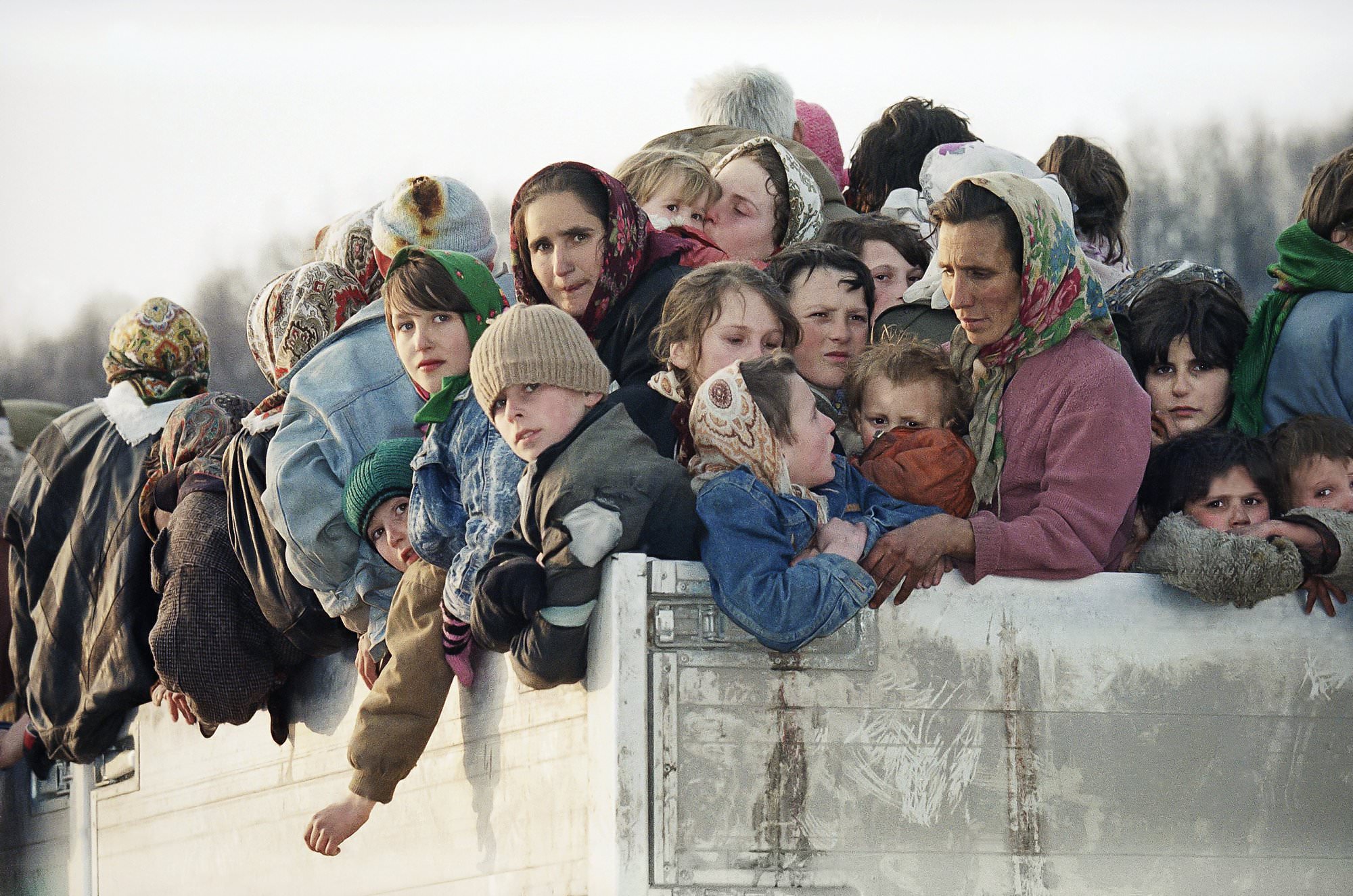
Evacuees from the besieged Muslim enclave of Srebrenica, packed on a truck en route to Tuzla, pass through Tojsici, March 29, 1993.
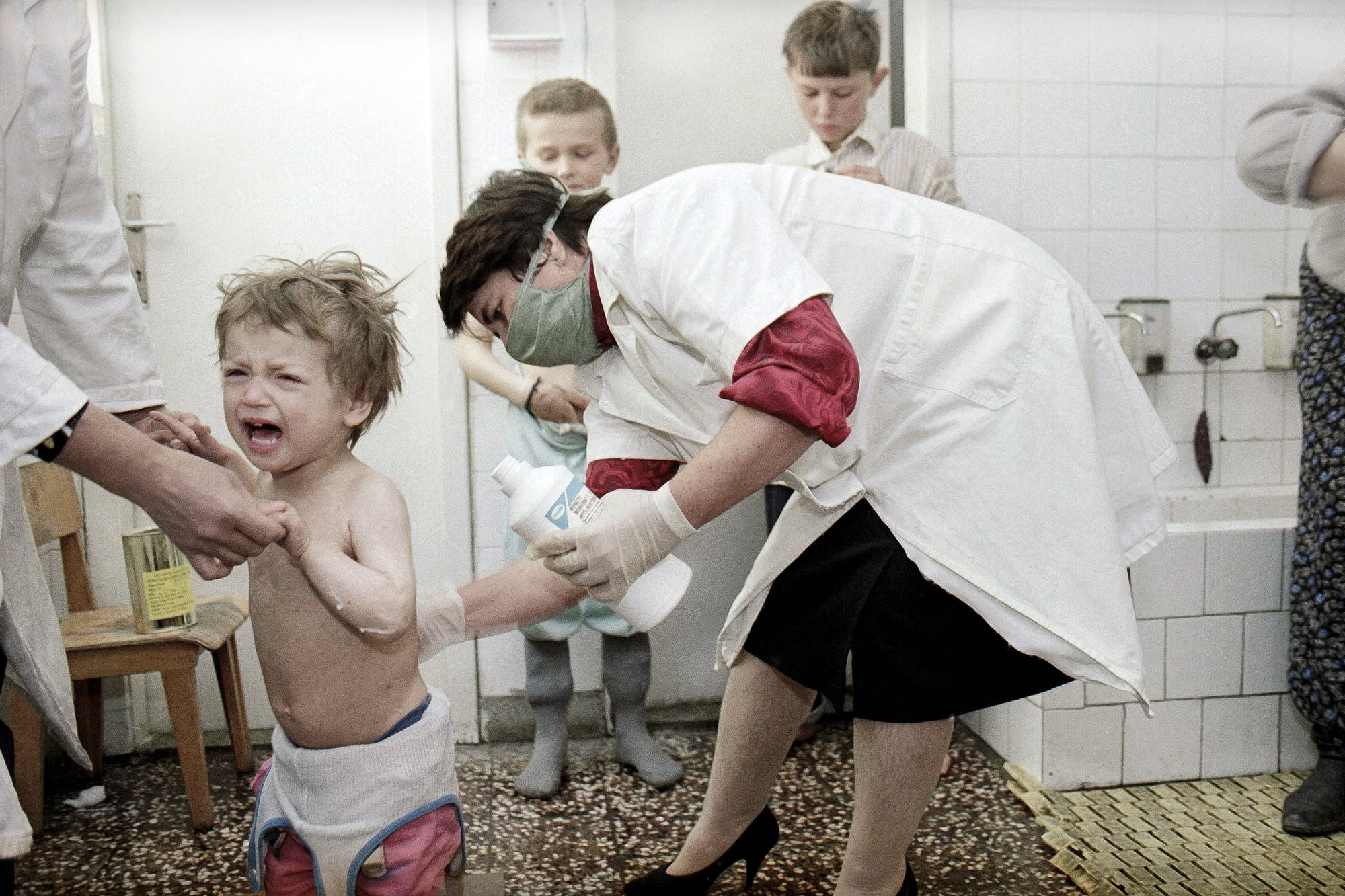
A nurse treats a child refugee from Srebrenica with ointment against measles at the refugee camp in Lukavac, Bosnia, March 23, 1993.
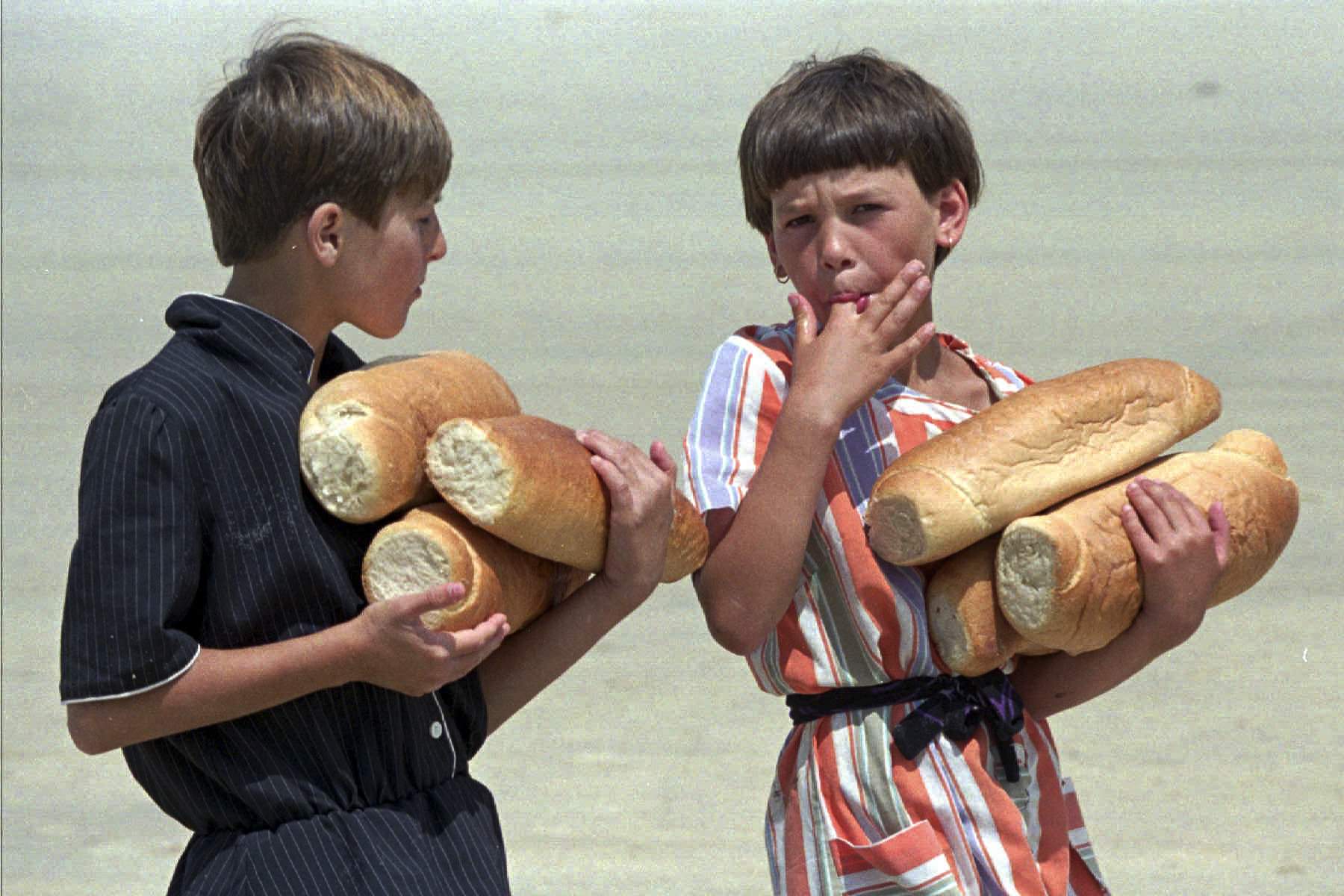
Bosnian refugee children from Srebrenica, carry loaves of bread, which they received from the United Nations at the refugee camp at Tuzla airport, July 19, 1995.

By July 1995, after the fall of Srebrenica, thousands of women and children flooded into Tuzla’s airport refugee camp. The men and boys of the enclave had been separated from their families and executed. The women and children who survived carried with them the knowledge of what had happened — and the near-certain loss of fathers, husbands, brothers, and sons.
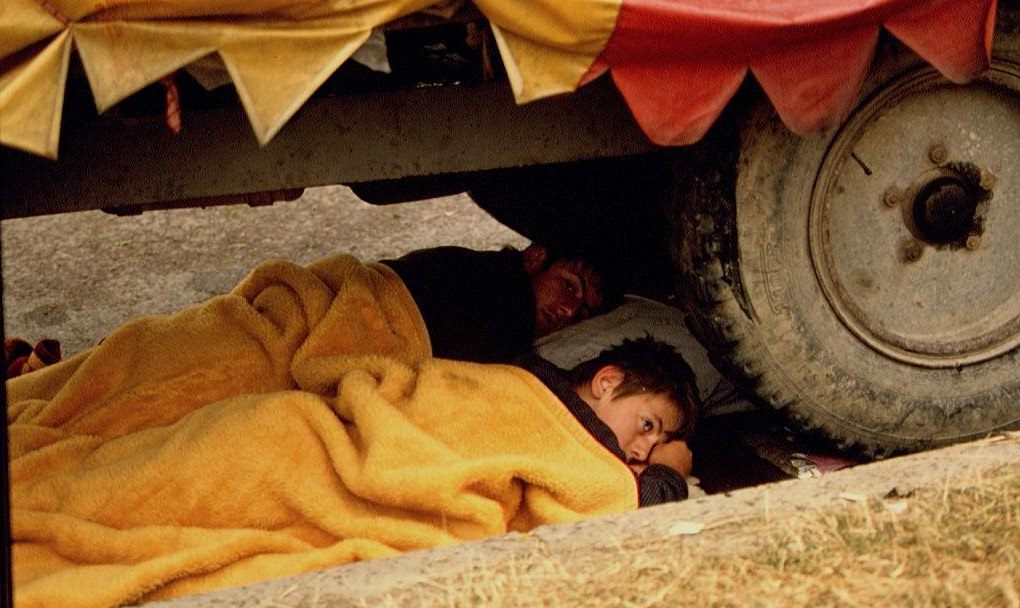
Refugees waiting to be able to enter to Croatia.
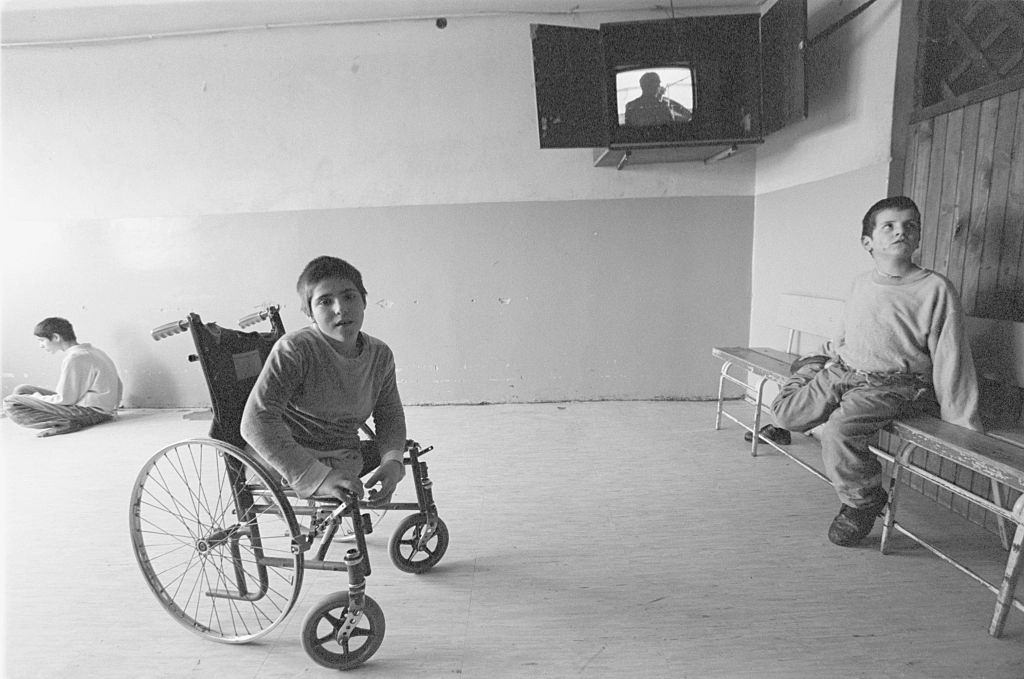
The television room in the psychiatric clinic.

Psychiatric clinics and trauma centers struggled to respond to the scale of psychological damage the war produced. Children who had witnessed executions, survived sniper fire, lost limbs, or spent years in besieged cities required long-term care that the country’s shattered health system was barely able to provide.
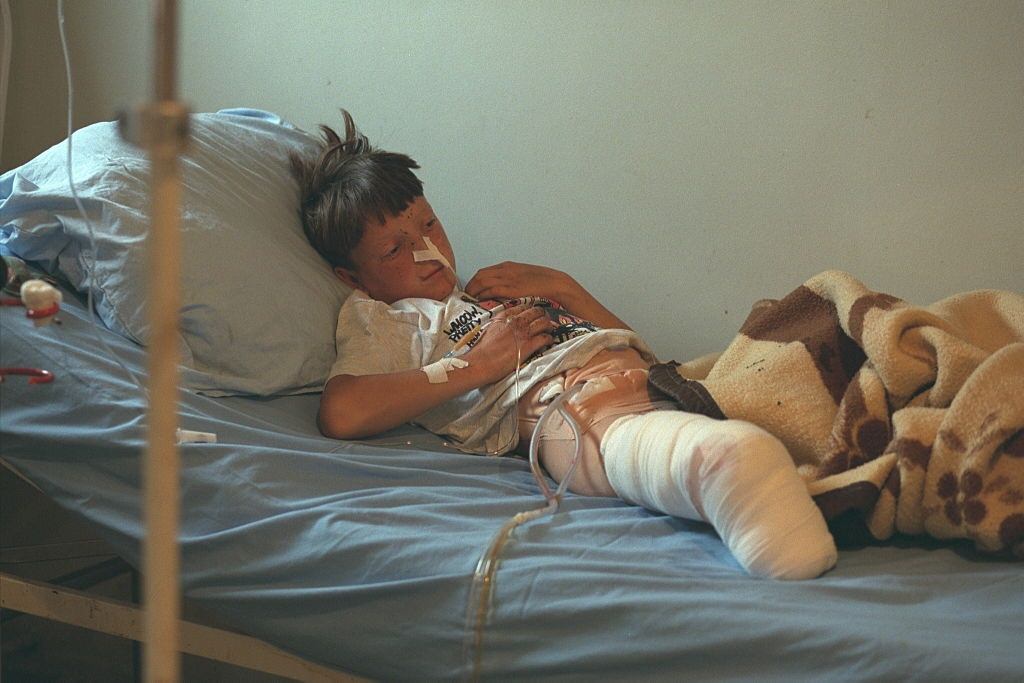

At Prizren hospital, a young boy had to have his foot amputated after stepping on a land-mine.
Enjoyed this post? Get new ones in your inbox.

Leave a Comment

Your email address will not be published. Required fields are marked *

Share this Post 🥺

Please take a moment to share this content. Your support is greatly appreciated! 🙌🙏

Share this Post 🥺

Please take a moment to share this content. Your support is greatly appreciated! 🙌🙏
Scroll to Top
 
Hey Friend, Before You Go.. Please like & follow for more interesting content