By April 6, 1814, Napoleon Bonaparte’s grip on Europe had slipped. Defeated by a coalition of allied powers, he was forced to abdicate the French throne and sent into exile on the island of Elba, off the coast of Italy. It was a stunning fall for a man who had dominated the continent for over a decade. But Napoleon was not finished. Less than a year later, on March 20, 1815, he returned to Paris. Crowds lined the streets to welcome him back, and King Louis XVIII fled the city without a fight.
What followed became known as the Hundred Days. Napoleon moved fast, striking allied forces before they could unite against him. His strategy was bold and aggressive — defeat each enemy separately rather than face them all at once. For a time, it worked. Then came Waterloo. On June 18, 1815, Napoleon met the British and Prussian forces in what would be the last major battle of his military career. He lost. He abdicated a second time and was exiled to Saint Helena, a remote island in the South Atlantic, where he died in 1821.
The men who had marched under Napoleon’s command never forgot him. The surviving soldiers of the Grande Armée — the name given to the main French military force during the Napoleonic Wars — honored their emperor long after his death. Every year on the anniversary of Napoleon’s death, these veterans gathered at the Place Vendôme in Paris. They wore their old uniforms and marched to pay their respects. For many, it was a solemn ritual that tied them to the most defining years of their lives.
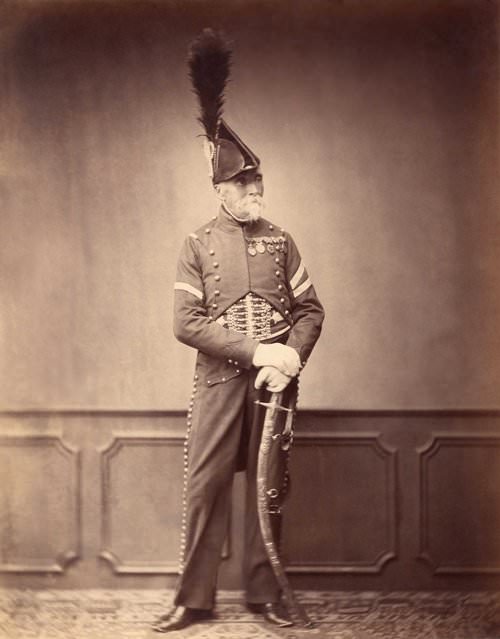
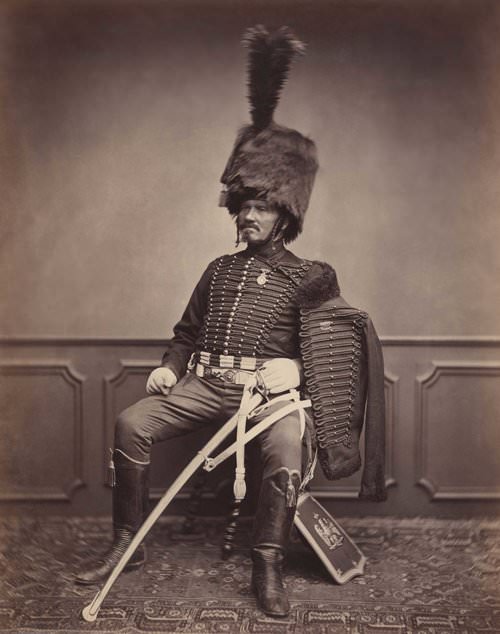
The portraits below capture some of these men as they appeared after 1858, decades after the wars of 1803–1815 had ended. The exact dates the photographs were taken are not known, but the veterans in them were in their seventies and eighties. Each man is shown wearing the uniform of the regiment or unit he served in — a direct, visual link to the campaigns they had survived. These are not posed recreations. These are the actual uniforms, worn by the actual men who fought in them.
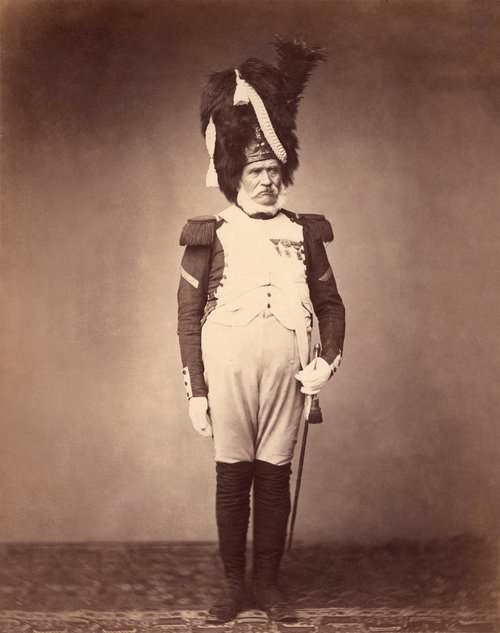
The Grande Armée was made up of many different types of soldiers. The Imperial Guard was its most elite force — a unit Napoleon reserved for the most critical moments in battle. Within the Guard, the Grenadiers were the most senior infantry soldiers, known for their height, experience, and discipline. To be a Grenadier of the Guard was a mark of distinction that few soldiers ever earned.
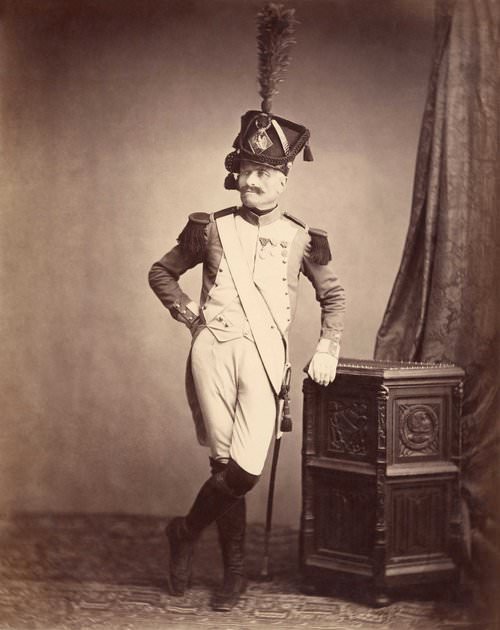
Not every soldier in Napoleon’s France served on the front lines of major battles. The Departmental Guard was a domestic security force, tasked with maintaining order within France’s administrative regions. Their role was closer to that of a police force than a battlefield unit, but they were still an essential part of Napoleon’s military structure.
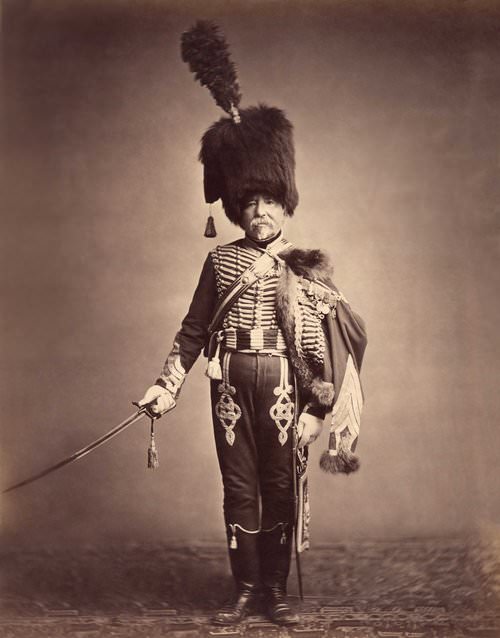
The Hussars were light cavalry soldiers — fast-moving horsemen used for reconnaissance, raids, and rapid strikes. Their uniforms were among the most distinctive in the French army, featuring braided jackets called dolmans and fur-trimmed pelisses worn over one shoulder. The 1st Hussars was one of the oldest and most celebrated hussar regiments in France.
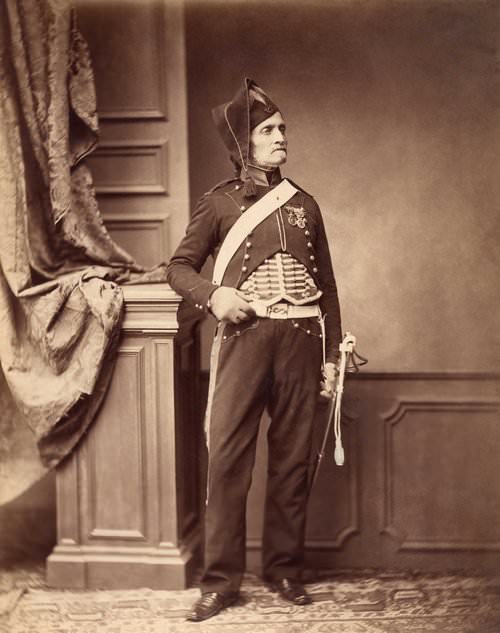
Mounted Chasseurs — literally ‘hunters on horseback’ — were another class of light cavalry in the French army. They were flexible fighters, used both for scouting ahead of the main army and for pursuing retreating enemies. The years 1813 and 1814 were among the hardest of the Napoleonic Wars for France, as allied armies pushed in from multiple directions.
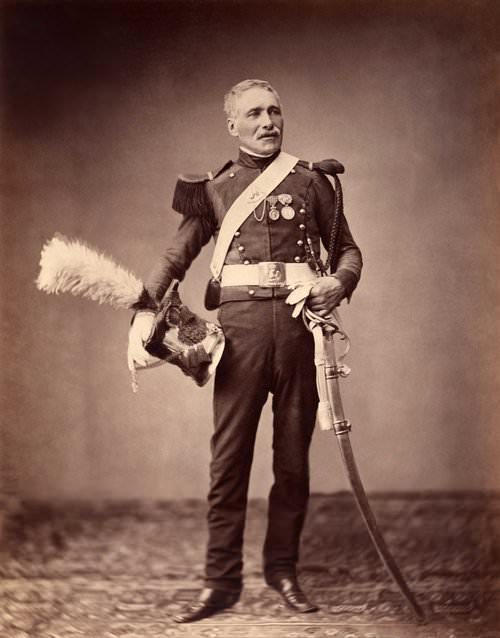
The Lancers of the Imperial Guard were an elite cavalry force armed with long lances — weapons that gave them a reach advantage over sword-armed opponents. The 2nd Light Horse Lancers, also known as the Red Lancers due to the color of their uniforms, were recruited largely from Polish and Dutch soldiers who had pledged loyalty to Napoleon’s empire.
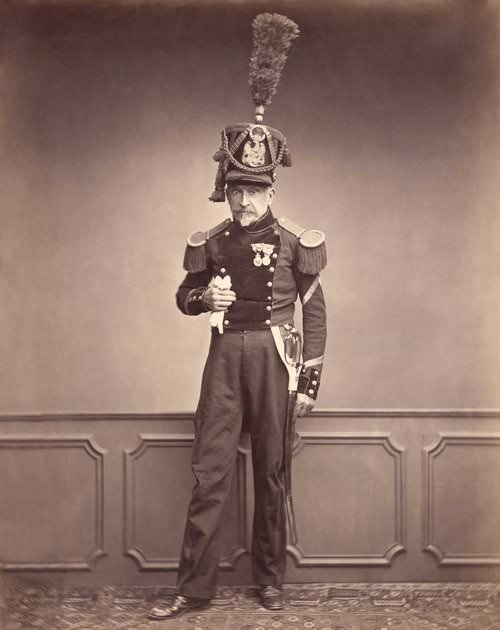
Engineers played a vital but often overlooked role in Napoleonic warfare. They built bridges, dug trenches, dismantled fortifications, and cleared paths for the army to advance. Without skilled engineering units, even the most well-planned campaign could grind to a halt. Sergeants like Lefebre were responsible for organizing and directing this critical work on the ground.
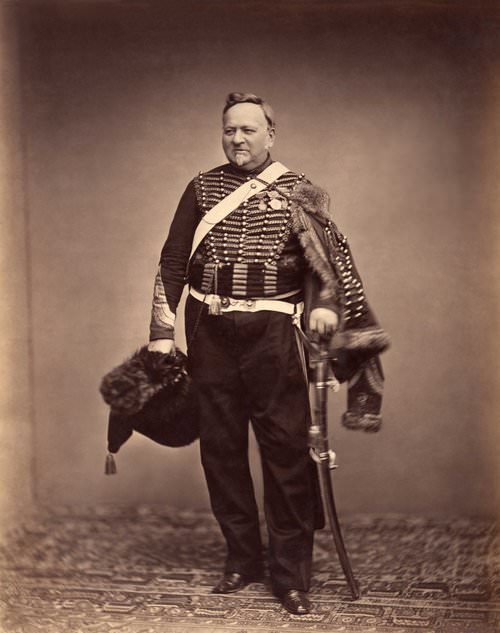
The Mounted Chasseurs of the Imperial Guard were among Napoleon’s most trusted cavalry. Unlike regular army chasseurs, these men were part of the Guard itself — better paid, better equipped, and held to a higher standard. Delignon’s uniform spans the years 1809 to 1815, covering some of the most intense fighting of the entire Napoleonic period, from the campaigns in Austria and Spain to the final battles in France.
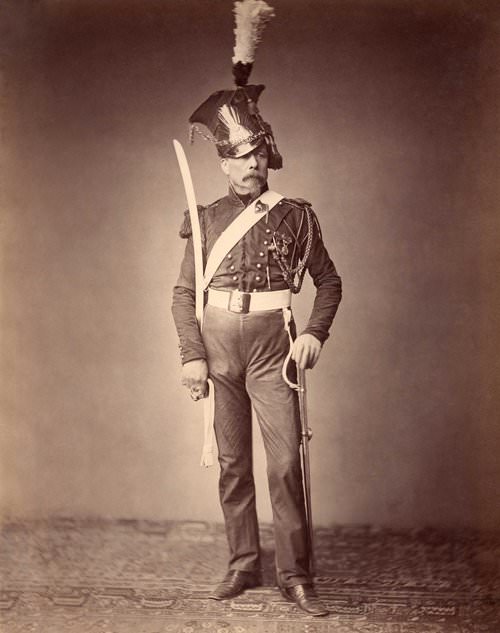
The 2nd Guard Lancers fought during the Waterloo campaign, one of the last units of the Imperial Guard to see action before Napoleon’s final defeat. Troopers like Verlinde were present at some of the most dramatic moments of the battle, including the famous last charge of the Old Guard late in the day on June 18, 1815.
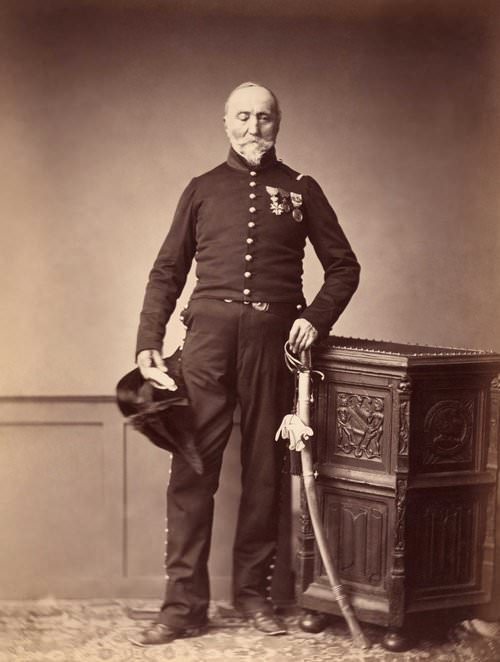
The Legion of Honor was France’s highest order of merit, established by Napoleon in 1802. To be named a Chevalier — a knight — of the Legion of Honor was a significant recognition of courage or service. Loria’s designation as Chevalier of the Legion of Honor marks him as a soldier who distinguished himself well beyond ordinary service.
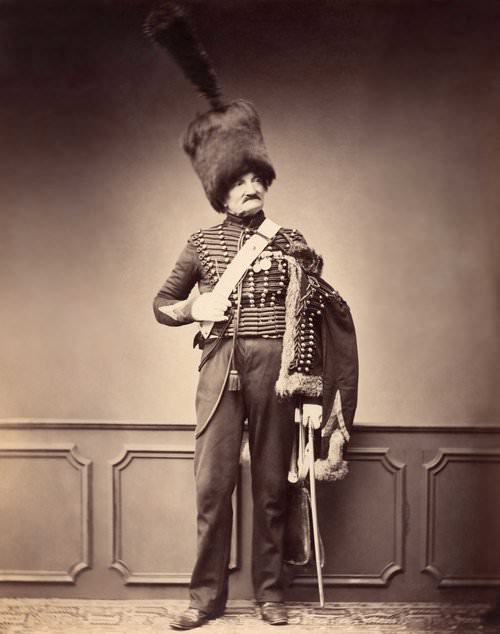
The 7th Hussars served across multiple theaters of the Napoleonic Wars, including the Peninsular War in Spain and the campaigns in Central Europe. The years 1809 to 1815 were a period of near-constant fighting, and hussar regiments like the 7th were constantly in motion — screening the army’s flanks, gathering intelligence, and harassing enemy supply lines.
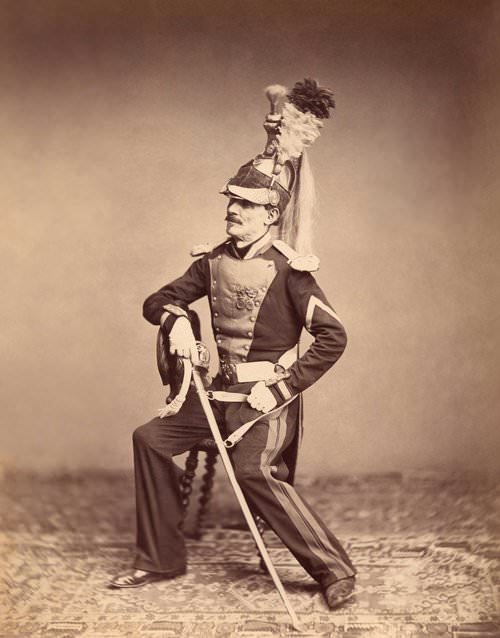
Dragoons were a versatile type of soldier — trained to fight both on horseback and on foot. This flexibility made them valuable in a wide range of situations. The 8th Dragoon Regiment served during the Waterloo campaign, one of the final units of French cavalry to take the field under Napoleon’s command.
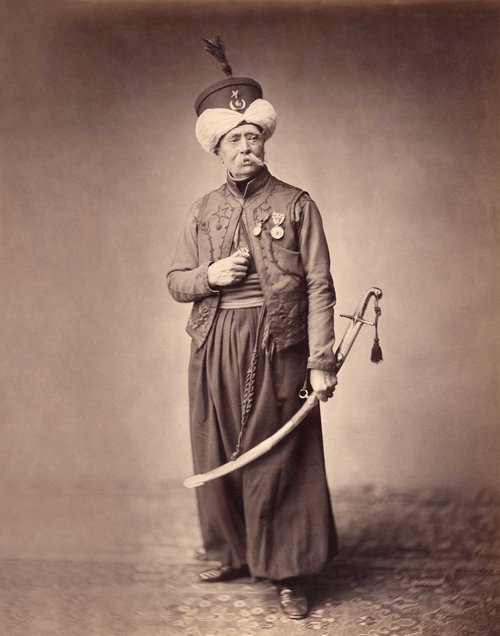
The Mamelukes of the Guard were one of the most visually striking units in the entire French army. Originally recruited from Egyptian and Middle Eastern fighters following Napoleon’s Egyptian campaign of 1798–1801, they wore Ottoman-style dress and fought with curved sabers. By the time of the 1813–1815 campaigns, many members were actually French-born soldiers assigned to the unit, though they continued to wear the same distinctive uniform.
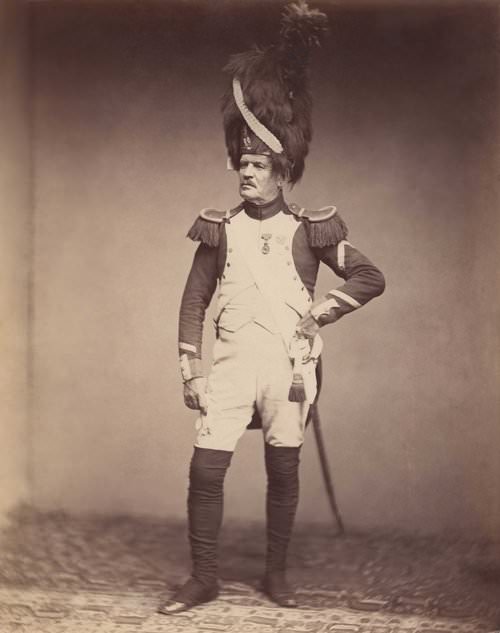
The Grenadiers of the Guard — the Grenadieres de la Garde — were the heart of Napoleon’s Old Guard. They were the most battle-hardened soldiers in France, required to have served a minimum number of campaigns before they could join. Sergeant Taria served from 1809 through the final defeat in 1815, a span that included Wagram, the Russian campaign, the defense of France, and Waterloo. When these men gathered at the Place Vendôme each year to honor their emperor, Taria and soldiers like him carried the weight of that entire era on their aging shoulders.